Hamburgers: Part One

A comprehensive list of hamburgers. I’m going to ignore fast-food. This post will probably have more parts added to it as I eat more hamburgers.
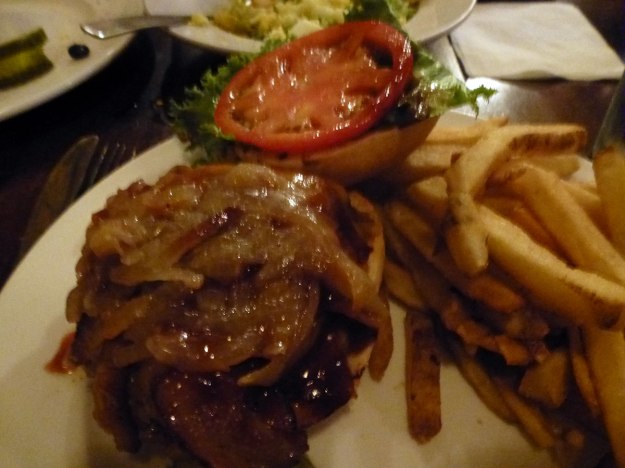
Buckaroo burger
Arthur’s, Cincinnati, OH
8-10-15
Buckaroo Burger: contains grilled onions and barbeque sauce. Bigger than my head, and I couldn’t possibly hope to eat it all. But it was so good that I tried very hard, and almost didn’t have room for dessert(more about that later). P1040391

Bison Burger
Wall Drug, Wall, SD
21-9-15
Tasted mostly like a normal burger. If I wasn’t told that it was made of bison meat, I wouldn’t have noticed that anything was out of the ordinary.

Barbeque Burger
Benjamin’s Sandwich Shop, Pittsburgh, PA
13-10-15
Made with bacon and barbeque sauce. What could possibly be bad about it? Nothing, as long as it’s cooked well. Which it was.

The National Aviary, Pittsburgh

Birds are scary. Ostriches, that can kill you with a kick; shrikes, with their creepy aerial cupboards; Ravens, that teach their children to hate, and so many more!  They are dinosaurs, and you should be very afraid. They are also really cool.
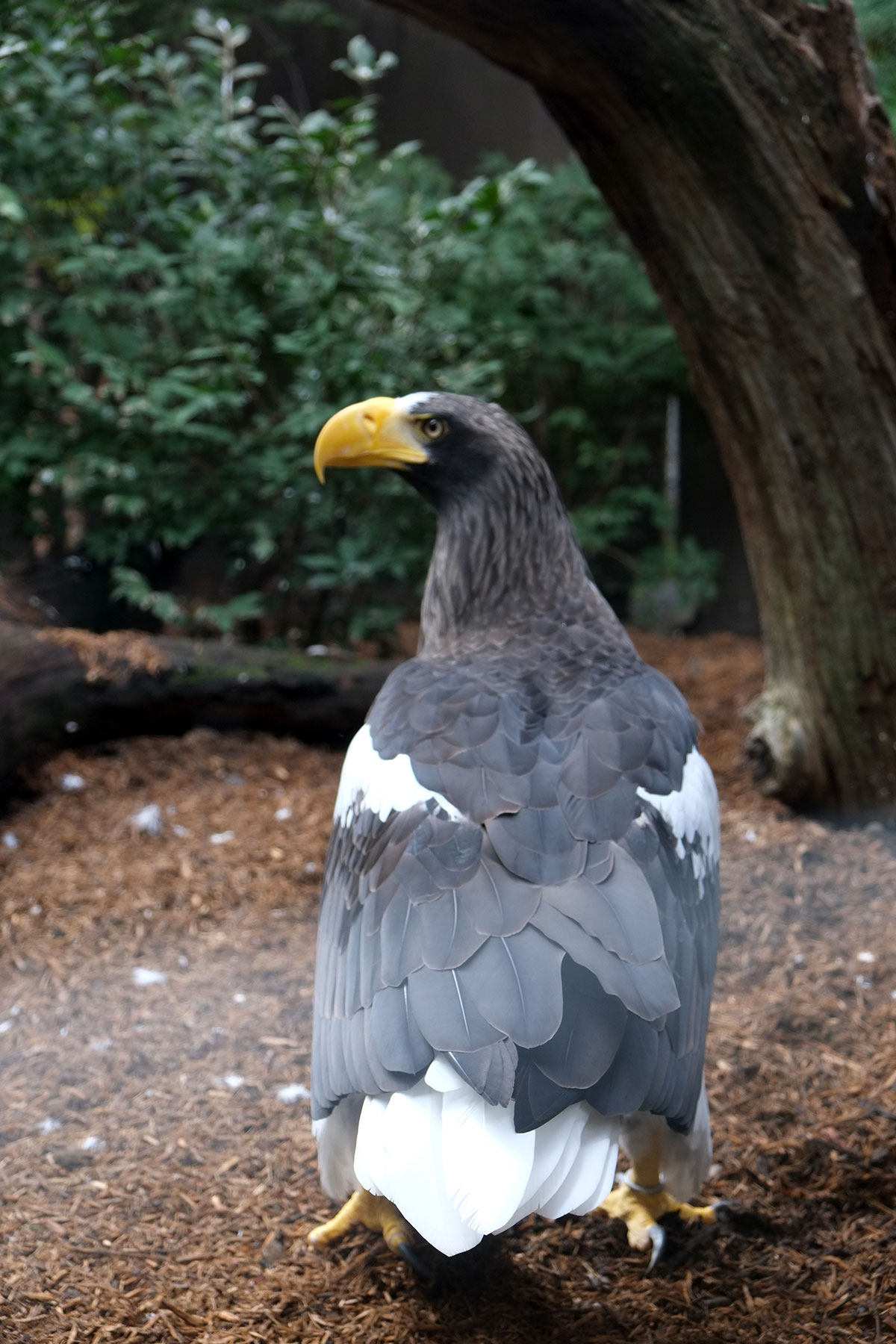
After walking through the gift shop, the first thing we were confronted with was a Stellar’s Sea eagle, which are the largest eagles in the world.

Stellar's Sea Eagle

Stellar’s Sea Eagle

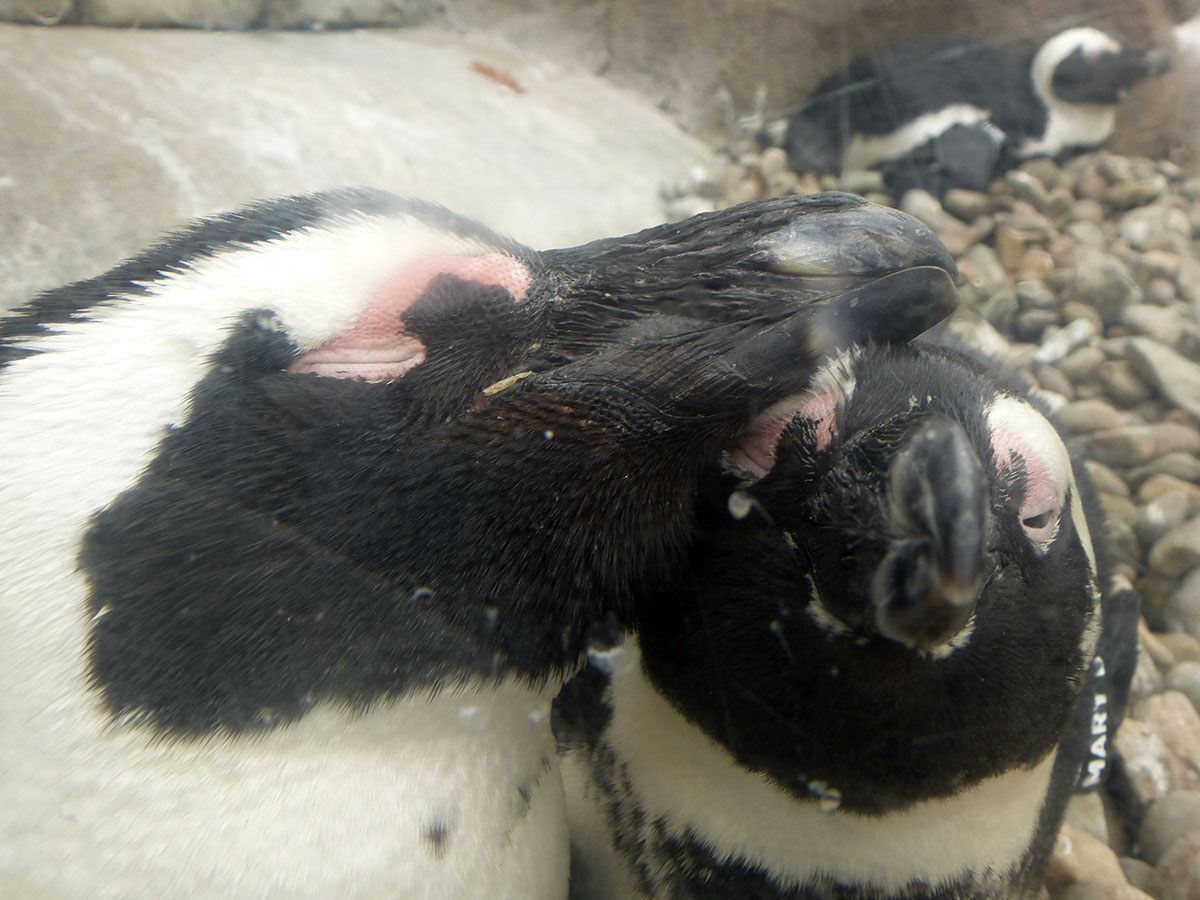
Down the hall was an exhibit of jackass penguins, which I notice that zoos and aquariums will only ever call African penguins.

Penguin Love

Penguin Love

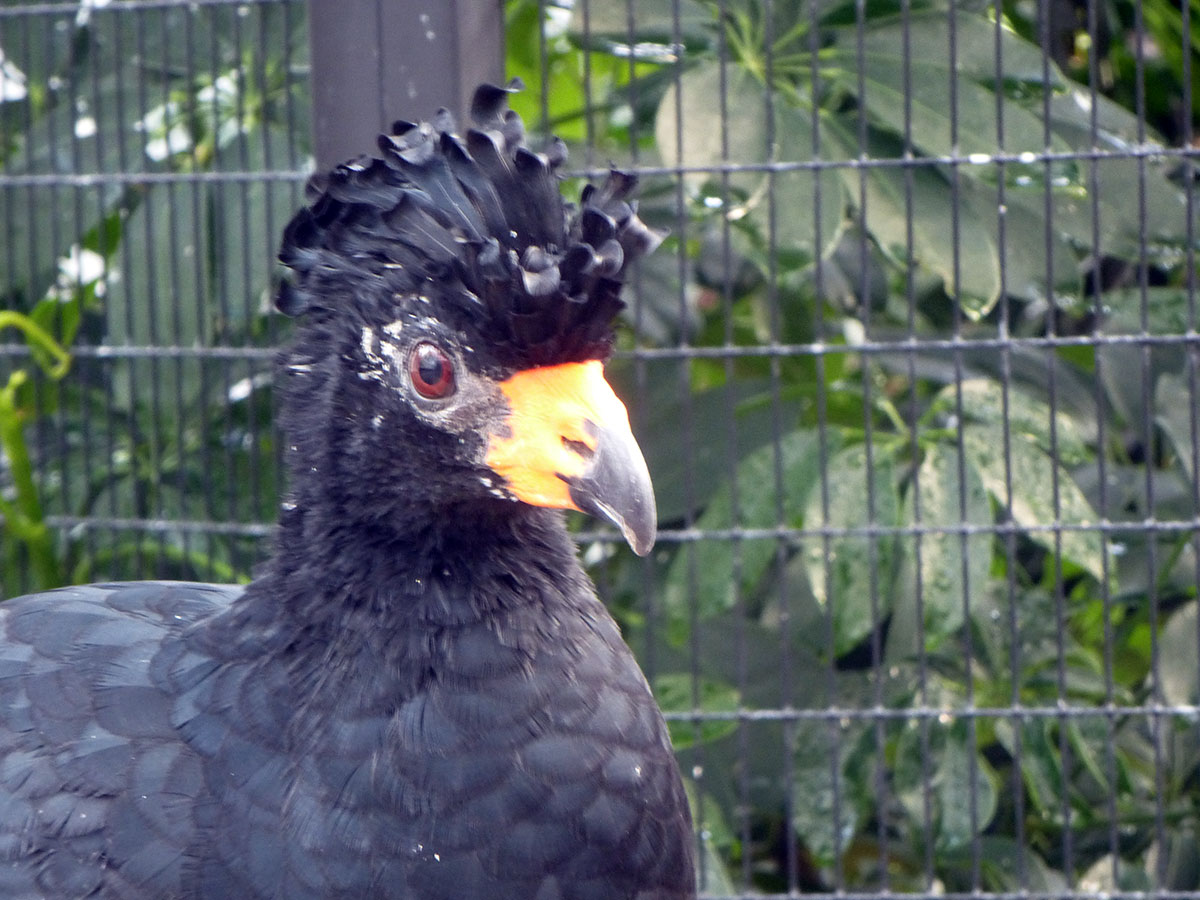
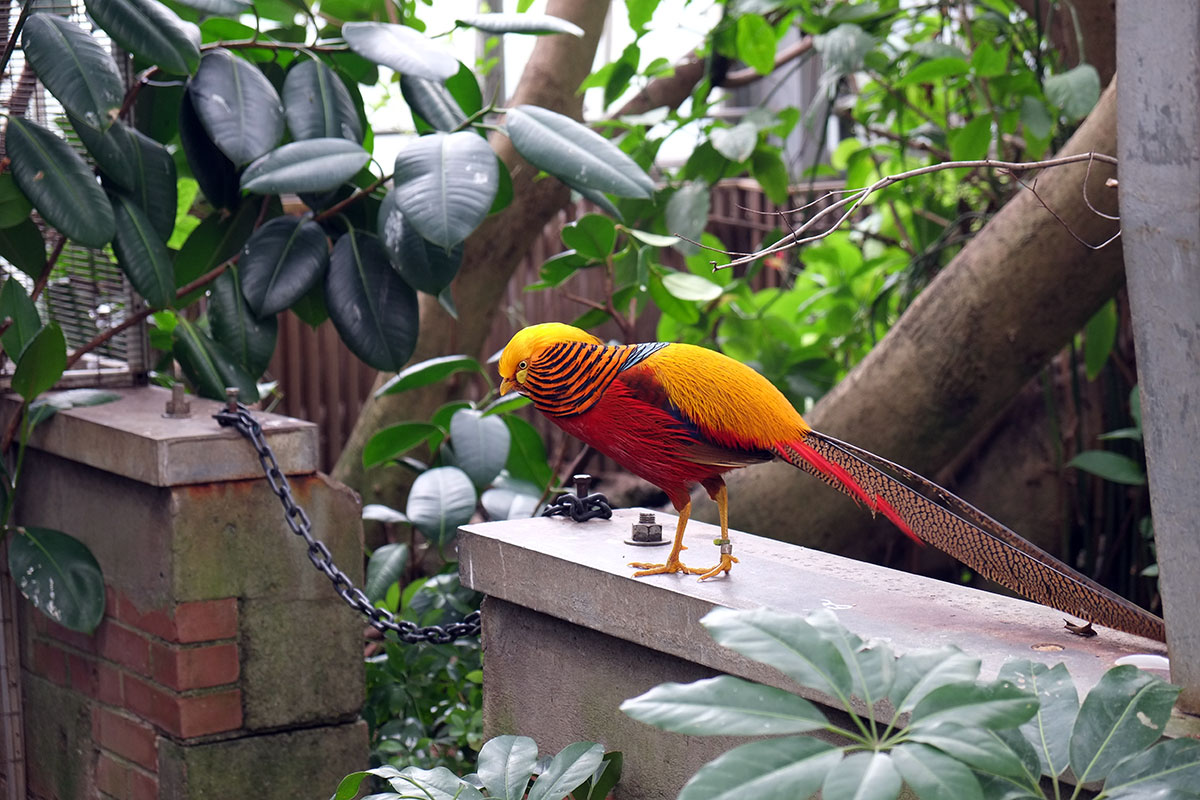
The aviary succeeded admirably in one of my markers for a good aviary, which is having birds that no one except birders will recognize. A black bird with fabulous orange highlight caught our eye, along with the golden pheasant strutting around like he owned the place.
P1040498

Golden Pheasant

Golden Pheasant

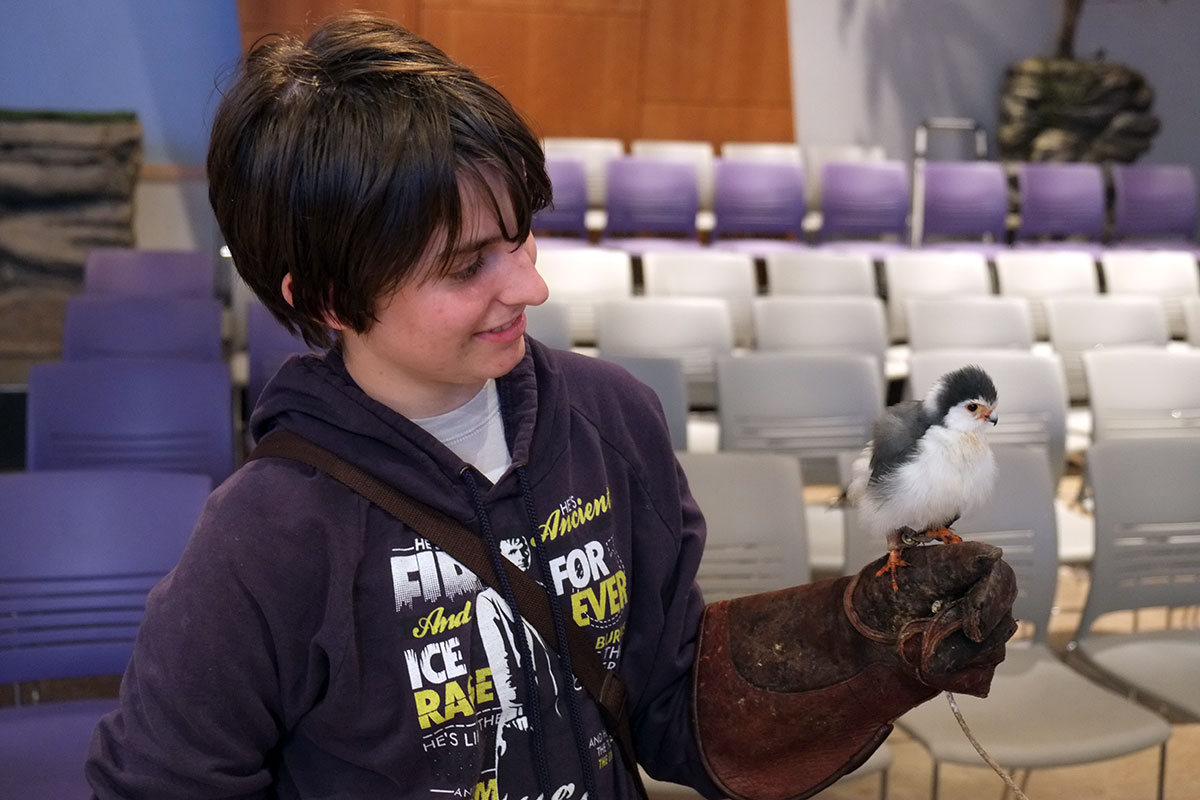
And like at the Carnegie Natural History Museum, John Wenzel had friends there who brought us behind the scenes. Not to say that the exhibits weren’t cool, but they don’t even compare to getting to hold an African Pygmy Falcon.

His name was Goliath, partly for the irony, and partly for the irony of the duo of him and a staff member named David. He was only maybe ten inches tall (Goliath, that is) and a good four inches of that was tail length. Apparently he liked me, as he rubbed his beak on the glove, which birds will only do if they’re comfortable. The feeling was mutual, because even though he pooped on me, he was awesome.

Me and Goliath

Me and Goliath

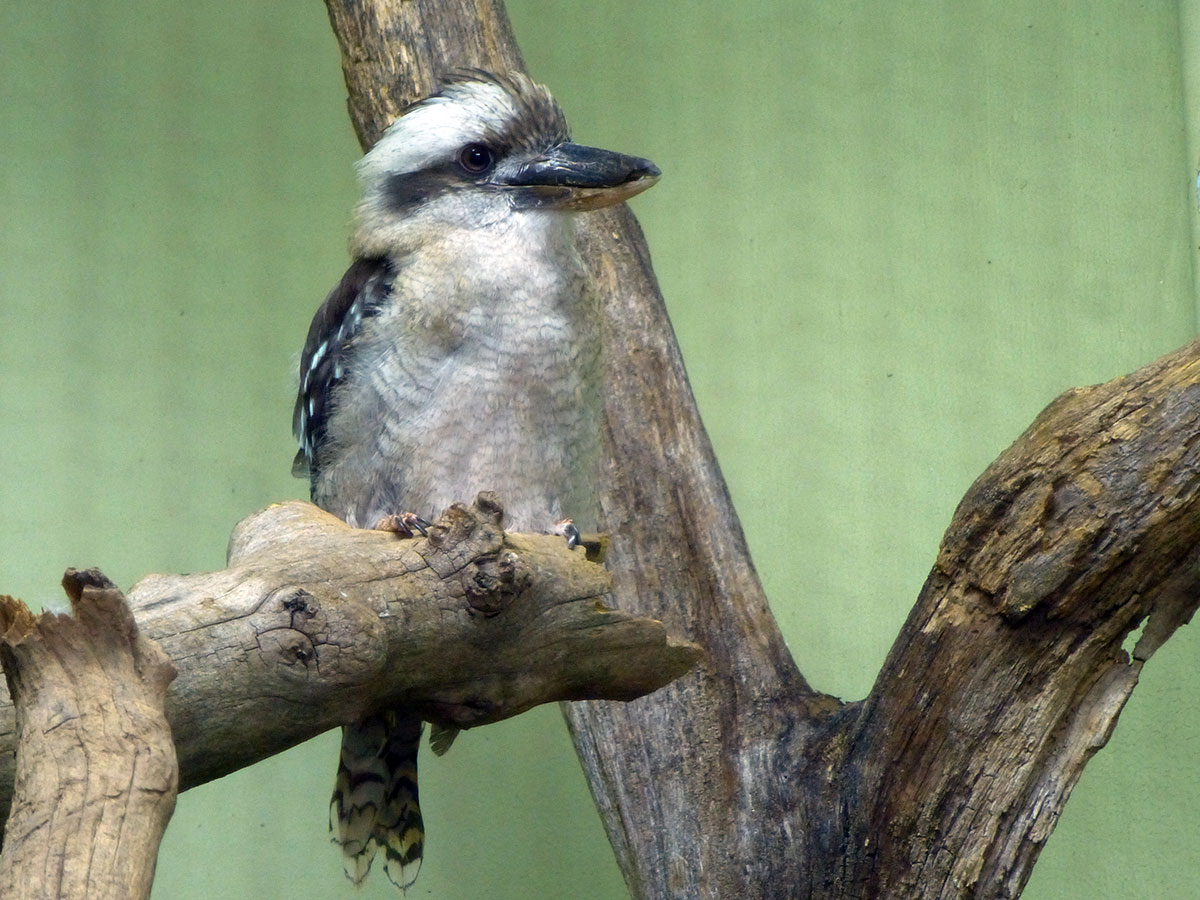
If you’re reading this, thank you to the staff of the National Aviary! Meeting Goliath, Nigel the Kookaburra, and all the other birds has been the highlight of this trip so far.

Kookaburra (Not Nigel. He was in a room with a lot of birds who don't like cameras, so this is the bird they had on display.)

Kookaburra (Not Nigel. He was in a room with a lot of birds who don’t like cameras, so this is the bird they had on display.)

Wheeling, West Virginia

I’ve never been to West Virginia before, and crossing from Ohio into Pennsylvania we only crossed the little ten-mile-wide ear of it, but it counts as being in the state, and we can put it on the life list.  Along with Kentucky – we walked across the bridge from Cincinnati, walked around a bit and took some pictures.  It counts.

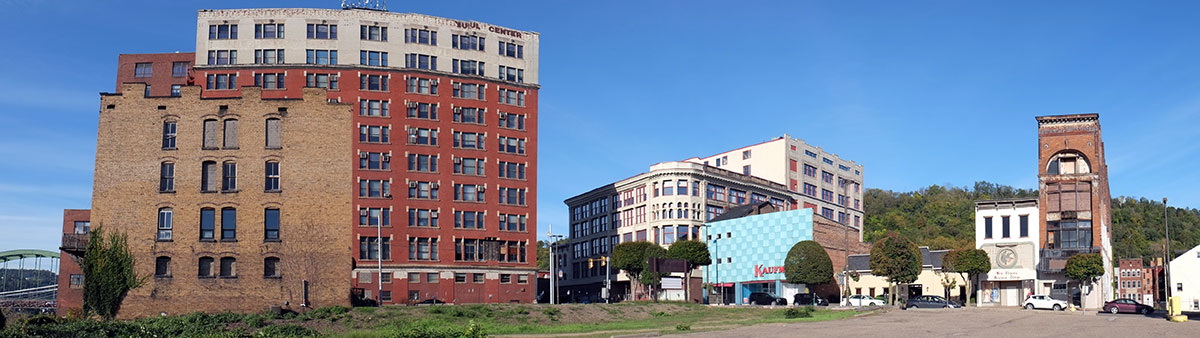
But we did go through Wheeling, where the National Road crossed the Ohio River.  The bridge is amazing – from the 1840s, it is the oldest important suspension bridge in existence.  It is not by Roebling, but he later retrofitted it with diagonal cables to help stabilize it.

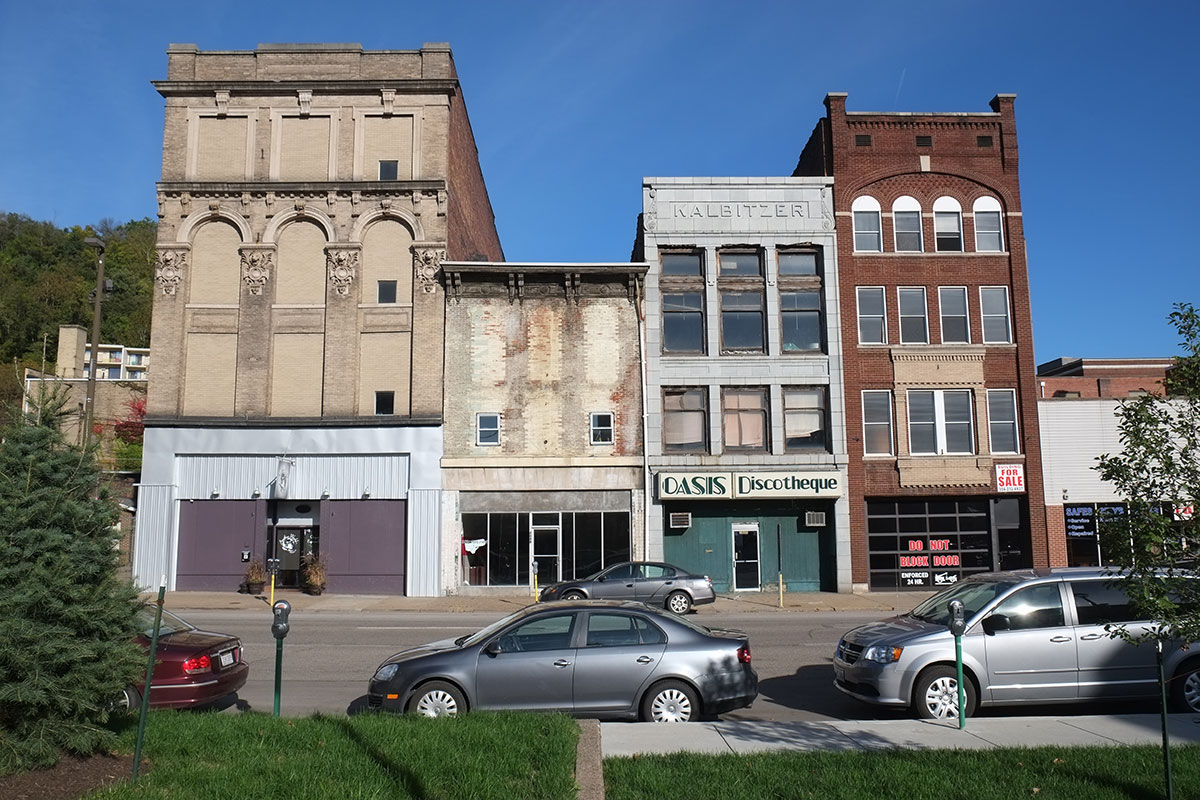
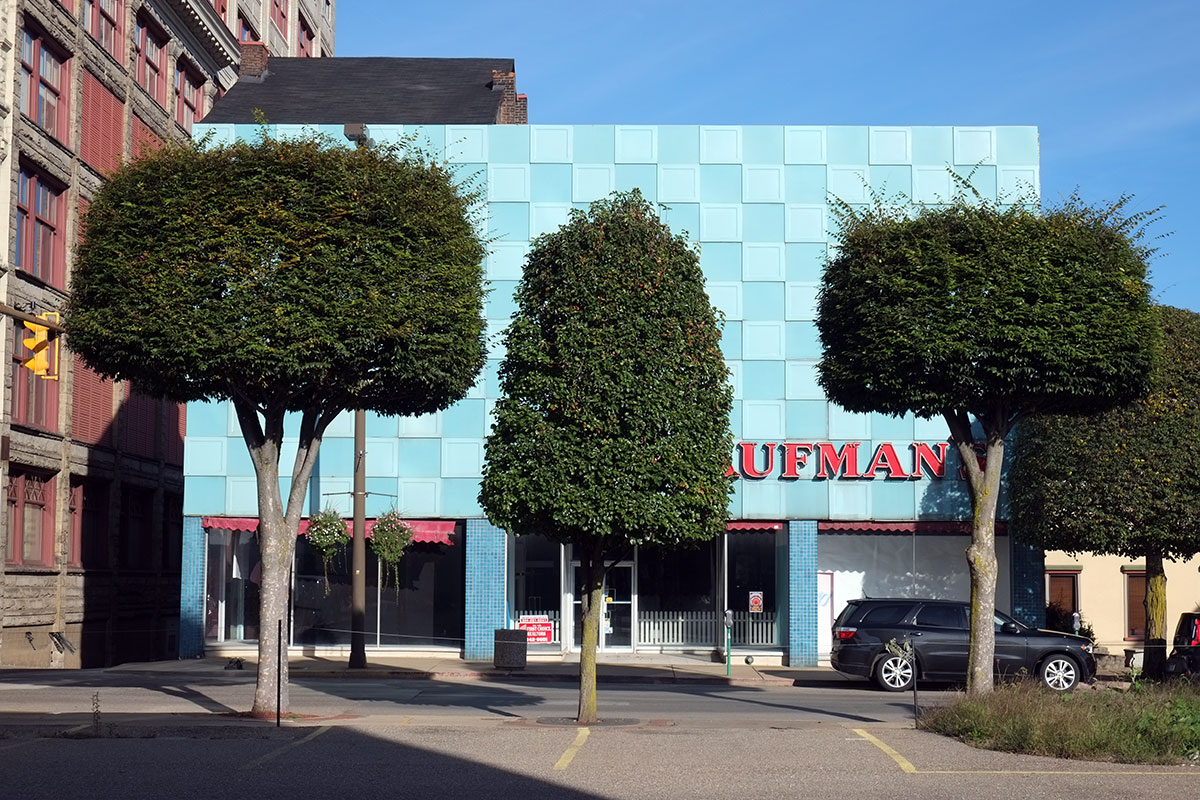
The rest of the town was pretty damn depressing – many fine old buildings abandoned and boarded up, and literally everyone we saw on the street on a Saturday afternoon was homeless and/or drunk. It freaked Greta out – she had never really seen anything like this before.

We’ve been spending a lot of time recently in cities that were rich and important 100 years ago, but now they aren’t  Some have fared badly, and some have recovered amazingly (such as Pittsburgh).  It’s eye-opening for a kid from Oregon (where nothing is that old)  –  the idea that a place that was once so prosperous could decline so precipitously.

Life in Ohio

We were stuck in a huge traffic jam this afternoon on I-71 in Ohio.  We assumed it was people heading to the Ohio State football game, but then almost everyone got off onto the road to Waynesville.  We were listening to the radio, and found out that the big event in Waynesville  today was the Sauerkraut Festival (where they apparently have sauerkraut pizza).  We continued on to Pennsylvania.

The Davies

Brian and Olga Davies were great friends of ours when they lived in Eugene.  Brian taught in the Interiors program with Linda, and Olga used some of her many talents working at King Design.  Brian brought talent, insight and dedication to his work, but he always was able to keep it in perspective, and his wry comments assured me that I wasn’t the only one who found academia a bit absurd at times.  Olga may have been the liveliest and most stylish person to ever live in Eugene, and there were many parties and gatherings which wouldn’t have been much fun without her.

The great friendship extended to the next generation too.  Diego was born soon after Greta, and they were buddies until the Davies left town.IMG_1530

IMG_1538

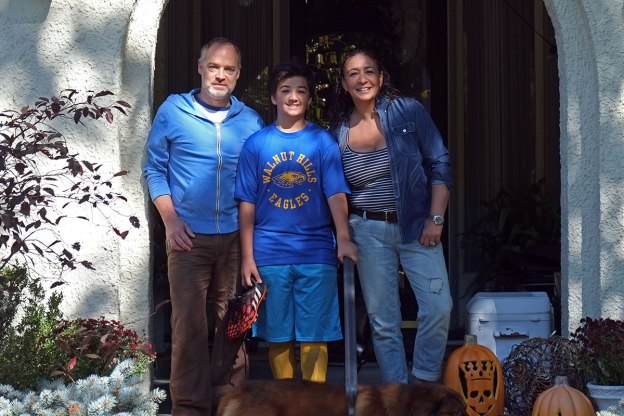
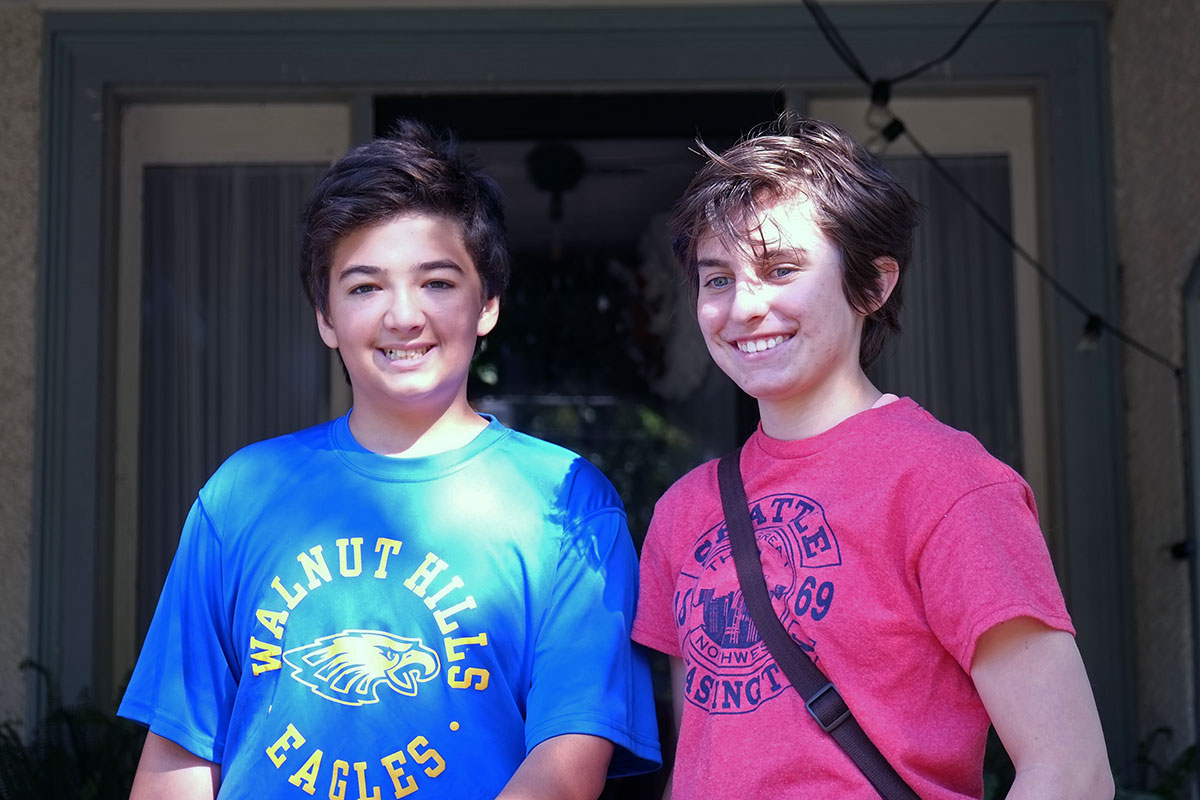
So it was especially cool for Diego and Greta to get together again.  They had no real memories of each other, but at a certain level, people who are little kids together always seem to understand each other immediately.  DSCF0668

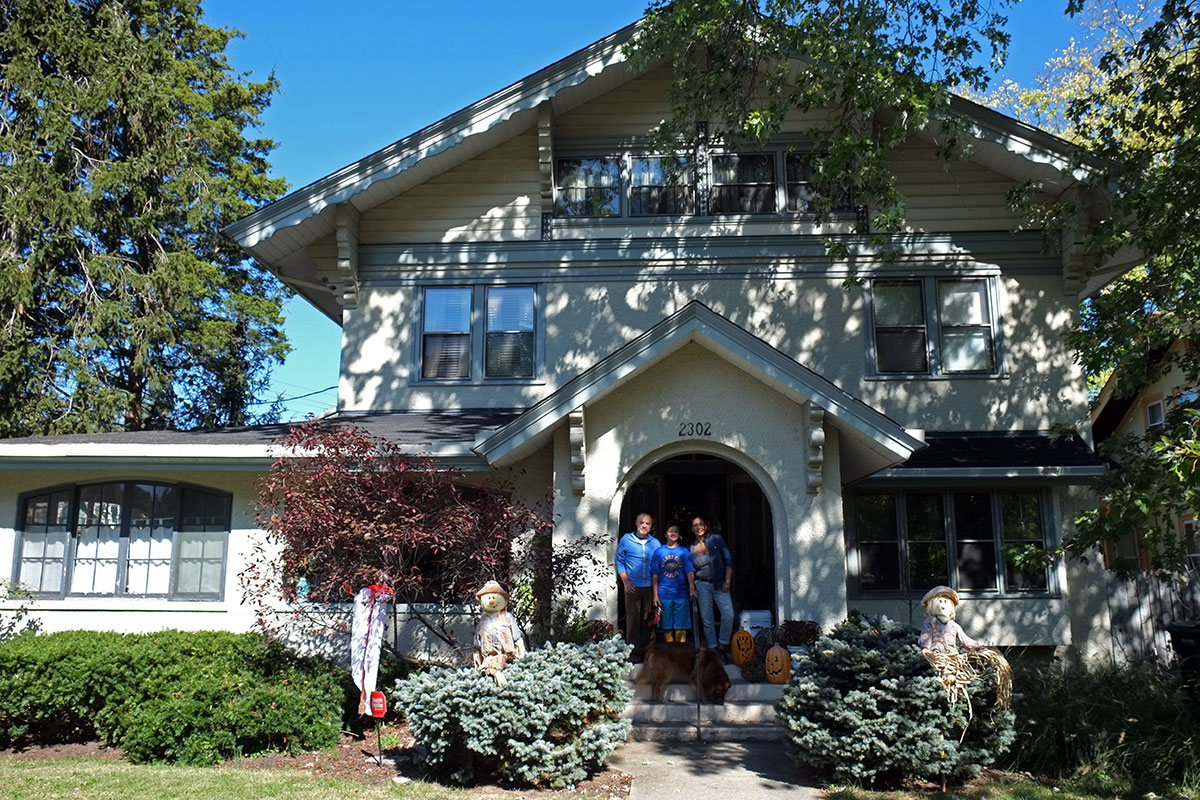
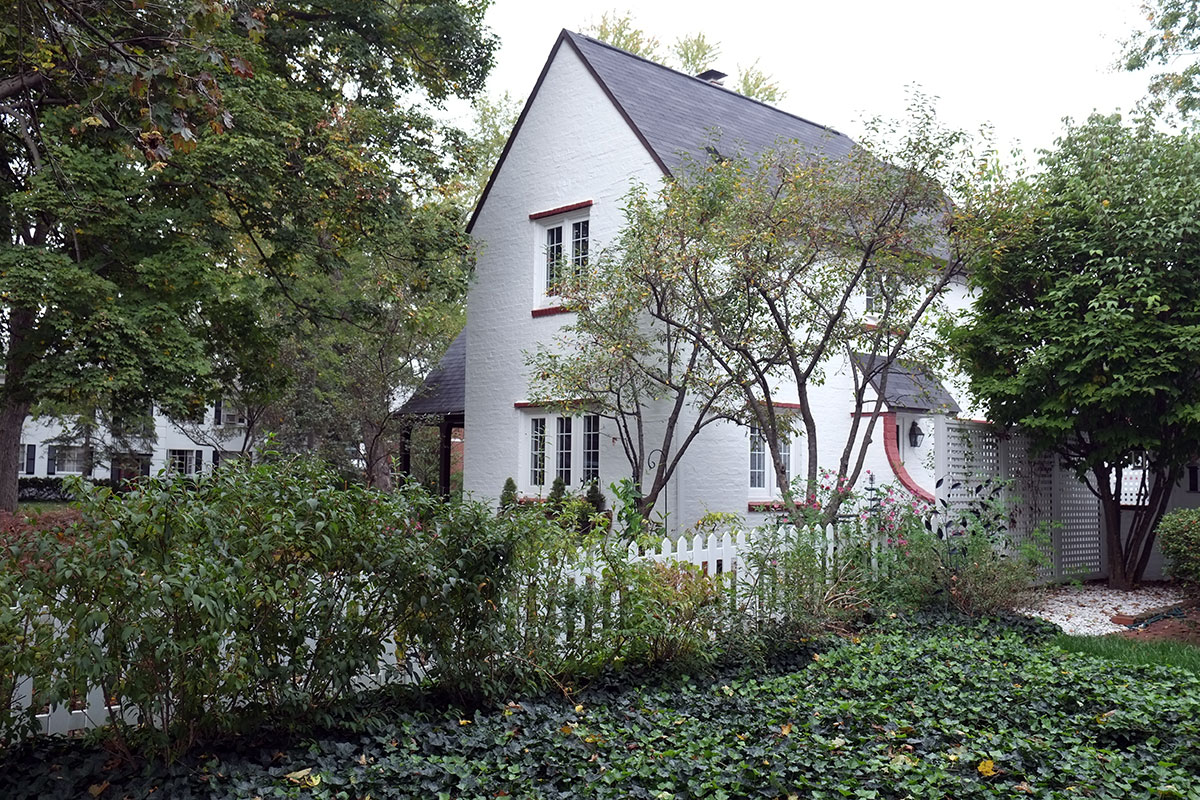
Brian and Olga moved to Cincinnati ten years ago, where Brian teaches at UC.  They live in a house that is the opposite of their Eugene house in every way – instead of being a small, modern house in a big yard, their new place is a big, old urban house on a small lot.DSCF0675

Soon after arriving in Cincinnati, their son Marco was born – he isn’t pictured here because he was at sleepover when I finally pulled the camera out.  He is true wild man, bursting with energy and enthusiasm, and made me realize what a change it is when adolescence hits.

Greta and I had a wonderful time staying with the Davies – lots of food and drink and wandering around the neighborhood, but mainly non-stop conversation for a few days.  Brian and I sat up into the wee hours every night, comparing our ideas on the current state of life in academia and sharing our insights about cocktails and whiskies.  Visiting them made me realize how much we miss having them in Eugene. but at the same time it is wonderful to rediscover that with real friends you can just pick up again where you left off.

Cincinnati

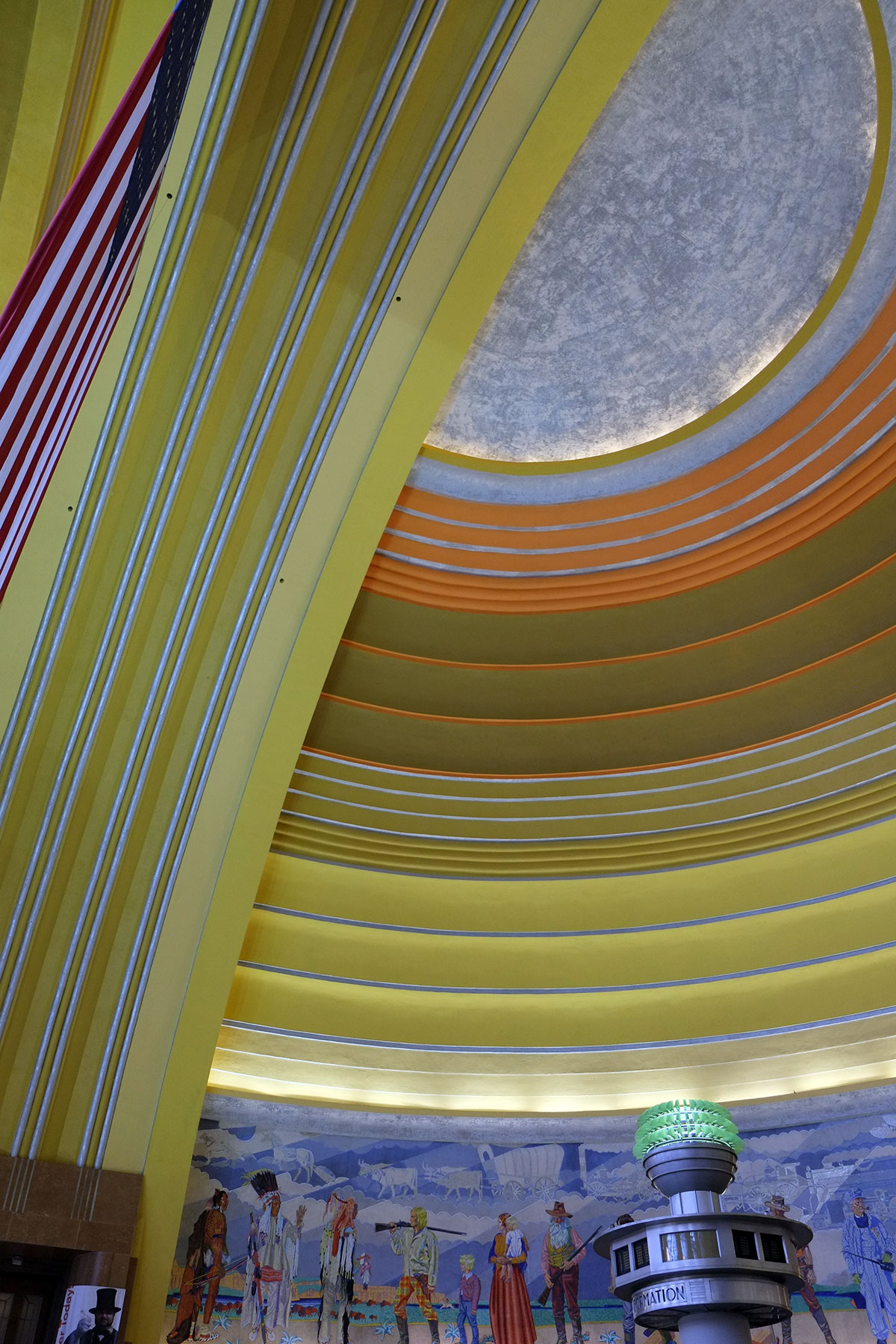
We spent some time tooling around in downtown Cincinnati, but really went to see two specific things:  the train station – which has been converted into a collection of museums:DSCF0623

and has an incredible lobby:DSCF0617 DSCF0620

And the John Roebling bridge, from the 1860s.  It’s very interesting to see the progression of bridges in the mid-19th century which led to the Brooklyn Bridge.  Plus while it’s hard to get Greta to look at architecture, she’s very happy to visit bridges.  DSCF0651

DSCF0658

DSCF0648

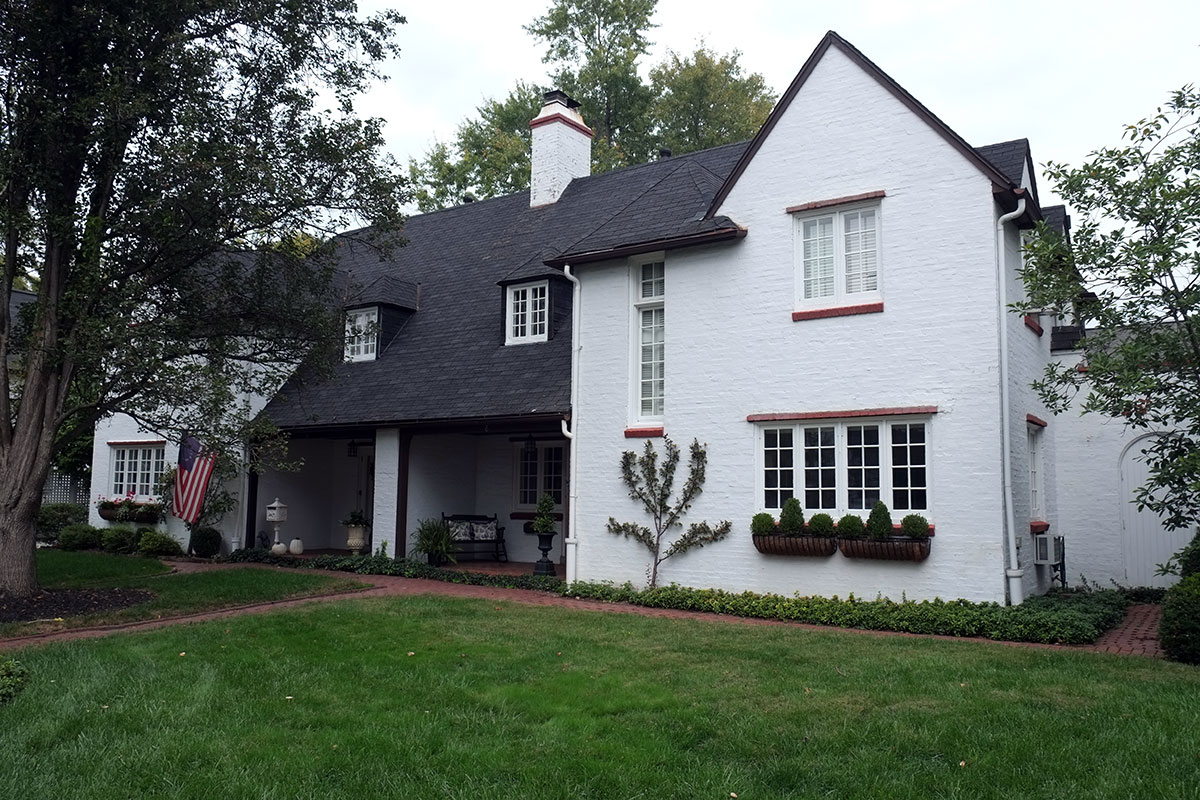
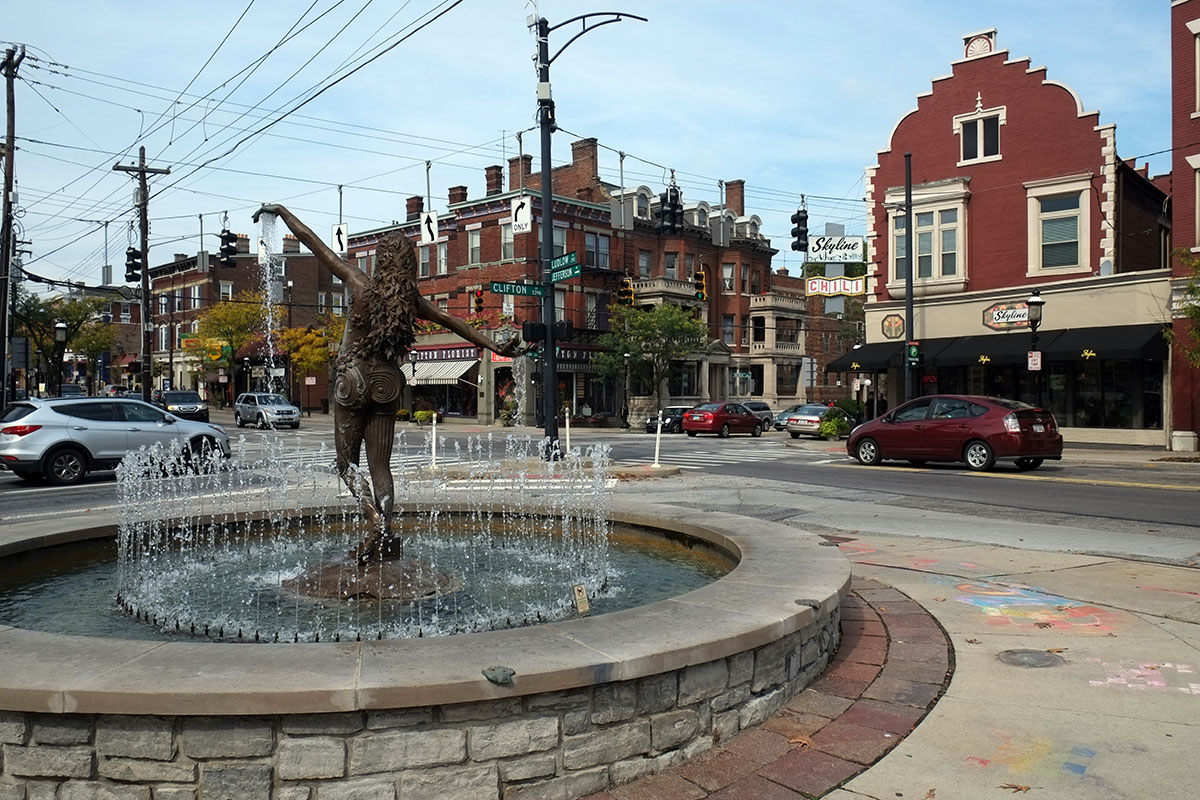
But what I continue to find most engaging in Cincinnati are the neighborhoods.  After the flatness and griddedness of the plains, being in a city where the neighborhoods, transportation routes and whole order of the city are determined by the topography (hills and water) is really engaging.  There was the Hyde Park district, where a very nice urban space is surrounded by mixed-use buildings, all within walking distance of Brian and Olga’s.  DSCF0525 DSCF0527

There was Mariemont, a John Nolen-designed planned railroad suburb from the 1920s, where some excellent duplexes on cul-de-sacs with rear alleys were designed by Grosvenor Atterbury (of Forest Hills fame).

DSCF0566

DSCF0569

There was the area near the university (where the architecture was superior to the chili):DSCF0416

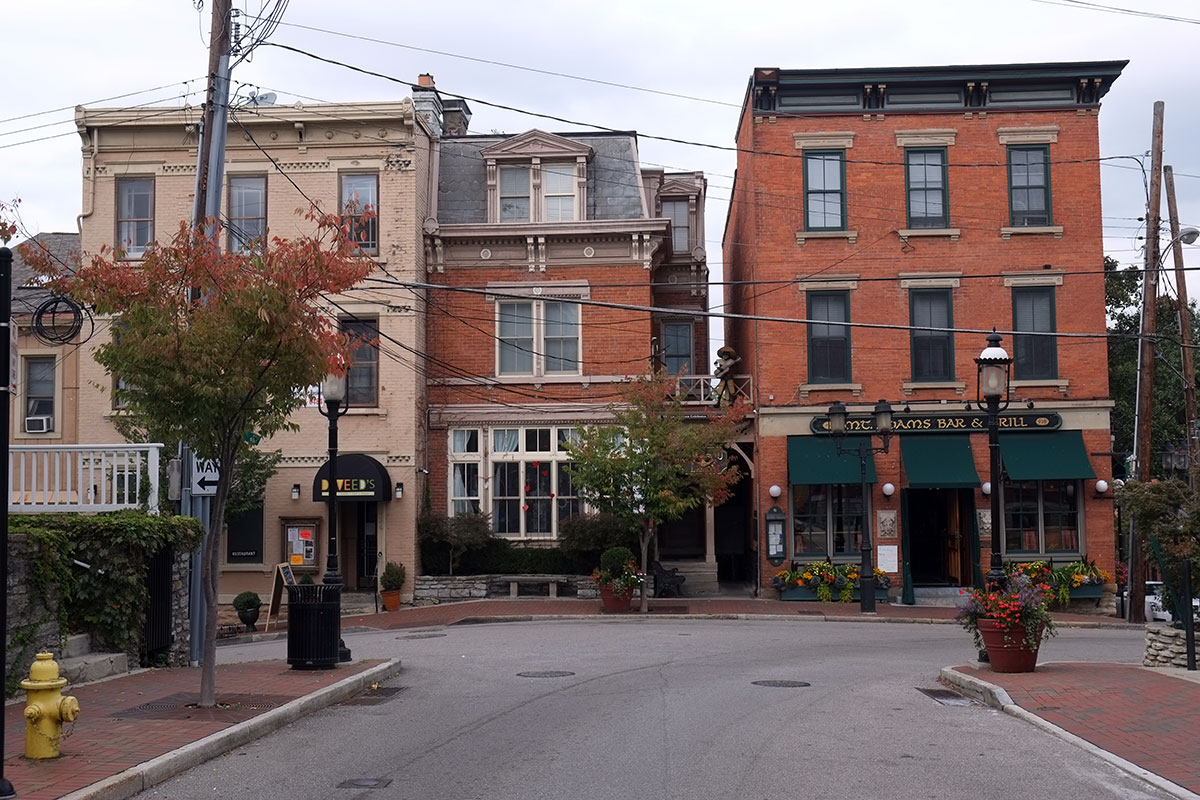
And finally, the Mt. Adams neighborhood, atop a tall hill right next to downtown, which is apparently now a major location of gentrification and yuppie-bar-hopping:

DSCF0588

I like street views that end in sky:

DSCF0593 DSCF0604

A very livable city overall, which we could have spent a lot more time exploring.

University of Cincinnati

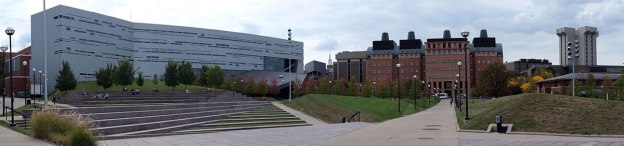
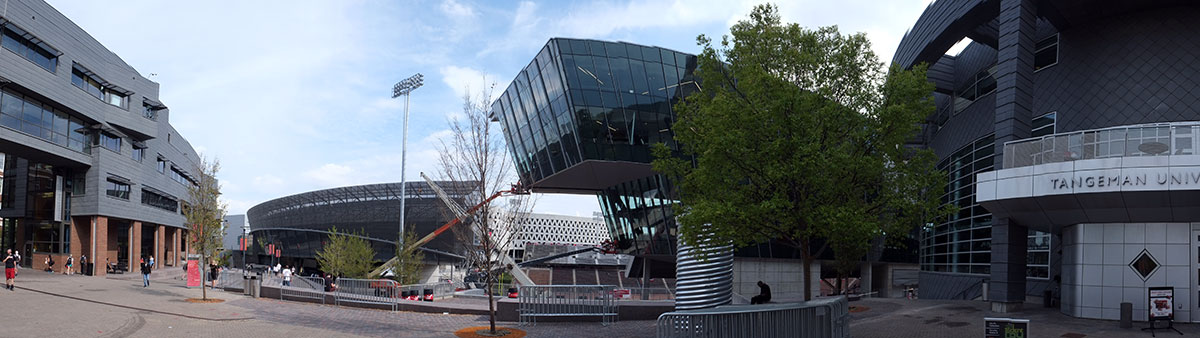
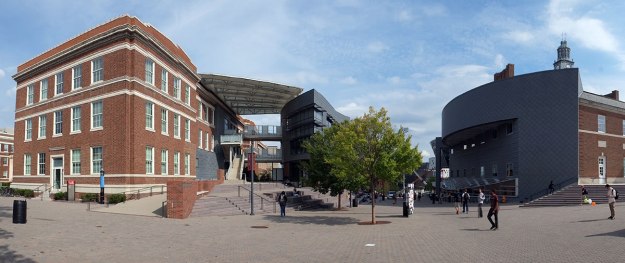
The University of Cincinnati is also a bit of an architectural petting zoo.  Apparently at some point the dean of the architecture school convinced the university that they should hire prominent architects to do signature buildings.  Predictability, the results are in the good, bad and ugly categories.  The juxtapositions are radical, as can be seen in the photo above, where you get Morphosis, Michael Graves, and one of the strangest brutalist buildings I’ve ever seen (is it a science building or full of telephone switching equipment?)

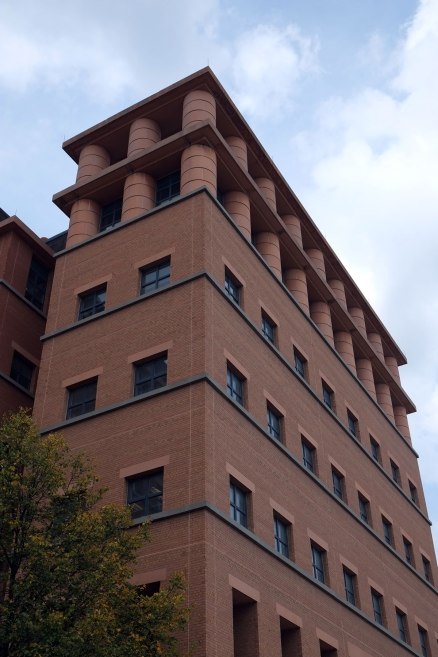
The Graves building is pretty darn nice.  It makes sense, it has a simple clear plan, and the scale of it fits in well.  (At least, we old folks from the 80s will probably like it.)DSCF0427
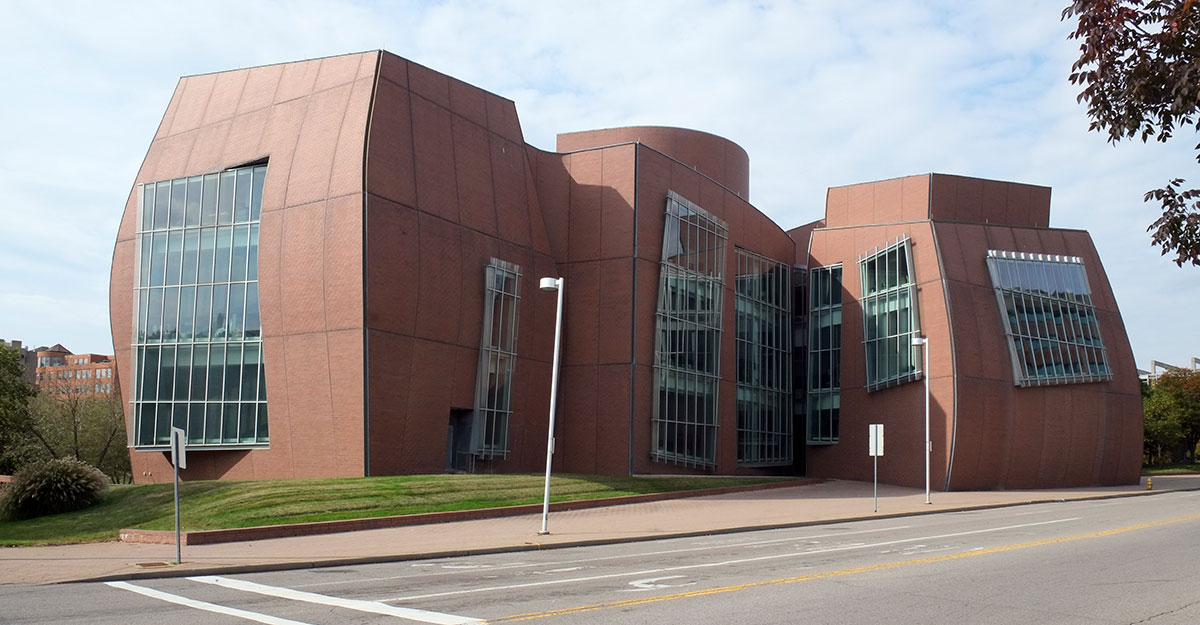
The Gehry building is not technically on campus, but a few blocks away, and is part of the general self-conscious milieu.  It sits by the side of the road, and it made me think of Venturi’s analysis of Las Vegas, a building which is trying very hard to create an impression as you glimpse it from a moving vehicle.
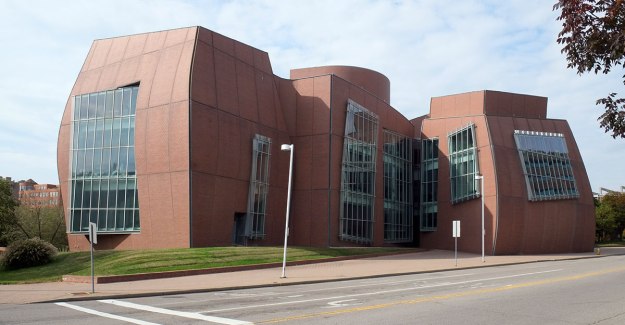
DSCF0520

Of course, the building that must be talked about is Eisenmann’s addition to the design school.  Seldom is a building worse than I expect it to be (I have pretty low expectations for some people), but this is one.  The exterior evokes recovered memories of all the bad color choices of the 80s – why was Eisenmann still doing this in the 90s?  (and why couldn’t he have remembered that he was once one of the “whites”?)DSCF0471
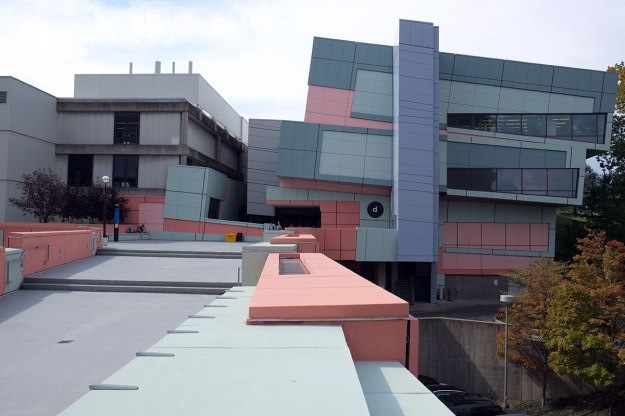
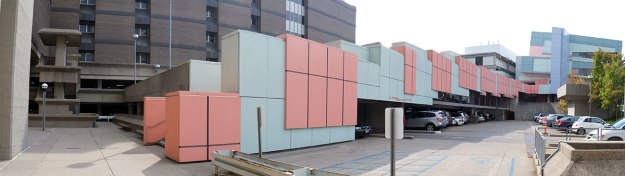
The entrance pictured above feels even worse than all those parking garages in TV shows where bad things always happen.  Perhaps Eisenmann was playing a joke with this, as an amazing amount of effort has been put into the extended entry stair which does indeed end up in a parking lot / service entry.DSCF0475
The interior has a couple of good spatial moves – a big void which goes through a few floors, a big stair which runs up alongside it, DSCF0459
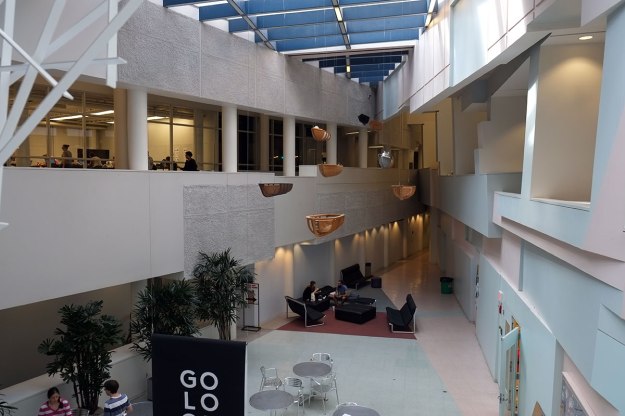
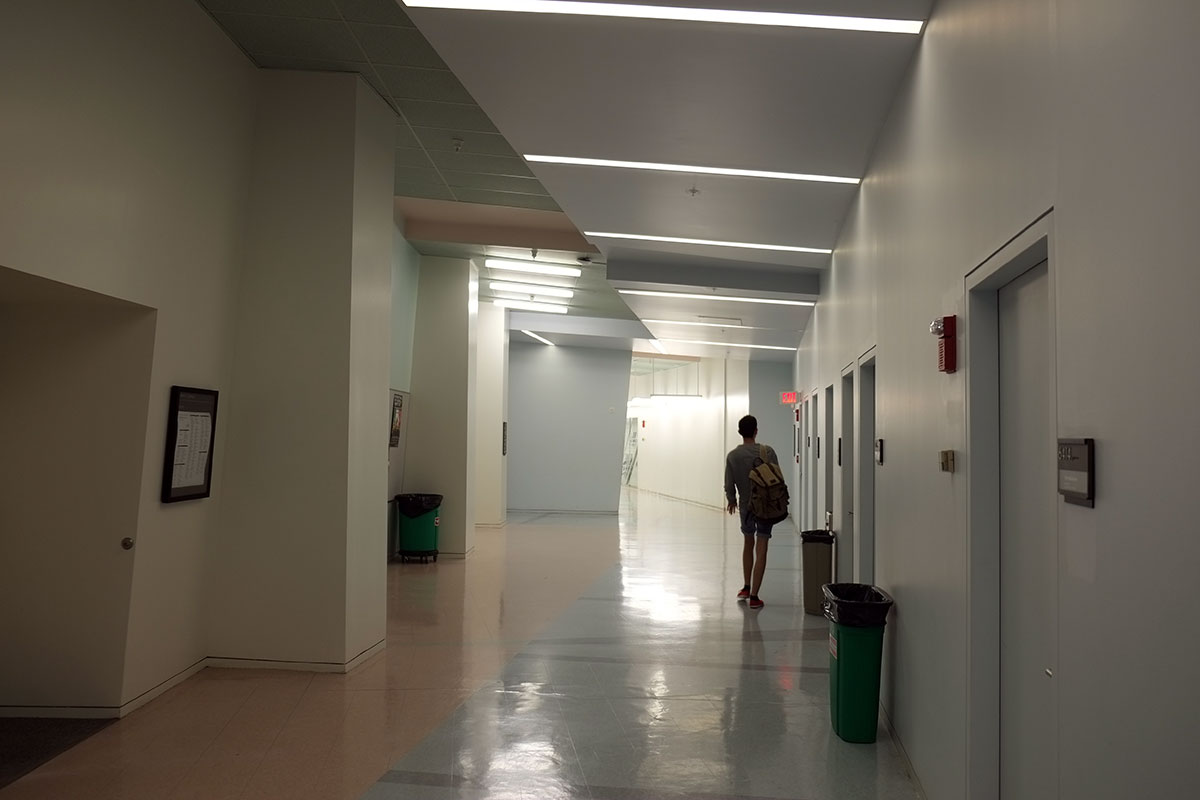
but these big moves have no impact on the building beyond themselves – they do nothing to organize the building spatially or conceptually.  You come across them randomly – we actually wandered the building for quite a while before we found them.  Most of the time you’re in corridors such as this:DSCF0451

Fundamentally as boring and soul-destroying as any other internal double-loaded corridor, except that this one has cost an enormous amount of money in the pointless manipulation of gypsum board surfaces.  Yes, it’s more entertaining than two parallel walls, but you get the feeling (actually you know) that Eisenmann was just playing games with diagrams and ideas, and not at all actually designing the space.  These corridors meander through a solid mass, seldom touching the exterior wall or the interior void.  There is no order to the building that one can intuit after a while, and the infrequent maps are not much help in finding anything either.  The architecture department seems to have made a very good decision by staying put in the older building to which this is attached.  Maybe they understood what it was going to be like, and the other departments didn’t.  There is a tradition that the architecture building is usually the worst one on a campus, and here again we see Eisenmann  manifesting his familiarity with architectural history and tradition.
DSCF0483

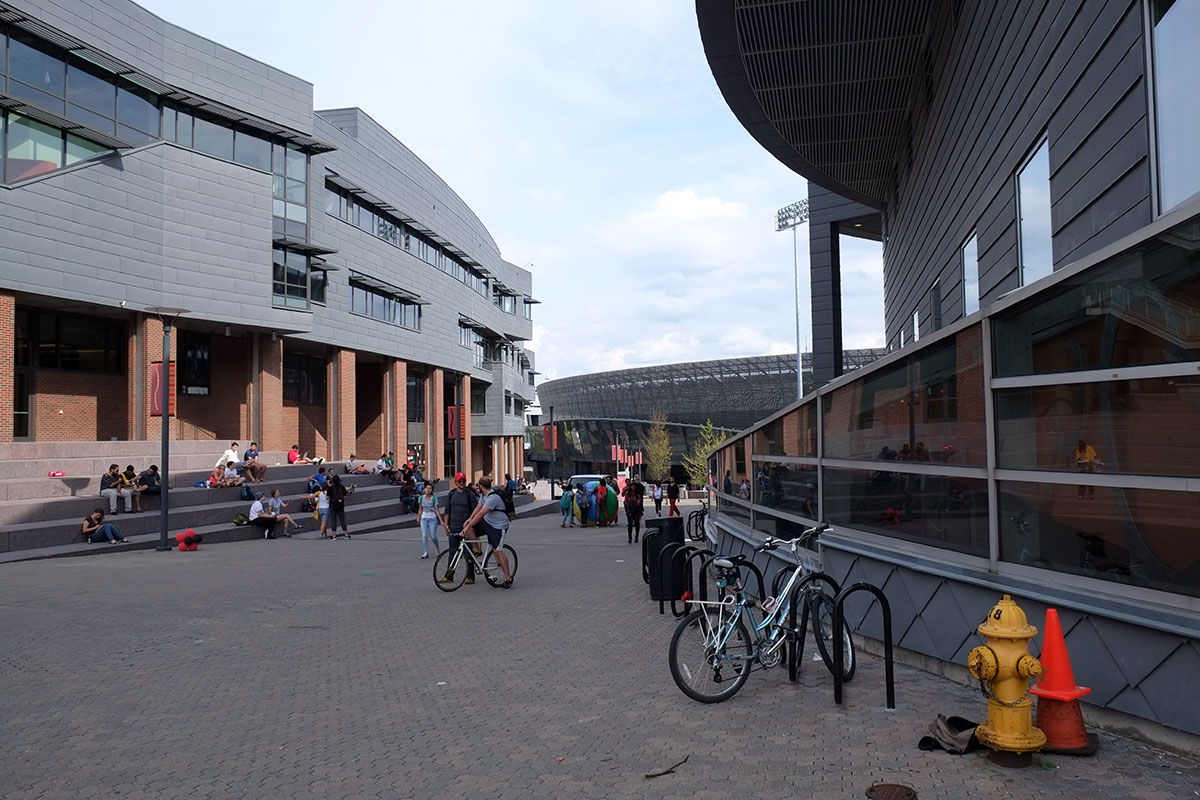
The part of campus which I unexpectedly loved was the relatively new “main street”, with the site plan by Hargreaves Associates, and which comprises some older Georgian buildings, some new buildings by Morphosis, Moore Ruble Yudell, Gwathmey Siegel and others, and which abuts and overlook the football stadium.  It’s a spectacular bit of urban design, with well-contained spaces squeezed between very active building forms, constantly shifting perspectives, long and short views, and contrasting materials and styles.DSCF0487

The radical change of scale that comes from incorporating the football stadium is brilliant, being able to look onto the field from above, rather than having the stadium be a looming solid wall that kills the space around it.  The glimpse of Tschumi’s building (the white one with the triangular grid) across the field gives you the sense of distance and scale that you sometimes get in a dense city, but almost never on a campus.DSCF0493
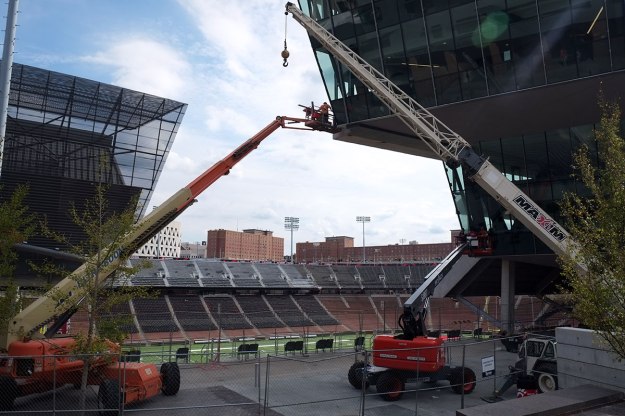
It feels like a piece of a city, and although undoubtedly planned to the nth degree, it gives that sense of unintended juxtaposition and unanticipated revelation which are perhaps the greatest architectural pleasures in a city.  DSCF0489

It seems fitting that this design is in Cincinnati;  after weeks in the grid-universe of the American West, Cincinnati was was the first place we came to where the topography dominated the city’s organization, where the back and forth between the pre-human world and the order of the planned city achieved a satisfying balance.  This design reflects that balance in a completely thought-through and beautifully articulated way.

Perhaps Eisenmann was trying to say the same thing, letting his building operate with more of a topological than geometric order.  But a building is not a city (although that might be nice conceit to explore in a design studio).  It can’t encompass all the complexity of a city and the contrasting set of ideas that develop over time.  Trying to make a building that complicated seems very forced – there are only so many unrelated ideas that can comfortably co-exist in a small place.

A campus is not a city either – it is fundamentally a planned entity, and somehow the attempts to mimic the city-like development pattern (such as the Oregon Experiment) haven’t been very successful in creating a city-like environment.  Lucien Kroll wrote about how to how to bring this sensibility into modern large-scale development (by allowing multiple voices and designers, and compressing the time-frame of city-building), and this part of the Cincinnati campus is probably the most successful example of that I’ve ever seen.   I loved it even more than I hated the Eisenmann.   DSCF0503

Skyline Chili

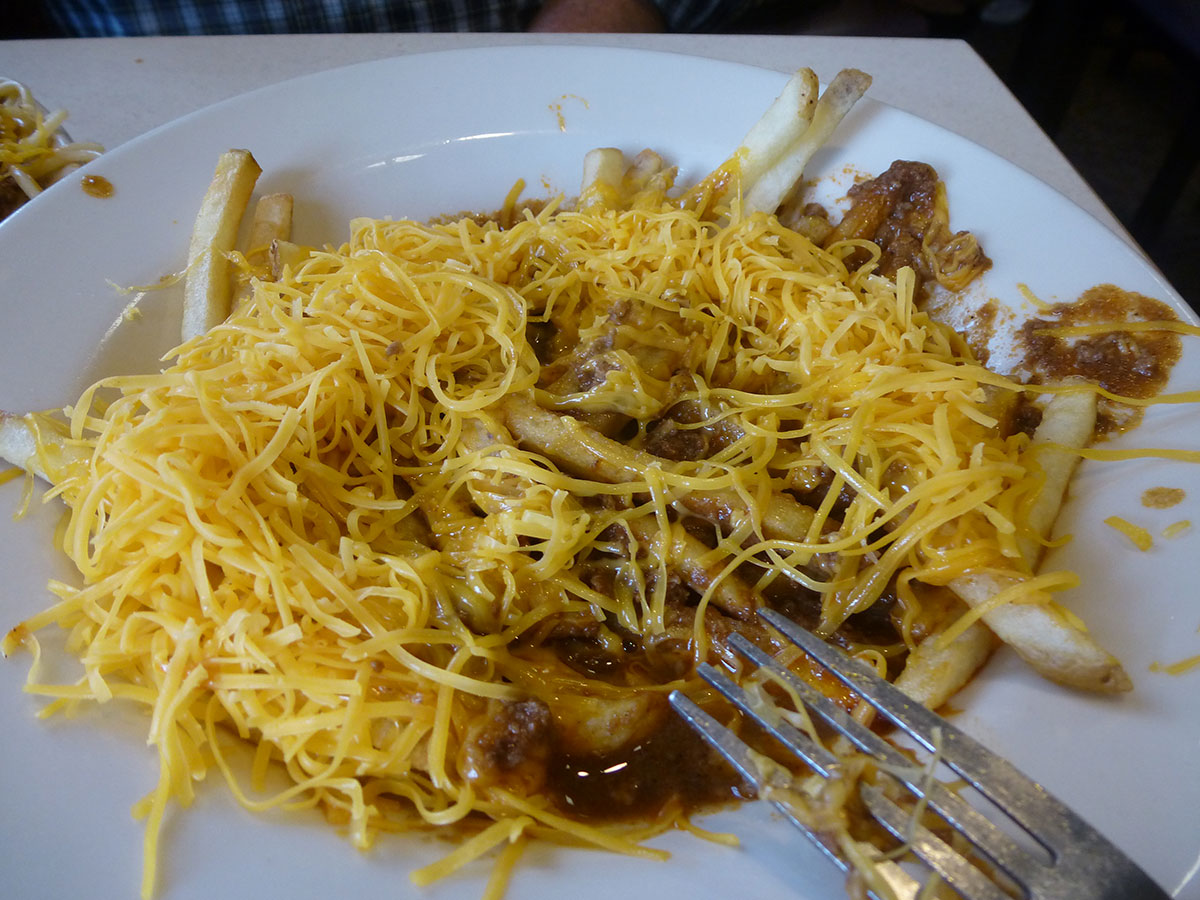
Normally I won’t blog about food I didn’t like. But as Skyline Chili is the signature dish of Cincinnati, I feel it is my duty.We ordered a Chili Cheese Coney, a bowl of Chili Cheese Fries, and a Skyline 3-Way, which was spaghetti with chili and cheese on it. The dog (I would be scolded for calling it that) was bland, almost as bland as the chili. When we were served, we were shown three piles of cheese, and that’s about all I could taste. The fries were soggy, and the spaghetti slimey, and neither of them had any flavor either.

I won’t say it was bad, because that implies that there was something of substance to the meal. Go if you’re visiting, as a cultural thing it must be tried, but do not mistake it for any kind of delicacy or fine cuisine.P1040386 P1040387 P1040388

Aunt Dawn and Uncle Bill

I recall that on one cross-country drive in the early 90s, i made it across Indiana without downshifting, having no particular reason to stop. Since that time we have acquired a very good reason to stop in the state, Linda’s sister Dawn and her husband Bill.

Dawn is a perinatologist in Indianapolis, and she and Greta have always had a great relationship.  At first I thought this was because no one likes little girls as much as a mother of teenage boys, but it has become clearer in recent years that they have a lot in common – both interests and personalities.  In recent years, Bill has been active in remodeling and reselling homes, and he has an excellent eye for and understanding of design issues.  So given our predilections and Greta’s, we left her behind in Indianapolis to web-surf and play with the dogs while Bill and I headed to Columbus for a day of architecture-geeking.  The next day we dragged Greta along, and Bill gave us a fantastic tour of Indianapolis.  (He also introduced us to Graeters ice cream, which we somehow managed to eat four days in a row.)

It was a really nice break from an intense few weeks of travel to just relax with them, catch up on sleep and laundry, and eat fantastic and healthy home-cooked meals.  (Greta’s not yet sure if she should blog about home-cooking or just stick to restaurants.)  It’s been great seeing friends on this trip, but there’s something special about being able to stay with family.

Selfies

I’ve always been fascinated by the tourism environment.  When you’re traveling, you are sometimes within the orbit of the place you’re visiting, but you are sometimes in the tourist world, which has varying degrees of connection to the real place.  I first became conscious of this in Europe in the 80s, when I saw some English tourists looking at small transparencies of Michelangelo sculptures on a slide viewing machine, rather than the actual objects themselves (which were in the same room).  For a while I photographed tourists having pictures taken of themselves in front of famous sights, being interested in exactly which sights and views they found most important.

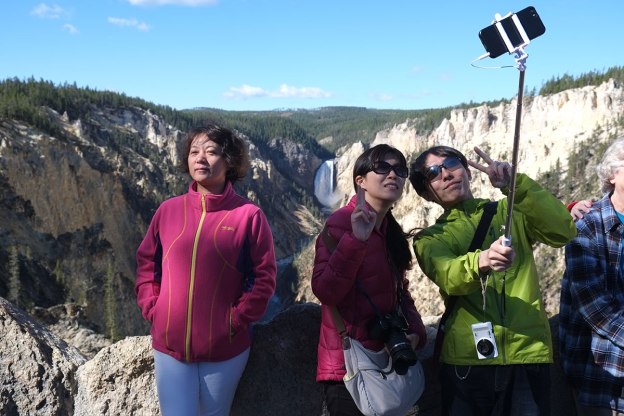
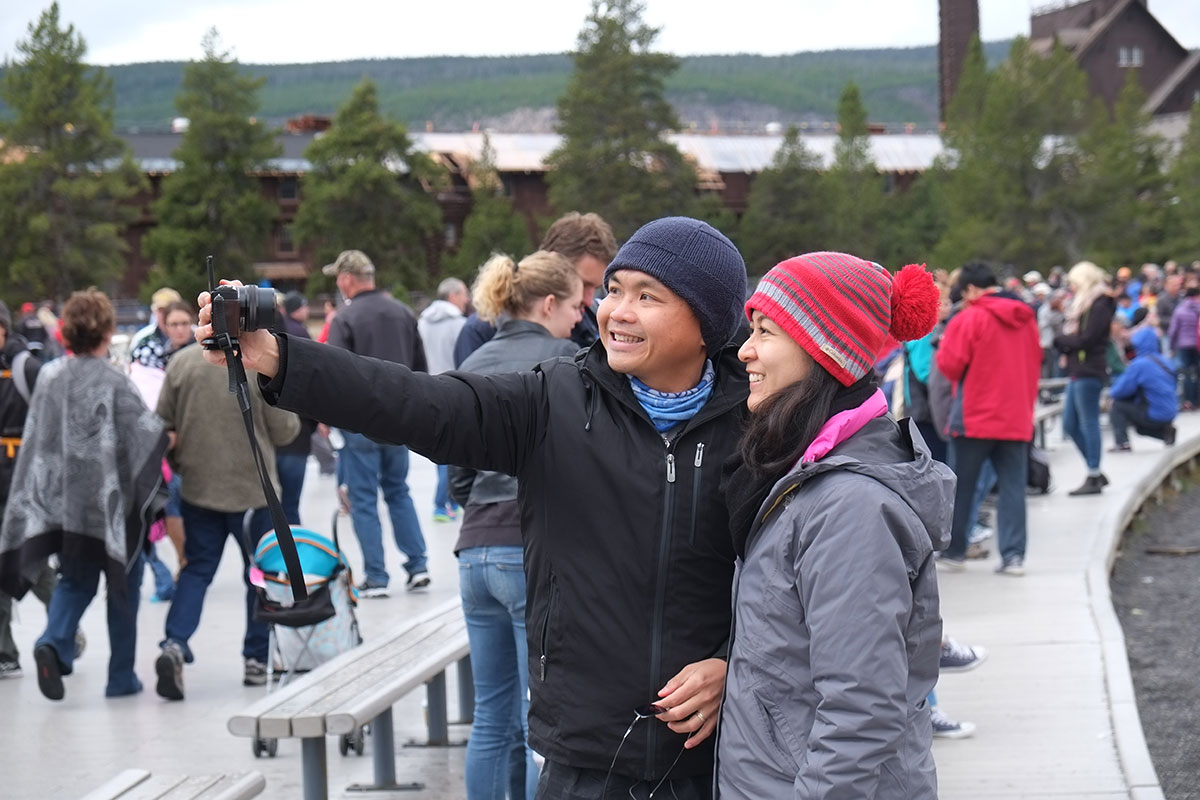
The advent of the selfie has added a whole new layer of complexity to this.  In Yellowstone there were selfie-takers everywhere, and I once again began to photograph the act of photography, but this time just of selfies.  DSCF8296

The classic tourist sights are prime grounds for finding excellent selfie-photos.  Old Faithful:

DSCF8086

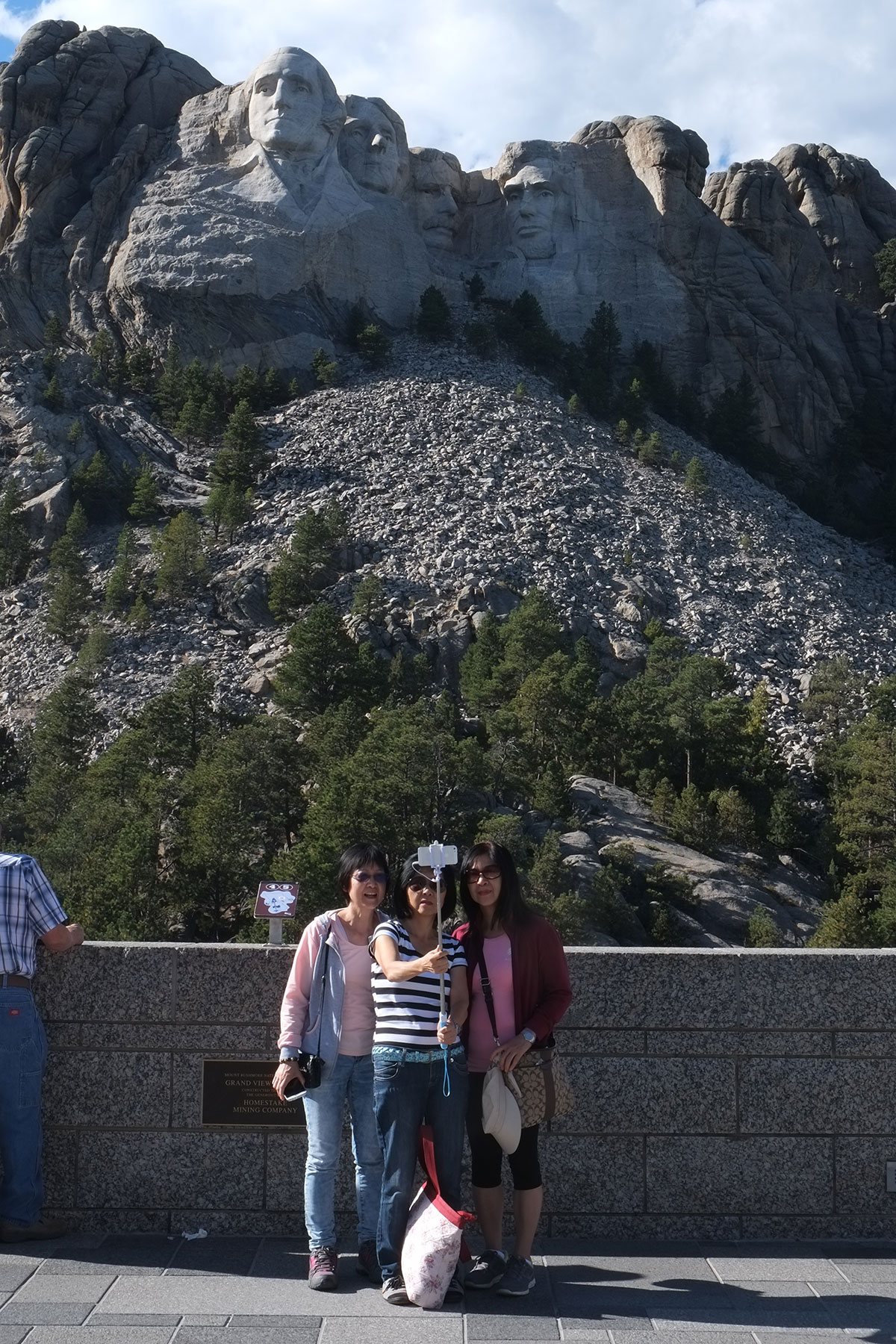
Mt. Rushmore is the best, where people often try to line their heads up with the Presidents. DSCF8452

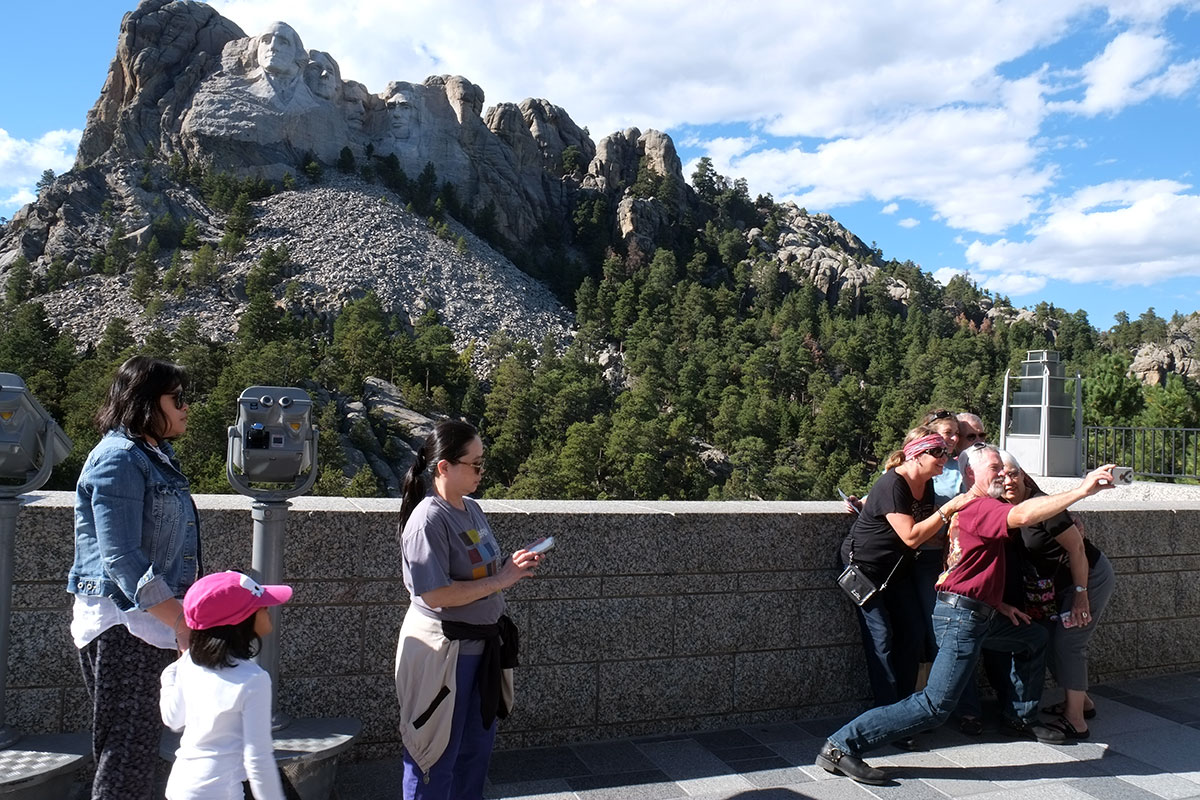
Notice the extreme stretch required to take a selfie which includes a crowd. This man needs a selfie stick.

Notice the extreme stretch required to take a selfie which includes a crowd. This man needs a selfie stick.

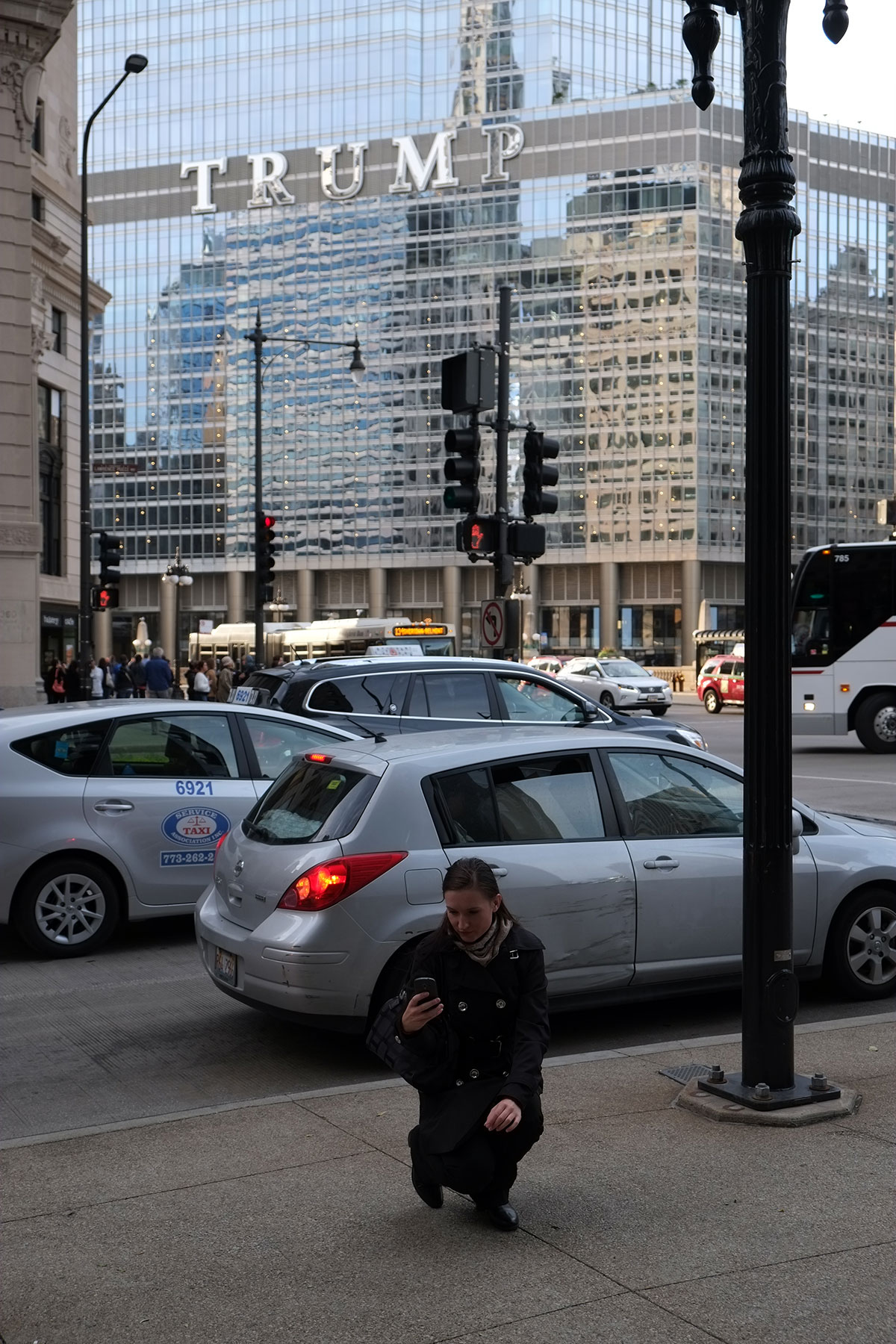
Big city selfies:

the selfie as recording the act of genuflection before the symbol of The Donald.

the selfie as recording the act of genuflection before the symbol of The Donald.

One begins to wonder whether the rules of safe bison-selfie taking should also apply to modern architecture.

One begins to wonder whether the rules of safe bison-selfie taking should also apply to modern architecture.

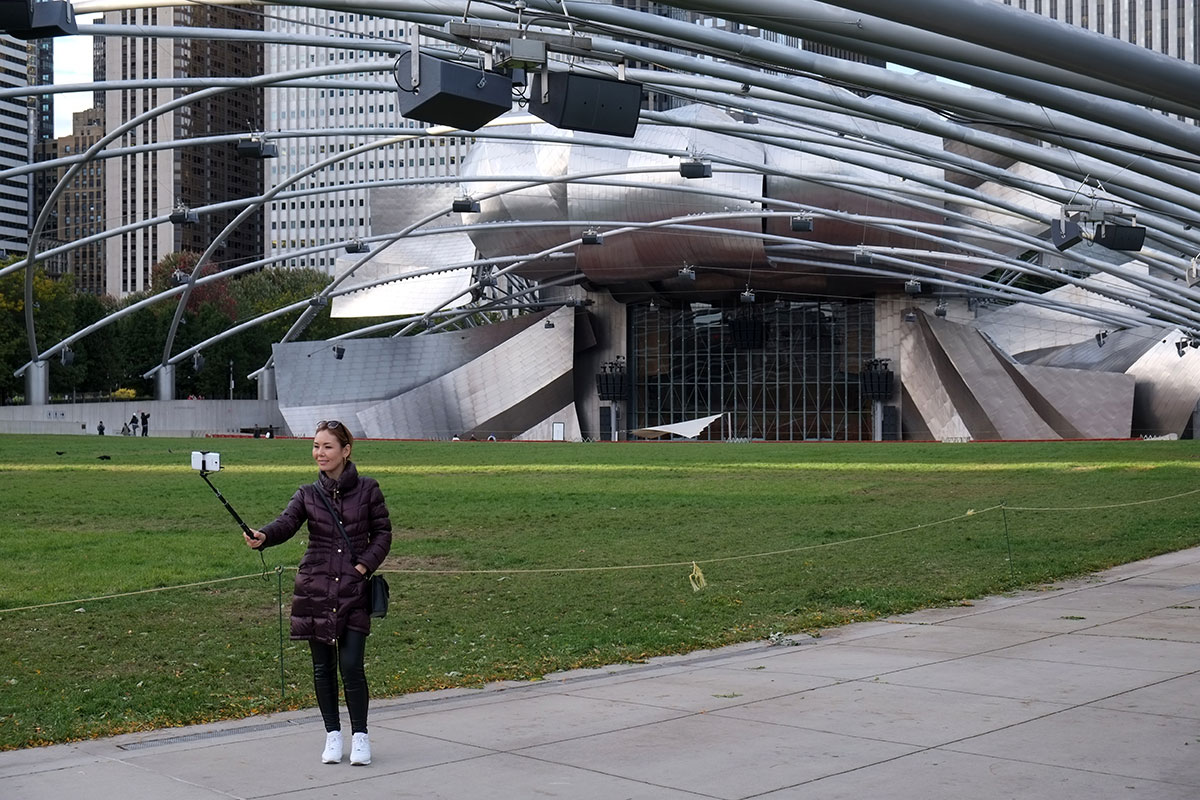
Selfie in the Park with George.

Selfie in the Park with George.

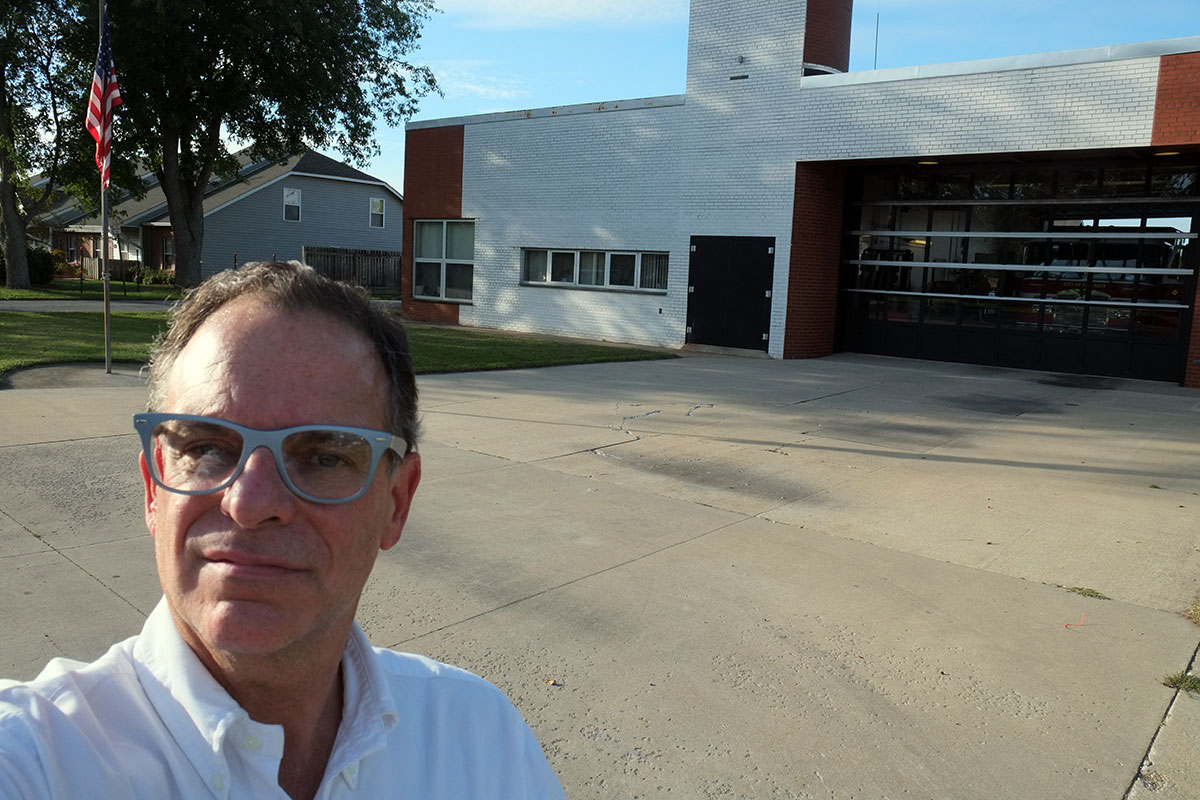
We have decided to participate in, rather than just observe this phenomenon.  hence, the architecture-geek selfie:

the Architecture selfie.

the Architecture selfie.

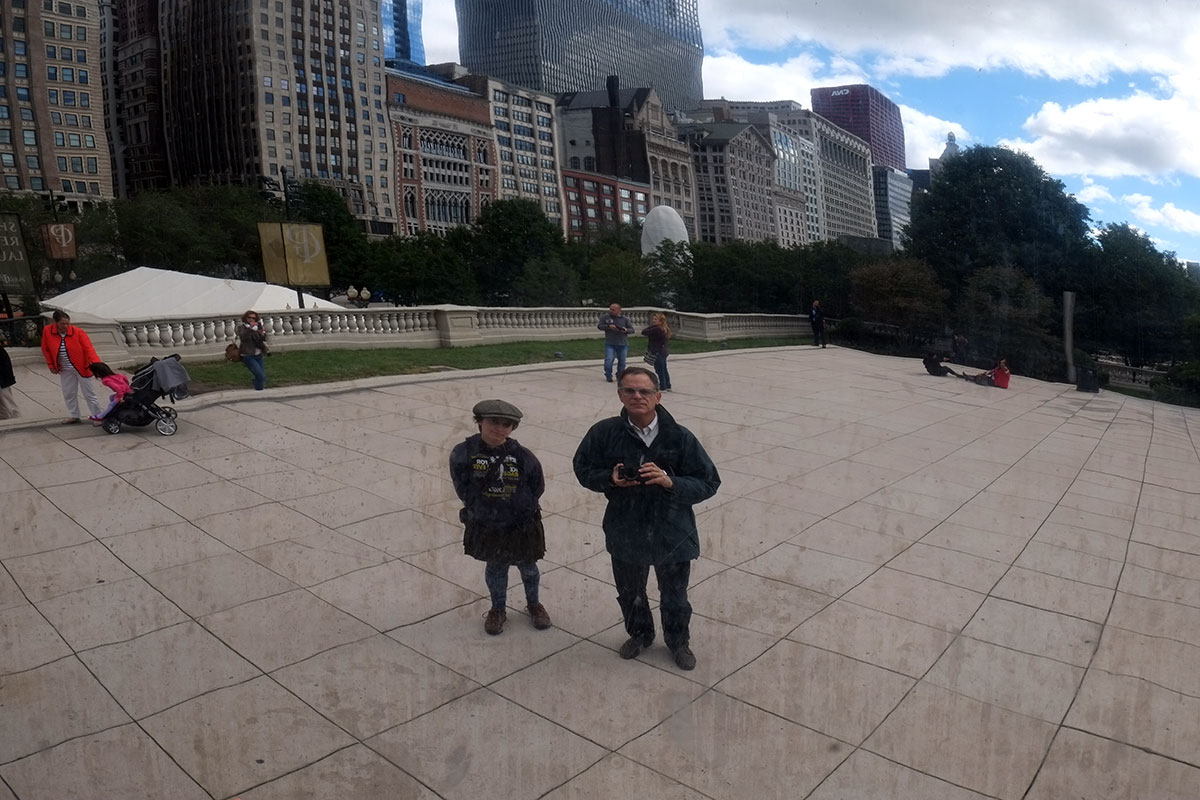
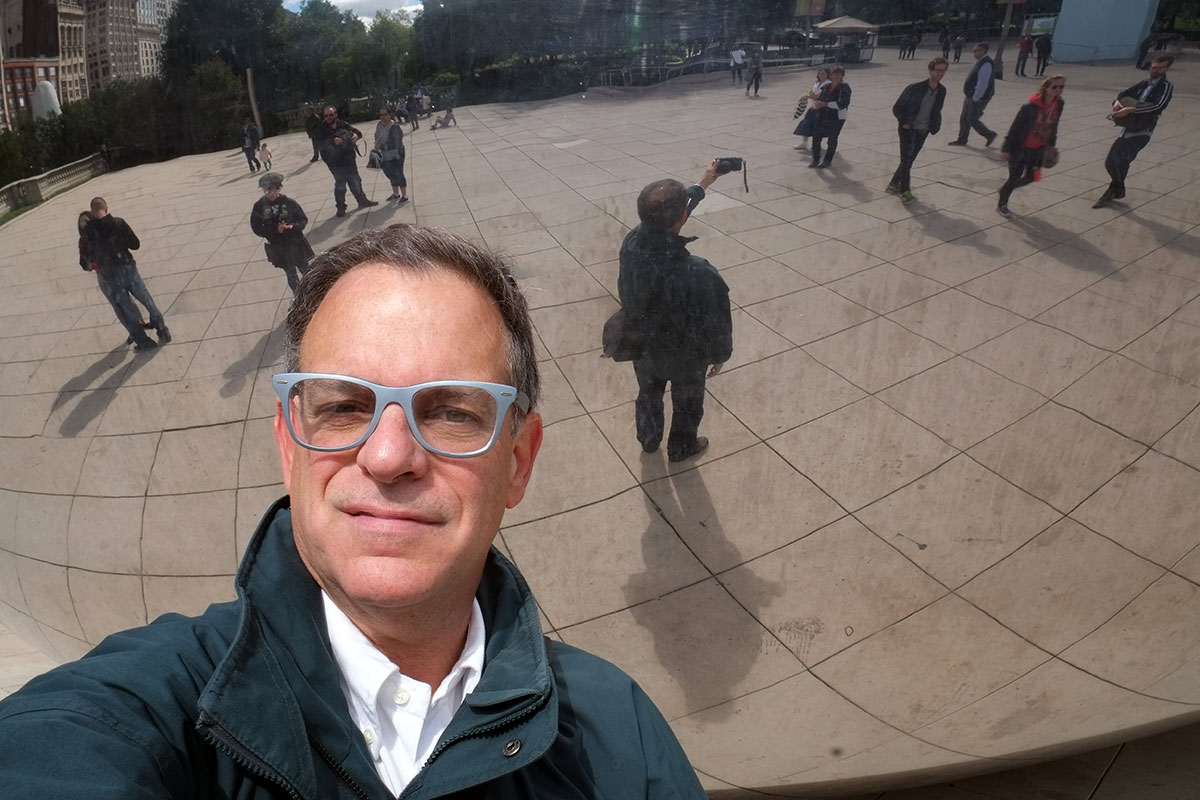
And a new format, the reflected-selfie.  This is a practical matter for us, as our primitive Windowsphones do not have lenses on the front, and so our normal handheld phone or camera selfies are rather hit-or-miss;  the reflection gives us some degree of control.

The reflected selfie.

The reflected blob selfie.

Perhaps the most interesting sub-genre is the bison-selfie.  Recent years have seen the advent of the bison-selfie attack, where unwitting tourists venture too close to large, unpredictable wild animals, and sometimes inadvertently capture images of their imminent attack or demise.  Here is an example:

http://www.washingtonpost.com/news/morning-mix/wp/2015/07/23/bison-selfies-are-a-bad-idea-tourist-gored-in-yellowstone-as-another-photo-goes-awry/

but you can just Google bison selfie for many more.  The bison-selfie has become a meme, and is being celebrated in the popular press:

http://jezebel.com/terry-gross-interviews-the-author-about-her-new-book-bi-1719997411

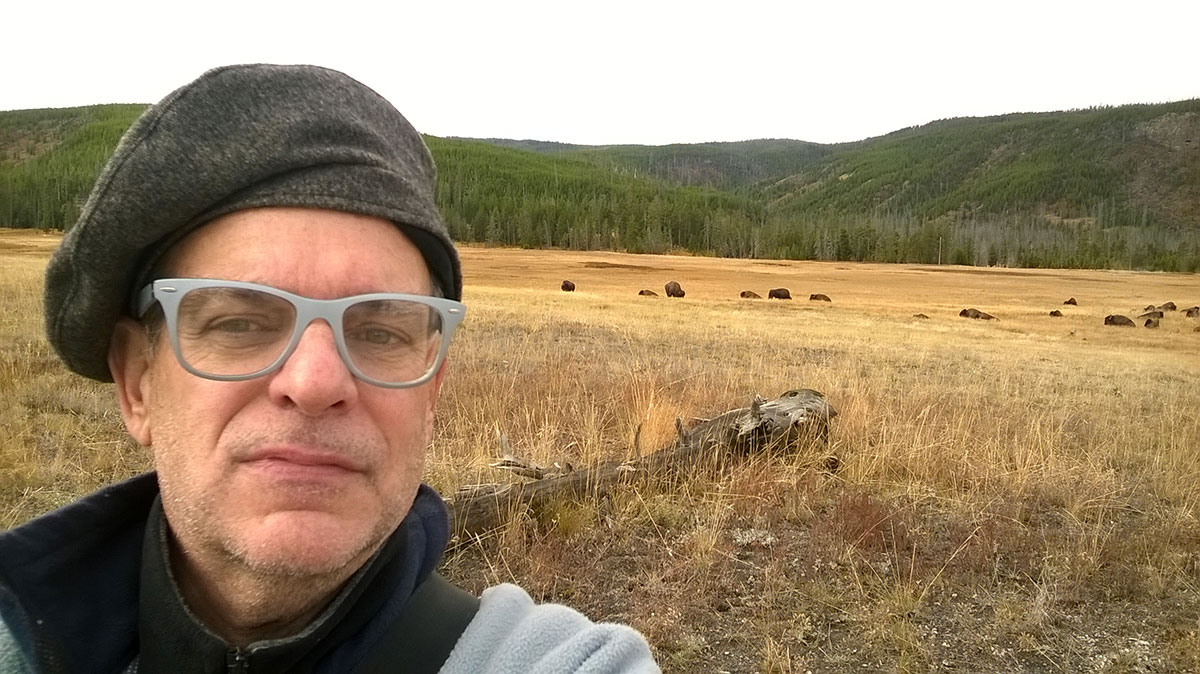
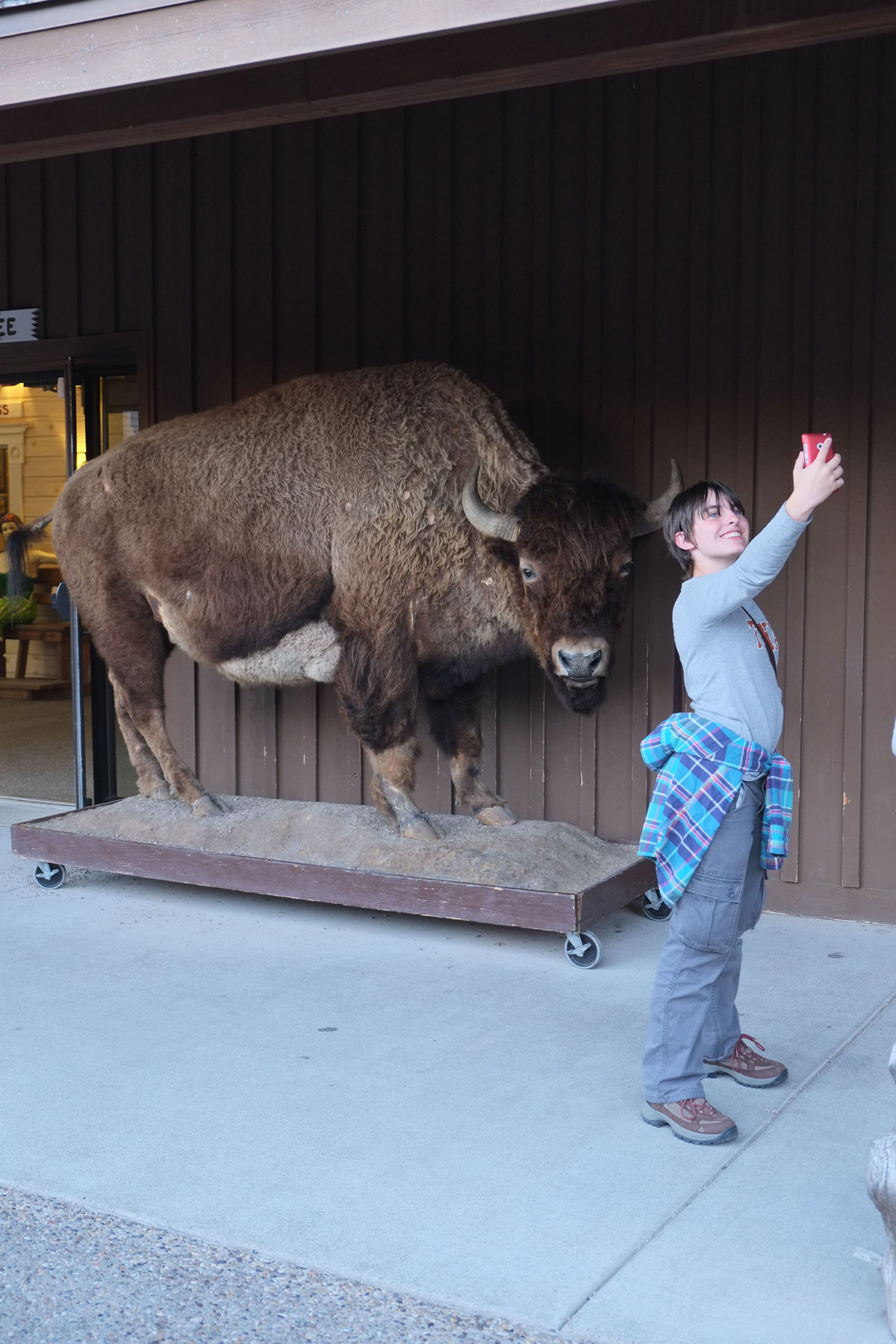
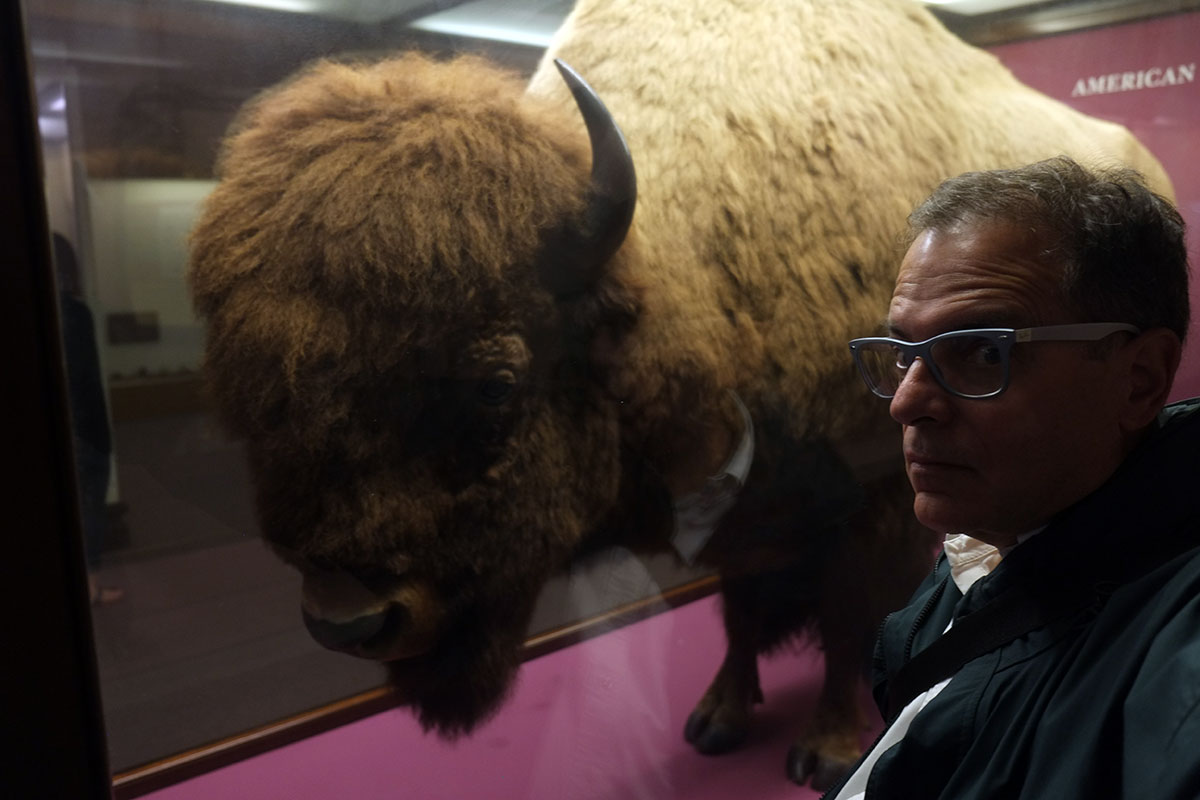
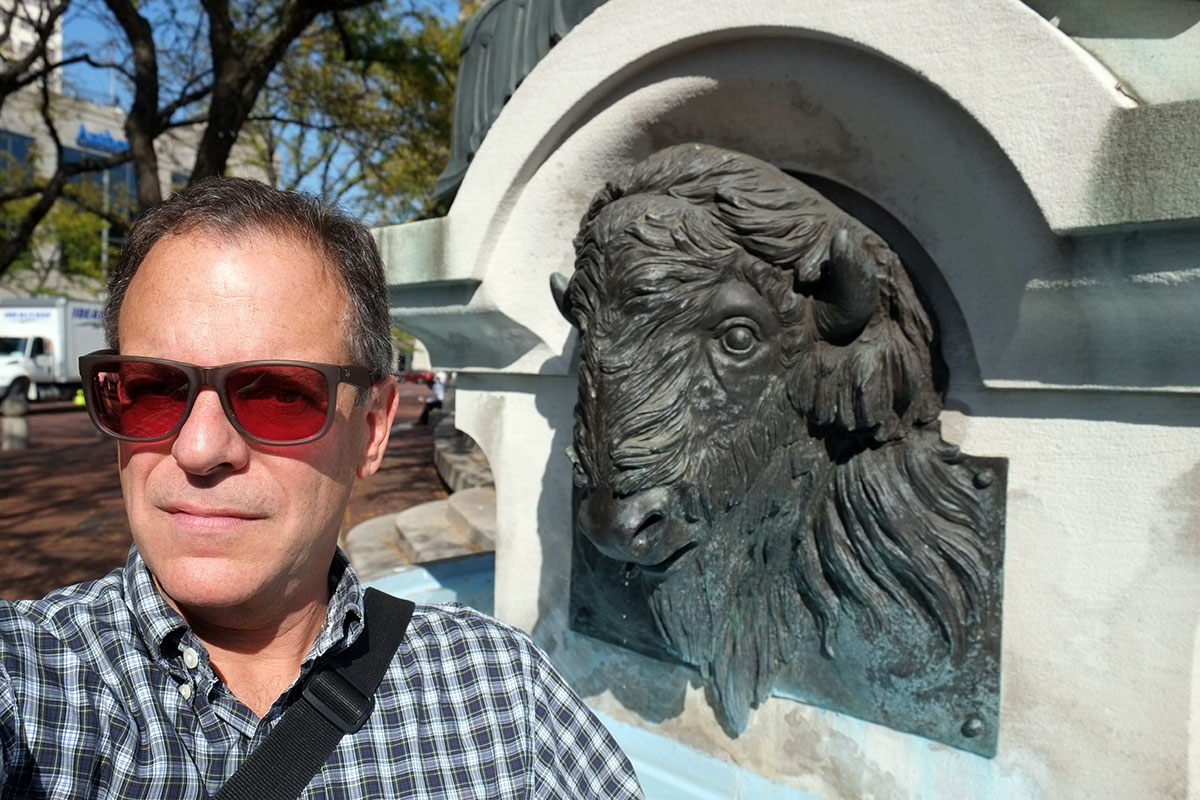
Greta and I were well aware of the dangers of bison-selfies before we went to Yellowstone, so we took precautions.  The following are a series of photos we took which illustrate Safe Bison-Selfie™ protocols:

Safe Bison-Selfie No.2. Dead bison are much safer than live bison.

Safe Bison-Selfie™ No.2. Dead bison are much safer than live bison.

Safe Bison-Selfie No. 3, in the Field Museum. Stuffed bison are even safer when they are in glass cases.

Safe Bison-Selfie™ No. 3, in the Field Museum. Stuffed bison are even safer when they are in glass cases.

Safe Bison-Selfie No. 4: bronze bison are even safer than stuffed bison.

Safe Bison-Selfie™ No. 4: bronze bison are even safer than stuffed bison.

And finally, we arrive at what can be understood as a meta-selfie.  That is, a photograph which is a selfie, but at the same time is photograph of a person taking a selfie, and in fact, is a photograph of a person taking a photograph of a person taking a picture of a selfie.

The meta-selfie

The meta-selfie

Our work here is done.

More selfie photos continue here.