Indianapolis

Indianapolis is just big – about 20 miles across, in either direction.  (368 square miles – significantly bigger than New York City).  This great size leads to a corresponding variety – a large and spread-out downtown, and many residential neighborhoods – from old and decrepit, to close-in and gentrifying, to old ones that are a few miles out from the center and unbelievably grand, and newer neighborhoods of McMansions on the periphery, which feel like they are out in the woods.  Bill Adams took us on a great tour which really showed the variety of places, but I felt that I had barely scratched the surface.

The downtown has some fine old buildings:
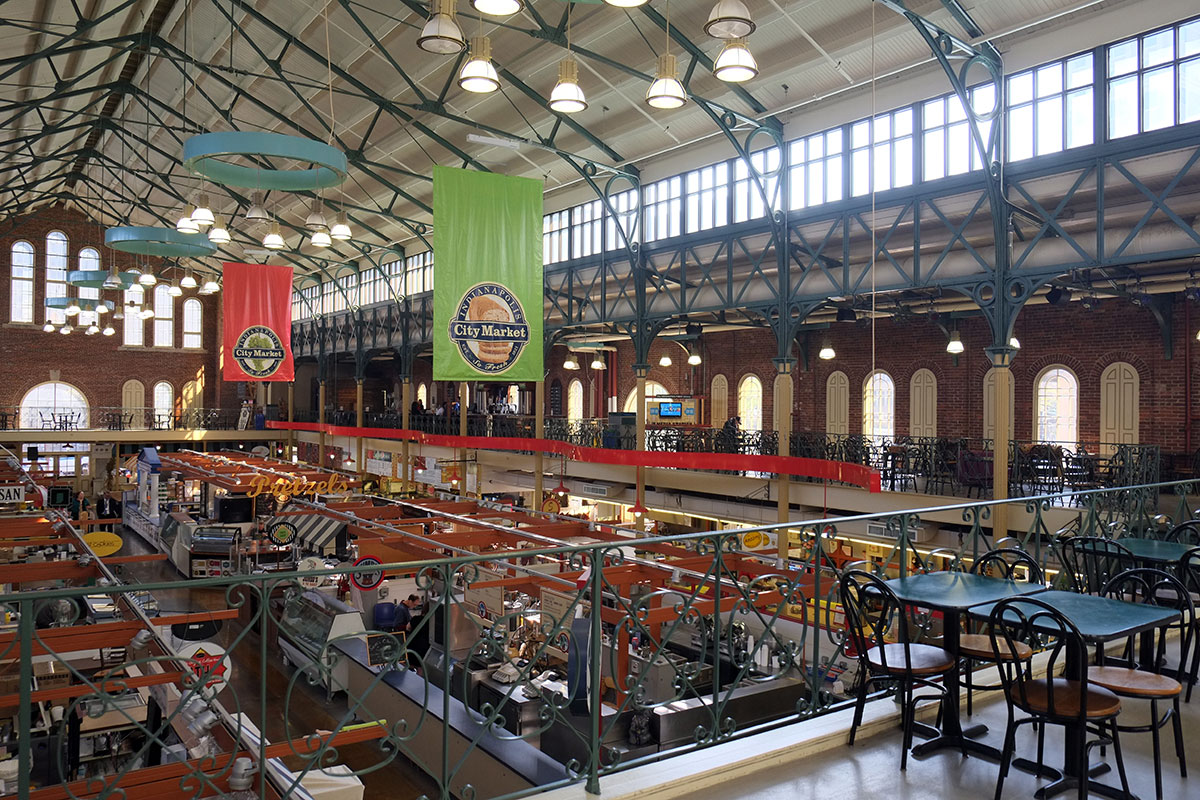
The City Market
The City Market

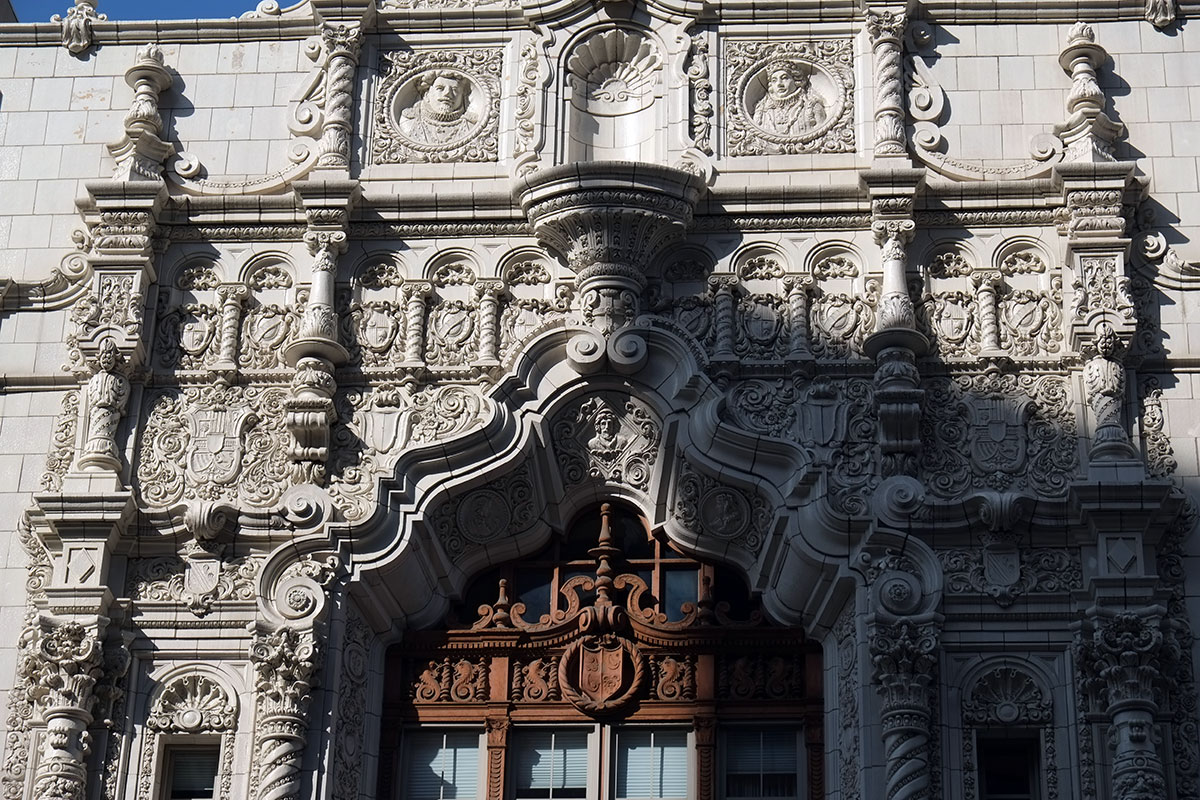
The Indiana Theater

The Indiana Theater

The Statehouse

The Statehouse, right where it belongs on the axis
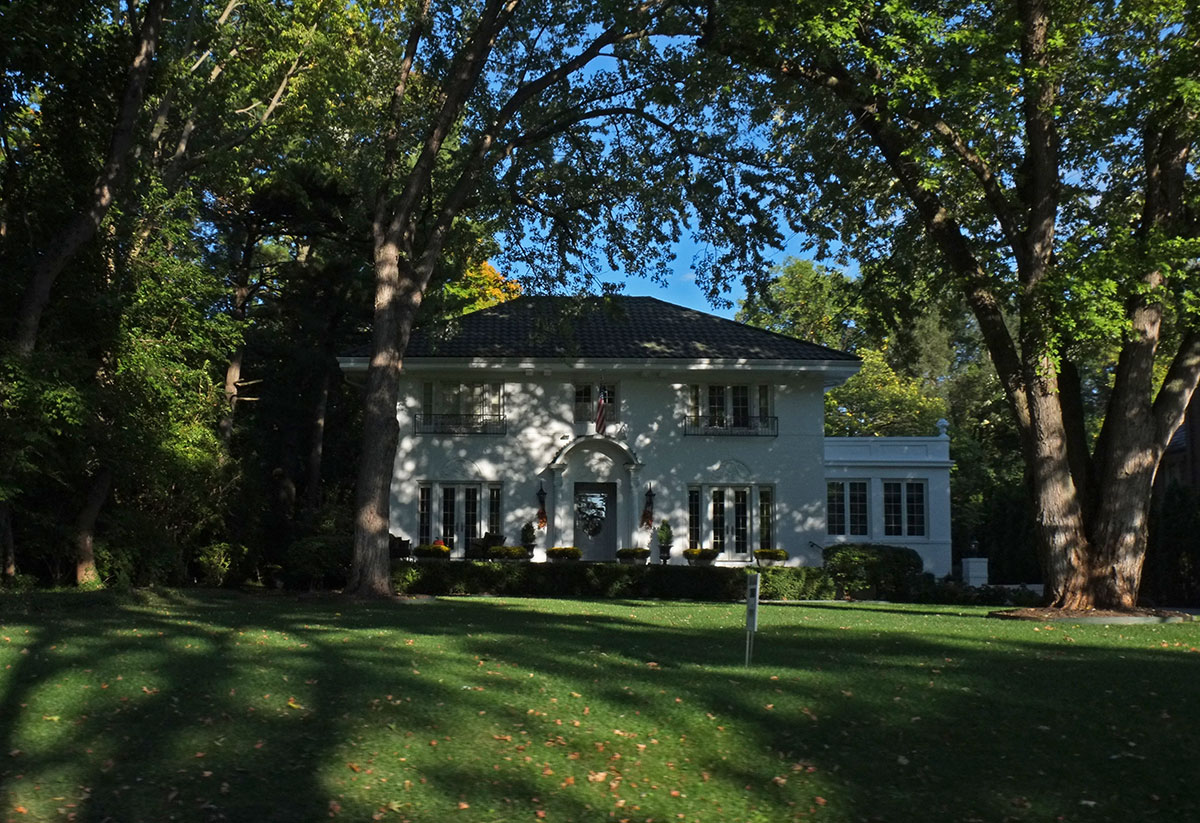
a somewhat typical mansion on the north side

a somewhat typical mansion on the north side

And then the city has a fairly normal array of postwar buildings and juxtapositions, which vary from the commonplace to the truly weird
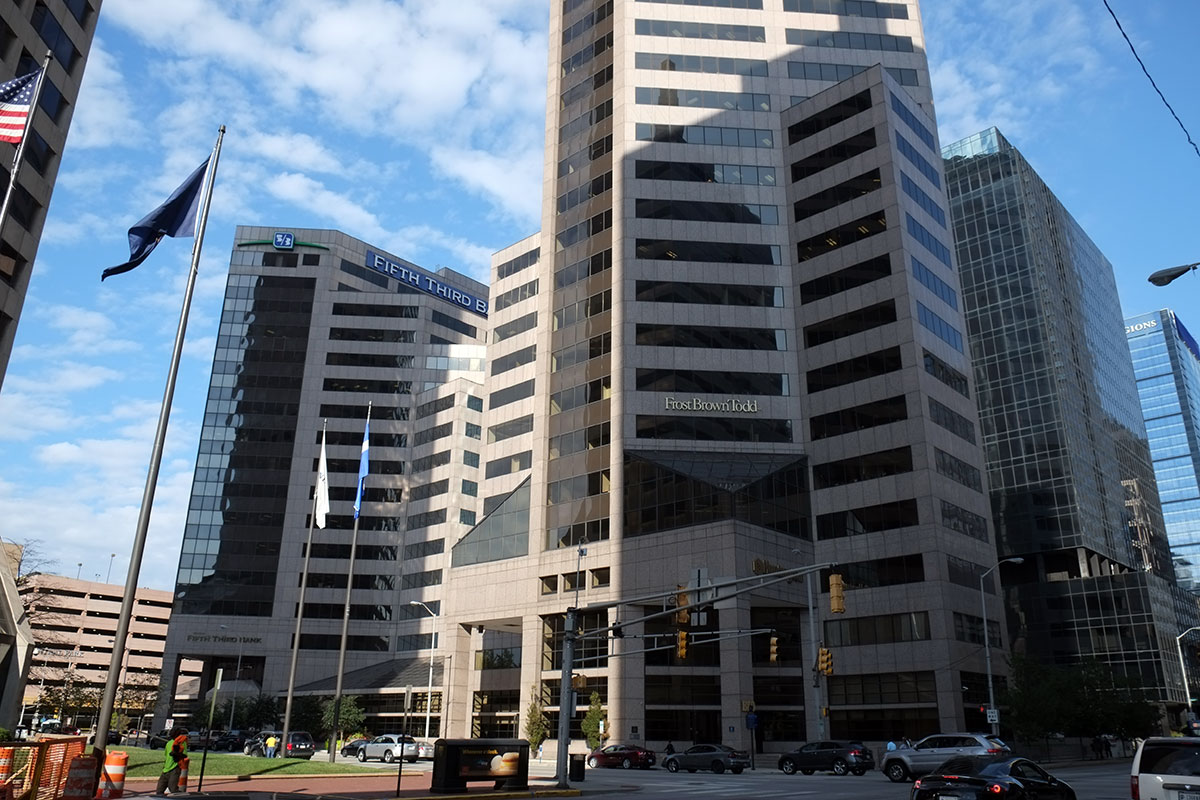
a nondescript but weirdly angled 70s-thing

a nondescript but gratuitously angled 70s-thing

A Marriott which probably looks much less real than the rendering of it did

A Marriott which probably looks much less real than the rendering of it did

a portico on a state office building, remarkably overscaled, ponderous and pointless

a portico on a state office building, notably overscaled, ponderous and pointless

the skyline as seen from the canal to the west
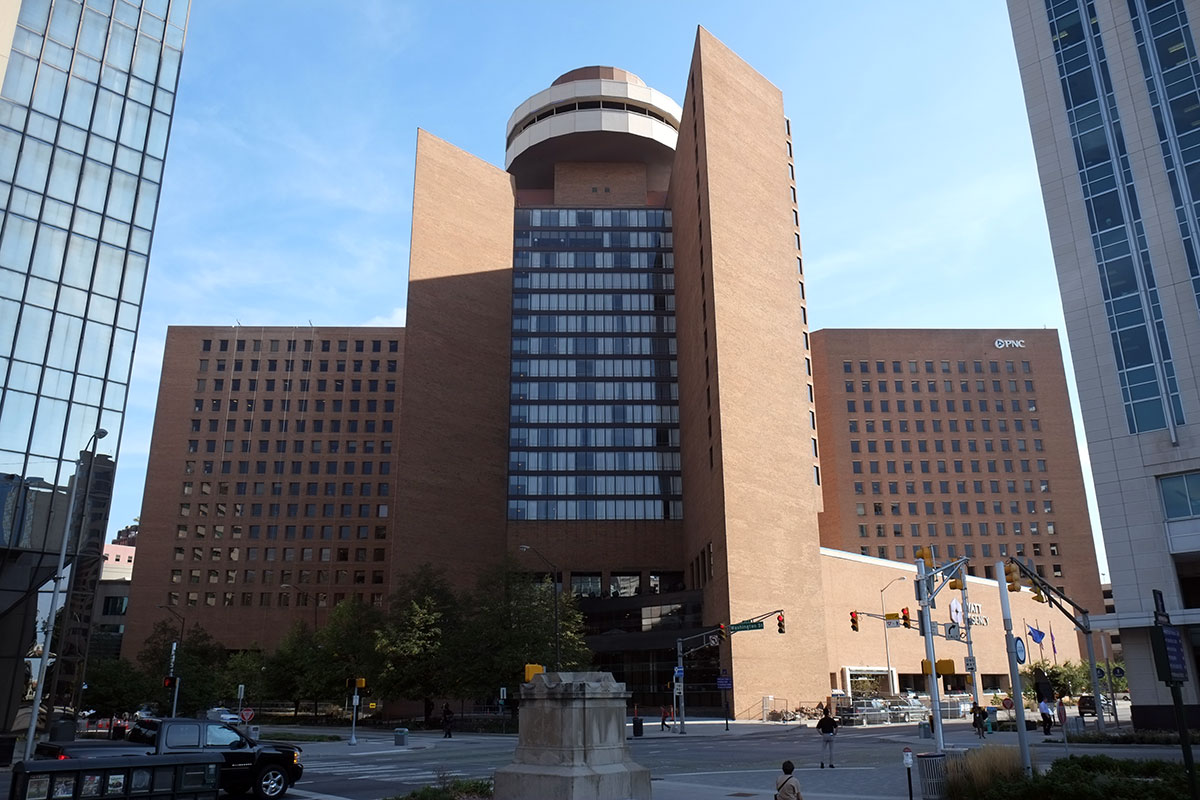
the skyline as seen from the canal to the west

a classic 70s Hyatt, which brought on a wave of nostalgia in me
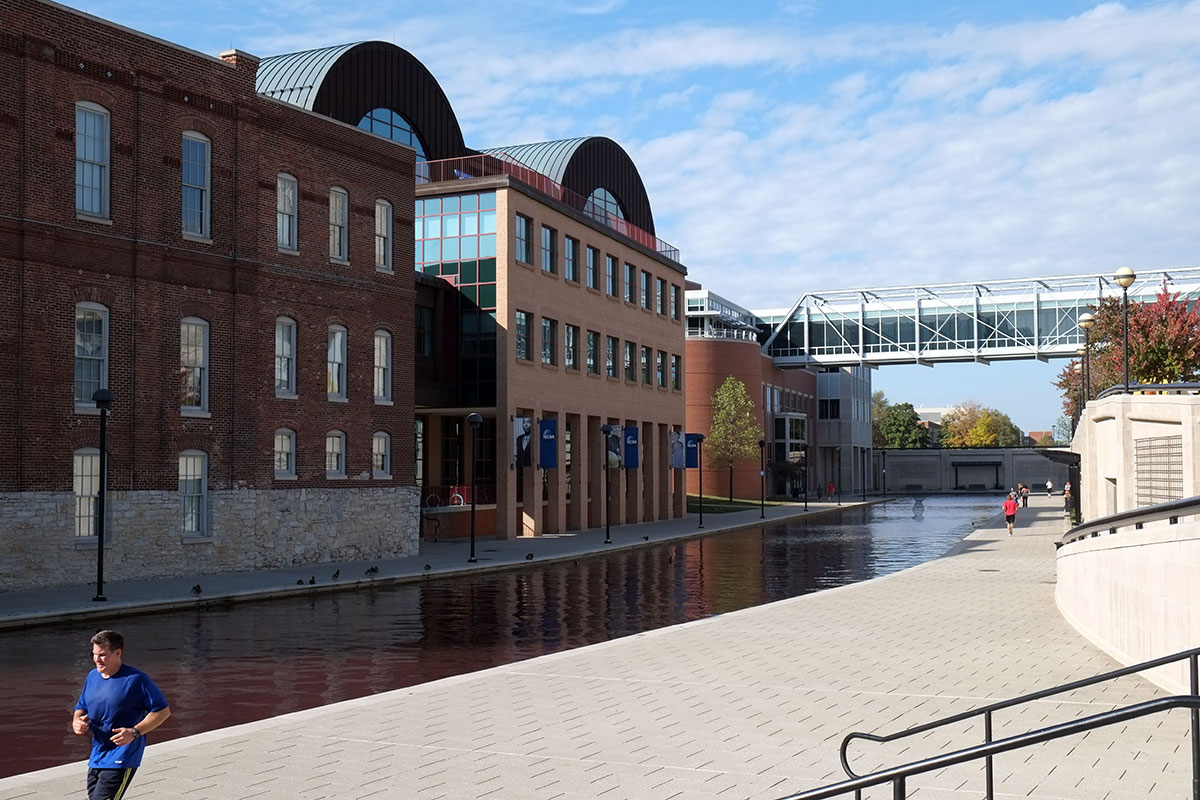
a classic 70s Hyatt, which brought on a wave of nostalgia 

the NCAA headquarters, by Michael Graves

the new NCAA headquarters, by native son Michael Graves

with this attached hall-of-fame piece

with this attached hall-of-fame piece

DSCF0329

The strangest thing was seeing what aspects of civic life are most valorized.  The Statehouse is quite impressive, but who are those individuals being accorded a place of honor on the banners hanging out front?  Statesmen, or perhaps war heroes?
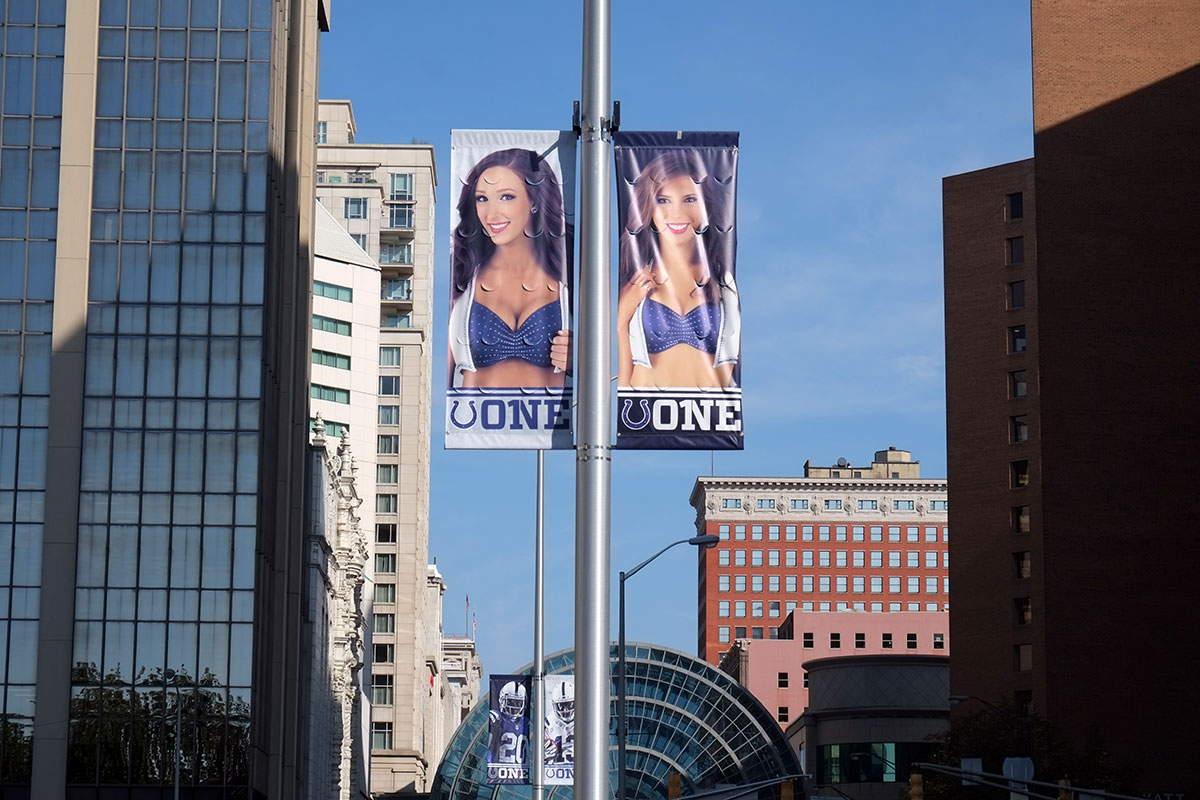
DSCF0331

No, it’s the Colts’ cheerleaders!

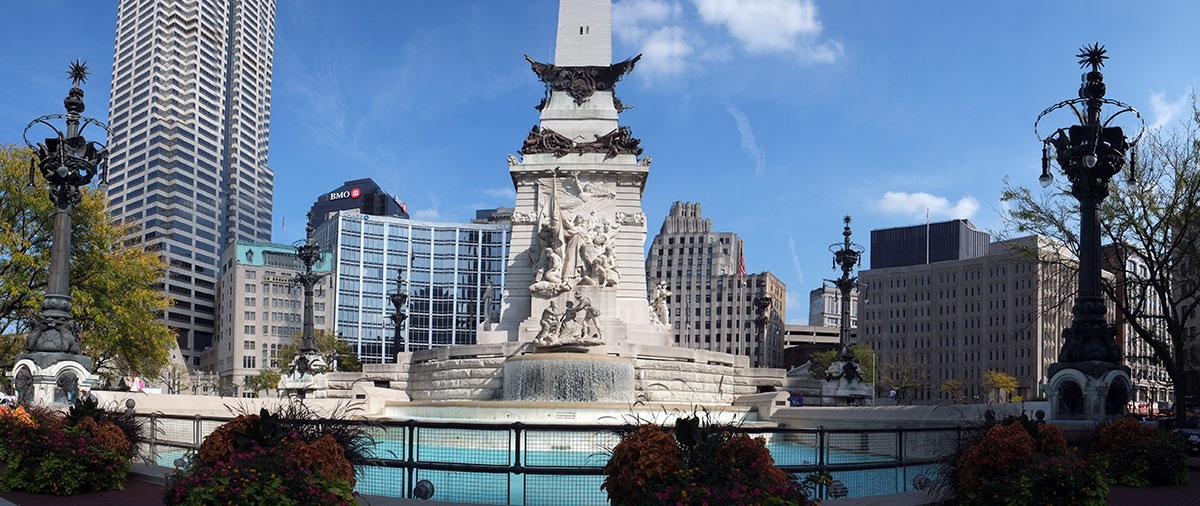
But by far the most amazing thing in Indianapolis is the Soldiers’ and Sailors’ Monument, which is in the center of town where the two main streets intersect, similar to the Philadelphia City Hall.  The urban space is very grand, a circle 500 feet in diameter between building walls, with the buildings enclosing the traffic circle and the Monument.  The Monument is covered with the kind of histrionic and spectacular civic sculpture which was common in the late 19th century (such as at the Columbian Exhibition, or the Maine Memorial in NY).  DSCF0297

DSCF0309DSCF0299

It’s a fantastic, over-the-top piece, and it may be the best means we now have to experience what the White City must have felt like.
Columbus, Indiana

Columbus, Indiana is a modern architecture petting zoo of the first order.  J. Irwin Miller, who became head of his family’s company (which manufactured Cummins diesel engines) after WWII, somehow became enamored of modern architecture, and decided that he would pay the architect’s fees for any civic building in Columbus, if they would hire serious modern architects.  Since the 1950s, dozens of significant modern buildings have been built there.

One of the most important is Miller’s own house, designed by Eero Saarinen’s office (with Kevin Roche as project architect), interior design by Alexander Girard, and landscape design by Dan Kiley. The house is a pinwheel design, with pristine, rigorous planning and space.  It might seem rather severe and removed if it weren’t for Girard’s exuberant furnishings (most of which I can’t show here, as you’re not allowed to photograph inside.)

the driveway

the driveway and carport

me of sixteen columns, supporting the steel roof structure

one of sixteen columns, supporting the steel roof structure

looking from outside into the dining and living rooms

looking from outside into the dining and living rooms

outside the kitchen

outside the kitchen

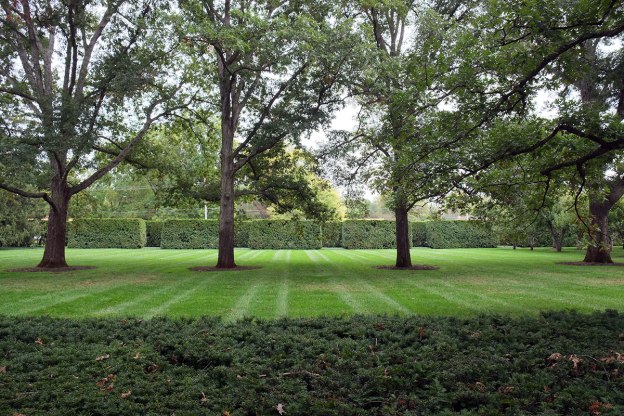
The house is superb, but Dan Kiley’s landscape is perhaps even better – extending the grid and zones of the house to the outside, creating an order on the site that is very formal, yet quiet and inviting.  DSCF0117

an allee at th rear of the house

an allee at th rear of the house

The downtown is full of notable buildings, but it doesn’t feel forced;  none of the buildings is striving for dominance.  In contrast to today’s flashy starchitect-branded landmarks, these buidlings fit well together, forming a coherent whole with each other, and the more normal commercial buildings of the town.  We don’t tend to think of modernist architects as being overly concerned with fitting into the context, but it is very clear that was the intention here.  Perhaps this was yet another requirement of the enlightened client?

the city hall, by SOM

the city hall, by SOM

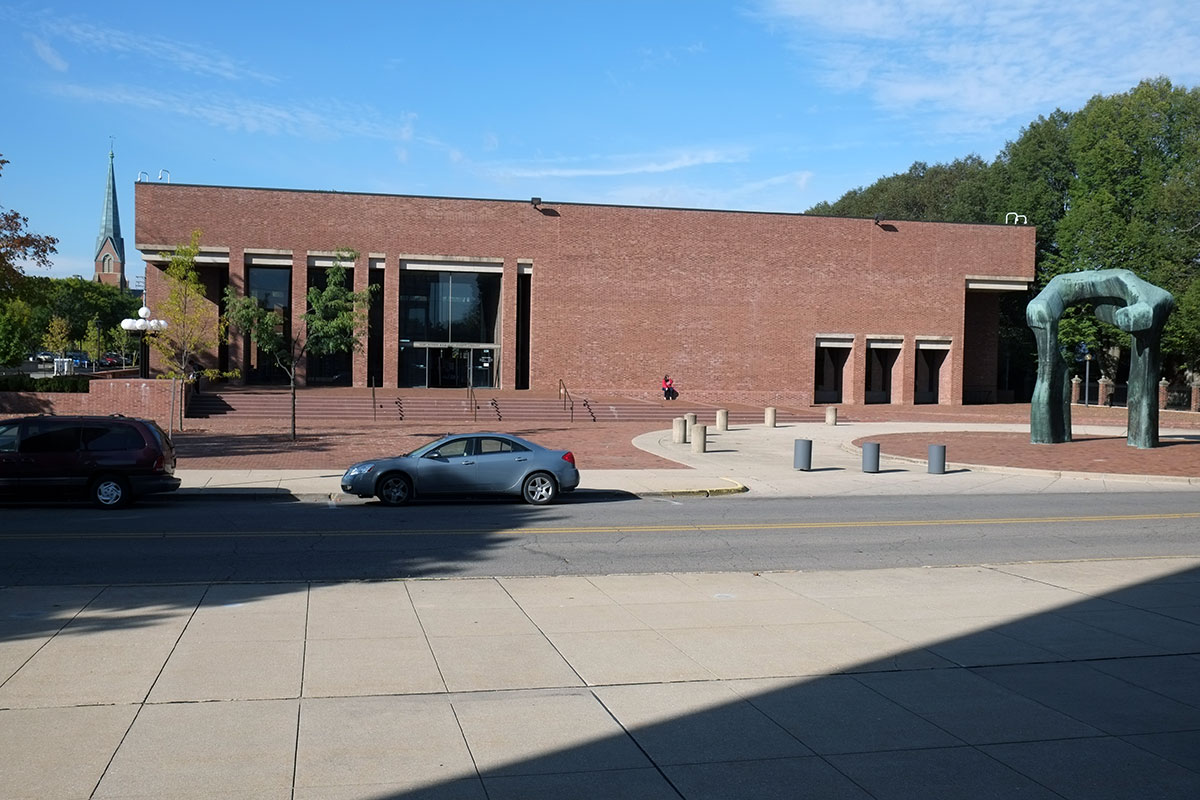
library by IM Pei

library by IM Pei

inside the library

inside the library

the former newspaper office, by SOM

the former newspaper office, by SOM

a parking garage by Koetter/Kim

a parking garage by Koetter/Kim

The Saarinens were clearly the favorites, and after Eero’s early death, much work went to his successor firm, Roche Dinkeloo.

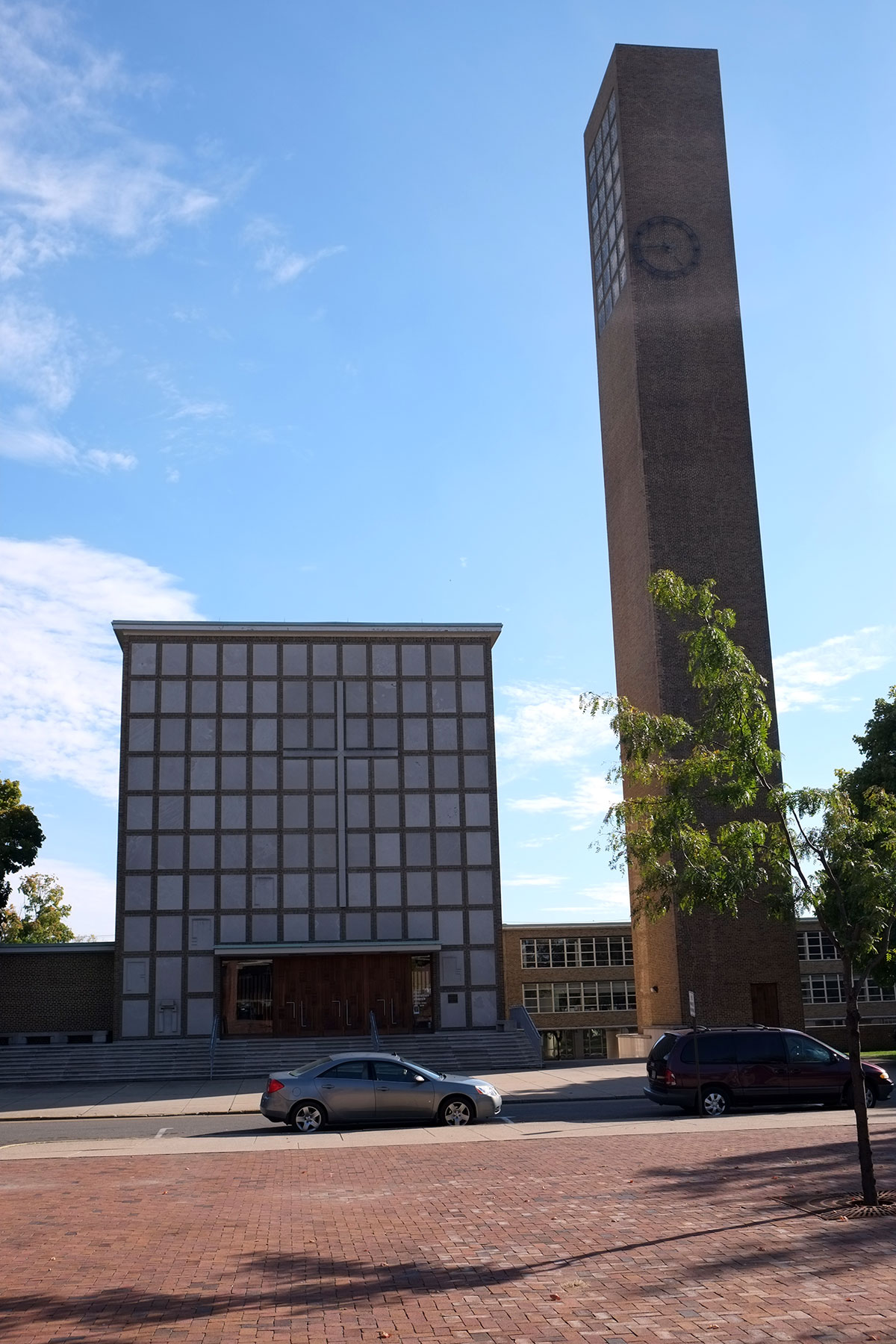
church by Eliel Saarinen

church by Eliel Saarinen

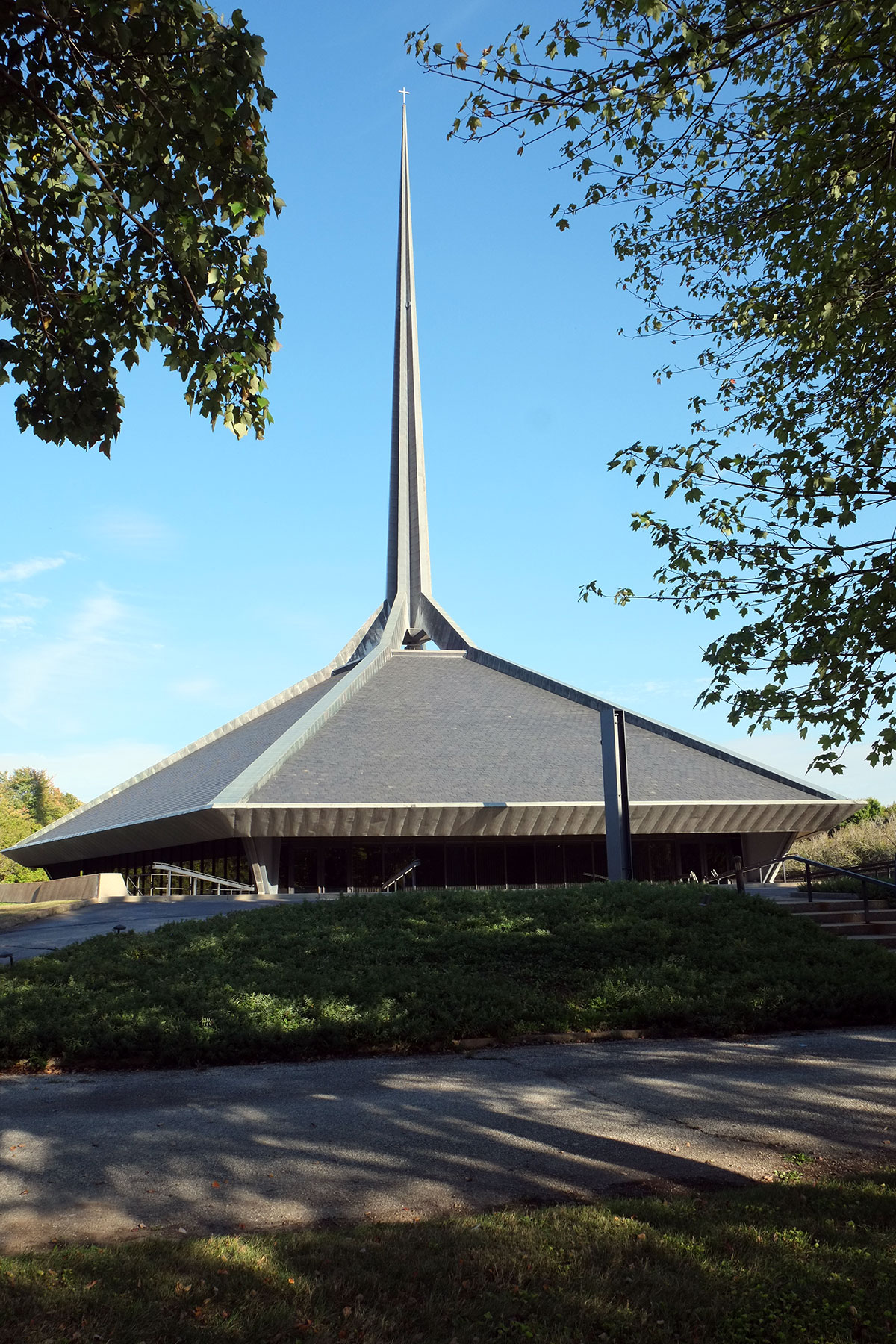
a church by Eero Saarinen

a church by Eero Saarinen, on the outskirts of town

the post office, by Roche Dinkeloo.  Lou Kahn on a government budget,

the post office, by Roche Dinkeloo. Lou Kahn on a government budget

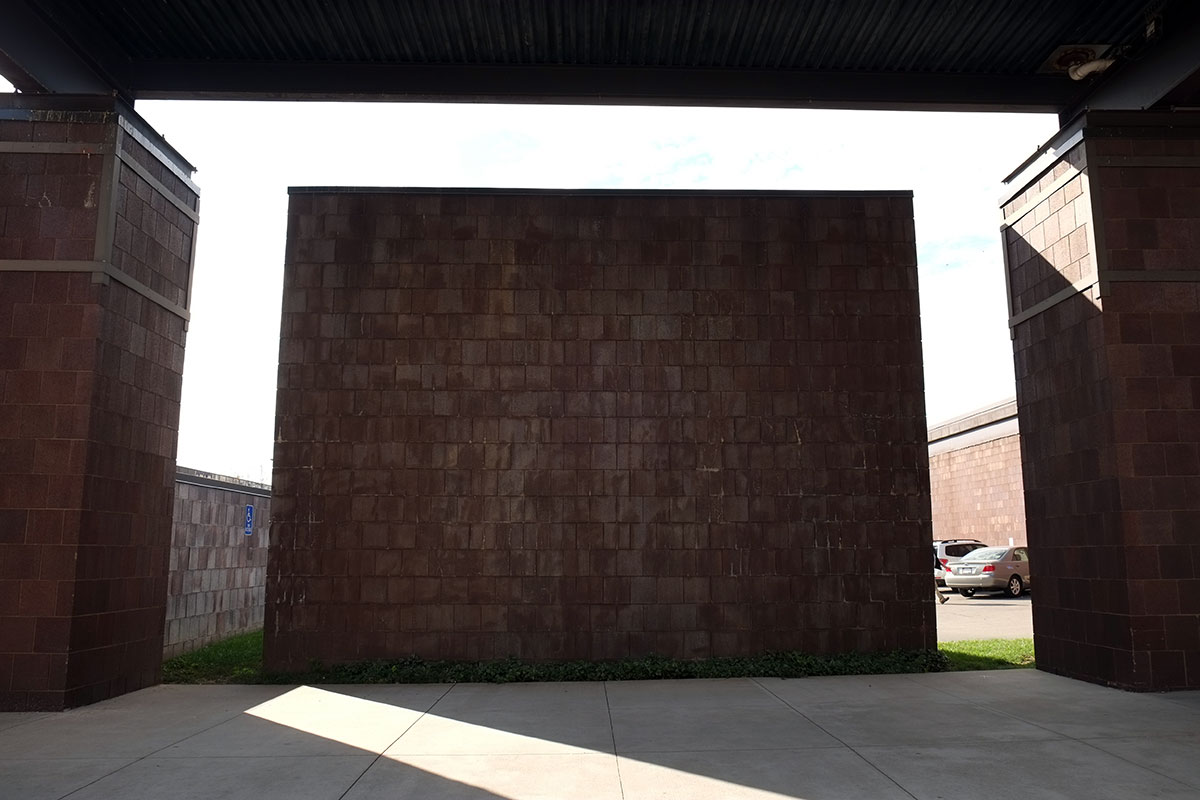
it resembles the monolith in 2001, but it is really just a screen wall hiding the parking lot

it may resemble the monolith in 2001, but it is really just a screen wall hiding the parking lot

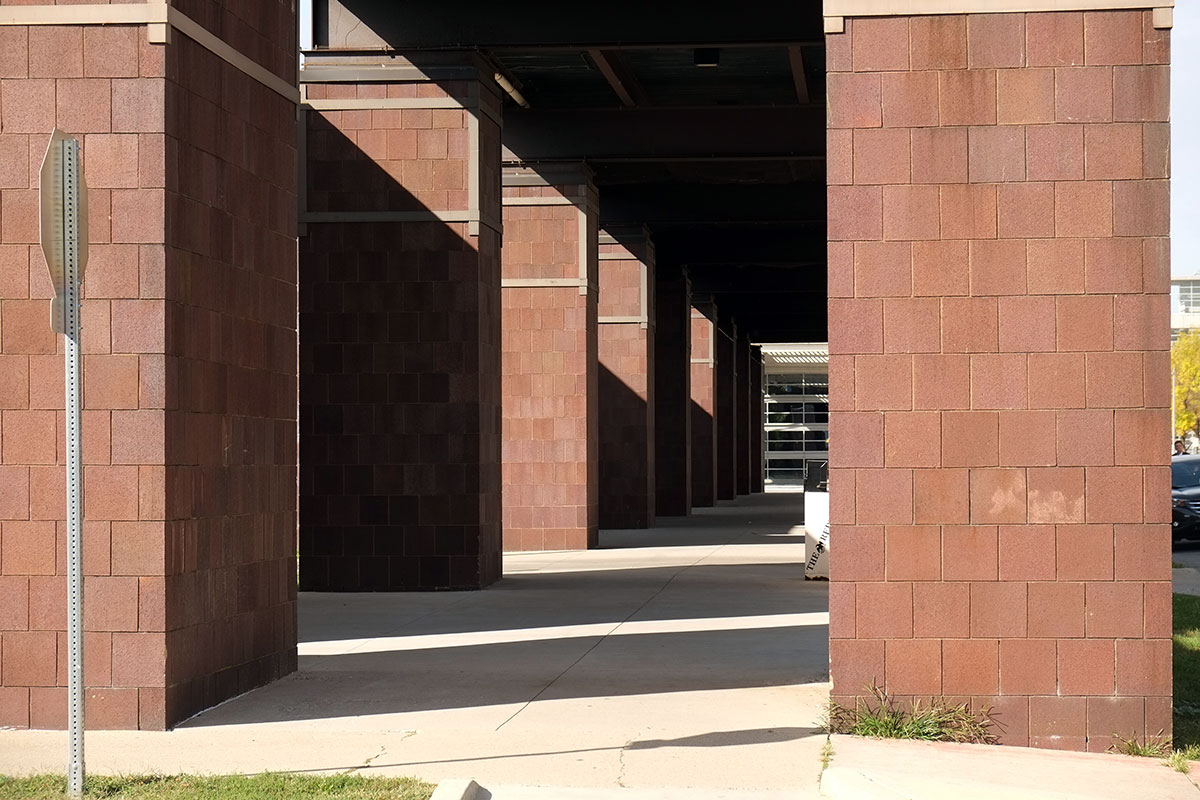
a giant portico wraps the site of the Cummins headquarters, again Roche Dinkeloo

a giant portico wraps the site of the Cummins headquarters, again Roche Dinkeloo

in the lobby of the headquarters, a huge open office landscape building, which takes off from Wright's Johnson Wax building, with its skylights integrated with the structural grid

in the lobby of the headquarters, a huge open office landscape building, which takes off from Wright’s Johnson Wax building, with its skylights integrated with the structural grid

architects of a certain age will be able to identify this building.  Did you know it came in color?

architects of a certain age will be able to identify this building. Did you know it came in color?

This is a really worthwhile place to visit – we barely scratched the surface in one day.  It is amazing to see what effect a great client can have on a whole city.

Lynne Dearborn

Lynne was already an architect when she arrived as a student at the UO in the early 90s. She came to further her research into affordable housing and CDCs, and I accepted her as a research advisee, as she was one of very few applicants I’d seen who had a clear idea of what she wanted to do, and seemed quite capable of doing it.  It was a pleasure having her in Eugene for a few years, as she did a great job balancing the demands of simultaneously being a grad student, a teacher, and a mom.  Lynne was more of a colleague than a student, and we were always in agreement on the shortcomings of the housing production system (and the profession).

Lynne decided to continue her research at UW Milwaukee, where she received her PhD, and she then joined the faculty at the University of Illinois – where she has taught quite a number of students who later came to the UO as grad students (and one current UO faculty member).  Her work has always involved social issues in architecture, and in recent years it has brought her to many remote and interesting places around the globe (so she hasn’t felt quite the same need to travel around in a trailer for a year).

the architecture building at UIUC

the architecture building at UIUC

We had a brief visit but thorough tour of the campus (but still could not find out why what I always knew as Champaign-Urbana became Urbana-Champaign).  Certainly the highlight of the visit was meeting her new (to us) husband, John Stallmeyer, who is also on the architecture faculty.  I inquired how long they had worked together before they became an item, and ascertained that they came nowhere near the record held by me and Linda.  We had a very interesting discussion about the current state of academic architecture, finding that the issues which concerned us were almost identical;  I think this will become a continuing theme in this blog.

Champaign struck us as quite a nice town, and as always, it was great to see an old friend living a happy, meaningful and productive life

The Africanos

We’ve been visiting old friends on this trip, but sometimes we get to visit new friends, who somehow feel like old friends after a very short time.

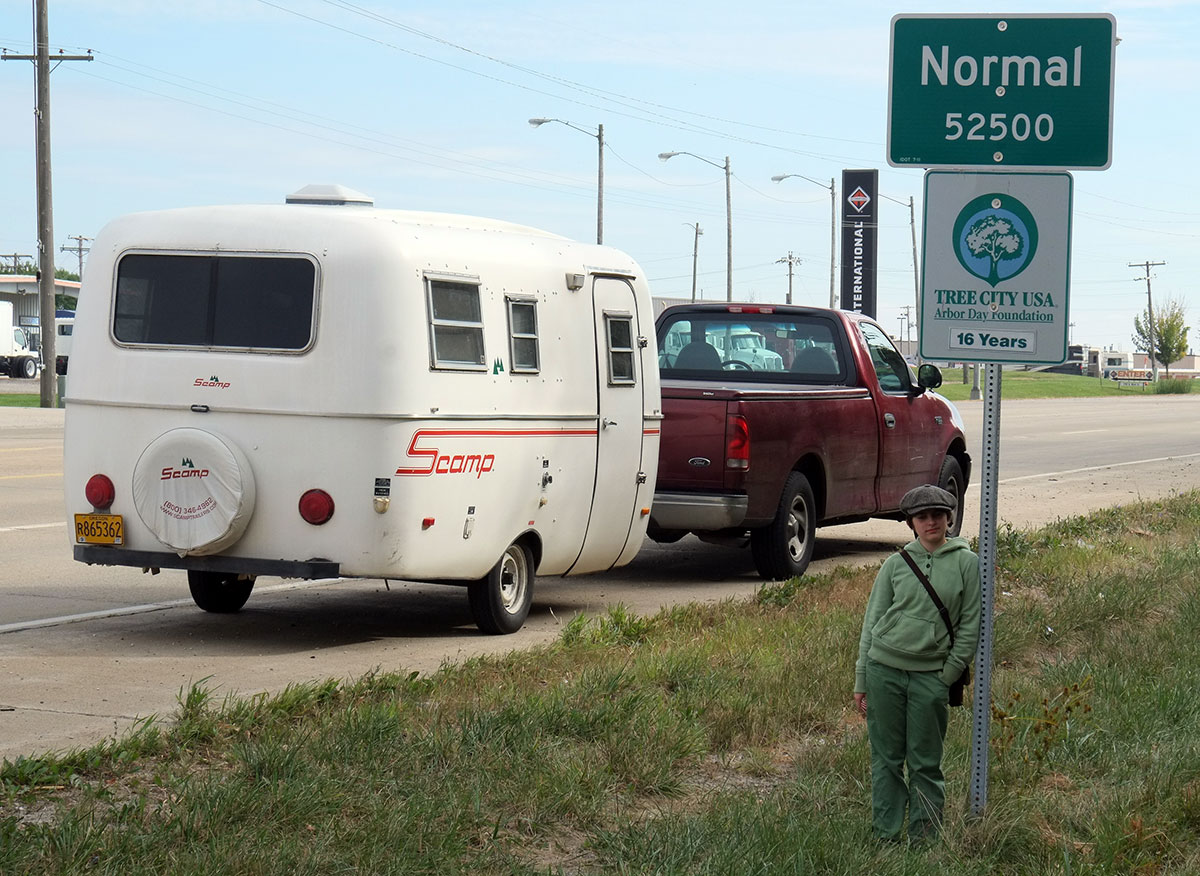
I had heard about Rebecca Sigler-Africano and her husband Nicolas Africano for years.  Rebecca is the twin sister of our friend Deborah, whom we know because her husband, Rob Peña, taught with us at the UO in the early 90s.  We finally got to meet them when their son, Gianni, enrolled in the architecture program at the UO four years ago, and they would sometimes head west from their home in Normal, Illinois, for Gianni’s final reviews.  We’d really enjoyed spending time with them in Eugene, so we headed south from Chicago for a short visit.

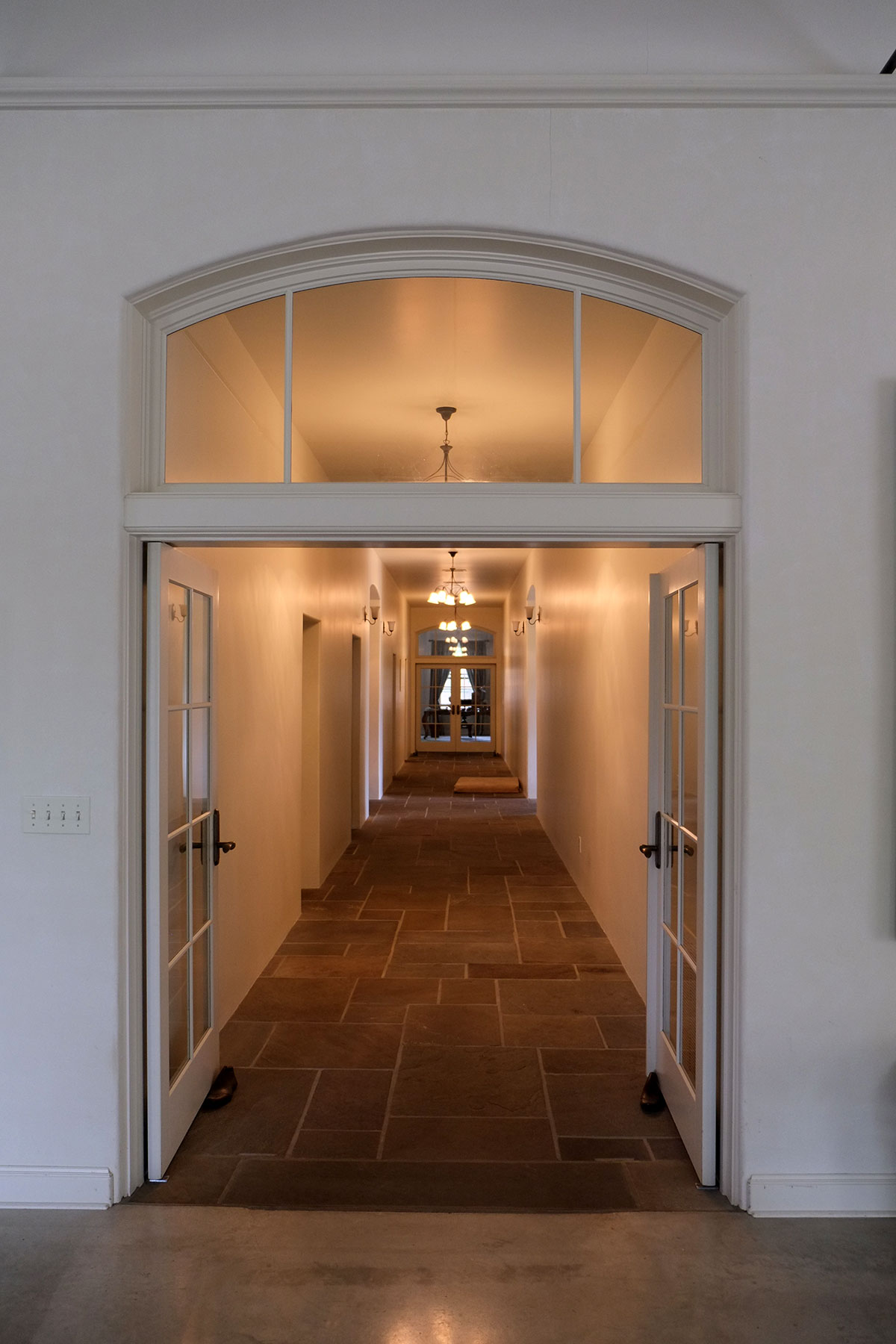
They live in one of the most extraordinary places I’ve ever seen;  years ago they bought a mid-19th century orphanage in Normal, with lots of land and buildings, with room for a residence for them and their three sons, and the studio space which Nicholas uses to create his large, figural sculptures.  Over the years they have sold off some of the property to friends, but they live in the main building, a simple but elegant brick edifice with beautifully-proportioned rooms arranged on a central hallway and cross-axis for entry.DSCF0069

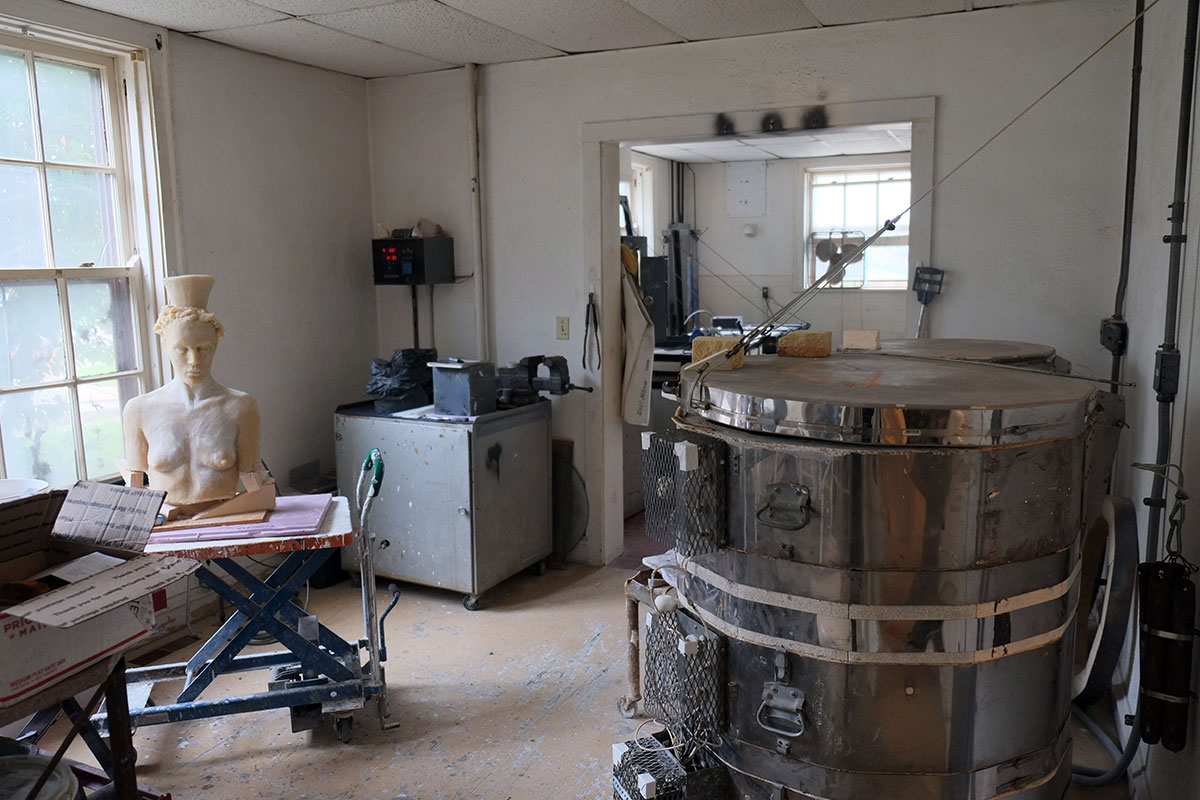
The home was amazing, and so was everything else about our visit – the hospitality, the food, the interesting and lovely neighbors they invited over for a dinner party, the chance for Greta to see what teenaged life is like in Normal (as she headed out to a horror movie with their son Pablo and his friends) but mostly the chance for what seemed like a non-stop, 24-hour conversation about life and art.  Nicolas took us through the building he uses as his studio, which comprises his sculpture studio (the room where he creates the wax sculptures which are used to make molds for glass casting), the kiln rooms (where his assistant uses the lost wax method to make the molds and then cast the glass), and his private study, which is where he thinks and creates.  DSCF0048

The grounds were gracious and beautiful (no one else on our trip has told us that they’d open the gates so we could pull our camper into the courtyard), with plenty of room for Luigi (the dog) to run around.DSCF0059

As with so many other places and people we’ve visited on this trip, we wished we could stay longer, but the highway calls, and we had to bid farewell to Normal, a place that seems anything but.  DSCF0074

Aaron Venn

Aaron was a student in the last housing thesis studio I taught in Portland, back in the late 20th century. He was an unusual student, one who never acquiesced to conventional wisdom or just went along with what all other architects thought;  Aaron was (and still is) tenacious in arguing from first principles, not giving an inch until he was satisfied with the premises and logic of any proposition.  I really enjoyed this attitude back then, and have continued to appreciate it over the years, as he looks at all social issues in this way, not just architecture.

Not surprisingly, Aaron had issues with much of how the architecture profession is structured in this country, and has drifted away from professional practice.  (Can one be a “lapsed architect”?)  He lives in a remarkable period house in Woodstock, Illinois, which is such a perfect small midwestern town that it was used in the film Groundhog Day.

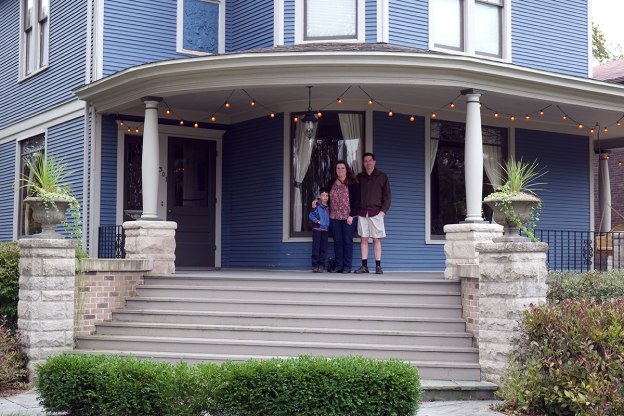
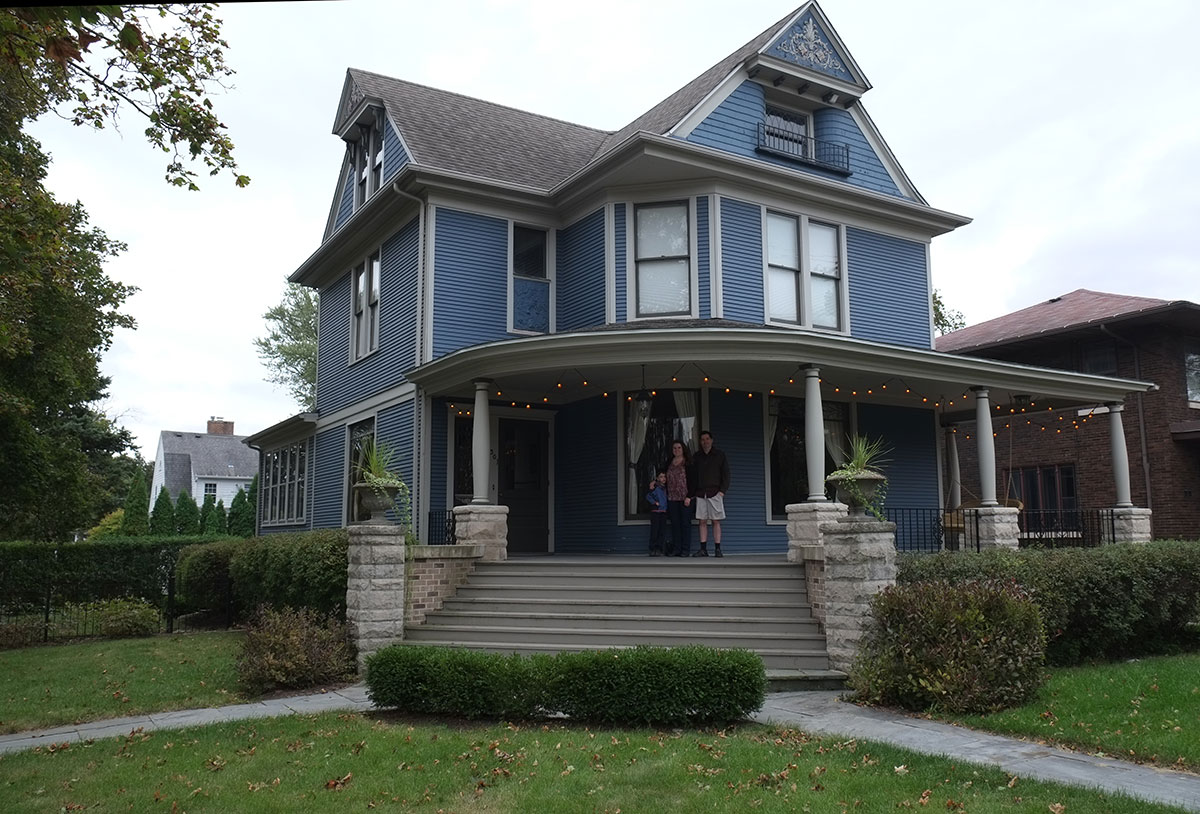
Their house in Woodstock.

Their house in Woodstock.

Greta siting in the hall of their amazing period house.

Greta sitting in the hall of their amazing period house.

Aaron lives with his wife Heather (a veterinarian) and their son Gordon (a deadly serious gamer, who was busy fabricating his own 13-part history of the world board game while we were there).  Aaron now spends much of his effort turning his family’s love of stamp collecting into a career, growing the stamp dealer business through their website at http://www.postroadco.com.

Aaron shows some of their stamp collection to Greta.

Aaron shows some of their stamp collection to Greta.

After a week in the bustling Miesian universe, it was an amazing contrast to return to visit their beautiful town and their comfortable, small-town life.  As always, it has been great to see what different lives our old friends and former students have mapped out.

IIT

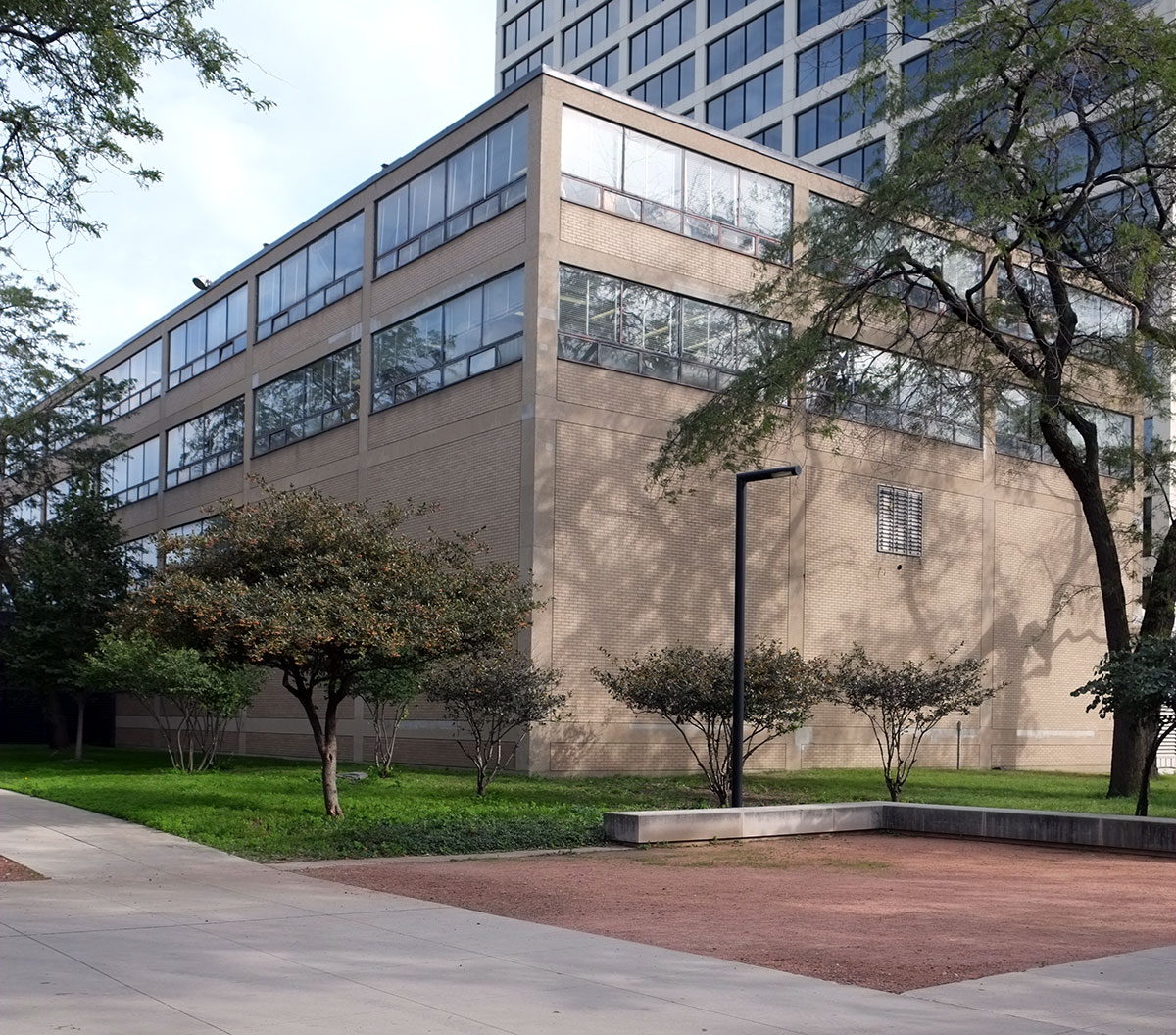
Last day in Chicago, time to do the serious architecture geek afternoon.  Knowing how much Greta would hate it, I dropped her at the Shedd Aquarium and walked down to IIT;  for you non-architects, the Illinois Institute of Technology, where Mies van der Rohe designed the campus plan and many of the buildings.  (Also, our former dean Frances Bronet is now the provost there, so I thought I should check it out to see how it compares to Lawrence Hall.)

I had a jarring introduction to the campus, one where you start to question your grip on reality.  Having just walked four miles down Michigan Avenue after a lunch of Chicago pizza and a beer, when I got to the campus I went up to the first building I saw that wasn’t a locked dorm, looking for a bathroom.  Straightforward glass and steel facade, I went inside and found a bathroom right  by the entry.  I emerged, turned the corner, and came across this:DSCF9914Toto, I said, I don’t think we’re in Kansas anymore.  I walked out a different door, and saw this:

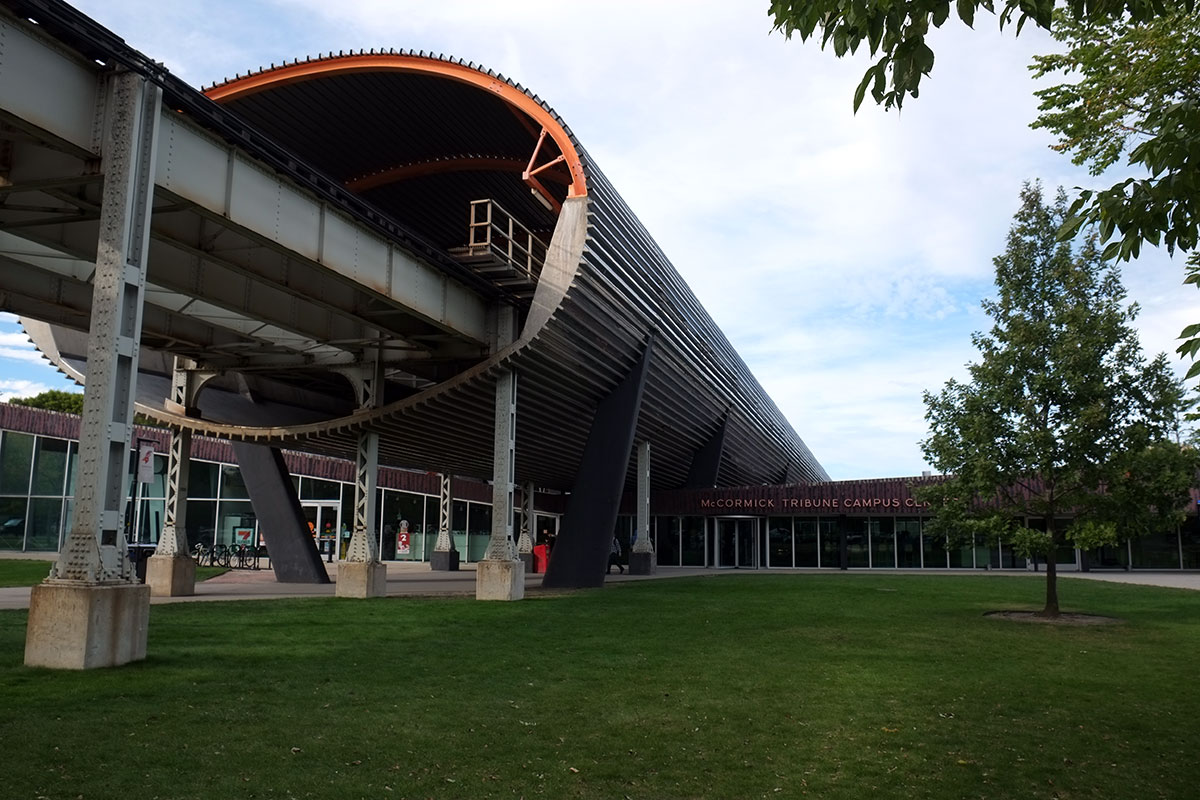
The reason Koolhaas wanted this site - Eurolille comes to Chicago

Aha, I said, it’s the Koolhaas building.  Reassured that I had not stumbled upon a break in the space/time continuum, I continued on in search of Miesian order.

The campus was as expected, relatively low buildings in a highly-ordered site plan, where the mature vegetation provides the relief from the Miesian grid.  Similar to other American urban campuses, where there is a definite end to the city fabric as you enter acedemia, pleasant and relaxing after the bustle and decay of lower Michigan Avenue.  The buildings (whether by Mies or SOM) are all variations on the Miesian theme – strictly rectilinear, repetitive bays, with inflection in the facades according to function.  It’s like the Goldberg Variations – how many subtle change can you make within a rigid and limited system.  Quite a few, and it is definitely not for non-architects.DSCF9886 DSCF9881

DSCF9880

DSCF9903

The famous power plant, cf. Charles Jencks

The famous power plant, cf. Charles Jencks

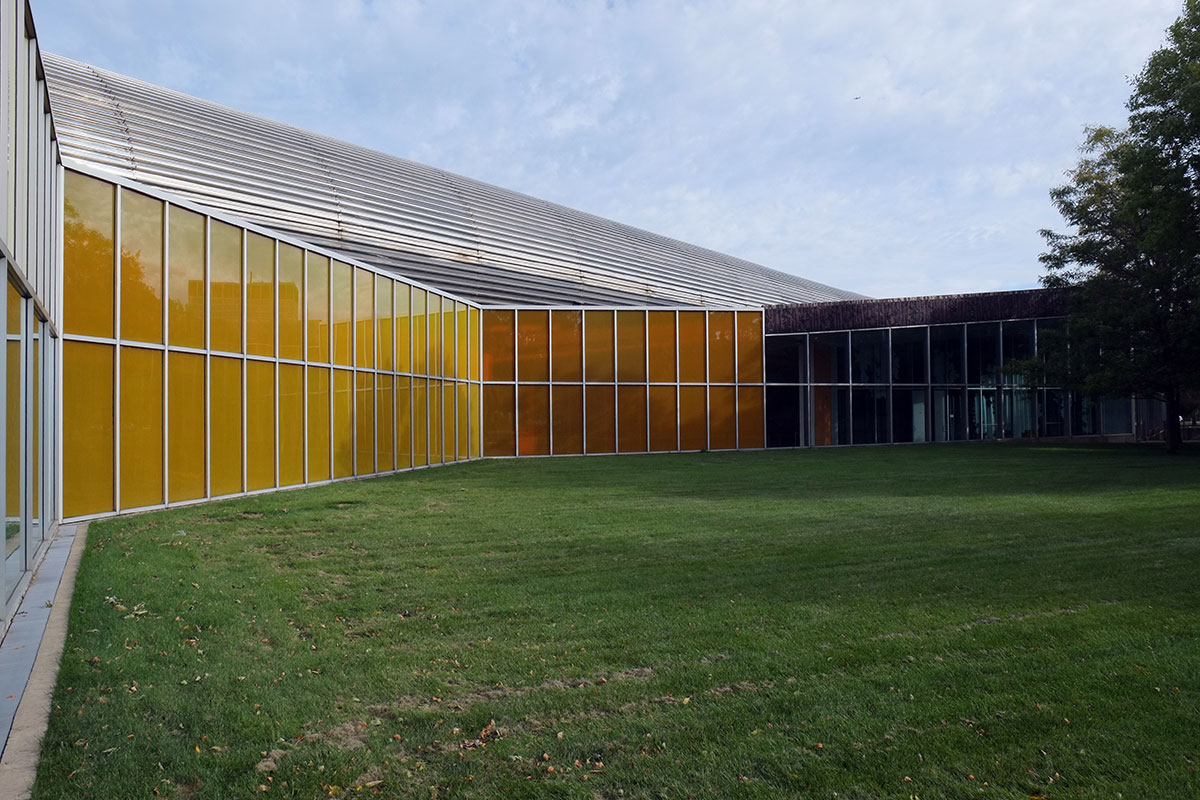
Then you get to the apotheosis, Crown Hall.

The money shot

The money shot

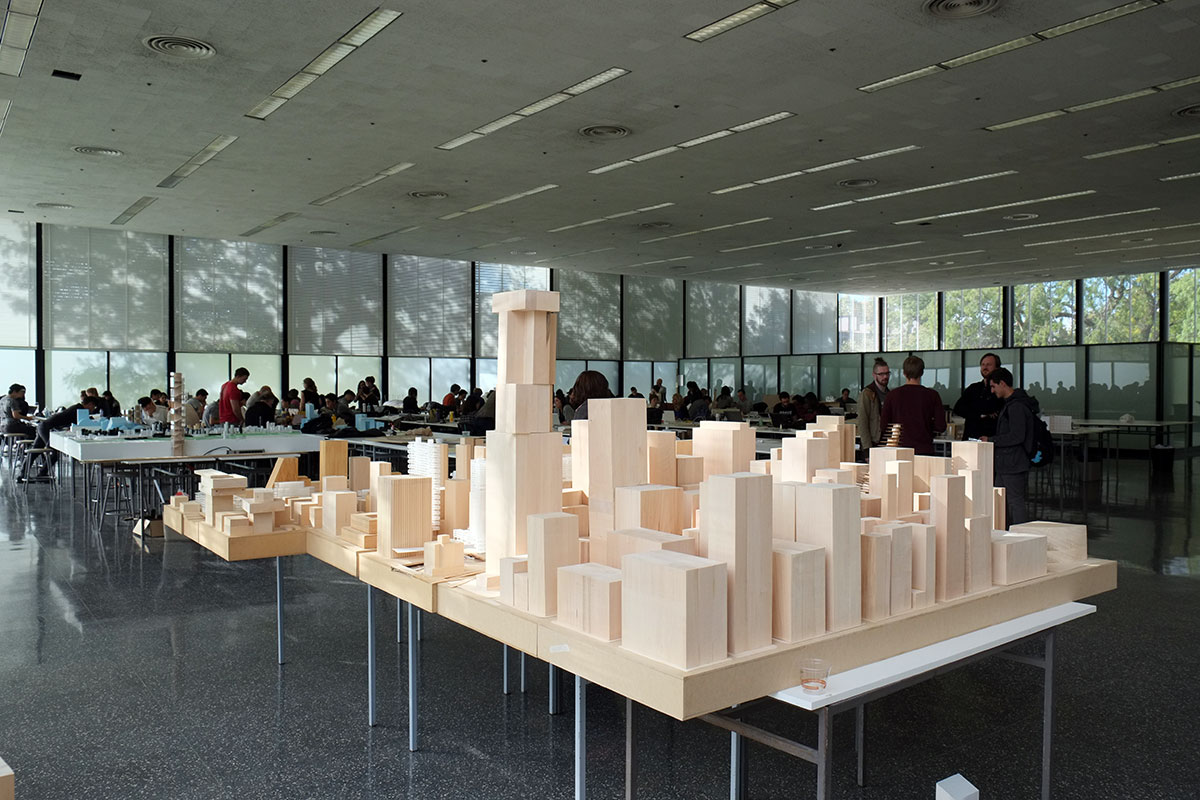
You’ve all studied it, you know exactly what it’s going to be like, and it is still a surprise, spatially, tectonically, and especially in terms of use.

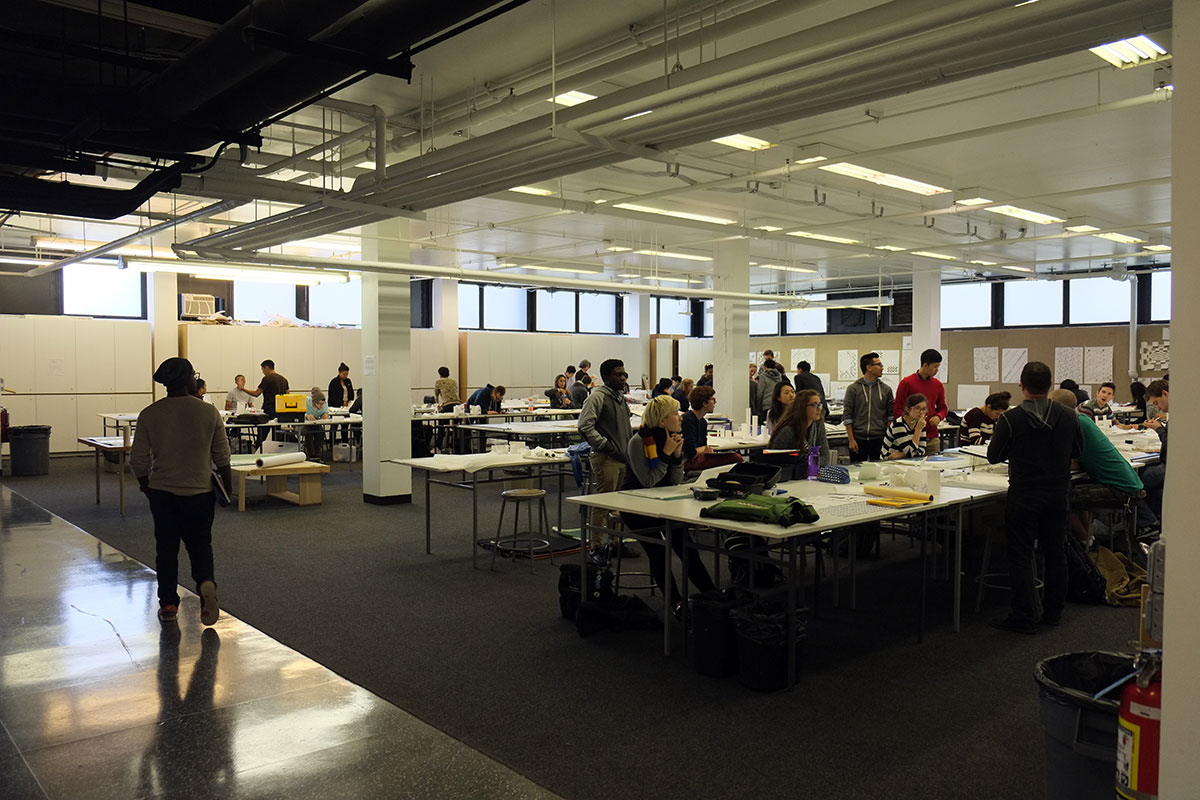
Studio - everyone sits together at long tables!

Studio – everyone sits together at long tables!

The faculty zone is much neater than the studios

The faculty zone is much neater than the studios

The classic corner detail

The classic corner detail

Nice model, they probably use it a lot

Nice model, they probably use it a lot

The basement studios aren't as nice as the main floor, but still better than many I know. But why did they have to have basement studios at all? Probably making it a two-story building just didn't look as good.

The basement studios aren’t as nice as the main floor, but still better than many I know. But why did they have to have basement studios at all? Probably making it a two-story building just didn’t look as good.

It is a great building, where you feel the expanse of space (there are no internal columns or full-height walls, as the roof is suspended from exterior girders), and the light washes through the building uninterrupted.

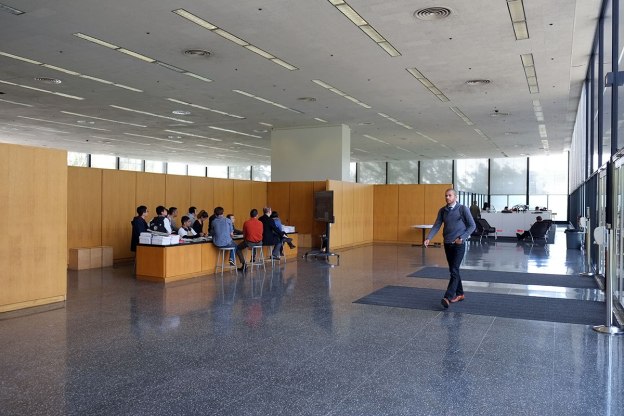
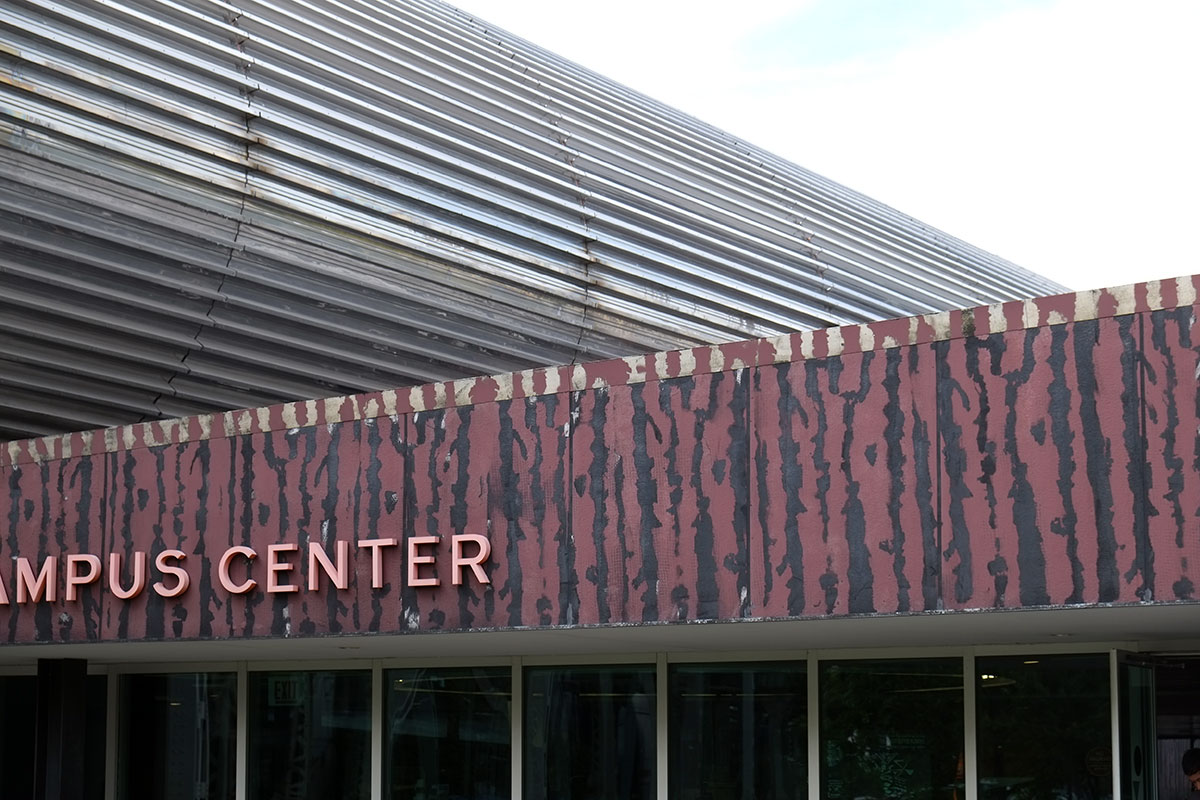
But having had enough of Miesian order, I decided to revisit the Koolhaas.  A fun building for a student center, angles and ramps and colors and chaos, with an elevated train in a tube on the roof. Then I started to wonder, how different is this really from the 1970s wing of the EMU on the UO campus (which was just demolished), or any of the other 60s student unions that ultimately derived from Erskine’s student union in Stockholm?  Was Erskine the first wave of dissent from universal space, and Koolhaas represents the second?

DSCF9939

Almost like being in Seattle

Almost like being in Seattle

DSCF9929

Koolhaas has set up the screens in the cafe that constantly play Judge Judy on a loop.

Koolhaas has set up the screens in the cafe that constantly play Judge Judy on a loop.

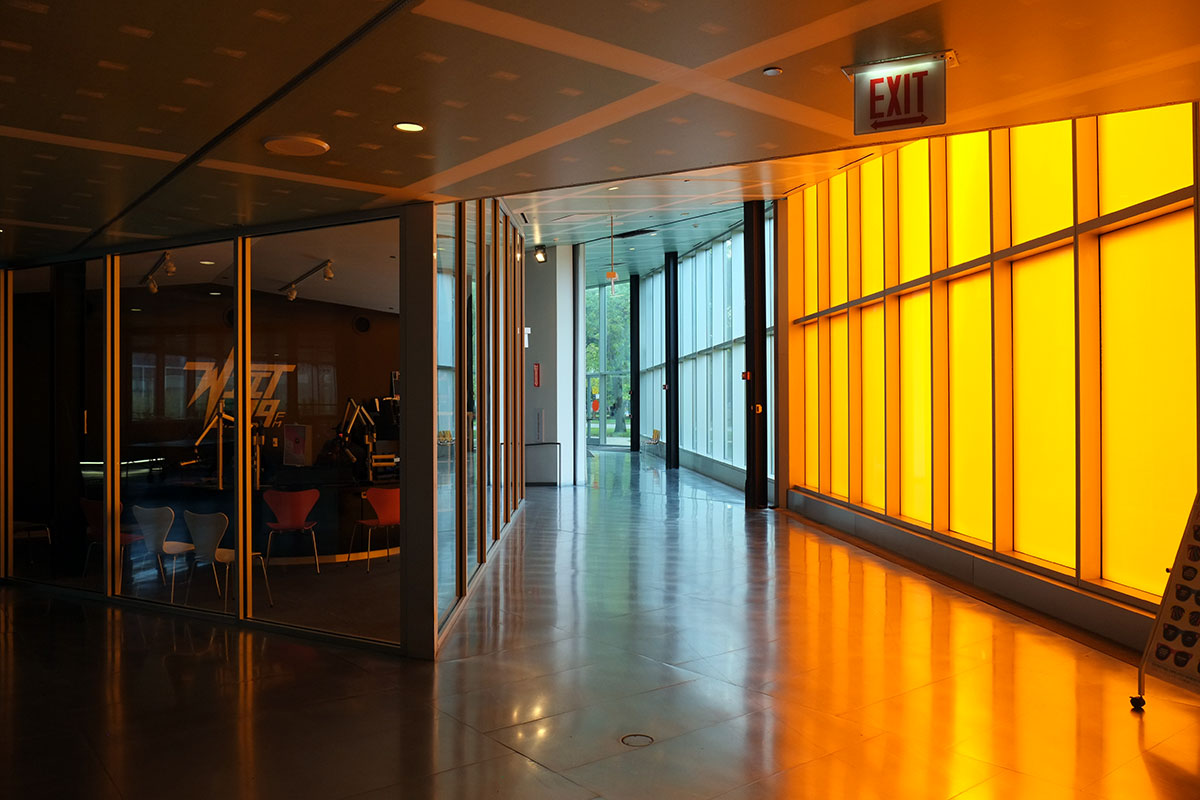
This is real.

This is real (albeit warped), not a strange photo collage.

Mies would not have approved.

Mies would not have approved.

The strange refracted orb/view/sun follows you down the hall.

The strange refracted orb/view/sun follows you down the hall.

Urinals in hell

Urinals in hell

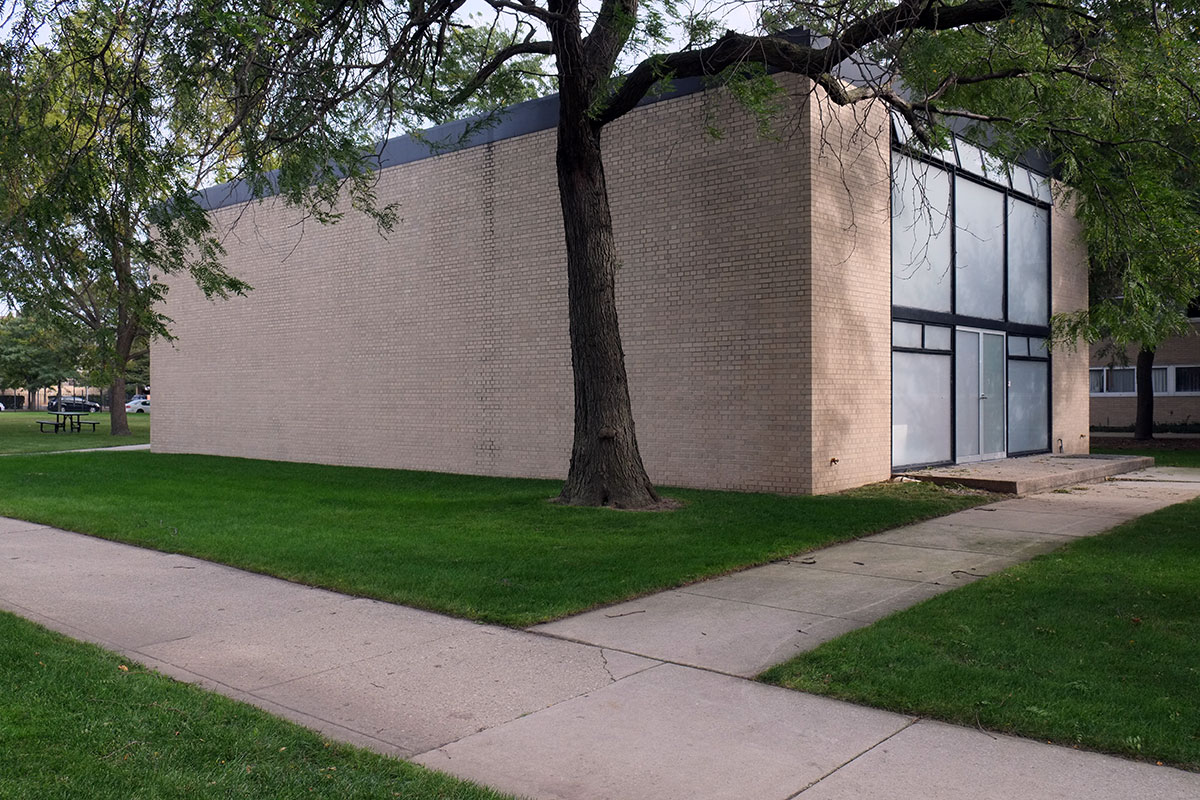
That last overwrought bathroom did me in, and I ran in search of one more bit of Miesian serenity.  I found the famous chapel, which was simple and elegant, not at all the minimalist joke that Jencks decried.DSCF9951

But when I went inside, I encountered thisDSCF9952

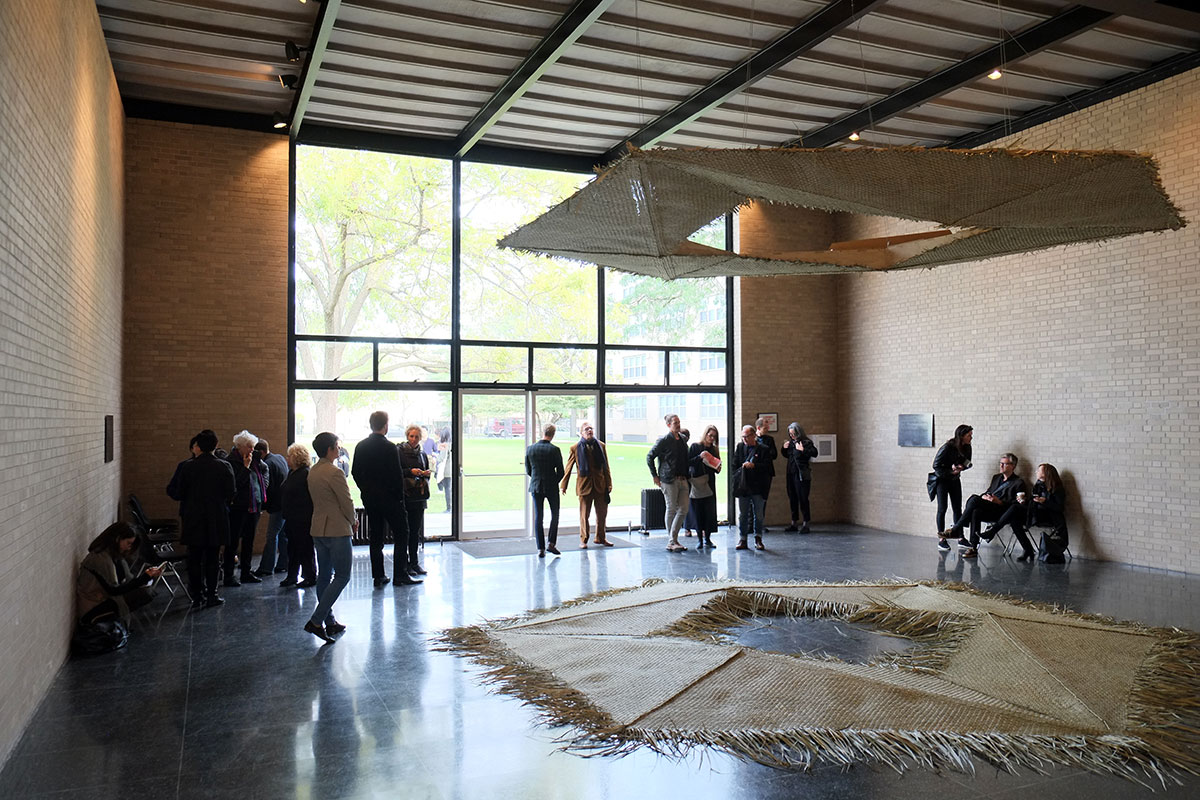
a roomful of architects (in their ceremonial black garments), worshipping at the First Church of Mies, Architect.

I left quickly before they noticed me, and returned to the messy world of the South Side of Chicago.

The Original Nutella Cafe

At Eataly in Chicago, we went to the first ever Nutella Cafe. As the name implies, it is a cafe entirely devoted to Nutella products. Crepes, creme brulee, cookies, all made or slathered with the hazelnut chocolate spread we all love.

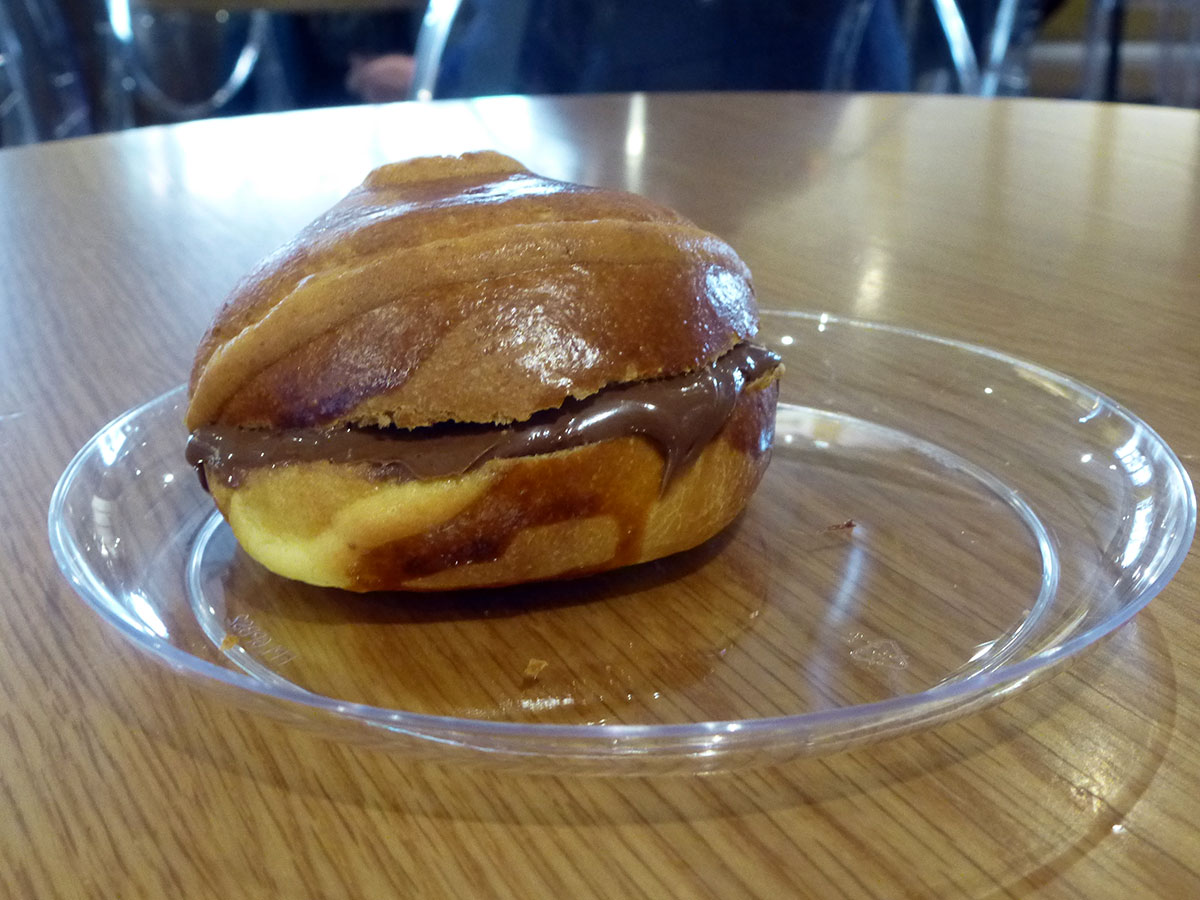
P1040056 We tried a brioche spread with Nutella, and a coconut Nutella cake. The brioche was soft and buttery, complemented nicely by the sweetness of the Nutella. The coconut cake was more intense. The Nutella seemed to be trying to overpower the coconut, and the coconut pushed back. They warred for control of your taste buds in a way that I couldn’t tell if it was good.

P1040059They’ve now opened a second Nutella Cafe in New York City, so if you see an Eataly in either city, I’d highly recommend stopping by.
Chicago 3: downtown form

The evolution of the city’s form over the past 150 years was an issue that kept coming up for me.  I think it matters in two ways.  First, at the street level, there is marked contrast between those areas in the Loop that were developed in the 19th and early 20th centuries, with the block structure being set, and new buildings mixing in with old.  They are superb, with the urban-canyon density that says Big City to us.DSCF9529

Then there are the areas where the streets/blocks/buildings were developed in the postwar era, such as the area east of Michigan and north of Grant Park, which is all postwar buildings, some good (the Aqua) but mostly banal.  It is truly desolate – pointlessly large windy plazas, a lack of scale (massive buildings everywhere), constant shadow, needlessly wide streets, no street life. This seems to be the pattern that is being repeated in other areas now, such as directly north of the river.

the 20th century meets the 21st

the 20th century meets the 21st

The weird multi-street-levels of downtown Chicago produces some strange places, like this.

The weird multi-street-levels of downtown Chicago produces some strange places, like this.

If, as Bob Stern says, "Architecture is a conversation across time", the 21st century is clearly saying "up yours."

If, as Bob Stern says, “Architecture is a conversation across time”, these buildings are clearly saying “up yours.”

The Aqua does a great job of punctuating all the rectilinearity, from many perspectives.

The Aqua does a great job of punctuating all the rectilinearity, from many perspectives.

The second way in which this evolution plays out is at the level of building form, tectonics, detail, composition, etc.  Here again, the areas where there is a monoculture of post-war buildings are terrible – everything is the same, large expanses of curtain wall, no detail, every building obviously maxing out the zoning envelope.  The area on the river between Michigan Avenue and the Lake is the most glaring example of this – huge boring buildings, punctuated by the aggressive and simplistic Trump Hotel/tower thumb-in-the-eye.DSCF9730

In contrast, those areas where there is a blend of scales, styles, eras, sizes, etc., are amongst the most beautiful city districts in the country.  One is always coming across places where the juxtaposition of the characteristics can be seen, a type of vertical collage that is unique to Chicago.DSCF9996

DSCF9506 DSCF9530 DSCF9599 DSCF9600 DSCF9607 DSCF9814

Even the Trump horror can be tamed by a varied context such as this:

DSCF9831 DSCF9834 DSCF9990 DSCF9998

DSCF9663

The variety and contrast is endlessly entertaining.  Perhaps we should write zoning ordinances that don’t focus upon the rules for one proposed building, but that somehow can acknowledge the overall gestalt of a neighborhood, and only allow buildings that will contribute to the greater whole.

Chicago Deep Dish Stuffed Crust Pizza

Fifteen times thicker than New York style, and twenty times Neapolitan, Chicago deep-dish stuffed-crust made me understand why pizzas are called pies. We tried two different places; the famous Giordano’s, and Exchequer. Giordano’s took longer to bake, nearly an hour, but it was worth it. Each slice was more of a cohesive unit, the cheese not slidding off as much as the slice from the Exchequer, which required the assistance of a fork. I don’t think stuffed crust was the right name for either of them. Both pizzas were really a thin crust, covered in an inch and a half of sauce, cheese, and pepperoni, sealed in with another layer of crust, then topped with more sauce and cheese. They were by far the heaviest things I’d ever eaten in my life, with not an air pocket or light ingredient to be found.P1030940
Although both were good, Giordano’s was undeniably better, living up to and surpassing its reputation. I’ve decided that Chicago pizza is the equal of New York style, just very different. All pizzas styles are created equal, but all pizzas are not, as the horrid pizza I was forced to consume in South Dakota showed me. Seriously, it was so bad, we didn’t even take back the leftovers to eat for breakfast.

Additional Note on Breakfast Pizza
I’ve decided that New York pizza and bad replicas of it should have their leftovers be eaten cold the next morning, and Chicago and Neapolitan should be reheated. For Neapolitan, use a toaster oven, and for Chicago, heat in a microwave until the inside is the temperature you want, then finish off in a toaster oven to restore the crispiness of the crust. Or if you’re really patient, which I am most certainly not in the mornings, simply heat it in an oven until it reaches the desired temperature.

Frances Bronet

Frances Bronet arrived in Eugene ten years ago, as a candidate for dean of the School of Architecture and Allied Arts, and we’ve been friends from the moment we met.  Perhaps it was the way that Greta took to her immediately, and was sitting on Frances’s lap within five minutes.  (We figured that anyone who could handle a shy three-year-old was the right person to run a design school.)  In her years as dean (and one year as interim provost), Frances was a leader, a visionary, an indefatigable schmoozer, and a great representative and advocate for our school.  She is the hardest working person I’ve ever known;  I recently surprised a university gathering by mentioning that I had once seen her take a few days off.  She accomplished all this without losing her perspective or her joie de vivre, and she left behind a school full of colleagues who regarded her as a friend and not just a boss.

the natural elements of Chicago: sky, water, and traffic

the natural elements of Chicago: sky, water, and traffic

Frances began her new job as provost at IIT this summer, and even breaking her collarbone hasn’t slowed her down there.  We spent the week staying in their fantastic apartment in a Mies building on Lake Shore Drive (to which Frances would return briefly to sleep when work allowed) which is furnished with two barstools, and an air mattress in every room – she hasn’t had any time to even think about furniture.  The contrast of the view was great:  leave the hustle and bustle of the big city, and return to your aerie where you see only the primal elements.

DSCF0008

Jeff arrived from Eugene while we were there, and it’s likely that with his final move to Chicago, their lives may return to a higher degree of domestic normalcy.  We will really miss Jeff and Frances and their children in Eugene, but it was satisfying to see them starting to settle into their new lives.

2018 update:  Frances has now moved on to being the president of Pratt Institute in Brooklyn.  Our main concern was whether the president’s house had a driveway where we could park our trailer the next time we visit.