Rochester Unitarian Church

Lou Kahn buildings are really hard to see.  There aren’t very many, and they are all in hard-to-reach places, like Bangladesh, or Ft. Wayne, Indiana.  I’d only managed to see six before starting this trip and I hope to catch four or five more this year.  At the top of the list is the Unitarian Church in Rochester.

Because they are so hard to visit, we all know these buildings from publications, and so our images of them are pristine and perfect – brand new architecture, before the weather or human habitation has had a chance to have an impact.  Many of Kahn’s buildings are also maintained in fairly pristine condition – art museums, important institutions – so it is quite amazing to visit one of his masterpieces, and see how it looks after 55 years years of hard use.  DSCF2077

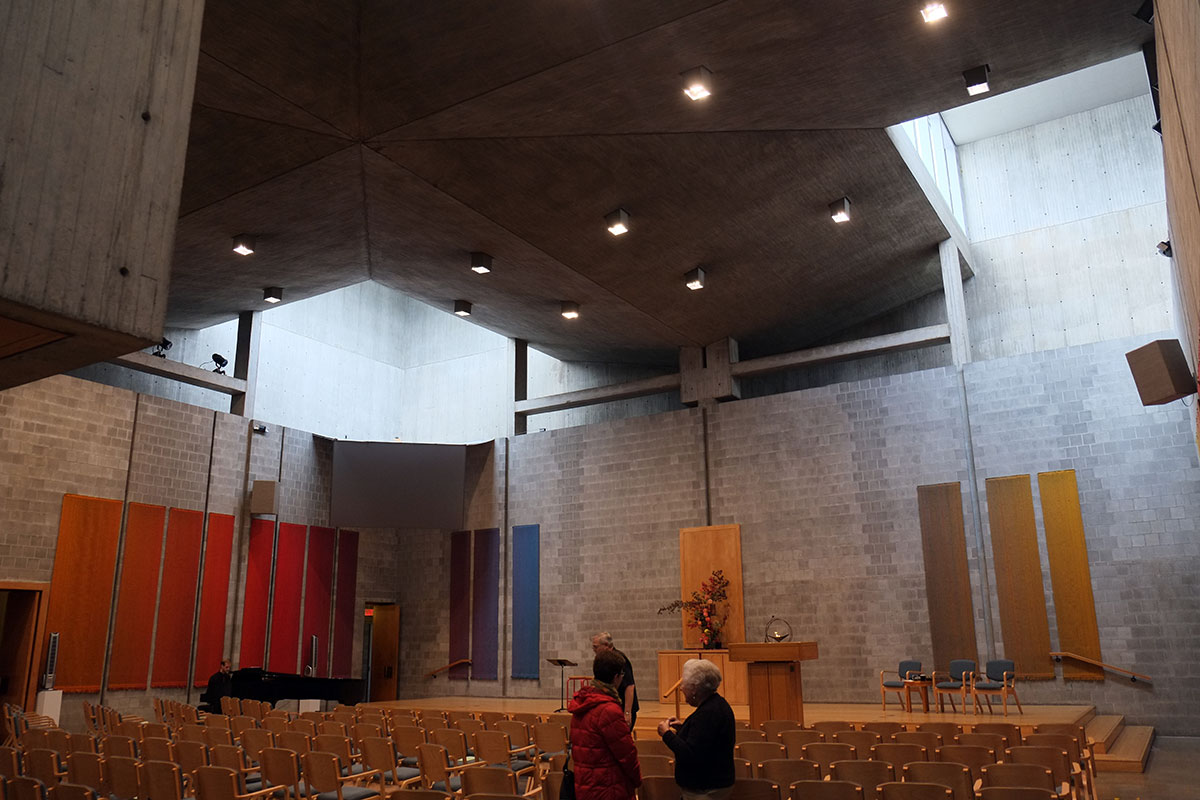
From both the exterior and interior, the quality of the design is most apparent in the rigor and clarity of the parti.  An entry axis, a longitudinal axis that links the major spaces, and the classrooms clustered around the sanctuary.  That is pretty much it, and the development of the idea in the section and the tectonics is what makes the building extraordinary.

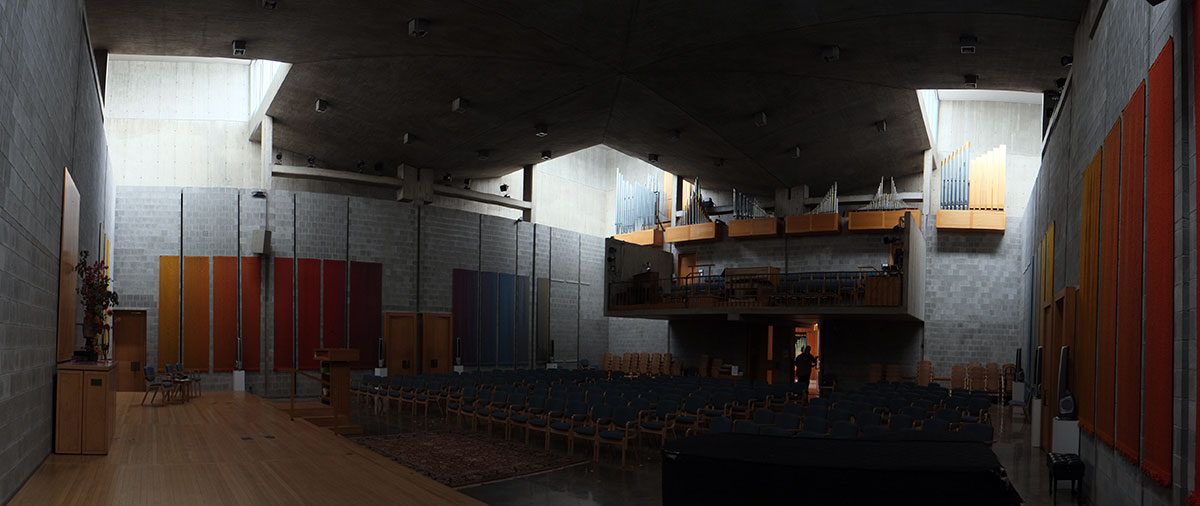
The big spatial/symbolic idea is in the sanctuary.  The four corners are voids under towers with clerestories above.  The concrete lower ceiling is a cross, referring back to the ideal of centralized churches.  DSCF1999
DSCF1998

DSCF2039The plan and section are simple and powerful – big idea, beautifully articulated.

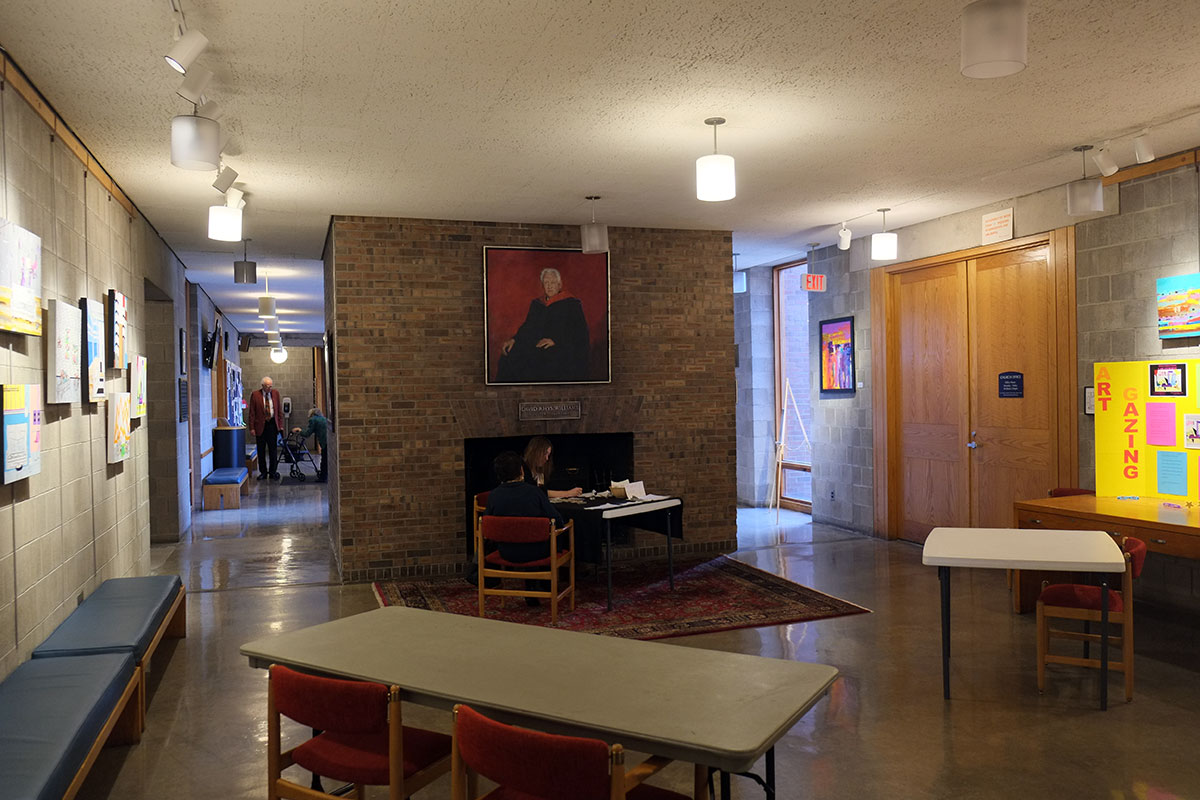
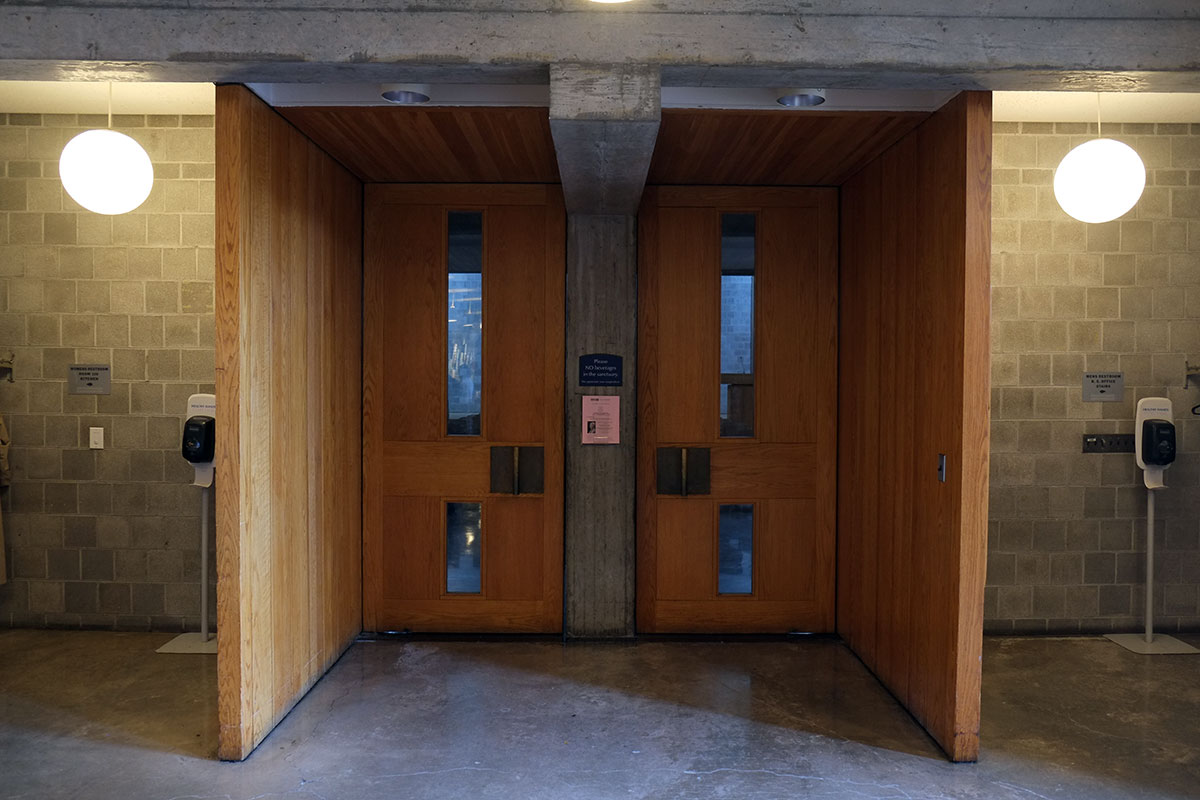
The rest of the interior mirrors this simplicity – the lobby, meeting rooms, transition spaces, classrooms.DSCF2026
DSCF2061

DSCF2060

DSCF2056

a classroom

a classroom

The Miller house in Columbus would have been an austere modernist exercise without Alexander Girard’s furnishings;  here you could argue that when new and empty, the church was severe and perfect, but now there is a relationship between the building (concrete, wood, masonry) and the colorful small-scale stuff (some of which – acoustical panels and space heaters – were necessitated by the materiality of  the building fabric ) that the congregation has added.  It’s noticeable that the order of the design is maintained, despite the random stuff that accumulates in any building that is being well-used.

The exterior looks much as it did when built.  The square plan of the sanctuary is apparent, with the four towers rising up from within the mass of classrooms.DSCF2108
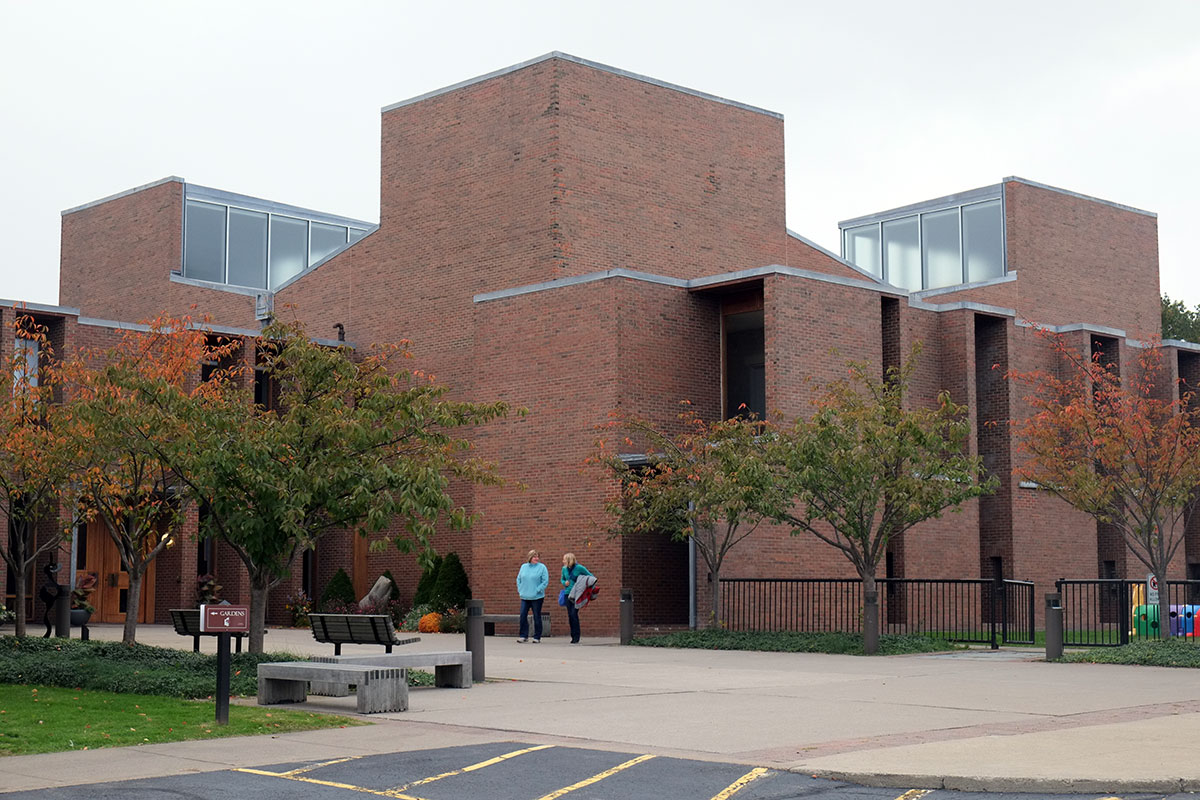
The entry shows something Kahn is always playing with – seemingly symmetrical, but not quite – the off-center center.  Tempering the formality of the axes, showing an inflection towards accommodation.DSCF2070
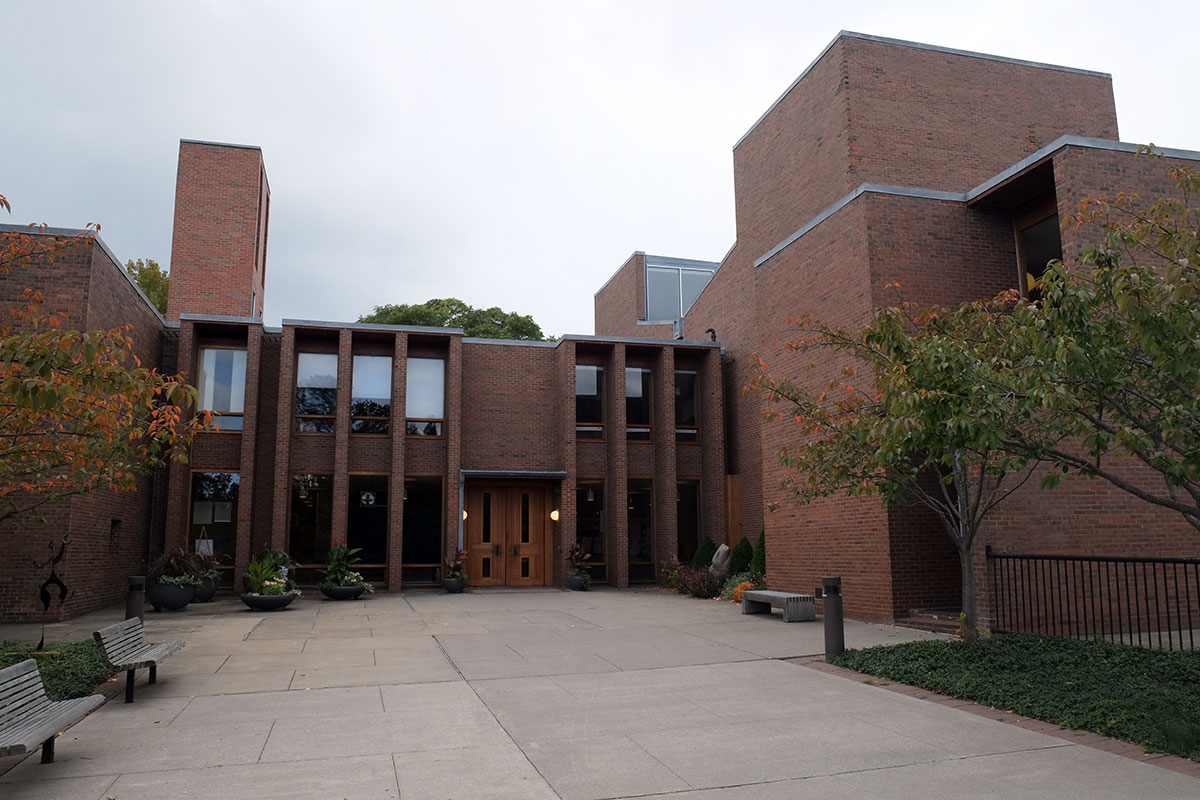
The integration with the landscape is not something I’d thought about before.  It’s remarkable when seen from down the hill, the soft green of the landscape playing off the severity of the brick.DSCF2096

the office / meeting room wing

the office / meeting room wing

Has a fire exit ever looked this good?DSCF2088

It was instructive to see this the day after the Darwin D. Martin house.  There are similarities – the axiality, the use of massive brick piers/towers instead of walls, the solidity of corners – but the big difference is in the development.  Wright articulates the articulations, with an ever-cascading sequence of scales at which the idea can be developed.  Kahn goes about two levels of articulation down from the parti.  Wright looks for every opportunity to play with the idea, Kahn boils it down to just the essentials.

Frank Lloyd Wright, Part 2

In the past two weeks we visited two of FLW’s masterpieces – Fallingwater and the Darwin D. Martin house in Buffalo.  They are both so well known and documented that I don’t what I can add beyond a few photos and comments.  (Neither of them allows photos inside under normal circumstances, so all my pictures are of the exteriors).
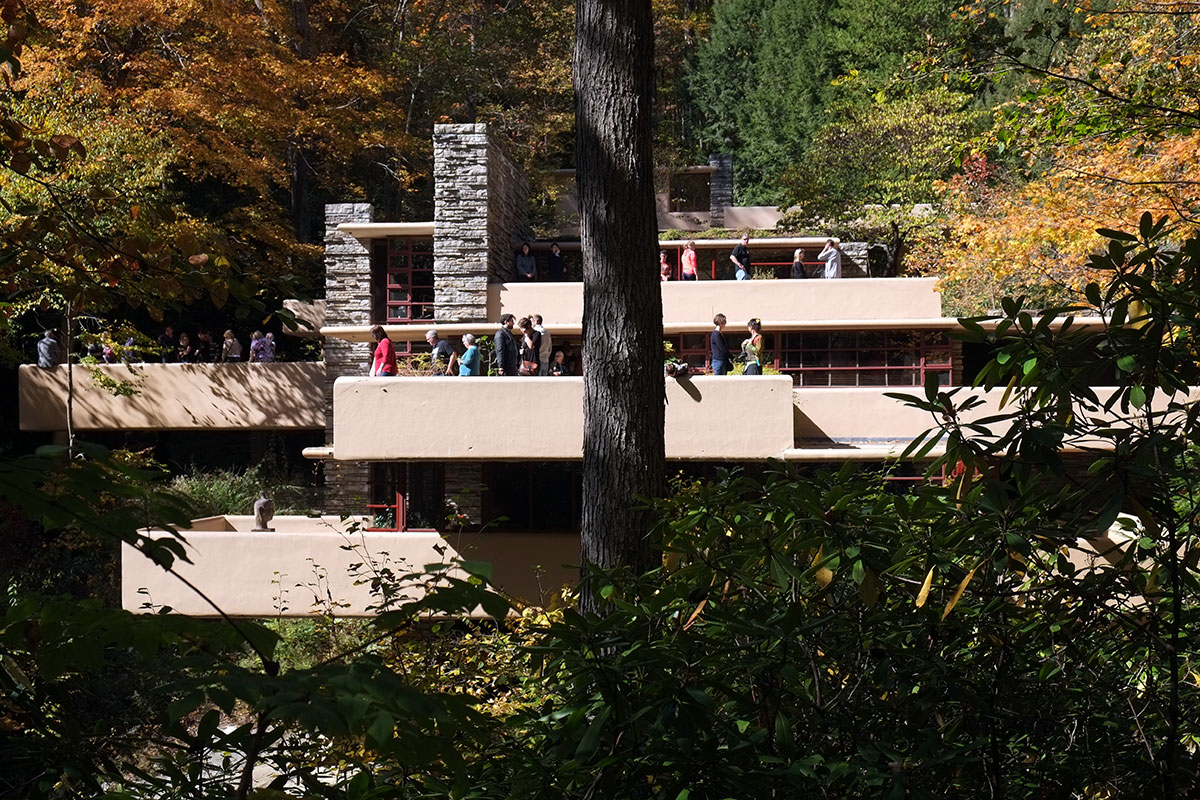
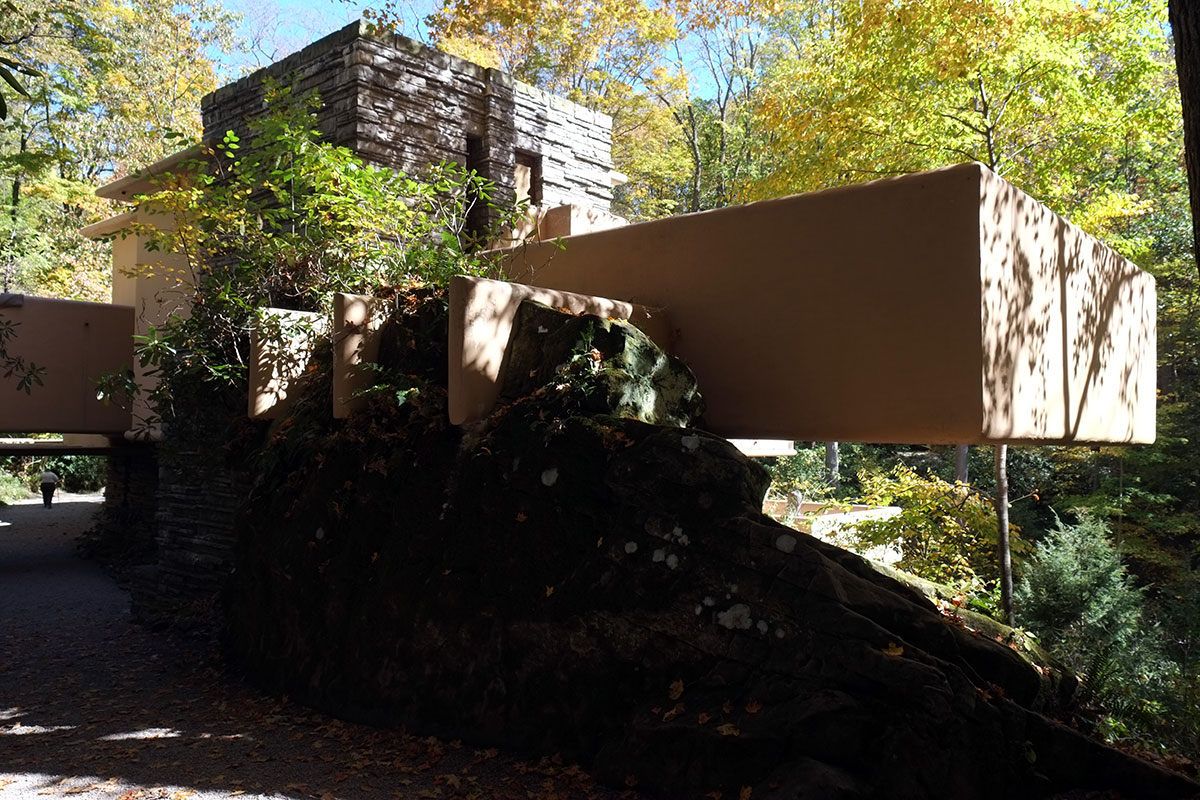
Fallingwater is considered the great house of Wright’s middle period, and it is a tour-de-force.  Every inch has been designed and detailed to perfection.  I must admit that despite years of looking at books about it, I didn’t have a very good idea of its spatial arrangement.  After visiting it, the reason for that is now clear to me – it doesn’t have one big spatial organization, it is rather a series of perfect parts that are really quite isolated from one another

the little entry door on the left

the little entry door on the left

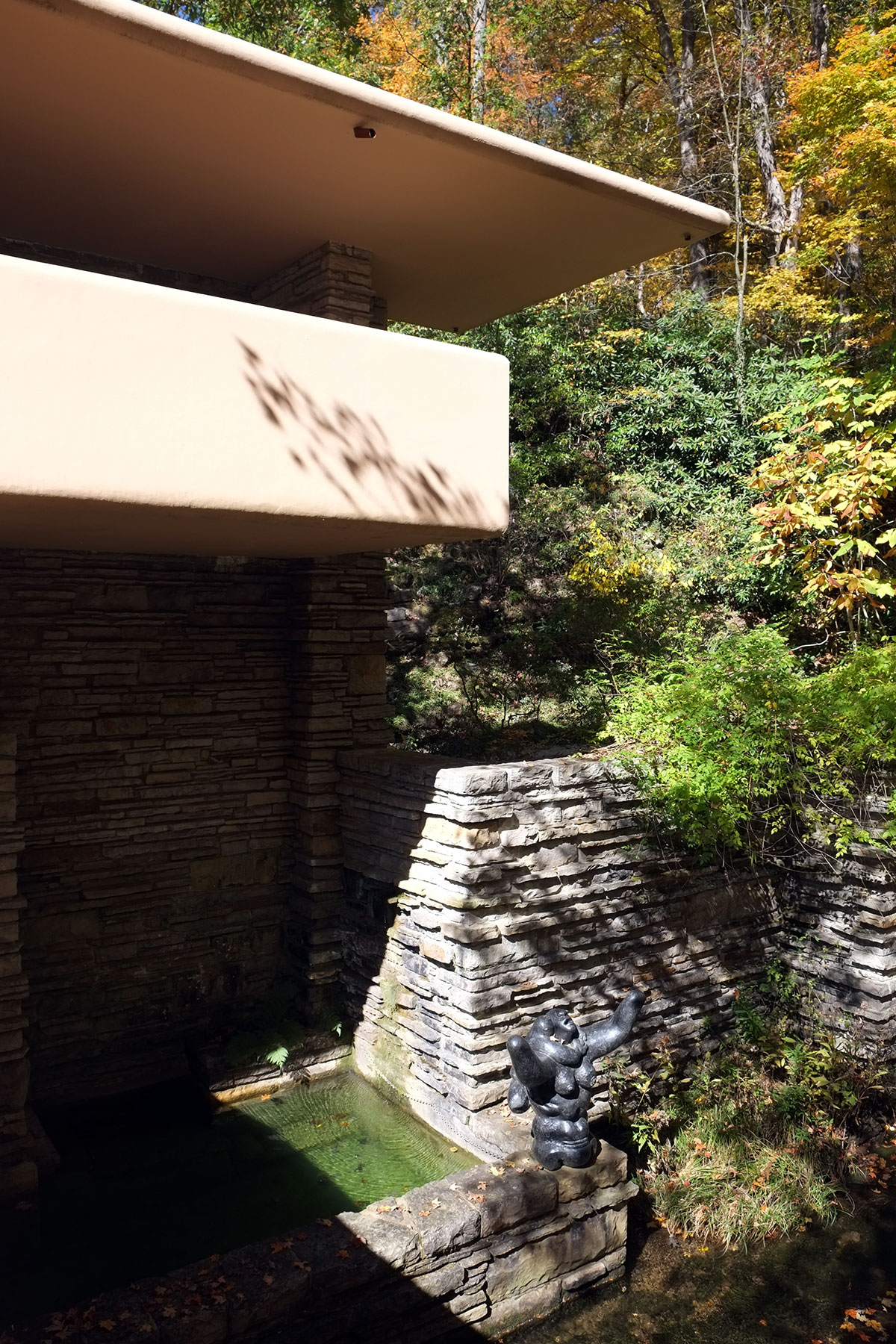
For each part, the big move is the connection between the interior space and the exterior terrace/tray.  These are then pinwheeled around the central mass.  One moves between the parts on very tight stairways attached to the mass.  From the outside, the parti of cantilevered trays is obvious; from the inside, you can understand the logic of each part, but never comprehend the whole.

the concrete trays

the concrete trays

the swimming hole

the swimming hole

the beams anchored in the native rock

the beams anchored in the native rock

We now live in age where the open plan (and open section) are dominant;  it is instructive to see how fantastic a house can be when it is divided up into discrete parts.

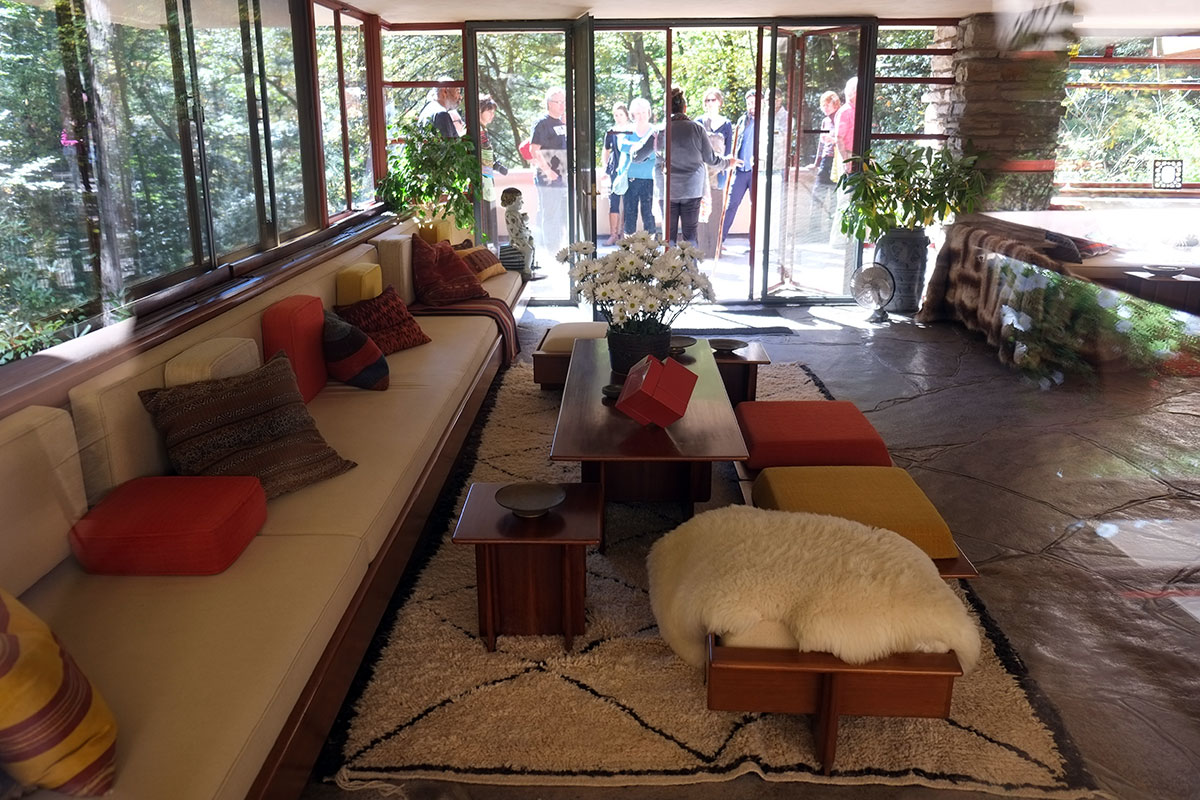
looking into the living room from the a terrace

looking into the living room from the a terrace

Edgar Kaufman Jr. was an apprentice of Wright’s, and convinced his parents to hire Wright to design Fallingwater.  In the 1980s he was one of my professors, co-teaching a seminar on Wright at Columbia.  It was a great course, and he was a lovely man, with a courtly manner, a beautiful voice, great reminiscences and insights into Wright, and the best wardrobe of anyone I knew in New York.  In homage to him, I wore a nice tweed jacket while touring the house (instead of the normal tourist garb), and as I paused besides the tray of cocktail ingredients by the fireplace, I felt that he would have approved.

Why don't they have tours where they let you mix a drink and sit by the fireplace?

Why don’t they have tours where they let you mix a drink and sit by the fireplace?

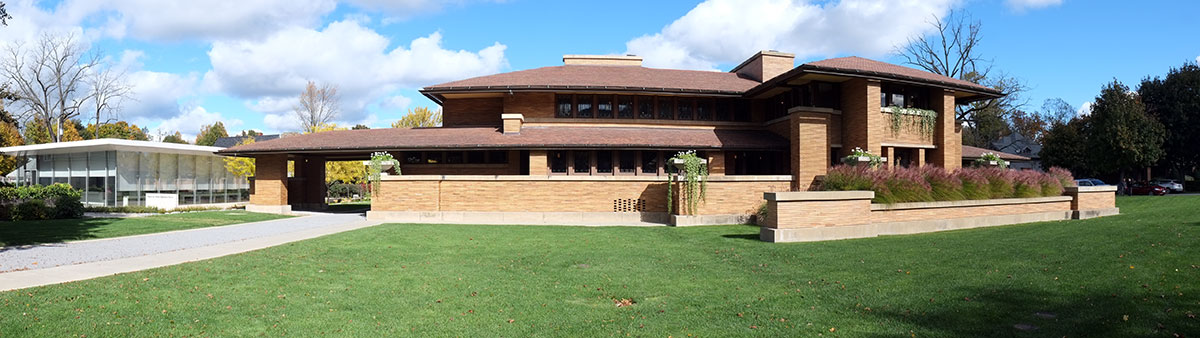
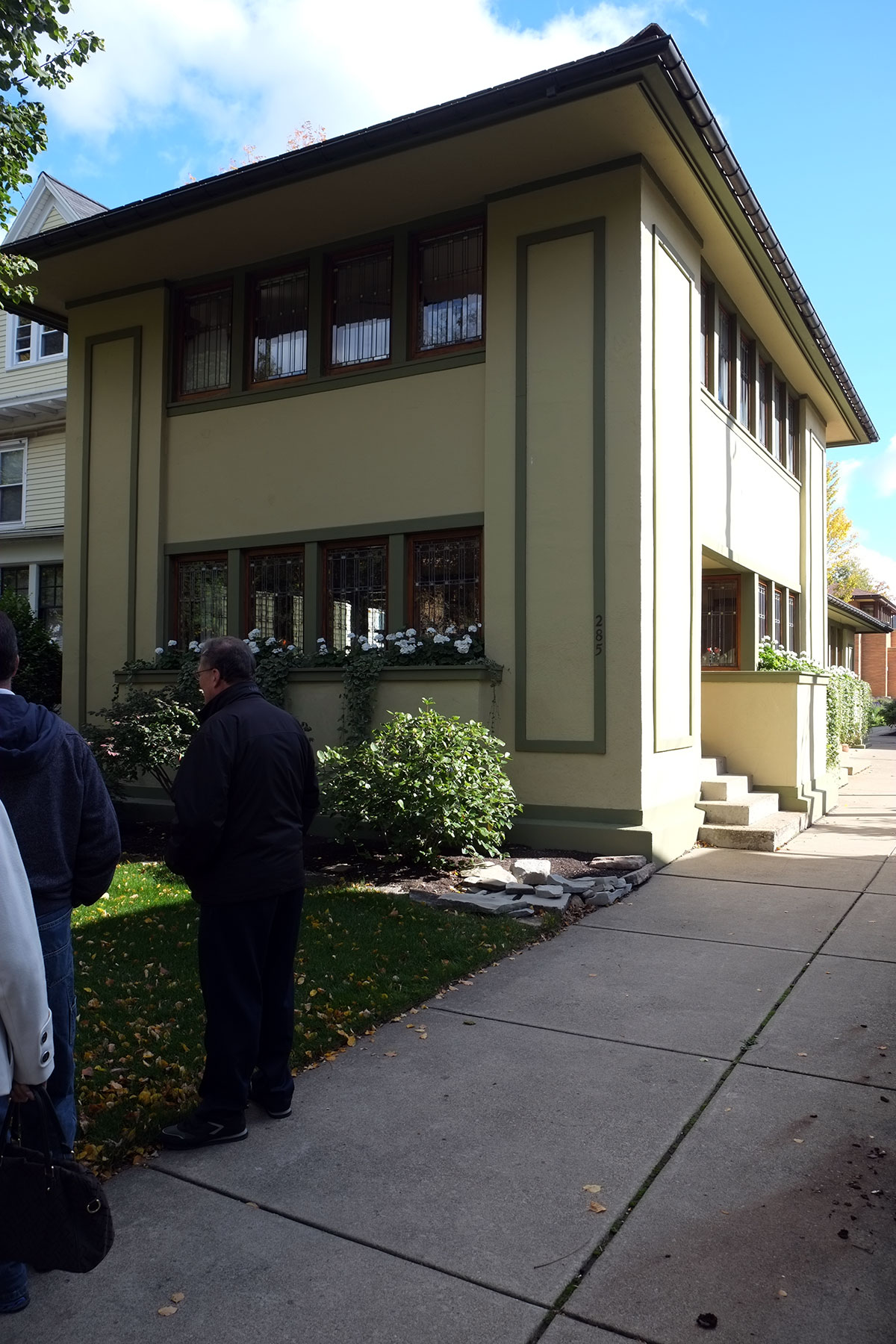
The Darwin Martin house has been restored by a non-profit over the past two decades or so.  The main house had survived in bad condition, as had the Barton house (built for Martin’s sister) and the gardener’s house.  But the carriage house and pergola had been demolished long ago, so the foundation undertook the complete reconstruction of them based upon Wright’s original drawings and photographic documentation.  All of this work is painstaking and beautifully done, as is the restoration of the main house.

the complex

the complex, Barton house on the right

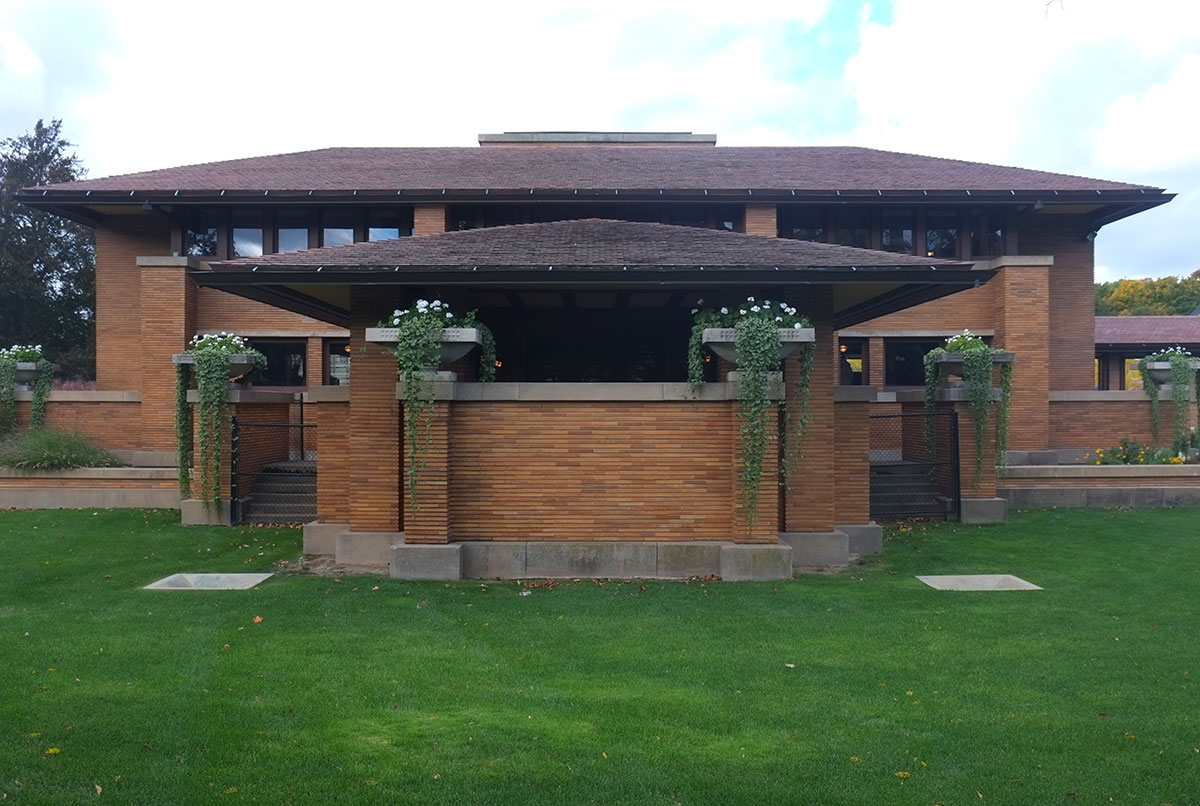
front elevation

front elevation

the main terrace

the main terrace

We had an excellent docent on the tour, who spoke of how Wright regarded this as his summa project, the one that accomplished everything he wanted.  Having seen many other early Wright houses, I’d agree.  He had an unlimited budget, and he used it to pursue every idea and piece to its most developed state.  Nothing that could be developed or elaborated has been left alone.  Sometimes it’s a bit much – there are just so many idea and moves and articulations.  But it all fits together seamlessly – the underlying logic of the overall scheme is always apparent, and the development at successive scales reads perfectly – it’s like a rectilinear fractal.

the service entry

the service entry

the backyard seen through the porte-cochere

the backyard seen through the porte-cochere

The Barton and gardener’s houses are much smaller and simpler, and the contrast with the main house was intriguing, as one could see the bare bones spatial organization without the endless development.

The Barton house

The Barton house

the gardener's house

the gardener’s house

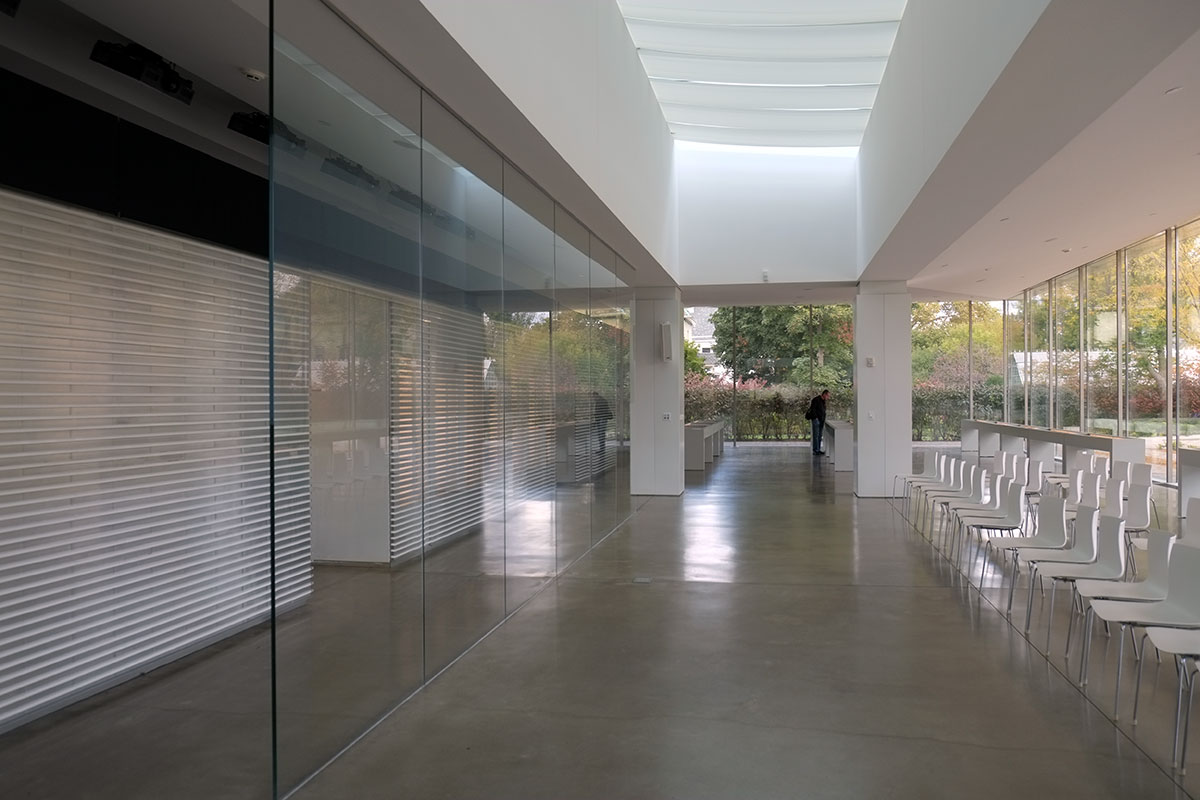
Toshiko Mori designed the adjoining visitors’ center, which plays with some of Wright’s ideas (cantilevered roof, rigid modular plan) with very different materials and tectonics.  It’s a fine little building, one which doesn’t compete with the house, but which has its own integrity and logic.

the introductory video is projected onto the glass panels on the left

the introductory video is projected onto the glass panels on the left

DSCF1860

The houses confirmed my opinion that you can’t really understand a great building until you visit it.

Selfies, Part 3 (including the ultimate Safe Bison-Selfie™)

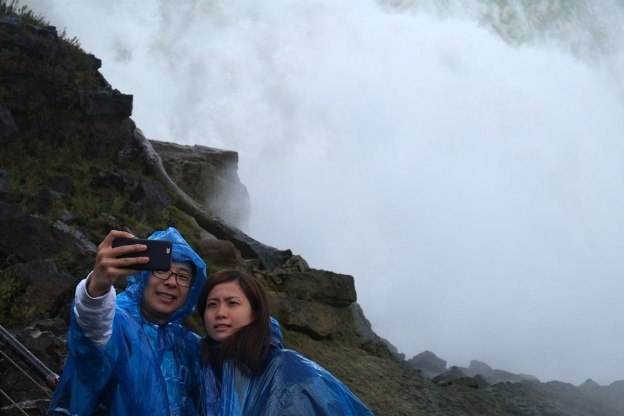
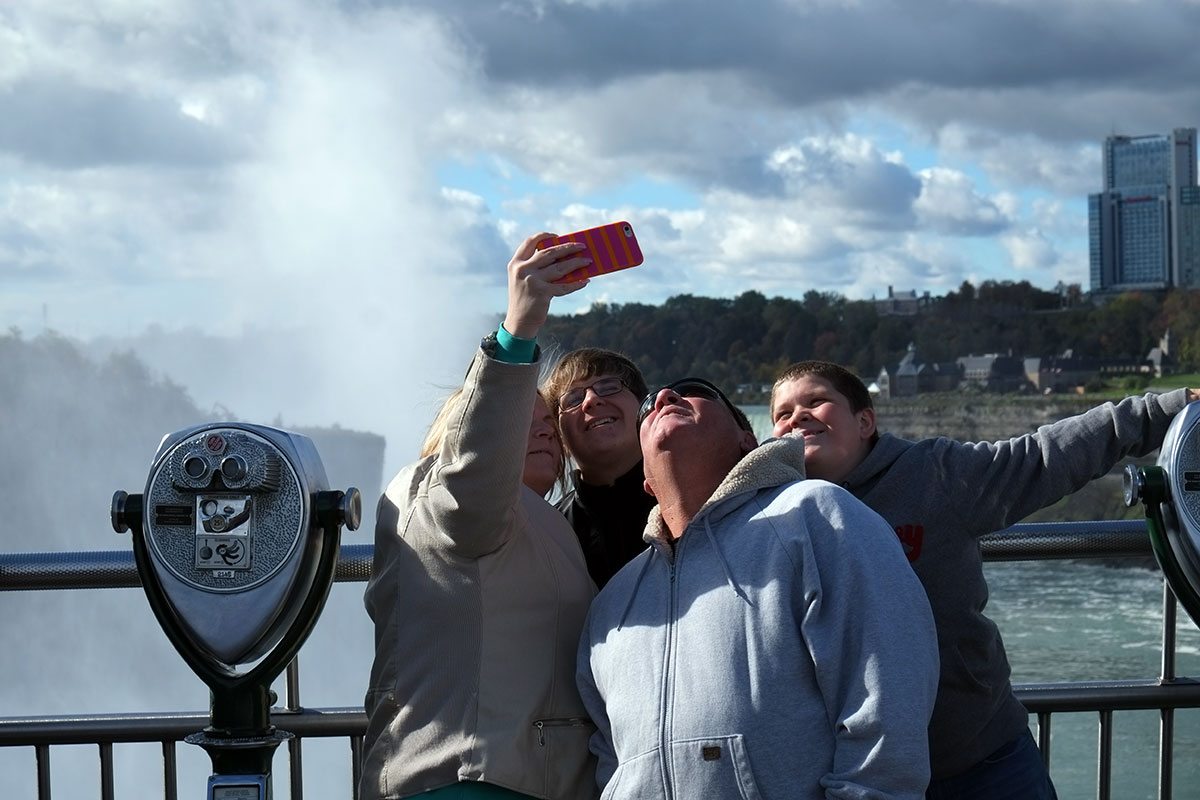
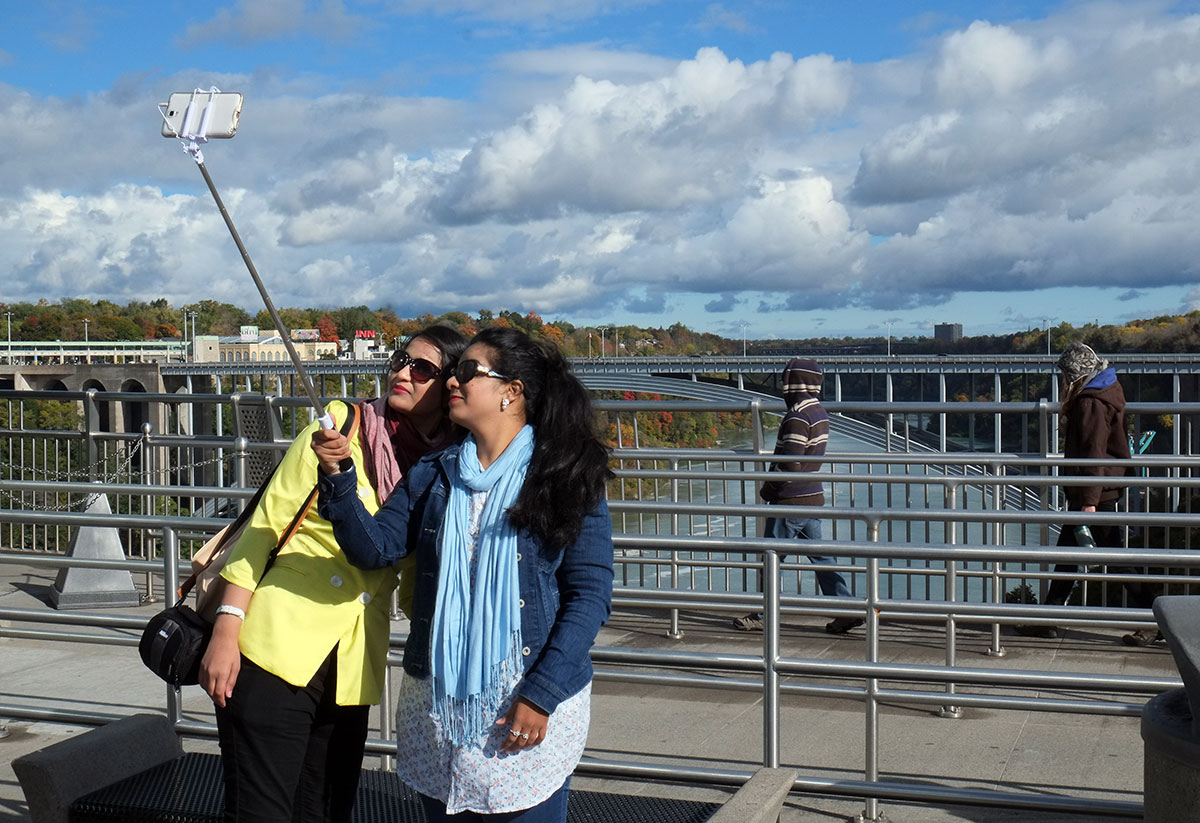
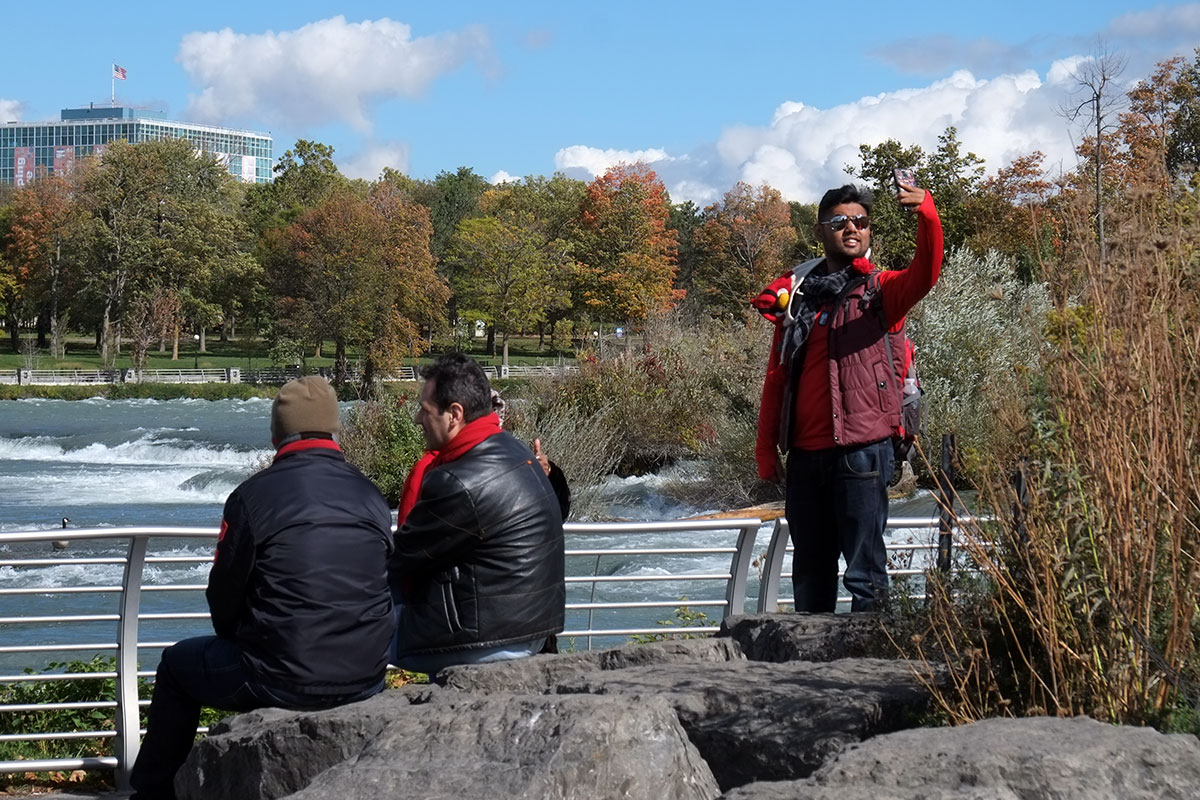
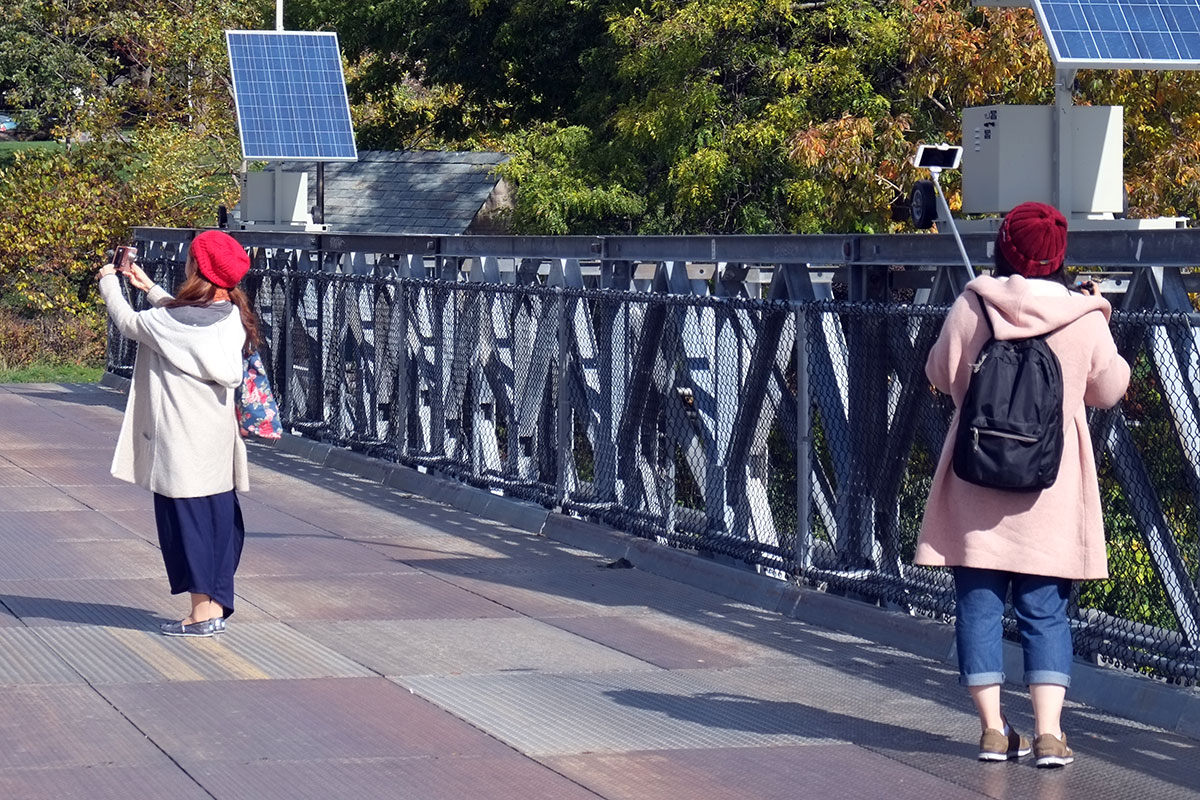
Since Mt. Rushmore was a gold mine for selfies, we should have known that Niagara Falls would be another.  The tourists couldn’t resist the lure of the selfie, no matter how wet or freezing they were:DSCF1578

this guy is standing in a dead-end spot which seems to be reserved for selfie-takers

this guy is standing in a dead-end spot which seems to be reserved for selfie-takers

it doesn't matter if the Falls don't appear in your selfie, as long as the lighting makes you look good.

it doesn’t matter if the Falls don’t appear in your selfie, as long as the lighting makes you look good.

DSCF1629

DSCF1681

the girl on the left was spinning in circles, taking a selfie movie!

the girl on the left was spinning in circles, taking a selfie movie!

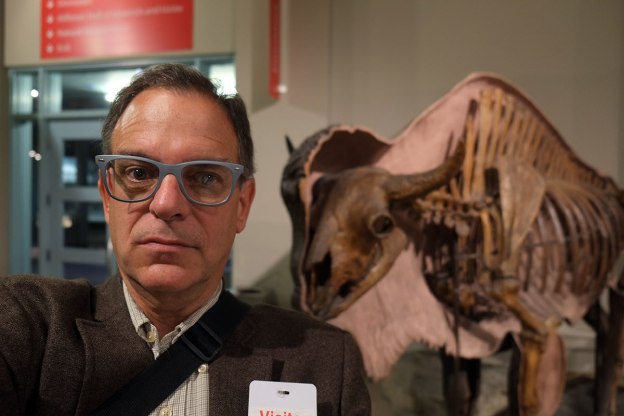
We thought that the last opportunity for a Safe Bison-Selfie™ had been in Pittsburgh (what could be safer than an extinct bison) but then we realized, we’re in Buffalo!  There must be some good bison opportunities here. And there were:

the stuffed animal Safe Bison-Selfie™

the stuffed animal Safe Bison-Selfie™

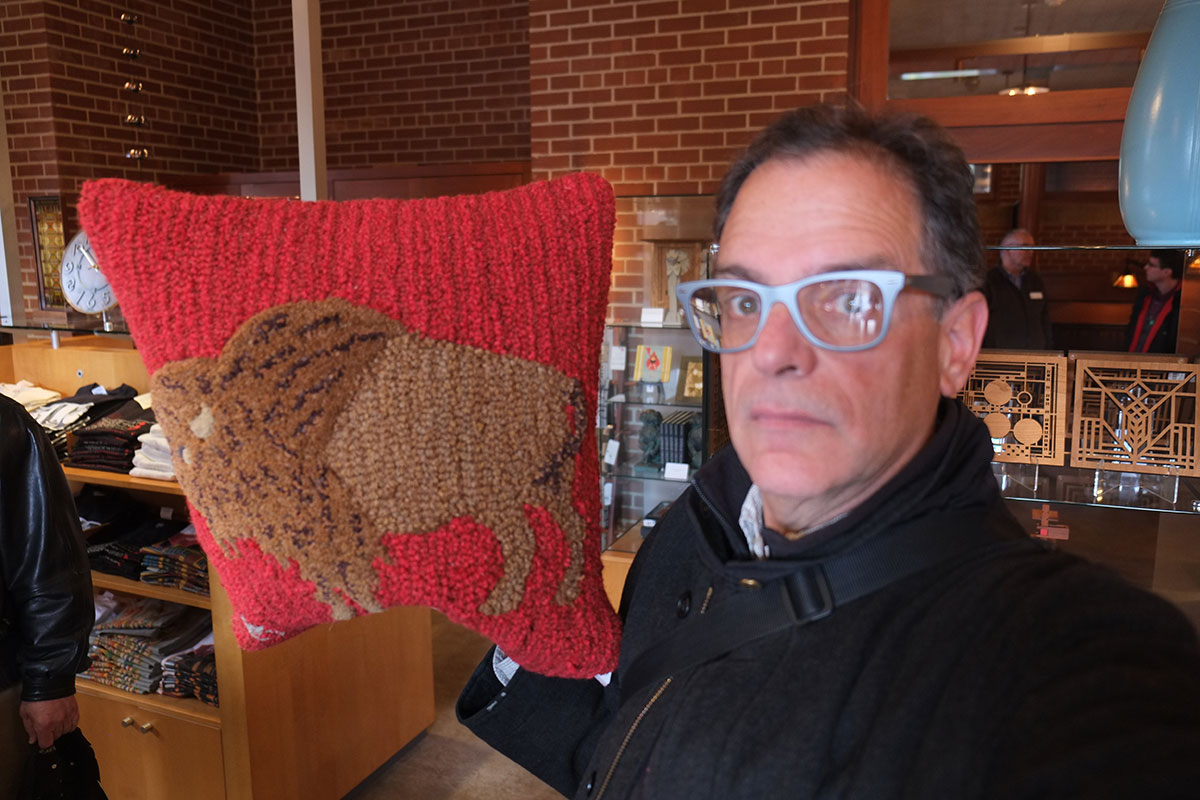
And the Ultimate Safe Bison-Selfie™, with the soft cushions!  (cue Cardinal Biggles):

Somehow, the bison soft cushions were in the gift shop at Frank Lloyd Wright's Darwin D. Martin house. I have no clue.

Somehow, the bison soft cushions were in the gift shop at Frank Lloyd Wright’s Darwin D. Martin house. I have no clue.

Perhaps now our work is truly done.

No, more selfies continue here.

Cataract

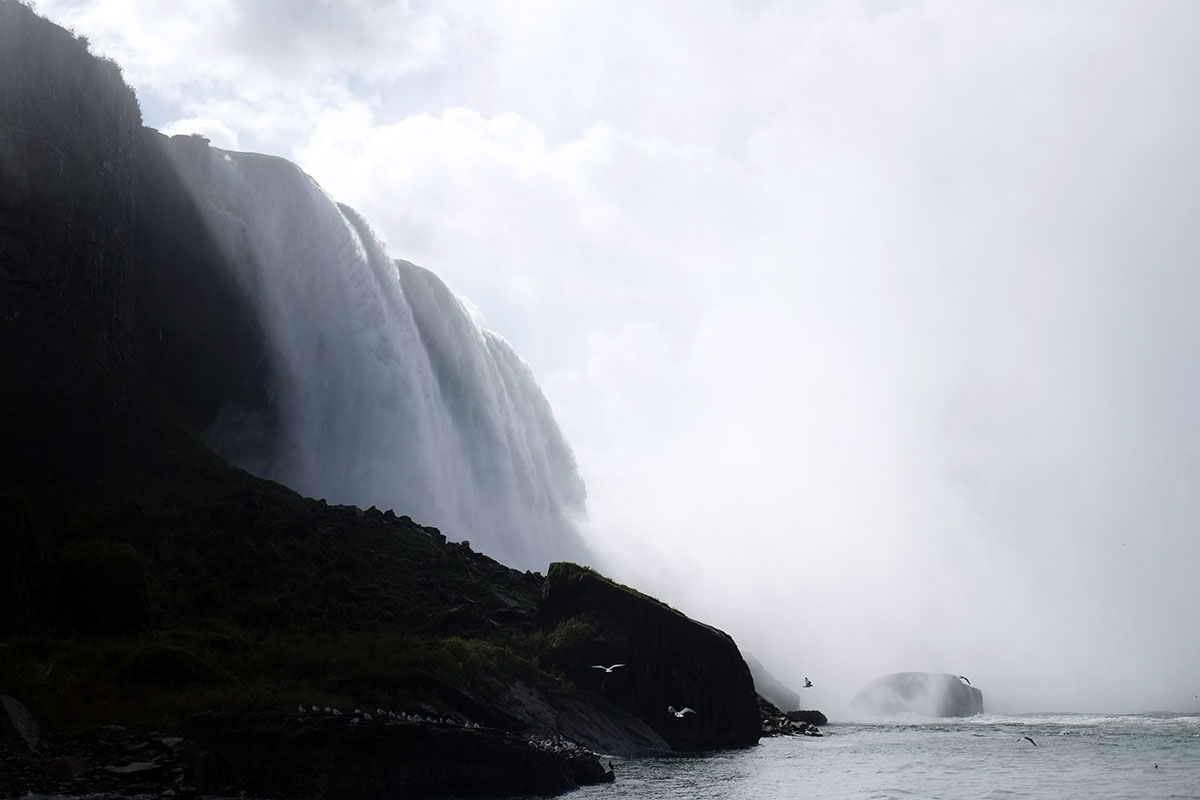
Just as there are celebrities who are famous for being famous, there are tourist attractions that are popular just because they are popular. Then there are tourist attractions that are popular because they are incomprehensibly amazing. If you haven’t been here yet (and I find that many people haven’t), go, and get as close up as you can. I had been here a few times as a kid and thought it was cool, and I wondered if it would seem familiar this time. It didn’t. Greta was blown away (literally).DSCF1608

DSCF1618

DSCF1656

DSCF1593

Kim and Sarah Carlsen

This post on social media is about the efficacy of social media.  After I put up a picture taken in Pittsburgh, I got a note from Kim Carlsen, who is married to my nephew Ben, and lives in Colorado.  Where are you, she asked, and when I sent her the details of our location at Powdermill Nature Reserve, she replied that she was visiting her parents in Berlin, PA, 30 miles away.

So the next morning she and her daughter Sarah came by for a brief visit.  Greta and her cousin Sarah went to watch some bird-banding, and to take a walk in the woods to get away from their parents, while Kim and I sat and had coffee.  It was an unexpected pleasure on our trip, and it wouldn’t have happened without Facebook.

One month on the road

We’ve driven 3900 miles through 14 states in a month, and haven’t really driven each other crazy yet.  We’re in Buffalo now, heading across NY State and into Massachusetts in the next week. We’ve been having so many great experiences in rapid succession that it feels like we’ve been gone for six months; it’s hard to conceive that we’re only about 1/8 through the trip.  The blog is about a week behind, and as soon as we hit a boring patch we’ll catch up.  Cheers!

John Wenzel

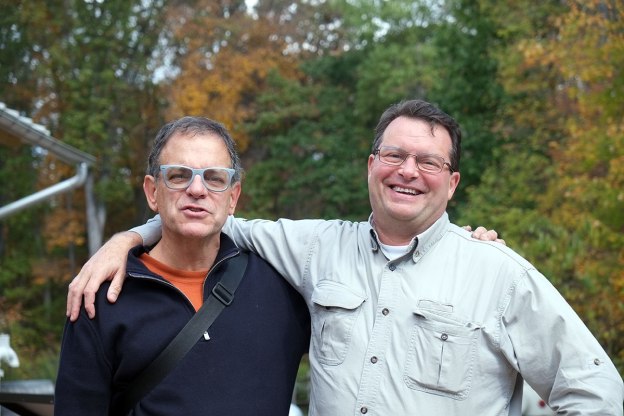
John and I were roommates in Somerville, back in 1979-80.  I had finished college and was working for an architect in Boston, and John was on a hiatus year, doing fieldwork in entomology and working as a bartender in various places (including the original Legal Seafood around the corner in Inman Square), before returning to Harvard to finish his degree.  John pretty much took over the freezer in our apartment, and if you were looking for ice cream you had to move all the film canisters filled with wasps out of the way.  Even at that young age, John was notable for the adventures he had had and the stories he could tell.  (We weren’t always sure how much of any story was true, but they were damn good stories.)  We learned how serious John was about entomology when it was time to pick a graduate program.  The best school was Kansas, and the second-best was Berkeley.  John went to Kansas, and didn’t get to eat any good Chinese food for years.

John went on to a distinguished academic career, eventually as a professor at Ohio State.  But after decades in the field, he realized he wasn’t as interested in the direction in which it was headed.  So he quit to try something different.  He is now the Director of the Powdermill Nature Reserve in southwestern Pennsylvania, (http://www.carnegiemnh.org/powdermill/), which is the environmental research center of the Carnegie Museum of Natural History, about 50 miles southeast of Pittsburgh.  It is an extremely beautiful area (and hence the location of Fallingwater and many other country estates of the Pittsburgh elite), and John’s work now includes overseeing the largest bird-banding operation in the country (which Greta will blog about), thinking about big issues of ecology, and initiating a wide variety of studies and research in this area, such as whether they can establish a stand of American Chestnut trees on the reserve.

John showing us an American Elm.

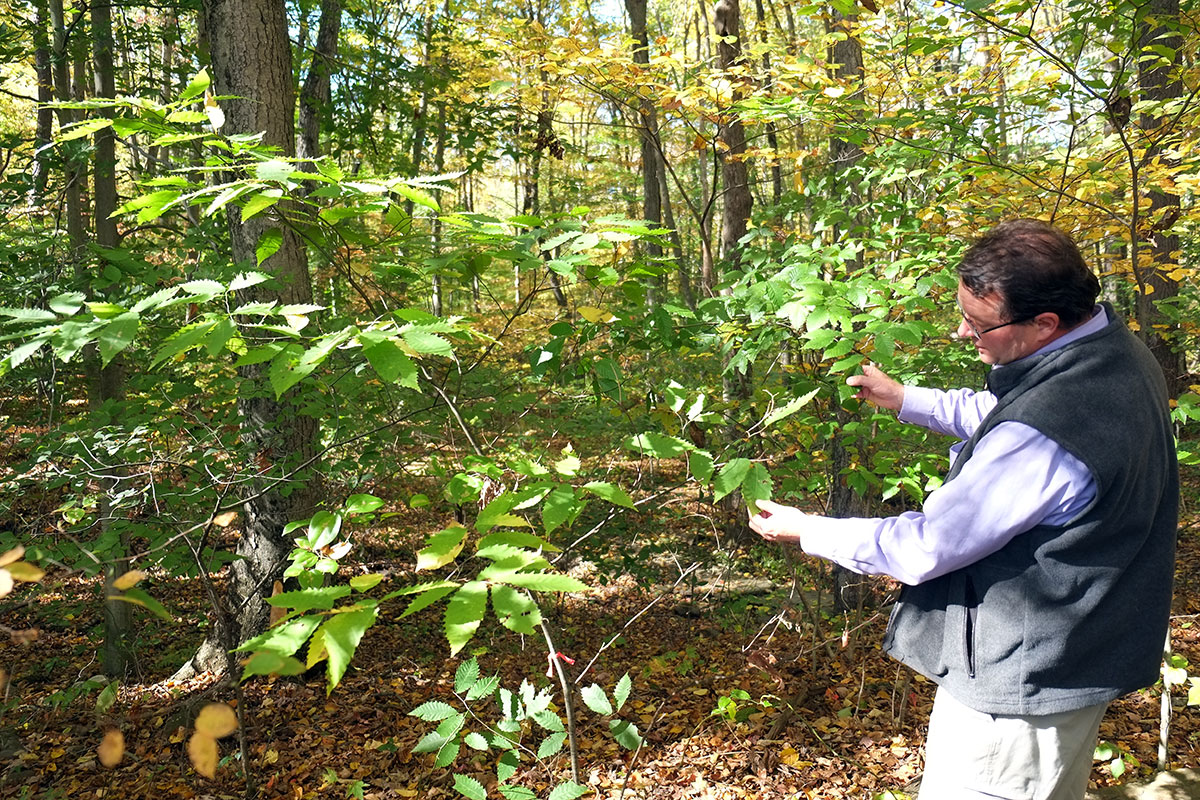
John showing us an American Chestnut.

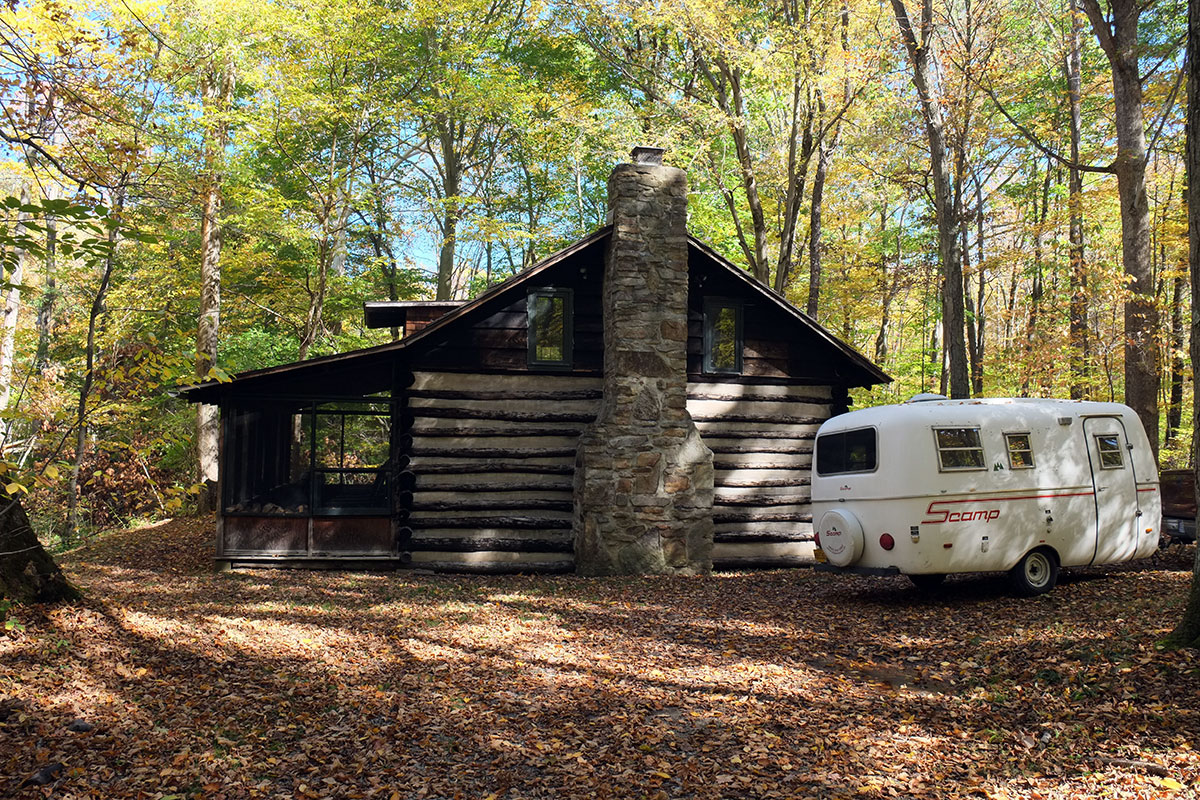
We spent an amazing few days with John and his wife Donna, who is also an entomologist.  John drove us to obscure places around the countryside to see extraordinary sites and buildings (while Donna was helping out at the local town festival), and put us up in a great old log cabin on the Reserve (much more commodious than our trailer).  DSCF0769

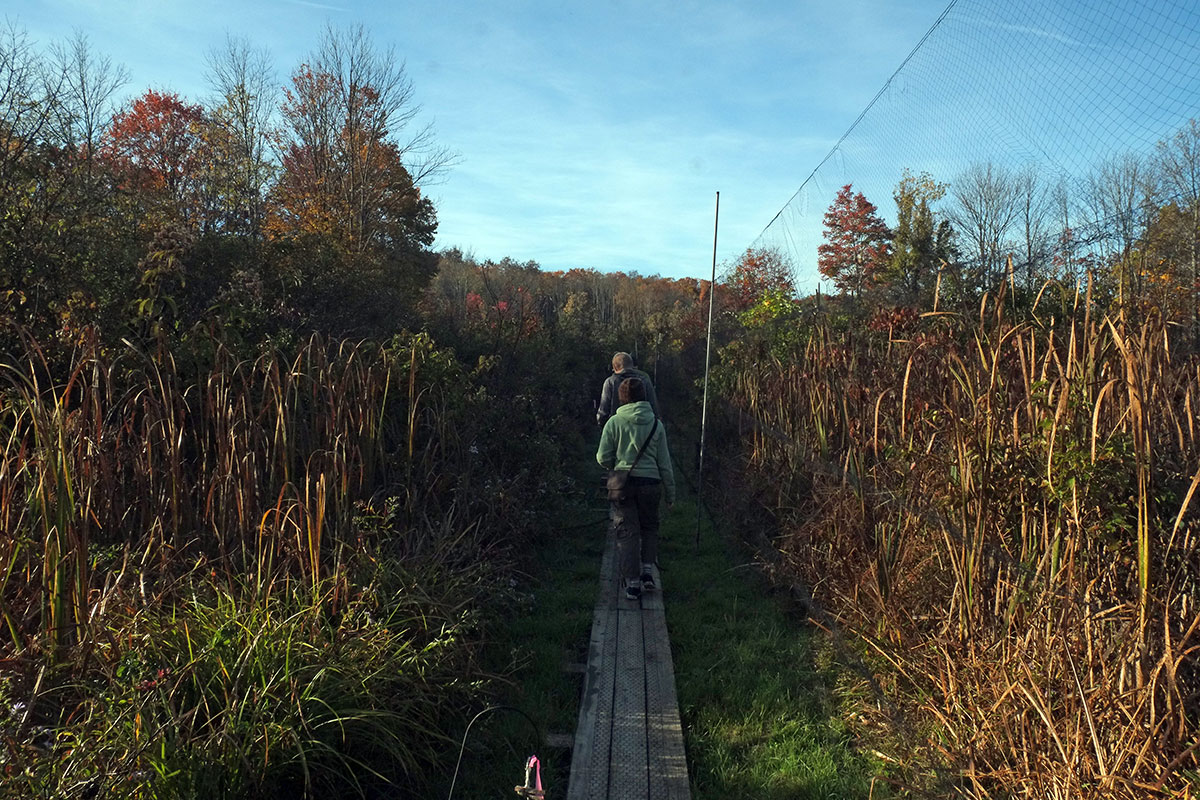
Donna made us a wonderful home-cooked meal, and we went into Pittsburgh with John a couple of times.  His institutional connections and tremendous gregariousness came into play here, as he seems to know everyone in town, and he took us behind the scenes at both the Carnegie Museum and the National Aviary.  Greta has always been very interested in natural science, and this may have been one of the best weeks of her life – tagging along with the bird-banding crew early on a Sunday morning,DSCF0737

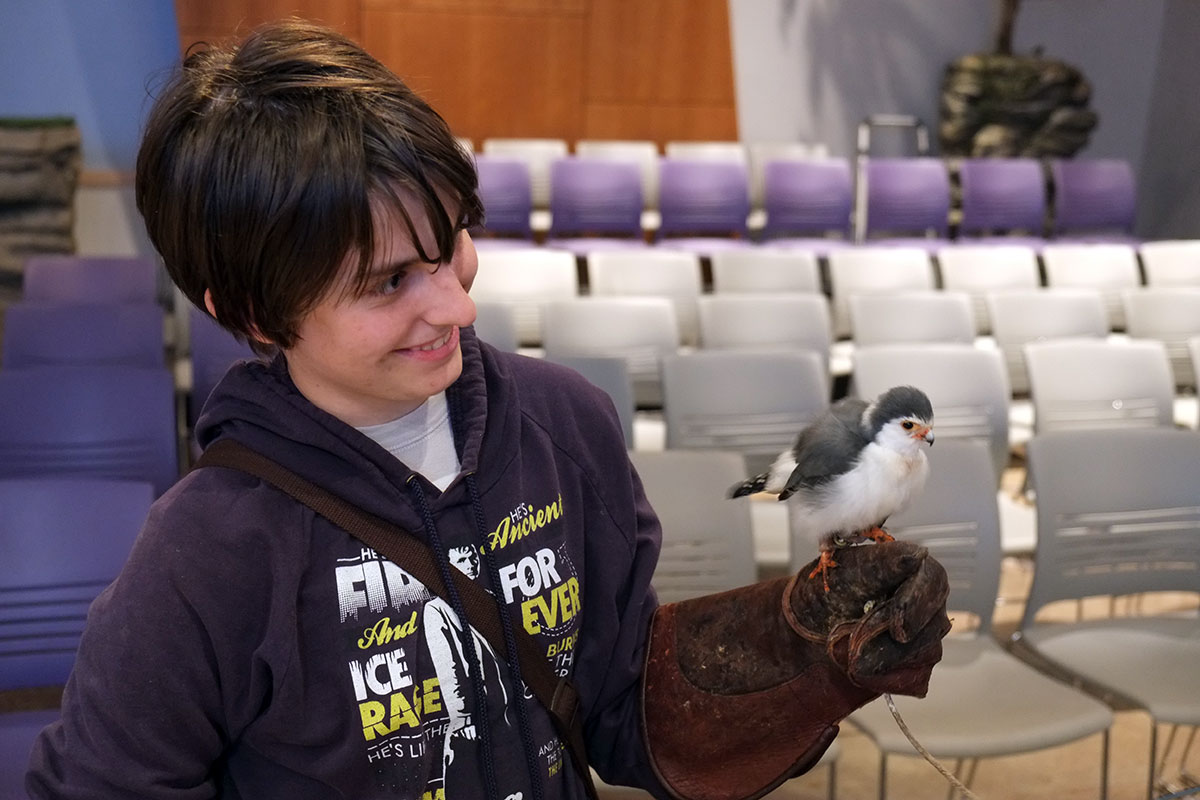
visiting the raptor yard at the aviary and holding a falcon,DSCF1060

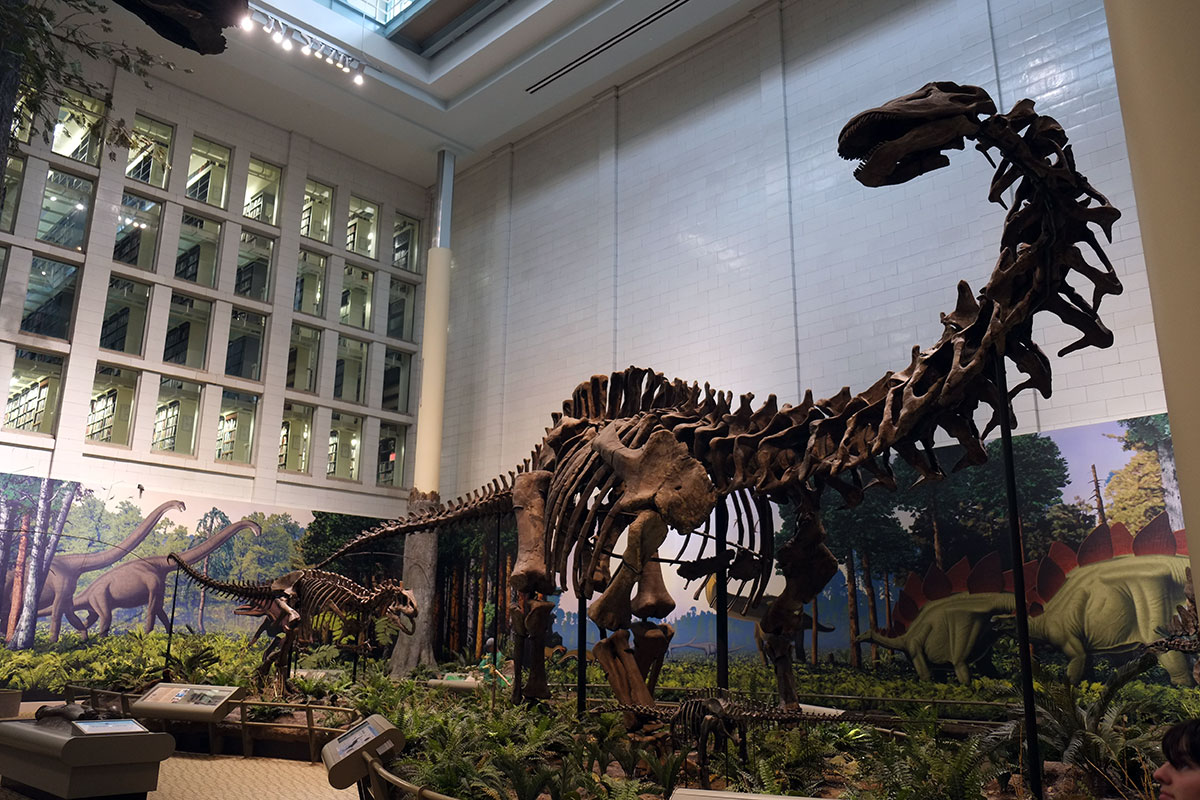
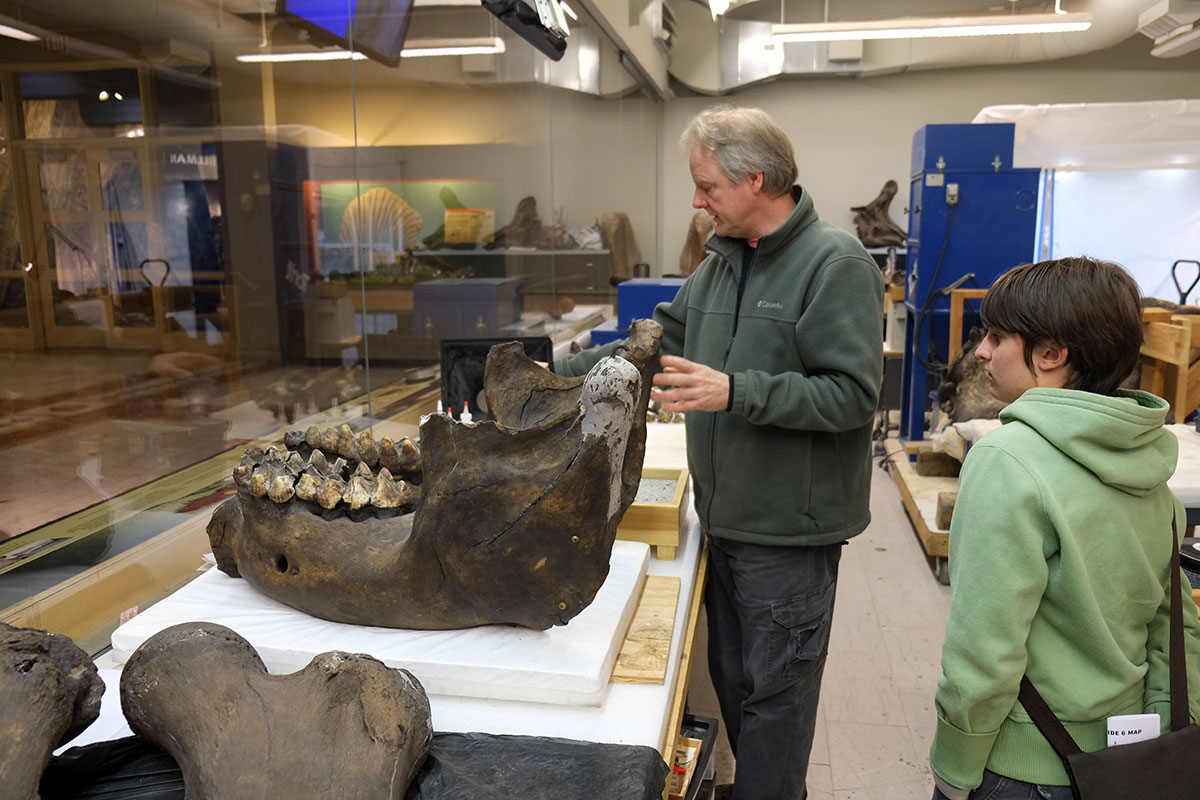
getting to observe and talk to the archaeologists who are reconstructing fossils in the museum.DSCF1378

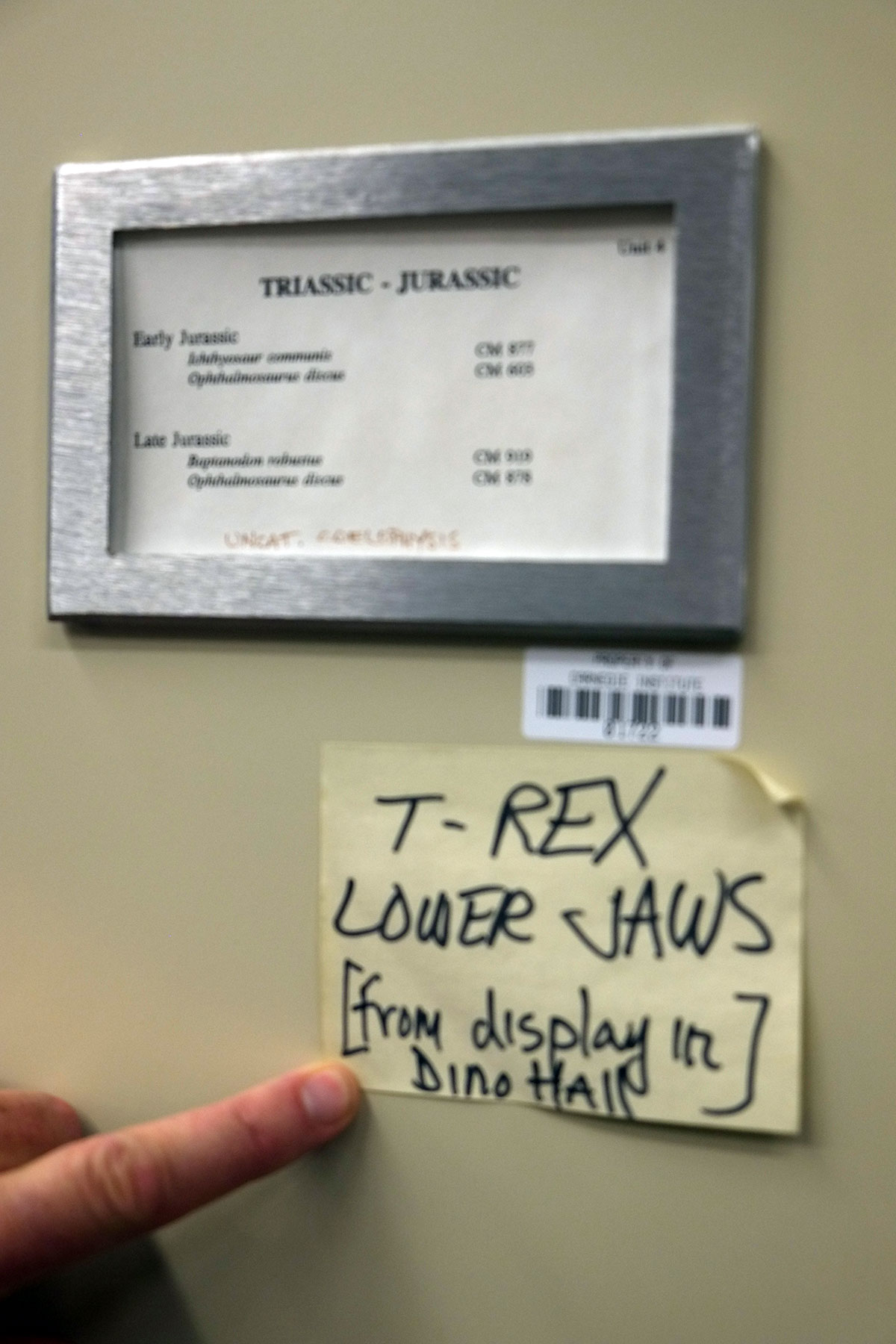
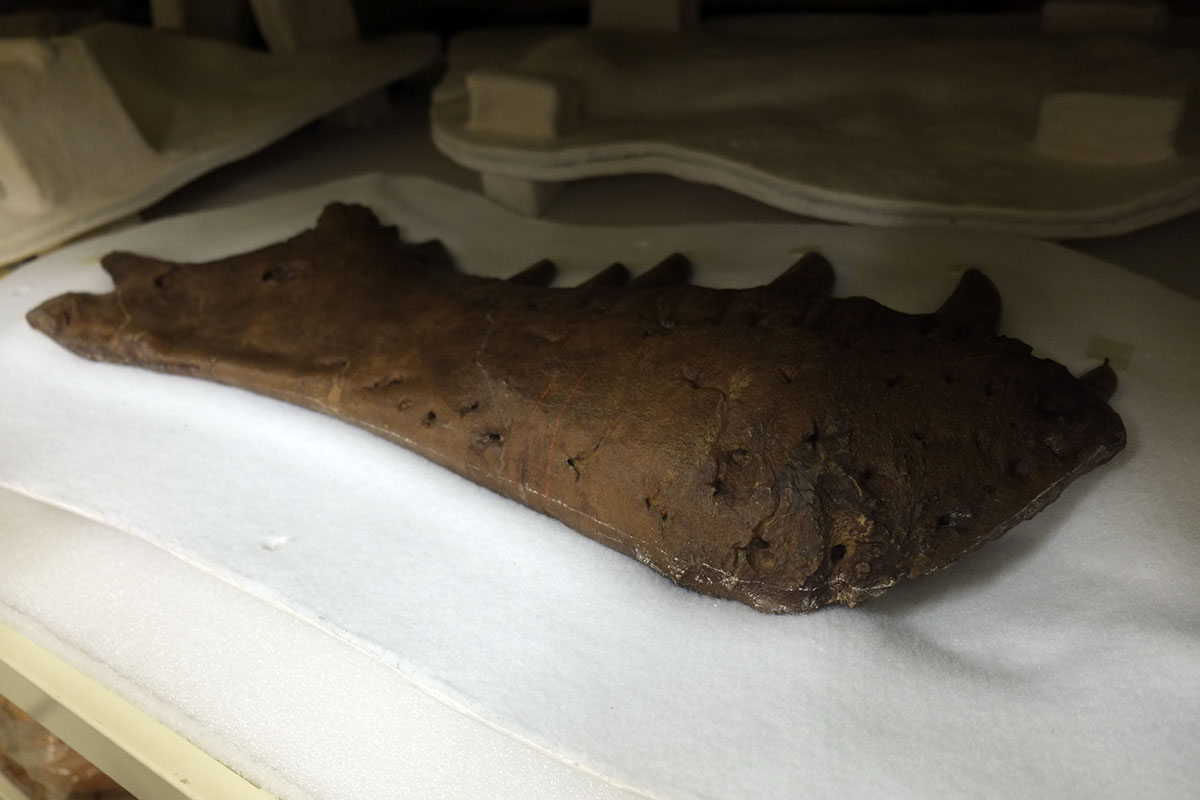
the jaw bone from the first identified Tyrannosaurus Rex.

the jaw bone from the first identified Tyrannosaurus Rex, in the storage locker.

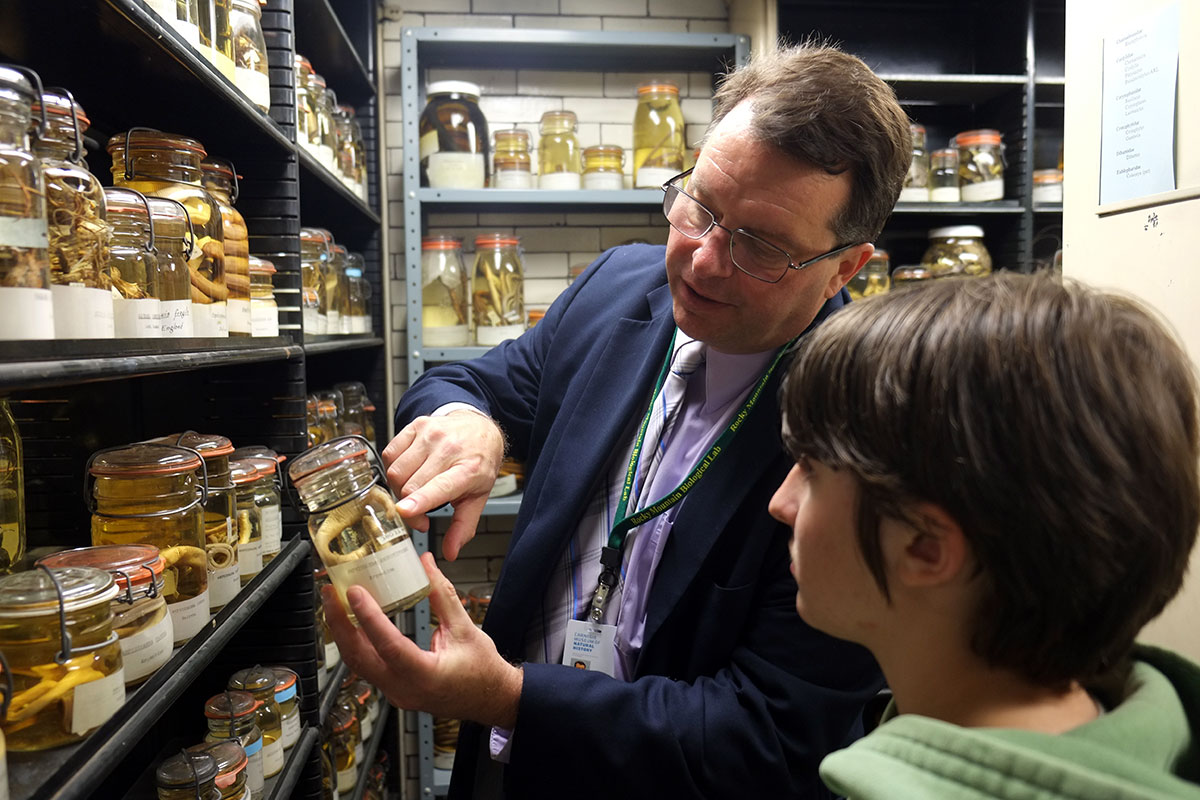
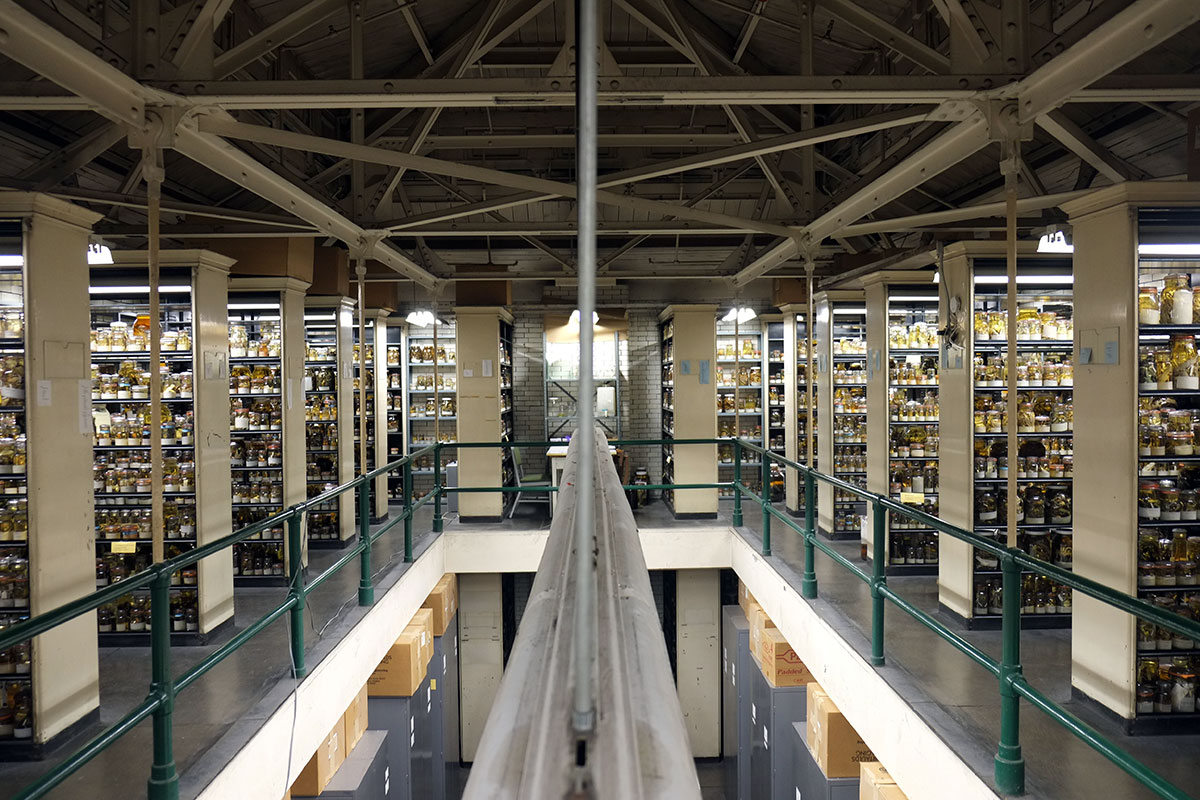
and most strangely, visiting the room at the museum where vast numbers of reptiles and amphibians are stored in glass jars:DSCF1394

We’re supposed to be home-schooling Greta this year, but I’m afraid that in the general rush of travel and things to see, we haven’t been as diligent as we might be (although the State of Oregon doesn’t seem to have any standards for this at all).  But this past week made up for it – Greta learned more science than she probably would have in all of 8th grade, in a much more engaging way.  She also talked to many scientists, and learned what their careers were like and how they had ended up doing the detailed work they did.  It was a fantastic educational experience for her, one that might have a profound effect on her life.

John and I hadn’t seen each other in almost 30 years; we reconnected about a decade ago through the wonders of the internet, and it was a pleasure to spend this much time with him.  Although his initial expertise was in what I thought of as a pretty narrow area, John had always been one of the most broadly knowledgable friends I’ve had.  That knowledge has grown much deeper in the past 35 years, as he has been to almost every corner of the world (acquiring a lot more good stories to tell), and he has gained a perspective on life and the world that I appreciated and enjoyed hearing.  One of the great pleasures of this trip has been seeing (and introducing Greta to) long-lost friends, people I’ve always enjoyed and admired.  With John this was especially acute, as it was clear how all the qualities he had as a young man had matured, bringing him to this accomplished, meaningful and very entertaining  life.

The Carnegie Museums

Backtracking to Pittsburgh for a post, as the Carnegie Museums of Art and Natural History must be mentioned.  There are three things about this complex that are great:  the natural history museum, the art museum, and the architecture.  But the best thing is that they are all together;  Greta could look at dinosaurs and animals while I looked at art and architecture, and neither of us got cranky.

First, the Natural History Museum was remarkable, even by Greta’s high standards.  As I mentioned in the post about my friend John Wenzel, who runs the Powdermill nature center for the museum, we went behind the scenes to meet the curators, etc.  As he points out, it is one of the greatest archaeological collections in the country;  many other museums display casts of the fossils that are in the Carnegie.DSCF1447

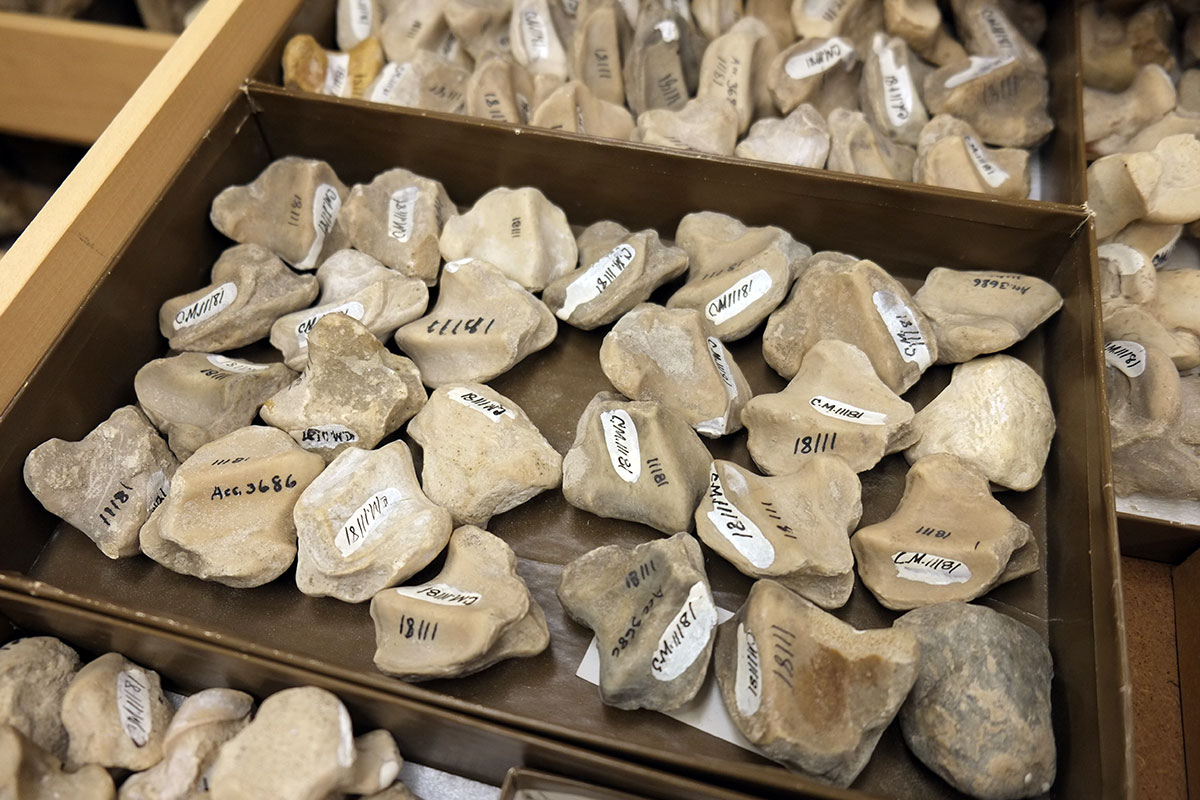
a whole drawer full of rhinoceros kneecaps

a whole drawer full of rhinoceros kneecaps

the amazing Alcohol Room, two levels of glass jars full of amphibians and reptiles

the amazing Alcohol Room, two levels of glass jars full of amphibians and reptiles

DSCF1459

the prairie dogs are everywhere (along wi the bison)

the prairie dogs are everywhere (along with the bison)

my favorite thing in the bone storage area.  My post-its usually say things like cheese and coffee, or a phone number with no name.

my favorite thing in the bone storage area. My post-its usually say things like cheese and coffee, or a phone number with no name.

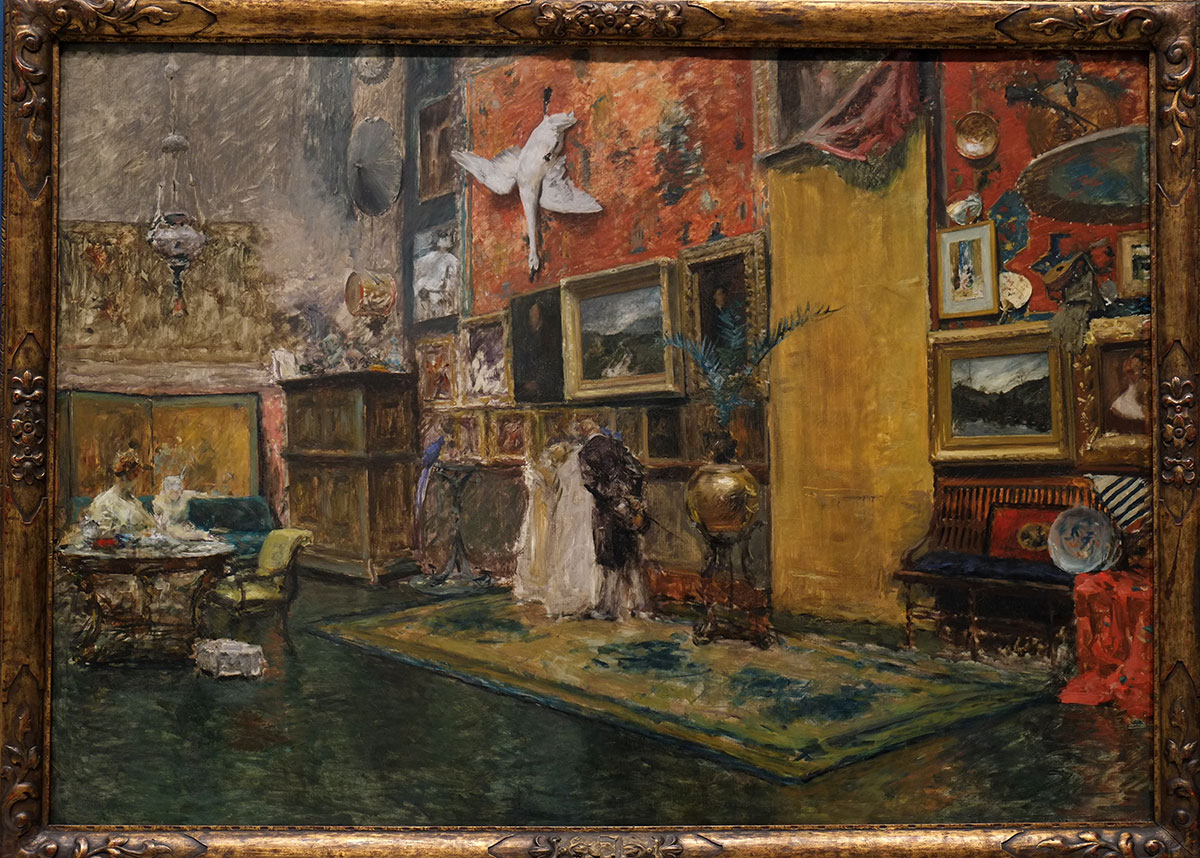
Second, the art collection is one of the best in the country.  You may recall that many of the best paintings in the National Gallery were given by the Mellons;  they obviously kept a lot of good things home in Pittsburgh too.  Perhaps the most interesting circumstance that determines the collection is that starting in 1896, the museum sponsored an annual (then biennial, then triennial, etc.) exhibition of contemporary work, and they often they acquired important entries.  So there is a fantastic collection of late 19th-century American and European paintings and sculpture.  Many of modern western civilization’s all-star team, but many less well-know artists who are quite interesting.  Here are a few images, without getting all lecturey about them:DSCF1475

DSCF1495

DSCF1473

Caitlin, I think

Caitlin, I think

DSCF1368

DSCF1361

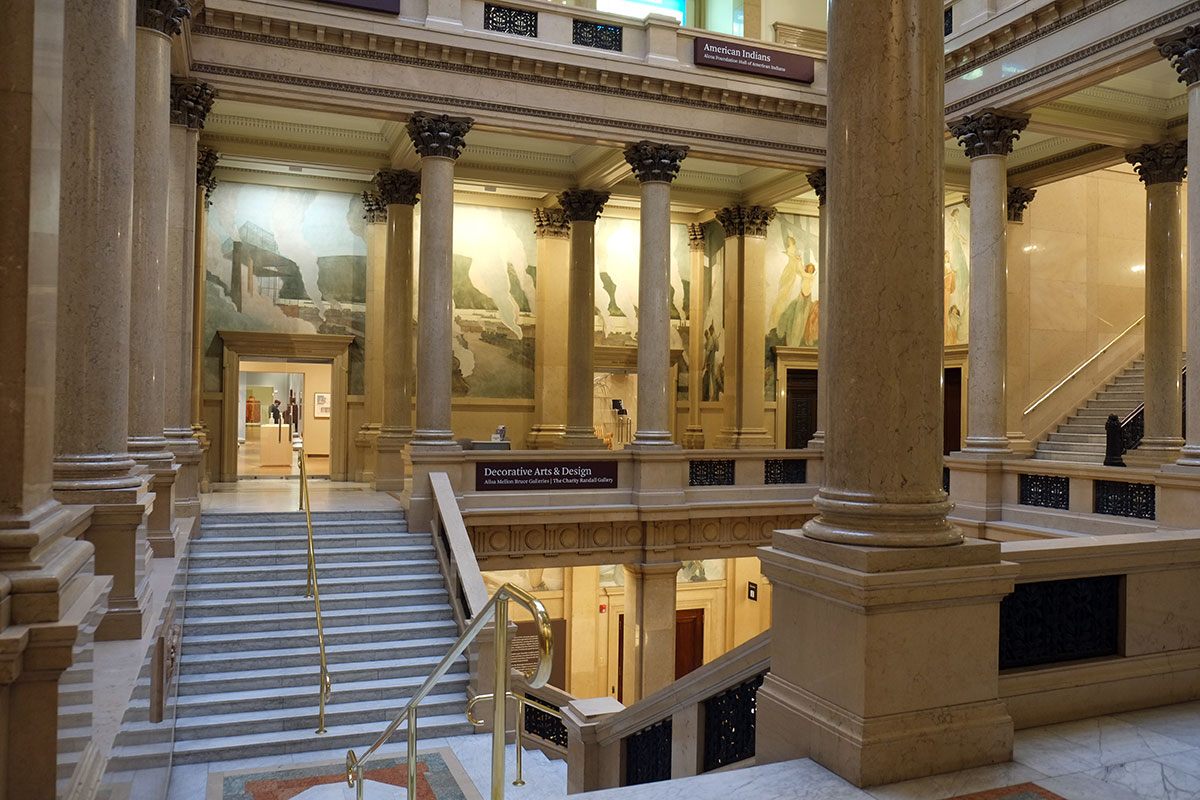
Third, the architecture is superb.  The original Beaux Arts building is opulent yet under control, with grand halls and stairs:DSCF1321

DSCF1324

DSCF1501

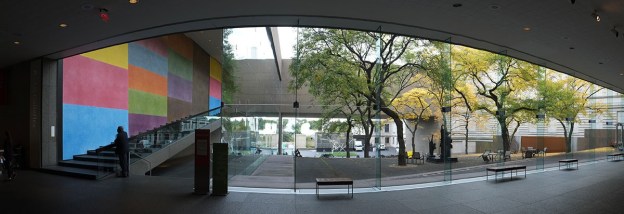
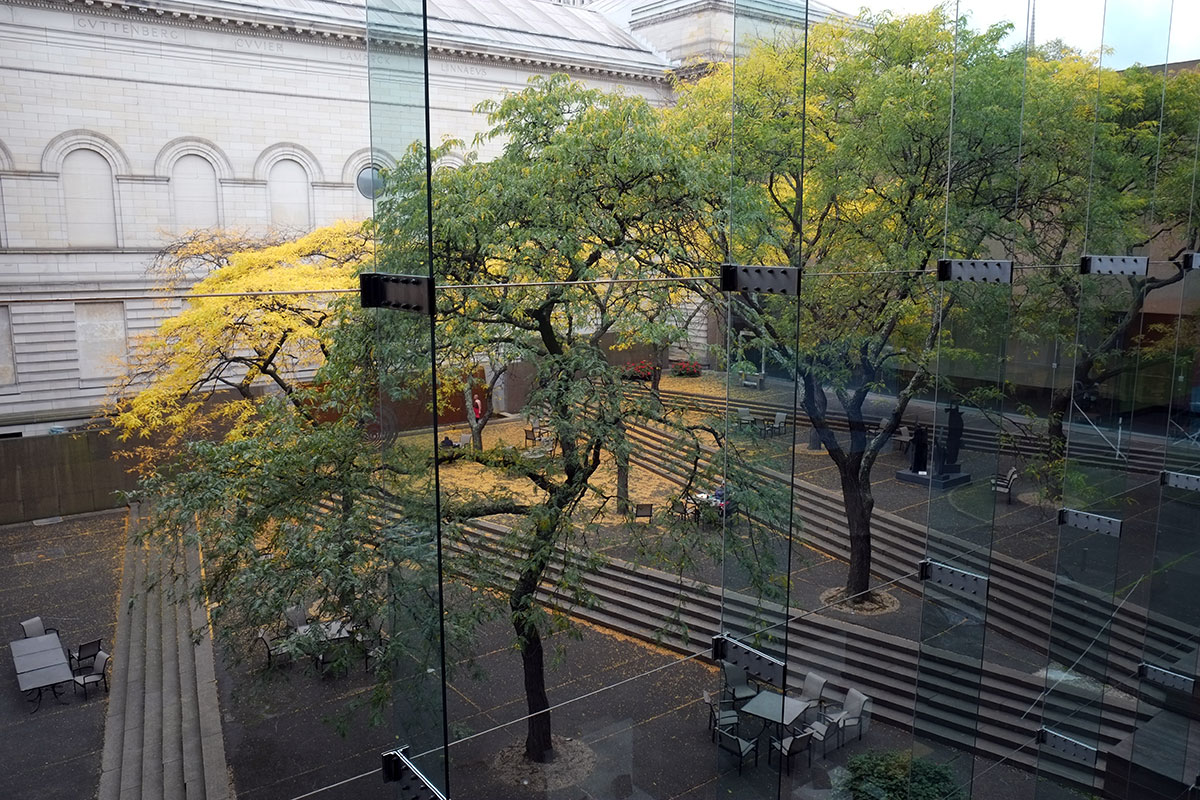
In 1970, Edward Larrabee Barnes (an architect about whom those under the age of 50 have not heard) designed an excellent addition/remodel/insertion, with elegant galleries and a beautiful entry/lobby/courtyard.DSCF1513

DSCF1327

DSCF1369

DSCF1337

I could have spent a week in this museum, the collection is that good.  Highly recommended, and Greta still needs to blog about the Indian food around the corner.

Pittsburgh

I’d been to Pittsburgh a few times in the past and always loved it.  I think cities that are squeezed by the topography – steep bluffs and big rivers here – have an intensity that is missing in cities that can spread endlessly.  Pittsburgh is another of those cities that was really important 100 years ago, and isn’t now.  But somehow it has fared better than many others – reinventing itself, emphasizing factors such as higher education.  John pointed out to me that Pittsburgh had as many abandoned mills as any other rust belt city, and when it was apparent that they wouldn’t be revived, the rich and powerful decided to knock them down, to allow for redevelopment, and to remove them as depressing reminders of decline.  It seems to have helped.  We architects tend to fetishize the “ruin porn” photos of cities such as Detroit, but maybe it isn’t good for a city’s life for it to be filled with desolation.

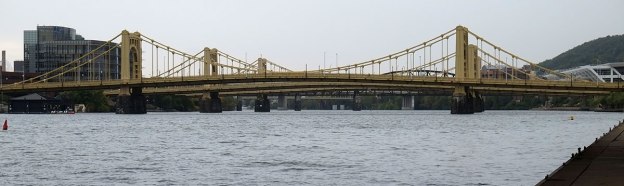
There are many things to like about Pittsburgh (and a few to hate).  First, bridges.  As I’ve mentioned, it’s a lot easier to get Greta to look at bridges than buildings, so we hit them all.  There are the three identical bridges over the Allegheny from the 1920s, pictured above and below.DSCF1105

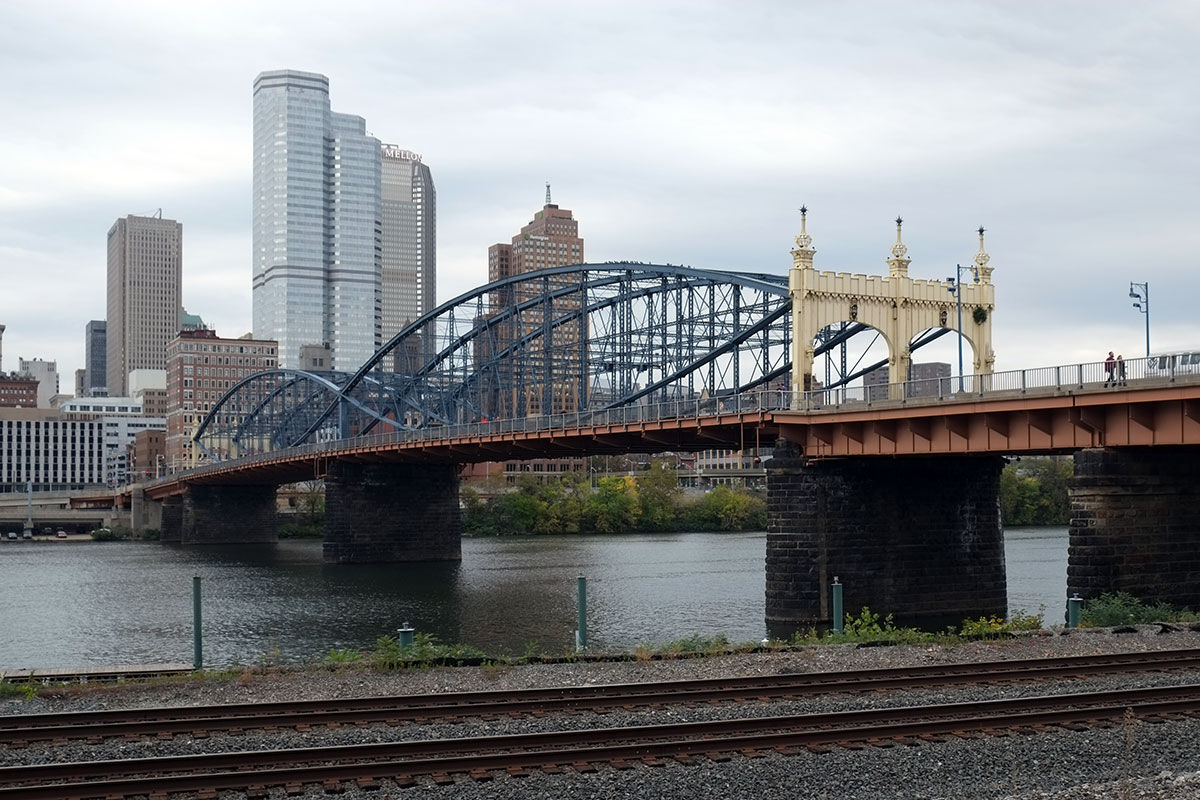
There is Gustav Lindenthal’s lenticular truss Smithfield street bridge.DSCF1199

DSCF1186

There are the juxtapositions of bridges with bluffsDSCF1130and bridges with bridgesDSCF1191

The bridges are great, but it is time for people to get over this –  It’s Pittsburgh, folks, not Paris:DSCF1114

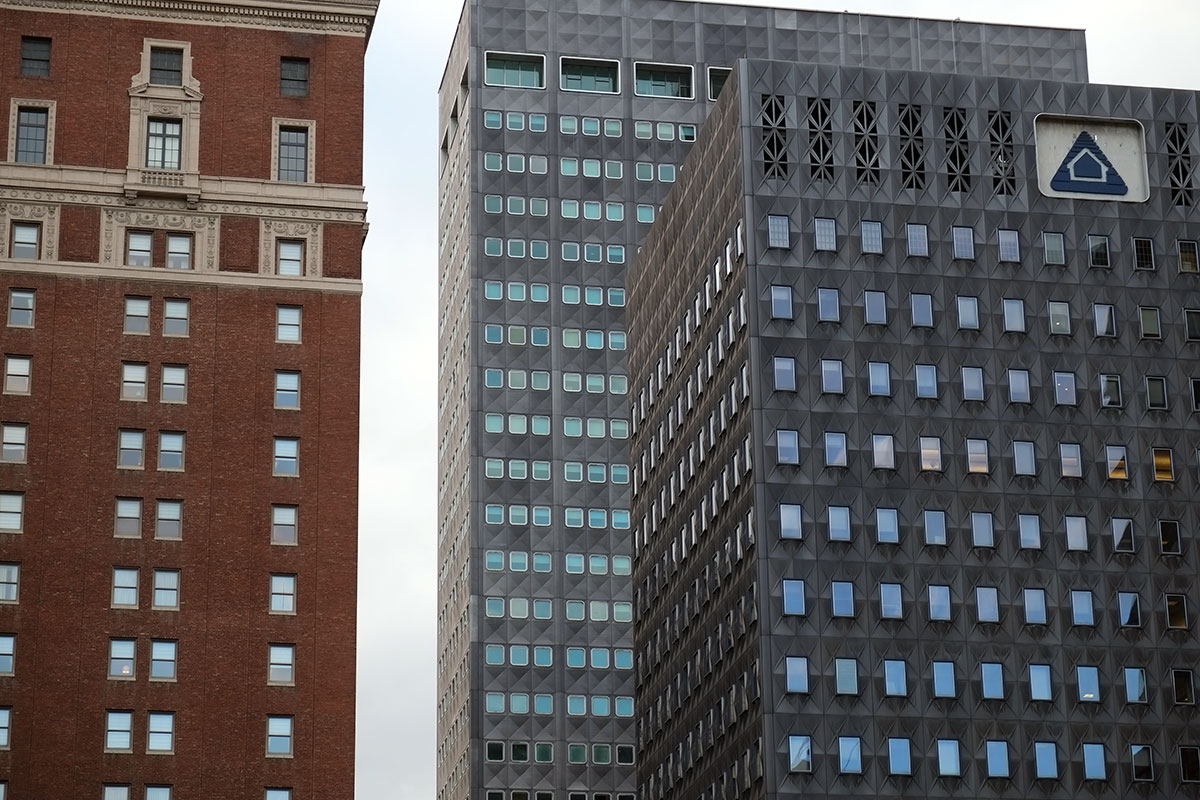
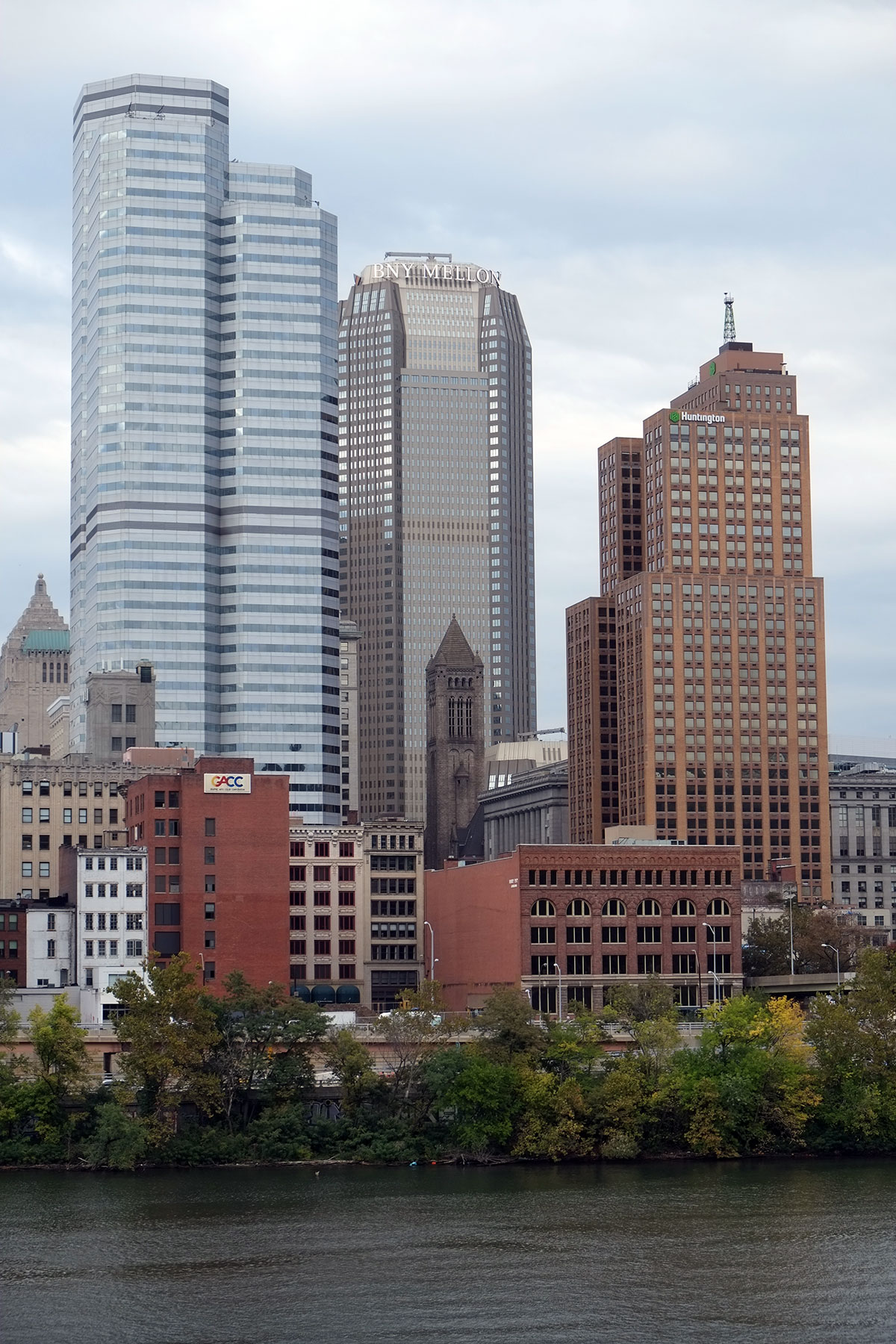
For some reason on this trip I’ve become obsessed with collages of urban fabric – bridges, but also lots of building facades seen together.  Pittsburgh is a good town for this.DSCF1284

DSCF1285

DSCF1144

DSCF1127

DSCF1298There are lots of buildings here that are interesting in their own right;  like, what’s that bizarre thing poking out at the right above?DSCF1294

DSCF1119

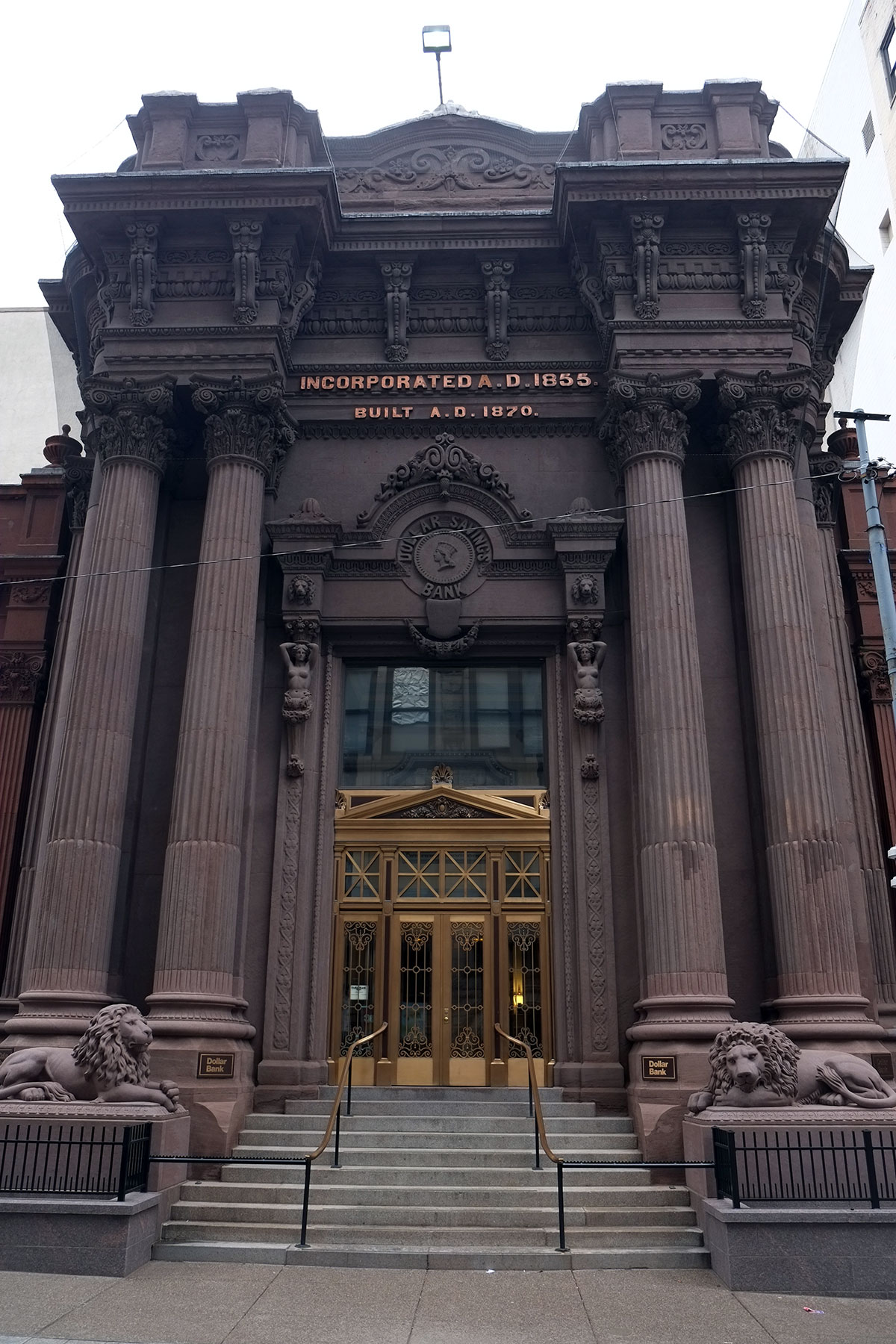
and some weird scale issues – impressive facade:DSCF1175

but it looks like they blew the whole budget on the entry:DSCF1216

and then in the midst of post-war mediocre gigantism, there stands a gem (more on that one in a later post).DSCF1207

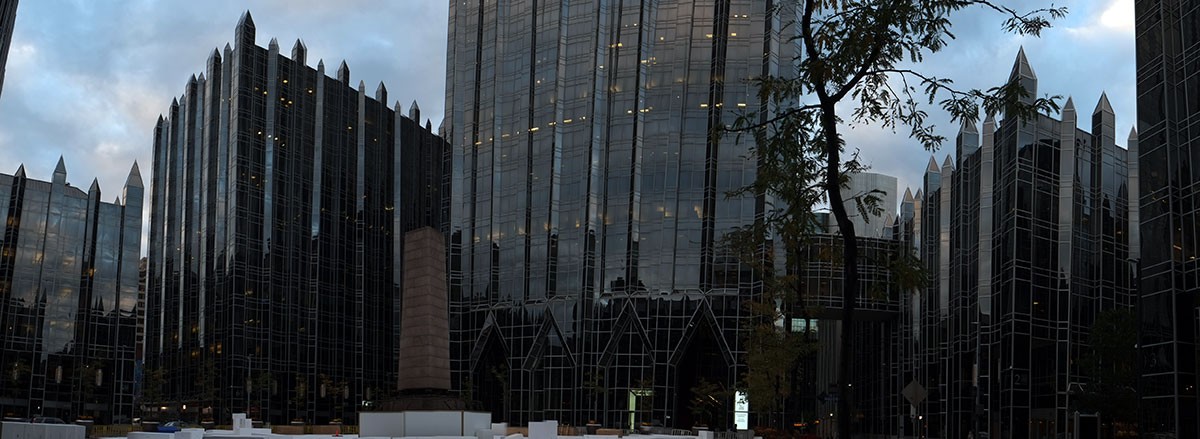
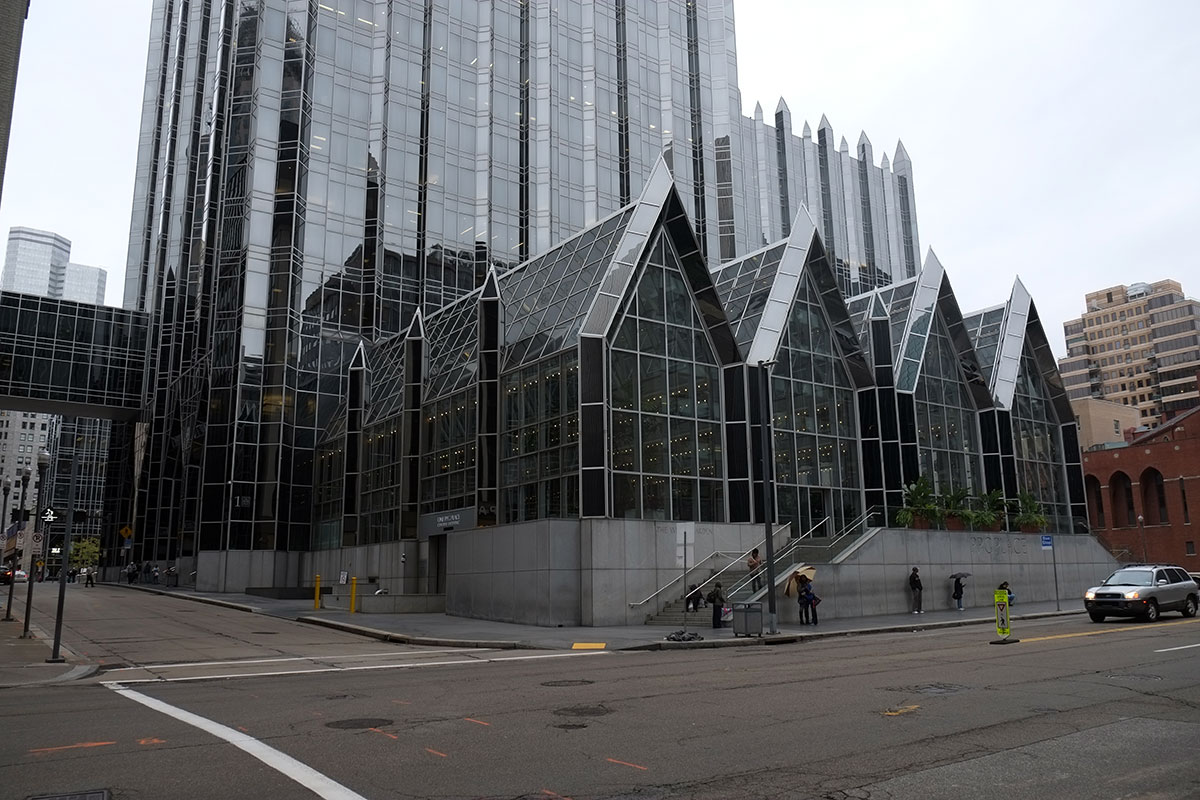
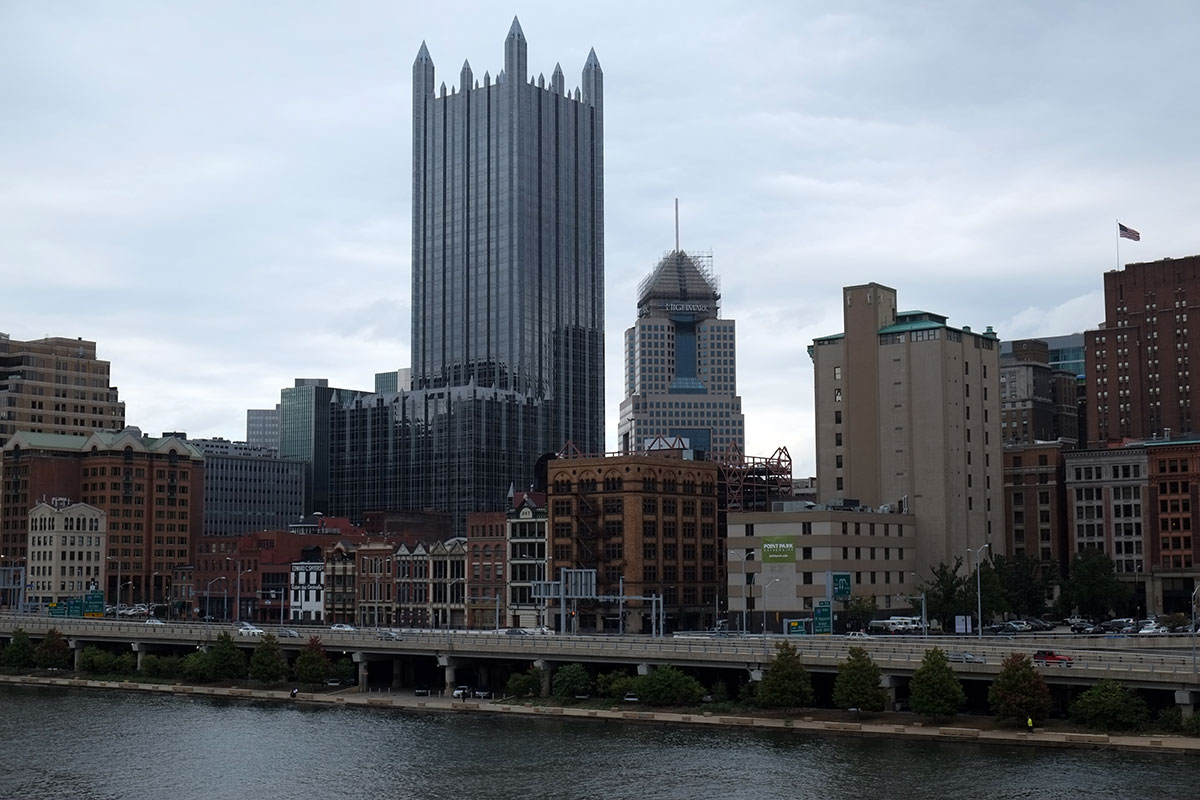
But no post on Pittsburgh would be complete without a mention of PPG Place. Every time I start to think that maybe Philip Johnson is not the dark lord of American modernism, this complex looms up in my mind.  Pictures cannot do it justice.  It is the most hideous bit of architecture/urban design perpetrated in the past 50 years (and I will be posting another contender soon).  cropped-dscf1313.jpg

DSCF1145

It is awful in concept, in execution, in scale, in proportion, in detail (or lack thereof).  It is horrible to be surrounded by it, and it is horrible to see its banality dominate the city from a distance.  DSCF1193

But there are certain contexts within which it fits.  I can only hope that someday we will be able to classify it as ruin porn.DSCF1099