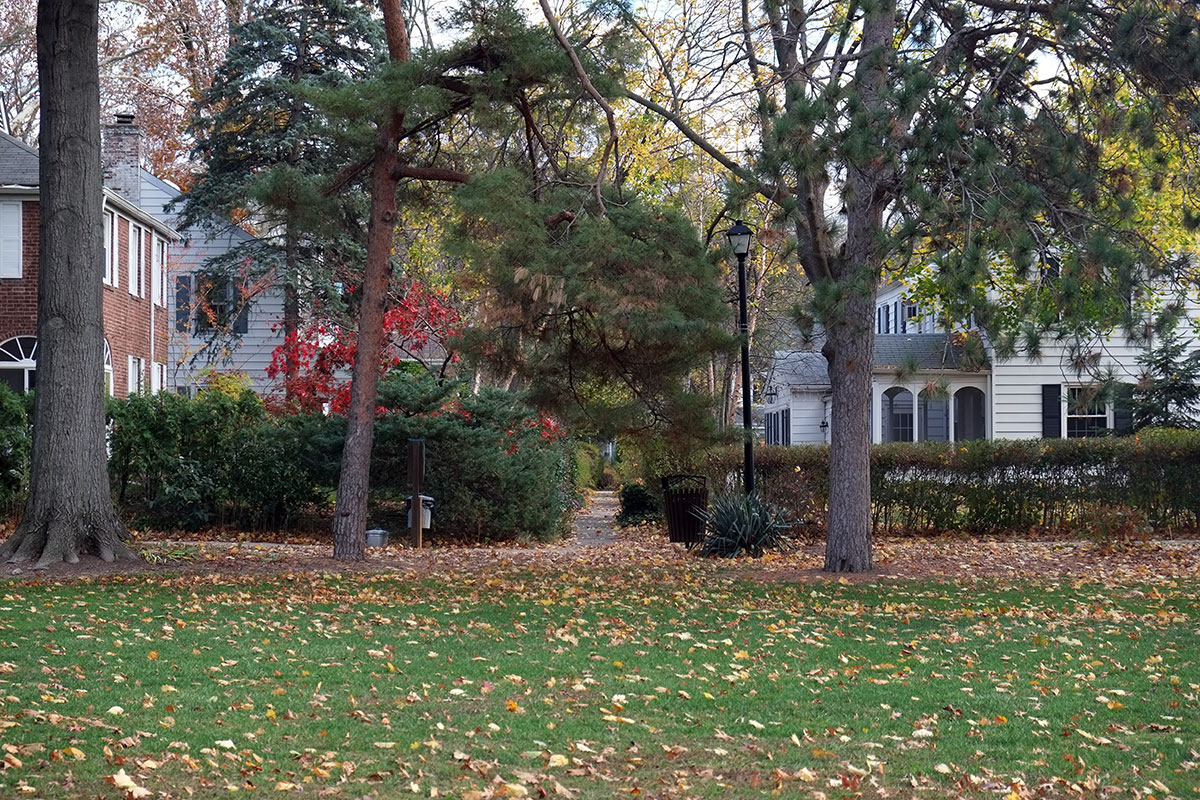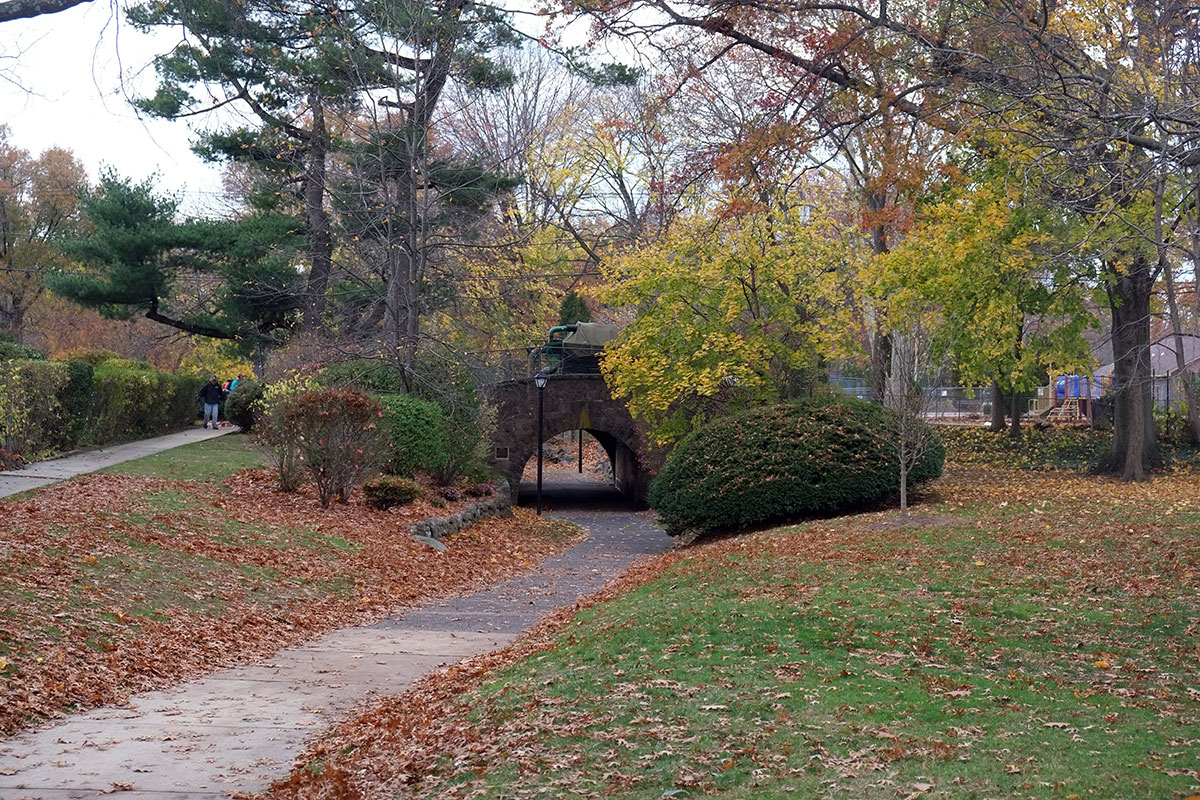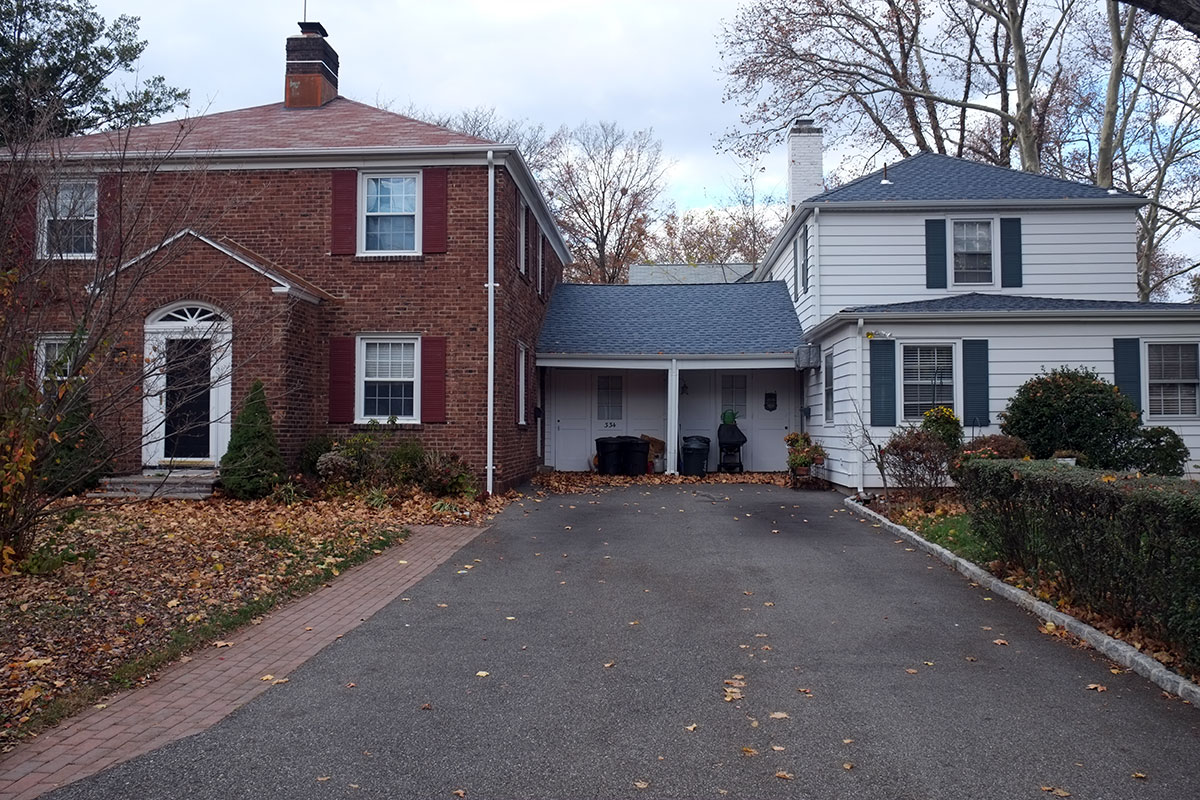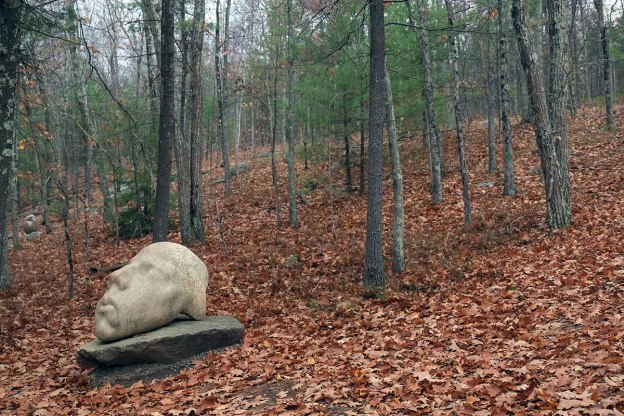
Category Archives: landscape

Brock Environmental Center, Virginia Beach

DSCF7459

Back in the 1970s, there was an explosion of research and innovation in energy-efficient and solar building.  It largely disappeared in the 1980s – partially due to the lack of support under the Reagan administration, but also because it had focussed almost exclusively on building performance, neglecting the many other factors (included in firmness, commodity and delight) that motivate humans in their building preferences and decisions.

We’ve come a long way since then, and the Brock Environmental Center exemplifies how the new generation of high-performance buildings are not just machines for saving the earth in, but buildings that satisfy the full range of human needs.  The goal of making a very high-performance green building isn’t in conflict with making good architecture;  this building shows how those performance-oriented features can fundamentally enhance the quality of the architecture overall.

The Chesapeake Bay Foundation is a multi-state nonprofit, dedicated to saving Chesapeake Bay and its tributaries.  They have a history of making buildings that embody their environmental goals – their Philip Merrill Environmental Center in Annapolis was the first LEED Platinum building in 2001.  They have recently followed this with their Brock Environmental Center in Virginia Beach, which is on track to be certified as LEED Platinum, plus meeting the even more stringent requirements of the Living Building Challenge. Both of these buildings were designed by the SmithGroupJJR.

The context of the site, both local and regional, is critical to understanding the meaning of this building.  We arrived in Virginia Beach in early December, not fully realizing how it was our first exposure to the environment in which we’d spend most of the next two months – the edge where the great Southern coastal plain meets the sea.  We descended from the Piedmont around Charlottesville into this plain, which is extremely flat, with fairly monotonous pine forests and shallow broad rivers with very little fall in elevation, which widen out into enormous bays that join the sea.  The mouth of the Chesapeake is one of the largest, opening to the Atlantic in the Norfolk-Portsmouth-Newport News-Virgina Beach metro area.  The beaches are wide and beautiful, and in many places are protected by constantly shifting barrier islands (although not here).
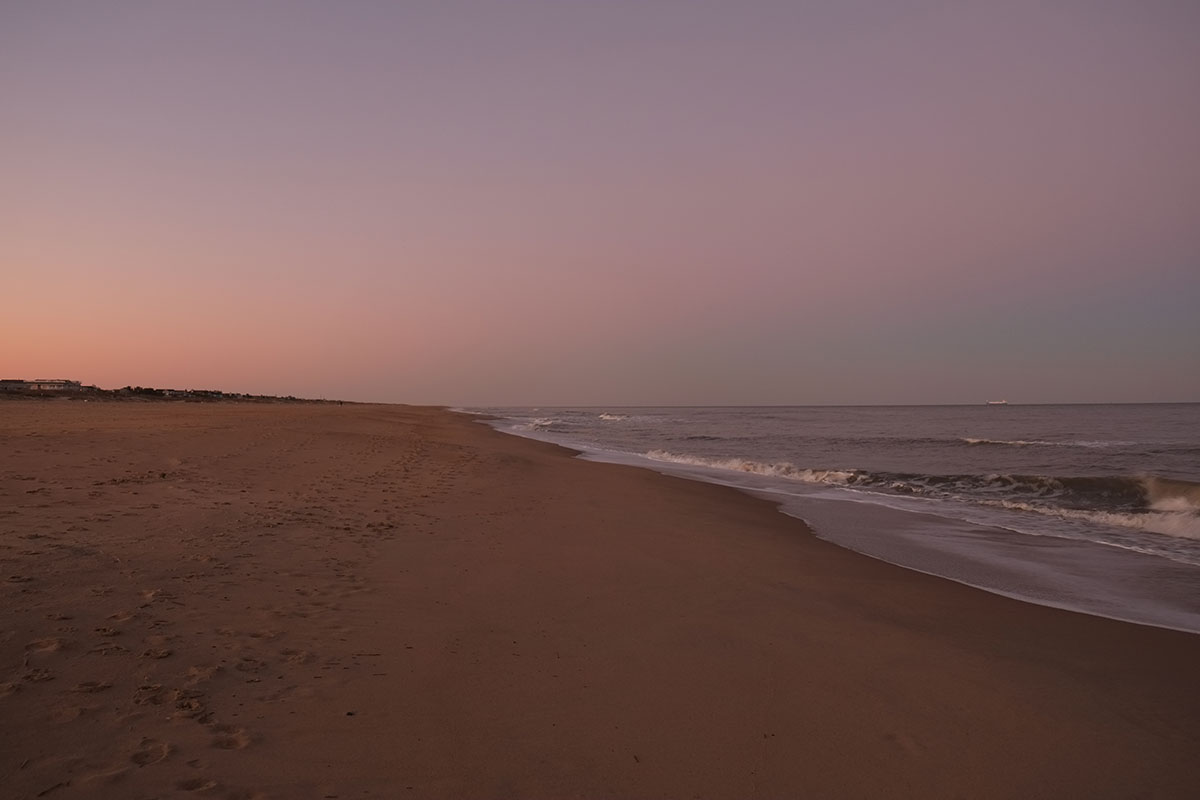
DSCF7368

Behind this beach and a narrow band of development is First Landing State Park, which preserves about 3000 acres of the Lynnhaven River estuary where it joins Chesapeake Bay.  There is lots of low-lying salt marsh,
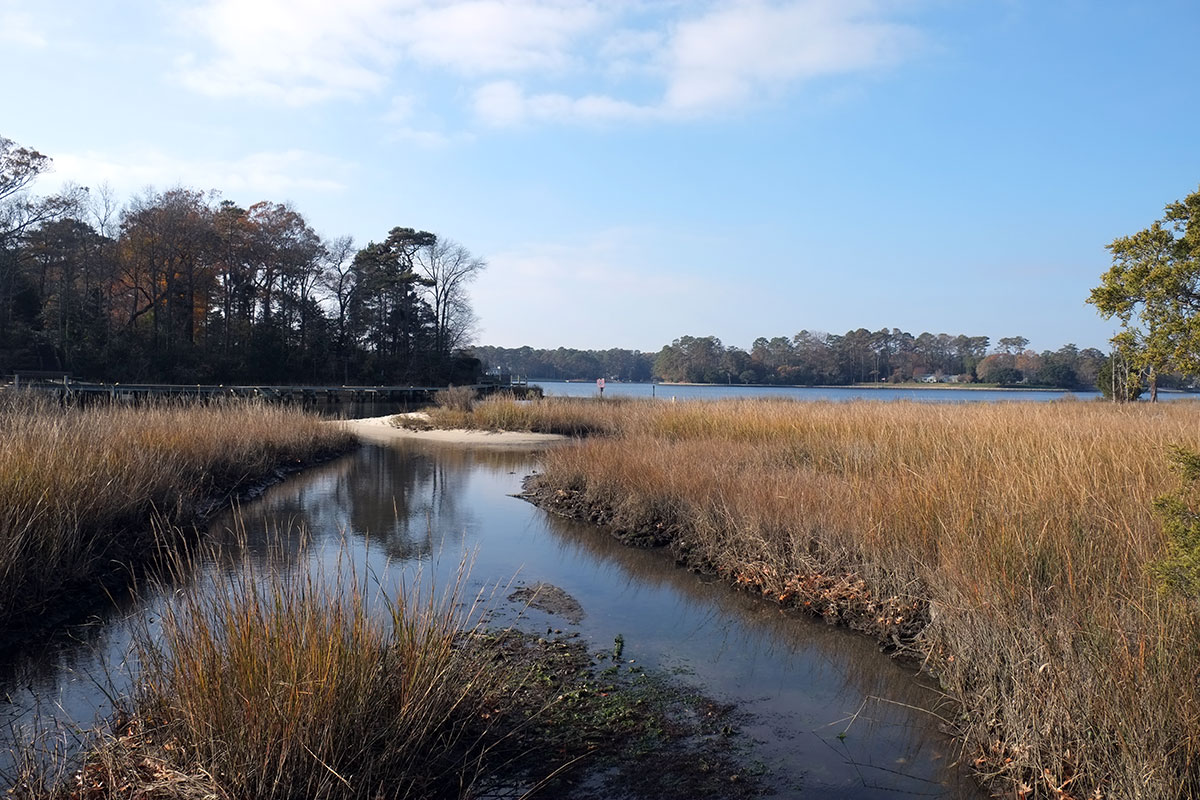
DSCF7372

plus some uplands with pines and live oaks, and Spanish moss everywhere.
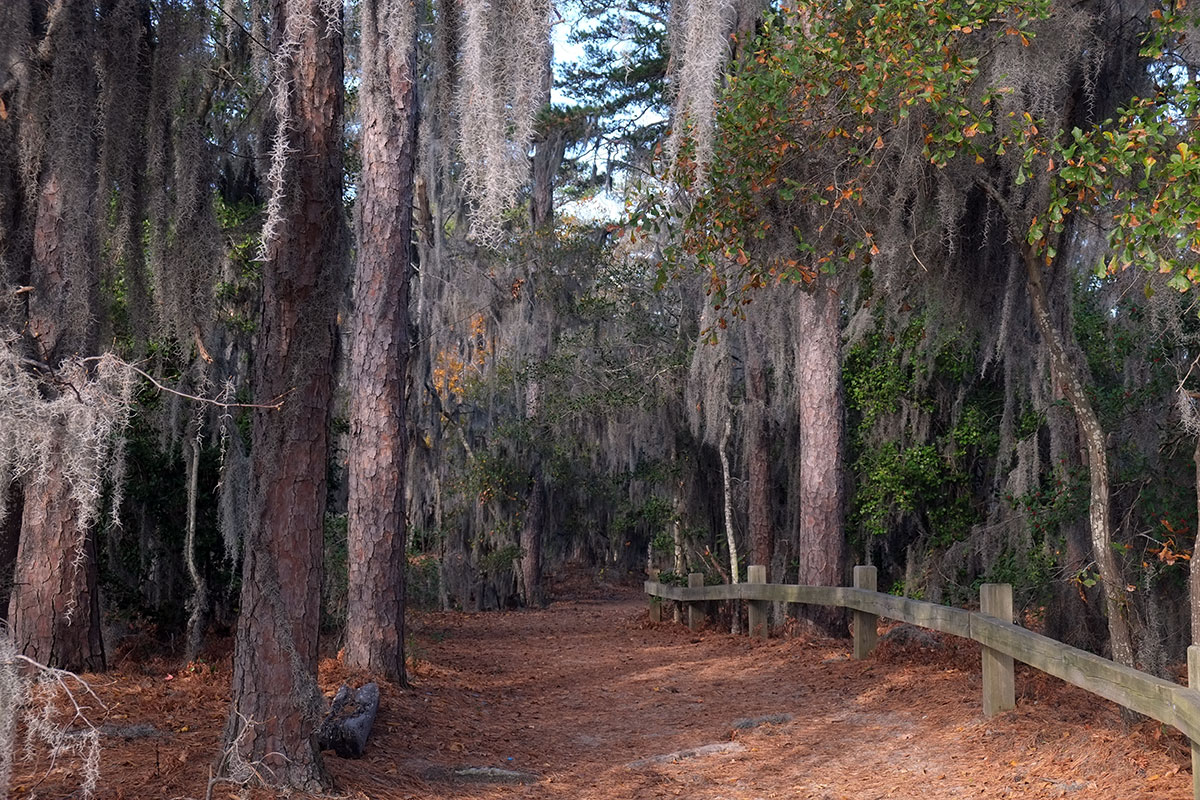
DSCF7373

The Pleasure House Point parcel (about two miles from the park) which houses the Brock Center site was slated for residential development, but after the Crash it was purchased for recreation and the preservation of its wetlands, salt marsh and meadow, and maritime forest.  The building sits on a small upland site, not encroaching on the estuary.  DSCF7468
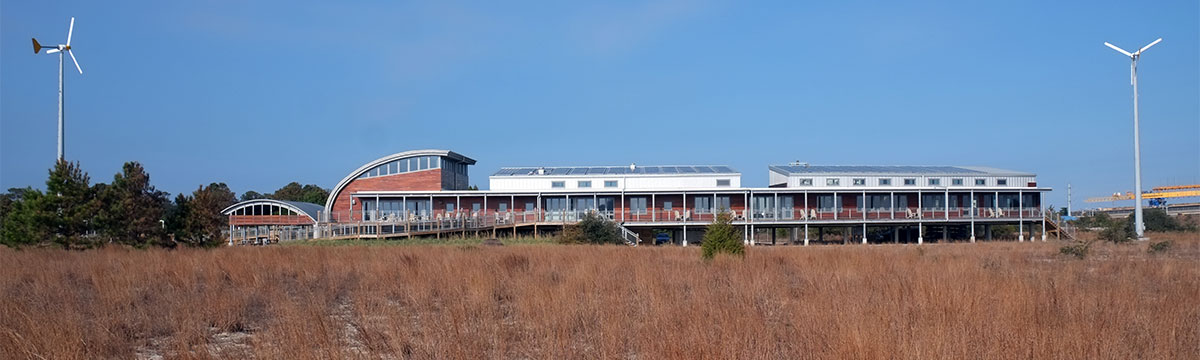
The parti of the building is simple – a narrow, curving linear scheme, raised a tall story above the ground plane.  The more public lobby and meeting rooms are at the top of the ramp:DSCF7477

The lobby shows the tectonics of the building, with structure and mechanicals exposed within the simple shell:
DSCF7403

A large gathering room
DSCF7417

the curving corridor along the southern exposure
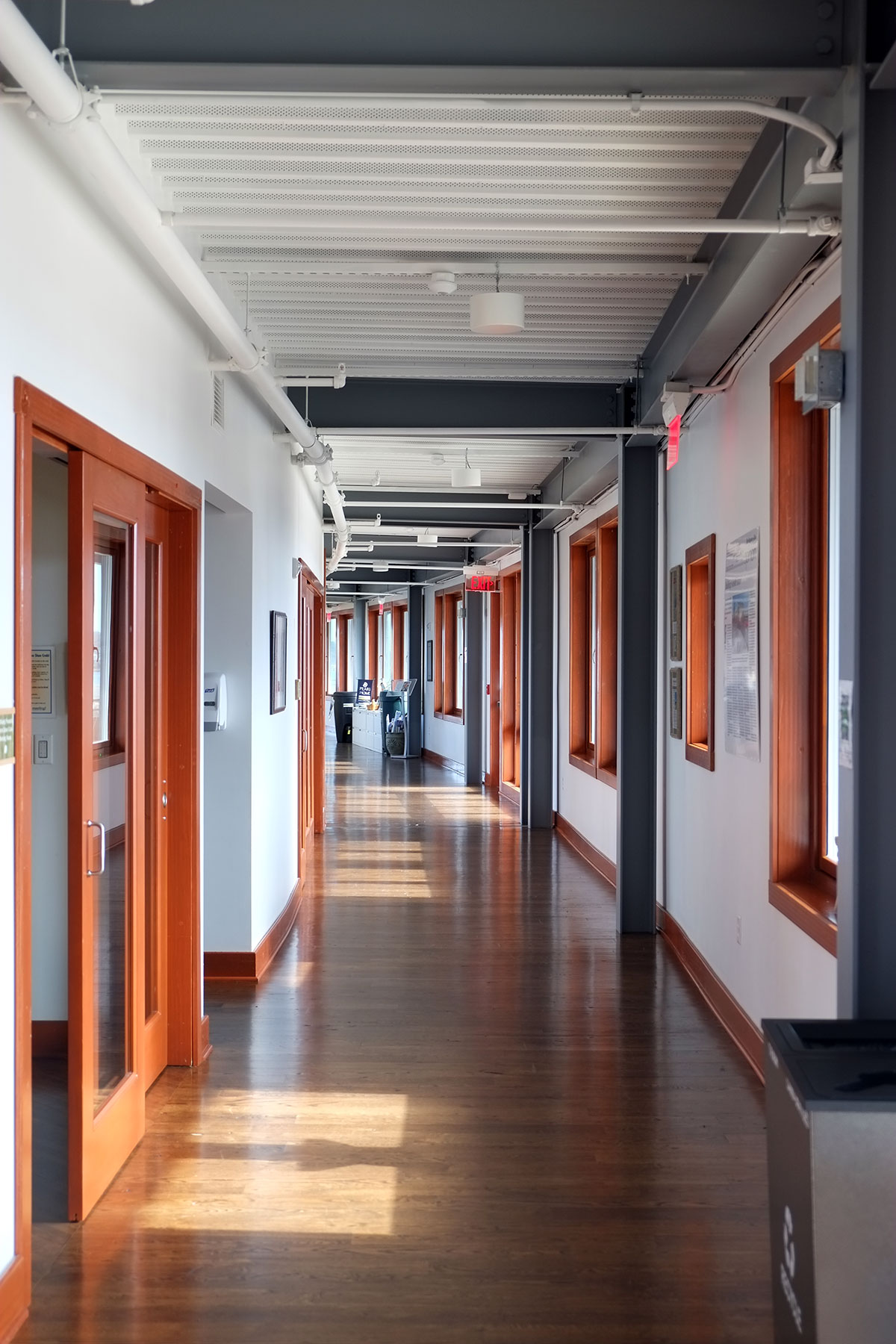
DSCF7418

which has a porch / shading device running its length.DSCF7442
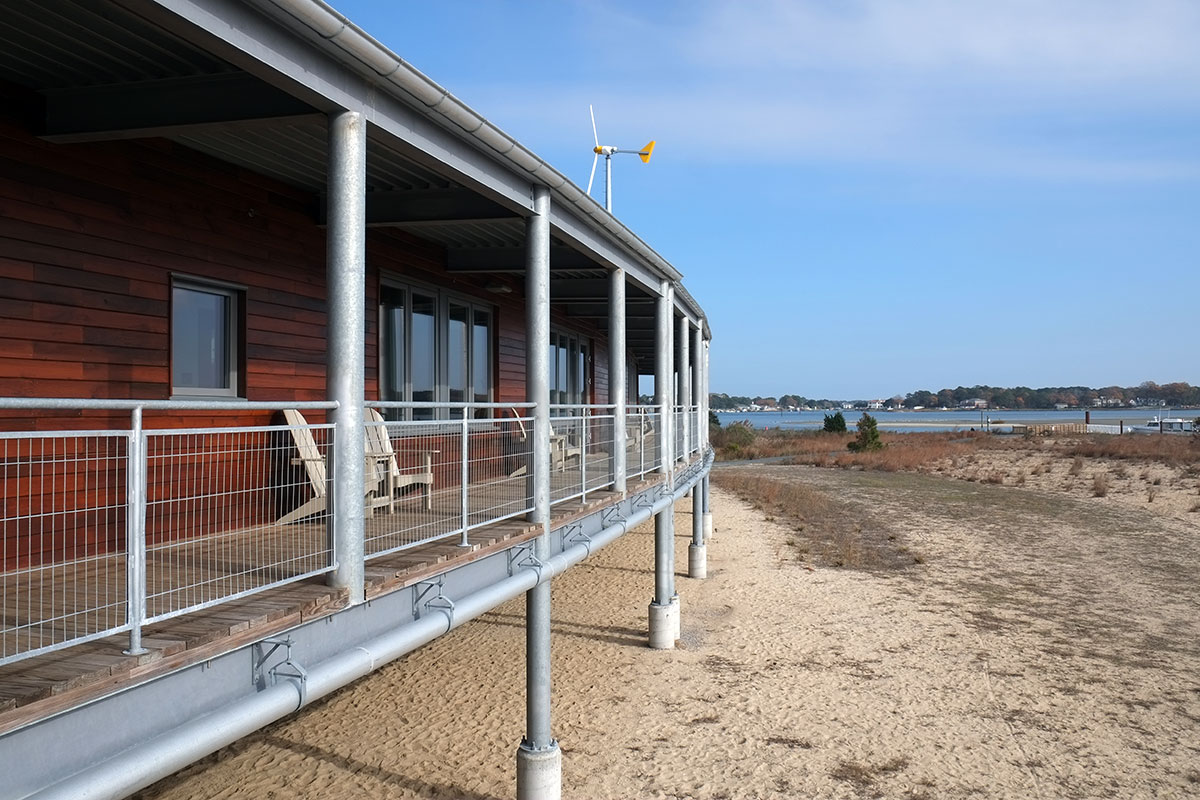
a panorama of the open office space – glazed doors from the corridor on to the porch, balancing glazing to the north, and clerestory lights facing both ways.
DSCF7433

I won’t go into great detail about the all strategies employed in achieving Living Building Challenges goals – as the architects do a very thorough job of that on this webpage:

http://www.cbf.org/about-cbf/offices-operations/brock-center-about/making-of-a-green-building

The Brock most resembles a laboratory in its form and organization:  a simple, open shell, which can accommodate a complex array of mechanical systems and human uses.  This division between the architectural elements and the mechanical ones leads to a building which is conceptually clear, tectonically articulate, and very efficient.  The architectural elements are manipulated to achieve as high a level of passive energy performance as possible.  The section is optimized for daylighting, minimizing heat gain, and enhancing natural ventilation.  This leads to habitable rooms which are commodious, tall, well-lit and very comfortable.  The need for south-side shading lead to a wonderful porch, something not many office buildings have.  The energy performance may have driven the scheme, but the elegant resolution of these demands produced very fine spaces.

Passive strategies take you as far as they can, but have to be supplemented by active ones, especially in a hot, humid climate.  The systems employed in the Brock are sophisticated, and in some cases, unprecedented.  The insulation levels of the envelope are obvious (they have annotated pieces of their materials on display throughout the building).  For mechanical heating and cooling, there is a ground-source heat pump.  For electrical needs, there is both rooftop PV and a couple of wind turbines, which are producing more power than needed on site.
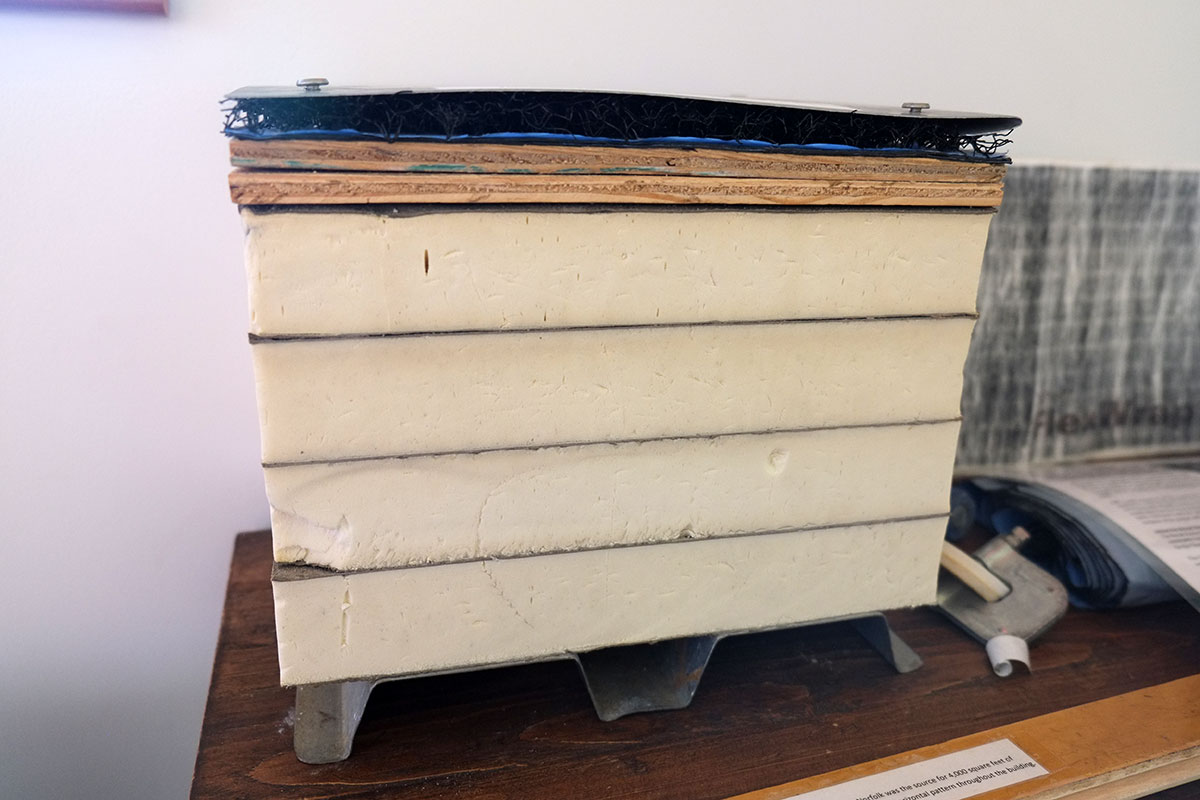
DSCF7437

And for all you ASHRAE geeks reading this, the water and waste systems are extraordinary.  All toilets are composting, using the Clivus Multrum system, leading to containers at the lower level.  The limited amount of blackwater effluent from the tanks is trucked offsite.  As the toilets are located in different parts of the building and some see more usage based upon location, there was an initiative during the first year to get occupants to vary which toilets they used, to spread it around, so to speak.DSCF7448

The building’s greywater is run through various biofiltration systems and delivered to raised-bed planters on the grounds.  But the most innovative system is for the rainwater, which is collected, filtered, and used for th building’s domestic water needs.  This is the first commercial building in the US to achieve this legally.  The various gutter leaders connect below the main floor level:
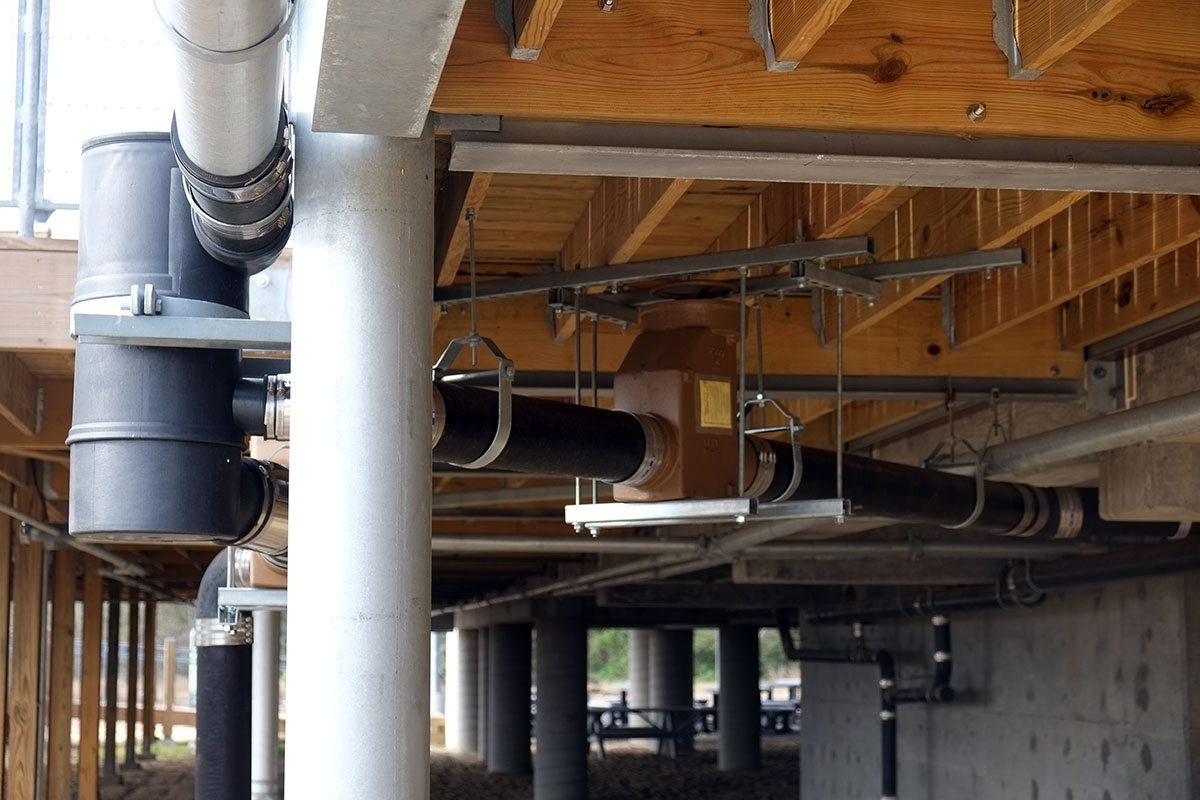
DSCF7400

and there are lots of pumps and tanks and filters and controls which I won’t pretend I understand:
DSCF7436

DSCF7450

But the implications for the architecture are obvious, and led to a clear design protocol.  Make simple envelopes which can be optimized for passive performance.  Design to accommodate extremely sophisticated active mechanical systems, which may change over time.  Complex machines in simple buildings.

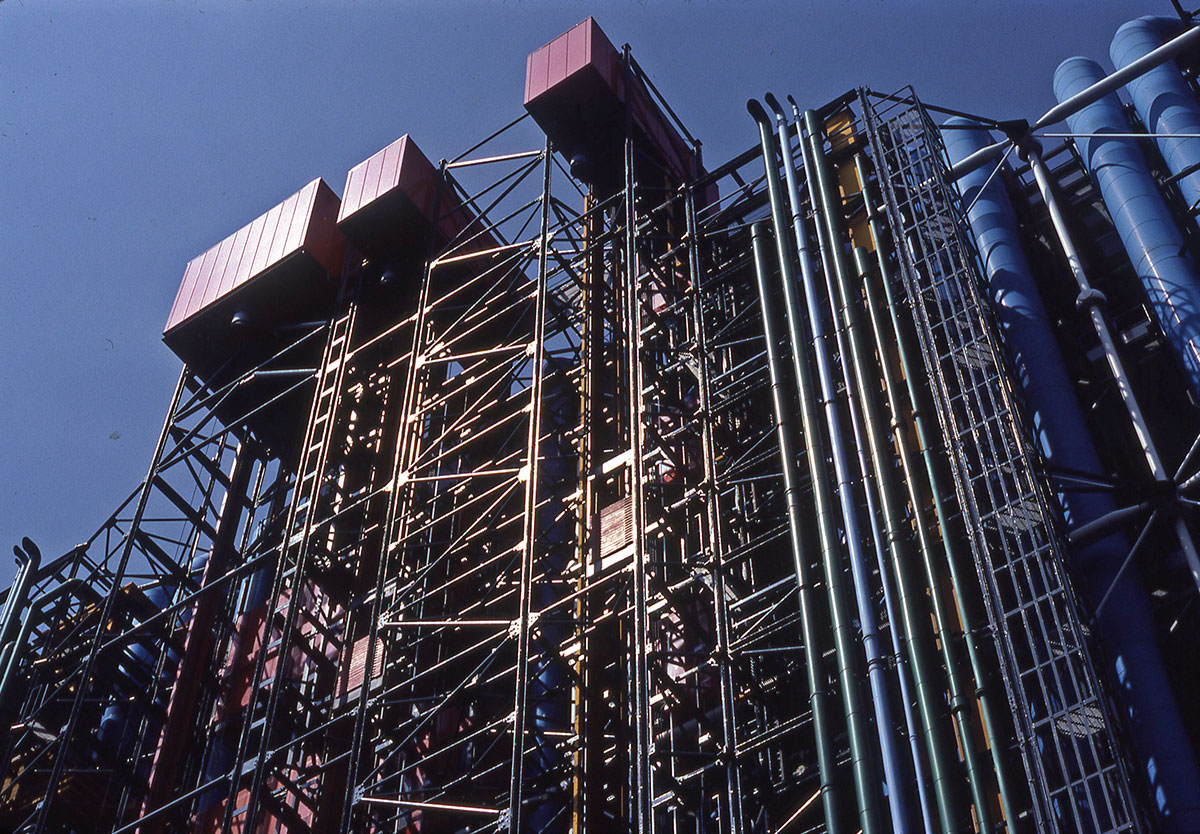
Buildings such as this may rationally resolve an argument that has been going on for a few decades.  Back in the 60s, buildings such as the Beaubourg made the expression of the building’s systems – both structural and mechanical – the basis for the parti.  While there was certainly a conscious attempt to integrate these systems into an overall composition, it wasn’t obvious to laypeople.Beaubourg006
Architects such as Lou Kahn also articulated the necessary elements of the building, but more explicitly integrated them into the buildings overall design intention, such as at the British Art Center.  British005
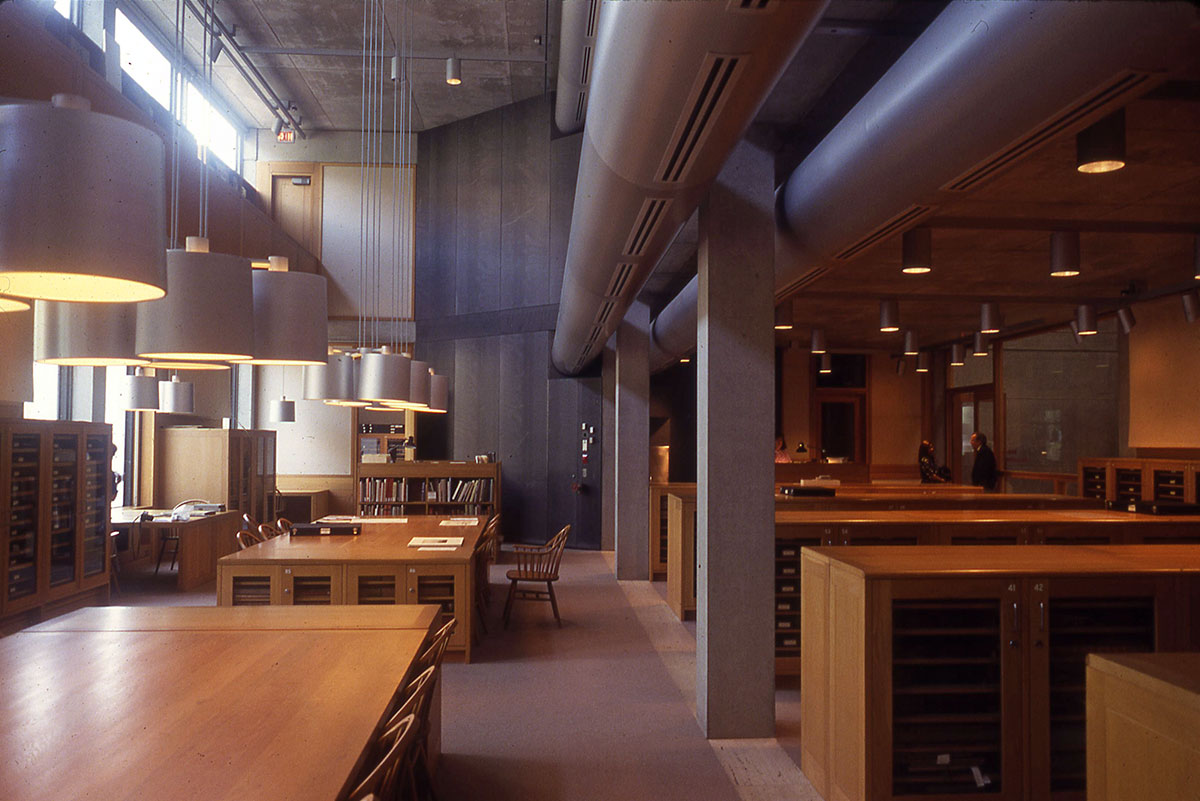
Postmodern architects reacted against this direction.  I remember Bob Stern making the case that the British Art Center was irrational at its core:  it expressed the mechanical systems, but by making them part of the formal design, it forced them to serve aesthetic goals rather than engineering ones;  in doing this, it increased their cost and inefficiency incredibly, so that what you are seeing is not so much a rationalized mechanical system but a very expensive expression of the idea of a mechanical system.  Stern asked if we had any idea how much a round stainless steel duct cost, and argued that if you wanted an efficient, cost-effective building, you should design the spaces you want for human habitation, build them out of steel studs and gypsum board, and leave lots of spaces between where the engineers can put all the mechanical equipment they want, without having to worry about making it beautiful.

The Brock Center shows a clear, rational compromise between these two positions.  The architecture can be what it wants to be, but based upon performance factors along with goals for human habitation.  The building systems are exposed where it makes sense – steel structure,  ductwork, piping, sprinklers, conduit – but not everything is dogmatically expressed.  A main rainwater collection tank is openly placed near the entry ramp, DSCF7389
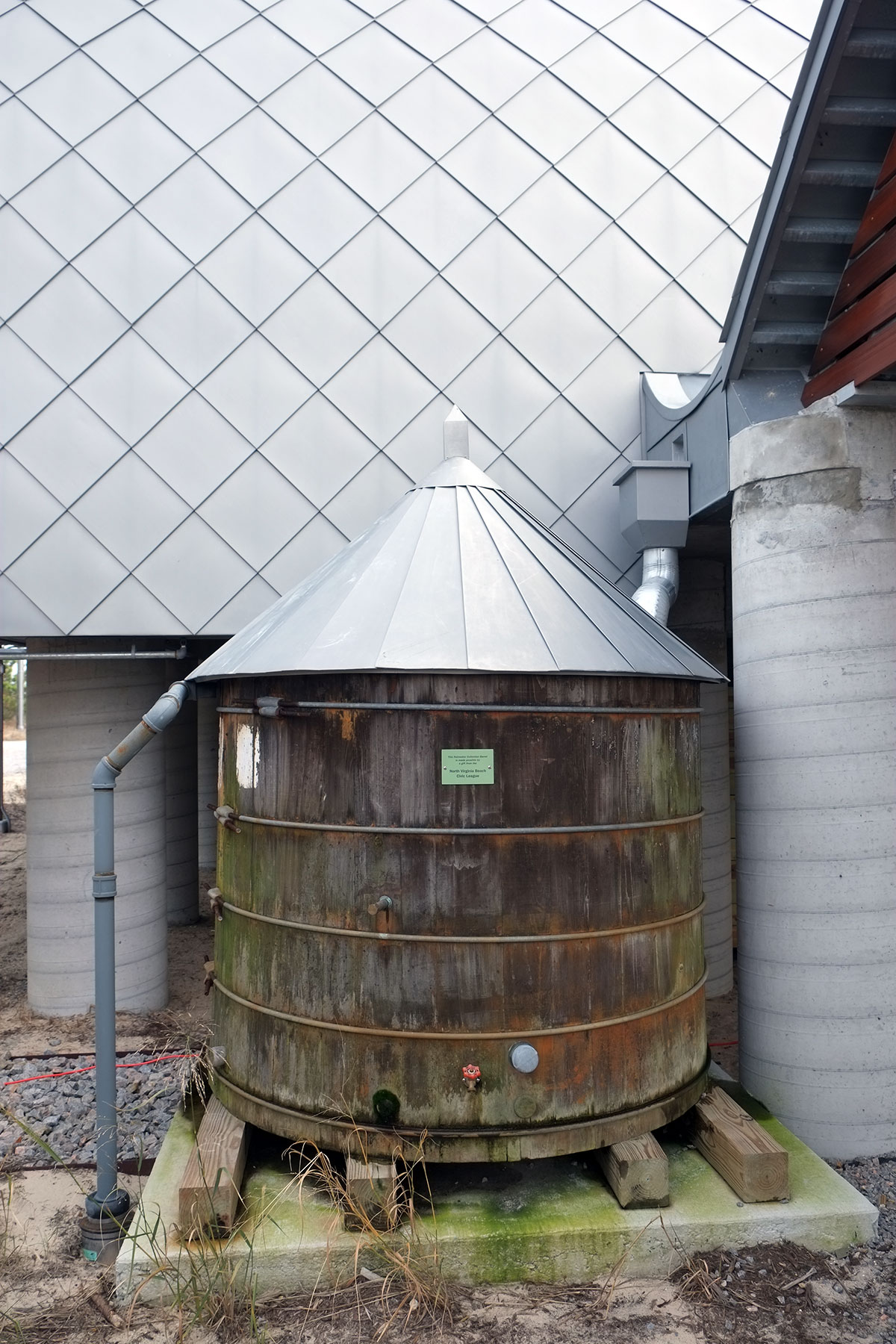
but they made the wise decision to keep the composting toilet tanks in the mechanical room, out of sight, where they can do their work efficiently without offending delicate sensibilities.

Perhaps the key is recognizing the messy, often compromised reality of a building.  Achieving extreme simplicity of appearance requires extraordinary hidden complexity (which is very common in high style buildings right now), whereas letting the purely functional and efficiency-driven goals drive the design is unlikely to produce a satisfying building on other levels.  The Brock Center is a straightforward, elegant solution which integrates many of the issues, not compromising on performance for aesthetic reasons, but also not forgetting that buildings are for people and not just solving technical problems.

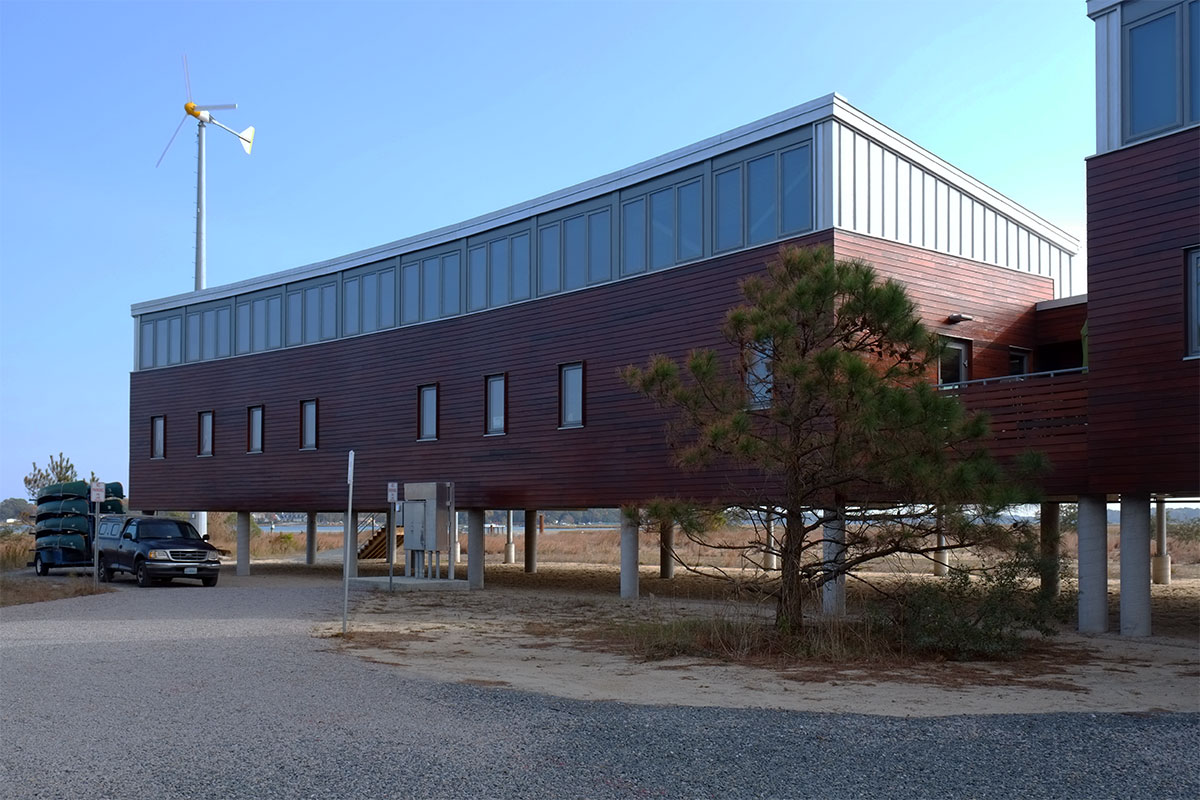
And as we design for sensitive coastal environments and the anticipated sea level rise with climate change, for the first time I start to appreciate buildings set up on piloti.  Corbu was 100 years ahead of his time, and he didn’t even know why.
DSCF7454

Charlottesville

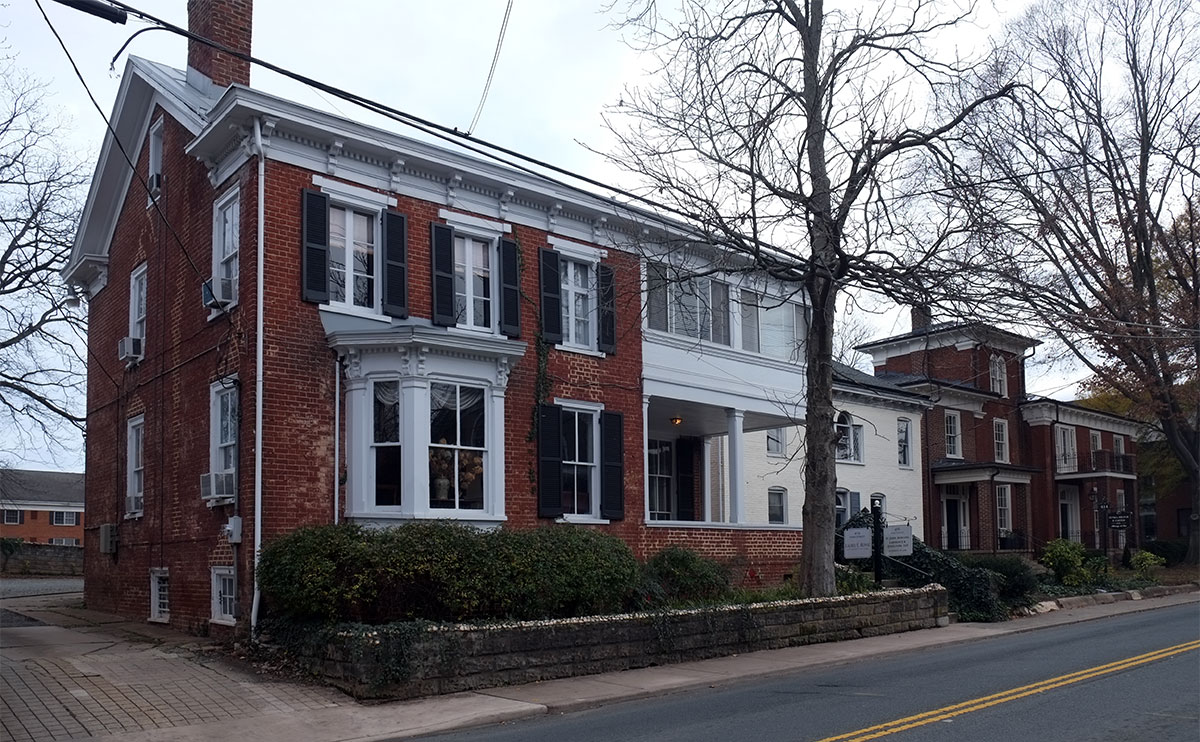
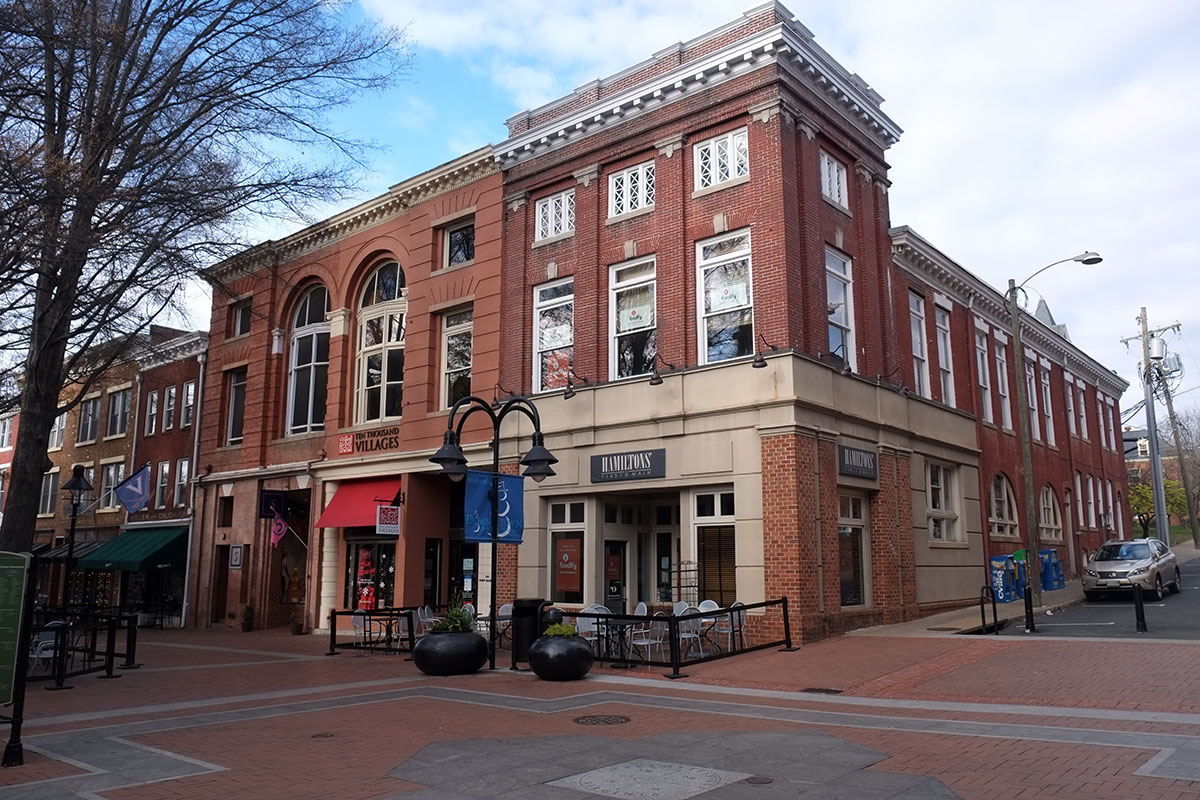
Charlottesville is not your typical college town. Compared to the college town I know best, the population of the city is much smaller relative to the size of the school, yet in some ways there is more going on in Charlottesville that isn’t related to the university. The historic center of the city is substantial, with many significant large houses and civic buildings, and they had the good sense to not knock it down during the urban renewal craze. (Instead, they seem to have razed an adjacent poor African American neighborhood.)  I’m assuming this is because the city had a prior existence, and the size of the city was larger relative to the university in the past, whereas most college towns probably wouldn’t have grown very much without the presence of the college.DSCF6905
There is a pretty active downtown pedestrian mall, something that always intrigues a Eugenian who remembers our past disaster. The differences in Charlottesville seem to be: they kept all the beautiful 19th-century commercial buildings, the mall is only one street wide, local traffic can cross it frequently, and the residents of Charlottesville have a lot more money to spend in nice downtown restaurants and such.DSCF6761

But once you move a block or two away from the mall, into the neighborhood that was destroyed, the dark side appears: a zone of wide streets and much traffic and car-oriented buildings in the center of town. (And of course like any other American city, the edge of town is big-box sprawl madness.) DSCF6958

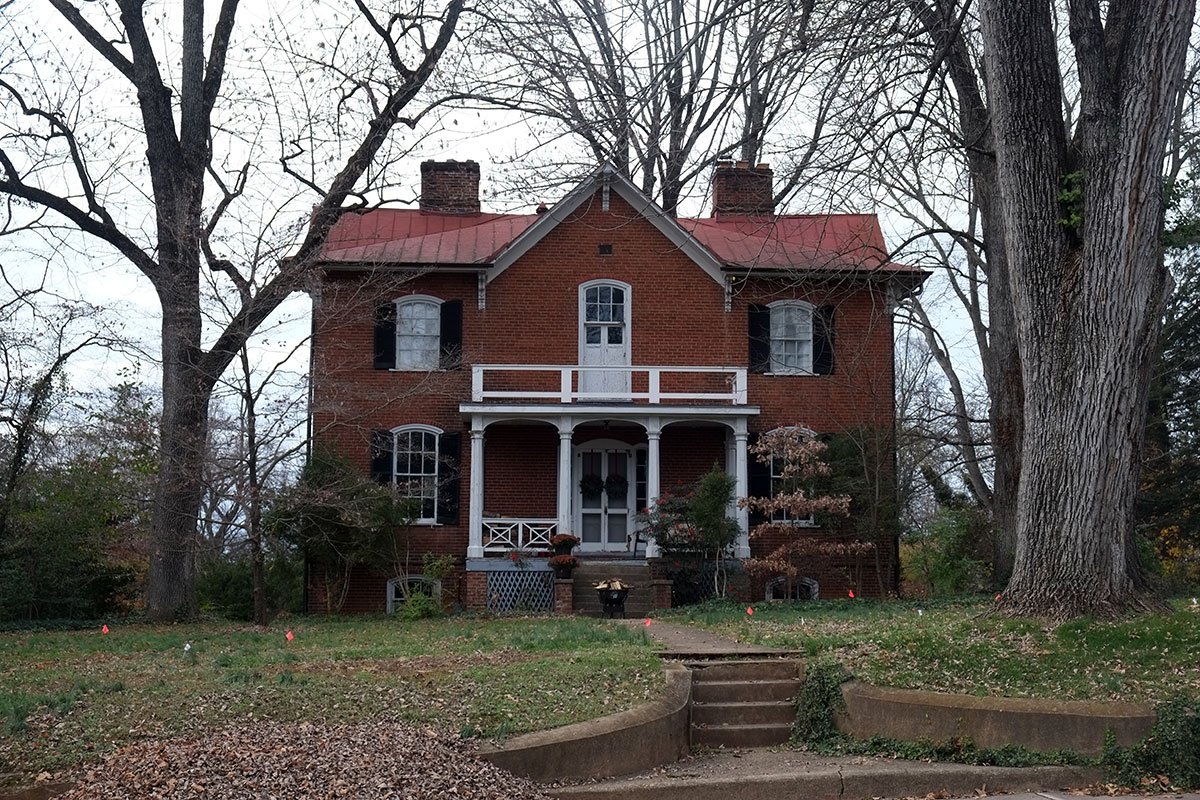
The inner neighborhoods are intact and lovely, with houses from a range of periods, and a nice open space or two.DSCF6894

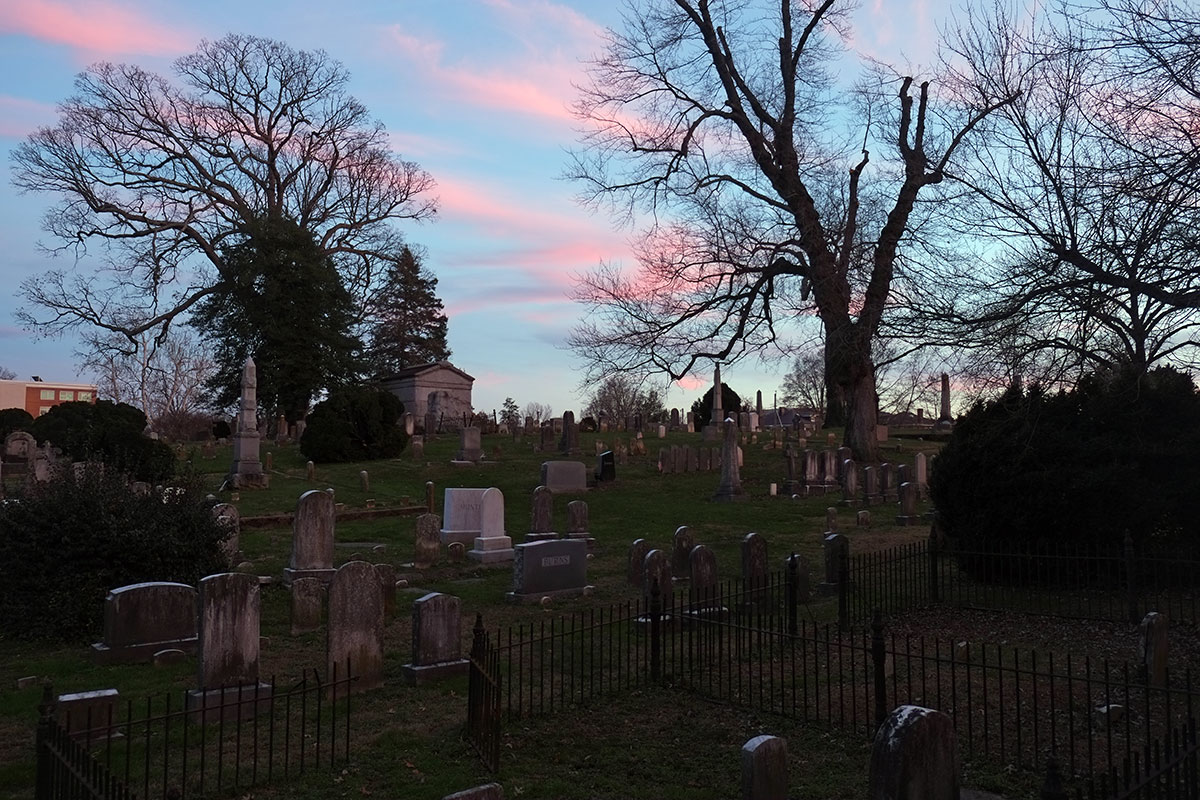
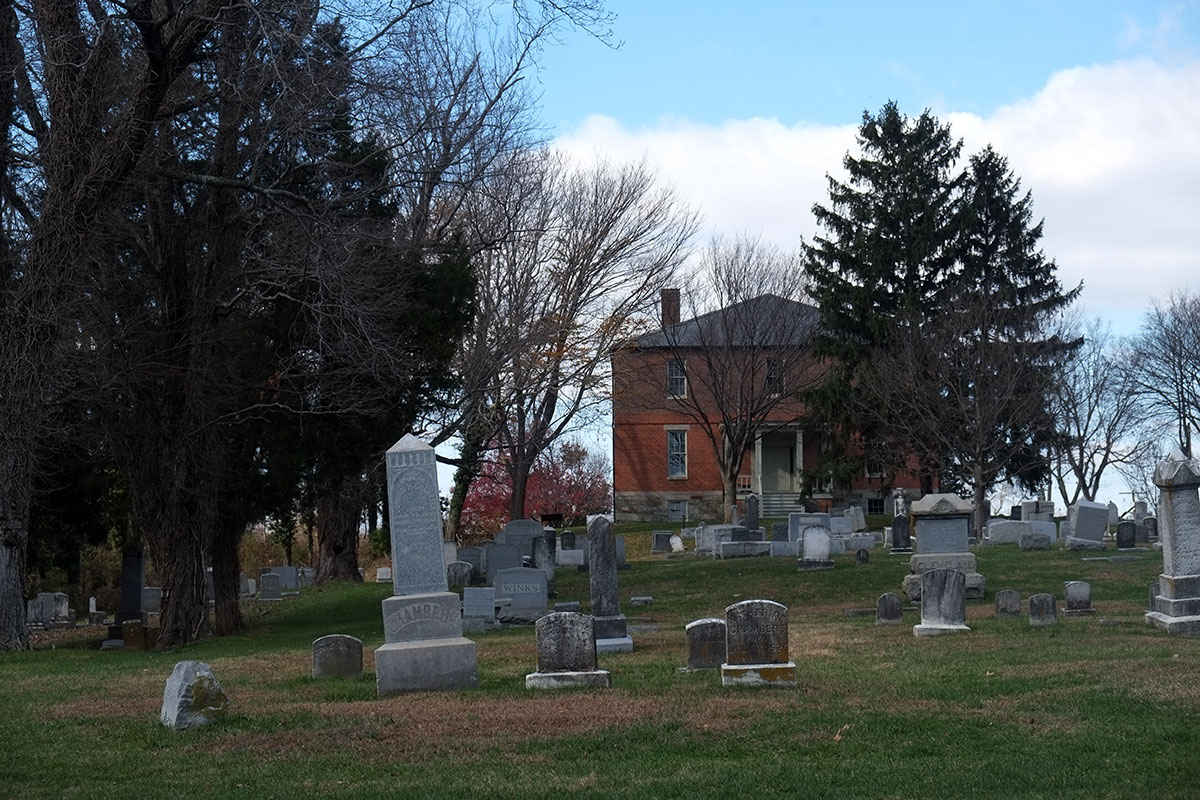
And so began the fascination with southern cemeteries.
DSCF6857

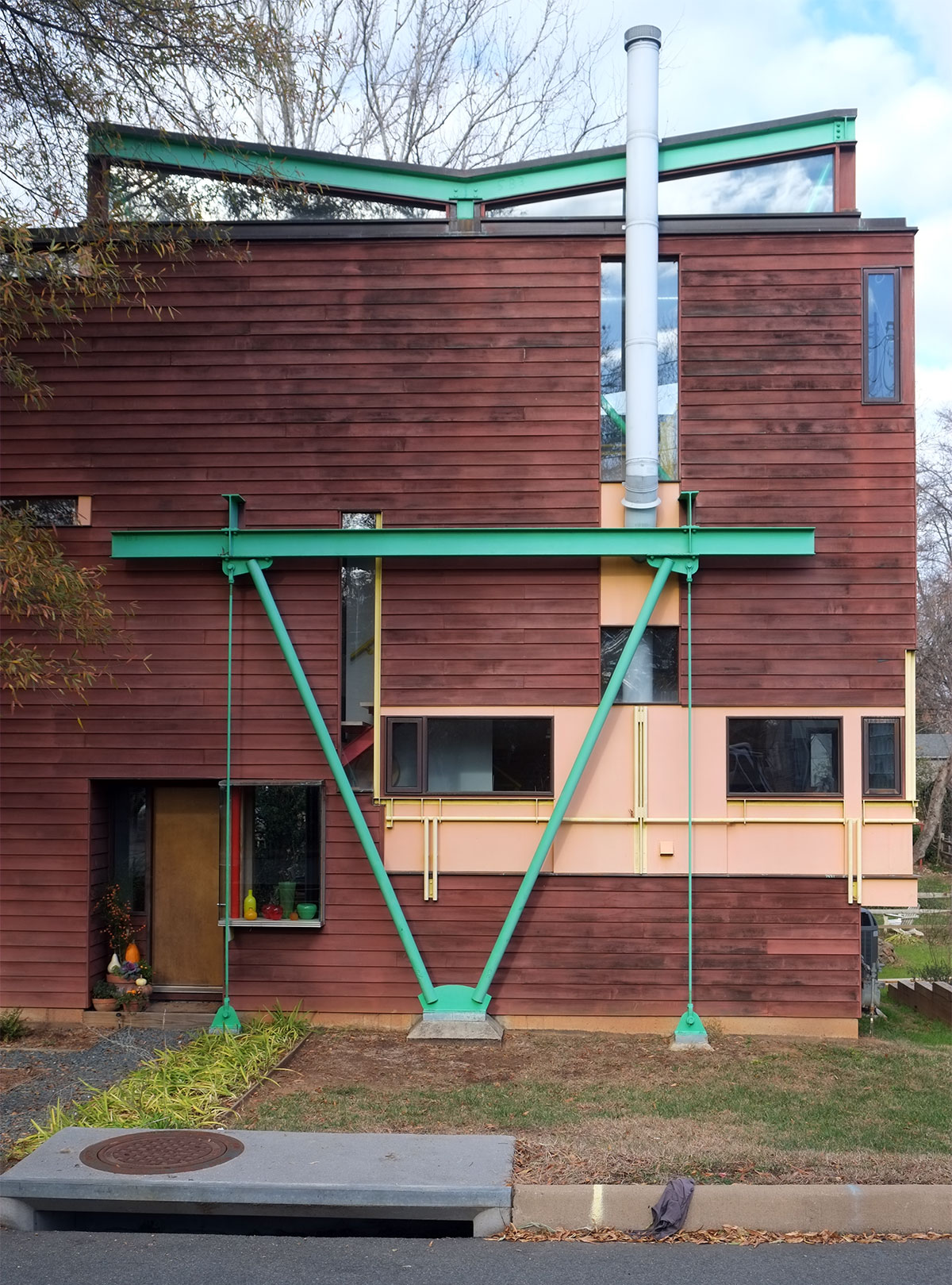
There are even houses by noted architecture professors – I’ll leave it to you to guess which:DSCF6737

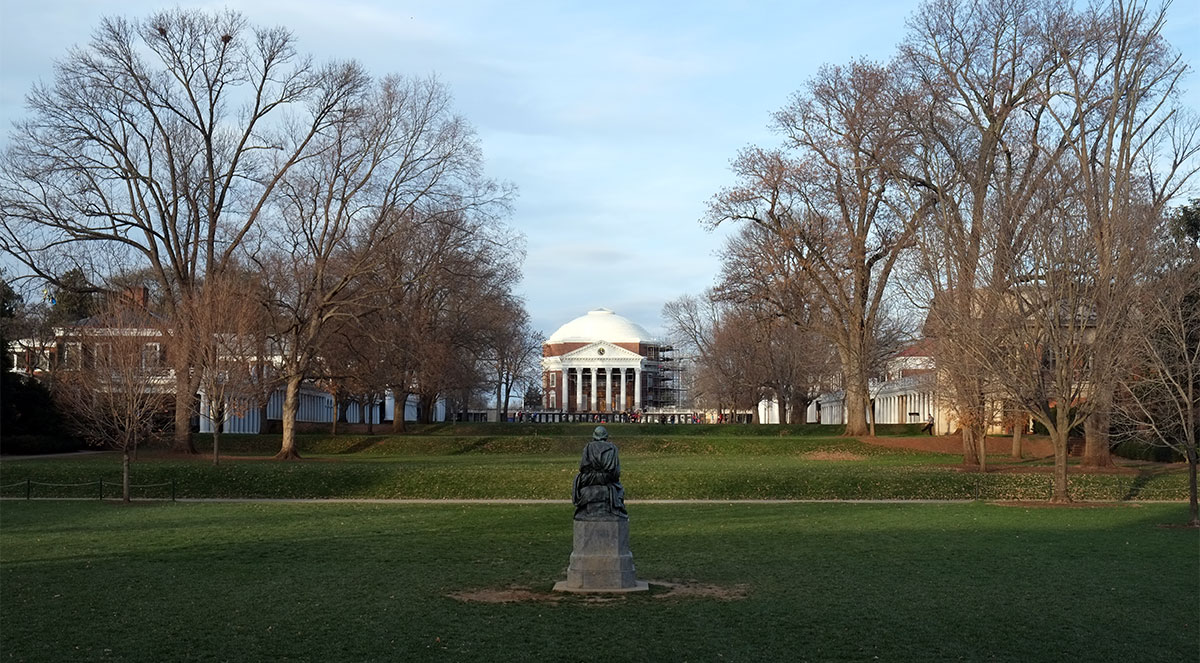
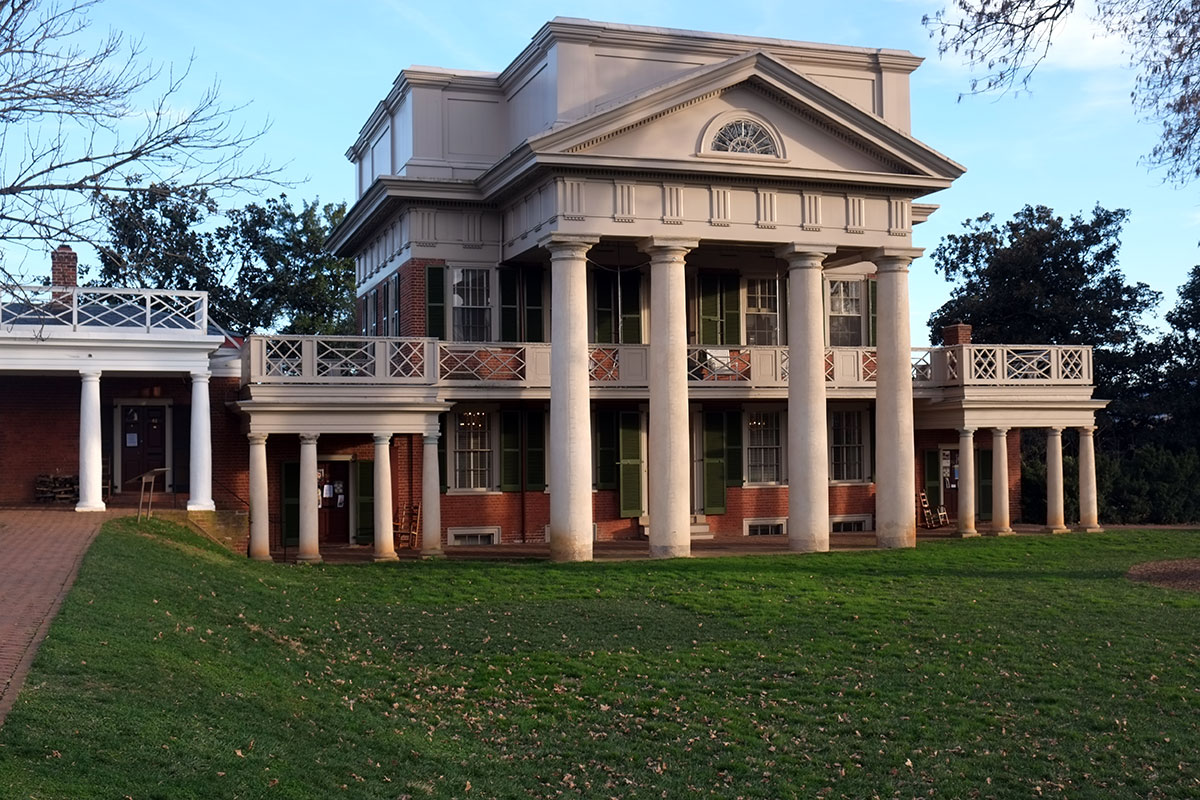
But the main reason Charlottesville is not like other college towns is that they didn’t have Thomas Jefferson. His designs for the Rotunda and the Lawn at the University of Virginia are astounding.  I had seen them years ago (as a high school kid who almost went to UVA), and had studied them quite a bit in college, but stepping out onto the Lawn still stunned me.  We have seen a lot of great architecture and landscapes on this trip, but there are those places that just stand out from everything else.DSCF6827  DSCF7014

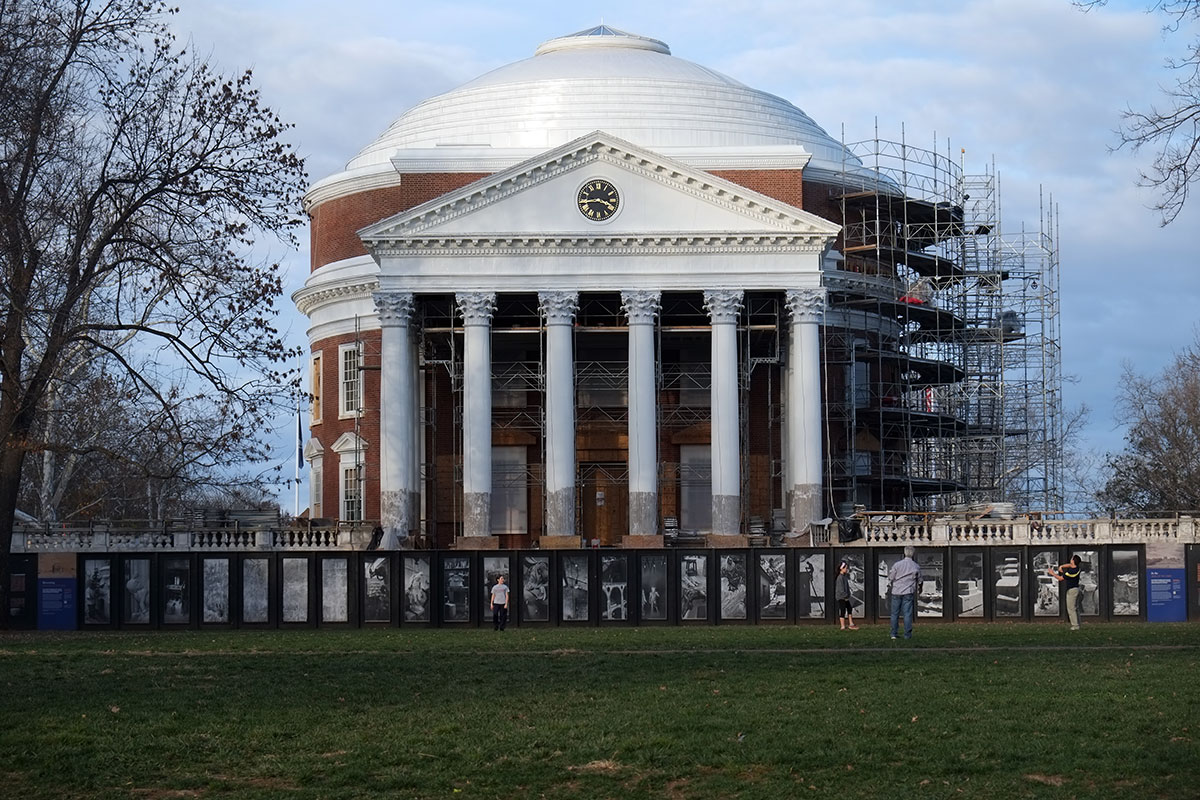
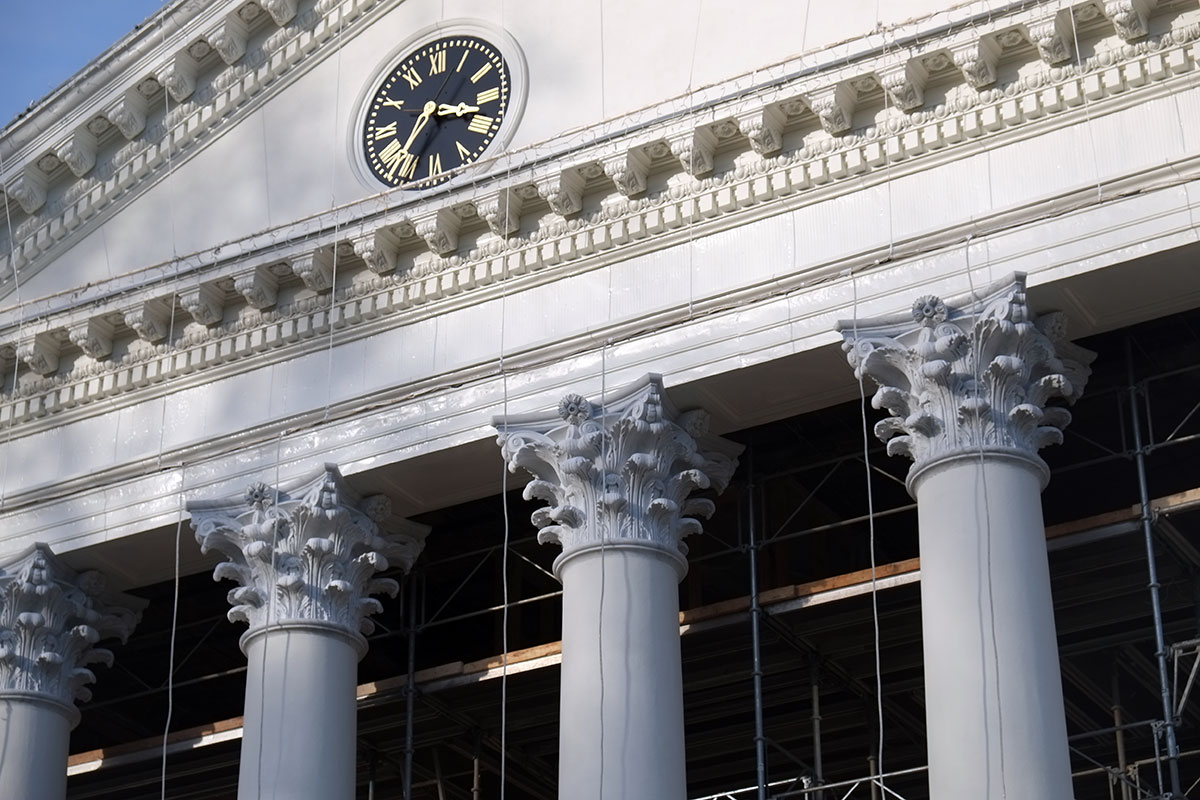
The Rotunda has been undergoing a substantial restoration in recent years, and luckily while I was there, the new carved capitals were revealed.DSCF6802

When you have a UNESCO World Heritage Site, you do it right. No PVC here.
DSCF6782

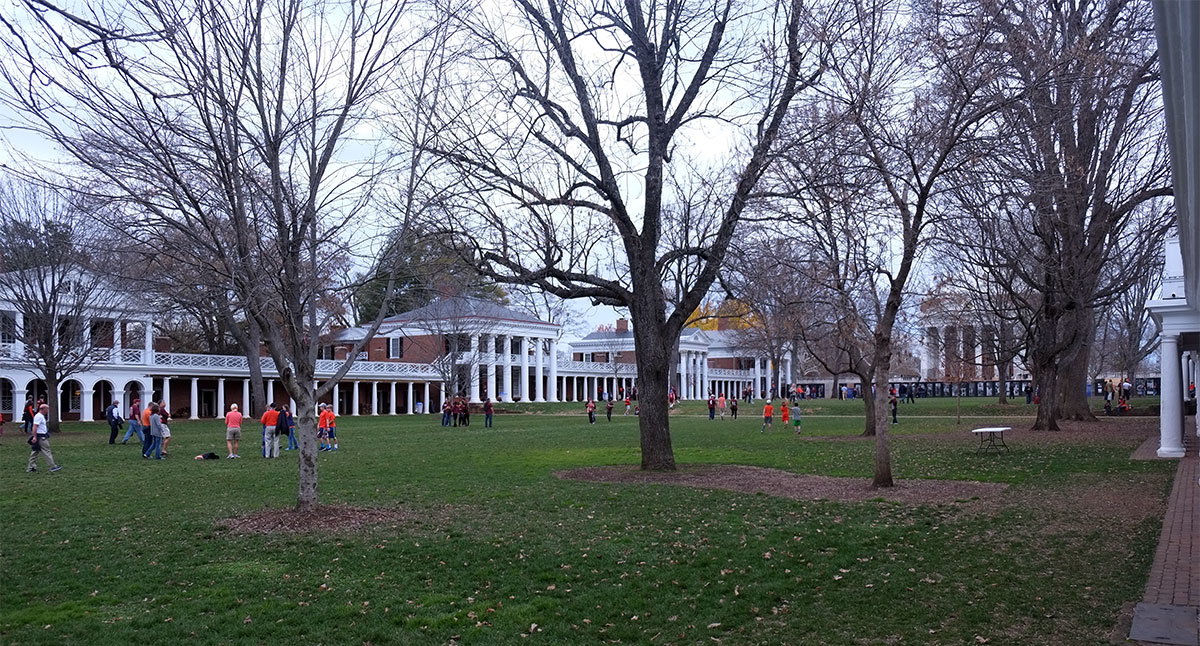
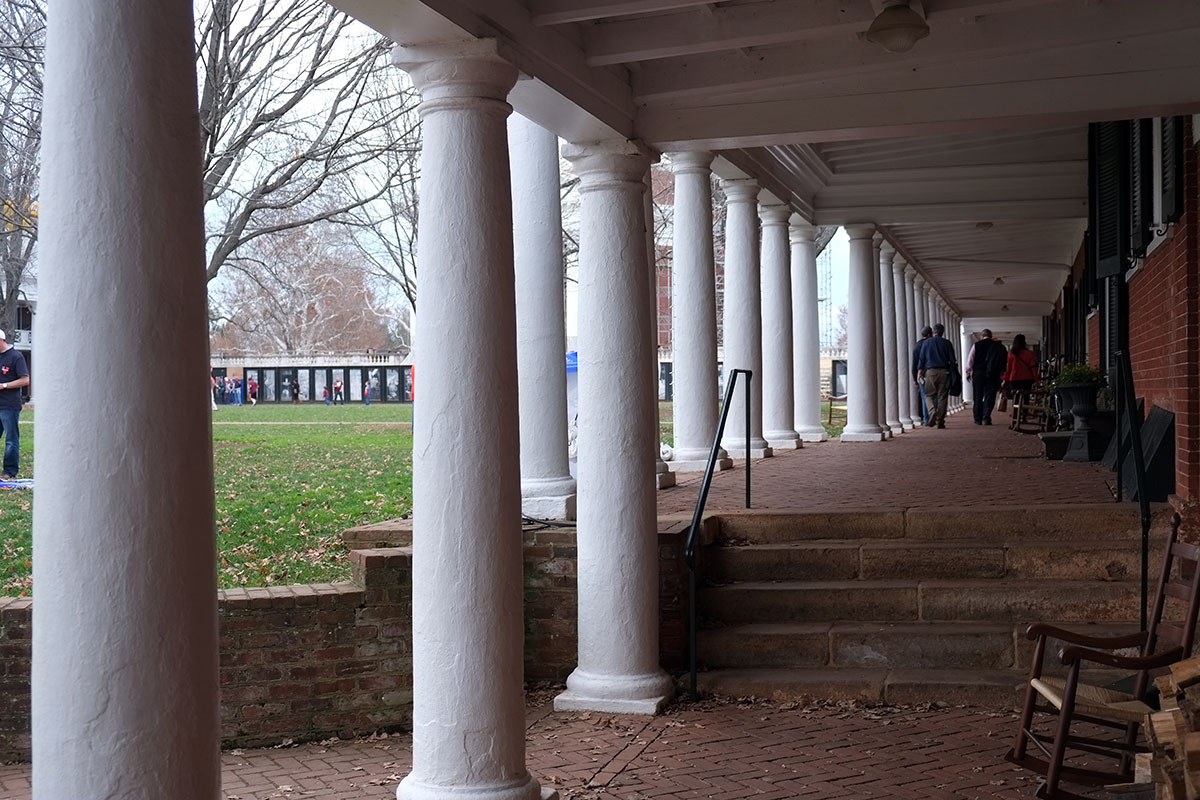
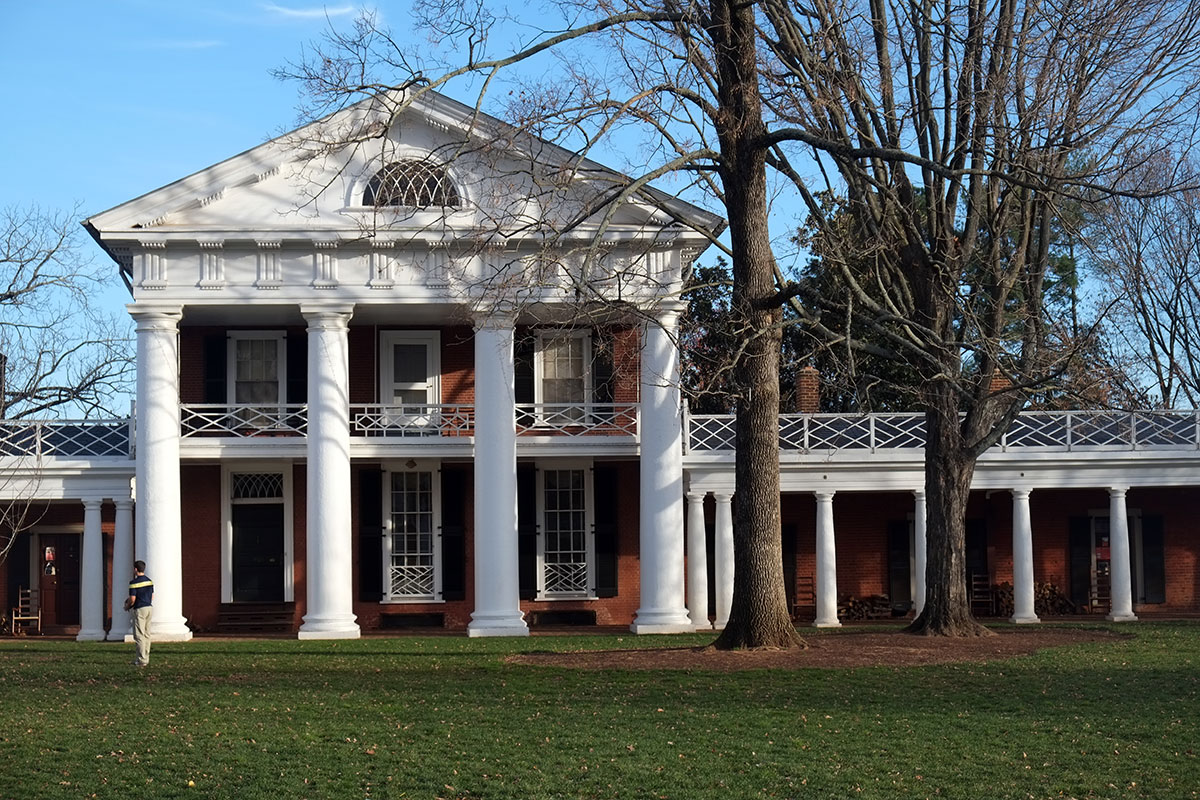
But even more than the Rotunda, it has always been the Pavilions which intrigued me. Jefferson worked with a repetitive, modular system, with the elegant colonnades in front of the students’ rooms.DSCF7030

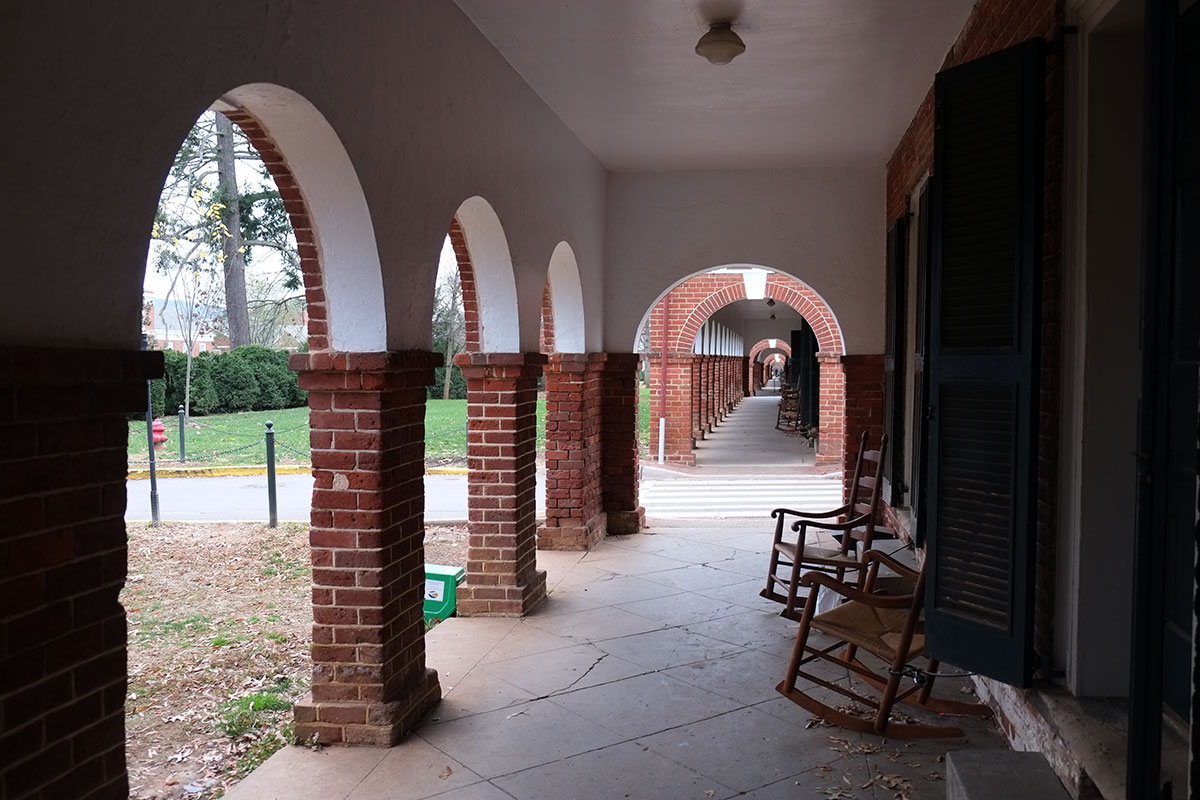
and took a similar approach to the Ranges, which are to the outside of the Lawn:DSCF6837

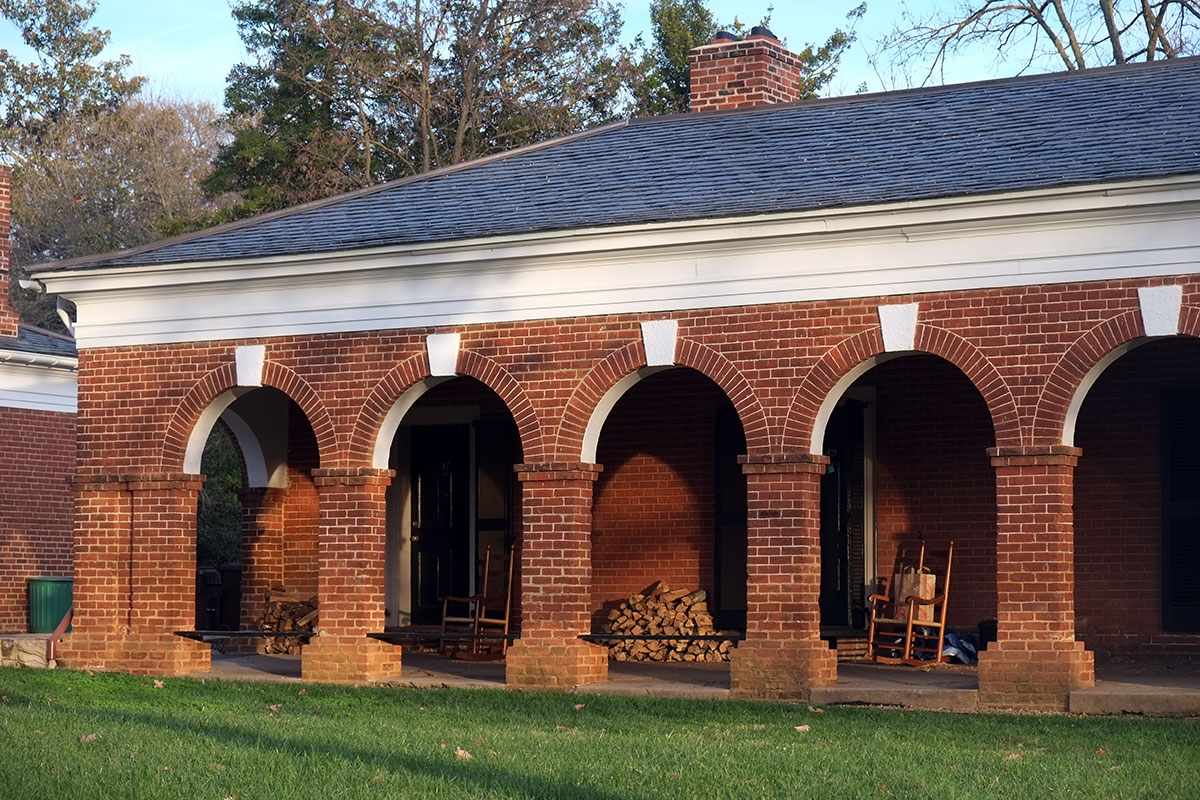
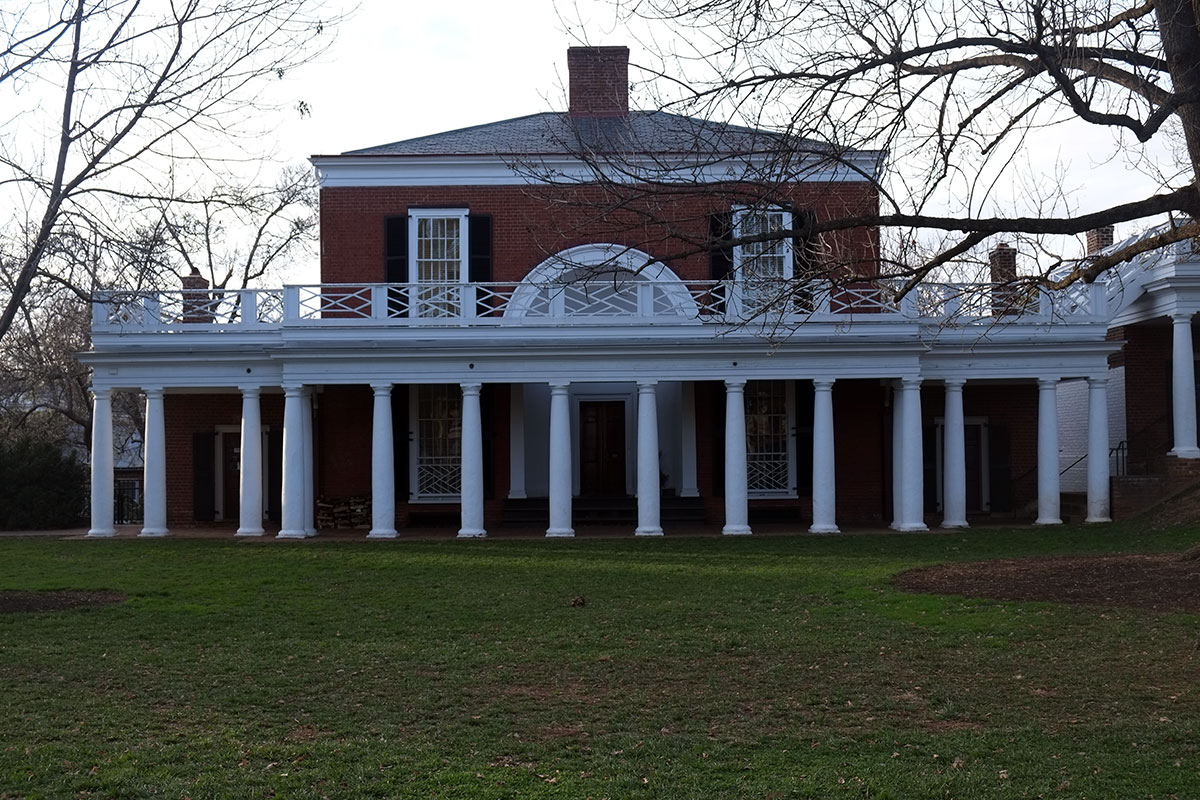
But within this approach, he introduces variety into the system. First, the difference between a colonnade and an arcade
DSCF7045

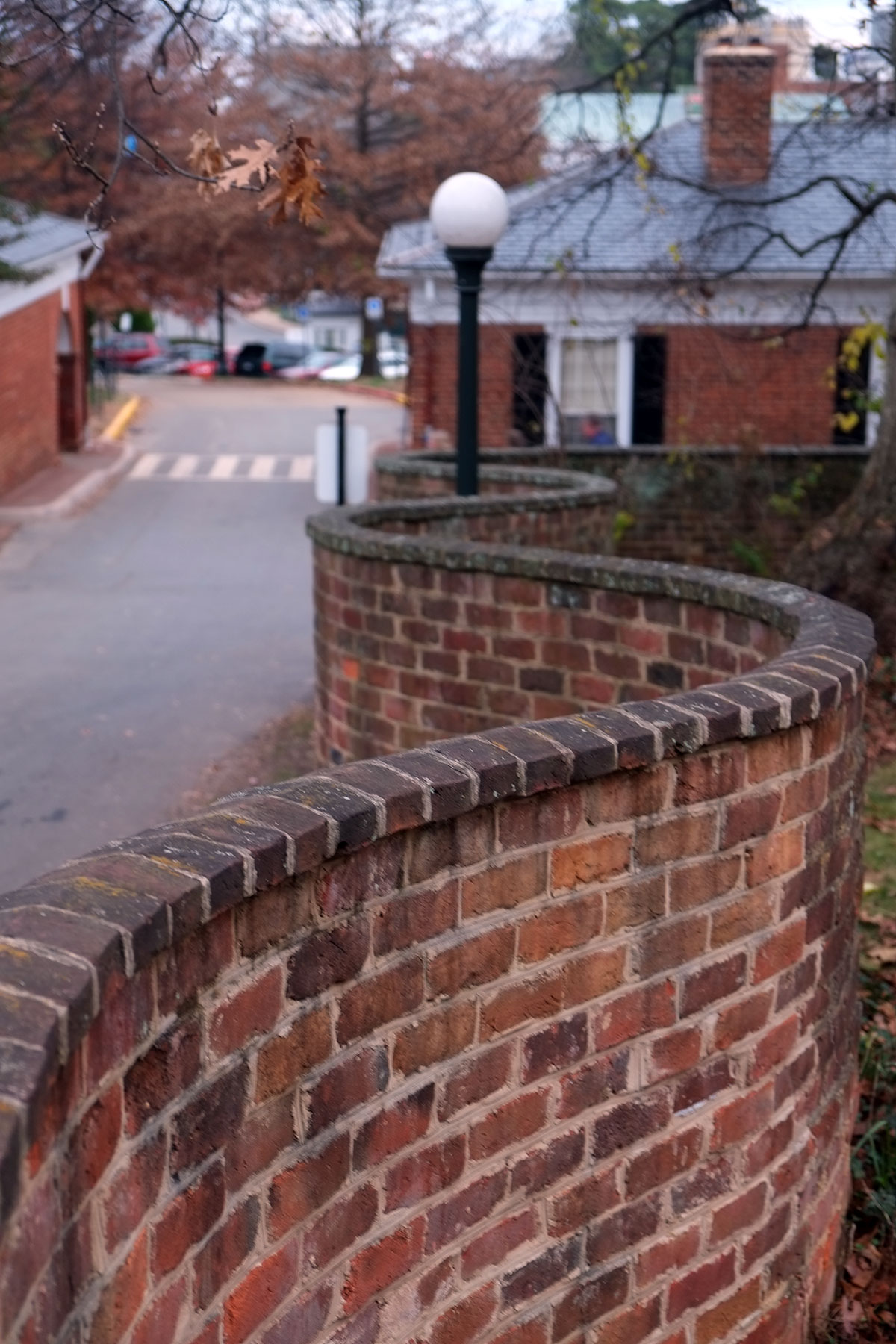
(and then uses the gardens with their serpentine walls to separate them.)DSCF7041

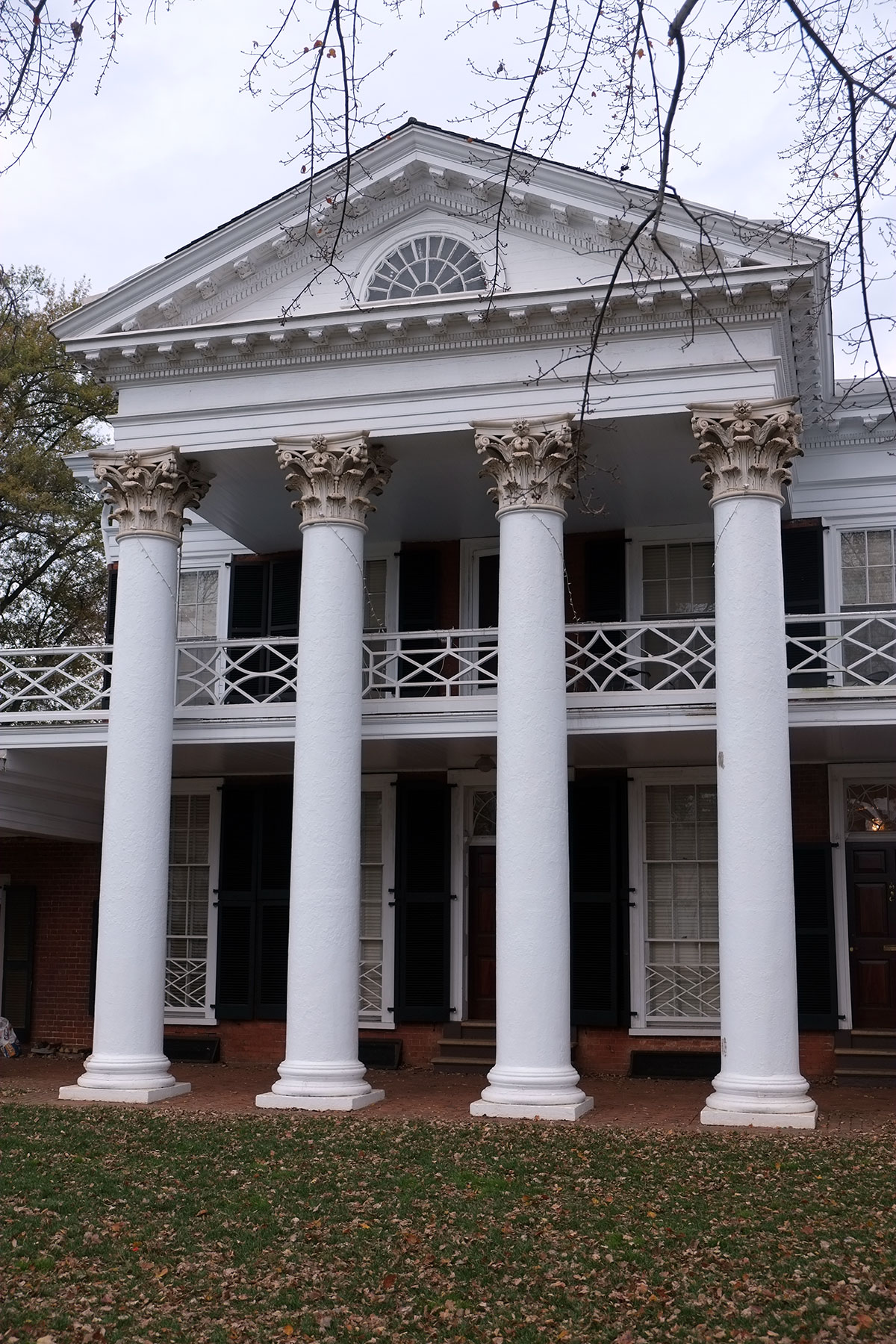
Second, in making all the Pavilions unique. They are the same scale, and they fit into the system in the same way, but each one is a gorgeous exploration of the range of ideas possible in the classical vocabulary.DSCF6794

It is not just about style, but about spatial imagination. The way the colonnades intersect with them changes. There are colossal ordersDSCF7010

and single-story orders:DSCF6809

creating different possibilities for light.DSCF6814

There are delicate and sedate pavilions, and robust ones, with the appropriate order used for each.DSCF6808

I’ve seen a lot of mediocre Academic Georgian on this trip, where all that matters is the proper vocabulary, and not the quality of the design or the character of the whole campus. (William and Mary comes to mind – ghastly pedestrian buildings repeated mindlessly.)  Jefferson shows the richness of the classical language, in a way that we’re probably not capable of now. (The decline of Postmodernism illustrates this well.) It brings to mind the joke about the couple who went to see Kahn about having him design a house for them, which he was happy to do.  But then they mentioned that they’d like it to be in the Georgian style.  Kahn said he couldn’t do that, so they asked him if he could recommend a good architect who could.  Kahn thought a bit, and then said, Thomas Jefferson.

So how has UVA fared in the post-Jefferson era?  There are some eclectic 19th century buildings, before the veneration of Georgian peaked in the early 20th century, but then they did have some good and inventive designs in the style, although maybe taking the goal of variety a little too much to heart.DSCF6985

The city itself has fared less well, with some truly execrable examples.  (Sorry, reality intrudes.) DSCF6919

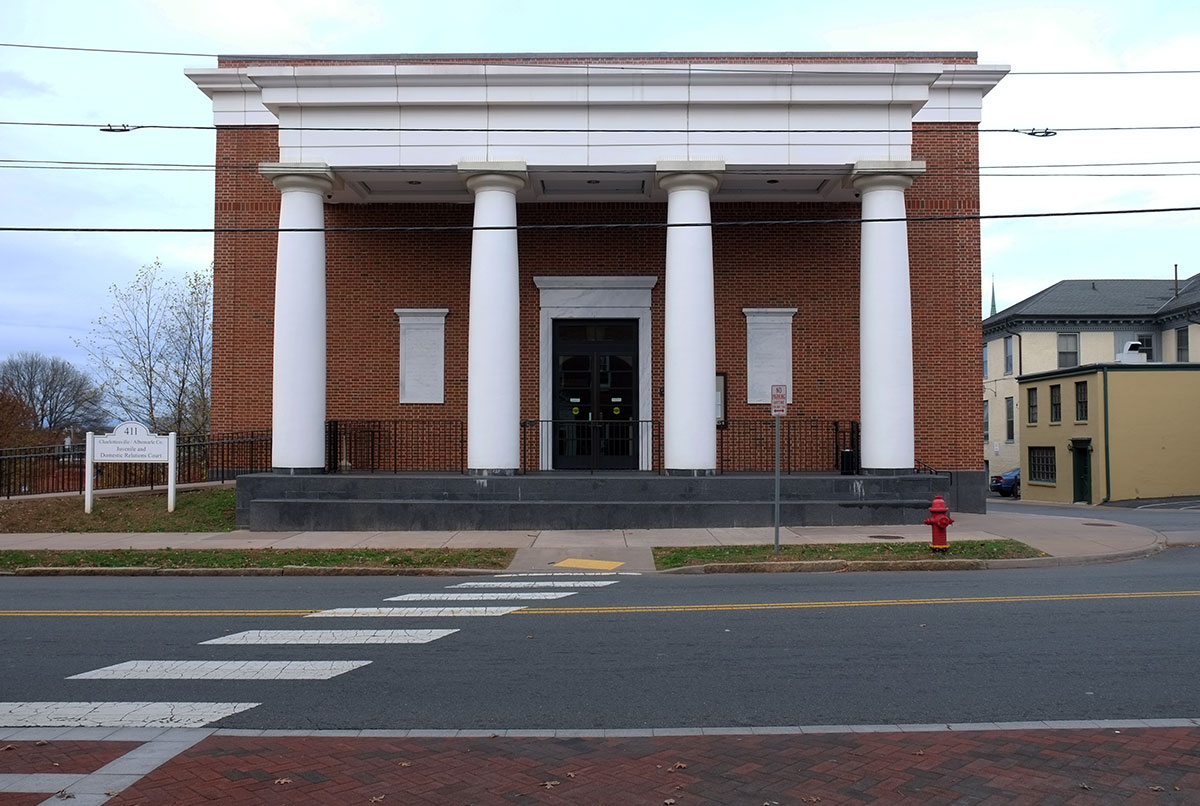
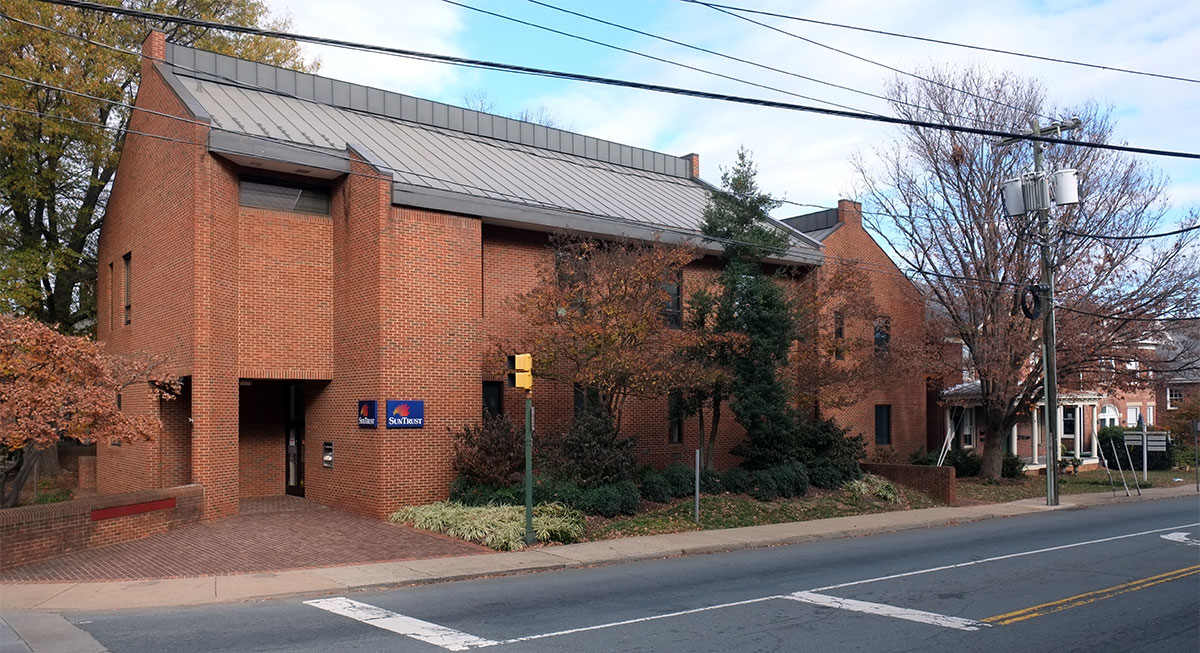
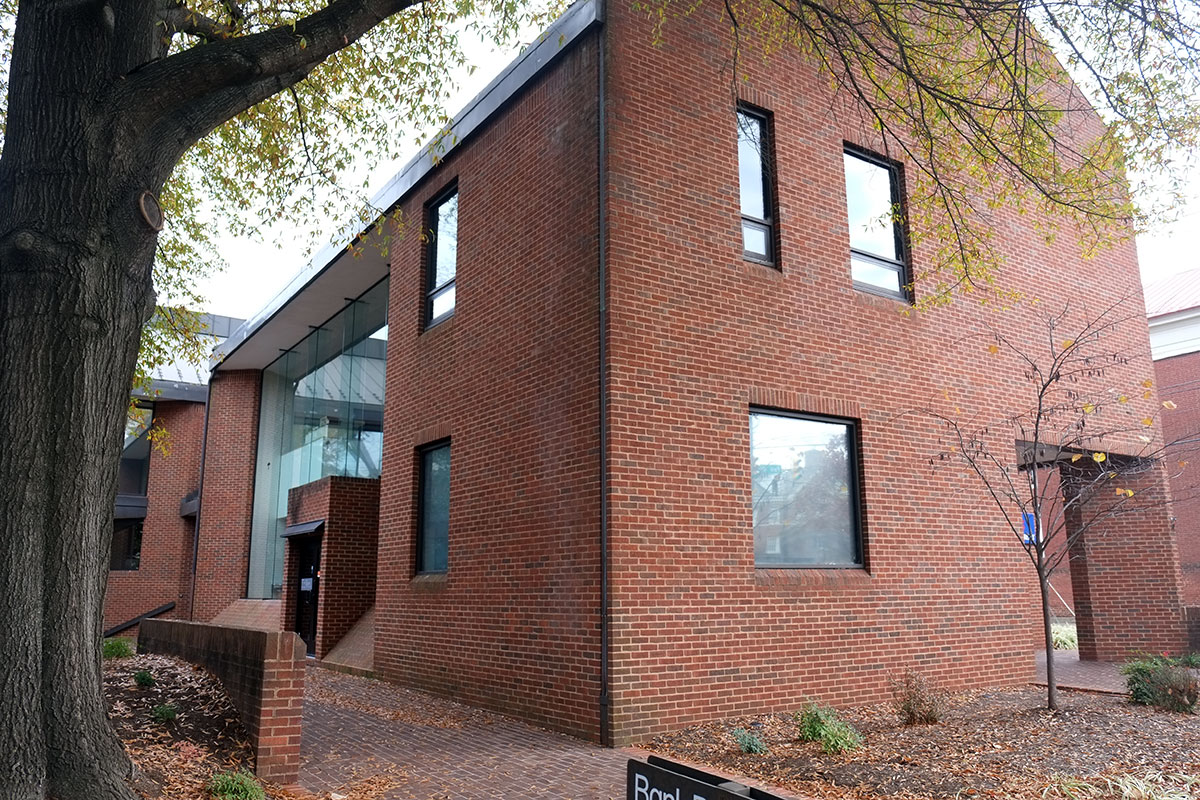
And a few examples of how one can be contextually sensitive without copying the style.  This 1970s bank struck me as quite good – similar scale, materials and overall form, without copying style, rhythm, or detailsDSCF6743

and with the more overscaled, modern elements tucked away in a courtyard.DSCF6908

We are used to thinking of Postmodernism as having tried to correct the anti-contextualism of Modernism, but we often overlook the modern buildings that already did this quite well. (I noted this in Cambridge too.)

Kahn was right – we should just leave Georgian to Jefferson – he was remarkable, especially for someone who had a time-consuming day job.  I did go to see Monticello – on a gorgeous crisp day, after waiting through four rainy ones.  It was invigorating, although less perfect than the Lawn.  Monticello was Jefferson’s own house, so he could do what he wanted – play with ideas, change his mind, add on later.  The principles of variety and exploration could dominate – it didn’t need to have the resolution of an important civic work.  In the Lawn you get the perfection of a few big ideas worked through rigorously;  at Monticello you get exuberant pieces all getting along quite well, while not as concerned as to how they add up.  It was a wonderful afternoon, but unfortunately my computer somehow ate all my photos as I was downloading them, which is not a disaster, as photos of Monticello are not hard to come by.  Or as Greta would say, just go.

Luray Caverns, Luray Virginia

P1050981

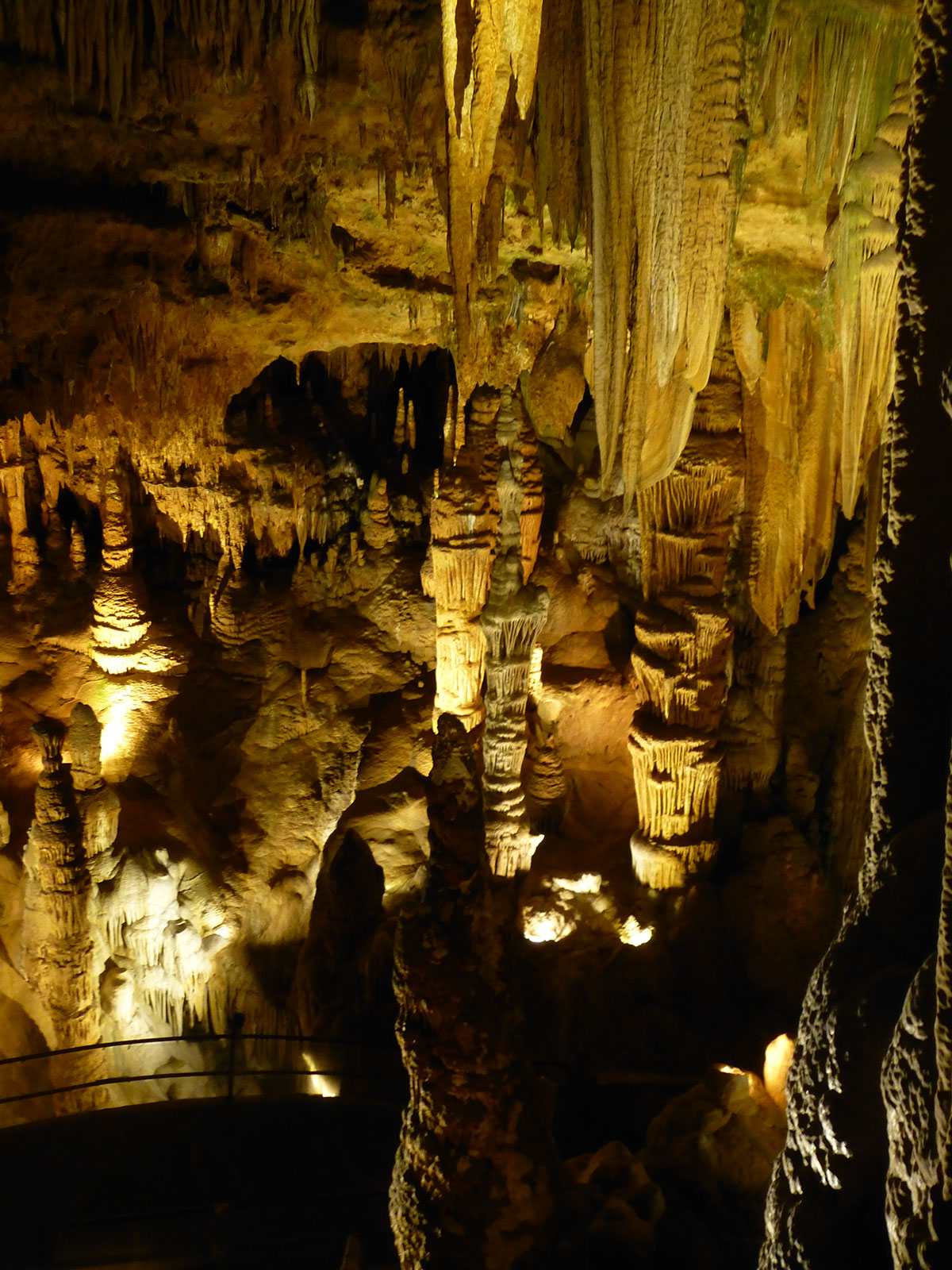
Throughout the tour of Luray Caverns, Dad and I could not stop making references to Moria. Although there was no mithril to be found, and it was considerably better lit, we did come across a hoard of goblins, aka a teenage school group. But in all seriousness, the caverns looked more like something out of a Doctor Seuss book than something written by Tolkien. Huge calcite spires between shades of red and white towered above us, and reached up from crevices below. The tallest was over forty feet, which is impressive considering that they only grow an inch every century.

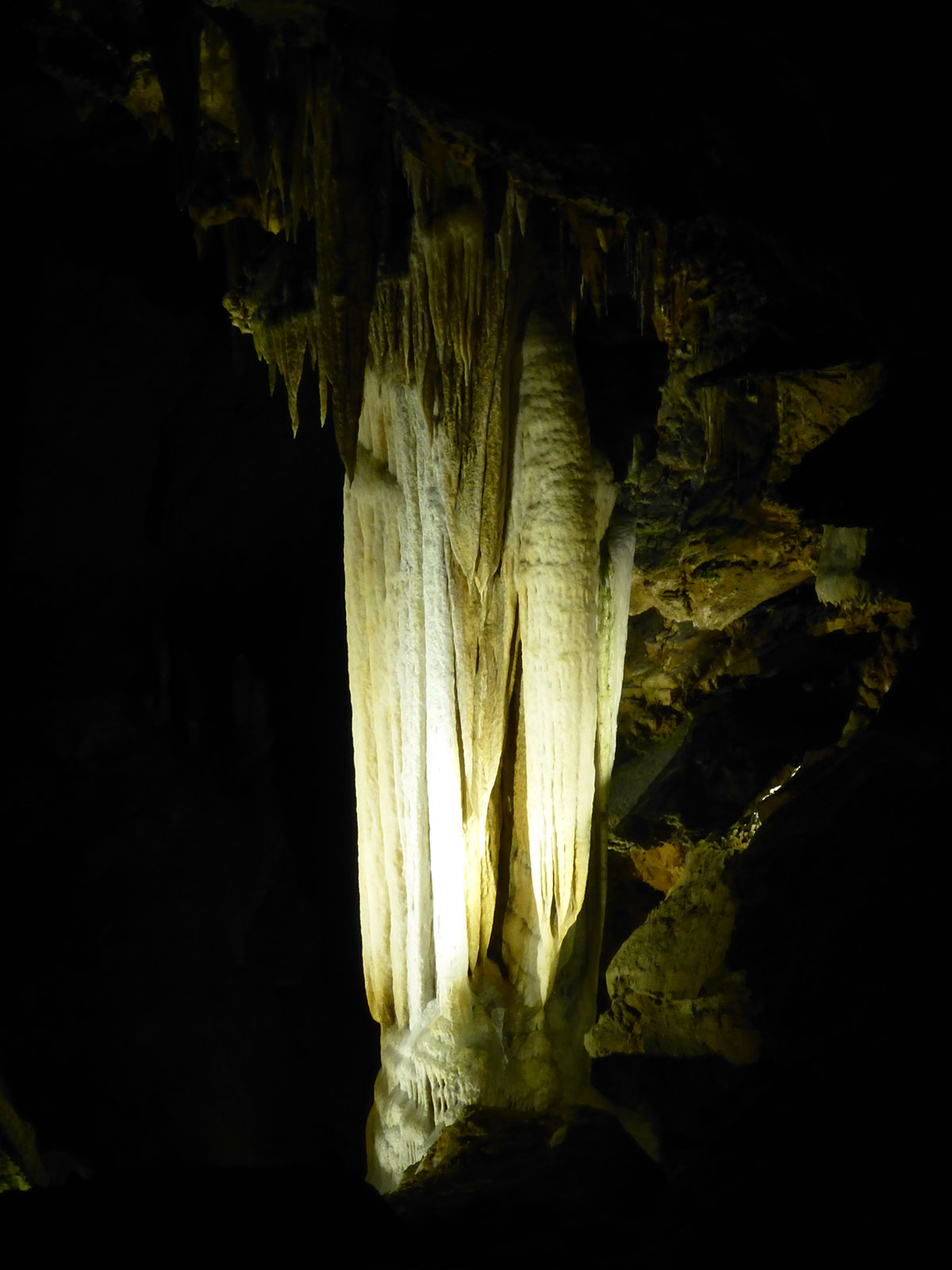
There was a particular white spire named Pluto’s ghost. I wish we had gone earlier, so I could have gotten a picture of it before New Horizons. The tour guide explained that it got its name because the people who discovered the caverns kept seeing it, getting closer, and thought it was a ghost, but I think it should be a memorial to Pluto not being classified as a planet anymore.

Pluto's Ghost

Pluto’s Ghost

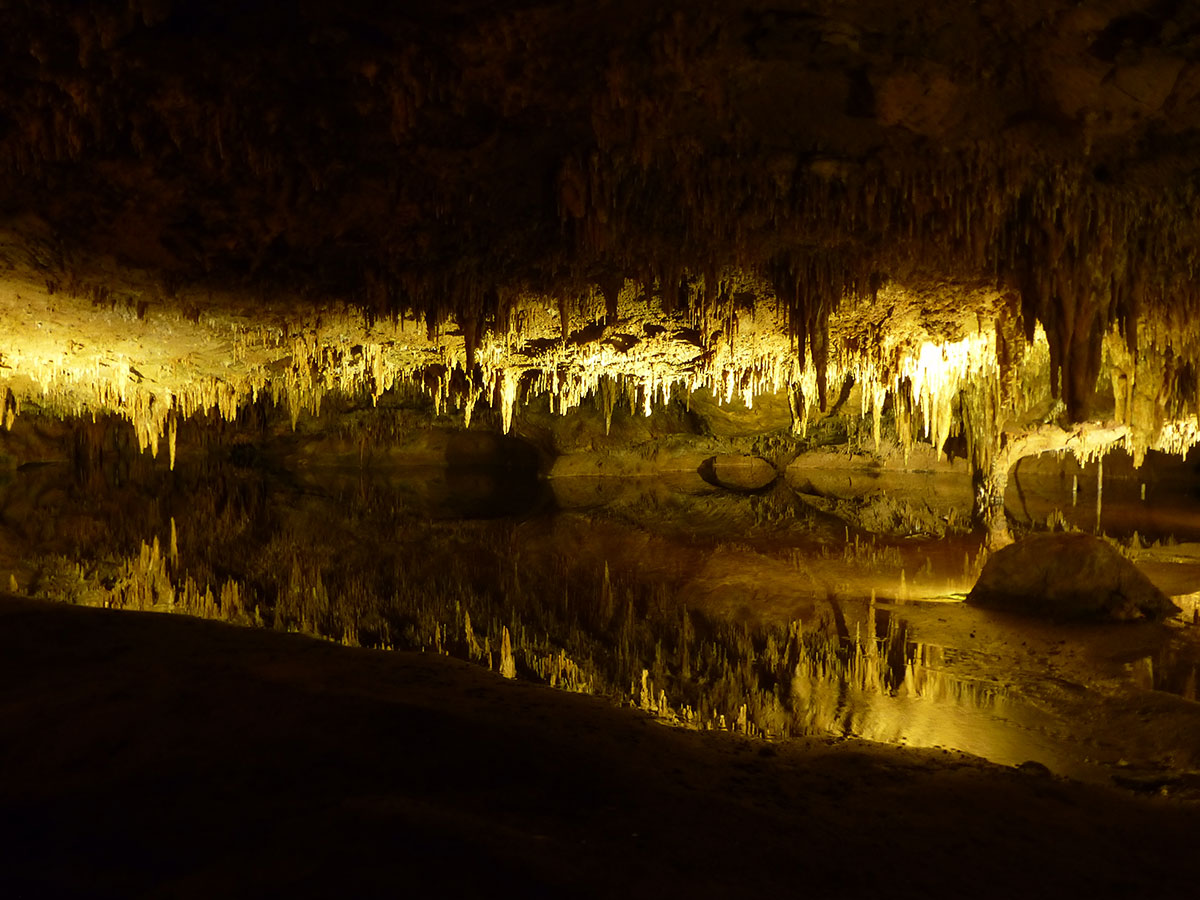
What was eerily like Moria was the pool. It was perfectly still, and so reflected a perfect mirror of the stalactites above. It looked like jaws, and I kept expecting to hear “gollum, gollum,” coming from its far side.

The Mirror

Mirrormere

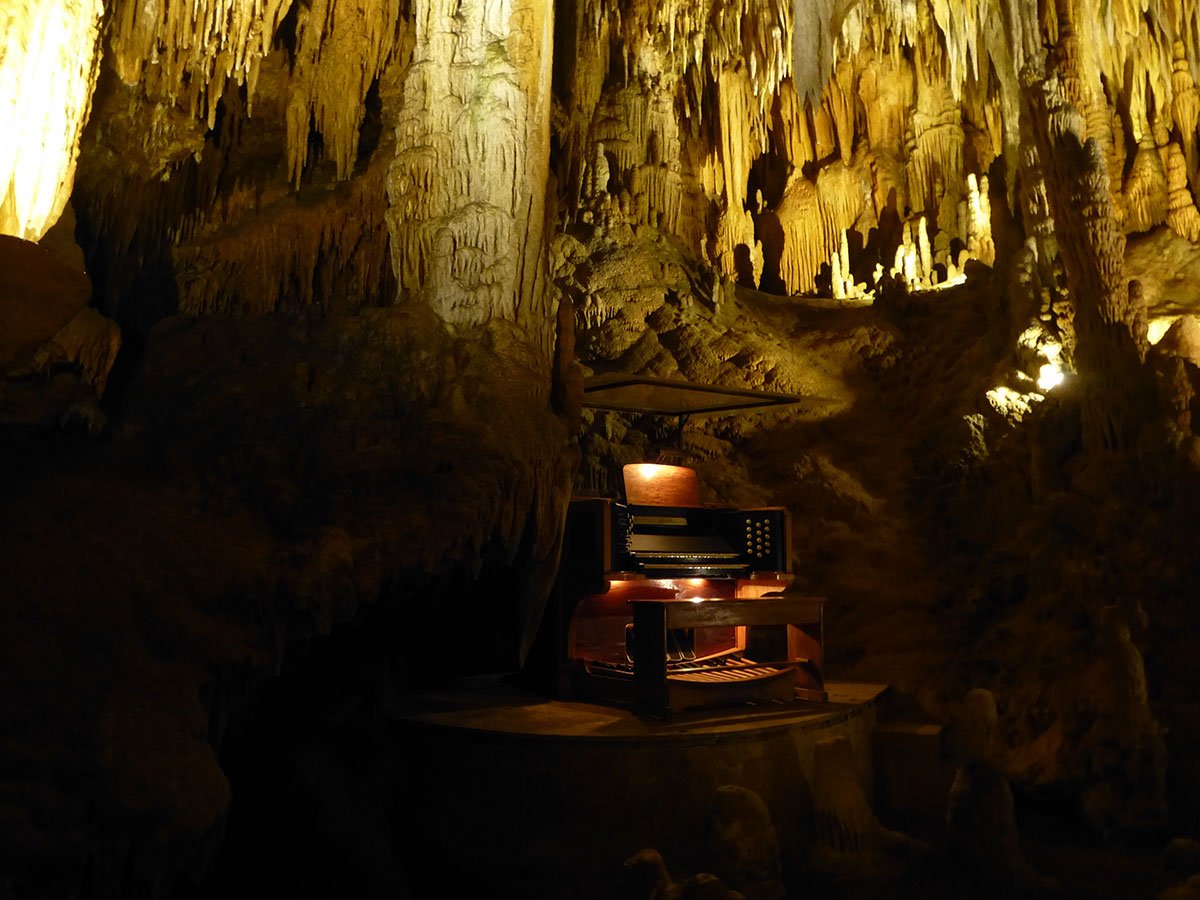
Near the end of the tour, we were taken to the world’s largest natural instrument, the Great Stalacpipe Organ. Someone had created a organ out of the stalactites, hooking them up to mallets that would hit the right one at the right time to play a song. The idea was cooler than the music it played, which was too high-pitched and complicated, and not actually that good. It would have been better if they had just made it play Blitzkrieg Bop, and they would only have had to find three stalactites.

The Great Stalactite Organ

The Great Stalactite Organ

All in all, a completely different experience than the lava tubes of Craters of the Moon. Perhaps cooler looking and bigger, but there was no clambering involved, and you weren’t allowed to touch anything. There is plenty to see, but not much to do beyond taking the tour and taking pictures.

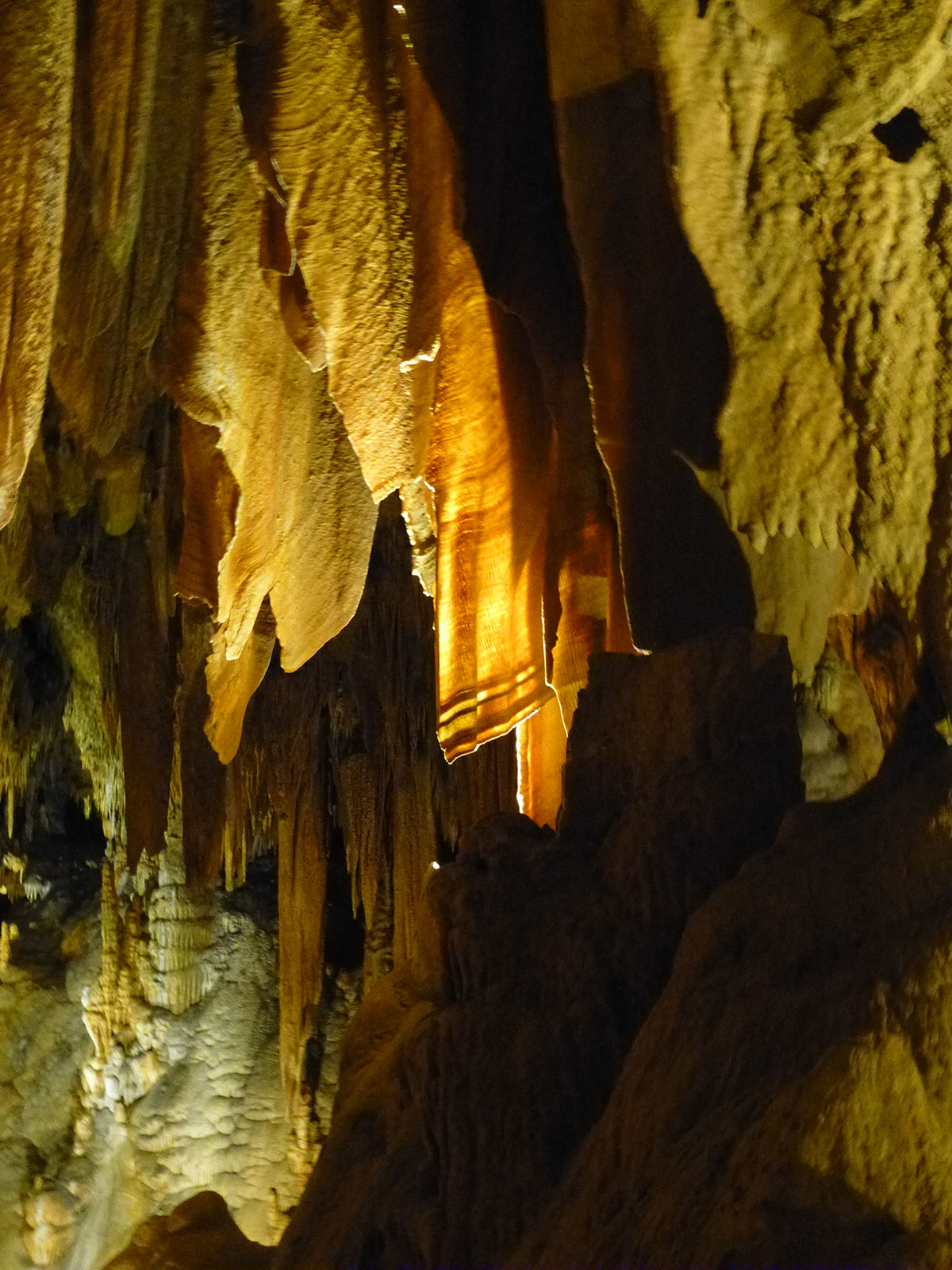
The 'Dishtowel'

The ‘Dishtowel’ formation

Harpers Ferry

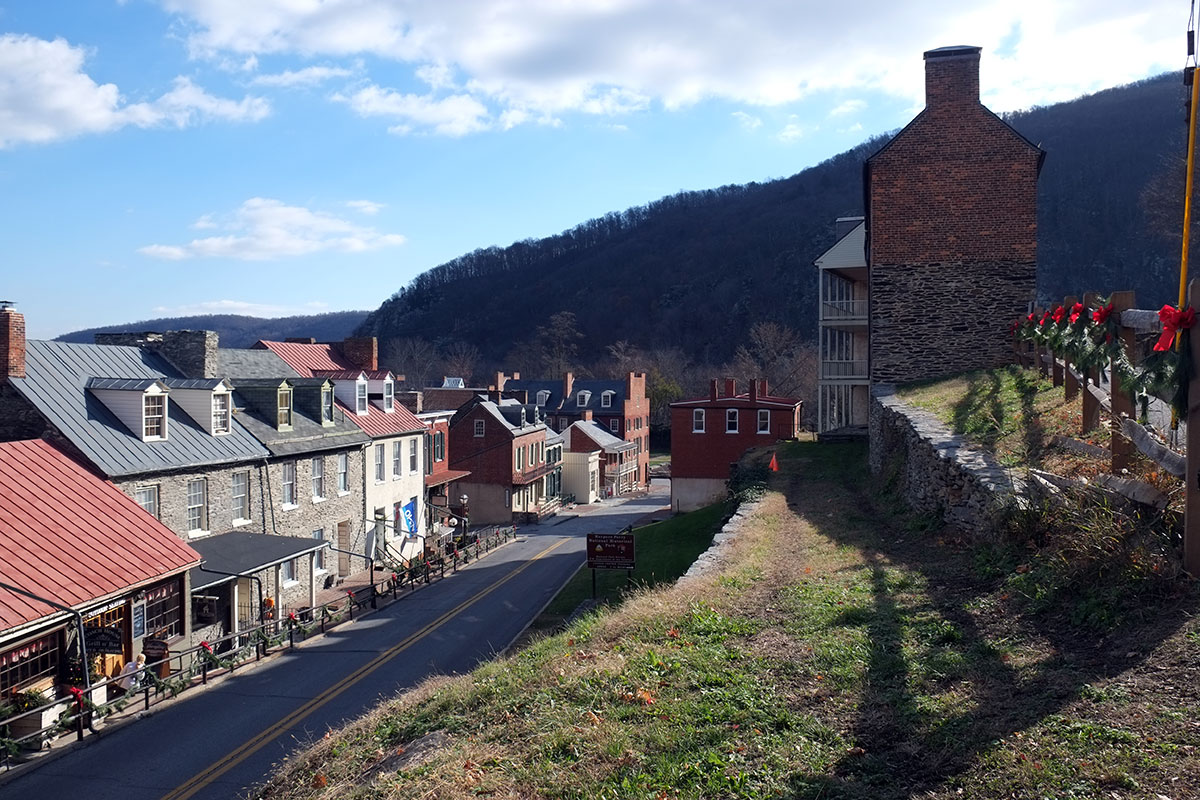
DSCF6561Harpers Ferry is a place I’d always heard about, but about which I had only a few random associations.  John Brown’s raid, battles, rivers, West Virginia (really, is that where West Virginia is?)  There wasn’t one clear narrative line about it, which now makes sense to me, as an incredible number of important things have happened in this one tiny place.  The history is extremely interesting, but the spatial / geographic / topographic / architectural character is astounding.  It’s my new favorite “place” in the country.

It all starts with the geography:

  • It’s where the Shenandoah joins the Potomac, one of the major passes through the Appalachians in that region.
  • Virginia, Maryland and West Virginia all meet at this one point.
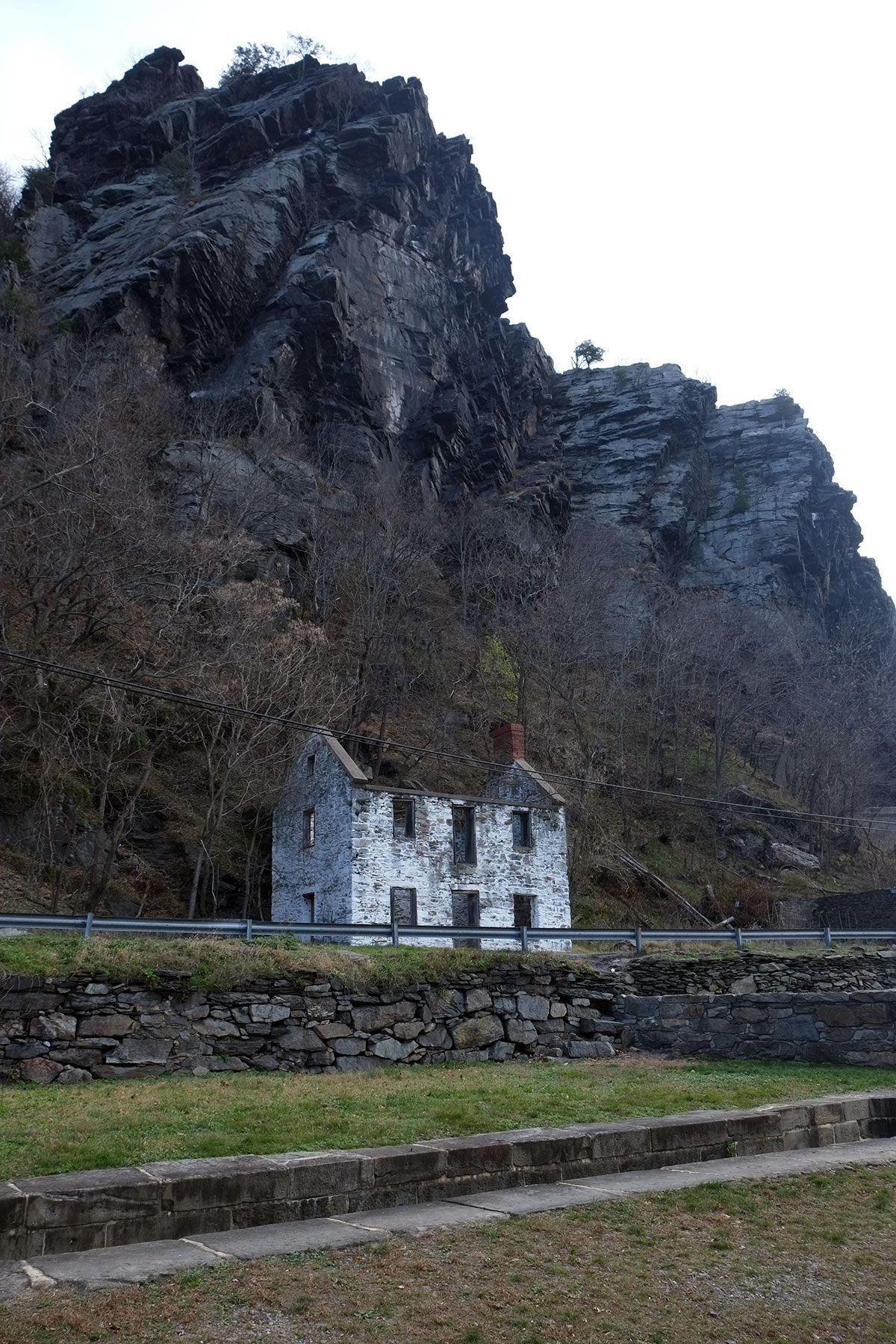
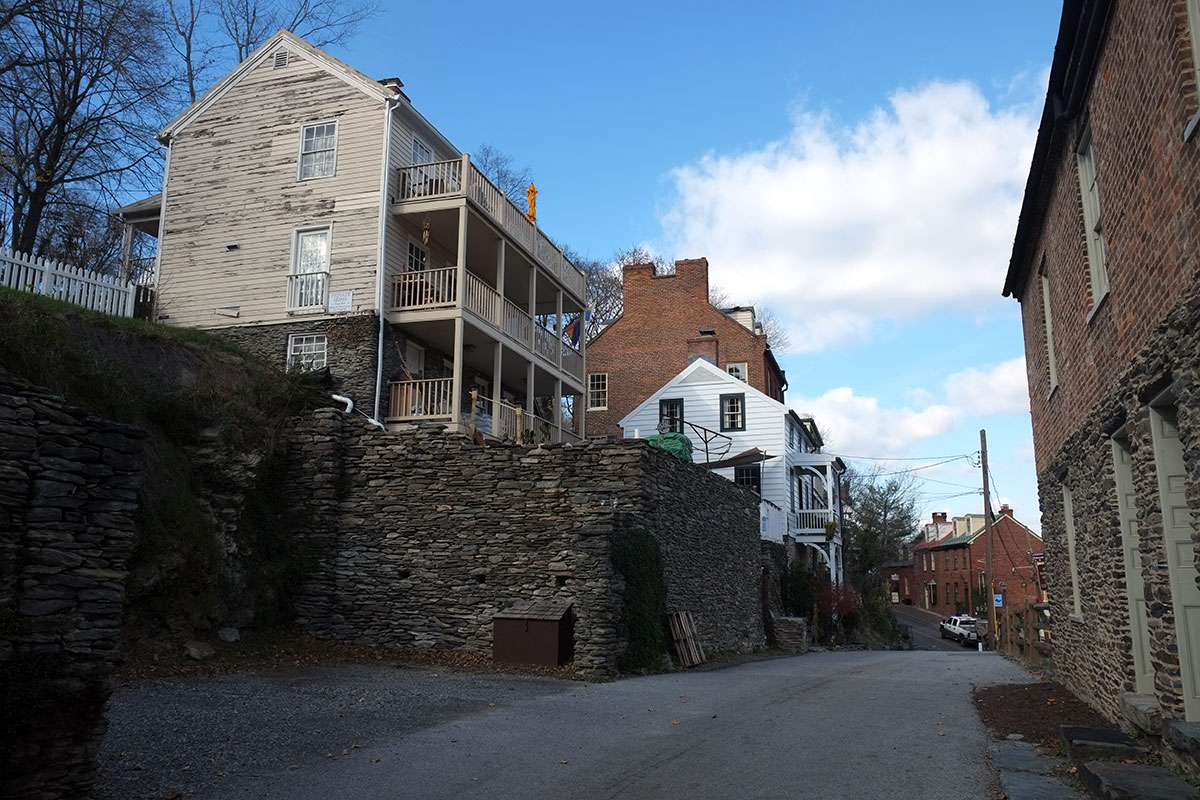
  • It is a gorge, similar to the Hudson River Highlands.  A big cliff of Maryland on one side, a big cliff of Virginia on the other, and a small, low area  at the base of a cliff in West Virginia in the middle, which is the town.
  • Because of this geography, important transportation systems cross here:  two rivers, one canal, and two railroads.
  • Because of the strategic importance of this crossing, lots of important battles and skirmishes happened here, mainly in the Civil War.
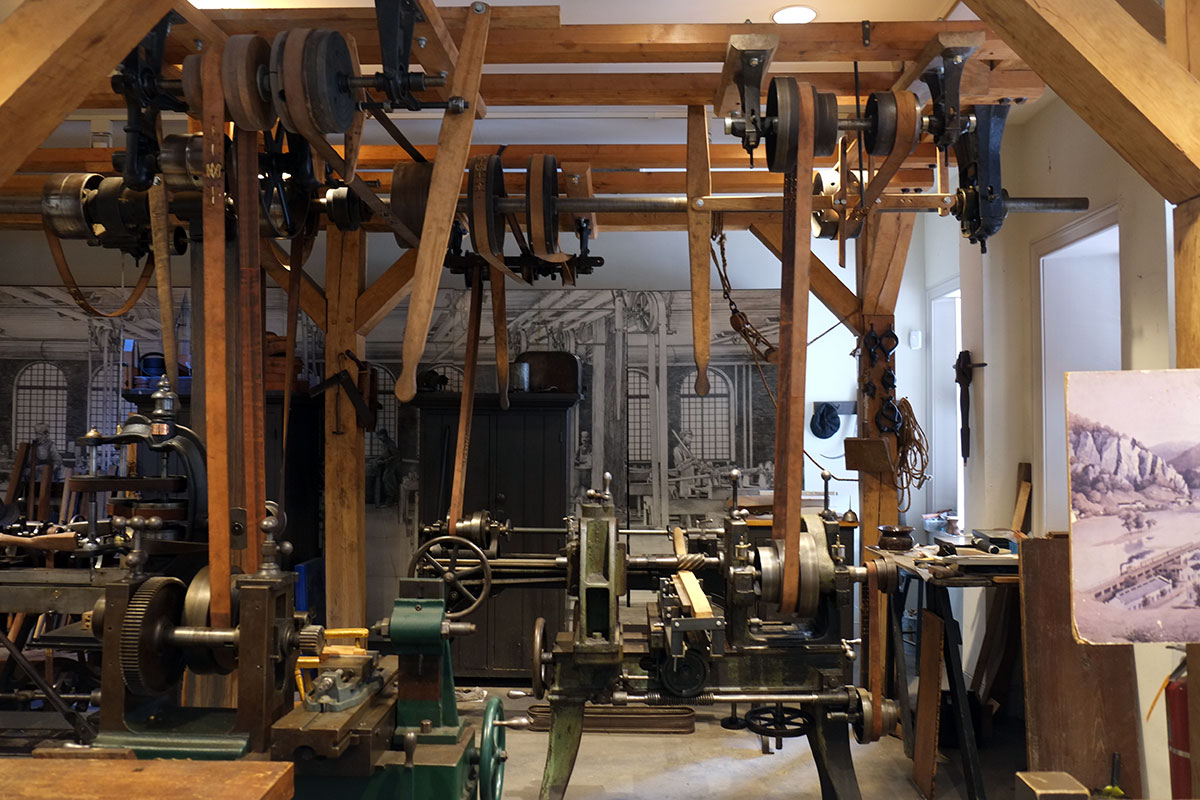
  • Due to this transportation hub, materials such as coal and iron moved through here, and it became the site for the US Armory, which pioneered manufacturing arms from interchangeable parts.
  • Since the armory was here, John Brown decided to take it over and take the weapons for an insurrection.

There are probably lots of other places in the country where a similar series of historical causes and events have taken place, and we haven’t paid much attention to them, because neither Greta nor I likes to stand at a field where something happened a long time ago and try to imagine it.  We like to see tangible stuff that remains from these events.  The visual evidence at Harpers Ferry is compressed, right there in front of you.  For this and other reasons, it is one of the most vivid and beautiful places we’ve been.

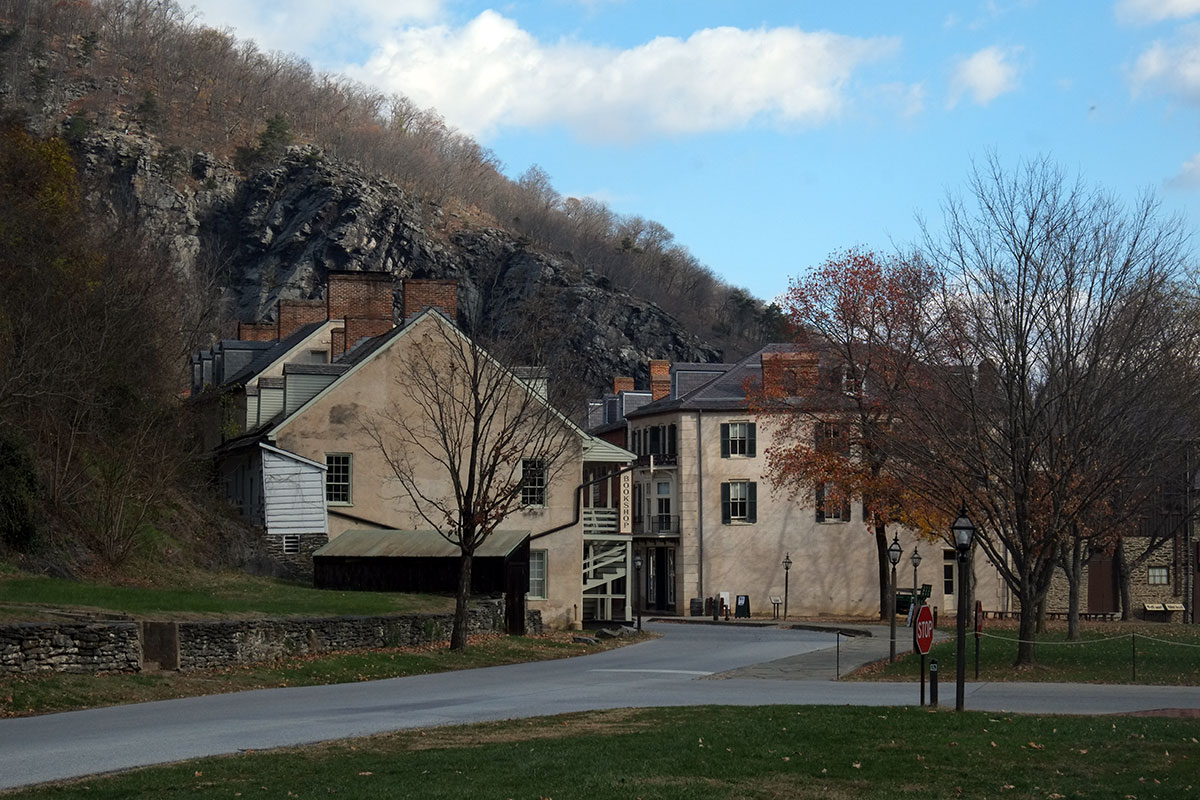
The first inkling as you arrive in the town, with the Maryland highlands rising up beyond the main street:
DSCF6631

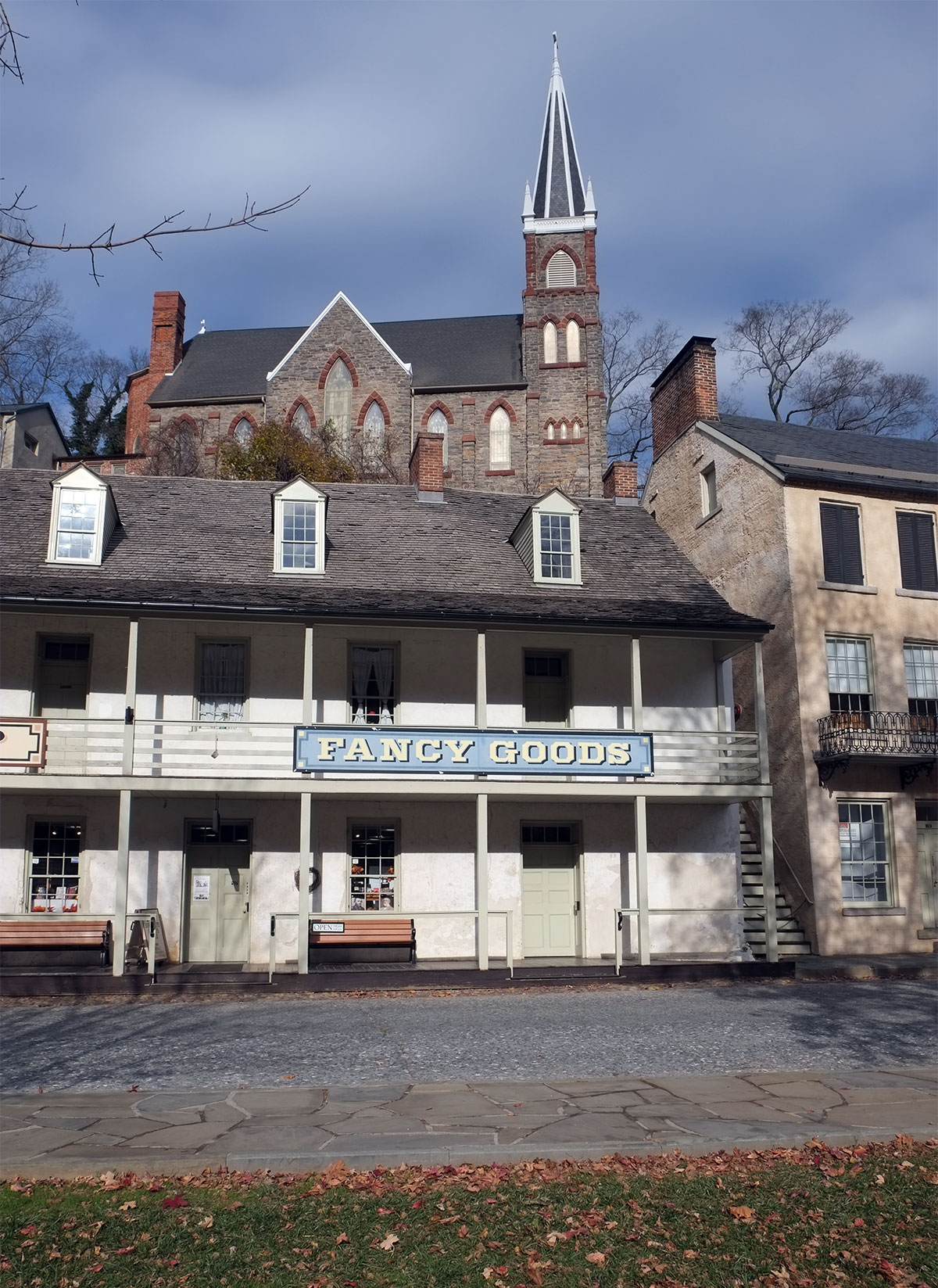
On the left the town rises, with a Catholic church (built for the Irish railroad workers) above.DSCF6477

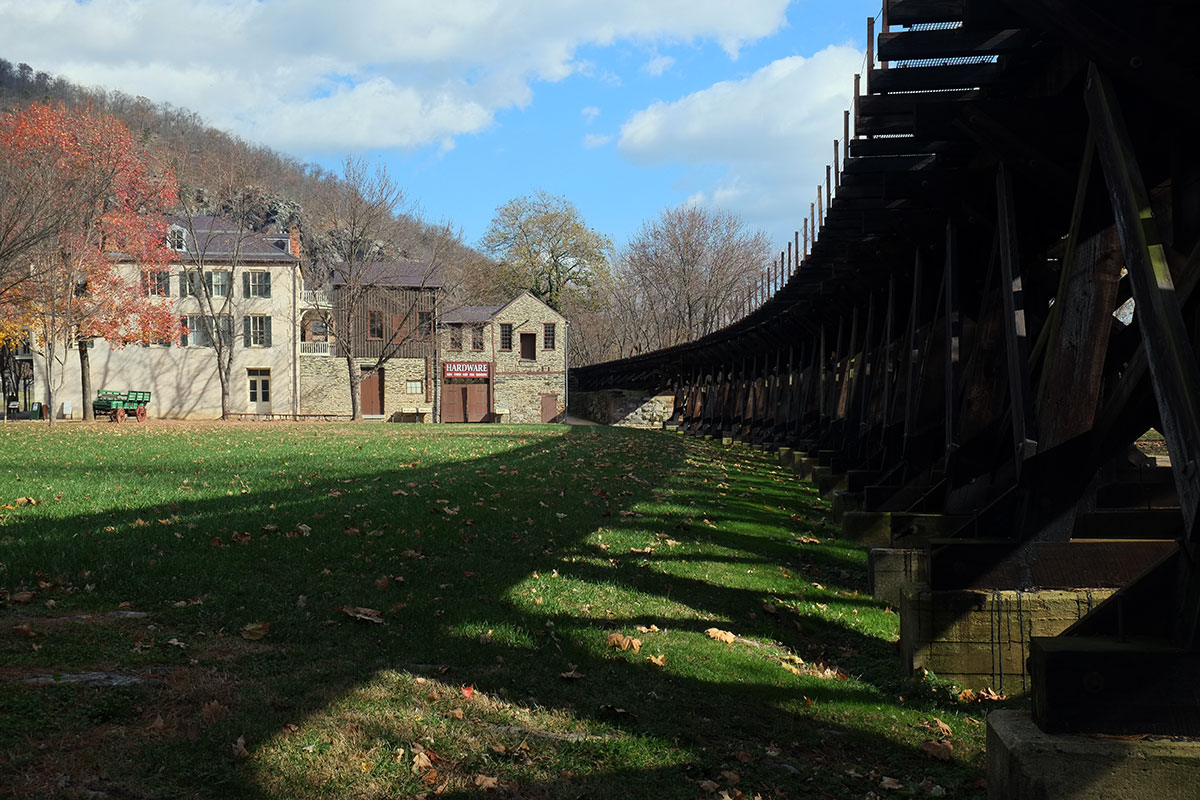
On the right, a railroad trestle parallels the Shenandoah.
DSCF6624

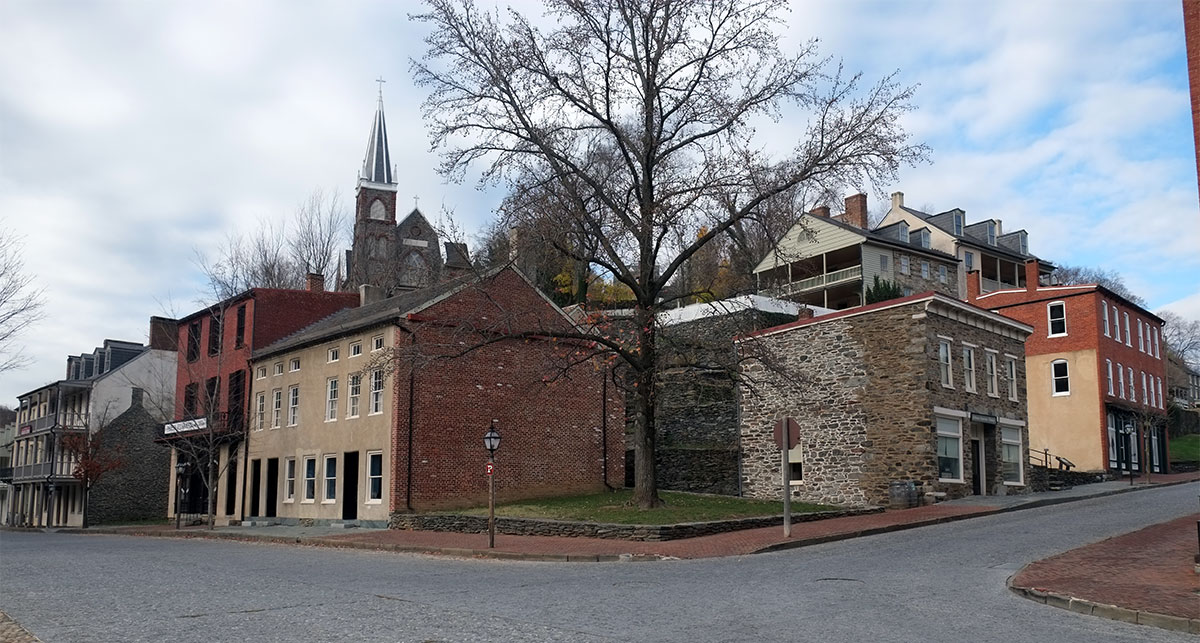
At the center of town, an intersection with a tree.DSCF6482

with a much larger space opening towards the river convergence.  The building where John Brown and his associates holed up used to be here.  DSCF6607

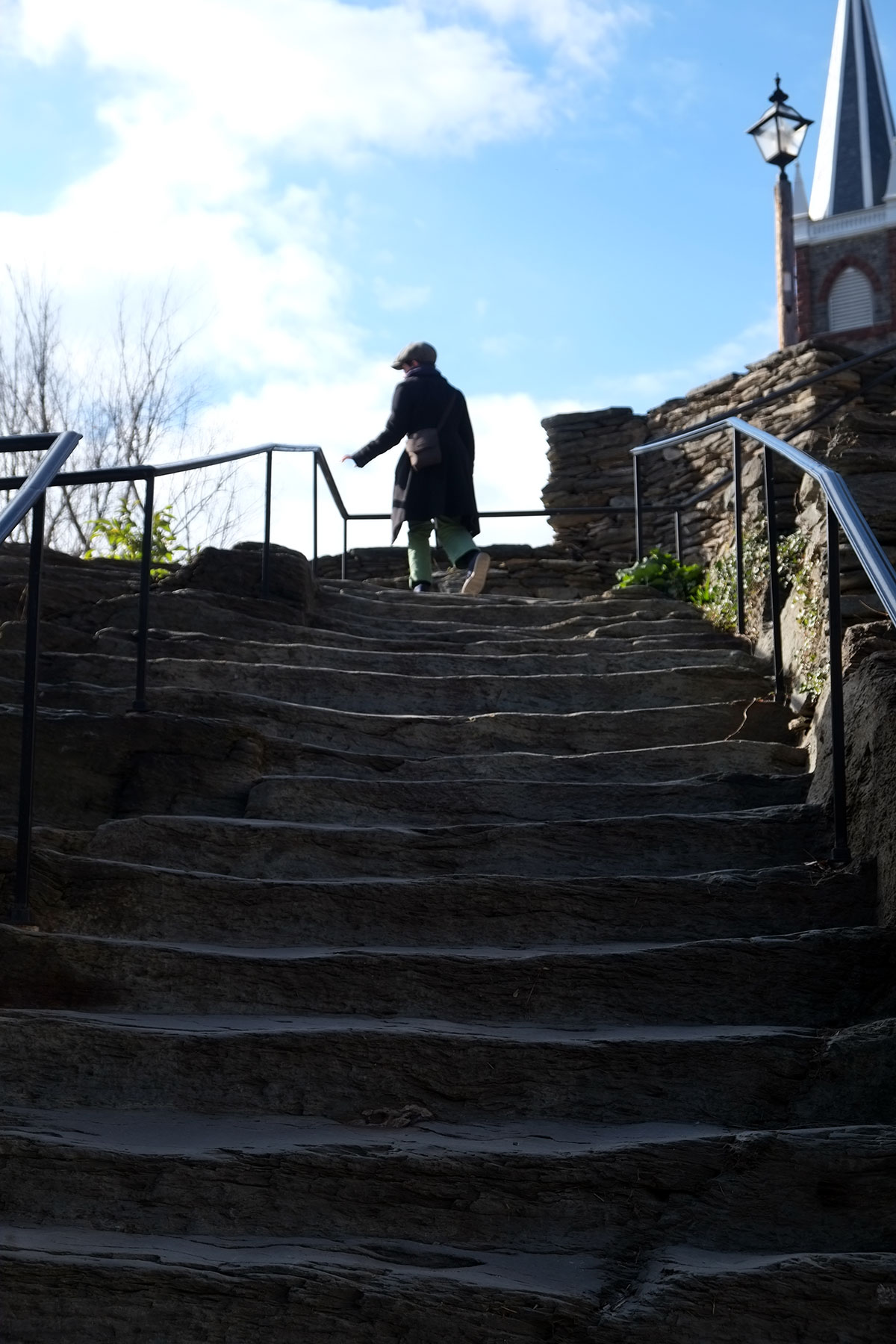
There are hewn stone stairs leading up the hill to the church.  At this point I’m wondering, is this West Virginia, or have we passed through a space/time hole and popped out in Scotland?
DSCF6524

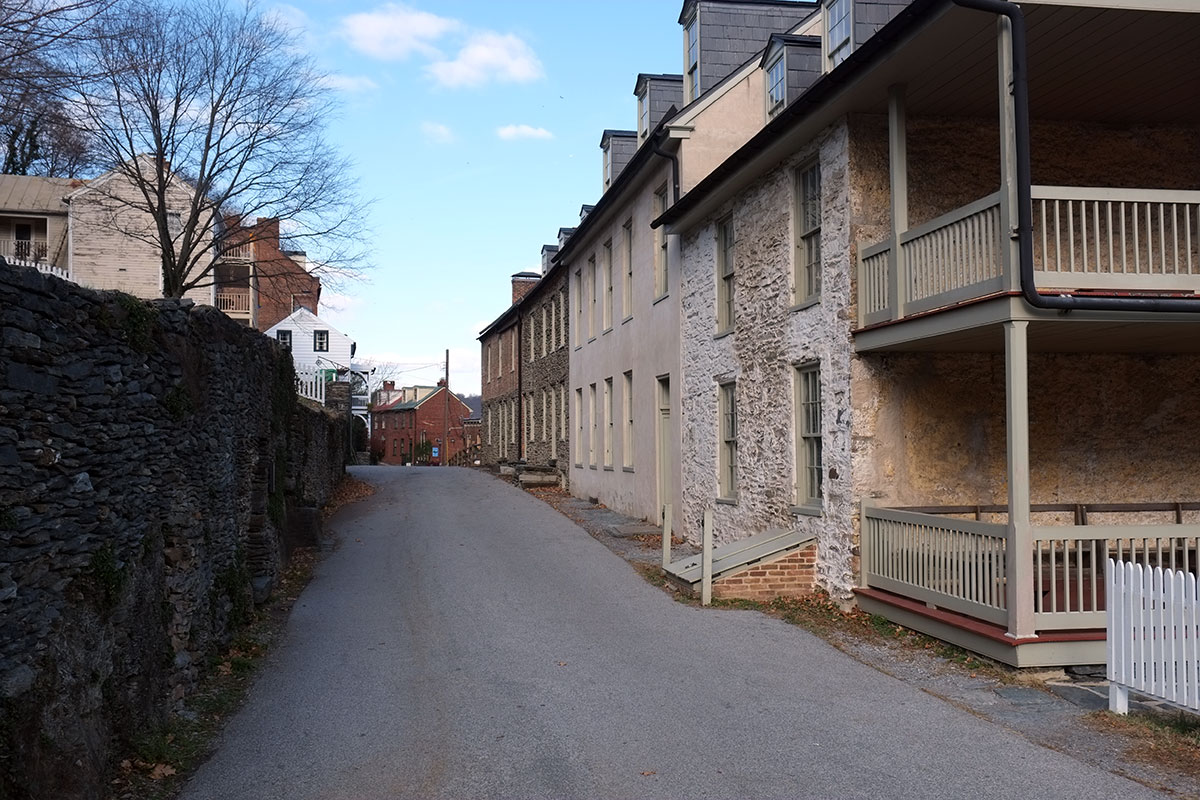
There is a road that slants up the hill.DSCF6573

And others that work with the topography.DSCF6560DSCF6570

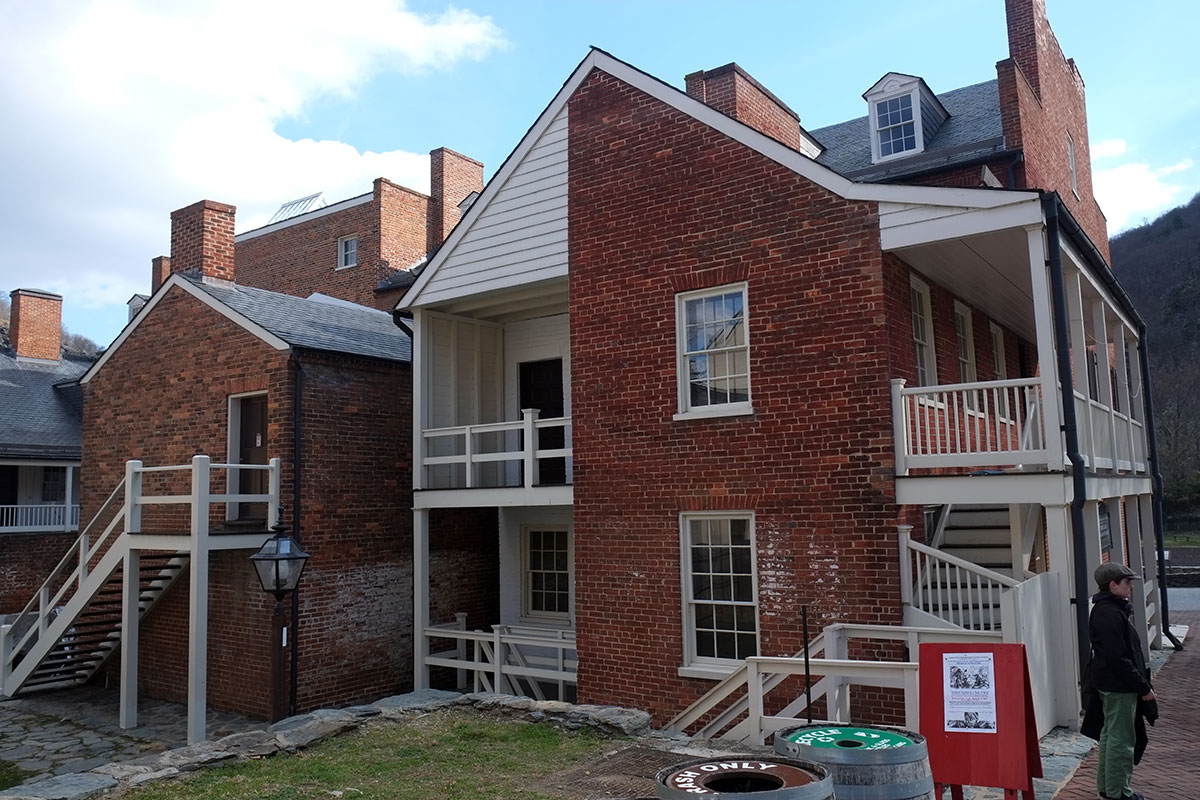
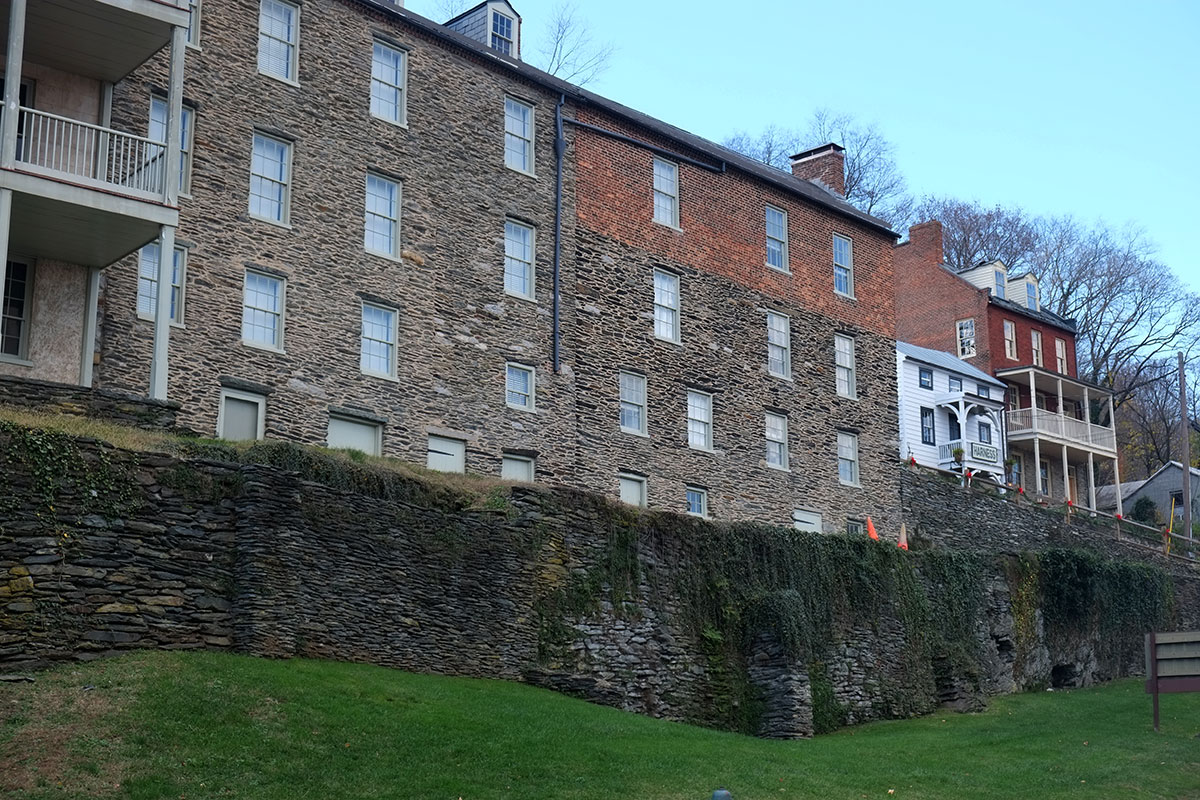
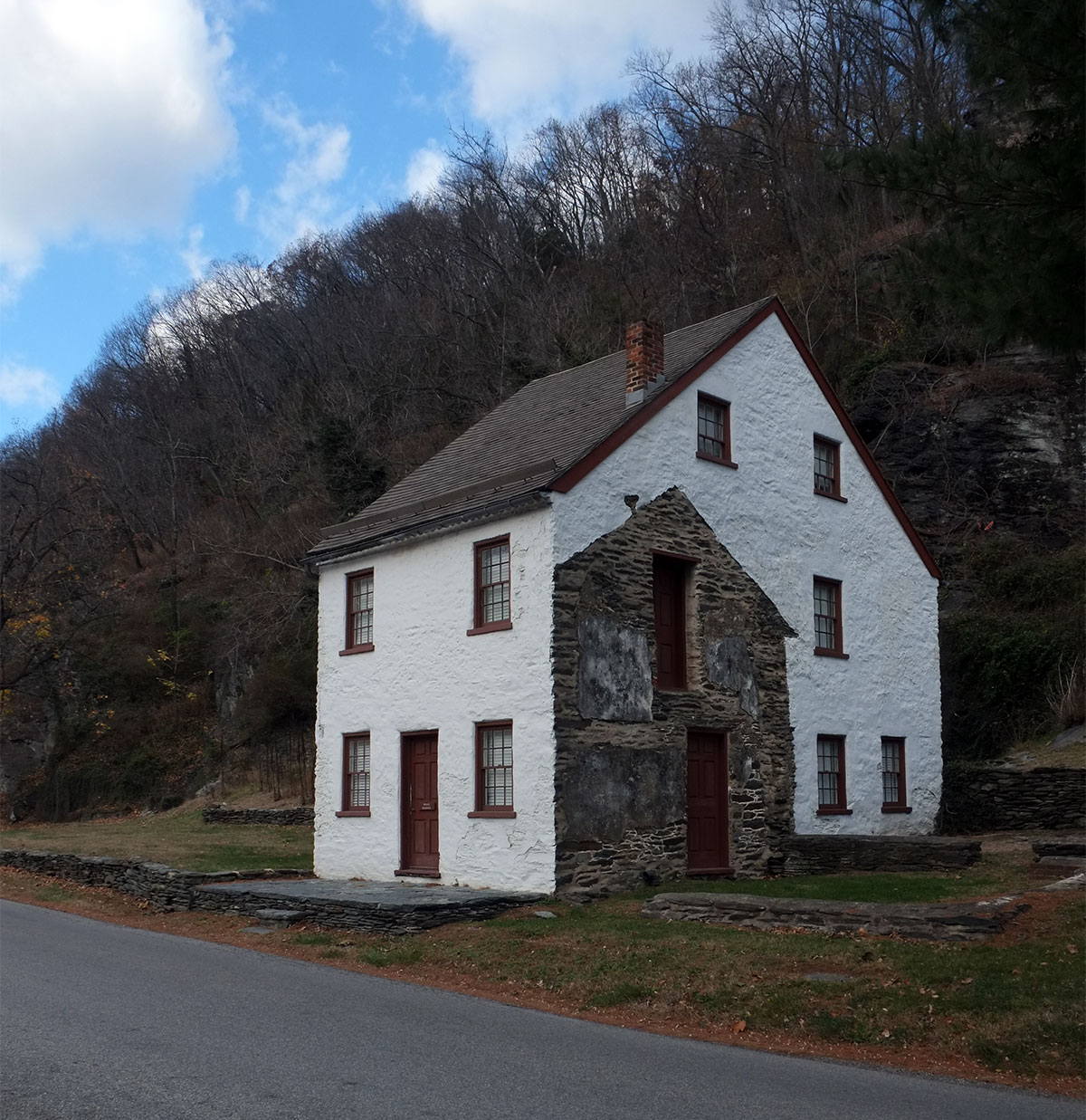
Everywhere, the vernacular buildings show the use of local materials – stone, wood and brick – with a clarity that is rare in this country.  DSCF6527DSCF6601DSCF6596

Across the Potomac in Virginia are the remains of the canal.DSCF6509

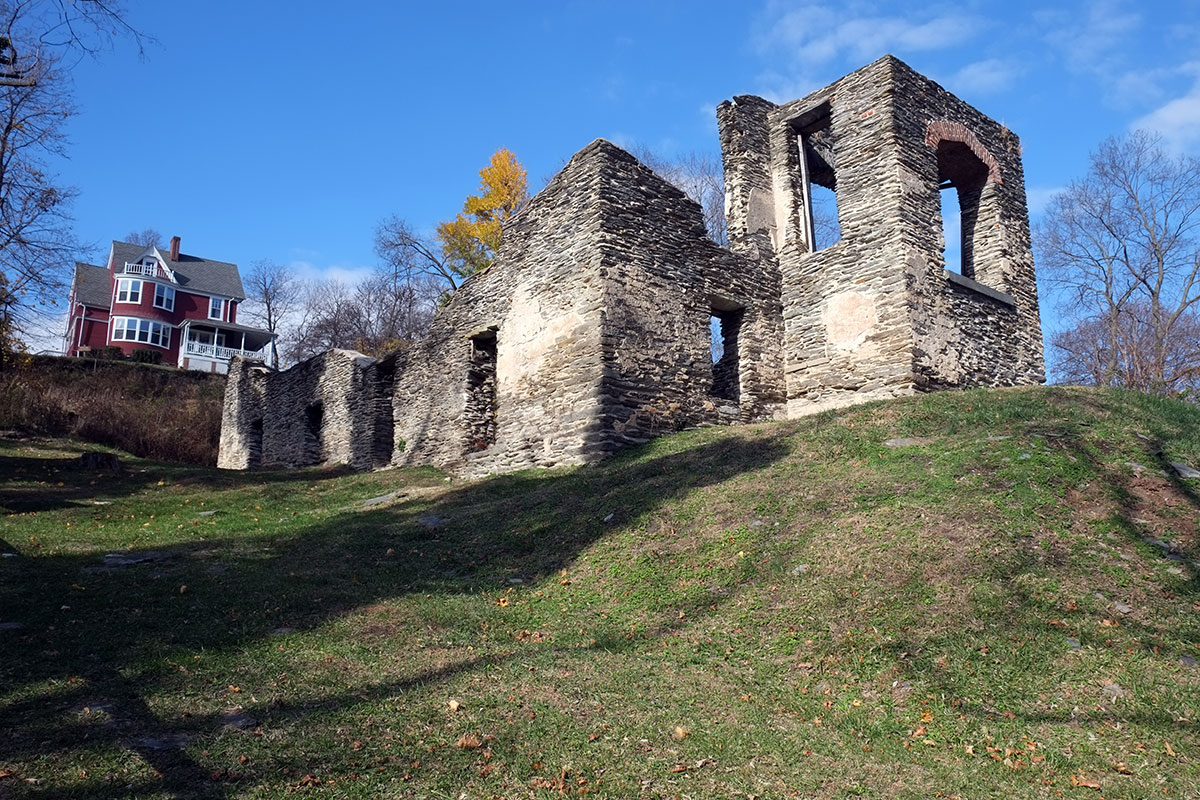
As you walk up the hill, there is the ruin of an Episcopal churchDSCF6530

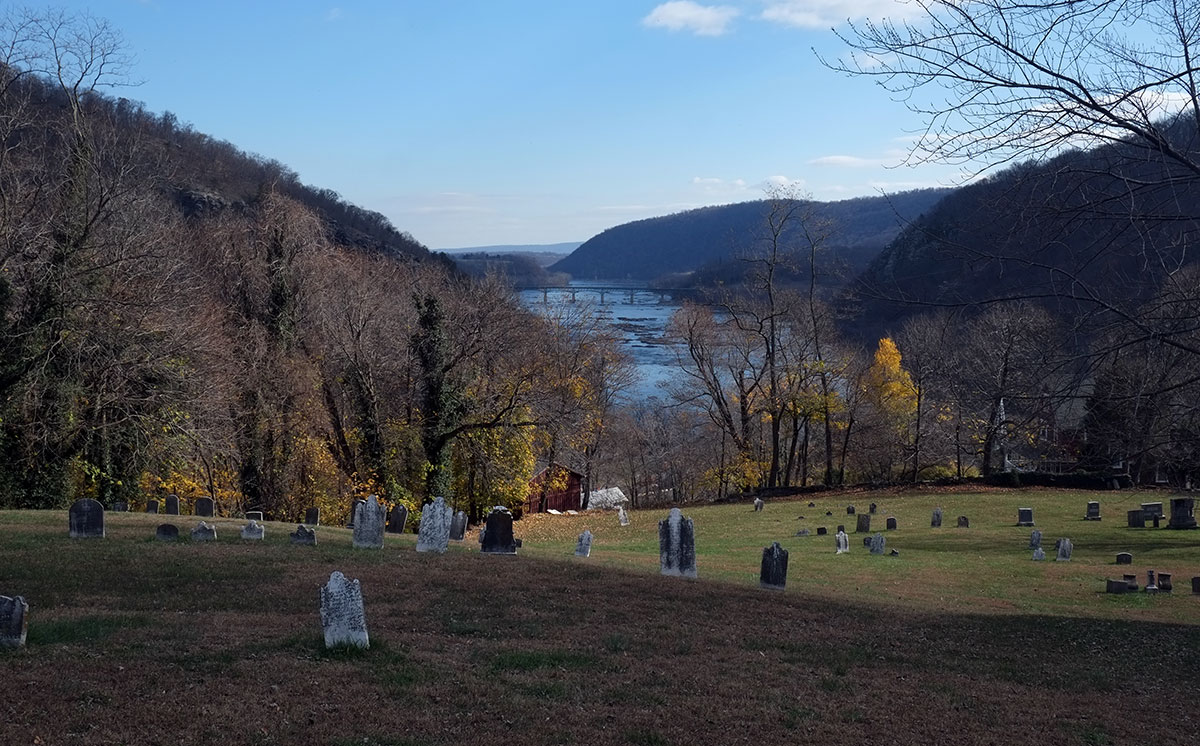
and the cemetery on top of the hill,  DSCF6545

with a view down the Potomac.DSCF6547

The historic town center is run by the National Park Service, with beautifully restored buildings, showing the businesses and residences of the past.  None of it feels Disneyfied – it is all simple and direct and appropriate.  We were there on a cool autumn weekday – perhaps it is more of a circus in summer tourist season, but while we were there, it felt like we had stepped back in time to this perfectly-preserved ghost town.  DSCF6611

Harpers Ferry isn’t a reconstruction – there are lots of things from the past that have been destroyed and not replaced, such as the Armory.  There are aspects of it which do not contribute to the experience, such as some intrusive and probably unnecessary constructions by the railroad right in the center of town. It doesn’t try to be perfect, and so it feels authentic, which is probably why it felt like being in Europe rather than America.  We’ve been to many historic places on this trip where an either/or approach is evident – either the history is pretty much ignored, or else it been elaborated and “celebrated” in a way that destroys its integrity.  (Independence Mall come to mind.)  Harpers Ferry gets it just right.

I’ve only met a couple of other people who’ve ever been here, although it’s one hour from Washington.  It just seems like it’s farther because it’s in West Virginia.  We’re 2 1/2 months and 6000 miles into this trip, and this is my favorite place so far.

DSCF6632

Lancaster, Pennsylvania

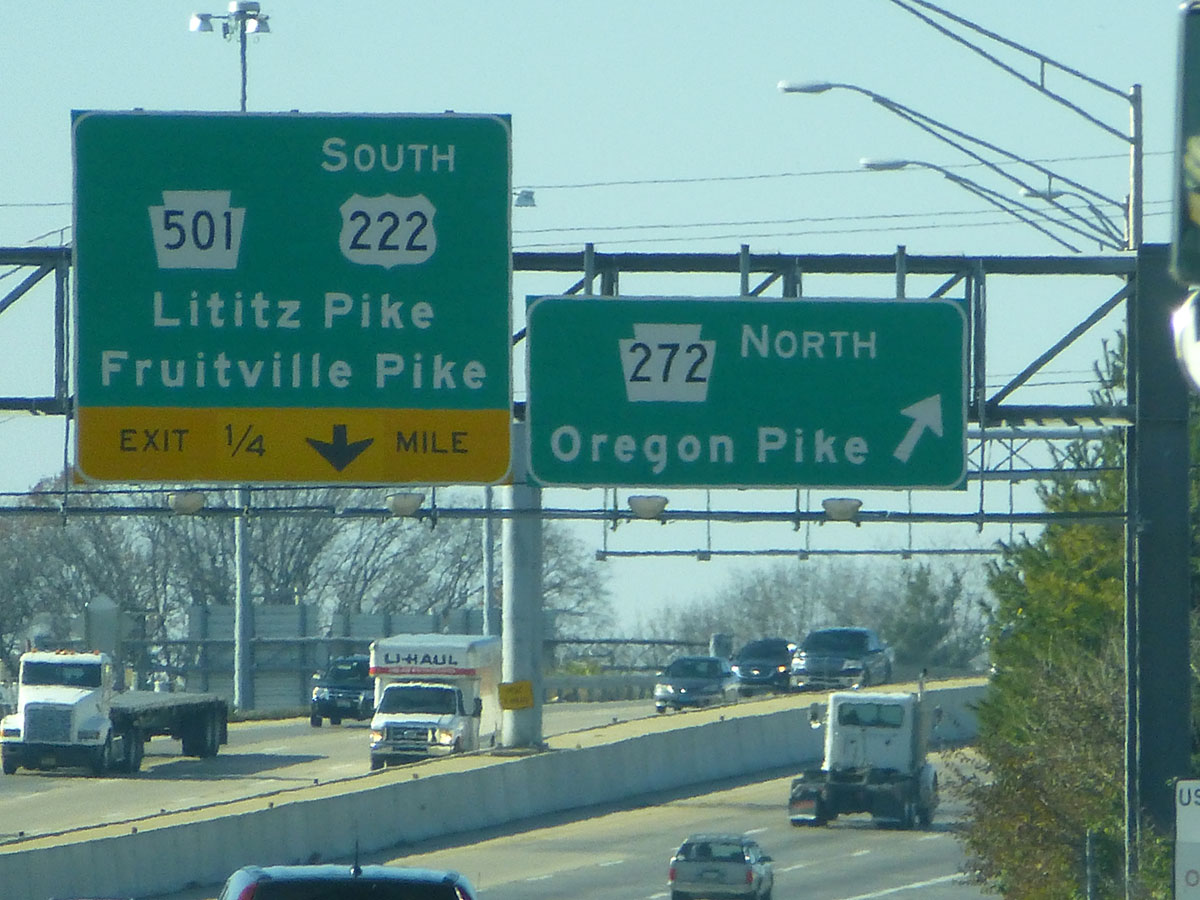
A year ago today we drove west from the Philadelphia Main Line, through Lancaster and York, Pennsylvania, and then south to Baltimore.  Strangely, I had never travelled through the Amish country before, and Greta and I were both taken by the beauty of the landscape, and the singular culture that is centered there.

With a normal adolescent sensibility, Greta was highly amused that we were passing through Intercourse, p1050342

and her more detailed study of the map caused us to make a slight detour south to Fertility, which she was gratified to see was only a short distance from Intercourse.

The landscape showed a lovely amalgam of different eras of vernacular building.  Lancaster itself was a somewhat overwrought tourist destination, but once away from the bus parking lots, the lack of self-consciousness and tweeness was evident.  p1050344

As was extreme laundry-hanging. p1050343

We thought we had come across a wormhole in the space-time continuum, and that maybe we could zip home for a quick visit,p1050345

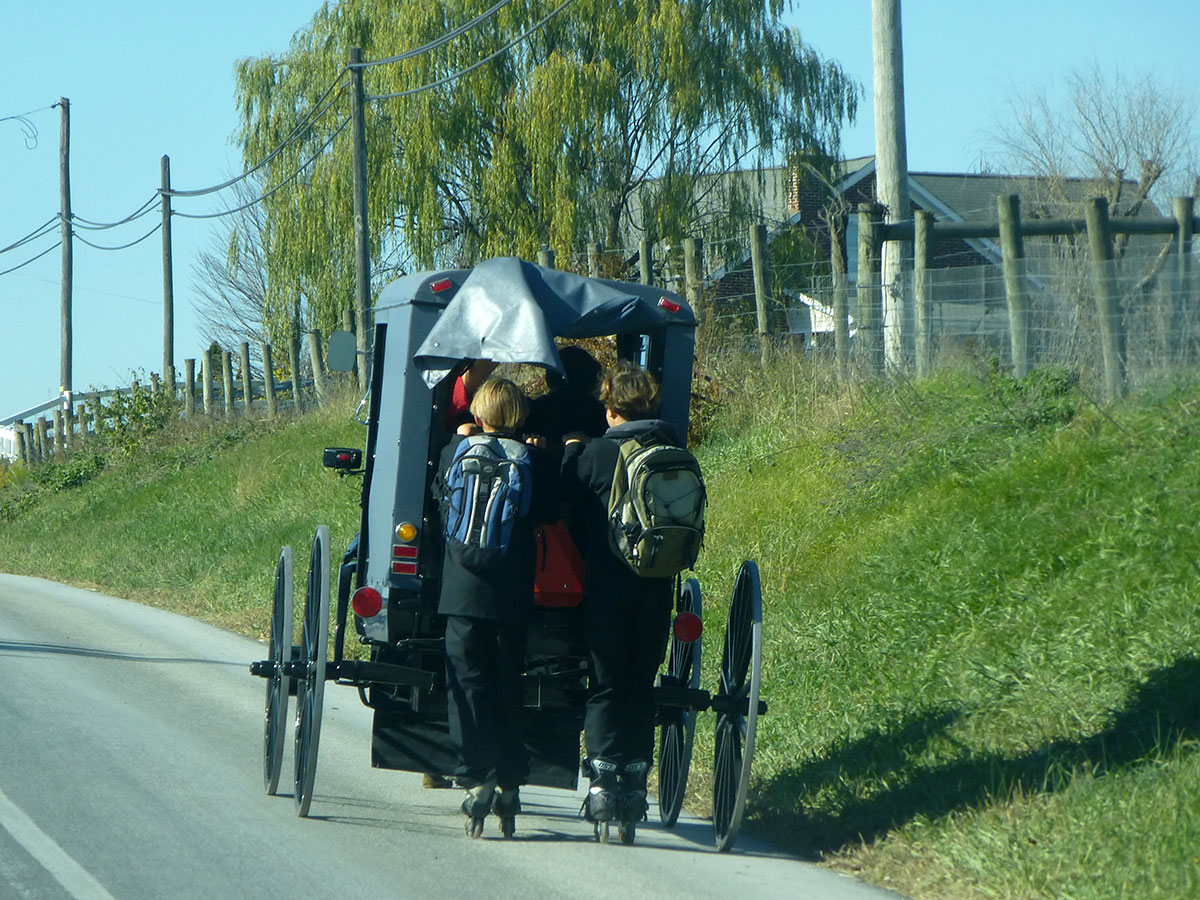
But the real dislocations were in the cultural anachronism category, especially this example of Amish skitching on the way to school.  p1050333

Radburn, New Jersey

DSCF5178There are iconic buildings and places that everyone knows, but remarkably few people have actually visited.  In my lectures I try to stick to places where I have been, as the understanding one has of a place is greatly inferior if your whole knowledge of it comes only from books or media.  However, there are some places that are so important that you need to present them even if you’ve never seen them.  Radburn is such a place, one that I show to my students constantly, so actually seeing it was on the top of my list for this trip (even though I knew it would drive Greta crazy).  And I’m happy to say that it was an even better place than I expected it to be.

Planned communities, and planned suburbs, grew in importance and influence in the 19th and early 20th century.  A radical change came with the spread of the automobile to the middle class – how could the built environment cope with the spatial and organizational demands of cars?  Corbu’s various schemes pointed in one direction, but a more realistic and thoughtful approach was taken by progressive designers in the 20s.  Clarence Stein and Henry Wright collaborated on many important developments (such as Sunnyside in Queens), but Radburn laid out a new model for organizing suburban developments to emphasize community, safety and privacy.

The basic premise was that pedestrian and car circulation should be separated, with the dwelling units situated between the two.  Children should be able to walk or bike safely around the neighborhood, and all the way to school, without having to cross a street.  It sounds difficult and expensive, but the solution turned out to be affordable and at a remarkably high density.  And like all great solutions, it was also elegant and beautiful.

The through streets in Radburn that connect to the larger street system are for cars only.  Notice that they have no sidewalks – they don’t need them.  Some houses enfront these streets, and they have modestly-scaled yet formal front yards.  DSCF5187

They look like village roads, although in the site plan below, they look quite large in comparison to everything else. site

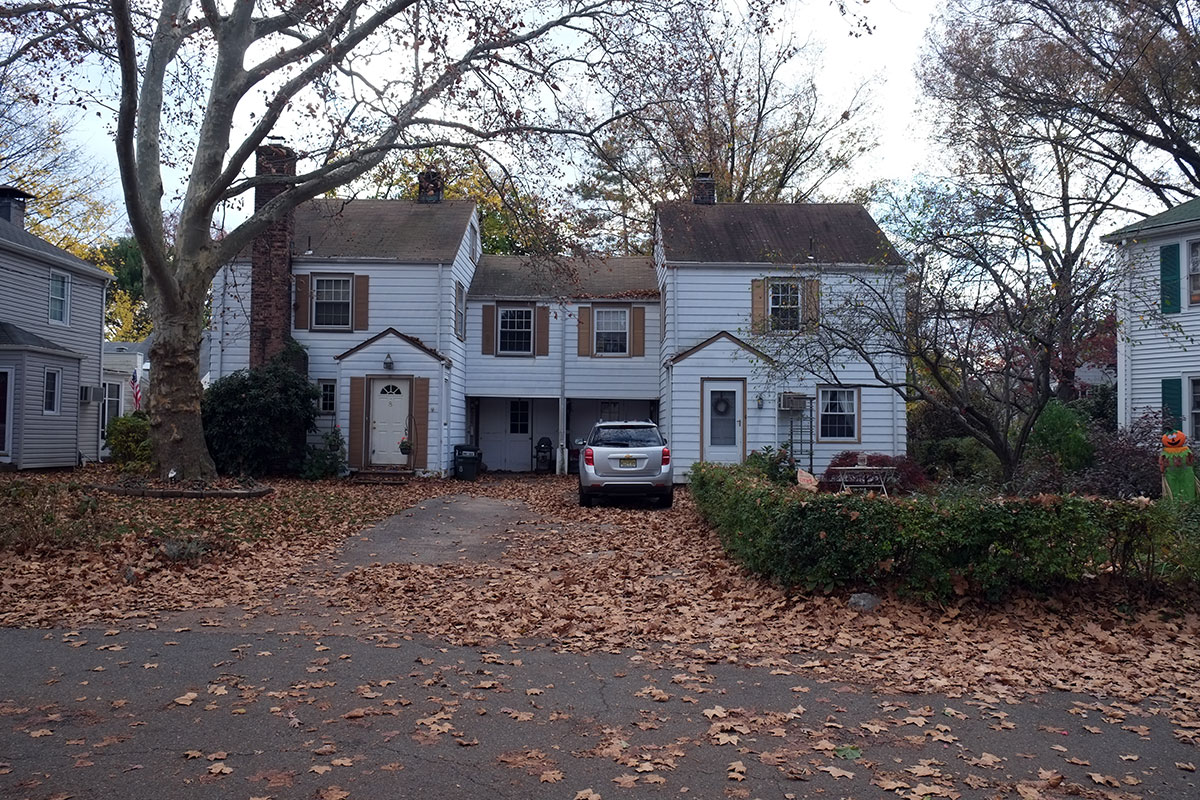
Branching off these streets are the dead end streets for accessing the houses – courts, cul-de-sacs, whatever.  They are even smaller, and allow for car access to driveways and a small amount of on-street parking.DSCF5189

Units have their front doors on these streets, with a small yard setback for privacy, and driveways long enough for one car.DSCF5165

Some of the house are detached, and some are semi-detached (duplexes or two-family houses, depending on which coast you live on).  DSCF5170

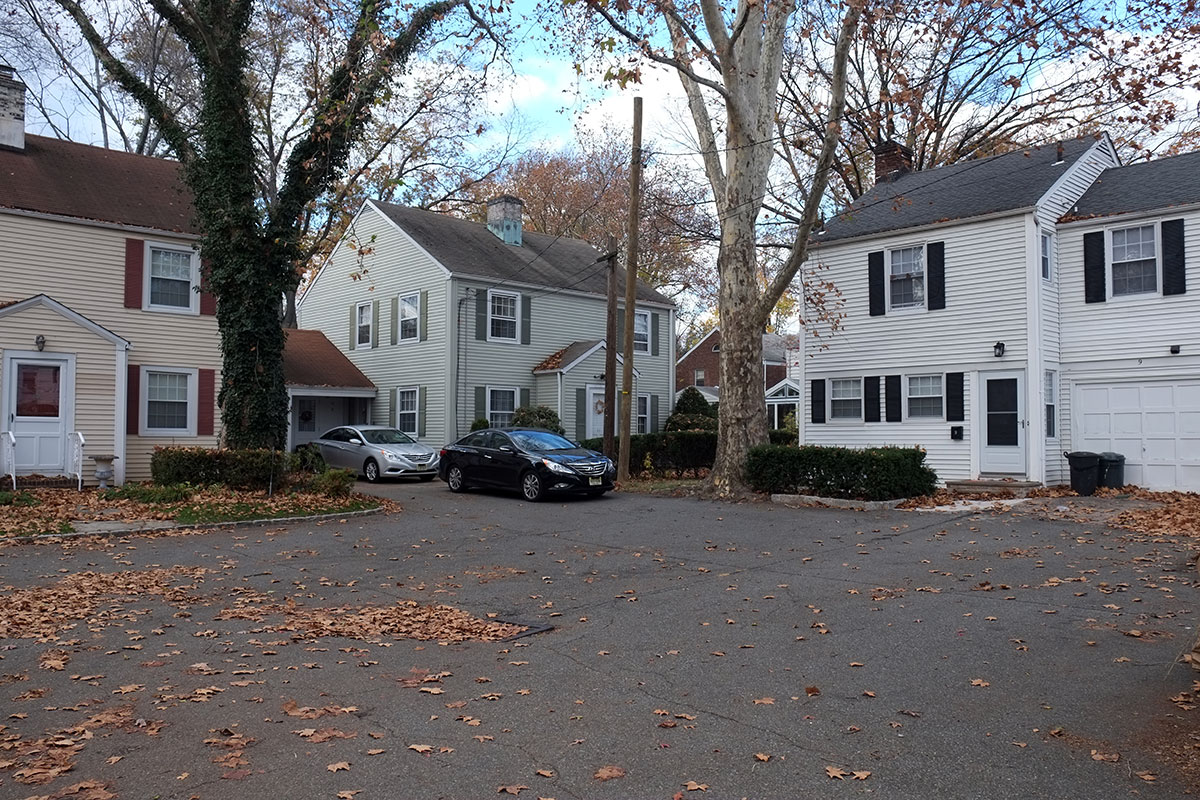
There are carports and garages between the units.  At the end of the cul-de-sac, a sort of court is created, with detached houses tucked into the corners.DSCF5166

it is a remarkably efficient solution to the parking demands, and one that still seems to function well, almost 100 years later.cluster

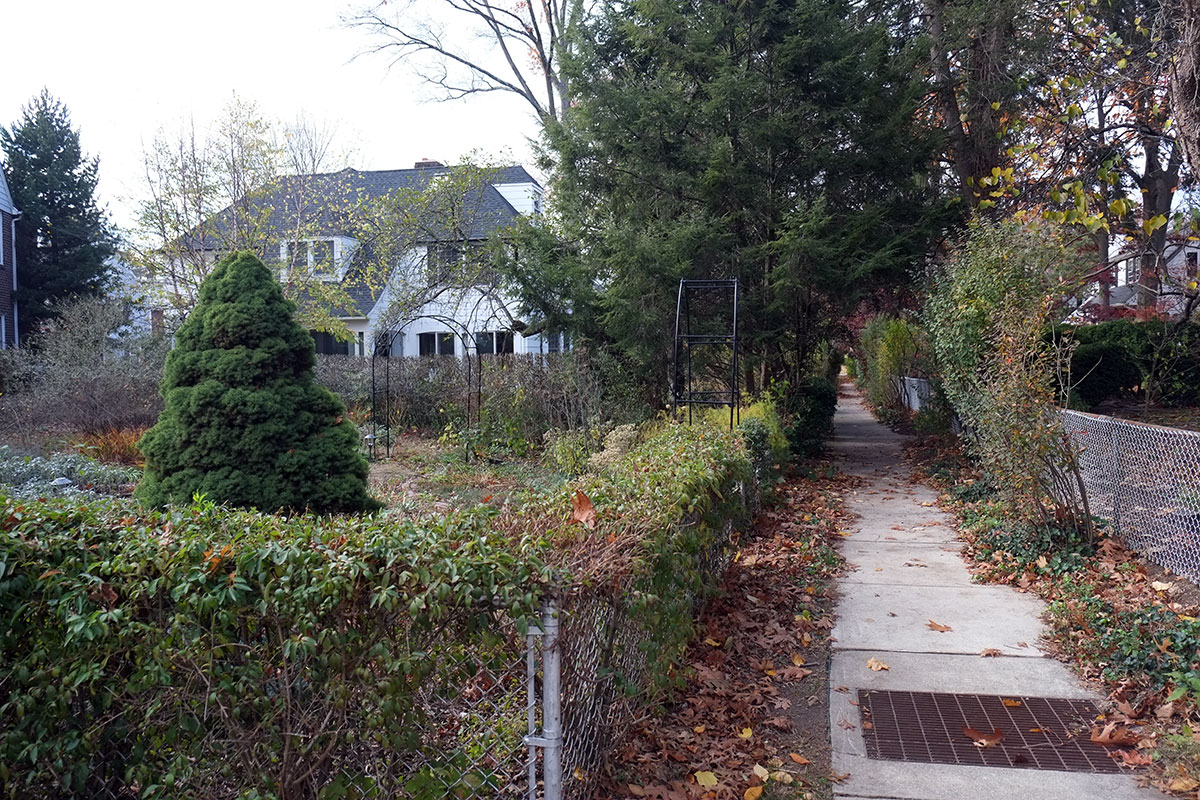
The next innovation is that on the other side of the houses, across pleasant backyards, there is a narrow pedestrian path that provides access from all houses to the common outdoor space.  These pedestrian paths are really quite agreeable – you can look into your neighbors’ backyards, but it’s not a large enough space where one would linger (although small children would probably find them to be a great environment for exploration).  This pedestrian path idea was later used by Duany and Plater-Zyberk in their design for Seaside, Florida.  DSCF5232

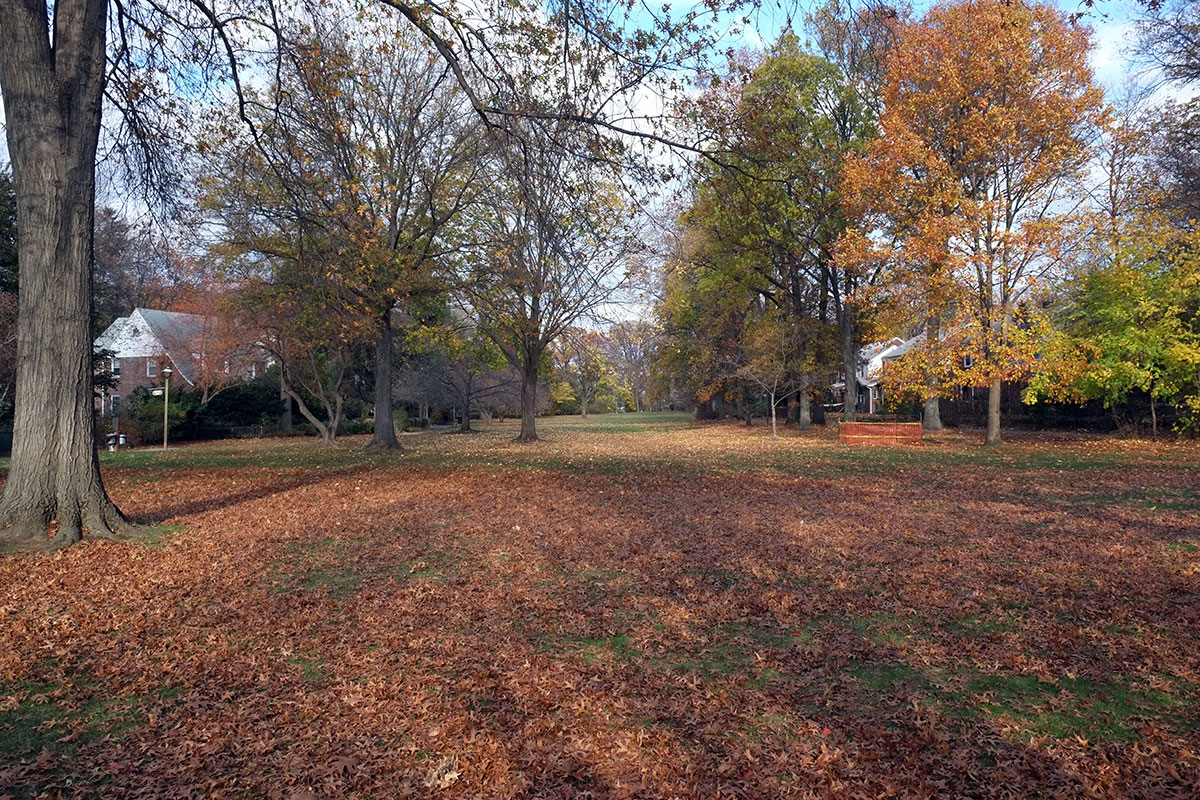
These paths connect out to a beautiful large field, where gatherings can be held, and games can be played.  DSCF5242

The paths connect to the field between houses.DSCF5230

There is actually another path system which doesn’t show up on the site plans – it runs parallel to the large common, one house in from it, and so connects the parking court and the pedestrian path systems.  I don’t know whether it was a later design revision, or whether it evolved organically, but it provides another layer of complexity and connection on the property.DSCF5240

The pathways on the common connect all the houses, and converge on tunnels beneath the through roads,DSCF5203

so that children may safely get to school.DSCF5195

The architectural style issue is intriguing.  The houses reflect the preferences of the 20s – there are many “early American” houses, some Craftsman-y, some Tudor-y, etc.  The houses vary from pretty small to pretty generous, DSCF5190DSCF5215illustrating that the concept of the site plan is independent of the architecture.  Like many good diagrams, it can assume a variety of scales and absolute dimensions, and accommodate a wide variety of needs and site conditions.

Greta did the normal zoning-out when confronted with yet another piece of architecture that her dad was running around excitedly photographing, but I tried to get her to imagine life in this  neighborhood.  Suppose that when you were a little kid, you didn’t have immediate access to just the one other kid who lived next door to you, having to rely on your parents to facilitate any other engagements?  Suppose your backyard connected to a world of kids, not just a private, fenced-off dead end?  Suppose you could safely wander out from your house at any time, and find your cohort, with your allowable range naturally increasing as you aged?  What if all the places where you could go were visible from your neightbors’ houses, and access to this shared world was pretty tightly overseen from those same houses?  She began to see that Radburn was designed to accommodate cars, intending to limit their damage, but at the same time fundamentally improving the quality of life in suburbia for all.

You’ve probably noticed that this fantastic model was not followed very often in the intervening century. What happened?  A Depression followed by a World War, and we really didn’t build much housing for 20 years.  Then during the postwar boom, all this knowledge was forgotten.  Market forces drove all development, and the emphasis was on quick, efficient construction and the amenities of the house.  These ideas were resurrected in the New Urbanism movement which started in the 80s, and there are a very few places where they are being implemented.  But if we ever get serious in the future about creating extremely attractive, higher-density residential neighborhoods, the Radburn model will always be there for us to copy.

Andres Art Institute

A sculpture park set on a hillside that had been a small ski resort in Brookline, NH.  It was founded by an engineer and a sculptor in 1996.  (http://andresinstitute.org), and they jump-started the park by inviting an international group of sculptors to live on the site and create works during a symposium.  They have repeated this several times, and there are now 72 works in place.

We were struck by how simple and low-key the whole operation is.  It is open and free to the public every day.  You download a map onto your phone, and then you can wander trails all over the hillside.  There are no Big Name artists involved whose works cost millions of dollars, simply good sculptors who seem to draw inspiration from the site and the group process.

Some of the work doesn’t seem very site-specific:  objects which could be seen in a gallery with no loss of meaning.  DSCF4749DSCF4744

Others benefit from the wooded location, such as when you get a first , unsettling glimpse of something through the trees, and then close in to find that it is still unsettling when seen up close.DSCF4767DSCF4770

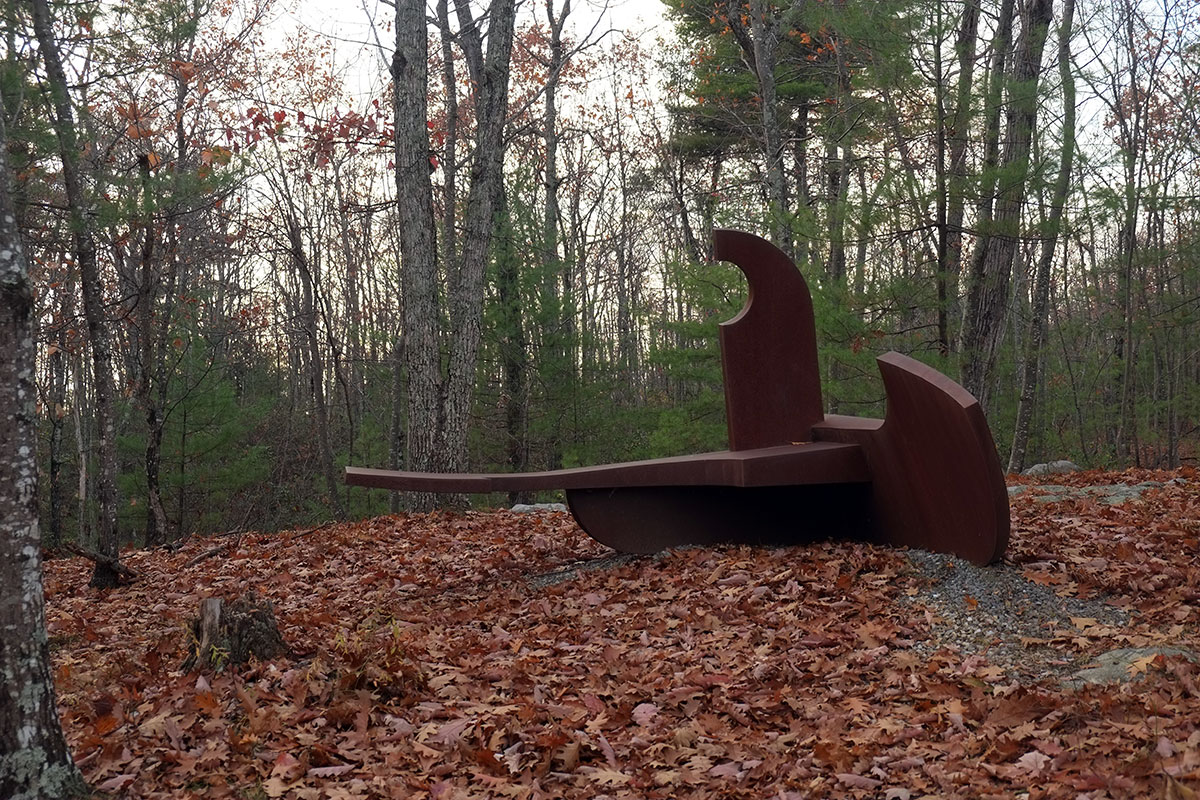
Our favorite works were those which seemed to be designed for a specific location, such as this weird beast-like thing:DSCF4753

or this bench/outpost/marker/tankDSCF4721

or sometimes the site provokes an association, as this piece reminded me of rotting totem poles as they are seen in the forests of the coastal northwest.DSCF4725

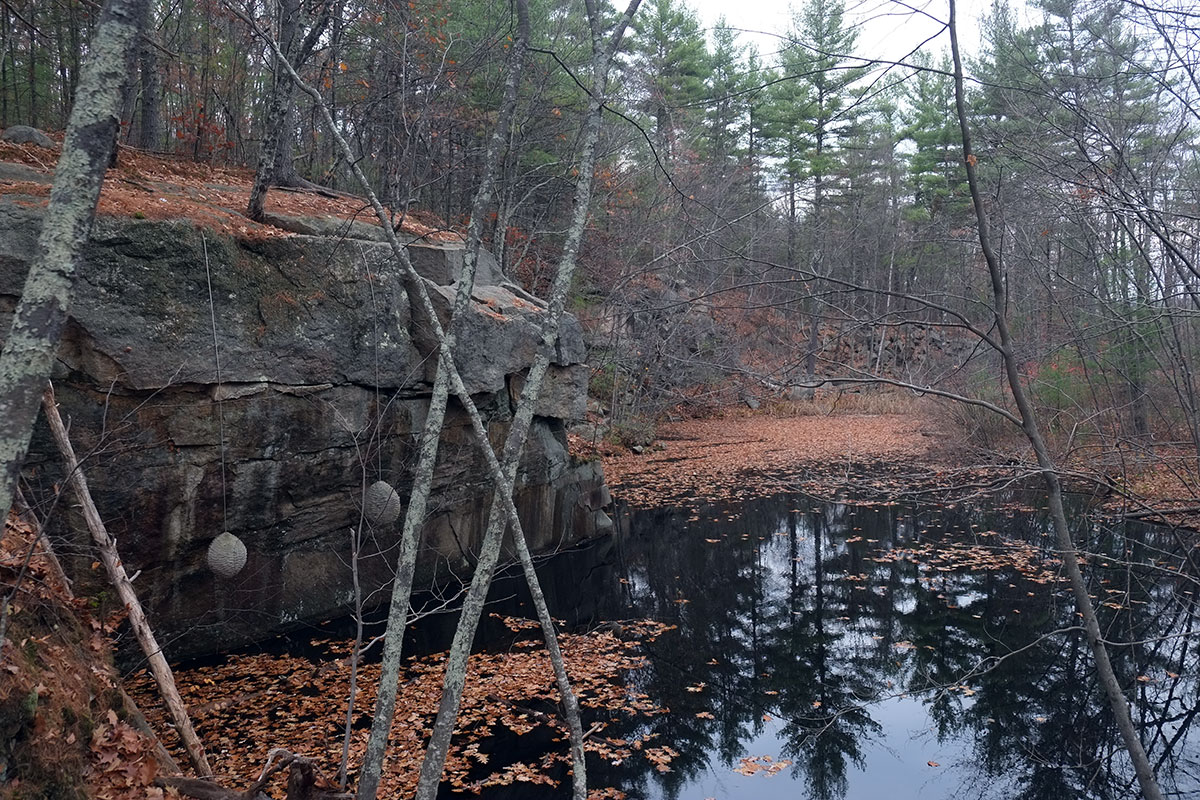
The quality of the artwork was high, but the landscape design could use some help.  The trails don’t make much sense, and having an overall vision of sequence and procession would enhance the experience of the art.  The one place where this was done, on the Quarry trail, was by far the most satisfying.  Pieces picked up on spatial cues in the landscape, and moving along the trail led to an understanding that was larger than the sum of the parts.DSCF4697DSCF4698DSCF4704

At the top of the mountain the space opens up, and there is a view towards Mt.Monadnock and other small peaks in the distance. DSCF4738

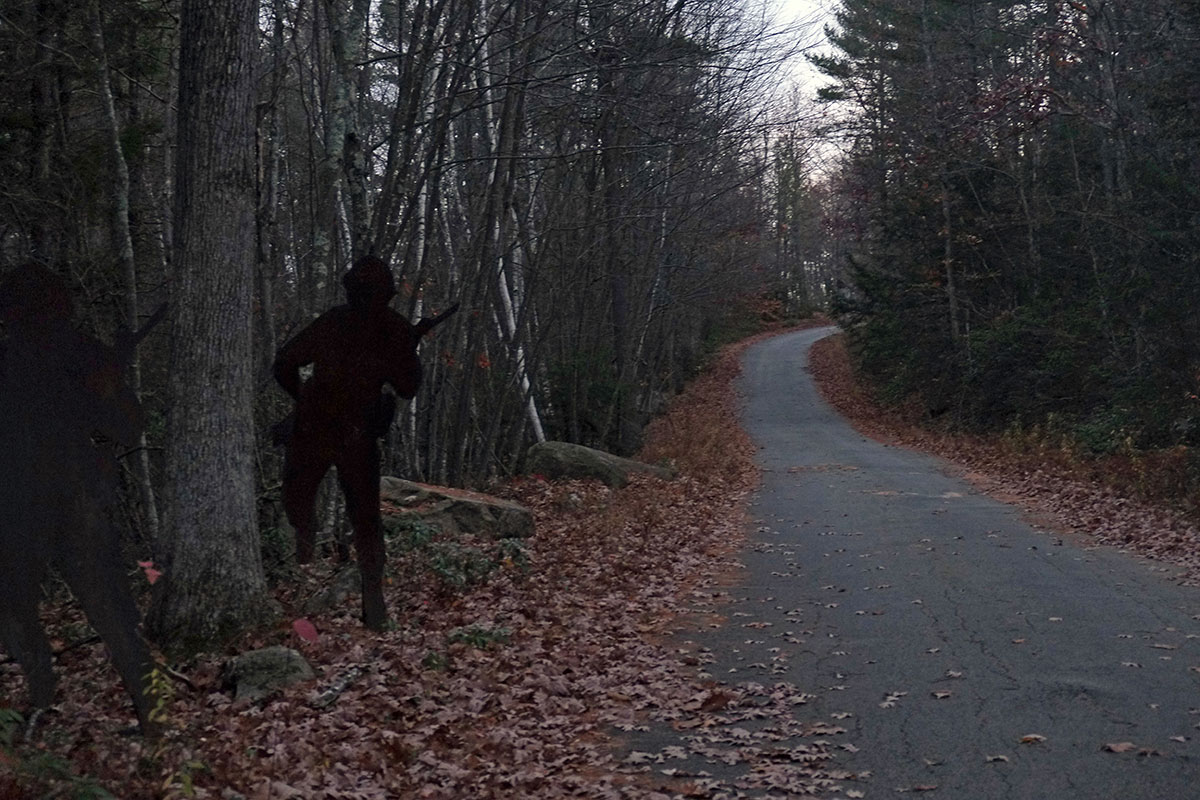
As we were leaving in the growing dusk, we could barely see dark forms ahead by the side of the road.  Were they people, or sculptures, or just shadows that we were imagining to be forms?  It put us on edge, clearly the artist’s intention, a brilliant example of the power of a well-executed piece.DSCF4780

This institute doesn’t appear to be that well-known; we really enjoyed seeing a good local, place, one that doesn’t appear on anyone’s list of major monuments of western civilization, but which shows that there are good artists out there, working for the sake of the art, and not just the blandishments of the art market.

Shores, South and North

The towns on both the South and North Shores of Boston are some of the oldest settlements in the country, mostly founded in the 17th century. The centers of these towns preserve that original character and spatial arrangement, at the core of what have since become suburbs.  The juxtapositions between old houses and modern strip development can be jarring, especially to someone from the West Coast, where everything has been built in a shorter time frame.

Cohasset

Cohasset

When I lived in the Boston area I never got to explore the environs as much as I wanted, as I didn’t have a car,  So staying with friends both in Scituate on the South Shore and Boxford near Ipswich on the North Shore was a great opportunity to see these places.  What made it even better was that my friends are long-time residents of these areas, and showed me around to places and buildings I would never have known about.  (Greta missed most of this as she was back in Eugene visiting Linda.)

Scituate, Lighthouse Road

Scituate, Lighthouse Road

The South Shore has an intricately varied shoreline, with many small coves and larger harbors.  The historic town cores are on the harbors, with later houses filling along the shore between them, and 20th century development spreading to the interior.  Scituate has four “cliffs” that stick out into the bay (we have the northwesterner’s amusement for how topographical terms are used here) which have highly clustered houses on small lots by the water.

Scituate, Lighthouse Road

Scituate, Lighthouse Road

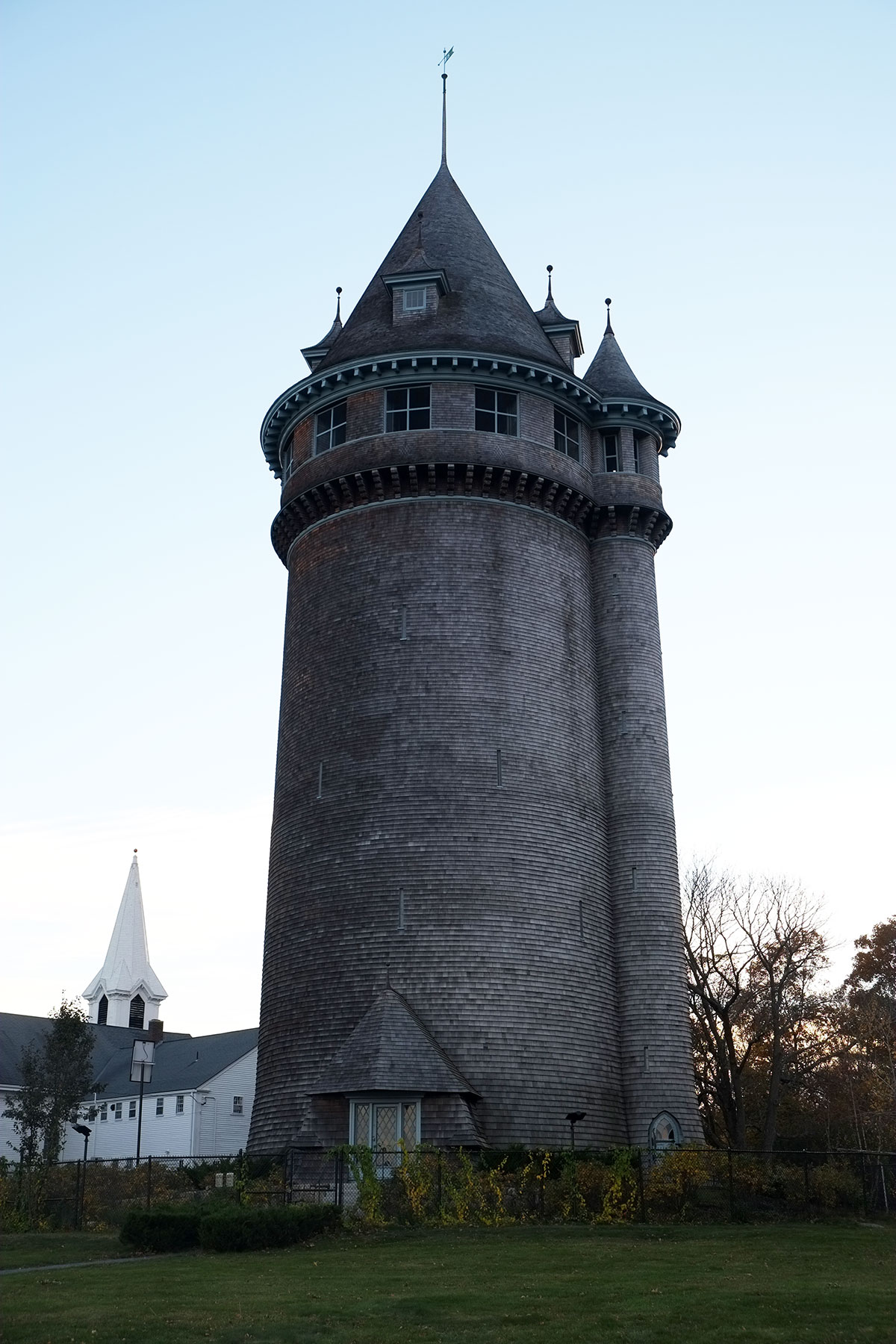
Places that are this old accumulate interesting artifacts, such as this former water tower that was made to look like a Rhenish tower, as the rich person living nearby didn’t like looking at the ugly water tower.

the very interesting water tower in Scituate

the very interesting water tower in Scituate

The Trustees of Reservations is an organization that owns more than 100 significant properties in Massachusetts, from the famous to the obscure.  We visited World’s End, which Olmsted designed as a residential development on a neck in Hingham, but it was never built out. It is now an open space reserve owned by the Trustees.
Olmsted designed a residential development on a neck in Hingham, but it was never built out. It is now an open space reserve, called World's End.

World's End, with Boston in the distance.

World’s End, with Boston in the distance.

We visited Ipswich (where Updike live and worked) and Topsfield on the North Shore, finally seeing the famous Parson Capen house from 1683, which is from that period when settlers built what were essentially English houses, having not yet adapted them to the New England conditions.
the Capen house in Toppsfield, from 1670.

A Classical Revival church spotted on a trip north to Exeter, so technically not on the North Shore, but too good to not post.
actually somewhere in southern New Hampshire, but close enough

Newburyport, at the mouth of the Merrimack River, with well-preserved downtown and residential areas.

Newburyport

Newburyport

Newburyport

Newburyport

Driving around on the winding roads, past the estates of the North Shore, we headed towards Crane’s Beach, a beautiful landscape of drumlins (there’s a word I want to find more opportunities to use) and marshes.
the marshes near Crane's Beach

The Crane Estate, by Shepley Rutan Coolidge etc., sitting on top of Castle Hill, is the leading example of how much money there was to be made in plumbing fixtures.
the Crane Estate on Castle Hill, by Shepley Rutan Coolidge etc.
Crane Estate

The spectacular landscape was designed by the Olmsted brothers.

the landscape by the Olmsted brothers. Notice the framed view on the axis.

Notice the framed view on the axis.

the allee running north from the house. I don't know what the flags signify, but I wish they weren't there. Louis XIV had a nice allee too, but his just ended in a can, not the Atlantic Ocean.

the allee running north from the house. I don’t know what the flags signify, but I wish they weren’t there. Louis XIV had a nice allee too, but his just ended in a canal, not the Atlantic Ocean.

A few days of exploring these shores just wasn’t enough – I could have happily spent a day in each town.  What struck me the most was just how many beautiful old towns there are, so close to Boston.  The summer resort venues of the Cape and the Islands tend to be better known, but these small towns in the Boston area are just as wonderful.

Cape Cod

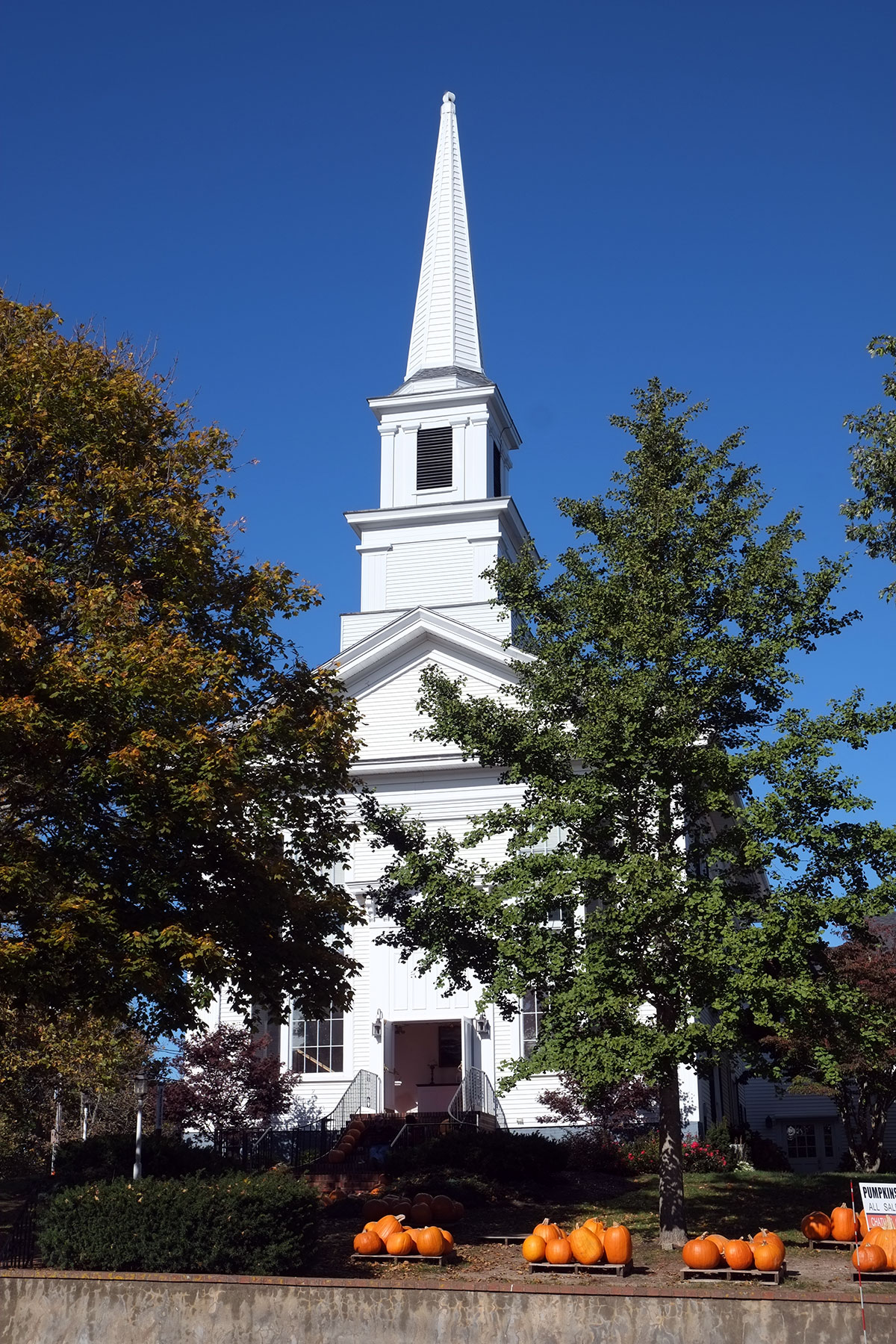
While revisiting a city where you’ve lived as an adult may elicit mixed feelings of familiarity and strangeness, revisiting a place you knew well as small child feels like coming home, especially if that place has barely changed.  My grandparents vacationed in Chatham nearly every summer for most of their lives (but unfortunately always stayed in the same guest house, instead of buying a place when they could have).  So my family spent a few weeks there every summer since I can remember.  I loved it as a child – the cool nights, the old, small town so different from our New York suburb, the ritual of walking to the beach every day.  I think my interest in architecture and towns can be traced back to those early summers.  Once again I wanted to show Greta a place where I had grown up by the sea, so she could see how that related to our own house on an island.

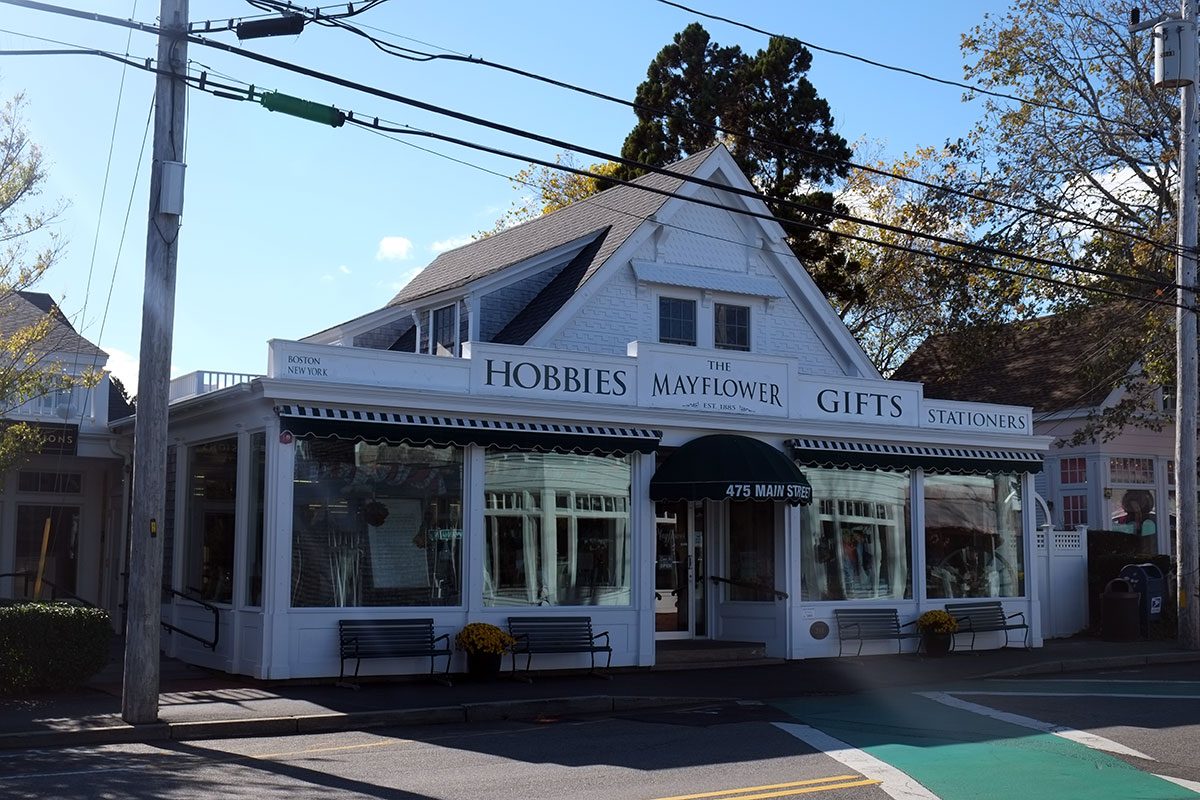
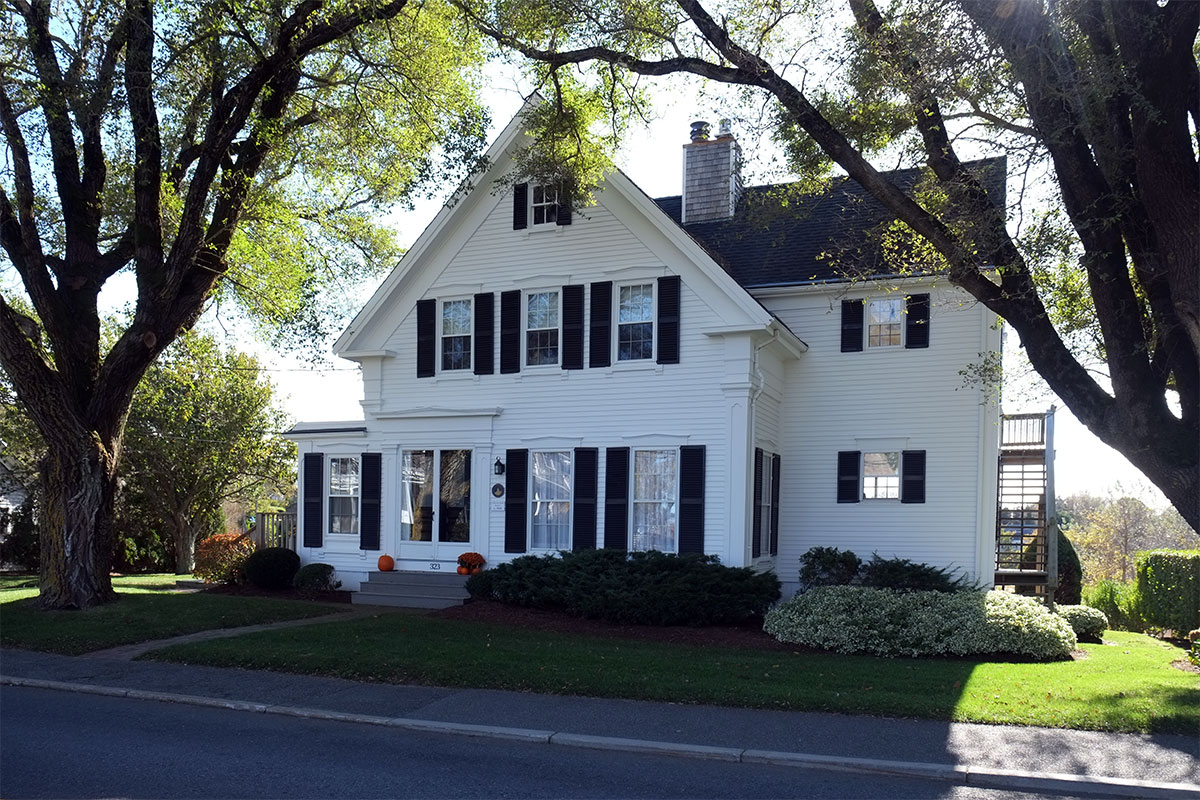
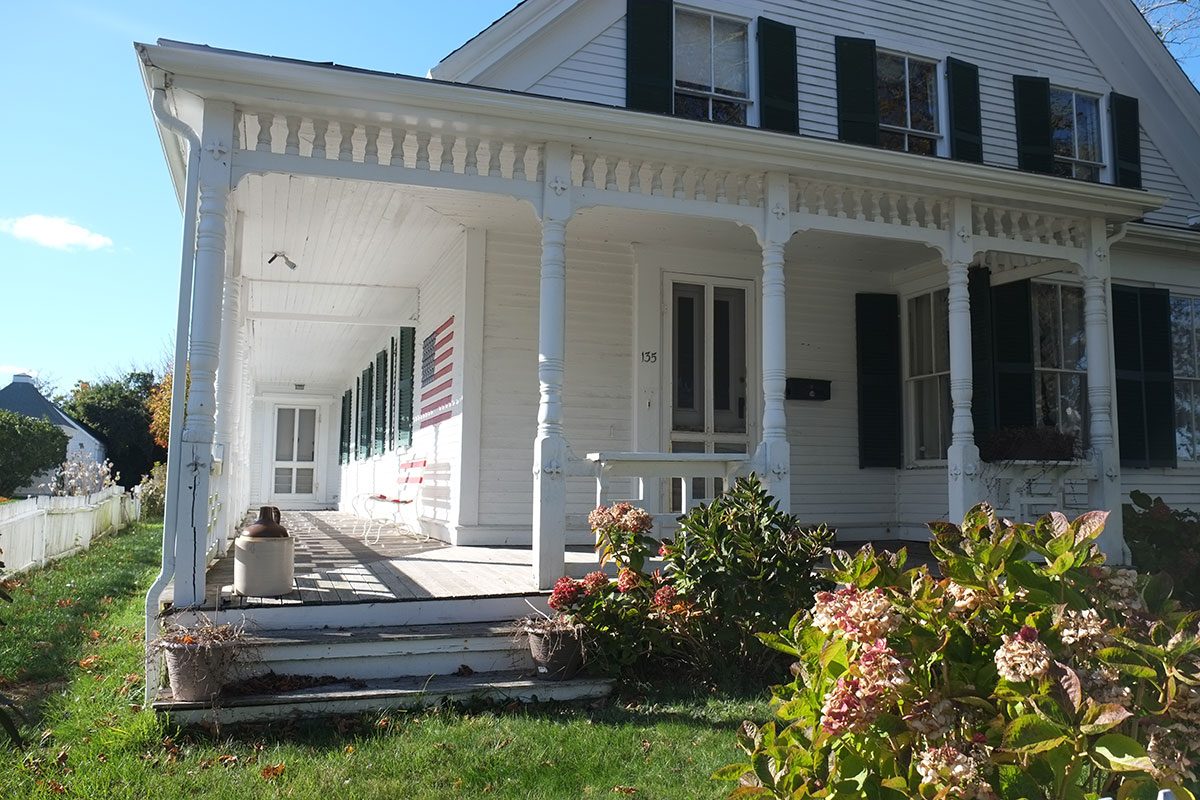
Chatham has changed so little that it was like being in a bad romantic movie where you step back into your earlier life.  Not only were the buildings unchanged, but many of the same businesses were there, such as the Mayflower, where one bought kites and beach toys and other critical things. DSCF3215

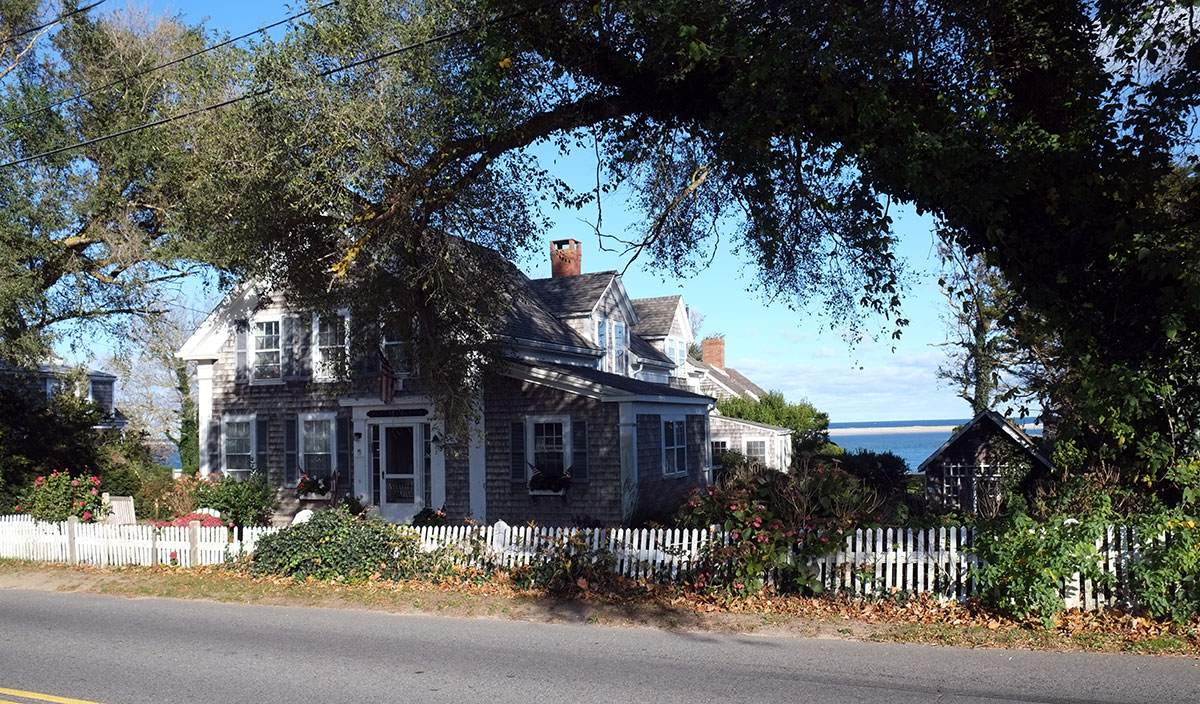
The cottages where we stayed were all gone, replaced by new McMansions, but the center of town has endured.DSCF3192DSCF3221DSCF3205

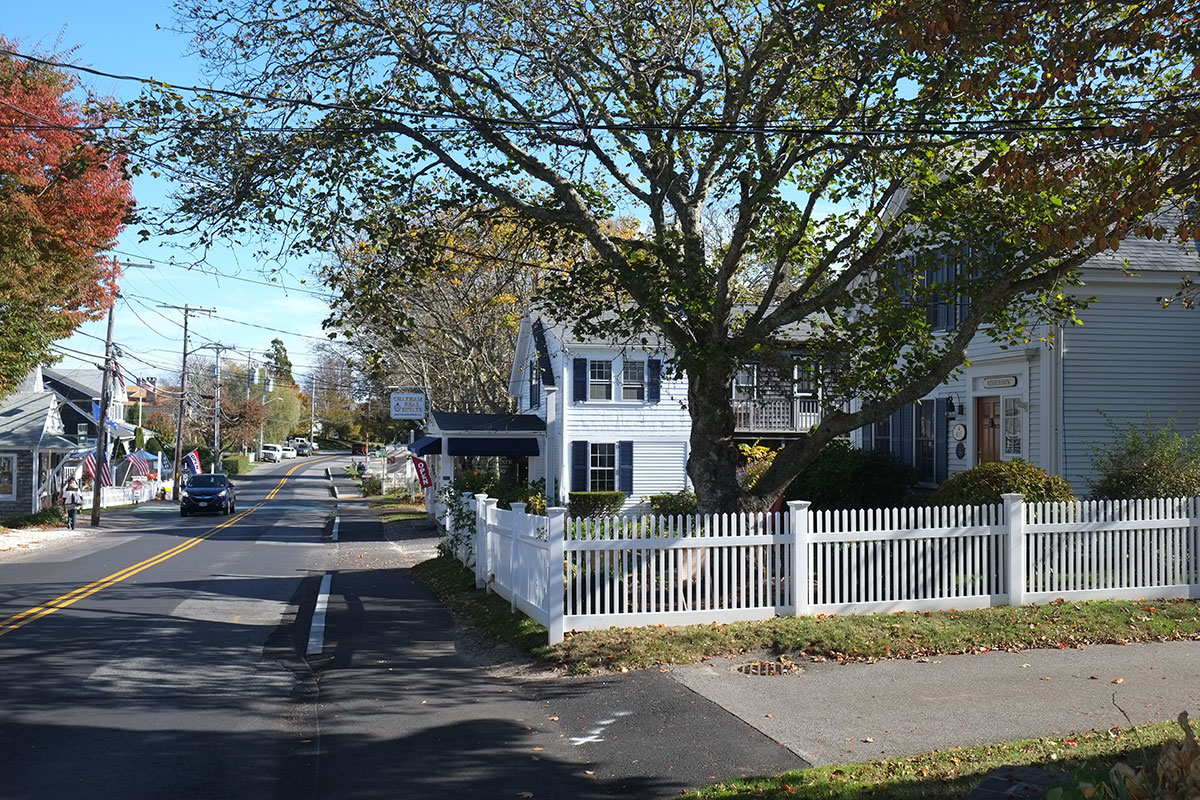
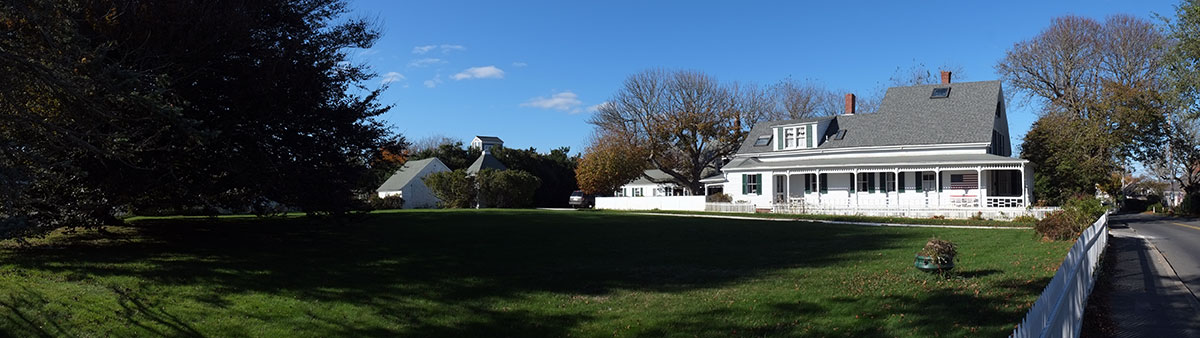
The most memorable part of the town is the walk along Main Street to the Lighthouse Beach.  The buildings are superb, but even more important, the open spaces of streetscape, yards, and drives have a wonderful scale that makes the walk a pleasure, no matter how often it is repeated.  DSCF3235 DSCF3239 DSCF3238

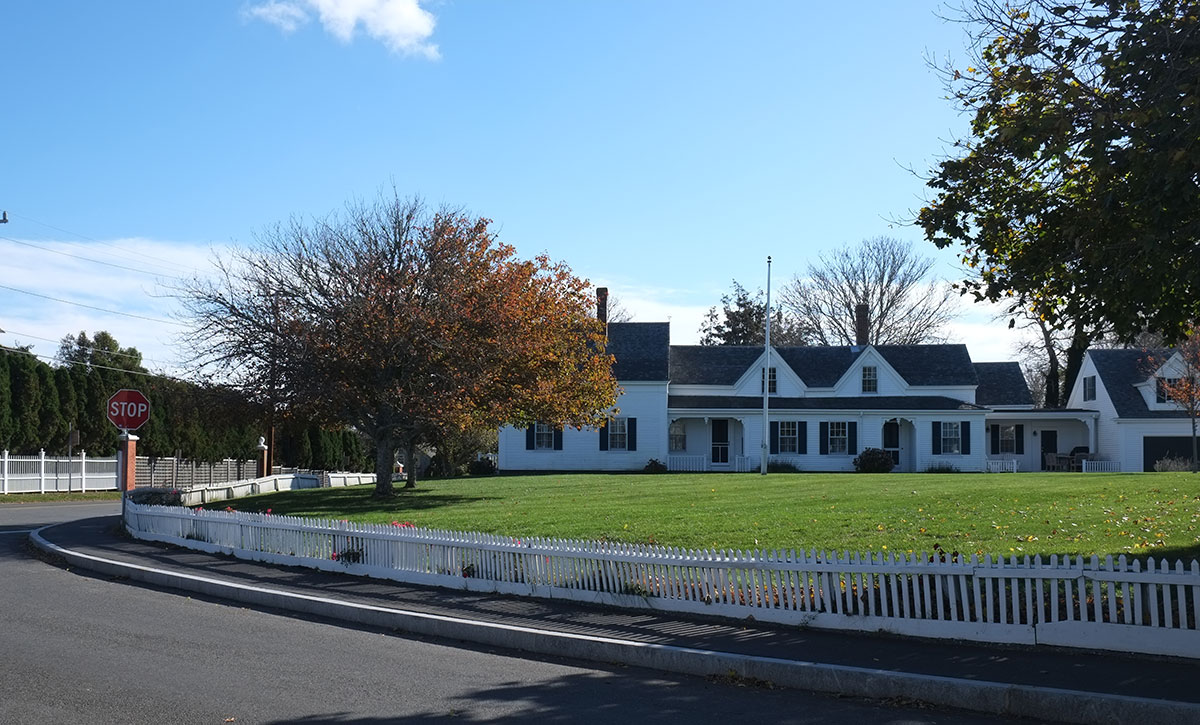
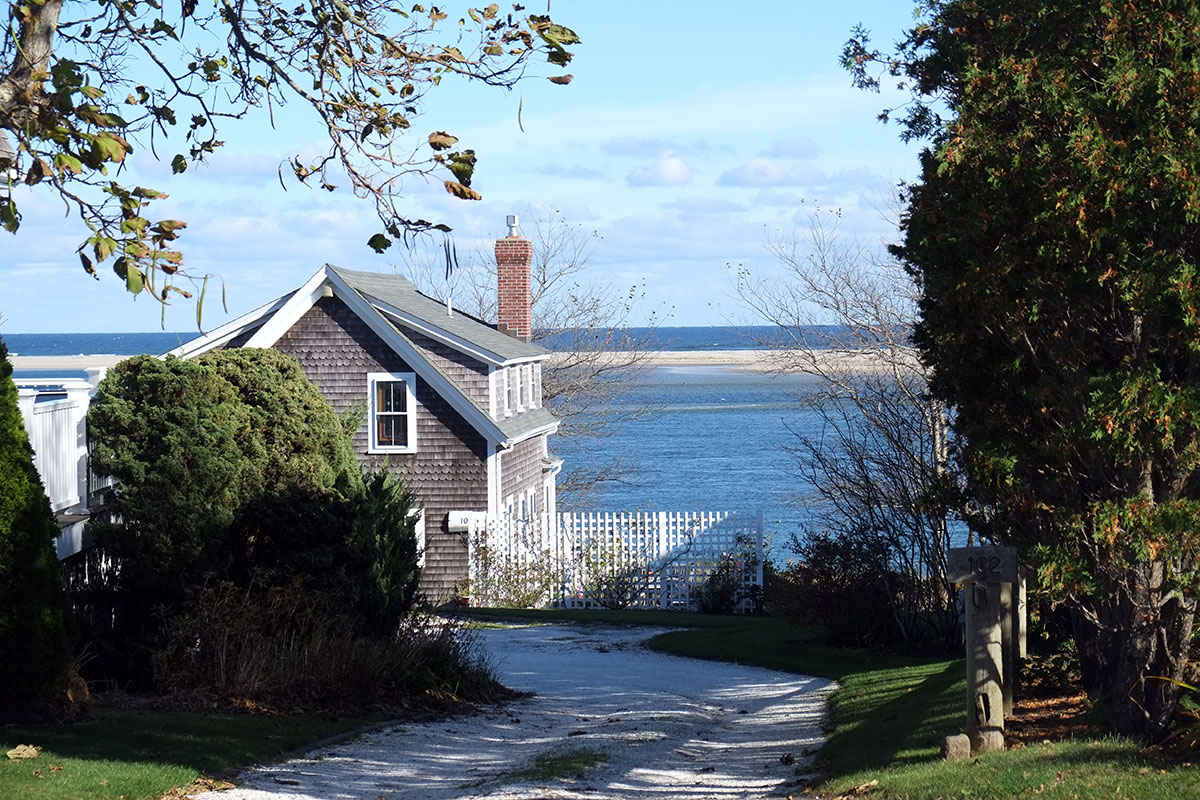
As it nears Pleasant Bay, Main Street makes a turn, and that corner is occupied by a beautiful open yard, a  gift to all the passers-by.DSCF3251

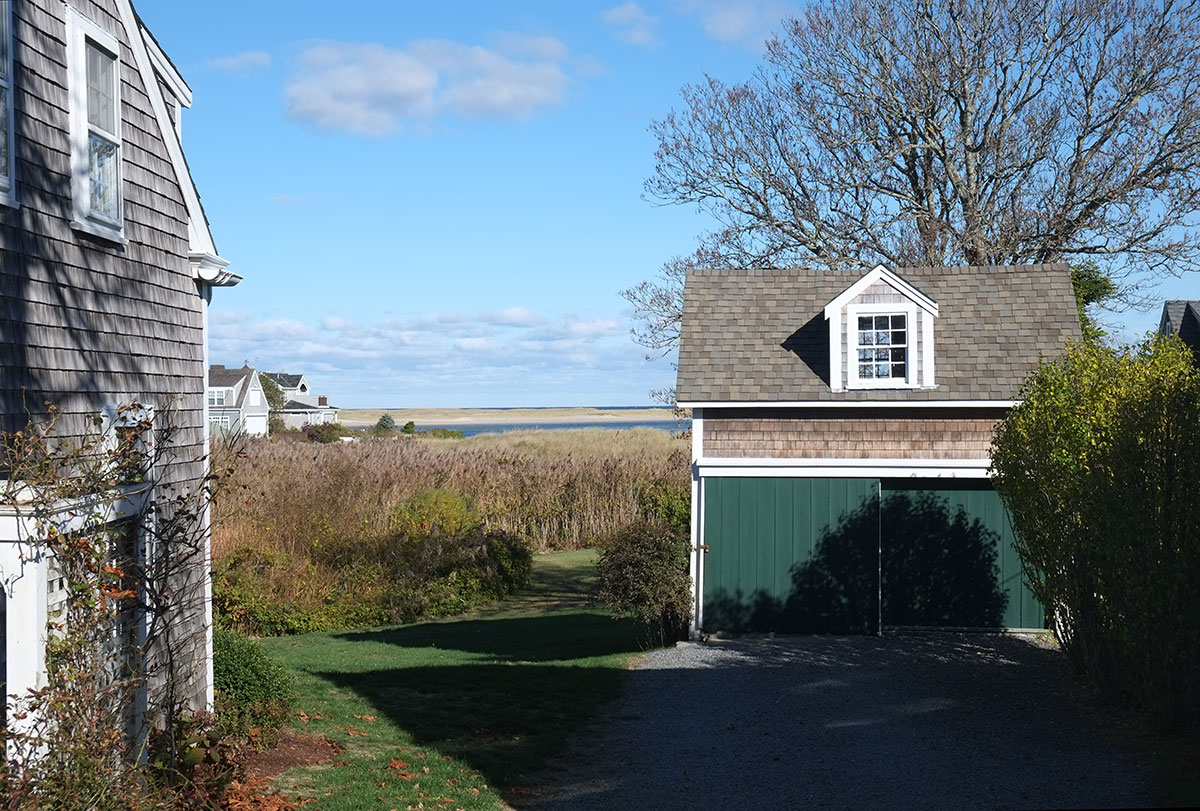
Glimpses from the street to the bay open up between houses.DSCF3270DSCF3295DSCF3319

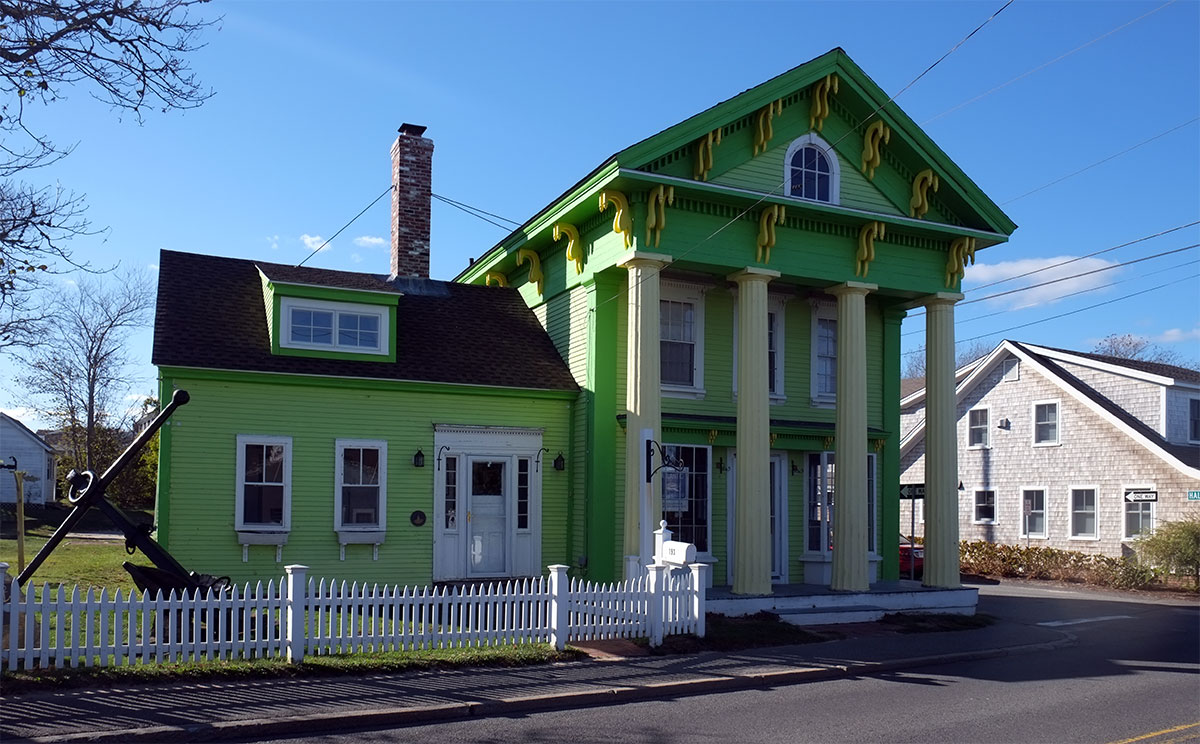
The only discordant note comes from the spite-painitng of a Greek Revival gem.  It was previously a gift shop, but now is the home of a local non-profit.  Apparently the town denied their request to alter the historic building, so they did their best to ruin the street for all.  It shocked me that in a town where the individual homeowners have so carefully stewarded the experience of the public realm, a community organization can be so self-righteous and monomaniacal.DSCF3266

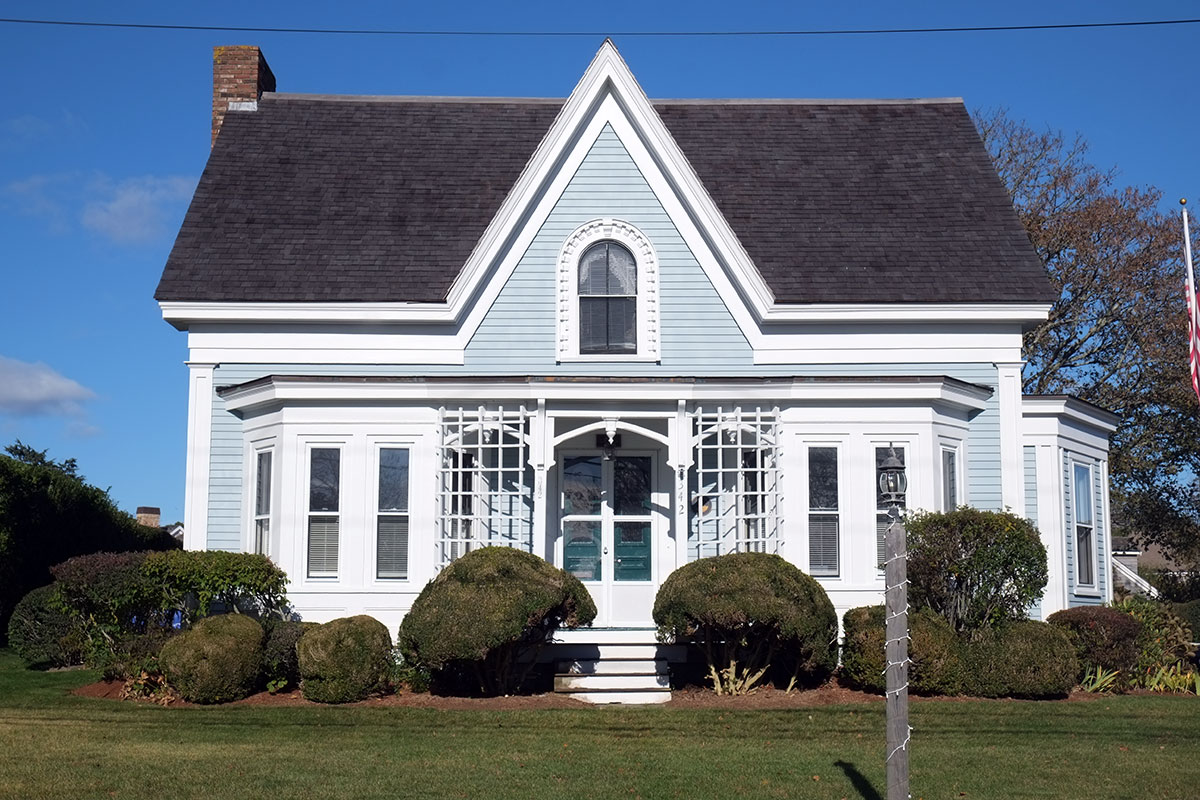
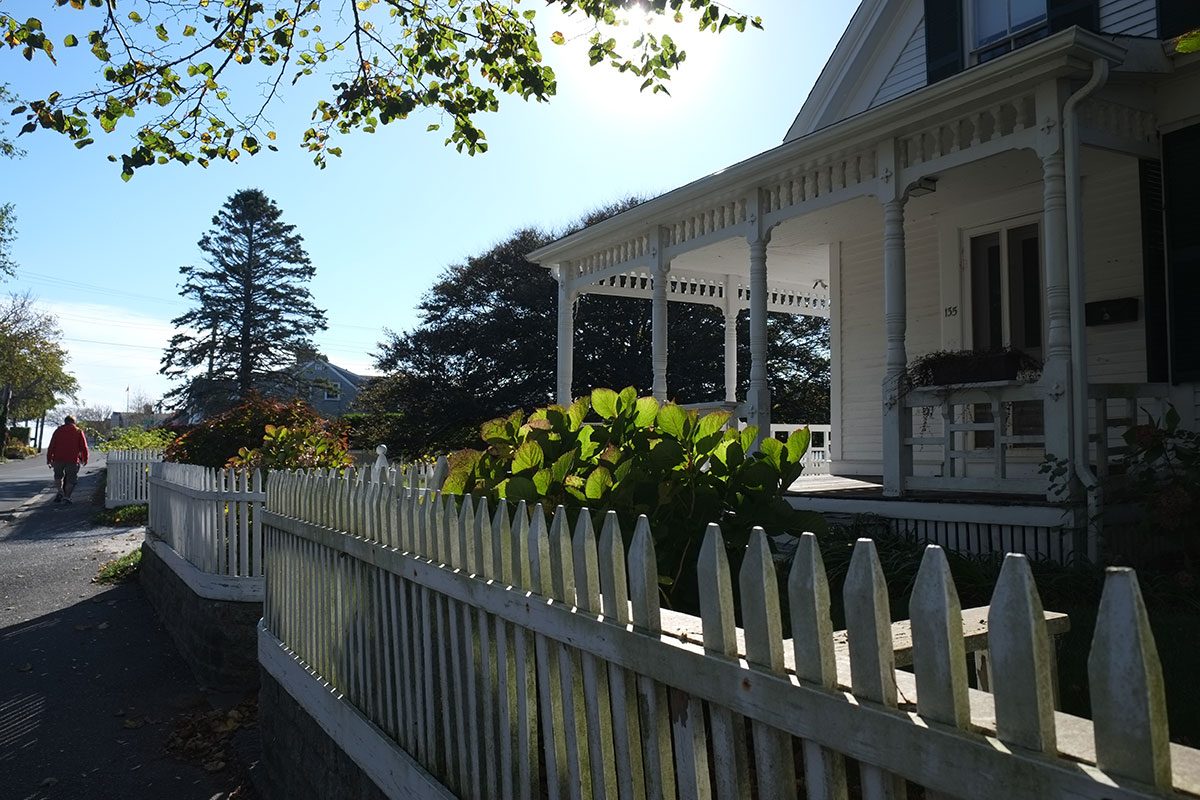
Other treasures remain.  This may be my favorite porch in New England, looking across the yard to an ancient copper beach, once again sharing this space with the public, rather than hiding it away.DSCF3283 DSCF3287 DSCF3290

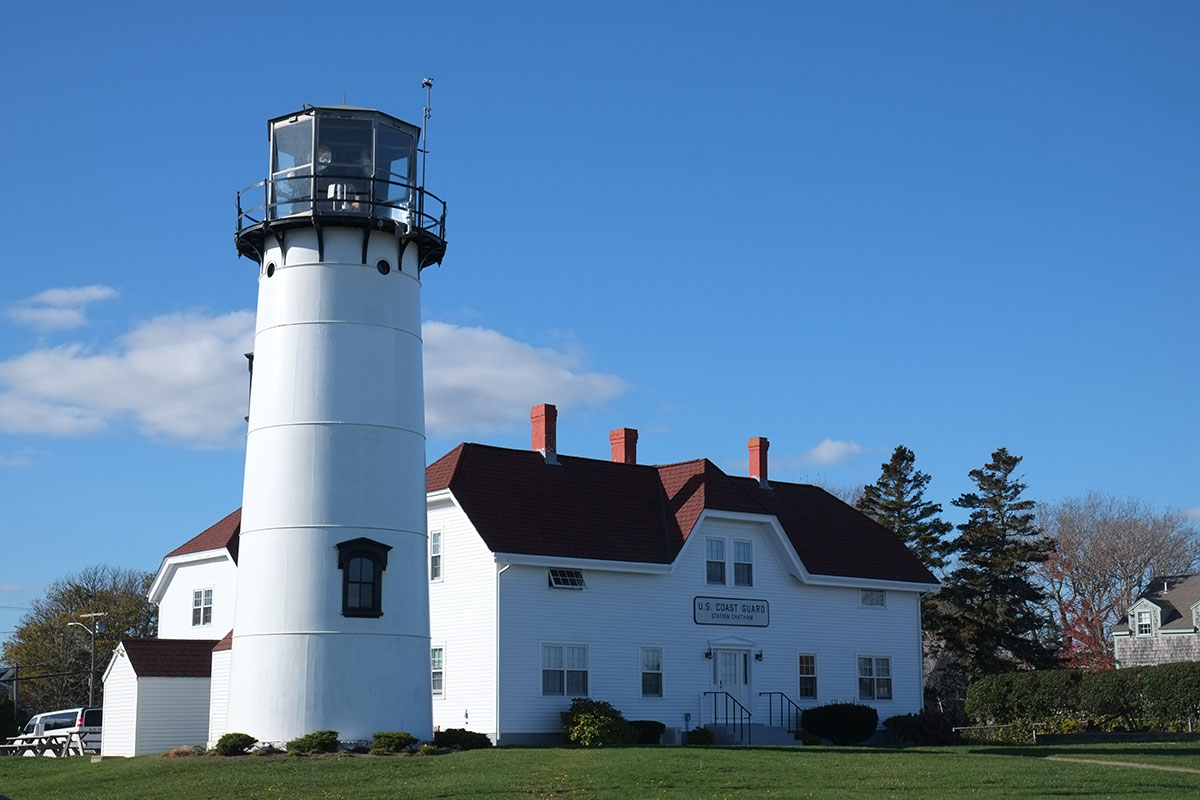
One arrives at the lighthouse, which they must have copied from an Edward Hopper painting. DSCF3311

The beach across from the lighthouse.  Strangely, this has changed the most.  When I was young, the barrier beach to the east was continuous beyond Pleasant Bay, and access out to the ocean was to the south past Monomoy Island.  A storm in 1987 broke through the beach here, and in 2007 another storm created a large opening to the north.  DSCF3303

In contrast to almost every other place we’ve visited, here the built environment seems permanent, while the large elements of the landscape are in continual flux.

Martha’s Vineyard

My blogging output has slowed to a crawl in Massachusetts – after spending the days seeing things, I  spend the evenings talking with old friends.  But I will make an effort to not fall further behind, and  so start off with Martha’s Vineyard.

The Vineyard has always been one of my favorite places, ever since visiting for the first time as a kid. What I always found most appealing was the incredible variety of towns and landscapes, each of which is beautiful in its own right, with the particularity of each heightened by the contrast with the others.  I think I’m especially susceptible to the qualities of the Vineyard from having gone there when I was young (when everything seems magical) and having returned from time to time, with each of these trips being memorable in its own way.  As we now spend our summers on a very different island in Washington, I wanted Greta to see what a New England island is like, how different and how similar. We spent a couple of days there with Jenny Young, our colleague and good friend from Eugene.

Arriving in Vineyard Haven, with a line-up of stellar boats behind the breakwater.  I’m used to the fine wooden boats in Port Townsend, but I had forgotten what a harbor full of classic boats in New England can look like.DSCF2978

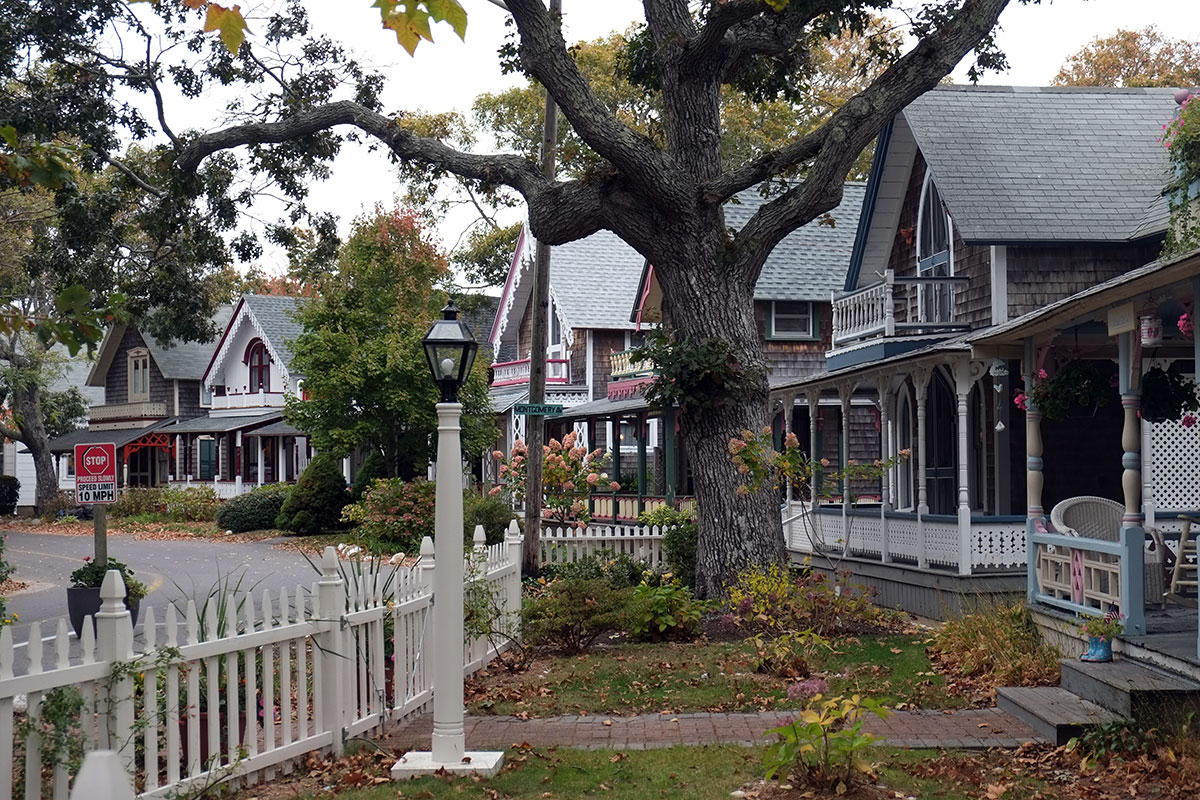
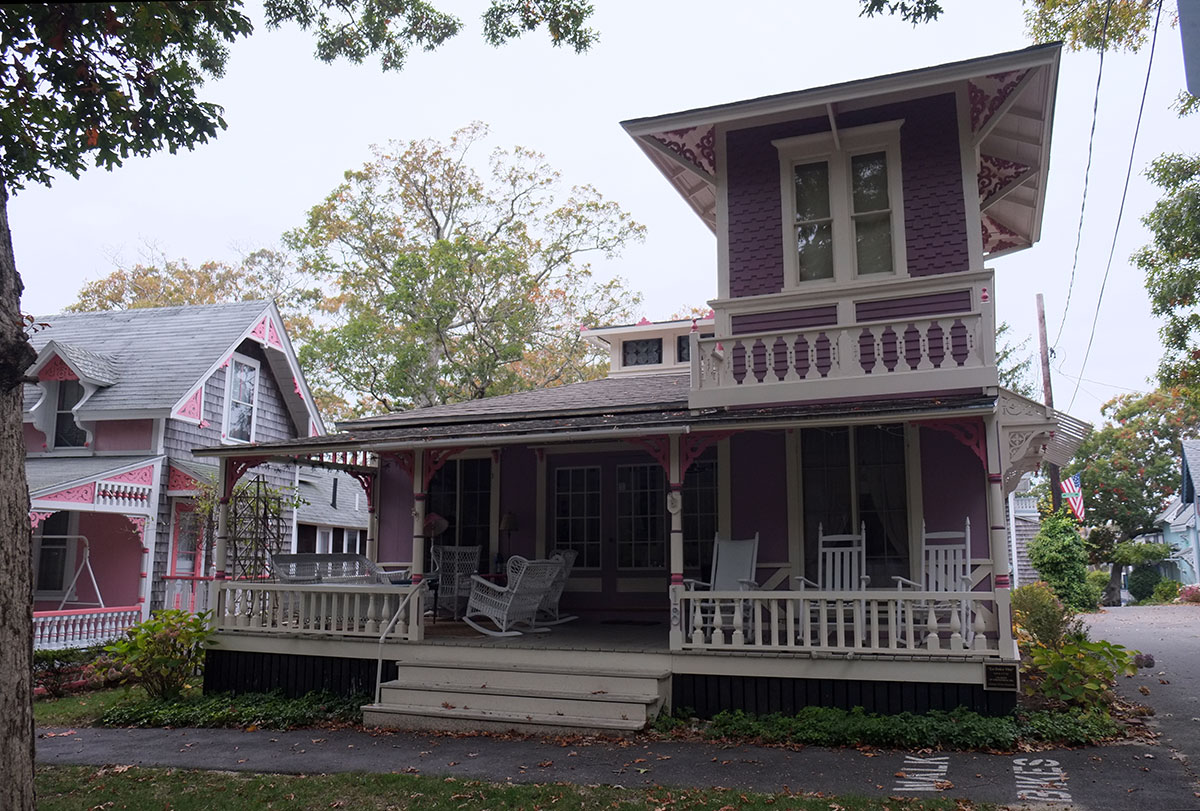
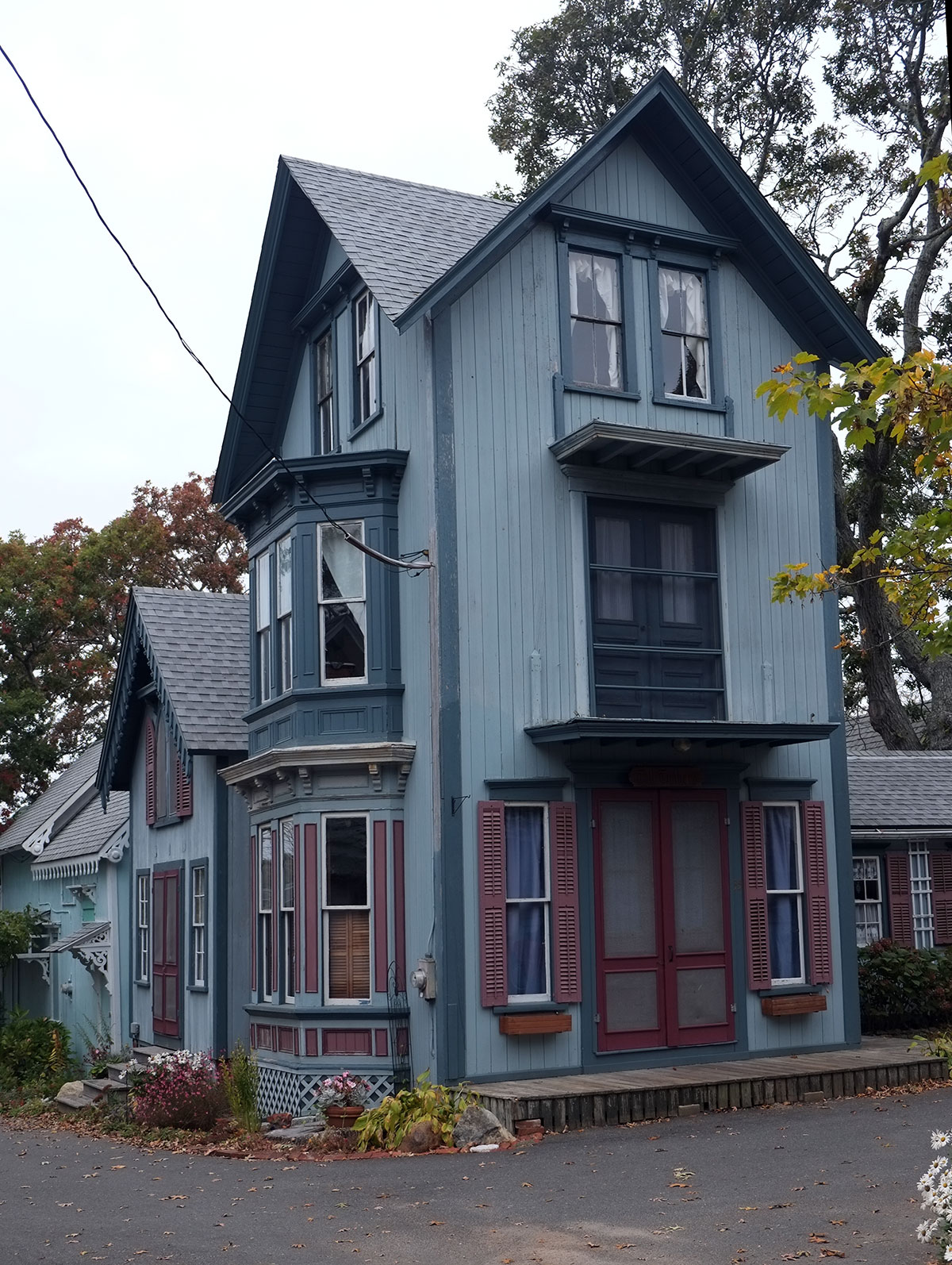
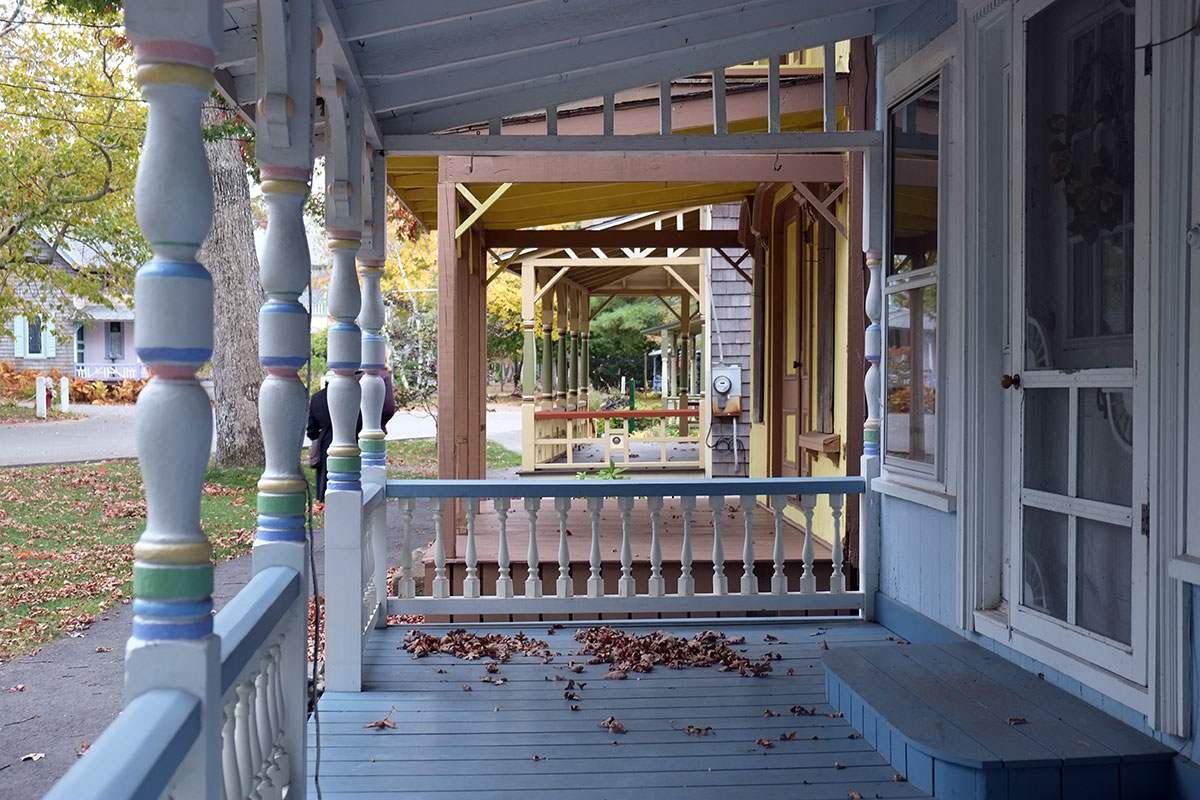
Oak Bluffs is home to an array of crazy small cottages, built around the Methodist revival campground area.  DSCF2987 DSCF2997 DSCF3001 DSCF3003 DSCF3031

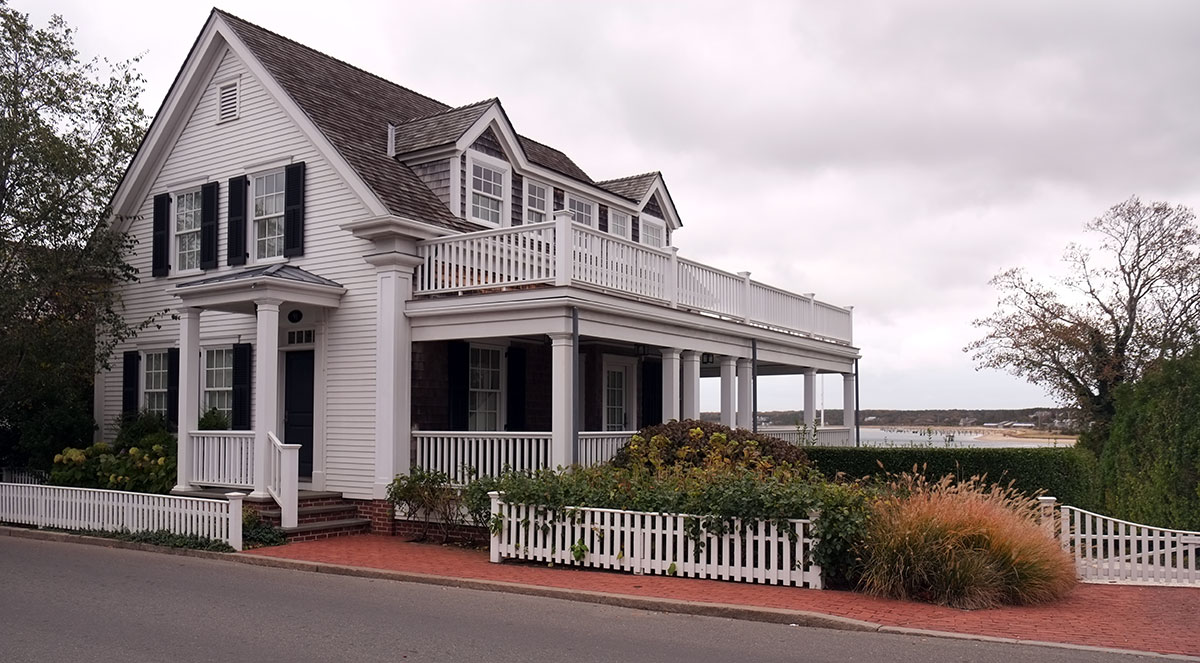
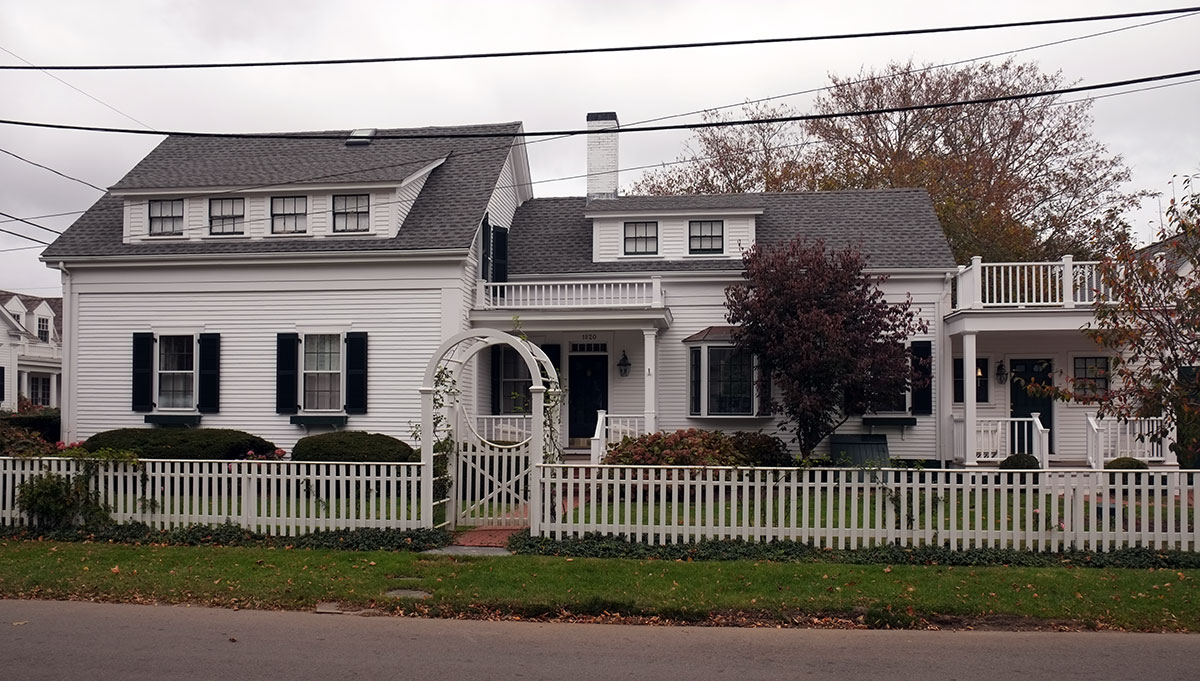
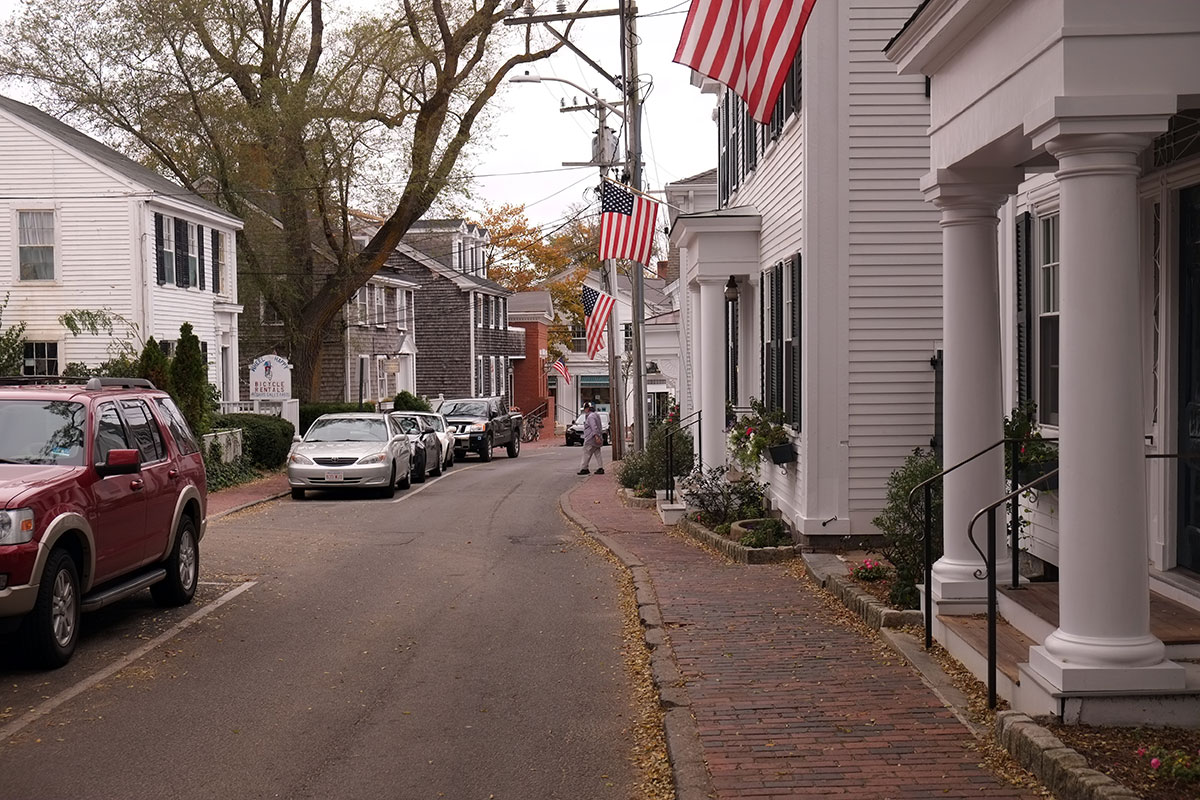
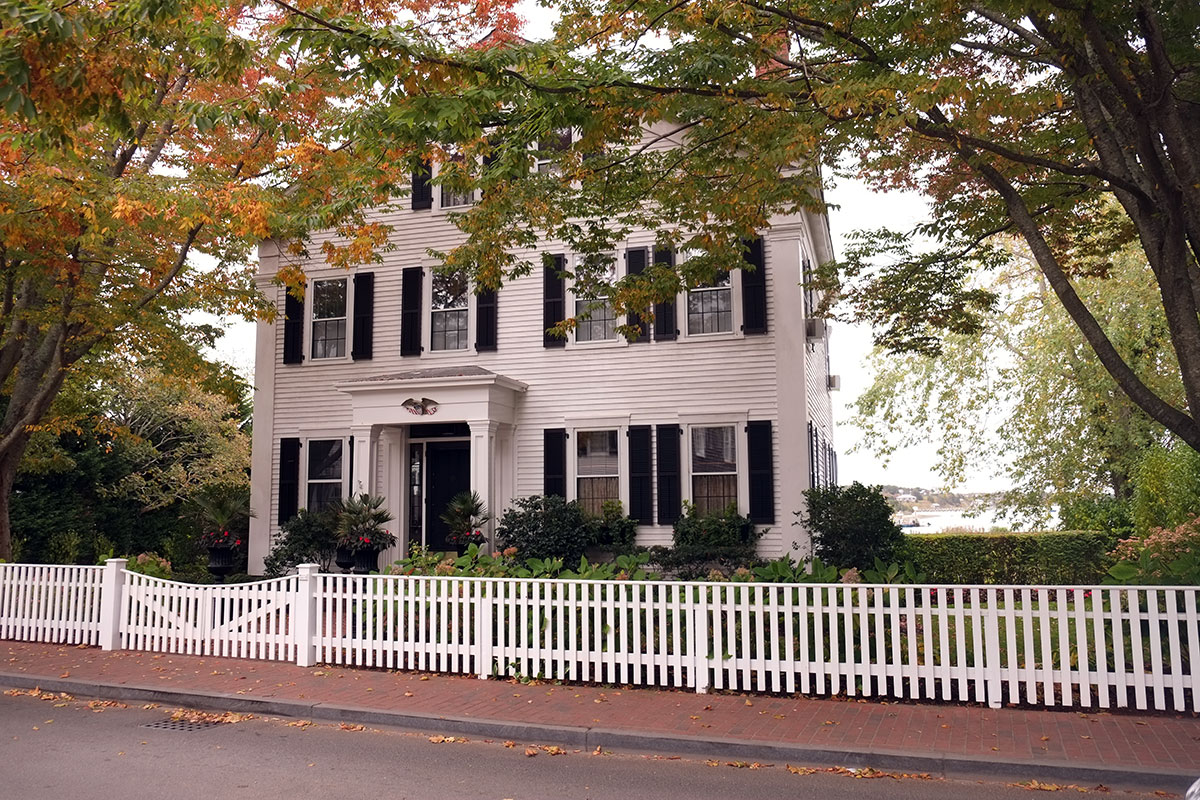
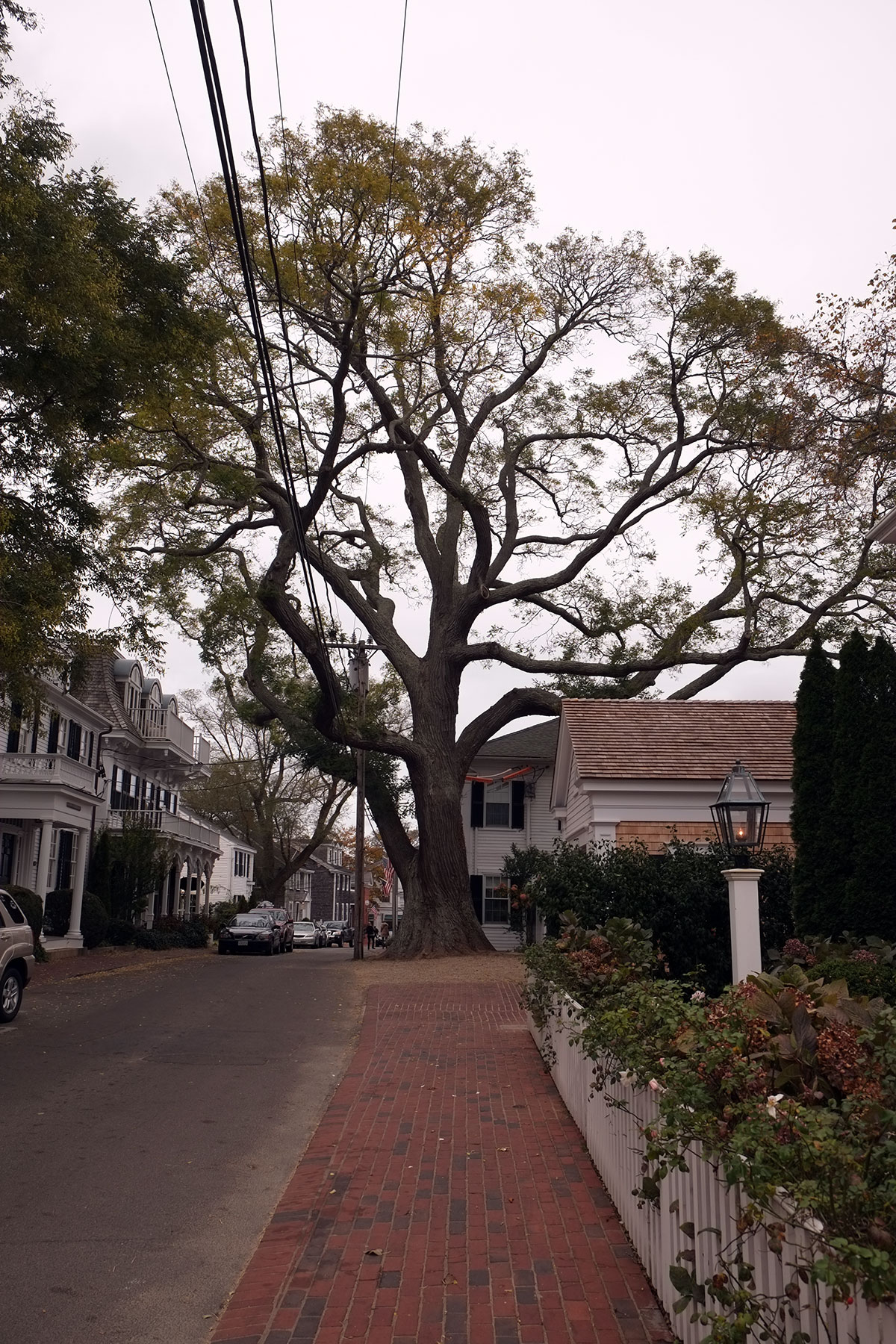
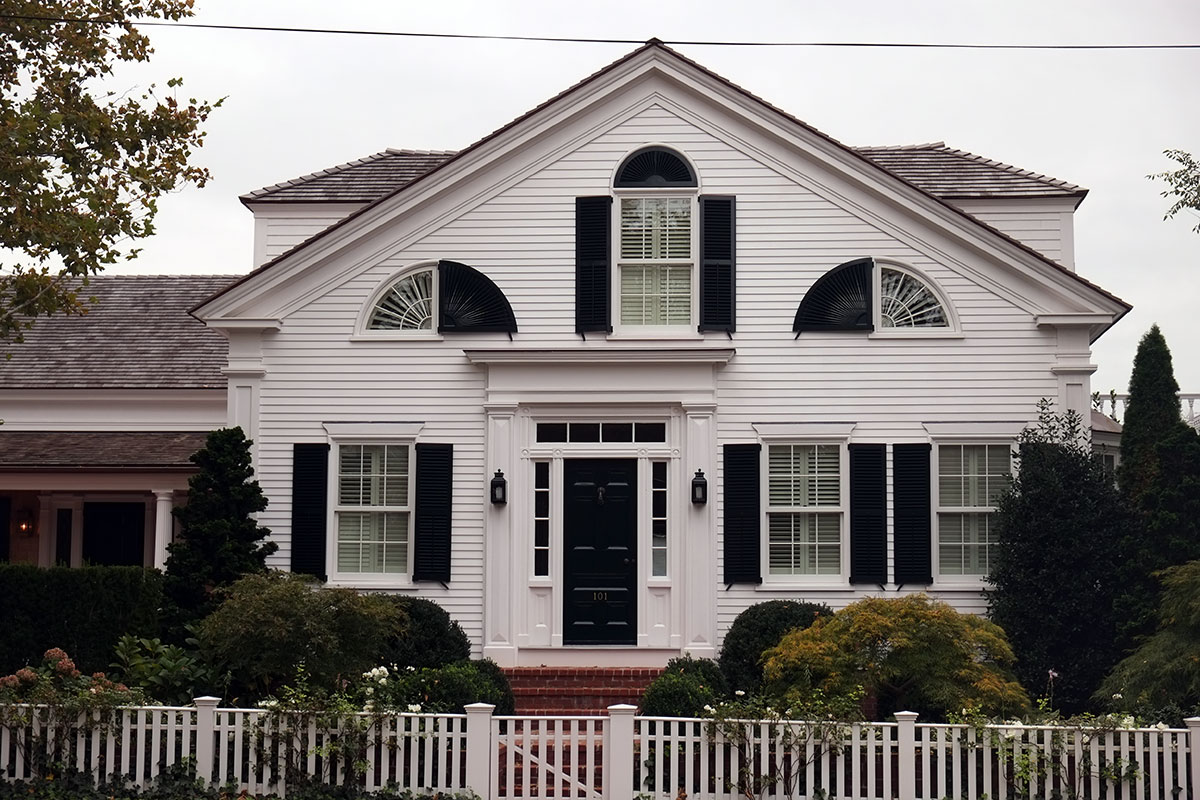
Edgartown, with its houses of whaling ship captains and small streets.  It is a beautiful town that hasn’t changed much, except for the price of real estate, having been discovered by the absurdly rich a while back, who have displaced the merely affluent.  After traveling across the country and getting used to the crazy juxtapositions of the built landscape, the consistency and quality of the town is a shock.  DSCF3094

DSCF3112

South Water Street

South Water Street

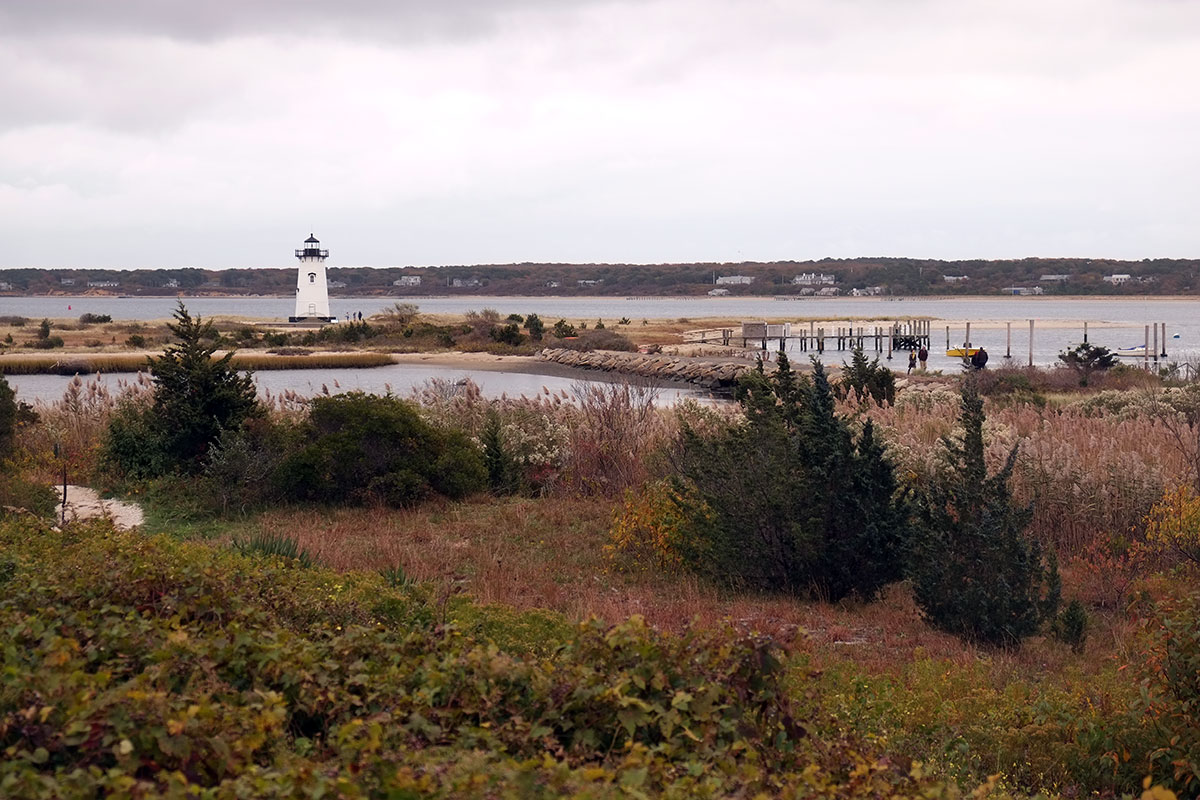
the lighthouse at the entrance to the harbor, where I learned to sail many decades ago

the lighthouse at the entrance to the harbor, where I learned to sail many decades ago

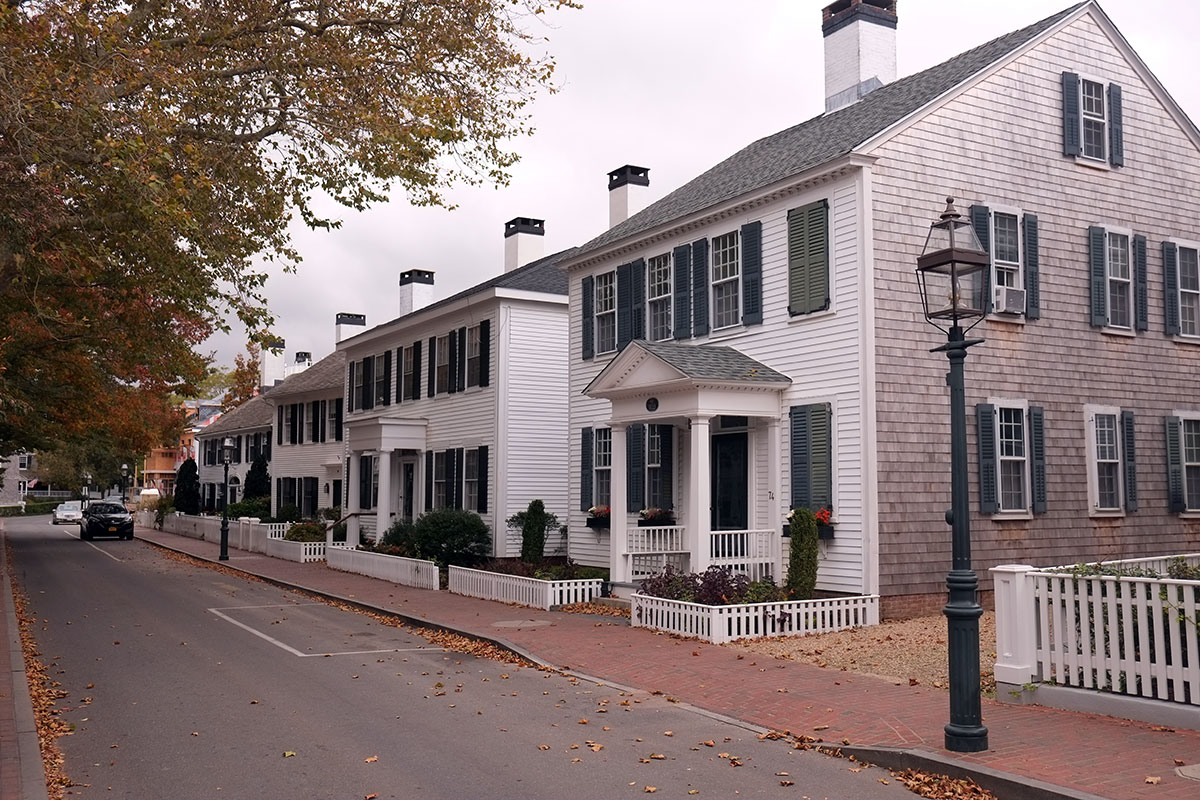
North Water St., with its array of captain's houses

North Water St., with its array of captain’s houses

DSCF3086

the imported pagoda tree, purportedly the largest in the country

the imported pagoda tree, purportedly the largest in the country

symmetry is greatly overrated

symmetry is greatly overrated

Eel Pond

Eel Pond

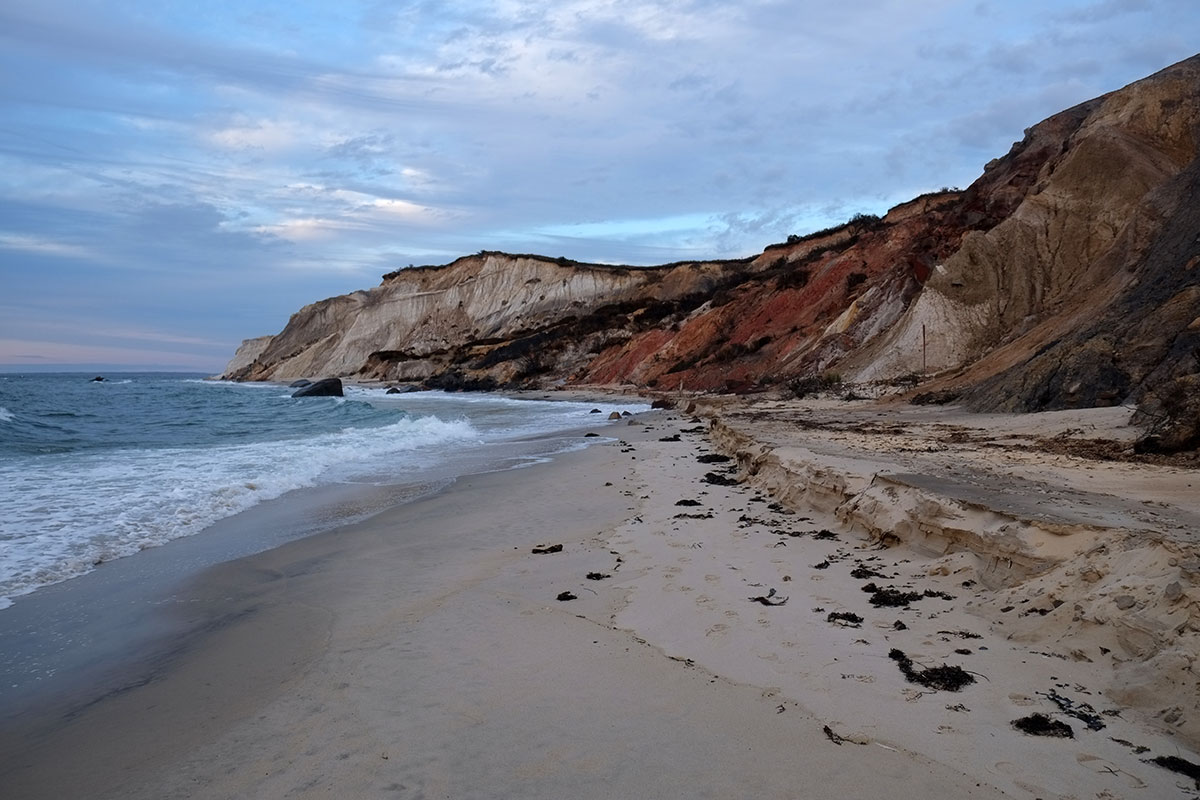
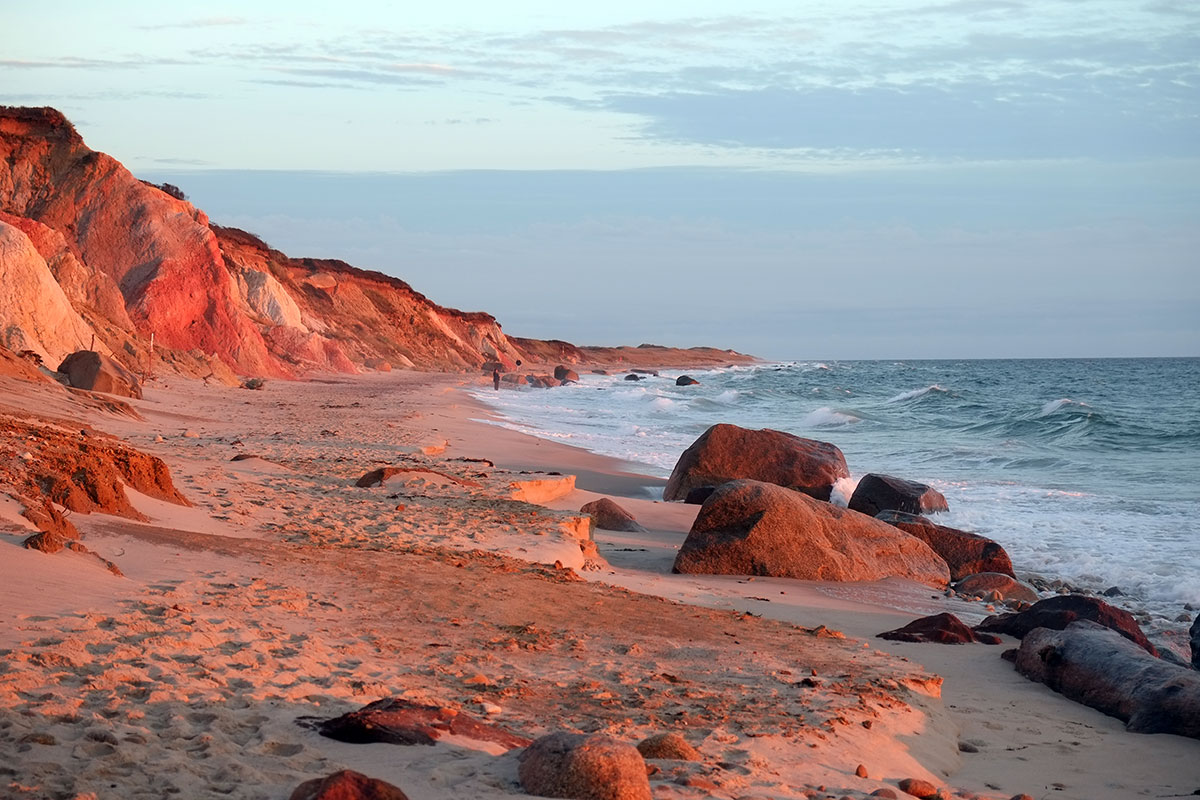
Aquinnah is the peninsula of colored clay cliffs at the southwest end of the island.  It used to be called Gay Head, and you used to be able to climb down the cliffs, until they realized that this was a very bad idea, contributing to the inevitable erosion.  DSCF3135 DSCF3138 DSCF3142

We didn’t have time to get to Menemsha, or spend any time in Vineyard Have or the inland places, but it was a nice break from the cities we’d been visiting.  And when Greta went to touch the ocean, I realized that we had really arrived at the other end of the country from where we started.