Category Archives: architecture

Pittsburgh

I’d been to Pittsburgh a few times in the past and always loved it.  I think cities that are squeezed by the topography – steep bluffs and big rivers here – have an intensity that is missing in cities that can spread endlessly.  Pittsburgh is another of those cities that was really important 100 years ago, and isn’t now.  But somehow it has fared better than many others – reinventing itself, emphasizing factors such as higher education.  John pointed out to me that Pittsburgh had as many abandoned mills as any other rust belt city, and when it was apparent that they wouldn’t be revived, the rich and powerful decided to knock them down, to allow for redevelopment, and to remove them as depressing reminders of decline.  It seems to have helped.  We architects tend to fetishize the “ruin porn” photos of cities such as Detroit, but maybe it isn’t good for a city’s life for it to be filled with desolation.

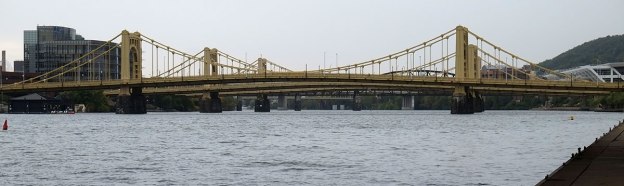
There are many things to like about Pittsburgh (and a few to hate).  First, bridges.  As I’ve mentioned, it’s a lot easier to get Greta to look at bridges than buildings, so we hit them all.  There are the three identical bridges over the Allegheny from the 1920s, pictured above and below.DSCF1105

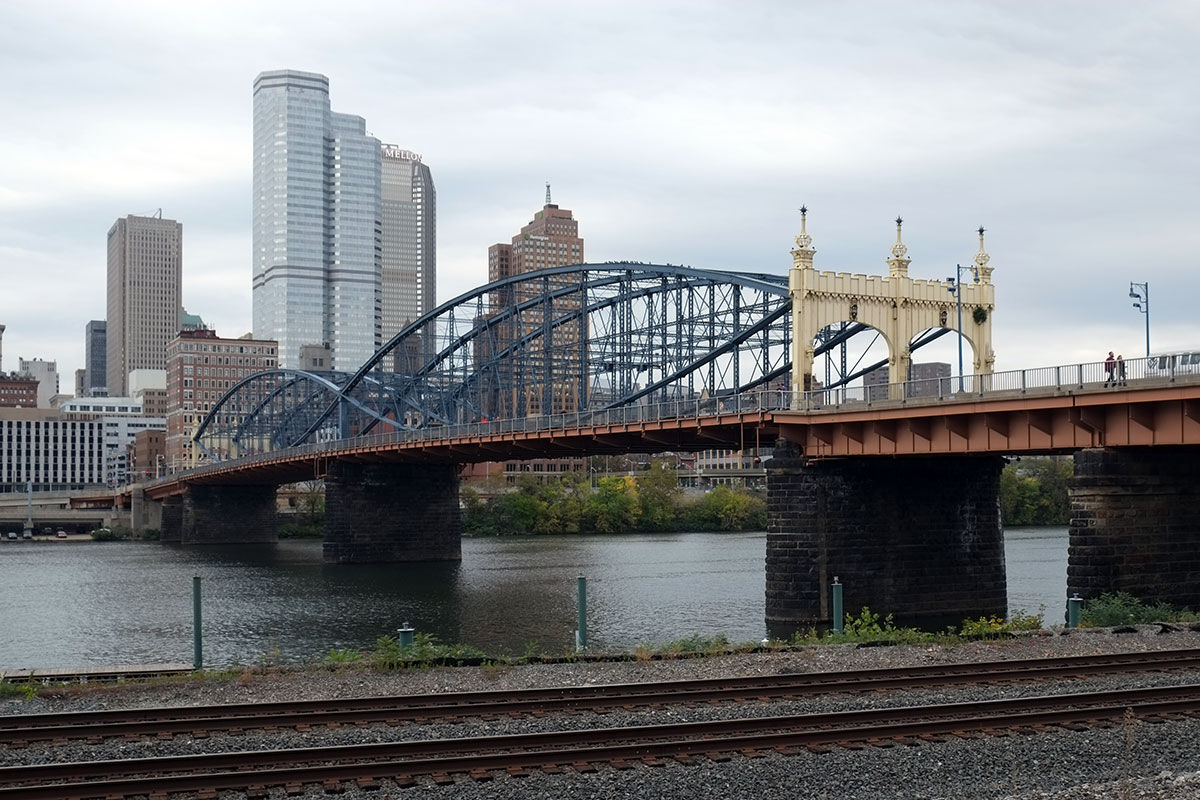
There is Gustav Lindenthal’s lenticular truss Smithfield street bridge.DSCF1199

DSCF1186

There are the juxtapositions of bridges with bluffsDSCF1130and bridges with bridgesDSCF1191

The bridges are great, but it is time for people to get over this –  It’s Pittsburgh, folks, not Paris:DSCF1114

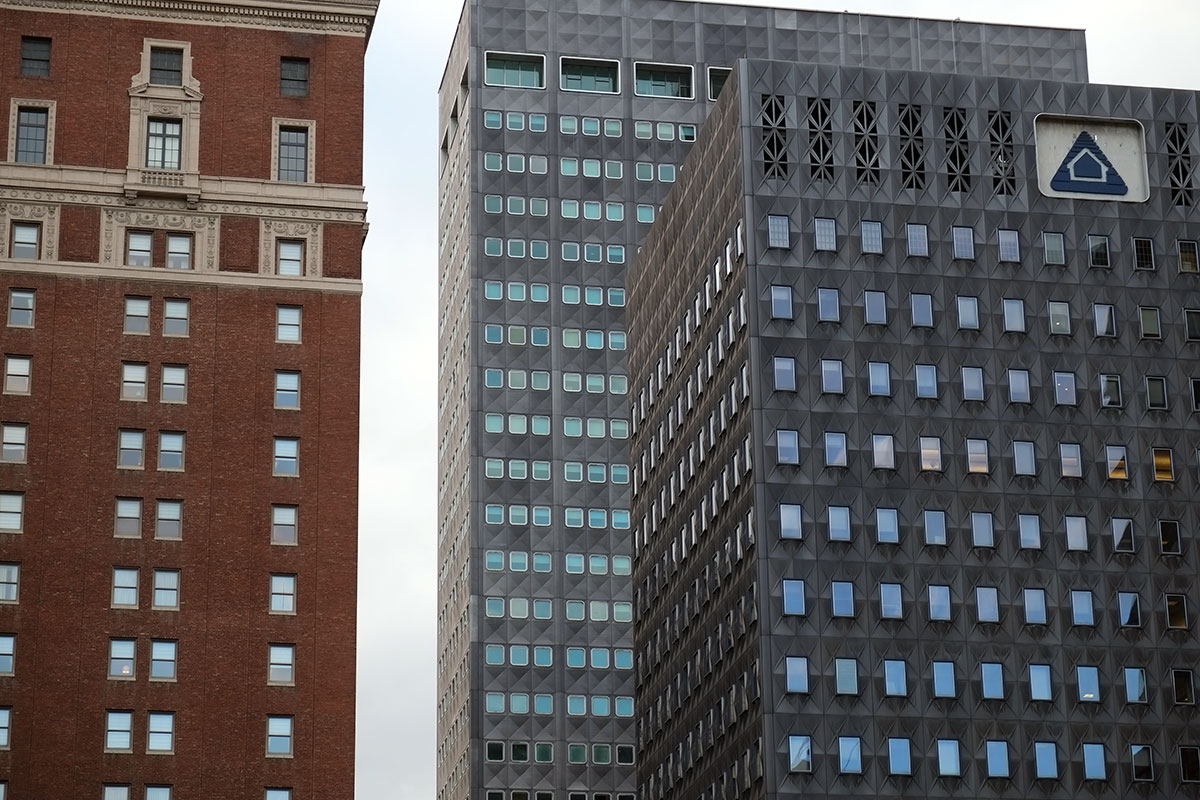
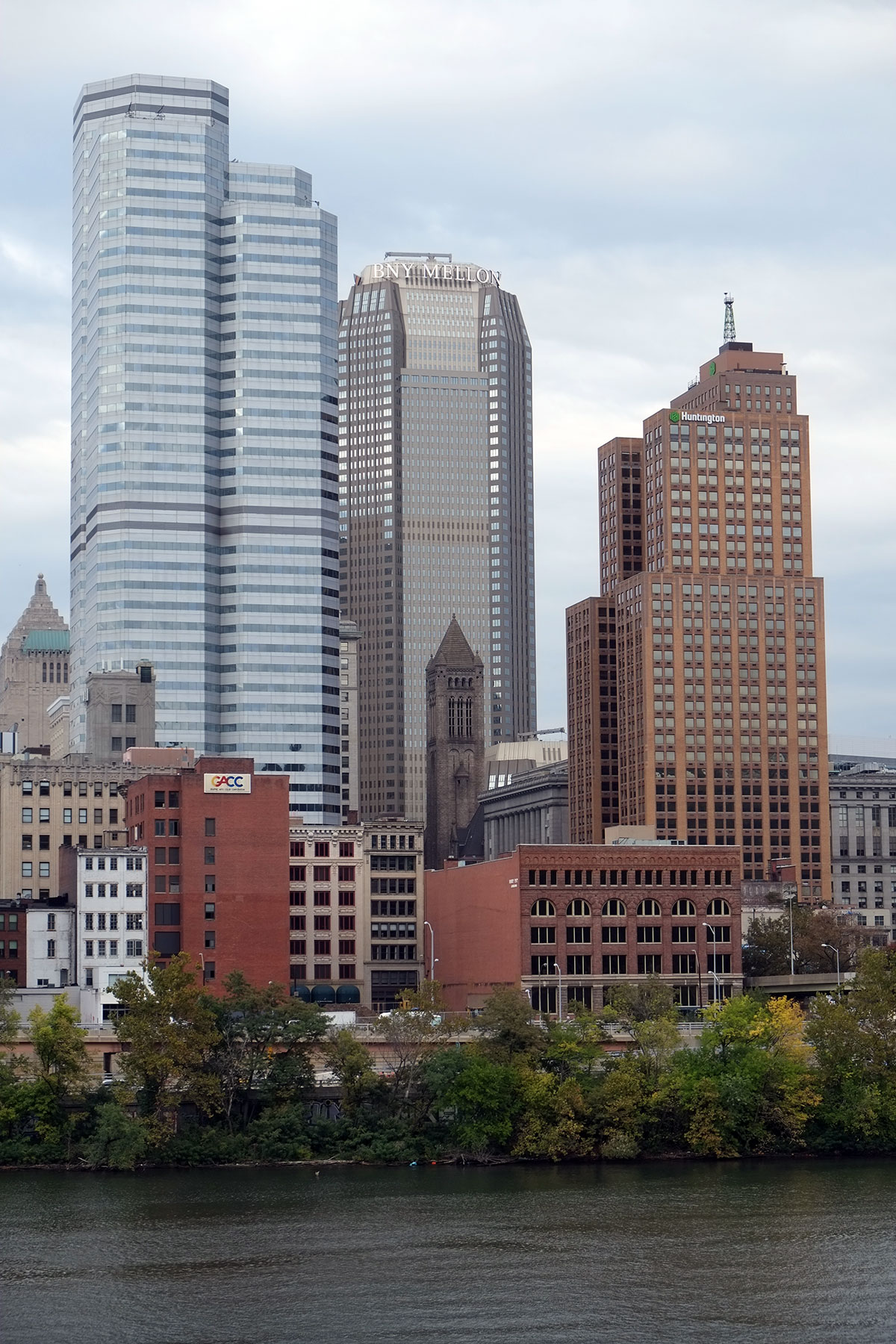
For some reason on this trip I’ve become obsessed with collages of urban fabric – bridges, but also lots of building facades seen together.  Pittsburgh is a good town for this.DSCF1284

DSCF1285

DSCF1144

DSCF1127

DSCF1298There are lots of buildings here that are interesting in their own right;  like, what’s that bizarre thing poking out at the right above?DSCF1294

DSCF1119

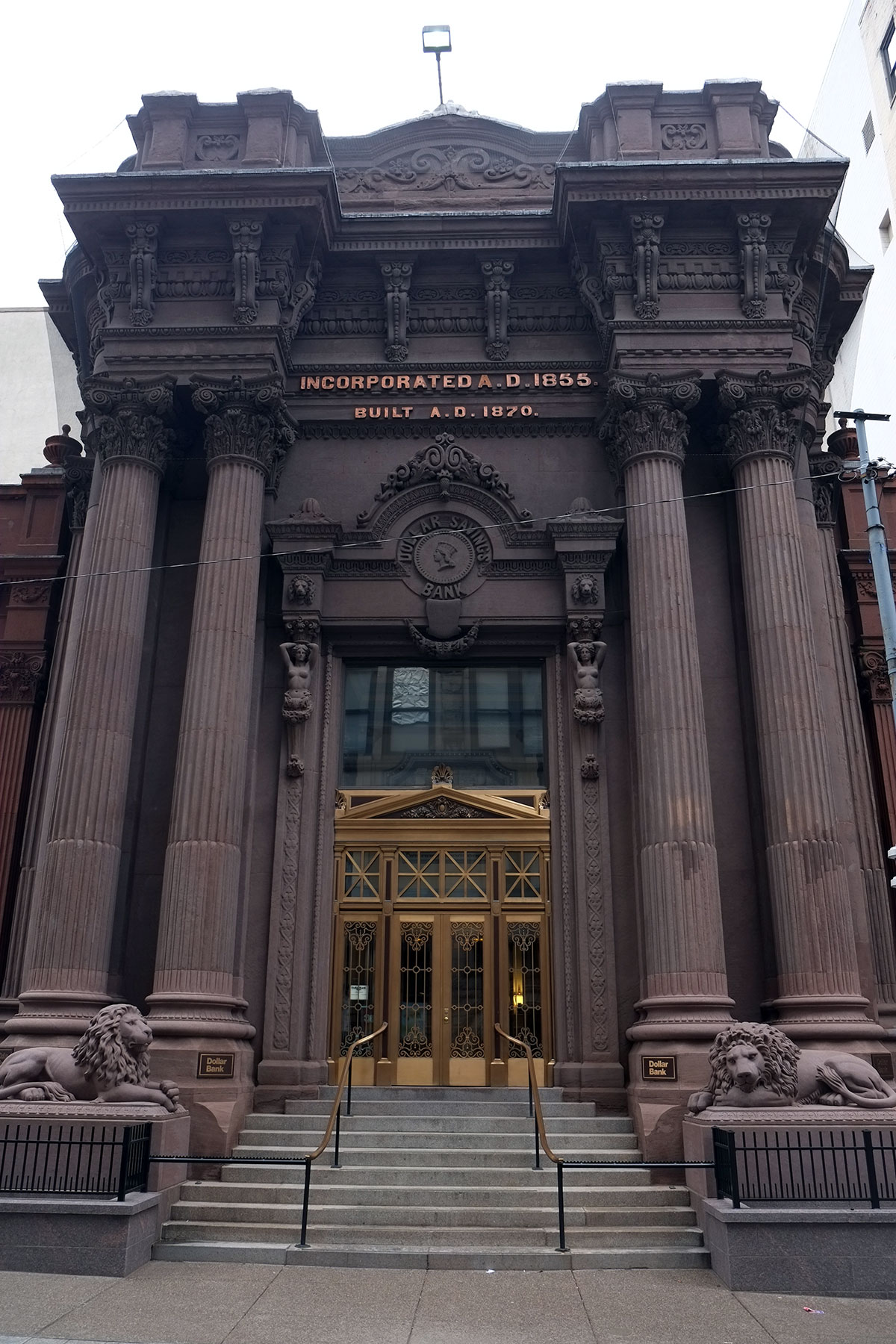
and some weird scale issues – impressive facade:DSCF1175

but it looks like they blew the whole budget on the entry:DSCF1216

and then in the midst of post-war mediocre gigantism, there stands a gem (more on that one in a later post).DSCF1207

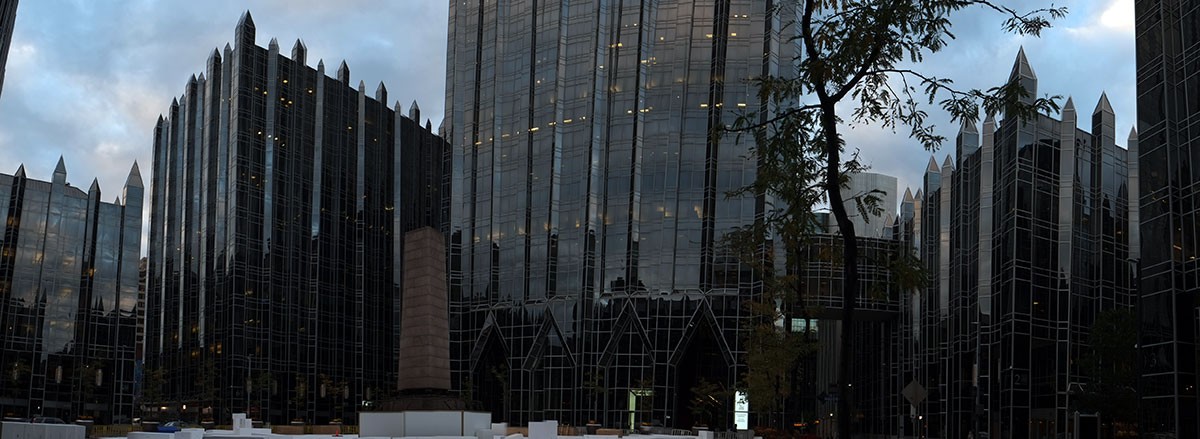
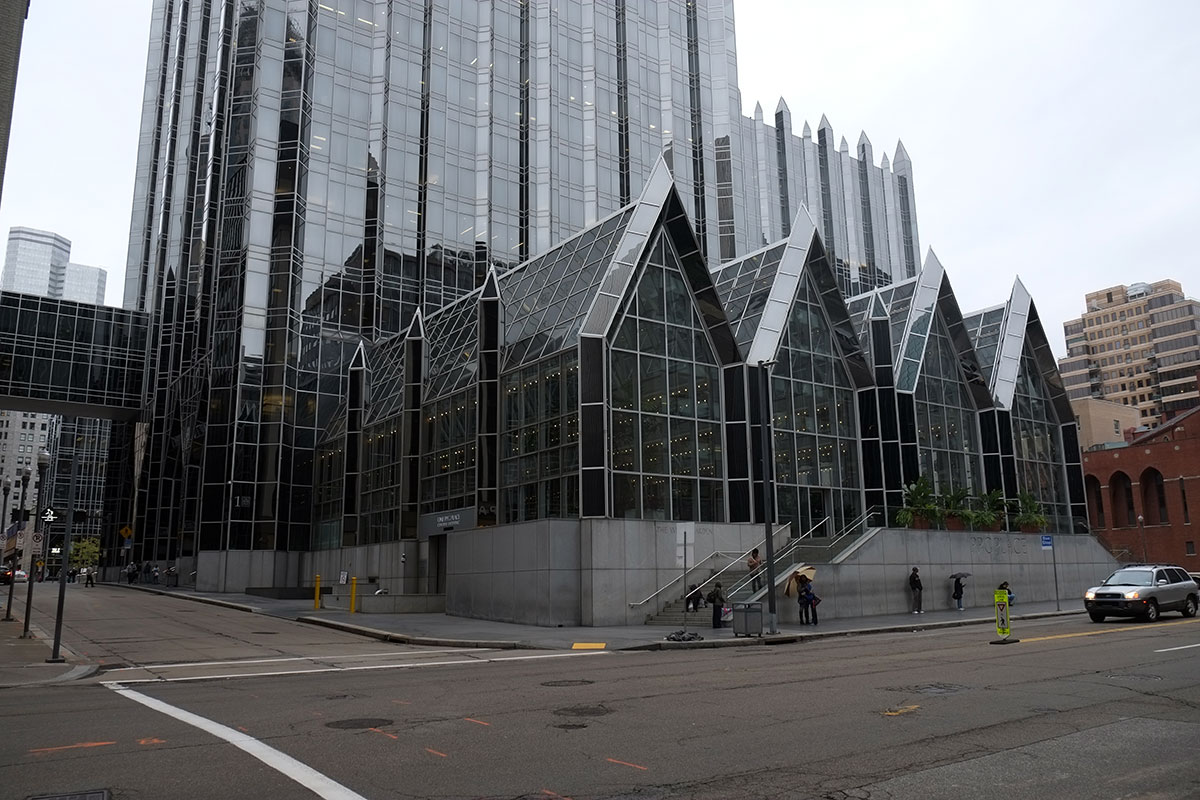
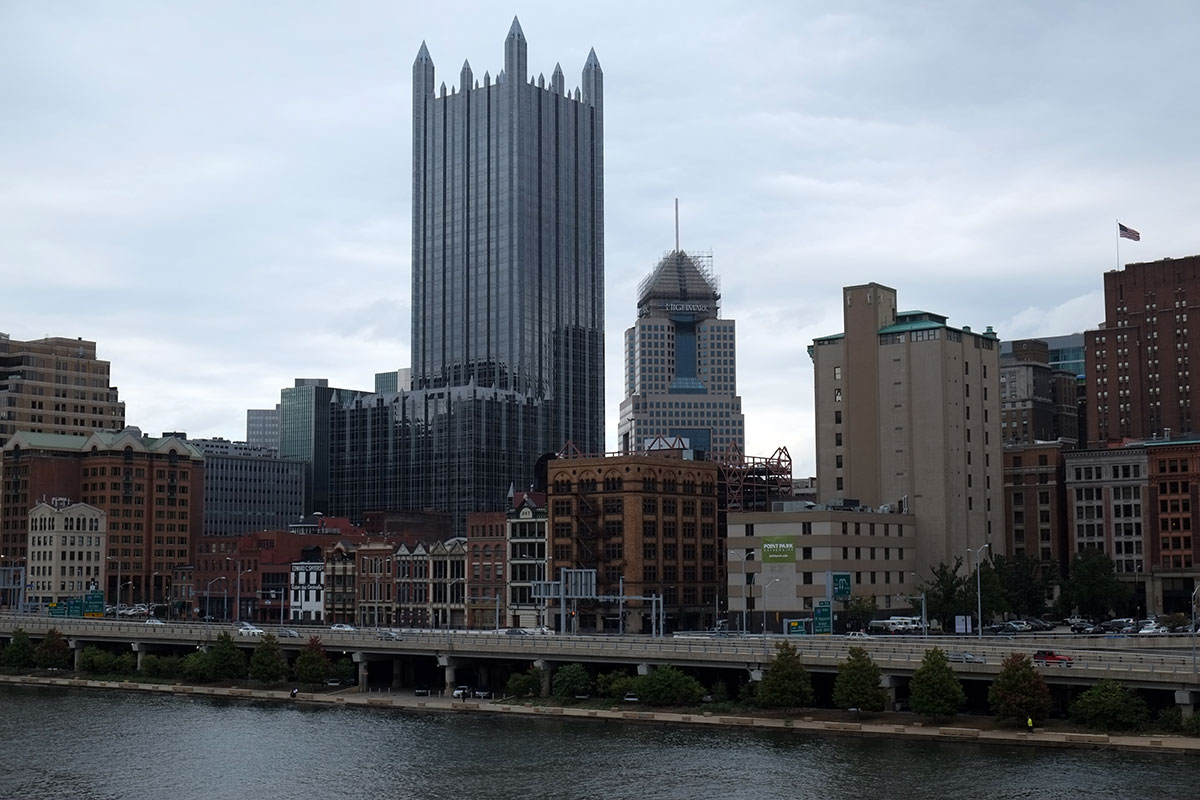
But no post on Pittsburgh would be complete without a mention of PPG Place. Every time I start to think that maybe Philip Johnson is not the dark lord of American modernism, this complex looms up in my mind.  Pictures cannot do it justice.  It is the most hideous bit of architecture/urban design perpetrated in the past 50 years (and I will be posting another contender soon).  cropped-dscf1313.jpg

DSCF1145

It is awful in concept, in execution, in scale, in proportion, in detail (or lack thereof).  It is horrible to be surrounded by it, and it is horrible to see its banality dominate the city from a distance.  DSCF1193

But there are certain contexts within which it fits.  I can only hope that someday we will be able to classify it as ruin porn.DSCF1099

Cincinnati

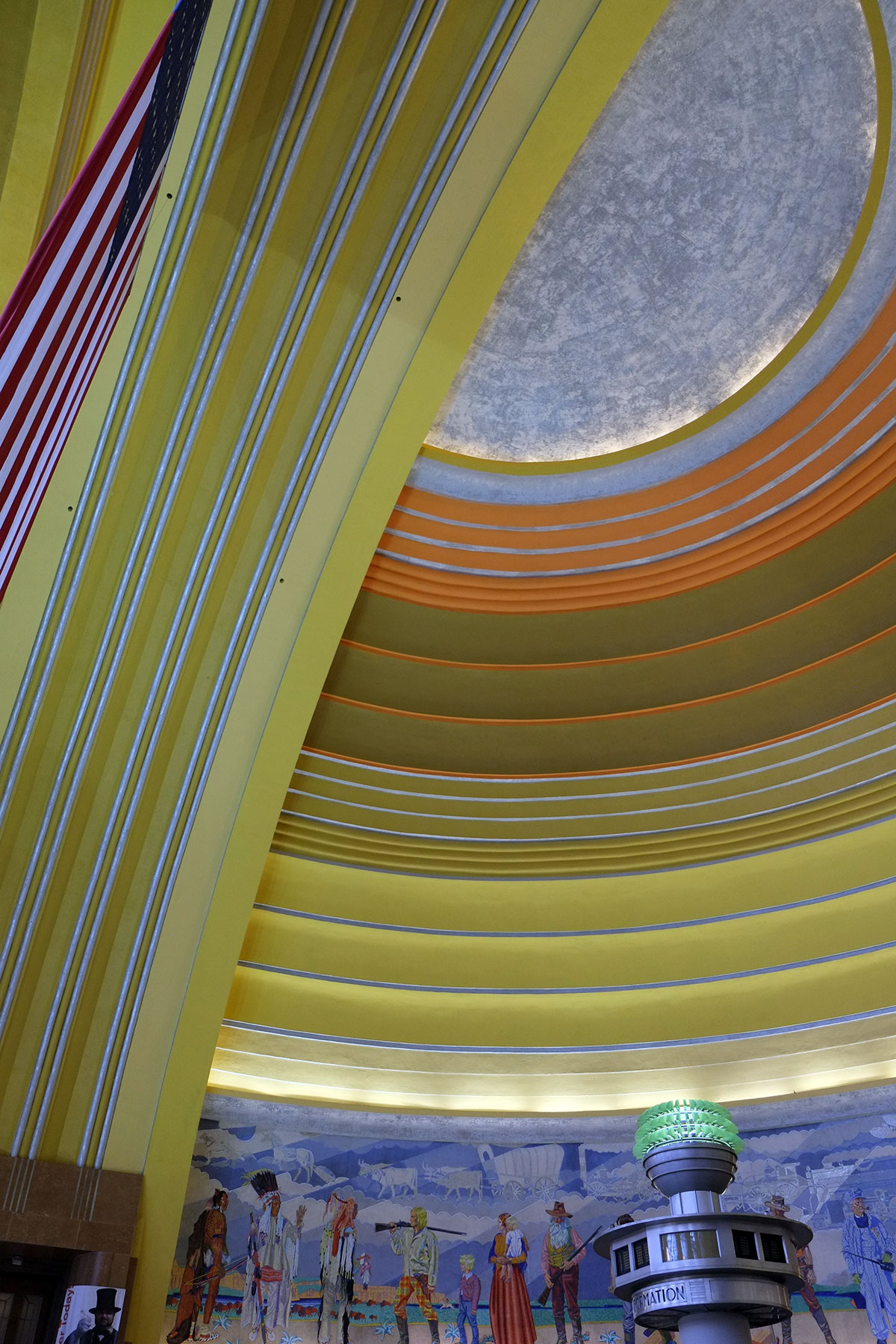
We spent some time tooling around in downtown Cincinnati, but really went to see two specific things:  the train station – which has been converted into a collection of museums:DSCF0623

and has an incredible lobby:DSCF0617 DSCF0620

And the John Roebling bridge, from the 1860s.  It’s very interesting to see the progression of bridges in the mid-19th century which led to the Brooklyn Bridge.  Plus while it’s hard to get Greta to look at architecture, she’s very happy to visit bridges.  DSCF0651

DSCF0658

DSCF0648

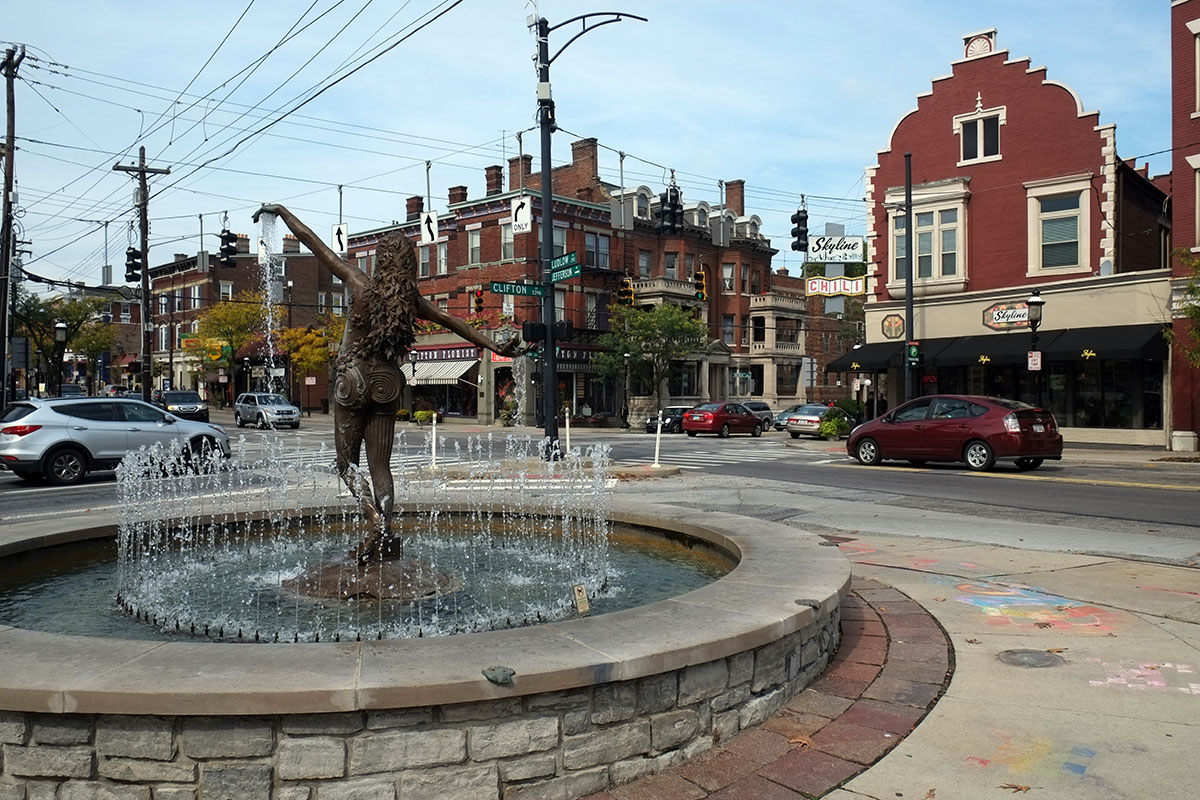
But what I continue to find most engaging in Cincinnati are the neighborhoods.  After the flatness and griddedness of the plains, being in a city where the neighborhoods, transportation routes and whole order of the city are determined by the topography (hills and water) is really engaging.  There was the Hyde Park district, where a very nice urban space is surrounded by mixed-use buildings, all within walking distance of Brian and Olga’s.  DSCF0525 DSCF0527

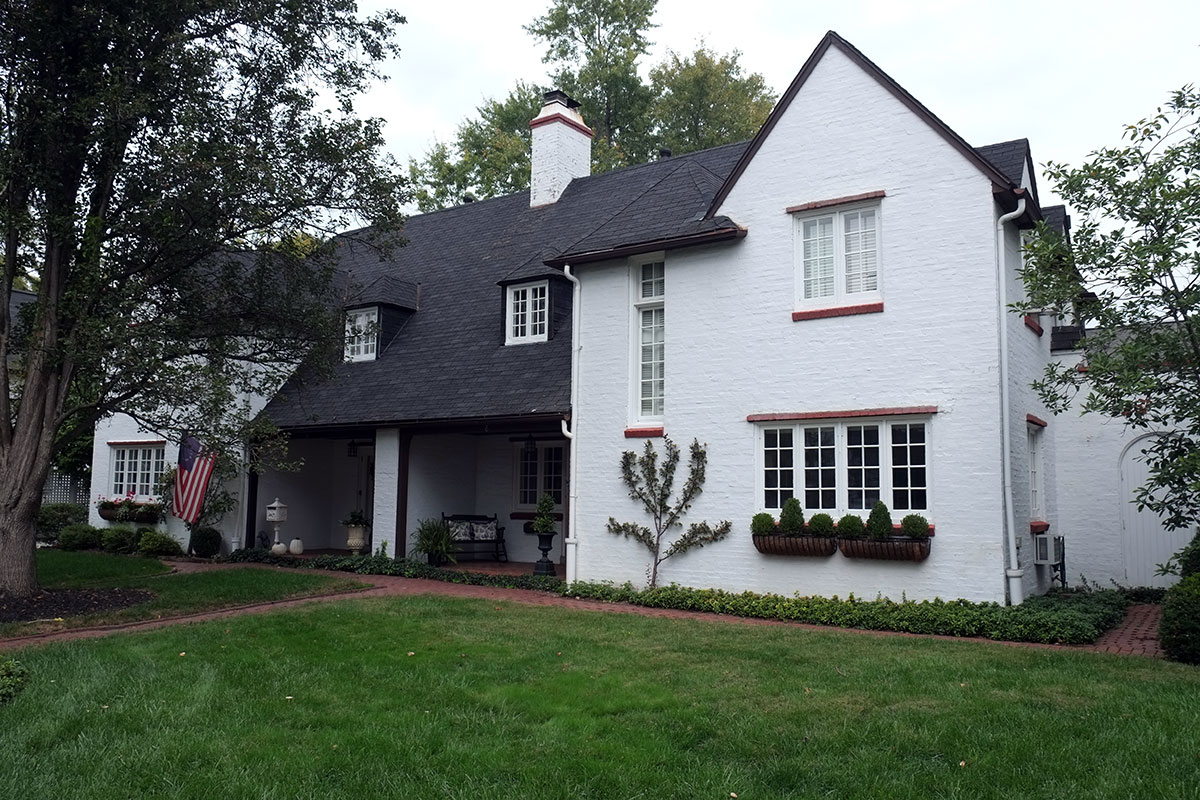
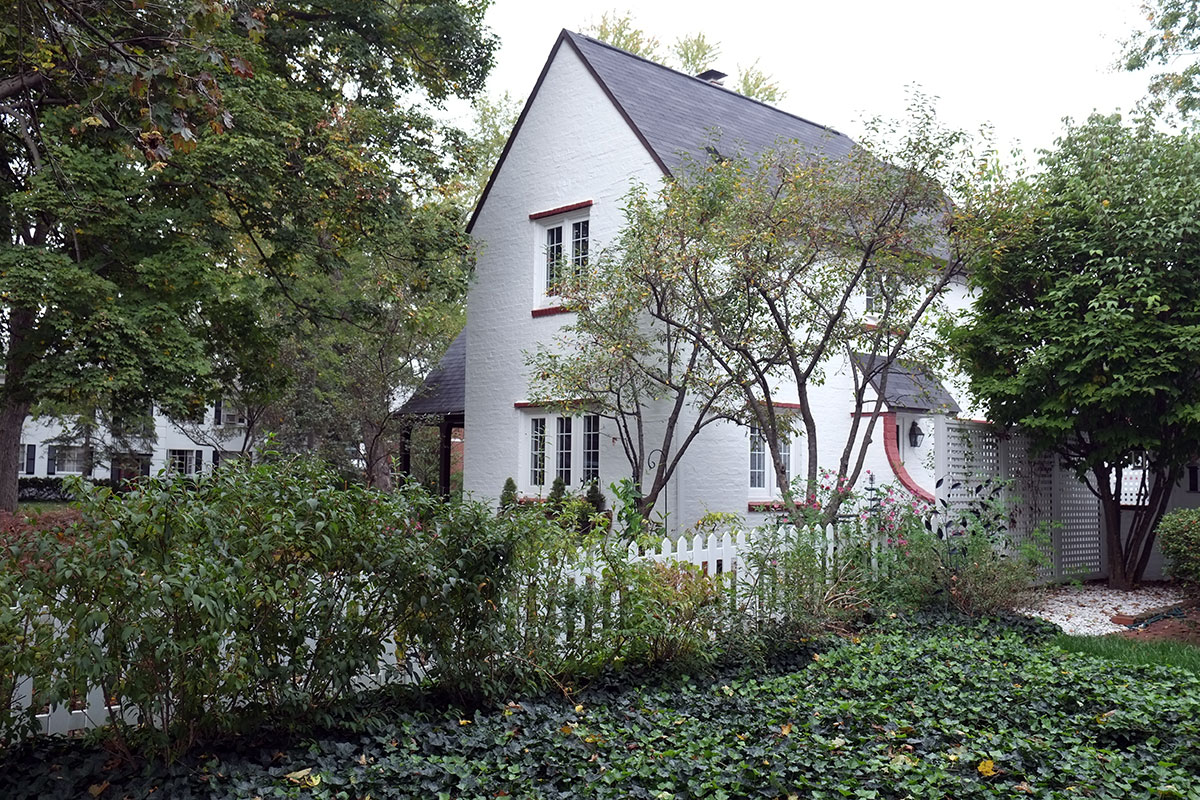
There was Mariemont, a John Nolen-designed planned railroad suburb from the 1920s, where some excellent duplexes on cul-de-sacs with rear alleys were designed by Grosvenor Atterbury (of Forest Hills fame).

DSCF0566

DSCF0569

There was the area near the university (where the architecture was superior to the chili):DSCF0416

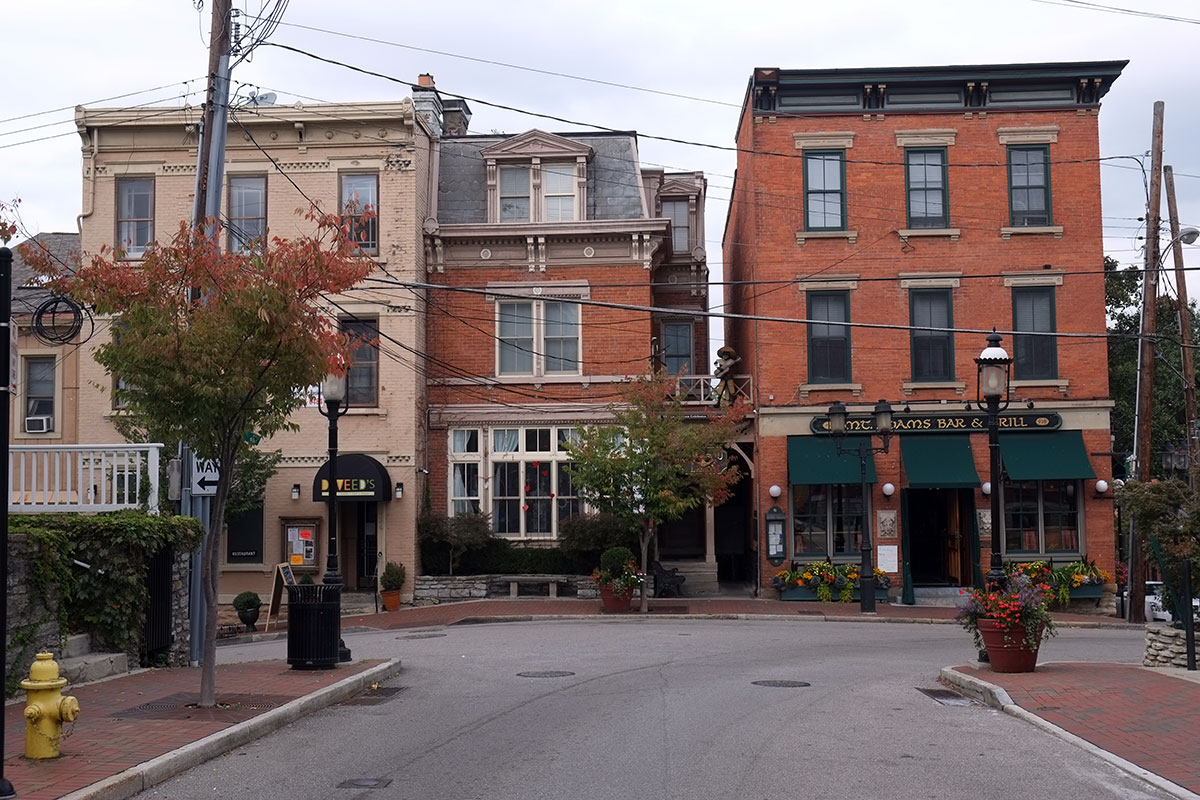
And finally, the Mt. Adams neighborhood, atop a tall hill right next to downtown, which is apparently now a major location of gentrification and yuppie-bar-hopping:

DSCF0588

I like street views that end in sky:

DSCF0593 DSCF0604

A very livable city overall, which we could have spent a lot more time exploring.

University of Cincinnati

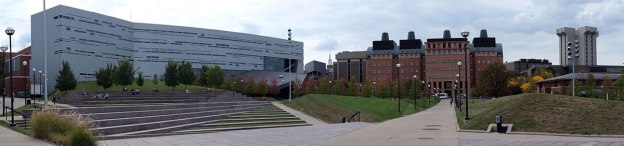
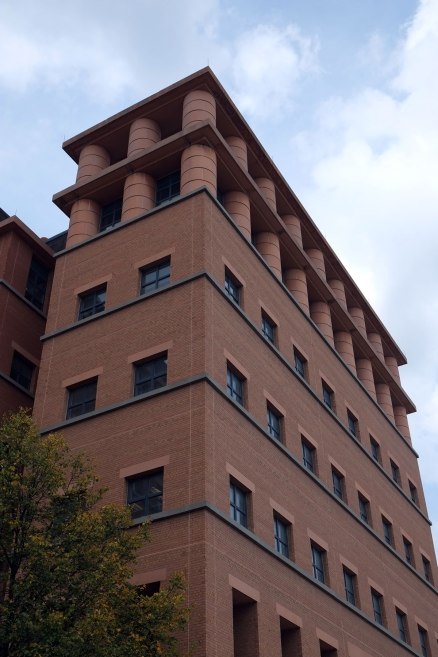
The University of Cincinnati is also a bit of an architectural petting zoo.  Apparently at some point the dean of the architecture school convinced the university that they should hire prominent architects to do signature buildings.  Predictability, the results are in the good, bad and ugly categories.  The juxtapositions are radical, as can be seen in the photo above, where you get Morphosis, Michael Graves, and one of the strangest brutalist buildings I’ve ever seen (is it a science building or full of telephone switching equipment?)

The Graves building is pretty darn nice.  It makes sense, it has a simple clear plan, and the scale of it fits in well.  (At least, we old folks from the 80s will probably like it.)DSCF0427
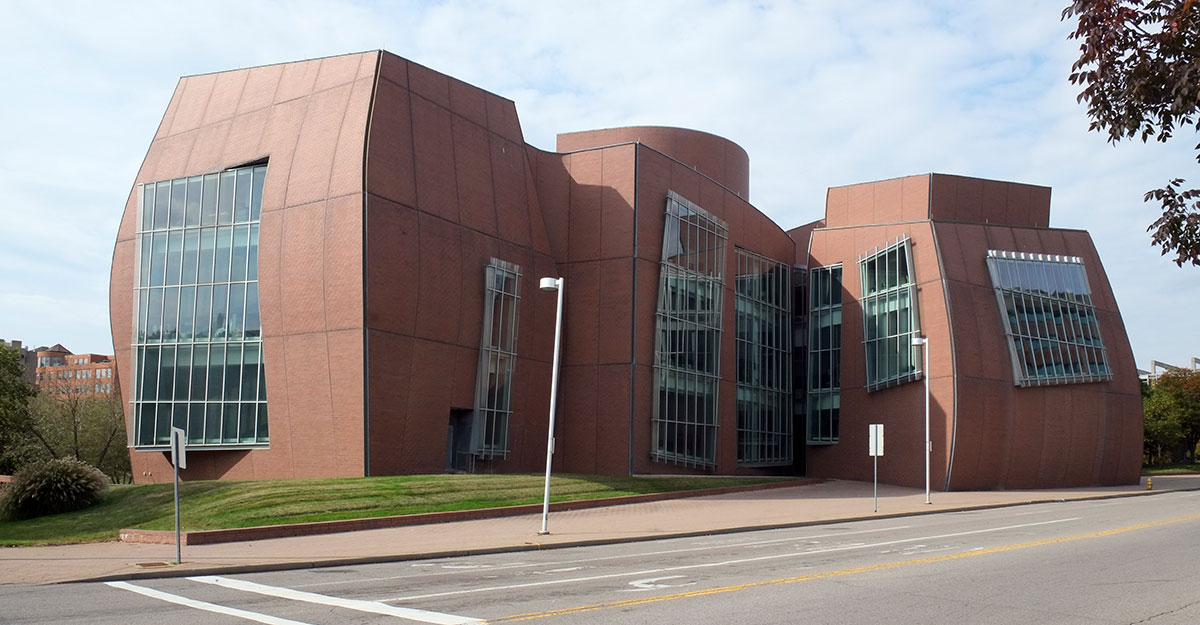
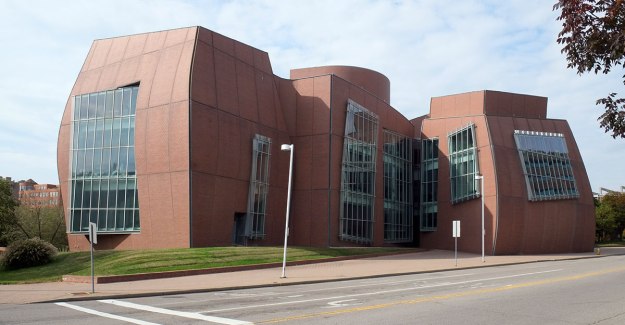
The Gehry building is not technically on campus, but a few blocks away, and is part of the general self-conscious milieu.  It sits by the side of the road, and it made me think of Venturi’s analysis of Las Vegas, a building which is trying very hard to create an impression as you glimpse it from a moving vehicle.
DSCF0520

Of course, the building that must be talked about is Eisenmann’s addition to the design school.  Seldom is a building worse than I expect it to be (I have pretty low expectations for some people), but this is one.  The exterior evokes recovered memories of all the bad color choices of the 80s – why was Eisenmann still doing this in the 90s?  (and why couldn’t he have remembered that he was once one of the “whites”?)DSCF0471
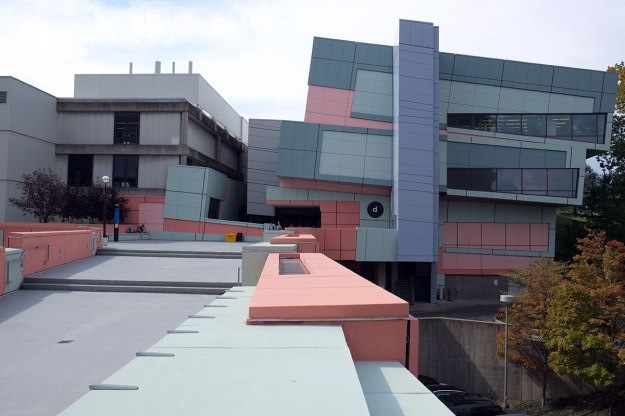
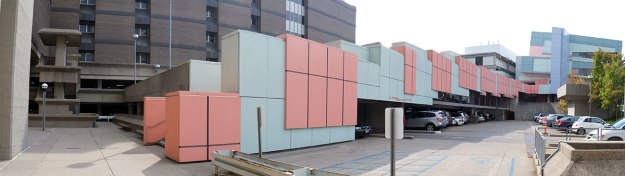
The entrance pictured above feels even worse than all those parking garages in TV shows where bad things always happen.  Perhaps Eisenmann was playing a joke with this, as an amazing amount of effort has been put into the extended entry stair which does indeed end up in a parking lot / service entry.DSCF0475
The interior has a couple of good spatial moves – a big void which goes through a few floors, a big stair which runs up alongside it, DSCF0459
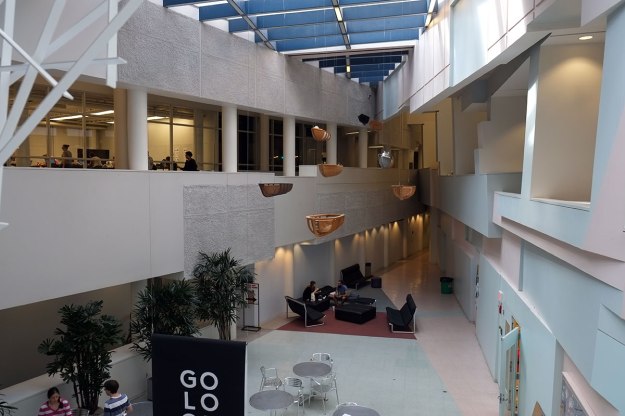
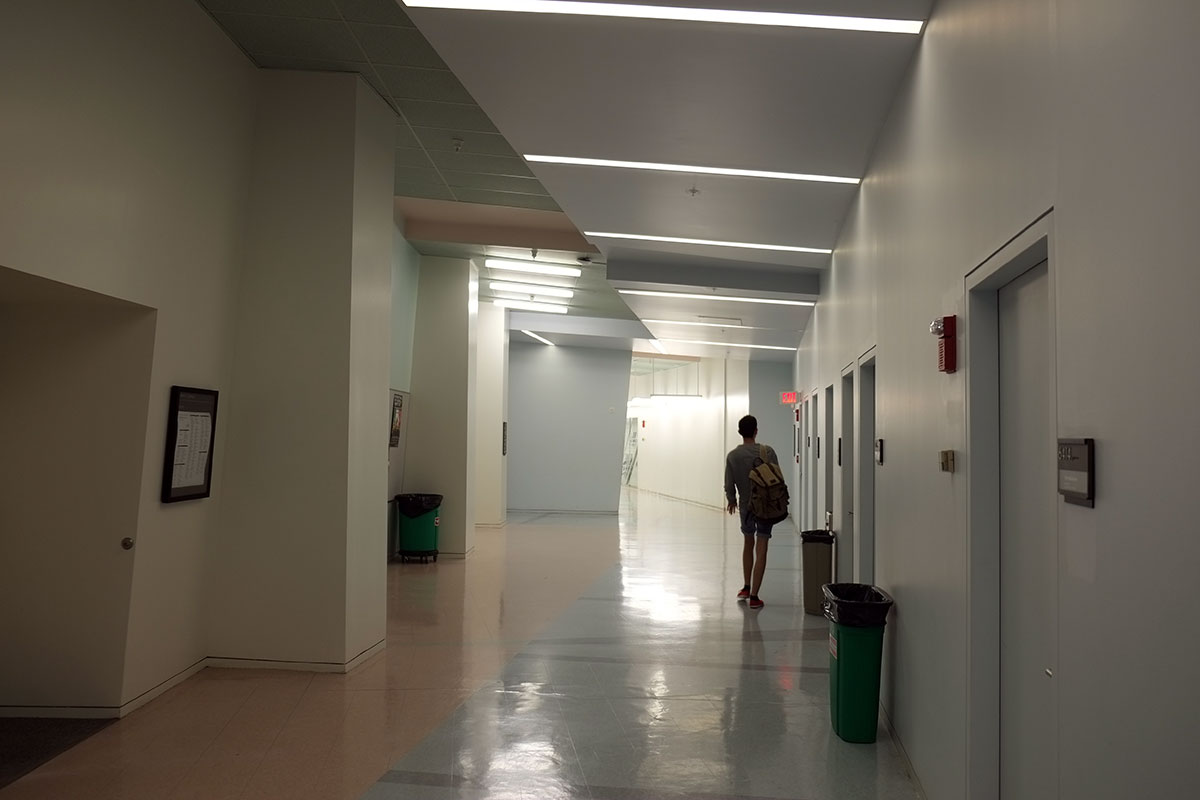
but these big moves have no impact on the building beyond themselves – they do nothing to organize the building spatially or conceptually.  You come across them randomly – we actually wandered the building for quite a while before we found them.  Most of the time you’re in corridors such as this:DSCF0451

Fundamentally as boring and soul-destroying as any other internal double-loaded corridor, except that this one has cost an enormous amount of money in the pointless manipulation of gypsum board surfaces.  Yes, it’s more entertaining than two parallel walls, but you get the feeling (actually you know) that Eisenmann was just playing games with diagrams and ideas, and not at all actually designing the space.  These corridors meander through a solid mass, seldom touching the exterior wall or the interior void.  There is no order to the building that one can intuit after a while, and the infrequent maps are not much help in finding anything either.  The architecture department seems to have made a very good decision by staying put in the older building to which this is attached.  Maybe they understood what it was going to be like, and the other departments didn’t.  There is a tradition that the architecture building is usually the worst one on a campus, and here again we see Eisenmann  manifesting his familiarity with architectural history and tradition.
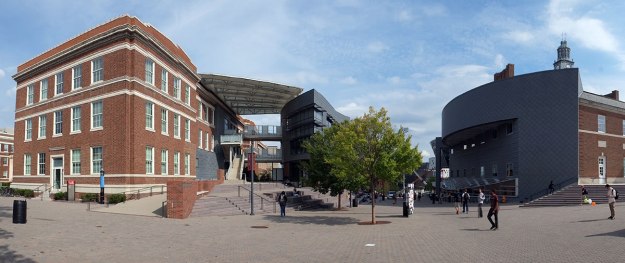
DSCF0483

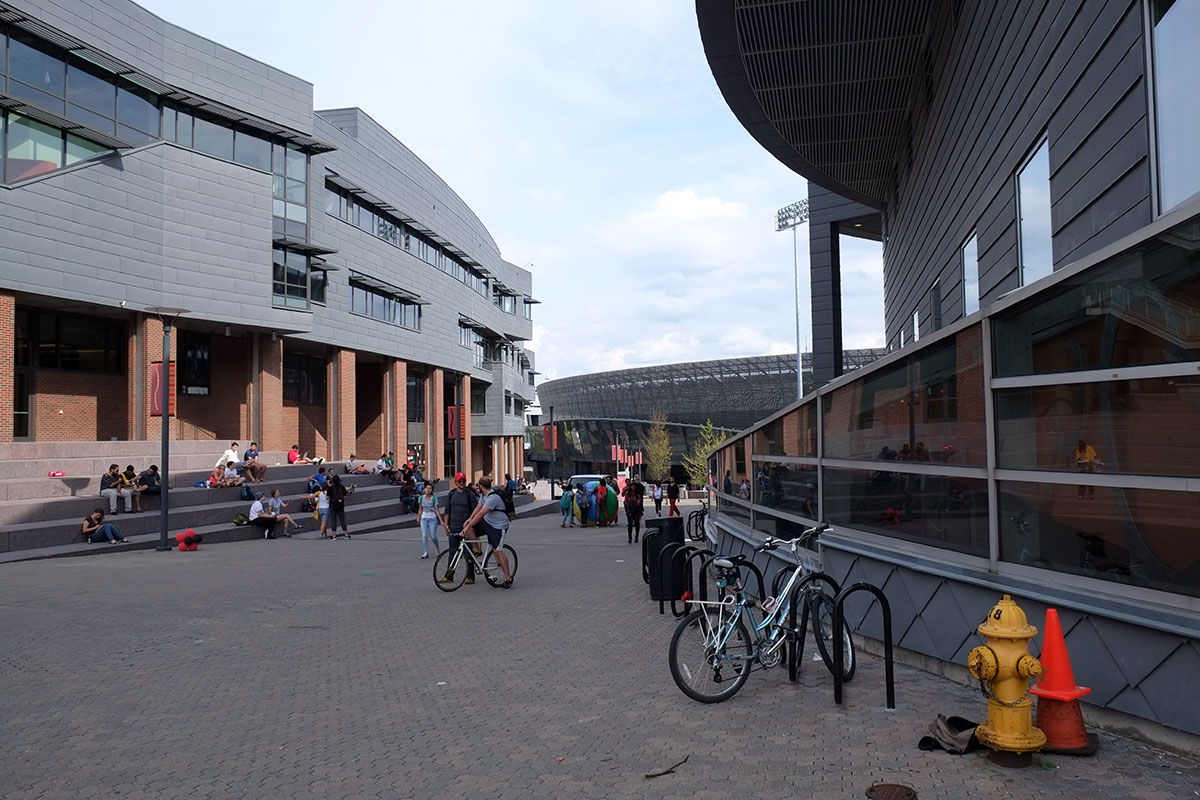
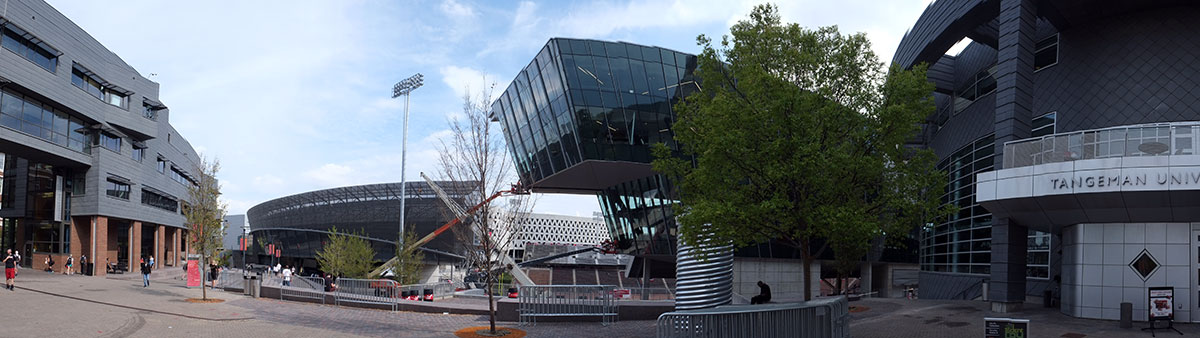
The part of campus which I unexpectedly loved was the relatively new “main street”, with the site plan by Hargreaves Associates, and which comprises some older Georgian buildings, some new buildings by Morphosis, Moore Ruble Yudell, Gwathmey Siegel and others, and which abuts and overlook the football stadium.  It’s a spectacular bit of urban design, with well-contained spaces squeezed between very active building forms, constantly shifting perspectives, long and short views, and contrasting materials and styles.DSCF0487

The radical change of scale that comes from incorporating the football stadium is brilliant, being able to look onto the field from above, rather than having the stadium be a looming solid wall that kills the space around it.  The glimpse of Tschumi’s building (the white one with the triangular grid) across the field gives you the sense of distance and scale that you sometimes get in a dense city, but almost never on a campus.DSCF0493
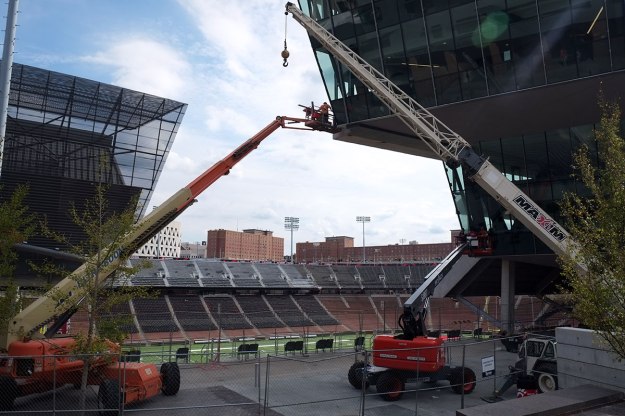
It feels like a piece of a city, and although undoubtedly planned to the nth degree, it gives that sense of unintended juxtaposition and unanticipated revelation which are perhaps the greatest architectural pleasures in a city.  DSCF0489

It seems fitting that this design is in Cincinnati;  after weeks in the grid-universe of the American West, Cincinnati was was the first place we came to where the topography dominated the city’s organization, where the back and forth between the pre-human world and the order of the planned city achieved a satisfying balance.  This design reflects that balance in a completely thought-through and beautifully articulated way.

Perhaps Eisenmann was trying to say the same thing, letting his building operate with more of a topological than geometric order.  But a building is not a city (although that might be nice conceit to explore in a design studio).  It can’t encompass all the complexity of a city and the contrasting set of ideas that develop over time.  Trying to make a building that complicated seems very forced – there are only so many unrelated ideas that can comfortably co-exist in a small place.

A campus is not a city either – it is fundamentally a planned entity, and somehow the attempts to mimic the city-like development pattern (such as the Oregon Experiment) haven’t been very successful in creating a city-like environment.  Lucien Kroll wrote about how to how to bring this sensibility into modern large-scale development (by allowing multiple voices and designers, and compressing the time-frame of city-building), and this part of the Cincinnati campus is probably the most successful example of that I’ve ever seen.   I loved it even more than I hated the Eisenmann.   DSCF0503

Indianapolis

Indianapolis is just big – about 20 miles across, in either direction.  (368 square miles – significantly bigger than New York City).  This great size leads to a corresponding variety – a large and spread-out downtown, and many residential neighborhoods – from old and decrepit, to close-in and gentrifying, to old ones that are a few miles out from the center and unbelievably grand, and newer neighborhoods of McMansions on the periphery, which feel like they are out in the woods.  Bill Adams took us on a great tour which really showed the variety of places, but I felt that I had barely scratched the surface.

The downtown has some fine old buildings:

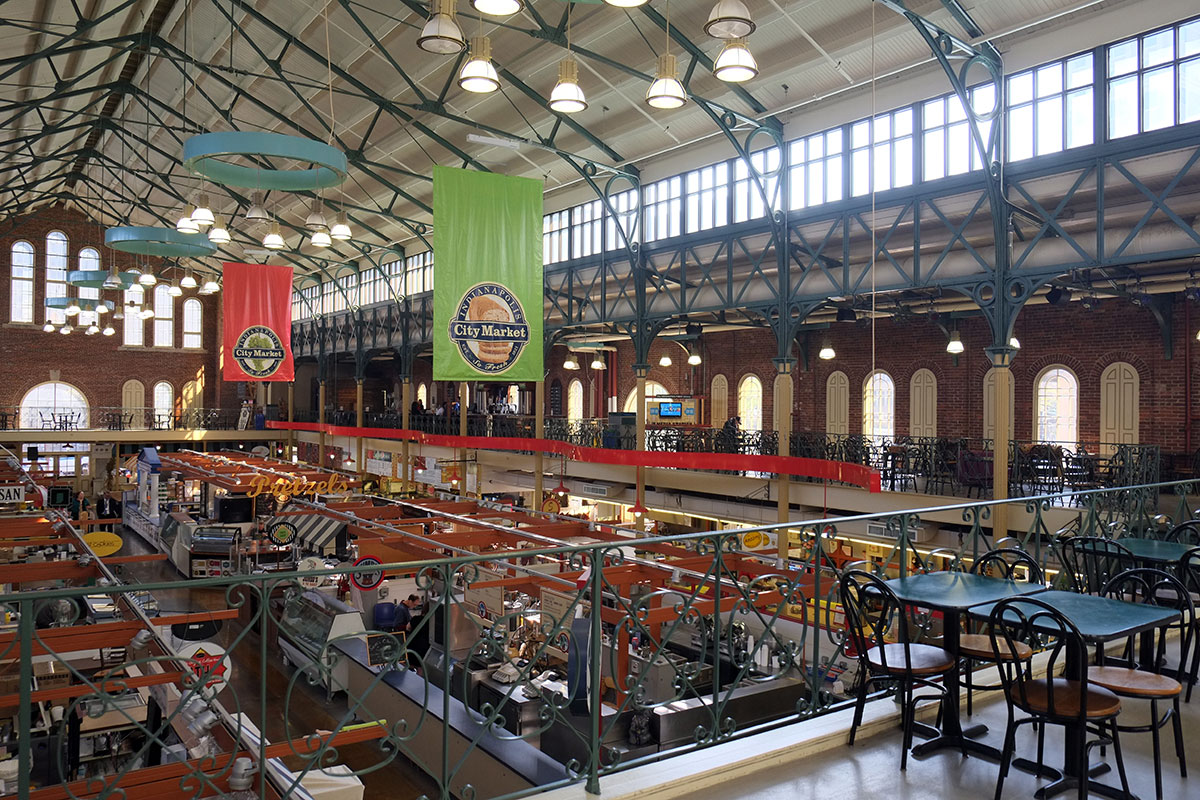
The City Market

The City Market

The Indiana Theater

The Indiana Theater

The Statehouse

The Statehouse, right where it belongs on the axis

a somewhat typical mansion on the north side

a somewhat typical mansion on the north side

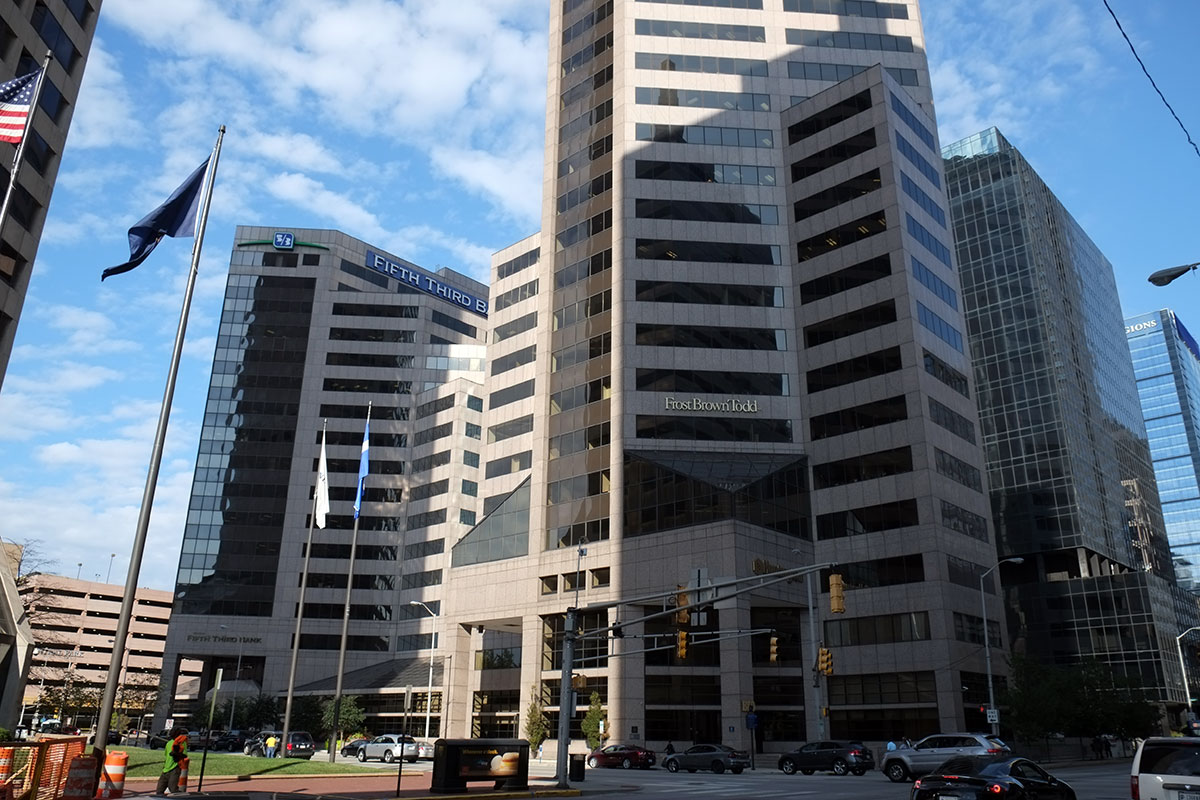
And then the city has a fairly normal array of postwar buildings and juxtapositions, which vary from the commonplace to the truly weird

a nondescript but weirdly angled 70s-thing

a nondescript but gratuitously angled 70s-thing

A Marriott which probably looks much less real than the rendering of it did

A Marriott which probably looks much less real than the rendering of it did

a portico on a state office building, remarkably overscaled, ponderous and pointless

a portico on a state office building, notably overscaled, ponderous and pointless

the skyline as seen from the canal to the west

the skyline as seen from the canal to the west

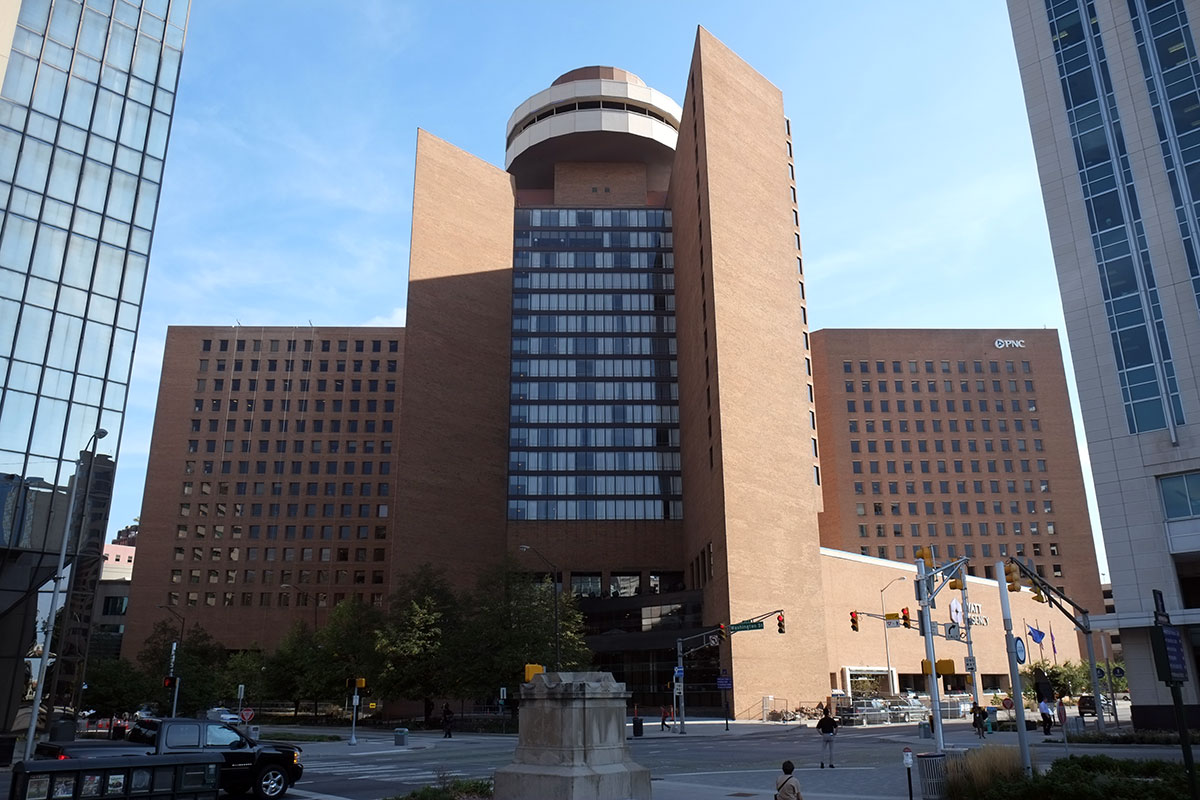
a classic 70s Hyatt, which brought on a wave of nostalgia in me

a classic 70s Hyatt, which brought on a wave of nostalgia 

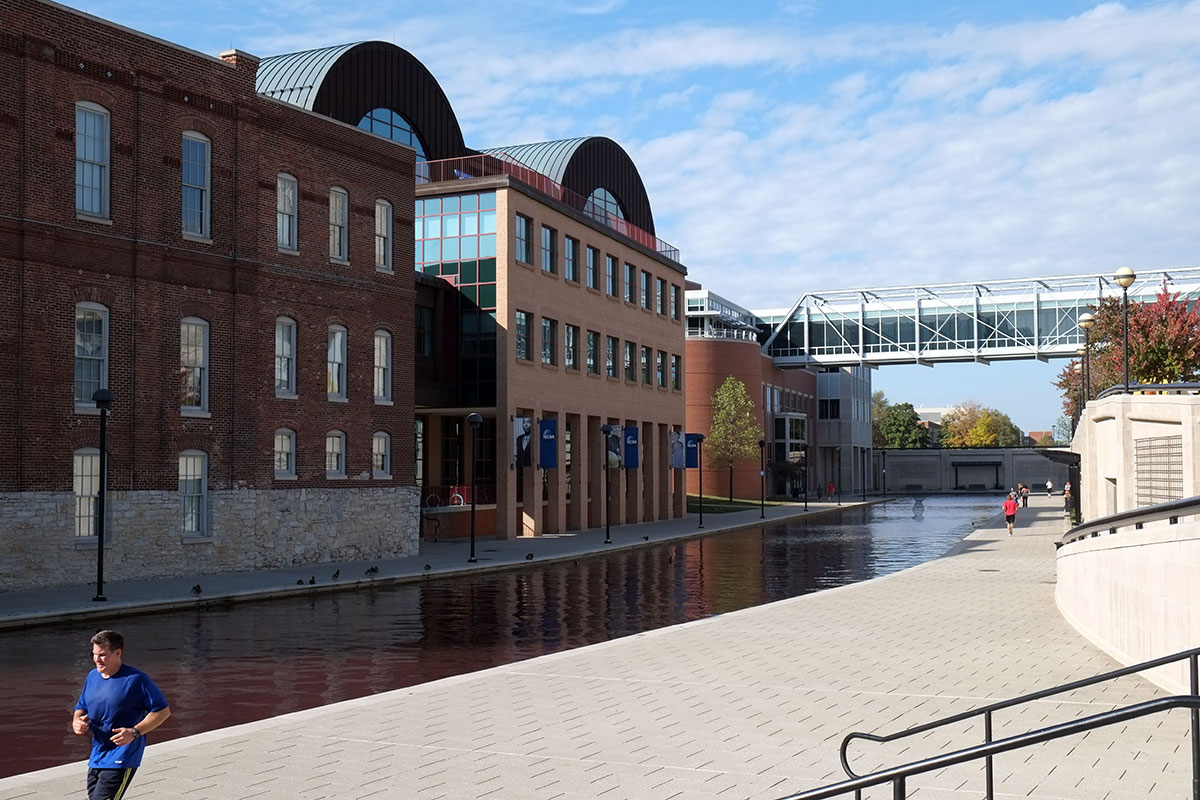
the NCAA headquarters, by Michael Graves

the new NCAA headquarters, by native son Michael Graves

with this attached hall-of-fame piece

with this attached hall-of-fame piece

DSCF0329

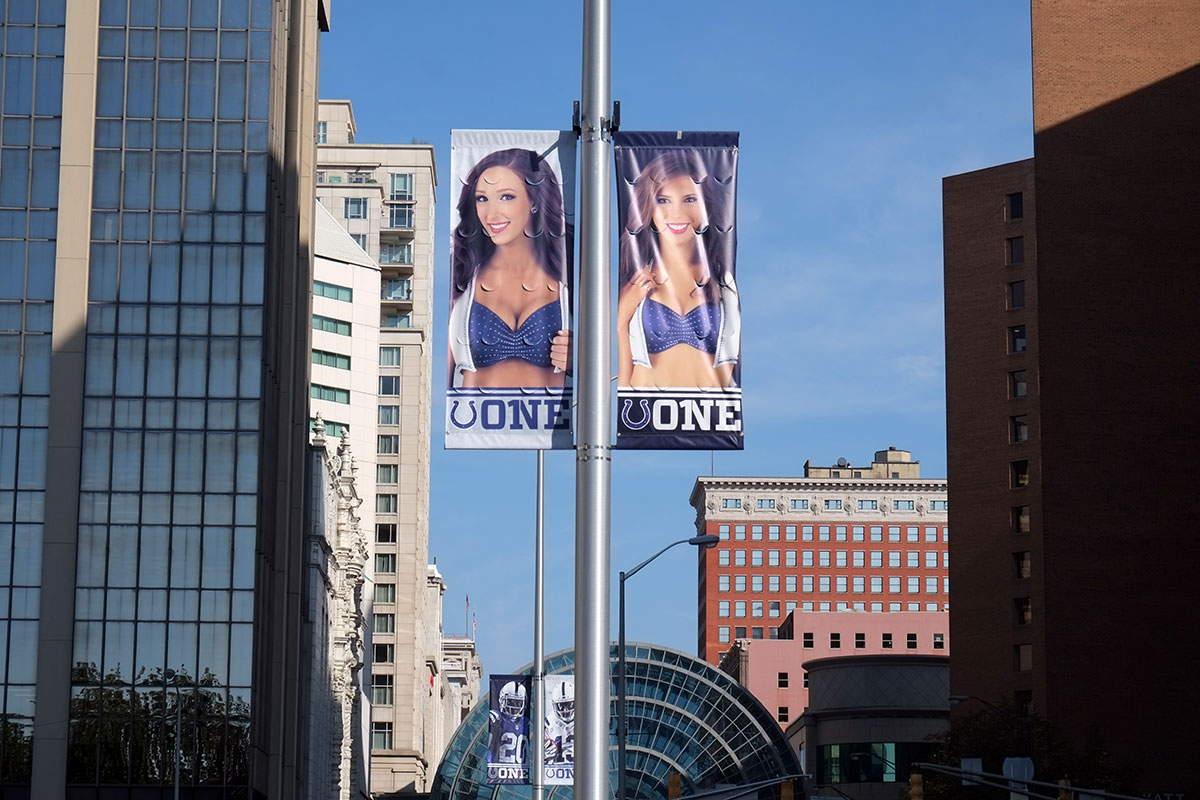
The strangest thing was seeing what aspects of civic life are most valorized.  The Statehouse is quite impressive, but who are those individuals being accorded a place of honor on the banners hanging out front?  Statesmen, or perhaps war heroes?

DSCF0331

No, it’s the Colts’ cheerleaders!

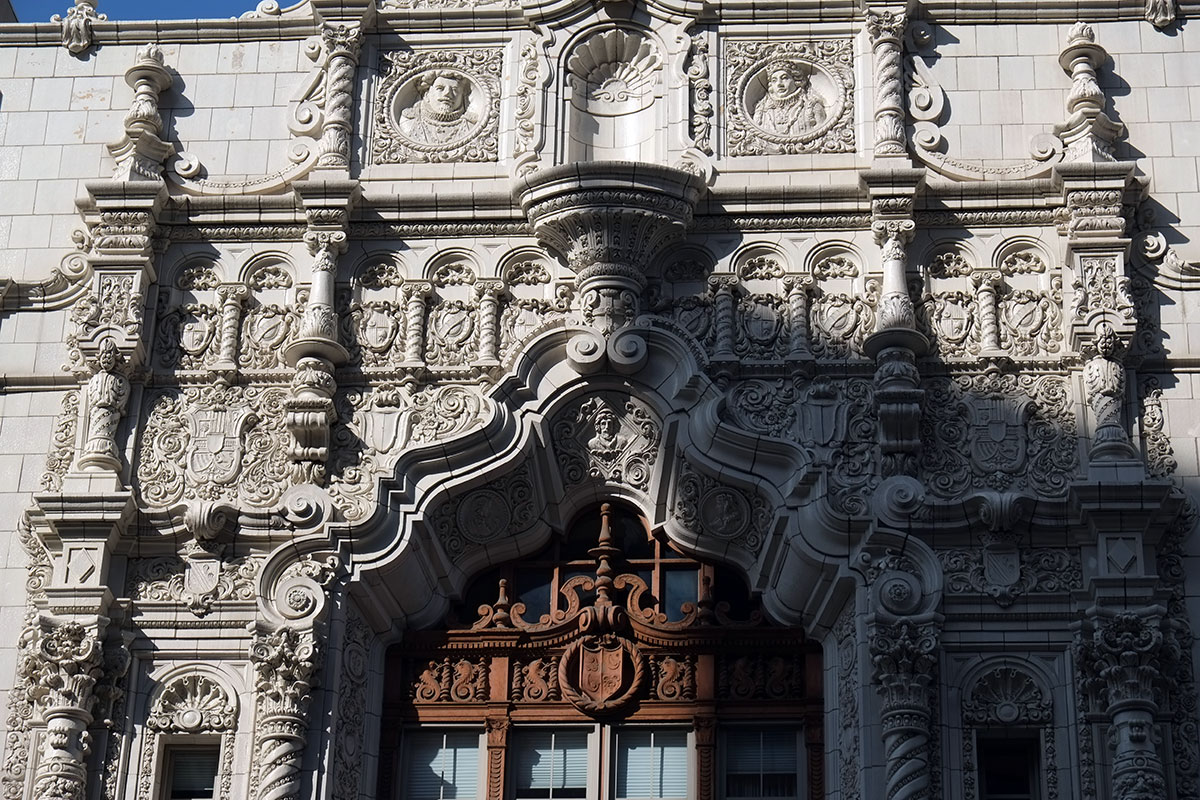
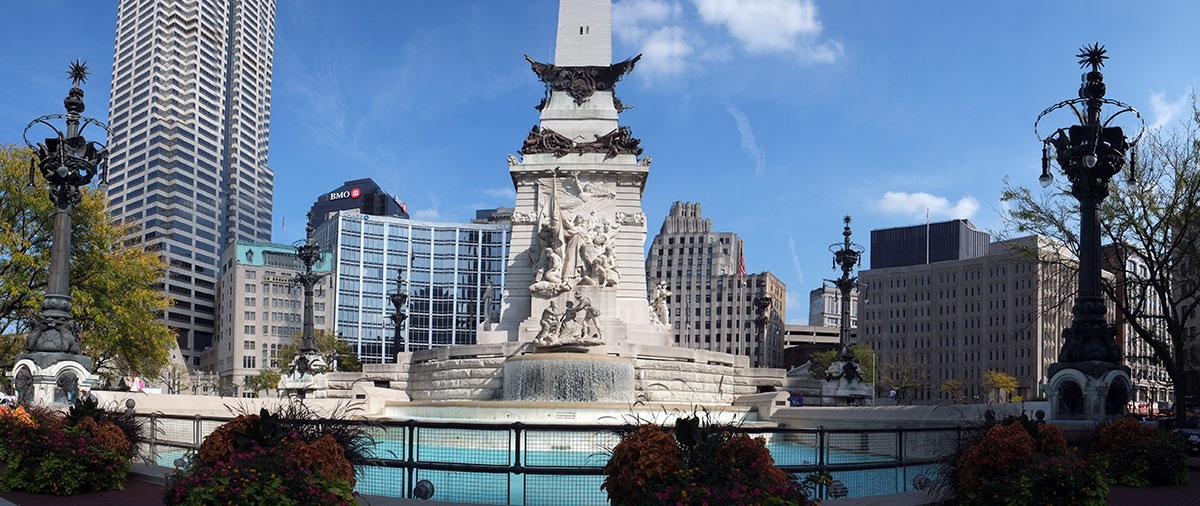
But by far the most amazing thing in Indianapolis is the Soldiers’ and Sailors’ Monument, which is in the center of town where the two main streets intersect, similar to the Philadelphia City Hall.  The urban space is very grand, a circle 500 feet in diameter between building walls, with the buildings enclosing the traffic circle and the Monument.  The Monument is covered with the kind of histrionic and spectacular civic sculpture which was common in the late 19th century (such as at the Columbian Exhibition, or the Maine Memorial in NY).  DSCF0297

DSCF0309DSCF0299

It’s a fantastic, over-the-top piece, and it may be the best means we now have to experience what the White City must have felt like.

Columbus, Indiana

Columbus, Indiana is a modern architecture petting zoo of the first order.  J. Irwin Miller, who became head of his family’s company (which manufactured Cummins diesel engines) after WWII, somehow became enamored of modern architecture, and decided that he would pay the architect’s fees for any civic building in Columbus, if they would hire serious modern architects.  Since the 1950s, dozens of significant modern buildings have been built there.

One of the most important is Miller’s own house, designed by Eero Saarinen’s office (with Kevin Roche as project architect), interior design by Alexander Girard, and landscape design by Dan Kiley. The house is a pinwheel design, with pristine, rigorous planning and space.  It might seem rather severe and removed if it weren’t for Girard’s exuberant furnishings (most of which I can’t show here, as you’re not allowed to photograph inside.)

the driveway

the driveway and carport

me of sixteen columns, supporting the steel roof structure

one of sixteen columns, supporting the steel roof structure

looking from outside into the dining and living rooms

looking from outside into the dining and living rooms

outside the kitchen

outside the kitchen

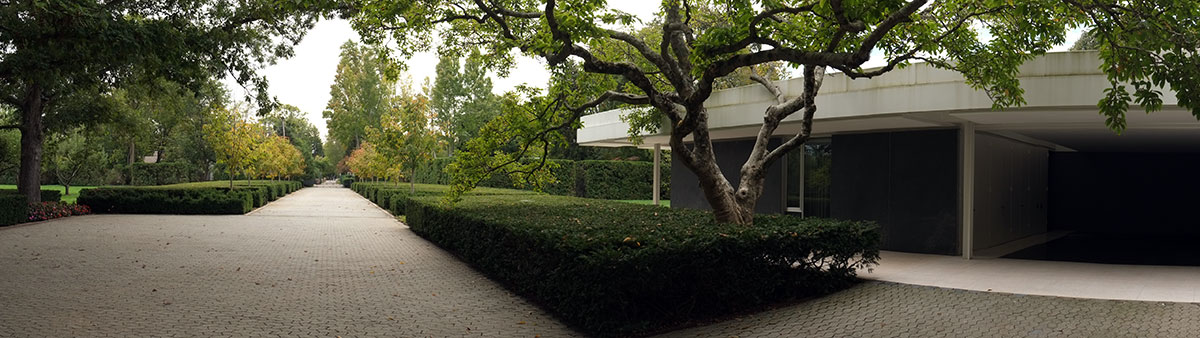
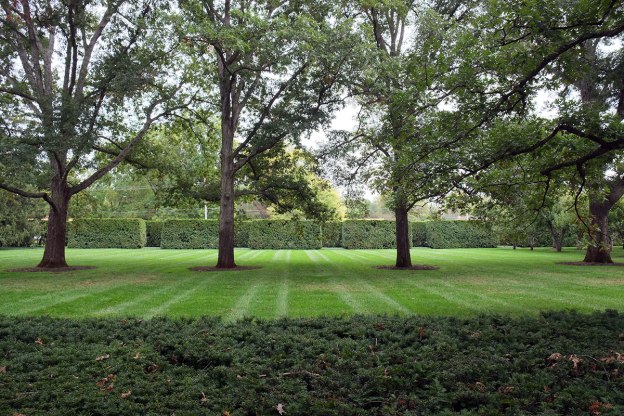
The house is superb, but Dan Kiley’s landscape is perhaps even better – extending the grid and zones of the house to the outside, creating an order on the site that is very formal, yet quiet and inviting.  DSCF0117

an allee at th rear of the house

an allee at th rear of the house

The downtown is full of notable buildings, but it doesn’t feel forced;  none of the buildings is striving for dominance.  In contrast to today’s flashy starchitect-branded landmarks, these buidlings fit well together, forming a coherent whole with each other, and the more normal commercial buildings of the town.  We don’t tend to think of modernist architects as being overly concerned with fitting into the context, but it is very clear that was the intention here.  Perhaps this was yet another requirement of the enlightened client?

the city hall, by SOM

the city hall, by SOM

library by IM Pei

library by IM Pei

inside the library

inside the library

the former newspaper office, by SOM

the former newspaper office, by SOM

a parking garage by Koetter/Kim

a parking garage by Koetter/Kim

The Saarinens were clearly the favorites, and after Eero’s early death, much work went to his successor firm, Roche Dinkeloo.

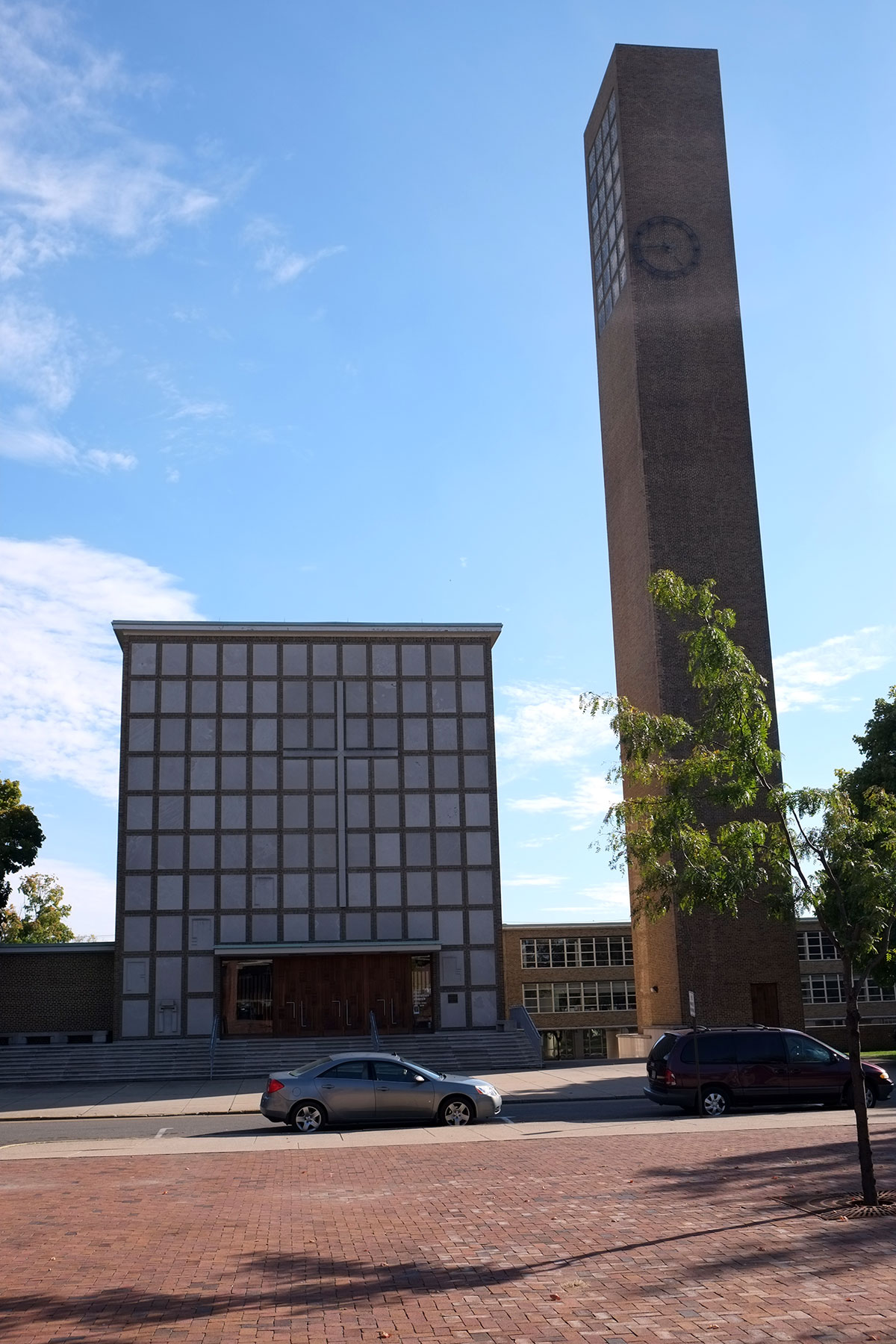
church by Eliel Saarinen

church by Eliel Saarinen

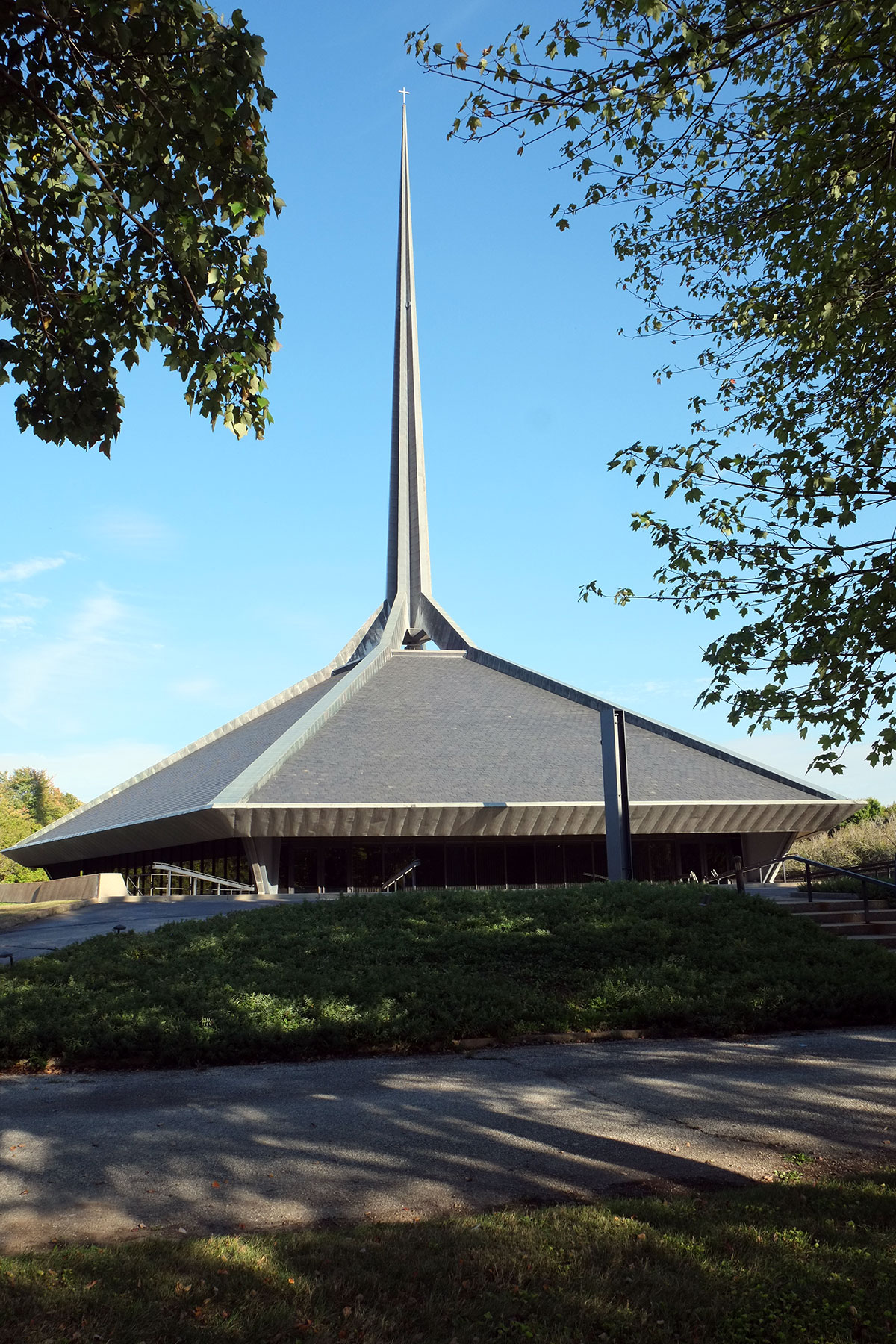
a church by Eero Saarinen

a church by Eero Saarinen, on the outskirts of town

the post office, by Roche Dinkeloo.  Lou Kahn on a government budget,

the post office, by Roche Dinkeloo. Lou Kahn on a government budget

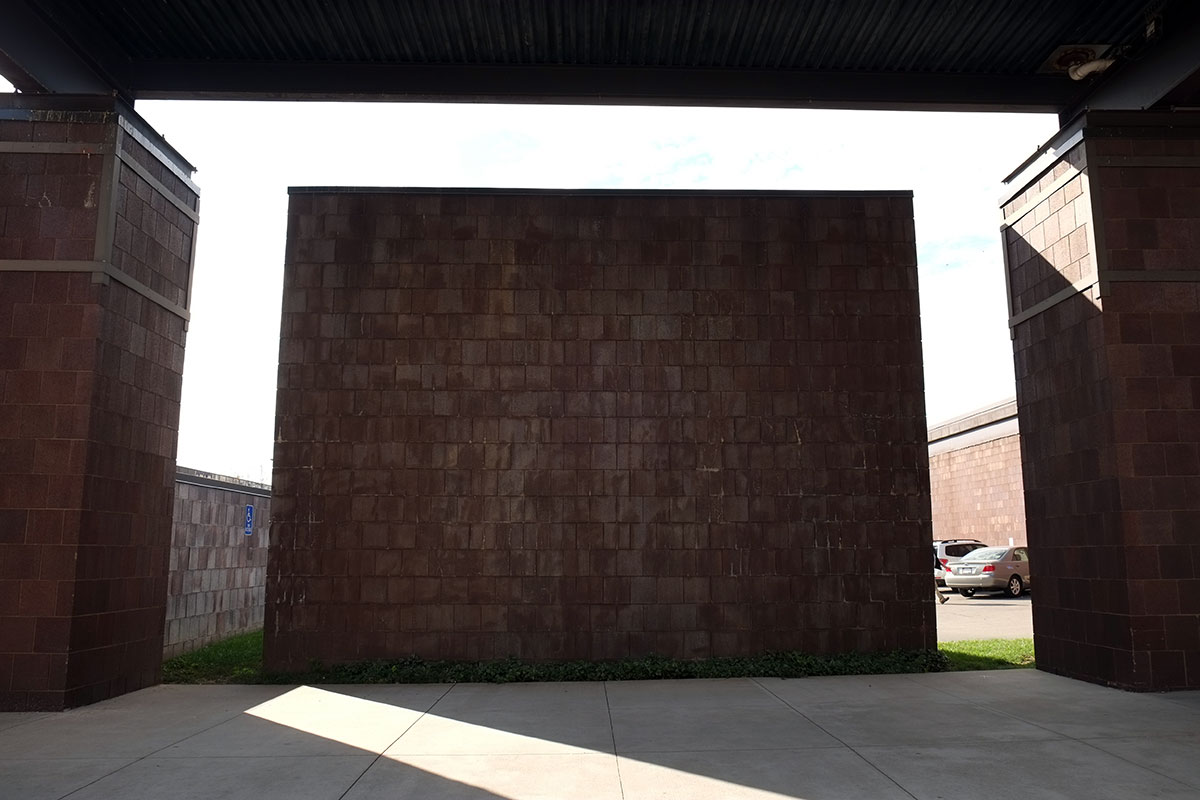
it resembles the monolith in 2001, but it is really just a screen wall hiding the parking lot

it may resemble the monolith in 2001, but it is really just a screen wall hiding the parking lot

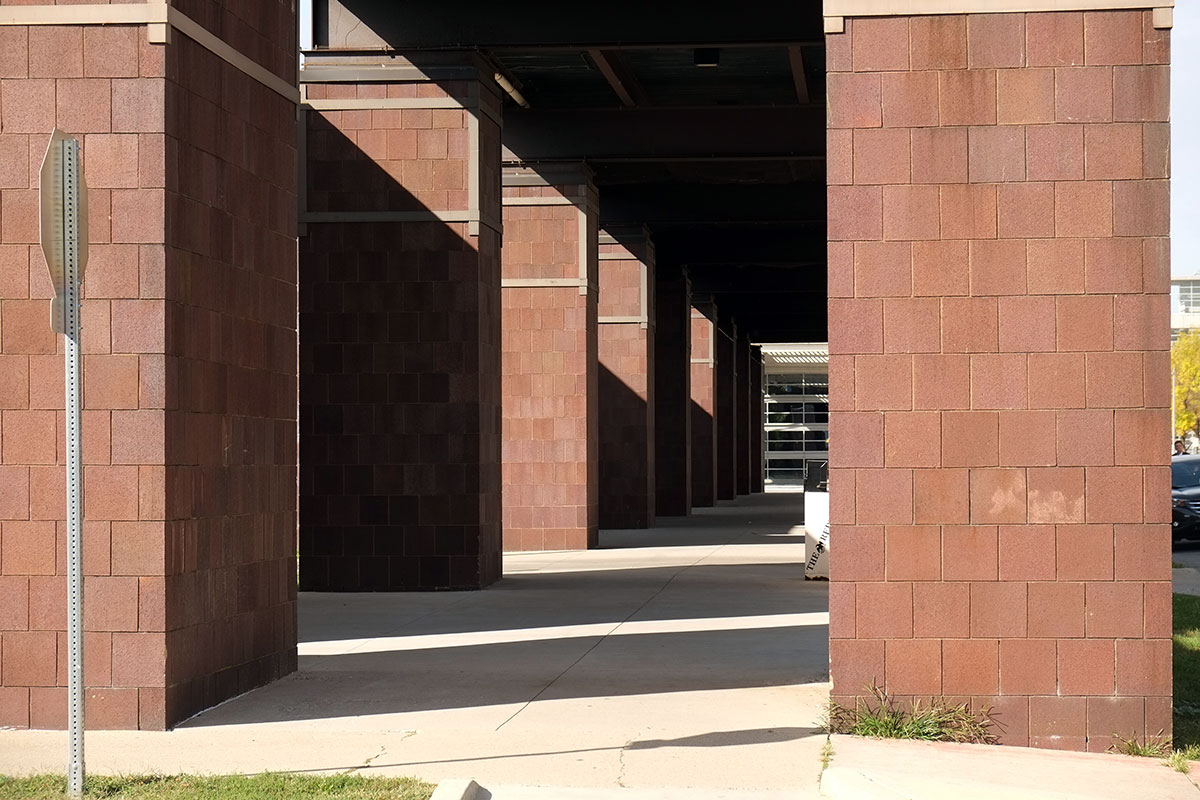
a giant portico wraps the site of the Cummins headquarters, again Roche Dinkeloo

a giant portico wraps the site of the Cummins headquarters, again Roche Dinkeloo

in the lobby of the headquarters, a huge open office landscape building, which takes off from Wright's Johnson Wax building, with its skylights integrated with the structural grid

in the lobby of the headquarters, a huge open office landscape building, which takes off from Wright’s Johnson Wax building, with its skylights integrated with the structural grid

architects of a certain age will be able to identify this building.  Did you know it came in color?

architects of a certain age will be able to identify this building. Did you know it came in color?

This is a really worthwhile place to visit – we barely scratched the surface in one day.  It is amazing to see what effect a great client can have on a whole city.

IIT

Last day in Chicago, time to do the serious architecture geek afternoon.  Knowing how much Greta would hate it, I dropped her at the Shedd Aquarium and walked down to IIT;  for you non-architects, the Illinois Institute of Technology, where Mies van der Rohe designed the campus plan and many of the buildings.  (Also, our former dean Frances Bronet is now the provost there, so I thought I should check it out to see how it compares to Lawrence Hall.)

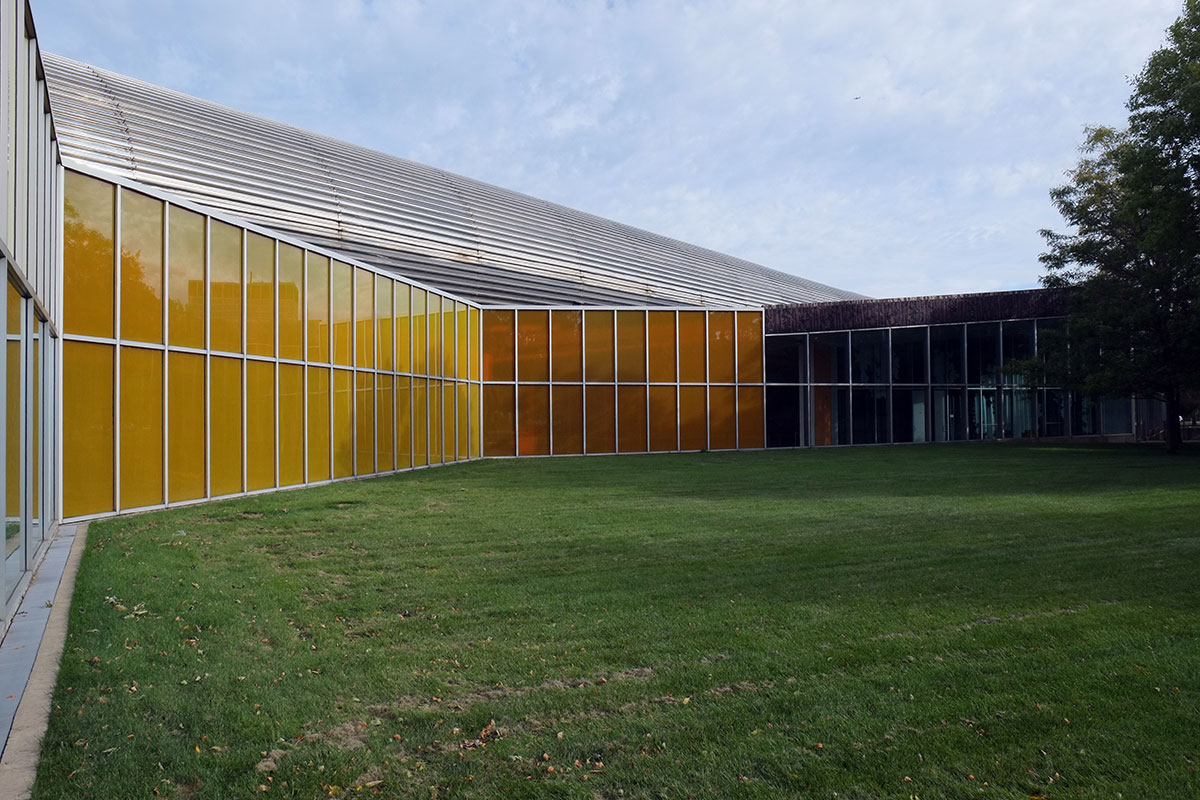
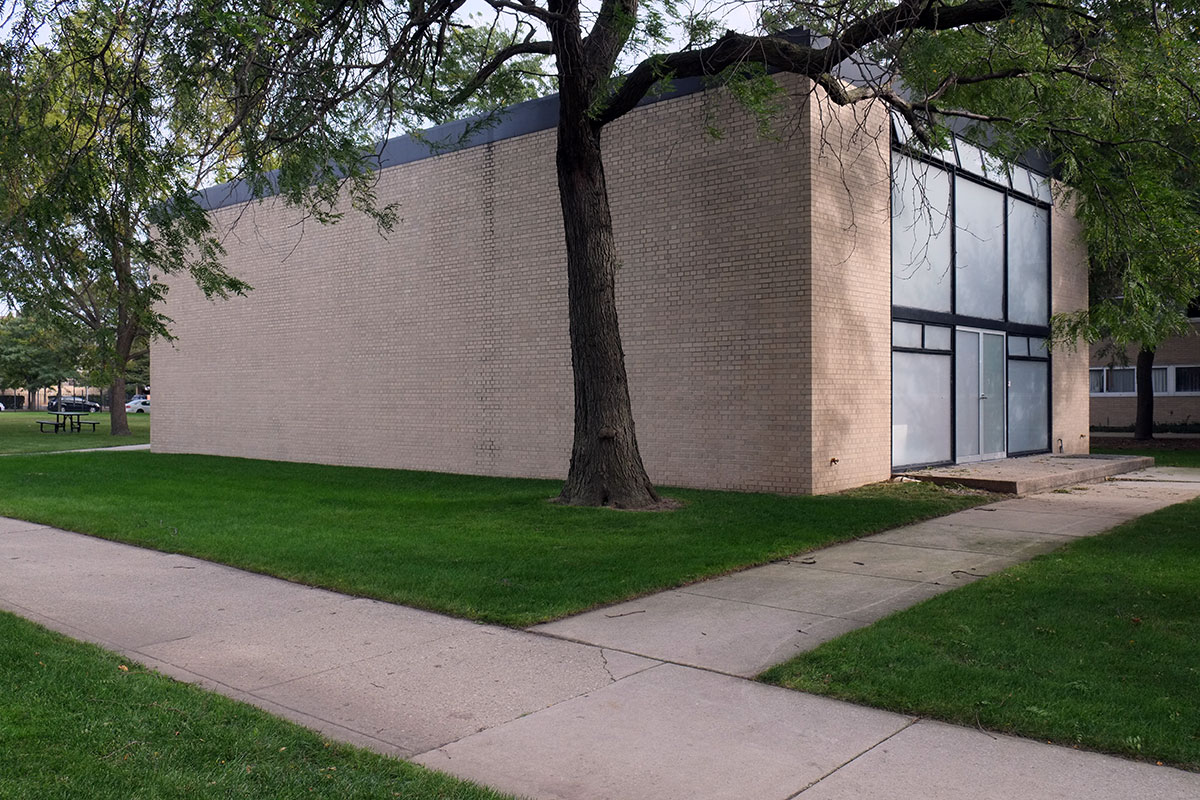
I had a jarring introduction to the campus, one where you start to question your grip on reality.  Having just walked four miles down Michigan Avenue after a lunch of Chicago pizza and a beer, when I got to the campus I went up to the first building I saw that wasn’t a locked dorm, looking for a bathroom.  Straightforward glass and steel facade, I went inside and found a bathroom right  by the entry.  I emerged, turned the corner, and came across this:DSCF9914Toto, I said, I don’t think we’re in Kansas anymore.  I walked out a different door, and saw this:

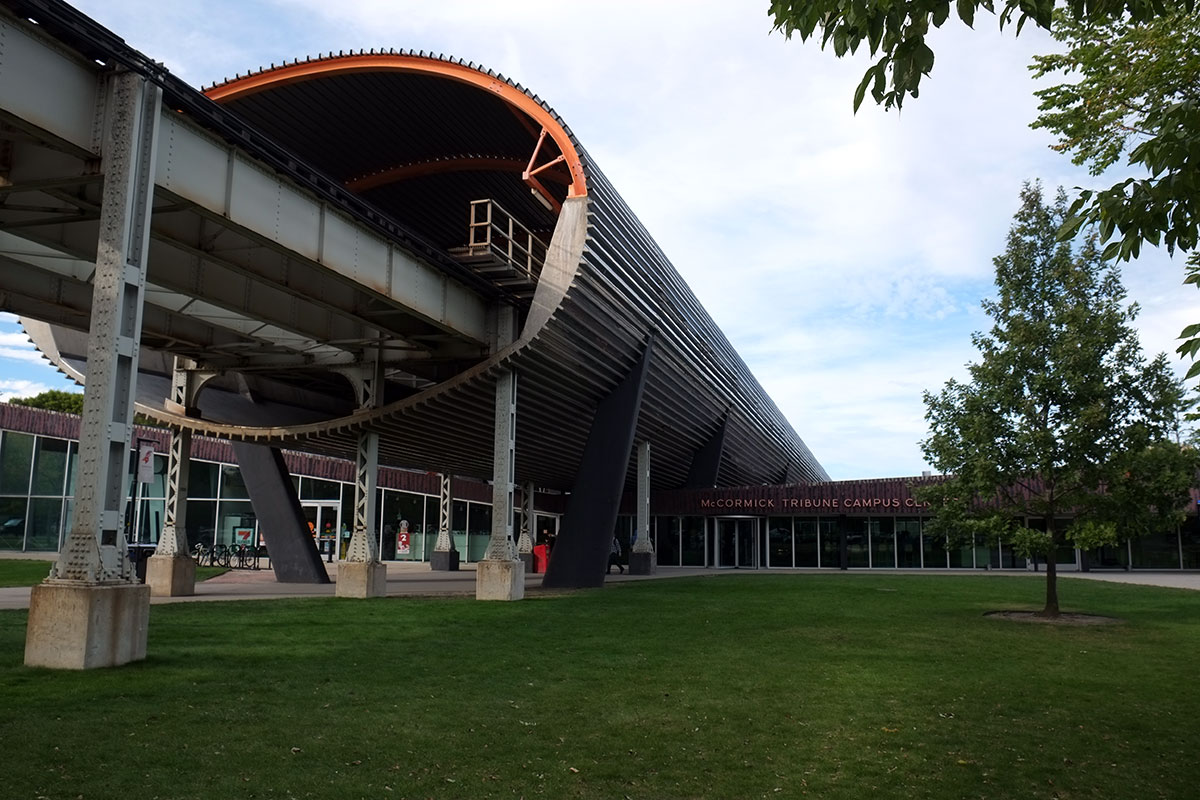
The reason Koolhaas wanted this site - Eurolille comes to Chicago

Aha, I said, it’s the Koolhaas building.  Reassured that I had not stumbled upon a break in the space/time continuum, I continued on in search of Miesian order.

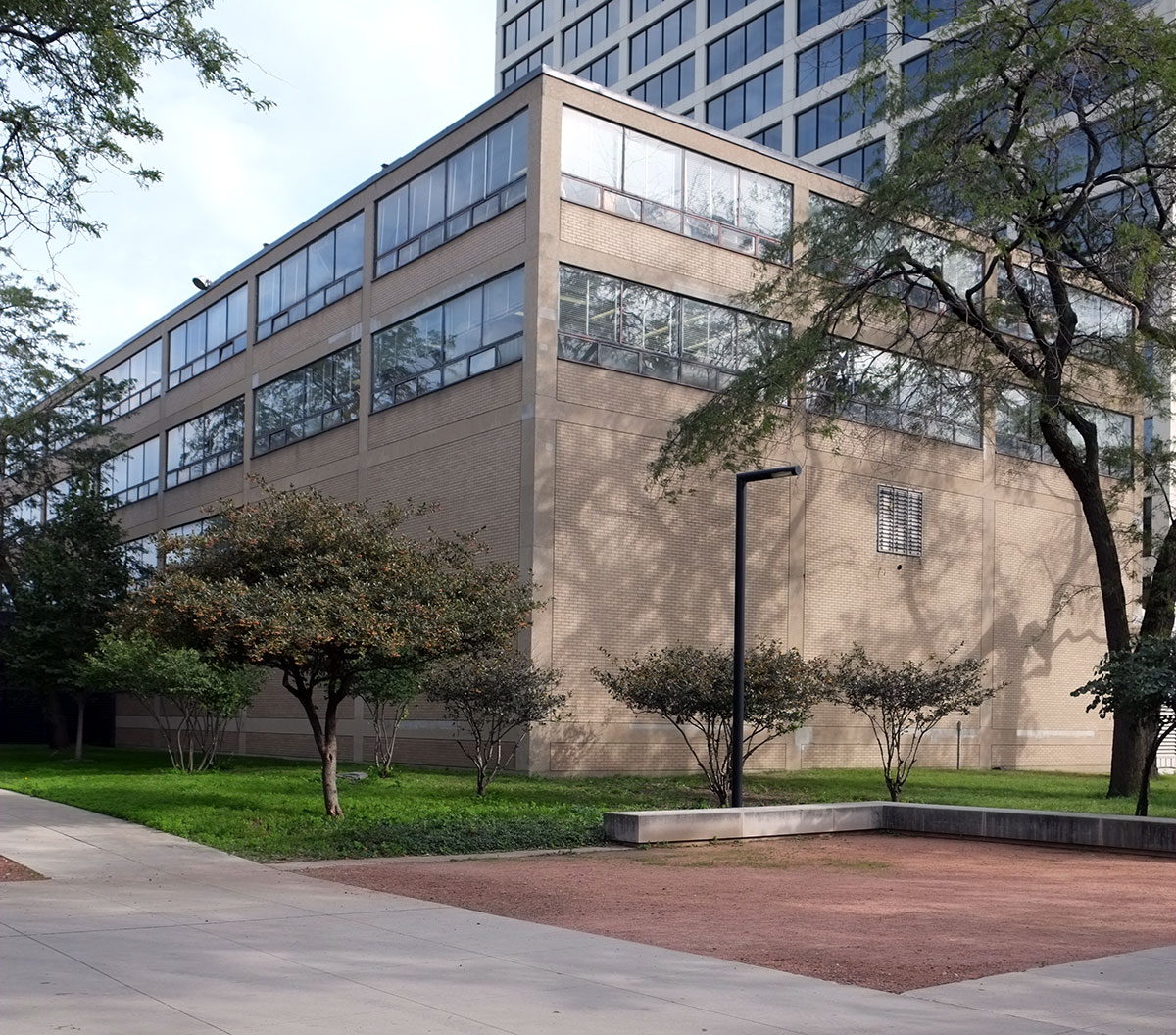
The campus was as expected, relatively low buildings in a highly-ordered site plan, where the mature vegetation provides the relief from the Miesian grid.  Similar to other American urban campuses, where there is a definite end to the city fabric as you enter acedemia, pleasant and relaxing after the bustle and decay of lower Michigan Avenue.  The buildings (whether by Mies or SOM) are all variations on the Miesian theme – strictly rectilinear, repetitive bays, with inflection in the facades according to function.  It’s like the Goldberg Variations – how many subtle change can you make within a rigid and limited system.  Quite a few, and it is definitely not for non-architects.DSCF9886 DSCF9881

DSCF9880

DSCF9903

The famous power plant, cf. Charles Jencks

The famous power plant, cf. Charles Jencks

Then you get to the apotheosis, Crown Hall.

The money shot

The money shot

You’ve all studied it, you know exactly what it’s going to be like, and it is still a surprise, spatially, tectonically, and especially in terms of use.

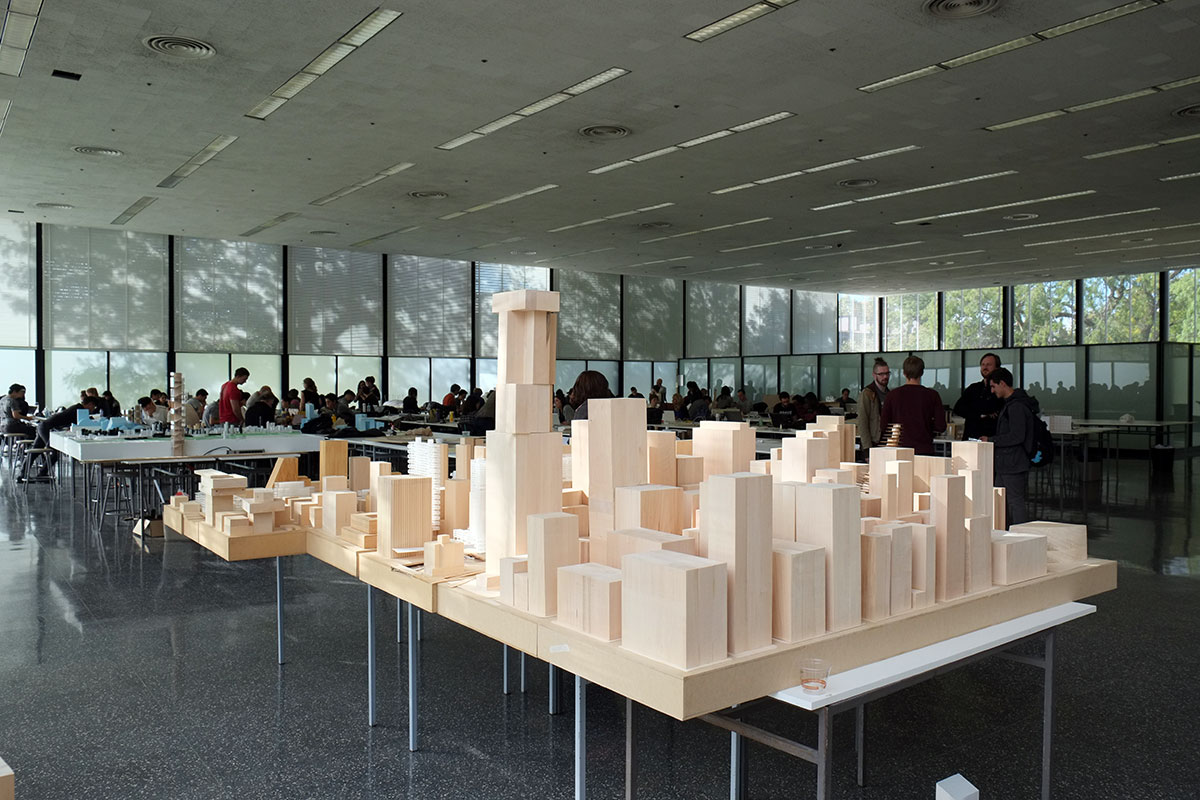
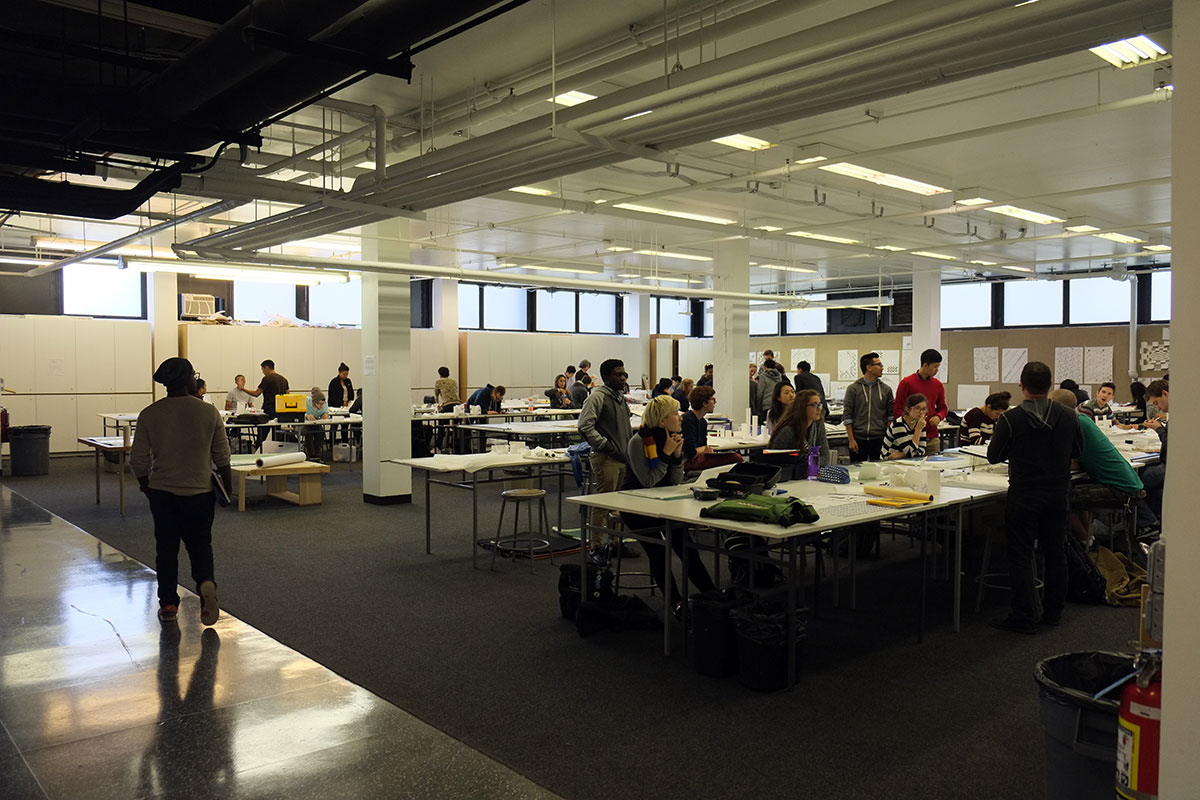
Studio - everyone sits together at long tables!

Studio – everyone sits together at long tables!

The faculty zone is much neater than the studios

The faculty zone is much neater than the studios

The classic corner detail

The classic corner detail

Nice model, they probably use it a lot

Nice model, they probably use it a lot

The basement studios aren't as nice as the main floor, but still better than many I know. But why did they have to have basement studios at all? Probably making it a two-story building just didn't look as good.

The basement studios aren’t as nice as the main floor, but still better than many I know. But why did they have to have basement studios at all? Probably making it a two-story building just didn’t look as good.

It is a great building, where you feel the expanse of space (there are no internal columns or full-height walls, as the roof is suspended from exterior girders), and the light washes through the building uninterrupted.

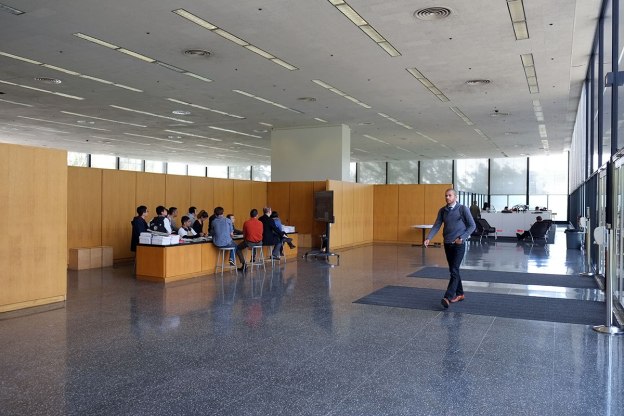
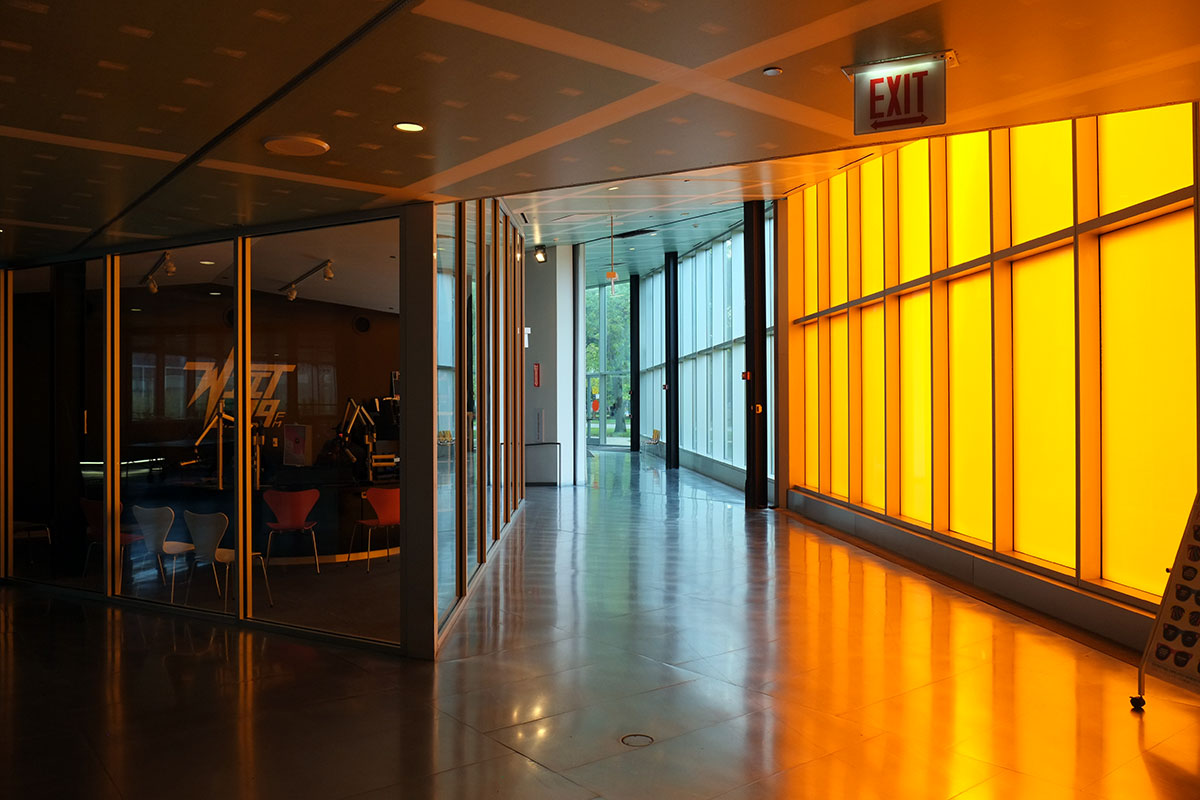
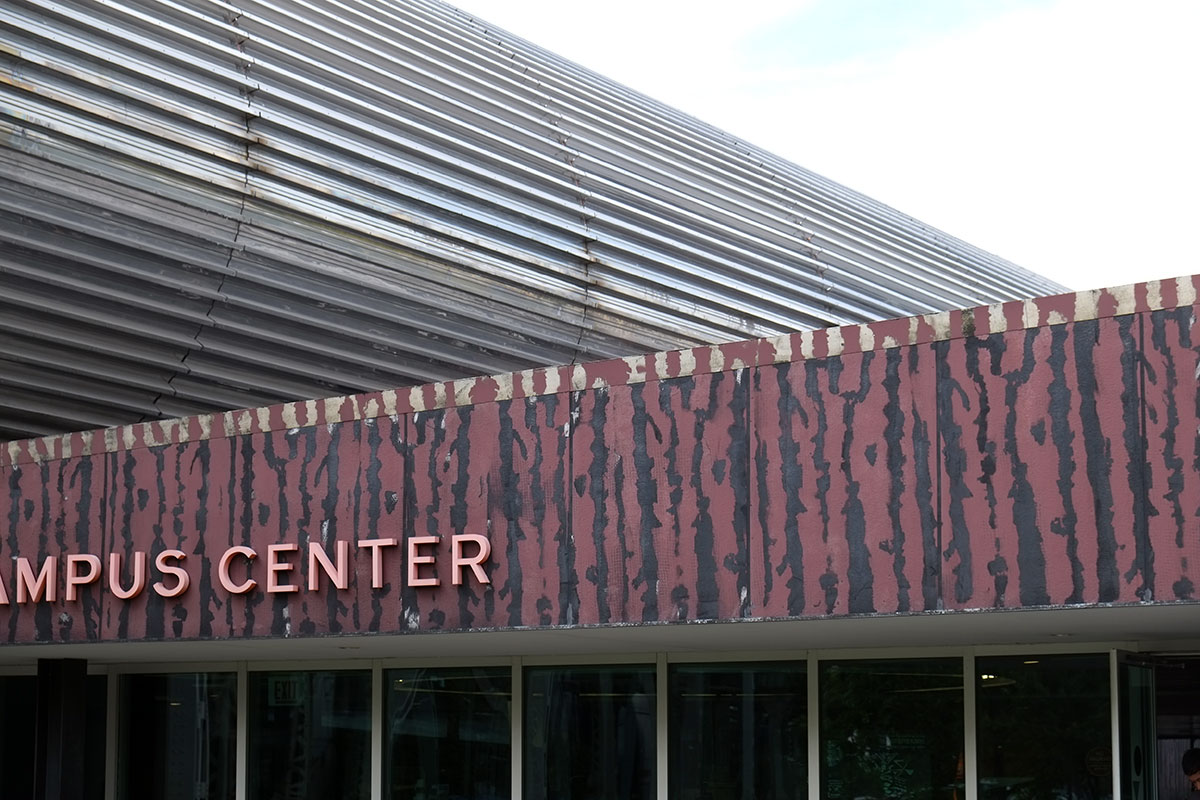
But having had enough of Miesian order, I decided to revisit the Koolhaas.  A fun building for a student center, angles and ramps and colors and chaos, with an elevated train in a tube on the roof. Then I started to wonder, how different is this really from the 1970s wing of the EMU on the UO campus (which was just demolished), or any of the other 60s student unions that ultimately derived from Erskine’s student union in Stockholm?  Was Erskine the first wave of dissent from universal space, and Koolhaas represents the second?

DSCF9939

Almost like being in Seattle

Almost like being in Seattle

DSCF9929

Koolhaas has set up the screens in the cafe that constantly play Judge Judy on a loop.

Koolhaas has set up the screens in the cafe that constantly play Judge Judy on a loop.

This is real.

This is real (albeit warped), not a strange photo collage.

Mies would not have approved.

Mies would not have approved.

The strange refracted orb/view/sun follows you down the hall.

The strange refracted orb/view/sun follows you down the hall.

Urinals in hell

Urinals in hell

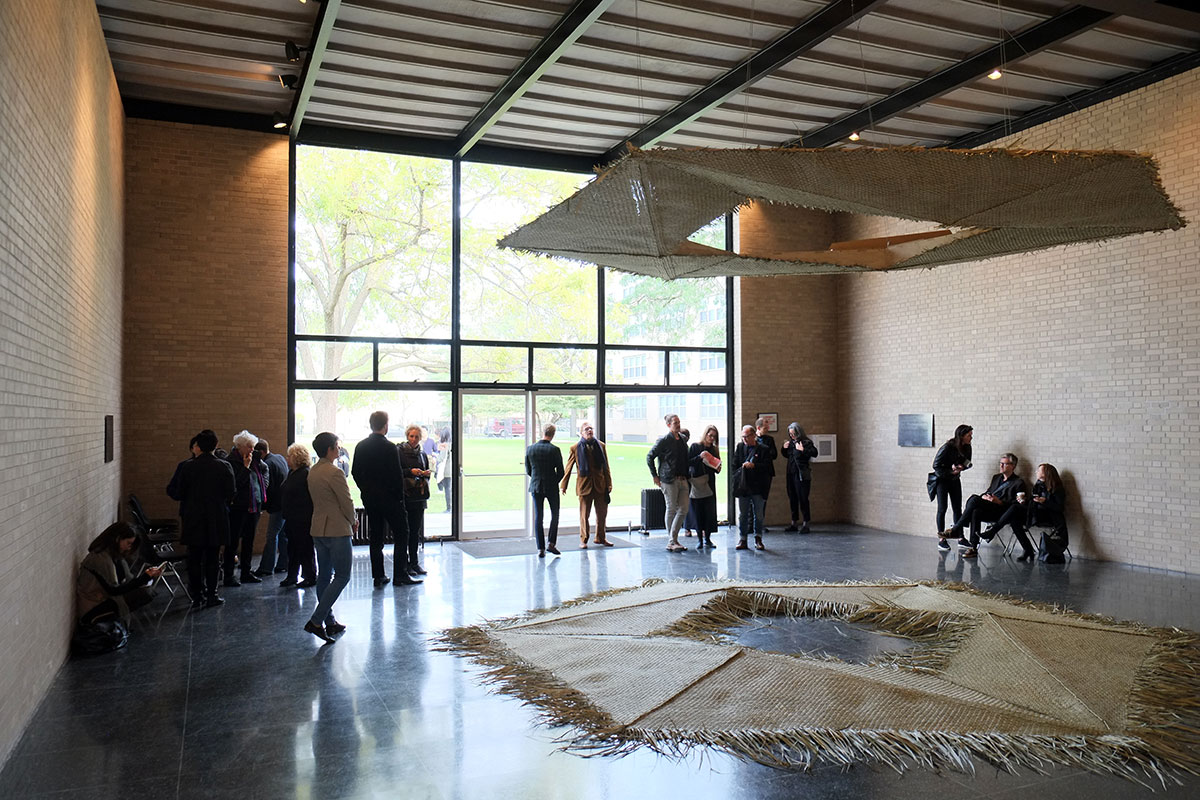
That last overwrought bathroom did me in, and I ran in search of one more bit of Miesian serenity.  I found the famous chapel, which was simple and elegant, not at all the minimalist joke that Jencks decried.DSCF9951

But when I went inside, I encountered thisDSCF9952

a roomful of architects (in their ceremonial black garments), worshipping at the First Church of Mies, Architect.

I left quickly before they noticed me, and returned to the messy world of the South Side of Chicago.

Chicago 3: downtown form

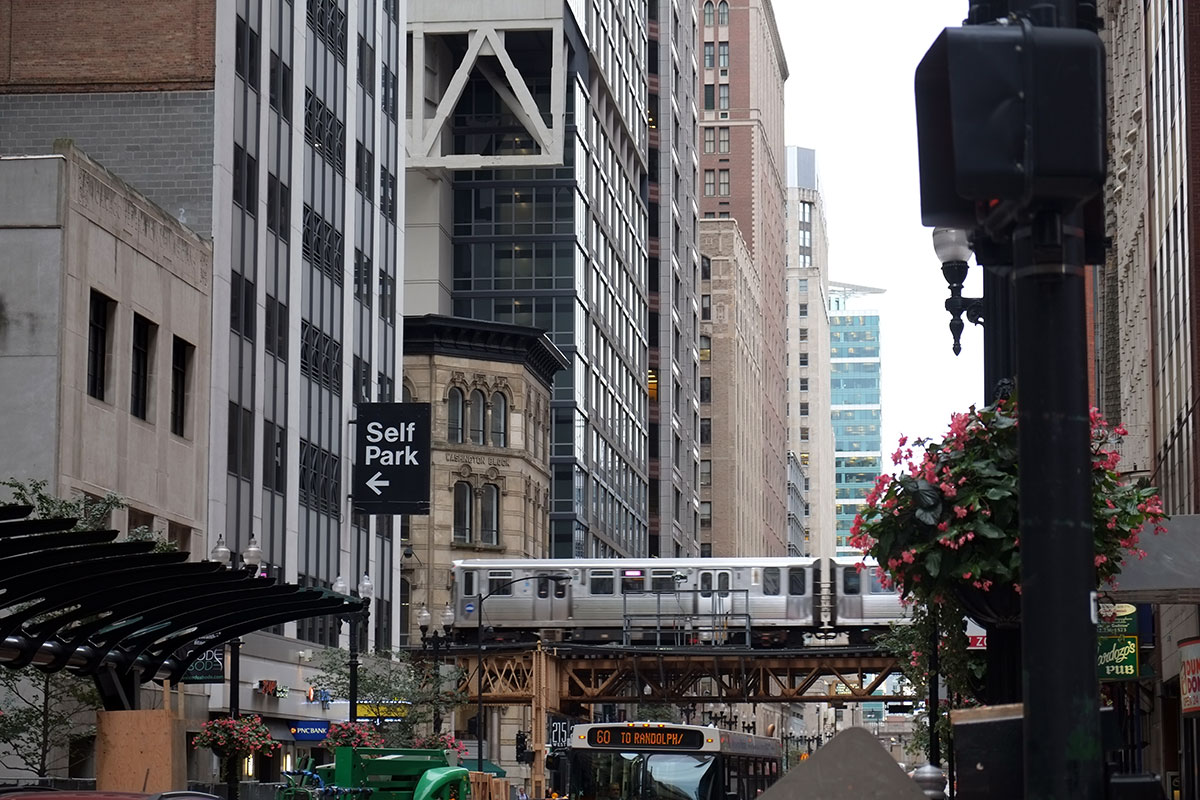
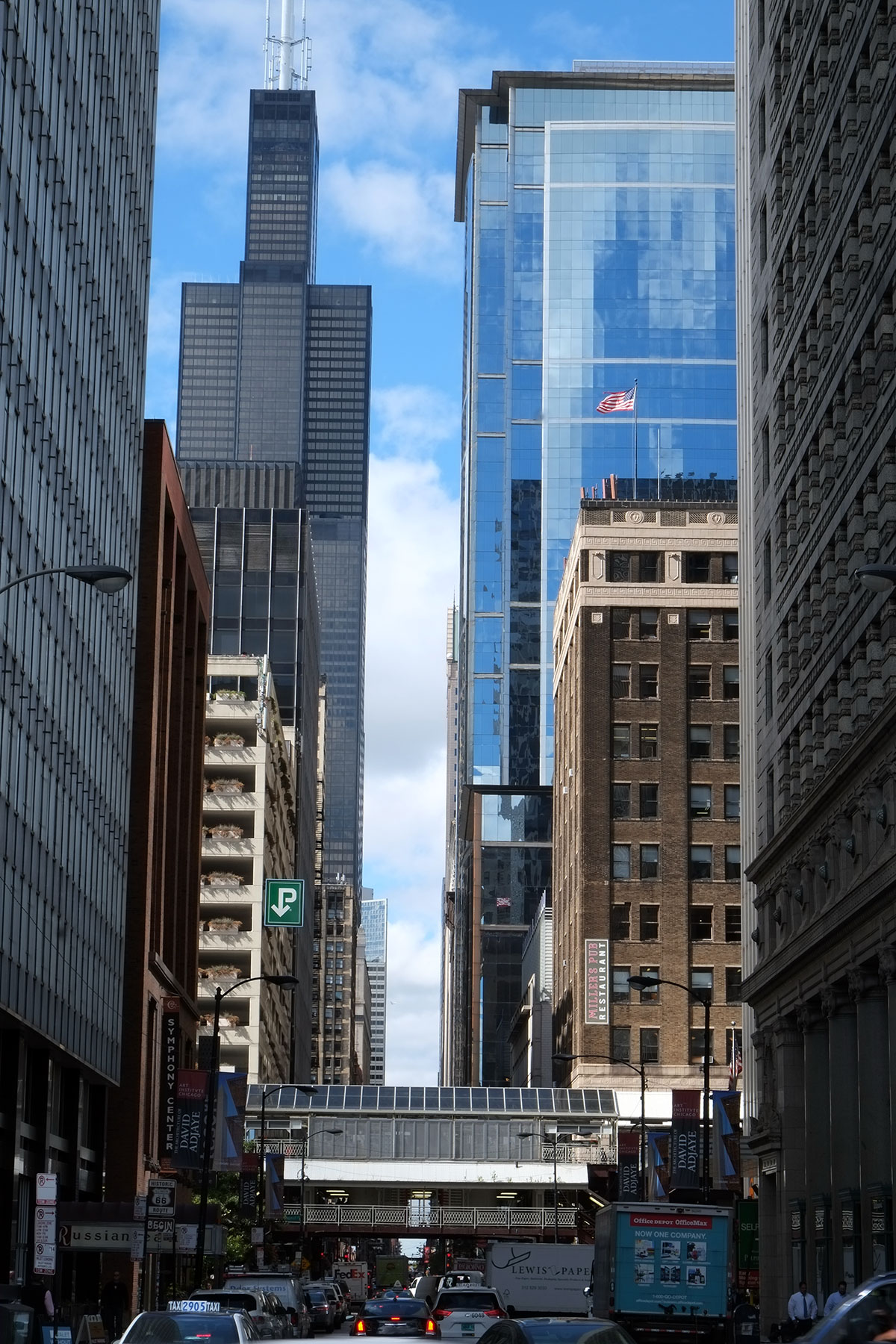
The evolution of the city’s form over the past 150 years was an issue that kept coming up for me.  I think it matters in two ways.  First, at the street level, there is marked contrast between those areas in the Loop that were developed in the 19th and early 20th centuries, with the block structure being set, and new buildings mixing in with old.  They are superb, with the urban-canyon density that says Big City to us.DSCF9529

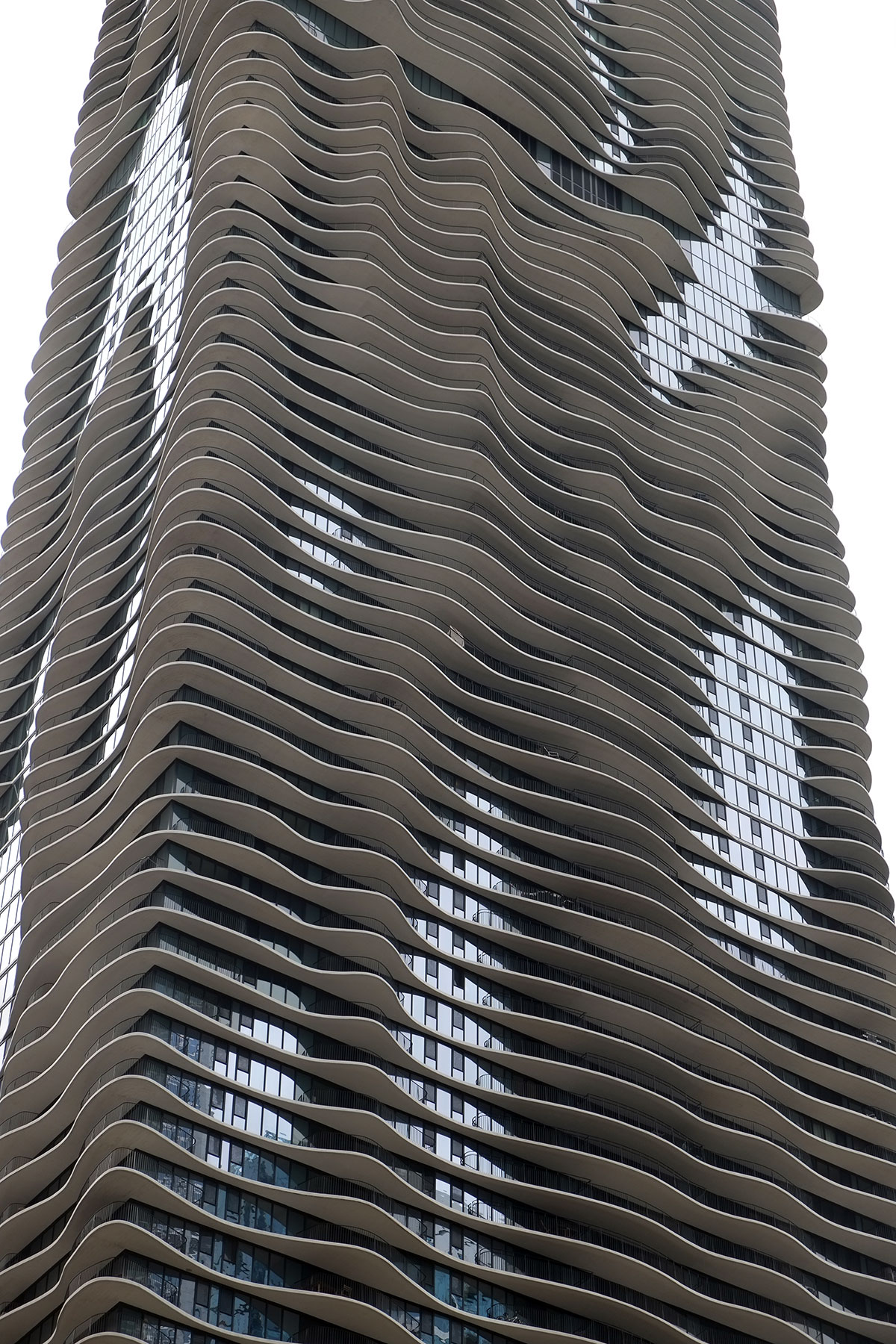
Then there are the areas where the streets/blocks/buildings were developed in the postwar era, such as the area east of Michigan and north of Grant Park, which is all postwar buildings, some good (the Aqua) but mostly banal.  It is truly desolate – pointlessly large windy plazas, a lack of scale (massive buildings everywhere), constant shadow, needlessly wide streets, no street life. This seems to be the pattern that is being repeated in other areas now, such as directly north of the river.

the 20th century meets the 21st

the 20th century meets the 21st

The weird multi-street-levels of downtown Chicago produces some strange places, like this.

The weird multi-street-levels of downtown Chicago produces some strange places, like this.

If, as Bob Stern says, "Architecture is a conversation across time", the 21st century is clearly saying "up yours."

If, as Bob Stern says, “Architecture is a conversation across time”, these buildings are clearly saying “up yours.”

The Aqua does a great job of punctuating all the rectilinearity, from many perspectives.

The Aqua does a great job of punctuating all the rectilinearity, from many perspectives.

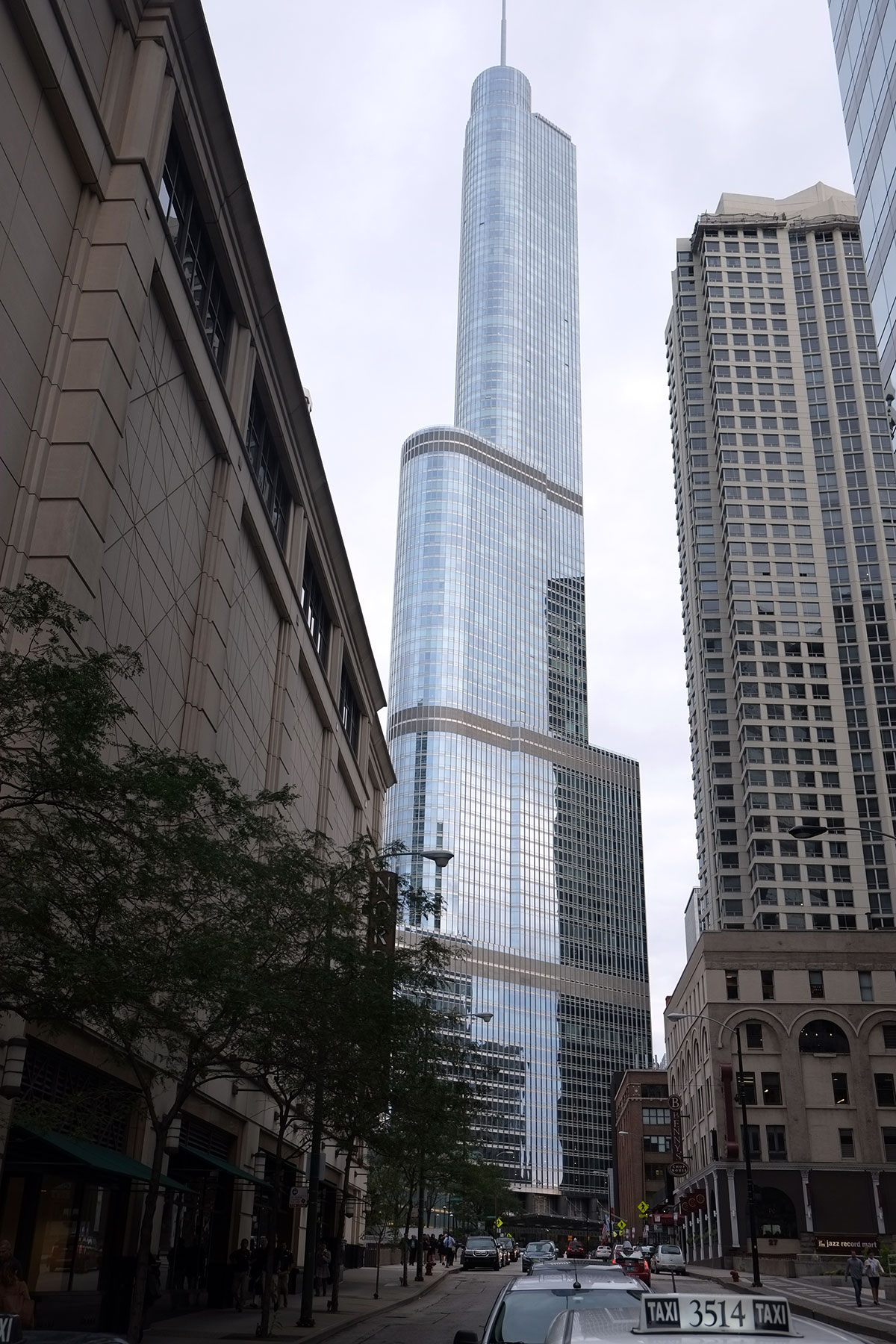
The second way in which this evolution plays out is at the level of building form, tectonics, detail, composition, etc.  Here again, the areas where there is a monoculture of post-war buildings are terrible – everything is the same, large expanses of curtain wall, no detail, every building obviously maxing out the zoning envelope.  The area on the river between Michigan Avenue and the Lake is the most glaring example of this – huge boring buildings, punctuated by the aggressive and simplistic Trump Hotel/tower thumb-in-the-eye.DSCF9730

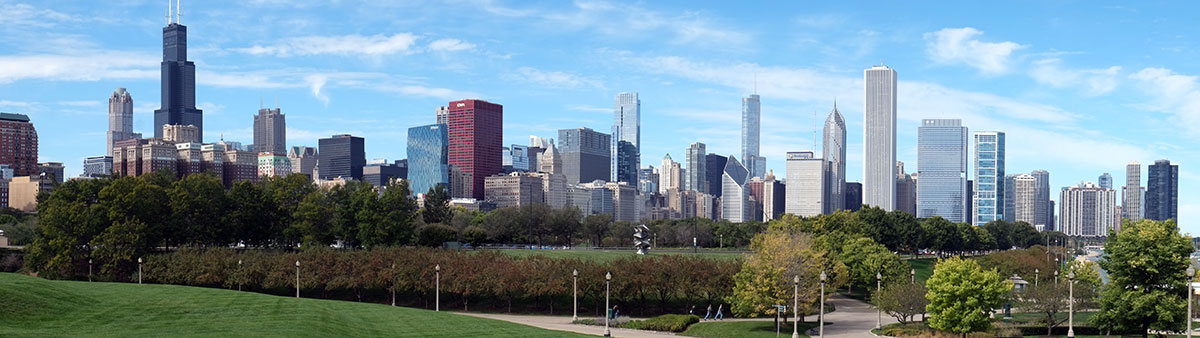
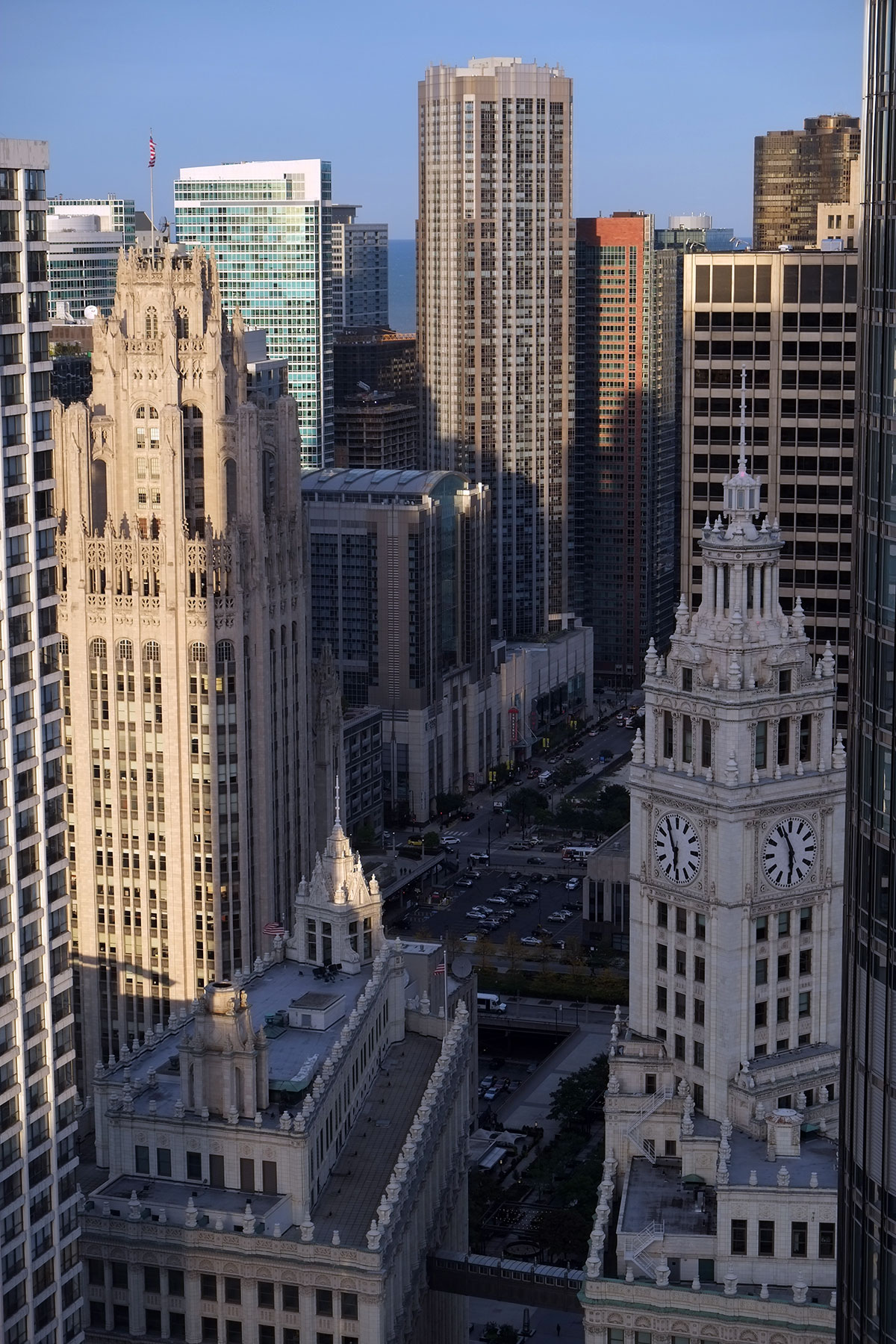
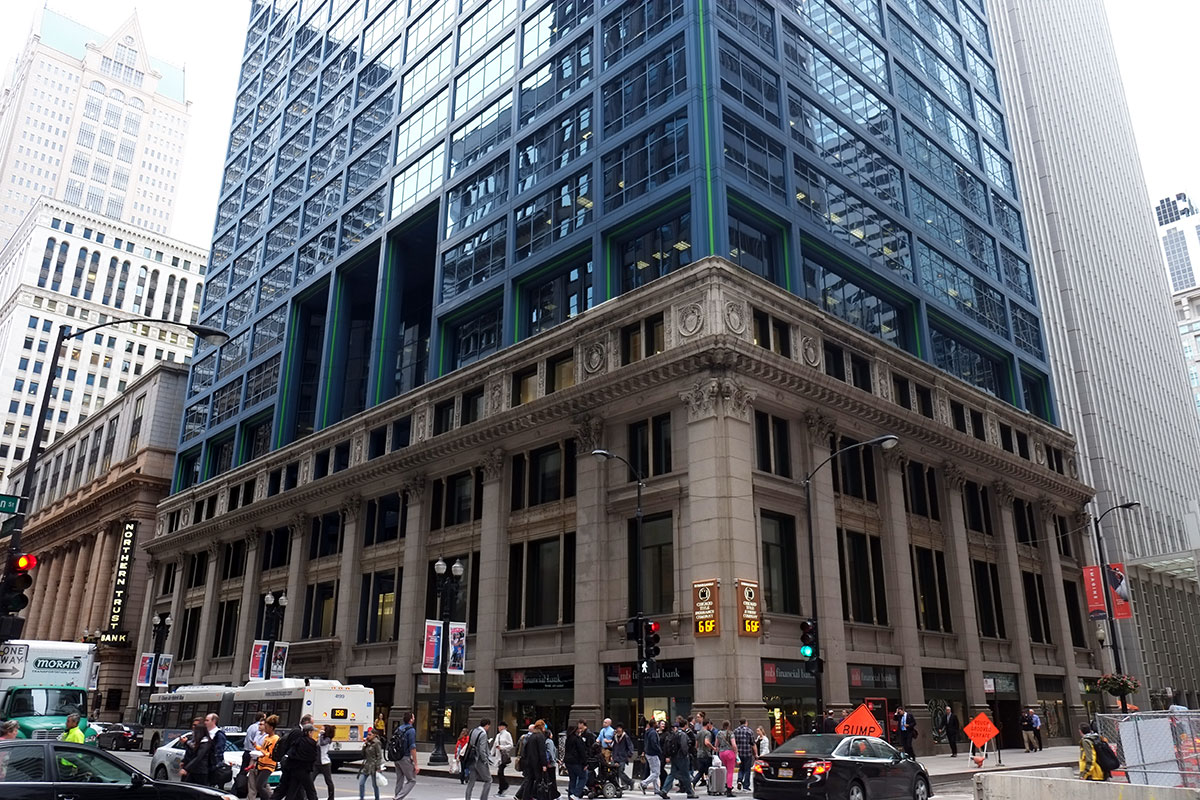
In contrast, those areas where there is a blend of scales, styles, eras, sizes, etc., are amongst the most beautiful city districts in the country.  One is always coming across places where the juxtaposition of the characteristics can be seen, a type of vertical collage that is unique to Chicago.DSCF9996

DSCF9506 DSCF9530 DSCF9599 DSCF9600 DSCF9607 DSCF9814

Even the Trump horror can be tamed by a varied context such as this:

DSCF9831 DSCF9834 DSCF9990 DSCF9998

DSCF9663

The variety and contrast is endlessly entertaining.  Perhaps we should write zoning ordinances that don’t focus upon the rules for one proposed building, but that somehow can acknowledge the overall gestalt of a neighborhood, and only allow buildings that will contribute to the greater whole.

Chicago 2: strolling around the big city

A week in Chicago with superb tourist weather – moderate temperatures and blue skies, but a wind that blew around 30 mph off the Lake the whole time we were there (enough to give Greta pause about visiting in the winter).  The Grand Bargain was achieved – the correct balance between looking at science and animals in museums (the Field Museum, Museum of Science and Industry, the Shedd Aquarium) and architecture (snuck in mainly while walking to museums).  The last afternoon we went our separate ways, with Greta in the Aquarium, and me Mies-ing out at IIT.

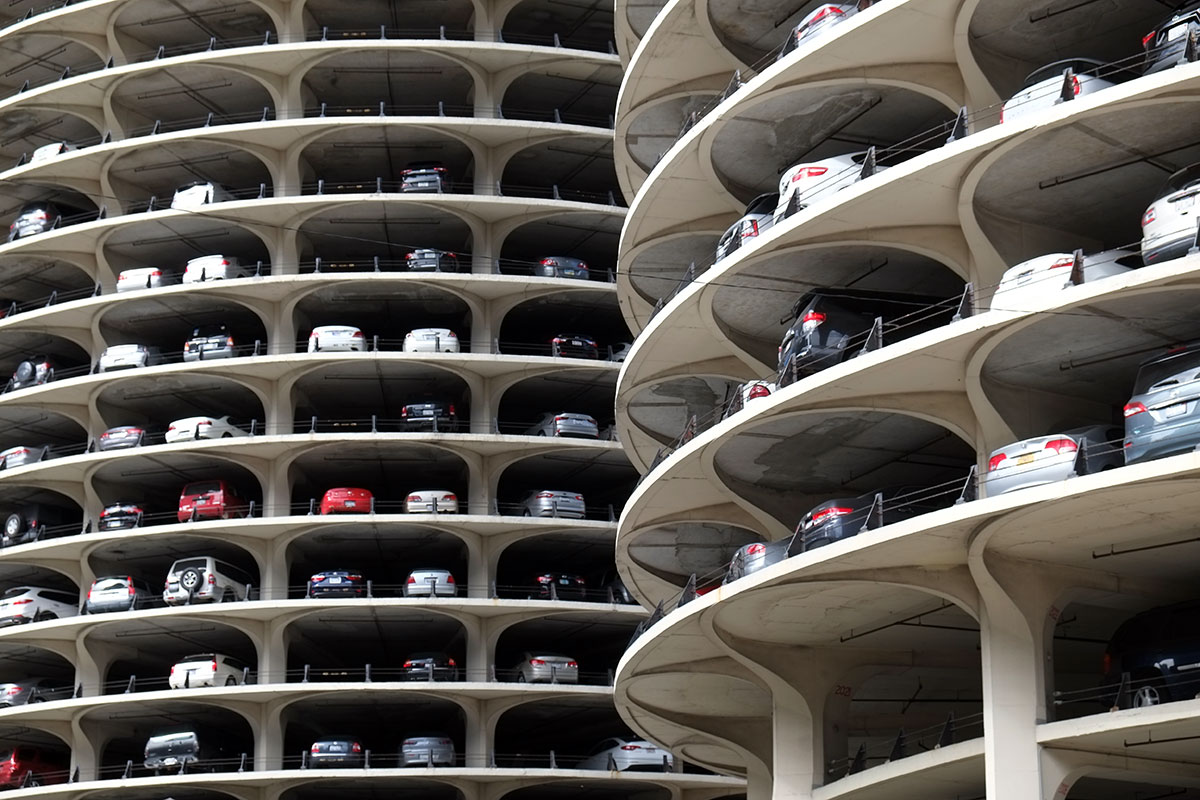
Marina Towers top

Marina Towers top

Marina Towers bottom

Marina Towers bottom

The cupcake ATM: access to cupcakes at all hours

The cupcake ATM: access to cupcakes at all hours

Greta with the mascot for our trip.

Greta with the mascot for our trip.

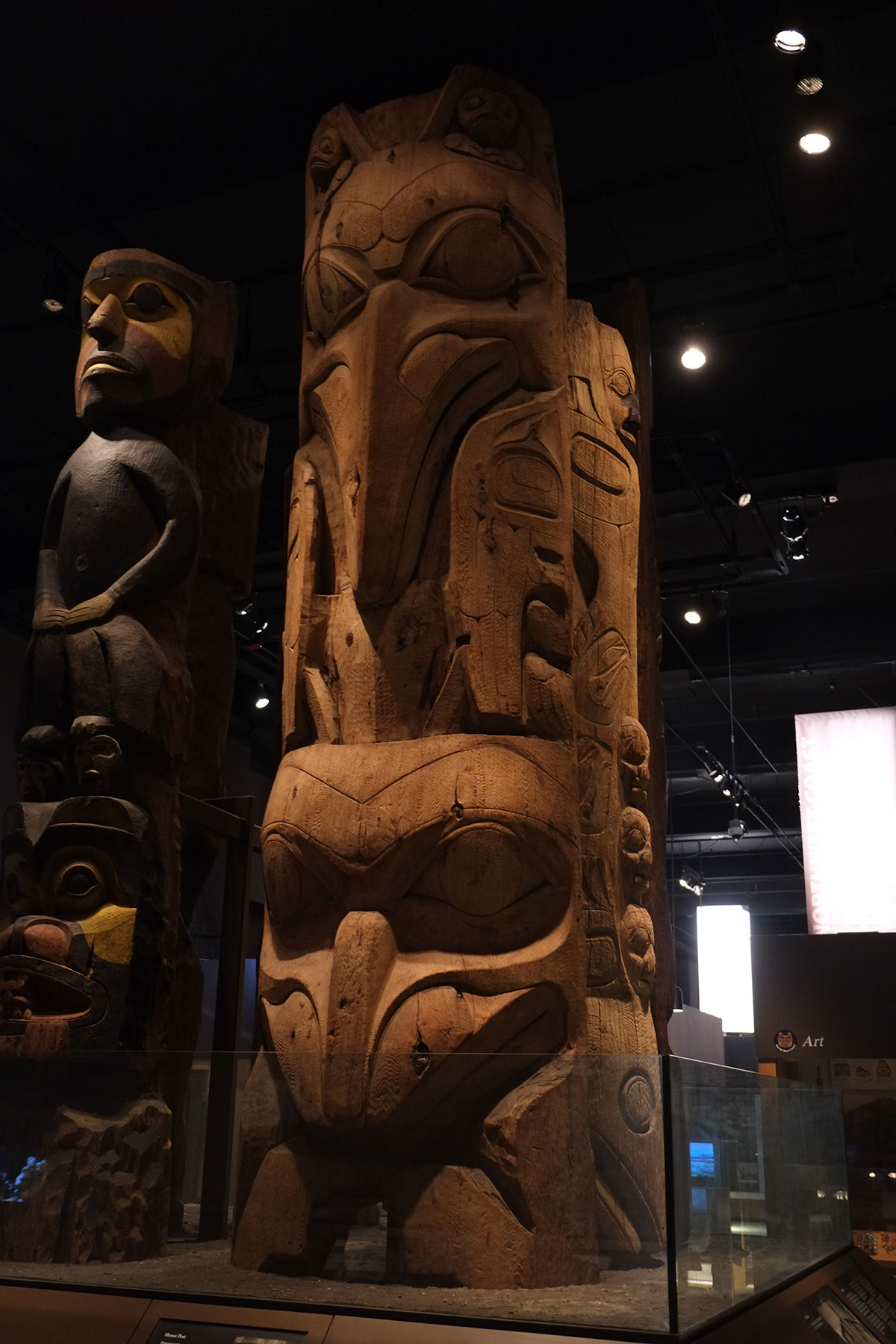
The Field has a great NW collection. This house pole was owned by Charles Edenshaw, who was Boas's informant in the Haida cutlture.

The Field has a great NW collection. This house pole was owned by Charles Edenshaw, who was Boas’s informant in the Haida cutlture.

A peak moment for a dinosaur nerd, Greta meets Sue

A peak moment for a dinosaur nerd, Greta meets Sue

The Cloud / blob at its best.

The Cloud / blob at its best.

As the building size has increased, the importance of the early skyscrapers, such as the Gage group by Sullivan and Holabird & Roche, is sometimes overlooked.

As the building size has increased, the importance of the early skyscrapers, such as the Gage group by Sullivan and Holabird & Roche, is sometimes overlooked.

DSCF9578

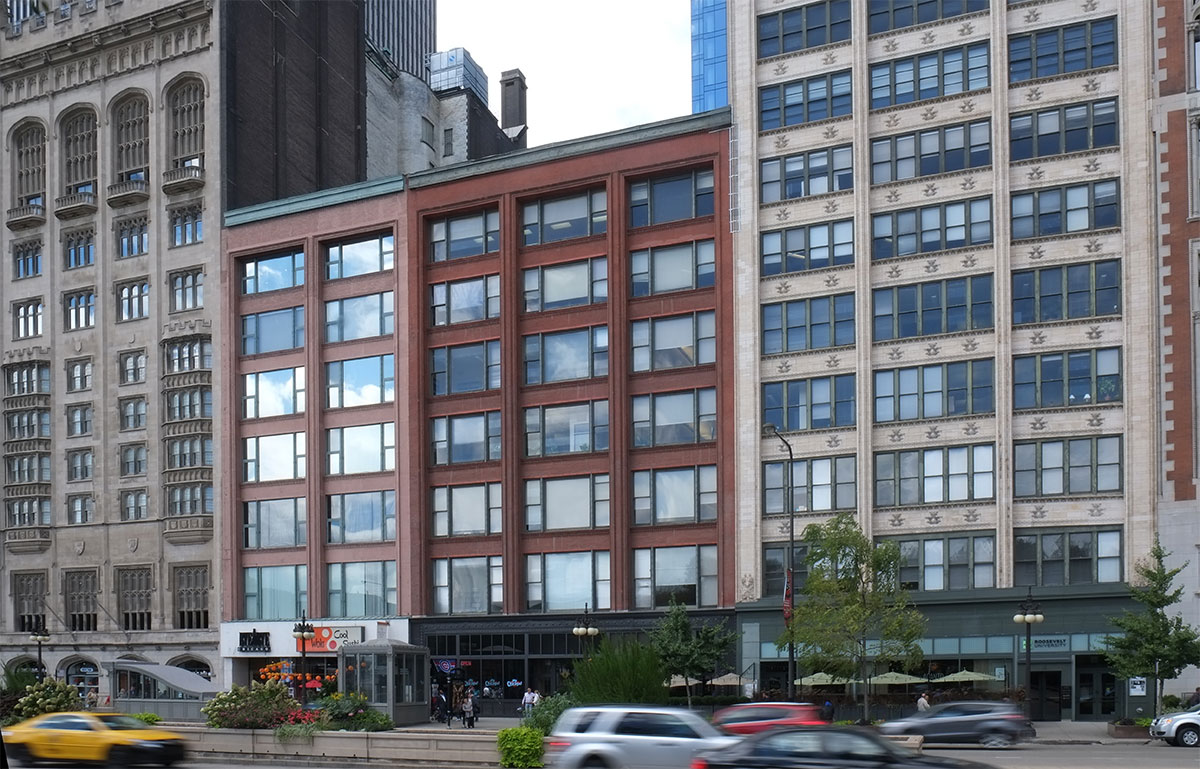
In a city renowned for its tall buildings, I've aways loved this short palladian on Michigan Ave.

In a city renowned for its tall buildings, I’ve aways loved this short palladian on Michigan Ave.

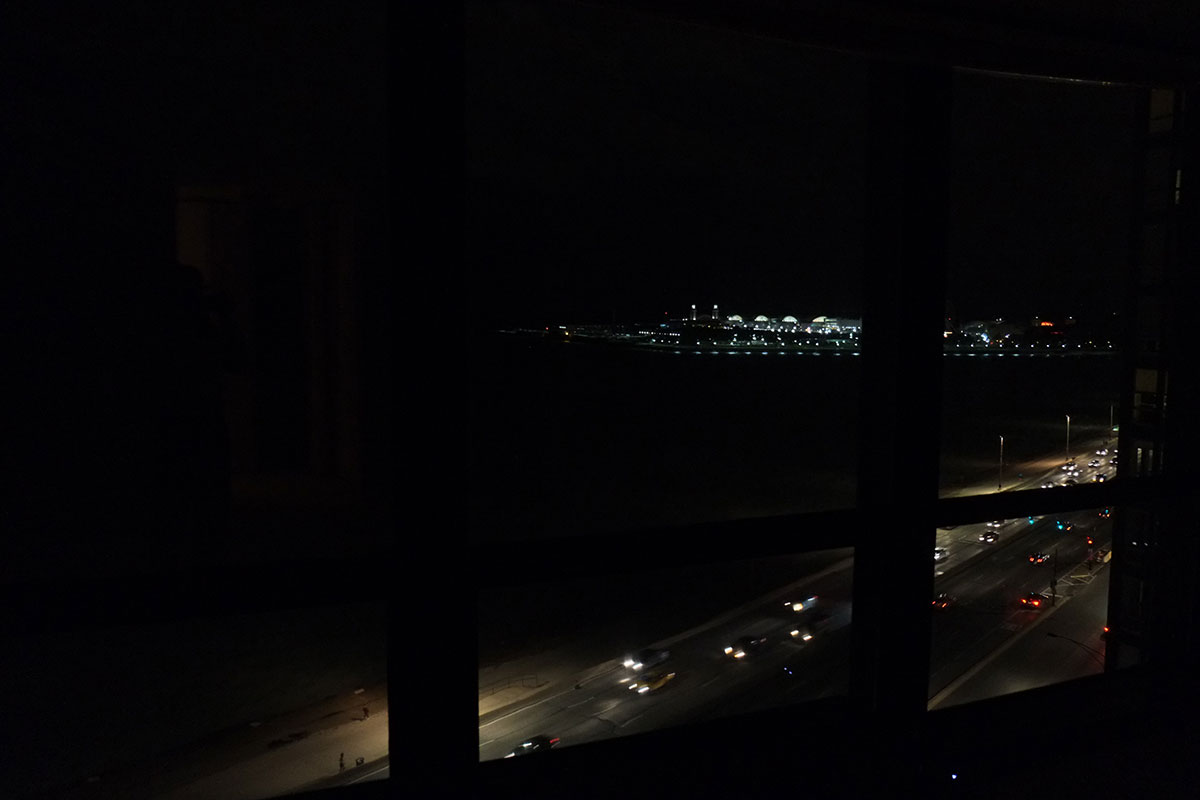
Nightime view on lake Shore Drive.

Nightime view on lake Shore Drive.

Staying in a corner room in a Mies apartment building on Lake Shore Drive, the teenager will pull all the blinds so she can look at an iPad.

Staying in a corner room in a Mies apartment building on Lake Shore Drive, the teenager will pull all the blinds so she can look at an iPad.

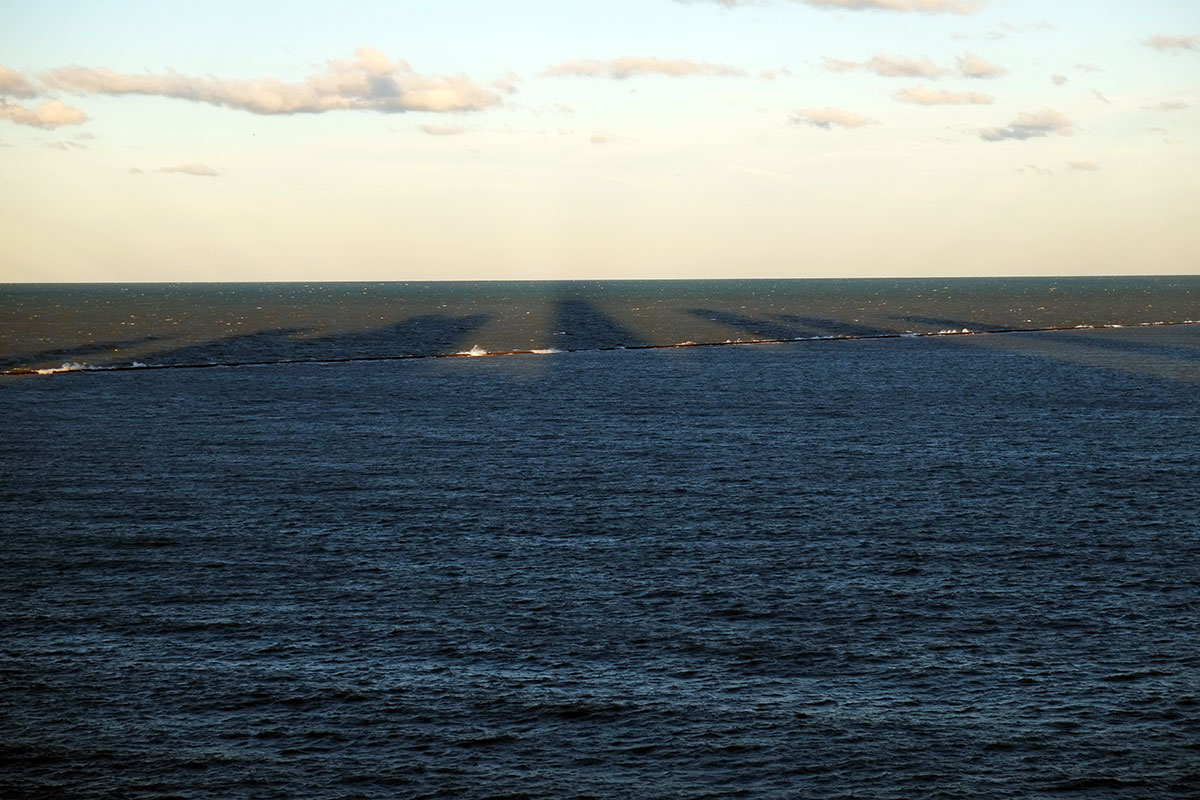
The view from the Mies building on Lake Shore Drive, as the setting sun casts building shadows on the Lake.

The view from the Mies building on Lake Shore Drive, as the setting sun casts building shadows on the Lake.

If Minneapolis had the stadium-as-kaiju, Chicago has the Helmut-Jahn-builds-a-Death_Star building.

If Minneapolis had the stadium-as-kaiju, Chicago has the Helmut-Jahn-building-as-Death-Star-under-construction..

The Death Star from the exterior. It's a crazy, anti-ruban building some ways, but it's probably my favorite Helmut Jahn building. At least it's fun.

The Death Star from the exterior. It’s a crazy, anti-urban building in some ways, but it’s probably my favorite Helmut Jahn building. At least it’s fun.

Someone clearly beat me to the idea of urban camping.

Someone clearly beat me to the idea of urban camping.

At the Museum of Science and Industry.

At the Museum of Science and Industry.

Our only question is where is the El that Batman has to destroy before it plows into Wayne Enterprises?

Our only question is where is the El that Batman has to destroy before it plows into Wayne Enterprises?

We had to drive 2700 miles to see this?

We had to drive 2700 miles to see this?

Greta waves to her cousin Audrey, who had to get ready for a meeting, and so couldn't come out to play. The life of an management consultant.

Greta waves to her cousin Audrey, who had to get ready for a meeting, and so couldn’t come out to play. The life of a management consultant.

Mariano Park: having spent most of my Chicago visits in the Loop, I wasn't aware that these great little squares / parks existed.

Mariano Park: having spent most of my Chicago visits in the Loop, I wasn’t aware that these great little squares / parks existed.

Sunrise over Lake Michigan

Sunrise over Lake Michigan

Chicago 1

DSCF9472We’ll be visiting some cities on this trip that will be new to me, and most will be new to Greta (although she did spend some time in Chicago when she was two).  But there’s a peculiar pleasure in seeing a city you’ve visited with some frequency over the years.  You don’t have to rush around seeing all the top sites.  You know your way around, and you know what it used to be like.  You can catch the new stuff, and casually re-visit favorite places.  So the agenda in Chicago this week will be largely driven by Greta, who cares more about museums and food (wasn’t that the title of an Updike story?) than architecture.  I’ll take the stealth approach, and walk her past lots of architecture on the way to museums.

DSCF9381

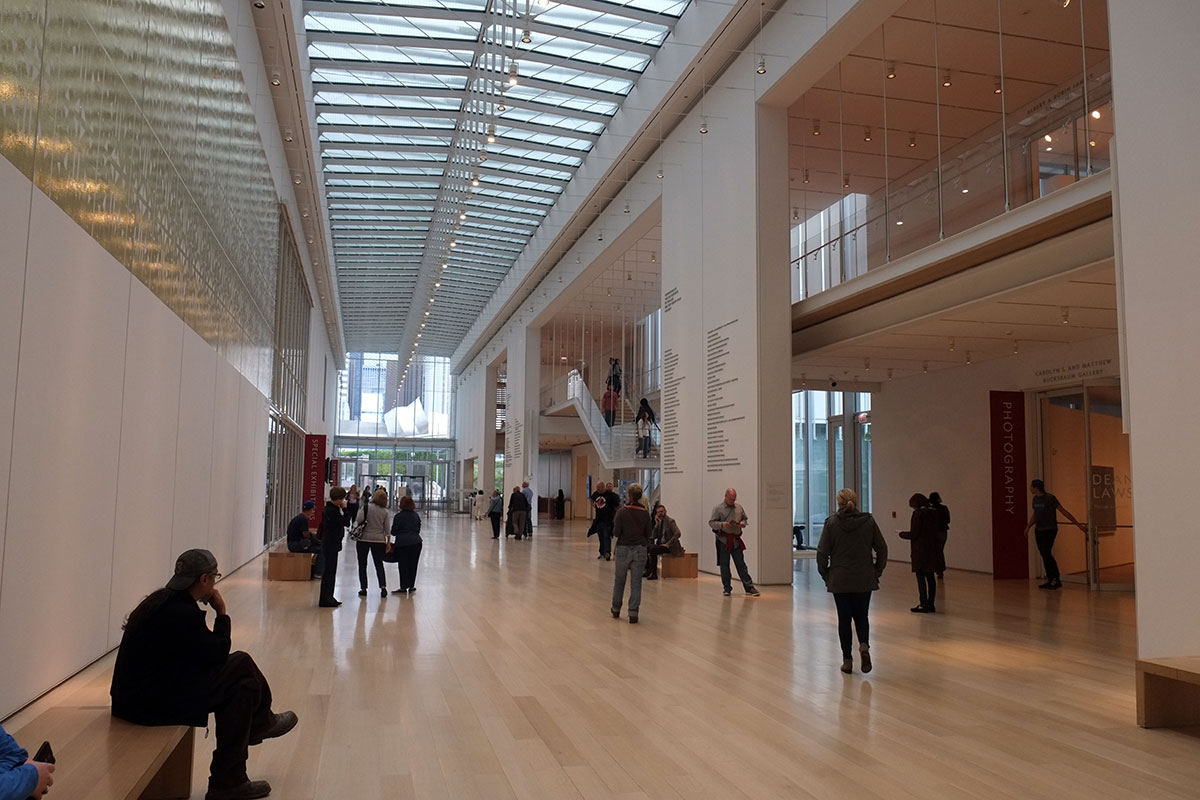
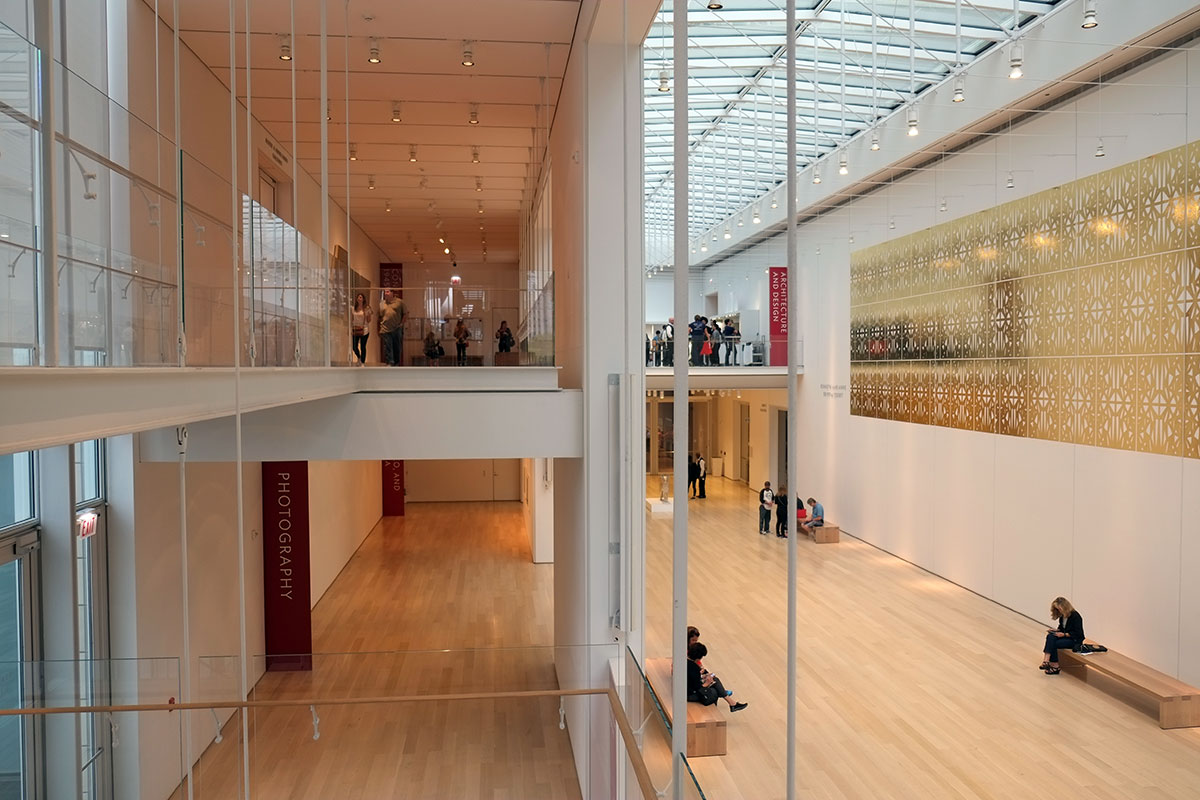
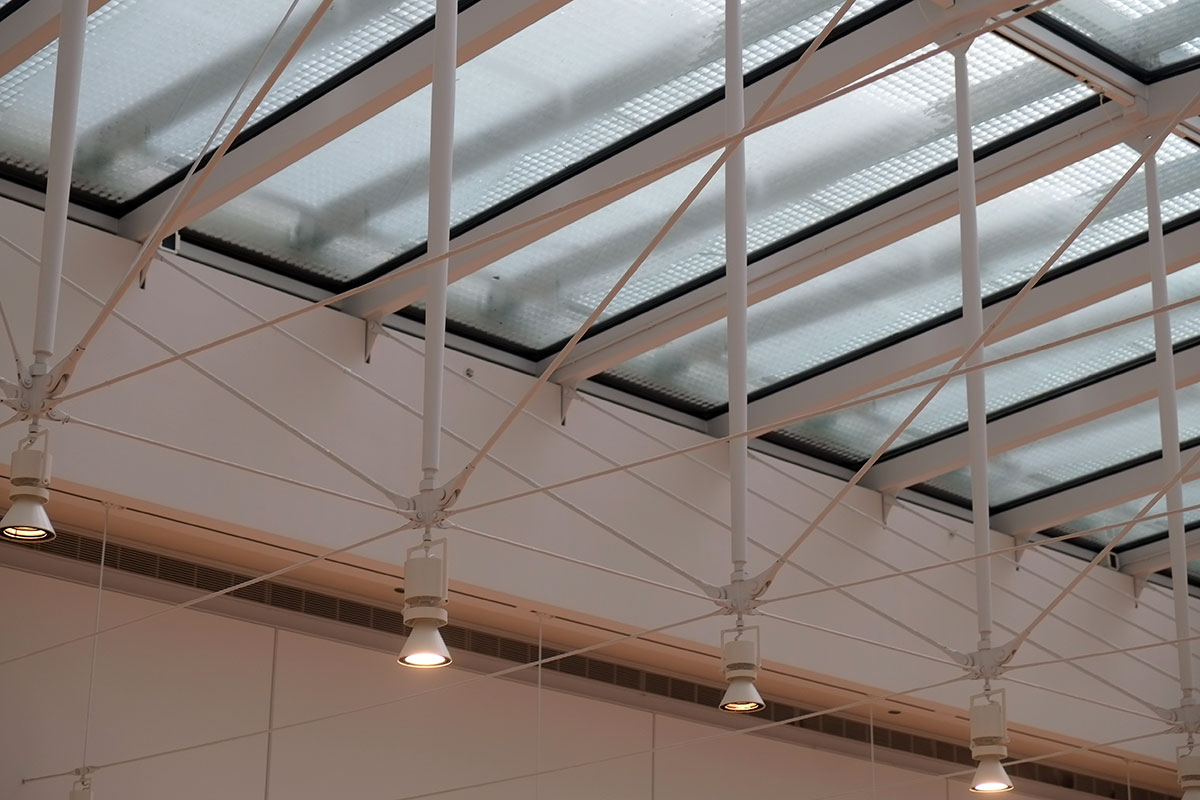
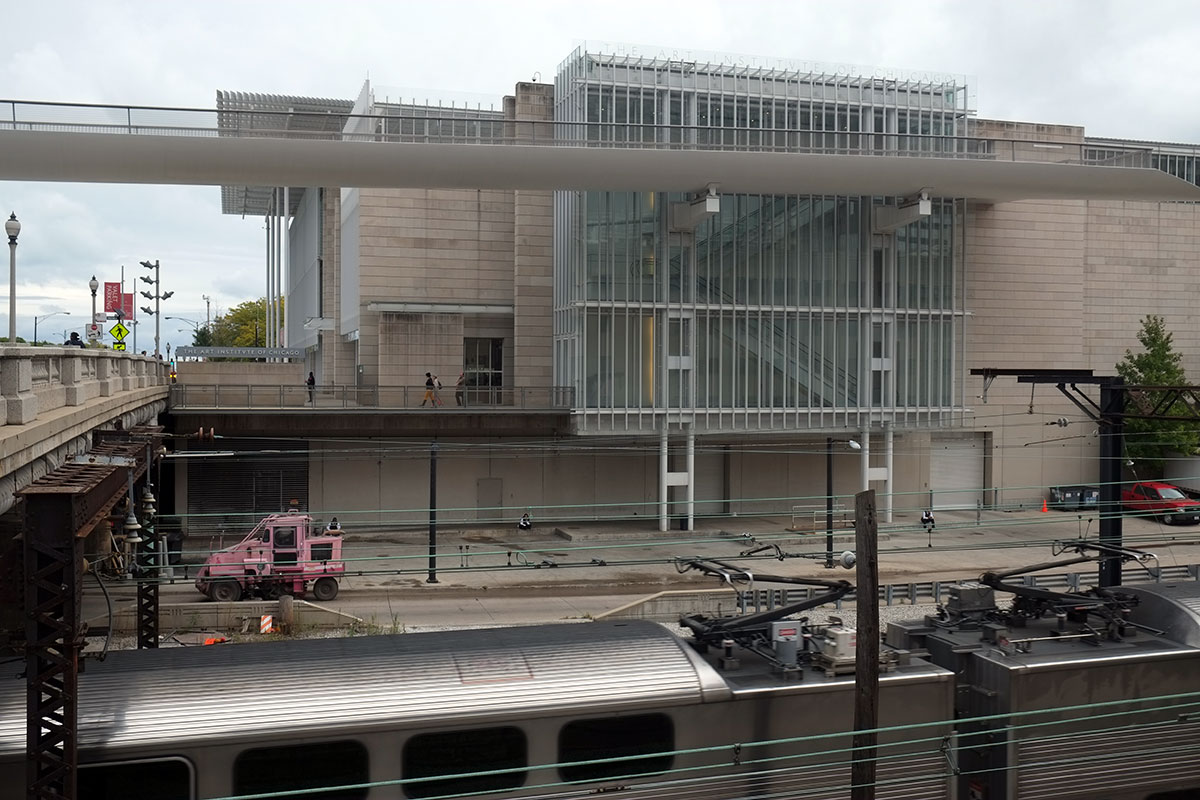
Today it was raining and blowing like hell, so we headed to the Art Institute, mainly seeing modern art and the new Piano wing.  As usual, simplicity of conception, space and light, with elegant detailing.  DSCF9386DSCF9420DSCF9398

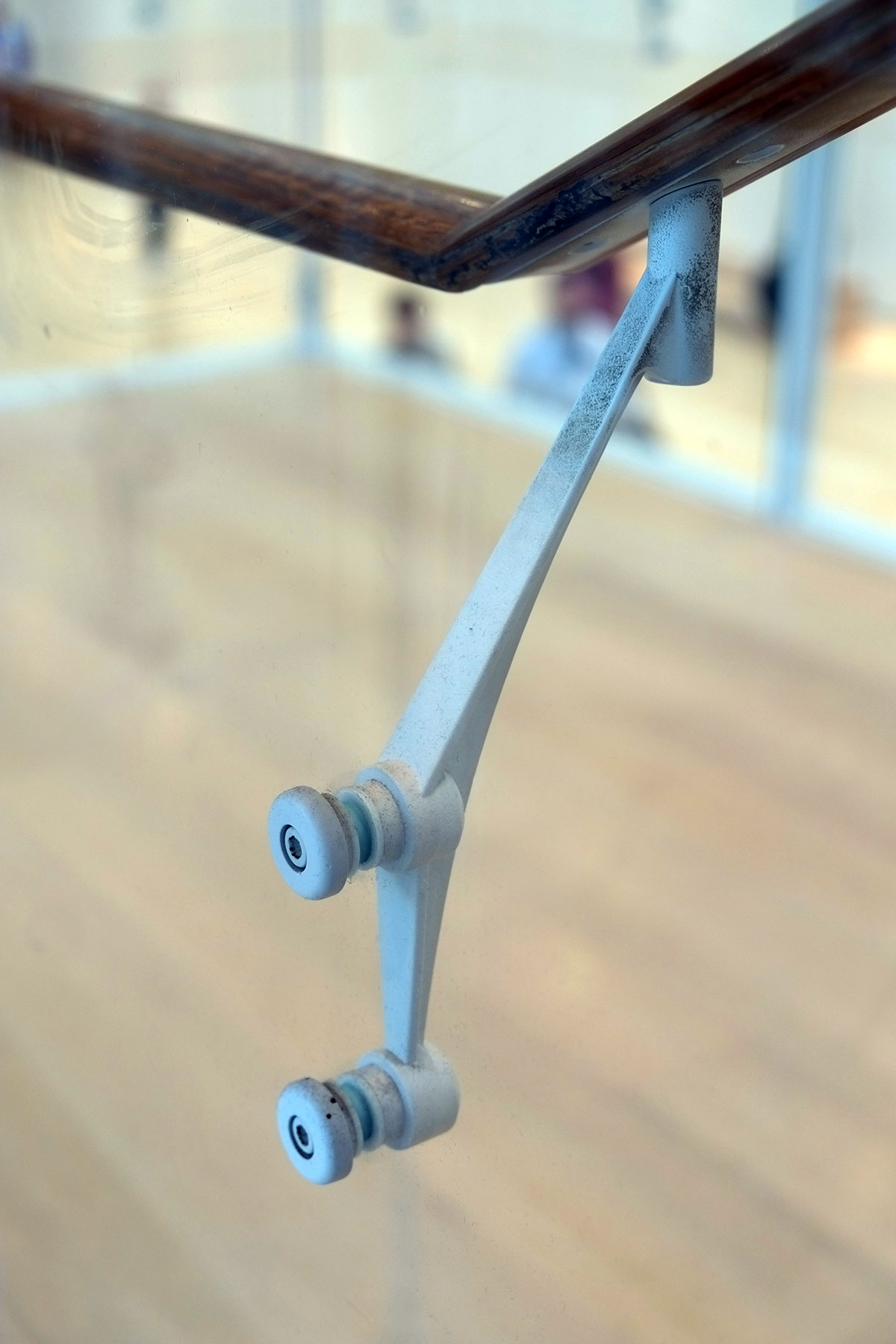
We spent a few years trying to find decent handrail brackets, and finally had to make our own. Does anyone know the store where Renzo buys his hardware?

We spent a few years trying to find decent handrail brackets for our house, and finally had to make our own. Does anyone know the store where Renzo buys his hardware?
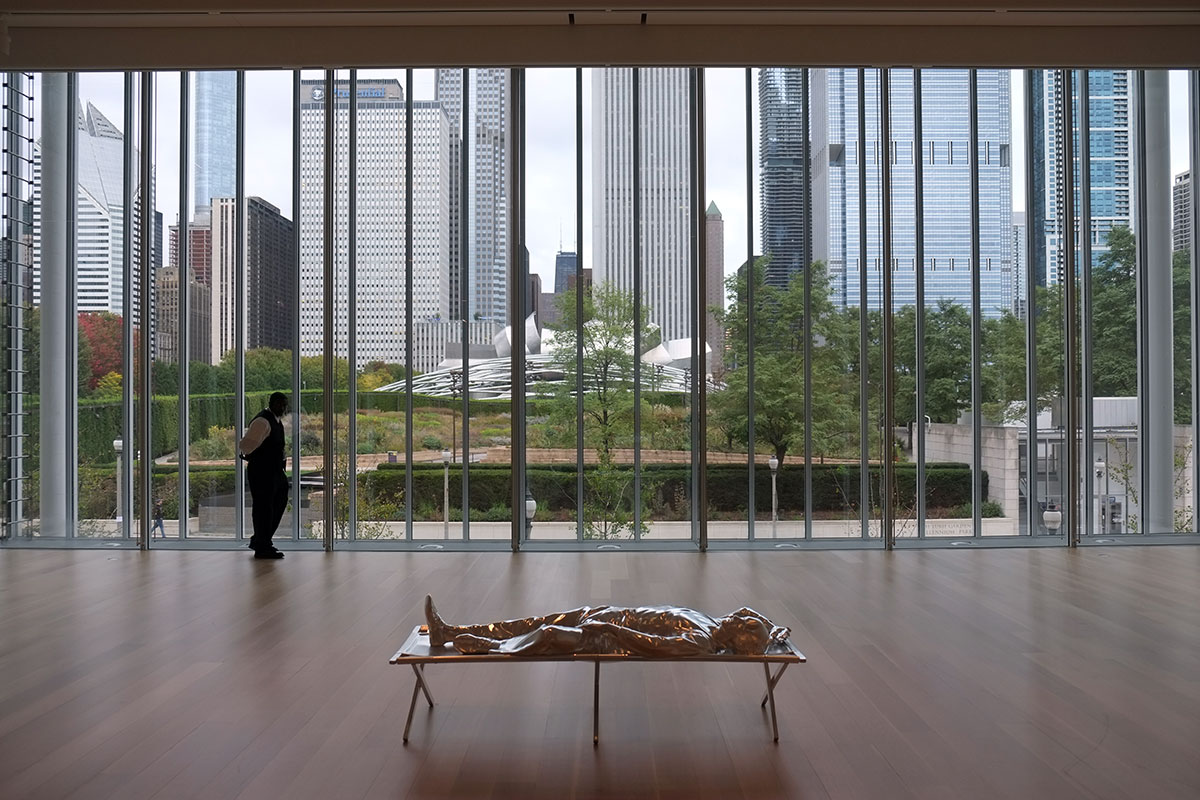
Sculpture by Charles Ray. Both Greta and I thought it was pretentious and stupid, (George Segal abducted by Jeff Koons), but we liked the view out the window.

Sculpture exhibit by Charles Ray. Both Greta and I thought it was pretentious and stupid, (the love child of George Segal and Jeff Koons), but we liked the view out the window.

The train is a nice touch, but the pink street cleaner is sublime.

The train is a nice touch, but the pink street cleaner is sublime.

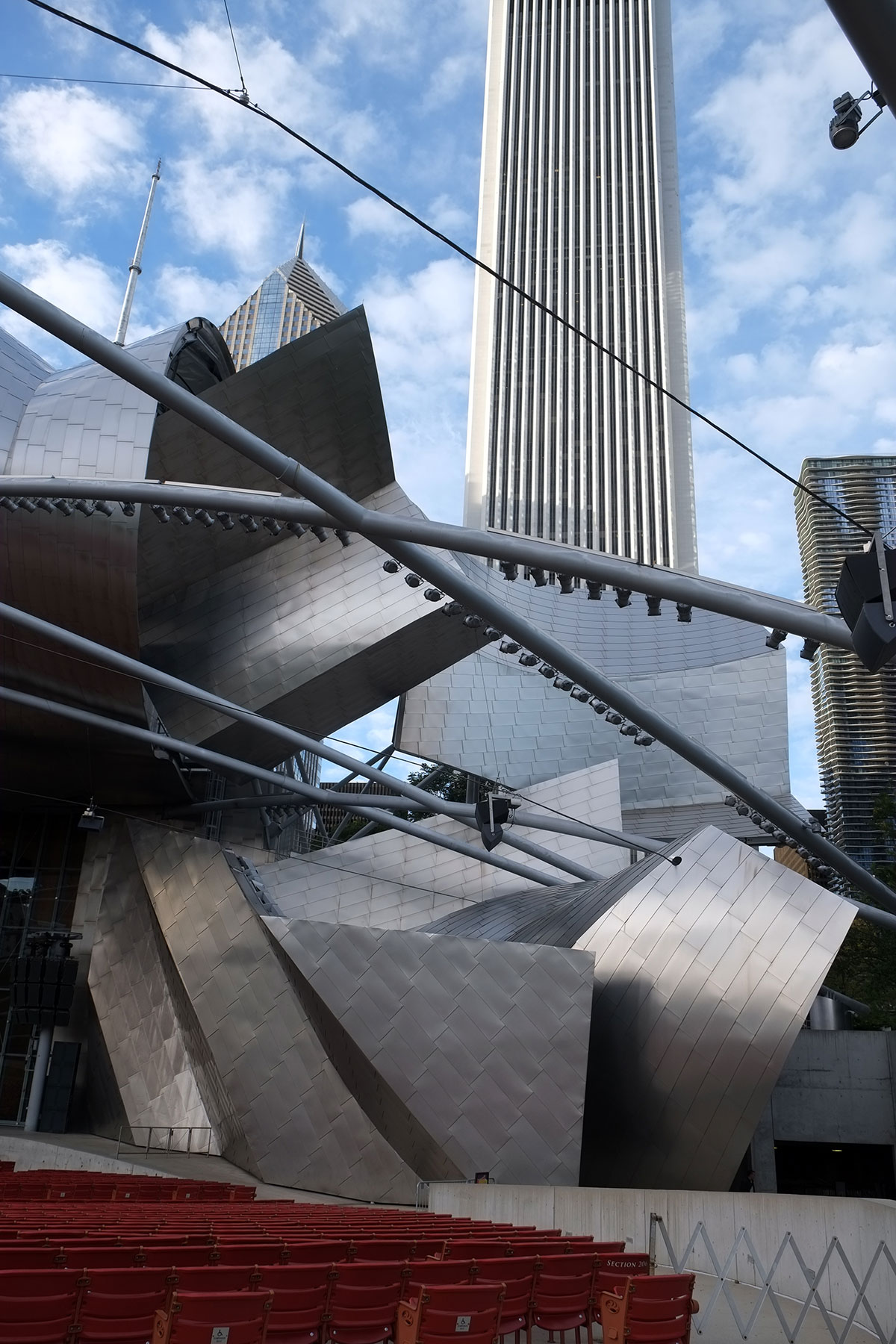
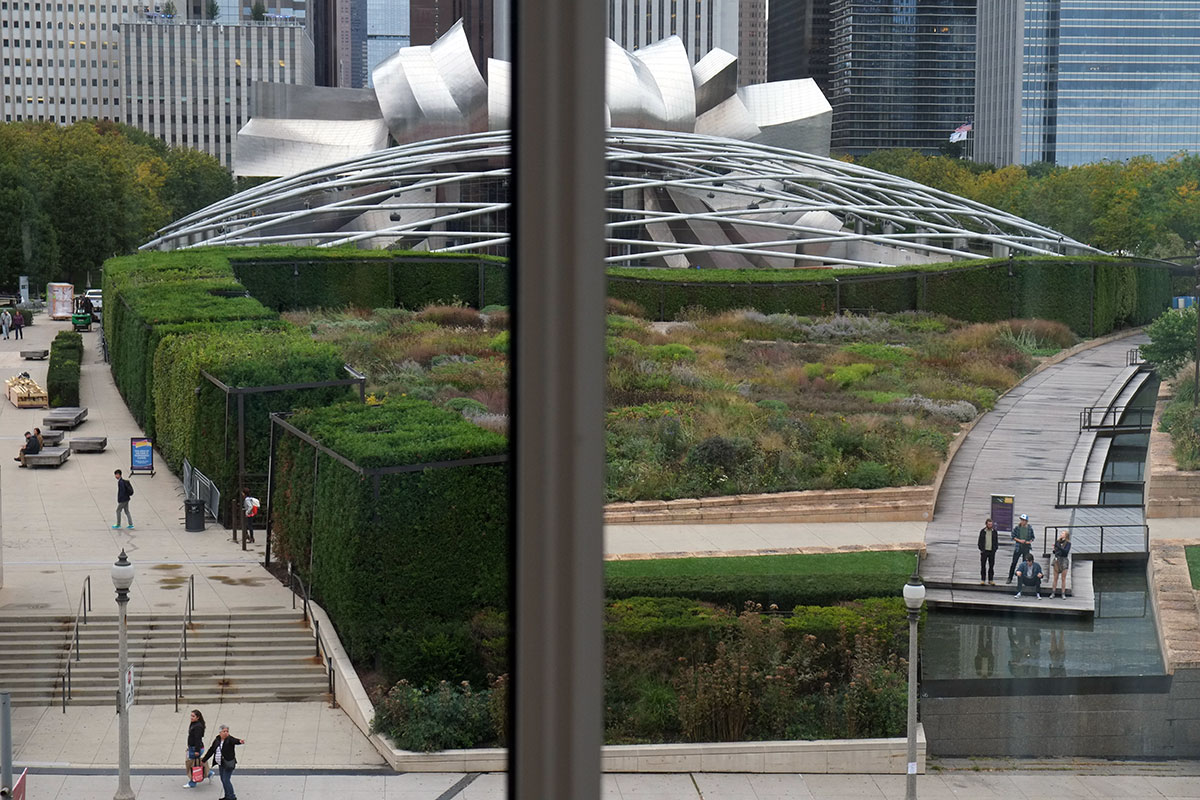
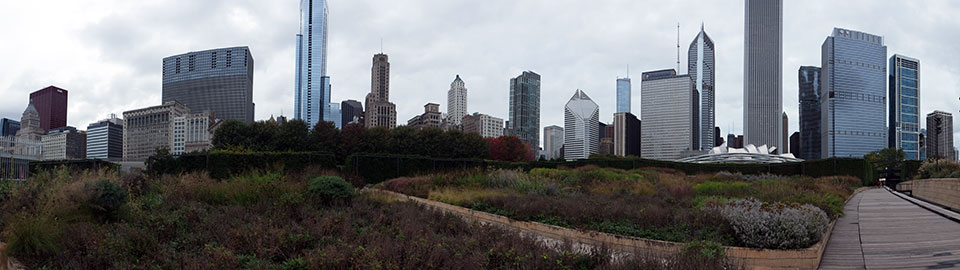
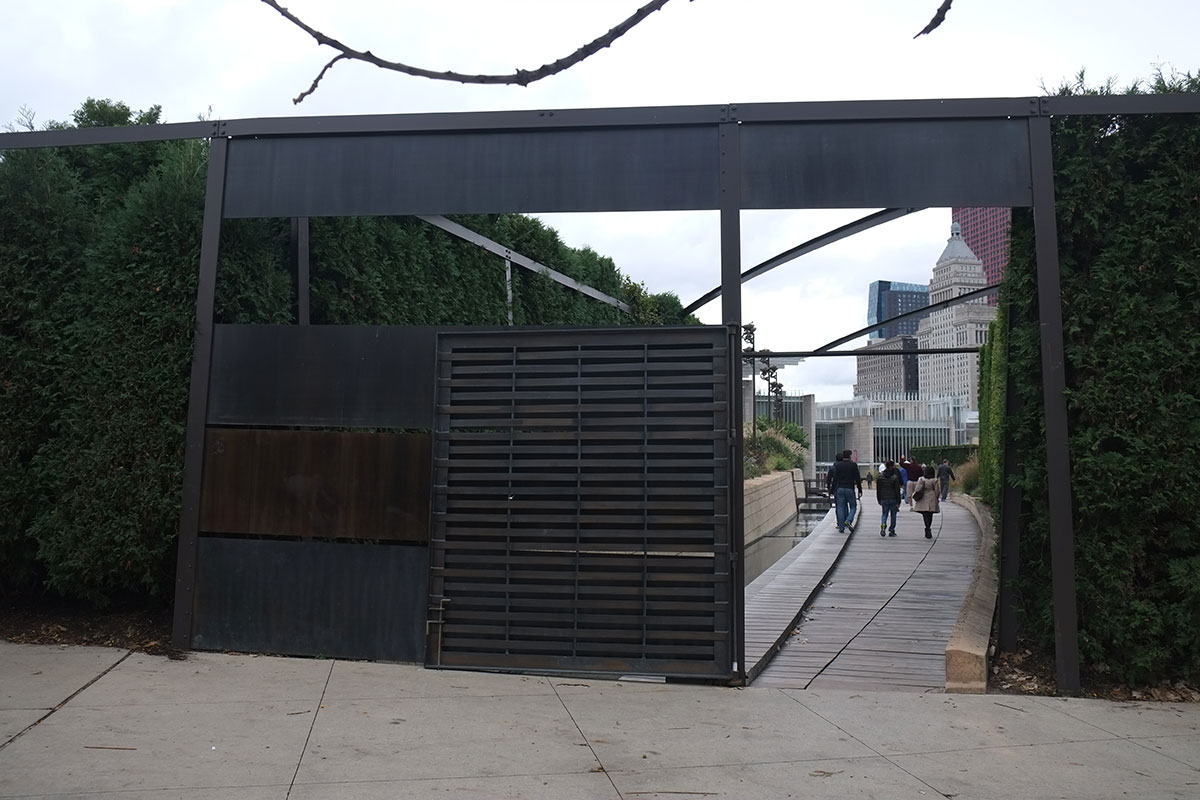
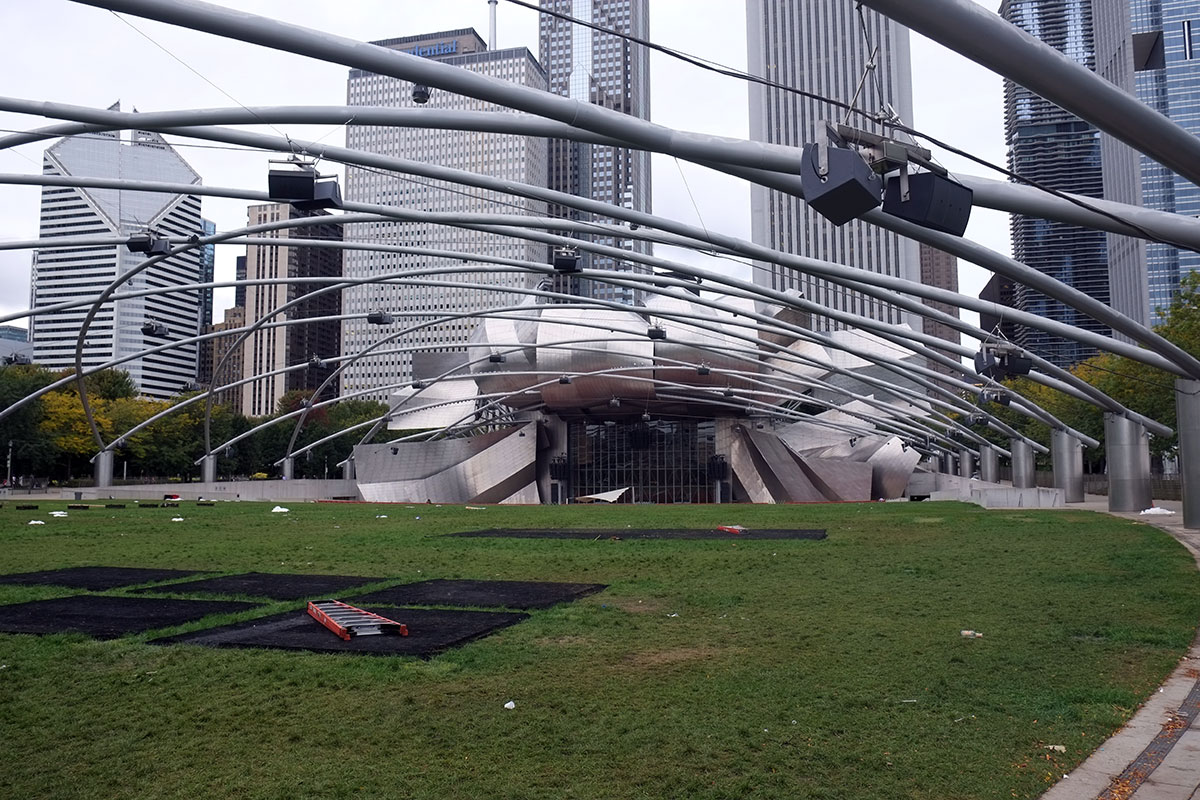
We also saw Millennium Park, Daley Park, and Lurie Garden for the first time.  Many excellent parts – especially the garden.  DSCF9417DSCF9454

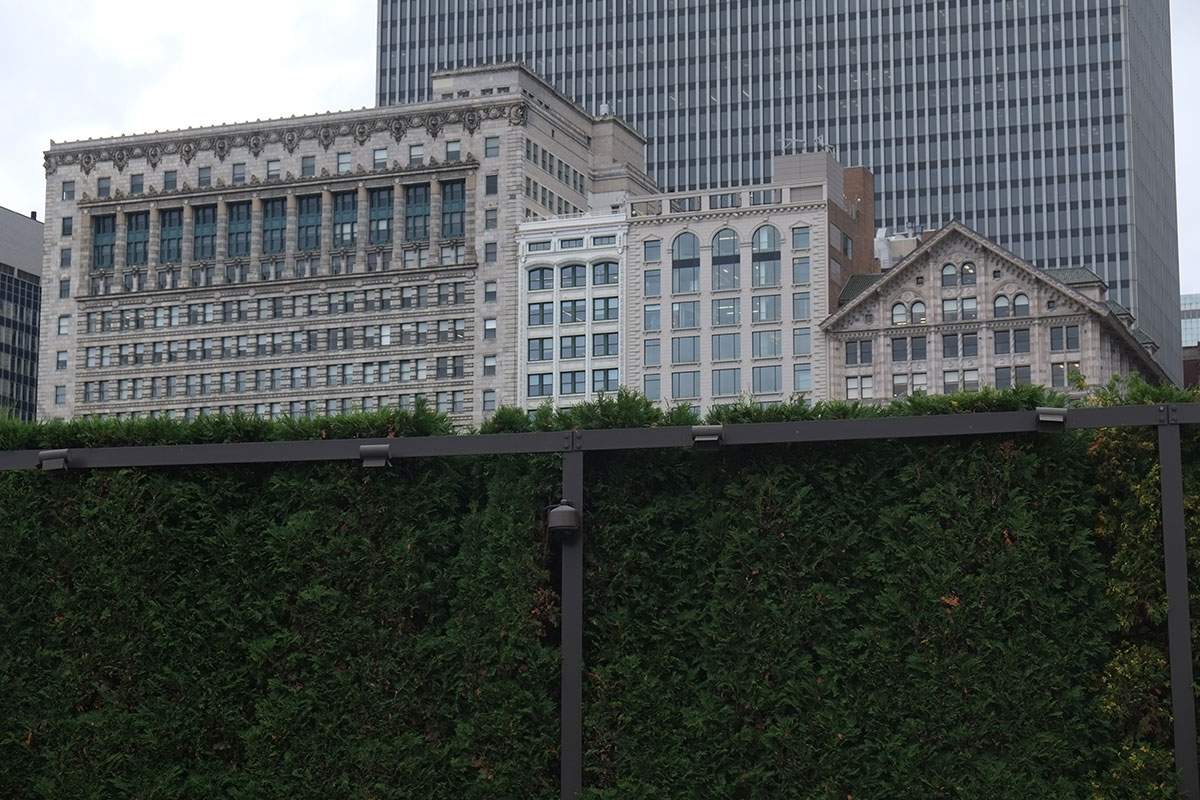
I'm assuming that's boxwood.

I’m assuming that’s boxwood.

DSCF9463

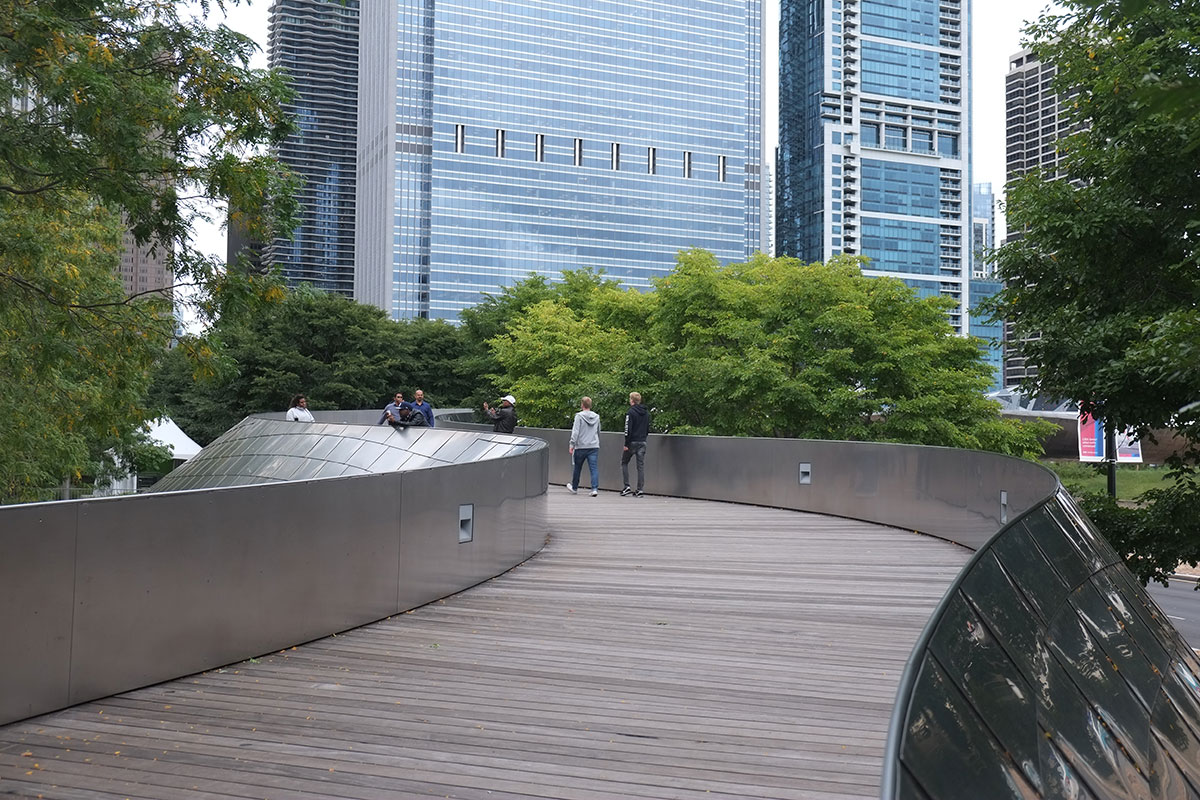
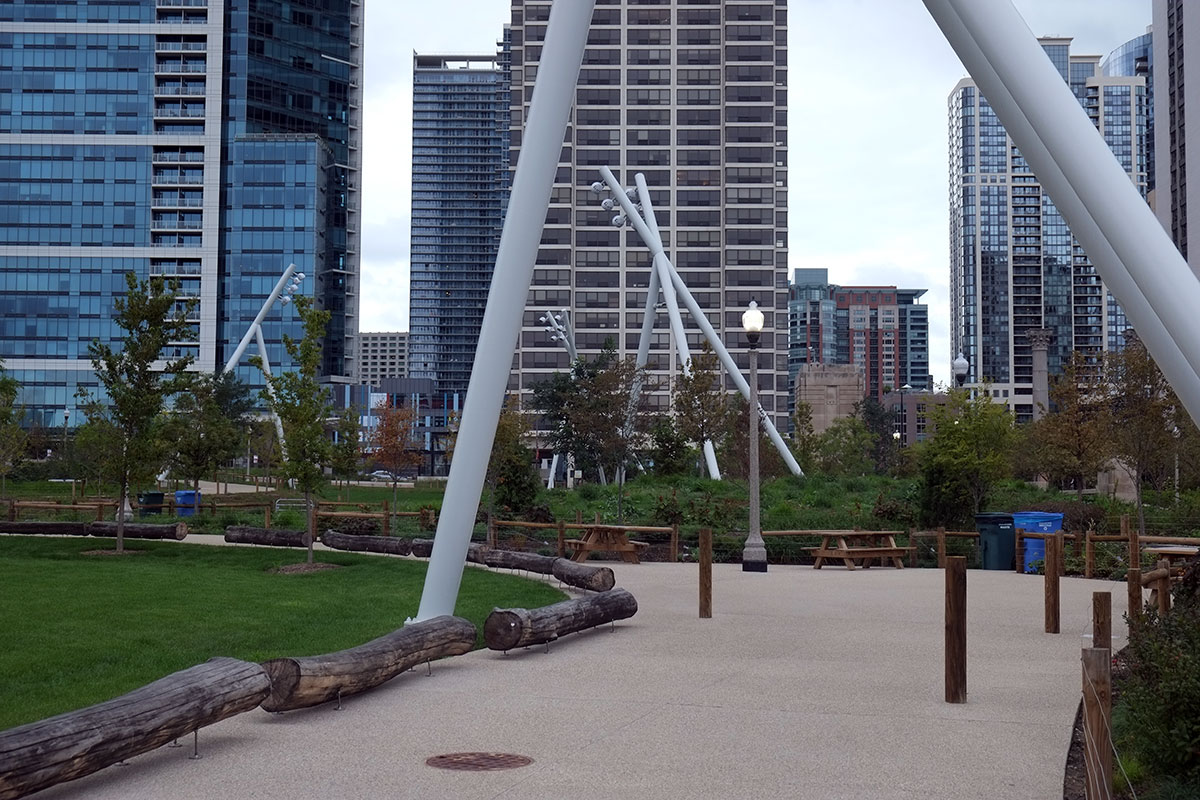
But perhaps it’s all a bit much put together?  Every piece seems to be trying to outdo the others, and the curving walkway/bridge/thingee reminded me of some elevated ride through a theme park or zoo where you can look down on all the different exhibits.  DSCF9461DSCF9467

DSCF9489

The rain stopped, and we just wandered around the Loop until it was time to eat pizza.

I hadn't seen the Aqua before, and I liked it as much as I expected to.

I hadn’t seen the Aqua before, and I liked it as much as I expected to.

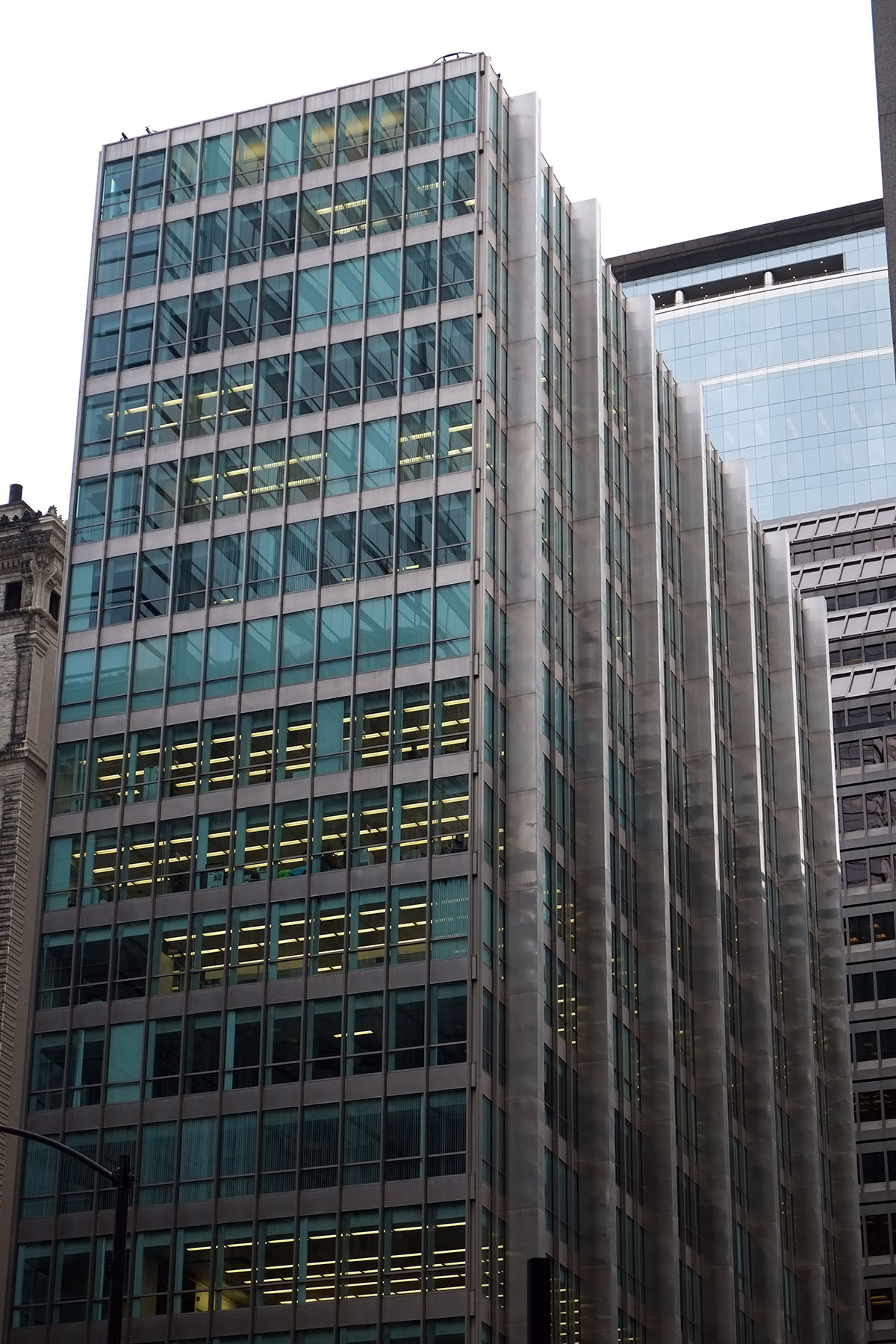
The Alcoa Building. Still looking great, surrounded by banality.

The Inland Steel Building. Still looking great, surrounded by banality.

This probably seemed like a cool idea during the conceptual stage. Didn't quite turn out that way.

This probably seemed like a cool idea during the conceptual stage. Didn’t quite turn out that way.

We realized that Donald Trump probably has his name on a God-awful building in every big city in this country. That alone should keep him from getting elected.

We realized that Donald Trump probably has his name on a God-awful building in every big city in this country. That alone should be enough to keep him from getting elected.