Category Archives: cities

Baltimore

DSCF5725In this age of media-cooption of direct experience, how truly can we see a place, without our understanding being overwhelmed by previously-seen portrayals of that place?  This obviously comes up with New York, and L.A., and many tourist destinations, but for me it also came up with Baltimore.  I had been there several times before, but to be honest, my deepest understanding of Baltimore has come from repeated viewings of Homicide and The Wire.  This preconception had its negative effects – I was worried about walking down an alley, expecting that ferocious black-and-white dog from the Homicide credits to hurl itself against the fence at me – but it also had positive effects.  It reinforced my interest in the fabric of the city, spending time walking through neighborhoods, rather than just seeking out the architectural highlights.  This coincides with Greta’s predispositions too, as she’d much rather people-watch and see day-to-day life than look at major monuments of architectural culture.

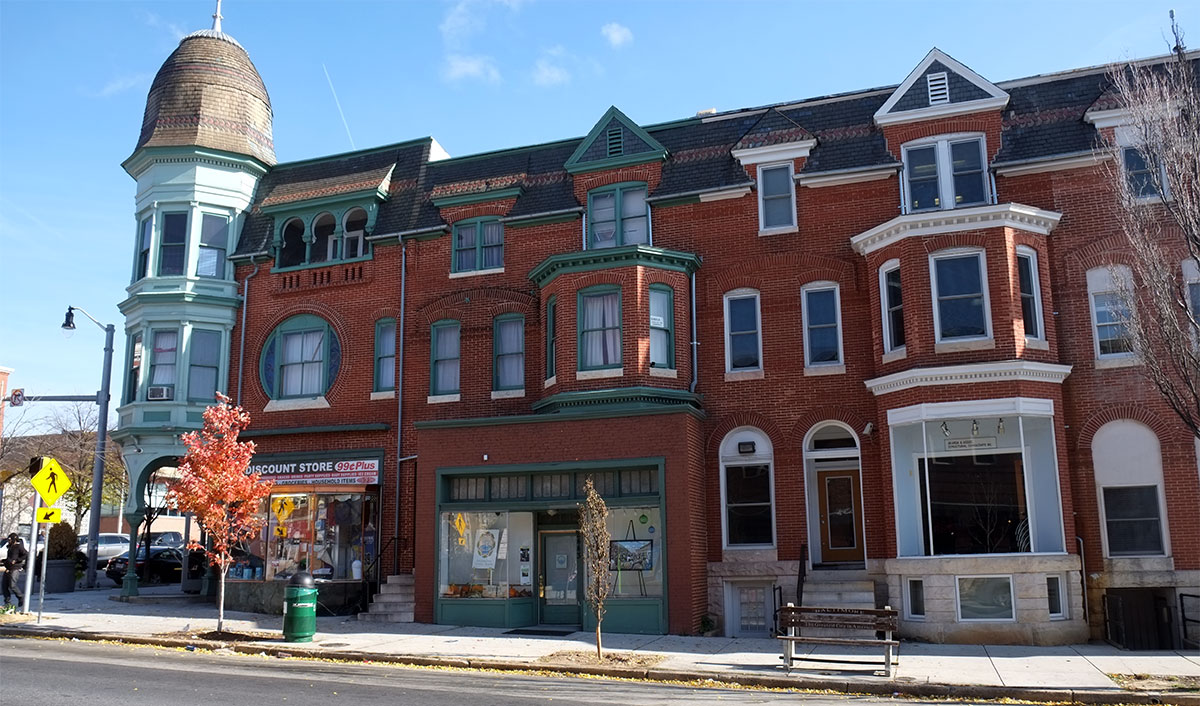
We were staying with our former student Neelab, who lives on the north side, a couple of miles from downtown, so our limited explorations fanned out from there.  (Plus my Wire-based geographic understanding led me to think that wandering around the North side was preferable to the East or West.)  We walked up through the Hampden neighborhood, a straightforward place which seems to be gentrifying at this moment, judging from the presence of a frites shop and other yuppie establishments.  Everyone understands the Baltimore rowhouse as the building block of the city, but what most struck me was the variety of designs, sizes, and styles within this simple type.  There were the obviously high-quality masonry houses,DSCF5716
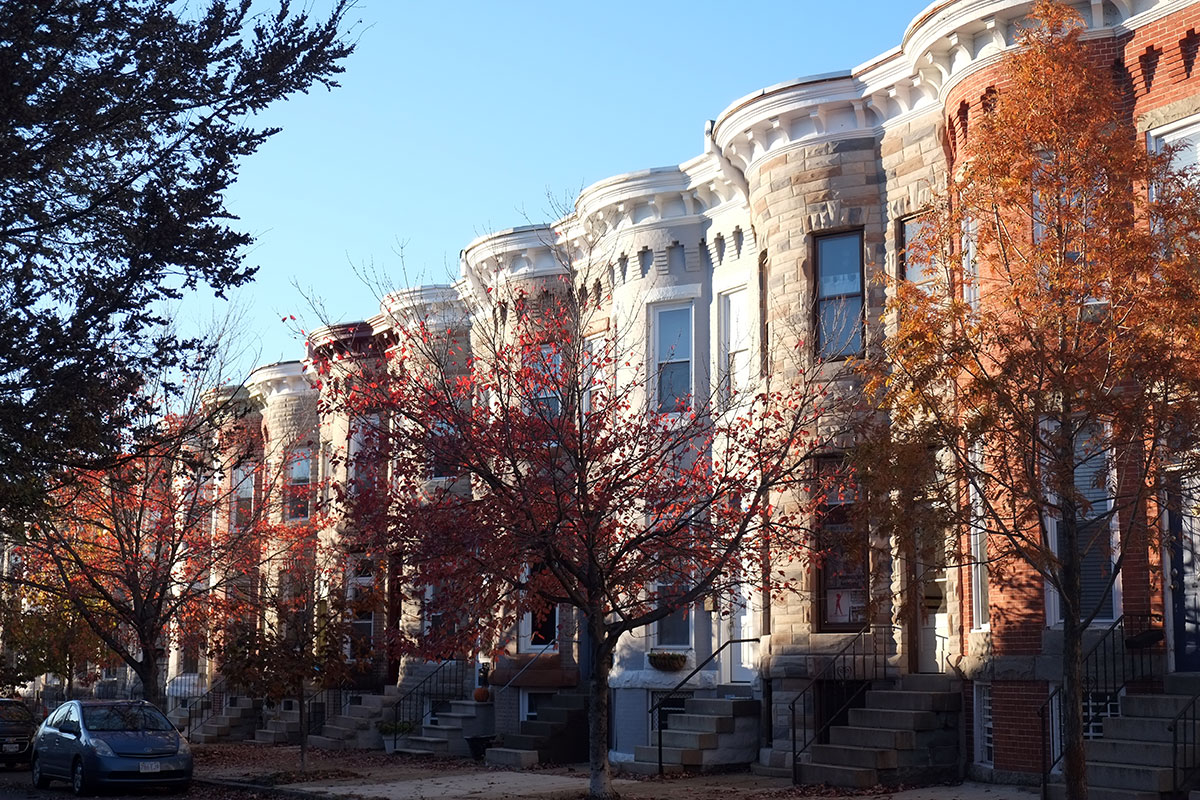
the simple ones enlivened by coordinated colorDSCF5737

the ones enlivened by the lack of coordinationDSCF5714

the ones with classic porches instead of stoopsDSCF5741
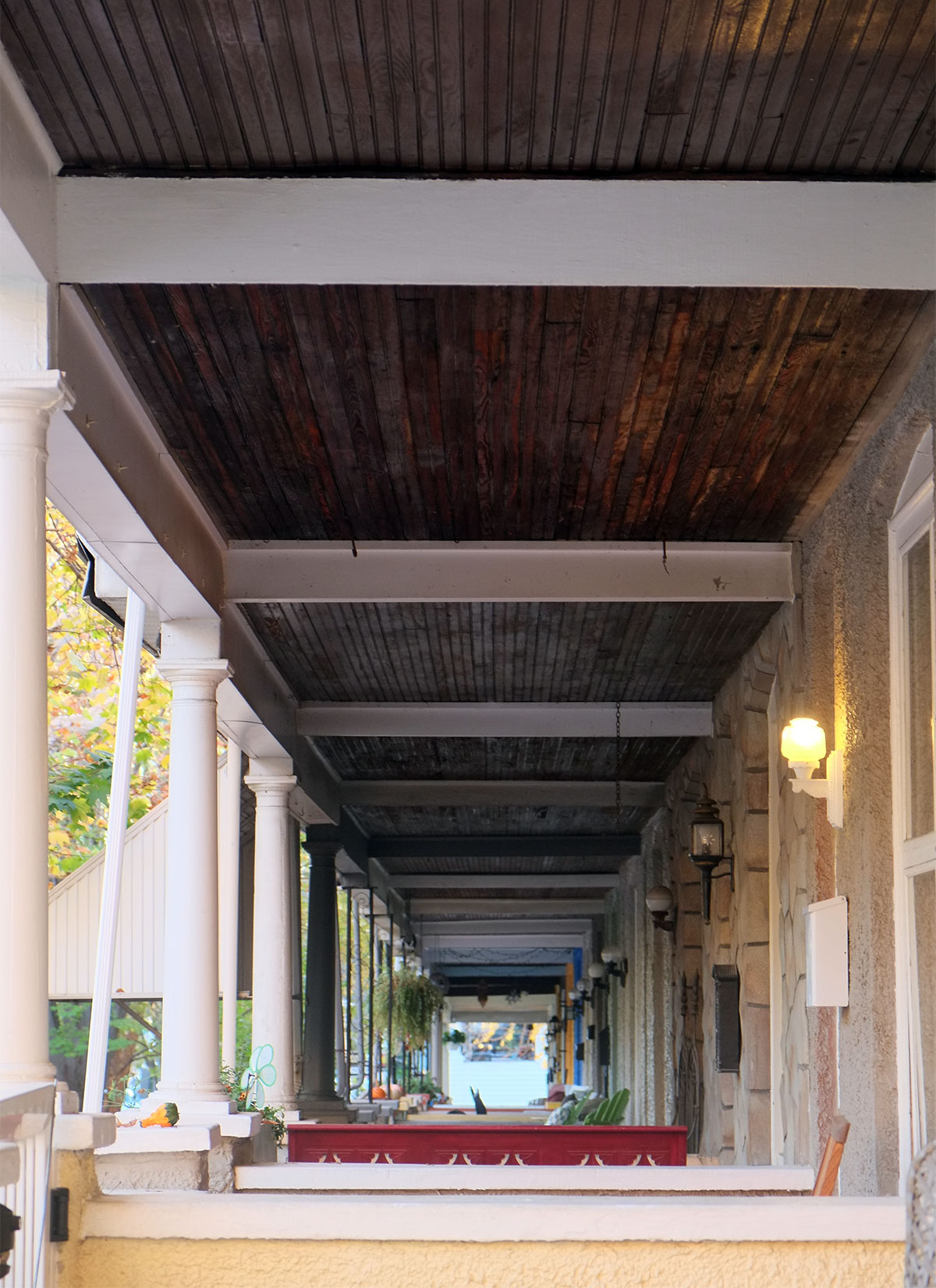
and the deeply idiosyncratic.DSCF5747

It was also cool to see traditions that we think of as primarily suburban – such as holiday decoration – running amok in the city:DSCF5709
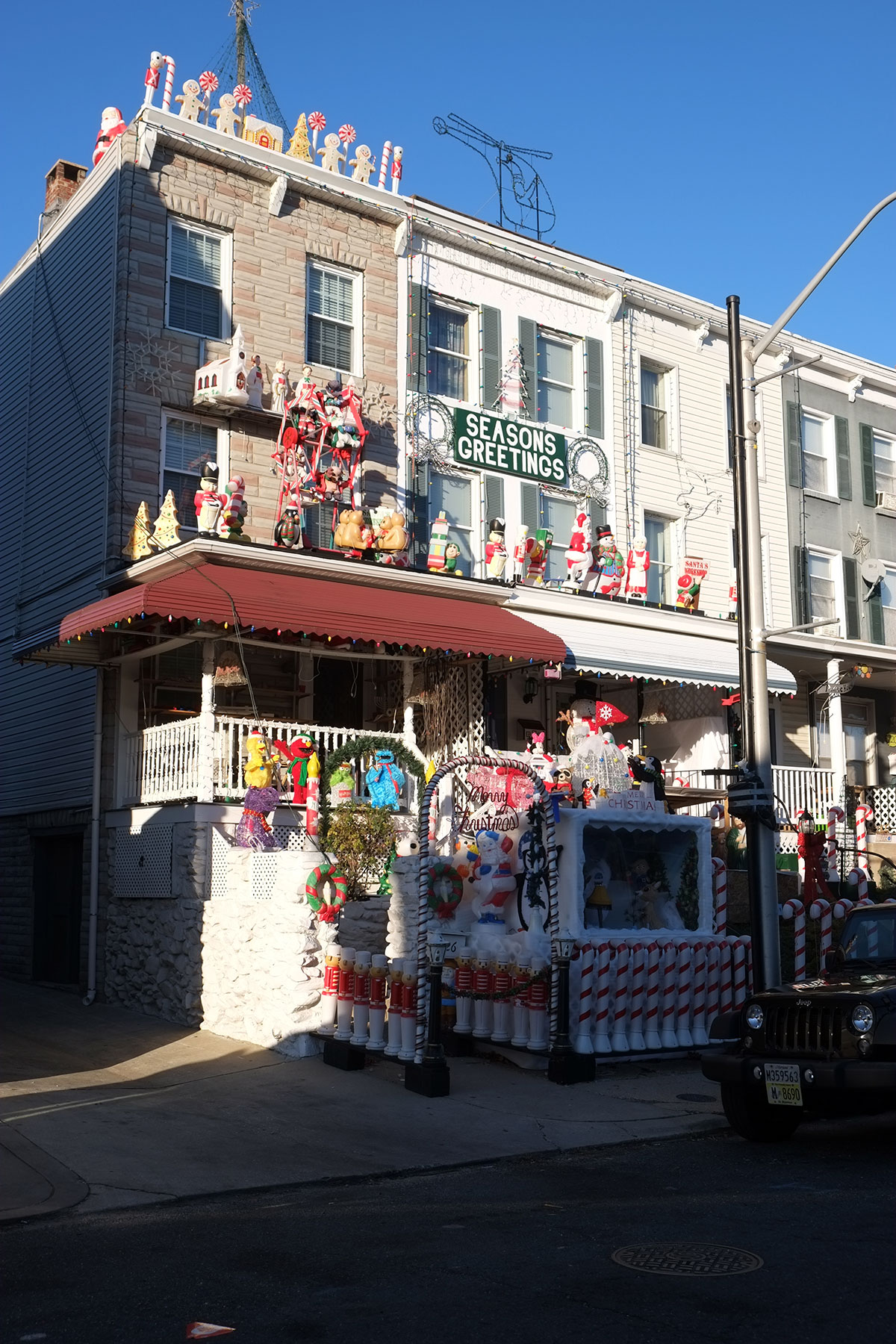
While most blocks are uniformly rowhousing, there were also freestanding houses, semi-detached and narrow lot houses breaking it up:DSCF5730
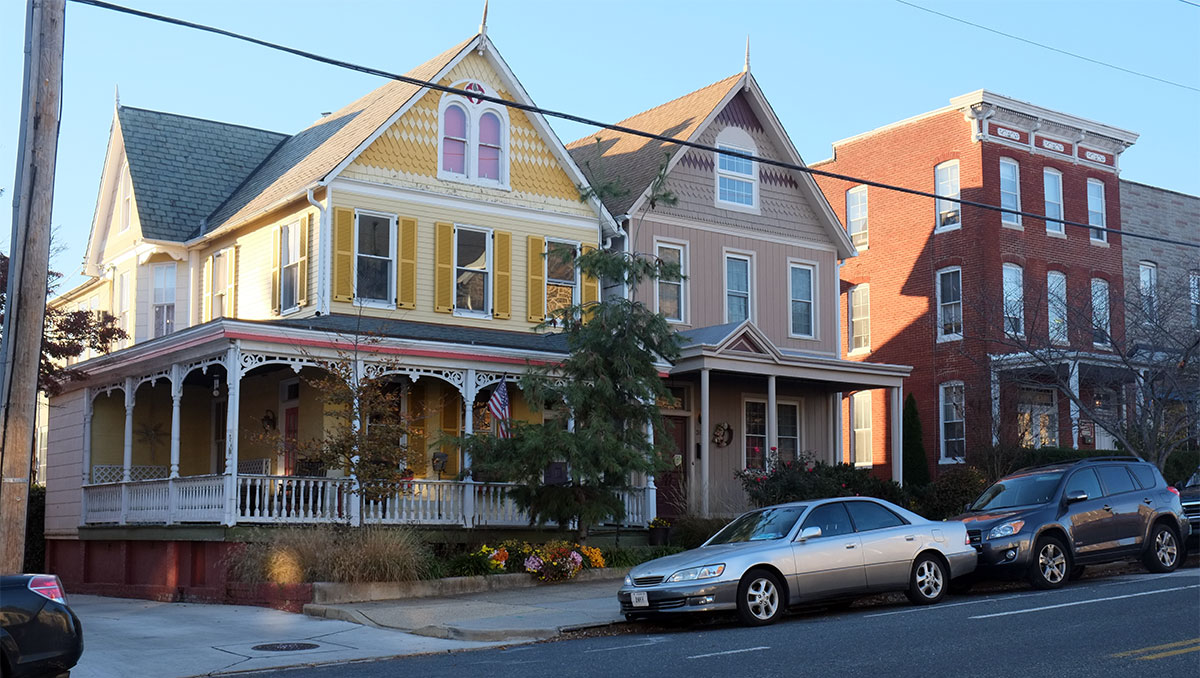
and some unique houses, such as this one built by a local sculptor about 100 years ago.DSCF5802

And as with any good neighborhood fabric, there were the mixed use and commercial buildings, and local institutions mixed in with the housing.DSCF5707DSCF5794

We saw Johns Hopkins, a not especially unusual campus where the hegemony of academic Georgian is once again strongly in evidence.DSCF5777

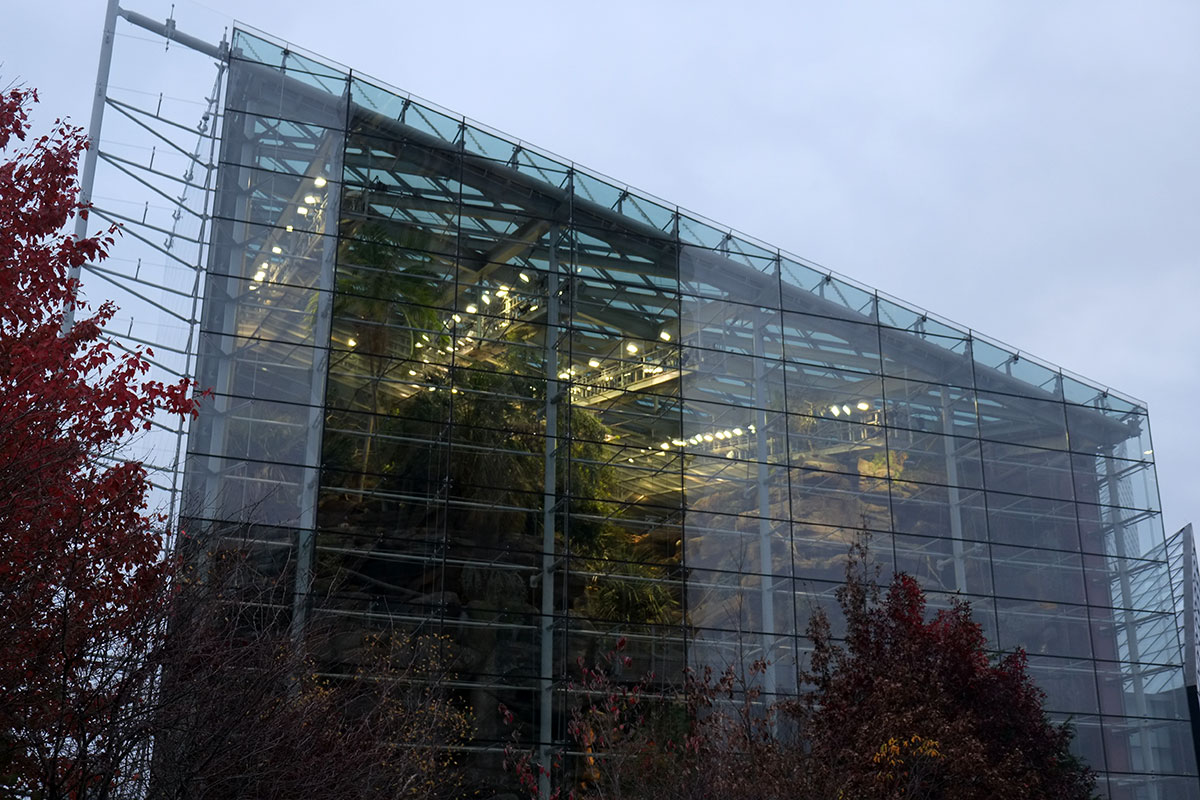
We walked to the downtown to get a better sense of the range of neighborhoods, and made it to the Inner Harbor, the redevelopment that put the city on the tourist map, with the groundbreaking aquarium and the Inner Harbor.  The Aquarium took up a lot of our time, as Greta’s architecture-quota had maxed out and we needed to see more animals.  Designed in the 70s by Cambridge Seven, it was the first to offer extreme spatial variety, huge tanks, and what feels like an immersive experience.  The interior spaces and experience are great,DSCF5859 DSCF5880

and the exterior conveys that this is a unique building, adding a focus to the waterfront.DSCF5834 DSCF5848

To some extent, aquariums need to be black boxes, to control light and marine growth, but this aquarium connects the inside to the outside as much as possible.DSCF5888 DSCF5906Overall, a very good building, though not quite up the Monterey Bay Aquarium, according to our family aquarium expert ( who has written a post about the aquarium qua aquarium and not architecture).
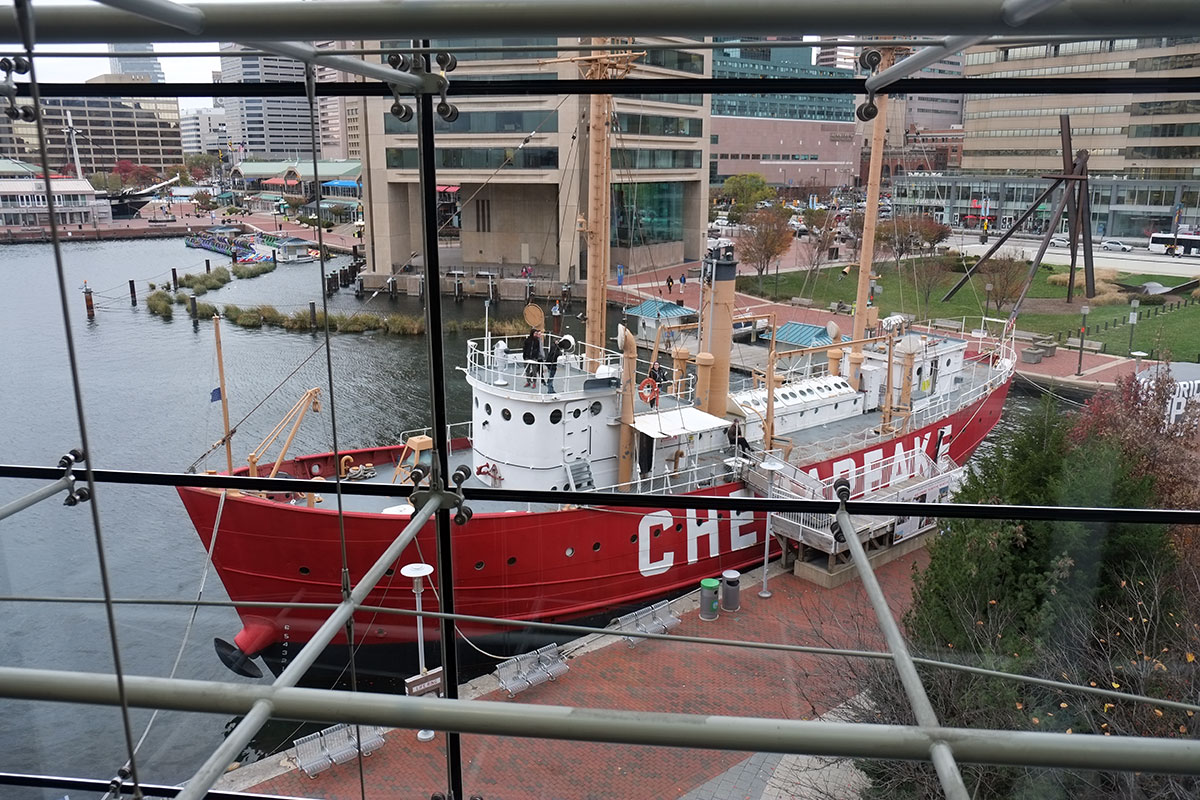
The Inner Harbor was one of the first “festival marketplace” developments by James Rouse, whose company was based in Baltimore.DSCF5832It’s a pretty convincing, nicely-scaled area which obviously opened up the view of the harbor, replacing the waterfront uses that were in decline.  It started a trend to bring suburbanites back into the city, by convincing them that it could be safe and fun.  We saw it on a November weekday afternoon, not prime tourist season, so it was clear that the spaces were scaled for the tourists who must throng it in the summer.  With the exception of a repurposed power plant with giant Hard Rock Cafe guitar on top, it doesn’t try too hard;  it all seems to be related to Baltimore somehow, and isn’t just the latest manifestation of a market-tested, globally-repeated, Disneyfied, ersatz urban branding extravaganza.  That is probably because it is now so old – a more recent development would look more like Vegas.
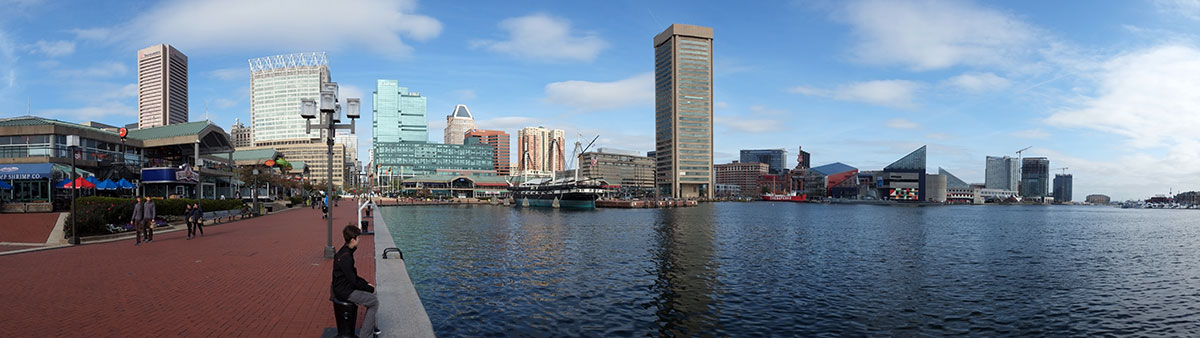
The issue of eras of building is important in another way in Baltimore.  If you zoom in on the picture above, you’ll notice that there aren’t really many new skyscrapers.  Baltimore has its share of crappy skyscrapers from the 60s and 70s, but very few from later decades.  I think this is a good thing.  Probably since it is a relative economic backwater, and not a global city, Baltimore has been spared the crush of banal behemoths that dominate so many other cities on the ascendant, such as Dallas, New York, Charlotte, etc.  These new skyscrapers may not be any worse than the older ones, but they are much bigger (in both height and floorplate) and they completely change the character of the downtown.  Cities such as Boston, which have preserved a lot of older buildings, can survive the onslaught with a semblance of balance, but newer cities, such as Seattle, become all too much of one era, and unfortunately not a very good one.  We’ve been visiting a lot of second and third-tier cities on this trip, and it strikes me that these cities, which are more embedded in the local rather than global economy, may be much better cities in which to live – reasonable housing costs, a sense of history, a slower pace.  The global cities are exciting and hip, but a city which has been spared the tsunami of global capital looking for a place to buy up real estate may provide a more grounded, balanced and satisfying life for a much wider range of residents.
Baltimore

Philadelphia

One day in downtown Philadelphia, where once again the parental need to force Greta to view the major monuments of colonial America asserted itself.  Different cities have taken different approaches to this heritage.  Boston does it really well – with the exception of the Paul Revere Mall, the historic sites are still imbedded in the city.  New York more or less obliterated all the historic sites and their surrounding context.  Philadelphia kept all the historic buildings, but obliterated the city fabric around them, so you can view these icons as isolated objects, surrounded by pointless, overscaled open space and dreadful overscaled buildings.

I remember Independence Hall as a wonderful building.  It is not only important, but it is beautiful and says something about the city of the time.  The problem is this:  you can’t get anywhere near it anymore, without signing up for a tour over in the dreadful visitors’ center and waiting around to be shepherded through with throngs of tourists snapping iPhone photos.  You can’t even walk on the grounds near it, having to detour around the block.  DSCF5478

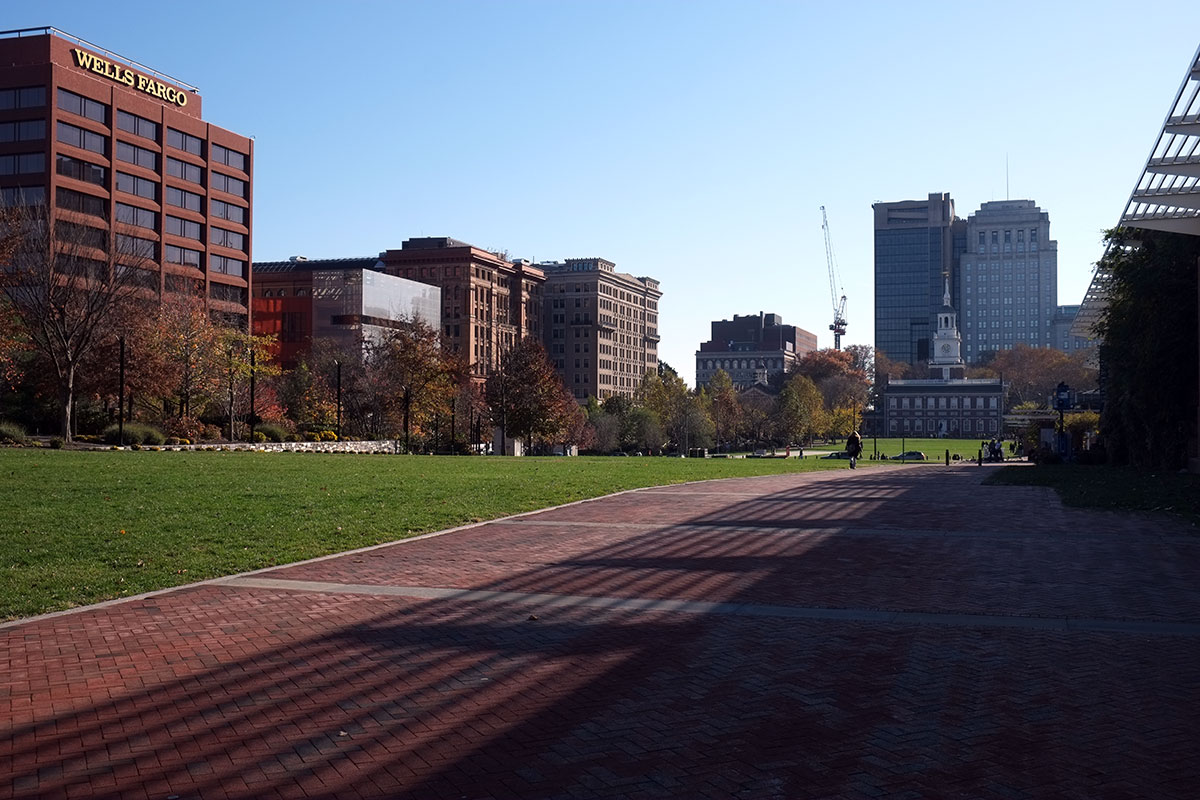
It gets even worse when you step back.  The Independence Hall Mall was proposed in the 1930s, and was implemented in the 1950s, when we thought knocking down old cities was a great idea.  Hundreds of buildings were destroyed, so that a giant open space would allow you to view Independence Hall from far away, looking puny and unimportant.  DSCF5496

Then big, bombastic buildings were built around that, symbolizing the might of large corporations in our national system.  It gets even worse behind Independence Hall, where this sterling example of historic preservation can be seen.  DSCF5464

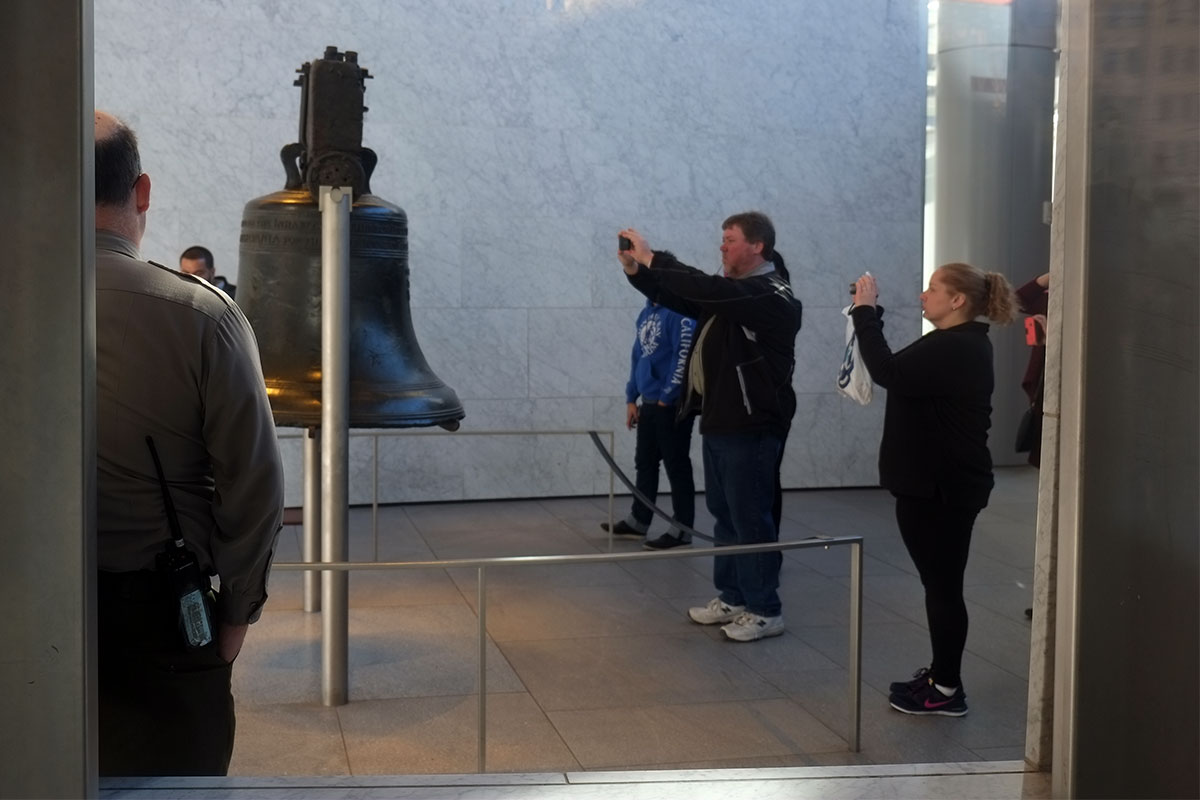
It declined further recently.  In 1976 the Liberty Bell was moved into its own viewing pavilion, part of a veneration of the minor icons of our history rather than the history itself (the recent Star Spangled Banner re-installation at the Smithsonian is another example of this).  But then this simple pavilion was destroyed (probably because it was modernist and minimal), and replaced by a more grandiose pavilion, just south of the visitors’ center.  DSCF5485

The experience is awful, reminding me of what has happened to Mt. Rushmore.  Where does this impulse come from, to remake everything in a phony, pretentious manner?  (By the way, some very good architects and planners were involved in many stages of this madness – Edmund Bcon, Dan Kiley, Venturi and Scott Brown, Cywnski, Laurie Olin!)  Philadelphia was not Versailles, but it had one of the most compelling plans of an early American city. Why can’t we leave it alone, and let visitors have an experience that in some way might evoke the 18th or 19th century, helping them to understand life in that era, rather than pedantically shaping their perceptions?  Boston looks better and better in this regard.

Luckily, the architects did preserve one of the best features of the earlier Liberty Bell pavilion – a window through which it could be seen, without going through the rigamarole.  We took the picture and got the hell out of there. DSCF5474

Once you get away from this, Society Hill and other older neighborhoods of Philadelphia are spectacular.  There are crazy renderings of the founding fathers,DSCF5466

fantastic Greek Revival buildings by Robert Mills and others,DSCF5503DSCF5525and streets which really maintain the experience of the 18th century city.DSCF5569DSCF5575DSCF5579DSCF5604

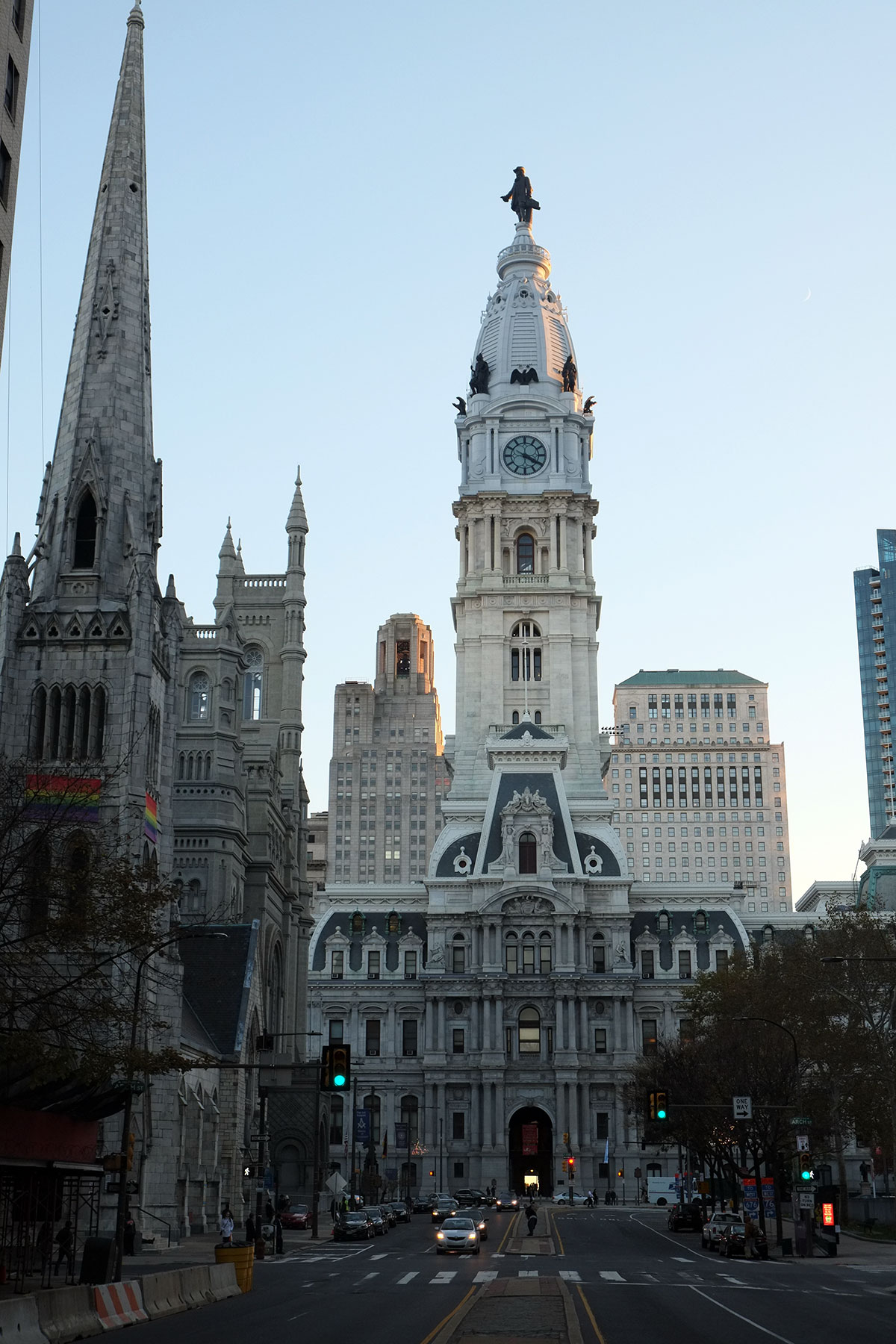
The Ciry Hall is magnificent, a good example of how a city plan can evolve positively. There was no building at the center point of the city in Penn’s plan, but having this icon visible on the axes works beautifully (with sculpture by Alexander Calder Sr.)DSCF5666DSCF5640

The Paul Cret Federal Reserve is fine (Cret being an employer of Kahn).DSCF5616

They seem to be having more fun at the Pennsylvania Academy these days, I think Furness might have approved?DSCF5671A truly dreadful “remuddling”DSCF5624and some fine urban buildings and juxtapositionsDSCF5662DSCF5672DSCF5664

As we were into checking things off our list, we grabbed a random cheesesteak, but not being in the right neighborhood, it was nothing to blog about.

Radburn, New Jersey

DSCF5178There are iconic buildings and places that everyone knows, but remarkably few people have actually visited.  In my lectures I try to stick to places where I have been, as the understanding one has of a place is greatly inferior if your whole knowledge of it comes only from books or media.  However, there are some places that are so important that you need to present them even if you’ve never seen them.  Radburn is such a place, one that I show to my students constantly, so actually seeing it was on the top of my list for this trip (even though I knew it would drive Greta crazy).  And I’m happy to say that it was an even better place than I expected it to be.

Planned communities, and planned suburbs, grew in importance and influence in the 19th and early 20th century.  A radical change came with the spread of the automobile to the middle class – how could the built environment cope with the spatial and organizational demands of cars?  Corbu’s various schemes pointed in one direction, but a more realistic and thoughtful approach was taken by progressive designers in the 20s.  Clarence Stein and Henry Wright collaborated on many important developments (such as Sunnyside in Queens), but Radburn laid out a new model for organizing suburban developments to emphasize community, safety and privacy.

The basic premise was that pedestrian and car circulation should be separated, with the dwelling units situated between the two.  Children should be able to walk or bike safely around the neighborhood, and all the way to school, without having to cross a street.  It sounds difficult and expensive, but the solution turned out to be affordable and at a remarkably high density.  And like all great solutions, it was also elegant and beautiful.

The through streets in Radburn that connect to the larger street system are for cars only.  Notice that they have no sidewalks – they don’t need them.  Some houses enfront these streets, and they have modestly-scaled yet formal front yards.  DSCF5187

They look like village roads, although in the site plan below, they look quite large in comparison to everything else. site

Branching off these streets are the dead end streets for accessing the houses – courts, cul-de-sacs, whatever.  They are even smaller, and allow for car access to driveways and a small amount of on-street parking.DSCF5189

Units have their front doors on these streets, with a small yard setback for privacy, and driveways long enough for one car.DSCF5165

Some of the house are detached, and some are semi-detached (duplexes or two-family houses, depending on which coast you live on).  DSCF5170

There are carports and garages between the units.  At the end of the cul-de-sac, a sort of court is created, with detached houses tucked into the corners.DSCF5166

it is a remarkably efficient solution to the parking demands, and one that still seems to function well, almost 100 years later.cluster

The next innovation is that on the other side of the houses, across pleasant backyards, there is a narrow pedestrian path that provides access from all houses to the common outdoor space.  These pedestrian paths are really quite agreeable – you can look into your neighbors’ backyards, but it’s not a large enough space where one would linger (although small children would probably find them to be a great environment for exploration).  This pedestrian path idea was later used by Duany and Plater-Zyberk in their design for Seaside, Florida.  DSCF5232

These paths connect out to a beautiful large field, where gatherings can be held, and games can be played.  DSCF5242

The paths connect to the field between houses.DSCF5230

There is actually another path system which doesn’t show up on the site plans – it runs parallel to the large common, one house in from it, and so connects the parking court and the pedestrian path systems.  I don’t know whether it was a later design revision, or whether it evolved organically, but it provides another layer of complexity and connection on the property.DSCF5240

The pathways on the common connect all the houses, and converge on tunnels beneath the through roads,DSCF5203

so that children may safely get to school.DSCF5195

The architectural style issue is intriguing.  The houses reflect the preferences of the 20s – there are many “early American” houses, some Craftsman-y, some Tudor-y, etc.  The houses vary from pretty small to pretty generous, DSCF5190DSCF5215illustrating that the concept of the site plan is independent of the architecture.  Like many good diagrams, it can assume a variety of scales and absolute dimensions, and accommodate a wide variety of needs and site conditions.

Greta did the normal zoning-out when confronted with yet another piece of architecture that her dad was running around excitedly photographing, but I tried to get her to imagine life in this  neighborhood.  Suppose that when you were a little kid, you didn’t have immediate access to just the one other kid who lived next door to you, having to rely on your parents to facilitate any other engagements?  Suppose your backyard connected to a world of kids, not just a private, fenced-off dead end?  Suppose you could safely wander out from your house at any time, and find your cohort, with your allowable range naturally increasing as you aged?  What if all the places where you could go were visible from your neightbors’ houses, and access to this shared world was pretty tightly overseen from those same houses?  She began to see that Radburn was designed to accommodate cars, intending to limit their damage, but at the same time fundamentally improving the quality of life in suburbia for all.

You’ve probably noticed that this fantastic model was not followed very often in the intervening century. What happened?  A Depression followed by a World War, and we really didn’t build much housing for 20 years.  Then during the postwar boom, all this knowledge was forgotten.  Market forces drove all development, and the emphasis was on quick, efficient construction and the amenities of the house.  These ideas were resurrected in the New Urbanism movement which started in the 80s, and there are a very few places where they are being implemented.  But if we ever get serious in the future about creating extremely attractive, higher-density residential neighborhoods, the Radburn model will always be there for us to copy.

History: Mill towns

DSCF4594Travelers are often obsessed with history.  Many major tourist attractions are historical sites, and we’ve noticed that people we’ve met on this trip often focus on historical minutiae.  But in planning out a truck-schooling curriculum for Greta this year, we ran into a problem:  history was Greta’s least-favorite subject.  I was taken aback – wasn’t it my responsibility, as a parent, to drag her on a tour of historical sites and monuments (everyone should see Gettysburg, dammit, even if I hadn’t)?  I asked her if there were any part of history she’d enjoyed, and she mentioned the history of the railroads.  Further discussion clarified that she was interested in seeing historical stuff, artifacts from the past that showed how things were made or economies and regions organized. She wasn’t at all interested in staring reverently at a field where a battle had taken place 150 years ago, and I realized, neither was I.  Being in a place where something happened long ago is kind of cool, but going out of your way to visit such a place didn’t make sense to either of us.  Our historical agenda derived from this insight;  we would visit historical places where there were substantial, tangible remnants of history (and preferably cool, Steampunk-looking ones with lots of gears and parts), and avoid places with people in period dress.

a carding machine in Lowell

a carding machine in Lowell

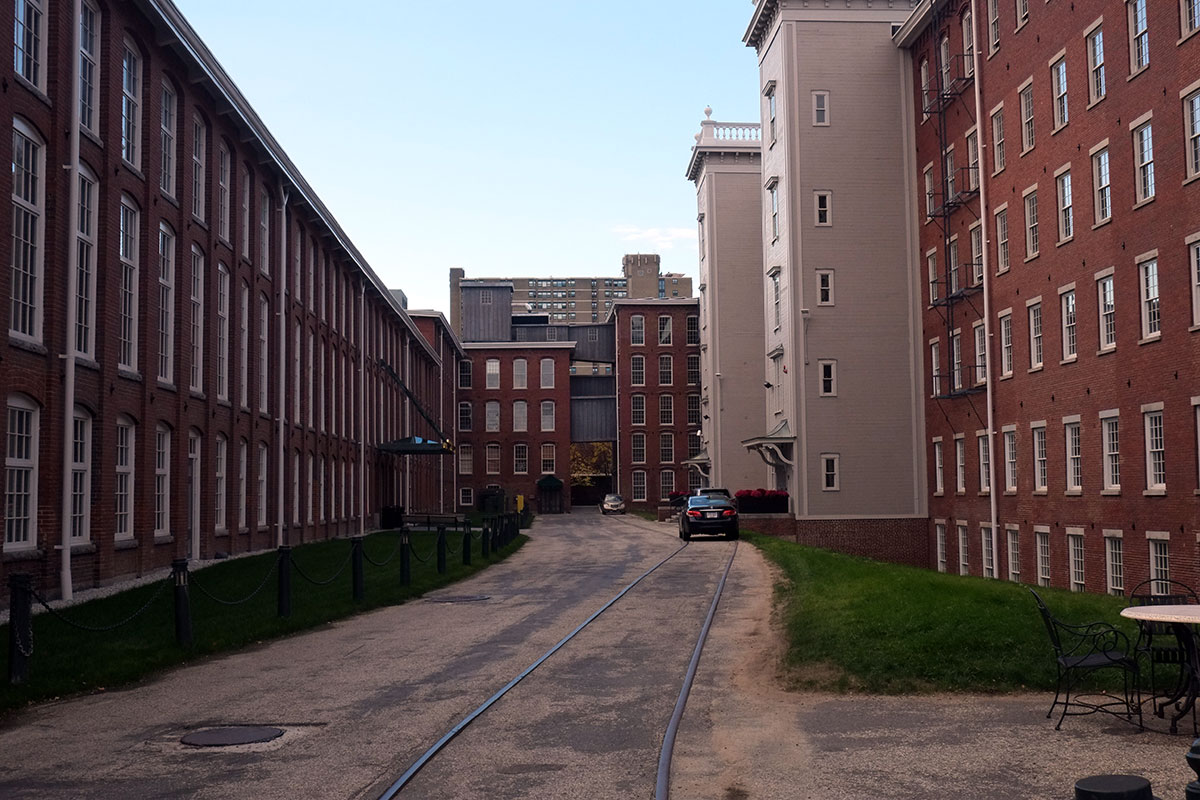
Mill towns jumped to the top  of this list.  Our friend Dan prepared an exhaustive map of every mill town in New England he could find, and we set out to find a few.  North Adams was interesting, especially as a large mill had been converted to the Mass MOCA museum.  But clearly the main goal was to be Lowell National Historical Park, which preserves the mill district  where the industrial revolution really took hold in America.  It was an early planned, industrial city – a group of Boston investors scoped out possible sites for development, and settled on Lowell because of the drop in elevation of the Merrimack River, and the opportunity to build canals and waterways off it. DSCF4611

Lowell also continued our trip theme of Cities Which Were Really Important 100 Years Ago, but Aren’t Anymore.  Except in this case it was 150 years.  At its peak Lowell had 55 major mills, and dozens of smaller ones.  Lowell took the cotton from the South and turned it  into cloth.  The original work force was New England farm girls, and a highly controlled, paternalistic system was put in place to ensure their respectability while living in the city.  Within a few decades the work force shifted to immigrants, and Lowell was the site of early labor organizing in this country.DSCF4619

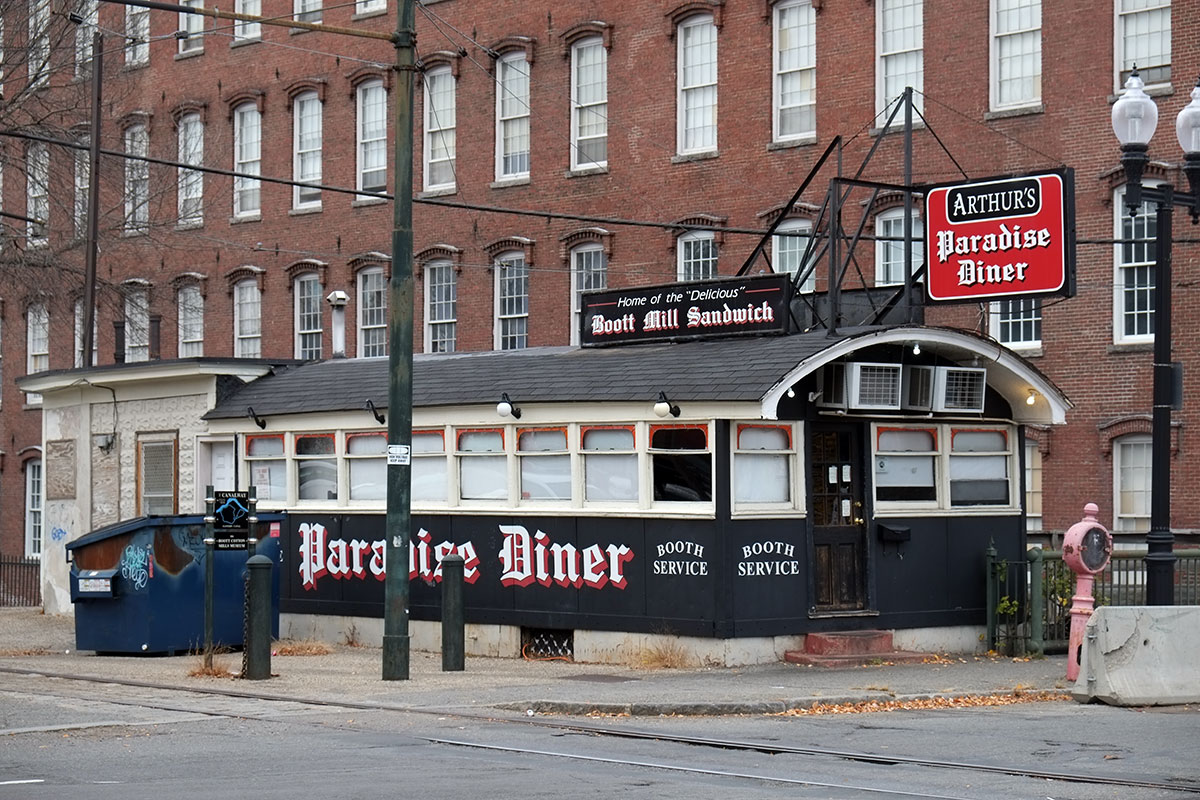
The National Park Service has preserved much  of this infrastructure.  The historical area is an interesting mix of remnants of the waterways, a few preserved mill buildings, such as the Boott Mill complex, where you can walk through rooms with operating looms:DSCF4666DSCF4648

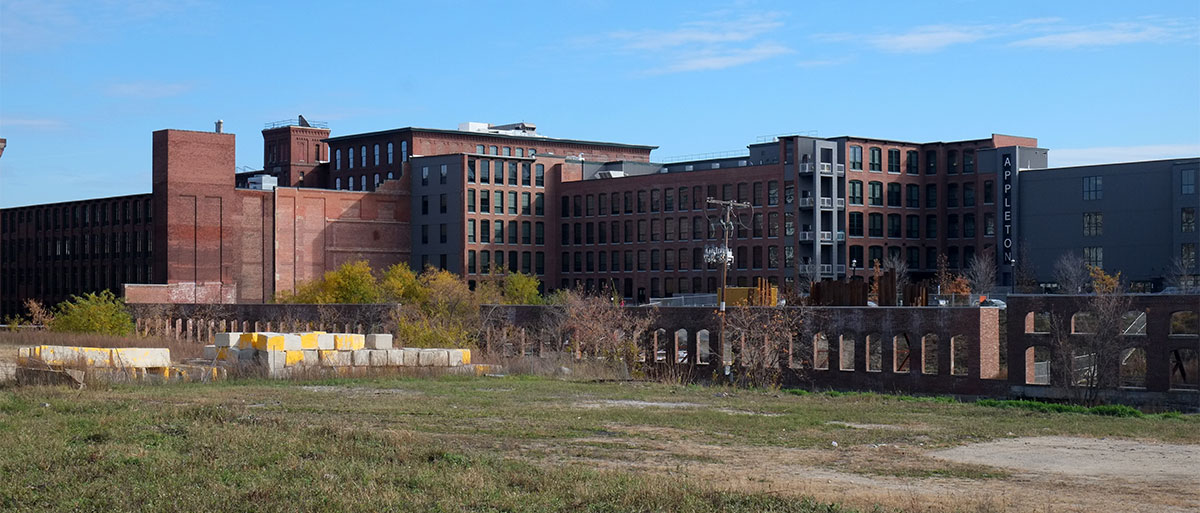
and other parts of the district, where privately owned sites sit vacant, or are available for redevelopment. DSCF4627DSCF4590

In this way, Lowell is similar to our experience at Ebey’s landing National Historical Reserve on Whidbey Island, where 90% of the land is in private ownership, and the Park Service provides an overall organization and focus.

DSCF4582Once you get away from the renovated buildings, Lowell is pretty depressed and depressing.  Some mill buildings have been turned to other uses – such as a large medical clinic or loft housing for artists and yuppies – but let’s face it, the supply of old mill sites is much greater than any foreseeable demand for redevelopment.  It’s a story we’ve seen repeatedly on this trip, cities which peaked economically 100 years ago, and there hasn’t been much new investment.  I remember an Atlantic article a few years ago, where Bernard-Henri Levy visited Buffalo and said that this was inconceivable to a European, that one of the most important cities from 100 years ago could be allowed to decline so precipitously.  But the economy moves on, technologies and transportation systems change, and when a city has lost its primary economic raison d’être, what really can be done?  Architects tend to focus on the potential of the amazing building stock left behind, but this supply-side view ignores the lack of demand to fill those buildings up.

The next important mill town we visited was Paterson, New Jersey, located on the Falls of the Passaic River.  Although Paterson is a short trip from New York City, I had never been there before;  the average New Yorker just can’t conceive of voluntarily visiting New Jersey.  Paterson also didn’t have the best reputation – when I recently mentioned this visit to a friend, he was astonished that we drove through the center of Paterson without having our trailer stripped while waiting at a red light.  (This may be a slightly outdated view – we drove through the center of Paterson and it seemed like a depressed, but not necessarily dangerous place to me.)  DSCF5274

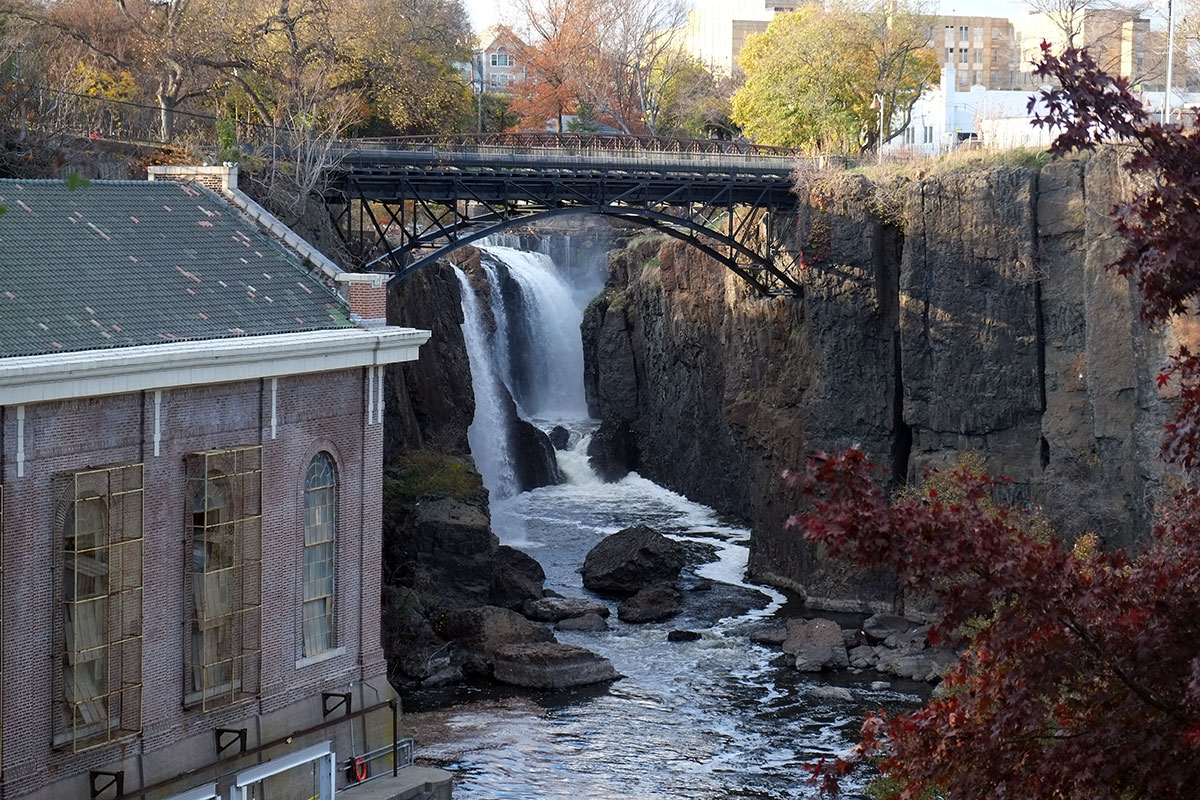
The Paterson mill district is even older than Lowell.  The initial group of developers included Alexander Hamilton and it was the first substantial manufacturing area in the country.  The mills centered around the Great Falls of the Passaic River, a 77-foot drop into a narrow canyon.  A very cool spot, and one that you might have seen in the Sopranos, as people sometimes get thrown off the bridge pictured here:DSCF5266

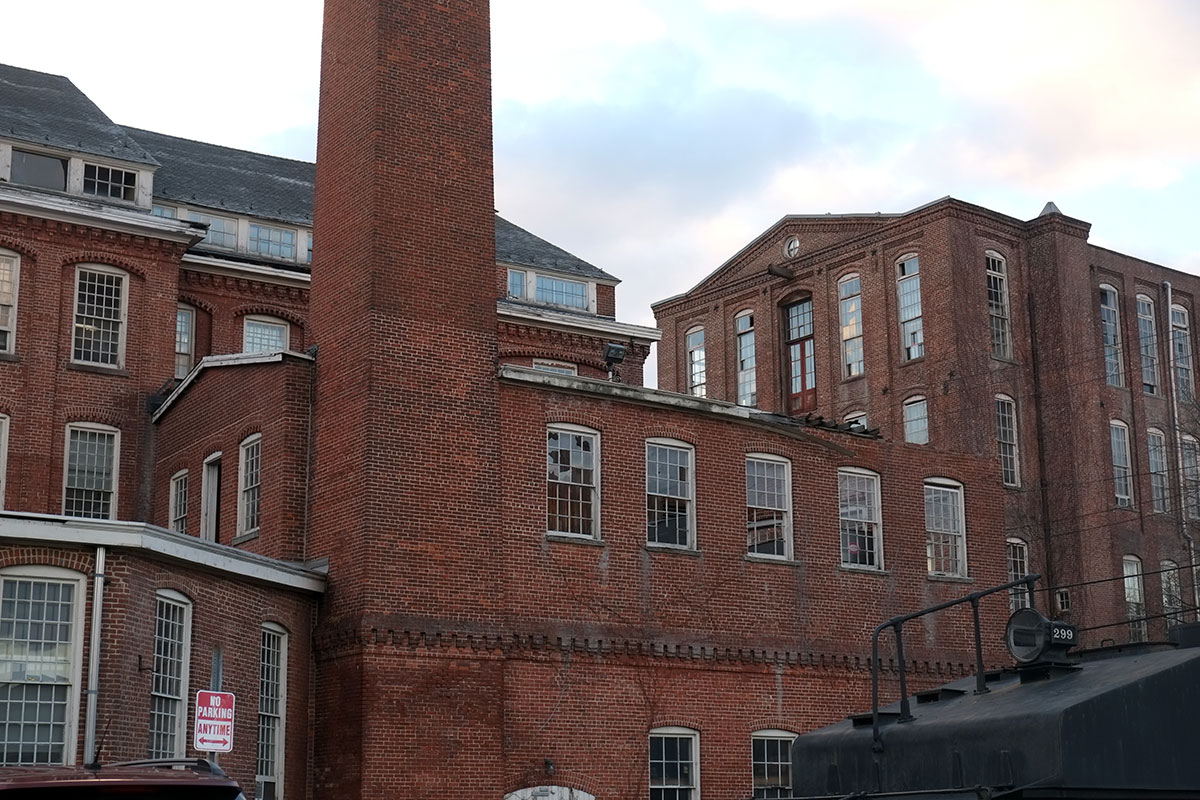
A really knowledgable historian who grew up in Paterson and now works for the NPS gave us the rundown on Paterson, which was surprisingly important – most of the early steam locomotives in the country were manufactured here, it was the center of the silk industry, an it was the site of the first Colt factory.  There are a few remaining mill buildings in the district near the Falls, as well as a museum (which we didn’t have time to visit, as we got stuck in horrific traffic jams in Paterson, and then missed a turn to the parking lot and had to circle around narrow streets with a trailer, and then ended up in front of an elementary school just as it let out).  DSCF5289DSCF5312DSCF5299Despite its gritty reputation, Paterson didn’t see as depressing as Lowell.  Perhaps we just saw a lot more street life, with a clearly vibrant immigrant population.  Perhaps it was because dreams of urban redevelopment don’t seem so unlikely when you’re within an hour of Manhattan and you have some great building stock.  We wished we had more time to investigate the city further, as the downtown has many remaining civic and cultural buildings from its era of prosperity.

New York

DSCF4911 In New York,  we decided to focus on cool new stuff we hadn’t seen.  And pastrami.  Our pastrami quest was thwarted as we trekked up to Carnegie Deli, only to discover that it was closed for repairs.  (And while we considered our next move, a dozen other people came along to be equally disappointed. Someone should set up a pastrami cart there.)  We did see Alwyn Court (even if we couldn’t afford to eat at Petrossian).

DSCF4820We only had two days to spend in New York, less than we did in Cincinnati. The focus on this trip has been on places where I haven’t been in a long time, places where we’re not likely to go to again soon, and places that you need a car to reach.  We had just been in New York last winter, and it’s likely we’ll be back soon, since we have a lot of family and friends there.  Then Greta and I came down with colds while staying with my brother in Mamaroneck, so our time in City got cut in half.  We decided to not spread ourselves too thin, and missed a lot of places and people we wanted to see (including an abortive attempt to schedule a Facebook-based meet-up with a lot of friends).  It was disappointing, but we’ll be back soon.

We wandered through the Park, and felt the full impact of the new residential tower at 57th and Park.  It’s kind of unbelievable, the tallest residential building in the western hemisphere, and a portent of things to come. DSCF4828

The Century used to be considered a tall building.  DSCF4833

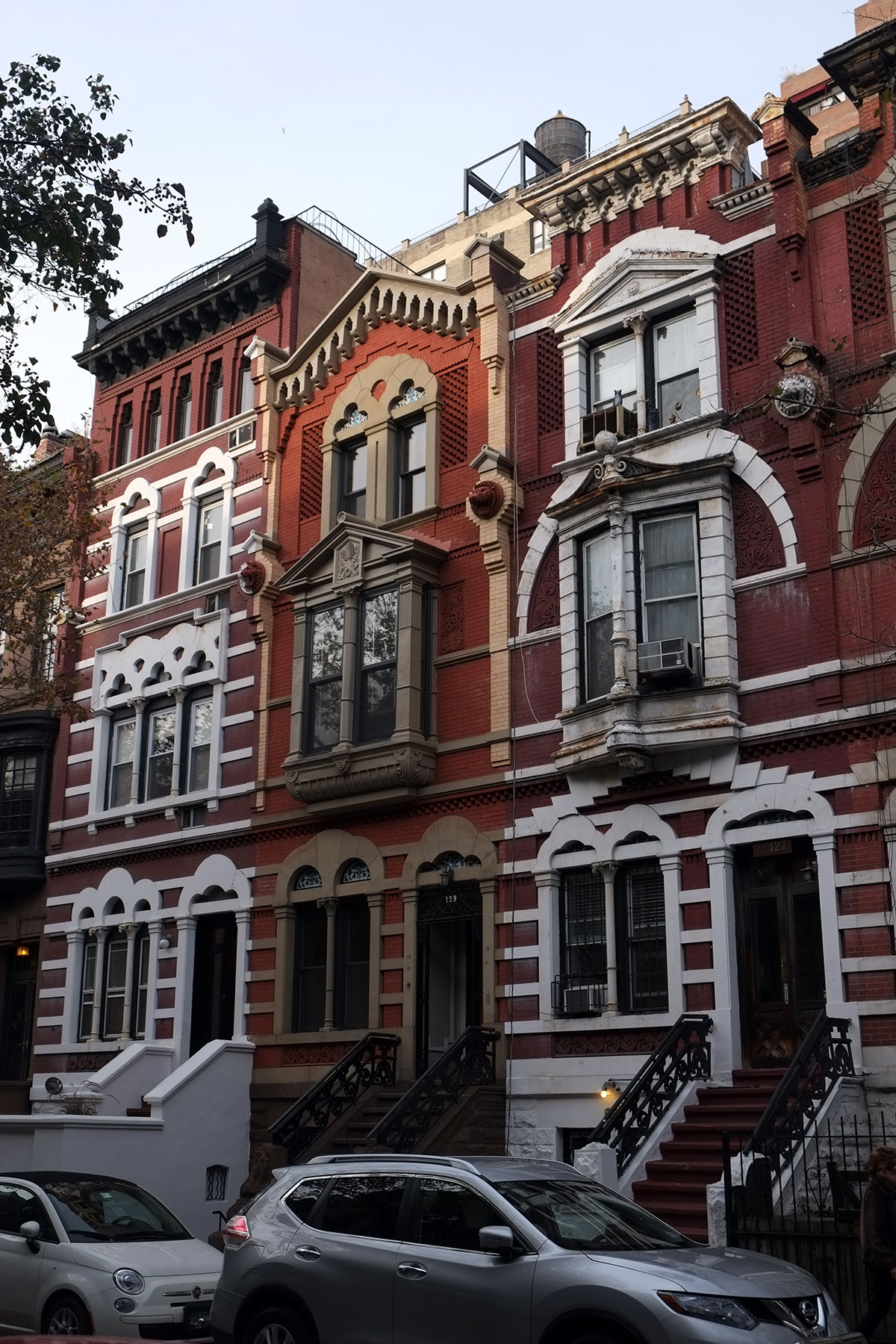
On to some favorite blocks on the West Side.DSCF4843DSCF4845And over the the 79th St.Boat Basin, where the rotunda is looking a lot spiffier than it did when I kept a boat there in the 80s.DSCF4849

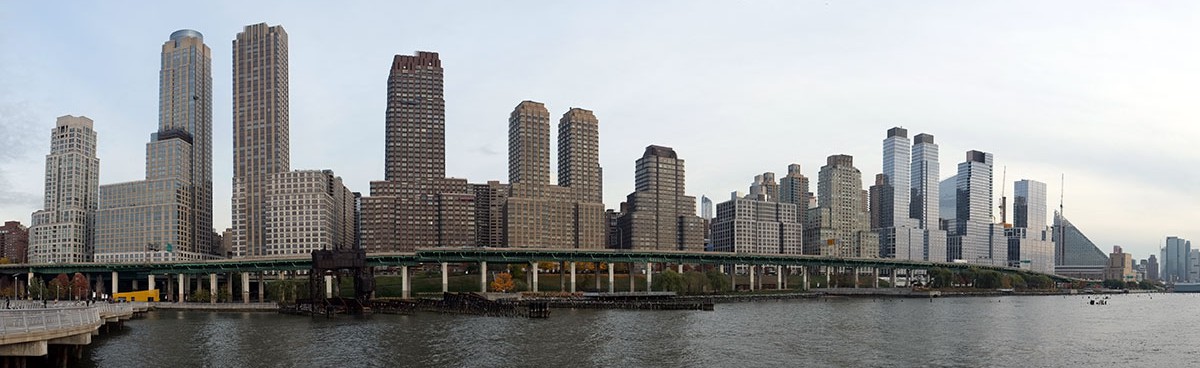
The redevelopment and park extension at Riverside South was interesting.  The new apartments were a tiny bit less banal than most of their era.DSCF4855cropped-dscf4860.jpg

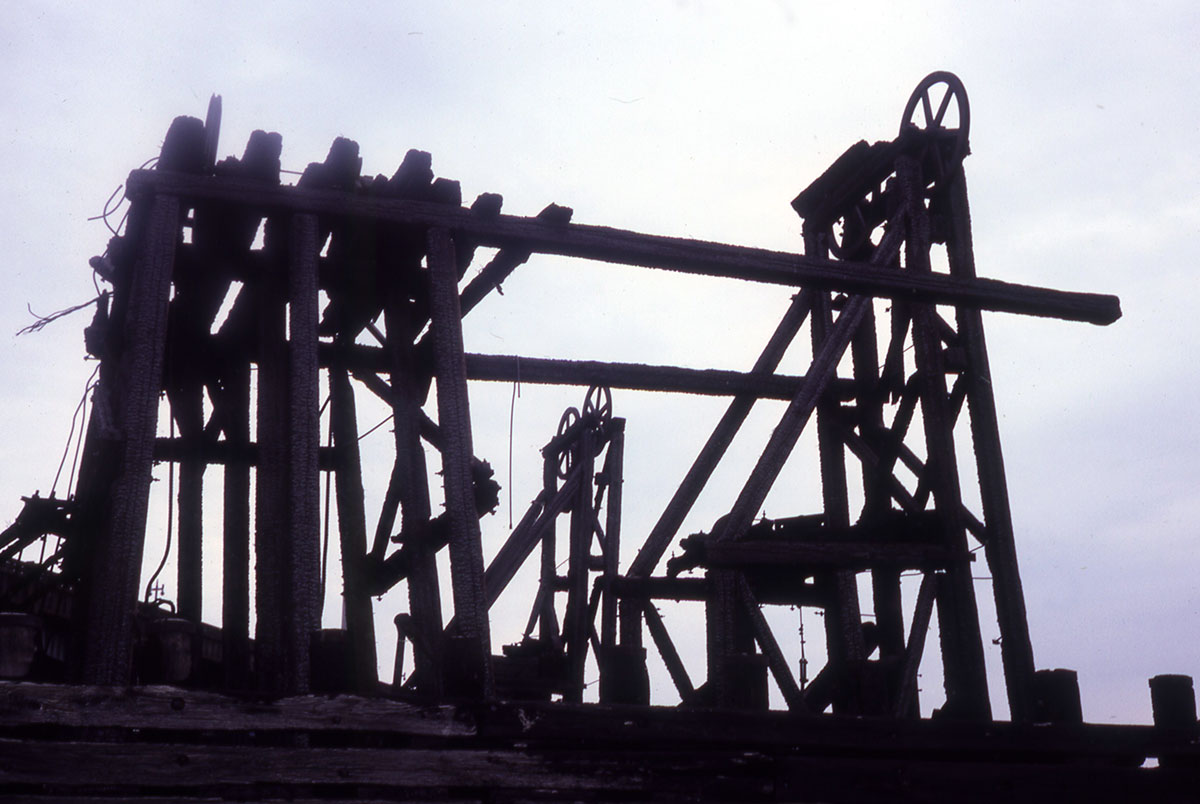
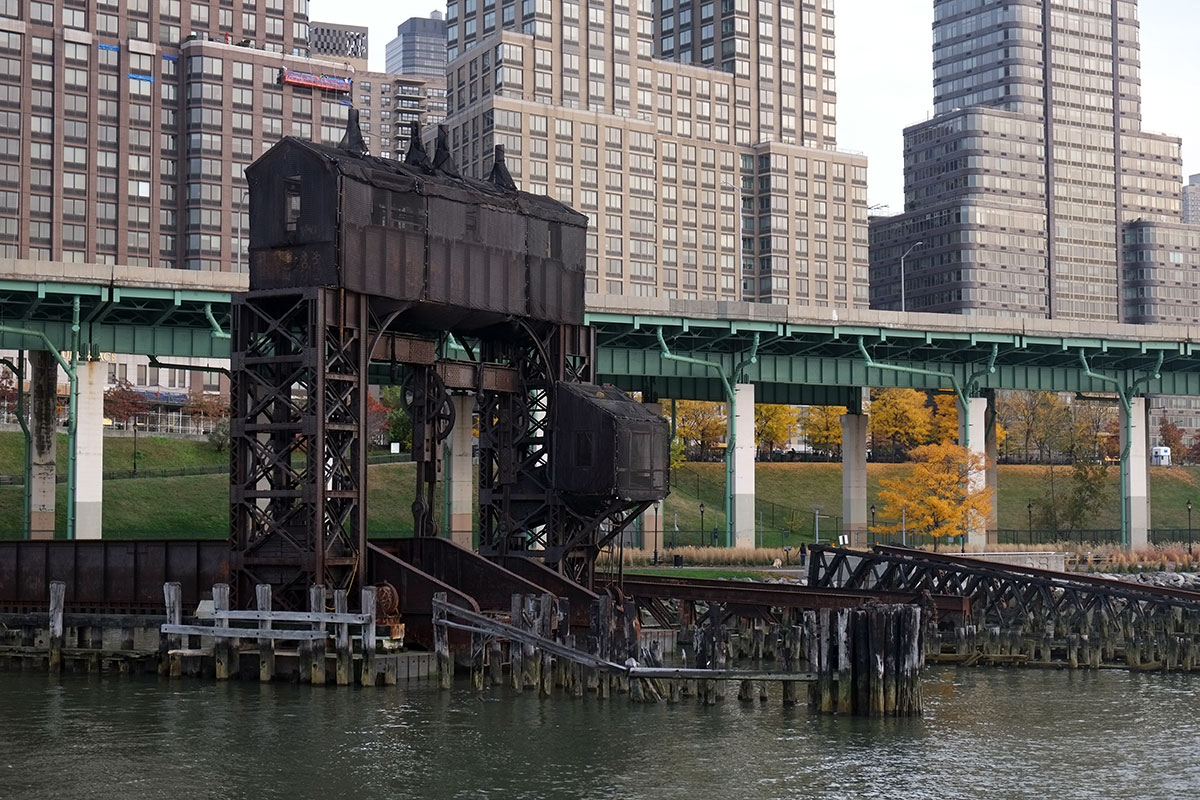
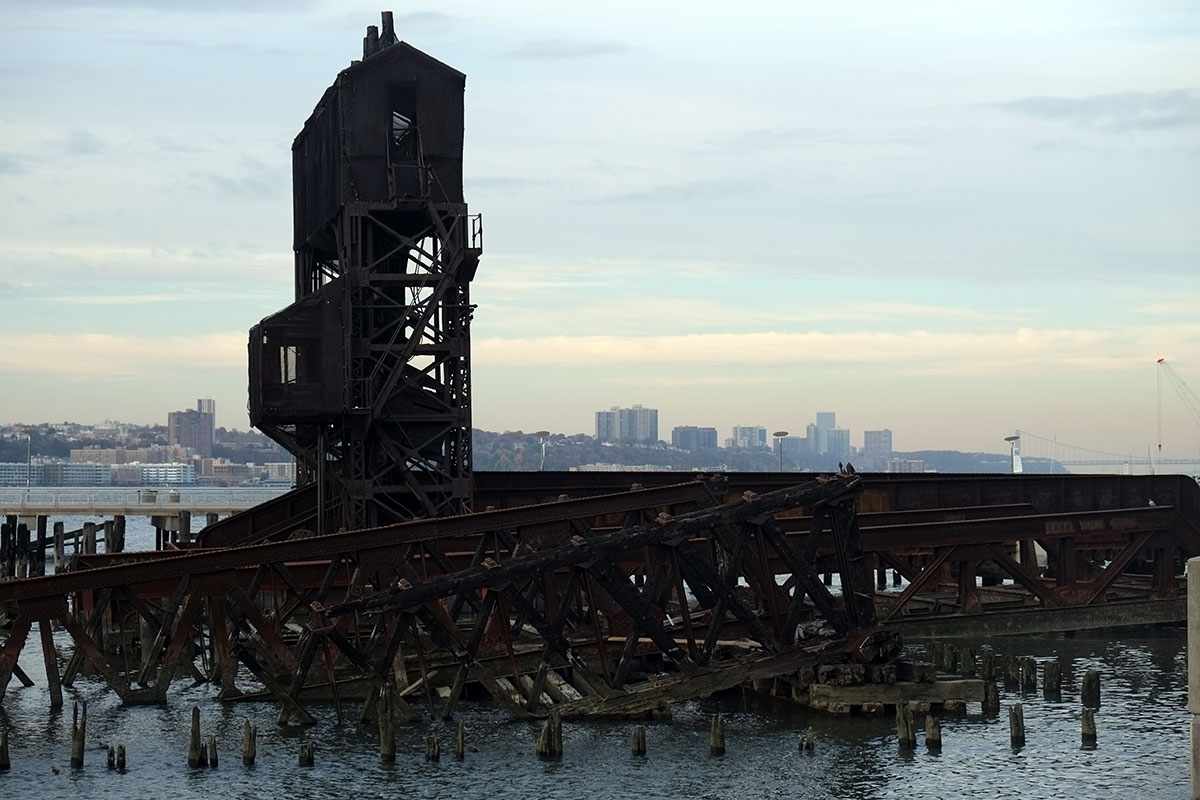
But the real pleasure was in the park.  Back in the 80s, I was one of very few people who ever roamed into this territory – some homeless people managed to find gaps in the fence, and I would come from the river side in a row boat.  I was especially drawn to the remnants of the wharves that were there, as seen in these photos from the late 80s:Hudson-yards34Hudson-yards31I expected that some day this would all get swept away in a real estate development, so I was pleasantly surprised to see that the park design, by Balsley Studio, incorporated these pieces into a sophisticated design that covers the range from hard to soft and industrial to natural.  DSCF4865DSCF4876DSCF4894DSCF4888

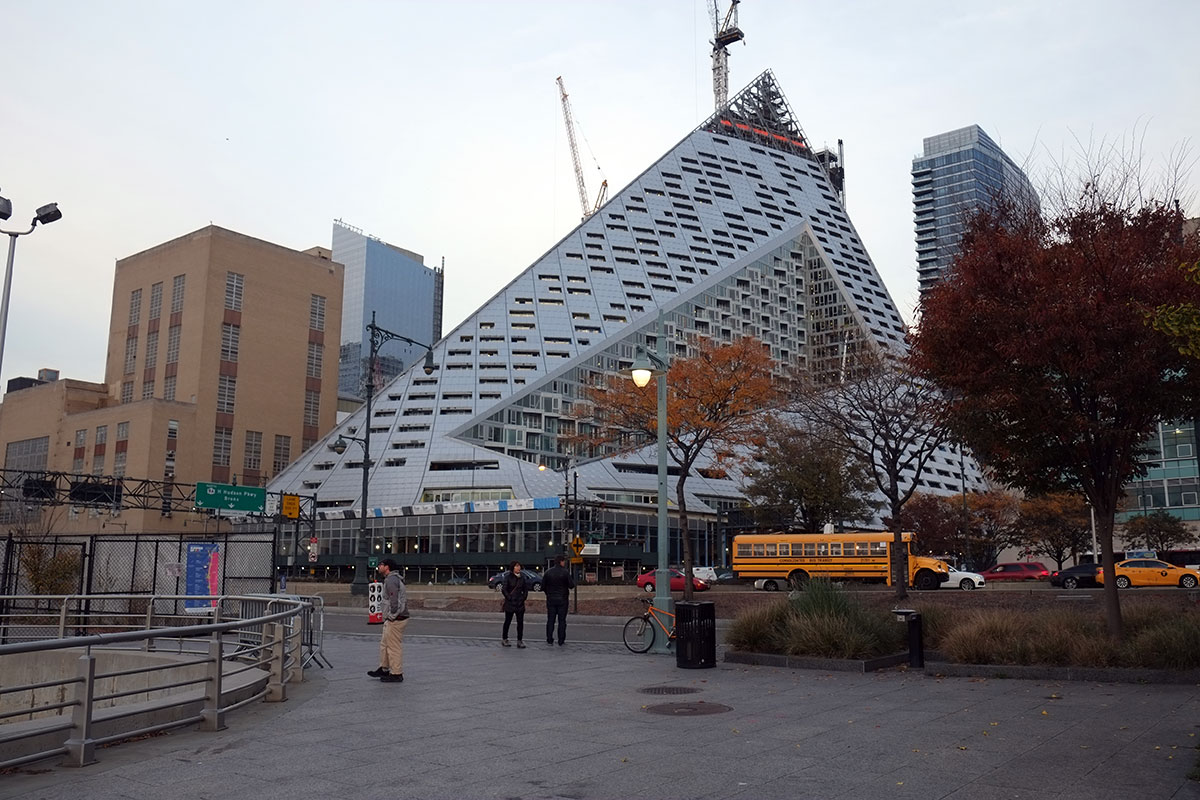
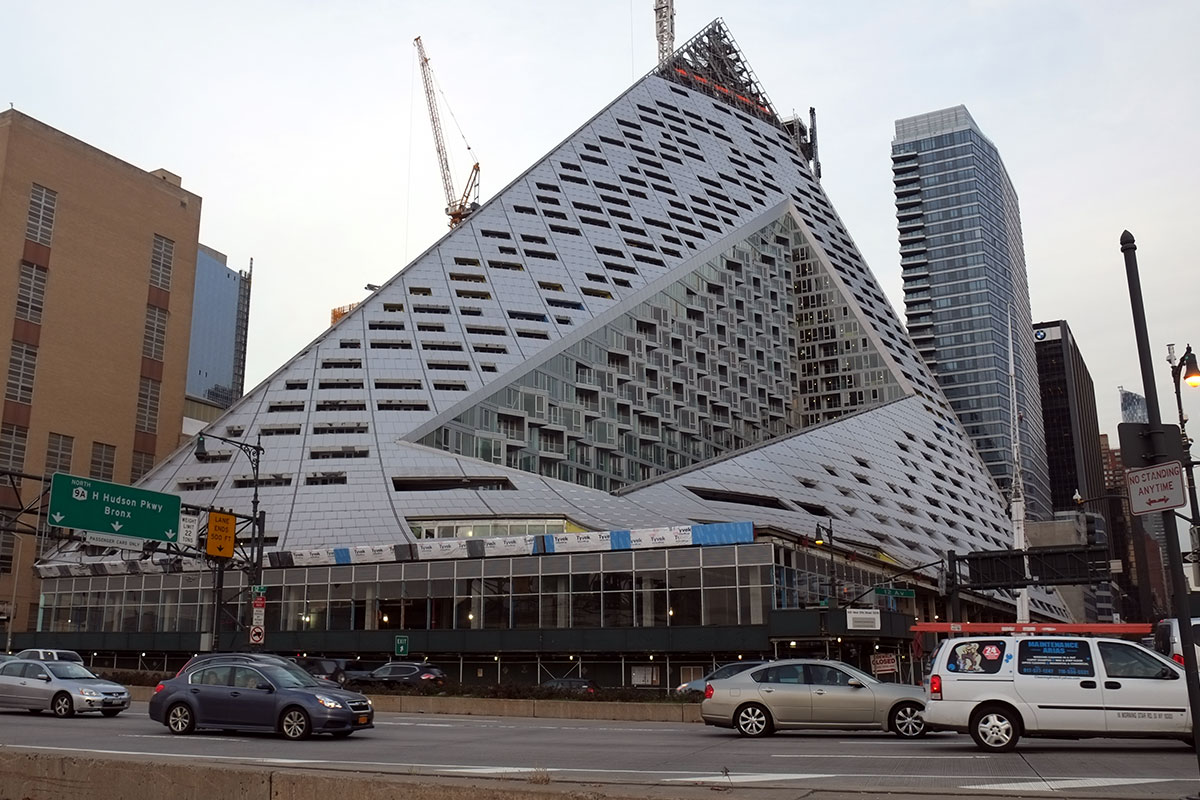
And at the end of the park, there’s something else new to see:DSCF4907DSCF4915Bjarke Ingels’s new condo  building is his usual showstopper.  Once again, he lets the building form be driven by the site conditions, and doesn’t worry about conventional ways of making buildings.  I think this has worked really well in some of his projects, such as the 8-house, and less well in some others, such as the Mountain, where the concept may be strong but the execution is flawed.  It may be too early to tell with “Via 57West”, but I do wish they had hired a Danish branding consultant too and come up with a better name.  (Maybe they’re trying to attract Italian residents, and want to distinguish it from the buildings full of Russian oligarchs down the street.)  I haven’t seen the plans, but we spoke to a construction worker who said there were lots of weird, unusable spaces, which has certainly happened in some of his other projects, and seems like a natural result when you let the building volume drive the scheme.  I’ll withhold judgment.

But I think this may be a real New York building at heart, with the form driven by real estate economics.  One way to look at the massing is that it provides a graceful transition from the 57th St. canyon to the open space of the River:DSCF4932

Another interpretation arises when you find out that the whole block is being developed by the Durst organization.  The more conventional building further back on 57th St., seen to the right in this photo,DSCF4914now has a view of the River because the Ingels building slopes back.  So instead of one building with a view of the River and one with a view of 11th Avenue, you now have two buildings with river views.  The first one may be inefficient, not maximizing its potential floor plates and with funny unit designs,, but you can sell the units to hipsters who want to be in the cool building with great views, regardless of functionality.  Then you can have conventional units with normal floor plans in the second building, which will be bought by more pragmatic people.  The origin of this building is similar to that of Central Park – it may be a good design, but it would never have happened without the financial rationale.  I just wish it had a less cheesy name.

Cambridge

If being in Boston felt familiar, Cambridge and Somerville felt much more so.  I was at Harvard for four years, and then spent two years living in Somerville while I worked for an architecture firm in Boston.  In retrospect, I spent the vast majority of my college years on campus, as it was intense and time-consuming, venturing into Boston for frequent field trips and museum visits related to my major in art history.  After college I spent a lot more time wandering around Boston, due to more free time, being in Boston every day anyway, and living in a crummy apartment in Somerville that encouraged one to get out more.

If Boston seems to change less than other places, Cambridge is even more extreme.  Returning alums bemoan the loss of old standbys like Cronins or Elsie’s, but there were certainly more than enough nostalgia-triggers around to drive Greta crazy, as she had to listen to stories in front of each (although I restrained myself from breaking into Illegitimum non Carborundum).  Random highlights follow:

Harvard Square struck me as much the same, thought perhaps more sedate.  Certainly the pedestrians are less militant than they were.  DSCF3550

DSCF3415
While Joyce Chen’s was arguably one of the first restaurants to introduce authentic Chinese food to America, Yenching will always be remembered as the harbinger of the Great Szechuan Revolution in Cambridge, the place which inspired our subsequent lifelong predilection for excellent Chinese food.

DSCF3521
Pinocchio’s pizza is still going strong, although it now has pictures of Mark Zuckerberg prominently displayed.  I had forgotten how much Boston pizza differs from New York – not least in that it is made by Greeks – but I’ll leave the review of it to Greta.  But perhaps the most inexplicable survivor was:DSCF3525
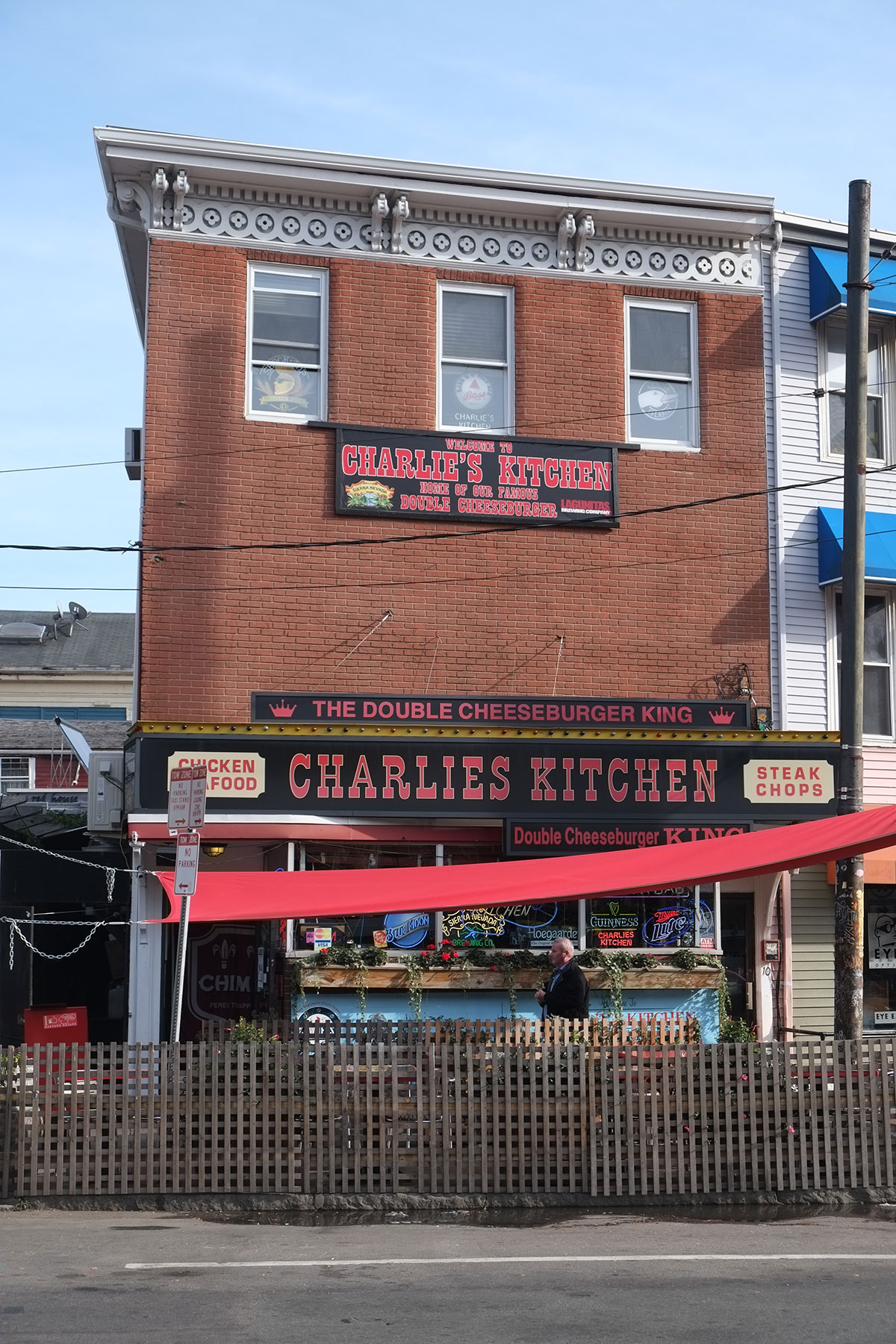
Charles Kitchen, purveyor of thoroughly mediocre double cheeseburger specials and cheap beer.  I know that the culinary proclivities of undergraduates probably haven’t changed that much, but I was still surprised that it hadn’t been displaced by a higher-end establishment, until a local informant told me that it is owned by the Mafia and probably fills some other role in the underground economy.

DSCF3555
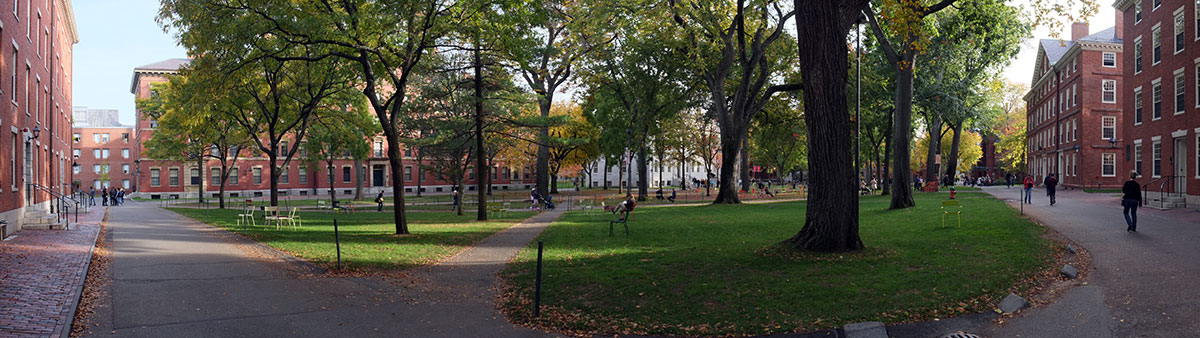
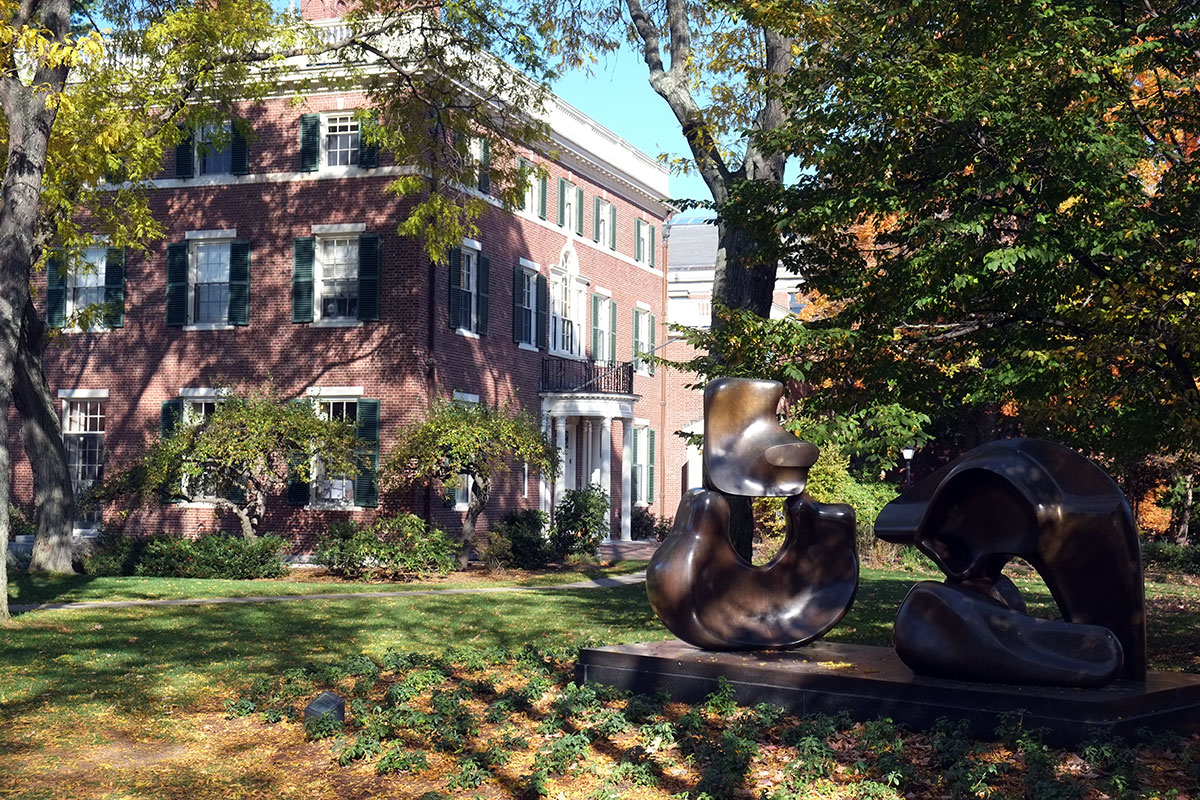
Harvard Yard is of course the same, except for the now huge crowds of international tourists and the chairs scattered around.  Crowd control has become an issue, and there are signs everywhere telling you not to enter the buildings or bug the students.  But once you get out of the Old Yard, the Tercentenary Theatre and the small courts are still relatively sedate.DSCF3409
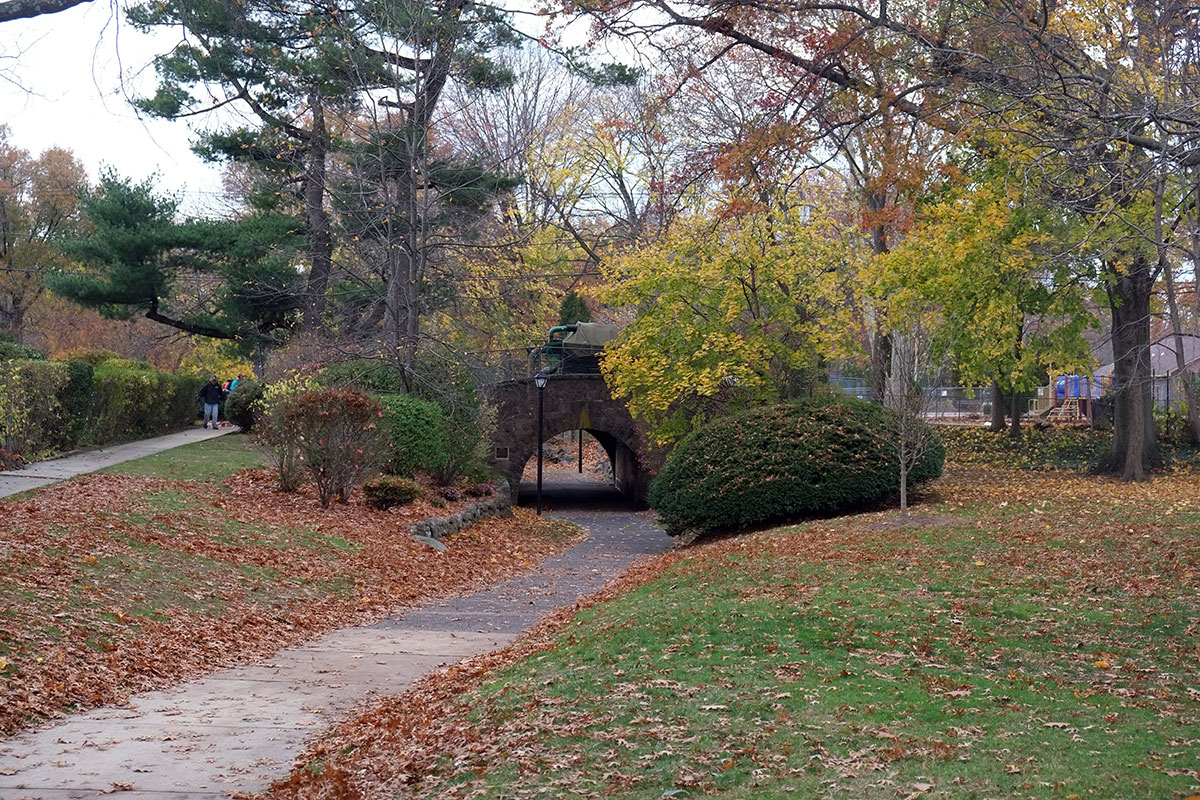
Massachusetts Hall, the oldest survivor on campus, from 1720.

Massachusetts Hall, the oldest academic building on campus, from 1720.

The President's House

The President’s House

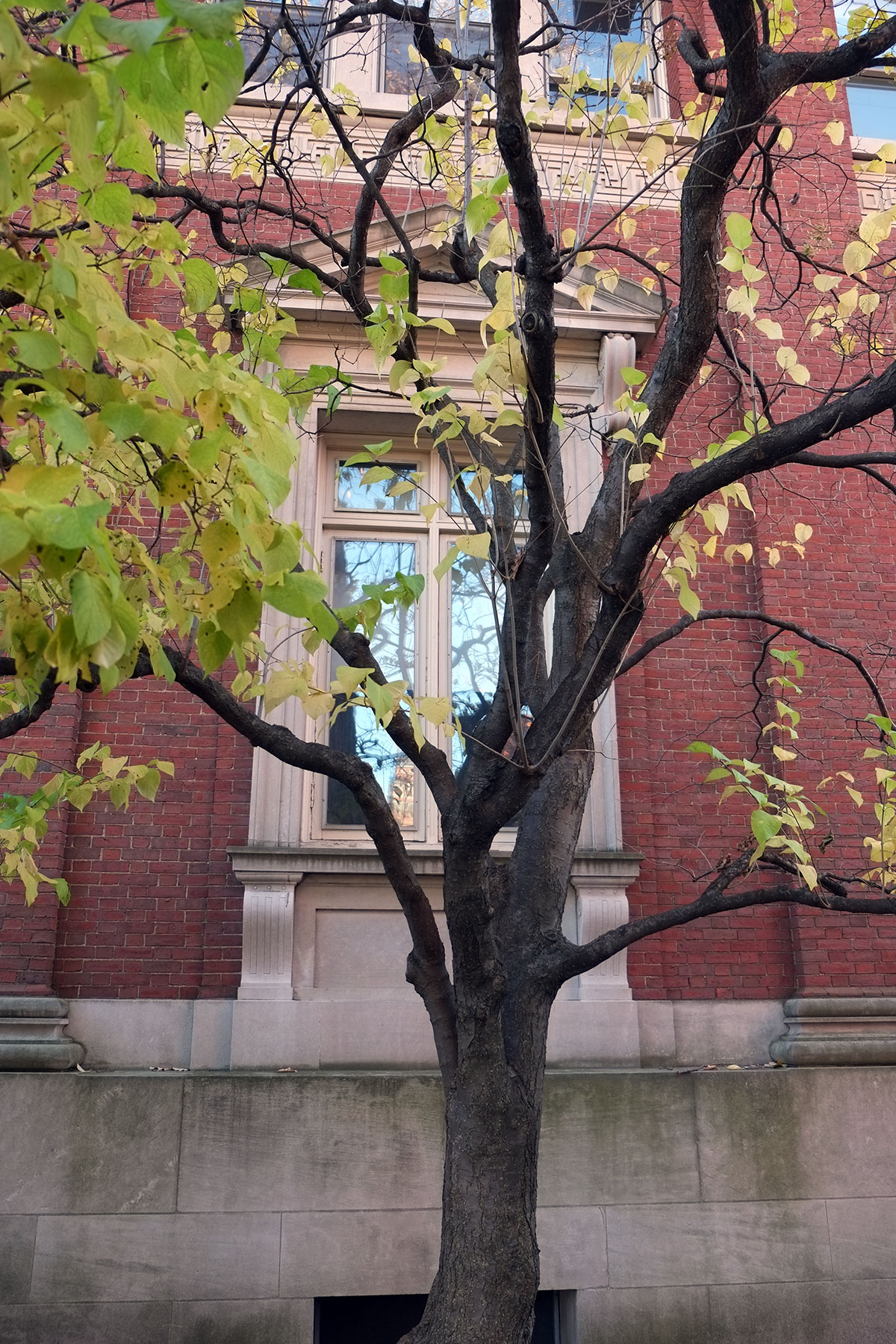
The window in Emerson, from which I gazed during Soc Stud 10 lectures on Marx (when I was a Soc Stud major before switching), and the tree I gazed upon.

The window in Emerson, from which I gazed during Soc Stud 10 lectures on Marx (when I was a Soc Stud major before switching), and the tree I gazed upon.

Architecturally, we went by old favorites to photograph them, as I just hadn’t taken enough slides back in the pre-digital days.

the Lampoon and Adams House

the Lampoon and Adams House

the alley by Lowell House. An interesting development has been the replacement of the Fly Club garden by a new building for Hillel.

the alley by Lowell House. An interesting development has been the replacement of the Fly Club garden by a new building for Hillel.

the view of Mem Hall from the GSD library, my preferred reading and late-afternoon dozing spot.

the view of Mem Hall from the GSD library, my preferred reading and late-afternoon dozing spot.  The tower has been reconstructed, and it is now used as the freshman dining hall, after the desecration of the Freshman Union 20 years ago.

Becoming an architect has given me a new appreciation for buildings I didn’t particularly like as a student.  I still understand their shortcomings as seen by laypeople, but as an architect I am bound to defend their architectonic qualities.  First there is Sert:

the Science Center

the Science Center

Peabody Terrace, which I no longer feel the desire to bombard with paint balloons.

Peabody Terrace, which I no longer feel the desire to bombard with paint balloons.

the Holyoke Street side of Holyoke Center, which is extremely nuanced in how it addresses its different orientations.

the Holyoke Street side of Holyoke Center, which is extremely nuanced in how it addresses its different orientations.

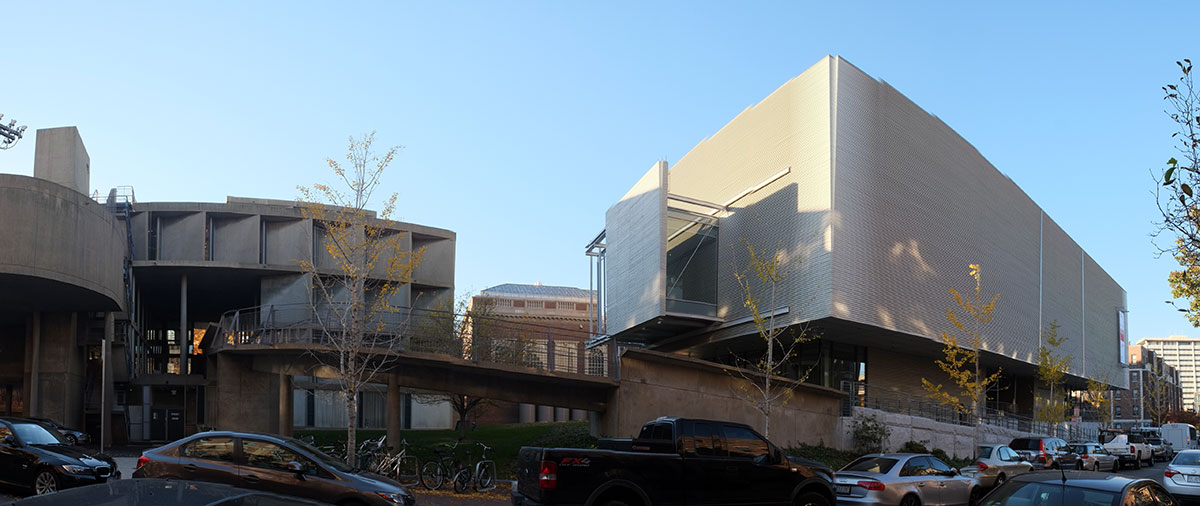
and of course Corbu’s Carpenter Center, which I now appreciate much more, and find its stand-off with Piano’s new museum quite entertaining (more on this to come).
DSCF4534

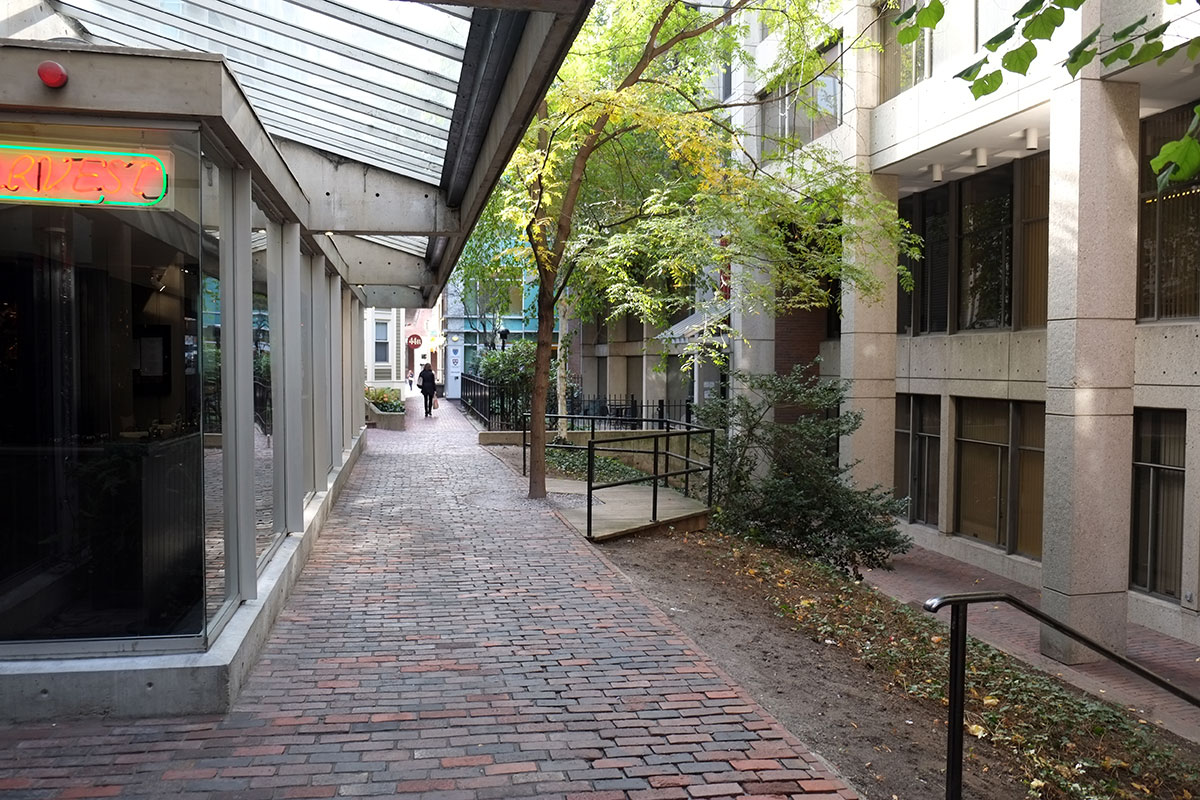
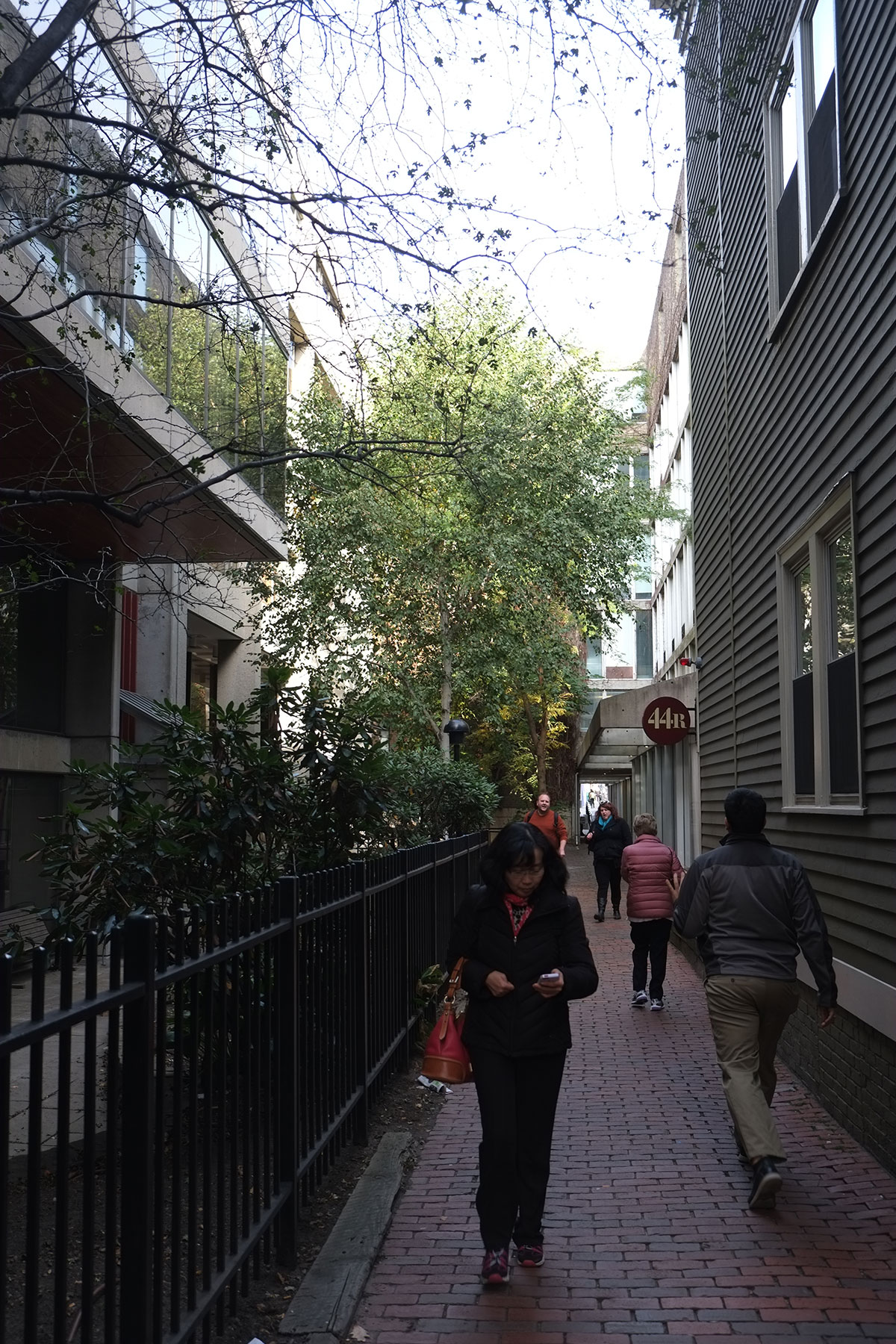
Perhaps the most striking place was the pedestrian alley and courtyard at 44 Brattle Street, (behind the Design Research building designed by Ben Thompson).  The buildings were by Sert, Earl Flansburgh and TAC, who all had offices there, and collaborated on the design of the passage to the interior of the block.  I have never seen another pedestrian passage in this country that is this successful – the materials, the scale, the spatial sequence – all have combined to create a vibrant, pleasant and well-used alley.  It has become a commonplace that modernist object buildings ignored the context and destroyed the city;  it is instructive to see spaces like this and understand how the best modernist architects were highly sensitive to these issues.DSCF3530DSCF3533 DSCF3534

At the end of the day, Greta was more taken with Cambridge than she had thought she would be, and immediately fell into the role of serious author writing in a crowded cafe.
DSCF3544

New things in Boston

Boston does change, and it has probably added as many new buildings as other cities its size in the past 30 years, but the percentage of change seems smaller, since so many old buildings remain.  There have been two big changes, and many more localized ones:

There are small changes to existing building, such as the art installation on the Hancock.DSCF2628

And at dusk you can see other changes, such as how the various tenants have designed their lighting:DSCF2950c

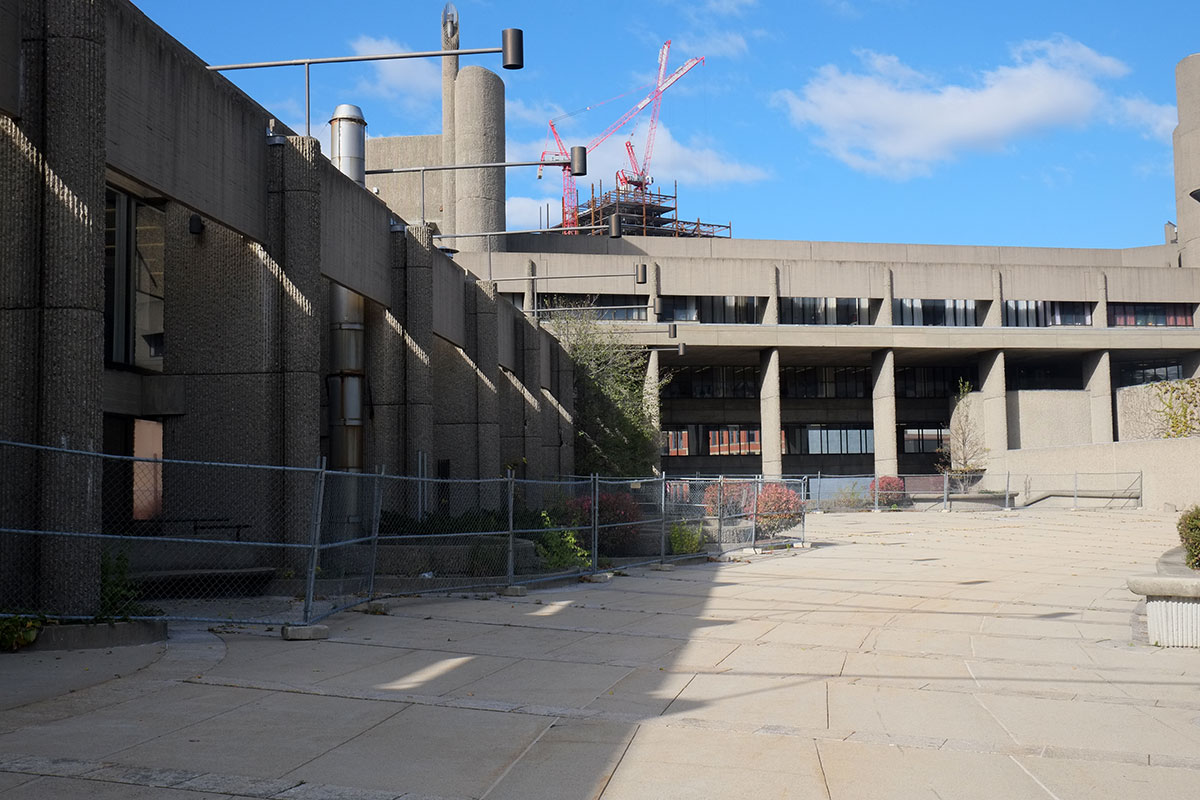
Boston may preserve its pre-modern heritage, but its lack of affection for some modernist classics is becoming evident.  Paul Rudolph’s complex at Government Center was never finished, and now it looks like it’s falling apart. We used to throw frisbees on the plaza, and watch in dismay as they fell through one of the large holes into the netherworld of the parking garage below.  That plaza is now full of chain-link fences – perhaps in our insane post-9-11 security mania someone decided that the holes violated the security perimeter, so they have been enclosed.  Between the fences, weeds and general lack of maintenance, the building looks like a wreck.  Maybe it is Boston’s attempt to catch up with Detroit as a center for ruin porn.
DSCF2773

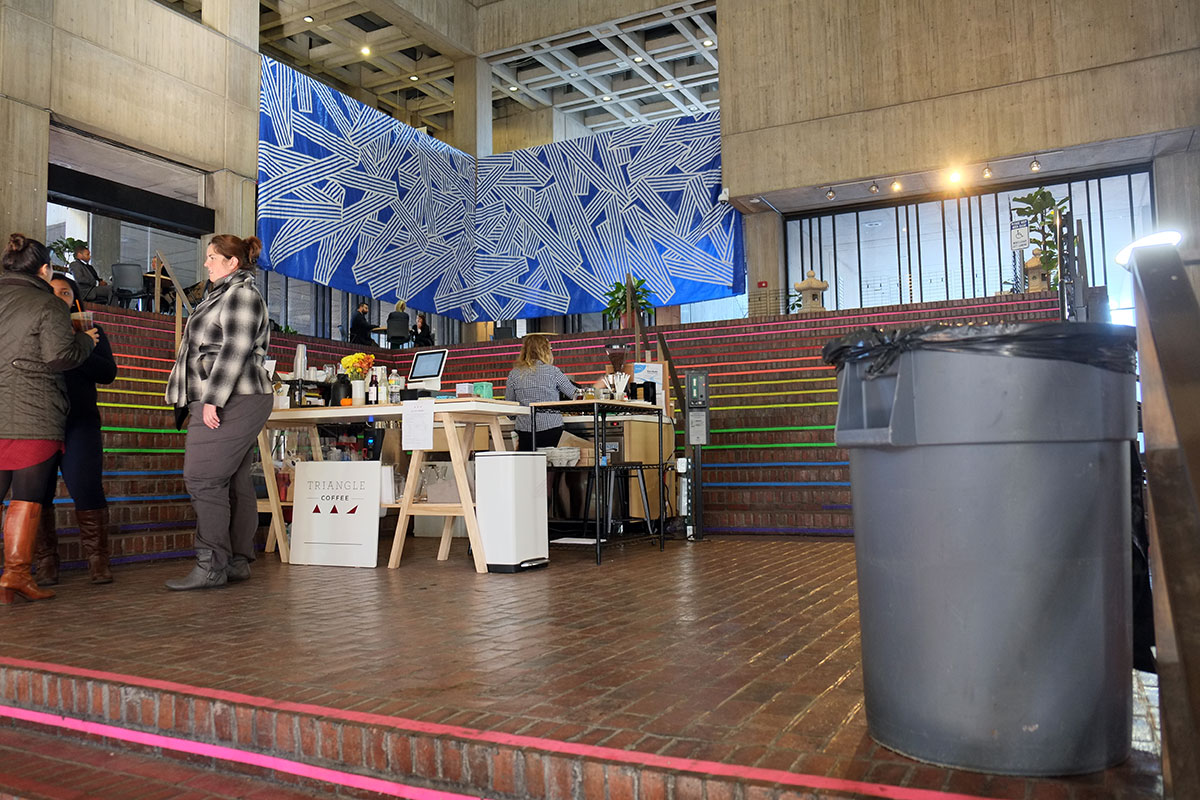
Even more surprising is what has been done to the City Hall.  It is a building Bostonians love to hate, similar to our scorn for the Portland Building.  I’ve always saved my scorn for the pointless, overscaled, empty plaza, thinking that the building itself is a pretty rigorous Brutalist icon.  But it is now suffering the death of a thousand cuts.  The big ramps and access points to the building have been closed off, no doubt in another security frenzy.DSCF2794

What was once an awe-inspiring interior formal stair hall has been strewn with junk – a random potted plantDSCF2799

garbage cans at important points, brightly colored tape on all the brick stairs, a painted blue tarp which obscures the stair to the council chamber, and a truly crappy coffee bar right in the middle.DSCF2814

It’s just depressing.  I know the building has problems, but it would be nice to deal with them in a systematic and thoughtful way, rather than letting everyone add whatever junk they wanted to.

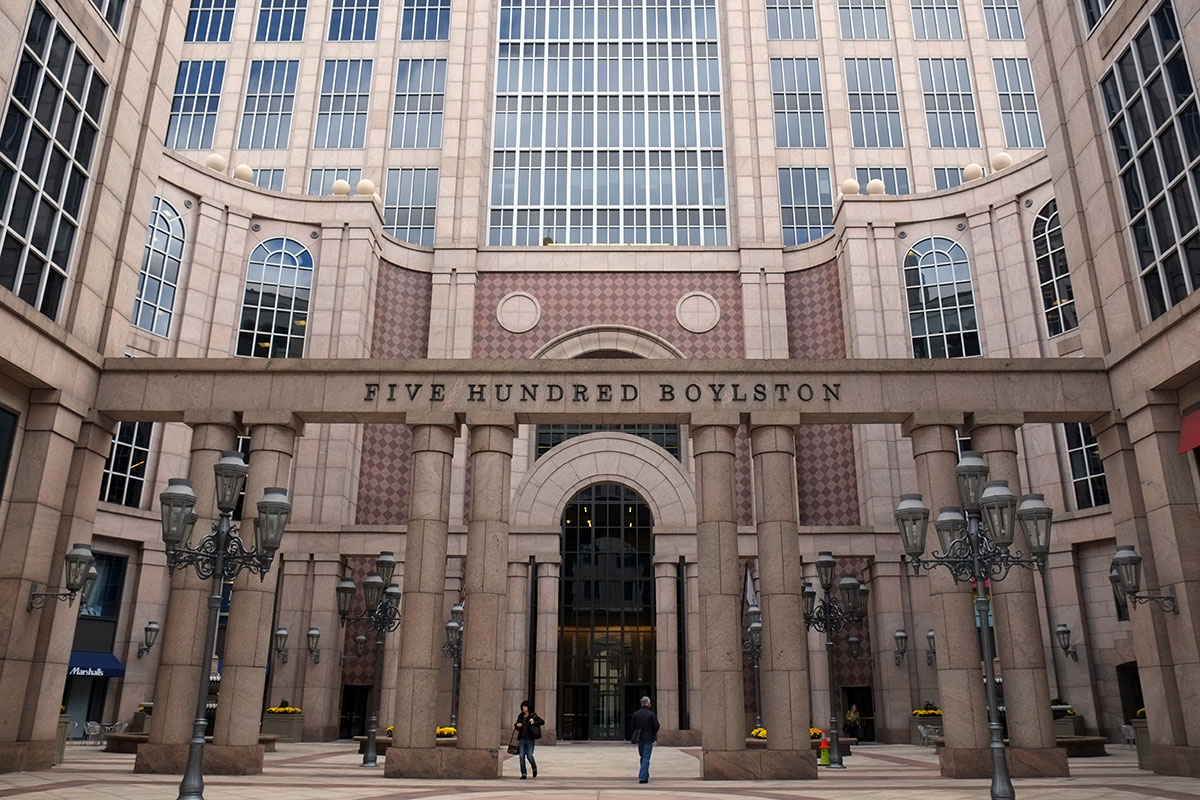
And of course we can’t blog about crappy new things in Boston without revisiting the master of kitsch, Philip Johnson.  HIs 500 Boylston building is appalling, the kind of embarrassing banality that caused the downfall of postmodernism.  I can’t decide whether I hate this or his PPG Place more.
DSCF2666

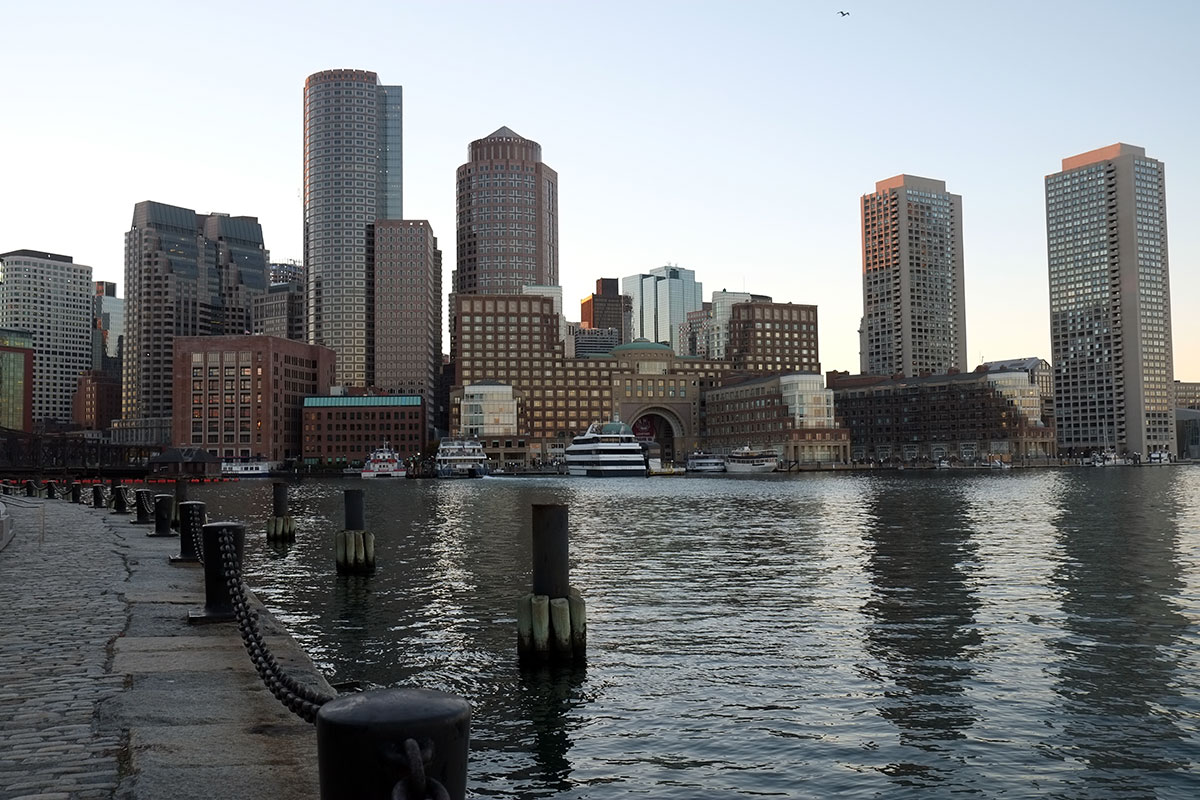
There have been many new towers built downtown in the past decades. Most of them are awful – under-detailed and overscaled, the same as has happened to every other big city.  But once again Boston’s heritage comes to the rescue – there are enough good old buildings that the new ones don’t overwhelm it.  The old ones certainly make the new ones look bad, but the counterpoint between them is not unpleasant.DSCF4345

It does look much better at night.
DSCF4359

One big new thing is the redevelopment of the harbor edge of Southie.  This has a new meaningless developer name, the Seaport District, probably because SOuthie NOrth (SONO) was already in use somewhere else.  There’s a new gargantuan convention center, a bunch of monstrous hotels, and now condos are popping up everywhere. DSCF4301

The one good building is Pei’s federal courthouse.  Not a stunner, but a simple parti with historicist leanings.  It was the first new building in the area, but it had no impact upon what followed.
DSCF4352

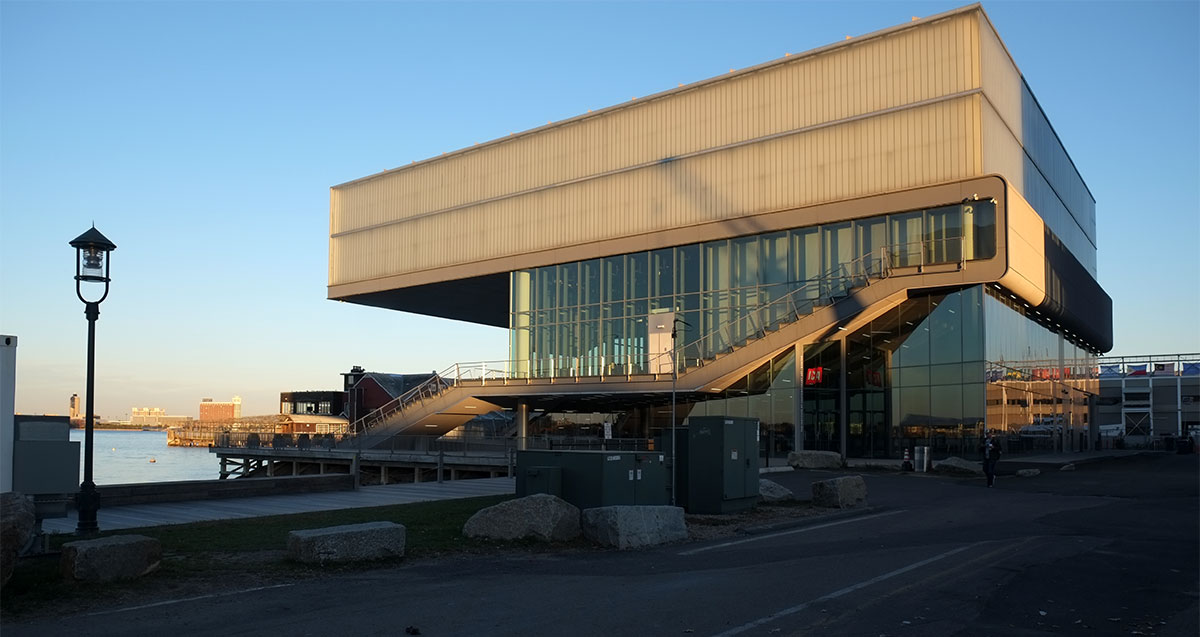
Diller Scofidio’s Institute of Contemporary Art is just trying too hard.  DSCF4337Is anyone else getting tired of giant cantilevers for no reason?  I guess it shelters the seating below, an amphitheatre for Boston Harbor, but frankly, looking across the water to East Boston is not a view that should be emphasized. Maybe the district will grow up around it it, but right now it looks like every other piece of starchitect branding.

The general level of work in the district is not promising, but no worse than this stuff in every other city.  And maybe that’s the saddest part – Boston has always been a distinct place, with its own character, style, history, etc.  Even when it got its festival marketplace, Quincy Market, it made use of fabulous older buildings.  But this Seaport District looks like it could be in Orlando, Dallas, Indianapolis, or Miami.
DSCF4338 DSCF4323 DSCF4328

The other big new thing in Boston is the Big Dig – the removal of the Central Artery and its replacement with tunnels carrying the traffic. DSCF4303 It is now called the (Rose Kennedy) Greenway, and it took me a while to get my head around it.  You know how hard it is to remember what exactly was in a certain place when it’s gone?  The Greenway is that to the nth degree. You recognize the old buildings and streets that were there before, but the relationship among them is totally different.  You try to figure out where the nasty little tunnel to the North End was.  Then you realize you have a view out to the harbor that was never there before.

The Greenway doesn’t seem to have much of an identity, and I mean that in a good way.  There isn’t a grand formal vision for the whole.  It is a series of connected, but not totally unified pieces;  the whole is not necessarily greater than the sum of the parts.  The Greenway is not a thing, it is the absence of the horrible thing that was there before.  I think the designers wisely decided not to replace it with another thing, but rather to create a number of smaller-scale pieces, each of which can relate to its immediate context, and try to pull the pieces together.  Once you get away from the Common, downtown Boston never had a lot of open space, and with the advent of giant new buildings, it might have been overwhelming, without the giant new open space.  To be hurrying through the financial district’s winding canyons at rush hour is intense, then stepping out into the Greenway on the way to South Station is a contrast and a relief.DSCF2896
There are some very good parts.DSCF2842 DSCF4371

Of course it was way over budget, and of course it took way longer than predicted and created a lot of controversy, but in the end, it is a Very Good Thing.  Perhaps it says something about Boston – what other city would spend billions of dollars on a project that made the city better, but didn’t produce a big shiny object that jumps up and screams look at me!  New York couldn’t do it – the urban design downtown at the World Trade Center is a disaster, with gigantic, pointless open space and preening object buildings.  The Greenway is Boston at its best, a simple, understated, classy solution.
Shores, South and North

The towns on both the South and North Shores of Boston are some of the oldest settlements in the country, mostly founded in the 17th century. The centers of these towns preserve that original character and spatial arrangement, at the core of what have since become suburbs.  The juxtapositions between old houses and modern strip development can be jarring, especially to someone from the West Coast, where everything has been built in a shorter time frame.

Cohasset

Cohasset

When I lived in the Boston area I never got to explore the environs as much as I wanted, as I didn’t have a car,  So staying with friends both in Scituate on the South Shore and Boxford near Ipswich on the North Shore was a great opportunity to see these places.  What made it even better was that my friends are long-time residents of these areas, and showed me around to places and buildings I would never have known about.  (Greta missed most of this as she was back in Eugene visiting Linda.)

Scituate, Lighthouse Road

Scituate, Lighthouse Road

The South Shore has an intricately varied shoreline, with many small coves and larger harbors.  The historic town cores are on the harbors, with later houses filling along the shore between them, and 20th century development spreading to the interior.  Scituate has four “cliffs” that stick out into the bay (we have the northwesterner’s amusement for how topographical terms are used here) which have highly clustered houses on small lots by the water.

Scituate, Lighthouse Road

Scituate, Lighthouse Road

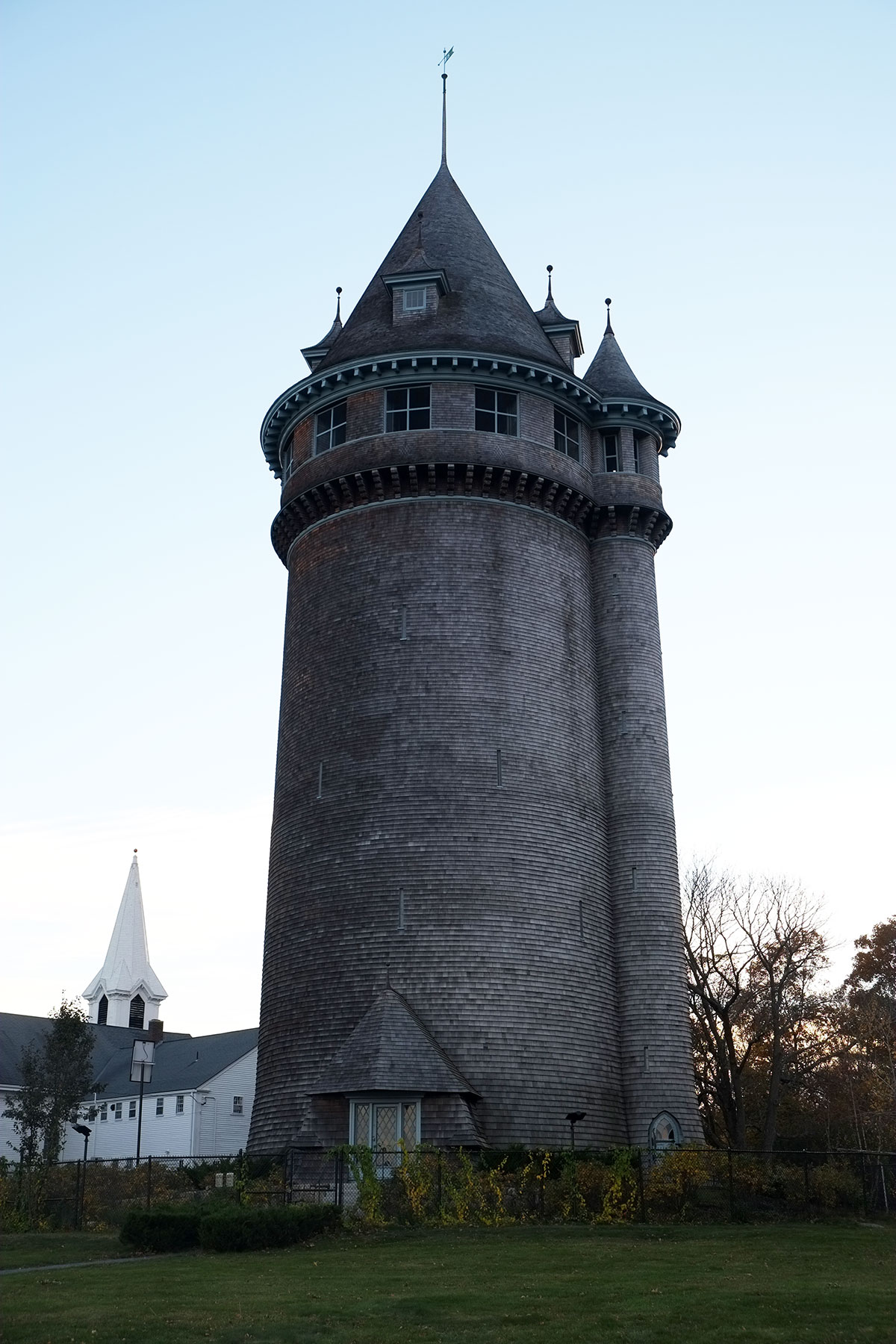
Places that are this old accumulate interesting artifacts, such as this former water tower that was made to look like a Rhenish tower, as the rich person living nearby didn’t like looking at the ugly water tower.

the very interesting water tower in Scituate

the very interesting water tower in Scituate

The Trustees of Reservations is an organization that owns more than 100 significant properties in Massachusetts, from the famous to the obscure.  We visited World’s End, which Olmsted designed as a residential development on a neck in Hingham, but it was never built out. It is now an open space reserve owned by the Trustees.
Olmsted designed a residential development on a neck in Hingham, but it was never built out. It is now an open space reserve, called World's End.

World's End, with Boston in the distance.

World’s End, with Boston in the distance.

We visited Ipswich (where Updike live and worked) and Topsfield on the North Shore, finally seeing the famous Parson Capen house from 1683, which is from that period when settlers built what were essentially English houses, having not yet adapted them to the New England conditions.
the Capen house in Toppsfield, from 1670.

A Classical Revival church spotted on a trip north to Exeter, so technically not on the North Shore, but too good to not post.
actually somewhere in southern New Hampshire, but close enough

Newburyport, at the mouth of the Merrimack River, with well-preserved downtown and residential areas.

Newburyport

Newburyport

Newburyport

Newburyport

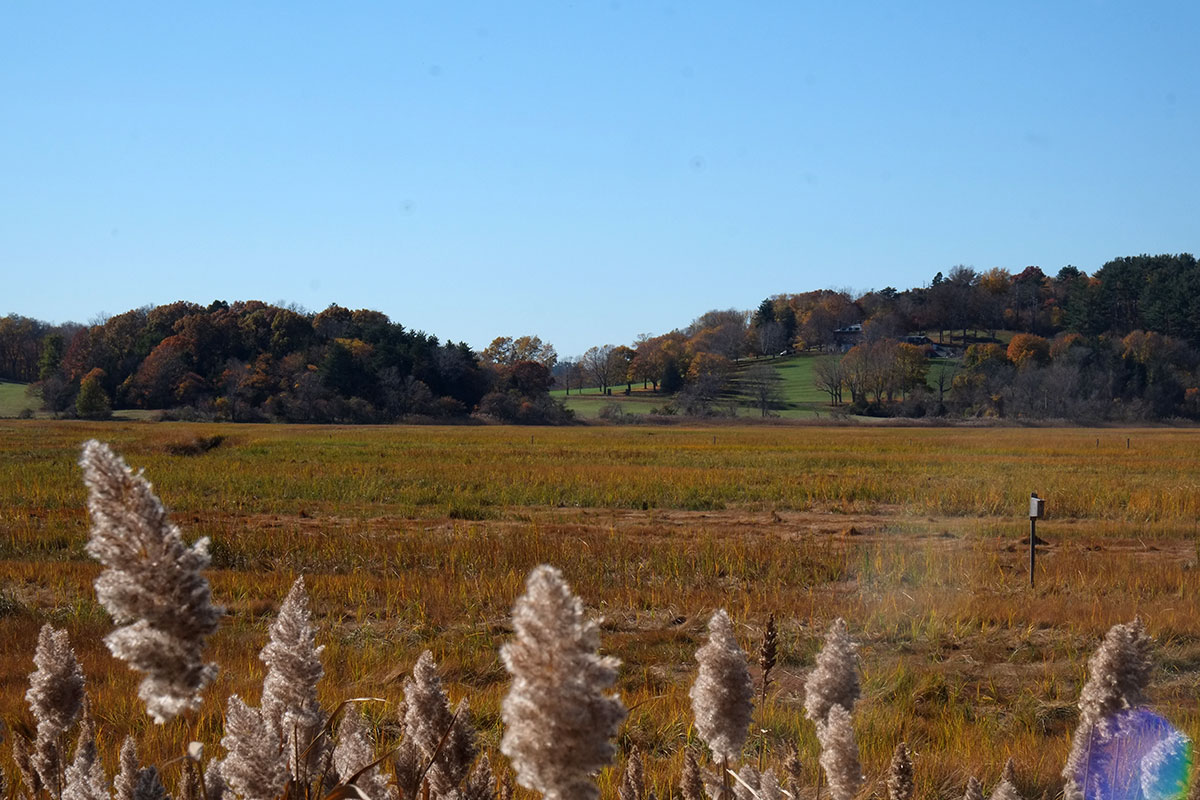
Driving around on the winding roads, past the estates of the North Shore, we headed towards Crane’s Beach, a beautiful landscape of drumlins (there’s a word I want to find more opportunities to use) and marshes.
the marshes near Crane's Beach

The Crane Estate, by Shepley Rutan Coolidge etc., sitting on top of Castle Hill, is the leading example of how much money there was to be made in plumbing fixtures.
the Crane Estate on Castle Hill, by Shepley Rutan Coolidge etc.
Crane Estate

The spectacular landscape was designed by the Olmsted brothers.

the landscape by the Olmsted brothers. Notice the framed view on the axis.

Notice the framed view on the axis.

the allee running north from the house. I don't know what the flags signify, but I wish they weren't there. Louis XIV had a nice allee too, but his just ended in a can, not the Atlantic Ocean.

the allee running north from the house. I don’t know what the flags signify, but I wish they weren’t there. Louis XIV had a nice allee too, but his just ended in a canal, not the Atlantic Ocean.

A few days of exploring these shores just wasn’t enough – I could have happily spent a day in each town.  What struck me the most was just how many beautiful old towns there are, so close to Boston.  The summer resort venues of the Cape and the Islands tend to be better known, but these small towns in the Boston area are just as wonderful.

The Boston that hasn’t changed

the Common

the Common

Revisiting a city where you’ve spent a lot of time is always a strange experience.  On the one hand, you immediately notice how it’s changed, all the new construction and the lack of familiar faces. It doesn’t seem like the city you knew, and you realize it is no longer yours, that life here has gone on without you and that it now belongs to a whole new generation of people.  But then you start to see beyond that, and you’re surprised by how many things you knew still remain.

I lived in the Boston area for six years, leaving in 1980, and I hadn’t been back since 1997.   I’ve gotten used to western cities, where everything is new, and to New York, where change is more rapid and extreme.  Boston has many new things (more on this in a later post), but all the old streets and places felt very familiar – I didn’t need a map, I always knew what would be around the next corner.  This is the first place we’ve visited on this trip where I had lived, and it was strange to be in these old places with Greta, who belongs to a very different part of my life.

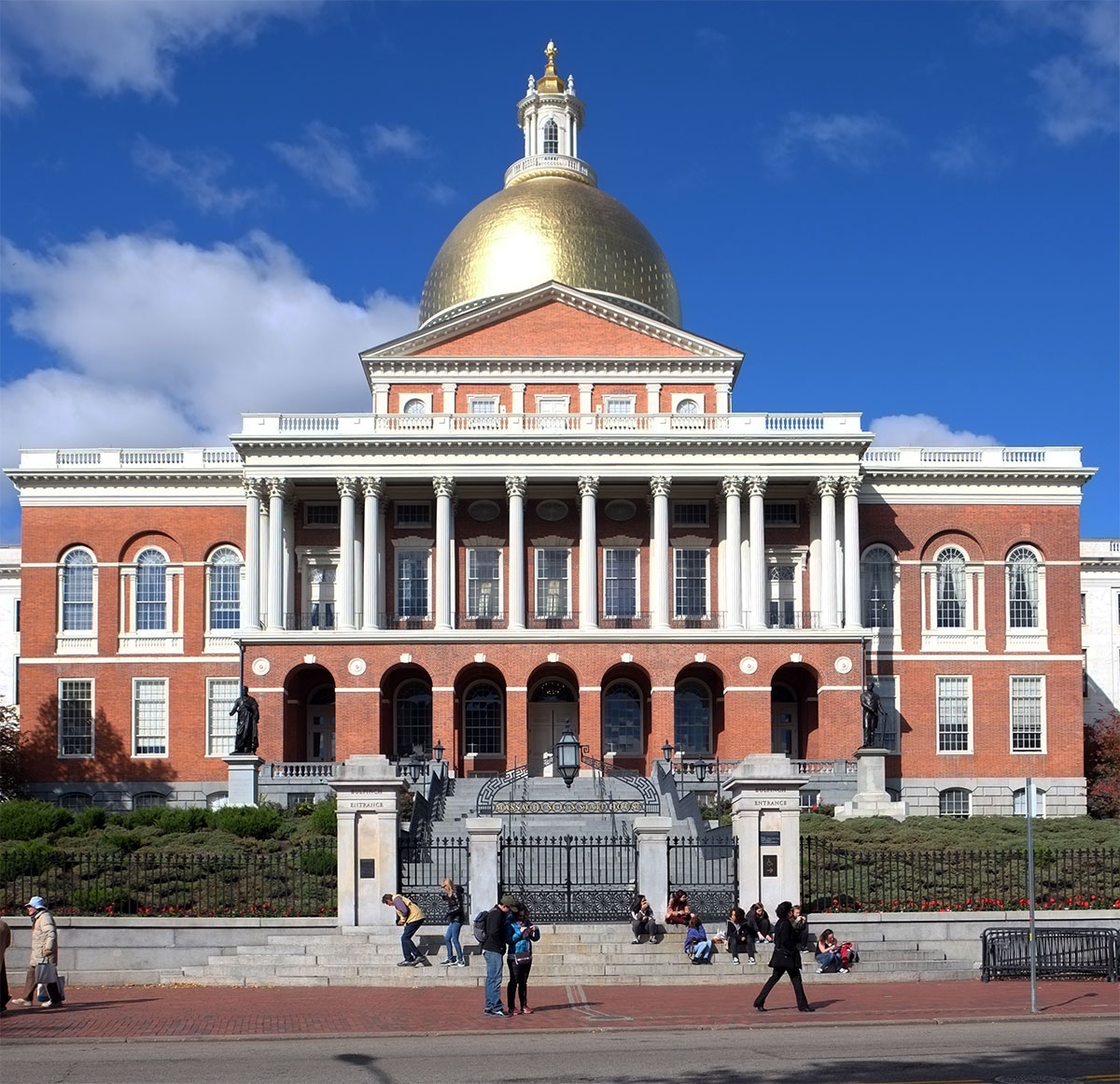
perhaps the most beautiful state house in the country

perhaps the most beautiful state house in the country

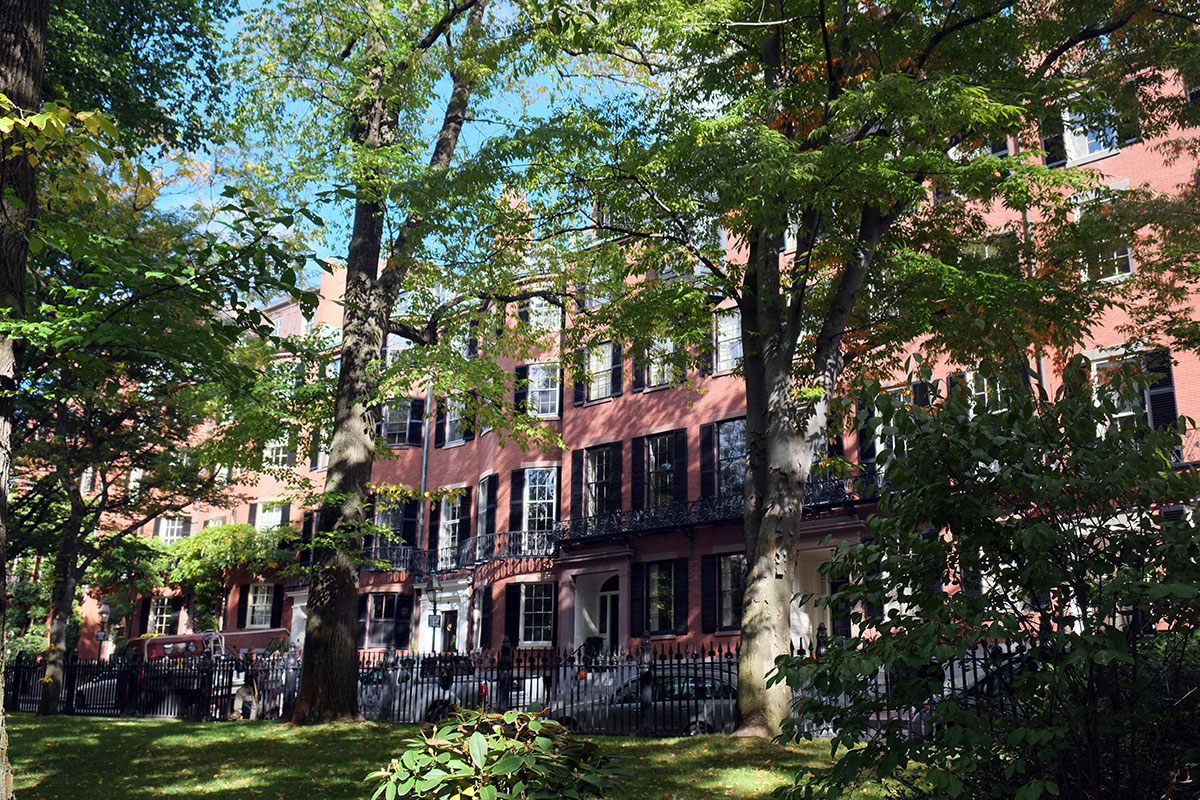
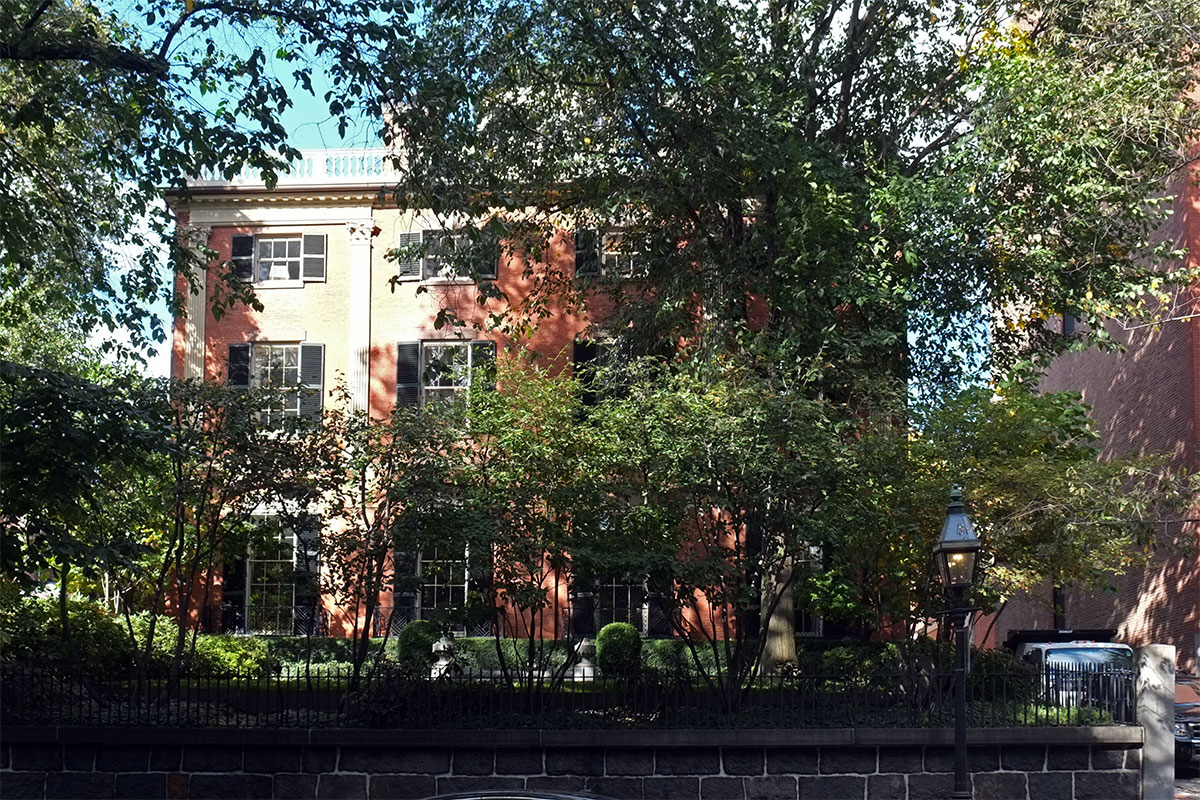
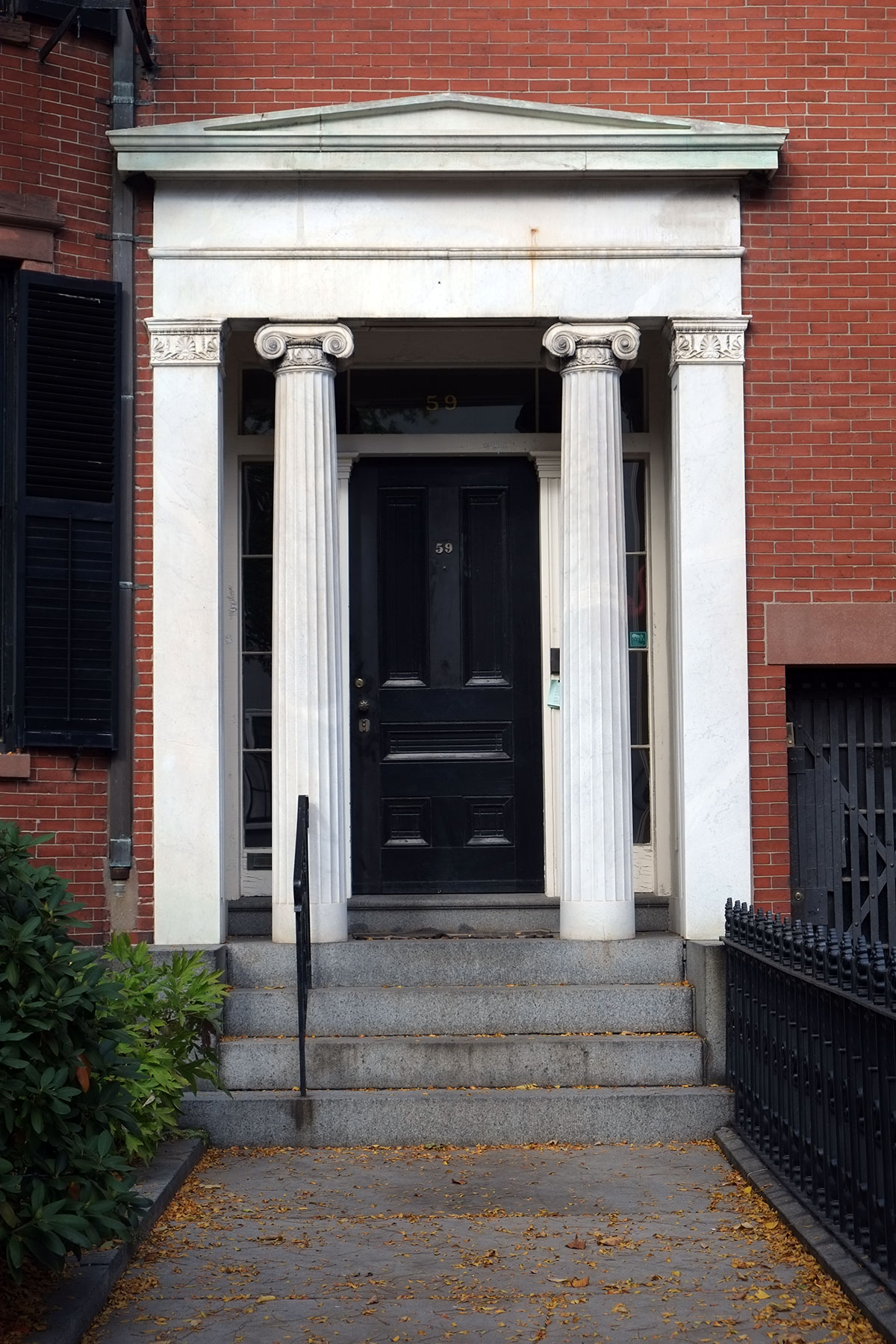
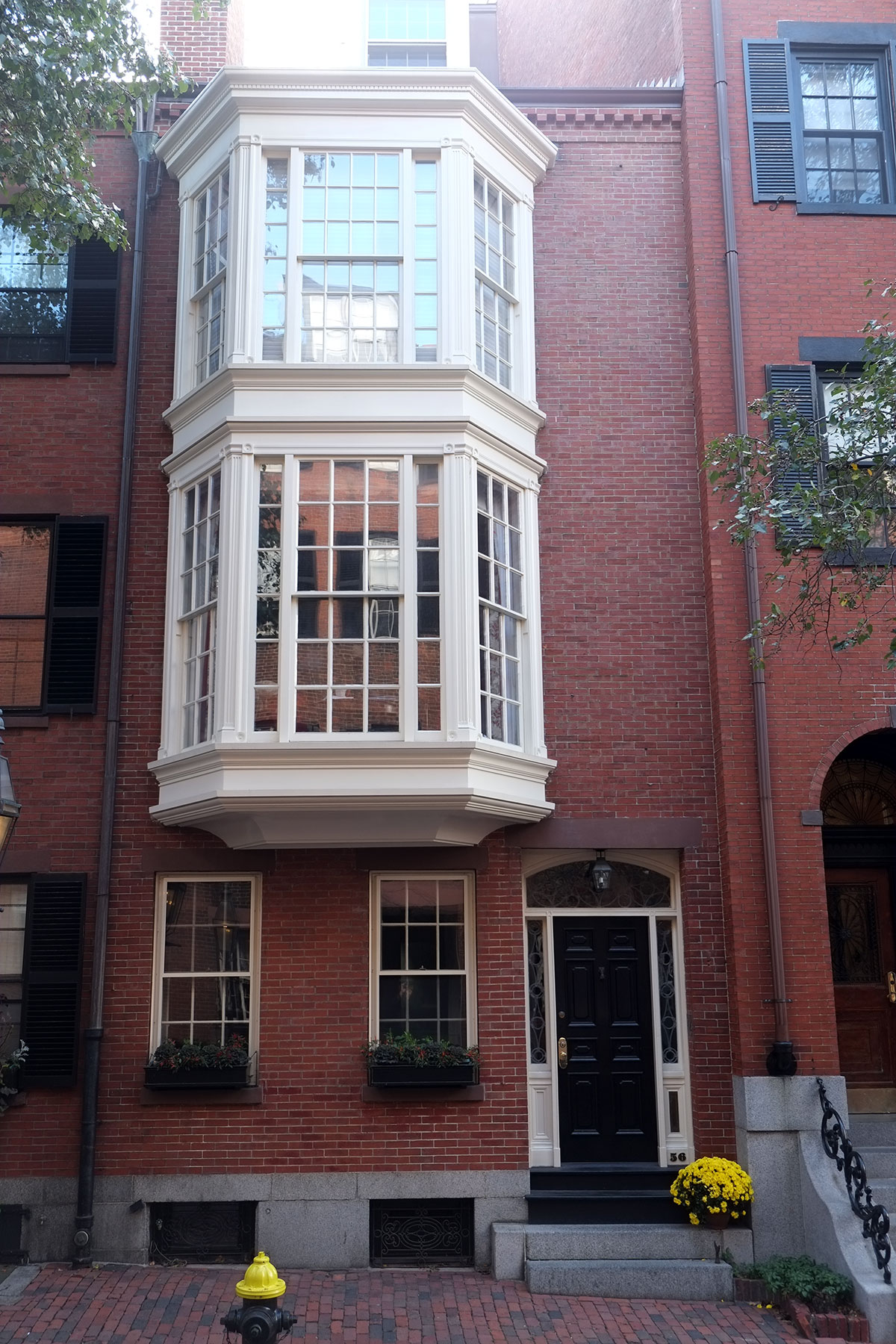
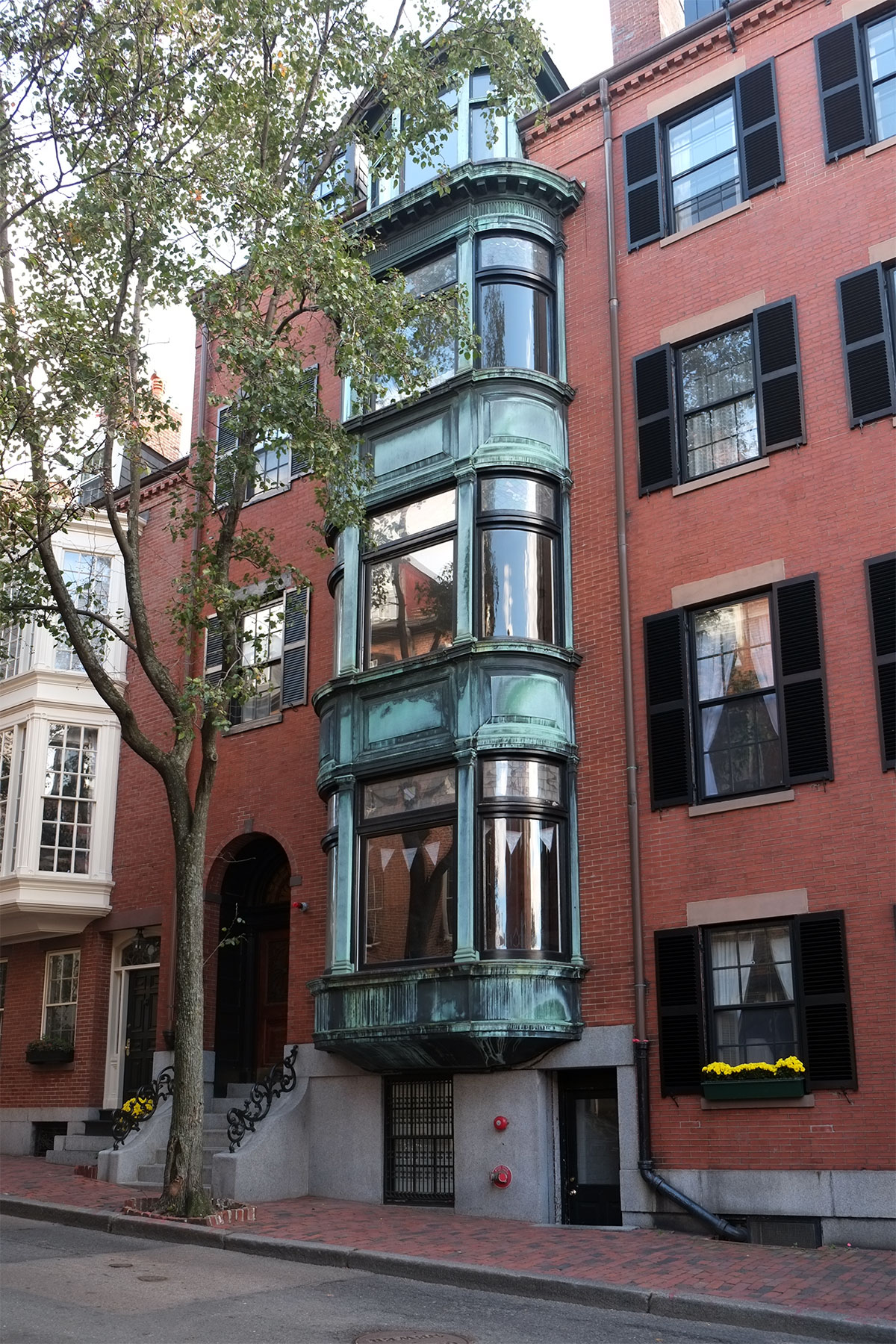
Beacon Hill, the pleasure of a quiet, Federalist neighborhood in the center of the city.

Louisburg Square

Louisburg Square

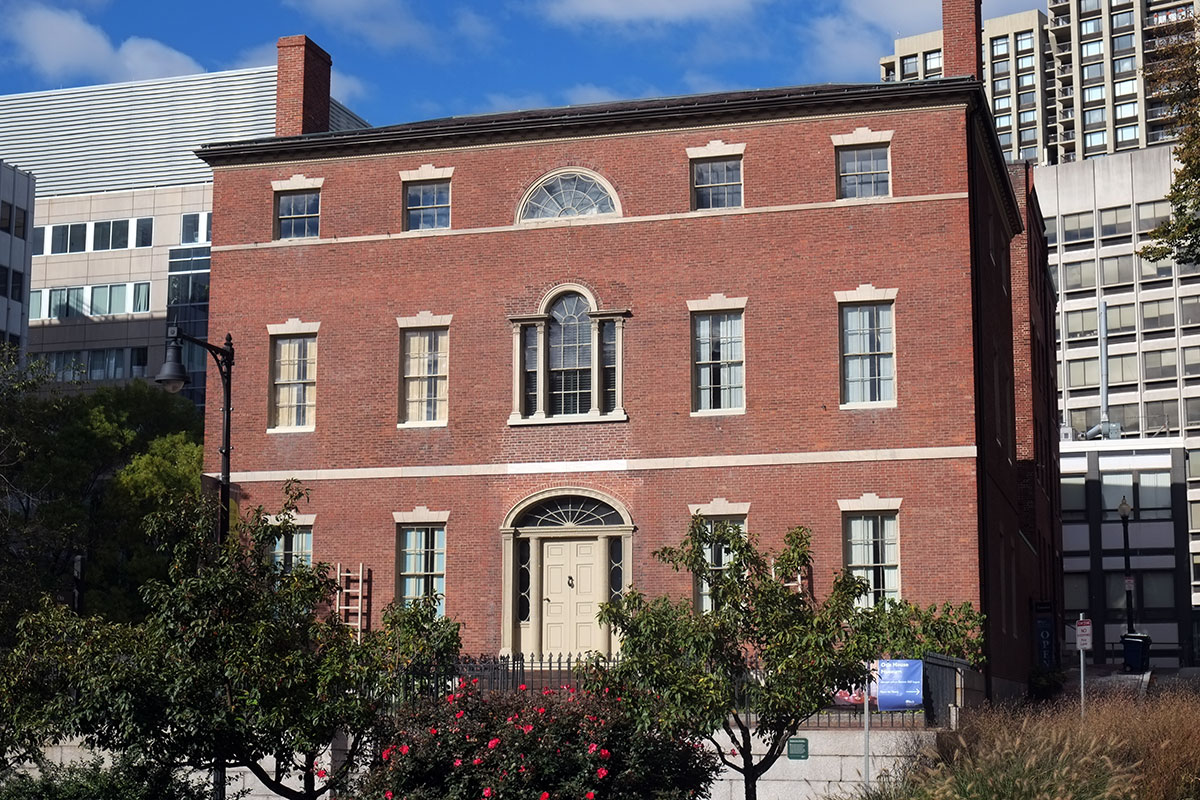
the second Harrison Gray Otis house

the second Harrison Gray Otis house

Mt. Vernon St.

Mt. Vernon St.

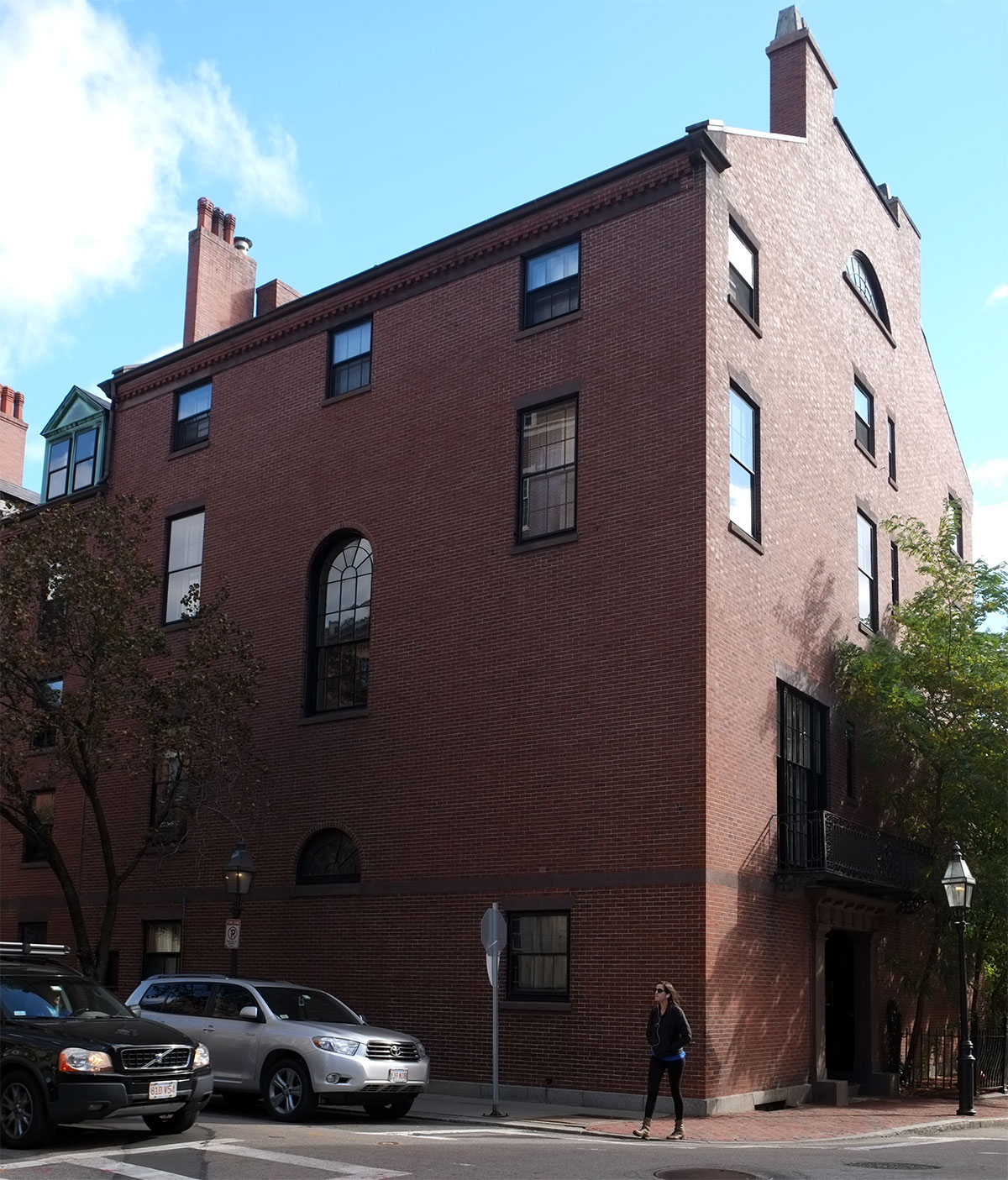
one of my favorite houses, at the corner of Mt. Vernon and Joy Streets

one of my favorite houses, at the corner of Mt. Vernon and Joy Streets

the third Harrison Gray Otis house, on Cambridge St.

the first Harrison Gray Otis house, on Cambridge St.

The newer houses on Pinckney looked very good – as the rules were relaxed and architects had some fun.

Pinckney St.

Pinckney St.

Pinckney St.

Pinckney St.

Greta has remarkably little interest in conventional history, and we intersected with the Freedom Trail once in a while rather than following it.

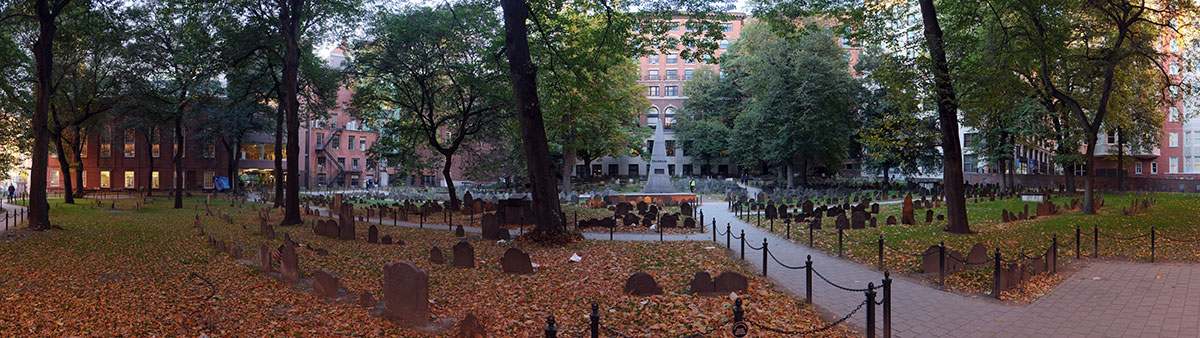
the Granary Burying Ground, on Tremont

the Granary Burying Ground, on Tremont

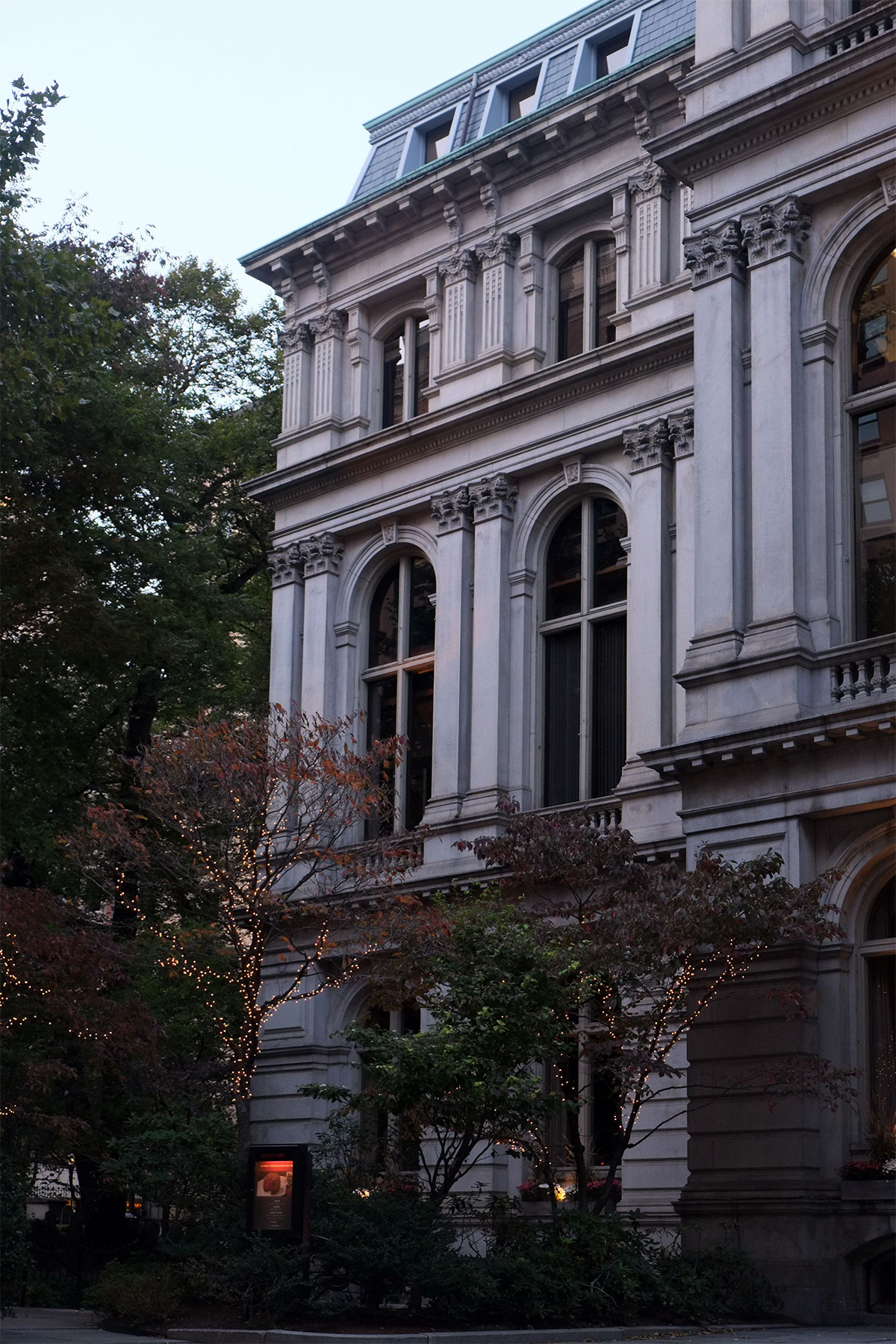
the Old City hall

the Old City hall

DSCF2919

Marshall St., one of the few near Dock Square left unscathed by the Central Artery and Government Center

Marshall St., one of the few near Dock Square left unscathed by the Central Artery and Government Center

Copping Hill burial ground

Copping Hill burial ground

DSCF2890

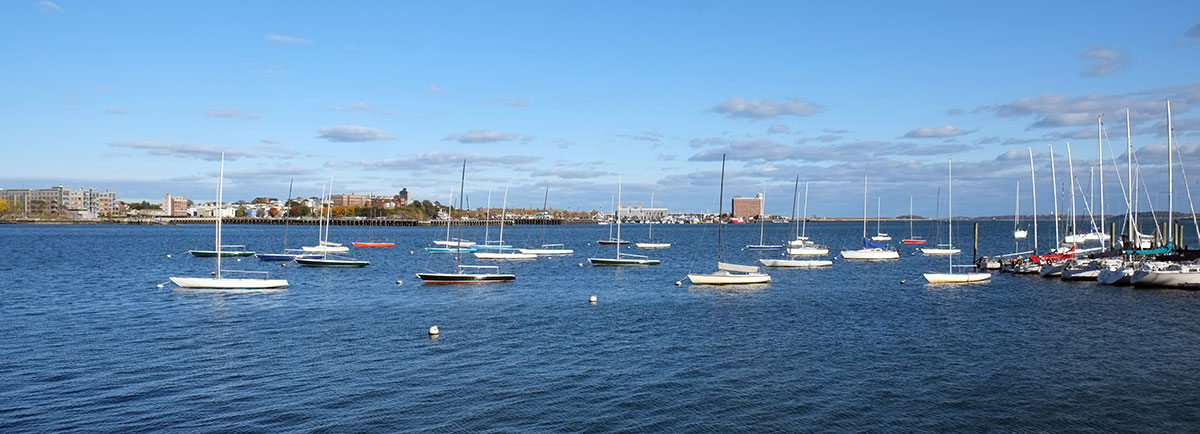
Boston's unwillingness to discard the old was very evident at the Boston Sailing Center. Even though they had added some new boats, it appears that all the Solings I sailed when I belonged in 1979 are still there

Boston’s unwillingness to discard the old was very evident at the Boston Sailing Center. Even though they had added some new boats, it appears that all the Solings I sailed when I belonged in 1979 are still there

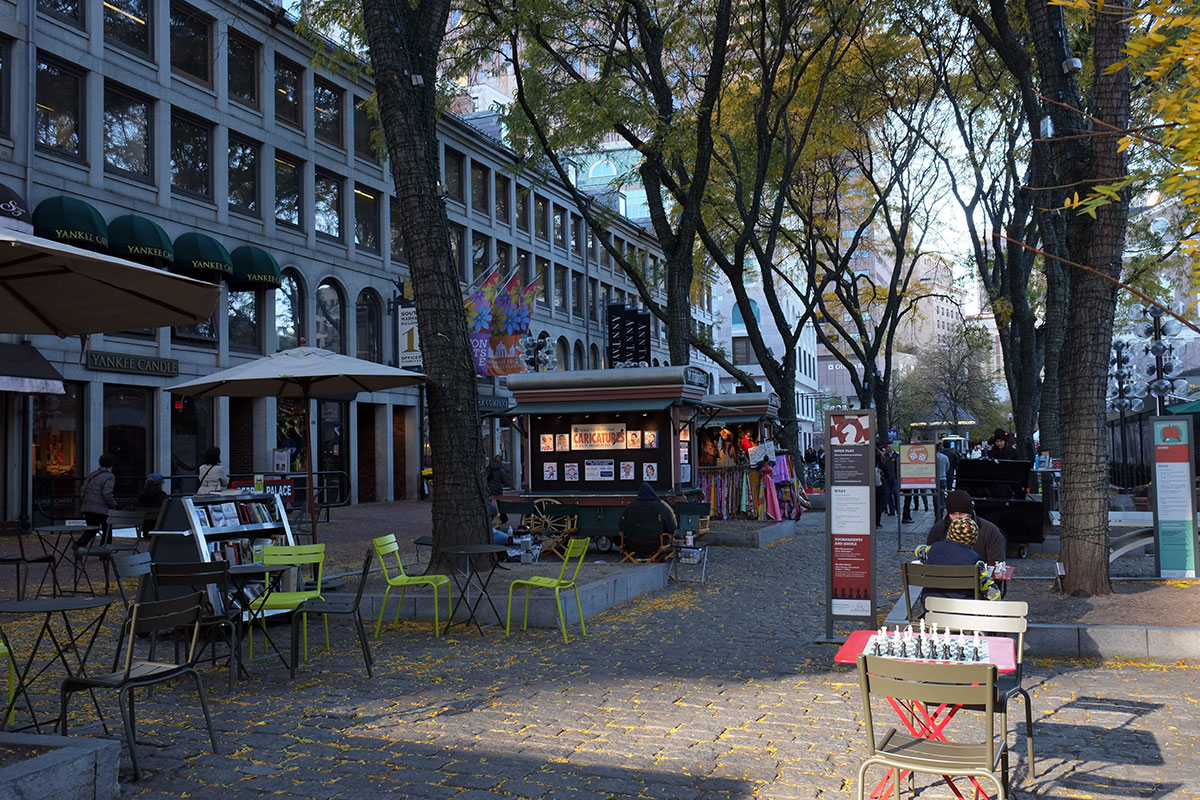
Quincy Market, with the same bunch of tourists

Quincy Market, with the same bunch of tourists

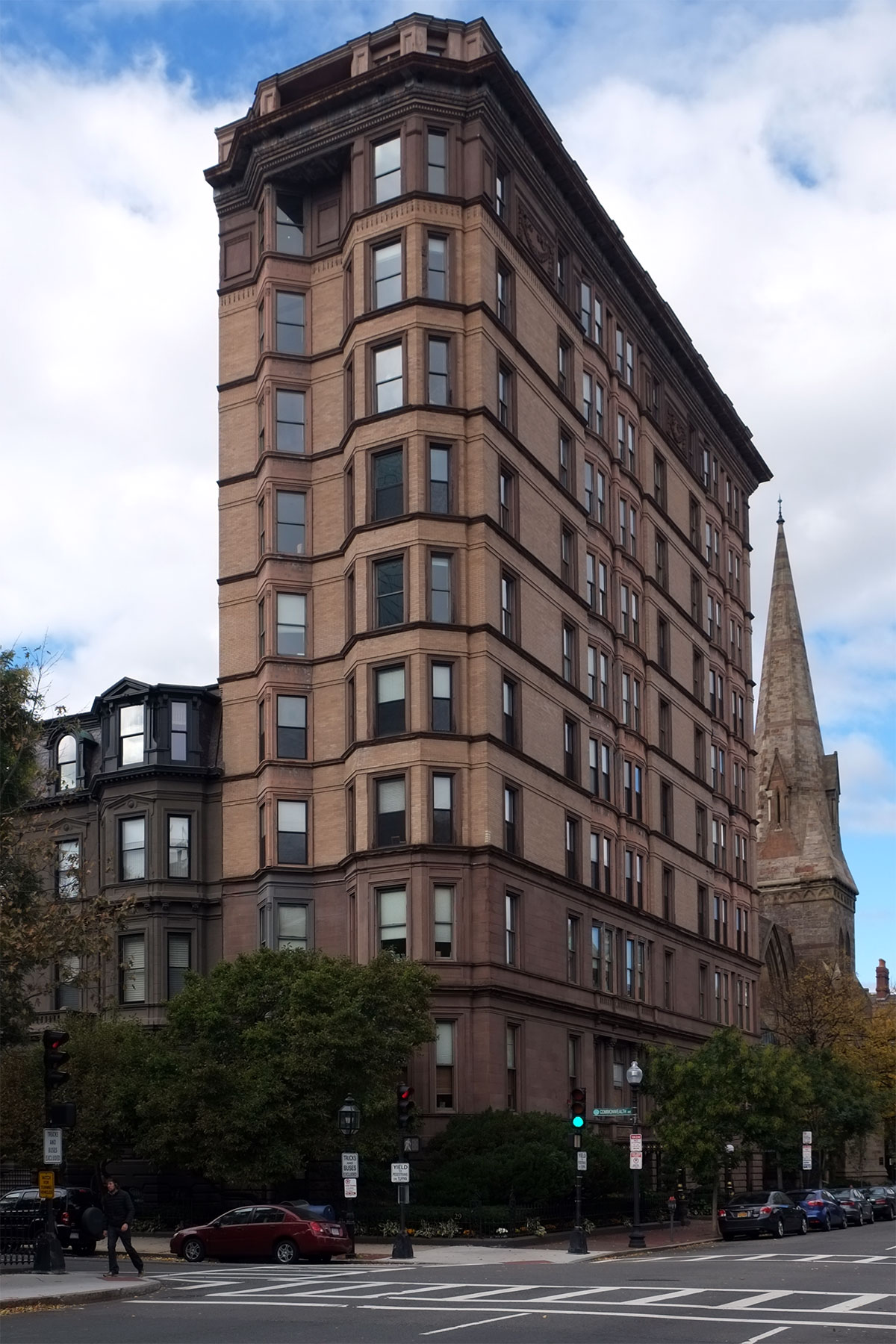
on Comm Ave

on Comm Ave

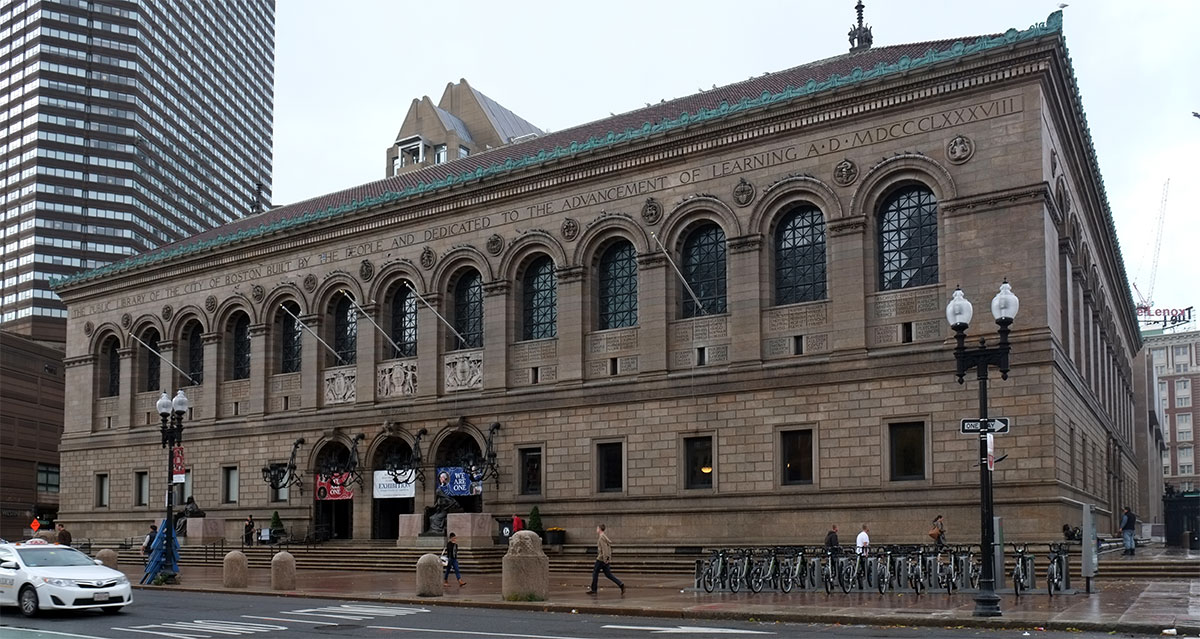
the Boston Public Library, McKim Mead and White

the Boston Public Library, McKim Mead and White, one of the greatest public buildings in the country

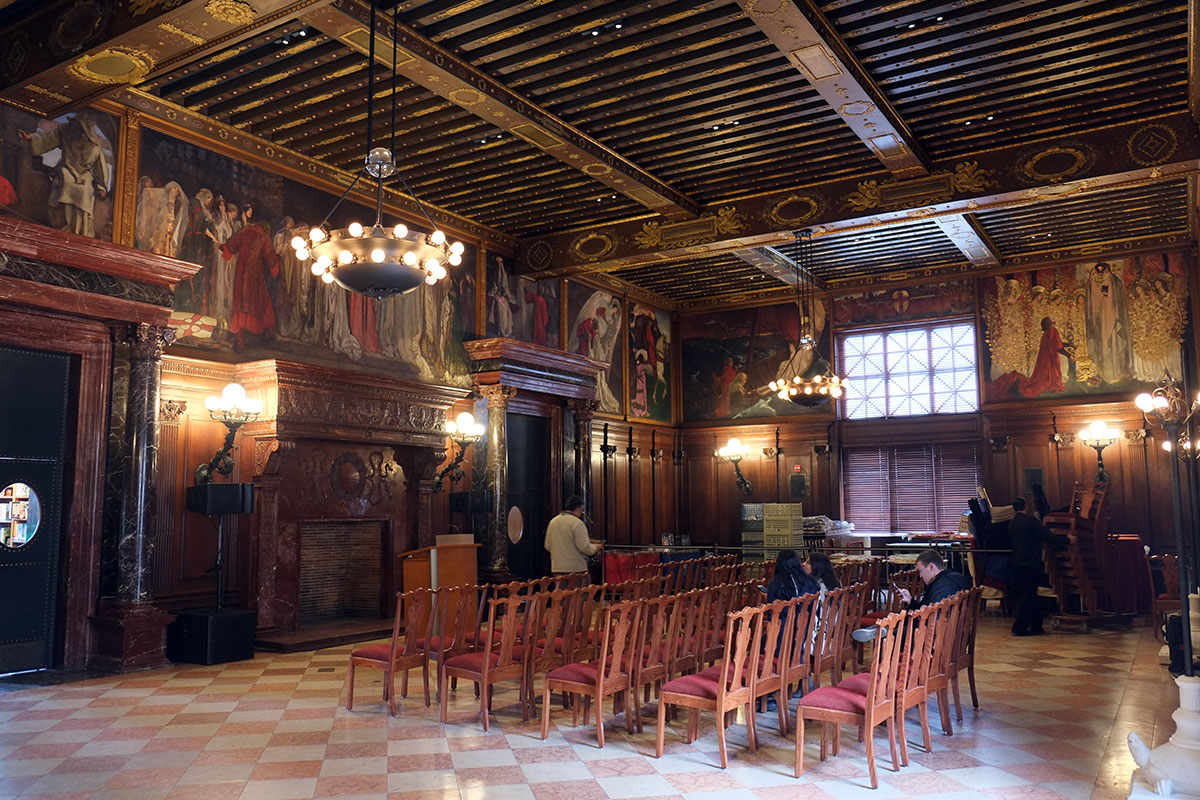
the Abbey mural room at the BPL

the Abbey mural room at the BPL

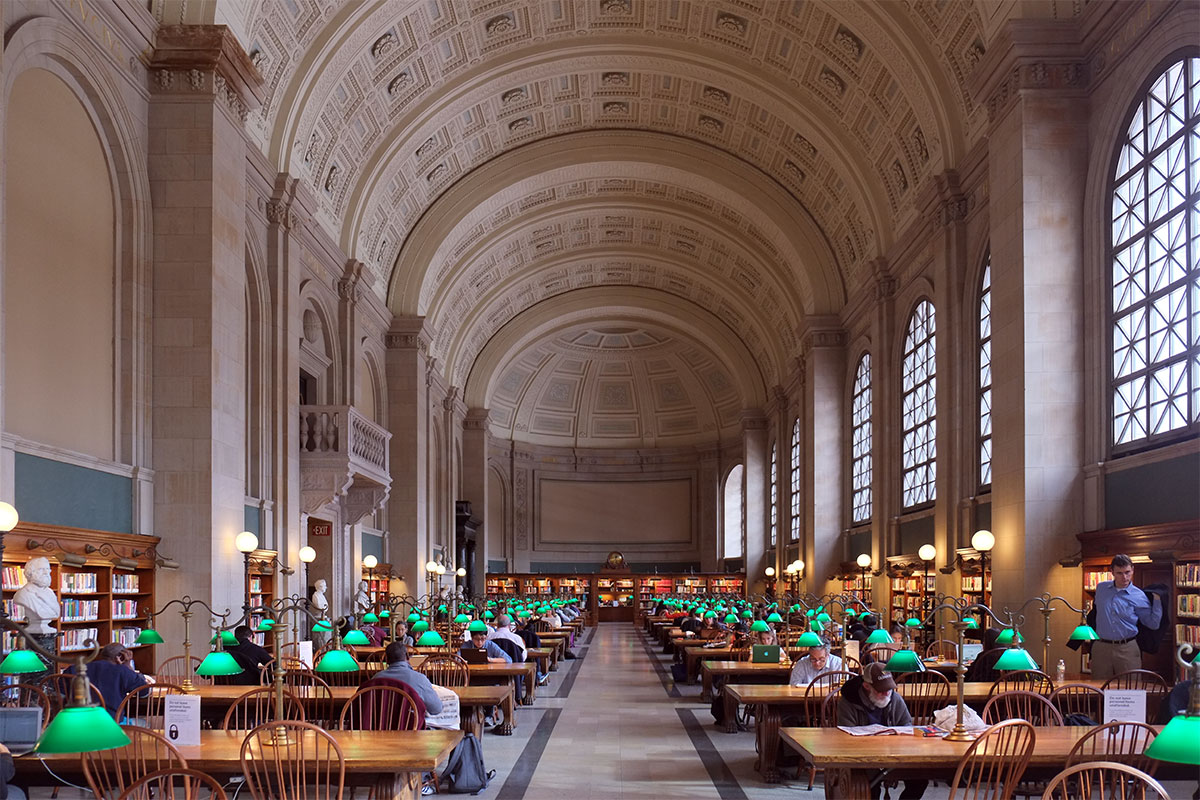
the BPL reading room

the BPL reading room

And then there are many parts of the city which are not really that old, but they were there when you were, so they too are bathed in the glow of memory.

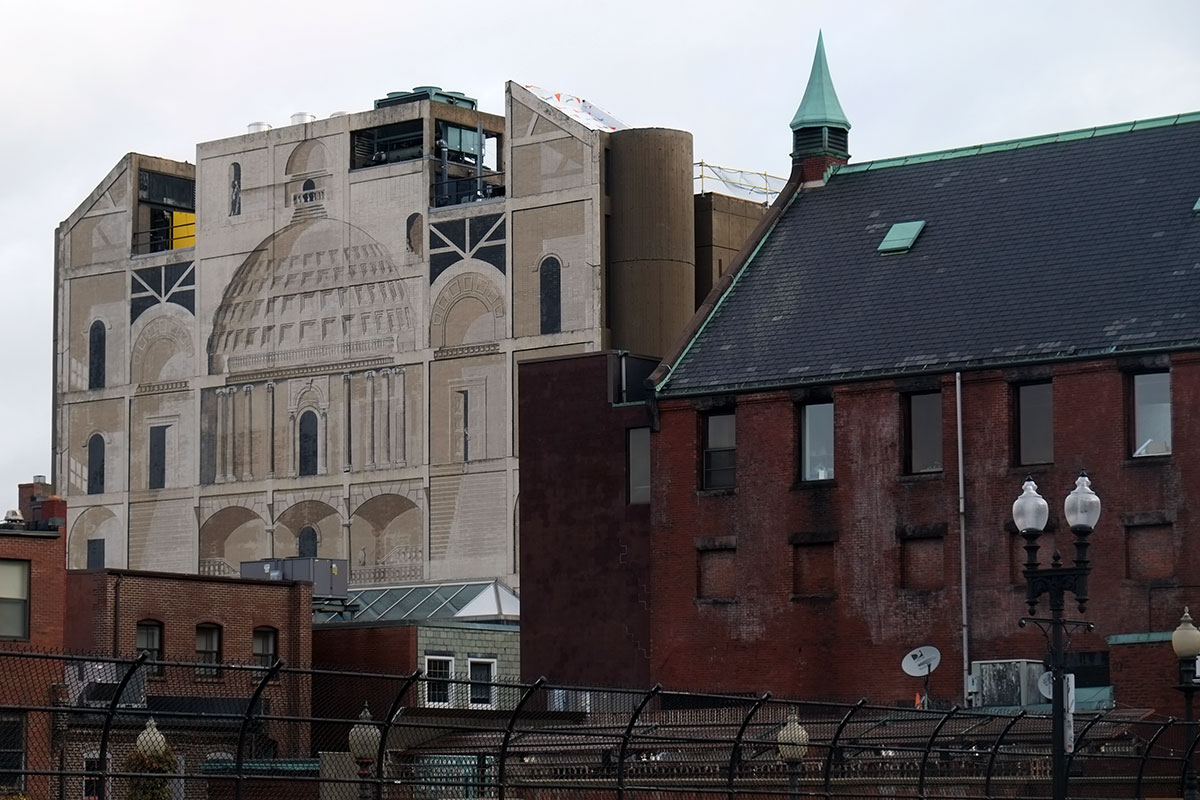
the Richard Haas mural at the BAC

the Richard Haas mural at the BAC

Cape Cod

While revisiting a city where you’ve lived as an adult may elicit mixed feelings of familiarity and strangeness, revisiting a place you knew well as small child feels like coming home, especially if that place has barely changed.  My grandparents vacationed in Chatham nearly every summer for most of their lives (but unfortunately always stayed in the same guest house, instead of buying a place when they could have).  So my family spent a few weeks there every summer since I can remember.  I loved it as a child – the cool nights, the old, small town so different from our New York suburb, the ritual of walking to the beach every day.  I think my interest in architecture and towns can be traced back to those early summers.  Once again I wanted to show Greta a place where I had grown up by the sea, so she could see how that related to our own house on an island.

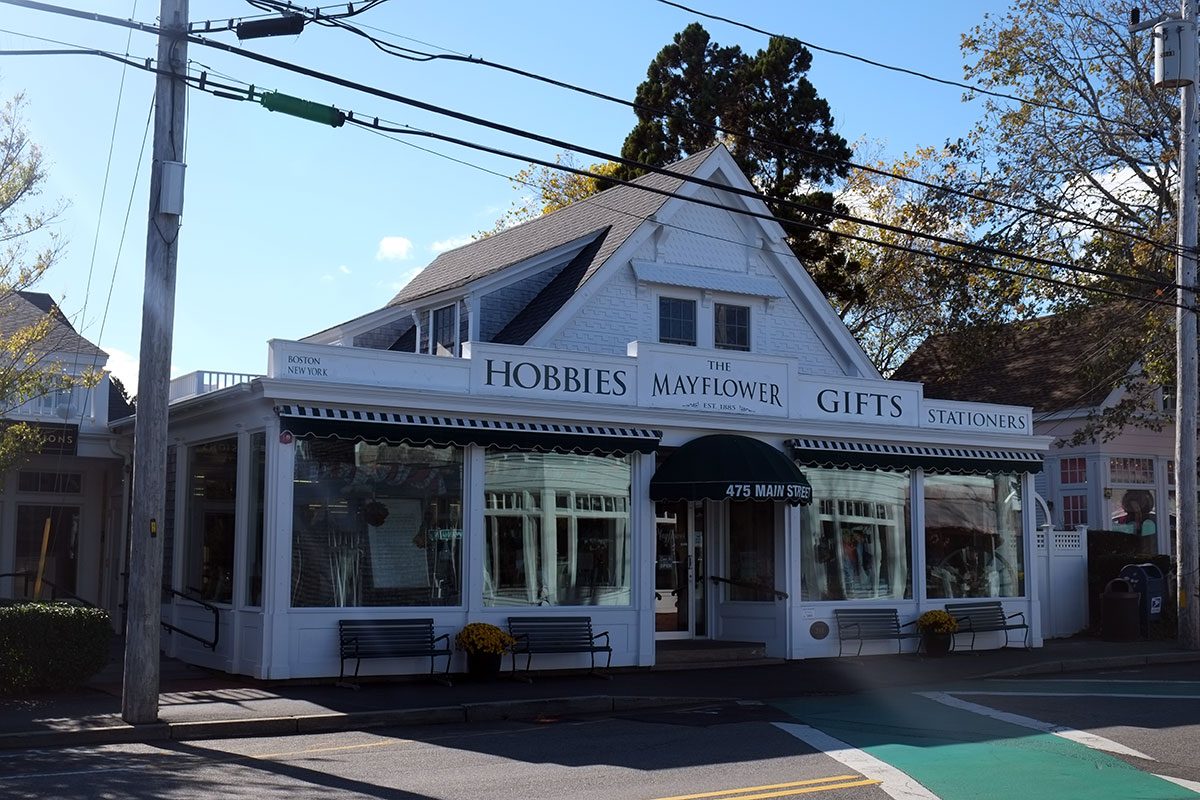
Chatham has changed so little that it was like being in a bad romantic movie where you step back into your earlier life.  Not only were the buildings unchanged, but many of the same businesses were there, such as the Mayflower, where one bought kites and beach toys and other critical things. DSCF3215

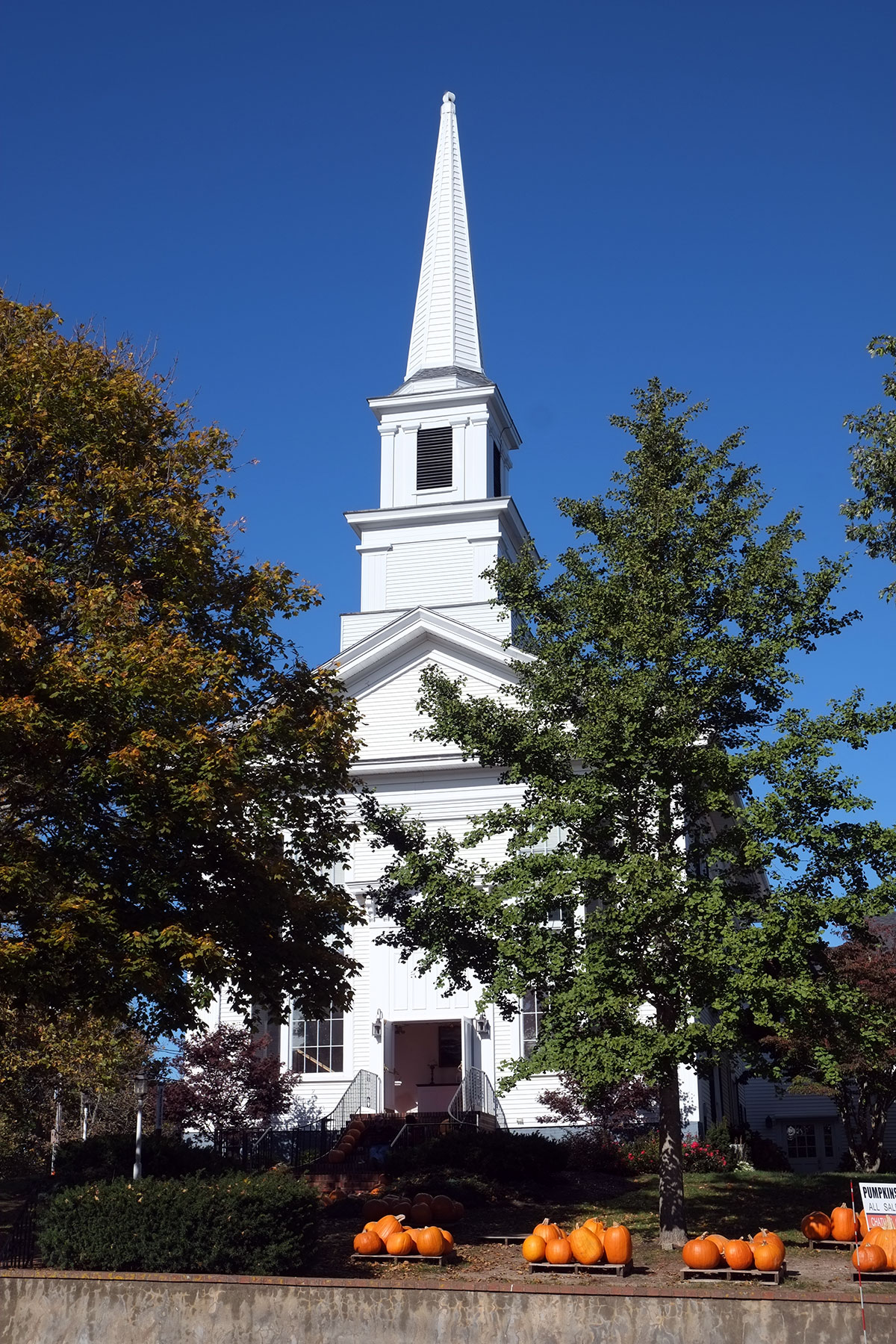
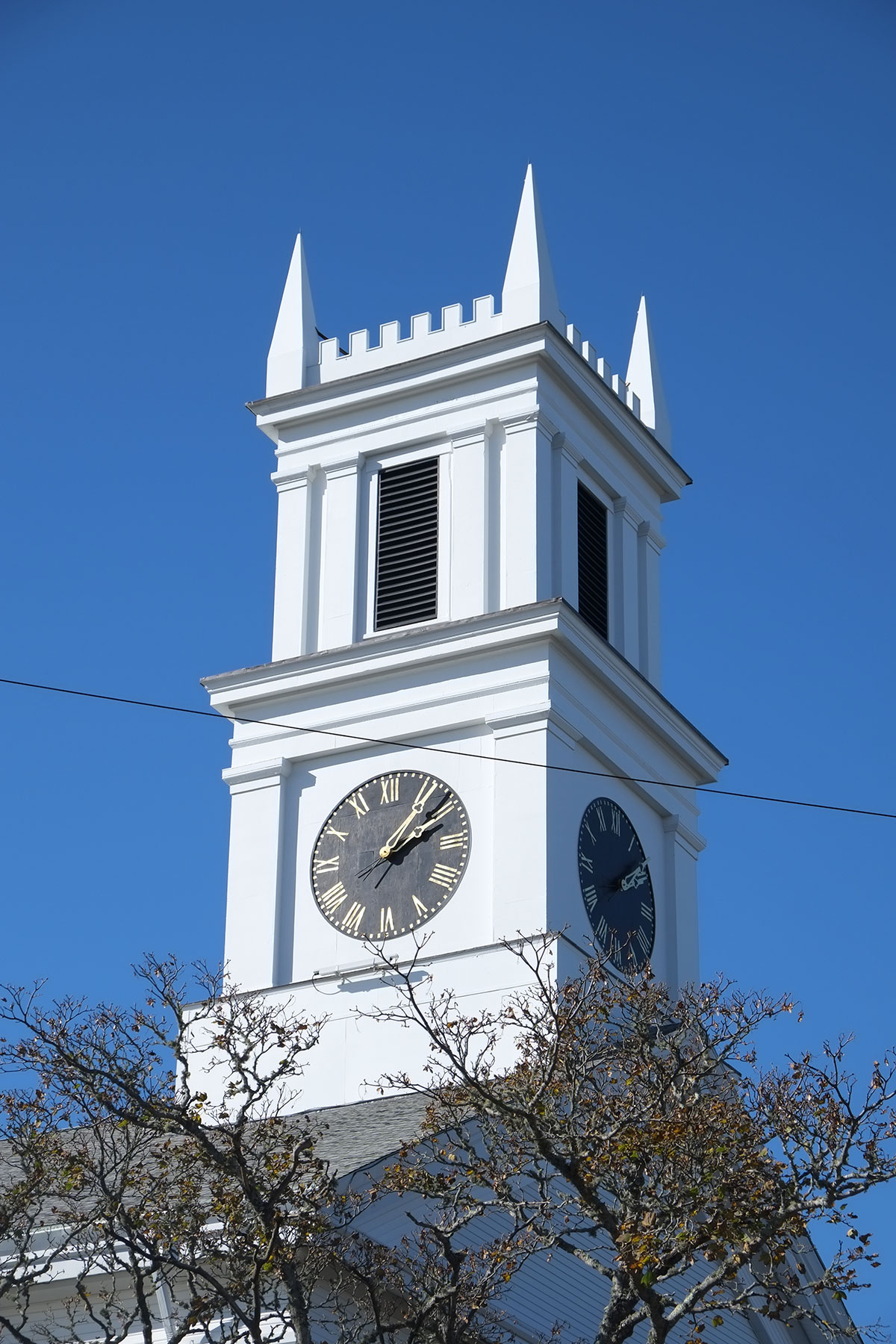
The cottages where we stayed were all gone, replaced by new McMansions, but the center of town has endured.DSCF3192DSCF3221DSCF3205

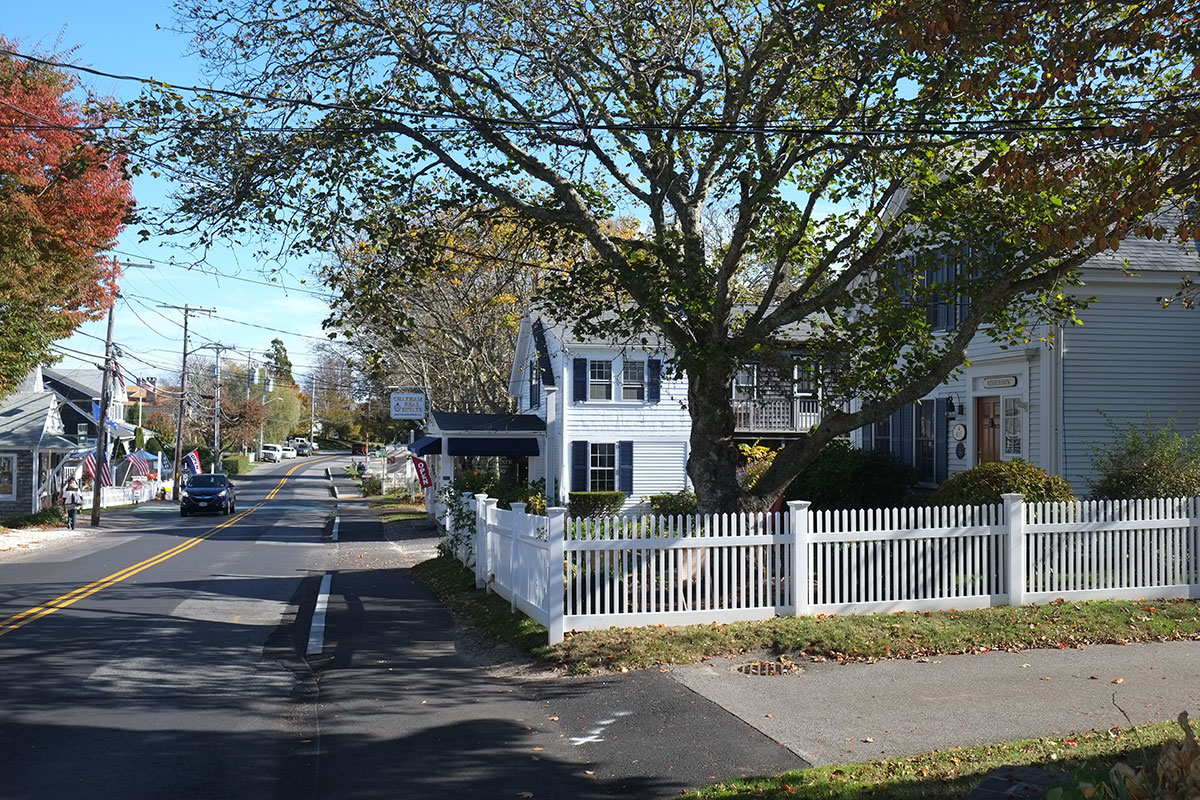
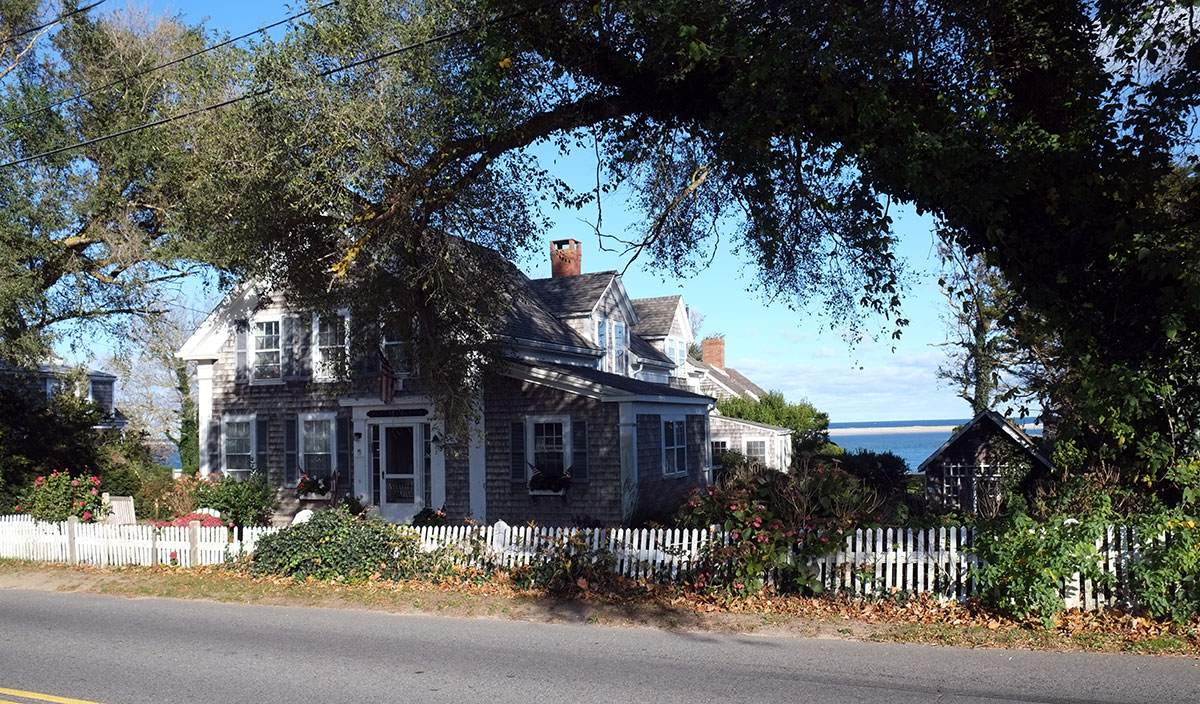
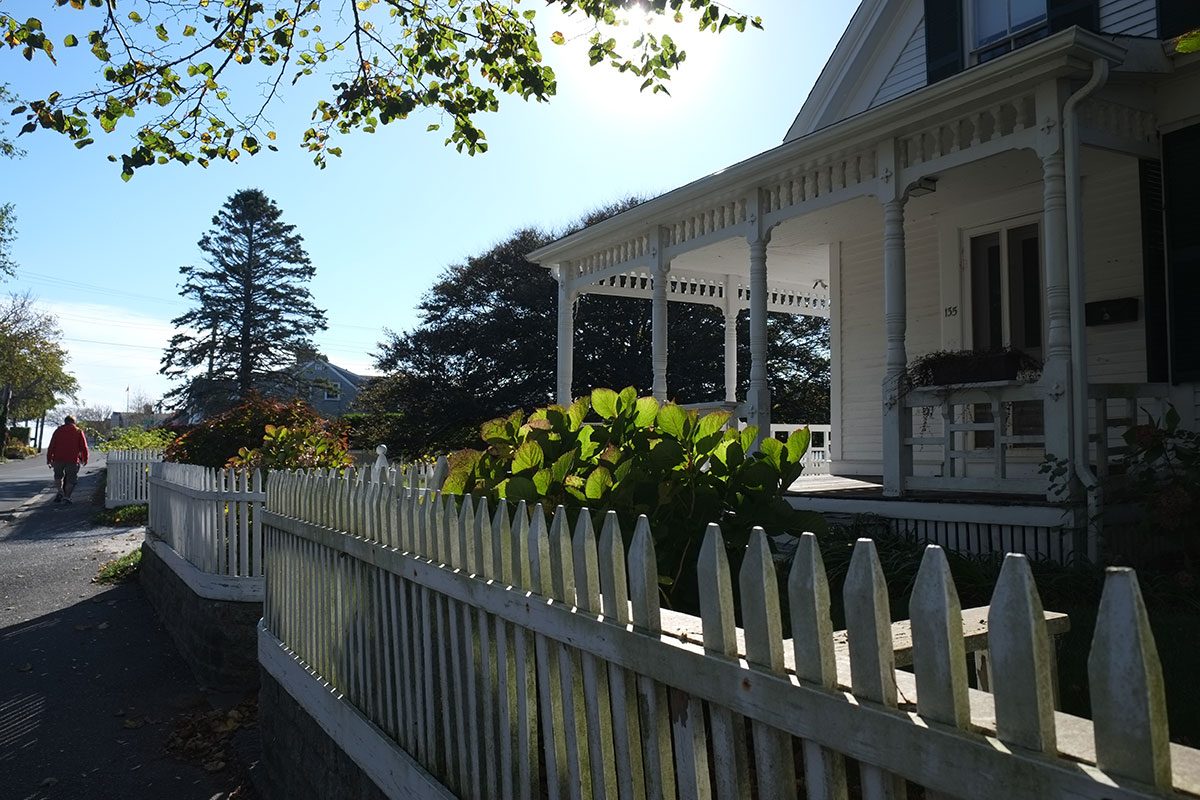
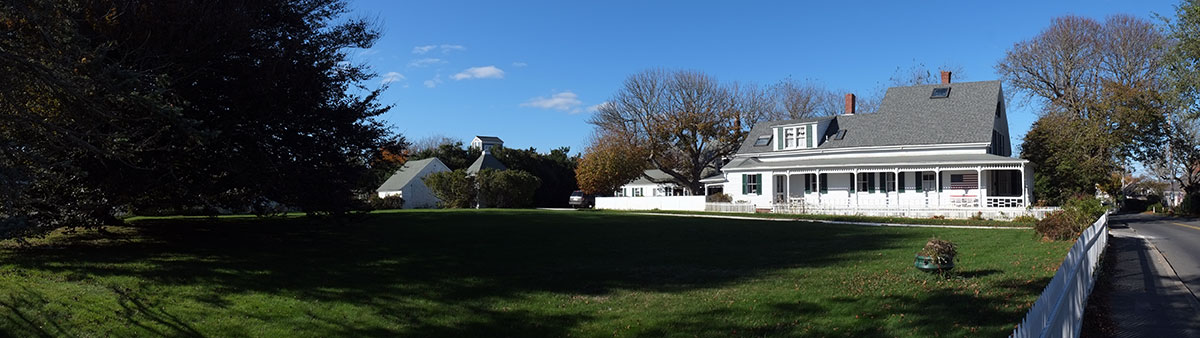
The most memorable part of the town is the walk along Main Street to the Lighthouse Beach.  The buildings are superb, but even more important, the open spaces of streetscape, yards, and drives have a wonderful scale that makes the walk a pleasure, no matter how often it is repeated.  DSCF3235 DSCF3239 DSCF3238

As it nears Pleasant Bay, Main Street makes a turn, and that corner is occupied by a beautiful open yard, a  gift to all the passers-by.DSCF3251

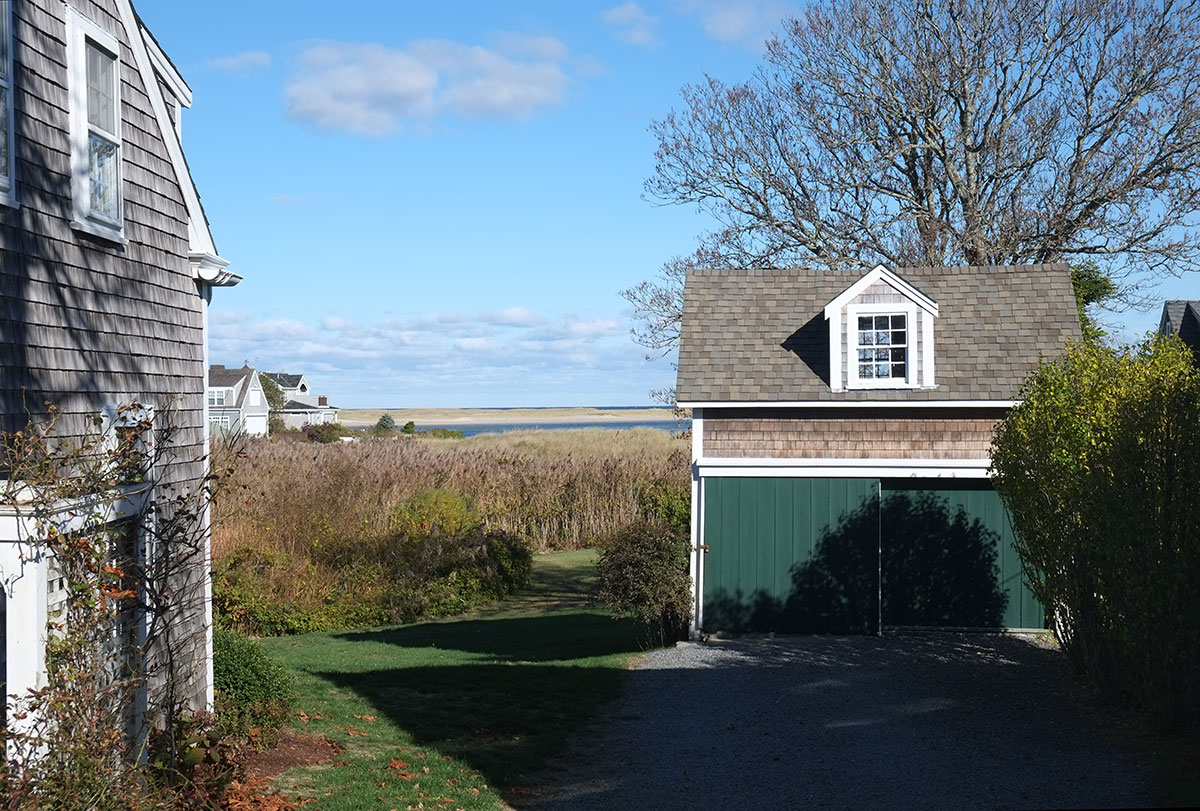
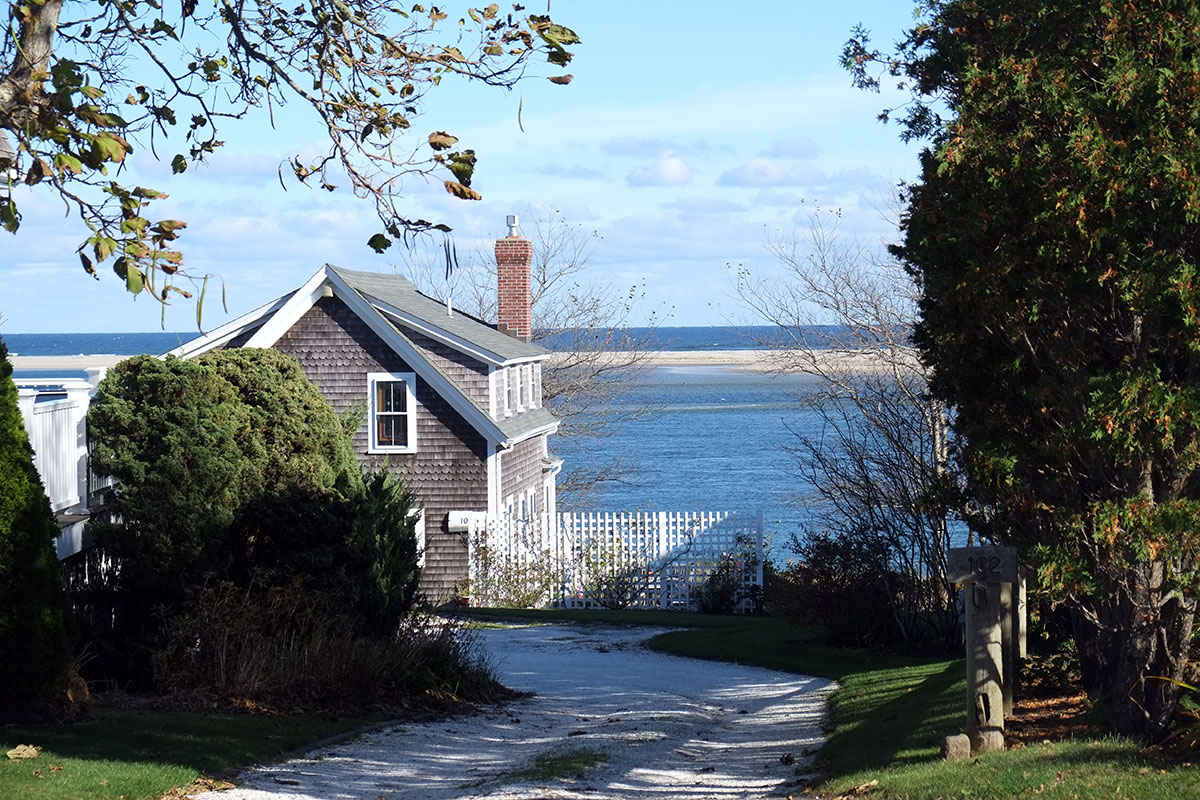
Glimpses from the street to the bay open up between houses.DSCF3270DSCF3295DSCF3319

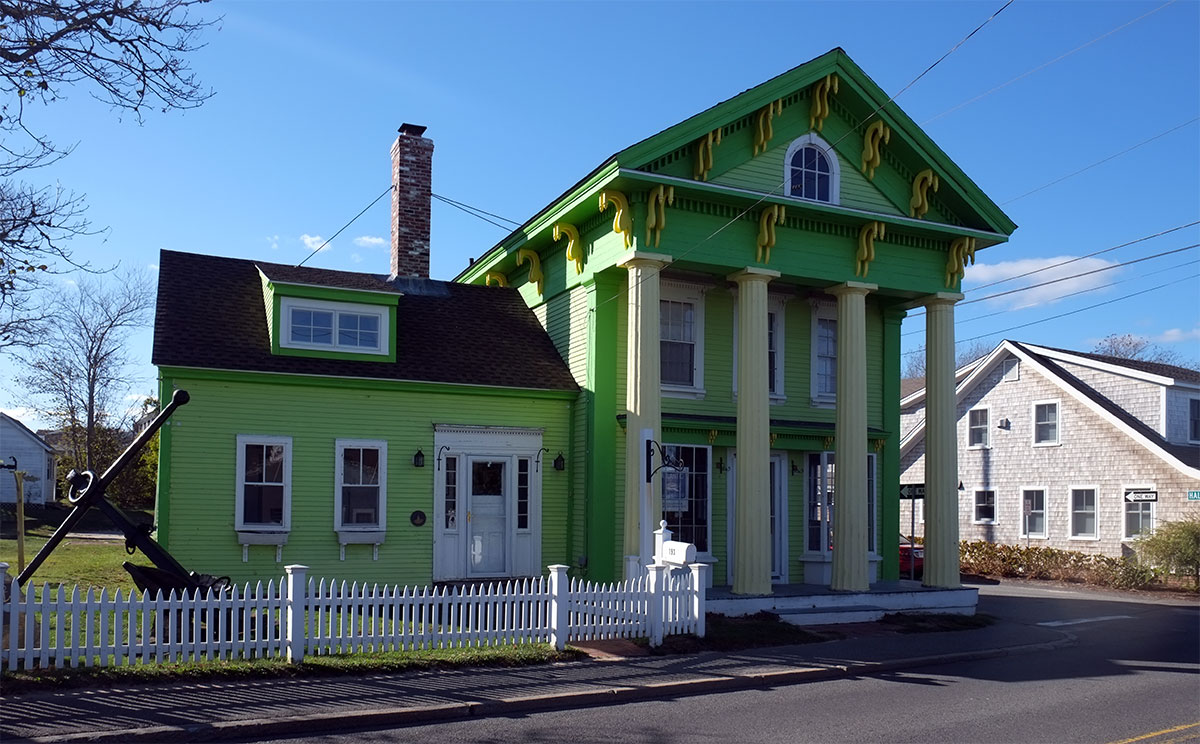
The only discordant note comes from the spite-painitng of a Greek Revival gem.  It was previously a gift shop, but now is the home of a local non-profit.  Apparently the town denied their request to alter the historic building, so they did their best to ruin the street for all.  It shocked me that in a town where the individual homeowners have so carefully stewarded the experience of the public realm, a community organization can be so self-righteous and monomaniacal.DSCF3266

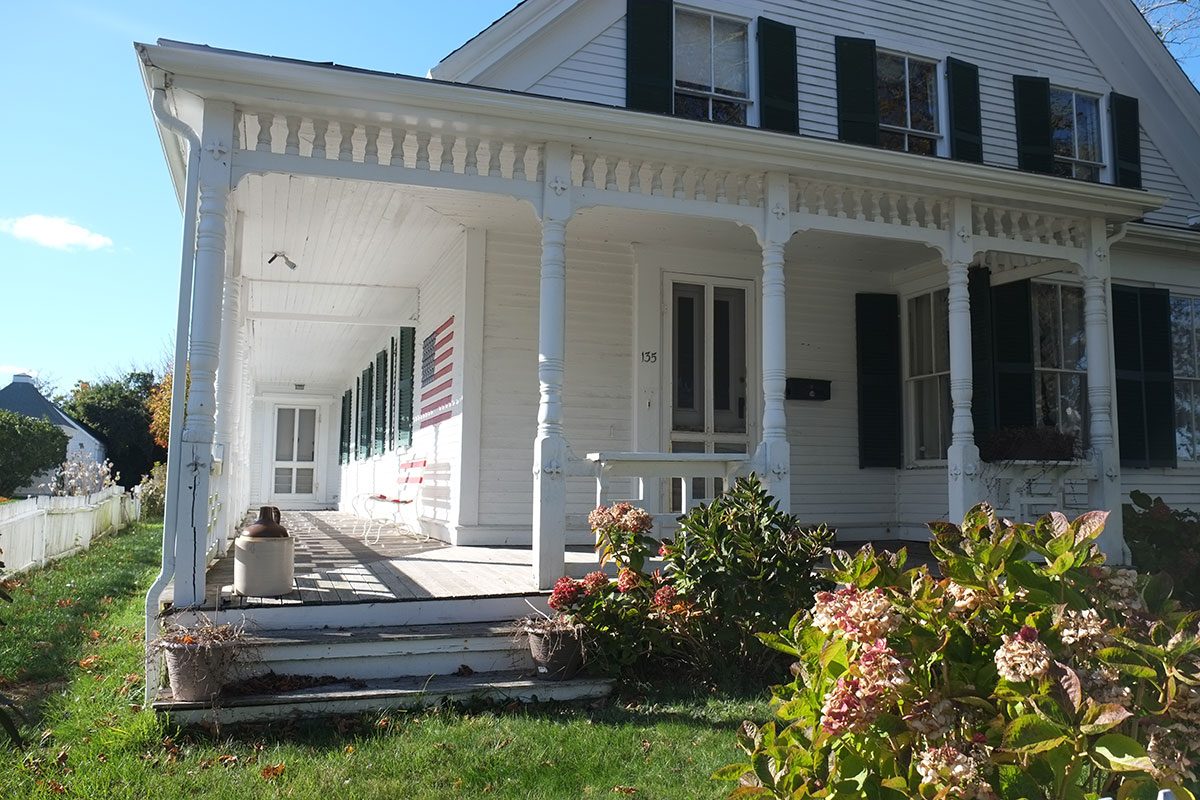
Other treasures remain.  This may be my favorite porch in New England, looking across the yard to an ancient copper beach, once again sharing this space with the public, rather than hiding it away.DSCF3283 DSCF3287 DSCF3290

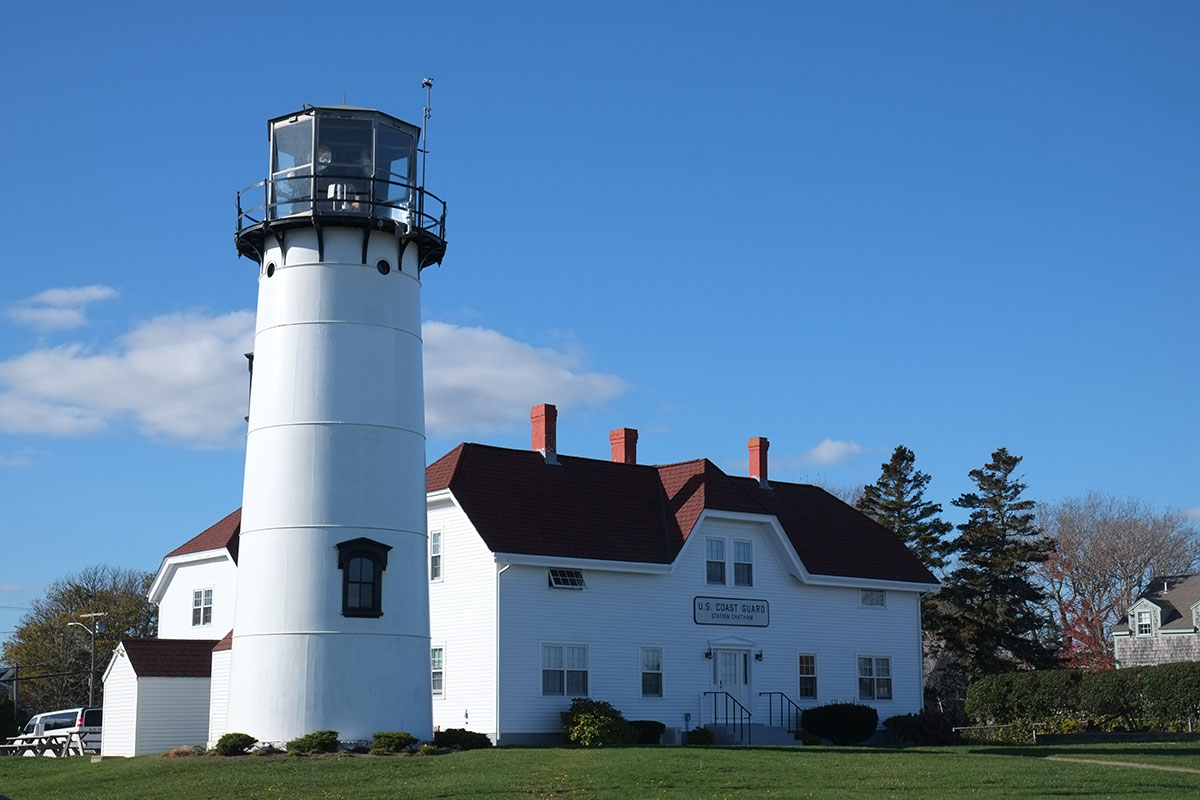
One arrives at the lighthouse, which they must have copied from an Edward Hopper painting. DSCF3311

The beach across from the lighthouse.  Strangely, this has changed the most.  When I was young, the barrier beach to the east was continuous beyond Pleasant Bay, and access out to the ocean was to the south past Monomoy Island.  A storm in 1987 broke through the beach here, and in 2007 another storm created a large opening to the north.  DSCF3303

In contrast to almost every other place we’ve visited, here the built environment seems permanent, while the large elements of the landscape are in continual flux.