New things in Boston

Boston does change, and it has probably added as many new buildings as other cities its size in the past 30 years, but the percentage of change seems smaller, since so many old buildings remain.  There have been two big changes, and many more localized ones:

There are small changes to existing building, such as the art installation on the Hancock.DSCF2628

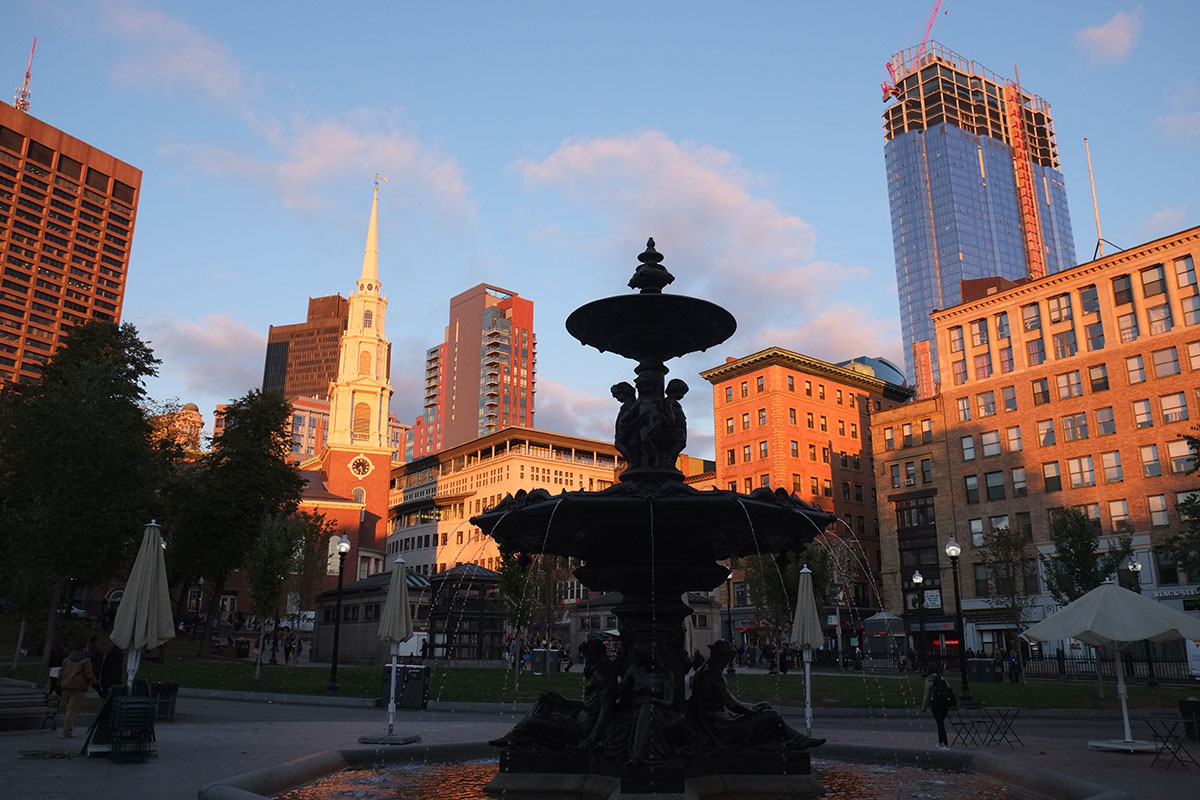
And at dusk you can see other changes, such as how the various tenants have designed their lighting:DSCF2950c

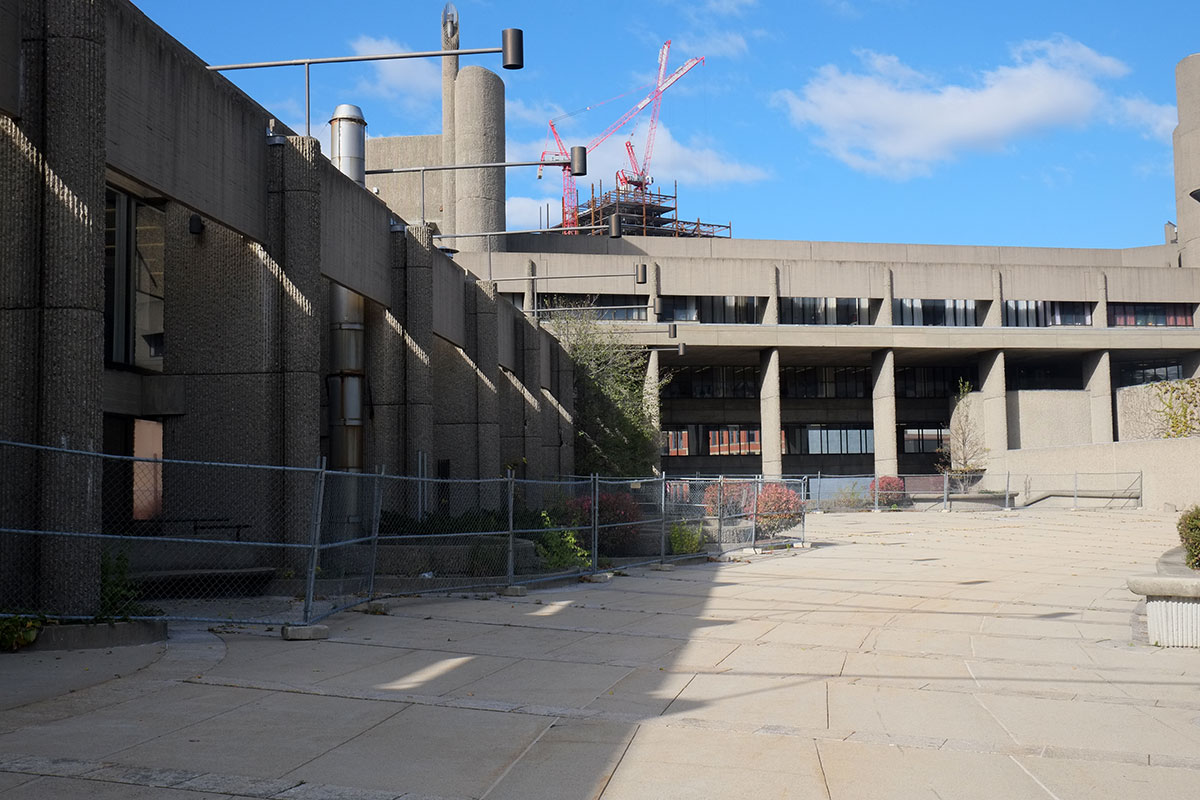
Boston may preserve its pre-modern heritage, but its lack of affection for some modernist classics is becoming evident.  Paul Rudolph’s complex at Government Center was never finished, and now it looks like it’s falling apart. We used to throw frisbees on the plaza, and watch in dismay as they fell through one of the large holes into the netherworld of the parking garage below.  That plaza is now full of chain-link fences – perhaps in our insane post-9-11 security mania someone decided that the holes violated the security perimeter, so they have been enclosed.  Between the fences, weeds and general lack of maintenance, the building looks like a wreck.  Maybe it is Boston’s attempt to catch up with Detroit as a center for ruin porn.
DSCF2773

Even more surprising is what has been done to the City Hall.  It is a building Bostonians love to hate, similar to our scorn for the Portland Building.  I’ve always saved my scorn for the pointless, overscaled, empty plaza, thinking that the building itself is a pretty rigorous Brutalist icon.  But it is now suffering the death of a thousand cuts.  The big ramps and access points to the building have been closed off, no doubt in another security frenzy.DSCF2794

What was once an awe-inspiring interior formal stair hall has been strewn with junk – a random potted plantDSCF2799

garbage cans at important points, brightly colored tape on all the brick stairs, a painted blue tarp which obscures the stair to the council chamber, and a truly crappy coffee bar right in the middle.DSCF2814
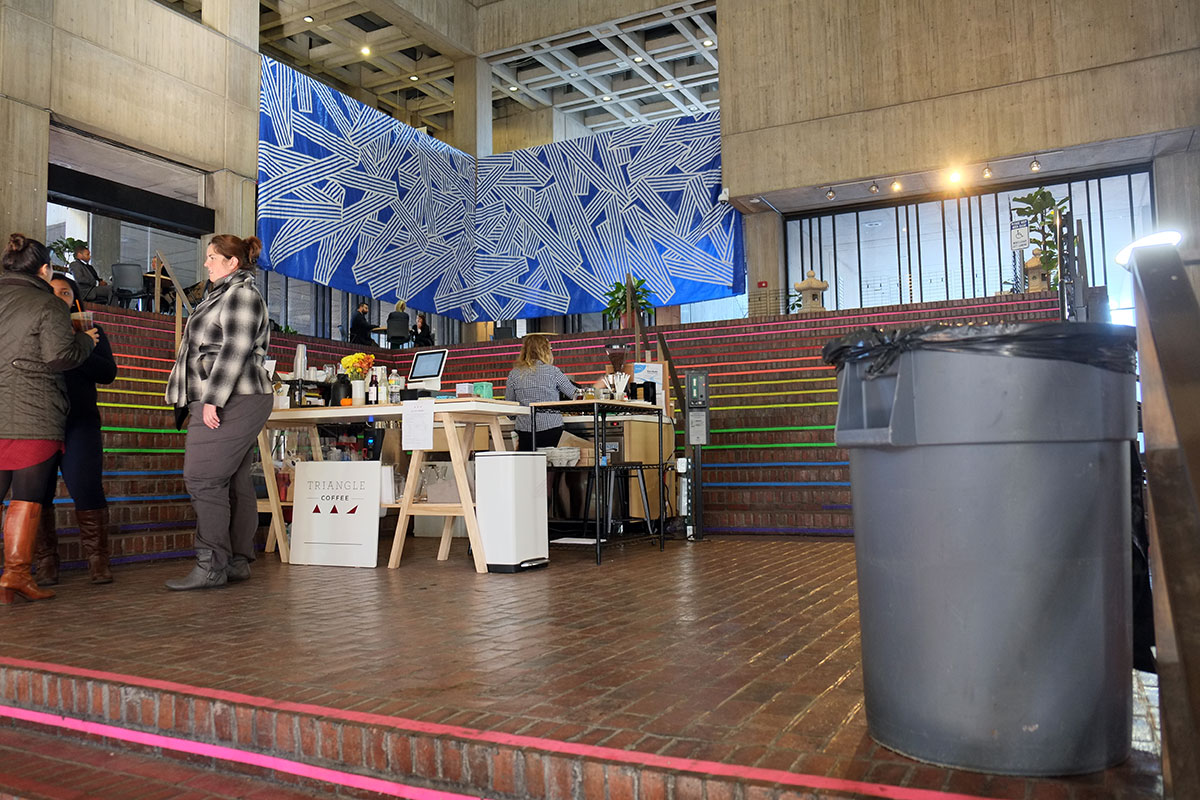
It’s just depressing.  I know the building has problems, but it would be nice to deal with them in a systematic and thoughtful way, rather than letting everyone add whatever junk they wanted to.

And of course we can’t blog about crappy new things in Boston without revisiting the master of kitsch, Philip Johnson.  HIs 500 Boylston building is appalling, the kind of embarrassing banality that caused the downfall of postmodernism.  I can’t decide whether I hate this or his PPG Place more.
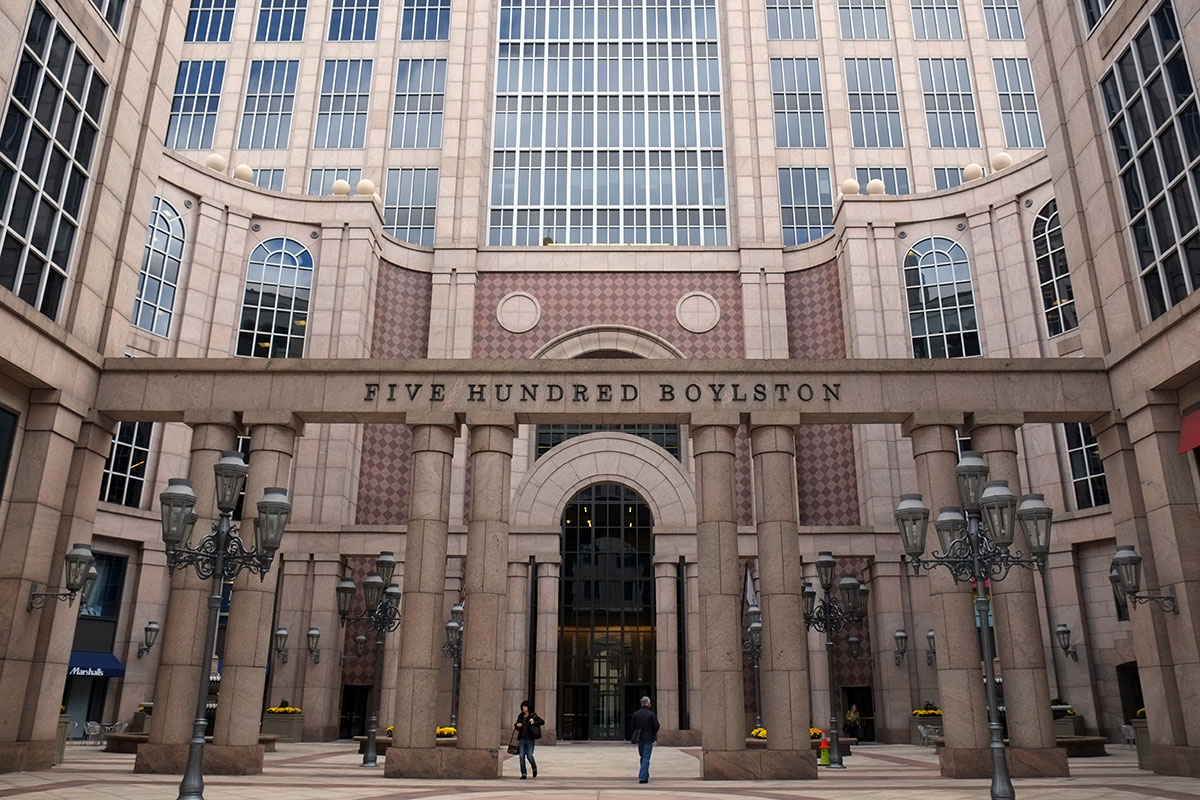
DSCF2666

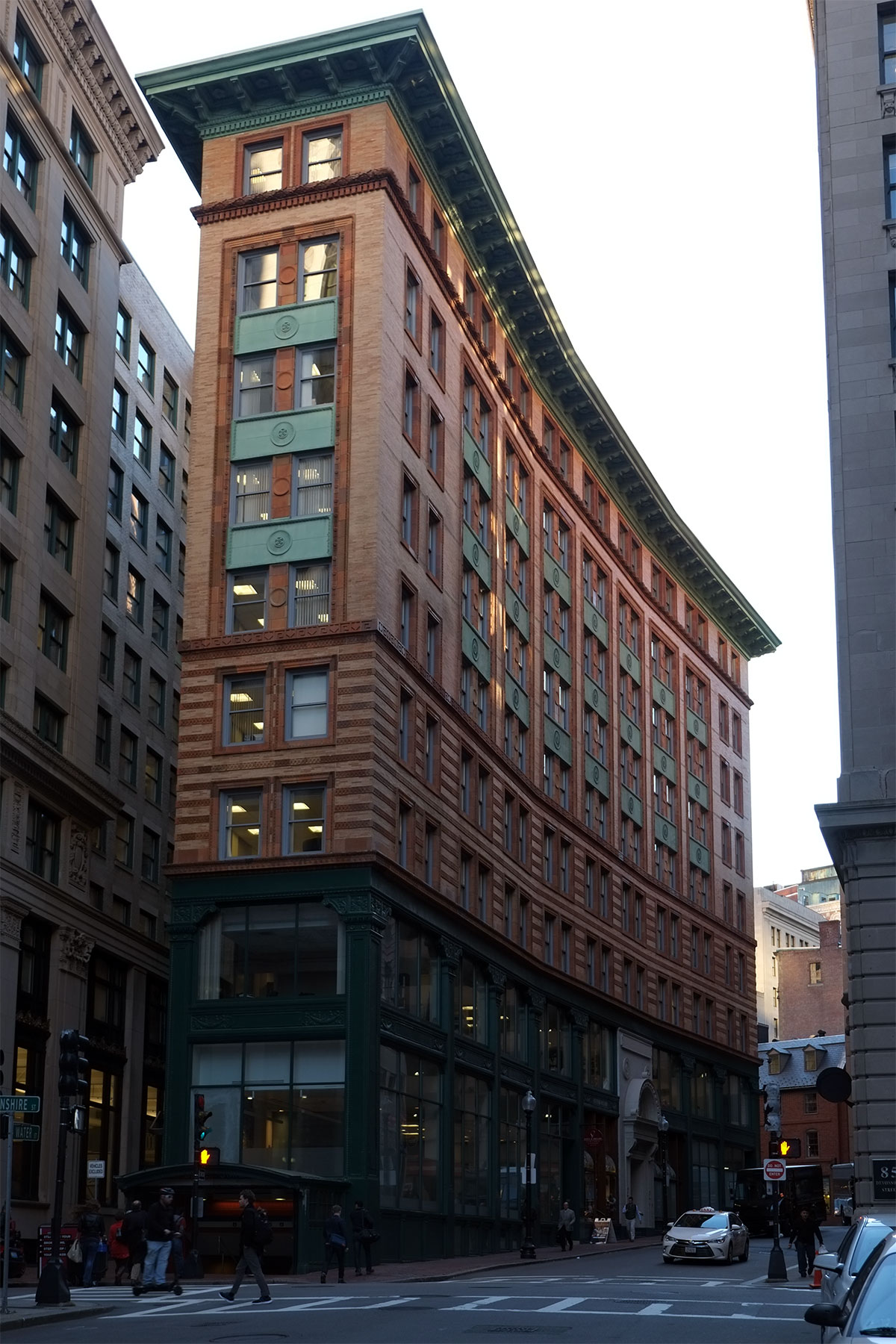
There have been many new towers built downtown in the past decades. Most of them are awful – under-detailed and overscaled, the same as has happened to every other big city.  But once again Boston’s heritage comes to the rescue – there are enough good old buildings that the new ones don’t overwhelm it.  The old ones certainly make the new ones look bad, but the counterpoint between them is not unpleasant.DSCF4345
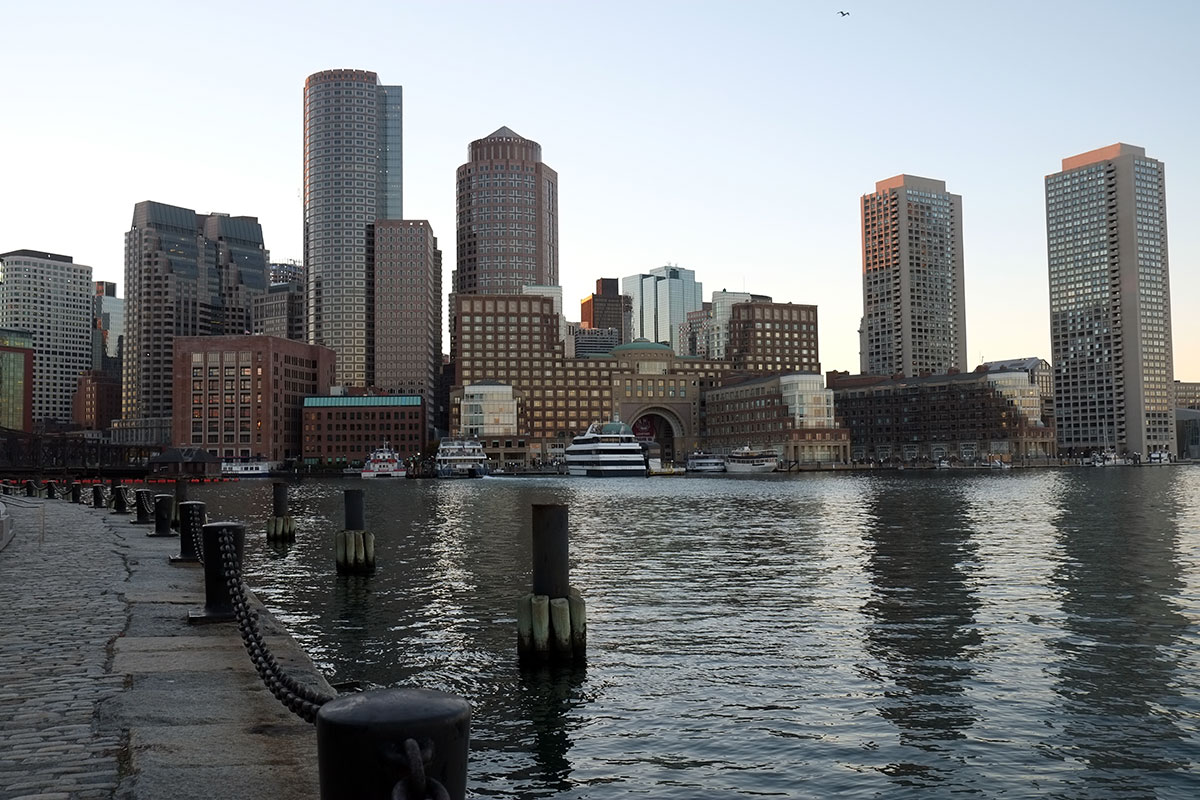
It does look much better at night.
DSCF4359

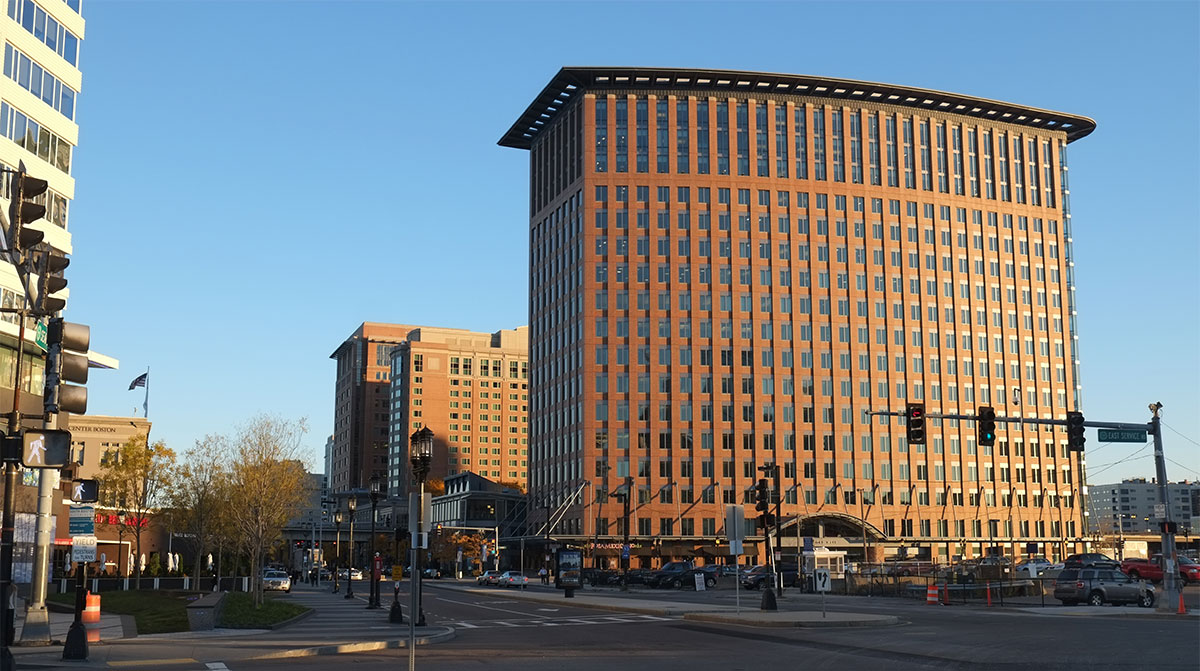
One big new thing is the redevelopment of the harbor edge of Southie.  This has a new meaningless developer name, the Seaport District, probably because SOuthie NOrth (SONO) was already in use somewhere else.  There’s a new gargantuan convention center, a bunch of monstrous hotels, and now condos are popping up everywhere. DSCF4301

The one good building is Pei’s federal courthouse.  Not a stunner, but a simple parti with historicist leanings.  It was the first new building in the area, but it had no impact upon what followed.
DSCF4352

Diller Scofidio’s Institute of Contemporary Art is just trying too hard.  DSCF4337Is anyone else getting tired of giant cantilevers for no reason?  I guess it shelters the seating below, an amphitheatre for Boston Harbor, but frankly, looking across the water to East Boston is not a view that should be emphasized. Maybe the district will grow up around it it, but right now it looks like every other piece of starchitect branding.
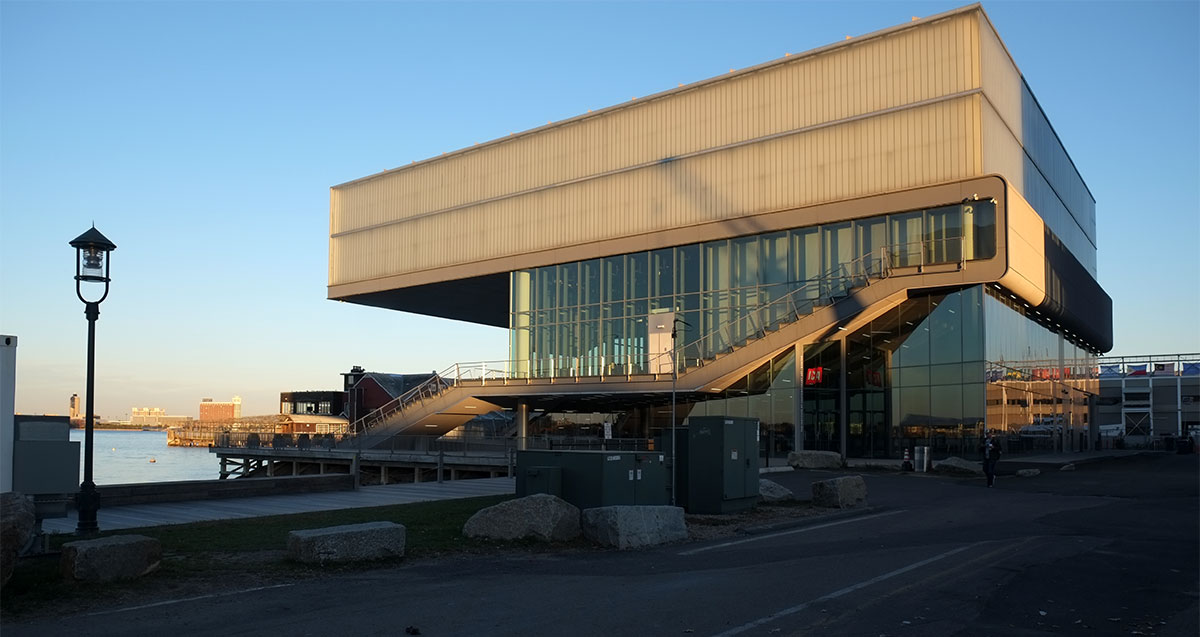
The general level of work in the district is not promising, but no worse than this stuff in every other city.  And maybe that’s the saddest part – Boston has always been a distinct place, with its own character, style, history, etc.  Even when it got its festival marketplace, Quincy Market, it made use of fabulous older buildings.  But this Seaport District looks like it could be in Orlando, Dallas, Indianapolis, or Miami.
DSCF4338 DSCF4323 DSCF4328

The other big new thing in Boston is the Big Dig – the removal of the Central Artery and its replacement with tunnels carrying the traffic. DSCF4303 It is now called the (Rose Kennedy) Greenway, and it took me a while to get my head around it.  You know how hard it is to remember what exactly was in a certain place when it’s gone?  The Greenway is that to the nth degree. You recognize the old buildings and streets that were there before, but the relationship among them is totally different.  You try to figure out where the nasty little tunnel to the North End was.  Then you realize you have a view out to the harbor that was never there before.
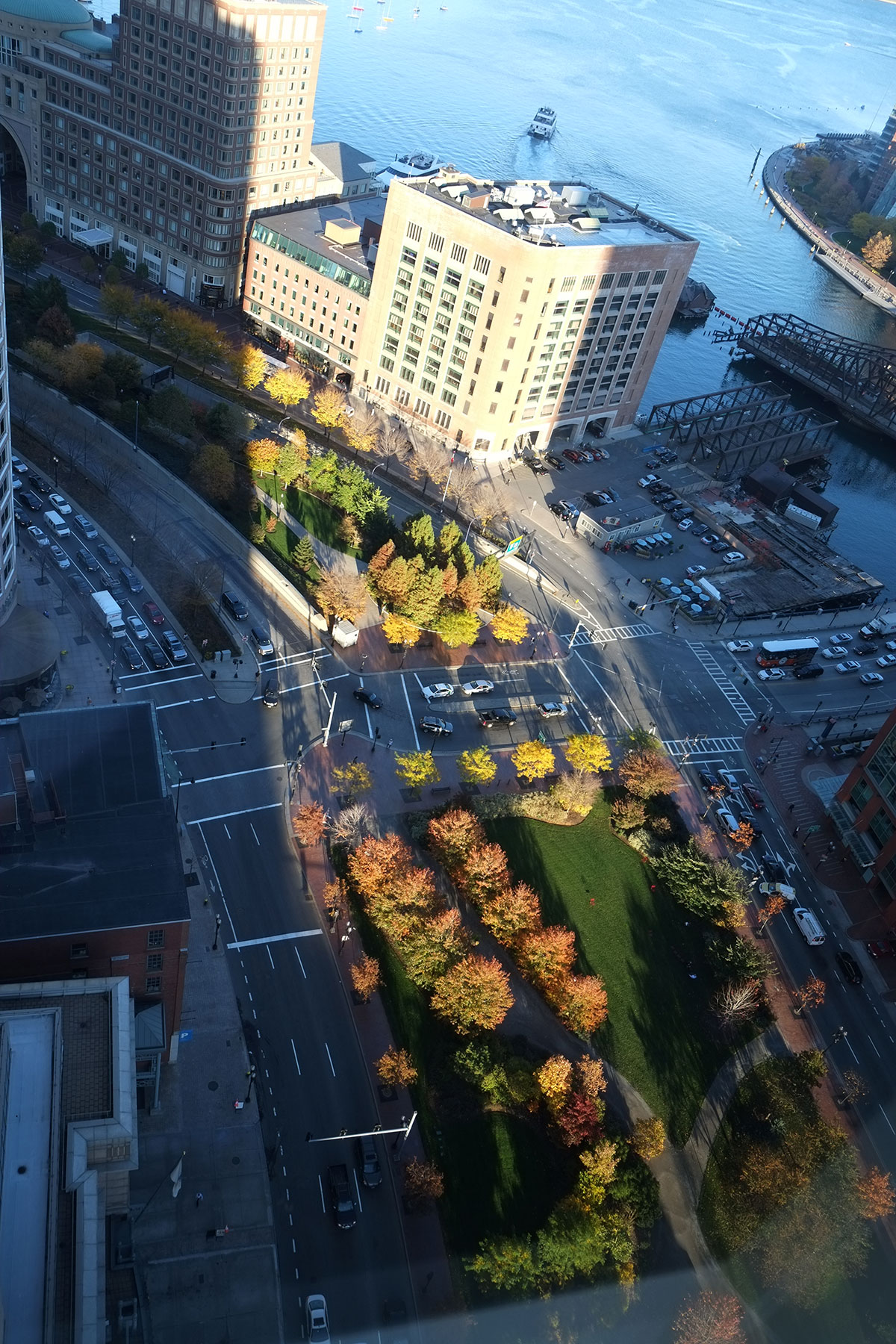
The Greenway doesn’t seem to have much of an identity, and I mean that in a good way.  There isn’t a grand formal vision for the whole.  It is a series of connected, but not totally unified pieces;  the whole is not necessarily greater than the sum of the parts.  The Greenway is not a thing, it is the absence of the horrible thing that was there before.  I think the designers wisely decided not to replace it with another thing, but rather to create a number of smaller-scale pieces, each of which can relate to its immediate context, and try to pull the pieces together.  Once you get away from the Common, downtown Boston never had a lot of open space, and with the advent of giant new buildings, it might have been overwhelming, without the giant new open space.  To be hurrying through the financial district’s winding canyons at rush hour is intense, then stepping out into the Greenway on the way to South Station is a contrast and a relief.DSCF2896

There are some very good parts.DSCF2842 DSCF4371

Of course it was way over budget, and of course it took way longer than predicted and created a lot of controversy, but in the end, it is a Very Good Thing.  Perhaps it says something about Boston – what other city would spend billions of dollars on a project that made the city better, but didn’t produce a big shiny object that jumps up and screams look at me!  New York couldn’t do it – the urban design downtown at the World Trade Center is a disaster, with gigantic, pointless open space and preening object buildings.  The Greenway is Boston at its best, a simple, understated, classy solution.

Shores, South and North

The towns on both the South and North Shores of Boston are some of the oldest settlements in the country, mostly founded in the 17th century. The centers of these towns preserve that original character and spatial arrangement, at the core of what have since become suburbs.  The juxtapositions between old houses and modern strip development can be jarring, especially to someone from the West Coast, where everything has been built in a shorter time frame.

Cohasset

Cohasset

When I lived in the Boston area I never got to explore the environs as much as I wanted, as I didn’t have a car,  So staying with friends both in Scituate on the South Shore and Boxford near Ipswich on the North Shore was a great opportunity to see these places.  What made it even better was that my friends are long-time residents of these areas, and showed me around to places and buildings I would never have known about.  (Greta missed most of this as she was back in Eugene visiting Linda.)

Scituate, Lighthouse Road

Scituate, Lighthouse Road

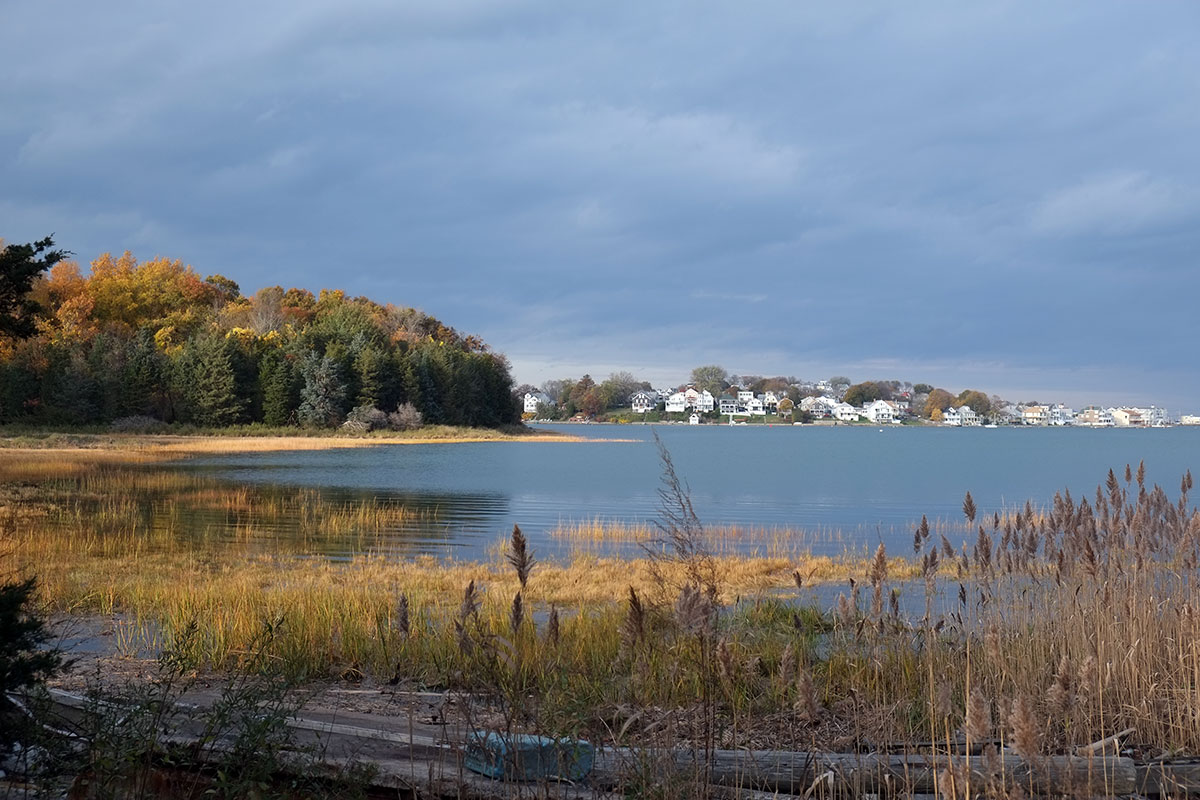
The South Shore has an intricately varied shoreline, with many small coves and larger harbors.  The historic town cores are on the harbors, with later houses filling along the shore between them, and 20th century development spreading to the interior.  Scituate has four “cliffs” that stick out into the bay (we have the northwesterner’s amusement for how topographical terms are used here) which have highly clustered houses on small lots by the water.

Scituate, Lighthouse Road

Scituate, Lighthouse Road

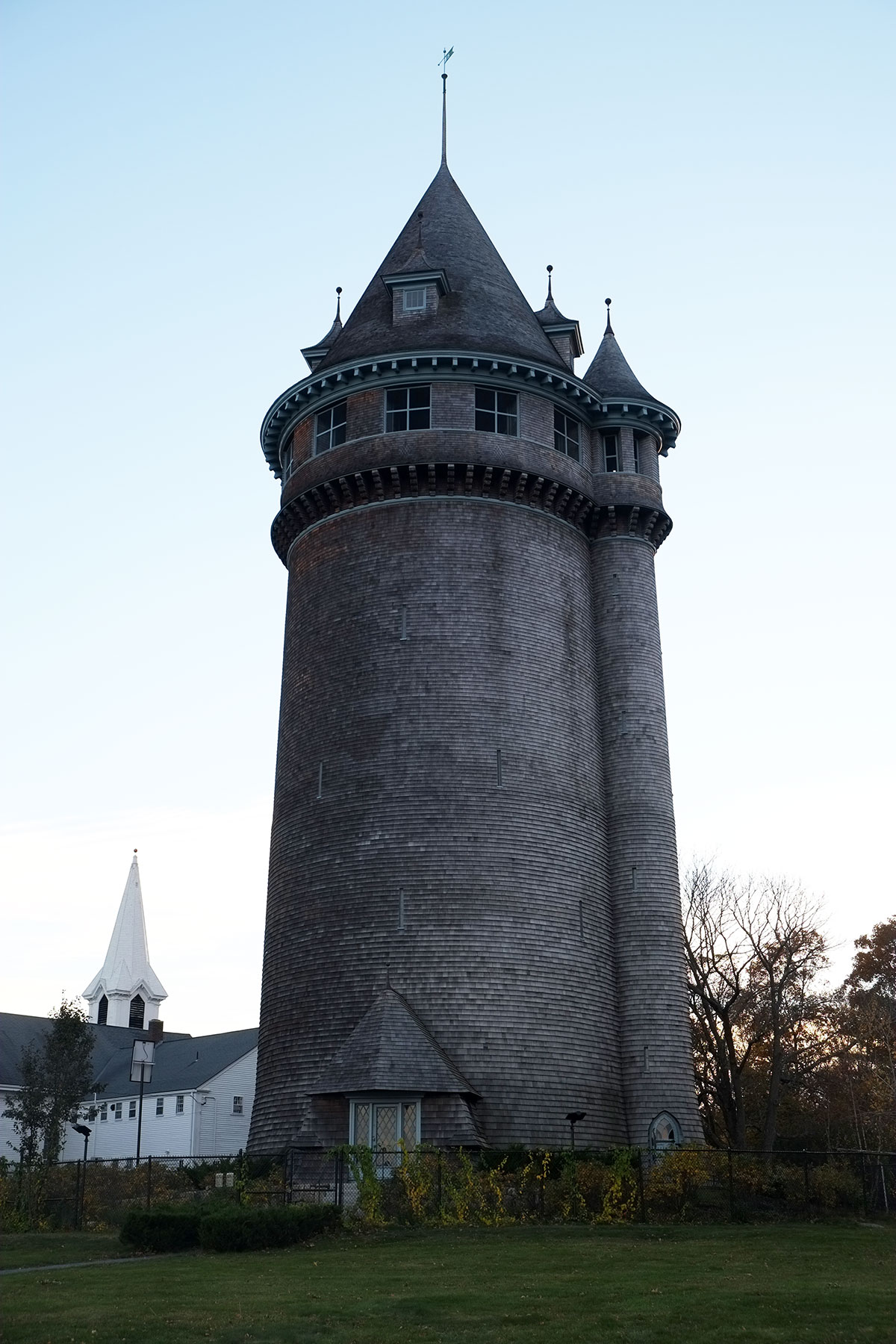
Places that are this old accumulate interesting artifacts, such as this former water tower that was made to look like a Rhenish tower, as the rich person living nearby didn’t like looking at the ugly water tower.

the very interesting water tower in Scituate

the very interesting water tower in Scituate

The Trustees of Reservations is an organization that owns more than 100 significant properties in Massachusetts, from the famous to the obscure.  We visited World’s End, which Olmsted designed as a residential development on a neck in Hingham, but it was never built out. It is now an open space reserve owned by the Trustees.
Olmsted designed a residential development on a neck in Hingham, but it was never built out. It is now an open space reserve, called World's End.

World's End, with Boston in the distance.

World’s End, with Boston in the distance.

We visited Ipswich (where Updike live and worked) and Topsfield on the North Shore, finally seeing the famous Parson Capen house from 1683, which is from that period when settlers built what were essentially English houses, having not yet adapted them to the New England conditions.
the Capen house in Toppsfield, from 1670.

A Classical Revival church spotted on a trip north to Exeter, so technically not on the North Shore, but too good to not post.
actually somewhere in southern New Hampshire, but close enough

Newburyport, at the mouth of the Merrimack River, with well-preserved downtown and residential areas.

Newburyport

Newburyport

Newburyport

Newburyport

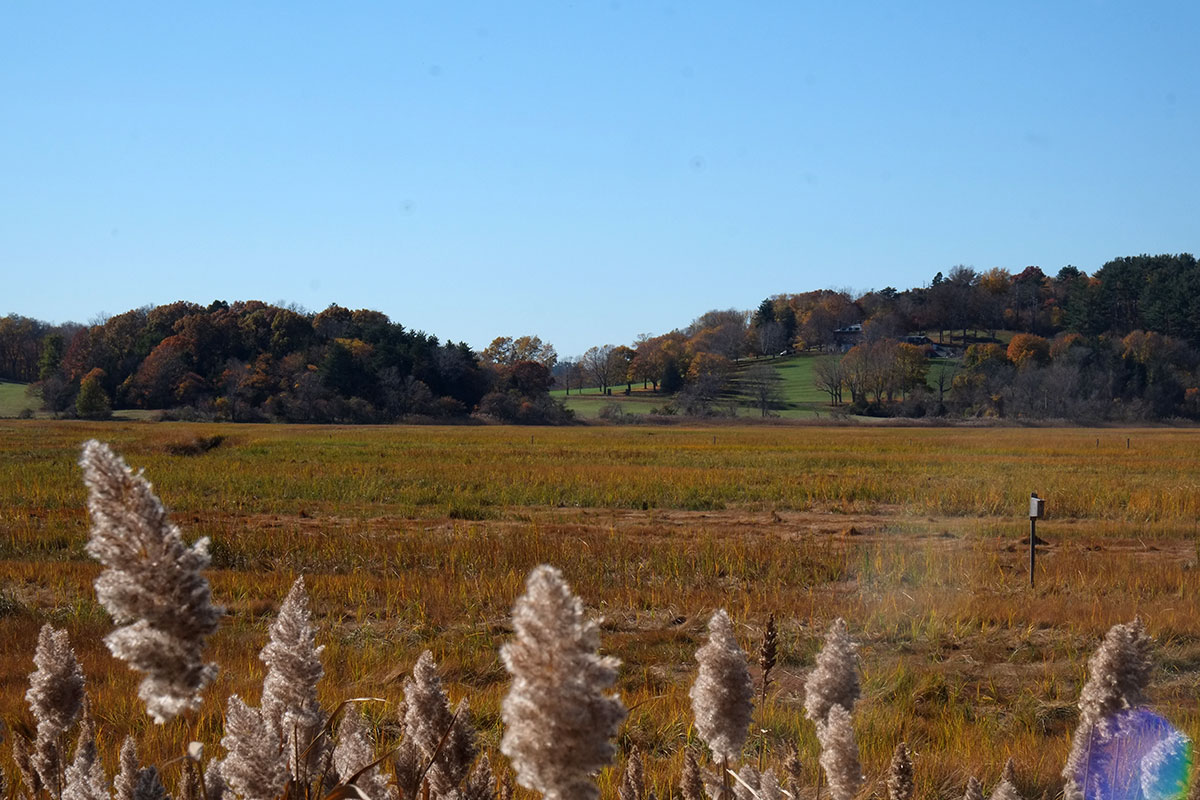
Driving around on the winding roads, past the estates of the North Shore, we headed towards Crane’s Beach, a beautiful landscape of drumlins (there’s a word I want to find more opportunities to use) and marshes.
the marshes near Crane's Beach

The Crane Estate, by Shepley Rutan Coolidge etc., sitting on top of Castle Hill, is the leading example of how much money there was to be made in plumbing fixtures.
the Crane Estate on Castle Hill, by Shepley Rutan Coolidge etc.
Crane Estate

The spectacular landscape was designed by the Olmsted brothers.

the landscape by the Olmsted brothers. Notice the framed view on the axis.

Notice the framed view on the axis.

the allee running north from the house. I don't know what the flags signify, but I wish they weren't there. Louis XIV had a nice allee too, but his just ended in a can, not the Atlantic Ocean.

the allee running north from the house. I don’t know what the flags signify, but I wish they weren’t there. Louis XIV had a nice allee too, but his just ended in a canal, not the Atlantic Ocean.

A few days of exploring these shores just wasn’t enough – I could have happily spent a day in each town.  What struck me the most was just how many beautiful old towns there are, so close to Boston.  The summer resort venues of the Cape and the Islands tend to be better known, but these small towns in the Boston area are just as wonderful.

Exeter Library

ExeterAnother building crossed off on the Lou Kahn’s Greatest Hits tour.  Another building that exceeded my high expectations in every way.  As with all Kahn buildings, a simple parti with extraordinary development and detailing.  A visit to a Kahn building is always a sensual pleasure – light, materials, space – at the same time that is an intellectual satisfaction – your mind is racing as you see the relationships among the parts and the logic of the building drives all the smaller-scale elements.

The Exeter campus is in the standard Academic Georgian mode (we are seeing a lot of that these days), and it fits in beautifully, even though it is much taller, obviously modern, and has no pitched roof.  It is a good illustration of Howard Davis’s idea that in order to fit in, a building needs to overlap 30% with its neighbors.  (Howard now swears he said 50%, but I think he’s just getting more conservative in his advancing years.)

DSCF4161DSCF4154

The exterior shows Kahn’s normal interplay between masonry and wood, within an ordered matrix that allows for much local  variation.DSCF4144

The colonnade on the ground floor causes the periodical room and other secondary spaces to be set back from the facade.  This raises the main body of the library up to the piano nobile, and the voids of the colonnade mirror those of the attic story at the top, while the facade of the main floors is relatively planar.  DSCF3979DSCF4127

This also helps the four walls read as brick planes, with the corners eroded and the screenwall extending above the building volume.  The corners are the one part of the building I found not entirely convincing – they are inaccessible voids – strangely shaped terraces with locked doors – while continuing the brick across the corner on the diagonal obscures the contrast.  Maybe those corner screenwalls could have been wood (but who am I to be telling Lou Kahn anything)?DSCF3972No one walks in the colonnade, except while entering the building.  The entry is effectively hidden, not celebrated, as all four facades read exactly the same.  References to everyone from Palladio to Wright abound.

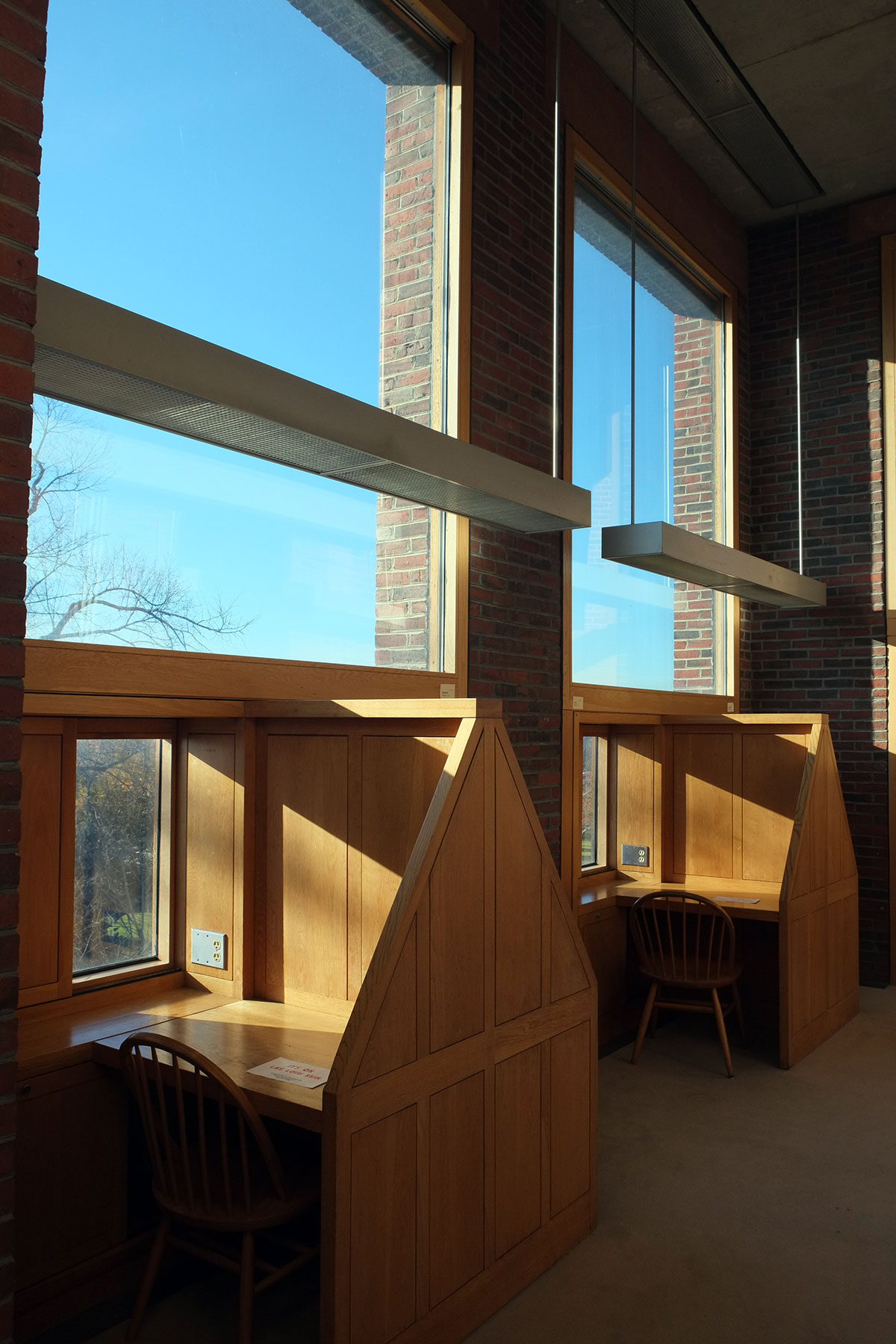
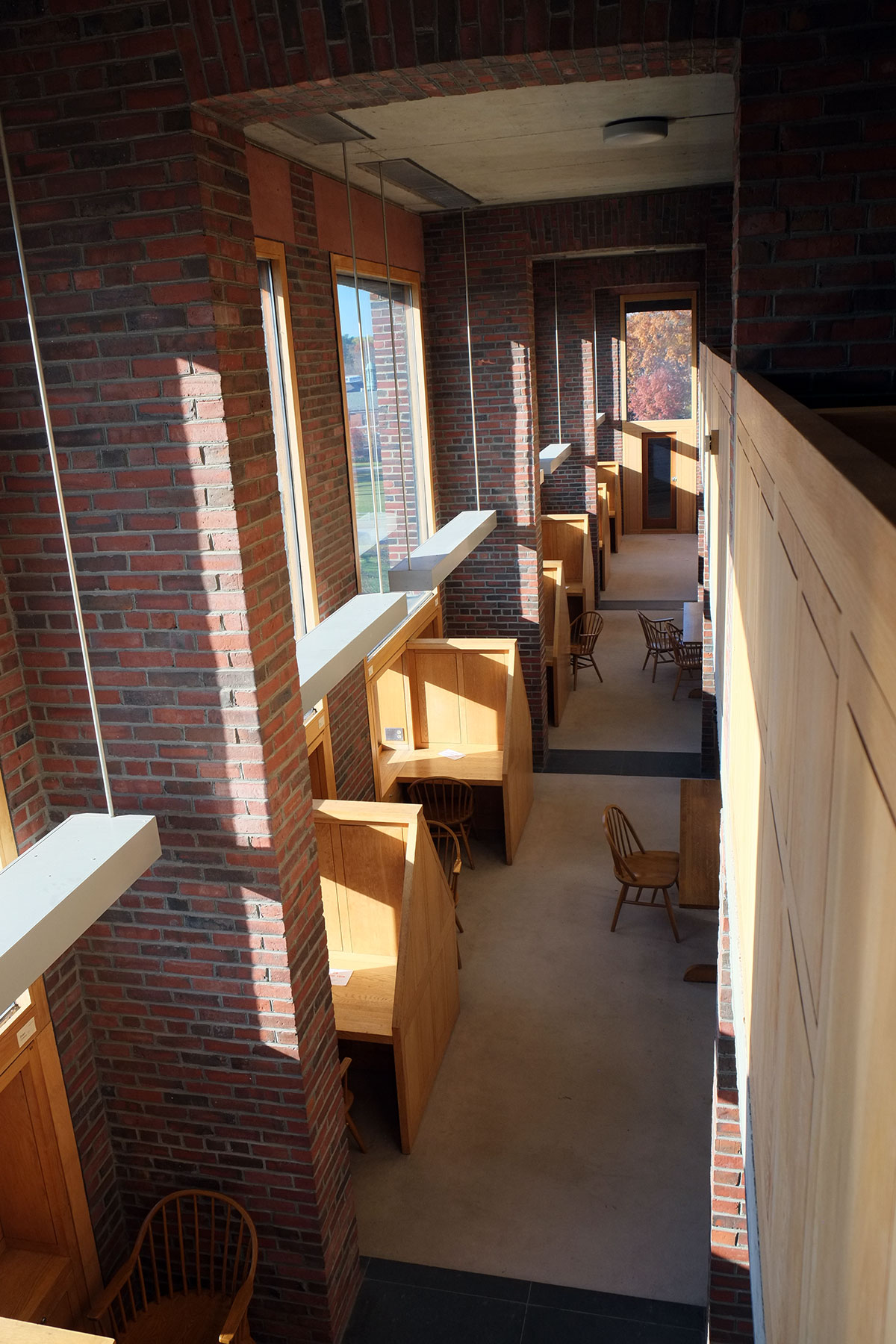
The concentric layering of the building drives everything.  Right inside the thick exterior wall is the study zone, matching the depth of the colonnade below.  Each student has a carrel, four in each bay between piers.  The zone is double-height, with carrels on the mezzanines too.DSCF4028DSCF4034DSCF4006DSCF4002

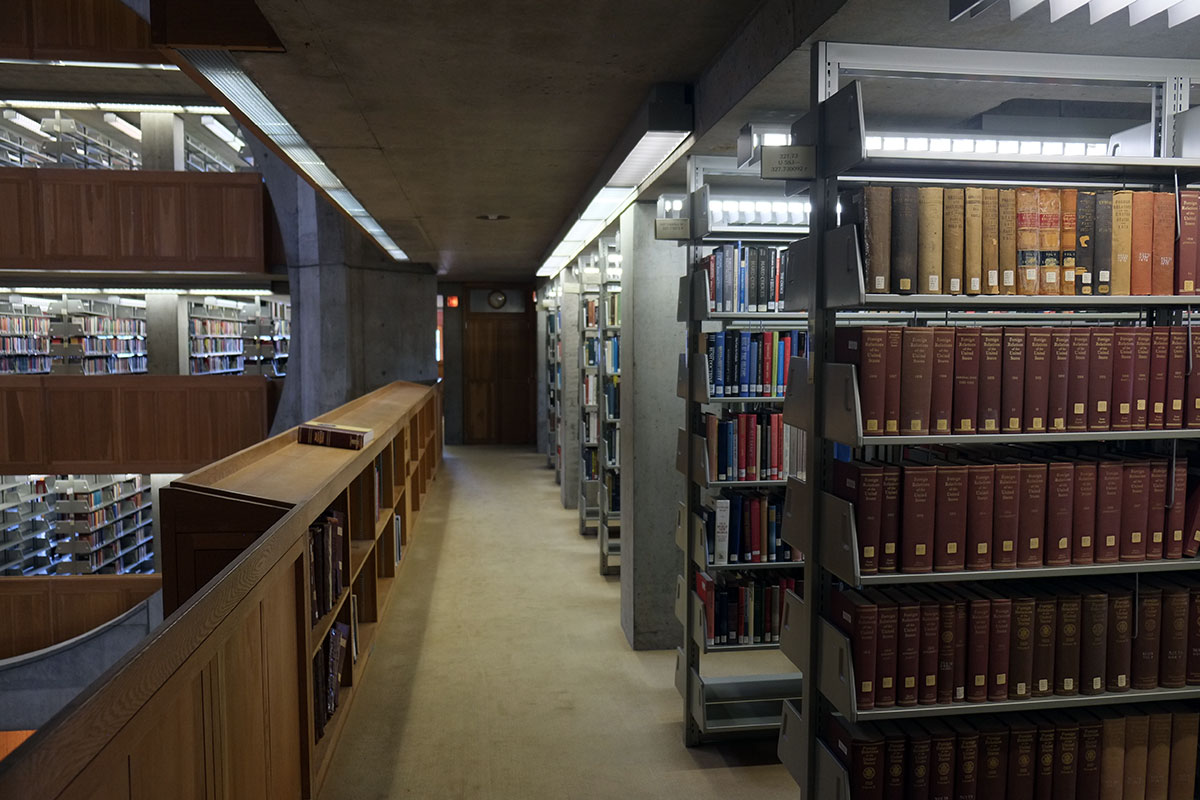
Inside the ring of carrels is the ring of stacks, with the aisles perpendicular to the facades and leading into the center.  This area has the highest structural loads, so the massive concrete structure is very evident, with the shifting of the structure towards the corners visible on the main floor.  DSCF4058.jpg DSCF4110

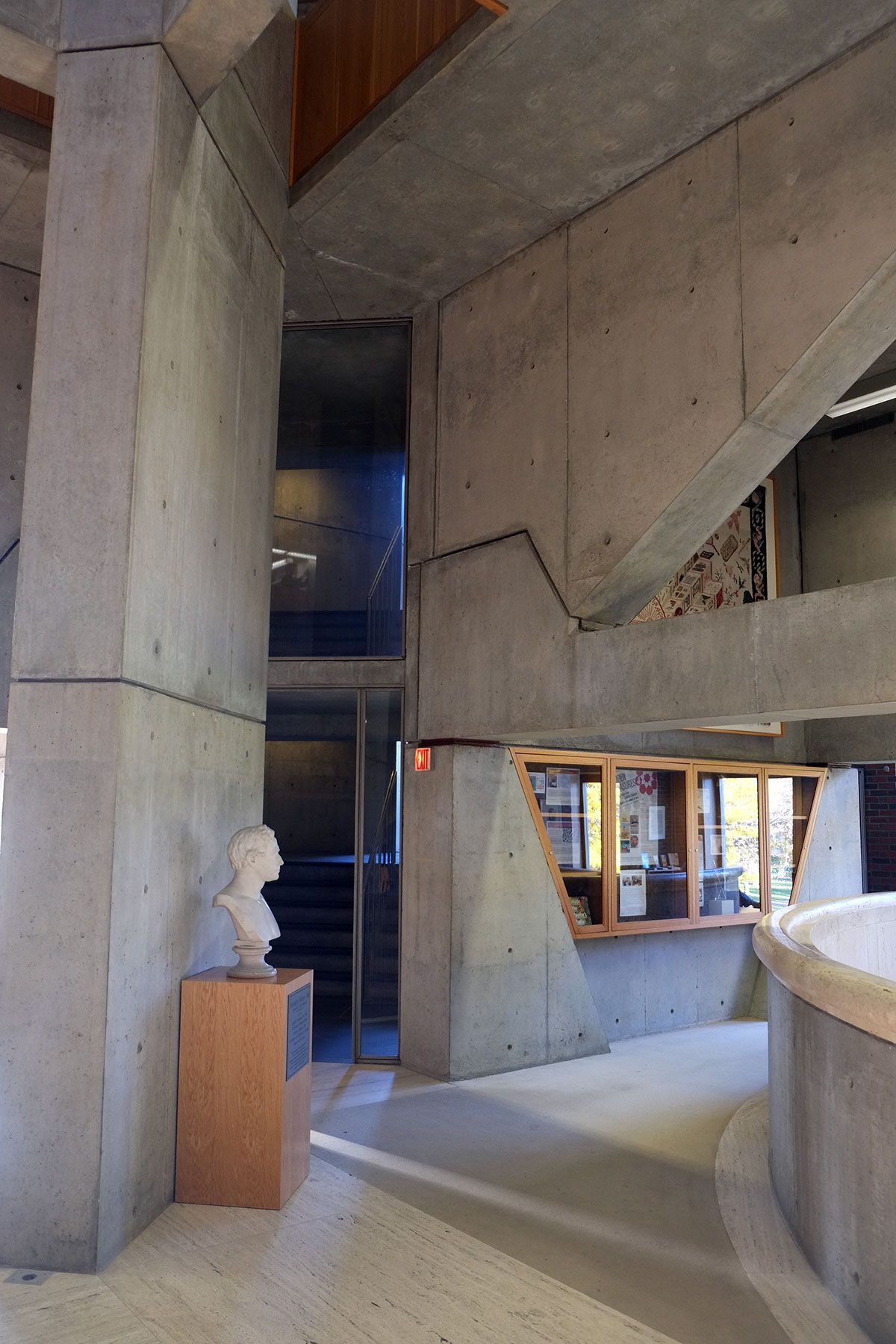
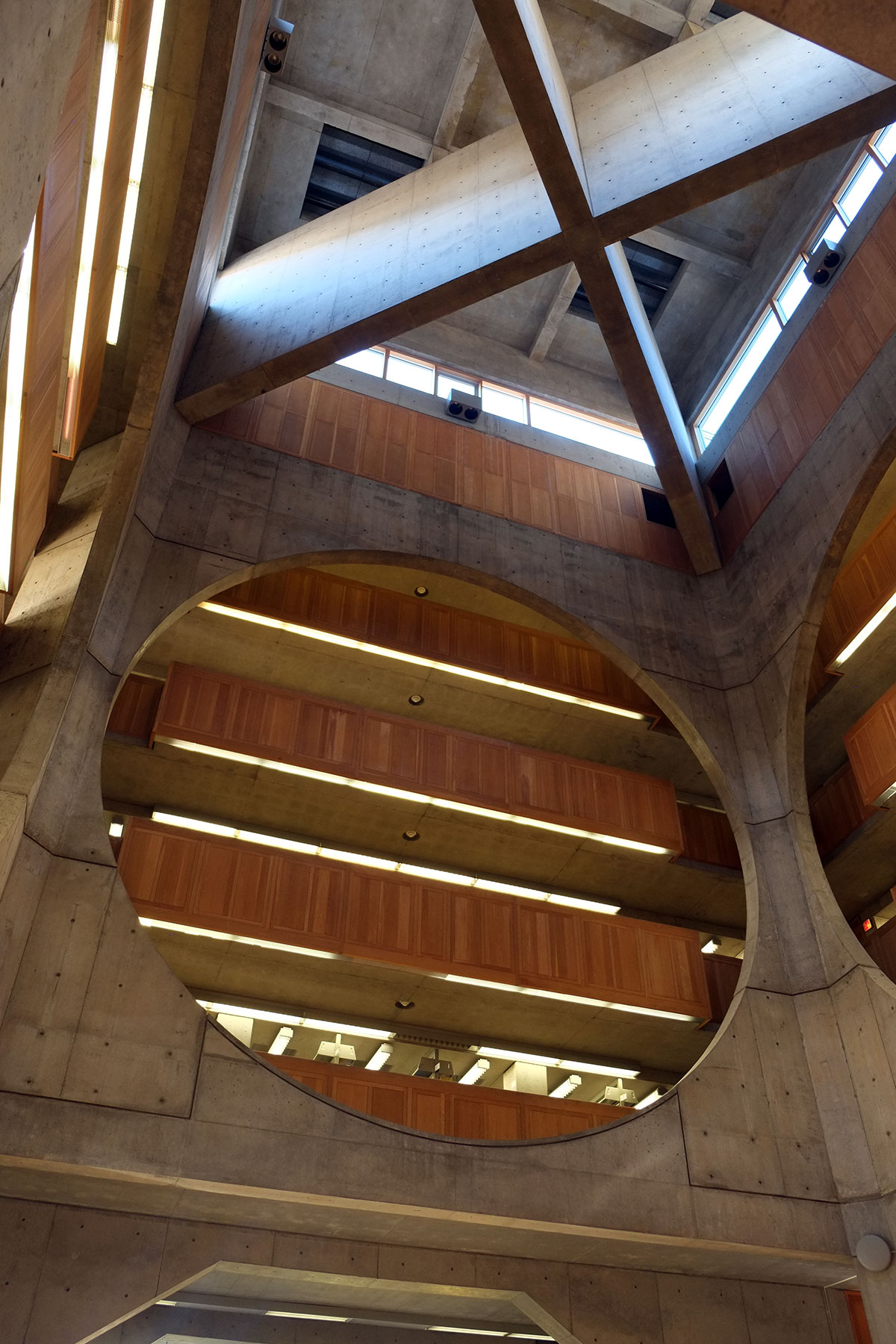
The next layer is palazzo-style circulation around the central atrium, but still within the stack structural system.  The slab is pulled back from the atrium, and the guardrail is cabinetwork, a bookcases with a tilted reference book shelf above, a concept other architects have been imitating ineptly ever since.  DSCF4020DSCF4051The central atrium is magnificent.  You ascend a curving travertine stair (the only curve in plan in the building) from the ground floor into the center of the building.  The concrete walls pierced by enormous circles rise on four sides, leading up to the massive diagonal roof beams. Daylight from the clerestories bounces off these beams and floods the building below.  I’m assuming that this concrete box acts as the trussed moment frame for the building, with the shear moving around the circular cut-outs.  Structure and light, simple symbolic forms, color and materiality.  It is simple and perfect, beautifully-proportioned, and you can sit and look at it endlessly.

DSCF4061DSCF4084DSCF4105DSCF4024

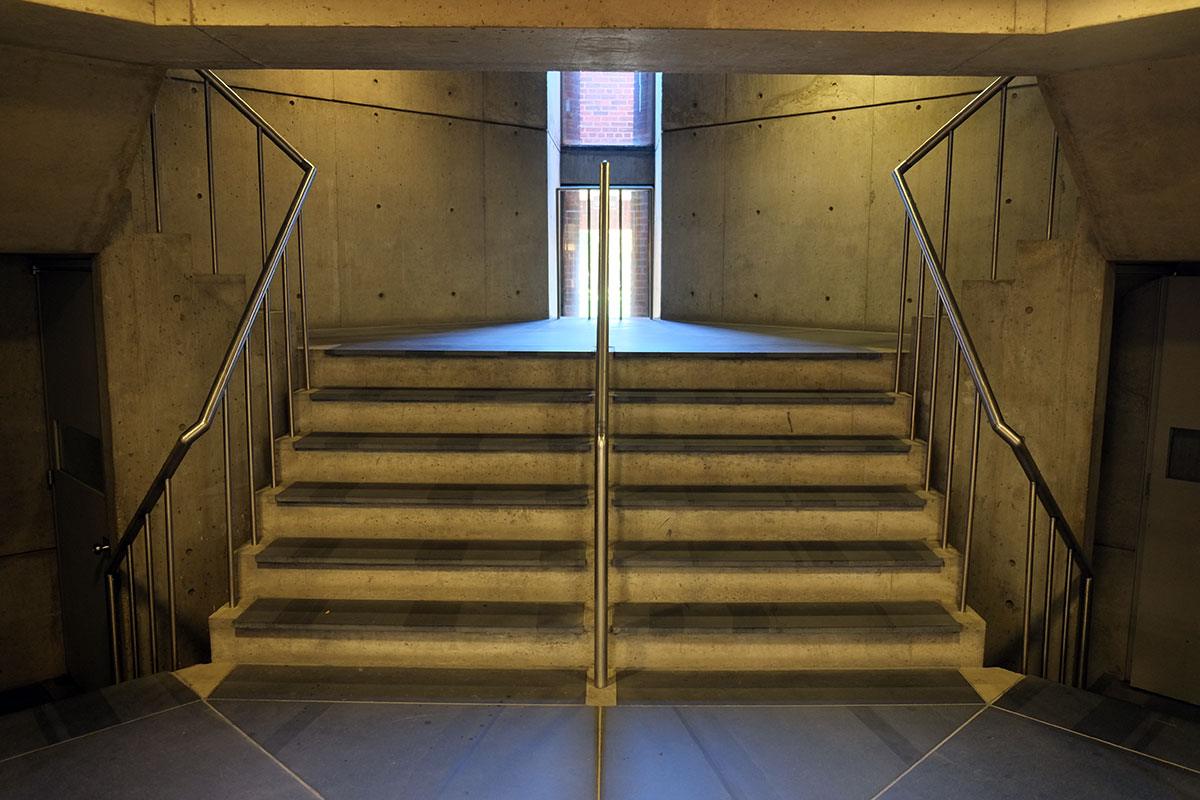
Throughout the building, every detail is perfect.  There are two fire stairs, this larger one is also the main circulation.DSCF4140

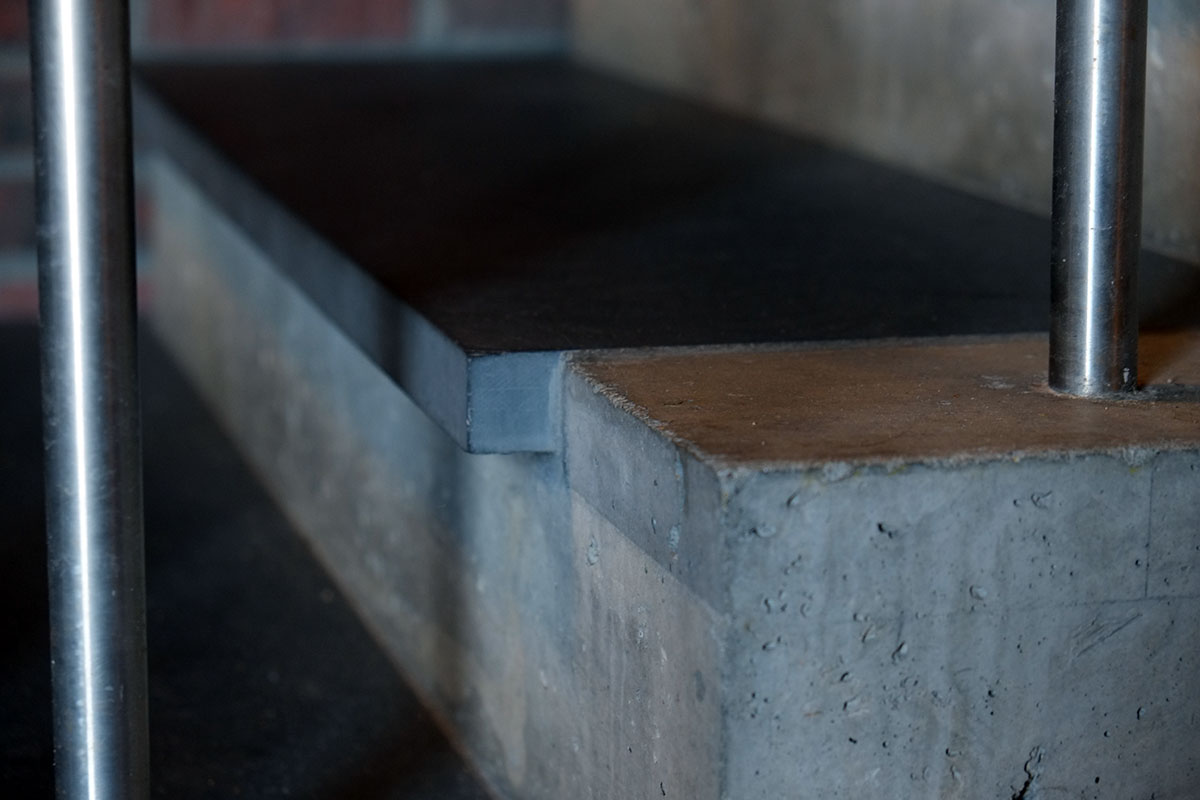
The best nosing detail I’ve ever seen.DSCF3993

The walls around the entry staircase.  Every function articulated and developed.  DSCF4096

The unity of the building is shocking.  We’re now so used to buildings which are a collision of elements, where every piece is unto itself, and the intersections among them are simply managed by the architect.  Here is a classical building where the complexity is integrated and purified, illustrating what Venturi calls The Responsibility to the Difficult Whole.  It is seemingly simple, but everywhere you focus, there is more to see.

Visiting the library is a very easy and pleasant experience;  Exeter just asks visitors to sign in, and not photograph the students.  Other than that there are no restrictions and you can wander around freely.

Mike and Cathie McGowan

At every new job, you acquire new work friends.  You spend a lot of time with your co-workers, and you often go out for drinks and get to know them pretty well.  Then you move on to a new job, and it’s interesting how few of these friendships endure.  It’s not that you don’t like your former co-workers, but perhaps the bond of working together isn’t enough to cement a friendship in the way that going to school is, or maybe it’s just that you’re at a place in your life where you have too many other commitments (family, etc.).  So the work friendships that endure are notable.DSCF3875

Mike McGowan and I began working together in the summer of 1981, when I had a summer internship at a firm doing commercial projects in New York.  Mike came from Boston where he worked as a welder for a few years, until he realized that he had reached the limit of how interesting that career was going to be.  He moved to New York and attended Pratt, and headed out into the working world a few years ahead of me. We worked in that office together for a while, but then stayed in touch when we both moved on.  (Even though he always lived in Brooklyn and I would have to venture out there once in a while.)

Cathie hailed from Chicago, and met Mike while she was working in the garment industry for Perry Ellis, and Mike was the project architect for the gut remodel of three stories in a 1920s building for the new Perry Ellis showroom and offices.  (perhaps Mike is just really good a maintaining work-based relationships).  They got married and lived in Park Slope, and we hung out together throughout the 80s.

Perhaps due to his background as a builder, Mike didn’t act like your typical young architect.  He took me on a tour of the Perry Ellis project just before it was finished, and all the subcontractors greeted him warmly, which shocked me – subs usually have a very adversarial relationship with the architect doing construction administration.  Mike always had a different perspective on the profession.  When he got his architectural license, he observed that what you learn in architecture school has very little to do with what you do as an architect, and the licensing exam had nothing to do with either of them.
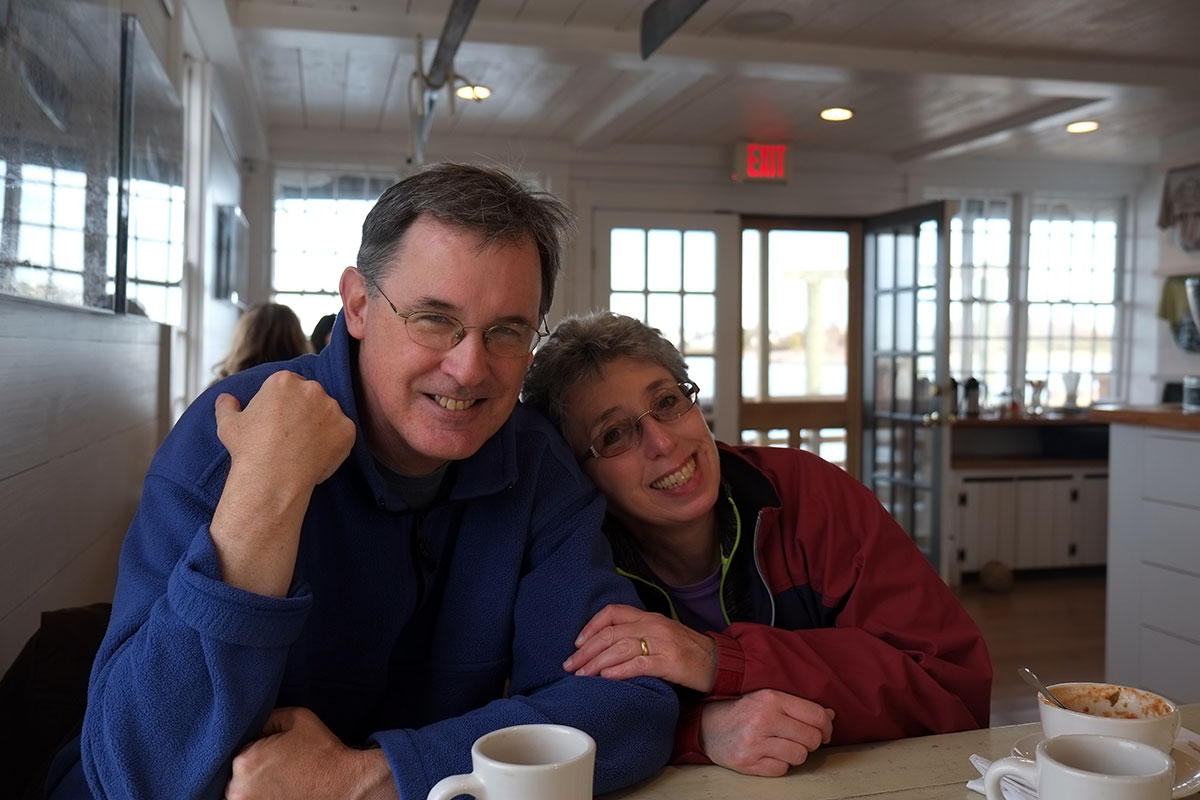
In the late 80s, Mike and I started talking about opening a firm together, combining my experience in housing and his in commercial projects, hoping that might downturn-proof the firm.  But then the massive building recession of the late 80s happened;  I moved to Oregon to teach, and Mike and Cathie moved back to his hometown of Scituate, where Mike took a job as the in-house architect at Talbots.  DSCF3882They raised their son Patrick, who was educated in industrial design, and is now living in a converted schoolbus in Las Vegas, working on their startup designing hydroponic farming in shipping containers.  Cathie has put her massive organizational skills to work in a few local organizations and businesses, and Mike has moved on to Bergmeyer Associates, a Boston firm where he is the wise old guy who has seen everything.

Mike and Cathie seem to be happily adjusting to being empty-nesters, and we started thinking about how to maintain the friendship as we transition to being old retired friends.

Ray Porfilio and Rickie Harvey

DSCF3871

Ray and Rickie have been good friends of mine since graduate school days in New York.  They had met while undergrads at Williams, and then Ray spent a couple of years studying law at Oxford (and rowing lightweight crew) before architecture school, which provided him with a broad education.  Getting to know Ray during first year turned out to be problem, as we sat next to each other in one studio and found that we had so many interesting things to talk about that it seriously interfered with getting our work done.  (Those of you who know me from later stages in my career can nod knowingly here, but it was really much worse in grad school than it has been since – when you put two people together who have this proclivity, it goes exponential.)
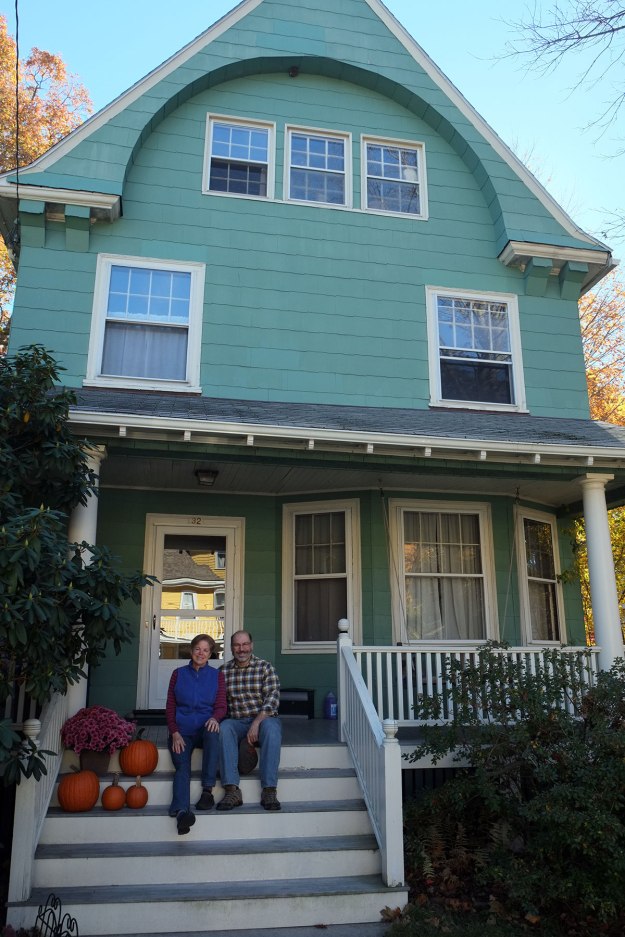
Ray and Rickie moved to Boston soon after graduation, where Ray worked for or managed a succession of very good firms at a range of scales, and Rickie continued her work in publishing and museums.  They lived in great old neighborhoods in Roslindale and West Roxbury,DSCF3869where I visited them whenever my travels took me to Boston.  They raised two children, Parker and Jaqueline, who to the amazement of all parents of recent college graduates, are employed full-time and living on their own.
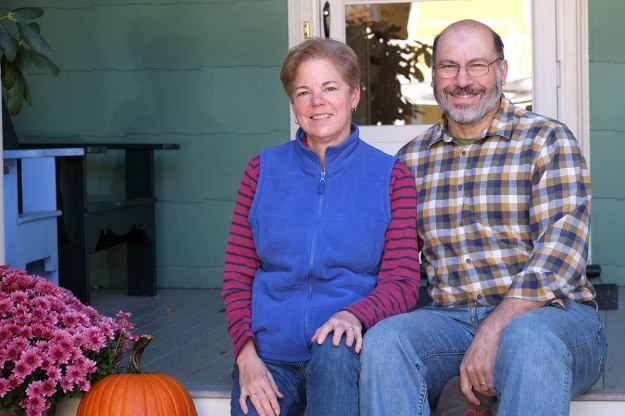
Greta got to spend one evening with them before she flew back to Eugene for a visit with Linda, and then I stayed for several more days (the most extended visit we’ve had in over thirty years) which still didn’t give us enough time to cover all the topics at hand – book recommendations, architecture and growth in Boston, the vicissitudes of middle age, etc.  Rickie and Ray have both been very active in local politics – this year they are helping to lead an effort to stop or mitigate a natural gas pipeline that will be running five miles through dense Boston neighborhoods with few safeguards – and one evening they hosted a reception at their house for Michelle Wu, a first-term city council member whom they’ve know for years.  For an Oregon resident who has become used to bizarrely transparent and simple political processes over the years, it was eye-opening to spend an evening with their neighbors, all of whom seems to have much higher understanding of the inner workings and craft of politics than anyone on the West Coast.

Ray is now a principal at Epstein Joslin Architects (http://www.epsteinjoslin.com), a firm that works in  a wide range of building types, especially known for their work in performance spaces.  We took a brief tour of their office, which felt strange to me, as I hadn’t been in an office in years where at least a quarter of the employees hadn’t been students of mine.

As with so many old friends on this trip, it was a gift to be able to send so much time with Ray and Rickie, jumping right back into a conversation that has continued for decades.

The Boston that hasn’t changed

the Common

the Common

Revisiting a city where you’ve spent a lot of time is always a strange experience.  On the one hand, you immediately notice how it’s changed, all the new construction and the lack of familiar faces. It doesn’t seem like the city you knew, and you realize it is no longer yours, that life here has gone on without you and that it now belongs to a whole new generation of people.  But then you start to see beyond that, and you’re surprised by how many things you knew still remain.
I lived in the Boston area for six years, leaving in 1980, and I hadn’t been back since 1997.   I’ve gotten used to western cities, where everything is new, and to New York, where change is more rapid and extreme.  Boston has many new things (more on this in a later post), but all the old streets and places felt very familiar – I didn’t need a map, I always knew what would be around the next corner.  This is the first place we’ve visited on this trip where I had lived, and it was strange to be in these old places with Greta, who belongs to a very different part of my life.
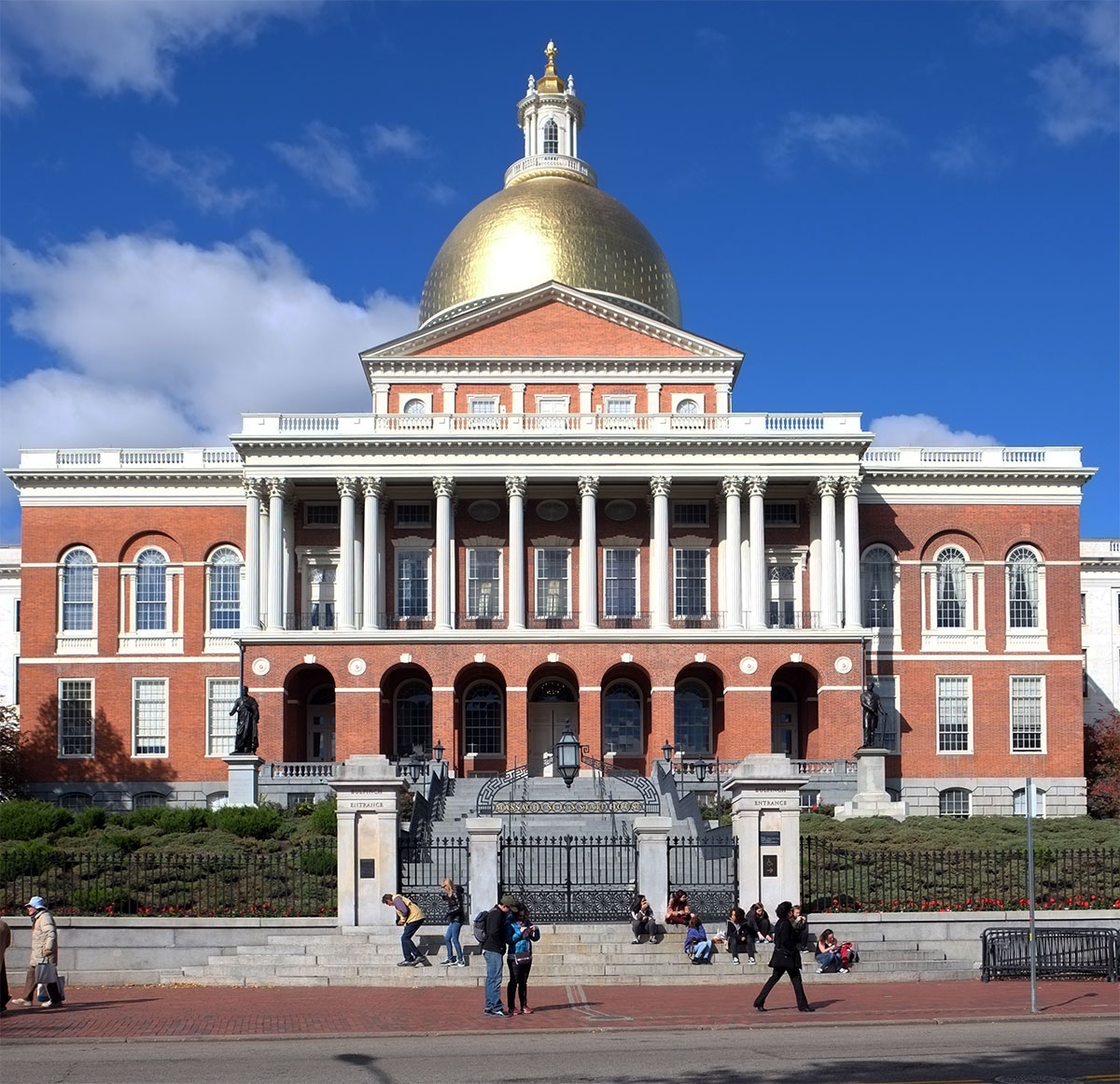
perhaps the most beautiful state house in the country

perhaps the most beautiful state house in the country

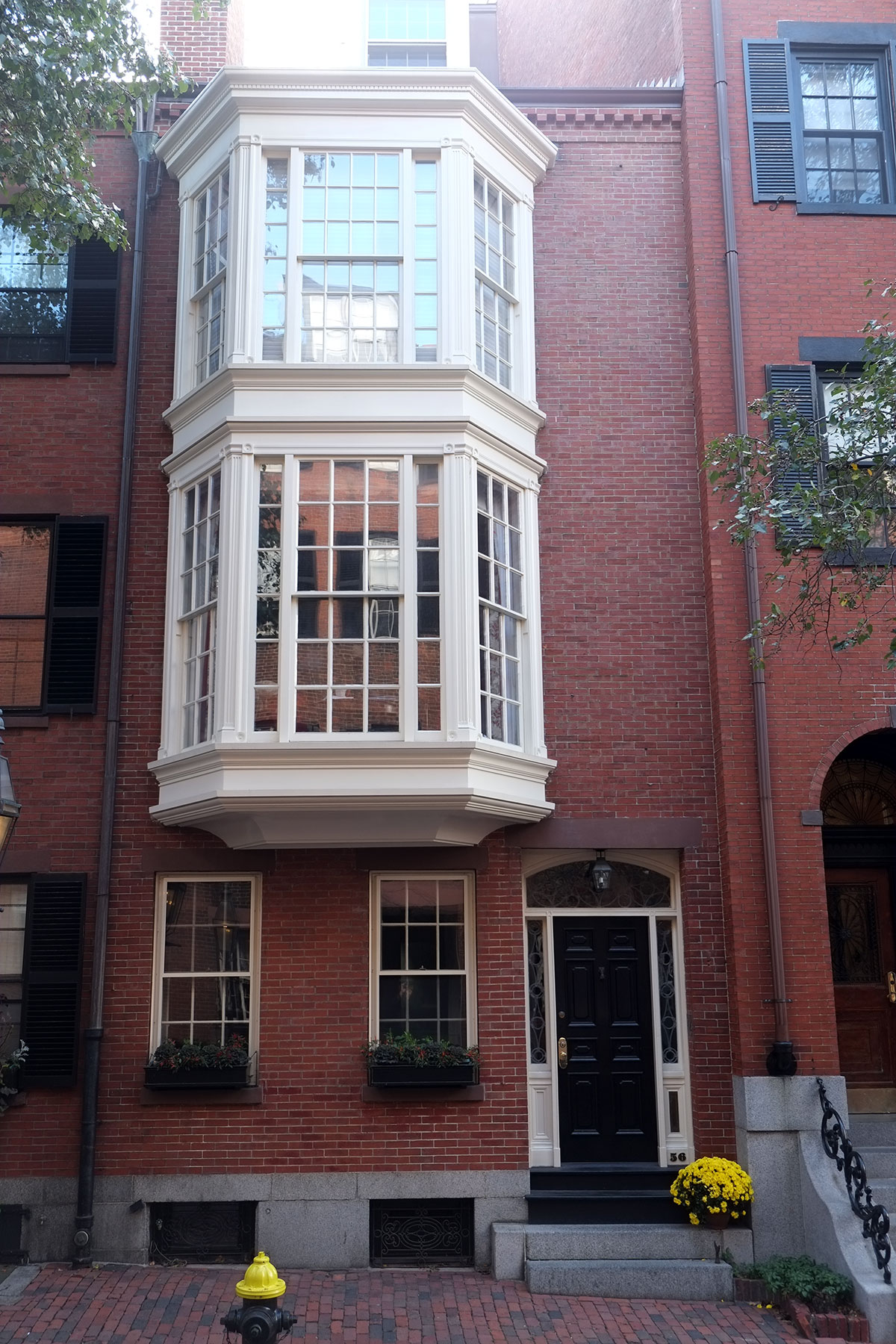
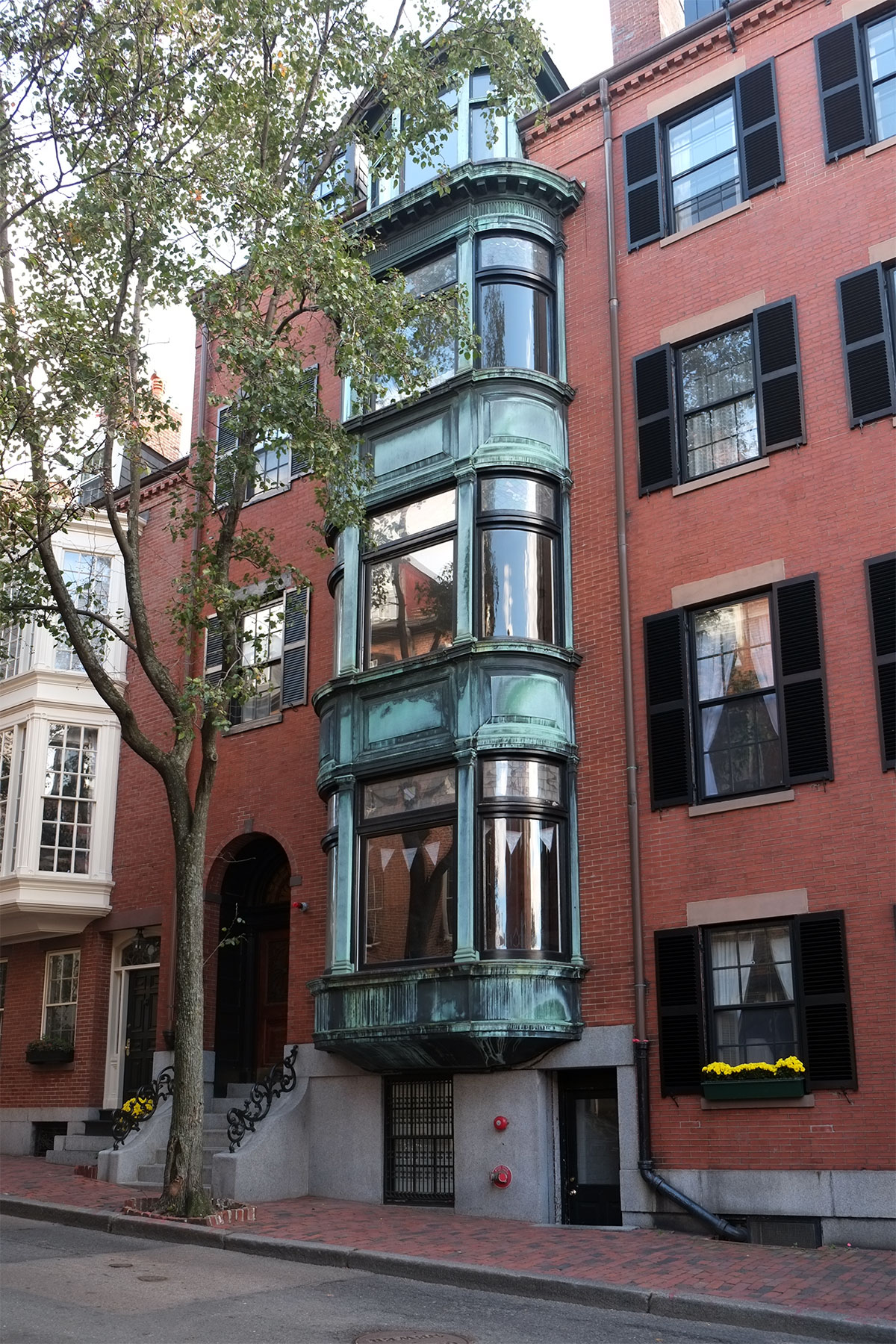
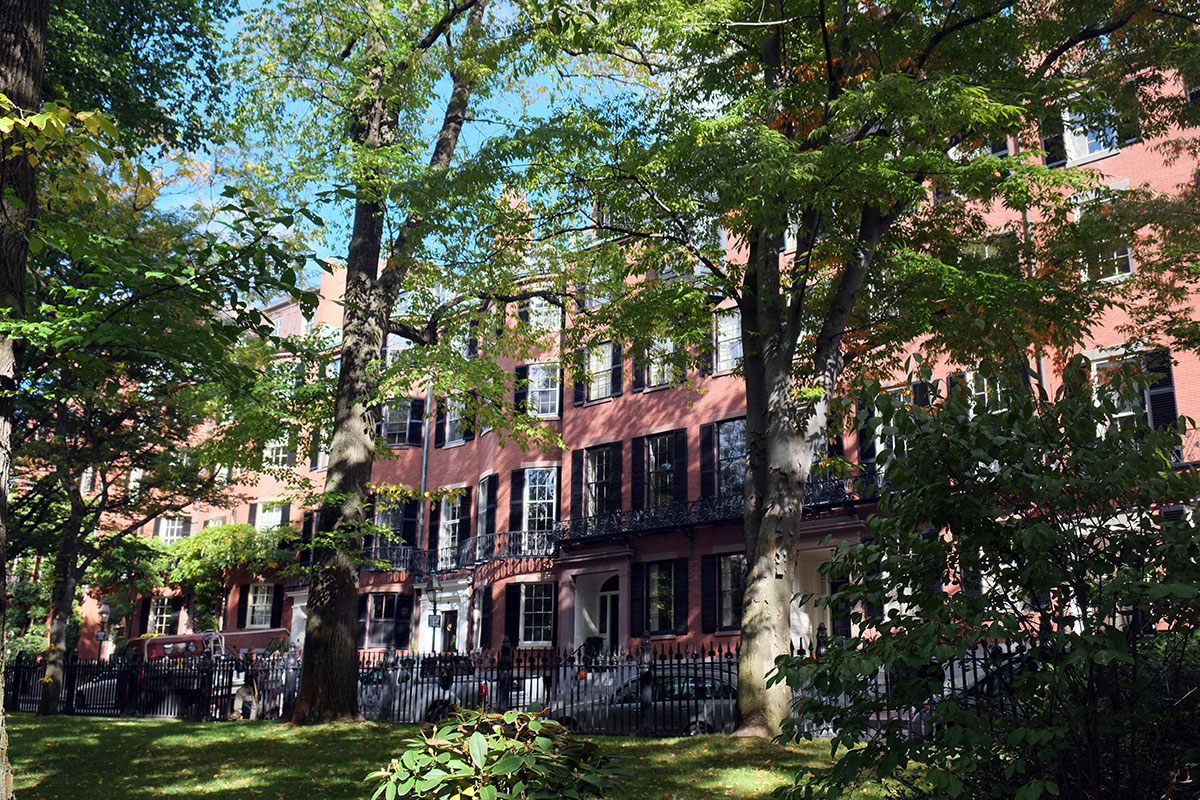
Beacon Hill, the pleasure of a quiet, Federalist neighborhood in the center of the city.

Louisburg Square

Louisburg Square

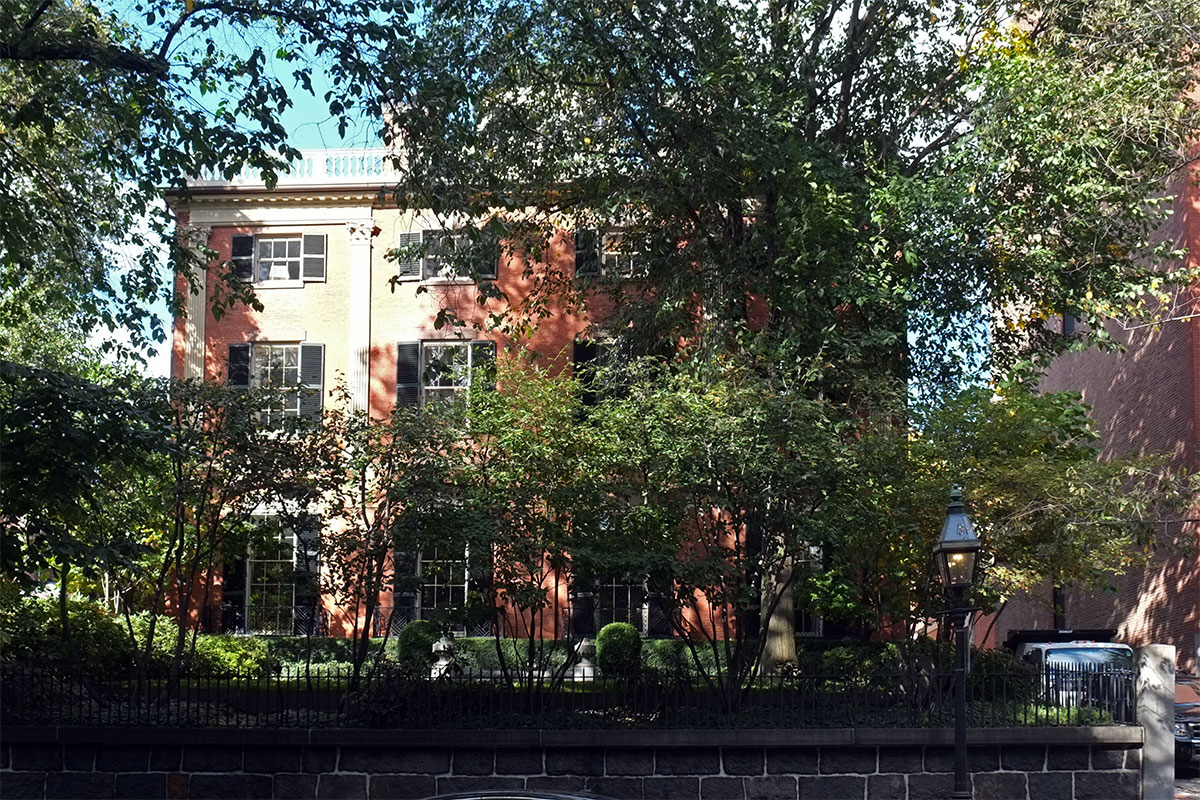
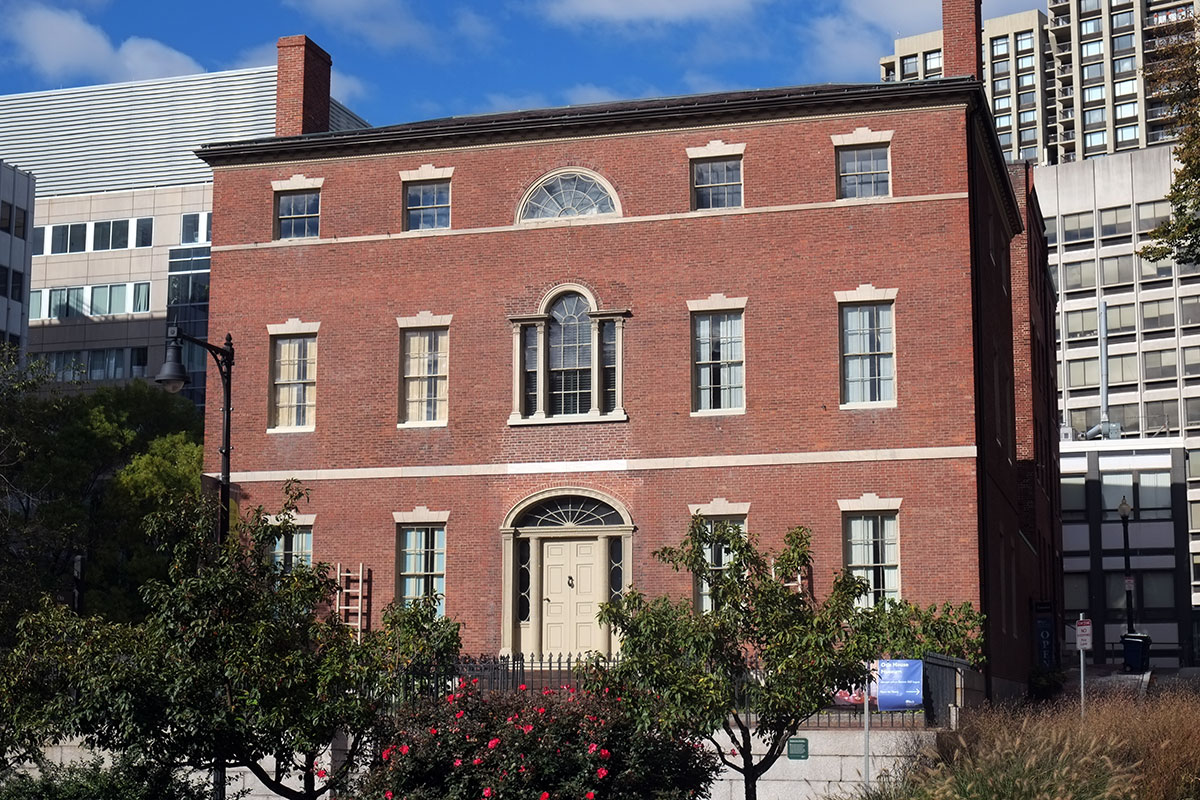
the second Harrison Gray Otis house

the second Harrison Gray Otis house

Mt. Vernon St.

Mt. Vernon St.

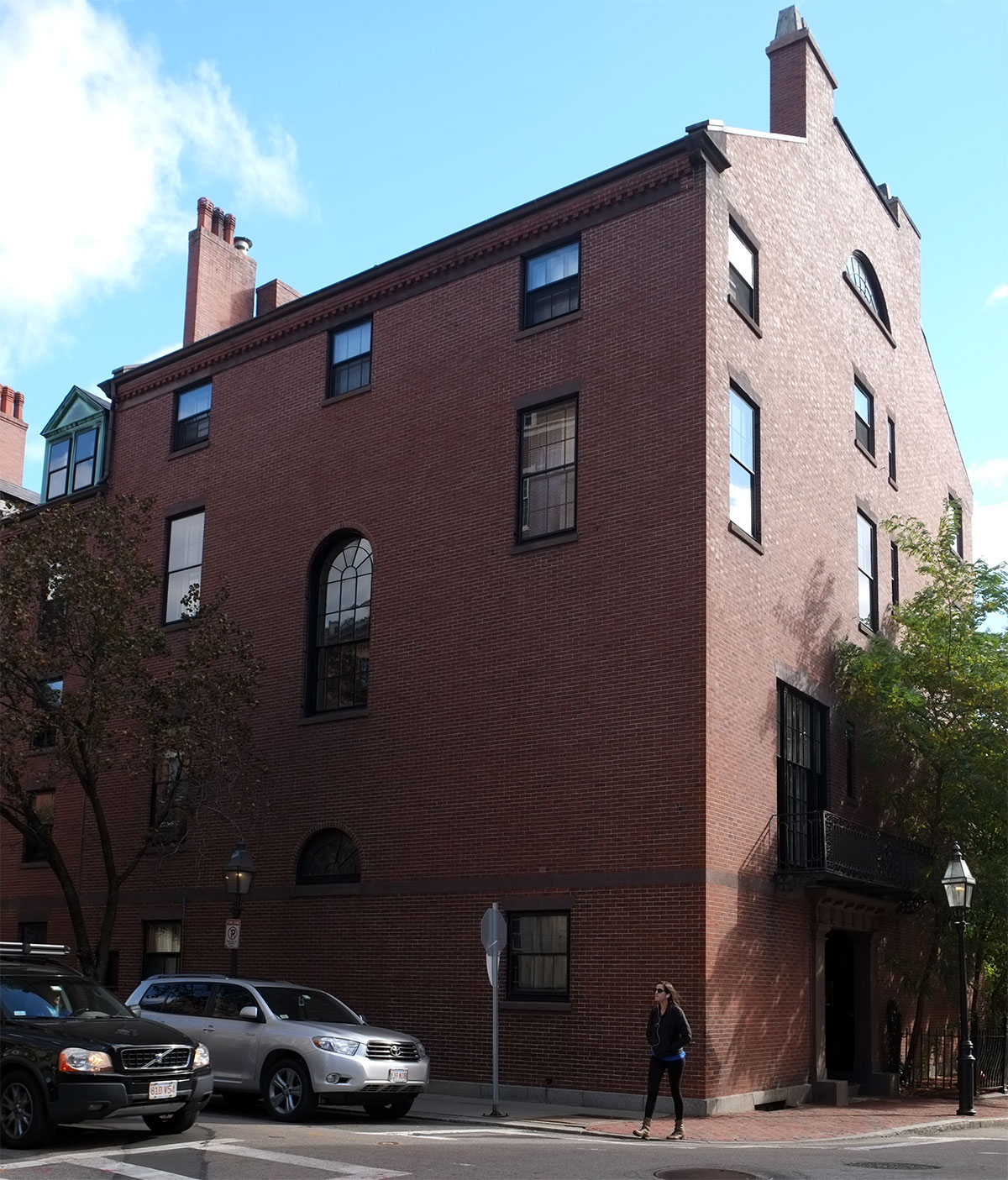
one of my favorite houses, at the corner of Mt. Vernon and Joy Streets

one of my favorite houses, at the corner of Mt. Vernon and Joy Streets

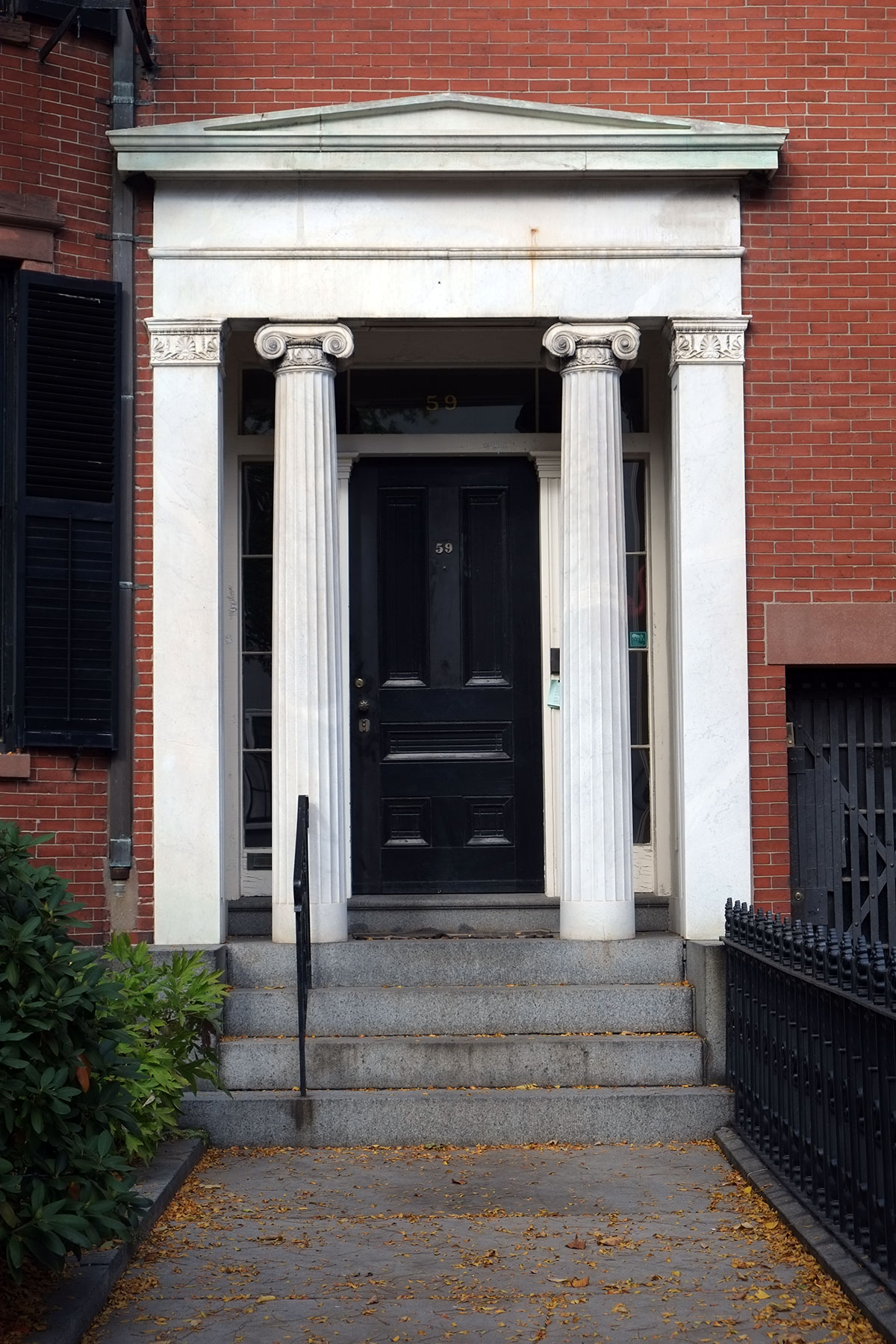
the third Harrison Gray Otis house, on Cambridge St.

the first Harrison Gray Otis house, on Cambridge St.

The newer houses on Pinckney looked very good – as the rules were relaxed and architects had some fun.

Pinckney St.

Pinckney St.

Pinckney St.

Pinckney St.

Greta has remarkably little interest in conventional history, and we intersected with the Freedom Trail once in a while rather than following it.

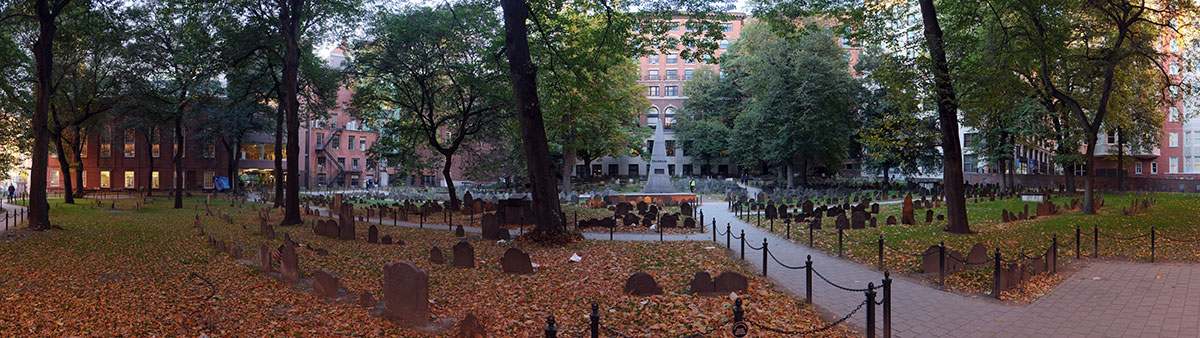
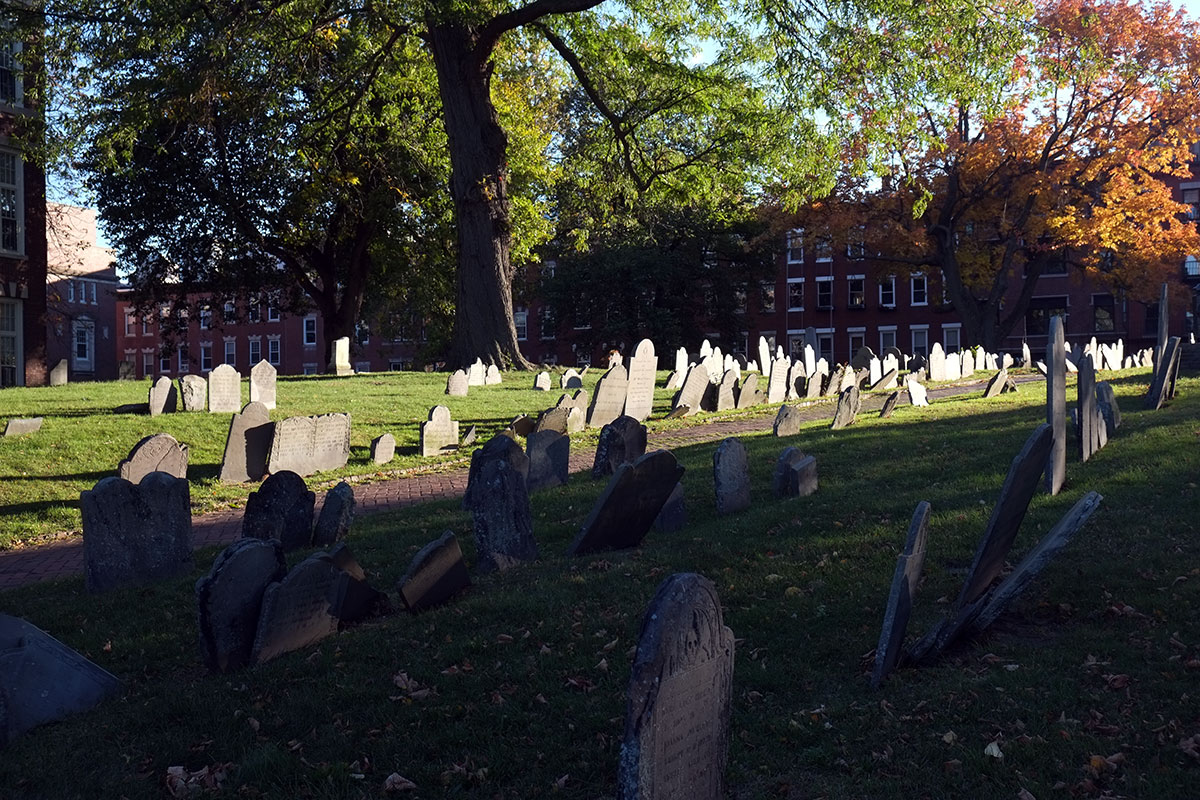
the Granary Burying Ground, on Tremont

the Granary Burying Ground, on Tremont

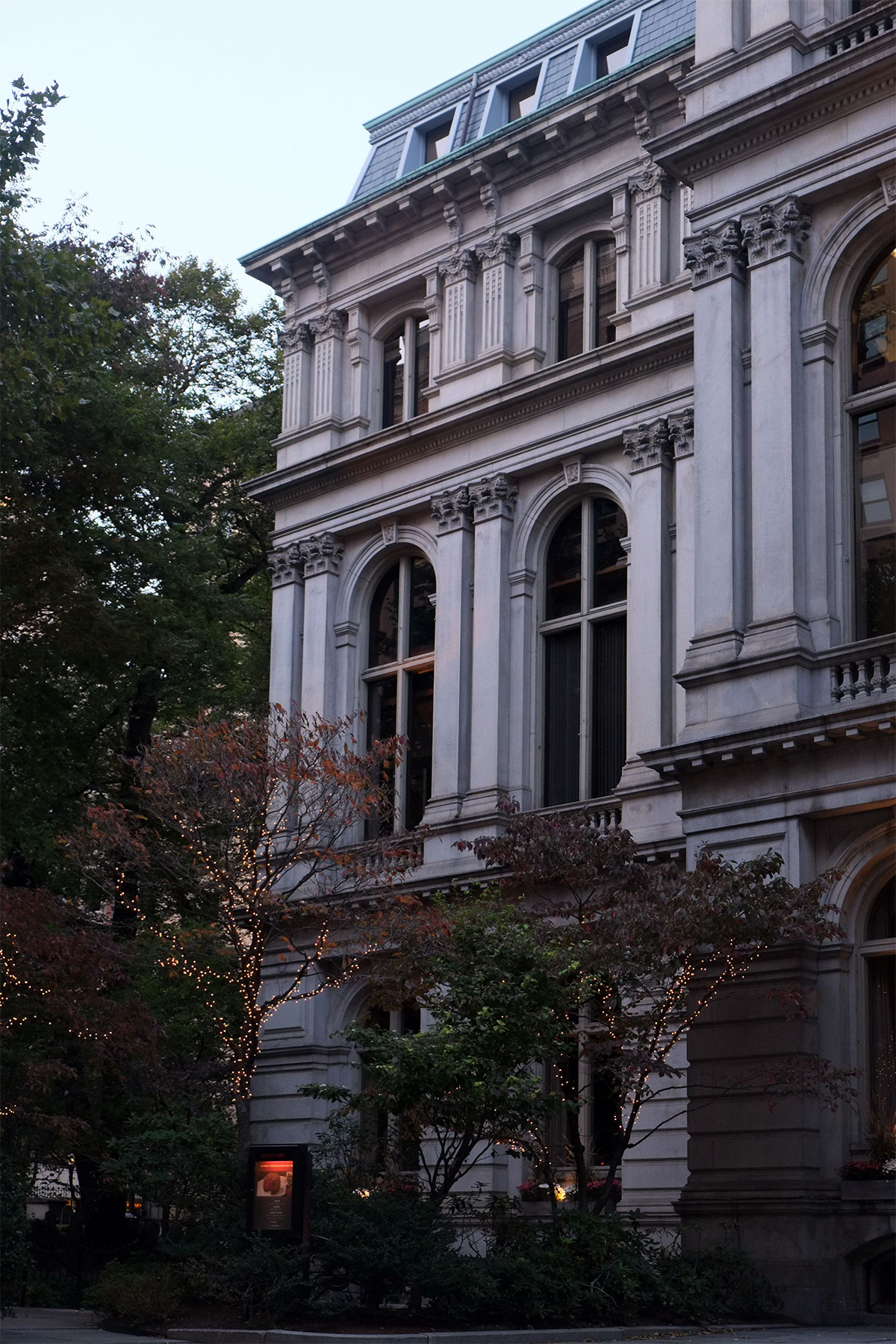
the Old City hall

the Old City hall

DSCF2919

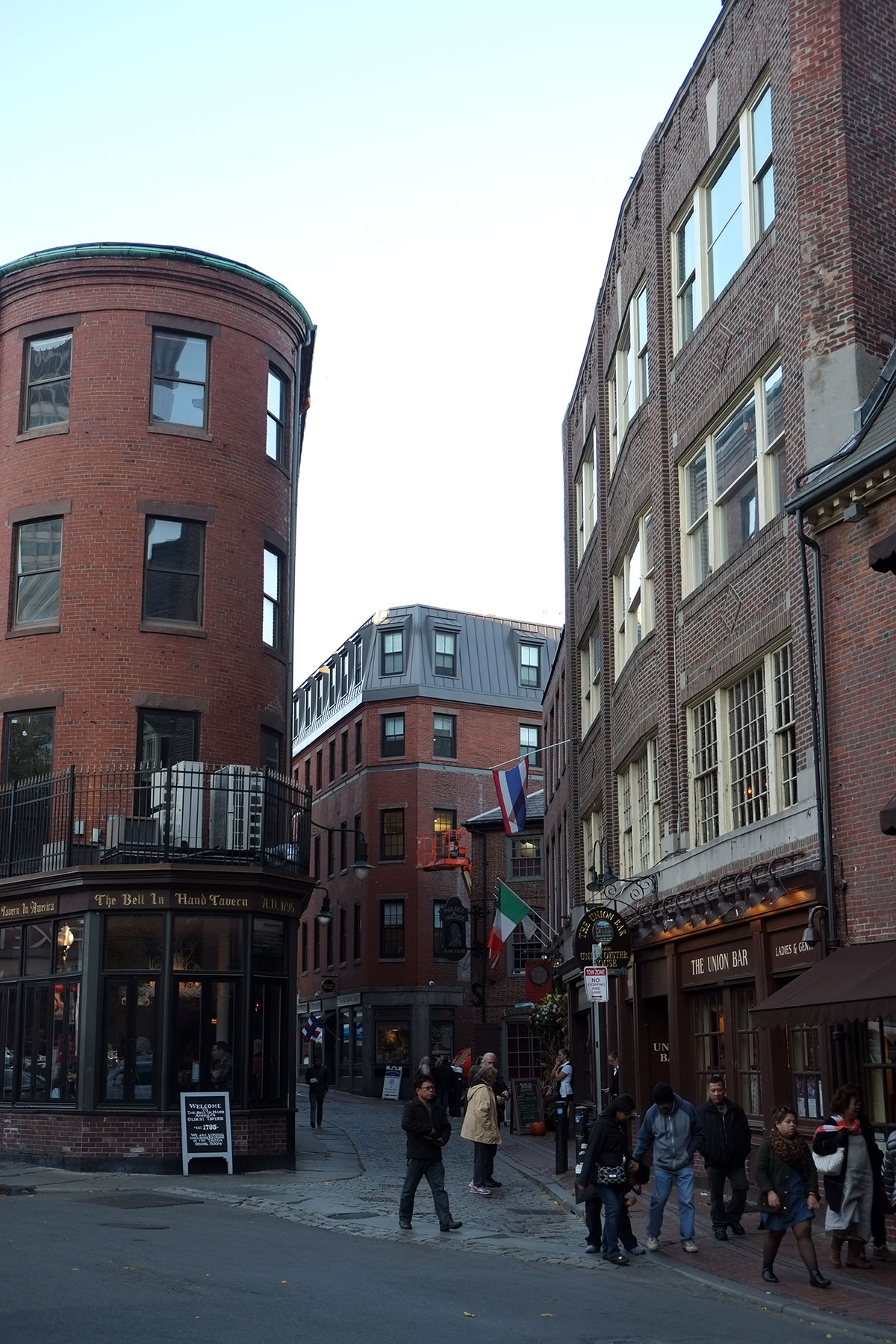
Marshall St., one of the few near Dock Square left unscathed by the Central Artery and Government Center

Marshall St., one of the few near Dock Square left unscathed by the Central Artery and Government Center

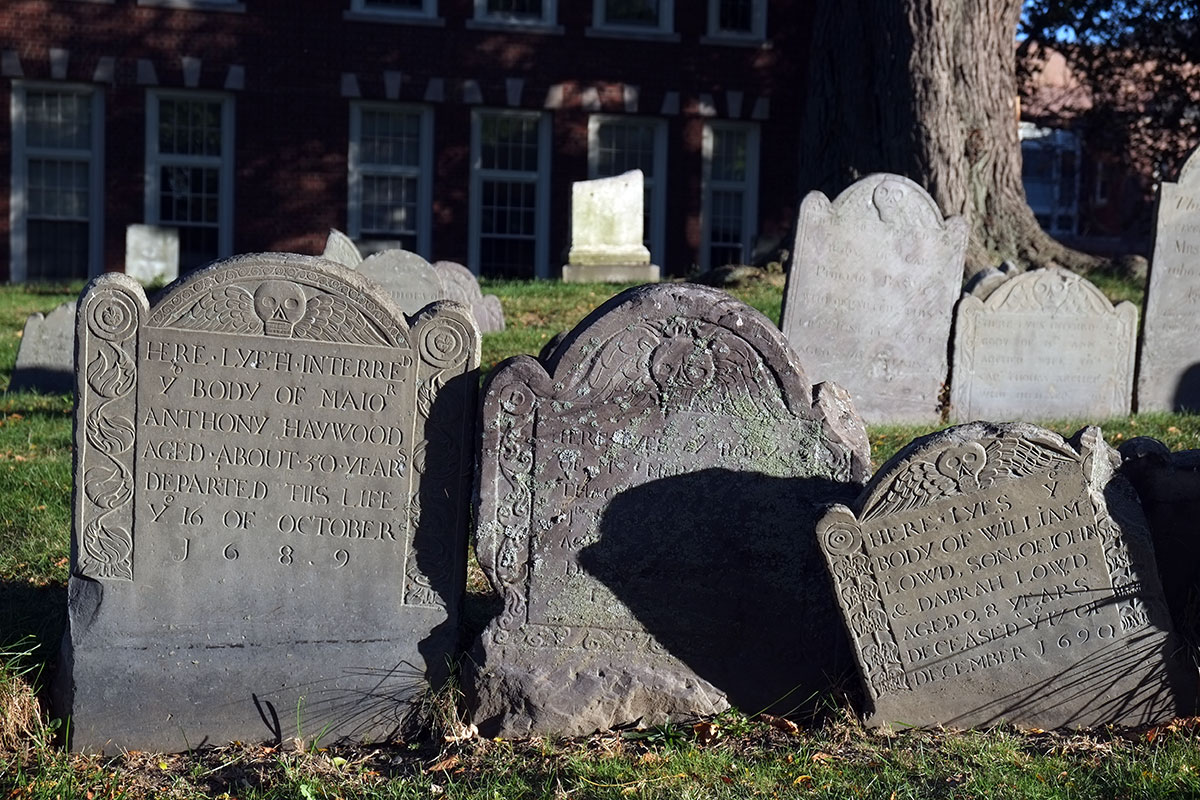
Copping Hill burial ground

Copping Hill burial ground

DSCF2890

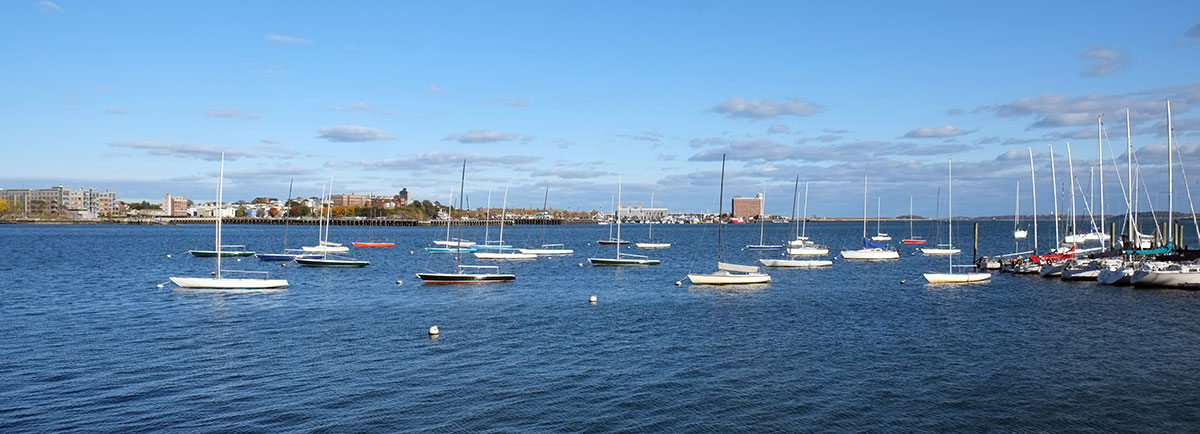
Boston's unwillingness to discard the old was very evident at the Boston Sailing Center. Even though they had added some new boats, it appears that all the Solings I sailed when I belonged in 1979 are still there

Boston’s unwillingness to discard the old was very evident at the Boston Sailing Center. Even though they had added some new boats, it appears that all the Solings I sailed when I belonged in 1979 are still there

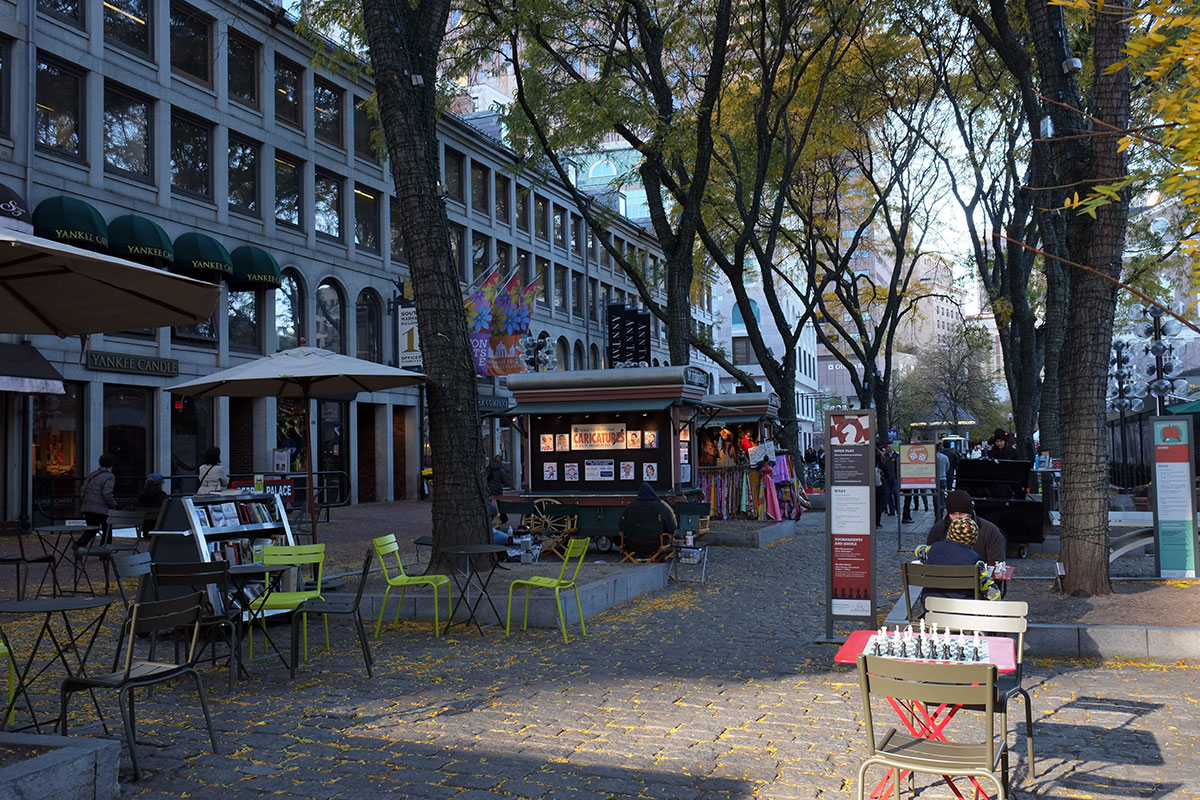
Quincy Market, with the same bunch of tourists

Quincy Market, with the same bunch of tourists

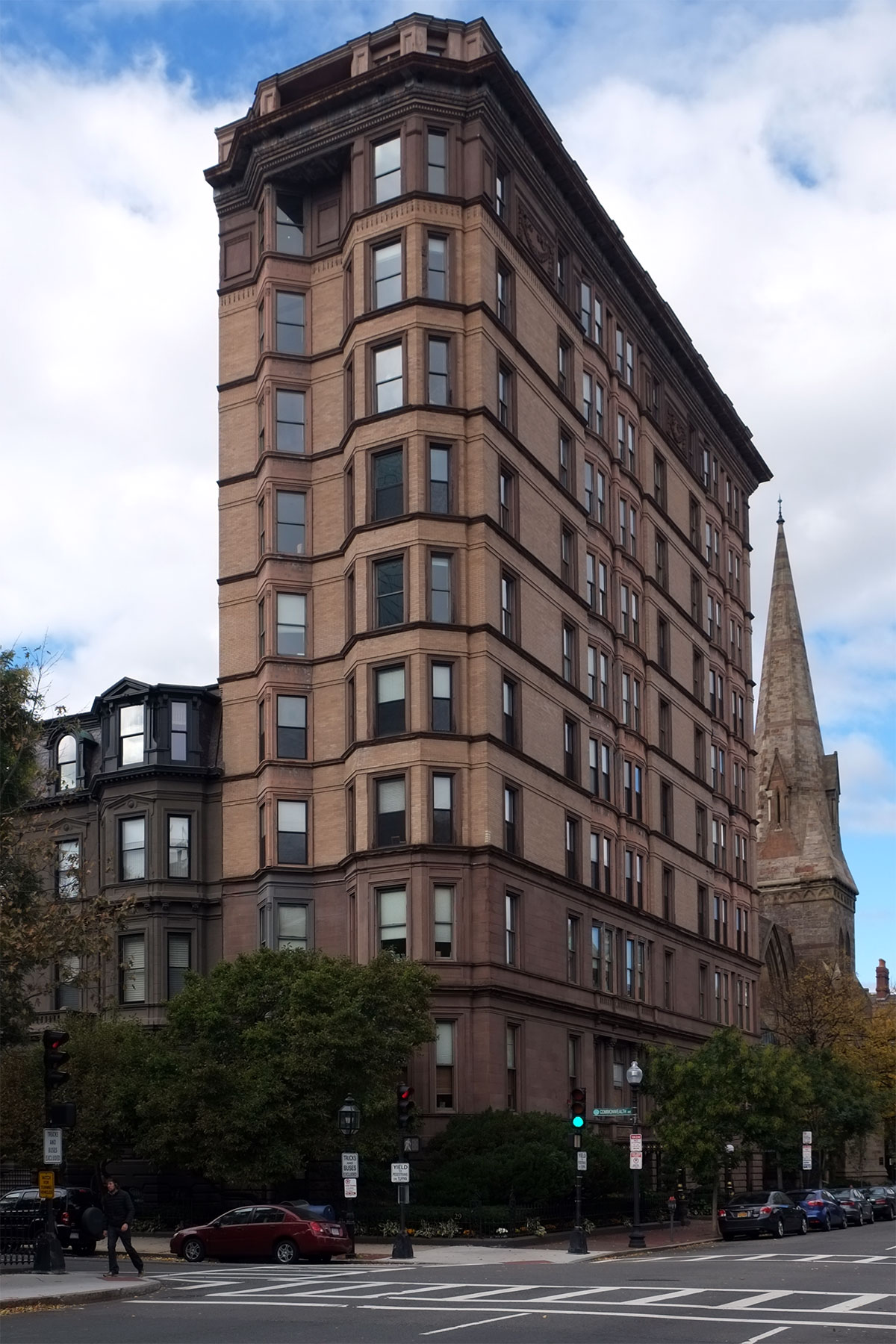
on Comm Ave

on Comm Ave

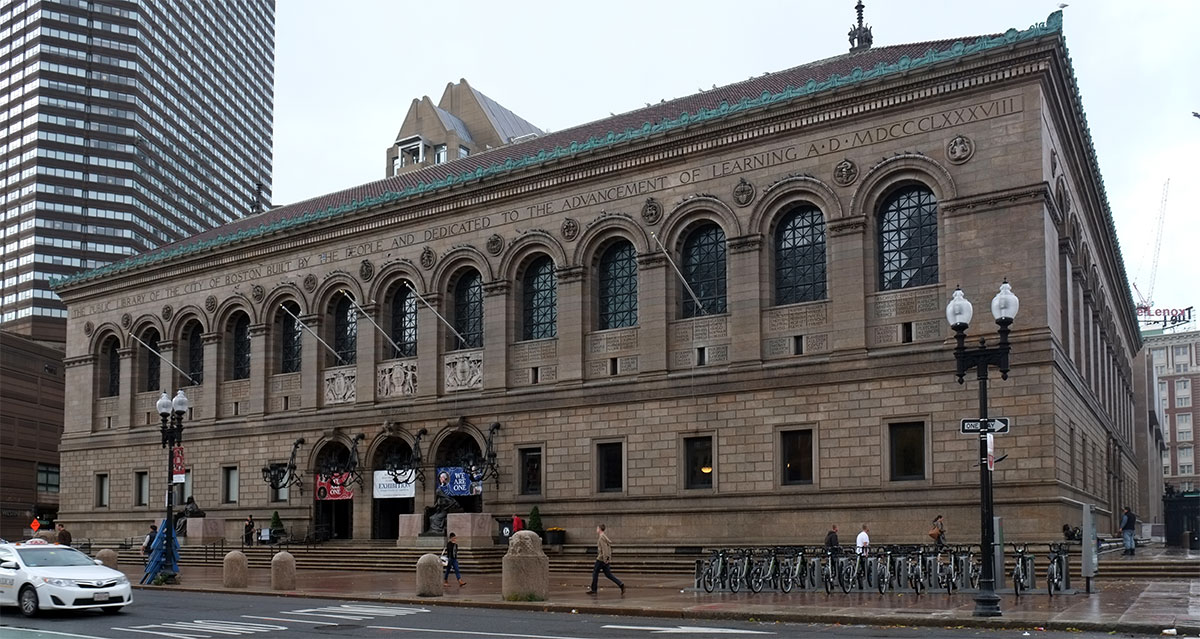
the Boston Public Library, McKim Mead and White

the Boston Public Library, McKim Mead and White, one of the greatest public buildings in the country

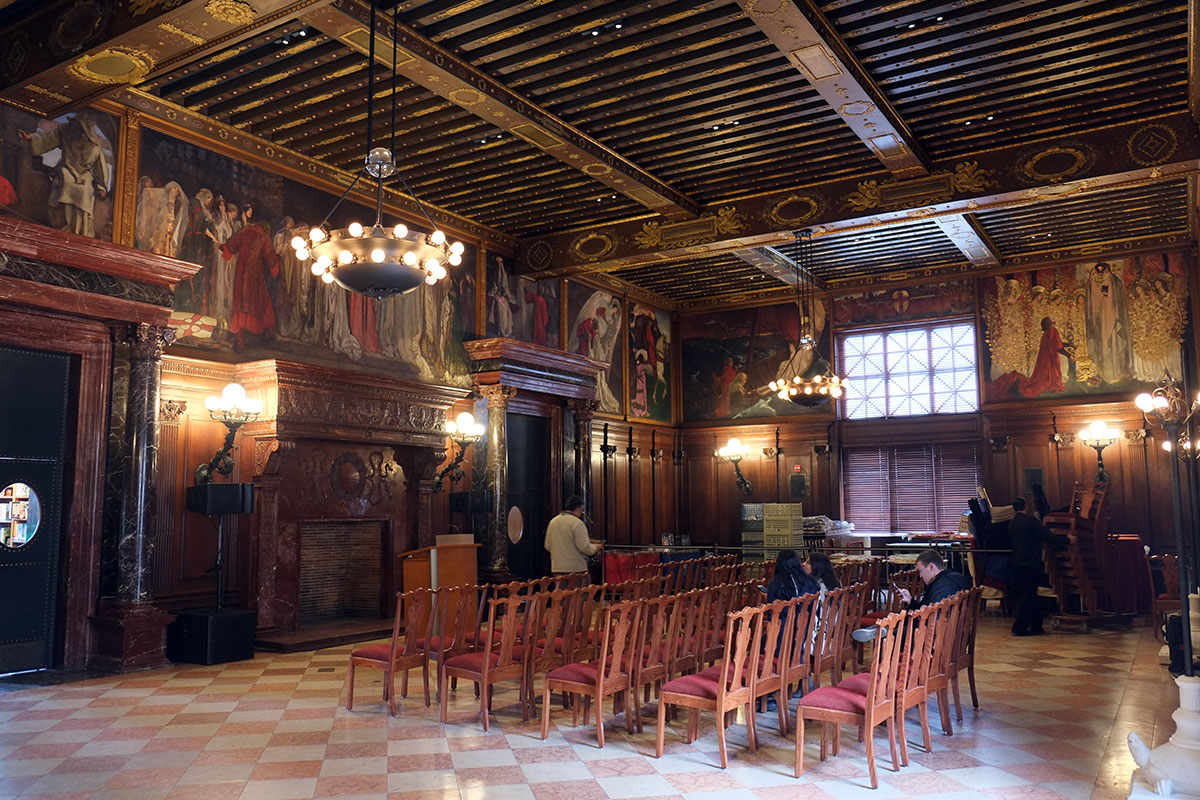
the Abbey mural room at the BPL

the Abbey mural room at the BPL

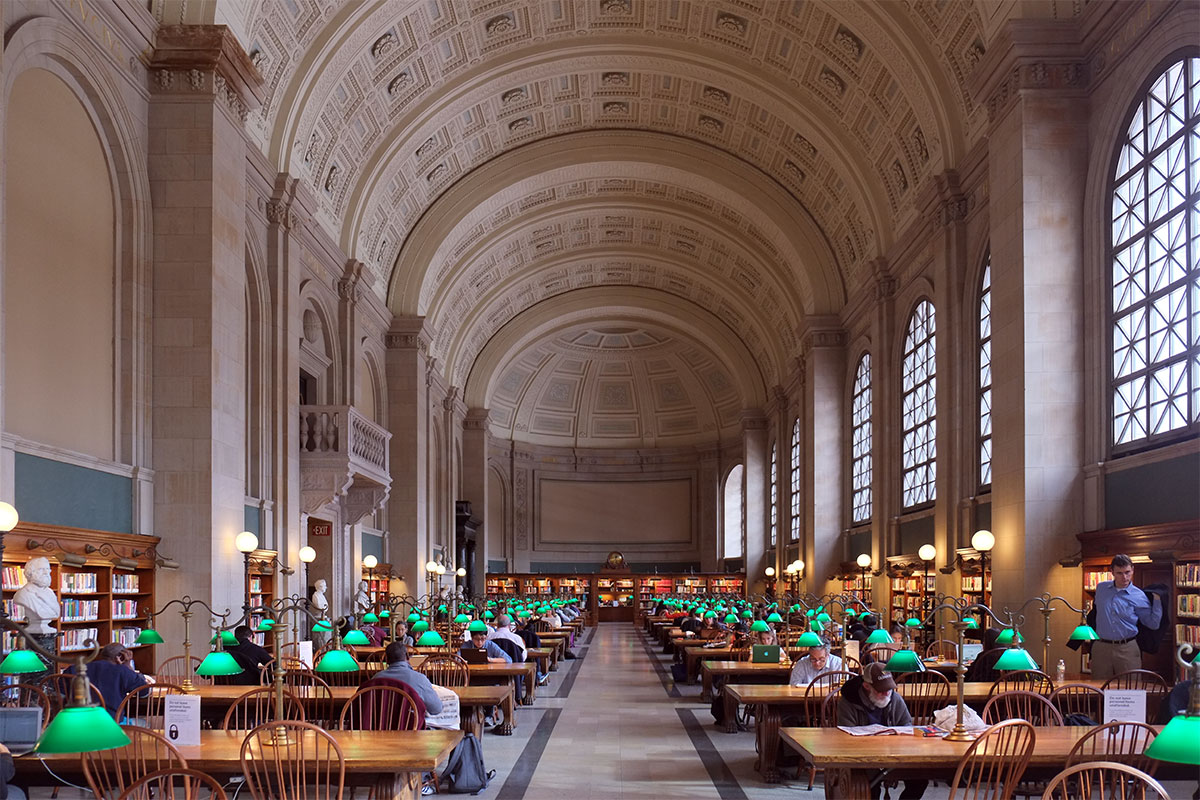
the BPL reading room

the BPL reading room

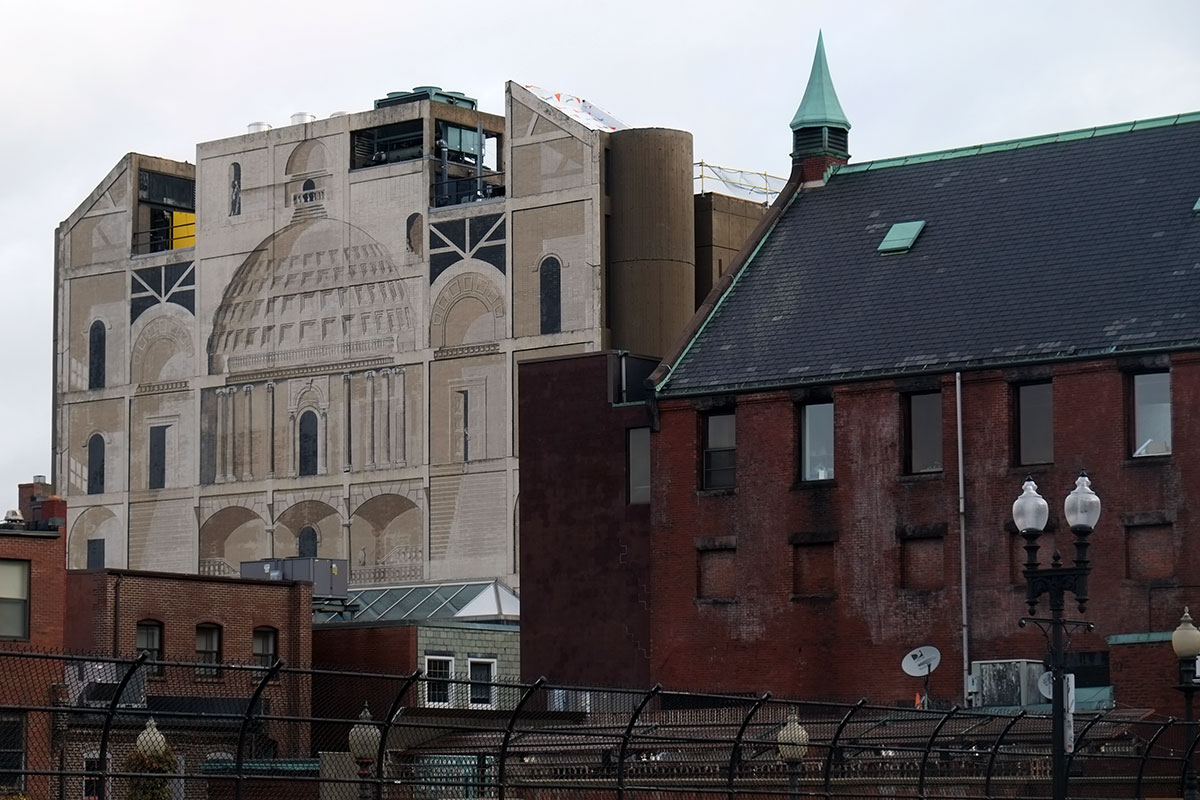
And then there are many parts of the city which are not really that old, but they were there when you were, so they too are bathed in the glow of memory.

the Richard Haas mural at the BAC

the Richard Haas mural at the BAC

Back in the day

Trigger warning:  I decided to separate the mostly personal from the mostly professional in my blogging about Cambridge.  The following post is about revisiting the places I lived while there, and may trigger recovered memories or waves of unanticipated nostalgia.

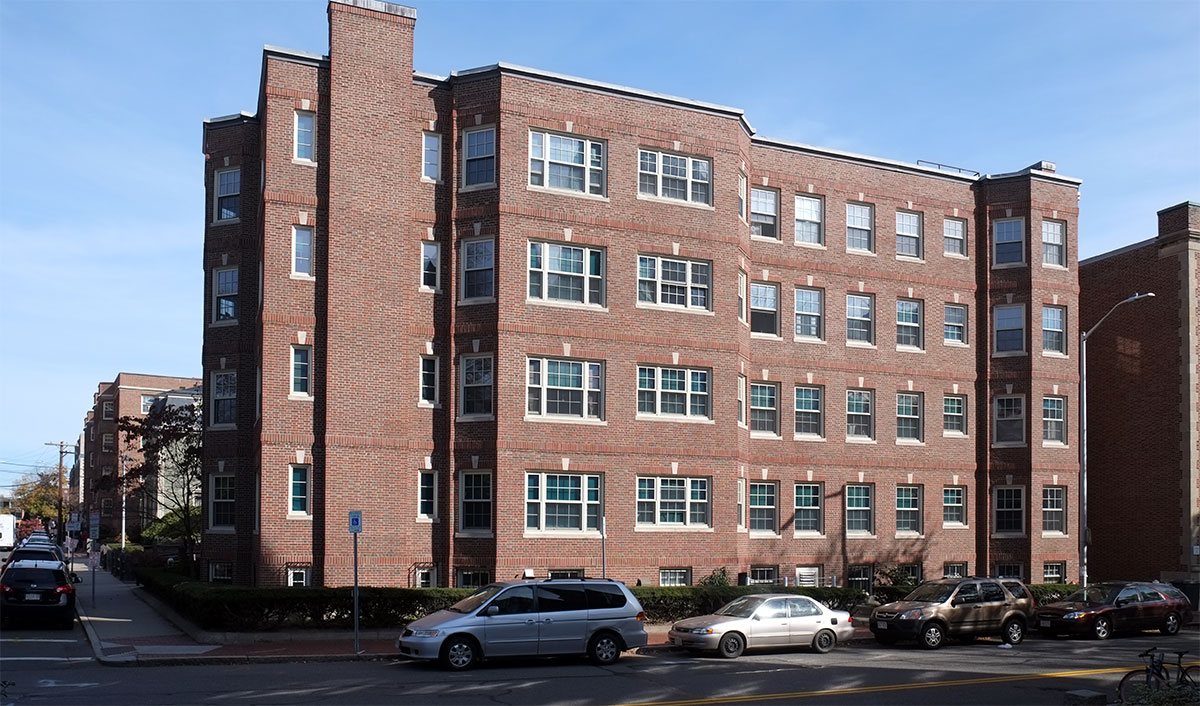
We started at the beginning:  Hurlbut Hall, my freshman dorm by the Union, which was full of misfits, eccentrics and savants.  It had a high percentage of single rooms, usually filled with those the authorities deemed too off-beat to share a suite in the Yard. DSCF3361I pointed out the various rooms where I and my friends and lived, and once again repeated my warning that you have to be careful to whom you speak the first day at college, as you may be stuck with them for the rest of your life.

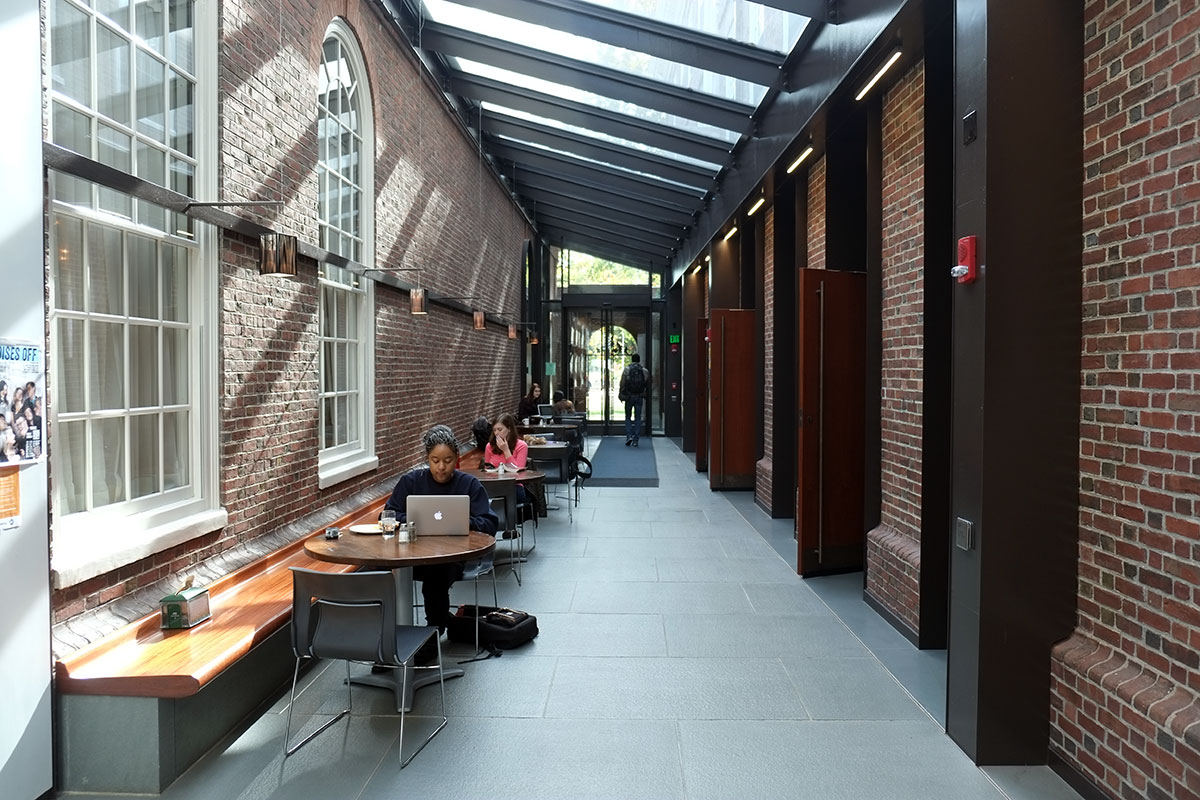
I then dragged Greta to see the residential colleges, especially Leverett House, where I lived for three years.  McKinlock Hall (the older part) had recently undergone a major remodel designed by Kieran Timberlake, which I wanted to see.  Paul Hegarty, the building manager, took the time to take us on complete tour, so we got to see the excellent conversion of a former dead-pigeon space between the dining hall and the residential wing into a new entry/commons/lobby for meeting rooms,DSCF3462

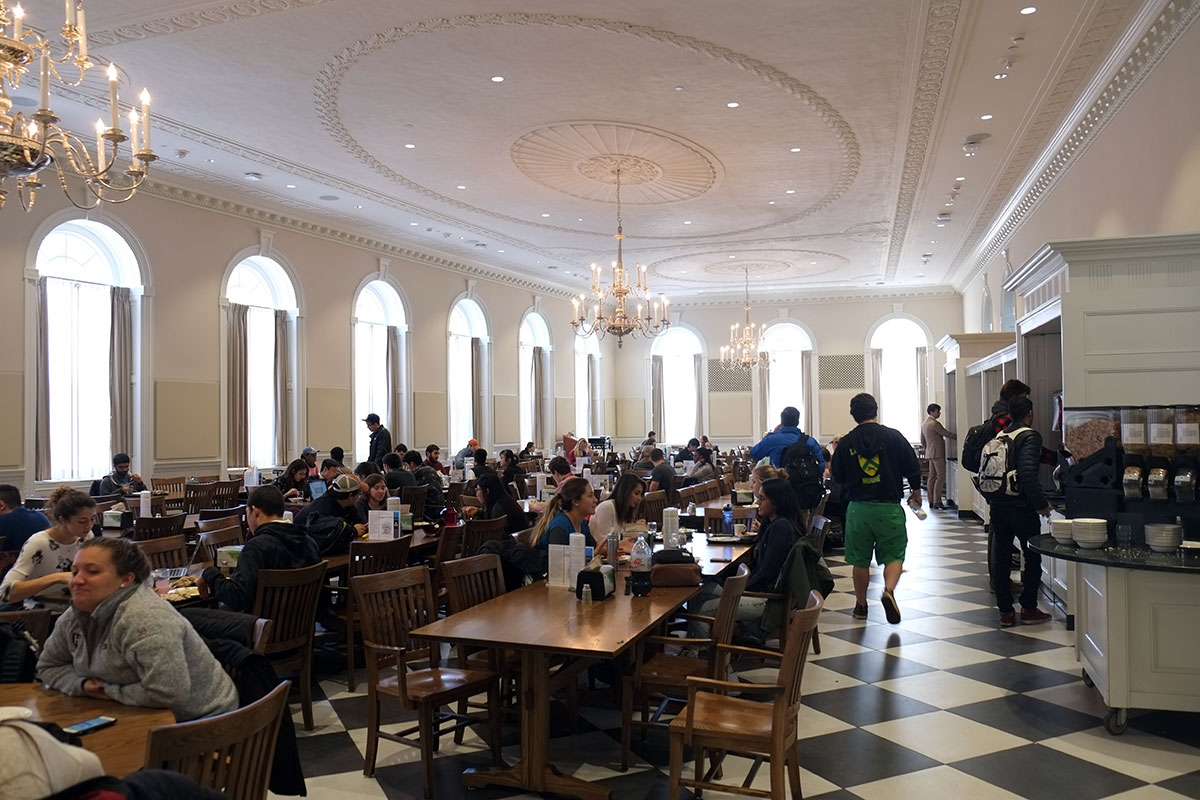
the stately dining room, which was largely the same,DSCF3457

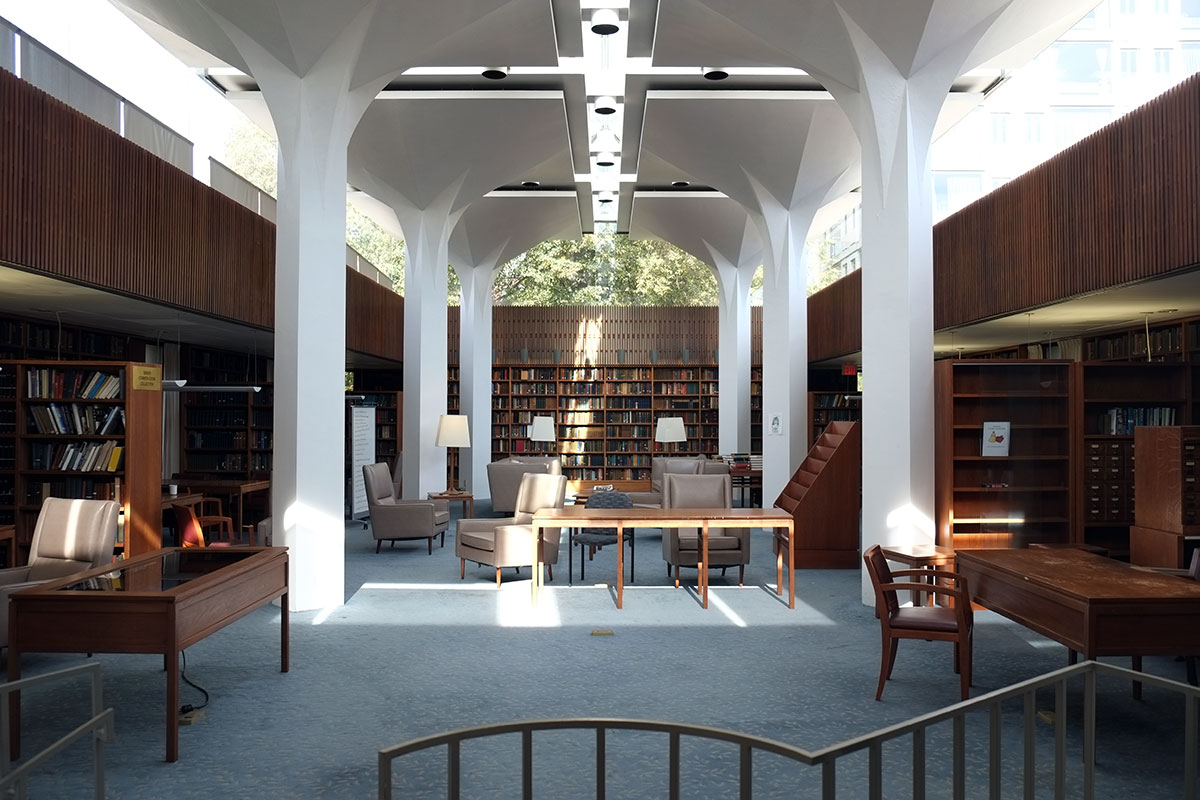
and the library in the new (1960) section, a serene space by Shepley Bullfinch, whose quality I had forgotten.  Greta got a gold star for spontaneously stating that the structure reminded her of the Johnson Wax headquarters.DSCF3443

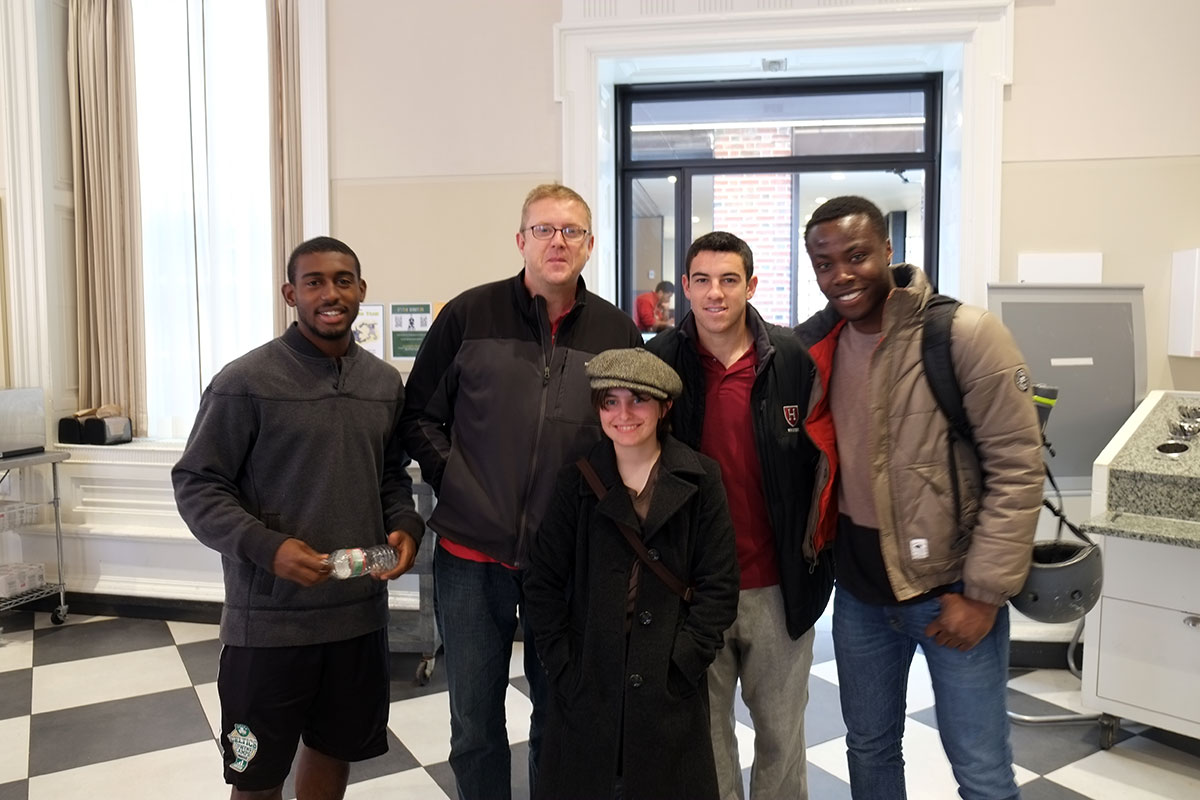
Paul also introduced us to a lot of undergrads, and it was a pleasure to find that they were largely as I remembered from my day – funny and smart, and not all on the fast track to Wall St., as had been rumored.DSCF3461

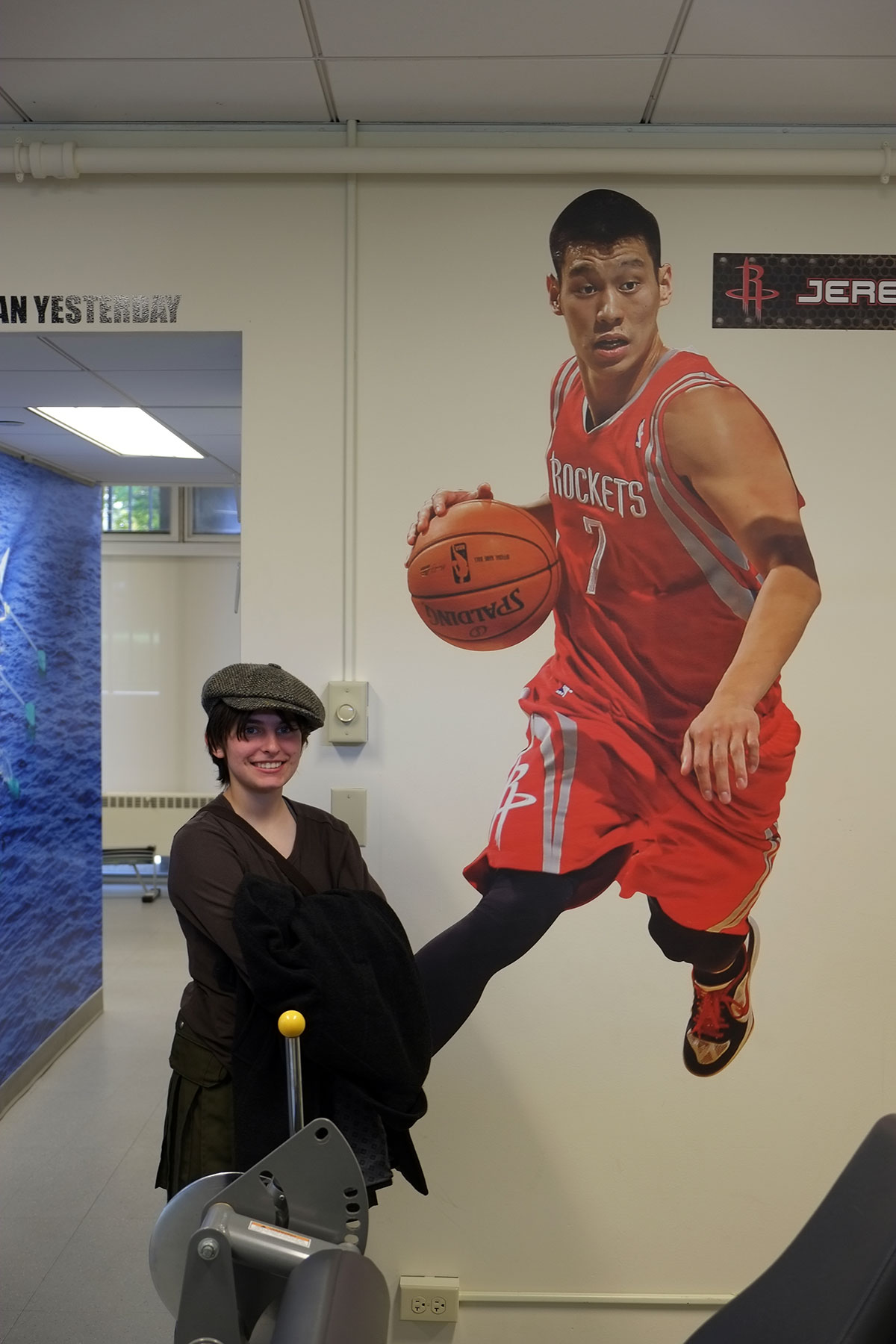
Greta was especially pleased to meet a pre-med varsity football player, who averred that he didn’t know much about UO football, as he just wasn’t that into collegiate sports. On the other hand, I was pleased to see that Jeremy Lin was a Leverett alumnus.  DSCF3451

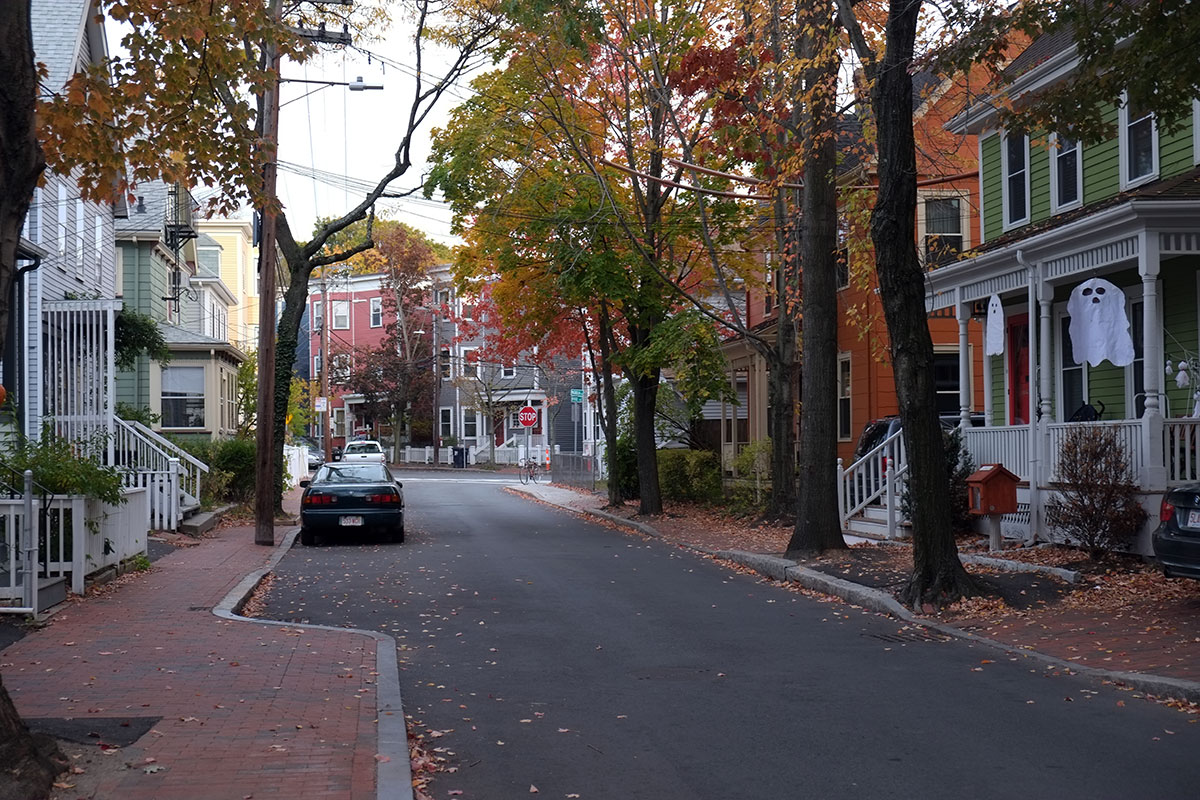
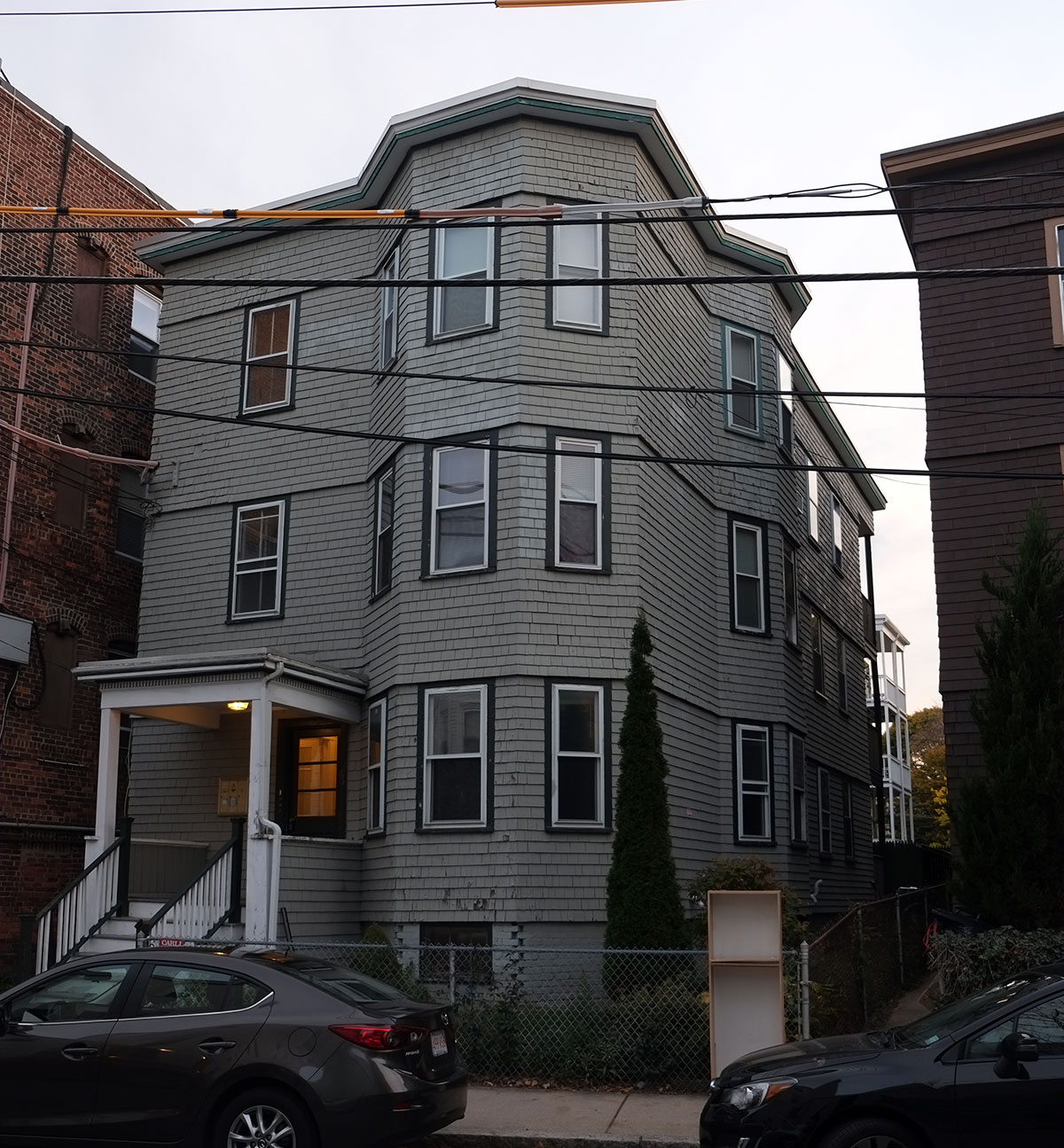
Then we moved on to Somerville, where I lived for two years after college.  The area in Cambridge near the Somerville line (Myrtle and Line Streets) was actually nicer than I remembered – well-maintained triple-deckers and houses on quiet tree-lined streets.DSCF3616

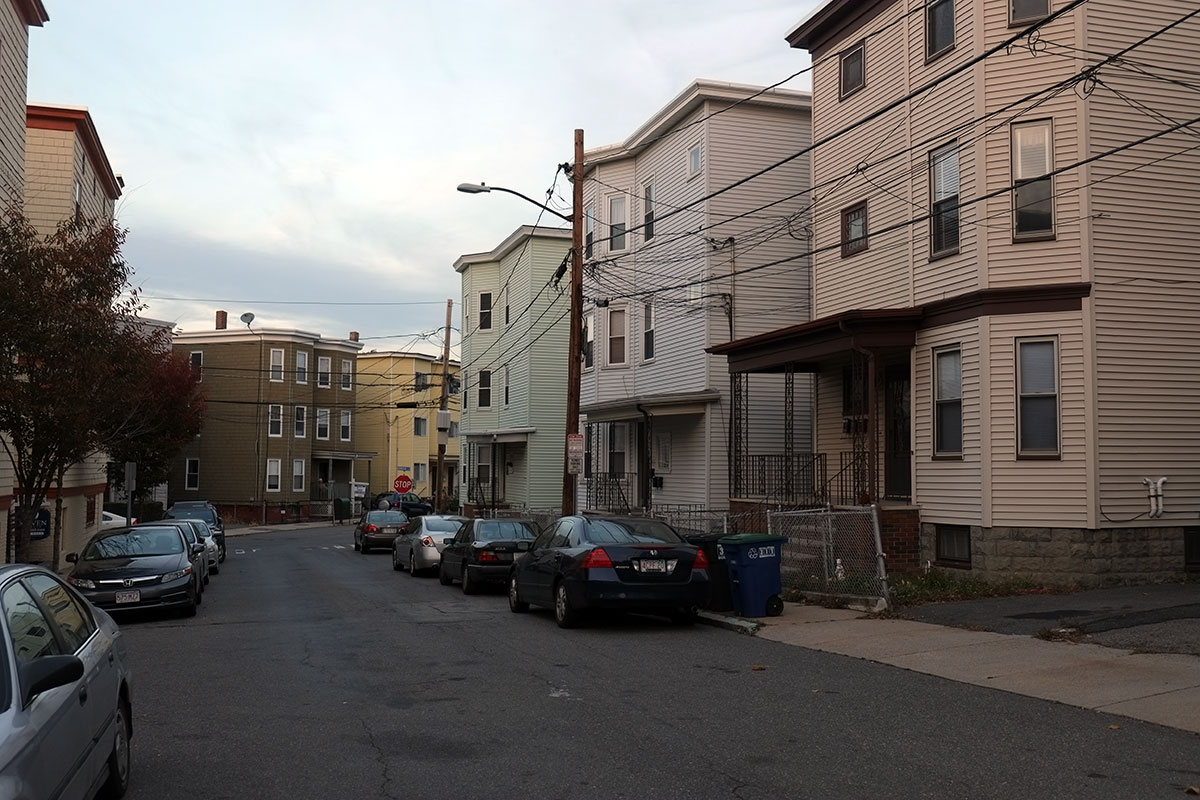
But then I crossed Beacon Street to Somerville.  I had heard that Somerville had gentrified;  perhaps the rents have risen (we paid $220 per month for a floor in a triple-decker), but the streetscape was as depressing as I remembered.  DSCF3634

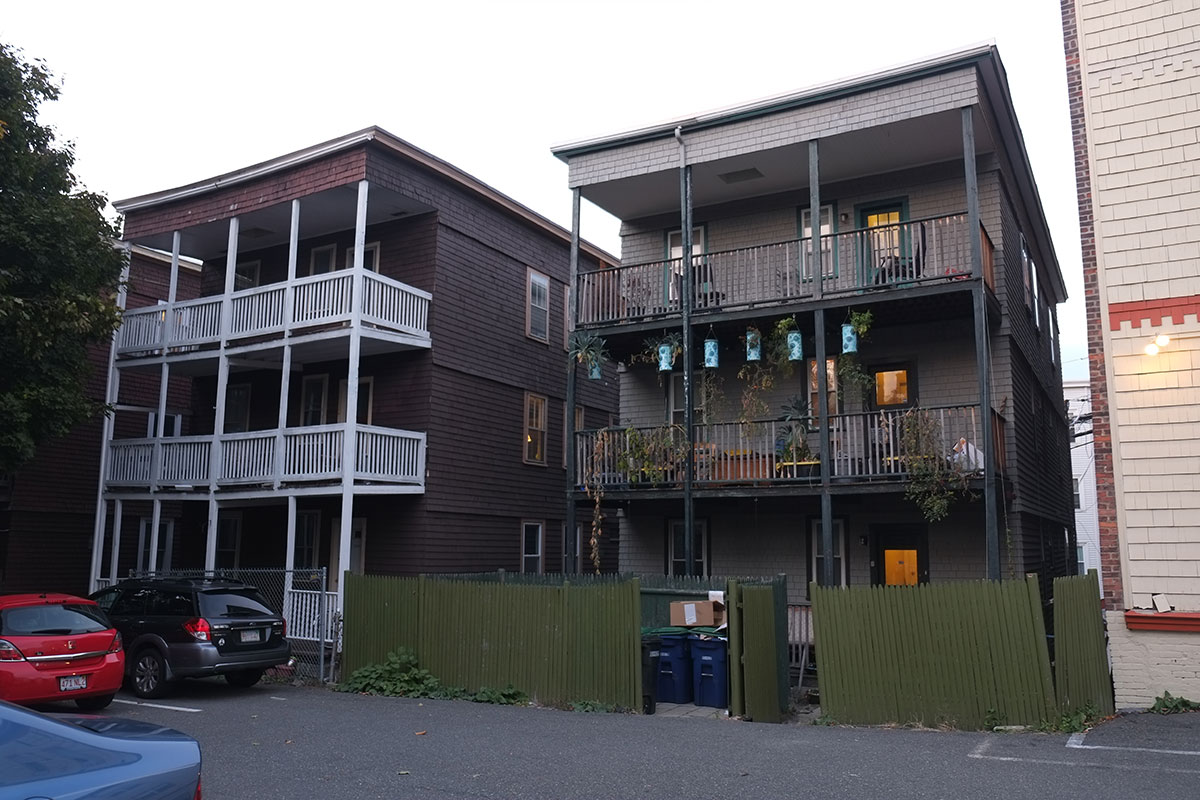
A few more trees would help.  And then on to 66 Dimick, home to generations of friends:DSCF3624

our back porch, second floor on the right, hung with many string hammocks in the 70s.

our back porch, second floor on the right, hung with many string hammocks in the 70s.

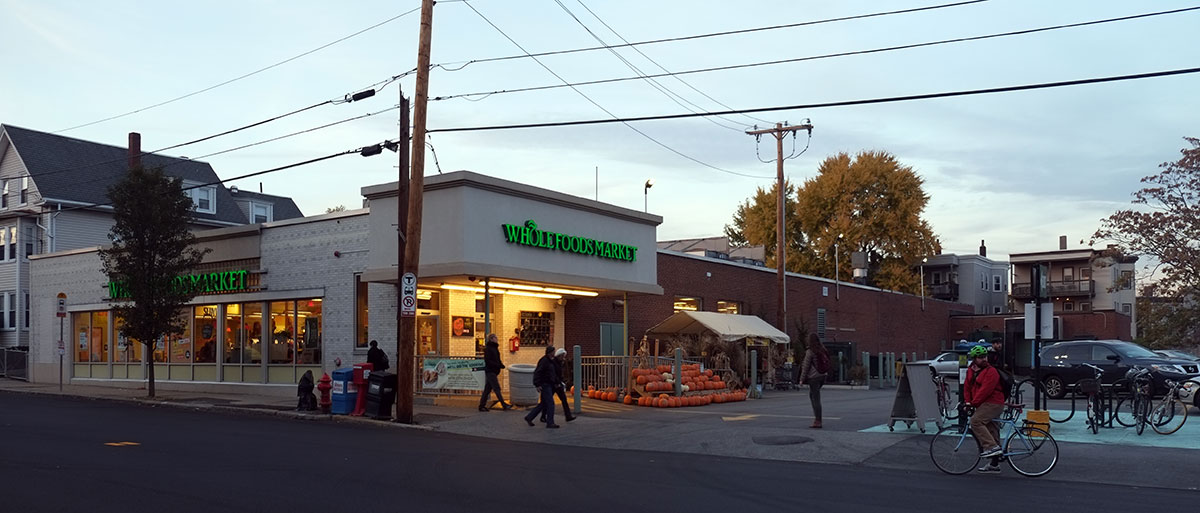
The neighborhood was still unattractive, still full of graduate students, but there was one major, emblematic change:DSCF3638Johnny’s Foodmaster, one of the worst supermarkets on the planet, had been transformed into a Whole Foods.  Goodbye Slummerville.

Cape Cod

While revisiting a city where you’ve lived as an adult may elicit mixed feelings of familiarity and strangeness, revisiting a place you knew well as small child feels like coming home, especially if that place has barely changed.  My grandparents vacationed in Chatham nearly every summer for most of their lives (but unfortunately always stayed in the same guest house, instead of buying a place when they could have).  So my family spent a few weeks there every summer since I can remember.  I loved it as a child – the cool nights, the old, small town so different from our New York suburb, the ritual of walking to the beach every day.  I think my interest in architecture and towns can be traced back to those early summers.  Once again I wanted to show Greta a place where I had grown up by the sea, so she could see how that related to our own house on an island.

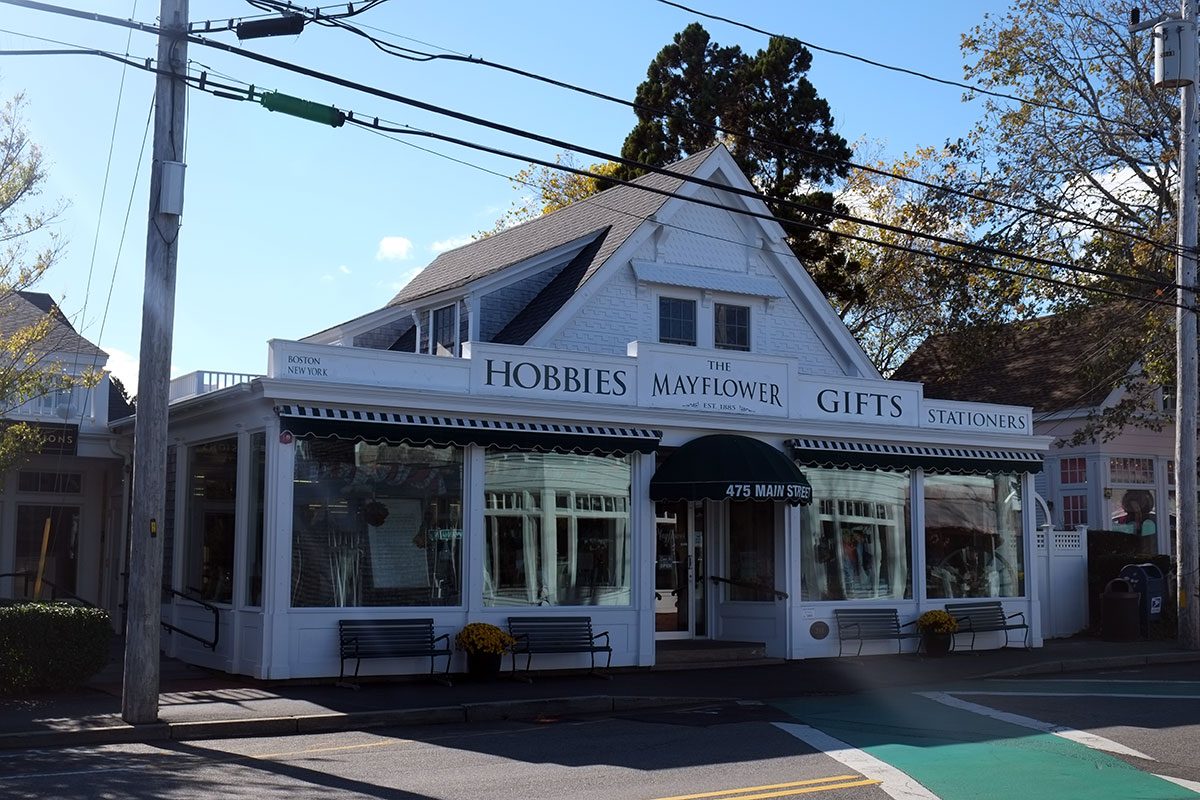
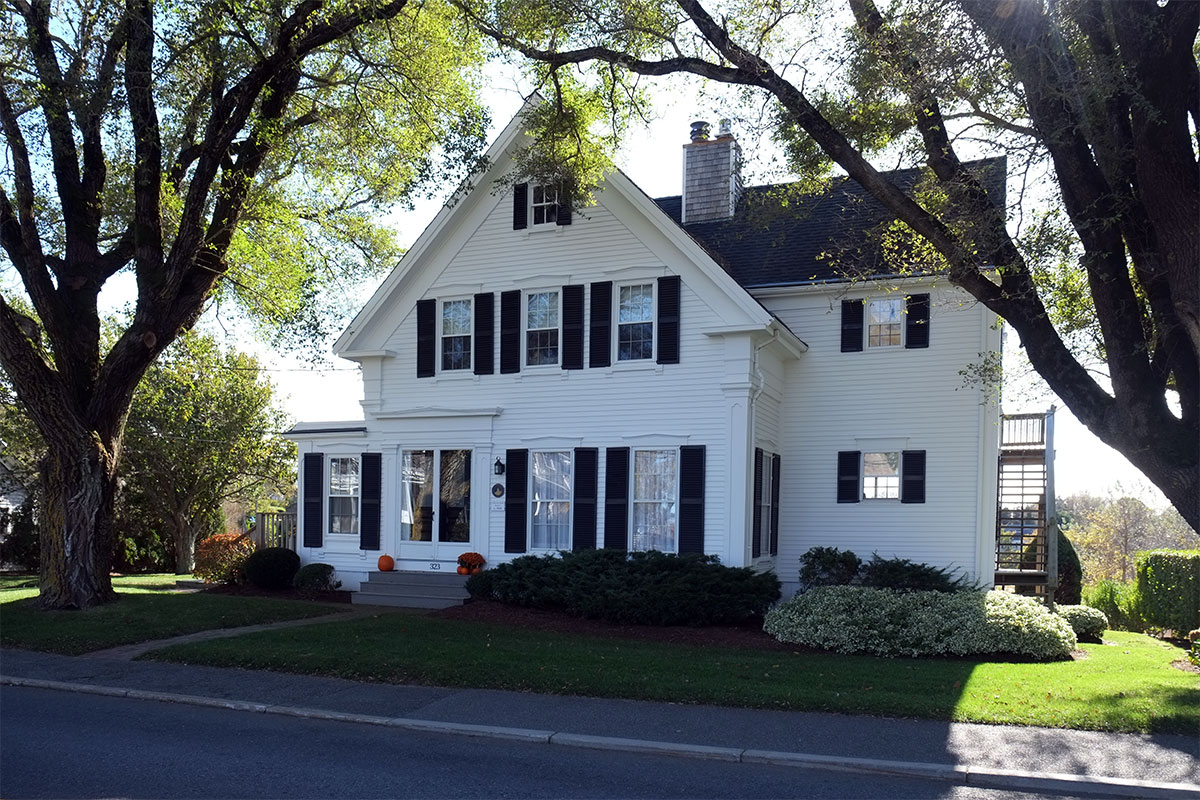
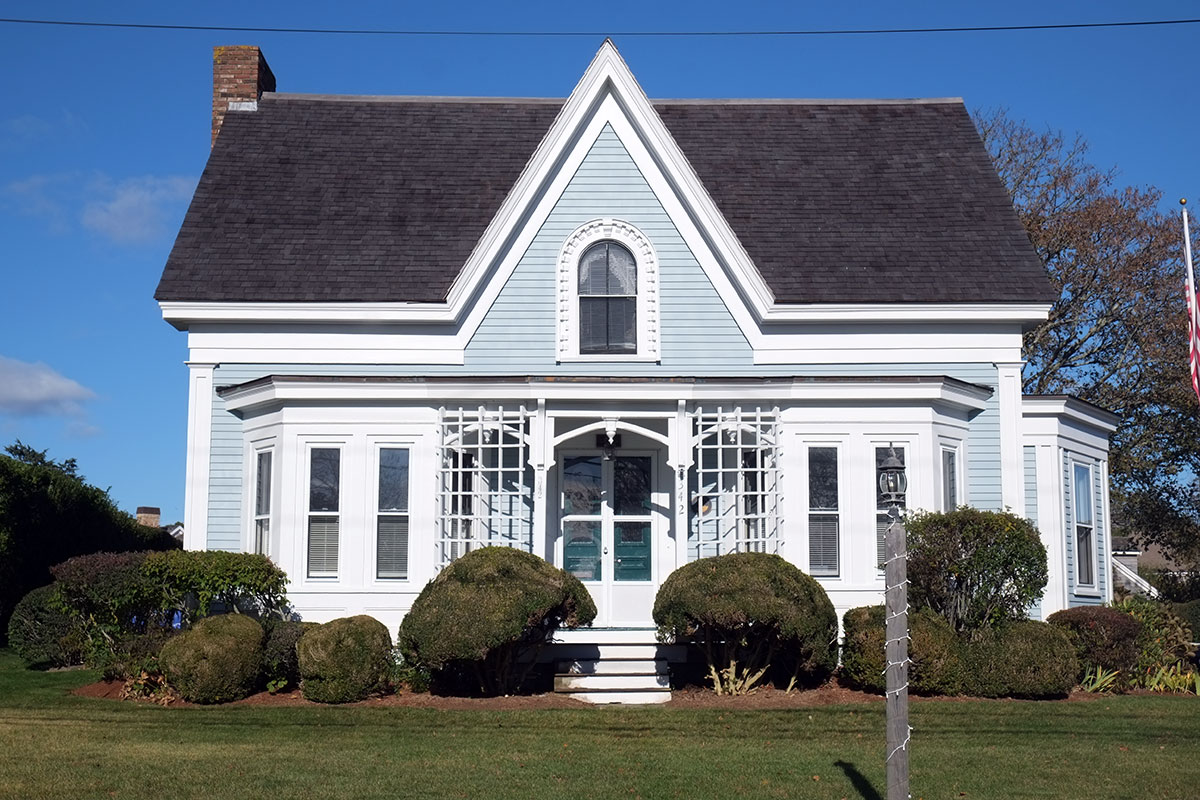
Chatham has changed so little that it was like being in a bad romantic movie where you step back into your earlier life.  Not only were the buildings unchanged, but many of the same businesses were there, such as the Mayflower, where one bought kites and beach toys and other critical things. DSCF3215

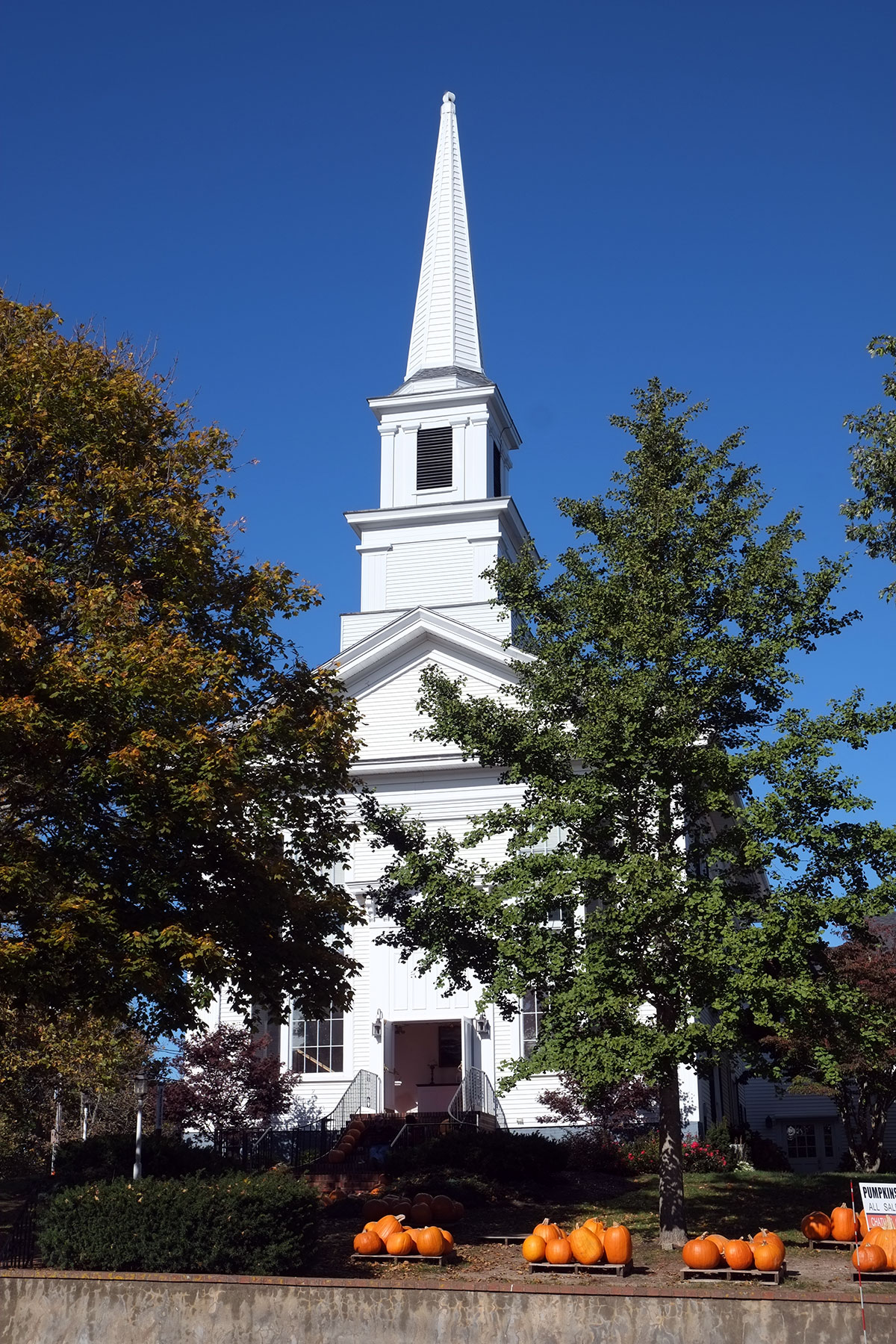
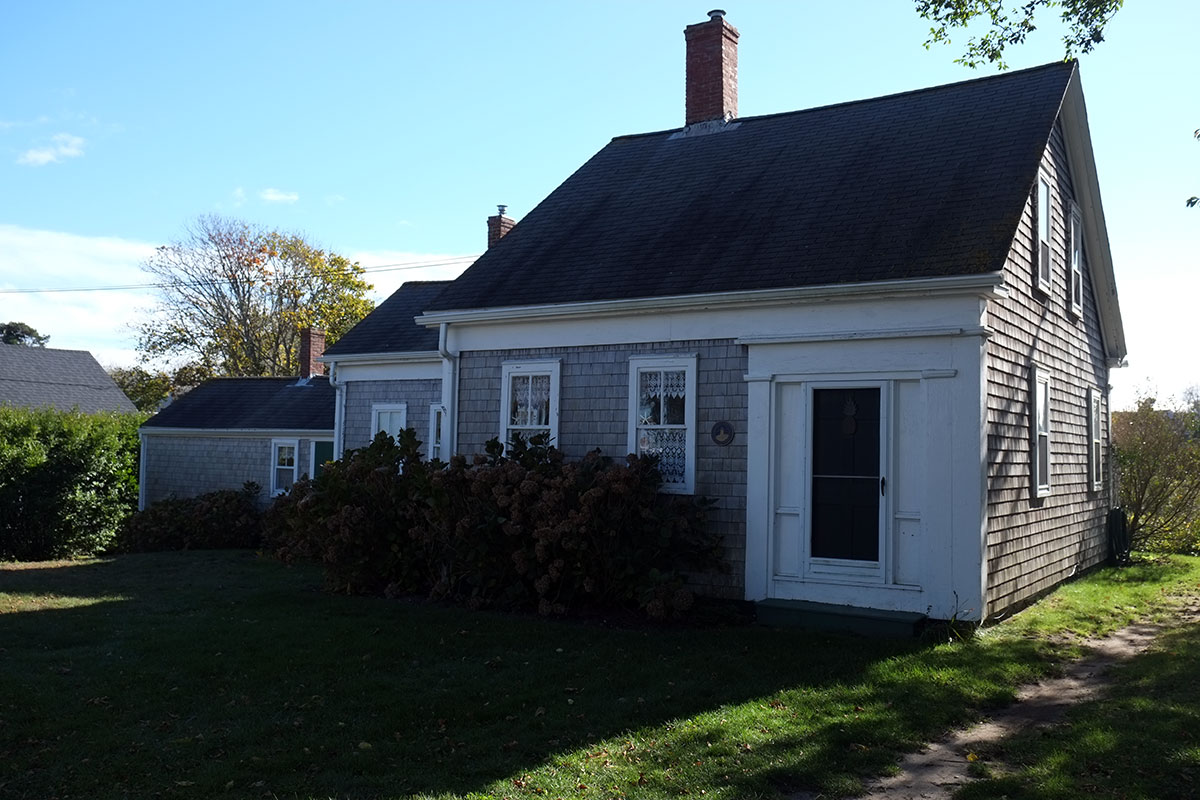
The cottages where we stayed were all gone, replaced by new McMansions, but the center of town has endured.DSCF3192DSCF3221DSCF3205

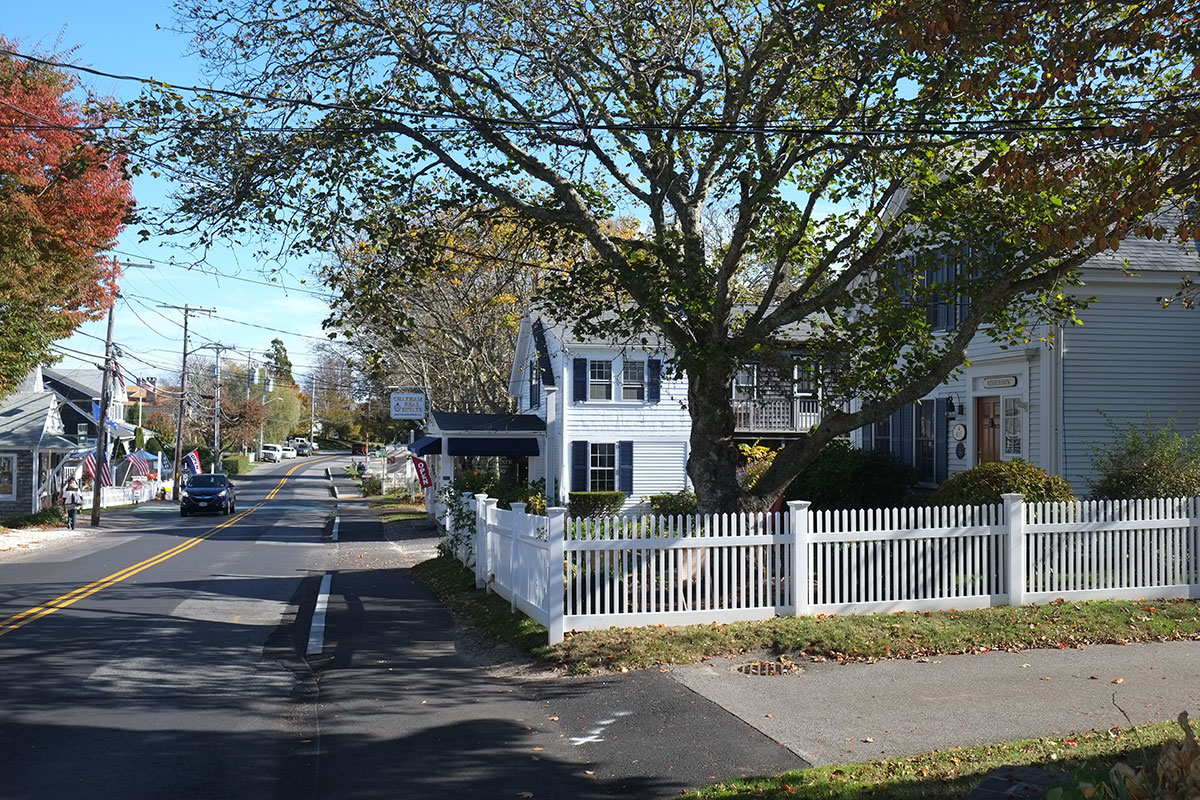
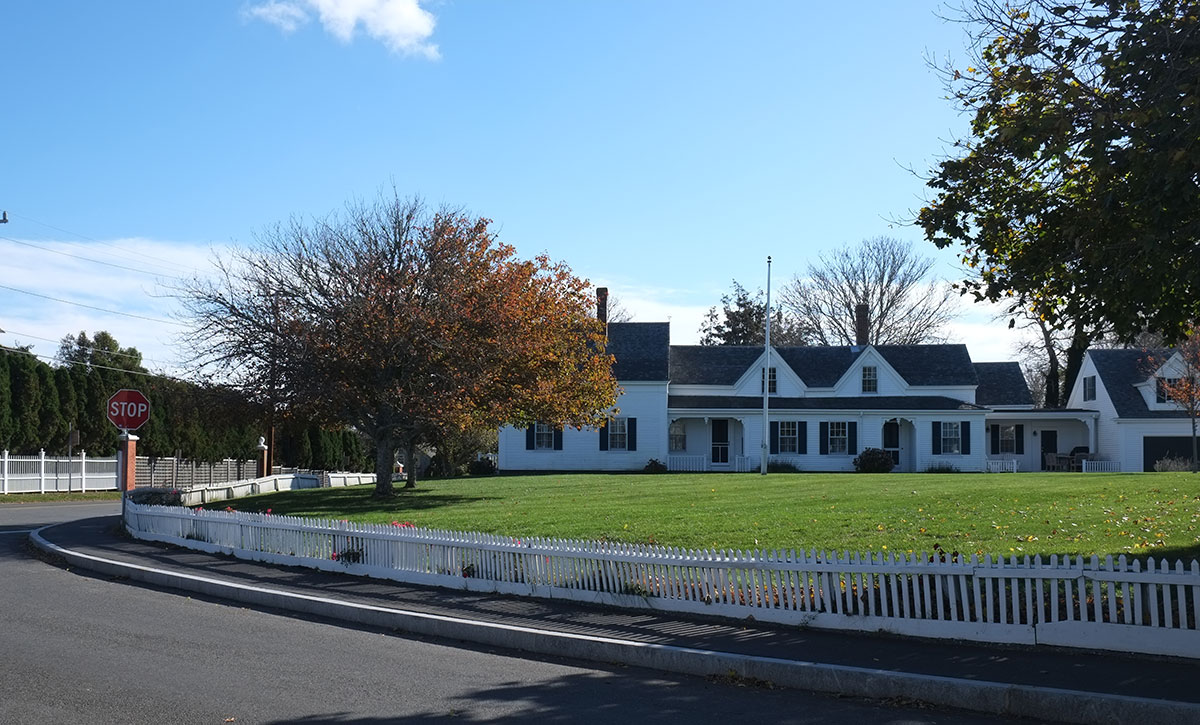
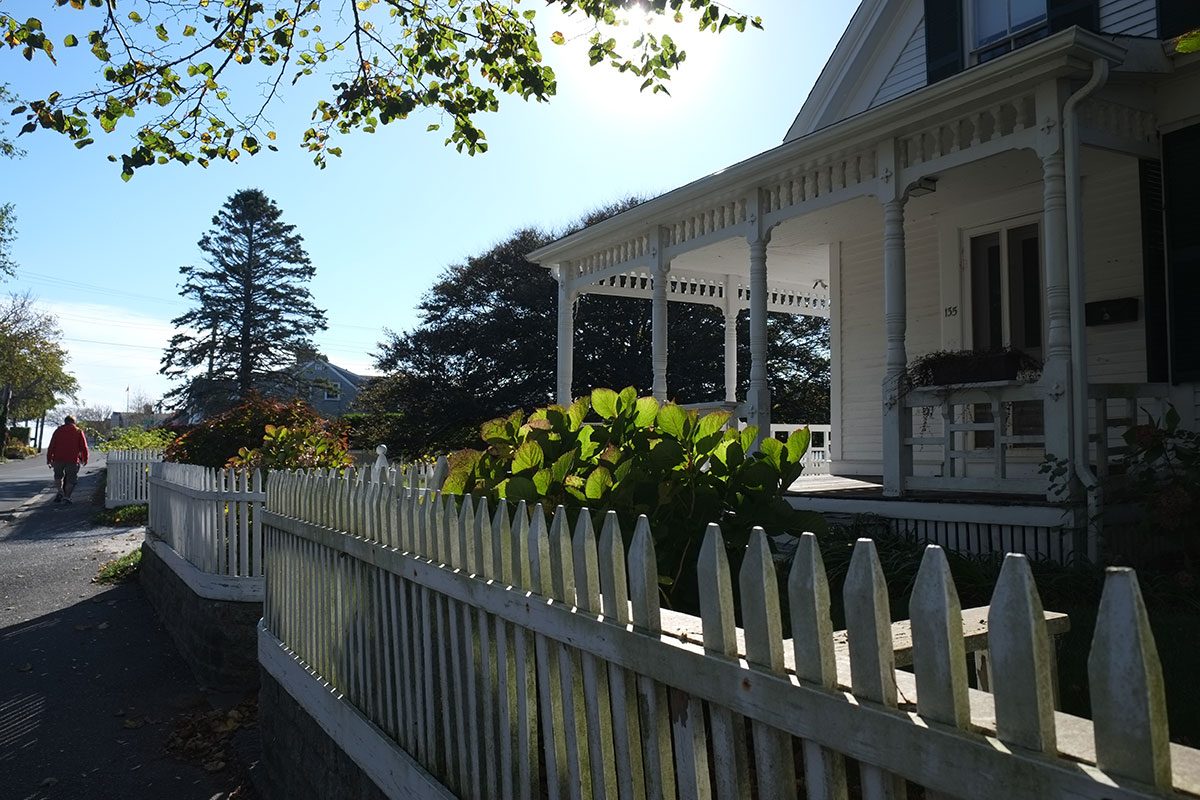
The most memorable part of the town is the walk along Main Street to the Lighthouse Beach.  The buildings are superb, but even more important, the open spaces of streetscape, yards, and drives have a wonderful scale that makes the walk a pleasure, no matter how often it is repeated.  DSCF3235 DSCF3239 DSCF3238

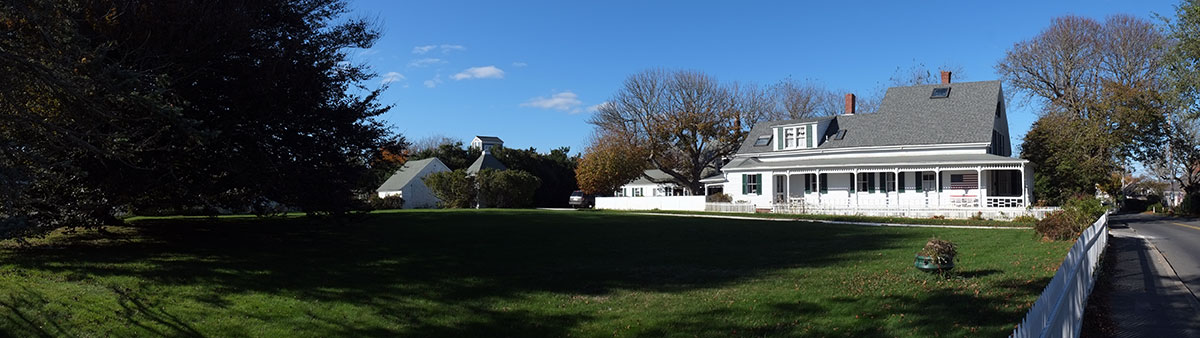
As it nears Pleasant Bay, Main Street makes a turn, and that corner is occupied by a beautiful open yard, a  gift to all the passers-by.DSCF3251

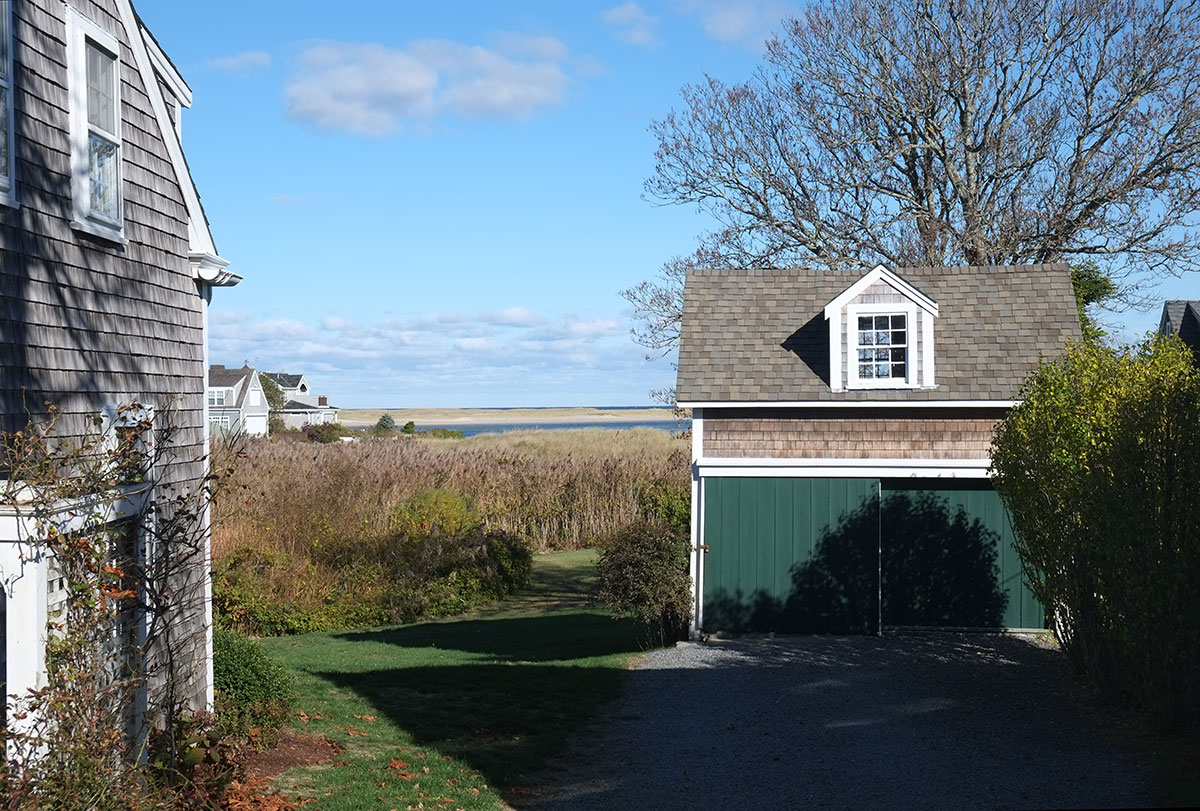
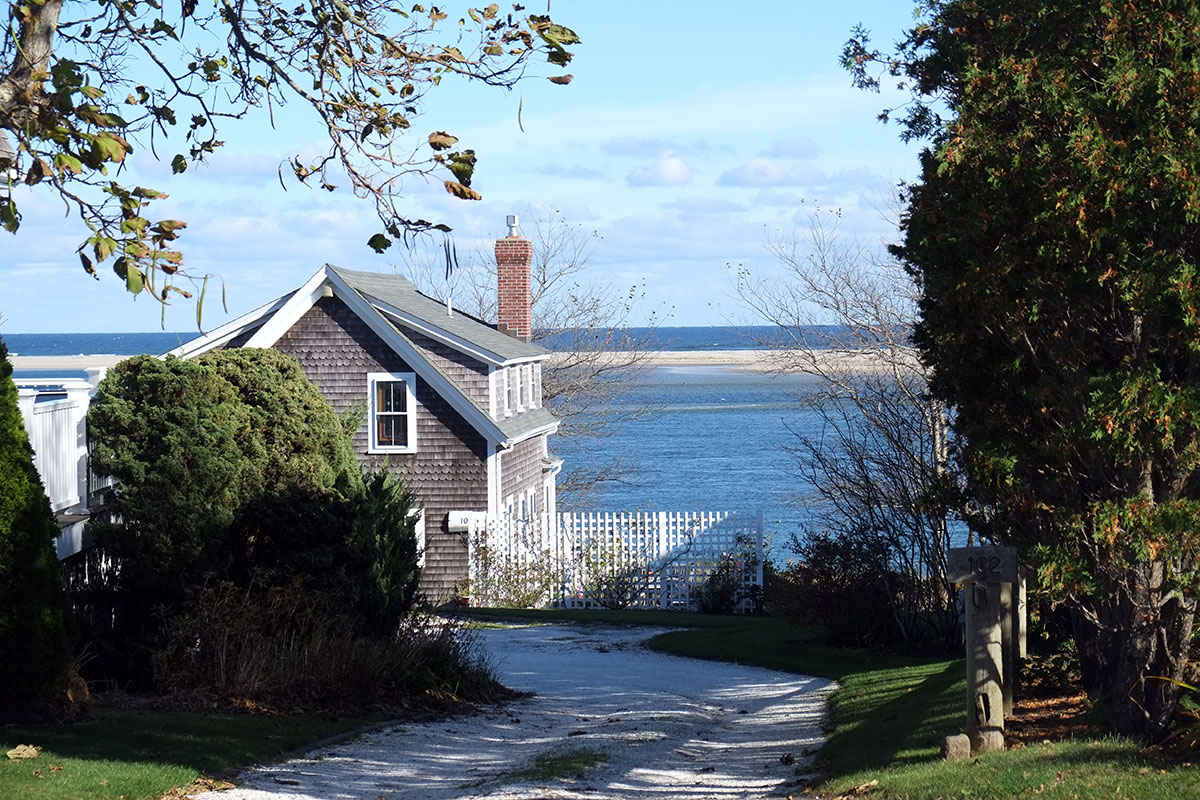
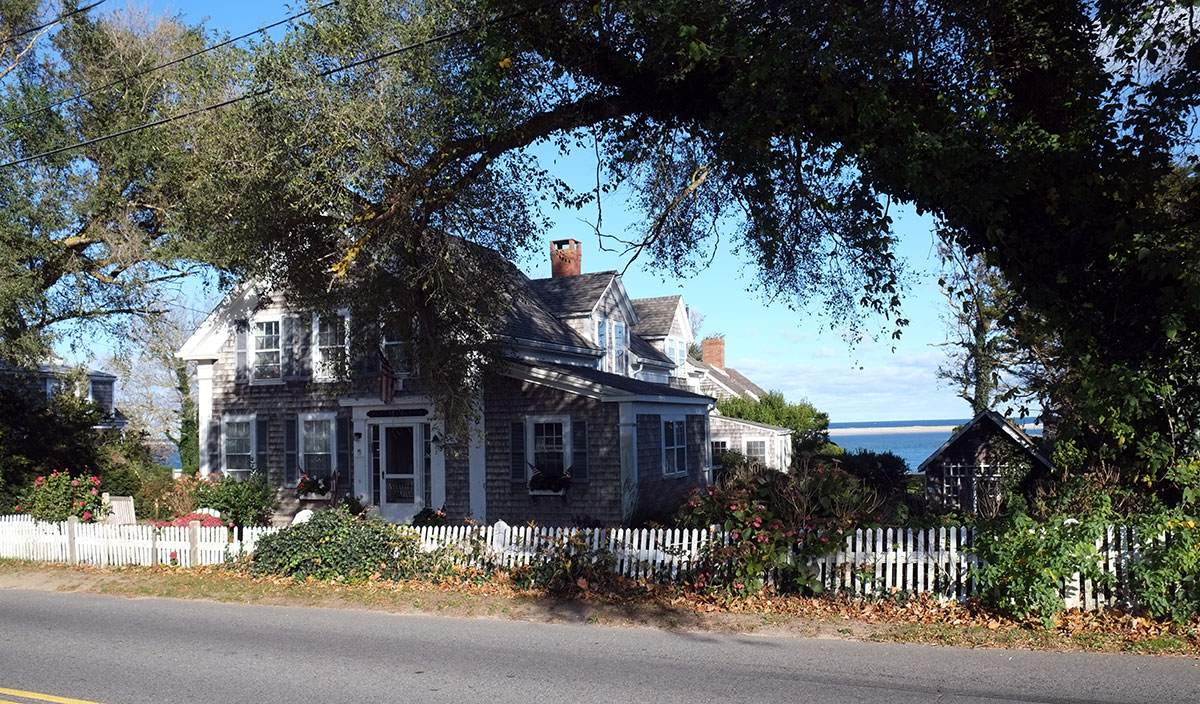
Glimpses from the street to the bay open up between houses.DSCF3270DSCF3295DSCF3319

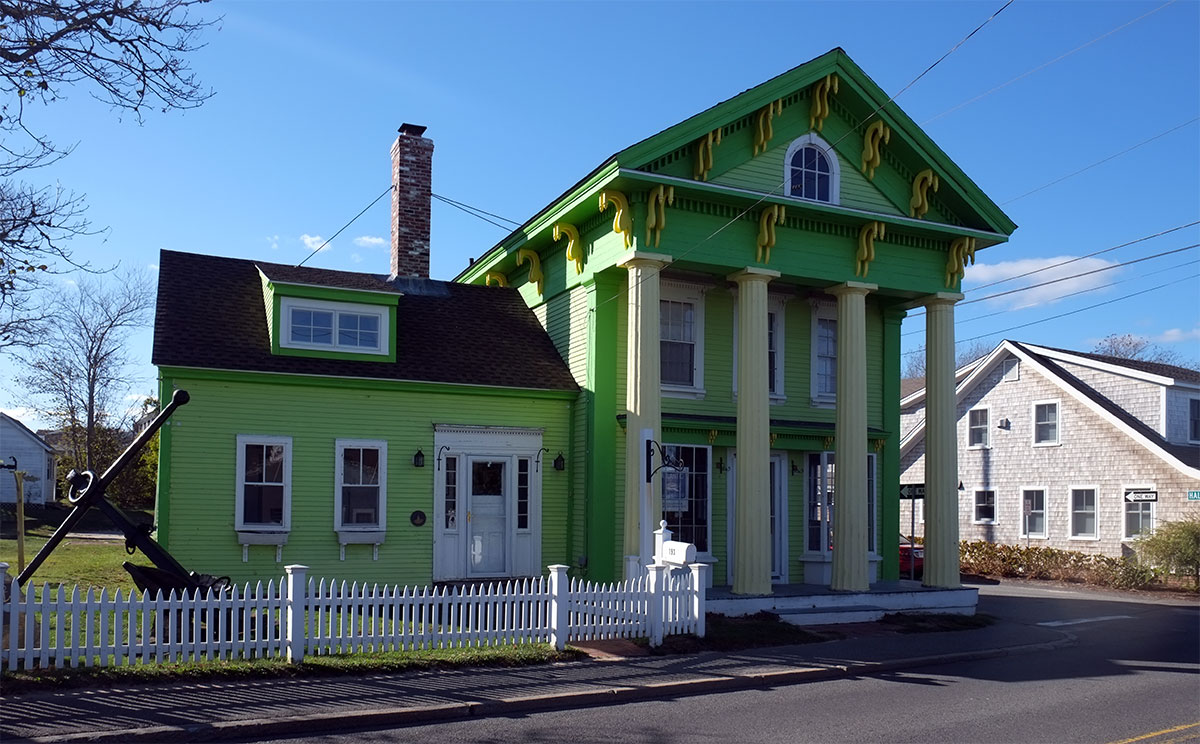
The only discordant note comes from the spite-painitng of a Greek Revival gem.  It was previously a gift shop, but now is the home of a local non-profit.  Apparently the town denied their request to alter the historic building, so they did their best to ruin the street for all.  It shocked me that in a town where the individual homeowners have so carefully stewarded the experience of the public realm, a community organization can be so self-righteous and monomaniacal.DSCF3266

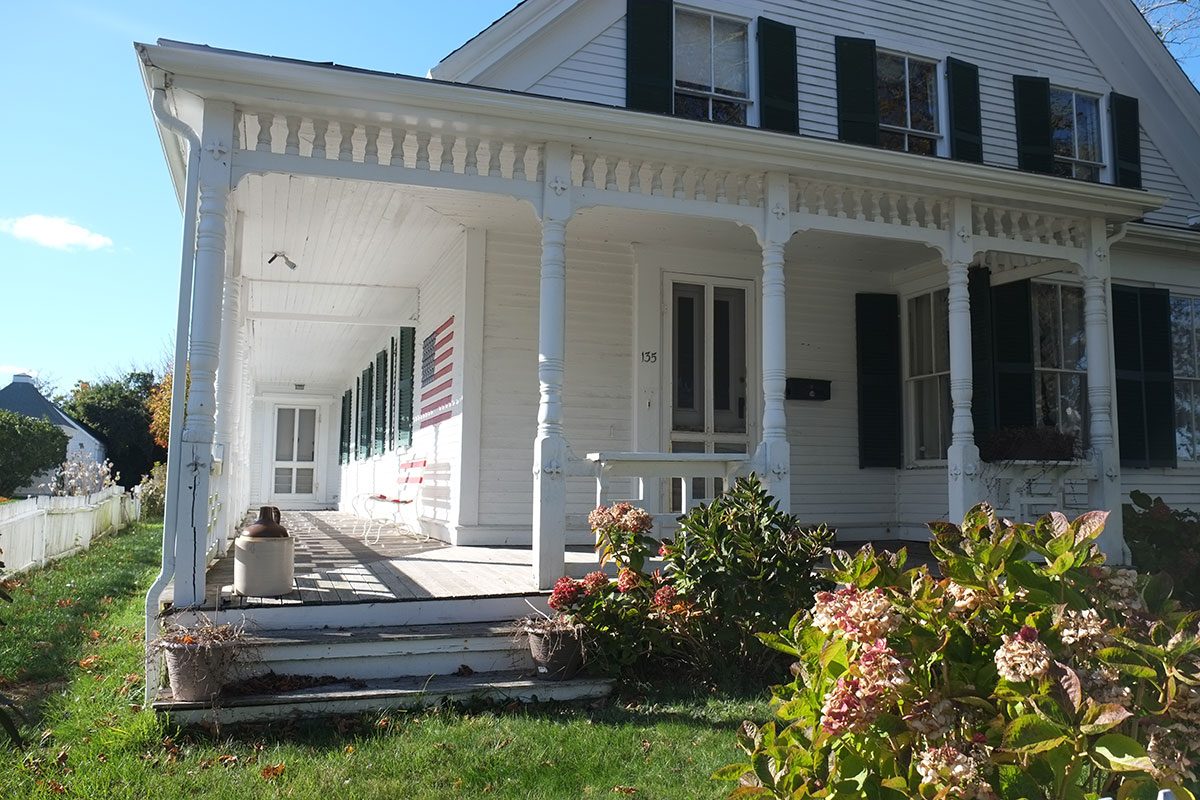
Other treasures remain.  This may be my favorite porch in New England, looking across the yard to an ancient copper beach, once again sharing this space with the public, rather than hiding it away.DSCF3283 DSCF3287 DSCF3290

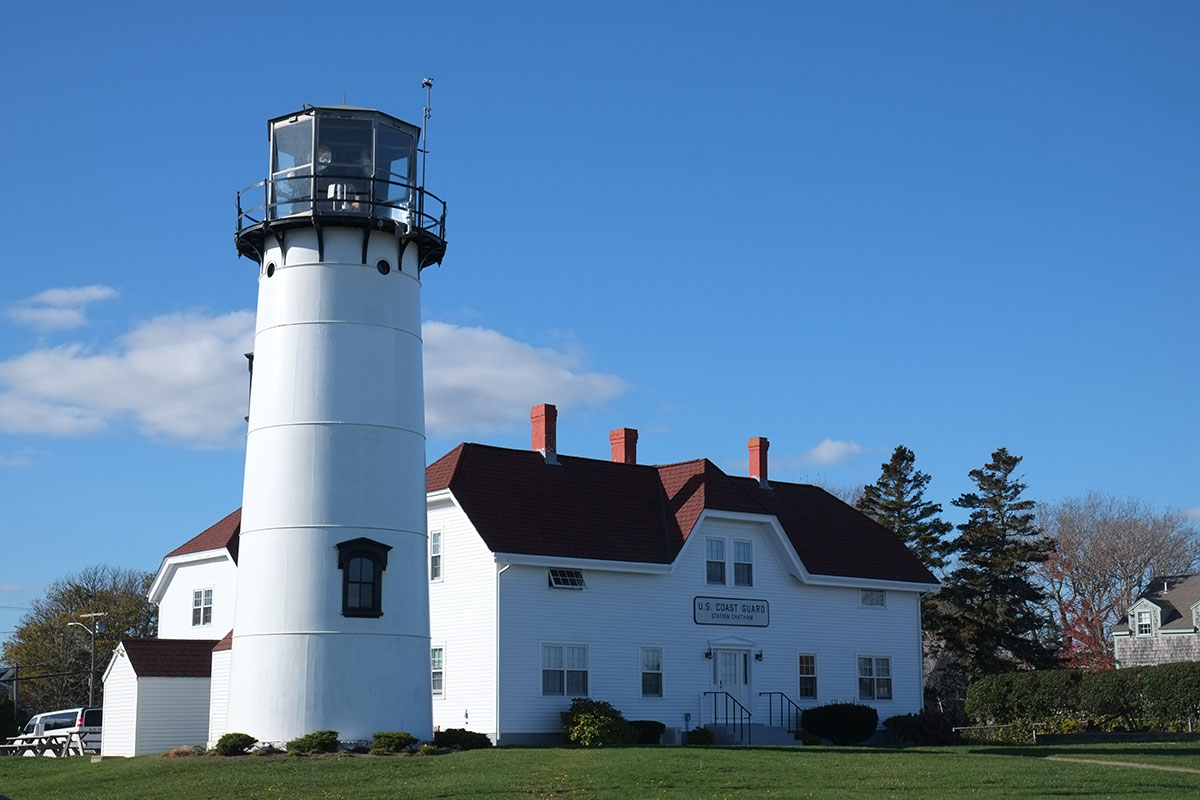
One arrives at the lighthouse, which they must have copied from an Edward Hopper painting. DSCF3311

The beach across from the lighthouse.  Strangely, this has changed the most.  When I was young, the barrier beach to the east was continuous beyond Pleasant Bay, and access out to the ocean was to the south past Monomoy Island.  A storm in 1987 broke through the beach here, and in 2007 another storm created a large opening to the north.  DSCF3303

In contrast to almost every other place we’ve visited, here the built environment seems permanent, while the large elements of the landscape are in continual flux.

Jenny Young

A developing subcategory of “seeing friends” on this trip is seeing friends in places where they don’t really live.  Jenny is in this group, as normally we see her in Eugene, where she and her husband Don are both faculty members in the architecture department.  But they also own a house in Edgartown where they spend the summers.  This year Jenny is on sabbatical, staying in Edgartown and working on a book, so we decided to go distract her from this work.

A lot of Jenny’s work – design, research and teaching – has involved architecture in small towns, including an article she once wrote comparing the structure of Oak Bluffs and Edgartown, so she was the perfect guide to these places.  We walked around the campgrounds in Oak Bluffs, strangely deserted in the fall, and wandered to all her favorite haunts in Edgartown, including her daily ritual of drinking coffee (or in this case, cider) at the end of the yacht club wharf.

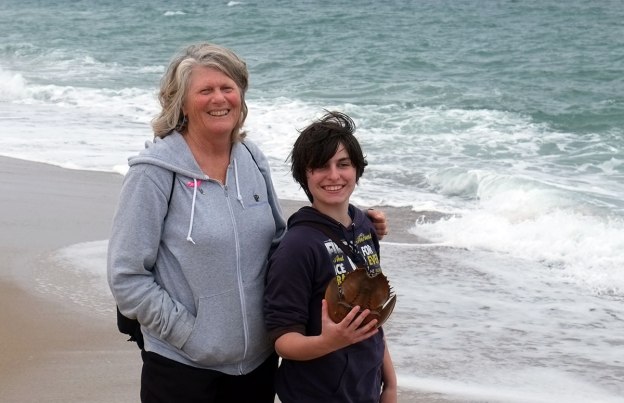
Besides being a great colleague, Jenny is also a great mom, and so she immediately slipped into mom (or aunt) mode with Greta, which was appreciated, as Greta had been living in dad-world for a month and a half.  Jenny cooked some wonderful meals, on what were the coldest, rawest days of our trip, suggested an endless series of snacks, and invited some friends over to dinner to meet us.  There was also the flip side of mom-mode, where she badgered us into a long bike ride to the beach into the strong wind and possible rain, when we might have sat inside and blogged, if left to our own devices.  (But that all turned out well, with a walk on the beach and the collection of a horseshoe crab shell in perfect condition.)

On a trip where we’re visiting many friends whom I haven’t seen in decades, it was fun to see someone who is normally part of our day-today lives;  it felt a bit like being at home.

Martha’s Vineyard

My blogging output has slowed to a crawl in Massachusetts – after spending the days seeing things, I  spend the evenings talking with old friends.  But I will make an effort to not fall further behind, and  so start off with Martha’s Vineyard.

The Vineyard has always been one of my favorite places, ever since visiting for the first time as a kid. What I always found most appealing was the incredible variety of towns and landscapes, each of which is beautiful in its own right, with the particularity of each heightened by the contrast with the others.  I think I’m especially susceptible to the qualities of the Vineyard from having gone there when I was young (when everything seems magical) and having returned from time to time, with each of these trips being memorable in its own way.  As we now spend our summers on a very different island in Washington, I wanted Greta to see what a New England island is like, how different and how similar. We spent a couple of days there with Jenny Young, our colleague and good friend from Eugene.

Arriving in Vineyard Haven, with a line-up of stellar boats behind the breakwater.  I’m used to the fine wooden boats in Port Townsend, but I had forgotten what a harbor full of classic boats in New England can look like.DSCF2978

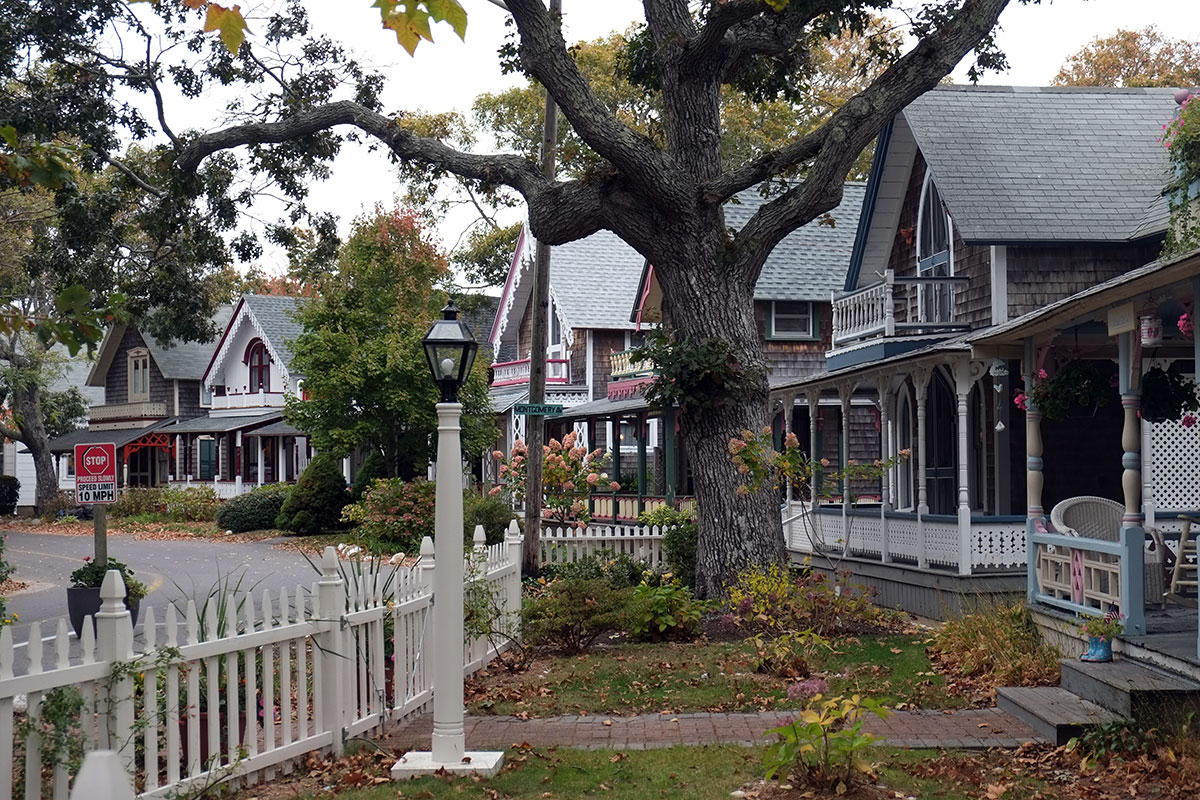
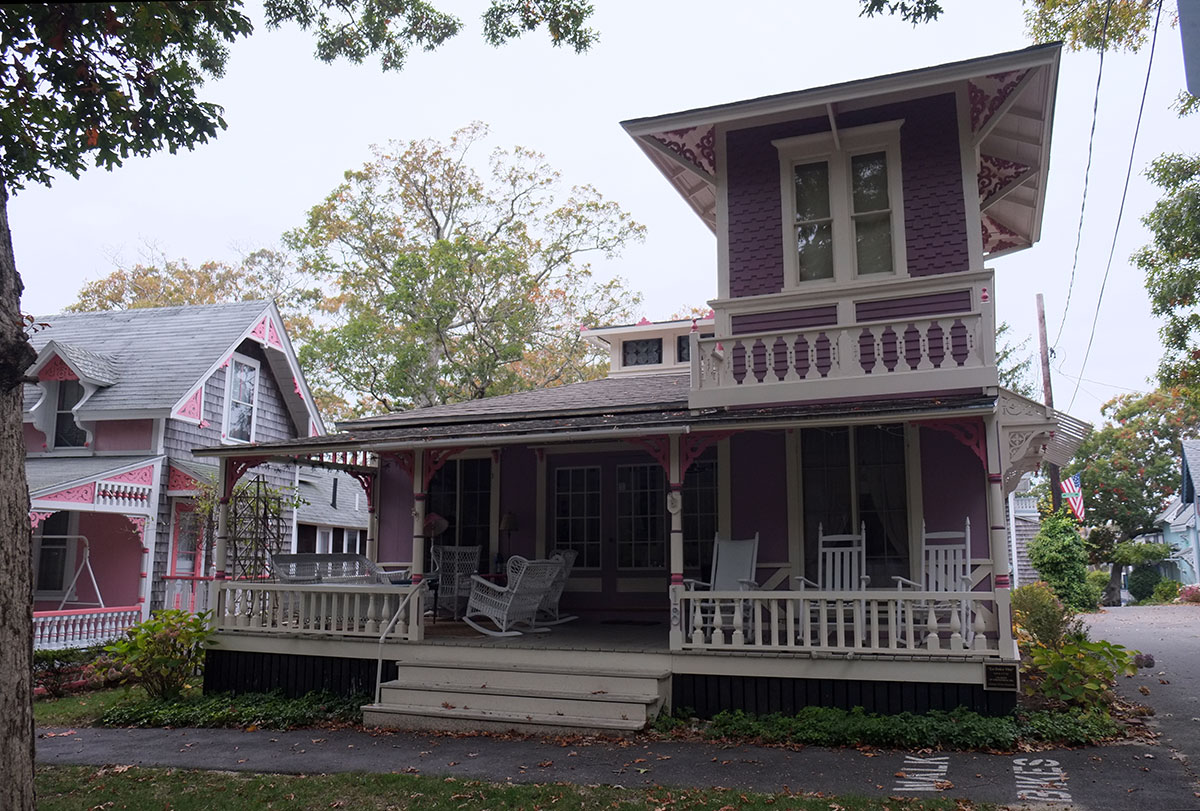
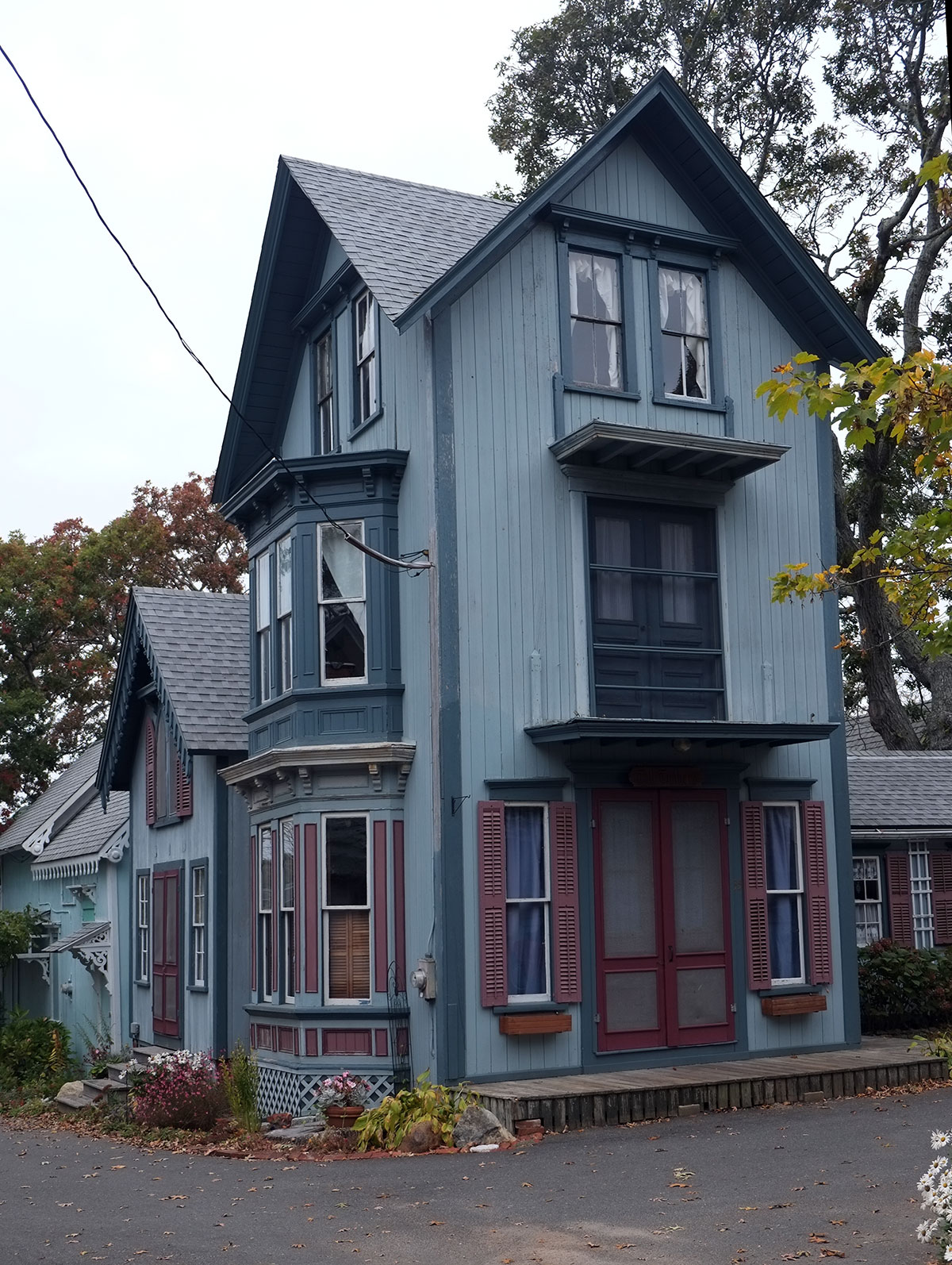
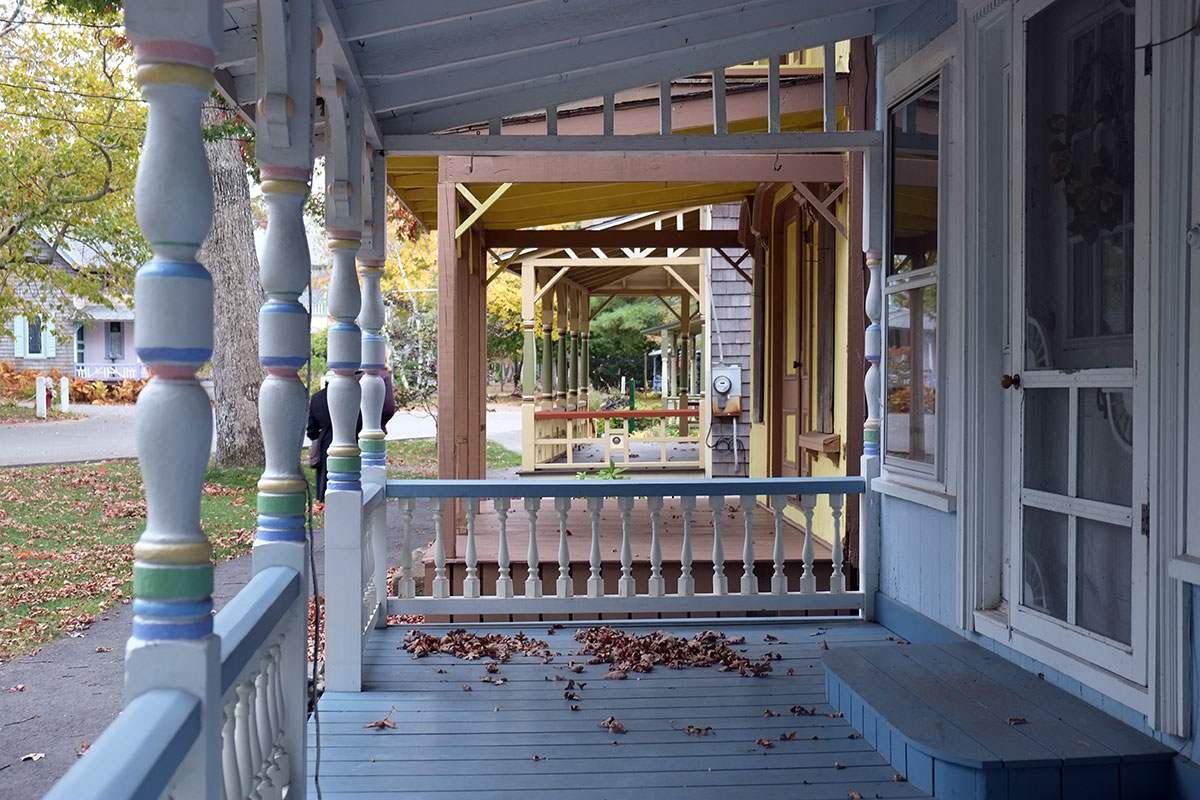
Oak Bluffs is home to an array of crazy small cottages, built around the Methodist revival campground area.  DSCF2987 DSCF2997 DSCF3001 DSCF3003 DSCF3031

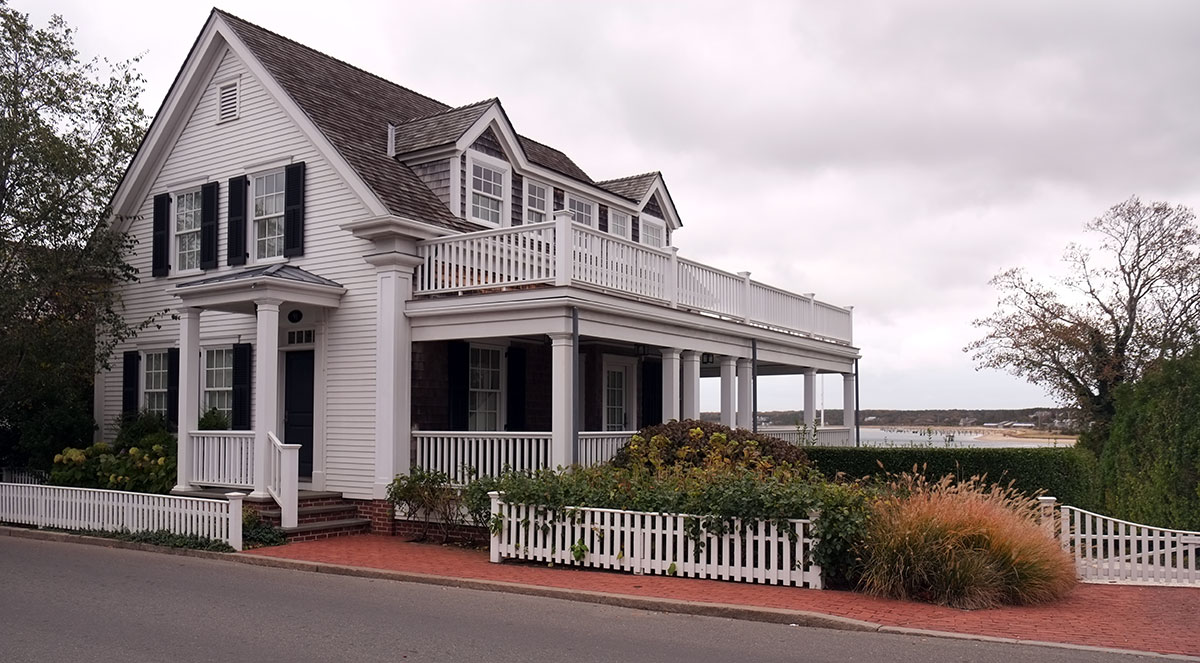
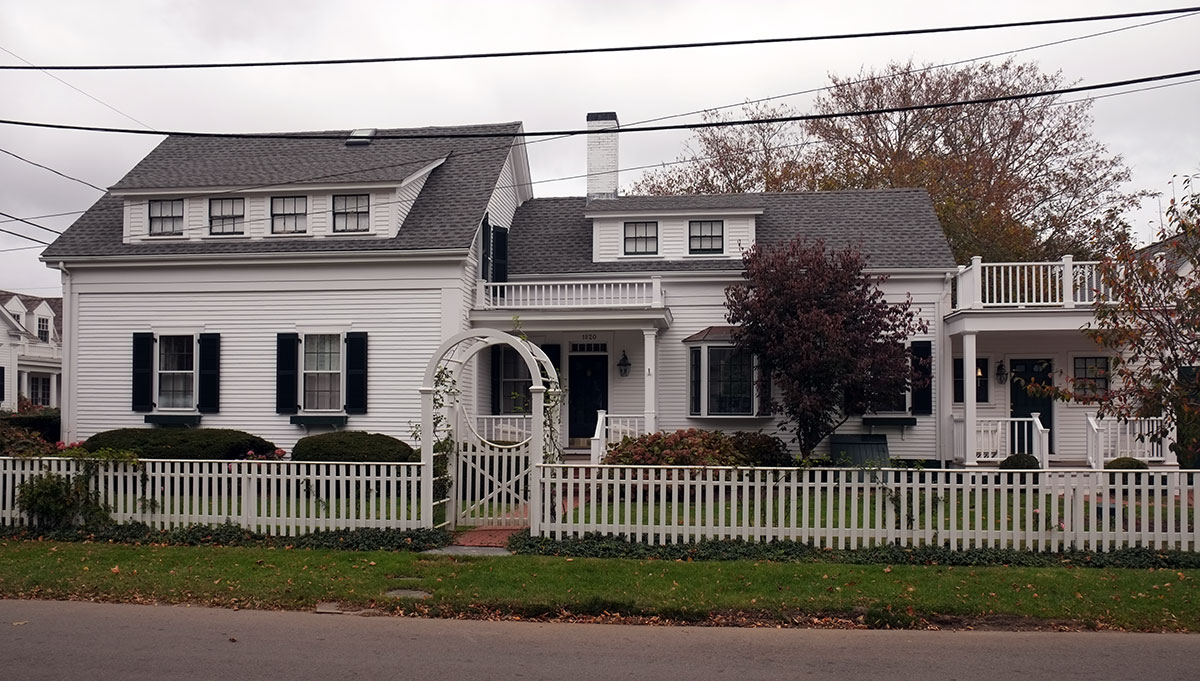
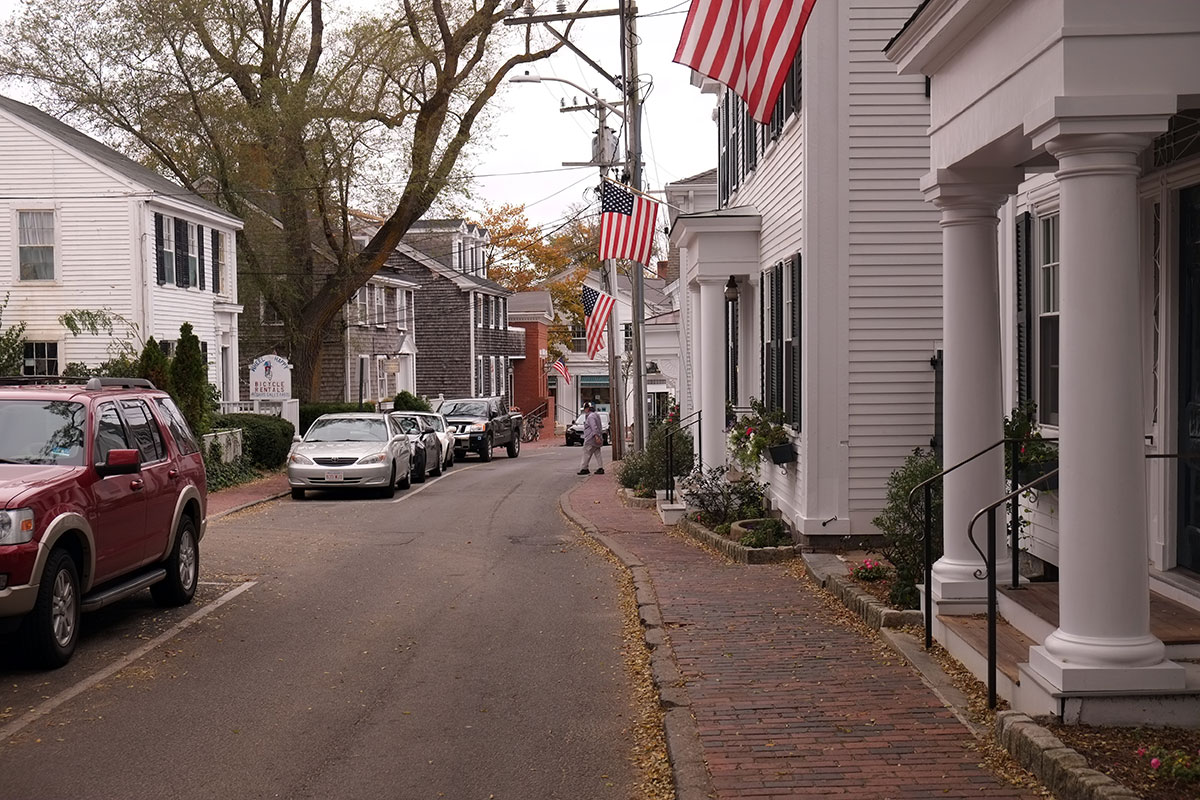
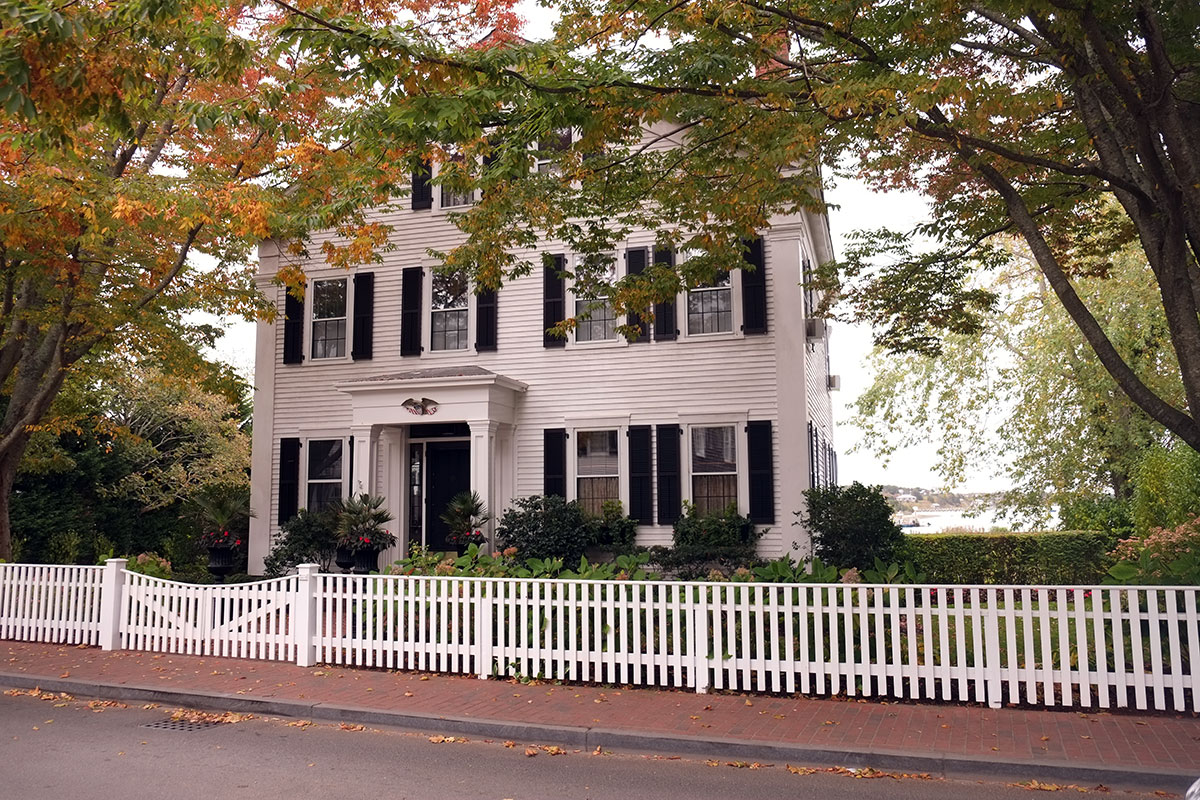
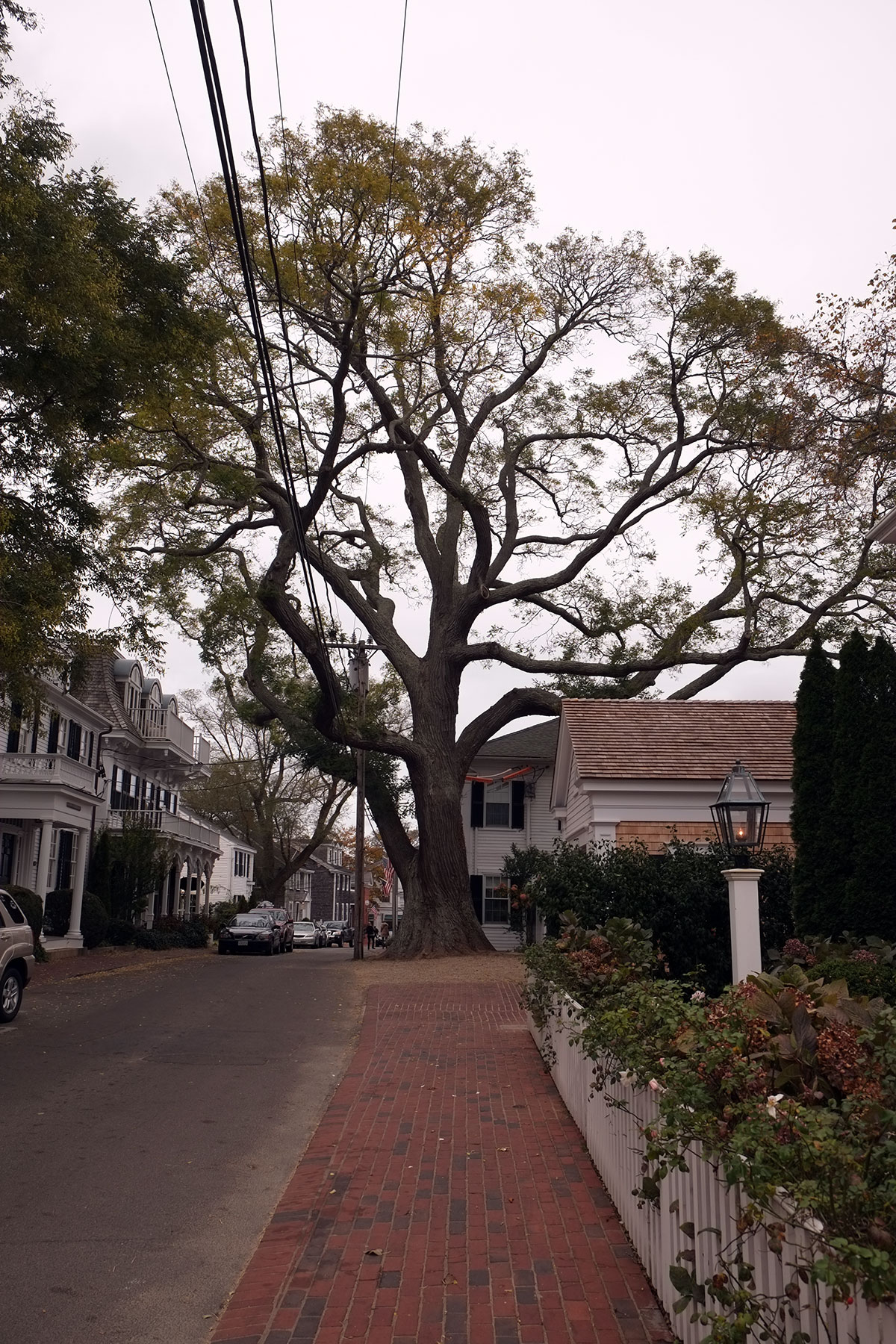
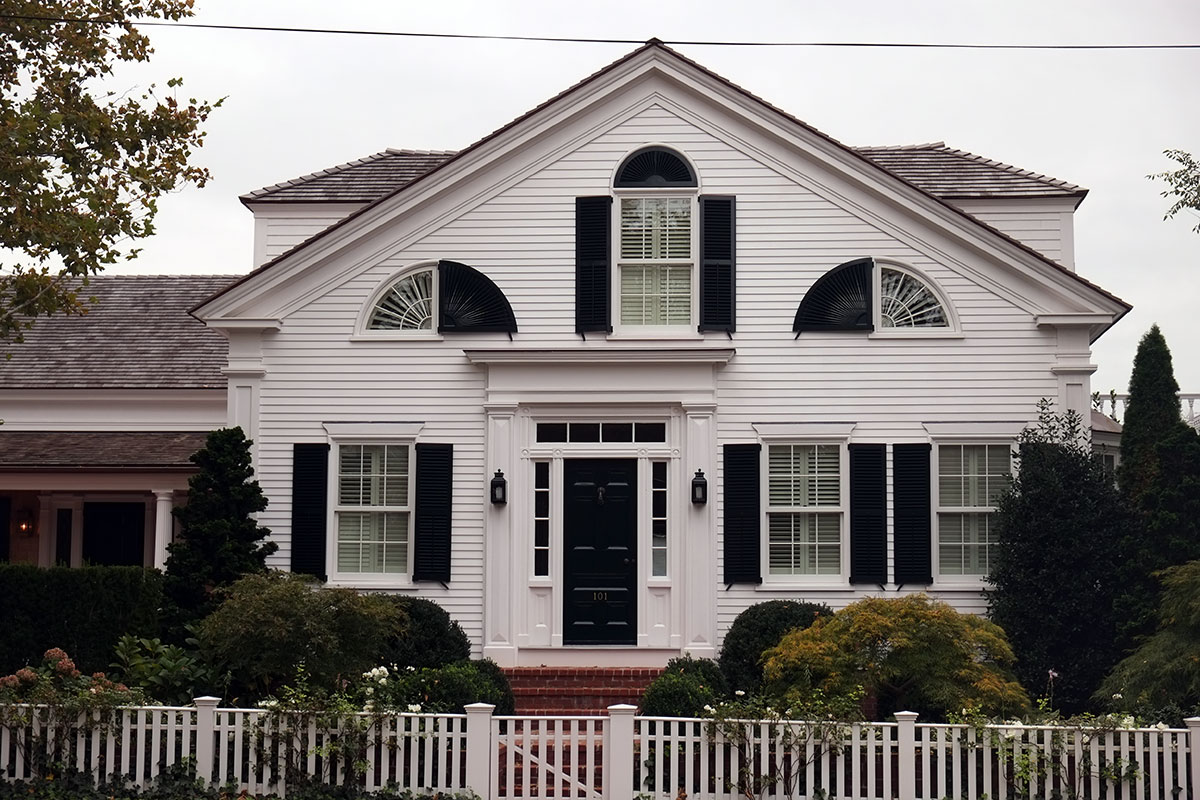
Edgartown, with its houses of whaling ship captains and small streets.  It is a beautiful town that hasn’t changed much, except for the price of real estate, having been discovered by the absurdly rich a while back, who have displaced the merely affluent.  After traveling across the country and getting used to the crazy juxtapositions of the built landscape, the consistency and quality of the town is a shock.  DSCF3094

DSCF3112

South Water Street

South Water Street

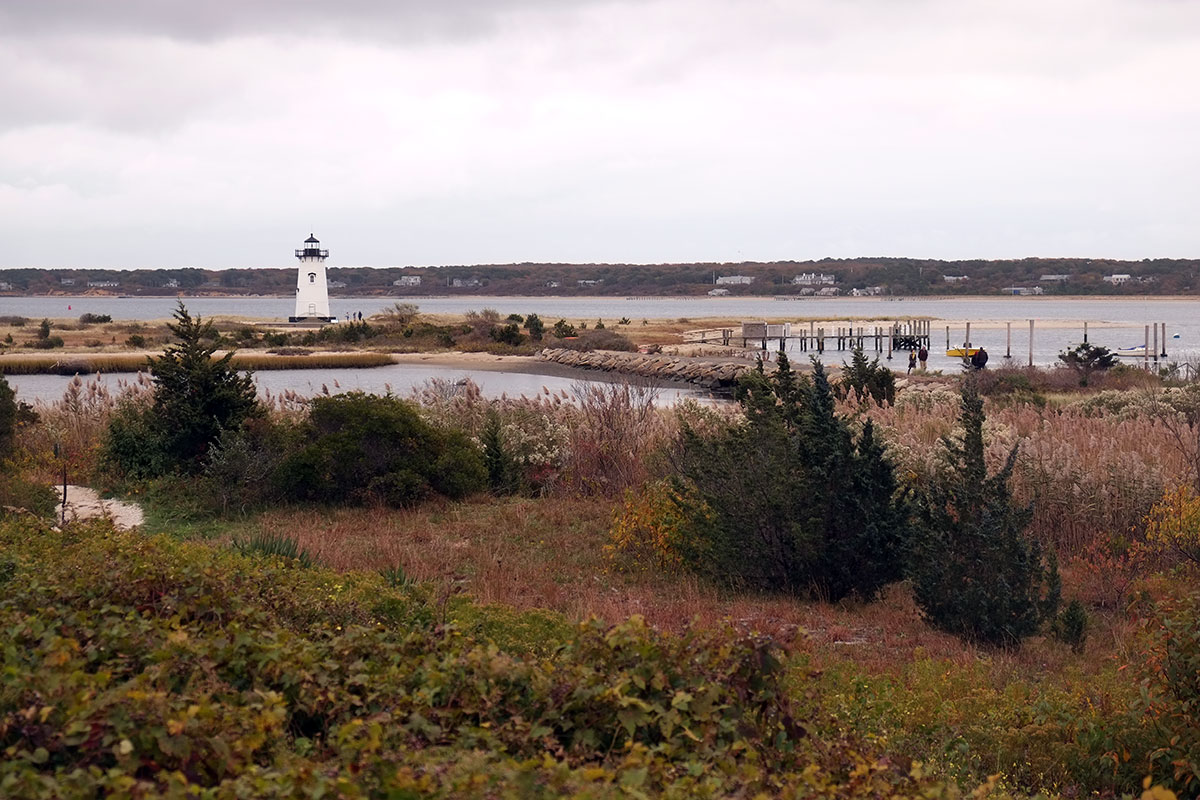
the lighthouse at the entrance to the harbor, where I learned to sail many decades ago

the lighthouse at the entrance to the harbor, where I learned to sail many decades ago

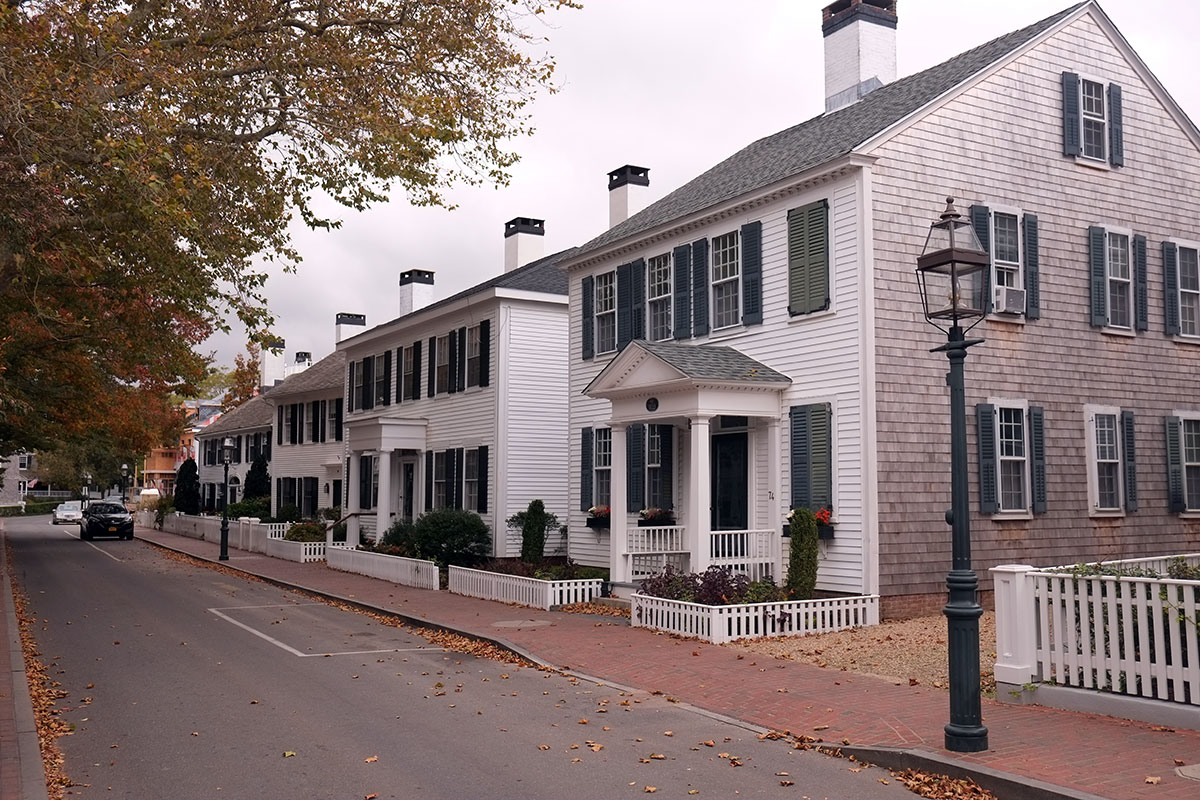
North Water St., with its array of captain's houses

North Water St., with its array of captain’s houses

DSCF3086

the imported pagoda tree, purportedly the largest in the country

the imported pagoda tree, purportedly the largest in the country

symmetry is greatly overrated

symmetry is greatly overrated

Eel Pond

Eel Pond

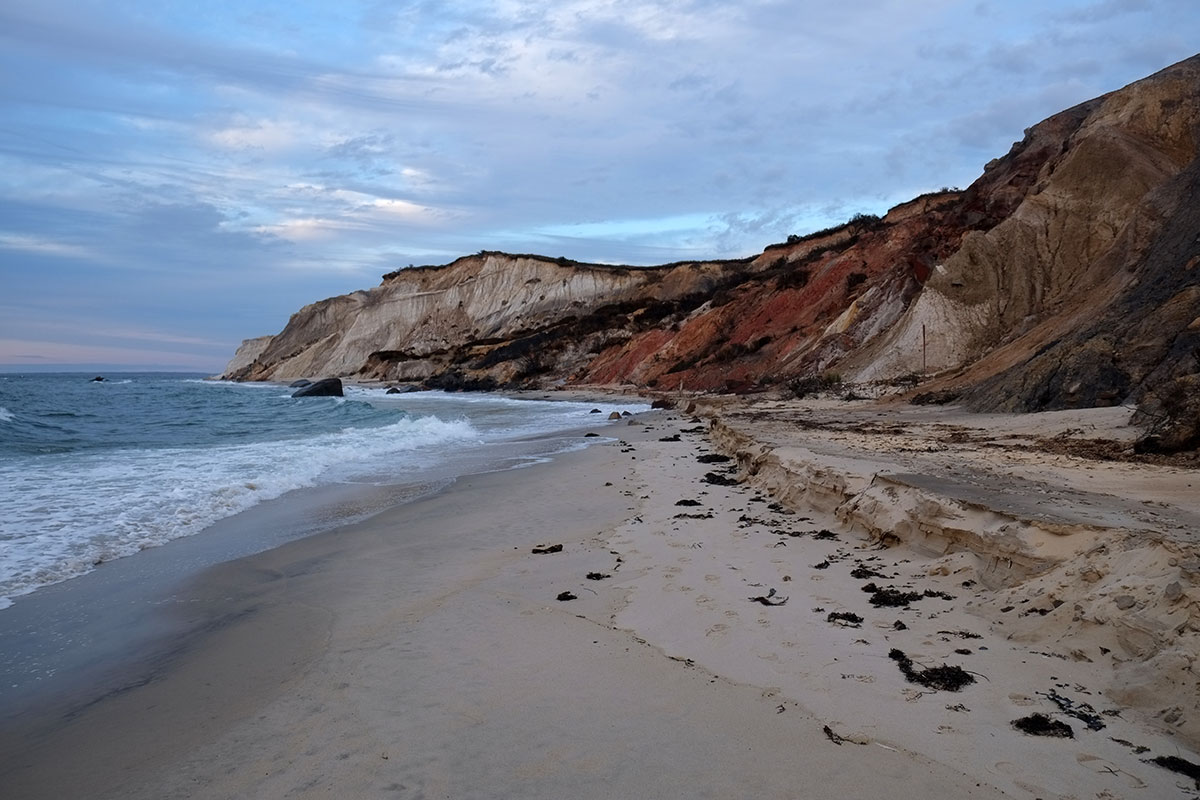
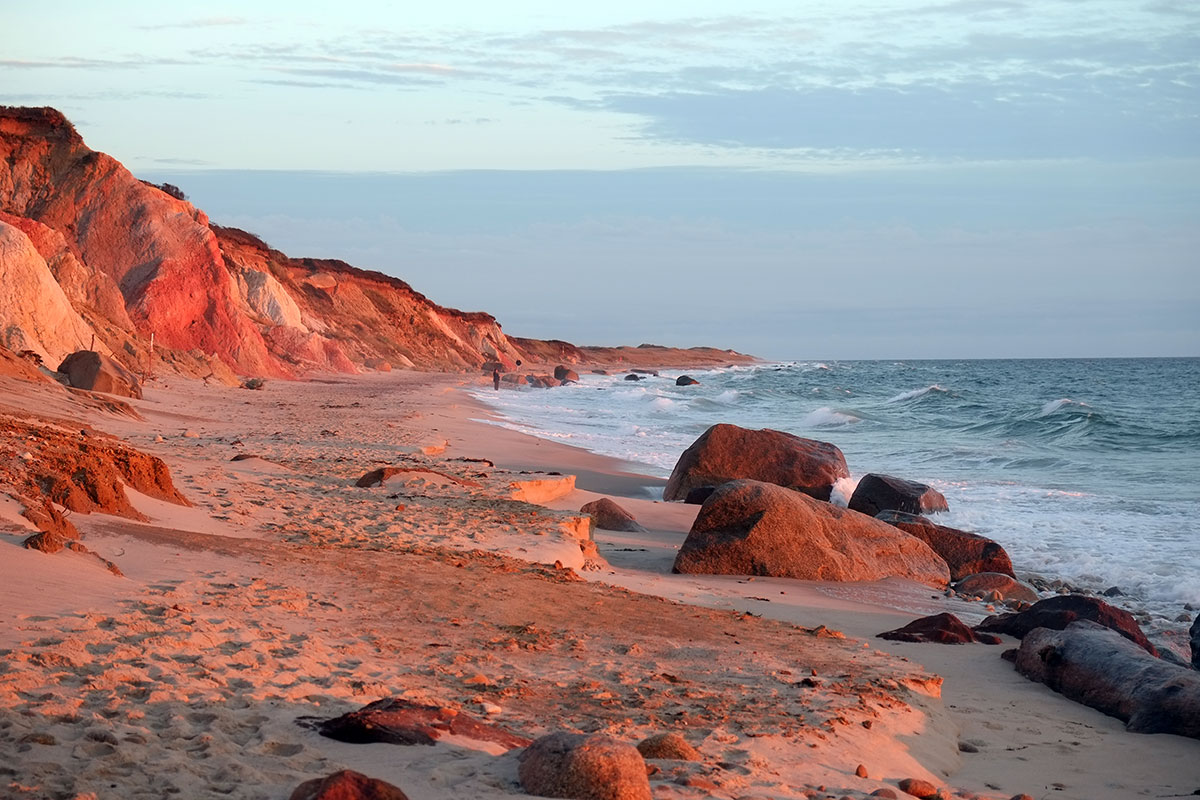
Aquinnah is the peninsula of colored clay cliffs at the southwest end of the island.  It used to be called Gay Head, and you used to be able to climb down the cliffs, until they realized that this was a very bad idea, contributing to the inevitable erosion.  DSCF3135 DSCF3138 DSCF3142

We didn’t have time to get to Menemsha, or spend any time in Vineyard Have or the inland places, but it was a nice break from the cities we’d been visiting.  And when Greta went to touch the ocean, I realized that we had really arrived at the other end of the country from where we started.