Category Archives: tourisme

Northern Louisiana

Northern Louisiana seems to be a different world from the coastal region.  We drove north from New Orleans along the Mississippi on River Road, where two different eras collide: there are the ante-bellum plantations, and there is the modern industrial landscape.  But you can never actually see the river – the levee forms a wall along the road that’s probably 40 feet tall. You see ships looming over it, so you know that there must be a river there somewhere.

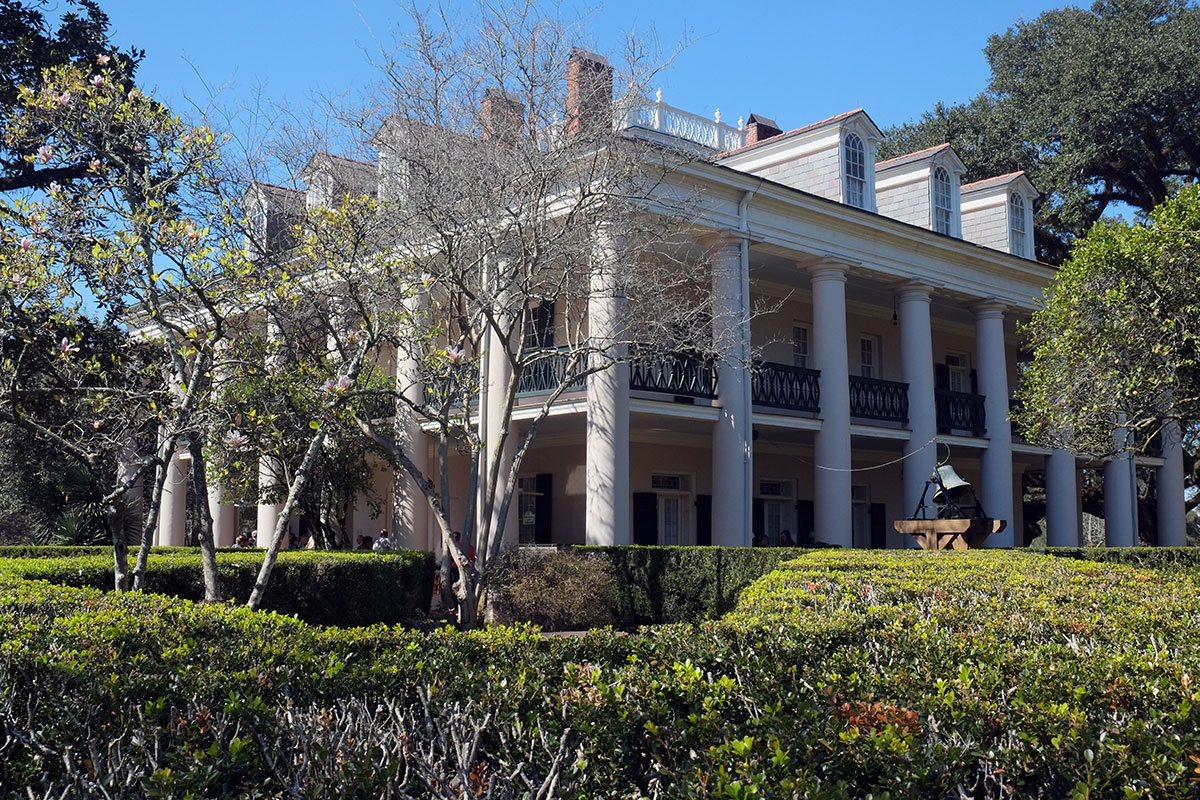
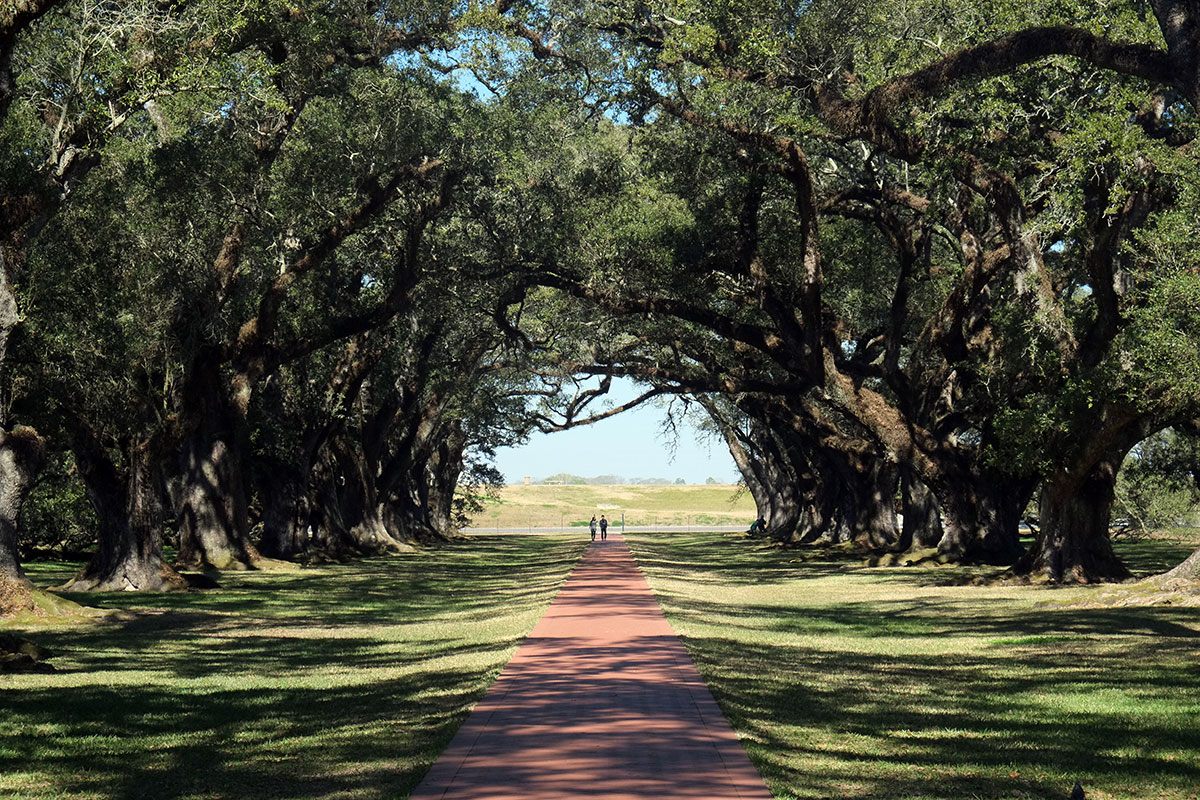
DSCF3963Among the many plantations around, we decided to go to Oak Alley, as we had been told it had the quintessential allee from the river to the house.  As in all houses we’ve toured in the South, the family who built this plantation was very important, with lots of governors and senators etc., but we promptly forget all this family stuff after hearing it (another reasons we could never be southerners).  We’re just here for the architecture, which did not disappoint.

The allee is spectacular, and must have been more so when there wasn’t a levee at the end.  DSCF3891
The Greek Revival style is done beautifully, well-proportioned and straightforward.  DSCF3969  DSCF3951
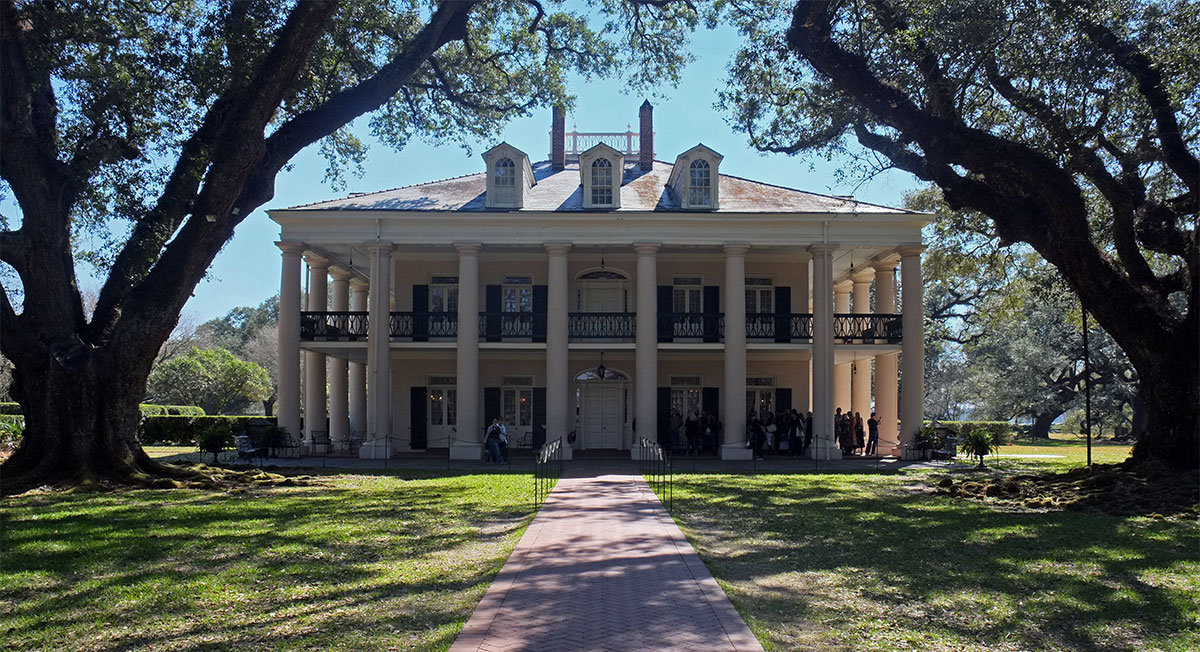
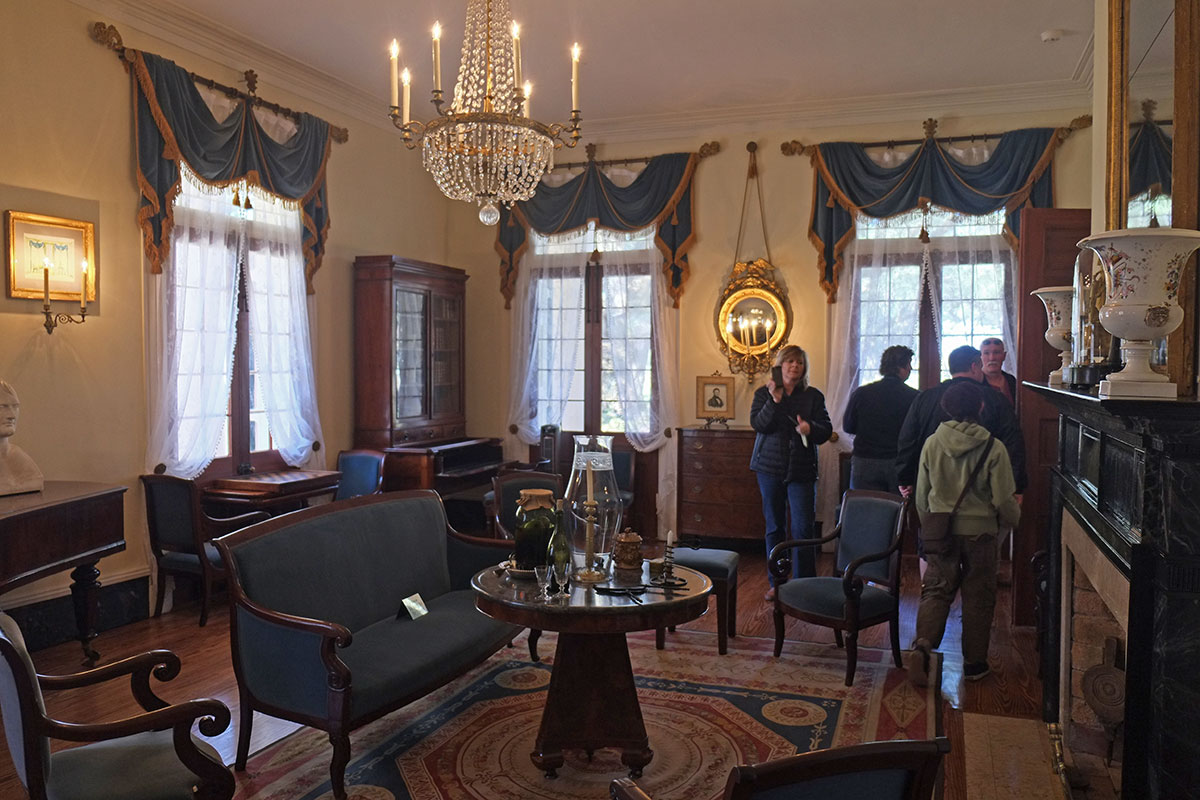
The main rooms are all large and beautifully lit, being always on a corner.  DSCF3898
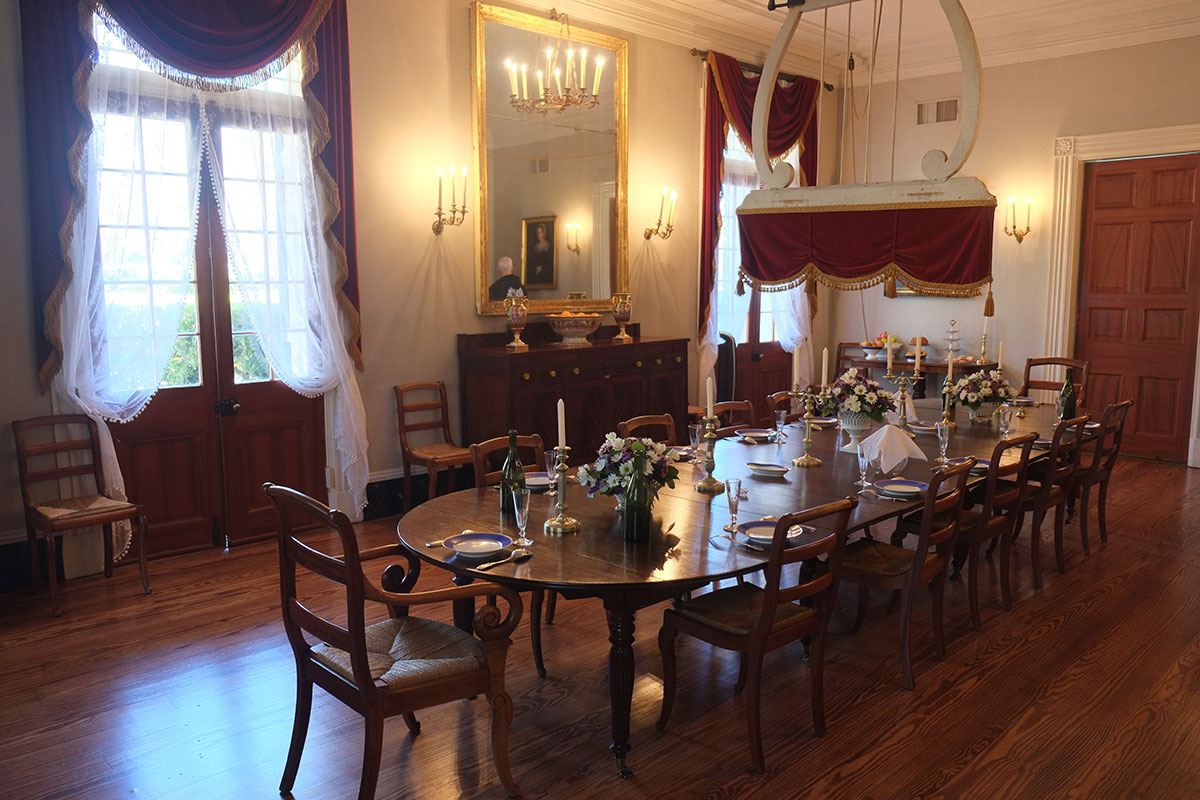
The word thing hanging over the dining room table is for shooing the flies away.  A young slave would have sat in the corner of the room pulling on the rope to make it swing.  DSCF3905
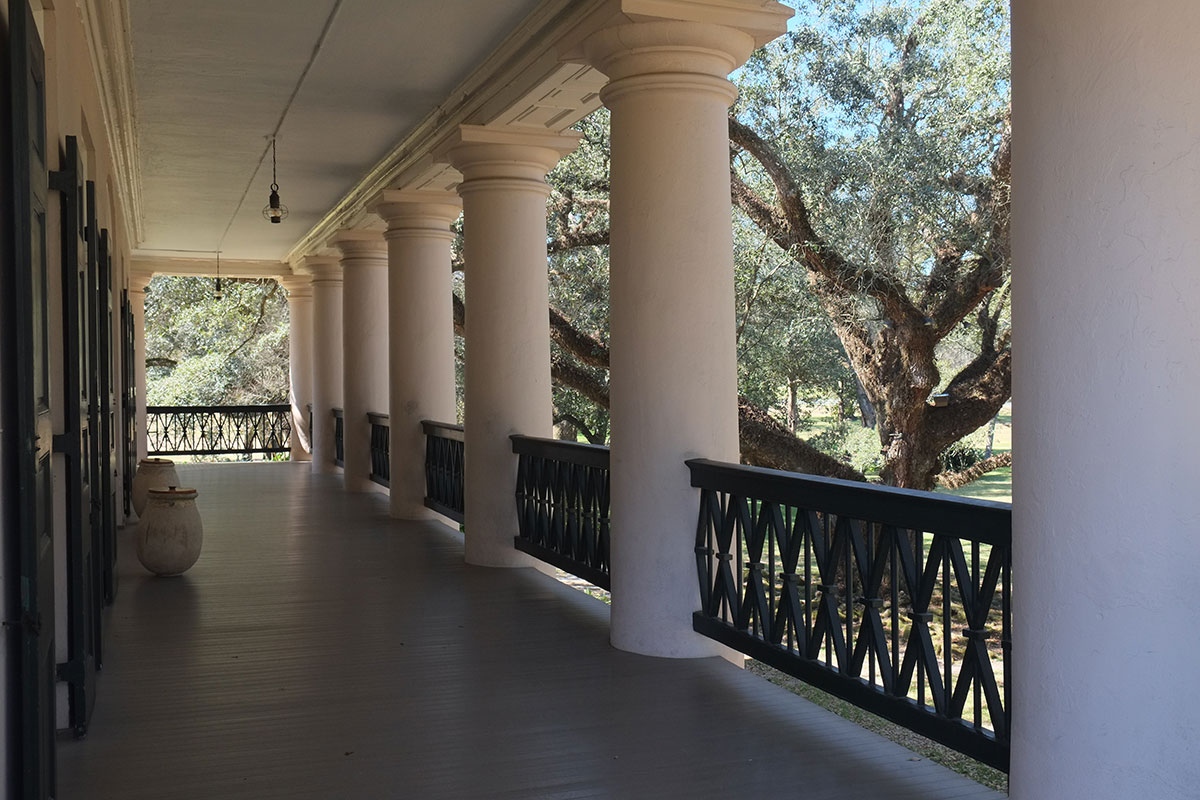
The two-story verandah on all sides was exactly where you’d want to hang out. DSCF3941 Having now seen examples in Florida, Mississippi and Louisiana, the essence of the type is pretty clear, and it is a very straightforward and sensible reaction to the climate, which must be unbearable in the summer (we were there in February and it was quite warm).
As with all plantations we’ve visited, the paramount question is how the history of slavery is treated.  As we toured the house, surrounded by tourists oohing and ahhing, we were feeling pretty weird – the architecture is fabulous, but it’s pretty hard to listen to stories about this family and think about the basis for all this wealth.  (We decided it would be like going to Auschwitz to see the commandant’s quarters.)  However, compared to what we’ve heard about other plantations, we thought Oak Alley did a good job of presenting the reality of the history.

The slave quarters here were located on along the central axis, but to the rear of the house, and along another oak alley.  DSCF3884
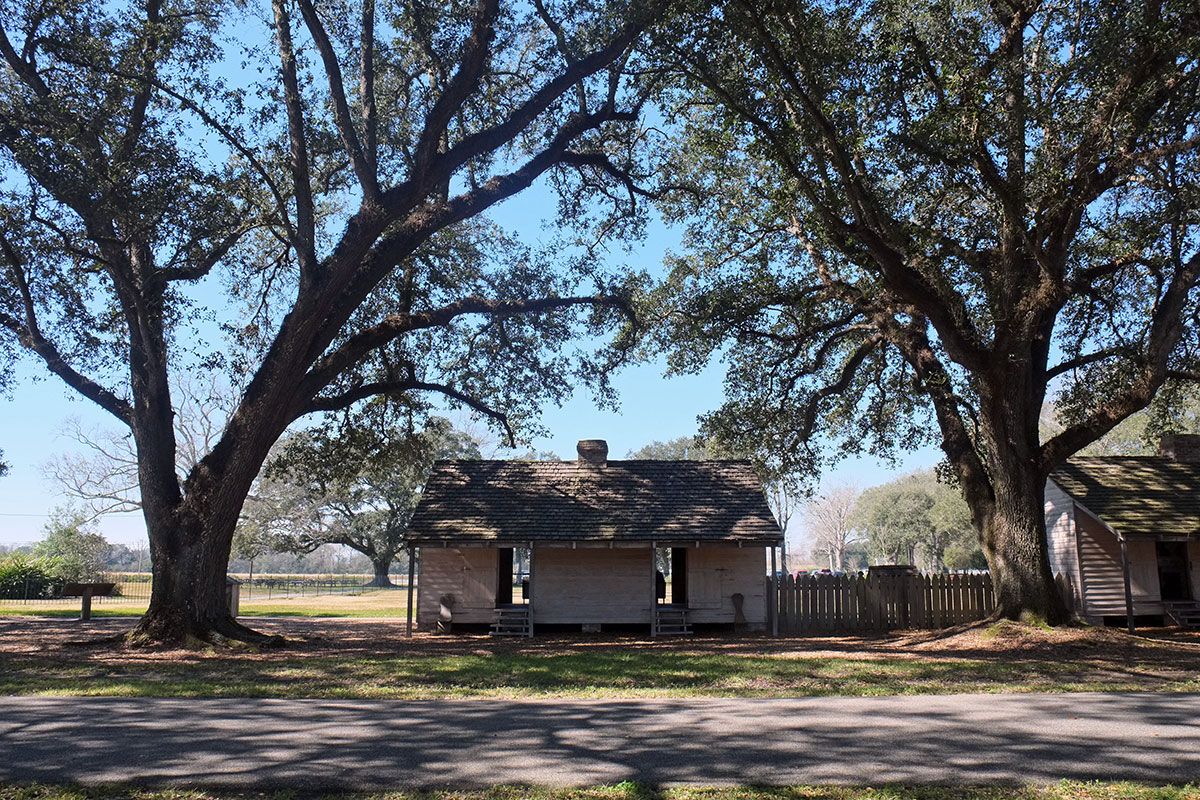
This arrangement, and their proximity to the main house, was very unusual.  The quarters had obviously not been as carefully preserved, but enough remained, and there was also documentation of them and how they had been transformed after the Civil War, when they were occupied by paid hands (who might have been the same people, just no longer enslaved).  Based upon this evidence, all the slave quarters had been reconstructed, showing how they were furnished in different eras.  DSCF3880
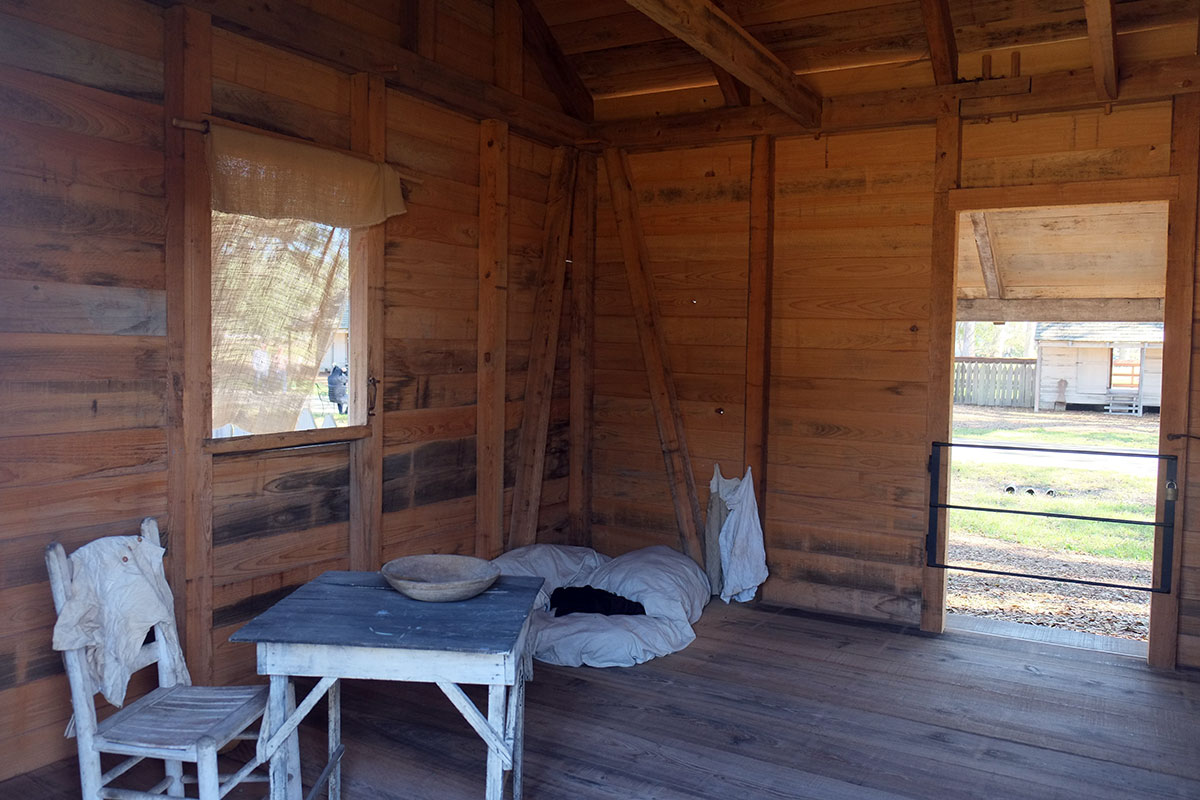
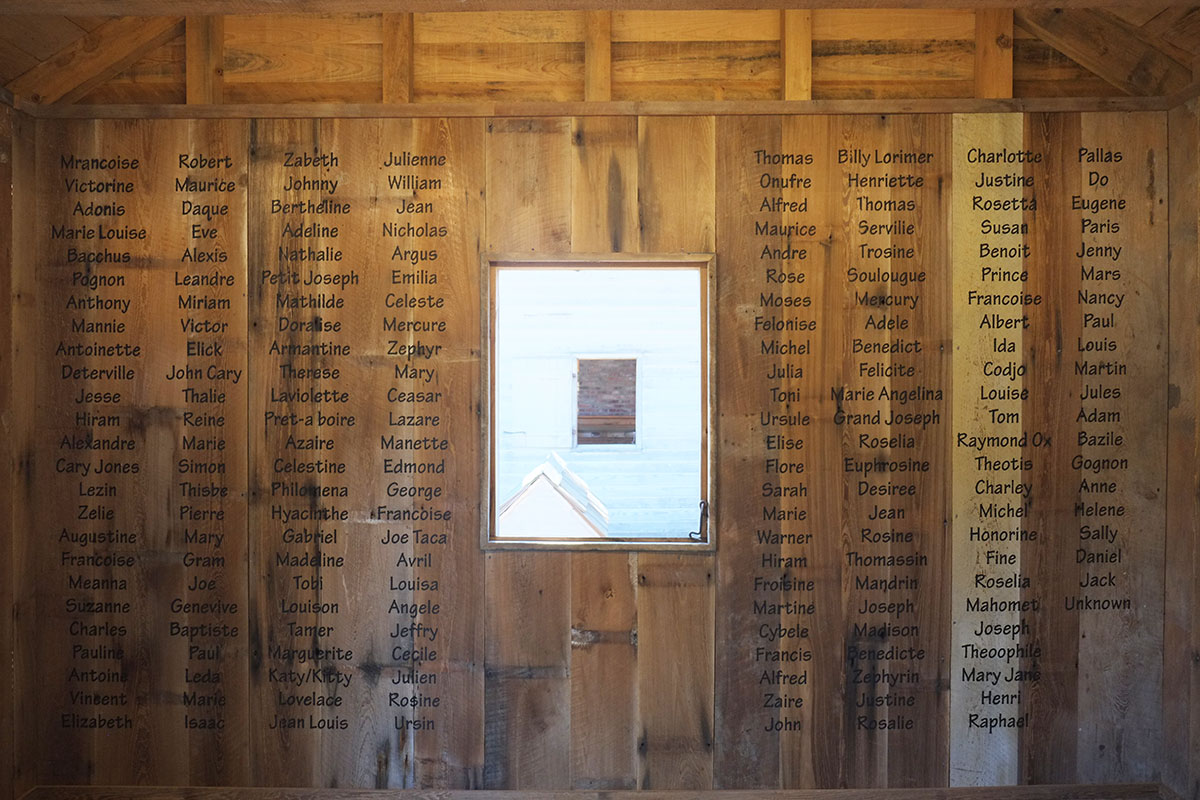
The plantation records had also been searched, and a list was compiled of all the slaves whose names could be found.  In one of the cabins, where there was a detailed exhibit on what is was like to be a slave, and how the slaves were treated, the names of the slaves from this plantation were inscribed on the end wall.  We thought it was a dignified and fitting memorial – acknowledging the individuals as best they could, working in the vernacular materials that reflected the physical surroundings and reality of these persons’ lives.DSCF3886
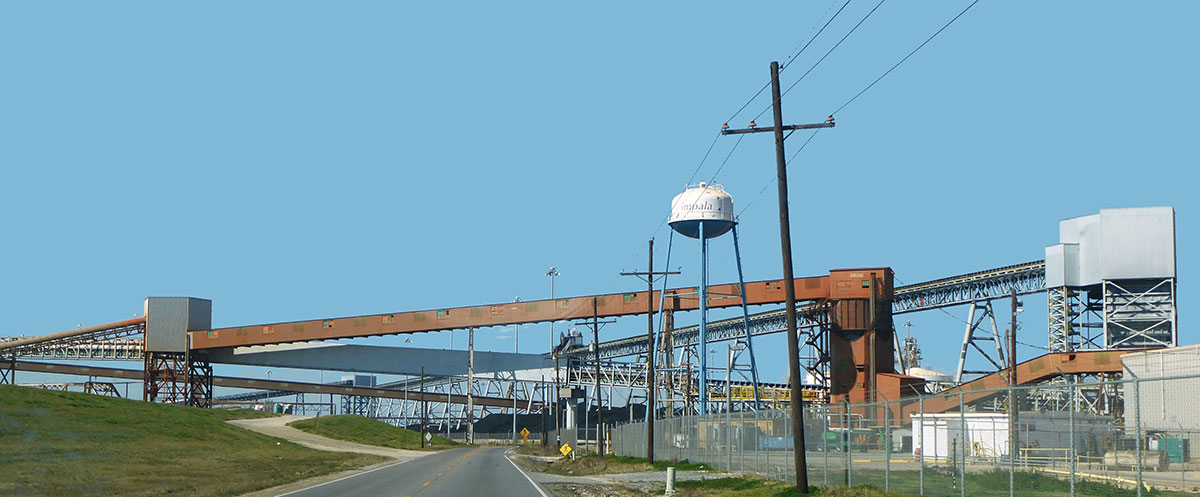
Most of the drive was through the oil and chemical industries’ landscape.  Very large facilities and big things, which we enjoy seeing.  Just glad we didn’t have to live there.  P1070311a
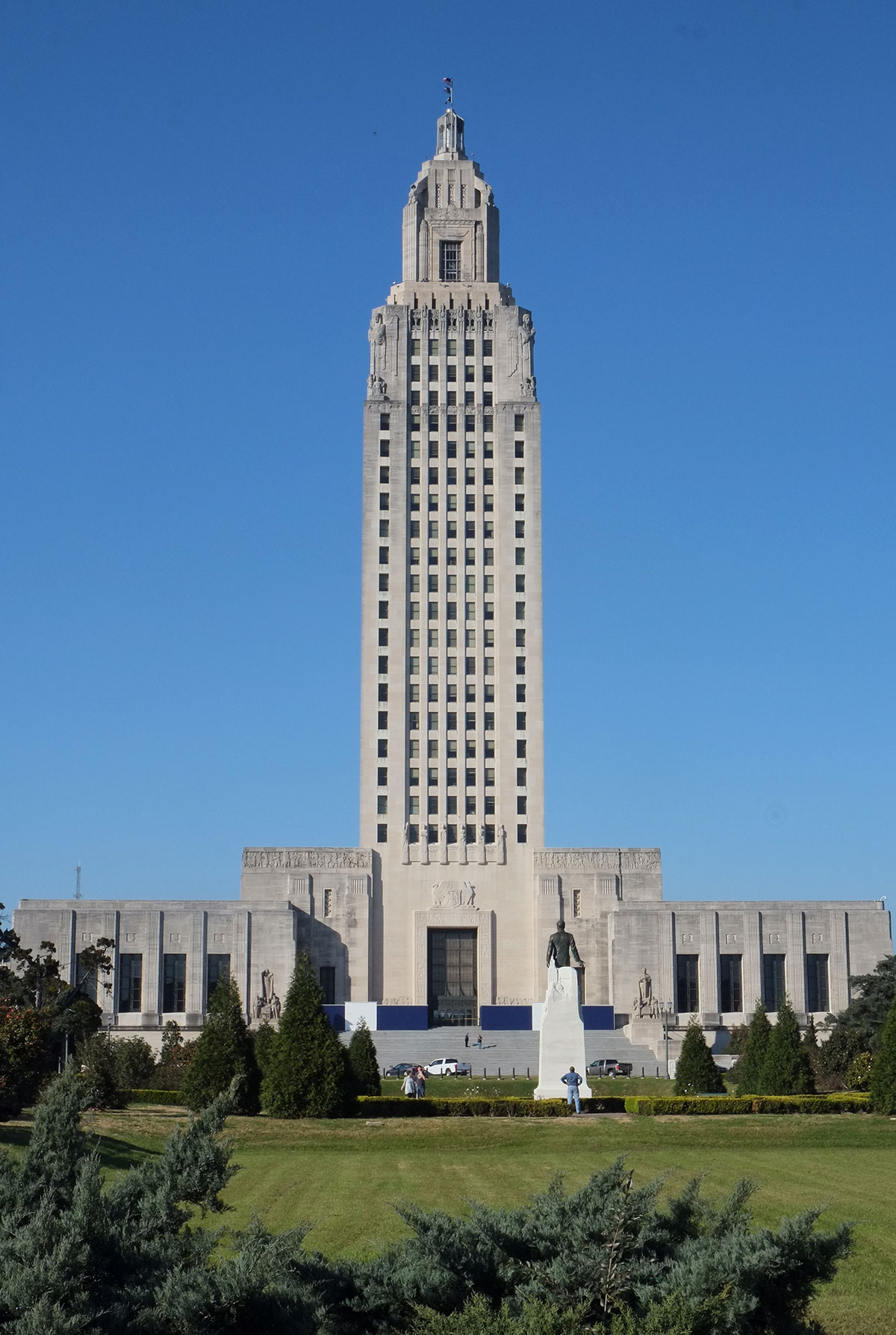
Our visit to Baton Rouge was stymied by a cell phone charger in the truck which we thought was working, but was not.  So just as we hit a major city, our phones went dead and we were navigating by instinct.  The downtown seemed to be having some kind of festival, coinciding with lots of streets being closed for construction, which made it even more difficult.  We passed by the state capitol (a pretty good one we thought, in the rare genre of capitol-as-tower), DSCF3972but mainly we spent a lot of time trying to find a store to buy a charger, before realizing that all stores like that are way out in the edge sprawl.  We gave up Baton Rouge, crossed the river and found a Walmart, and continued on our way.
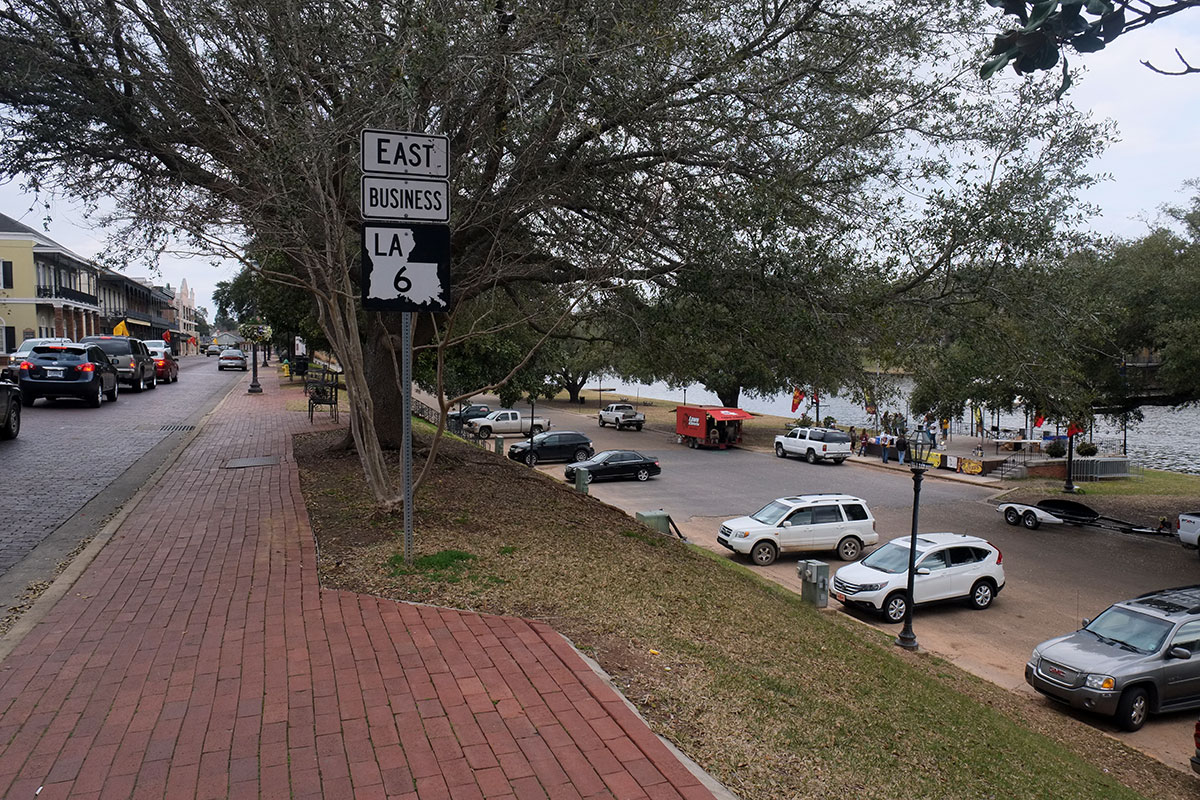
We left the Mississippi and crossed the Atchafalaya Swamp towards Lafayette, and headed up the Red River to Natchitoches (which is pronounced Nack-a-dosh), an important French colonial town.  It has a few streets of nice old commercial buildings, some of which have been excessively cute-ified for the tourists, but many of which are fine. DSCF3982
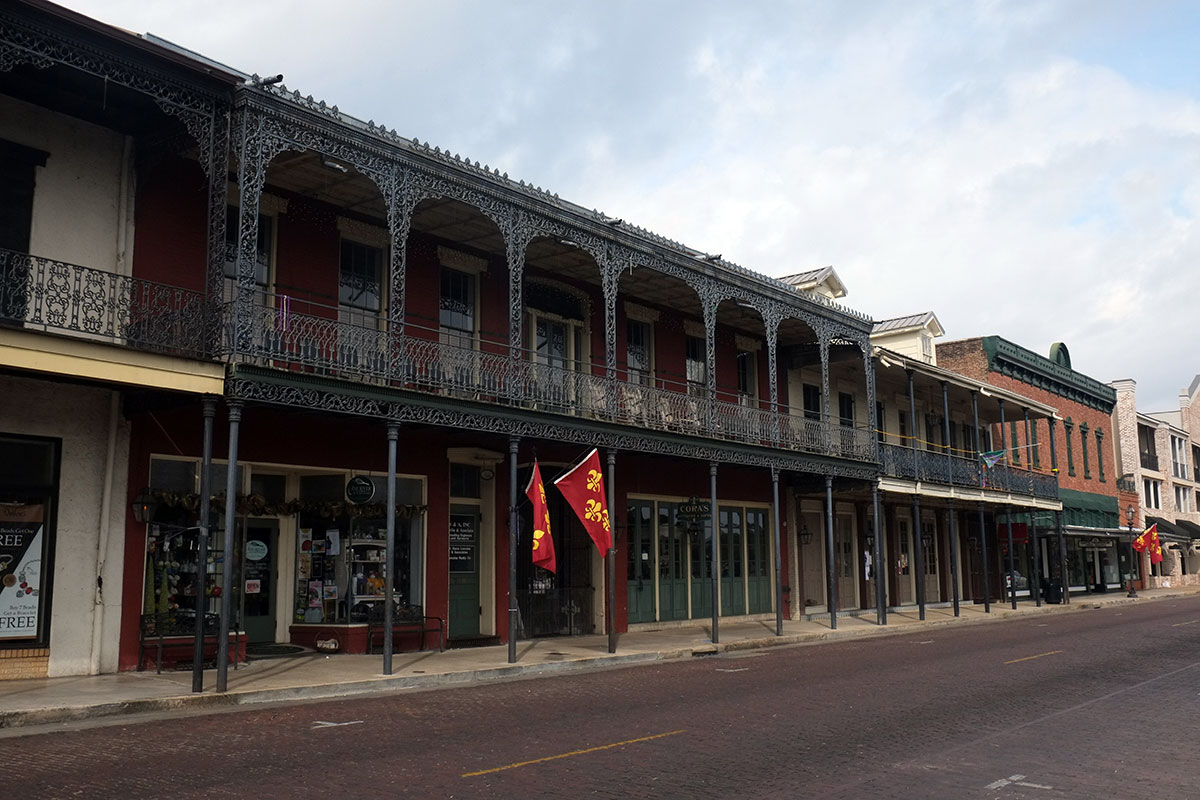
There is an excellent Catholic church. DSCF4012
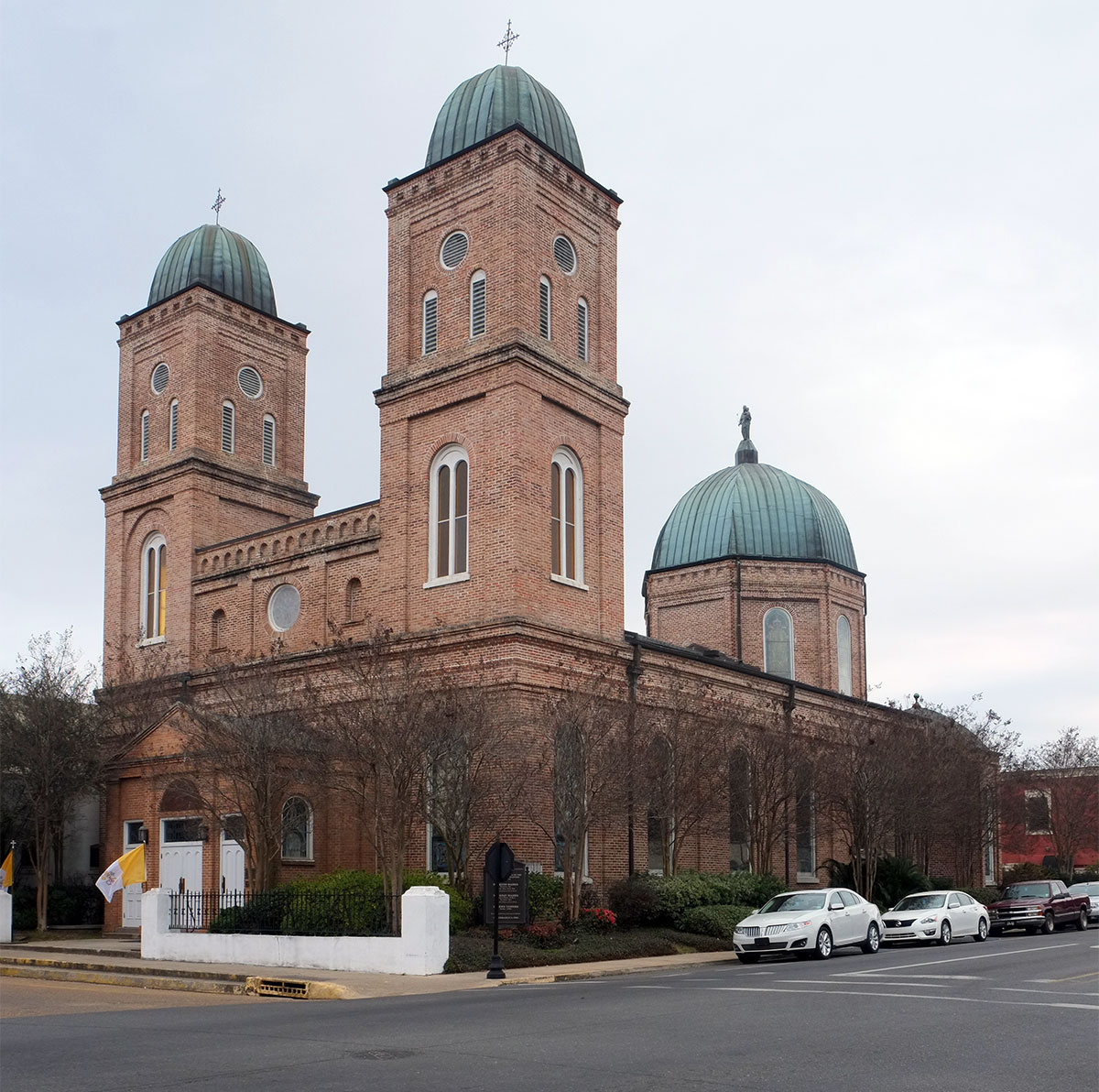
The river flows through the center of town, with the buildings sitting on the higher ground above the floodway.  The lower area by the river is used for a park, parking, and river access, a really nice way to make an open space while acknowledging that this will flood.  (A few weeks after our visit this area did indeed have some major flooding, but I wasn’t able to find out how the town fared.)DSCF3978
Not all the buildings are old and quaint – it is the home of the Northwest Louisiana History Museum, which was for some reason combined with the Louisiana Sports Hall of Fame.  DSCF3993

I was very surprised to find such an edgy building in such a location – the folks at Trahan Architects have clearly been reading their magazines, and the skin was the hippest we’d seen since Miami.  DSCF3998
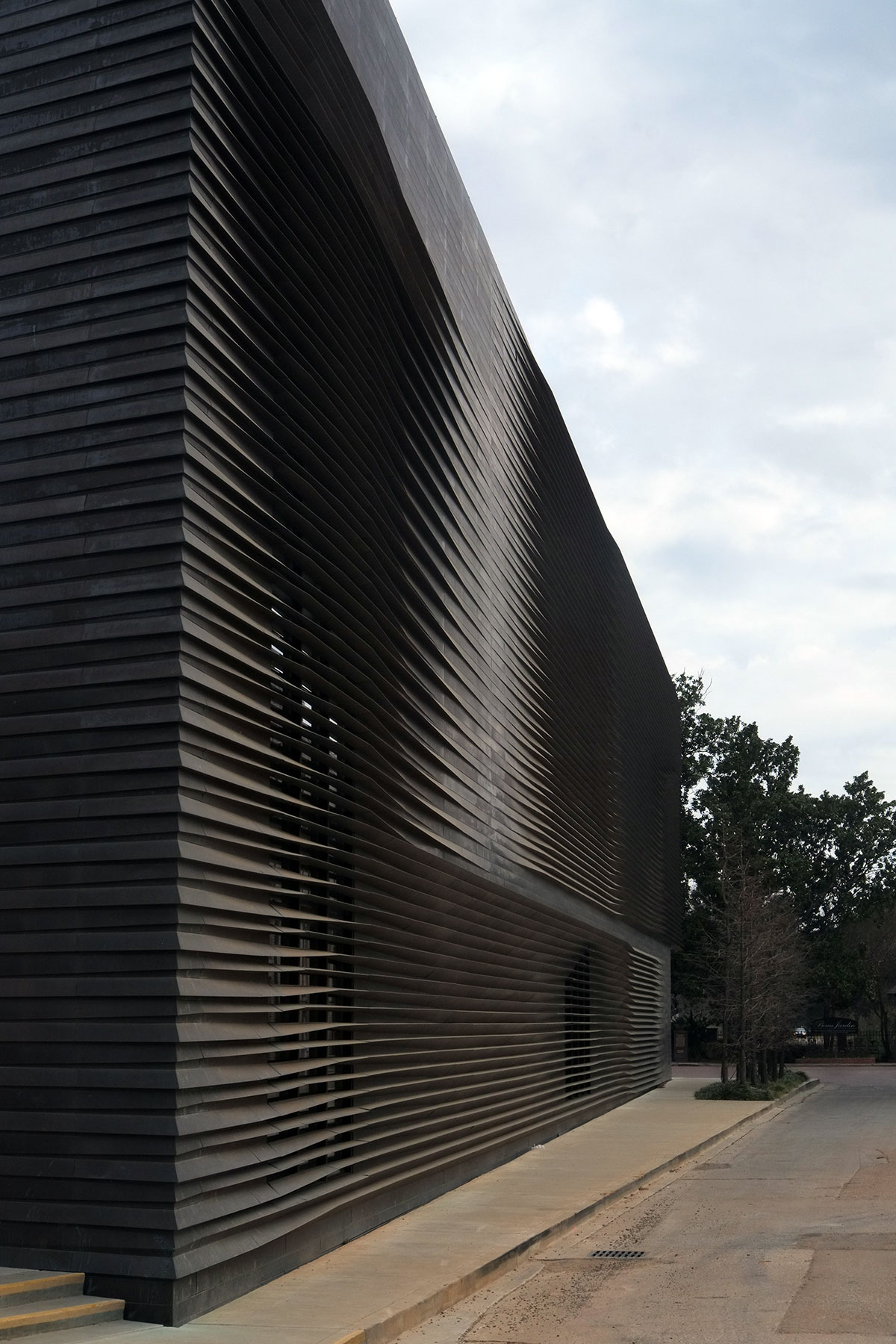
Strangely, it looked pretty darn good in the town – the massing is simple and in scale with the surroundings, the entry space under the floating screen wall relates to the verandah architecture of the nearby commercial buildings,DSCF4003 it’s dark-colored, and it anchors a funny shifting intersection.  On the whole, it was much better than the pseudo-historicist buildings we saw there (such as the one beyond it).  It was Sunday so we couldn’t get inside, which was too bad, as Glen and Michelle had designed some of the exhibits.
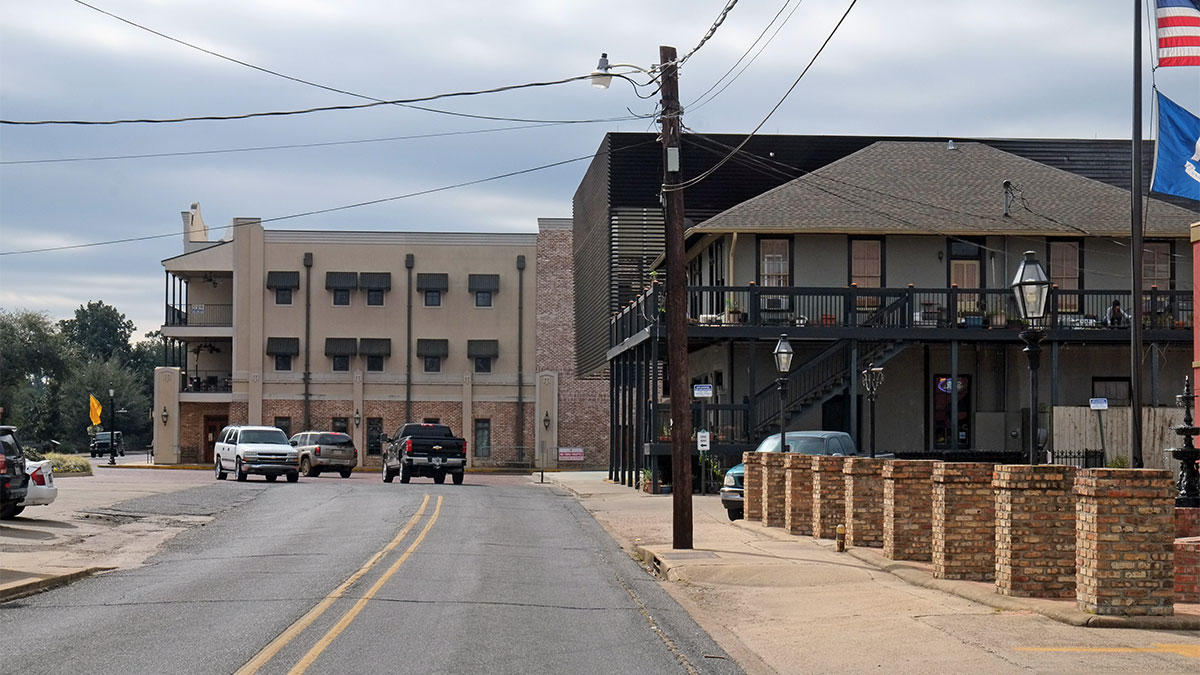
We hadn’t heard great things about Shreveport, but we enjoyed it.  We stopped for lunch at Strawn’s Eat Shop (we found it through Roadfood.com, and couldn’t resist the name).  Food not worth blogging about, but we liked the ambience.  DSCF4029
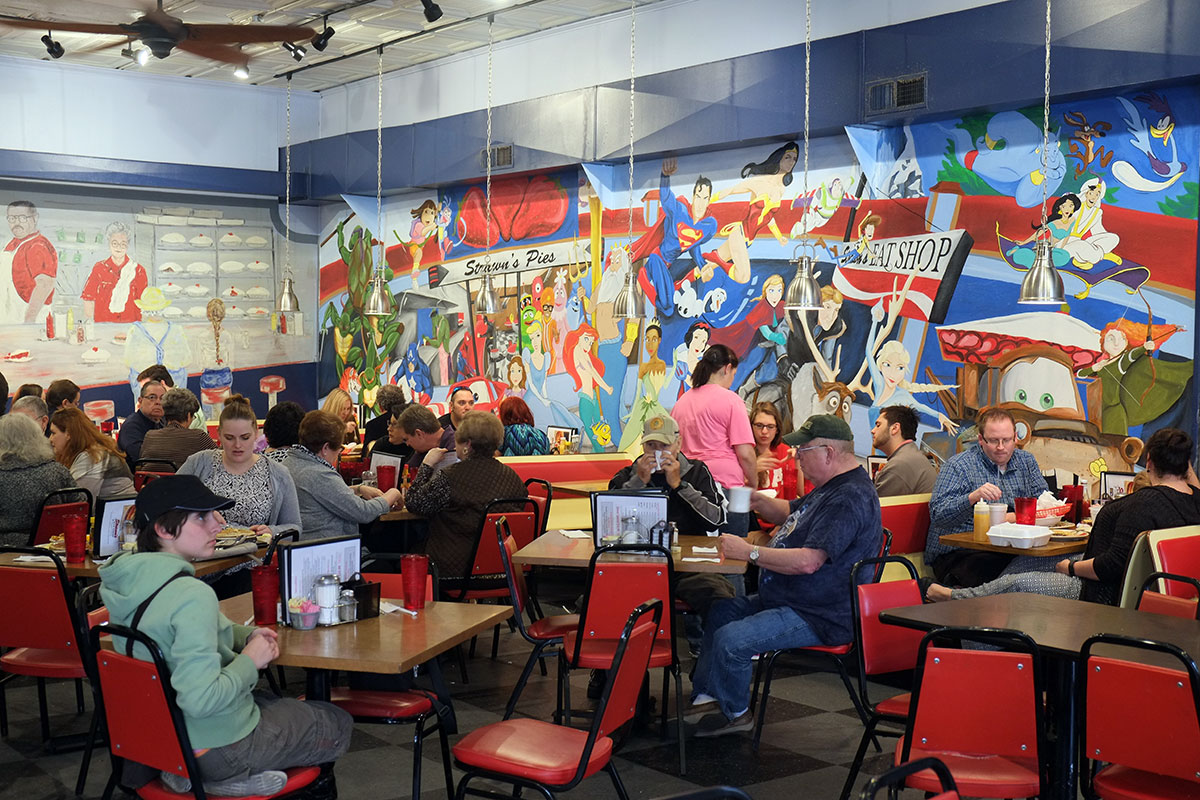
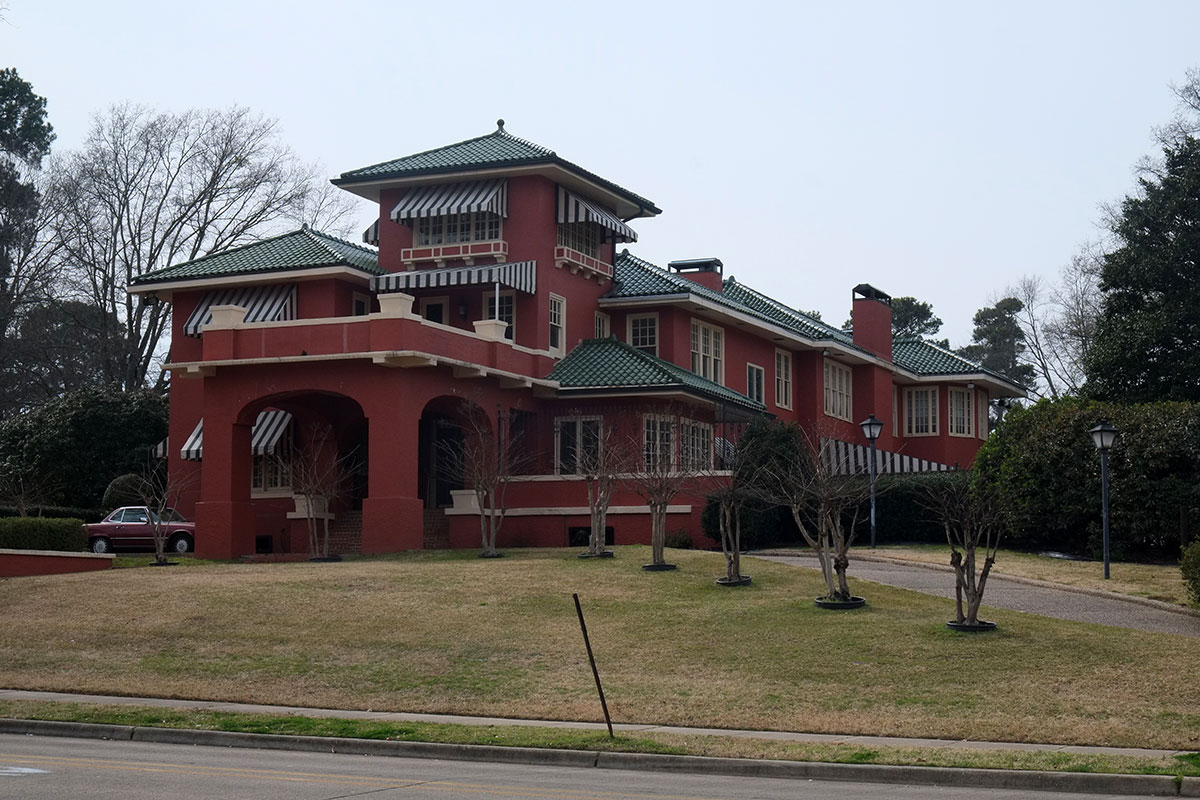
We saw what was clearly the older expensive neighborhood, DSCF4032
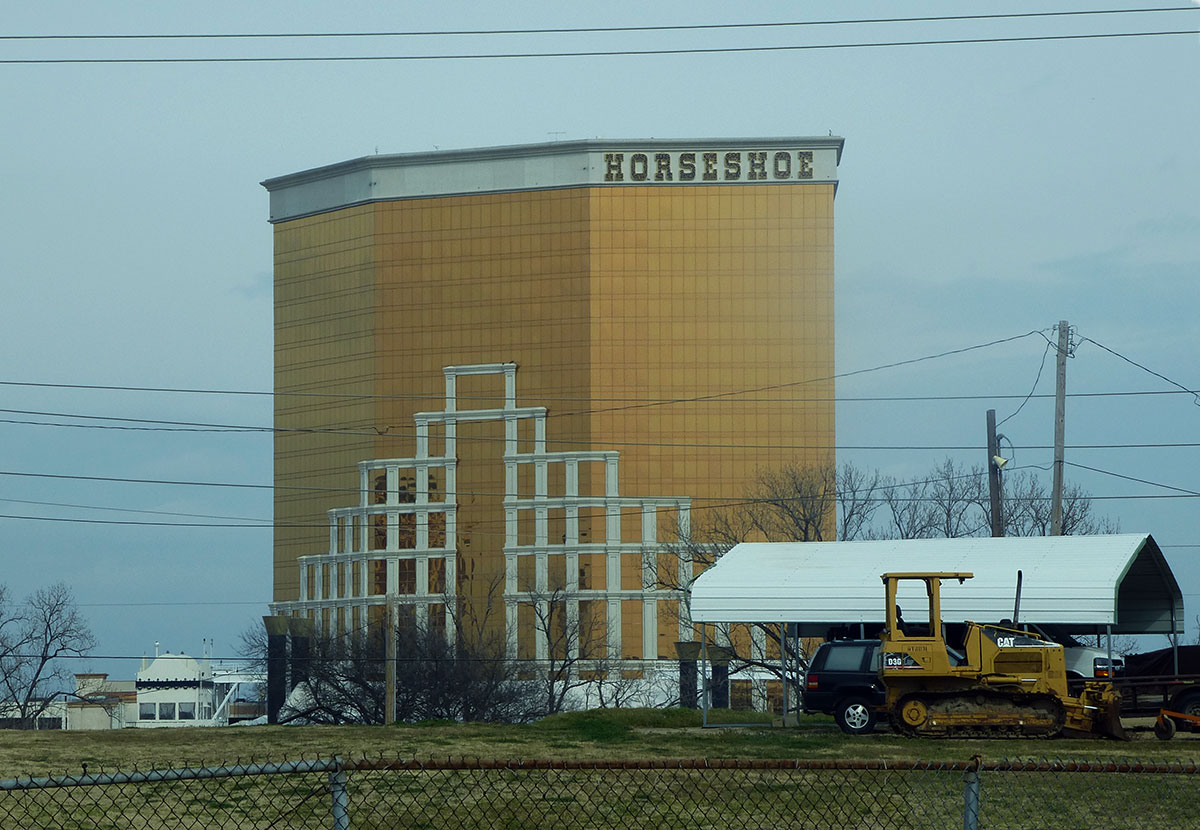
and then perhaps the worst Pomo building in the world, even uglier than the Jacksonville courthouse.  Casino architecture is inherently strange, but cheap casino architecture may be the most depressing stuff around.P1070328a
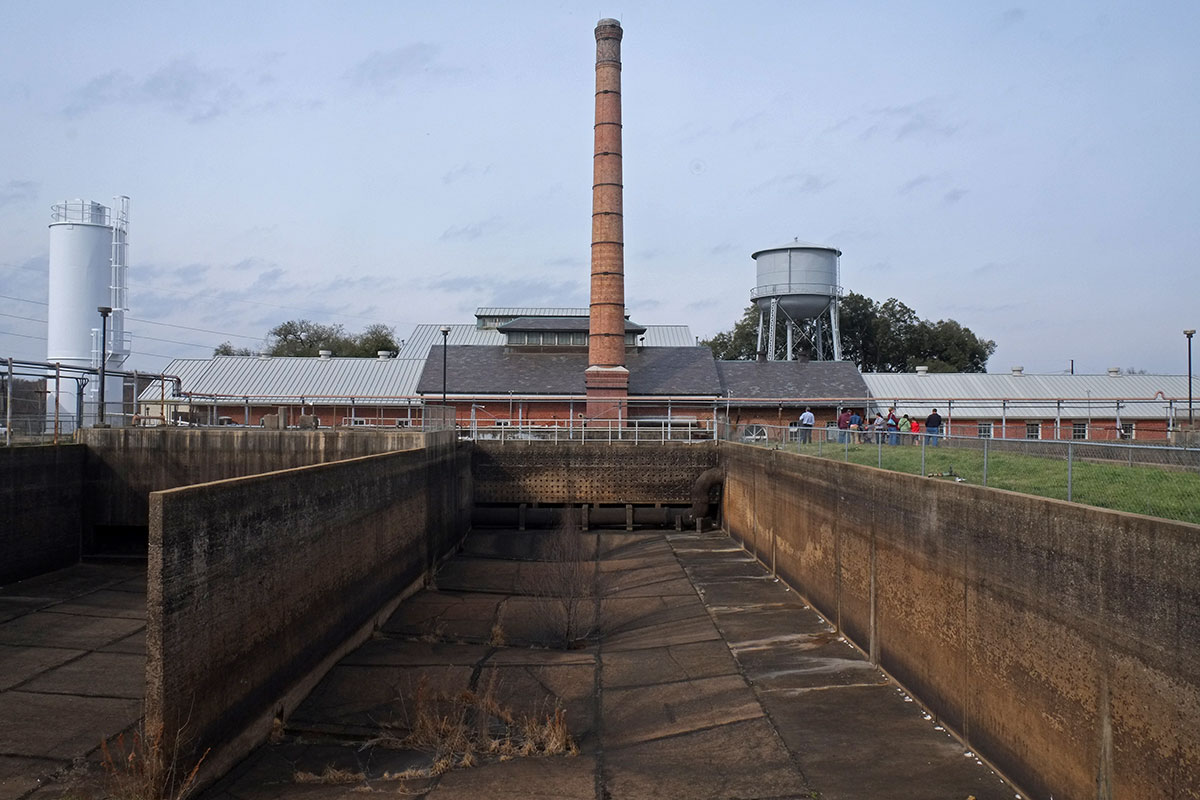
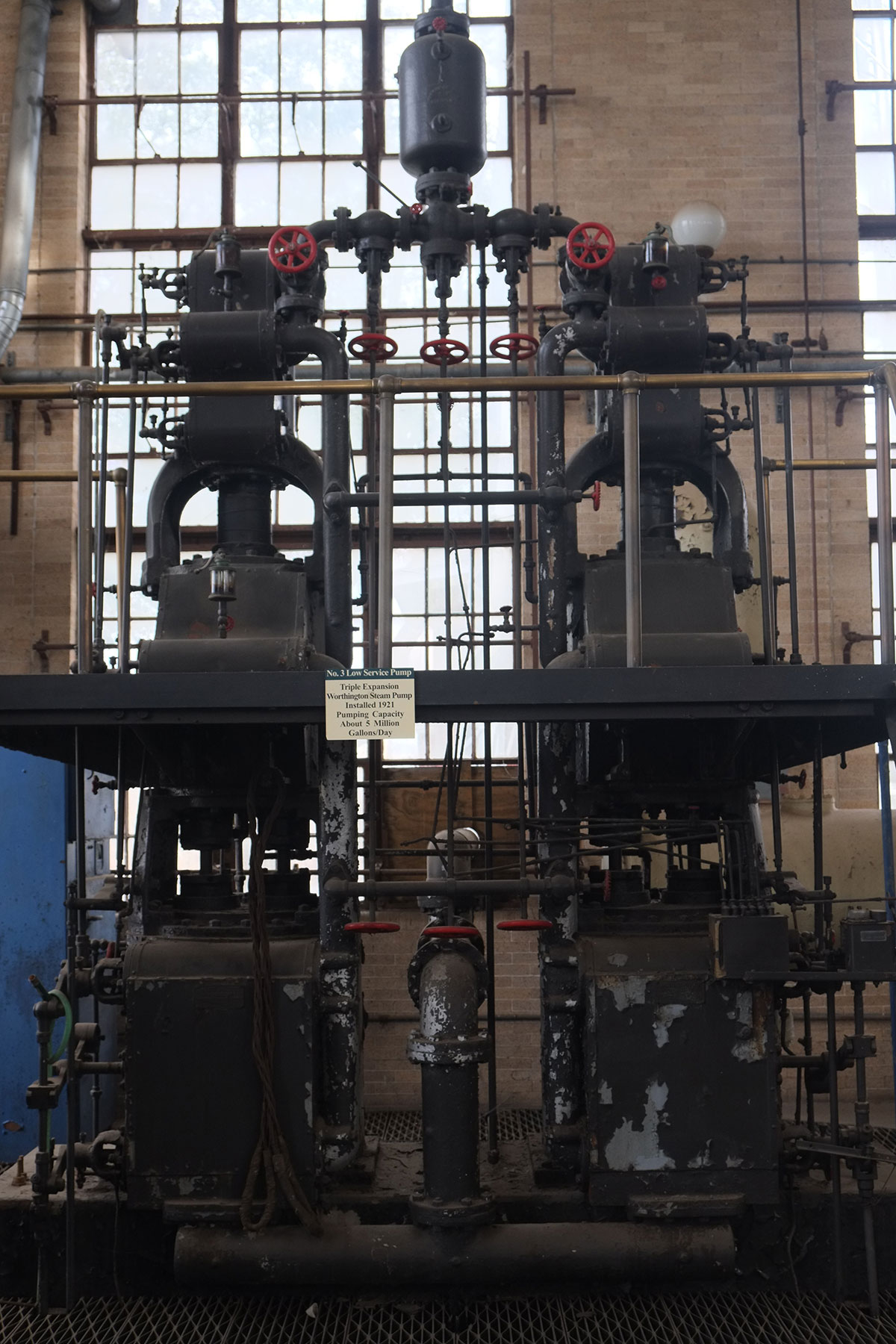
But by far the highlight of Shreveport was the Waterworks Museum. DSCF4053
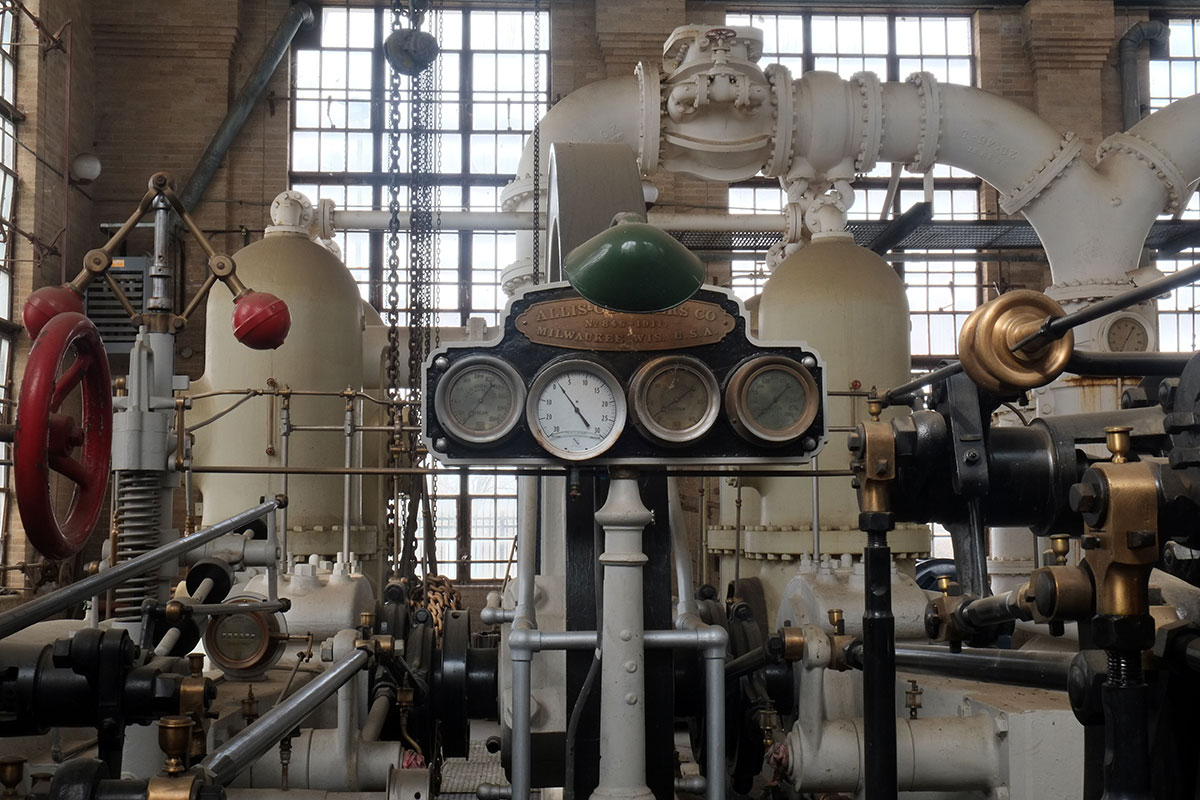
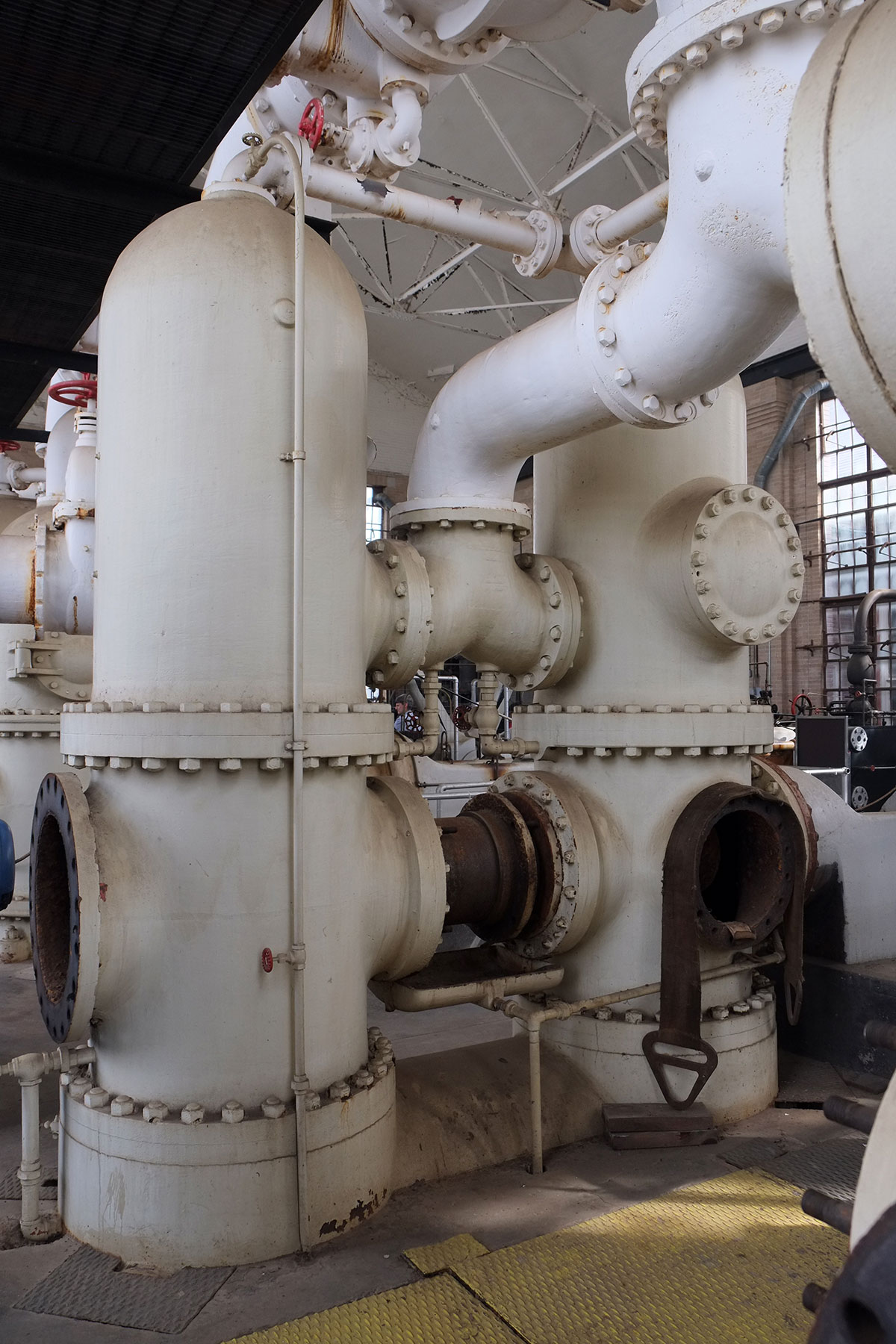
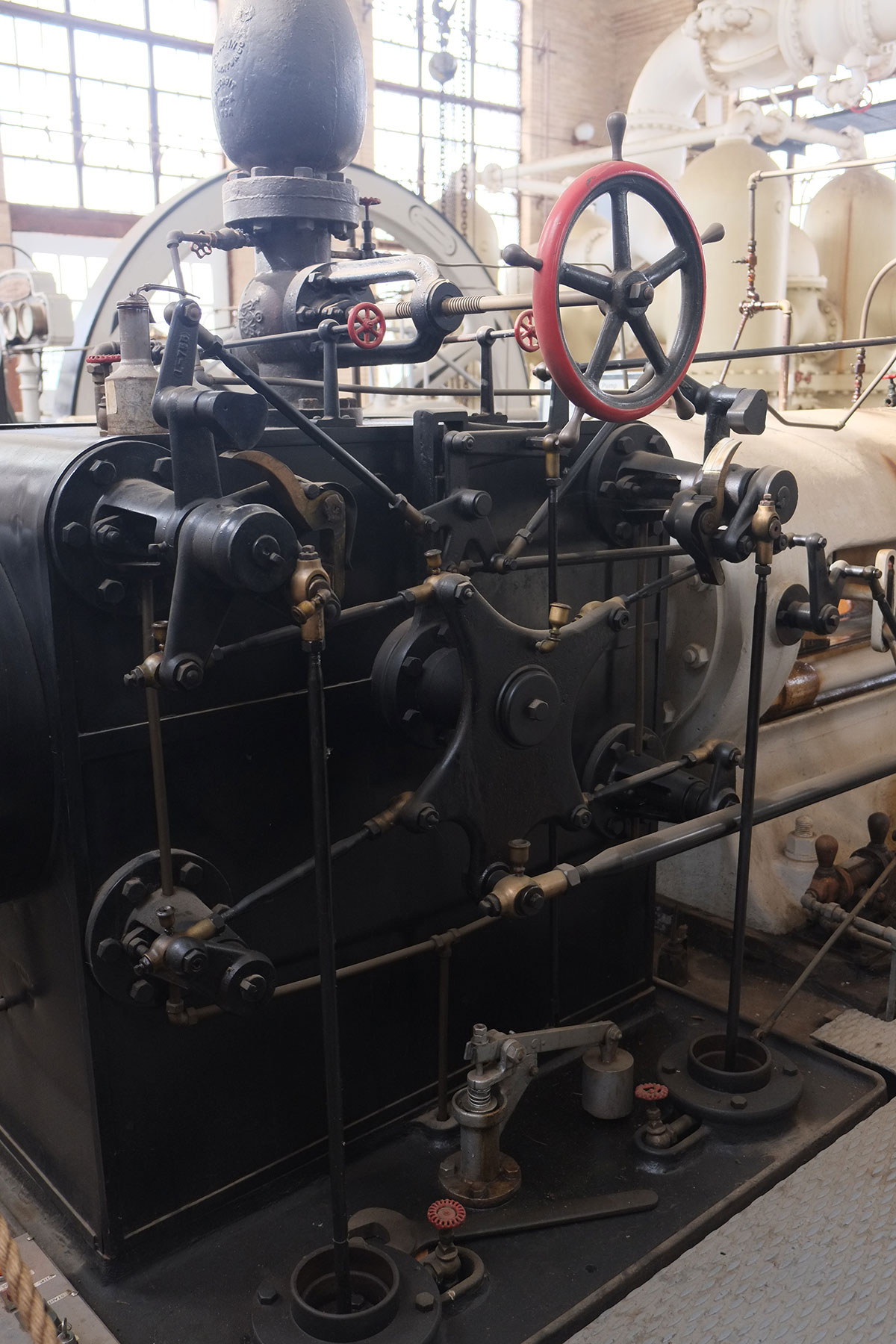
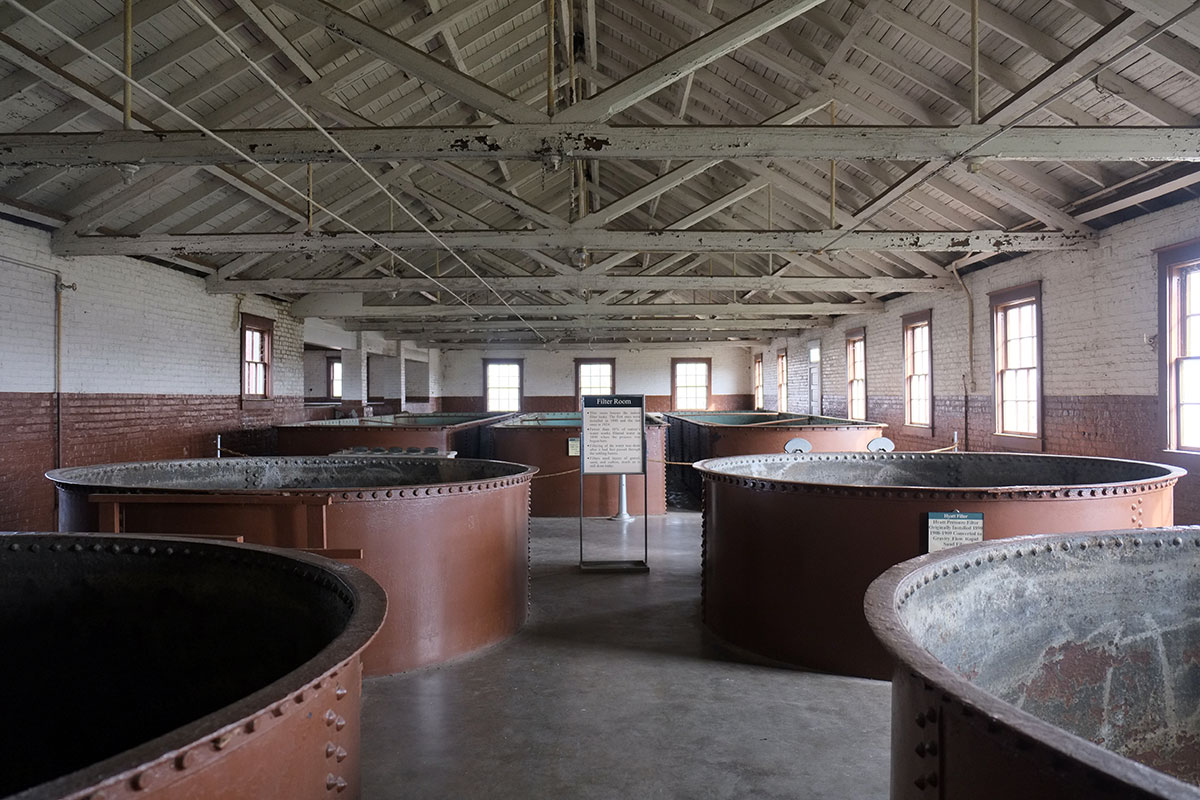
They ran their municipal water system on steam power until 1980, and then when they revamped it all, they preserved the whole earlier plant, with boilers, pumps, controls, settling tanks, labs, etc.  It was superb. DSCF4046  DSCF4058   DSCF4050  DSCF4092  DSCF4079We randomly arrived on a Sunday afternoon, and were able to join a tour with a group of cub scouts, which had an excellent guide who clearly loved the place.  As I’ve mentioned, neither of us especially likes visiting historical places where something once happened, but there’s no visible evidence.  We like seeing real stuff ([preferably Steanmpunk stuff), and this was about the best industrial archaeology we’ve seen on the whole trip.
The Panorama Jazz Band marches (videos)

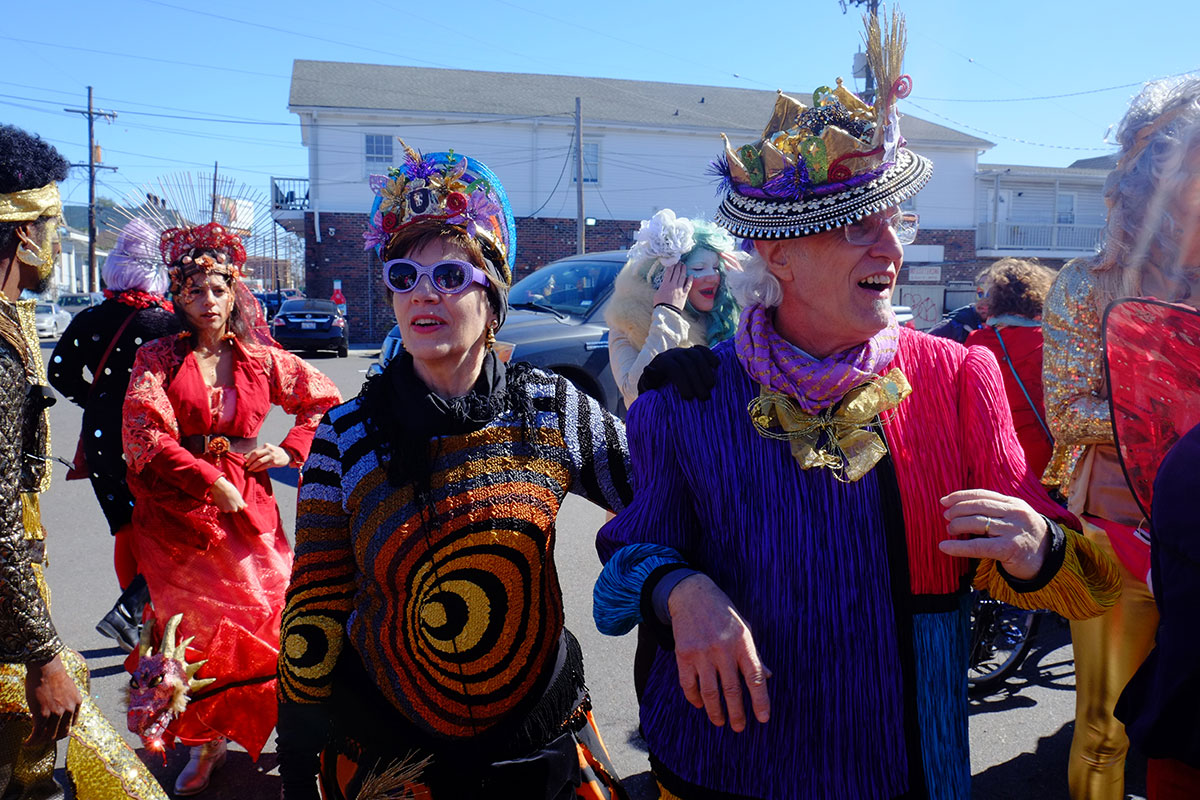
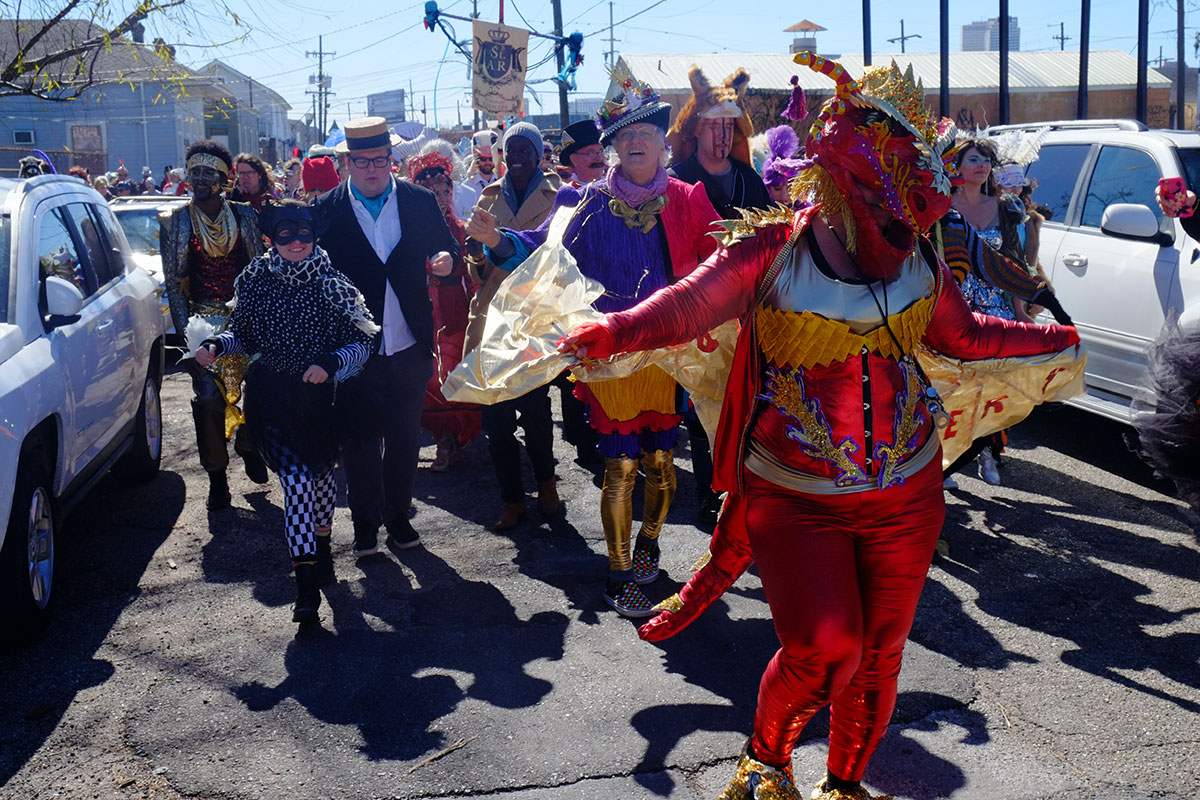
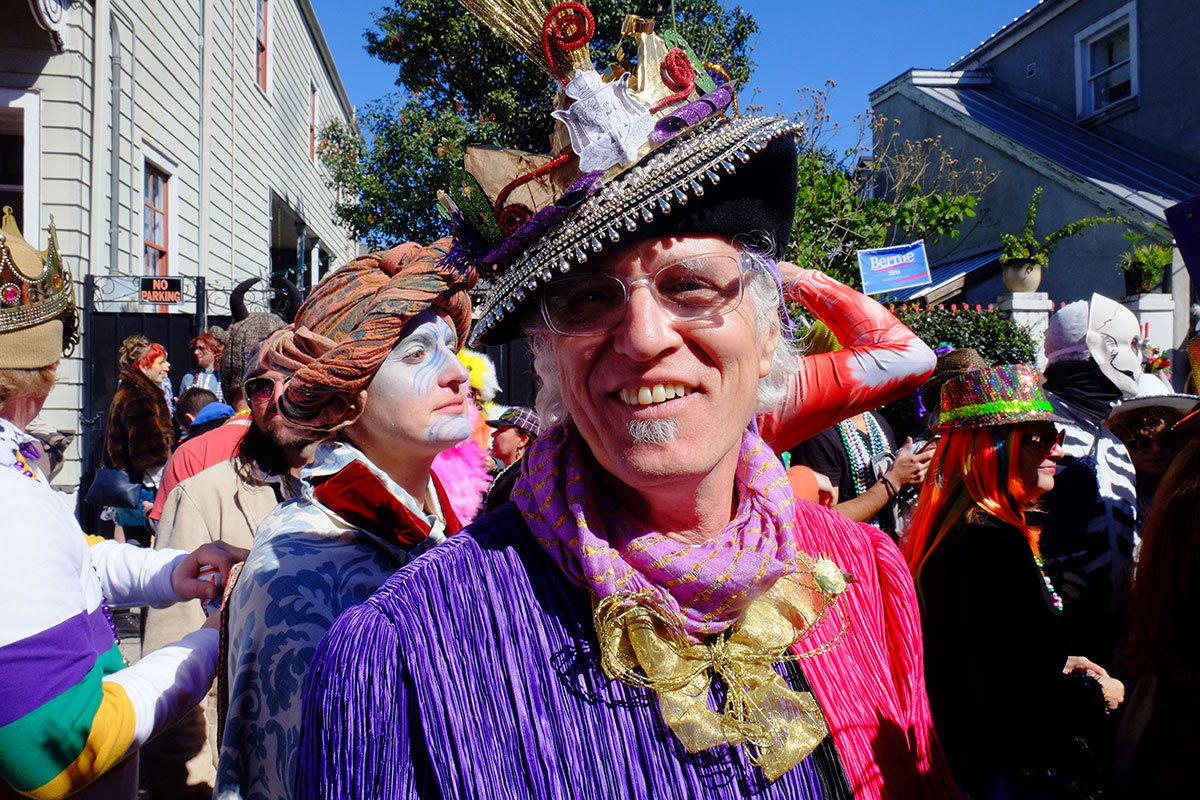
New Orleans has been amazing in every way, but perhaps the most fun we’ve had was marching with the St. Anthony Ramblers on Mardi Gras.  I posted some photos to show what the costumes were like, but a huge part of the experience was the music of the Panorama Jazz Band.  (http://panoramajazzband.com/bio/)   I’d never been in New Orleans before, but an image that always intrigued me was that of a jazz band marching down the street with a krewe of revelers (or mourners) behind it.  So being in that krewe behind a great band was a fantastic experience for both of us.  I apologize for the lousy quality of the videography (I’m not a videographer, my camera is notably terrible for video, and the drinking started very early in the day), but the beauty of the music comes through.
Here they are while the Ramblers take a break at the first bar stop:

The Ramblers regrouped and marched on, with Greta, Glen, Michelle and Stephen near the van.

The Ramblers march by:

At the second bar stop:

And a final song from the Panorama Jazz Band in the French Quarter before we headed off to the party.

We had a great time, with a lot of interesting and fun people.  And the next day, as we walked down Royal St., we realized that we’d never be able to recognize any of them again.

Saint Anthony Ramblers – Mardi Gras

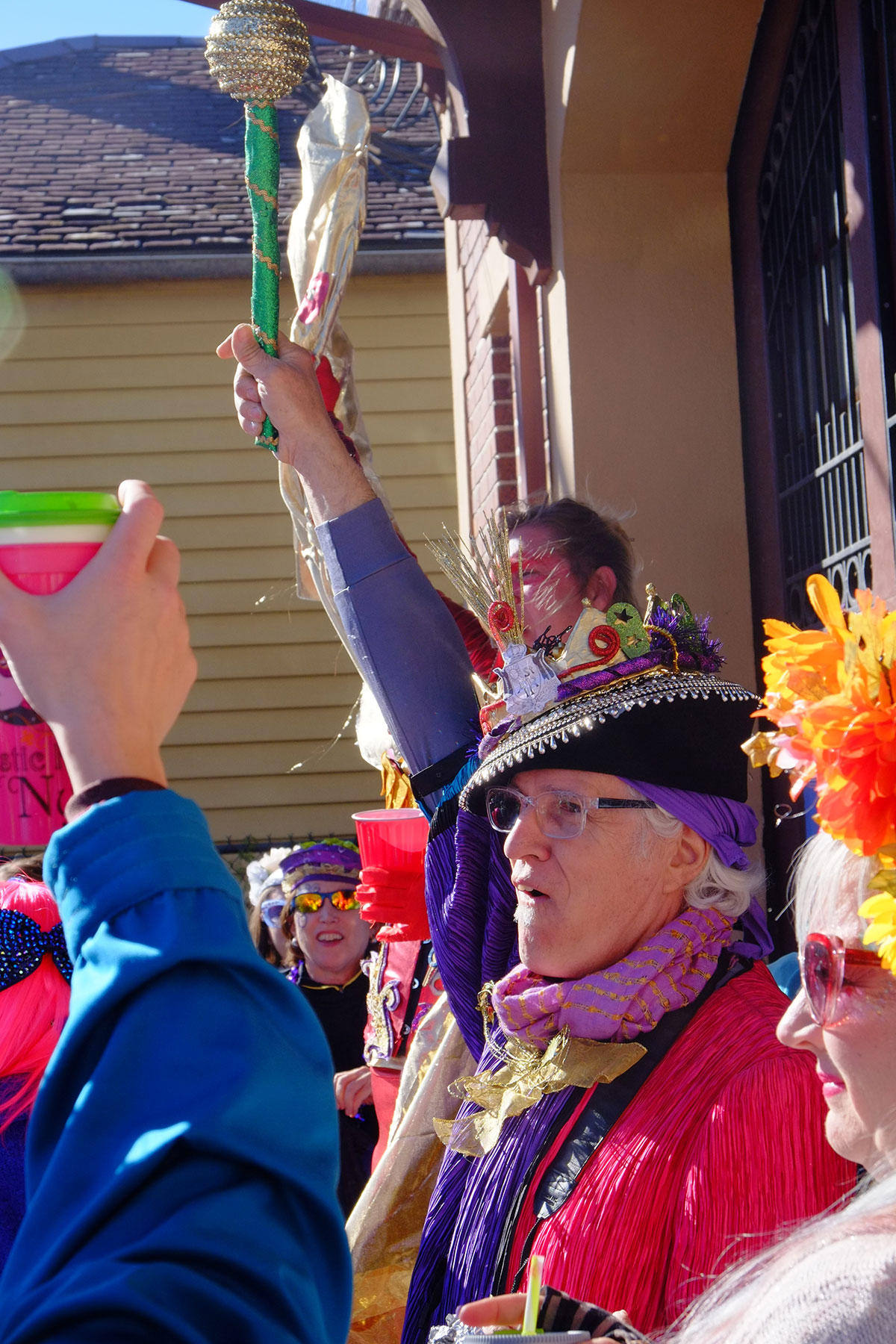
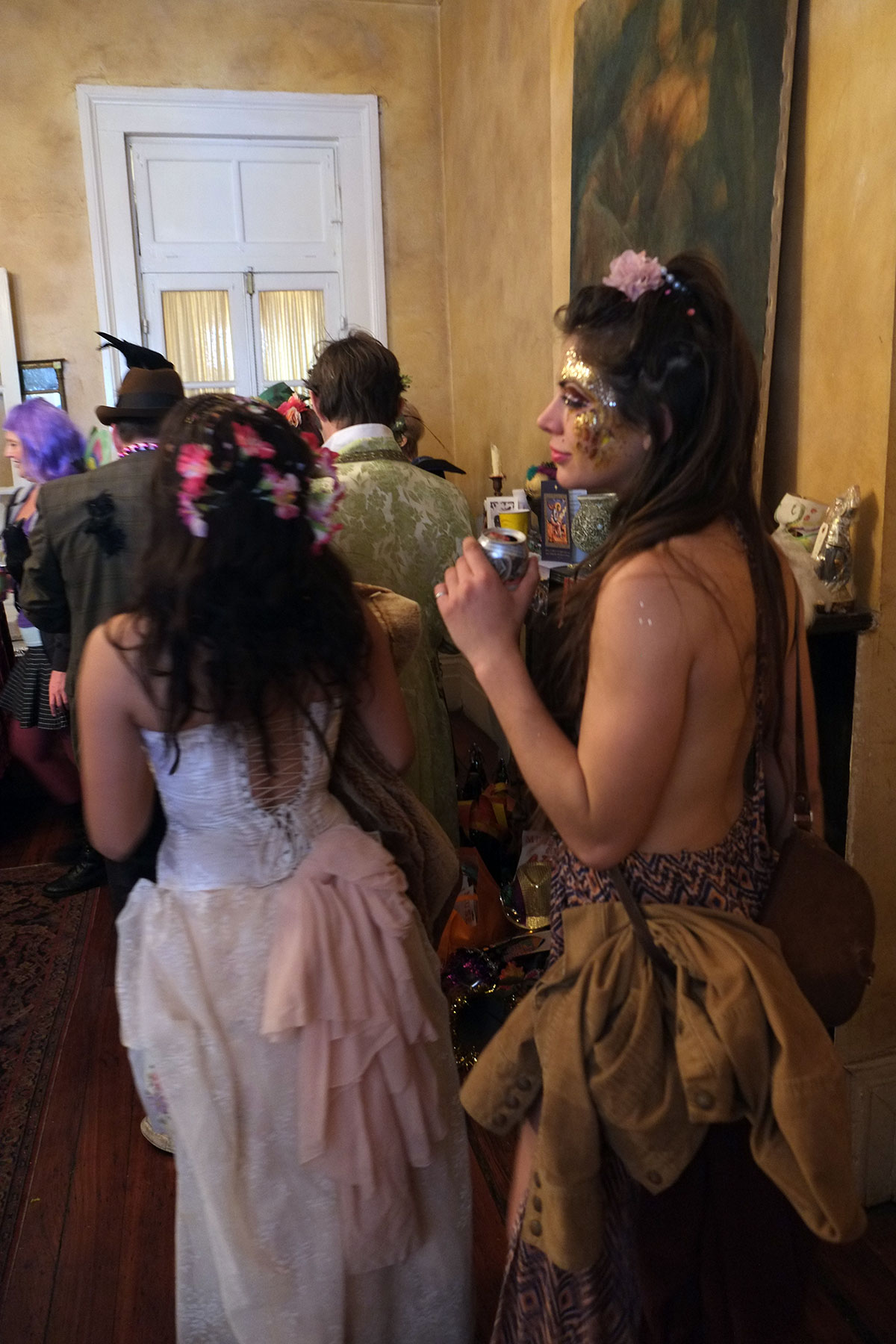
DSCF3126We’ve been here in New Orleans for a few weeks, staying with our friends Glen and Michelle in the Marigny.  There will be many blog posts about this, but I thought we should get today’s photos of Mardi Gras up now.

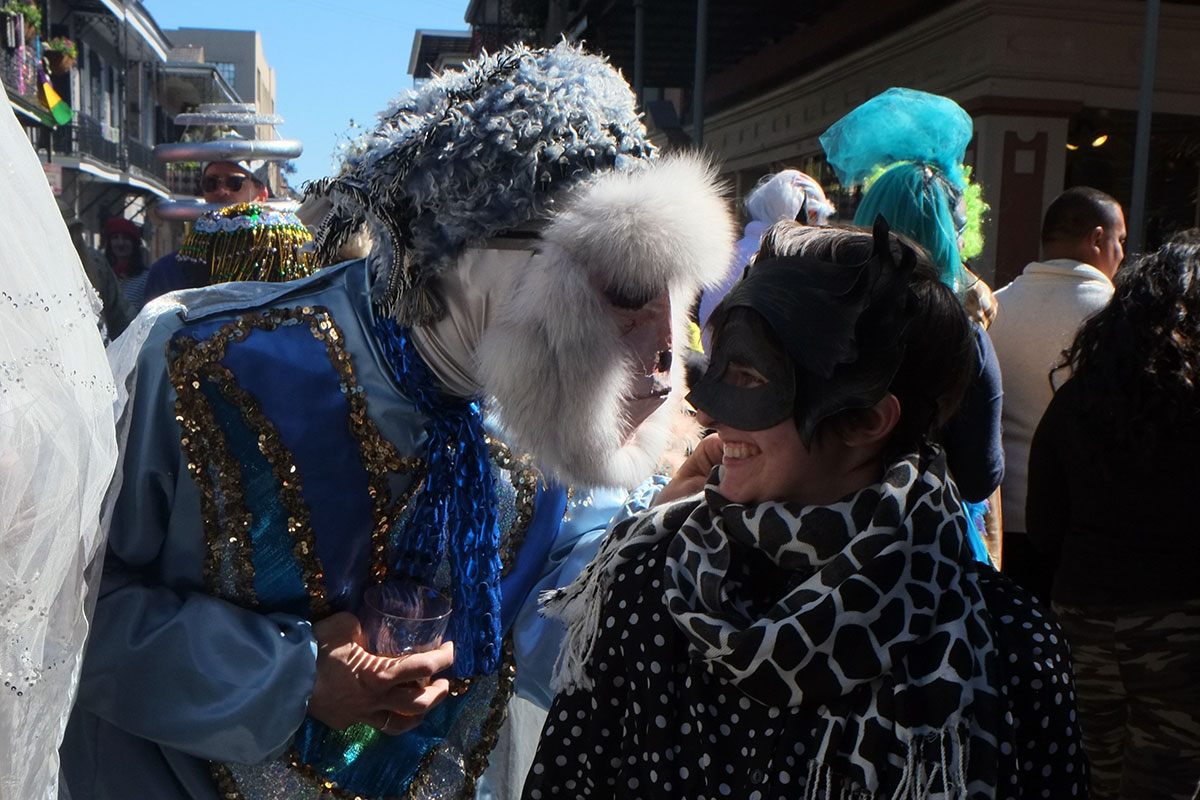
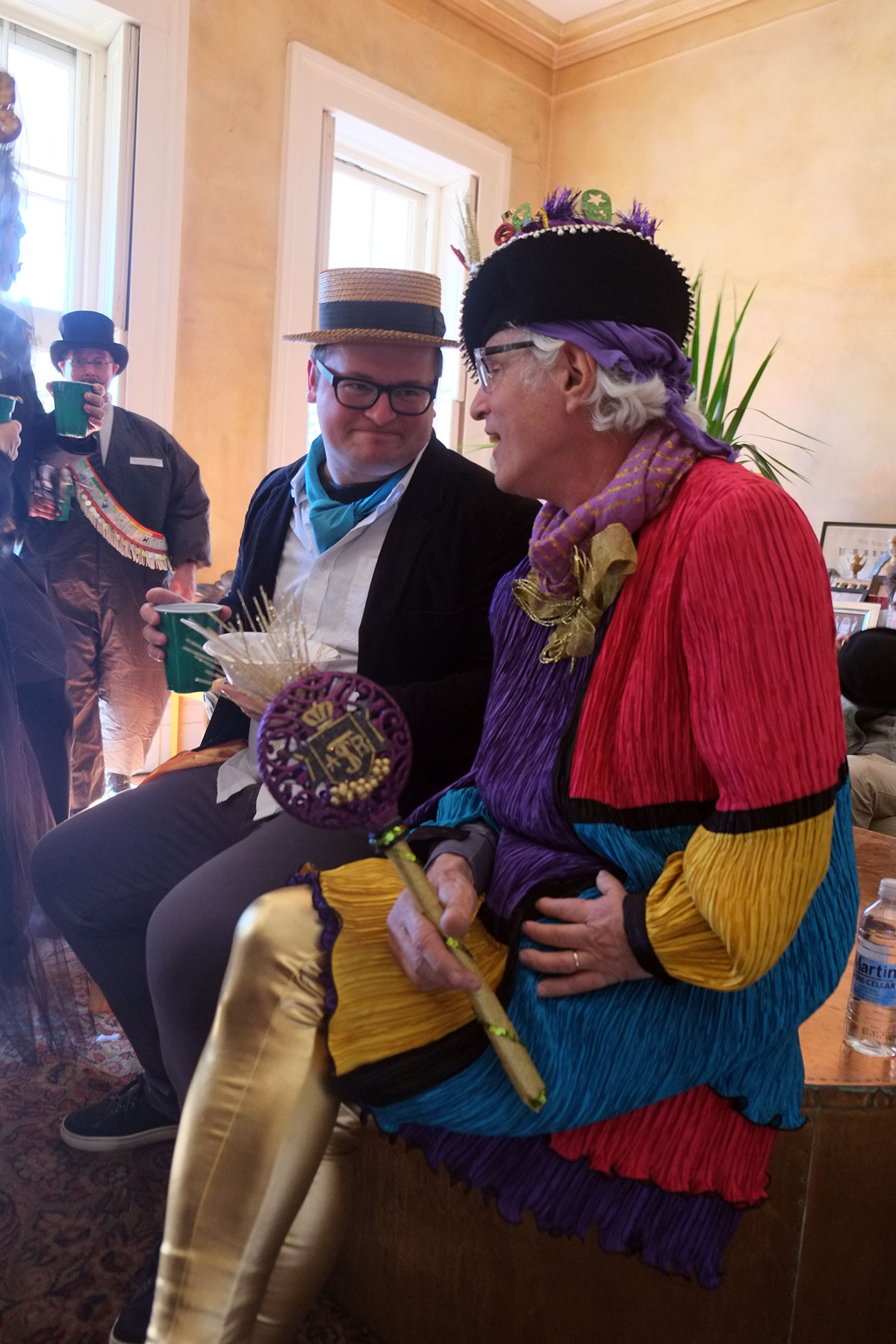
The day started with the gathering of the St. Anthony Ramblers at Glen and Michelle’s firehouse, then a parade with the Krewe and the Panorama marching band through the neighborhood and the French Quarter.
DSCF3045

Glen receives his scepter as the King of St. Anthony’sDSCF3019

and the Krewe lines up by the scamp for one last bathroom visit before the paradeDSCF3011

Glen and Michelle, the King and QueenDSCF3121

Tommy and Rita, Jenny and Gordon – old friends of Glen’sDSCF3107

Greta leading the KreweDSCF3144

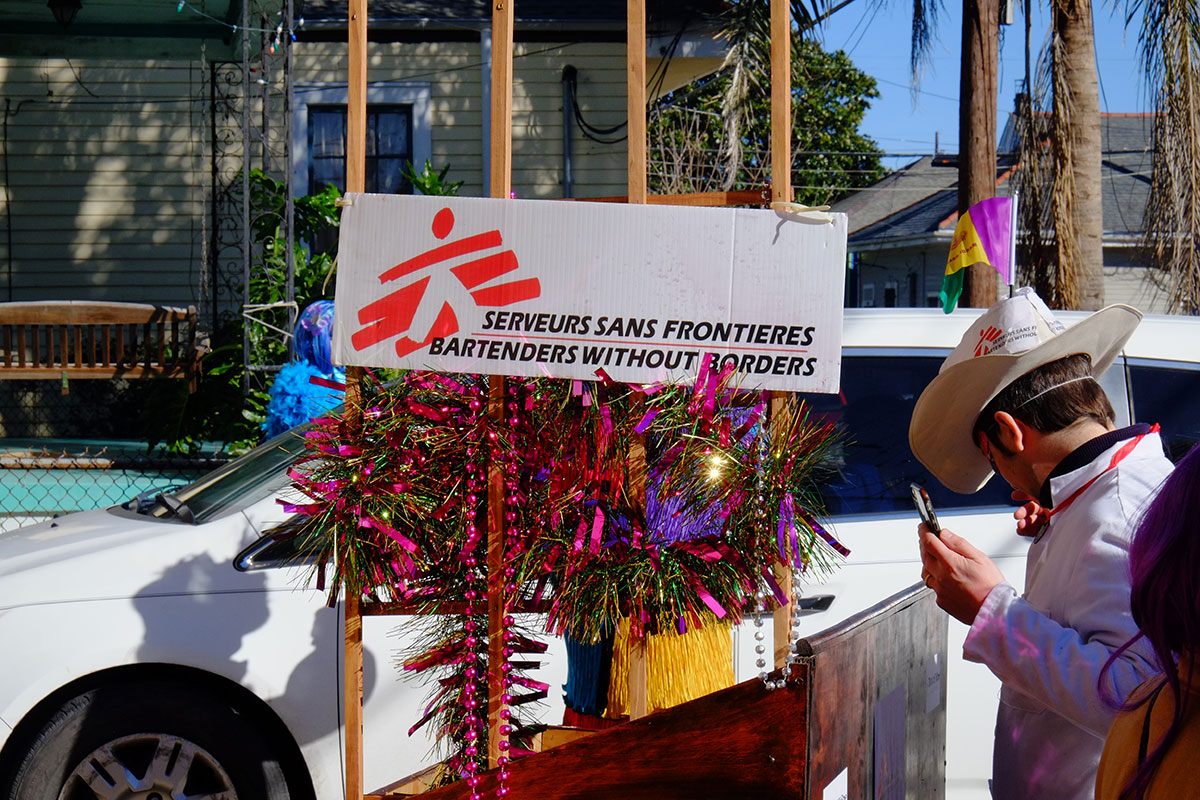
and the important humanitarian groupsDSCF3008DSCF3057

the amazing Panorama marching bandDSCF3192DSCF3156DSCF3185

Greta meets the monkey king as we cross Bourbon Street.
DSCF3263

The king taking a beverage break
DSCF3223

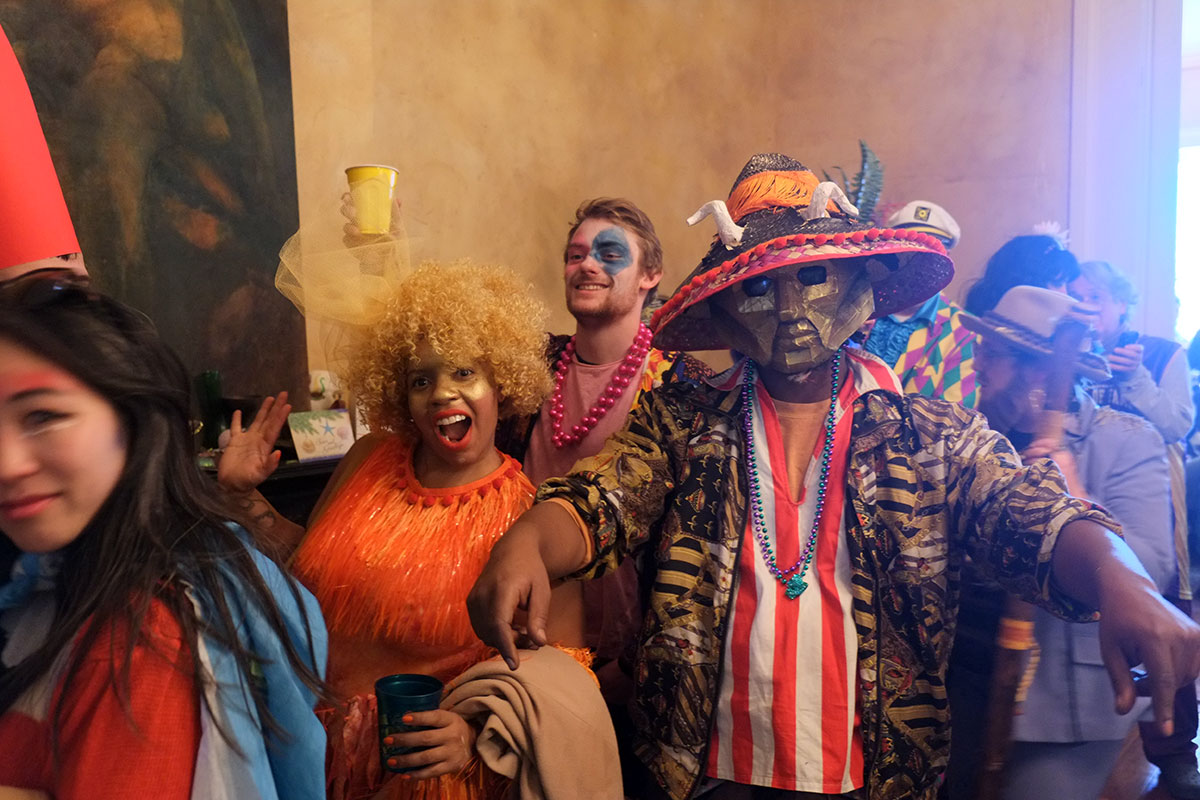
We arrive at their friend Constantine’s on Jackson Square for a fabulous partyDSCF3326

with the host dancing on the tableDSCF3372

and very friendly folks in the line for the bathroomDSCF3299

DSCF3295

the balcony overlooking the Square, from America’s oldest apartment buildingDSCF3339

Glen and his godson StephenDSCF3320

DSCF3371

Jimi, from SloveniaDSCF3386

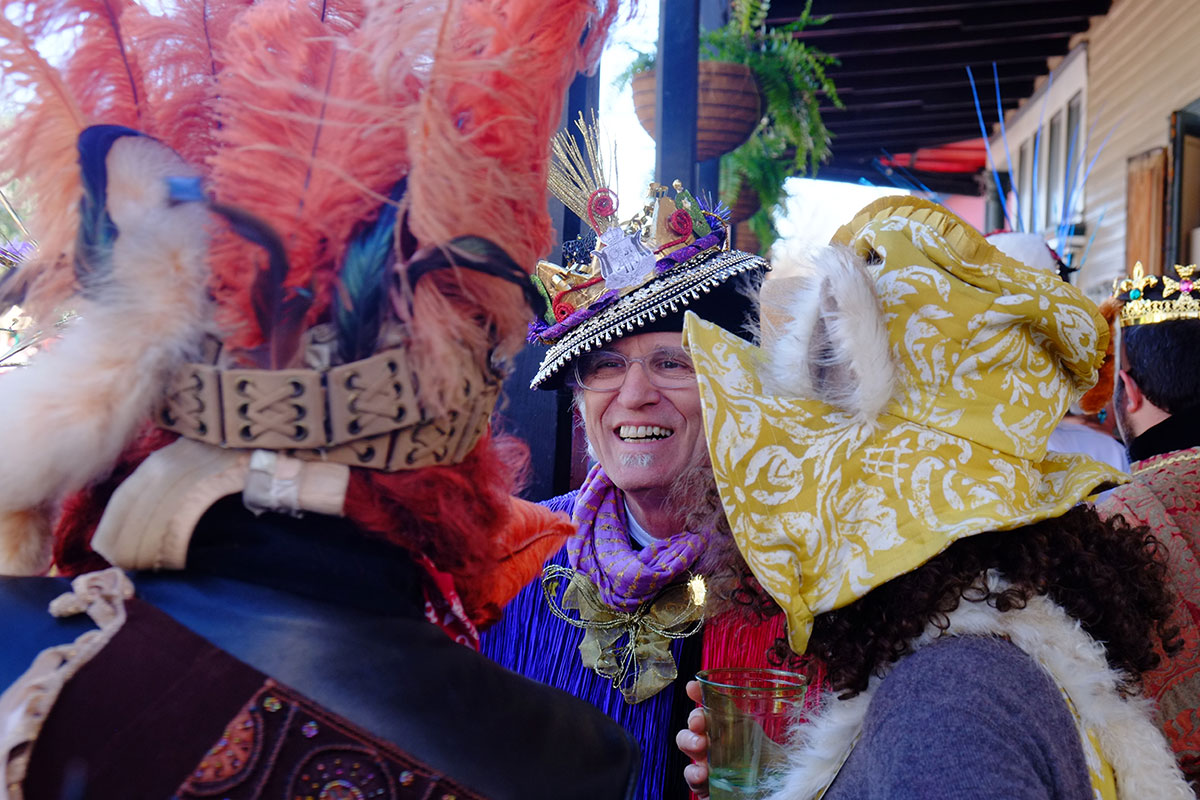
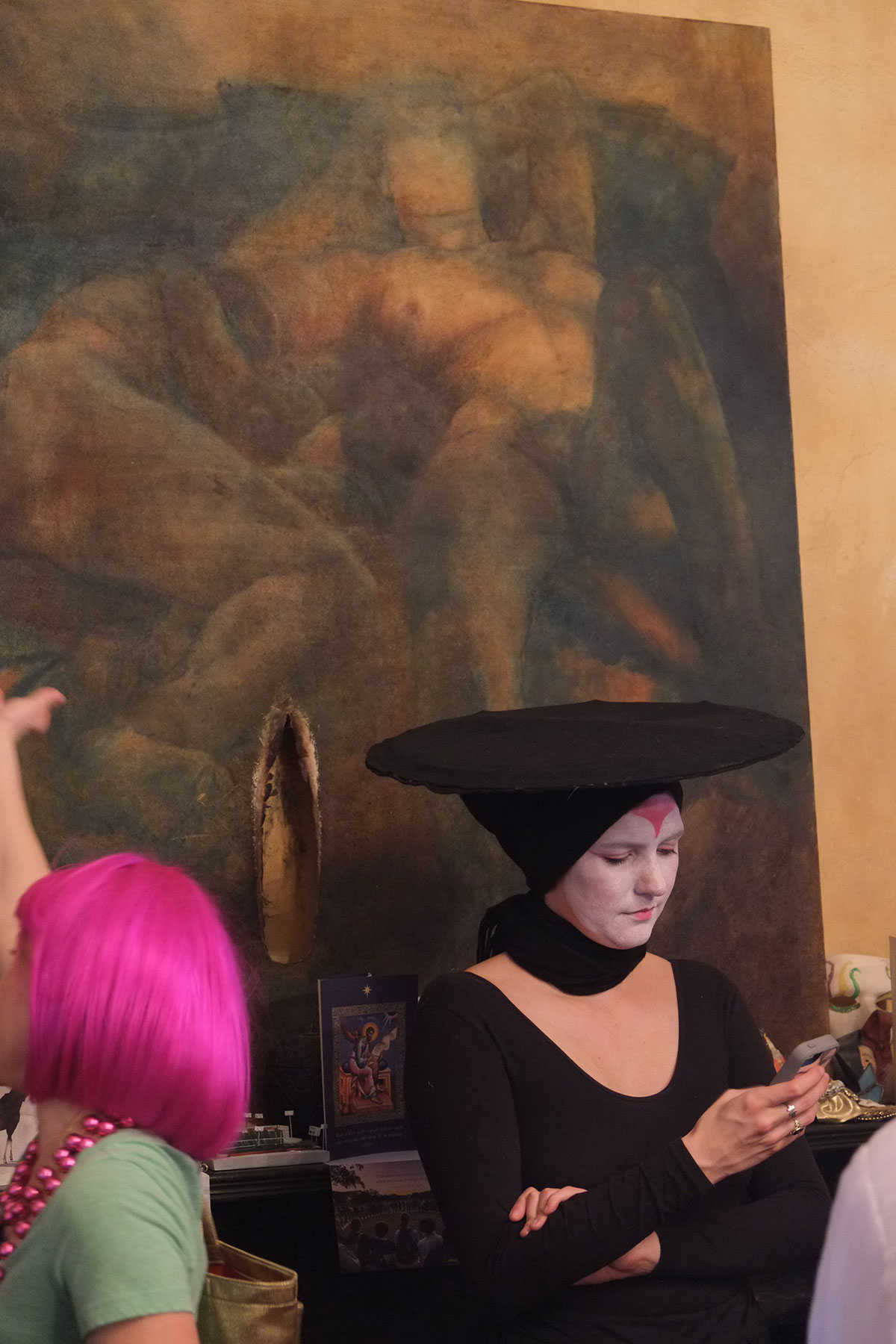
and great costumesDSCF3379

DSCF3399

Tom and Nathalie and JamesDSCF3395

Just follow this man around, and it’s a very good time.DSCF3203

Movies to follow.

Roadside kitsch

As I tried to plan our trip across the deep South, major destinations didn’t jump out at me.  The small towns and cities are not very notable architecturally, the landscape is flat and pretty monotonous, and there aren’t a lot of museums, other than those of local history.  So we turned to the maps of Roadside America, which highlight tourist attractions that may not be worth a trip on their own, but do provide a bit of relief on an afternoon’s drive.

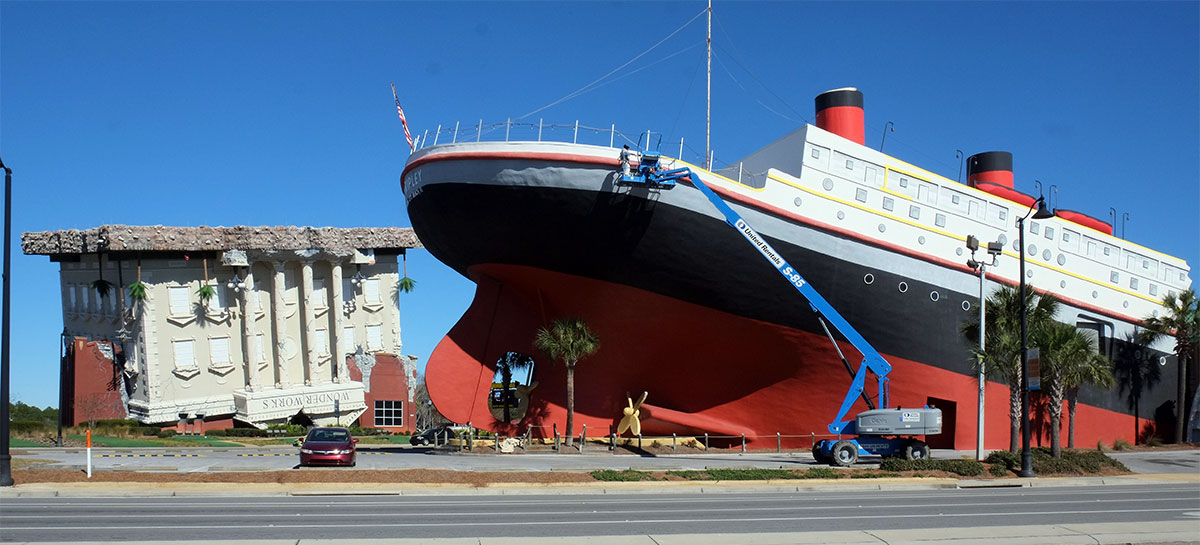
If South Dakota is the center of western kitsch, Florida is the king of the kitsch in the south.  There are carloads of tourists looking for distractions and kids to be entertained.  Panama City Beach has a main drag with one fantastic apparition after another.  There is the sinking ship at the Ripley’s Museum, DSCF0652

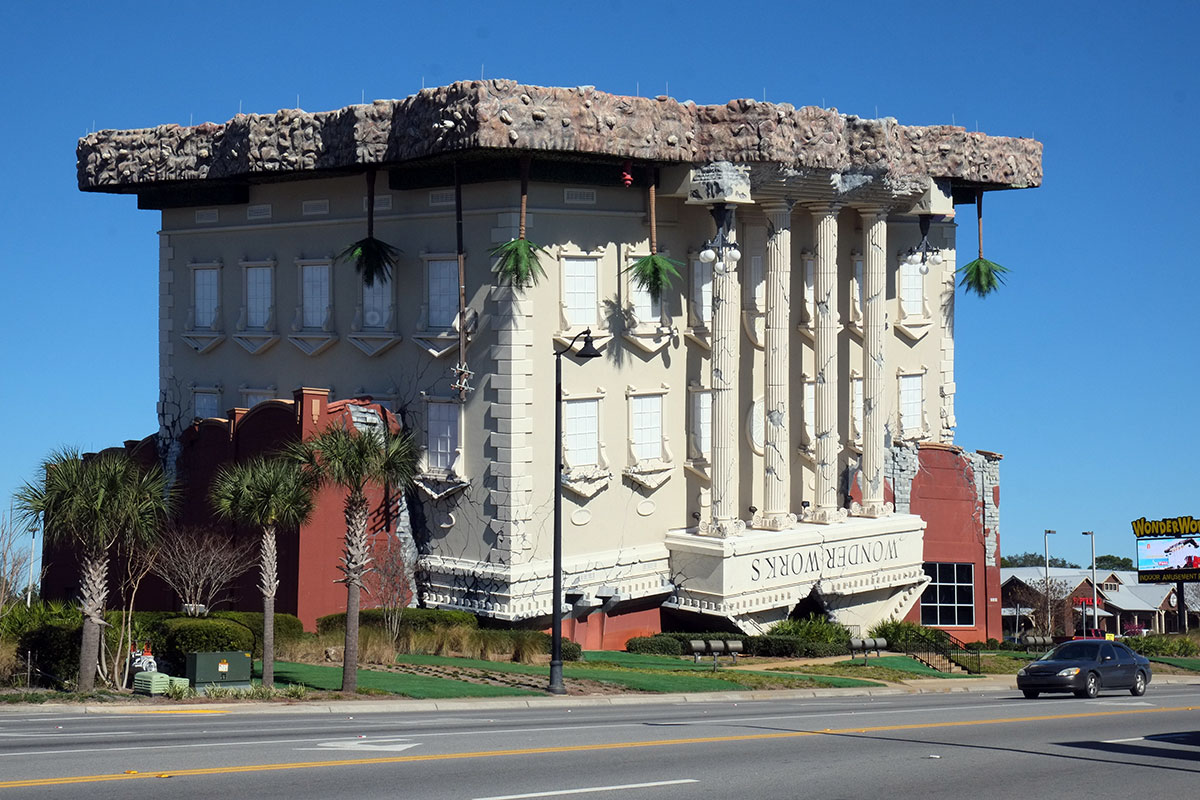
and the upside-down building of Wonder Works, very nicely done.DSCF0655

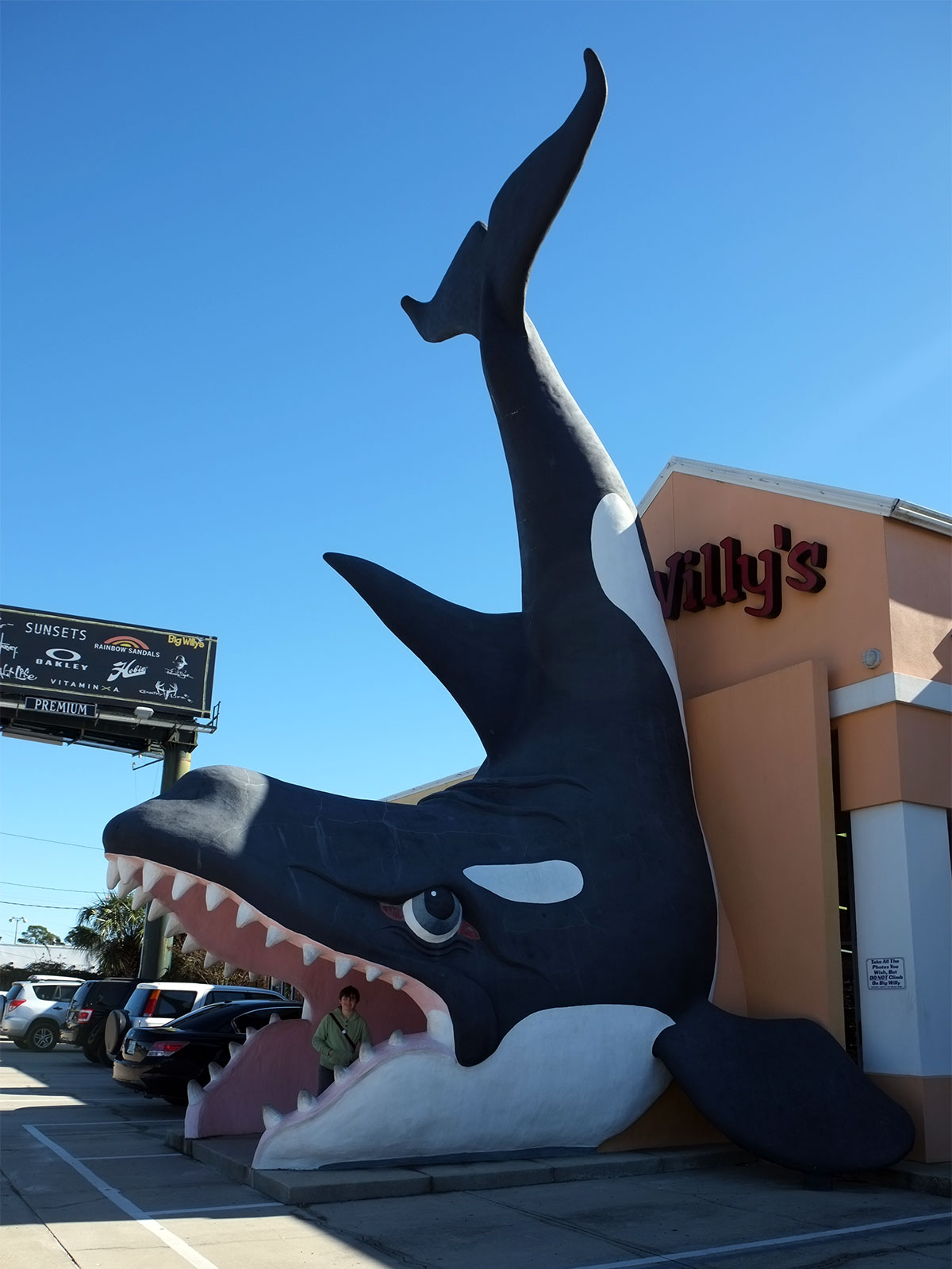
There are so many fiberglass sharks that we stopped paying attention, but being Northwesterners, this beautifully-sculpted killer whale (that’s what they’re called in Florida) got our attention.DSCF0635

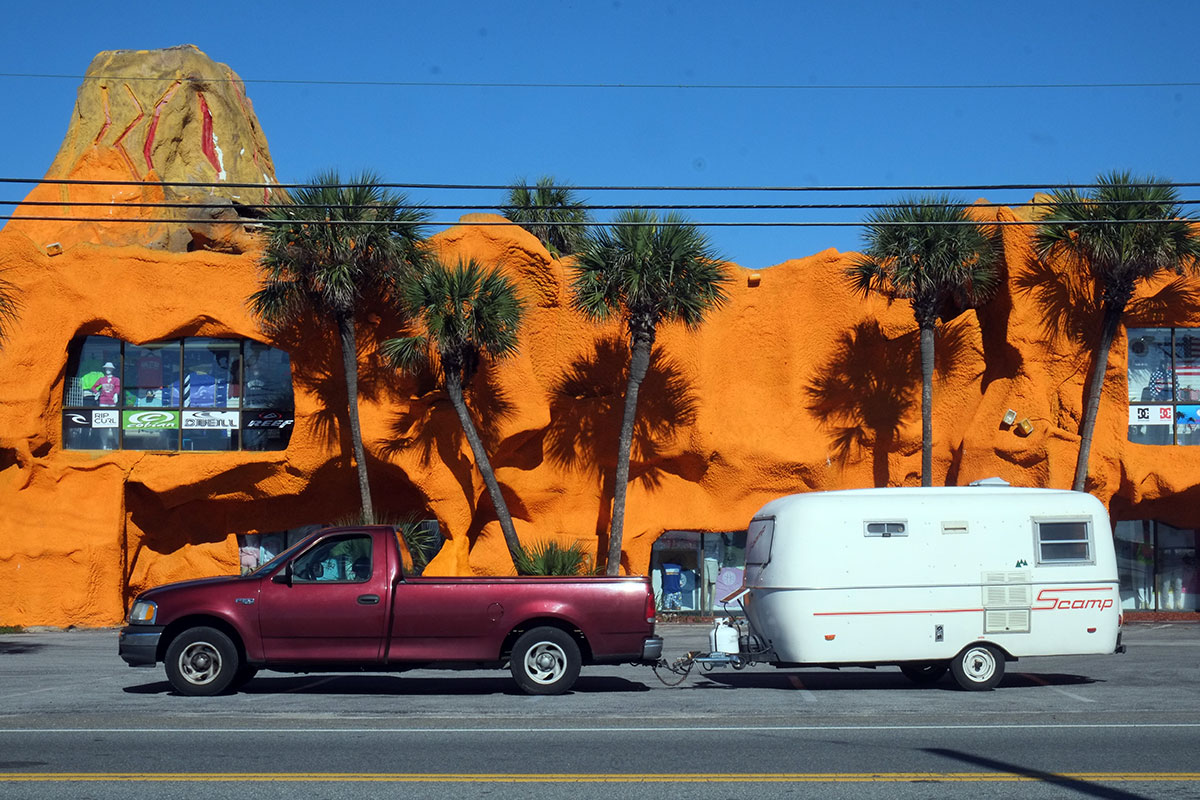
There is the local chain of beach stores, Alvin’s Island.  This is the most expressive of their locations.DSCF0661

And the Goofy Golf, which unfortunately was defunct.  DSCF0672

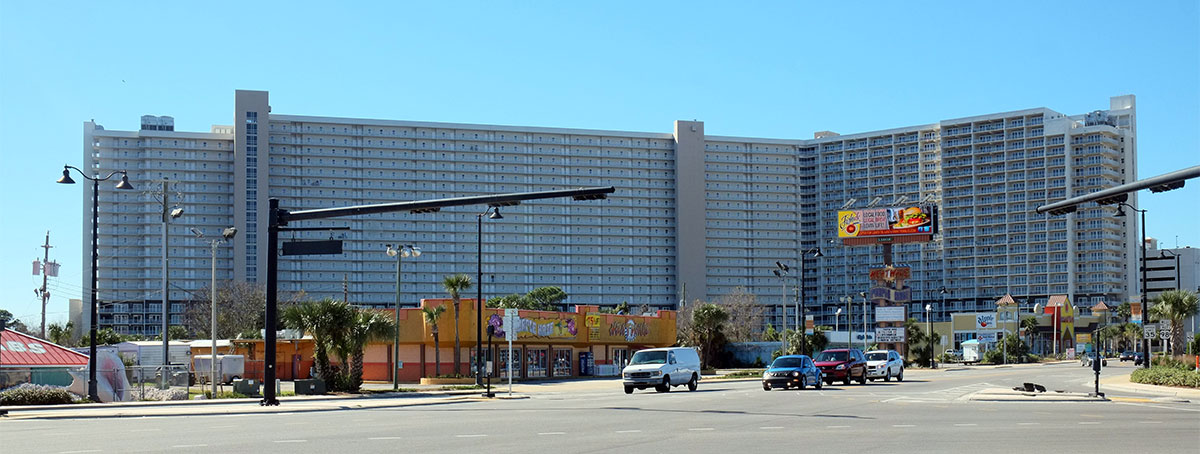
The flip side (literally) of this showmanship is the mind-numbing banality of the standard buildings – huge walls of condos and hotels facing the Gulf.  Route 30 through Panama City is the urbanistic equivalent of a mullet haircut – all business in the front and party in the back.DSCF0656

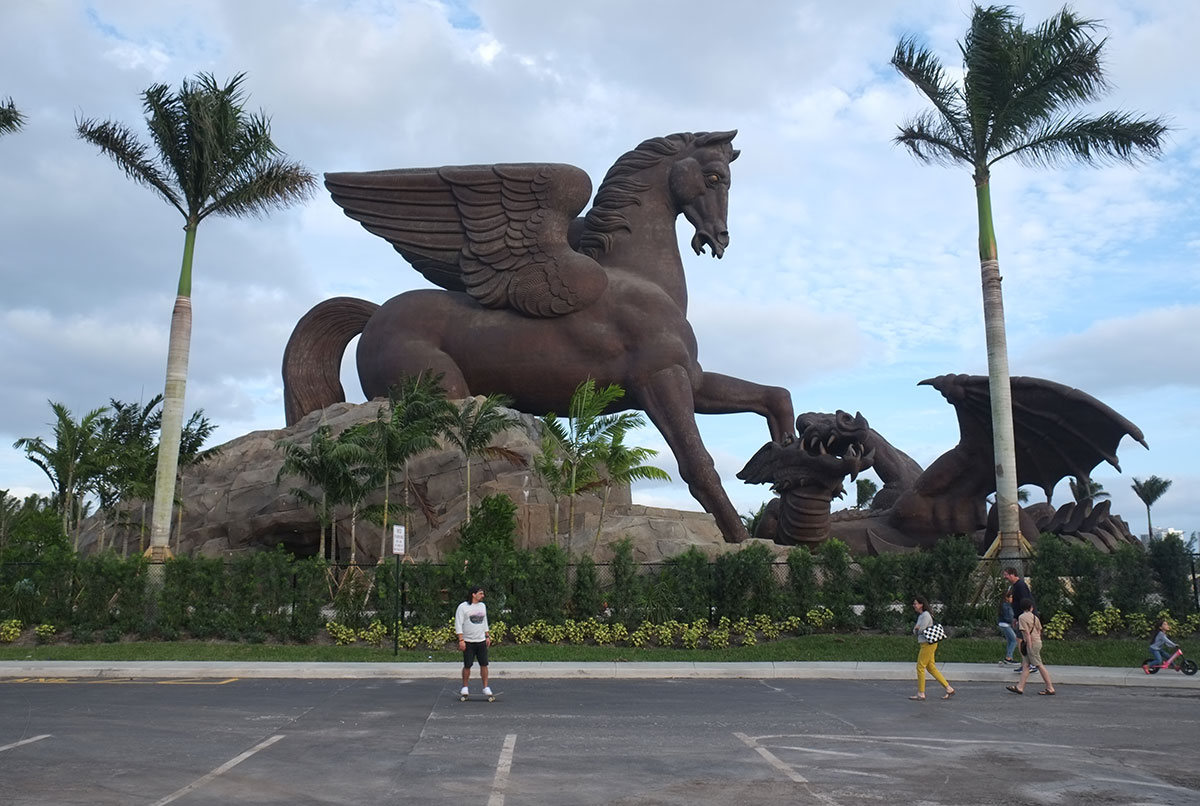
The kitsch on the Atlantic Coast is of a different order of magnitude.  Gulfstream Park is an older horse track in Hallandale Beach, which is being redeveloped with a casino.  The developer had a vision of a Pegasus fighting a dragon, and a 120-foot tall bronze sculpture (yes, real bronze!) is the result.  DSCF8725

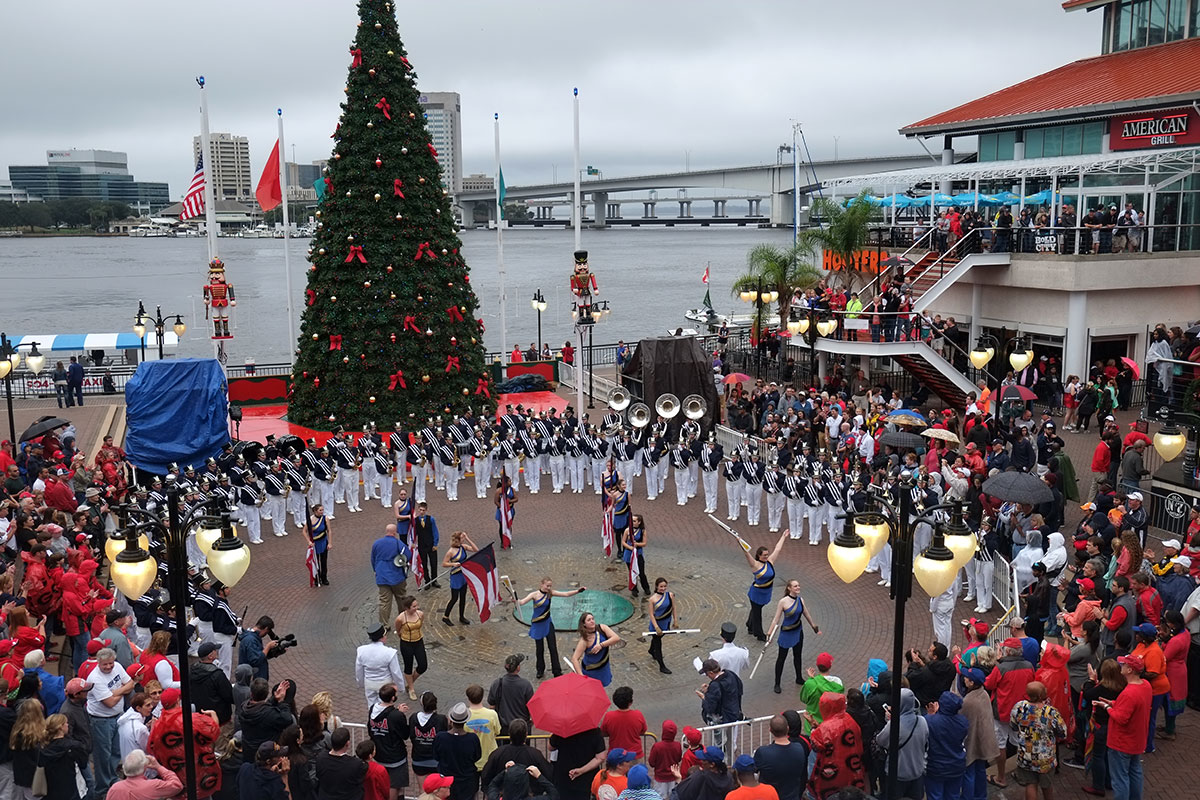
Events can be kitsch too.  On a rainy and cold (for Florida) New Years Day, we were wandering around downtown Jacksonville, and stumbled upon a pep rally for the impending bowl game between Georgia and Penn State.  We caught the impressive Georgia band and cheerleaders (and discovered that Georgia had long ago co-opted the Battle Hymn of the Republic to be their football fight song – a striking act of musical kitsch on its own), but Greta was mainly impressed by the waves of shivering high school cheerleaders performing in the rain.DSCF9282

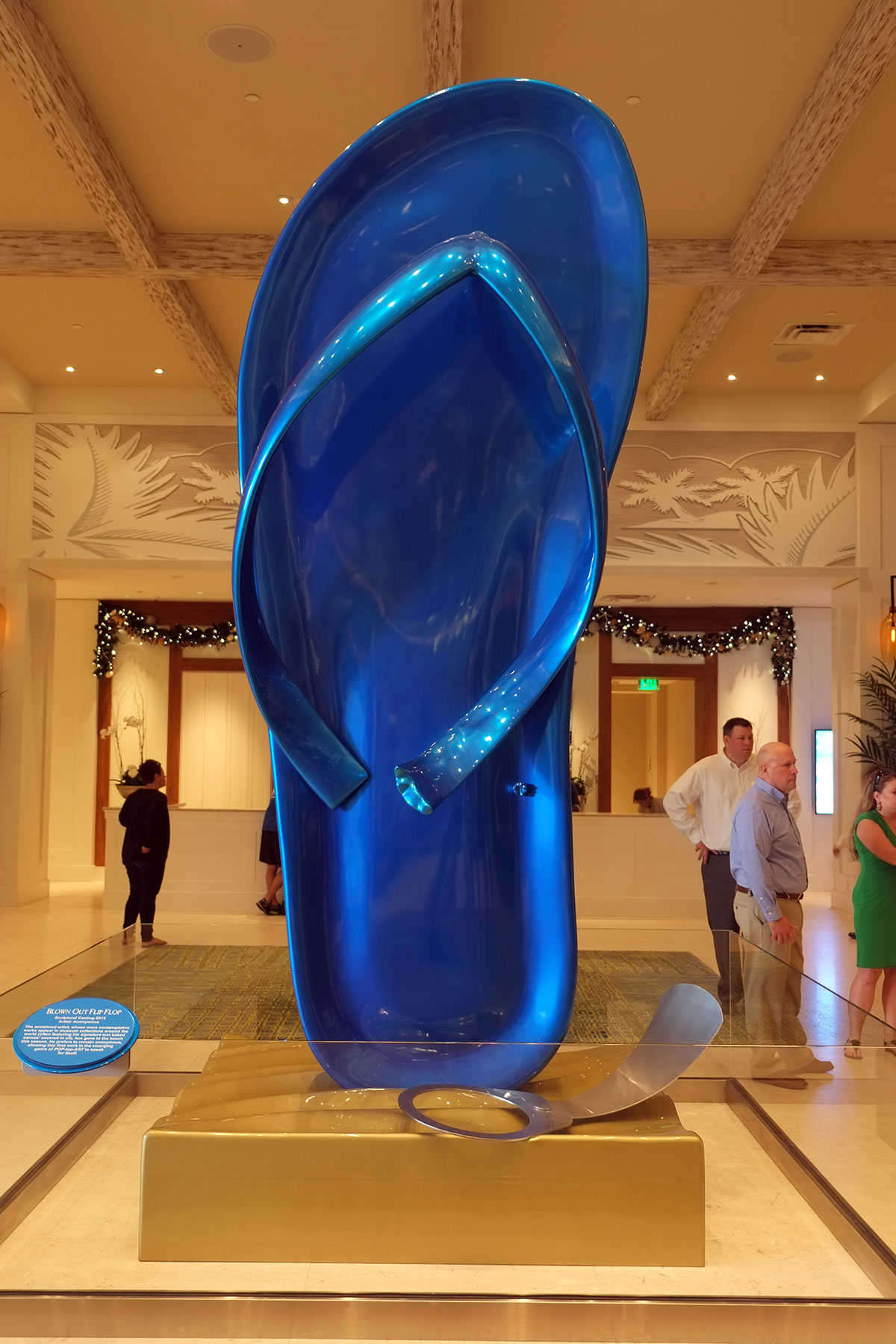
Then there is ironic meta-kitsch.  At the Margaritaville Resort hotel in Hollywood, there is this monument to the blown-out flip-flop and pop-top in the lobby.  The label beautifully parodies the pretensions of museum labels everywhere, with its reference to POP-top-ART.
DSCF8714

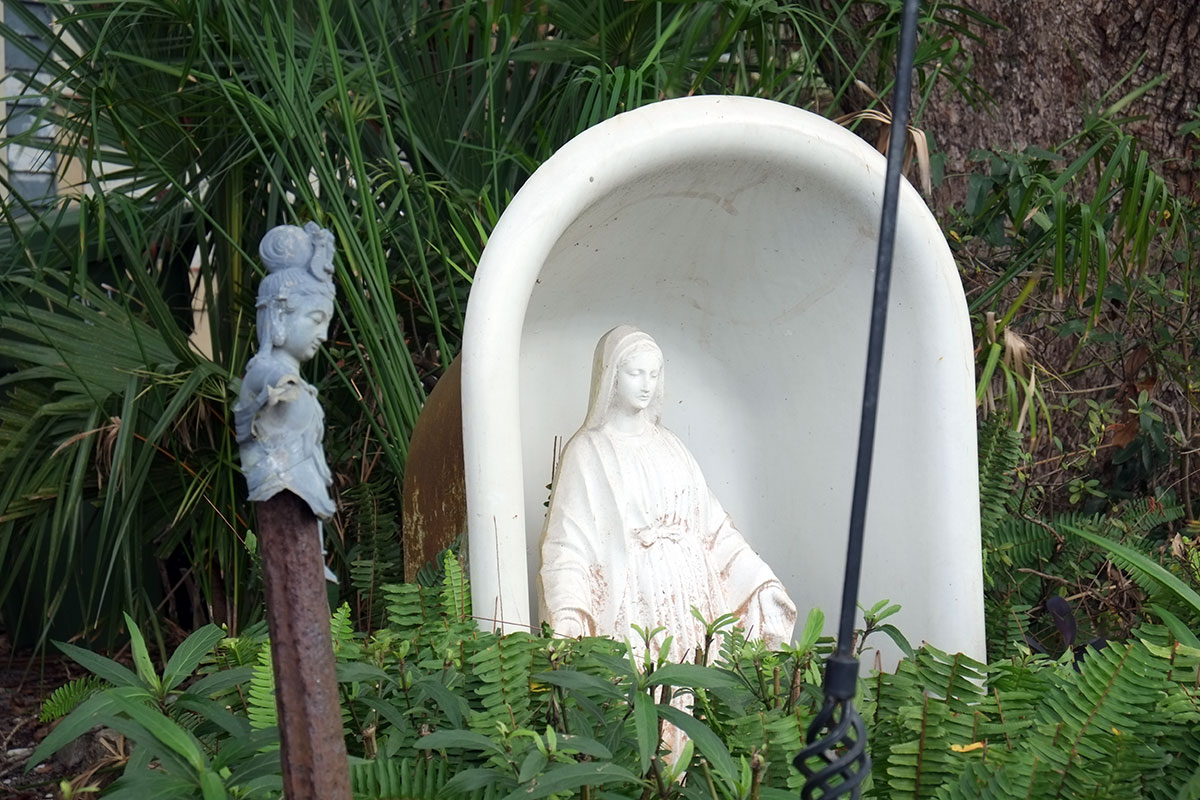
Outside a tattoo shop in St. Augustine we found sophisticated syncretistic kitsch – our first Bathtub Madonna complemented by what appears to be a HIndu goddess.
DSCF9097

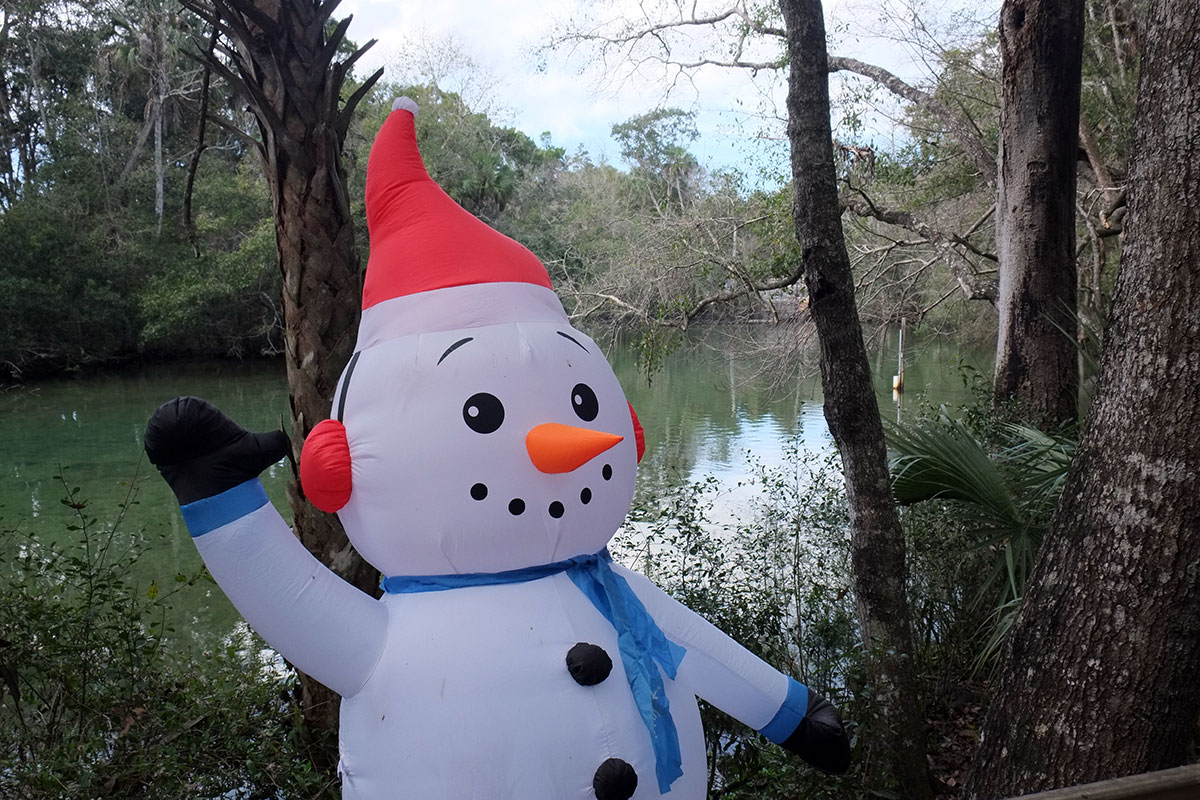
Even non-kitsch locations in Florida can’t resist the allure.  At Homosassa Springs, a state park with resident manatees and a wonderful small aviary, there is a snowman on the bayou.DSCF9013

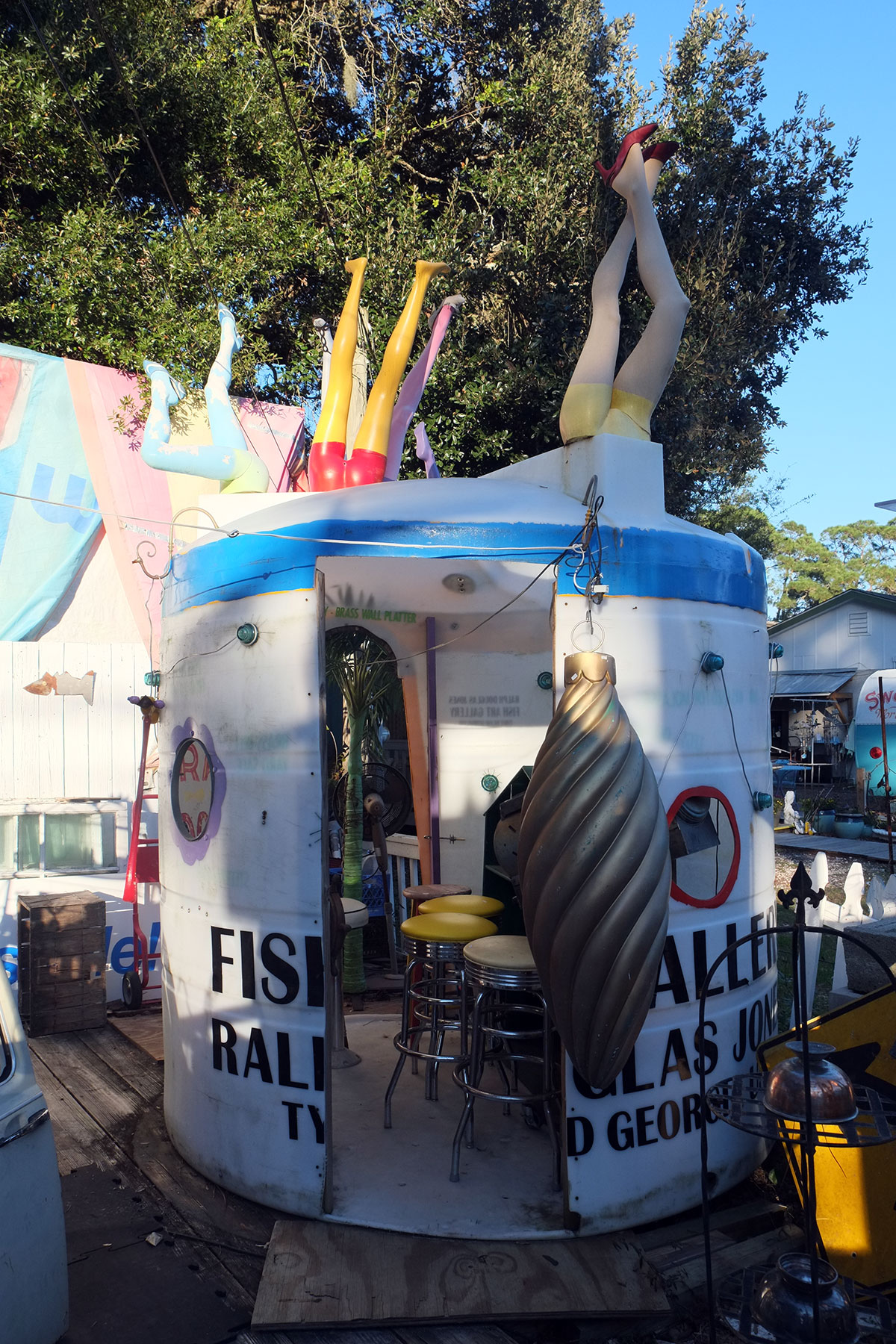
The kitsch continued in Georgia.  At Tybee Island, outside Savannah, there is the Fish Art establishment, where a local artists sells his visions:DSCF9671

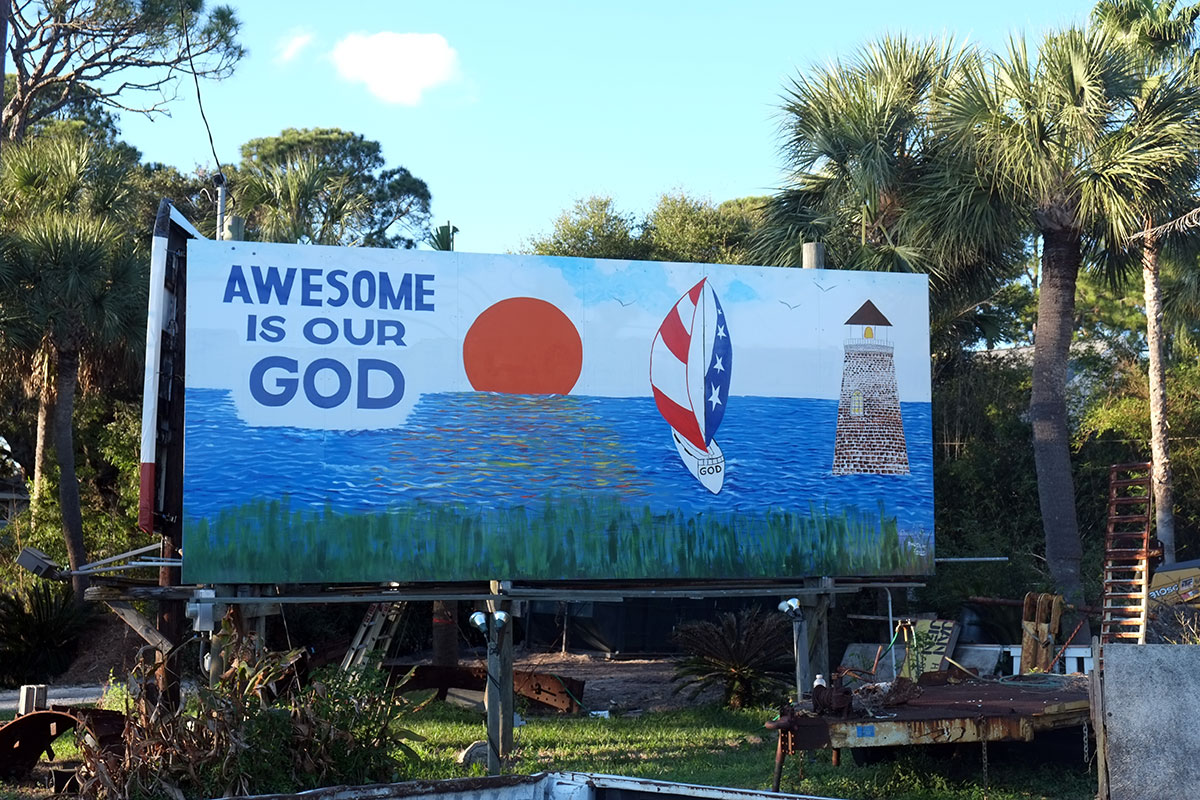
down the road from a religious billboard which could support at least one article in the Journal of Religious Iconography and Semiotics.  (Note that this is not the only God+sailboat imagery we spotted in Georgia.)DSCF9665

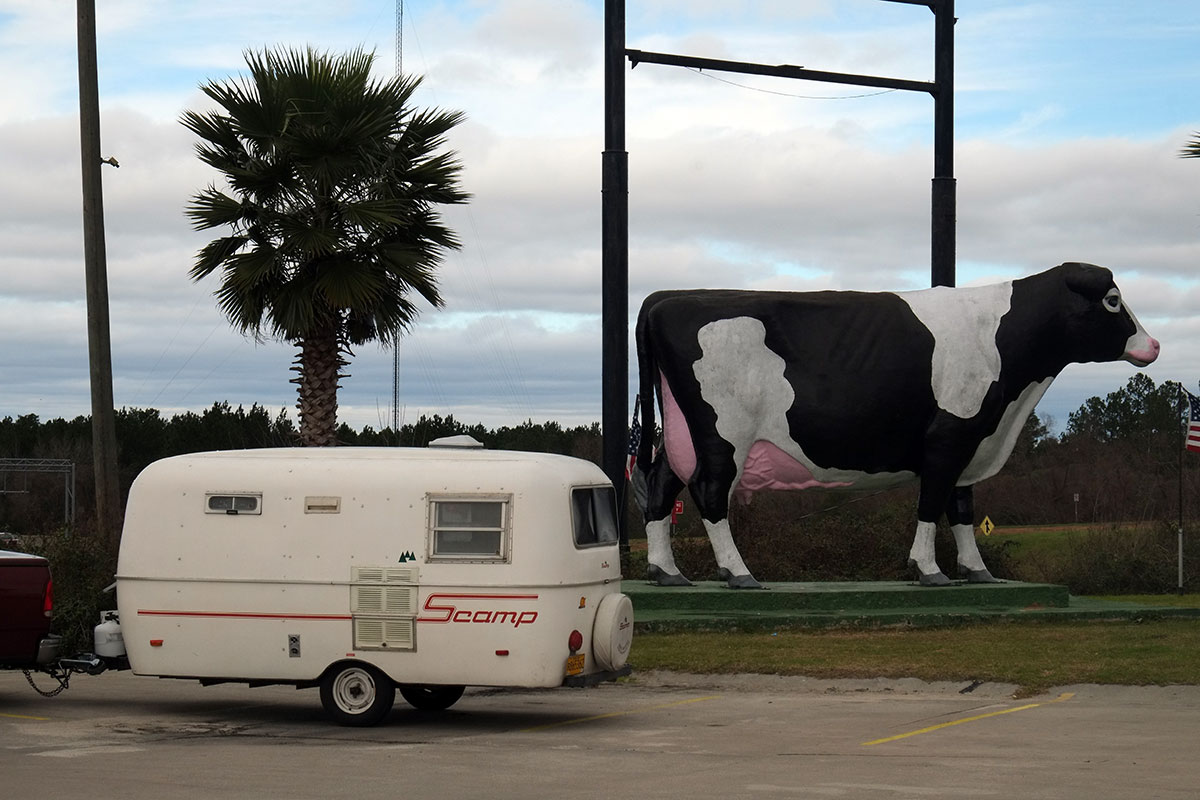
Ashburn, Georgia was worth a small detour to see this lovely large cow,DSCF0369

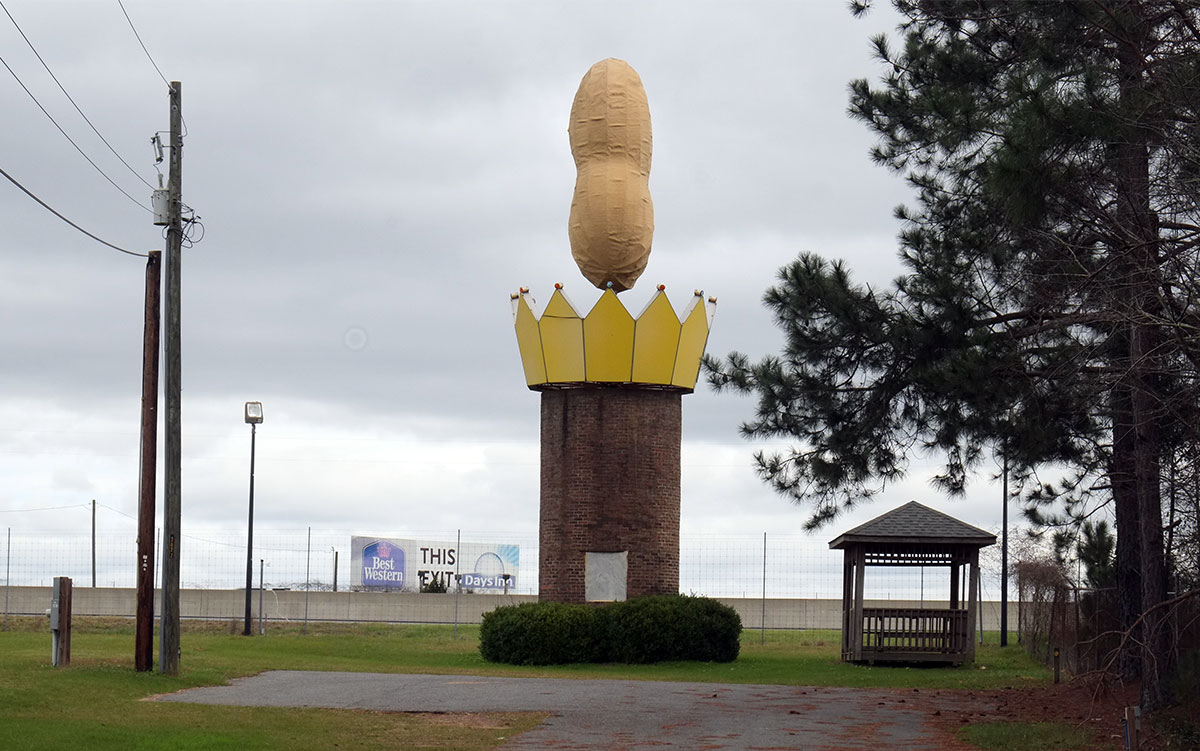
as well as the World’s Largest Peanut (which frankly didn’t look that big to us).DSCF0384

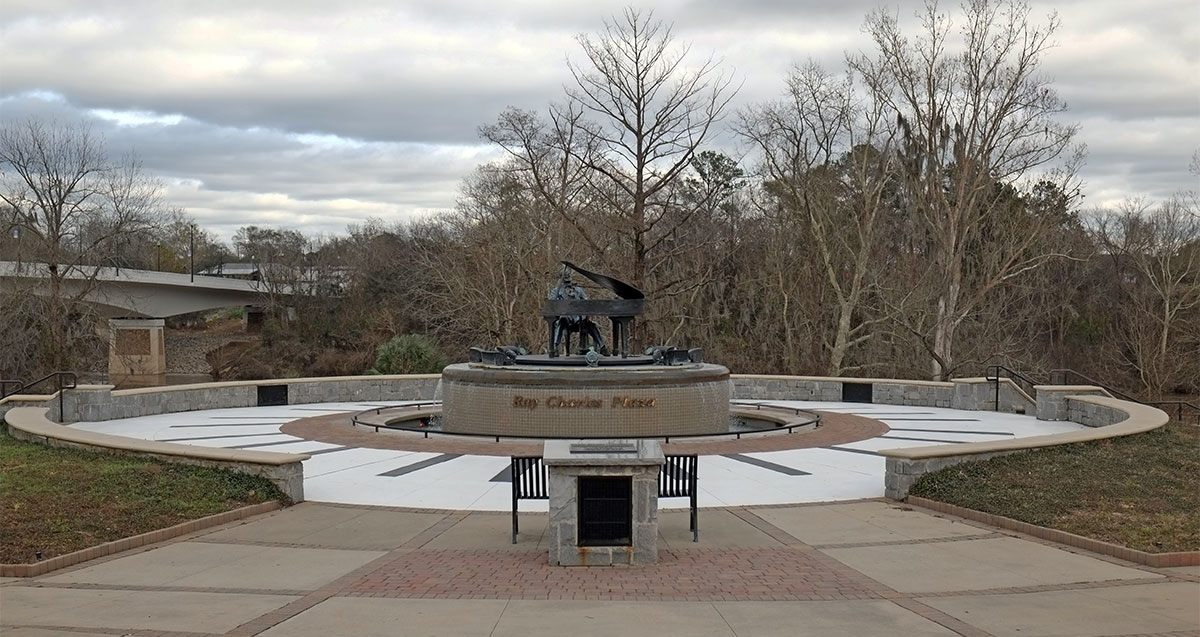
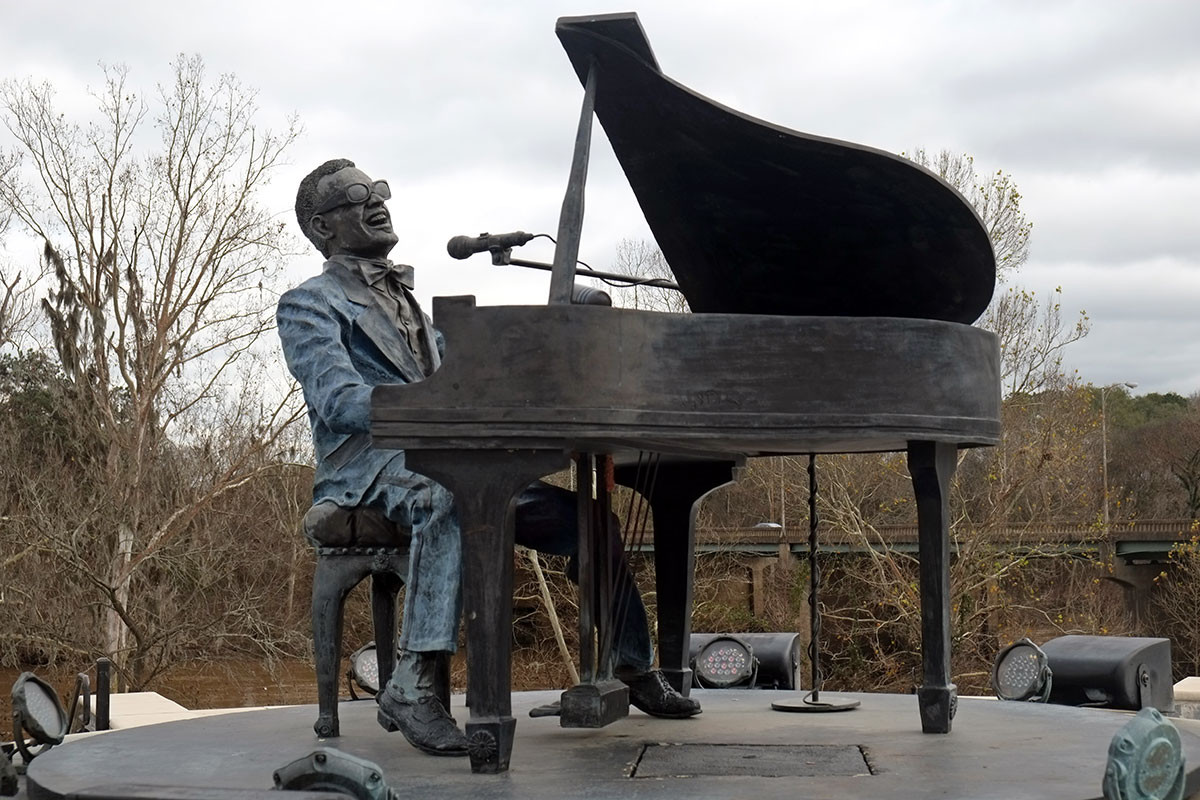
A short drive to Albany, Georgia, hometown to Ray Charles, who is memorialized in the riverfront plaza, fountain and bronze statue.DSCF0426

The statue revolves slowly, while a few of Ray’s classic songs play from speakers.  We caught Georgia on my Mind and loved it, as it continued our musical tour of Georgia appropriately.  (There were no speakers at Duane Allman’s grave, but we did play One Way Out on Greta’s phone while we paid our respects.)  DSCF0418

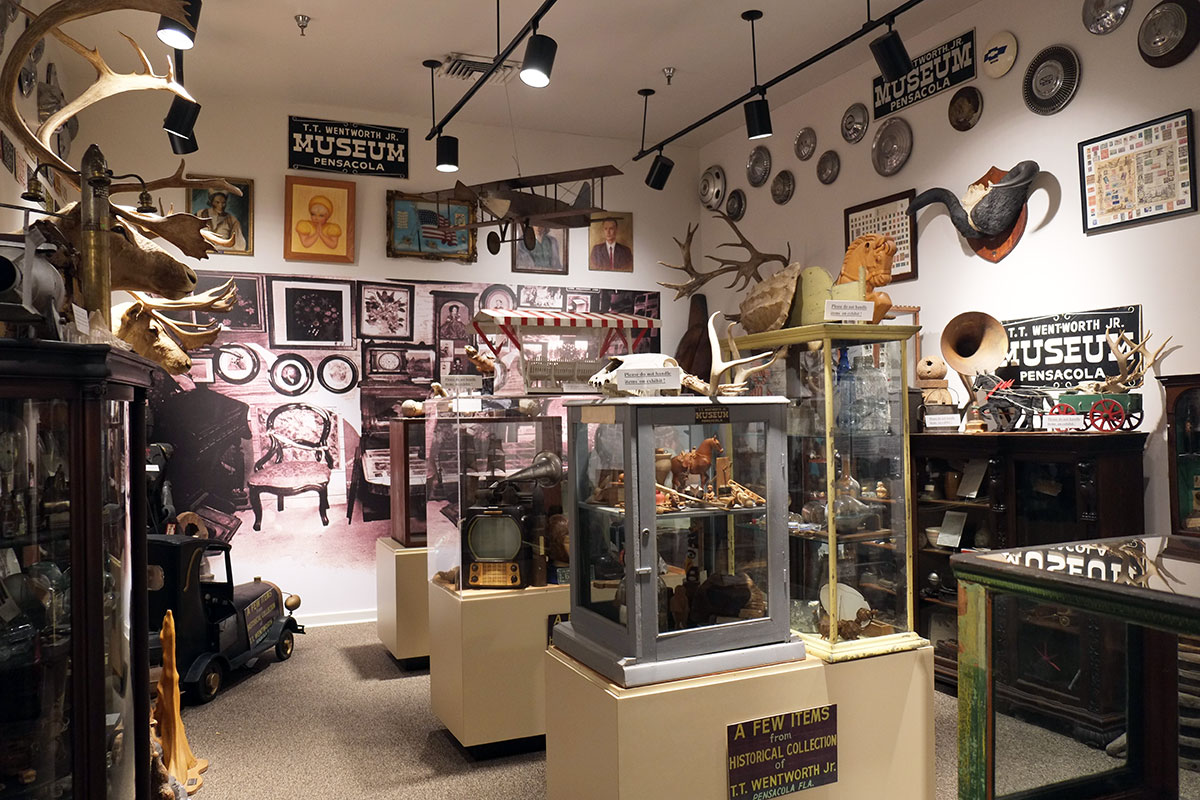
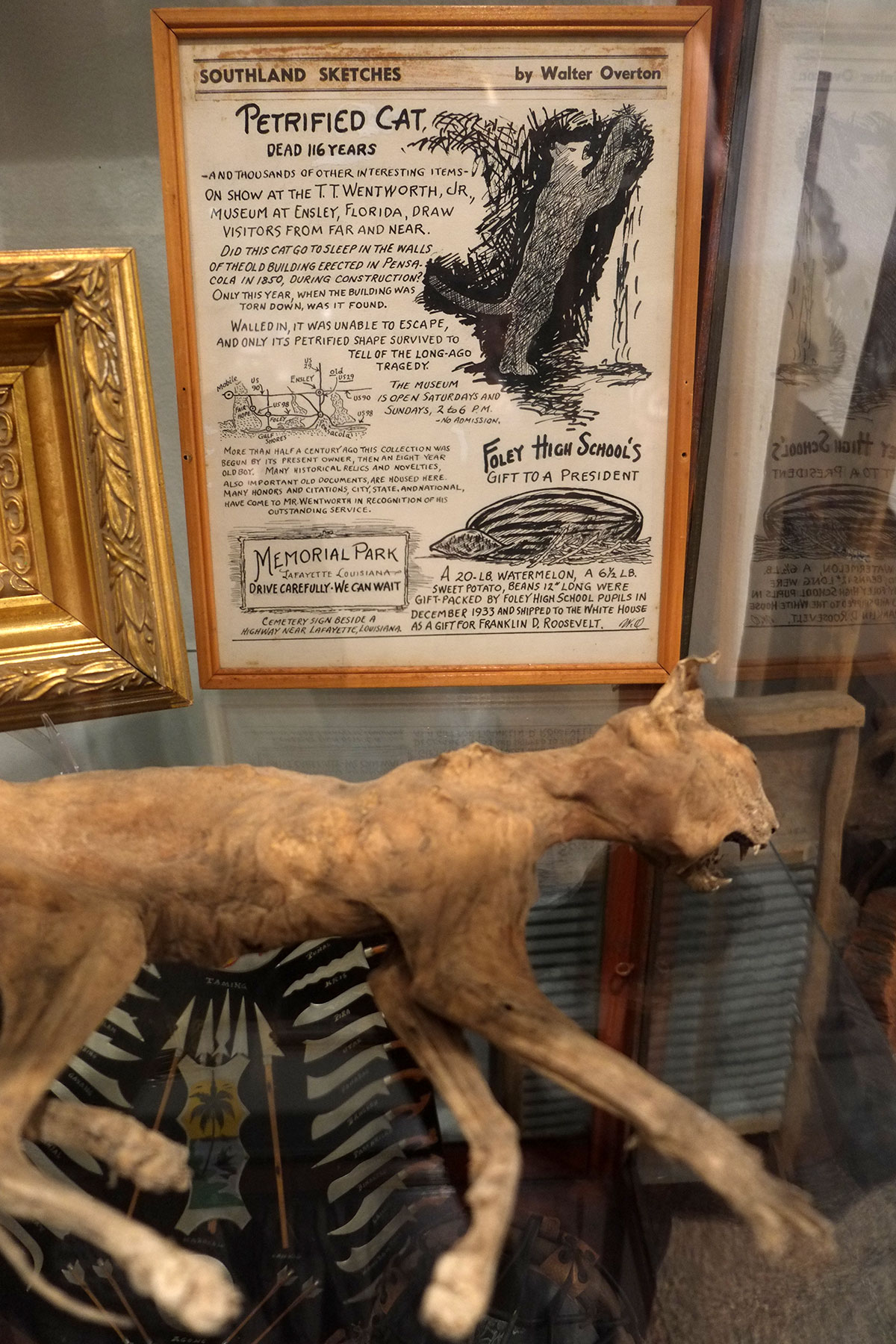
Back in Florida, we went to the Wentworth Museum in Pensacola.  It is now an informative and tasteful municipal museum, but its roots are in the eclectic and expansive collecting of T.T. Wentworth Jr., DSCF1081which included such wonders as this petrified (actually, mummified) cat,
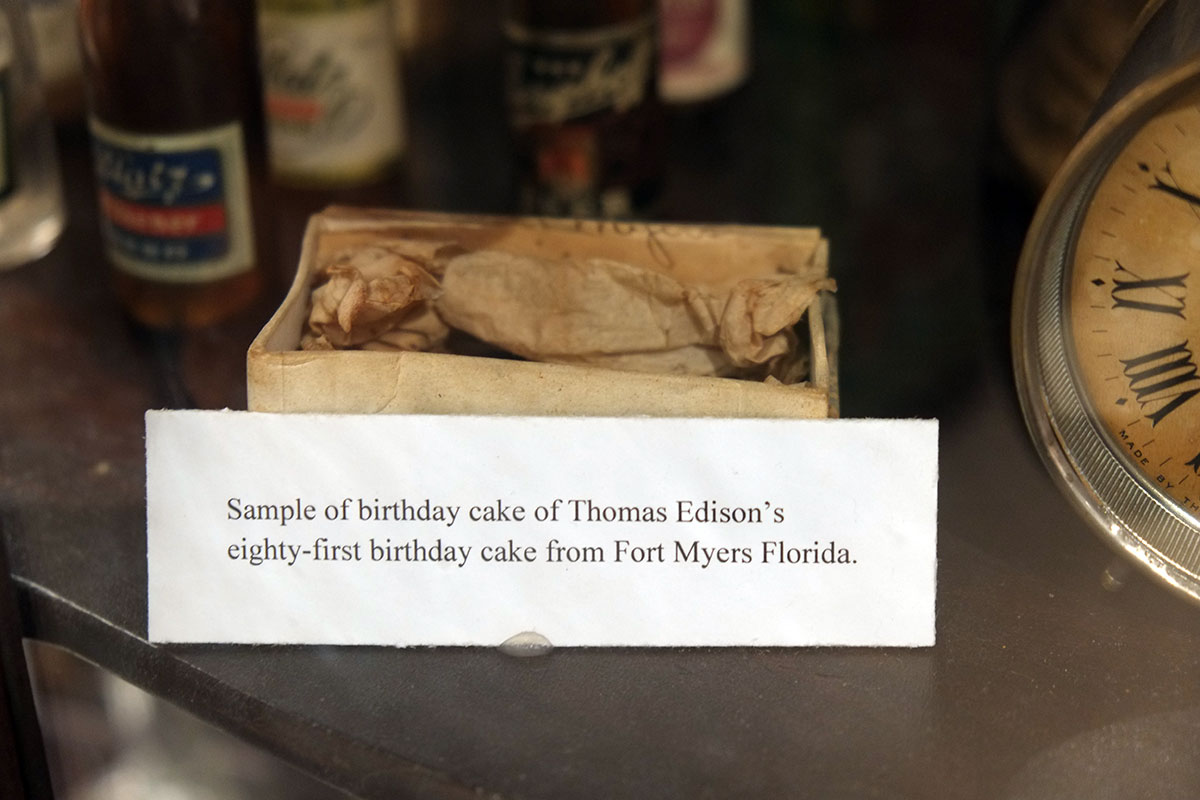
DSCF1084and a remnant of Thomas Edison’s 81st birthday cake.DSCF1099

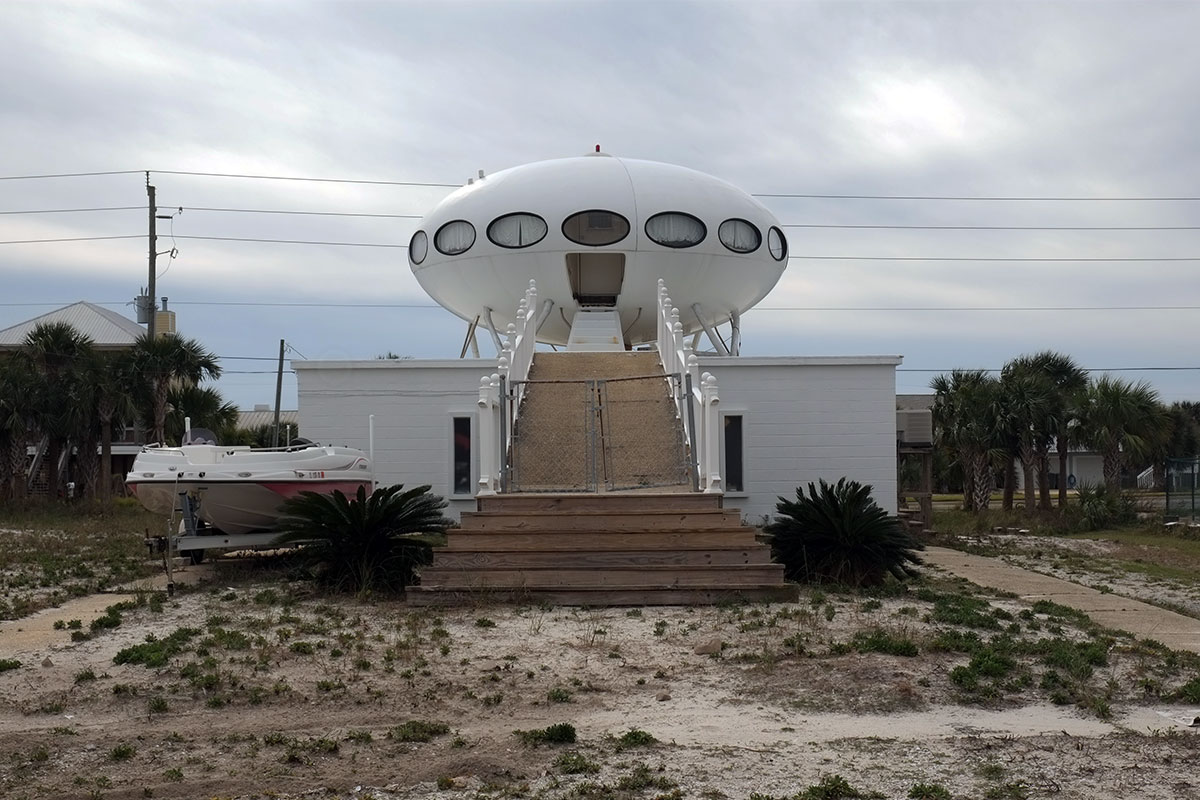
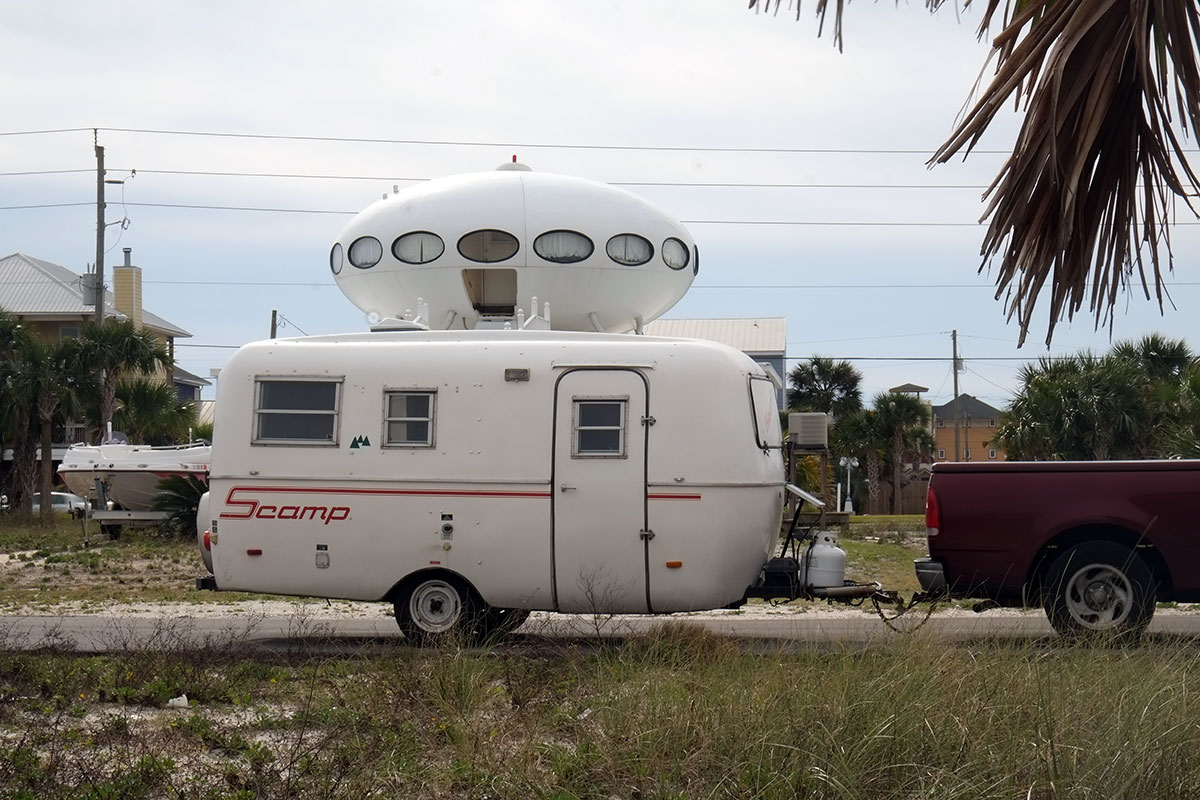
The kitsch extended to the architecture on the Panhandle.  The UFO House at Pensacola Beach, which is actually a 1960s pre-fab fiberglass house from Finland.  I thought the PVC colonial-style railings from Home Depot added a nice touch.DSCF1065and we considered adding a bedroom to our little trailer.  DSCF1071

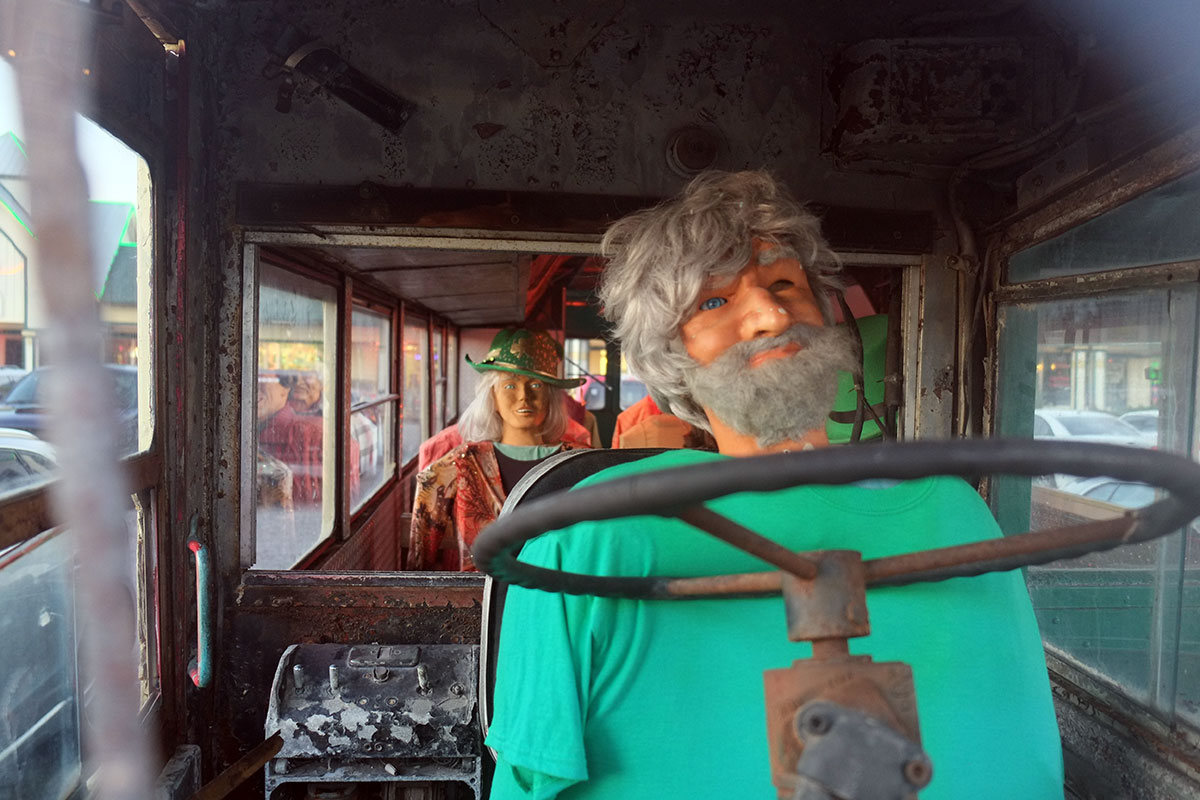
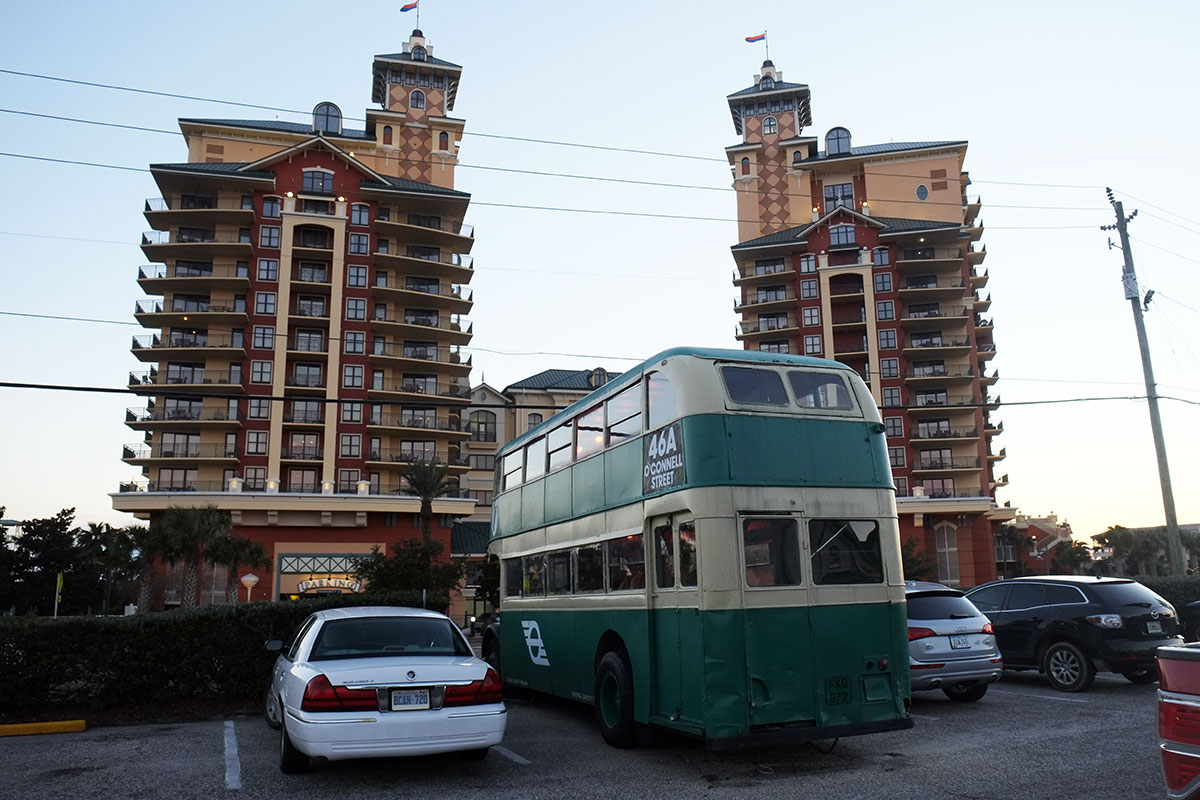
At Destin, we went to see the truly creepy double-decker bus filled with mannequins outside an Irish pub,DSCF0900

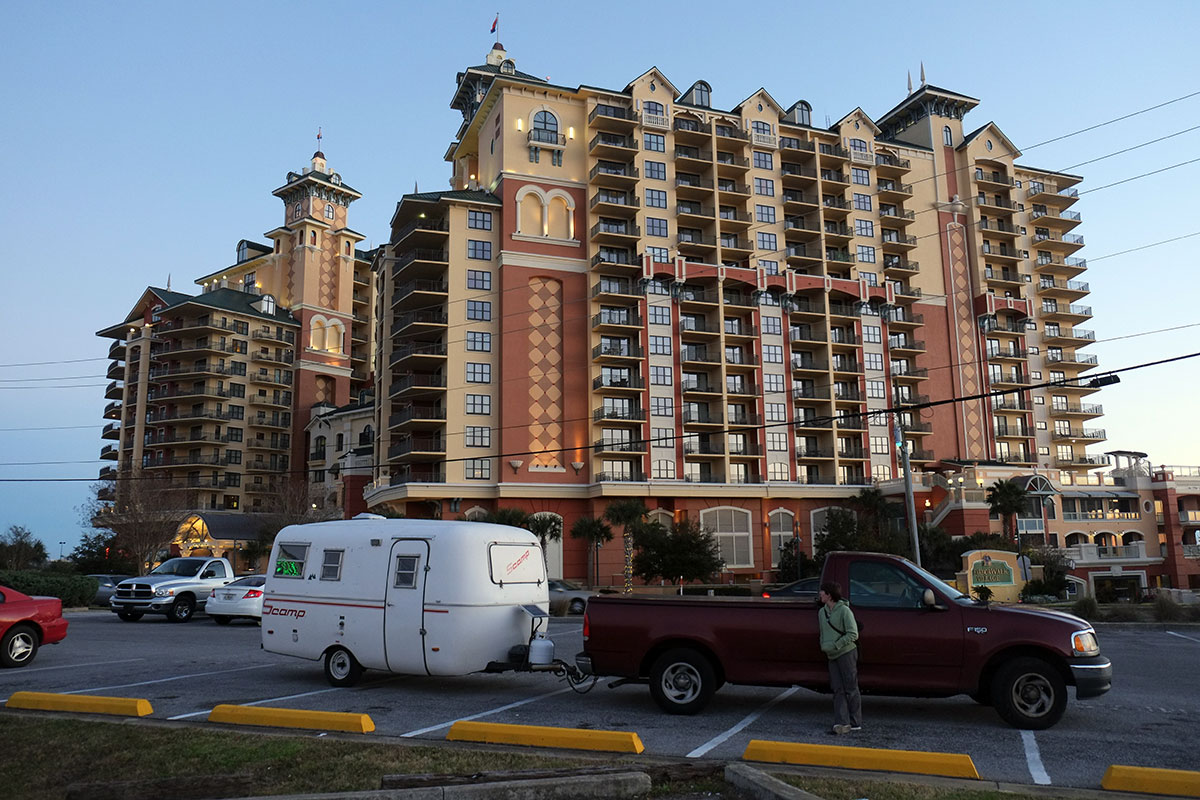
which fortuitously led us to the World’s Most Awful Condo, right across the street:DSCF0903

It was remarkable – we couldn’t stop looking at it.  It is the greatest collage of motifs and elements I’ve ever seen.  The architect had the brilliant insight that the two sides of Route 30 could be united:  the nuttiness of the tourist attractions across the street could be grafted on to the gigantism of the Gulfside condo.  Even the architect of the Margaritaville Resort – a hotel based upon a sybaritic pop song – had still felt the need to design a tasteful and luxurious edifice.  And I must say, if you can accept the basic premise (firmly grounded in Learning from Las Vegas) this one is pretty skillfully done.  (See what a couple of weeks in Florida has done to my sensibilities?)DSCF0915

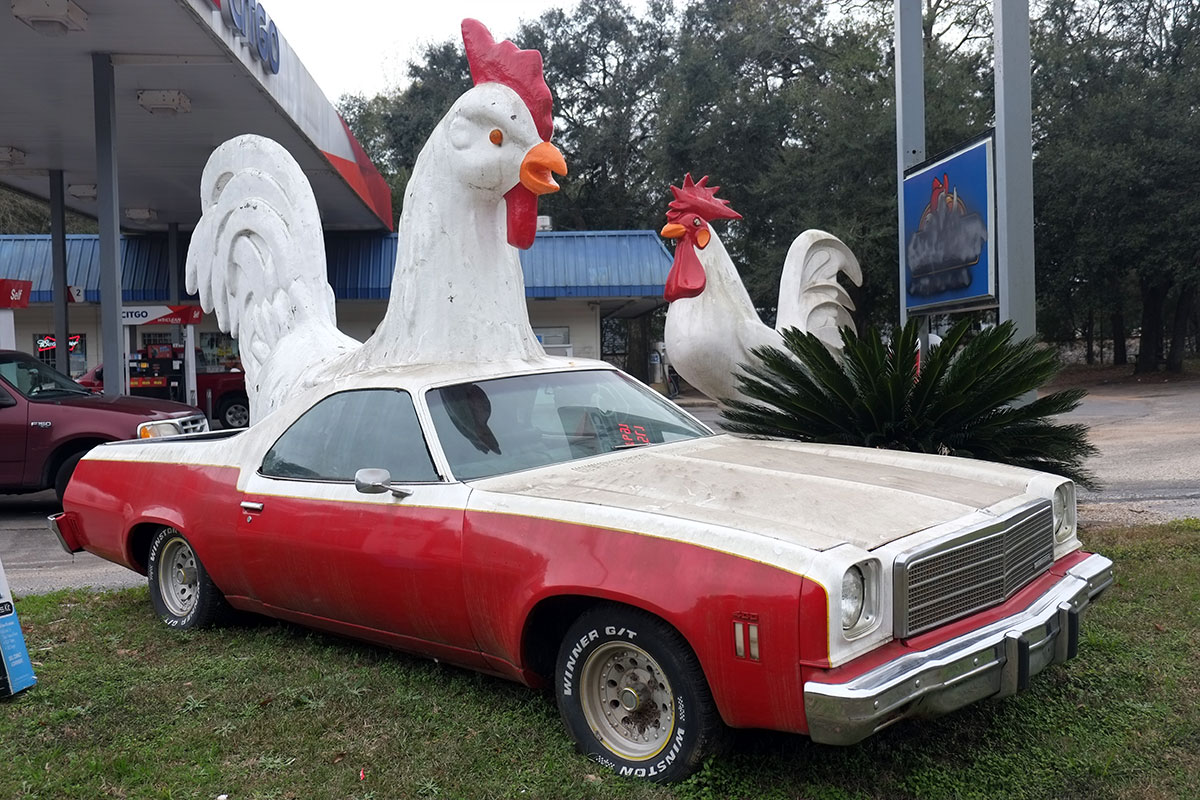
But our favorite installation was outside Theodore, Alabama:  the sublime Chicken El Camino:DSCF1165A local man saw me taking photos and called out to me:

“Do you like those chickens?”
“I love the chickens.  And my wife loves El Caminos, so I’m taking pictures for her.  I read that this used to be a fried chicken stand, is that true?”
“I’m not sure, the chickens have been here as long as I can remember, and whatever store is here has always sold some chicken, though.  Where you folks from?”
“Oregon.”
“I hear it’s beautiful there, but I’ve never been. Actually, I’ve never really been anywhere.  Never got too far away from these chickens.”

The Allman Brothers Band – Macon, Georgia

DSCF0281Old people go to Graceland;  Elvis still looms large for those who grew up in the 50s.  But what about my musical generation, those who caught the tail end of the 60s but really came of age in the 70s – do we have an equivalent Mecca, a place of deep significance in the life of the musicians?  There’s the Grateful Dead house at 710 Ashbury.  The store in Seattle where Jimi Hendrix’s first guitar was purchased.  Abbey Road.  But I think if there’s one place that surpasses all others in the mythology of rock, it’s the intersection where Duane Allman died in a motorcycle crash in 1971.

Traveling with a fourteen-year-old, I’ve been subjected to not-infrequent bouts of fan-girl behavior (mostly involving Star wars this year), so I didn’t feel too bad dragging her to Macon, Georgia, to visit the place where the Allmans lived and died.  We’ve been avoiding historical spots where something once happened, unless there’s really something physically there, and Macon provides this too:  there’s the Big House Museum, exhibiting vast amounts of Allman Brothers memorabilia, in the house where they lived together for a few years in the early 70s.

When I was young, the Allman Brothers were the benchmark band for us.  We could understand if people didn’t get the Grateful Dead – they were a complex band, a taste that could take years to acquire.  But if you didn’t like the Allman Brothers, there was just something wrong with you, and hanging out with you clearly was not going to be a good time.

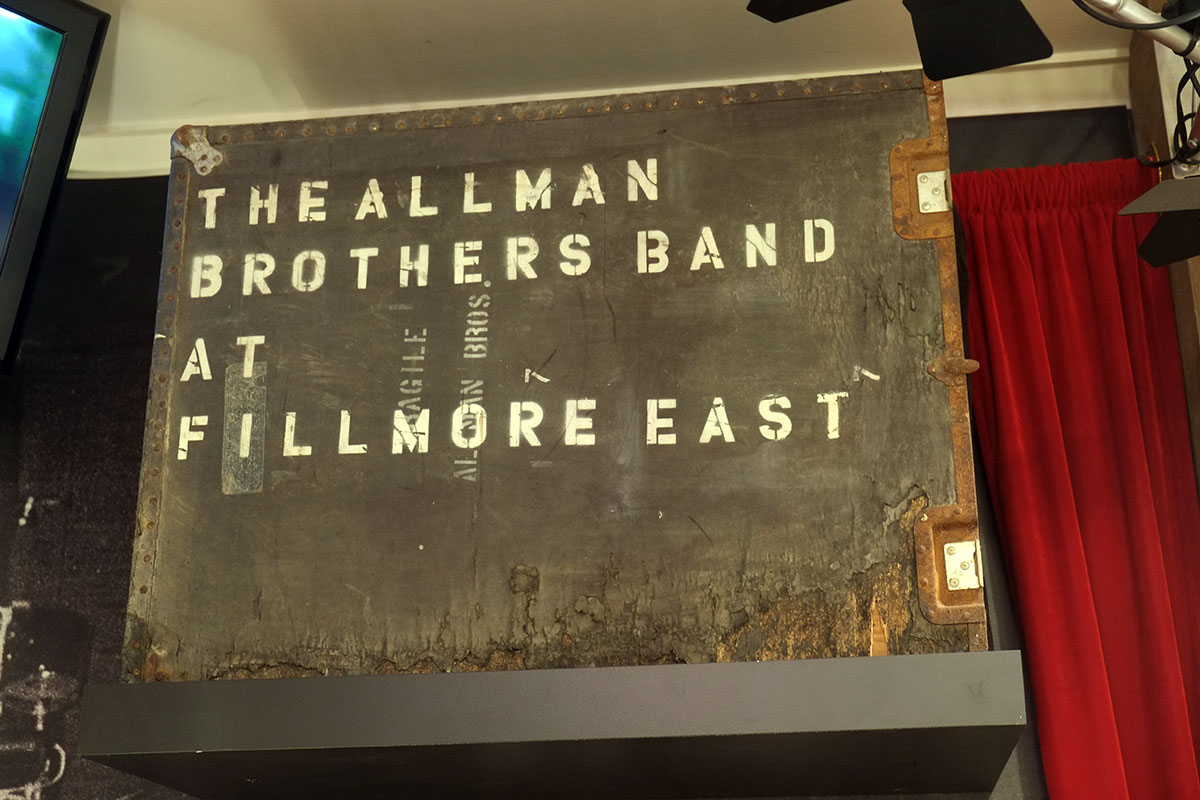
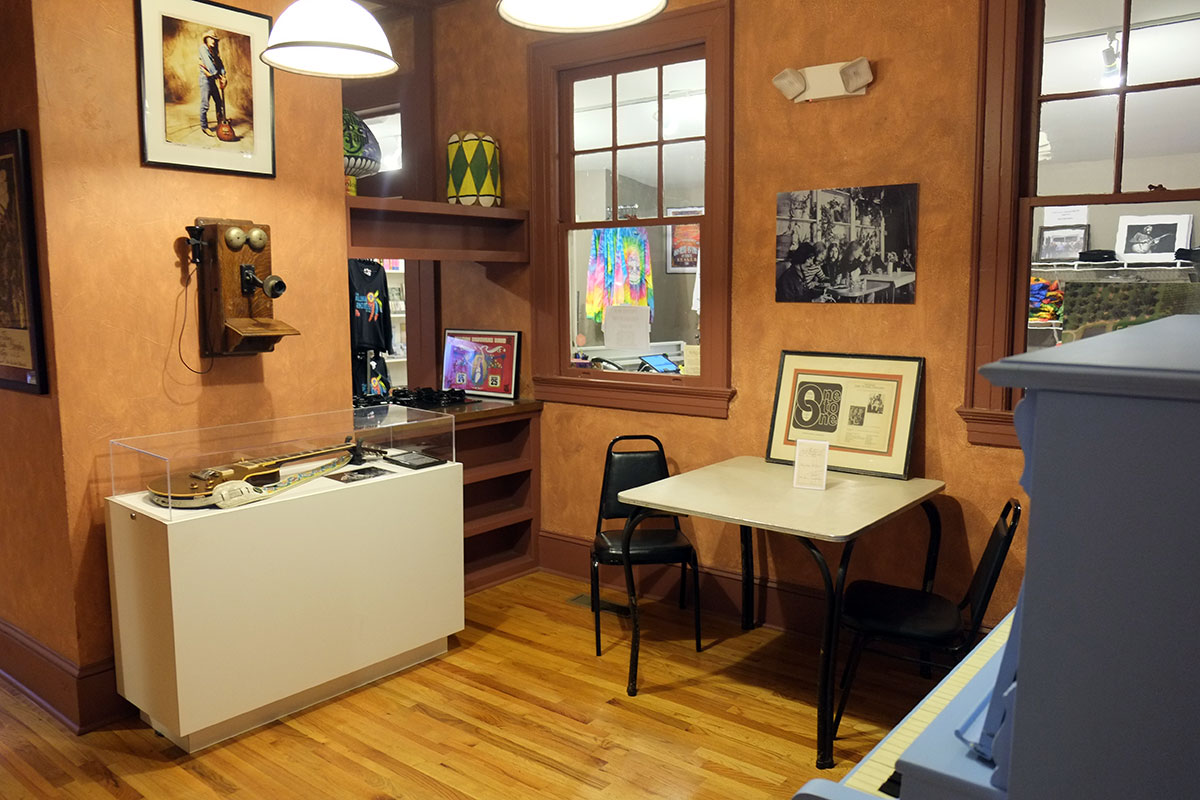
The Big House Museum was pretty overwhelming, even for a confirmed fan.  They say they have about 40% of their material on exhibit.  The box pictured above was for Berry Oakley’s bass, and is the one used in the iconic album cover for Fillmore East.  Then there’s this Les Paul, used by Duane on the first two albums, and when he played in the Layla sessions.DSCF0283

This is the first paycheck Duane got for playing in the band (signed by Greg).DSCF0285

And the dress worn by Brittany Oakley on the cover of Brothers and Sisters (displayed in the room where she lived as a child.)  DSCF0319

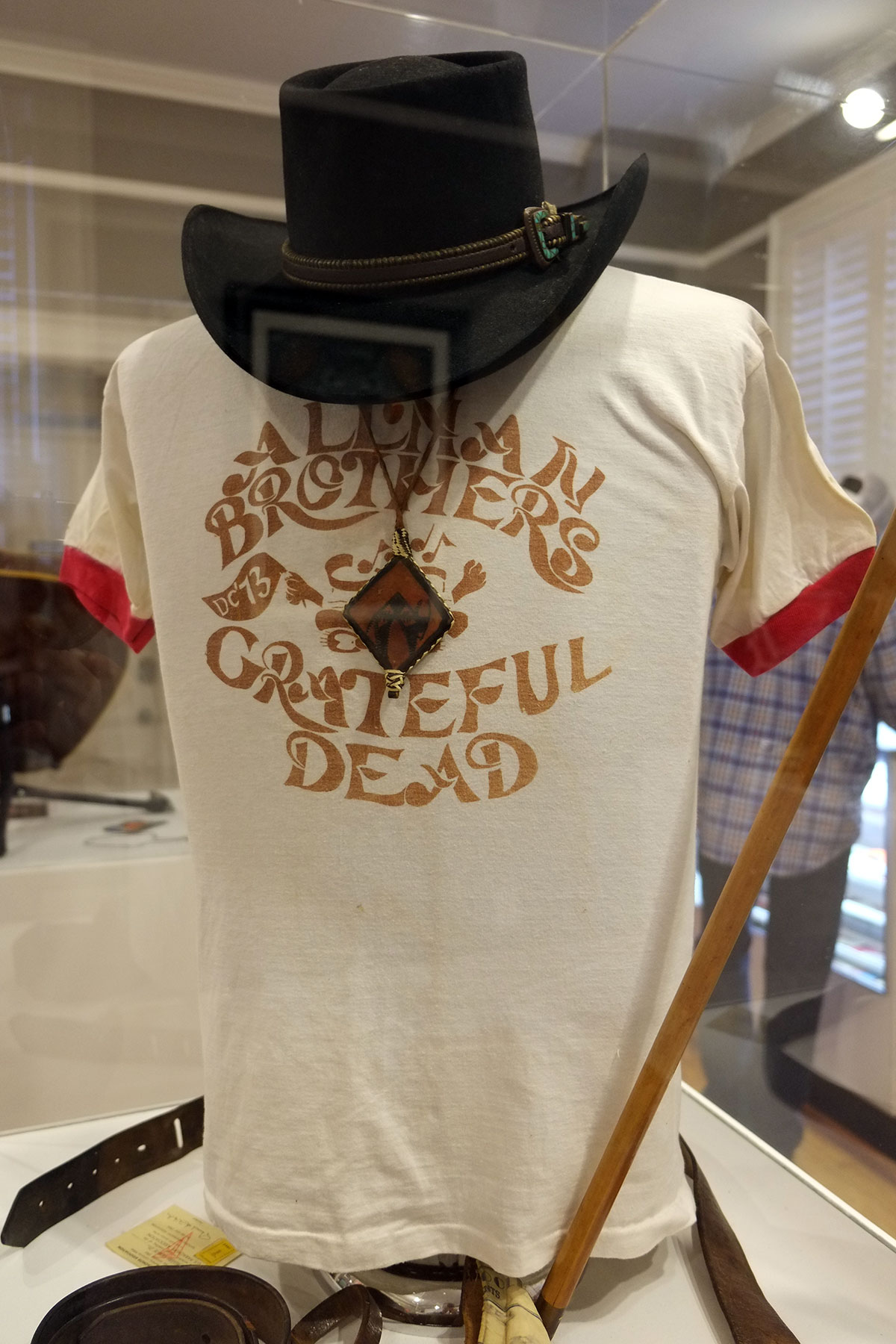
A tee shirt from a concert I wish I’d been at:DSCF0340

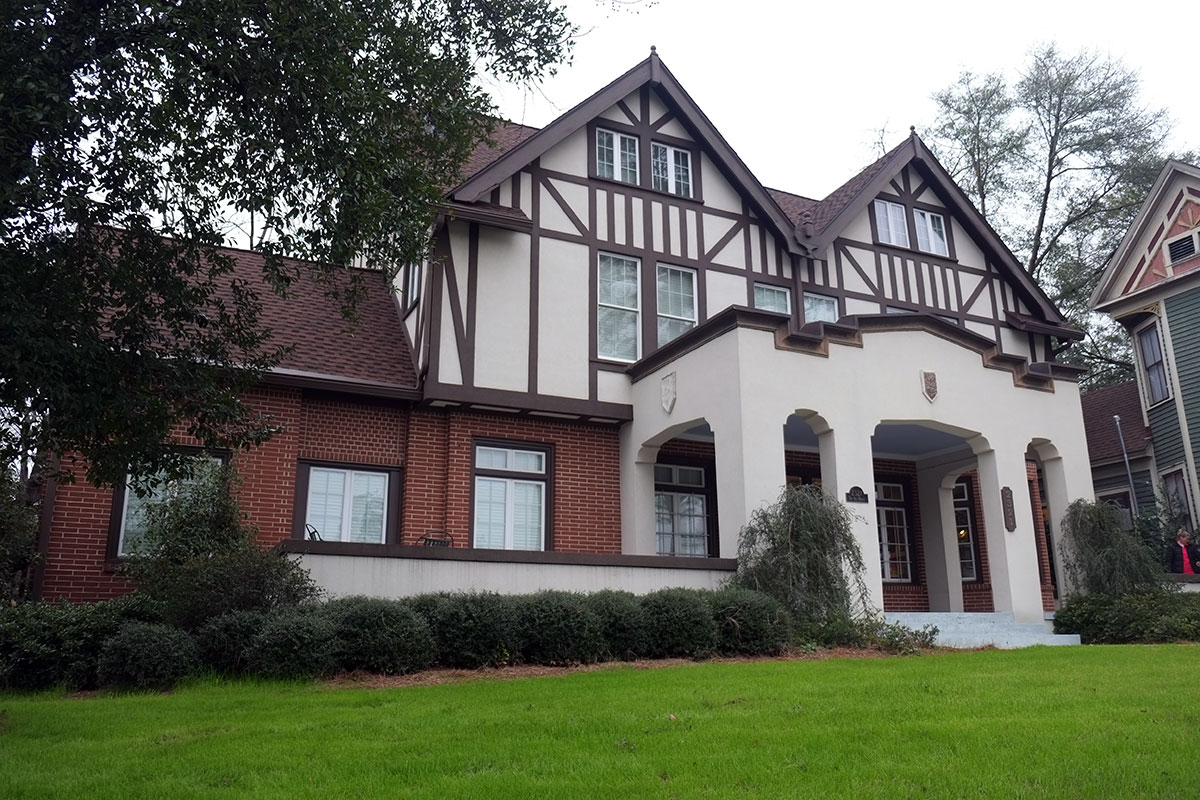
The house itself is much nicer than you would expect for a communal rock band in 1970;  maybe it’s been fixed up a lot.  It’s in a neighborhood of large, older houses, most of which seem to have been converted to apartments long ago.  DSCF0356

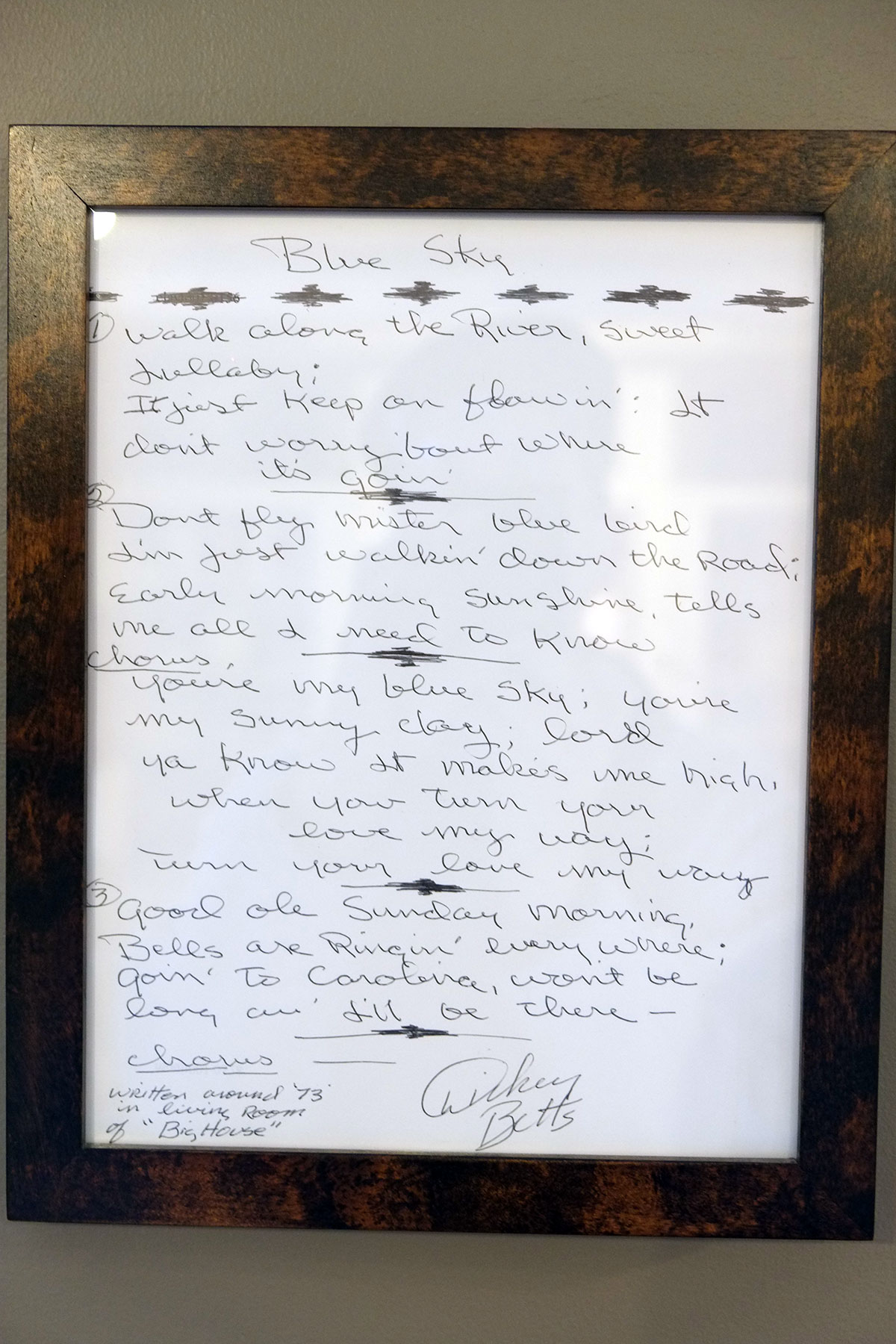
This is the front parlor room where Dickey Betts wrote Blue Sky for his fiance, sitting in the window bay.  I loved seeing this;  Blue Sky has always been one of my favorite songs, and we played it at our wedding.  DSCF0309

The handwritten lyrics to Blue Sky;  “…bells are ringing everywhere…” came from hearing the bells in the church across the street.DSCF0303

A Dickey Betts guitarDSCF0348

displayed in the kitchen where he wrote Ramblin’ Man (and we have just done a bunch of driving on Highway 41).DSCF0345

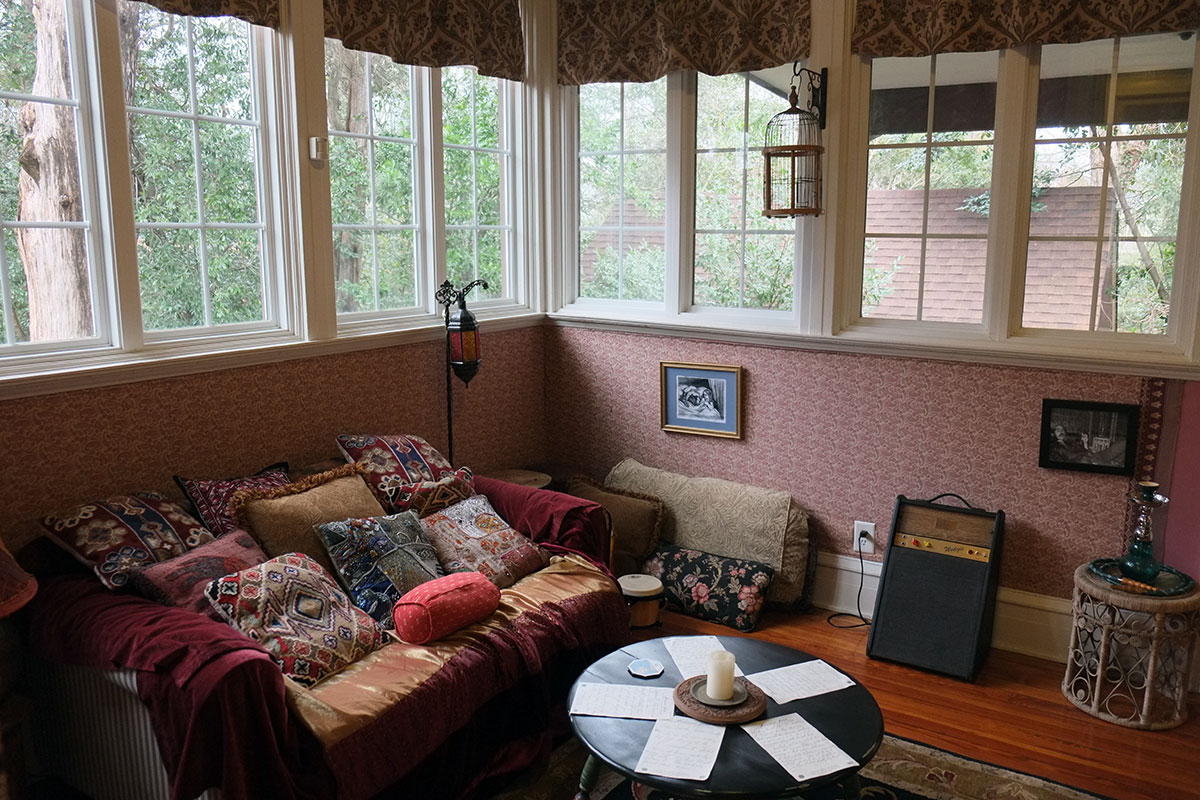
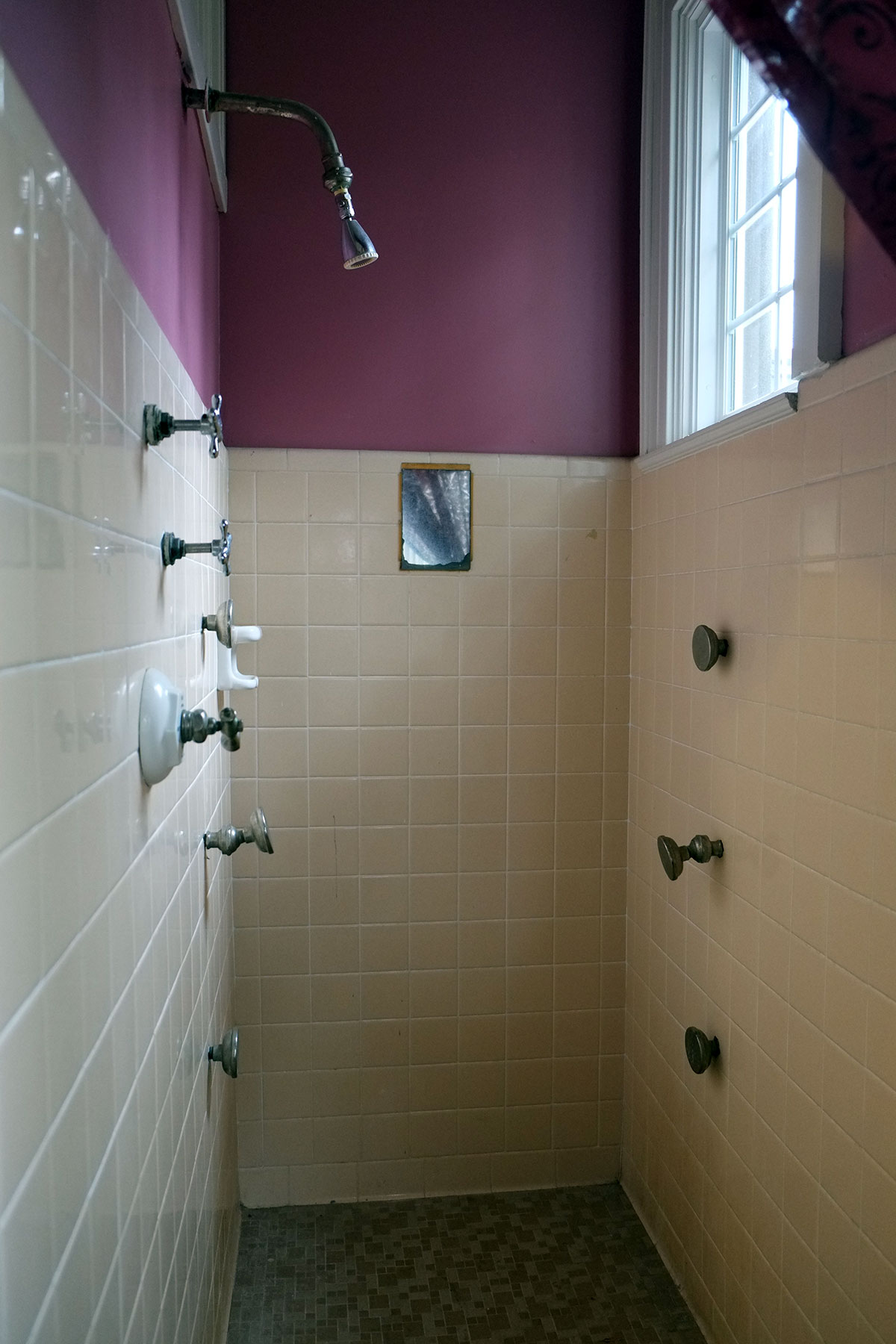
The “casbah” room upstairs, were they hung out and listened to music,DSCF0333I like imagining that they argued over who had to get up and change the album every 20 minutes.  DSCF0330and the apparently legendary shower, with the seven shower heads (a rarity in those simpler times).
DSCF0328

We visited the site of Duane’s crash on October 29, 1971, the intersection of Hillcrest and Bartlett.  Contrary to myth, it wasn’t a peach truck, but a lumber truck heading for the nearby lumber yard.  DSCF0360Duane was coming down the hill from the left, and hit the truck making a left turn from the right, into Bartlett where I am standing taking the picture.  He was 24 years old.

Berry Oakley died after a motorcycle crash too, one year later and four blocks from this intersection.  Duane and Berry are buried in Rose Hill Cemetery, a place along the river and railroad tracks near downtown where the band used to hang out a lot.  It was started in 1840, and hundreds of civil war casualties are buried there.  We walked past the grave of Elizabeth Reed (Napier), but we didn’t track down the tombstone for Little Martha.  Duane and Berry lie in a beautiful dell that slopes down to the river.DSCF0234

Two white stones side by side, with angels at their feet, representing their daughters.DSCF0239

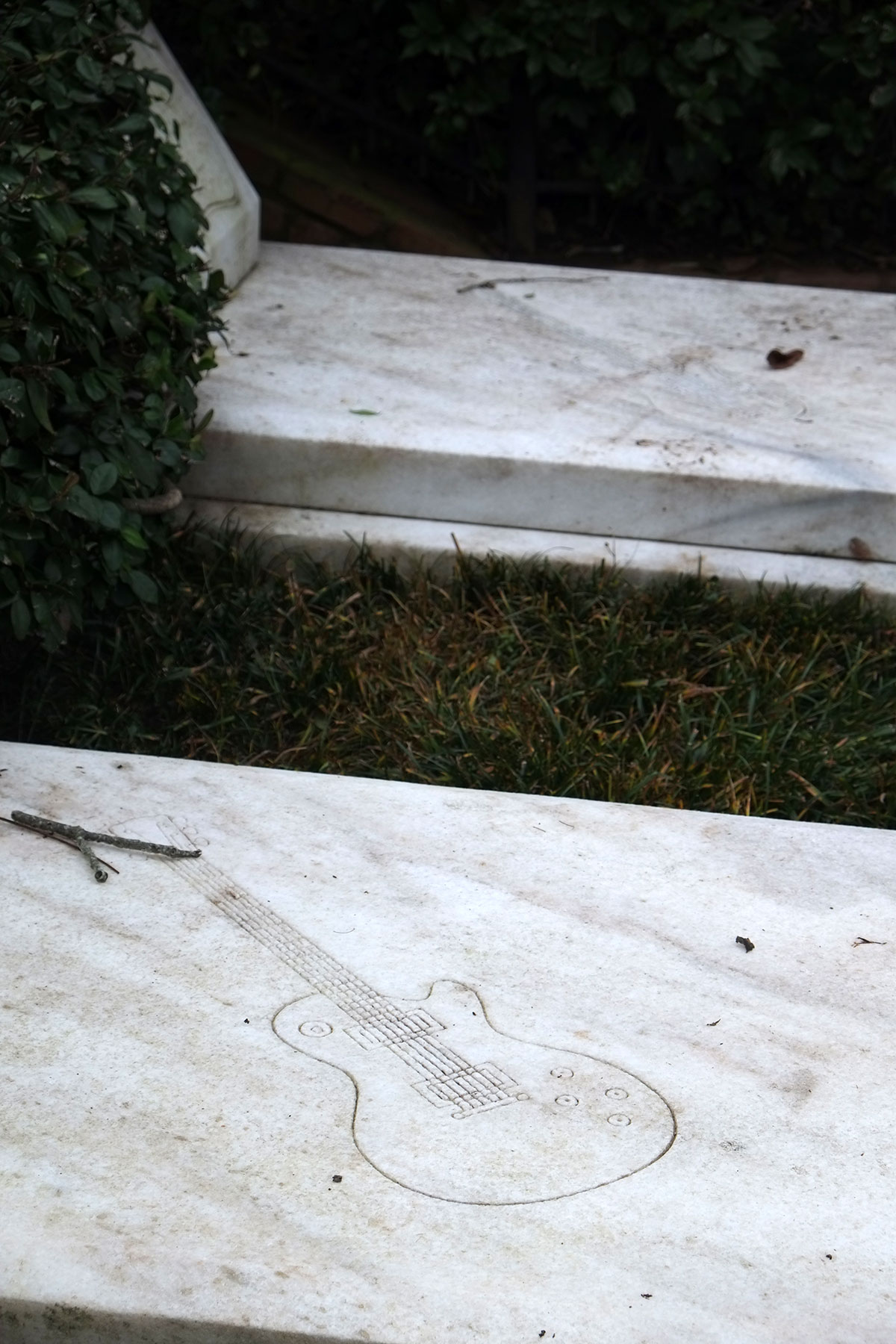
Their graves were recently enclosed by a fence; apparently the amount of partying taking place with drunken fans got to be too much.  DSCF0267You can see the Les Paul carved into Duane’s stone.
DSCF0243

The music around the perimeter is from Little Martha, and note the discreet mushroom on the side.  DSCF0242

One late night during my sophomore year in college, I walked back to my dorm after hanging out with friends.  As I passed the suite of some classmates I didn’t know too well, I heard Blue Sky being played very loudly.  I wasn’t ready to go to bed, so I knocked on their door.  The door opened on a darkened room, with a half dozen blissed-out, practically catatonic guys laying back in their chairs, while Eat a Peach spun on the turntable by the window under a single spotlight.  The song ended, Little Martha played, and they began to revive.  When the album was over, they began talking, and I discerned that they had an interesting take on the history and meaning of the universe.  There was a big bang, the universe expanded, gasses coalesced and formed planets, life appeared, species evolved, humans arrived, civilization began, and the arts and music were invented.  And the point of all this was that eventually Duane Allman would be born, so he would be there to play on Blue Sky.  (A corollary was that it was nice he was around for the Layla album too.)  This pretty much justified human existence for them,  and I realized that if you were looking for an eternal verity (like something on which to base a major religion), you’d have a hard time finding something more inarguable and certain than the perfection of the Allman Brothers.

Selfies, Part 4

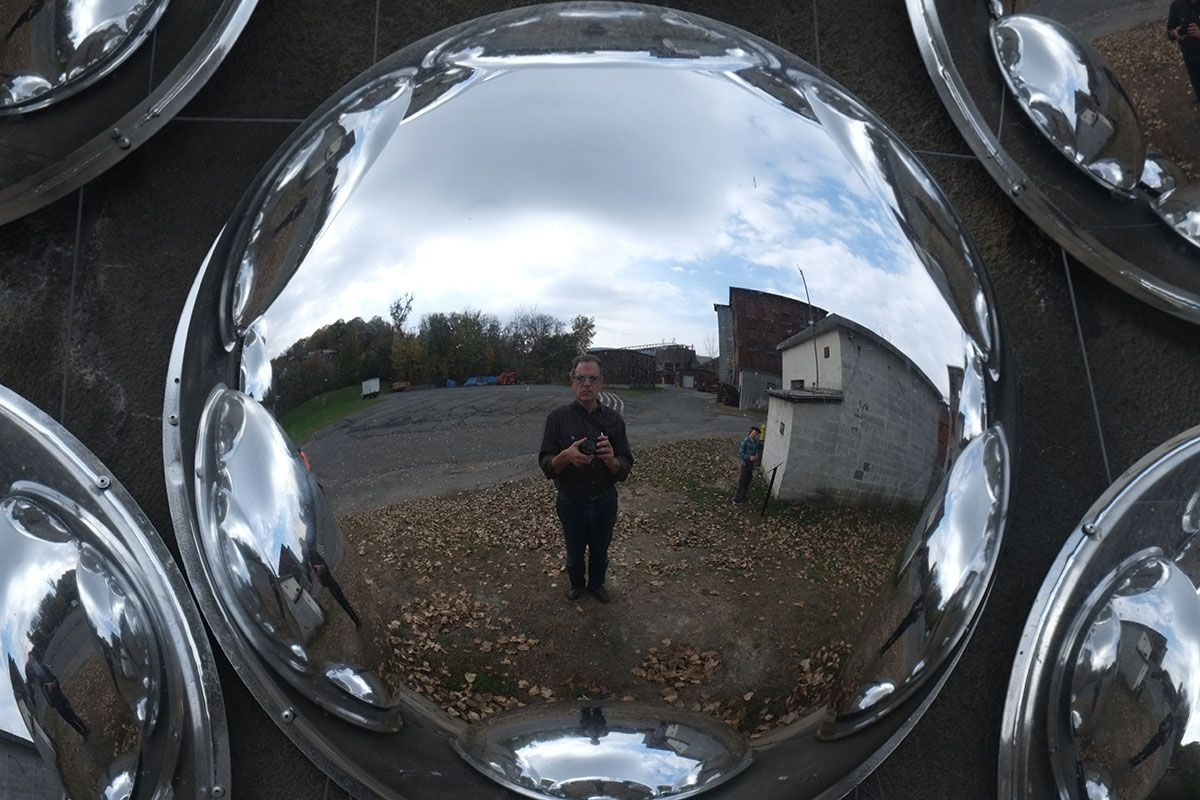
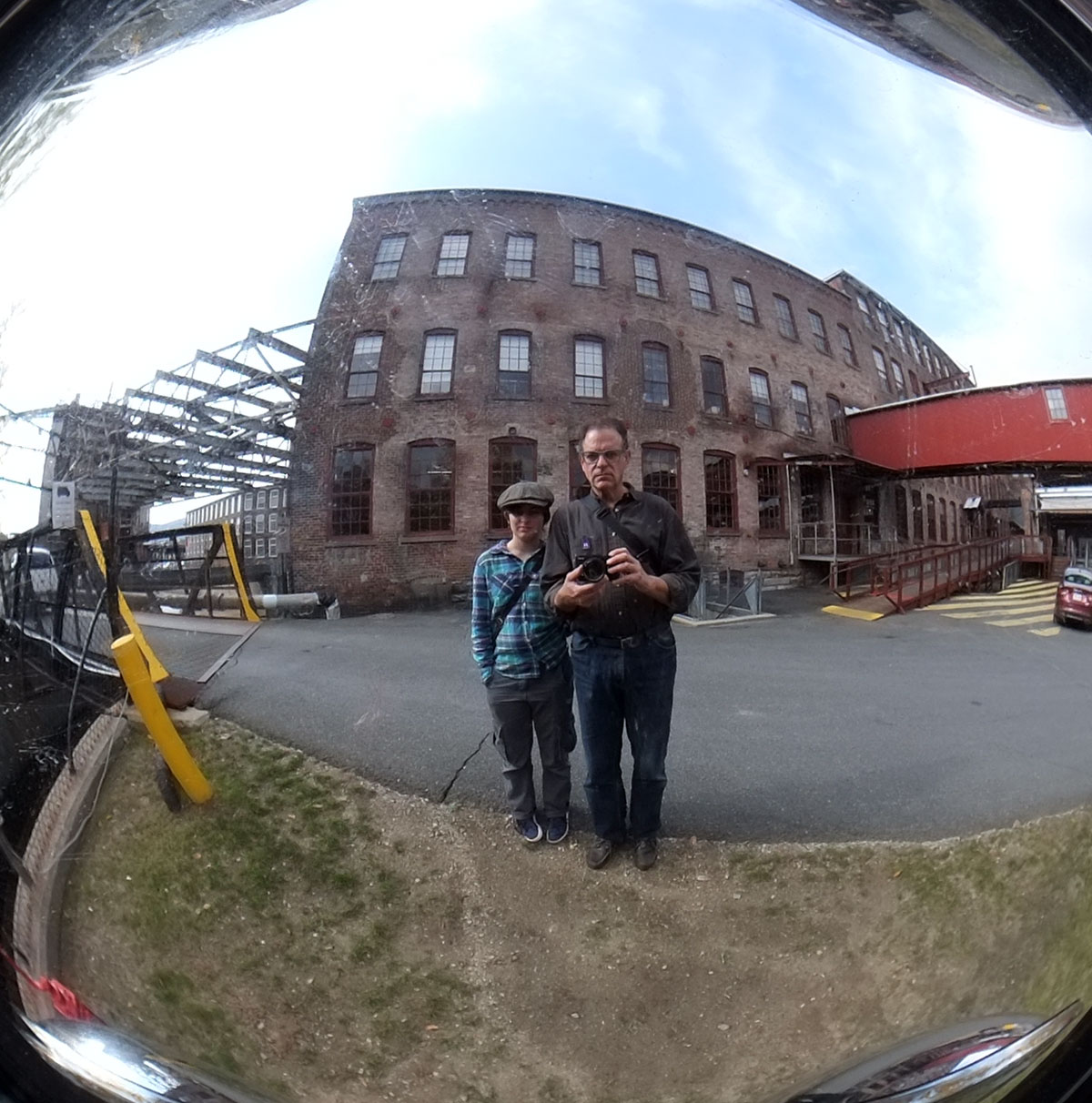
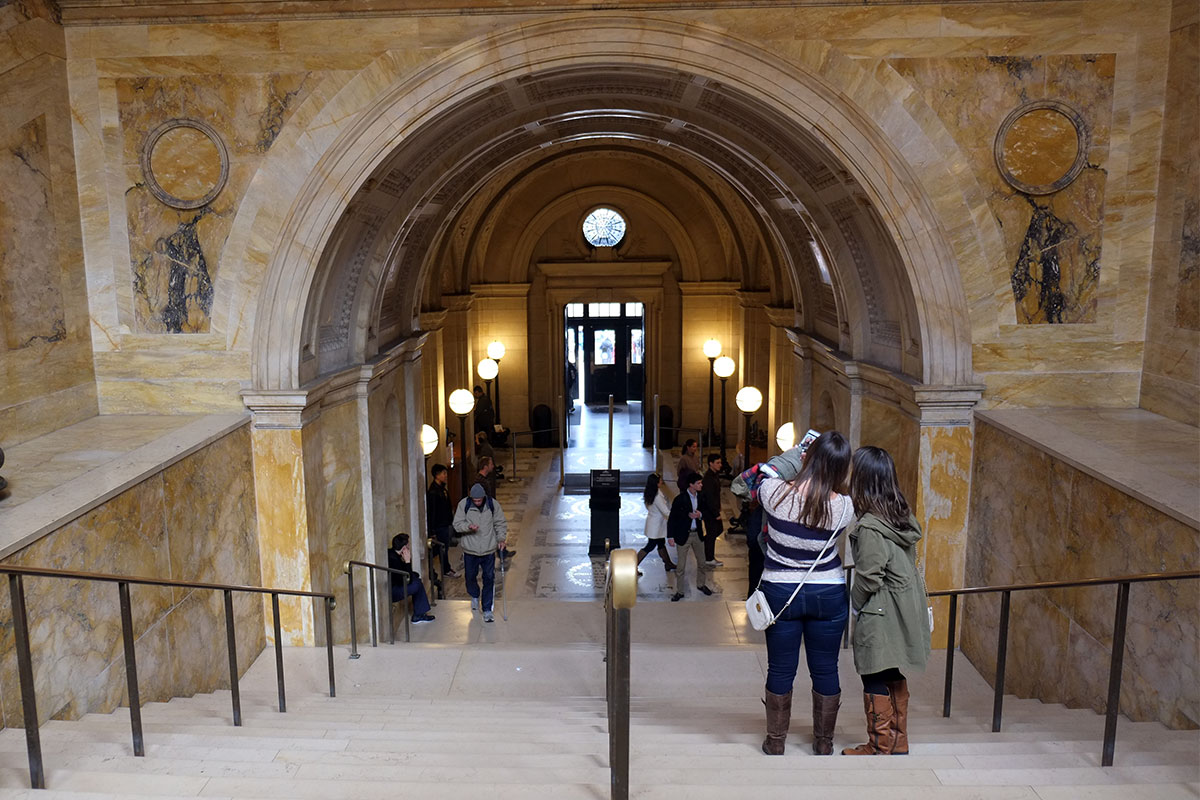
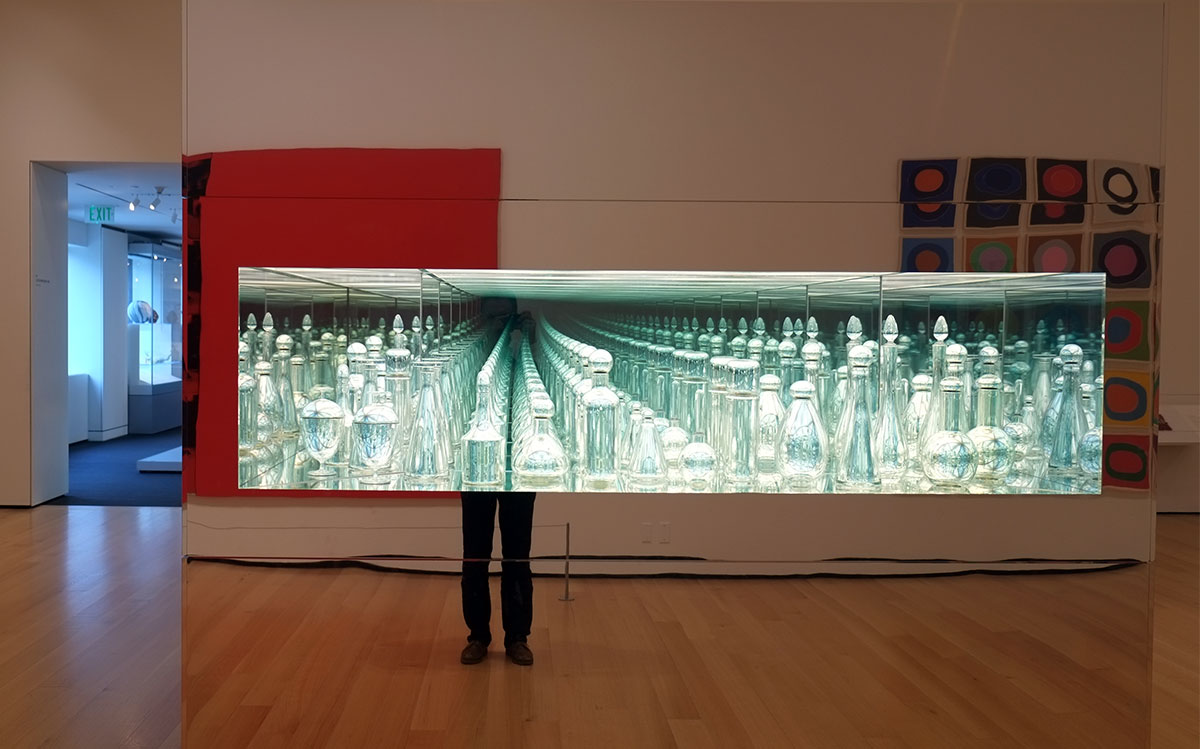
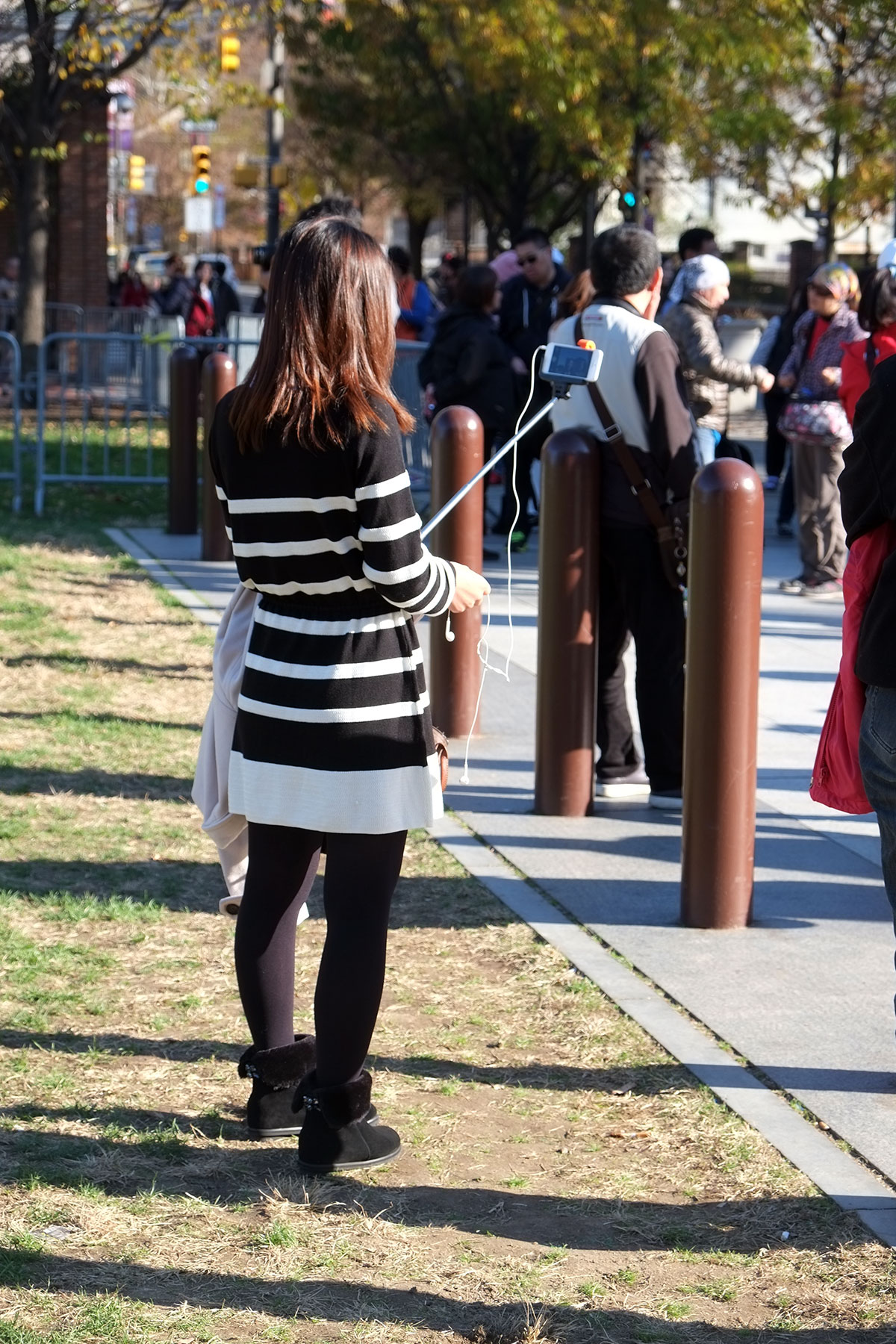
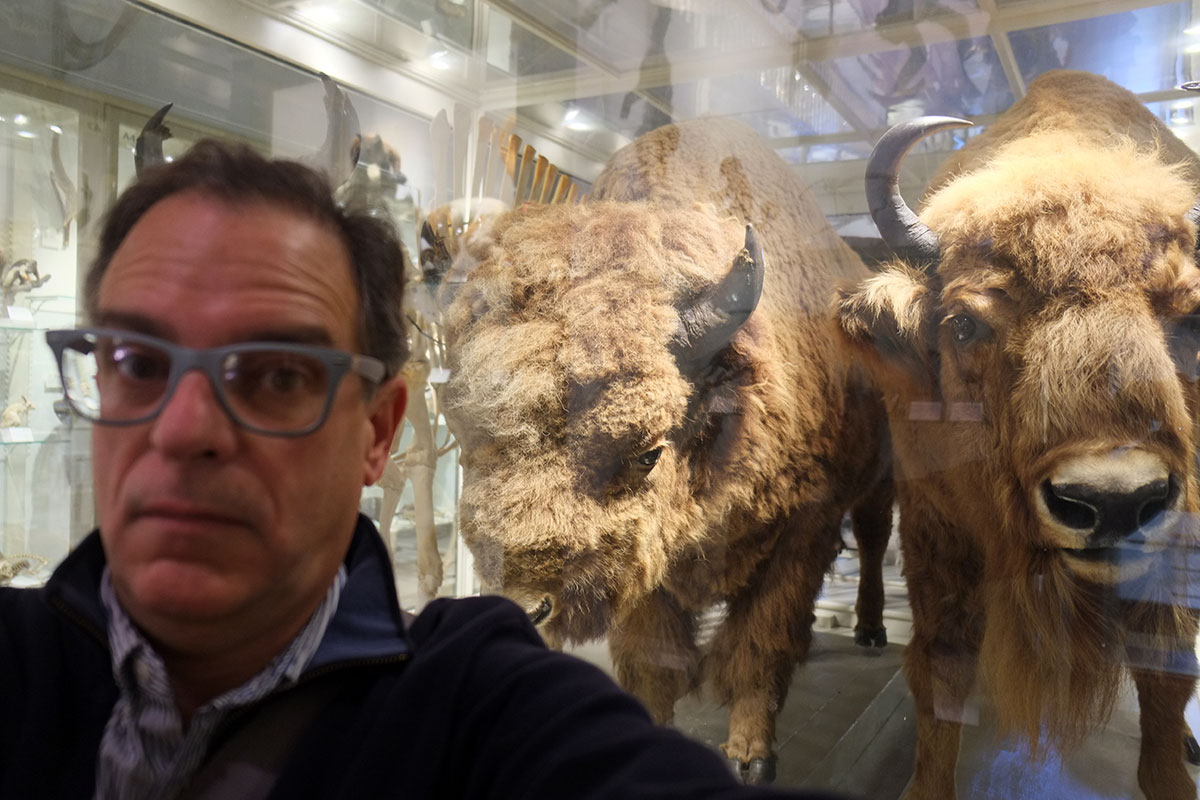
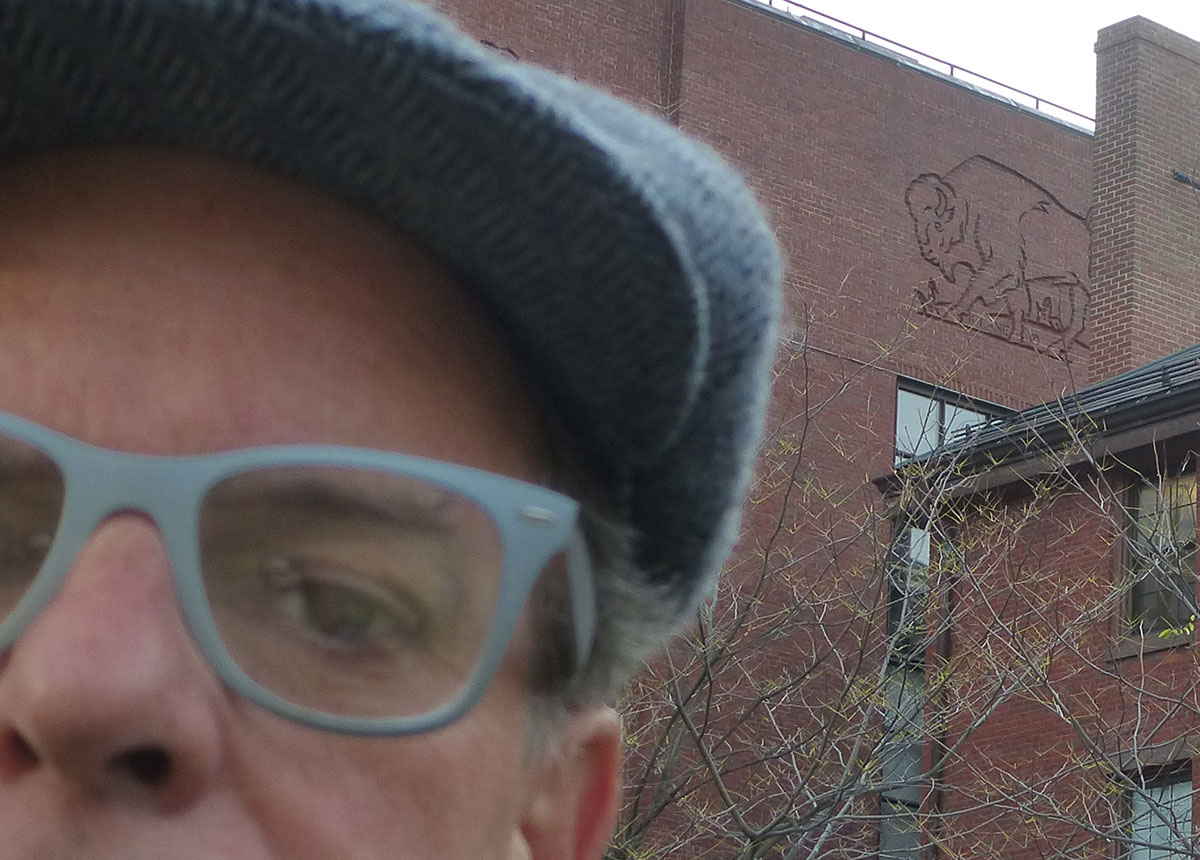
Perhaps it’s moving out of peak tourist season, or perhaps it’s moving away from peak tourist attractions, but the selfies aren’t going by as fast as they used to.  But here are the Selfies of the Northeast (including more Safe Bison-Selfies™).

DSCF4950

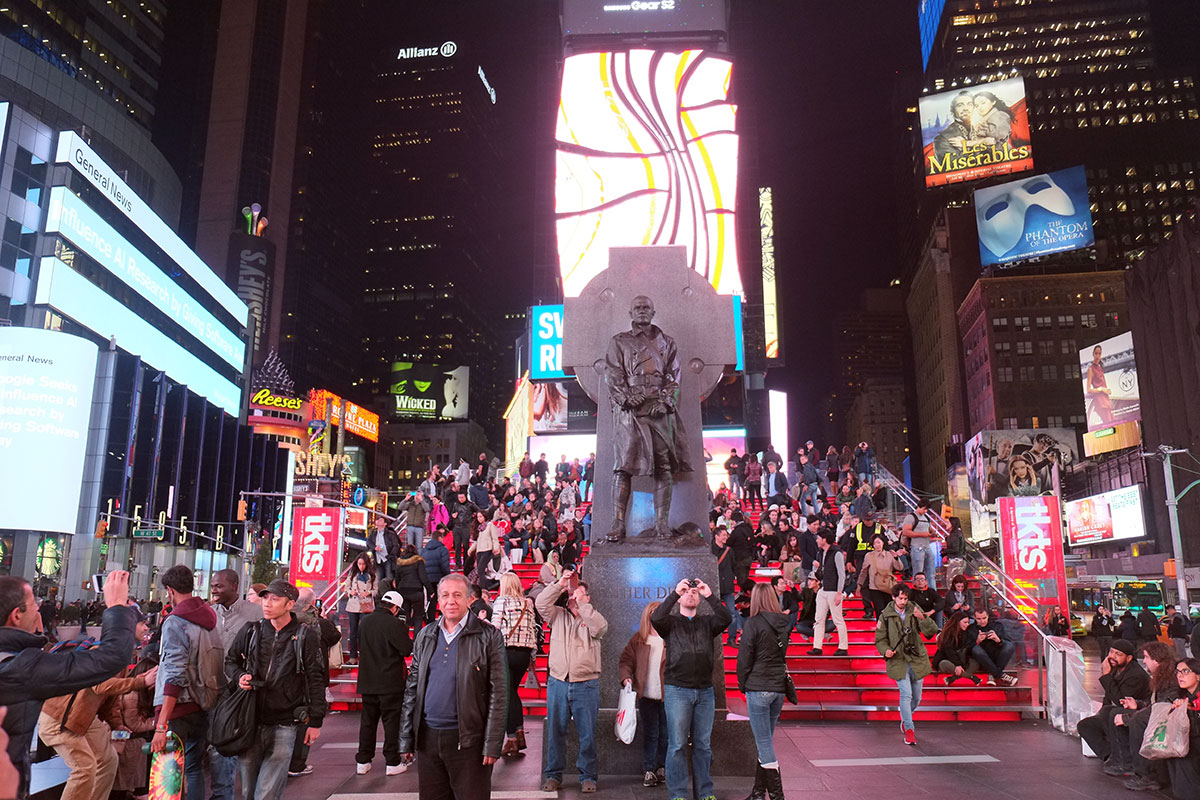
Times Square. There must be at least five selfies in this photo.

DSCF2868

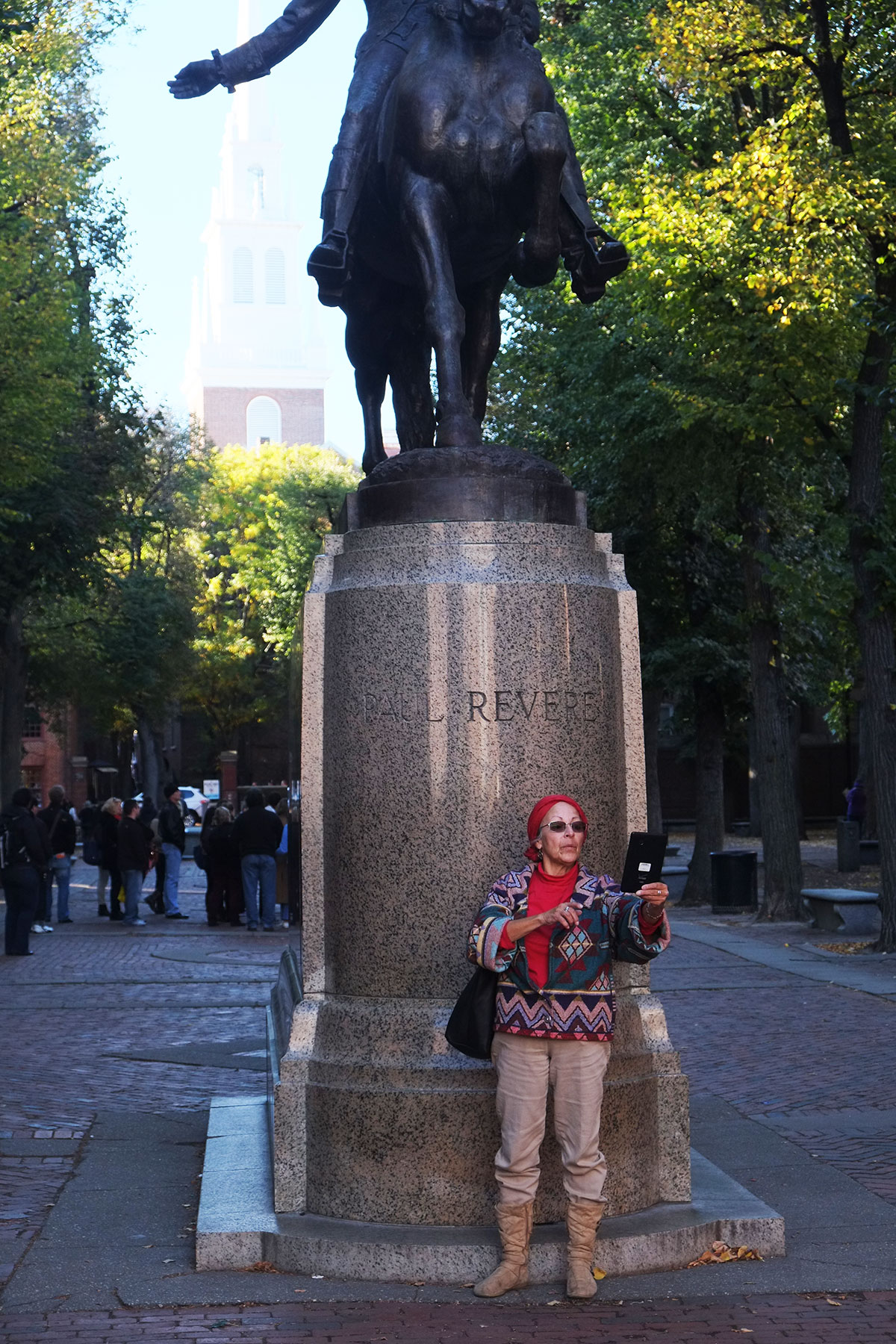
The Paul Revere selfie.

DSCF3390

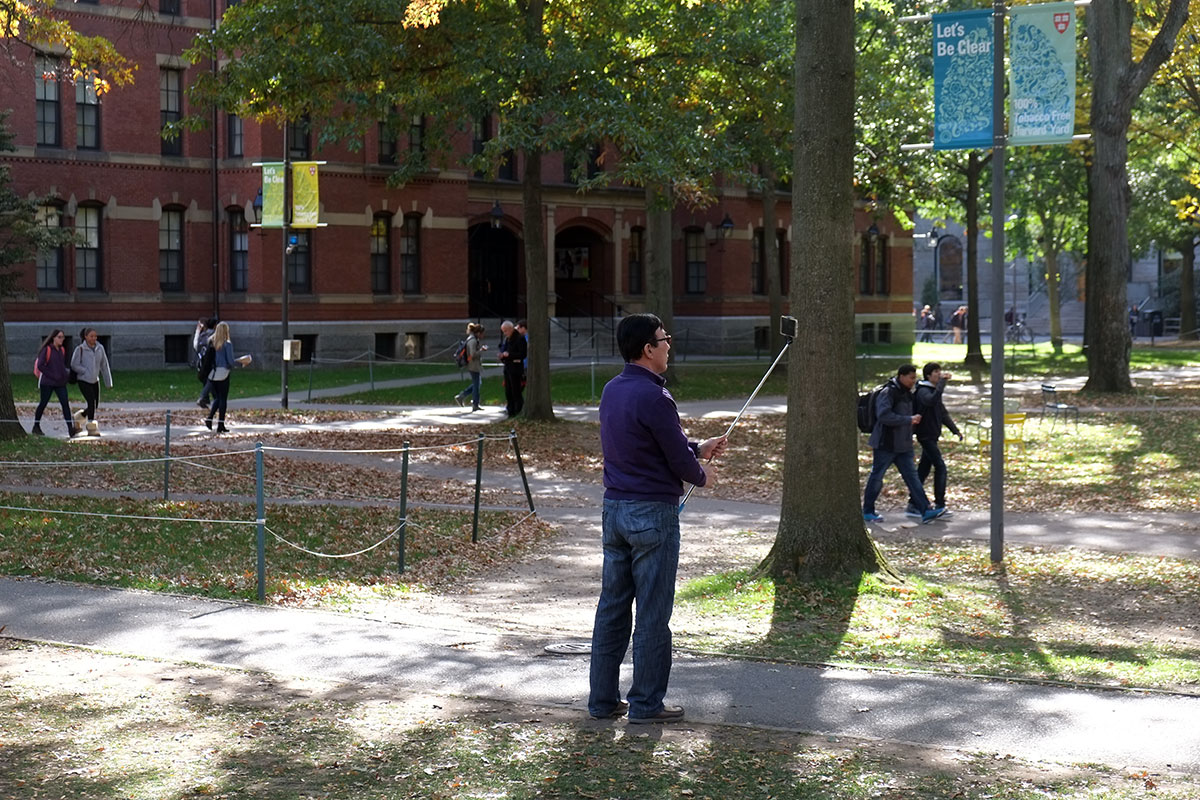
The Harvard Yard selfie.

DSCF3576

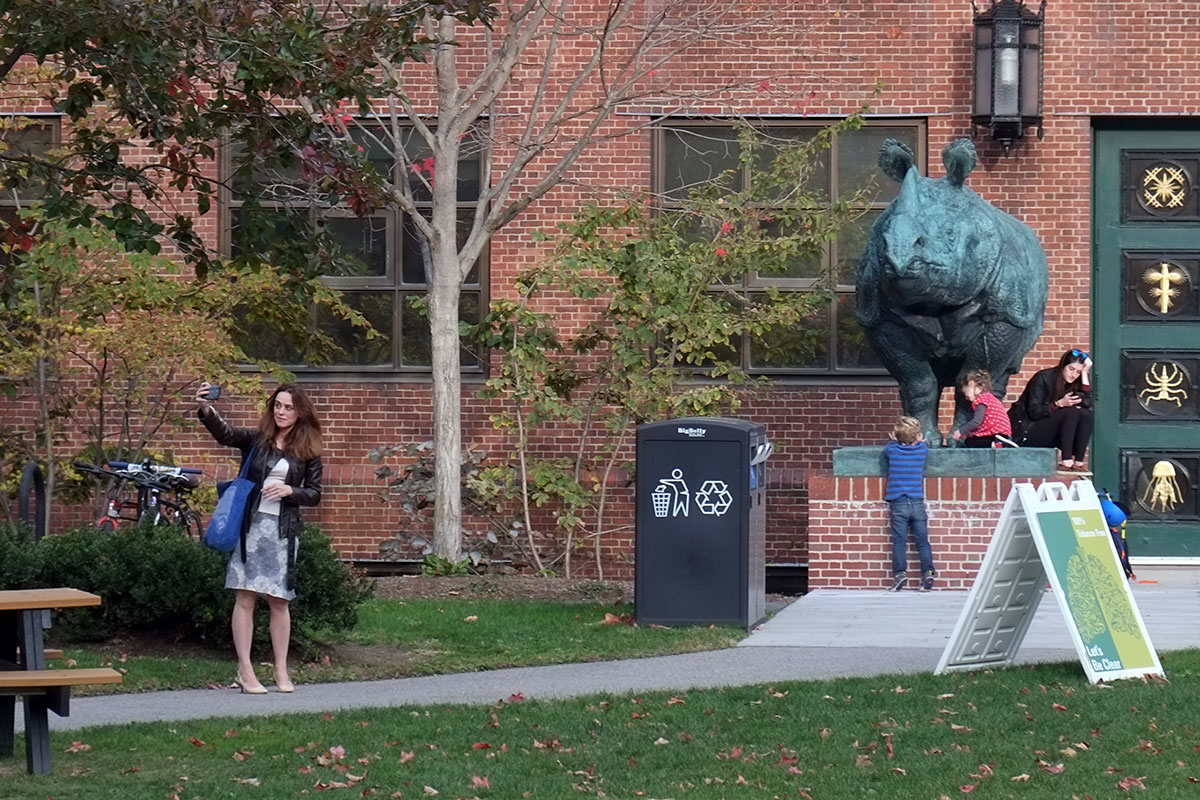
The Bio Labs Rhinoceros selfie.

DSCF2463

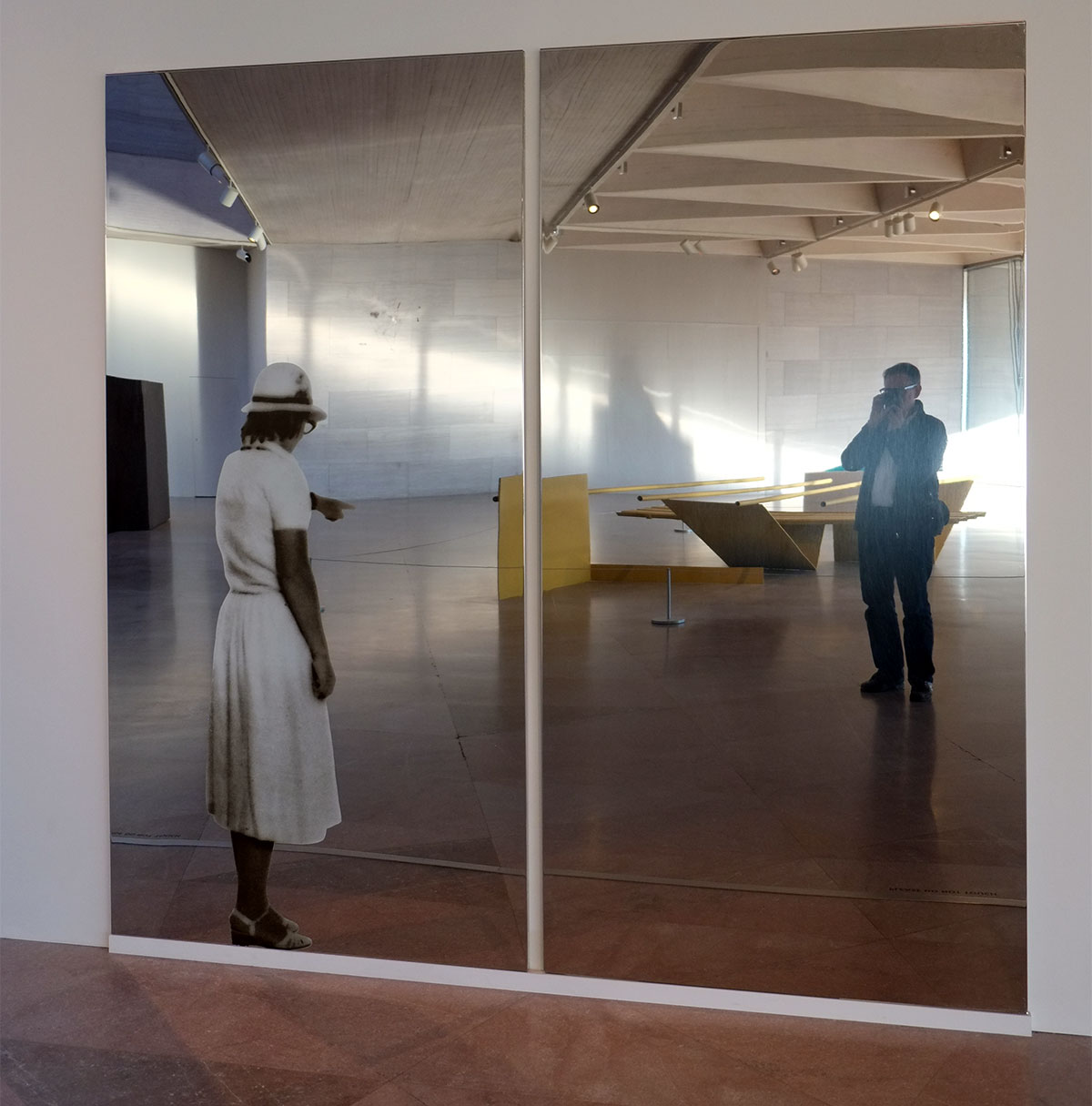
Meta-selfie No. 1

DSCF2449

Meta-selfie with child

DSCF2650

BPL selfie

DSCF3798

MFA meta-selfie. I believe this level of appropriation constitutes a whole new work.

DSCF6360

National gallery meta-selfie

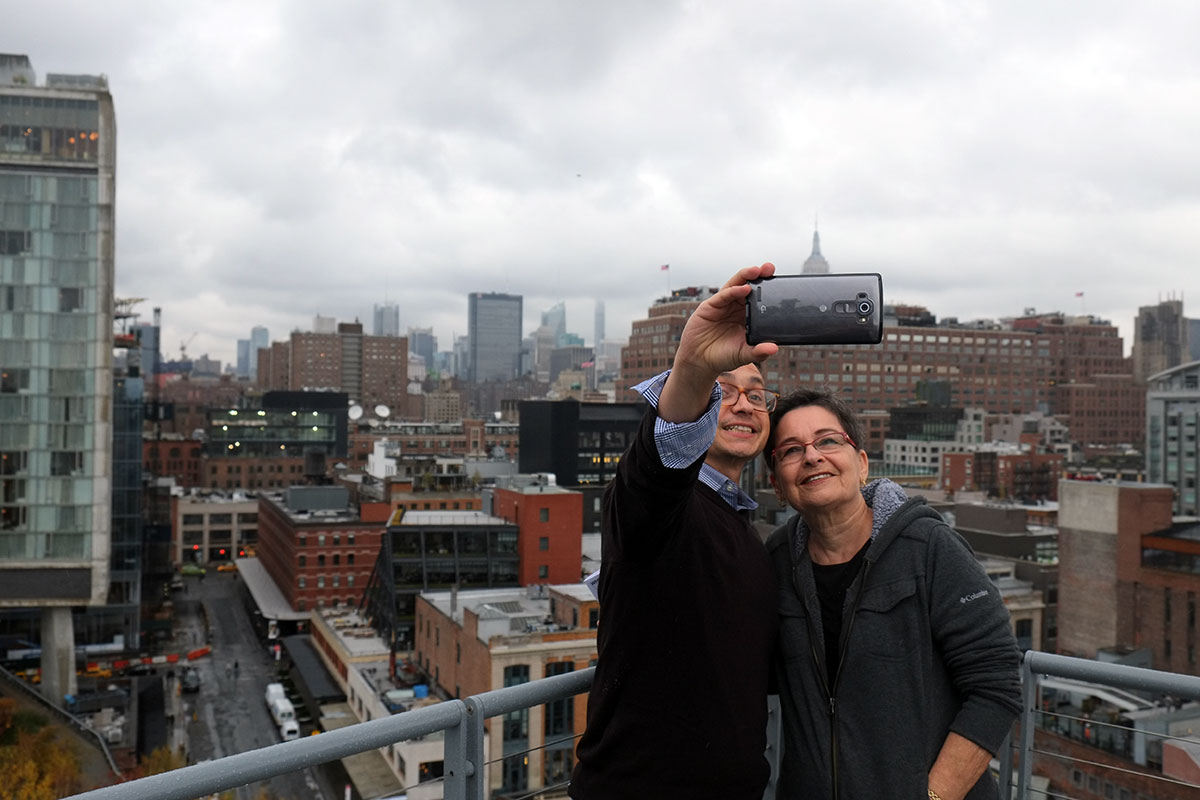
DSCF4989

Whitney selfie.

DSCF5482

Independence Hall selfie. But facing away from Independence Hall, as the lighting is better on you!

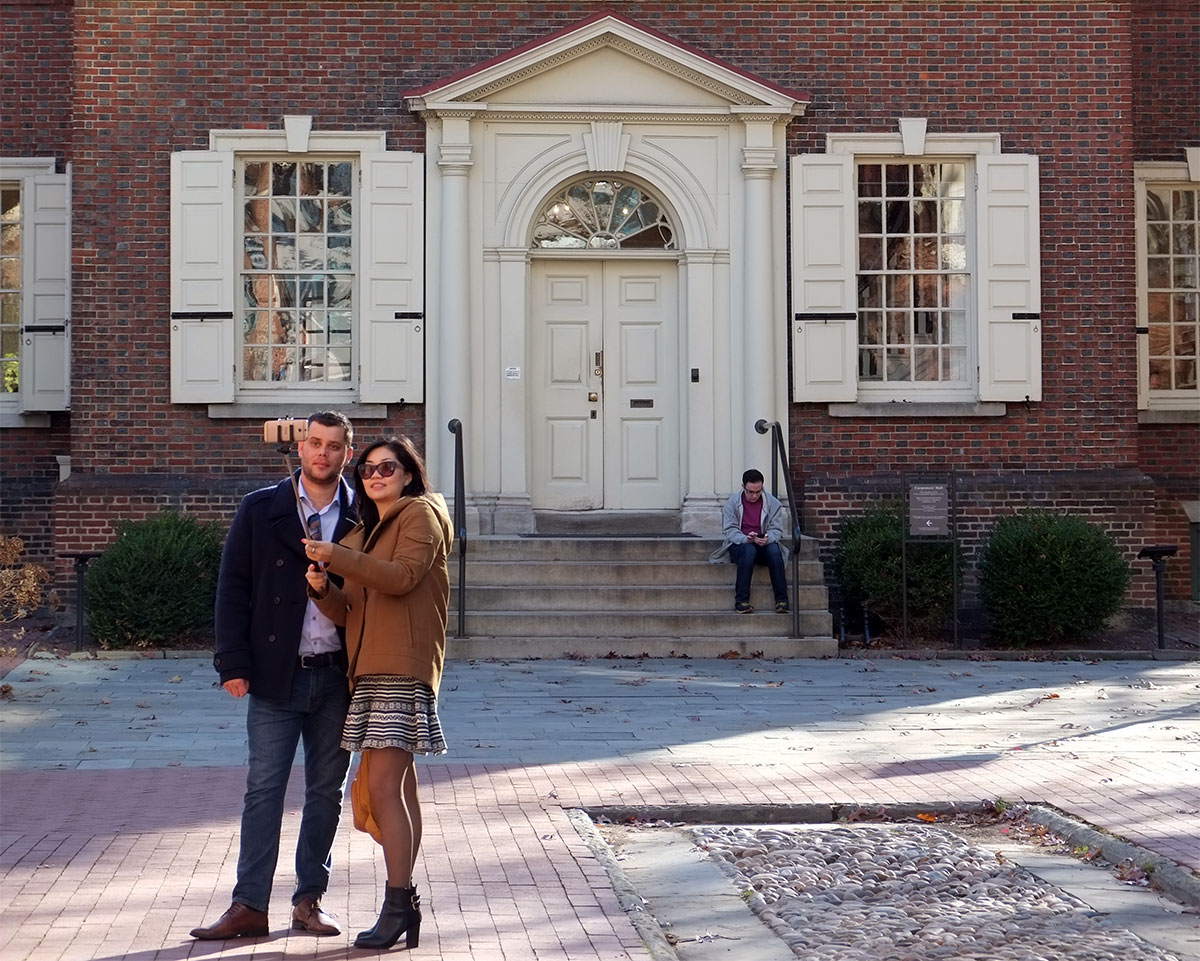
DSCF5513

Carpenters’ Hall in Philadelphia. I think they thought it was Independence Hall.

DSCF6156

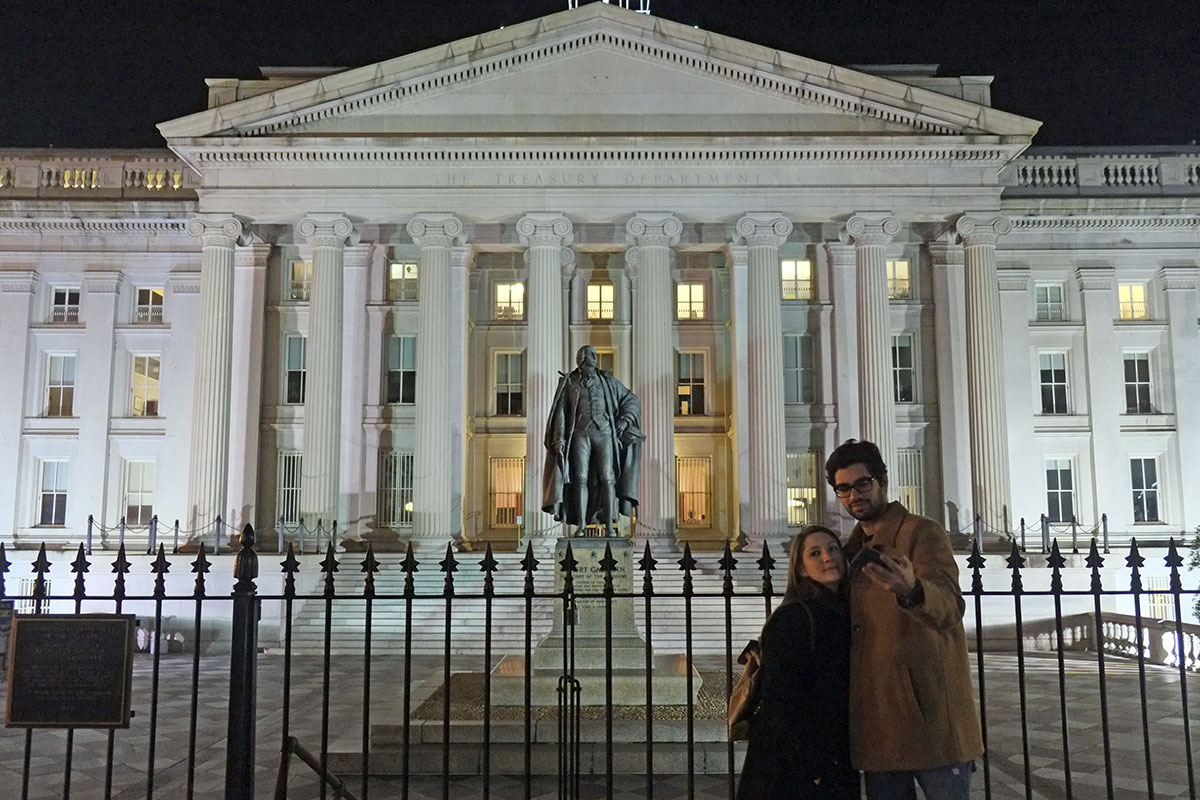
The Treasury in Washington – I think they thought it was the White House.

DSCF4398

Safe Bison-Selfie™ at the Museum of Comparative Zoology.

P1040989

Safe Bison-Selfie™ at the Bio Labs.

The final set of self photos is available here.

Photos

Most of my blog posts are pretty pedantic and focussed, so I’ve decided I should sometimes just post photos that aren’t part of a larger polemic.  Plus I don’t have to write as much.

DSCF5745

Baltimore

DSCF5796

Baltimore

DSCF4623

Lowell, MA

DSCF4885

West Side, New York

DSCF4867

Riverside South, New York

DSCF4816

Seventh Ave., New York

DSCF5131

Gansevoort St., New York

DSCF5049

Whitey Museum, New York

DSCF5097

Whitney Museum, New York

DSCF5623

Philadelphia

DSCF5680

Philadelphia

DSCF5297

Paterson, NJ

DSCF6108

Nattional Air and Space Museum, Washington DC

DSCF7050

Charlottesville, VA

Lancaster, Pennsylvania

A year ago today we drove west from the Philadelphia Main Line, through Lancaster and York, Pennsylvania, and then south to Baltimore.  Strangely, I had never travelled through the Amish country before, and Greta and I were both taken by the beauty of the landscape, and the singular culture that is centered there.

With a normal adolescent sensibility, Greta was highly amused that we were passing through Intercourse, p1050342

and her more detailed study of the map caused us to make a slight detour south to Fertility, which she was gratified to see was only a short distance from Intercourse.

The landscape showed a lovely amalgam of different eras of vernacular building.  Lancaster itself was a somewhat overwrought tourist destination, but once away from the bus parking lots, the lack of self-consciousness and tweeness was evident.  p1050344

As was extreme laundry-hanging. p1050343

We thought we had come across a wormhole in the space-time continuum, and that maybe we could zip home for a quick visit,p1050345

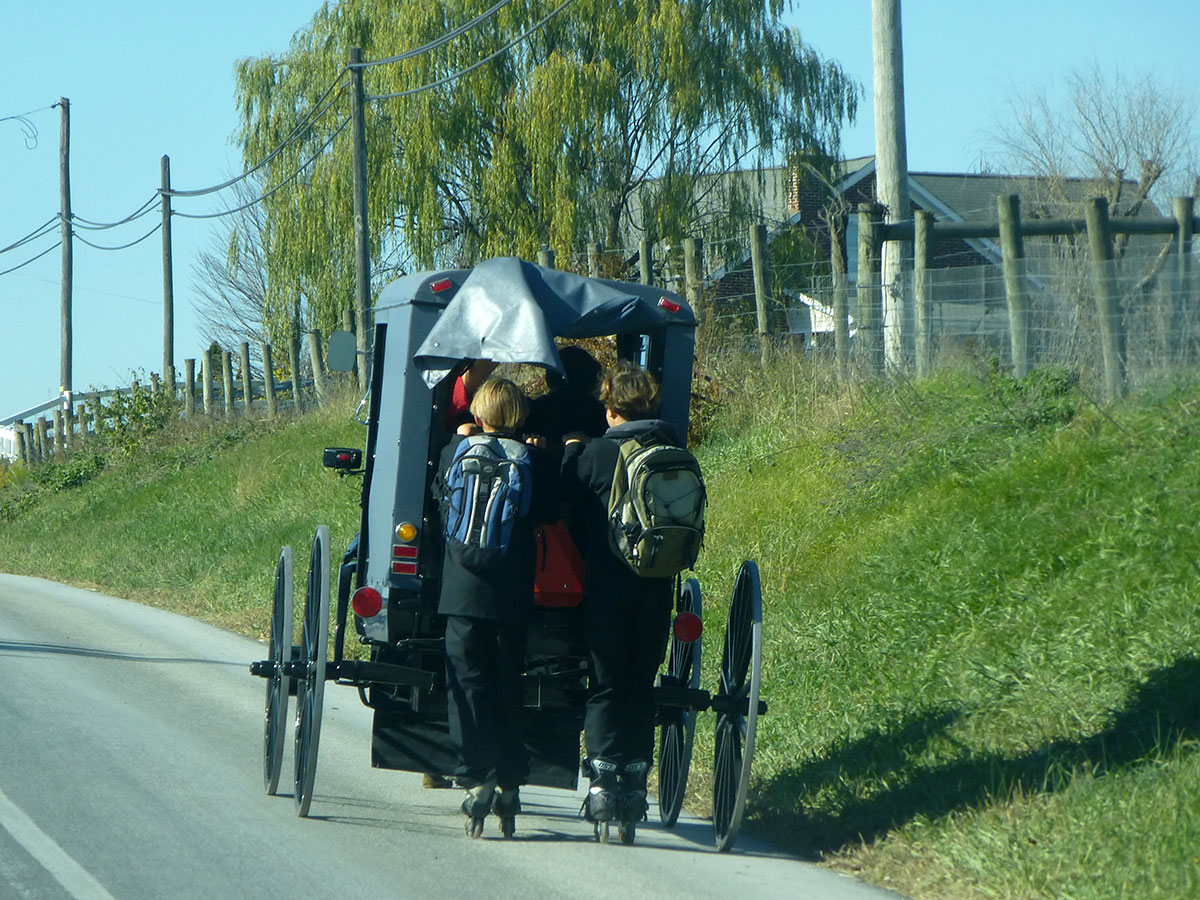
But the real dislocations were in the cultural anachronism category, especially this example of Amish skitching on the way to school.  p1050333

Philadelphia

One day in downtown Philadelphia, where once again the parental need to force Greta to view the major monuments of colonial America asserted itself.  Different cities have taken different approaches to this heritage.  Boston does it really well – with the exception of the Paul Revere Mall, the historic sites are still imbedded in the city.  New York more or less obliterated all the historic sites and their surrounding context.  Philadelphia kept all the historic buildings, but obliterated the city fabric around them, so you can view these icons as isolated objects, surrounded by pointless, overscaled open space and dreadful overscaled buildings.

I remember Independence Hall as a wonderful building.  It is not only important, but it is beautiful and says something about the city of the time.  The problem is this:  you can’t get anywhere near it anymore, without signing up for a tour over in the dreadful visitors’ center and waiting around to be shepherded through with throngs of tourists snapping iPhone photos.  You can’t even walk on the grounds near it, having to detour around the block.  DSCF5478

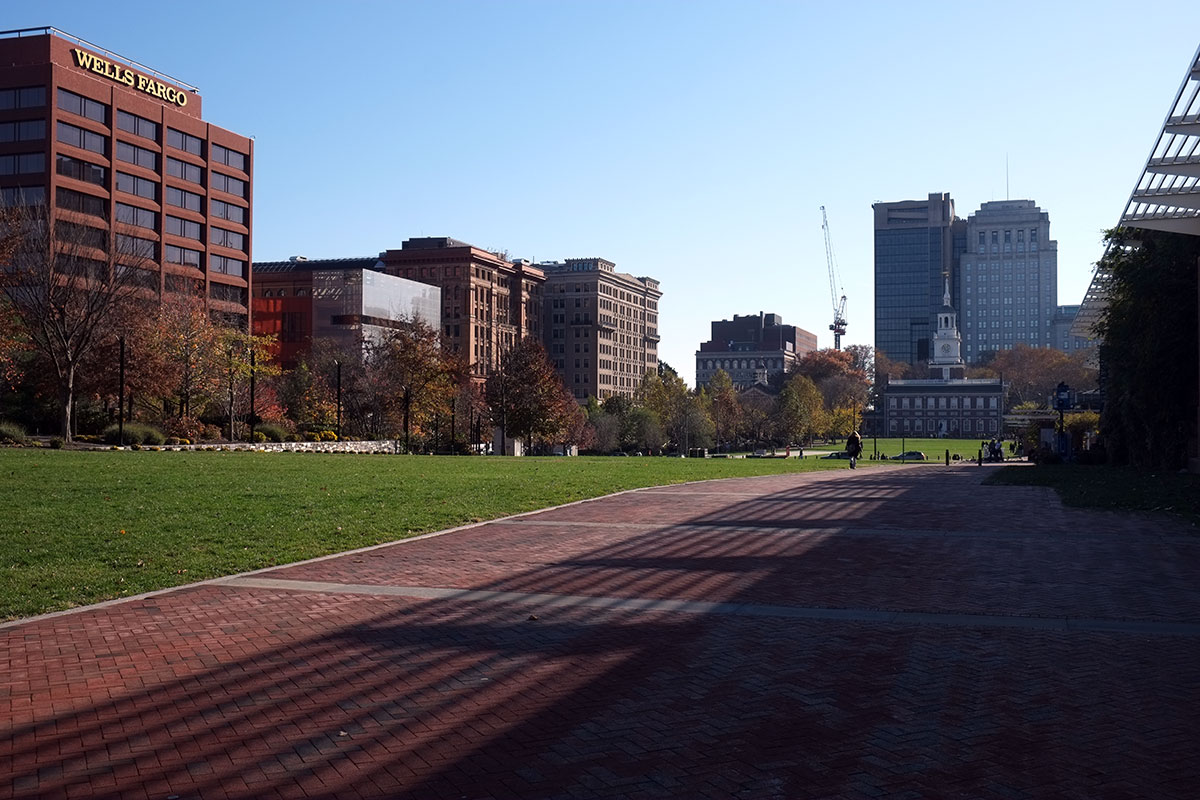
It gets even worse when you step back.  The Independence Hall Mall was proposed in the 1930s, and was implemented in the 1950s, when we thought knocking down old cities was a great idea.  Hundreds of buildings were destroyed, so that a giant open space would allow you to view Independence Hall from far away, looking puny and unimportant.  DSCF5496

Then big, bombastic buildings were built around that, symbolizing the might of large corporations in our national system.  It gets even worse behind Independence Hall, where this sterling example of historic preservation can be seen.  DSCF5464

It declined further recently.  In 1976 the Liberty Bell was moved into its own viewing pavilion, part of a veneration of the minor icons of our history rather than the history itself (the recent Star Spangled Banner re-installation at the Smithsonian is another example of this).  But then this simple pavilion was destroyed (probably because it was modernist and minimal), and replaced by a more grandiose pavilion, just south of the visitors’ center.  DSCF5485

The experience is awful, reminding me of what has happened to Mt. Rushmore.  Where does this impulse come from, to remake everything in a phony, pretentious manner?  (By the way, some very good architects and planners were involved in many stages of this madness – Edmund Bcon, Dan Kiley, Venturi and Scott Brown, Cywnski, Laurie Olin!)  Philadelphia was not Versailles, but it had one of the most compelling plans of an early American city. Why can’t we leave it alone, and let visitors have an experience that in some way might evoke the 18th or 19th century, helping them to understand life in that era, rather than pedantically shaping their perceptions?  Boston looks better and better in this regard.

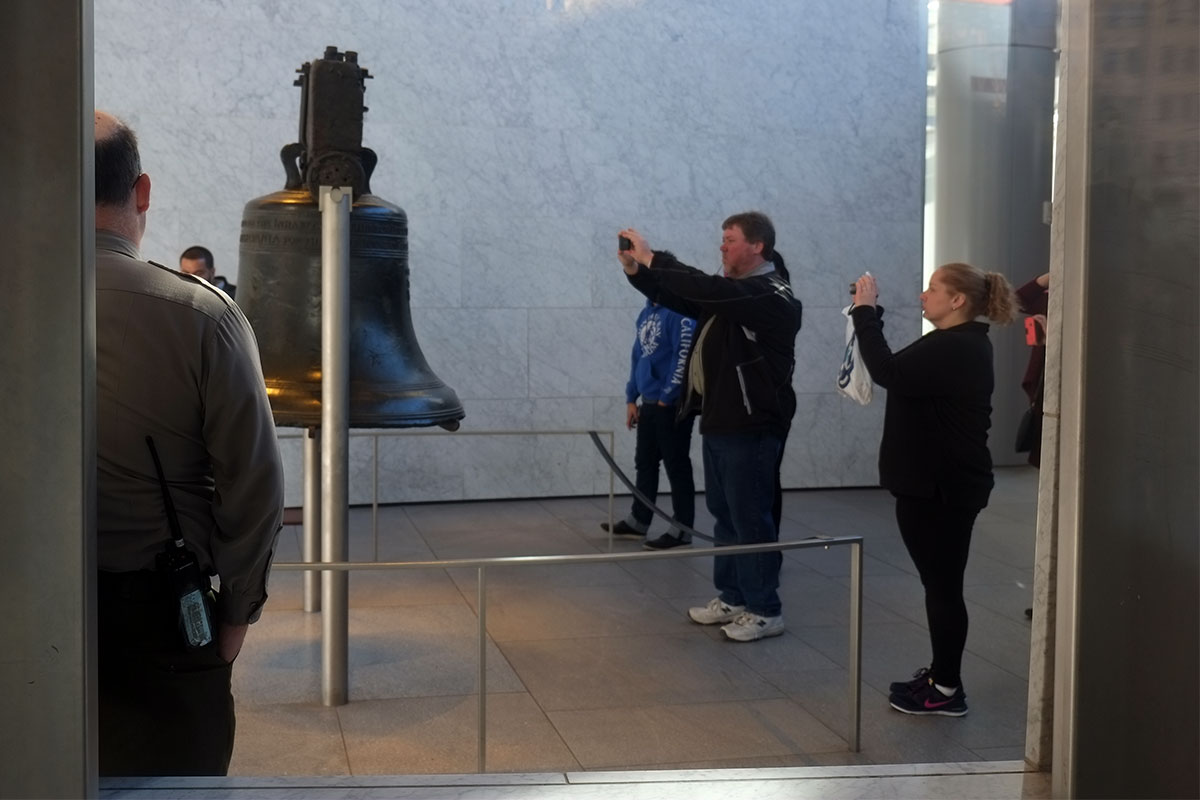
Luckily, the architects did preserve one of the best features of the earlier Liberty Bell pavilion – a window through which it could be seen, without going through the rigamarole.  We took the picture and got the hell out of there. DSCF5474

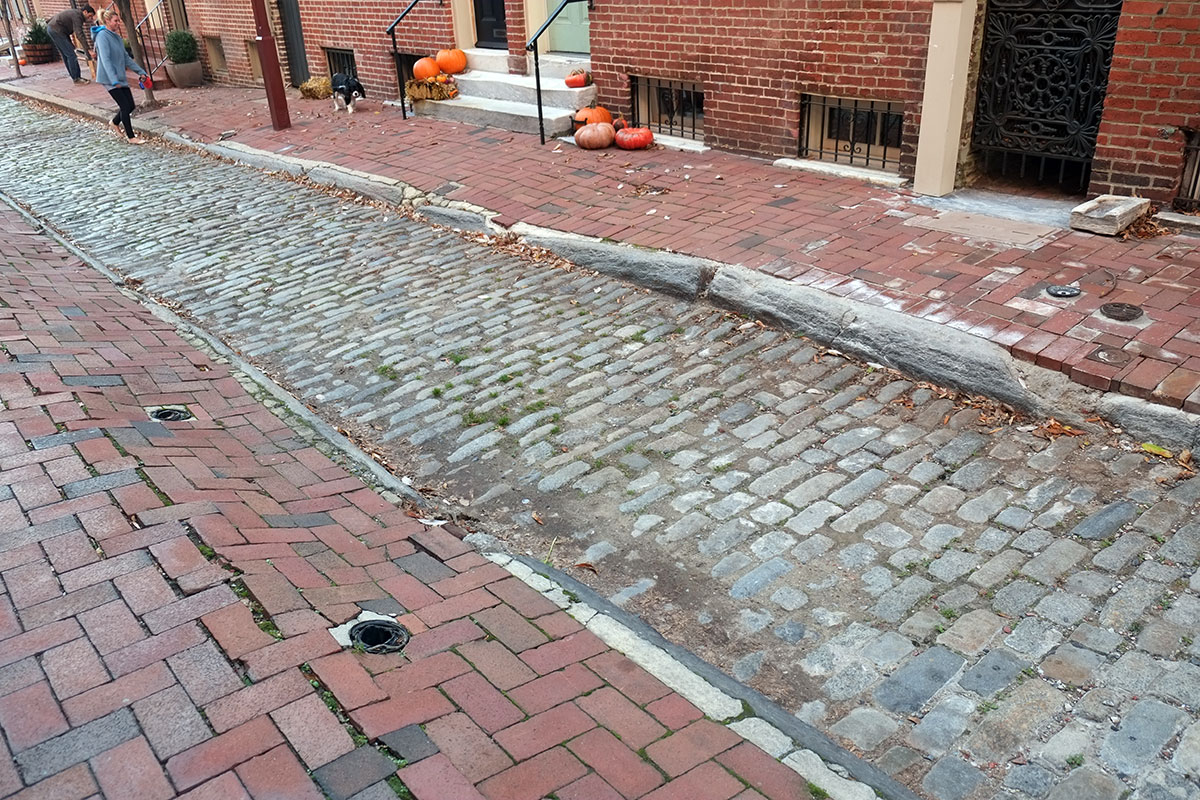
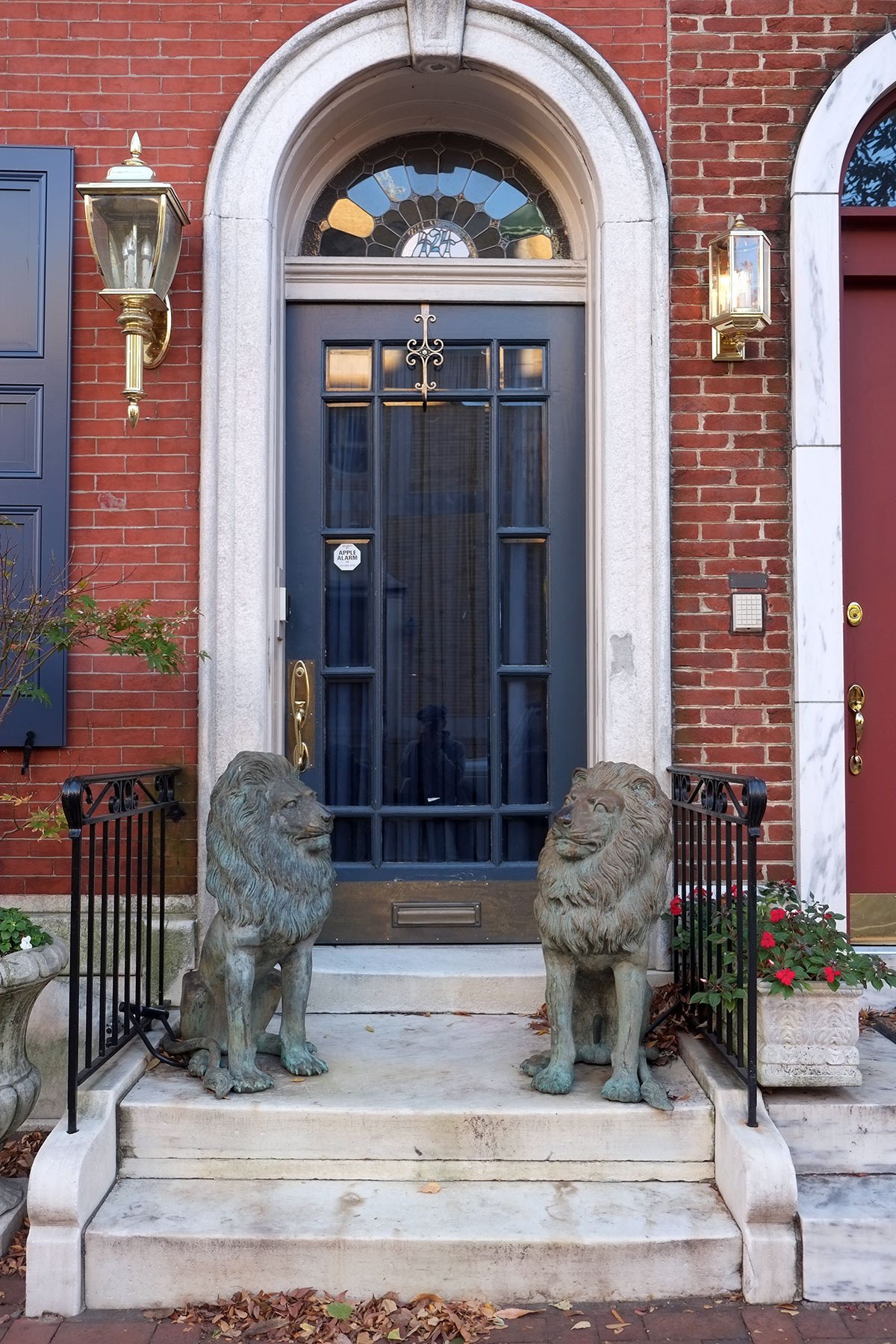
Once you get away from this, Society Hill and other older neighborhoods of Philadelphia are spectacular.  There are crazy renderings of the founding fathers,DSCF5466

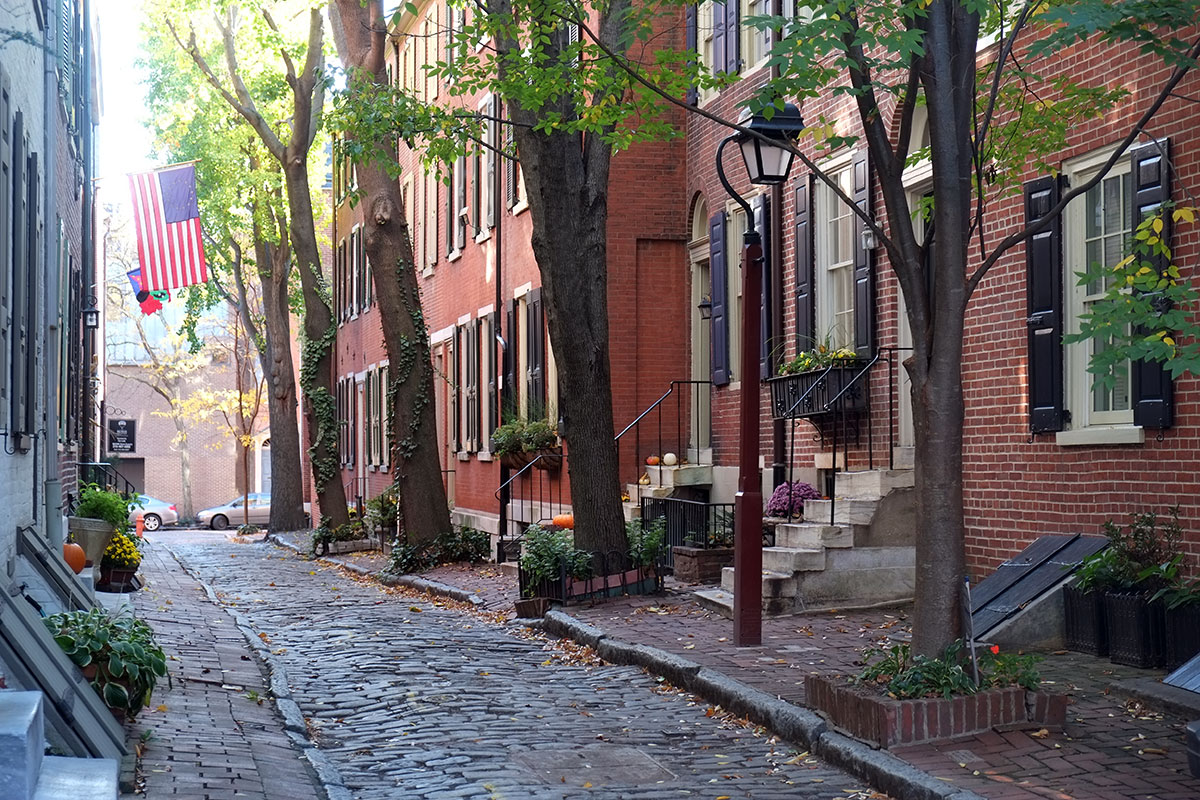
fantastic Greek Revival buildings by Robert Mills and others,DSCF5503DSCF5525and streets which really maintain the experience of the 18th century city.DSCF5569DSCF5575DSCF5579DSCF5604

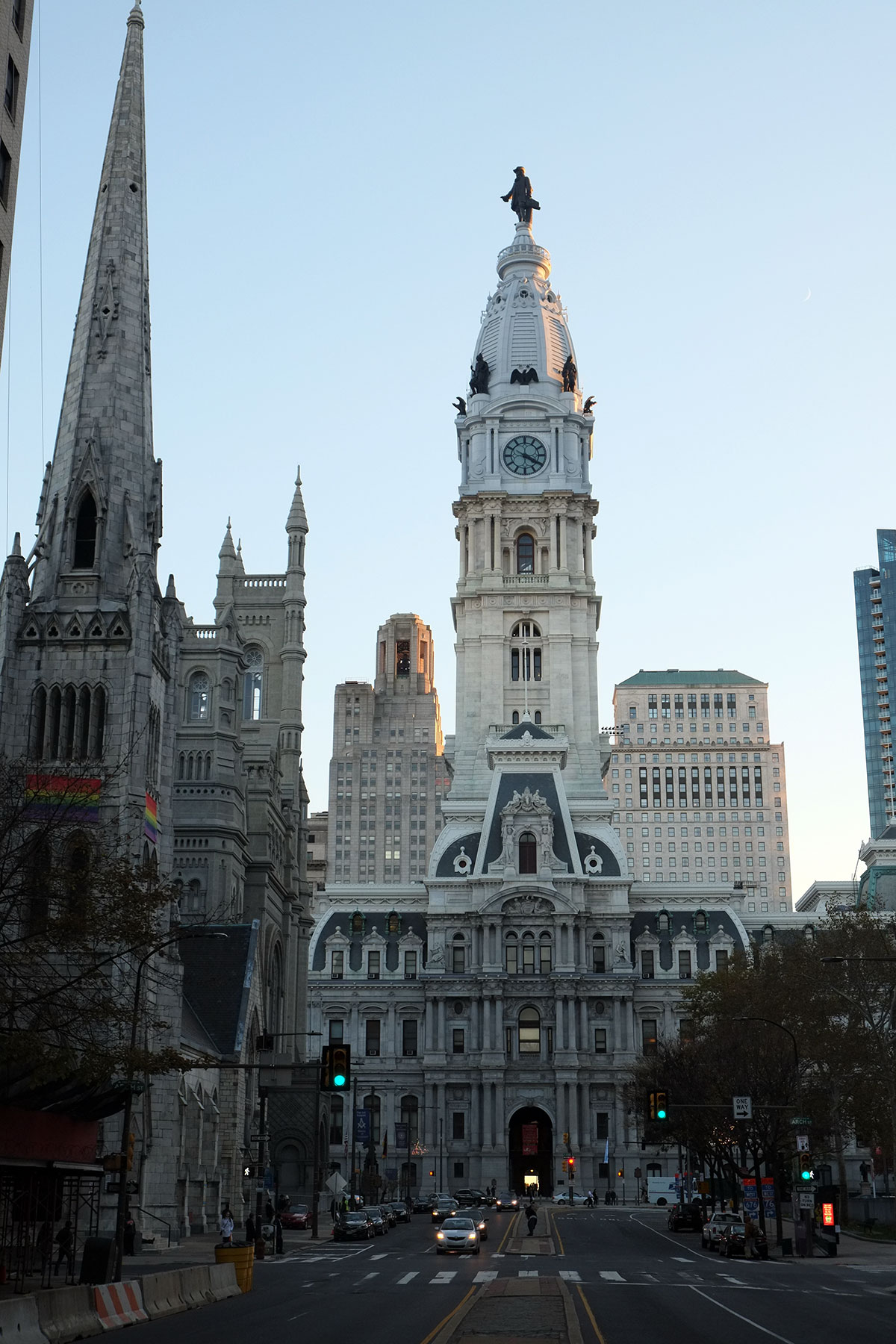
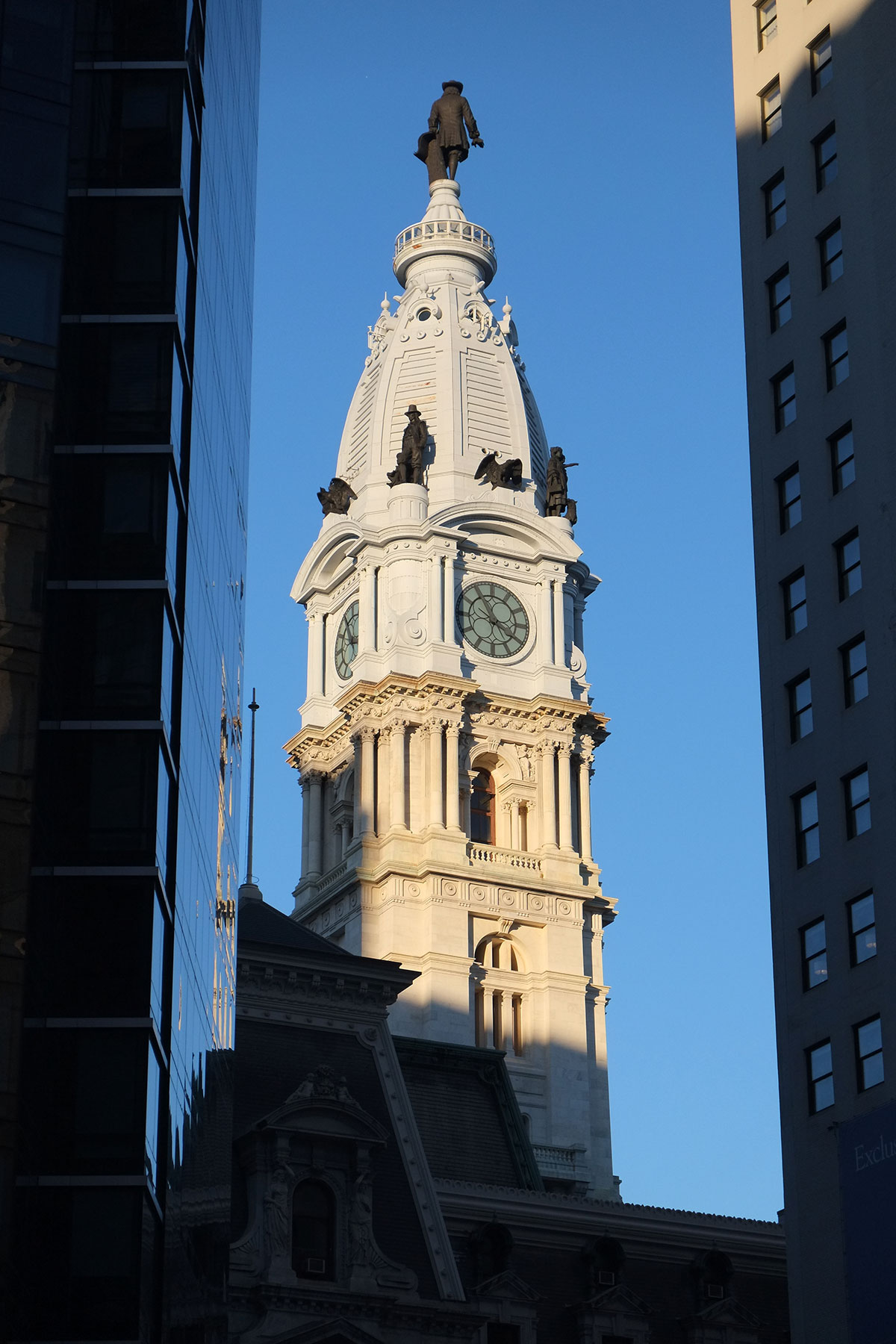
The Ciry Hall is magnificent, a good example of how a city plan can evolve positively. There was no building at the center point of the city in Penn’s plan, but having this icon visible on the axes works beautifully (with sculpture by Alexander Calder Sr.)DSCF5666DSCF5640

The Paul Cret Federal Reserve is fine (Cret being an employer of Kahn).DSCF5616

They seem to be having more fun at the Pennsylvania Academy these days, I think Furness might have approved?DSCF5671A truly dreadful “remuddling”DSCF5624and some fine urban buildings and juxtapositionsDSCF5662DSCF5672DSCF5664

As we were into checking things off our list, we grabbed a random cheesesteak, but not being in the right neighborhood, it was nothing to blog about.

Backroads

Since we reached Pennsylvania we’ve done a pretty good job of staying off interstates.  We travel a little more slowly, but we see things and places.  Here are few places that haven’t gotten their own posts.

Once again John Wenzel was our guide around the Ligonier Valley, showing us things that we would never have found our own.  An 18th century grist mill.DSCF0790

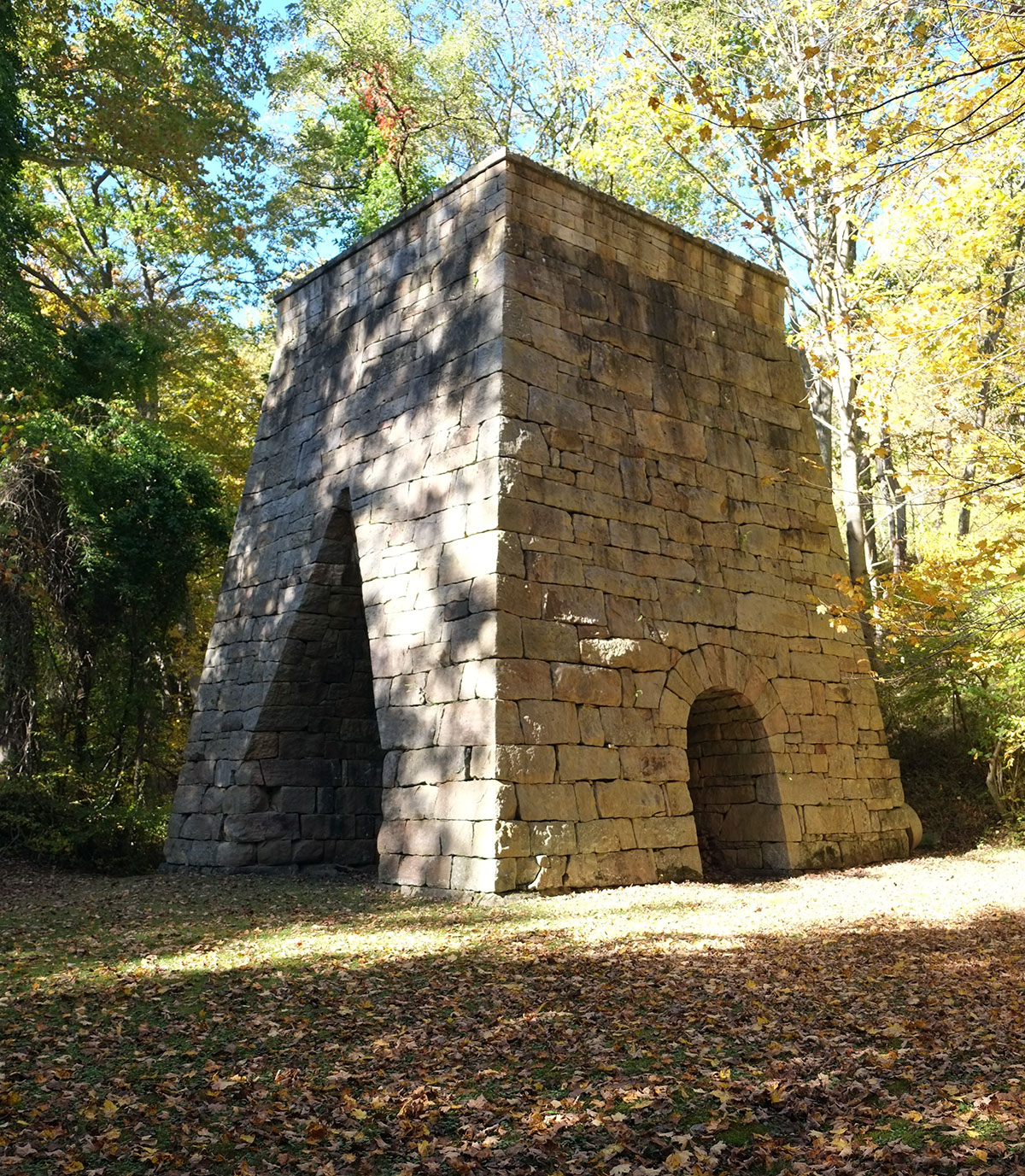
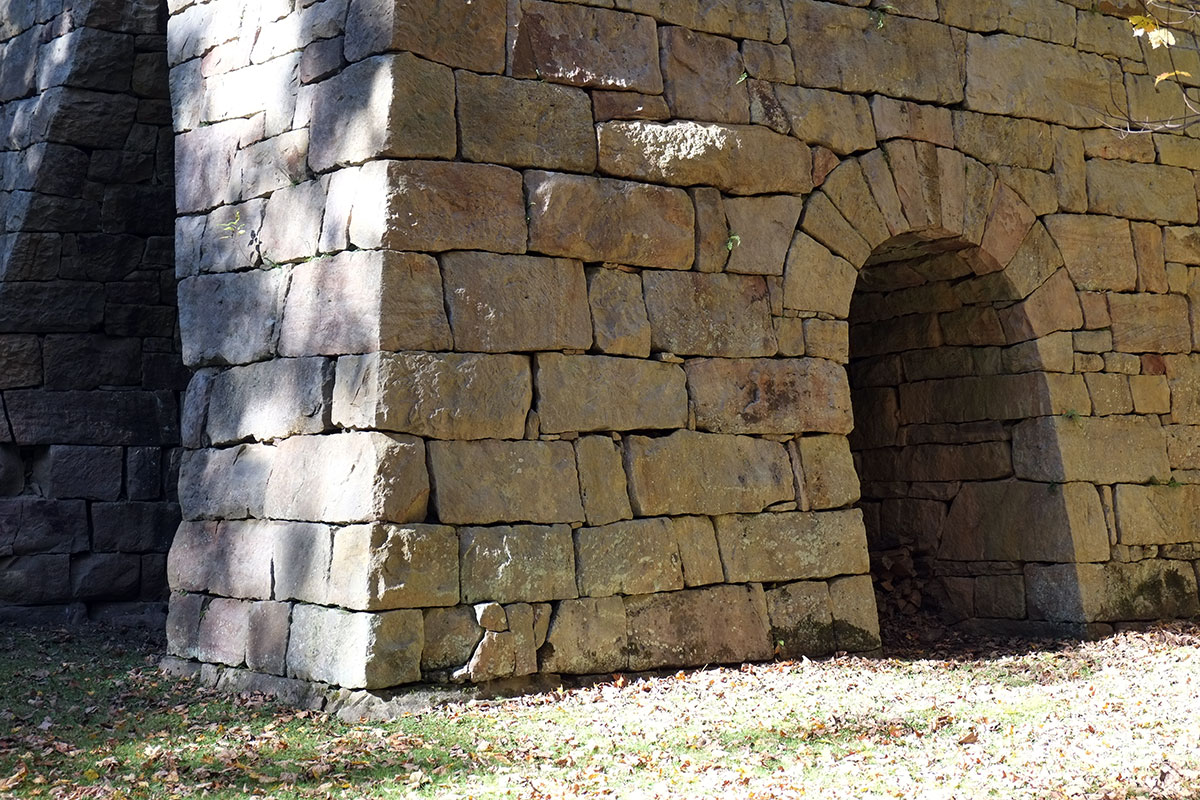
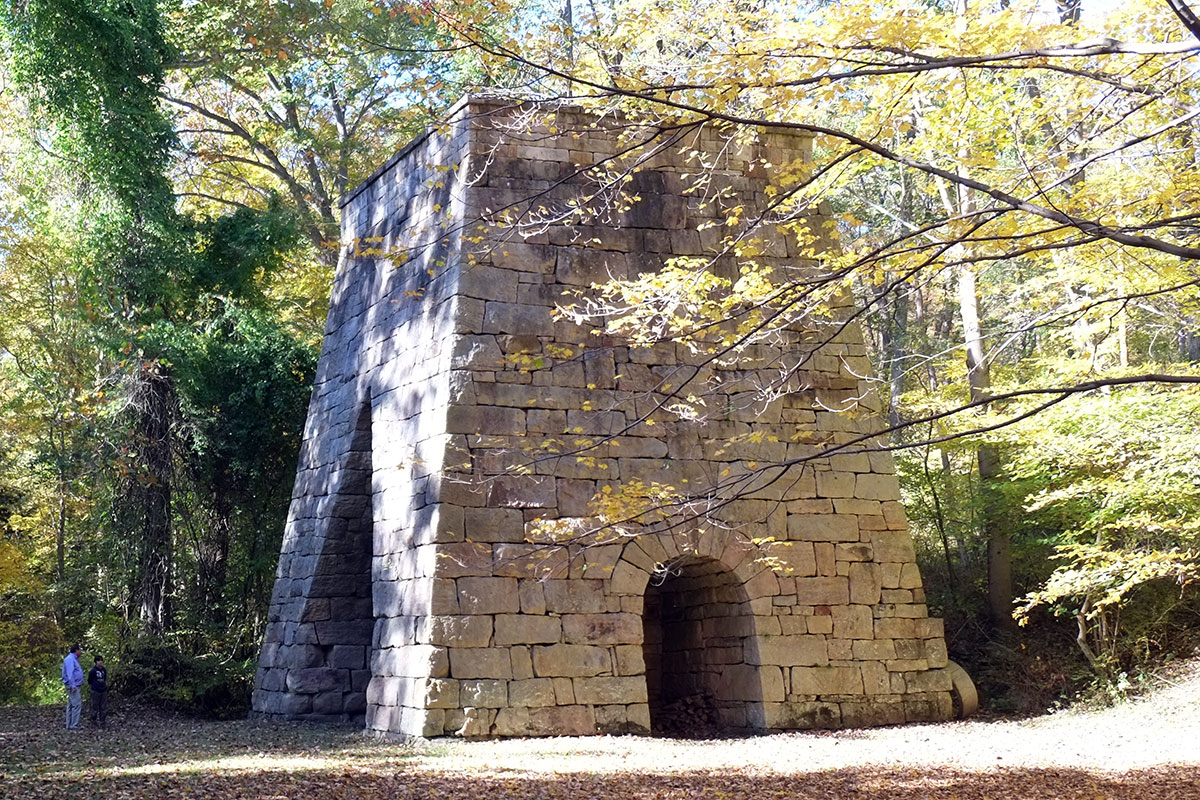
and the amazing California Furnace from 1850, an early iron furnace as the industrial revolution kicked into gear.  Boullee out in the woods. DSCF0820

DSCF0823

here John and Greta give it scale.   DSCF0822

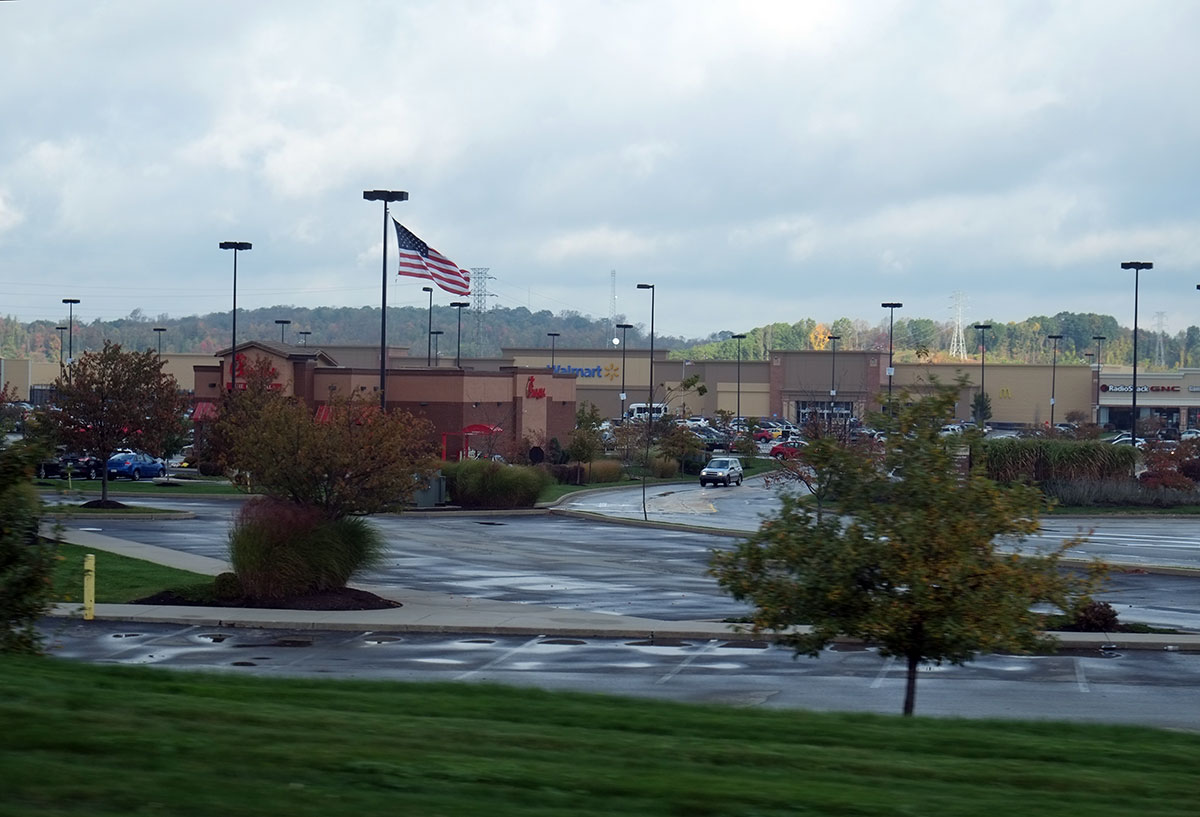
On the way into Pittsburgh, John pointed out where strip mine sites were now being filled and built upon.  We realized that strip mines become strip malls.DSCF1004

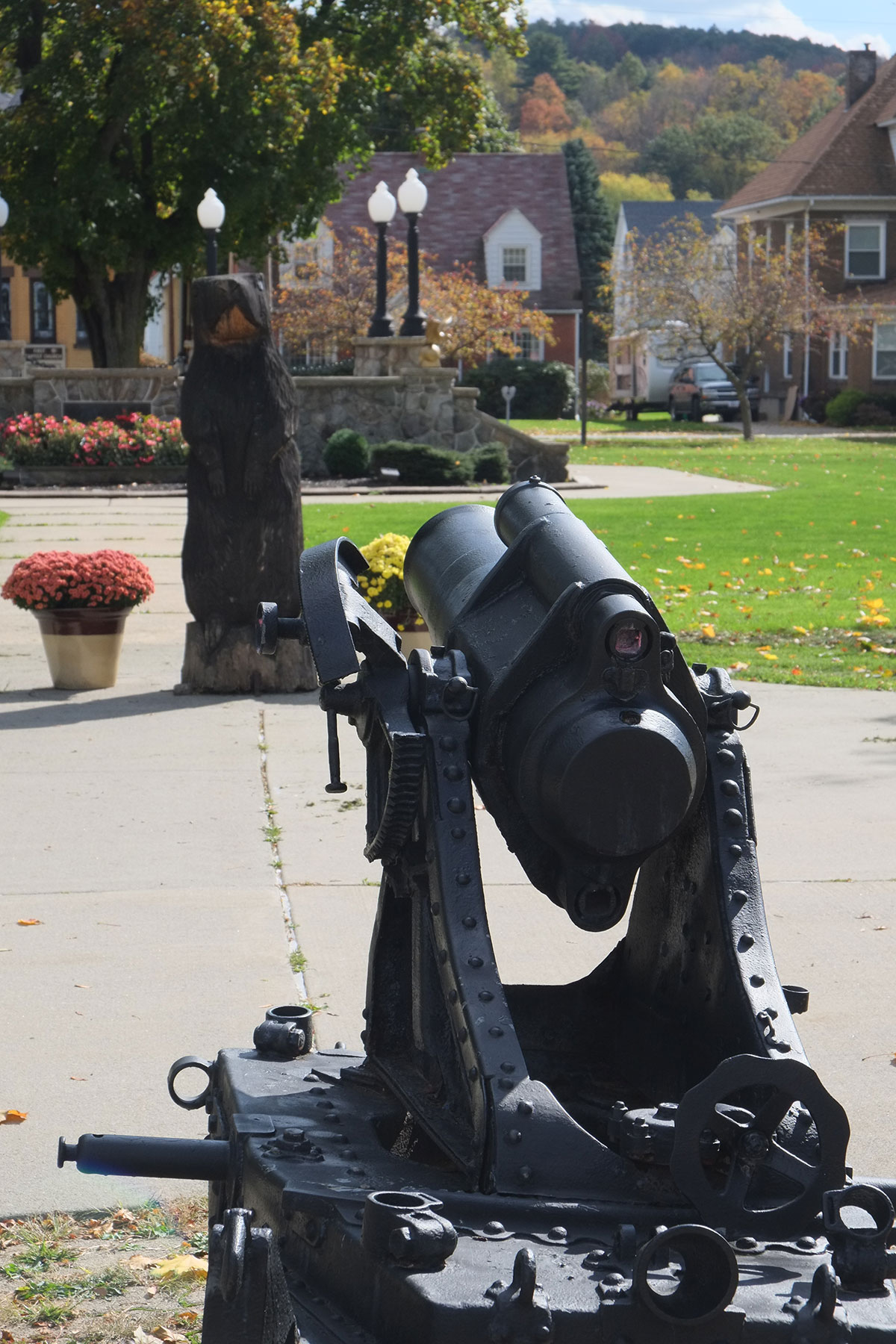
Heading north towards Buffalo, we arrived at Punxsatawney, home of Phil the groundhog.  We caught a glimpse of Phil (or who they say is Phil, along with a bunch of other groundhogs who may or may not be Phils).DSCF1544

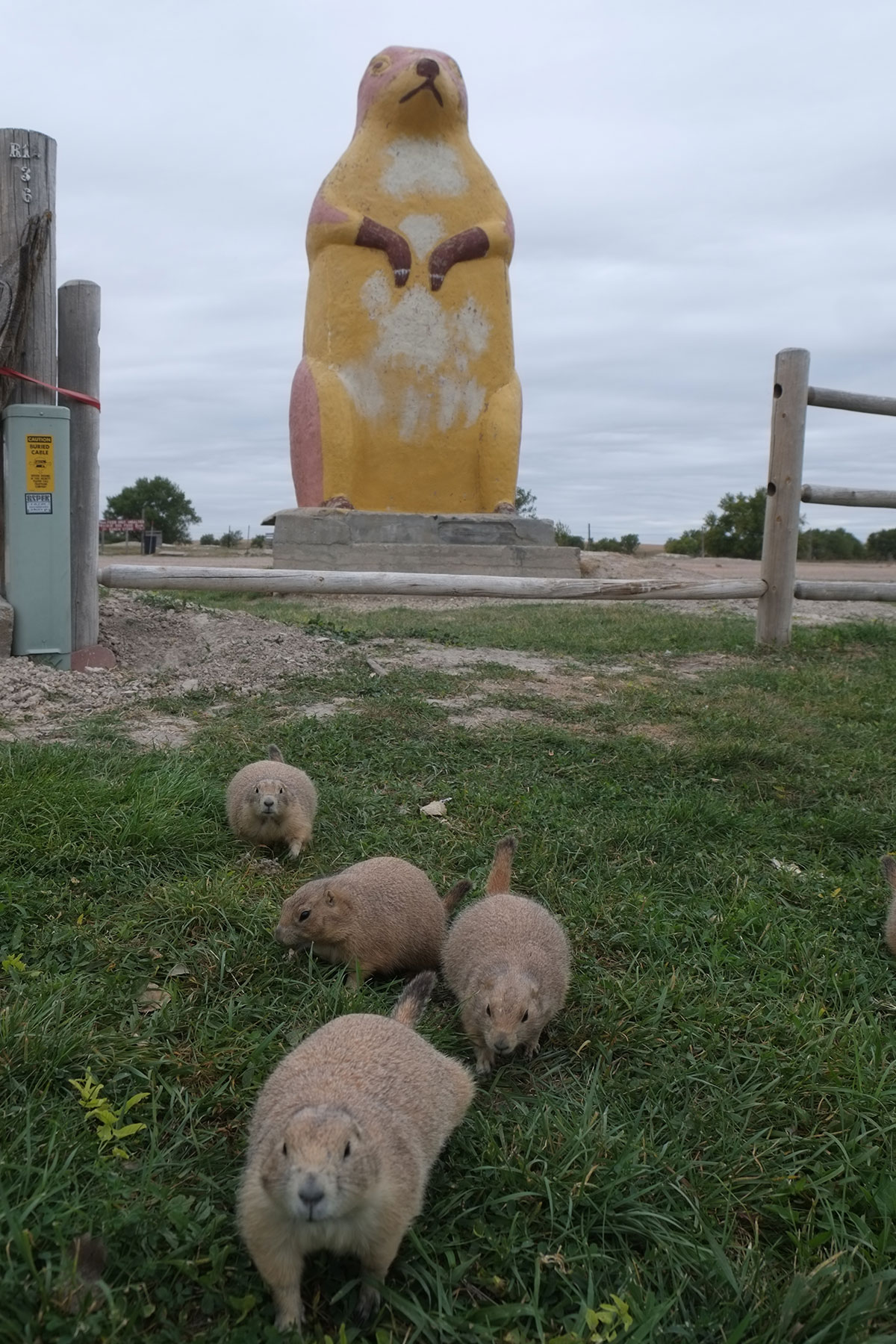
Among the many icons of Phil in the town, we noticed this one, which looked strangely familiar.DSCF1548 DSCF8616

The large, adorable, rodent gods seem to be taking over the country, but in Punxsatawney, unlike South Dakota, they are fighting back:DSCF1549

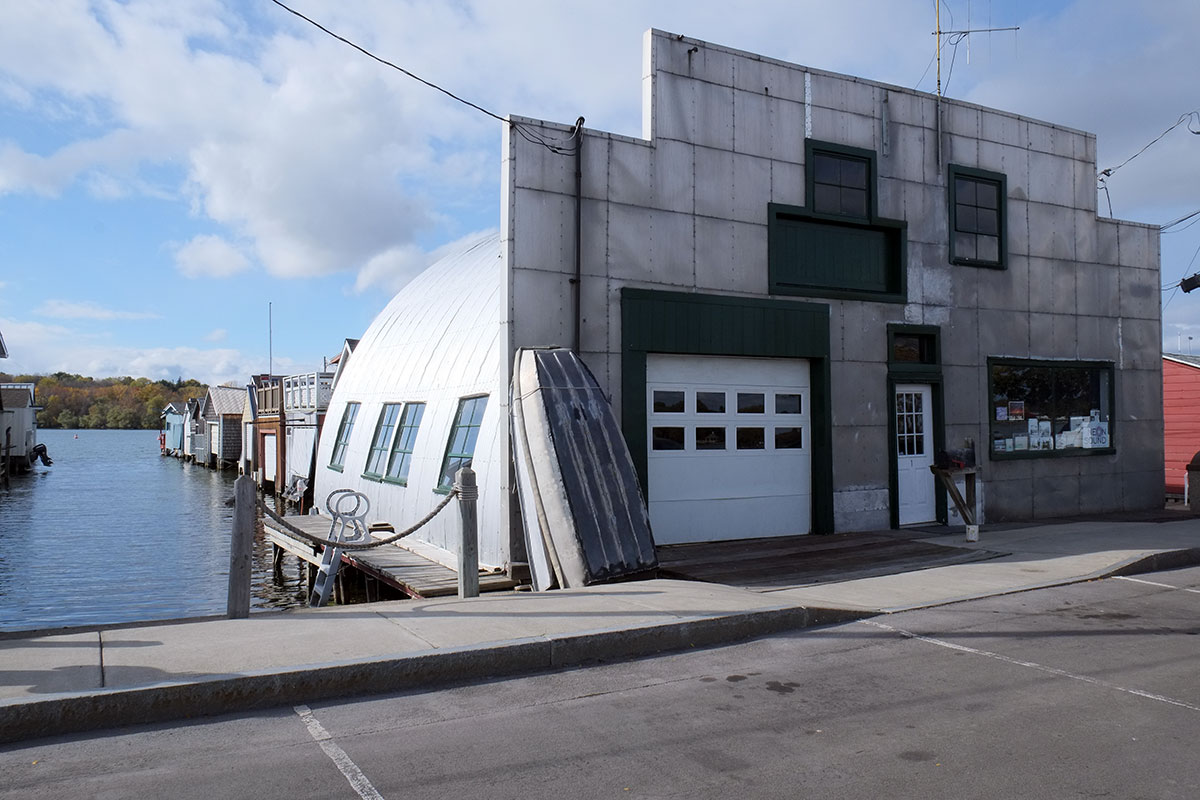
In upstate New York, we drove on Route 20, which hit the northern end of many of the Finger Lakes, a part of the state I (and most downstaters) had never visited.  Canandaigua had some cool houseboats DSCF2130

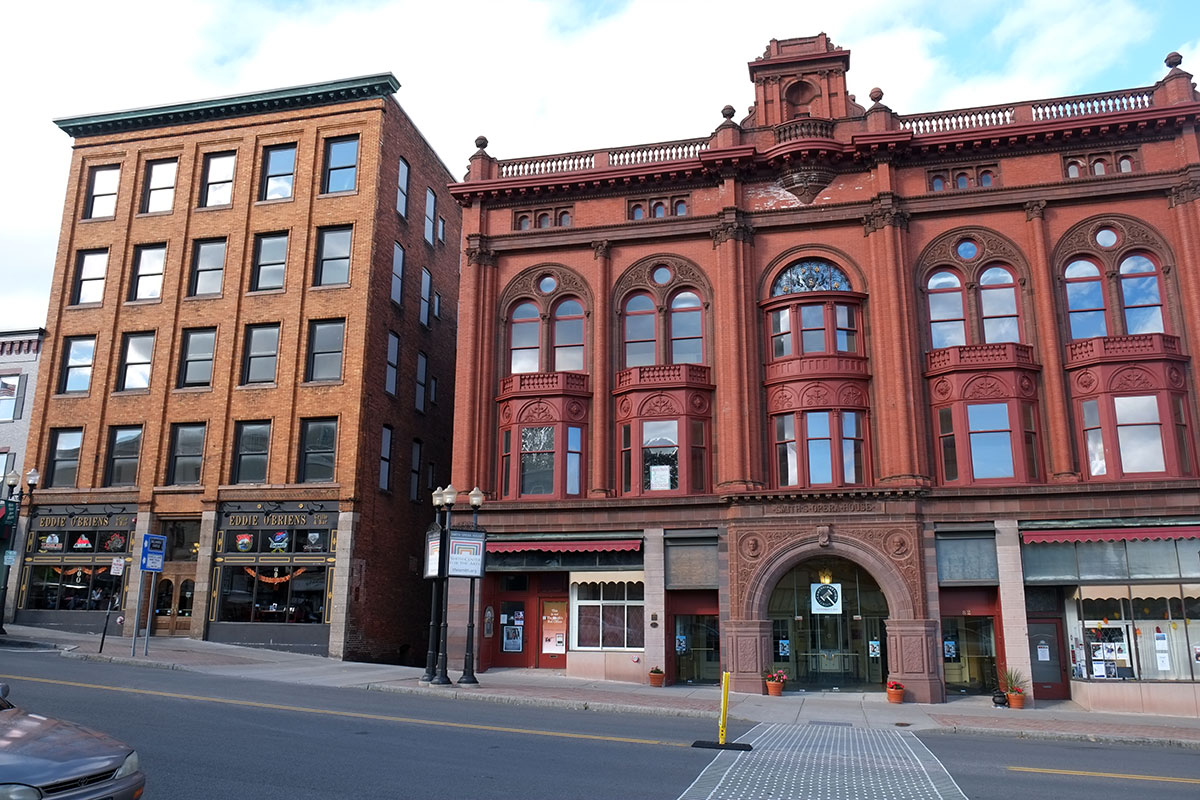
While Geneva fell into the recurring category of Places that Used to be Prosperous, but still had some interesting buildings.DSCF2145 DSCF2147 DSCF2148

Waterloo had some nice houses in various states of repair.DSCF2152

Skaneateles appears to be the prosperous resort town on the road, with beautifully restored houses, and a thriving main street – the first place we could find a cup of coffee, in the Land that Starbucks Forgot.DSCF2154 DSCF2155 DSCF2160

and in Sharon Springs, this highly-wrought and astoundingly maintained church.  Nice church, interesting steeple, but I’m not sure they’re getting along.DSCF2219

There we were, far away from the City and coastal civilization as know it, and Ithaca was still too far away to be worth visiting.  It really is the most isolated spot in the east.