Category Archives: friends

Jon Ehrmann

Jon and I have been friends since freshman year in college, when we both lived in Hurlbut Hall.  Even in a dorm full of eccentrics, misfits and savants, Jon was noticeable, as he seemed the antithesis of many Harvard stereotypes.  In a place where many are endlessly yakking, Jon was quiet, almost non-verbal, and extraordinarily gifted in dealing with the spatial / physical world. Surrounded by self-promoters who had been polishing their resumes since 8th grade, Jon just quietly did what he did, never calling attention to it.  And in an academic environment that valued linear processes and rationality above all else, Jon was the most intuitive person I had ever met.

Jon was an engineering major, but with a designer’s approach rather than a purely analytical one.  He played the guitar well, and was always sketching his ideas, rather than trying to explain them.  Jon was the person who got me into synergetics and that way of seeing the physical world, but his understanding of it went much deeper than mine.  I remember a lecture where a visitor was arguing how a modular system would be much more flexible and usable if based upon the Fibonacci series rather than a straight linear progression of 2, 4, 8, etc.  I thought it was compelling, but then I ran into Jon and our teacher, Arthur Loeb, who just shook their heads at the speaker’s naivete, and said well of course, any other irrational number series would work just as well.

Jon and I had both been in academically-oriented high school programs, where the manual arts were discouraged, and then we discovered the metal shop in the Science Center, which was for science students who needed to build apparatus for their experiments.  So we both took metal shop at Harvard, and Jon was quite talented at this, producing precise and elegantly-designed objects, many of which were not for strictly academic purposes.  When another student figured out how if you cut two tetrahedra off a cube of volume 3, you were left with a triangular antiprism of volume 2, Jon figured out that if you sliced that antiprism into 16 pieces, 8 of one shape and 8 of another, they could be recombined into a cube of volume 2.  Our professor was nonplussed, did the math and realized Jon was right, and came up with a grant to pay Jon to spend the summer machining these pieces out of plexiglass.
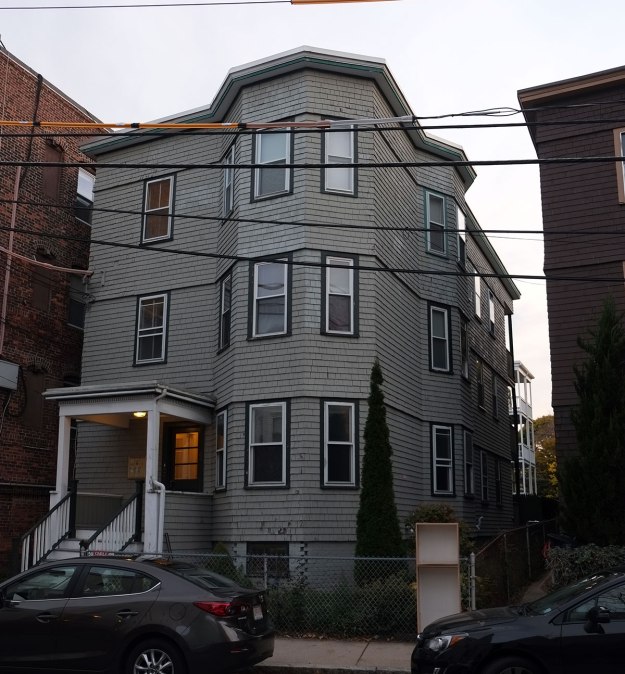
DSCF3624I lived with Jon, John Wenzel and Erec Koch for a year at 66 Dimick St. in Somerville, a true dive of an apartment that rented for $220 a month.  (I went by last week and can report that it is still a dive, but now it is an expensive one.)  The rest of us were working or in school, but Jon was enjoying his post-graduate hiatus, and was determined to stay unemployed for as long as possible.  He hung out with his friends, slept late, played the guitar, sketched and cooked fabulous Chinese food (as part of a Chinese cooking group four of us had formed).  When his money ran out, he got a job as a machinist making medical device parts, until the day he passed a sketch of an idea to his boss, who said, okay, you are now a designer.  Jon’s career took off from there, and since then he has spent his time at the interfaces of design and fabrication, digital and analogue, designing things that the rest of us don’t really understand.
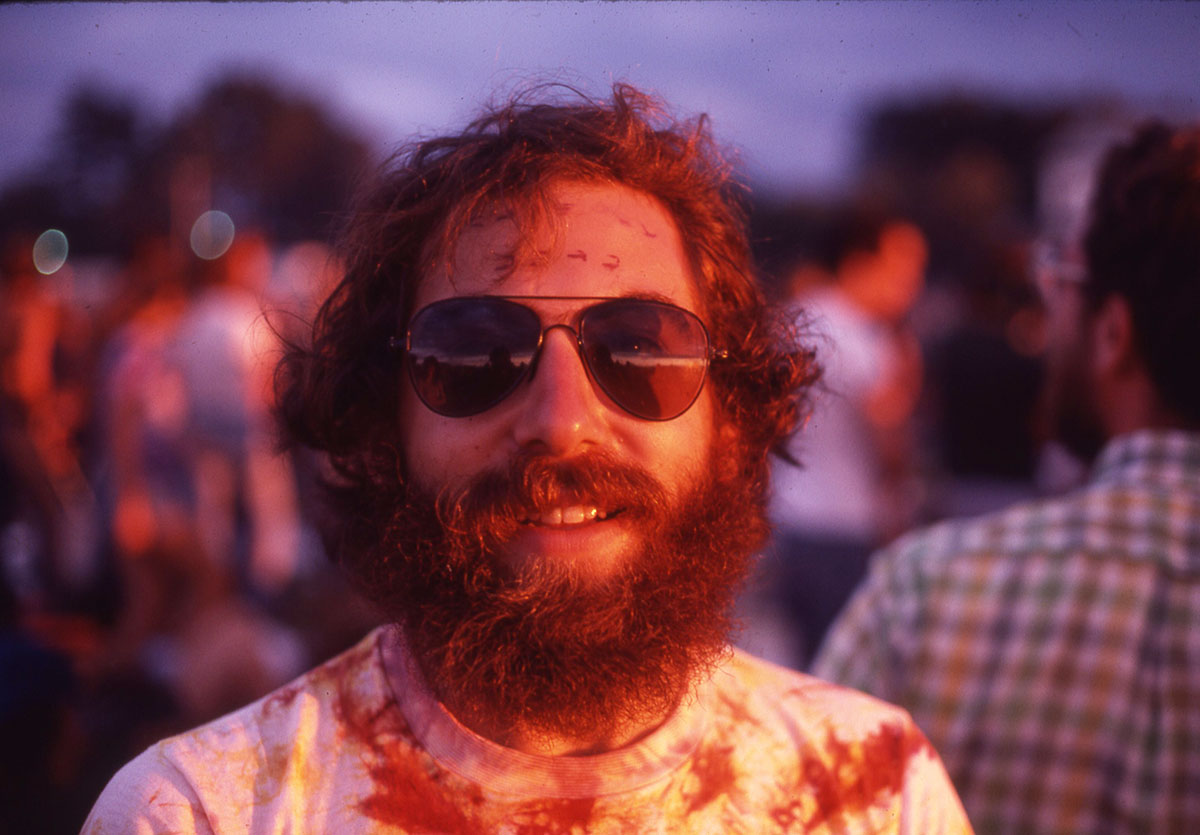
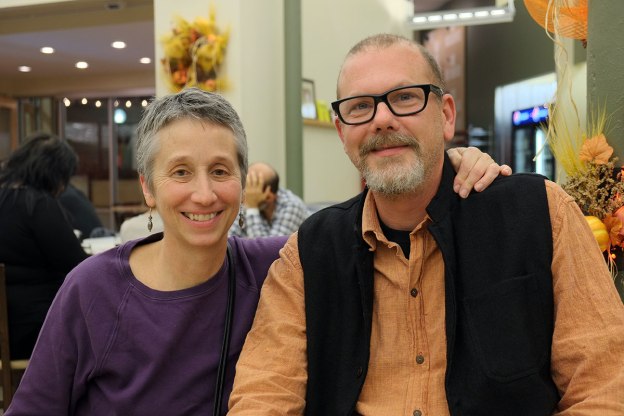
EhrmannI moved to New York, and Jon and we stayed intermittently in touch, getting together for such events as a Grateful Dead concerts and weddings.

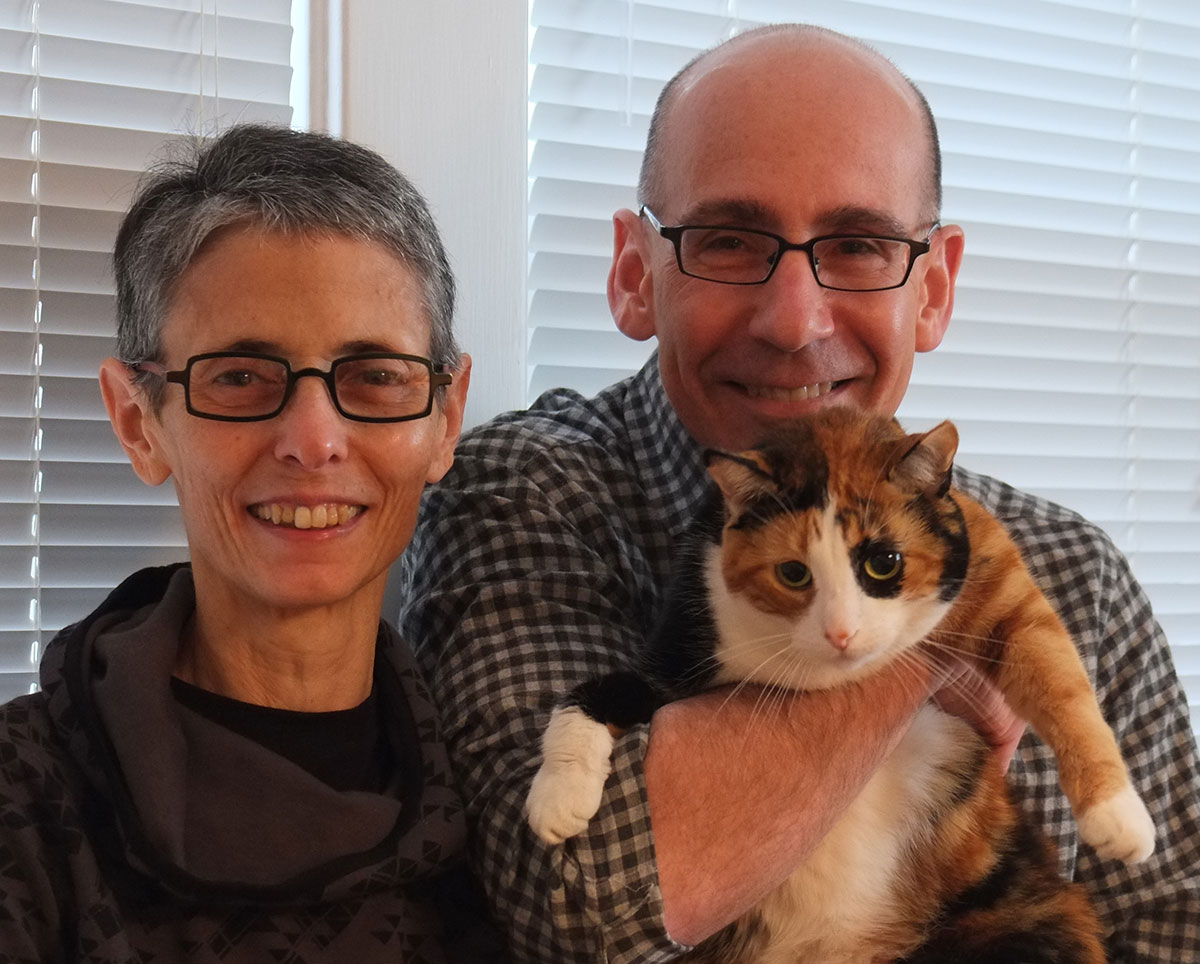
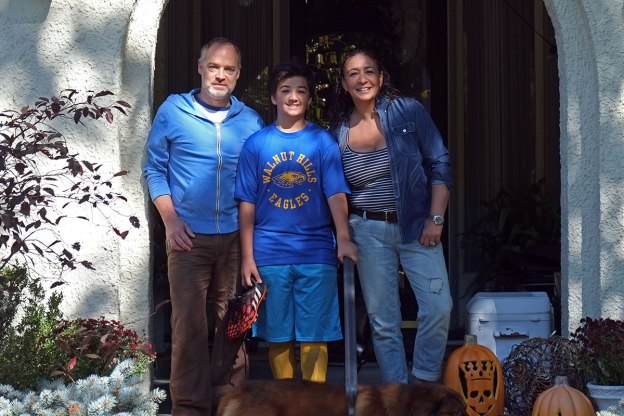
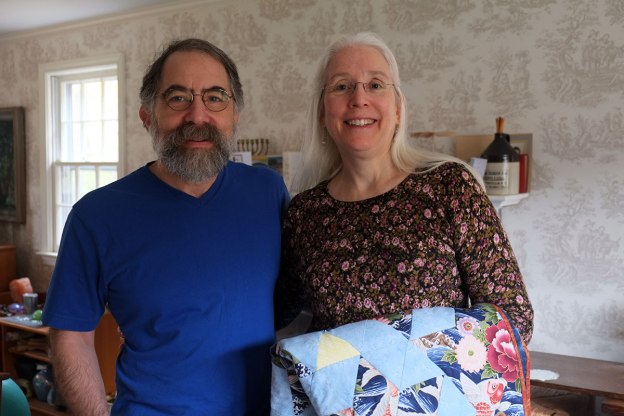
Jon and Debbie were married in the late 1980s, and it was striking to see that two people who shared many characteristics had somehow found each other.  Besides working and raising two children, Debbie creates amazing quiltsDSCF2972
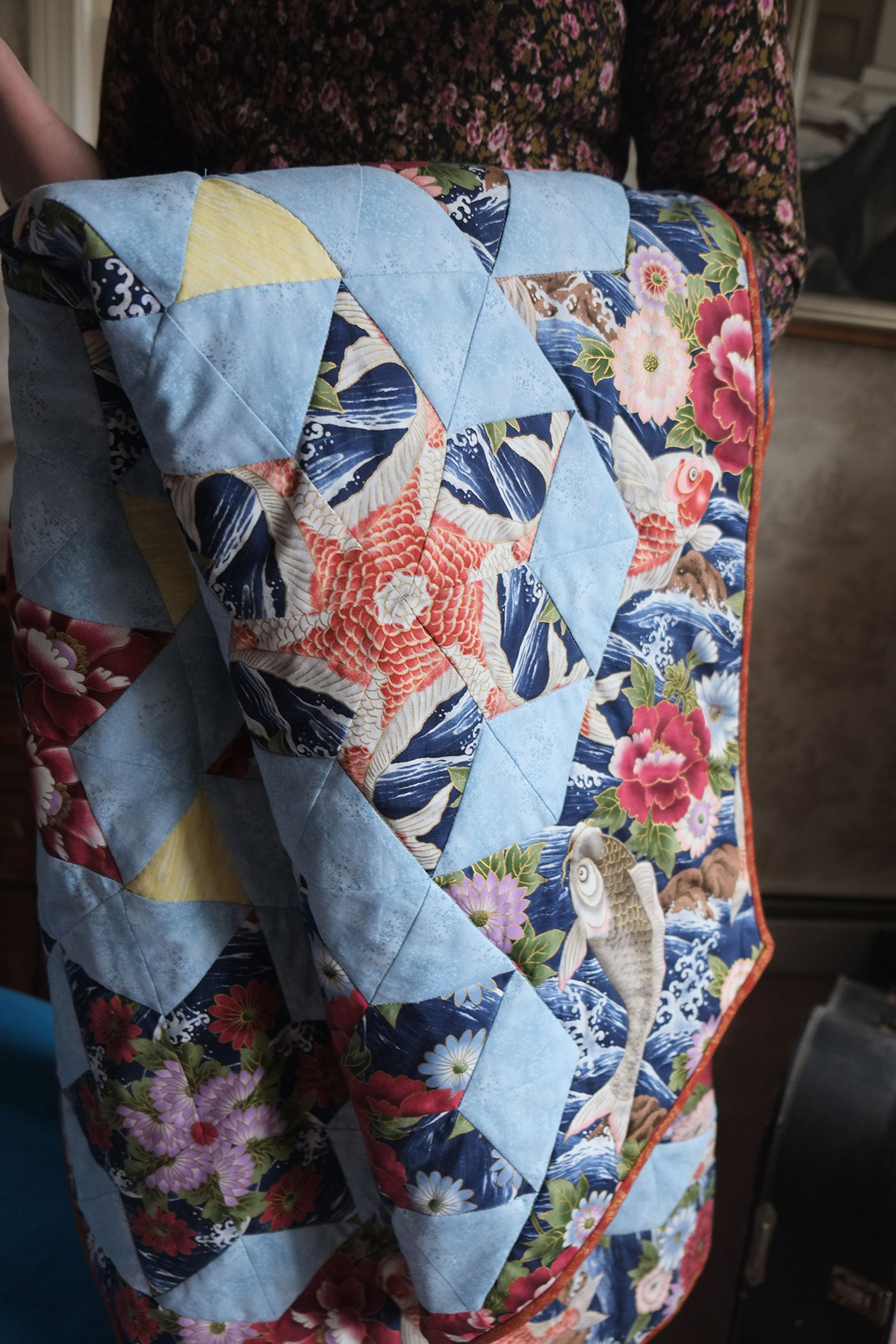
which are technically and conceptually striking (I know something about this from watching Linda make quilts), while also being really beautiful.

Greta and I had a fun couple of days staying with Jon and Debbie in Sudbury, where Greta could satisfy her vicarious pet needs by hanging with the cat, the latest in a series of enormous cats Jon has always had around.  Jon and Debbie of course plied us with great food, either something Jon had invented, or in the best Chinese restaurant they had somehow found in  Framingham.  Once again, it was striking to me to see how old friends had come through the career- and child-focussed years of middle age, and were still the same people you knew long ago.


Dave McGann

Dave McGann was a good friend way back in high school, and we haven’t seen each other in almost 30 years. Dave is a year younger than me, and was the assistant editor / editor in training on the high school newspaper when I was editor.  What stands out in my memory of those days was how much effort we spent trying to sneak double entendres past the faculty advisor. Dave was smart and serious even back then, and as always, it’s been fun to see how your friends have gotten older but haven’t changed that much.

Dave attended SUNY Albany, and then stuck around the area, working at what seems to be the intersection of policy, research and media.  At his current position, he runs a group that deals with trainings, both live and online.  Dave says that if you’ve ever done an online training on harassment or something like that, there’s a good chance that they made it.  (I’ll be posting his email so you can send him comments.)

Greta and I spent a fun evening with Dave, his wife Louise, and their son Chris, who is about to head  off on a post-doc appointment near DC.  What really pre-occupied us was a discussion of beer.  I had been aware of Dave’s proclivities in this area from his Facebook postings;  actually, I’ve been aware of his proclivities since high school, so maybe now it’s more his accomplishments that are in the foreground.  Besides having rare microbrews that you have to drive to secret locations in Vermont to procure (and which can be sold at enormous markups in Brooklyn), Dave and his son have been brewing for ten years (it helps to have a PhD scientist in the family), and their beers were superb.  We drank great beer, ate fabulous Italian food (finally back in the part of the country which does real Italian), and talked about the vicissitudes of late middle age.

Dave and I had many of those heartfelt, serious conversations about the meaning of life in high school, and it’s wonderful to see how he has lived since then.  Like most of us, the facts of his life are pretty normal – career, marriage and two kids, suburban house – but it struck me that Dave has a keen appreciation of how good that has really been. Perhaps it’s partly due to Louise’s work as a social worker, where she deals with people much less fortunate every day.  But for whatever reason, Dave seemed really content, knowing that he’d made some good choices in his life, and that things had turned out better than we ever expected back in the day.

Terrance Goode and Carolyn Senft

Terrance Goode and Carolyn Sent were colleagues and good friends on the UO faculty back when I first arrived in 1990.  They were my informants in the culture:  when I was first applying for a position in academia, a mutual friend in New York told me to look them up, and they taught me everything a New Yorker needed to know about Eugene.  I would have been completely at sea without them.

I bought a house two doors down from them on 19th St., and we spent a lot of time together, cooking meals, discussing architecture, and trying to keep the cats from escaping.  They left town over 20 years ago, and have been happily ensconced in Syracuse for most of that time, where Terrance teaches architecture, and Carolyn has divided her time among teaching, designing, quilting, and raising their son Eli.

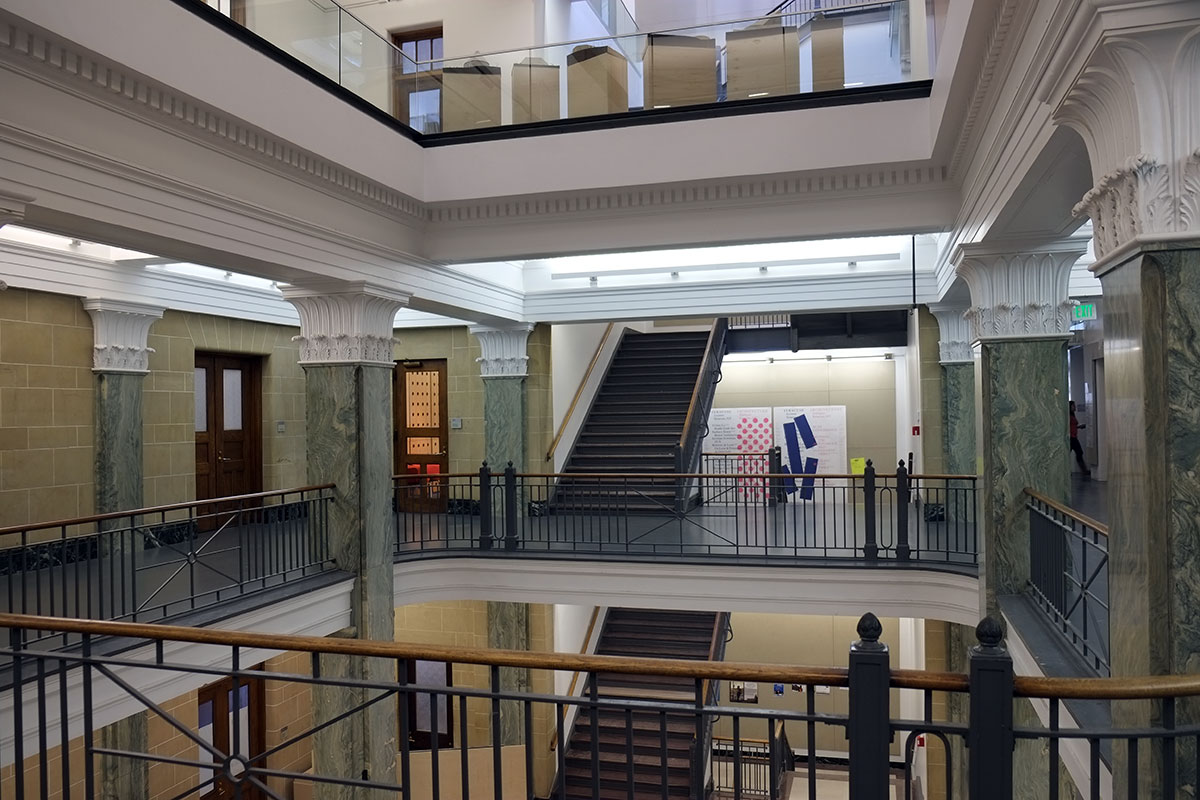
Greta and I spent a couple of days with them, where we once again spent a lot of time talking about architecture, driving both Greta and Eli to distraction.  We tooled around Syracuse seeing the sites, which include a commodious architecture building:DSCF2198

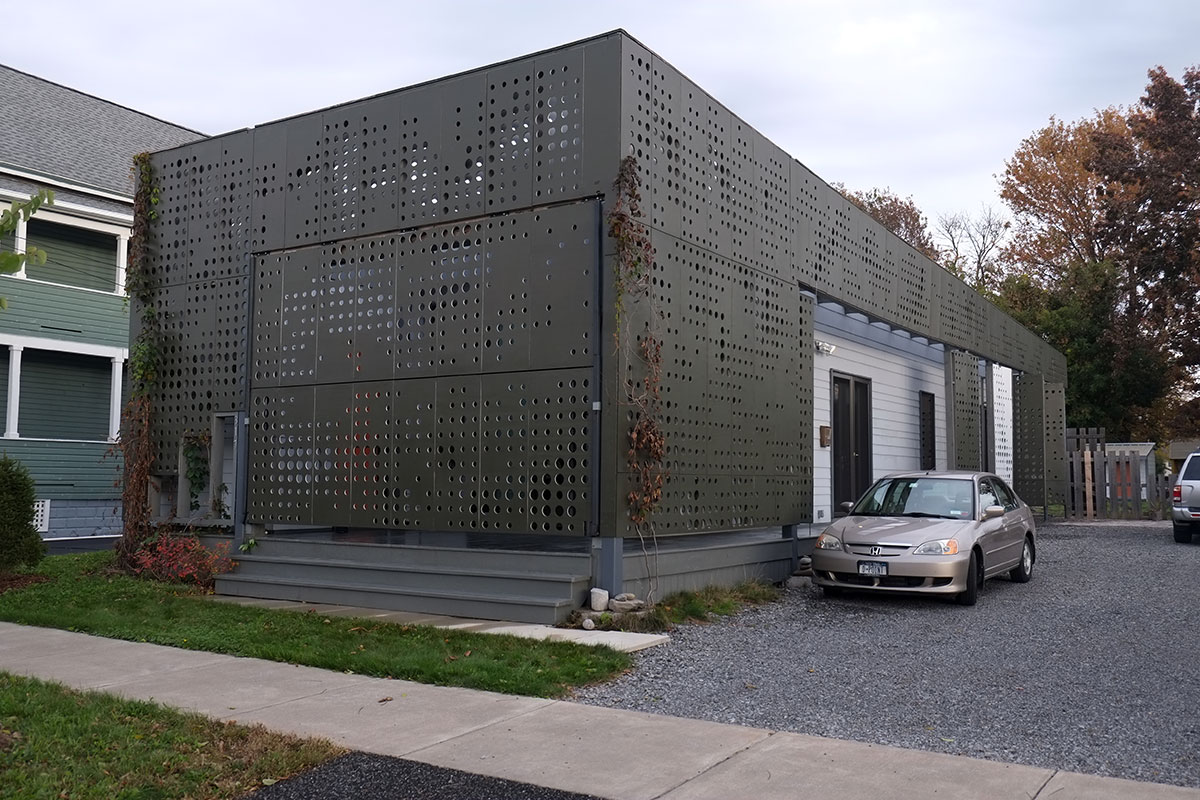
some student-designed housing which makes a statement DSCF2207

and evidence that football culture in Syracuse might be even a little more crazed than in Eugene (I haven’t seen any football banners hanging on churches in Eugene).  DSCF2167

We had a great time catching up after many years of long-distance communications.  T&C send their regards to their many friends in Eugene, who are probably wondering how I have managed to start this post with a photograph of them without a cat in it.  DSCF2216

Kim and Sarah Carlsen

This post on social media is about the efficacy of social media.  After I put up a picture taken in Pittsburgh, I got a note from Kim Carlsen, who is married to my nephew Ben, and lives in Colorado.  Where are you, she asked, and when I sent her the details of our location at Powdermill Nature Reserve, she replied that she was visiting her parents in Berlin, PA, 30 miles away.

So the next morning she and her daughter Sarah came by for a brief visit.  Greta and her cousin Sarah went to watch some bird-banding, and to take a walk in the woods to get away from their parents, while Kim and I sat and had coffee.  It was an unexpected pleasure on our trip, and it wouldn’t have happened without Facebook.

John Wenzel

John and I were roommates in Somerville, back in 1979-80.  I had finished college and was working for an architect in Boston, and John was on a hiatus year, doing fieldwork in entomology and working as a bartender in various places (including the original Legal Seafood around the corner in Inman Square), before returning to Harvard to finish his degree.  John pretty much took over the freezer in our apartment, and if you were looking for ice cream you had to move all the film canisters filled with wasps out of the way.  Even at that young age, John was notable for the adventures he had had and the stories he could tell.  (We weren’t always sure how much of any story was true, but they were damn good stories.)  We learned how serious John was about entomology when it was time to pick a graduate program.  The best school was Kansas, and the second-best was Berkeley.  John went to Kansas, and didn’t get to eat any good Chinese food for years.

John went on to a distinguished academic career, eventually as a professor at Ohio State.  But after decades in the field, he realized he wasn’t as interested in the direction in which it was headed.  So he quit to try something different.  He is now the Director of the Powdermill Nature Reserve in southwestern Pennsylvania, (http://www.carnegiemnh.org/powdermill/), which is the environmental research center of the Carnegie Museum of Natural History, about 50 miles southeast of Pittsburgh.  It is an extremely beautiful area (and hence the location of Fallingwater and many other country estates of the Pittsburgh elite), and John’s work now includes overseeing the largest bird-banding operation in the country (which Greta will blog about), thinking about big issues of ecology, and initiating a wide variety of studies and research in this area, such as whether they can establish a stand of American Chestnut trees on the reserve.

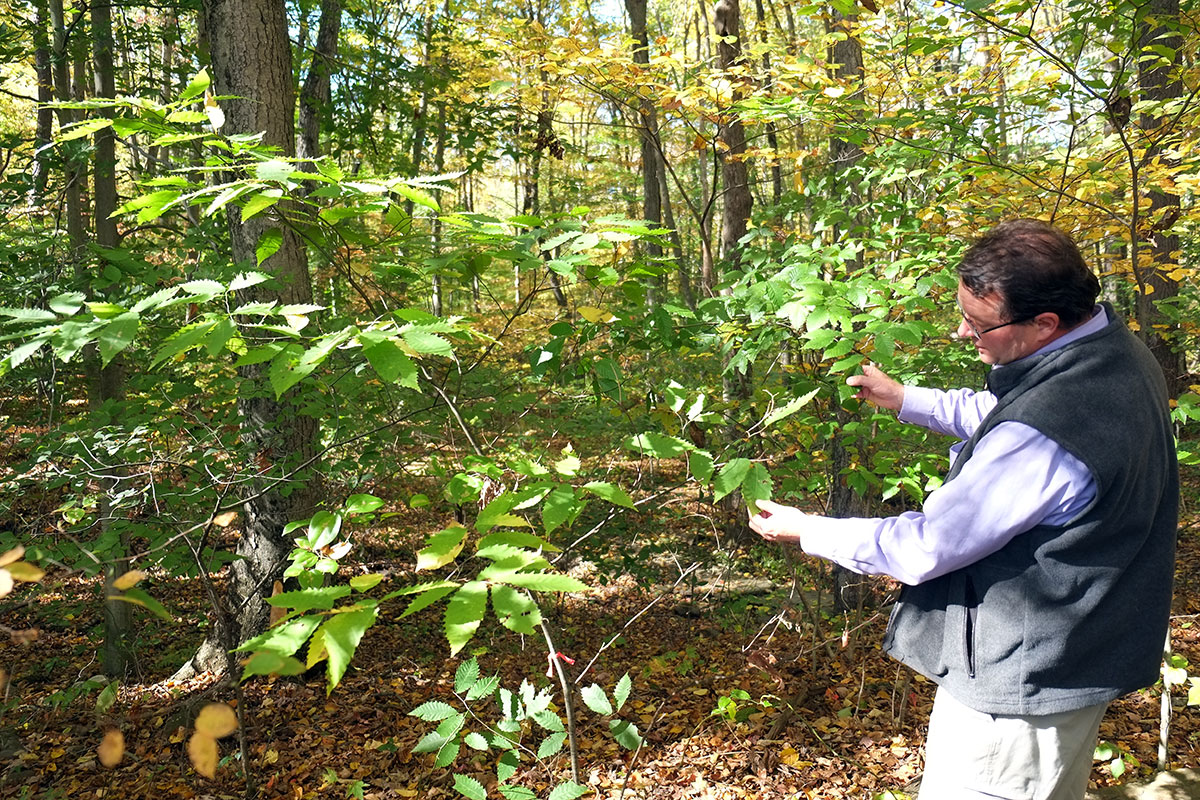
John showing us an American Elm.

John showing us an American Chestnut.

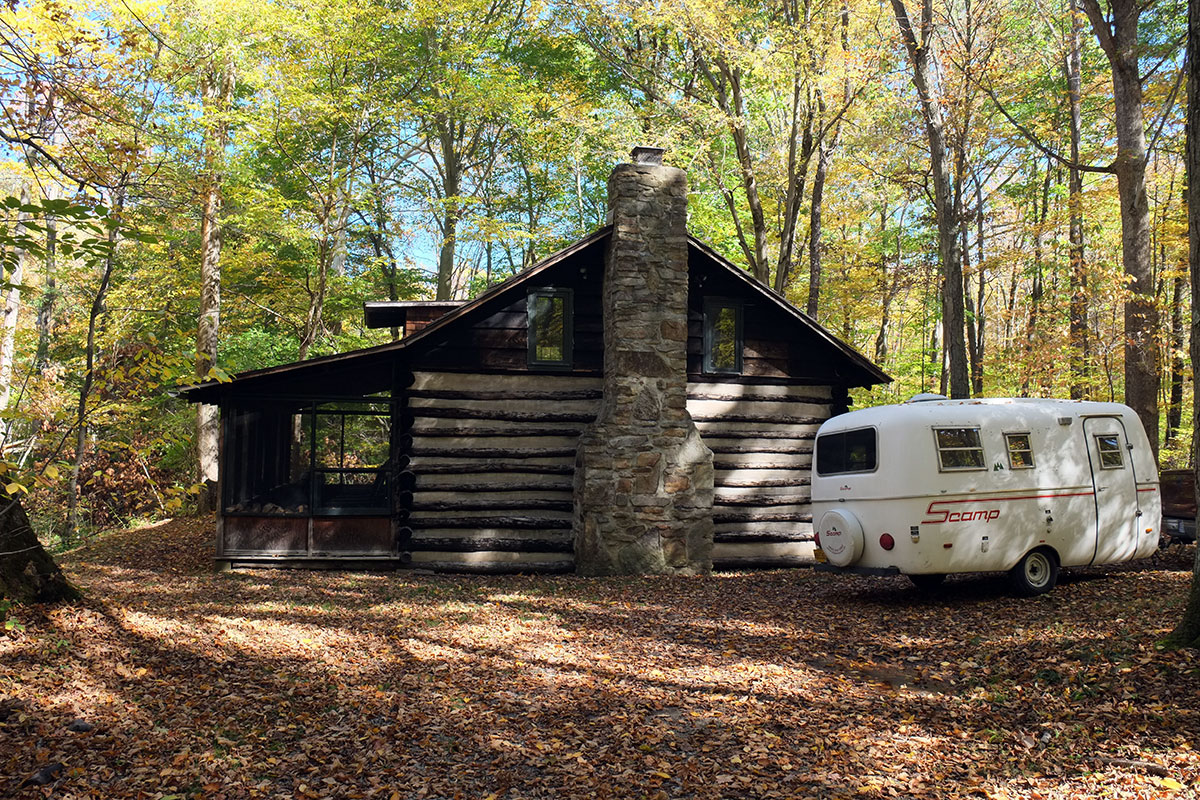
We spent an amazing few days with John and his wife Donna, who is also an entomologist.  John drove us to obscure places around the countryside to see extraordinary sites and buildings (while Donna was helping out at the local town festival), and put us up in a great old log cabin on the Reserve (much more commodious than our trailer).  DSCF0769

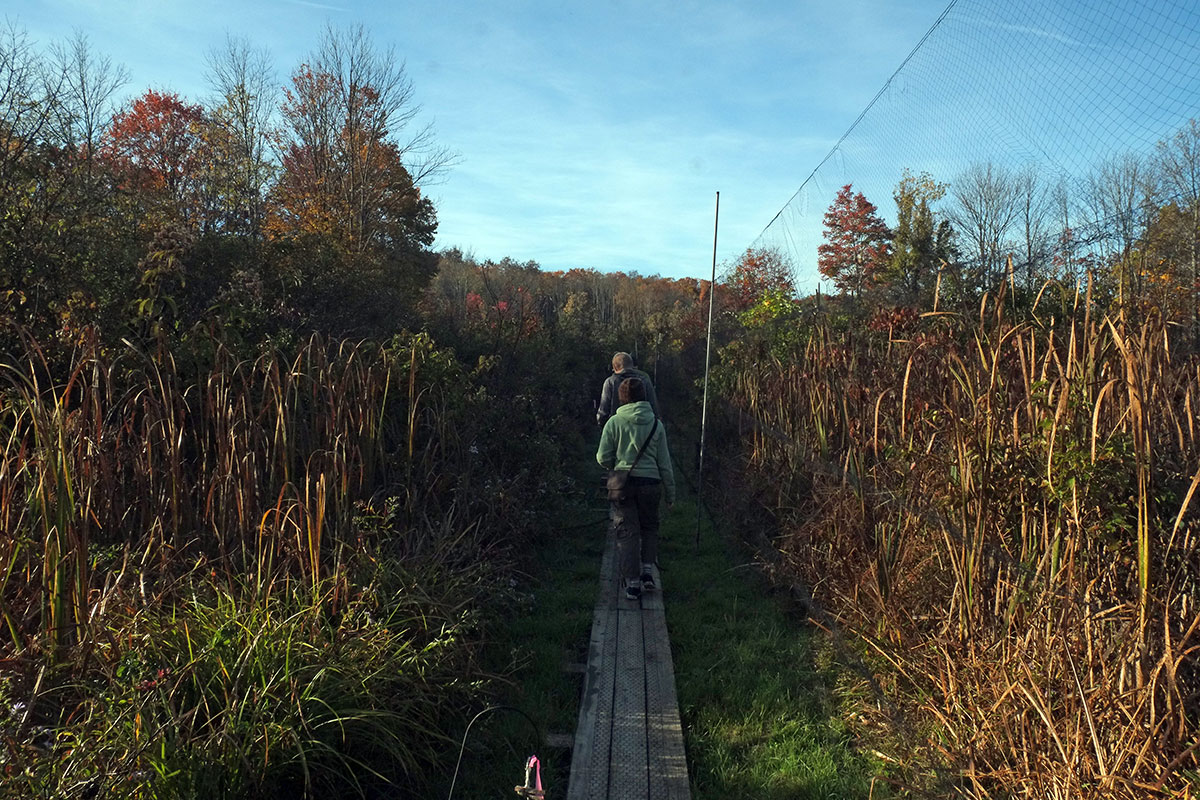
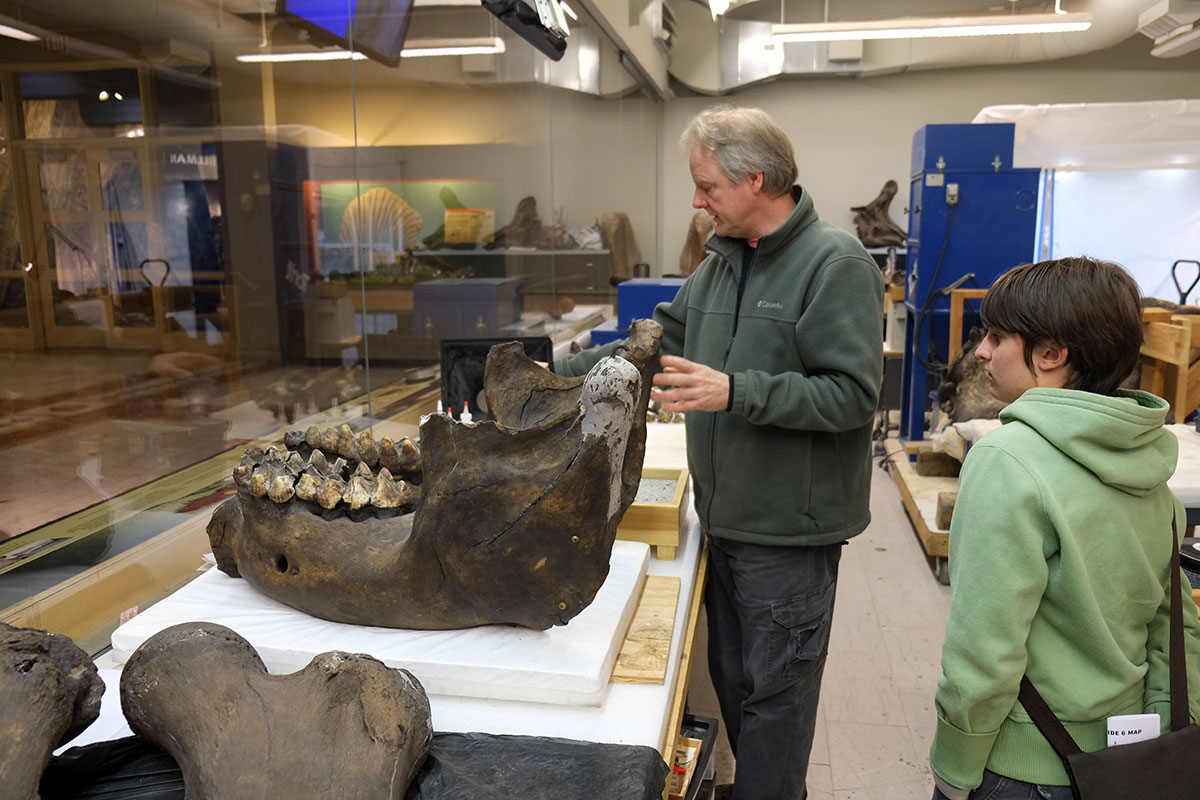
Donna made us a wonderful home-cooked meal, and we went into Pittsburgh with John a couple of times.  His institutional connections and tremendous gregariousness came into play here, as he seems to know everyone in town, and he took us behind the scenes at both the Carnegie Museum and the National Aviary.  Greta has always been very interested in natural science, and this may have been one of the best weeks of her life – tagging along with the bird-banding crew early on a Sunday morning,DSCF0737

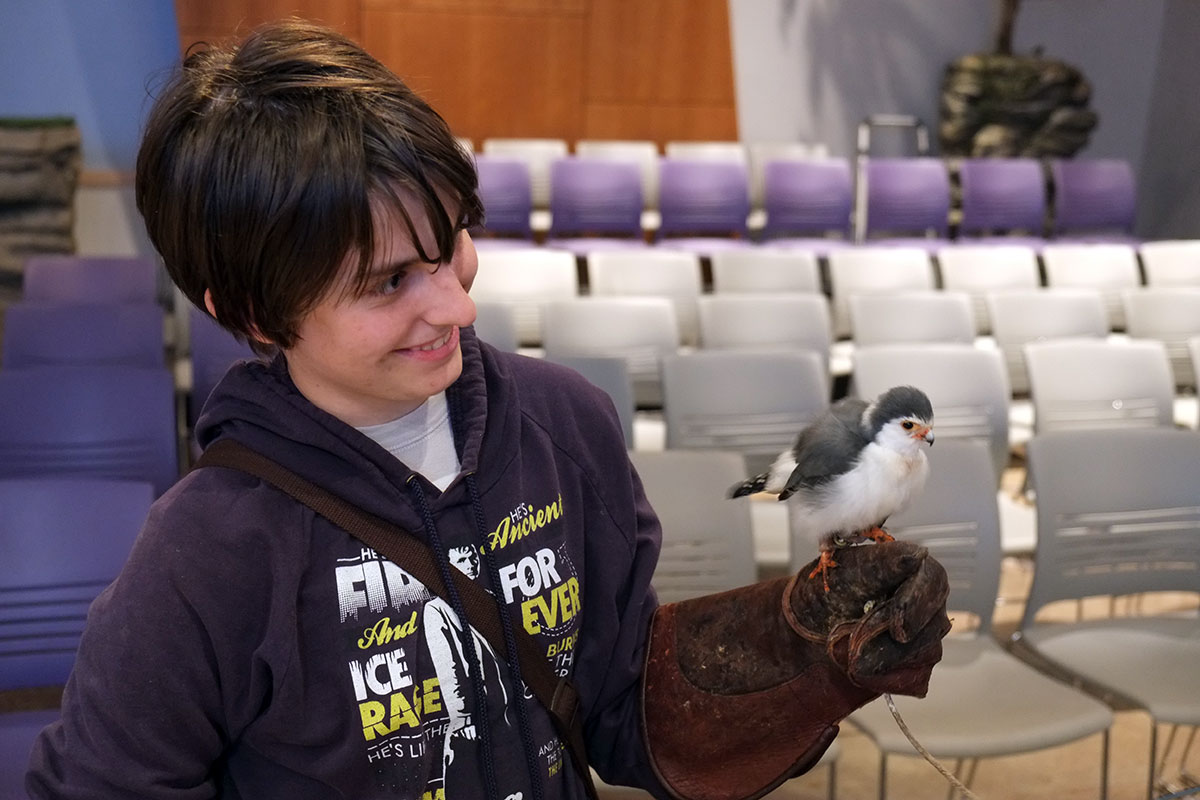
visiting the raptor yard at the aviary and holding a falcon,DSCF1060

getting to observe and talk to the archaeologists who are reconstructing fossils in the museum.DSCF1378

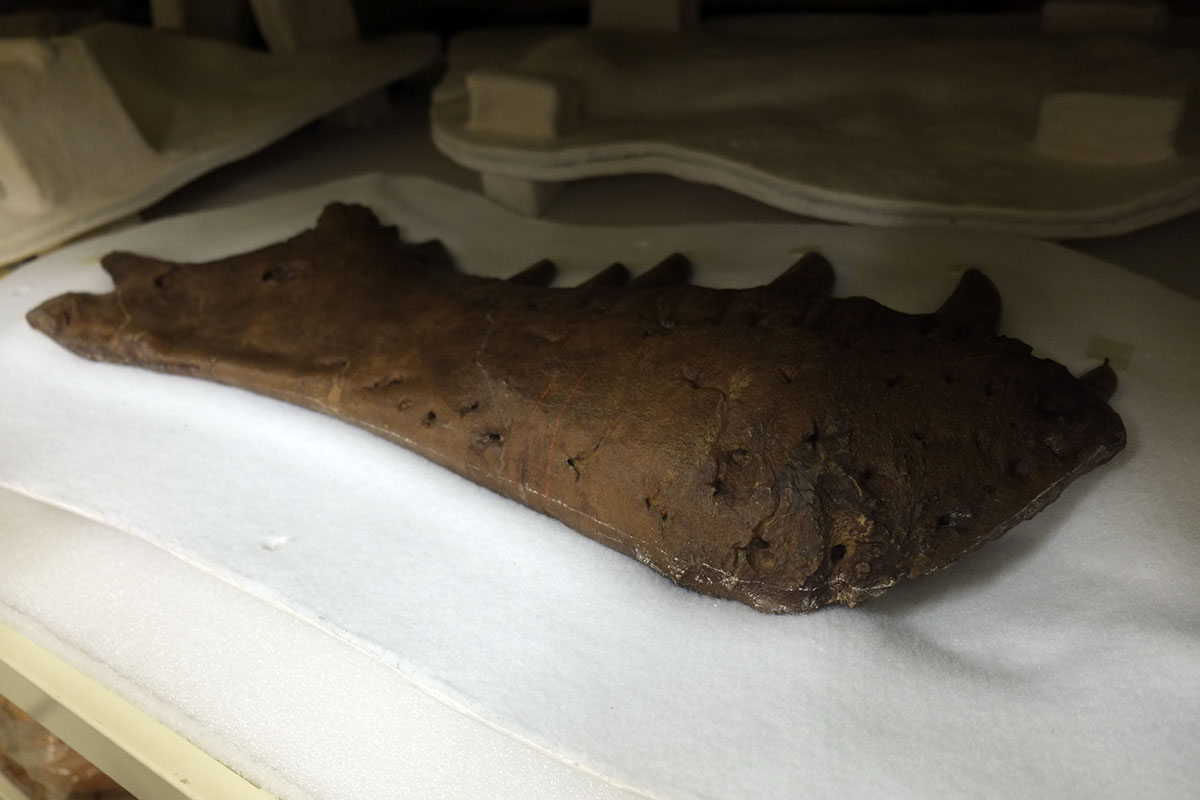
the jaw bone from the first identified Tyrannosaurus Rex.

the jaw bone from the first identified Tyrannosaurus Rex, in the storage locker.

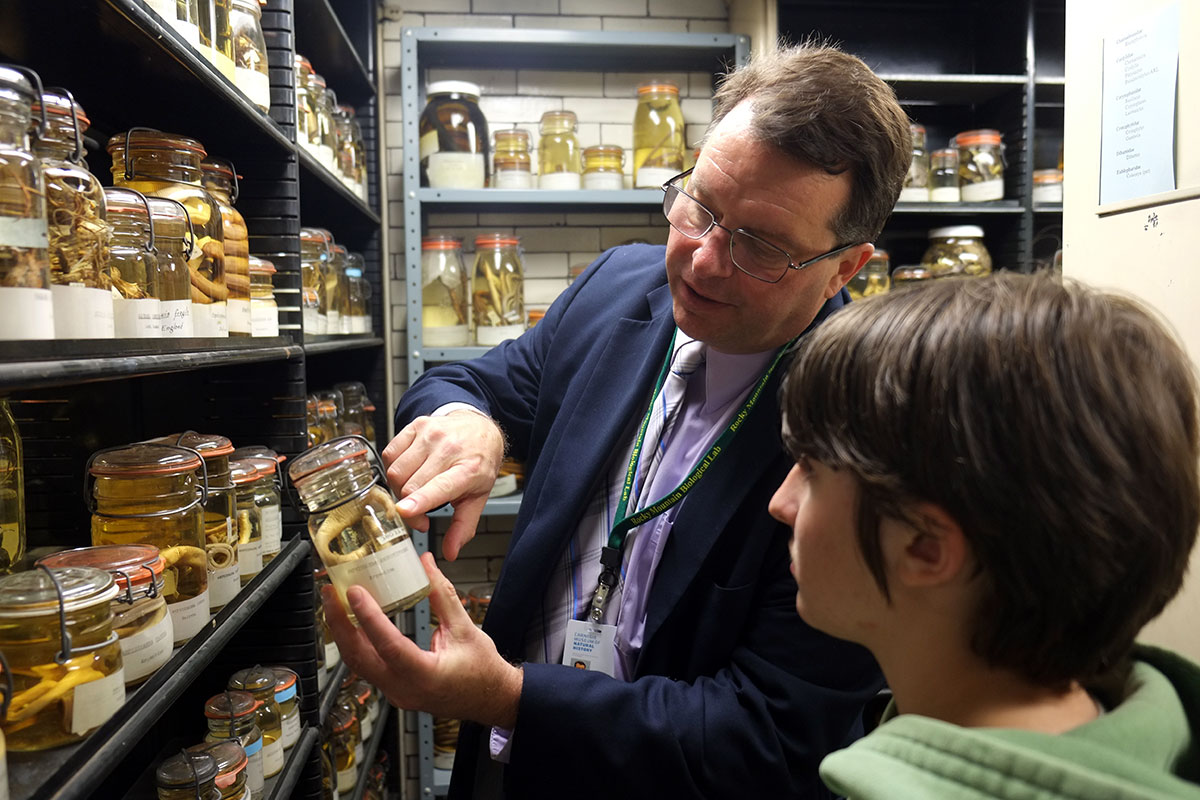
and most strangely, visiting the room at the museum where vast numbers of reptiles and amphibians are stored in glass jars:DSCF1394

We’re supposed to be home-schooling Greta this year, but I’m afraid that in the general rush of travel and things to see, we haven’t been as diligent as we might be (although the State of Oregon doesn’t seem to have any standards for this at all).  But this past week made up for it – Greta learned more science than she probably would have in all of 8th grade, in a much more engaging way.  She also talked to many scientists, and learned what their careers were like and how they had ended up doing the detailed work they did.  It was a fantastic educational experience for her, one that might have a profound effect on her life.

John and I hadn’t seen each other in almost 30 years; we reconnected about a decade ago through the wonders of the internet, and it was a pleasure to spend this much time with him.  Although his initial expertise was in what I thought of as a pretty narrow area, John had always been one of the most broadly knowledgable friends I’ve had.  That knowledge has grown much deeper in the past 35 years, as he has been to almost every corner of the world (acquiring a lot more good stories to tell), and he has gained a perspective on life and the world that I appreciated and enjoyed hearing.  One of the great pleasures of this trip has been seeing (and introducing Greta to) long-lost friends, people I’ve always enjoyed and admired.  With John this was especially acute, as it was clear how all the qualities he had as a young man had matured, bringing him to this accomplished, meaningful and very entertaining  life.

The Davies

Brian and Olga Davies were great friends of ours when they lived in Eugene.  Brian taught in the Interiors program with Linda, and Olga used some of her many talents working at King Design.  Brian brought talent, insight and dedication to his work, but he always was able to keep it in perspective, and his wry comments assured me that I wasn’t the only one who found academia a bit absurd at times.  Olga may have been the liveliest and most stylish person to ever live in Eugene, and there were many parties and gatherings which wouldn’t have been much fun without her.

The great friendship extended to the next generation too.  Diego was born soon after Greta, and they were buddies until the Davies left town.IMG_1530

IMG_1538

So it was especially cool for Diego and Greta to get together again.  They had no real memories of each other, but at a certain level, people who are little kids together always seem to understand each other immediately.  DSCF0668

Brian and Olga moved to Cincinnati ten years ago, where Brian teaches at UC.  They live in a house that is the opposite of their Eugene house in every way – instead of being a small, modern house in a big yard, their new place is a big, old urban house on a small lot.DSCF0675

Soon after arriving in Cincinnati, their son Marco was born – he isn’t pictured here because he was at sleepover when I finally pulled the camera out.  He is true wild man, bursting with energy and enthusiasm, and made me realize what a change it is when adolescence hits.

Greta and I had a wonderful time staying with the Davies – lots of food and drink and wandering around the neighborhood, but mainly non-stop conversation for a few days.  Brian and I sat up into the wee hours every night, comparing our ideas on the current state of life in academia and sharing our insights about cocktails and whiskies.  Visiting them made me realize how much we miss having them in Eugene. but at the same time it is wonderful to rediscover that with real friends you can just pick up again where you left off.

Aunt Dawn and Uncle Bill

I recall that on one cross-country drive in the early 90s, i made it across Indiana without downshifting, having no particular reason to stop. Since that time we have acquired a very good reason to stop in the state, Linda’s sister Dawn and her husband Bill.

Dawn is a perinatologist in Indianapolis, and she and Greta have always had a great relationship.  At first I thought this was because no one likes little girls as much as a mother of teenage boys, but it has become clearer in recent years that they have a lot in common – both interests and personalities.  In recent years, Bill has been active in remodeling and reselling homes, and he has an excellent eye for and understanding of design issues.  So given our predilections and Greta’s, we left her behind in Indianapolis to web-surf and play with the dogs while Bill and I headed to Columbus for a day of architecture-geeking.  The next day we dragged Greta along, and Bill gave us a fantastic tour of Indianapolis.  (He also introduced us to Graeters ice cream, which we somehow managed to eat four days in a row.)

It was a really nice break from an intense few weeks of travel to just relax with them, catch up on sleep and laundry, and eat fantastic and healthy home-cooked meals.  (Greta’s not yet sure if she should blog about home-cooking or just stick to restaurants.)  It’s been great seeing friends on this trip, but there’s something special about being able to stay with family.

Lynne Dearborn

Lynne was already an architect when she arrived as a student at the UO in the early 90s. She came to further her research into affordable housing and CDCs, and I accepted her as a research advisee, as she was one of very few applicants I’d seen who had a clear idea of what she wanted to do, and seemed quite capable of doing it.  It was a pleasure having her in Eugene for a few years, as she did a great job balancing the demands of simultaneously being a grad student, a teacher, and a mom.  Lynne was more of a colleague than a student, and we were always in agreement on the shortcomings of the housing production system (and the profession).

Lynne decided to continue her research at UW Milwaukee, where she received her PhD, and she then joined the faculty at the University of Illinois – where she has taught quite a number of students who later came to the UO as grad students (and one current UO faculty member).  Her work has always involved social issues in architecture, and in recent years it has brought her to many remote and interesting places around the globe (so she hasn’t felt quite the same need to travel around in a trailer for a year).

the architecture building at UIUC

the architecture building at UIUC

We had a brief visit but thorough tour of the campus (but still could not find out why what I always knew as Champaign-Urbana became Urbana-Champaign).  Certainly the highlight of the visit was meeting her new (to us) husband, John Stallmeyer, who is also on the architecture faculty.  I inquired how long they had worked together before they became an item, and ascertained that they came nowhere near the record held by me and Linda.  We had a very interesting discussion about the current state of academic architecture, finding that the issues which concerned us were almost identical;  I think this will become a continuing theme in this blog.

Champaign struck us as quite a nice town, and as always, it was great to see an old friend living a happy, meaningful and productive life

The Africanos

We’ve been visiting old friends on this trip, but sometimes we get to visit new friends, who somehow feel like old friends after a very short time.

I had heard about Rebecca Sigler-Africano and her husband Nicolas Africano for years.  Rebecca is the twin sister of our friend Deborah, whom we know because her husband, Rob Peña, taught with us at the UO in the early 90s.  We finally got to meet them when their son, Gianni, enrolled in the architecture program at the UO four years ago, and they would sometimes head west from their home in Normal, Illinois, for Gianni’s final reviews.  We’d really enjoyed spending time with them in Eugene, so we headed south from Chicago for a short visit.

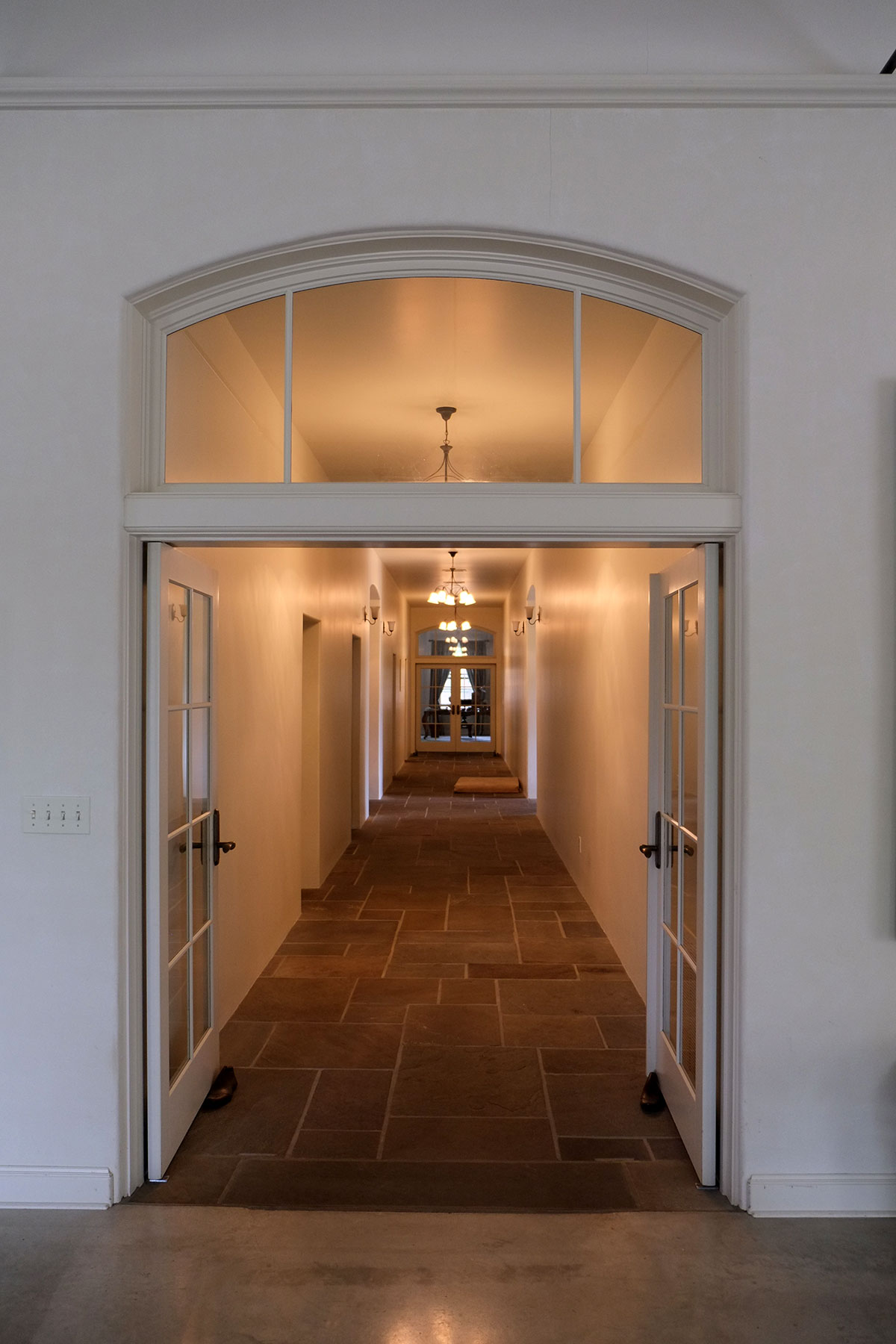
They live in one of the most extraordinary places I’ve ever seen;  years ago they bought a mid-19th century orphanage in Normal, with lots of land and buildings, with room for a residence for them and their three sons, and the studio space which Nicholas uses to create his large, figural sculptures.  Over the years they have sold off some of the property to friends, but they live in the main building, a simple but elegant brick edifice with beautifully-proportioned rooms arranged on a central hallway and cross-axis for entry.DSCF0069

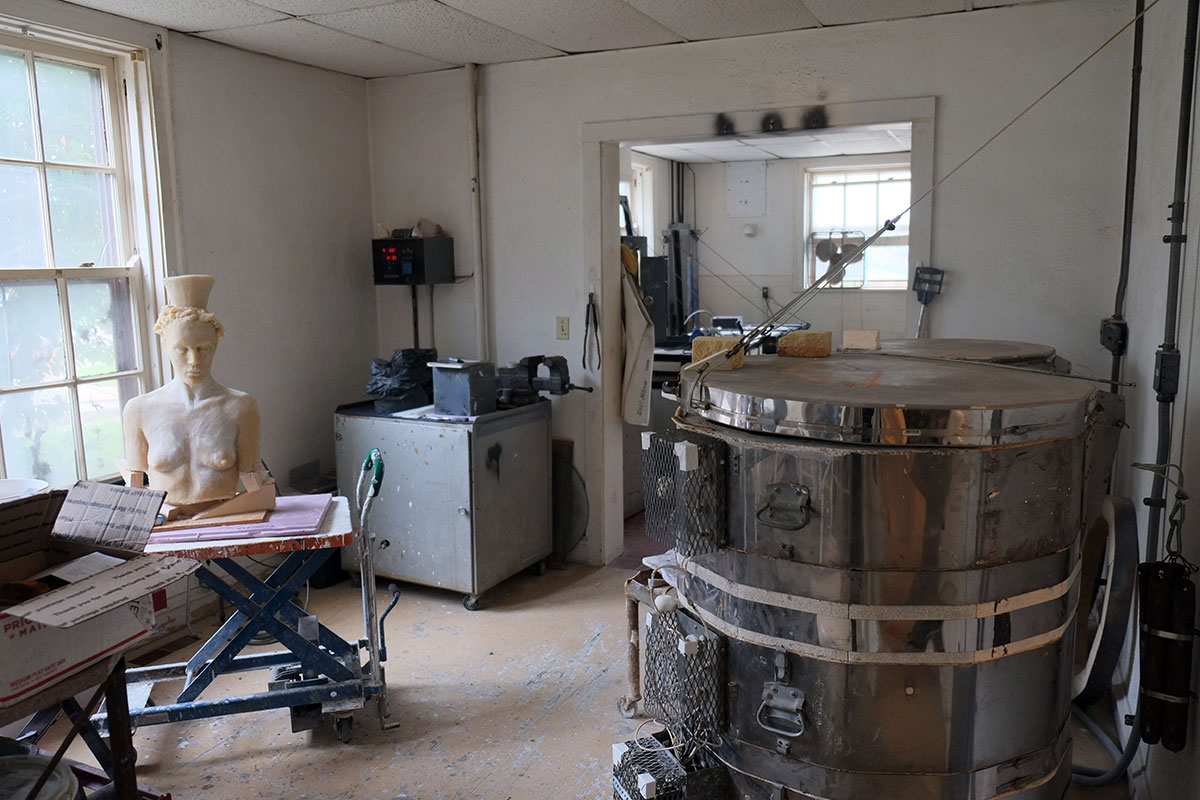
The home was amazing, and so was everything else about our visit – the hospitality, the food, the interesting and lovely neighbors they invited over for a dinner party, the chance for Greta to see what teenaged life is like in Normal (as she headed out to a horror movie with their son Pablo and his friends) but mostly the chance for what seemed like a non-stop, 24-hour conversation about life and art.  Nicolas took us through the building he uses as his studio, which comprises his sculpture studio (the room where he creates the wax sculptures which are used to make molds for glass casting), the kiln rooms (where his assistant uses the lost wax method to make the molds and then cast the glass), and his private study, which is where he thinks and creates.  DSCF0048

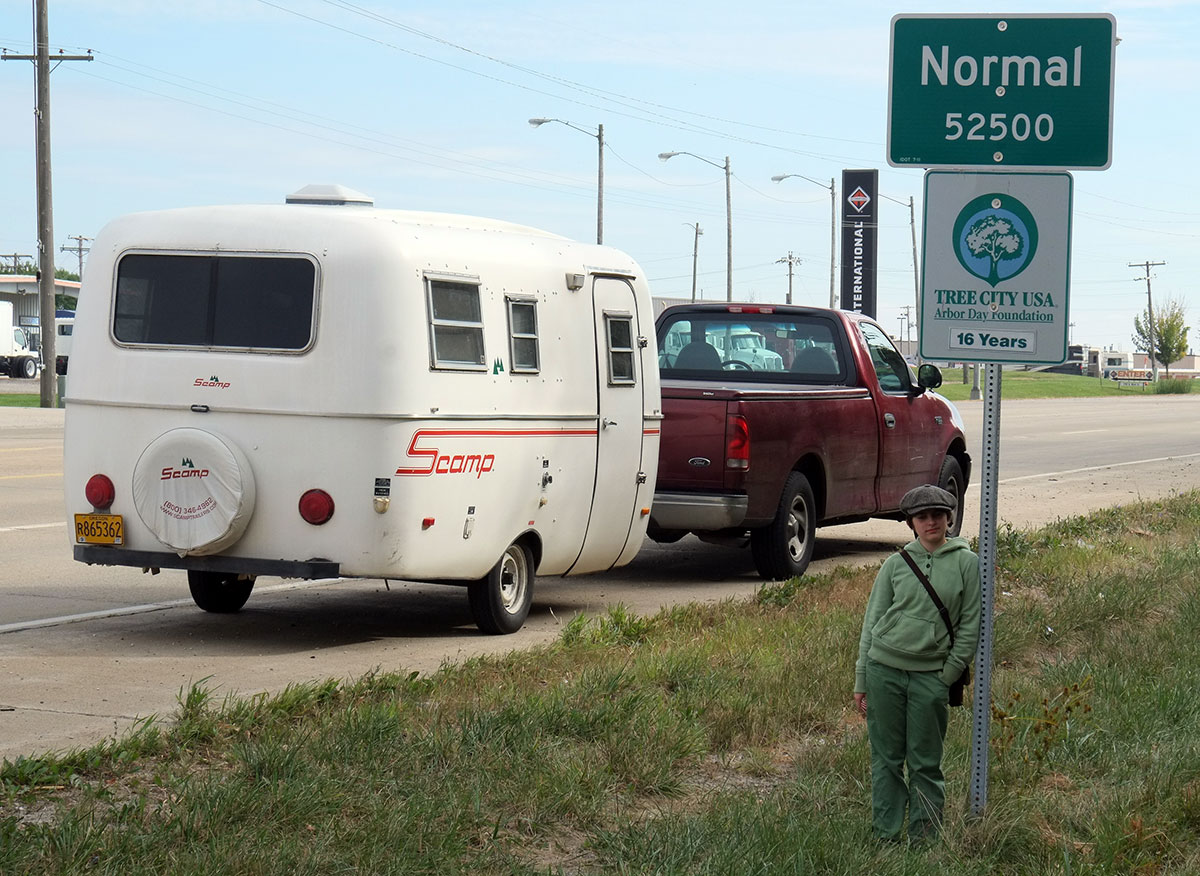
The grounds were gracious and beautiful (no one else on our trip has told us that they’d open the gates so we could pull our camper into the courtyard), with plenty of room for Luigi (the dog) to run around.DSCF0059

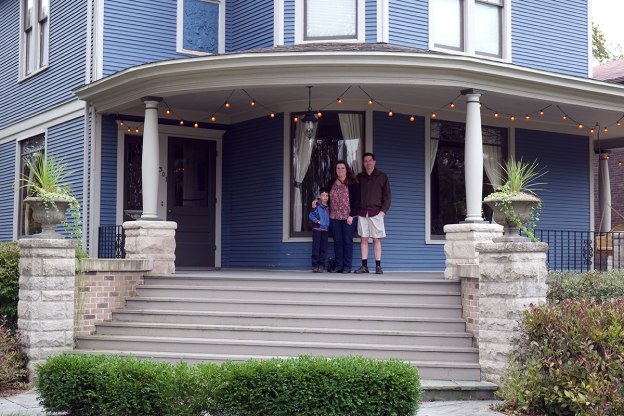
As with so many other places and people we’ve visited on this trip, we wished we could stay longer, but the highway calls, and we had to bid farewell to Normal, a place that seems anything but.  DSCF0074

Aaron Venn

Aaron was a student in the last housing thesis studio I taught in Portland, back in the late 20th century. He was an unusual student, one who never acquiesced to conventional wisdom or just went along with what all other architects thought;  Aaron was (and still is) tenacious in arguing from first principles, not giving an inch until he was satisfied with the premises and logic of any proposition.  I really enjoyed this attitude back then, and have continued to appreciate it over the years, as he looks at all social issues in this way, not just architecture.

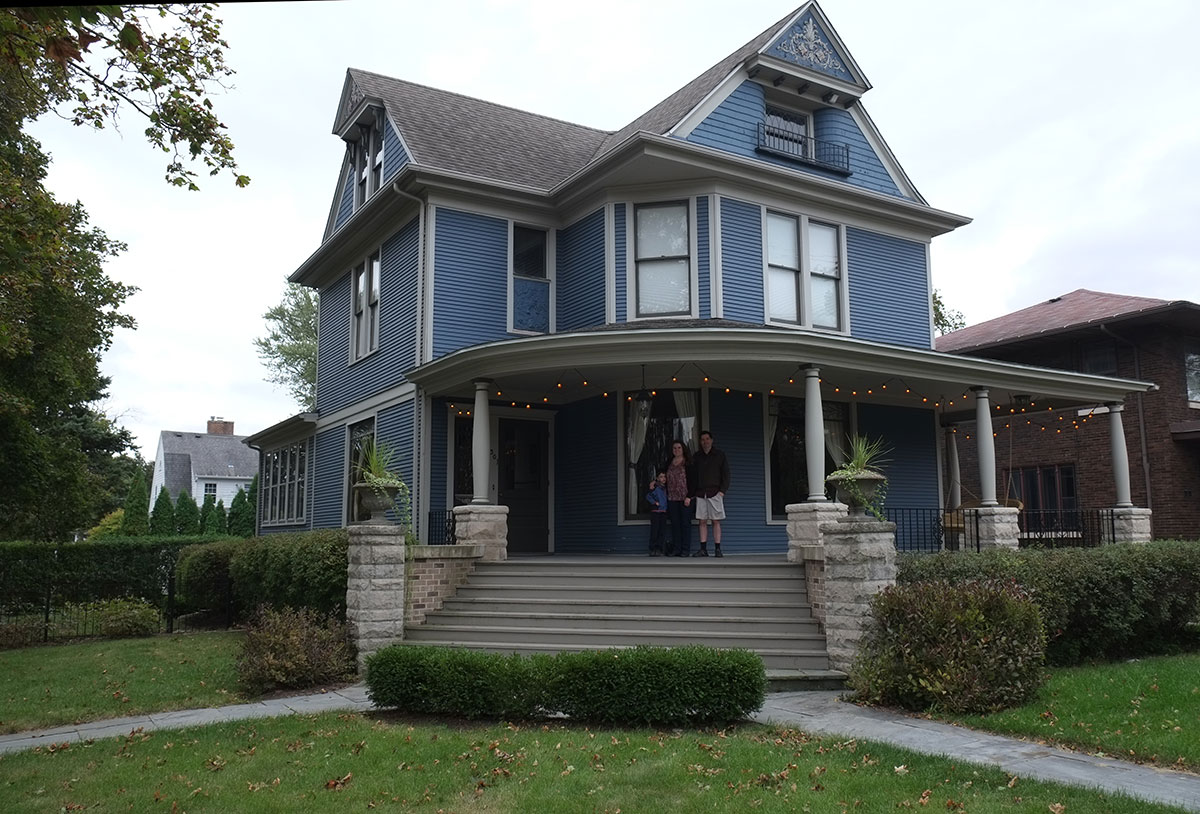
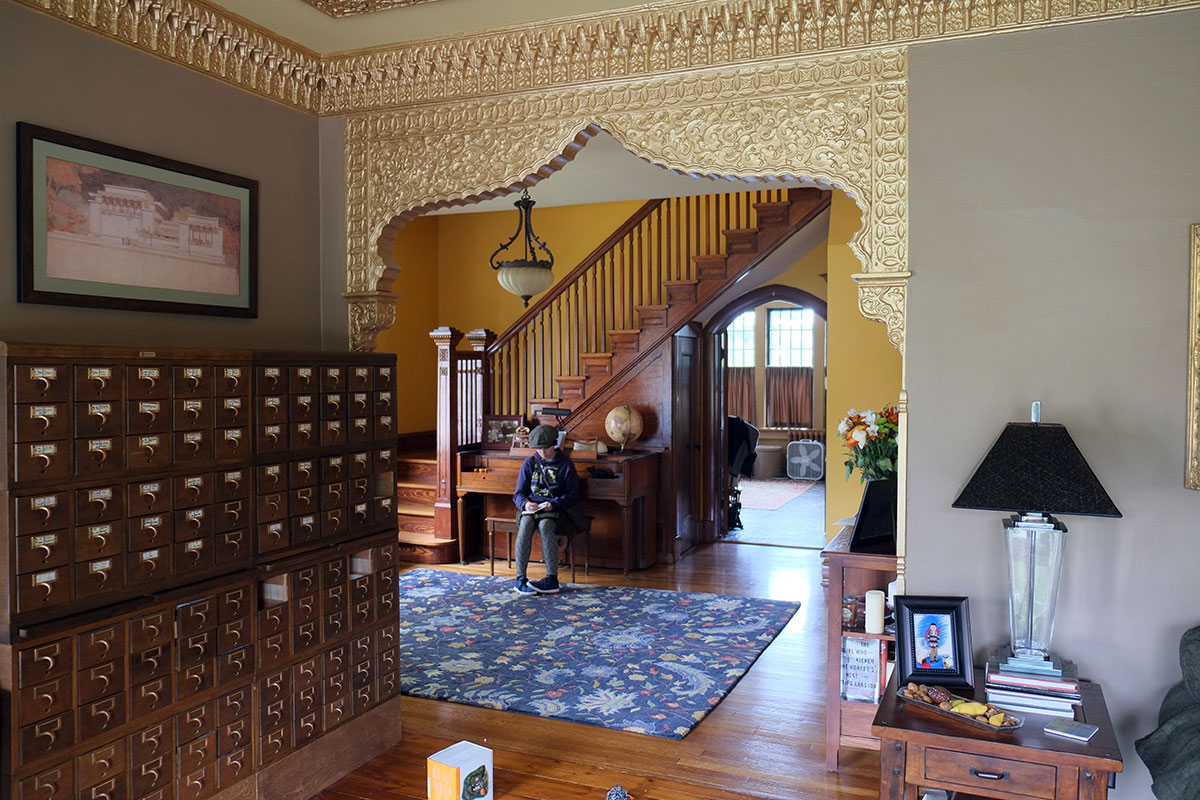
Not surprisingly, Aaron had issues with much of how the architecture profession is structured in this country, and has drifted away from professional practice.  (Can one be a “lapsed architect”?)  He lives in a remarkable period house in Woodstock, Illinois, which is such a perfect small midwestern town that it was used in the film Groundhog Day.

Their house in Woodstock.

Their house in Woodstock.

Greta siting in the hall of their amazing period house.

Greta sitting in the hall of their amazing period house.

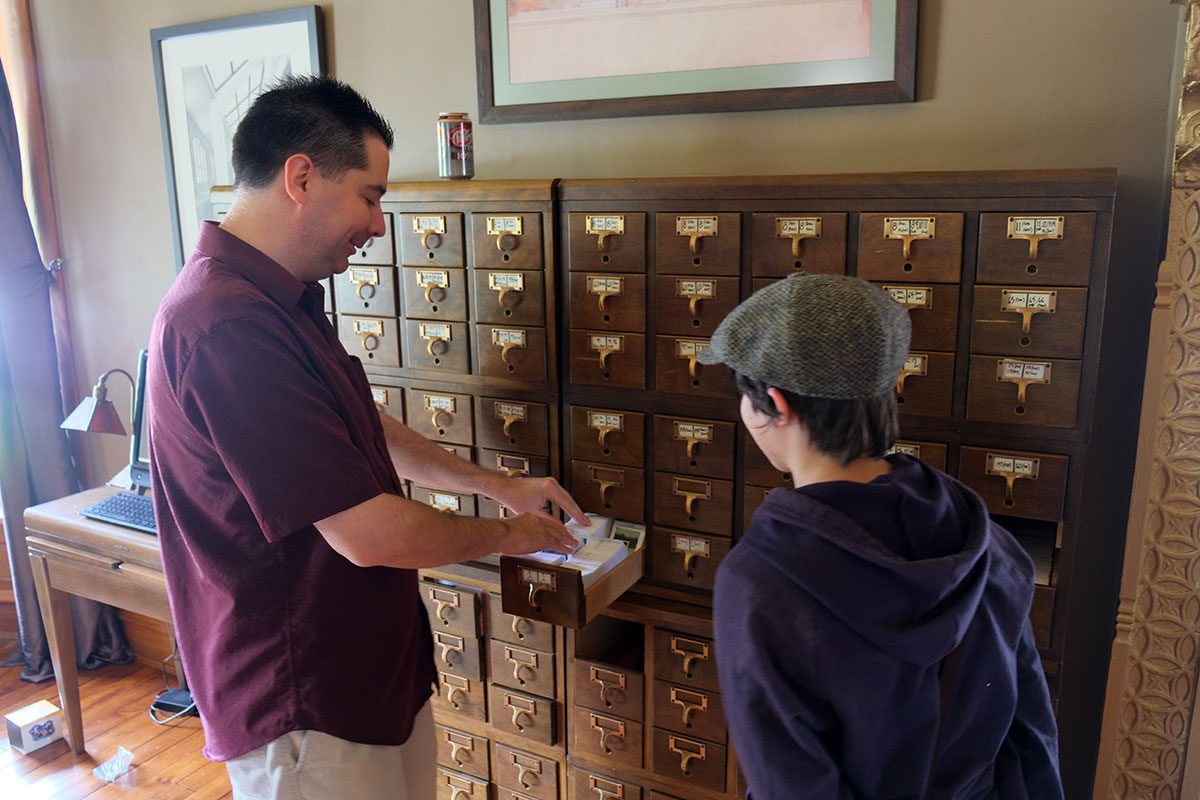
Aaron lives with his wife Heather (a veterinarian) and their son Gordon (a deadly serious gamer, who was busy fabricating his own 13-part history of the world board game while we were there).  Aaron now spends much of his effort turning his family’s love of stamp collecting into a career, growing the stamp dealer business through their website at http://www.postroadco.com.

Aaron shows some of their stamp collection to Greta.

Aaron shows some of their stamp collection to Greta.

After a week in the bustling Miesian universe, it was an amazing contrast to return to visit their beautiful town and their comfortable, small-town life.  As always, it has been great to see what different lives our old friends and former students have mapped out.