Tag Archives: #vanlife

The Panorama Jazz Band marches (videos)

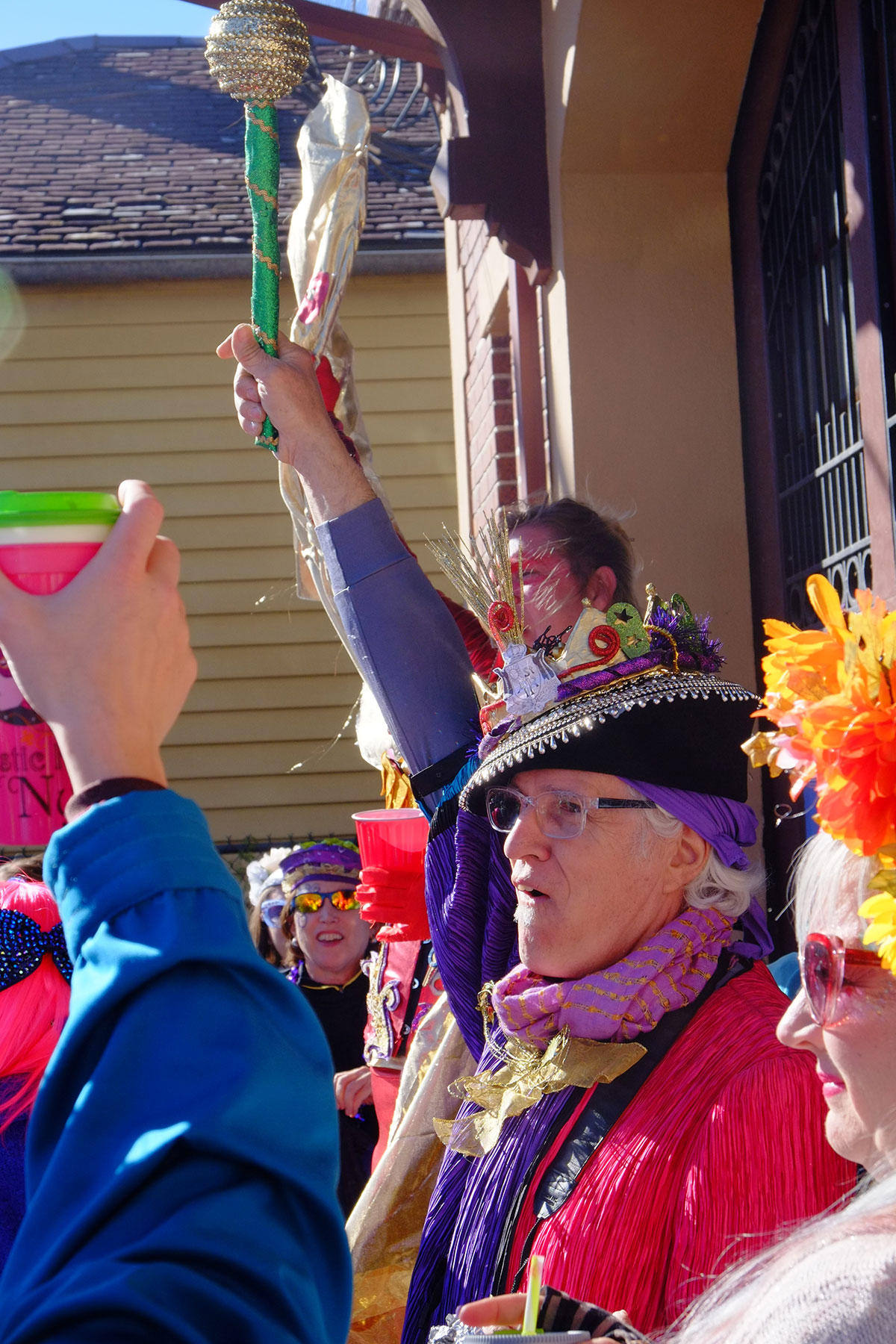
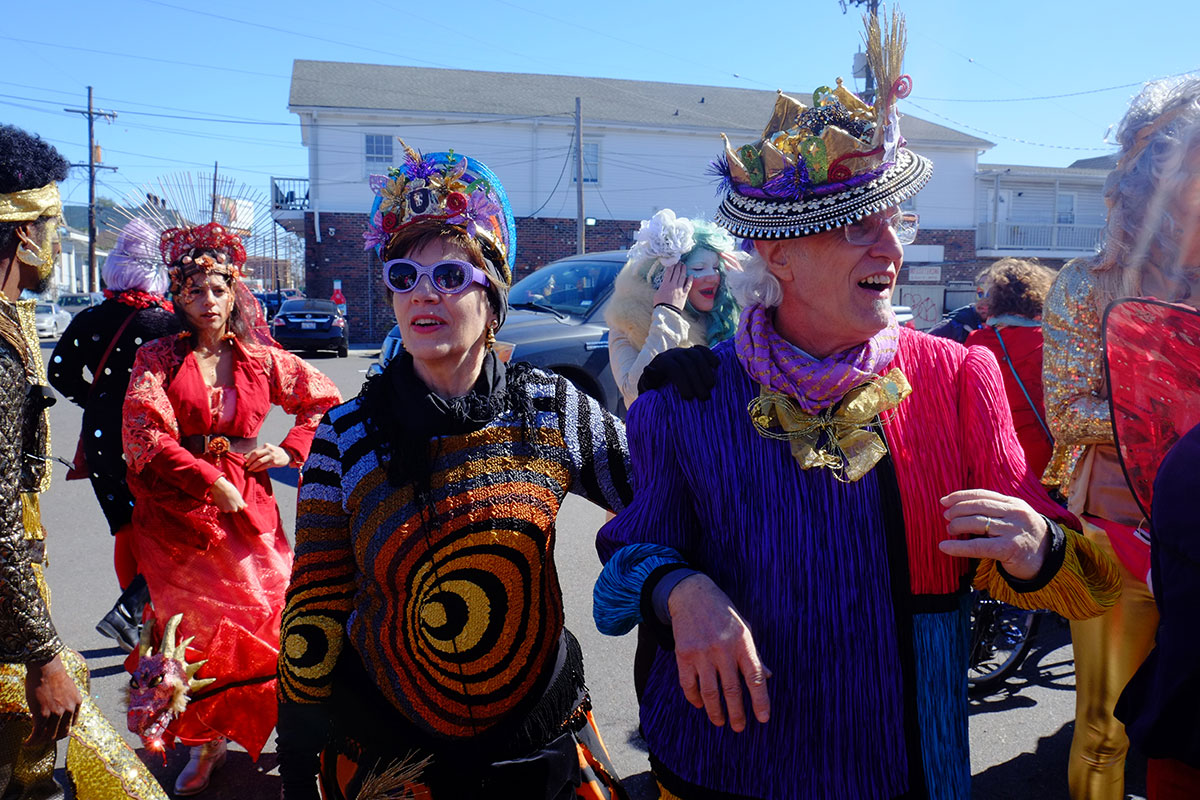
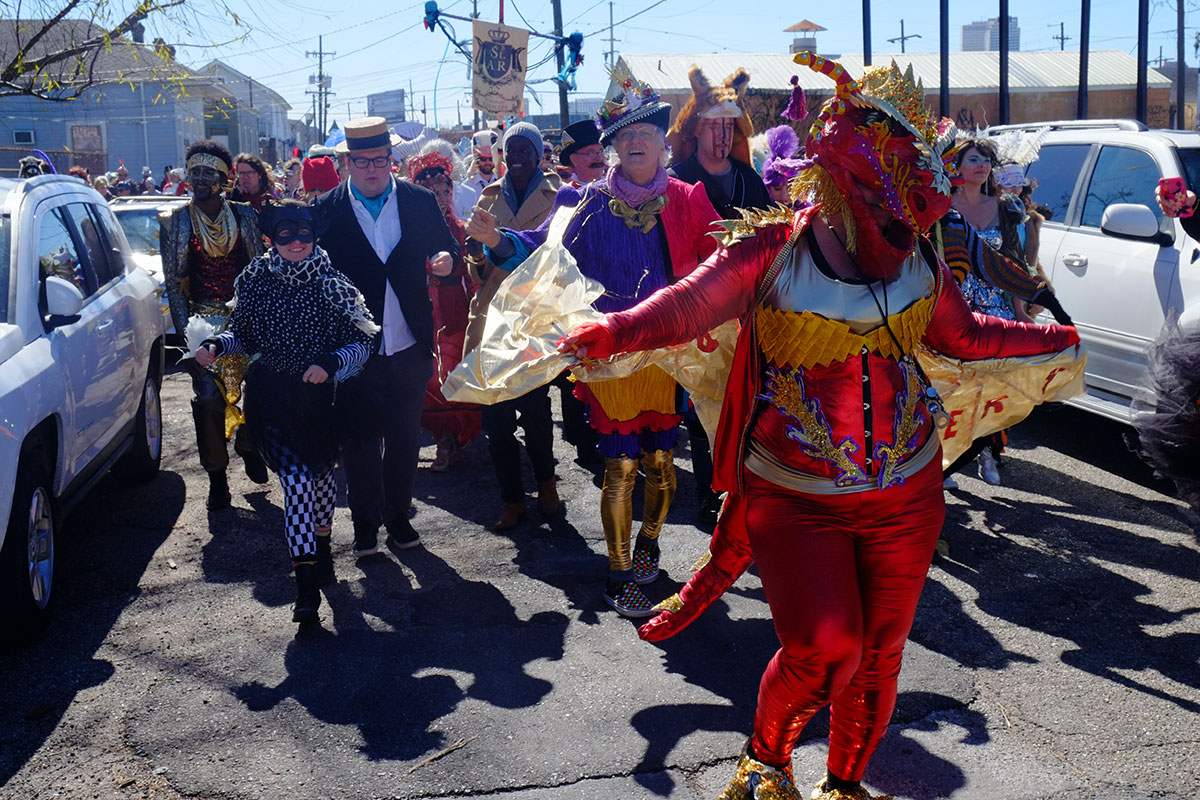
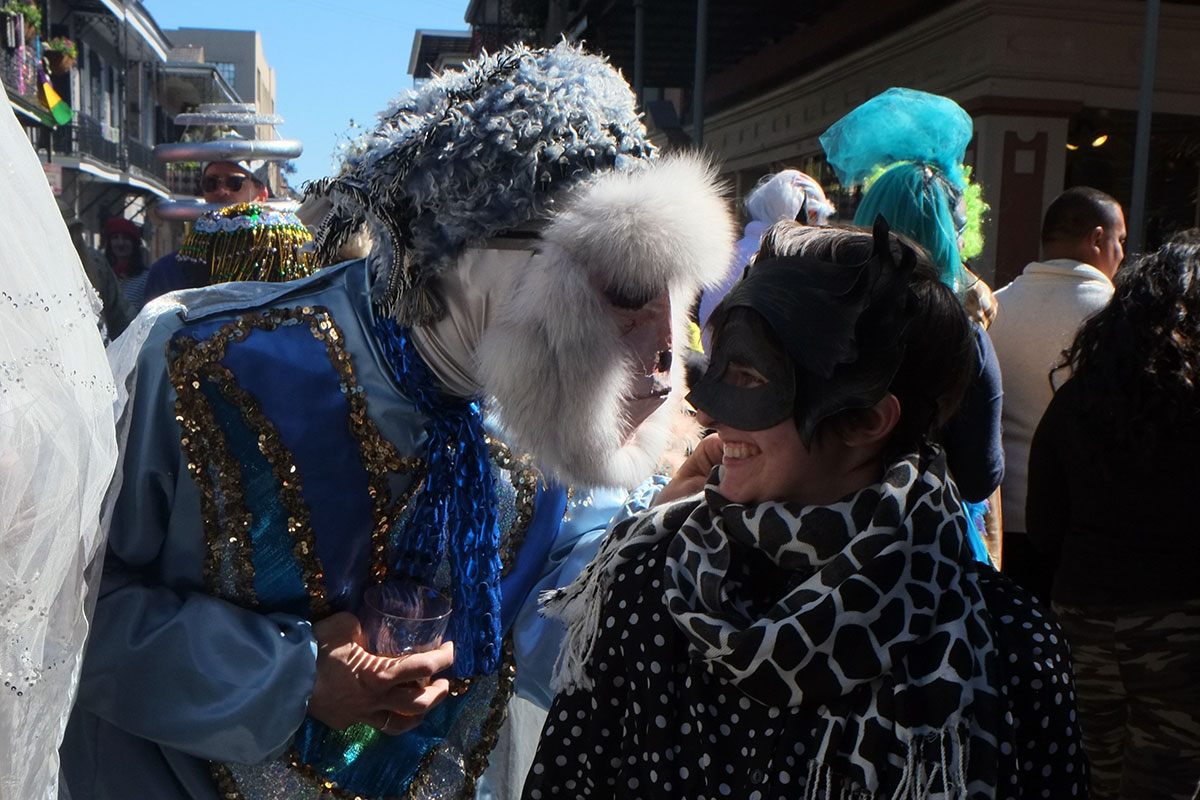
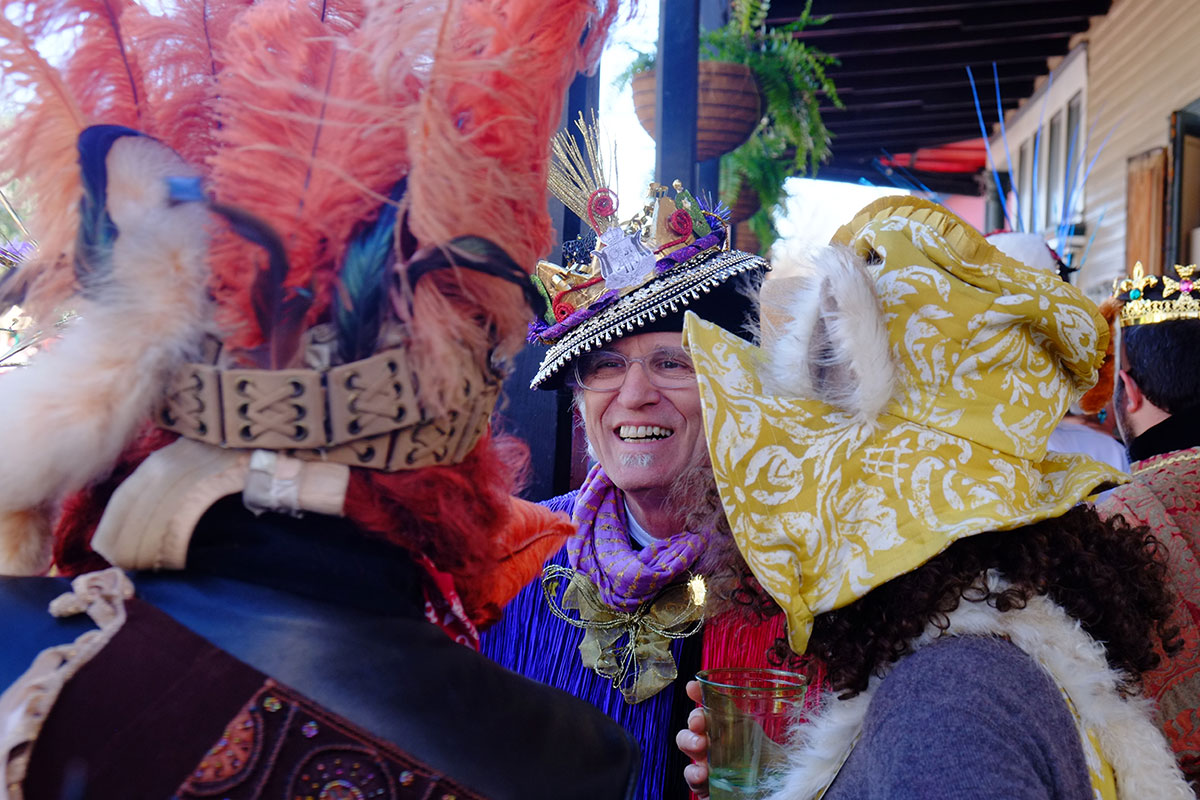
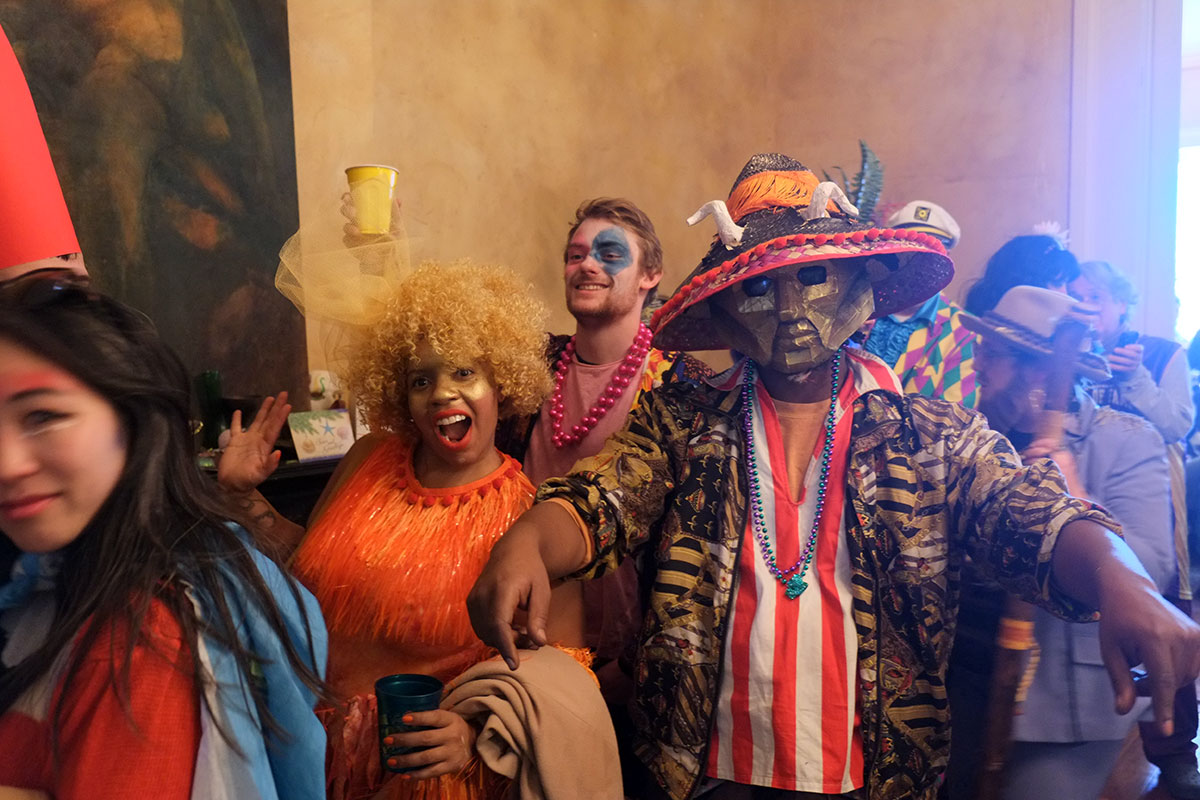
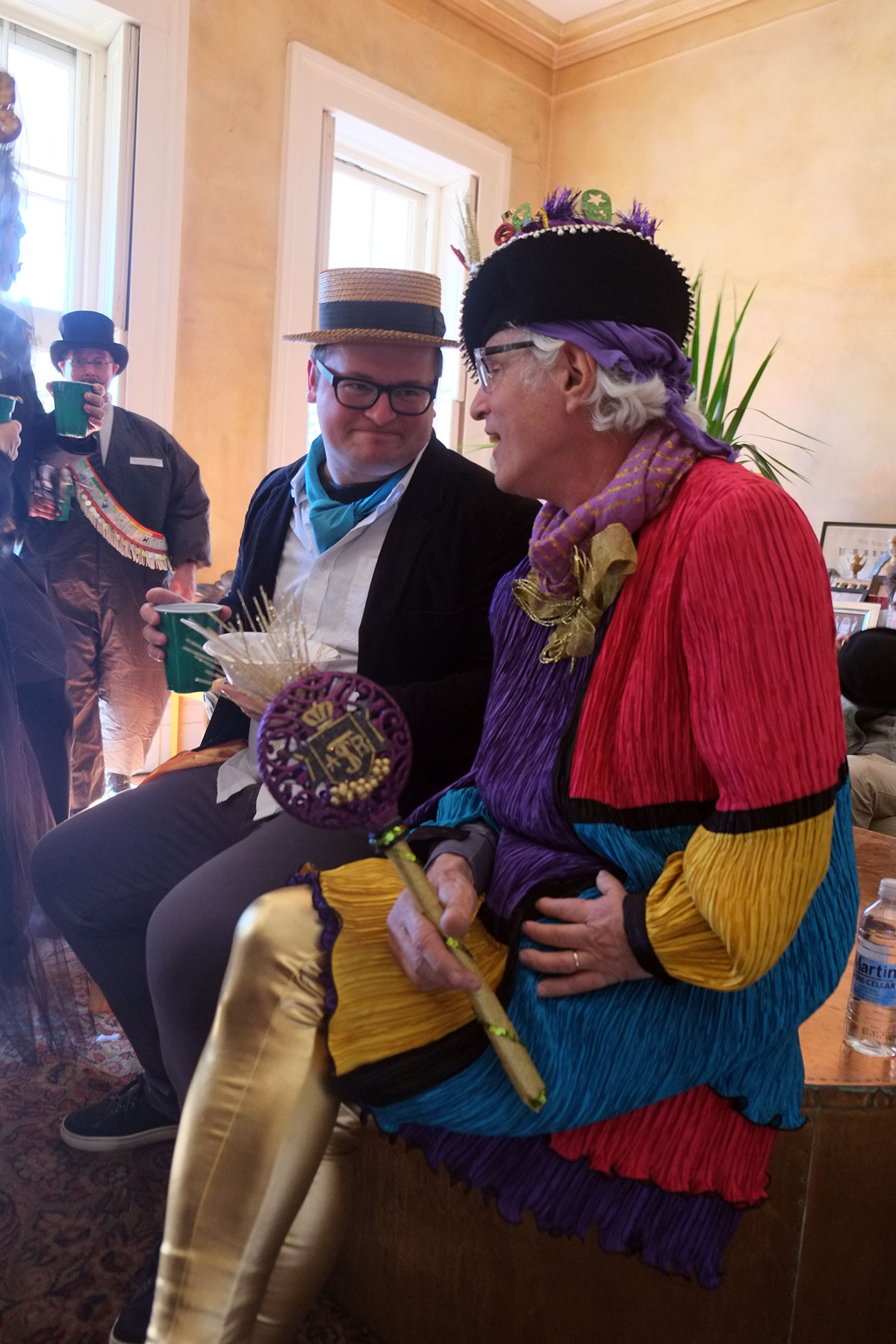
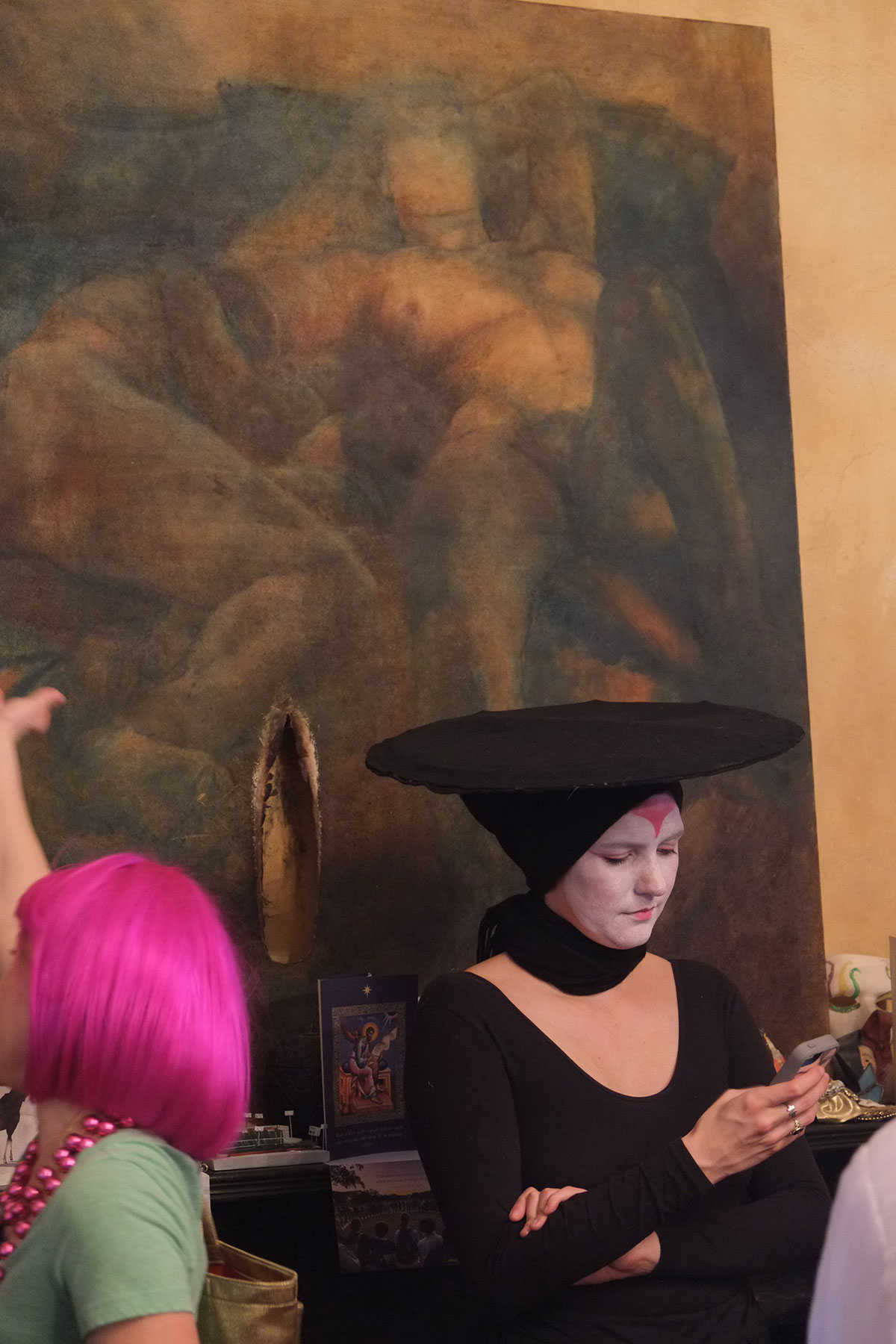
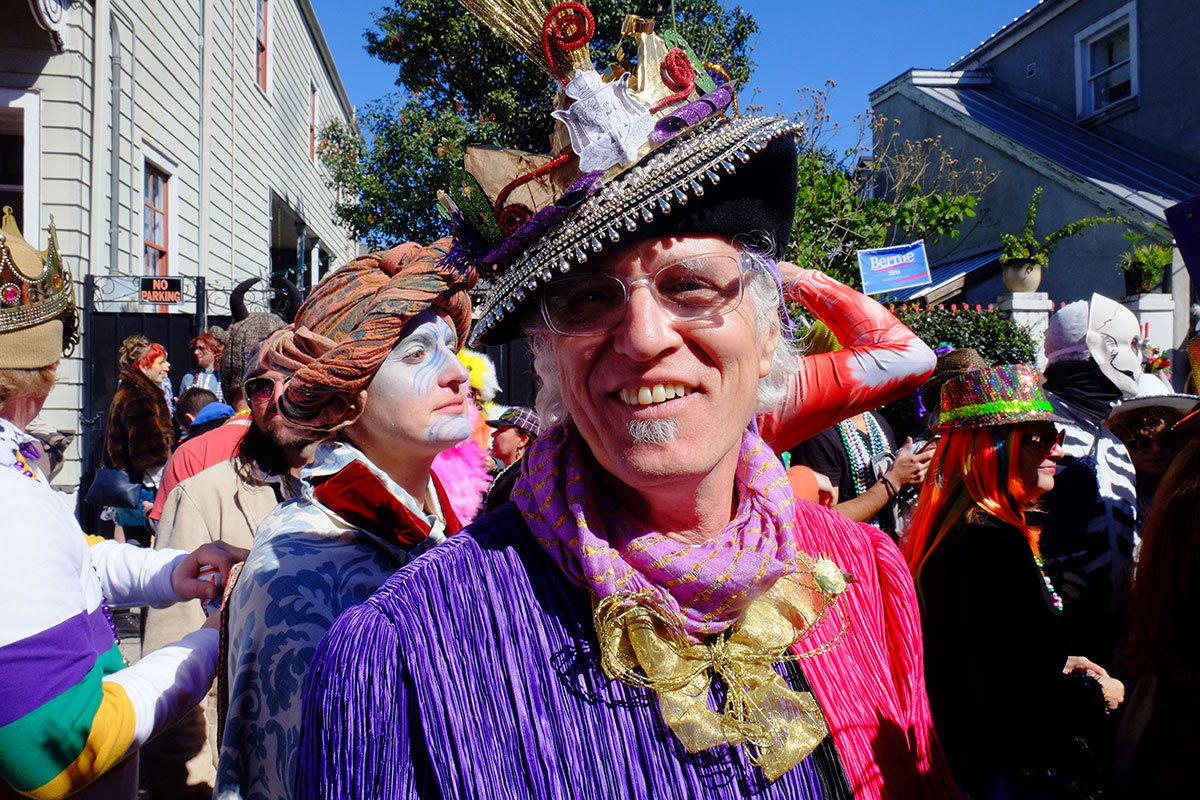
New Orleans has been amazing in every way, but perhaps the most fun we’ve had was marching with the St. Anthony Ramblers on Mardi Gras.  I posted some photos to show what the costumes were like, but a huge part of the experience was the music of the Panorama Jazz Band.  (http://panoramajazzband.com/bio/)   I’d never been in New Orleans before, but an image that always intrigued me was that of a jazz band marching down the street with a krewe of revelers (or mourners) behind it.  So being in that krewe behind a great band was a fantastic experience for both of us.  I apologize for the lousy quality of the videography (I’m not a videographer, my camera is notably terrible for video, and the drinking started very early in the day), but the beauty of the music comes through.

Here they are while the Ramblers take a break at the first bar stop:

The Ramblers regrouped and marched on, with Greta, Glen, Michelle and Stephen near the van.

The Ramblers march by:

At the second bar stop:

And a final song from the Panorama Jazz Band in the French Quarter before we headed off to the party.

We had a great time, with a lot of interesting and fun people.  And the next day, as we walked down Royal St., we realized that we’d never be able to recognize any of them again.

Saint Anthony Ramblers – Mardi Gras

DSCF3126We’ve been here in New Orleans for a few weeks, staying with our friends Glen and Michelle in the Marigny.  There will be many blog posts about this, but I thought we should get today’s photos of Mardi Gras up now.

The day started with the gathering of the St. Anthony Ramblers at Glen and Michelle’s firehouse, then a parade with the Krewe and the Panorama marching band through the neighborhood and the French Quarter.
DSCF3045

Glen receives his scepter as the King of St. Anthony’sDSCF3019

and the Krewe lines up by the scamp for one last bathroom visit before the paradeDSCF3011

Glen and Michelle, the King and QueenDSCF3121

Tommy and Rita, Jenny and Gordon – old friends of Glen’sDSCF3107

Greta leading the KreweDSCF3144

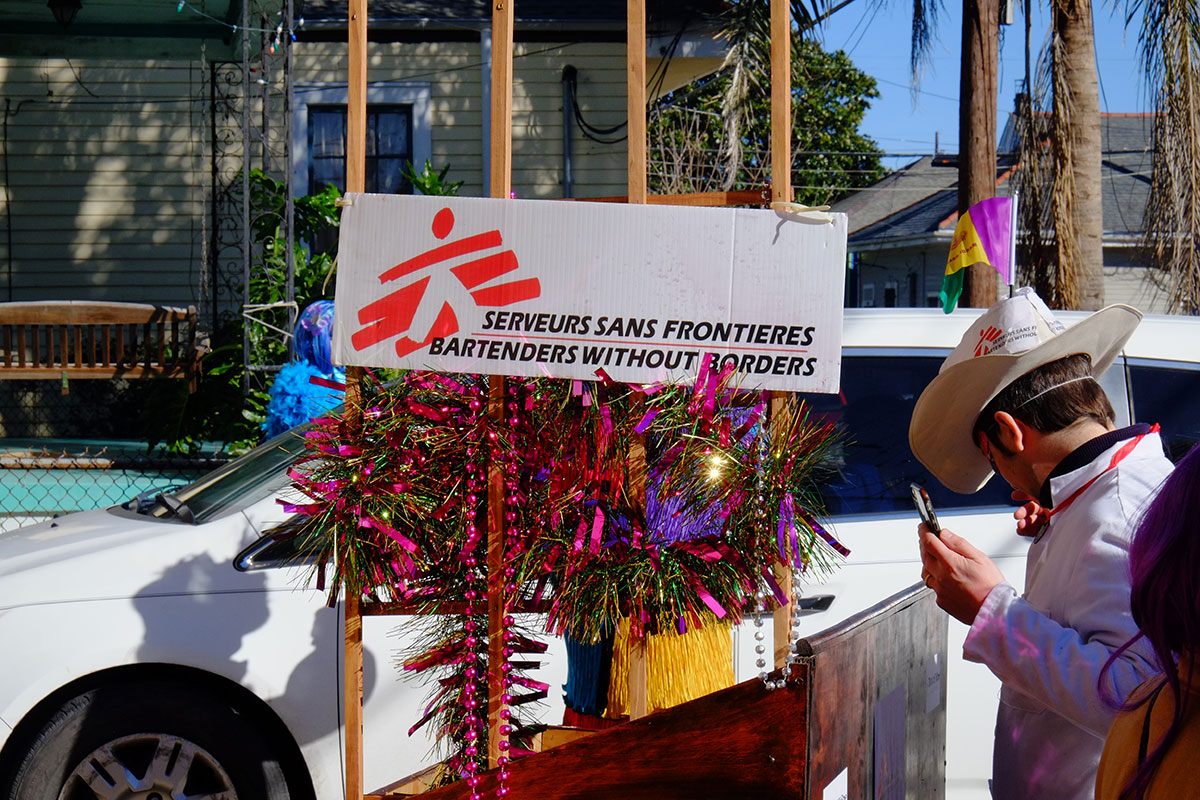
and the important humanitarian groupsDSCF3008DSCF3057

the amazing Panorama marching bandDSCF3192DSCF3156DSCF3185

Greta meets the monkey king as we cross Bourbon Street.
DSCF3263

The king taking a beverage break
DSCF3223

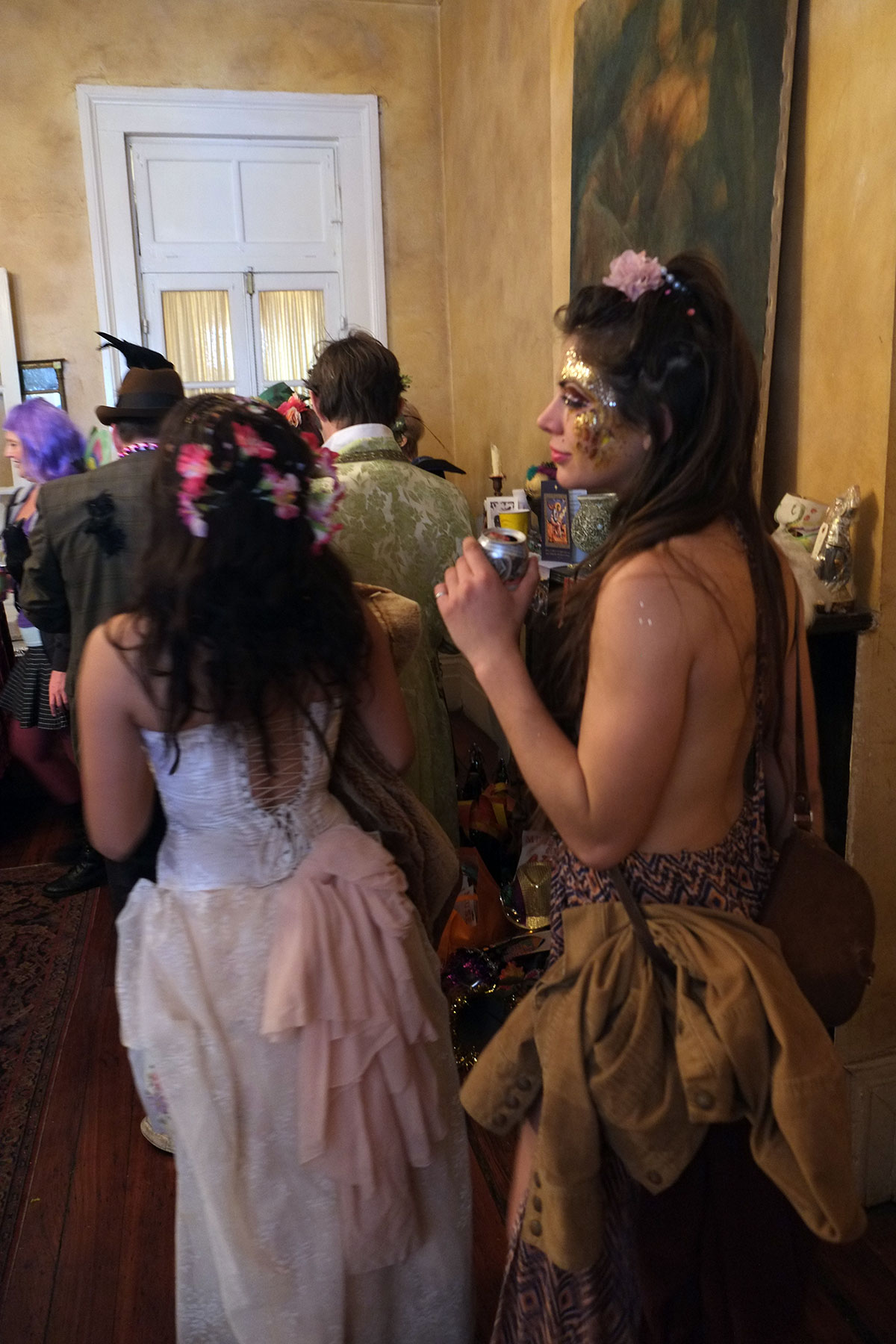
We arrive at their friend Constantine’s on Jackson Square for a fabulous partyDSCF3326

with the host dancing on the tableDSCF3372

and very friendly folks in the line for the bathroomDSCF3299

DSCF3295

the balcony overlooking the Square, from America’s oldest apartment buildingDSCF3339

Glen and his godson StephenDSCF3320

DSCF3371

Jimi, from SloveniaDSCF3386

and great costumesDSCF3379

DSCF3399

Tom and Nathalie and JamesDSCF3395

Just follow this man around, and it’s a very good time.DSCF3203

Movies to follow.

Insectarium

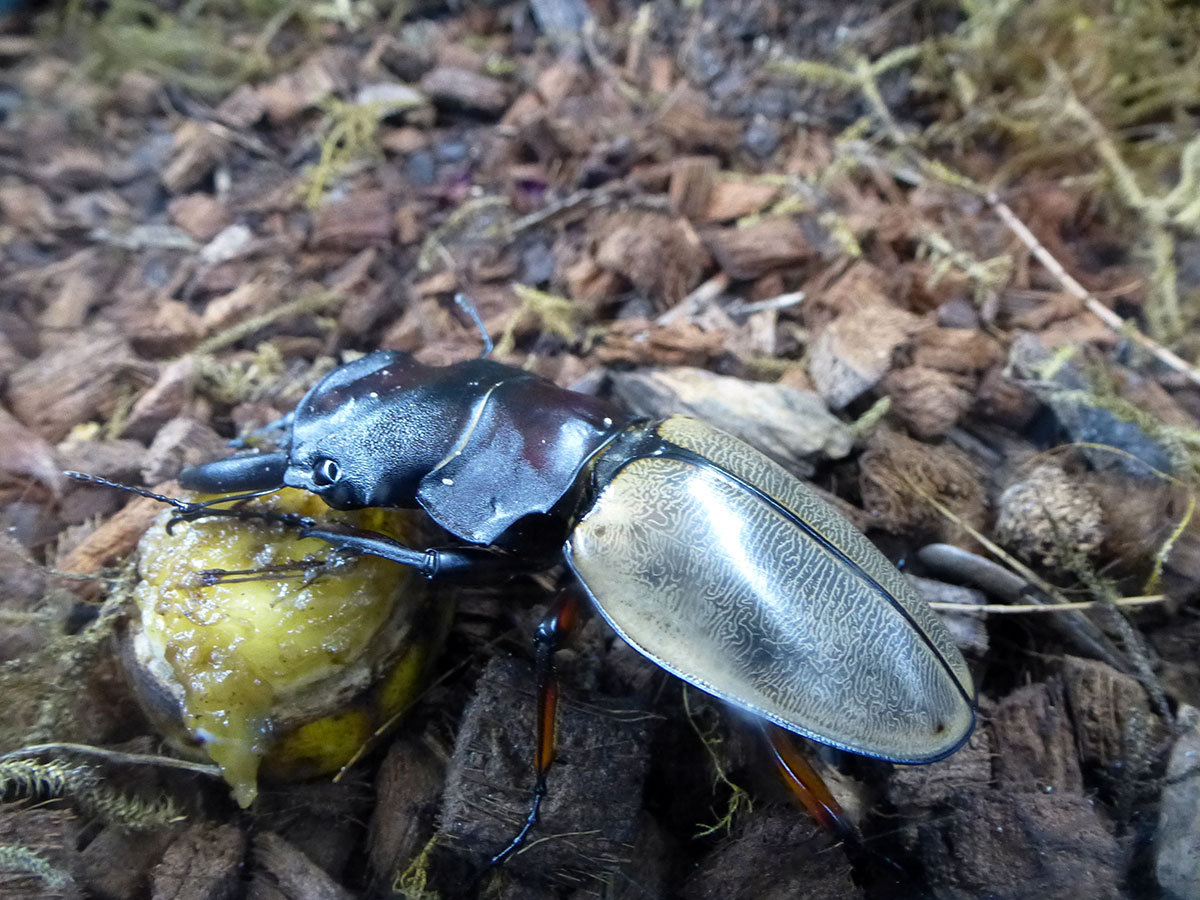
P1070187Insects make up a large percentage of the world’s species, over eighty percent. Every fourth species is a beetle. Noah’s Ark would have been filled with bugs. So why is New Orleans one of the only cities to have a well-visited Insectarium?
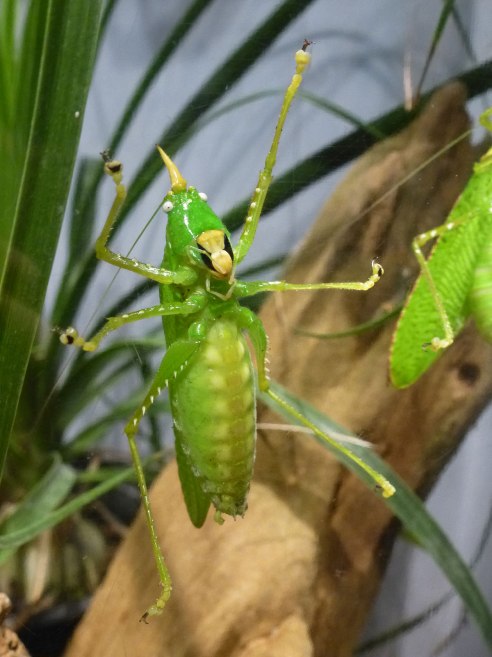
Probably because insects can be a little freaky, like this unicorn catydid.P1070201
We were looking at the cockroaches when a man who worked there walked by and told us that a cricket king cake had just come out of the oven down at the Insect Cafe. I was expecting a king cake that was decorated with crickets, not one that had crickets mixed into the batter before it was baked! There were free samples, and I must say it was much tastier than the other bugs I’d eaten; ants (truth or dare), flies (biking), and a spider (prank). They also had Mealworm salsa and beetle chutney, which weren’t bad, but the bugs didn’t nessesarily add to the texture.P1070116
As there are so many different beetles in the world, it makes sense that they’d have a large collection. Dung beetles, diving beetles, rhinoceros beetles, this terrifying thing…P1070166They didn’t have any bombardiers however, as it’s hard to safely keep an insect that can shoot boiling acid out of its butt.
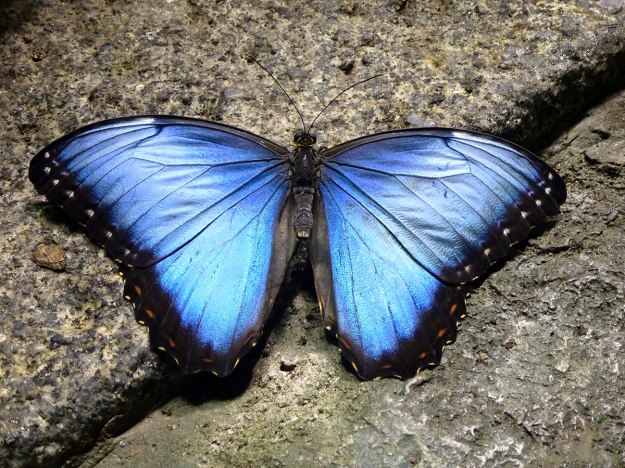
More common than entire Insectariums are butterfly gardens,and this one didn’t disappoint. Most butterflies, including Blue Morphos, aren’t actually colorful. It isn’t pigment that makes them pop out, but microscopic holes in their wings that refract light. It sounds like science fiction, but I promise you, Smarter Every Day wouldn’t lie.
P1070218
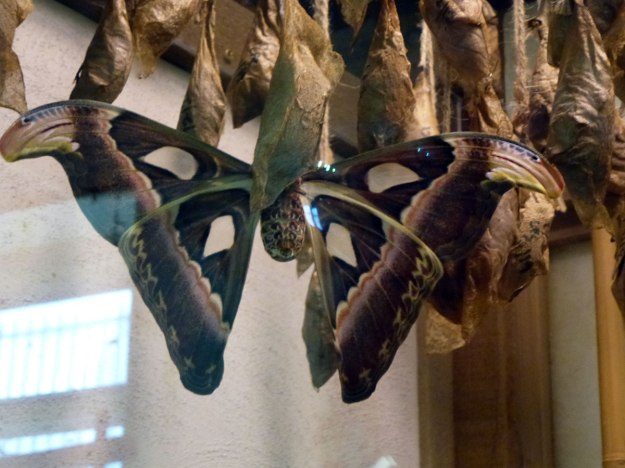
As well as butterflies, they had a giant moth that was apparently the inspiration for the Japanese supercreature Mothra.P1070210
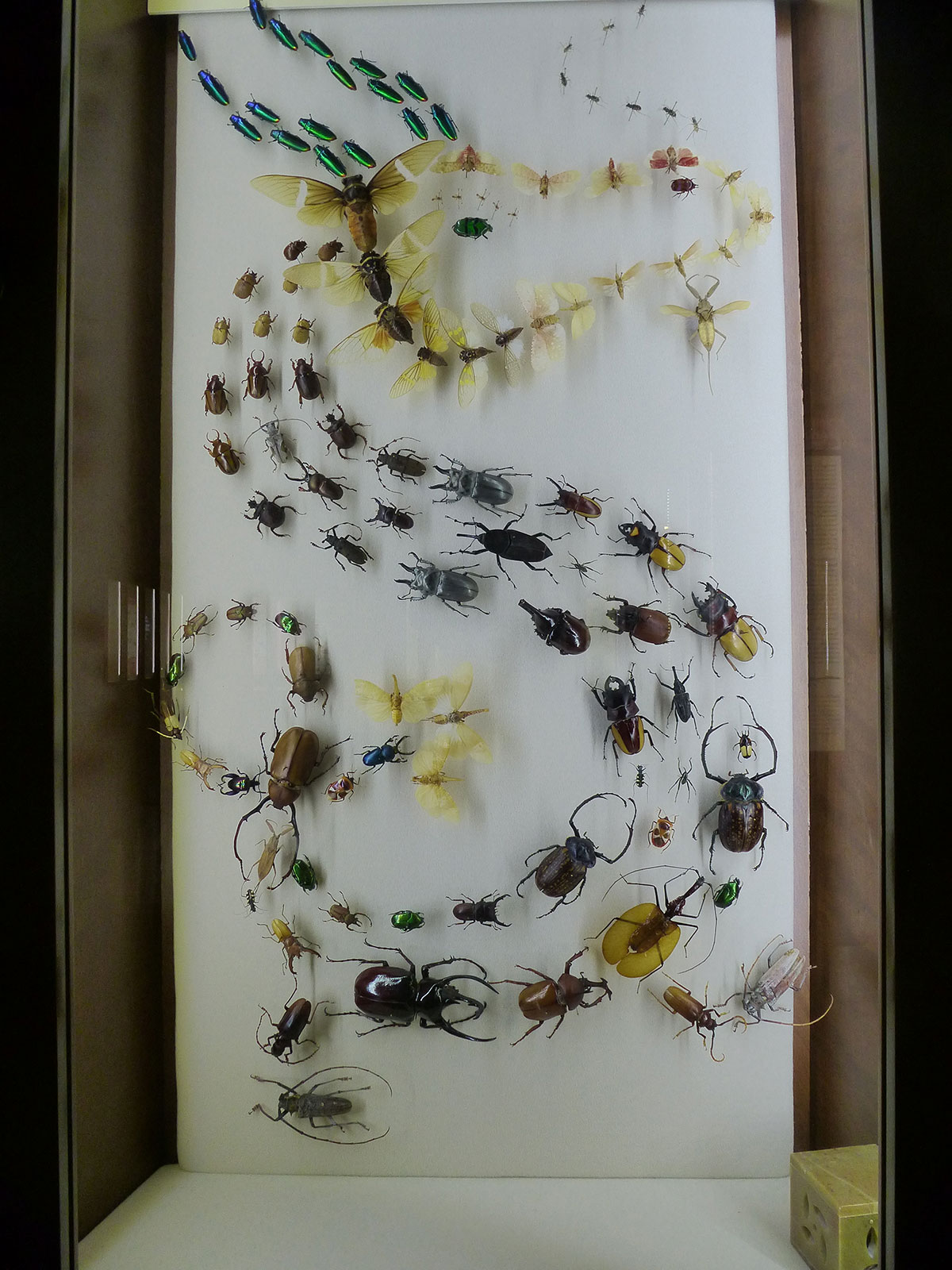
And for people who aren’t so much into the live bugs, there were display cases full of beetles and butterflies arranged into patterns, and of insect inspired jewlery. And, in the case of Egyptian women, live scarabs that were tethered to broches.P1070174
This museum was proof that little animals can be just as exciting, and terrifying, as the big ones, but not quite as tasty.

On the bayou

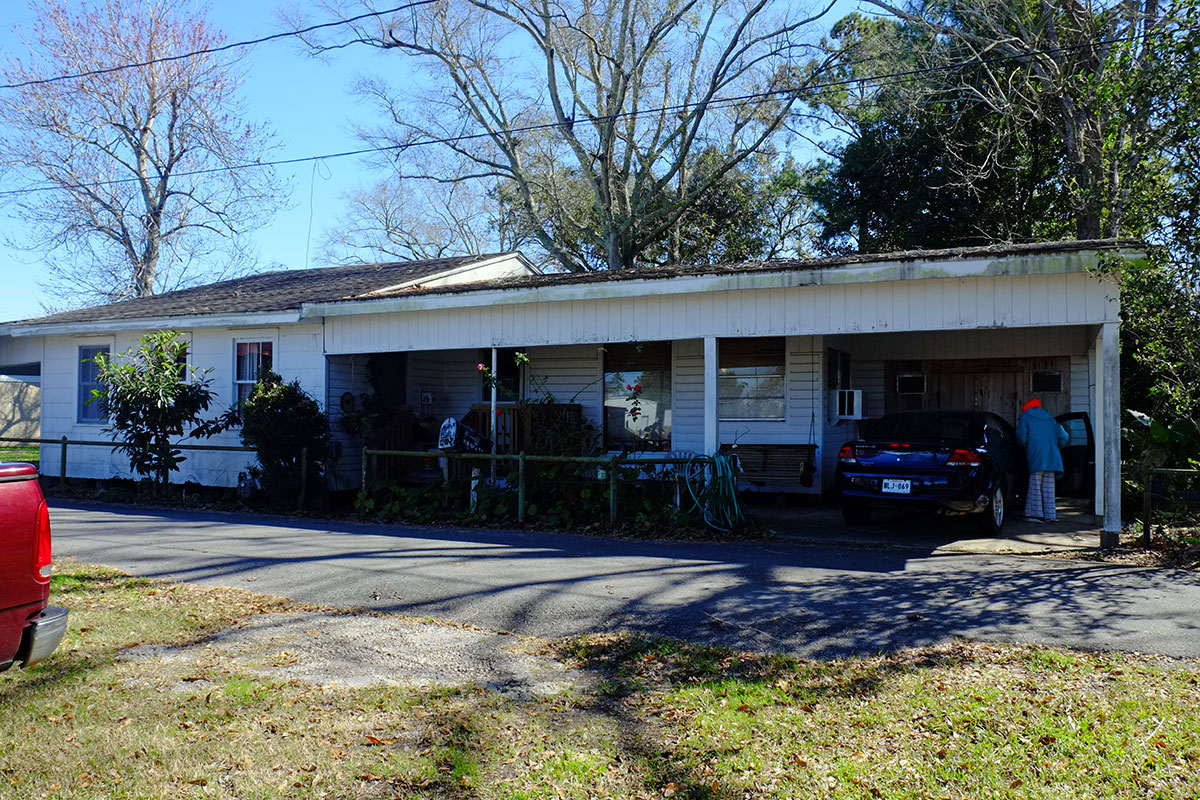
DSCF2794There’s an image of the bayou that’s common among us non-southerners, and it probably comes from popular music.  We imagine a picturesque swamp, with Spanish moss hanging down to the water, alligators and cottonmouths everywhere, and small settlements randomly distributed throughout a trackless labyrinth of channels and backwaters, but where the exotic inhabitants enjoy great music, food and beer.  This was certainly the image I had when Glen told me back in college that he had grown up in Cut Off, on Bayou LaFourche.  It turns out that my misunderstanding of the bayou was in keeping with my general lack of knowledge of everything about Louisiana.

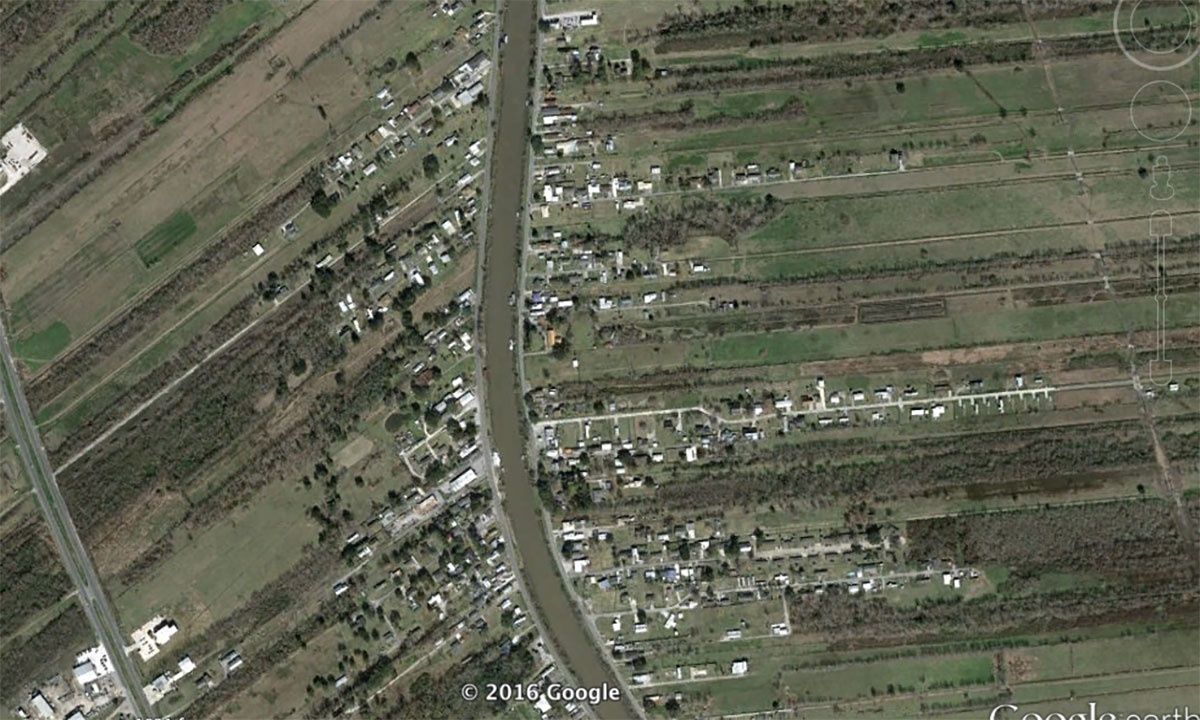
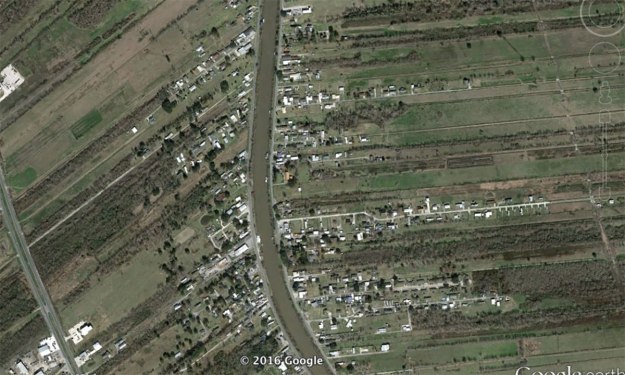
Bayous are actually the linear bodies of water which flow through (and organize) the low-lying coastal region along the Gulf.  As in New Orleans, the highest land is usually along the waterway, as soil from upstream is deposited there.  This natural feature combines with the cultural feature of how land tenure was set up in Louisiana – people owned a length of waterfront, and then had deep lots that ran back from the water.  Later, these large parcels were sometimes subdivided, so you get the pattern you can see here in Cut Off – Bayou LaFourche in the center, a main road flanking it on each side, and then dead end roads perpendicular to those.  Screen-Shot-2016-04-13-at-1.43.14-PM
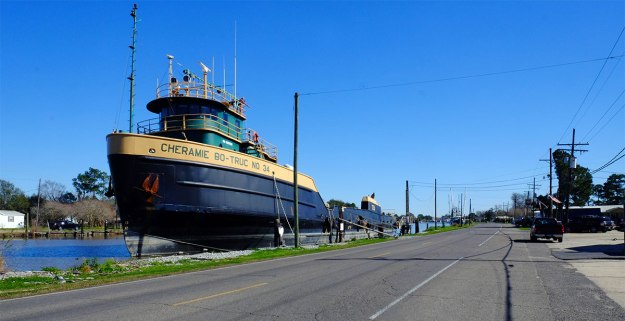
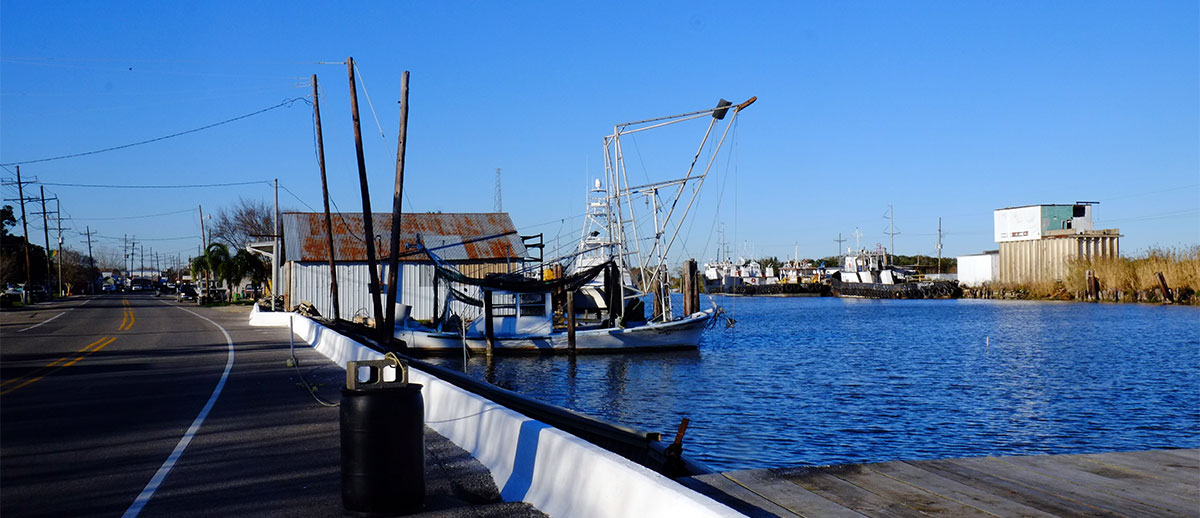
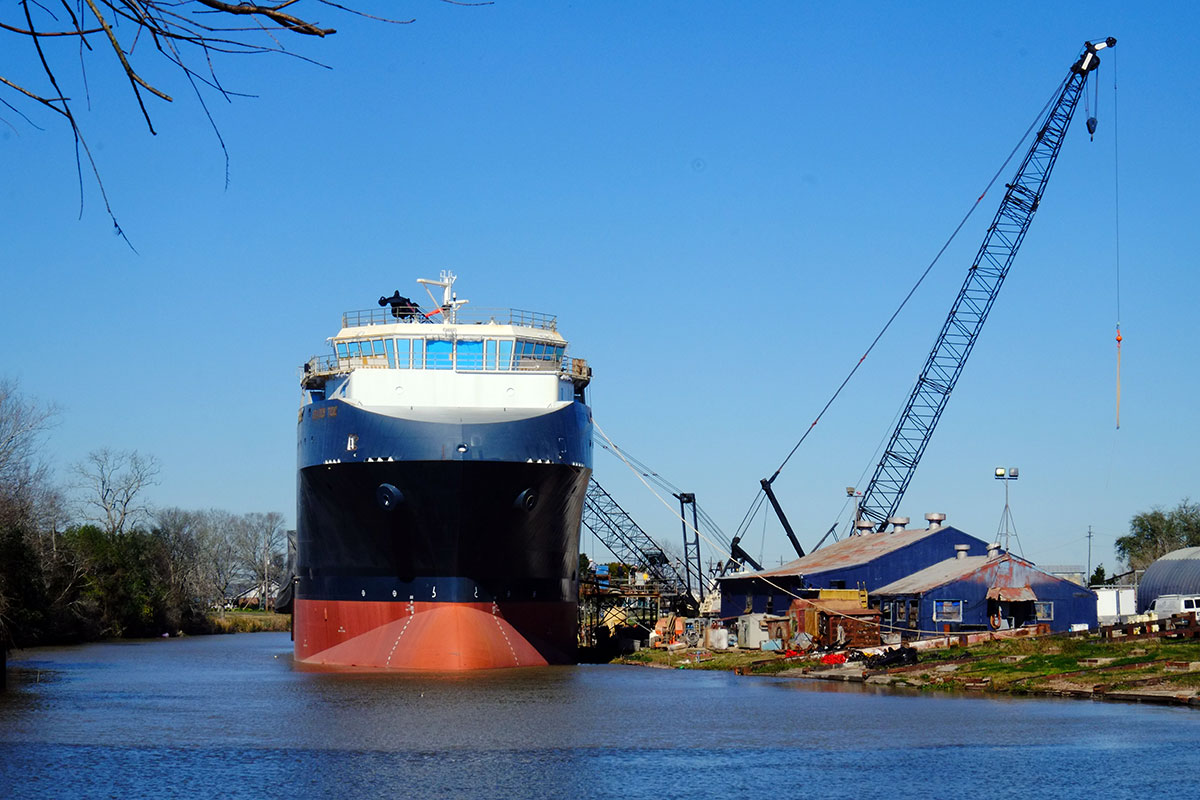
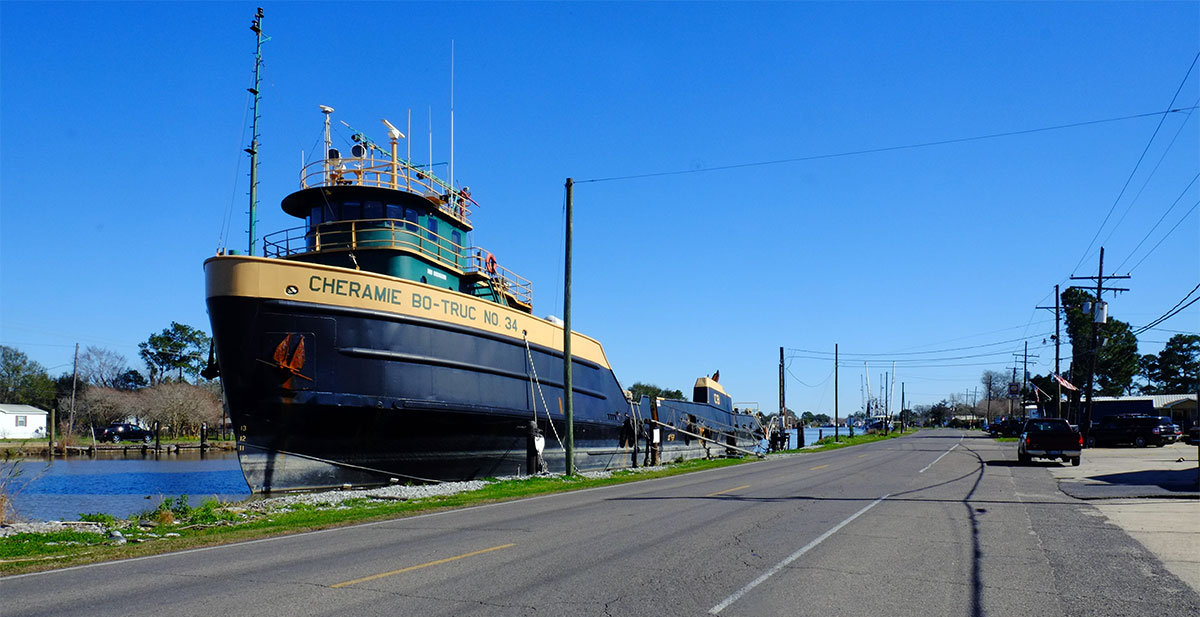
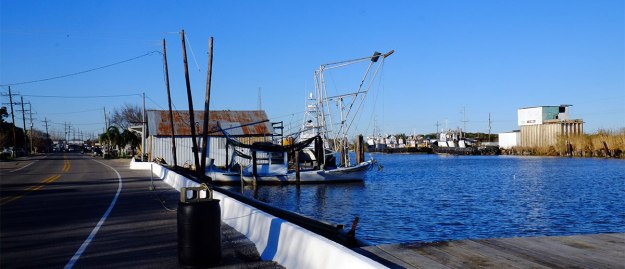
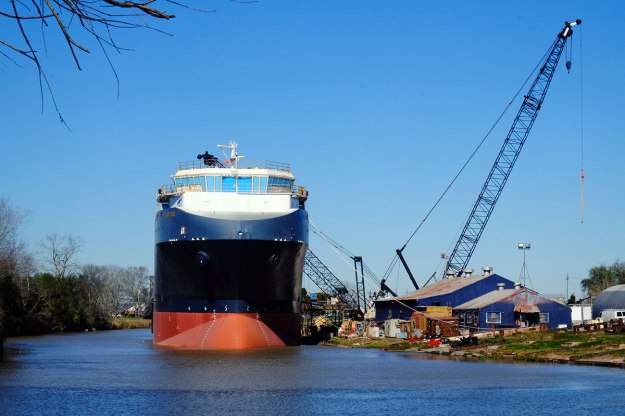
This way of making a linear settlement pattern has interesting consequences.  When people got around mainly on the water, having a bayou in the middle of your town wasn’t a problem.  But when cars became more dominant, frequent bridges became more necessary.  But then a conflict arises with boats:  the Gulf Coast has a few enormous bays and natural harbors, but otherwise doesn’t have the same frequent occurrence of small harbors, as in the northeast.  The bayous are the long, linear harbors for the coast, so big ships frequently head up these small channels, as here in Lockport (which is over 40 miles from open water).  DSCF2744
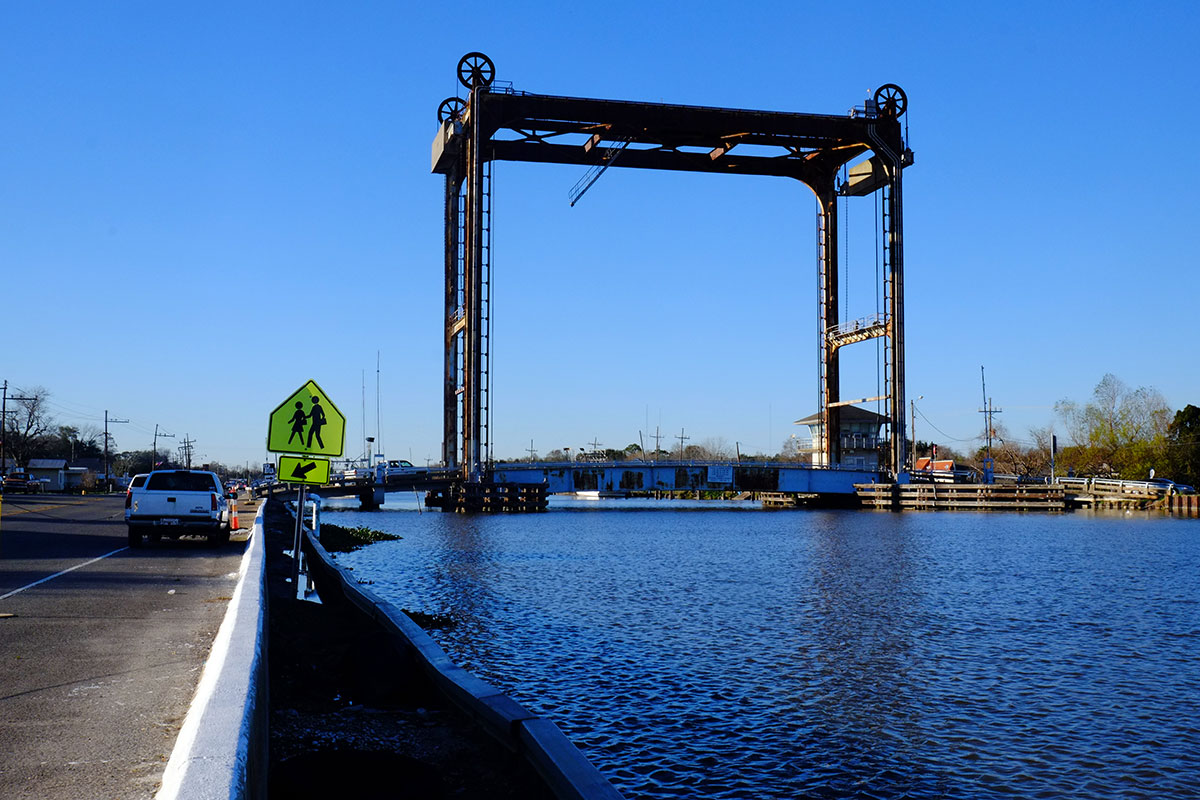
So the bridges in the middle of towns have to be pretty big.  DSCF2798
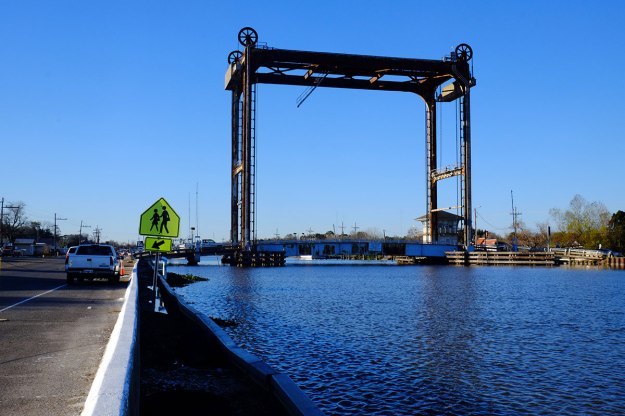
Another interesting consequence relates to cars – Glen said the car they own now in New Orleans is the first one he’s had with electric windows.  When there’s a reasonable chance that the car you’re in might end up in the water, you want to make sure you can always roll those windows down.

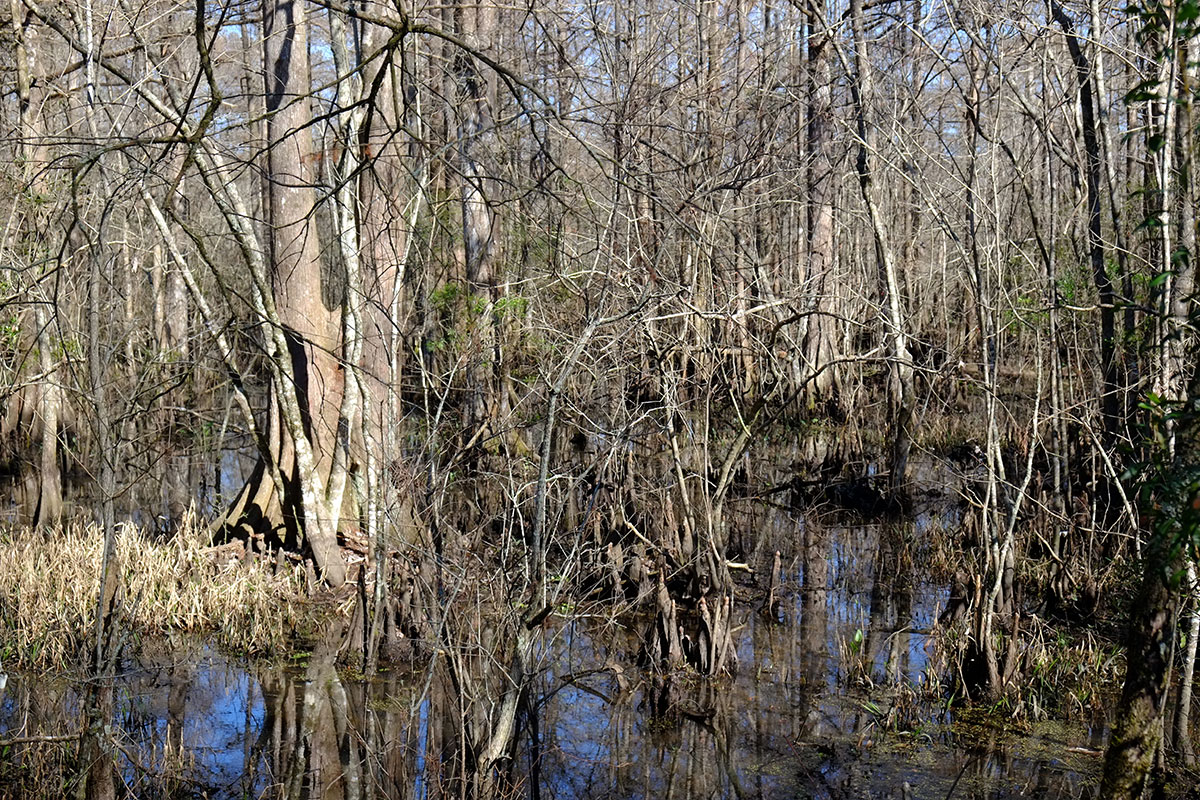
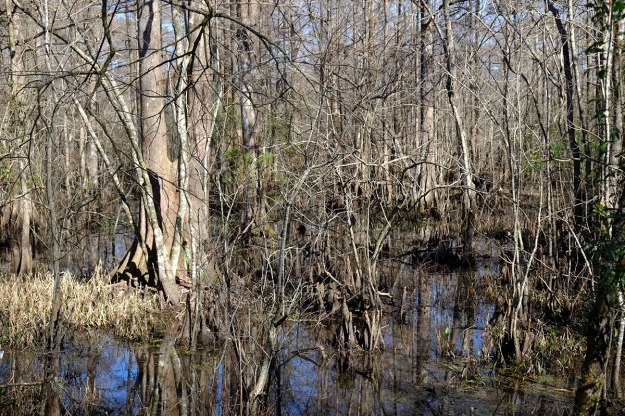
A highlight of our trip was heading down Bayou LaFourche with Glen to see his hometown.  First we stopped at a nature preserve / swamp, which is actually what I assumed all of it would be like.  DSCF2737
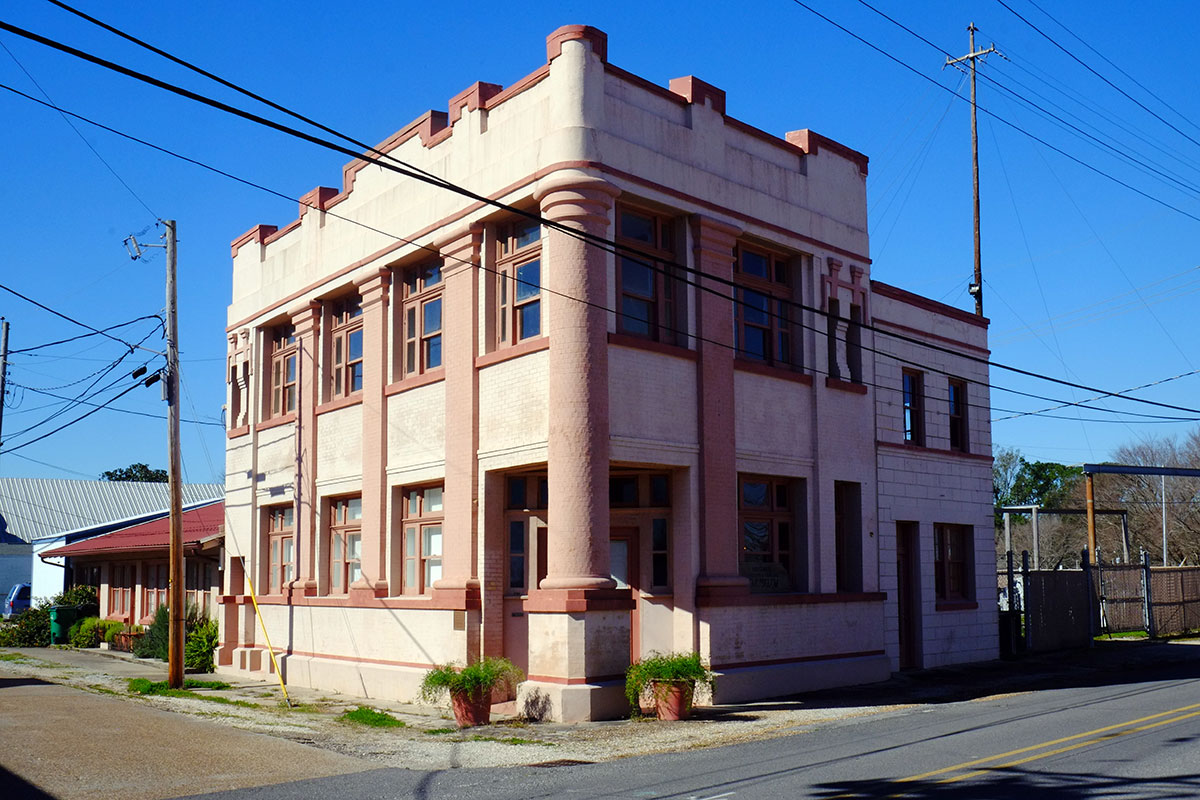
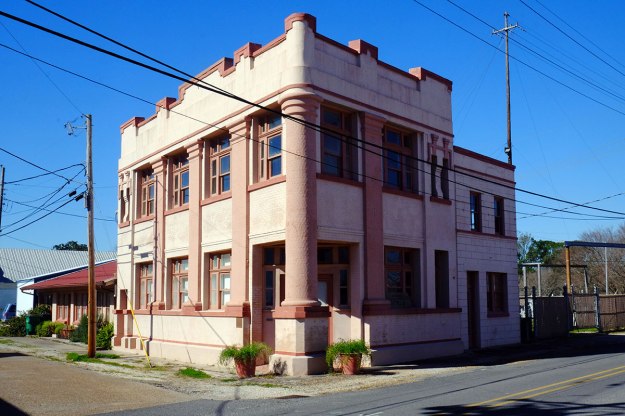
We then went through Lockport, where an east-west canal intersects the bayou.  The town bank was converted to a local history museum (Glen and Michelle designed the exhibits), and Glen asked me what style the building was.  I had to say eclectic – it was a pretty sophisticated and amusing little building to find there – a late 19th century commercial building / castle with influences from Furness?  DSCF2749
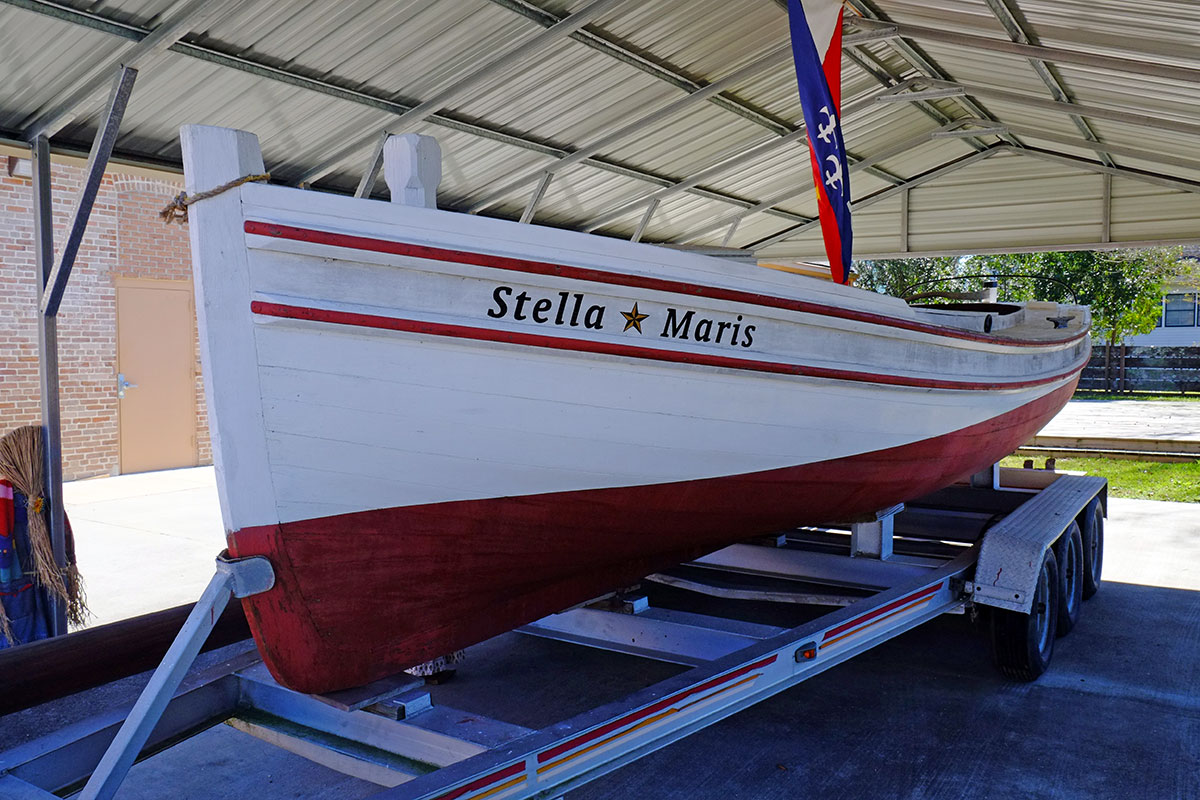
Across the street was a watercraft museum, which was unfortunately closed, but around back we found this fishing boat:  DSCF2743
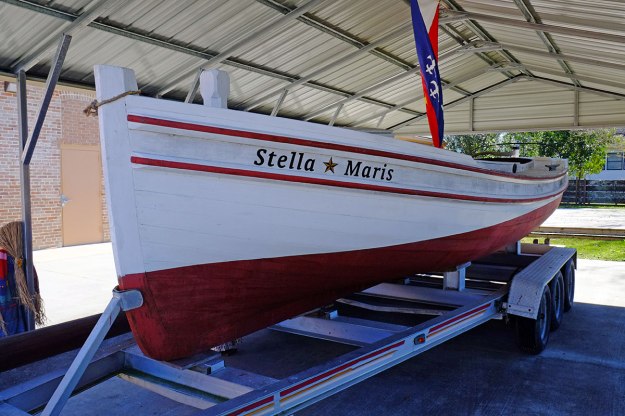
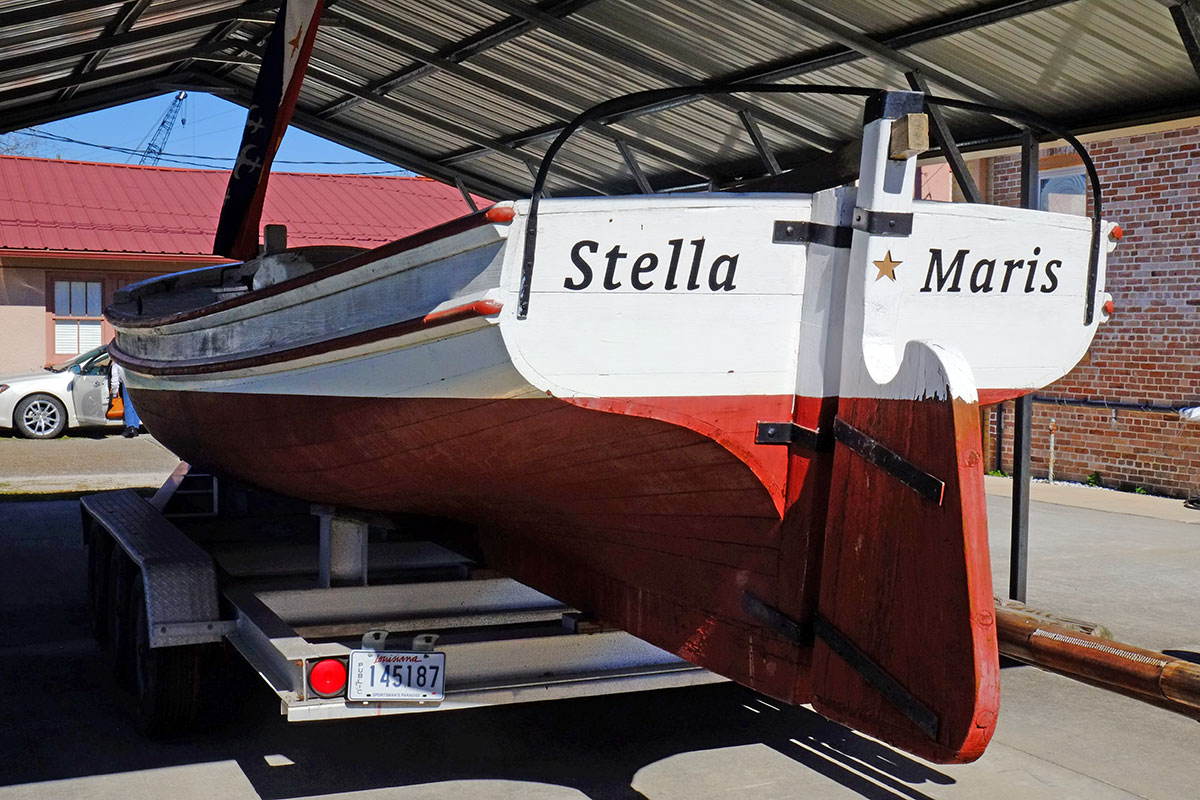
What amazed me was how much it resembles my own boat – a cat ketch rig (the masts were down on deck, with a plumb bow, flat run and a broad stern with a transom-hung rudder.  DSCF2742

It’s the closest historical precedent I’ve come cross, although the freeboard is a lot less (better for hauling in the catch, worse for accommodations below) – so I’m afraid it’s a lot better-looking than my boat.

Glen’s mom had invited us to lunch at their family home, which was really enjoyable.  She grew up in Cut Off, and has spent her whole life there, although being 90 she now sometimes stays in New Orleans with Glen and Michelle.  I loved hearing about how Glen’s father built the house himself.  It started out relatively small, but as the family grew he just added more rooms.  DSCF2754One day when he was fishing in the Gulf he came across a floating section of wharf that had broken loose from someplace – which provided enough wood to build a new kitchen and dining room.  Glen also mentioned that for about 20 years his dad had been working on a 40-foot fishing boat in the yard made out of old steel cisterns, which never got finished.  I met Glen’s dad once in college, and now I realize how well we would have gotten along.
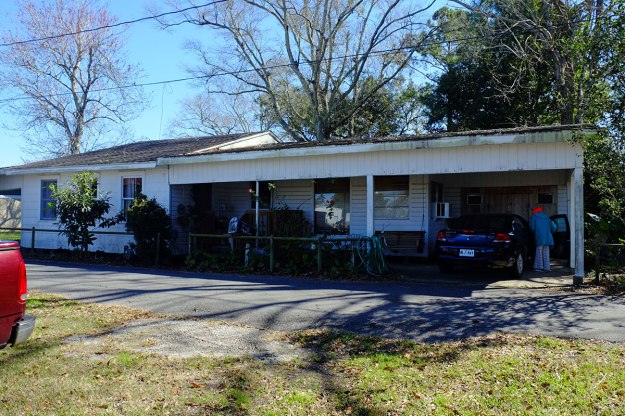
We saw a few other sights in Cut Off, but unfortunately the dance hall where Glen’s parents met had closed.  (I remembered the stories he had told of that in college, of how every person in town, no matter what age, showed up there on Friday night for a dance.)

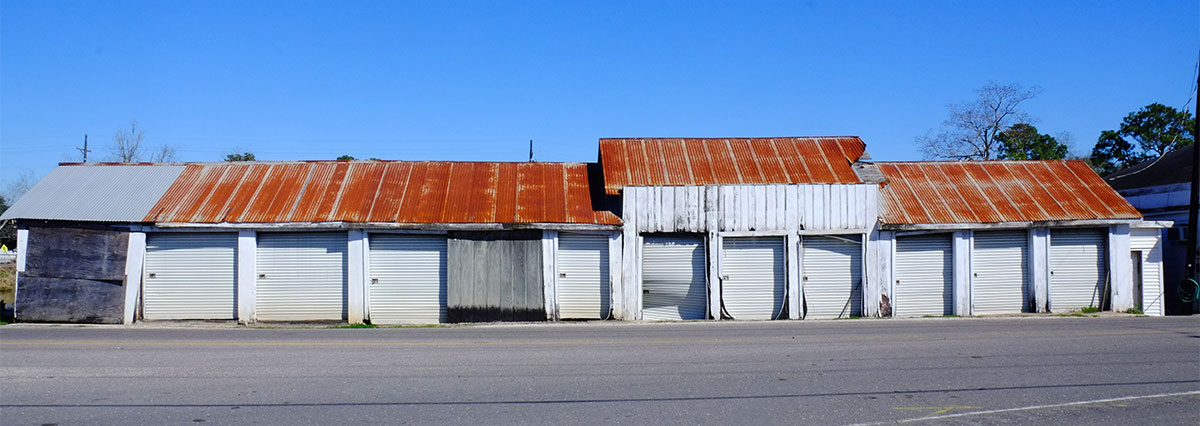
Glen stayed in Cut Off to finish up a project, and Greta and I continued south.  Driving along the bayou was endlessly fascinating – working buildings and big boats everywhere.  DSCF2753
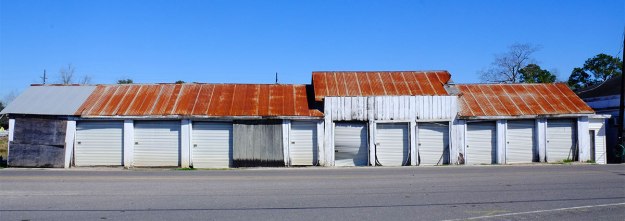
DSCF2757

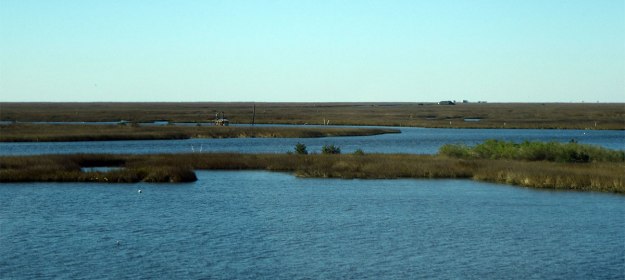
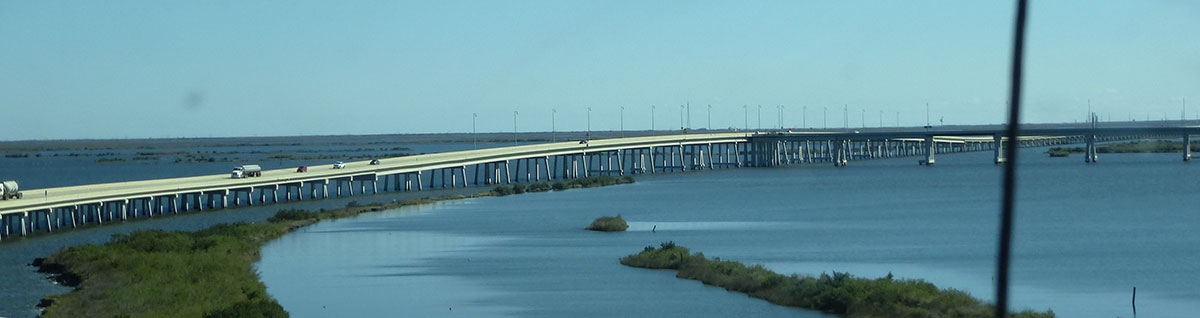
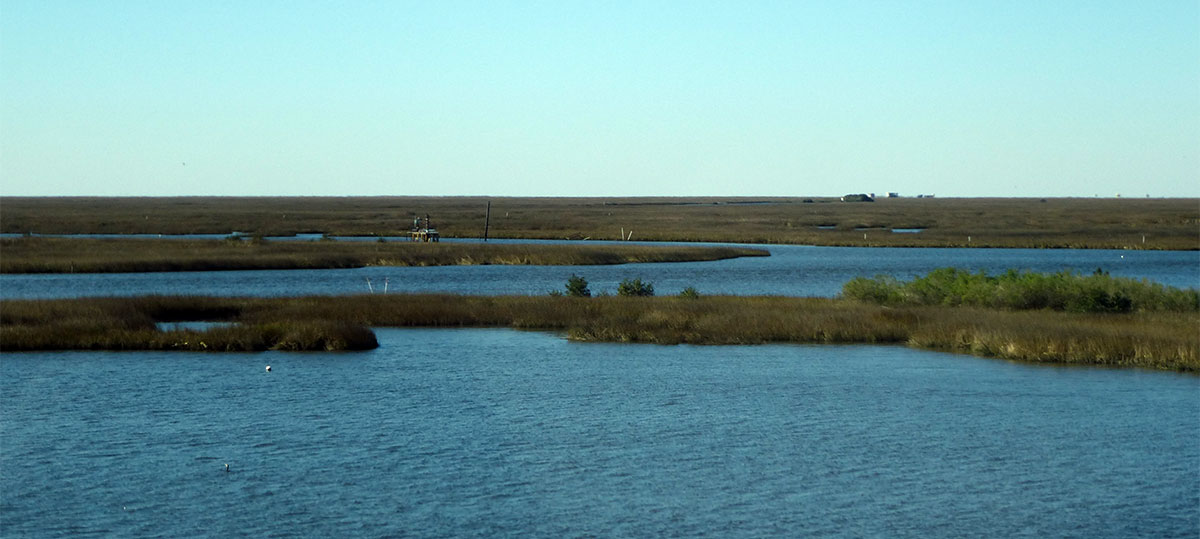
As we approached the Gulf, the road went onto a causeway, and the solid land gave way to more frequent marshes.  P1070092
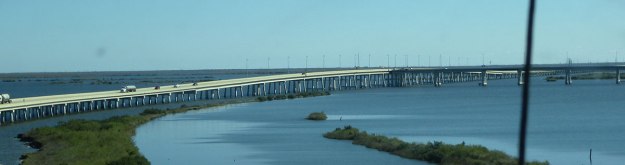
P1070088  Glen’s mom told us that when she was young, the dirt road to Grande Isle ran on solid land all the way.  Southern Louisiana is disappearing at the rate of 3 acres per hour – a combination of subsidence, the levees along the rivers and bayous keeping the particles in the water from replenishing the land, and climate change.

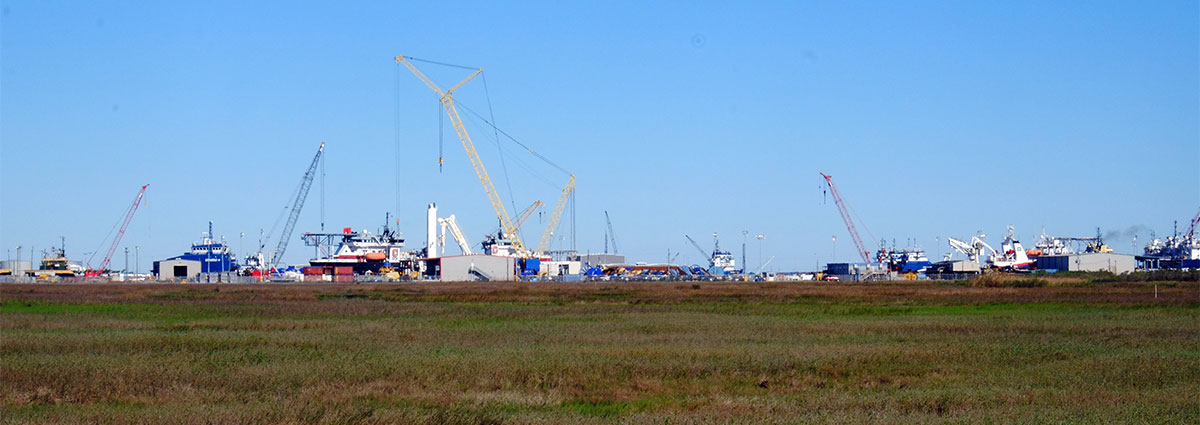
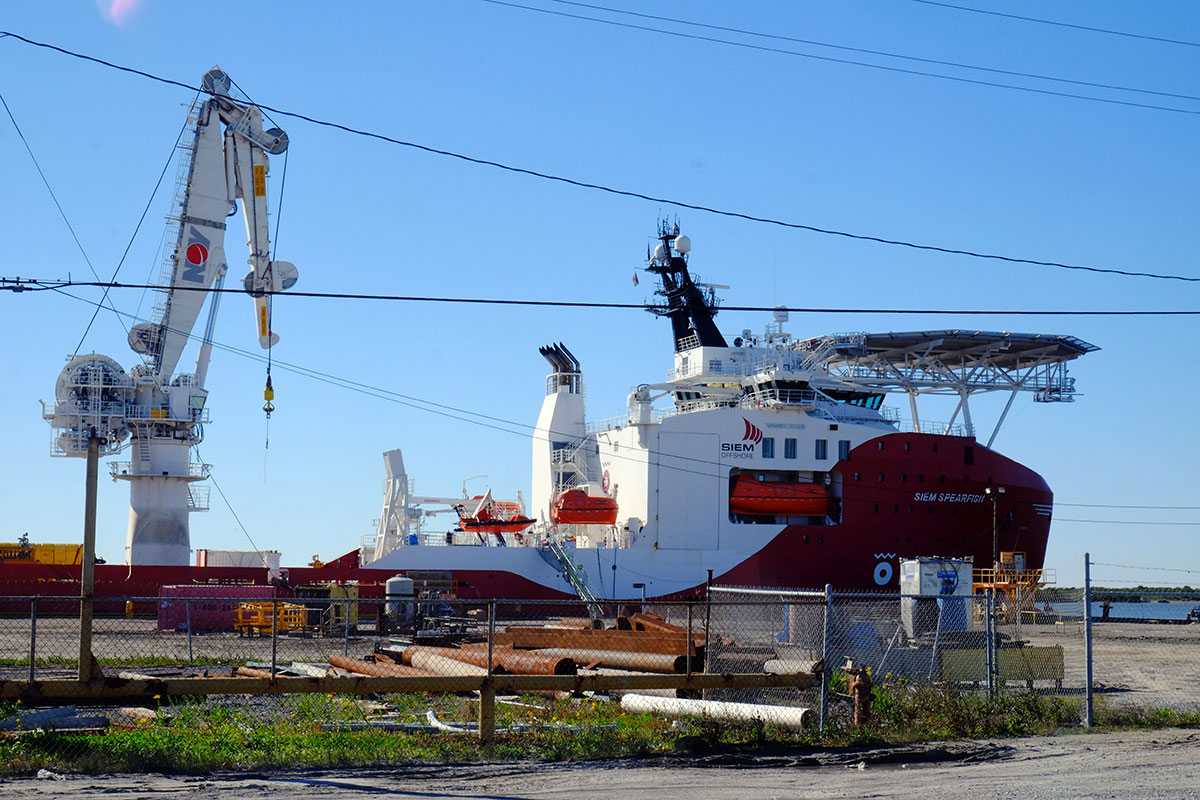
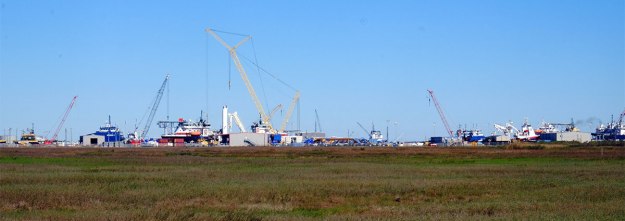
The causeway was built to service the new port at Fourchon.  With the growth of the offshore oil rig industry, a deep water, larger port was needed, so Fourchon was enlarged to accommodate the shipping.  It is the weirdest port I’ve ever seen – you can barely see the water.  The access roads are lined with large commercial shipping facilities, and you can see the ships beyond, which appear to be stuck in the marshes.  DSCF2778  DSCF2766It is completely different from what I’m used to as a large harbor on either the east or west coasts, continuing my general disorientation that began as soon as we hit New Orleans.
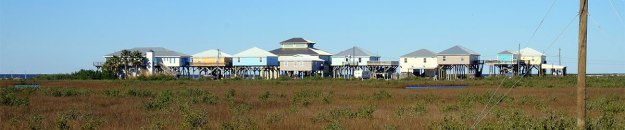
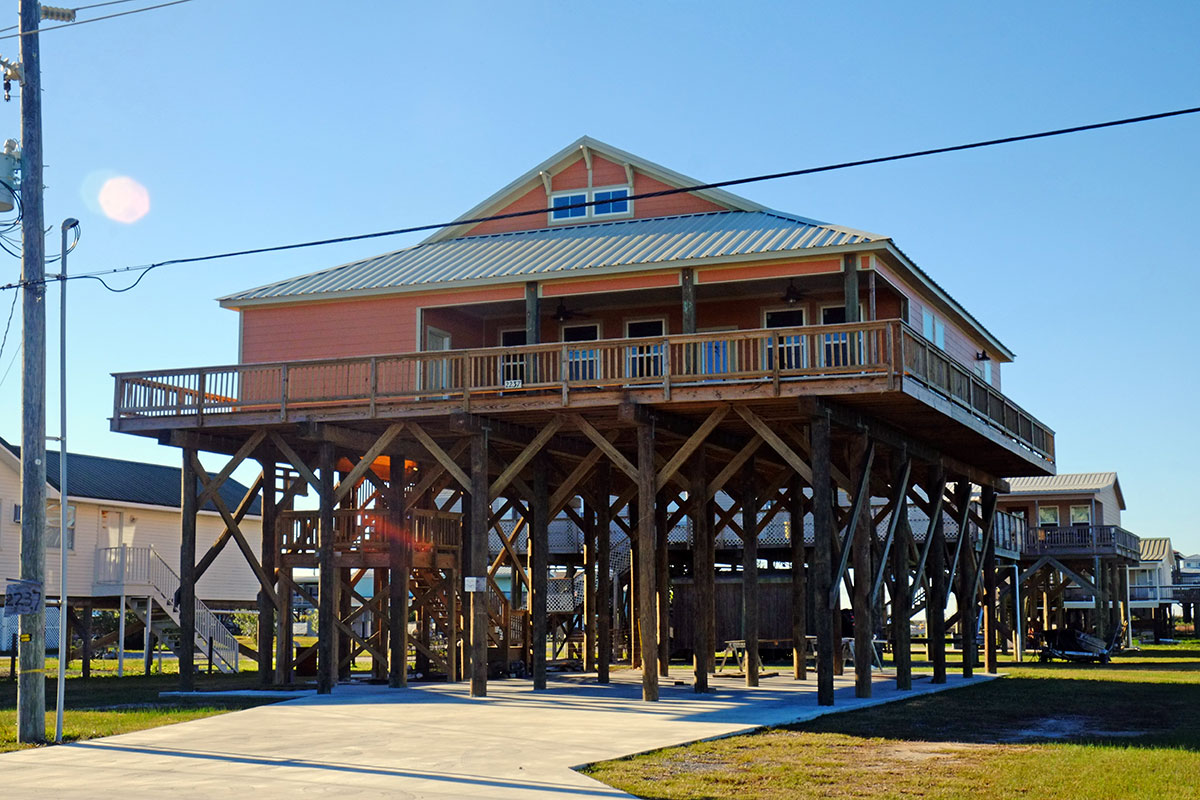
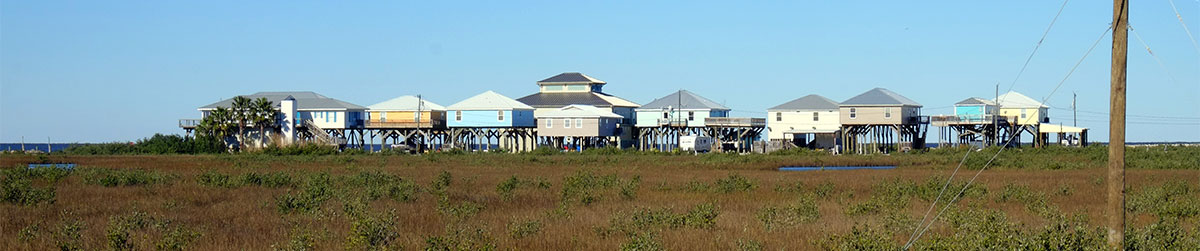
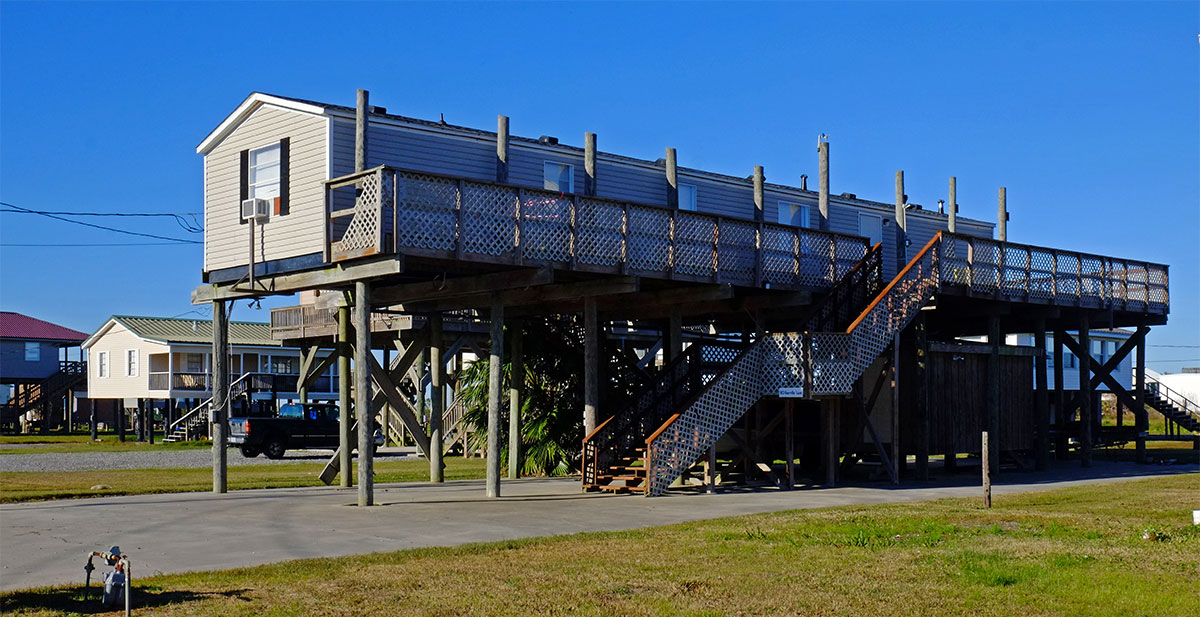
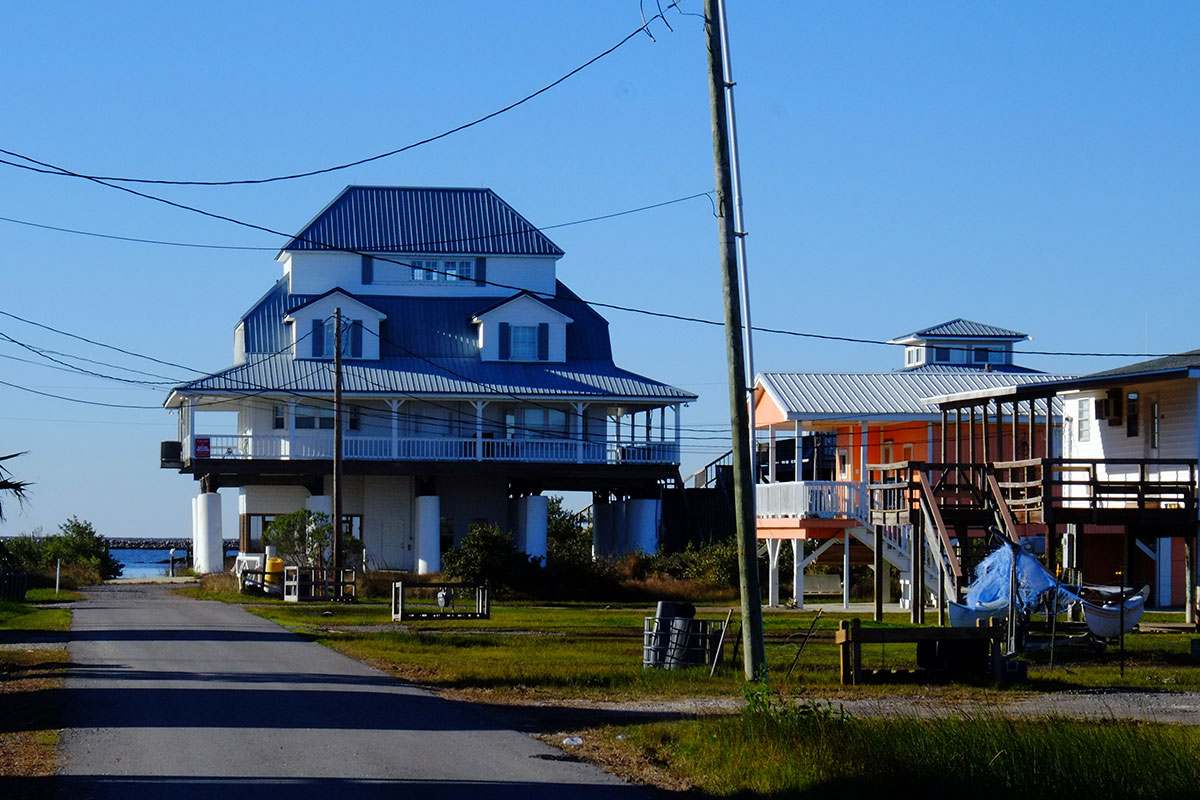
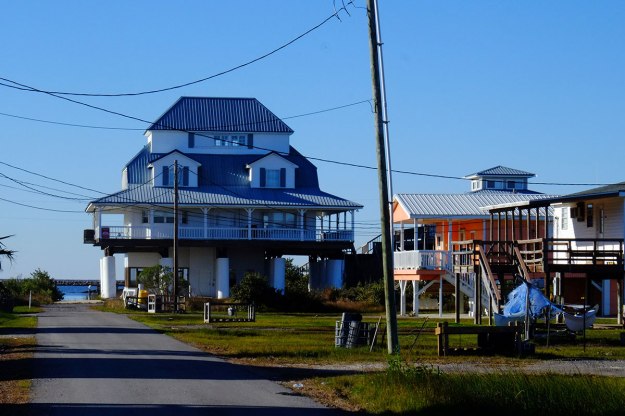
We finally arrived at Grande Isle, a old resort town which is apparently the only Gulf beach in Louisiana which can be reached by a road.  It’s been hit by many hurricanes and floods, and the new building type reflects this history (not many old buildings left):DSCF2789  DSCF2780
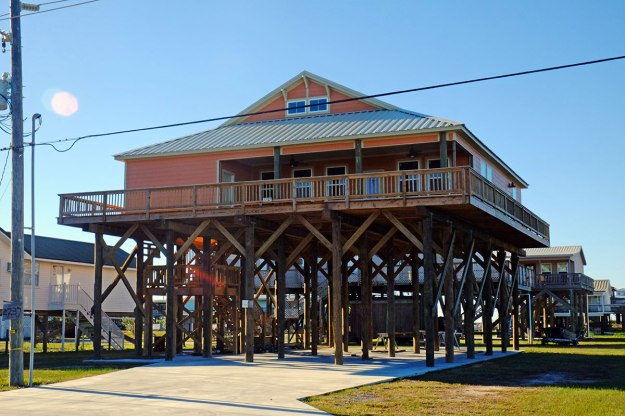
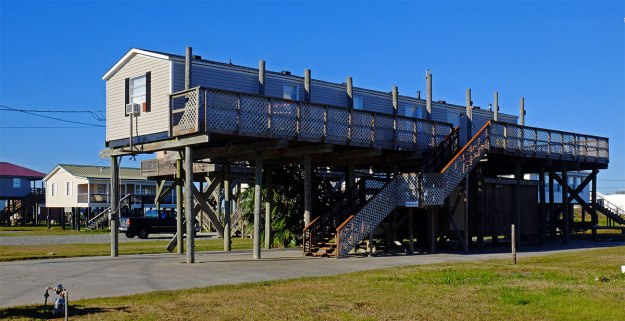
Even the single-wides get raised.  DSCF2790

This expensive house on the water was for sale, and one of the advertised features was “no gypsum board”.  When the floodwaters recede, you don’t want to be demoing all the sodden sheetrock.  DSCF2791
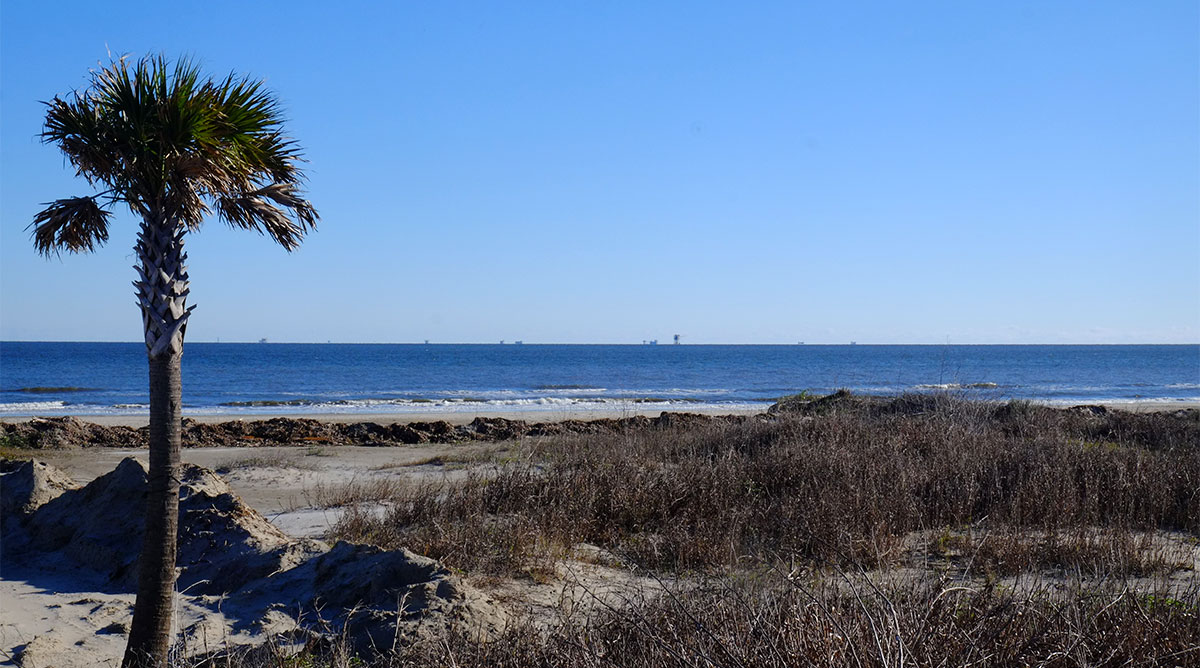
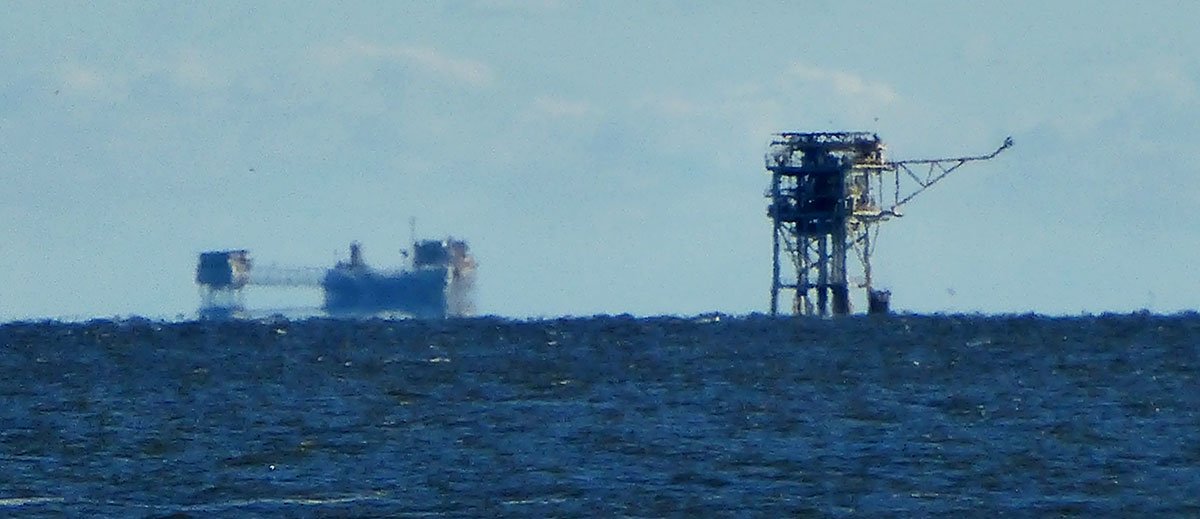
Grande Isle has a typical, beautiful Gulf beach, with white sand and palm trees, and lots of odd bumps on the horizon.  DSCF2782
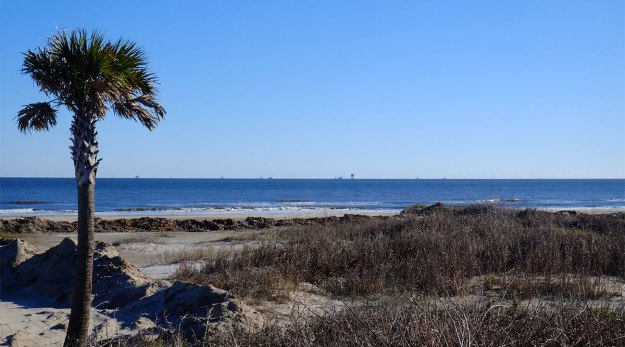
These are some of the 600 offshore oil platforms within 40 miles of Fourchon (with the lower part of the platform under the horizon).  P1070096
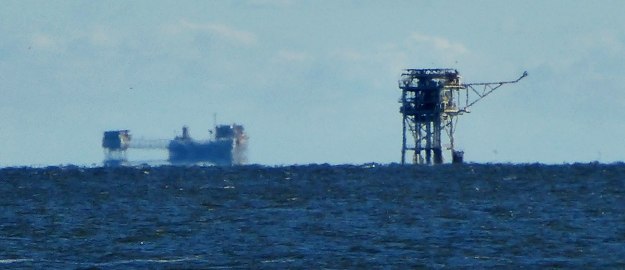
As we stood on the beach looking at this scene, the insane irony of southern Louisiana was apparent.  The oil and gas industry is the mainstay of the Louisiana economy, both these offshore rigs and refineries located up the Mississippi.  The burning of fossil fuels is primarily responsible for climate change, and the rising of sea levels.  This is already being seen locally, and the $350 million causeway was necessary to ensure that the traffic thats services the industry could still reach Fourchon as water levels rise and the land disappears, so the oil and gas could still be pumped.  It’s a vicious circle that will play out until it just can’t work anymore, and the traditional landscape of the bayou will disappear, along with many other places.  One of the themes of this trip has been the Climate-Change-Farewell-Tour;  we haven’t been to a place yet where this has been more evident.
Beignets

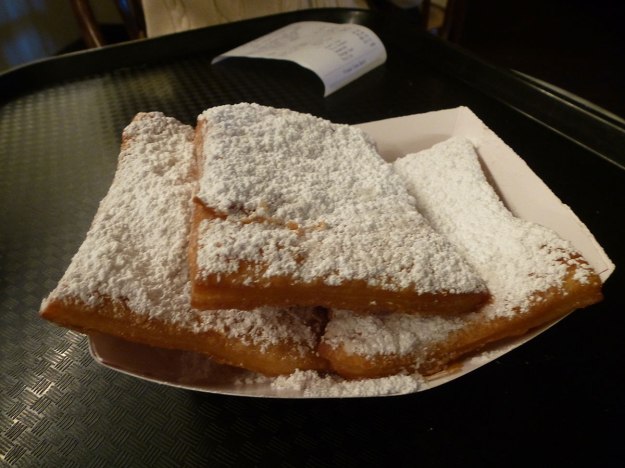
Cafe Du Monde is the most well-known place to get beignets in New Orleans. But unwilling to wait in a line that stretched out the door and halfway down the block, I did not go there. Instead, an unassuming little cafe, New Orleans Famous Beignets and Coffee, the next street over was host to my first tasting of the treat.  They were described to me as “kind of like a donut, but square, and better,” so I was expecting something more like mandazi, which are Kenyan fried donuts.  Instead they were more like the lovechild of a biscuit and baklava.  The outside is a bit crisp and flaky, plus covered with enough powdered sugar that simply breathing releases storms of it, and the inside as soft as a cloud.P1060851
I can’t imagine that Cafe Du Monde’s beignets are better, because what could be better than that?  If you’re willing to wait, go right ahead, but frankly I don’t care enough.  New Orleans Famous Beignets and Coffee is fast and cheap (3 beignets for $3), and delicious. The one thing I don’t recommend is wearing dark clothing.
Biloxi, Mississippi

DSCF1378The first thing you notice in Biloxi and other places on the Mississippi Gulf Coast is the empty space.  Driving on Route 90 along the shore, there’s a strange mix of vacant lots, big trees and new, not especially good buildings.  And then you realize you’ve entered the Katrina zone.  While most of the outside world’s attention ten years ago was focussed on New Orleans, Biloxi (75 miles away) was hit with the same storm surge.  It didn’t kill as many people, and it didn’t inundate as large an area (as Biloxi is not below sea level, as is most of New Orleans), but it pretty much wiped out the blocks nearest the Gulf.  We passed many historical markers, but couldn’t see the subjects to which they referred – they turned out to be markers for historic buildings which were no longer there.  Waterfront property is a valuable and limited commodity, but In Biloxi and adjacent Ocean Springs, there’s still plenty available.

Away from the Gulf, the historic core of Biloxi survived, but it appears that it had previously succumbed to waves of economic abandonment, demolition, and ill-conceived urban renewal schemes.  Biloxi resembles Vegas or Atlantic City on a smaller scale, where the gambling construction moved to a different location, and the older downtown was left to shrivel up.  There are a few good buildings remaining, DSCF1356  DSCF1361

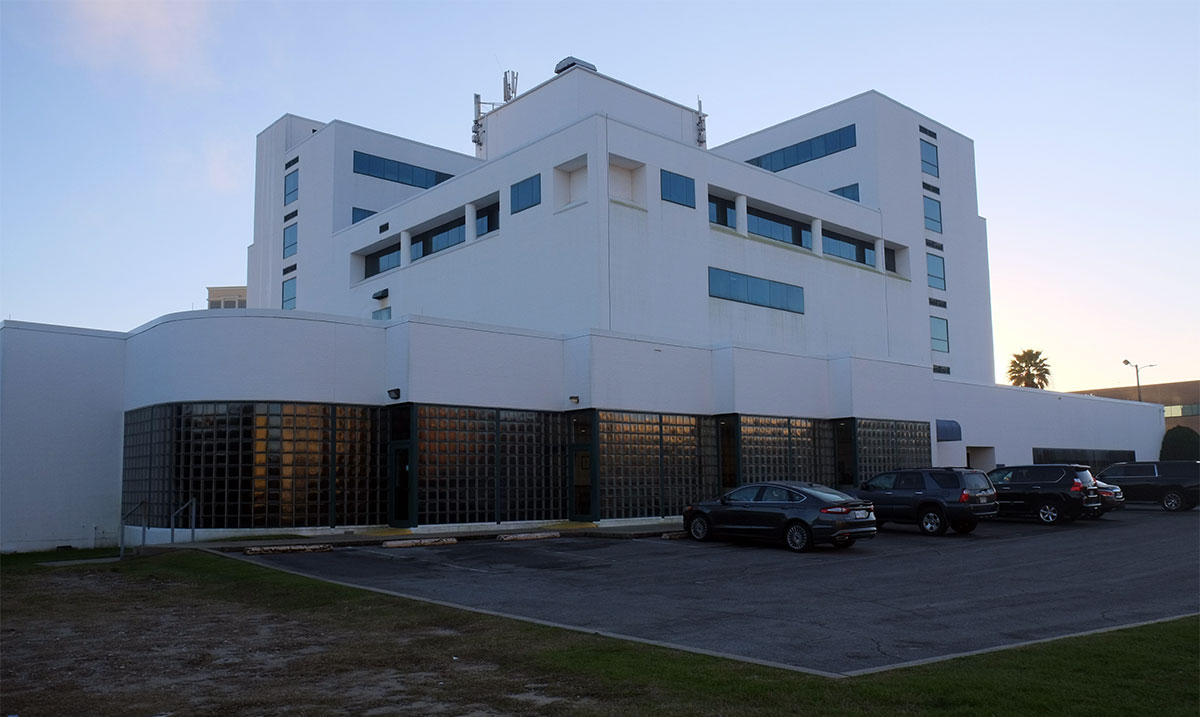
but overall it is a sad place, at best neglected, and at worst abused by the insensitive insertions. such as this dreadful pile of a hospital.  DSCF1371

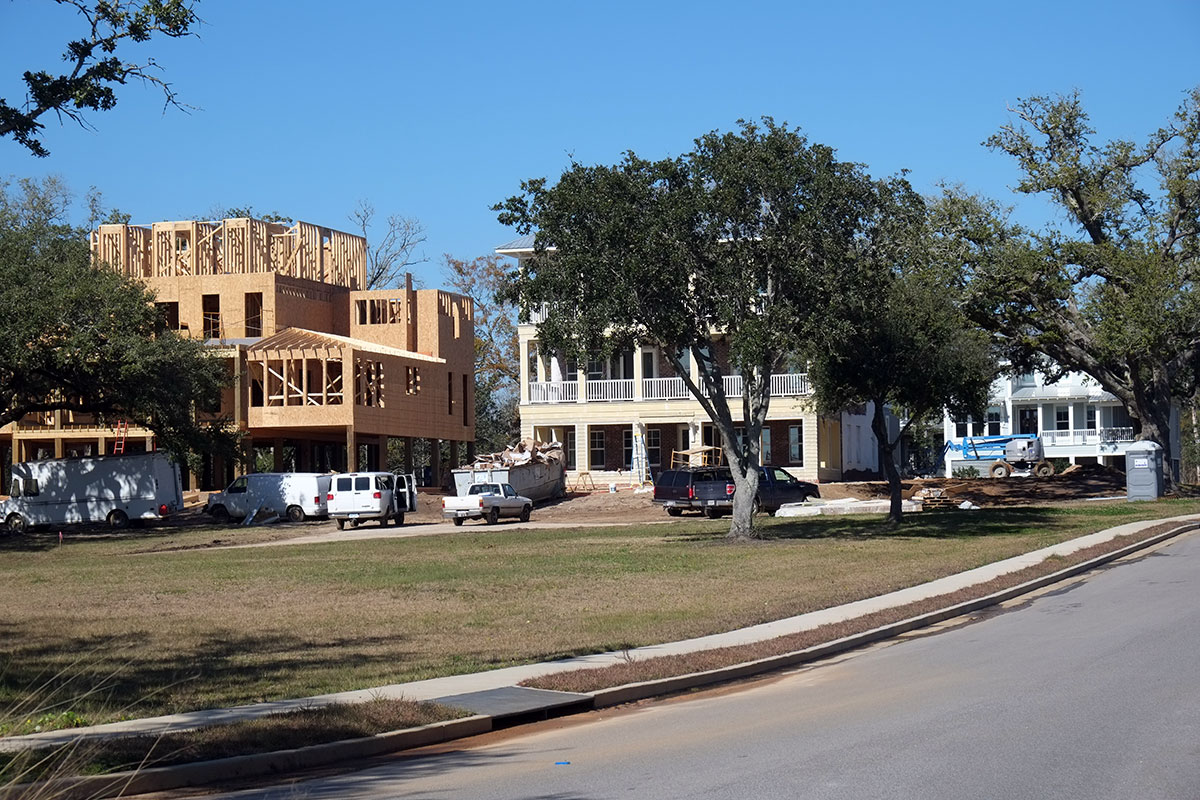
Back on the waterfront, there is some new residential construction, by people who can afford beefed-up structures and floodable ground floors, DSCF1404

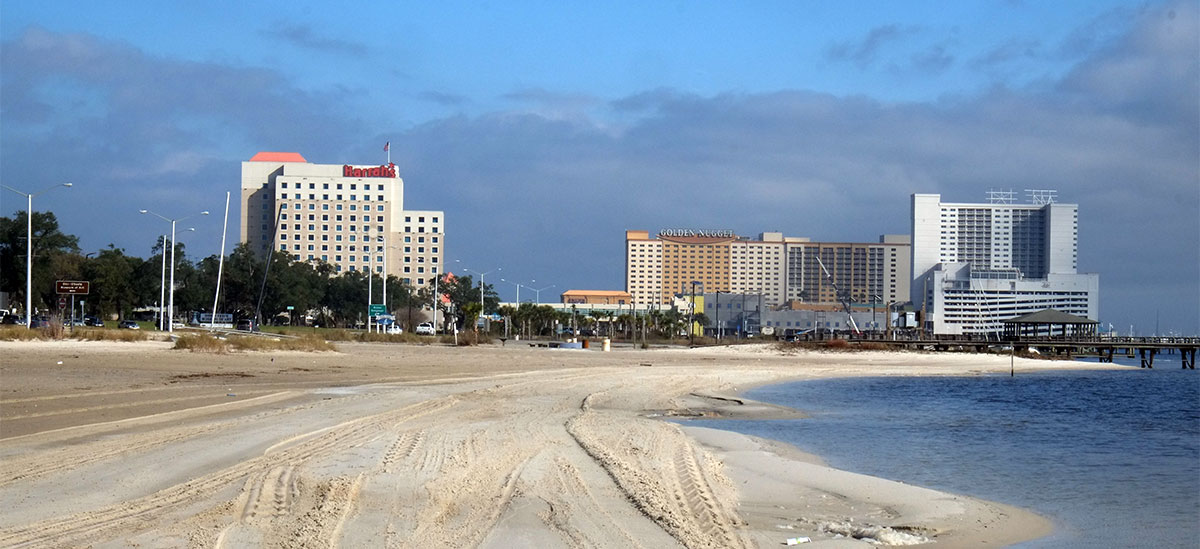
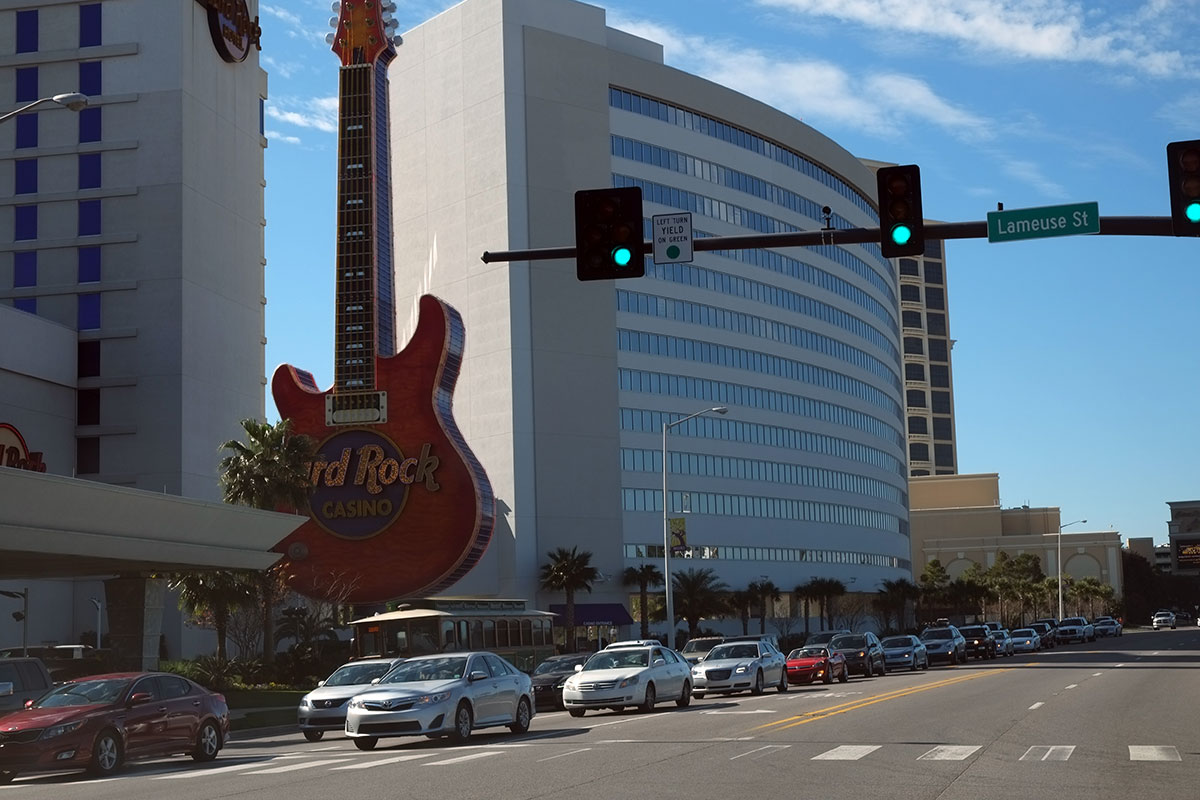
but most of the rebuilding has been by institutions or corporations with deep pockets.  The casinos have been rebuilt, and they constitute a world apart, right on the water with their own parking structures, and not much connection to the city further inland.  DSCF1203  DSCF1410

Some older structures withstood the hurricane in this area, mainly solid buildings, such as Our Lady of The Casinos.  DSCF1190

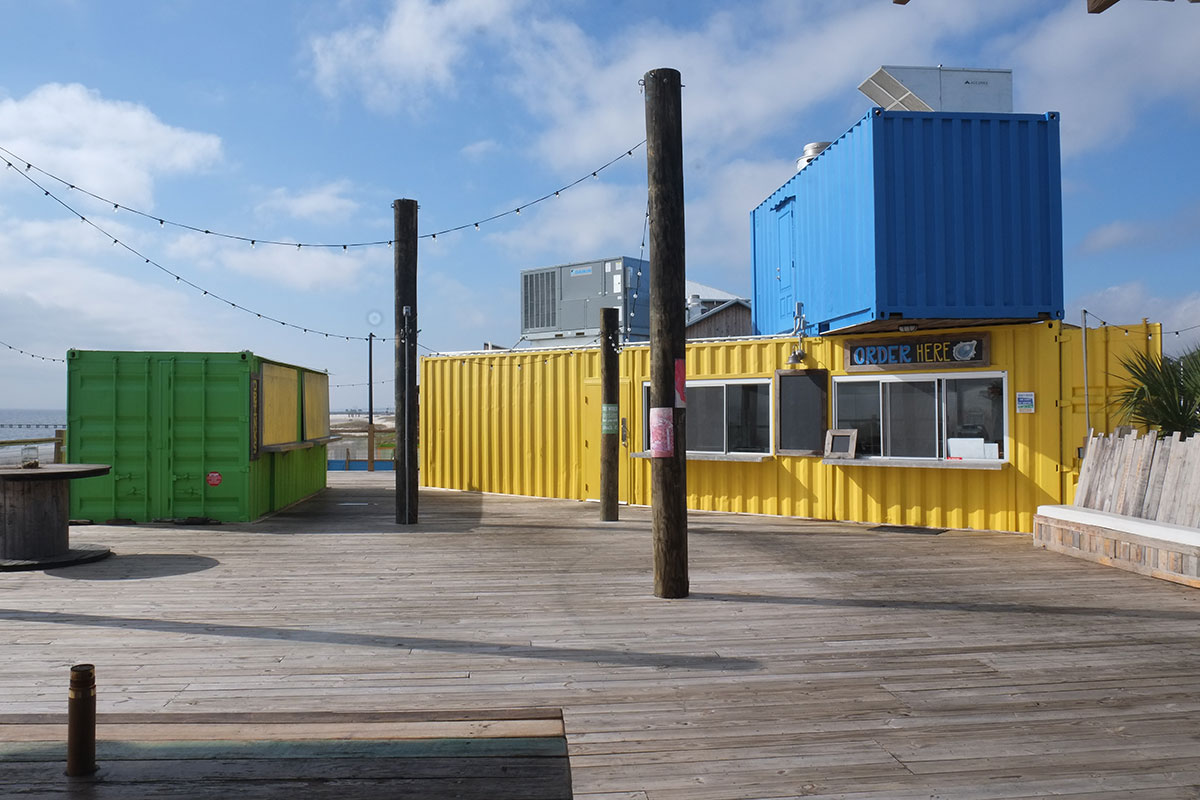
New waterfront buildings are raised above the flood level, and include this bar, which is about the only building I’ve ever seen which makes reasonable use of shipping containers.  DSCF1197

In an attempt to bring back the tourists and the economy, some new institutions have been built, such as Gehry’s Ohr-O’Keefe Museum (which I’ll detail in a later post), and a Maritime and Seafood Industry Museum (not to be confused with Fernandina’s Shrimping Museum.  I’ve never seen so many museums dedicated to specific industries as in the South.)    DSCF1187

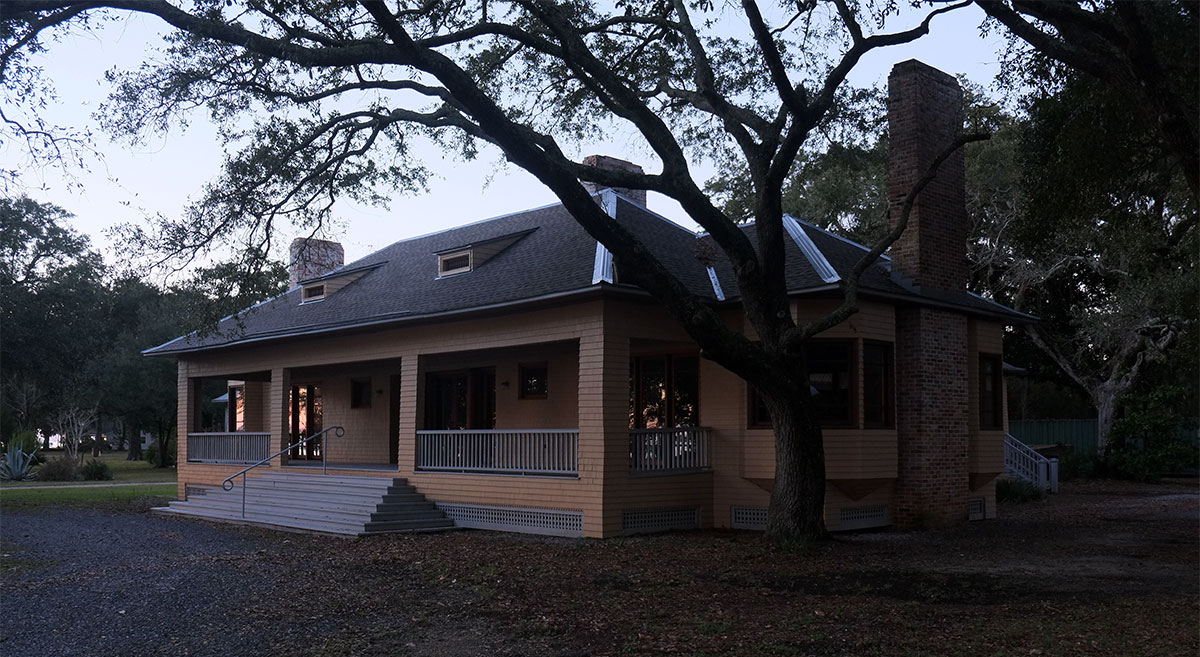
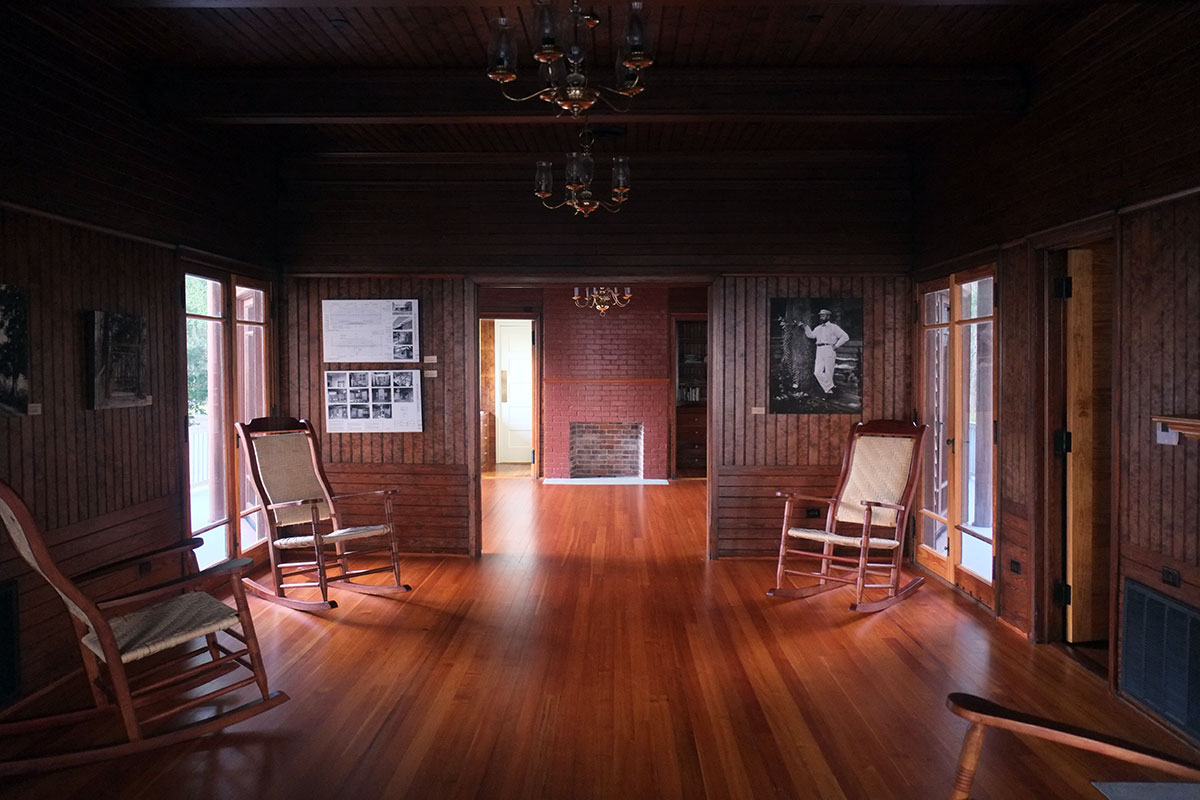
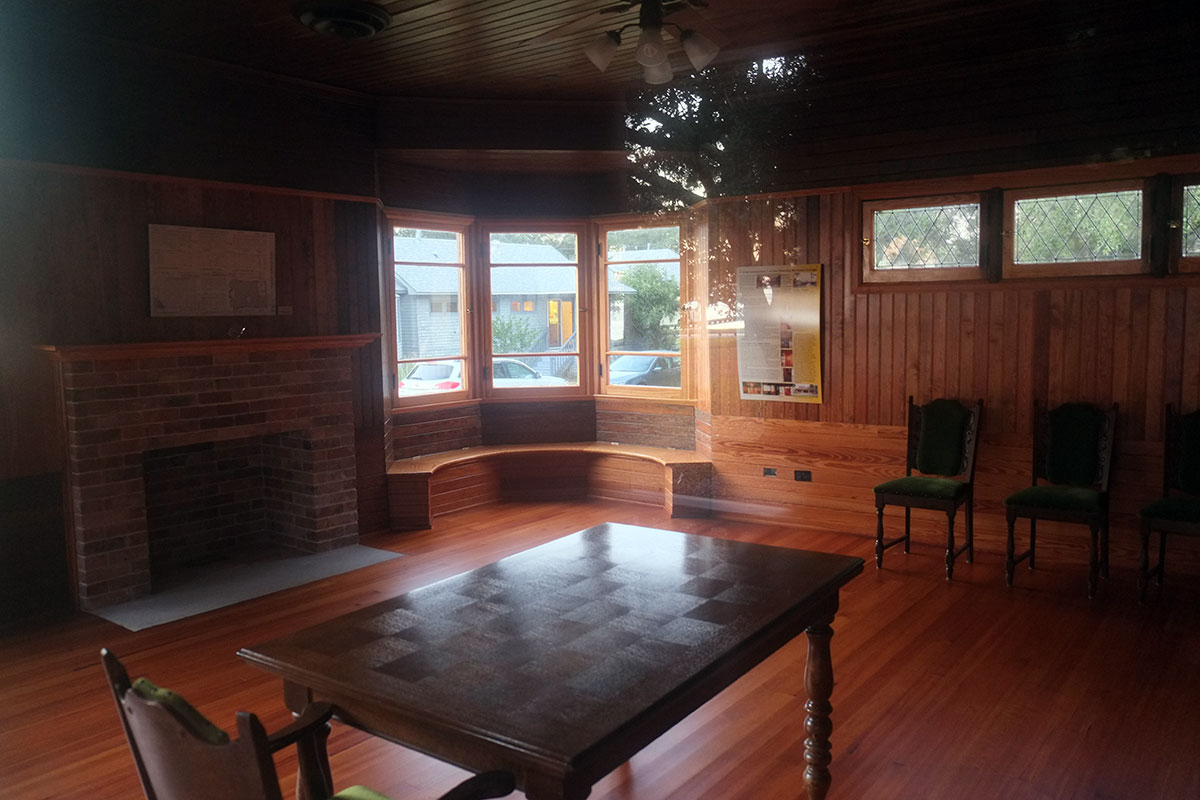
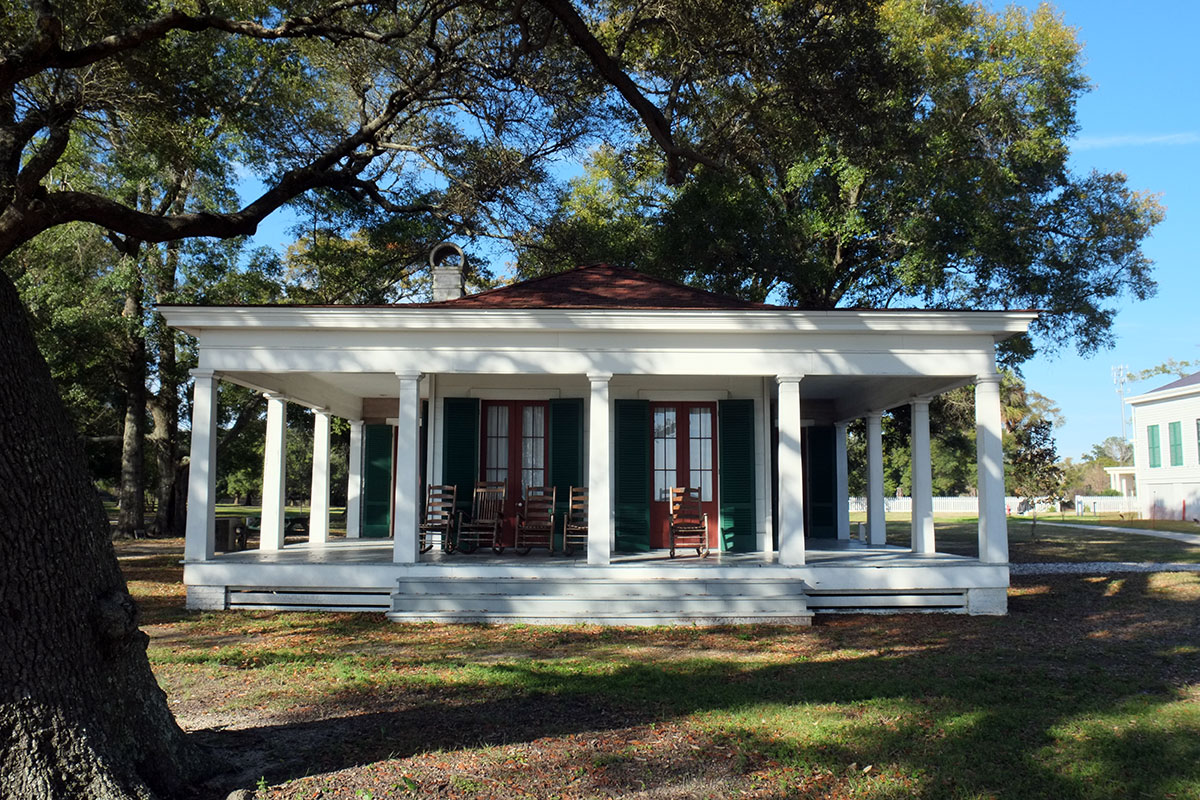
The important historic houses were salvaged  and have been rebuilt.  Most significant is the Charley-Norwood house in Ocean Springs, which is thought to have been designed by FL Wright while he was working in Sullivan’s office,  It is a remarkably pristine and rigorous house for its period, one which shows influences from the Shingle Style, but which is rigidly symmetrical and utilizes pure, stripped-down forms.  DSCF1381  DSCF1390  DSCF1391  DSCF1394

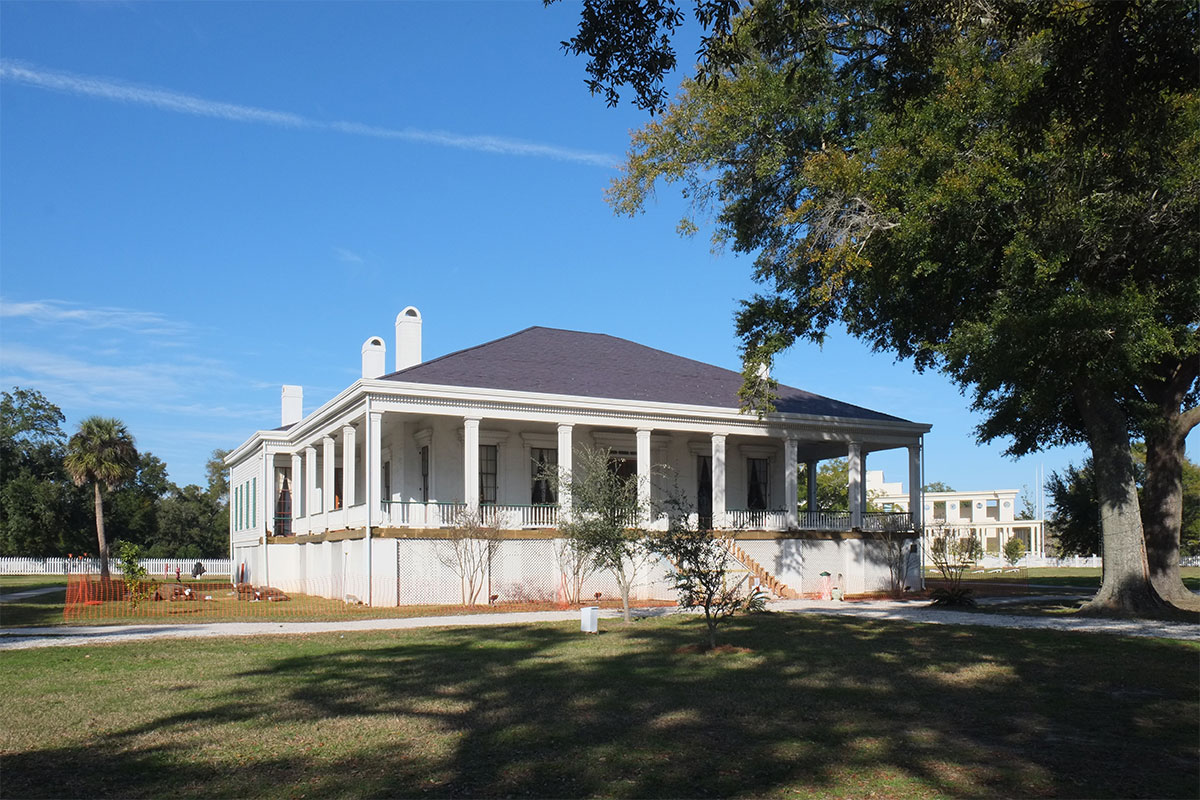
The other major house restoration is that of Beauvoir, the last house where Jefferson Davis lived, and where he wrote his memoirs.  It is the centerpiece of a large complex, which is owned by the Sons of Confederate Veterans, who operated a Confederate veterans home there until the last veteran died.  When we entered the property we encountered a small group of Civil War War of Northern Aggression reenactors, who invited Greta to fire their cannon.

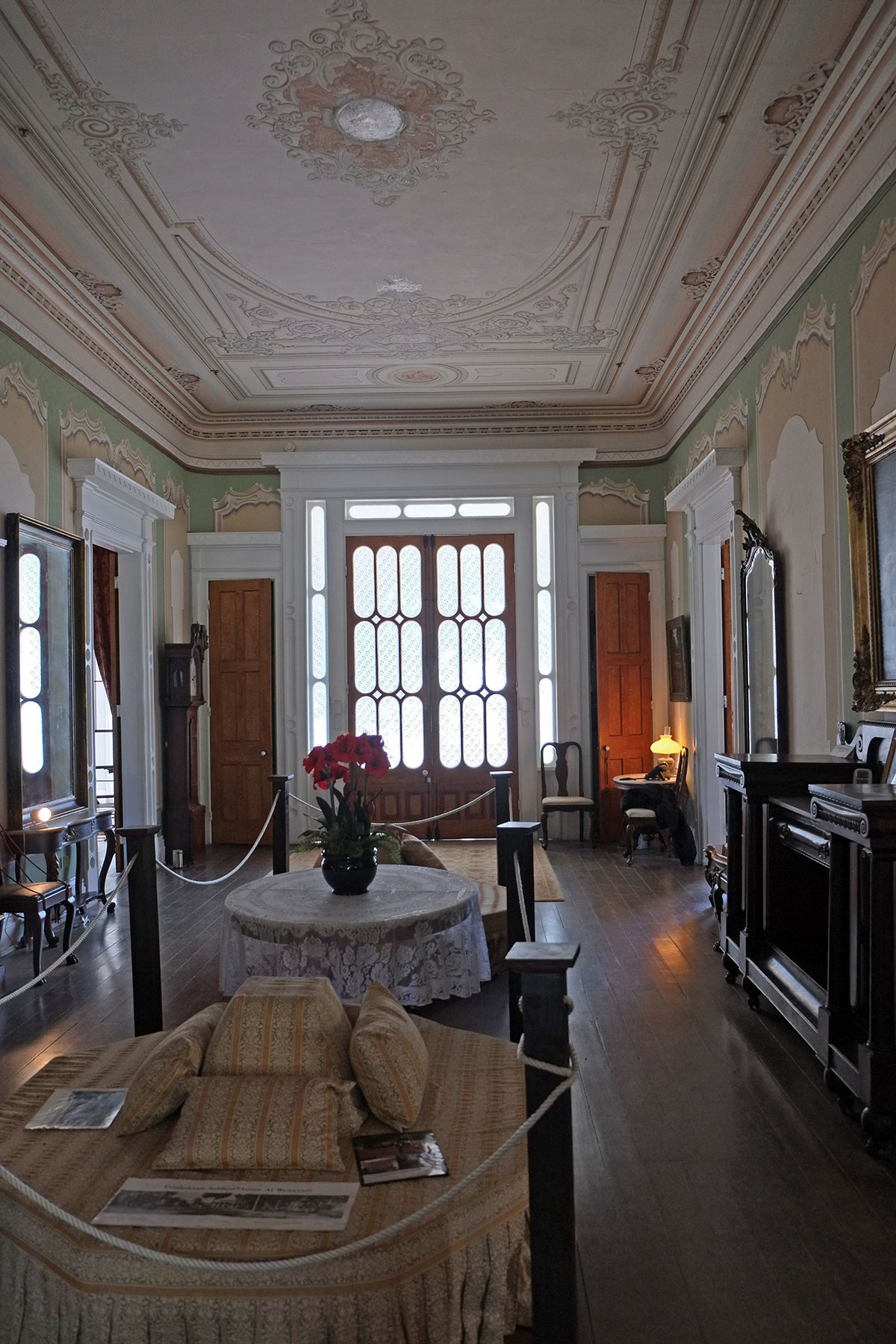
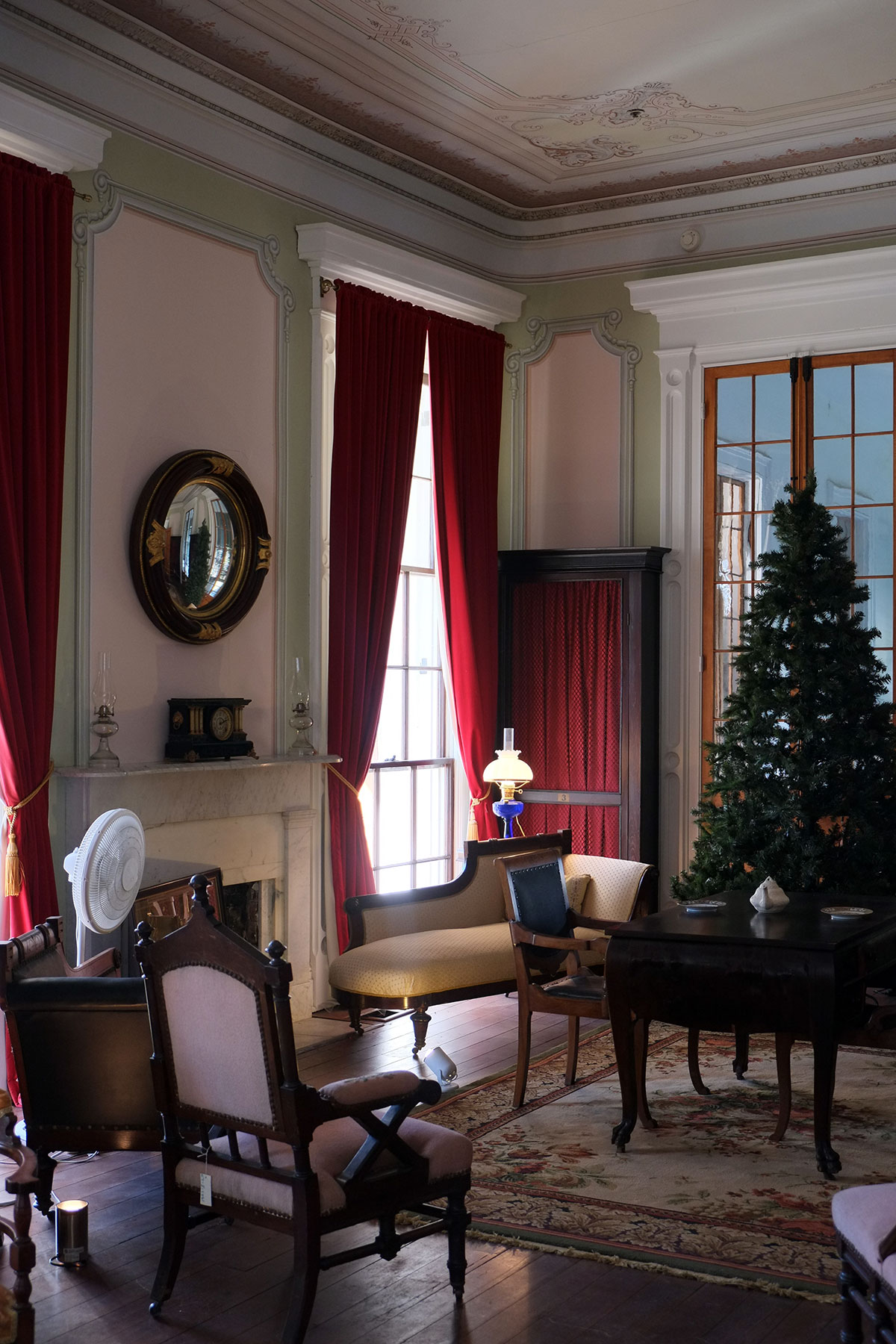
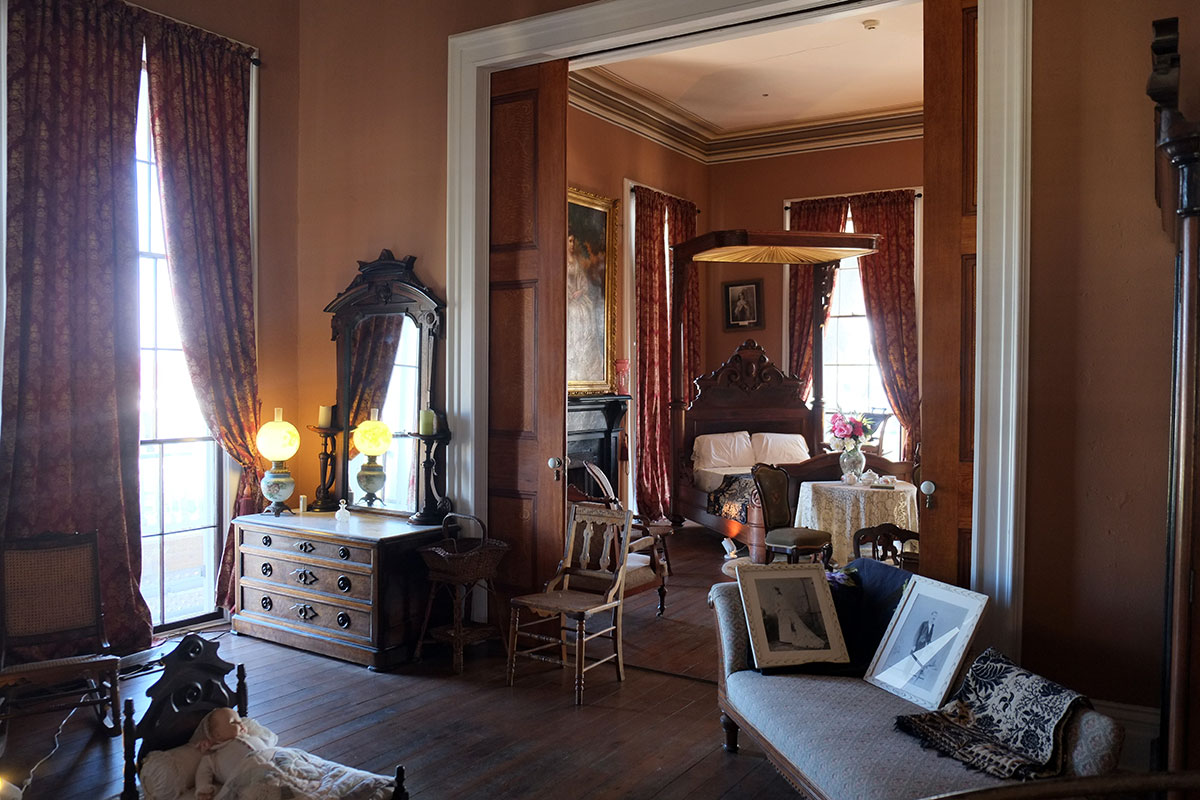
The house itself was badly damaged by Katrina, with water rising 18 inches above the floor of the raised living level, and the outbuildings were destroyed.  All has been restored, and the tour we were on was among the most comprehensive and professional we’ve encountered.  The house is of the raised plantation type, with a deep verandah on all sides, DSCF1460  a central hall, DSCF1453  and high-ceilinged parlors and bedrooms off the hall, with painted trompe-l’oeil detailing.  DSCF1439  DSCF1445

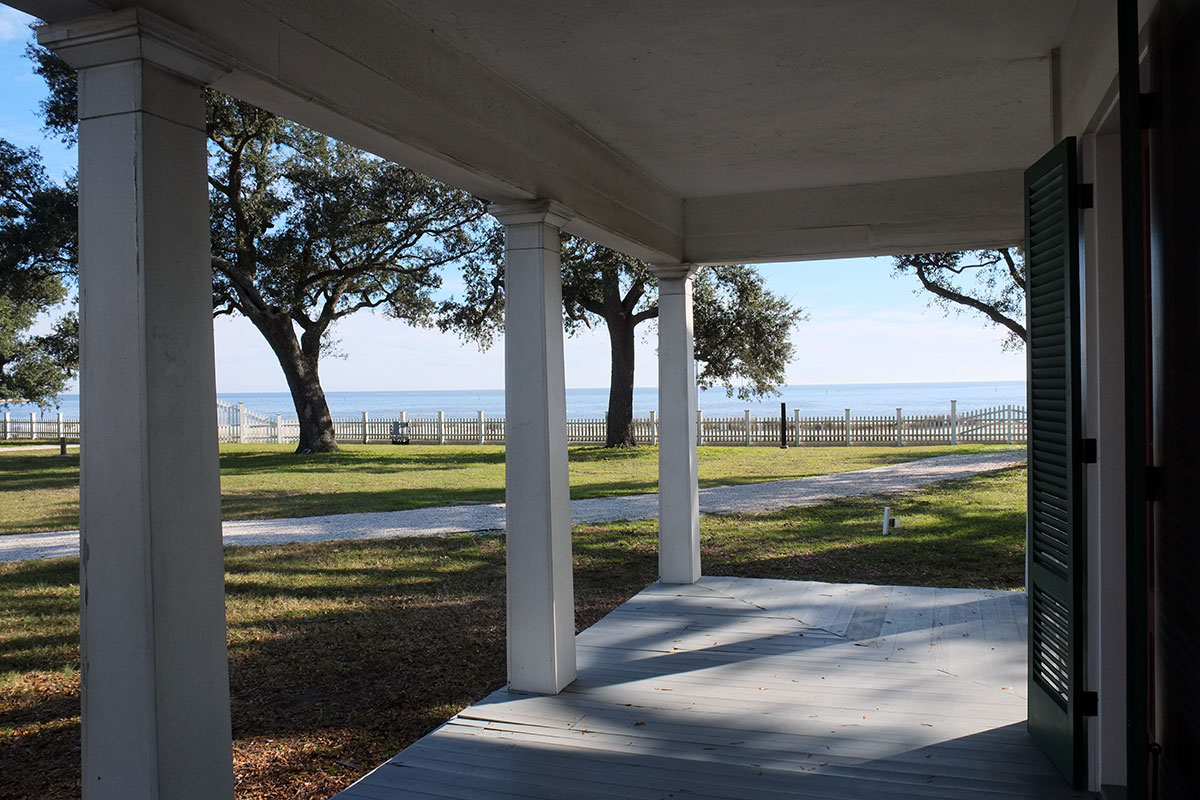
Davis’s study has been rebuilt, a beautiful, simple, outbuilding, DSCF1464  looking out to the Gulf.  DSCF1469

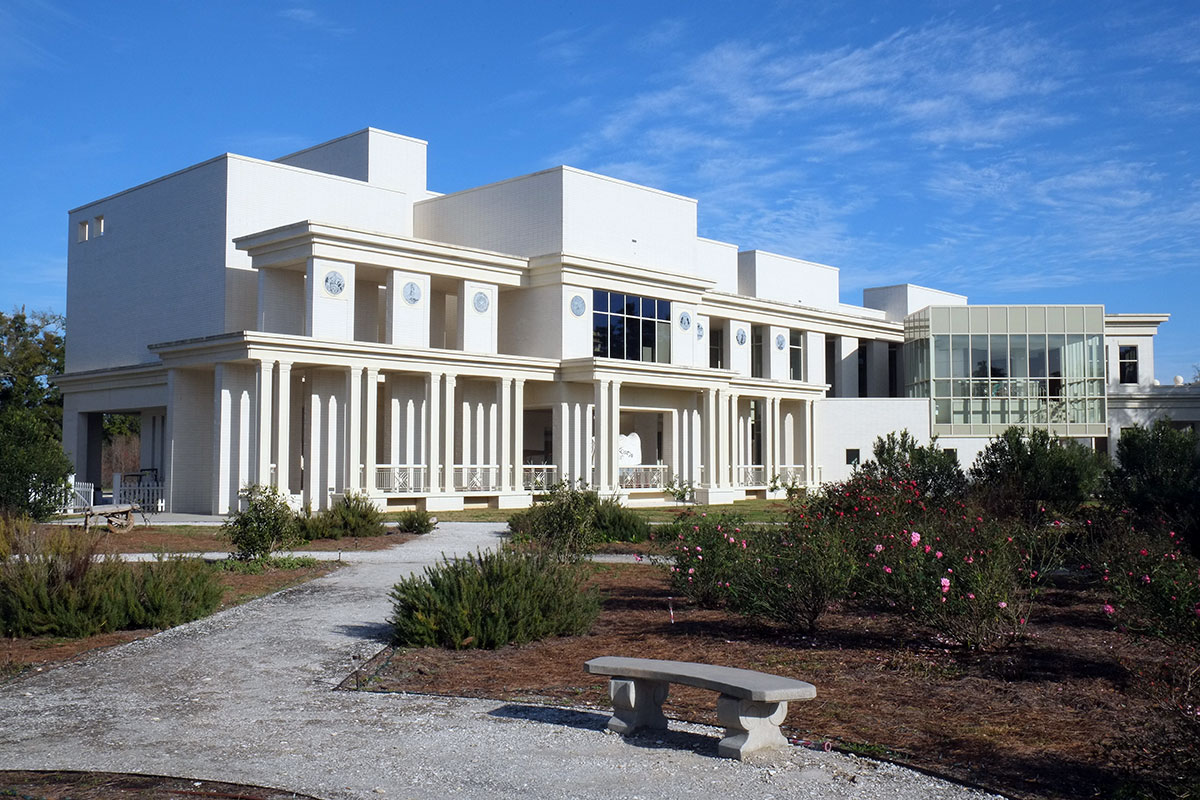
The building that housed Davis’s archives and library was also destroyed, and it has been replaced by a new museum and library, which is amongst the most pretentious and ghastly buildings we’ve encountered in six months.  It is hard to imagine a less coherent collection of random motifs and irreconcilable forms.  The state of architecture in the South is even worse than I’d imagined – I expected banality, but nothing this aggressively awful.  It appears that all the good buildings in the area have been designed by outsiders.  DSCF1473

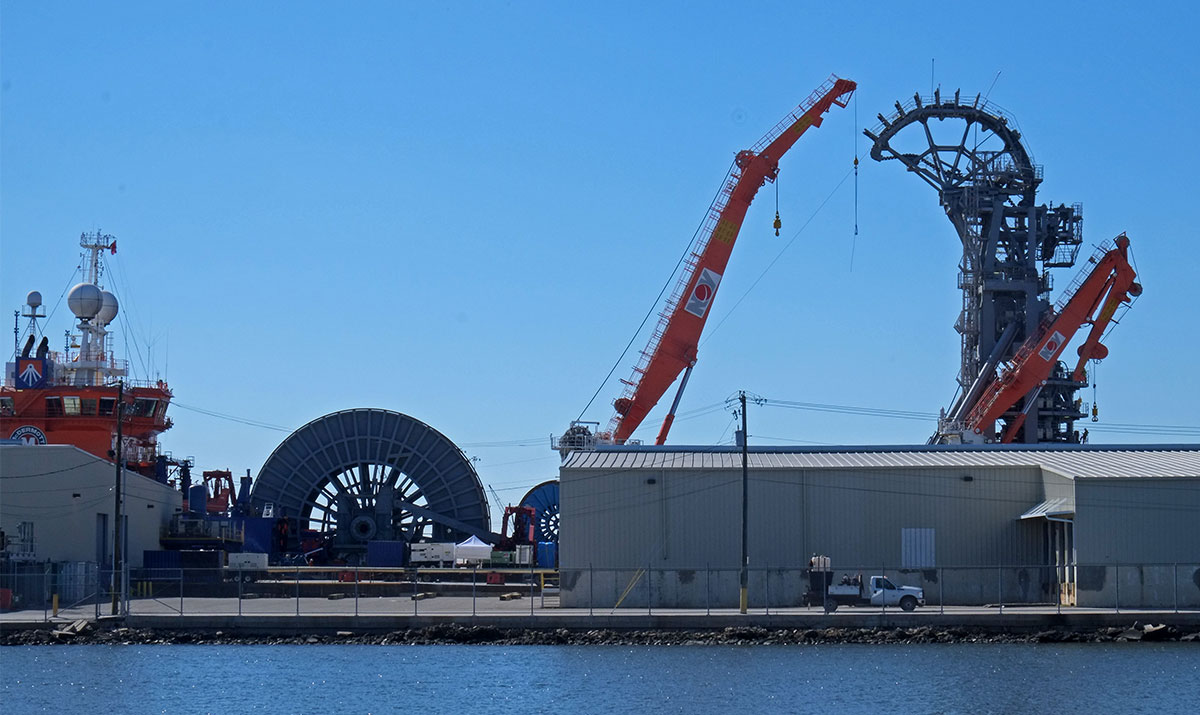
Leaving Biloxi we drove through Gulfport, where the most notable feature is a massive, rebuilt marina.  There are industrial elements we couldn’t quite figure out.  DSCF1508

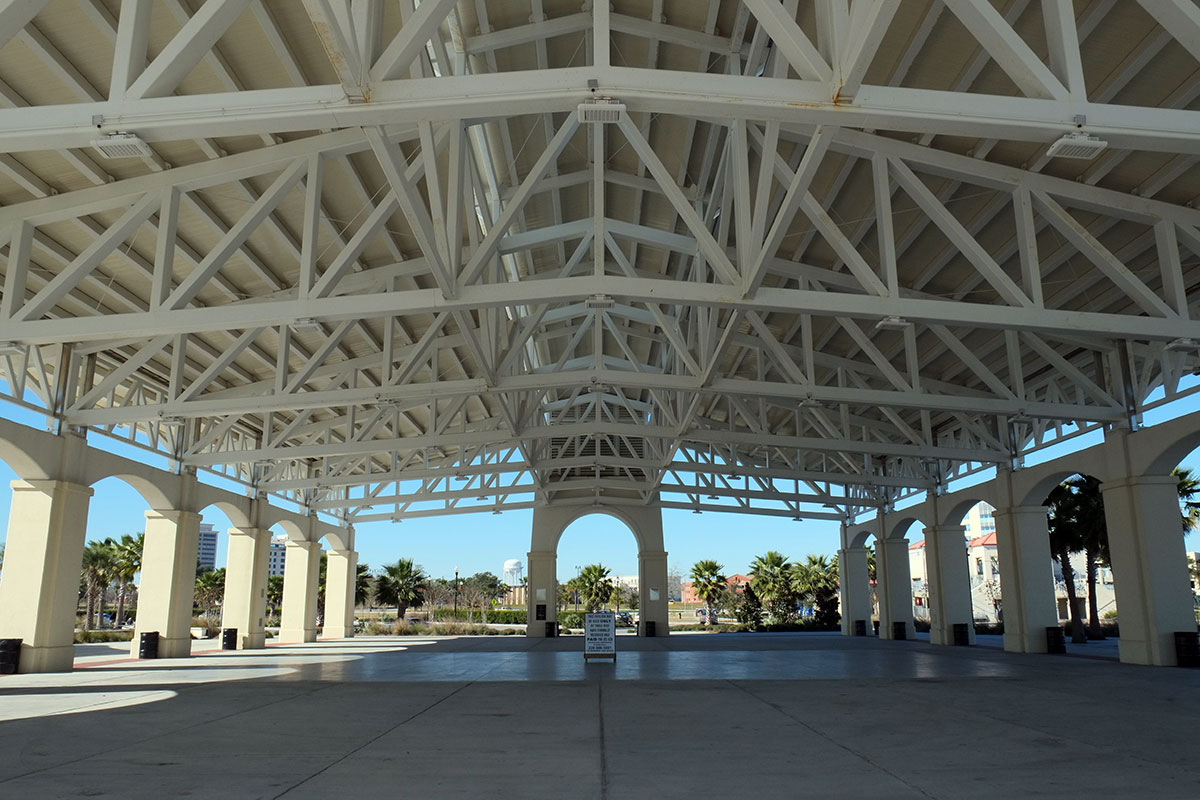
A pavilion built to withstand the next hurricane.  DSCF1527

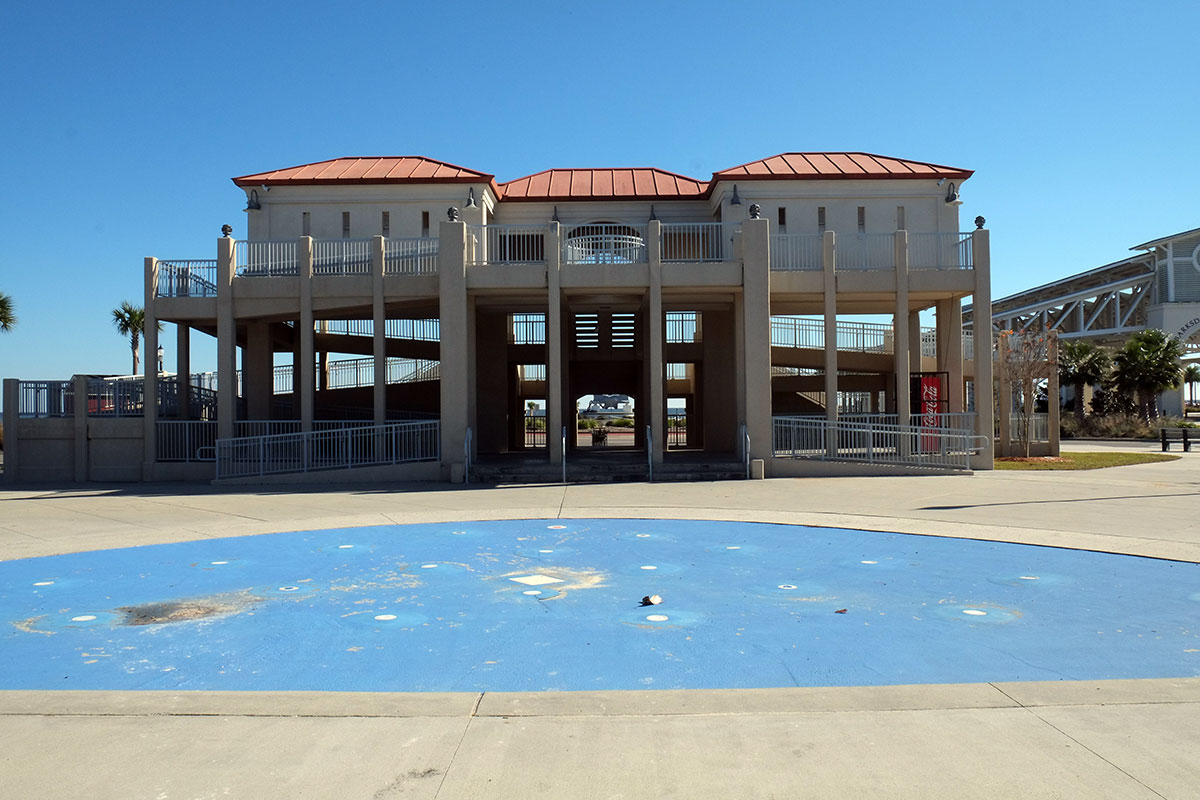
Public bathrooms strangely raised up above the flood level, with the world’s longest ramp to access them.  (If your city is being once again destroyed by a Category 4 hurricane, we don’t know why it is important to make sure the bathrooms survive.) DSCF1532

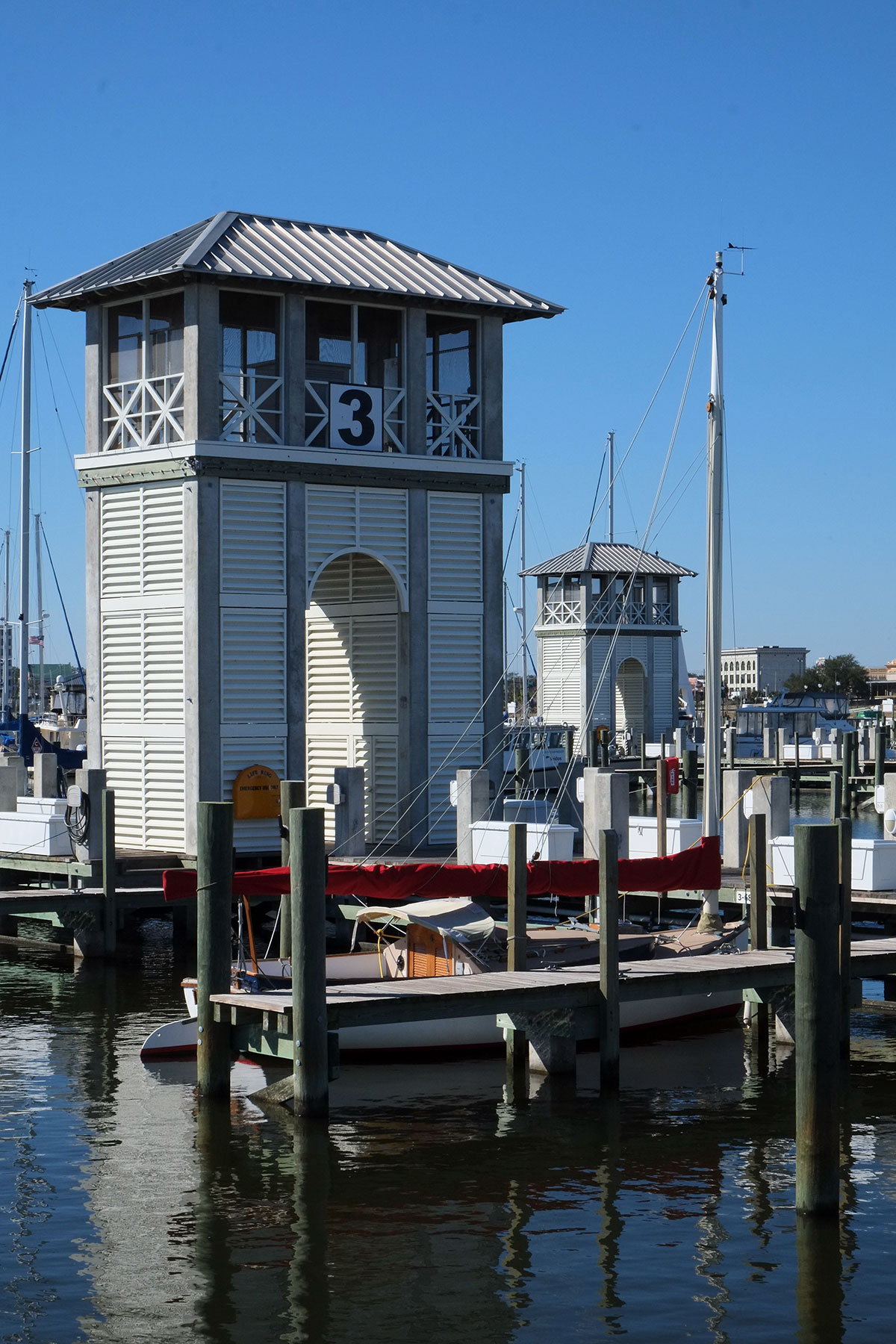
And elegant marina buildings of unclear function, but which appear to have been designed by Leon Krier (or at least to evoke Seaside).  DSCF1524

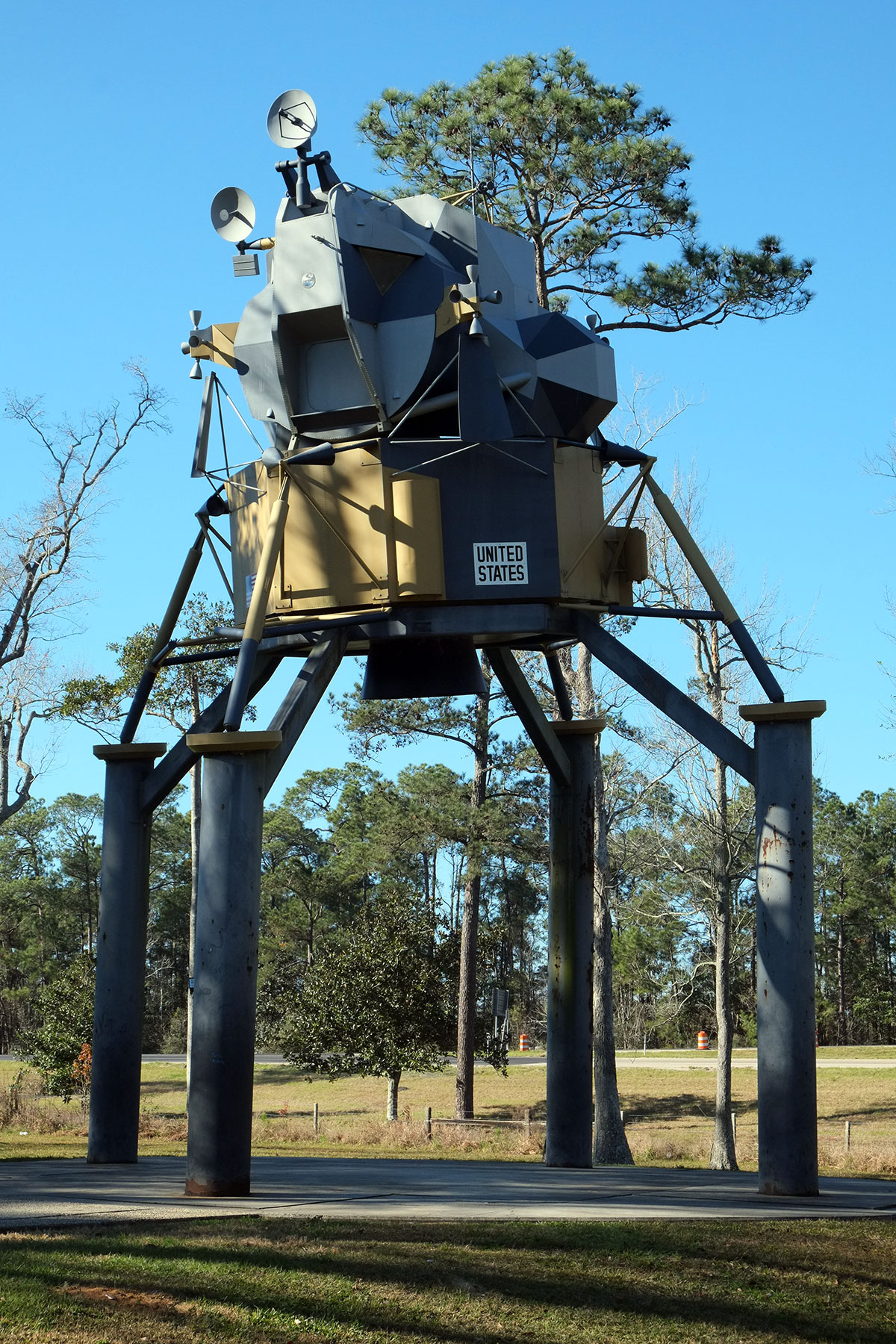
All of this had the look of federal money being spent on restoration and economic revival after Katrina.  In fact, the South is full of federally-funded establishments everywhere you look.  More military bases than anywhere else, and all the major pieces of the space program, strewn from Florida to Texas.  So fittingly, as we were about to depart Mississippi for Louisiana, Roadside America came through with another winner – a lunar module trainer used by the Apollo 13 astronauts, and now installed in a rest area on I-10.  DSCF1538

The Ohr-O’Keefe Museum

DSCF1408

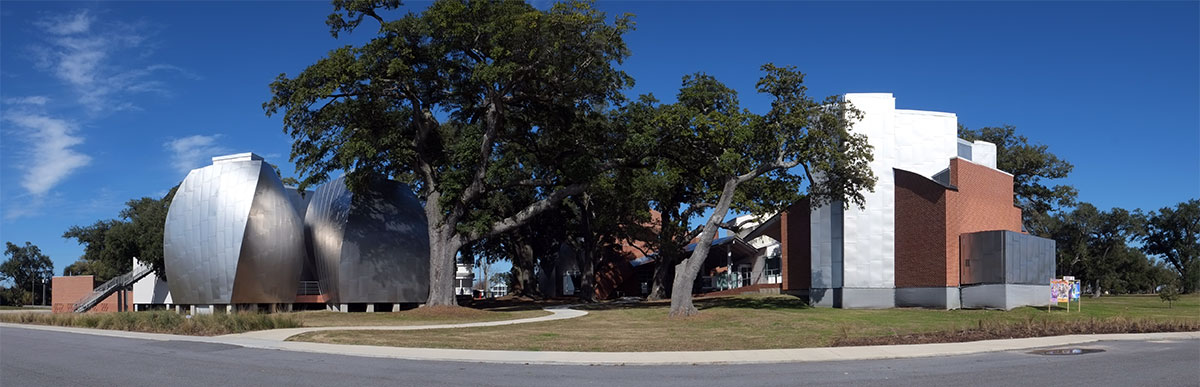
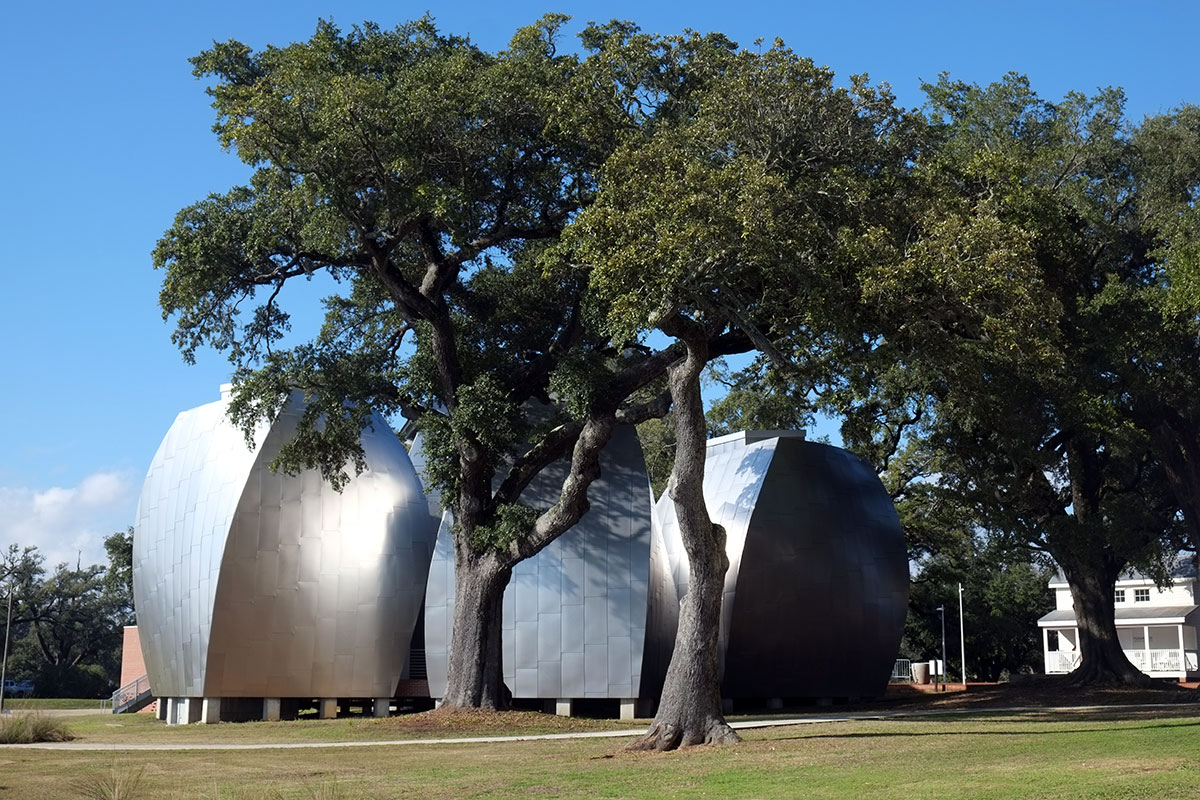
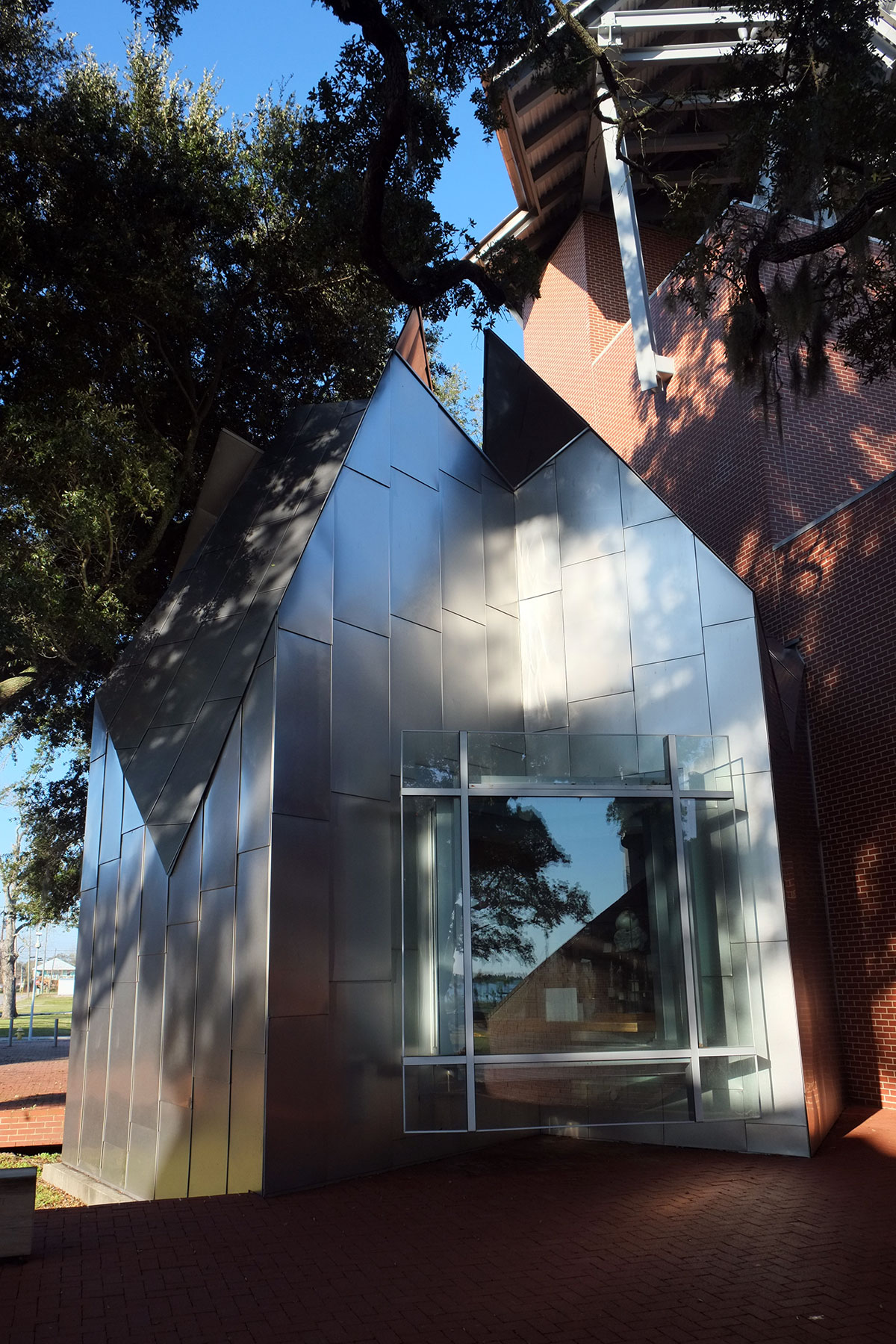
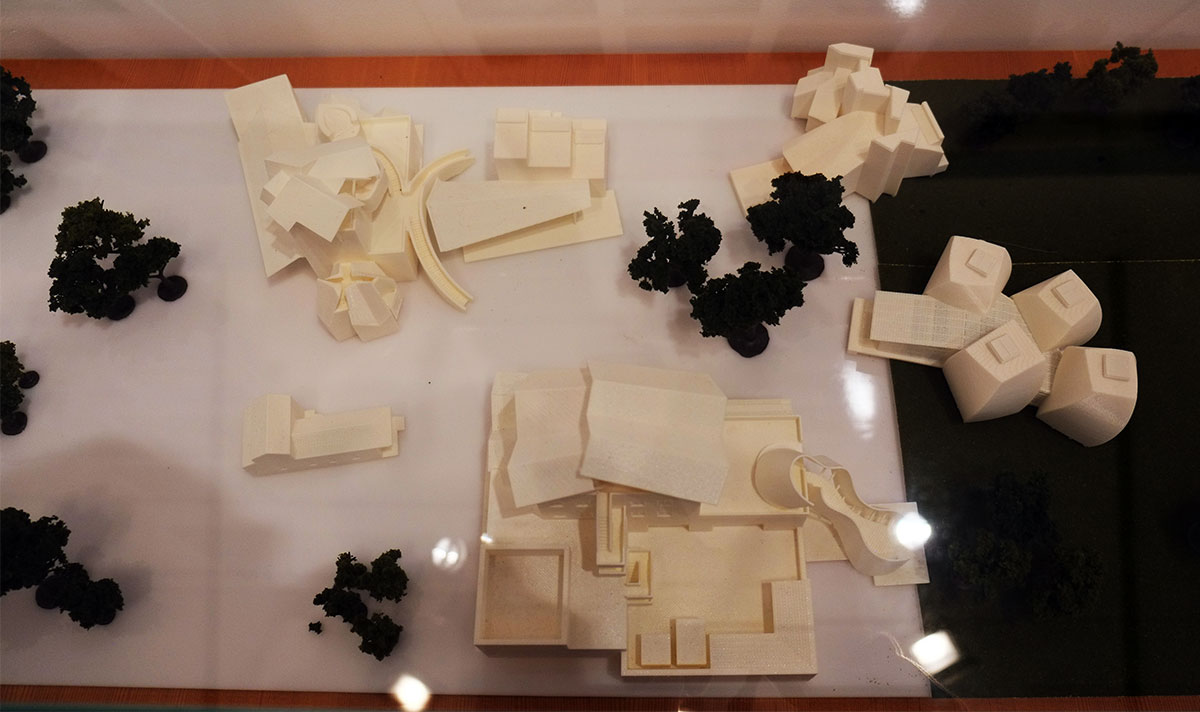
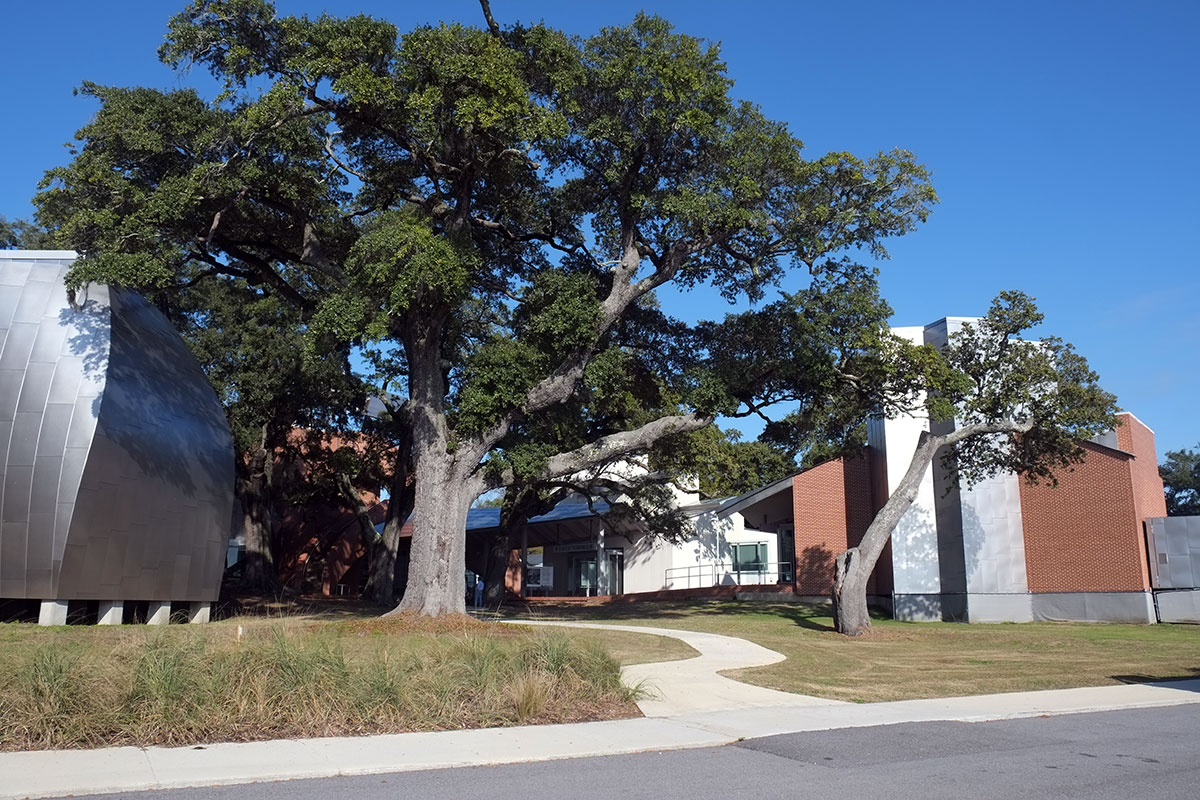
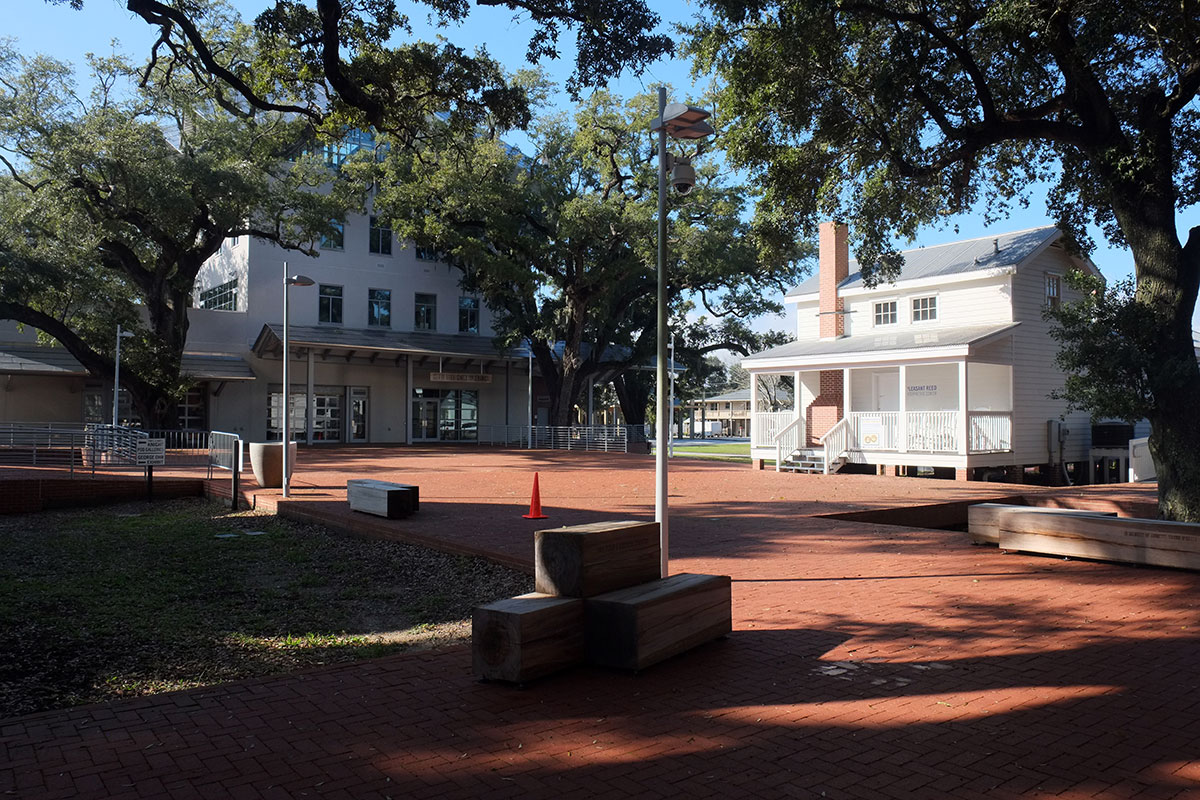
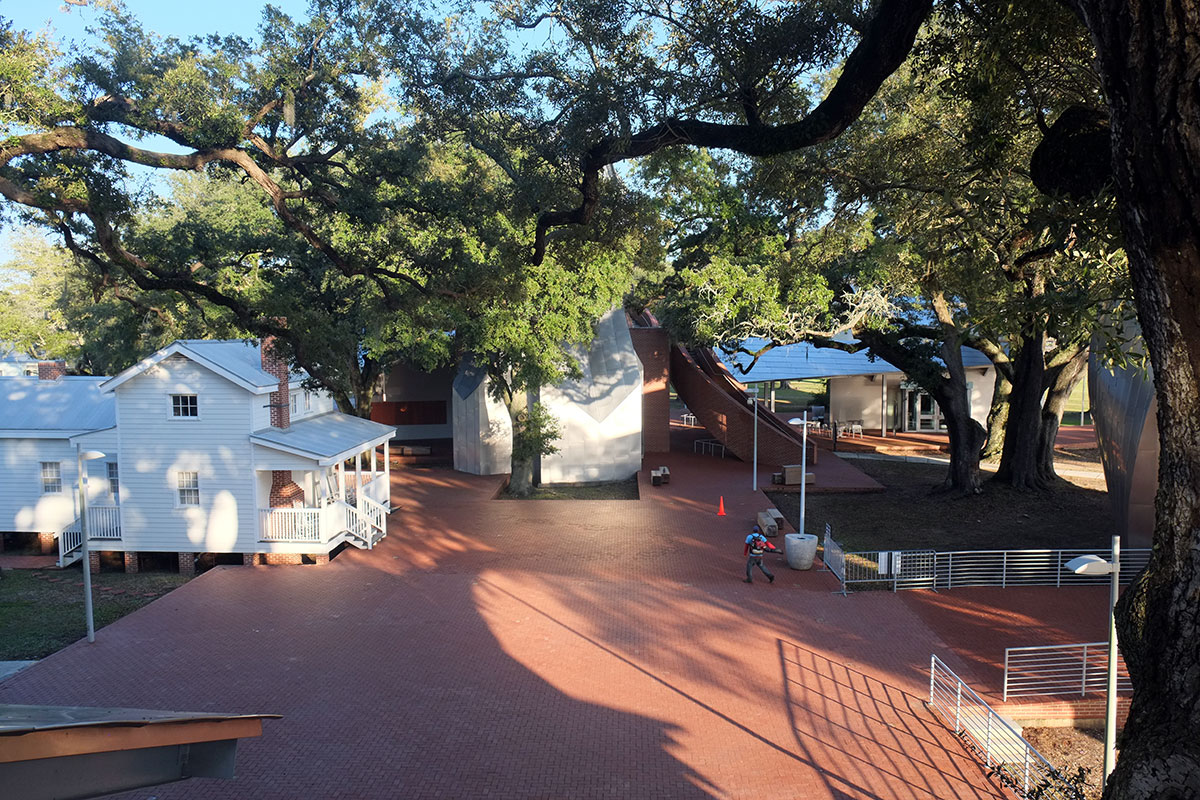
Given the architectural milieu of the South, the last thing I expected to find was a Frank Gehry building.  But right there on the Biloxi waterfront, just past the first wave of casinos, is this recent museum by Gehry, primarily designed to house the biomorphic pottery of George Ohr, the Mad Potter of Biloxi.  It is actually an ensemble of five new buildings and a reconstructed (post-Katrina) historic one playing off a cluster of live oaks in the middle.  As has occurred in some other Gehry projects, the breakdown of scale and the need to engage the landscape leads to more interesting work than when it’s just a large object building.

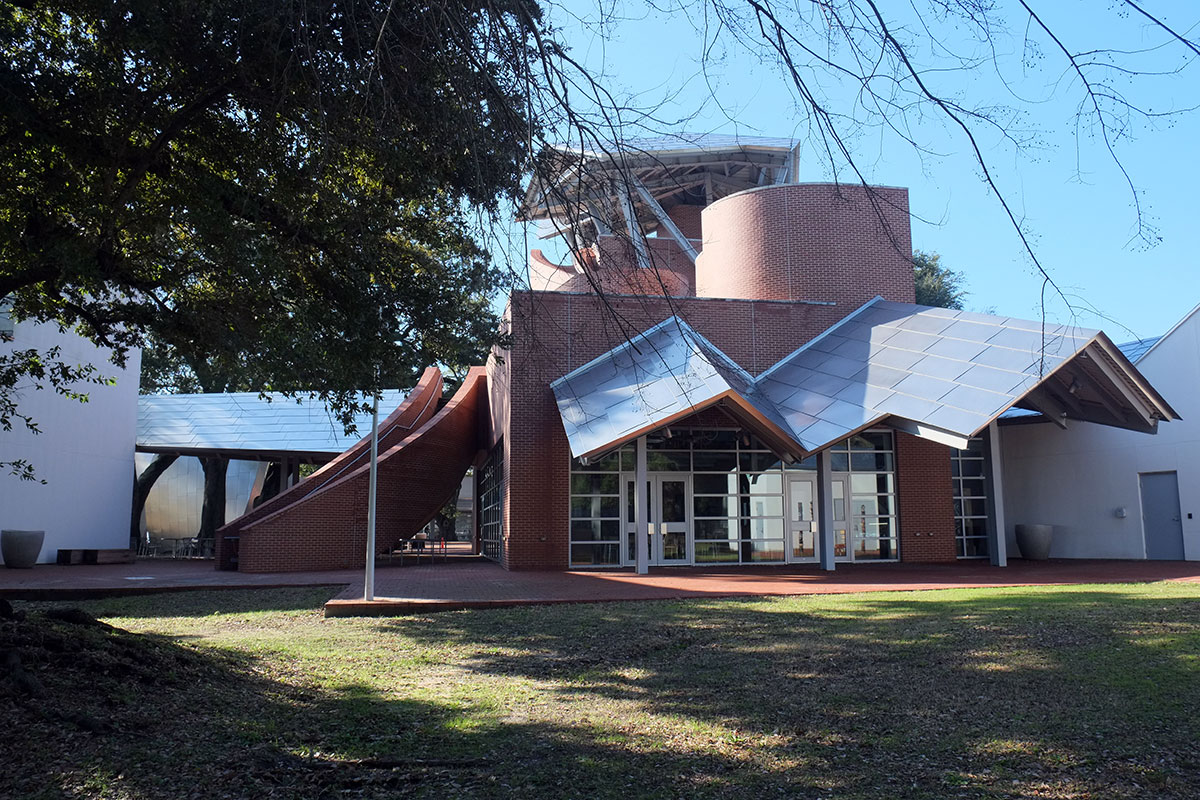
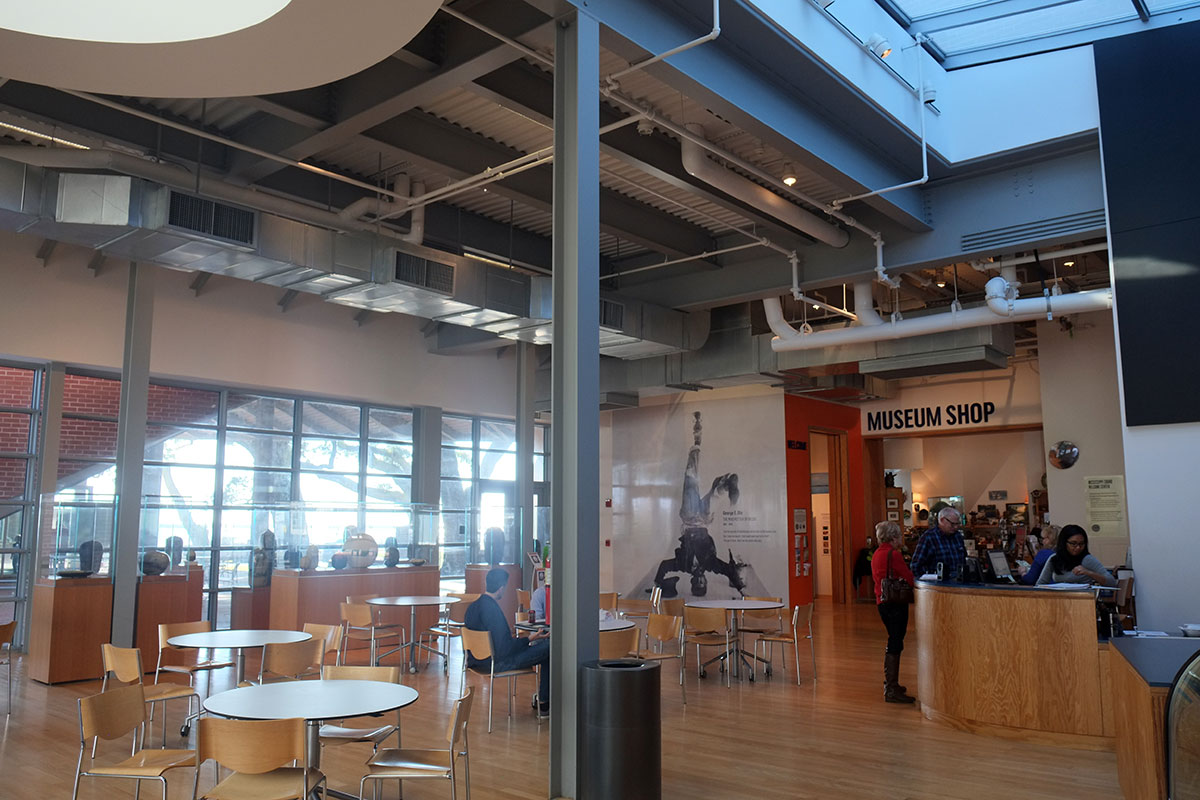
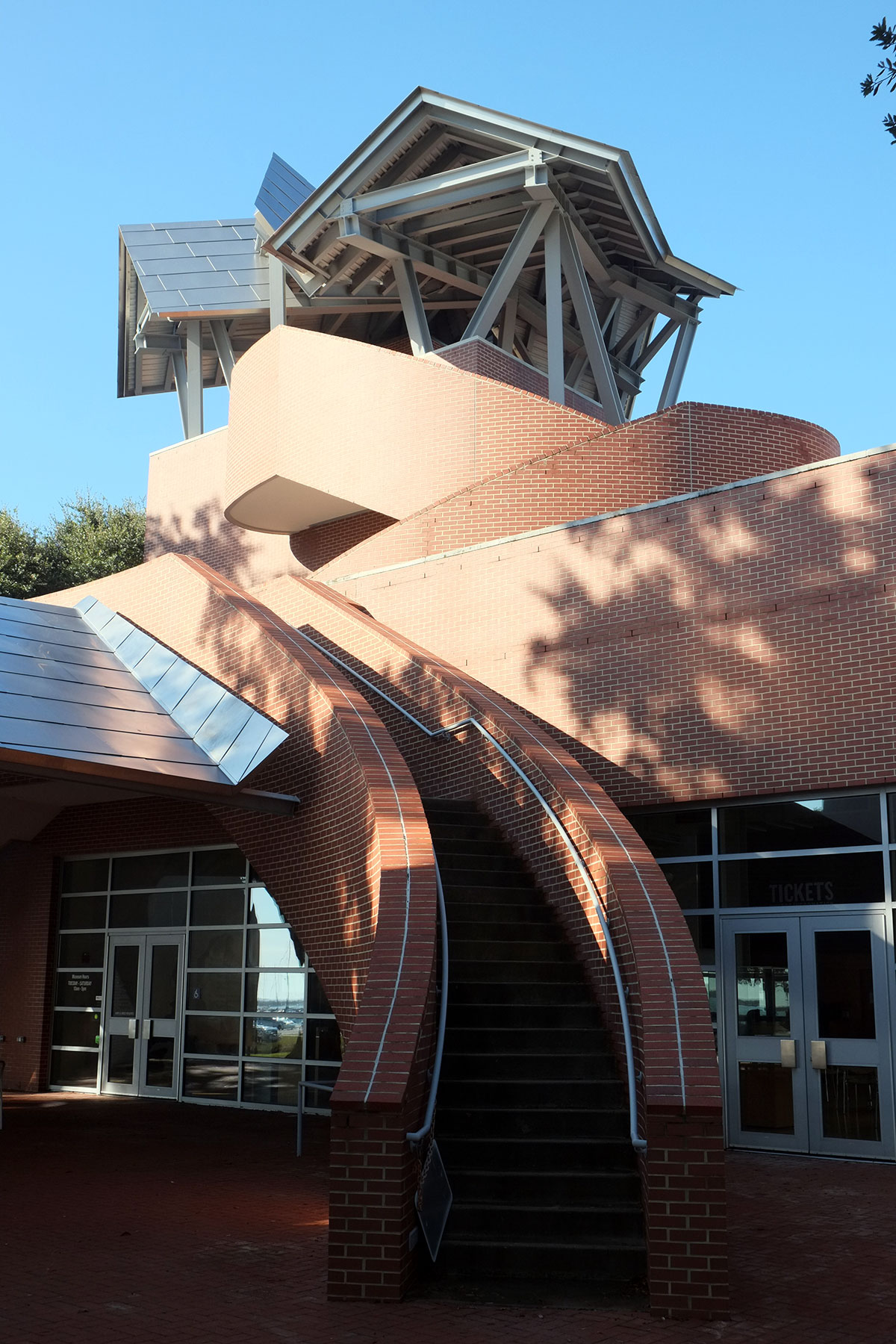
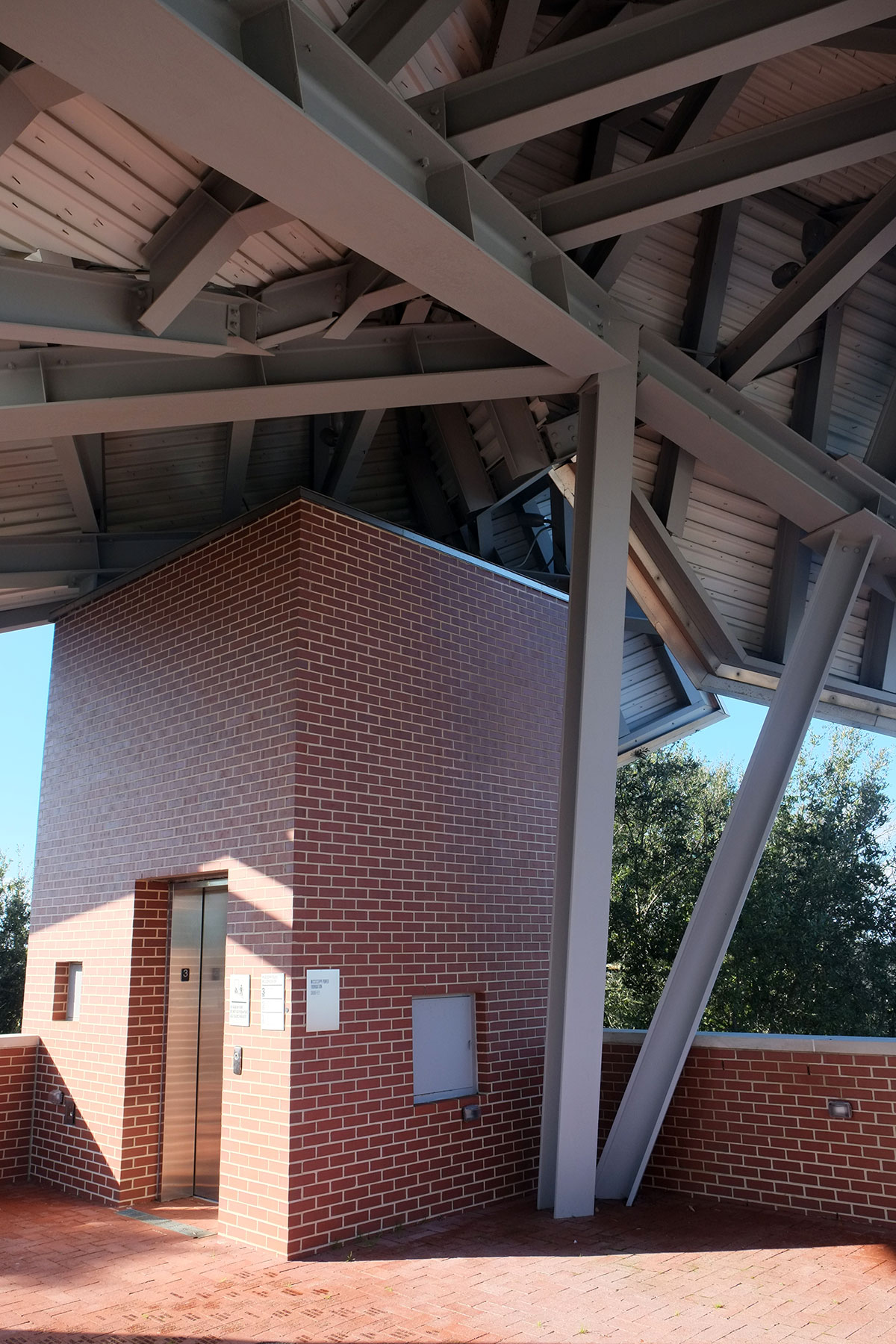
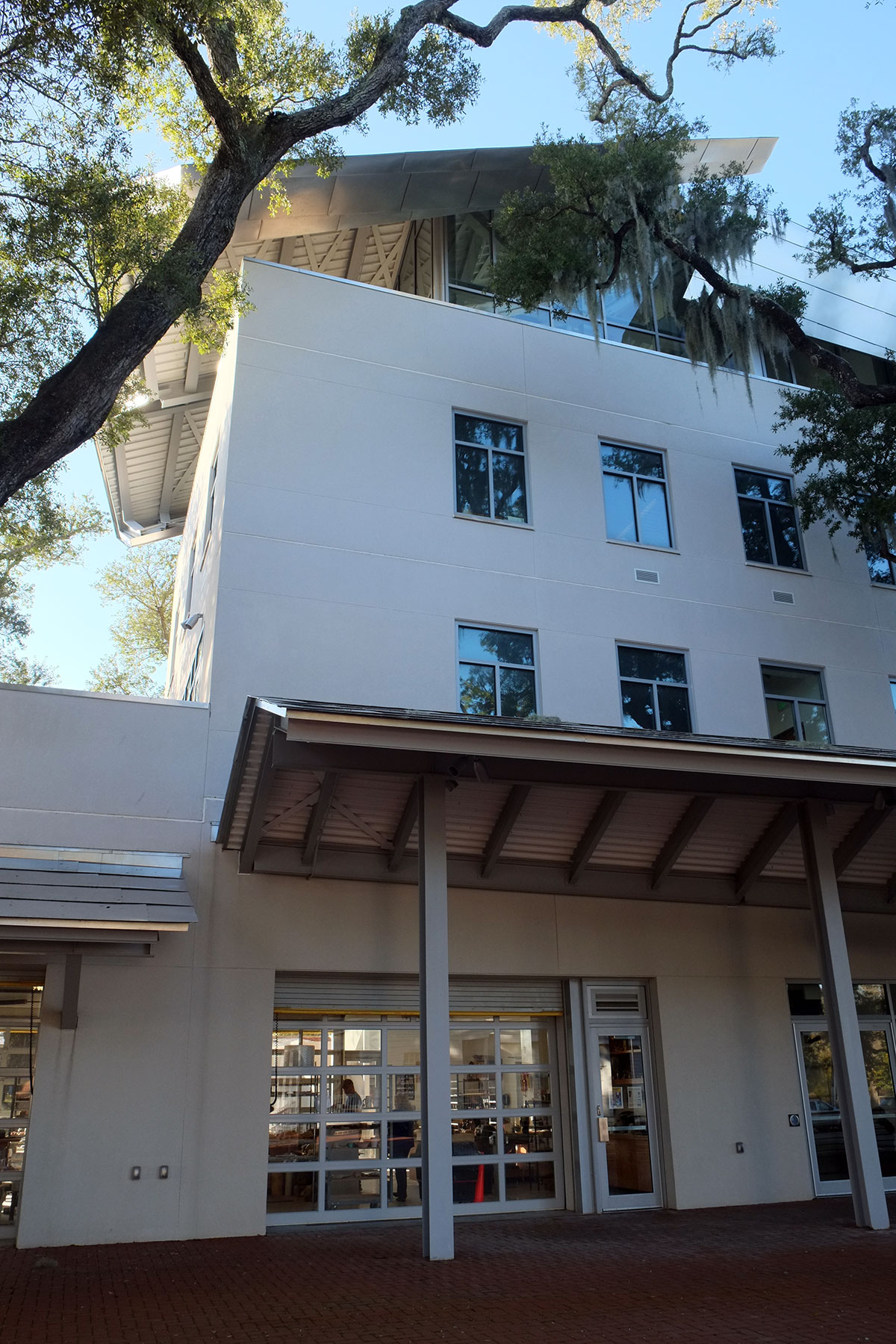
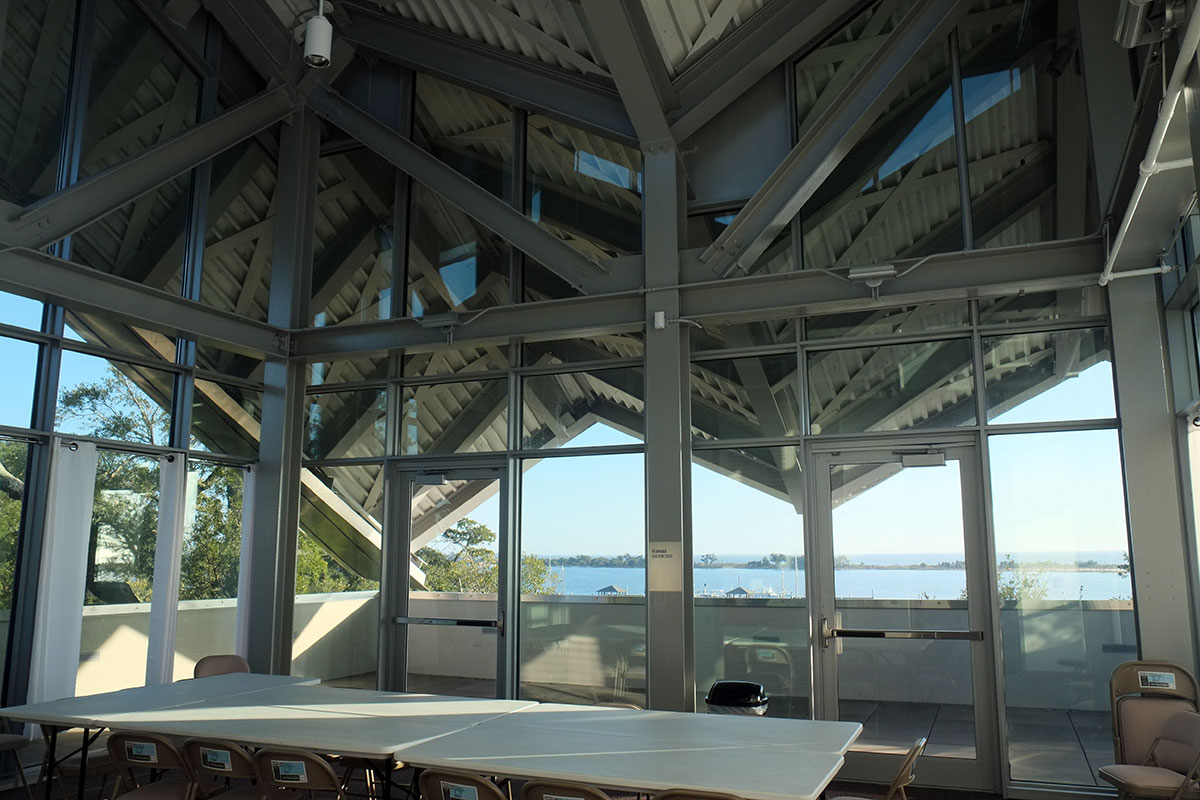
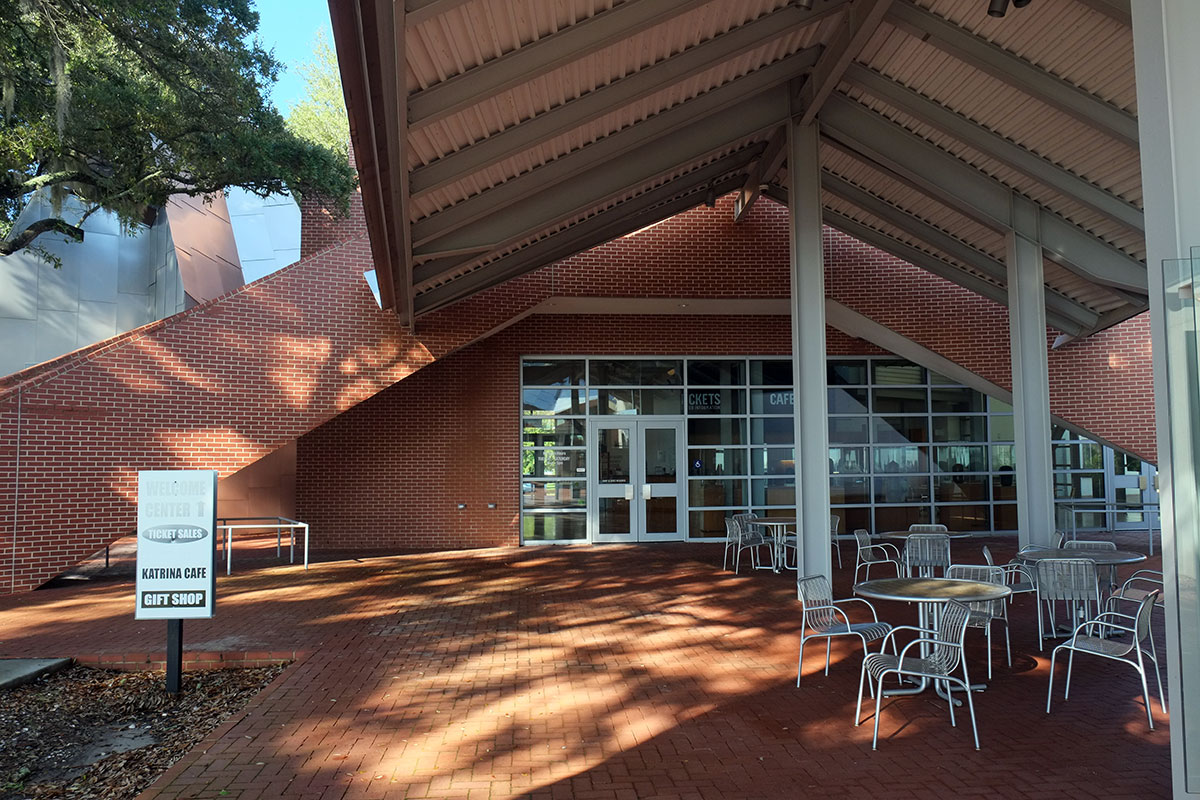
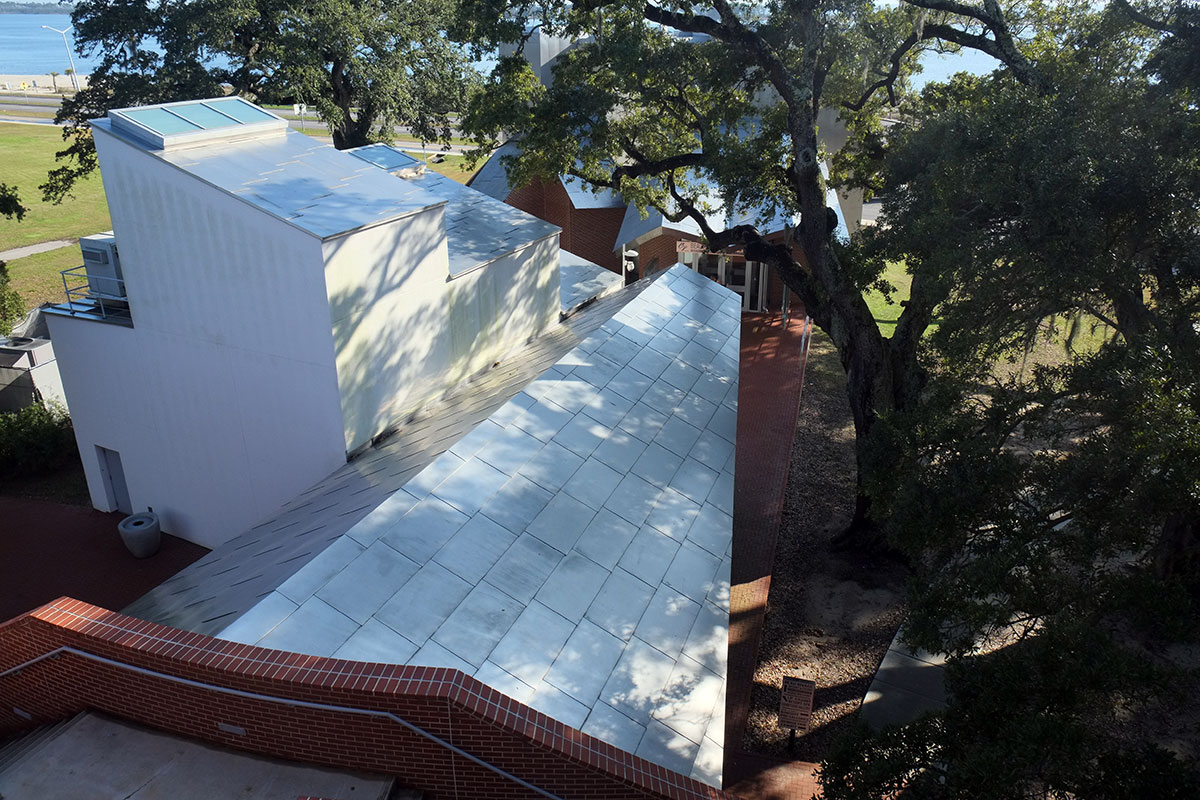
The individual buildings show a range of visual and formal approaches.  The visitors’ center / shop / cafe building has a brick shell, with big roofs shooting off, and a rooftop terrace that is sheltered by a similar roof, which seems to refer to a Gulf Coast vernacular approach for which I can’t remember the name.  DSCF1238    The interior is a big volume with lots of exposed everything.  DSCF1254The contrast between the curving brick walls and the linear steel elements which make up the roof framing is kind of fun. DSCF1242

DSCF1274

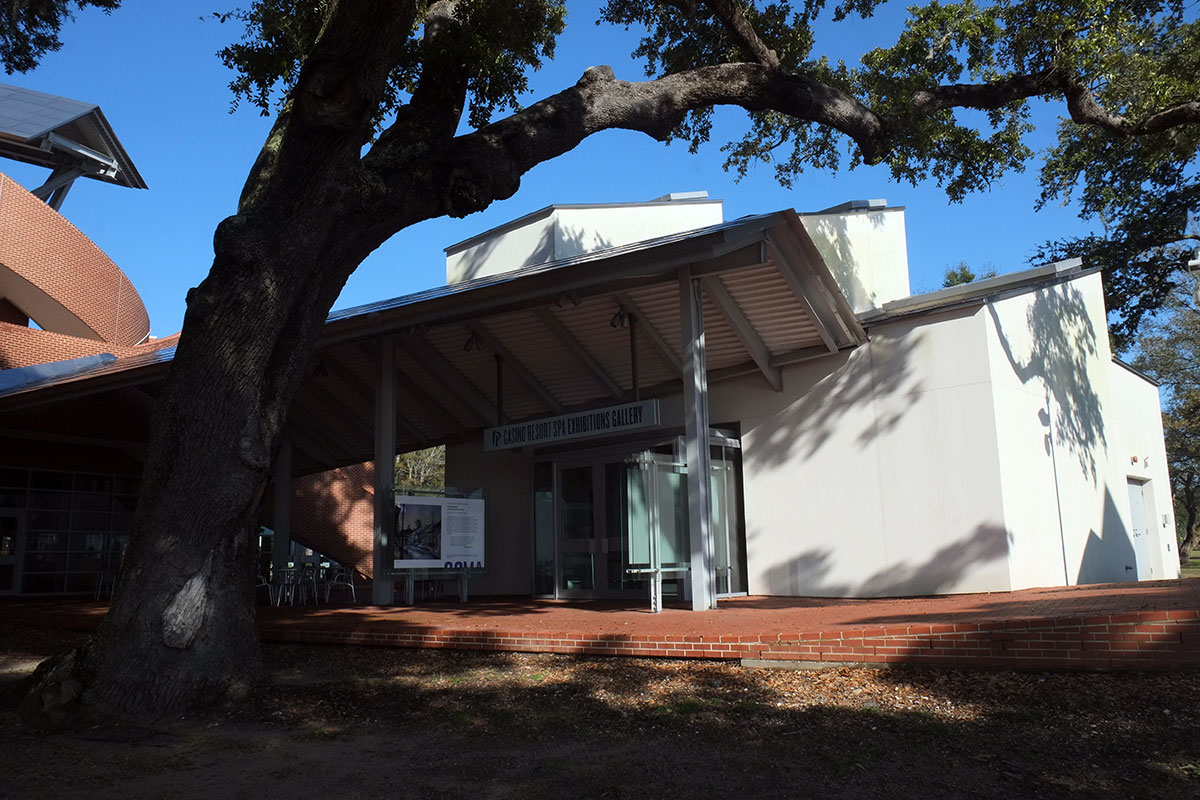
There is temporary exhibits building, which is much simpler, tucked behind a porch and fading into the background.  DSCF1219

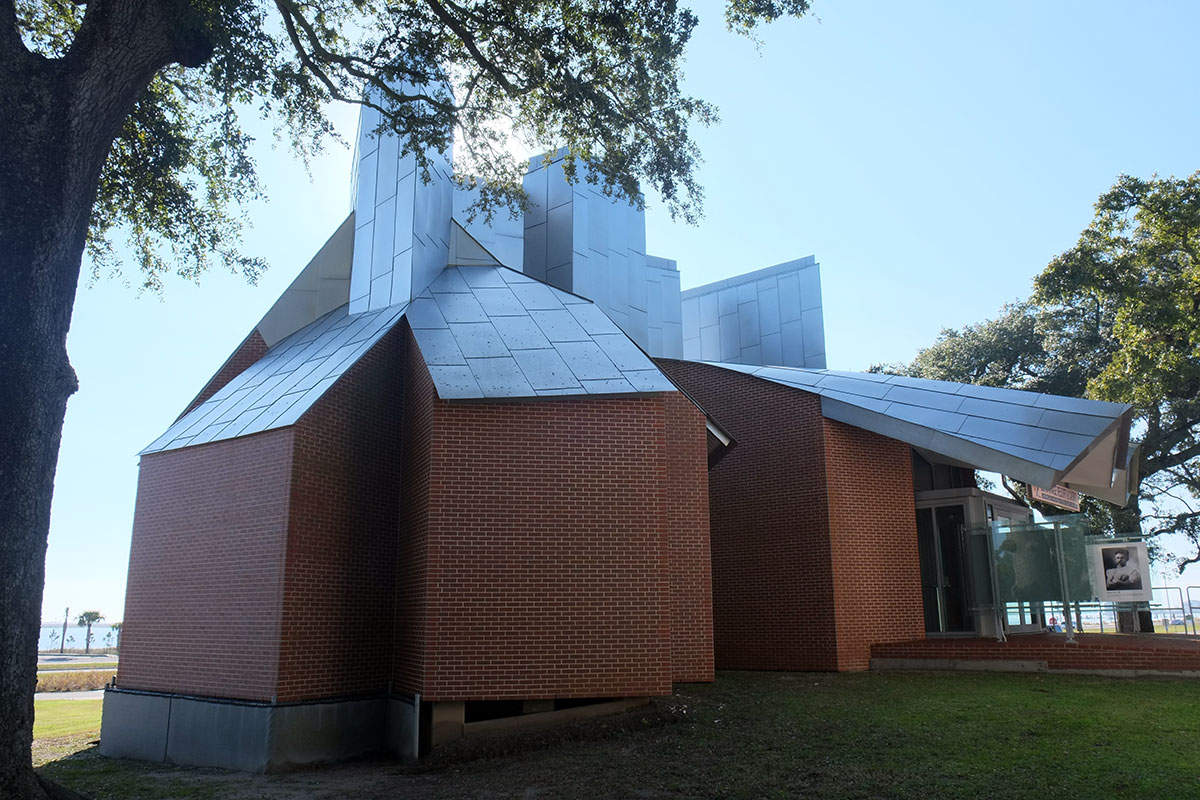
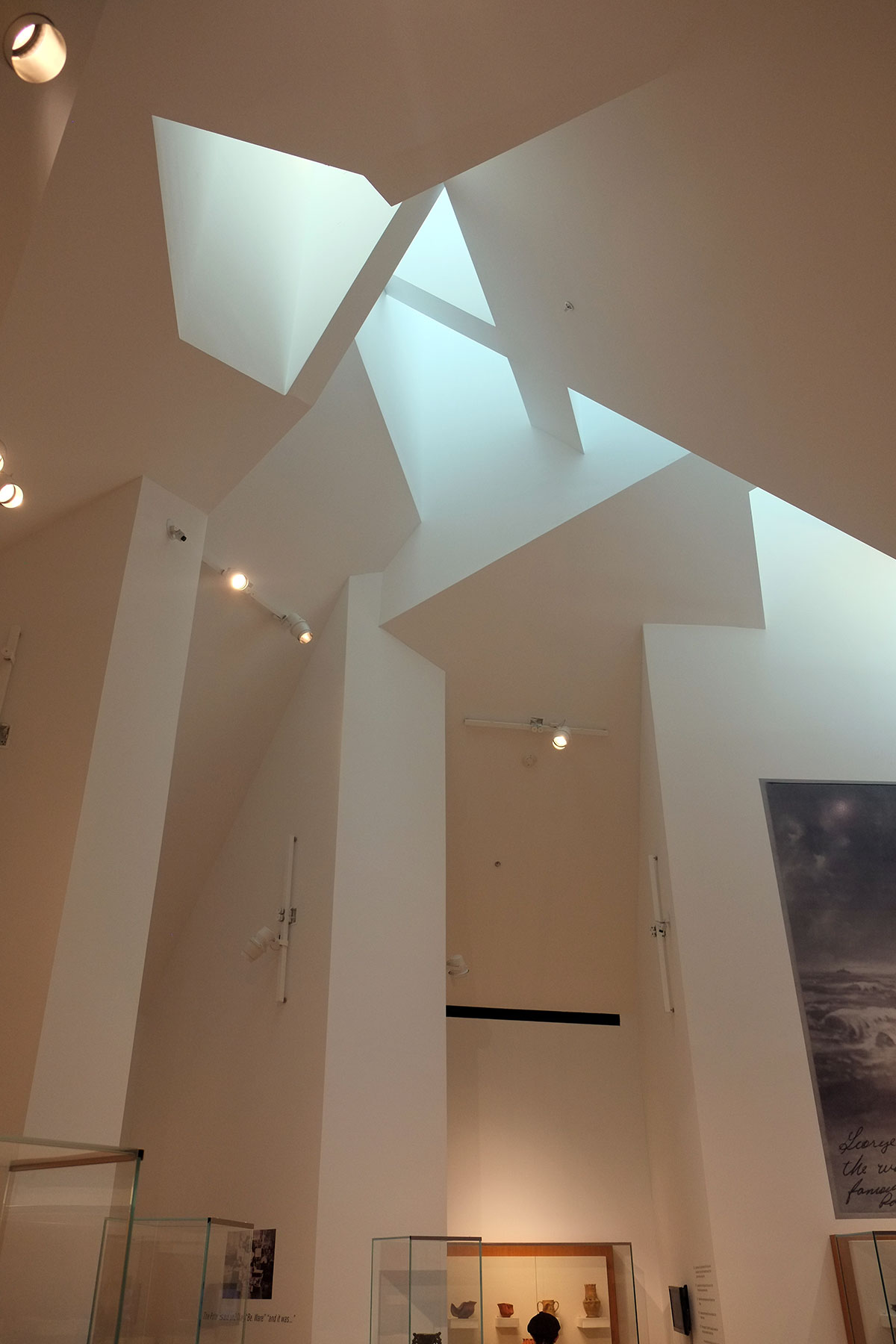
There is a building for African-American art, but at this point half of it is being used for Ohr pottery, as the building intended for Ohr’s work is not yet completed.  On the exterior there again is the juxtaposition of differing systems, with brick volumes below and the metal roof above.  DSCF1245 But strangely the interior is all gypsum-board shapes, which somewhat reflect the exterior forms, but the materiality of the exterior is completely absent.  There’s a disconnect here that I don’t understand. Is it budget, is it wishing to create a more neutral space for the exhibition of art?  DSCF1285
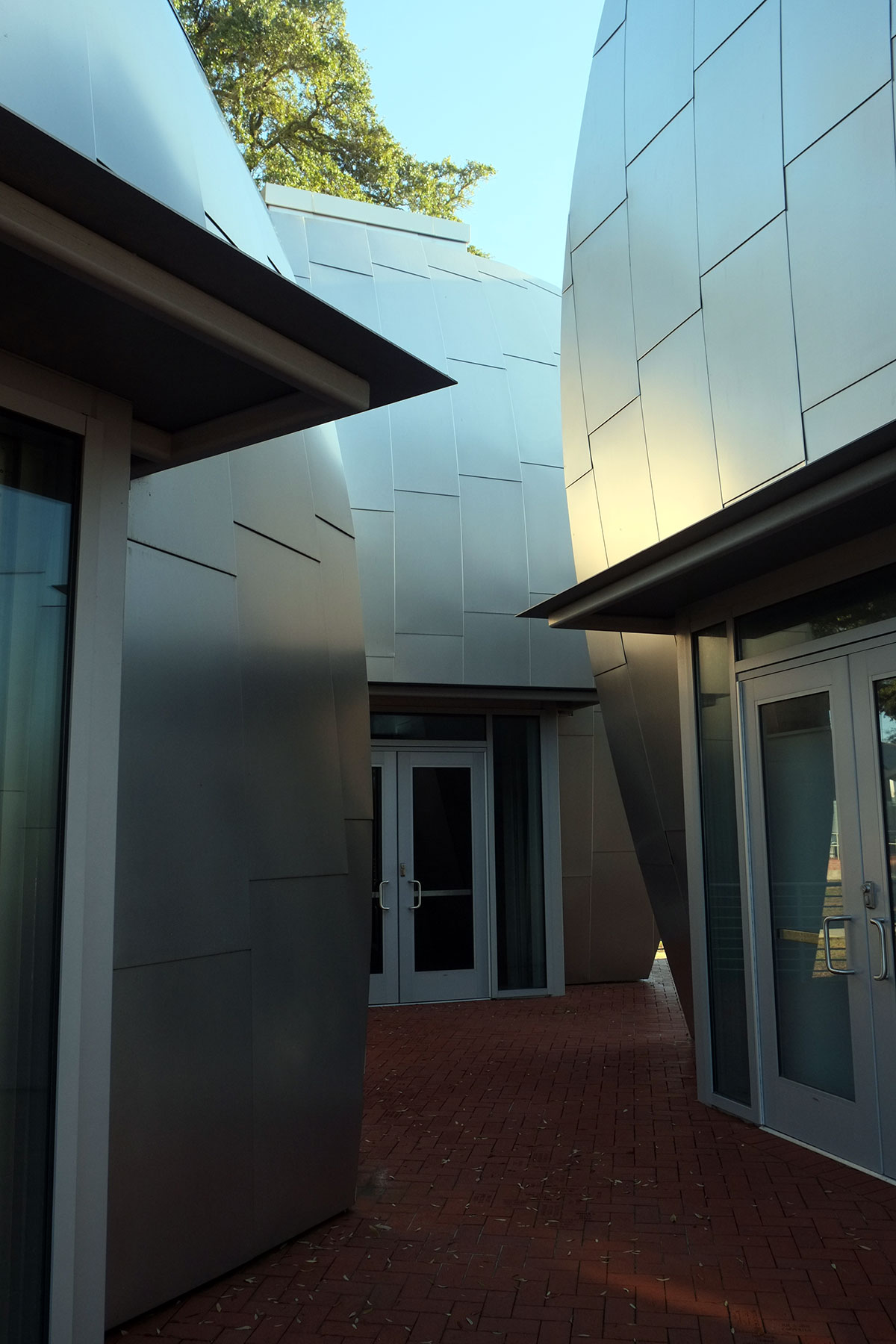
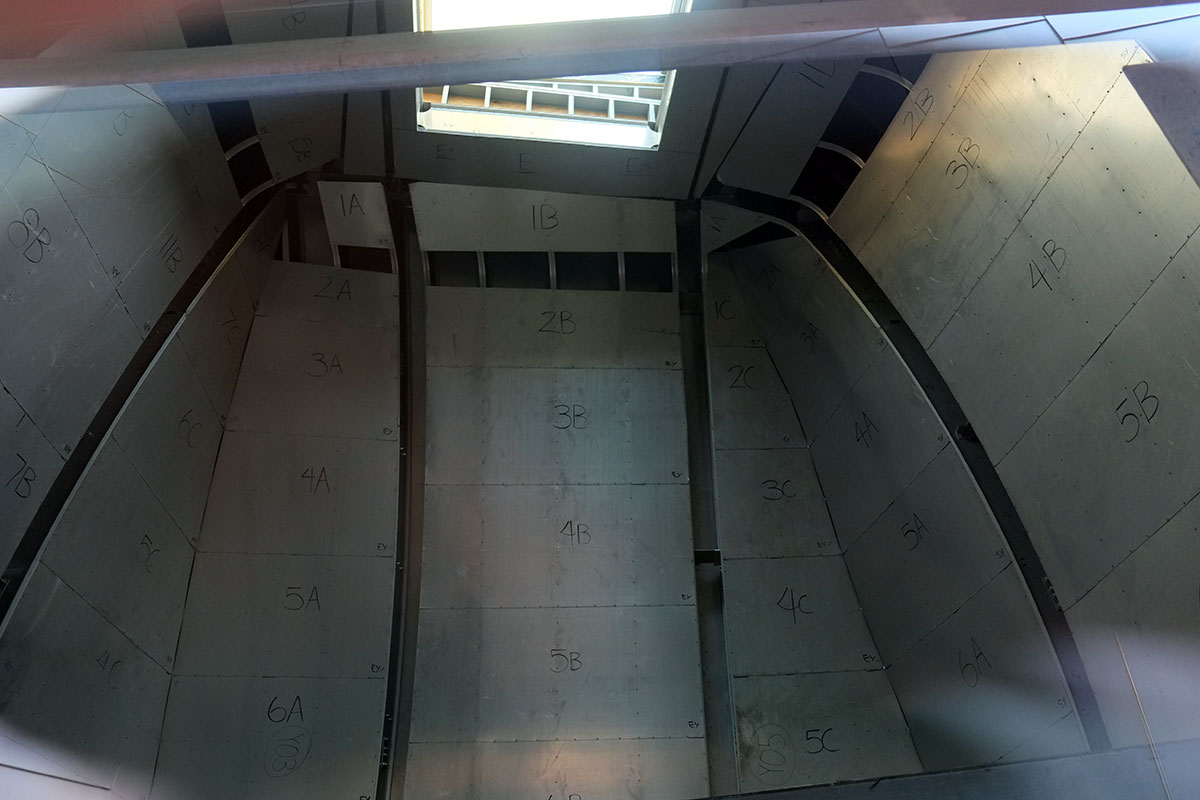
The cluster of four curving metal pods for Ohr’s pottery sits across the courtyard.  The contrast between the trees and the metal is beautiful, and the abstract, unified quality (they are just surface) of the pods sets them off from the other buildings.  DSCF1210    DSCF1293Looking through the door at one of the unfinished pods was revealing – it resembles an Airstream trailer, with a metal skin over large metal framing, and another skin on the interior, which probably provides the shear resistance.  But in the one pod which is completed, the interior is again covered in white gypsum board.  Early Gehry buildings got a lot of mileage from revealing and using the necessary building elements;  I don’t know why he is now covering all that up.  DSCF1296

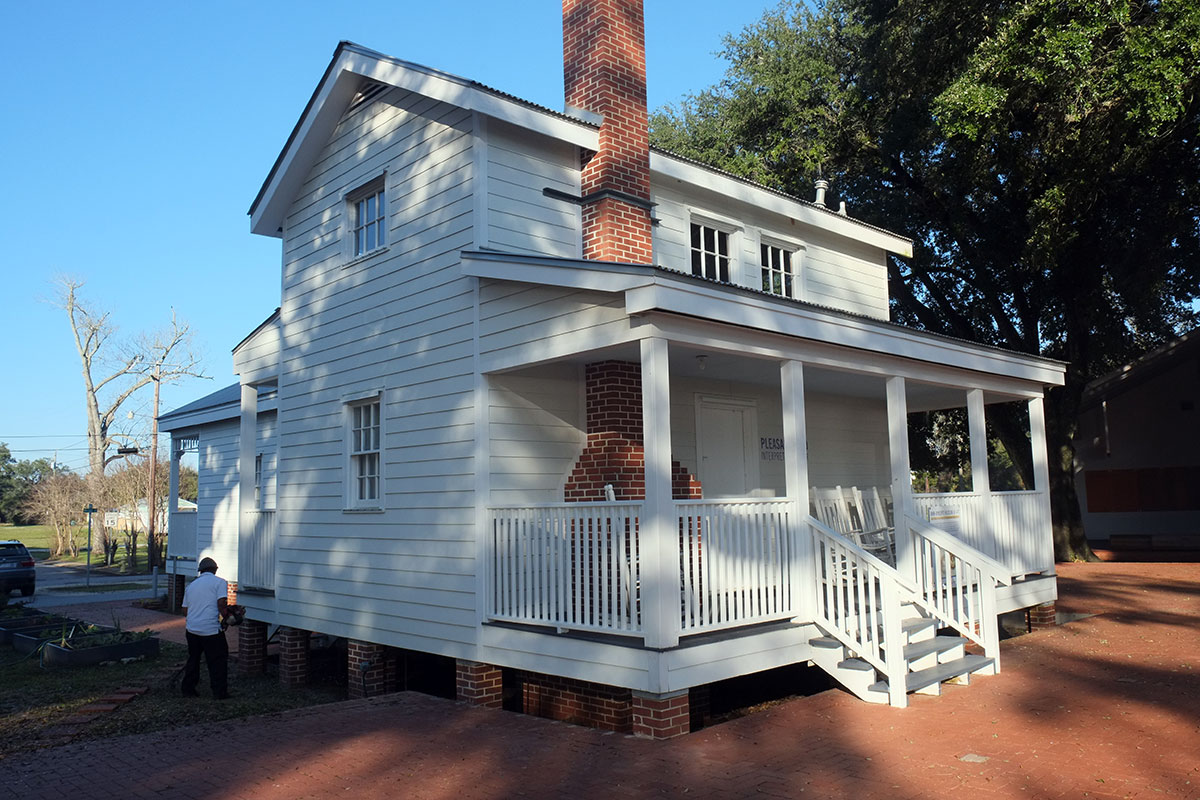
There is one reconstructed historical building, a house that was built in the 19th century by a local freedman, Pleasant Reed.  It was destroyed by Katrina, but has been faithfully rebuilt as an interpretive center, showing the vernacular construction, and tracing the lives of him and his family.  DSCF1292

The Biloxi pottery center has studio, exhibit and meeting spaces, and plays different games with some of the same elements as the visitors’ center.  DSCF1305  The rooftop terrace here has been enclosed as a board room.  DSCF1311  DSCF1327DSCF1343

The five new buildings are quite different, but they hold together as a group for a few reasons.  First, there is a common material vocabulary – brick, white panels, steel framing, curtain walls and metal sheathing.  Second, there is a form-language of how these pieces are used – rectilinear, curvilinear, and skewed shapes.  Each building is a mix-and-match of elements between these two systems, leading to a lot of richness.  There isn’t a rigid assignment of materials or shapes to specific roles within a system of meaning (I couldn’t see that the brick always meant one thing), but rather playfulness in the pairings, as if every possible combination was being explored to get the maximum variety within the limited palette.  (I can feel an analytical matrix coming on.)  DSCF1290

Third, the relationships of the buildings to each other and the spaces in between is well-handled.  DSCF1262

There is small entry zone, where you are squeezed between the brick gallery building, the pods, and the trees.  DSCF1211

You emerge facing a seating area by the visitors’ center, DSCF1221

and then turn towards a large brick terrace.  DSCF1222

The central courtyard is the heart of the scheme, with the oaks framing, obscuring and balancing the buildings.  These are not simple fabric buildings, fading into the background in deference to the needs of the whole.  Each building is a strong, simple statement, and even though they share an architectural approach, without the open space and the large trees, they would be at war with each other, each clamoring for attention.  DSCF1280

Reflecting back on the Gehry buildings I’ve seen, my favorites are the ones where they have this relationship to the landscape, or where he creates a campus (such as the Loyola Law School).  The buildings are such powerful objects that they often look ill-at-ease on a city street.  They often don’t play well with others.  DSCF1331

This siting allows them each to exist and be considered on its own terms, while still working together to make a complex, varied, but still lovely outdoor space.   We don’t think of Frank Gehry buildings as being very contextual, but this complex responds wonderfully to the site, the climate, and even some vernacular building elements.  I got the impression from some locals that they don’t really understand or like this museum, but I think they got one of the best Gehry buildings around.

Barbecue Part 2

Jenkin’s Barbecue
Jacksonville, FL
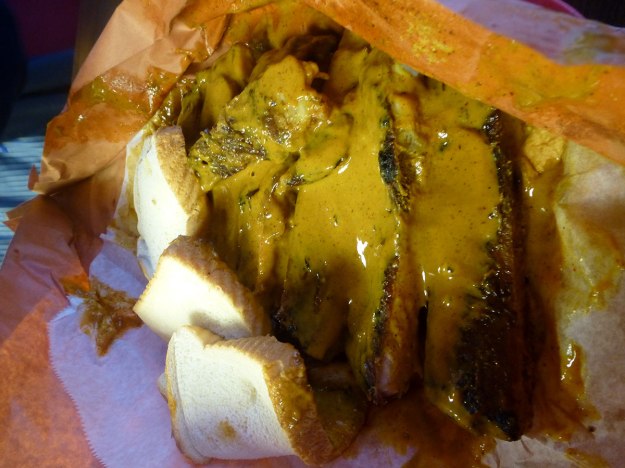
Served only a mustard sauce, with the philosophy of, “If you don’t like it, then leave.” I did like it, very much. We had a giant rack of ribs, completely drowning in the sauce. The meat was cooked well, but I can’t really give an assessment of their rub, because the sauce was a little overpowering.P1060638

Big G’s Barbecue and Catering
Allendale, GA
For a restaurant with barbecue in the name, it was remarkably hard to find any barbecue on their menu. Eventually we located the section, but it only had chopped (pulled) or sliced pork sandwiches. We both got pulled, which came on a hamburger bun, and slathered with mustard sauce.
Honestly, I don’t think mustard is good with pulled pork. It’s better with something with a bit more solid, like ribs or brisket. A smoother, tomato-based sauce or vinegar should be used on pulled pork.
That being said, it was pretty good. But it being out in the middle of rural Georgia means we’ll never go to it again, and it isn’t worth driving hundreds of miles out of your way to reach.

Slap ya Mamma’s Barbecue
Biloxi, MS
Locally famous, for a good reason. Just the smell walking up to it was tantalizing enough to make my mouth water. Like the restaurants above, they only had one sauce, but this was tomato-based. A bit bland in comparison to mustard, but it went great with the pulled pork, and the fried okra.
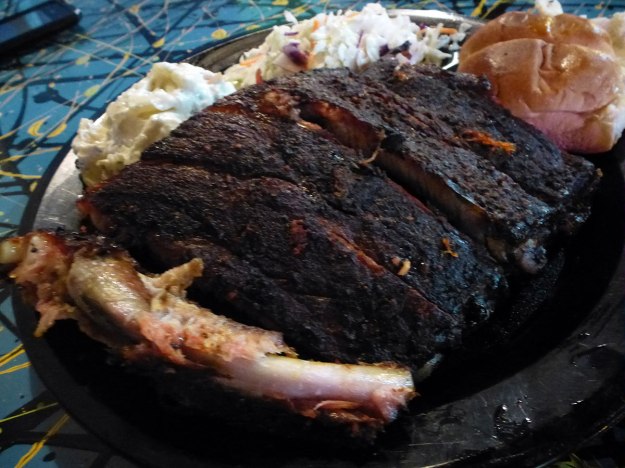
The ribs didn’t even really need the sauce. They were delightfully smoky, and made up for being slightly less succulent than Barbeque Exchange’s by having more meat on them.P1060837

Alabama

DSCF1149Traveling across the Deep South was not one of the goals of our trip, but if we wanted to skip winter weather as we went from Florida to New Orleans, Alabama and Mississippi were unavoidable.  We realized that there’s not a lot of great architecture or notable cities to see (and the ones there are happen to be in the Piedmont far north of our route), the landscape is monotonous, and the prevailing culture is as far from our normal milieu as can be found in this country.  (There had been an op-ed in the Times a few days earlier on how hard it was to be a liberal native Alabaman, returning to the state after 20 years in New York.)  Greta pointed out that the only common element in our value system and theirs is appreciation of barbecue.  So with minor trepidation we headed into Alabama.

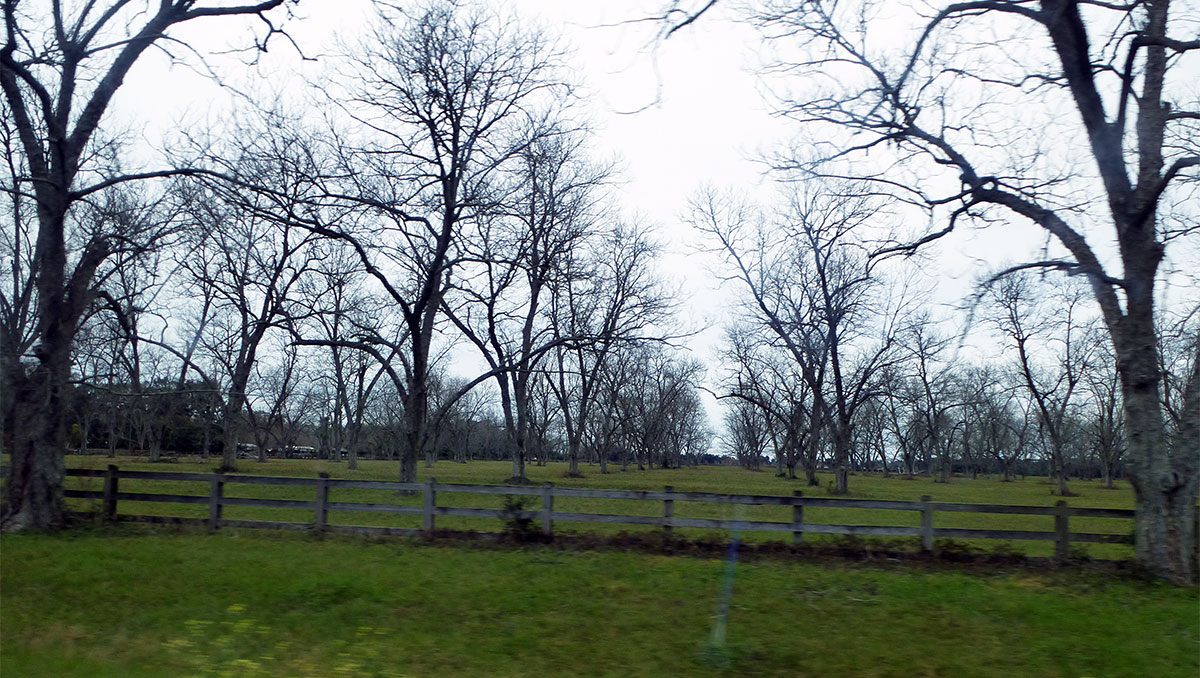
If you’re taking the coastal route, you only hit the little tab of Alabama that surrounds Mobile Bay, and the drive across is under 100 miles.  The coastal plain is indeed monotonous, but very pleasant – we were mostly in a landscape of pecan groves and small towns.P1060792

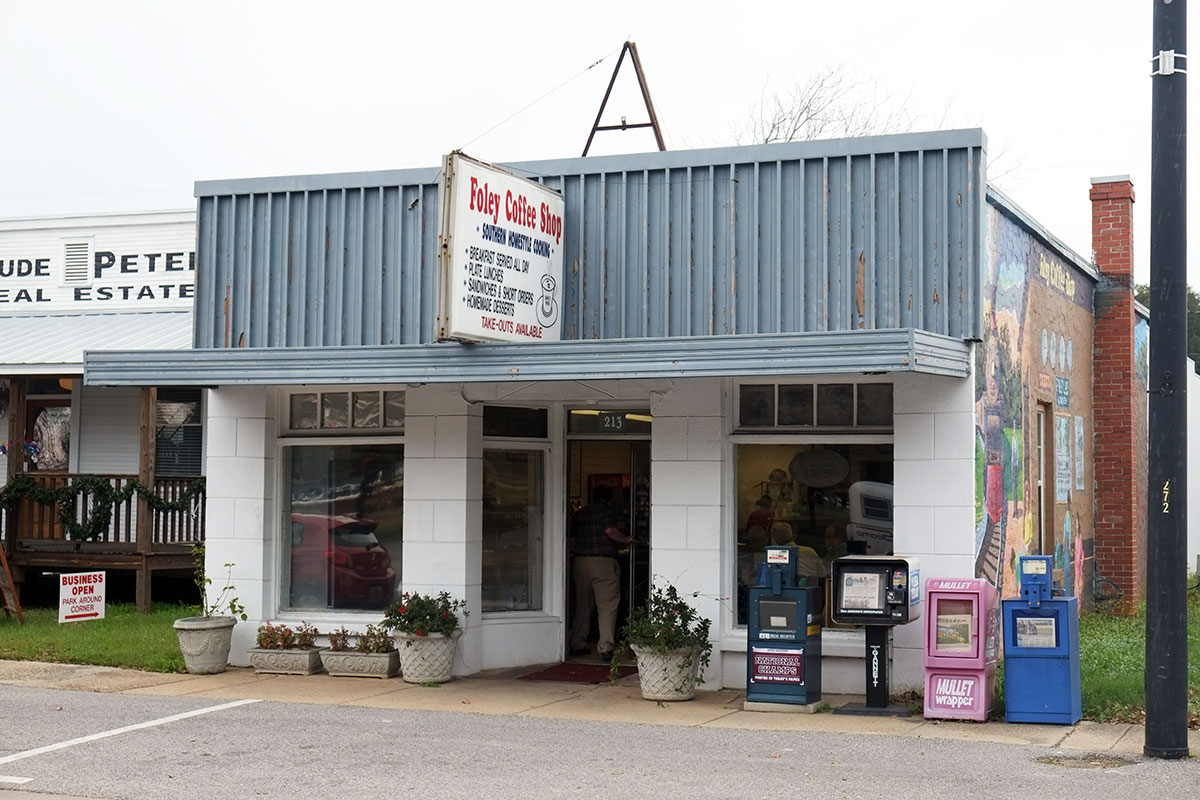
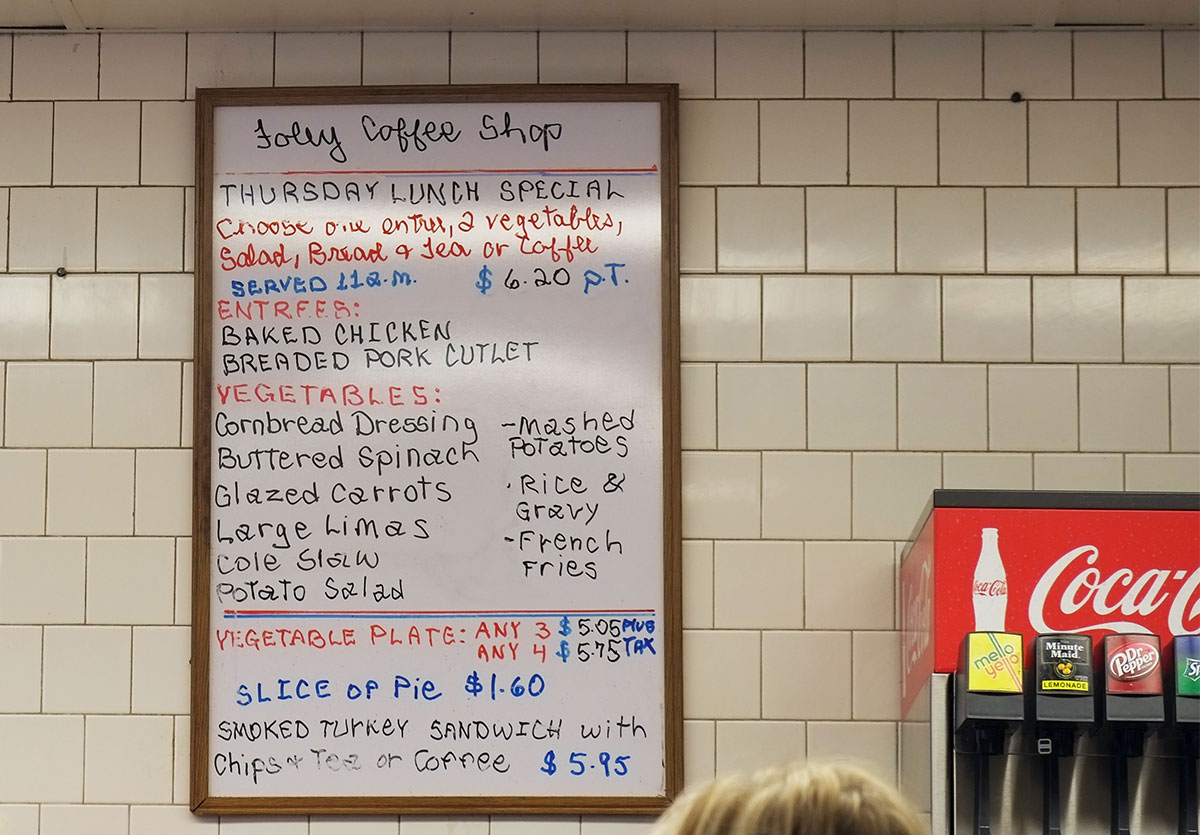
The biggest disappointment on our travels in the South has been the displacement of barbecue joints.  Every little town or city you pass is full of chain fast food places, which seem to have squeezed the barbecue out – as Calvin Trillin noted last fall in the New Yorker, the future of barbecue seems to be heading into the cities, where it is appreciated by yuppie connoisseurs.  So at lunchtime we turned to the excellent database compiled by the folks at Roadfood.com, which directed us to the Foley Coffee Shop, in the charming small city of Foley, Alabama.  Greta isn’t blogging about this as it wasn’t necessarily a culinary awakening, but it was a cultural one.  DSCF1130

As we stepped through the front door, we were transported back 50 years in time.  A wall of conversation hit us, as the place was full of locals of all types – old folks, office and construction workers, families, etc.  A short movie best conveys the ambience:

Our charming waitress, a friend of the owner’s daughter, confirmed that nothing had really changed since the 1960s.  It seemed to us that the prices were within this category too – “entree, 2 vegetables, salad, bread, & tea or coffee” for $6.20 (with a choice of 9 vegetables).  Take that, McDonalds.  DSCF1128

The food was fresh and good, the people we talked to were gregarious and lovely, and the sense of community was palpable.  This wasn’t just a place for the efficient satisfaction of nutritional needs, but one that helped maintain the culture of the city.  At first we felt like visiting anthropologists, but we appreciated how we were welcomed in for our brief glimpse.

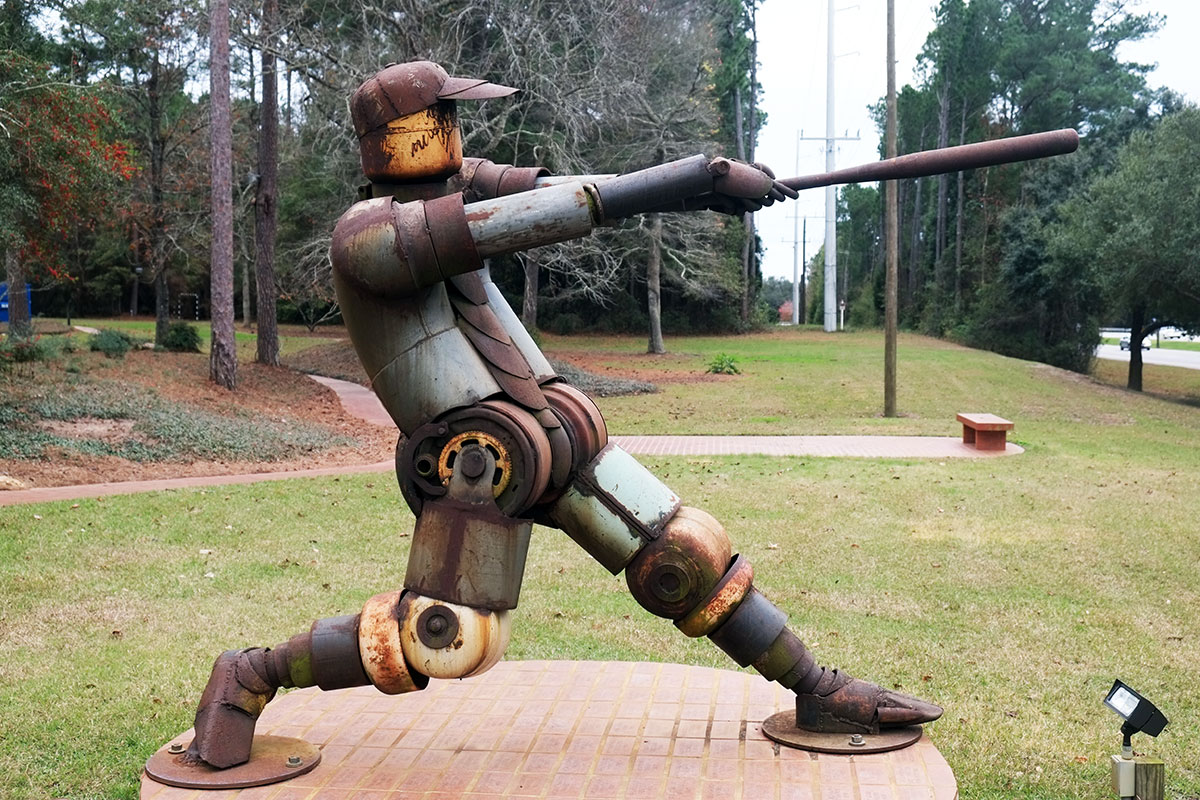
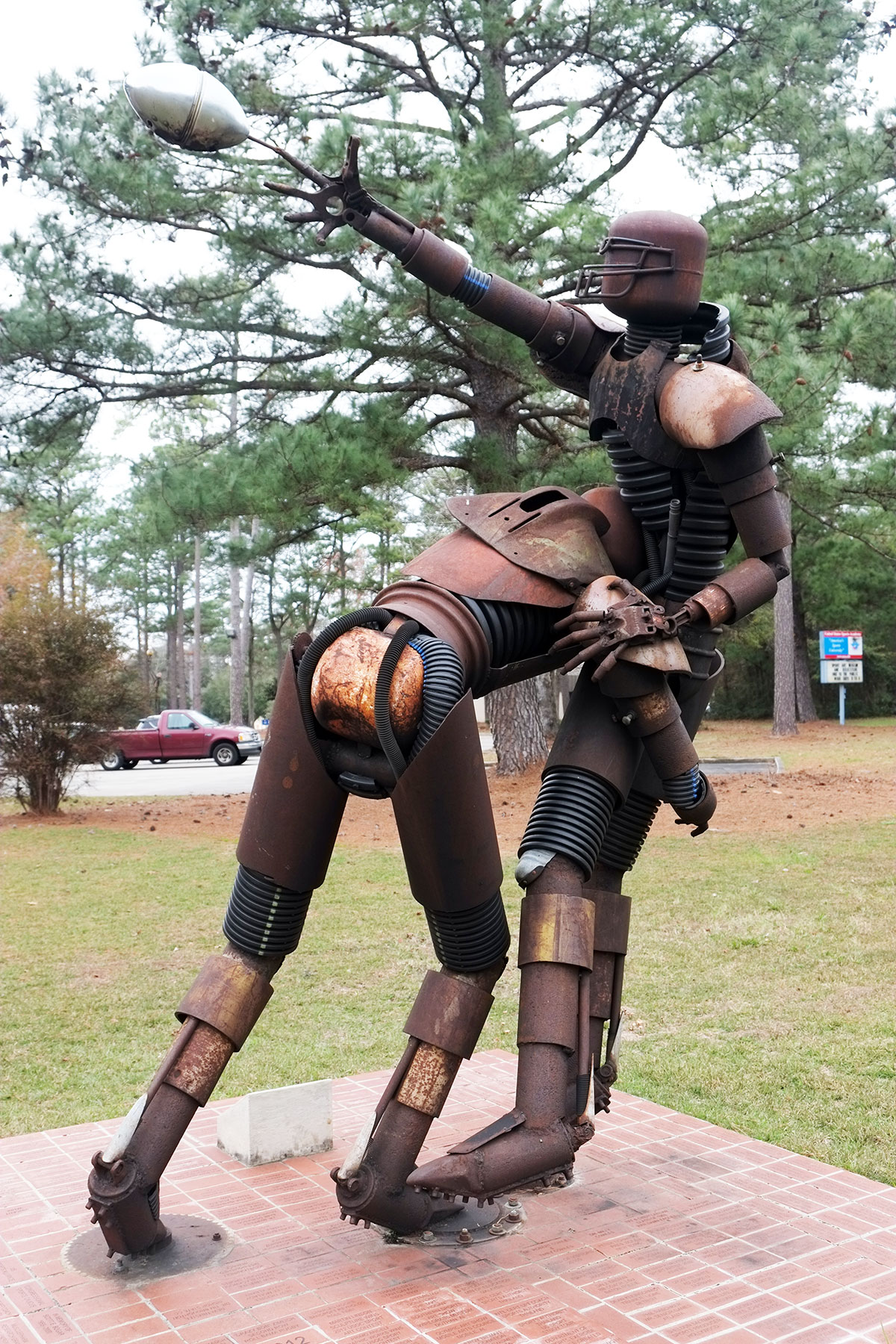
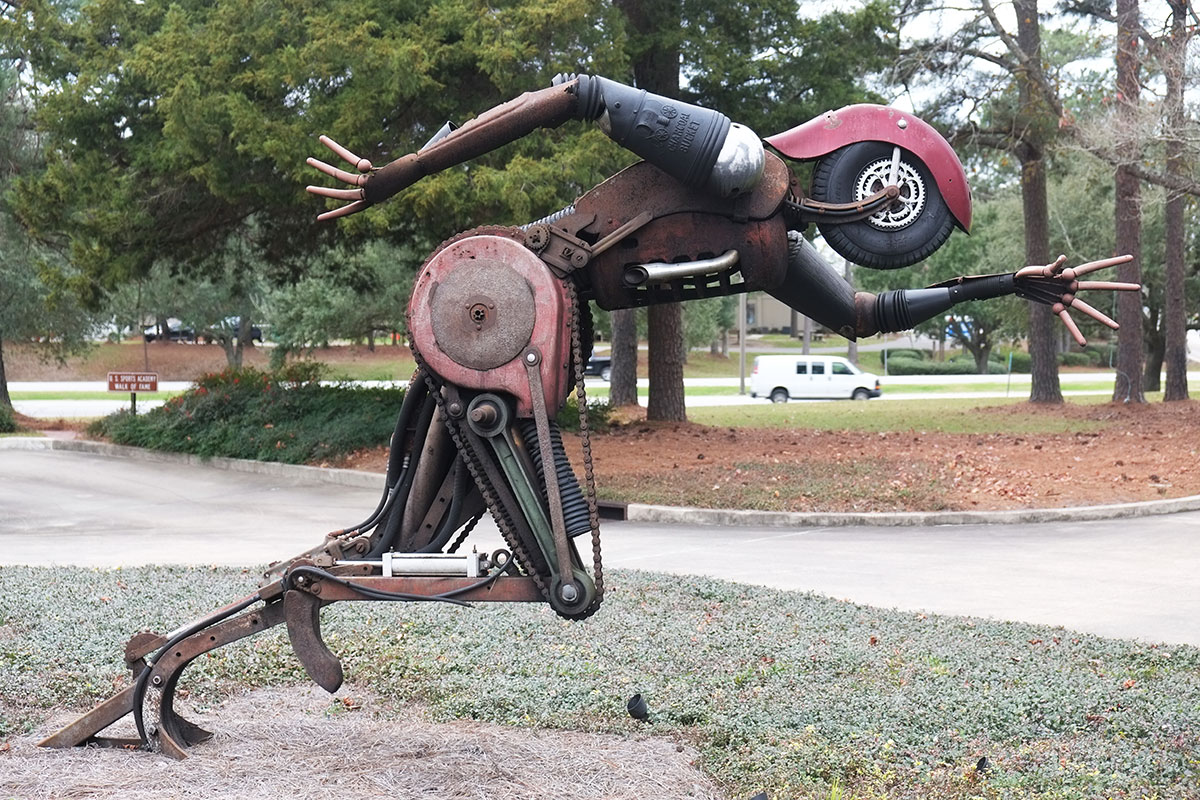
The other great cultural mainstay of Alabama is football, so guided by the map at RoadsideAmerica.com, we stopped at the US Sports Academy in Daphne, to see the sports sculptures made of junk metal by Bruce Larsen.  (Unmediated football doesn’t interest us, but representations might.)  They are remarkable, using rigid materials to convey a sense of movement, power and tension.  Greta liked them because they were so Steampunk.  DSCF1132  DSCF1152

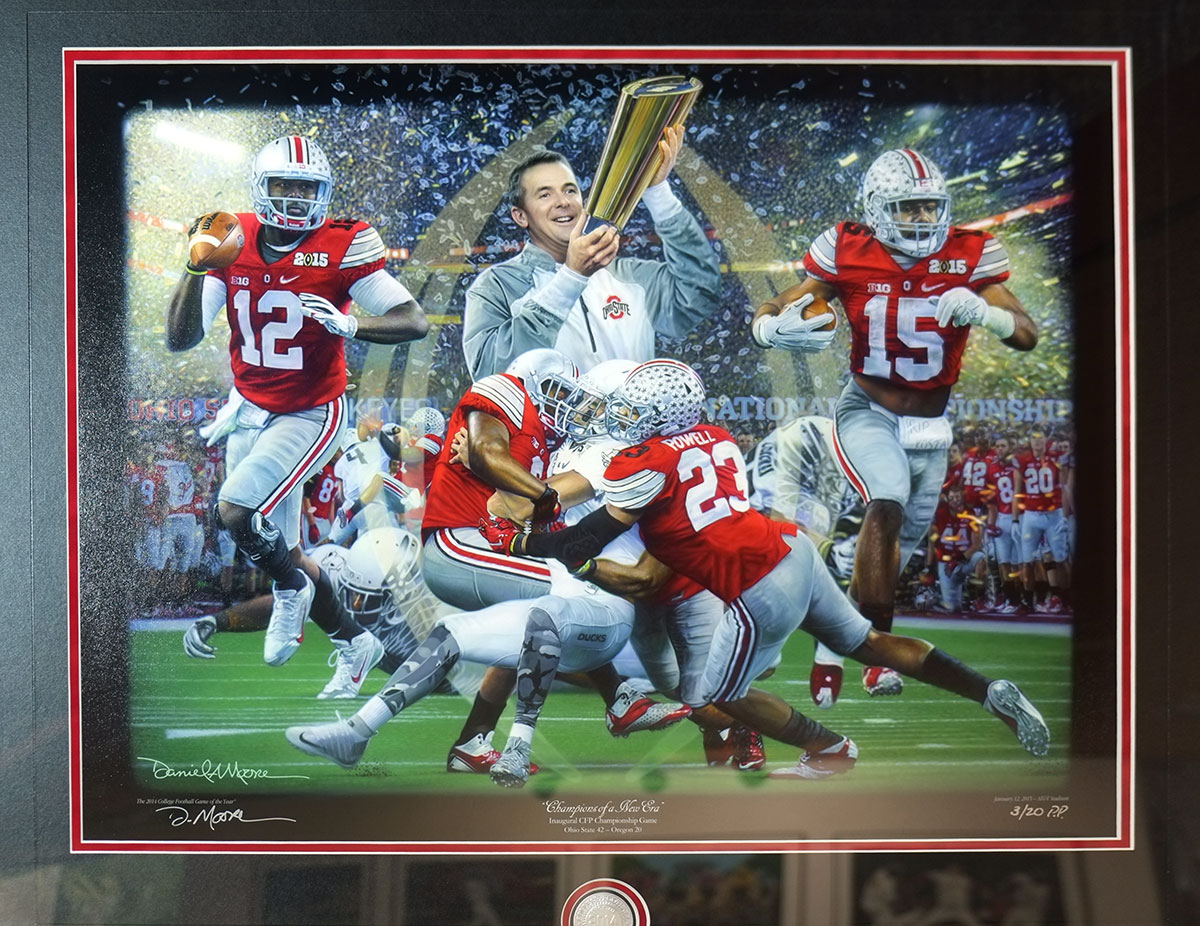
Heading to the building interior and its extended art collection, we came across this print which we had never seen before in Oregon.  DSCF1157pIt is apparently one in a series celebrating the “College Football Game of the Year”, and in its depiction of the inaugural CFP Championship game almost exactly one year earlier, it showed Marcus Mariota getting sacked by a swarm of Ohio State players.  We left in a huff.

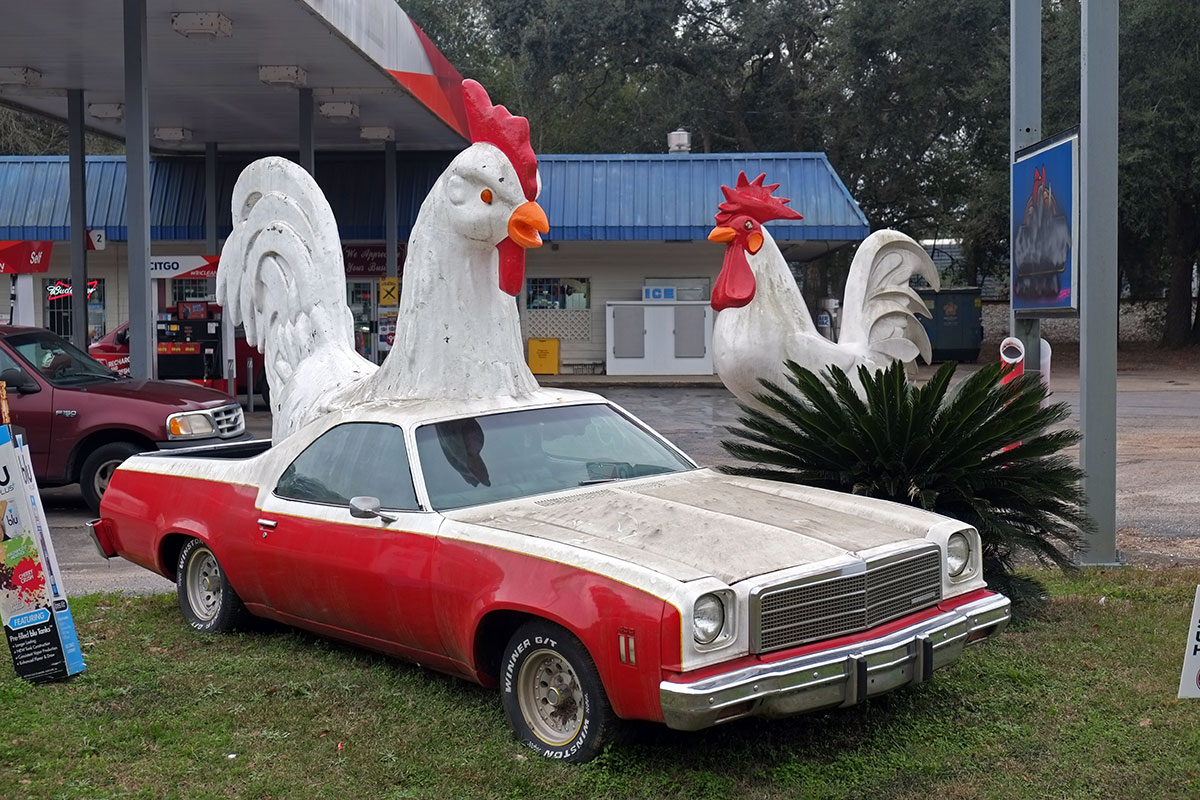
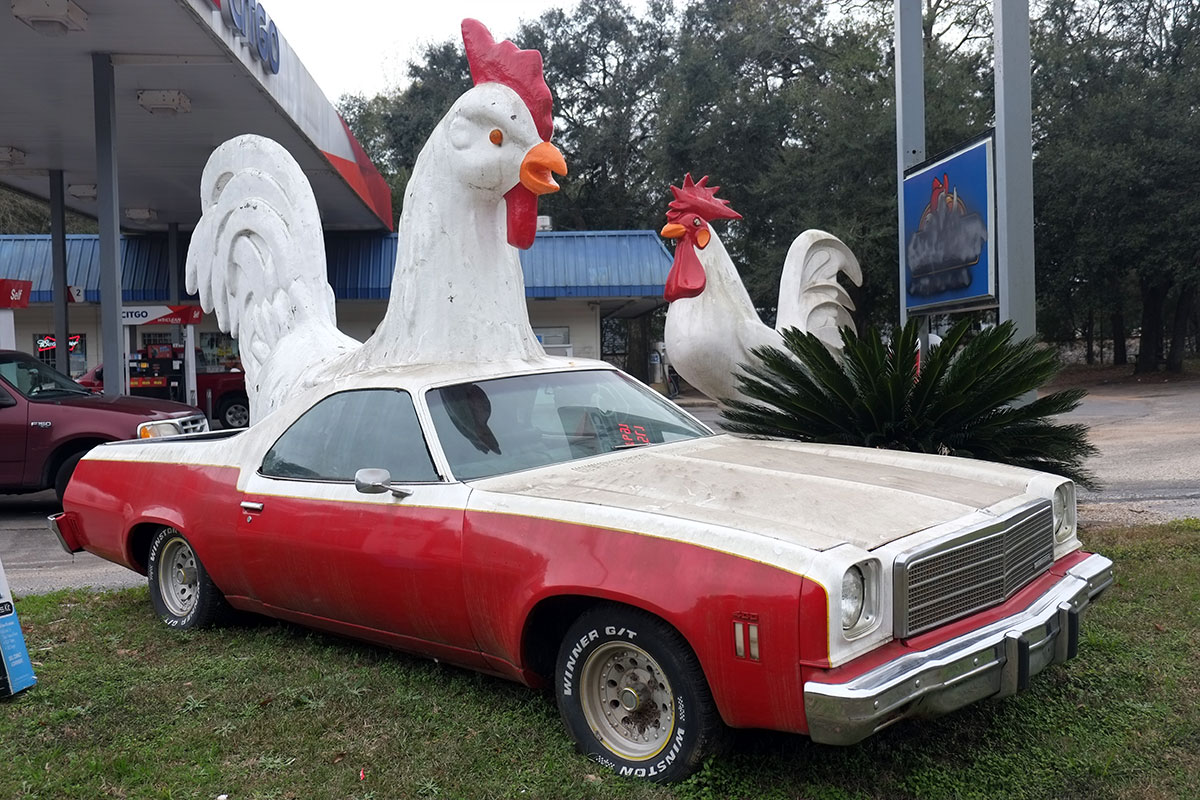
We cruised through Mobile, which did nothing to grab our attention, as we had one more goal in sight that afternoon:  once again, guided by RoadsideAmerica, we reached the El Camino chickens.DSCF1166

A local man saw me taking photos and called out to me:

“Do you like those chickens?”
“I love the chickens.  And my wife loves El Caminos, so I’m taking pictures for her.  I read that this used to be a fried chicken stand, is that true?”
“I’m not sure, the chickens have been here as long as I can remember, and whatever store is here has always sold some chicken, though.  Where you folks from?”
“Oregon.”
“I hear it’s beautiful there, but I’ve never been. Actually, I’ve never really been anywhere.  Never got too far away from these chickens.”

We know that our five hours there didn’t give us a nuanced view of Alabama, but overall, it was more positive than we had been expecting.

Roadside kitsch

As I tried to plan our trip across the deep South, major destinations didn’t jump out at me.  The small towns and cities are not very notable architecturally, the landscape is flat and pretty monotonous, and there aren’t a lot of museums, other than those of local history.  So we turned to the maps of Roadside America, which highlight tourist attractions that may not be worth a trip on their own, but do provide a bit of relief on an afternoon’s drive.

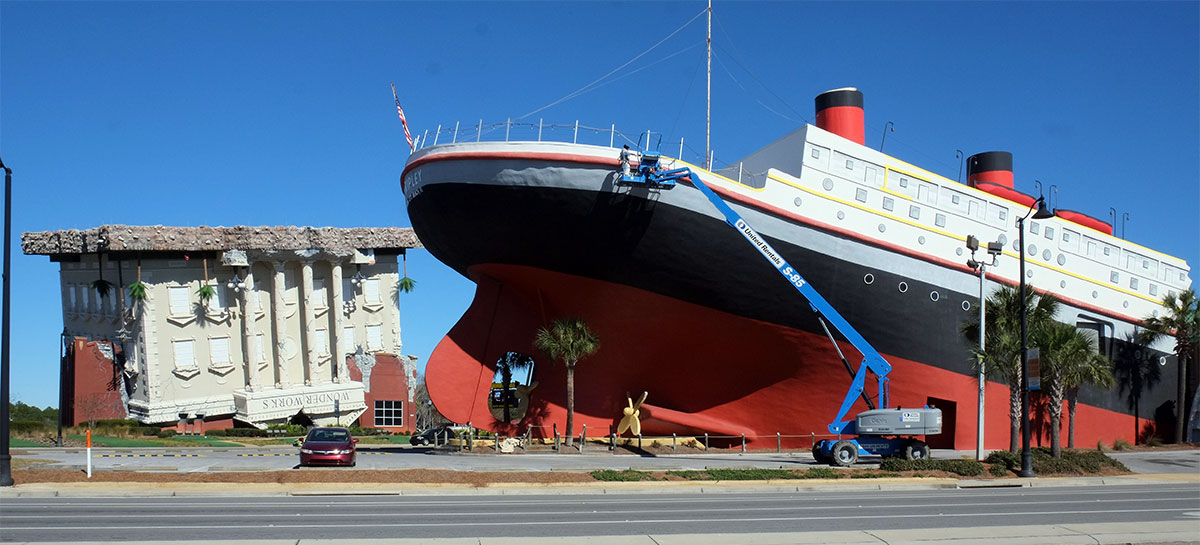
If South Dakota is the center of western kitsch, Florida is the king of the kitsch in the south.  There are carloads of tourists looking for distractions and kids to be entertained.  Panama City Beach has a main drag with one fantastic apparition after another.  There is the sinking ship at the Ripley’s Museum, DSCF0652

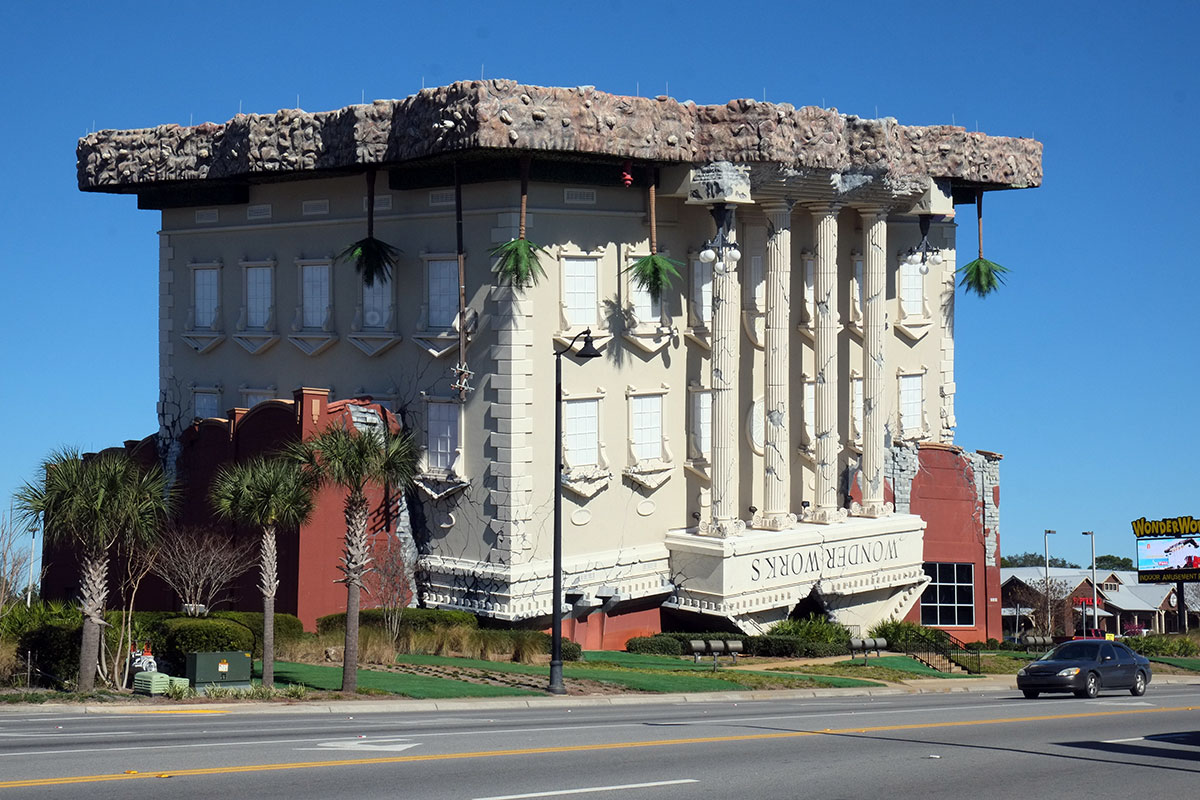
and the upside-down building of Wonder Works, very nicely done.DSCF0655

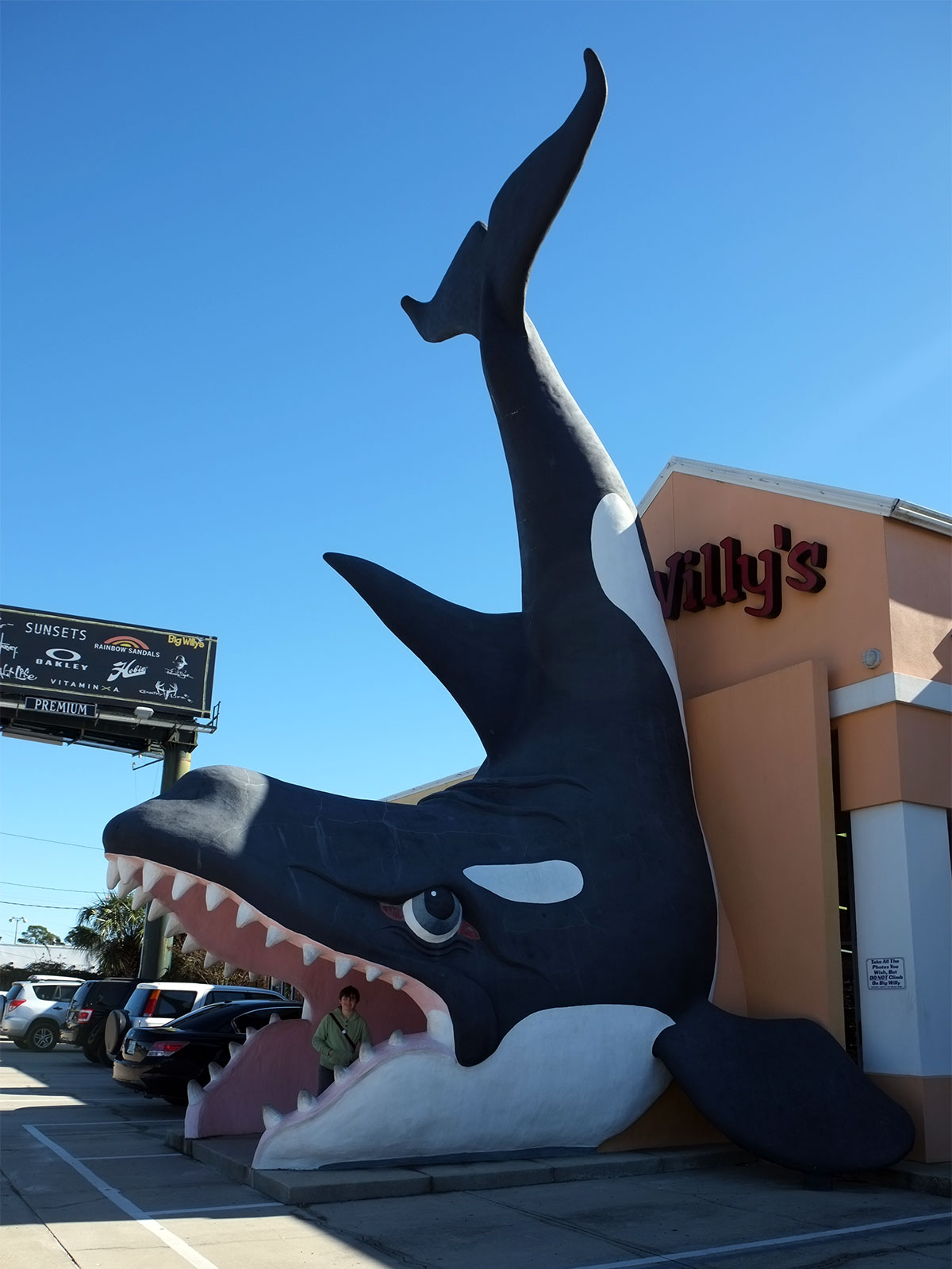
There are so many fiberglass sharks that we stopped paying attention, but being Northwesterners, this beautifully-sculpted killer whale (that’s what they’re called in Florida) got our attention.DSCF0635

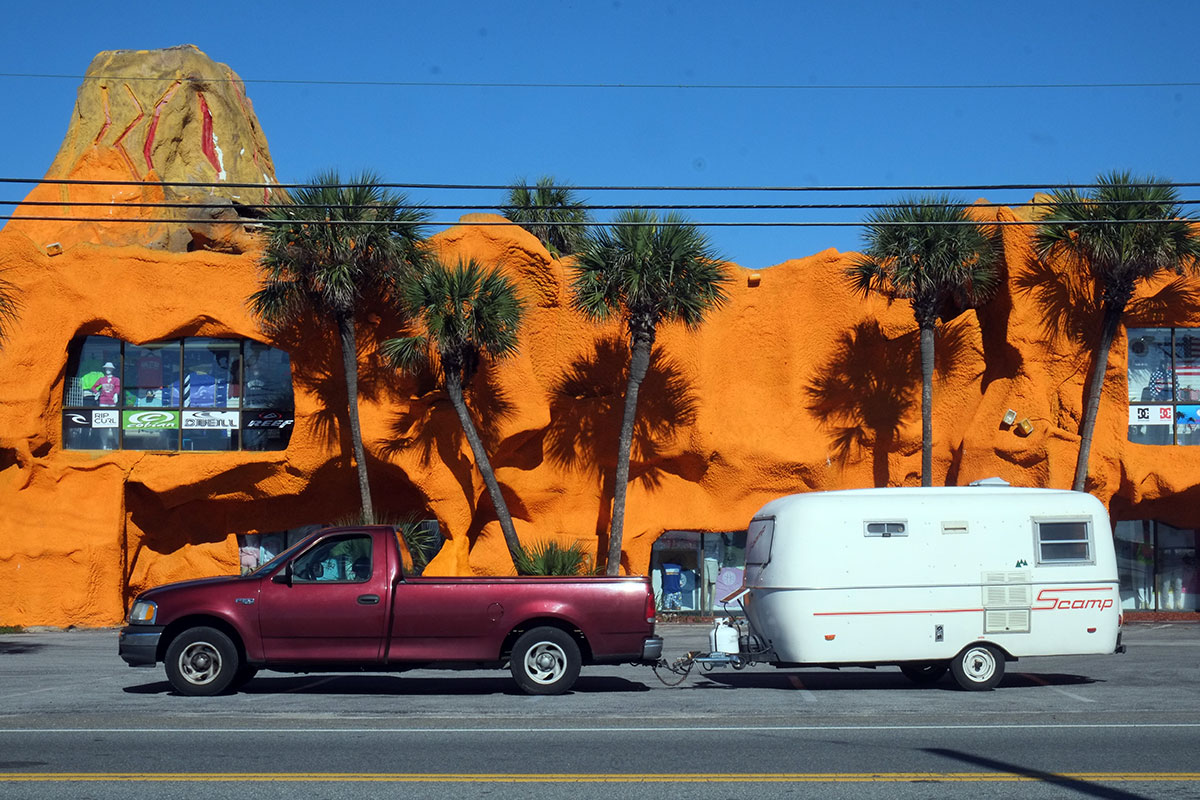
There is the local chain of beach stores, Alvin’s Island.  This is the most expressive of their locations.DSCF0661

And the Goofy Golf, which unfortunately was defunct.  DSCF0672

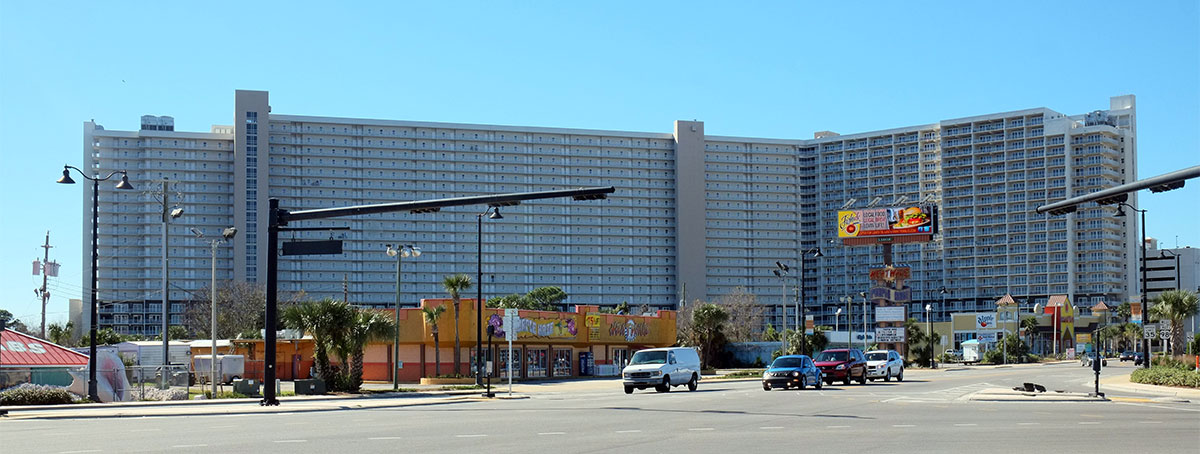
The flip side (literally) of this showmanship is the mind-numbing banality of the standard buildings – huge walls of condos and hotels facing the Gulf.  Route 30 through Panama City is the urbanistic equivalent of a mullet haircut – all business in the front and party in the back.DSCF0656

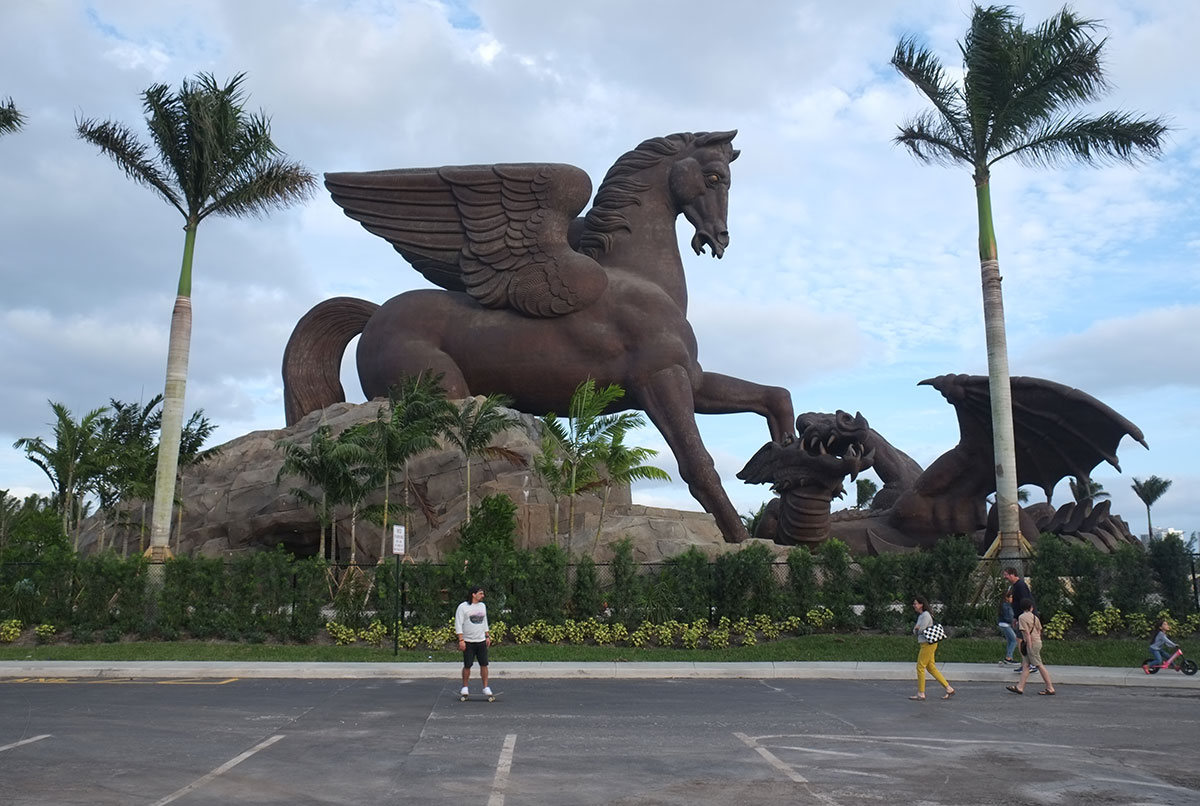
The kitsch on the Atlantic Coast is of a different order of magnitude.  Gulfstream Park is an older horse track in Hallandale Beach, which is being redeveloped with a casino.  The developer had a vision of a Pegasus fighting a dragon, and a 120-foot tall bronze sculpture (yes, real bronze!) is the result.  DSCF8725

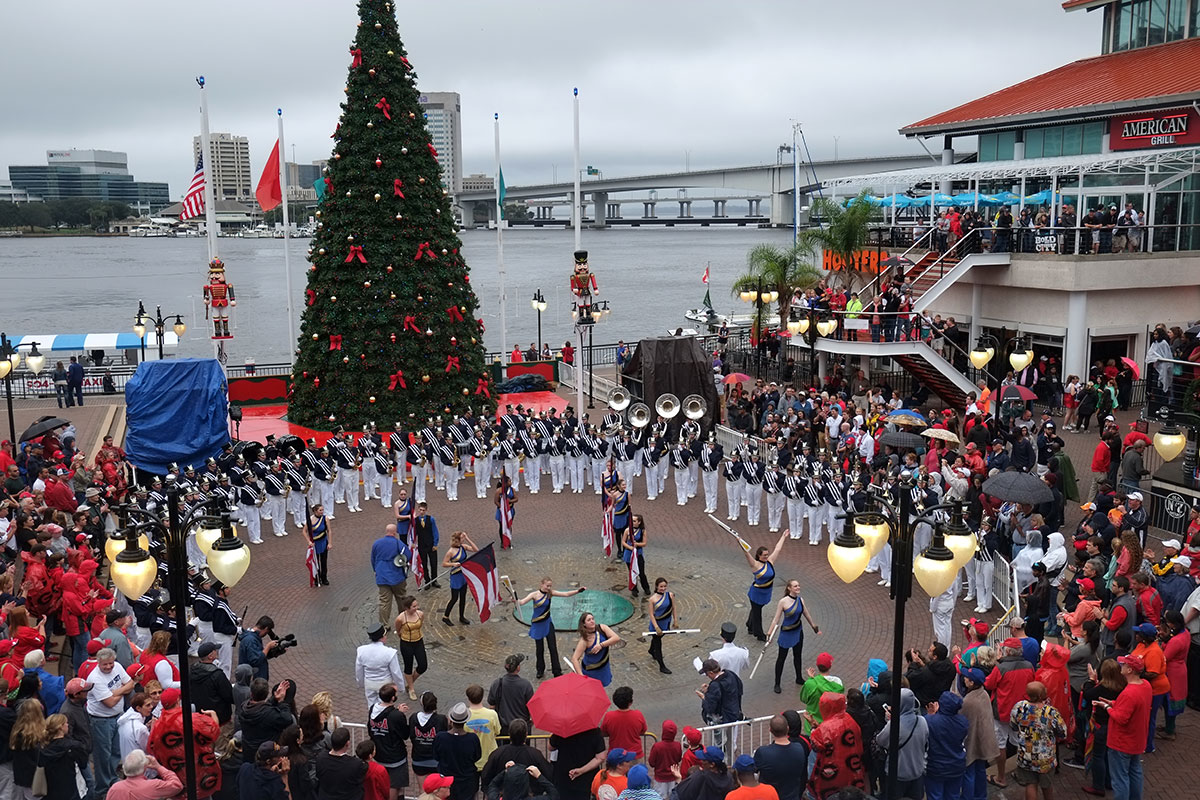
Events can be kitsch too.  On a rainy and cold (for Florida) New Years Day, we were wandering around downtown Jacksonville, and stumbled upon a pep rally for the impending bowl game between Georgia and Penn State.  We caught the impressive Georgia band and cheerleaders (and discovered that Georgia had long ago co-opted the Battle Hymn of the Republic to be their football fight song – a striking act of musical kitsch on its own), but Greta was mainly impressed by the waves of shivering high school cheerleaders performing in the rain.DSCF9282

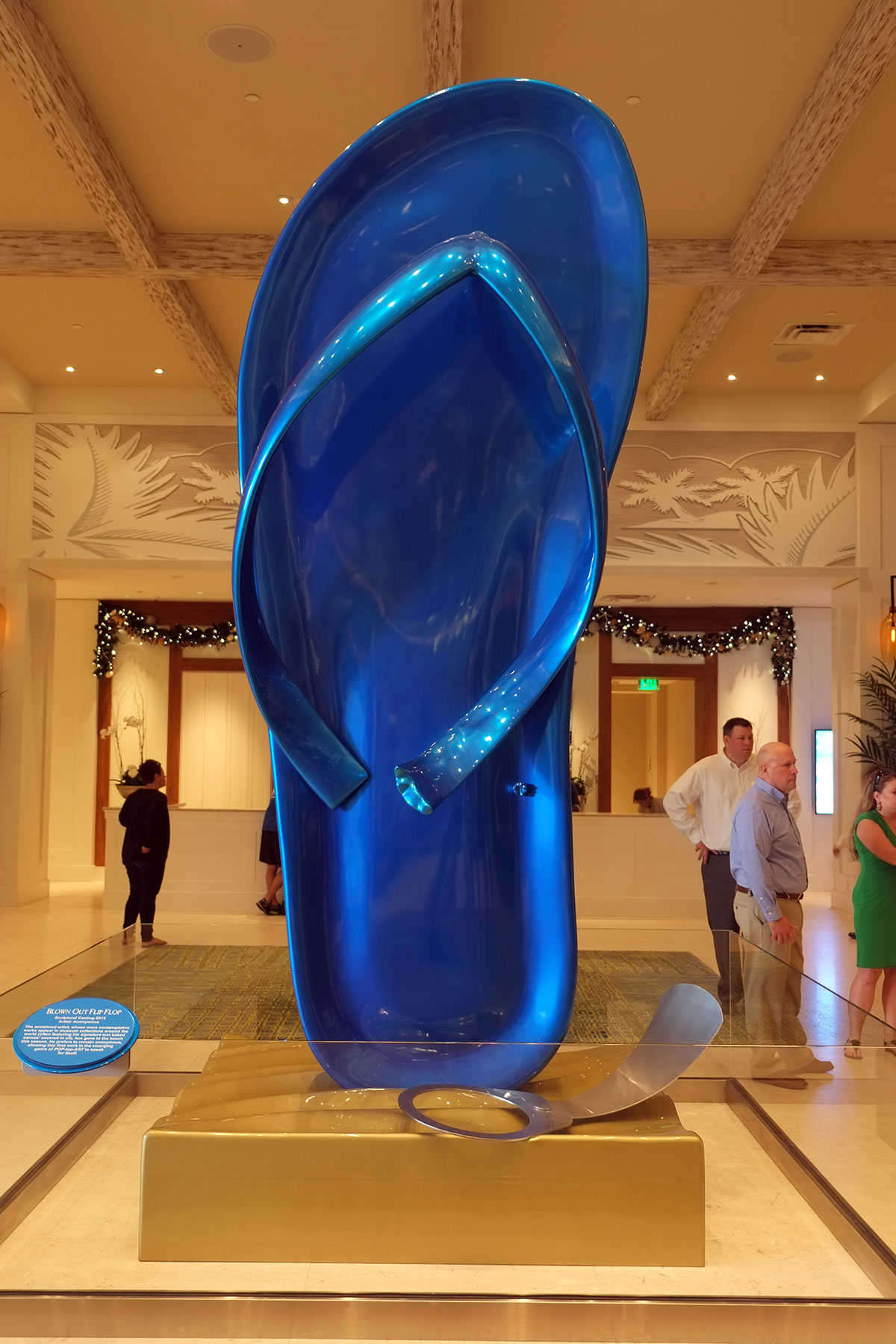
Then there is ironic meta-kitsch.  At the Margaritaville Resort hotel in Hollywood, there is this monument to the blown-out flip-flop and pop-top in the lobby.  The label beautifully parodies the pretensions of museum labels everywhere, with its reference to POP-top-ART.
DSCF8714

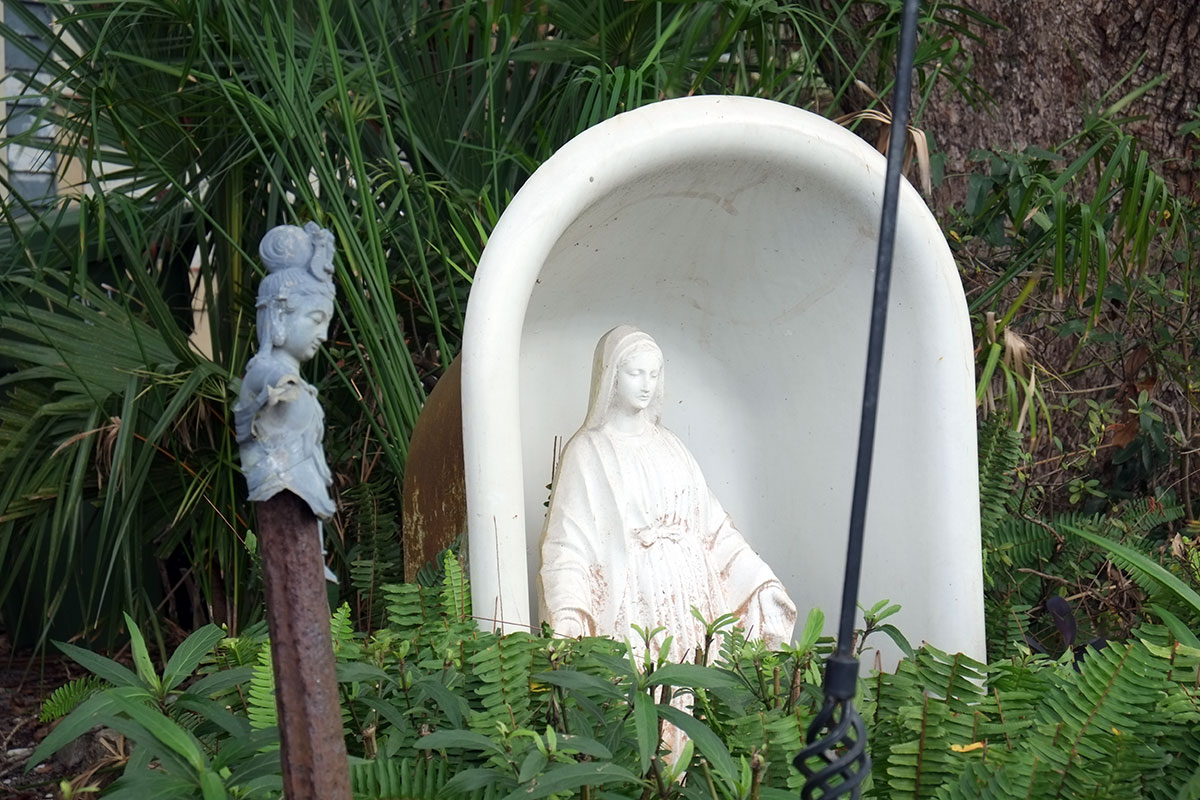
Outside a tattoo shop in St. Augustine we found sophisticated syncretistic kitsch – our first Bathtub Madonna complemented by what appears to be a HIndu goddess.
DSCF9097

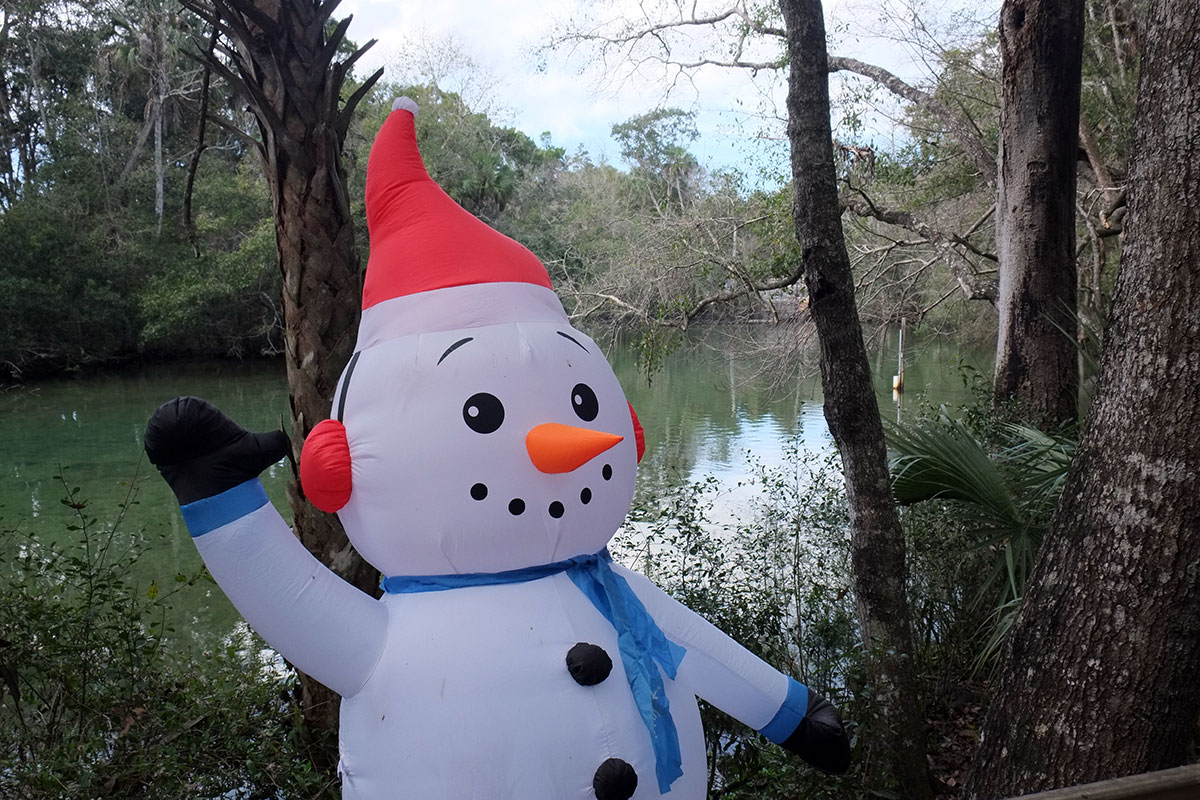
Even non-kitsch locations in Florida can’t resist the allure.  At Homosassa Springs, a state park with resident manatees and a wonderful small aviary, there is a snowman on the bayou.DSCF9013

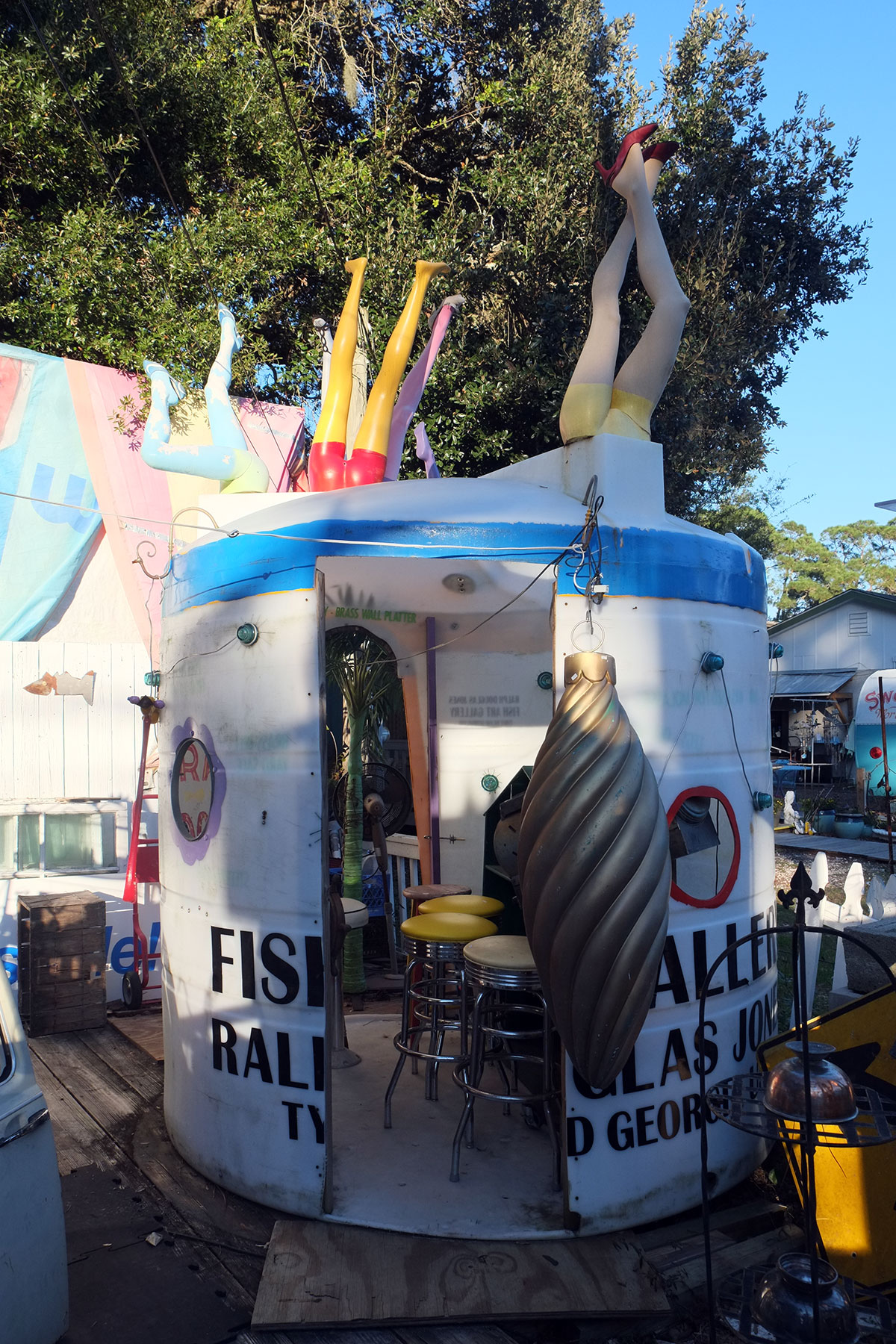
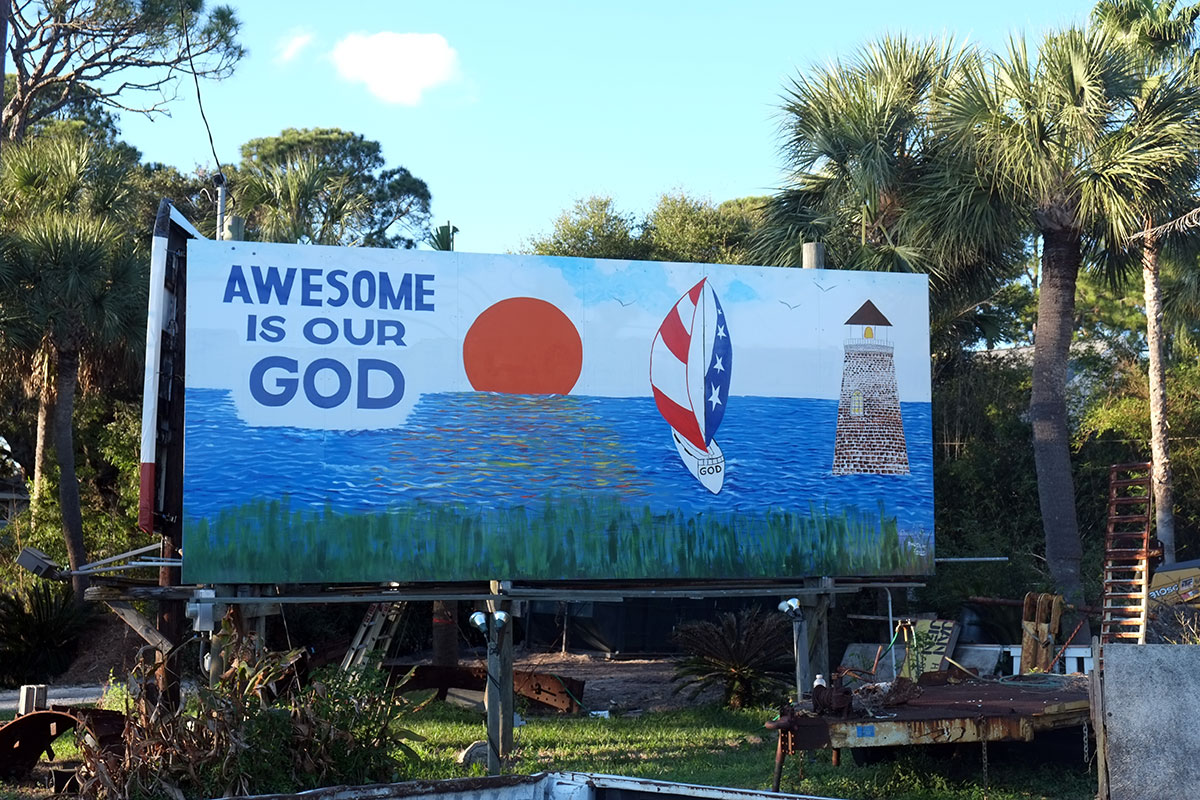
The kitsch continued in Georgia.  At Tybee Island, outside Savannah, there is the Fish Art establishment, where a local artists sells his visions:DSCF9671

down the road from a religious billboard which could support at least one article in the Journal of Religious Iconography and Semiotics.  (Note that this is not the only God+sailboat imagery we spotted in Georgia.)DSCF9665

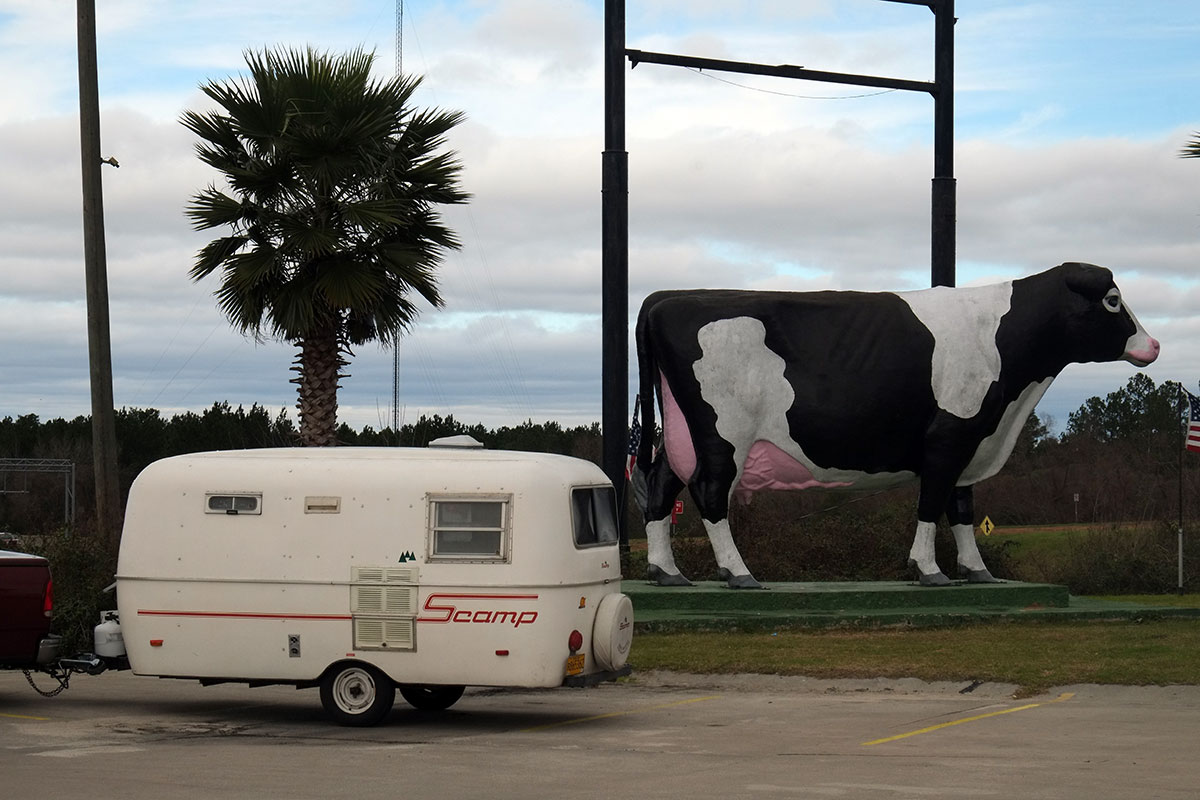
Ashburn, Georgia was worth a small detour to see this lovely large cow,DSCF0369

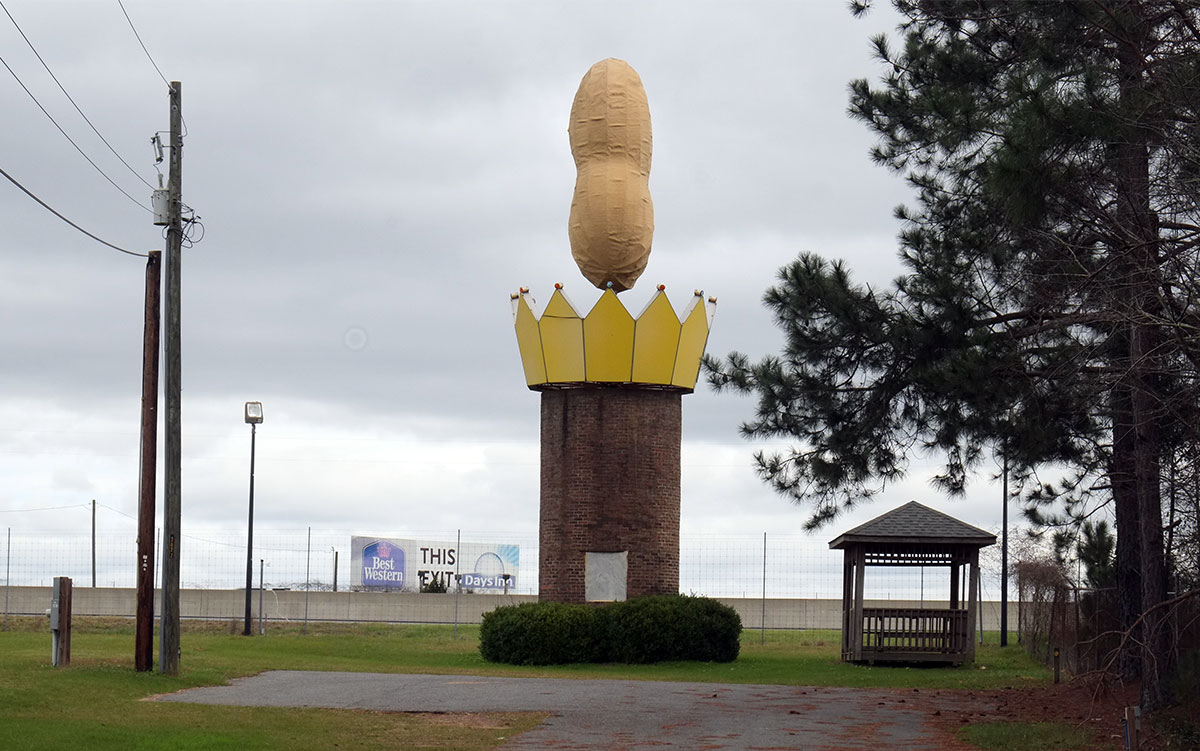
as well as the World’s Largest Peanut (which frankly didn’t look that big to us).DSCF0384

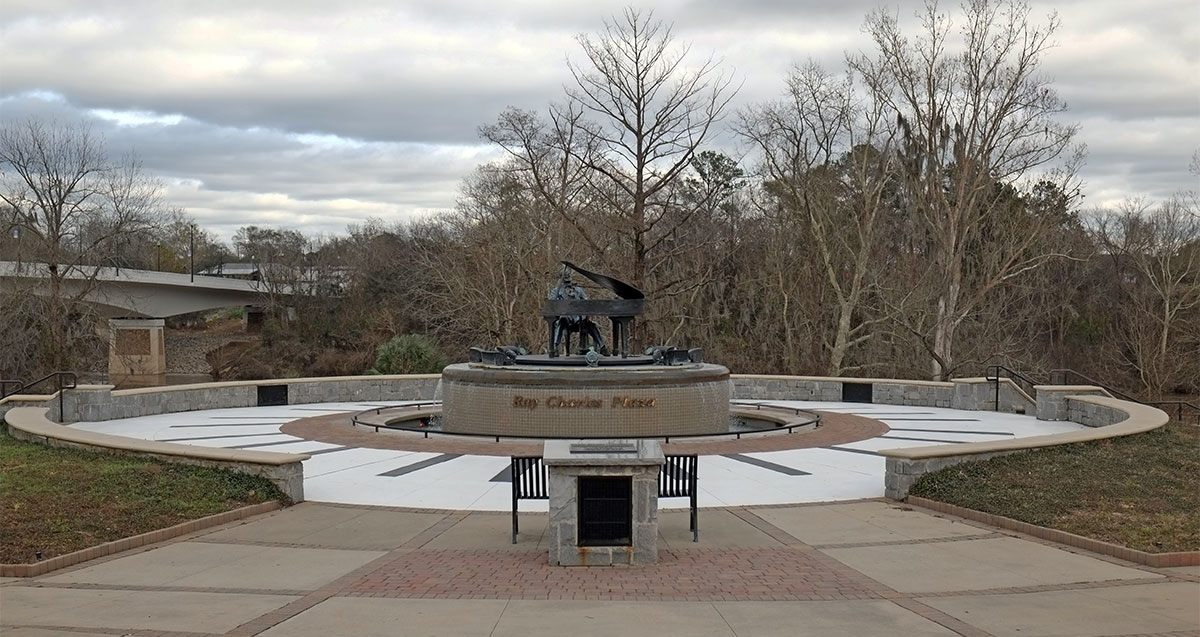
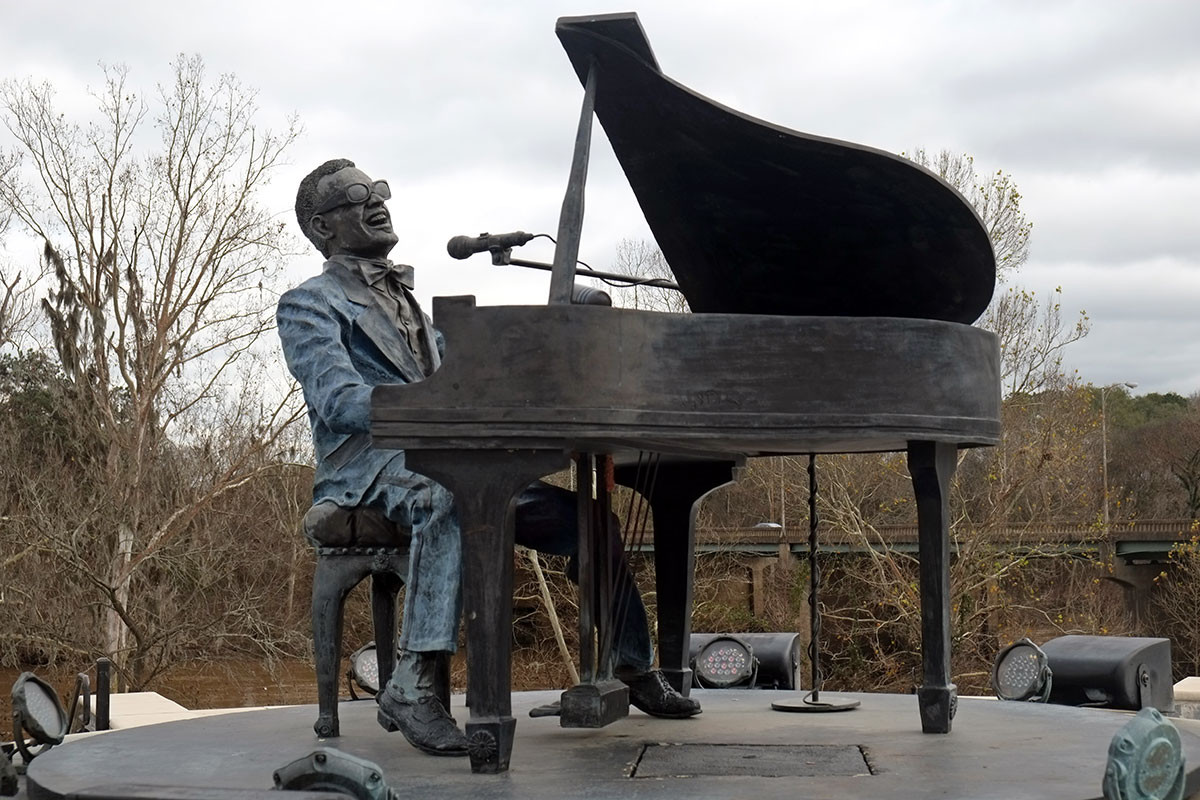
A short drive to Albany, Georgia, hometown to Ray Charles, who is memorialized in the riverfront plaza, fountain and bronze statue.DSCF0426

The statue revolves slowly, while a few of Ray’s classic songs play from speakers.  We caught Georgia on my Mind and loved it, as it continued our musical tour of Georgia appropriately.  (There were no speakers at Duane Allman’s grave, but we did play One Way Out on Greta’s phone while we paid our respects.)  DSCF0418

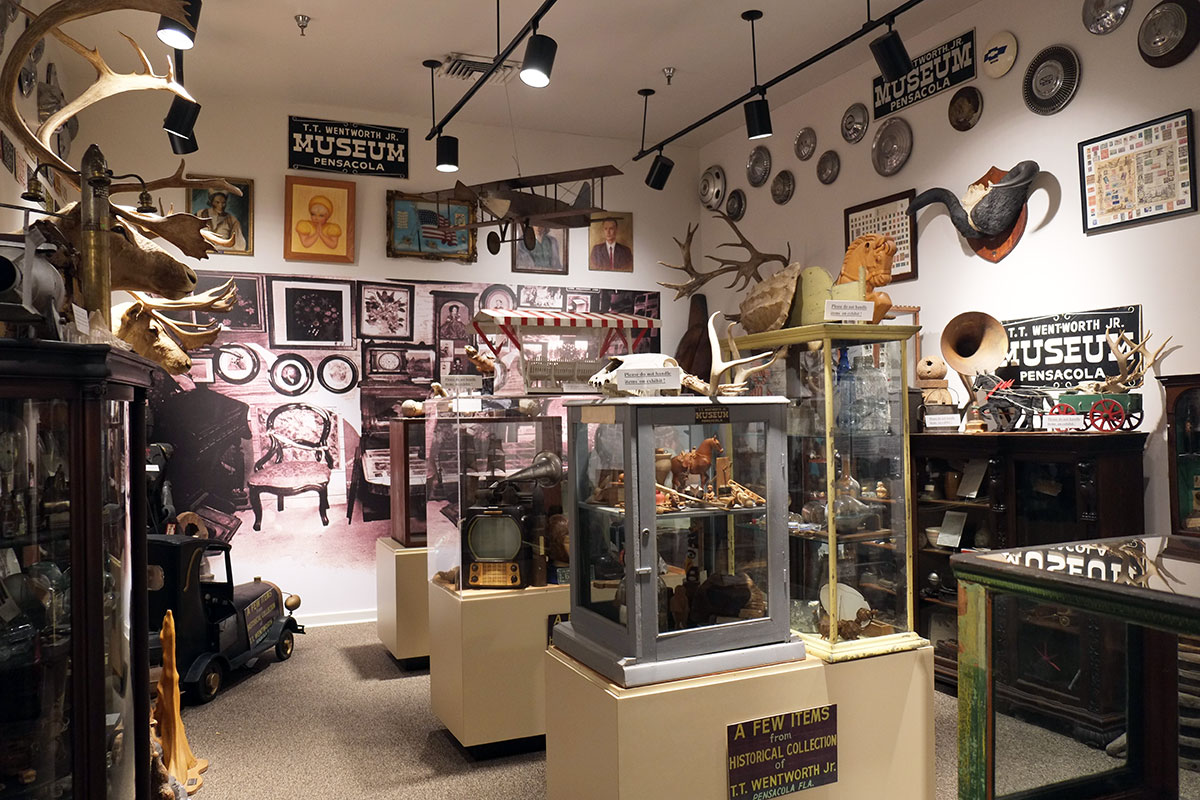
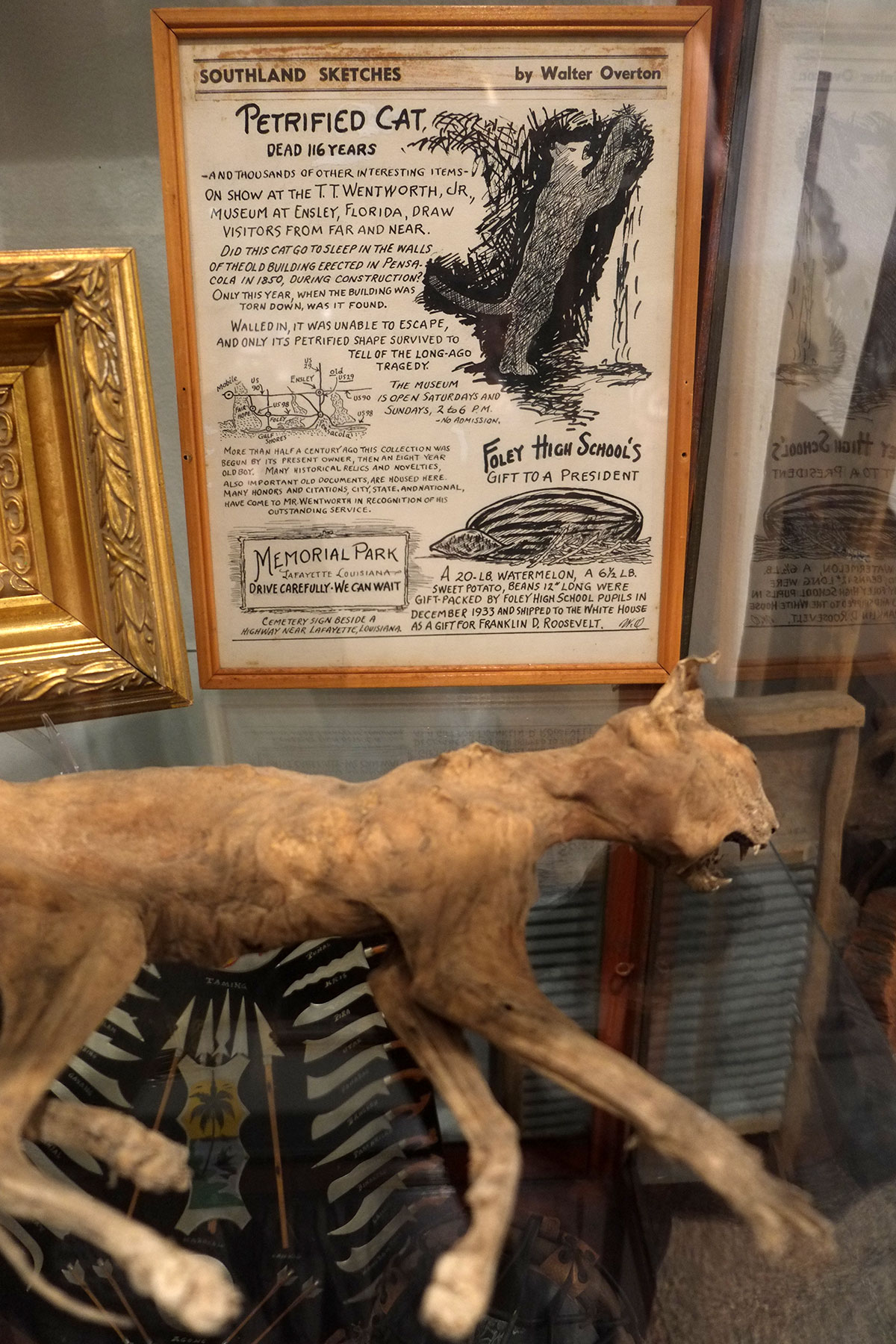
Back in Florida, we went to the Wentworth Museum in Pensacola.  It is now an informative and tasteful municipal museum, but its roots are in the eclectic and expansive collecting of T.T. Wentworth Jr., DSCF1081which included such wonders as this petrified (actually, mummified) cat,
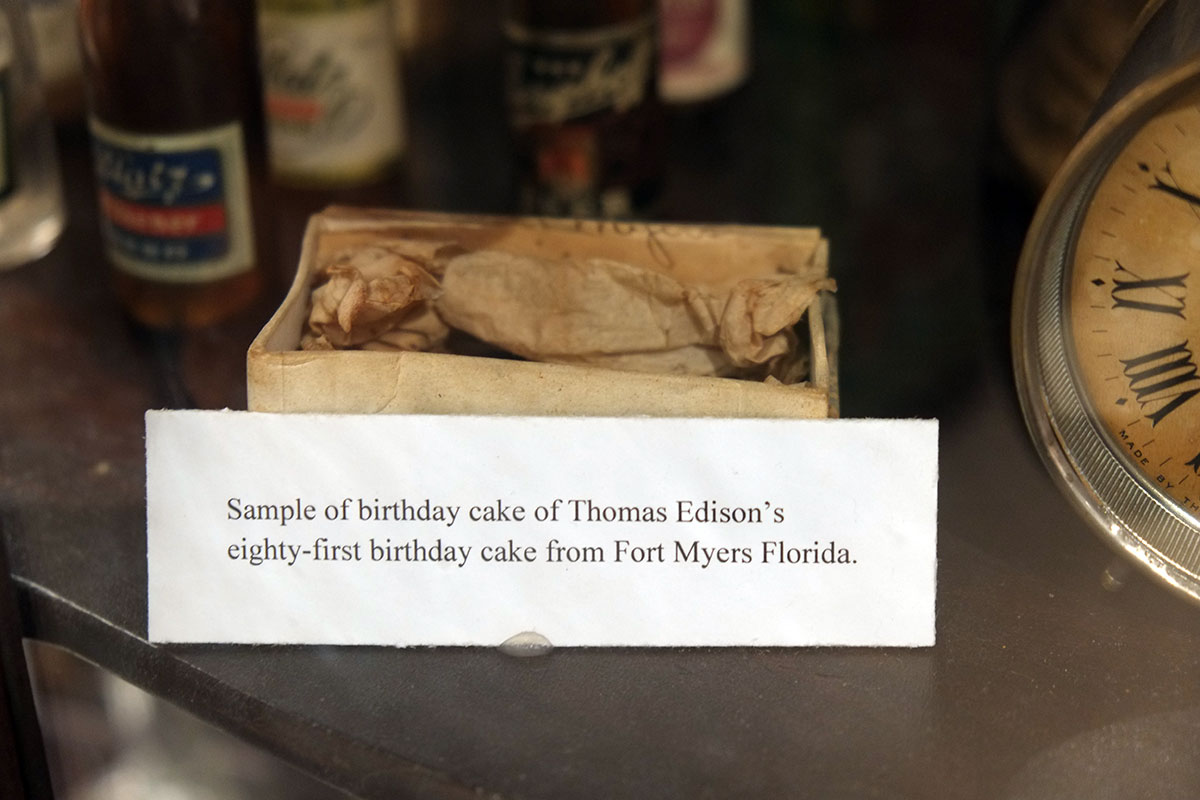
DSCF1084and a remnant of Thomas Edison’s 81st birthday cake.DSCF1099

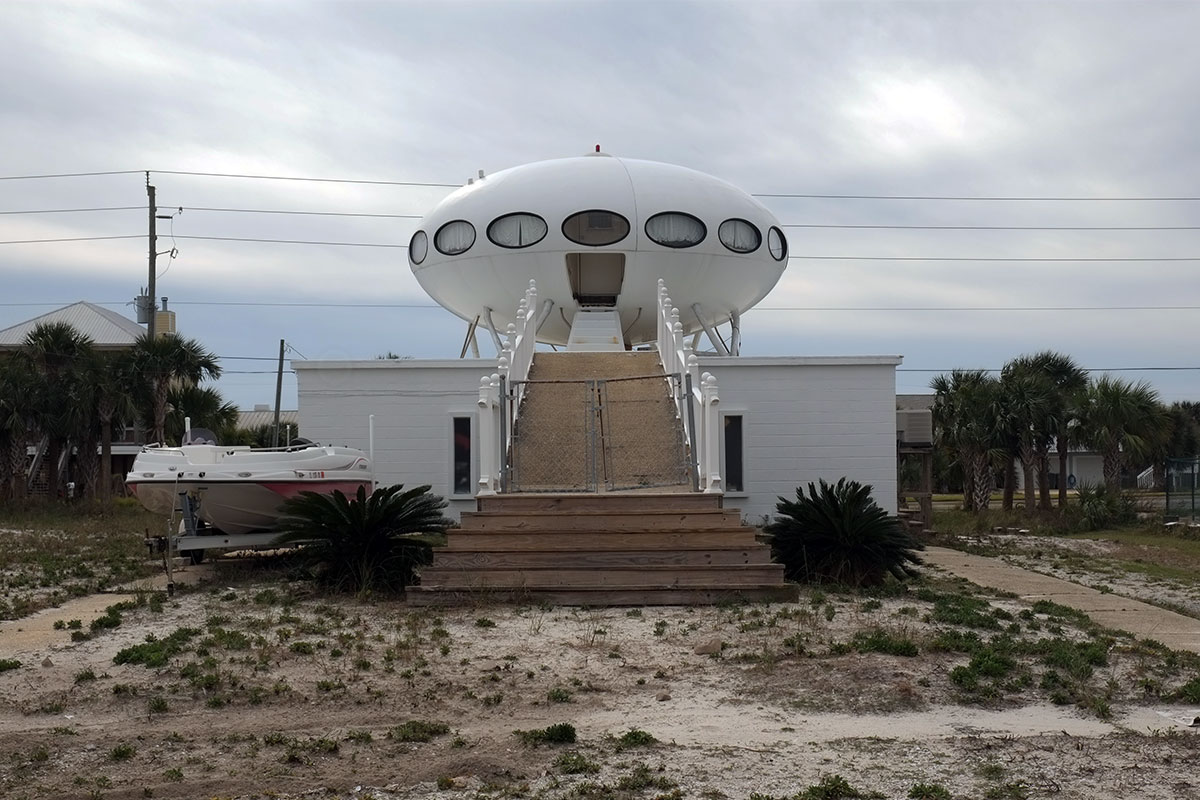
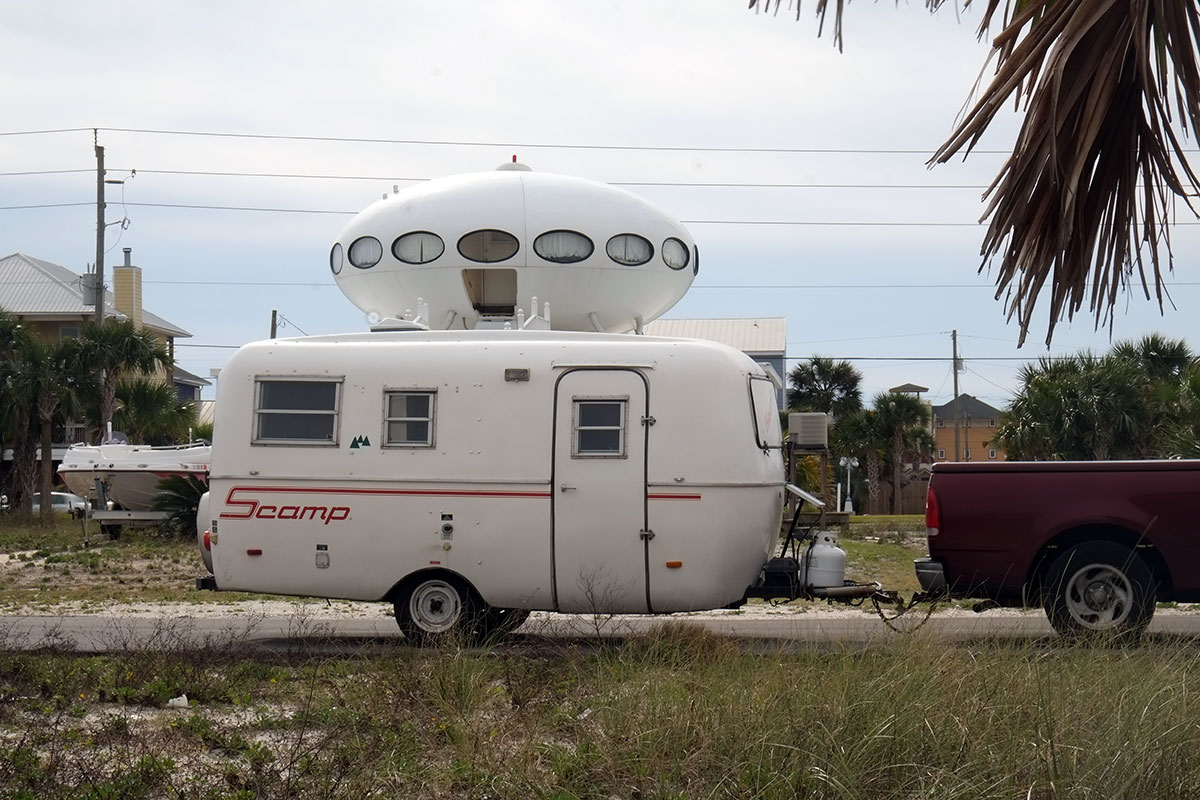
The kitsch extended to the architecture on the Panhandle.  The UFO House at Pensacola Beach, which is actually a 1960s pre-fab fiberglass house from Finland.  I thought the PVC colonial-style railings from Home Depot added a nice touch.DSCF1065and we considered adding a bedroom to our little trailer.  DSCF1071

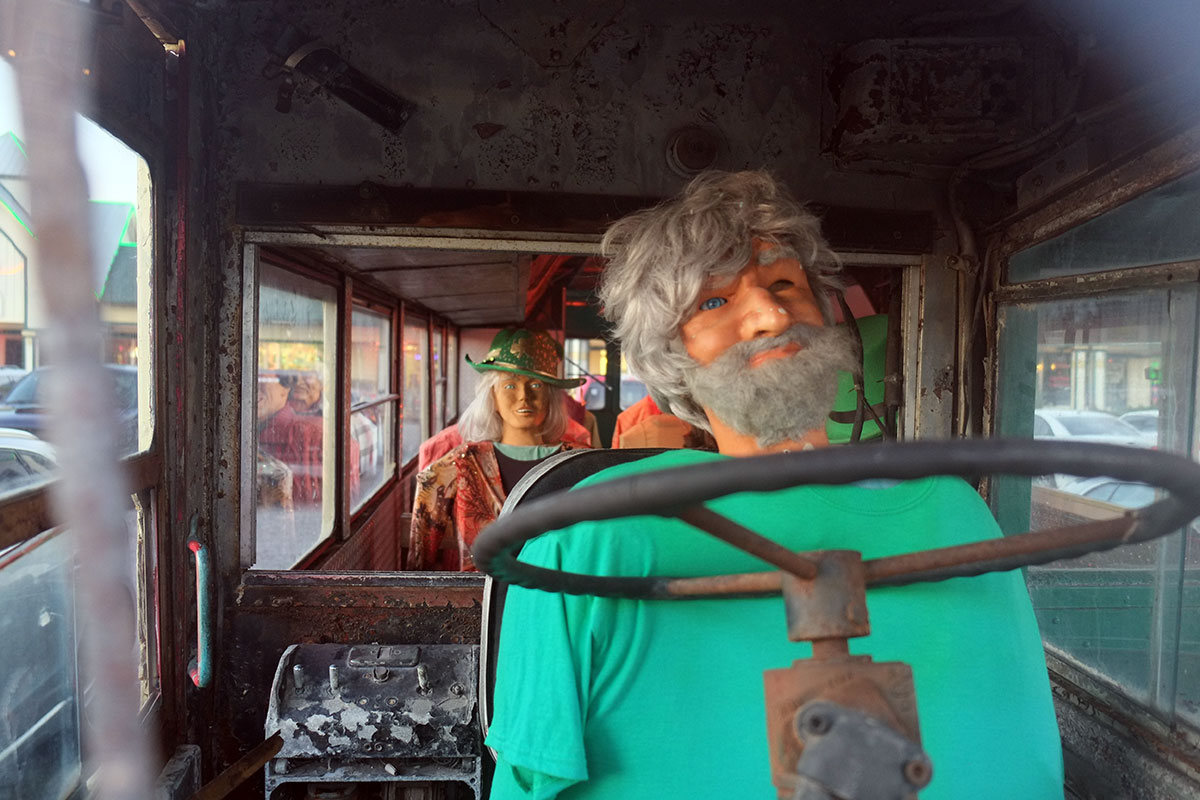
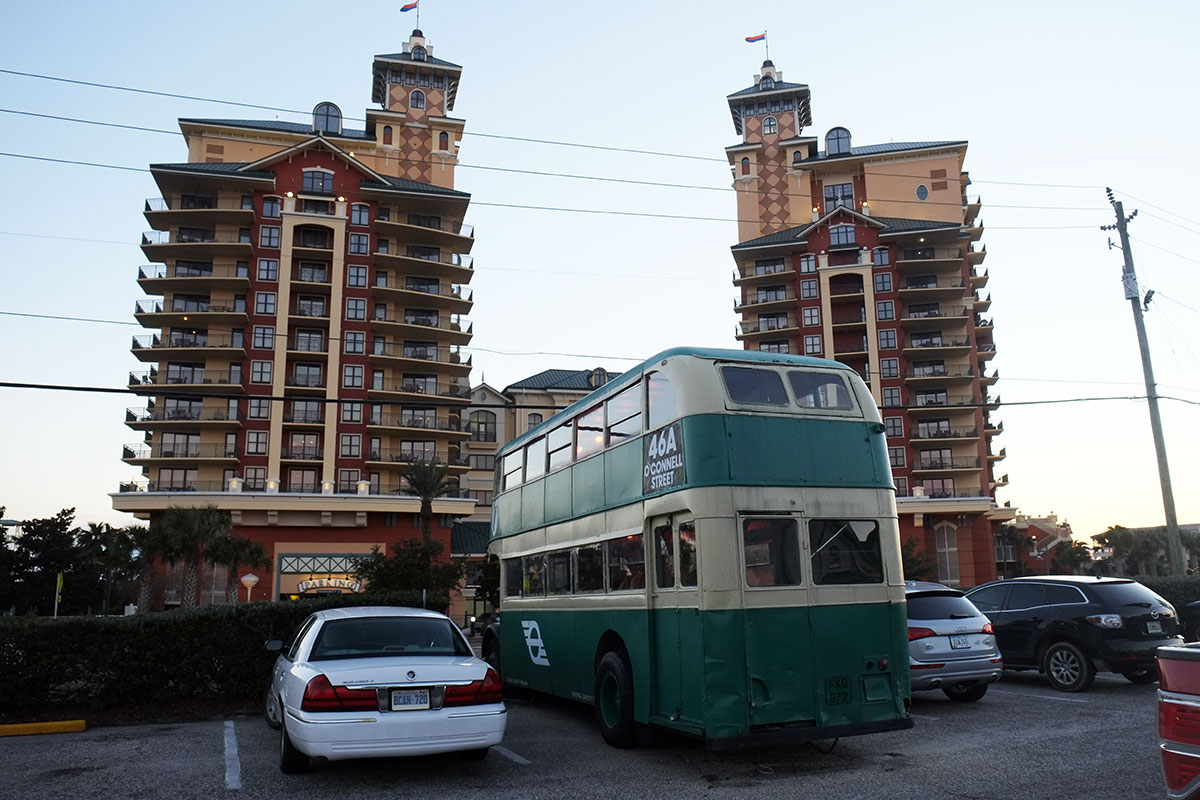
At Destin, we went to see the truly creepy double-decker bus filled with mannequins outside an Irish pub,DSCF0900

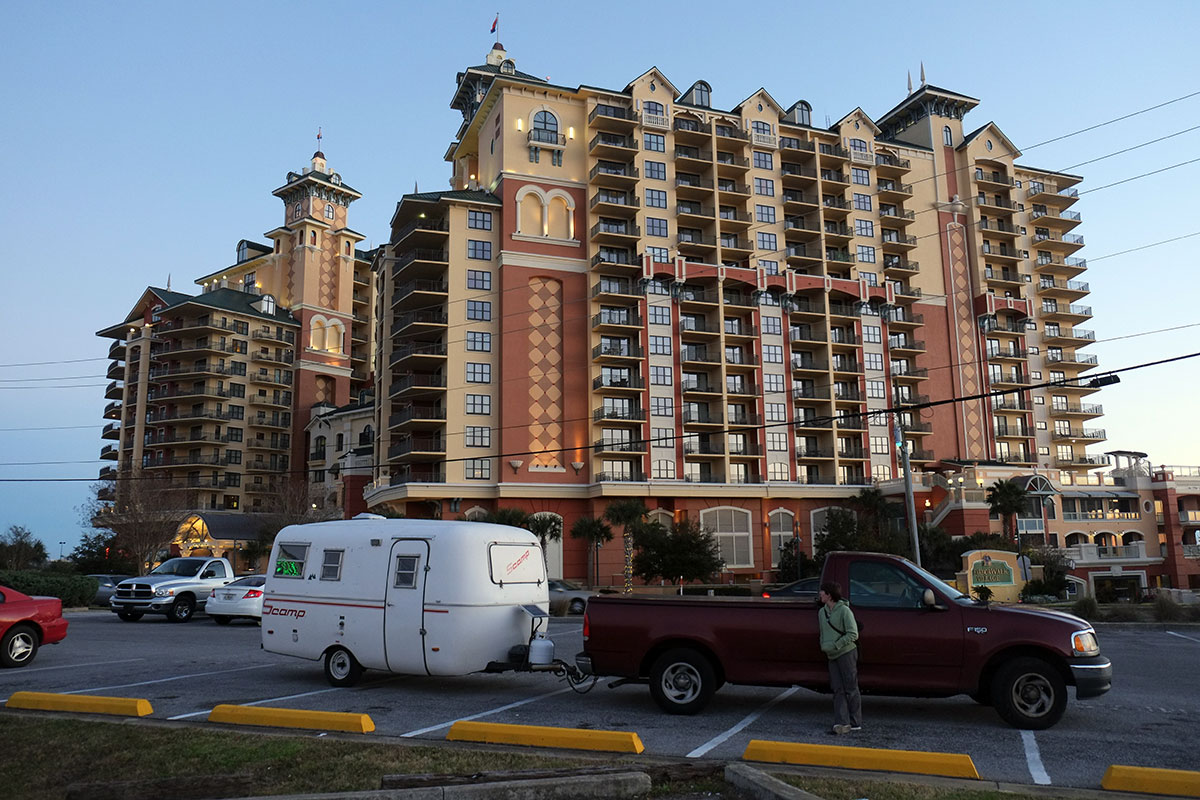
which fortuitously led us to the World’s Most Awful Condo, right across the street:DSCF0903

It was remarkable – we couldn’t stop looking at it.  It is the greatest collage of motifs and elements I’ve ever seen.  The architect had the brilliant insight that the two sides of Route 30 could be united:  the nuttiness of the tourist attractions across the street could be grafted on to the gigantism of the Gulfside condo.  Even the architect of the Margaritaville Resort – a hotel based upon a sybaritic pop song – had still felt the need to design a tasteful and luxurious edifice.  And I must say, if you can accept the basic premise (firmly grounded in Learning from Las Vegas) this one is pretty skillfully done.  (See what a couple of weeks in Florida has done to my sensibilities?)DSCF0915

But our favorite installation was outside Theodore, Alabama:  the sublime Chicken El Camino:DSCF1165A local man saw me taking photos and called out to me:

“Do you like those chickens?”
“I love the chickens.  And my wife loves El Caminos, so I’m taking pictures for her.  I read that this used to be a fried chicken stand, is that true?”
“I’m not sure, the chickens have been here as long as I can remember, and whatever store is here has always sold some chicken, though.  Where you folks from?”
“Oregon.”
“I hear it’s beautiful there, but I’ve never been. Actually, I’ve never really been anywhere.  Never got too far away from these chickens.”