Tag Archives: #vanlife

The Kimbell

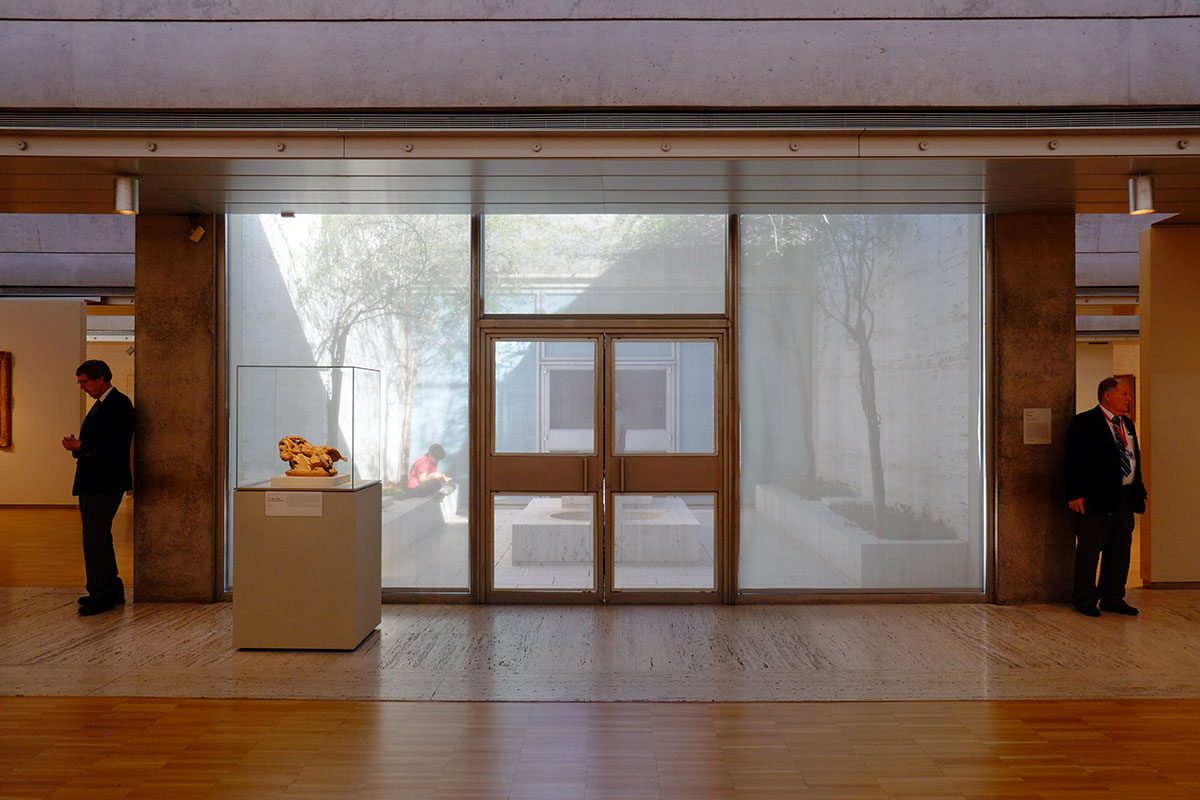
One of the goals of this trip was seeing the Kahn buildings in out-of-the-way places that I had not seen before.  An unintended theme that developed has been seeing most of the Piano museums across the country.  The Kimbell is where these two came together, in what must be the ultimate compare-and-contrast question for a modern architectural history exam.  After seeing the two together, I’m more convinced than ever that having Piano design the addition to Kahn’s Kimbell was the best possible choice.  There is no other living architect whose work could pay homage to Kahn without imitating him, and who could simultaneously complement Kahn’s work while taking an archetypally different tectonic approach.
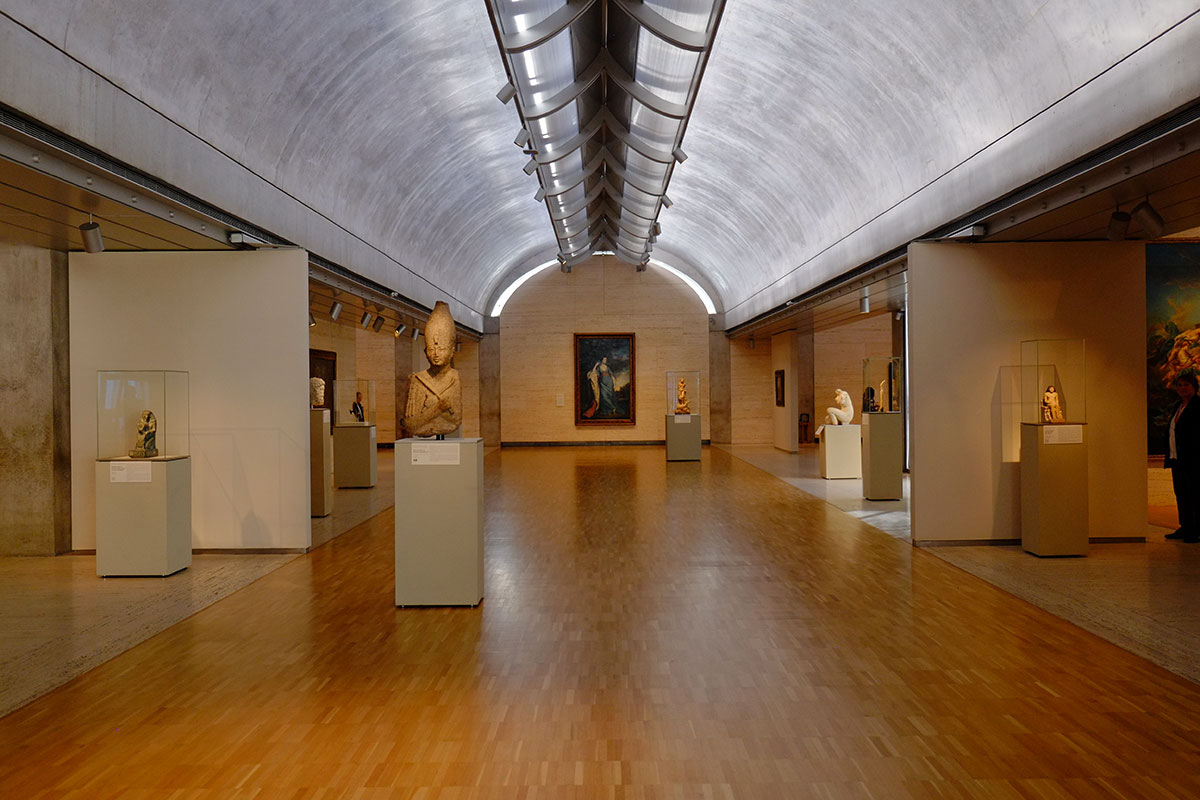
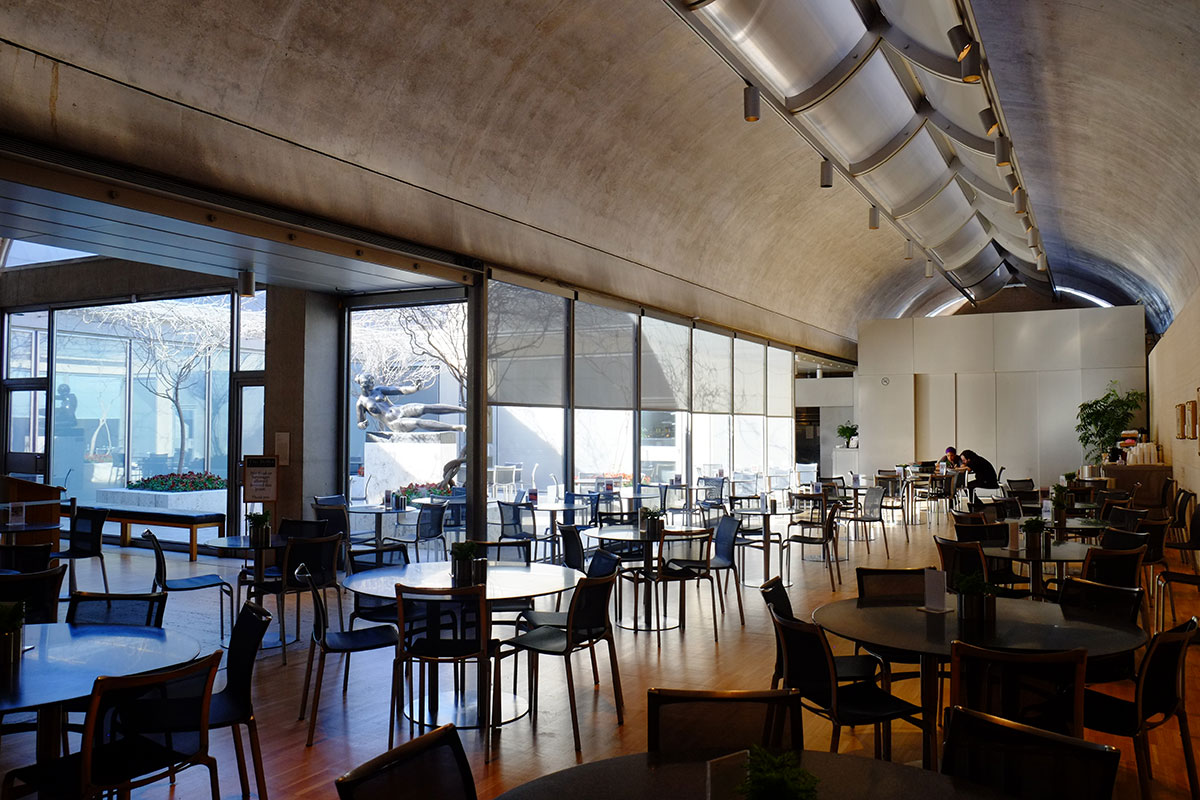
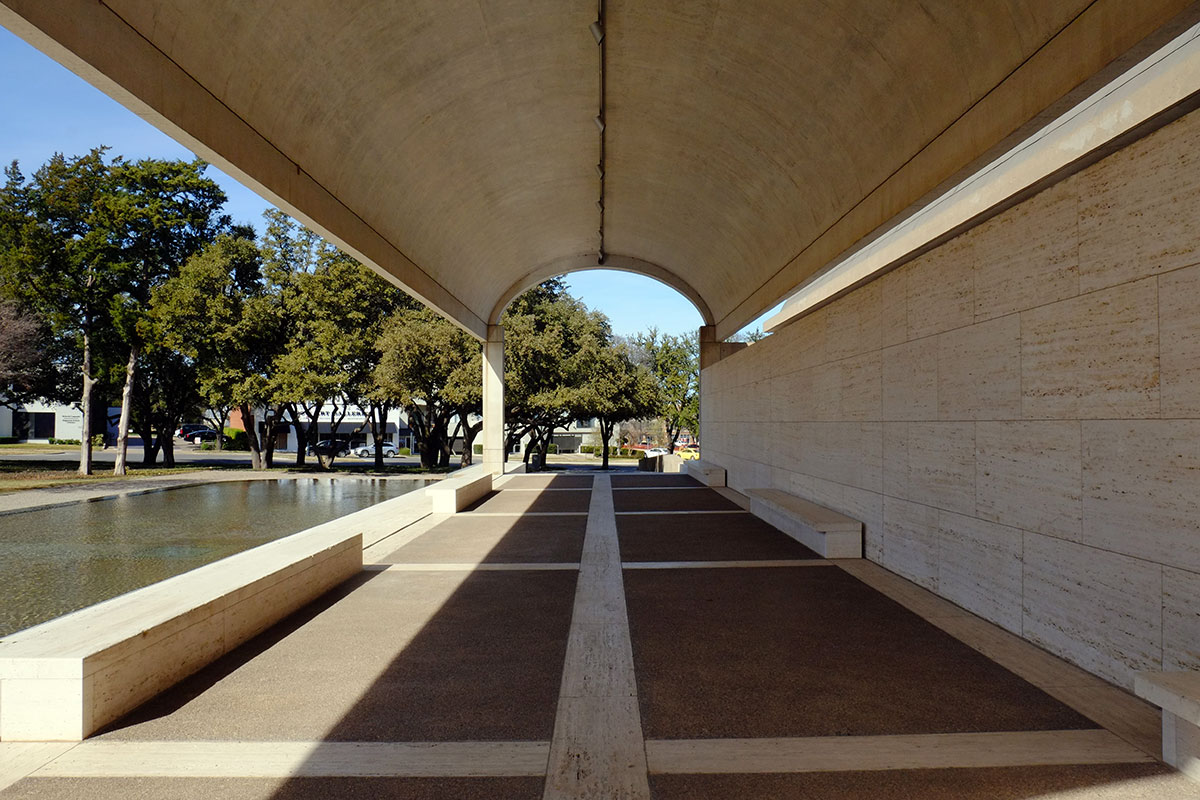
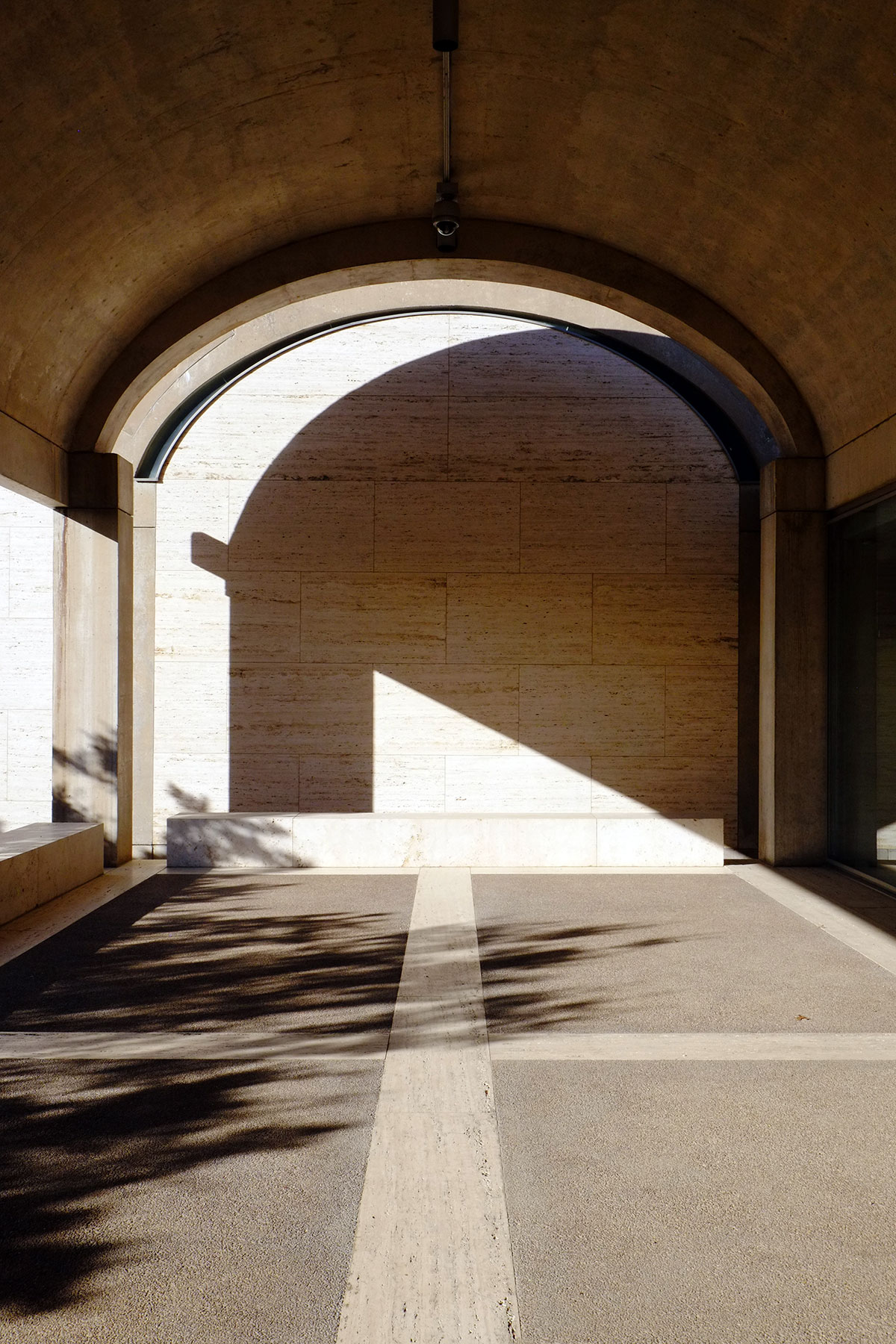
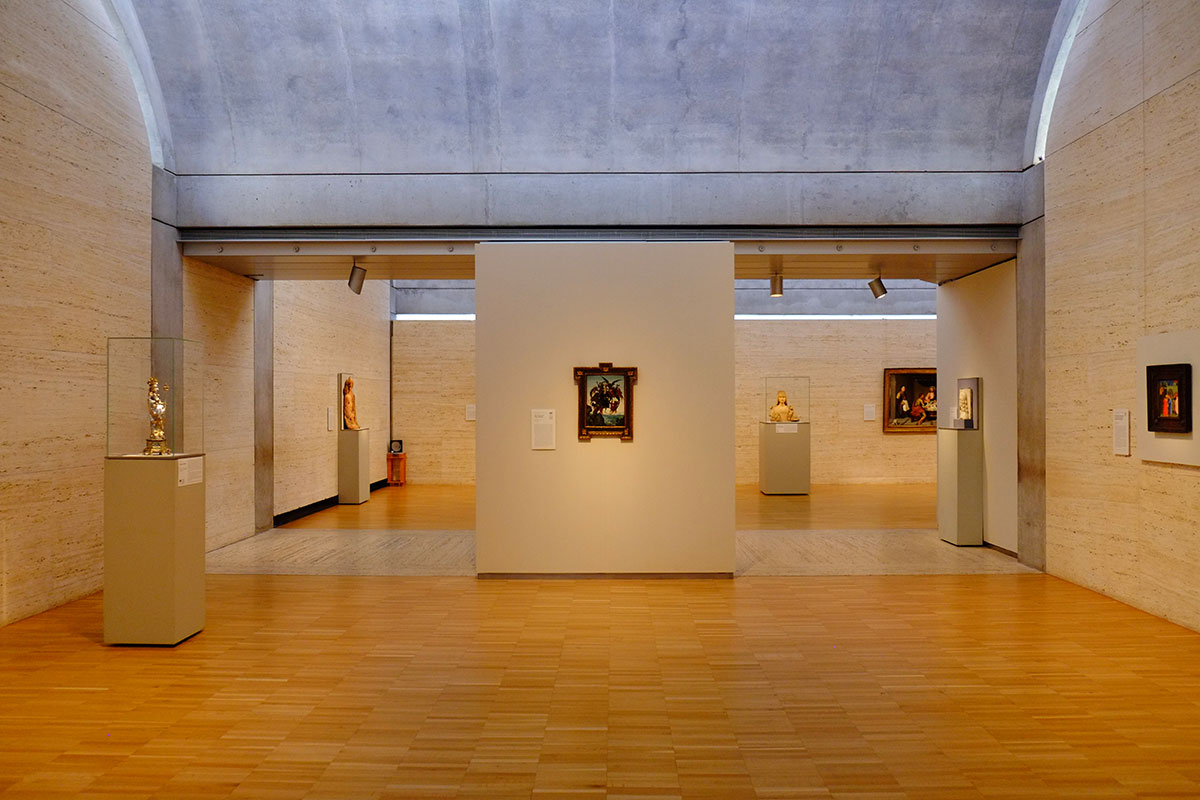
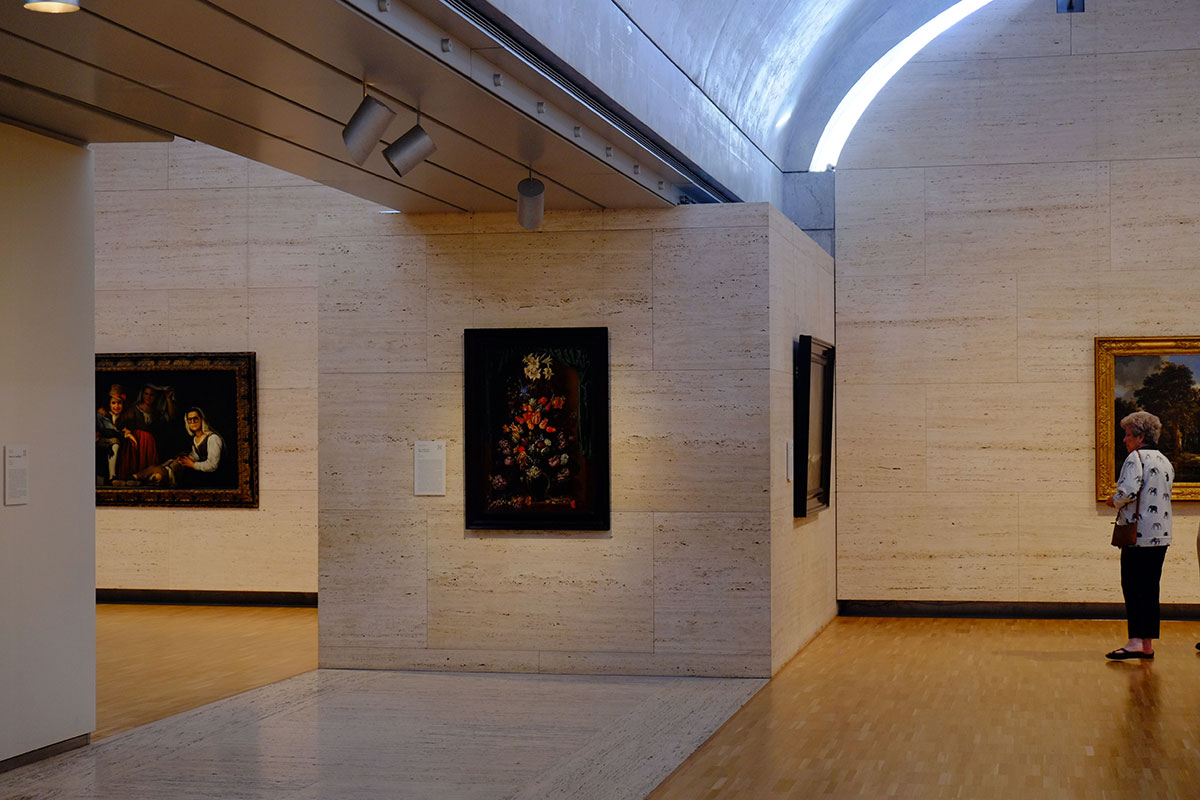
DSCF4433Of all of Kahn’s major works, the Kimbell was the one I always found least interesting.  It just seemed too simple – come up with a bay cross-section that’s supposedly good for daylighting, extrude it to an absurd length, then repeat that bay module in a slightly-varied way.  Of course it’s rigorous, it’s subtle, it’s beautifully-detailed, but I thought the spatial experience would just be too uniform.  I was wrong.  It is the perfect example of how playing within a strictly-controlled system can lead to a lot of richness and experiential variety.  The modules are used to make long rooms and short rooms, narrow rooms or wide rooms, they open up at the end or the side, they are left out and so create spaces not strictly within the system – such as the entry court or the small internal courtyards.  Or walls are left off and it becomes a loggia.  DSCF4434
DSCF4471

DSCF4446

DSCF4482

DSCF4395

DSCF4501

Of course, the building is about the light, something you have to go there to see.  My prior reaction was entirely too conceptual, thinking about this parti versus the partis of other Kahn buildings.  Kahn buildings seem simple when you study them, but when you visit you are overwhelmed by the experiential richness.  The Kimbell is the most extreme example of this.

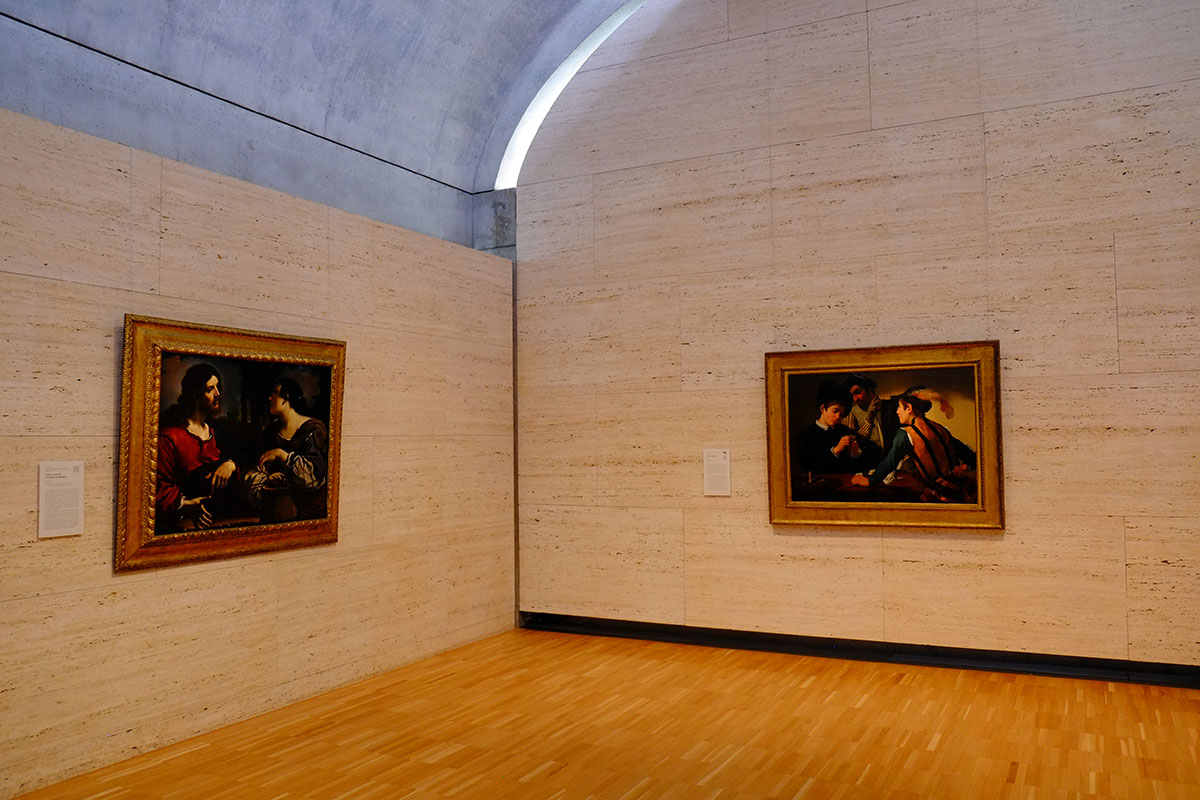
it’s a remarkably calm building, and even though it’s brilliant, it can recede into the background, allowing you to focus on the art – the spaces are comfortable, bathed in the wonderful light, and movement among the galleries is clear and effortless.  So here is the biggest problem I had with the Kimbell, compared to the Yale British Art Center – the collection is just too good.  The British Art Center is full of ghastly English paintings, all giant Stubbs with horses, etc., nothing to distract you from looking at the building except the Turners.  The Kimbell collection is superb – who else has a small painting done by the 12-year-old Michelangelo?  The Renaissance art is great, as is the modernist work – I now have a new favorite Munch.  As much as I wanted to think about the building, the art kept pulling me away.

I do have some niggling problems with it.  The intended main entry was from the lawn and grove on the west side, but I bet it wasn’t much used.  In a car-dominated environment like Ft. Worth, the entry sequence is from the car.  It is like the current American house – you’re supposed to enter through the grand entry hall, but everyone comes through the garage door into the kitchen.  The default entry, from the small car court, is pretty uninviting – and this is the street facade.  It is severe, almost like a service entry.  The sculpture doesn’t even help.DSCF4418
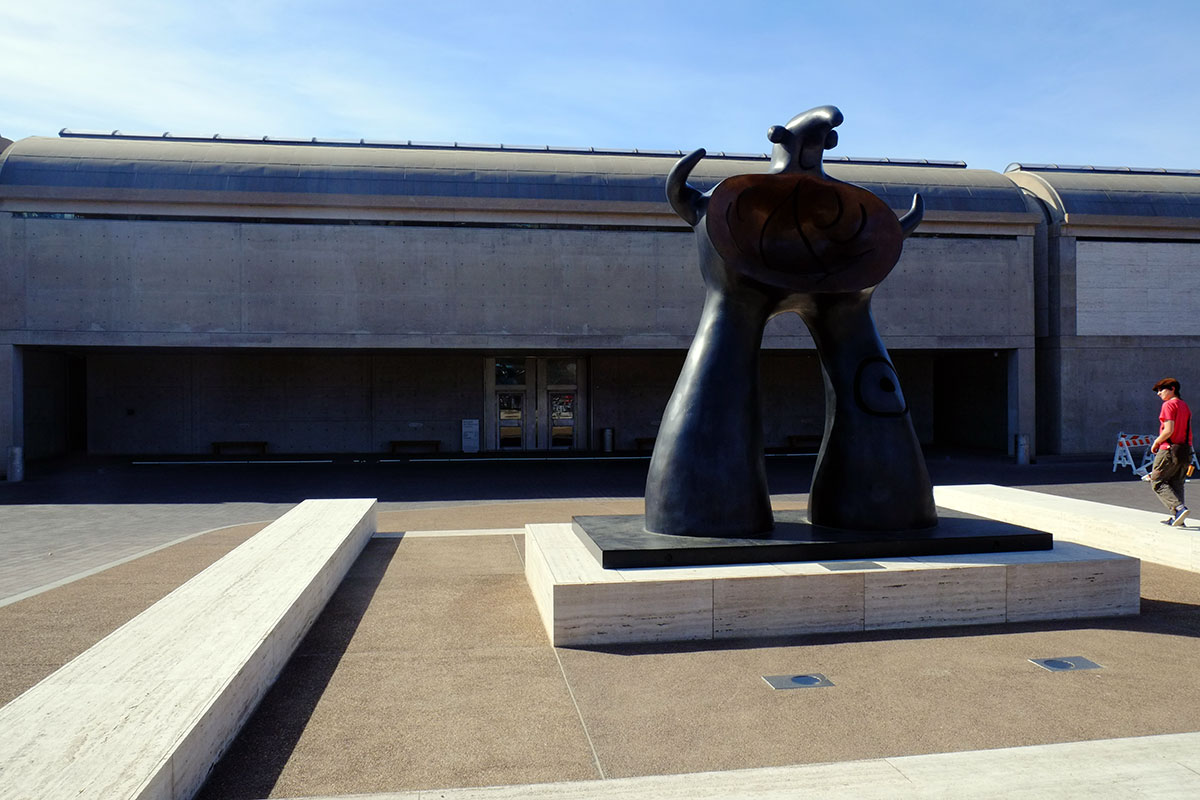
The stairs from here up to the gallery level are okay, slowly revealing the essence of the design as you ascend, DSCF4431
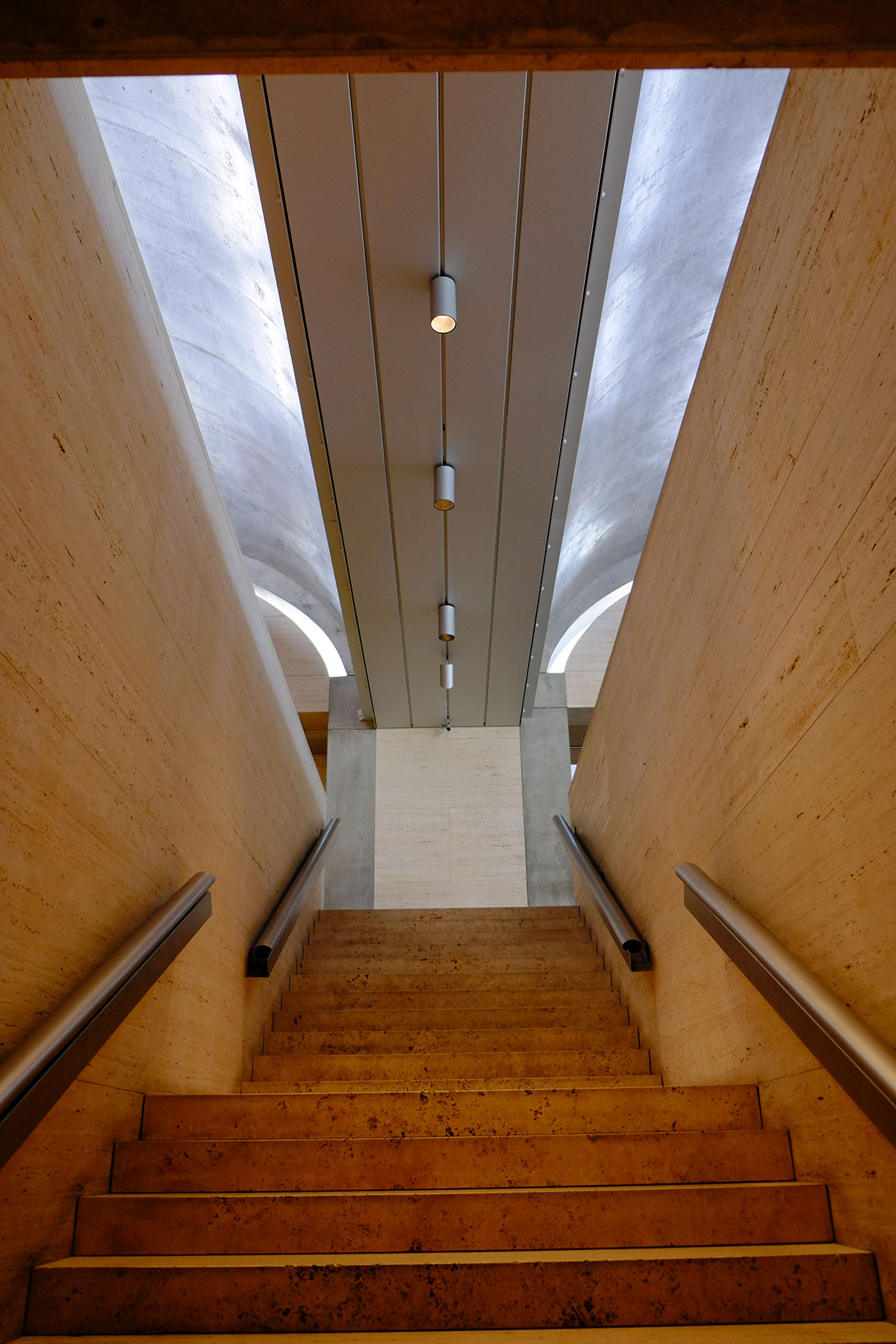
but they then drop you at kind of a funny point – facing a wall not quite in the museum, sort of in the bookstore, looking across to the courtyard area facing west.  It’s a problem with a modular building – how do you emphasize entry or centrality, when every bay is equal?  The new entry sequence from the Piano building is much better – after parking under the building, you head up a new funny little stair, not unlike Kahn’s, then turn, and see the Kahn building across the lawn.  This is the intended main entry, but it took the Piano addition to get you there.  DSCF4389
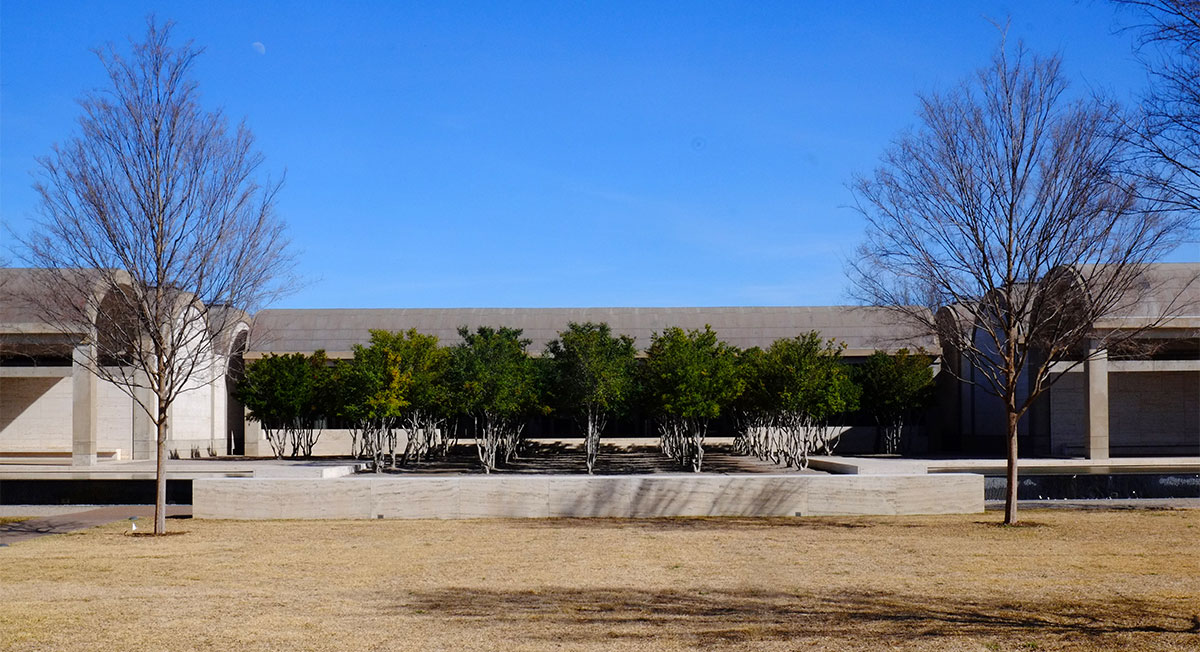
This movement across the lawn and through the grove / allee is wonderful.  Entering either building from its own parking area below is bad, so the sequence now should be: park under Piano, come up the Piano stairs, see the Kahn building and go there, and then later recross the lawn to the Piano building.  They probably wouldn’t let Piano design a stair up that was any nicer than Kahn’s.

There are a few things that seem a little unsystematic, such as the fire stairs.  The vaults meet at a relatively narrow channel/beam, which doesn’t provide enough width for services such as fire stairs.  So Kahn sticks the stairs  at the end of the building, poking out a bit, and then tries to hide them with travertine.  DSCF4472They just bugged me – kind of awkward, and not in the system of how he’s using travertine in other places.  Also not in the vocabulary of how he’s using this in-between zone elsewhere.
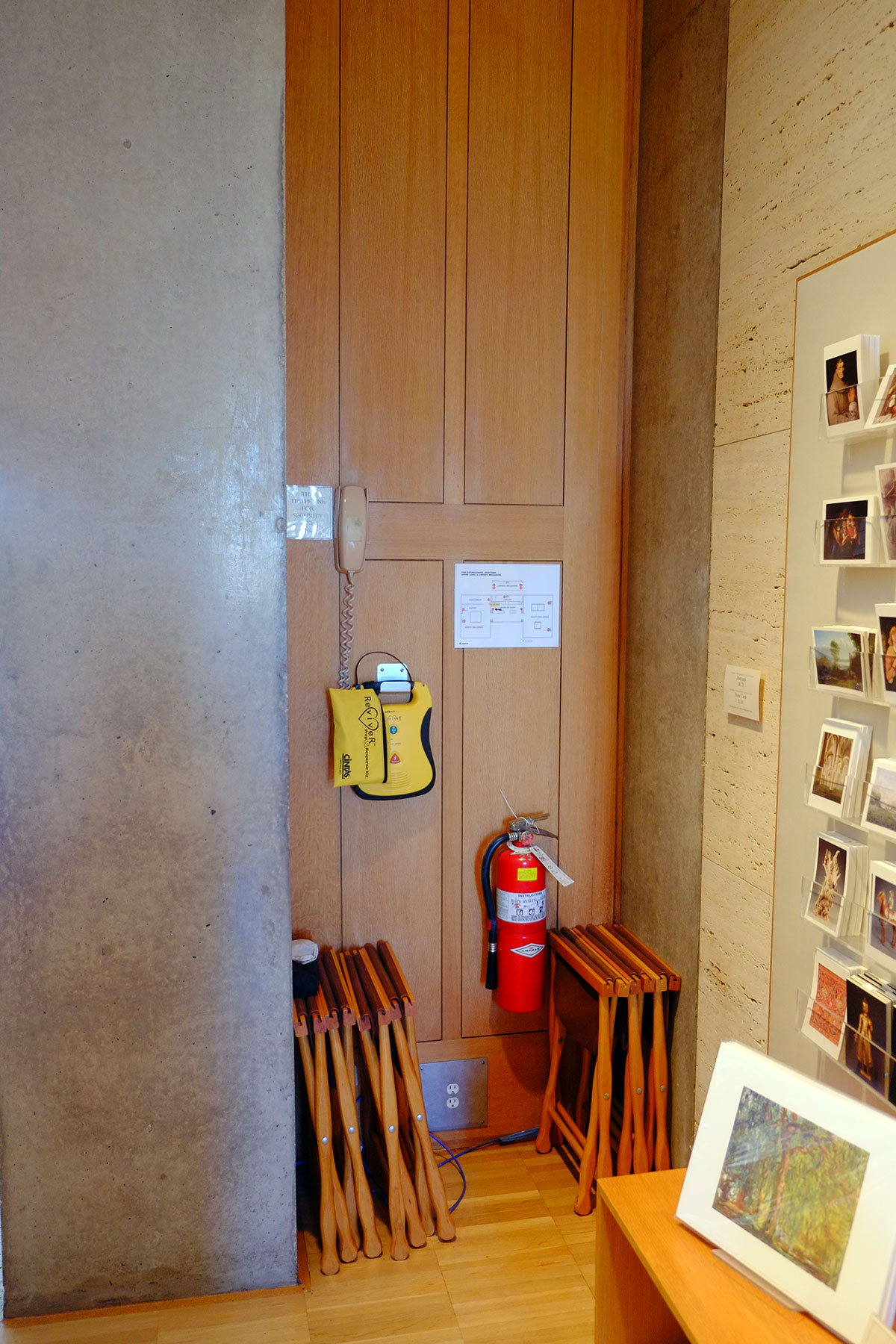
And be aware that if you make big reveals between parts in your system, the staff will pile things in these places that theoretically should be empty.DSCF4478
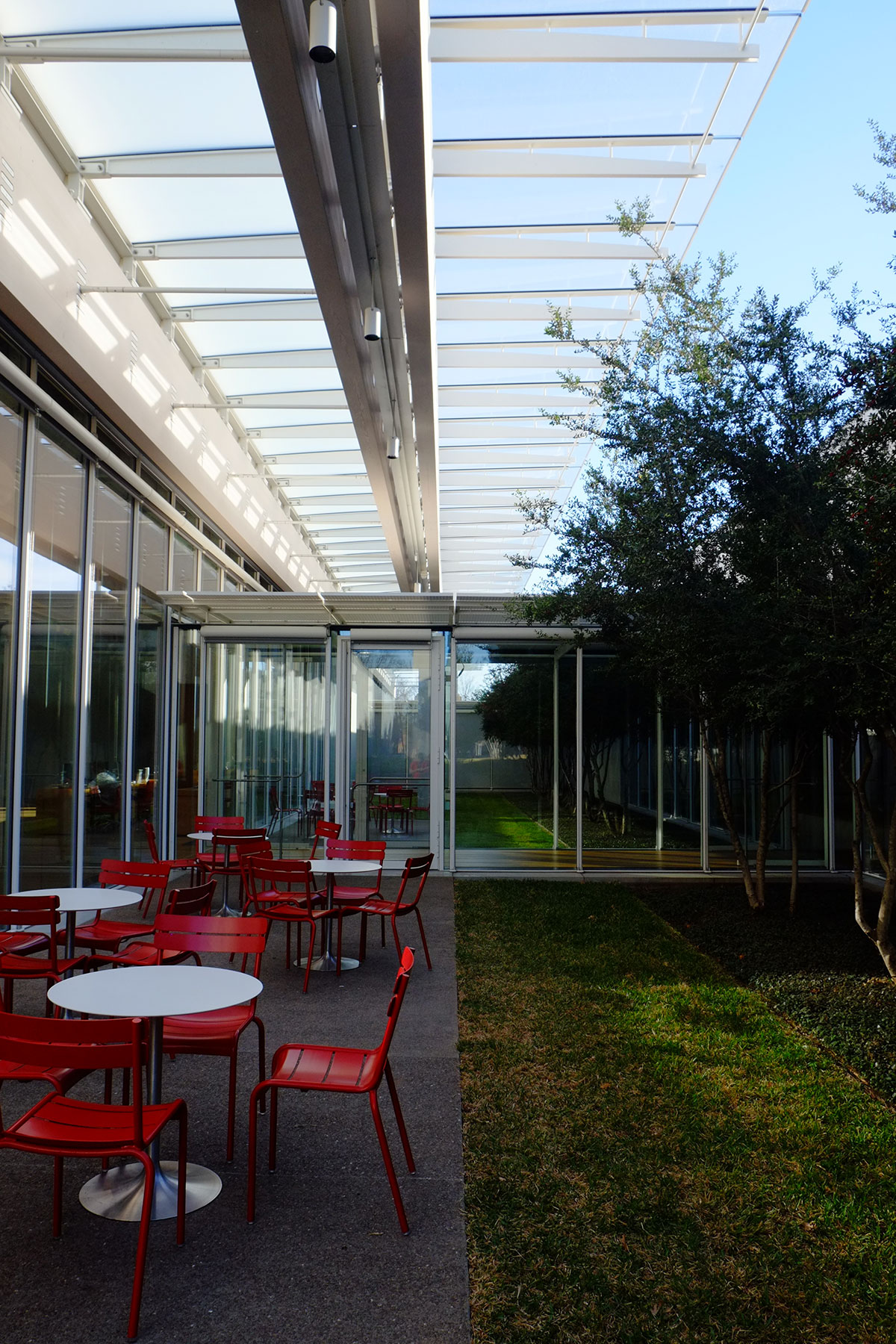
Kahn had the advantage here of working sui generis, whereas everything Piano subsequently did has to be seen in relationship to Kahn’s building.  The basic dichotomy is great, and plays to Piano’s strengths:  if Kahn’s building is about mass, walls and vaults, Piano’s building will be about frames, panels, joints and beams.  His building mirrors Kahn’s across the lawn in  its north-south linear bays, its use of the east-west cross axis for entry, and in its symmetry.  But then everything about the tectonics is different, and in the typical Piano vocabulary.  DSCF4510
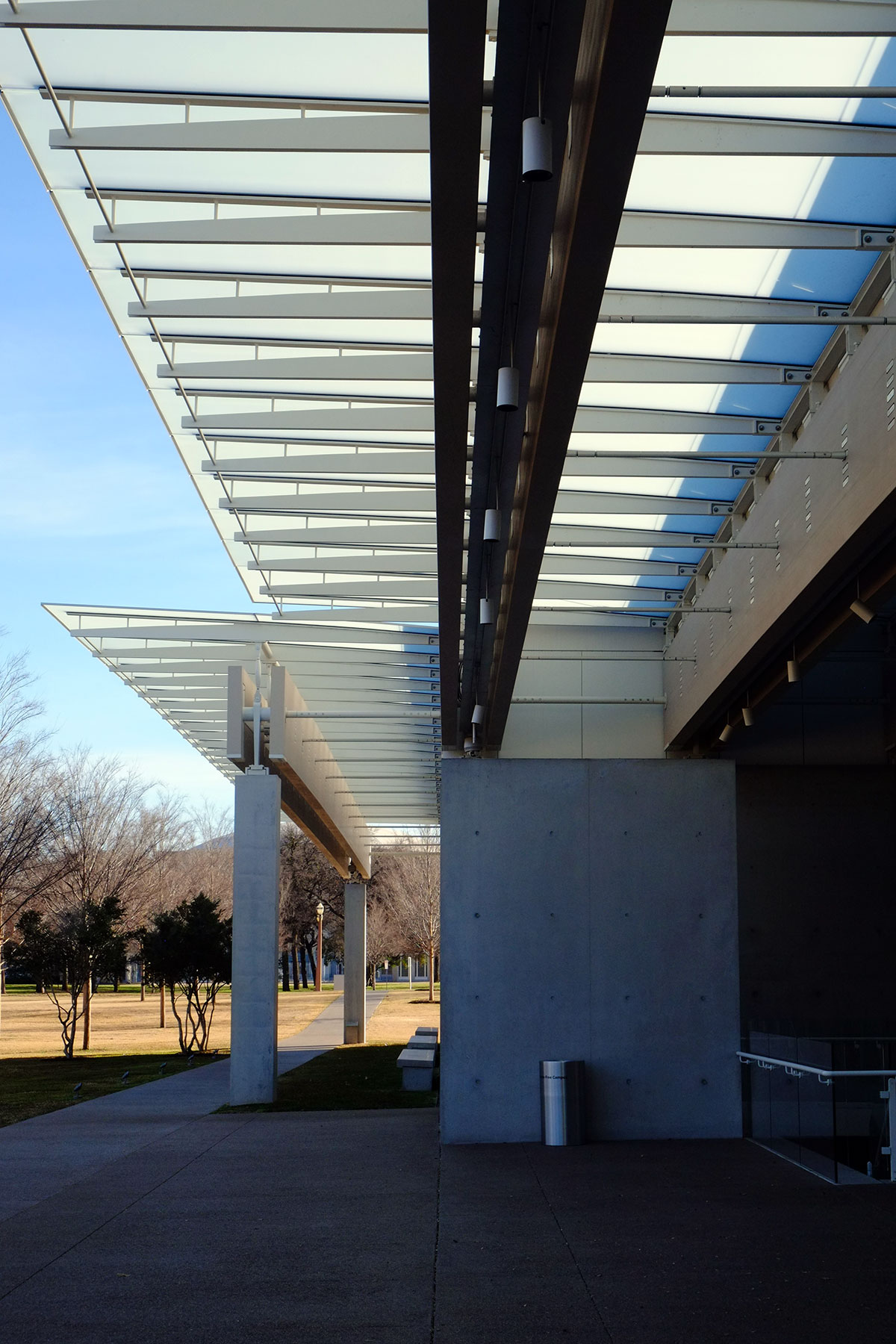
Neither building can be said to have a facade that really addresses the lawn between – the north-south walls are the side elevations where the logic of the linear bays plays out.  The Piano entry hall also mirror Kahn’s across the axis, but this time done with paired glu-lam beams instead of post-tensioned vaults.  DSCF4603
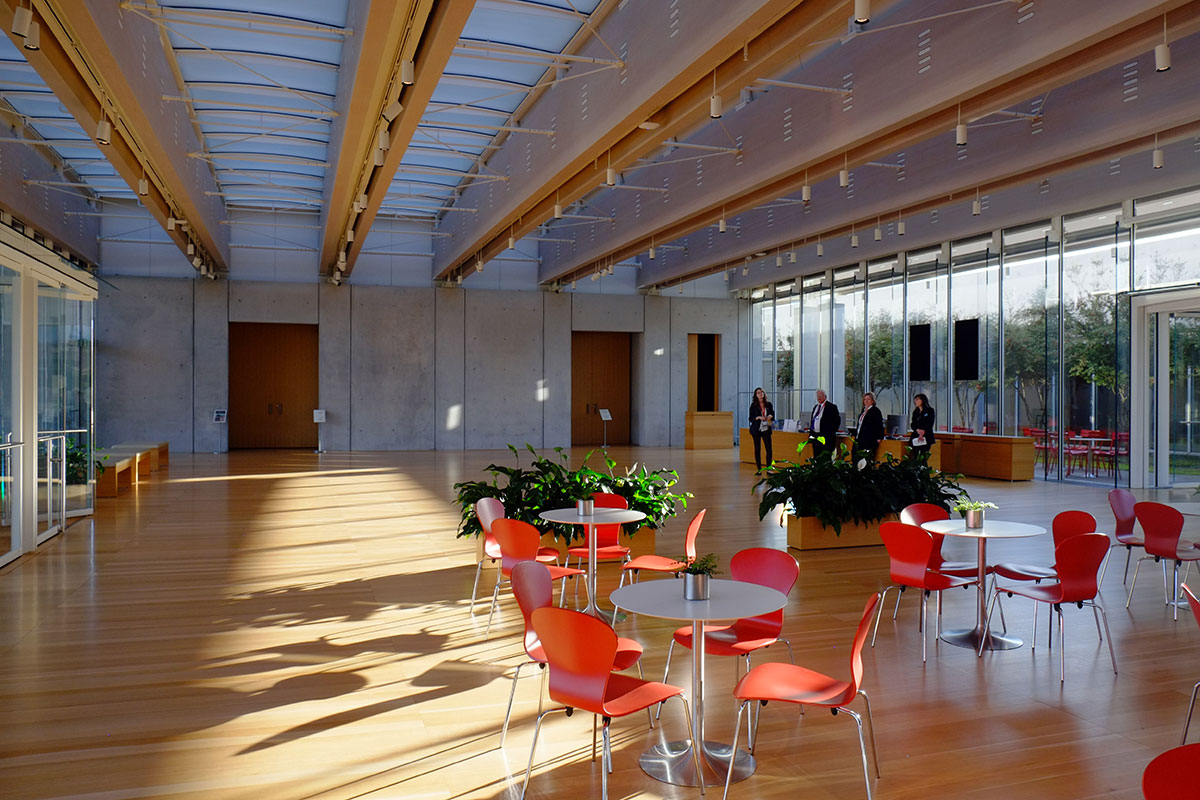
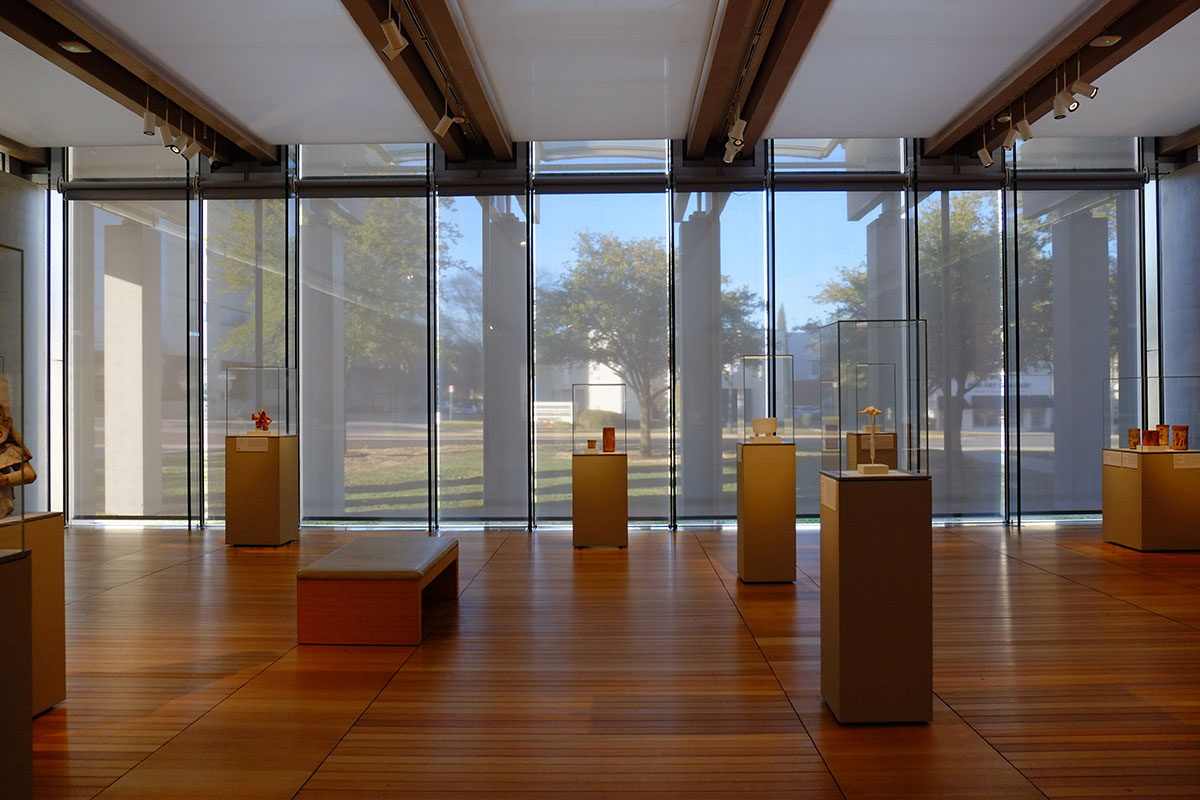
The Piano light scoops and shades are in full play, fitting in a building which plays off the iconic American daylighting masterpiece across the way.  The main galleries are to the north and south, and are beautifully lit and proportioned.  DSCF4580
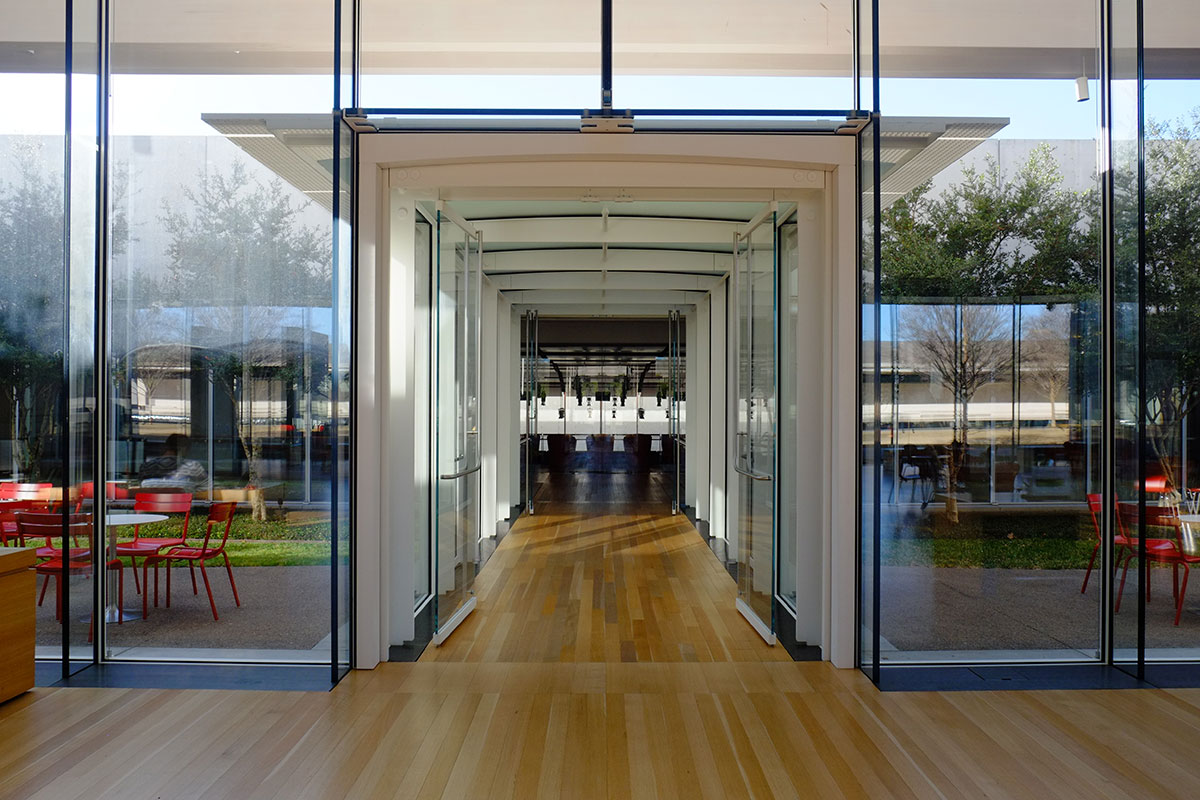
The east-west axis is very transparent, with a glazed corridor continuing the axis to the second part of the building between two small internal courtyards, which separate the building into two bars.  The view is terminated by a daylit concrete wall.  DSCF4530  DSCF4534
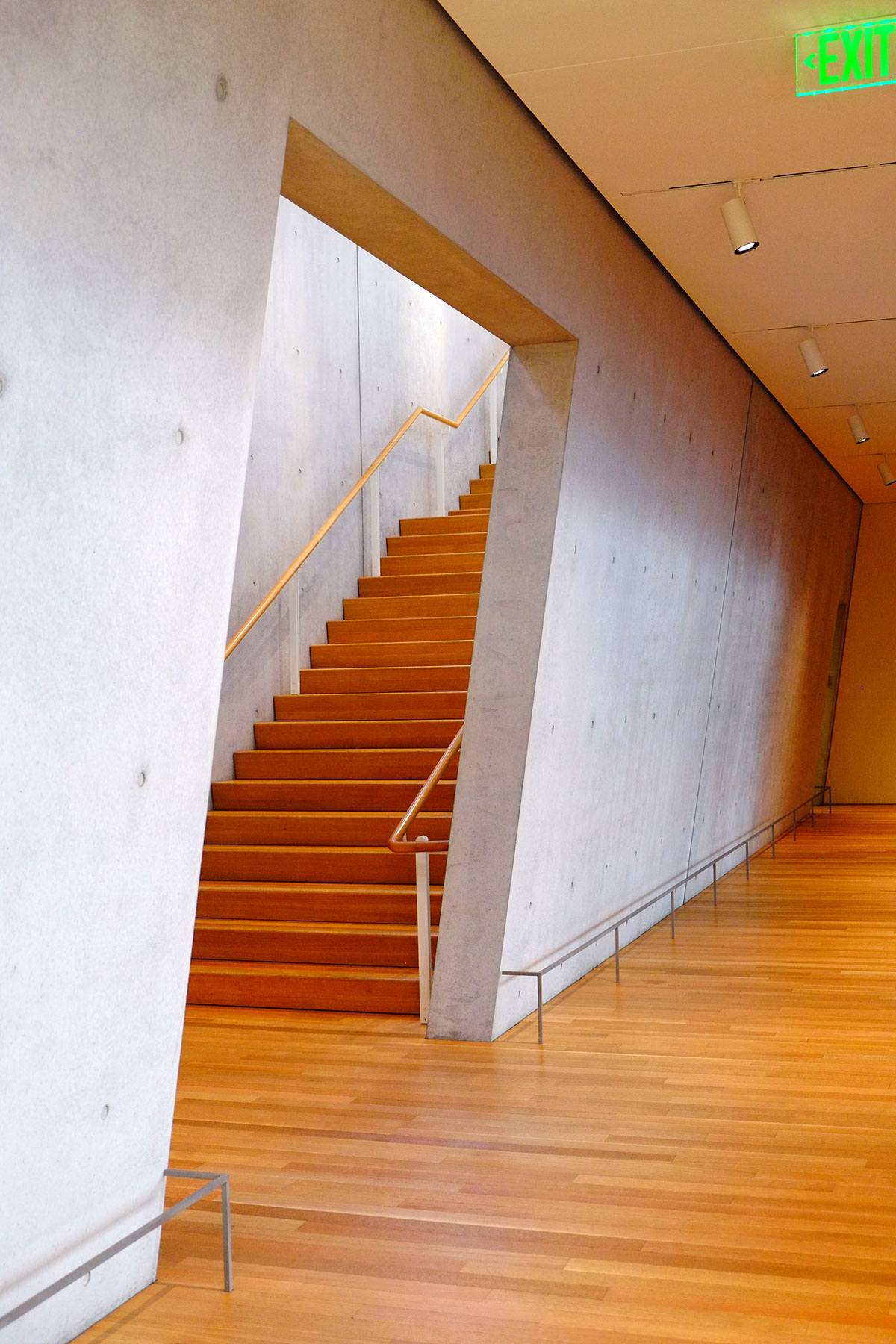
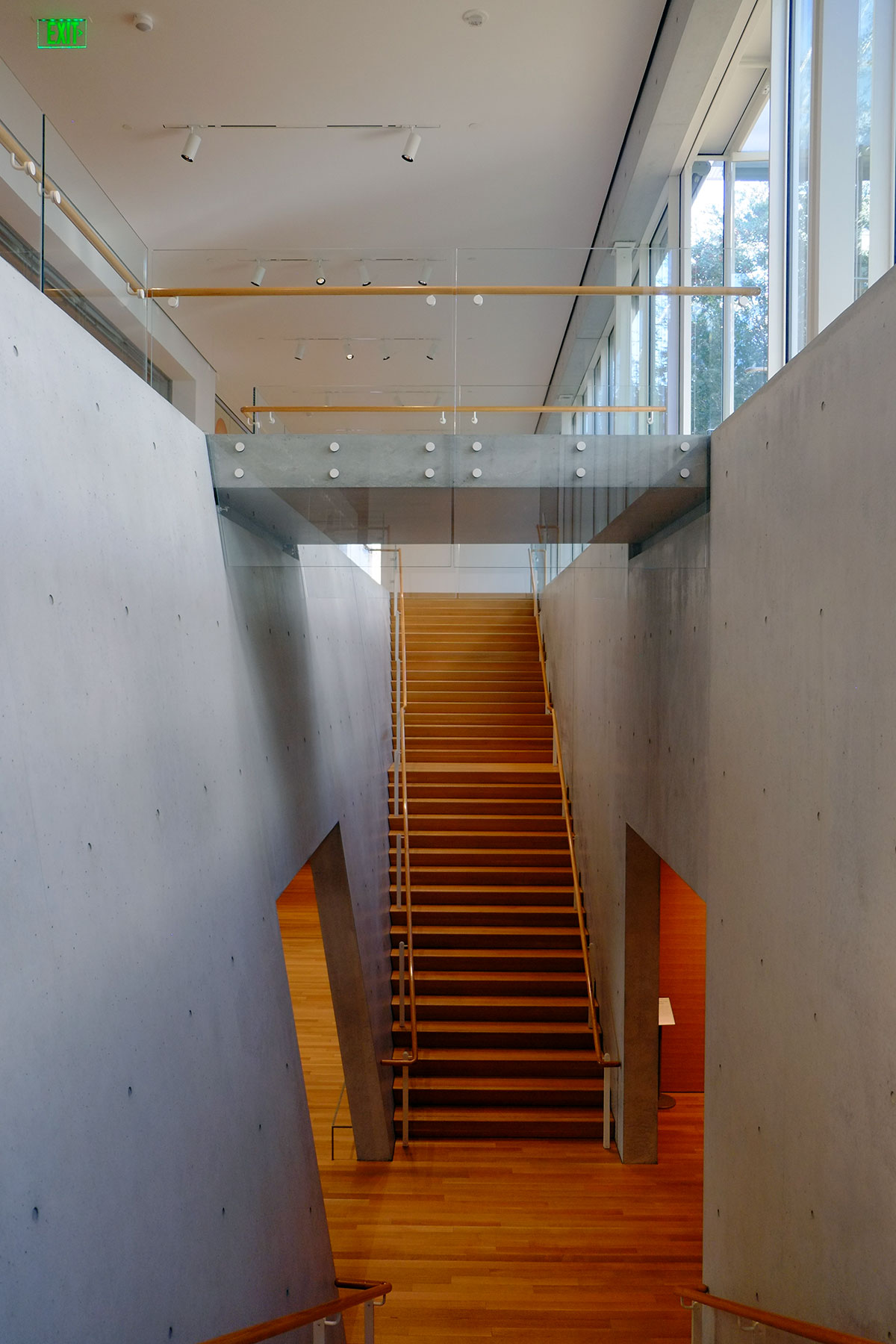
The second bar of the building contains some more gallery space, offices and support spaces, and a large auditorium.  Most of these spaces are at the lower level, which is reached by symmetrical stairs on the longitudinal axis.  DSCF4544
DSCF4555

They are bound by two massive concrete walls, one of which is tilted.  This being Renzo Piano, there must be reason for it (with most other architects these days, I wouldn’t even bother to ask why), but I couldn’t figure out what the reason was.

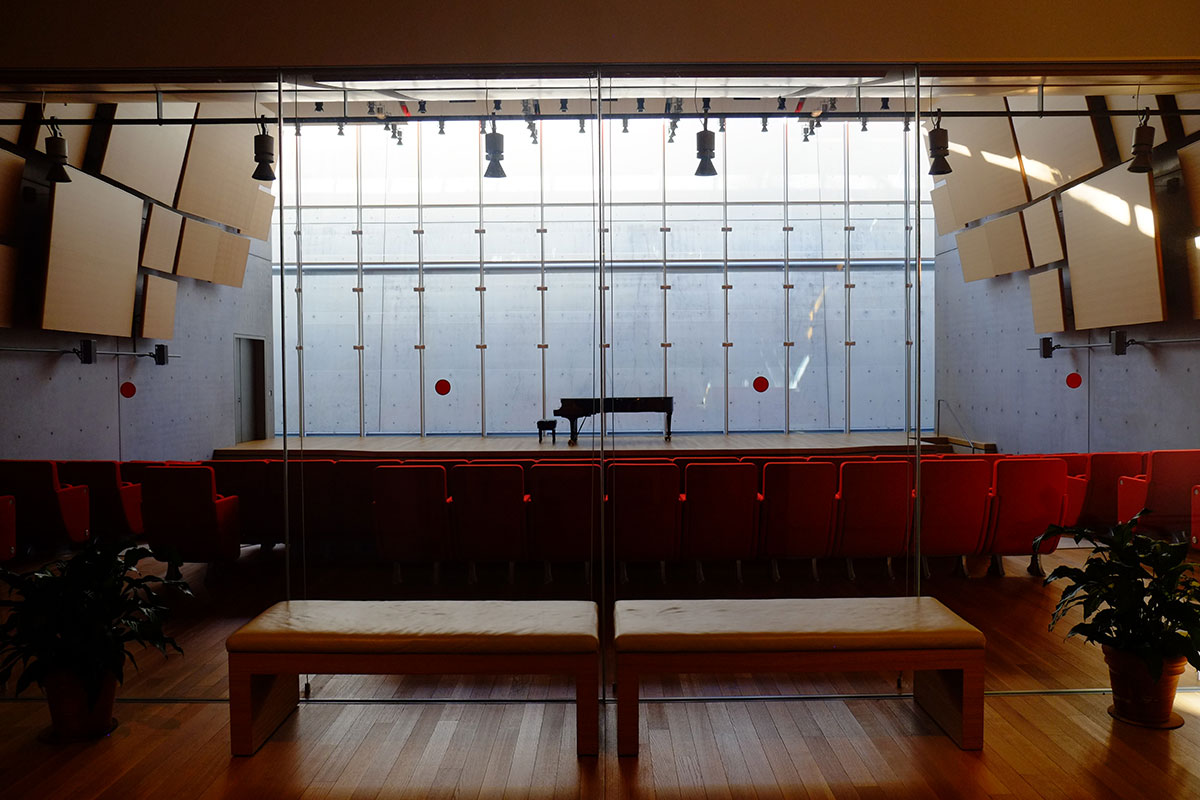
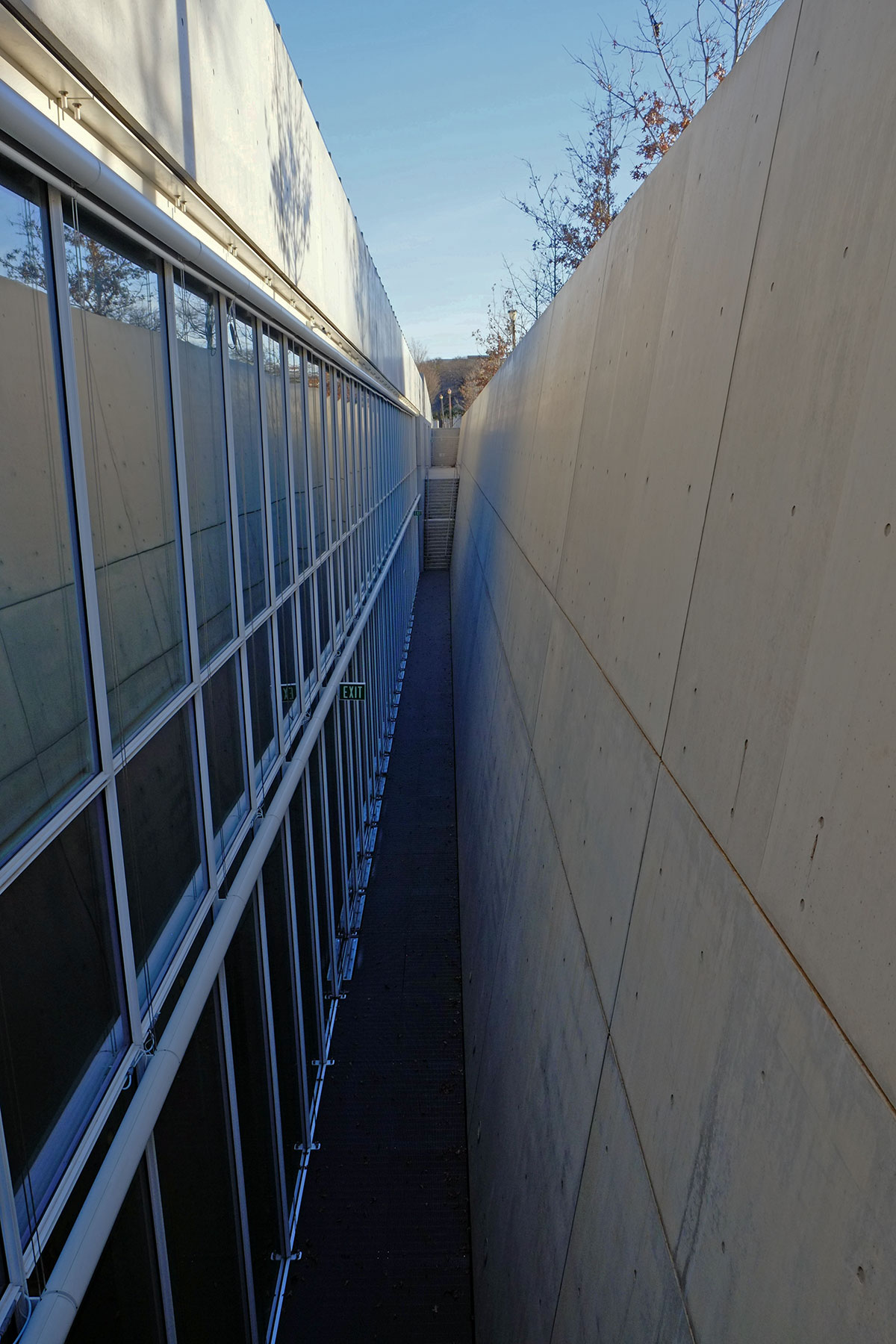
The auditorium is a two-story volume, the west wall of which is completely glazed, with light bouncing off another concrete wall outside.  DSCF4549I was curious about the space between the glazing and the concrete, so I went around the back and found that a sloping lawn extends over the roof of this bar, and you can look down into the most elegant dead-pigeon space ever built.  DSCF4643
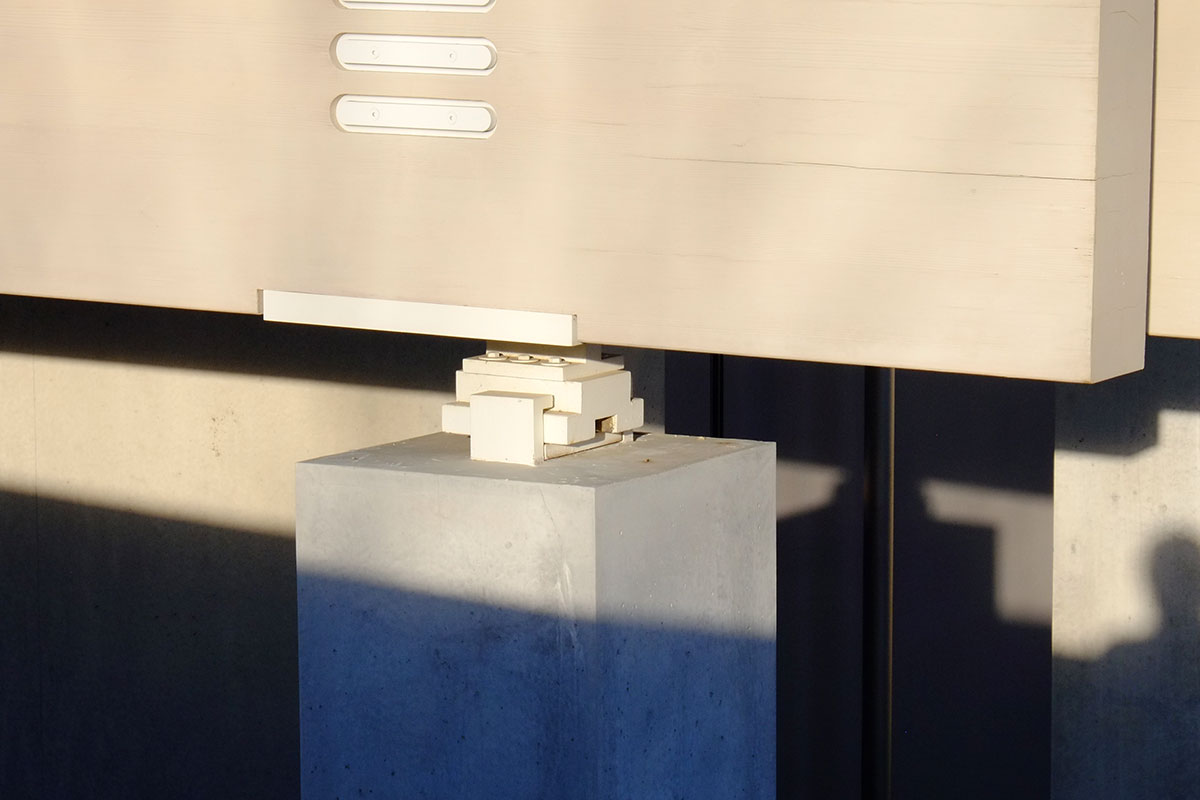
This green roof also allows you a close-up view of the roof structure of the front bar.  I wish Simpson would bring out a Renzo Piano line of framing connectors.  DSCF4627
There are also some antennae on the roof, which they clearly did not want to anchor through the roof membrane, so they attached them to metal pans which are then weighted down.  Notice that the one on the left is weighted with standard concrete blocks with the cells facing upward, the one on the right uses concrete blocks with the cells facing sideways, and the one in the middle has thinner, solid blocks (probably concrete pavers). The amount of care that Piano’s office takes with such detailing decisions is truly staggering – every different condition is thought through carefully and resolved.    DSCF4638

As always, all the detailing is scrupulous.  The logic of each piece is worked out to the nth degree, and then no expense is spared to fabricate the perfect element.  This is the detailing at the entry vestibule upper corner:  DSCF4524
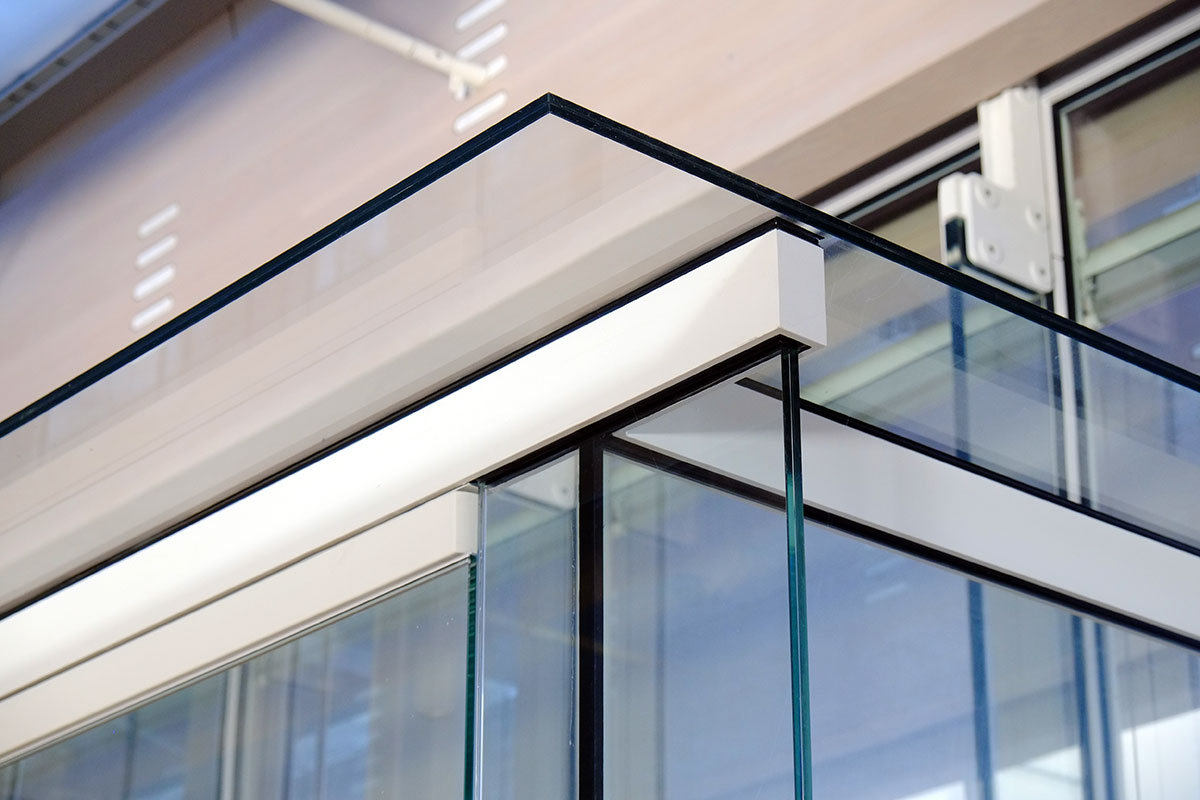
Ordinarily I revel in Piano’s detailing – following the logic to understand the form is an intellectual pleasure that really only we architects get to share, eh?  But something was nagging me here;  after seeing Kahn’s building, parts of Piano’s seems a little fussy, perhaps baroque?  DSCF4593
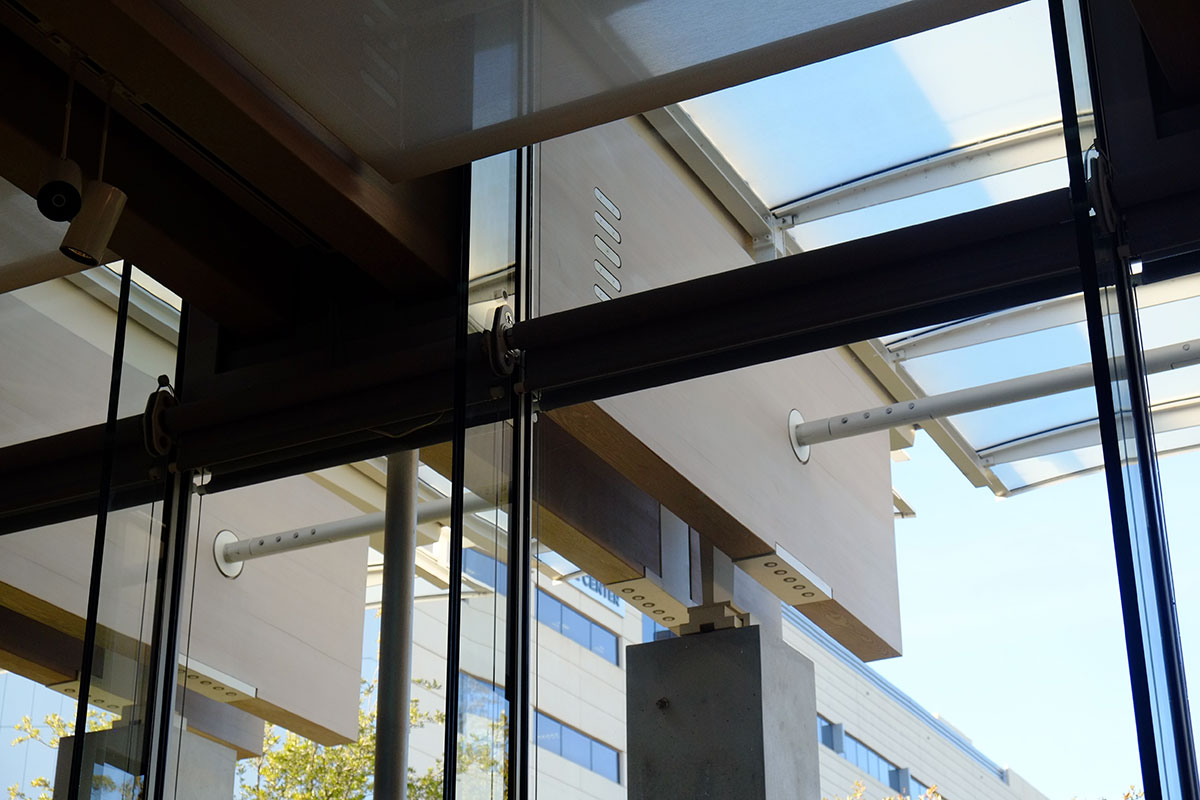
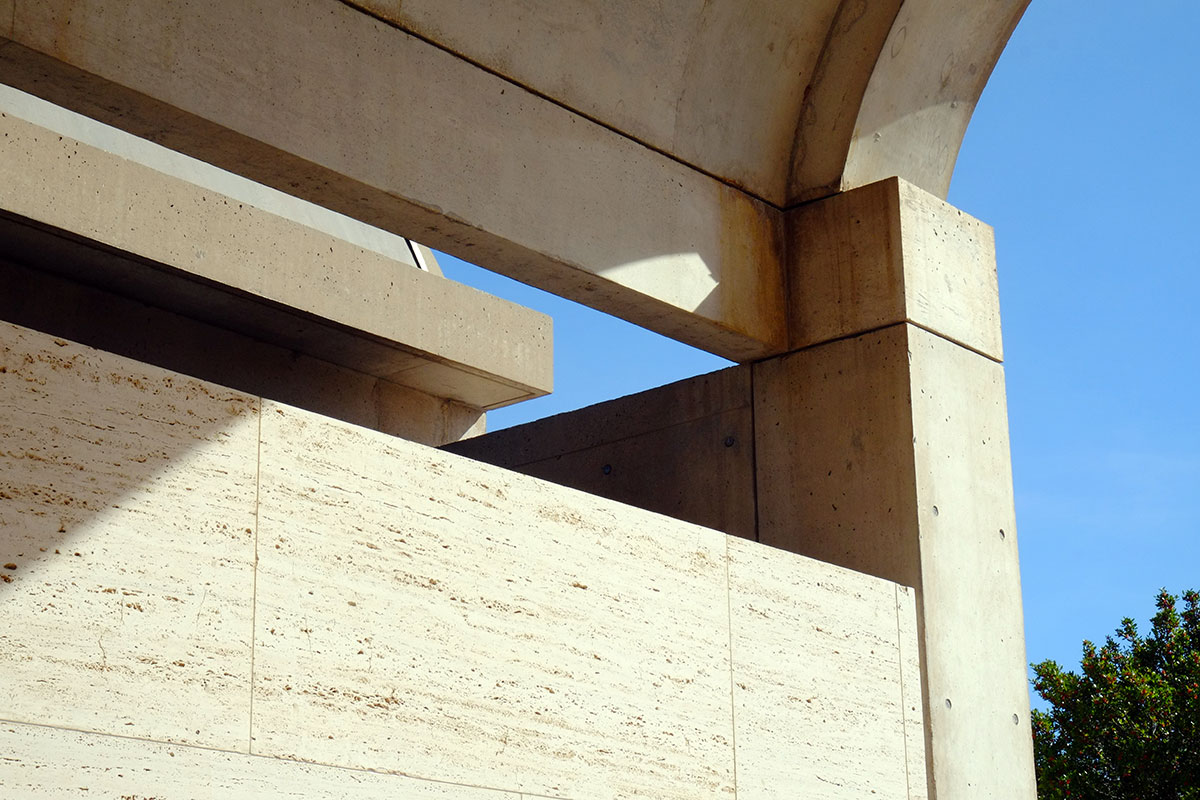
Compared to:  DSCF4397

The contrast is revealing.  Kahn’s work may be tectonic, in that the columns, vaults, infill panels, etc., are all expressed and articulated, but when you look closely, you have to admit that there is a lot going under the skin that you don’t see.  That isn’t a travertine wall, it is a concrete block wall covered in travertine.  He is not trying to fabricate a completely abstract surface, such as in the work of other architects the period, but neither does he want you to see the real guts of the building.

Piano wants you to see the guts, but actually only the really good-looking guts –DSCF4531you certainly don’t see any conduit running around – in fact, you don’t even see any ductwork.
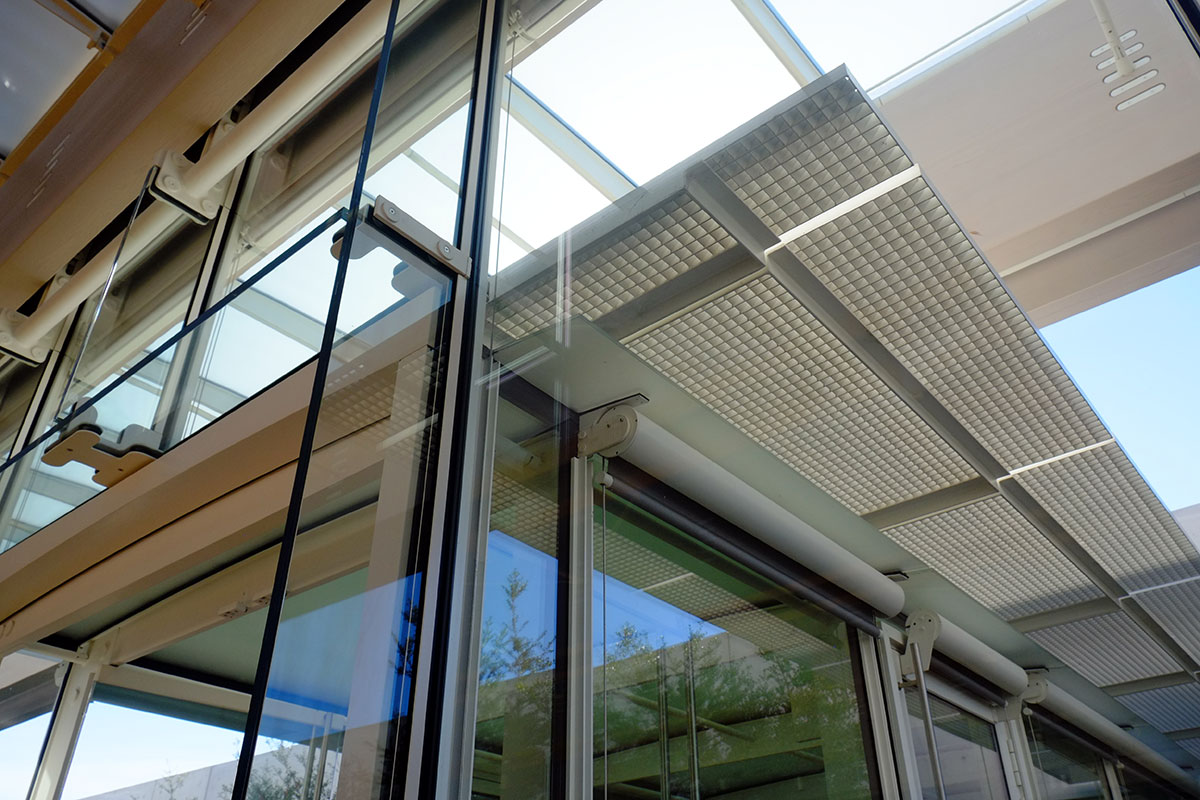
Kahn is reducing the complexity of the tectonics to the big, elemental, iconic pieces of Architecture, while Piano is taking those big iconic pieces and breaking them into as many little beautiful parts as he can.  They are both masters at what they’re doing, and being able to see these buildings together makes you think about the two approaches much more than if you saw one at a time.

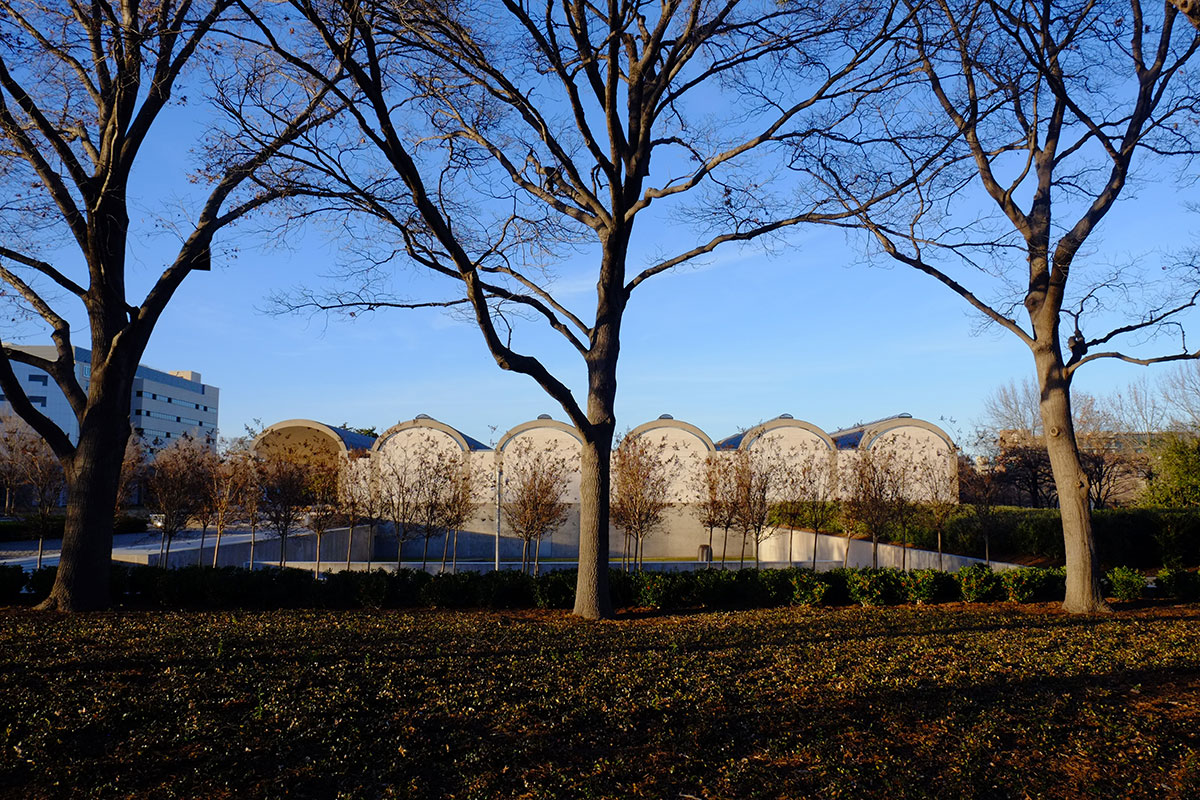
A comparison of the end elevations is also revealing.  Each has the problem of how to end a modular building – essentially you are chopping it off at the bay line, revealing the cross section.  The Kahn building is more elegant than I thought it would be – the rhythm of the vaults and the interstitial spaces is is powerful, like an aqueduct running across the landscape.DSCF4653
In constrast, I thought the end elevation of the Piano building was its weakest point.  DSCF4652
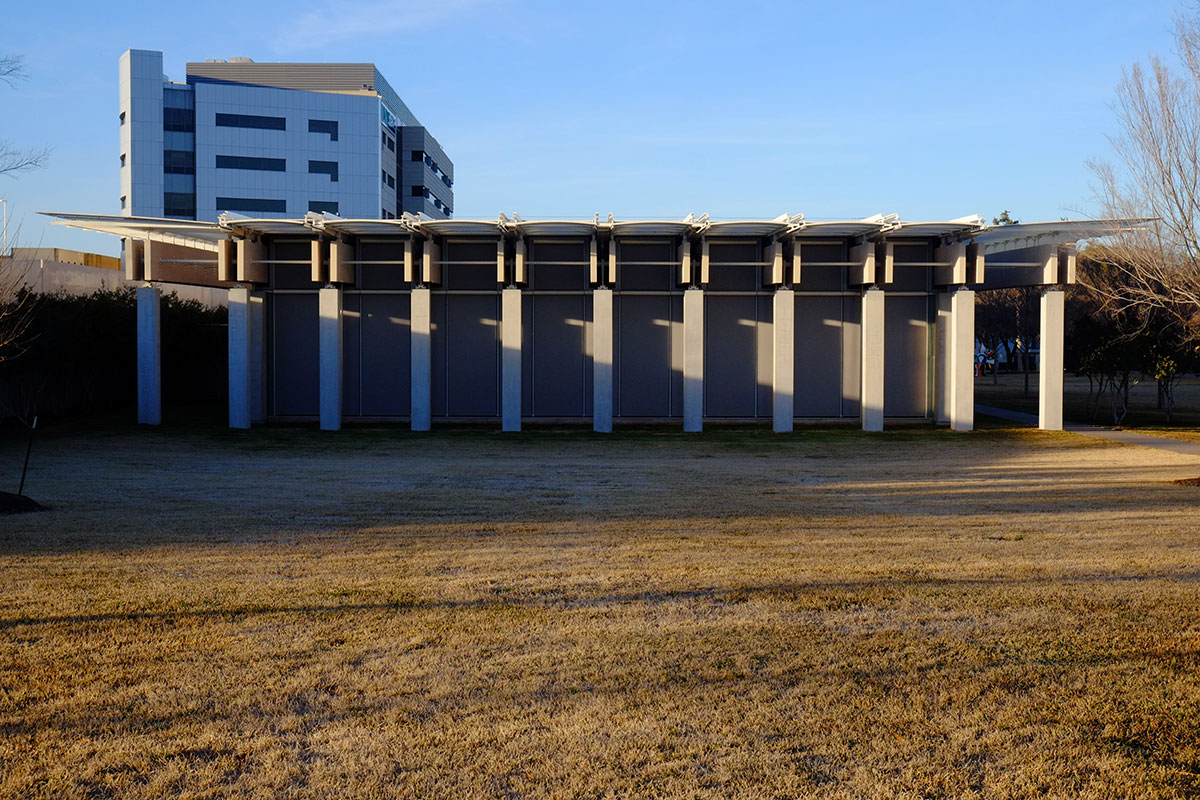
It feels lugubrious and too dense, with too many big pieces too close together.  Paradoxically, Kahn, the master of mass and masonry, uses concrete and stone to make a facade which feels light and reflective, while Piano, the master of transparency and ethereal steel fabrications, uses frame elements to make a facade which feels heavy and clumsy.

The Kimbell was always an important destination for architects, but with the Piano addition, it has an even stronger attraction, as a complex which makes you think, and not just enjoy.
Barbecue 3

Pleasant’s Barbecue
Ocean Springs, MS
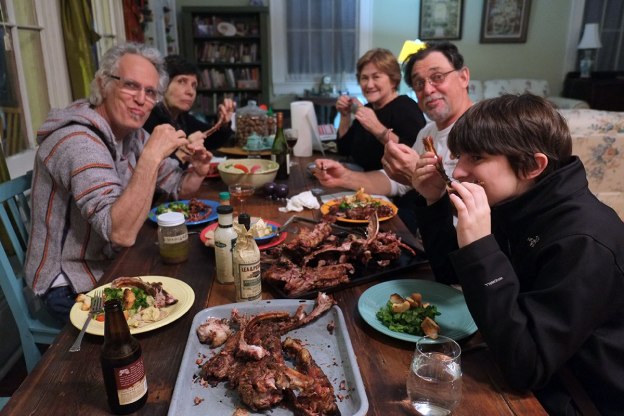
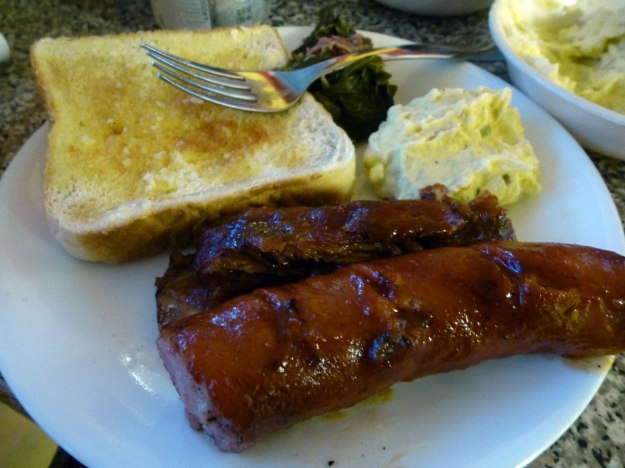
The best ribs I have ever had. The best ribs I have ever had. Soft and succulent. Delightfully smoky. We had to ask their secret. The owner, Micheal, revealed to us that they only cook their ribs for four hours, a fraction of what many restaurants claim. But for the second two hours, they shut off all the heat, and just let it circulate in the smoke. Be careful not to eat the bones. I mean that seriously. They were soft and smoky, and if they weren’t so dry I might have eaten them willingly.P1060849

The Joint
New Orleans, LA
Not one of my favorite places, I must say. Everything was fine, and the atmosphere was cozy, but I guess my standards have gone up over the course of this trip. It was good, so don’t protest if your friend suggests going there, but maybe suggest Bao and Noodle (next blog) instead.

Railhead Smokehouse
Fort Worth, TX
Entering Texas, we have left the land of pork in favor of beef. Part of me feels sorry for the poor people who don’t get real ribs, and try to substitute them with beef ribs, which in any circumstance are inferior. But, they do make damn good brisket.

Northern Louisiana

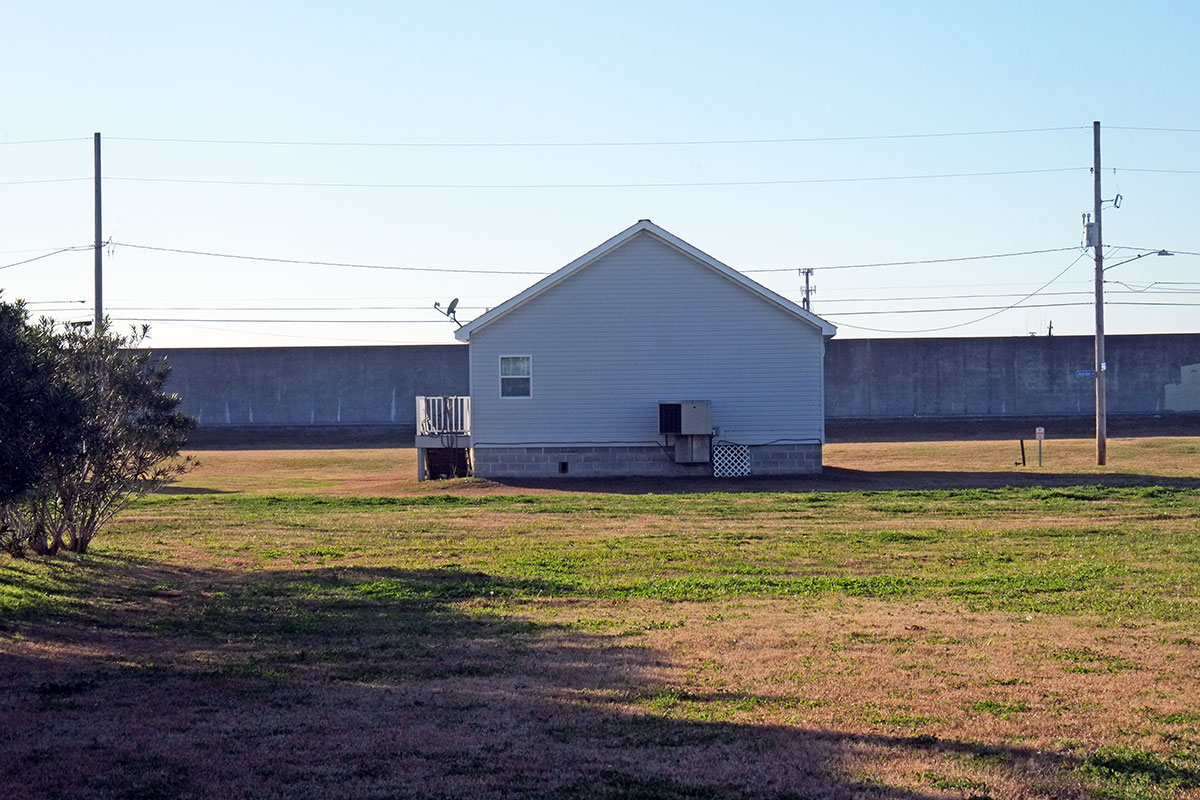
Northern Louisiana seems to be a different world from the coastal region.  We drove north from New Orleans along the Mississippi on River Road, where two different eras collide: there are the ante-bellum plantations, and there is the modern industrial landscape.  But you can never actually see the river – the levee forms a wall along the road that’s probably 40 feet tall. You see ships looming over it, so you know that there must be a river there somewhere.

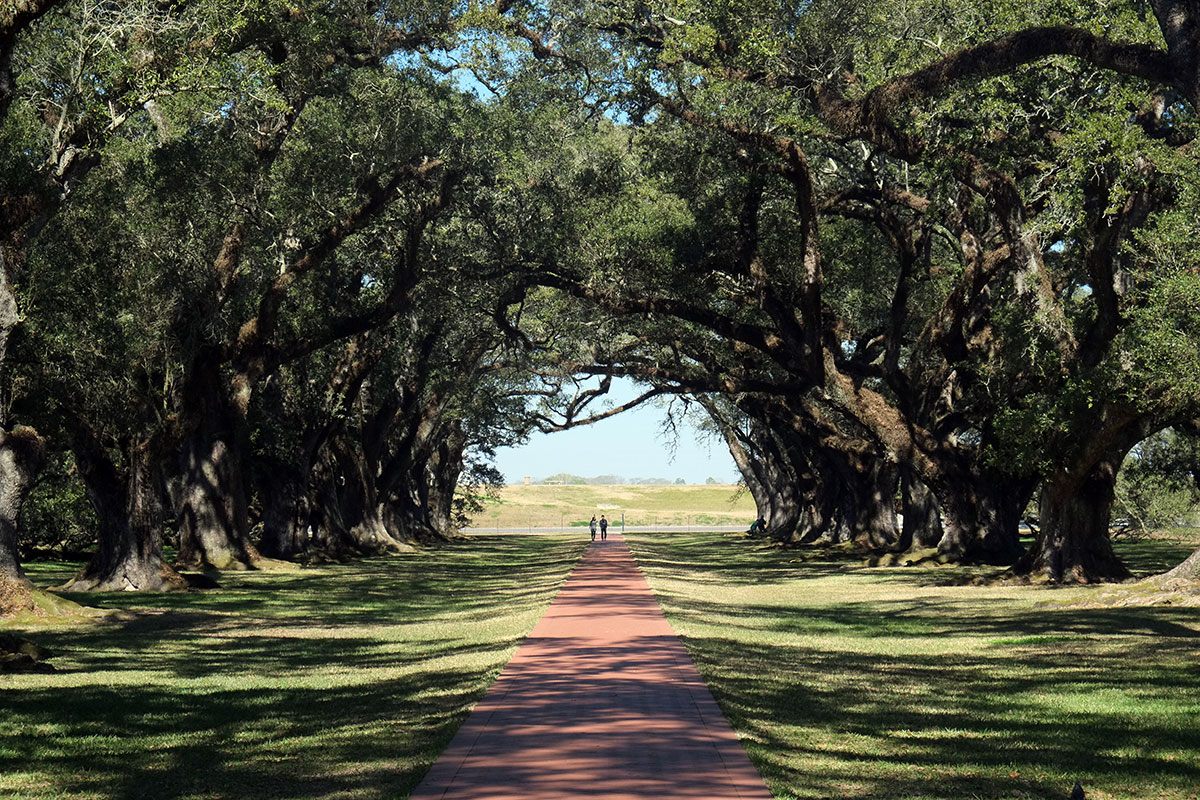
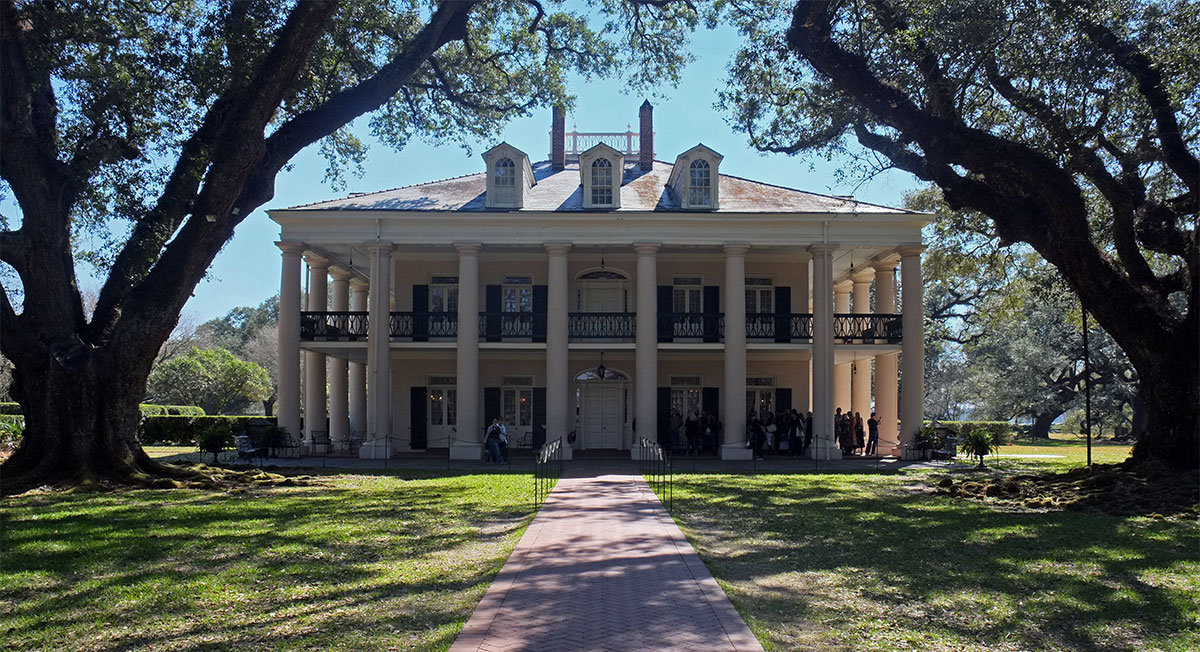
DSCF3963Among the many plantations around, we decided to go to Oak Alley, as we had been told it had the quintessential allee from the river to the house.  As in all houses we’ve toured in the South, the family who built this plantation was very important, with lots of governors and senators etc., but we promptly forget all this family stuff after hearing it (another reasons we could never be southerners).  We’re just here for the architecture, which did not disappoint.

The allee is spectacular, and must have been more so when there wasn’t a levee at the end.  DSCF3891

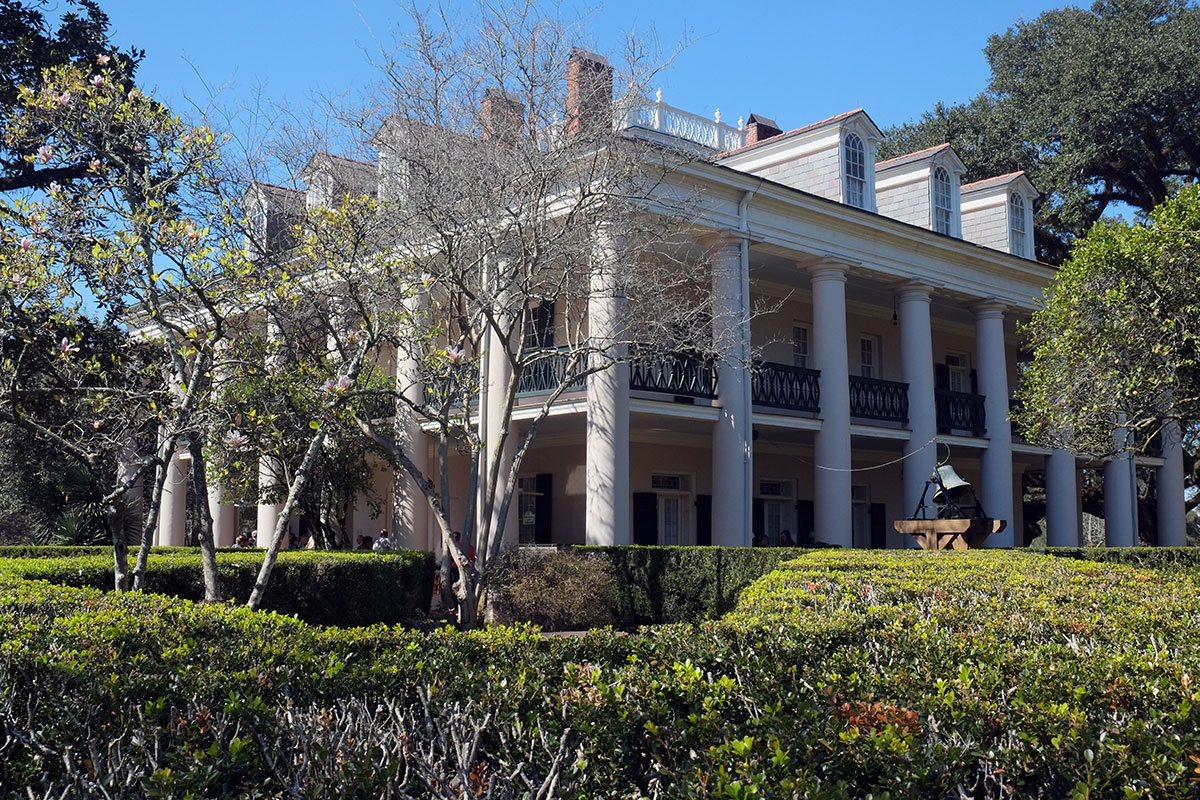
The Greek Revival style is done beautifully, well-proportioned and straightforward.  DSCF3969  DSCF3951

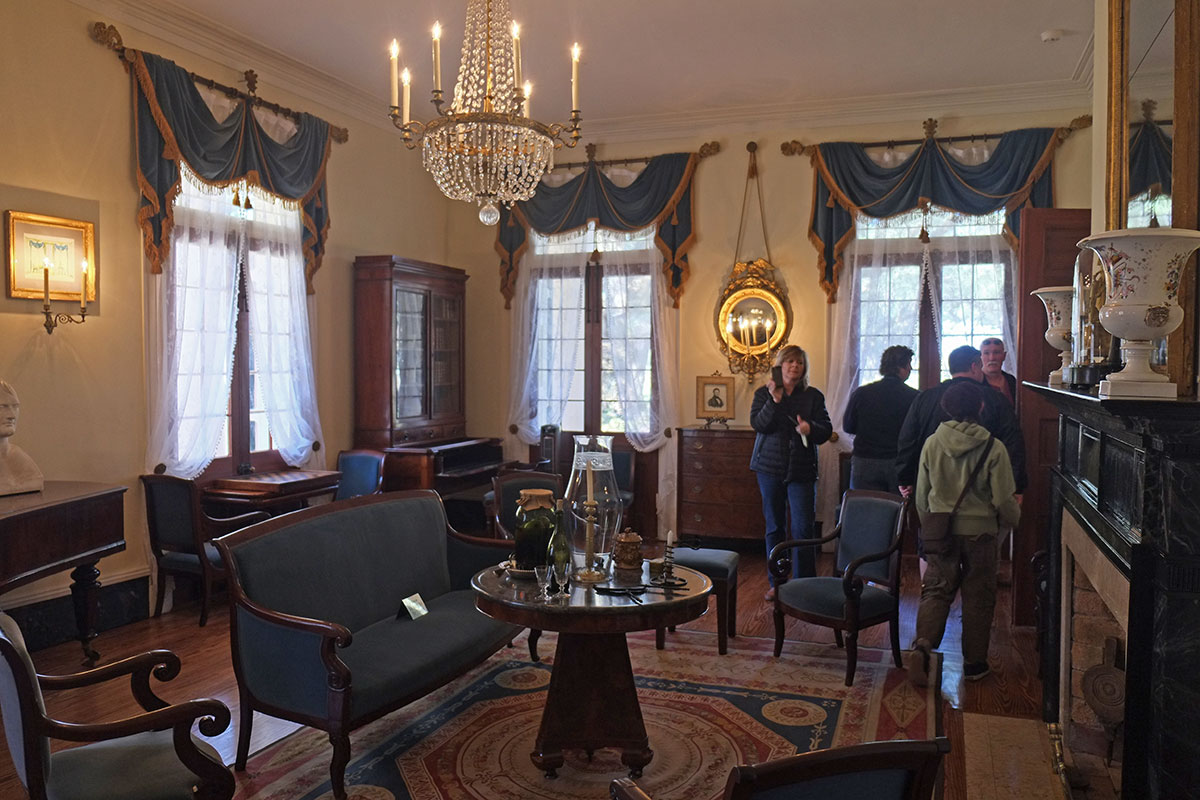
The main rooms are all large and beautifully lit, being always on a corner.  DSCF3898

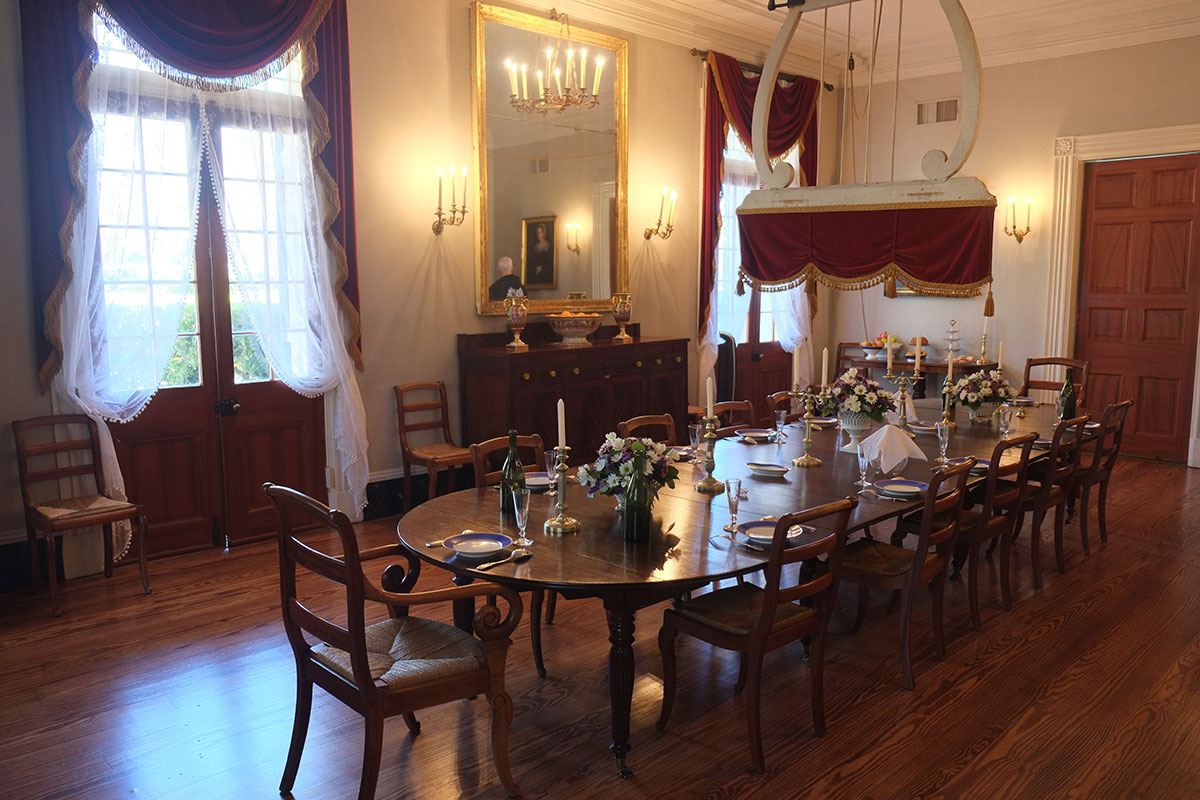
The word thing hanging over the dining room table is for shooing the flies away.  A young slave would have sat in the corner of the room pulling on the rope to make it swing.  DSCF3905

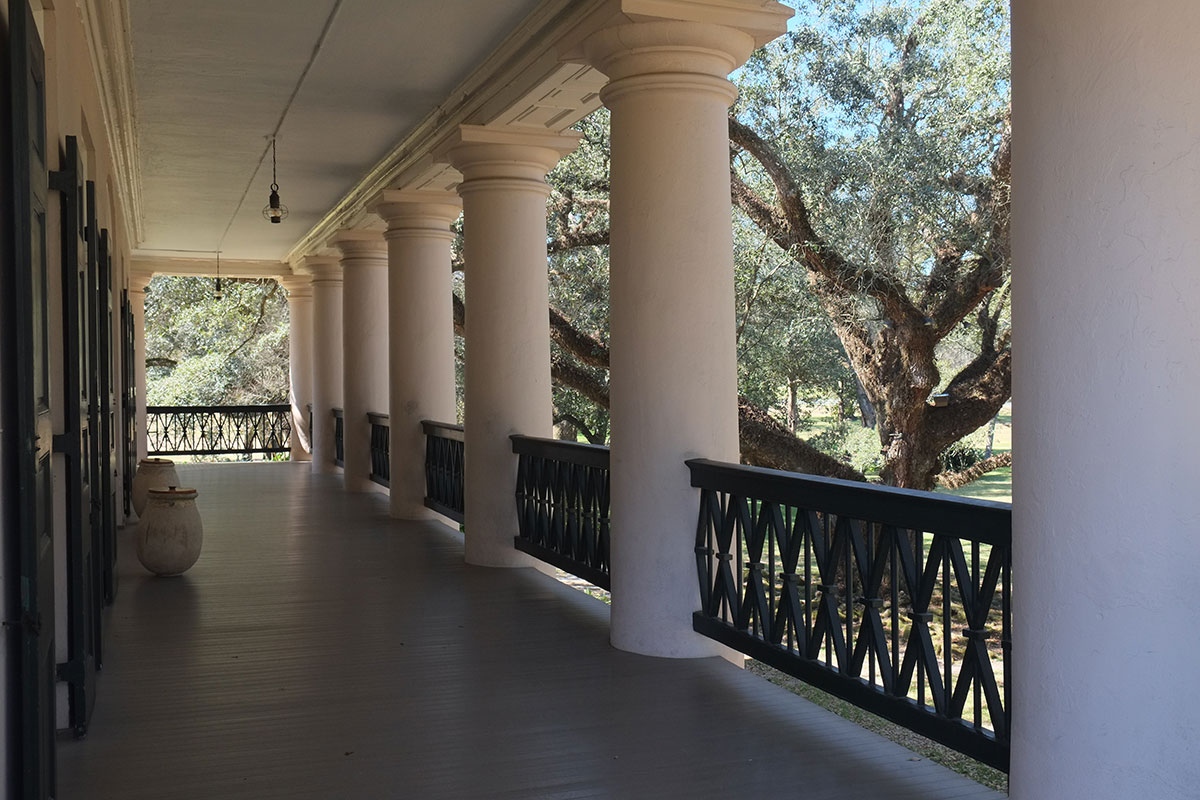
The two-story verandah on all sides was exactly where you’d want to hang out. DSCF3941 Having now seen examples in Florida, Mississippi and Louisiana, the essence of the type is pretty clear, and it is a very straightforward and sensible reaction to the climate, which must be unbearable in the summer (we were there in February and it was quite warm).

As with all plantations we’ve visited, the paramount question is how the history of slavery is treated.  As we toured the house, surrounded by tourists oohing and ahhing, we were feeling pretty weird – the architecture is fabulous, but it’s pretty hard to listen to stories about this family and think about the basis for all this wealth.  (We decided it would be like going to Auschwitz to see the commandant’s quarters.)  However, compared to what we’ve heard about other plantations, we thought Oak Alley did a good job of presenting the reality of the history.

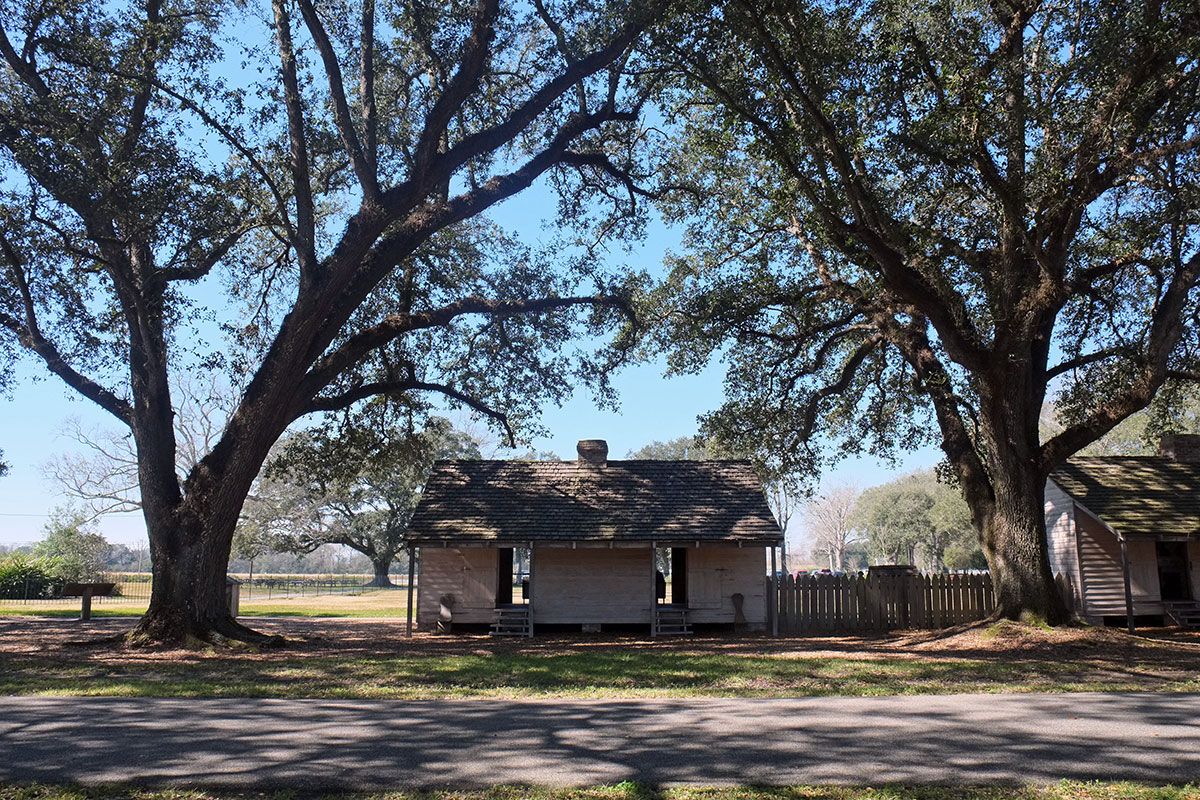
The slave quarters here were located on along the central axis, but to the rear of the house, and along another oak alley.  DSCF3884

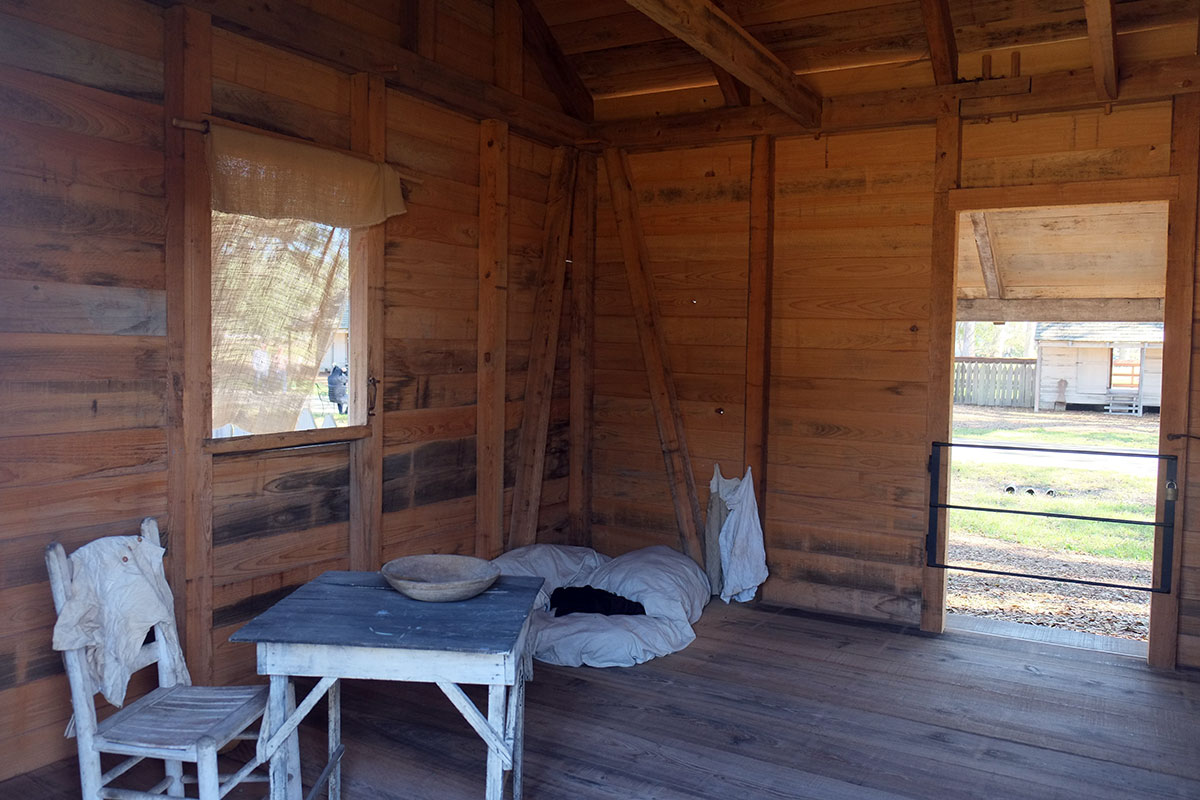
This arrangement, and their proximity to the main house, was very unusual.  The quarters had obviously not been as carefully preserved, but enough remained, and there was also documentation of them and how they had been transformed after the Civil War, when they were occupied by paid hands (who might have been the same people, just no longer enslaved).  Based upon this evidence, all the slave quarters had been reconstructed, showing how they were furnished in different eras.  DSCF3880

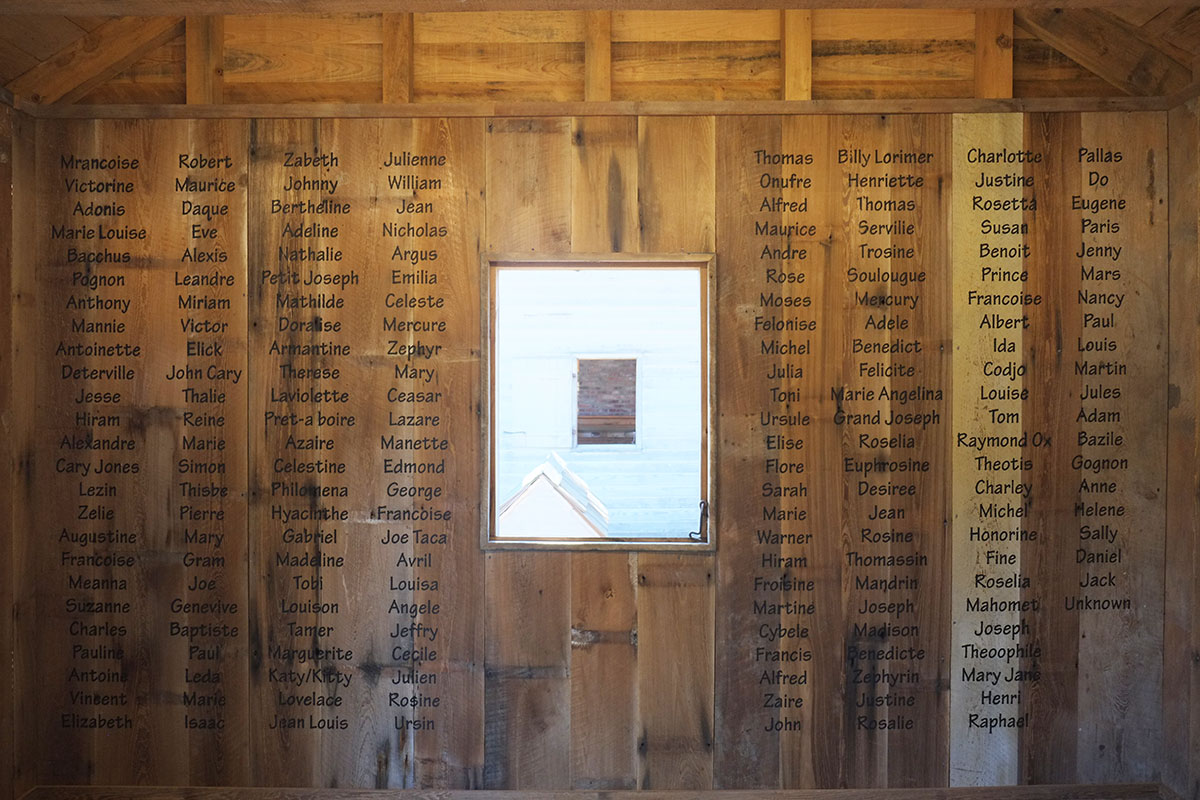
The plantation records had also been searched, and a list was compiled of all the slaves whose names could be found.  In one of the cabins, where there was a detailed exhibit on what is was like to be a slave, and how the slaves were treated, the names of the slaves from this plantation were inscribed on the end wall.  We thought it was a dignified and fitting memorial – acknowledging the individuals as best they could, working in the vernacular materials that reflected the physical surroundings and reality of these persons’ lives.DSCF3886

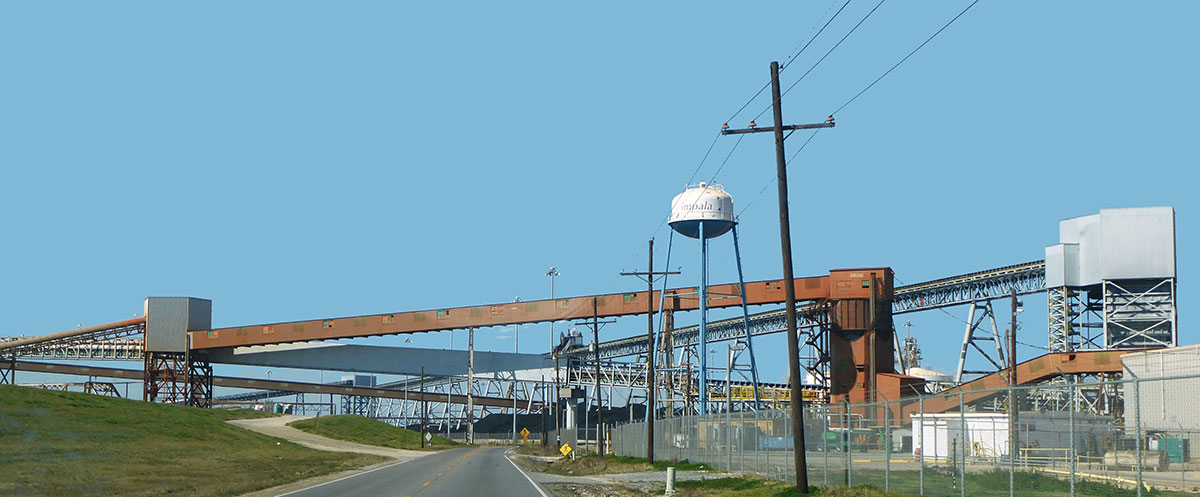
Most of the drive was through the oil and chemical industries’ landscape.  Very large facilities and big things, which we enjoy seeing.  Just glad we didn’t have to live there.  P1070311a

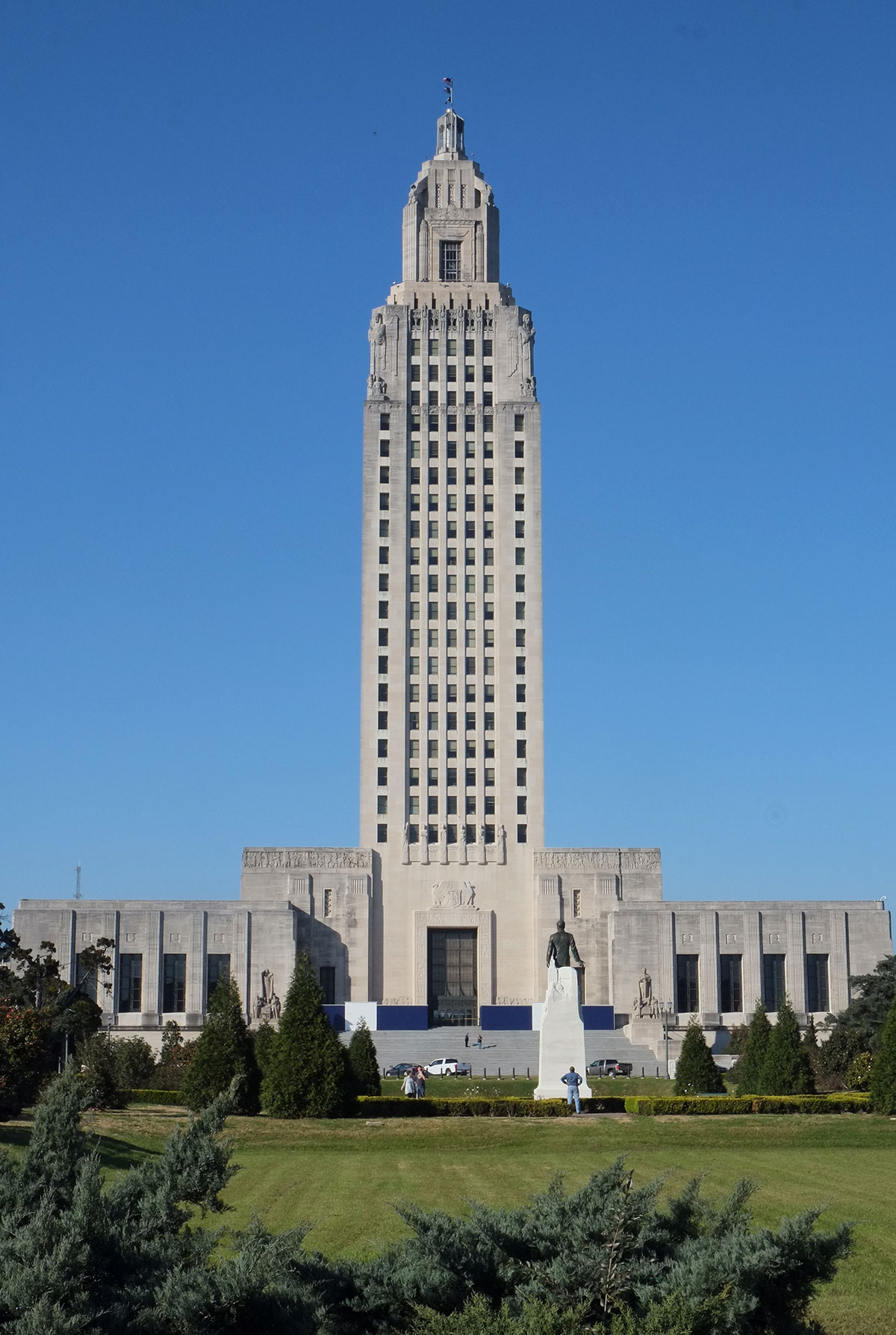
Our visit to Baton Rouge was stymied by a cell phone charger in the truck which we thought was working, but was not.  So just as we hit a major city, our phones went dead and we were navigating by instinct.  The downtown seemed to be having some kind of festival, coinciding with lots of streets being closed for construction, which made it even more difficult.  We passed by the state capitol (a pretty good one we thought, in the rare genre of capitol-as-tower), DSCF3972but mainly we spent a lot of time trying to find a store to buy a charger, before realizing that all stores like that are way out in the edge sprawl.  We gave up Baton Rouge, crossed the river and found a Walmart, and continued on our way.

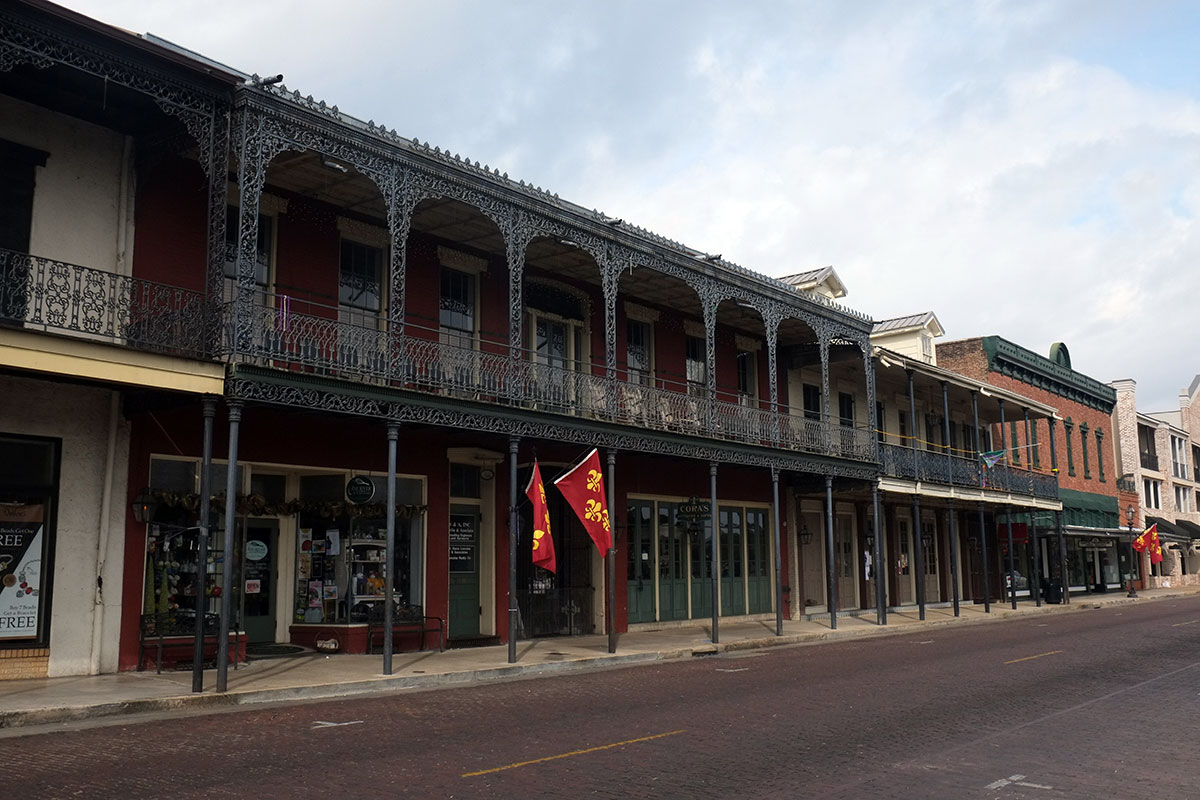
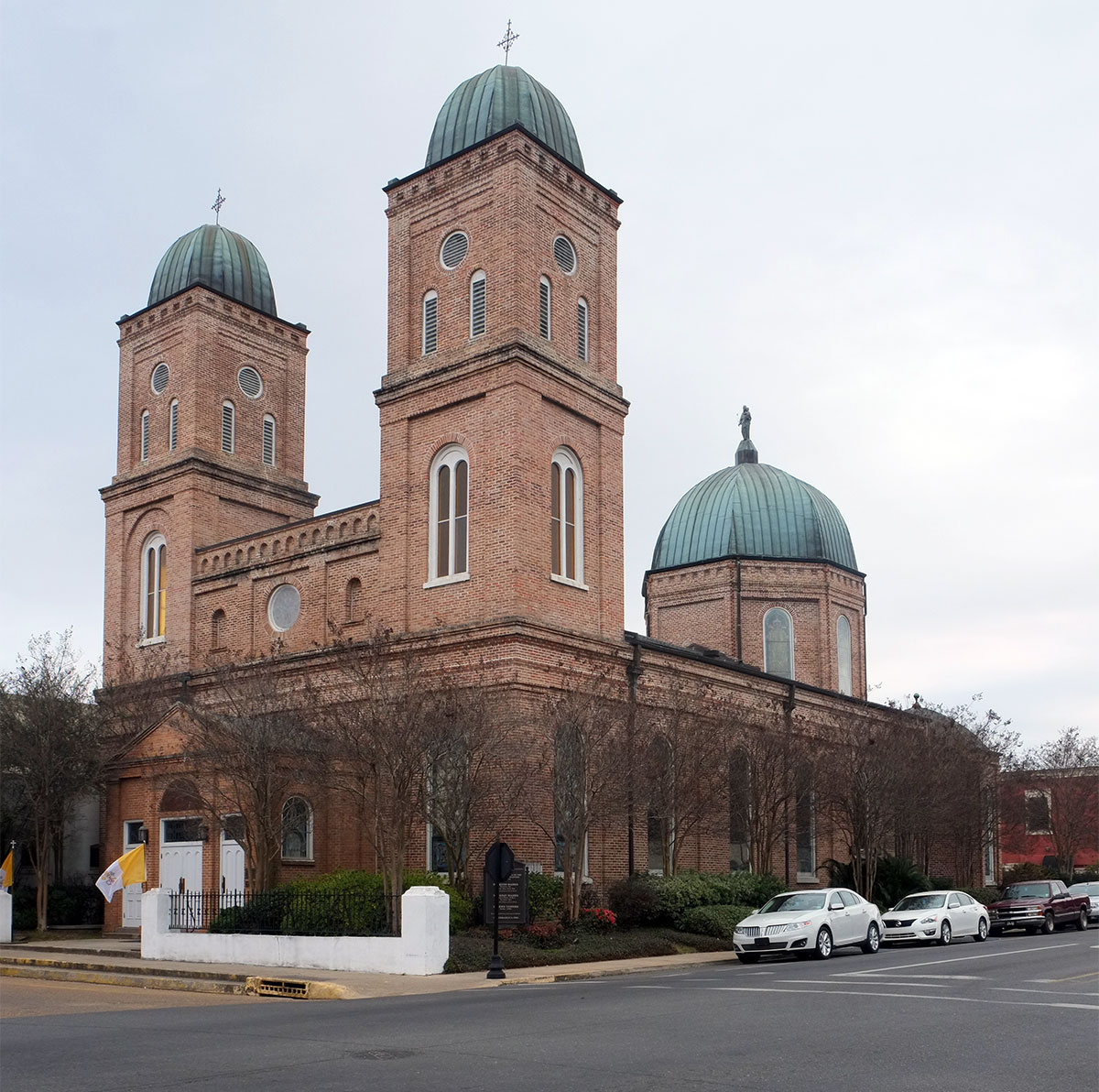
We left the Mississippi and crossed the Atchafalaya Swamp towards Lafayette, and headed up the Red River to Natchitoches (which is pronounced Nack-a-dosh), an important French colonial town.  It has a few streets of nice old commercial buildings, some of which have been excessively cute-ified for the tourists, but many of which are fine. DSCF3982

There is an excellent Catholic church. DSCF4012

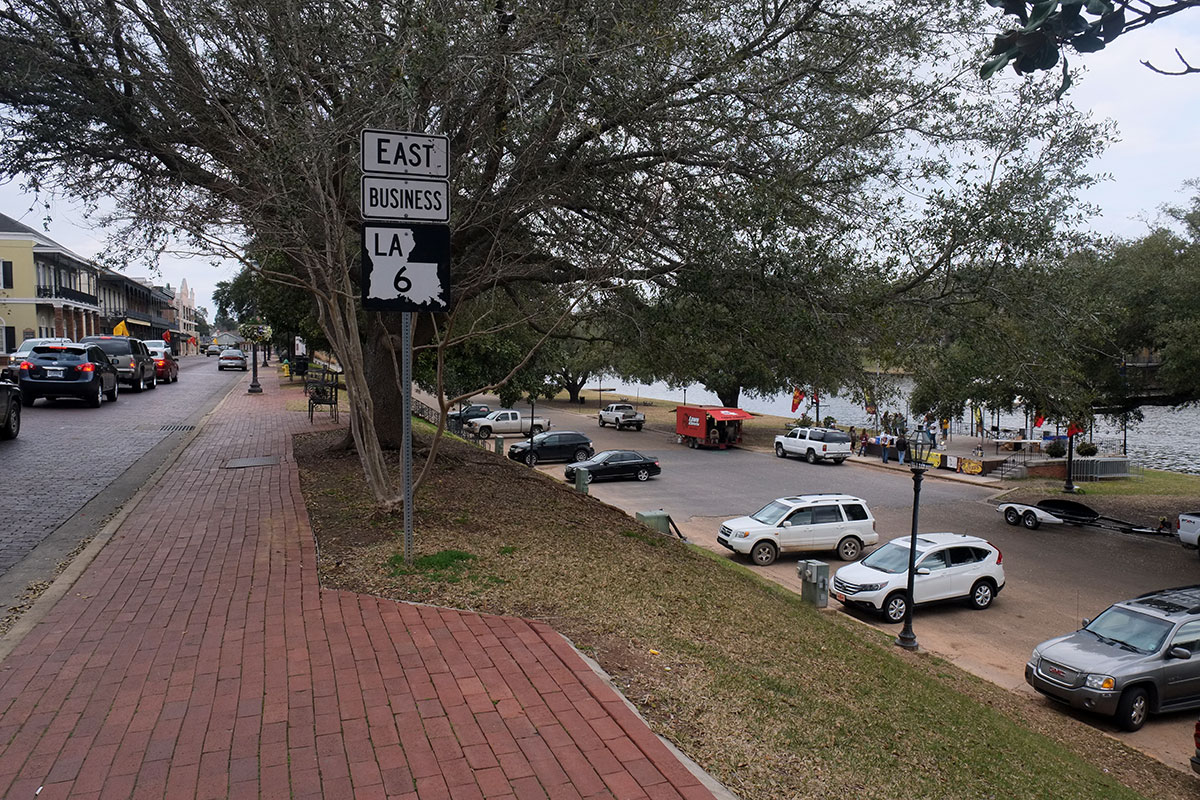
The river flows through the center of town, with the buildings sitting on the higher ground above the floodway.  The lower area by the river is used for a park, parking, and river access, a really nice way to make an open space while acknowledging that this will flood.  (A few weeks after our visit this area did indeed have some major flooding, but I wasn’t able to find out how the town fared.)DSCF3978

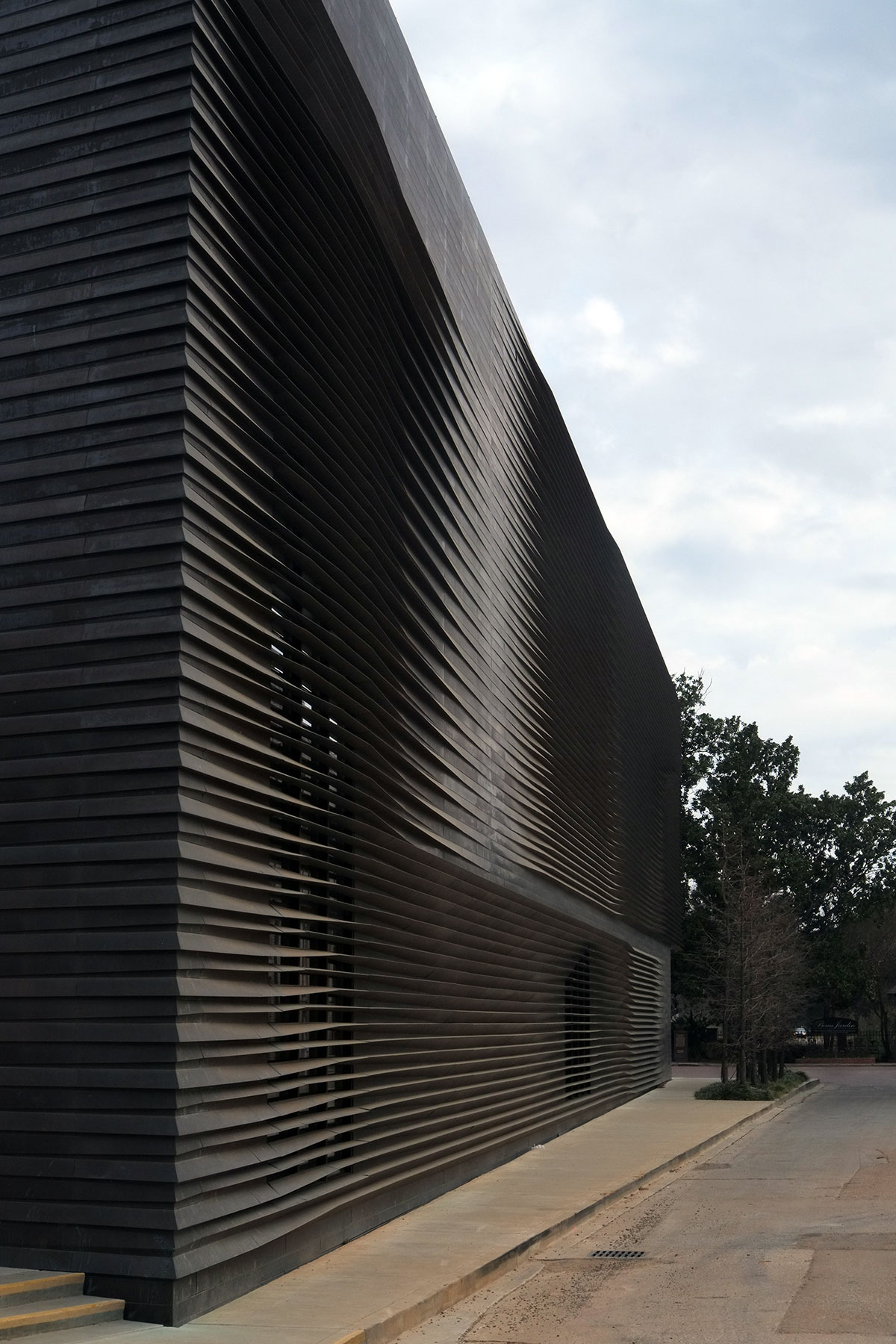
Not all the buildings are old and quaint – it is the home of the Northwest Louisiana History Museum, which was for some reason combined with the Louisiana Sports Hall of Fame.  DSCF3993

I was very surprised to find such an edgy building in such a location – the folks at Trahan Architects have clearly been reading their magazines, and the skin was the hippest we’d seen since Miami.  DSCF3998

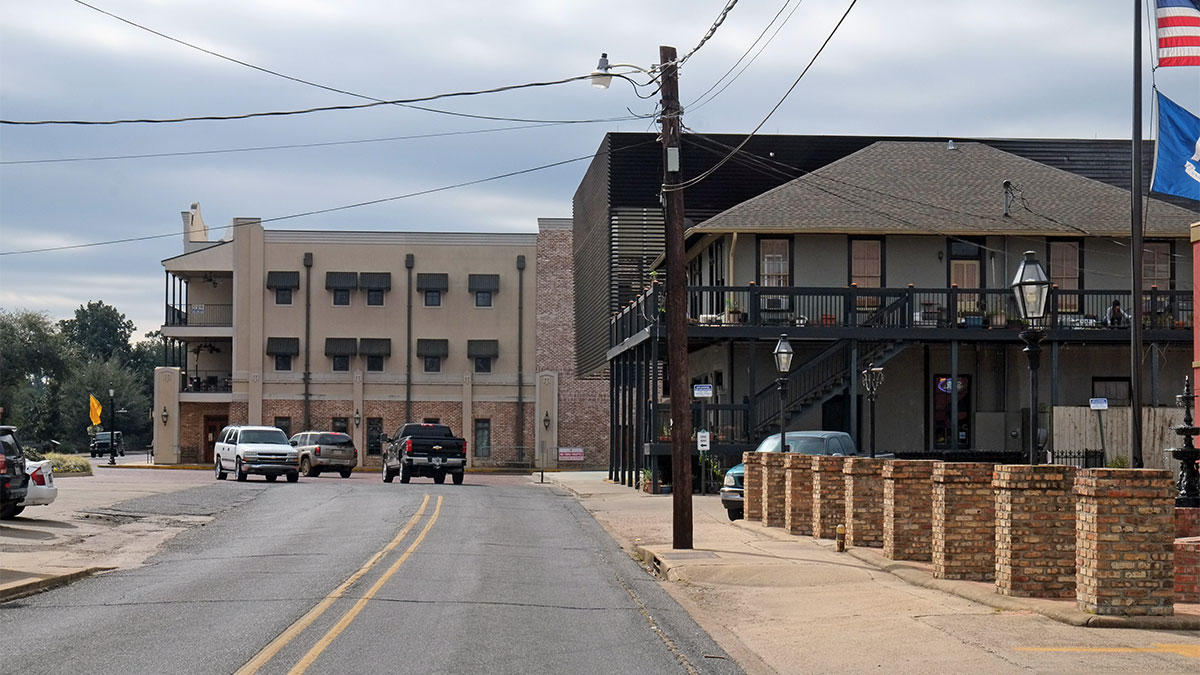
Strangely, it looked pretty darn good in the town – the massing is simple and in scale with the surroundings, the entry space under the floating screen wall relates to the verandah architecture of the nearby commercial buildings,DSCF4003 it’s dark-colored, and it anchors a funny shifting intersection.  On the whole, it was much better than the pseudo-historicist buildings we saw there (such as the one beyond it).  It was Sunday so we couldn’t get inside, which was too bad, as Glen and Michelle had designed some of the exhibits.

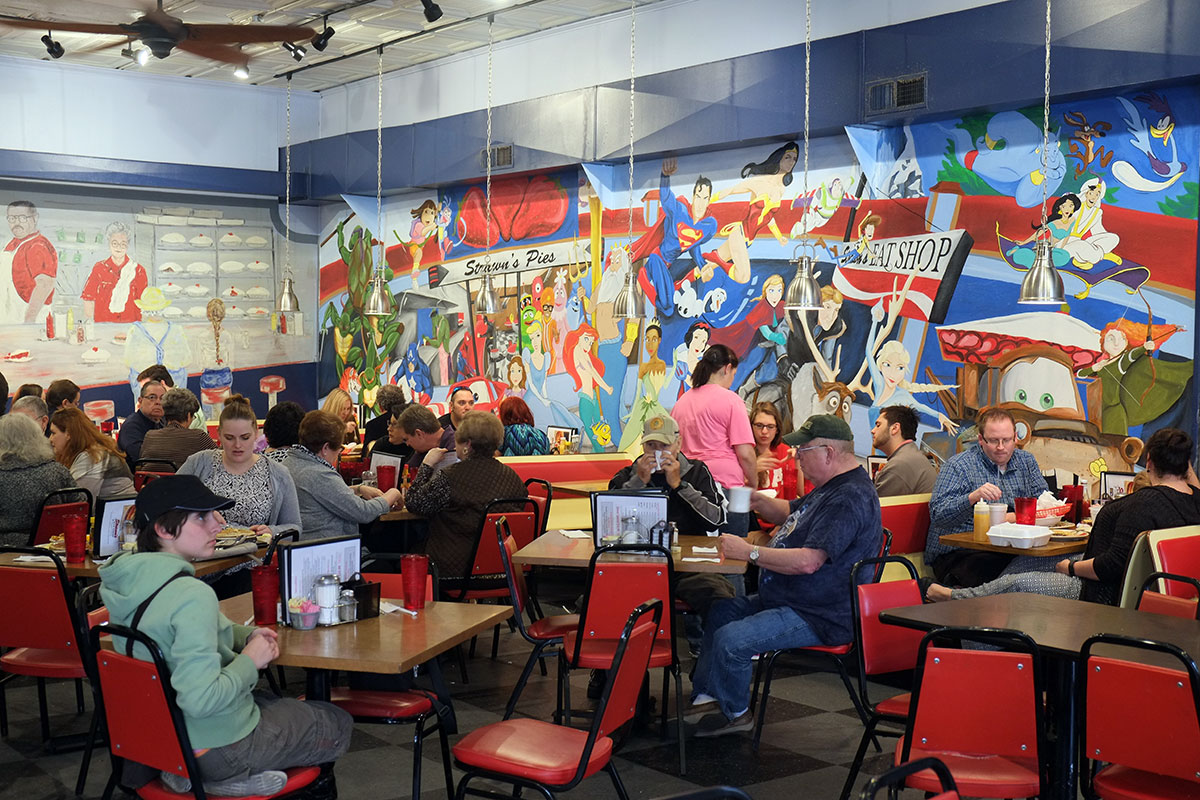
We hadn’t heard great things about Shreveport, but we enjoyed it.  We stopped for lunch at Strawn’s Eat Shop (we found it through Roadfood.com, and couldn’t resist the name).  Food not worth blogging about, but we liked the ambience.  DSCF4029

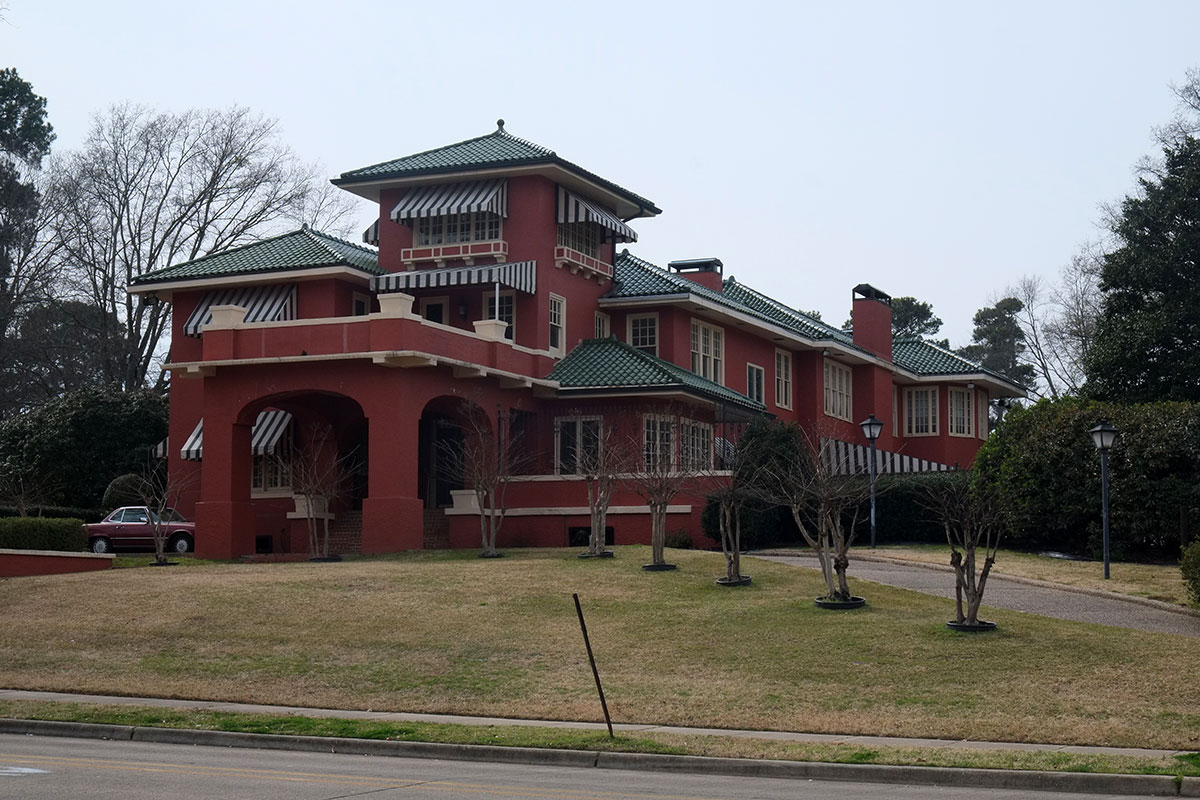
We saw what was clearly the older expensive neighborhood, DSCF4032

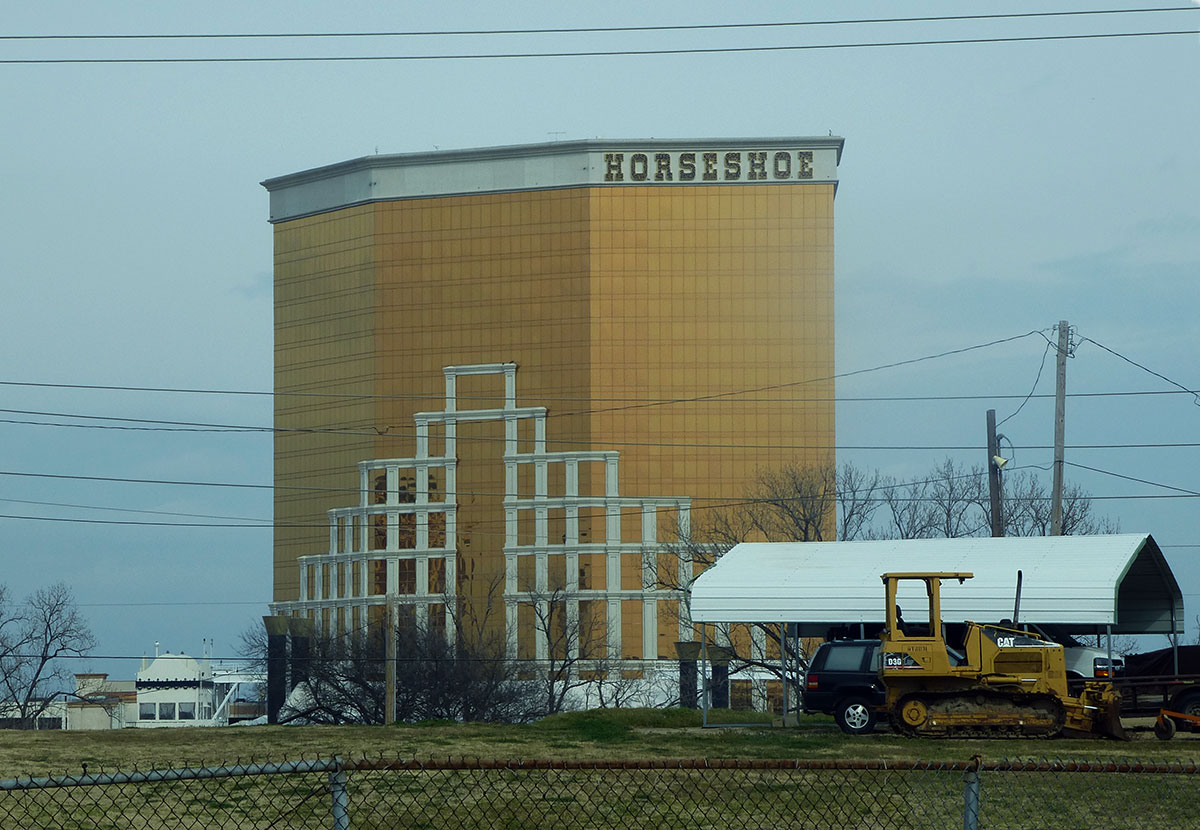
and then perhaps the worst Pomo building in the world, even uglier than the Jacksonville courthouse.  Casino architecture is inherently strange, but cheap casino architecture may be the most depressing stuff around.P1070328a

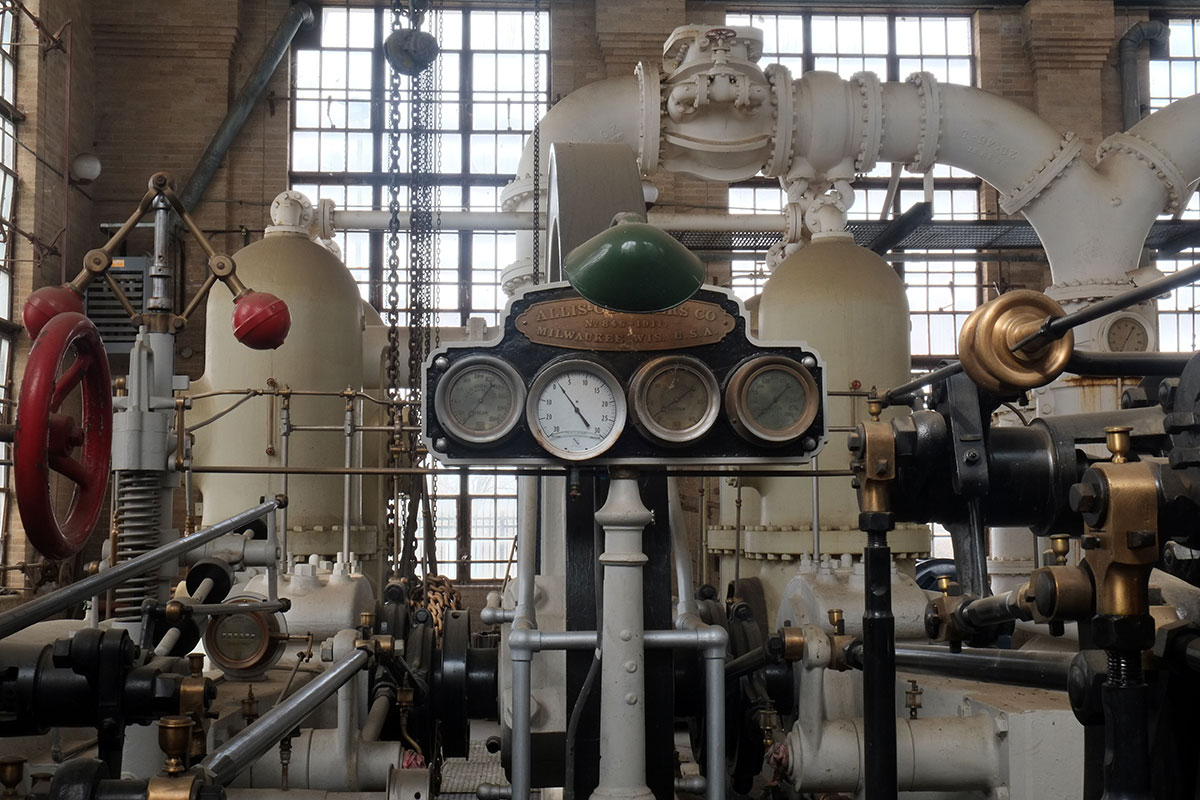
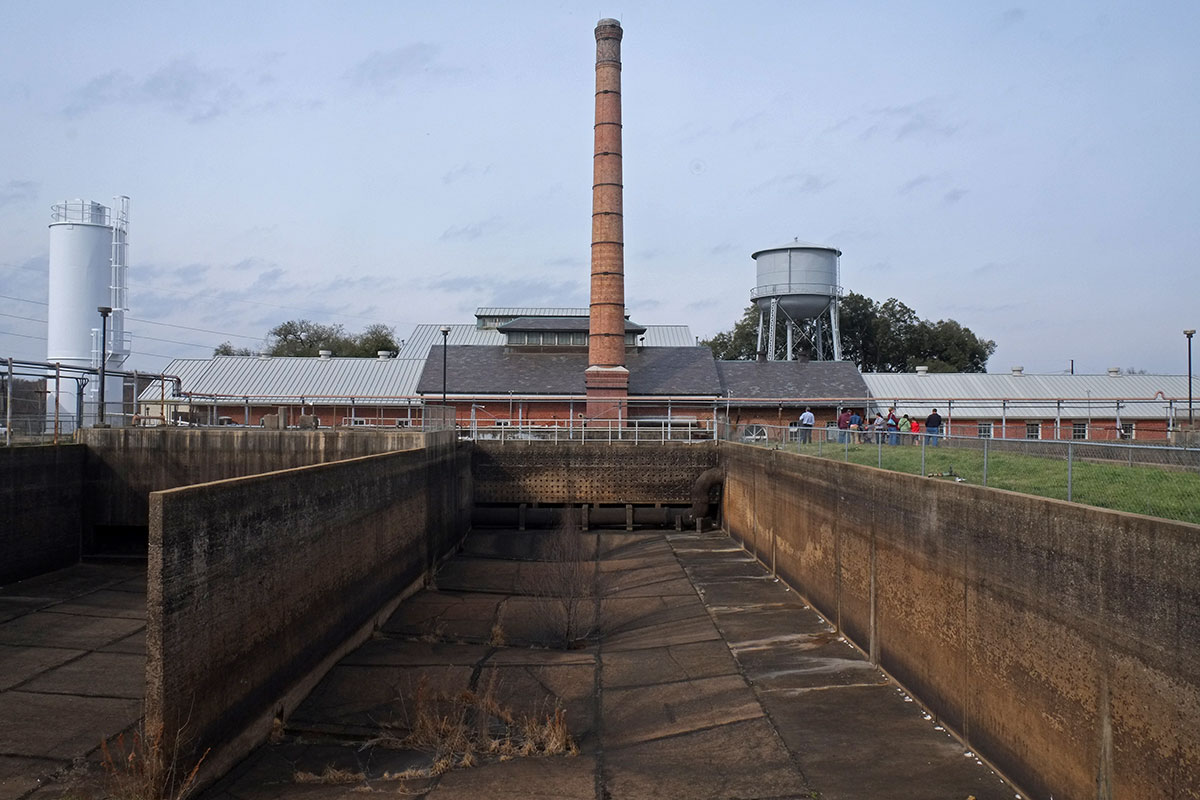
But by far the highlight of Shreveport was the Waterworks Museum. DSCF4053

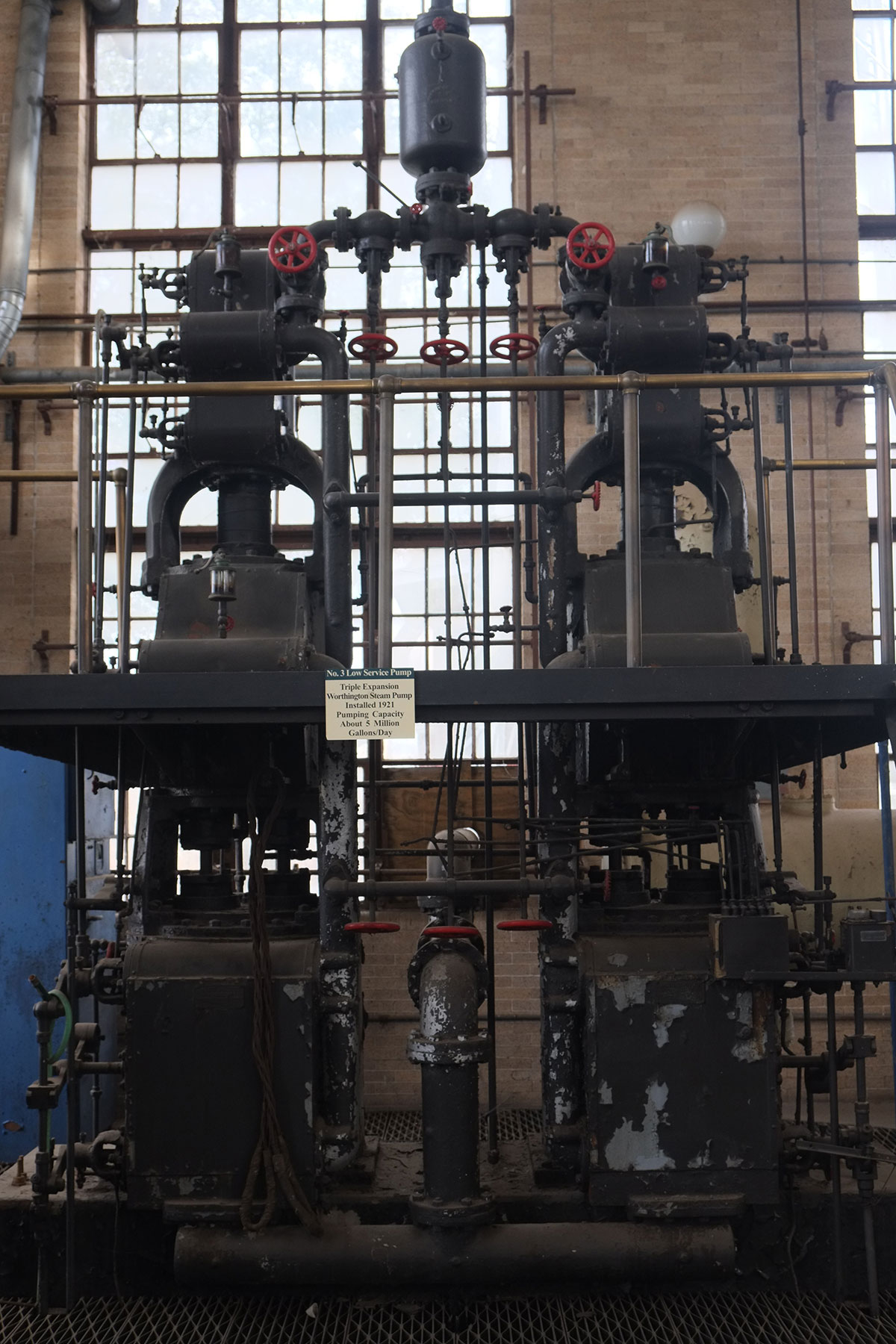
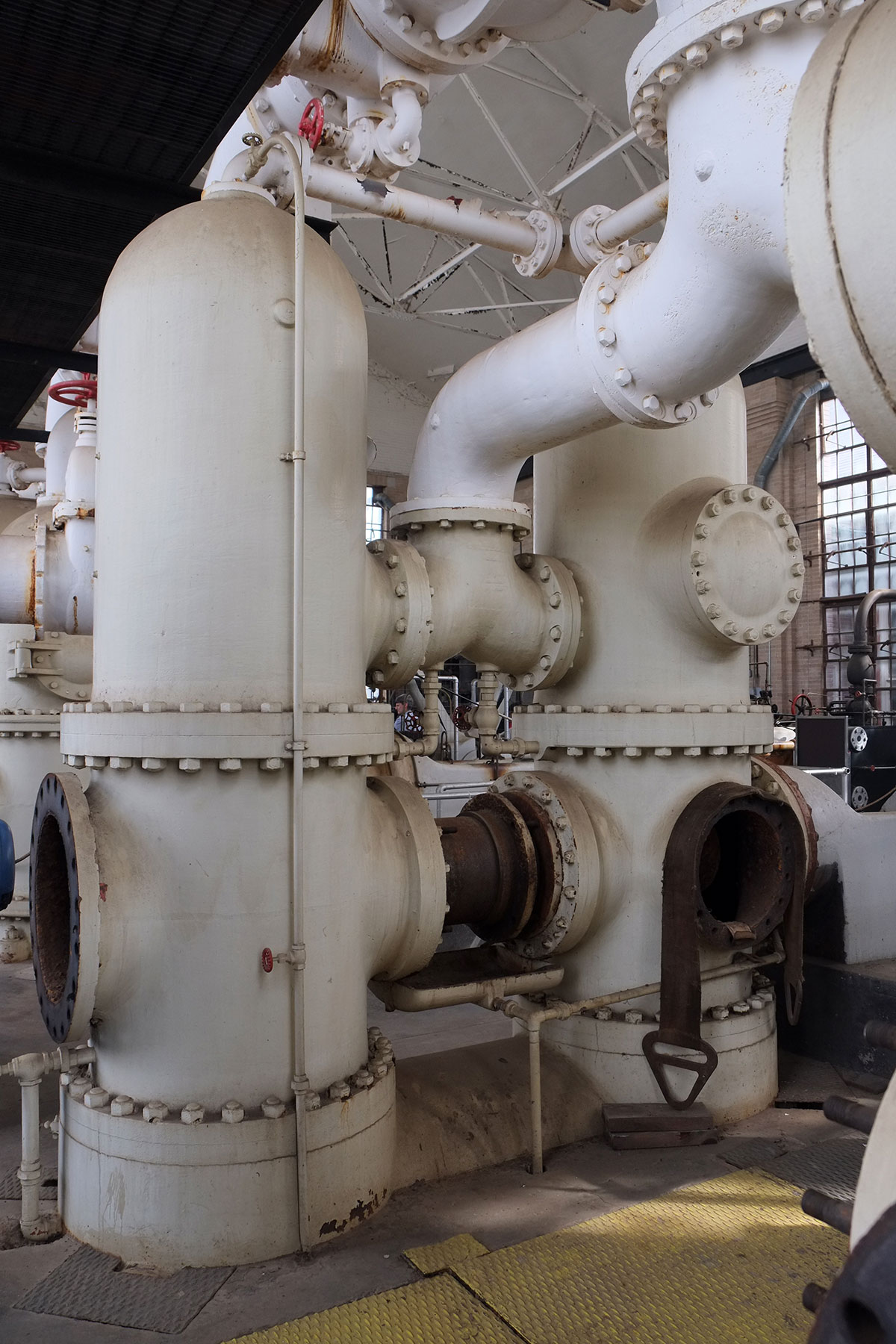
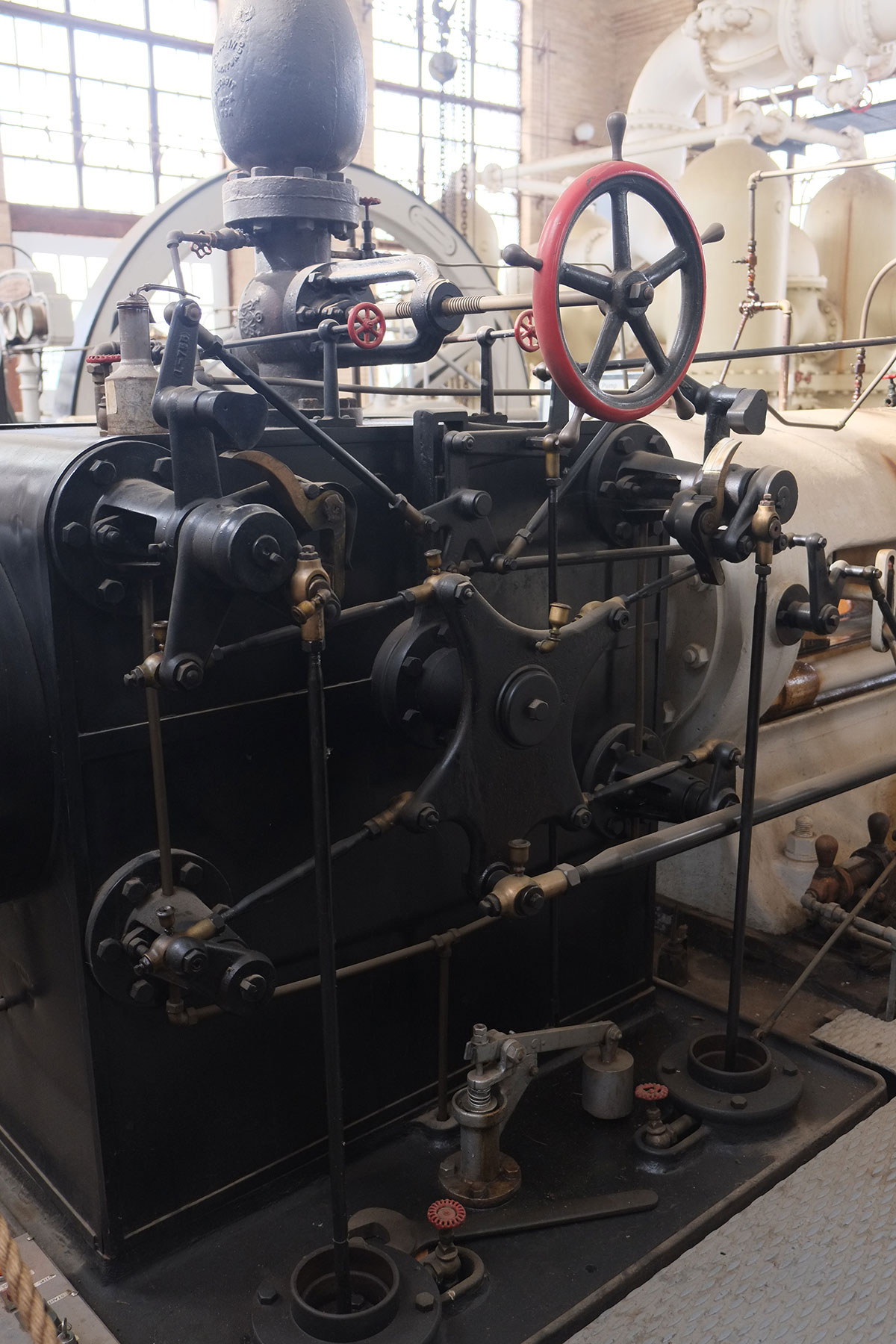
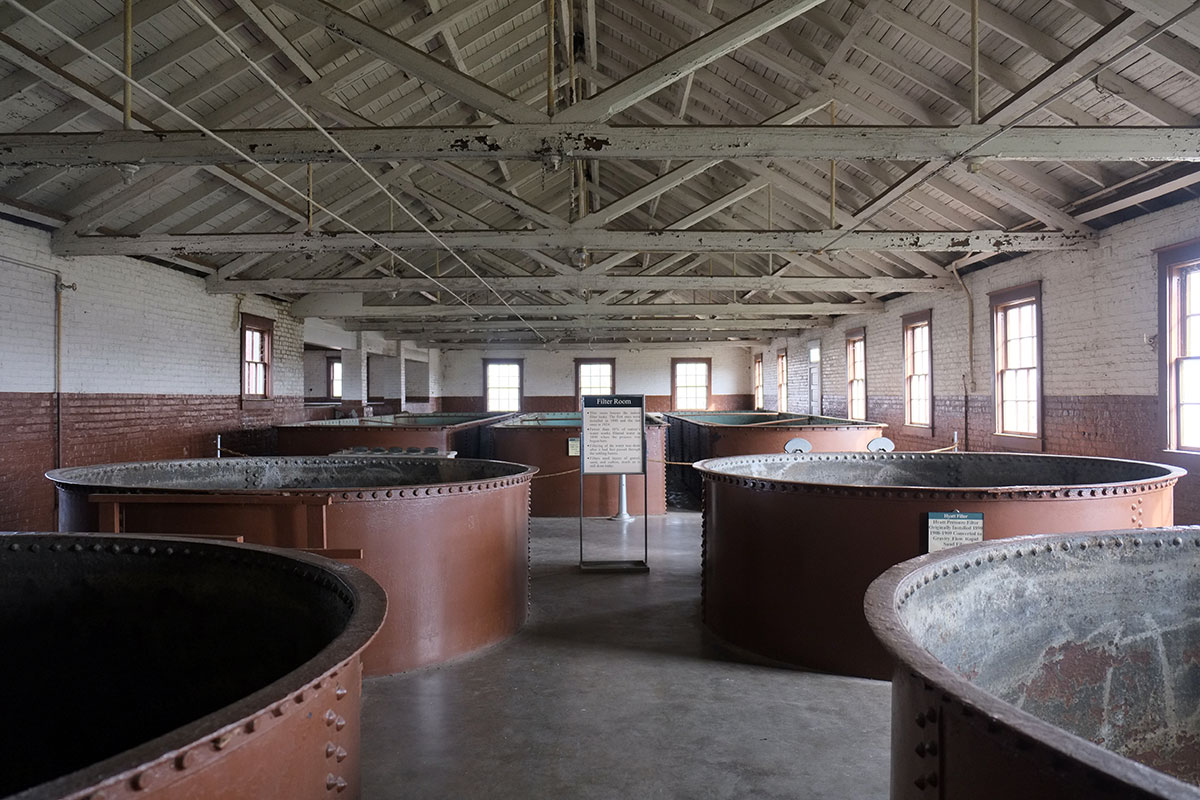
They ran their municipal water system on steam power until 1980, and then when they revamped it all, they preserved the whole earlier plant, with boilers, pumps, controls, settling tanks, labs, etc.  It was superb. DSCF4046  DSCF4058   DSCF4050  DSCF4092  DSCF4079We randomly arrived on a Sunday afternoon, and were able to join a tour with a group of cub scouts, which had an excellent guide who clearly loved the place.  As I’ve mentioned, neither of us especially likes visiting historical places where something once happened, but there’s no visible evidence.  We like seeing real stuff ([preferably Steanmpunk stuff), and this was about the best industrial archaeology we’ve seen on the whole trip.

New Orleans – the newer city

One of the reasons that New Orleans is so different from other American cities is that has always been constrained.  Surrounded by Lake Ponchartrain (to the north) and low-lying swamps and marshes in every other direction, the whole metropolitan area encompasses only around 200 square miles, with a population of 1.2 million – approximately half that of Portland’s.  The constraints on New Orleans used to be even more extreme – the originally-settled areas on the ridges (about eight feet high) were only later supplemented by the close-in drained-swamp residential areas in the 19th century, and the more extensive sprawl (such as it is) is all from the postwar era.  So the center of the city feels compact and manageable, while having very imageable, distinct districts.

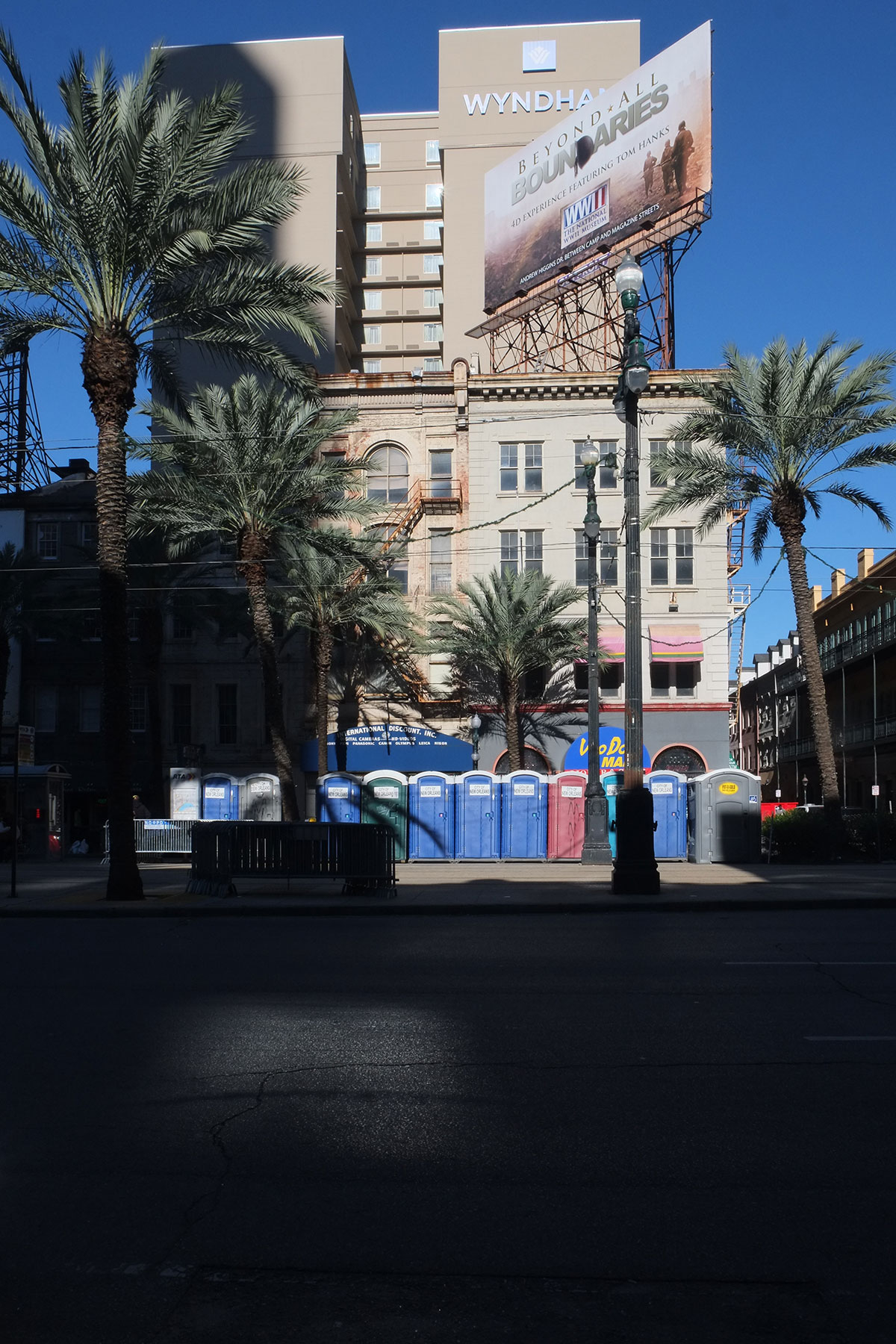
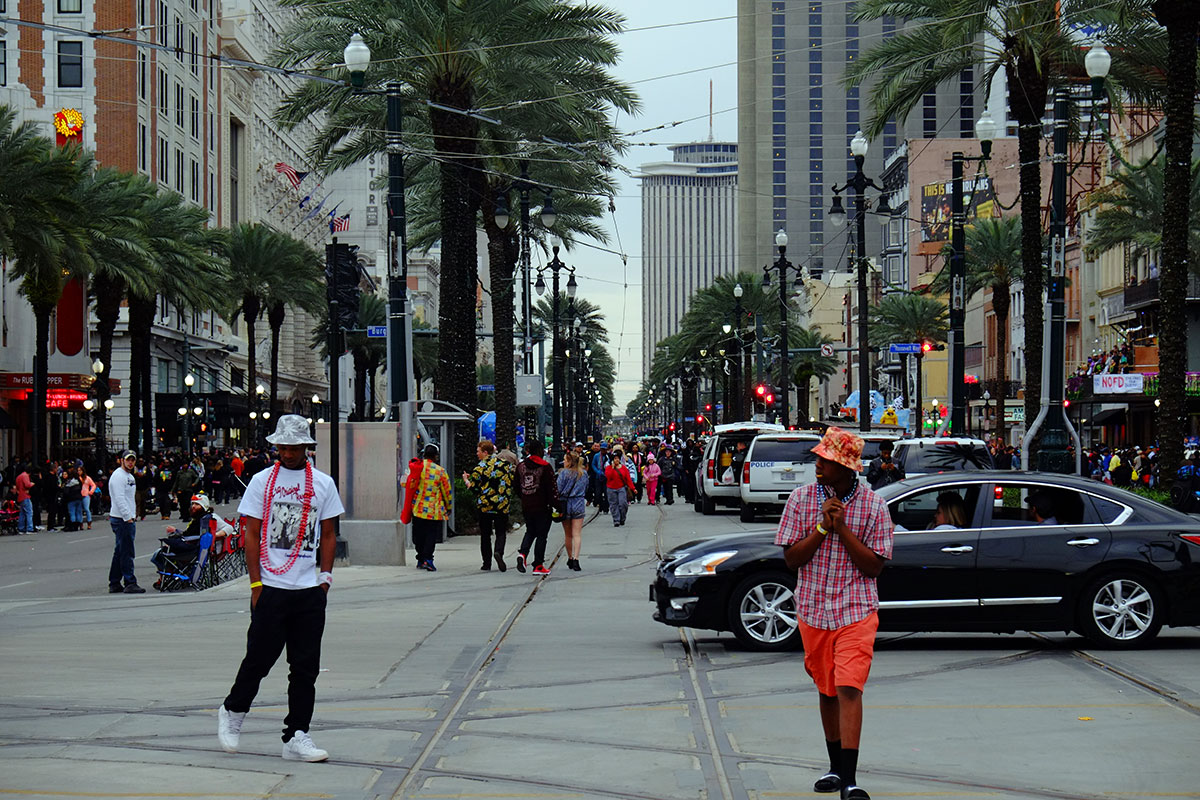
When the Americans began to move in after the Louisiana Purchase, they mainly left the Vieux Carre alone, and settled upriver, across Canal St.  Canal St. never had a canal, but it was planned for one, and so it is immensely wide.  It is a wonderful contrast to the rest of the city – you emerge from the narrow confines of the French Quarter to the bright, open expanse of Canal.     DSCF2648

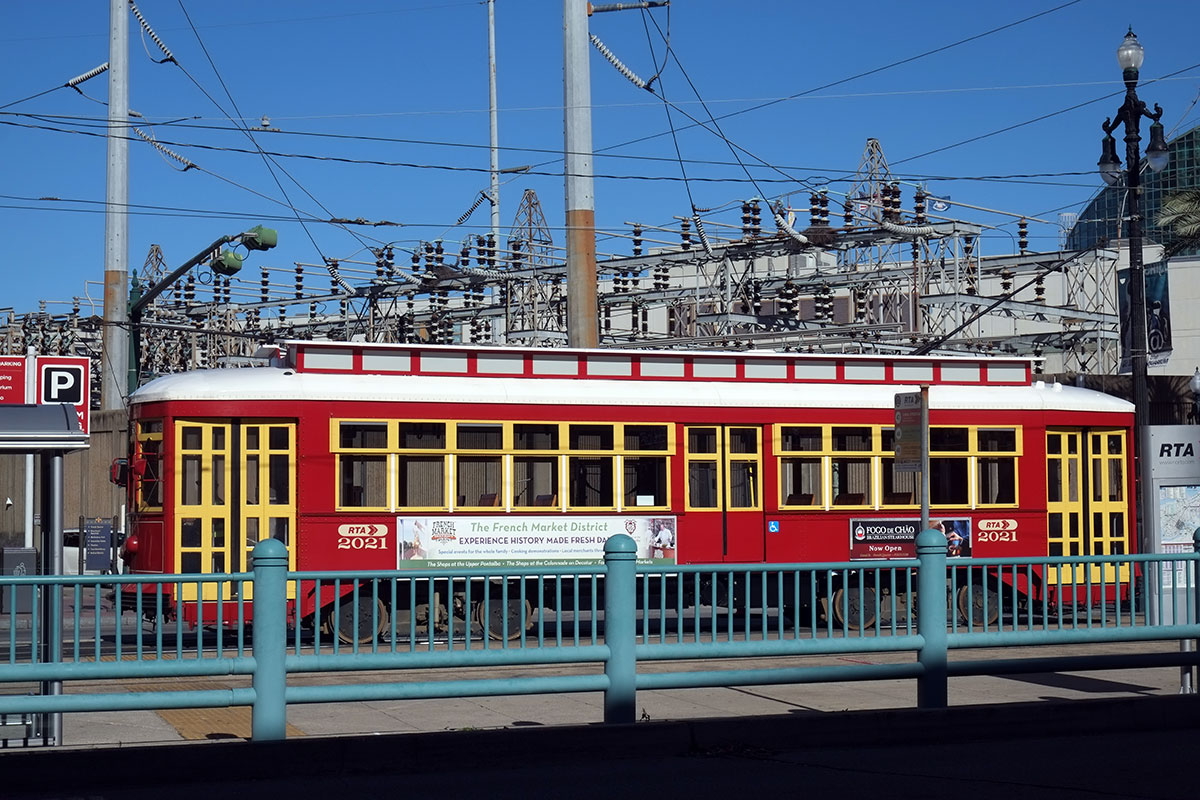
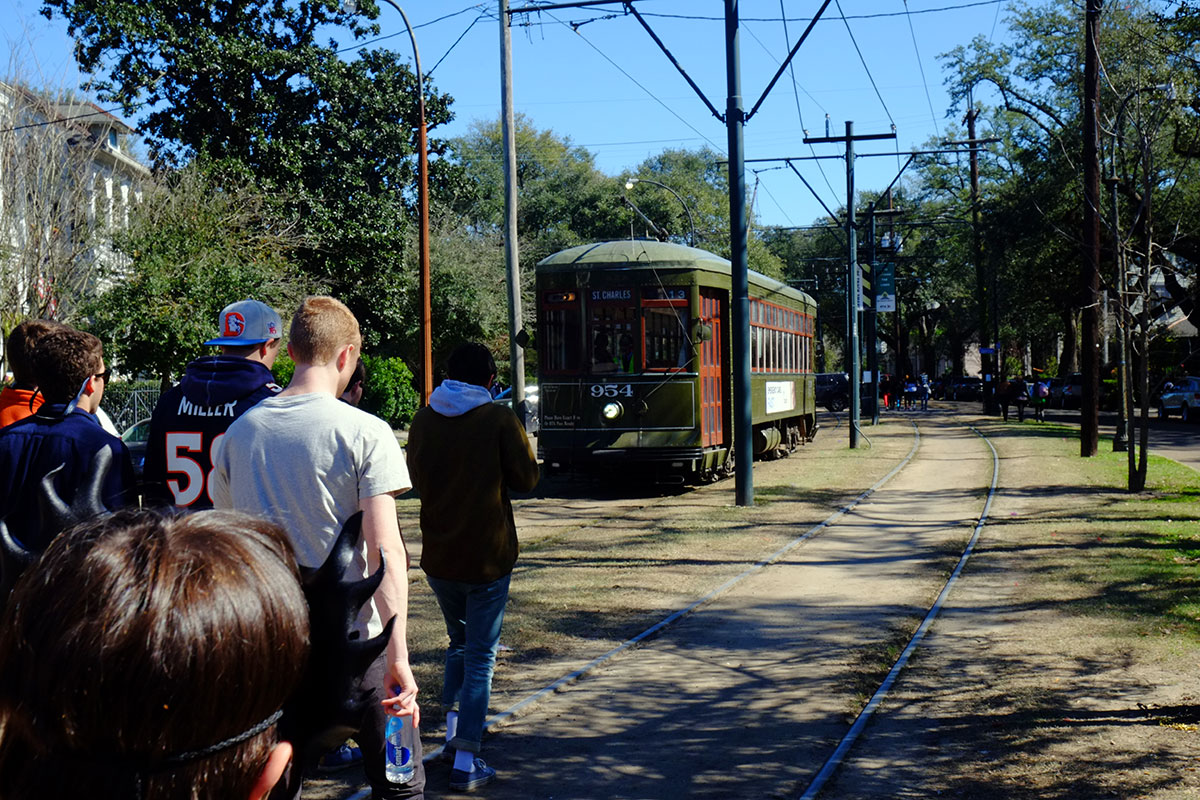
The buildings form a continuous wall, there are streetcar tracks up the center, and a double row of palm trees.  Bright lights, traffic, tourist attractions and hotels – it is an entertaining and exciting space, one that says, this is a big city.  Also a tropical city – with its white facades and palm trees, Canal feels very different from the grey avenues of the north.  DSCF2041p  One of the two streetcar lines runs up Canal, and it is a joy.  The old cars are fabulous, and here as on St. Charles, you ride along experiencing the city as it goes by.  DSCF2034DSCF2822
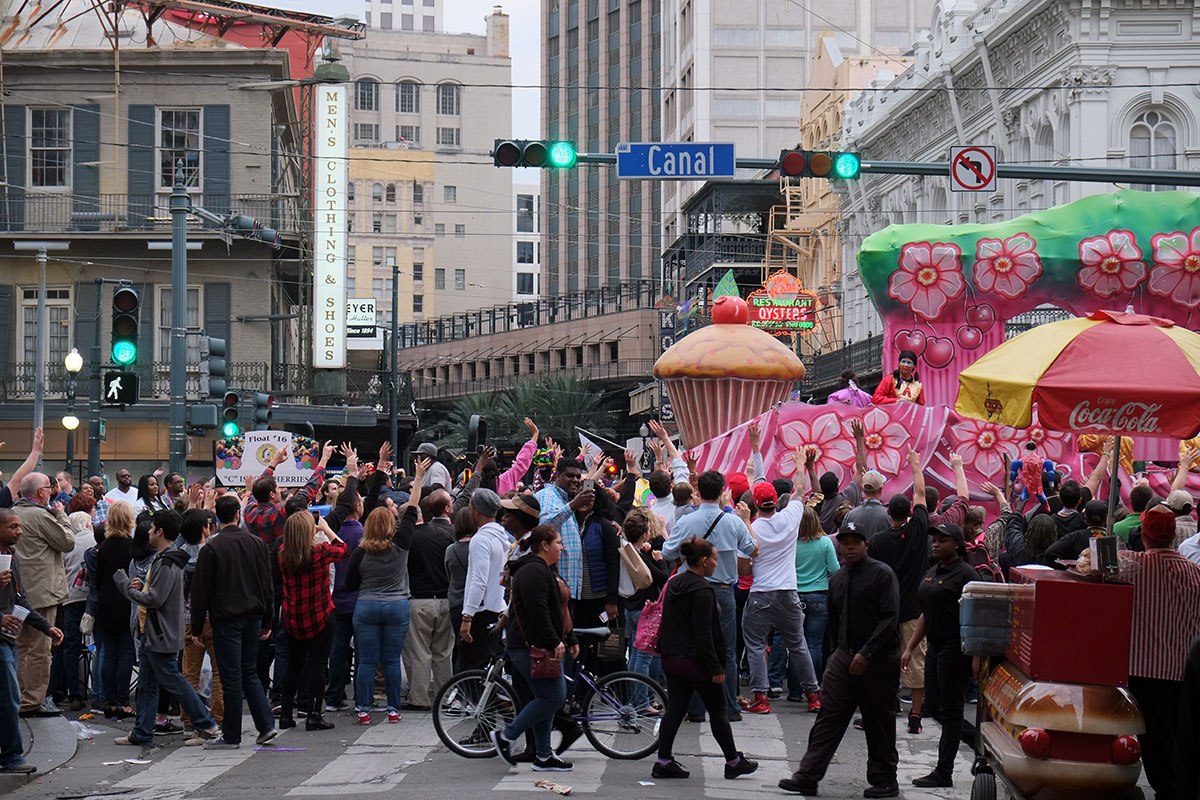
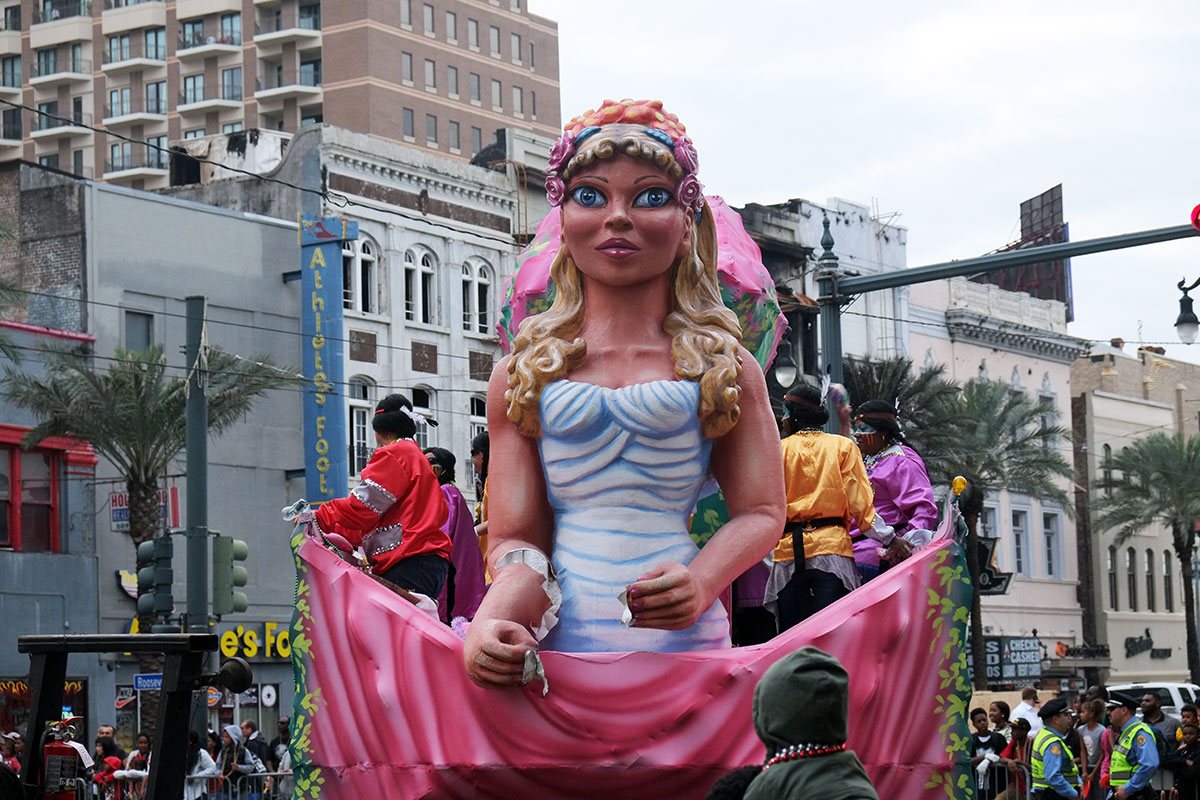
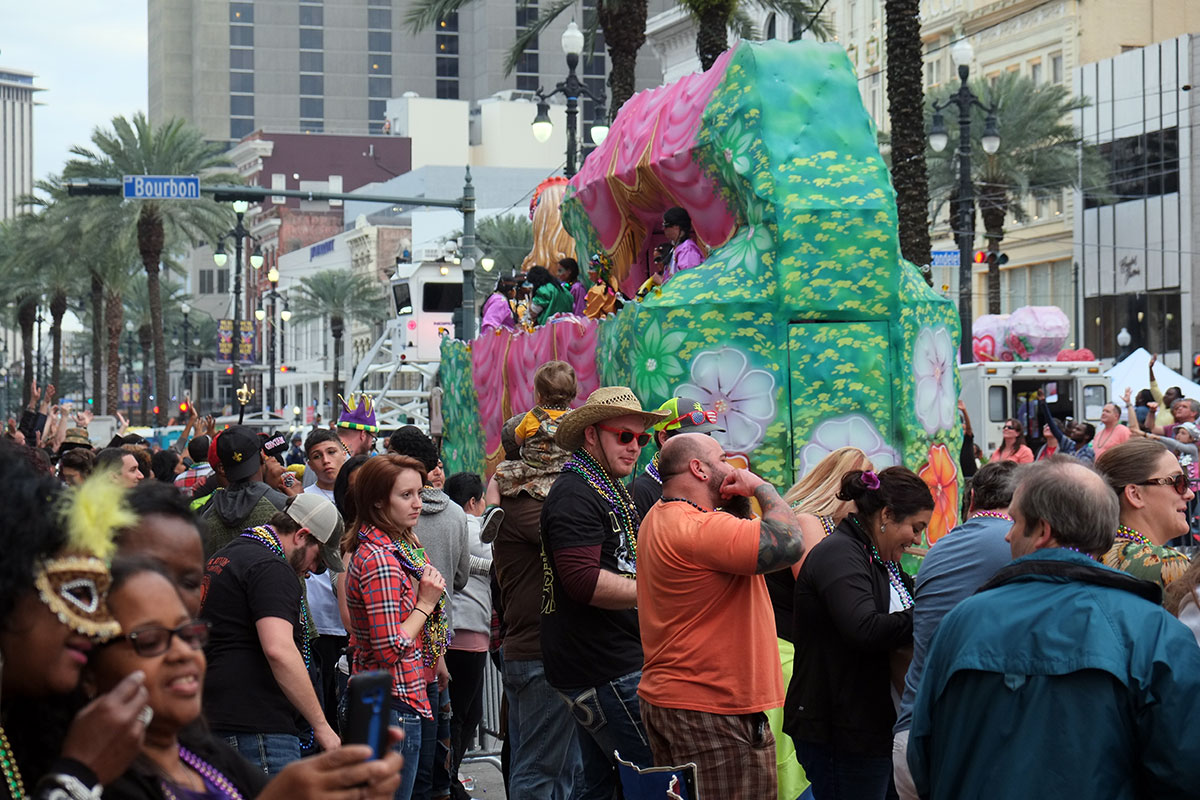
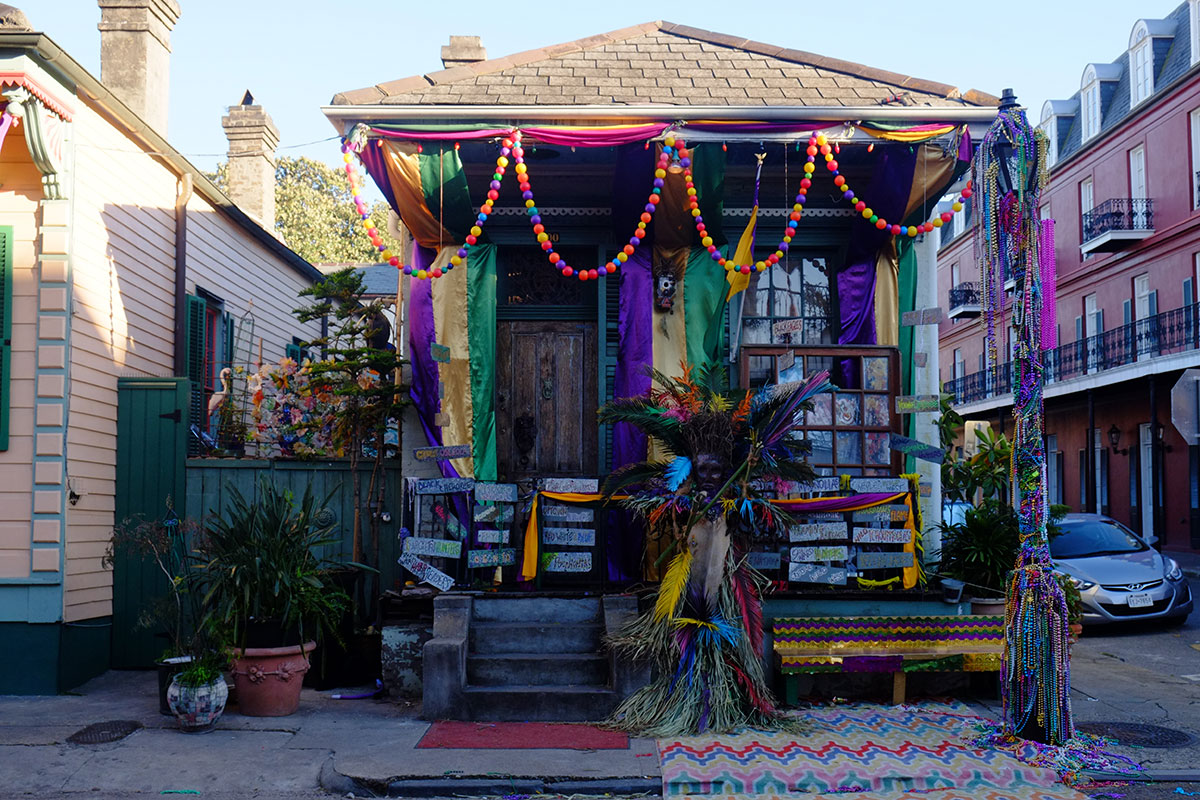
Canal really comes into its own on Mardi Gras – all the large parades end up here, heading up one side of the neutral ground (median) and back down the other.  The scale of the street works with the large crowds and floats – it reminded me of Broadway in New York with the Thanksgiving parade.  DSCF2277  DSCF2265  DSCF2267
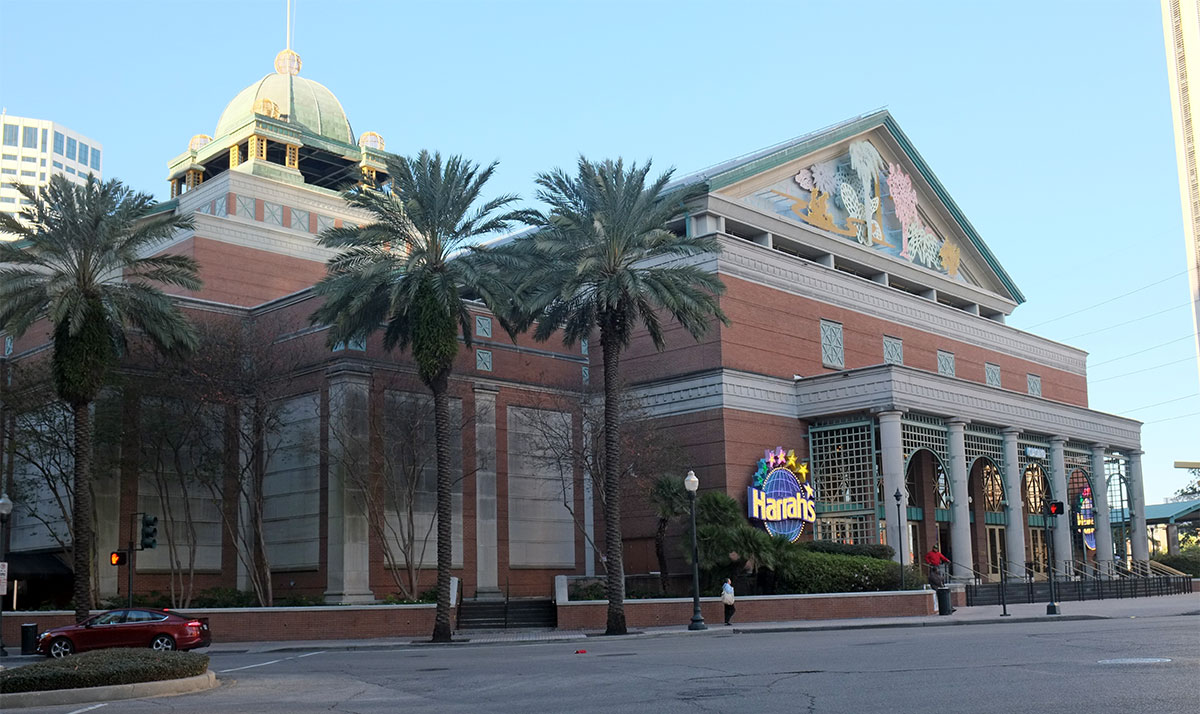
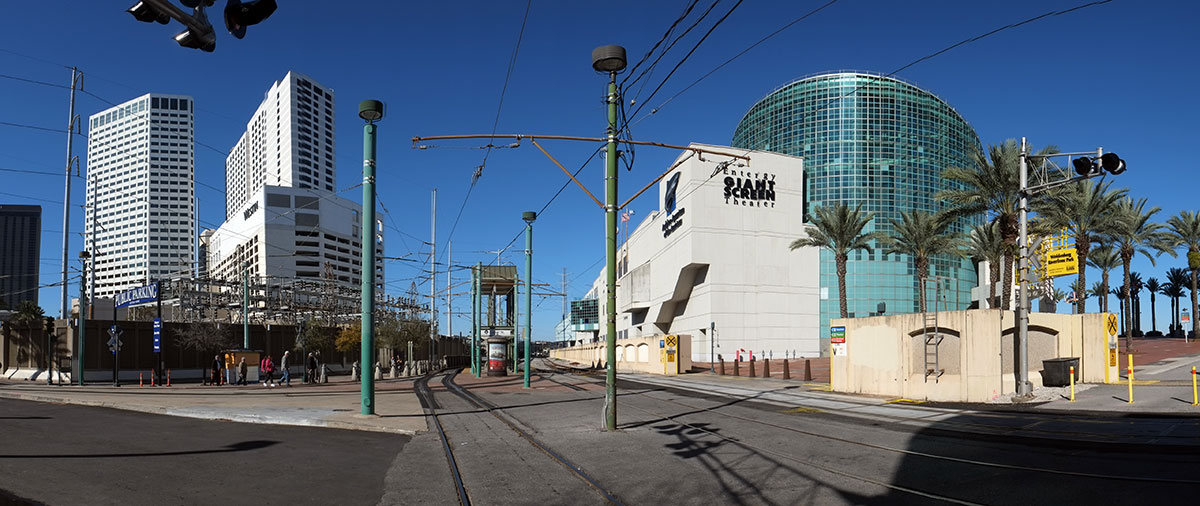
The end of Canal at the River is the center of tourist / convention madness.  Hotels, convention center, casino, aquarium – all the overscaled and blank buildings are here.  It works pretty well- these fairly standard dreadful buildings are clustered and have a minimal impact on the other neighborhoods.  You can just ignore this part of town if you don’t have to go there.  DSCF2032  DSCF2098

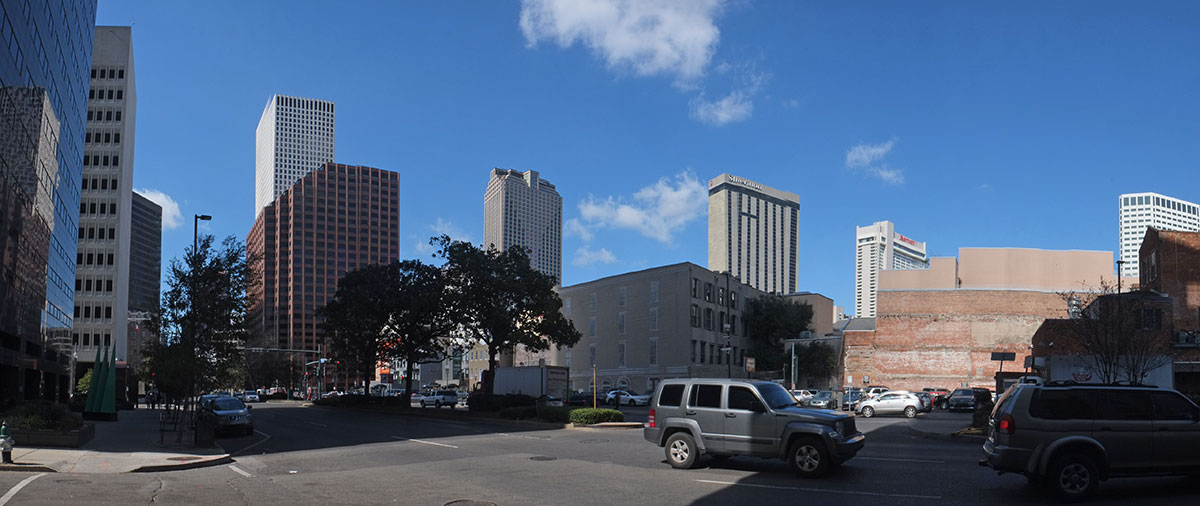
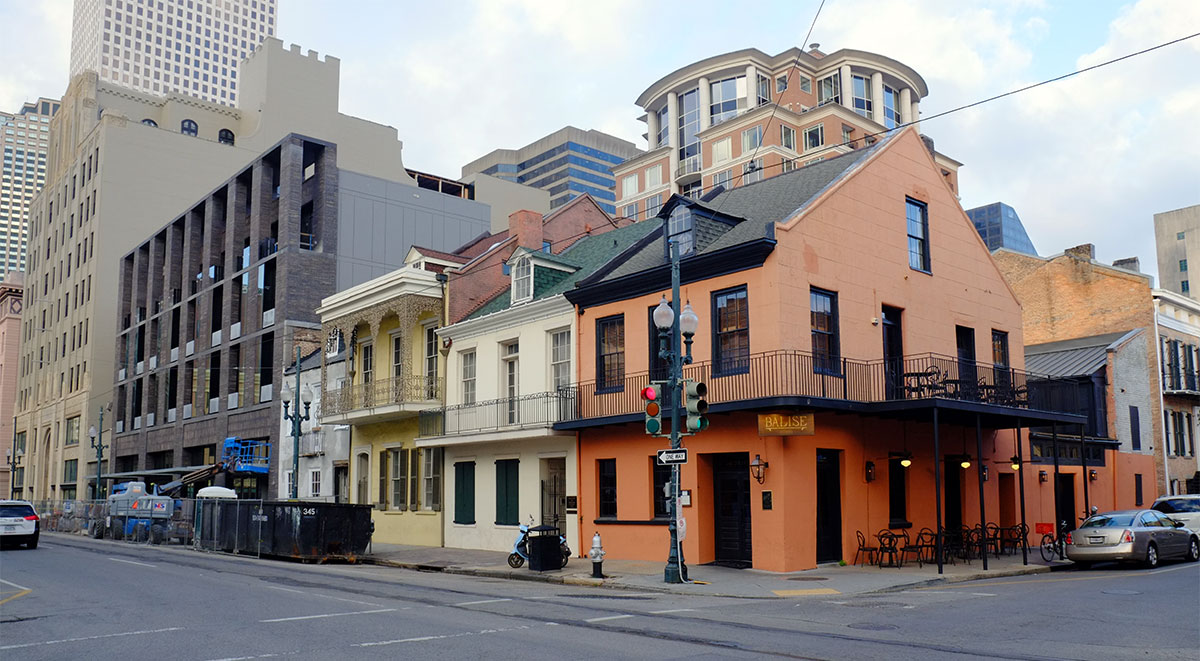
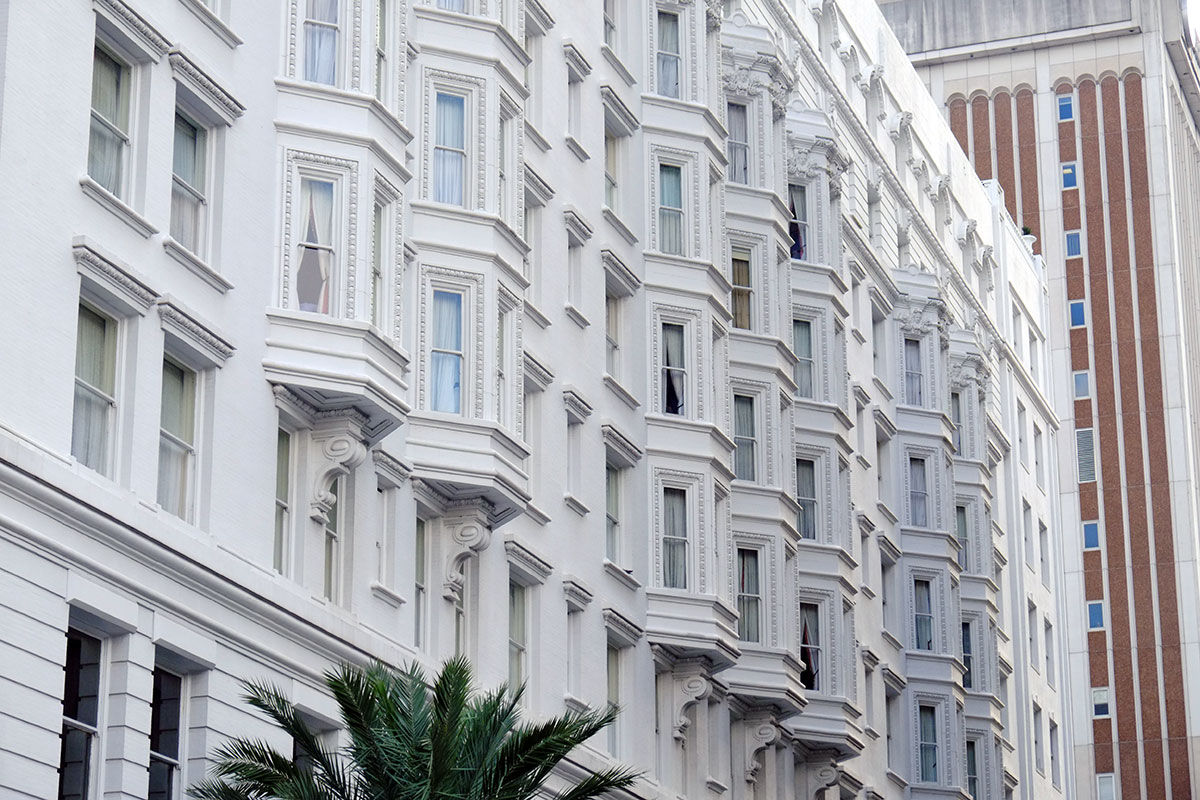
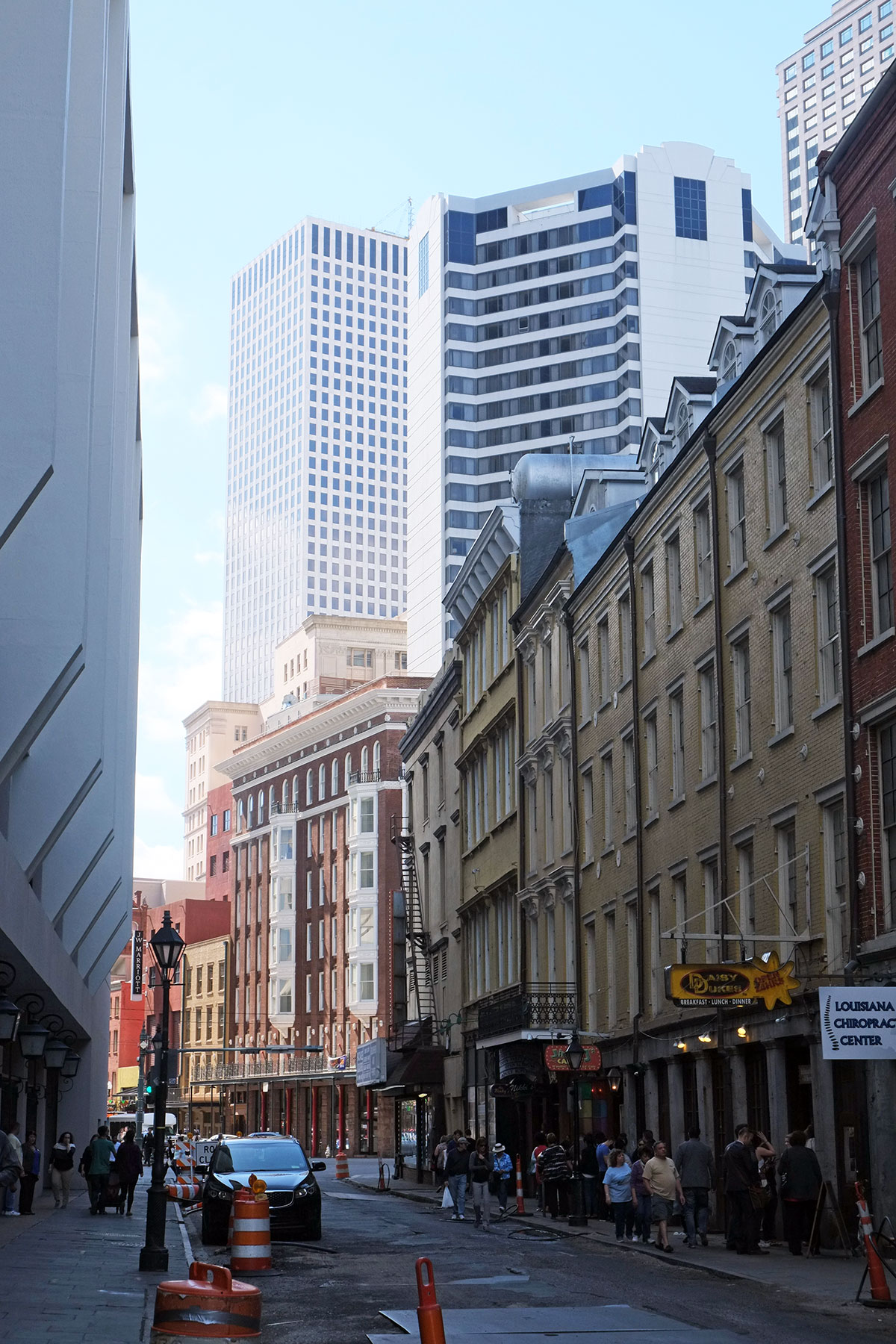
The rest of the downtown is blend of good old commercial buildings and standard mid-century towers.  DSCF2537DSCF3789

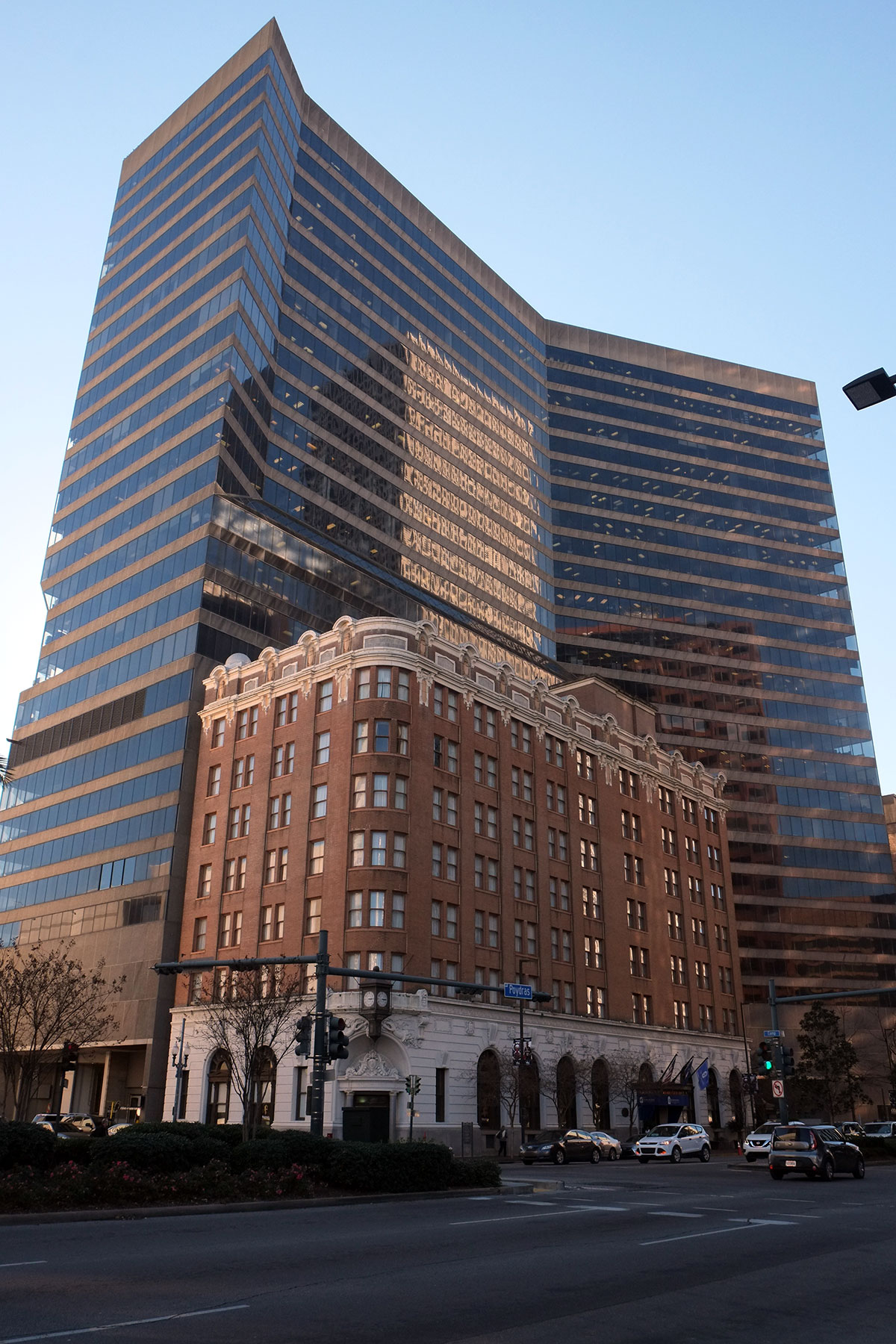
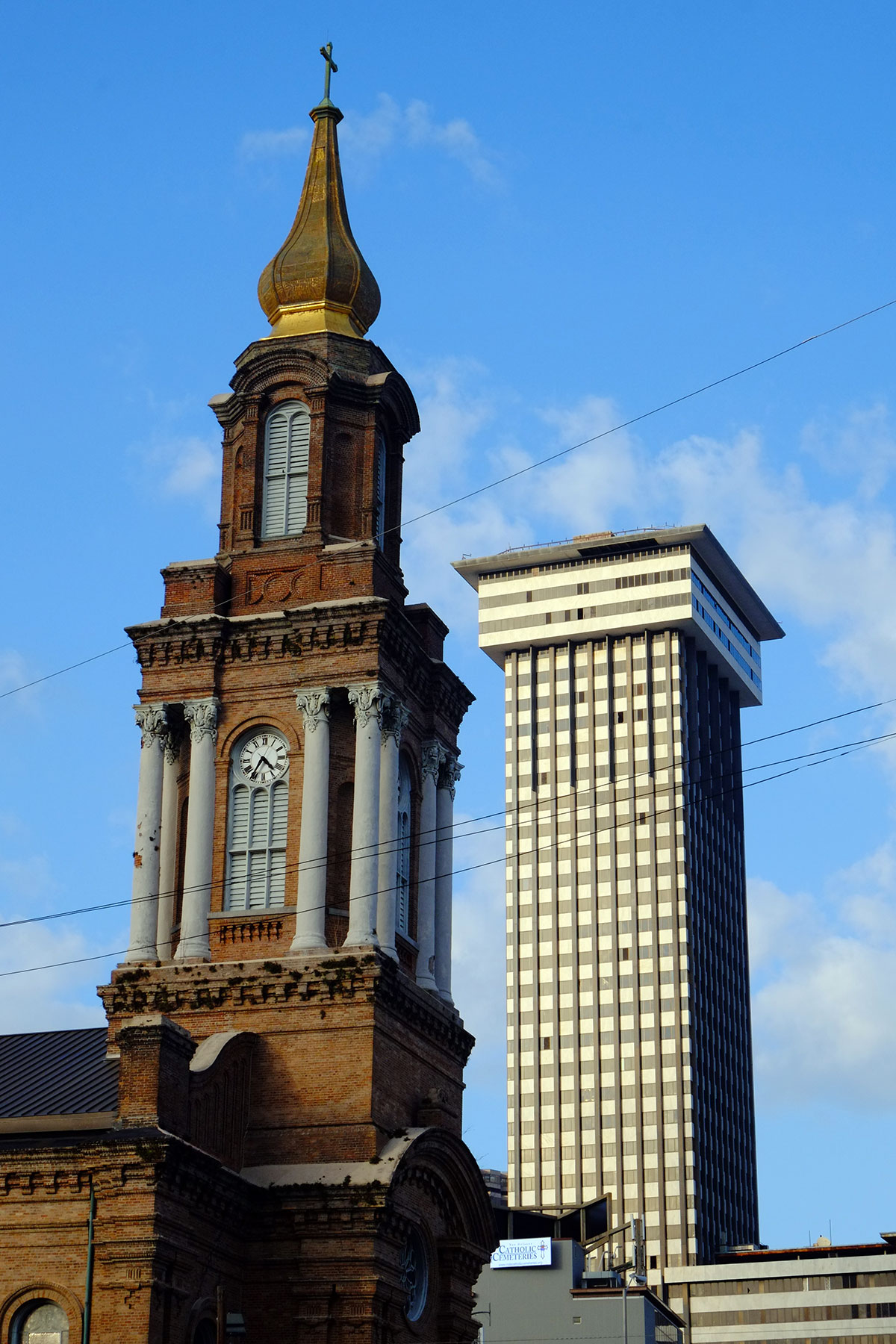
The more recent towers, spawned by the oil boom, are clustered upriver along Poydras Street.  DSCF3792  DSCF2058Overall, there is balance between the old and the newer – there are not many places where the gigantism and banality of recent decades takes over.  Although New Orleans’s first skyscraper, the Plaza Tower, is truly inept.  It is now empty, with asbestos and mold issues, and lawsuits apparently flying in every direction.  It’s so bad it might be worth keeping.  DSCF2626

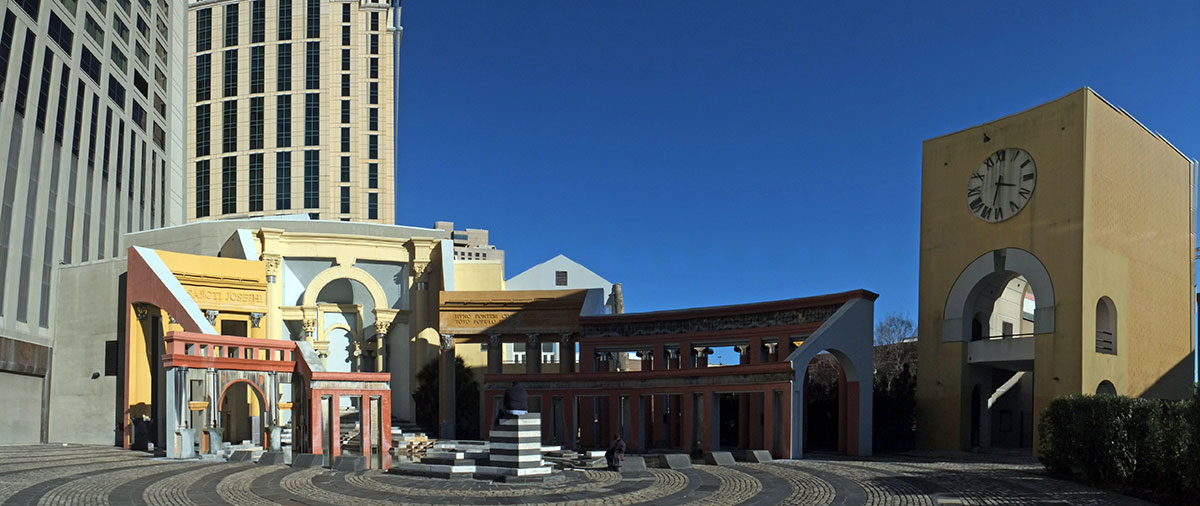
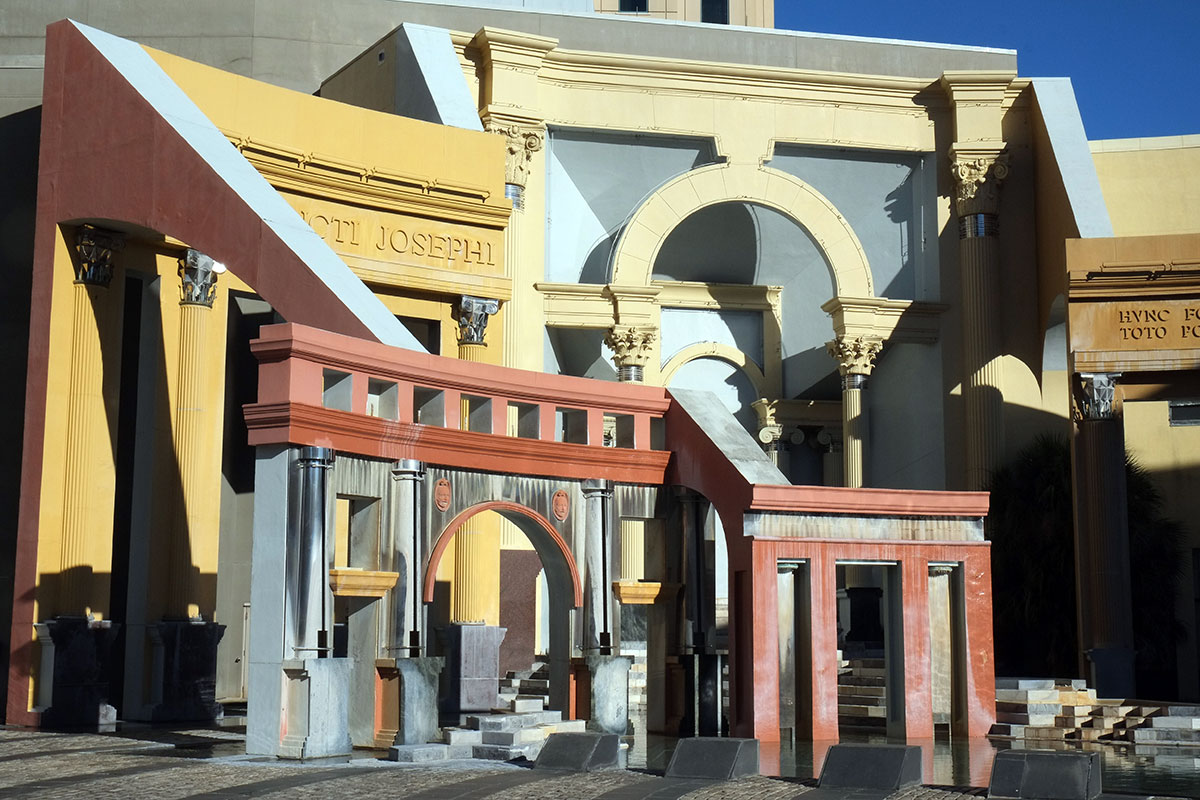
Poydras St. is also the location of Charles Moore’s Piazza d’Italia. It’s a funny little thing – filling in an open space between a skyscraper and a parking lot.  Moore was obviously trying to construct  a place that could be inhabited, unlike the empty modernist plazas built to satisfy zoning ordinances, but the cards were stacked against him.  If the city fabric grew up densely around it, so that you emerged from a street into the plaza, it might work.  But the towers are pulled back, and one sees the Piazza from the outside as a disconnected object, not just as a surrounding screen from the inside.  DSCF2075The detailing is over-the-top Pomo, and is perhaps our best remnant of the movement spinning out of control.  DSCF2077

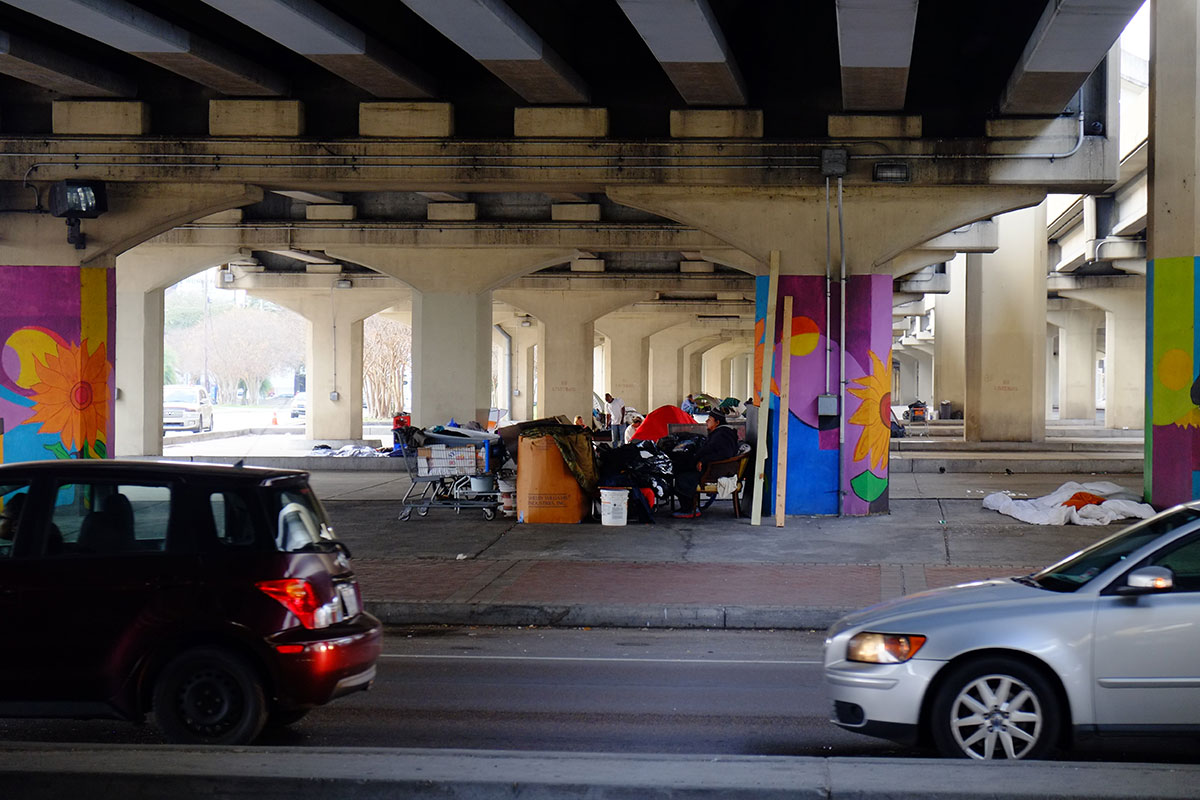
The elevated highways that ring the business district have done their damage, as everywhere else. The neighborhood of Treme was decimated, and the Uptown area to the west is cut off by a no-man’s land around the freeway.  DSCF2628

While the central business district has largely wiped out the early 19th century buildings there, some do survive, DSCF2633and the mix of old and new shifts as you move uptown, through the Lower Garden District and Central City areas into the Garden District.  DSCF1627

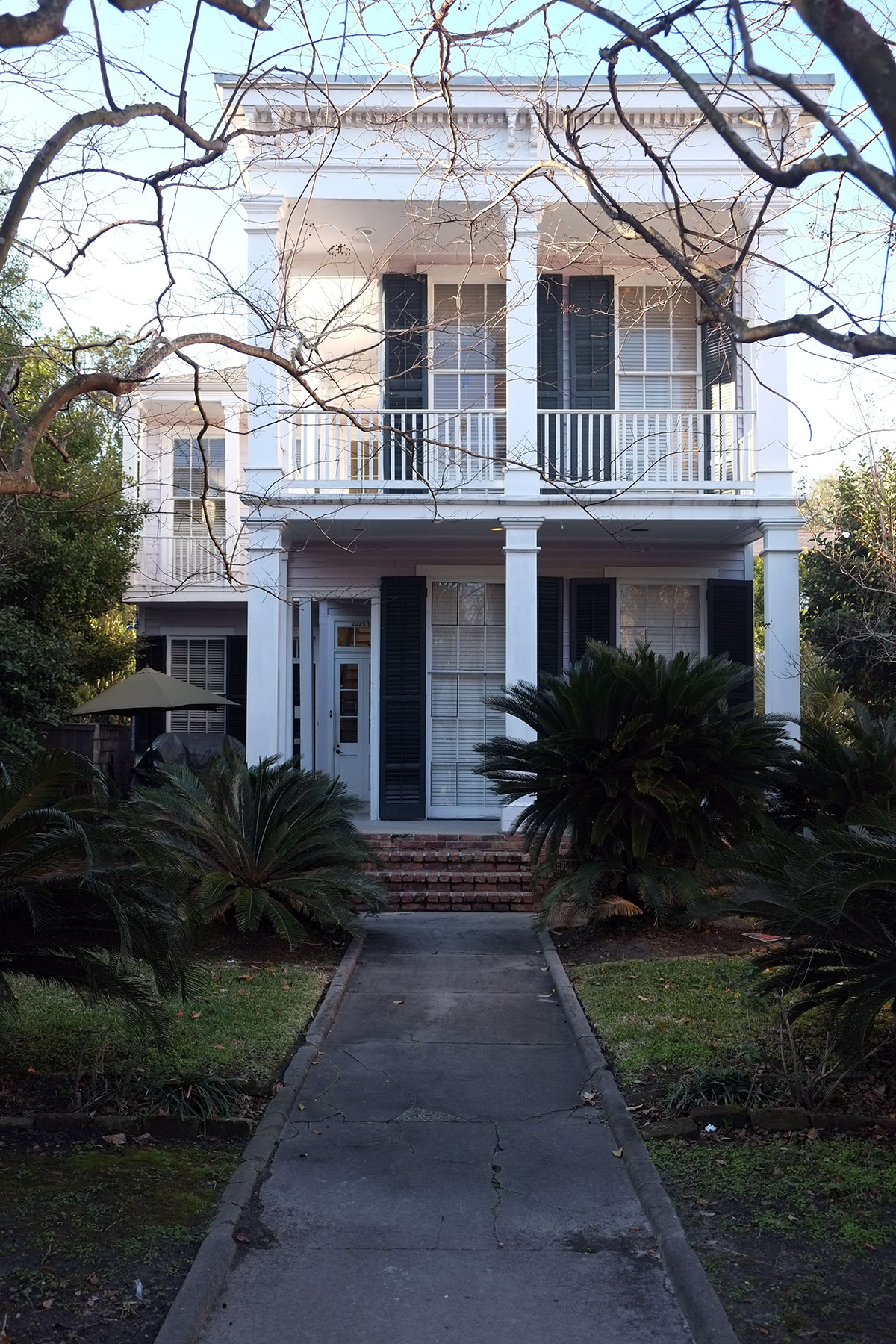
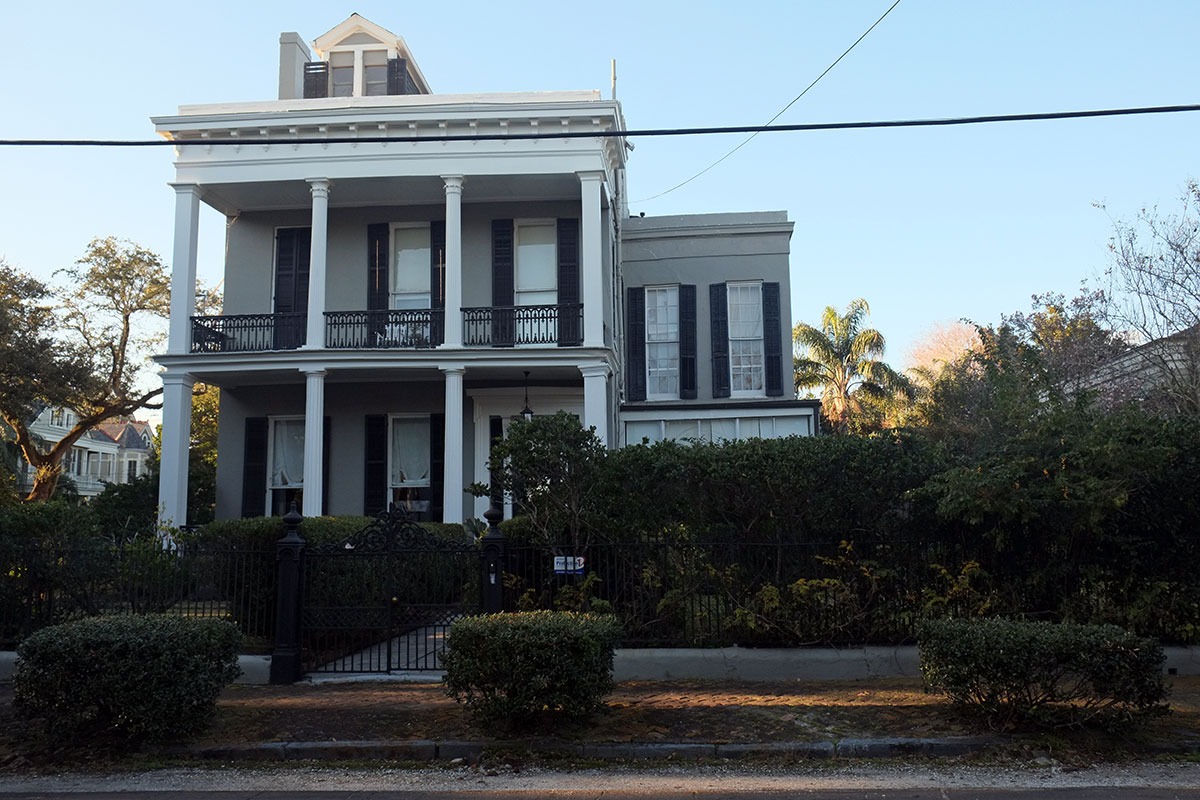
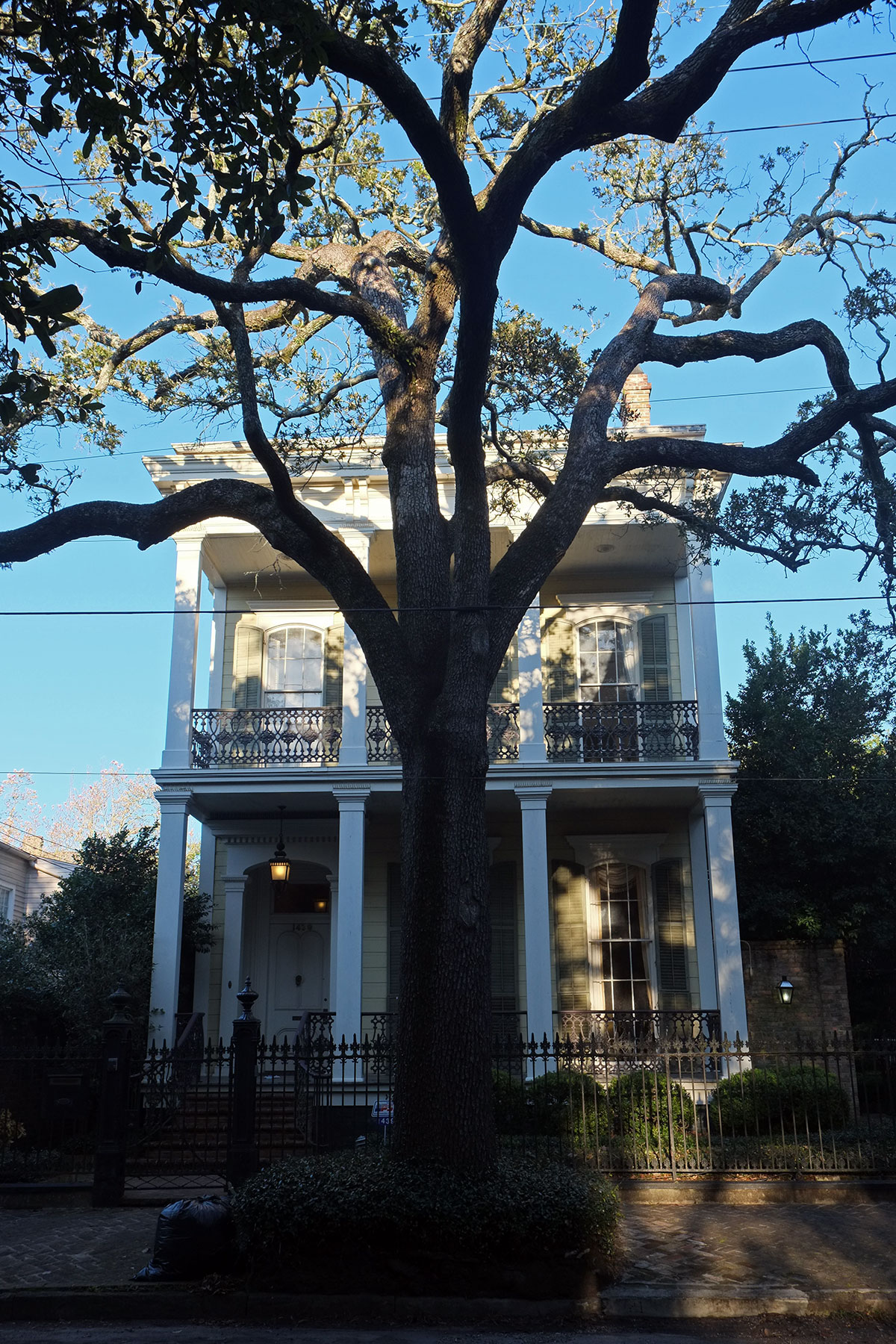
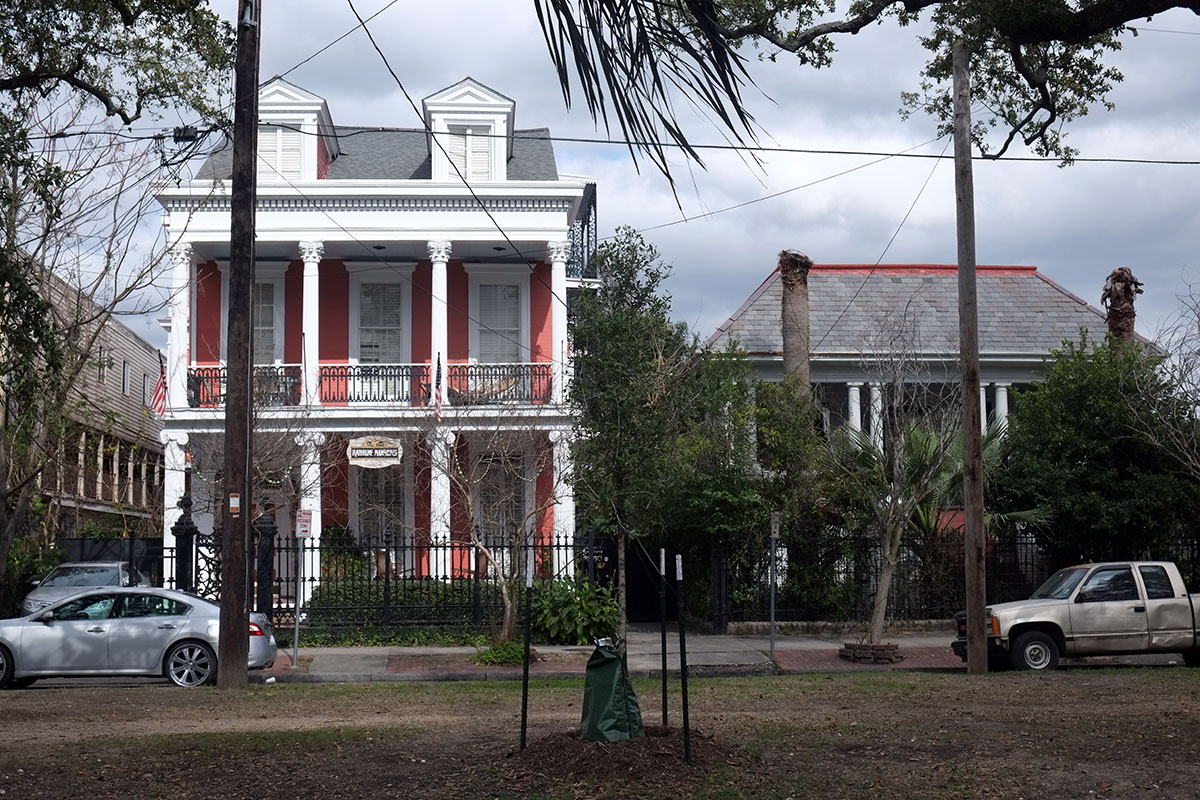
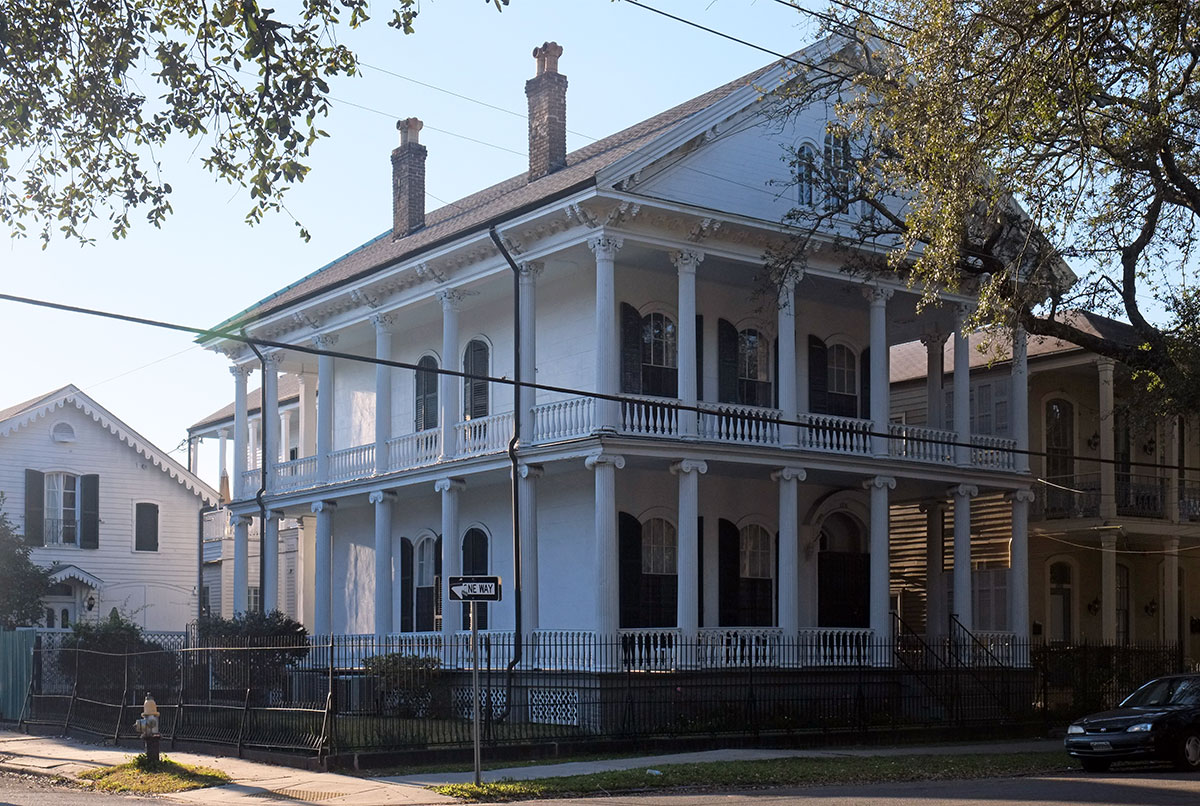
This side of town is served by the other streetcar line, along St. Charles.  The old cars are in fabulous condition, and a miles-long ride is one of the best ways to see the city.  DSCF2858This area is remarkable.  In some ways it looks more like other American cities, in that styles that were current in the late 19th century are all visible, but they are adapted to New Orleans.  There are a lot of Greek Revival houses, their large porticos well-suited to the climate.    DSCF1629DSCF1638  DSCF1657  DSCF1659 The wealth of the builders is apparent – whereas most of New Orleans’s older dense residential neighborhoods were working class in origin, in uptown there are many areas with large houses and big yards.

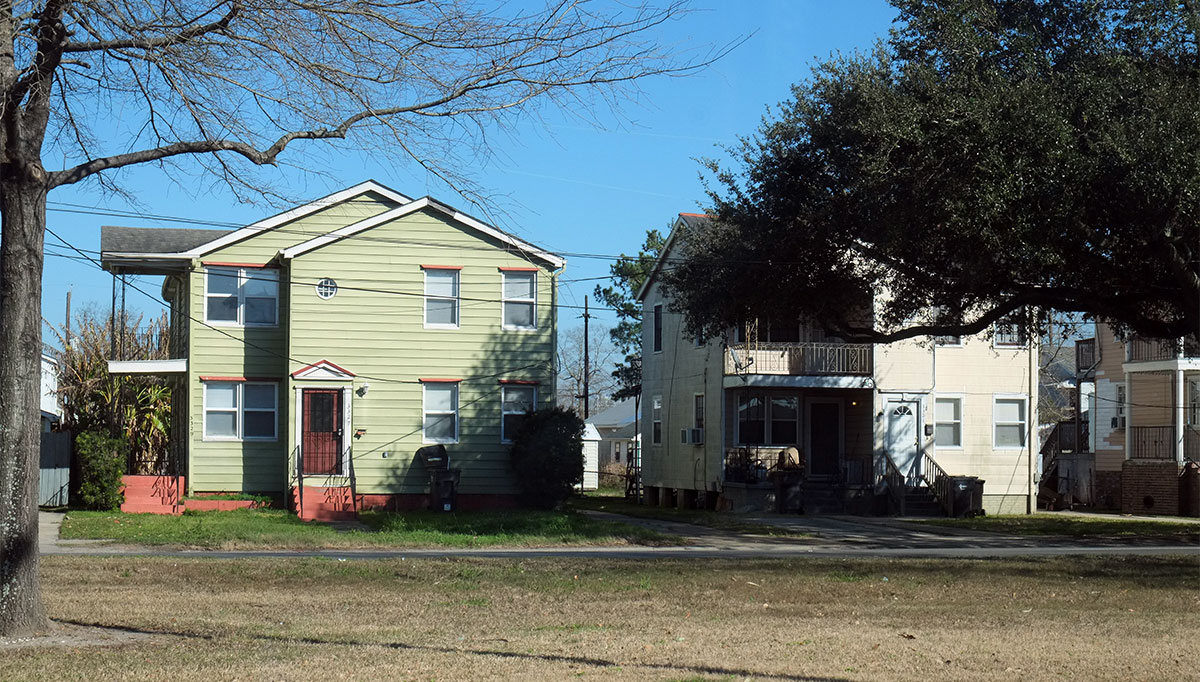
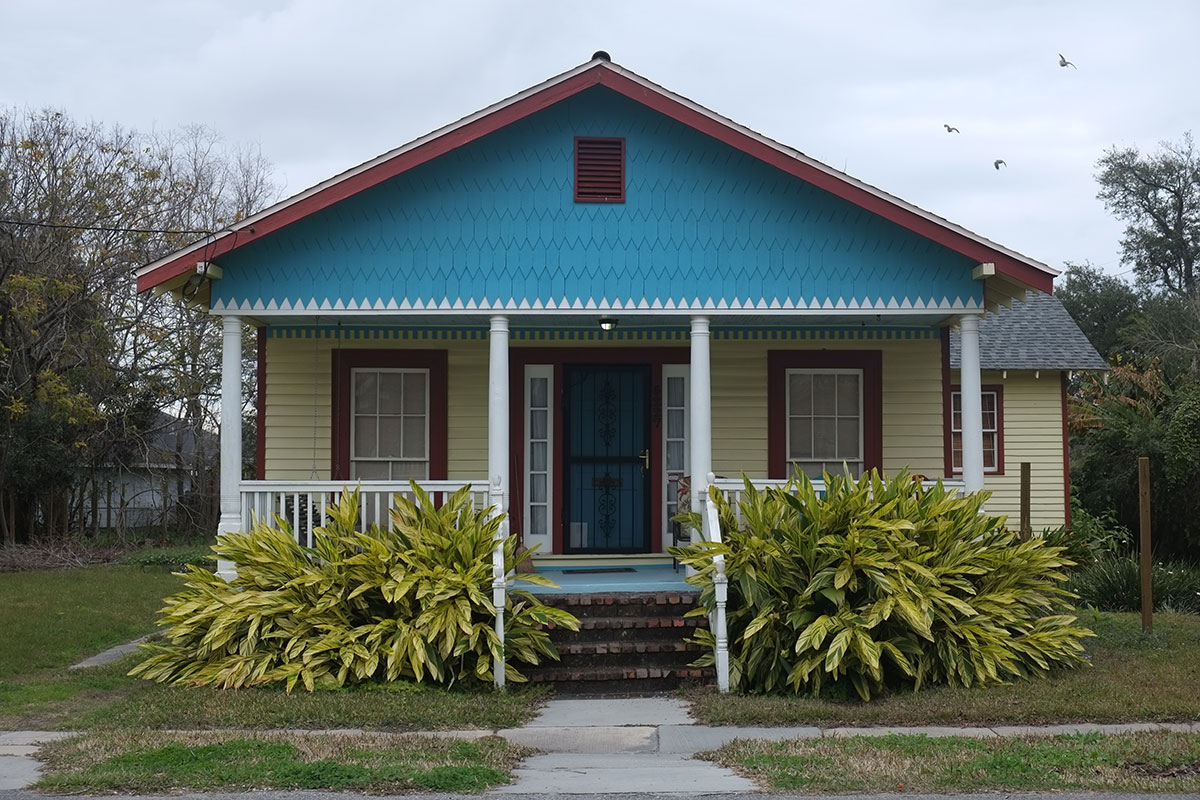
In general, as you move out from the city center in any direction, the density decreases, as neighborhoods begin to look more like those in other parts of the country, with detached houses sitting on lots of varying widths.  This happens in places as different as Mid-City,DSCF3558

in 20th century parts of GentillyDSCF3568

and in the Lower Ninth Ward.  DSCF1763

It’s a commonplace that New Orleans is unlike anywhere else in the US;  this difference is seen most clearly when you’re near the city center – the house types, the block organization, the streetscapes – these are most different in the Vieux Carre, built before it was part of the US, and in the early 19th-century districts, when the local influences were most strong, and a national building culture hadn’t yet asserted itself.  The outskirts of the city are physically much like other old metropolitan areas, with ranch houses and strip centers.  But the New Orleans difference is apparent in another important way, even out in these newer areas:  in the culture of the city and the tenor of social life.  The way people live here is unlike anywhere else, even out on the edge.  They may have a Costco, but that Costco has an excellent liquor selection.


Glen Pitre

DSCF3130

I’ve been pretty good about staying in touch with friends from all the different phases of my life – this trip has included many friends made in high school, college, grad school, New York and Oregon.  But over the years a few good friendships have fallen away, mainly due to circumstance – long distances, people raising kids and getting busy, lack of an internet for staying in touch.  Chief among these friends was Glen Pitre – a dear friend from college whom I  hadn’t seen in 30 years.  Since college I’d been moving back and forth on the New York-Oregon axis, and Glen had been on the Louisiana-Los Angeles axis, so we’d just never intersected.  (Plus Glen has more friends than anyone I’ve ever known, so he probably can’t keep track of all of them.)  So a part of this trip I was really looking forward to was seeing Glen at home in Louisiana, a state I’d also never visited.

Glen and I met our third year in college, where we both lived in Leverett House.  Glen had taken a year off to work on a bicentennial documentary project, and when he returned a lot of his buddies had graduated, so he was looking for new people to hang out with.  Our backgrounds were nothing alike – I was the Catholic school kid from suburban New York, and he was the first Cajun to attend Harvard, having grown up on the bayou in Cut Off, Louisiana (a name I at first refused to believe was real).  We had both grown up messin’ around in boats, and we were probably also united by our majoring in the arts (me in art and architectural history, Glen in visual studies / photography / filmmaking), as we were surrounded by friends who were into government / economics / history.  We liked the same music, and Glen introduced me to Cajun music, including Cajun Country (which is like country music but better, as everything sounds better in French, and you can’t understand how dumb the lyrics are).

We did a lot of things together, such as staffing the house grill on Sunday nights – me cooking while Glen used his superior social skills to placate the customers.  Glen and I even managed to complete an animated movie together our senior year, a three-minute time-lapse film showing the growth of Boston, where he supplied the filmmaking know-how, and I supplied the historical research and physical drawing.  But mostly we hung out talking, occasionally munching on the dried shrimp he kept in his room.  I’d known some gregarious and friendly people in my life, but Glen outdoes them all – he seems to be friends with everyone.  My roommates and I once realized that if everyone sitting in the dining hall were able to knock off everyone else in the room they disliked, at the end Glen would be the only person left.

All this time Glen was steadily moving forward into his career.  He was an excellent photographer, and had free-lance gigs with the Times, the Boston Globe, etc.  When a local politician announced his candidacy for the US Senate, he hired Glen as his videographer (unfortunately, his campaign didn’t last beyond the campaign announcement, where he managed to mispronounce “impotent” a few times during his speech).  As Glen learned filmmaking, he immediately began writing and directing movies about Cajun life, most notably La Fievre Jaune, a dramatization about the 1897 yellow fever epidemic.  Glen made these movies on minuscule budgets, using his family and friends as the actors.  (His father turned out to have talent in this area, and continued on through more films.)  La Fievre Jaune was made while Glen was still in college, and launched him as the “father of Cajun cinema”.

Glen suggested that after college we might take a break from academic life and do some shrimp fishing – his family had an old boat that was sunk at their dock, and if we could raise it and put in a Chevy engine, we could spend the summer on the water.  When the time came, the price of shrimp was so low that it made no sense to invest anything in the enterprise, and we abandoned the idea.  Sometimes I think about how my life might have turned out differently if the price of shrimp had been higher in 1978.

Glen went back to Louisiana and began all the career threads he’s kept going since then:  photography, filmmaking (both documentary and feature), writing (screenplays, novels, guidebooks, articles, academic chapters), retail (selling Louisiana-related articles through a catalogue store), producing radio documentaries, and designing museum exhibits.  Most of my friends have heard me tell stories about my high school friend Jack, who has had literally at least ten different careers;  Glen is my only other friend who can compete.  The  difference is that Jack has moved all over the world as he’s pursued these lives, whereas all of Glen’s activities have been grounded in his home in Louisiana (except for excursions into Hollywood).  Glen has been teaching filmmaking at LSU for the past year and half, which he said was the longest gig he’s ever had in his life.  When I told him I’d had only two real jobs since grad school, he just stared at me.

Glen and  I got together a few times in the  80s.  He’d come up to Boston or New York on business, stay with me and my roommates, and ask if he could invite his friends over to dinner (and we should invite our friends too).  Then he would spend the whole day cooking – huge amounts of shrimp spaghetti or gumbo – and dozens of people would show up for a big party.  Glen had never lived in New York, but somehow he had more friends there than I did.  (Including a number of girlfriends.  Glen always awed me by being able to pull out his address book wherever he was, and find an old girlfriend to look up, who was always overjoyed to see him again.)  The last time he visited was in 1985 – he had finished shooting his first English-language, big-budget, Hollywood movie,  Belizaire the Cajun, and he was in New York for the editing.  We got to see the first cut in a screening room, and Glen’s stories of writing and directing a large, complex movie were riveting:  you walk onto the set, there’s hundreds of extras (including dozens of horses), the meter’s running, and everyone looks at you to tell them what to do.

While I moved on to teach in Oregon, Glen kept all these careers going, and spent more time in Los Angeles as his screenwriting continued.  He married the charming Michelle Benoit around 1990, and they have mostly worked together since then.  Michelle grew up in West Louisiana, and remarkably, has much the same set of professional skills and interests as Glen – writing, directing, producing, designing.  Perhaps even more surprising than their professional similarities are their temperamental ones – Michelle is one of the few people I’ve ever met who can match Glen’s extreme degree of gregariousness and charm.  She probably would have survived in the Leverett dining hall too.

Together they’ve completed a huge number of projects – feature movies, documentaries, and over 30 museum exhibit installations.  (More detail on all their various projects through the years can be found at their website, coteblanche.com.  It’s really interesting.)  They have great stories to tell of their lives and all the people they’ve met.  (A short story I have to relate because otherwise no one will ever write it down and it’s just too good:  Glen is heading to the bathroom in Los Angeles in a big old movie theatre that’s been converted to a multiplex, so the hallway has a slope.  He’s going a bit faster than he realizes, and as he goes to push on  the bathroom door, it swings open in front of him.  Glen stumbles in, falling on his hands and knees.  He looks up, and sees Mel Brooks holding the door handle.  Mel Brooks looks at him and says, “Pretty good, but you need to work on your timing.”)  I suggested to Greta that she should stick around New Orleans to be Glen’s Boswell;  she rolled her eyes.

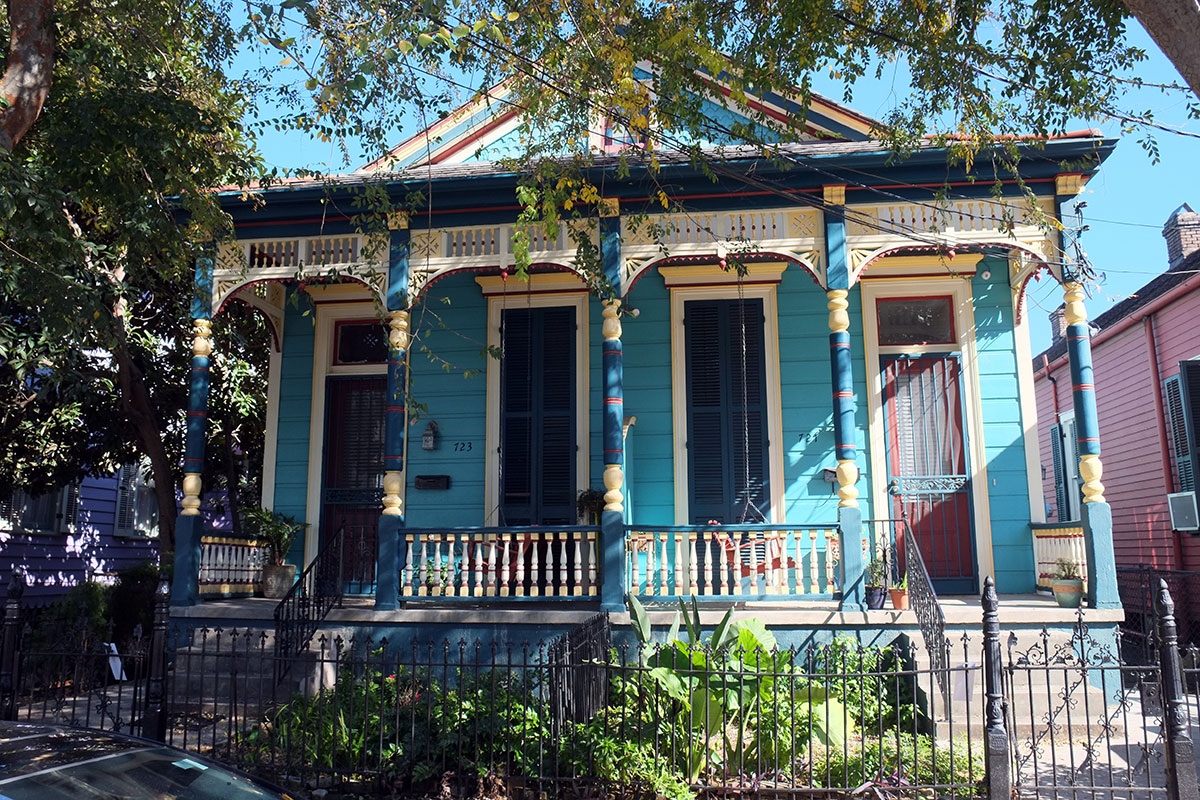
For a while Glen and Michelle moved among New Orleans, Bayou LaFourche and Los Angeles, but in the past few years they’ve consolidated in New Orleans.  In the 1990s they bought a double shotgun house in the Marigny (the historic district right next to the French Quarter), which was configured in various ways to accommodate their living space, their office, and a rental apartment.  They now live in the back half while the front two apartments are for Glen’s mother (when she’s in town from her home in Cut Off), and an Airbnb.DSCF1554

Greta and I showed up in mid-January, and Glen wanted to know if we’d stick around for a week, as the Mardi Gras season was kicking into gear, and he would be having one of his big parties the next weekend when the Krewe de Vieux parade passed by the end of their block.  Remembering Glen’s prior culinary productions, I of course assented, and we moved into his mom’s apartment while she was out of town.   We got to help Glen cook for the party – Greta chopped all the onions for the venison and wild pig sauce picante and the carrot etouffe, and she will now be one of the few people in Oregon who knows any of the secrets of Cajun cuisine. We had an amazing time at this party, meeting many friends of Glen’s and Michelle’s whom we now think of as our friends too.  (The extraordinary lifestyle and people of New Orleans will be another blog post soon.)

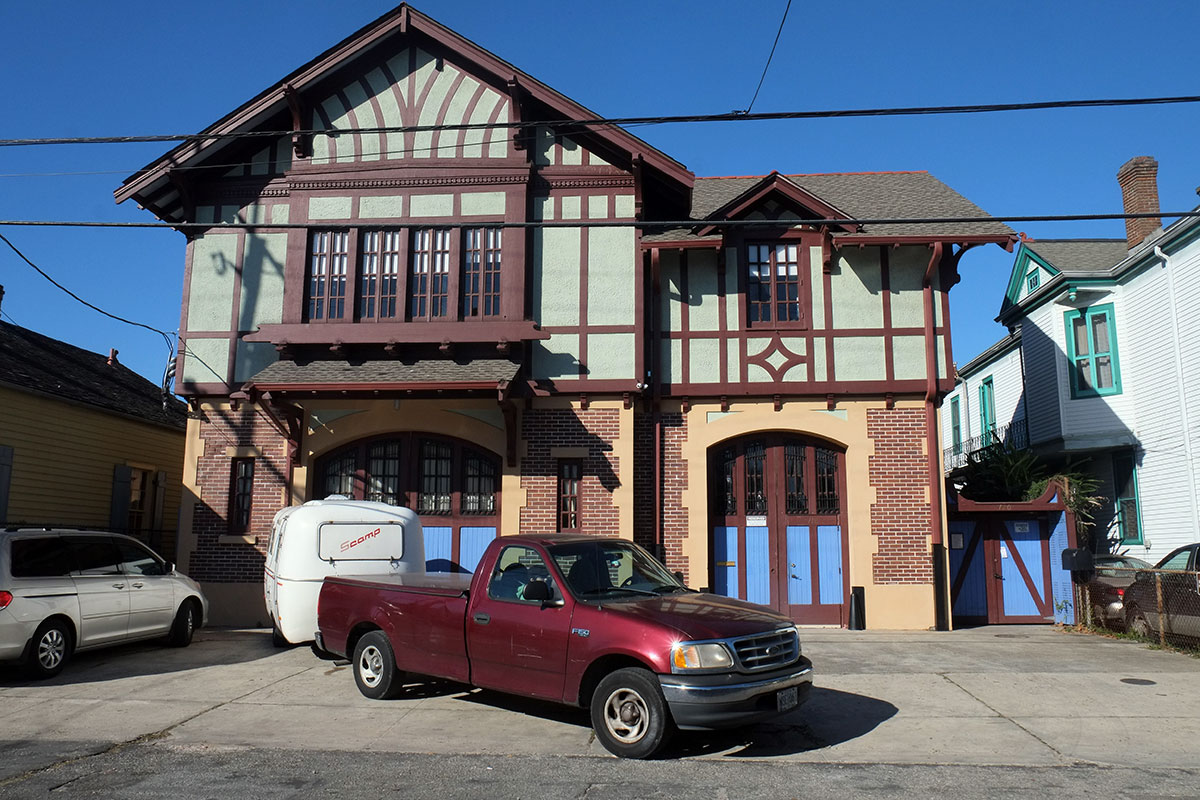
DSCF3875The party was held in the vehicle bay of the old firehouse that Glen and Michelle bought about five years ago, which is right across the middle of the block from their house.  They undertook a massive renovation of the derelict 100-year-old building, and it now contains their offices, plus spaces they rent to writers, filmmakers, photographers, etc. (oldfirehousemandeville.)  It is a remarkable compound they have, a quiet enclave in the  middle of a bustling neighborhood, probably the most appealing urban living situation I’ve ever seen.DSCF1890

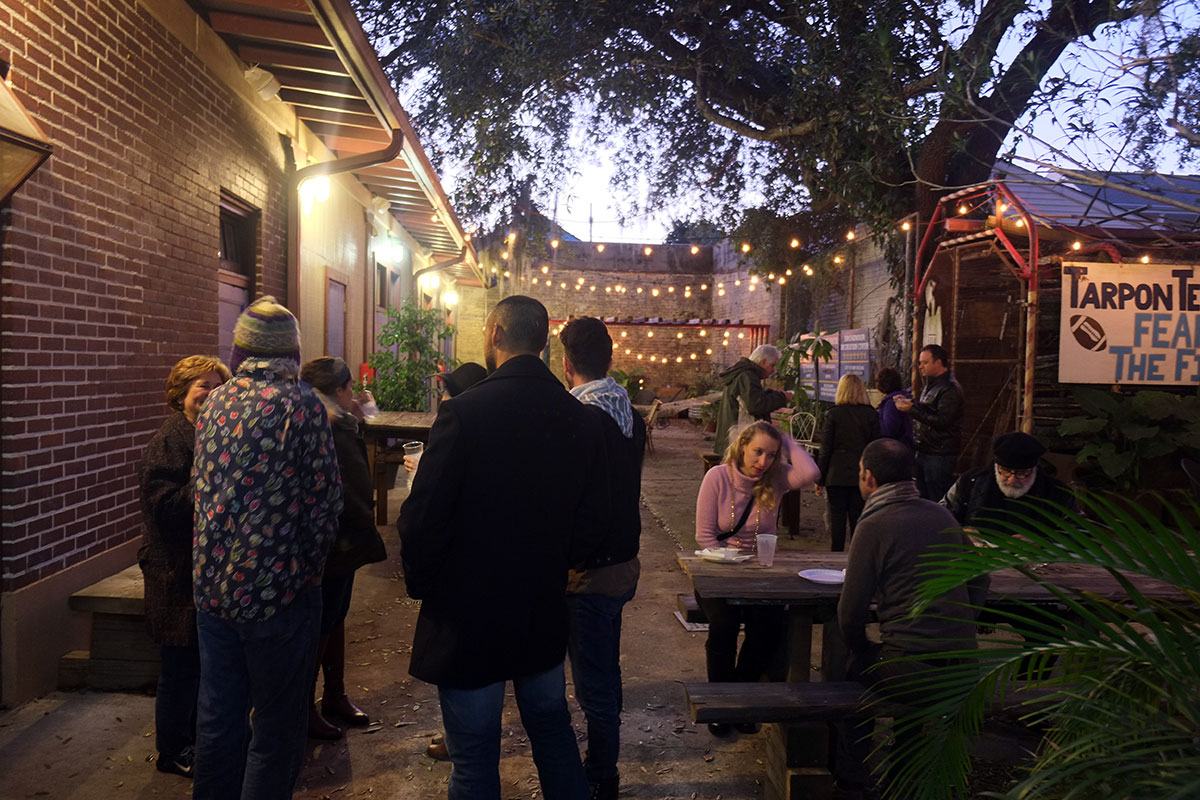
Greta and I both caught whatever virulent respiratory bug was going around in New Orleans, and were laid low with bronchitis for a week, taking antibiotics and venturing out only for excellent meals.  At this point we had been there for two weeks, and Glen said that since it was only another week until Mardi Gras, it would be silly of us to leave.  We couldn’t believe they didn’t want to get rid of us, but we took them at their word.  Glen’s mom came back to town, so we moved out of her apartment and back into our trailer, which we pushed through the firehouse into the courtyard.  DSCF3557We are now experts on urban camping, and it is the best.  Quiet, yet convenient, with interesting people, superb food and no mountain lions or bears.  No view of the mountains like I have sitting here in Moab, but it’s a good trade-off.

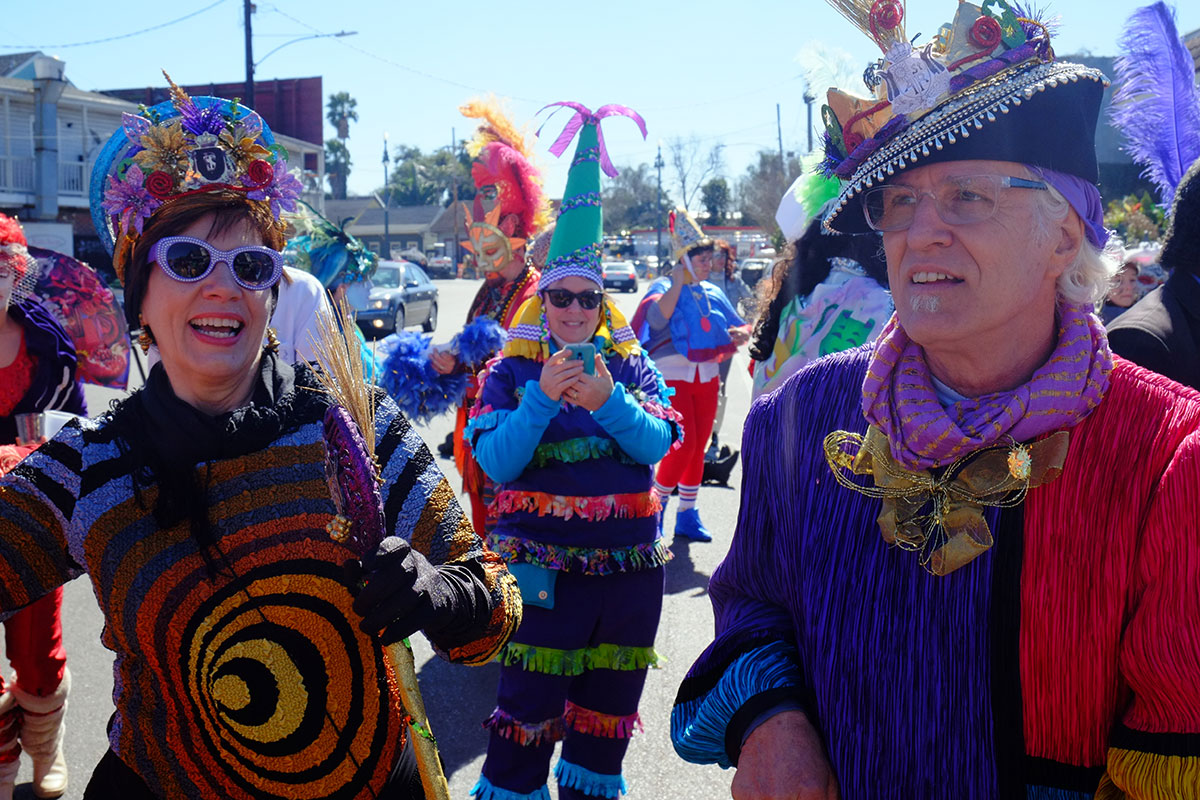
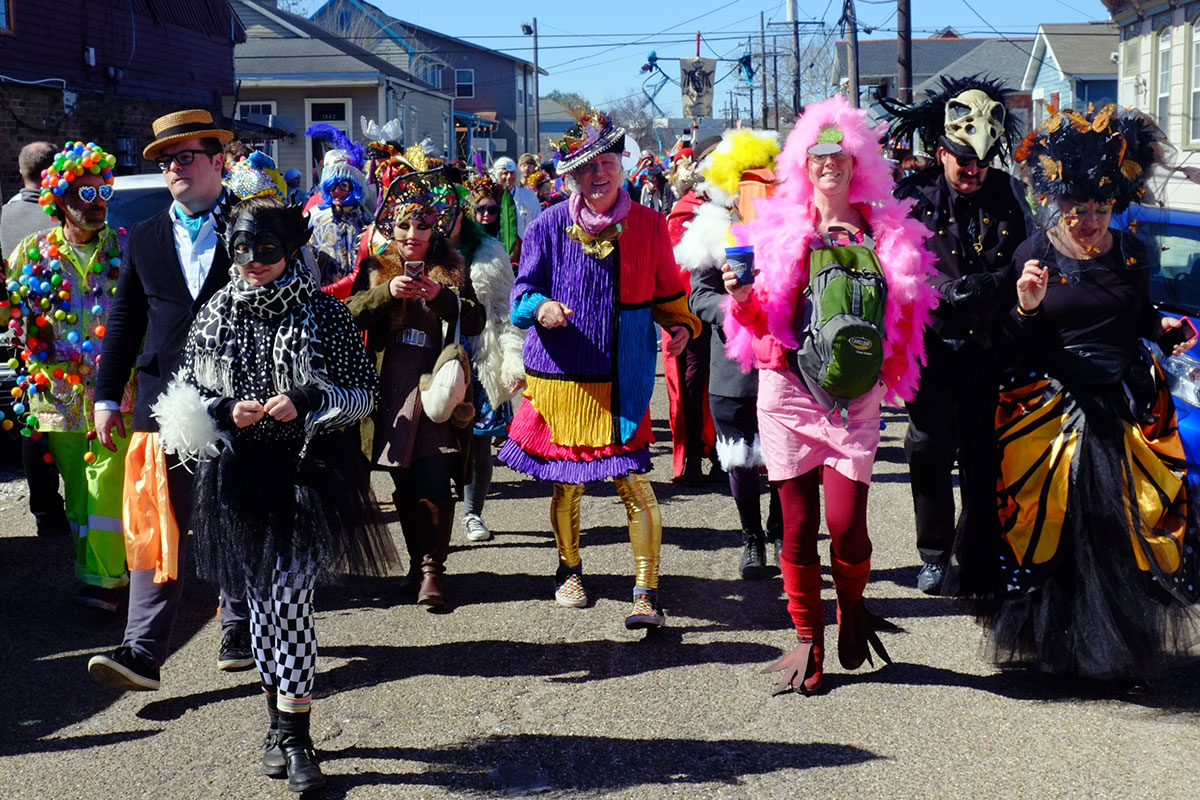
The next week leading up to Mardi Gras was mainly a series of parties being thrown by Glen and Michelle’s friends on the days when parades passed near their houses.  Mardi Gras arrived, and Glen and Michelle were the king and queen of the St. Anthony’s Ramblers, a day about which I’ve already posted at saint-anthonys-krewe and the-panorama-jazz-band-marches, but here is one irresistible photo of Glen leading the parade.  (I’ve since learned from other friends we made in New Orleans that when you need to find a photo of yourself for any reason, it’s hard to find one where you’re not in costume.)
DSCF3156

After this point, we were reluctant to leave New Orleans at all.  One of the best things while traveling this year has been knowing people in strange cities – instead of being a tourist seeing the sights, you have entree into the life of the city.  In New Orleans we had friends-by-association everywhere – we weren’t just getting to hang around with Glen and Michelle, but with their whole world.

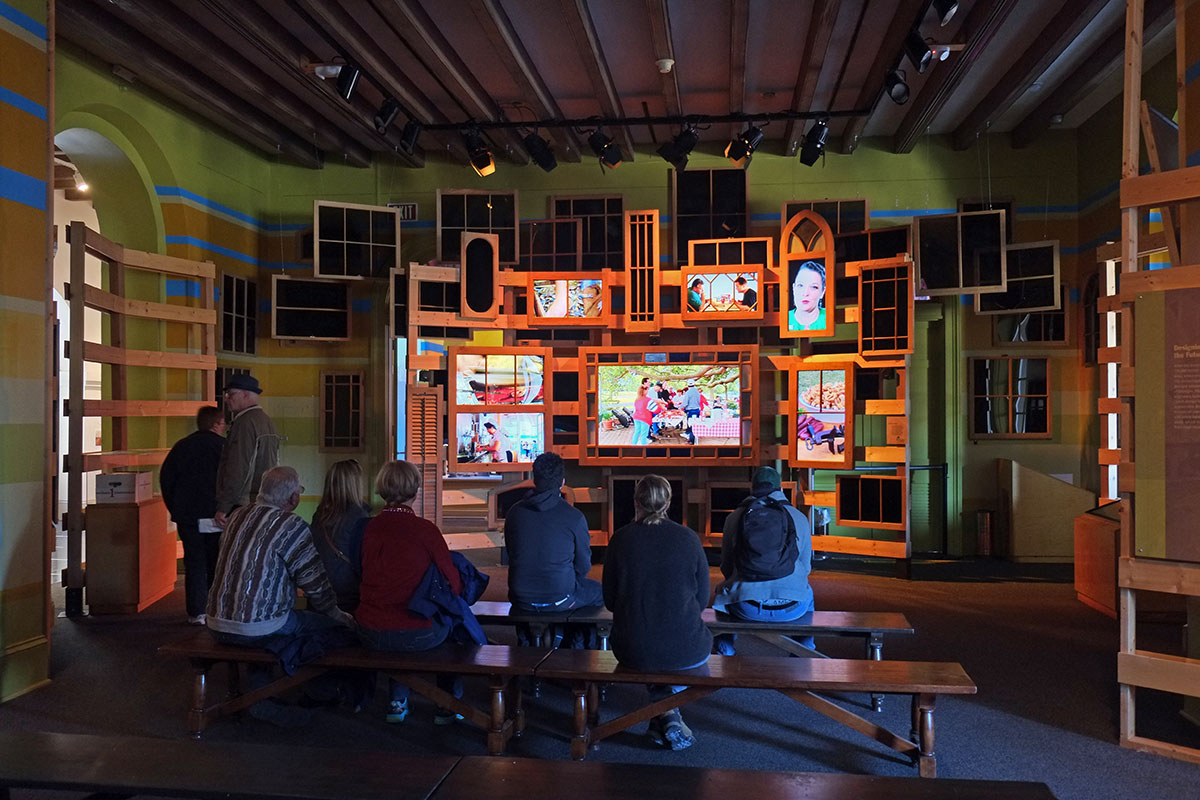
But we did eventually have to hit the road.  First we saw a few last things we’d missed, including the exhibit on Katrina at the Presbytere Museum.  (Glen was also the co-director of an IMax movie called Hurricane on the Bayou, and was running two film crews in New Orleans in the aftermath of the flood.)  The exhibit was incredibly comprehensive about the causes, experiences and consequences of the two hurricanes in 2005.  Glen and Michelle designed quite a bit of the exhibit, including the final room, where a multi-media presentation using screens set in windows from demolished houses showed New Orleans residents talking about the meaning of their experiences.  DSCF3477

We spent four weeks in New Orleans, and we can’t wait to go back.  (I’m trying to find some academic conference that happens in New Orleans every year at Mardi Gras.)  It was wonderful to reconnect with such a good friend after so long, equally wonderful to meet his wife (who somehow feels like she’s been a friend for just as long), and wonderful to spend time in a previously-unknown city, that now feels like a home to us too.

DSCF1989

New Orleans – the older city

DSCF1680New Orleans is one the mythic cities of America – like New York, or San Francisco, or Chicago.  It occupies more psychic space than is justified by its size, or its current role in the national culture.  It was one of the few great American cities that I had never visited, and I approached it with a mixture of excitement and uneasiness.

Most American cities fit a pattern – JB Jackson wrote “The Stranger’s Path” decades ago, which laid out the typical components and their sequence in a mid-sized American city.  During this year on the road, when we’ve visited about 175 different cities and towns so far, certain obvious patterns have emerged – I think I could easily update the Stranger’s Path for the 21st century.  But from what little I knew about New Orleans, it seemed clear that this would be a place which wouldn’t fit those patterns.  Even looking at maps didn’t help – I couldn’t organize the information in a way that made sense to me.  So we headed in with not much more going for us than knowing the route to my friend Glen’s place.  After skimming across seven miles of open water on the I-10 causeway, Google Maps said we should drive down Elysian Fields.  Definitely mythic.
DSCF2005The first two days in New Orleans did nothing to dispel this combination of wonder and confusion. The neighborhoods, the streetscapes, the houses, the colors  – they were unlike anything I had ever seen, confirming what I had been told – that New Orleans is really a different country. The experience of walking through the city was new and magical, at the same time that the underlying order of the city was completely confusing.  I couldn’t make sense of the whole – the twisting geography, the invisible topography, the relationships of neighborhoods and populations, the river, directions, street patterns. On Glen’s advice I picked up a book by Richard Campanella, a geographer at Tulane, and it confirmed my impression – New Orleans and southern Louisiana are not like any other place in the country – culturally, spatially or geographically.

DSCF2030The highest land is along the river. The ridges (those areas actually above sea level, along Esplanade and from Metairie to Gentilly) were settled first,DSCF2204 with low-lying swamps drained and developed later (sometimes in what is now the middle of town).  Settled by the French, taken over by the Spanish, ceded back to the French and then sold to the Americans, it shows the same variation in sovereignty that we’ve seen all along the Gulf, but in New Orleans there is much more visible evidence of this history.  The Spanish and French built the Vieux Carre (a term which I never heard anyone use, with French Quarter having taken over).  DSCF1567The Americans settled later in Uptown, across Canal St. (which never had a canal). DSCF1642There are natives with what seem to be real New York accents (I met some of them.)  The city didn’t flood from the riverside, but from the lakeside (where the land is lower behind the levee) DSCF3566and the breaks in the levees on the canals (such as here in the Lower Ninth Ward).  DSCF3678The list is endless – New Orleans is an assemblage of conditions and situations, and after a lot of reading and a few weeks in residence, it started to make some sense.  I won’t pretend to comprehend it – nor attempt to explain it – in the way that a simpler place such as Fernandina can be grasped.   But I did develop enough of a conceptual framework to at least organize the series of impressions garnered from walking around endlessly.  For a relatively small city (current population under 400,000), it is the most complex place we’ve been.

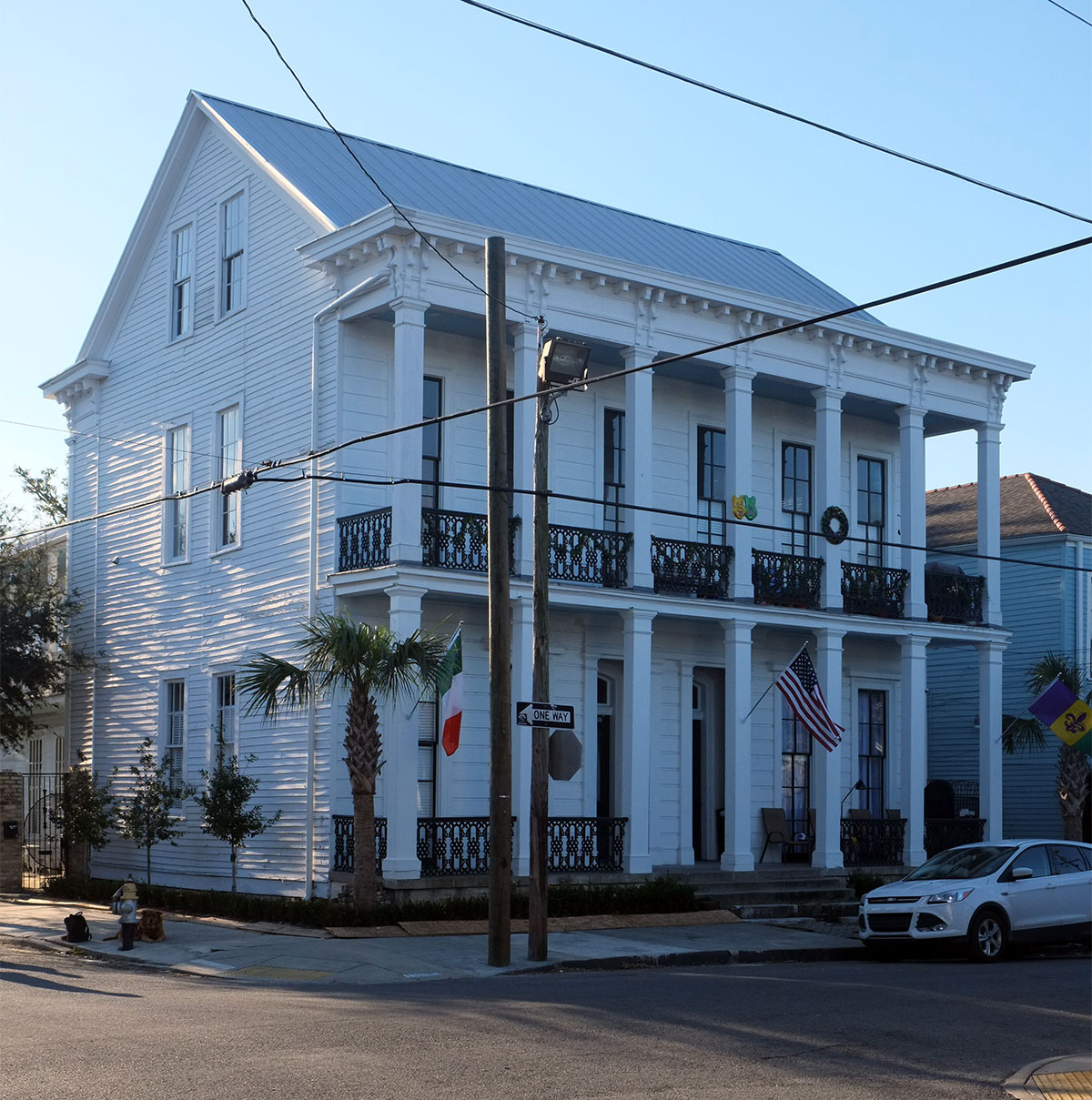
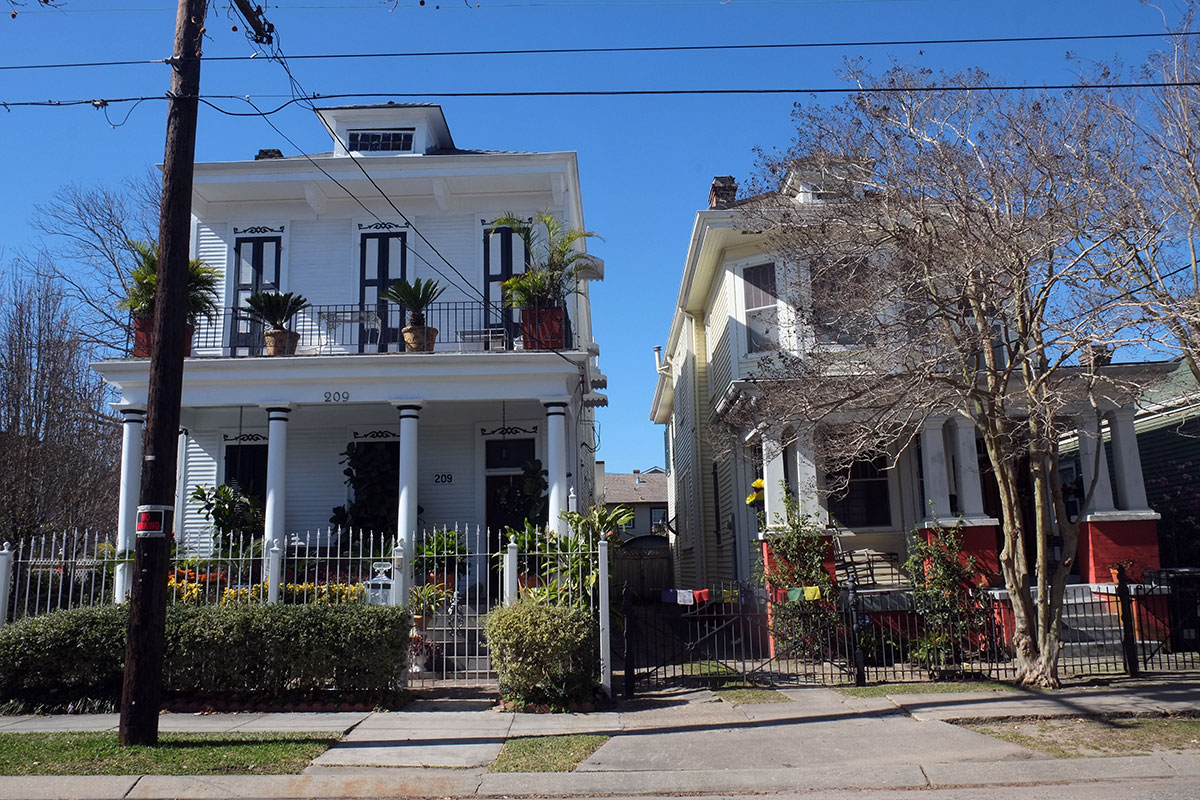
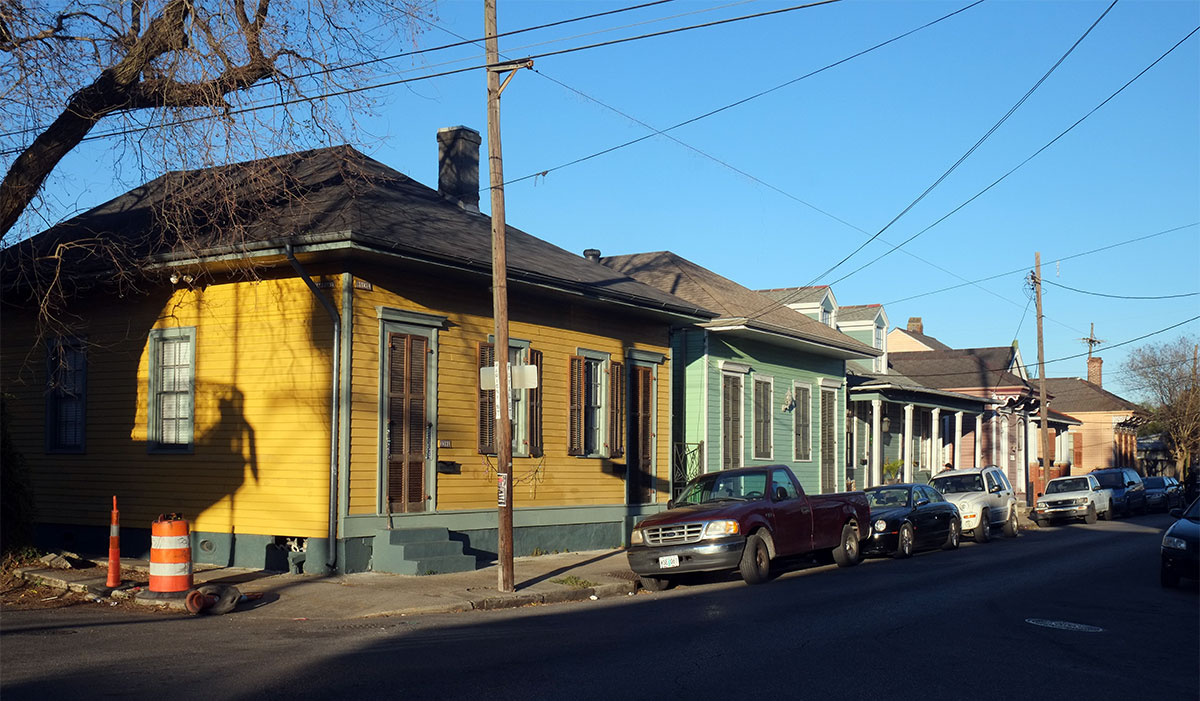
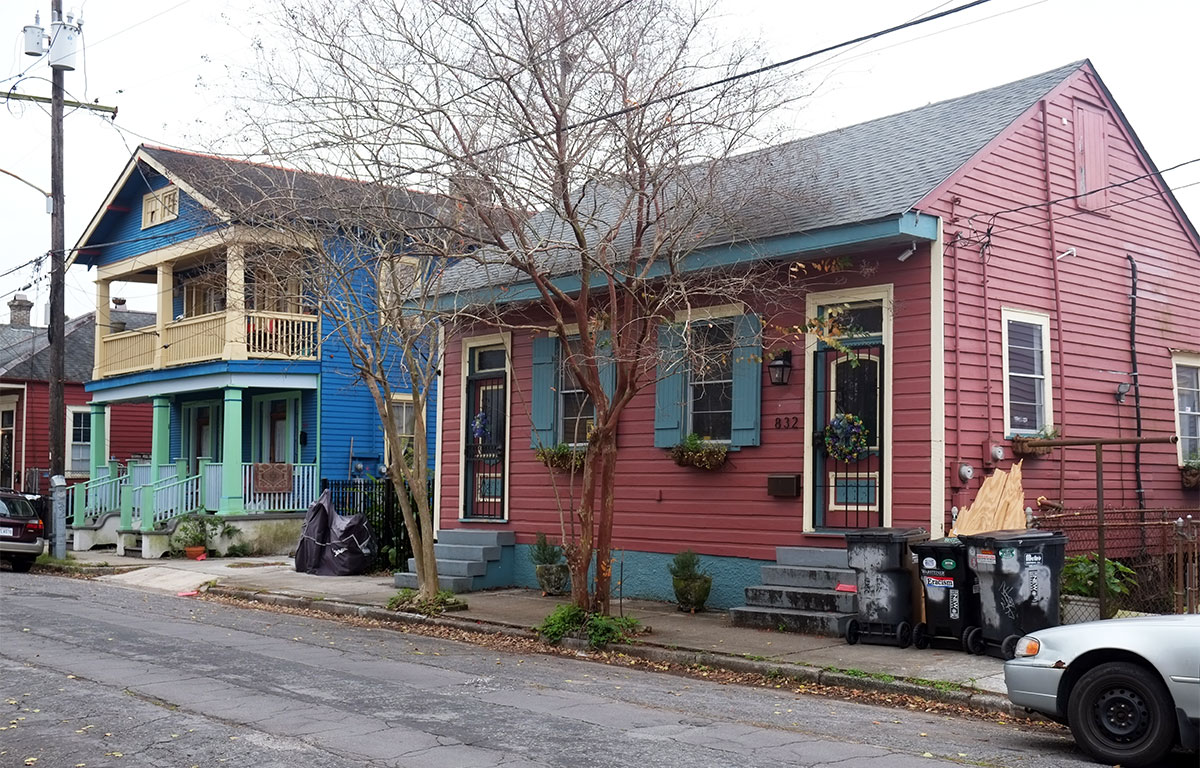
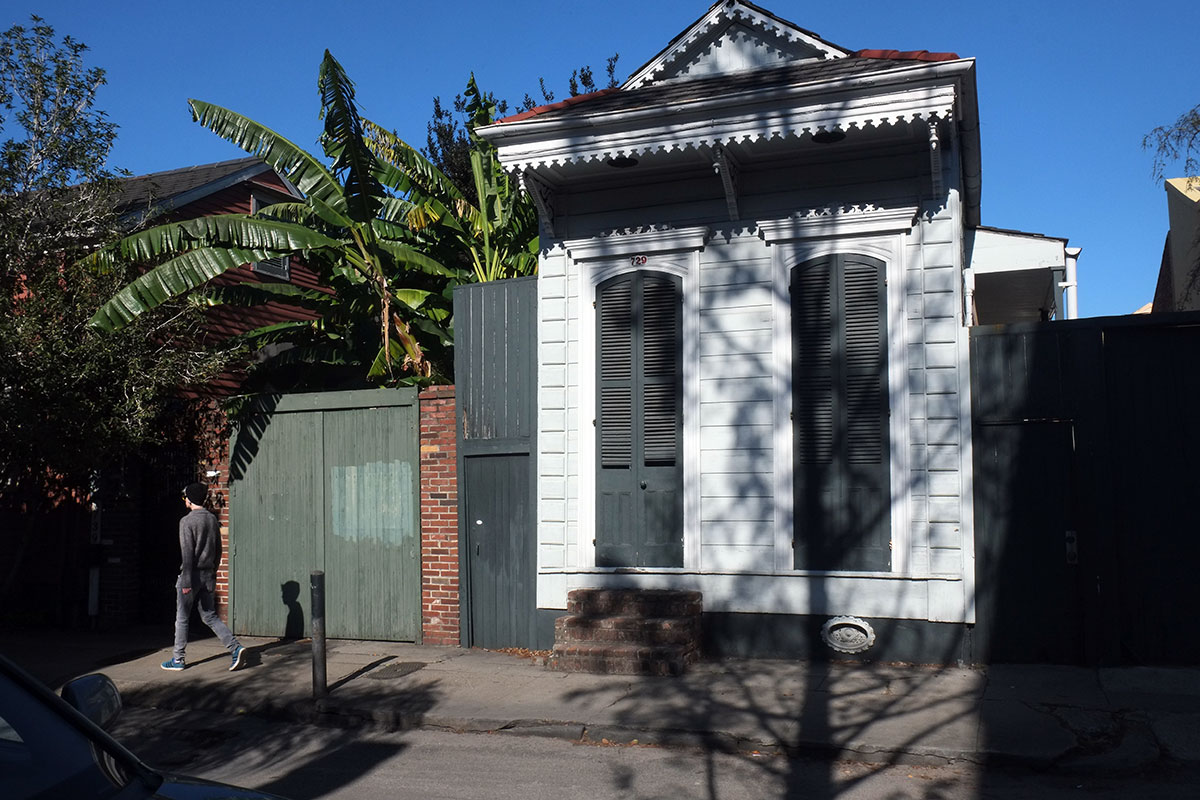
DSCF3512We stayed with Glen and Michelle in the Marigny, one of the first faubourgs, developed from a former plantation next to the Vieux Carre at the beginning of the 19th century.  It is mainly residential, with a wide range of New Orleans house types – double shotguns, Creole cottages, etc.  (There will probably be a post just about New Orleans housing).

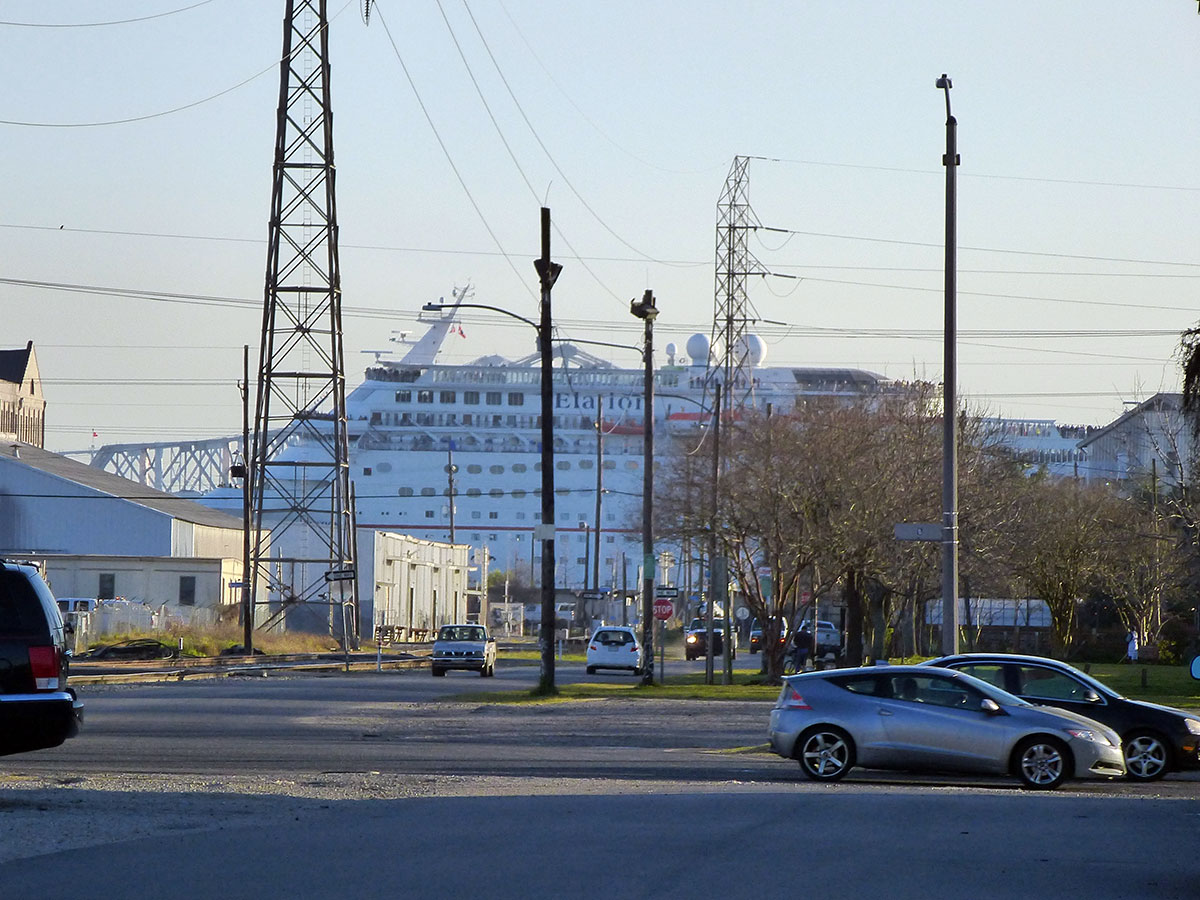
The Mississippi River defines one edge of the neighborhood, which you only notice when a ship passes by the end of the street.  P1070251

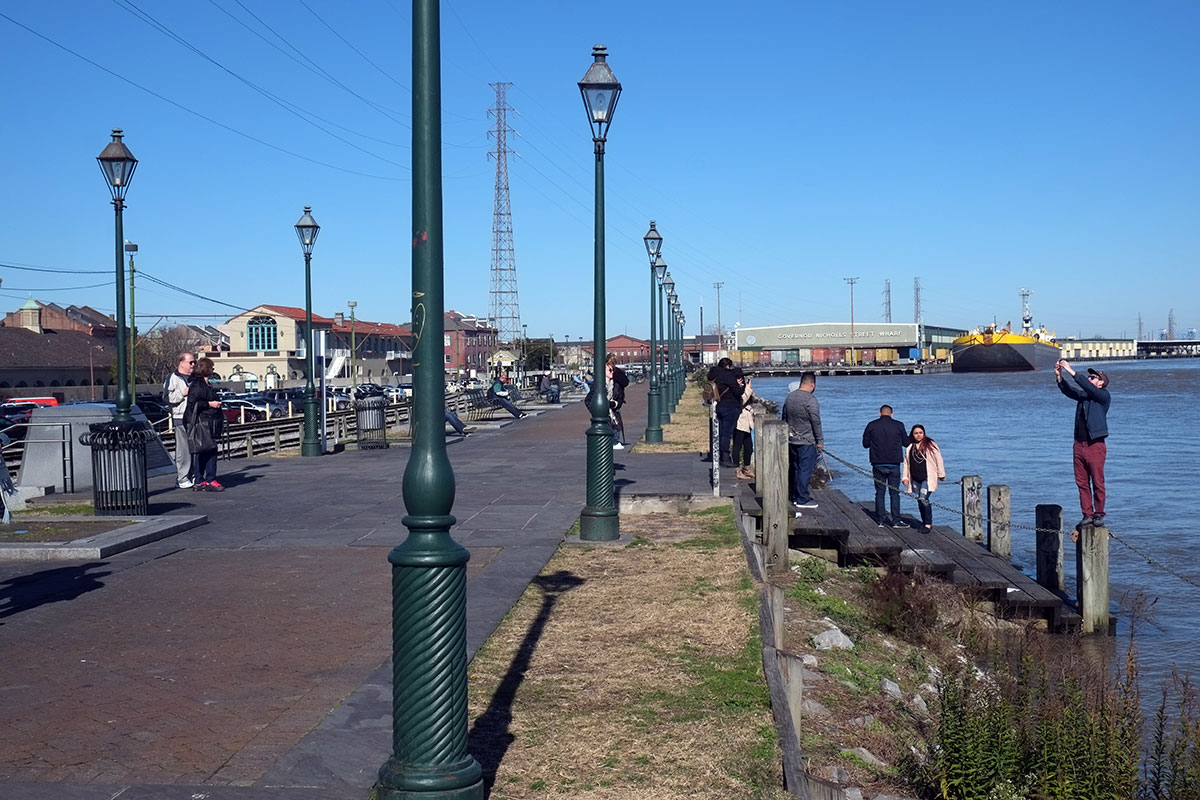
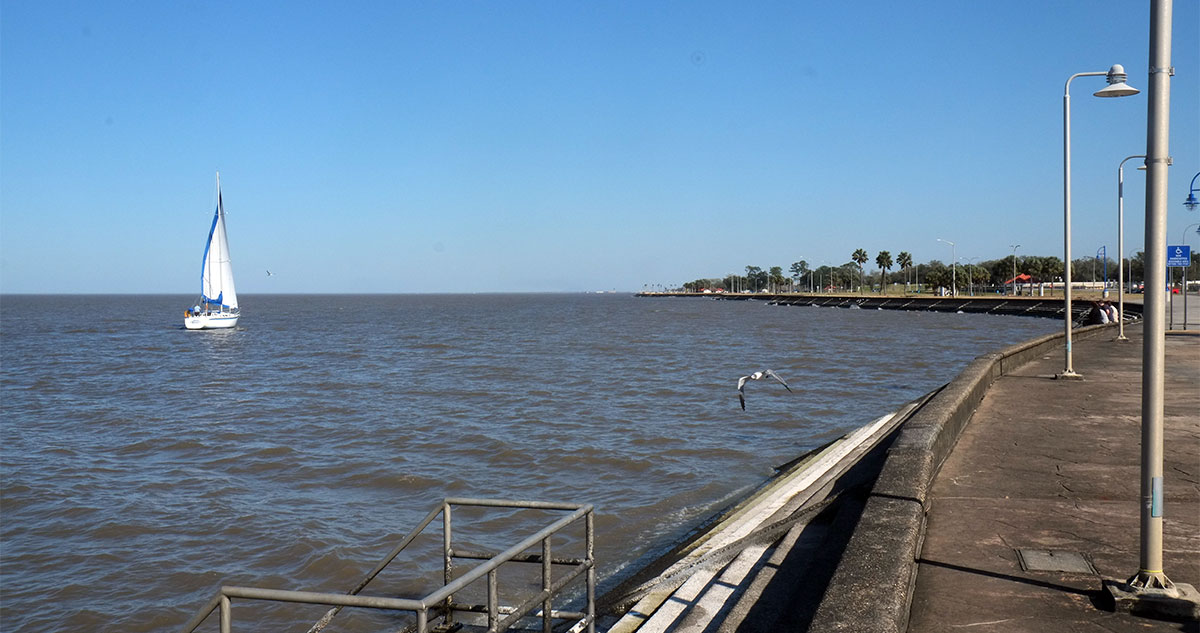
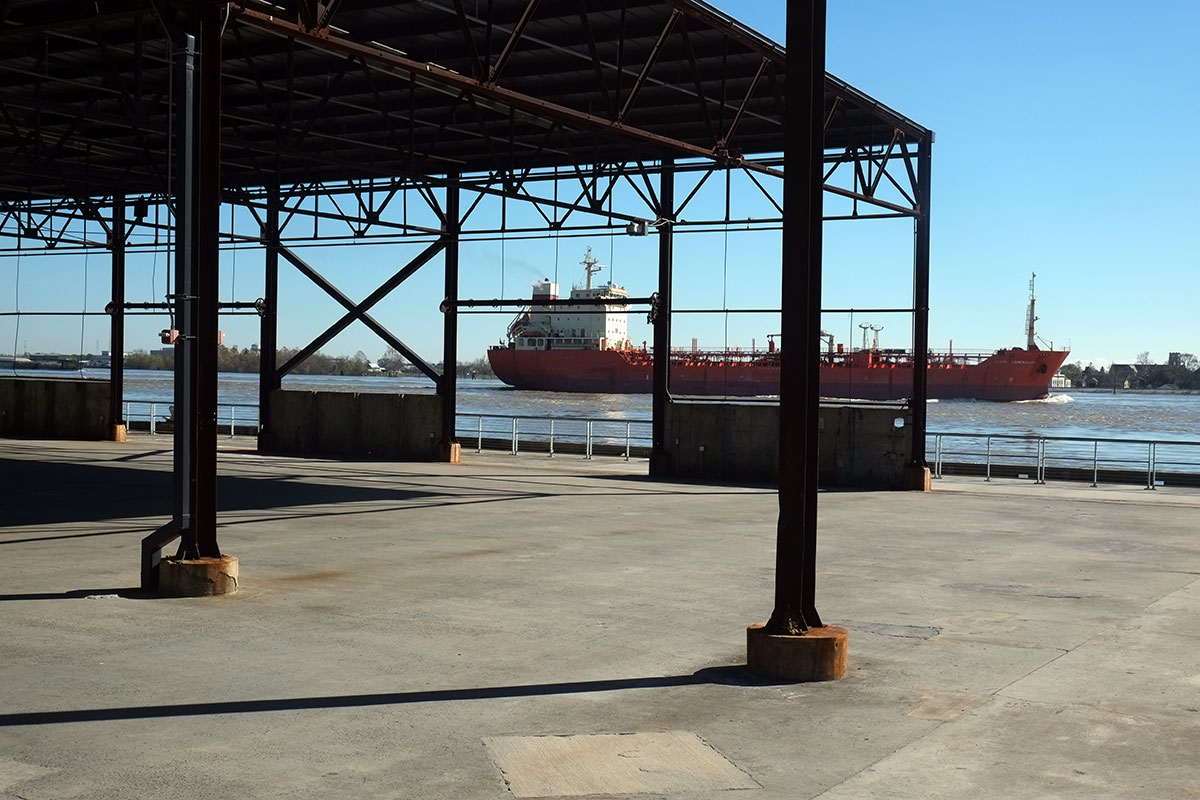
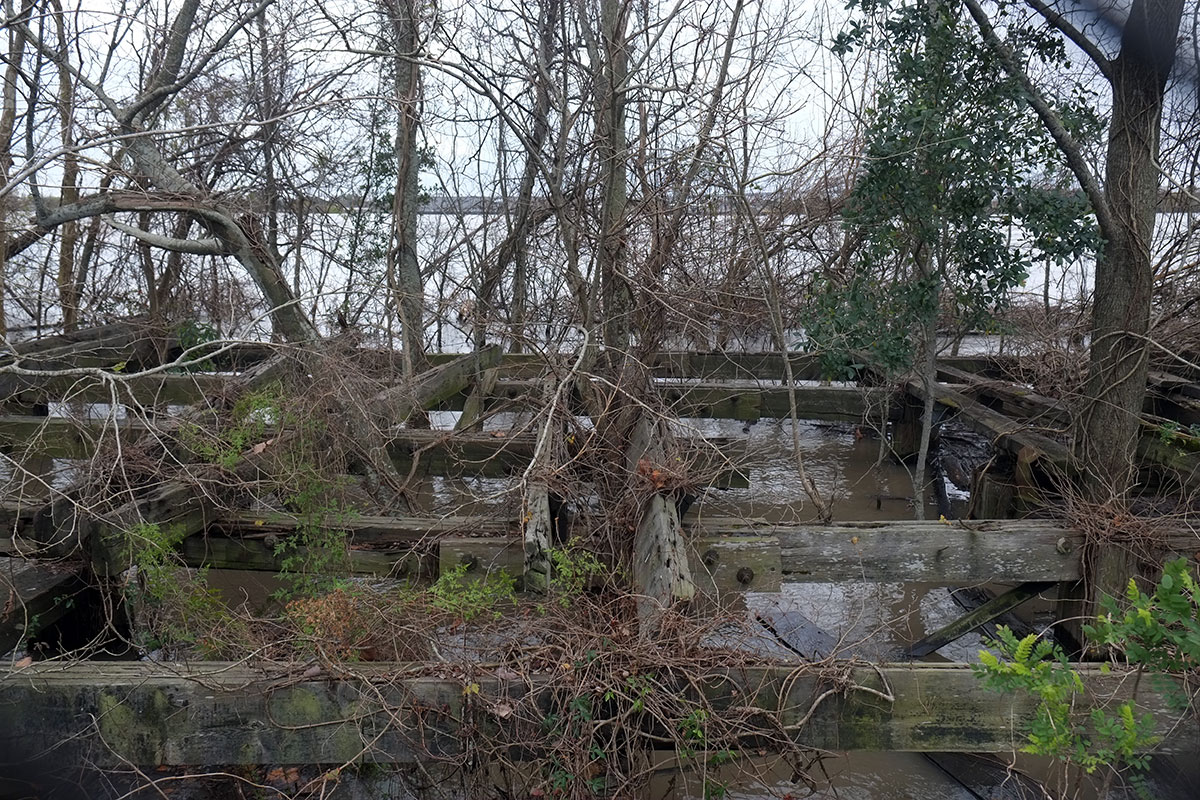
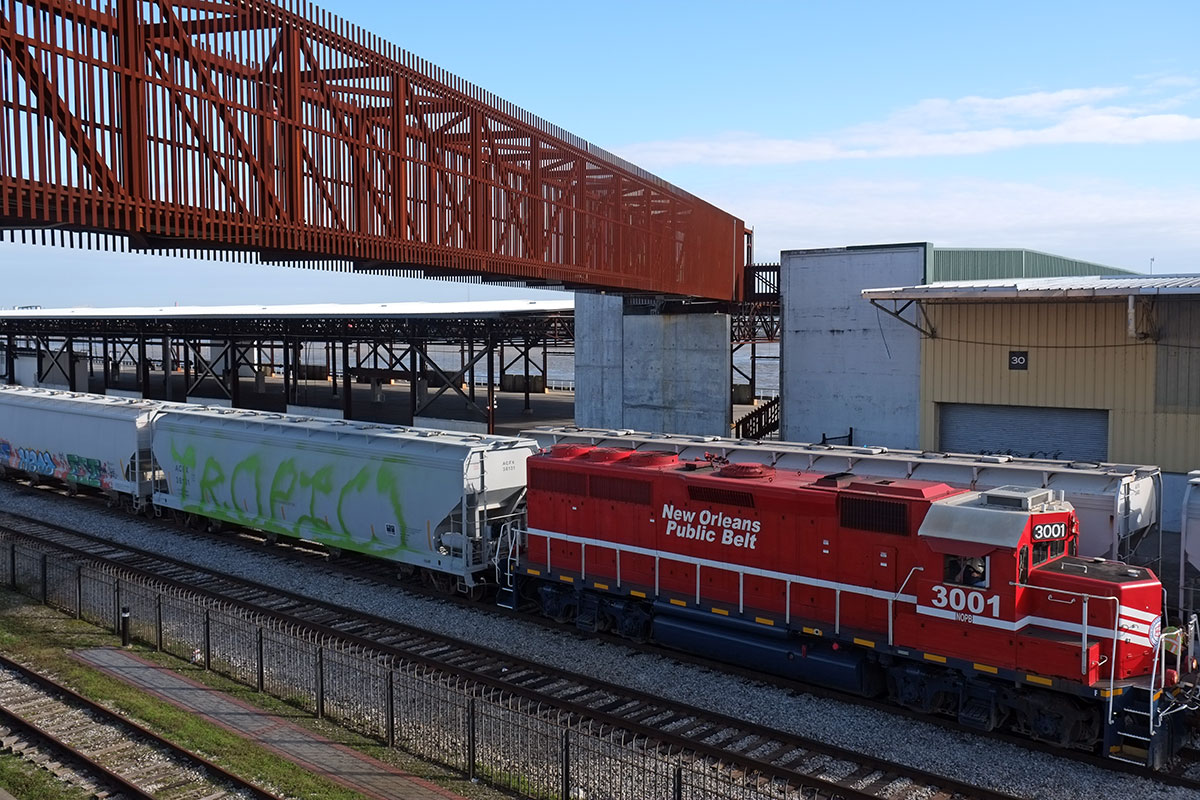
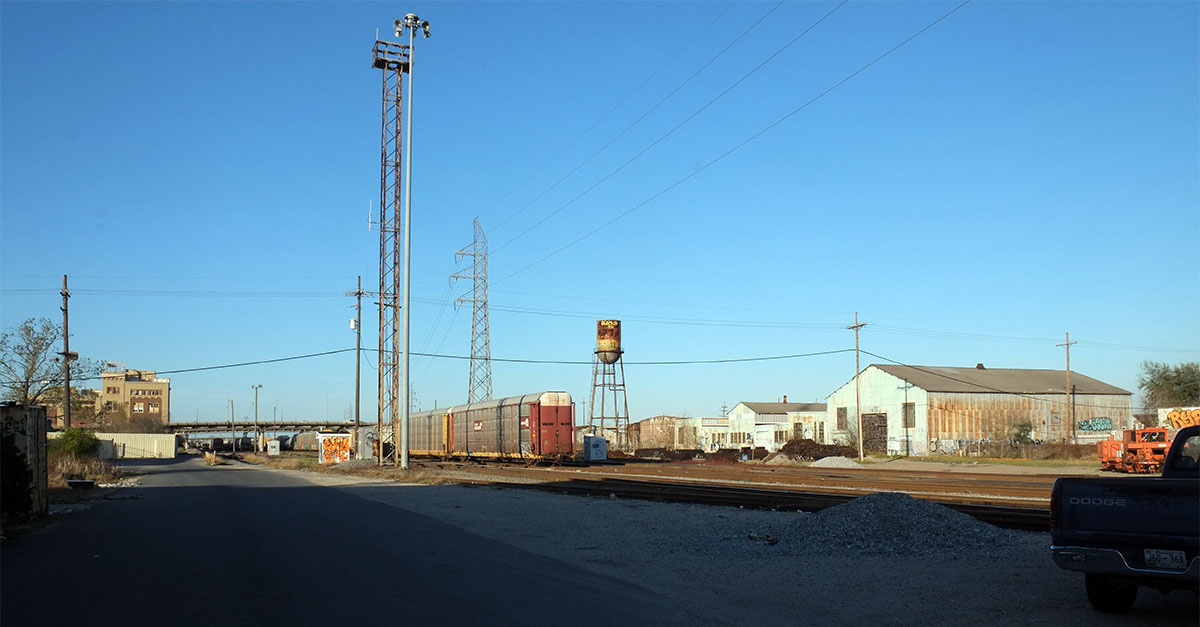
After a while I realized you can never see the horizon in New Orleans.  It’s completely flat, so you’re never high enough to see over things, plus the height of the buildings around you and the levees along the waterways means you’re essentially in a shallow bowl.  The only way to get a sense of the larger landscape is to climb atop the levees along the river or Lake Ponchartrain.  The recently completed Crescent Park, which runs along the river from the Marigny through Bywater, is a New Orleans version of the High Line or Riverside South.  Designed by a team including EDR, David Adjaye and Hargreaves Associates, it has kept the remains of the industrial waterfront.  DSCF2014  DSCF1560 DSCF1706

Access is limited by the railroad which runs along the river, but a few bridges connect across.  The park feels very cut off from the city – hopefully more access points can be added.  DSCF2013

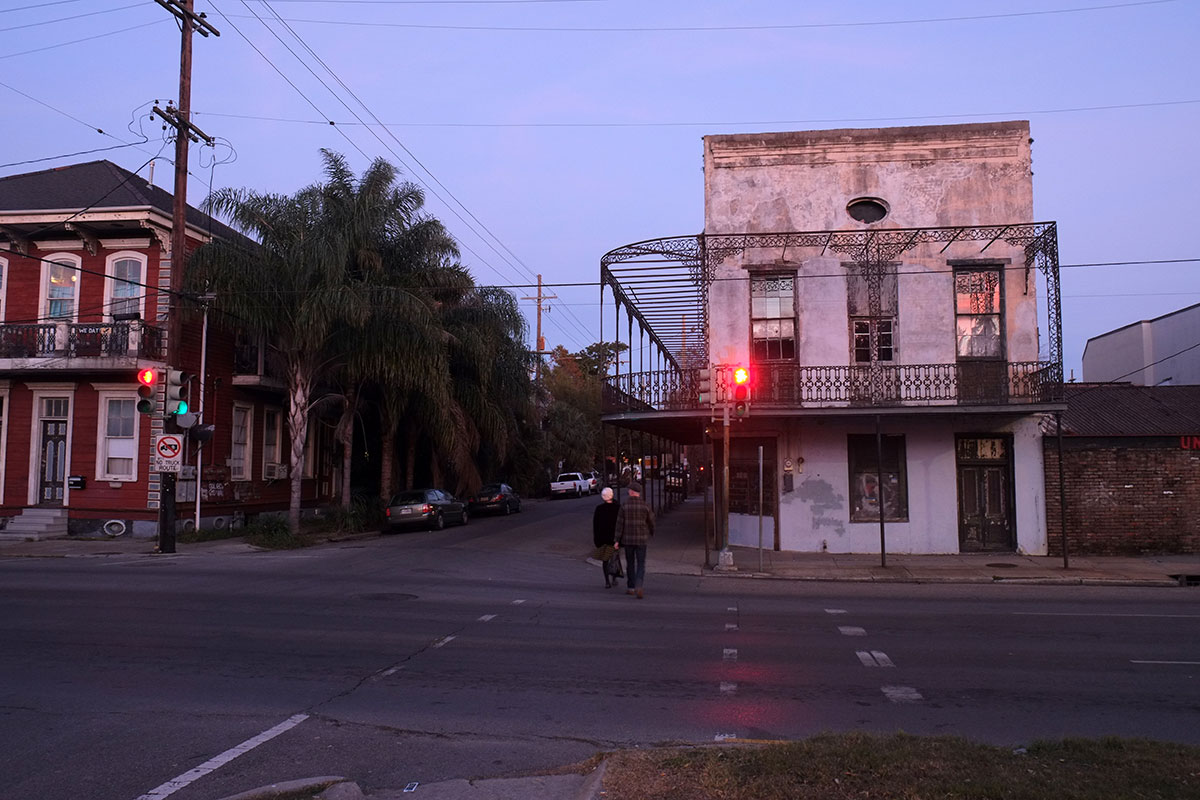
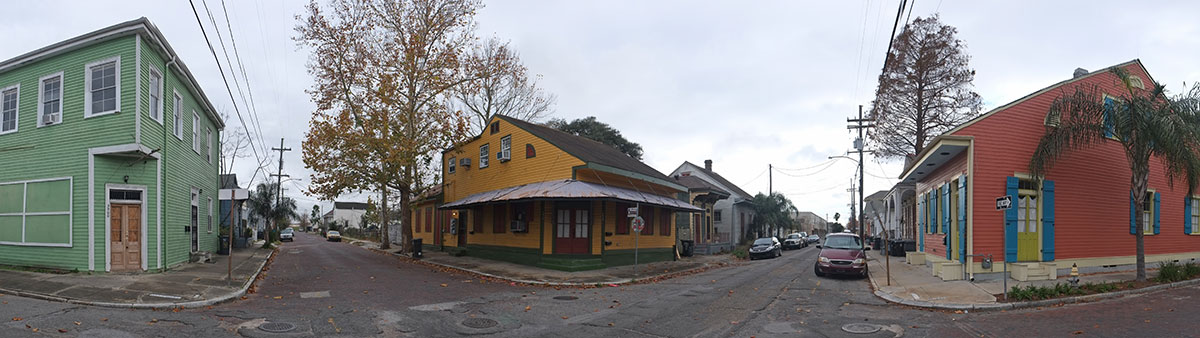
Bywater borders Marigny downriver, a former working class neighborhood filling up with hipsters with man buns.  Brooklyn South.  DSCF1802  DSCF1808  DSCF3697    DSCF1805DSCF1837

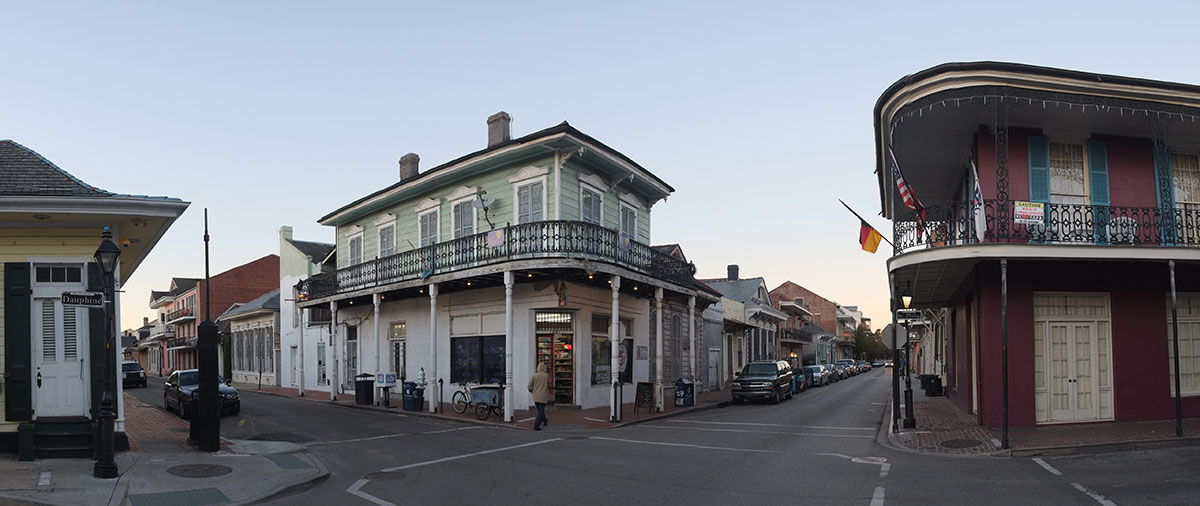
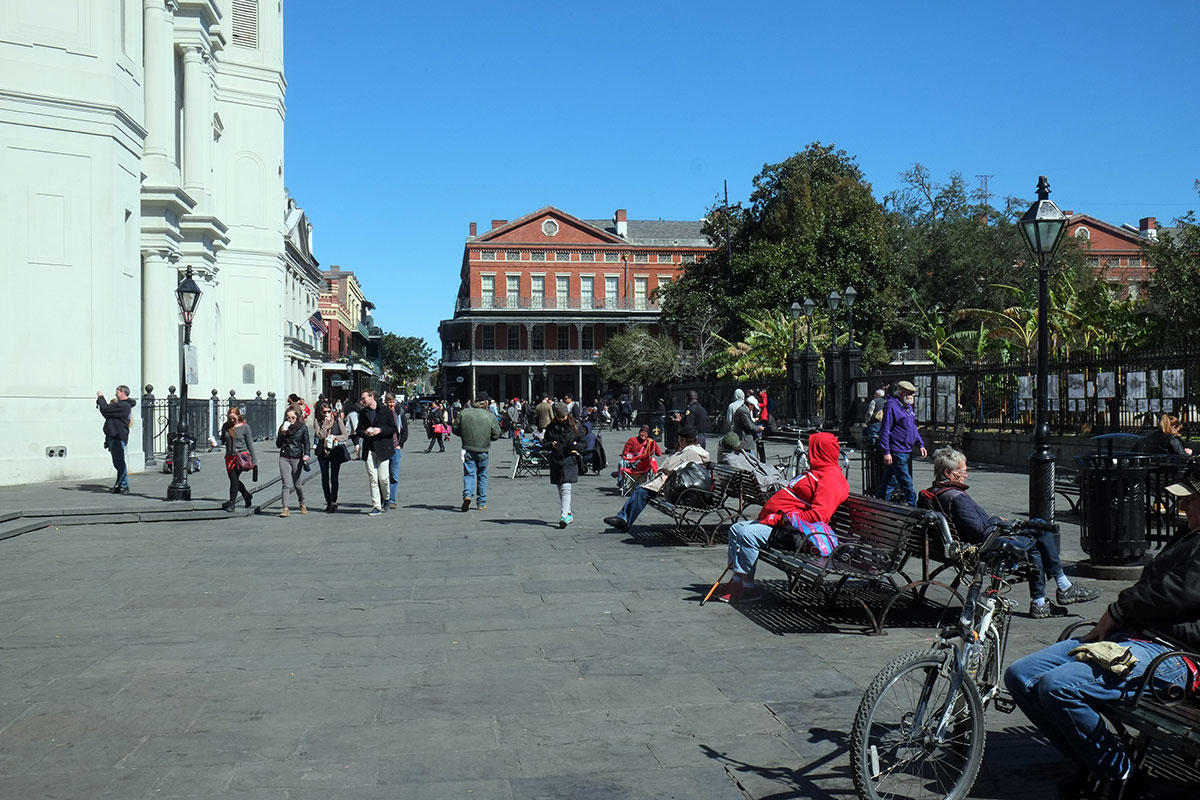
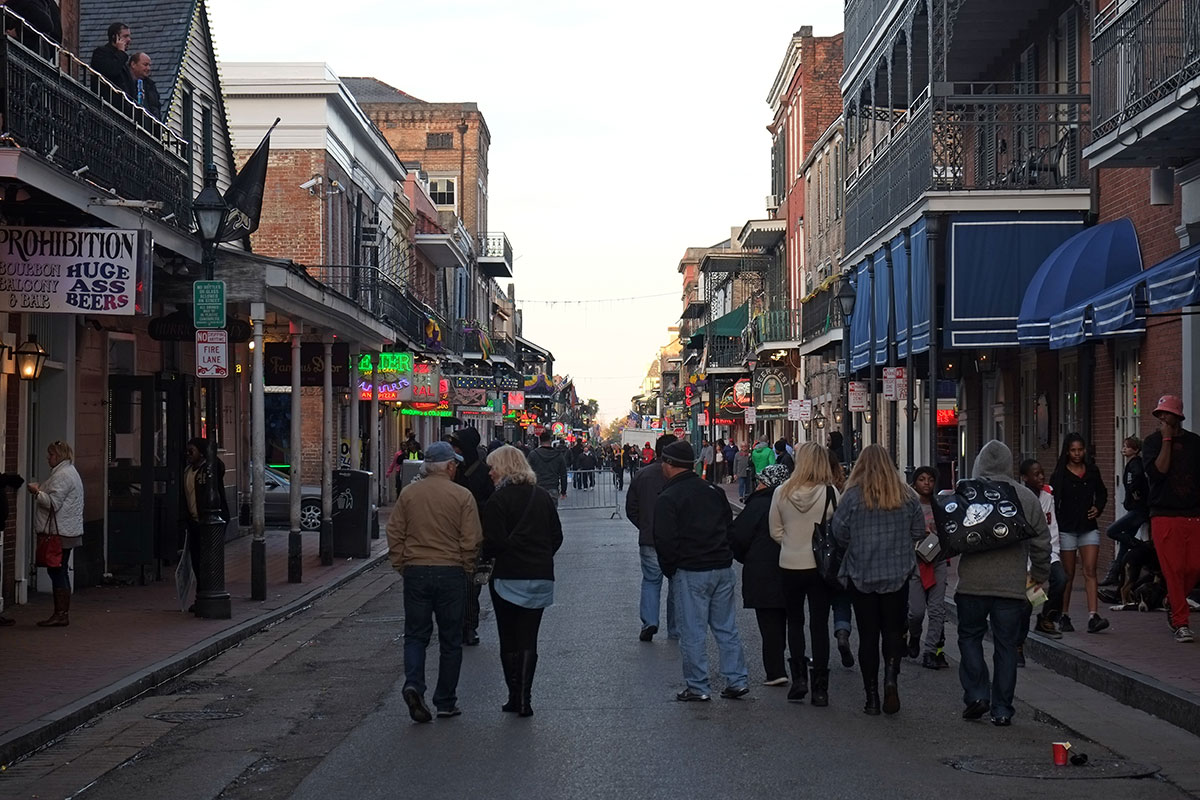
The French Quarter is just upriver from the Marigny, and we spent a lot of time walking its streets.  Eventually the pattern of use became clear:  tourists on Decatur and by Jackson Square, DSCF3458 drunk tourists on Bourbon, DSCF1994rich tourists on Royal,DSCF2663

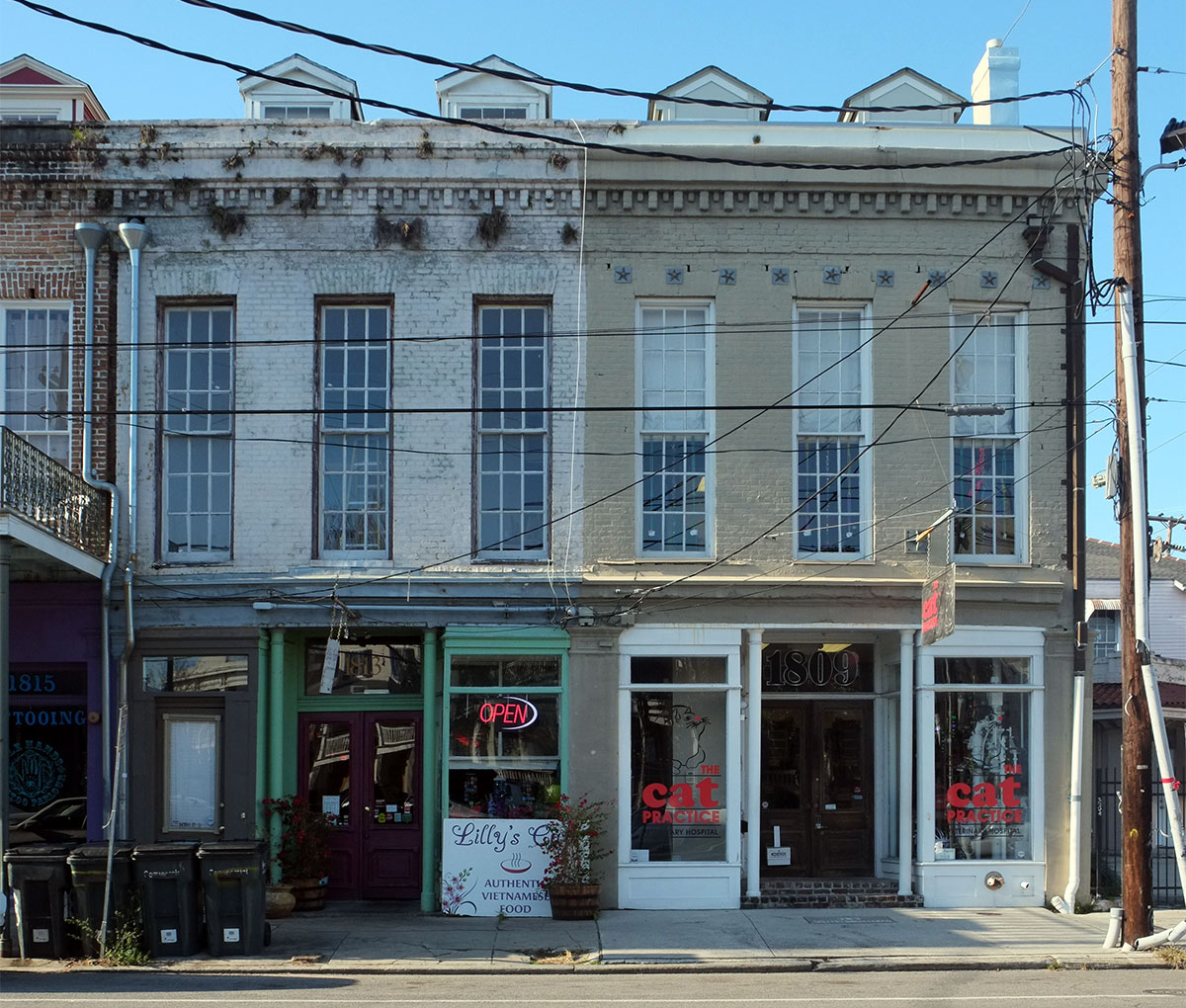
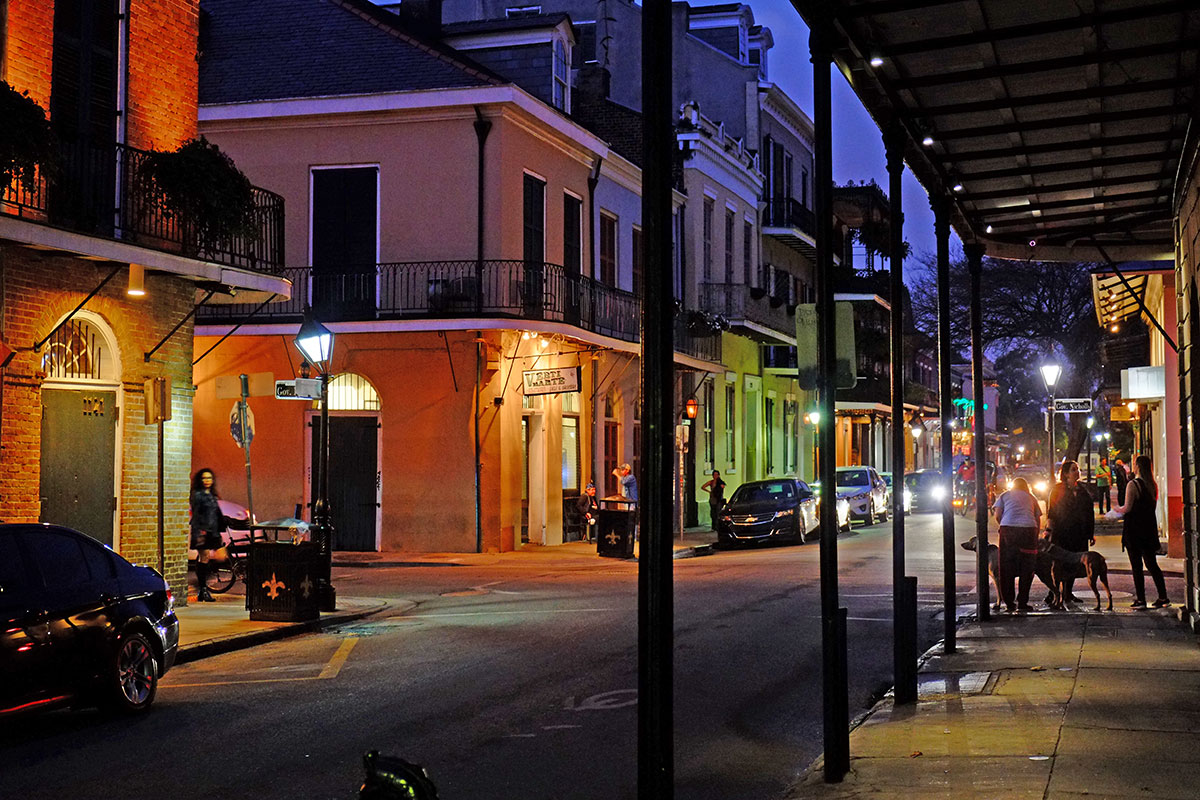
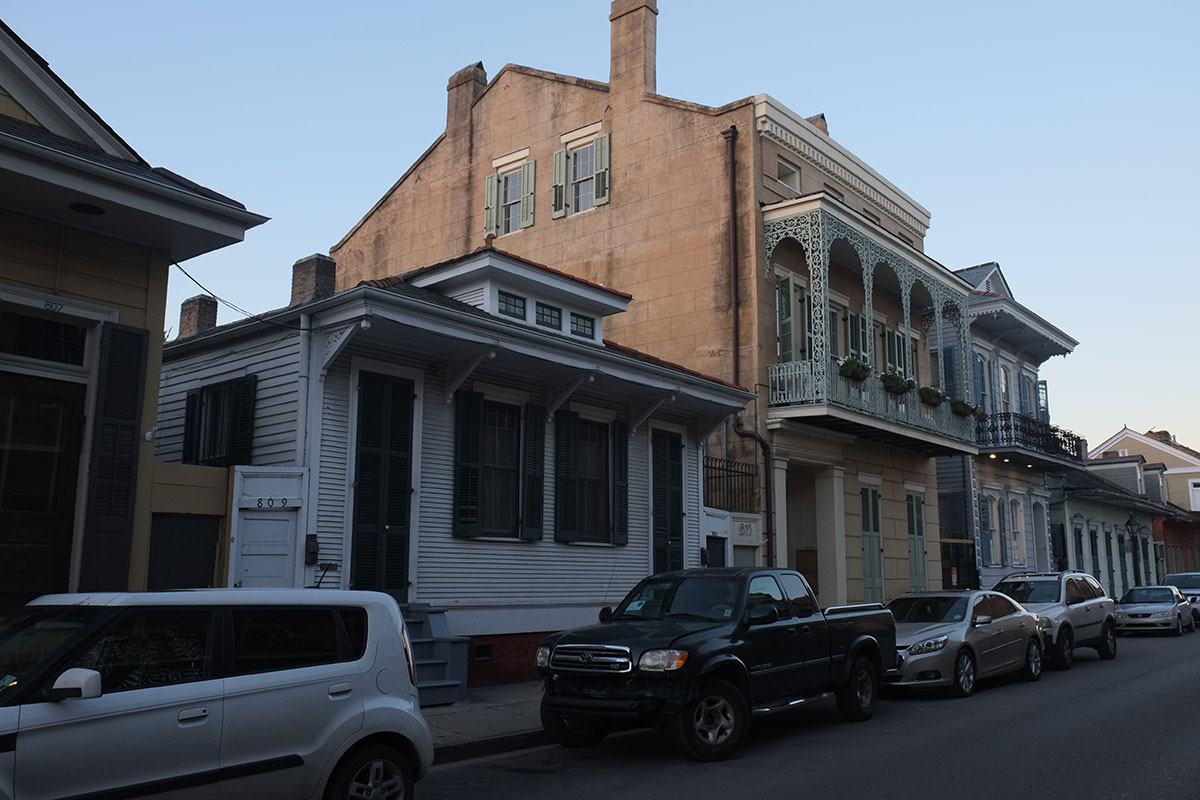
and the rest of it felt like it was for the residents.  It is the part of New Orleans which is most foreign, with the older architecture from the Spanish era (the earlier French architecture was wiped out in a fire in the late 18th century), and the part most of us think of when we form an image of New Orleans.  DSCF1572     DSCF1670DSCF2983    DSCF1677We found it endlessly fascinating.  The scale, the textures and colors, the details, the quirky businesses and residents – there is a richness of experience which is rare in this country.

The central business district – with its convention center, hotels, and casino – adjoins the French Quarter on the upriver side.  Once you cross Canal Street the city changes – the architecture is mainly 20th century, as the 19th century buildings have been replaced.

Bao and Noodle

I am a pessimist in all areas except for food. The human ability to make things taste good never ceases to amaze me, and never have I been more astonished than by Bao and Noodle.
P1070253We started off with an order of bao, dumplings, and scallion pancakes, and were immediately blown away. My only previous experience of bao was hearing it mentioned in a Firefly episode, and so, was very impressed. The only problem was that having my first experience be so good, is now I’m always going to be disappointed by other restaurants. The pork and cabbage dumplings were the night’s specialty, and they certainly were special. The best thing about them was the broth they came in, soft as milk, but rich with the flavor of country ham, and greens as delicate as rice paper floating like tea leaves on its surface. The scallion pancakes were cooked slightly unevenly, one edge darker than the other, and I think this was on purpose. It offered you a choice between crunchy or more chewy.P1070254
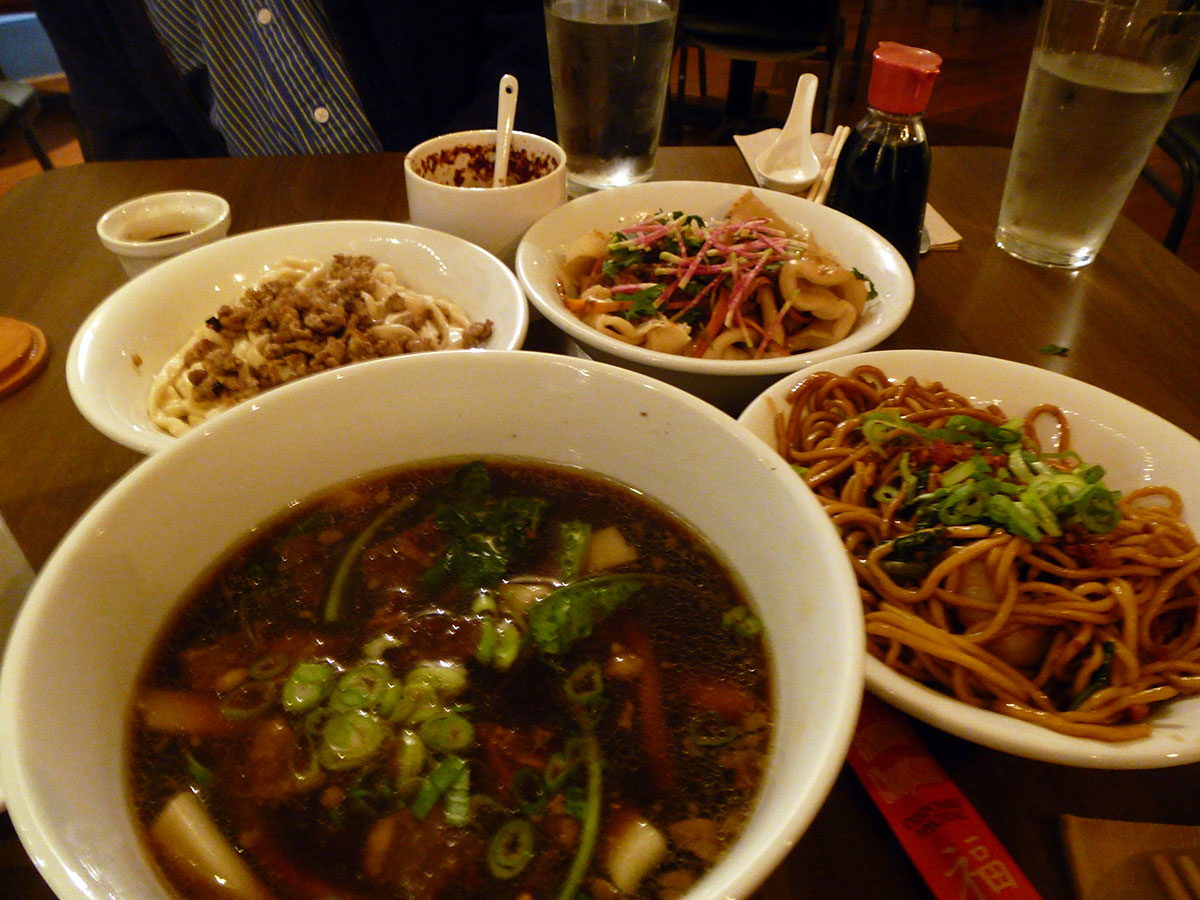
If the appetizers blew us away, the main course kicked the wind up to hurricane status. Starting on the left, we have Dan Dan noodles. Unlike many restaurants, they leave the dish without a lot of heat and provide you with a jar of Sichuan pepper hot sauce. Simply the smell wafting out of that jar was spectacular, but enough to make your nostrils burn. Being someone who can’t take a lot of heat, I appreciated the consideration. The chili sesame paste, which was actually more sauce-like in consistency, already slathered on the noodles was fantastic, nearly as good as the noodles themselves.

The noodles were one of the most impressive things at the appropriately named Bao & Noodle. Each of the four dishes we ordered had a different type of noodle, perfectly suited to the meat. The Cumin braised lamb was so tender that it literally fell apart in your mouth, so the more chewy Biang Biang noodles were the obvious match. Instead of being cut, the noodles were hand-ripped, which definitely showed in the texture around the edges.

Egg noodle with XO sauce, on the right, was distinctly shrimpy, and by that I mean it tasted like seafood. The flavor had penetrated the noodles, which were long and thin, so that I could taste the quality without even eating the crustaceans.

But the beef soup was the best. I promise you that I’m not biased because it’s the dish I ordered. It took the best qualities from everything else. Its rice noodles were similar to the bao shell, with the insides being soft at first bite when they were dry, but becoming chewier in your mouth. Like the lamb, the beef came apart with each bite, and used tougher noodles to compensate. It shared the soft greens with the dumplings, as well as the rich broth. This broth though was several levels of magnitude greater. If the soup had just been broth I would have been happy. I couldn’t help from finishing it, even though I knew that would leave less room for dessert.

Normally, ordering dessert at a Chinese restaurant is a bad idea. It’s always just cakes made out of bean paste or something equally awful. But here they had blueberry milk bread toast, mango pudding, and snowskin mooncake.

The toast had been fried, with the milk caramelizing on the sides so there was a nice sweet crispness to it. The warm blueberry sauce on top was divine.P1070259

Fruit puddings are nearly always too sweet. This broke that stereotype wide open. It simply tasted like mango, but better. It reminded me of the picture in the Southern Food and Drink Museum (coming soon to a blog near you) of centrifuged peas. After running the vegetable through a blender, they put it in a culinary centrifuge and spun it for hours until they were left with an intense pea paste. This was like how I guess that would taste; intense as hell.P1070260

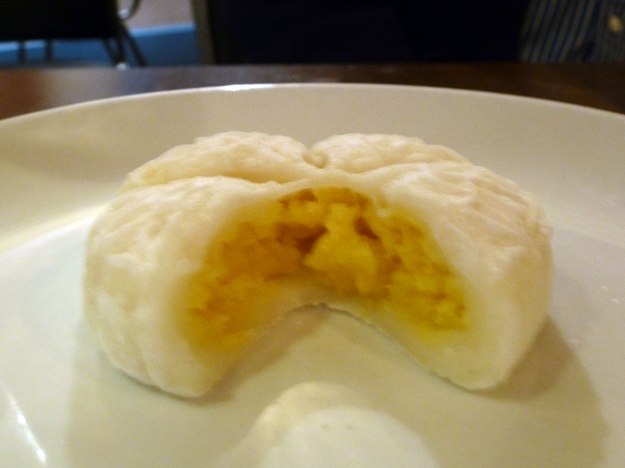
And for the grand finale, snowskin mooncake. I’ve described other foods as divine already, this was like eating Heaven. The rice wrapper was rather mochi like, but even softer, like a cloud. The vanilla coconut custard filling was rather chunkier than custard usually is, but tasted of all things good in this world and the next.P1070258

Bao and Noodle was unpretentious, and unlike many Asian restaurants, focussed on being good rather than being creative. If you are in New Orleans, come here. Come here first thing, so you can taste for yourself how good it is. After that, I promise you won’t be able, or want, to stay away.

Garrison Keillor

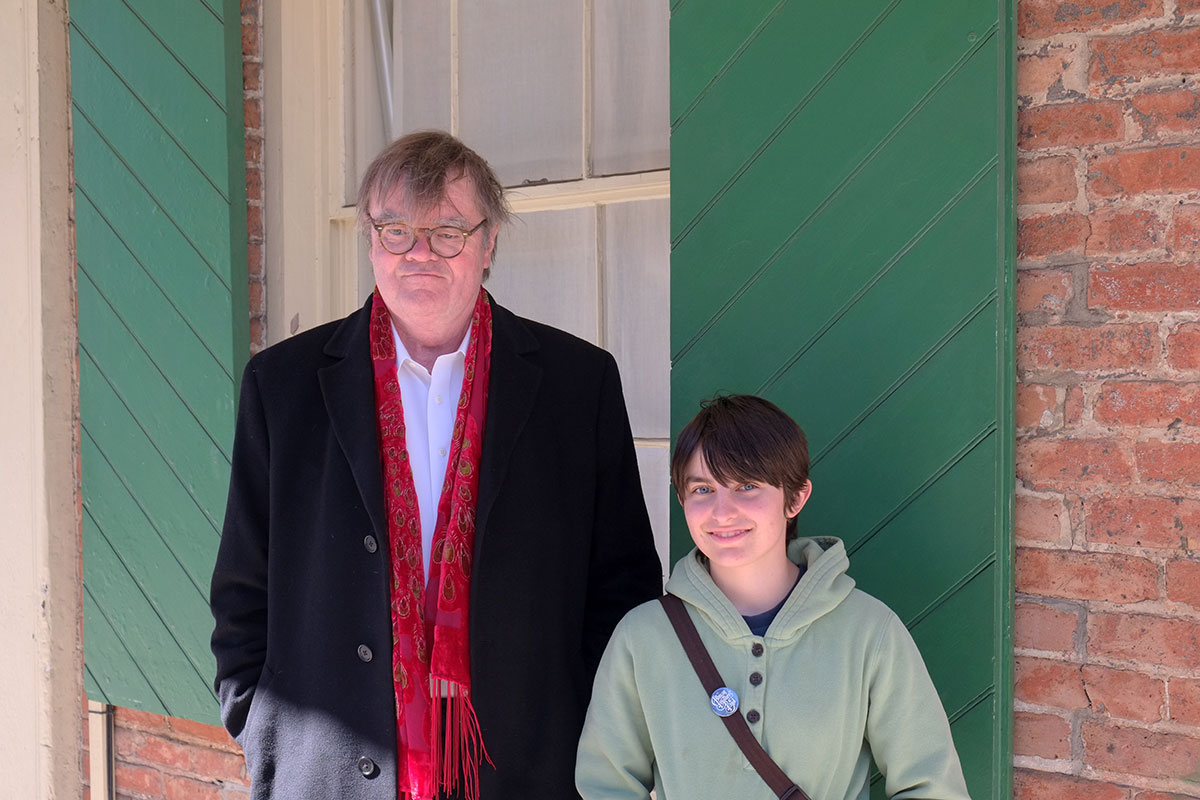
DSCF3455We saw Garrison Keillor at party last weekend, but didn’t talk to him, following a general principle of leaving celebrities alone unless you really have something to say.  The next day I regretted this, as it occurred to me that while I may not have had much to contribute beyond the appreciation of a fan, he might have enjoyed talking to Greta, the apprentice writer.  So today when we turned onto Chartres St. in the French Quarter and saw him leaving his hotel, I shamelessly buttonholed him and introduced him to Greta.

They had a wonderful conversation, as he talked about his own early forays into writing, and how writers need to write – you have to get up and do it every day.  Over the past few months many people have suggested that I should write a book about this trip, but I’ve always felt that Greta should write it, not me.  As Greta talked a bit about the trip, you could see the wheels turning in his head, and the two of them started to rough out the premise for the book (which he thought should be a novel, not a memoir – I’ll leave off any more discussion of its direction to avoid being a spoiler.)  He was just very engaged and thoughtful, and when we sat down for lunch, Greta wrote down all of his advice.

As we walked off I had my own literary déjà vu.  In his first novel, The Moviegoer, Walker Percy’s protagonist is walking down the street in New Orleans, and sees the actor William Holden up ahead of him.  Holden asks a young honeymooner for a light, and afterwards he can see the change in the young man, as the brush with celebrity has brought him out of his humdrum experience, making his own life somehow more real.  As with so much else in New Orleans, it’s hard to distinguish art from reality.

Beignets Extended

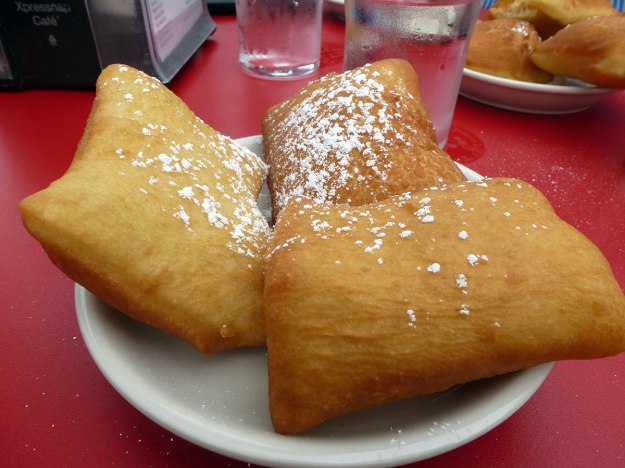
I know I’ve already made a beignets blog, but back then I didn’t know that there was so much variation in the treat.

Morning Call Coffee
Up north in the big city park, it’s a long walk just to get beignets. But the street car runs up to it, and if you’re already in the neighborhood you should definitely come here. These beignets are rounder, with a more crispy shell, and instead of coming pre-powdered sugared, they provide you a sugar shaker. This is nice if you happen to be wearing dark clothes and don’t want to look like you just walked through a snowstorm.P1060921

Cafe Beignet
Second only to Cafe Du Monde on every list of best places to get beignets in New Orleans, it certainly lived up to its reputation and name. The beignets were a good compromise between Morning Call and Famous in poofyness, about an inch and a half thick. Don’t be scared off by the small crowd, they’re very efficient and will have your beignets liberally sprinkled with sugar and ready for consumption within minutes.

New Orleans Famous Beignets and Coffee
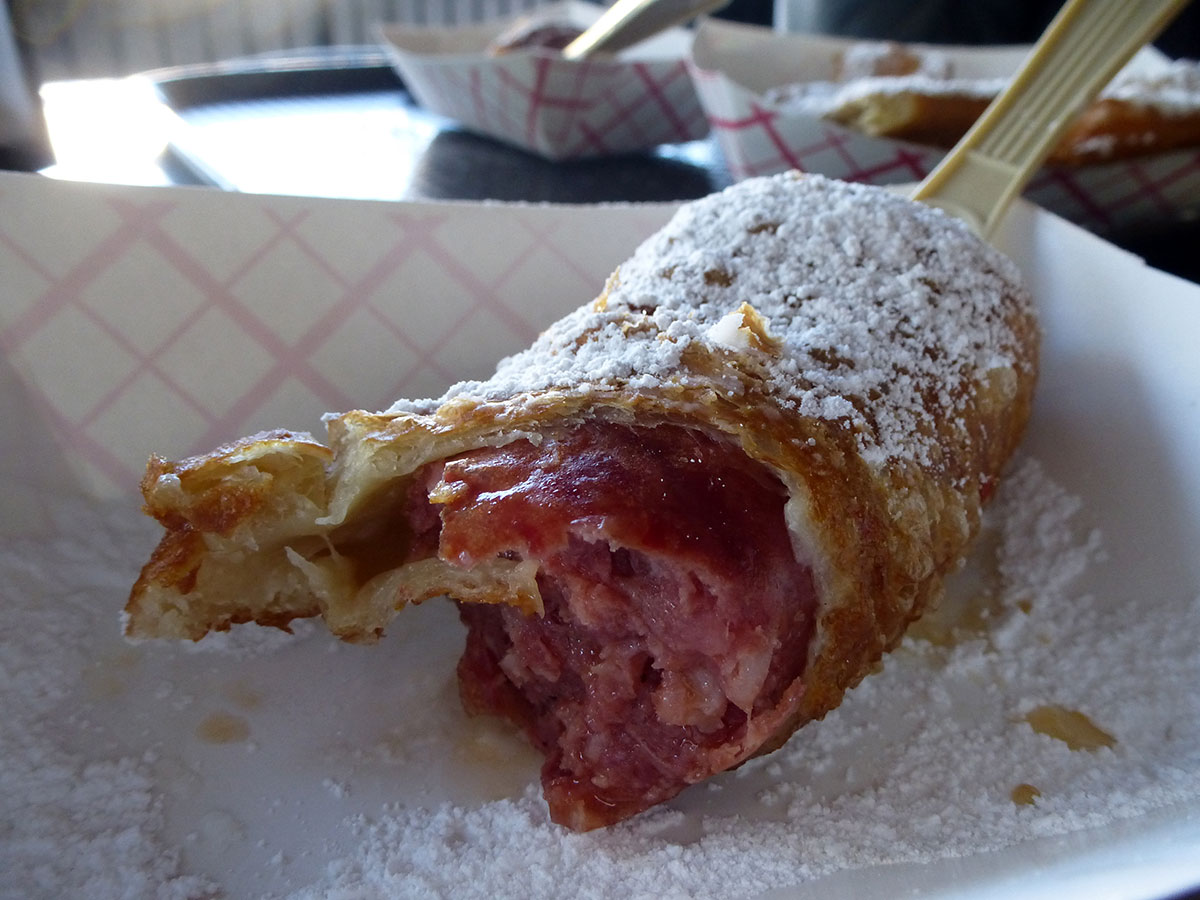
As well as getting more of the normal beignets, I got a “Pig-nay,” which was like a pig in a blanket, but with a Cajun sausage and a beignet. The sausage to dough ratio was a bit off, as the sausage was really fat, but the sweet and savory went really well together.

Pig-nay

Pig-nay

If you come to New Orleans, don’t miss out on beignets, and all their delicious variations.