Category Archives: tourisme

House of Eternal Return

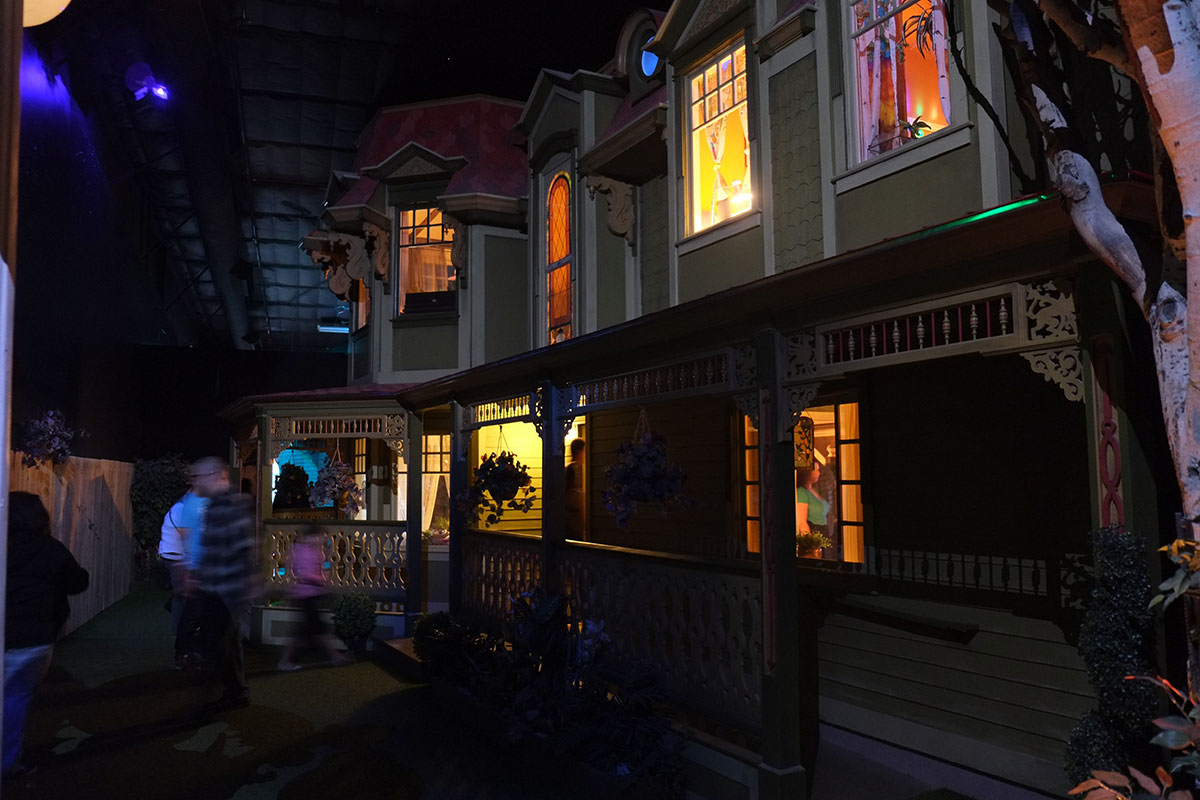
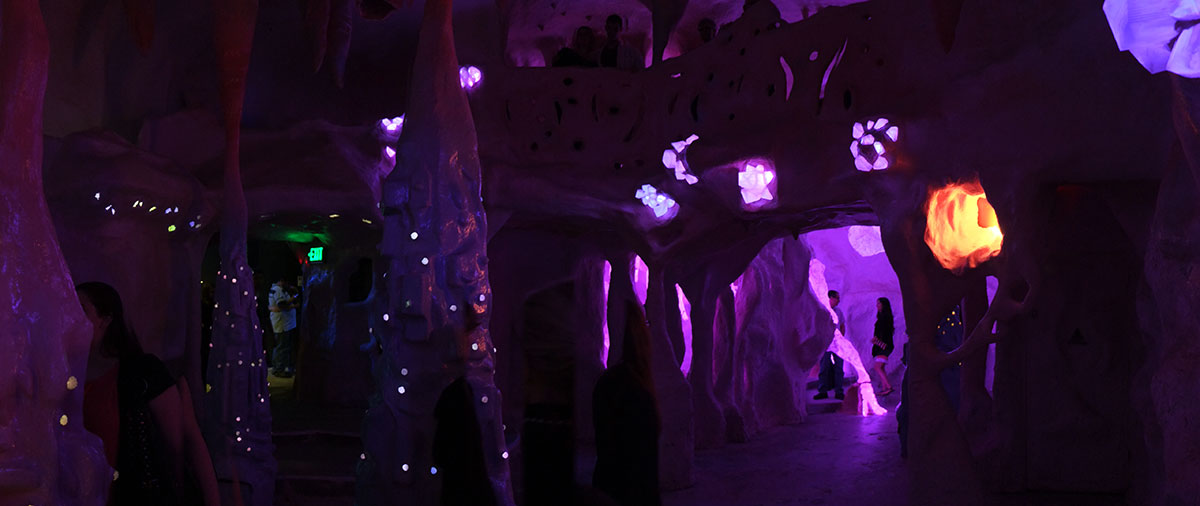
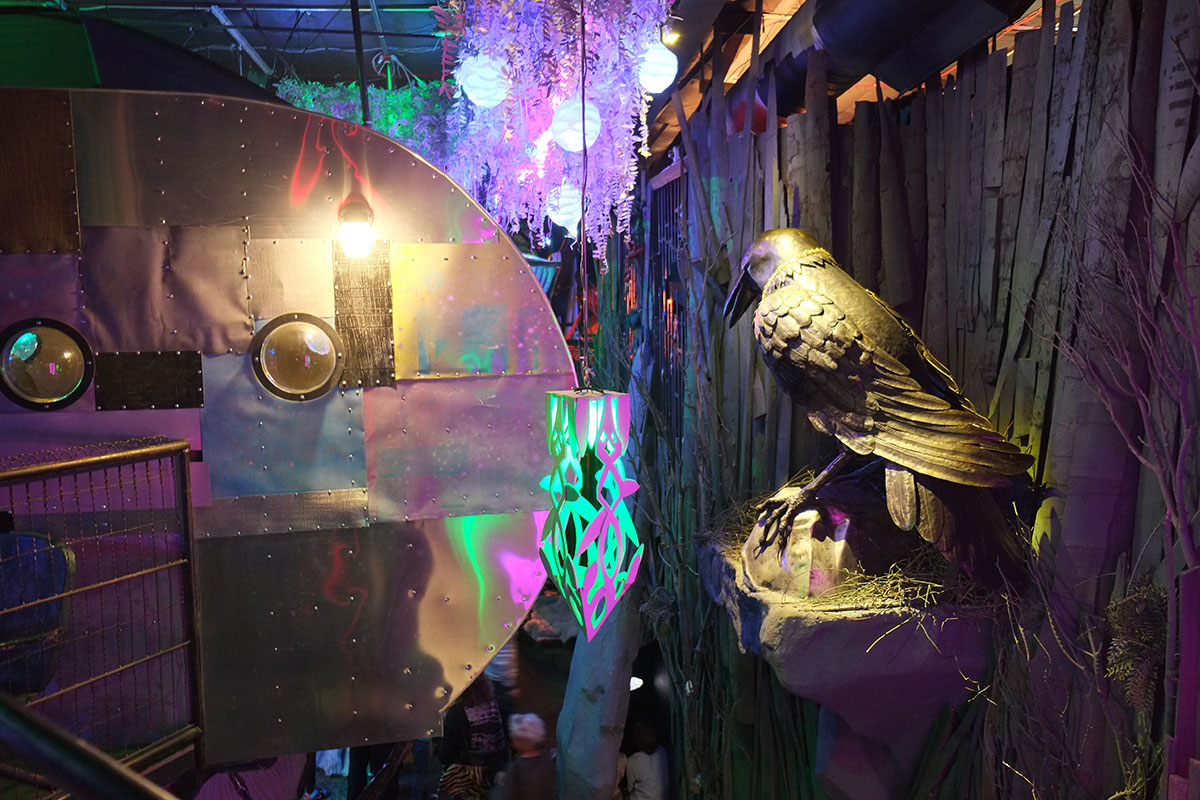
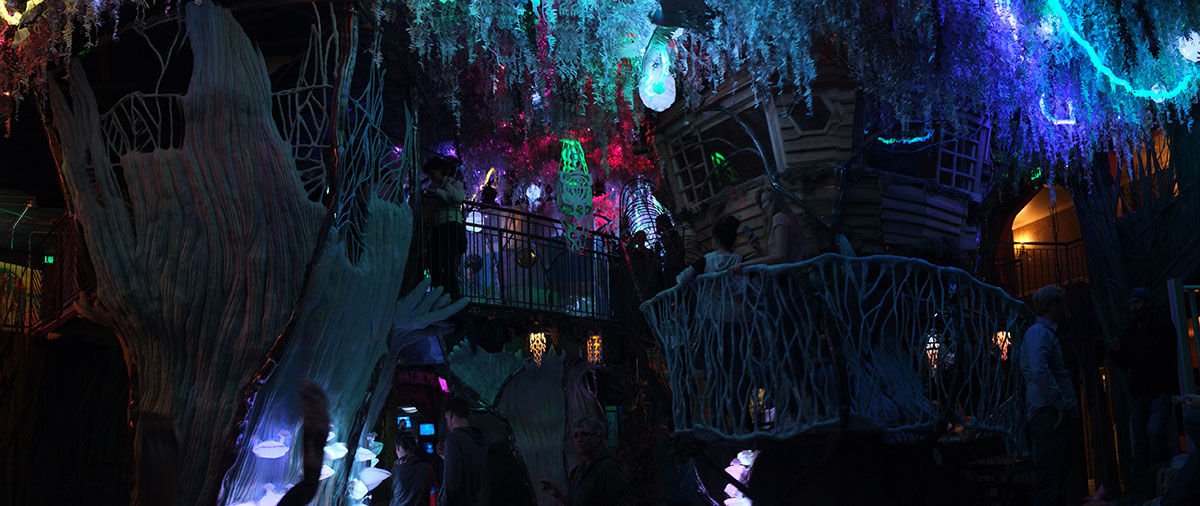
DSCF9899The House of Eternal Return is what happens when you give over 100 artists funded by George RR Martin a 20,000 square foot bowling alley in Santa Fe. It was lucky that a friend of mine had told me about it, because having only been open a month when we went, it hasn’t worked its way up through the ratings on Tripadvisor. This is not the kind of conceptual art people complain about not understanding as they stare at it on the wall. You can literally climb inside, over, under, and through this art. I think the best way to describe it is to call it a marvel of non-linear storytelling combined with a jungle gym and a carnival funhouse.DSCF9916When you first walk inside, it looks like a normal house. A Victorian from Mendicino, the Elsbergs, a normal family with two girls and a boy, own it, and it looks like they just left. Newspapers strewn across the kitchen table and everything. Then you start to find the portals. The fireplace, the kids’ closets, the door under the stairs, the refrigerator. DSCF9887I couldn’t stop thinking Pixar and Disney movies as I walked through. The mammoth skeleton behind the fireplace seemed straight out of Ice Age, and the door under the stairs led to a tropical rainforest that made you feel like Mowgli in Jungle Book. The strongest connection, at least to me, was how the yeti and the little trailer came together to make it feel like you’d just been banished through a door in Monster’s Inc. DSCF9895DSCF9910Part of me wonders if they have to send someone through when it closes to make sure no one’s hiding in there to spend the night. Then again, I’m not sure how effective one person could be, as there are literally a thousand places to hide. After two hours, I still kept stumbling into whole new sections. And I don’t see why anyone would want to spend the night alone there. Things that seem mystical in the daytime with lots of people nearby would easily turn to nightmare-inducing terrors at night, and it would seem quite possible that the shadow on the wall is being cast by a monster, not a coat rack.

The story itself would not help. Scattered through the place are kiosks with headphones. Little movies present clips of the humans’ lives, and how the dad of the family finds a way to tap into the vibrations of the universe to access a secret world. A deep rumbly voice tells about the Charter, the agreement between the Anomaly and the beings who spawned her, and a period before the creation of time. I won’t say too much, as I don’t want to ruin anything. You might be like Dad however, and not even notice the screens and headphones or that there’s any order to the place at all. It’s still a perfectly enjoyable experience.
DSCF9889So if you’re in Santa Fe, do not miss this. Bring your kids, they’ll love it, but don’t let them out of your sight. You’ll never find them again if you do.

Santa Fe

DSCF9696

We’d been wandering around in the desert for over a month, camping in National Parks, Indian reservations, and strange, raw cities like Gallup and Page, so we were looking forward to getting back to civilization. When we got to Albuquerque Greta immediately tracked down a banh mi restaurant, the first thing we’d eaten in a month that wasn’t either our own minimal cooking, or Mexican. Albuquerque turned out to be the kind of medium-sized, complex city that we enjoy, and we were looking forward to the two other urban outposts in northeastern New Mexico – Santa Fe and Taos – which we knew would be very different. I had briefly been to Santa Fe once before, and was anticipating that it would have some things in common with other places we’d seen on this trip – small, beautiful destination cities for the well-heeled.

Santa Fe has an extraordinarily beautiful landscape, where the high desert runs into the Sangre de Christo Mountains. It is surprisingly small – with a population of about 70,000, even though it is the state capital. Perhaps this reflects the unusual statistics of New Mexico – it is the fifth largest state in area, but has only 2 million residents (half of whom live around Albuquerque). So there probably just aren’t that many state employees, leading to the happy circumstance whereby the city is not dominated by massive, boring boxes of bureaucrats.

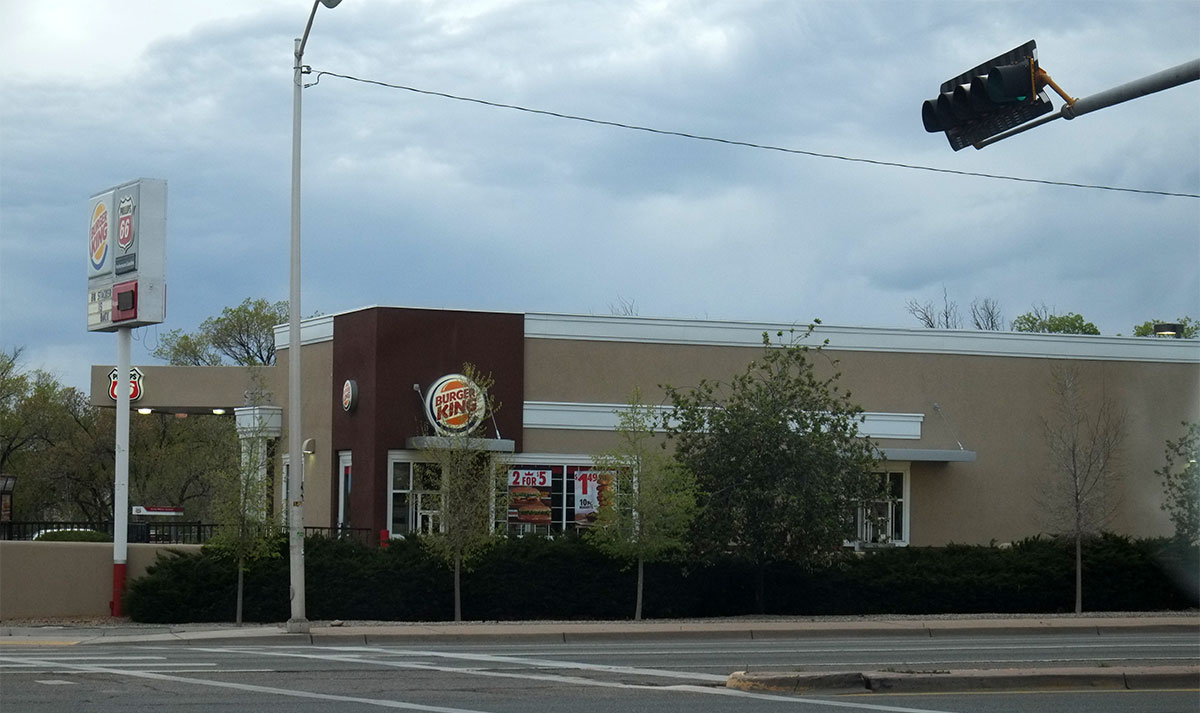
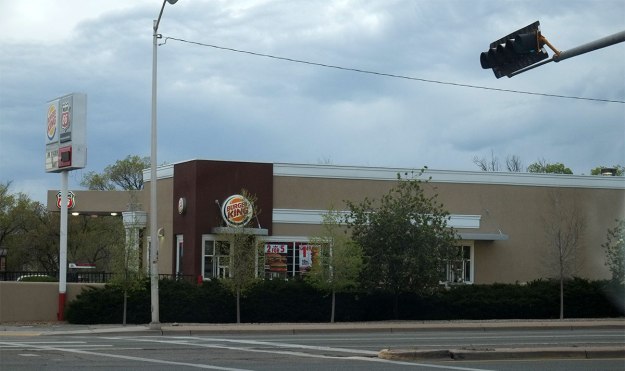
Driving into town from the southwest, we passed through the moderate amounts of recent sprawl, and then saw our first tip-off of what was to come:DSCF9963normal sprawl, except in style.  A Burger King in tasteful, earth-toned stucco, with some historicist detailing. Years ago, I had read a Calvin Trillin article about Santa Fe, focussing on how all these Anglos moved there from the East and then tried to out-Hispanicize each other – reporting their neighbors if they could see stylistically non-conforming parts of their houses – but I hadn’t realized the extent of this hegemony.
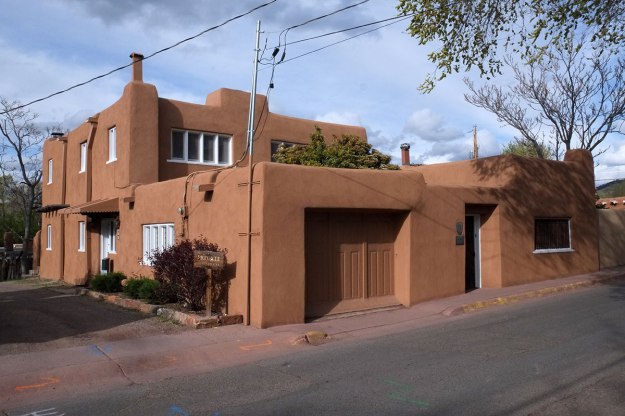
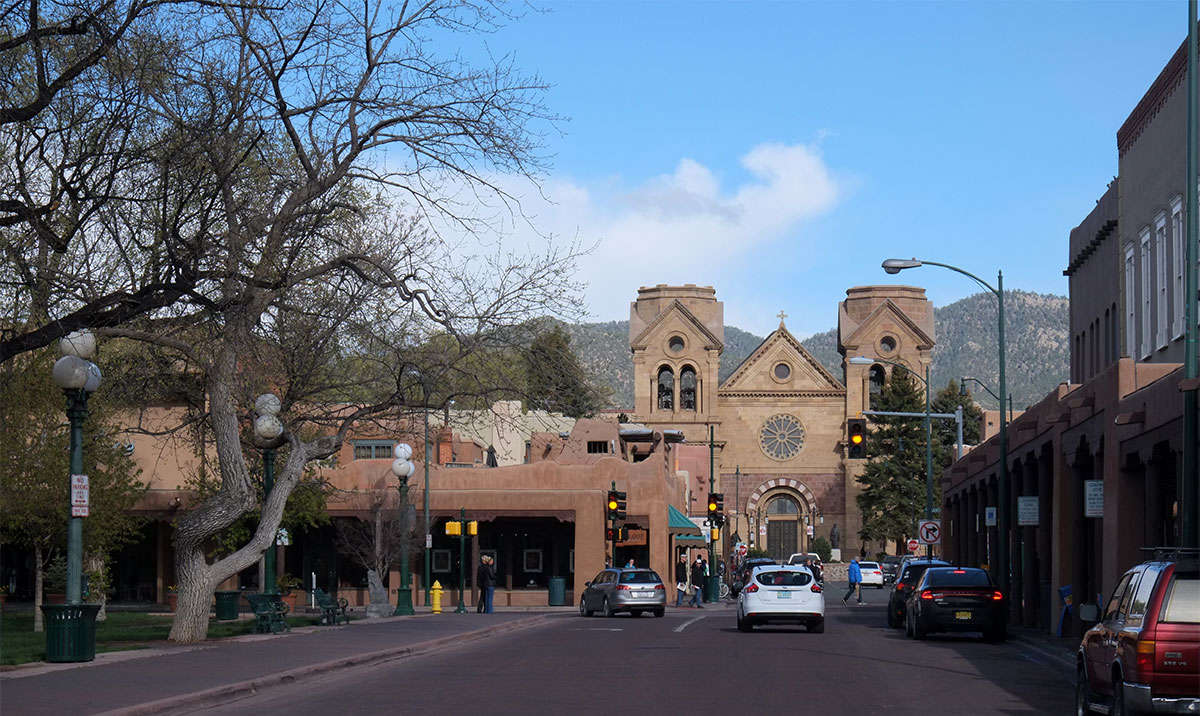
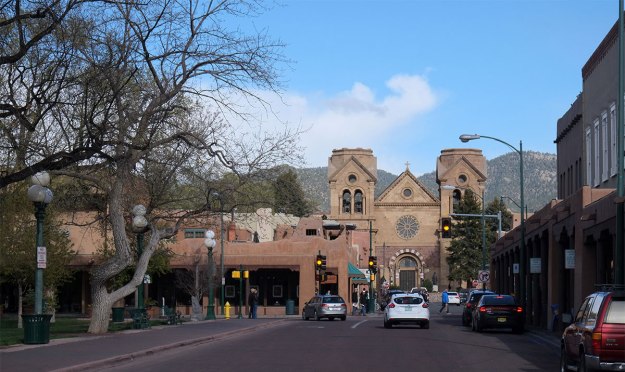
We arrived in the historic center of town in a thunder snowstorm (at the end of April), and were immediately struck by how different it was from every other small city we’d seen in the past three months.DSCF9804

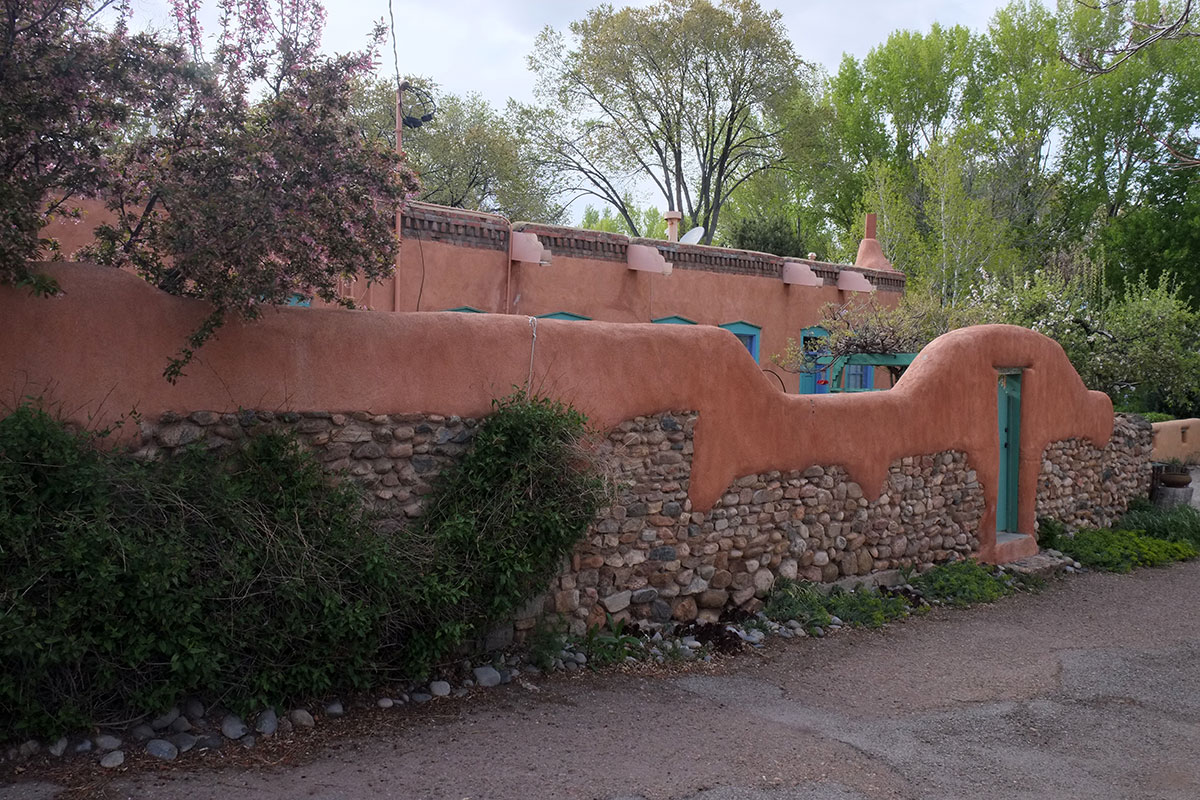
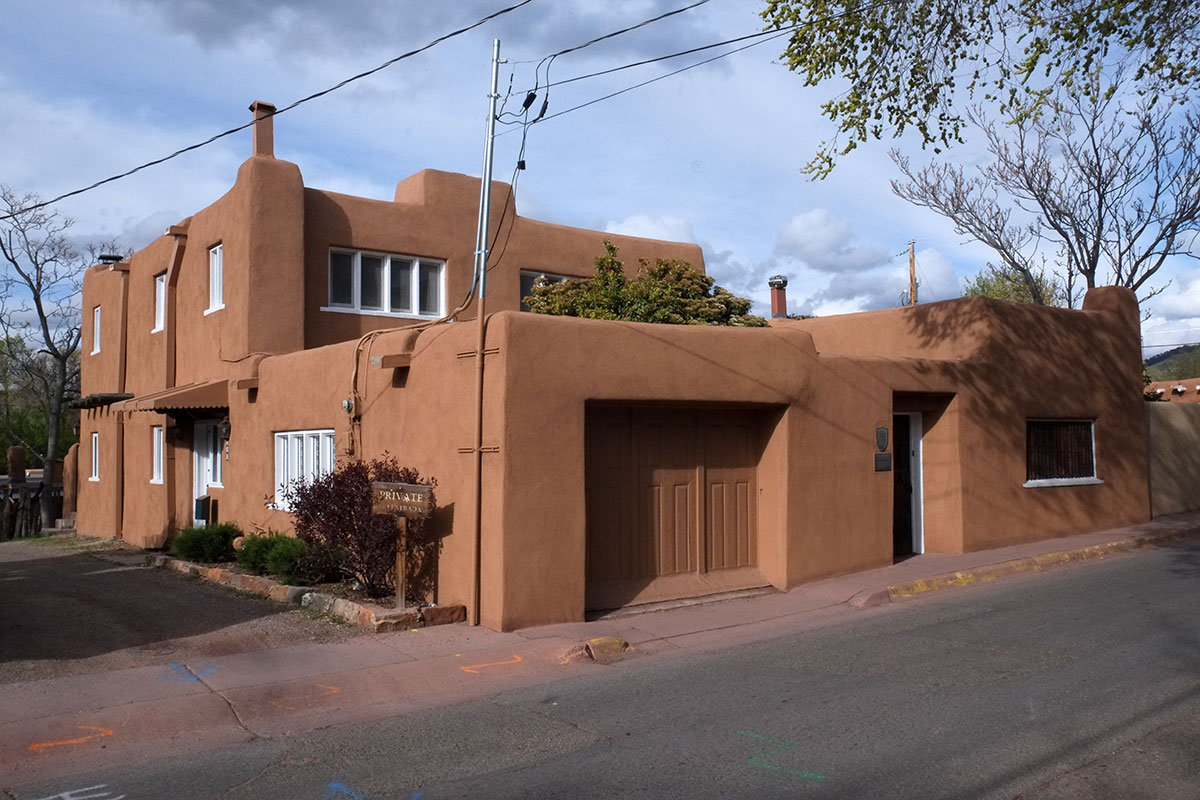
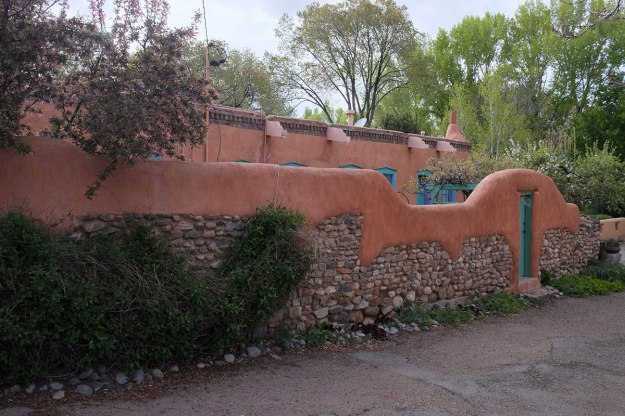
There were no jarringly bad modernist buildings – but there were no good modernist buildings either. Everything was low in height, covered in stucco within a narrow color range, and detailed in a Puebloan manner. We subsequently learned that this style is sometimes called Faux-dobe, and this conformity was written into local law when New Mexico became a state, in 1912. (Interestingly, this was one year before the first zoning ordinance in the country was adopted in New York.) At that point Santa Fe only had about 5000 residents, so this regulation has been in place for virtually all of its growth. In the 1930s the “Territorial” style was also included, incorporating those white-painted elements we’d seen on the Burger King.DSCF9787
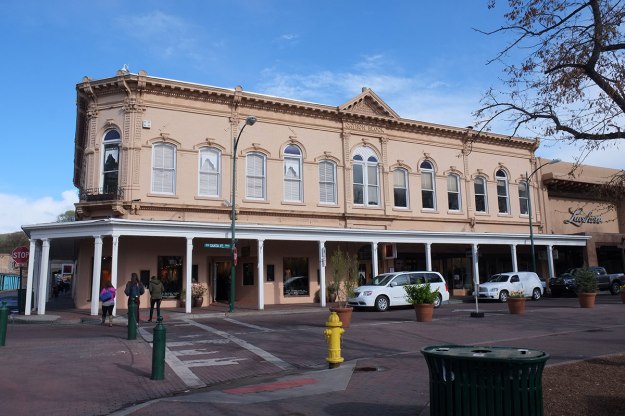
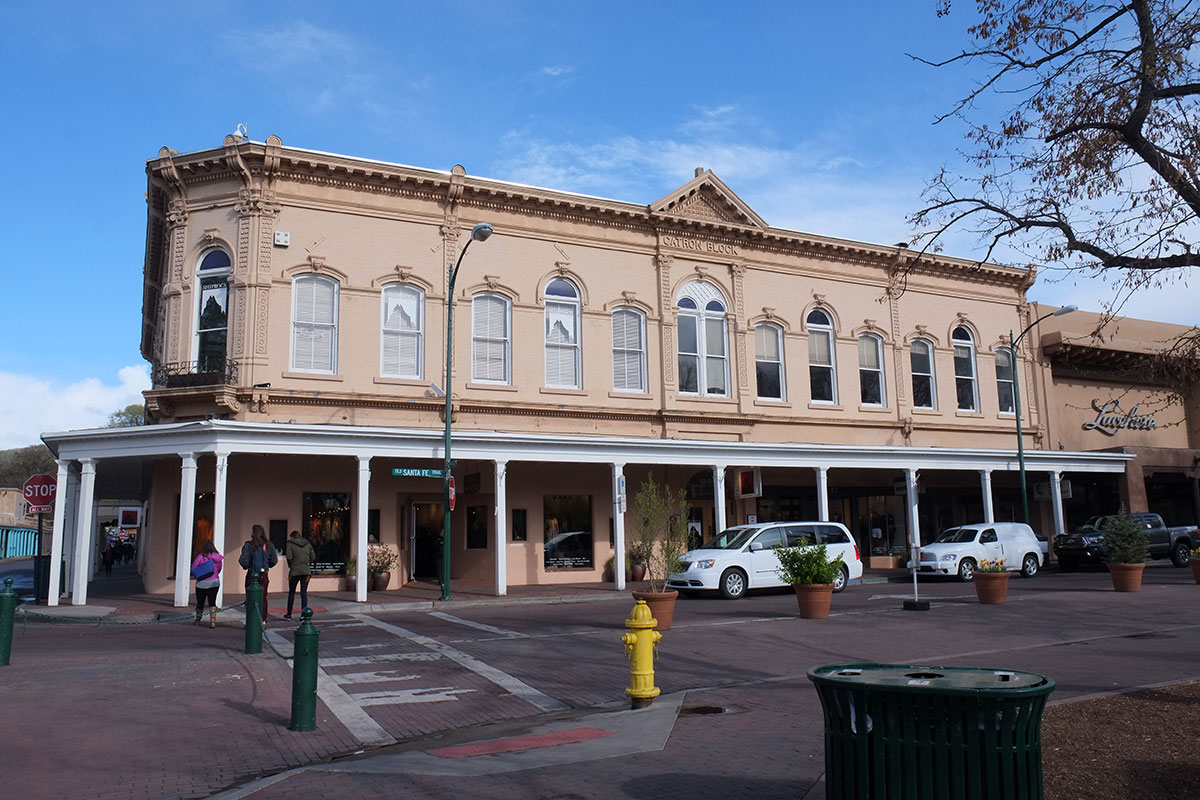
The town is centered on the historic plaza,DSCF9792
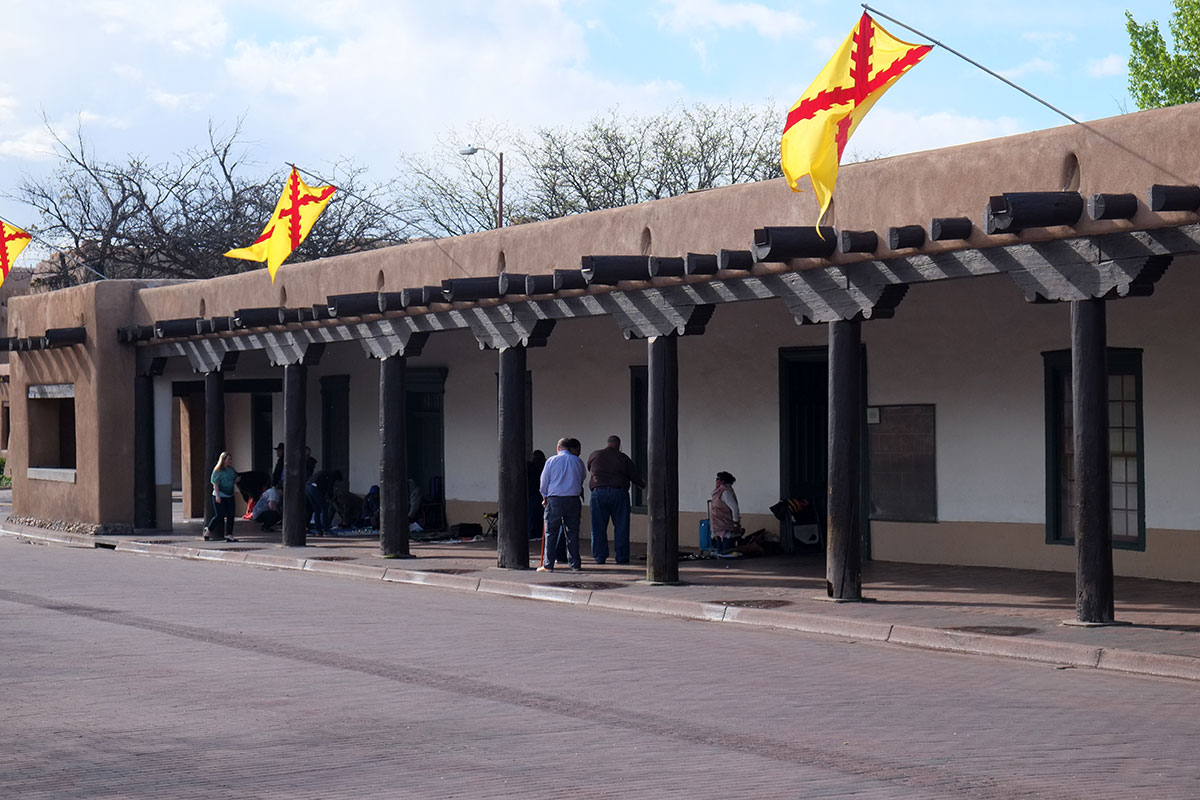
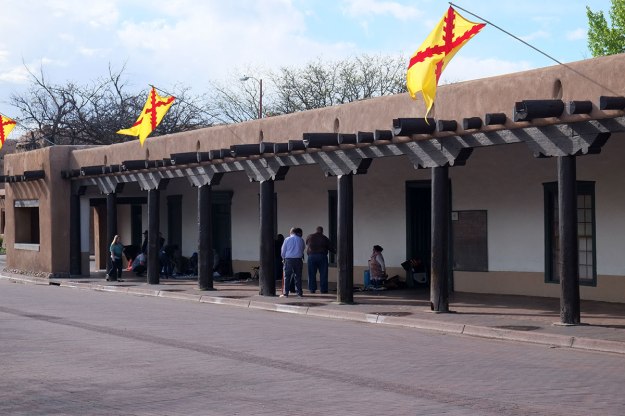
with the restored Governor’s Palace along one side – the historical source of the required look,99. Santa Fe025DSCF9788
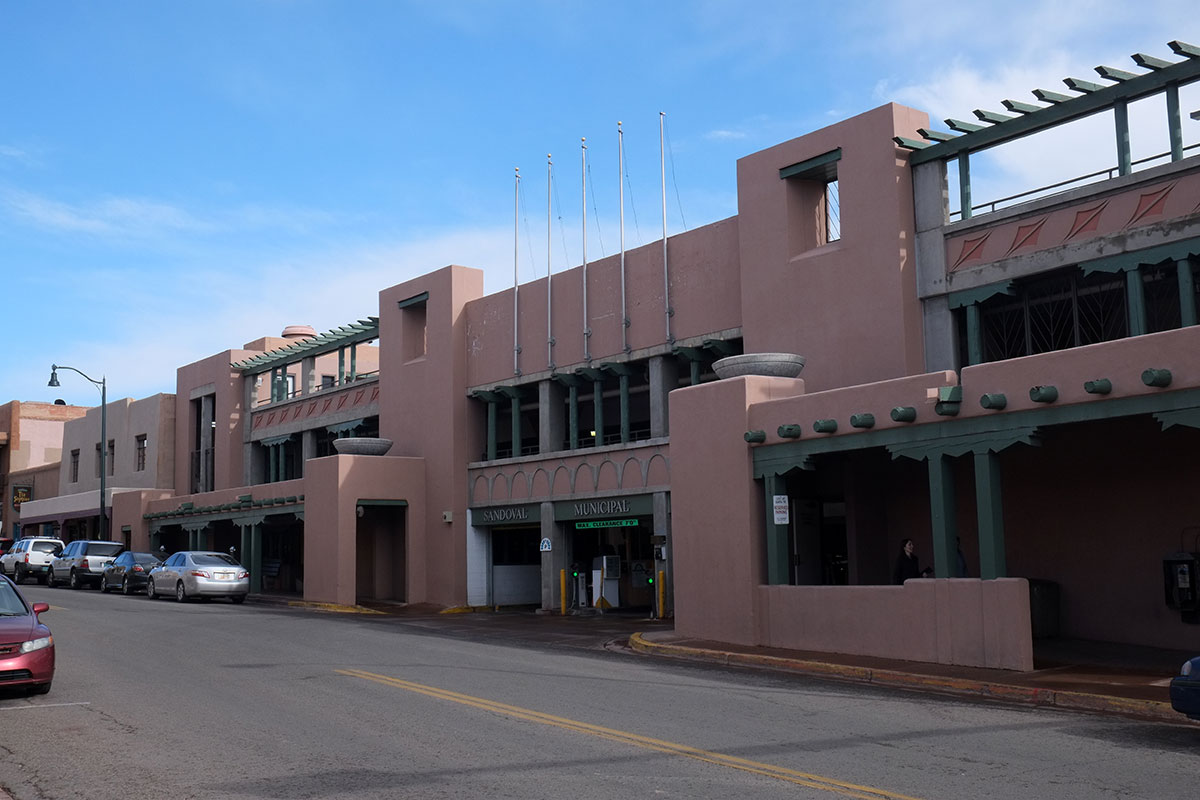
which is even applied to parking garages.DSCF9795
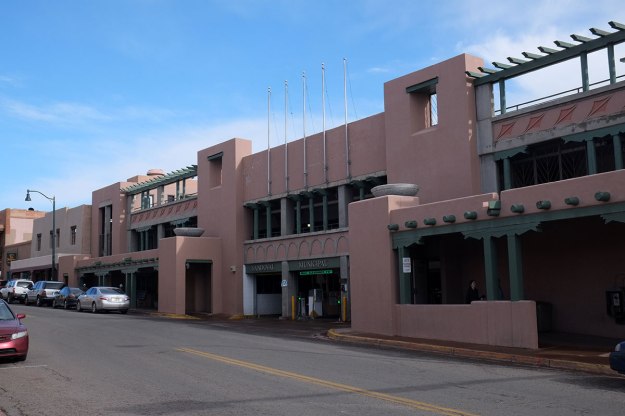
Santa Fe is uniform, but not just stylistically: everything is also neat, clean, well-tended, and expensive-looking. We hadn’t seen a town like this since Seaside, Florida, and it was particularly noticeable after three months back travelling in the West. As a transplanted Northeasterner, it took me a while to get used to the ad hoc quality of the built environment in the West – everything is new, most of it built rapidly during booms, when very little attention was paid to its quality. This was undoubtedly true of much new construction in the East also, but there has been enough time for subsequent waves of redevelopment there, with many of the crappy old buildings being replaced, and a few good old buildings preserved. Most western cities are still composed of predominantly first-growth buildings, (often badly remodeled).

This casual, haphazard quality can be seen in individual buildings, but also in the overall appearance of the landscapes and cityscapes. Driving through the rural South, we were surprised to see that every highway was lined with litter and even larger discarded items, something you just don’t see anymore in other parts of the country. In the Southwest, where nothing rusts or rots, it became extreme – it seemed that most yards were full of discarded cars, appliances and furniture. I’ve always attributed this lack of concern for the built environment to a sort of environmental Manicheanism – Westerners have grown up in this huge, amazing natural landscape (which they either want to exploit or preserve), and the built world is just instrumental – it exists to support human life, but it is otherwise not worthy of attention. After a while travelling in the West you stop noticing the quality of the settlements, just nasty little smudges by the side of the highway.

Santa Fe doesn’t have this quality. The environment may look more causal and “authentic”, without the hyper-manicured fussiness of much recent, edge city development, but it clearly has been considered and tended. This is largely due to the intentional planning and architectural rules put in place over a hundred years ago. Not only did they establish stylistic uniformity, but they show that Santa Fe is a city which has always cared about how it looked. These rules, based in ideas coming from the City Beautiful movement, consciously guided development in Santa Fe throughout its whole subsequent history, while most of the West just sort of happened. The “Santa Fe Style” may be visually apparent, but Santa Fe would still look different from the rest of the West, even if they had picked a different style – the presence of codified intention is what mattered.

More recently, one can see the same approach playing out in Seaside, Florida, where a clear and rigorous set of development rules and standards produced a well-considered and tended environment, notably devoid of all the standard, tacky seaside development seen everywhere else in the Panhandle. These are harmonious, planned environments, where people have thought about the qualities of the whole, and not just a few individual buildings. After 30, or 100 years, the effect of these rules is very clear in the physical, built world, and perhaps less obviously, also in the social and economic worlds: these kinds of planned, controlled environments attract rich people, from the very rich down to the upper-middle professional classes. I’d guess the top 5%.

Rich people live in nice places, and if you’re travelling around the periphery of the country, looking for good architecture and towns, you see a lot of them. There are obviously big cities and metropolitan areas, where the wealthy neighborhoods are part of the overall mix, but then there are these smaller places where rich people have decided to go be rich together – Martha’s Vineyard, parts of Maine, Charleston, Naples, Seaside, Carmel. There is a concentration, a disproportionate amount of affluence in these places, which dominates many aspects of the local culture, including the built environment. Some of these places are old, where well-off people have recognized pre-existing qualities, but a few are relatively new. In Santa Fe, you can see the interaction between the planning context and the stratification of the real estate market playing out: the design regulations produced a harmonious, integrated environment, which eventually attracted rich people. Then the environment evolved to accommodate the lives of the rich.

These places have a few common characteristics: beautiful natural environments, probably the main factor attracting the wealth originally. They usually had a more vernacular existence before the wealth arrived – a fishing village, an artists’ colony, ranches near big mountains. Compared to other locales in the area, everything is very well-tended. As time goes on, and as the culture of the elite becomes more widespread and global, these places are becoming more like each other – the same expensive stores and essentially similar houses are found in all of them. We are used to seeing the placelessness of the American mass market spreading across the landscape, but the same process has happened with the ecological niche market of the wealthy. They may have been attracted by the unique qualities of a certain place, but that has often now been overwhelmed by the universal culture of wealth and consumption. We visited many of these places hoping to see the particular nature of each one, but we found ourselves first having to plow through the sediment deposited by the river of wealth, to find what lay beneath.

Downtown Santa Fe has the same expensive stores (mostly housewares and clothing) found in all these other places, but is overlaid with the local shopping specialty – Southwestern art. The downtown is full of native art galleries, where the work ranges from cheap souvenirs to extraordinary. We had been buying art in the pueblos and reservations from the artists, so we largely ignored all the downtown shopping, but we gladly partook of the other retail focus – good restaurants. Even more than in Albuquerque, there was a variety of food beyond Mexican, and we sated ourselves with excellent Italian meals, anticipating our imminent return to the desert and campground cuisine. I am often bemused by the consumption preferences of the well-off, but that doesn’t mean I don’t share more than a few of them.

The same goes for my appreciation of the built environment. In Santa Fe I missed the messy vitality of Albuquerque, but I appreciated the consistent, understated beauty of the place. It was so uniform that it felt Disneyfied, but as in Disneyworld (or Las Vegas), I had to admit that the formal quality of much of it was quite good. The stylistic vocabulary allows for quite a bit of expression within it. And compared to the pseudo-Craftsman allusions that have overtaken most of the Northwest, I prefer the elements of the Santa Fe Style. There are the predictable romantic excesses, but many good architects have worked here, and the language of simple volumes and flat planes punctuated by crisp openings, highlighted by thoughtful craftsmanship, and based upon a vernacular with actual historical and environmental roots, is vastly superior to our recent national stylistic homogeneity, with its pretentious proliferation of superfluous gables and its cacophony of materials.99. Santa Fe028DSCF9937
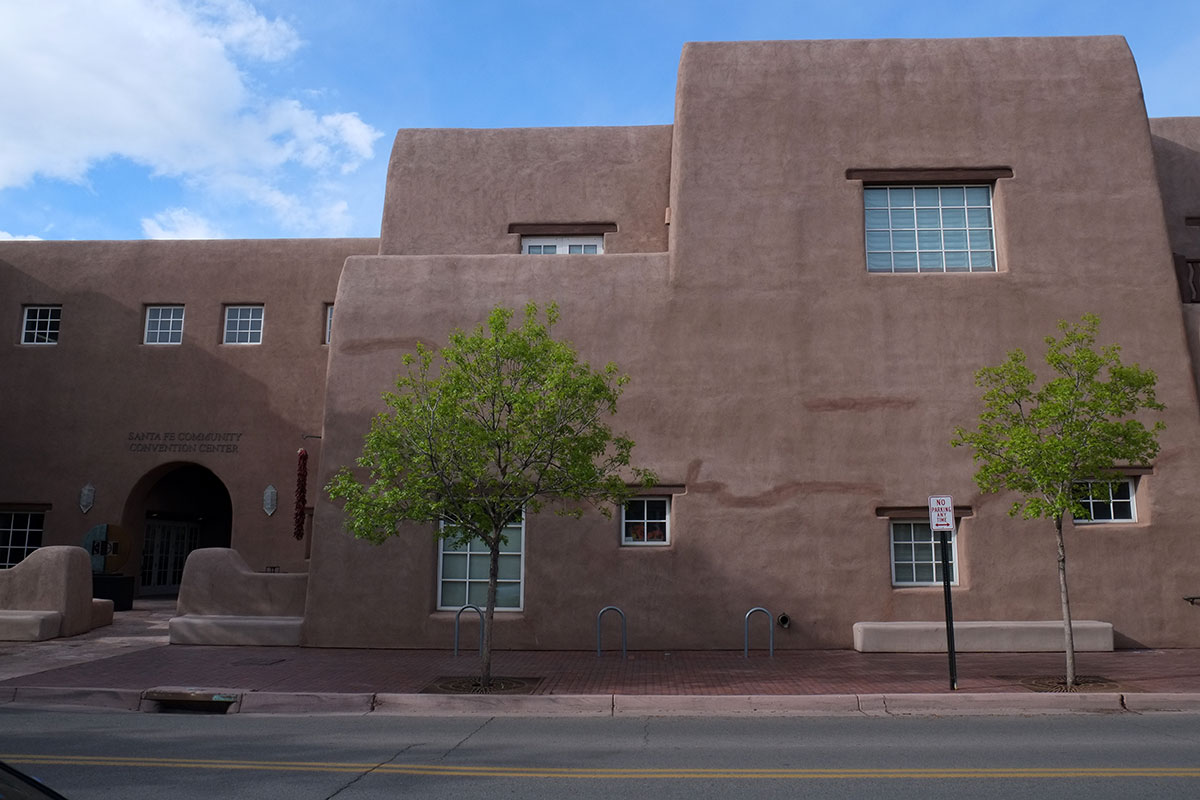
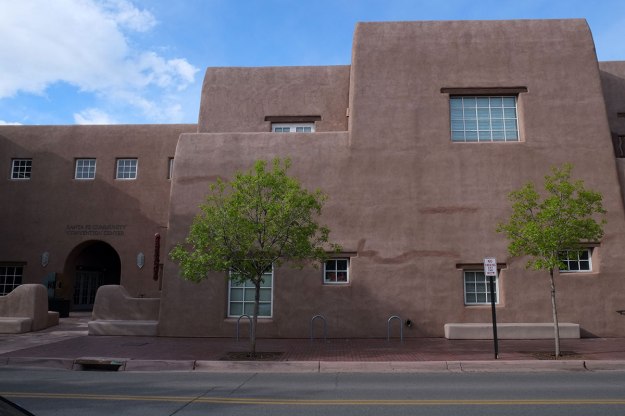
A convention center wants to be mainly big rooms with blank walls; here is a convention center that manages to not blight the downtown:DSCF9800
DSCF9945

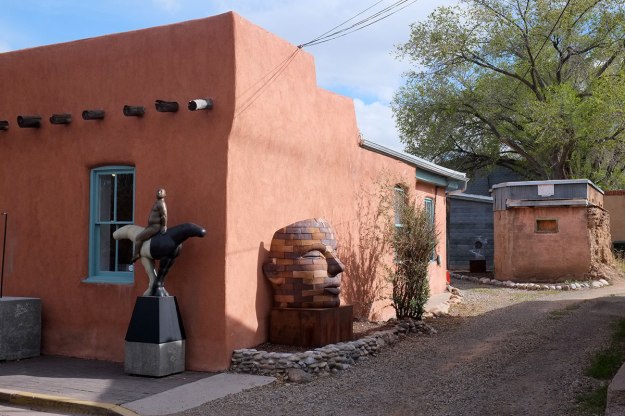
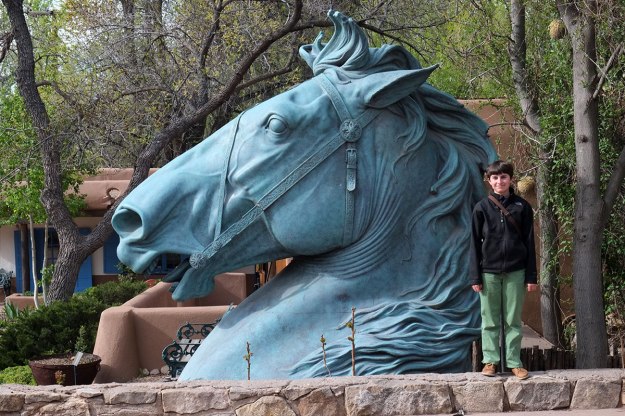
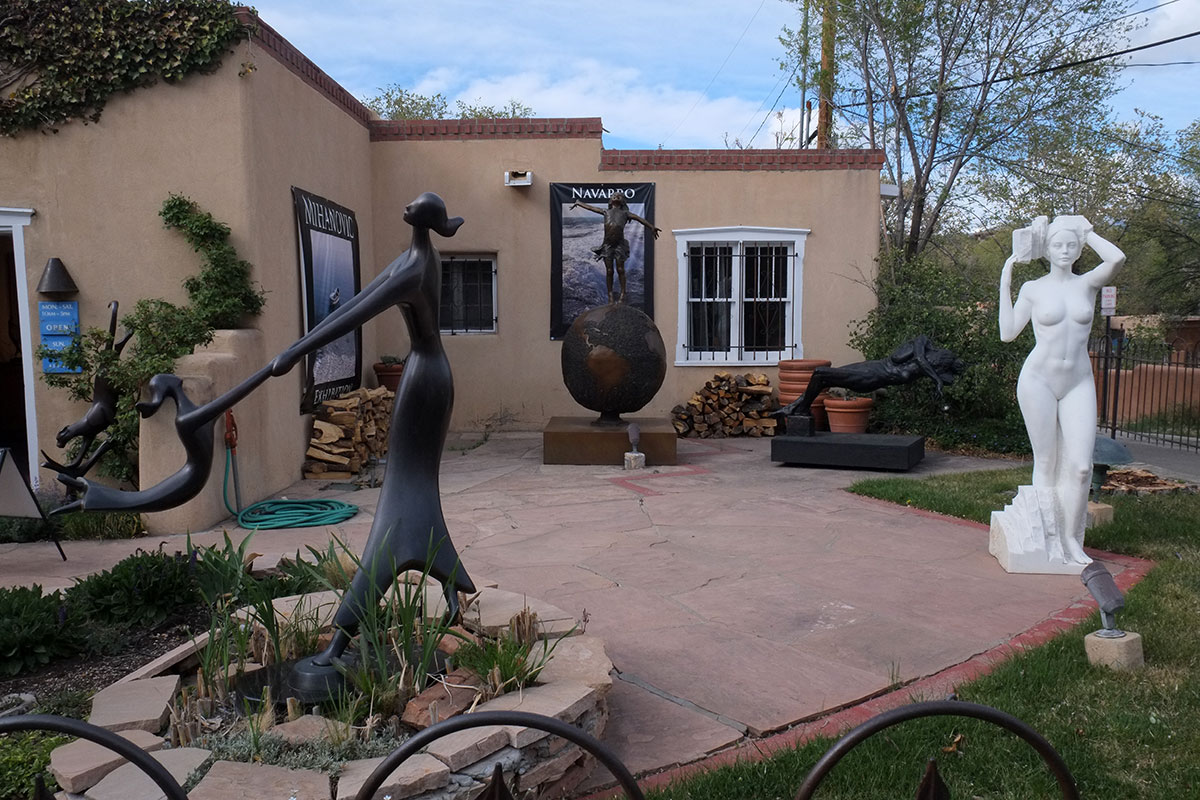
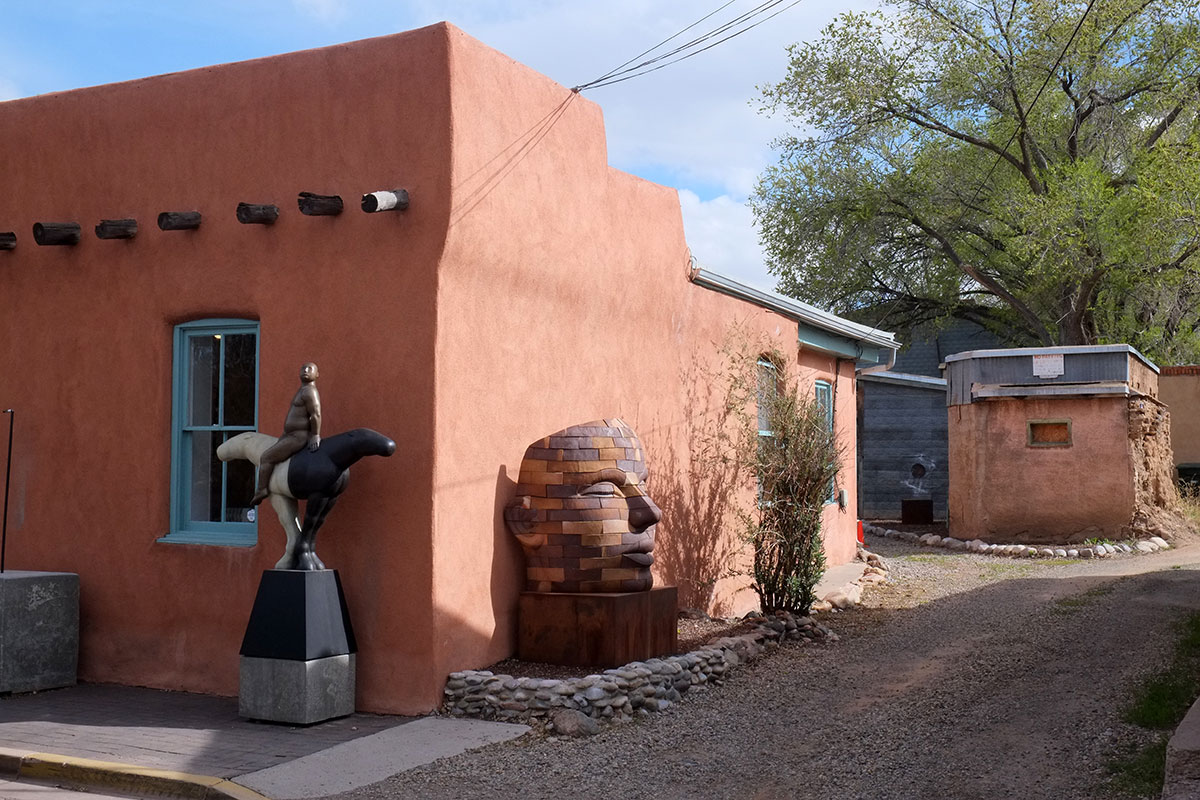
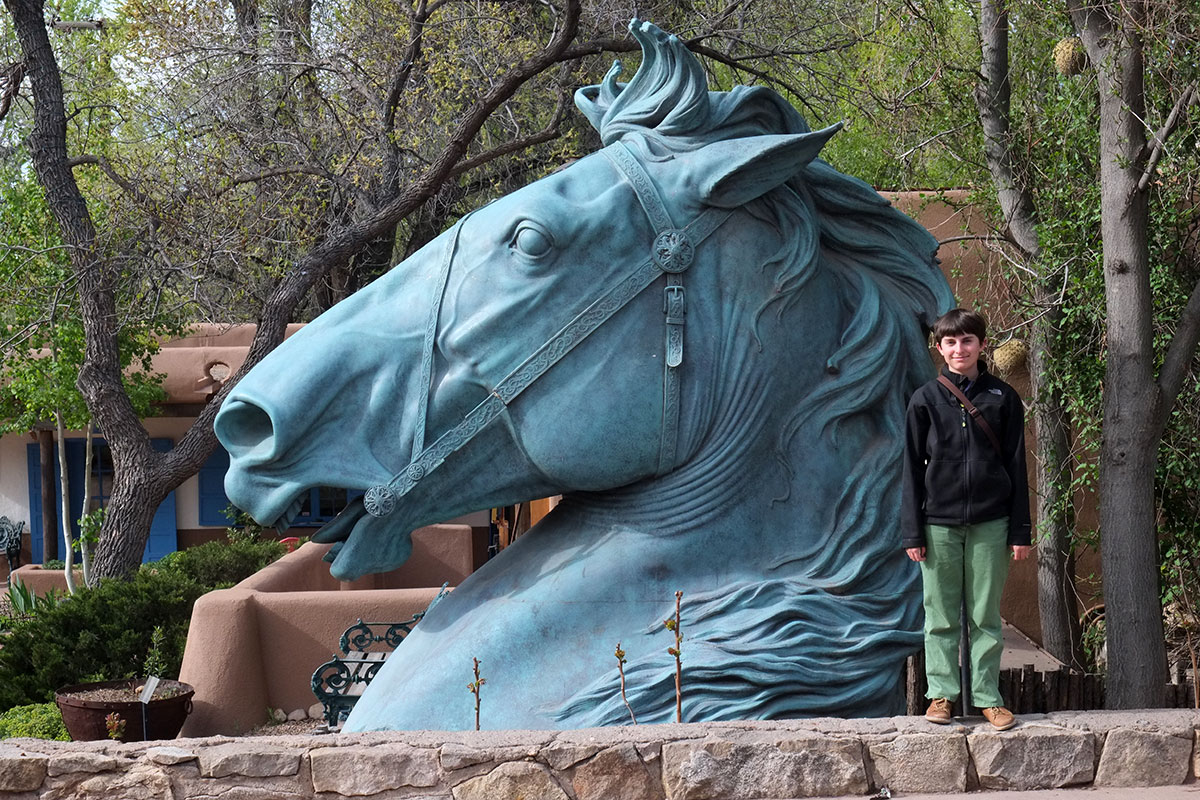
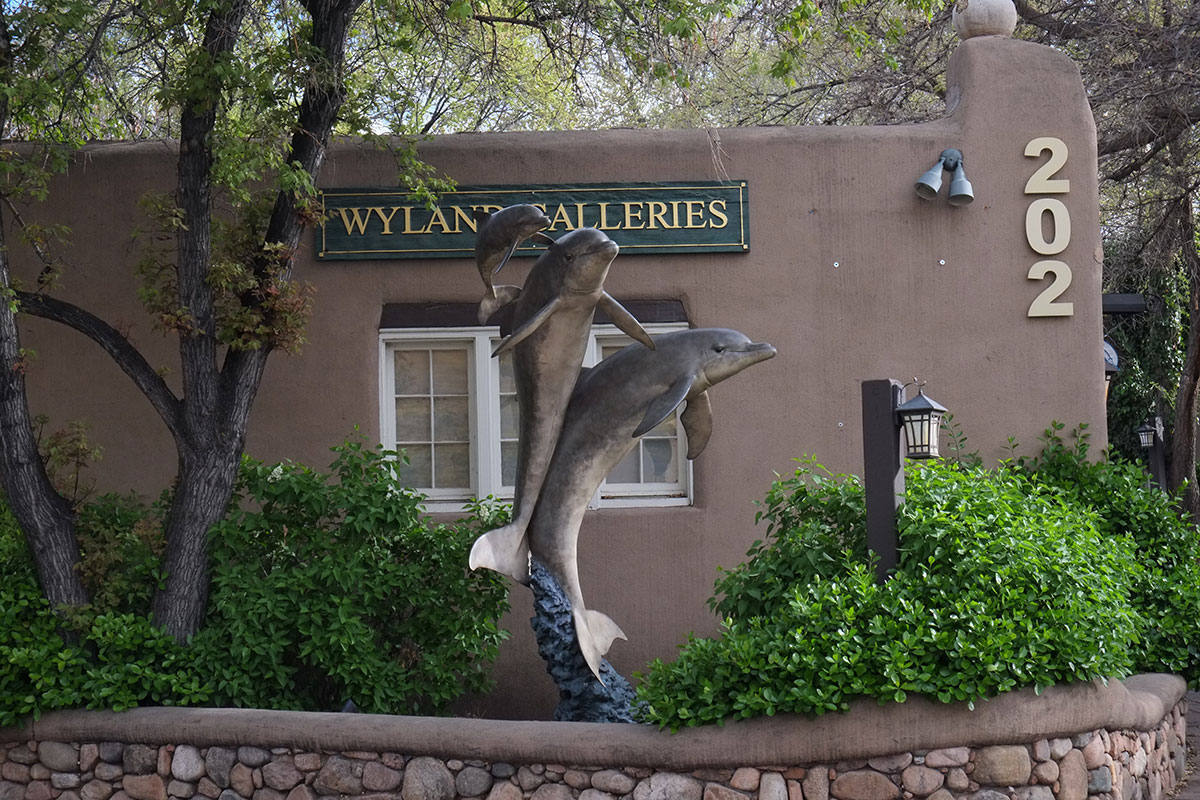
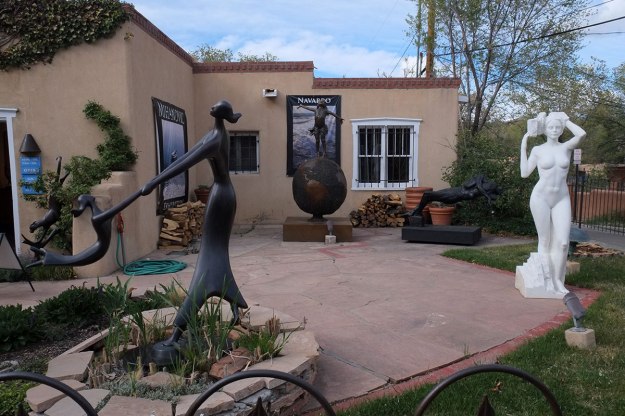
Another notable, and peculiar, wealth effect in Santa Fe is the art market. We were told that it is the second largest in the country, which I found hard to believe, until a stroll up Canyon Road, past the 100 plus galleries, made me reconsider. The work is what you find in all places where rich people need to furnish their homes, ranging from silly through tastefully titillating, solemn and ponderous, to quite good; most of it figural, and all of it expensive.DSCF9921
99. Santa Fe027DSCF9928

DSCF9932

The sheer amount (and size) of it was amazing, and much of it must end up somewhere else; rich people must buy art while they are in Santa Fe, and then ship it to their other houses. I’m hoping this is the case, because the idea of having dolphin sculpture on your terrace in the desert is just too weird.DSCF9955

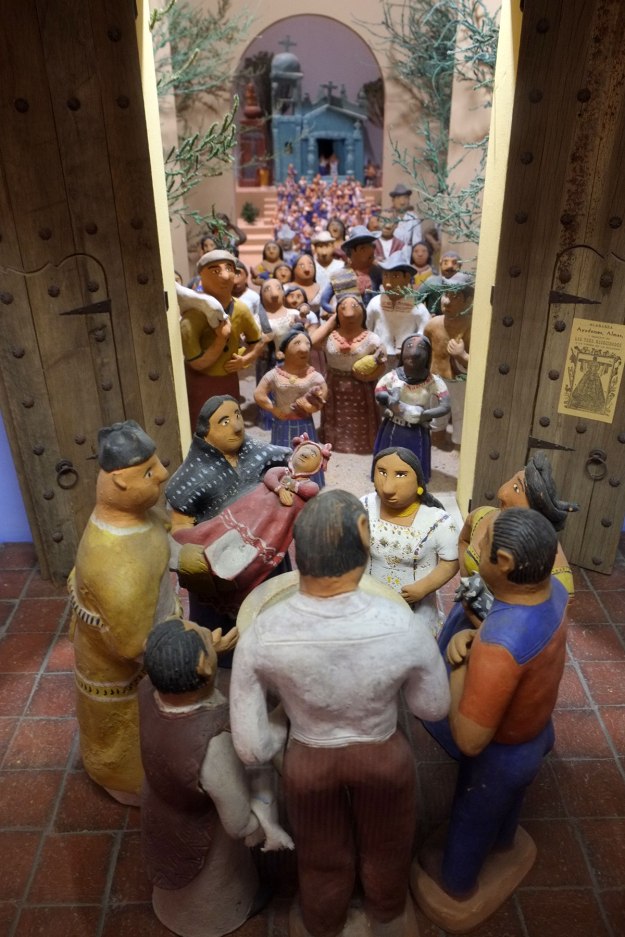
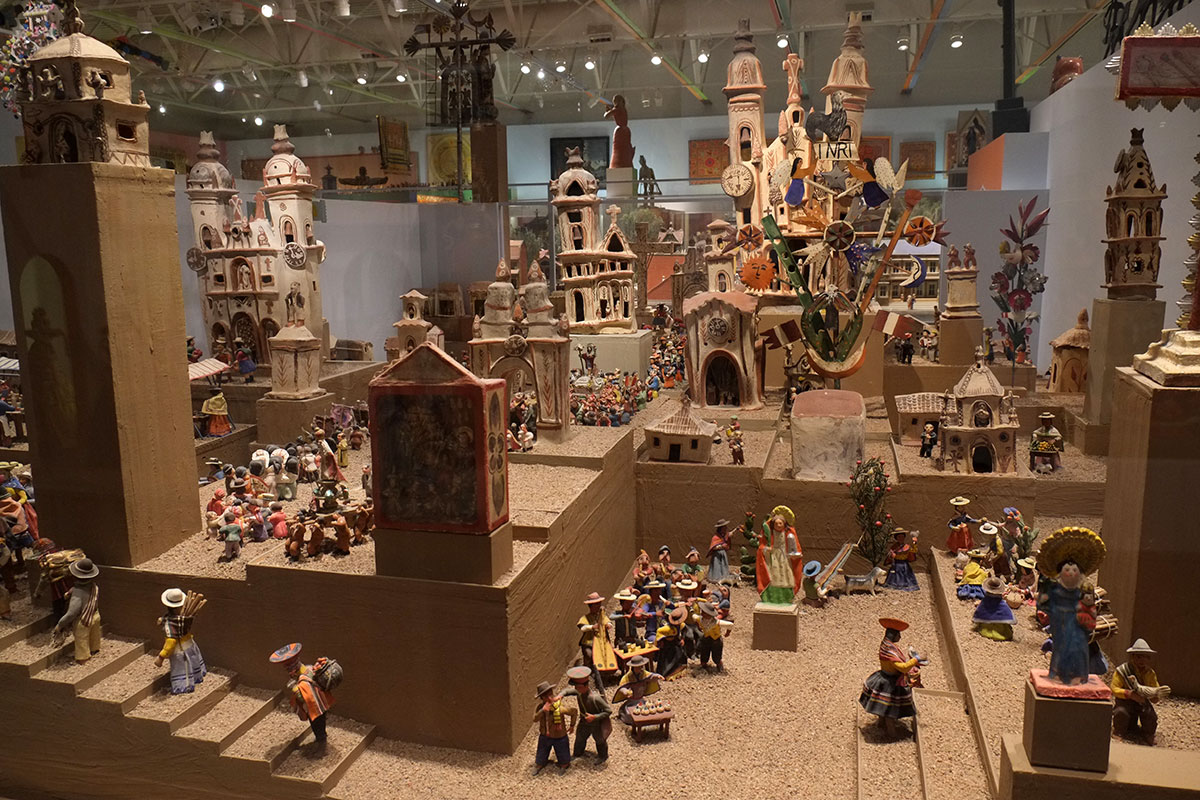
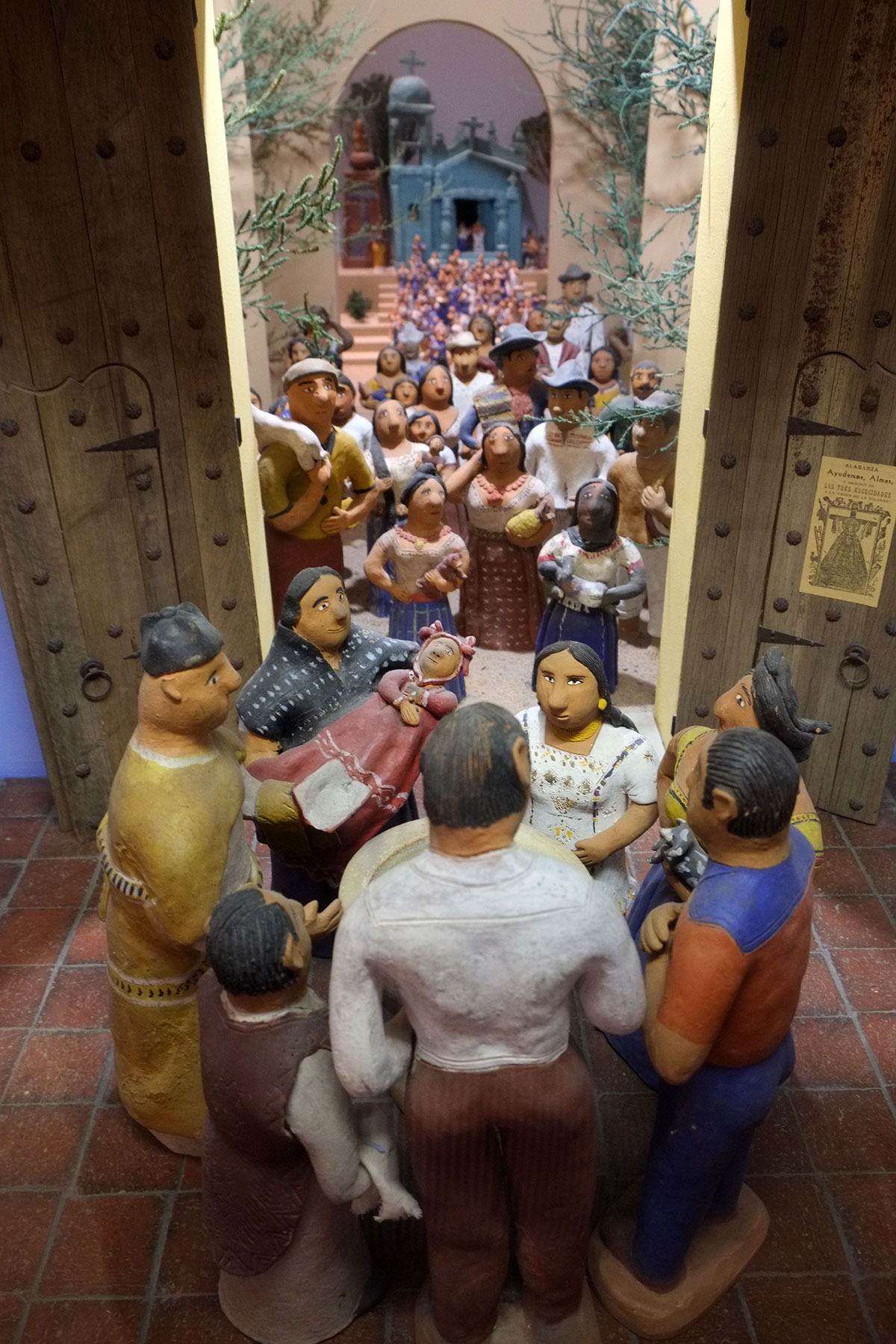
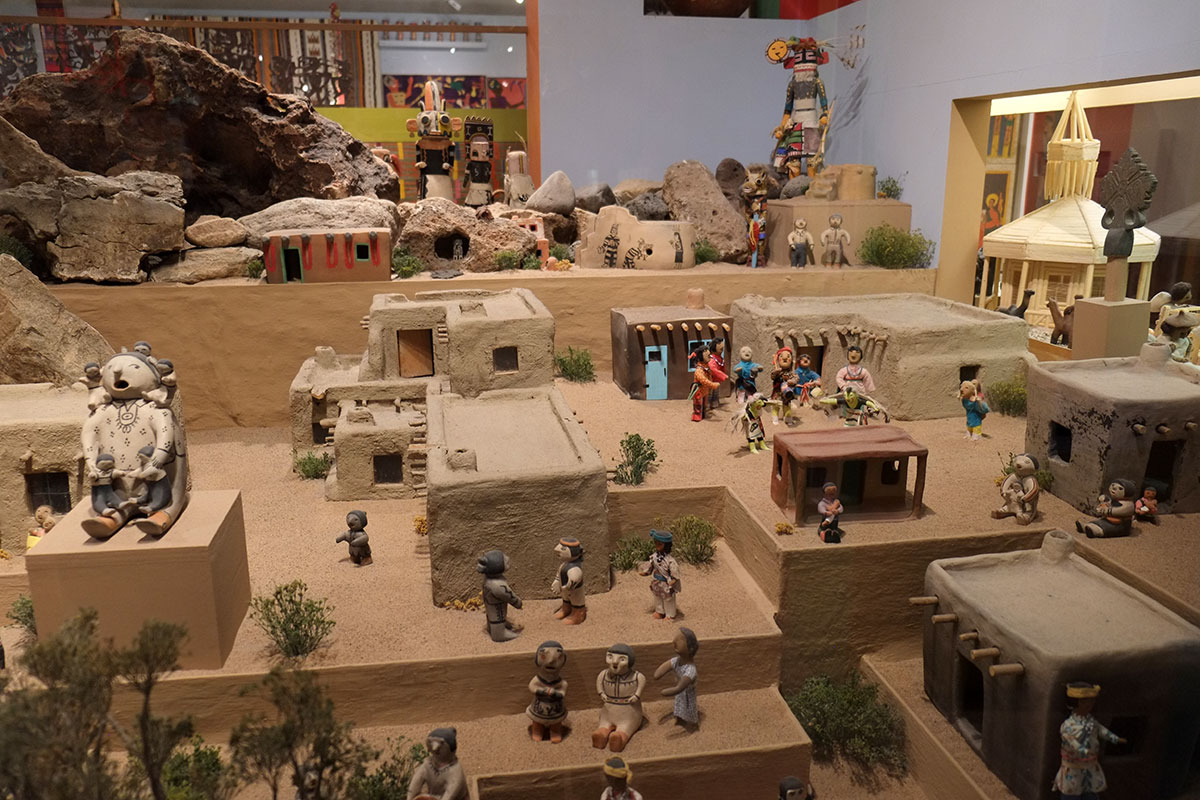
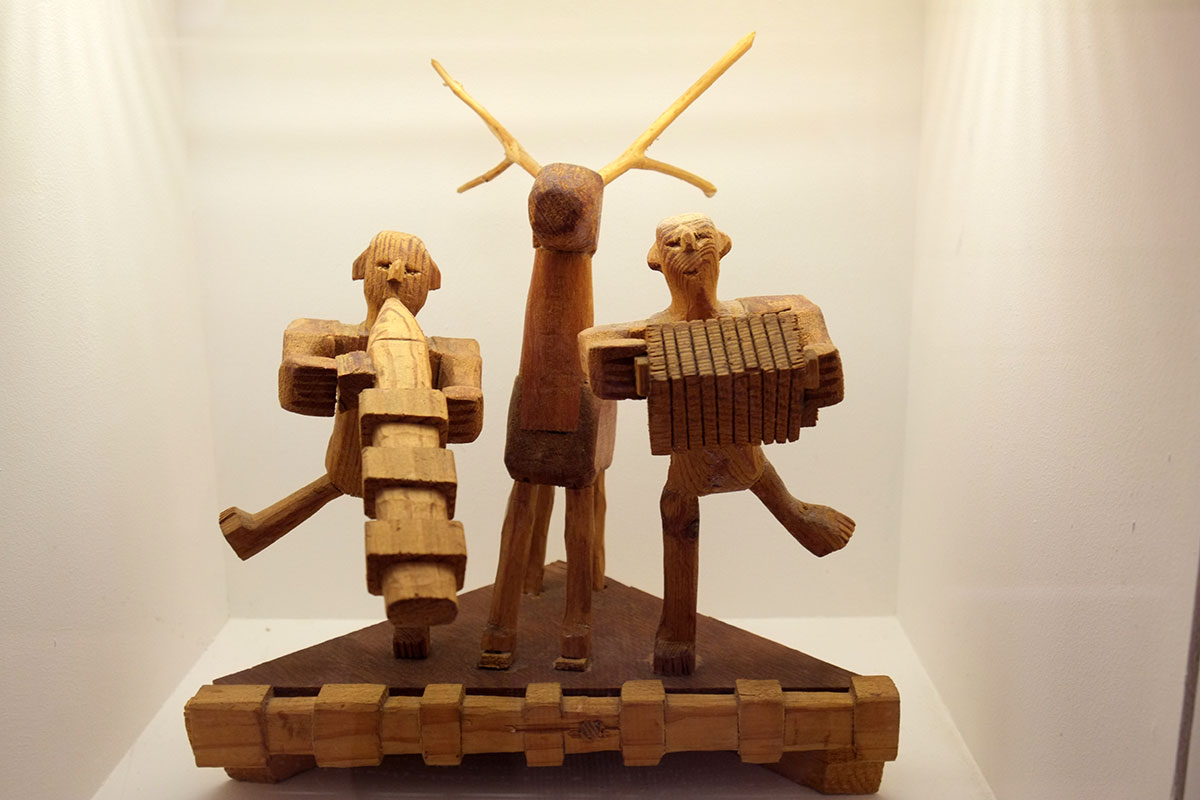
The best part of the art scene are the museums, which are clustered in an area called Museum Hill. There are two museums of Native American art and culture, and the Museum of International Folk Art. This contains the collections of several donors, the centerpiece of which is the wing housing the collection of Alexander Girard. Girard was the great modernist interior designer (who worked with Charles and Ray Eames and other mid-century designers), and who collected extensively on his travels, all around the world. The works are fantastic, and the installation was designed by Girard himself, in a manner which emphasizes how a visual designer would be inspired by, or make use of the imagery and ideas he’s collected. It’s not an overly scholarly installation – pieces are sometimes grouped by country, or time period – but the overwhelming principle seems to be what fits together visually, and how larger installations be assembled from many parts, often creating a narrative tableau.99. Santa Fe030DSCF9726
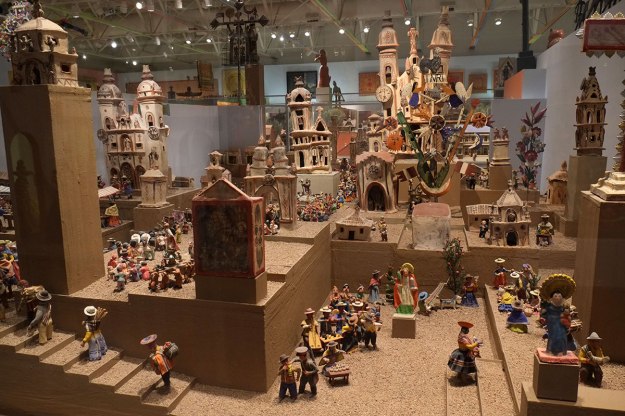
DSCF9724

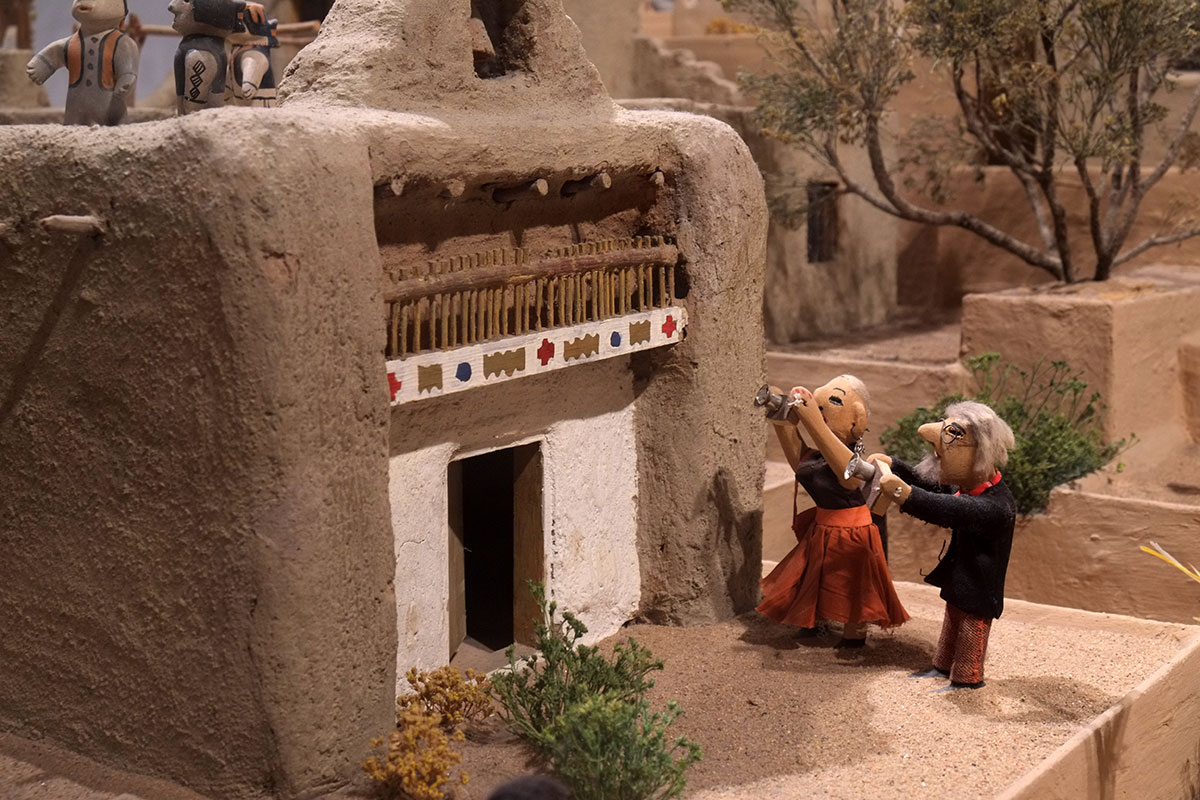
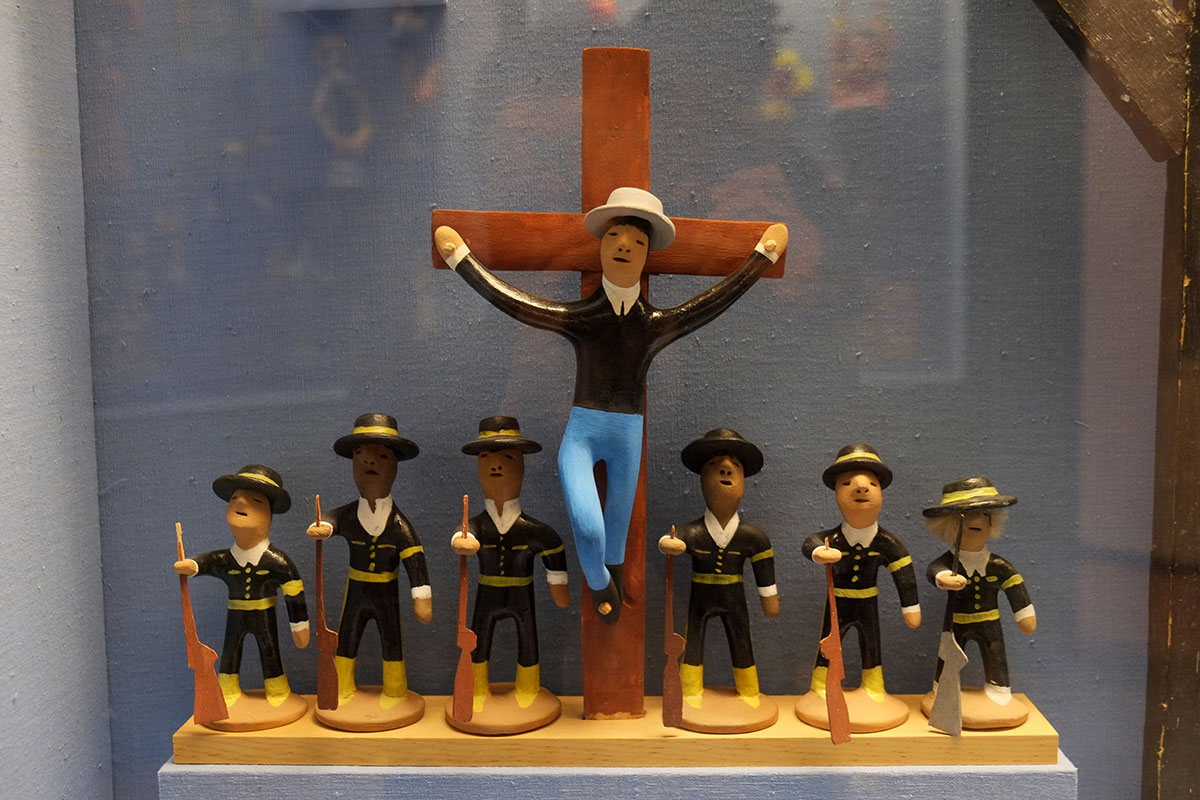
His sense of humor is evident, as where he constructs a pueblo with figures from different cultures,DSCF9729
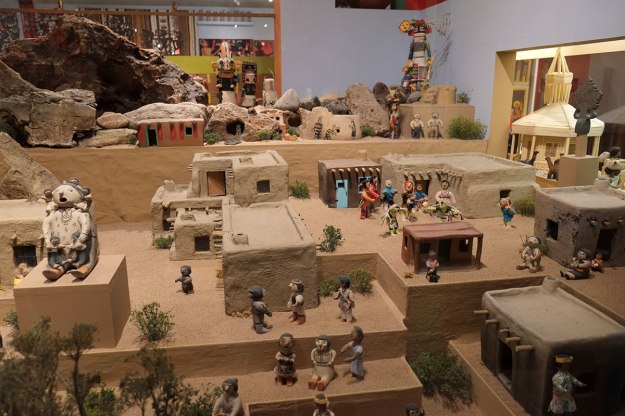
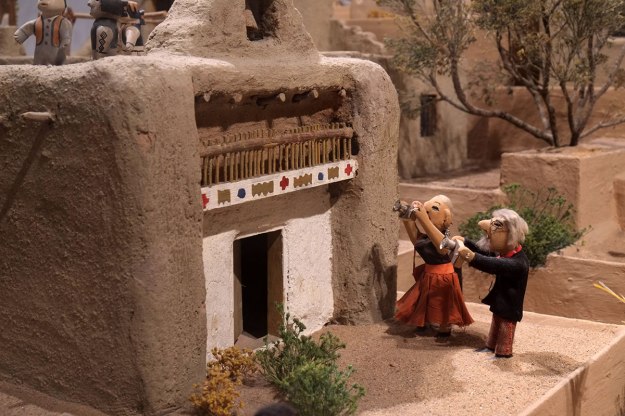
Including the serious cultural tourists.DSCF9733
There are no labels on the walls – you pick up a spiral-bound booklet when you enter, and you can look up the origin, date and name of the numbered pieces (if known). In general I like this approach – as at the Judd museum in Marfa, it puts the emphasis on looking at the art, and not on reading about the art. However, there were a few pieces which could probably use a bit more explication.DSCF9761
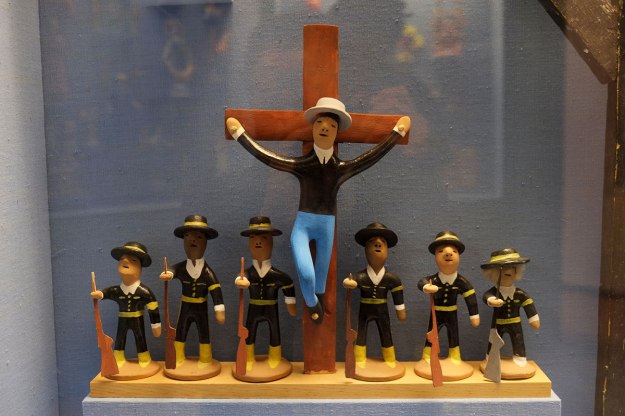
But then there are the pieces you just really like, and don’t care that much when or where they are from. Like much great art, there is a direct and immediate appeal through the image itself, making interpretation or analysis unnecessary.DSCF9765
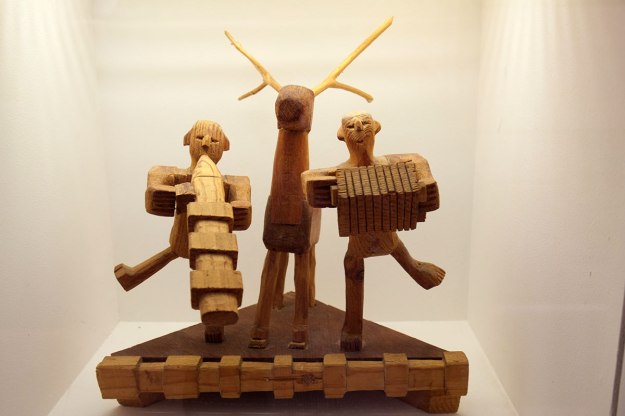
The contemporary art world appears at SITE Santa Fe, an arts center in the railyard district. It is a big warehouse building, seemingly designed by a succession of architects, and it has a history of working with well-known architects and designers to produce its installations. There were several installations in place when we visited, of which we understood about half, the other half being of the type where you’d have to read a long discursion on the history of the artist’s work and how this particular piece fit into that oeuvre and the current art scene in order to get it.

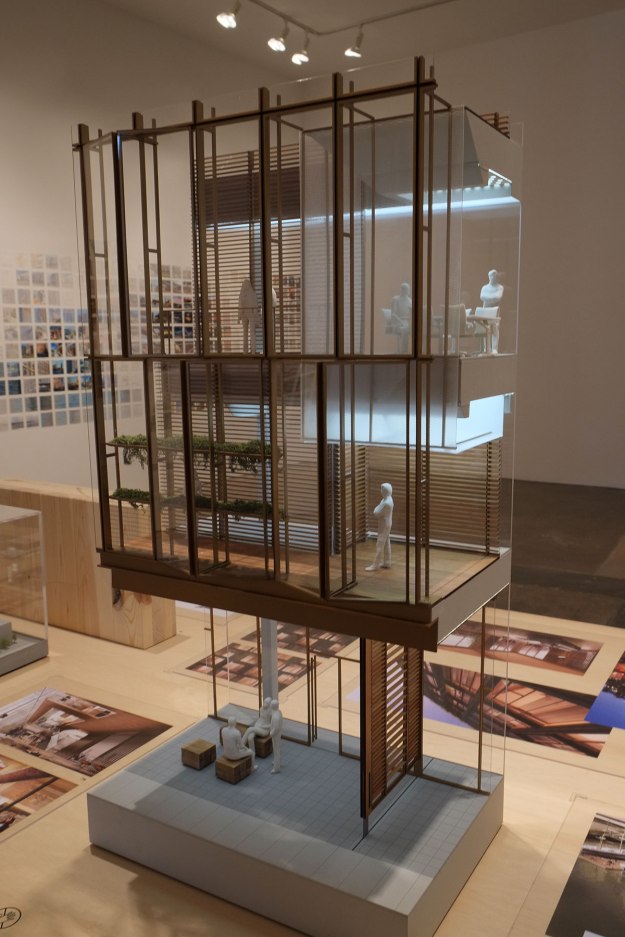
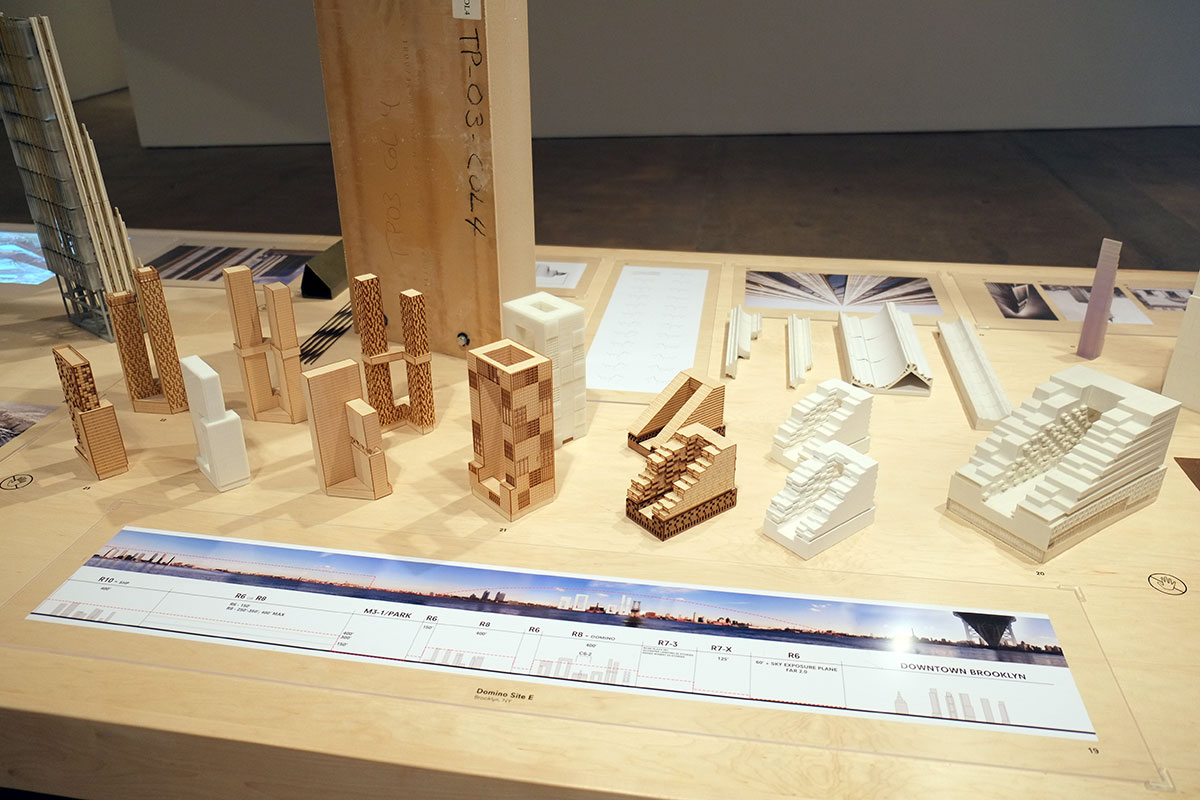
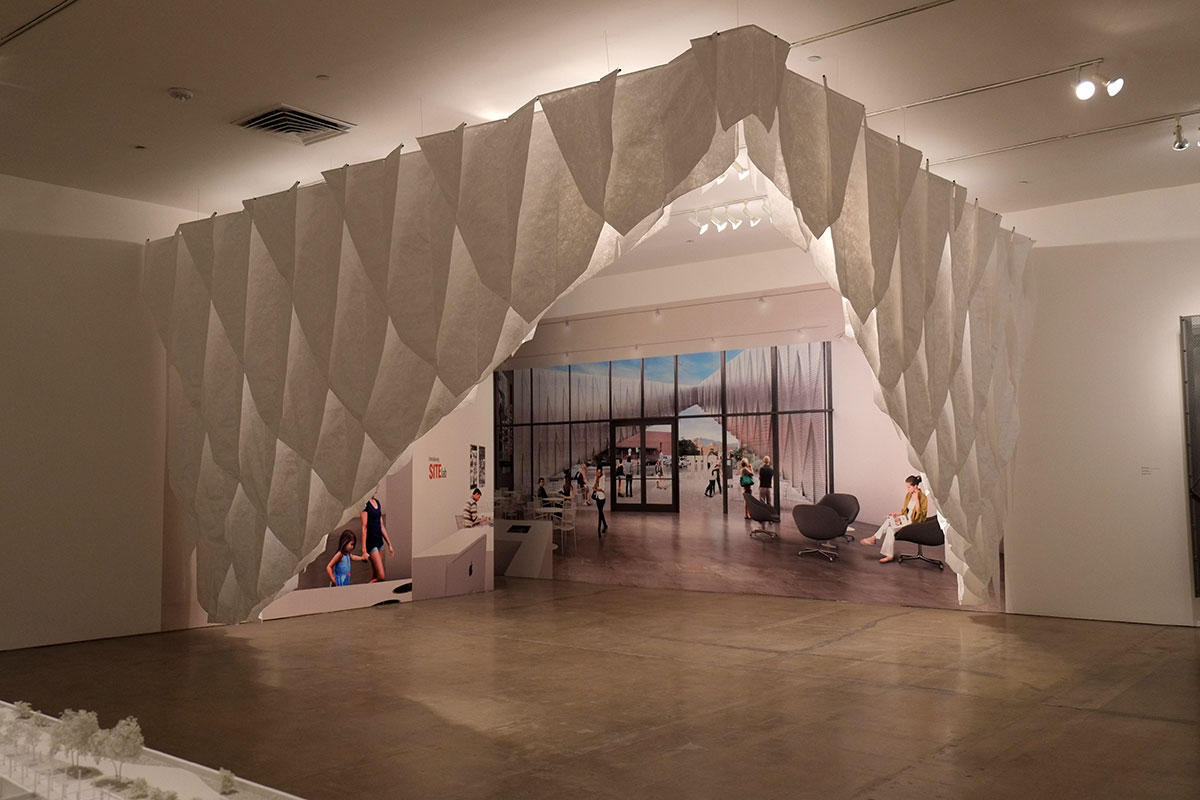
Much of the gallery was taken up with an exhibit about the New York-based design/build firm SHoP architects (which caused Greta to audibly moan when she realized she’d been sucked into architecture-world again.) The focus was on the materials, detailing and tectonics of their work (rather than completed buildings) and the ideas that have developed through their work could be traced in the parti models,DSCF9851
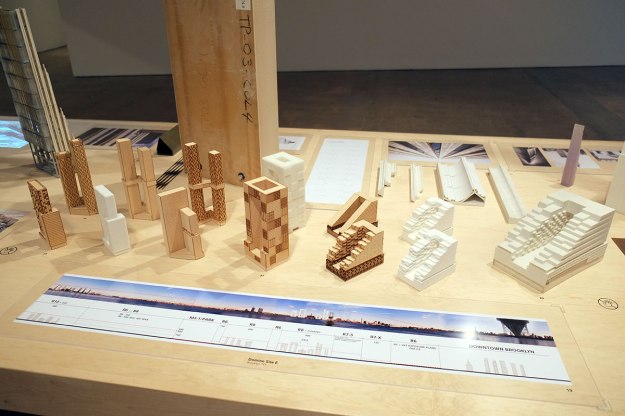
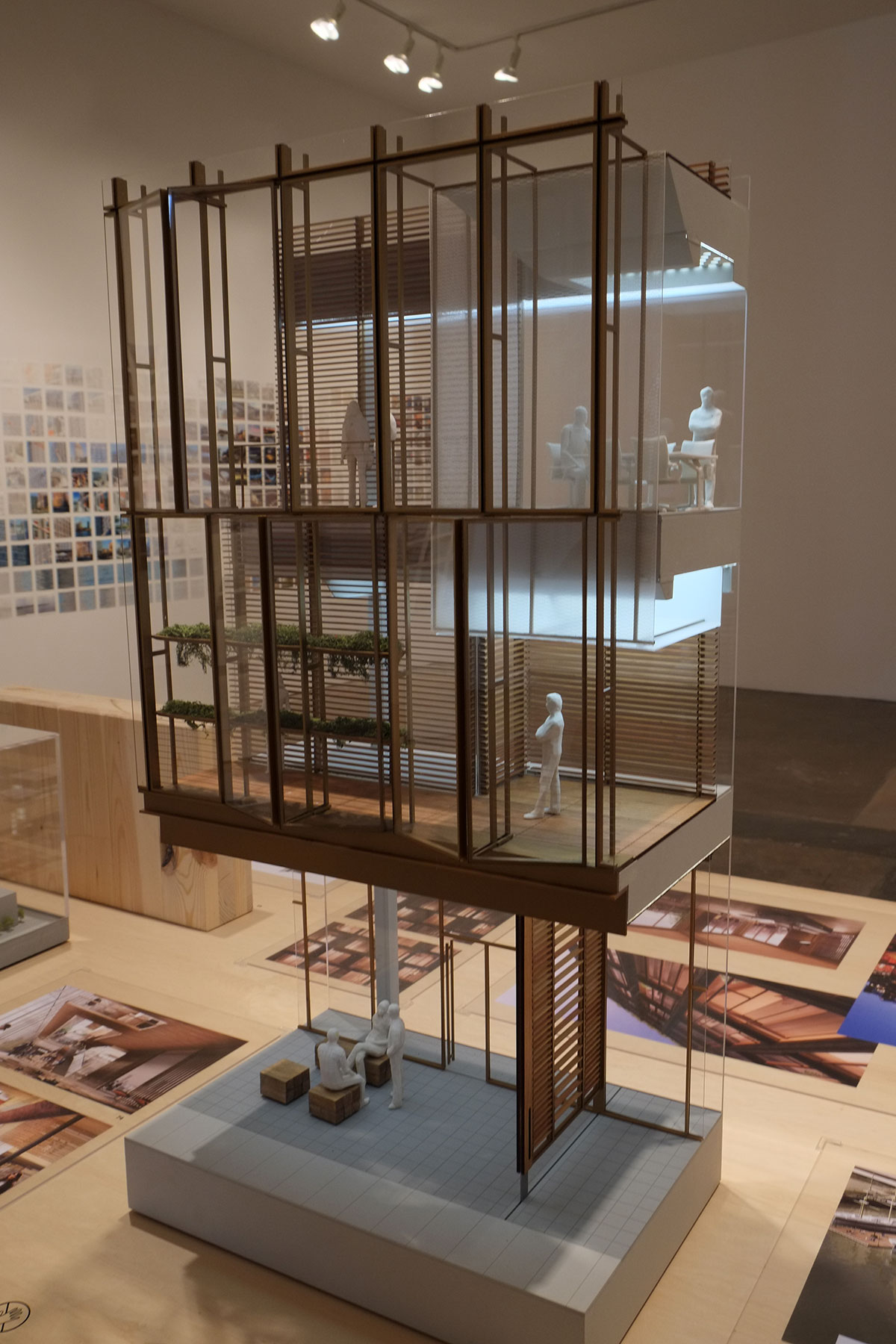
detail models,DSCF9866and full-size elements exhibited. SHOP has just designed an extensive remodel /addition for SITE, and the new entry piece was mocked-up full-scale in the gallery.  DSCF9847

The design looks very good – keeping large, flexible gallery spaces, while inserting some special-use rooms, a courtyard and a stair to a rooftop terrace.  Strong, abstract spatial organization, and much attention paid to materials and detailing.

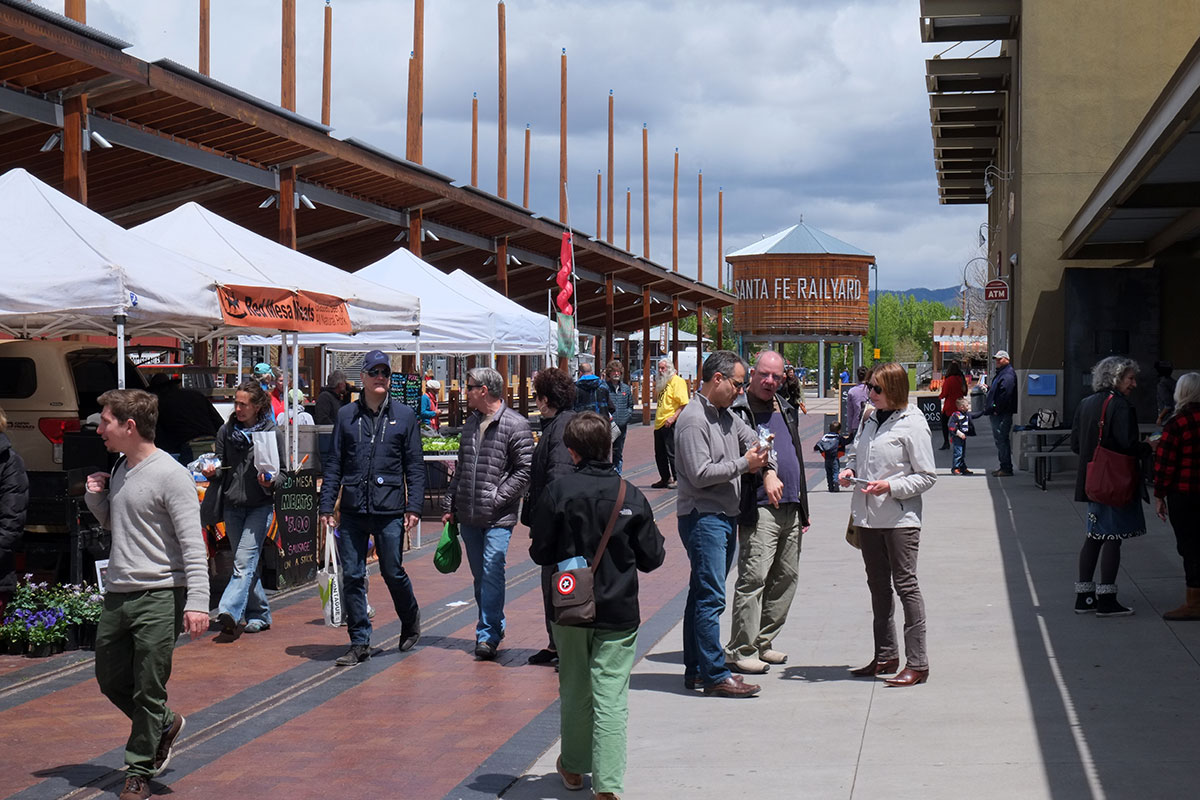
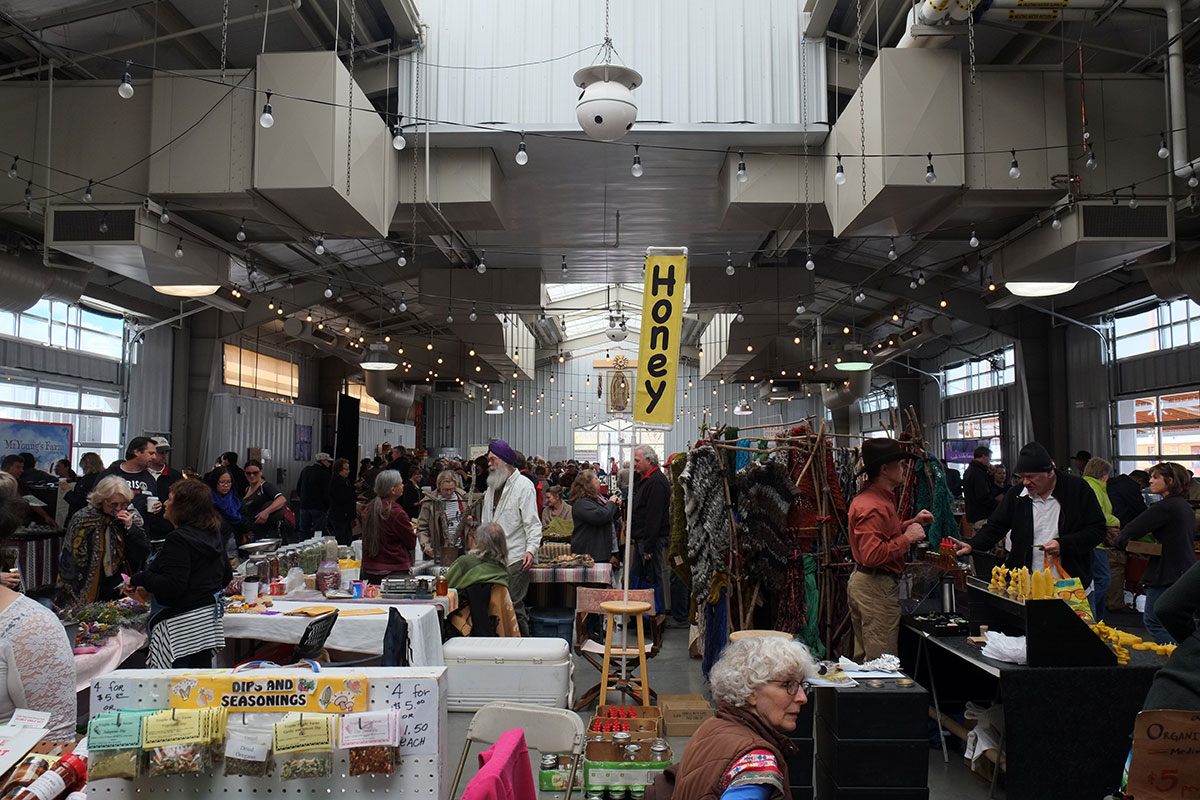
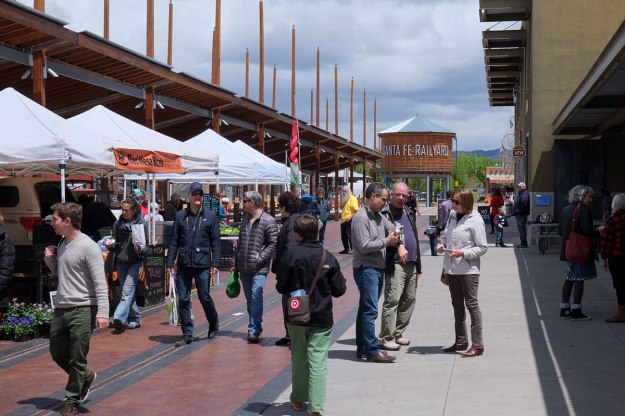
The railyard district is the one place in the center of Santa Fe where modern and industrial buildings are allowed, reasonably reflecting the historic character of that part of town and providing some relief from Adobe World. We went across the street from SITE to the Santa Fe Farmers market, and immediately felt that we’d stumbled into another one of those wormholes in the space/time continuum that we’ve been finding occasionally on the trip: we were clearly back in Eugene. It had the same range of organic foodstuffs, funky handcrafts (but with more turquoise), aging hippies (though better dressed), and new-age silliness that we were used to.DSCF9873
We did dig through all the turquoise and silver jewelry at the market to find something we knew Linda would like, a bowl formed from a mild steel sheet that had TIG-welded surface patterning applied and had then been formed in a hydraulic ram, by an artist who grew up on a farm in North Carolina and had then spent 20 years in Brooklyn. She said Bernie Sanders’s daughter is her best friend, and she’s been selling her bracelets online to raise campaign funds, at Bangles for Bernie.DSCF9825
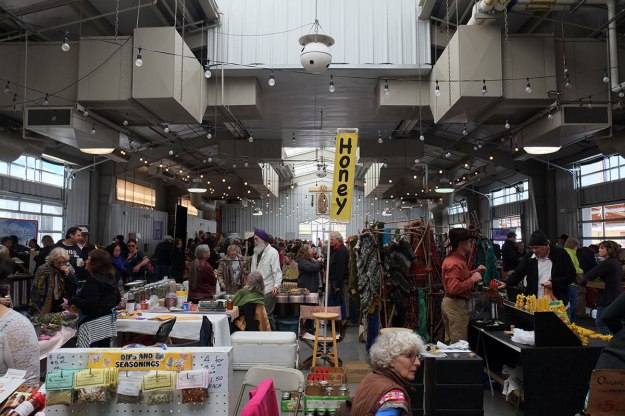
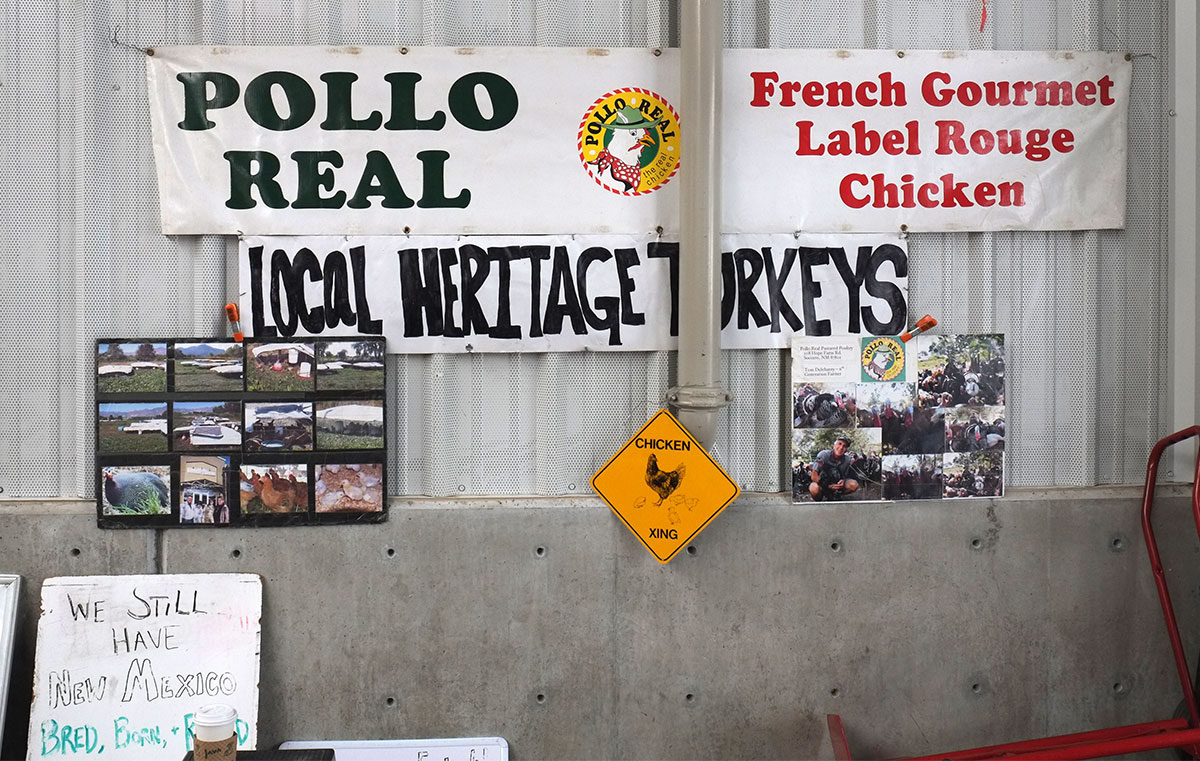
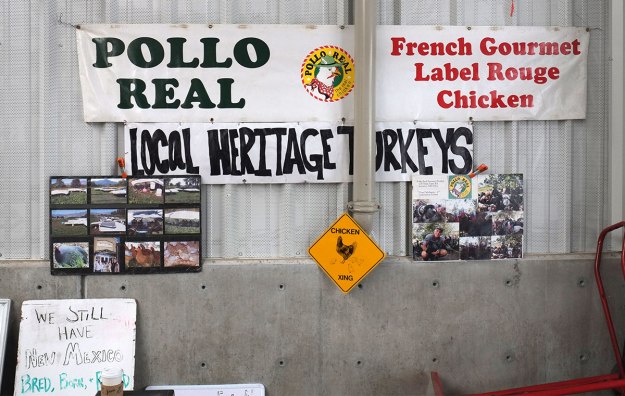
We’d never seen local heritage turkeys before in Eugene, but we probably could have. Only eating a green chile croissant grounded us back in Santa Fe.DSCF9829
Continuing with the cosmic dislocation /art scene theme, we ventured to a new art space we’d heard about, the House of Eternal Return, a 20,000 square foot installation in a former bowling alley, produced by the local art collective, Meow Wolf, and funded by George RR Martin. Greta loved the whole afternoon we spent there and has blogged about it here.99. Santa Fe029DSCF9906
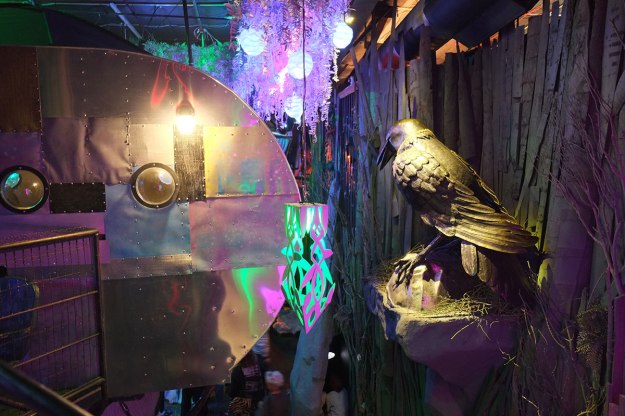
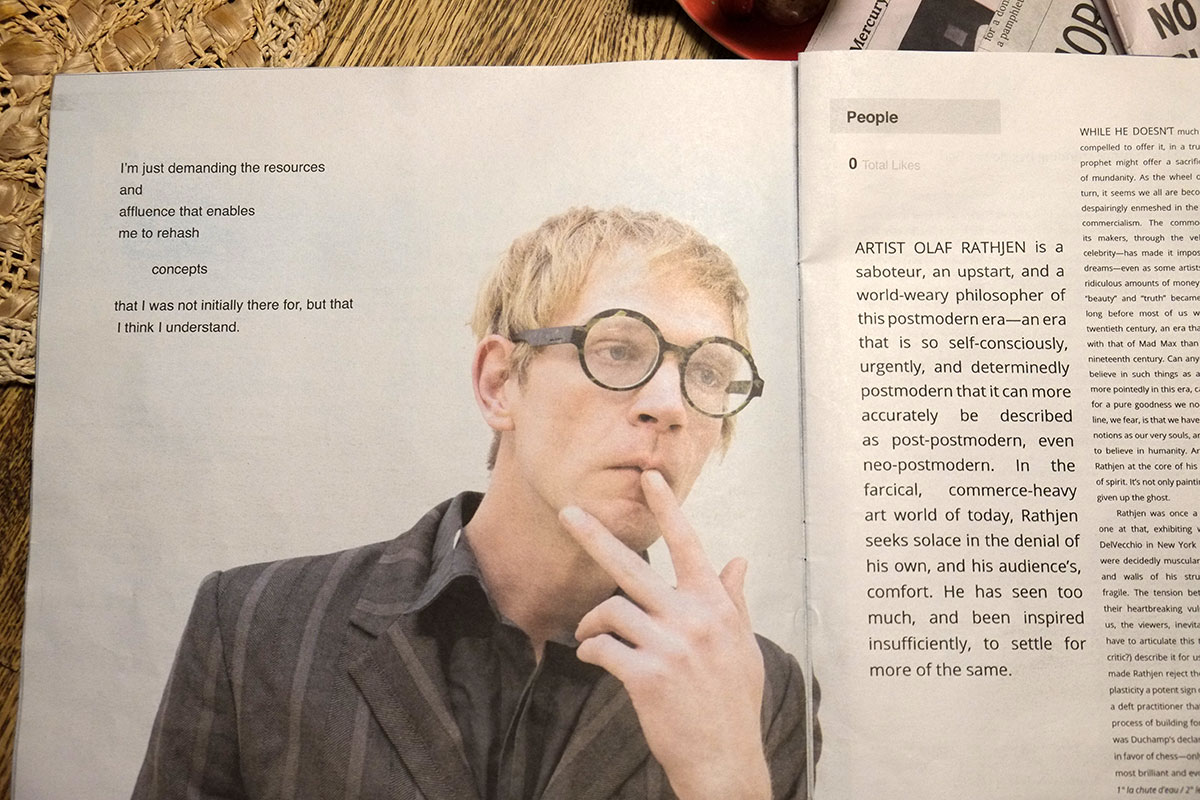
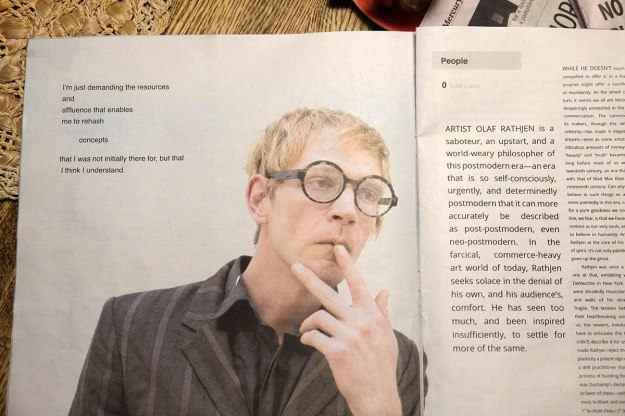
The project has a loose conceptual framework, upon which individual rooms and installations (probably by individual artists) have been hung. I enjoyed some of the installations, but found others to be of the overly obscure and self-referential variety, full of imagery that could only be meaningful to the artist. But I particularly liked the self-aware artist’s sensibility that showed through from time to time, as in this parody of a local alternative newspaper / arts section, where the interviewed artist states “I’m just demanding the resources and affluence that enables me to rehash concepts that I was not originally there for, but that I think I understand.”DSCF9903
I found it intermittently cool, but had to retreat outdoors a few times, suffering from dizziness probably caused by a combination of outgassing new materials, and recovered memories of too many Saturday afternoons spent at six-year-olds’ birthday parties in bowling alleys and paintball emporia.

For a small city, Santa Fe has an incredibly wide range of culture (high and middle-brow), places, activities, populations, and contradictions. It can feel overwhelmed by wealth from elsewhere, but at least here (compared to every other small wealthy place we’ve visited), that wealth has spawned some remarkably serious institutions, and not just an orgy of private consumption. There are art venues for the commercially successful, for the critically acclaimed, and for those who aspire to one or the other.  We didn’t have time to visit all the museums, and we were in the wrong season to attend the noted opera, so we’ve got a few good reasons to return someday.

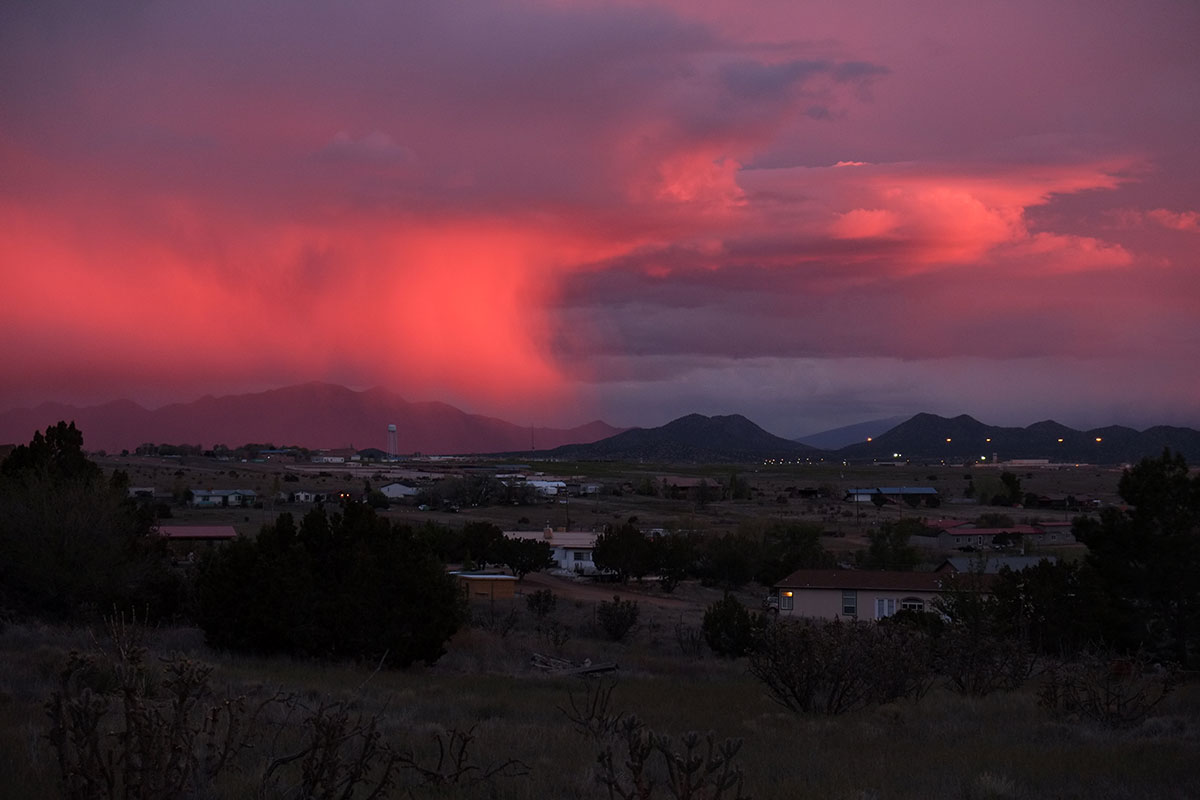
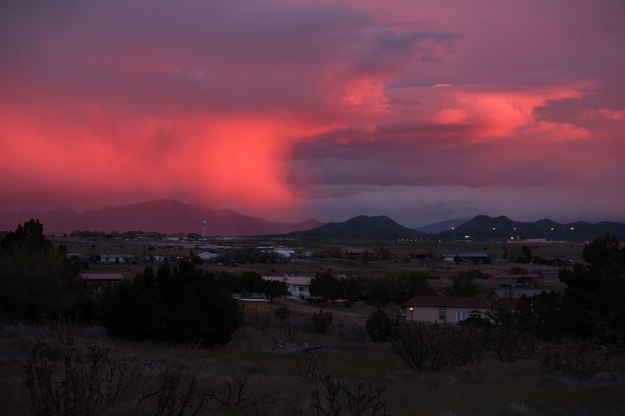
We ended up with a feeling similar to what we felt in Marfa – part of the attraction to the place was the official institutions, sights, art, culture, etc. But part of the attraction was just the weirdness and gestalt of the place – the genius loci, to be pretentious. I’m not sure how that came about in Santa Fe – the landscape is literally awesome and sometimes terrifying (as in this view southwards from our campground, of a distant thunderstorm that Greta was convinced was the Glow Cloud from Welcome to Nightvale),99. Santa Fe032DSCF9814
but much of the rest of the environment is not mysterious at all, or unusual in its origins:  the city was rationally planned and controlled throughout its development – it is not the product of deep ancestral roots, centuries of organic growth, and cultural blending. It attracted an economic and cultural elite, whose way of life has pretty much overwhelmed the local culture everywhere else it has touched down. It has many ridiculous aspects, such as pseudo-historical architecture and acres of pretentious art. It has a dense core, but everyone lives out in car-based suburban sprawl of varying degrees of interest. Somehow out of all that not-very-special background, a unique place has emerged, and it’s a lot more interesting, engaging, and worthwhile than I would have predicted.
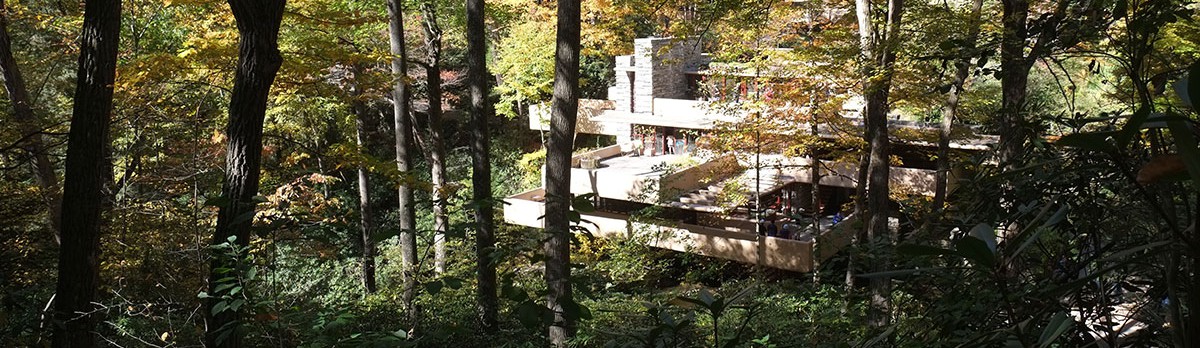
Selfies, Part 5

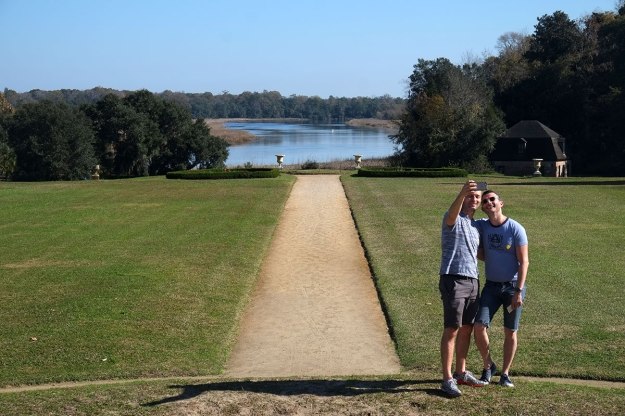
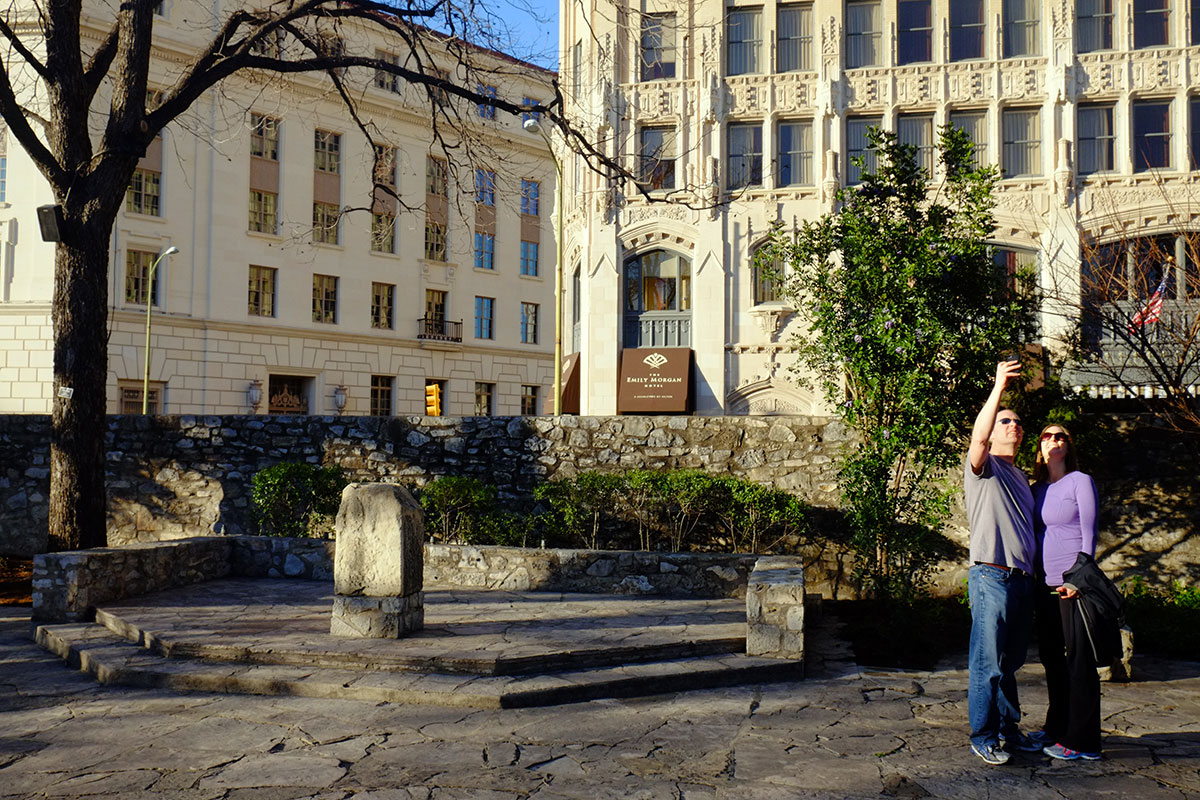
Perhaps southerners aren’t as narcissistic as other Americans, or perhaps the tourist sites  in the south don’t attract the foreign tourists who are prone to selfie-taking, but for whatever reason, we saw very few selfies in the past few months.  However, now that we are in the Southwest at major tourist sites, the rate is picking up again:

Middleton Place, South Carolina.  An off-axis selfie.  Subtle.DSCF8317

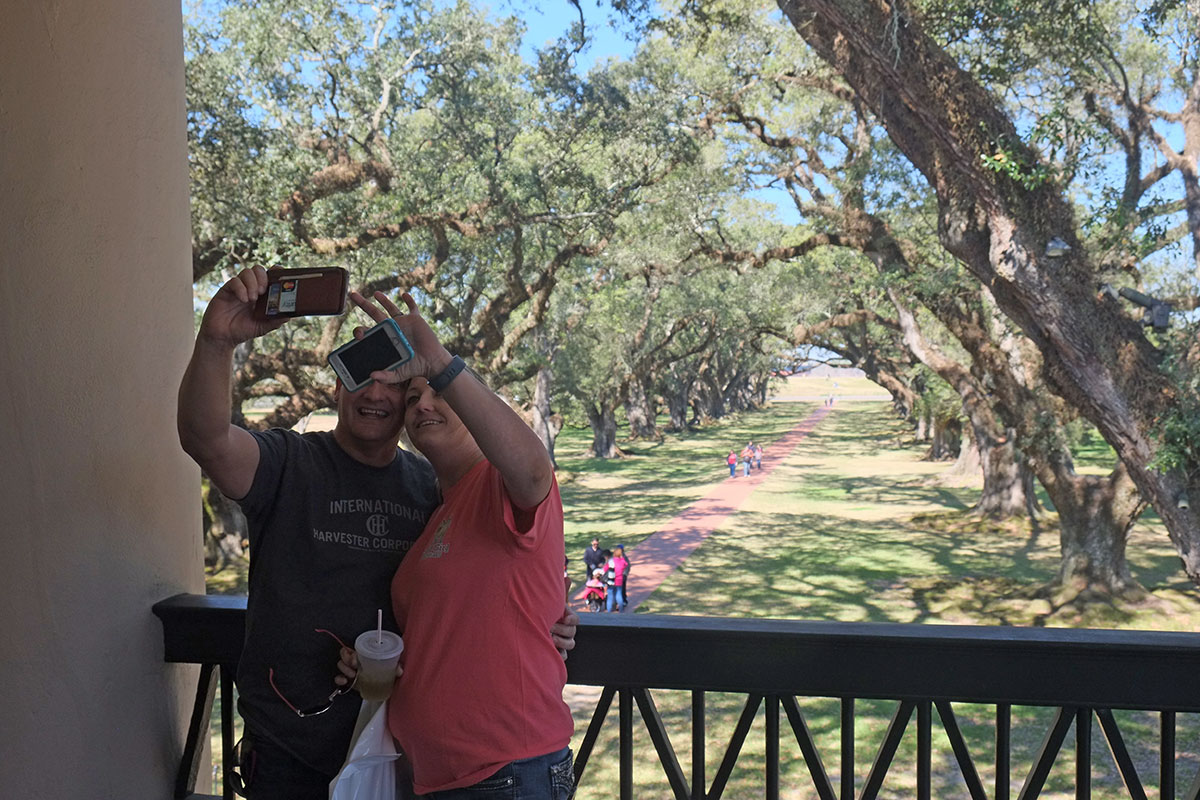
Oak Alley, River Road, Louisiana.DSCF3930

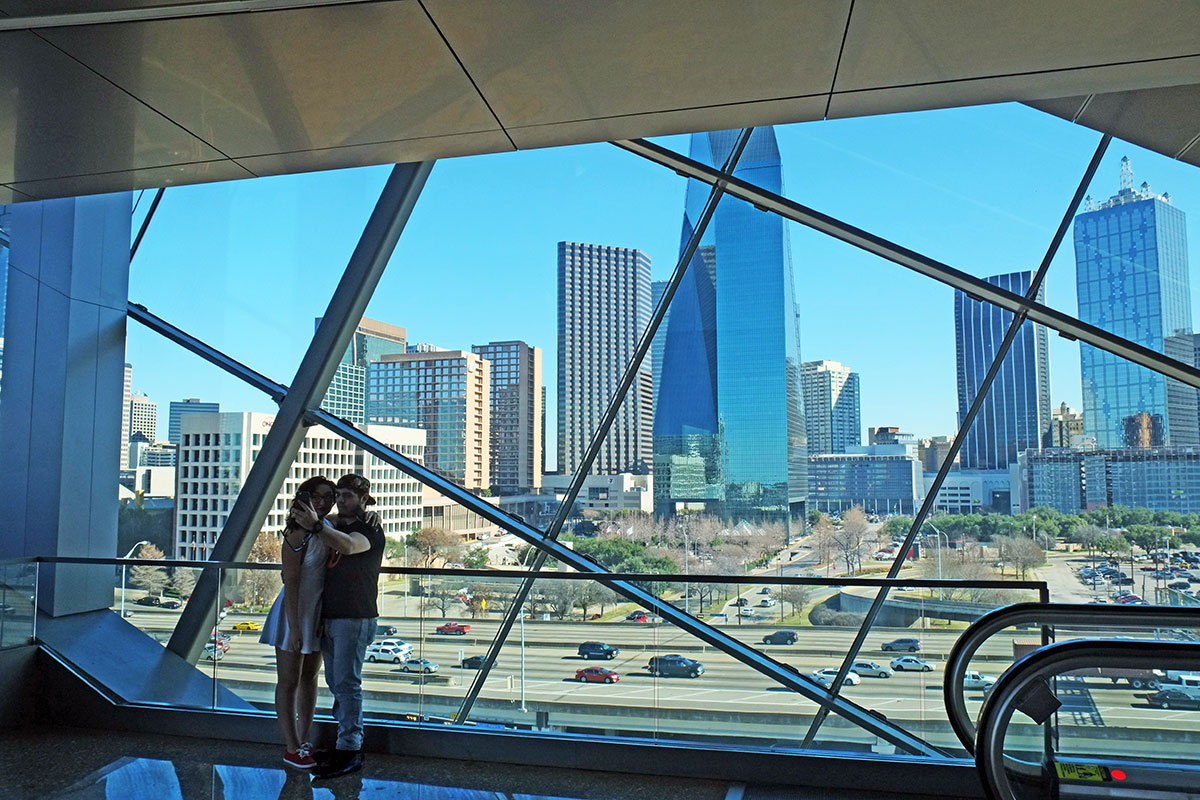
The Perot Museum, Dallas.DSCF4241

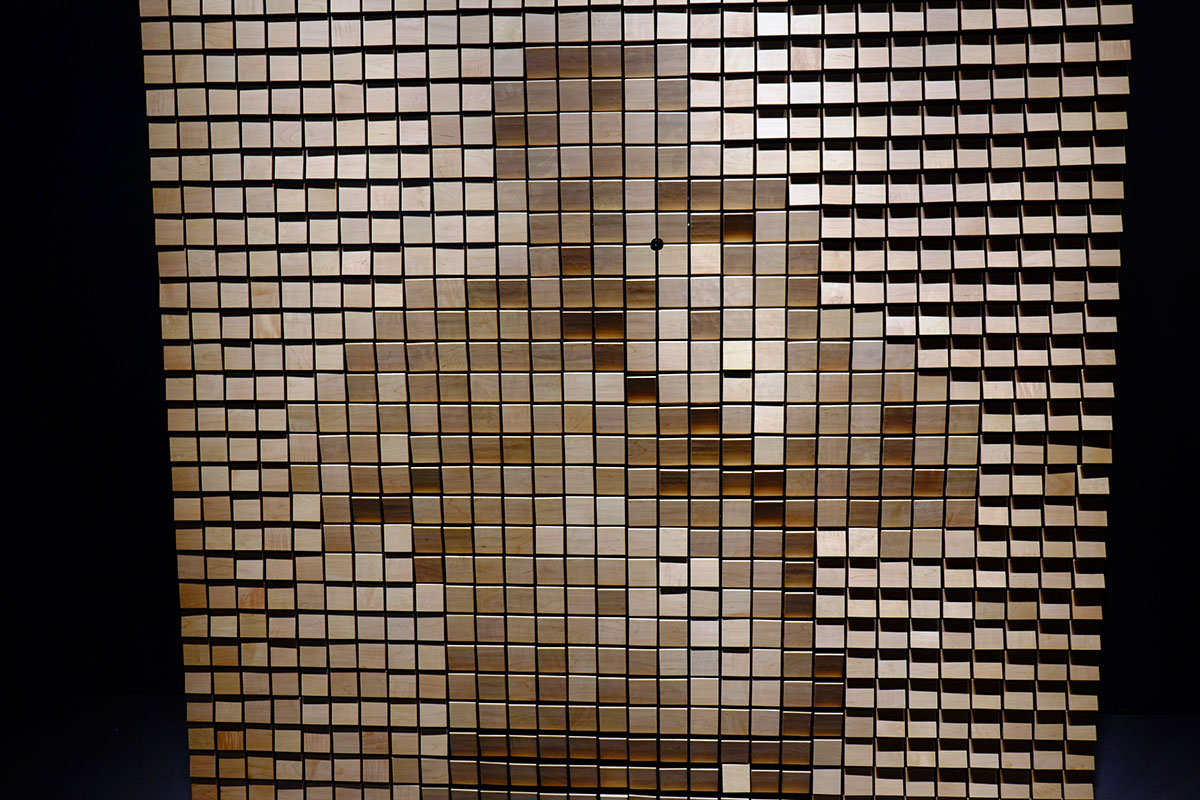
Meta- selfie at the Perot Museum.  A digital interface which converts a real-time image of you into tilting pixel-tiles.DSCF4329

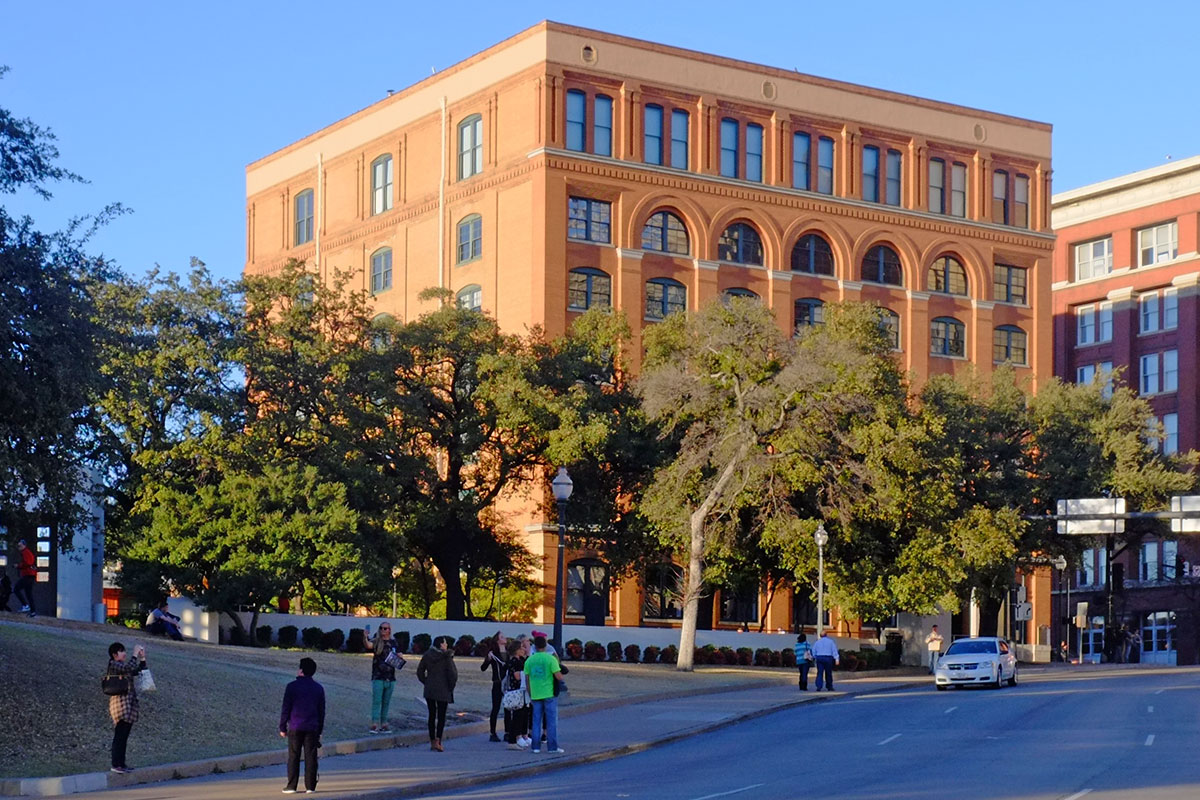
Disturbing selfies at Dealey Plaza, Dallas.  Selfies with the Texas Book Depository in the background.  Even more disturbing:  there are two small Xs which supposedly mark the spots where JFK was shot.  We see tourists running out to stand on those spots to have their pictures taken, on what is a very busy street.   Right up there with funeral selfies for showing us something we didn’t want to know about human behavior.  DSCF4361

One more of the Safe Bison-Selfies™.  San Antonio.  Yesterday at the Grand Canyon we heard that not only do tourists get killed taking Bison Selfies, but last year at the GC, one was killed taking an Elk Selfie.  If only we’d known.DSCF5619

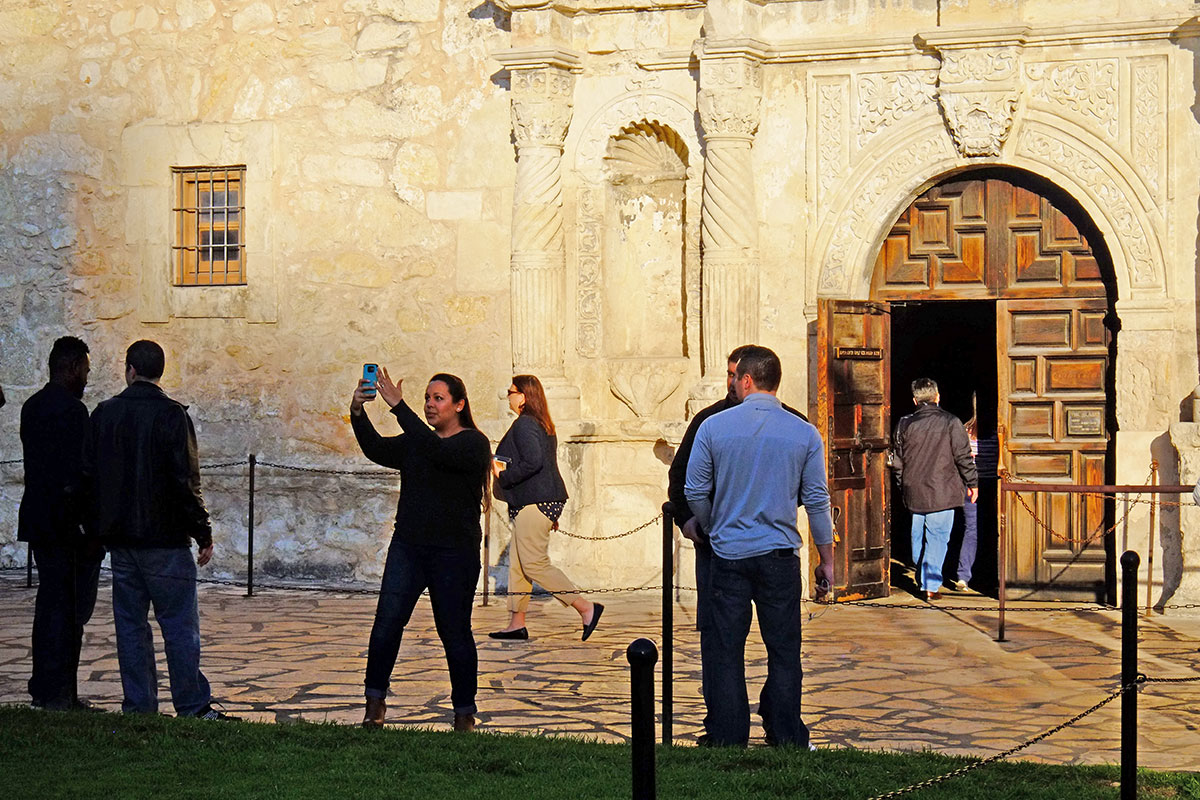
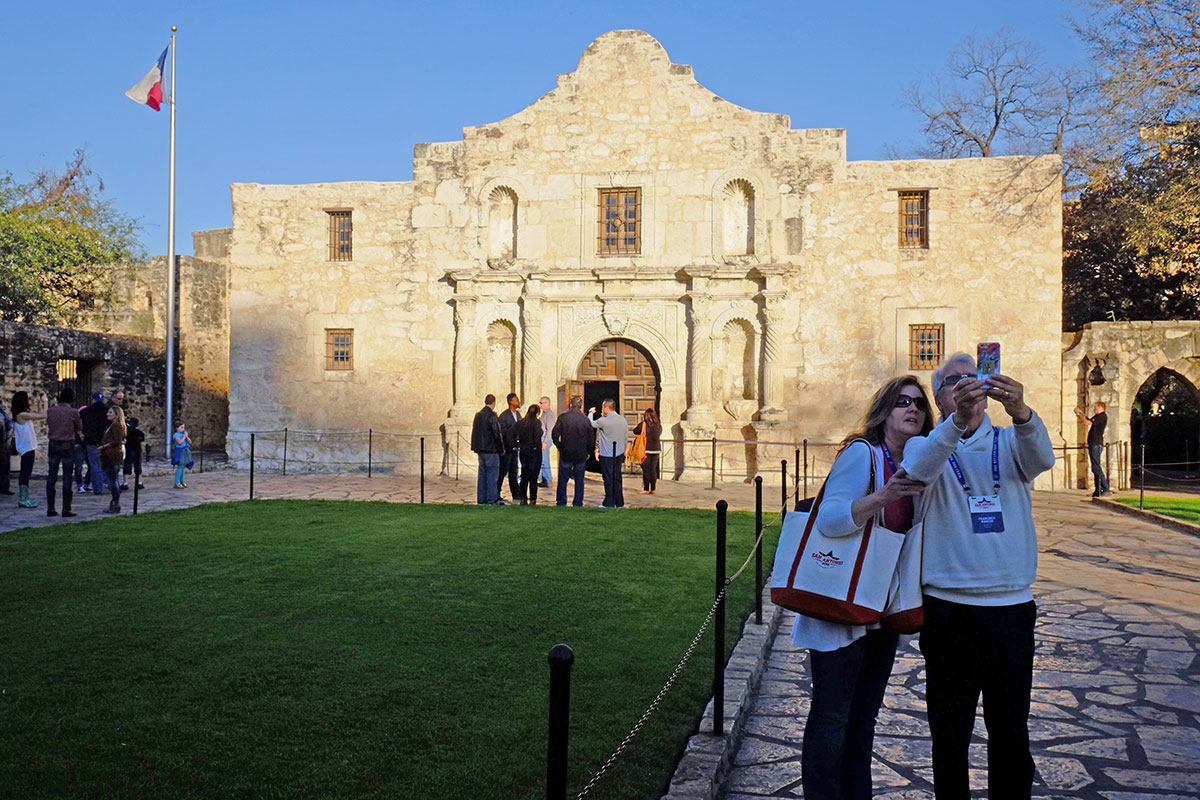
Alamo Selfies.  We begin to hit our stride again.  Notice the lack of Asian tourist selfies – they don’t get the Alamo. (I don’t really get the Alamo either.)DSCF5664  DSCF5668DSCF5669

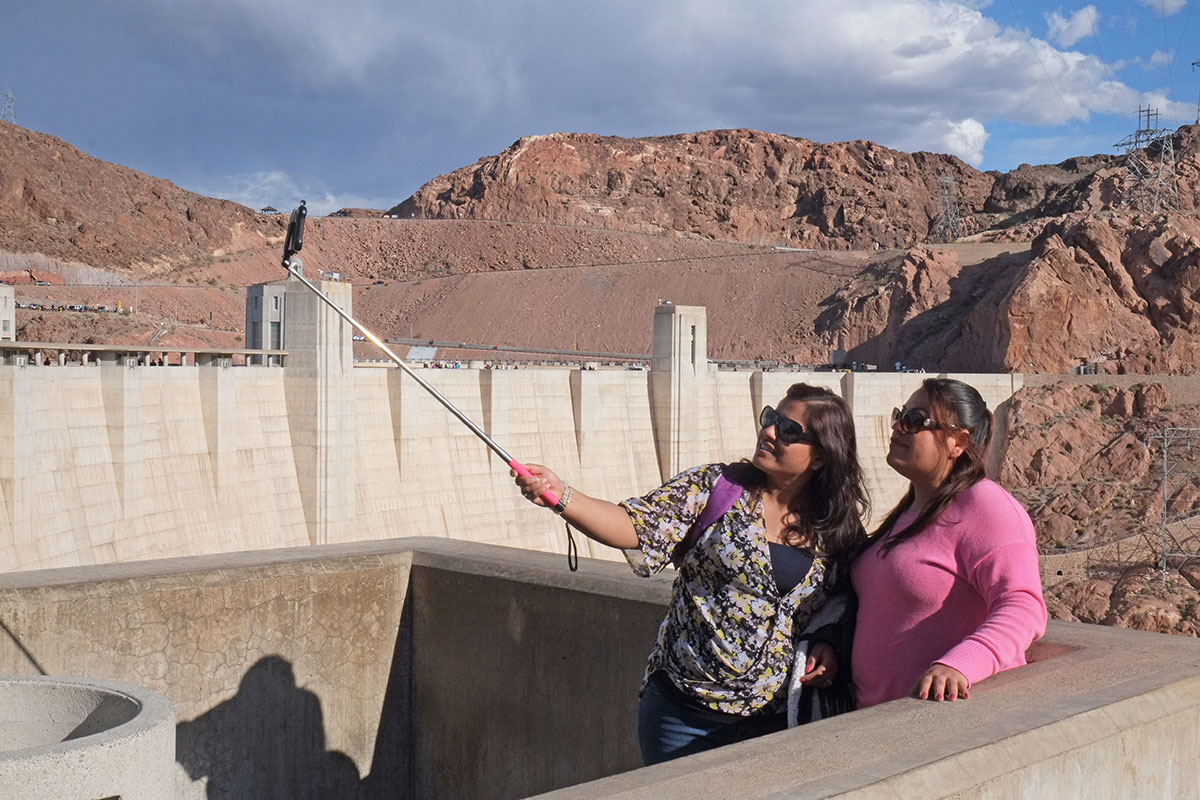
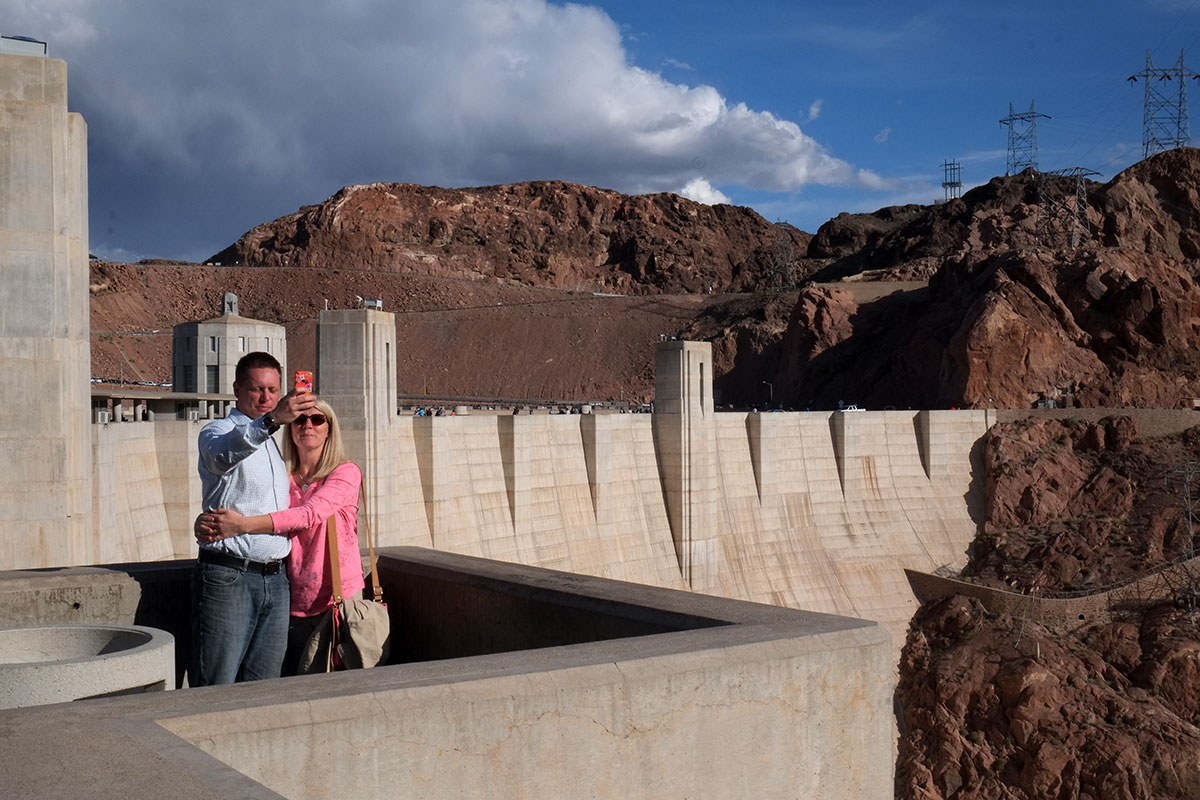
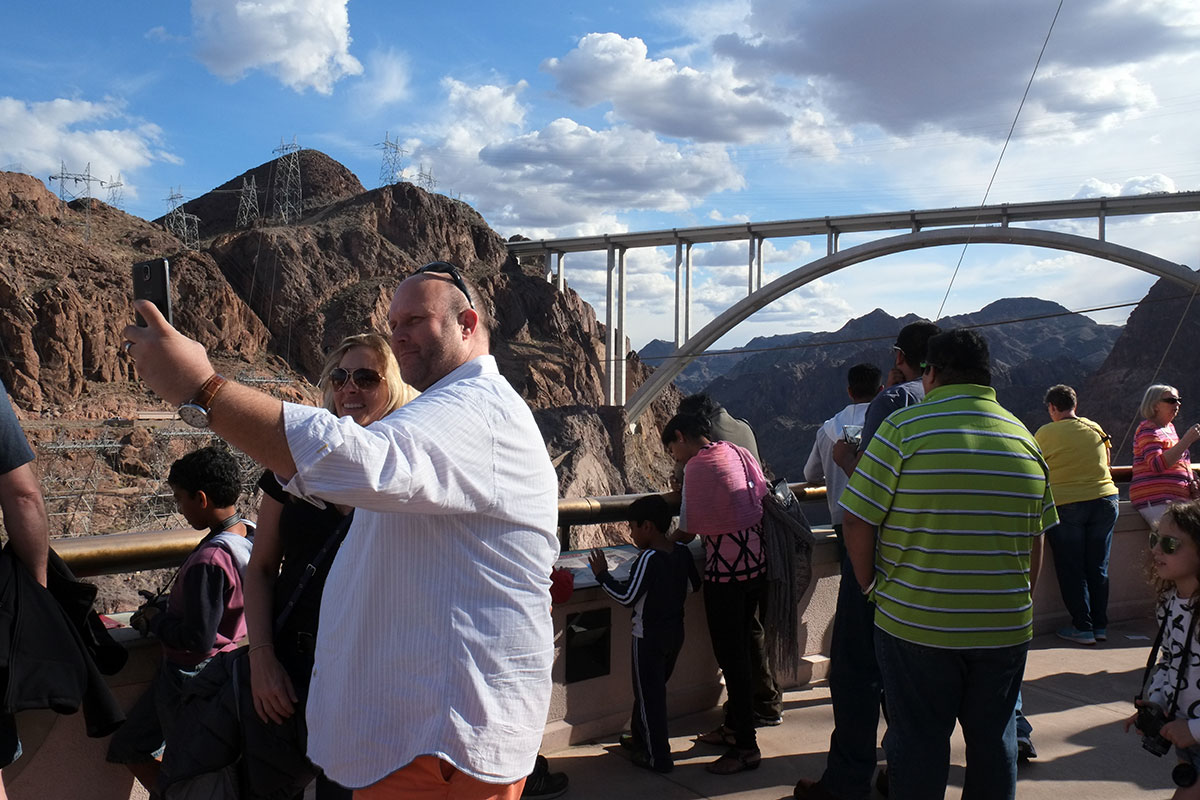
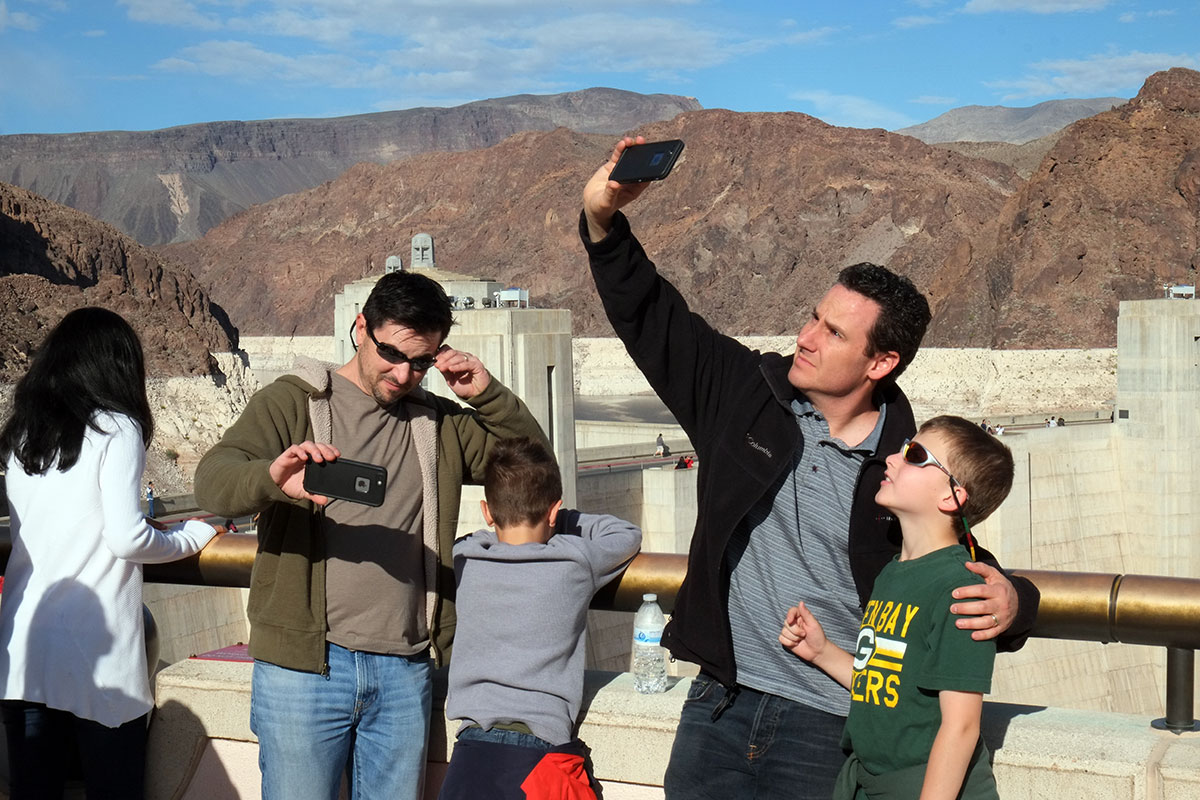
Hoover Dam Selfies.  Motherlode.  DSCF6980

Attempted Double-Selfie, but one kid’s balking.DSCF6990  DSCF6999

They have Selfie alcoves on the Hoover Dam, built 70 years before the selfie.DSCF7002

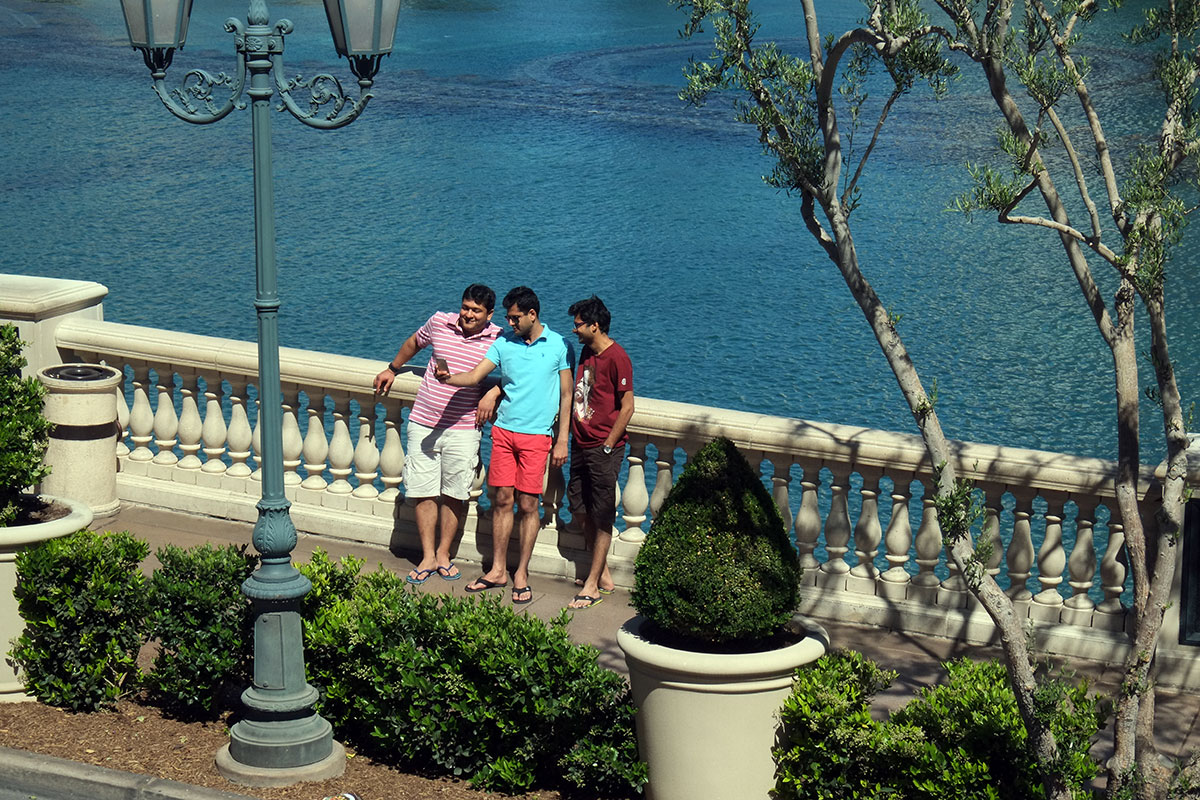
Las Vegas, Bellagio selfie.  DSCF7135

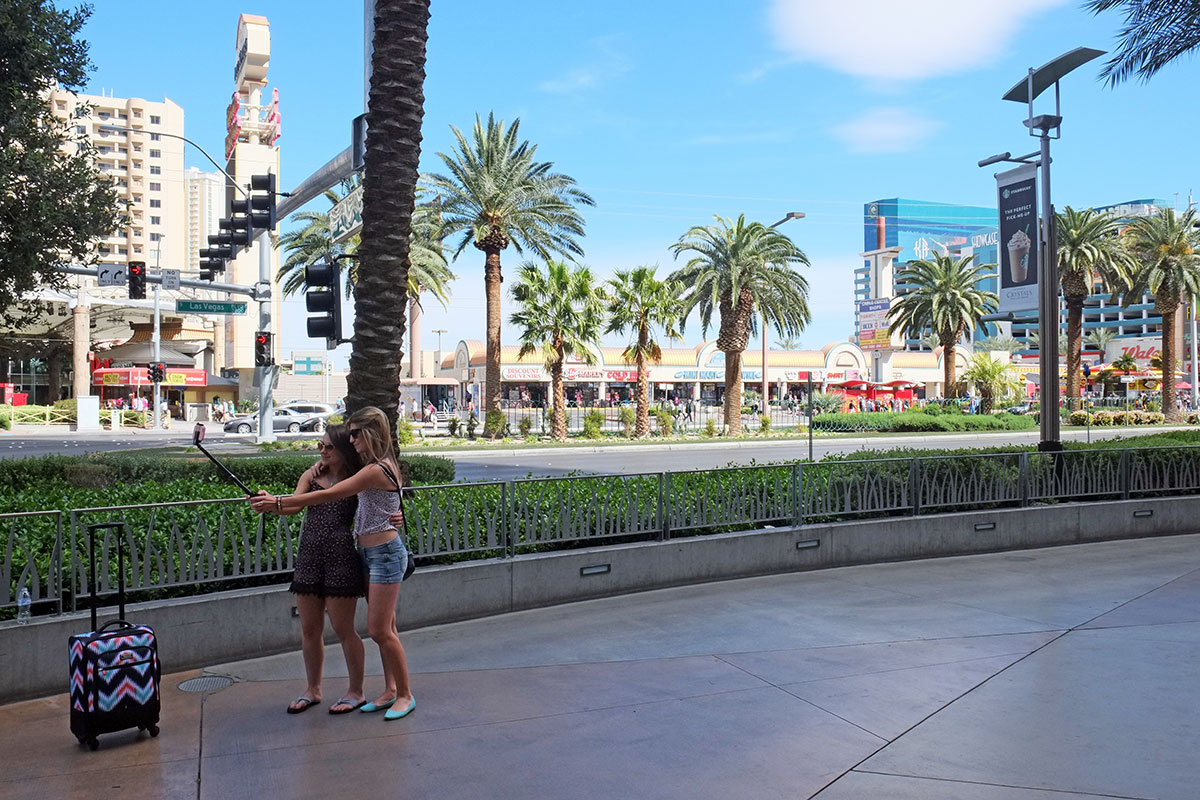
Las Vegas, Strip selfie.  DSCF7236

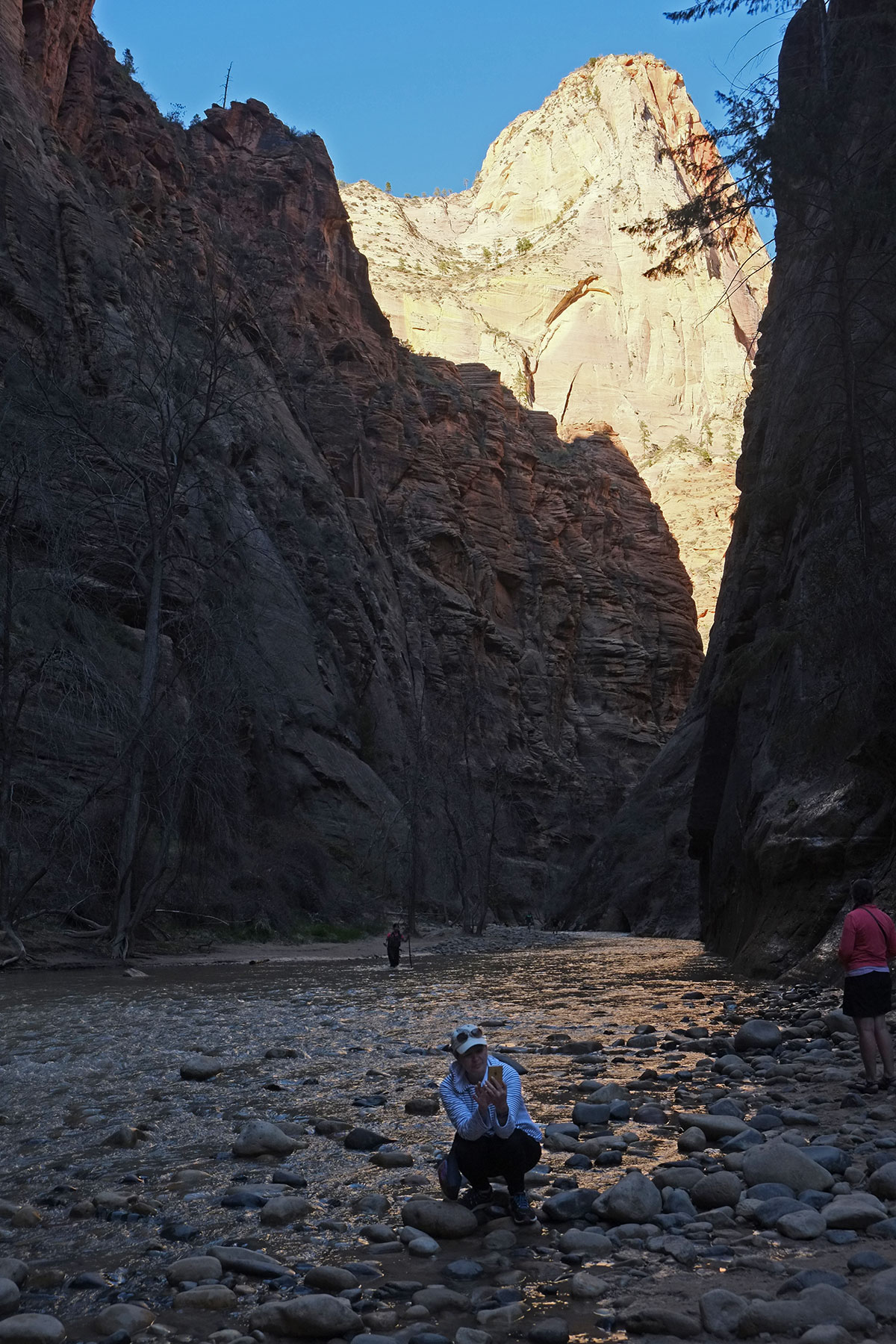
Zion Canyon, selfie in the Narrows.DSCF7448

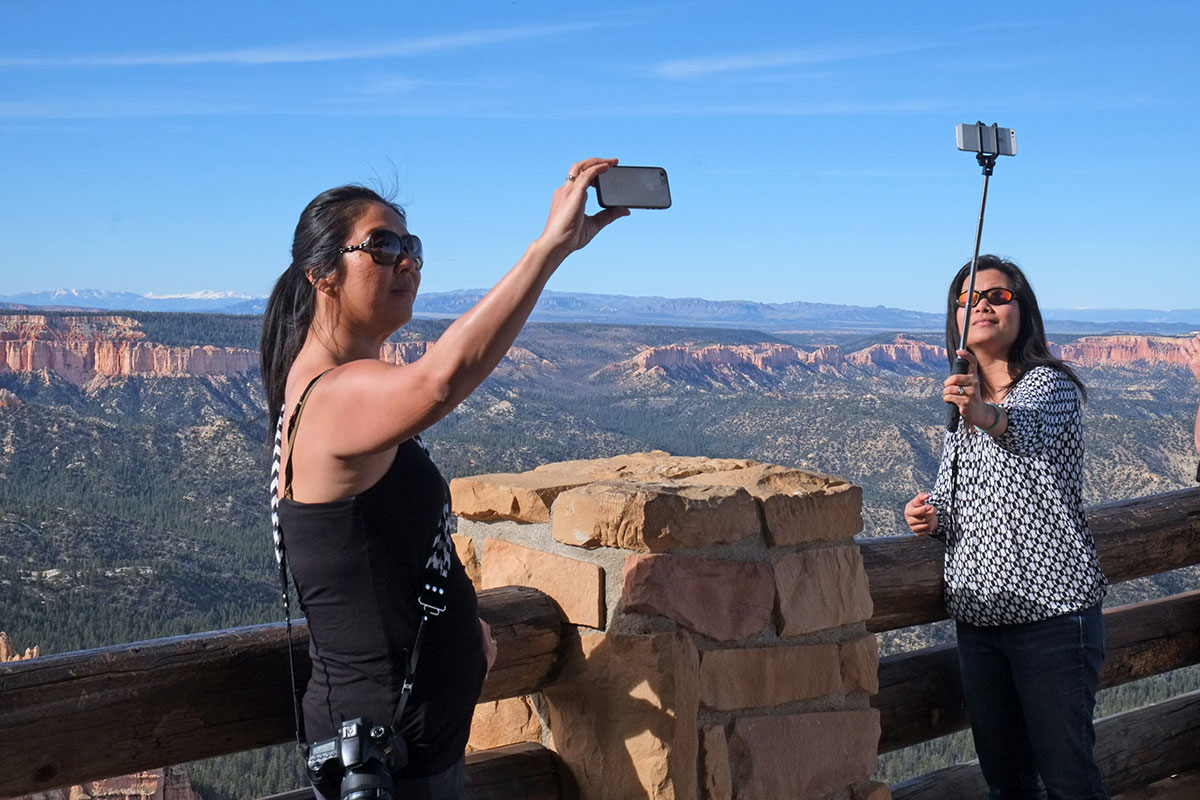
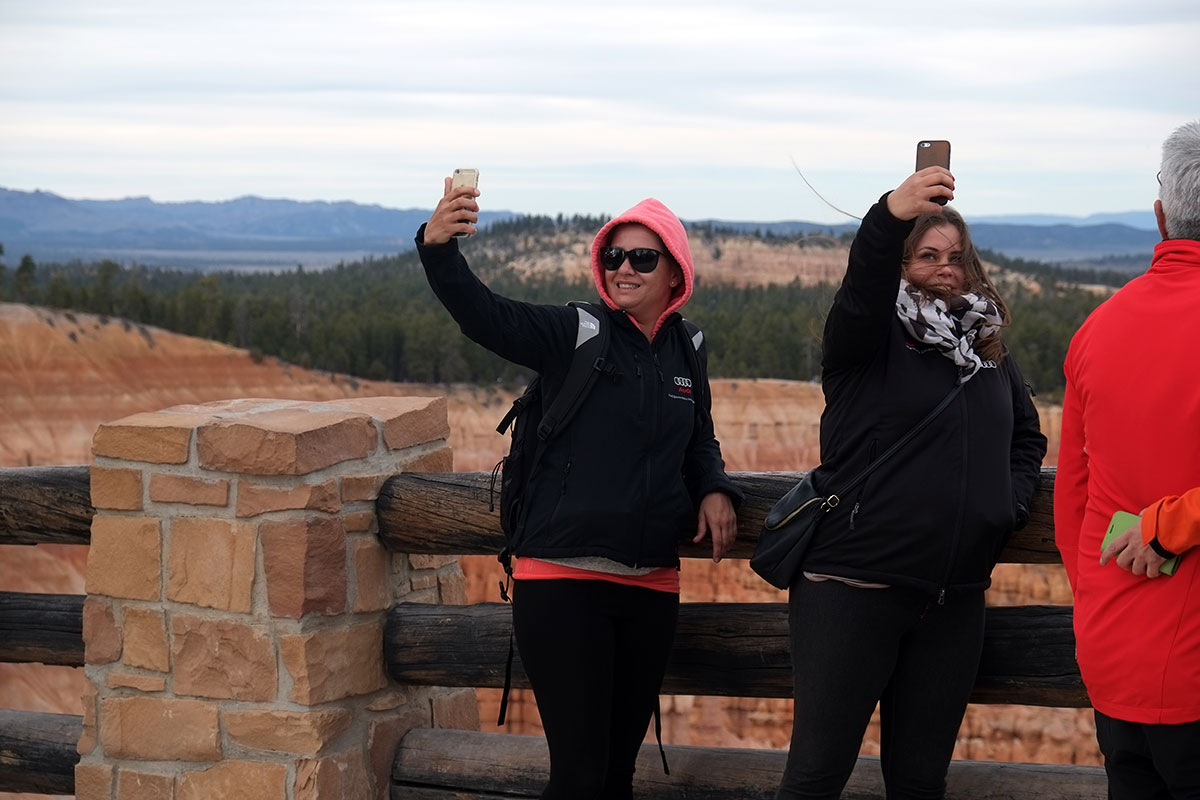
Bryce Canyon, TWO Double-Selfies!DSCF7571  DSCF7638

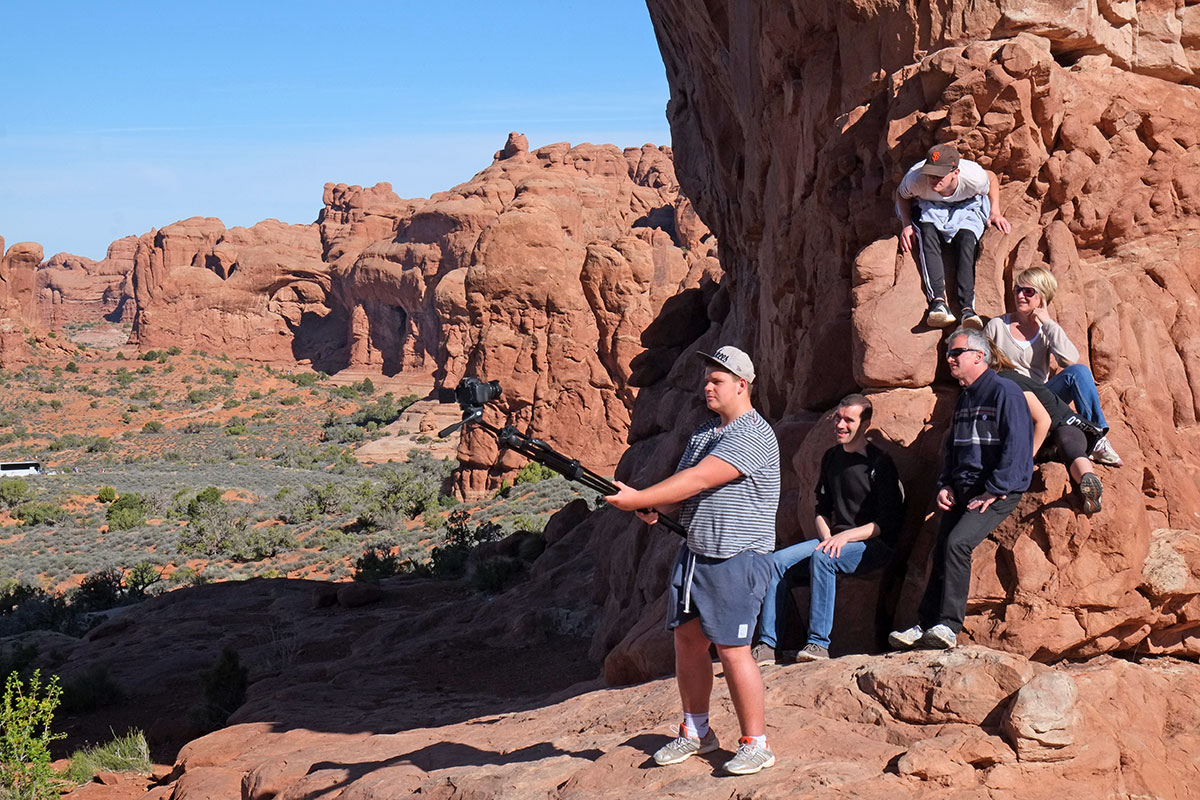
Arches National Park:  the French have not yet discovered the Selfie-stick, so they have to use a tripod.  DSCF7827

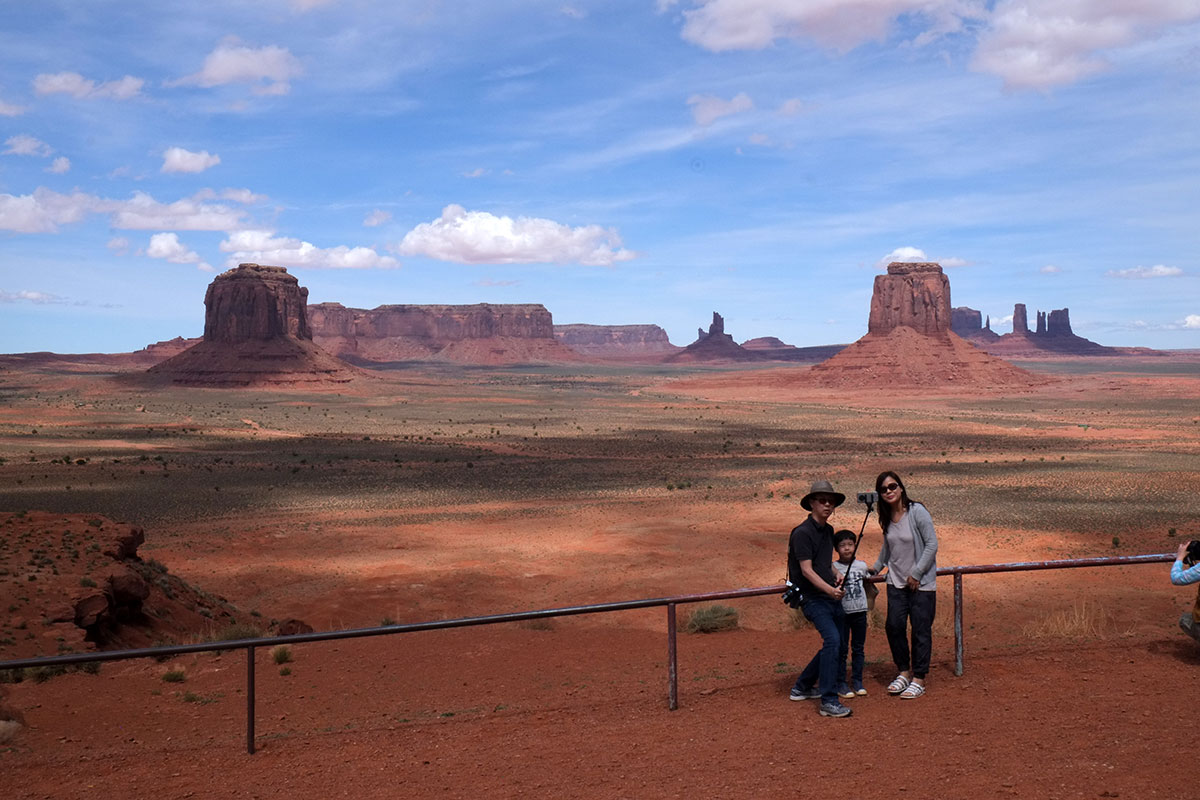
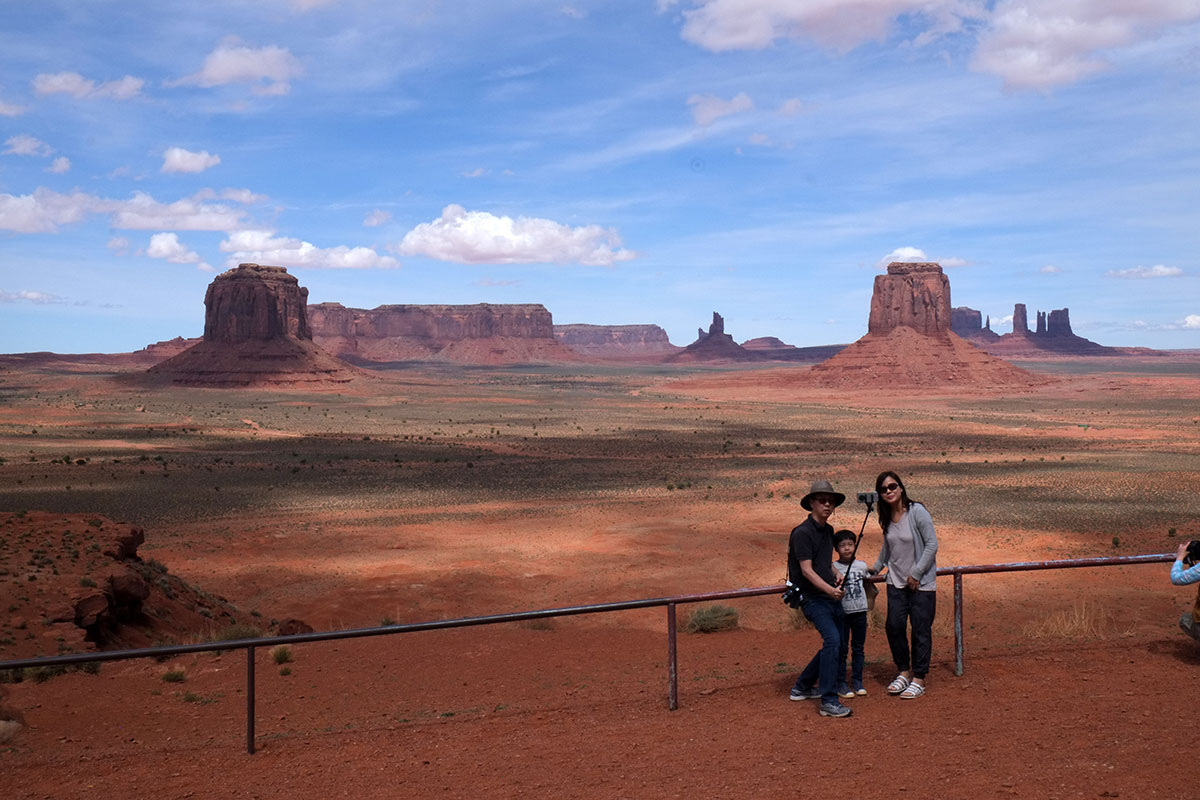
Monument Valley.  My favorite selfie photo so far.  DSCF8038

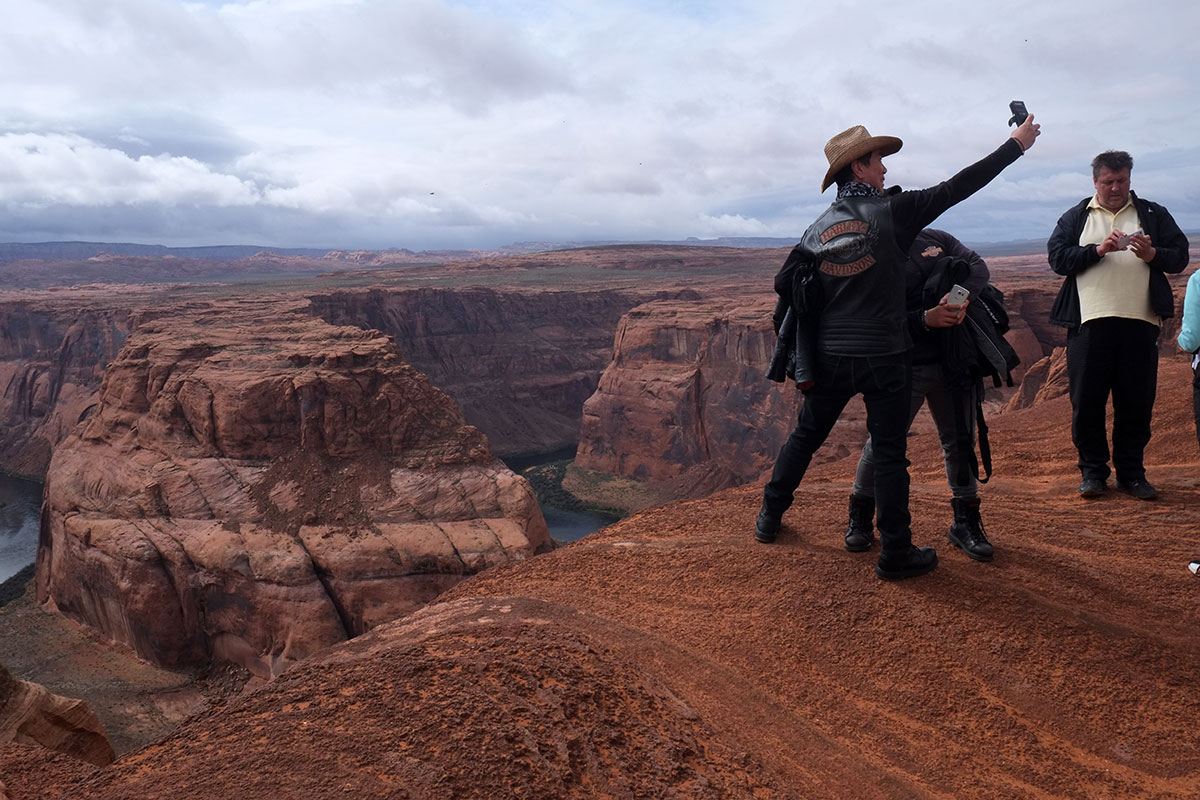
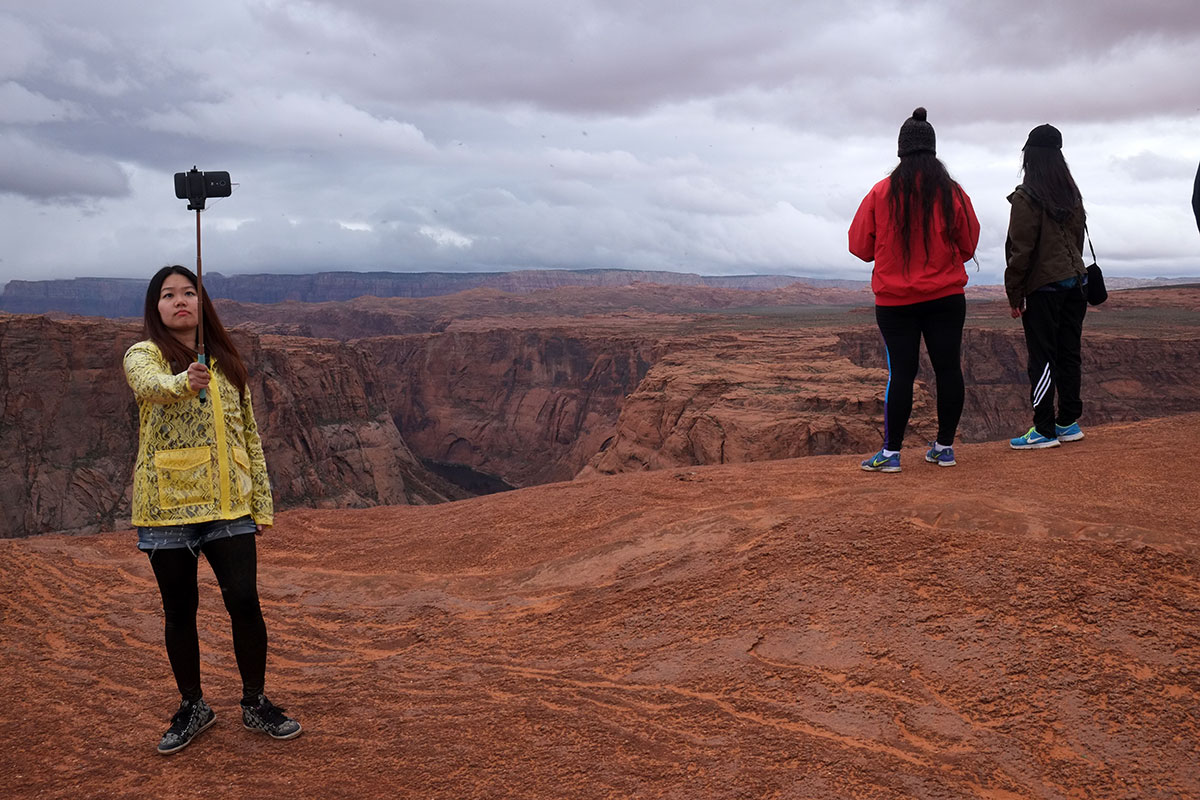
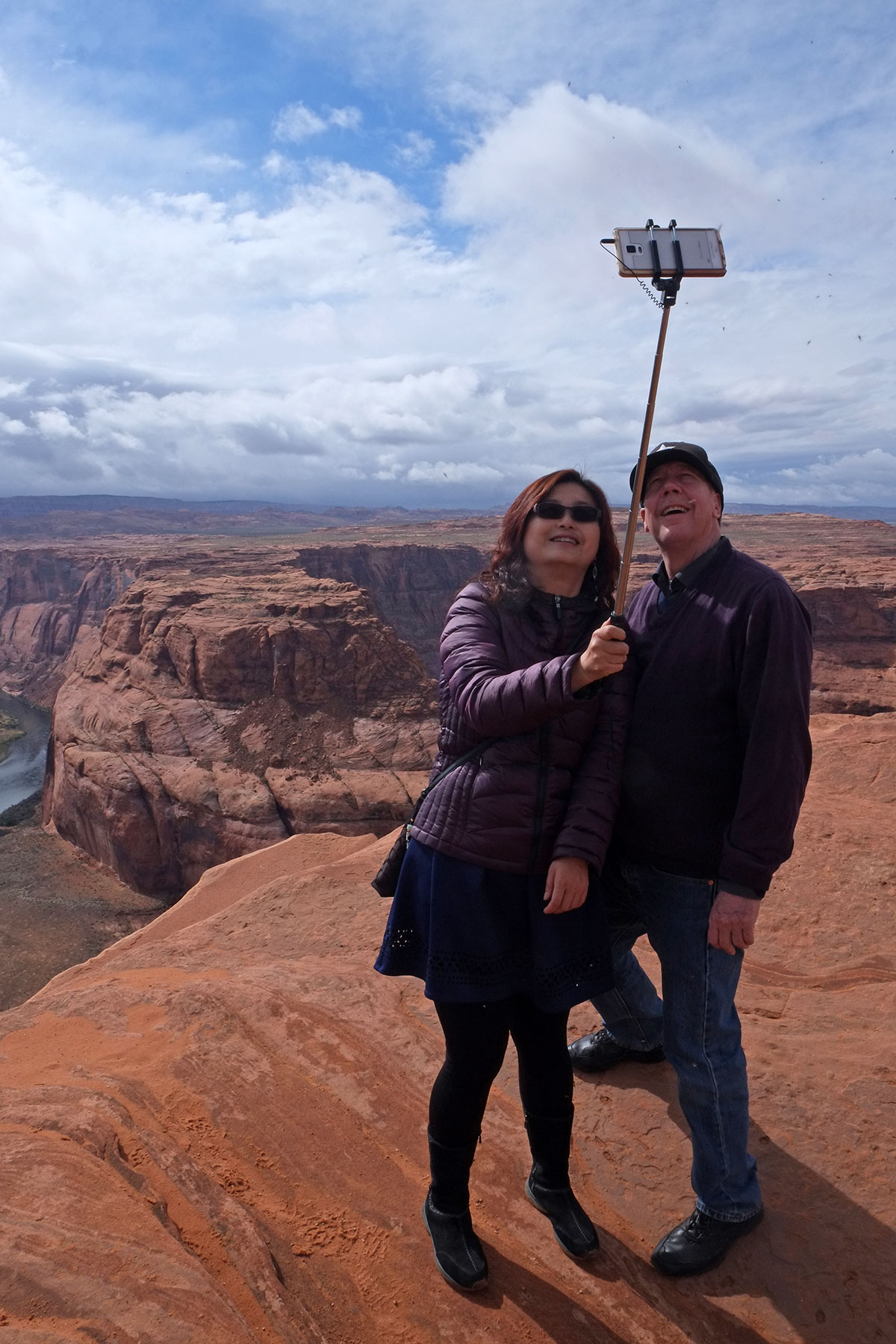
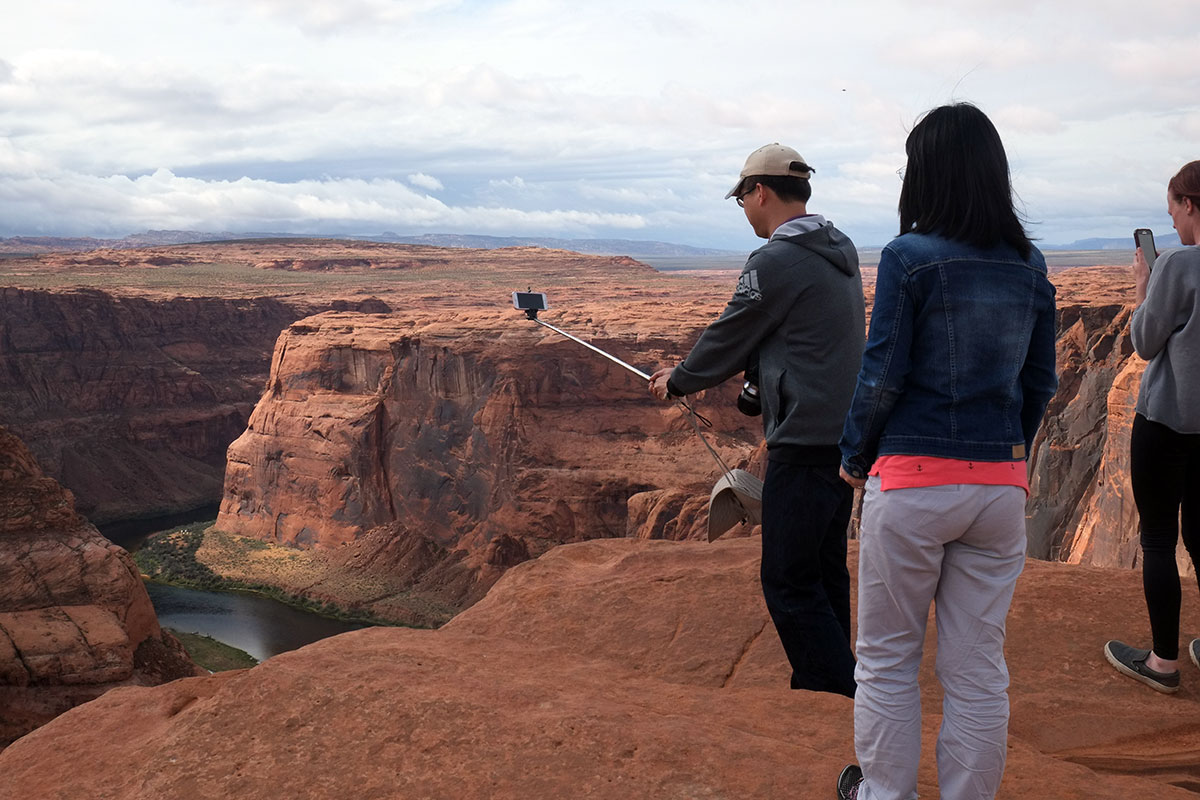
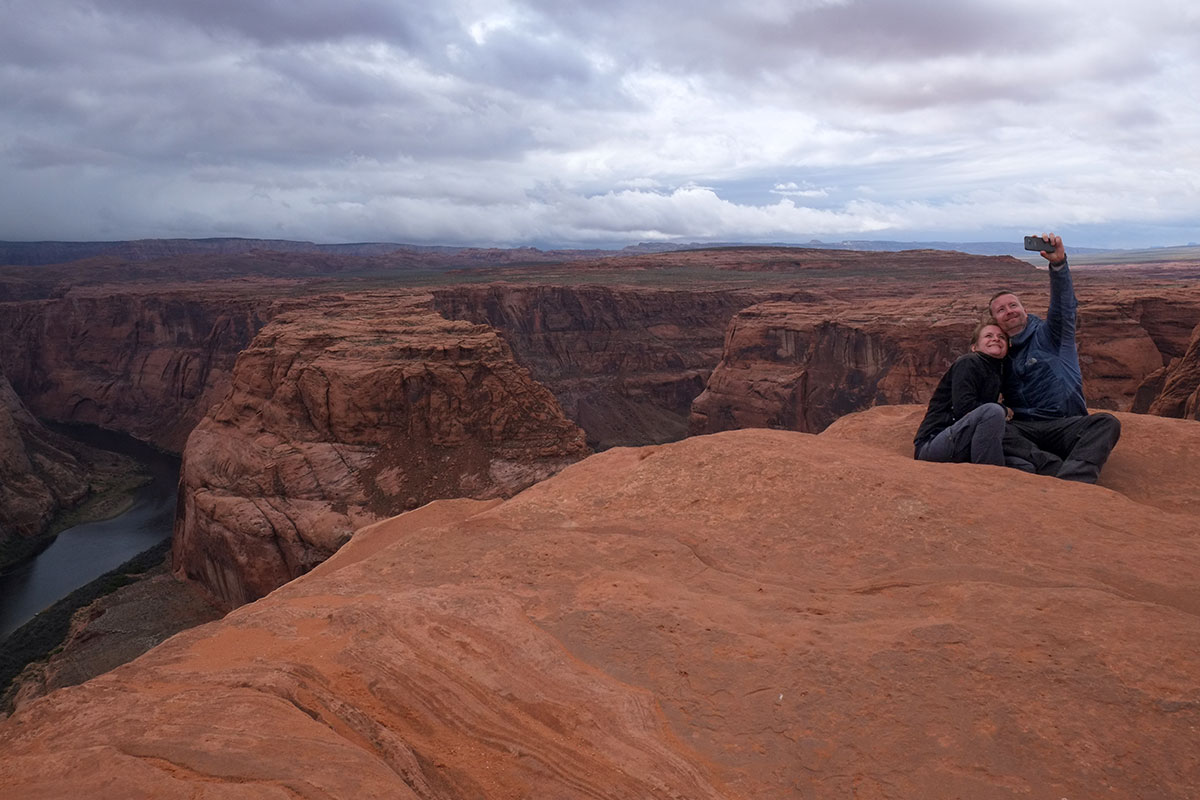
Horseshoe Bend in the Colorado River.  Selfies on the edge of the abyss – no guardrails, crumbly sandstone.  We see how much people really want the ultimate selfie.

The Japanese Cowboy-biker selfie.  They then asked to have Greta in the picture with them – we think they liked her fedora.DSCF8161  DSCF8189

DSCF8169

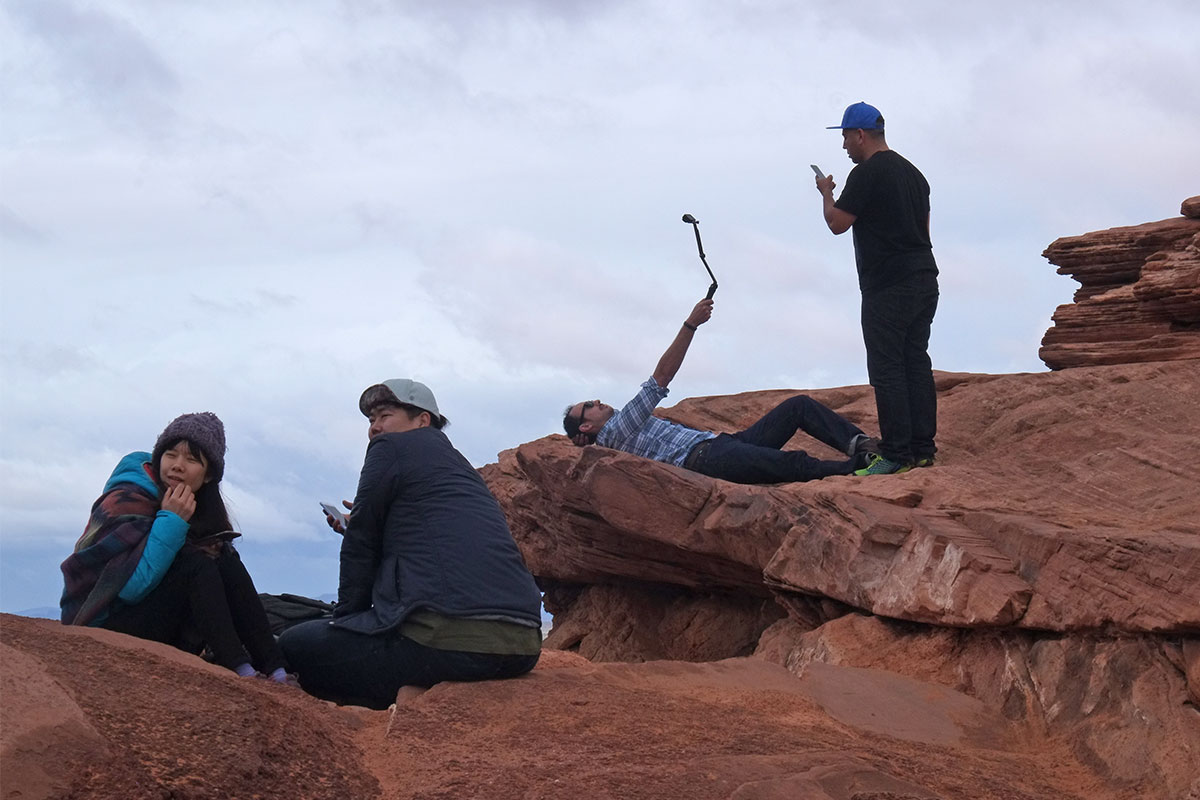
This photographer demonstrates the use of the Safe-Selfie Stick™ – hanging your phone out over the abyss on your stick, instead of inching out yourself.  DSCF8176

It turns out there area few other ways to take Safe-Selfies™:  the sitting selfie.DSCF8179

The lying-down selfie.  DSCF8181

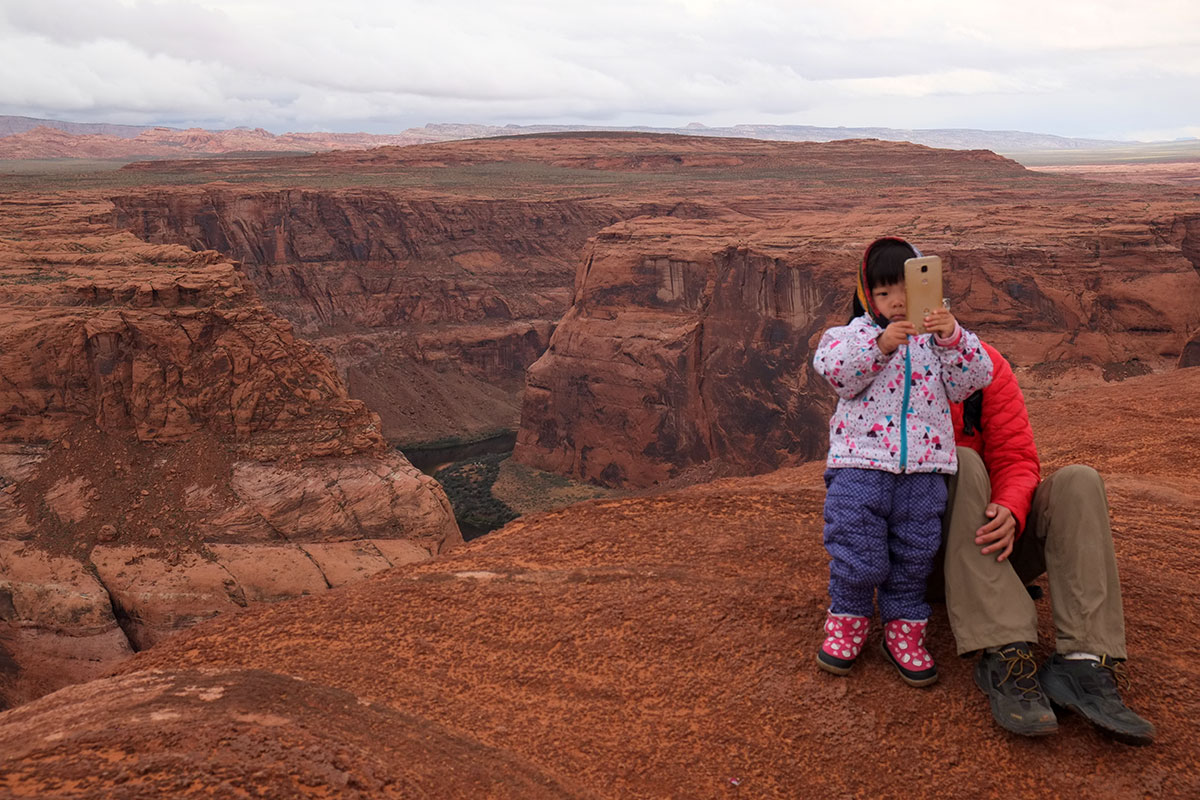
On the other end of the spectrum, the most terrifying selfie ever – the toddler at the abyss selfie.DSCF8192

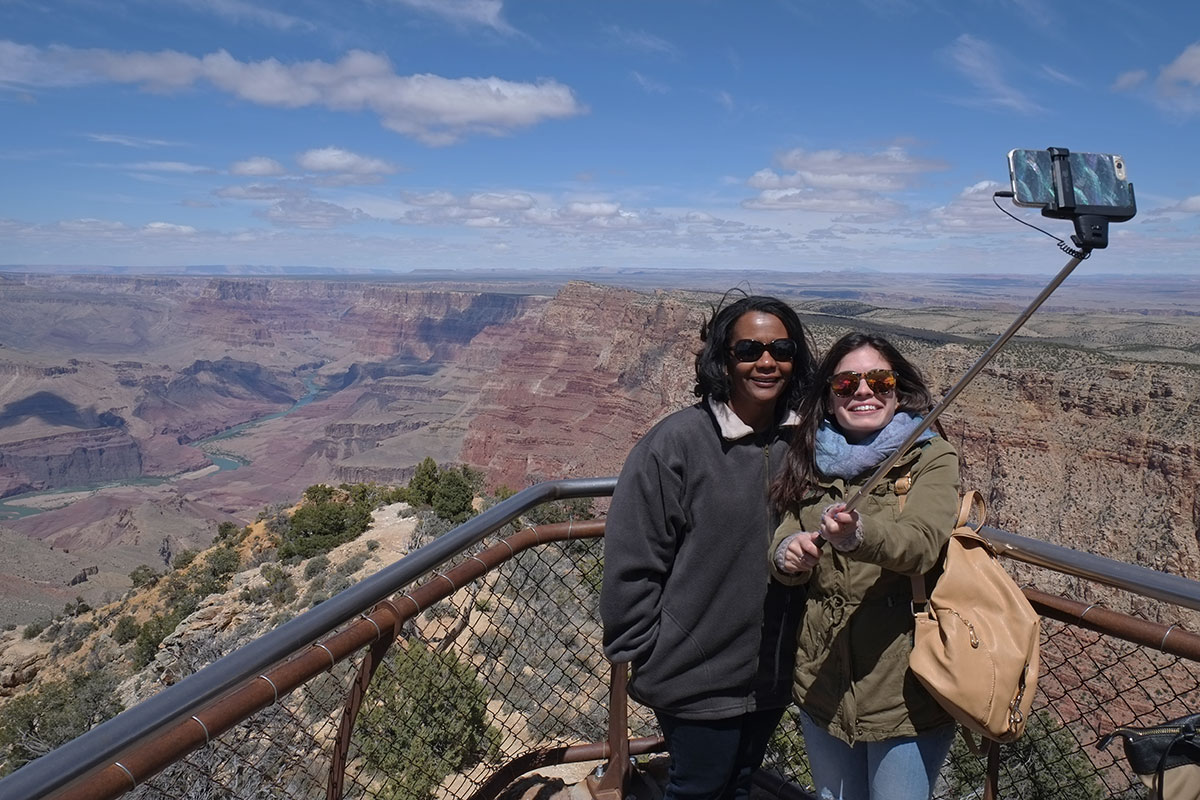
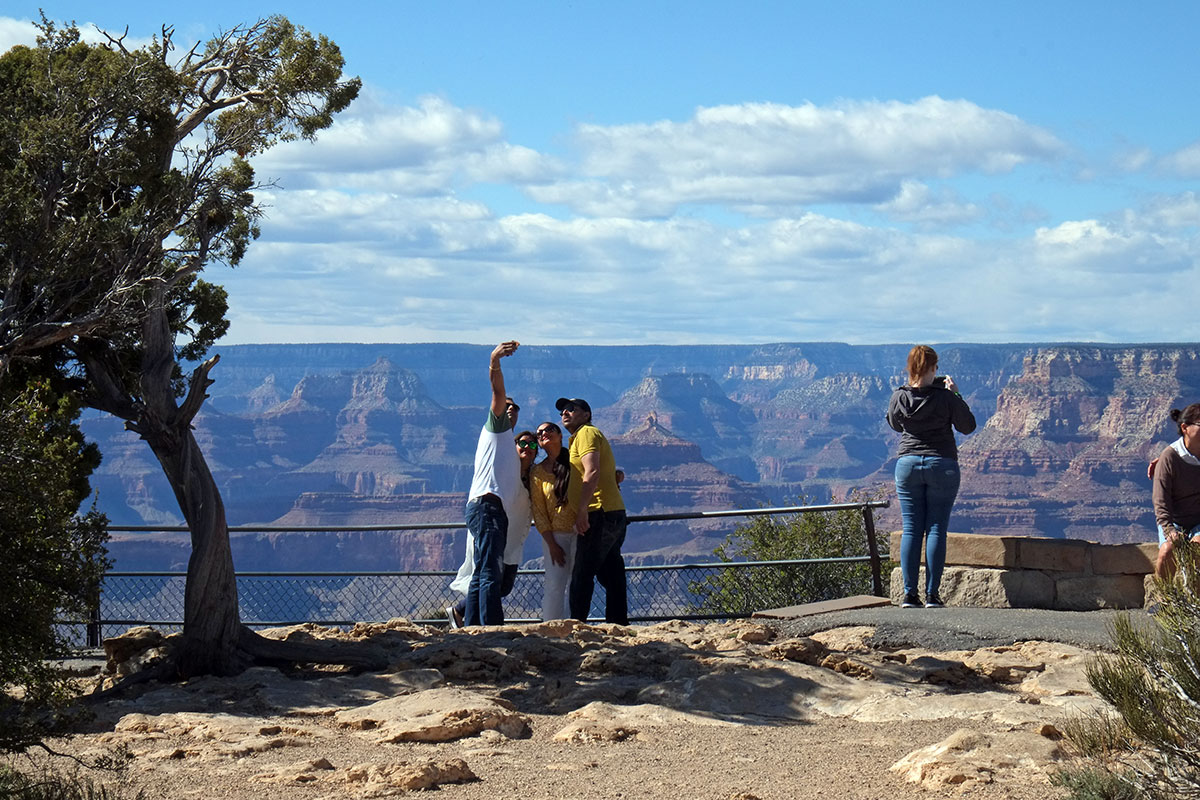
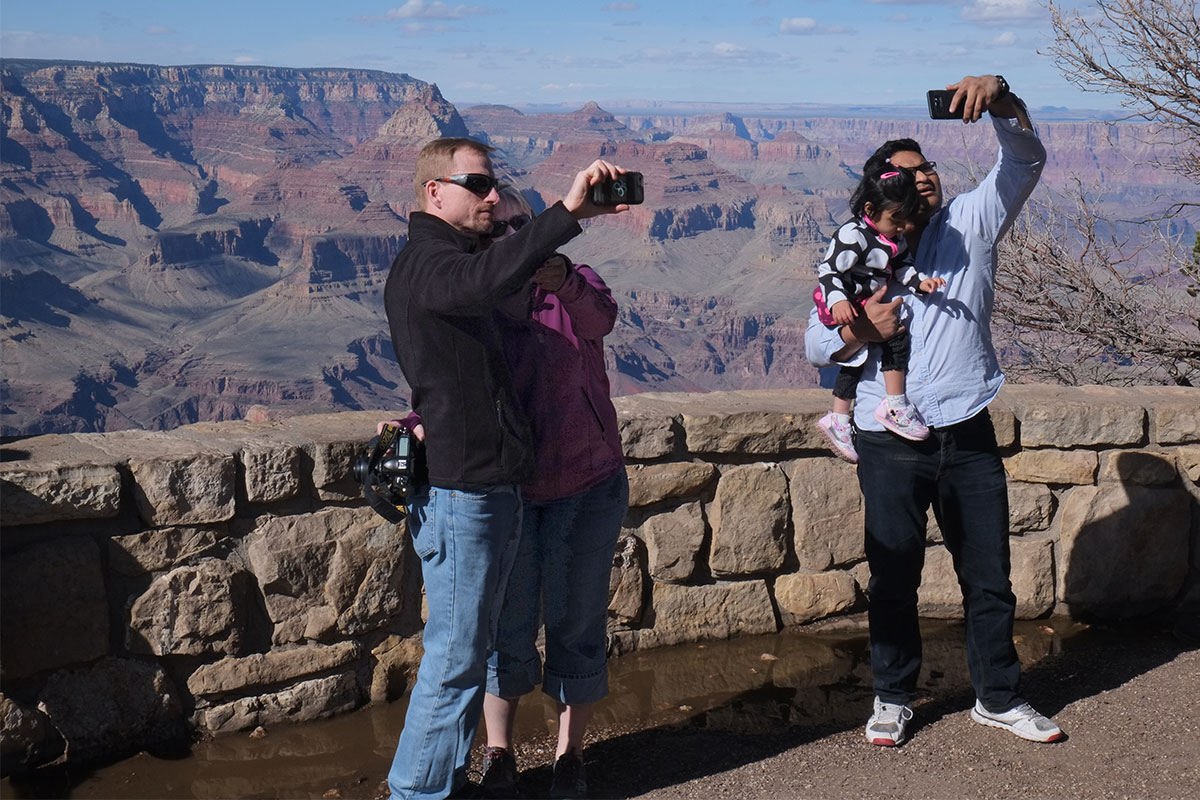
The Grand Canyon.  DSCF8377  DSCF8421

We thought this would be the ultimate location – I expected at least a triple-selfie.  I got close at one point, best I could get was a double.  DSCF8429

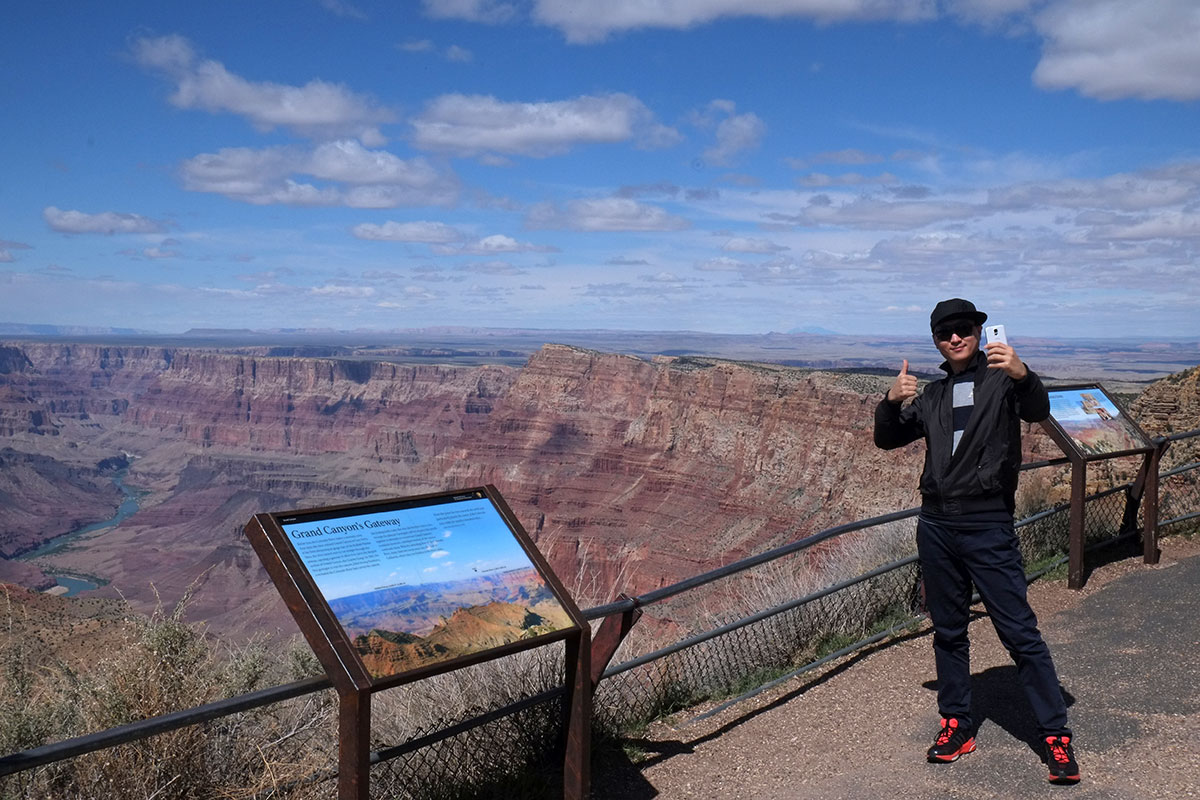
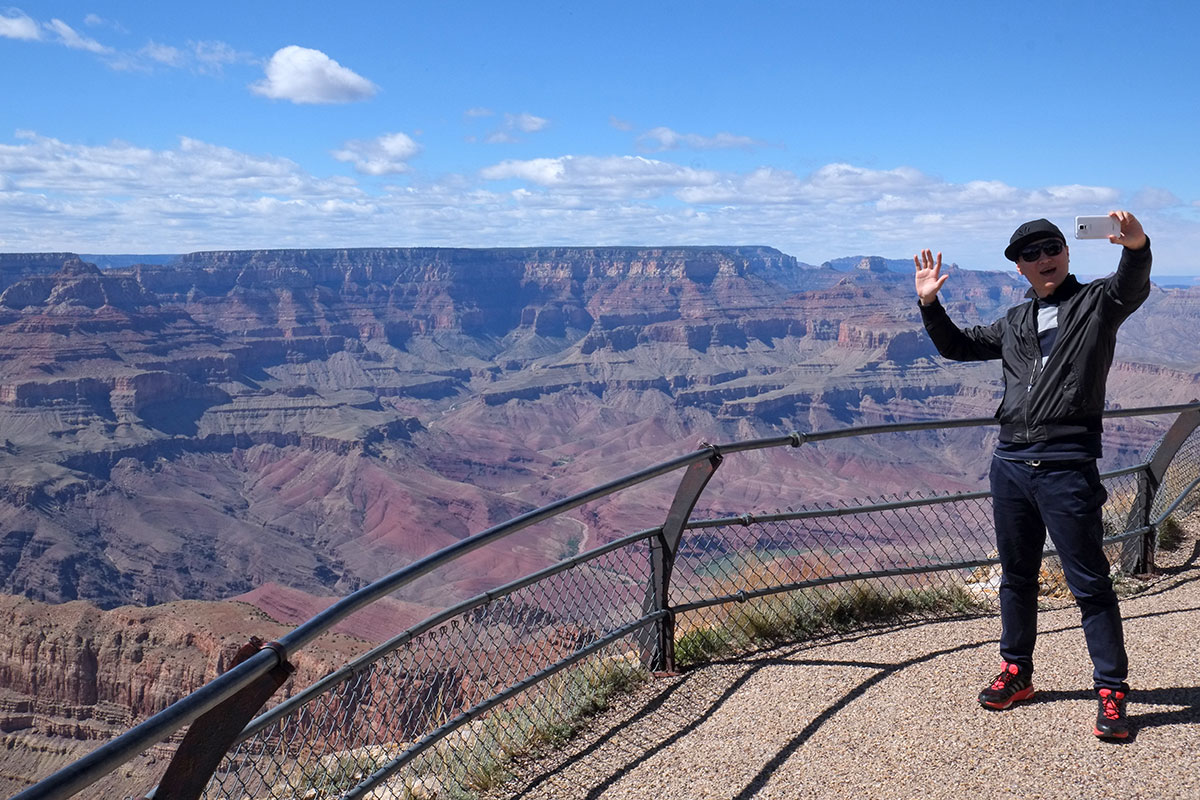
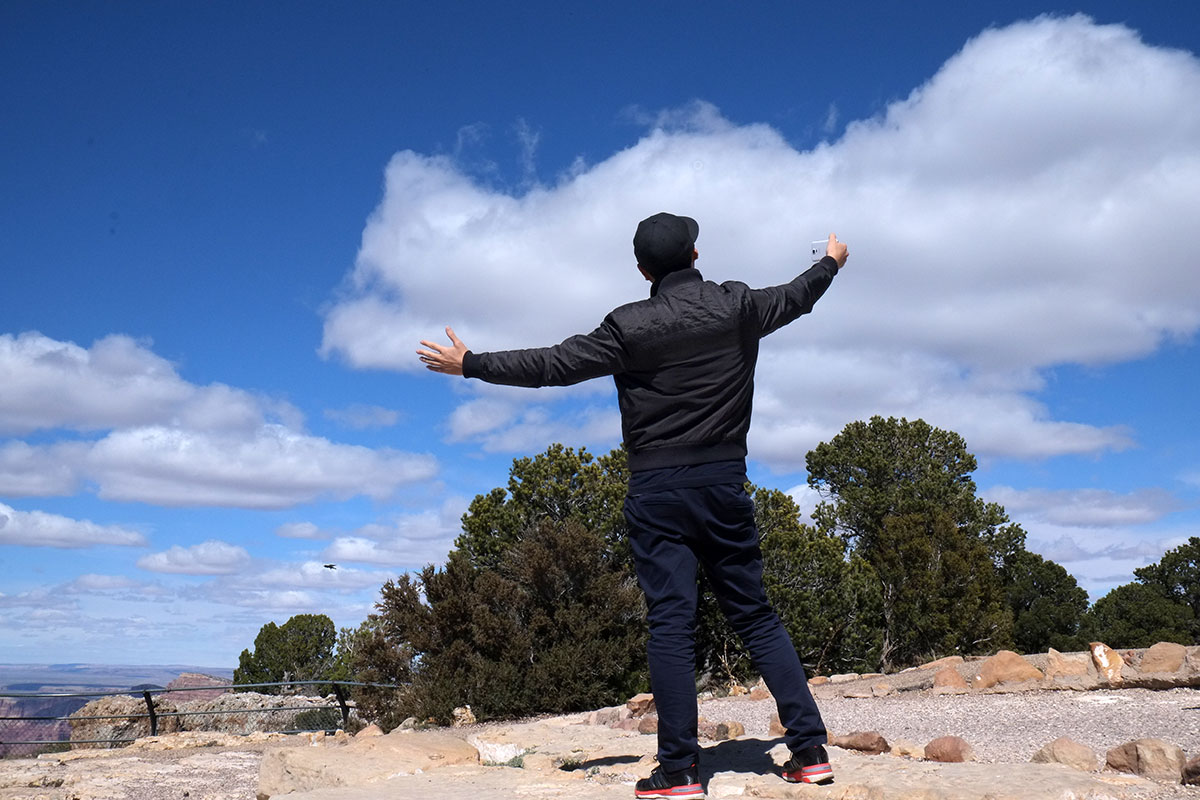
But in recompense, we came across something we’ve never seen before, a true selfie artist.  Whereas most selfie-takers are content to register their presence, perhaps with a smile, this young man took a series of selfies, each with a different gesture, or expression.  DSCF8401

He seems to understand the potential of the selfie like no other. He doesn’t just document, he expresses a series of feelings in the selfies.  We caught up with him at a couple of overlooks.  At one point, he handed his phone to me and asked me to take his picture.  I was nonplussed, I didn’t see how I could do it better than him, but I tried. DSCF8409

Selfie-Boy, as we call him, transcends the category of selfie-taking in a place.  The photo of the selfie suddenly was no longer about the selfie-in-place, it was all about him.  The Grand Canyon is lost in the distance, it fades out of the picture.  There is only the virtuosity of Selfie-Boy. DSCF8412

The Grand Canyon (it’s all about the architecture)

93B.Grand Canyon02293.Grand Canyon137DSCF8425

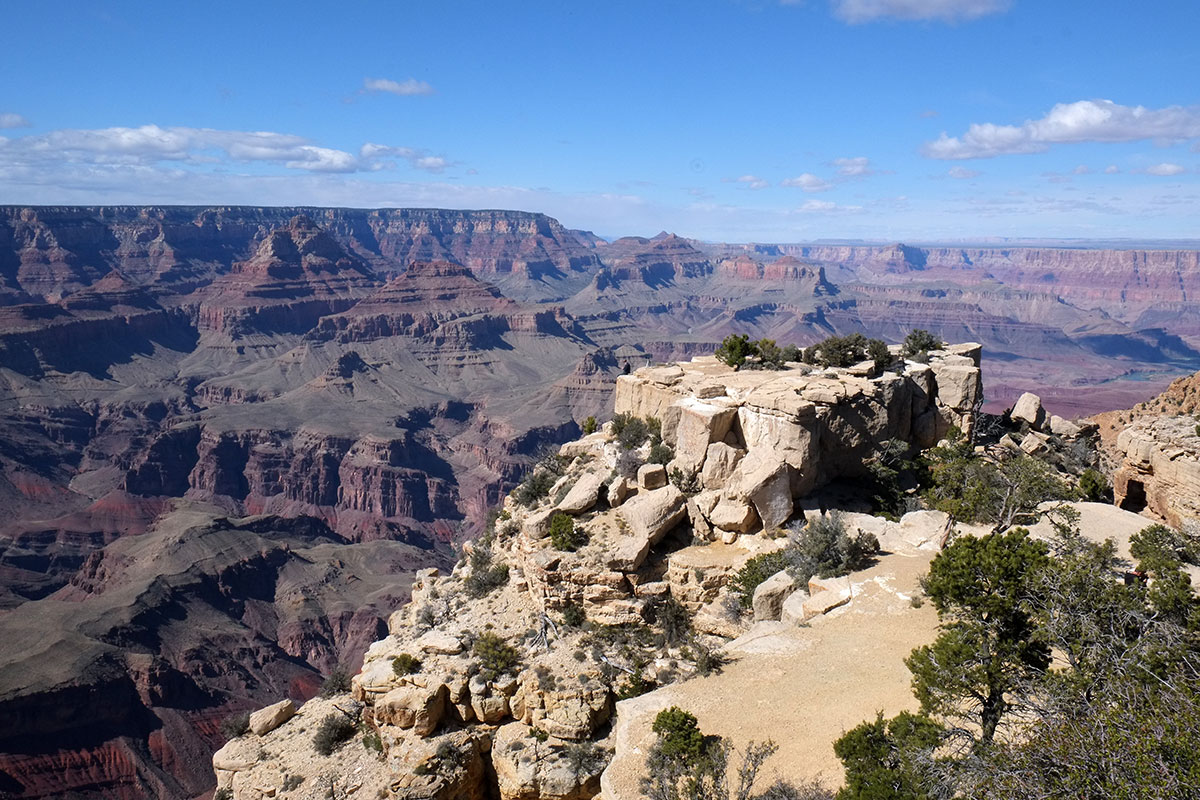
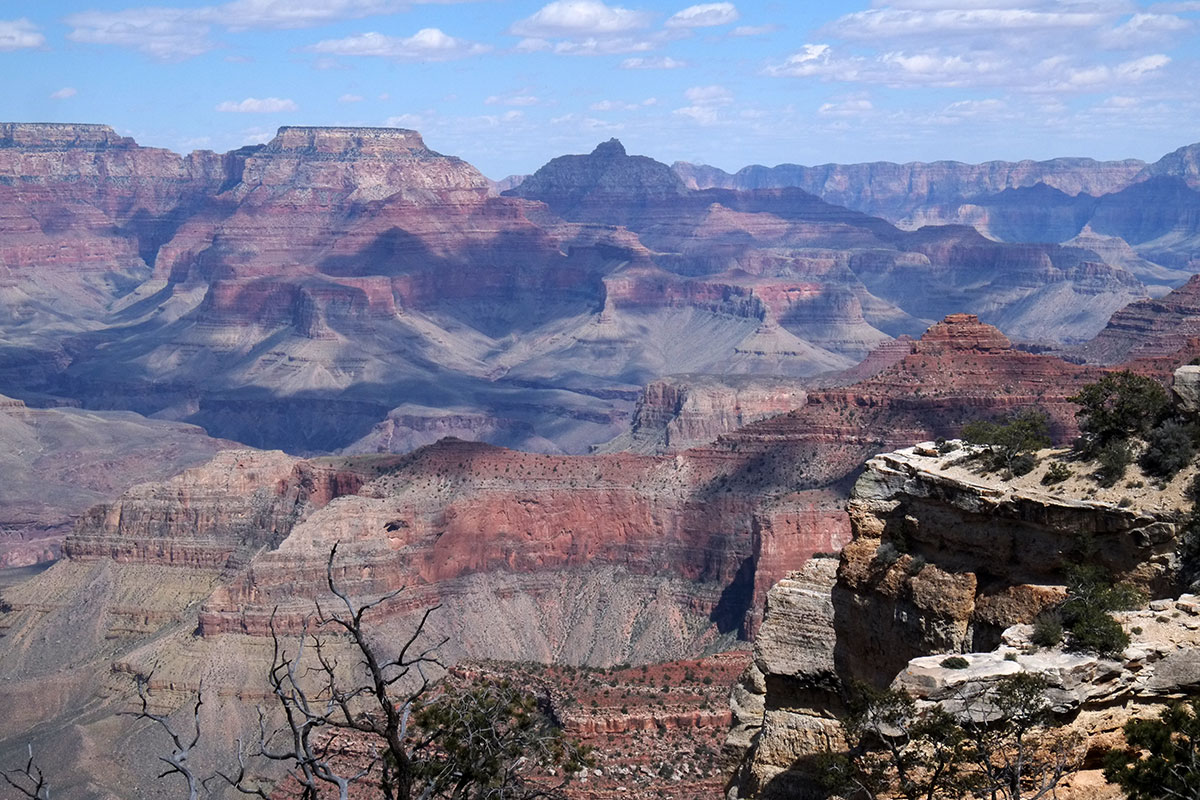
The Grand Canyon is the Champion of One-Liner National Parks:  It’s the biggest canyon you can imagine, and it’s the biggest single thing you will see in any National Park (oceans don’t count).  When you first see it, you can’t really comprehend how big it is, until you spot some scale element at the bottom, such as a cabin, or a group of hikers.  (I’ve always thought they should build a replica of the Empire State Building in it.)   For the average visitor, this is why it is also the most boring National Park.

The Grand Canyon raises exactly the same tourist problem that became clear to us at Canyonlands. There are two distinct modes for visiting:  either you do the easy tourist daytrip, or else you commit to a multiple-day backcountry trip.  We would have loved to take a rafting trip through the Grand Canyon, but we realized that would have to be planned years in advance, and that was not our modus operandi this year.  We really didn’t want to commit to hiking down to the bottom, since our earlier altitude-related incidents made us leary of a 5000-foot climb back up with decreasing oxygen levels.  So we were stuck in the South Rim tourist world, which was not so bad since it was April and not the high tourist season of summer.

We decided to hike as much as we could, instead of driving or taking the shuttle bus along the rim, but even though it was beautiful, it got pretty boring.  The problem is the scale of the place related to the observer.  In Antelope Canyon, you walk ten yards and the view changes completely.  In Zion Canyon, you walk a mile and the view transforms slowly but appreciably, constantly revealing new aspects.  At the Grand Canyon, you walk two miles along the rim and nothing changes at all.  It’s like looking out the window of a space ship.  This explains the density of tourist-oriented alternative activities (such as shopping and eating) at the Grand Canyon, to give people something to do after they’ve looked at the view for half an hour.

I’ve been taking landscape photographs for almost fifty years, and the main thing I’ve learned is that the most overwhelming, giant landscapes make the worst photos.  Your eye is different from a camera, and the experience of seeing the Grand Canyon is very different from looking at photos of it.  But going to see it was on the checklist:  we knew that Greta had to see it, but we didn’t have to spend much time there.  Check.  Here is another picture to prove we were there.  DSCF8568

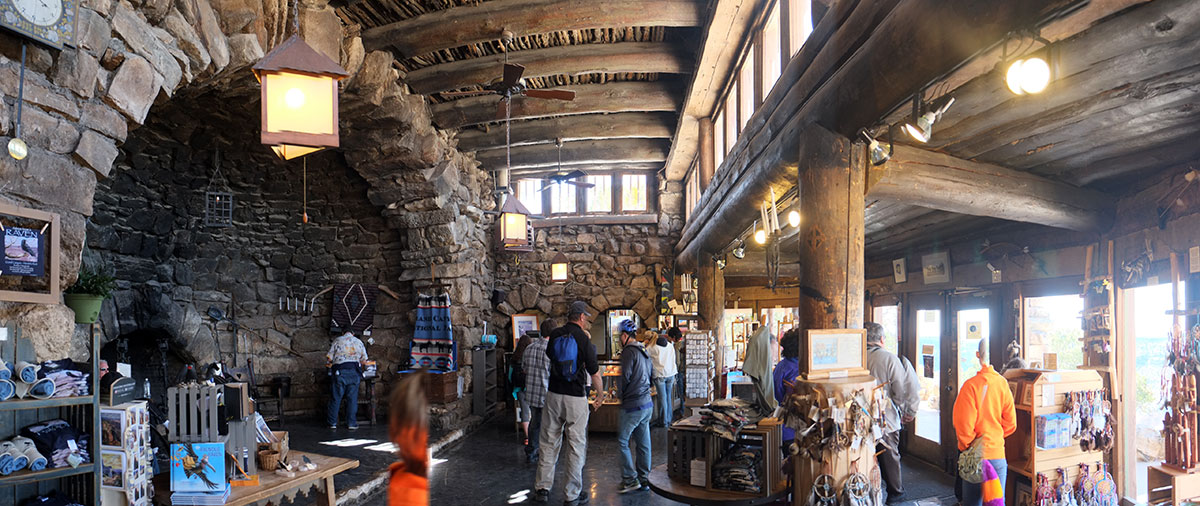
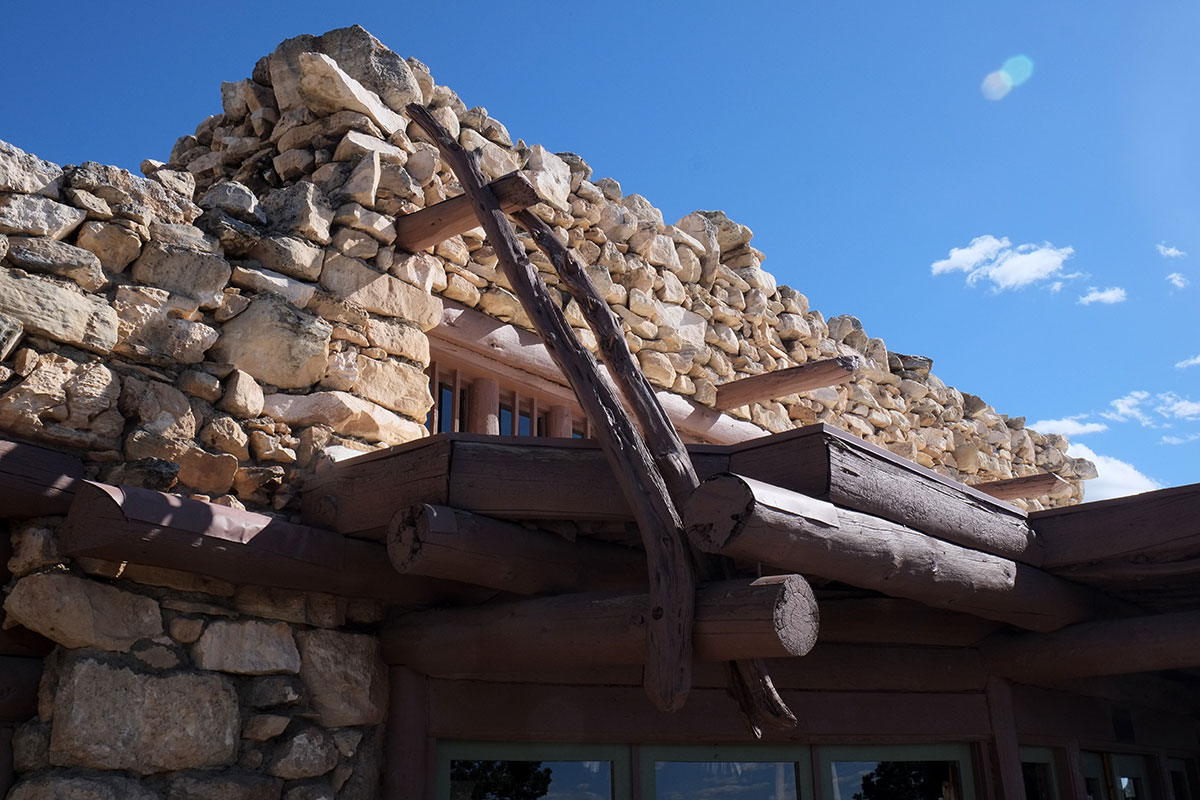
We had reserved a campground spot for a couple of nights, so how were we going to fill the time?  We fell back on our old standards of taking photos of tourists taking selfies, and looking at architecture.  Luckily, the Grand Canyon has some of the best and most important National Park rustic architecture that exists.  Mary Colter was the head architect for the Fred Harvey Company, the concessionaire for the Santa Fe RR and the Grand Canyon.  She designed the buildings on the South Rim from 1908 through 1937, and her work helped to set the style of “Parkitecture” that is seen throughout the system.

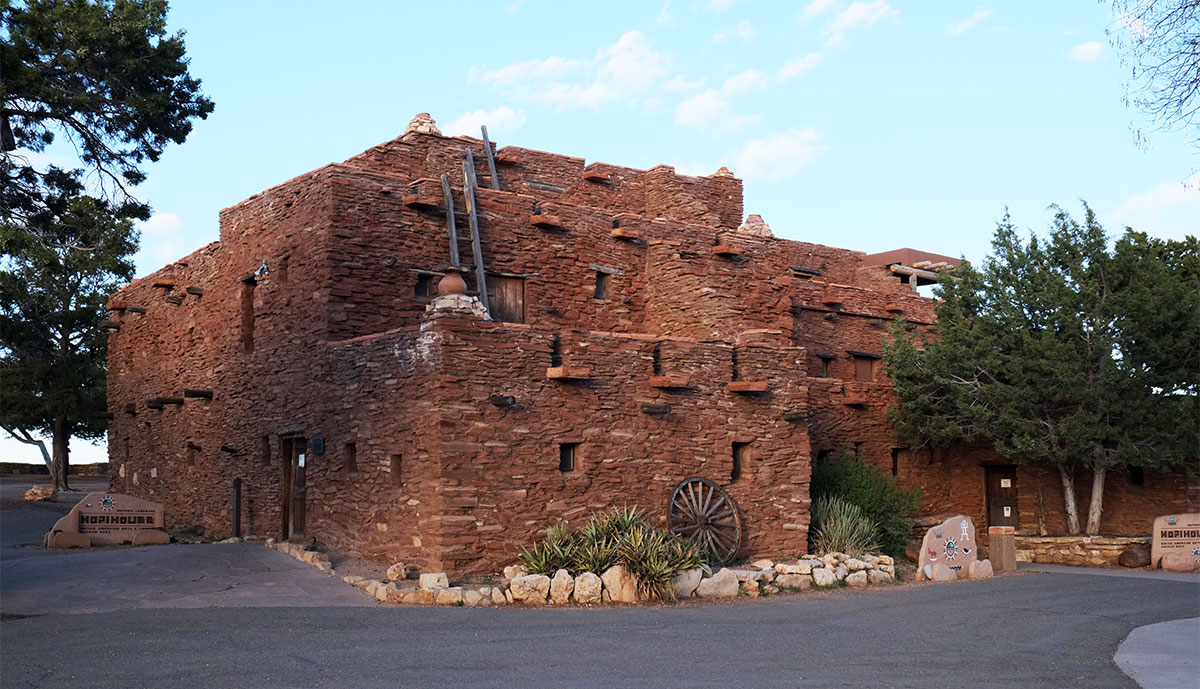
Her first commission was the Hopi House, which is a shop that sells authentic native craftwork.  It was also built by Hopi craftsmen – the quality of the masonry is exquisite.DSCF8472

Colter didn’t just make conventional buildings that imitated motifs of historic Puebloan edifices or cliff dwellings – she actually incorporated traditional construction techniques.  But in the best way of complementing the historic structures, she also didn’t slavishly copy them.  Rather, she studied the formal language which underlay them, and produced her own innovative designs using that language.DSCF8513

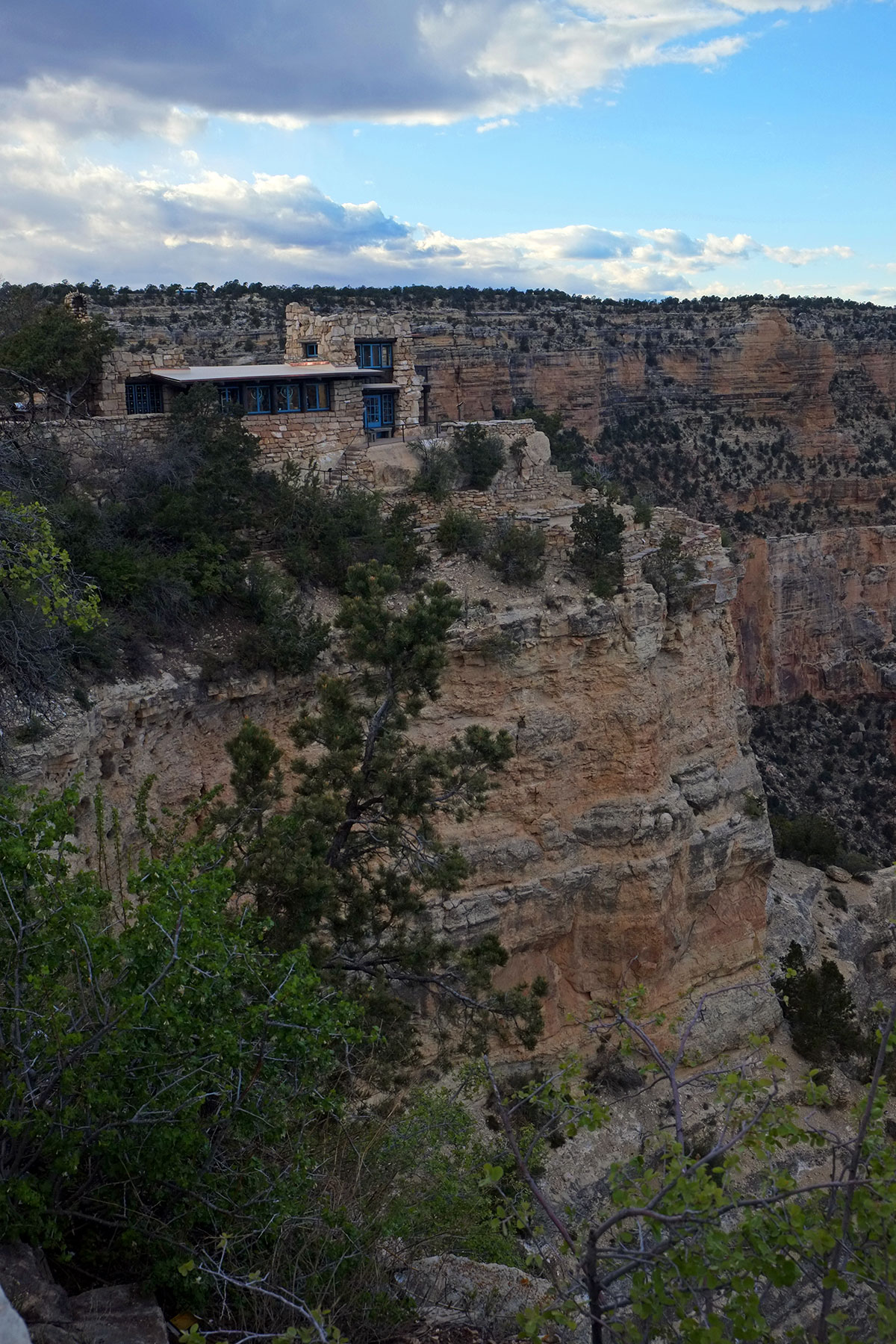
Her smaller buildings were destinations on the rim drive for tourists – places where they could rest and have refreshments. The Lookout is perched on the rim itself, growing out of the cliff in a way similar to that of the Hopi mesa villages.  (The interior is a gift shop at this point, which obscures the quality of both the spaces and the finishes.)  DSCF8454

93B.Grand Canyon03293.Grand Canyon147DSCF8530

The Hermit’s Rest is at the west end of the Rim Drive.  The plan and its volumetric expression are incredible: a lower porch zone, a higher wide & shallow nave, and a huge apse / inglenook. The spatial invention is amazing – taking traditional elements as a jumping-off point for explorations in space, structure, light and materials.

93B.Grand Canyon04093.Grand Canyon155DSCF8585

DSCF8578

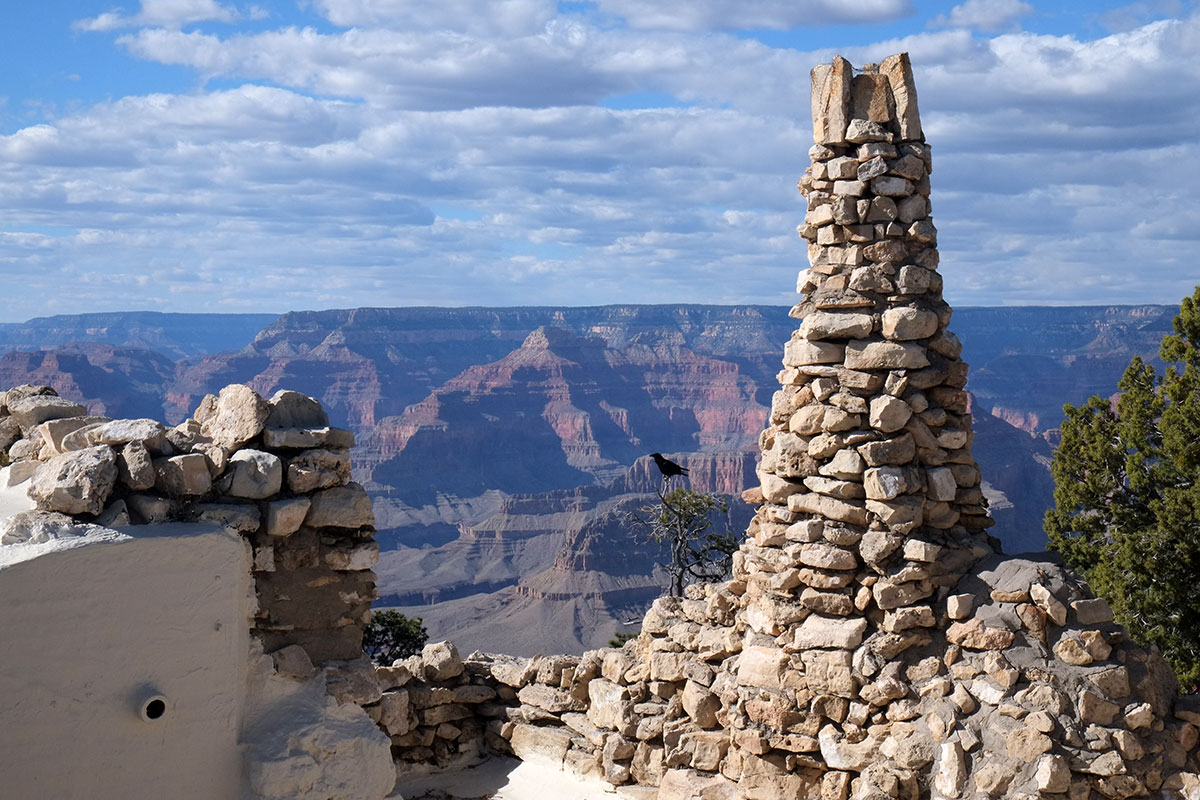
The outside is not very visible nor emphasized – it’s mostly just the skin surrounding the interior volumes – but if you climb up the rise behind you can see the fun she had with the chimney.DSCF8574

93B.Grand Canyon04293.Grand Canyon157DSCF8600

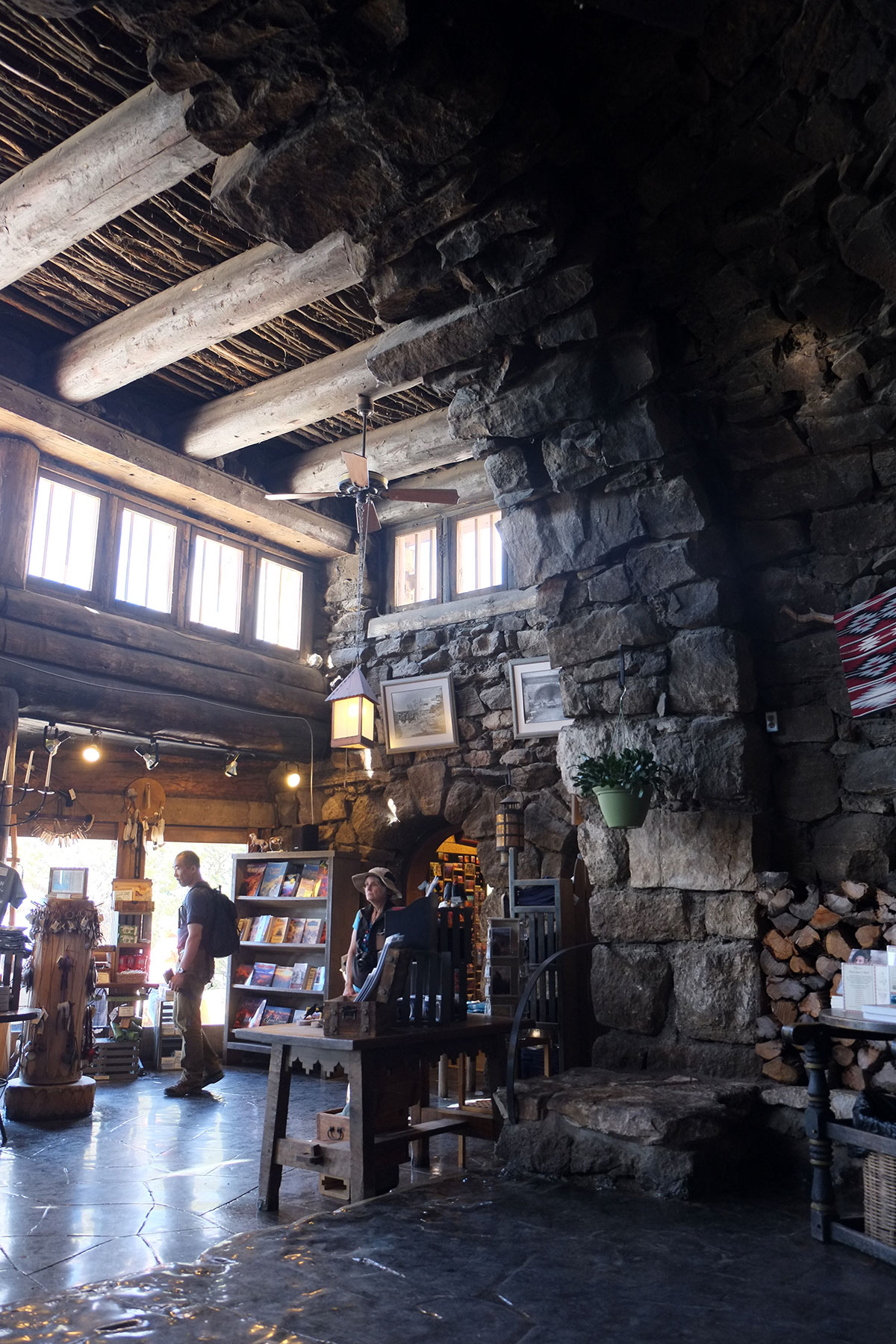
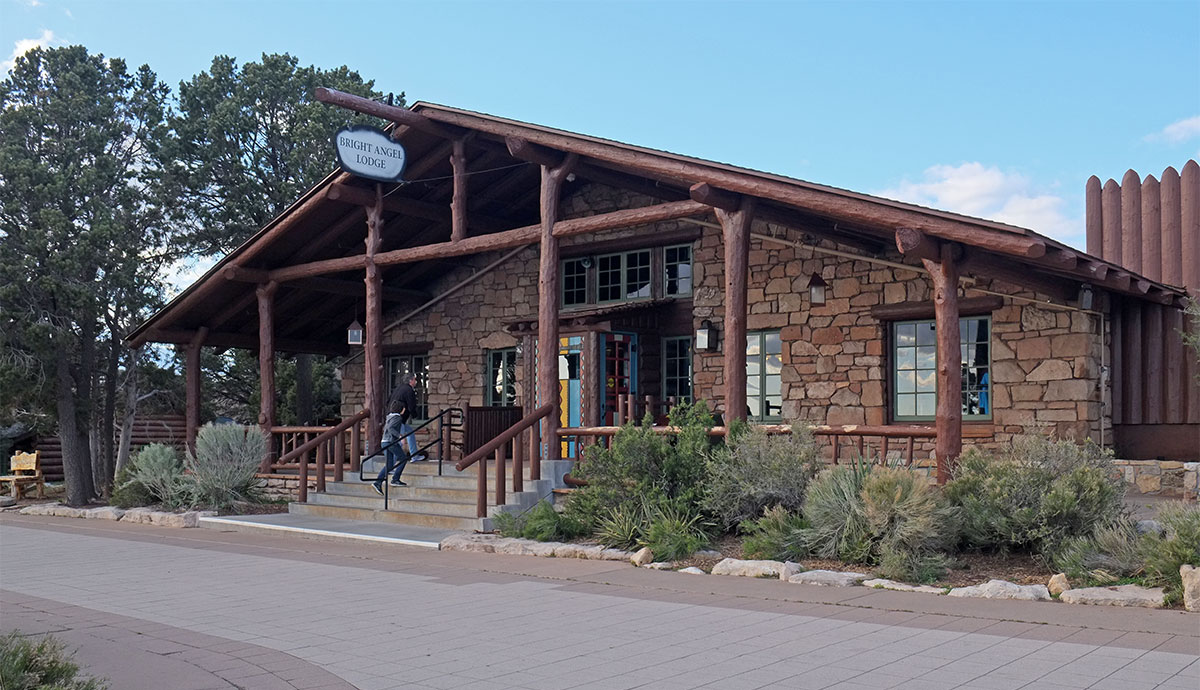
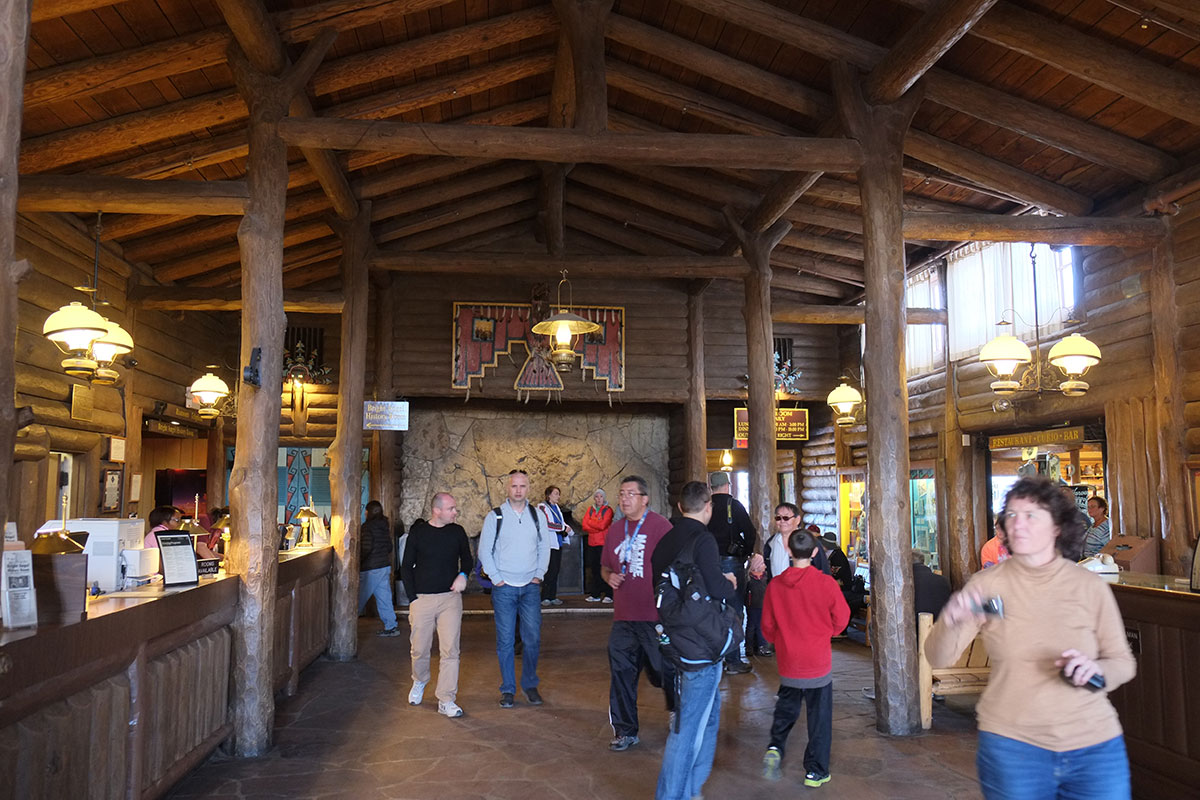
The Bright Angel Lodge is straightforward in its use of structure, and (once again) amazingly detailed stonework.  DSCF8469

DSCF8449

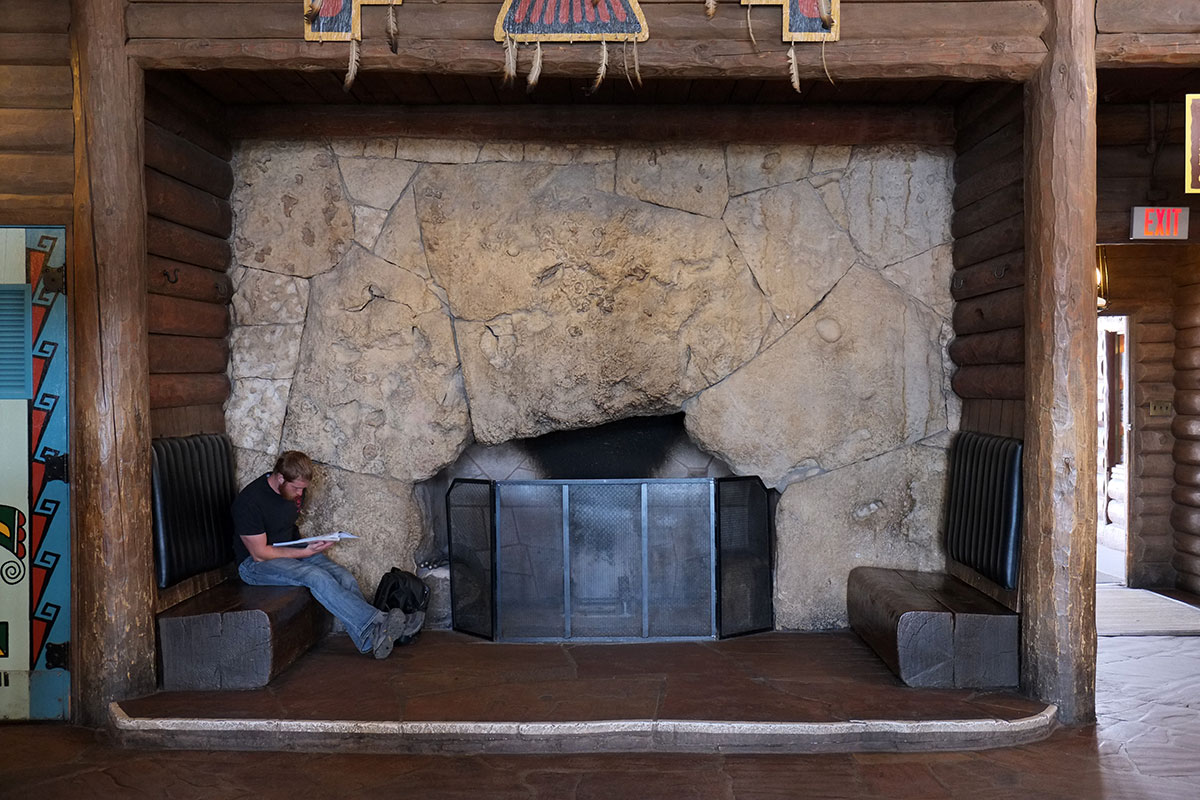
I have never seen stones of this size used in a fireplace.  DSCF8519

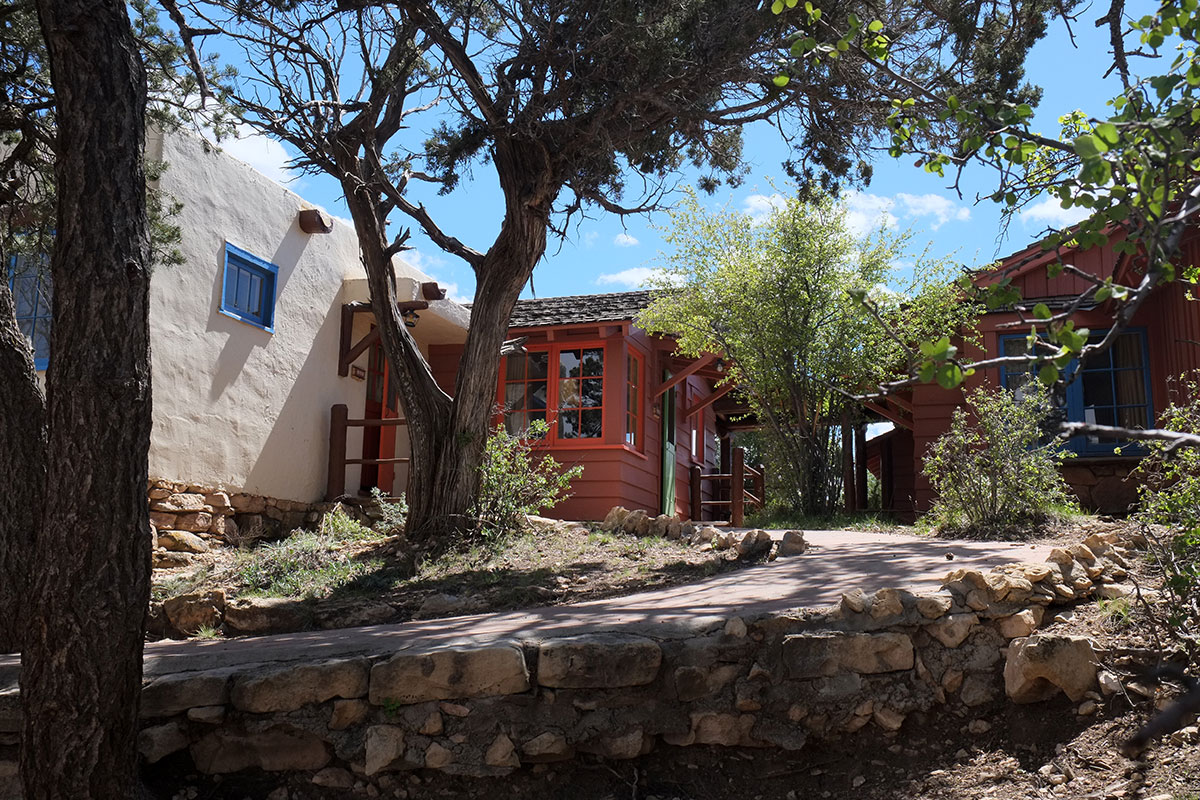
The cabin area of the Lodge uses a kit-of-parts of a few cabin types, articulated in a a few different material types, combined in a site plan with small entry spaces and carefully-considered landscaping.   I had stayed in one of these small cabins over 20 years ago, in January, and still remember the pleasure of seeing the snow-clad Canyon in the moonlight, before heading across the icy walkways into my cozy cabin with a fireplace.  Taking a closer look at the architecture this year I was even more impressed. DSCF8557

DSCF8563

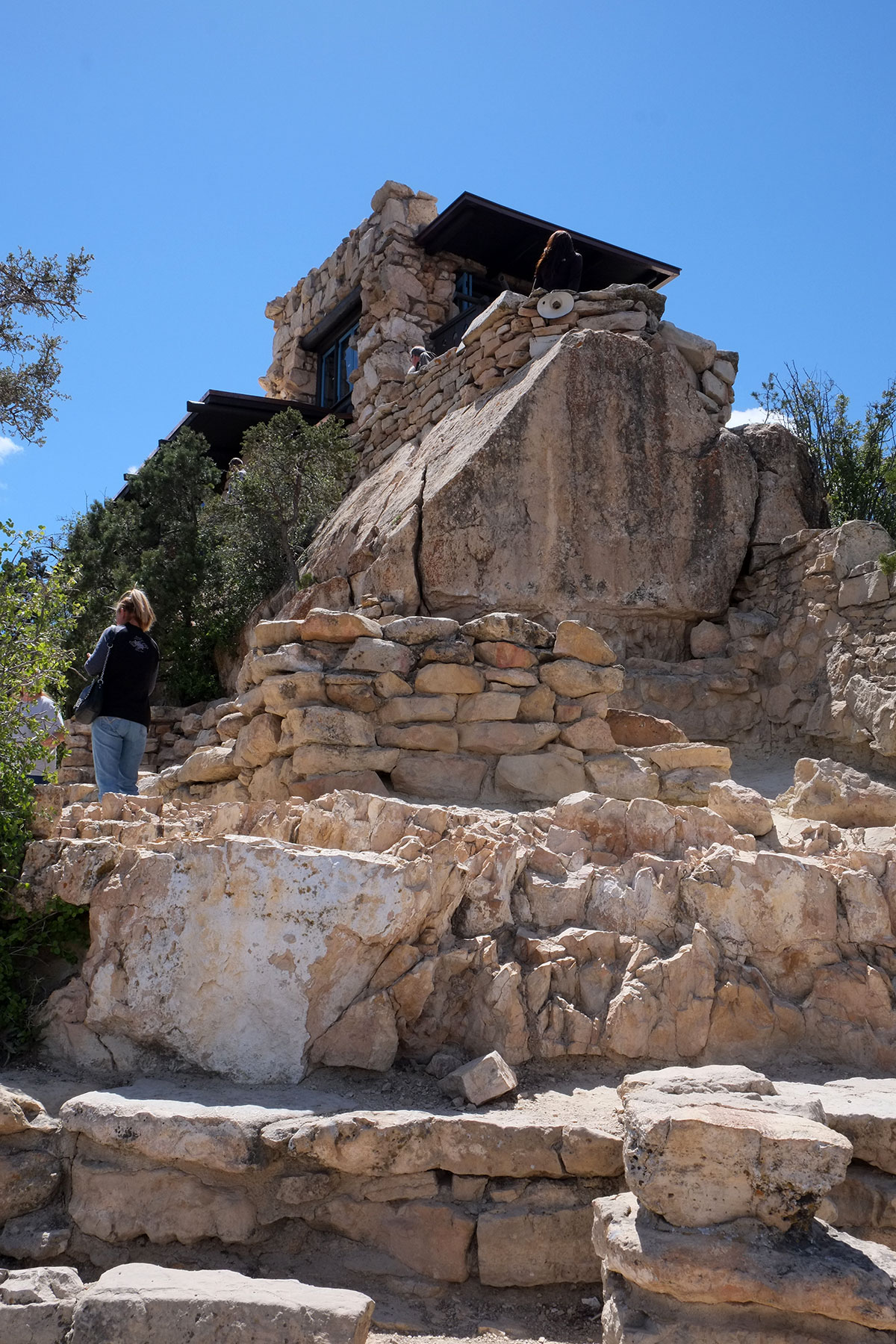
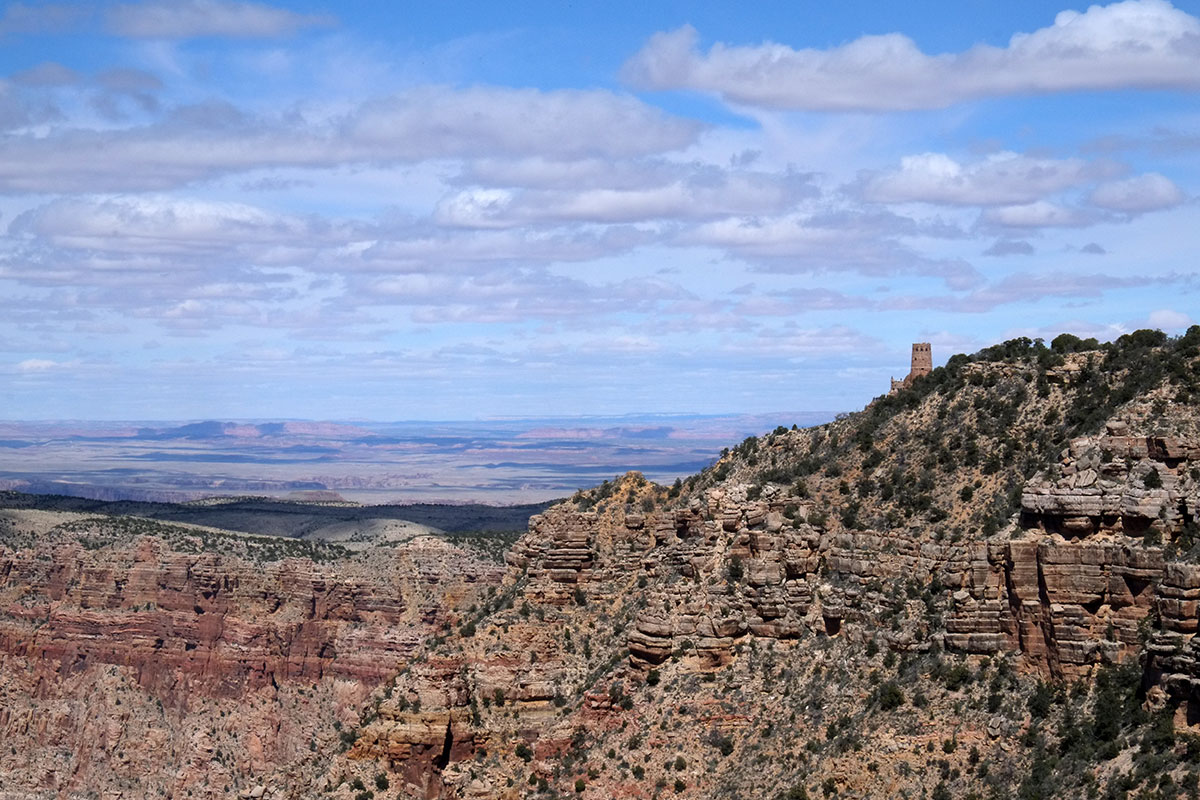
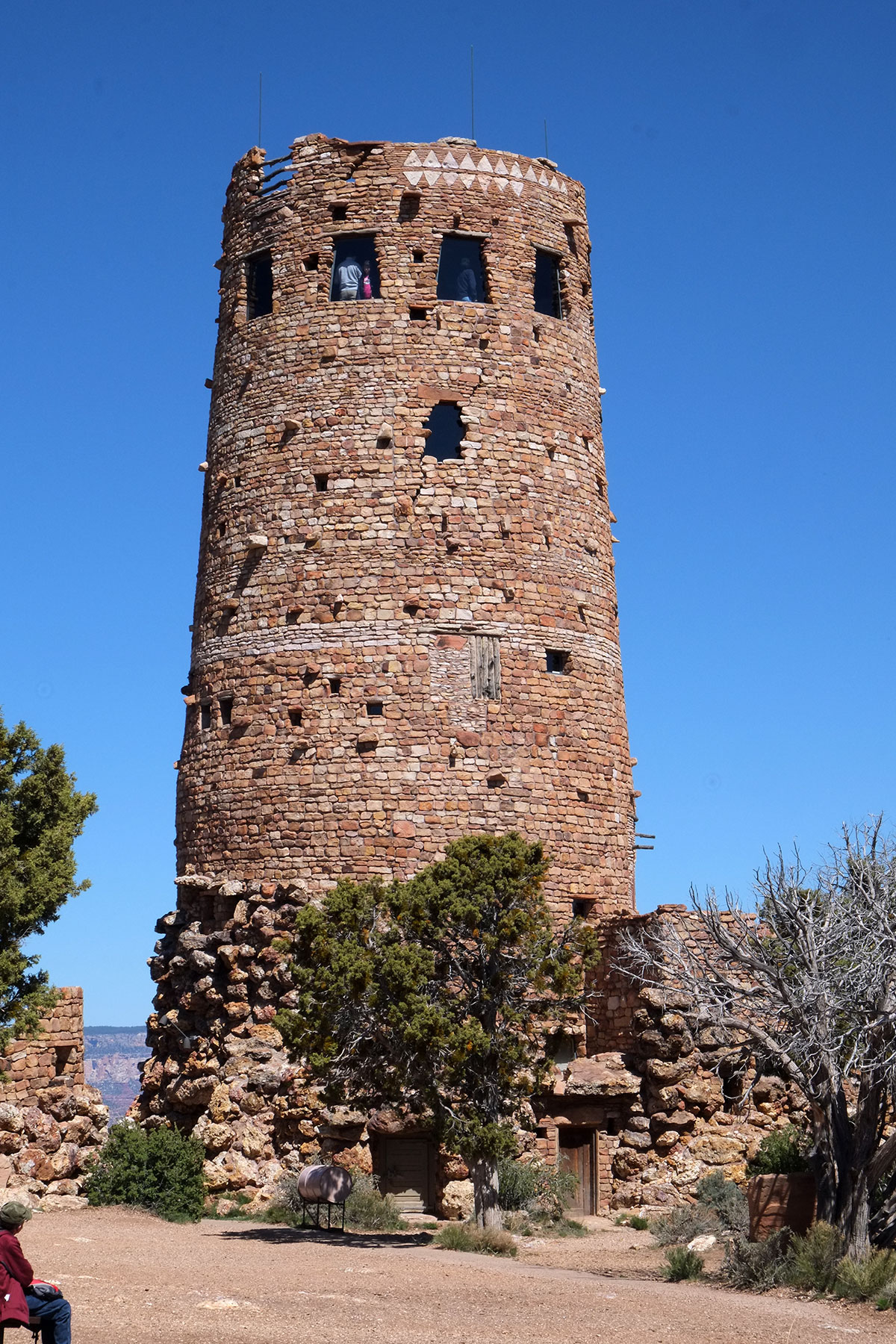
The most spectacular of Colter’s buildings is the Watchtower, at the east end of the South Rim.  The form refers to an element sometimes seen in cliff dwellings, though there the towers are always part of an ensemble tucked beneath the cliff.  Colter had the audacity to put this right on the edge, where it affords tremendous views and becomes that small scale element needed to understand the size of the canyon, without being obtrusive.  DSCF8403

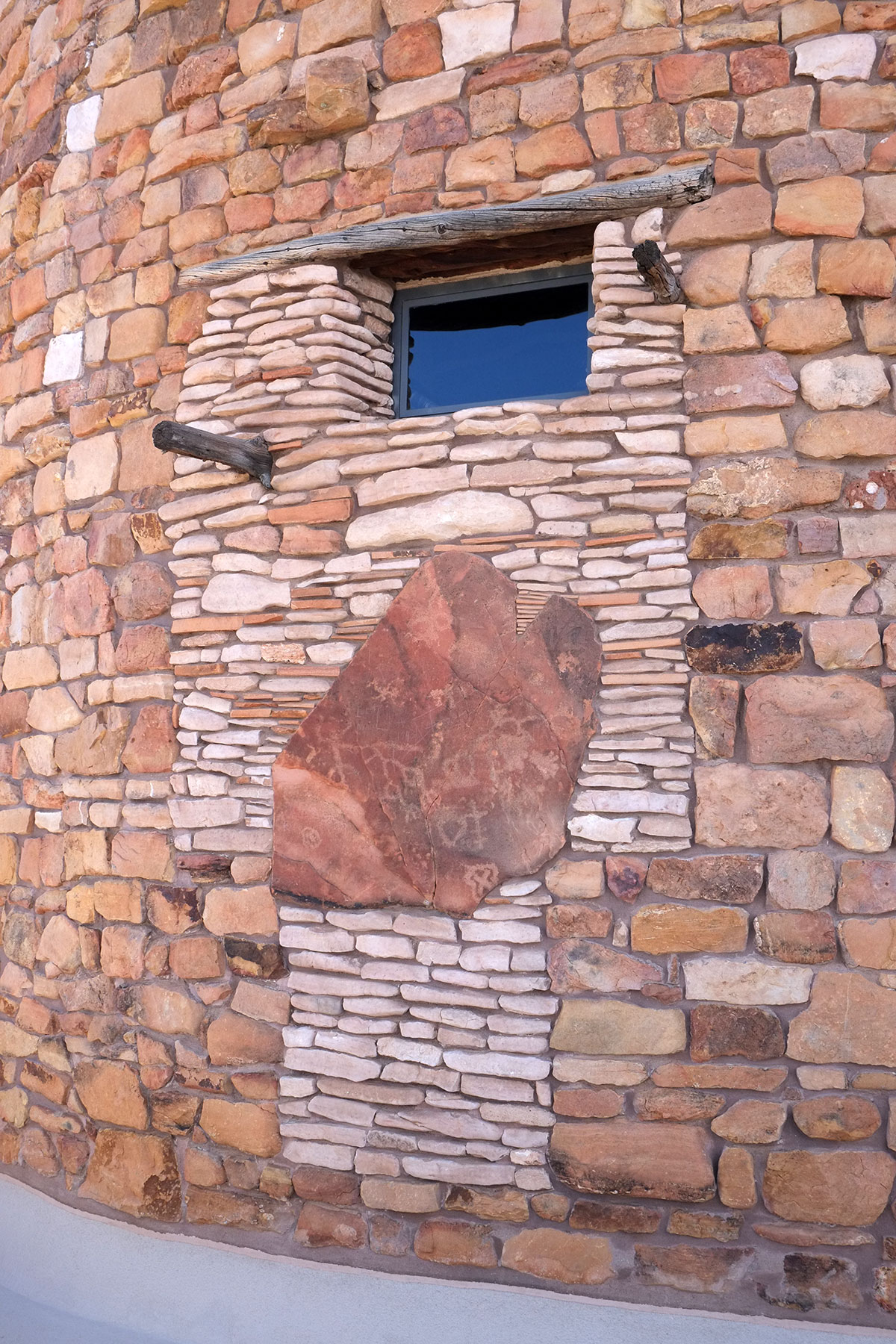
The texture, craftsmanship, balance between rhythm and disruption, evocation of ruins without being too coy.  93B.Grand Canyon02193.Grand Canyon136DSCF8617

DSCF8388

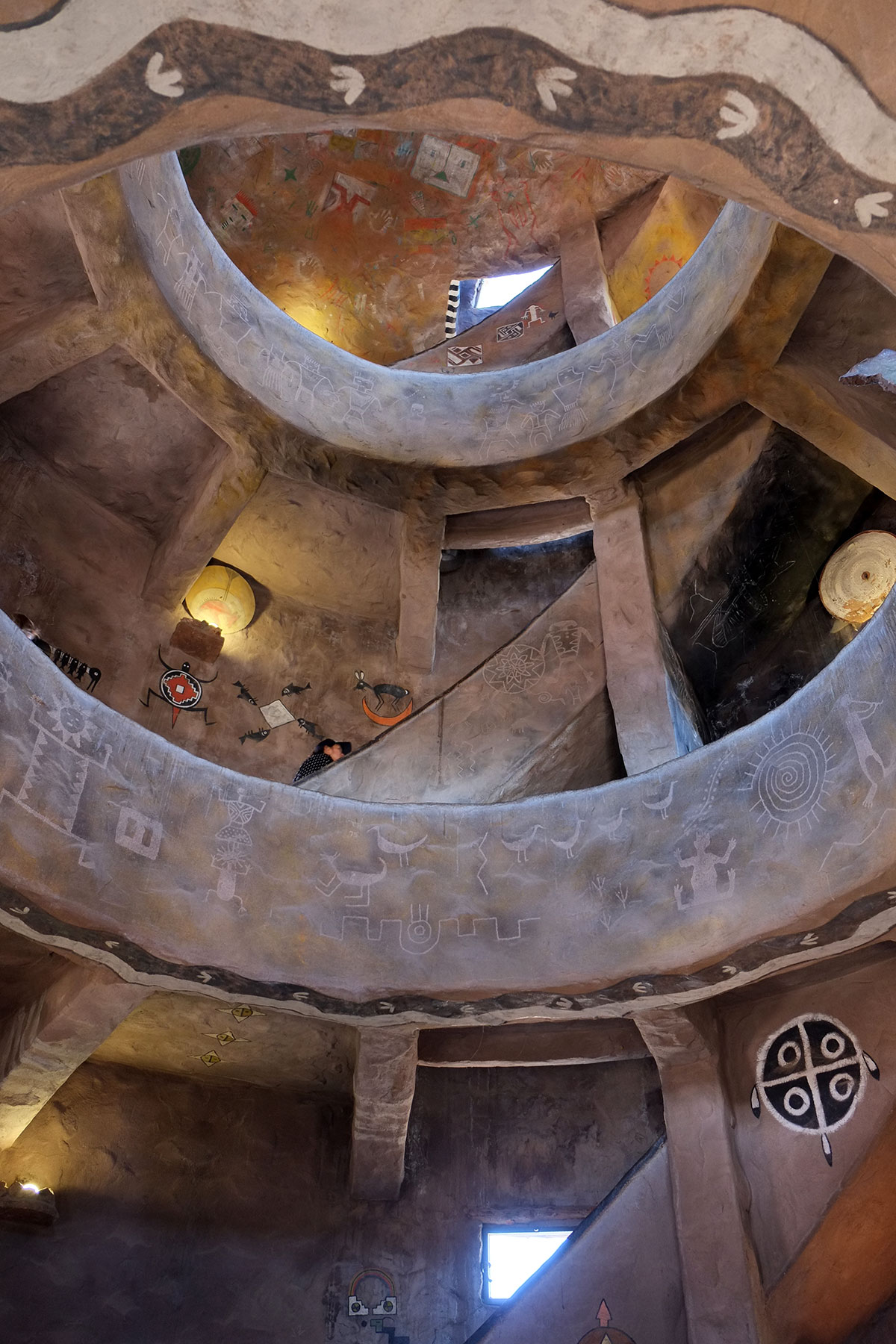
The tower has a series of viewing levels, all decorated by native craftsmen.  93B.Grand Canyon01993.Grand Canyon134DSCF8389

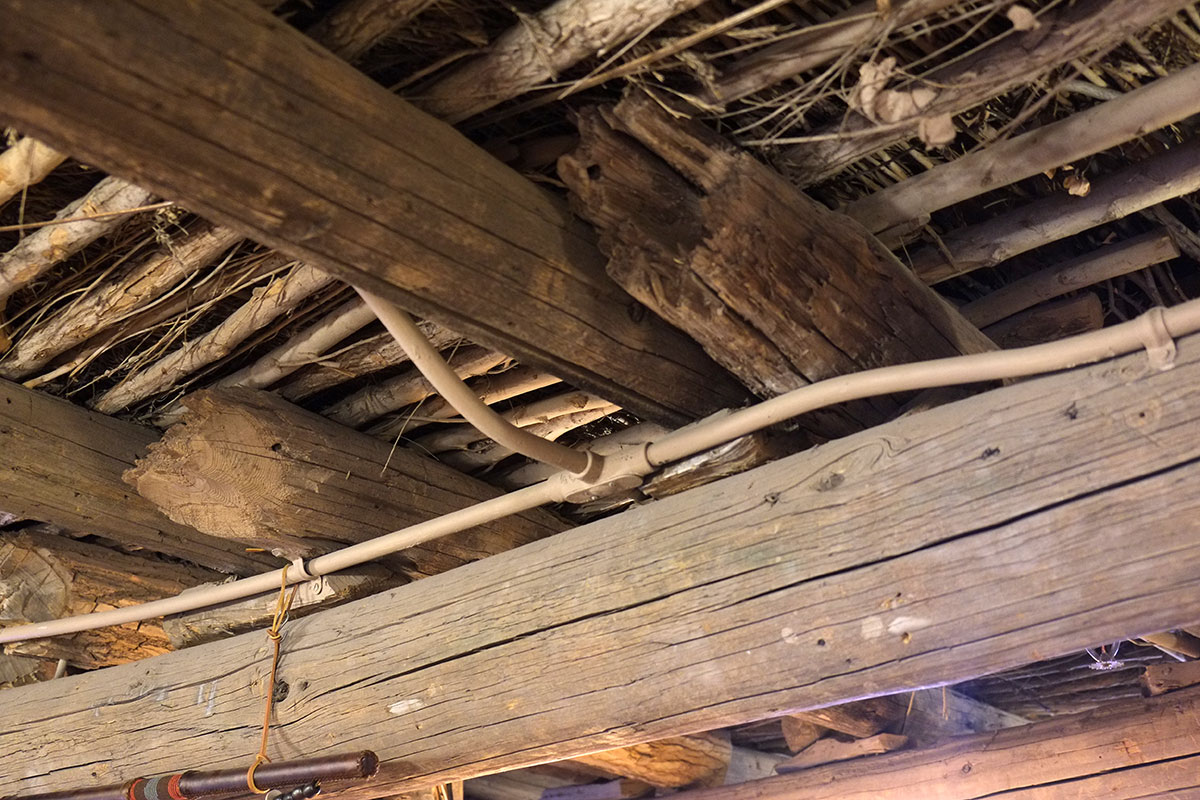
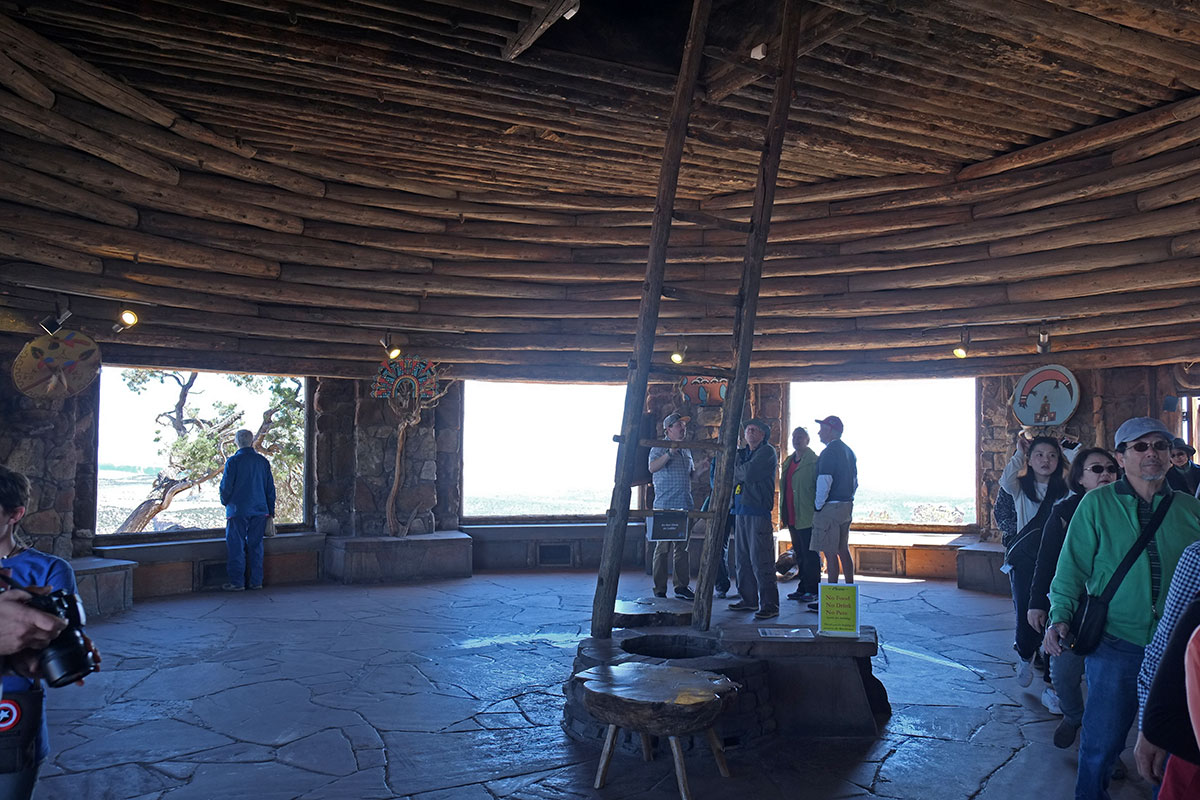
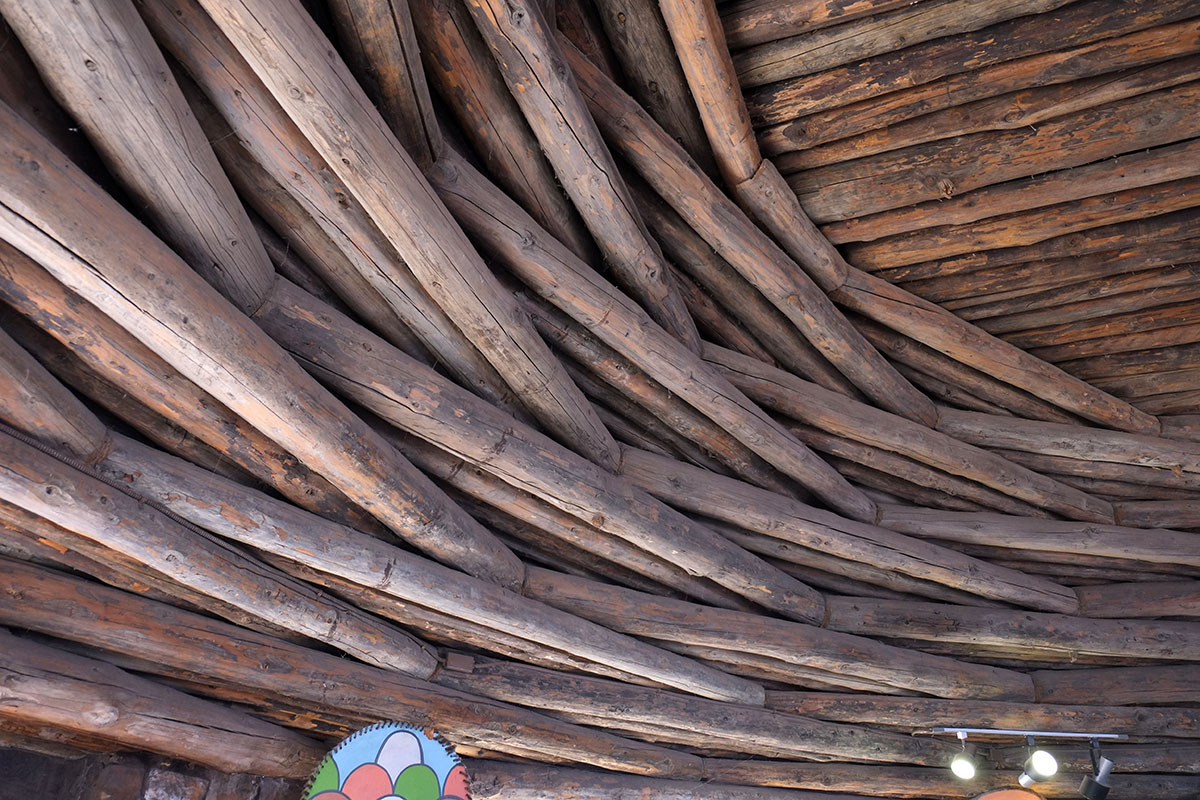
There is a large round room adjacent to the tower base, which plays with kiva-like elements.  The use of wood framing actually shows how pre-historic rooms would have been roofed.  DSCF8619

DSCF8620

Just as seeing a broad range of Donald Judd’s sculpture in one place leads to a deeper understanding of it than seeing one isolated piece in a museum every once in a while, seeing this collection of Mary Colter’s astounding talent in one location allows you to appreciate the themes, subtleties, variations and development throughout her career.  She was lucky to have the opportunity to work on one of the most astounding sites in the world, and we’re lucky that she was one of the few architects around who probably wouldn’t have screwed it up.  For me, there is just the right balance of being respectful of the site and local vernacular traditions with a tremendous personal vision and design integrity.  For Greta, it was just the latest example that no matter where we went, I’d find some architecture to look at.

Monument Valley

DSCF8038

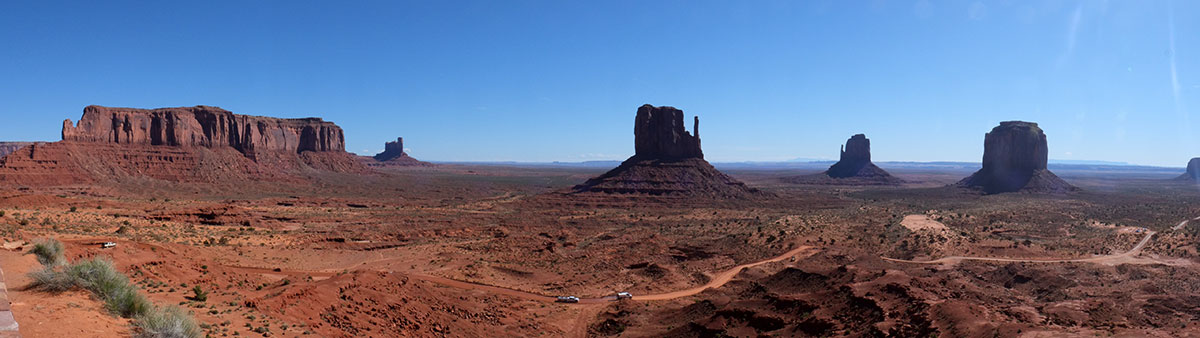
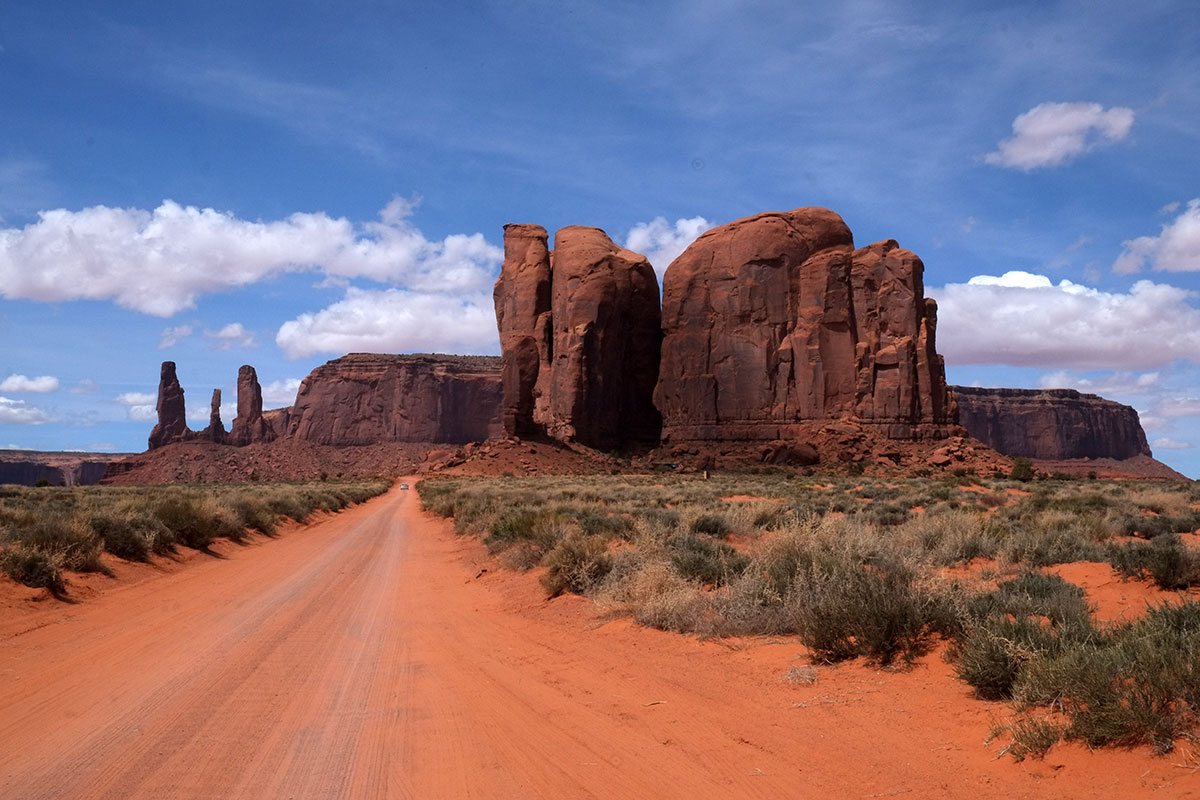
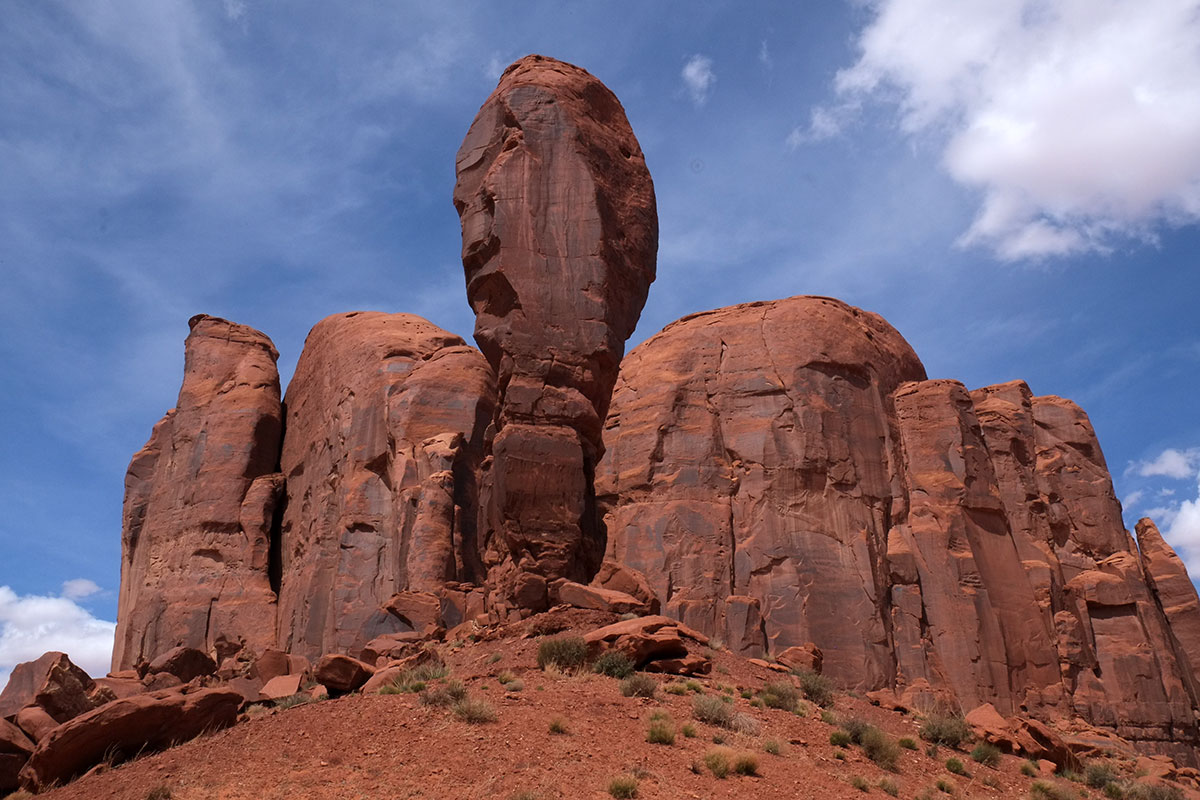
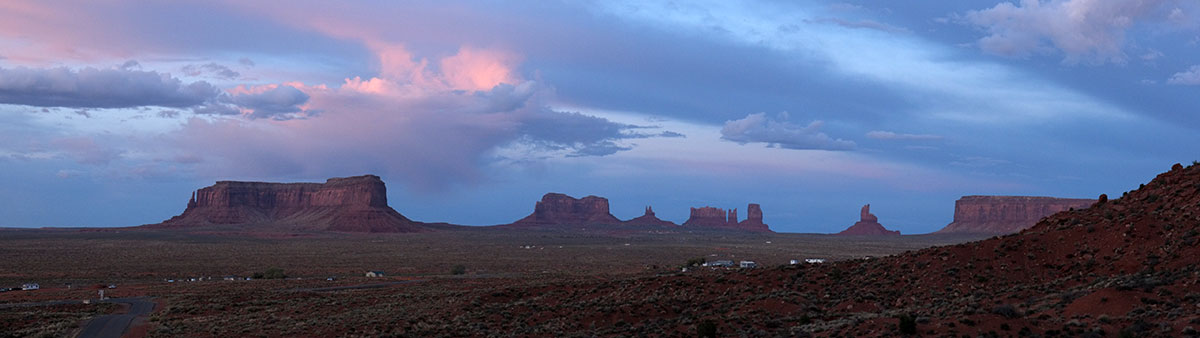
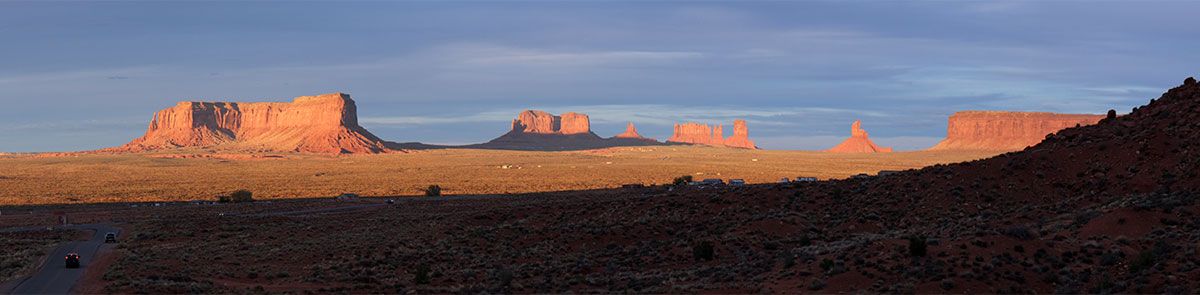
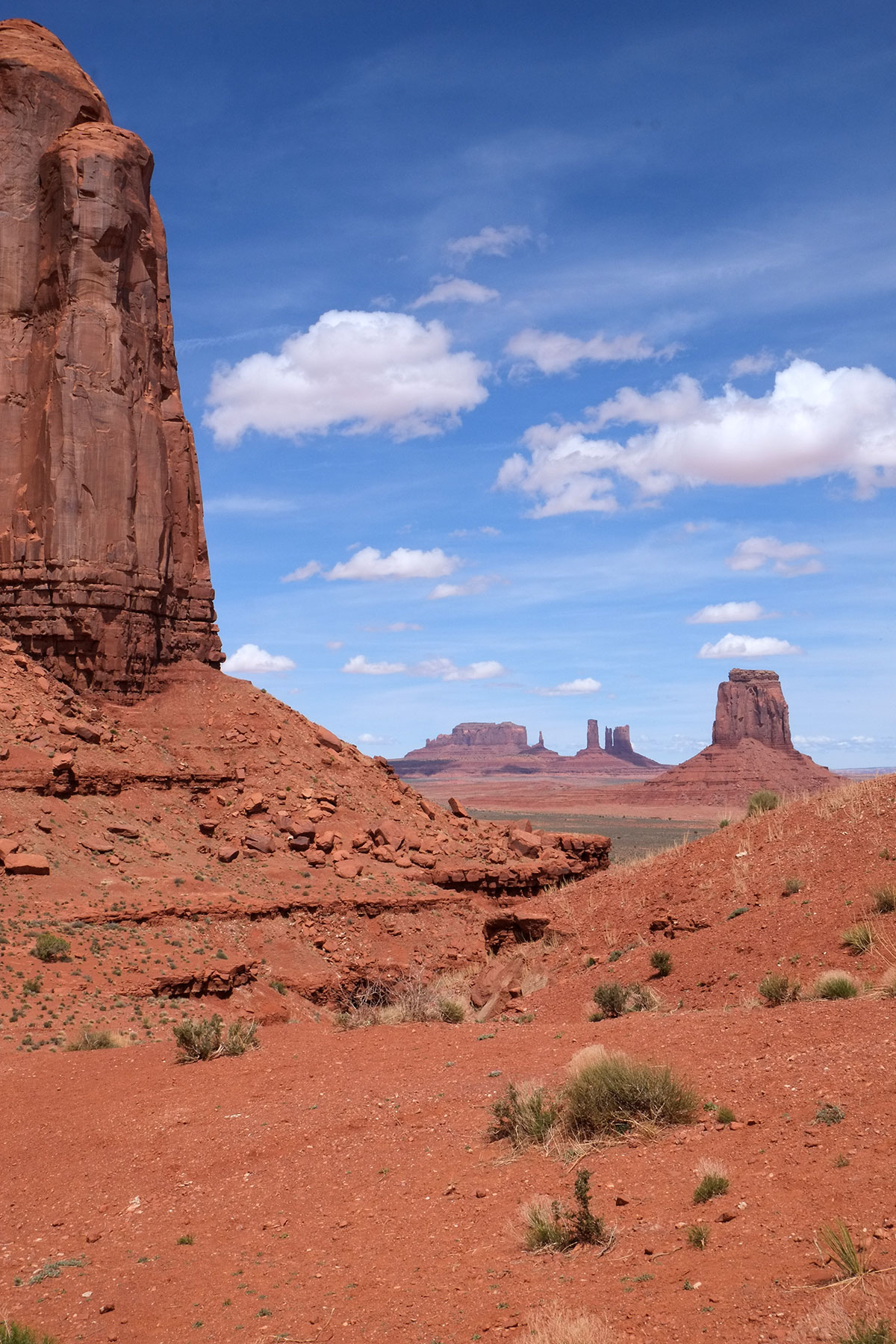
The one-line description of Monument Valley is, Really Big Objects in the Desert.  You don’t feel the boundaries of the valley, and you seldom feel that you’re in a defined place.  Mainly you drive across an open plain, and these extraordinary, imageable, gigantic things are looming in the distance.  You can’t get close to many of them (as they are off the road), and getting closer doesn’t really change the experience anyway.  It’s like looking at a star, and then using a telescope – it’s the same thing, just a little bigger.

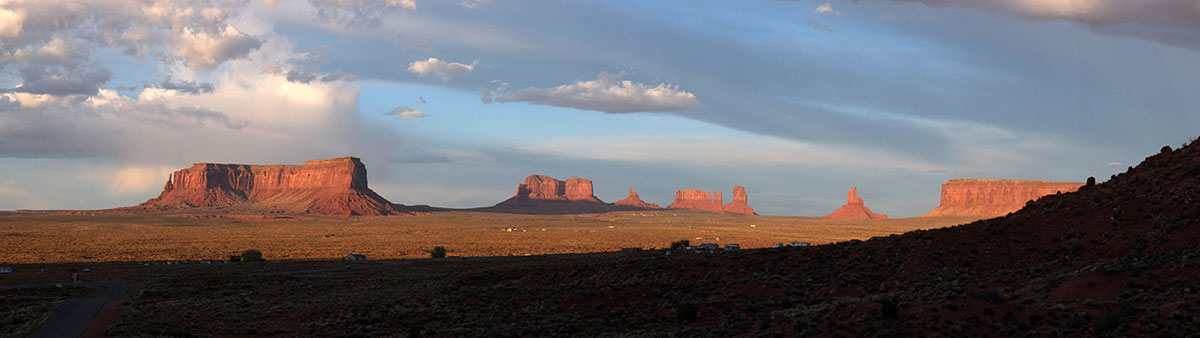
What you really notice here, even more than at other places in the Southwest, is the play of light and shadow across the landscape.  The distances are so great that it takes a long time for a shadow to move an appreciable distance.  The light and shadows are equal with the landforms in determining the view – the same view seen at two different times varies dramatically with the movement of a cloud.  DSCF8019

DSCF8056

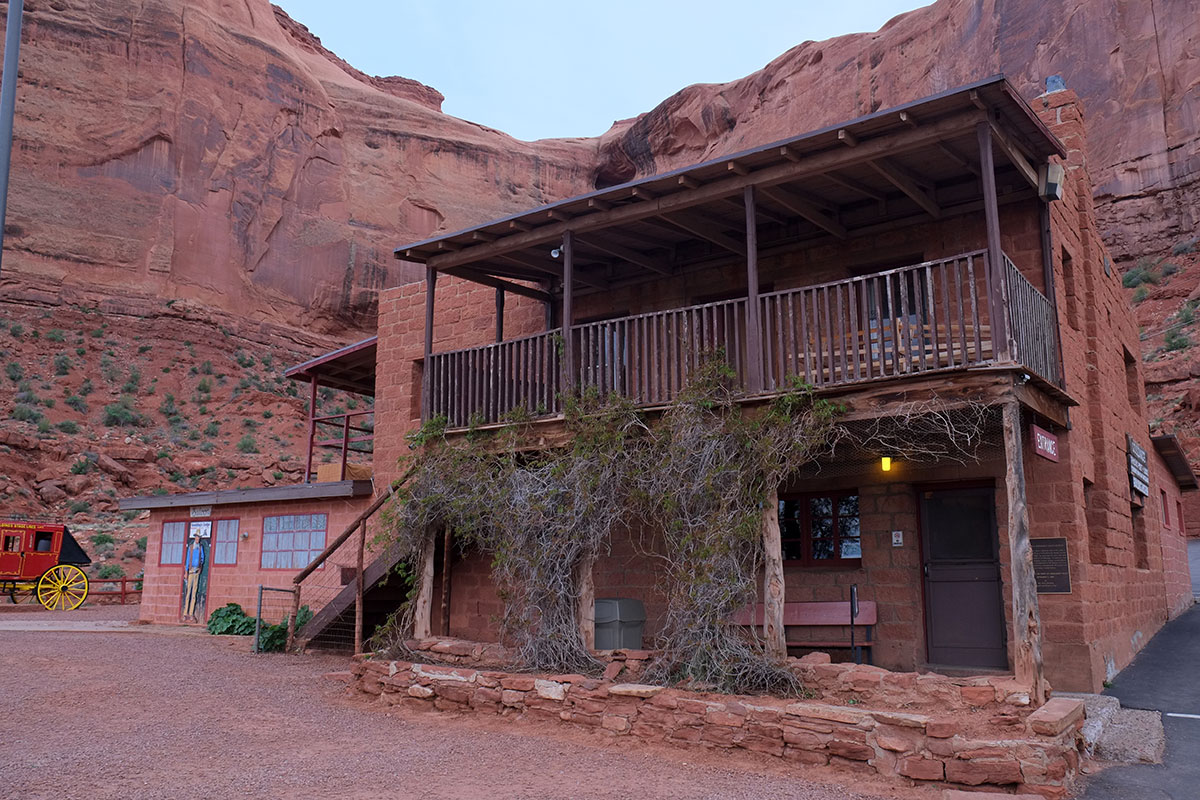
Our experience of Monument Valley was the most mediated of any place we went in the desert.   It is most famous for its role in dozens of westerns, including the great ones of John Ford.  We stayed in a campground connected to the Goulding resort.  The Gouldings were a young couple who came to Monument Valley in the early 1920s and set up a trading post on the Navajo reservation.  This is the building they lived in, on the upper floor, DSCF8073

while the trading post occupied the ground floor.  DSCF8012

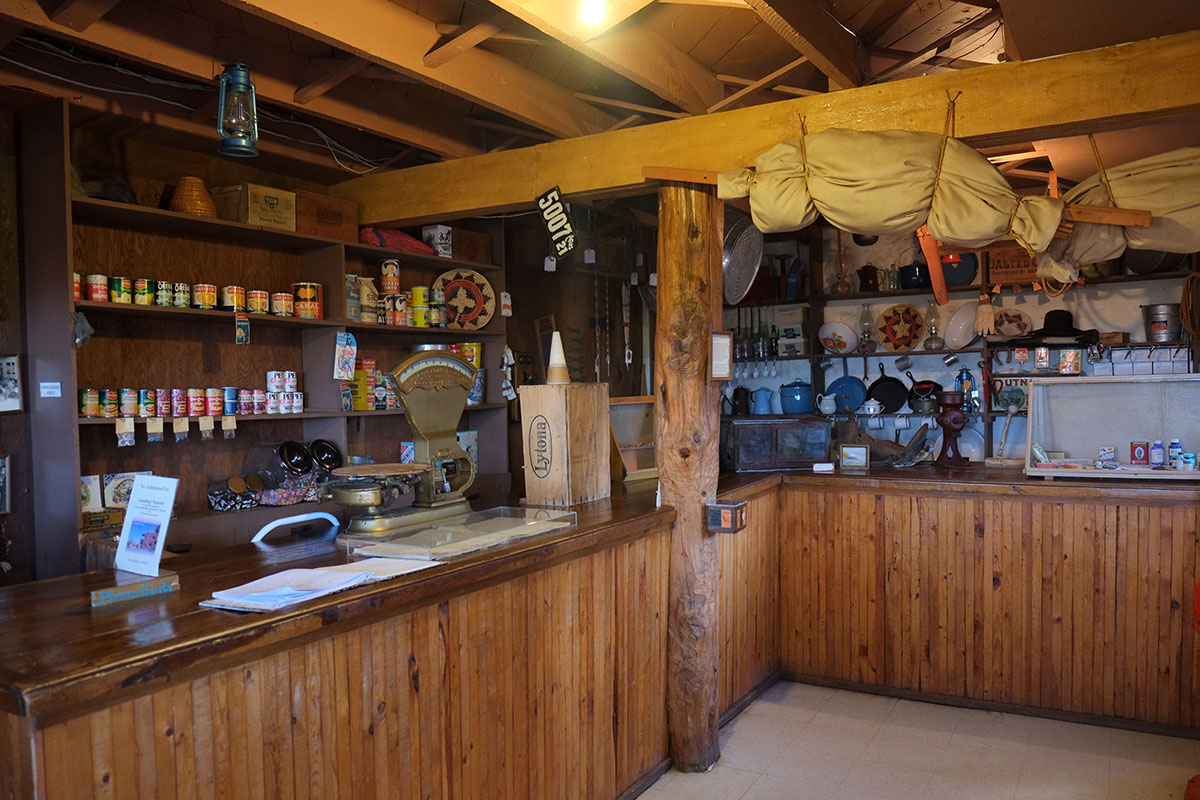
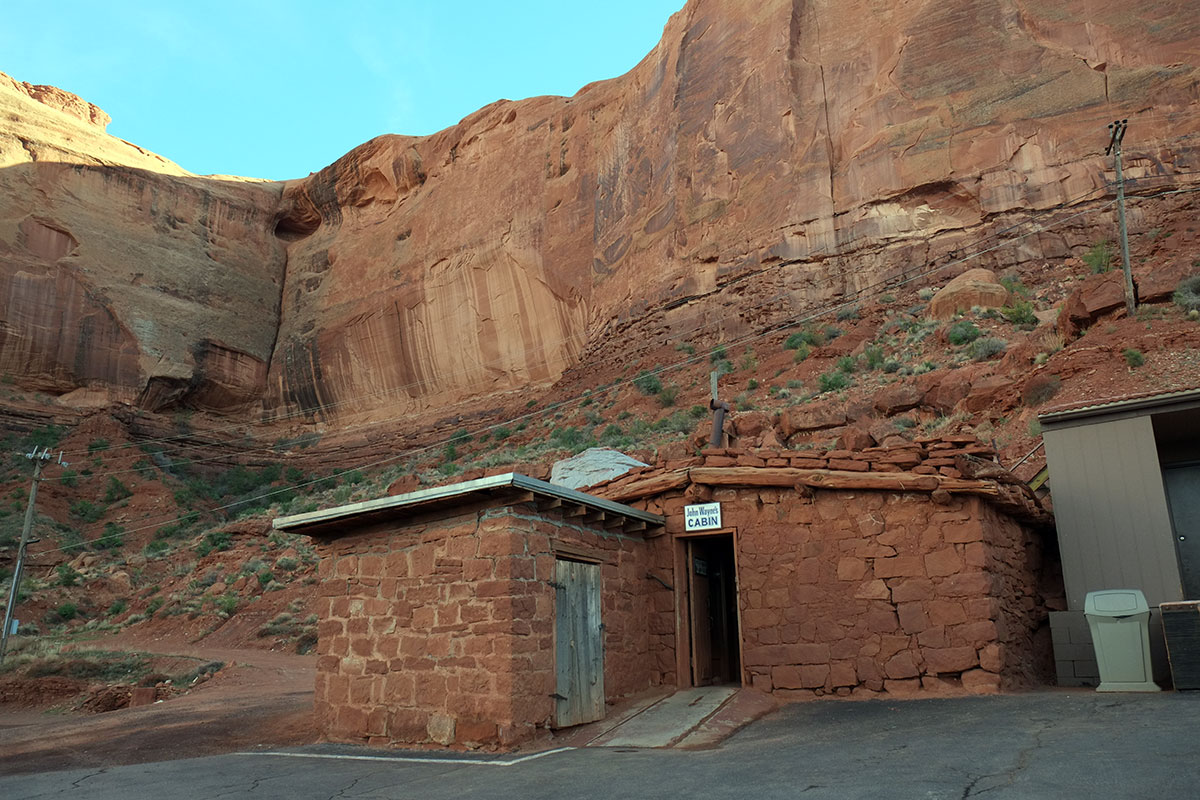
When the Depression deepened, many of the distributors they depended upon went out of business, and they and the Navajo were in bad shape.  They heard that Hollywood was looking for a locale for shooting westerns, so they traveled to LA and met with John Ford, showing him photos of Monument Valley.  He decided to shoot Stagecoach there, which was the beginning of decades of filming.  The actors and crew stayed at the Goulding’s inn, and many of the Navajo were employed as extras, especially in scenes which required serious horse riding.  The old part of the Goulding’s is now a museum, with lots of movie paraphernalia.  The storage building below was used as John Wayne’s quarters in She Wore a Yellow Ribbon.

DSCF8010

There is a small theater, and every night they show an old western.  We saw The Searchers and Stagecoach, and it was strange to see the same landscape elements appearing in scene after scene (even when the locations were supposed to be hundreds of miles away).  The experience raised some of the same questions that arise when you see a painting you’ve seen reproduced many times – can you actually see the Mona Lisa, or is your perception so warped by the prior exposure that any genuine experience is impossible?  At a certain level, this is the appeal of the place to visitors.  It is a deeply meaningful place for the Navajo, but for us outsiders, it exists as the locus of image-making.   The tourists we met were largely French and Japanese, who must have seen it in westerns and so came to this place.  I think that the lack of Chinese tourists was due to their isolation from the west during the peak years of the western.  I was surprised at the absence of Germans, as I know that the American West has long been a popular subject there.  (Perhaps it is because their connection to the West comes from a series of books, and not the movies?)

This aspect of our visit was reinforced by some other factors.  Monument Valley is a Navajo park, and the experience is quite different from the one you have in a National Park.  Highway 163 runs through the Valley, and you can see most of the iconic monuments just by driving through.  There is also a 20-mile dirt, loop road through narrower branches of the Valley.  But there are not many opportunities to get off these roads to go hiking.  There are many spots in the Valley that are sacred to the Navajo, and they are off-limits to visitors.  The few trails that do exist are not very appealing – your experience isn’t very different from what you have on the road.  For example, there is a trail that circles one of the big buttes.  But you can’t approach it very closely, or climb it, so you are just walking around in the full sunlight in a very hot desert, getting a slightly different view of a butte that looks much the same from all  sides.

There was one excellent but short trail, up the cliffs above our campground, which led to a big arch.DSCF8070

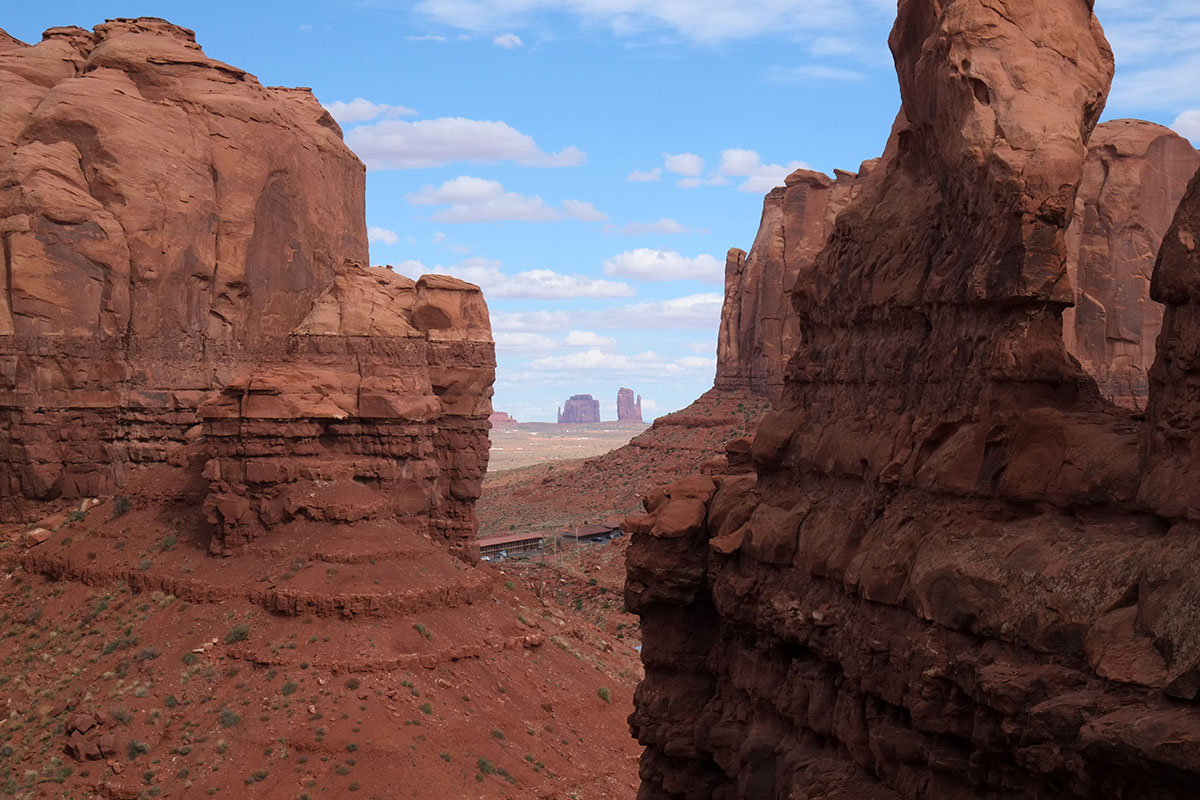
There were intermittent views out to the larger valley, with glimpses of the monuments,DSCF8067

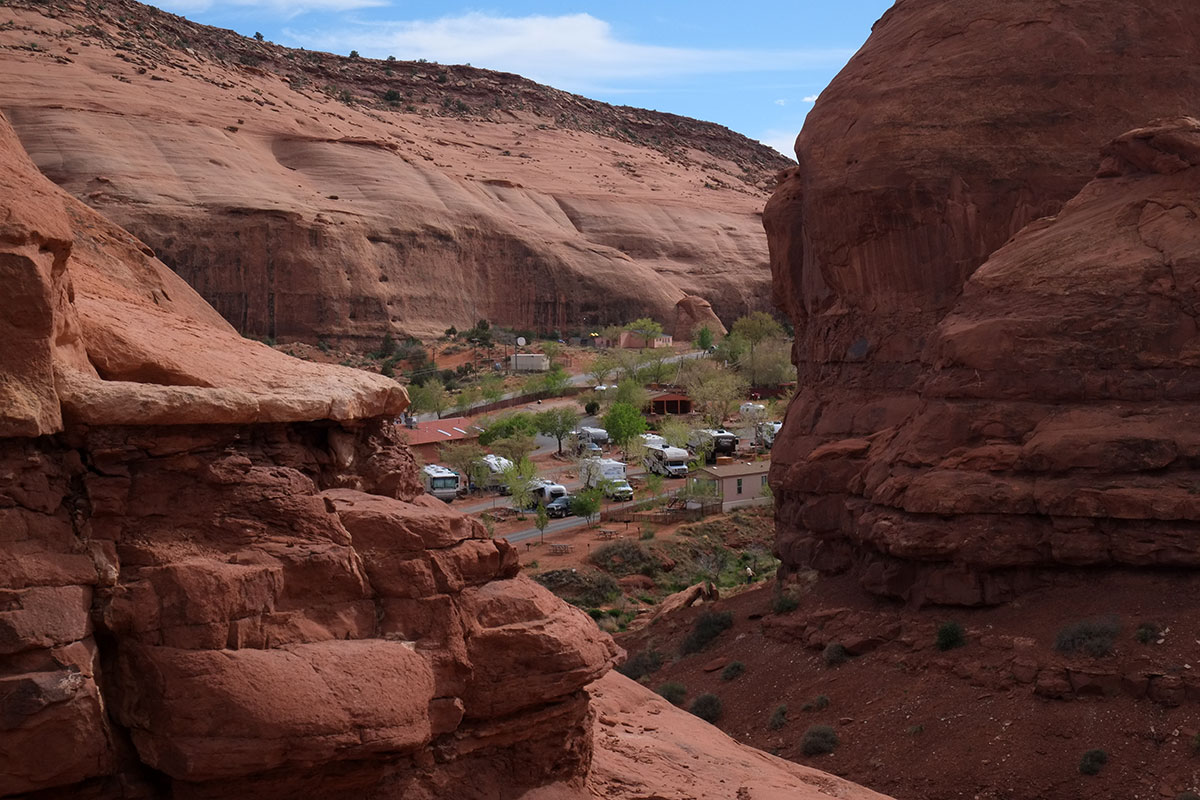
and views to the campground.  When we started our trip and camped at Craters of the Moon in Idaho, we thought it was really weird to be camping next to giant hunks of lava.  By the time we got here, we thought it was completely normal to have a campground full of RVs in the middle of sandstone canyon.  DSCF8063

The drive through the canyon branches was beautiful, and the scale was different from that of the big valley with the big monuments.  DSCF8032

DSCF8046

DSCF8047

DSCF8027

The road circles back to the main valley.  DSCF8051

While some parks in the Southwest can be experienced at a wide range of scales, in Monument Valley it is overwhelmingly about the Big View.  This is why the movies were shot here – it is completely scenographic, and the monuments are large enough to still be visually compelling even when far in the background.  As Greta observed, you can’t take a bad photograph here.  It contains  the iconic representations of The West that were implanted in our brains in childhood.  It is the land of Roadrunner cartoons.  But even though you’ve seen the views hundreds of times on film, they are still stunning in person.  Nothing moves but the clouds.  It is completely quiet.  The scale is literally awesome, as your mind can barely grasp the size of the buttes and the distances between them.  The tourists stand transfixed, not quite believing this is real.  The landforms don’t move, but the cloud and the shadows slowly do.  The light changes constantly, sometimes quite quickly, and the same view can appear remarkably different, when you see it at different times.
DSCF8014

DSCF8018

DSCF8075

DSCF8082

Visiting Monument Valley is a very passive experience – you don’t hike, you don’t modulate your experience, you just look.  But it’s a very satisfying view.

Las Vegas

84. Las Vegas106DSCF7085

If South Dakota is the epicenter of kitsch, the Southwest is the center of the surreal.  There are the surreal natural landscapes, such as Bryce and Antelope Canyons.  There are the surreal sprawl-cities, such as Phoenix.  And then there is Las Vegas, which is competing with Dubai to be the world capital of surreal architecture.

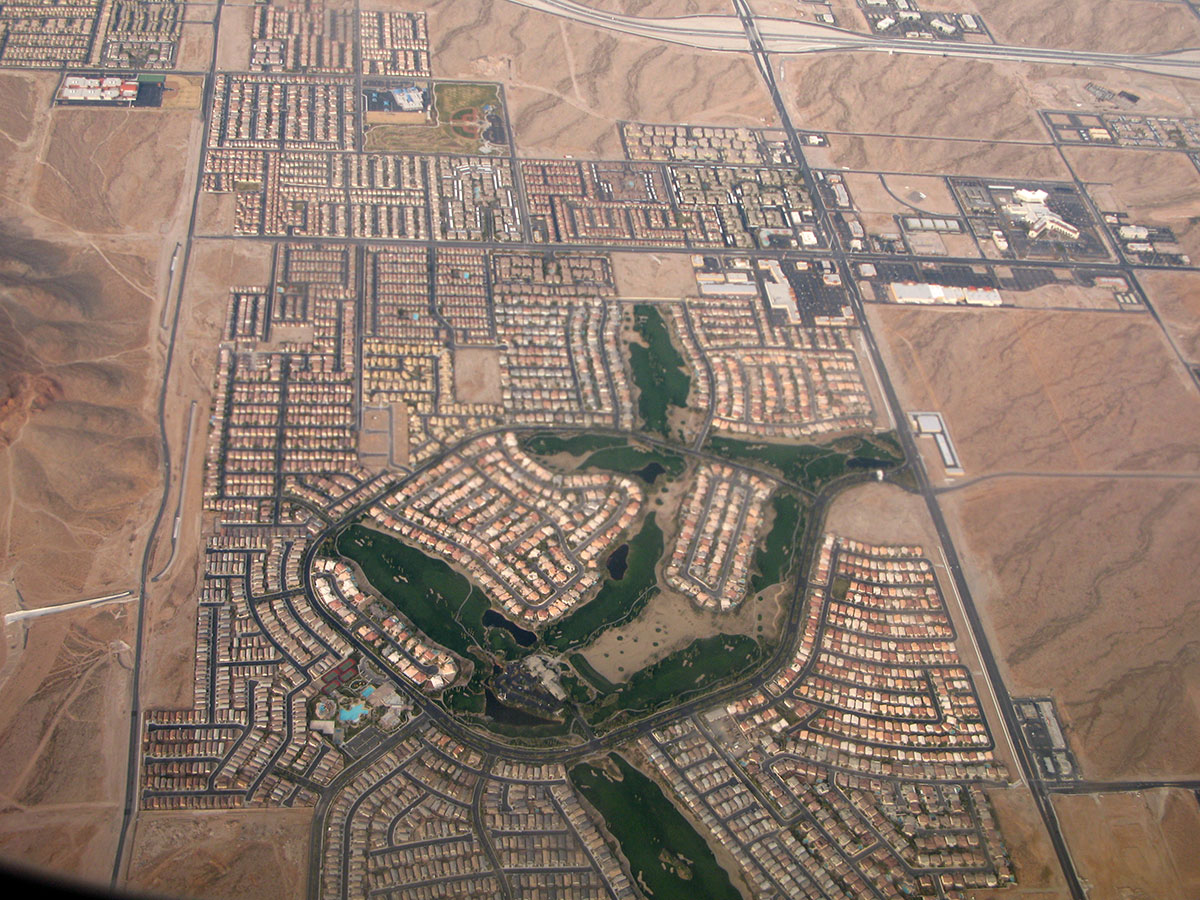
As a city, Las Vegas is just a smaller version of Phoenix – gridded sprawl, completely dependent on cars and air conditioning.  From the air, Las Vegas is more comprehensible than Phoenix.  Phoenix is so big that you get glimpses of parts, and have to assemble an understanding of the region in your mind.  But the Las Vegas metro area has around 2 million inhabitants, and you can see the whole area dwarfed by the surrounding desert landscape.  As in Phoenix, the visual contrast between the developed areas and the desert is vivid – nowhere can you see a better illustration of the power of our technology to dominate nature.  These desert mega-cities are like space ships – life is possible, even enjoyable.  But if the power goes off for a couple of days, everyone dies.  IMG_5722I would have liked to explore the mundane side of Las Vegas, which seems to be a sadder version of Phoenix, but I was traveling with a child who has spent her life in a small city in the Northwest, and so has almost no experience and even less tolerance of sprawl or traffic.  So given how much Greta had hated driving around Phoenix, and the limited doses of architecture I could force upon her, we headed right for the Strip.  She still whined, but I placated her with the promise of good food.

My one prior trip to Vegas had been at the tail end of my post-college cross-country drive with Norman and Dan.  Norman and I had been camping out in the desert, and we detoured down the Strip, seeing the classic casinos and hotels of the 50s and 60s.  It all seemed so horrible, tawdry and boring that we didn’t even stop – the contrast between the grandeur of the landscape and the cheesiness of the built environment was overpowering.  (I had already heard Denise Scott Brown lecture on Learning from Las Vegas, and I figured that the drive-by was all the  extra exposure I needed).  We drove right out to Lake Mead and went for a swim, cleansing ourselves in the desert.

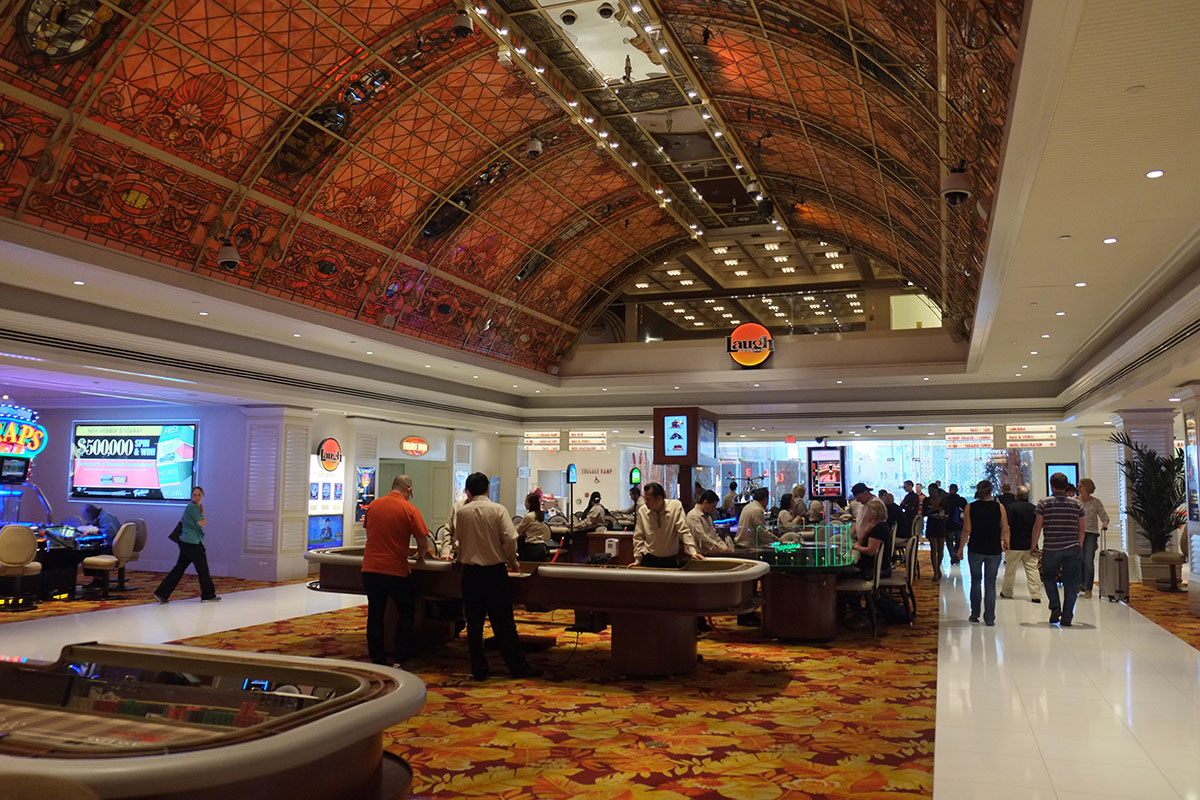
But as the nostalgia for Mid-Century Modern – even the kitsch of Las Vegas and Miami Beach – has swept us up in recent decades, I had come to retrospectively appreciate the stylistic qualities of this period.  So we visited some of those classic casinos, such as the Tropicana, and were struck by their simplicity and clarity.  They are glitzy (by the standards of their day), but they are also quite small, clearly laid-out, spatially interesting, and rather sedate, redolent of the longer attention spans of the pre-digital age.   As one of my classmates (Alan Gerber) once described one of his own exuberant projects, It’s just the Maison Domino with special effects.DSCF7275

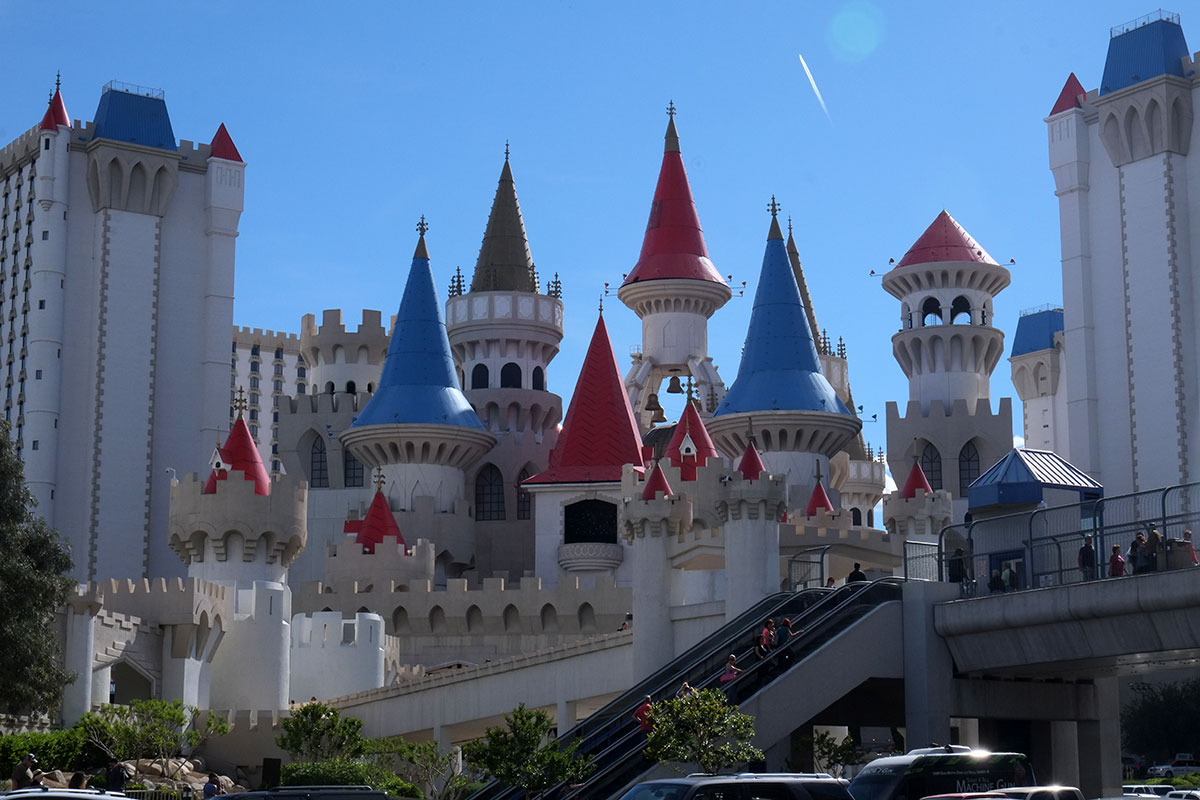
We visited other older casinos that were less elegant – I don’t even remember what this one was called – Camelot, or Dungeons and Dragons or whatever – that seems to be from the 80s.  From the outside, bad cartoon buildings apparently made out of Legos.  DSCF7251

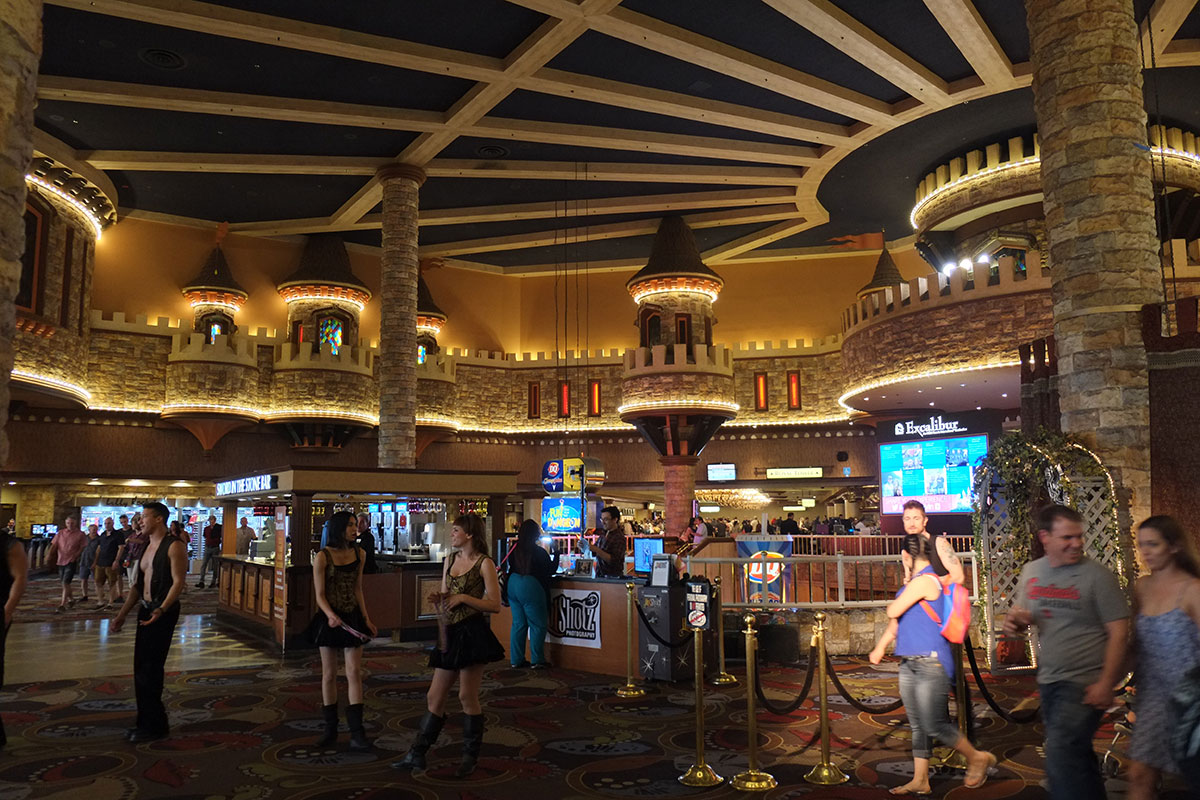
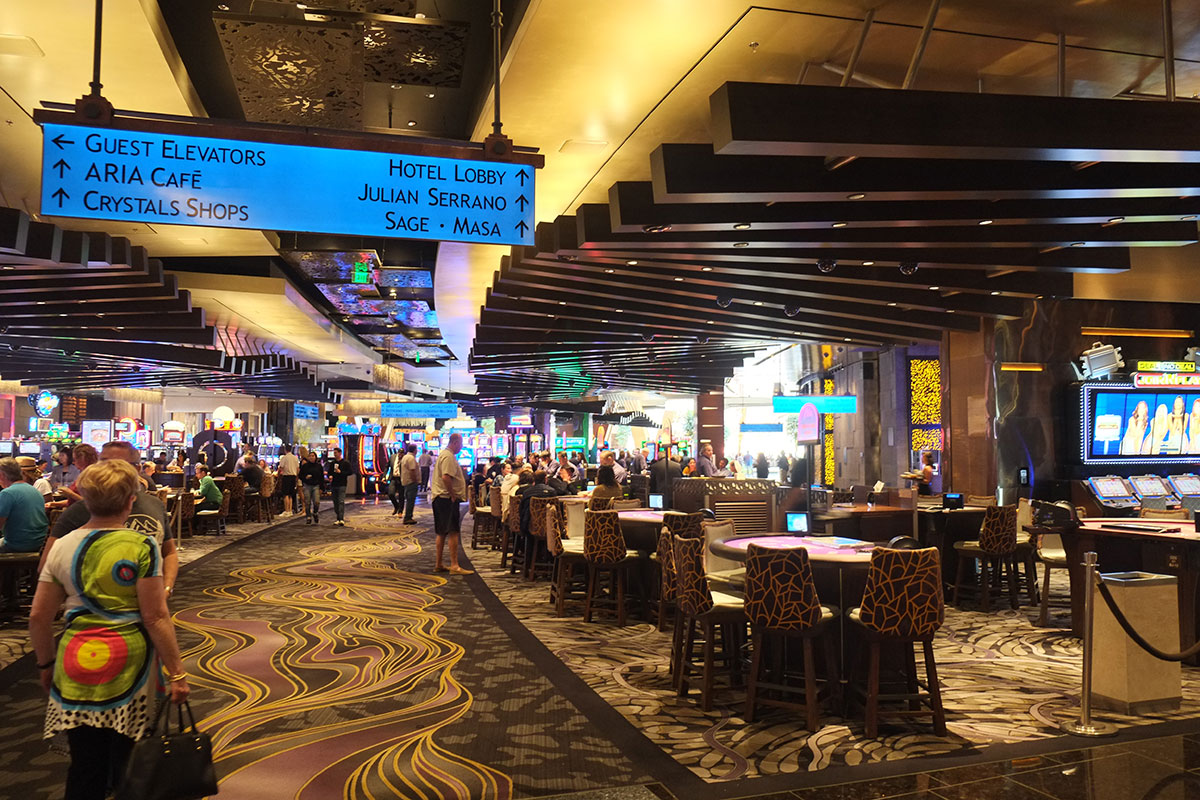
On the inside, equally cheesy, coarse, inept and depressing.  What Venturi and Scott Brown referred to as the Big Low Space.  A cheap neutral shell smeared with a pastiche of banal allusions and signs, with the sole purpose of separating you from your money.  The clear Modernist design of the older casinos was banished – if you knew where you were, you might leave and stop losing money, so the newer casinos became labyrinths of alcoholic confusion.  DSCF7260This is the Vegas I had imagined from countless TV shows and reading Fear and Loathing – a place where all the worst aspects of American mass culture are on exhibit – avarice, commercialized lust, emptiness, loneliness, superficiality.  It had lost the cool of the classic Rat Pack era – the allure of sin was no longer elegant, it was just cheap and obvious.

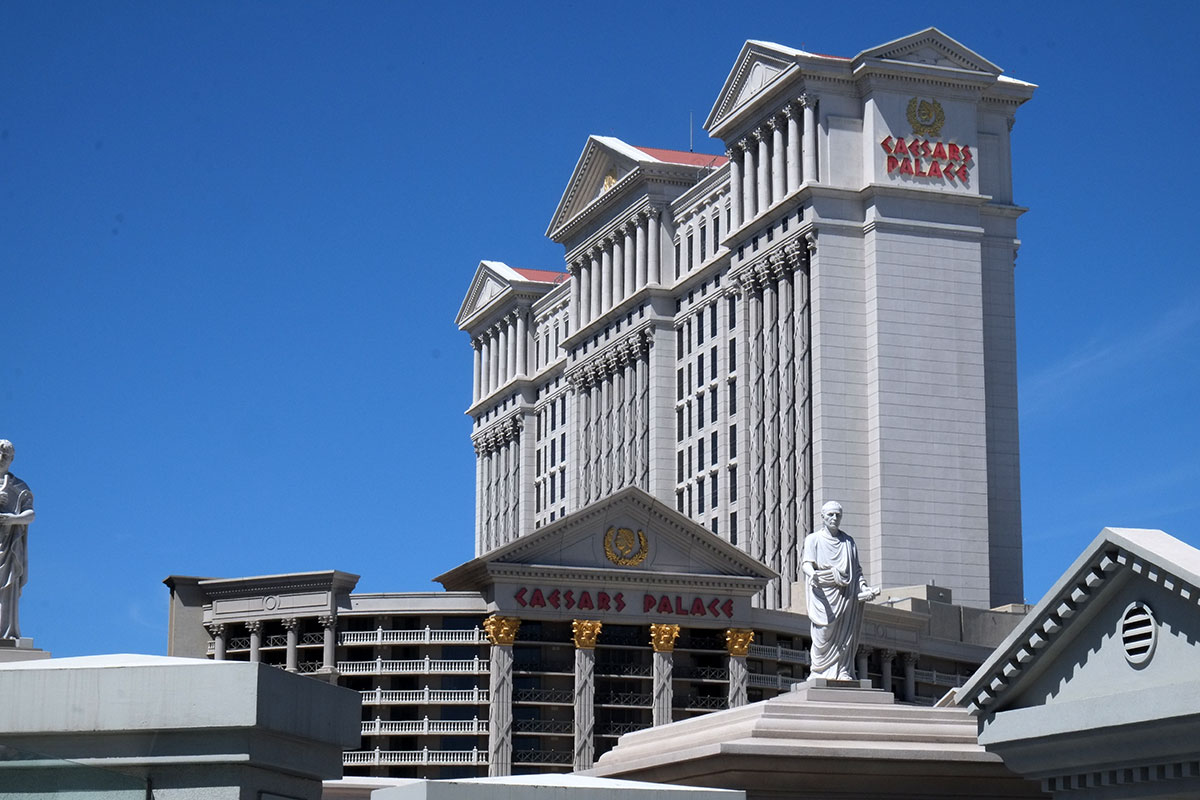
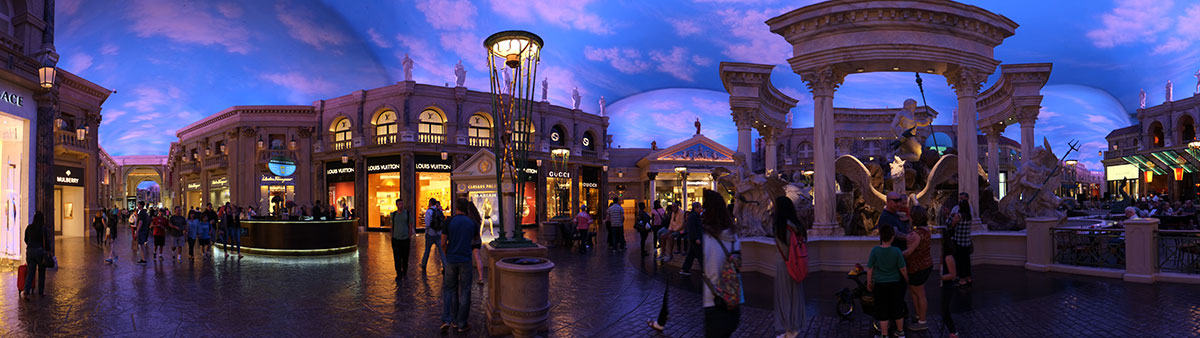
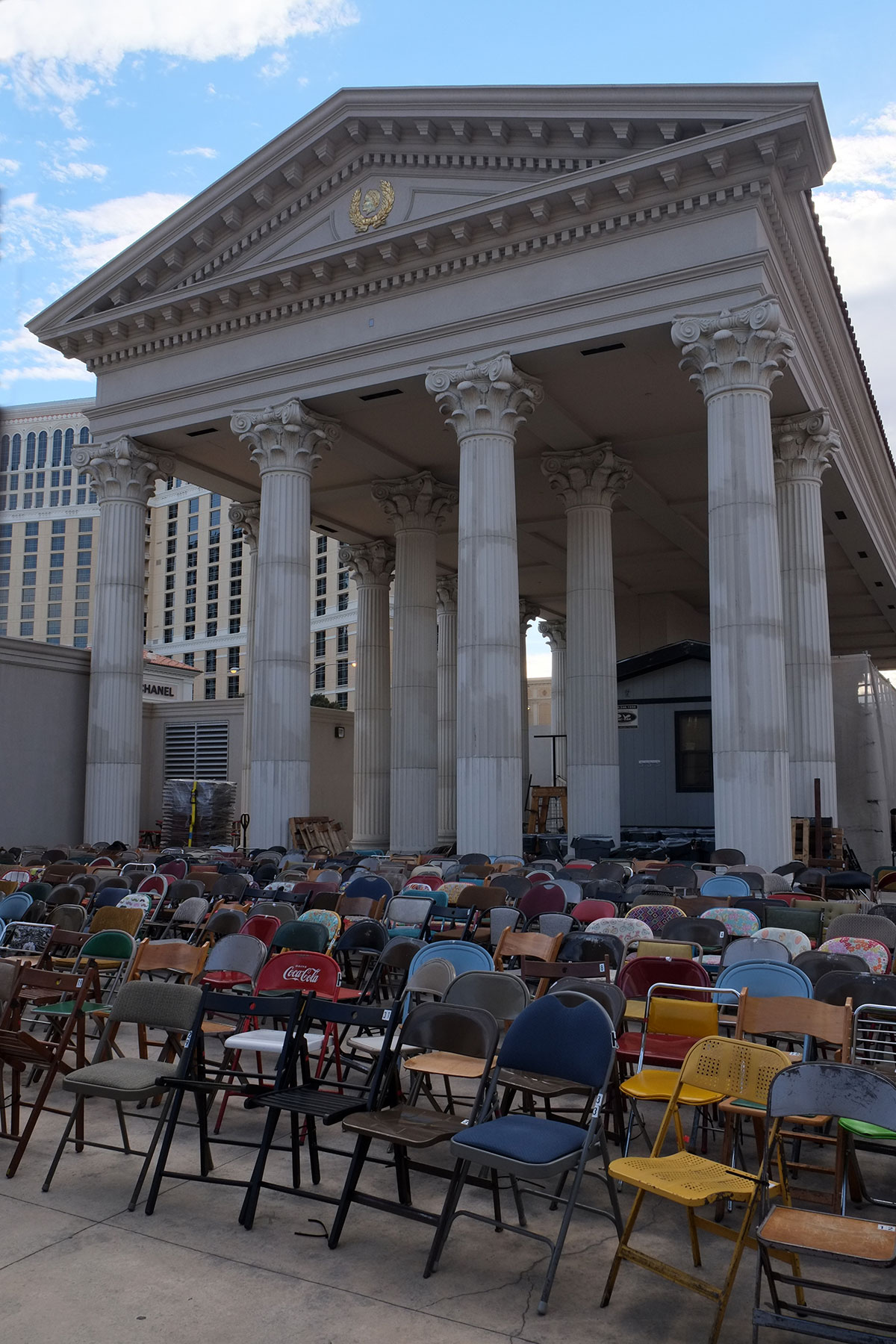
I had also heard rumors of the transformation of Vegas in the 90s – how it had become an upscaled family vacation destination, how the gambling was something you did after a day shopping, or at the pool with the kids.  We arrived at Caesar’s Palace, a legendary resort which had apparently made this transformation.  I expected to find it all howlingly kitschy, and one can indeed sneer at the craziness of hotel slabs cloaked in classical drag.84. Las Vegas100DSCF7065

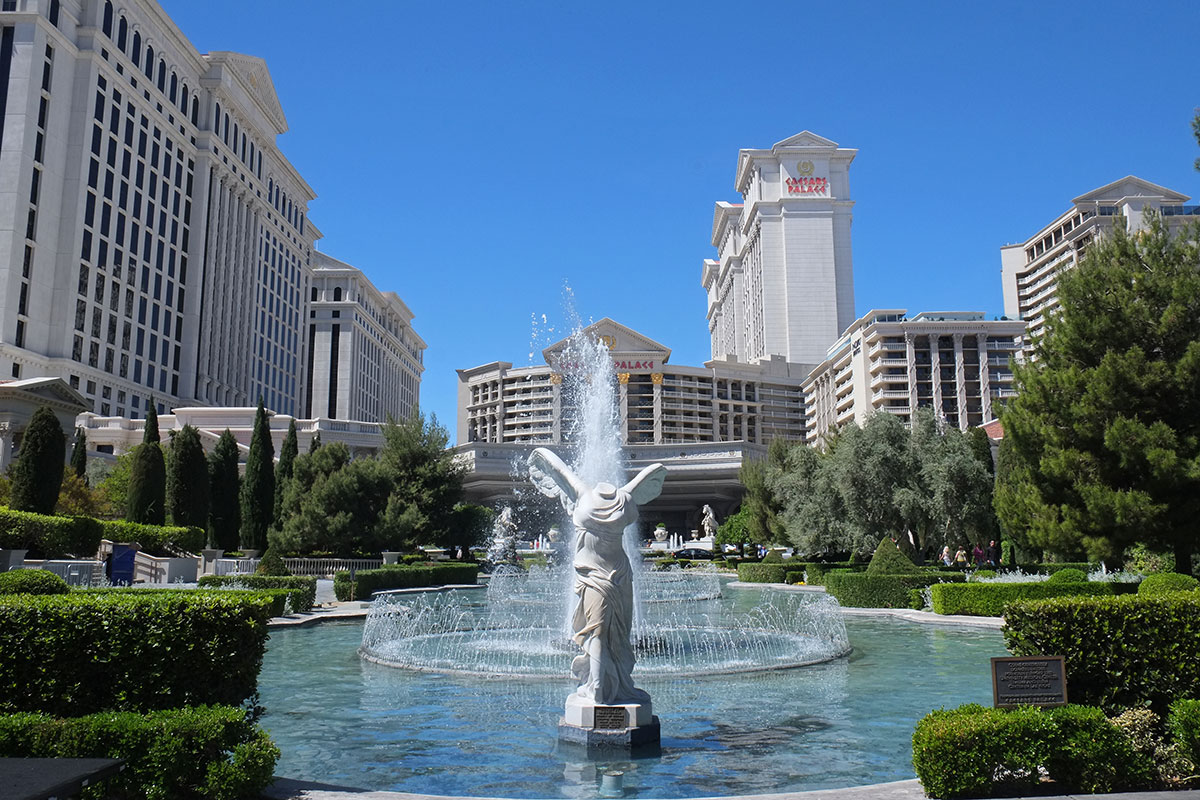
But I had to admit, it was masterfully done.  These weren’t just blank boxes covered with ugly motifs, someone had actually drawn these facades and thought about proportion, hierarchy, detailing, and rhythm.  On a warm March afternoon, the gardens were lovely.  The vistas were extraordinary – seeing the copy of the Nike of Samothrace here is not quite the same as seeing it at the top of the stairs in the Louvre, but is its appropriation really that different from seeing it on axis at Wright’s Darwin D. Martin house?  The designers may have been landscape architects, but even more importantly, they’d learned from movie set design.  I felt that we were in Ben Hur, or a Star Wars prequel, or Game of Thrones.  Obviously few of the visitors have been to the ruins of ancient civilizations;  our “knowledge” of these eras is completely mediated by Hollywood, and the designers here were having a good time recreating this image in real, three-dimensional space.  I began to wonder how much of it was naive, and how much archly self-conscious.  84. Las Vegas103DSCF7075

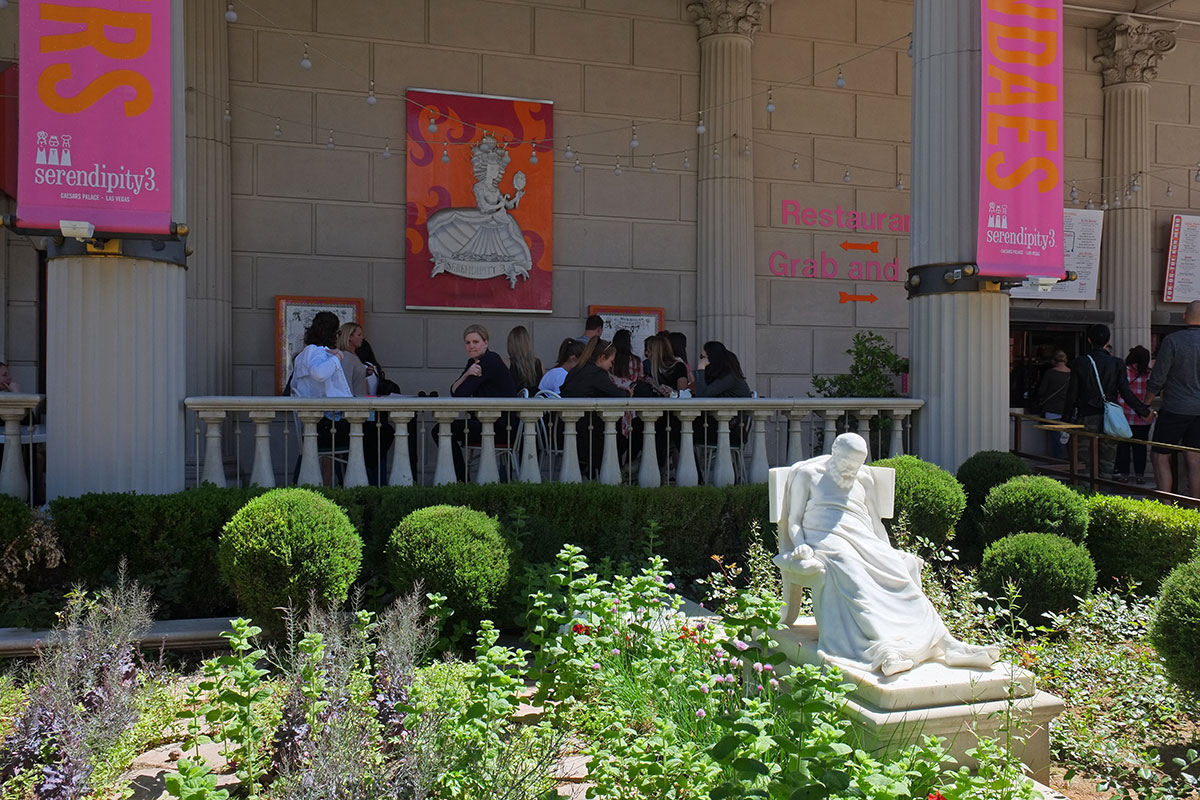
I got my answer around the corner.  Near a busy plaza, where tourists were lining up for Grab-and-Go lunches, there was this quiet, off-axis statue.  The subject matter is immediately obvious, if you happen to be paying attention to anything besides getting your next drink.  It is the Death of Socrates (a copy of the work by Mark Antolkolski).  I can just imagine the pleasure the designer must have derived from this subtle commentary on the culture swirling around it.  84. Las Vegas101DSCF7071

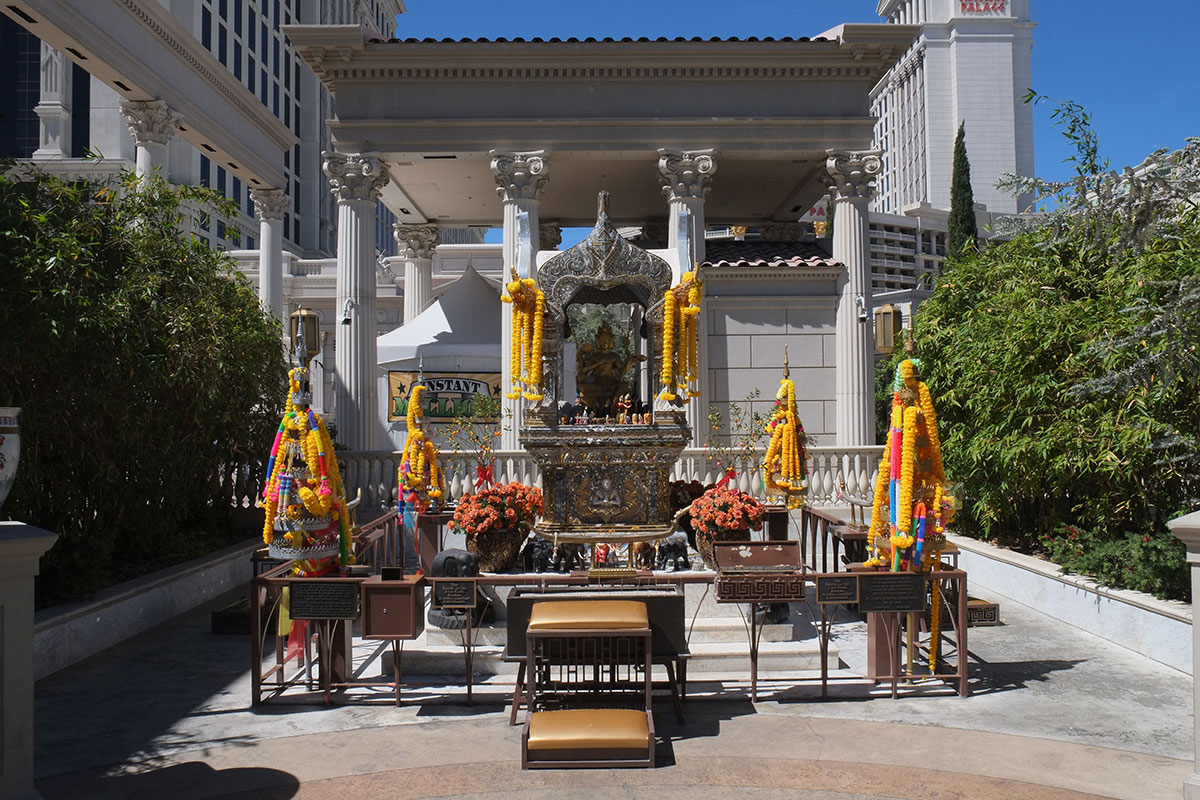
Nearby was a puzzling installation – a Buddhist shrine set in a Roman temple.  I can only imagine that this is an accommodation of our global tourist culture.  There are probably enough wealthy Japanese tourists coming here who might be confused or disoriented by the profusion of classical Western iconography, and who might be glad to see that people from their own culture are equally welcome to lose money in this unfamiliar venue.  84. Las Vegas102DSCF7073

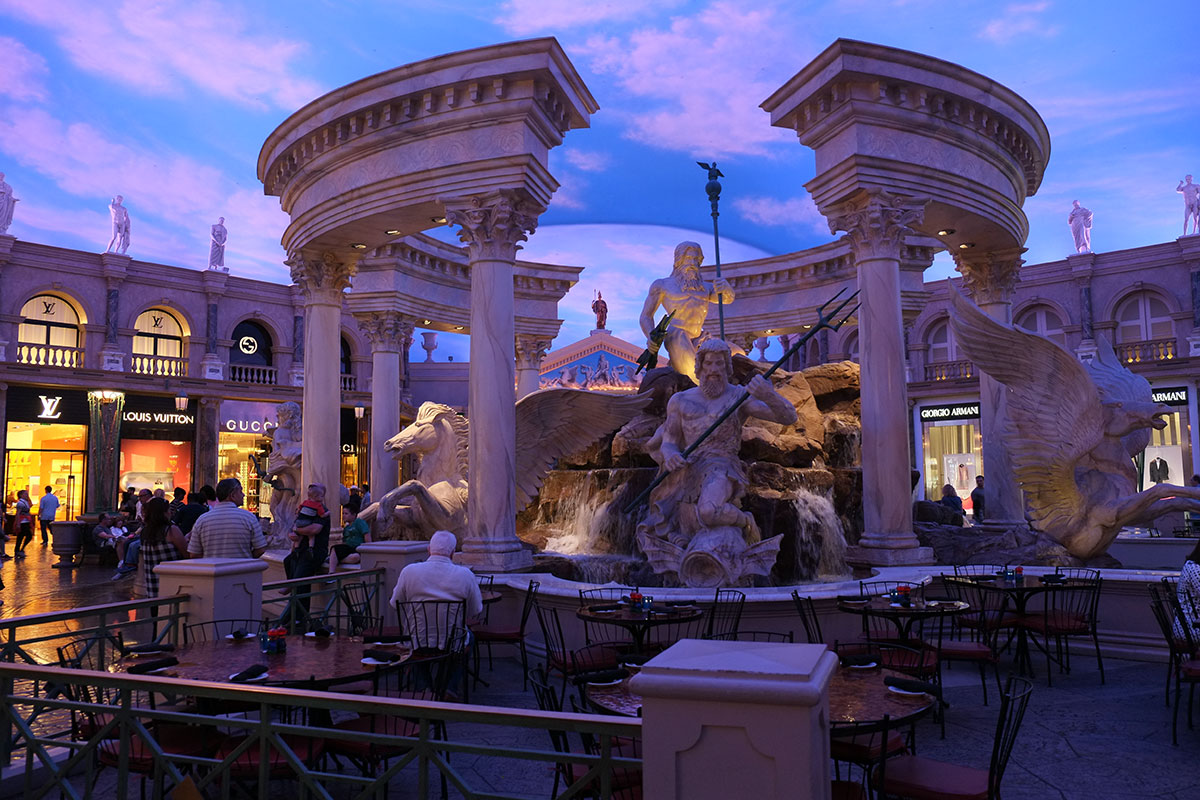
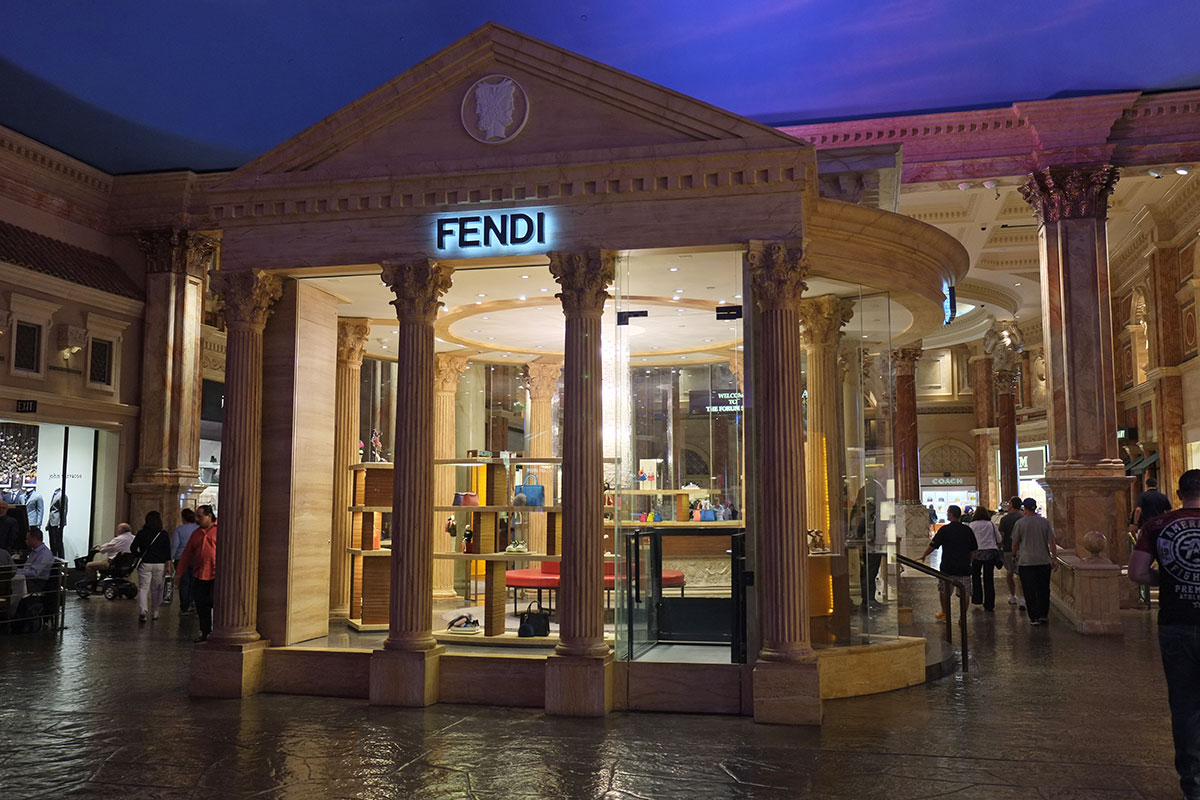
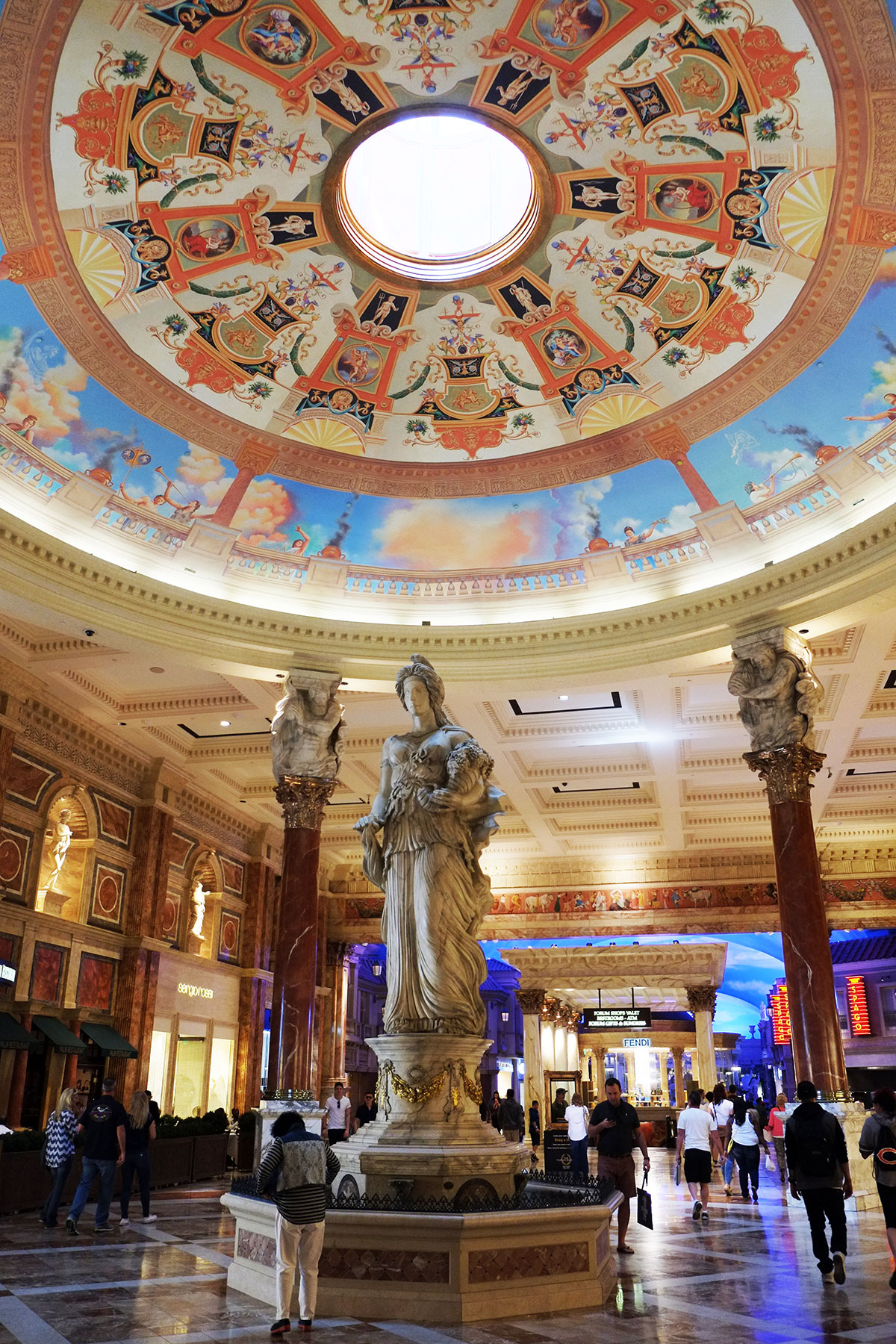
We moved inside to the shopping concourse, and I was flabbergasted.  It was absurd, it was ridiculous, it was bizarrely over-the-top, and I just loved it.  Any architect who came of age in the Postmodern 80s (and especially one who had studied under Bob Stern), had to feel right at home and simultaneously be amazed by the incredible audacity of this, an appropriation of the language of the Roman Empire to serve the mercantile needs of the globalized web of corporate tourism and commerce.  It captures the atmosphere of Fear and Loathing in Las Vegas without needing the LSD.84. Las Vegas107DSCF7086There continues to this day a dead-end branch of 1980s Postmodern Classicism, one that I thought mainly lived on in Eugene, but which I found alive and unwell in other architectural backwaters, such as in the deep South. It is usually a sad, ill-proportioned collection of disconnected references covering a mediocre building, the last refuge of the scoundrel architect.  it exists at the level of sign, doing nothing to enhance one’s actual experience.  (Bad architects can learn from Venturi too.)  So to come to Las Vegas, and see it all handled magnificently was a complete shock.  The scale of Roman streets and piazzi brought indoors to create scenography for the shopping mall.  Astoundingly accurate elements and details rendered in God-knows-what materials.  An evocation of the desert twilight in the superbly lit and painted trompe-l’oeil ceiling.  If you want to build simulacra of classical Rome, this is the way to do it.

And as with Socrates outdoors, the irony continued.  Certainly a PhD dissertation would be required to suss out all the layers of meaning in a Temple of Fendi, the God of Haute Couture.  DSCF7095

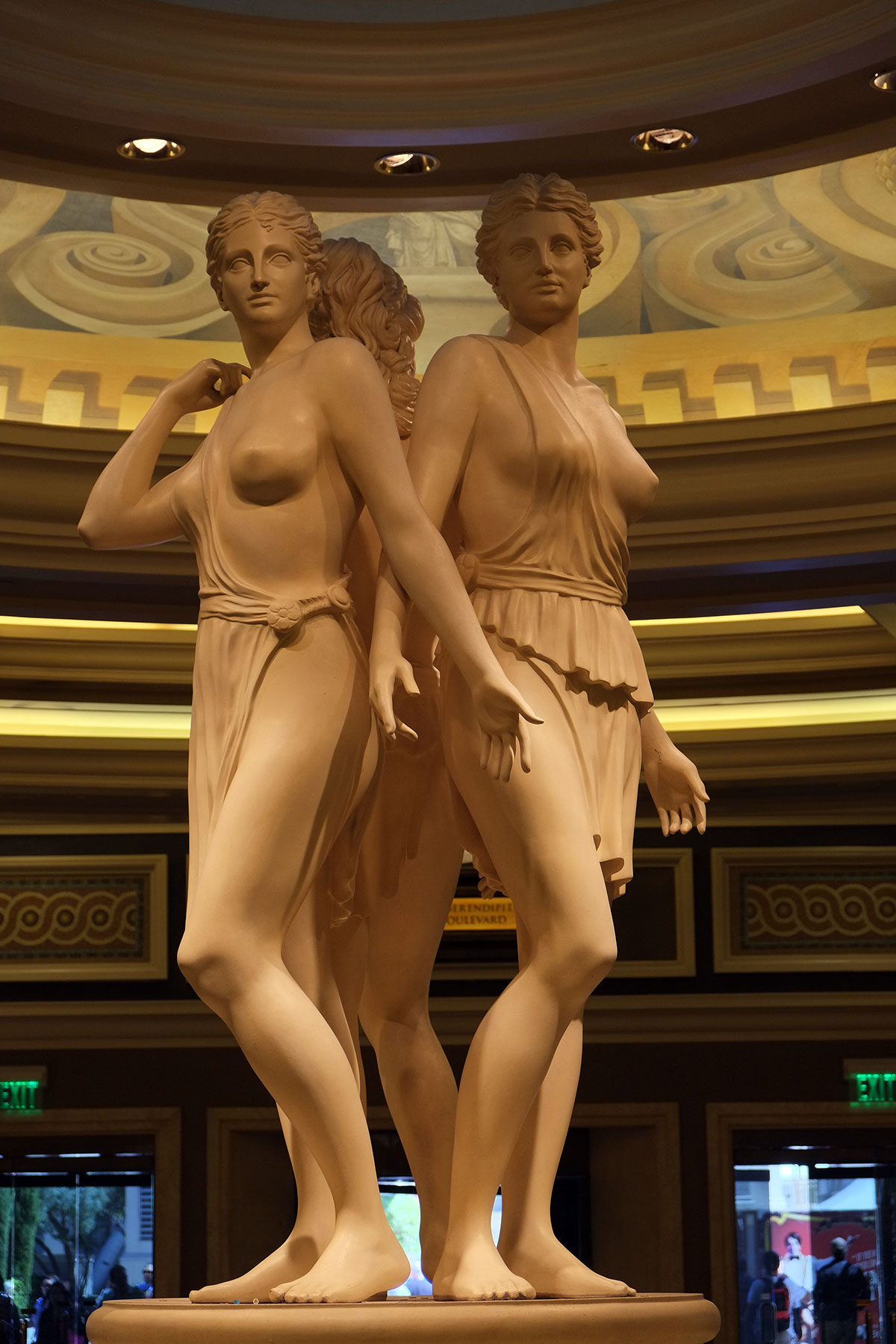
In the hotel lobby, the collision of classical and contemporary culture continued.  Classicial busts grafted onto bodies with Playboy busts.  84. Las Vegas109DSCF7100

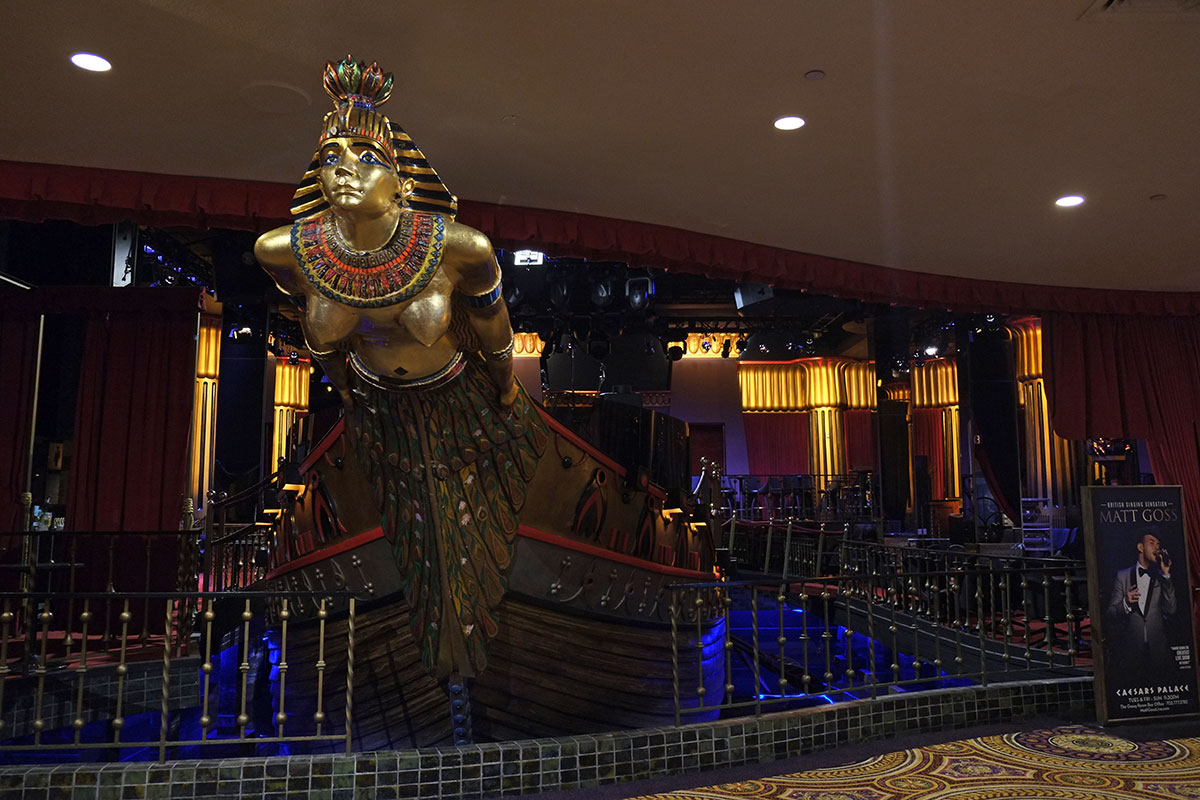
Tutankhamen as a galley’s figurehead, heralding a cocktail bar.  Look upon my drinks, ye Mighty, and despair!  84. Las Vegas104DSCF7081

The spatial sequence was exquisitely tuned – there were shopping corridors scaled as streets, punctuated with domed piazzi.  Ceilings where Tiepolan perspective meets Pompeian painting motifs in a Pantheonic dome (that doesn’t leak), surrounded by a Corinthian colonnade with Roman fountain-derived caryatids inserted above the capitals, all bathed in an ethereal light.84. Las Vegas105DSCF7083

I could have stayed for days, wandering this Postmodernist Xanadu, but the ticking clock of Greta’s attention span drew me back outdoors, away from the timeless world of the Caesars.  As we moved through the transitions in place and time, we came across one final tableau that epitomized our return to the mundane world.DSCF7341

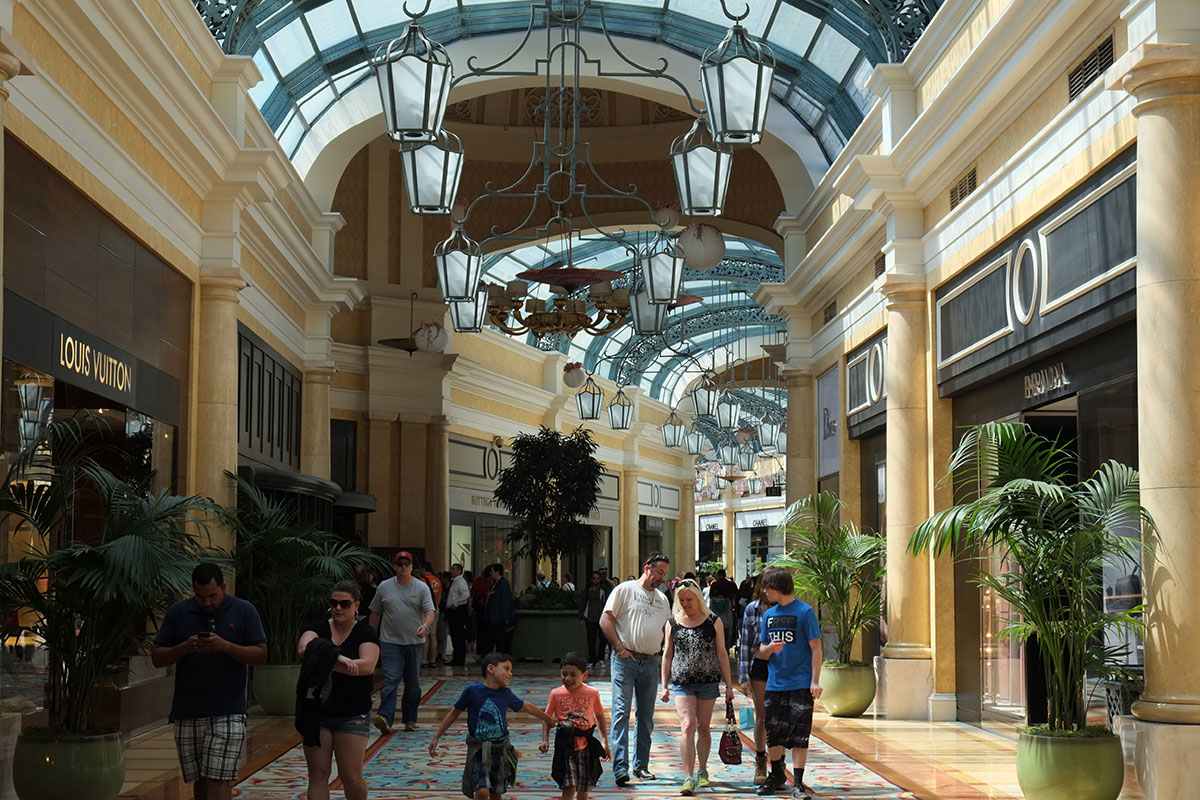
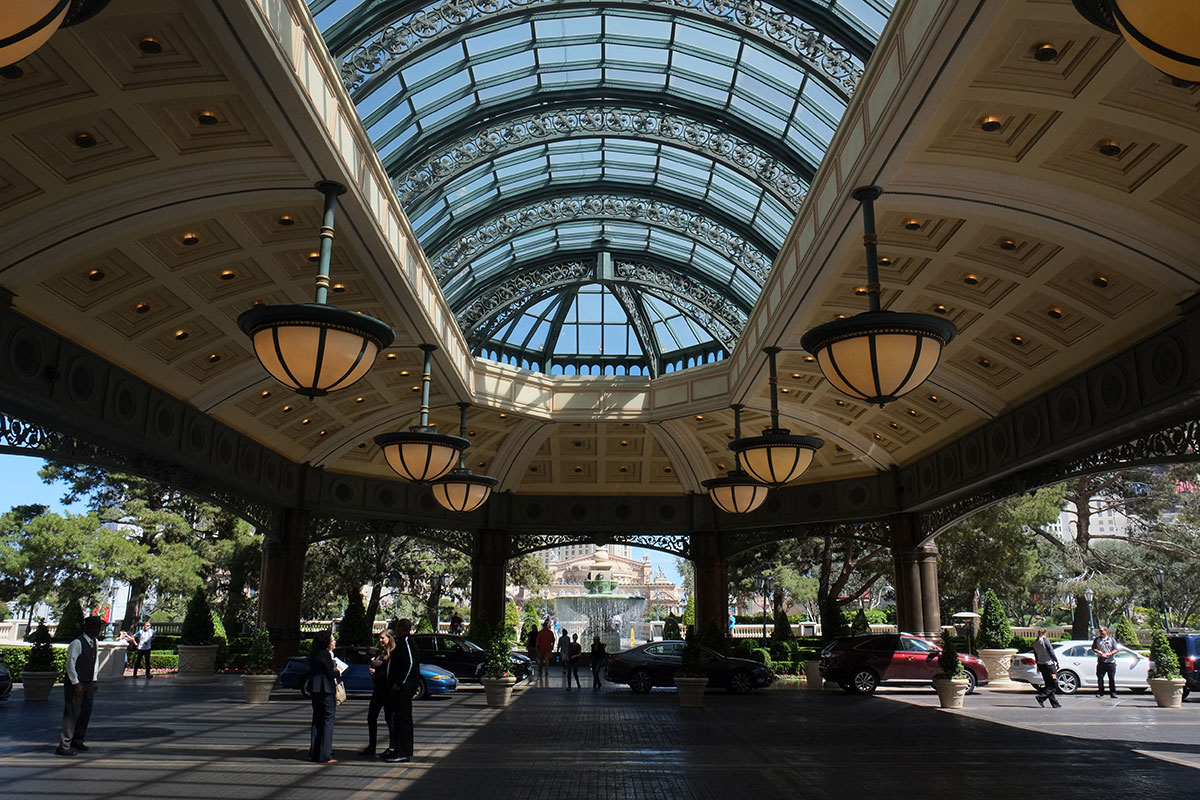
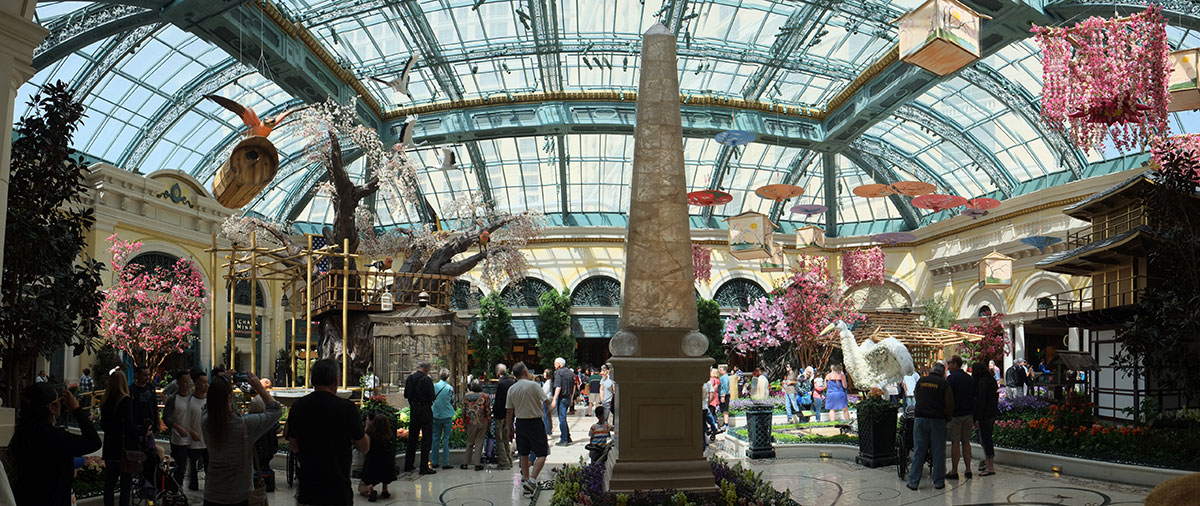
But not for long:  we were immediately drawn into the Renaissance (and 19th-century descendant) fantasia of the Bellagio.  The Galleria of Milan, complete with American tourists.  84. Las Vegas111DSCF7108
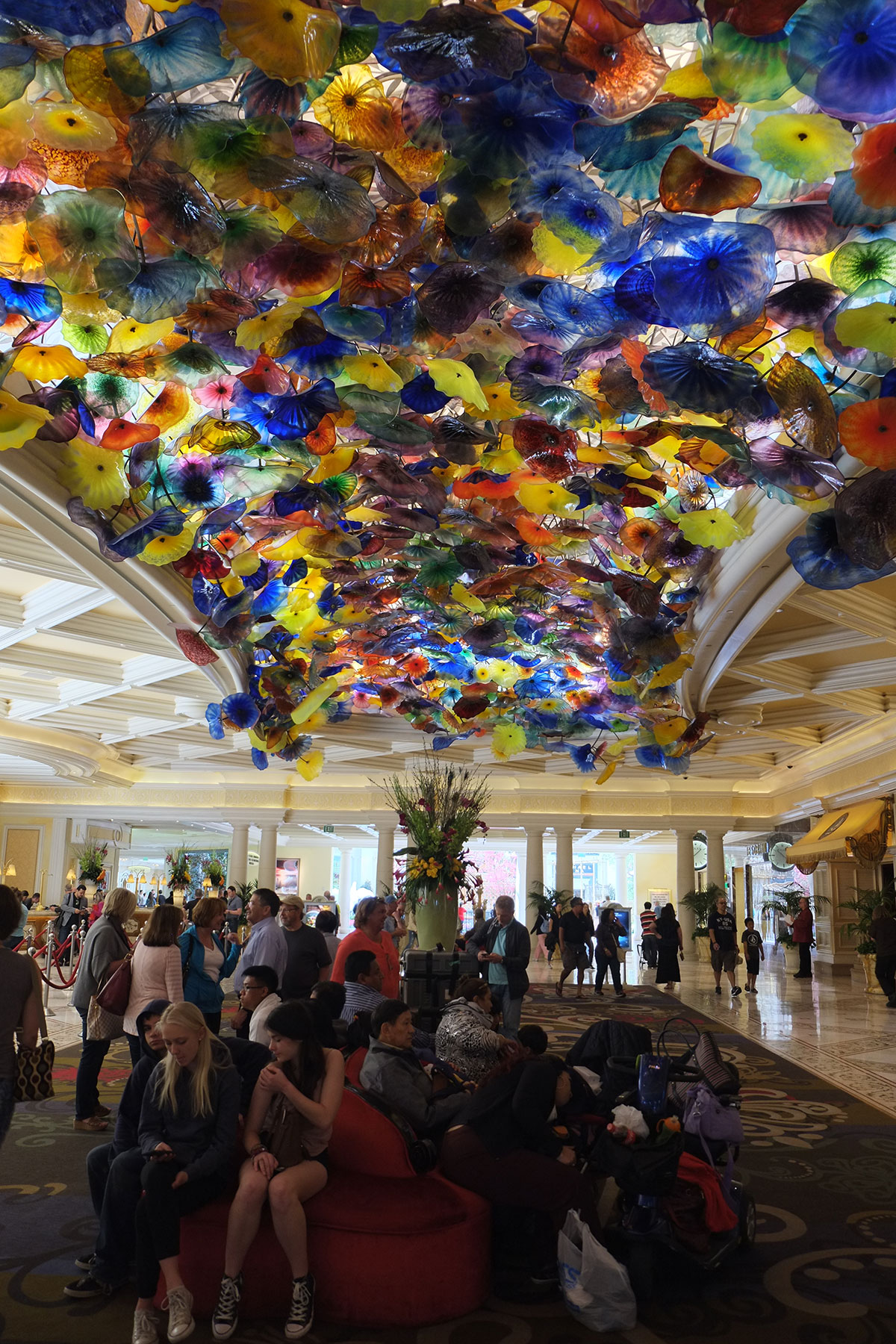
A hotel lobby with a massive installations of Chihulys, which seem to have achieved their apotheosis in this grandiose Baroque installation.  84. Las Vegas112DSCF7112

A porte-cochere worthy of the greatest Hummer limo that Vegas has to offer.  84. Las Vegas114DSCF7129

A magnificent palm court, that appears to be furnished in giant Japanese plastic toys designed by Jeff Koons.  84. Las Vegas113DSCF7121

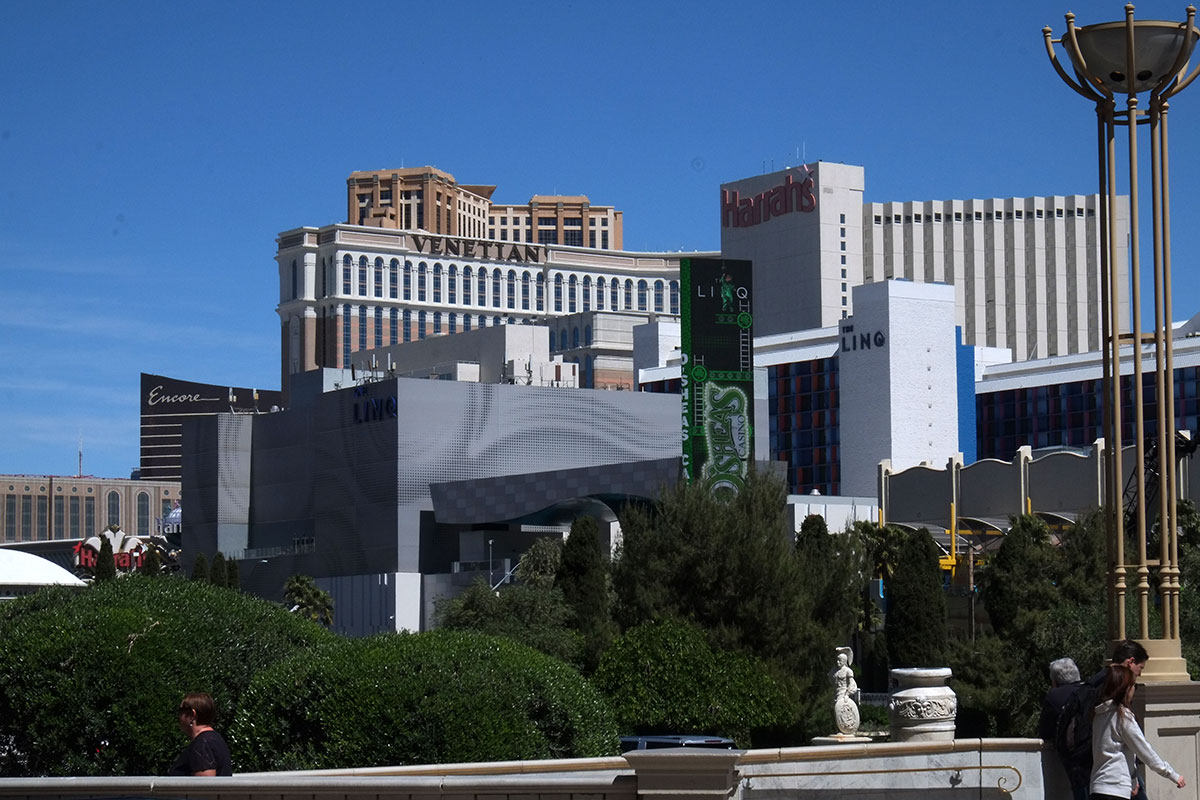
By this point we were reeling from the juxtapositions of imagery and eras, as swoopy Hadidian forms competed with Venetian arches.  84. Las Vegas110DSCF7102

84. Las Vegas130DSCF7338

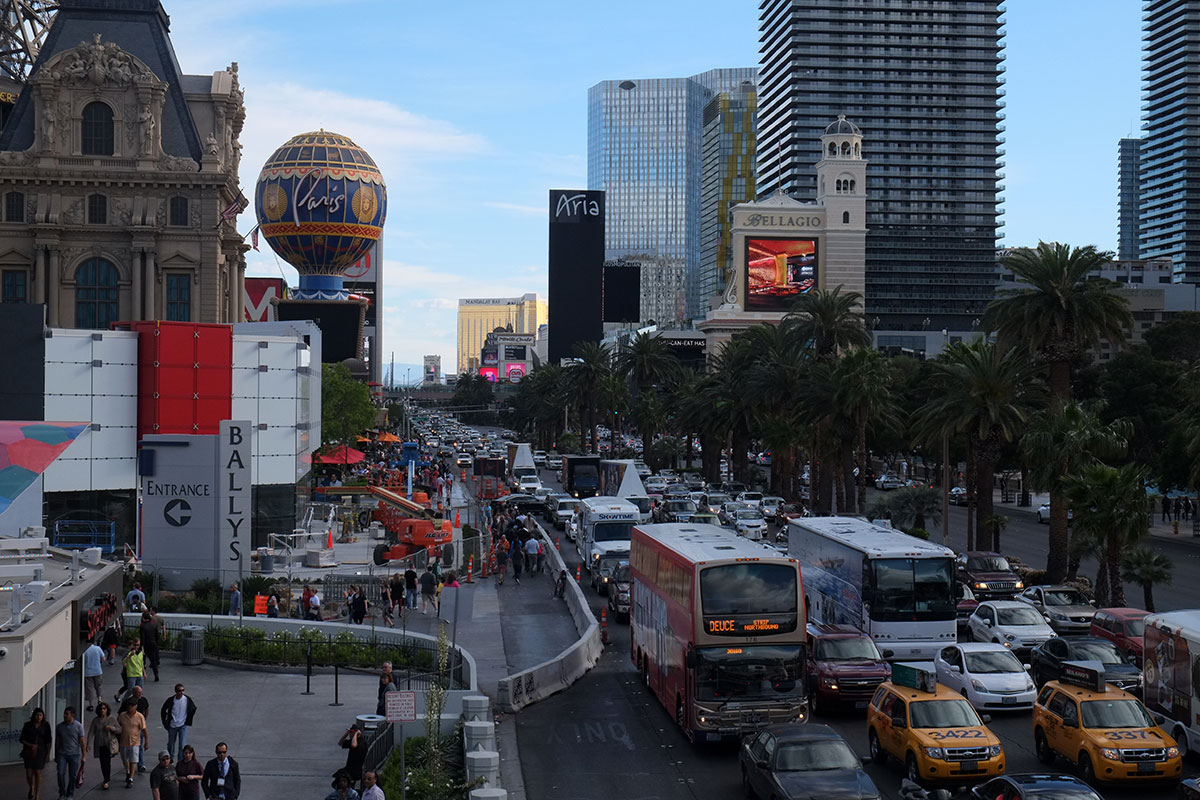
The strip itself was more lively than I expected, with hordes of tourists walking from attraction  to attraction.  I had thought that the hermetically-sealed atmosphere of the casino and mall – where the whole point is to keep the visitor disoriented in time and space – would be more dominant.  But Vegas is not Disneyworld, a total environment controlled by one corporate entity.  When you are within a casino complex, the experience is controlled to the nth degree, with every vista, movement and pause choreographed.  But when you leave that world, you are out on a messy, noisy, exuberant street, where the “high” culture (or at least the expensive culture), meets the low culture.  84. Las Vegas124DSCF7276

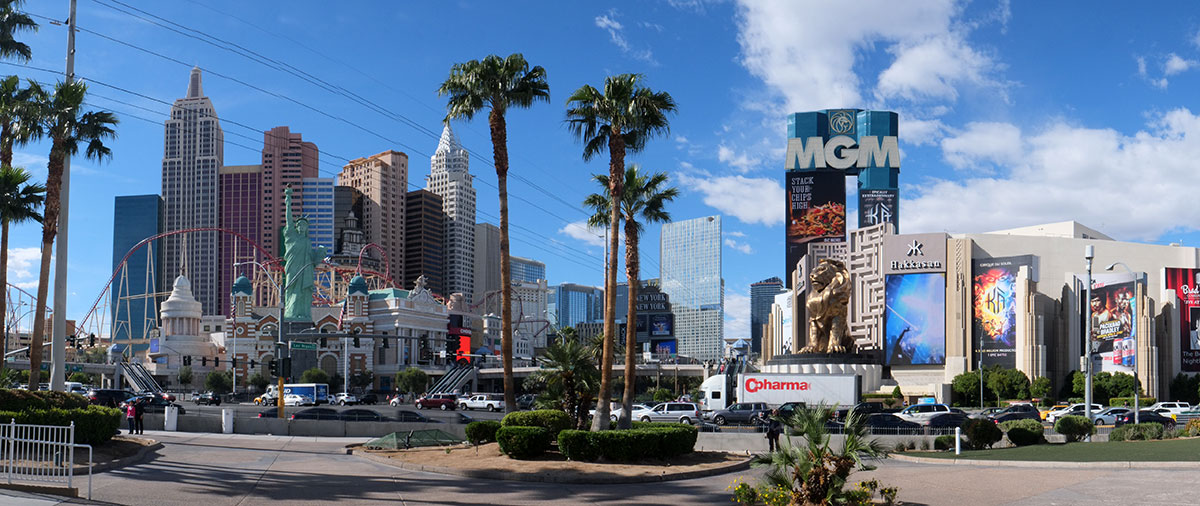
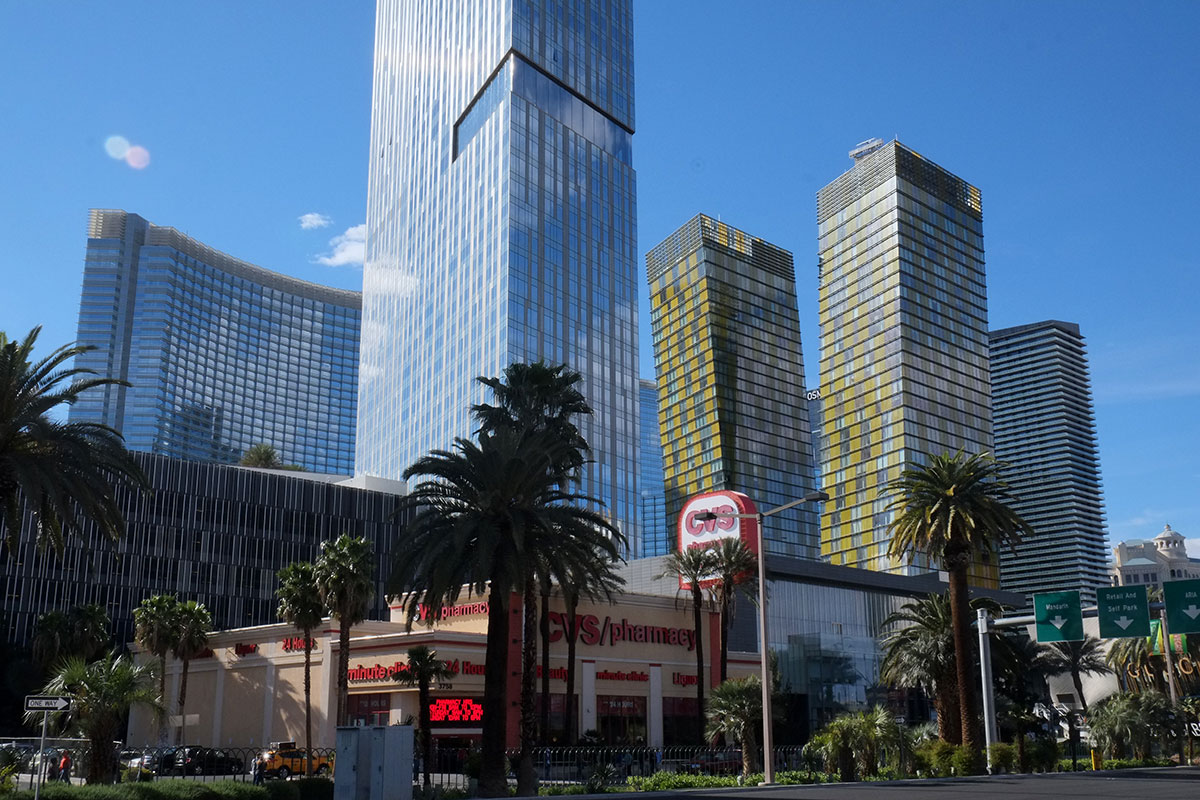
There is the noted crazy variety in architectural and cultural reference, but there is also the juxtaposition of the fantastical with the everyday architecture of American life.  In this way, it is actually like a city – where within the boundaries of property lines each owner decides what to build;  there is no architectural review board in Las Vegas which demands that your new casino must respond to the style of the Tropicana next door.  You may build the tasteful $1.1 billion City Center project, but someone will stick a standard sprawl-city CVS on the corner if you haven’t acquired that property.  84. Las Vegas125DSCF7290

I began to enjoy the madness of it all.  84. Las Vegas128DSCF7323

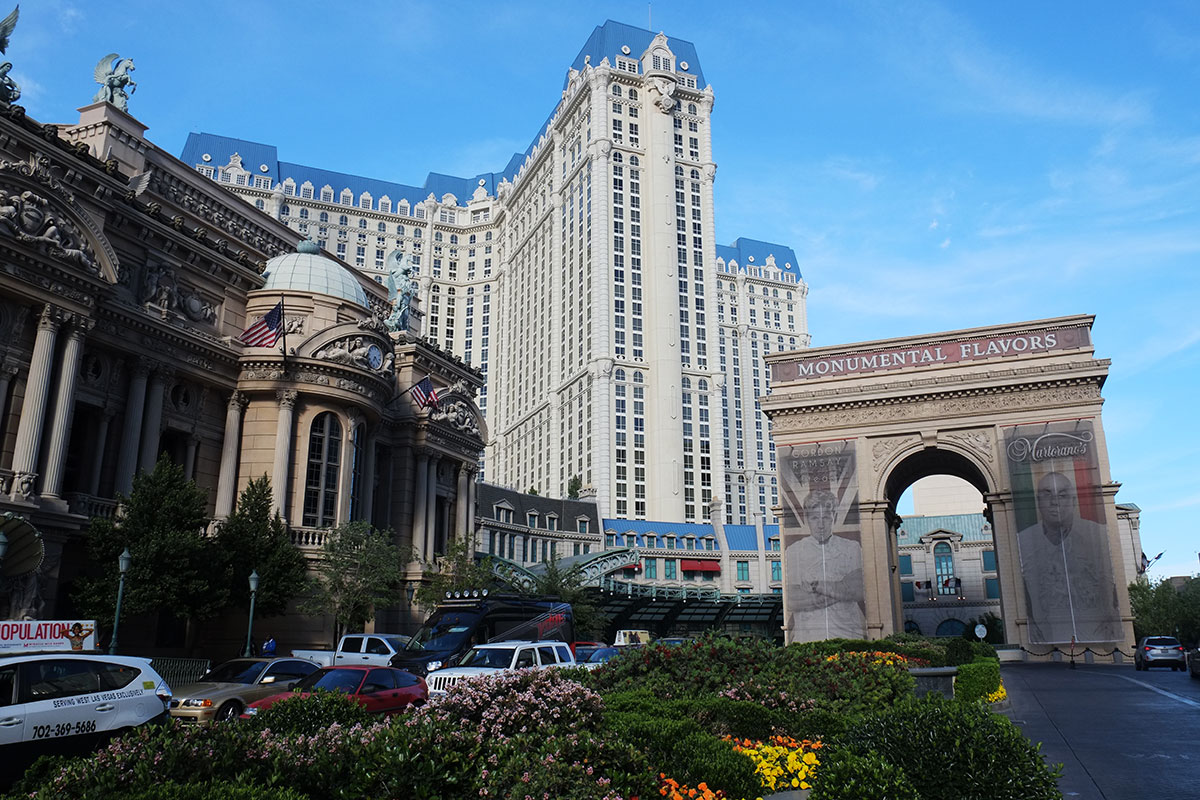
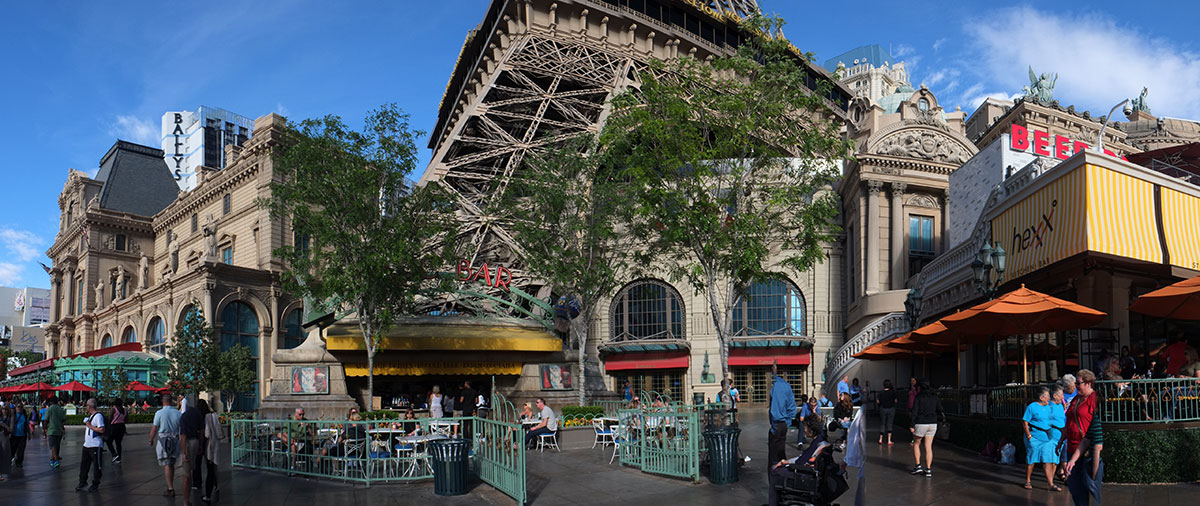
where no arresting idea, such as having the Eiffel Tower crash into an amalgam of Second Empire buildings, is ruled out.  84. Las Vegas129DSCF7325

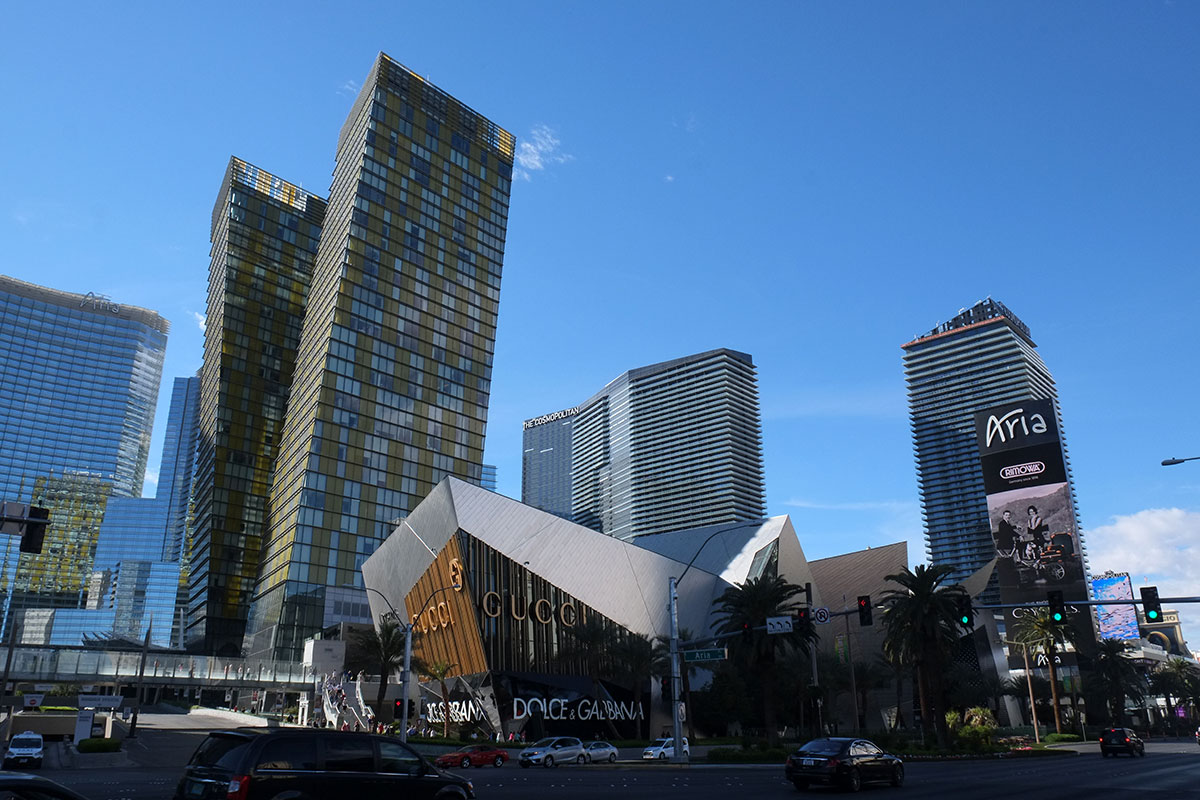
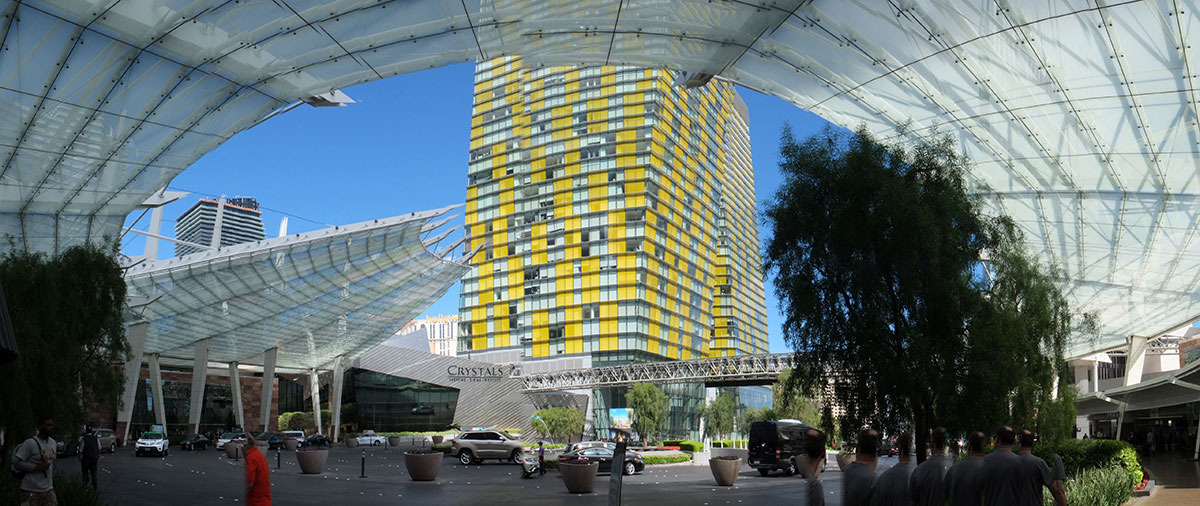
The newest, and most different, addition to the Strip is the aforementioned City Center project, a 76-acre, 17 million sf, $1.1 billion, integrated mixed-use development, with hotels, casino, condos, retail and entertainment.  Over the years I had heard about this project from the father of one of our recent grad students, who was the construction manager for the whole project.  The scale of the undertaking was unbelievable – he had 250 people working for him in CM, coordinating with about 50 different design firms, and building at the rate of $30 million of construction per month.

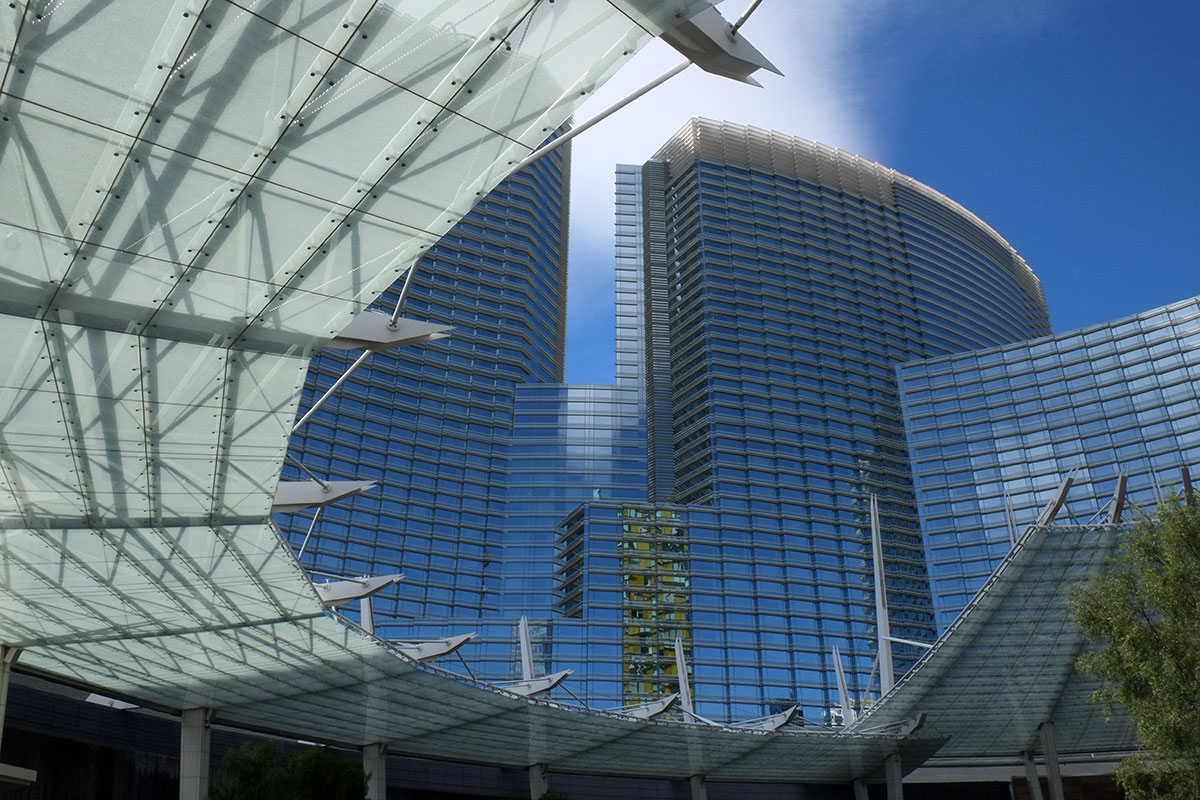
It follows the model that everything within the property line is under the control of one entity, but rather than turning it all over to one of the firms that specializes in Vegas-scale development (firms of which you’ve never heard), a master plan was designed by Ehrenkrantz Eckstut Kuhn, and noted architects were hired to design each of the component buildings.  These architects – including Gensler, Foster, Jahn, KPF, Pelli, Rockwell, Viñoly and Liebeskind – did something unique in Las Vegas – they designed buildings that look like buildings.

DSCF7296

All prior buildings in Vegas really exist at two levels – there is the functional building, which is then overlaid with the exterior and interior design trappings that connote a historical epoch or style.  They are essentially “romantic” buildings, depending upon association to derive their meaning.  The City Center buildings are more “classical” buildings, manipulating the primary elements of architecture – space, light, movement, mass, materials – so that your understanding comes from the direct experience of those elements, rather than filtering that experience through prior associations.  (Of course, this is what we think now;  in the future, will people understand these buildings through their association with yet another historical style label, such as Decon architecture?)

The big urbanistic difference with the project is how it extends the depth of exterior space back from the Strip.  With most casino complexes, there is a big porte-cochere and entry near the street, and the whole complex is essentially interior.  But because this is such a deep lot, this car-entry zone is pulled into the middle of the block, creating a huge circle that feels more like an airport drop-off, which serves several buildings.  It is a very grand space, beautifully detailed, and almost impossible to photograph.  DSCF7213

The sleekness, tectonic expressiveness and minimalist opulence of the pieces show the increasing sophistication of the Las Vegas market.  The well-done but still kitschy ambience of even the high-end, newer casinos of past decades appeals to the nouveau-riche, suburban middle classes:  they may not understand serious cosmopolitan design, but they do see a difference between the older, cheap and tacky complexes, and the more expensively-built, “nicer”, elegant, extravagant projects.  But if Las Vegas is to attract a clientele from the higher echelons of the globalized economy – say minor Russian oligarchs, Saudi princes or Chinese entrepreneurs – the architecture here must begin to exhibit the same degree of sophistication, and be designed by the same name architects, as they have seen in real cities, such as New York, London and Hong Kong.  City Center represents the first attempt in Las Vegas to attract this market, with architecture that can be appreciated in a non-condescending, unironic way, by people with sophisticated and very expensive tastes.  The emphasis in Las Vegas may be shifting away from the free drinks and buffet meals which supported the gambling middle class, to extremely high-end dining and (tax-free) shopping for the 1/10 of the 1%, who may begin to see Vegas real estate as a place to park some capital.

84. Las Vegas122DSCF7220

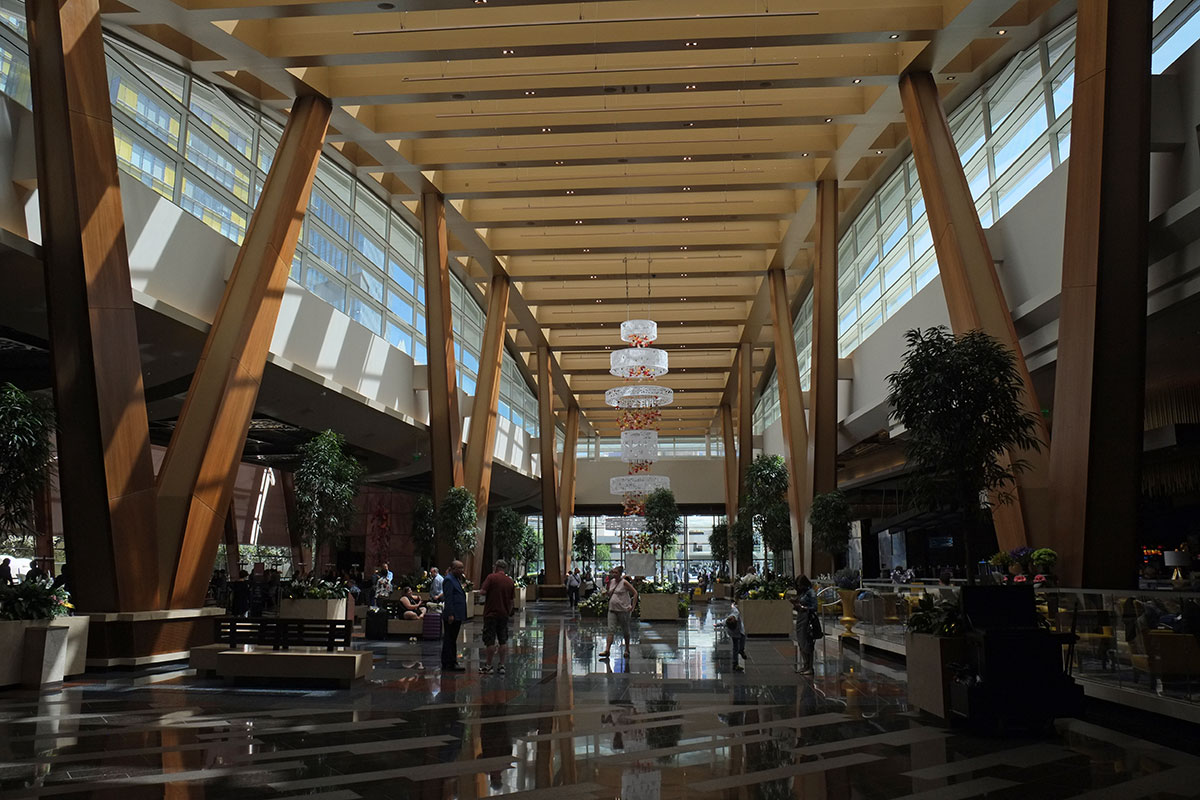
The interiors at City Center are striking, making much more use of daylighting and actual architectural elements than anywhere else in Vegas, 84. Las Vegas118DSCF7195

although the actual casino rooms are still variants on the Big Low Space.  Casino designers know what aspects cause people to stay inside and gamble, and no architect is going to mess with that fundamental part of the financial equation.  84. Las Vegas120DSCF7205

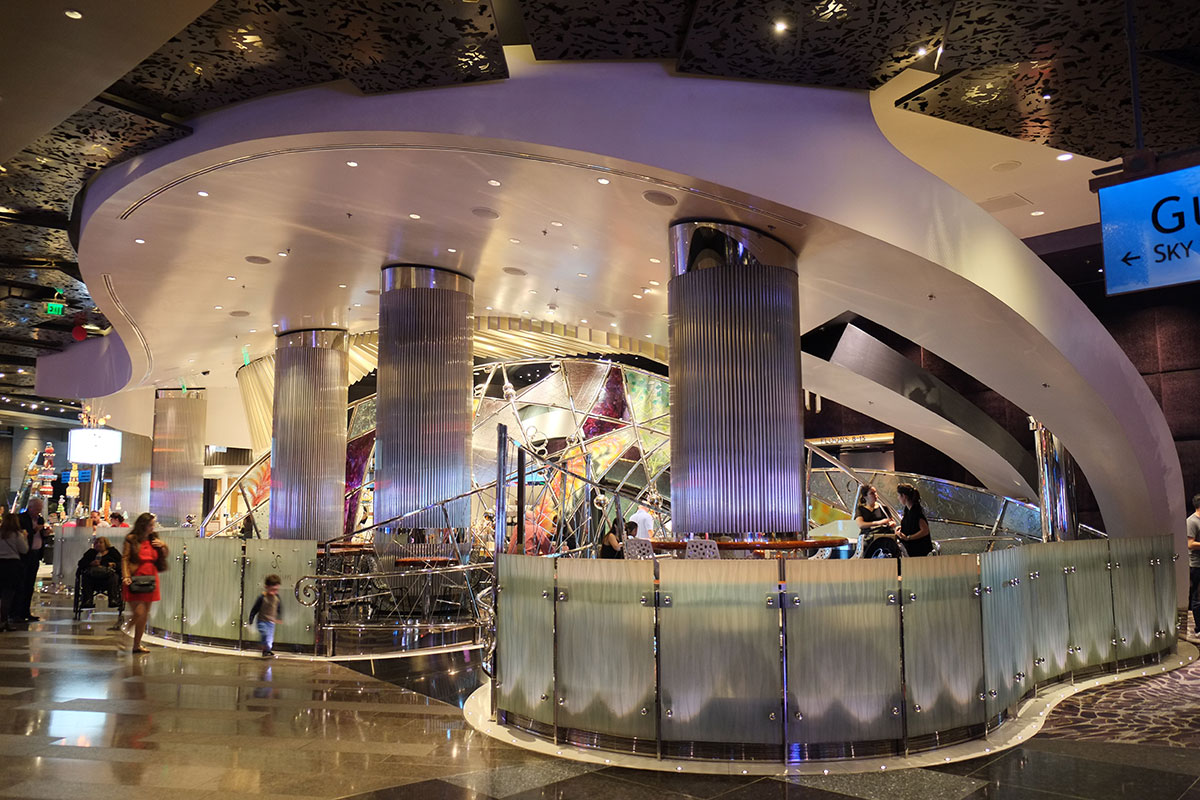
The level of extravagance and Shiny Object detailing is amazing.  This is a little cafe where we grabbed some gelato.  84. Las Vegas119DSCF7198
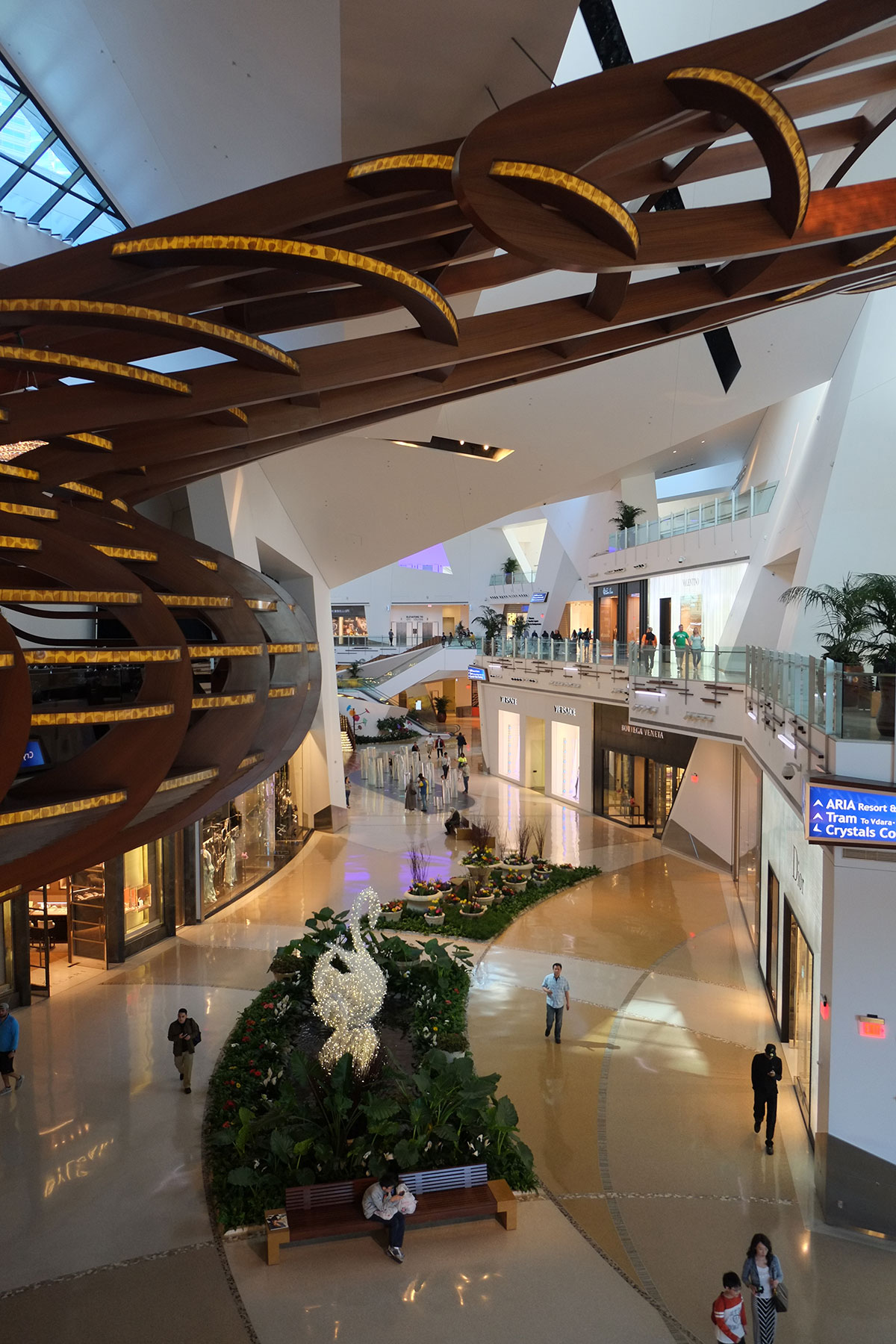
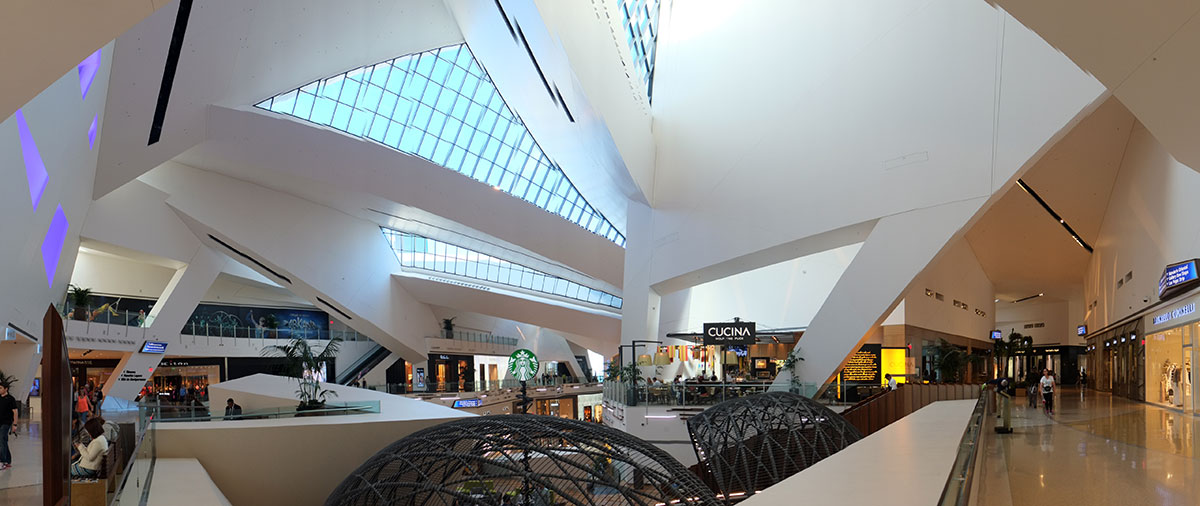
Perhaps the strangest part is a high-end shopping mall designed by Daniel Liebeskind.  We became used to seeing his jagged buildings serving as museums and other cultural institutions over the past 15 years, and his style has become completely recognizable – you can spot a Liebeskind just as you can a Gehry or a Zaha Hadid.  Often these spatial and formal special effects are said to represent our zeitgeist, to show how an artist has insight into the deep structure of our globalized culture and can embody those precepts in architectural form.

So to see the same forms used to house the likes of Prada and Vuitton is more than little bizarre at first.  Do these forms have inherent meaning (I don’t think they really do), or have they just evolved into the latest hip visual vocabulary, one that will look as dated as bad Postmodernism in just a few years?  DSCF7160

I think that when avant-garde architects are young (under 50), they push the theoretical underpinnings of their work to justify it, and to explain why none of it ever gets built.  It is all revolutionary, and will undermine the civil as well as architectural edifice of our society, etc.  Then when they are older and the visual culture has caught up with their aesthetic, they start getting work, and eventually end up designing shopping malls (just strange, jagged ones).  I’m not sure that most of them ever really started with serious theoretical positions (architects tend to not be deep intellectuals, but rather, talented manipulators of three-dimensional reality), but even if they were, it is almost impossible to resist the temptation to actually build, and inevitably, any architectural movement that might have begun with a serious polemic and intentions just ends up as another style in the service of the globalized corporate hegemony.  84. Las Vegas116DSCF7170

There is a long history to this.  Before the valorization of the avant-garde, architects saw themselves solidly within the power structure of a society, and knew their role in it.  (HH Richardson once said, The first principle of architecture is to get the job.)  But since Ruskin and the subsequent pretensions of the Modern movement to represent a moral as well as architectural critique of prior eras, architects have felt the need to cloak themselves in revolutionary rhetoric, which starts to sound pretty silly when they start designing shopping malls.

In my youth I worked for some firms that designed shopping malls and department stores, so once I got over the strangeness of this one being by Liebeskind, I was able to evaluate the shopping mall qua shopping mall.  And on those terms, it’s a good one.  The curving corridors allow you to see storefronts and signs ahead of you, rather than always to the side as you walk by.  The big spatial nodes create destinations at the ends of the corridors, which in a traditional mall would be the locations of the anchor department stores.  These large spaces then accommodate big inserted architectural elements, which are the bars and cafes.  The high volumes give relief from the Big Low Spaces of the rest of Vegas, bringing in abundant daylight that makes strolling through the mall a pleasant experience. The architecture says, we don’t have to trick you into staying indoors and spending money, we assume that you are so rich that you just spend lots of money whenever you feel like it, and are used to doing this in a beautiful place.  Frank Gehry went from being a straightforward mall architect to being Frank Gehry;  maybe Daniel Liebeskind should try the reverse.

Las Vegas was like Texas for me – I had a lot more fun than I expected to.  I thought all the pleasures would be snarky, slumming my way disdainfully through the cheesy excesses, getting into the Fear and Loathing mindset as much as I could with a 14-year-old in tow (I had learned how far that was at Mardi Gras).  But the beauty of Las Vegas is that you can see larger currents in the global architectural and economic worlds writ large.  There is not much subtlety here.  Paradigms of different eras are juxtaposed, as are the aspirations of different strata of society.  I had expected the complete unreality of the total fantasy environment, but evidence of the irresistible forces of global society were everywhere.

People go to Las Vegas as an escape, for a willing suspension of participation in the reality of the outside world of jobs, sprawl and daily life.  I did the same – not gambling and drinking and going to shows, but allowing myself to experience it on its own terms, enjoying the architectural special effects and admiring the skill of those who created this artifice.  But as we drove back out to our campground at Lake Mead, and once again contemplated that 150-drop in the water level, reality set back in.  The high temperature in Las Vegas today will be 108 degrees.  No one will be walking along the Strip. The parallels with the Roman Empire are more than architectural, and it’s hard to think that when Greta retraces this trip with her own kids in 30 or so years, that they will actually be able to visit Vegas.

84. Las Vegas126DSCF7299

Carlsbad Caverns

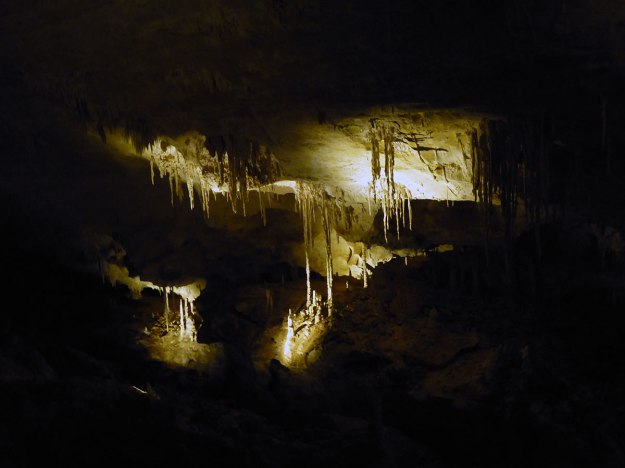
P1080029The elevators have been broken for years. The only way in, or out, is a mile long path climbing 800 feet in elevation. This makes the numbers of visitors even more impressive, almost as impressive as the caverns themselves. Welcome to Carlsbad.
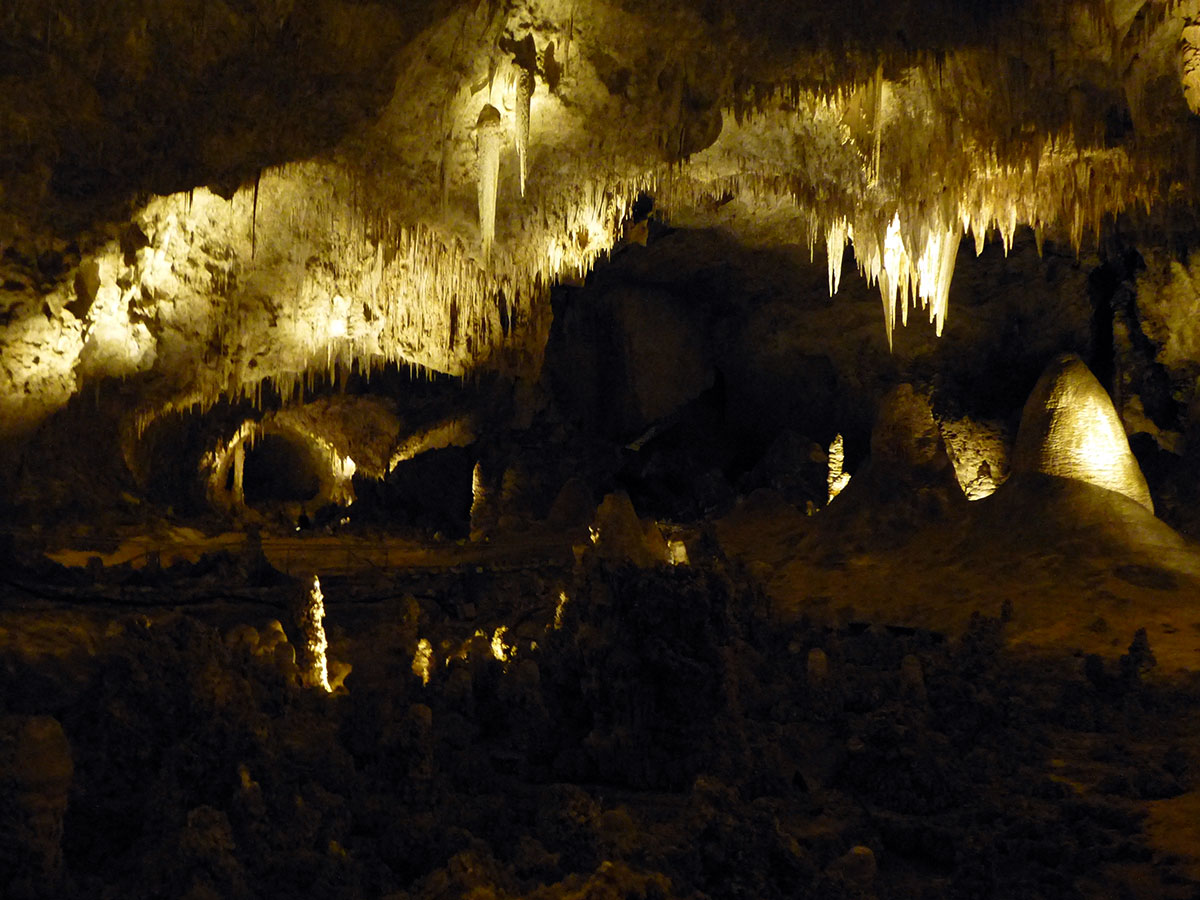
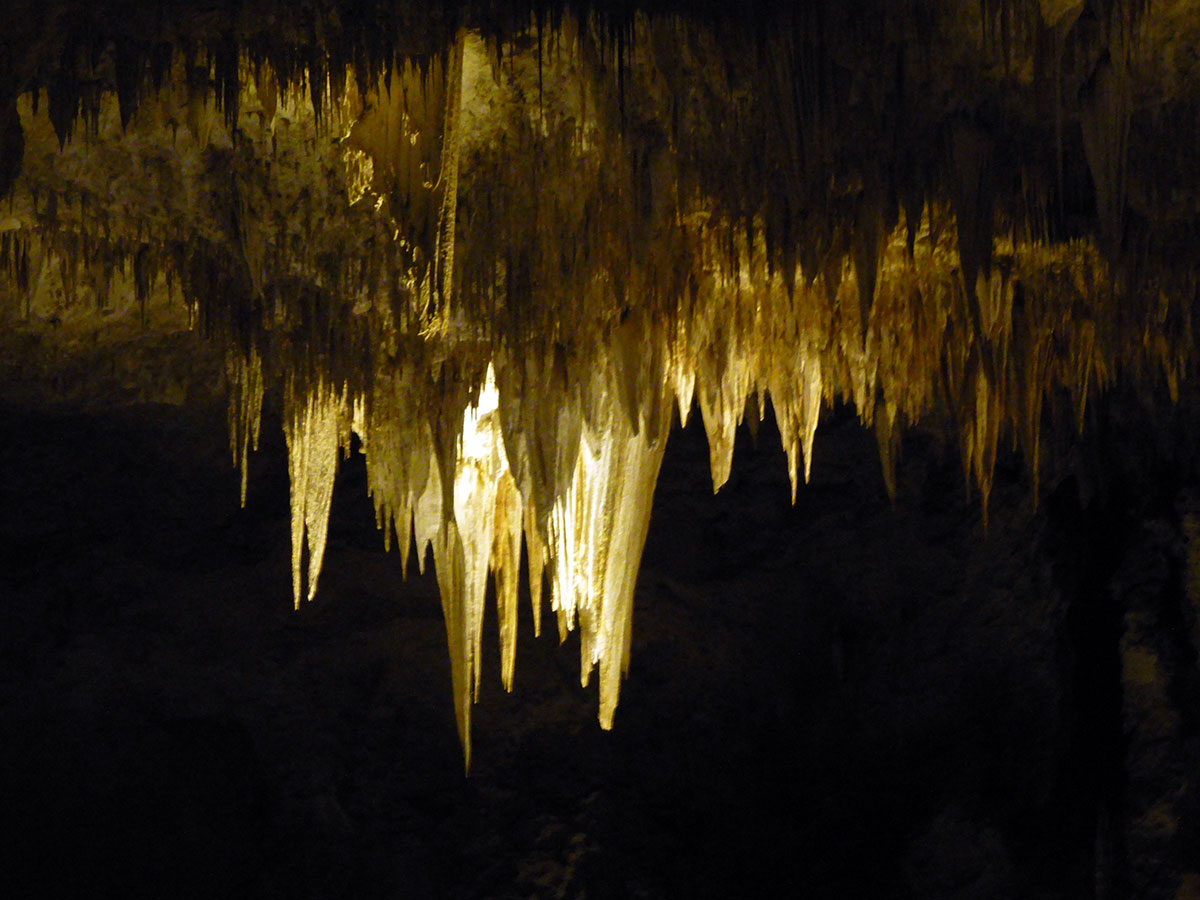
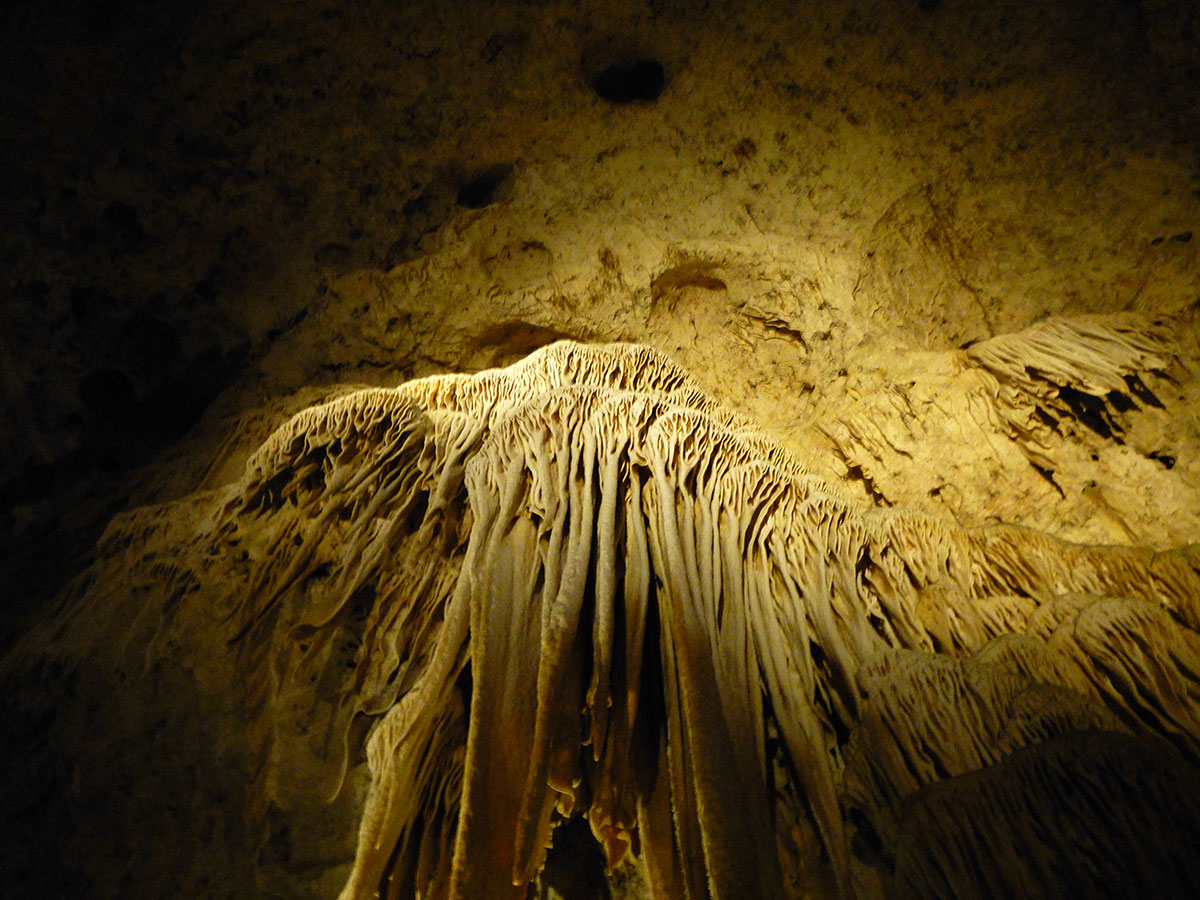
Carlsbad Caverns National Park is actually about twenty miles from Carlsbad, NM, outside of the totally touristed and tiny town of White’s City. I think the cavern itself is bigger.
P1080082

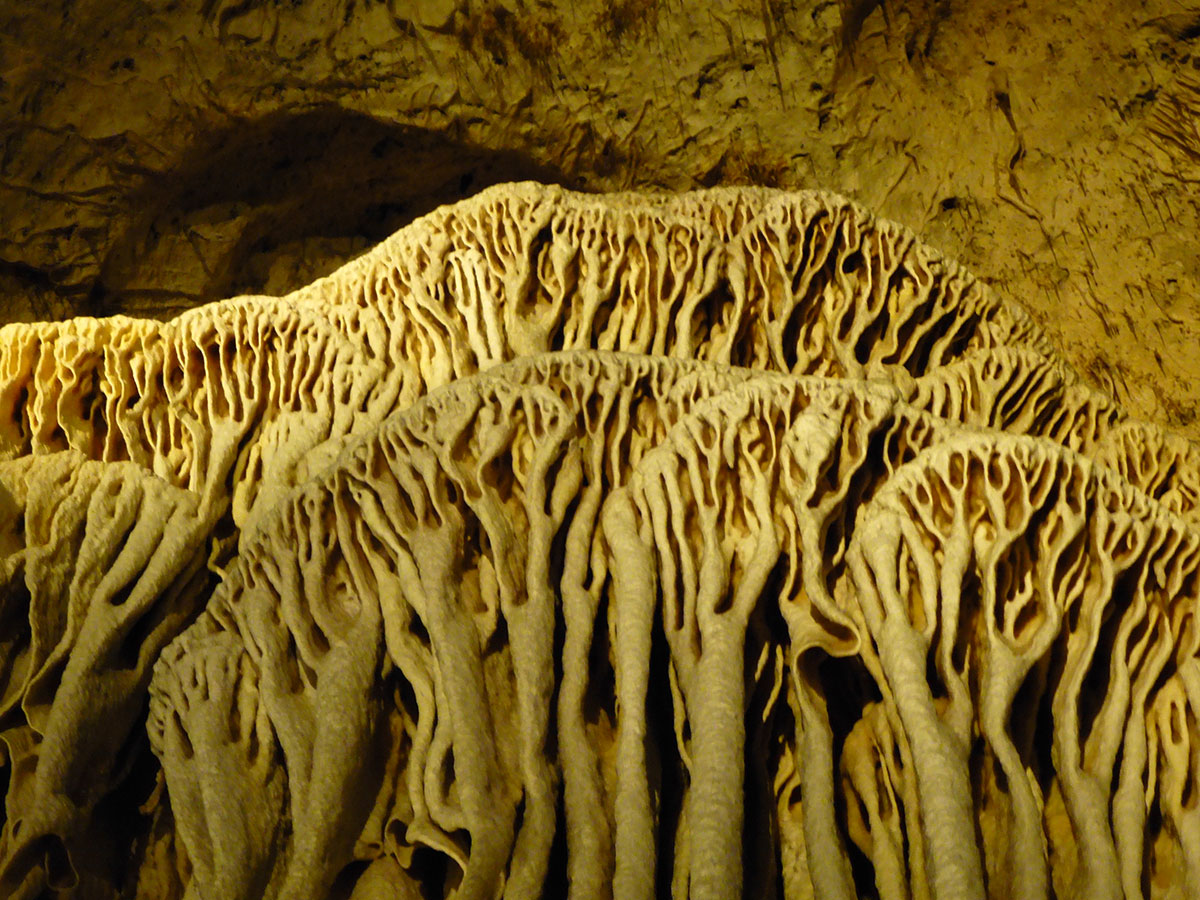
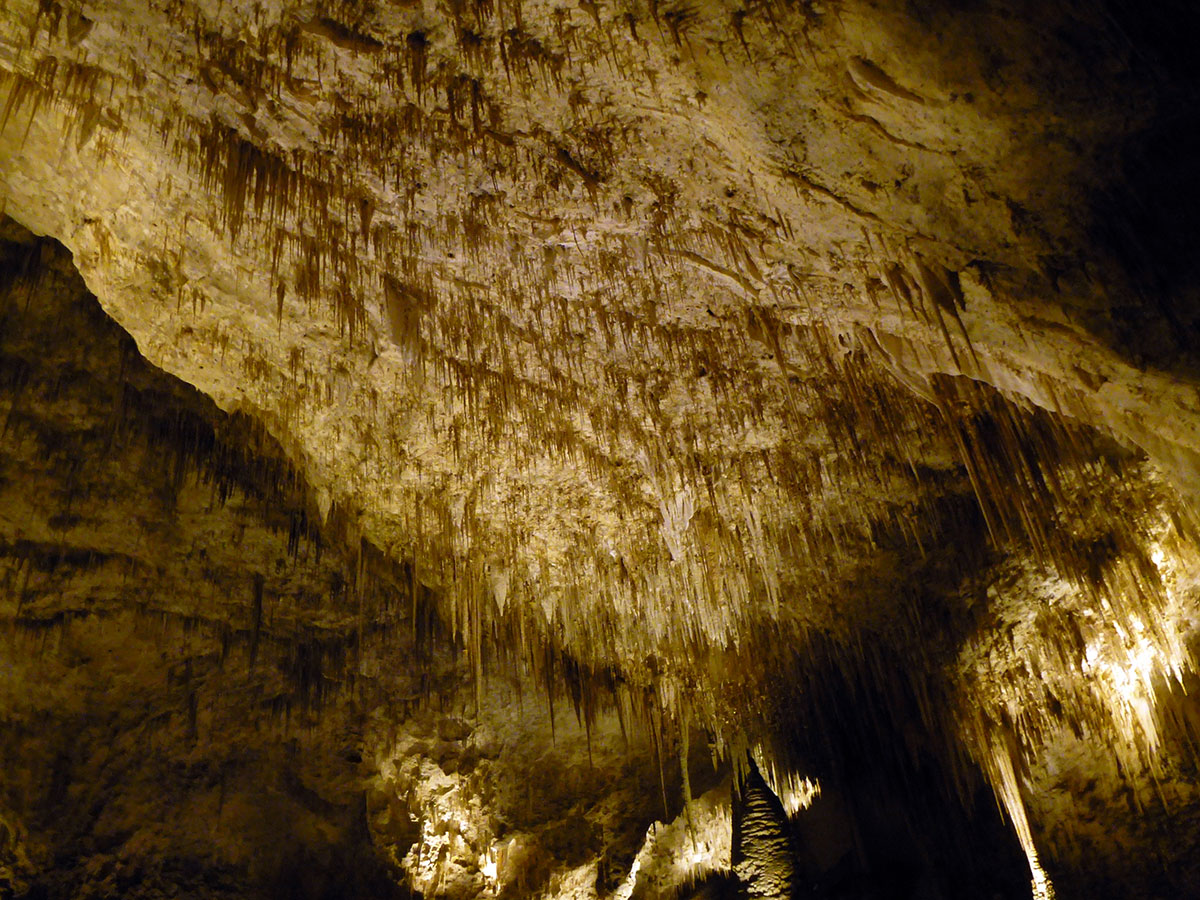
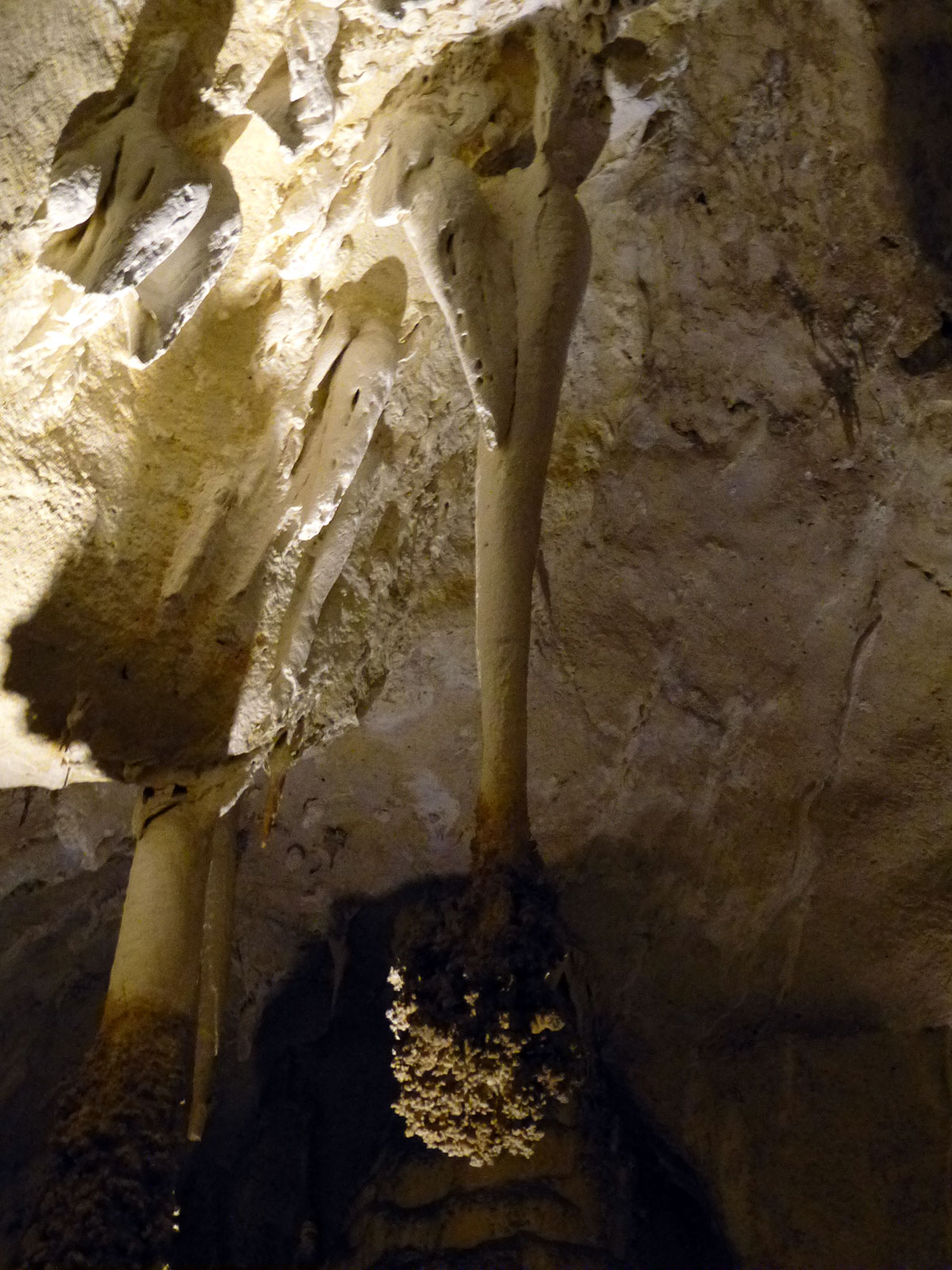
But that might not be saying a lot, because the cavern was HUGE. Fourteen acres of floor space, it’s the largest natural room in the Western hemisphere, several times bigger than Luray. And several times more impressive. P1080076The Chandelier was the most gorgeous, and the most aptly named. The nps had even strung lights up inside of it, making it glow a soft creamy gold. And some of the flows did their best to convince you they had been carved by elves.P1080115 P1080118

P1080073

The mirroring stalactites of the fairy forest

P1080066

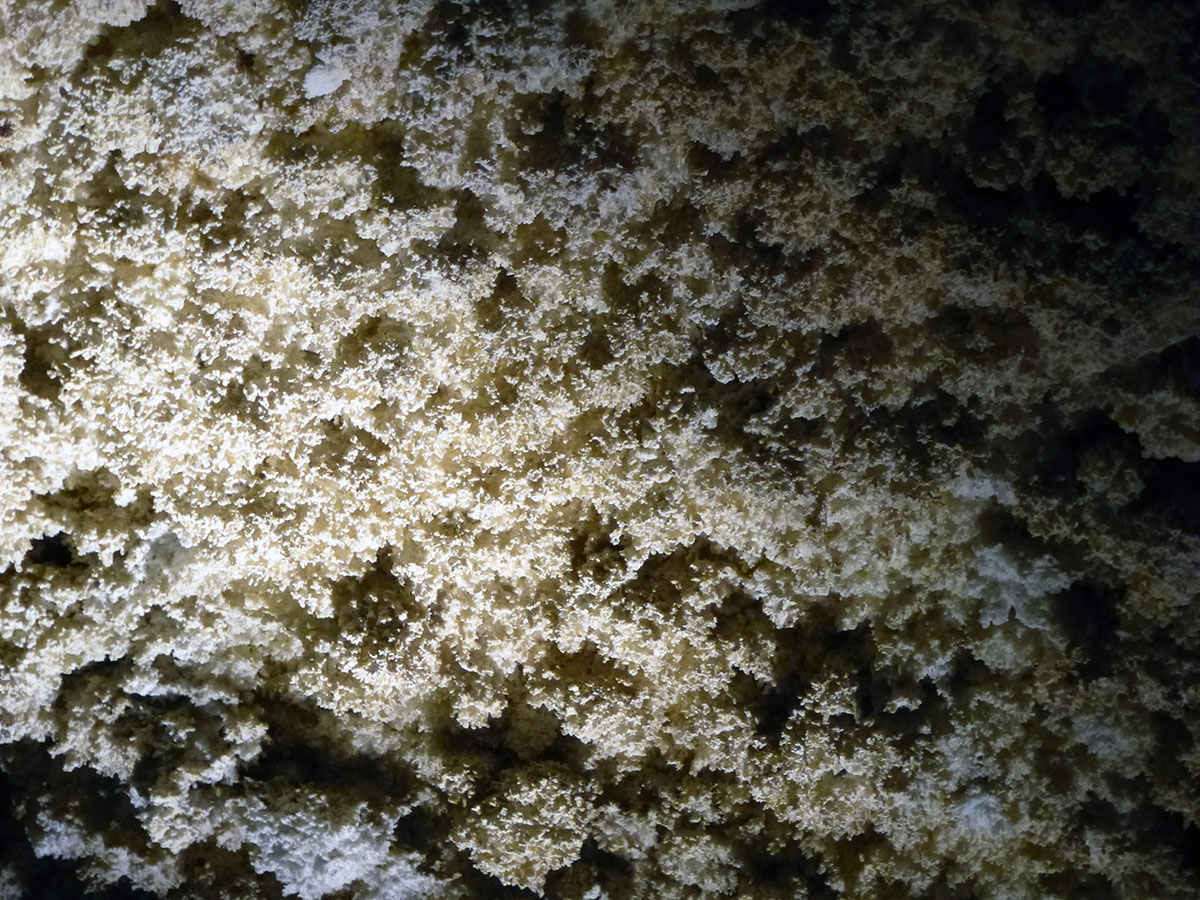
The lion’s tail and fairy forest were also pretty, but in a more rustic, popcorny way. Popcorn is a type of speleothem (rock formations caused by dripping or flowing water in caves, and my new favorite word) that looks like the movie theater snack. Surprisingly, I couldn’t find a sign or section on the brochure explaining exactly how the rough texture forms.P1080051

Despite the exquisite beauty of the cave, walking down into it felt wrong. Every instinct yelled at me, that the underground is not a place humans are not supposed to go. The bats didn’t help. We didn’t see any, because they only roosted in the caves during the summers in a part humans weren’t allowed into. However, this knowledge didn’t help much when you felt like you were descending into the Mines of Moria. Getting out felt great, but it was definitely an experience I’d repeat.

Marfa, Texas

DSCF6004Marfa is a small West Texas town where the level of irony, postmodernism, contextual intervention, self-consciousness, and appropriation is so high that you can’t tell if it’s a real town, or the largest conceptual art installation in the world.  It was probably a straightforward, small town on the main railroad line until Donald Judd put it on the art map.  Now it has hip art-tourists coming through to see the work at the Chinati Foundation, and a permanent population of arty types, together forming a mini-Santa Fe for West Texas.  These people require services not typical for small western towns, and it was there that we found the first clues to what was really going on.

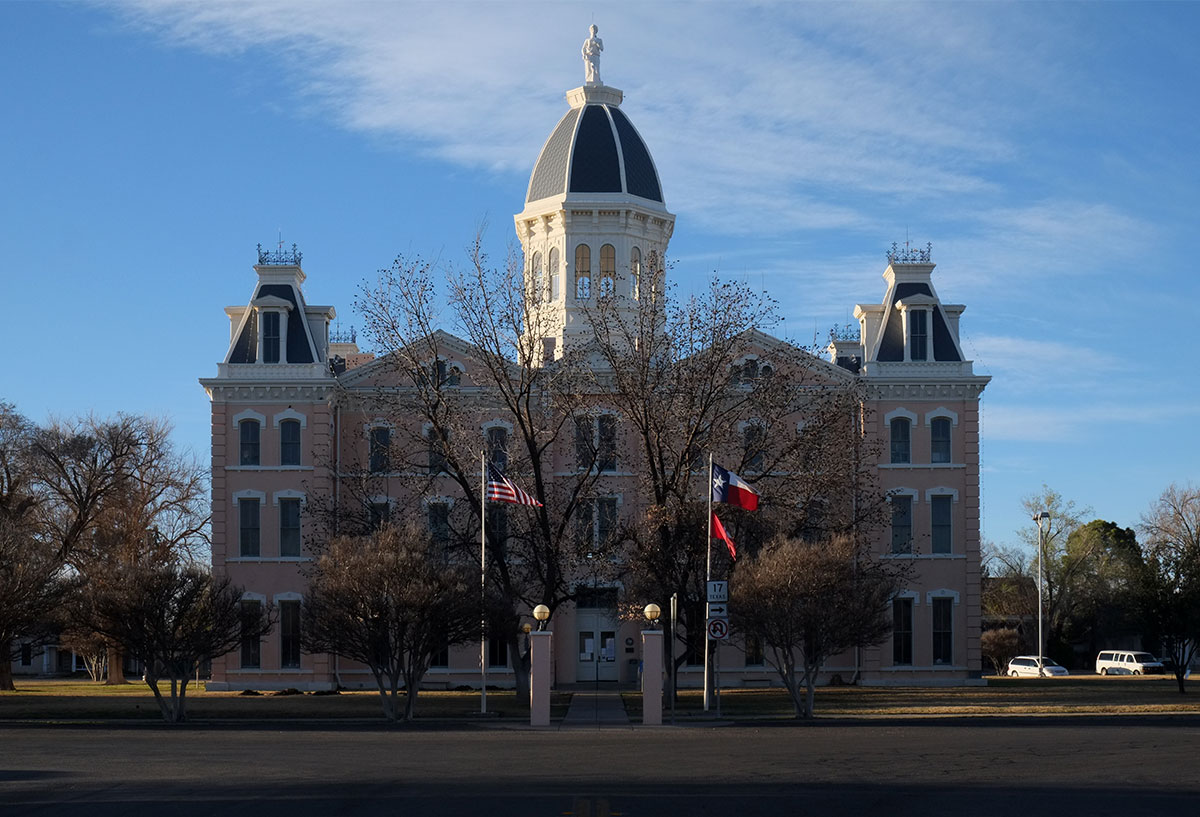
The original town is great – maybe this is why Donald Judd ended up here    The county courthouse is grander than some state capitols (such as Oregon’s), and occupies a full-block site in the middle of the north-south axis.   Many years ago JB Jackson wrote about western courthouses as the center of small-city civic life, but this trip was my first exposure to the classic ones.   (Other notable ones we’ve seen in Texas are in Lockhart and Ft. Davis).  DSCF6086

Marfa began as a watering station on the railroad, and as it grew, many buildings were built right on the line.  DSCF6040

DSCF6031

The main commercial street runs south from the courthouse to intersect the RR and US 90, the main highway to San Antonio (400 miles away).  It has classic early-20th century commercial buildings, and remarkably few later additionsDSCF6085

DSCF6108

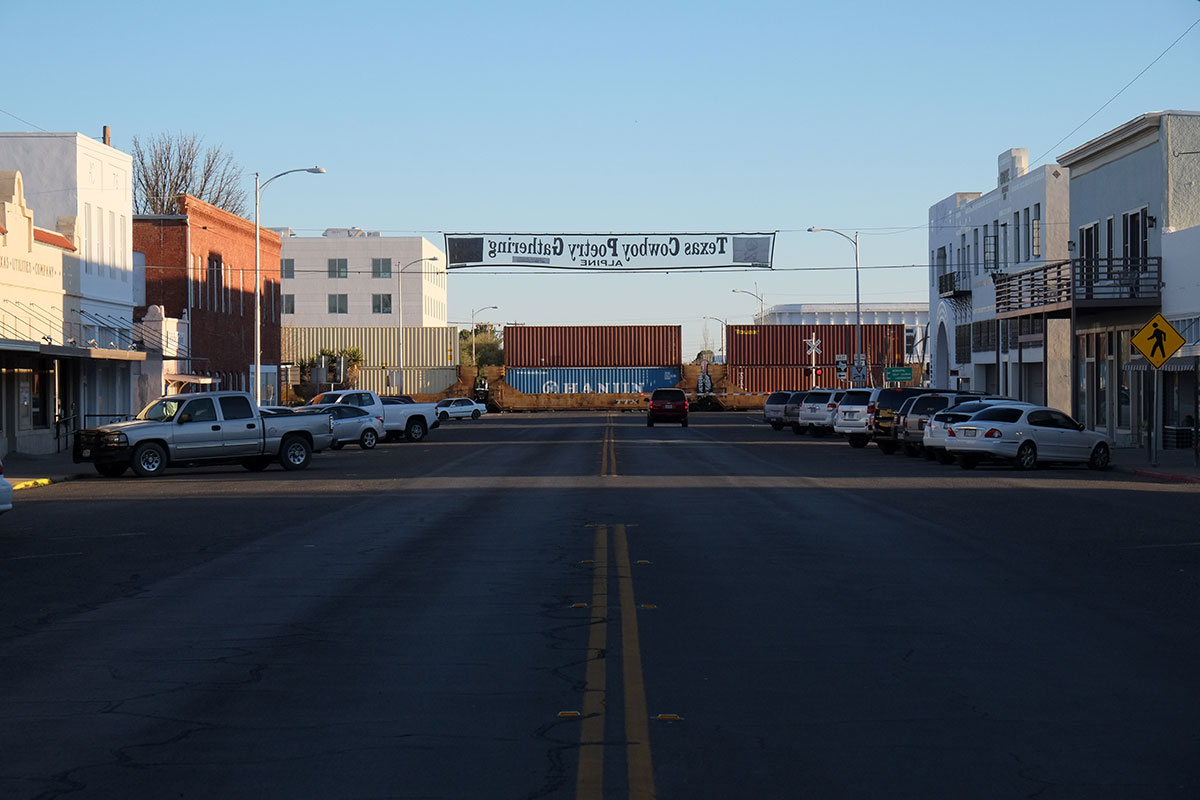
At the Judd Foundation compound, our excellent guide had pointed to one sculpture – identical metal boxes aligned vertically, with the exact same amount of space between them.  He mentioned that this was the iconic Judd piece, variations of which are seen in museums around the world.  I had wondered why that piece resonated so far, and where Judd had come up with the idea.  Then we left the compound and turned left on to the main street:DSCF6099

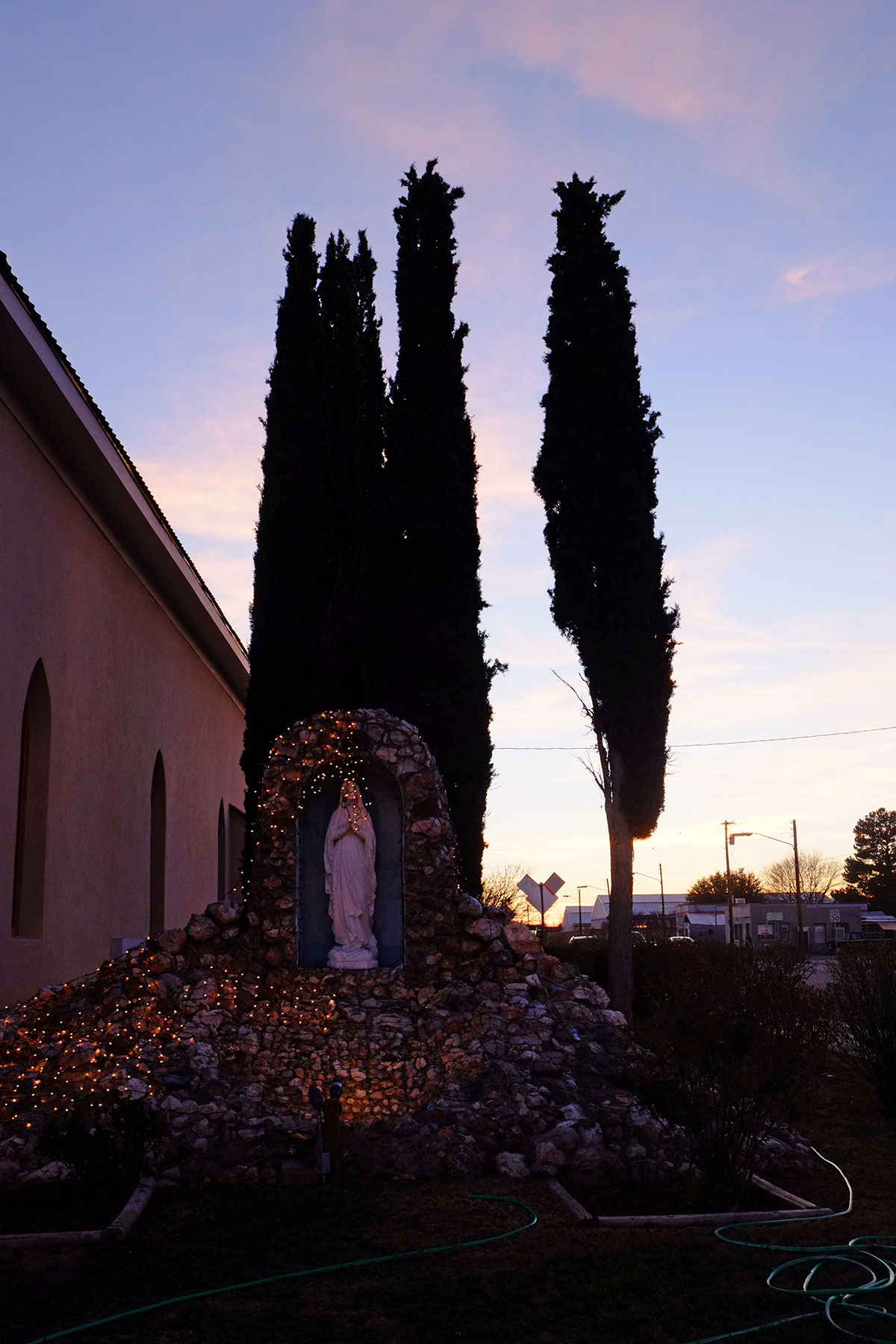
We began to notice what was missing in Marfa – mainly, the very recent roadside commercial stuff that seems to have squeezed out everything older everywhere else in the South.  There is a Dairy Queen in Marfa, but no other chains.  Perhaps two old gas stations.  No modern motel chains.  It felt like a time warp – we’ve been traveling along Route 66 in the Southwest often recently, and every town through which it passes makes a big deal out of the older, retro, roadside remains.  But in all of those towns, the hip retro stuff is wedged between the usual bad new stuff.  Marfa has been magically protected.  The intersection between the old and the quirky reigns, as in this LED-enhanced grotto at the Catholic church, right on Highway 90.DSCF6005

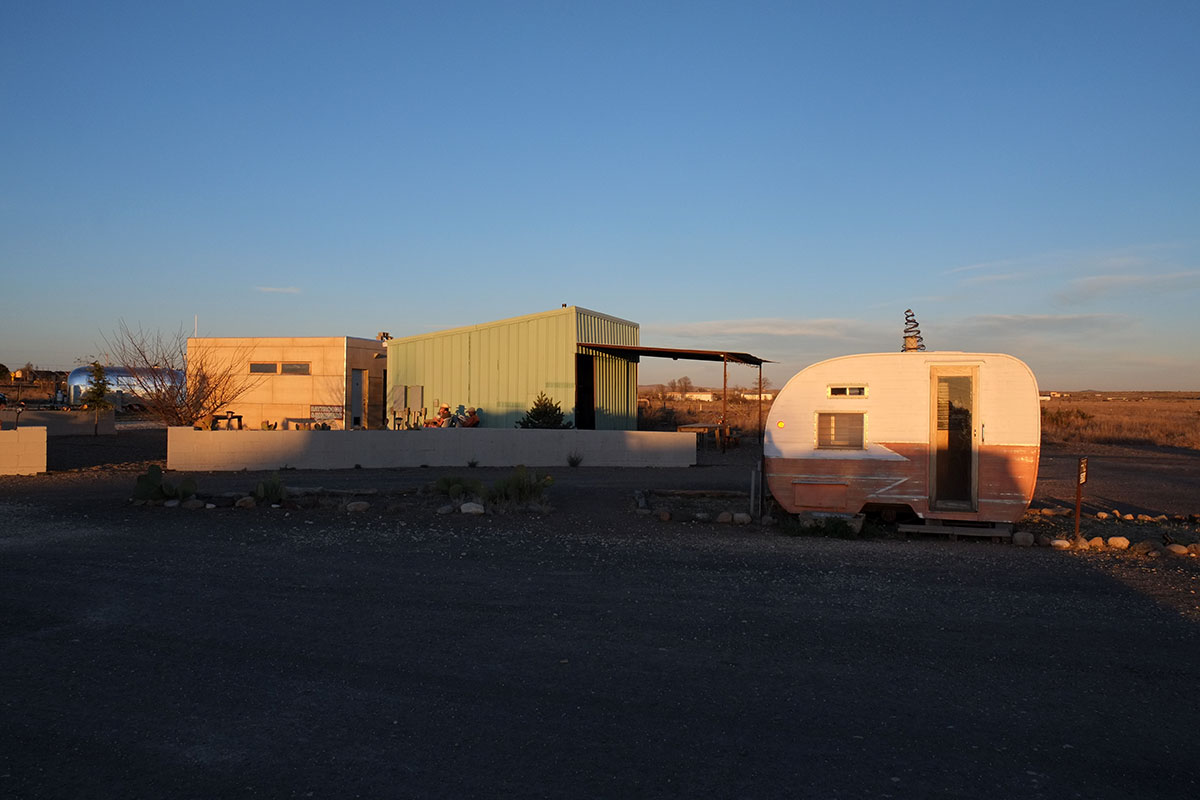
As we looked for a campground, we found two listed in town.  There is El Cosmico, which felt a little self-consciously retro – you can rent an old trailer from them, or a teepee, and there are hip cultural events taking place there.  But strangely, no accommodations for you bringing your own little trailer.  So we went to the Tumble In, out on the highway, where the campground self-register office is in a small trailer, and the common space and bathrooms are in the de rigeur hip/retro/industrial vernacular. DSCF6120

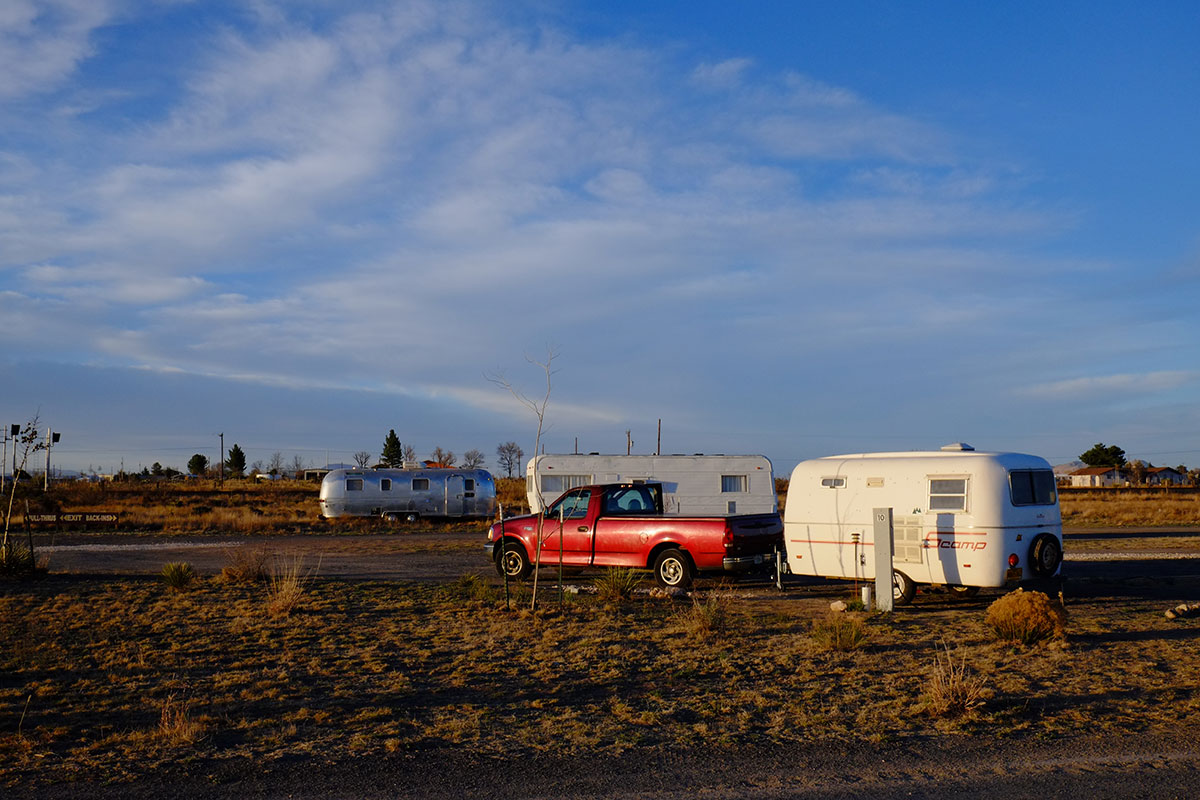
The Scamp fit in amongst the Airstreams and vintage 60s trailers, which seemed to be all occupied by Buddy Holly lookalikes with mangy dogs.  DSCF5999

Outside of Marfa proper, there are two notable attractions. The first is the Marfa Lights, a phenomenon supposedly visible from Highway 90 ten miles east of town.  For decades, people have reported seeing strange moving lights in the desert to the southwest.  The town even acquired funds to build a combination viewing platform / bathroom building out there to accommodate the believers.  We read a bunch of articles online about it, and Greta found the ones that debunked the stories – claiming that they were simply perceptions of highway lights on Route 67 winding through slight hills – to be most convincing.  Given the choice between sitting out in the desert night waiting for a possible hokey paranormal experience, and sitting in the trailer, getting online for the first time after about a week in the wifi-free zone of the Chihuahuan Desert, Greta opted for the internet.

The other attraction in the desert is the Marfa Prada store, 35 miles to the west.  A small building filled with Prada products has been built on a lonely stretch of highway 90, where it is an illuminated icon of First World consumerism to the immigrants crossing the Chihuahuan Desert.  The punchline is that the store cannot be entered – one can only look through the store window.  We’d seen the images, and a friend had recently reported that it was full of flies that had found a way in.  We had experienced enough irony for one day, so we decided to forego that attraction too.

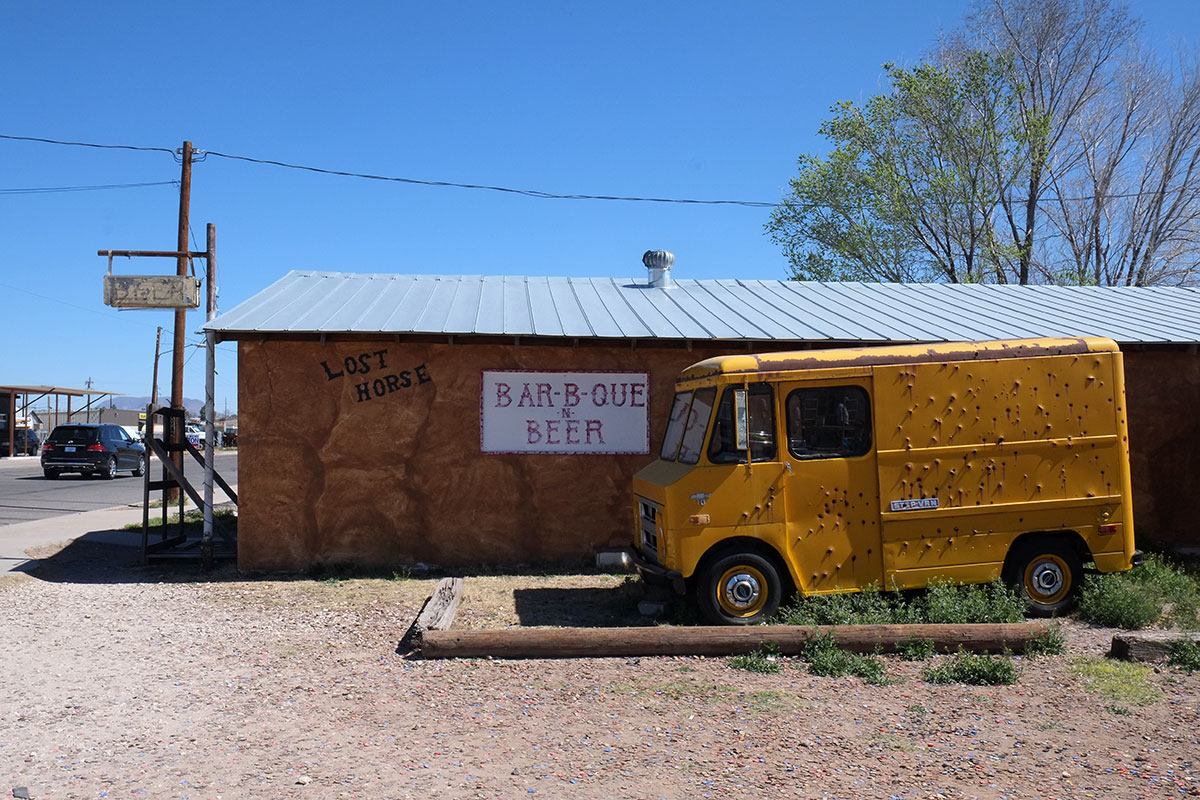
The lack of the normal sprawlscape means that other options for meals had to be be sought.  I had expected that with the influx of arty tourists, Marfa would be well-supplied with hip dining venues.  Greta jumped on Yelp and found a bunch of quirky, highly-rated restaurants and carts, so we headed out.  The Lost Horse turned out to be closed (and riddled with bullet holes).  DSCF6021

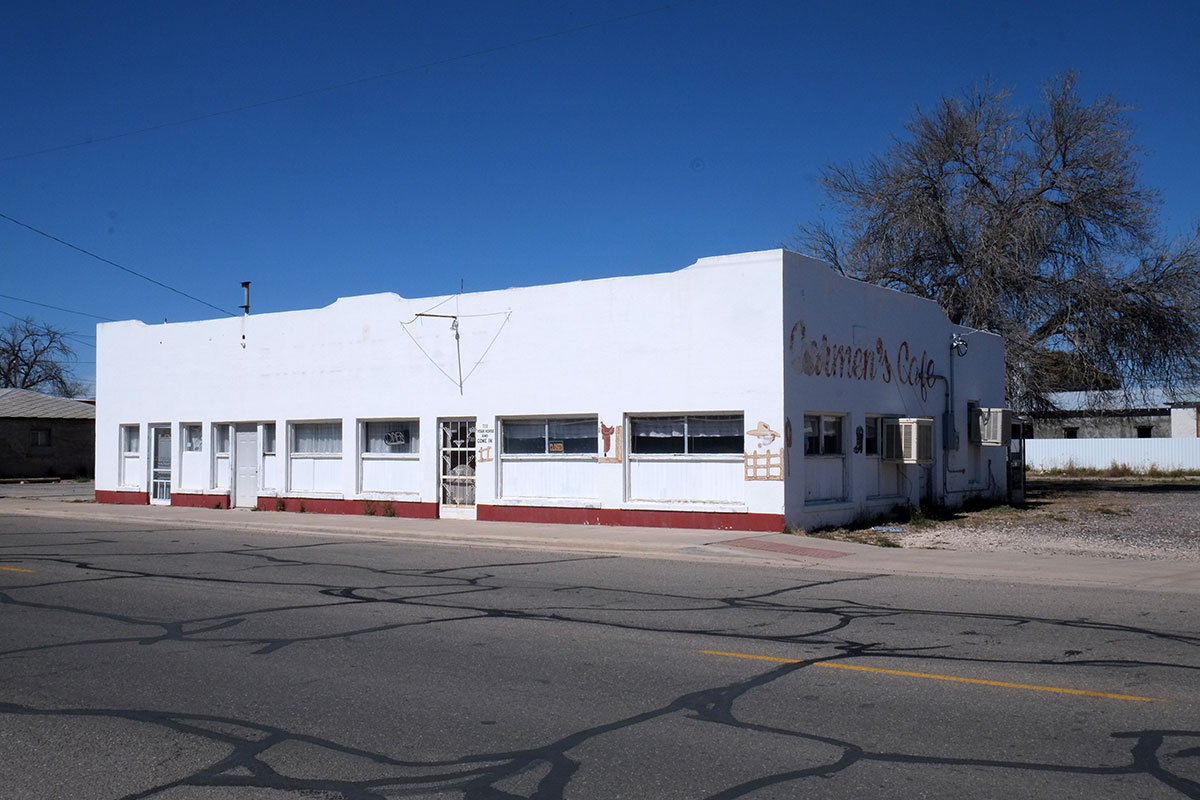
Carmen’s Cafe appeared to be defunct.DSCF6019

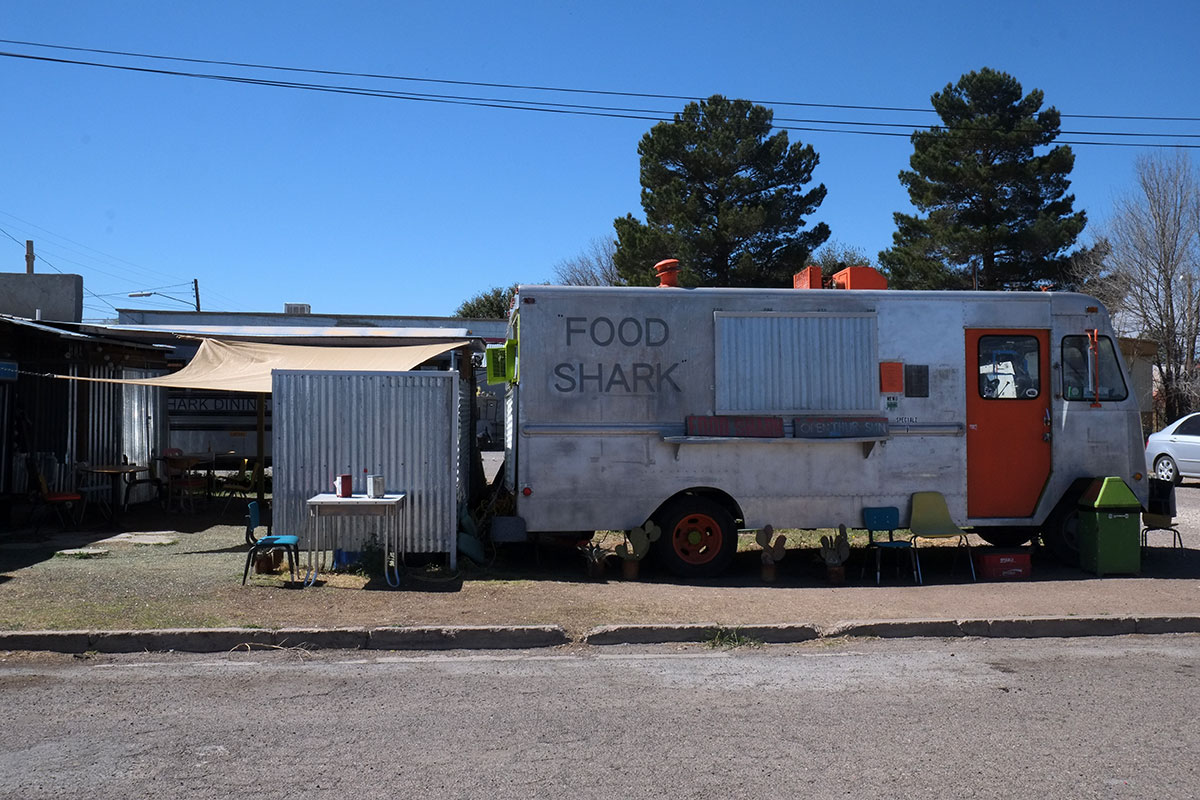
Food Shark, highly-recommended, was closed too.  DSCF6027

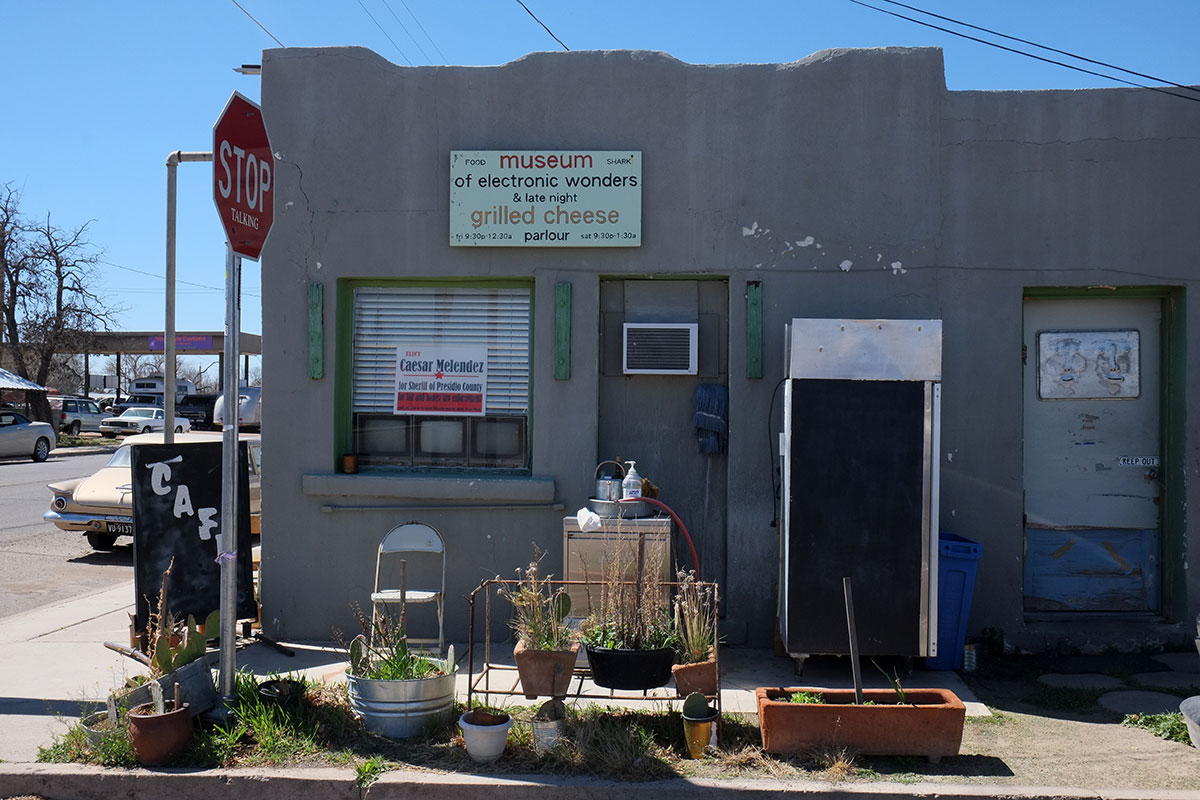
As was the Museum of Electronic Wonders & Late Night Grilled Cheese next door.  DSCF6028

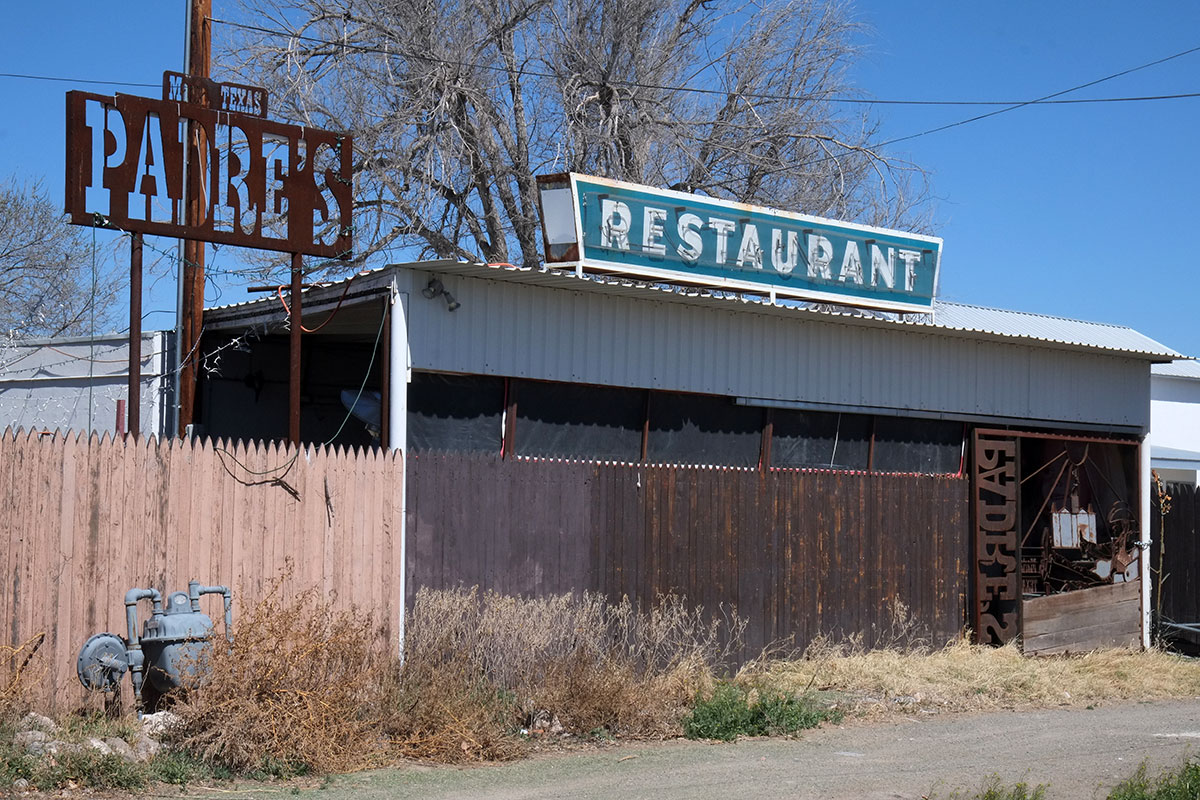
Padre’s had a sign proclaiming it would open at 5:00, but they lied.DSCF6030

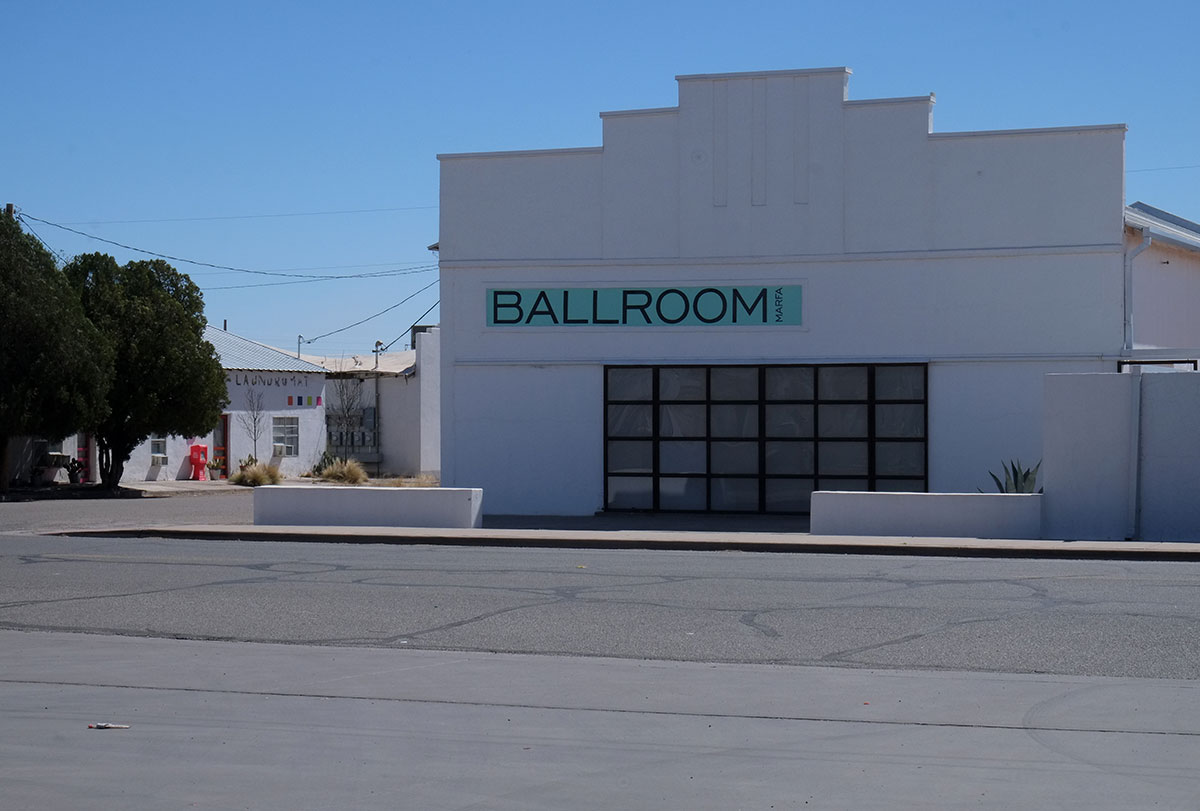
The Ballroom showed no sign of life.DSCF6258

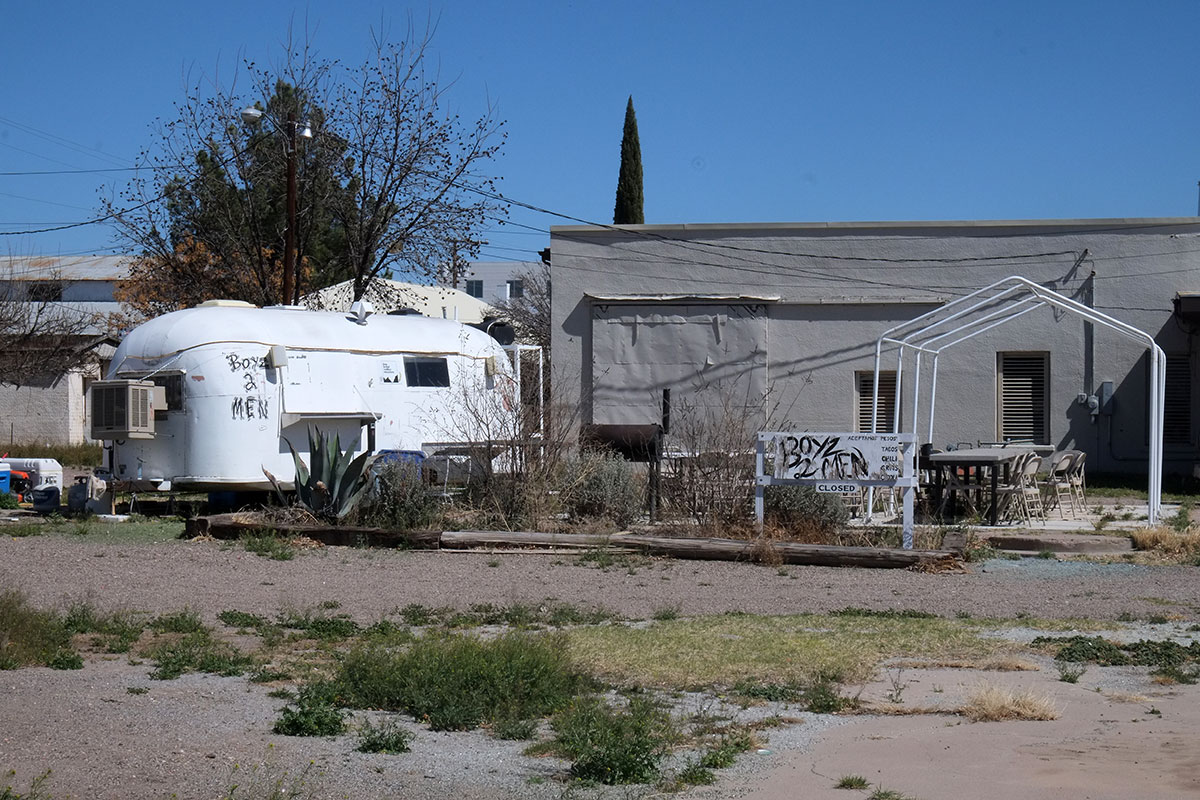
Boyz 2 Men, which is supposedly noted for the banter of its employees, was calm.  DSCF6029

Finally we went looking for Cochineal, which the reviews said was overpriced and not as good as they seemed to think it was.  We wandered down the street, but couldn’t find it where it was supposed to be.  We encountered an artsy type from LA, who said he had reservations to meet a friend there, but he couldn’t find it either  He called them, and confirmed that their address was 107 West San Antonio Street.  We all walked along the block, past 103, to 131, then carefully looked along the property line between them. Nothing.  We broadened our search, and finally found number 107 further down the block, next to number 149.  We started to think Marfa was in the Twilight Zone, a town which appears normal at first glance, but where nothing is quite right.

We ended up at Capri, a hip new restaurant serving elf food.  Though they had a very limited menu, the pleasant young waitress couldn’t explain a single thing on it, and would giggle nervously and apologize before scurrying off to find someone who could answer.  We suspected that she was not really a waitress, had never done this before in her life, and that again, the whole set-up was a performance piece.  DSCF6008

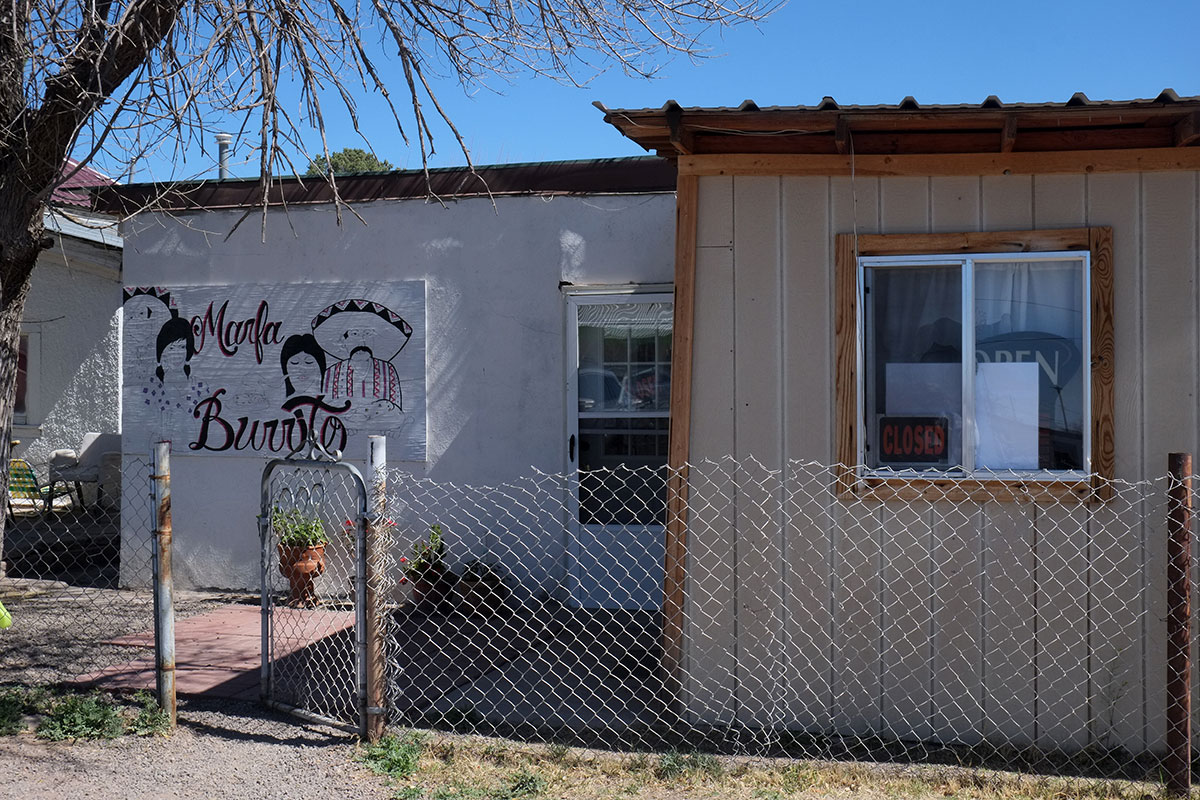
The next day was a repeat.  Our guide at the foundation told us that she had driven by Marfa Burrito, the proprietor was there, and it was certainly open.  We arrived to find that it was not.  DSCF6013

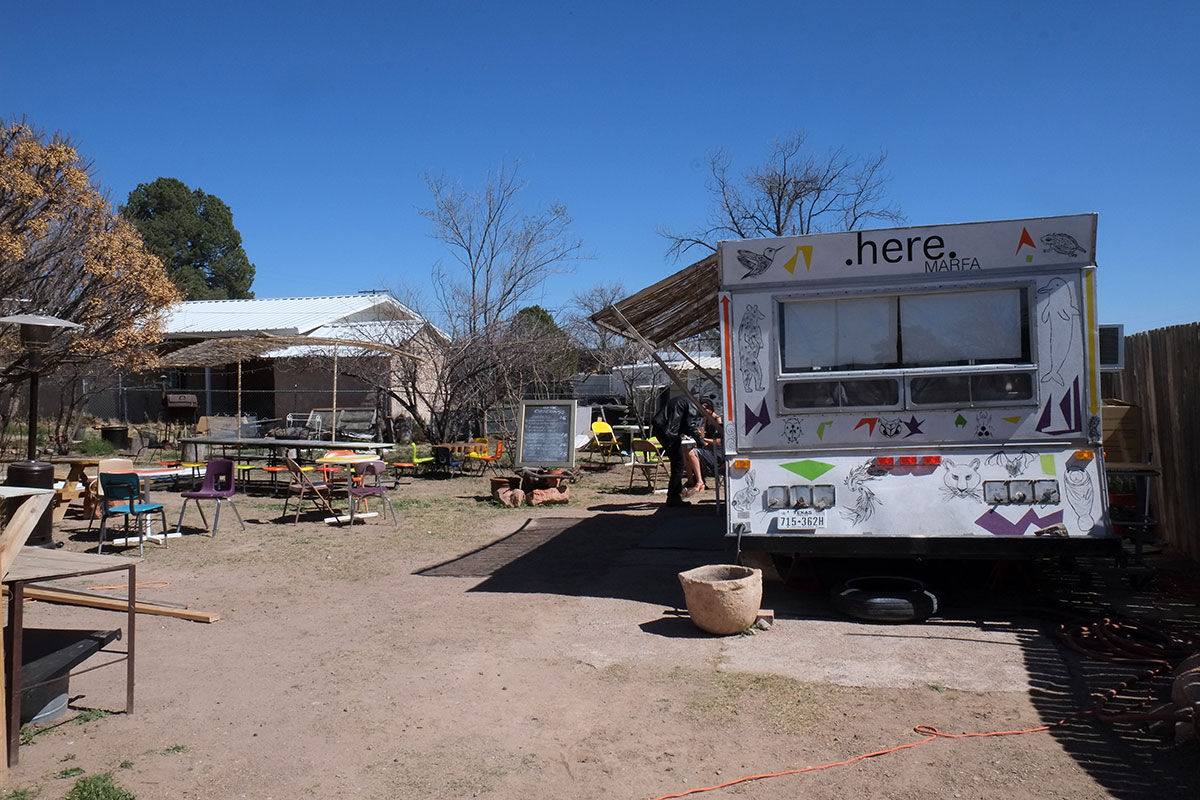
However, when we saw people walking around behind the building, we followed them, and found this food cart.  We hurried over and scanned the menu.  But after re-reading the lists of ingredients several times, I had to ask them what the noun was:  there were many ingredients, but what form did they take all together, perhaps a burrito?  The woman in the trailer answered that they served nutrient-dense food.  I persisted, and she handed out a sample, which was a tiny cup with a thick, green liquid in it, announcing it as a nut-kale smoothie.  I gave it to Greta, who gamely sipped it, and managed to politely suppress her honest reaction.  DSCF6012As we took our leave, we realized that the Prada store supplied the primary metaphor for all of Marfa – it is all about desire and frustration.  We began to wonder whether any of these establishments were real.  Greta had me listening to her favorite podcast, Welcome to Nightvale, about a town in the desert where strange occurrences are common.  It all started to feel familiar.  We finally found an open taco cart, Salsa Puedes, which had good food, and where I had a conversation with a cowboy while we waited.  Maybe we were imagining things.

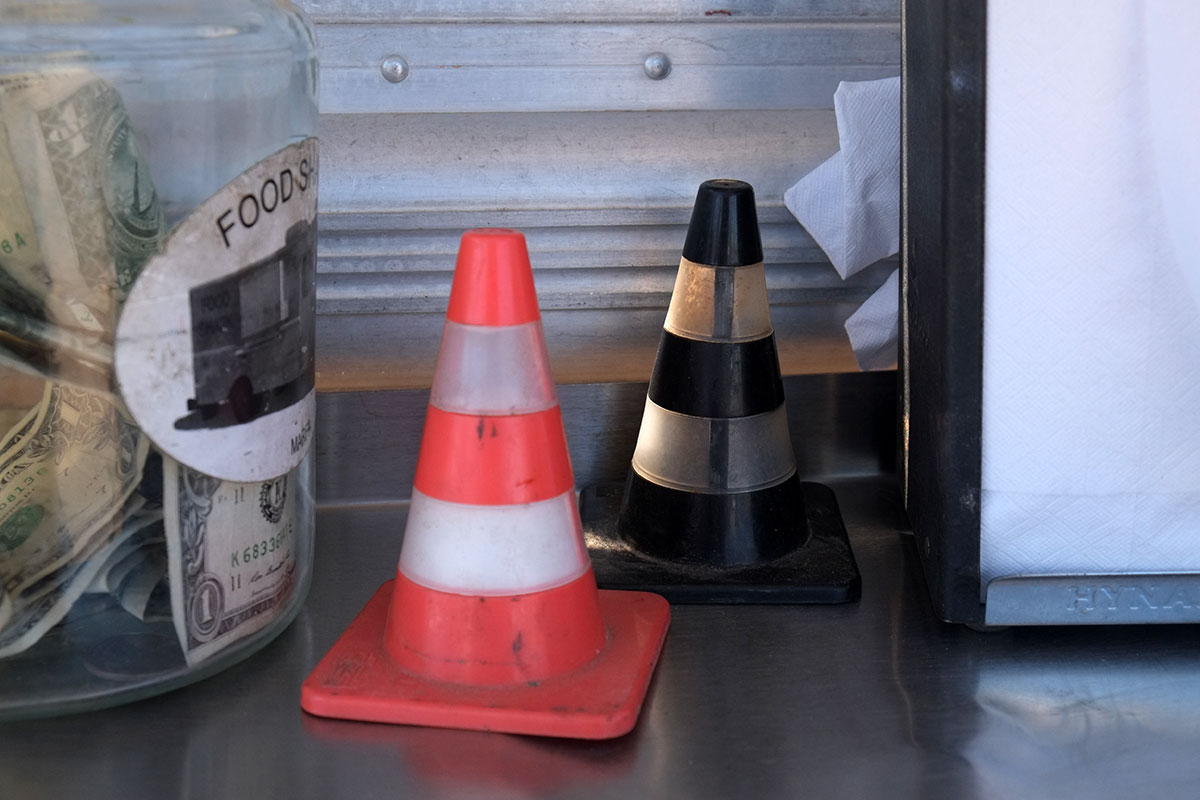
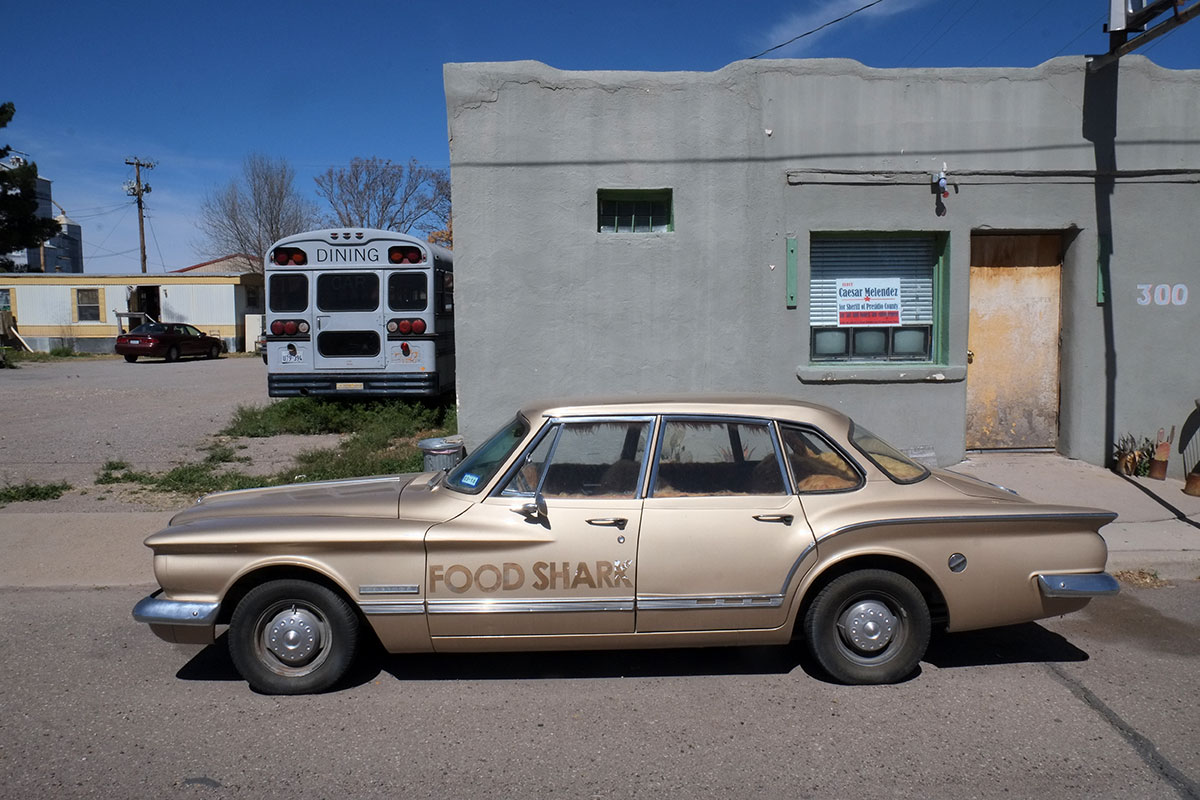
But the pattern repeated the next day.  As we drove by, we saw that Food Shark was open, and we had a fabulous meal.   But I spotted their salt and pepper shakers, and knew that they were on to us;  this couldn’t be a coincidence.  DSCF6232As we were eating, we realized the pattern:  at any mealtime, there was exactly one establishment open in Marfa – a different one every time.  Maybe there was only one person in town who could cook, and she randomly picked a different place every day.  It was a town where people just drove around until they spotted the place that was open.

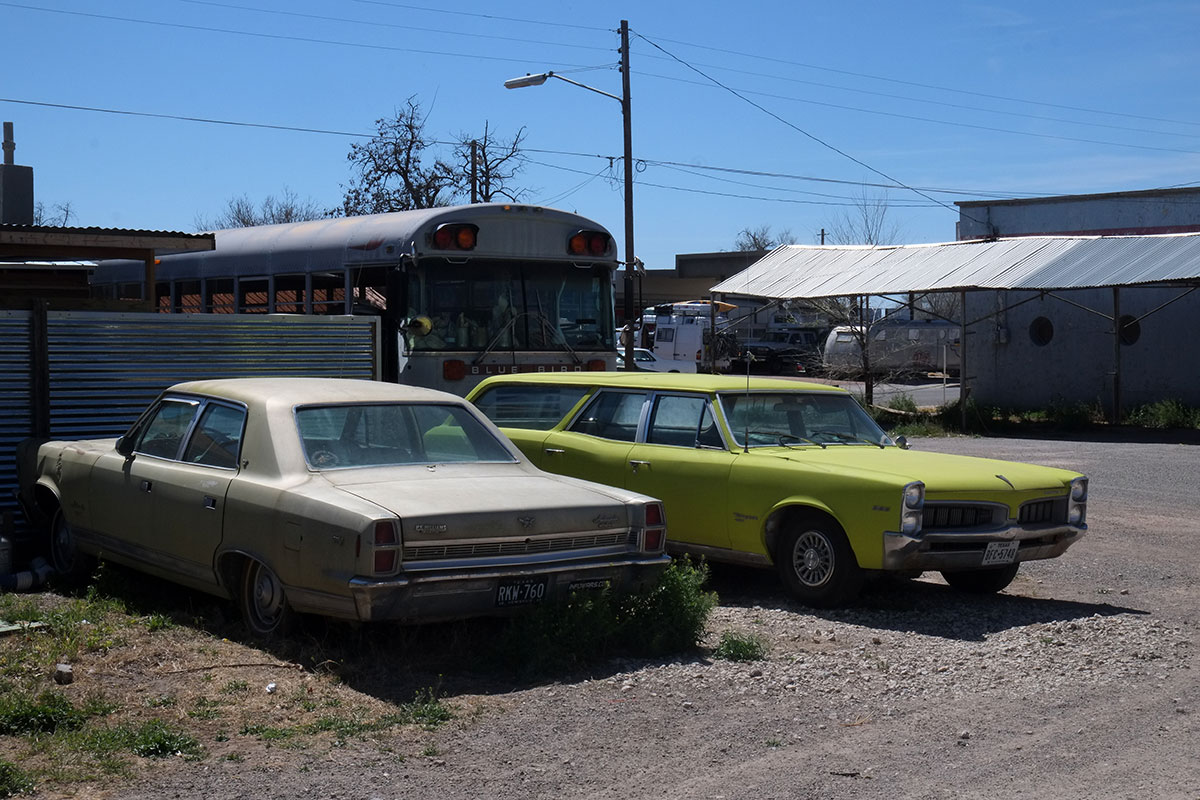
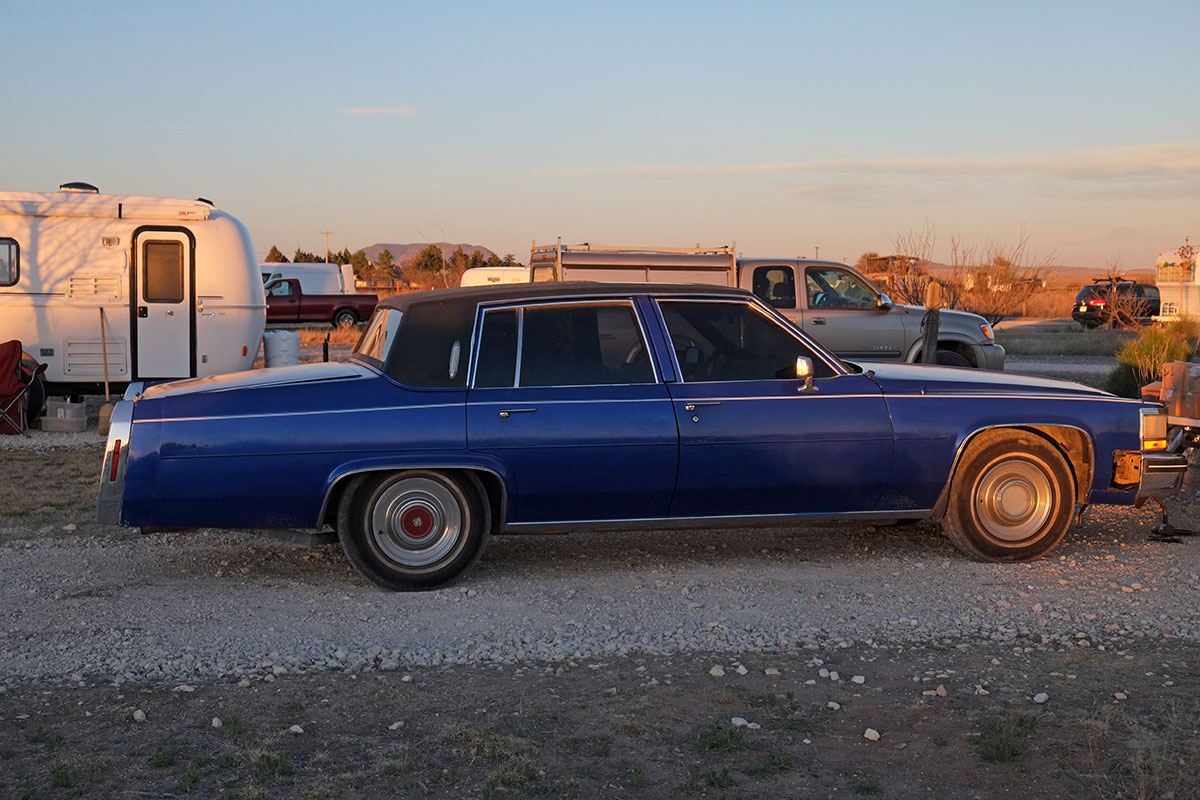
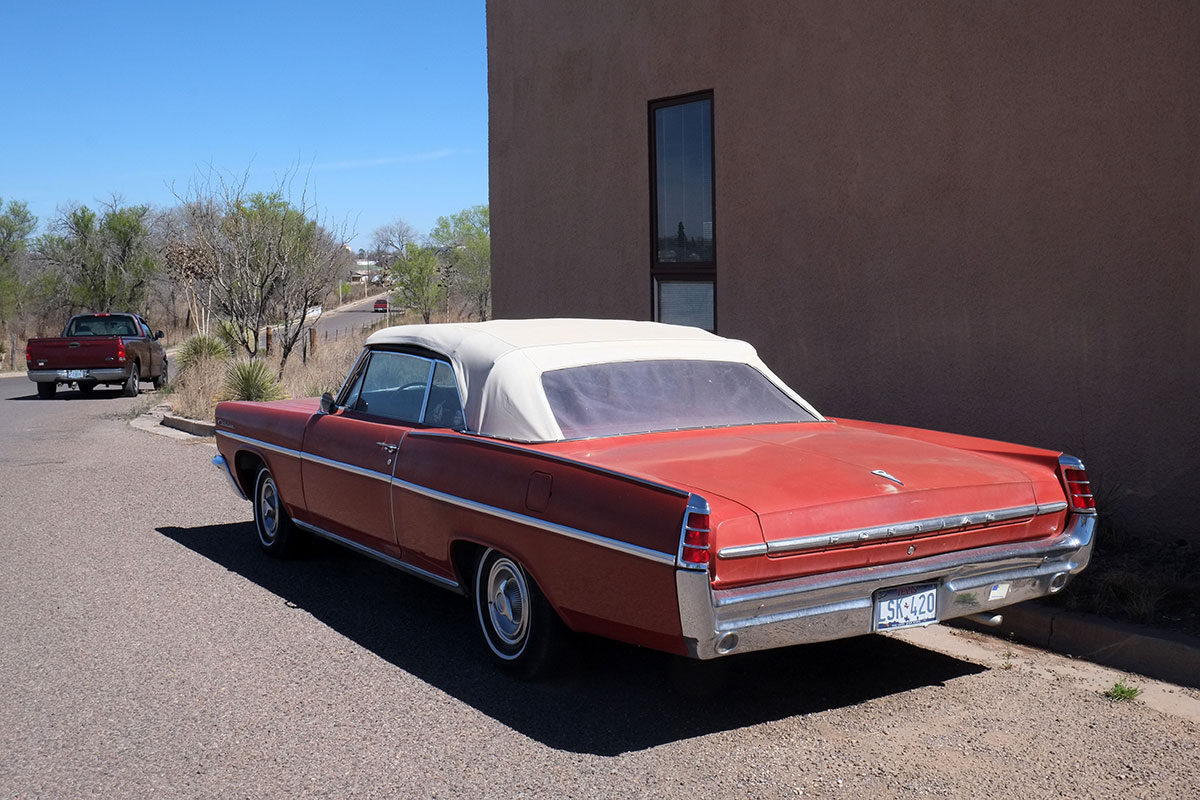
Other weird patterns emerged.  A concentration of very old American cars.  Types that I barely remembered and Greta had never seen.  Some in suspiciously good condition.  DSCF6251

DSCF6256

DSCF6123

DSCF6231

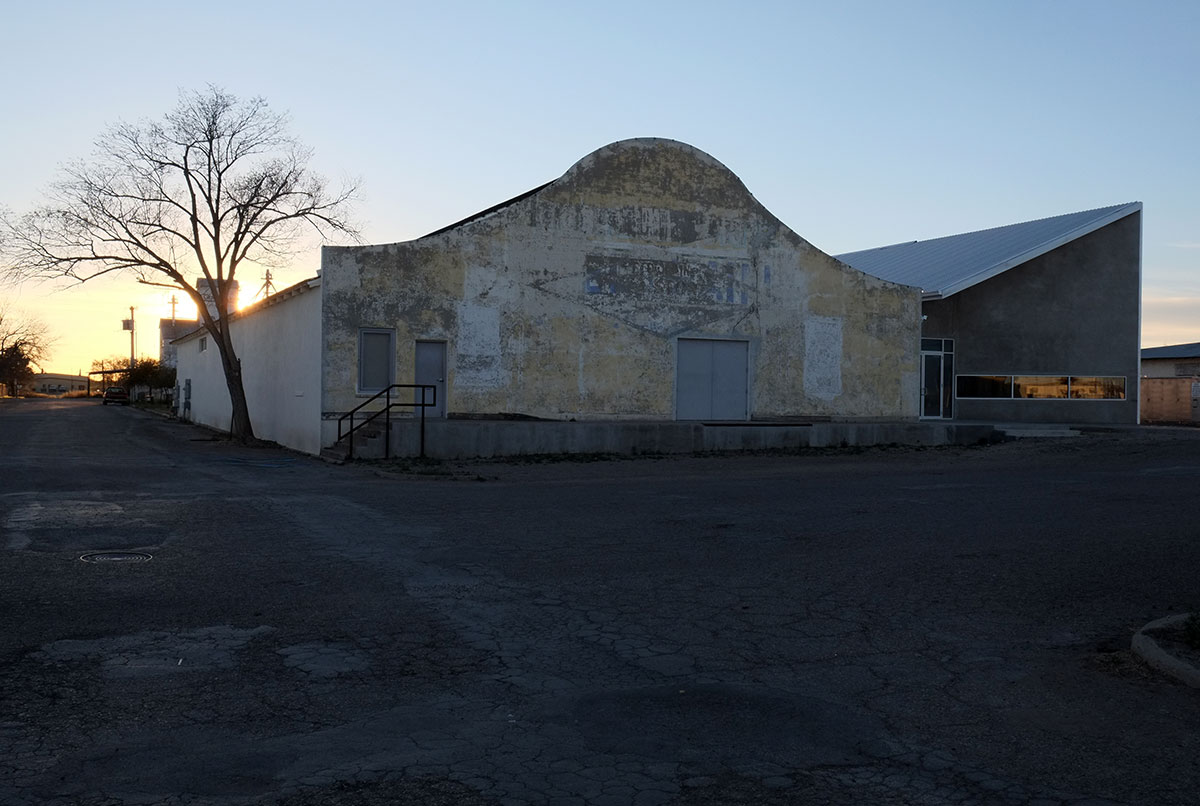
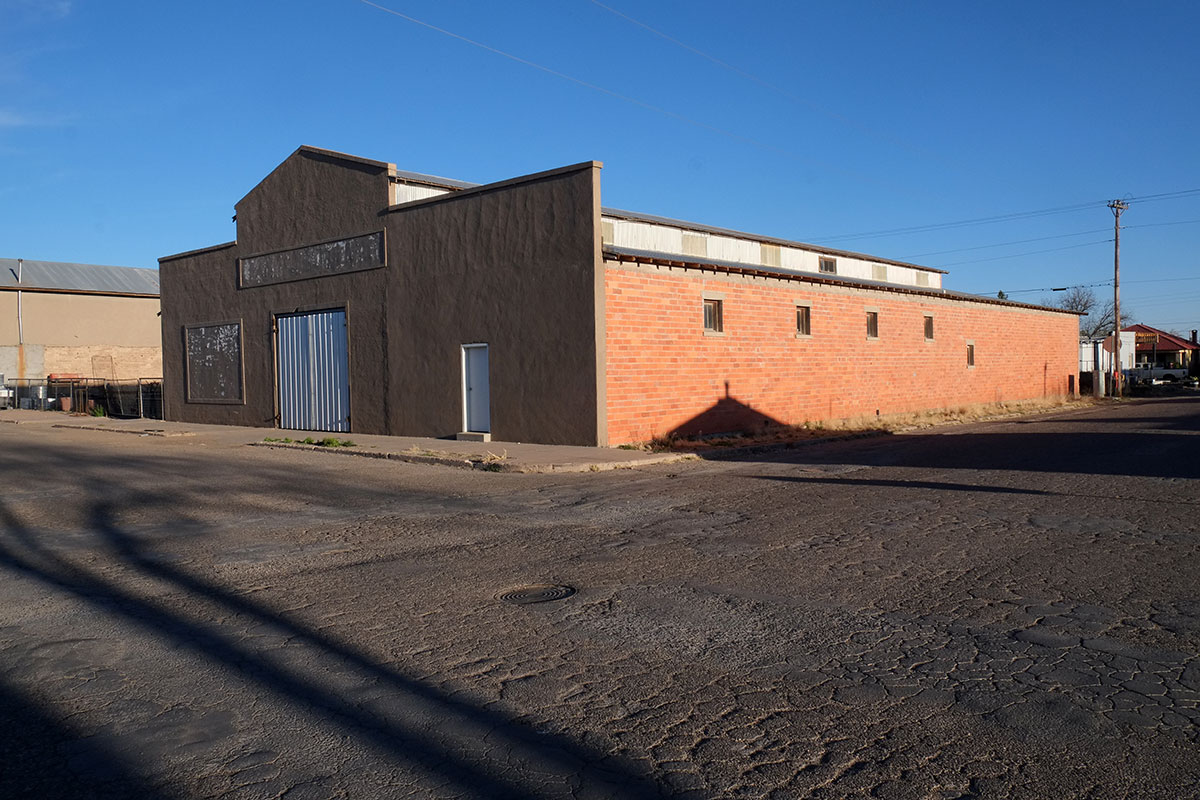
We noticed older buildings sprouting strange new additions.  What was really going on behind those grimy facades that could cause such bizarre new growth?DSCF6115

We began to look suspiciously at buildings that had appeared innocuous to us the day before – what activities were they hiding inside?DSCF6080

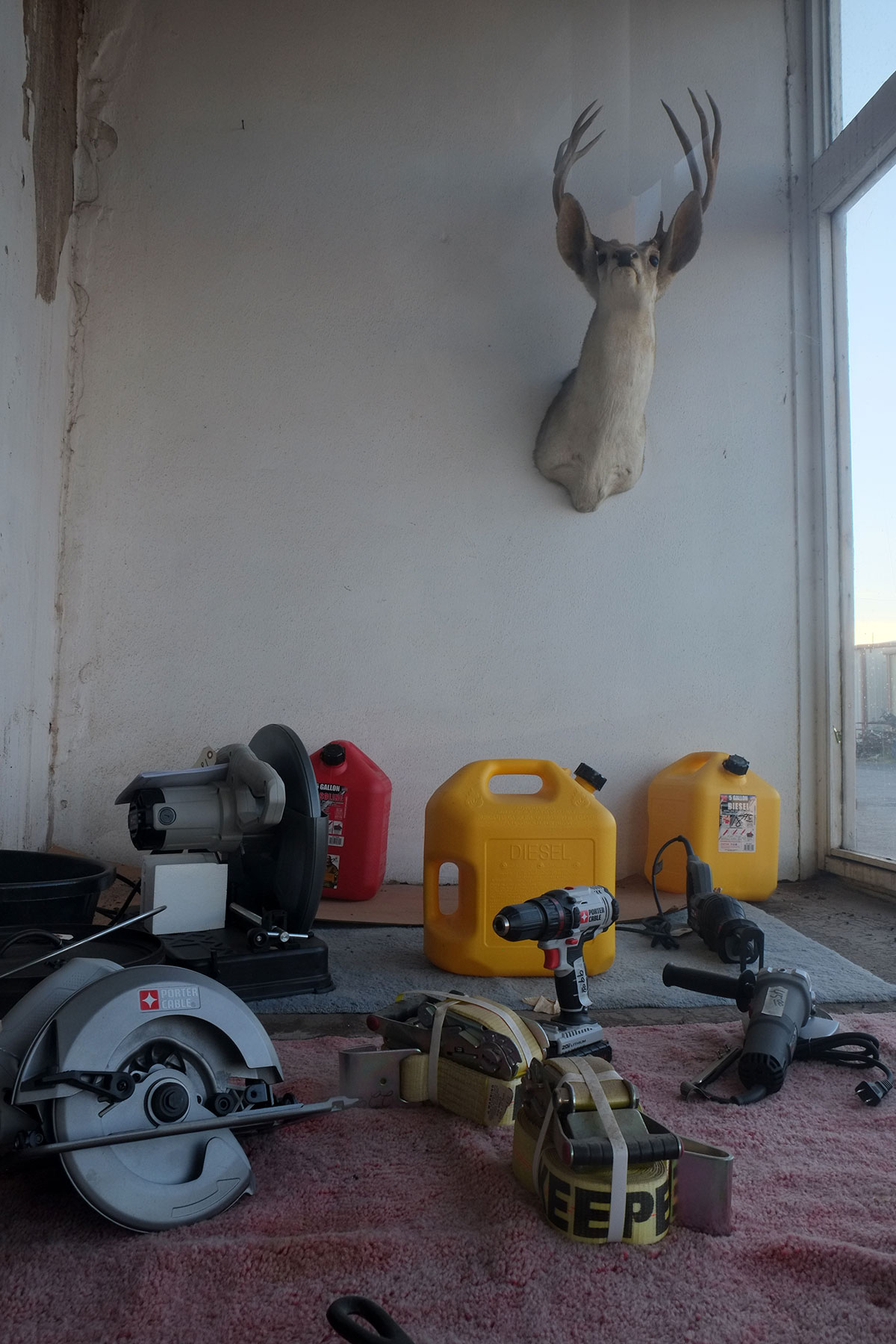
Then we came upon the local hardware store and looked in the window to find this disturbing tableaux.    DSCF6114

All became clear.  This couldn’t be a display of goods for sale, this could be nothing other than an MFA thesis installation.  We really were unwitting participants in a performance piece at the scale of a town.

We headed north across the desert, away from the Lights, trying to reach New Mexico before dark.

San Antonio Rodeo

We arrived in San Antonio to find our campground nearly full, and it was not until Dad spotted a poster that we figured out why. The rodeo was in town. In fact, it was being held at the fairgrounds just down the street. We had lucked into a campground within walking distance of the largest indoor rodeo in the country.
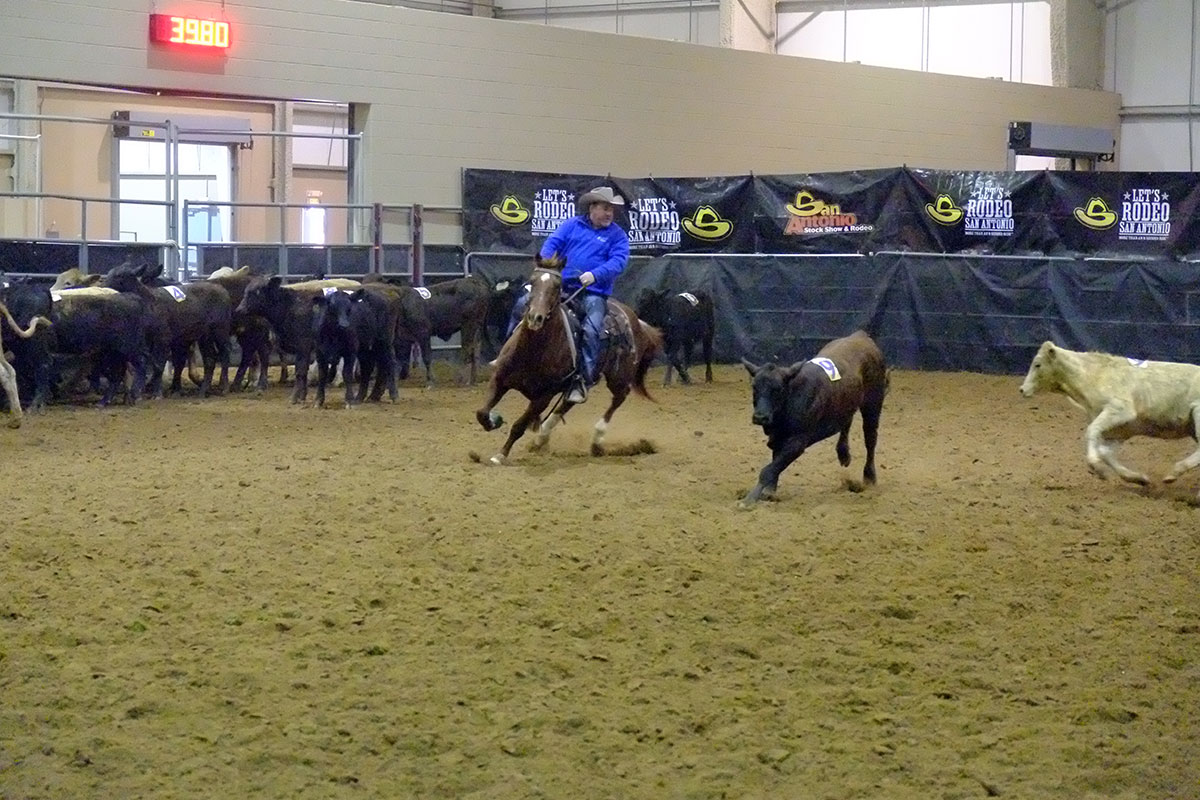
The main event didn’t start until 7, so we had some time to kill. I had no idea what team penning was, and it took me a while to figure it out. As far as I can tell, there are a bunch of calves or heifers or some small and agile kind of cow at one end of this big corral, and cowboys on horses begin at the other. All the cows have numbers plastered to their sides, and once the man in charge calls it out, it’s the cowboys’ job to separate out three bovids with that number and herd them into a smaller pen. The team who does it fastest wins. It was quite entertaining to watch, and I was amazed by how young some of the people doing it were. There was a girl who couldn’t have been older than eleven, wearing a sweatshirt that said, “Jesus, take the reins.”DSCF5404

We missed the pig races, and the petting zoo had a line out the door, but the Texan wildlife exhibit was open. A lot of the animals there actually made their main residence in Mexico or even South America, like the ocelot and coati mundi, who we got to watch eat the zookeepers hair. Even cuter than the prairie dogs was the racoon snuggling with an armadillo.

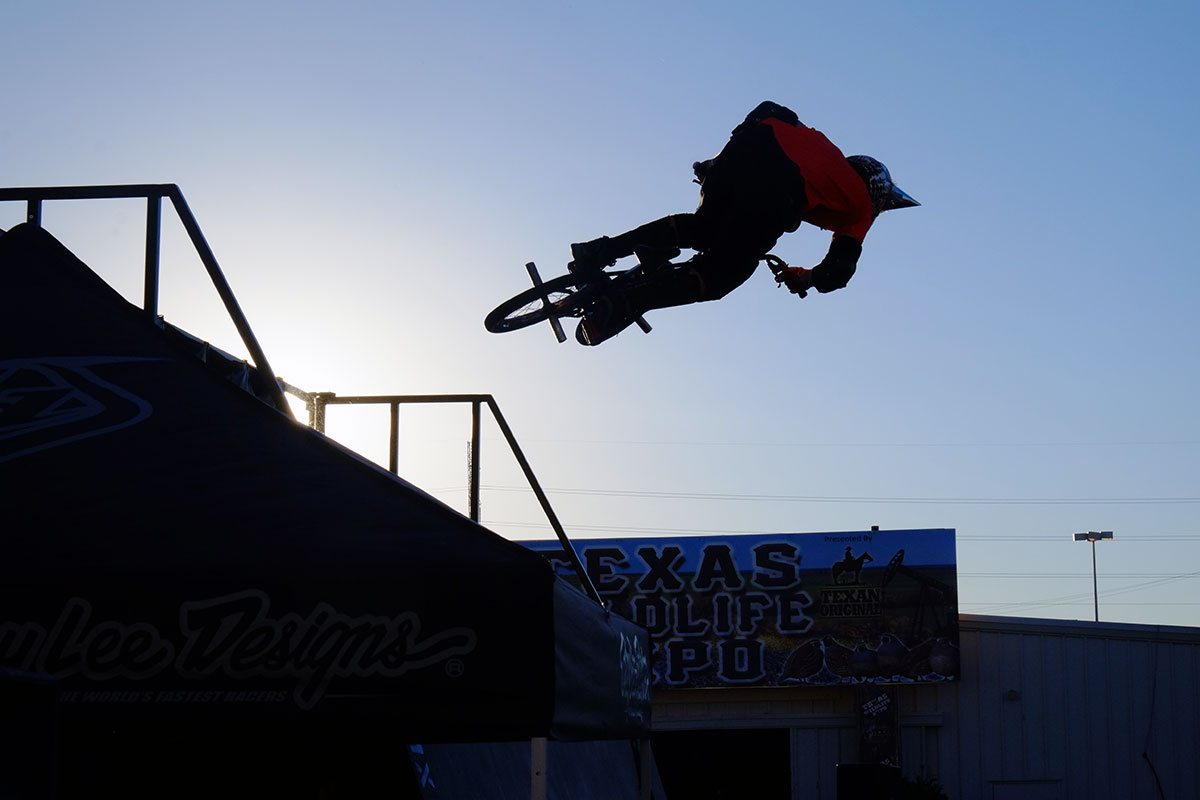
This rodeo didn’t only have bucking broncos, but bmx biking as well. A bike, without a mad mind of it’s own, is much easier to control than a horse, and the level of maneuverability was spectacular. An aerial trickster flew high into the air over a rather scared-looking volunteer, while another performer spun around like a ballerina with a bicycle. DSCF5426

DSCF5428


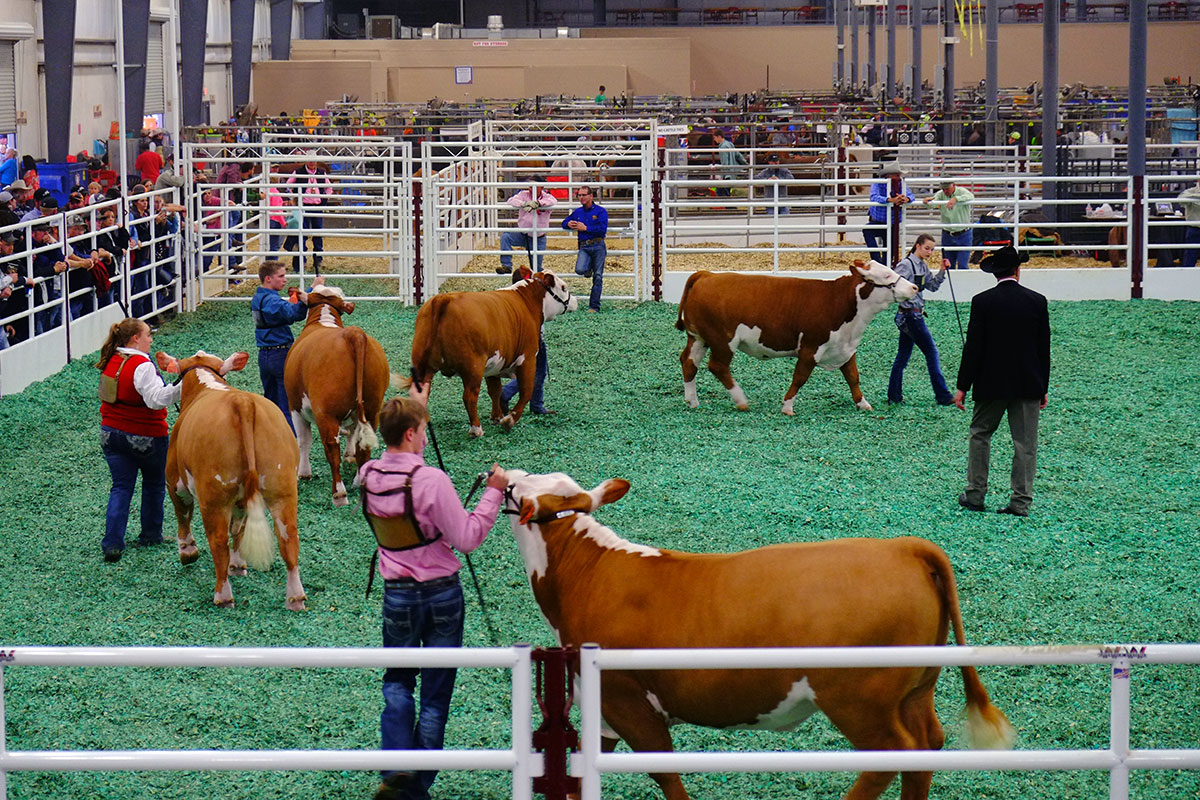
Walking into the stock show was one of the oddest experiences of my life. I’d seen 4-H shows before, but only bunnies and some goats. Never had I walked into a room filled with hundreds of cows. The variety of breeds and the variations inside that category was nearly as impressive as the sheer quantity of biomass in that building. At a show pen, little kids showed off animals they could barely reach the shoulders of. Everybody watching in the stands seemed very enthusiastic about how their kids placed, but I was more interested in climbing to the top of the bleachers to look out over the rows upon rows of cattle.DSCF5446

DSCF5449

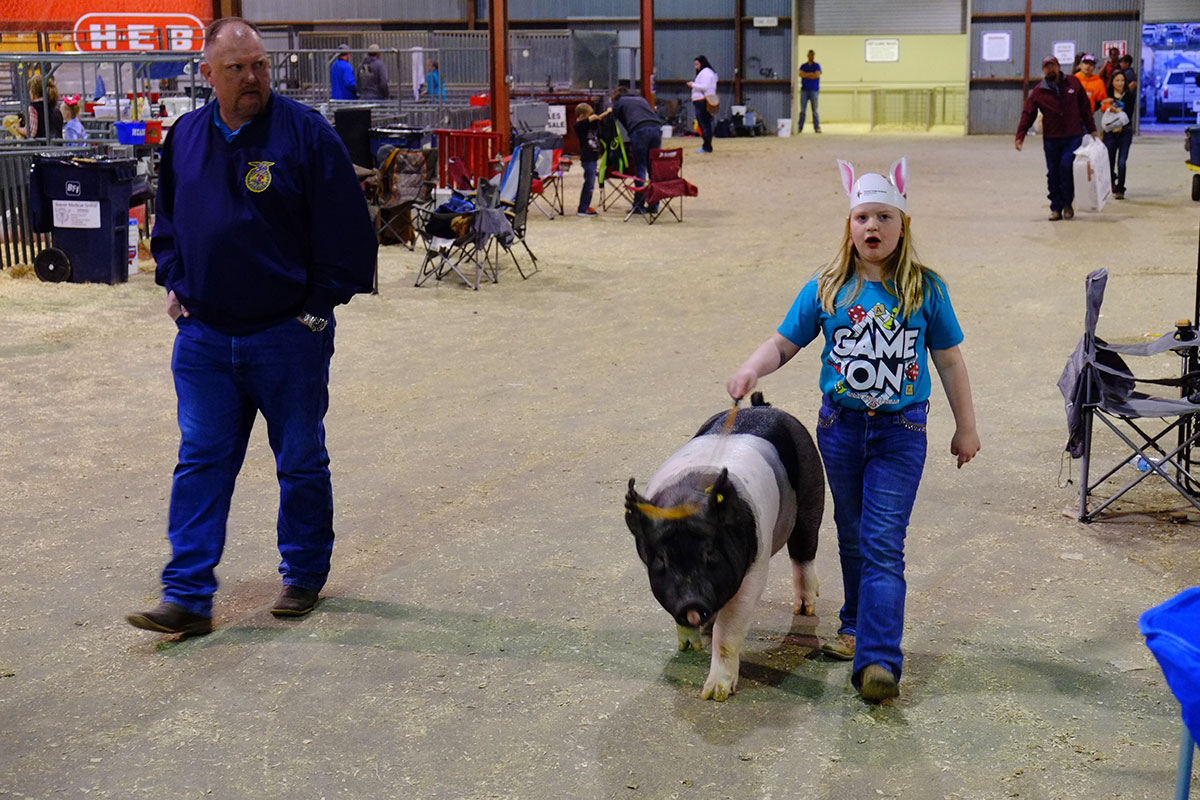
Inside the swine barn I learned how you move a pig. It doesn’t go on a leash or a lead. It is simply guided by a switch. Presumably it has to be trained first, but even so, it was amazing how calm and controlled they were. Almost tripping over a pig was added to the list of odd experiences I was having that day.DSCF5461
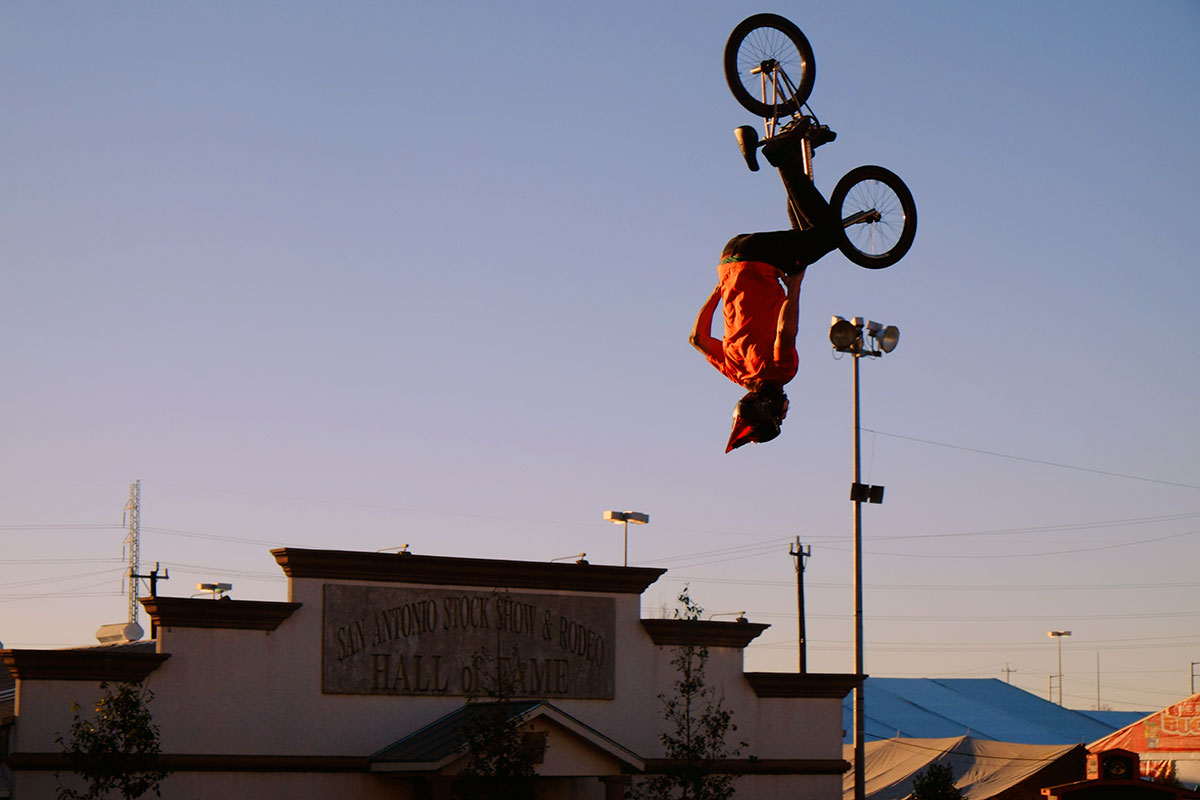
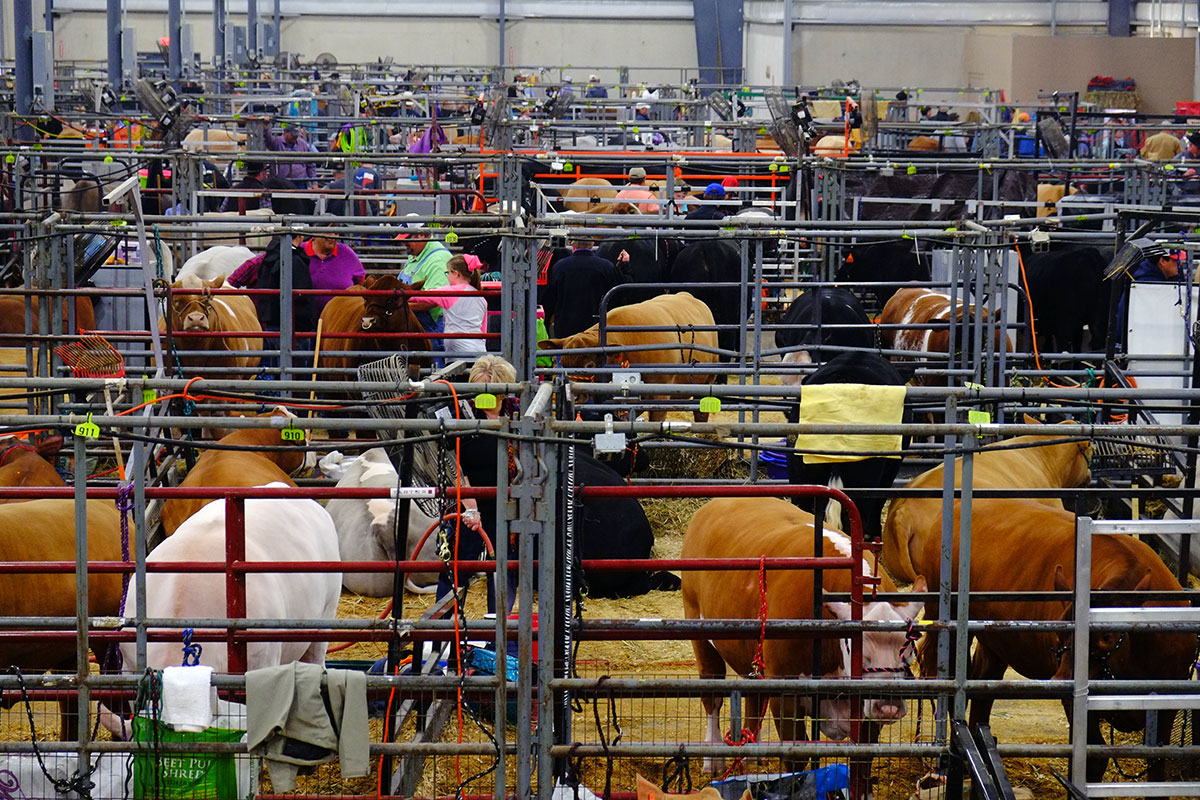
By the time we’d found the least disgusting option (a corn dog) in a food court of donut burgers and deep fried oreos, it was time for the actual rodeo to start. We came in during the middle of the prayer, which was a truly odd experience. It was followed by a rendition of the National Anthem which was surpassed in awfulness only by the one from the Donald Trump rally in Eugene.

Bronco busting, both with a protective backboard so you won’t snap your spine and without, is insane. Watching it, I couldn’t help thinking about Spirit: Stallion of the Cimmaron, which was, and still is, one of my favorite movies. I simply don’t understand how we didn’t come to see anyone killed that night.

More hilarious and adorable, was mutton busting. Small children riding sheep. That pretty much says it all. They didn’t have a saddle or anything, and we’re just expected to grab the sheep by the wool, and hold onto it with their legs as it ran panicked across the arena. The finale, where all the kids were put on a sheep and let loose at the same time, was absolute mayhem.

I don’t understand bull riding at all. Unlike bronco busting, which serves to break a horse to make it tame enough to ride, it doesn’t seem to serve any purpose. No reward, then, unless you’re completely insane or an adrenaline junkie, and a very high risk. Bull riding has been called “the eight most dangerous seconds of sports” and I’m inclined to agree with that assessment, and add “the most insane.”

However, it is kind of fun and horrifying to watch. Roping and bull wrestling at least serves some purpose, and know I understand the expression “to take a bull by the horns.”

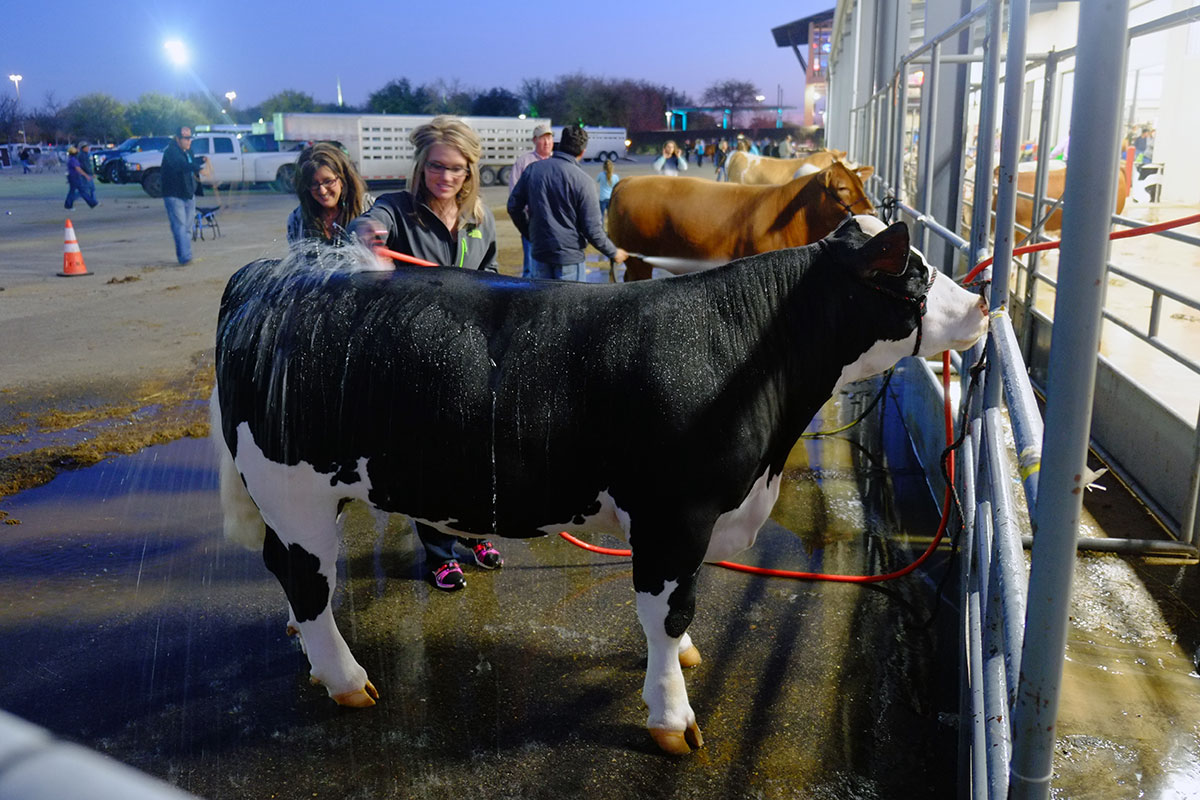
If you ever stumble into a rodeo like we did, don’t hesitate to go. Kids will love it, although you’ll probably end up waiting in the ridiculously long petting zoo line, and they might be upset if they aren’t signed up for mutton busting. Oh, and look out back of the cattle barn for the cow showers.DSCF5469