Category Archives: Museum

Aquariums

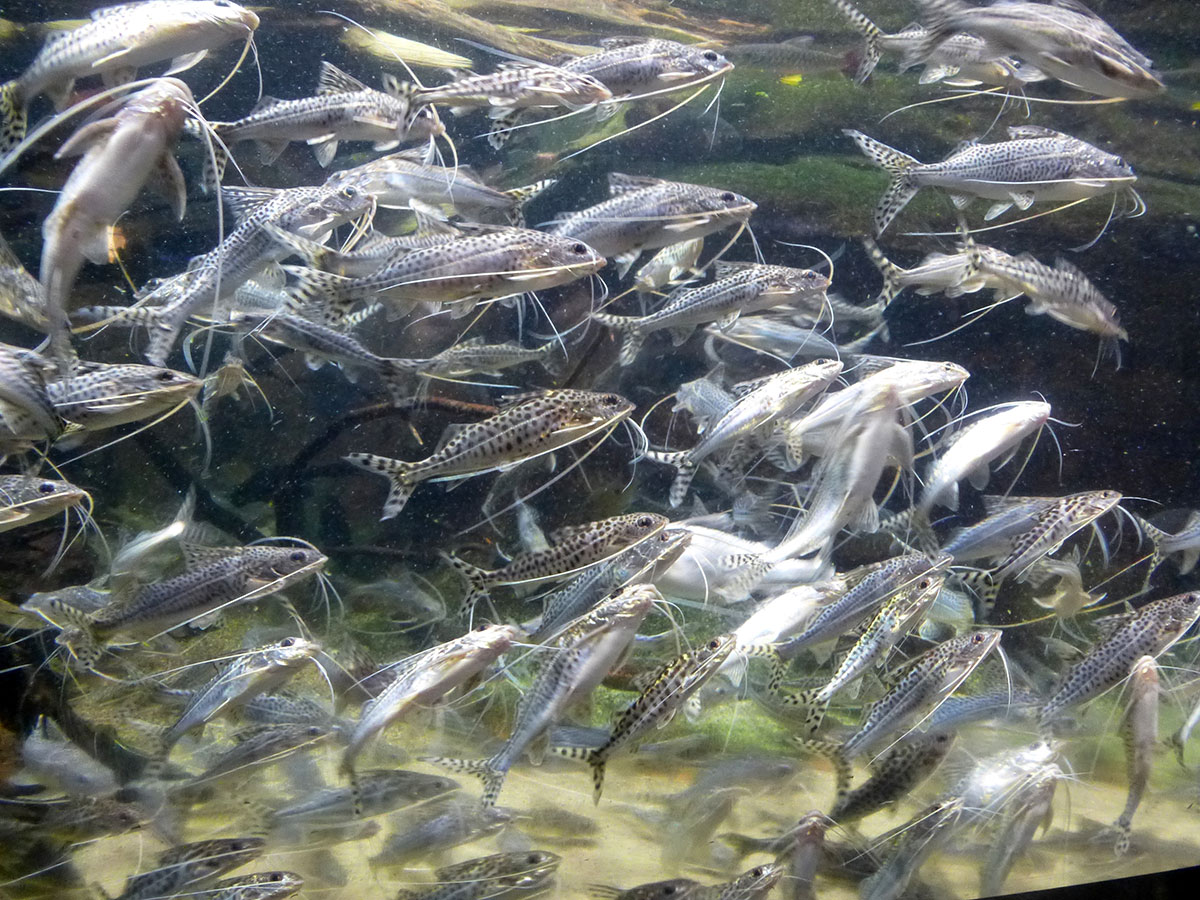
Catfish

Catfish

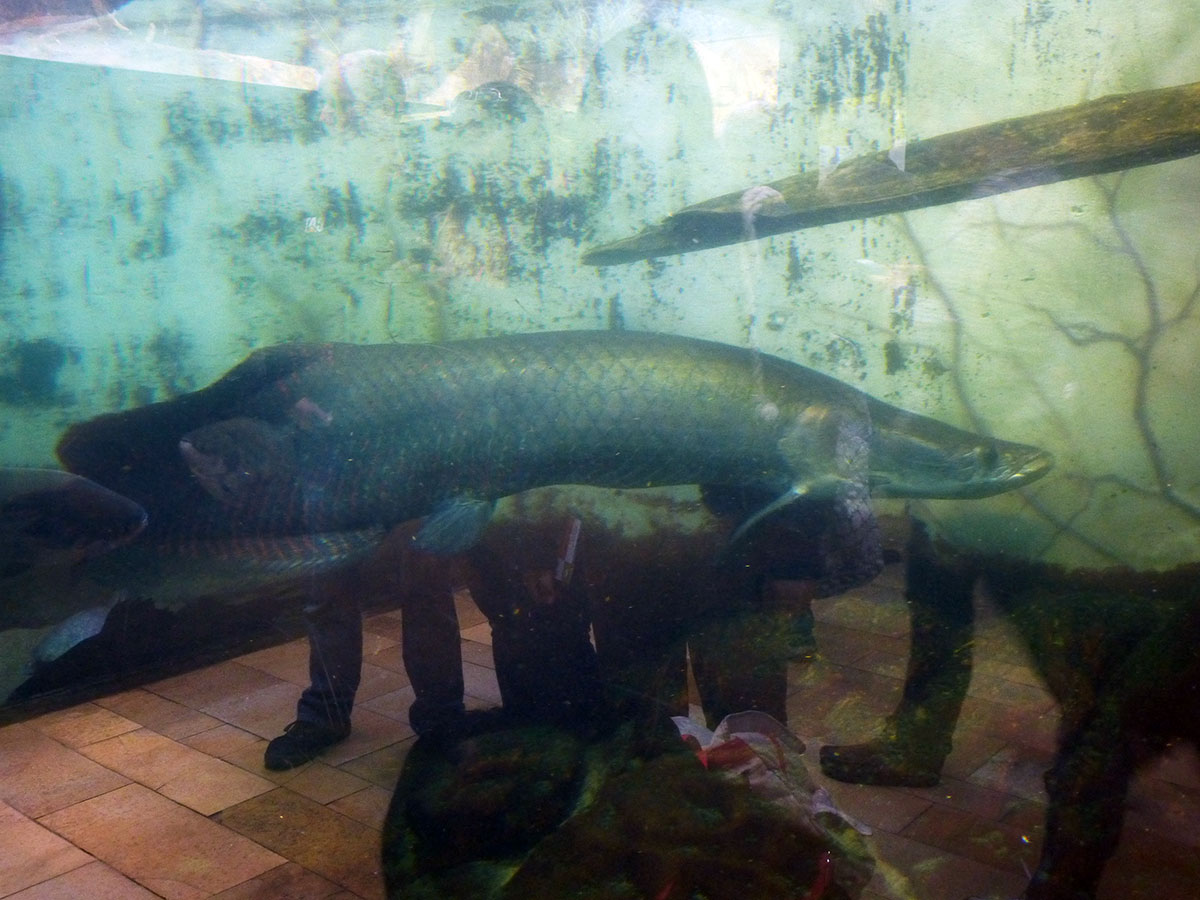
Arapiama, the largest fish in the Amazon

Arapiama, the largest fish in the Amazon

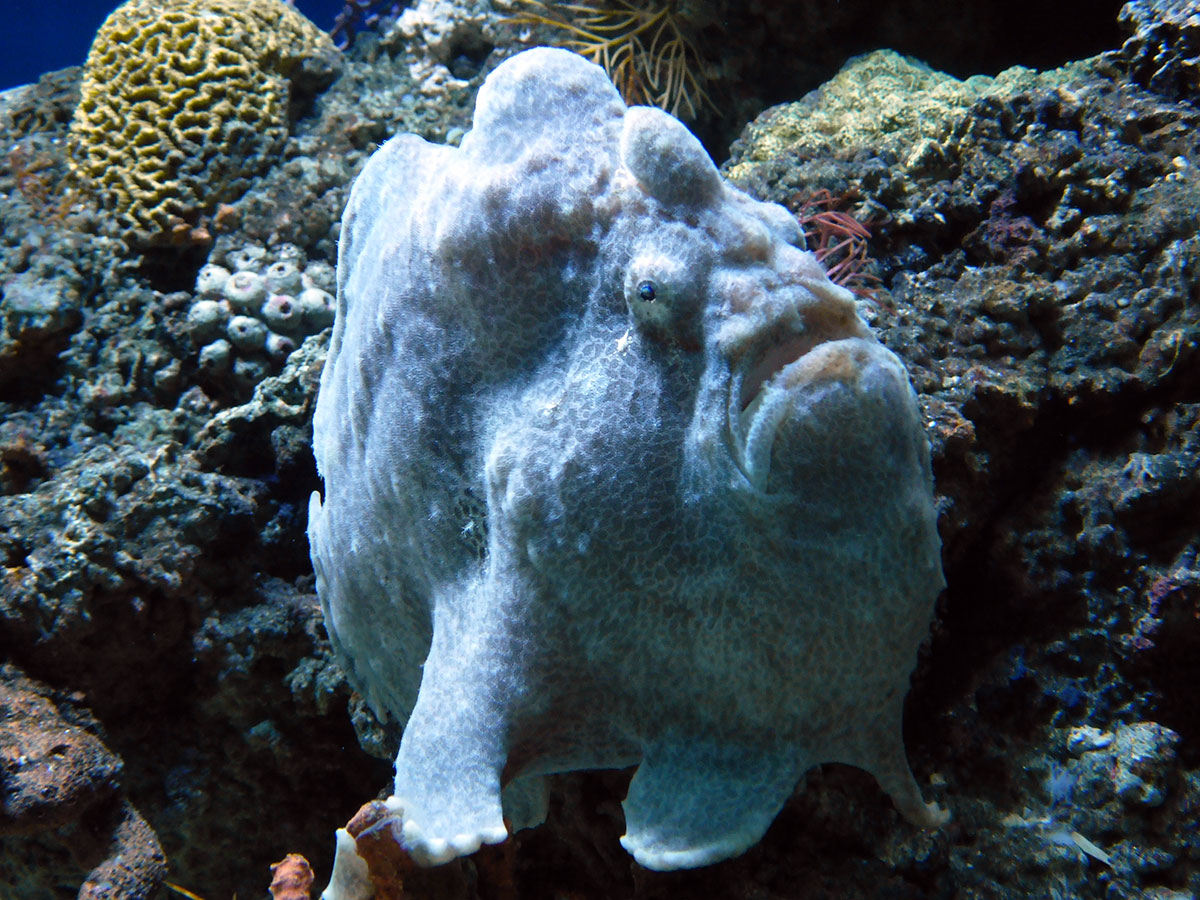
Frogfish

Frogfish

So far on this trip, we have been to two aquariums; The Shedd in Chicago, and the National Aquarium in Baltimore. Though they were both cool, I don’t think that even added together they equal the Monterey Bay Aquarium. But that is so amazingly awesome that even less than half of it is still amazing.

P1050448

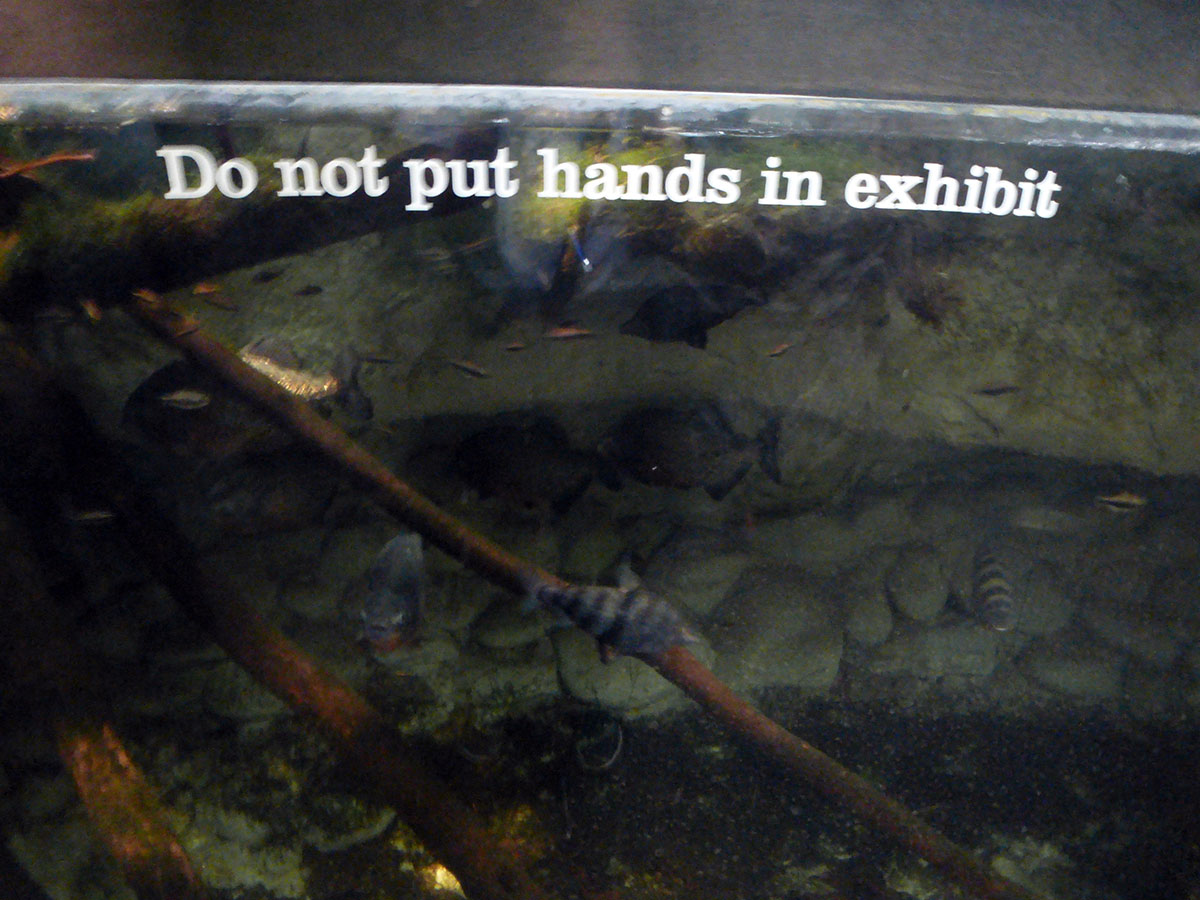
Piranhas

Both aquariums had green sea turtles. Nickel, named because a nickel was found in his stomach when he was rescued, was smaller, but he had all his flippers. The Baltimore turtle had only three, but I was so busy marvelling at her size that I didn’t notice until someone pointed it out to me. She was longer than the diver who was feeding her, and her shell was the size of a tire.

Baltimore Turtle

Baltimore Turtle

Another similarity was that they both had dolphin shows and stingray petting. At the National aquarium however, there was nothing telling you when the shows were, or even telling you that they had dolphins, so we missed that. I missed the show at the Shedd too, while I was looking for the stingray petting. I never found it. At the other aquarium however, they had a tank with skates, horseshoe crabs, and stingrays. The tail barbs on the stingrays were clipped, which is good, because a sting from one is so painful, fishermen in the Amazon call them “wish you were dead fish.” There was also a tank with moonjellies they let you poke, because unlike other jellyfish, their stings are so small you can’t even feel them.

The National Aquarium had more sharks. Shark alley, a three level exhibit where the sharks and sawfish were literally swimming all around you was awesome. I’d never seen a sawfish before, and they are the weirdest things. There were also a few giant pufferfish, who wore the silliest expressions. Zoe the leopard shark only swam in tight circles for the entire time we watched her.

Zoe

Zoe

The Shedd had more marine mammals, including sea otters, seals, and the beluga whale tank I once threw my ragdoll in when I was a baby. True story.

Happy Beluga

Happy Beluga

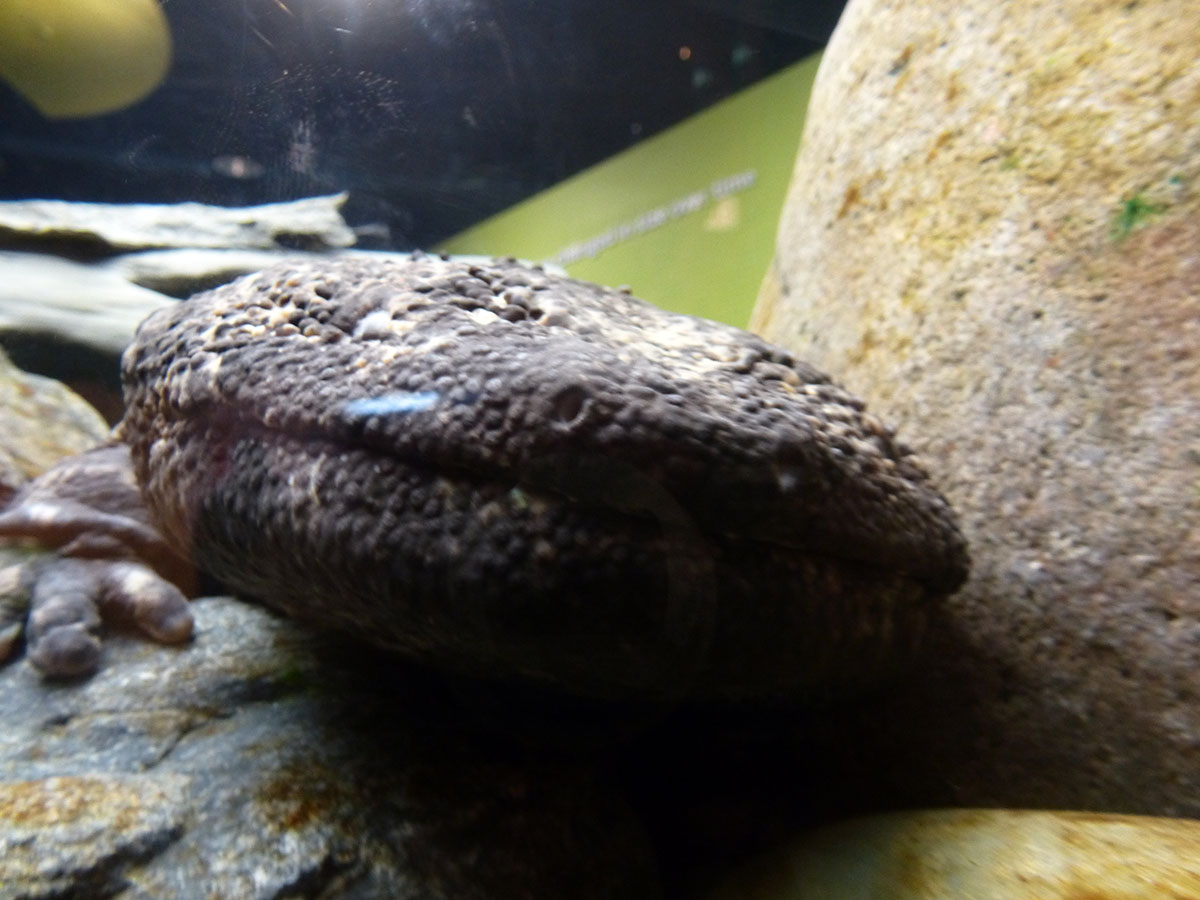
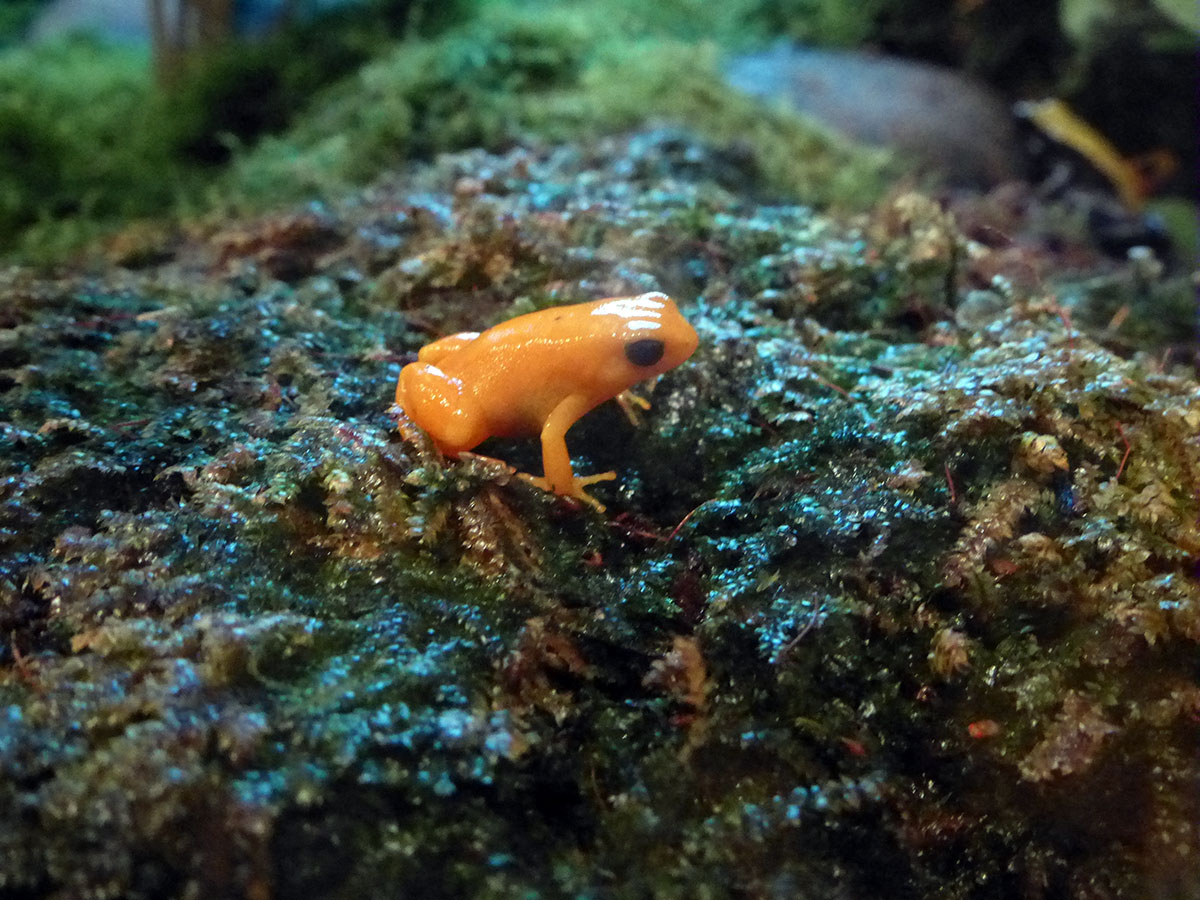
They also had a special exhibit about amphibians. It had a large variety of poison dart frogs, as well as a giant Japanese salamander.

Giant Salamander

Giant Salamander

Frog

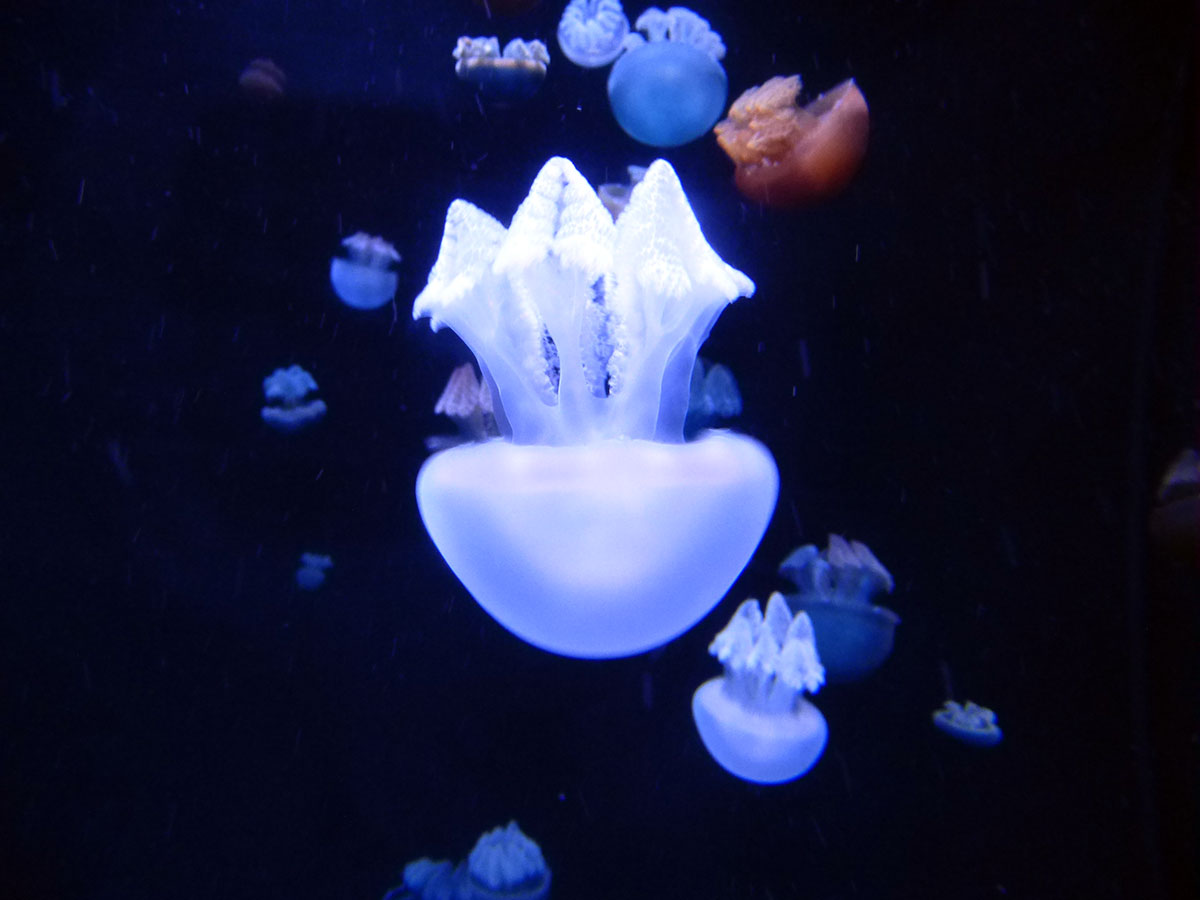
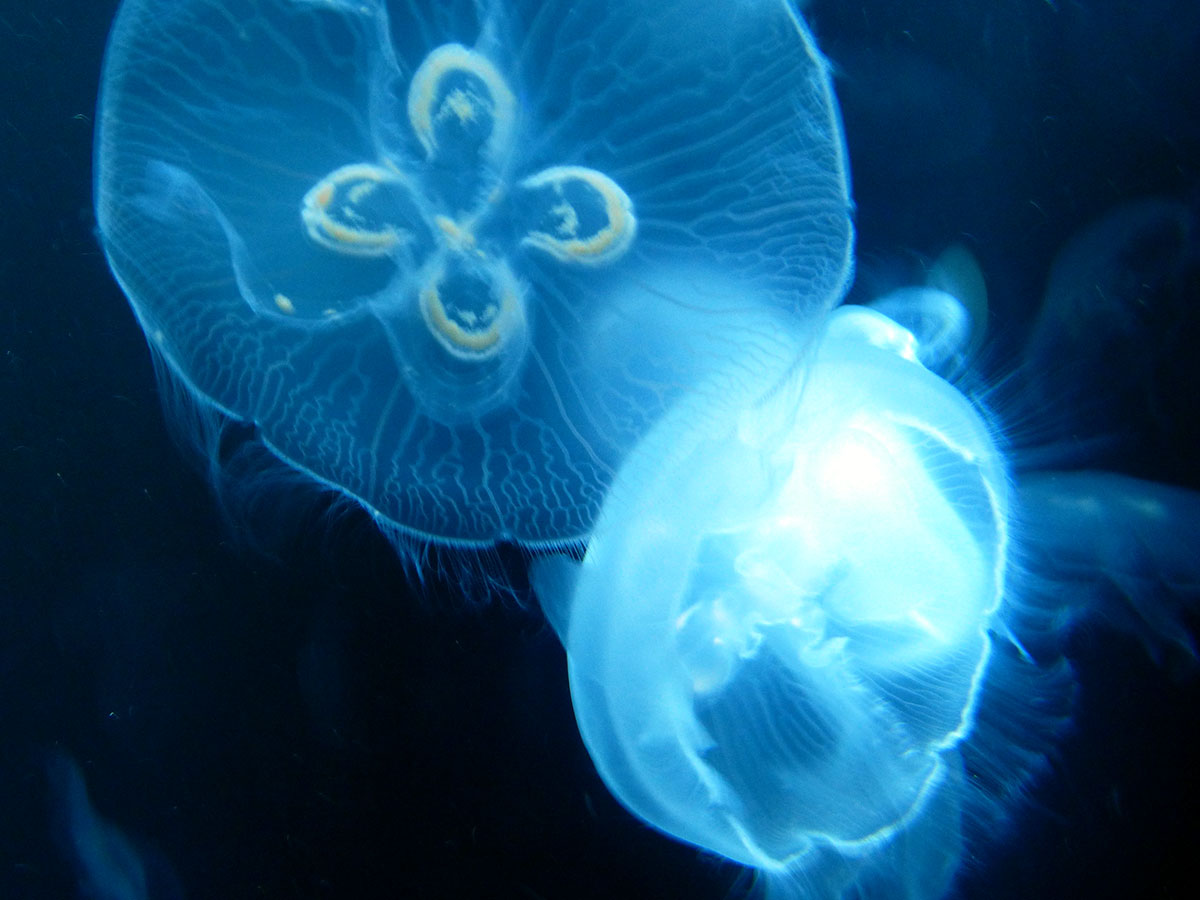
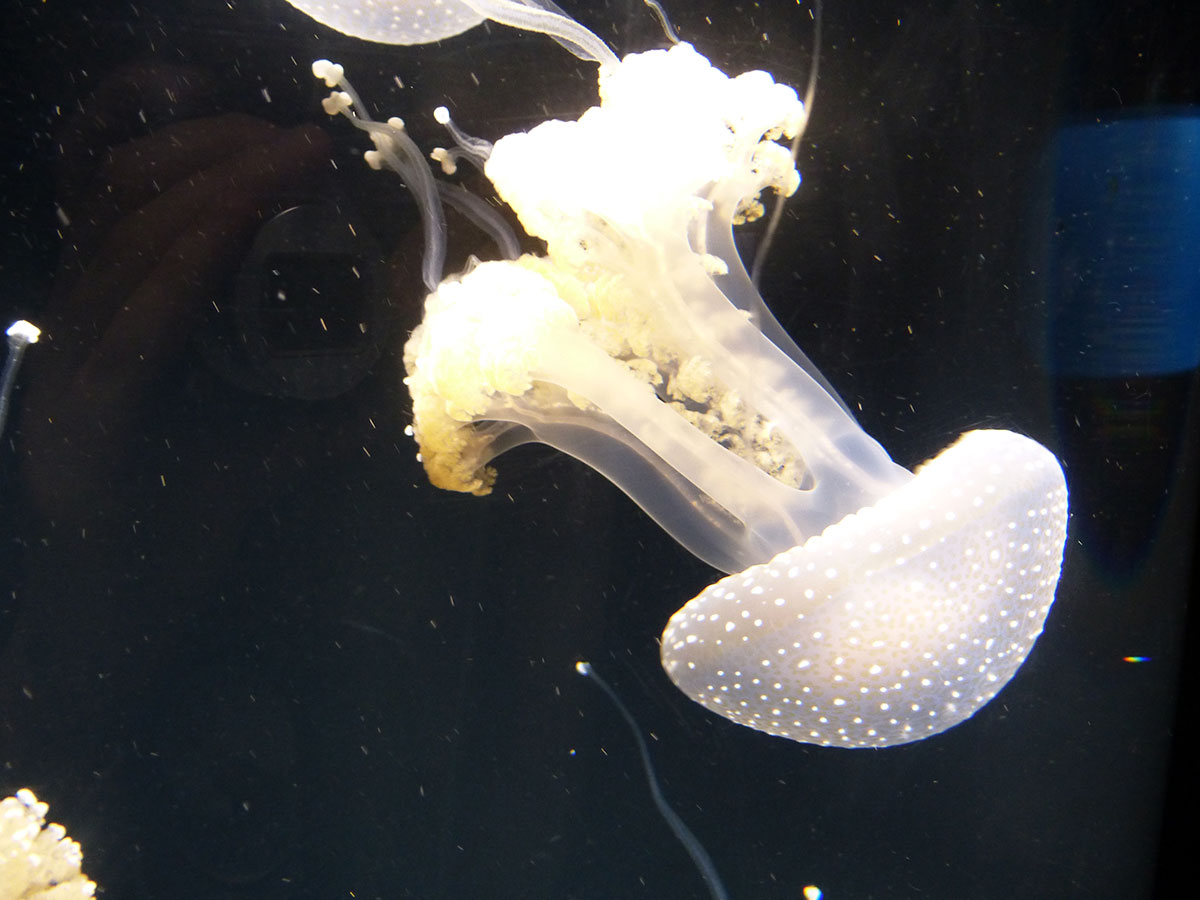
But my favorite exhibit was the jellyfish in Baltimore. They had upside-down jellies, who, instead of floating around, affix their bells (the top part) to hard objects like rocks, and wave their tentacles around waiting for food to come to them. Brown blubber jellyfish look like the Oxiclean scrubbing bubbles things. I couldn’t stop laughing when I was watching them. Jellyfish are the living lava lamps of the animal world. There was another tank of moonjellies too. One cool thing about moon jellies is that they’re translucent, so you can see right into their stomachs, which look like flowers on the top of their bells. Usually full of orange or blue zooplankton, they range from having four to six “petals” or stomach compartments, and no one is sure what causes the variation. The aquarium obviously didn’t have any on display, but box jellies are the evil cousin of moon jellies. Clear and small, they live in Australian waters, and are the most poisonous animals in the world. A single sting from one can kill a human in less than twenty minutes. The more visible and less deadly Australian white-spotted jellyfish was on display, and looked nearly as ridiculous as the blubber bots.

Blubber Jellies

Blubber Jellies

moon jellies

moon jellies

Australian spotted jellyfish

Australian spotted jellyfish

Though both aquariums are expensive, over forty dollars a ticket, I think they were worth it. Be sure to manage your time wisely, and go see the dolphin shows we missed.

Mercer Museum

DSCF5358When I began teaching at the University of Oregon, I found that one of my colleagues, Bill Kleinsasser, was fairly obsessed with Henry Mercer.  Mercer was an archaeologist, collector and amateur architect, who built three buildings and started the Moravian Tileworks in Doylestown, Pennsylvania.  I dragged two of my sisters to see Mercer’s house about 20 years ago, and Laurie’s response was great.  First room:  That’s pretty cool!  Second room:  Cool.  A lot like the first.  Third room:  I get the idea.

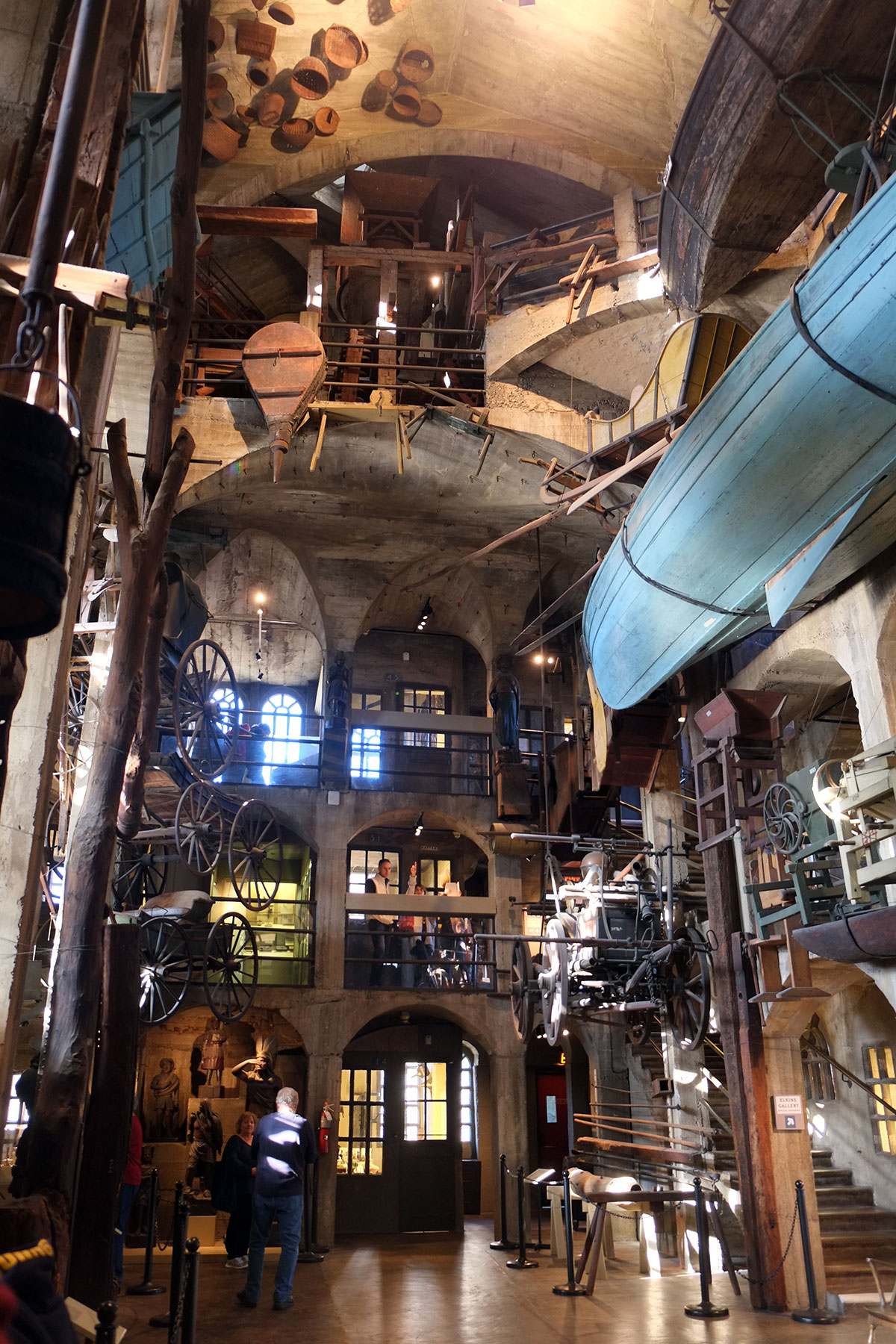
But Bill Kleinsasser was right – it’s just that the Mercer Museum is the building to see.  Mercer collected a comprehensive assortment of technological artifacts from pre-industrial America.  Then he built a museum to house and display them.  Concerned with fire destroying the artifacts, the museum was built of reinforced concrete, which is apparent on the outside, a strangely flat medievalist fantasia.DSCF5321It’s adorable, but a bit twee, with vernacular forms in a strange material.  The roofscape looks like a giant birdhouse, but somehow I love it.DSCF5378

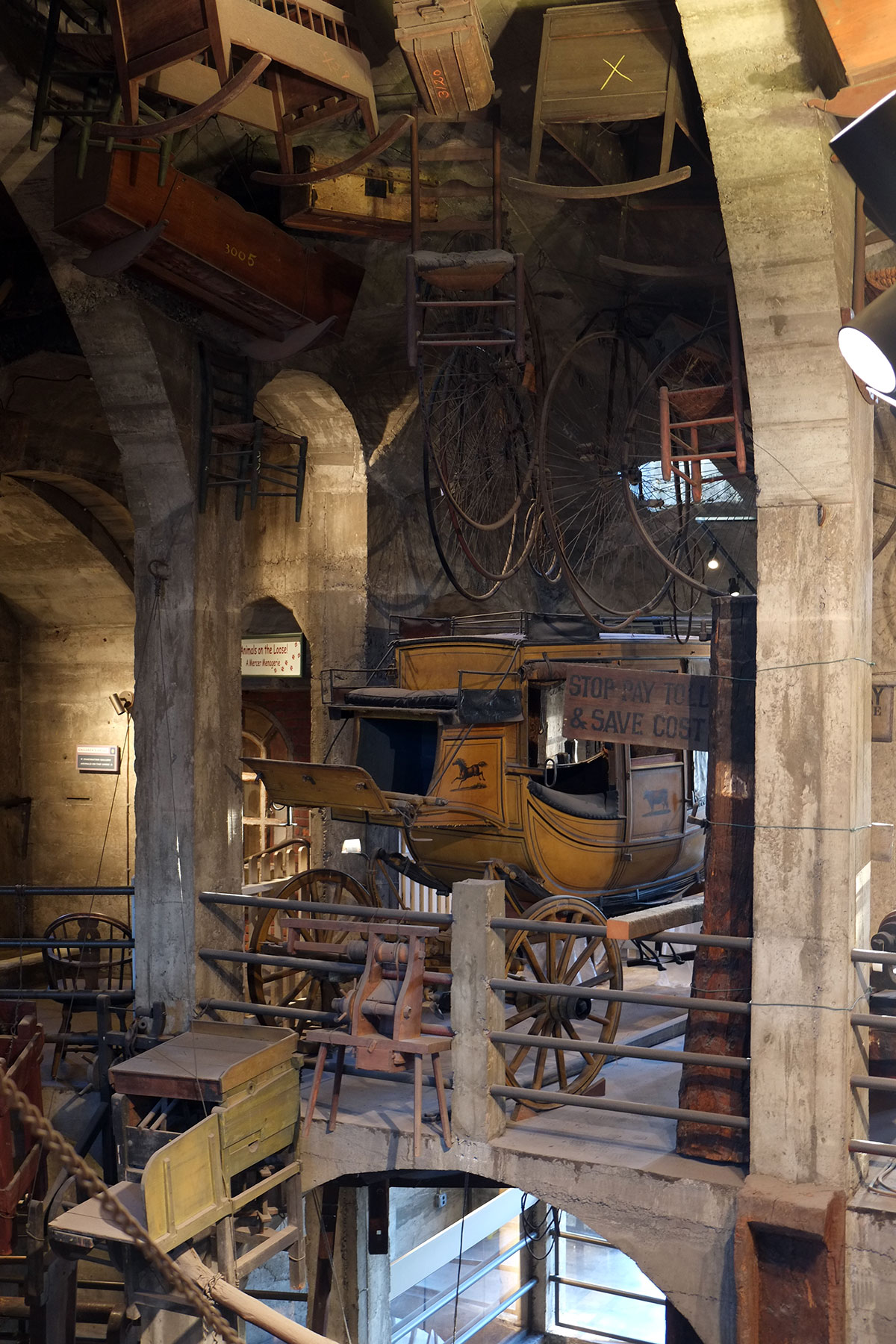
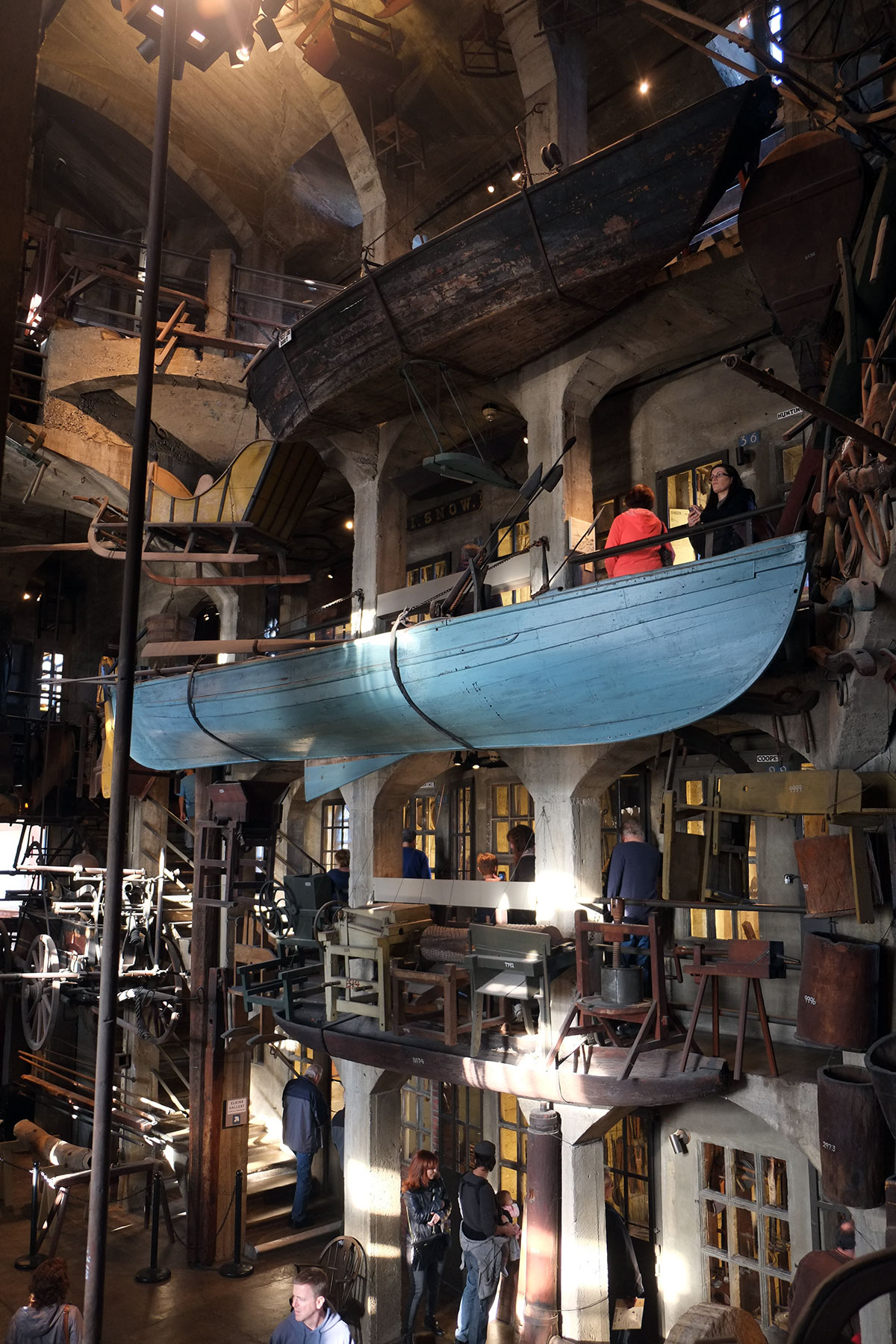
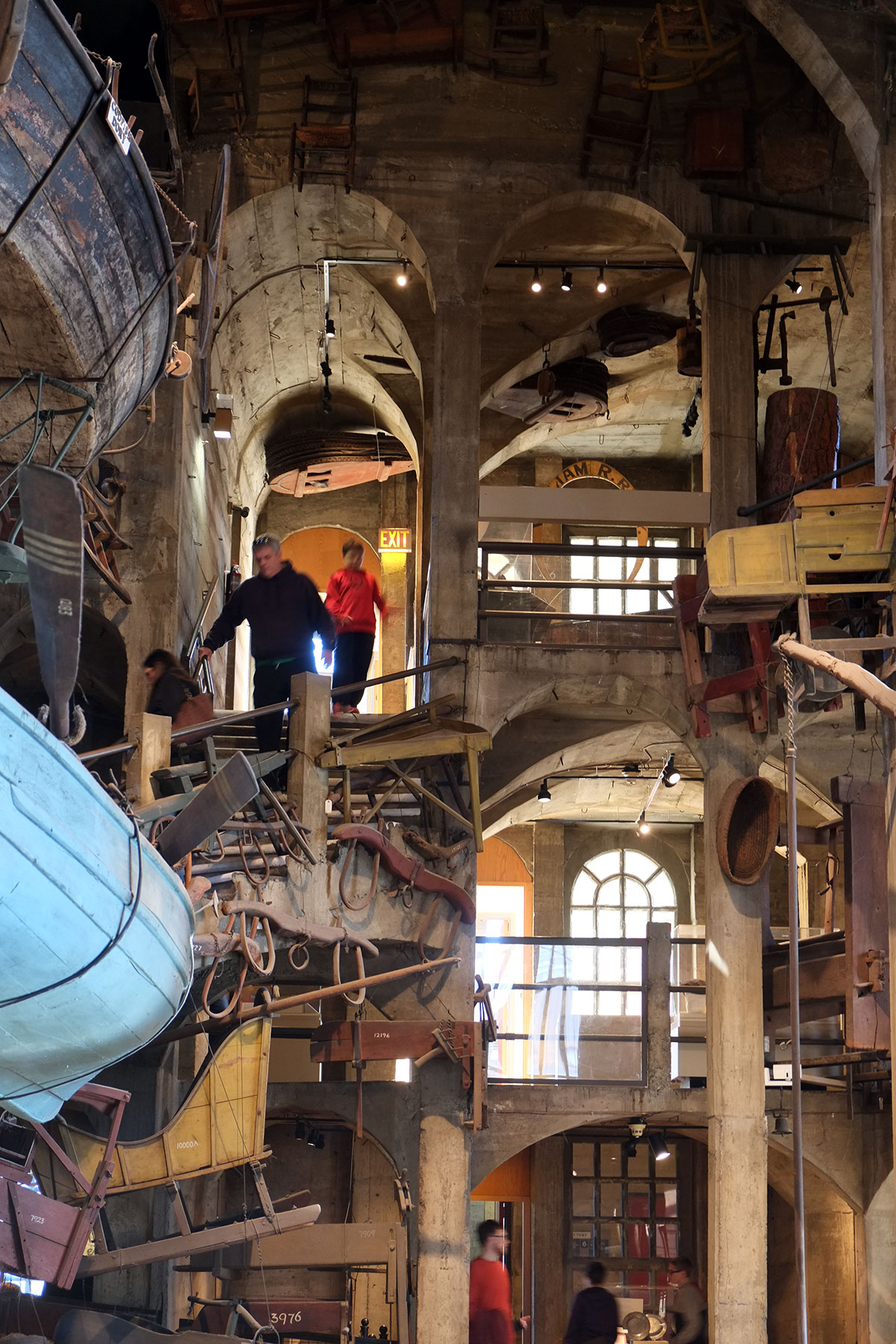
You enter through a new lobby wing, go up some winding stairs, and step out into this:DSCF5324a four-story atrium crammed with more stuff than seems possible.  It’s feverishly hallucinogenic.  Every surface is covered with stuff, even the ceilingDSCF5371

and then the really big stuff is hung out in space. DSCF5350

It is so far from our current model of what a museum should be like that it’s hard to process.  Where are the blank white walls?  Where are the wide open spaces across which we can contemplate an isolated, perfect object?  The Mercer Museum shows that a museum can work extremely well while not meeting our aesthetic preferences for abstract minimalism.  The central atrium is surrounded by vaulted side aisles, on the the outside of which there are niches, almost chapels, each of which explains and shows many artifacts pertaining to a specific technology, such as lighting:DSCF5353

or a cabinetmaker’s shop, with its molding planes:DSCF5417

The sidewalls are heavily glazed, and the light filters through the niches and side aisles into the atrium.DSCF5437DSCF5426

and there are other random artifacts scattered around.DSCF5340

as in a separate two-story space where there are perhaps thousands of panels from cast-iron wood stoves, along with firebacks, each which is highly wrought and decorative.  But the space itself grabs your attention, with its Orientalist detailing and complex spatial moves.DSCF5381DSCF5385

The exhibits are extremely clear – I now know a good amount about the practices of 18th century technologies – such as tinsmithing – which were just vague ideas to me before.  The layout of the building also supports this pedagogical approach – you may be looking at the small tools and labels in a niche exhibit, and the the label says, turn around and look behind you for a big artifact – like a whaleboat or a stagecoach – which is the product of this technology.DSCF5416

DSCF5343

DSCF5338It’s a museum which can be approached from many directions and found to be satisfying.  Kids love it, both the artifacts and exploring the space, with surprises around every corner.  Grown-ups just stare, not ever having been in a place like this before.  And some architects wonder why everything we do now has to be within such narrow parameters.  Or whether there can’t be a closer fit between the architecture and the contents.  Mercer’s buildings on their own are quirky and interesting, but not all that good.  But when you fill one up with amazing stuff, there is synergy, and the experience is fantastic.

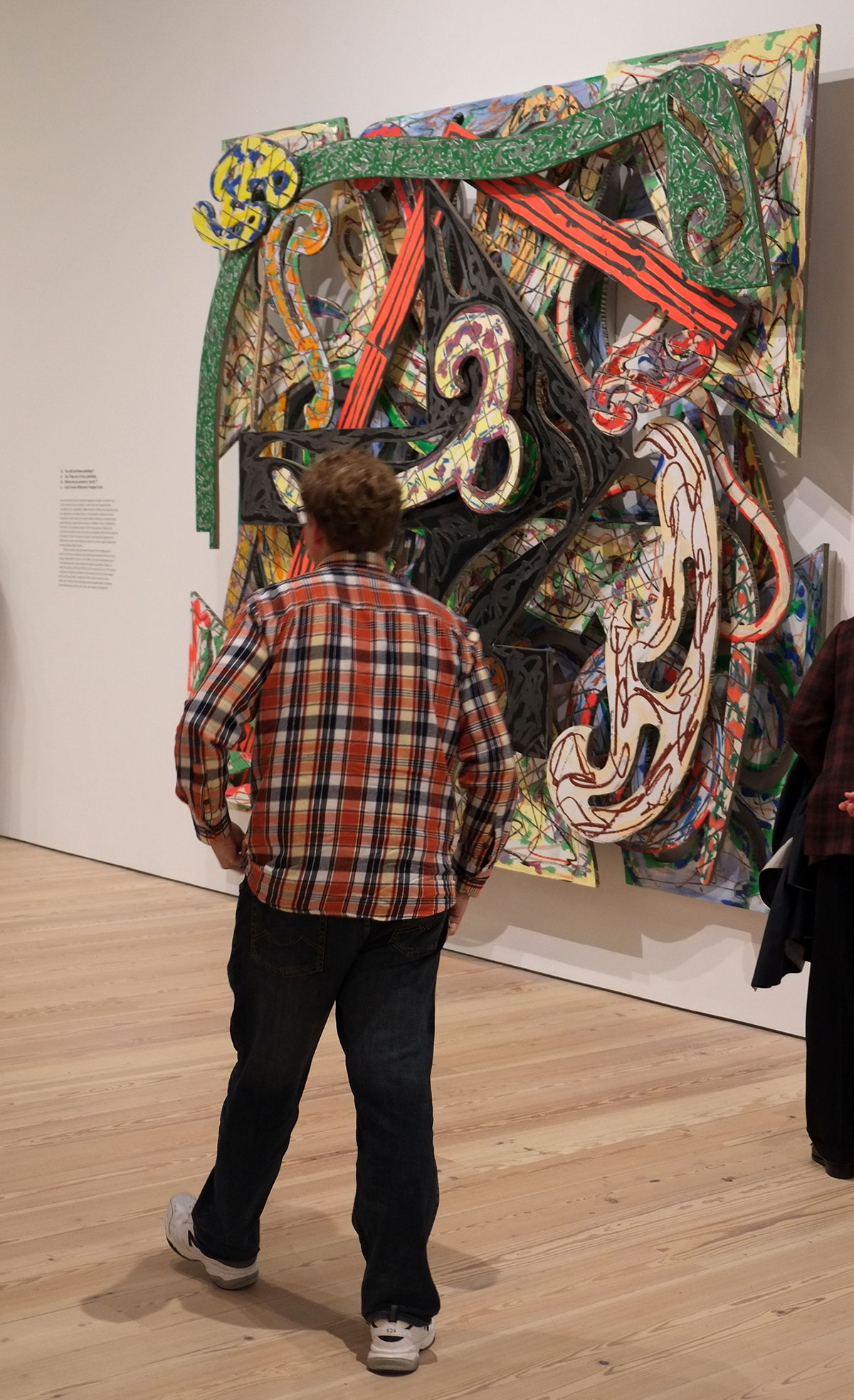
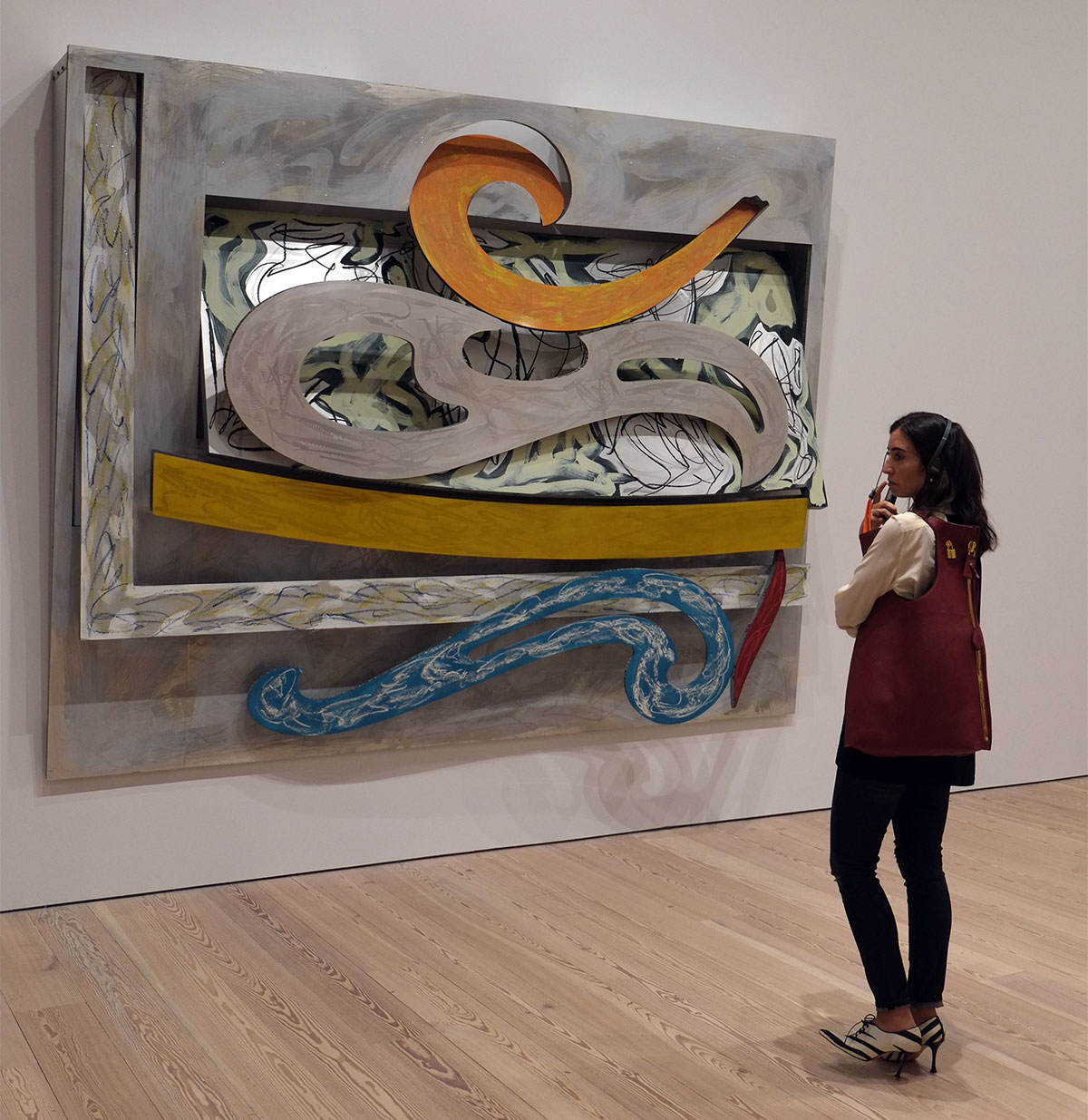
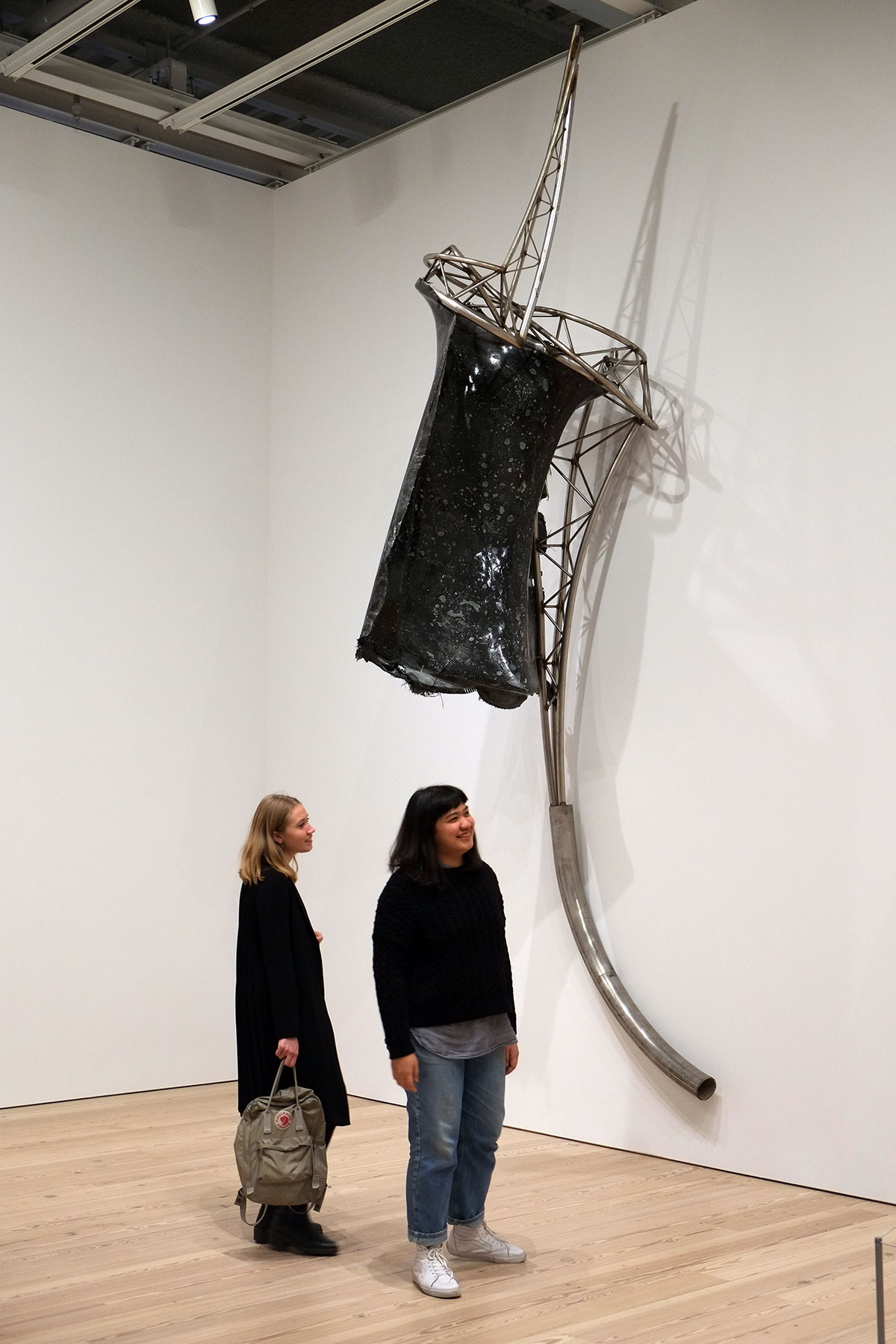
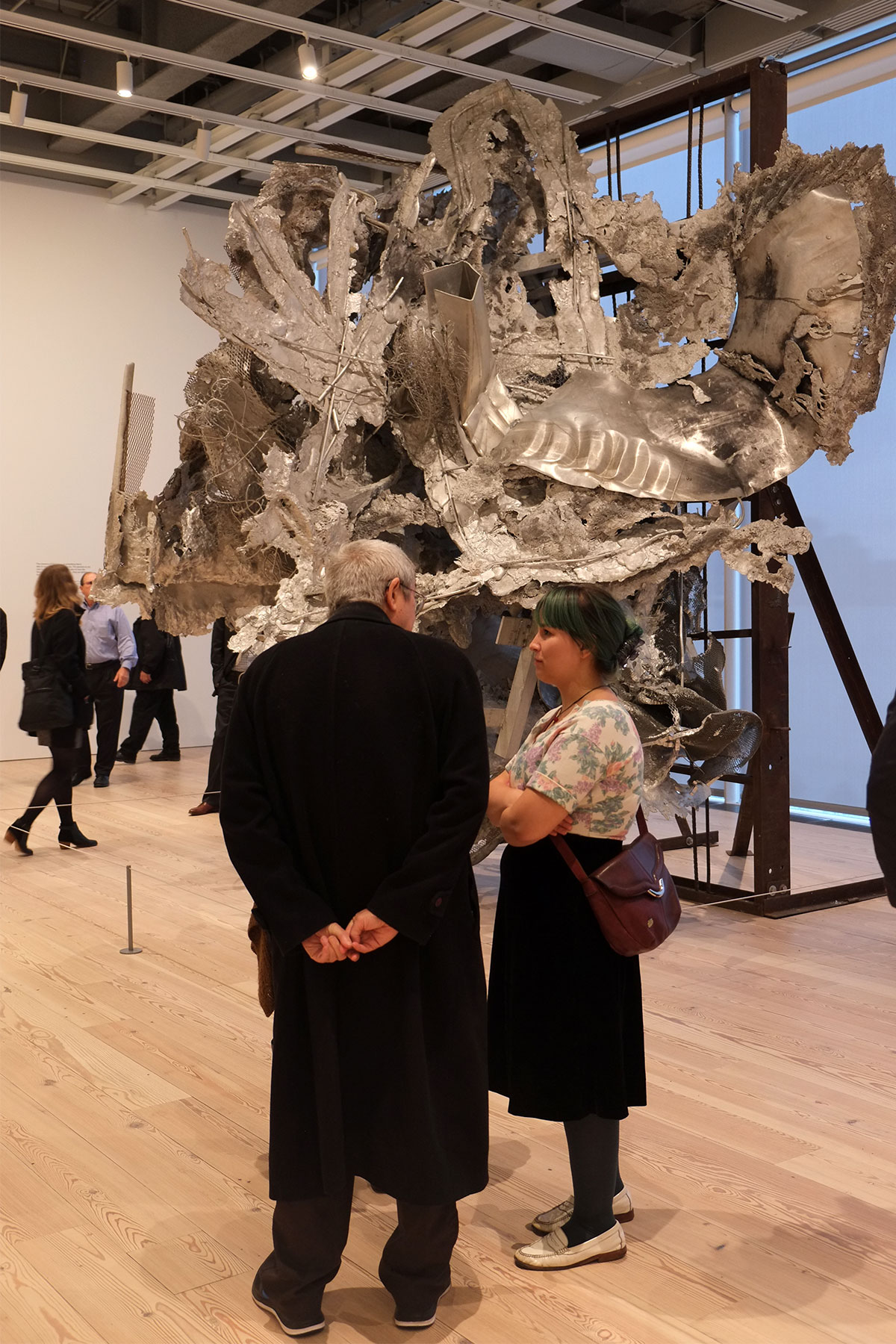
Whitney Museum

I thought the main capital-A Architecture focus of this trip was going to be out-of-the-way buildings by Lou Kahn, but then Renzo Piano hijacked our agenda.  We’ve only seen one recent museum that wasn’t by Piano, and I think the MFA addition is really Norman Foster in Piano drag.

The new Whitney is superb.  Anchoring the High Line at Gansevoort St., it consolidates Chelsea’s status as the new zone for hip galleries, since Soho became a shopping mall and the East Village seems to have gone back to being the East Village.  Tectonically, the building picks up on the High Line and other buildings in the area – it stands out as an institution, but it complements the older technologies beautifully.DSCF5126

The superstructure at the top of the picture is the key to how the building fits into the context.  Every other museum in New York is a solid box which you enter to view the treasures within.  (The Met has some views of the city from the large atrium areas in the new wings by Roche Dinkeloo, but that is all.)  In a museum of American art – which necessarily means lots of art in and about New York – the Whitney pulls in the City as an essential part of the experience.  Being in Chelsea, surrounded by low buildings, the views of midtown and downtown are unobstructed, and going back and forth from the galleries to the city is exhilarating.  DSCF5032

I am a big fan of museums which allow easy access to large open areas where you can shift the focus of your eyes to a distance, get some spatial relief from the necessary introversion of galleries, and let your mind wander a bit;  the Whitney does this better than any museum I’ve ever seen.  The large space isn’t just a relief from the galleries, it is a complement which intensifies the experience while providing a change.

The parti is classic Piano – simple, legible and appropriate.  Each level has a big east-west bar of galleries, with a fairly solid wall to the south, and filtered openings to the east and west.  The staff spaces are mainly on the north side, accessible from the gallery levels, but tucked away behind the circulation core.DSCF4978

These filtered ends are tunable –  allowing for a directly daylit space at the end for sculpture,  DSCF5034while using a series of screening elements to block direct light from reaching the galleries within.  This layering strategy is being employed in many museums now, but this makes more sense to me than Foster’s MFA – it is both more flexible and less extravagant.DSCF5036

Movement through this building is directed, but not constrained.  The staff suggests that you take the elevator to the top, and then walk down.  Interestingly, this is the same processional as was suggested at the old Breuer Whitney.  That building had gigantic elevators, which were also used as freight elevators after hours, and one notable interior stair, which was a sculptural and spatial experience, despite having only one window;  Piano seems to pay homage to that.  The elevators are the coolest glass elevators this side of Lloyds of London, and there is a central stair that is perfectly located and visible,  a pleasure to use, again despite being completely internal.  DSCF5117DSCF5044

Every floor has an entry space at the top of the elevators and stair, orienting you and facilitating the introduction to the exhibit.DSCF5042.jpg

You can us this stair, but why wouldn’t you head outside?  The steel structure relates to the High Line below, and contrasts with the slick envelope of the gallery volumes. DSCF5105DSCF5088

The view to the northDSCF4993

and to the southDSCF4994

Museums can be disorienting rabbit warrens (Pelli’s remodel of MOMA was one of the worst, thankfully now somewhat mitigated.)  This museum not only allows you to be oriented within the museum, but within the whole city.  For a city with great views, it is remarkable how few of them are immediately accessible to the public.  I took views for granted when I worked in the Empire State Building for seven years, but now returning as a tourist, I am annoyed at how I’m always in a canyon, only able to get the big view by standing in line for an hour and paying a lot of money.  The Whitney offers a view of the City that is actually better (though less spectacular) than from the tower decks, and reflective of real life in the City, not the prospect of a master of the universe.  DSCF4997

The various spaces are all commodious and comfortable. The ground floor lobby is transparent and open to the street.  The scale is wonderful, as opposed to the lobby at MOMA, which has the proportions of a parking garage.  DSCF4979DSCF4980

As in all Piano buildings, you can grasp the layout without looking at a plan, the main elements being visible from each other. DSCF5120

The top floor galleries have Piano’s usual attention to daylighting, in this case a nice balancing of high-tech systems and traditional gallery room design.  DSCF5007

I left with the same feeling I get from many Piano museums – a wonderful museum experience, where the architecture didn’t scream for attention, but supported the art without being at all neutral.

DSCF5131


Andres Art Institute

A sculpture park set on a hillside that had been a small ski resort in Brookline, NH.  It was founded by an engineer and a sculptor in 1996.  (http://andresinstitute.org), and they jump-started the park by inviting an international group of sculptors to live on the site and create works during a symposium.  They have repeated this several times, and there are now 72 works in place.

We were struck by how simple and low-key the whole operation is.  It is open and free to the public every day.  You download a map onto your phone, and then you can wander trails all over the hillside.  There are no Big Name artists involved whose works cost millions of dollars, simply good sculptors who seem to draw inspiration from the site and the group process.

Some of the work doesn’t seem very site-specific:  objects which could be seen in a gallery with no loss of meaning.  DSCF4749DSCF4744

Others benefit from the wooded location, such as when you get a first , unsettling glimpse of something through the trees, and then close in to find that it is still unsettling when seen up close.DSCF4767DSCF4770

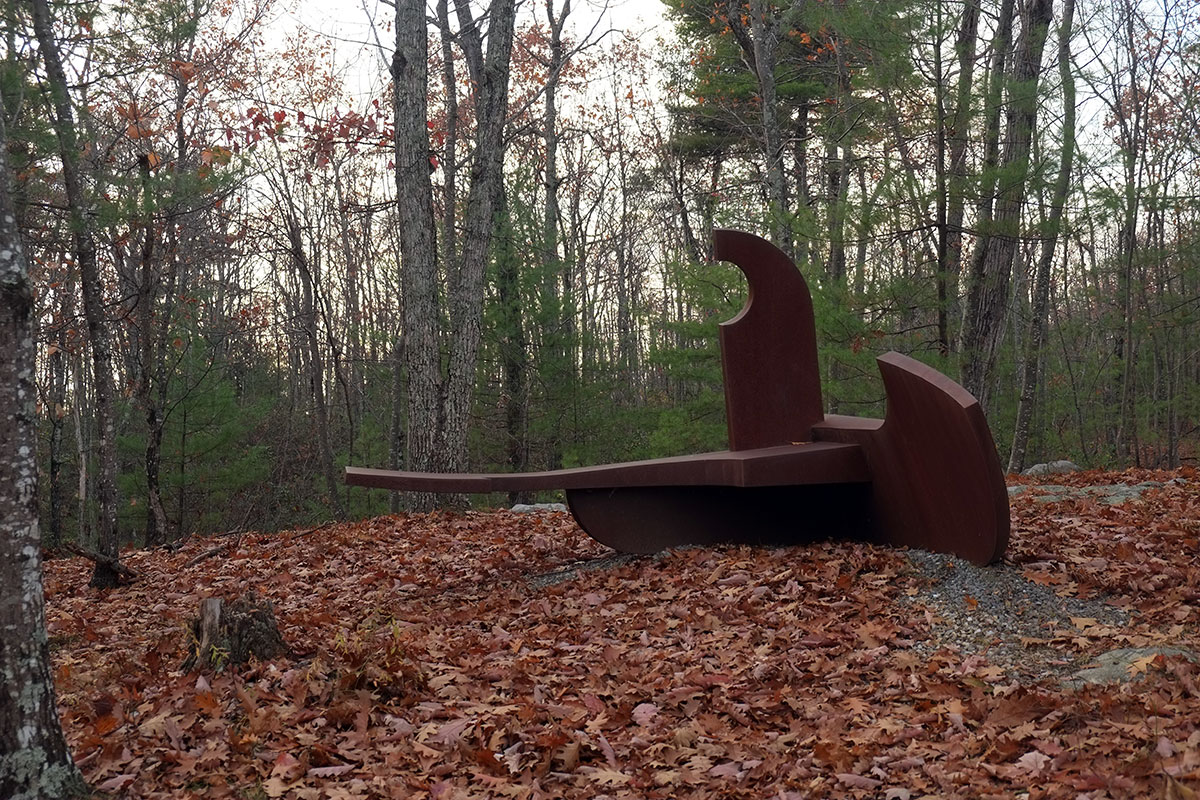
Our favorite works were those which seemed to be designed for a specific location, such as this weird beast-like thing:DSCF4753

or this bench/outpost/marker/tankDSCF4721

or sometimes the site provokes an association, as this piece reminded me of rotting totem poles as they are seen in the forests of the coastal northwest.DSCF4725

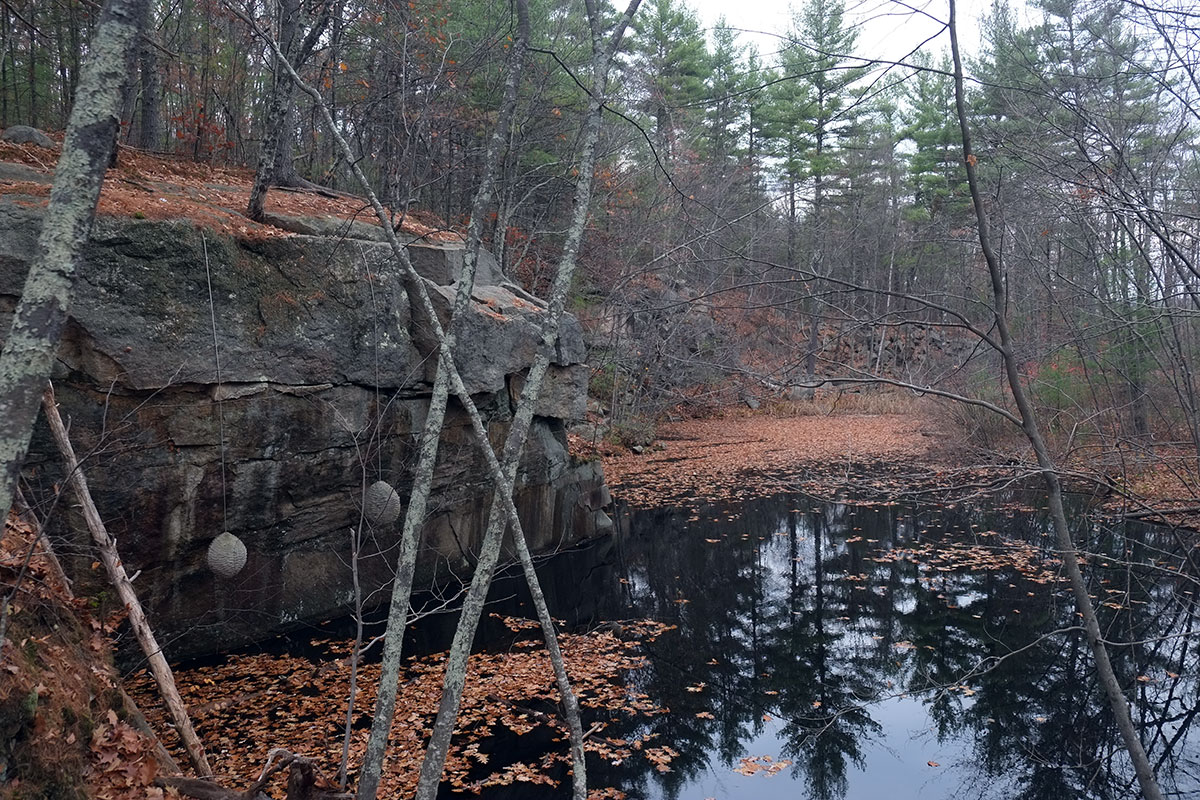
The quality of the artwork was high, but the landscape design could use some help.  The trails don’t make much sense, and having an overall vision of sequence and procession would enhance the experience of the art.  The one place where this was done, on the Quarry trail, was by far the most satisfying.  Pieces picked up on spatial cues in the landscape, and moving along the trail led to an understanding that was larger than the sum of the parts.DSCF4697DSCF4698DSCF4704

At the top of the mountain the space opens up, and there is a view towards Mt.Monadnock and other small peaks in the distance. DSCF4738

As we were leaving in the growing dusk, we could barely see dark forms ahead by the side of the road.  Were they people, or sculptures, or just shadows that we were imagining to be forms?  It put us on edge, clearly the artist’s intention, a brilliant example of the power of a well-executed piece.DSCF4780

This institute doesn’t appear to be that well-known; we really enjoyed seeing a good local, place, one that doesn’t appear on anyone’s list of major monuments of western civilization, but which shows that there are good artists out there, working for the sake of the art, and not just the blandishments of the art market.

Boston museums

MFA

All of Boston’s venerable museums have had major renovations since I lived there – the Museum of Fine Arts by Foster + Partners, and the Gardner and Harvard’s Fogg, by Renzo Piano.  I couldn’t get to the Gardner, but I was able to see the other two in some depth.  As I ended up as an art history major in college, I knew both of these museums down to the smallest detail, and so have a good baseline for comparison.

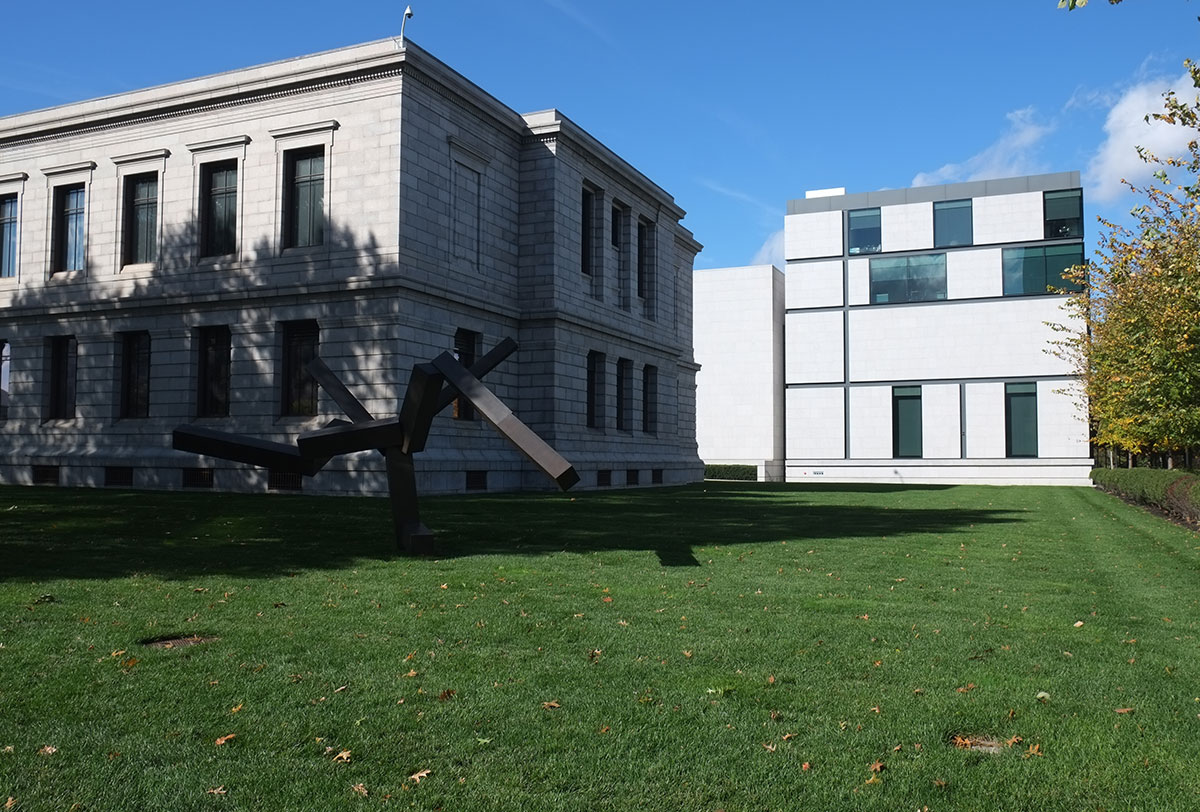
The most impressive thing about the Foster remodel of the MFA is that they didn’t mess up the original Beaux Arts building.  In fact, they significantly improved the overall organization.  IM Pei’s addition from the early 1980s had confused the plan, shifting the main entry to the southern side facing a parking lot, and demoting the Huntington Avenue entry on the central axis.  The current state opens up this axis from Huntington back to the Fenway, and once again the building makes sense.

DSCF3814

Pei’s addition is looking a little dated.  There are some commodious spaces and good galleries, but the detailing seems overlay flat and gypsum-boardy.  Mark Rylander just pointed out that the Pei buildings that are on the interface between late modernism and brutalism have worn better, with strong tectonic qualities (I had recently seen a good example of this at the Columbus Indiana library).  The MFA wing is hiding all of its guts, covering all with a pure white surface.

DSCF3769

DSCF3781

As the wing has been repurposed, it now includes an innovation that should become standard in museums:  inside the high-end restaurant, there is a bar, where I repaired for a little pick-me-up after a long, intense afternoon looking at art.  Refreshed by the best Manhattan I’d had in six weeks, I spent the rest of the evening checking in with all the galleries.  DSCF3765

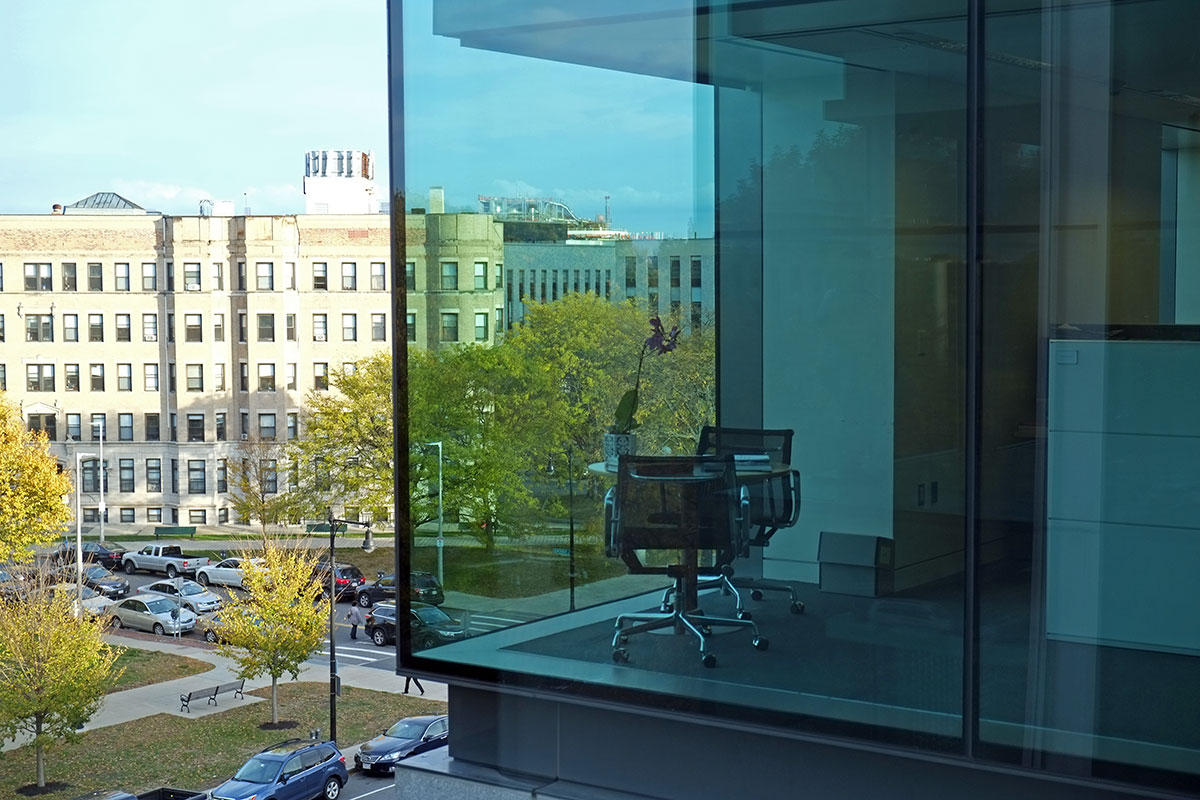
Foster’s addition includes administrative offices and a new wing for American art, which grow off the north end of the existing building.  The exterior is an exercise in the current style – random variations within a grid.  It’s very tight and crisp, with the solid/void relationships handled well.

DSCF3728DSCF3841

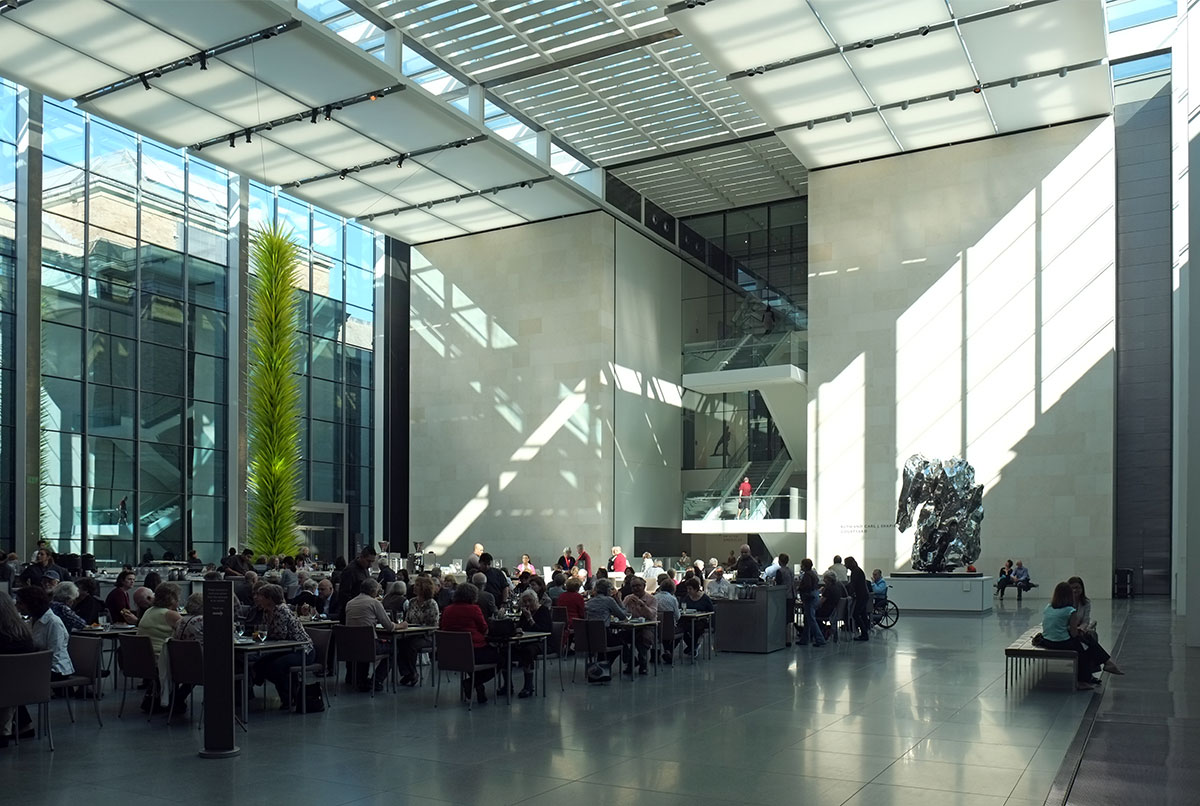
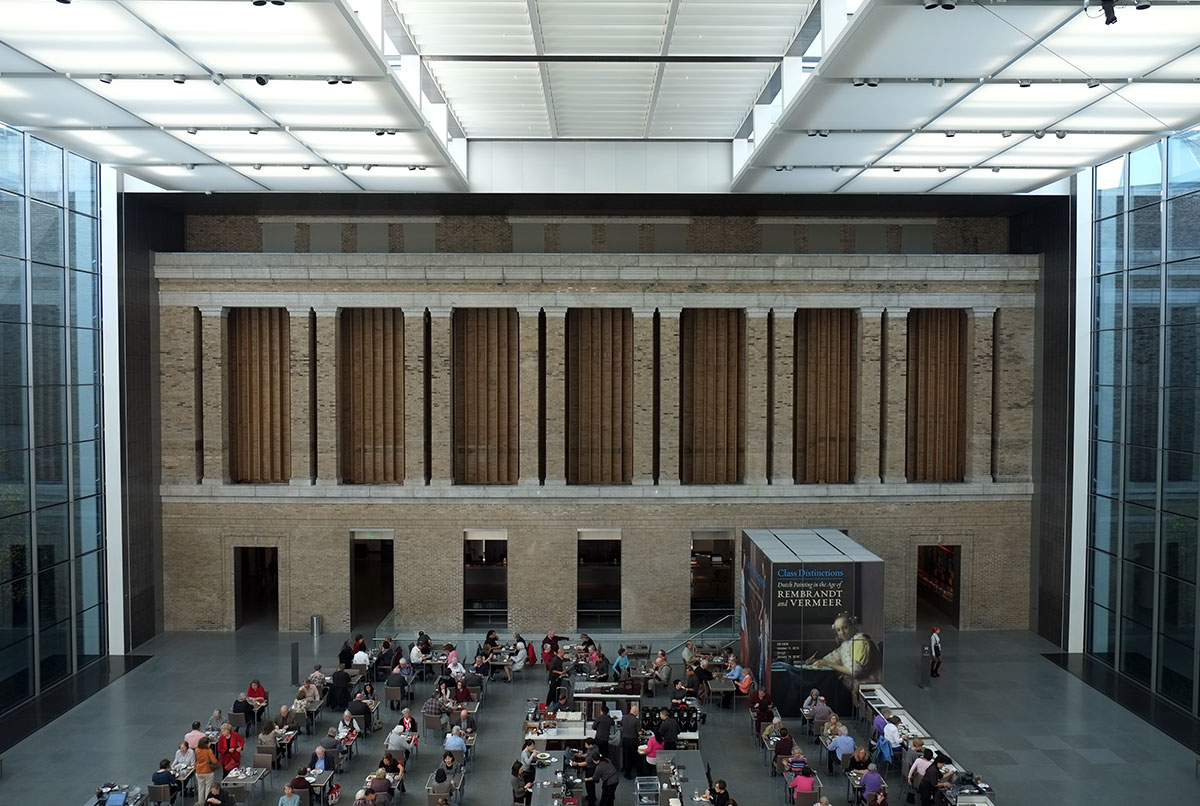
The big move is a large glazed court/atrium set between two wings of the original building.  It’s a huge space, with a scale that seems more like an exterior courtyard.  There is a cafeteria set up, which was whisked away in the afternoon so the space could be used for an evening event.  It connects the central axis of the museum with the entry to the new American wing, but is otherwise not accessible from the two flanking wings.  It supplies a necessary function within the museum – a place of relief from the intensity of galleries, with light, space, and a way to let your focus wander.  DSCF3736

It reminded me of a modernist version the courtyard at the Nelson-Atkins in Kansas City.DSCF3740DSCF3824

The big stair at the end of the atrium organizes the whole new wing.  From some hallways on the sides you can see the clear differentiation between the old and the new.DSCF3820
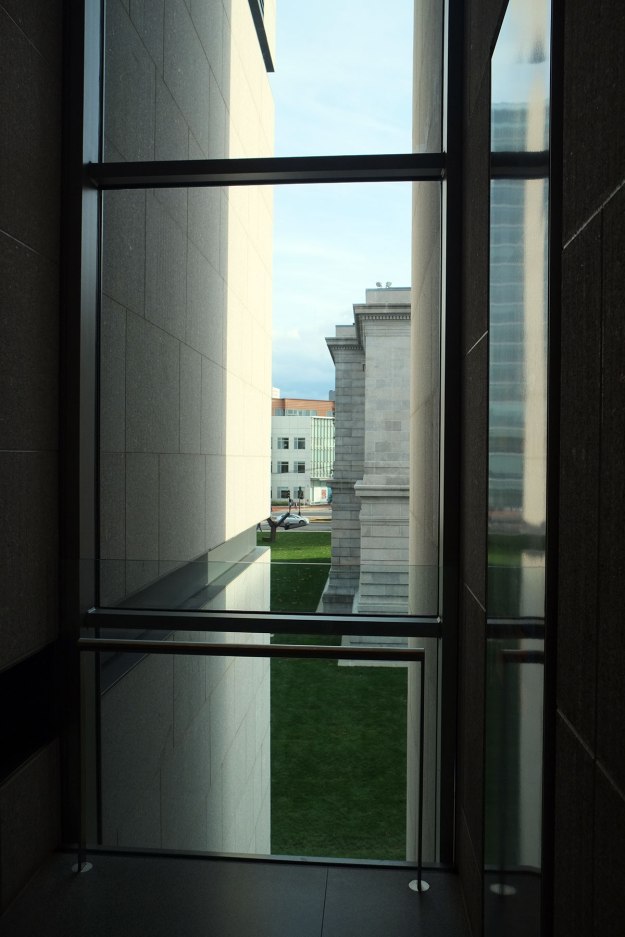
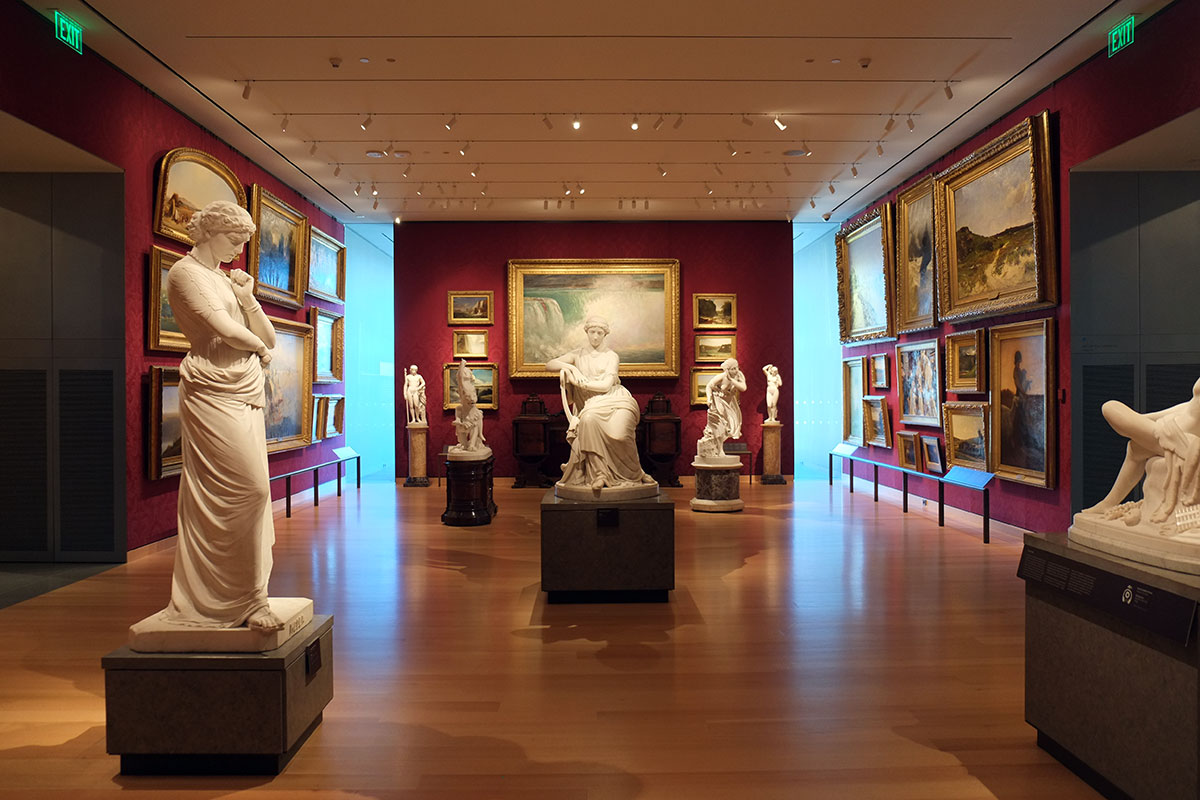
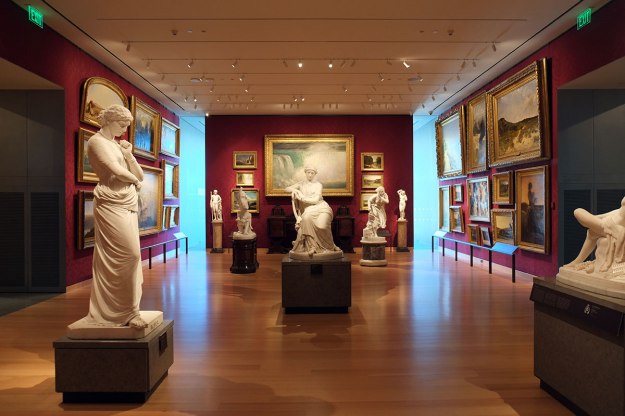
The new galleries are excellent – some are in the normal modernist vernacular of paintings floating on blank walls, but some are hung salon style, similar to 19th century practice.  The light is controlled very well (the only mistake being the hanging of Sargent’s The Daughters of Edward Boit facing the atrium stair, where the glare makes it hard to see the dark painting).  DSCF3744
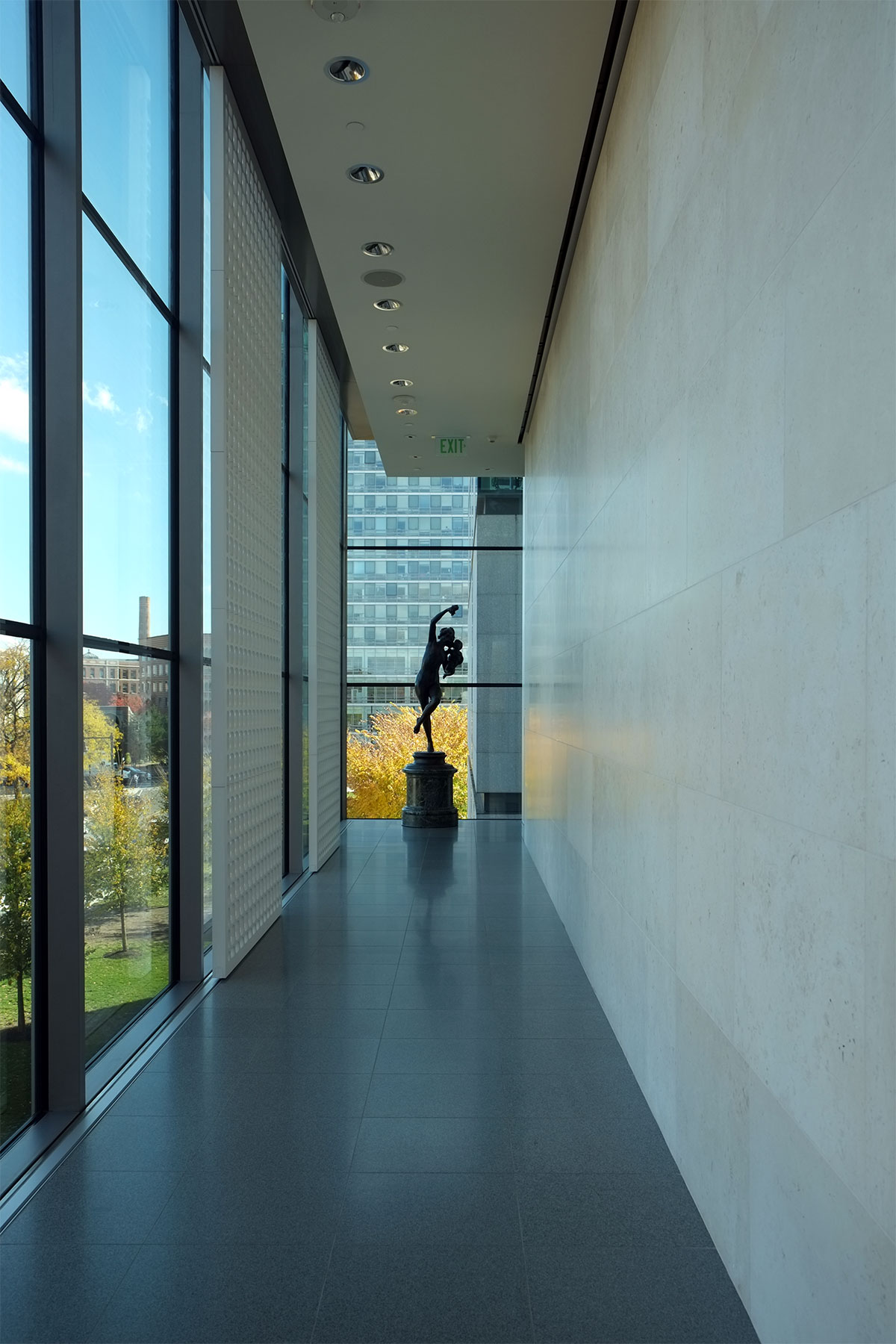
The gallery building is wrapped by a double-envelope / walkway on three sides.  I’m not sure of the purpose of this – it has a few sculptures that can sit in the sunlight, but it seems like a lot of trouble for what it provides.  DSCF3749

The top floor galleries are skylit, working very well for the large modernist work there.DSCF3850

Overall, it’s a very successful, sensitive and simple remodel. It seems more like a Piano building than a Foster.


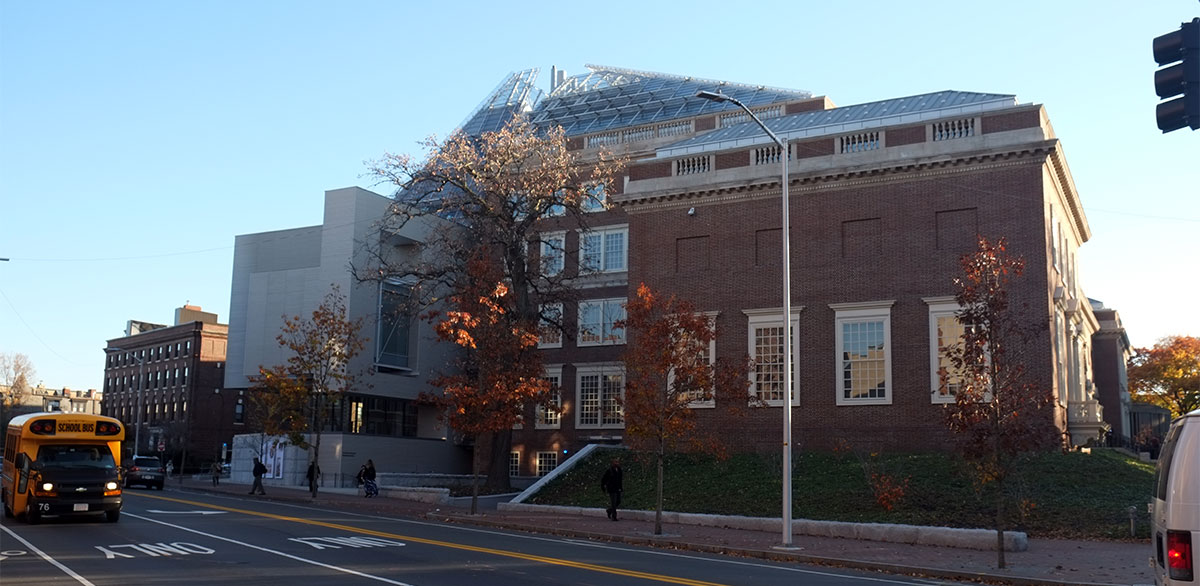
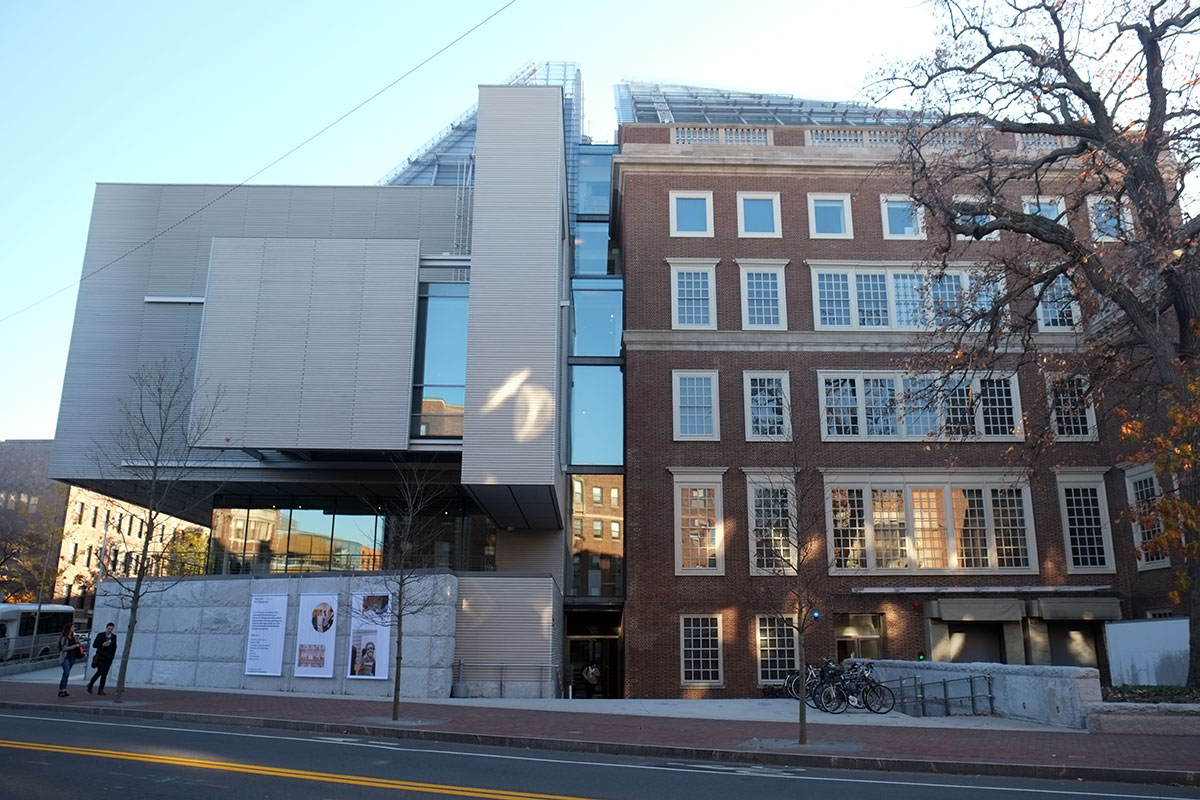
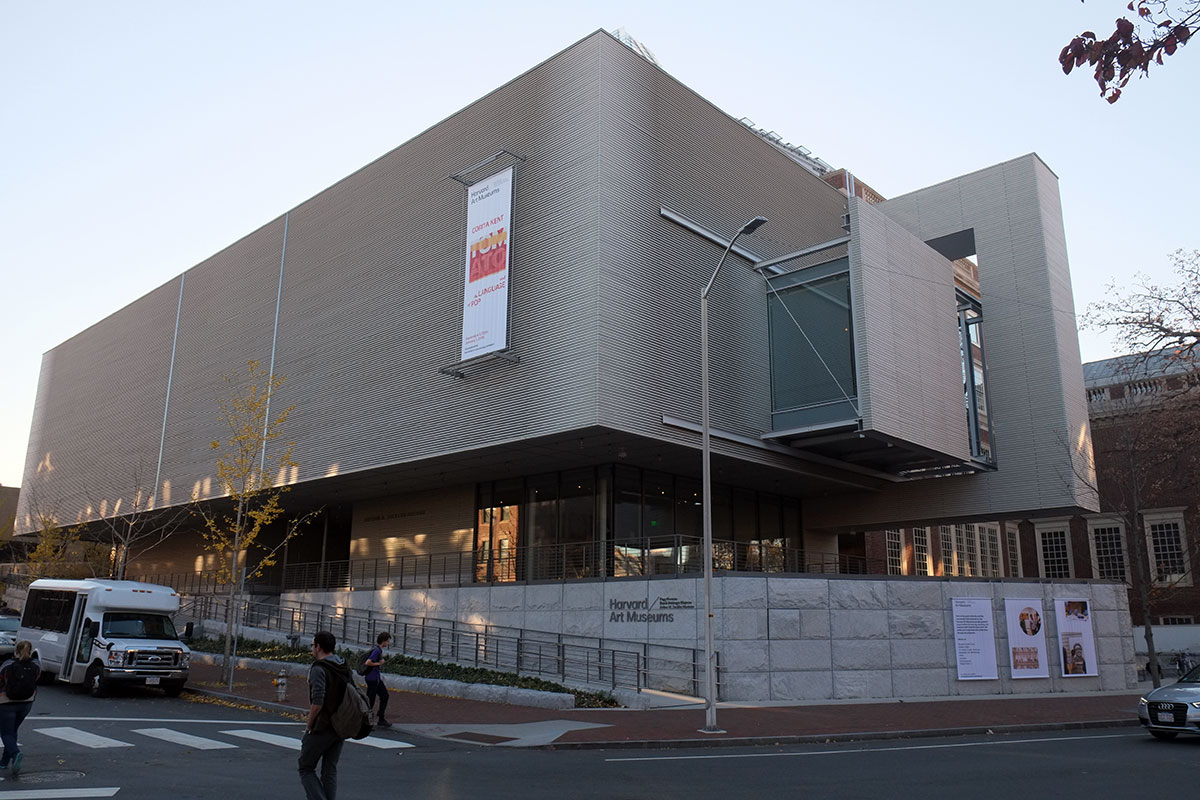
Which brings us to the Piano building at Harvard.  It is more than an addition to the Fogg.  The Fogg used to house galleries, classrooms, the art history department (which they call Fine Arts, just to confuse people), and the art history library.  Now the departmental spaces have moved over to the Stirling building across the street, and the collections from the Sackler and the Busch Reisinger have been consolidated, so it is now called the Harvard Art Museums, and is a much larger museum with an art study center.

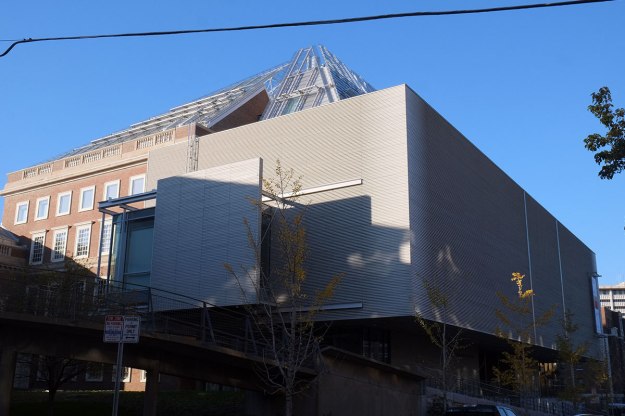
From the street, the juxtaposition is striking, and not bad at all.  Let’s face it, the large flat wall of the Fogg went beyond the limits to which Georgian should be pushed, and the addition provides a much higher degree of articulation which reads well.

DSCF4551

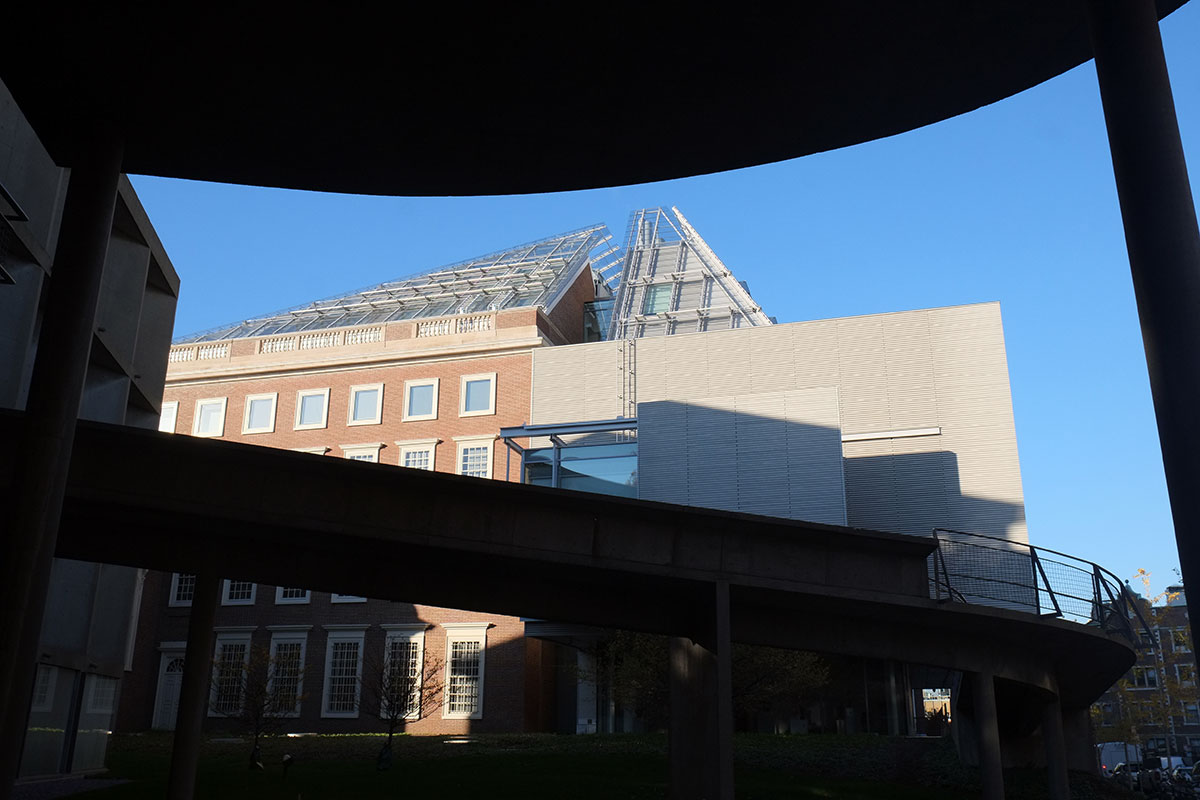
The reveal between the two is clear, while the big new roof ties them together.  DSCF4549
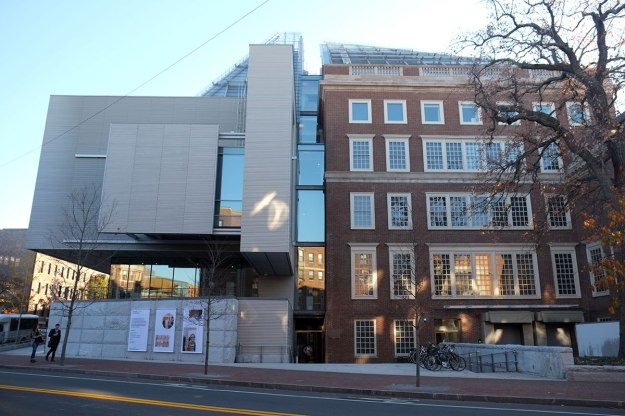
The Prescott St. corner is massive but pleasing.  A wood(!) screen wall above a stone base.  Robert Campbell thinks the base is clunky and not necessary, and I’m inclined to agree with him.  DSCF4543

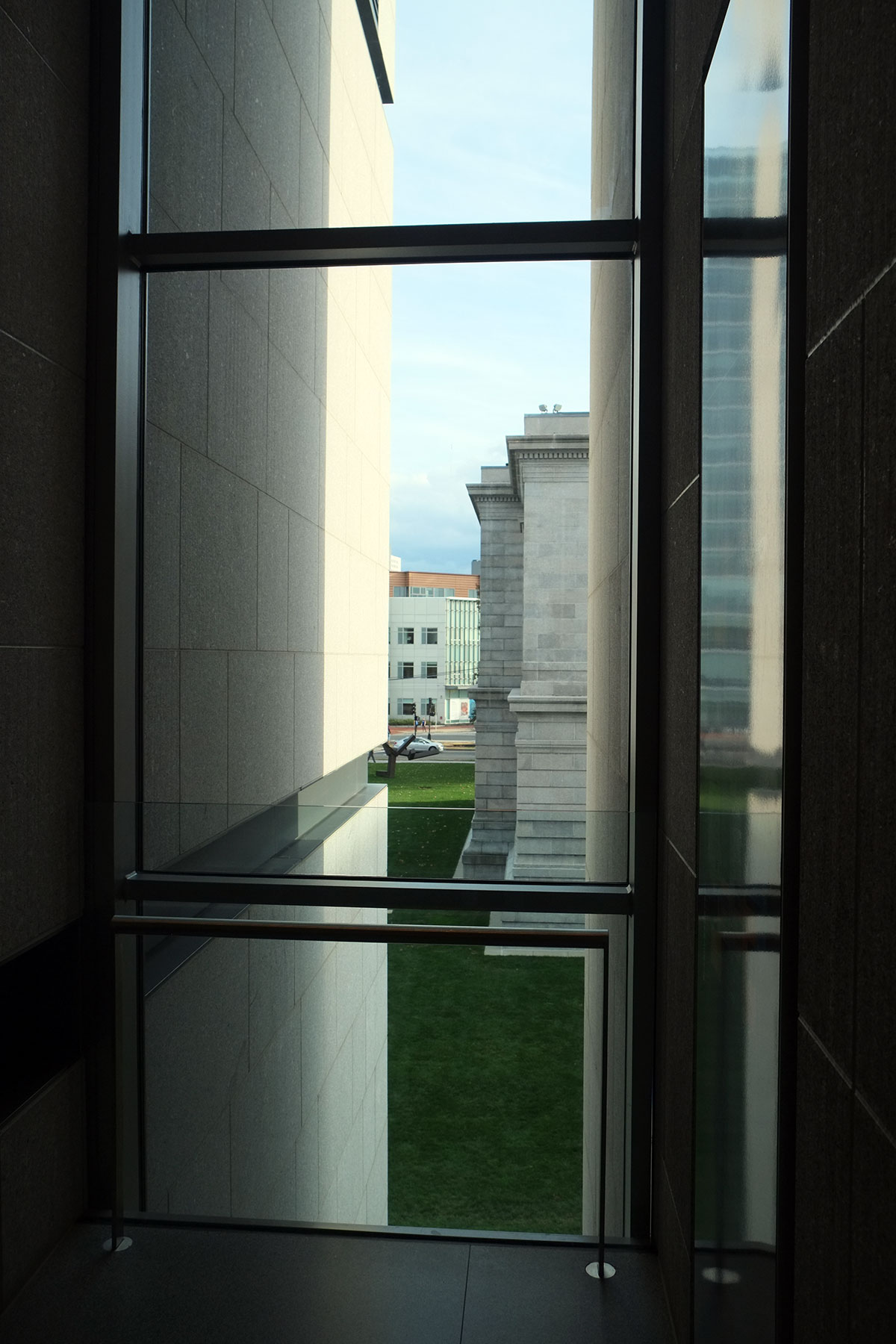
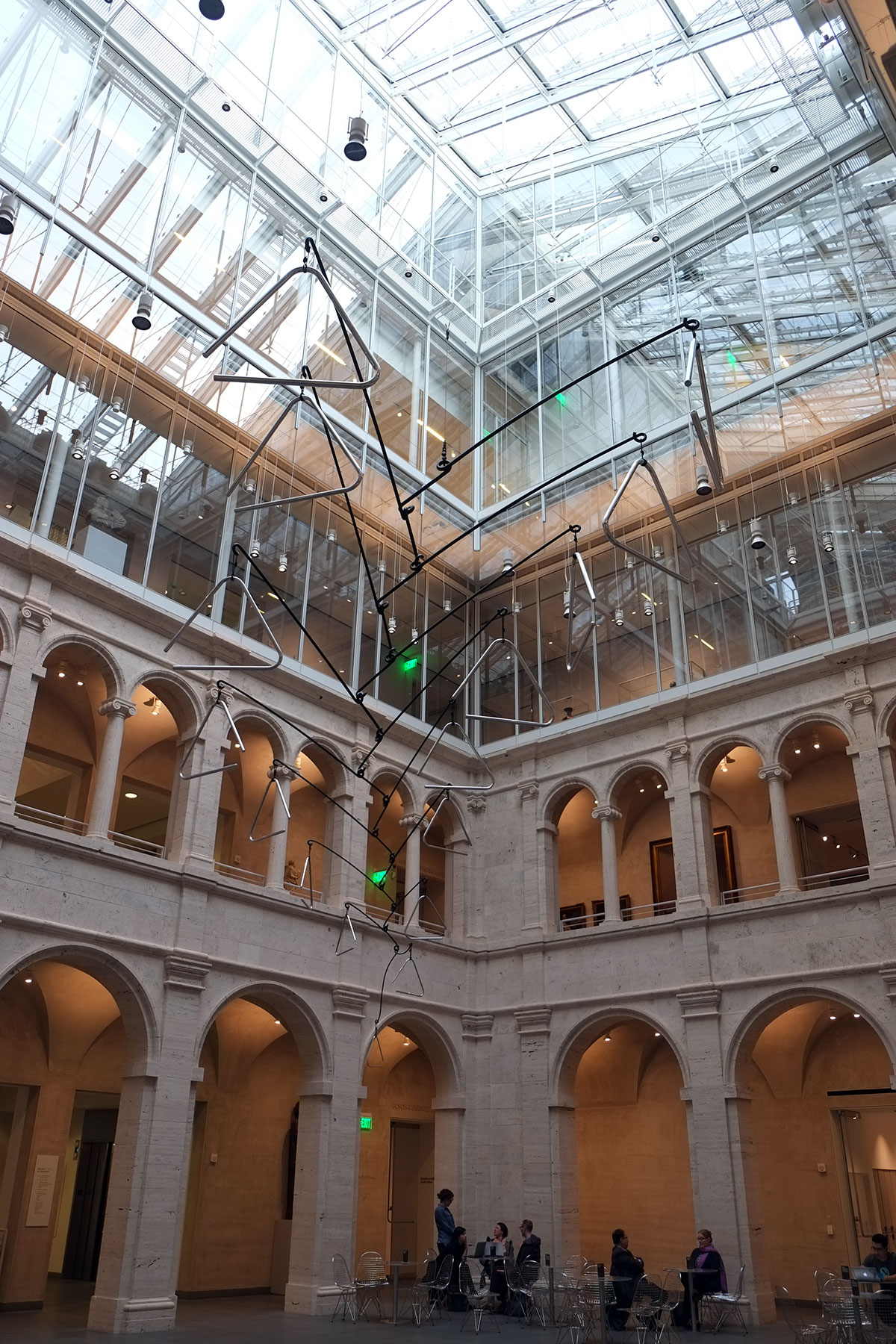
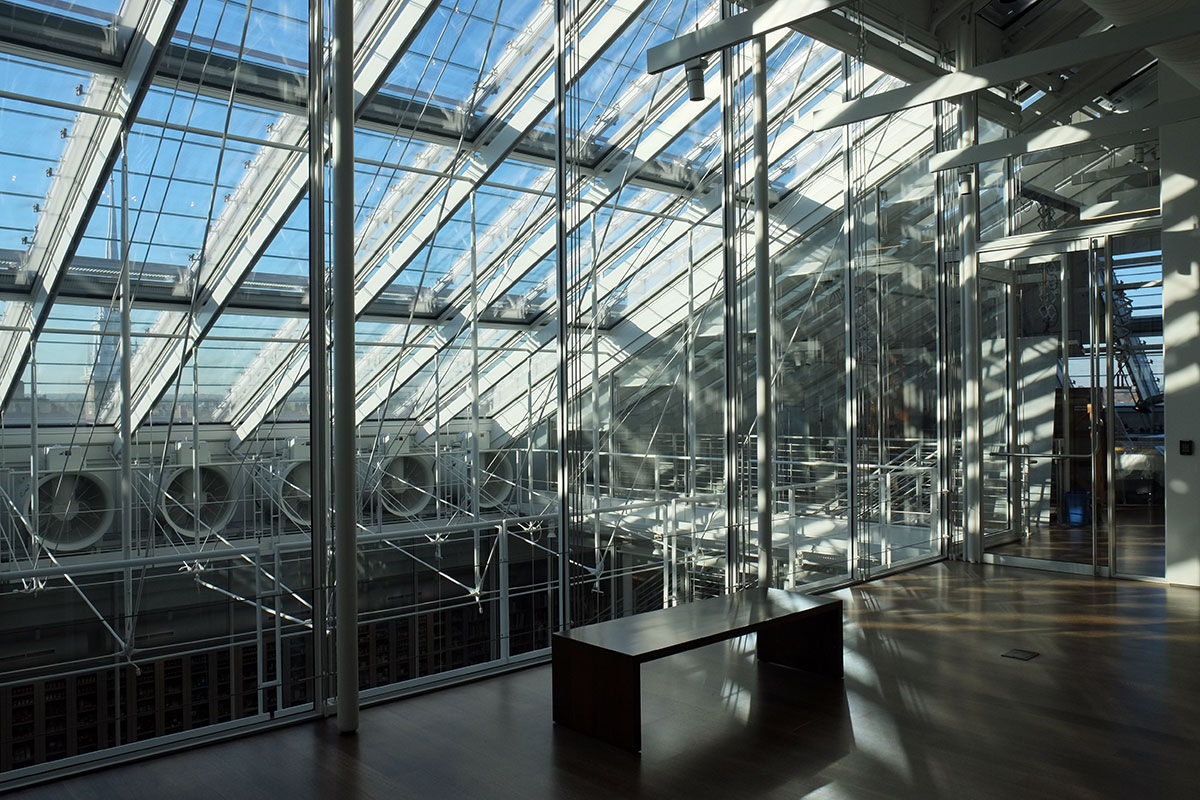
The big move is the central atrium.  The Fogg had two levels of a Renaissance palazzo court, with a third attic story with small windows on a hallway.  Piano always seems to respect these Beaux Arts schemes (such as at the California Academy of Sciences) and he does so here.  The big question is how do you keep this parti, while doubling the height of the building, without making it a dark shaft.   The masonry at the third level was removed, and that becomes the start  of a glass curtain wall addition, exquisitely detailed.  DSCF3587

The third floor gallery circulation had been one of my favorite spaces – you got glimpses into the  court through the small windows, as you were surrounded by pre-Raphaelite paintings on your way to class.  It was fine, but I like the new corridors much better.  Similar to the double envelope at the MFA, sculpture that can be in strong light is located here, with paintings set back in shielded galleries.  DSCF4451p

The galleries are less spectacular, just plain rooms with track lighting.  I think this quality is due more to the layout of the original Fogg – the footprint is not big, and these rooms are simply fit in.  The circulation scheme relieves any possible claustrophobia – you’re not caught in an endless warren of galleries (as sometimes happens at MOMA), but can readily jump back to the atrium for light and space.DSCF4424

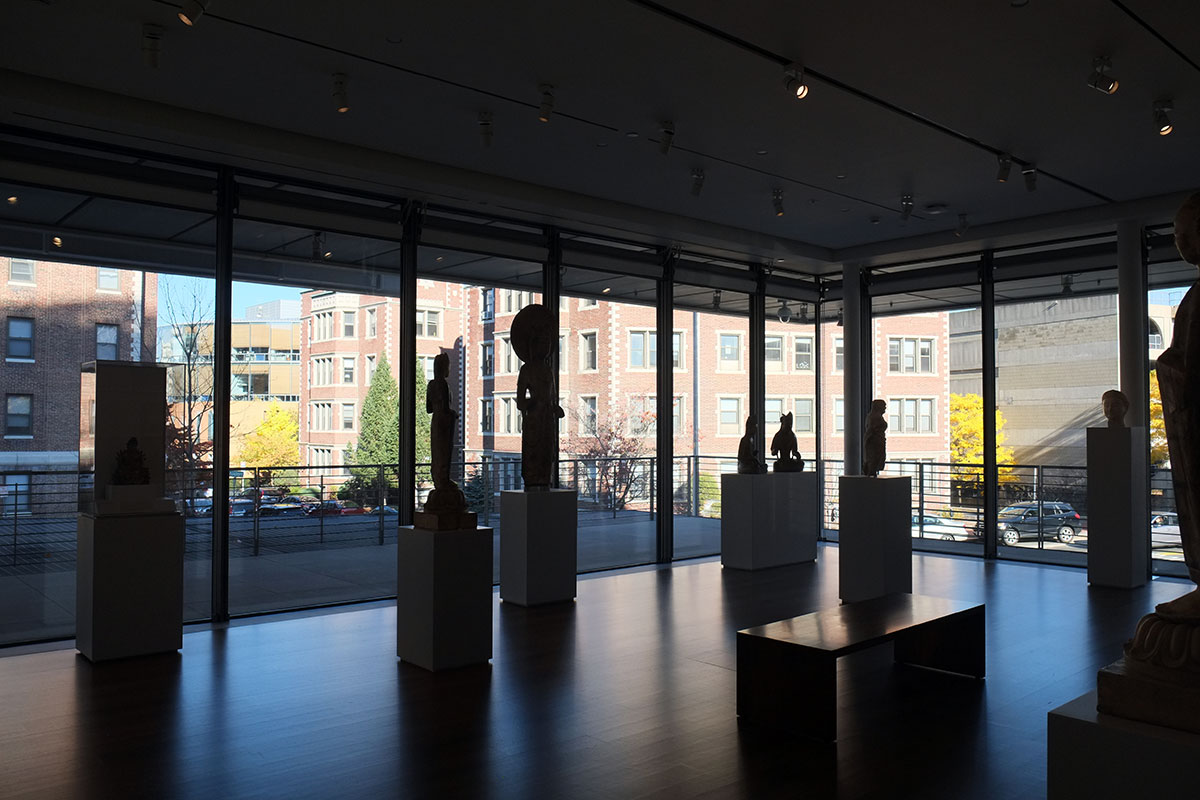
There are new galleries which pop through the solid wall of the museum and engage the streetscape.  These also house sculpture, and the contrast with the painting galleries is strong.  DSCF4418 DSCF4435

These also provide an excuse for the massively articulated, movable shading devices on the exterior.  I’m not sure all of this was necessary;  perhaps as with Foster’s double envelope, the alleged function just provides an excuse for doing something which looks really cool.  DSCF4531
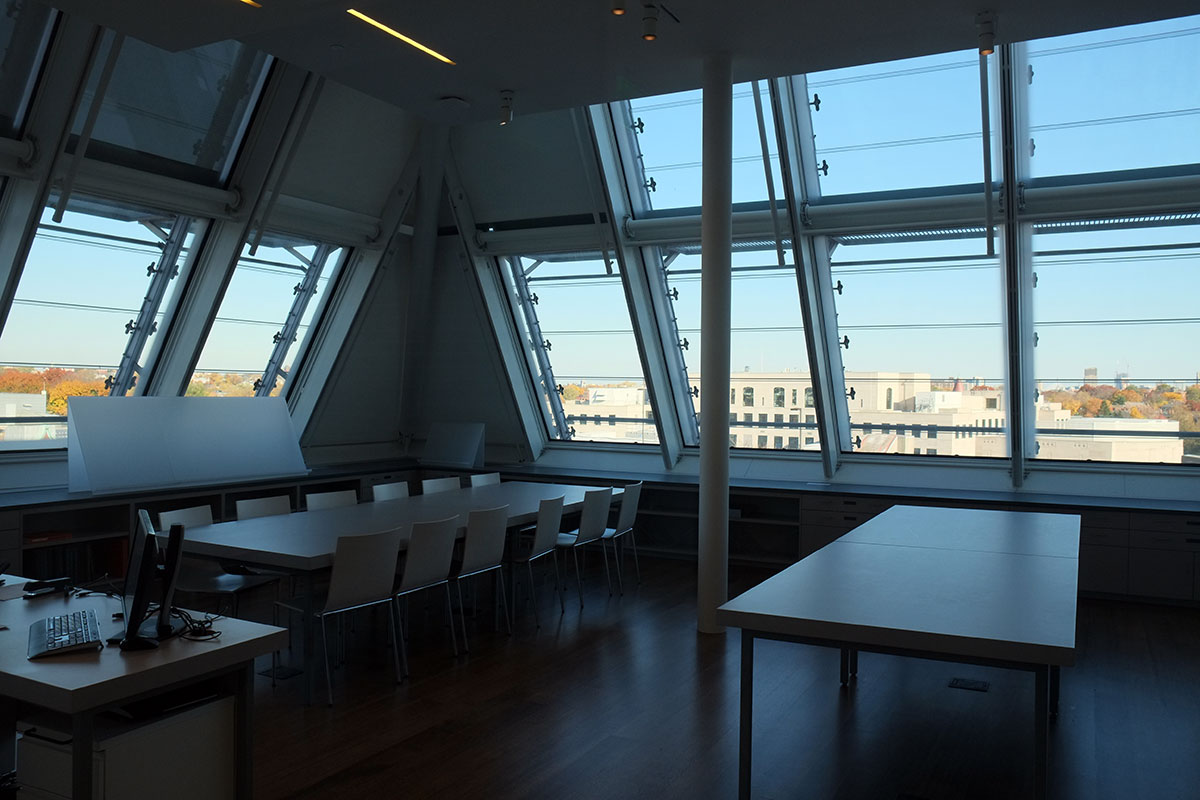
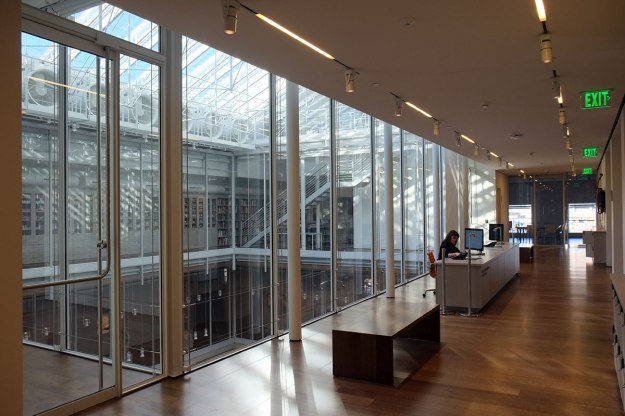
On the fourth and fifth floors there is the conservation space and an art study center, with rooms which van be reserved so items in storage can be retrieved and examined.
DSCF4470

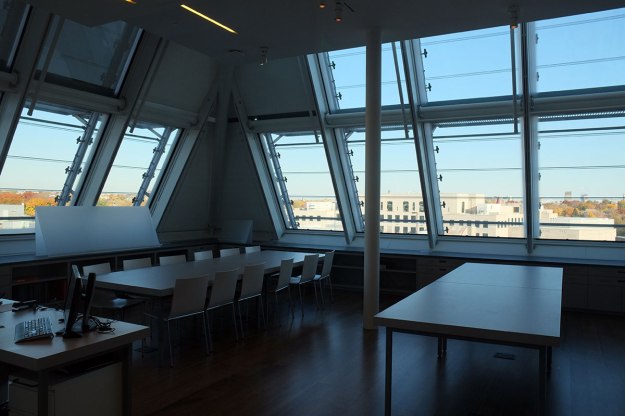
There are quite a few big rooms like this, only one of which I saw being used.  I asked about excessive daylighting, with its attendant glare and damage to art work, and was told that there are multiple levels of automatic and controllable shading devices in place.  The rooms are beautiful, with great views of the city, but again I’m not convinced that this over-the-top high tech approach couldn’t have been accomplished with simpler and more passive techniques.  DSCF4462
The relationship to th Carpenter Center is great.  I’m not sure, but I think the whole Gwathmey Siegel remodel must have just been throw away.  DSCF4430
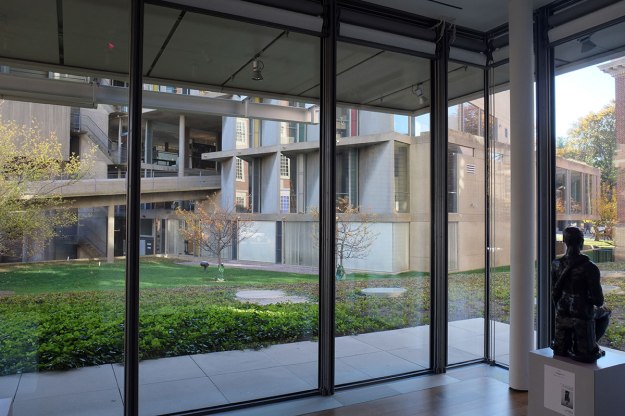
The ramp now plugs into the rear entrance to the museum.DSCF4530
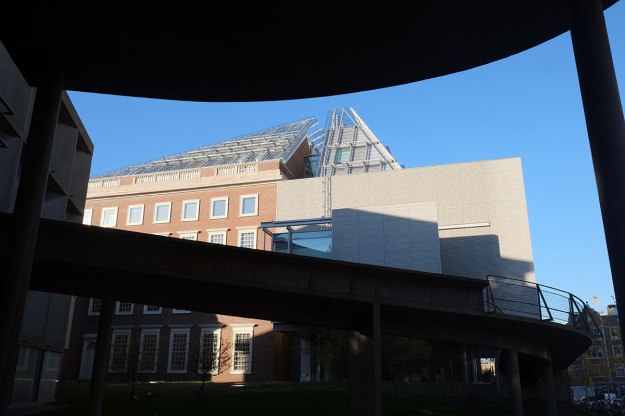
The top floor is an homage to Piano-tech (not to be confused with Pinakothek).  The curtain wall starts at the third level, in a fairly simple manner, but it seems to accumulate more and more little metal pieces as it ascends, and the top is a high-tech apotheosis.  At this point I don’t care if it is at all necessary – the dematerialization of structure, the play of light, the modularity and repetition, the transparency, it is all just gorgeous.  No one can detail like Piano, and it’s nice when he’s able to just run amok.

DSCF4477

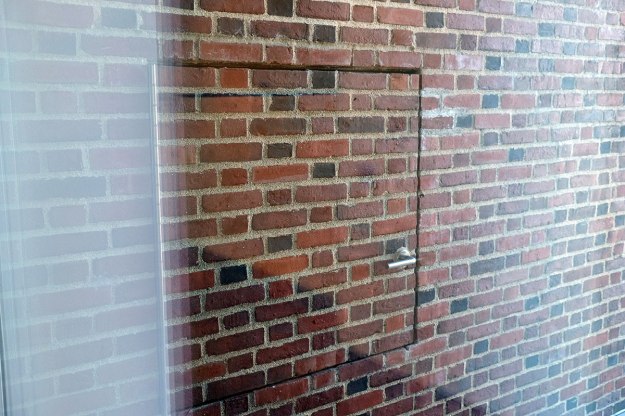
But I did find one embarrassing detail:  I asked the brick what it wanted to be, and it said, an infill panel on an access door!DSCF4461
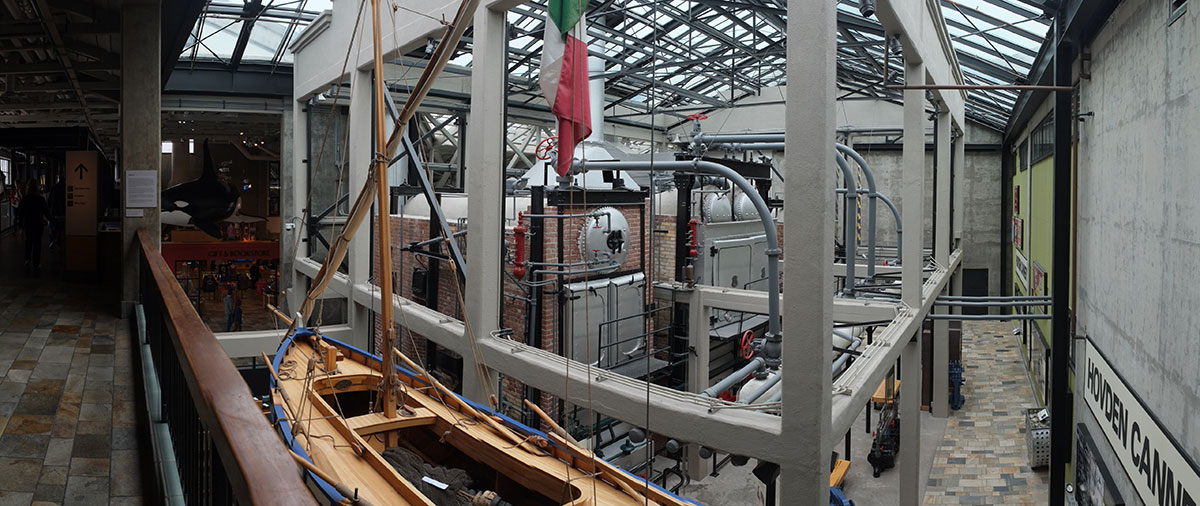
i’ve liked every Piano museum addition I’ve seen, mainly for their good sense, simple partis, contextual sensitivity, attention to the demands of the art and exquisite detailing, but in this museum, the architectural experience of the atrium is the dominant element.  I found myself returning to it again and again, just to enjoy the light and the tectonics.  It’s a very different museum from the one I knew, but the sensual and intellectual pleasure of the space more than made up for my displaced nostalgia.

DSCF4495

Mass MOCA

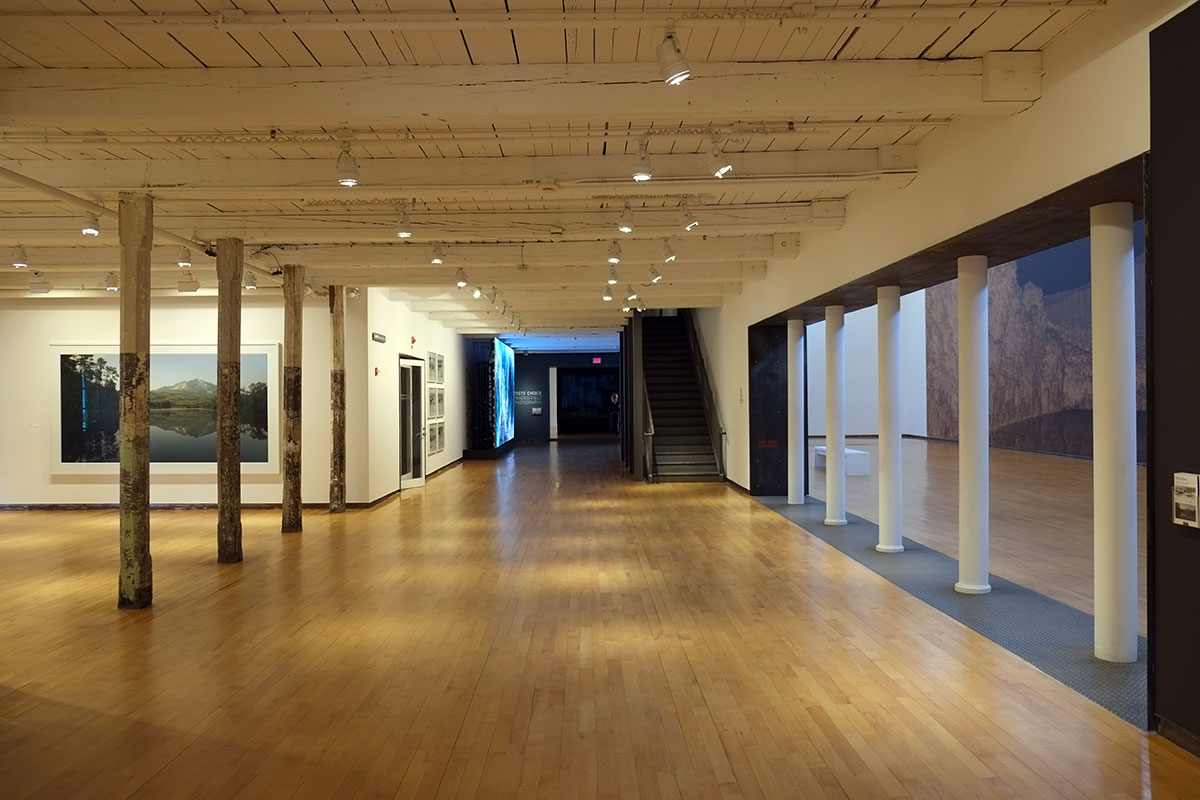
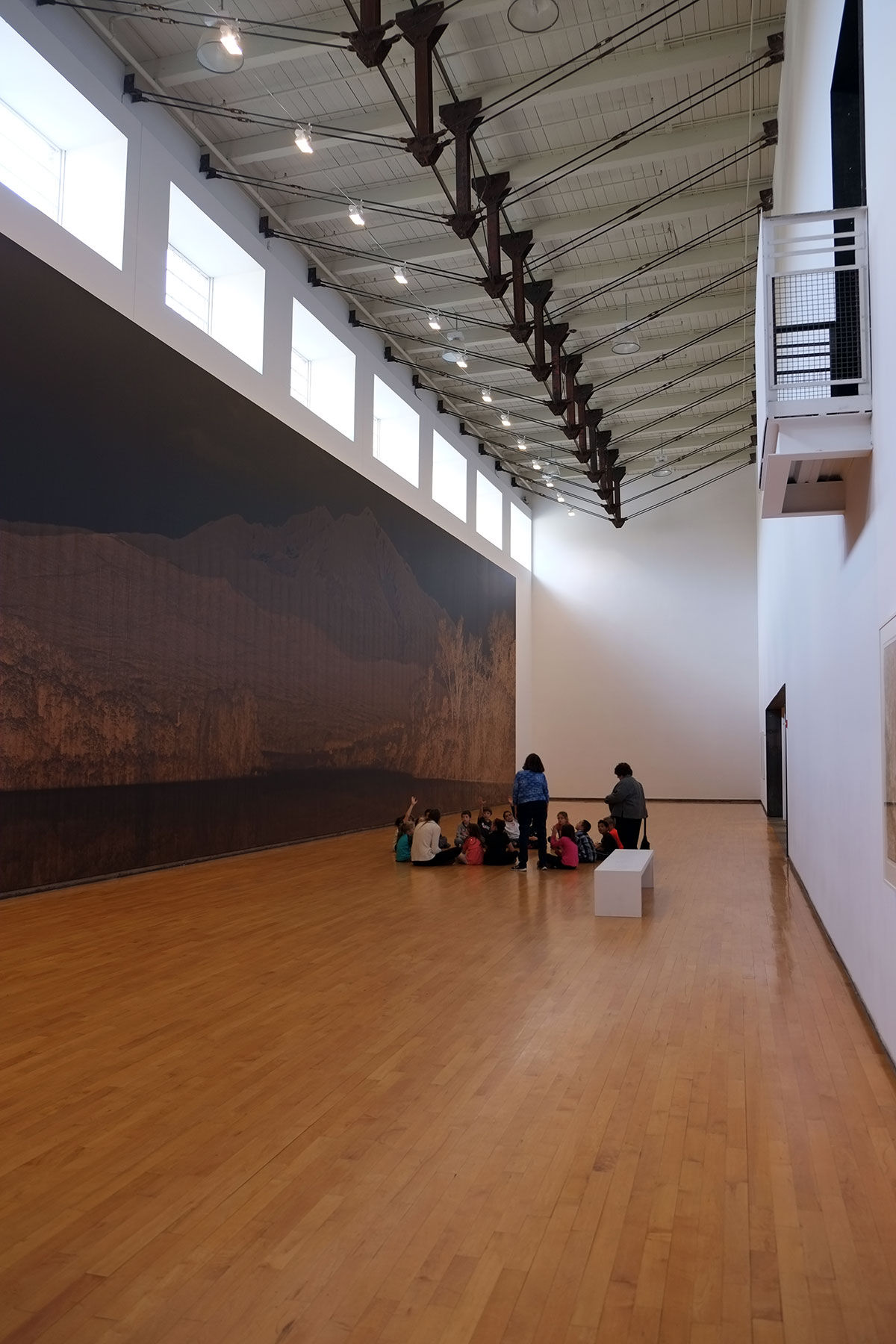
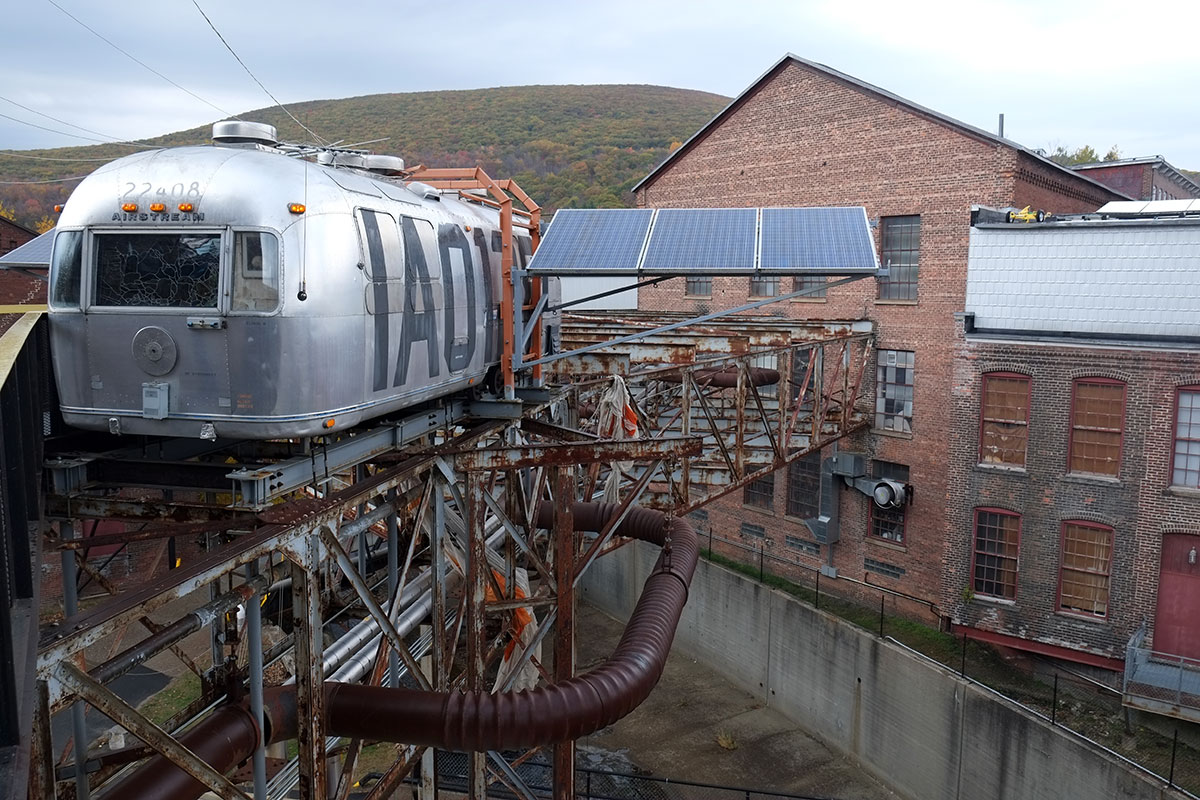
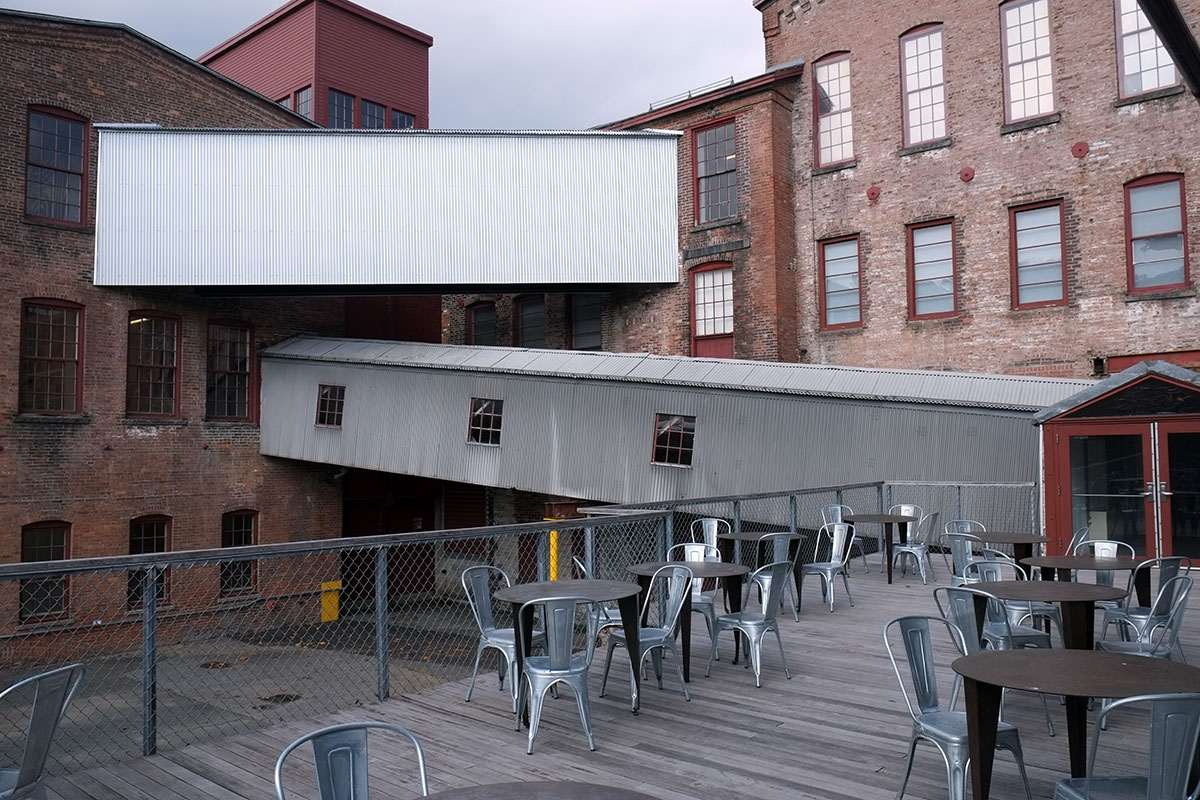
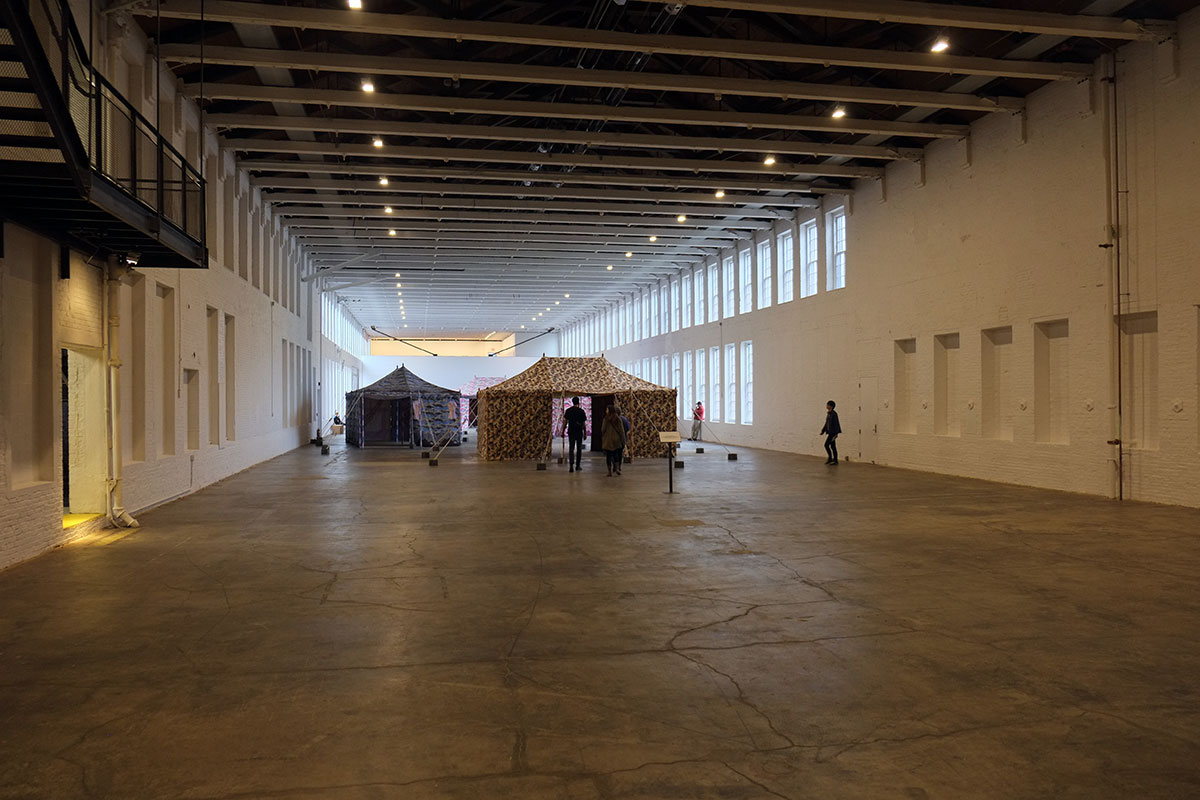
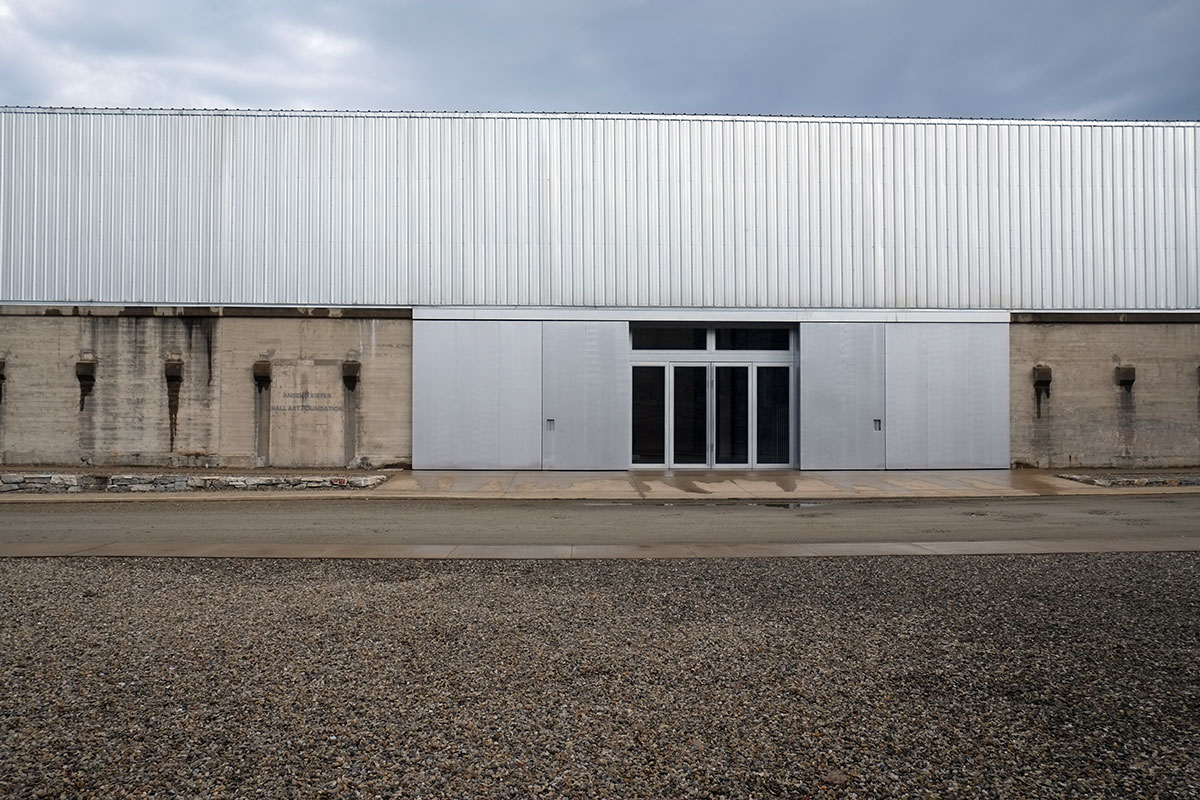
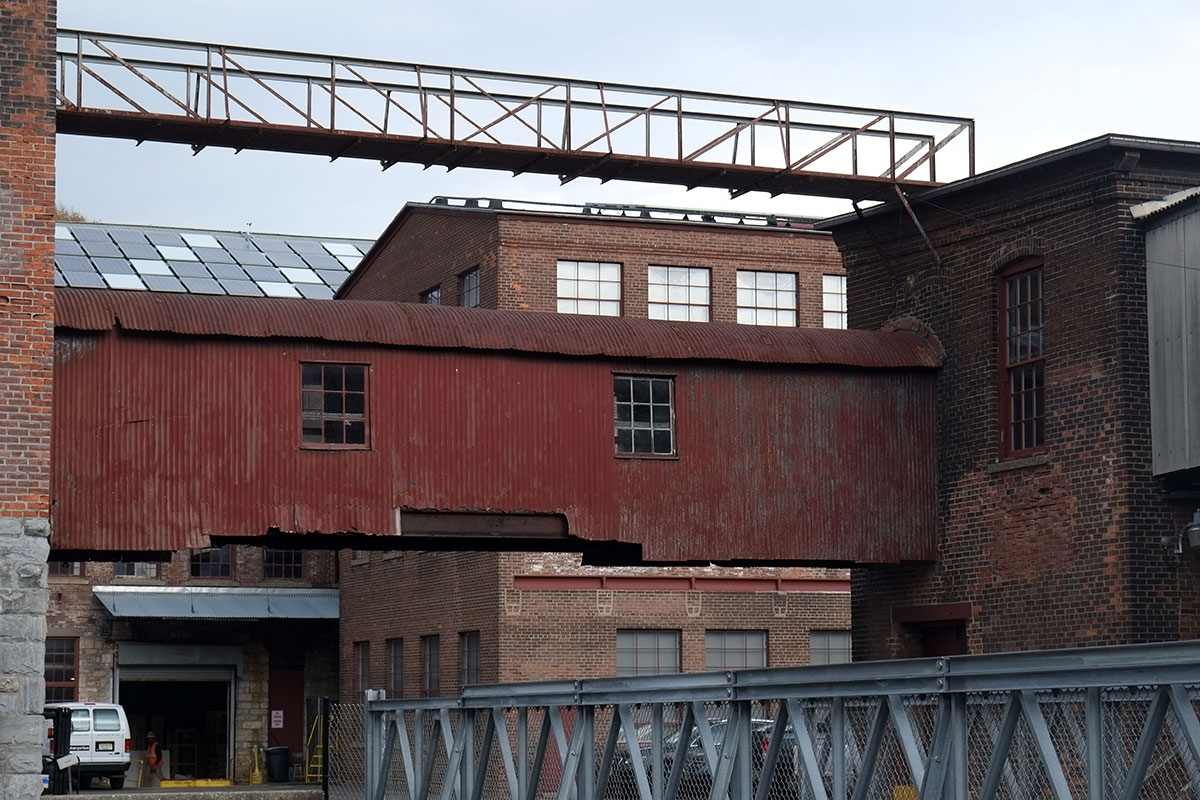
Mass MOCA is a contemporary art museum, which opened in North Adams, Massachusetts, in 1999.  Taking advantage of the old mill buildings on the site, there are almost four acres of galleries, enormous rooms in which they can show enormous pieces.  I’ve become leery of dragging Greta into too many museums, but this was no problem, as it combined some of her current fascinations – conceptual art and industrial archaeology.  DSCF2429

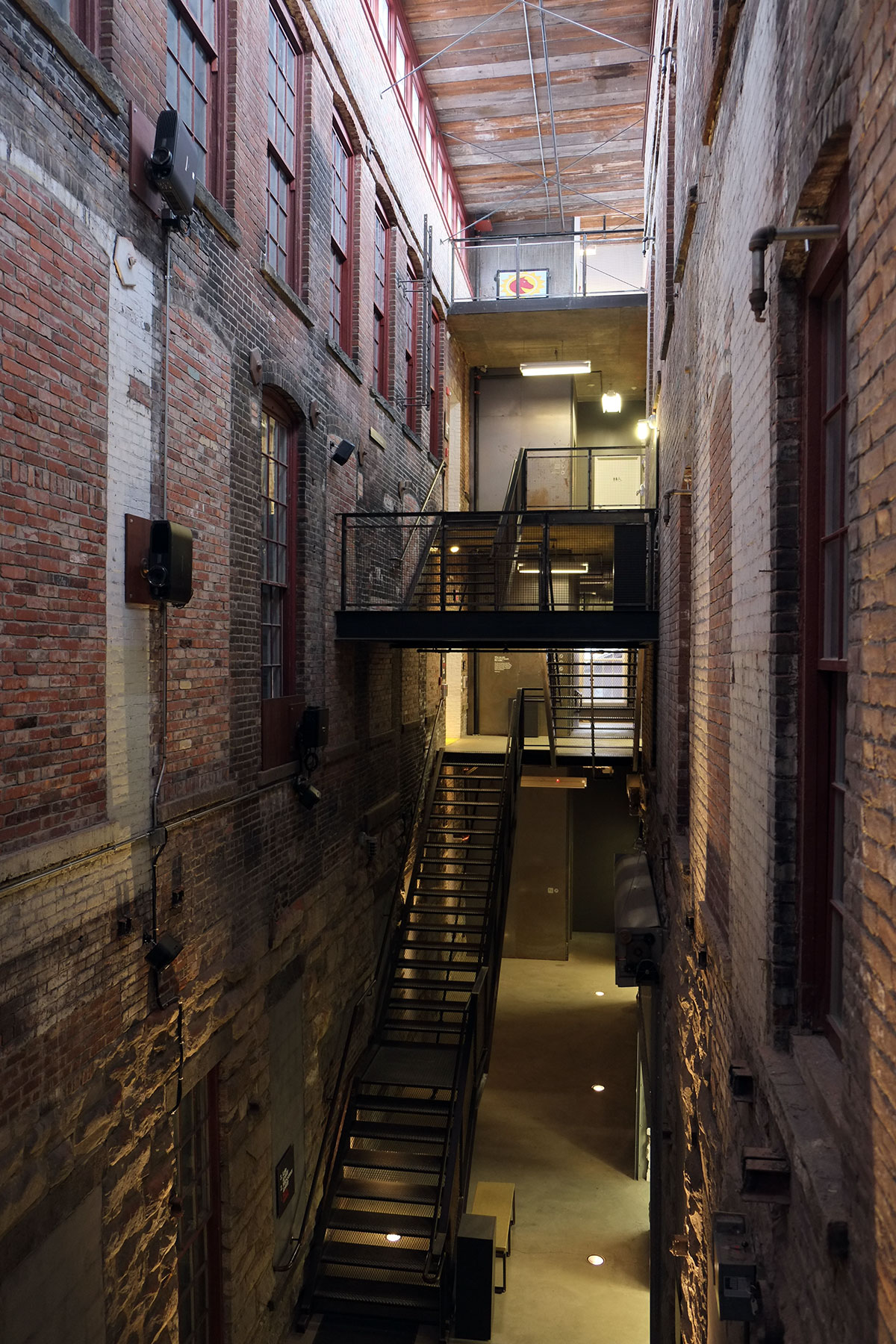
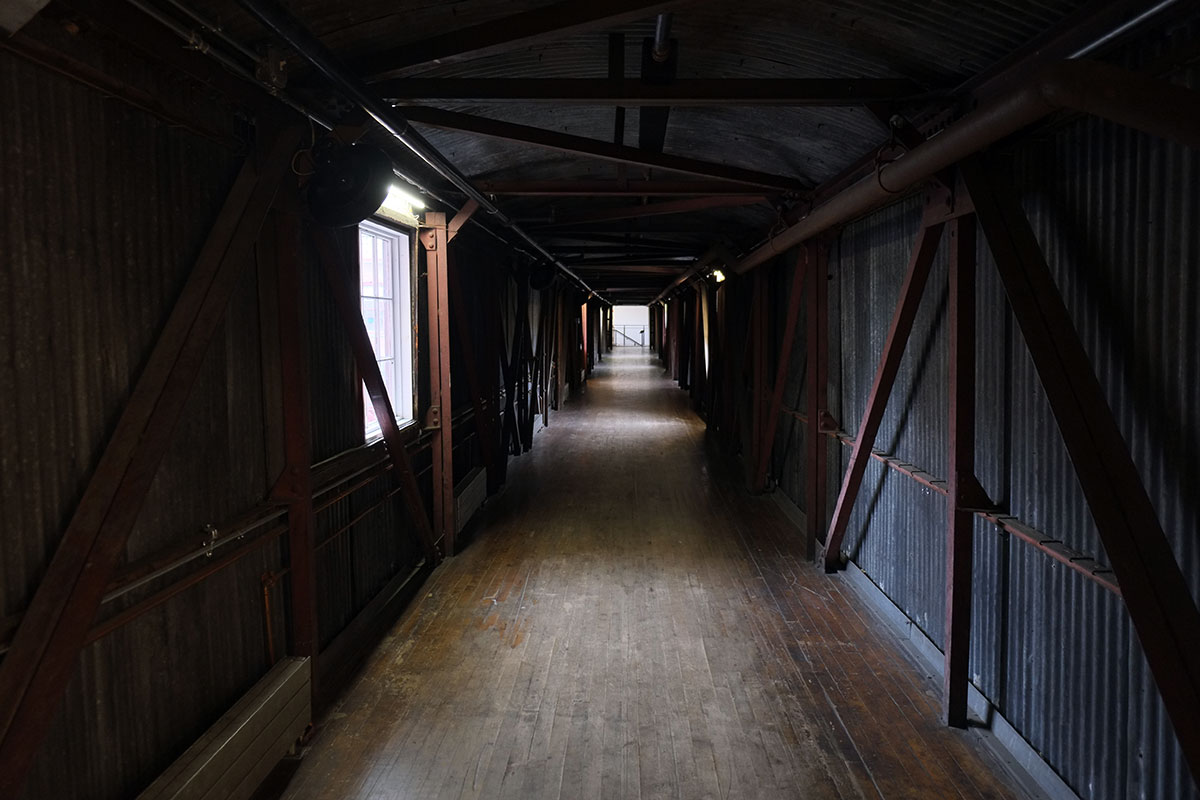
There are big rooms indoors, and there are spaces in between the buildings outside for art work.  We found the buildings to be as compelling as the art.  The 1947 boiler plant has been left as-is, slowly rusting through the open roof, and Greta said it was her new favorite place in the world.  DSCF2534

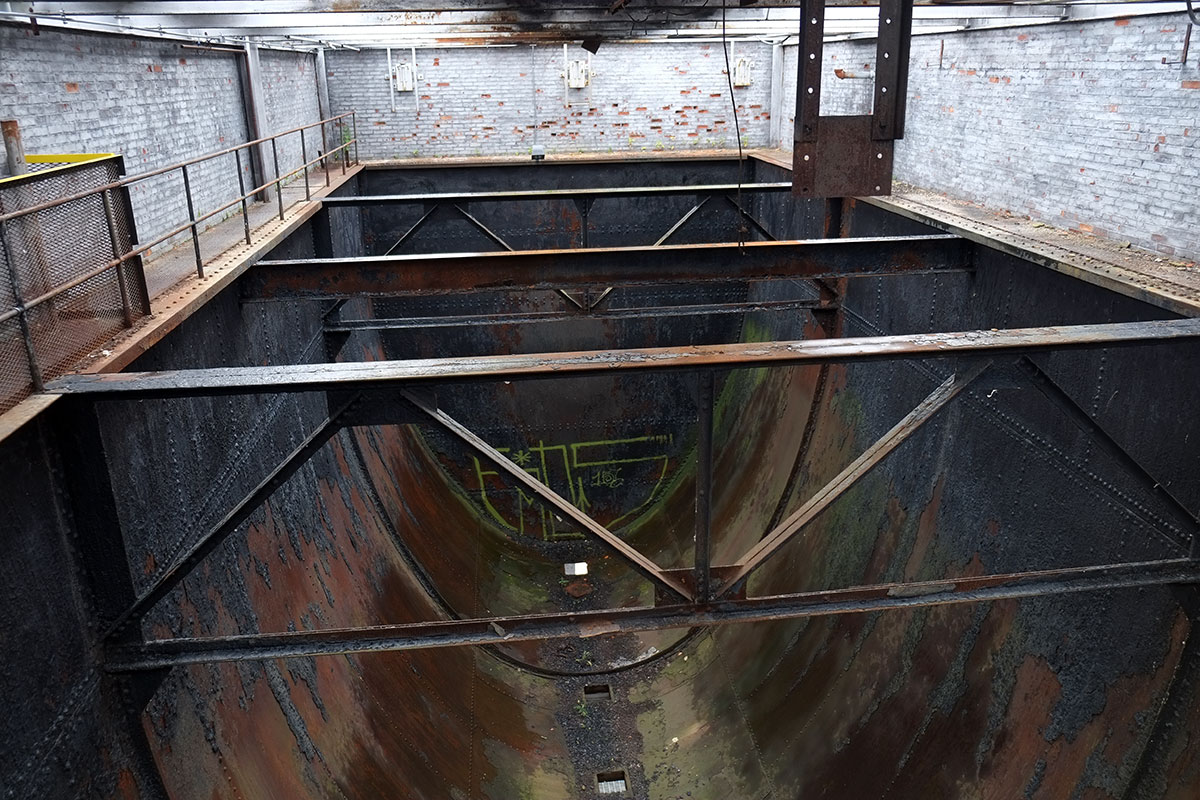
big tank in the boiler plant

big tank in the boiler plant

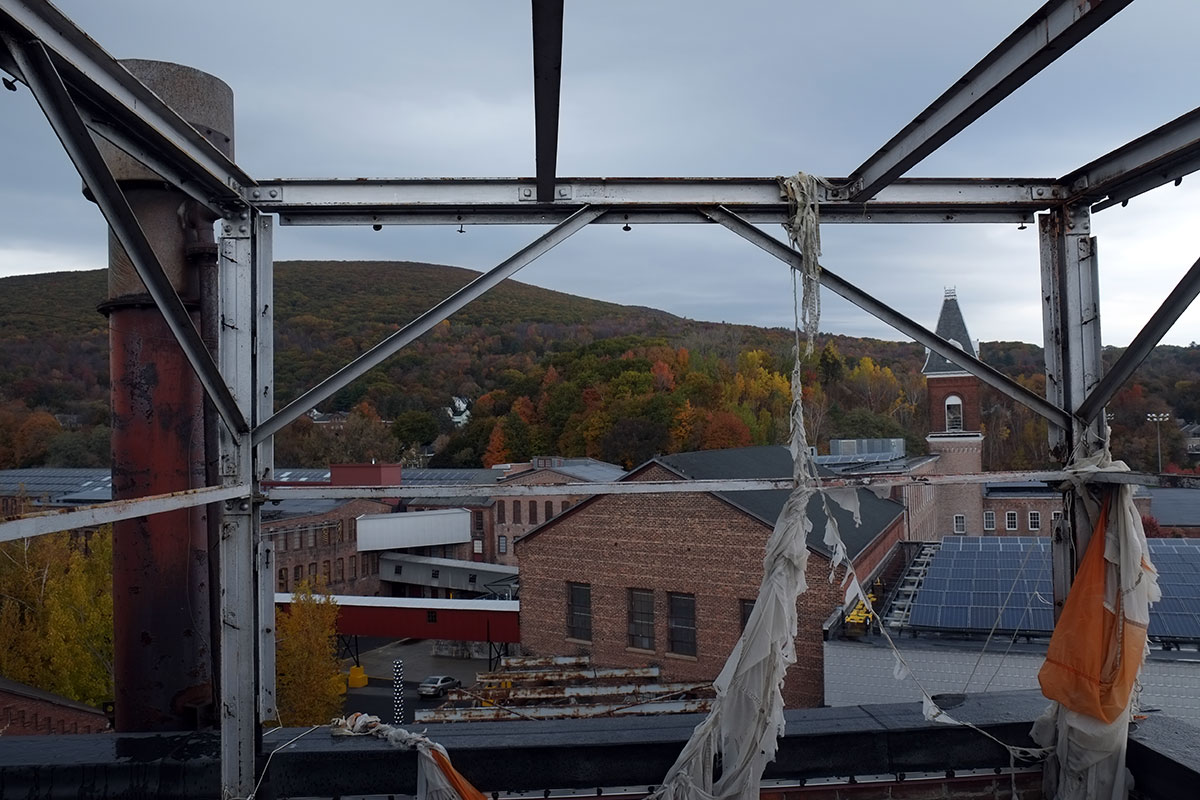
the view from the top of the boiler plant

the view from the top of the boiler plant

DSCF2434

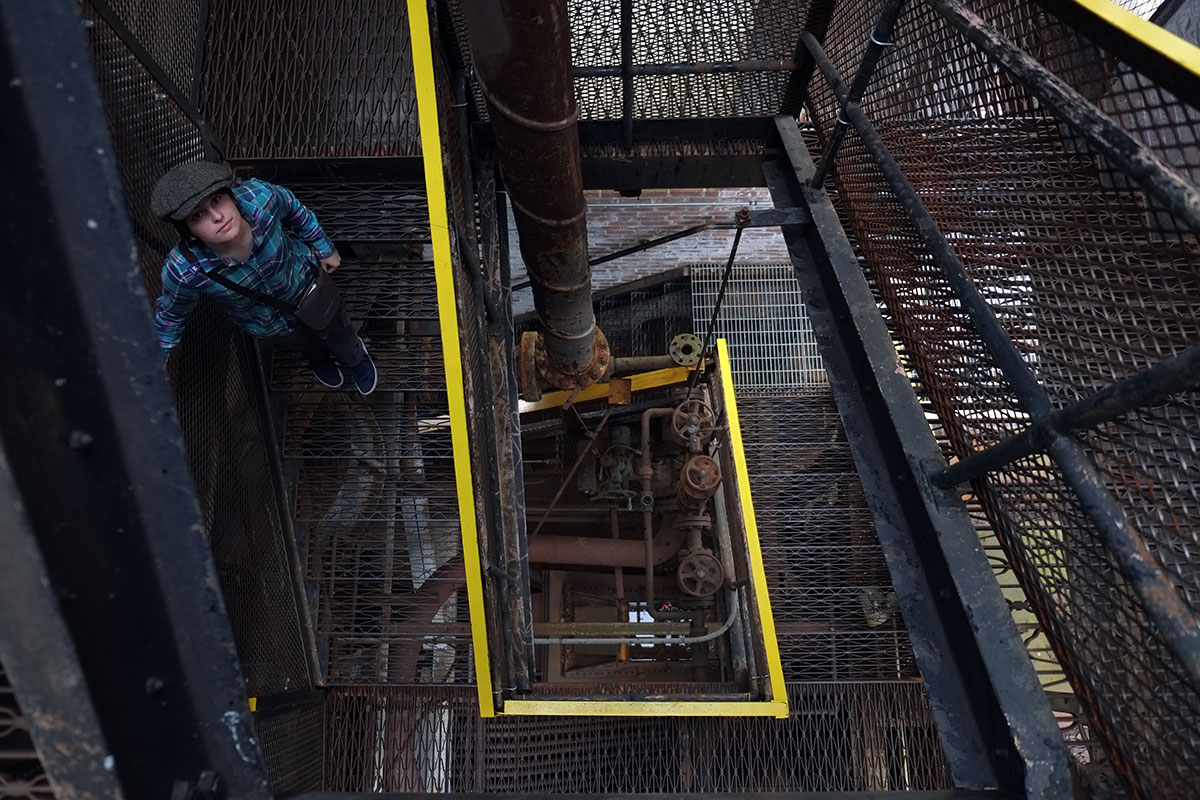
a stairwell between two buildings

a stairwell between two buildings

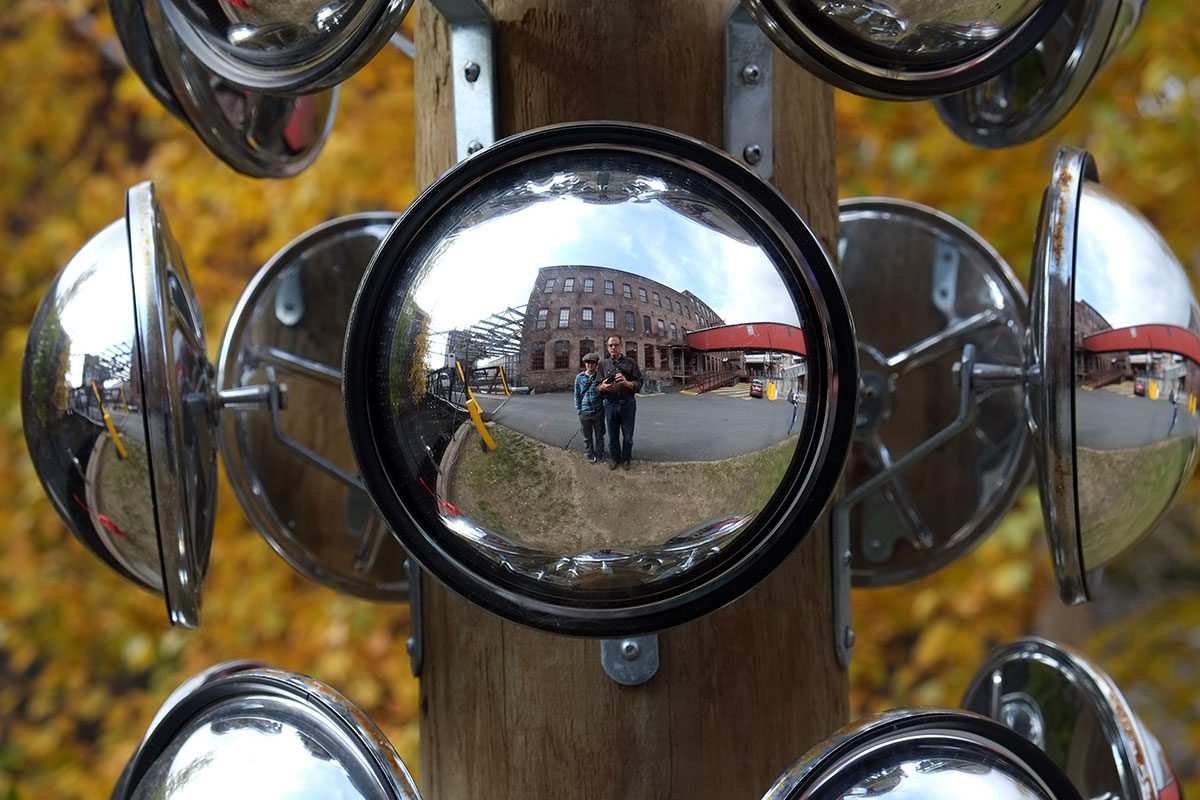
the art meta-selfie

the art meta-selfie

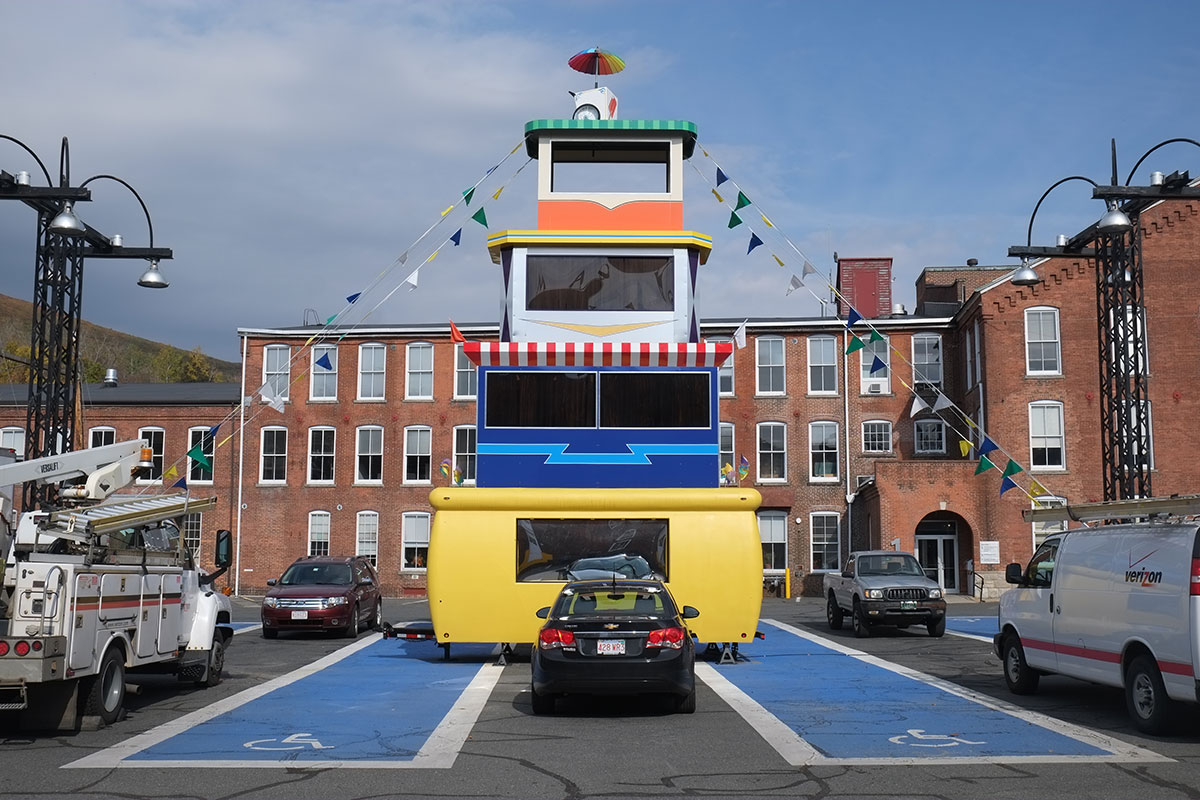
a take on plastic trailers that is a little different from ours, done by some folks from Seattle. We thought of moving our trailer next to it for a trailer-selfie.

a take on plastic trailers that is a little different from ours, done by some folks from Seattle. We thought of moving our trailer next to it for a trailer-selfie.

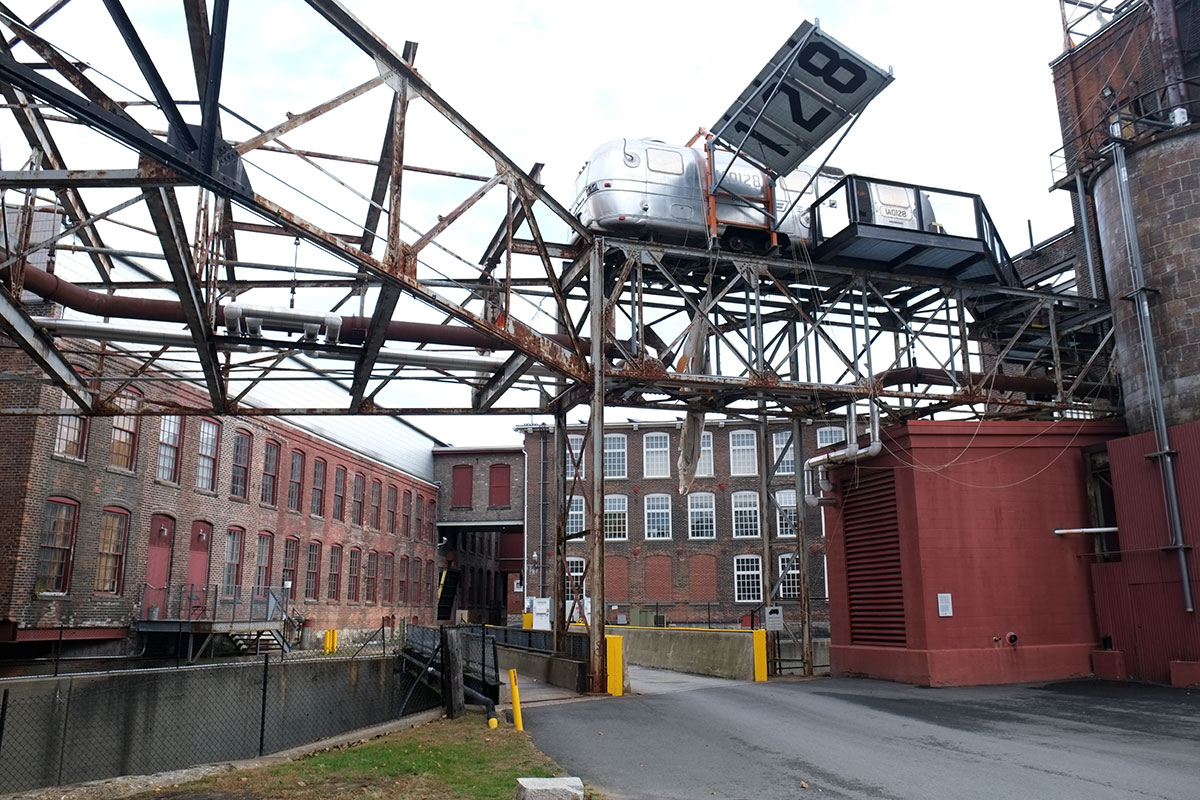
a project with an Airstream. We want this one for our next trip

a project with an Airstream. We want this one for our next trip

there's a theme emerging here

there’s a theme emerging here

some old ramps, some new

some old ramps, some new

a Francesco Clemente installation

a Francesco Clemente installation

a ramp

a ramp

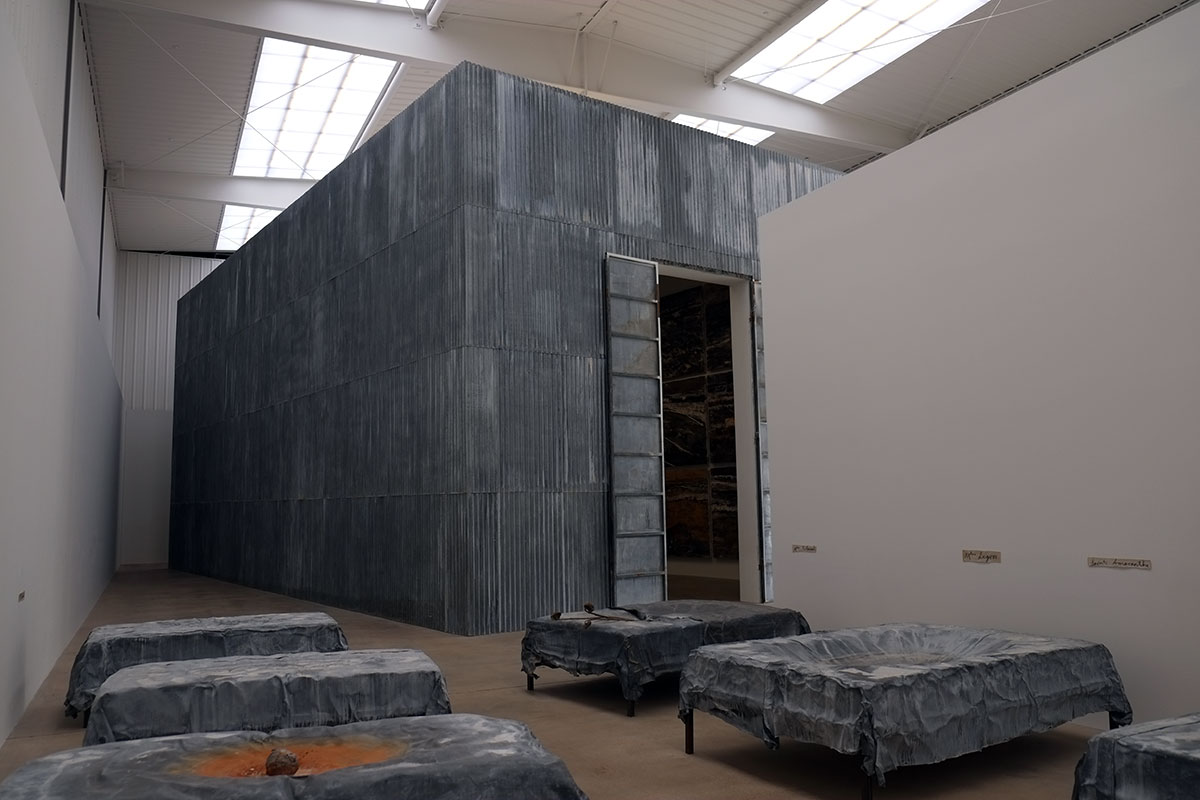
a building which houses Anselm Kiefers

a building which houses Anselm Kiefers

three big Kiefer installations

three big Kiefer installations

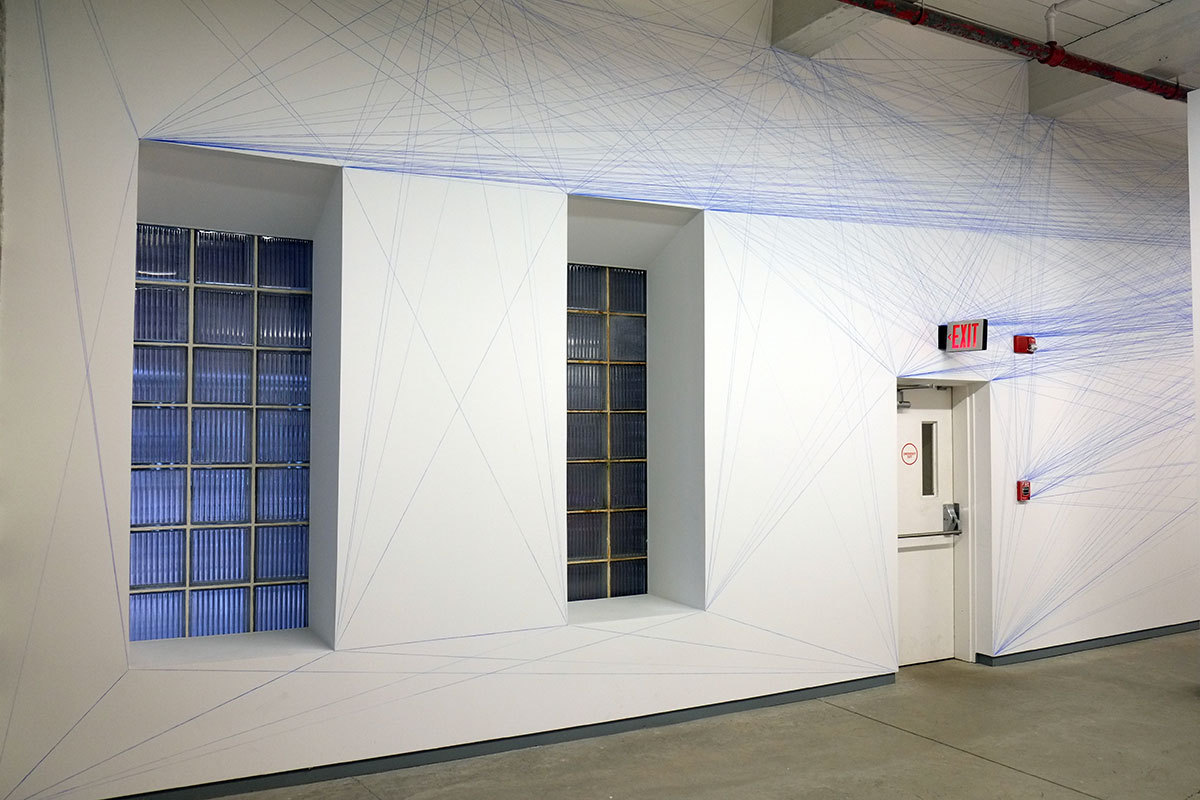
There is a comprehensive Sol Lewitt retrospective which occupies three floors.  I really enjoyed seeing so many in one place, as you can see the progression of ideas.

DSCF2607

Greta really liked the earlier ones, driven by explicit concepts/rules.DSCF2613

DSCF2472

growing tress and then turning them outside down. Apparently this is controversial with members of PETT.

growing trees and then turning them outside down. Apparently this is controversial with members of PETT.

This was way cooler than we thought it would be.  It’s only 150 miles from New York or Boston.

The Carnegie Museums

Backtracking to Pittsburgh for a post, as the Carnegie Museums of Art and Natural History must be mentioned.  There are three things about this complex that are great:  the natural history museum, the art museum, and the architecture.  But the best thing is that they are all together;  Greta could look at dinosaurs and animals while I looked at art and architecture, and neither of us got cranky.

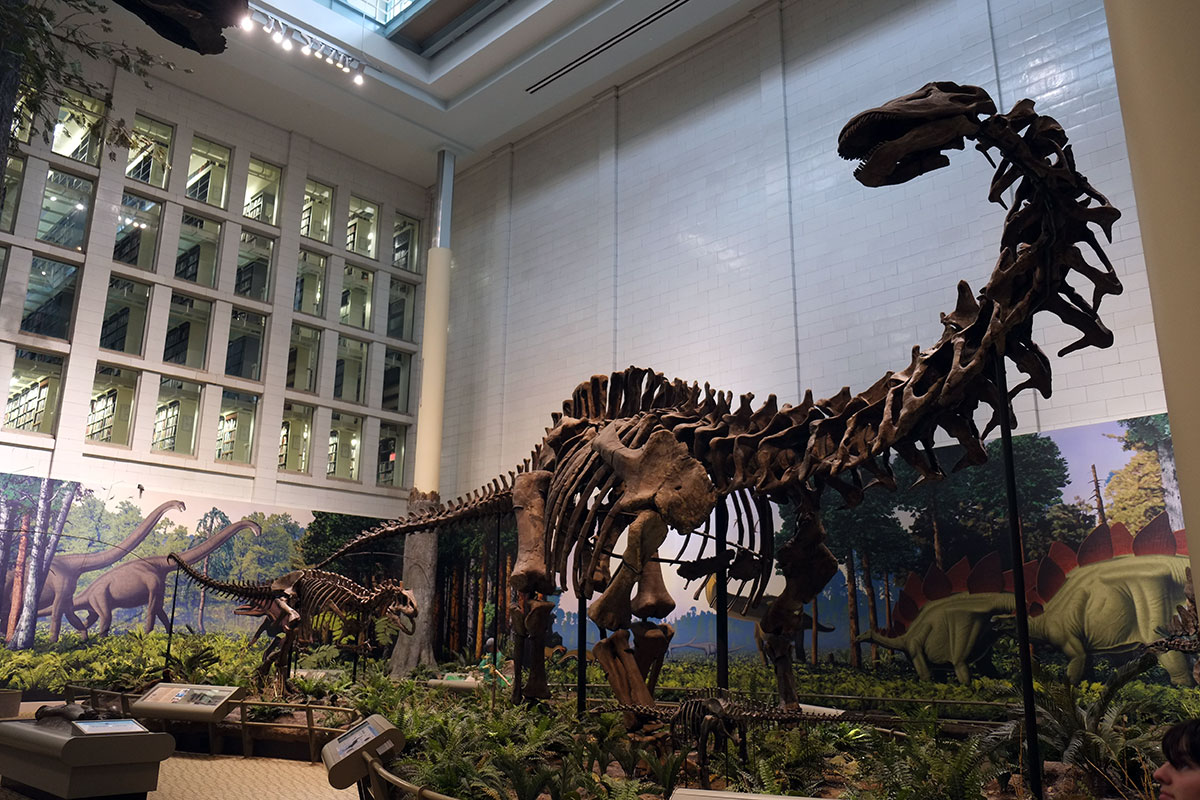
First, the Natural History Museum was remarkable, even by Greta’s high standards.  As I mentioned in the post about my friend John Wenzel, who runs the Powdermill nature center for the museum, we went behind the scenes to meet the curators, etc.  As he points out, it is one of the greatest archaeological collections in the country;  many other museums display casts of the fossils that are in the Carnegie.DSCF1447

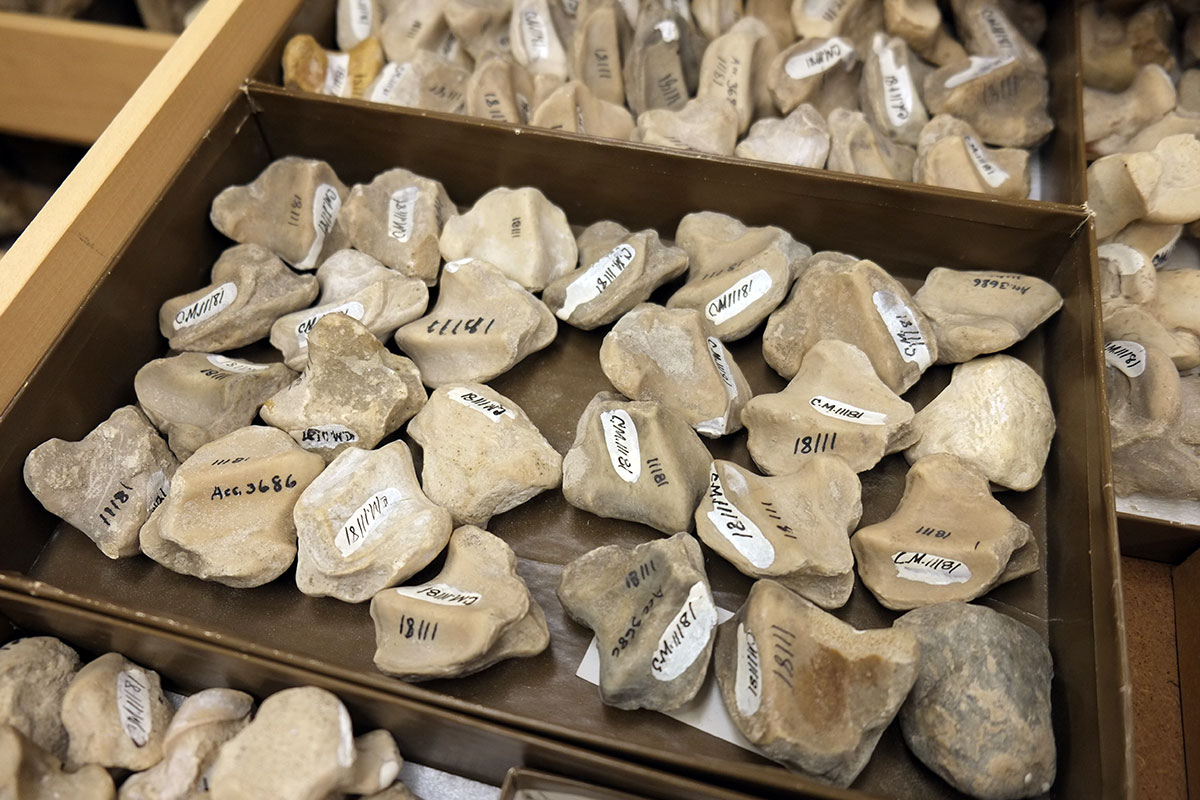
a whole drawer full of rhinoceros kneecaps

a whole drawer full of rhinoceros kneecaps

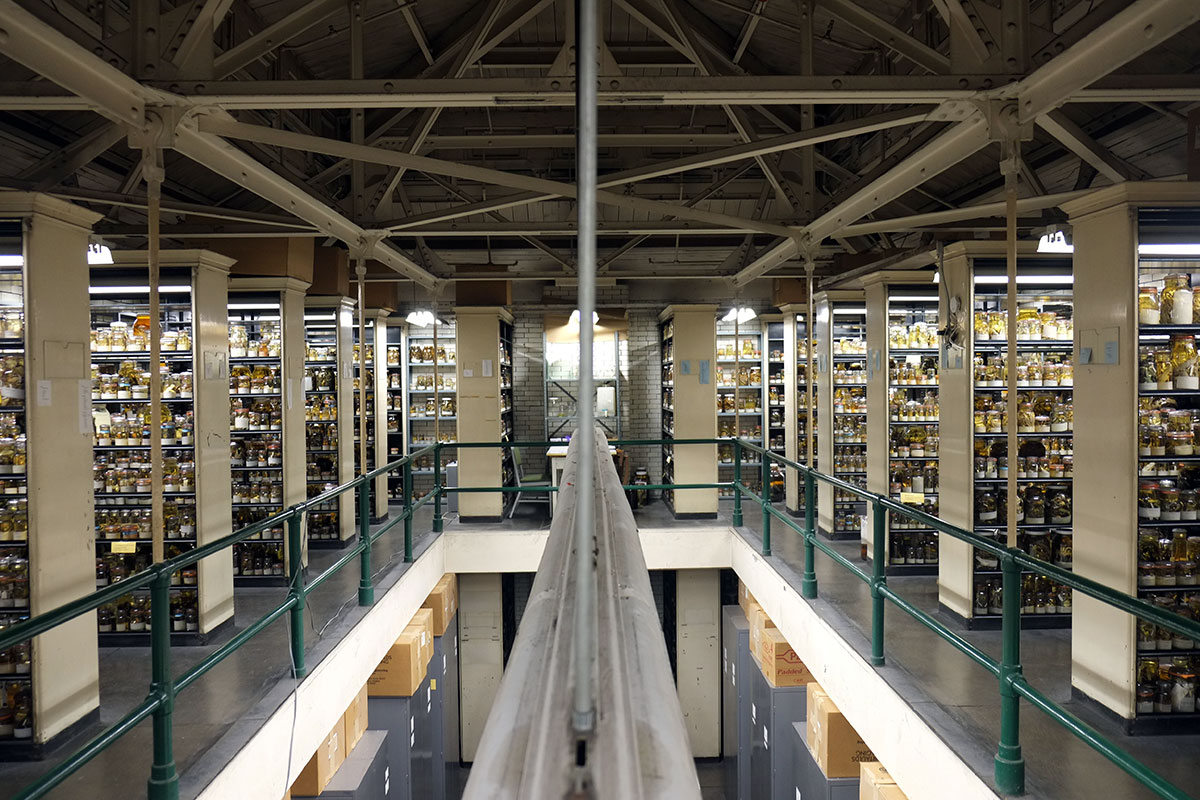
the amazing Alcohol Room, two levels of glass jars full of amphibians and reptiles

the amazing Alcohol Room, two levels of glass jars full of amphibians and reptiles

DSCF1459

the prairie dogs are everywhere (along wi the bison)

the prairie dogs are everywhere (along with the bison)

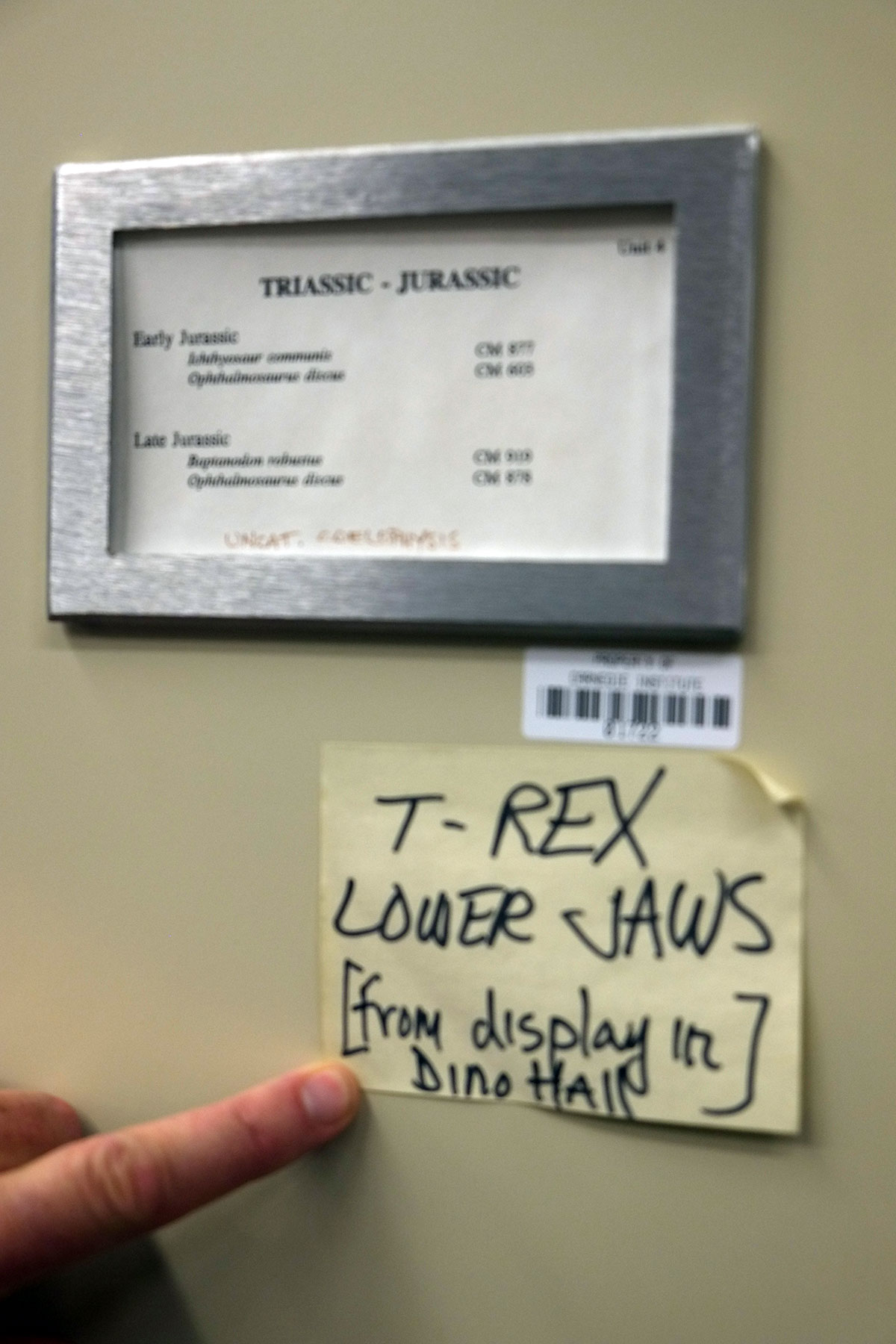
my favorite thing in the bone storage area.  My post-its usually say things like cheese and coffee, or a phone number with no name.

my favorite thing in the bone storage area. My post-its usually say things like cheese and coffee, or a phone number with no name.

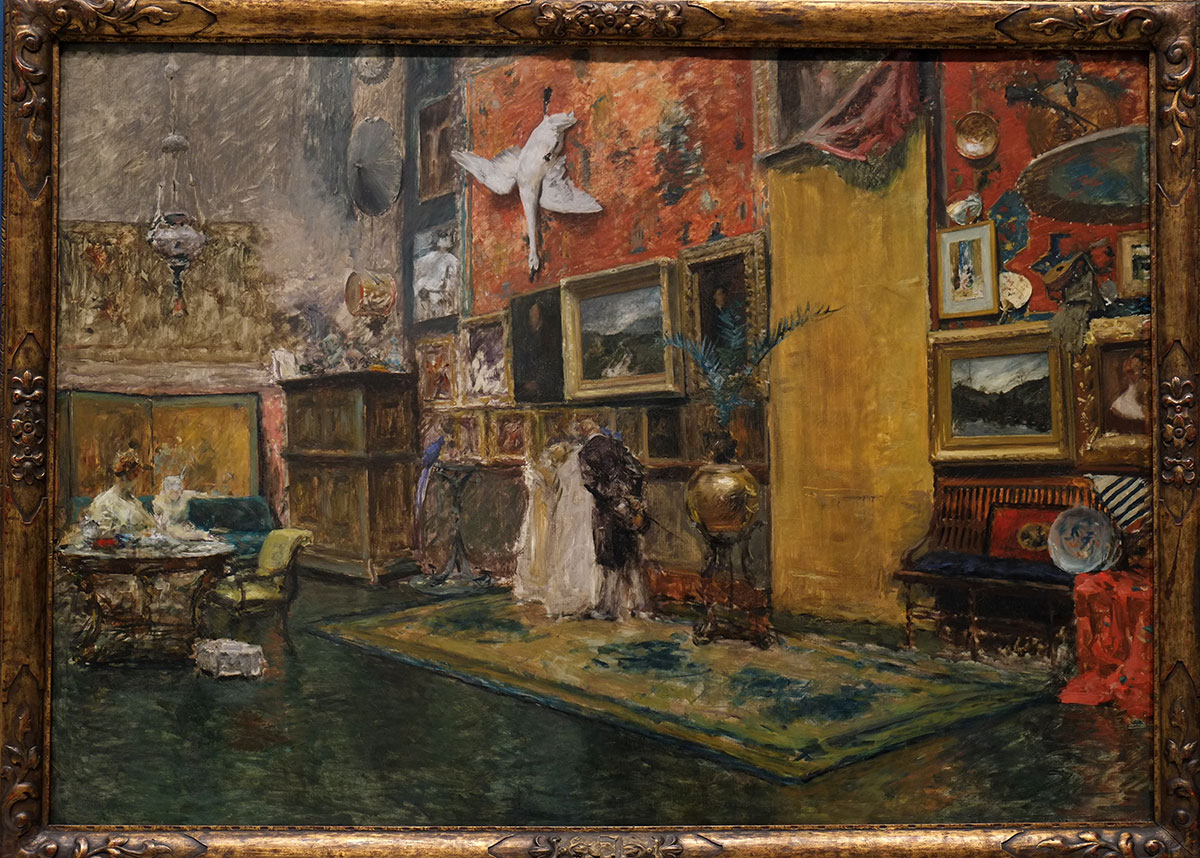
Second, the art collection is one of the best in the country.  You may recall that many of the best paintings in the National Gallery were given by the Mellons;  they obviously kept a lot of good things home in Pittsburgh too.  Perhaps the most interesting circumstance that determines the collection is that starting in 1896, the museum sponsored an annual (then biennial, then triennial, etc.) exhibition of contemporary work, and they often they acquired important entries.  So there is a fantastic collection of late 19th-century American and European paintings and sculpture.  Many of modern western civilization’s all-star team, but many less well-know artists who are quite interesting.  Here are a few images, without getting all lecturey about them:DSCF1475

DSCF1495

DSCF1473

Caitlin, I think

Caitlin, I think

DSCF1368

DSCF1361

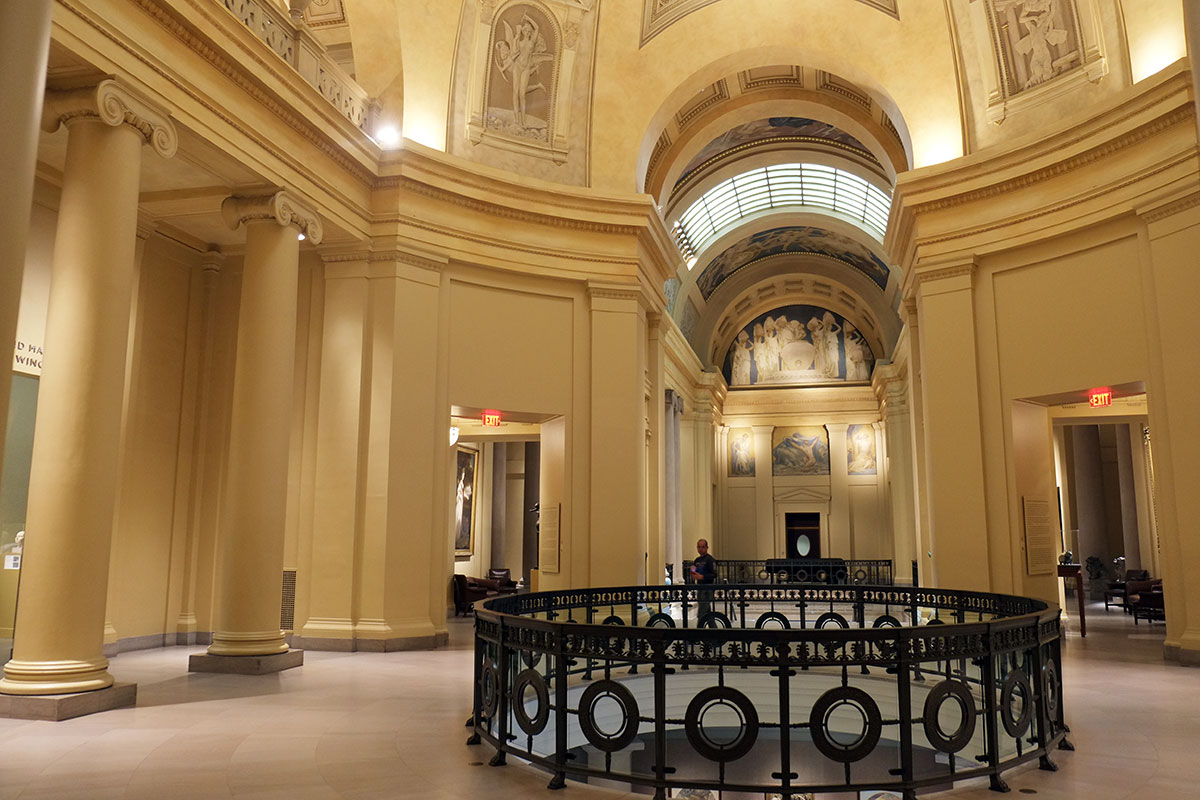
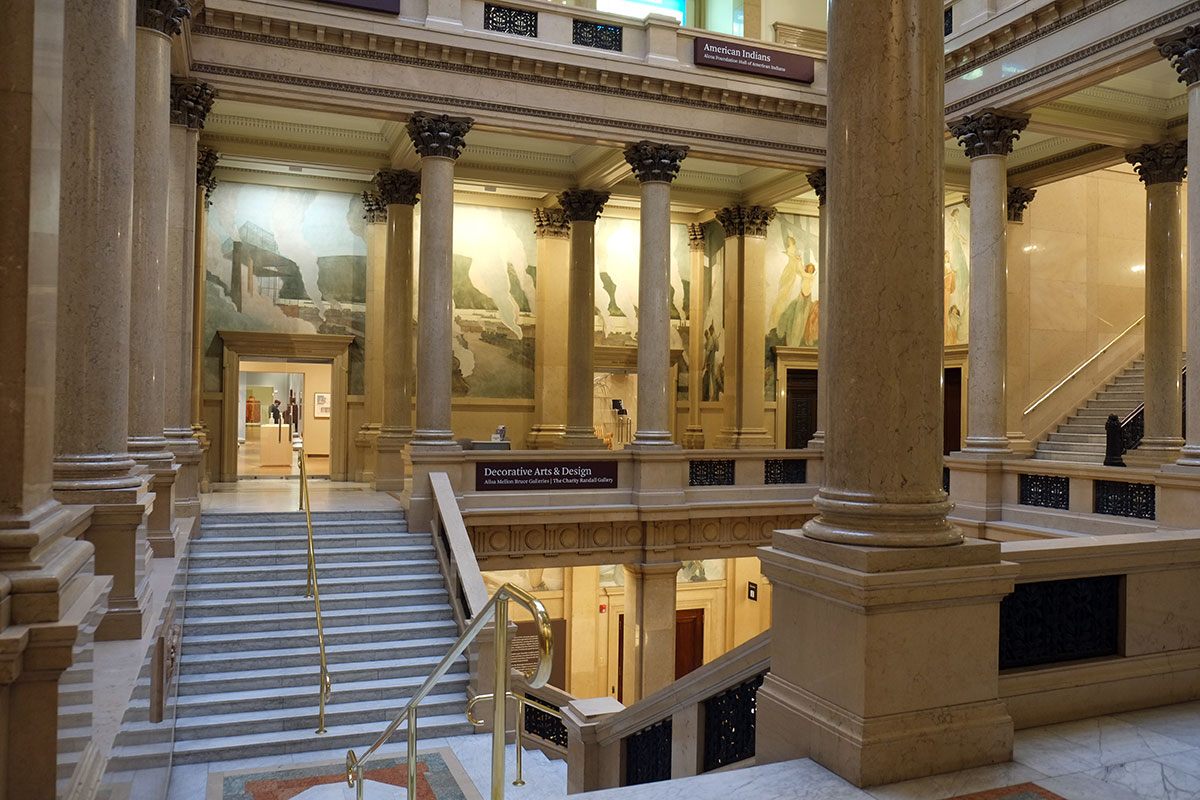
Third, the architecture is superb.  The original Beaux Arts building is opulent yet under control, with grand halls and stairs:DSCF1321

DSCF1324

DSCF1501

In 1970, Edward Larrabee Barnes (an architect about whom those under the age of 50 have not heard) designed an excellent addition/remodel/insertion, with elegant galleries and a beautiful entry/lobby/courtyard.DSCF1513

DSCF1327

DSCF1369

DSCF1337

I could have spent a week in this museum, the collection is that good.  Highly recommended, and Greta still needs to blog about the Indian food around the corner.

The National Aviary, Pittsburgh

Birds are scary. Ostriches, that can kill you with a kick; shrikes, with their creepy aerial cupboards; Ravens, that teach their children to hate, and so many more!  They are dinosaurs, and you should be very afraid. They are also really cool.
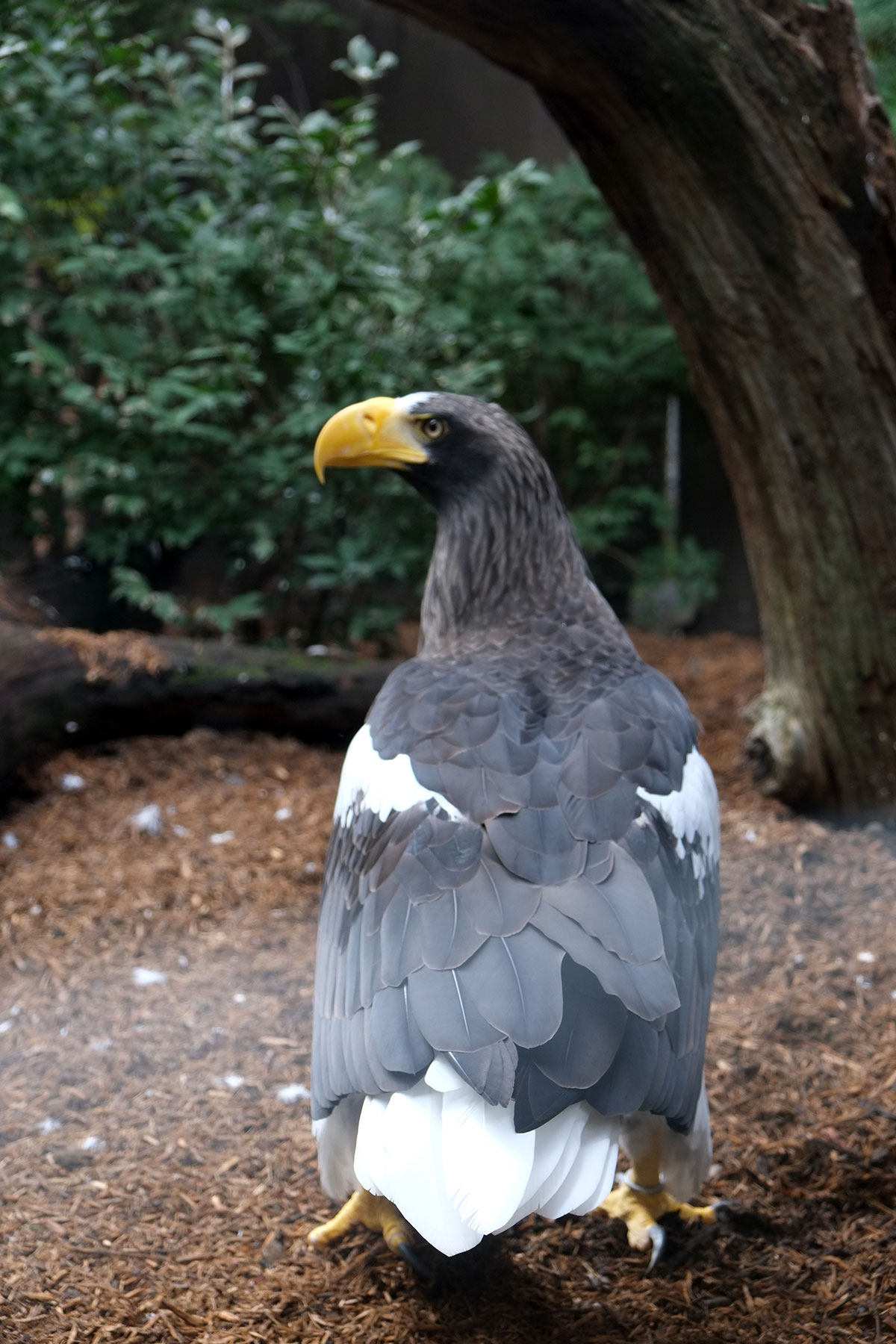
After walking through the gift shop, the first thing we were confronted with was a Stellar’s Sea eagle, which are the largest eagles in the world.

Stellar's Sea Eagle

Stellar’s Sea Eagle

Down the hall was an exhibit of jackass penguins, which I notice that zoos and aquariums will only ever call African penguins.

Penguin Love

Penguin Love

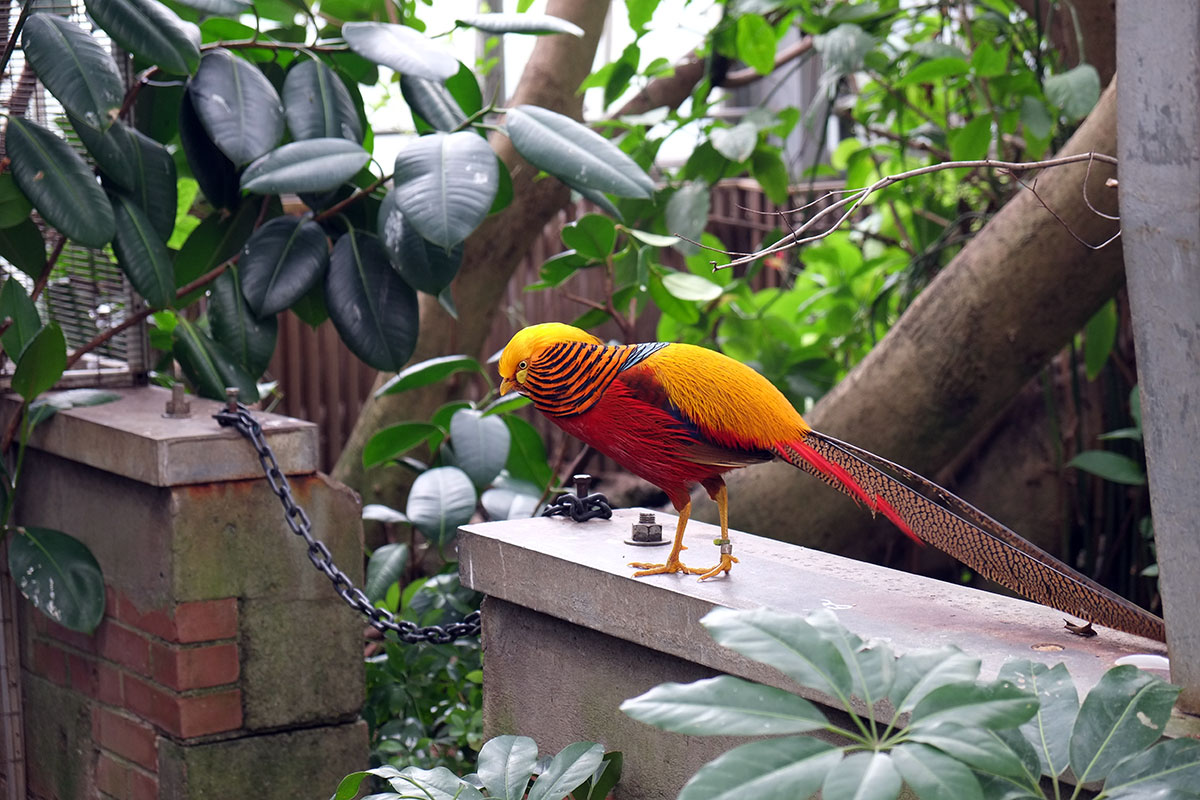
The aviary succeeded admirably in one of my markers for a good aviary, which is having birds that no one except birders will recognize. A black bird with fabulous orange highlight caught our eye, along with the golden pheasant strutting around like he owned the place.
P1040498

Golden Pheasant

Golden Pheasant

And like at the Carnegie Natural History Museum, John Wenzel had friends there who brought us behind the scenes. Not to say that the exhibits weren’t cool, but they don’t even compare to getting to hold an African Pygmy Falcon.

His name was Goliath, partly for the irony, and partly for the irony of the duo of him and a staff member named David. He was only maybe ten inches tall (Goliath, that is) and a good four inches of that was tail length. Apparently he liked me, as he rubbed his beak on the glove, which birds will only do if they’re comfortable. The feeling was mutual, because even though he pooped on me, he was awesome.

Me and Goliath

Me and Goliath

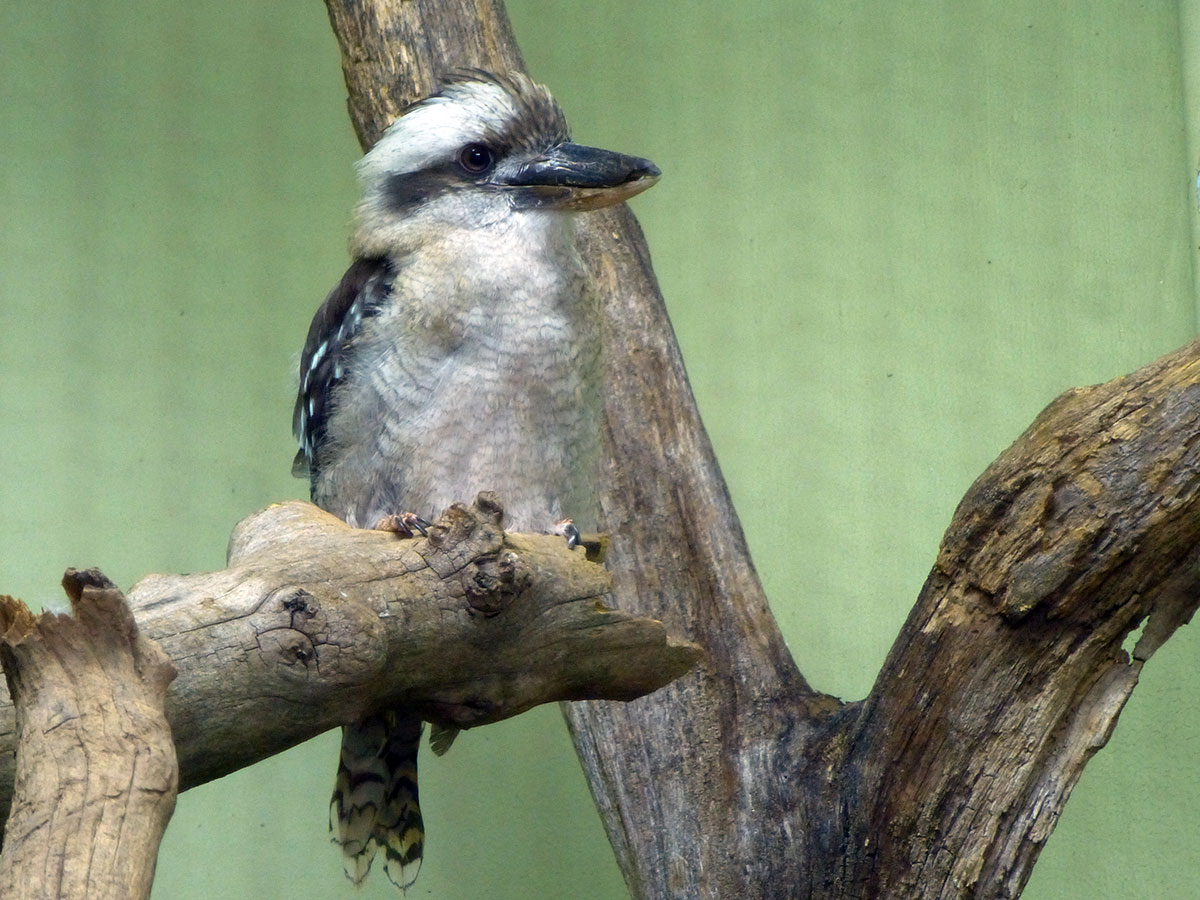
If you’re reading this, thank you to the staff of the National Aviary! Meeting Goliath, Nigel the Kookaburra, and all the other birds has been the highlight of this trip so far.

Kookaburra (Not Nigel. He was in a room with a lot of birds who don't like cameras, so this is the bird they had on display.)

Kookaburra (Not Nigel. He was in a room with a lot of birds who don’t like cameras, so this is the bird they had on display.)

Field Museum

At the Field Museum in Chicago, it tells you that birds are dinosaurs. I learned that one bird has evolved to be even scarier than its awe-inspiring ancestors. The shrike.It doesn’t look big and scary. Blue-gray, maybe eight inches long, it could be mistaken for a blue jay. Its behavior is the scary part.
Shrikes are predatory, hunting small birds and rodents to eat. But they often can’t eat all they catch at one setting, so they store it. So, unlike civilized creatures that might keep it in a hollow tree or a burrow or something, they drape the carcasses over the branches of bushes. Bloody little mice and sparrows with their heads ripped off. Maybe they should be called shrieks, in honor of the noises people make when they find their little ariel cemeteries. And the best thing about these birds is that they live in North America. Maybe even in your own backyard. (Cue creepy music.)On a happier and less creepifying note, the rest of the Field Museum was cool. But we (I) did an idiotic thing by deciding to look at soil first. We spent half an hour in an exhibit clearly meant for six year olds, learning less about dirt than a single page of my geography book taught me. Half an hour of my life that I could have spent looking at dinosaurs. What was I thinking?

I guess I was thinking that we’d have enough time. But because of its stupid name I grossly underestimated the coolness of Evolving Planet, which told of the entire history of life on Earth. It included every major extinction event, every phylum in the animal kingdom and what distinguishes it, and a reminder that the next big extinction event in imminent, and man-made. But the museum closed at five, and we had no where near enough time to explore it properly.

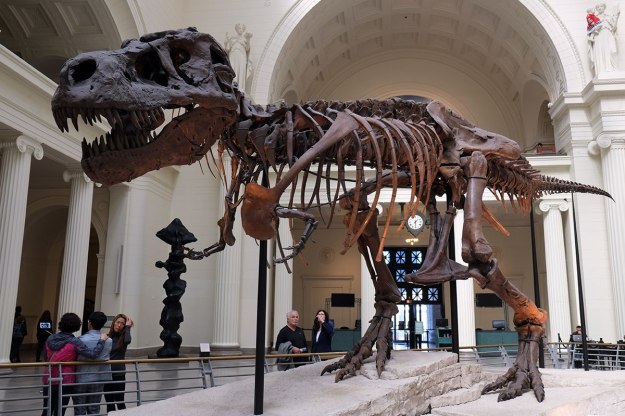
We did, however, get to meet Sue, best-preserved and most complete T-rex skeleton ever found. No one actually knows whether Sue was a boy or a girl; she was named after the woman who discovered her, Sue Hendrickson, in 1990. Sue(the dinosaur, not the woman) is forty two(the answer to life, the universe, and everything) feet long, making her the largest t-rex ever discovered.

DSCF9614

And people who don’t like taxidermy should avoid the animal wing. Half a dozen rooms were full of stuffed animals, and by that I don’t mean plushies. Mostly it was various kinds of antelope, although they did have the Manhunting lions of Tsavo and tigers and bears(oh my!). One interesting thing was that the hyenas were in the reptile section until the museum can pull together enough funding to move them.

We did have some time to look at dinosaurs. Which are about the coolest things to ever walk planet Earth. I could rant for ages about how epic dinosaurs are, but I fear that if you don’t already think they are awesome, there is no hope for you.

All in all, the Field Museum was one of my favorite things I’ve seen so far on this trip. If you’re in Chicago and halfway interested in any kind of science you should go check it out. And learn from my mistake, and go look at dinosaurs first!