Category Archives: Museum

The Kimbell

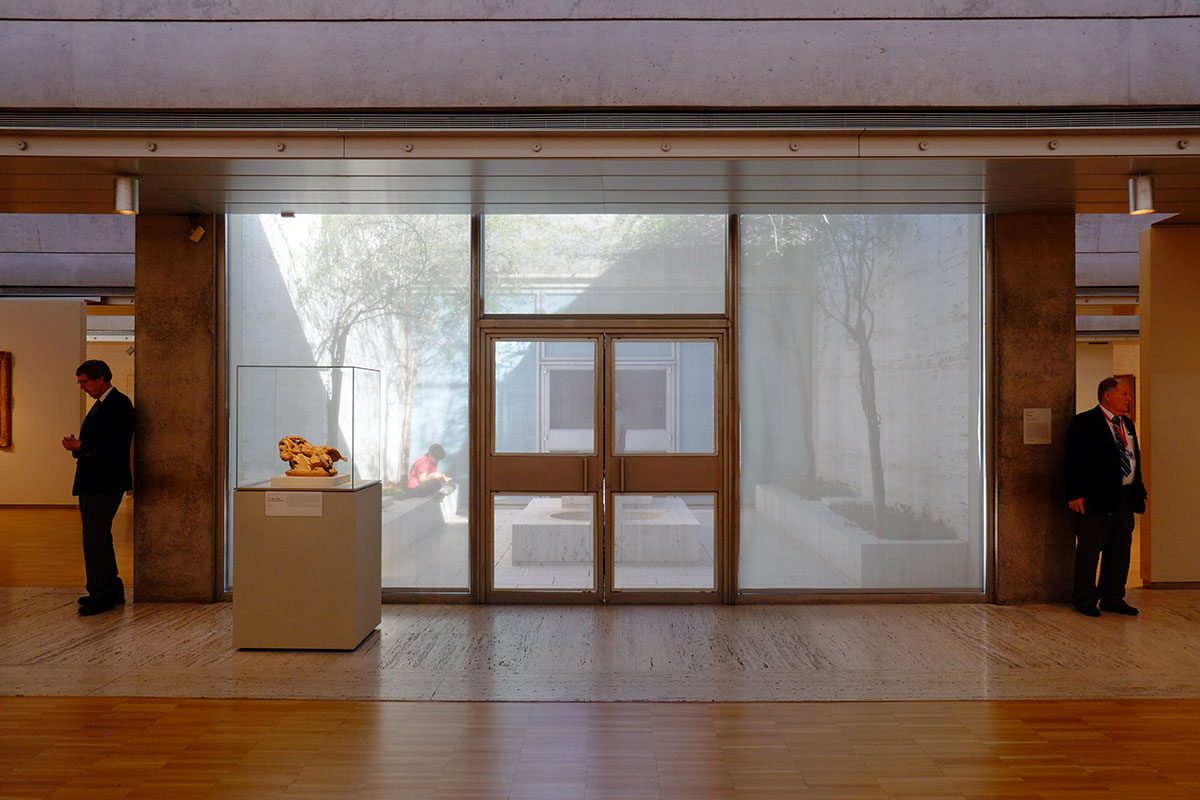
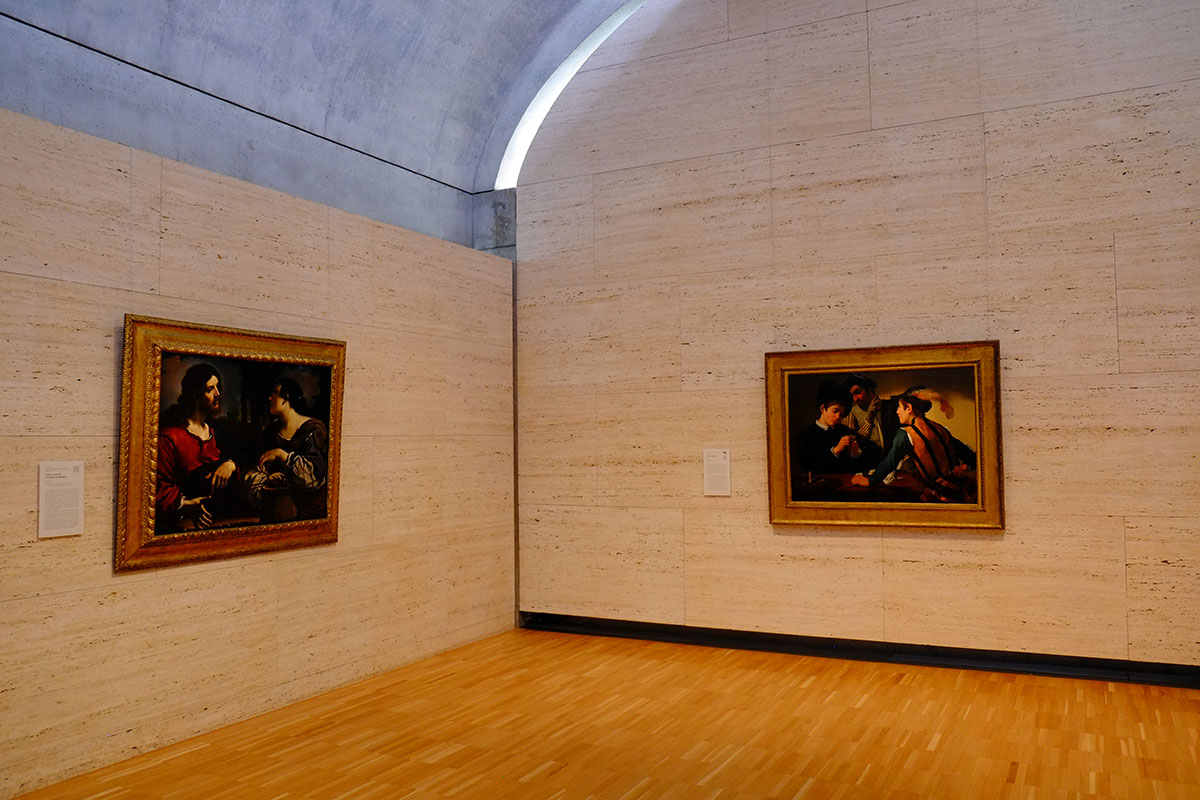
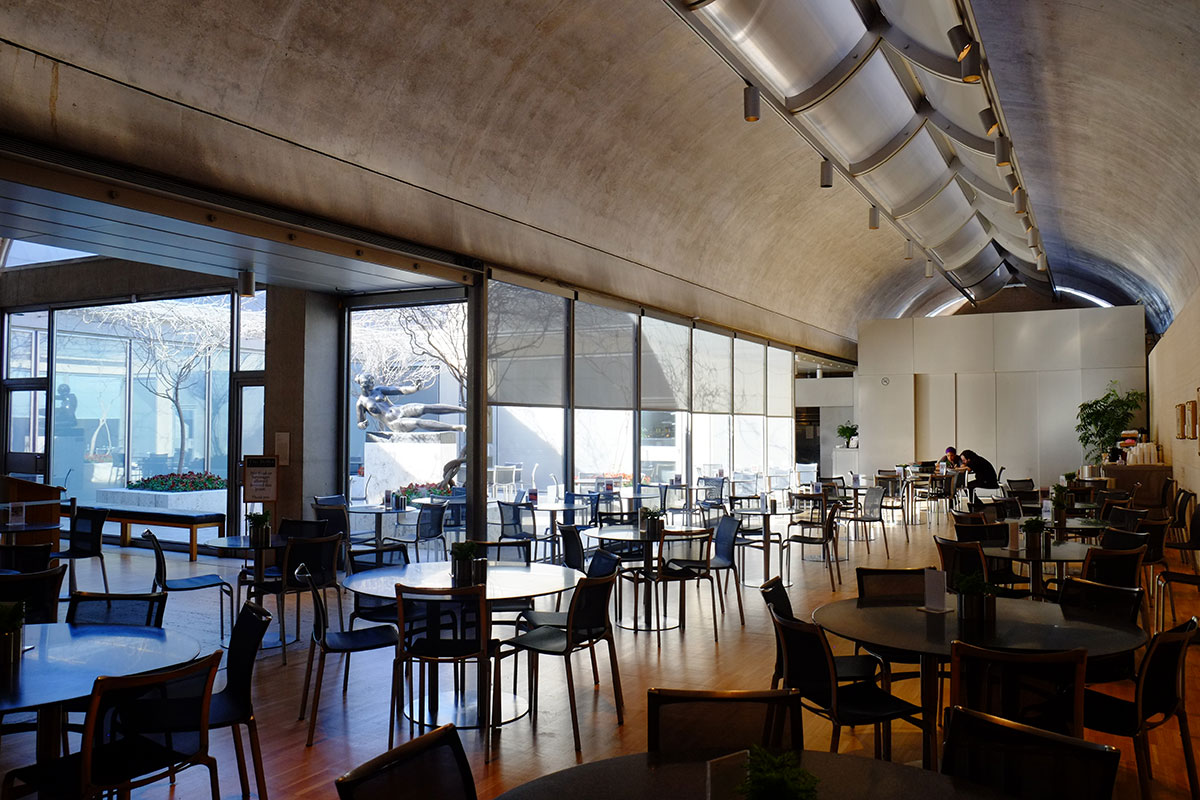
One of the goals of this trip was seeing the Kahn buildings in out-of-the-way places that I had not seen before.  An unintended theme that developed has been seeing most of the Piano museums across the country.  The Kimbell is where these two came together, in what must be the ultimate compare-and-contrast question for a modern architectural history exam.  After seeing the two together, I’m more convinced than ever that having Piano design the addition to Kahn’s Kimbell was the best possible choice.  There is no other living architect whose work could pay homage to Kahn without imitating him, and who could simultaneously complement Kahn’s work while taking an archetypally different tectonic approach.
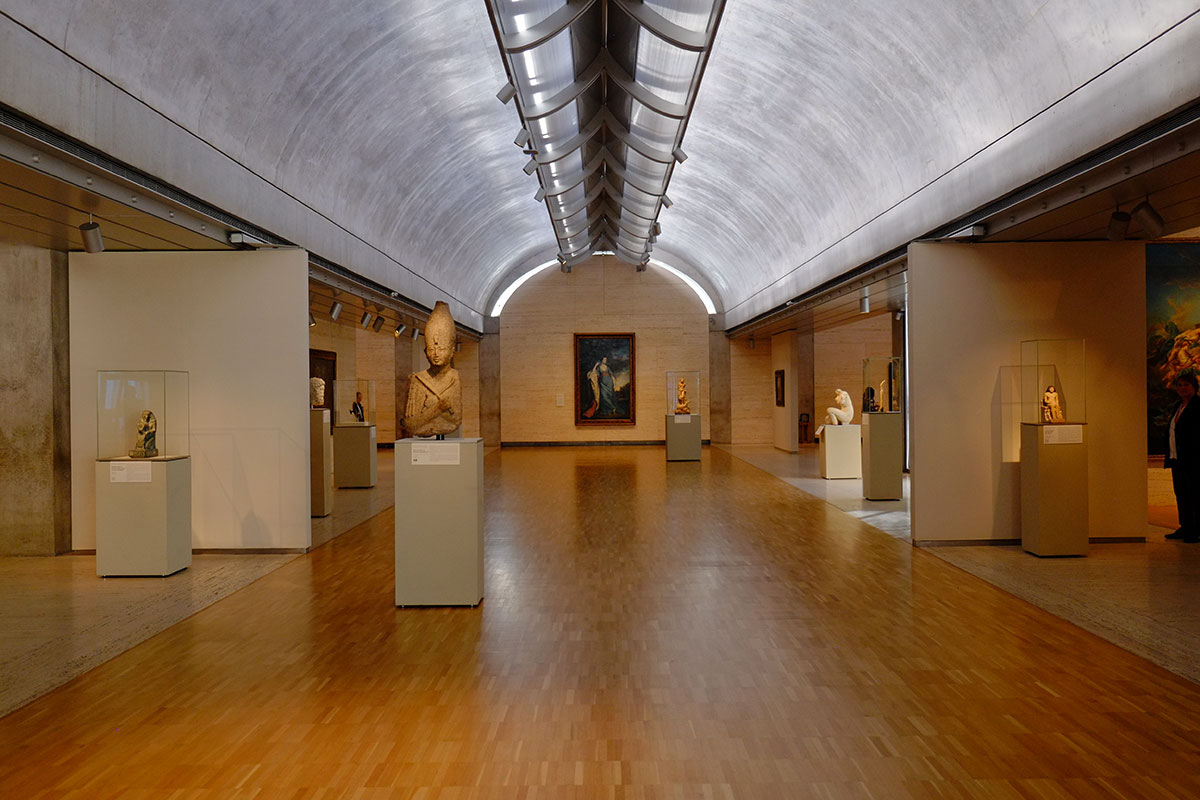
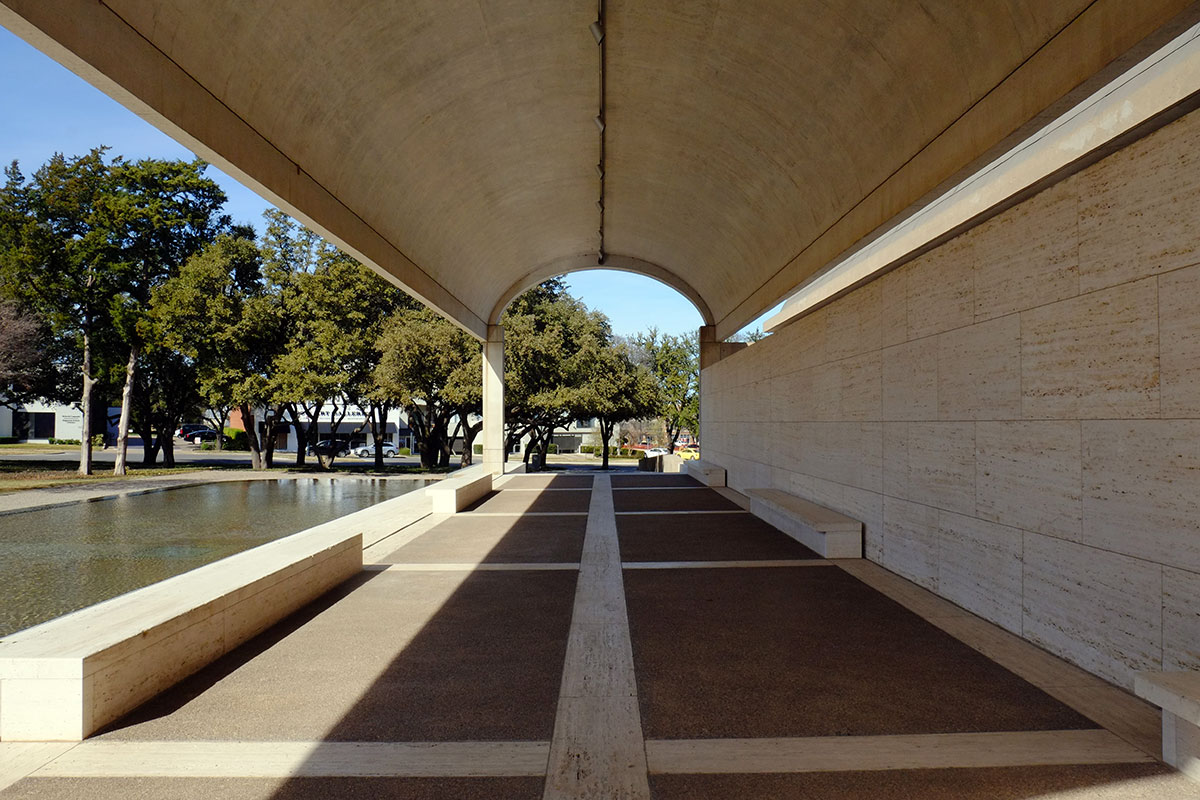
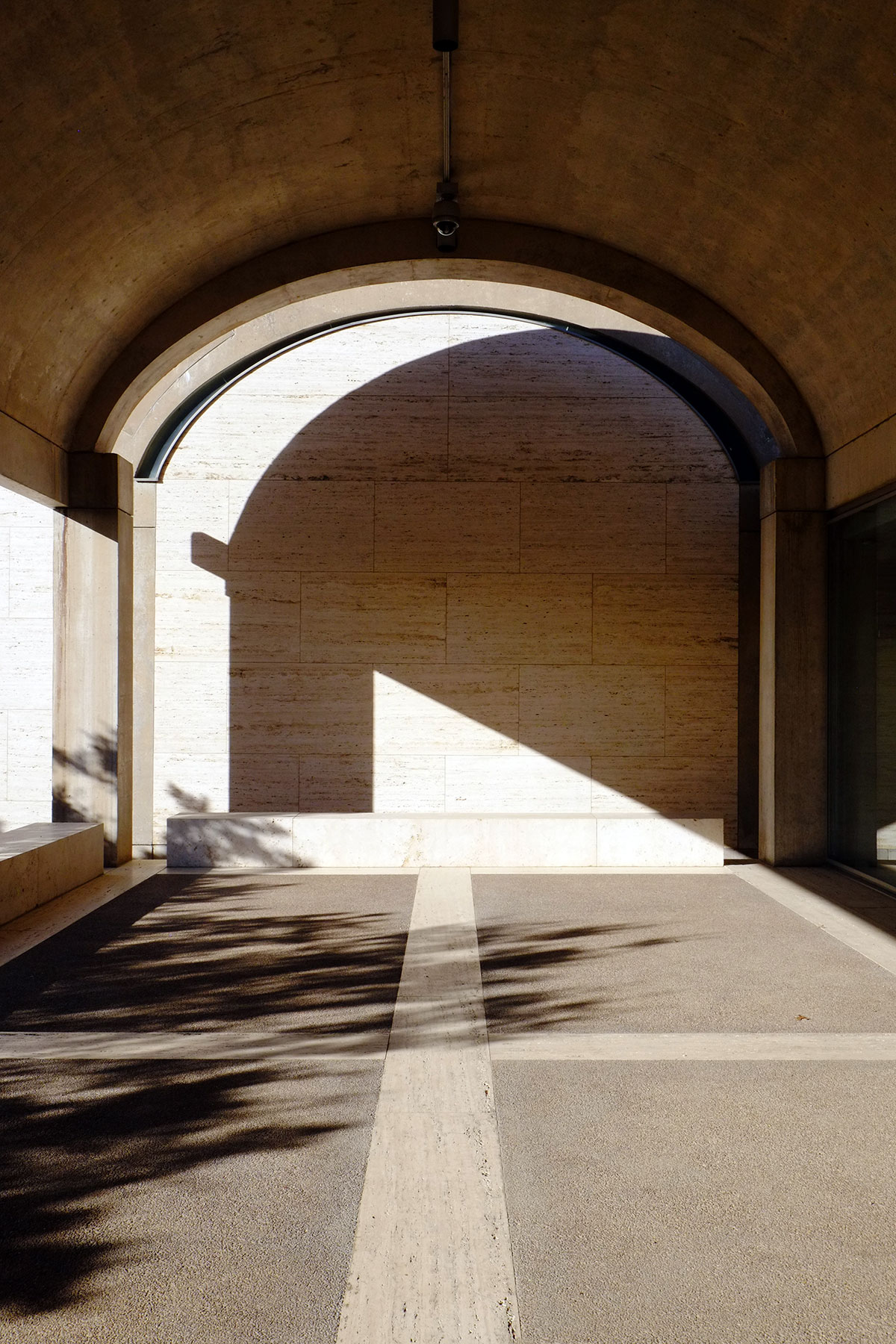
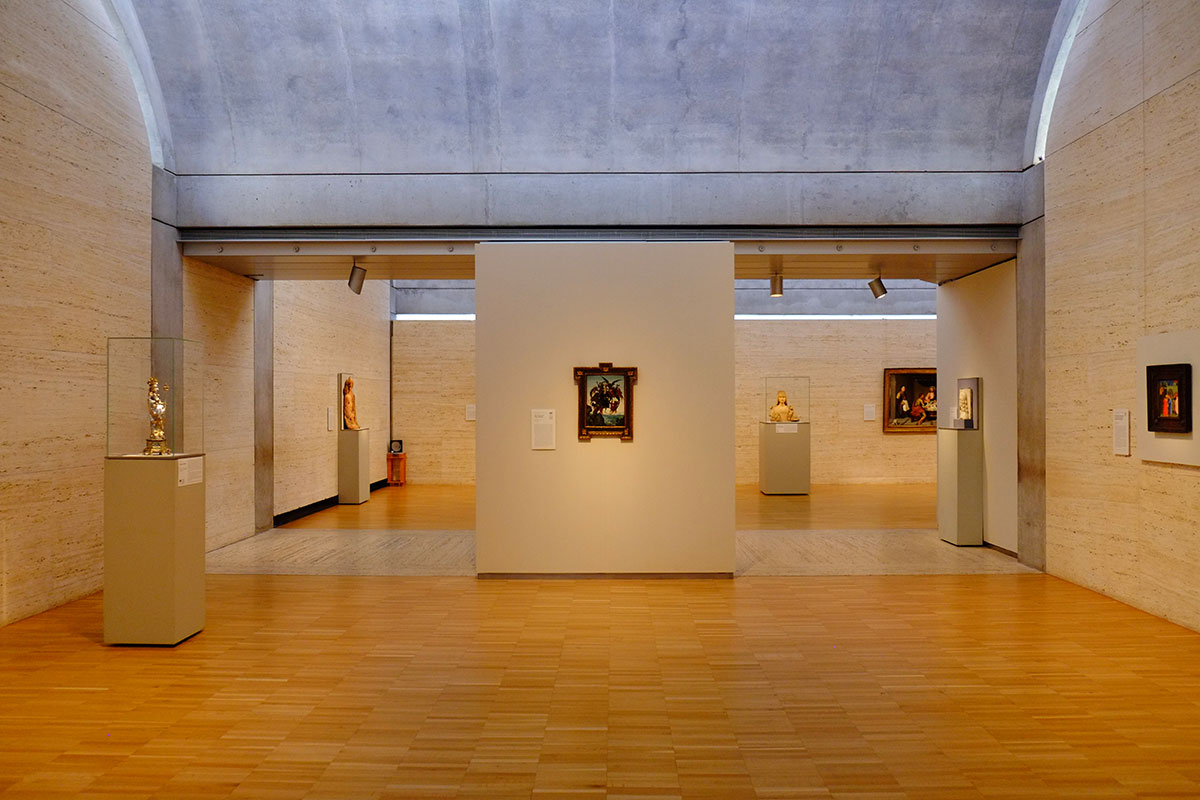
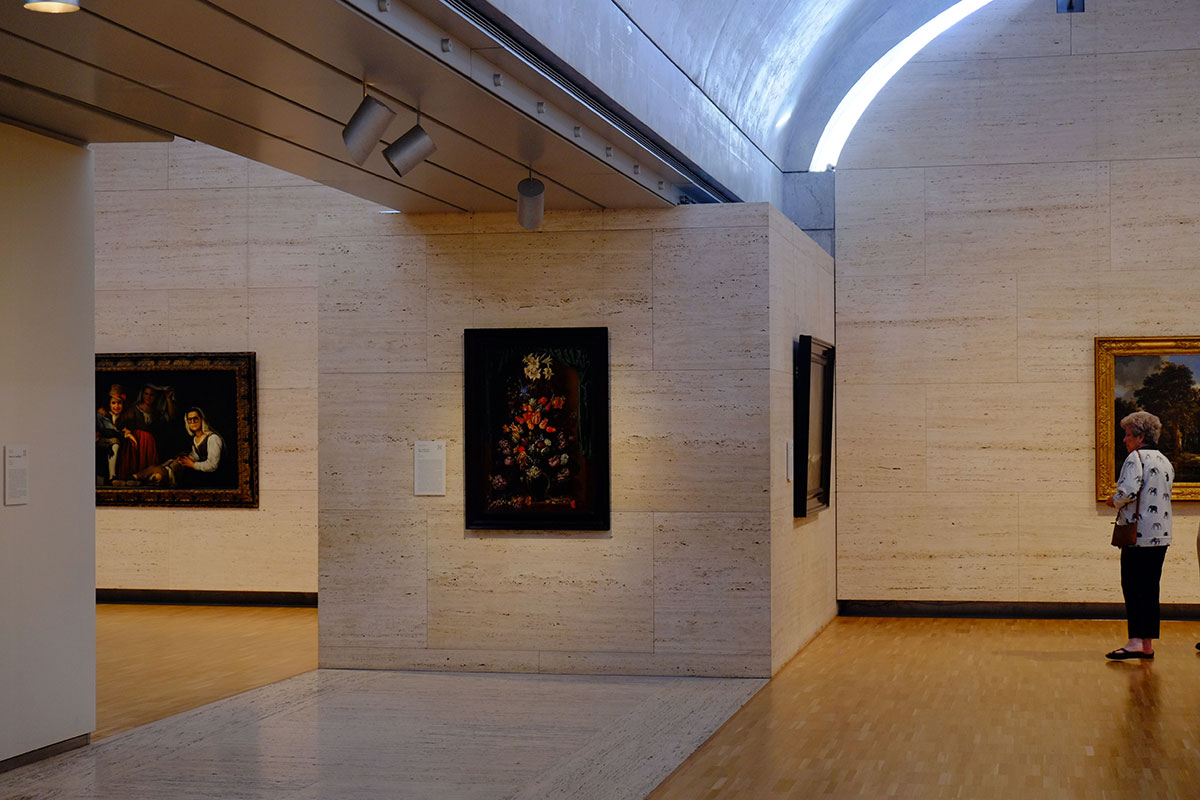
DSCF4433Of all of Kahn’s major works, the Kimbell was the one I always found least interesting.  It just seemed too simple – come up with a bay cross-section that’s supposedly good for daylighting, extrude it to an absurd length, then repeat that bay module in a slightly-varied way.  Of course it’s rigorous, it’s subtle, it’s beautifully-detailed, but I thought the spatial experience would just be too uniform.  I was wrong.  It is the perfect example of how playing within a strictly-controlled system can lead to a lot of richness and experiential variety.  The modules are used to make long rooms and short rooms, narrow rooms or wide rooms, they open up at the end or the side, they are left out and so create spaces not strictly within the system – such as the entry court or the small internal courtyards.  Or walls are left off and it becomes a loggia.  DSCF4434
DSCF4471

DSCF4446

DSCF4482

DSCF4395

DSCF4501

Of course, the building is about the light, something you have to go there to see.  My prior reaction was entirely too conceptual, thinking about this parti versus the partis of other Kahn buildings.  Kahn buildings seem simple when you study them, but when you visit you are overwhelmed by the experiential richness.  The Kimbell is the most extreme example of this.

it’s a remarkably calm building, and even though it’s brilliant, it can recede into the background, allowing you to focus on the art – the spaces are comfortable, bathed in the wonderful light, and movement among the galleries is clear and effortless.  So here is the biggest problem I had with the Kimbell, compared to the Yale British Art Center – the collection is just too good.  The British Art Center is full of ghastly English paintings, all giant Stubbs with horses, etc., nothing to distract you from looking at the building except the Turners.  The Kimbell collection is superb – who else has a small painting done by the 12-year-old Michelangelo?  The Renaissance art is great, as is the modernist work – I now have a new favorite Munch.  As much as I wanted to think about the building, the art kept pulling me away.

I do have some niggling problems with it.  The intended main entry was from the lawn and grove on the west side, but I bet it wasn’t much used.  In a car-dominated environment like Ft. Worth, the entry sequence is from the car.  It is like the current American house – you’re supposed to enter through the grand entry hall, but everyone comes through the garage door into the kitchen.  The default entry, from the small car court, is pretty uninviting – and this is the street facade.  It is severe, almost like a service entry.  The sculpture doesn’t even help.DSCF4418
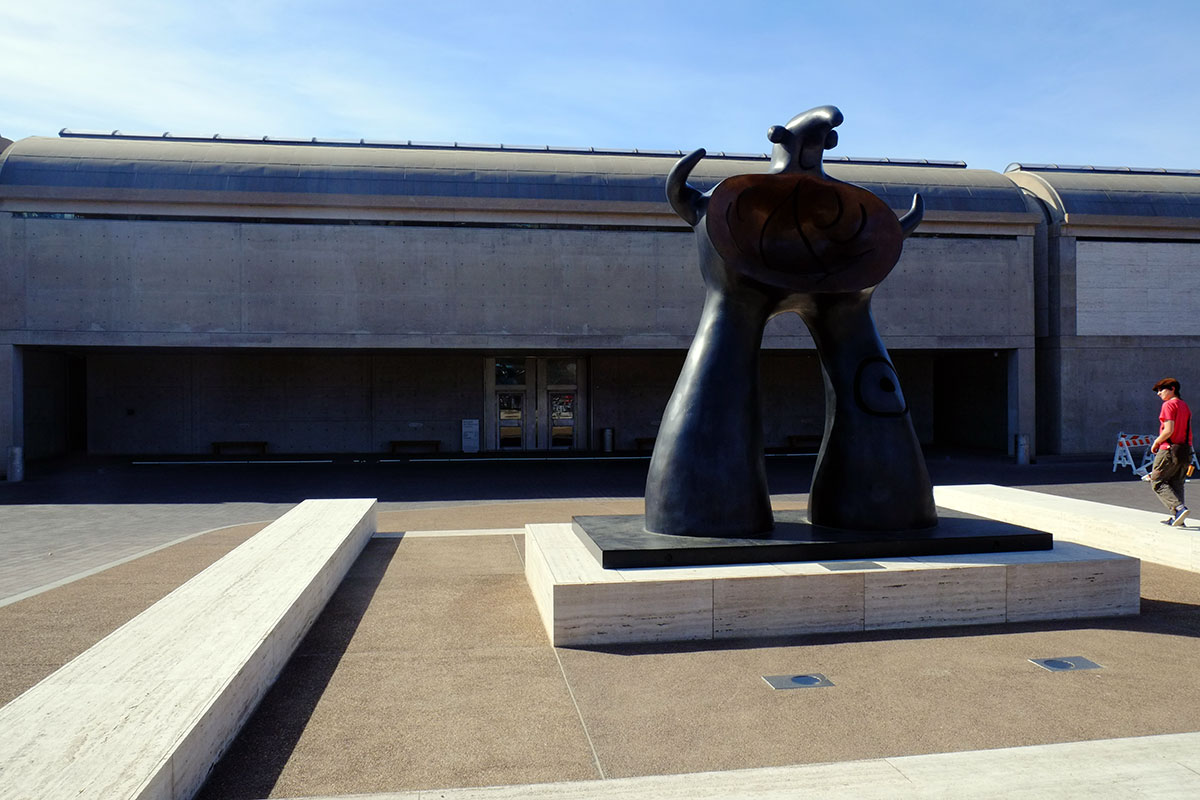
The stairs from here up to the gallery level are okay, slowly revealing the essence of the design as you ascend, DSCF4431
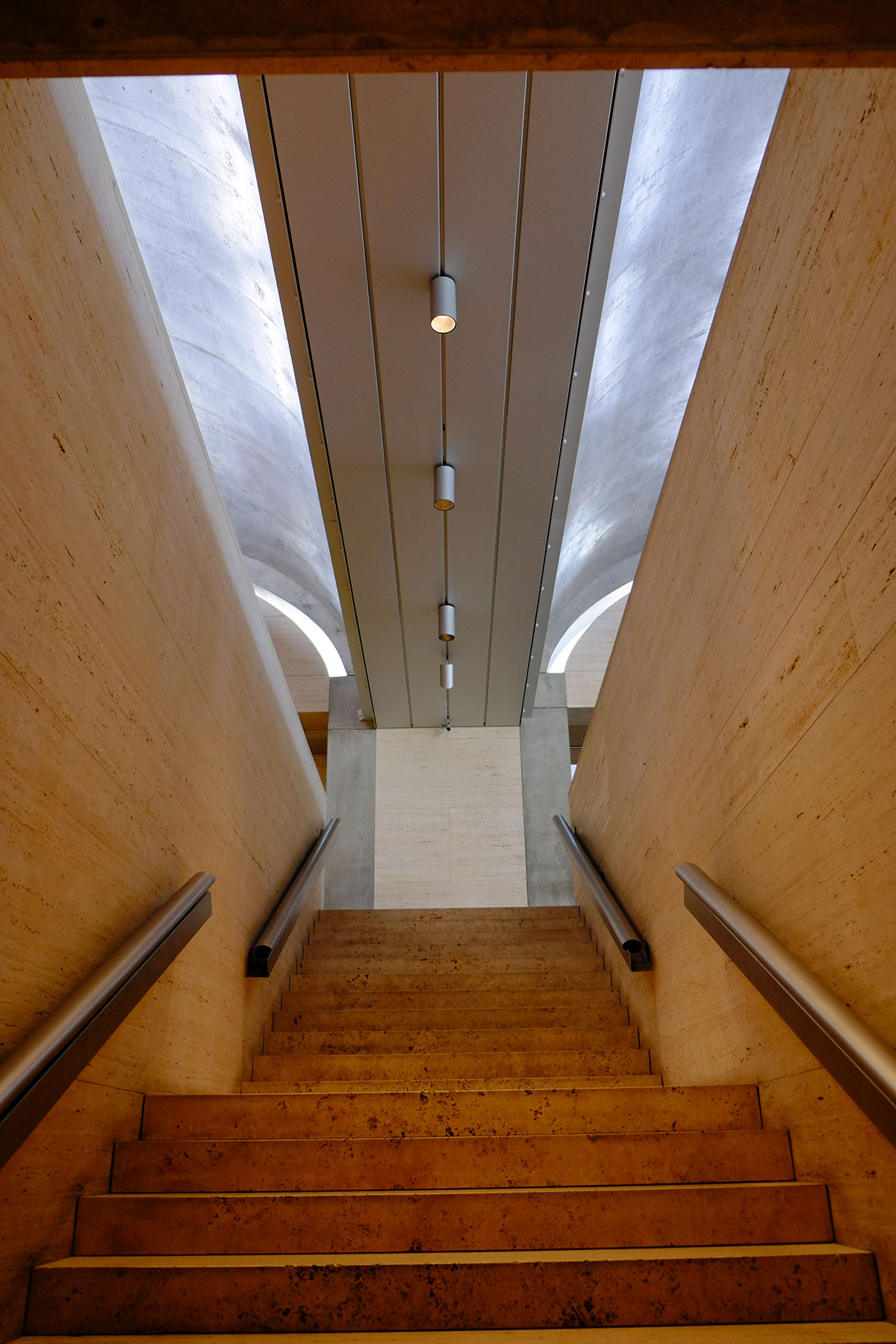
but they then drop you at kind of a funny point – facing a wall not quite in the museum, sort of in the bookstore, looking across to the courtyard area facing west.  It’s a problem with a modular building – how do you emphasize entry or centrality, when every bay is equal?  The new entry sequence from the Piano building is much better – after parking under the building, you head up a new funny little stair, not unlike Kahn’s, then turn, and see the Kahn building across the lawn.  This is the intended main entry, but it took the Piano addition to get you there.  DSCF4389
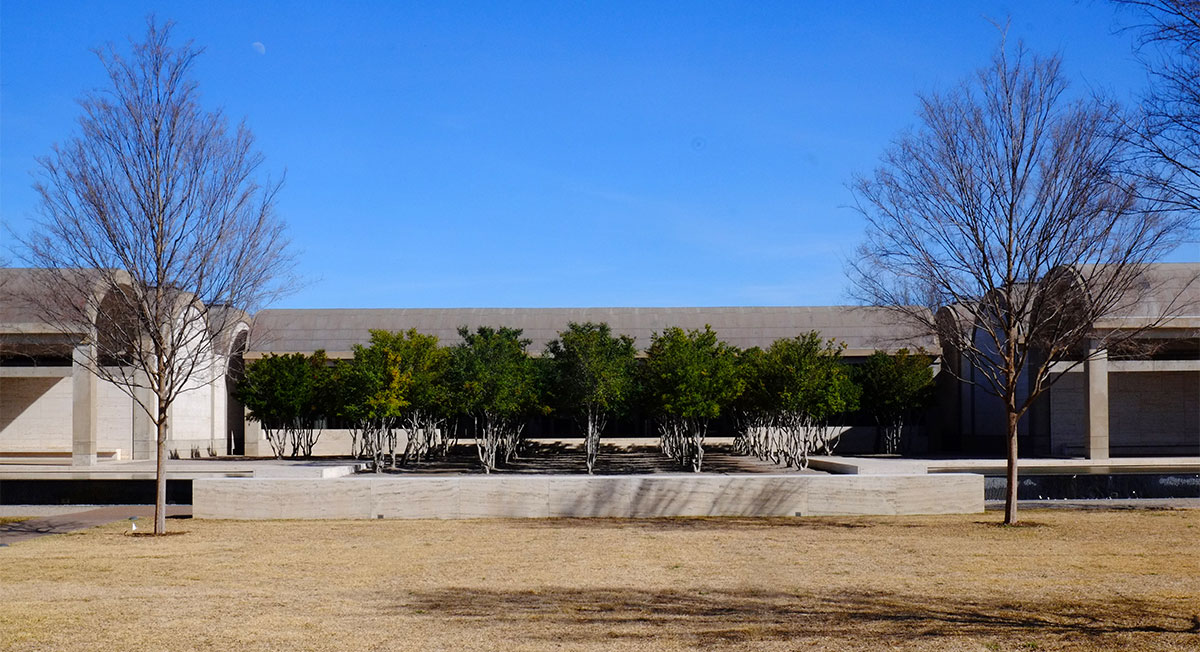
This movement across the lawn and through the grove / allee is wonderful.  Entering either building from its own parking area below is bad, so the sequence now should be: park under Piano, come up the Piano stairs, see the Kahn building and go there, and then later recross the lawn to the Piano building.  They probably wouldn’t let Piano design a stair up that was any nicer than Kahn’s.

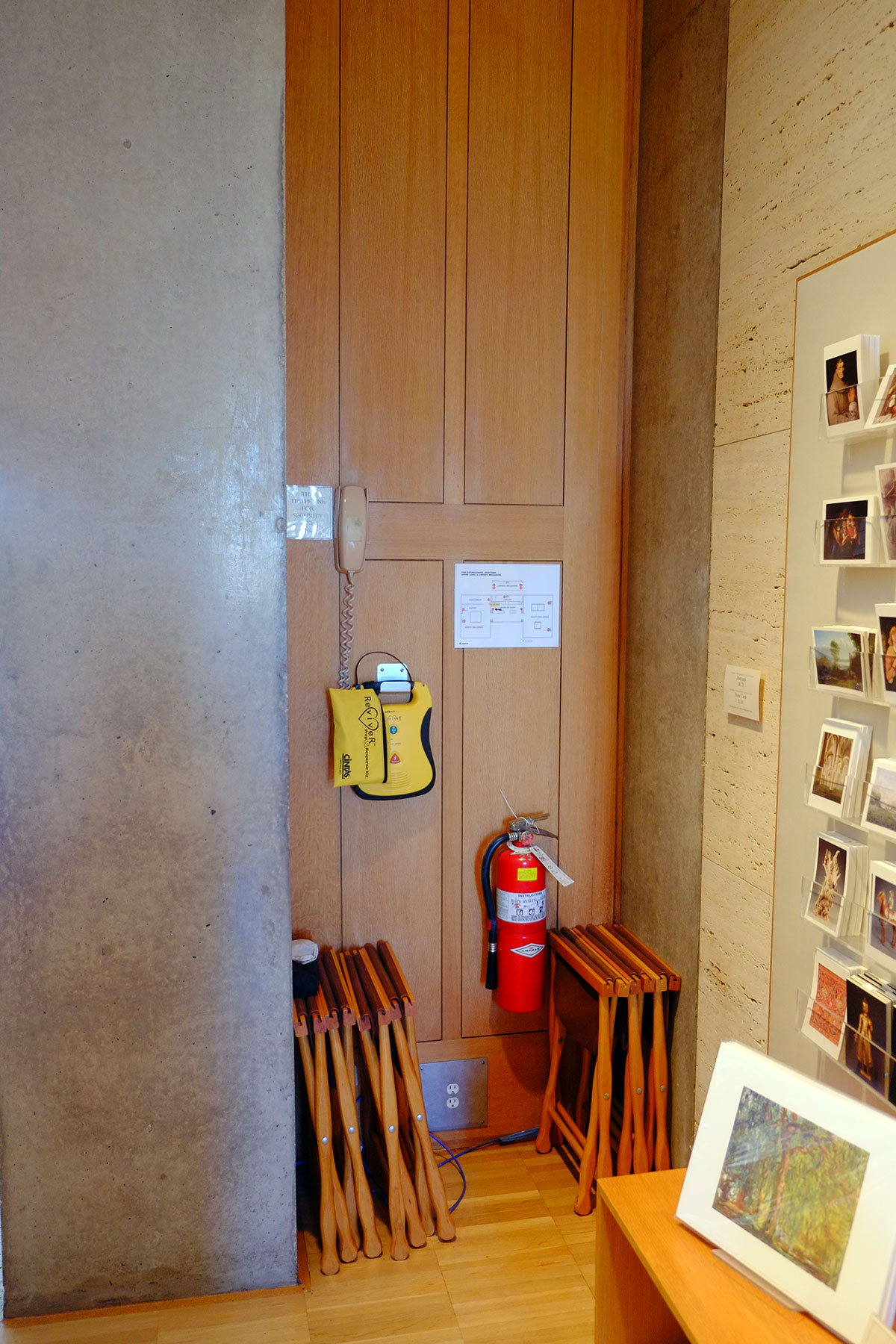
There are a few things that seem a little unsystematic, such as the fire stairs.  The vaults meet at a relatively narrow channel/beam, which doesn’t provide enough width for services such as fire stairs.  So Kahn sticks the stairs  at the end of the building, poking out a bit, and then tries to hide them with travertine.  DSCF4472They just bugged me – kind of awkward, and not in the system of how he’s using travertine in other places.  Also not in the vocabulary of how he’s using this in-between zone elsewhere.
And be aware that if you make big reveals between parts in your system, the staff will pile things in these places that theoretically should be empty.DSCF4478
Kahn had the advantage here of working sui generis, whereas everything Piano subsequently did has to be seen in relationship to Kahn’s building.  The basic dichotomy is great, and plays to Piano’s strengths:  if Kahn’s building is about mass, walls and vaults, Piano’s building will be about frames, panels, joints and beams.  His building mirrors Kahn’s across the lawn in  its north-south linear bays, its use of the east-west cross axis for entry, and in its symmetry.  But then everything about the tectonics is different, and in the typical Piano vocabulary.  DSCF4510
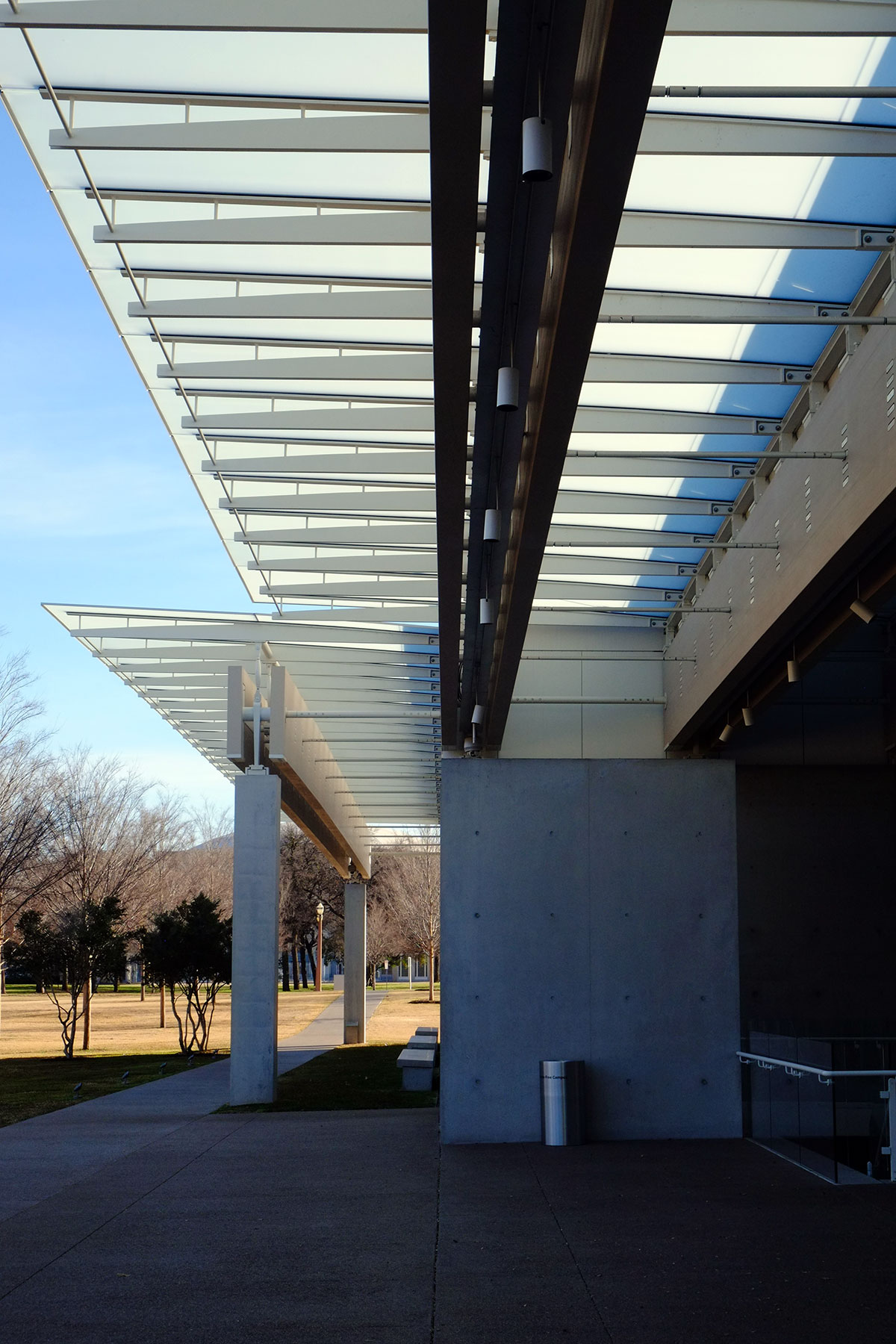
Neither building can be said to have a facade that really addresses the lawn between – the north-south walls are the side elevations where the logic of the linear bays plays out.  The Piano entry hall also mirror Kahn’s across the axis, but this time done with paired glu-lam beams instead of post-tensioned vaults.  DSCF4603
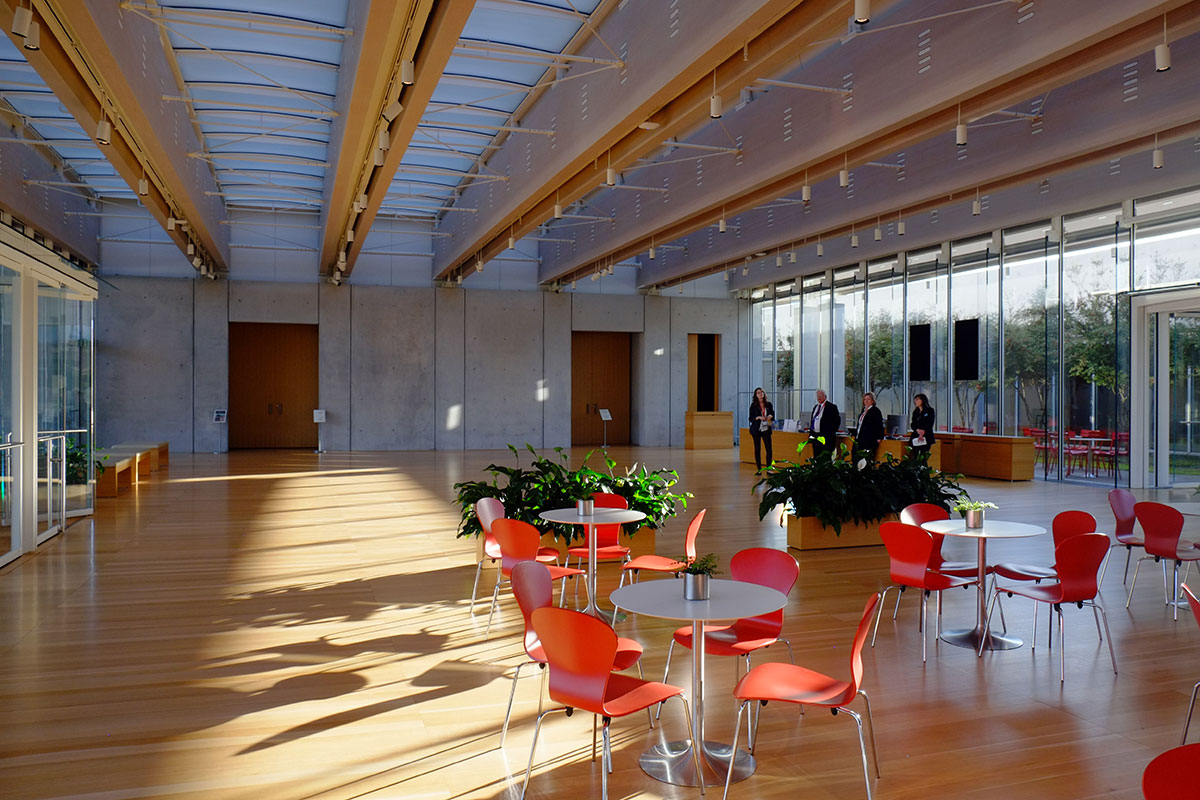
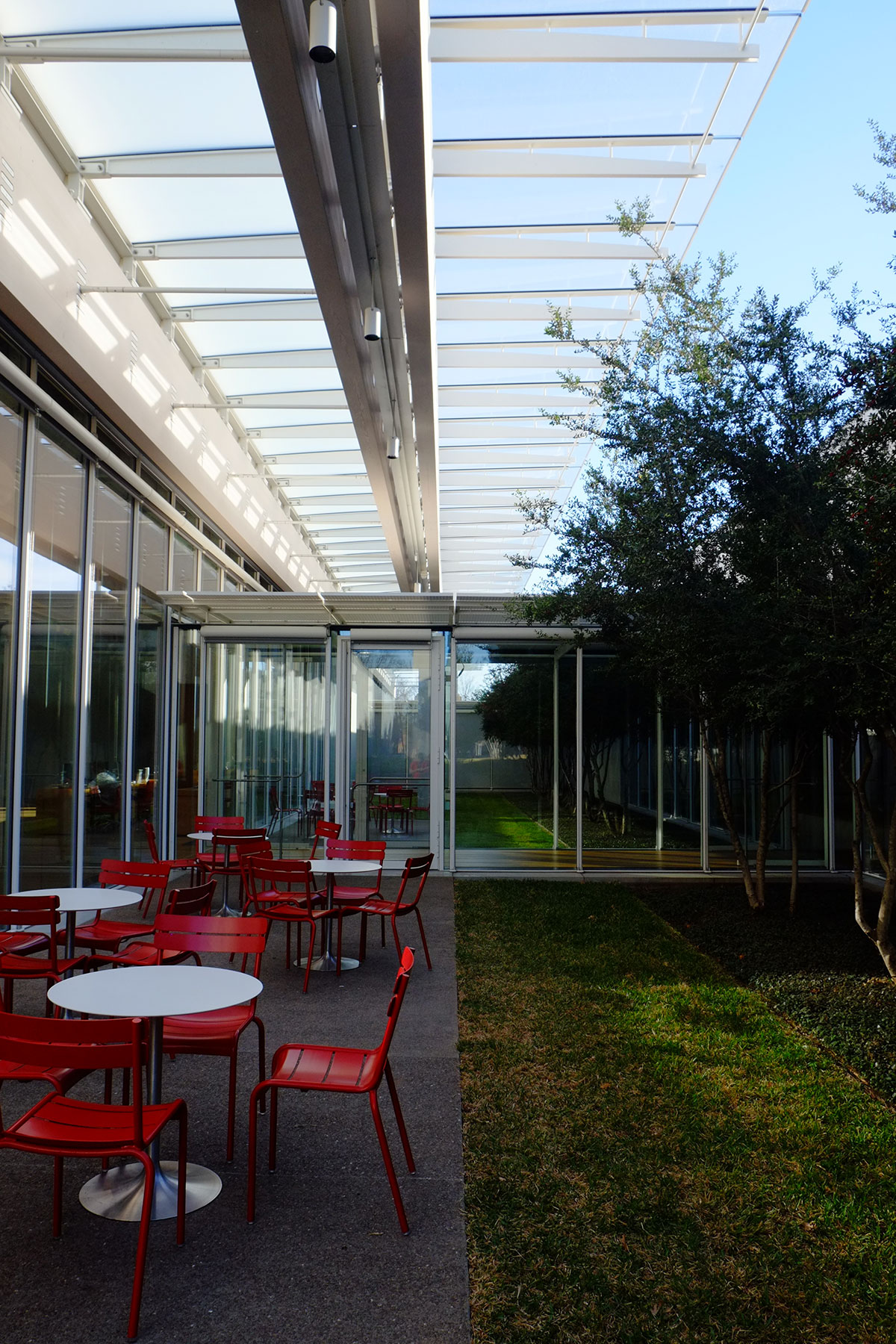
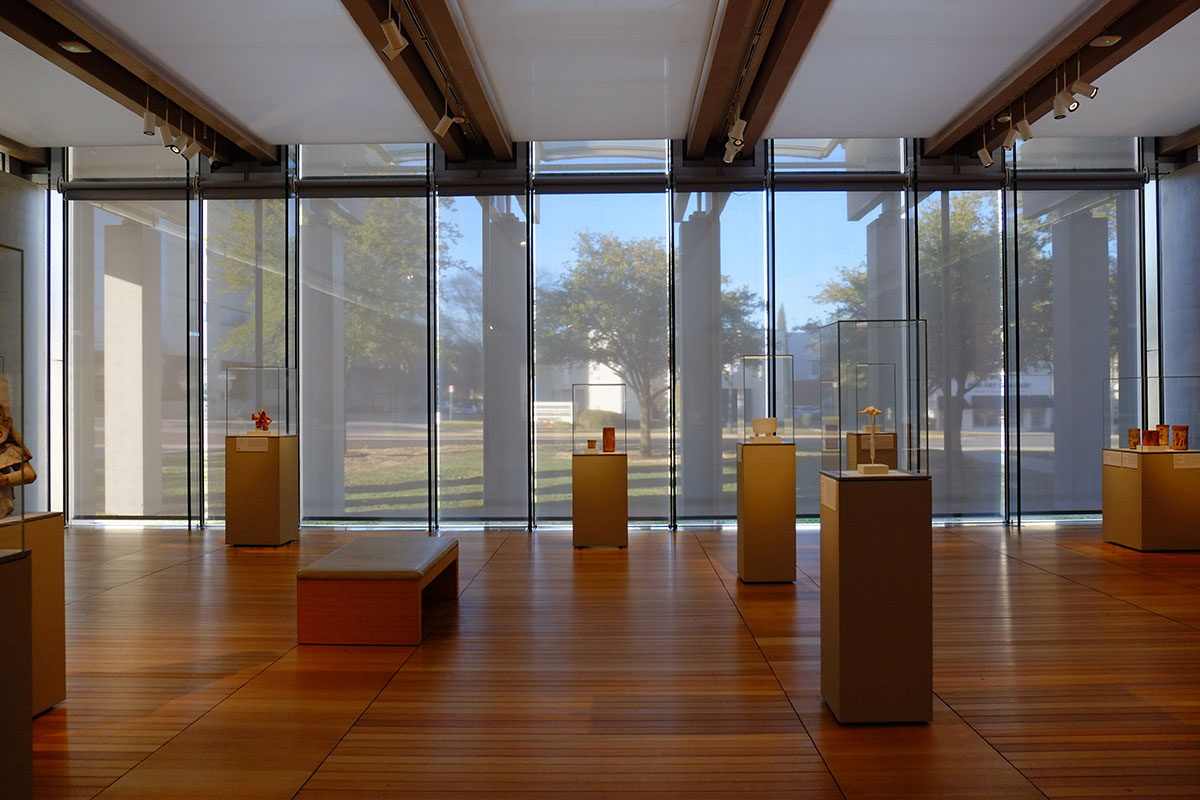
The Piano light scoops and shades are in full play, fitting in a building which plays off the iconic American daylighting masterpiece across the way.  The main galleries are to the north and south, and are beautifully lit and proportioned.  DSCF4580
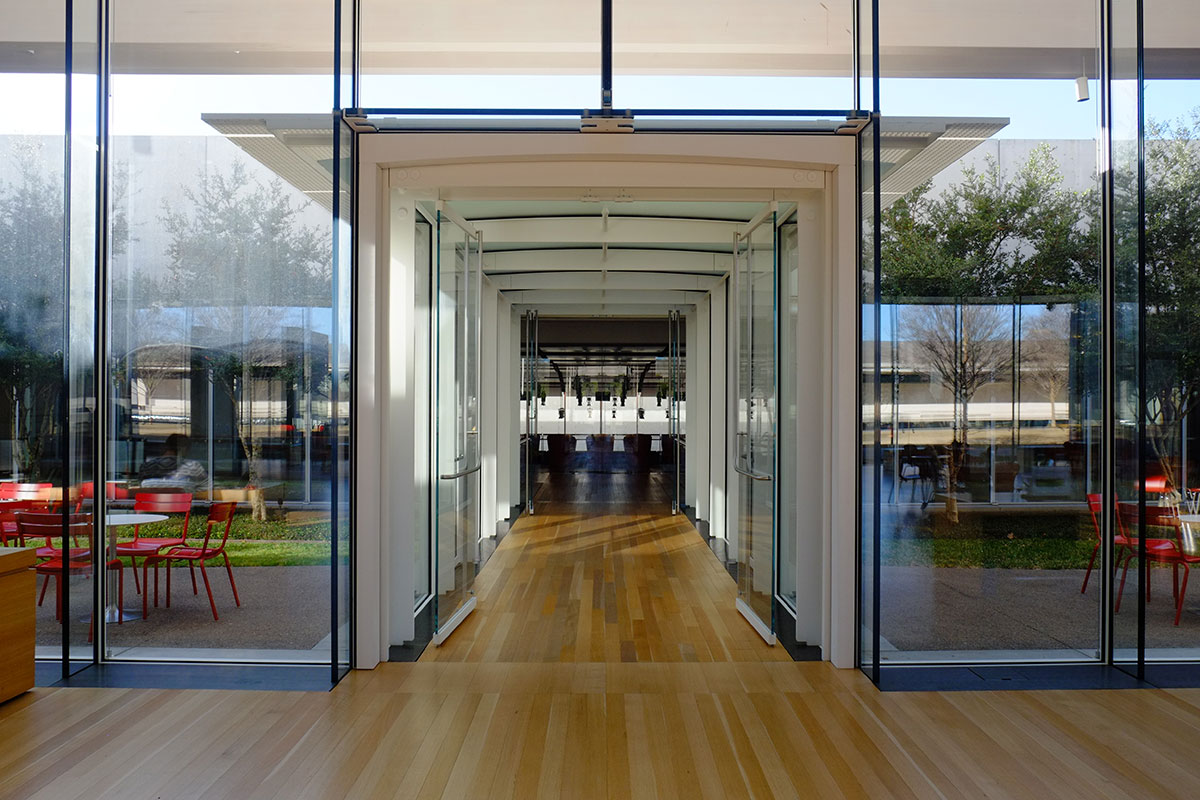
The east-west axis is very transparent, with a glazed corridor continuing the axis to the second part of the building between two small internal courtyards, which separate the building into two bars.  The view is terminated by a daylit concrete wall.  DSCF4530  DSCF4534
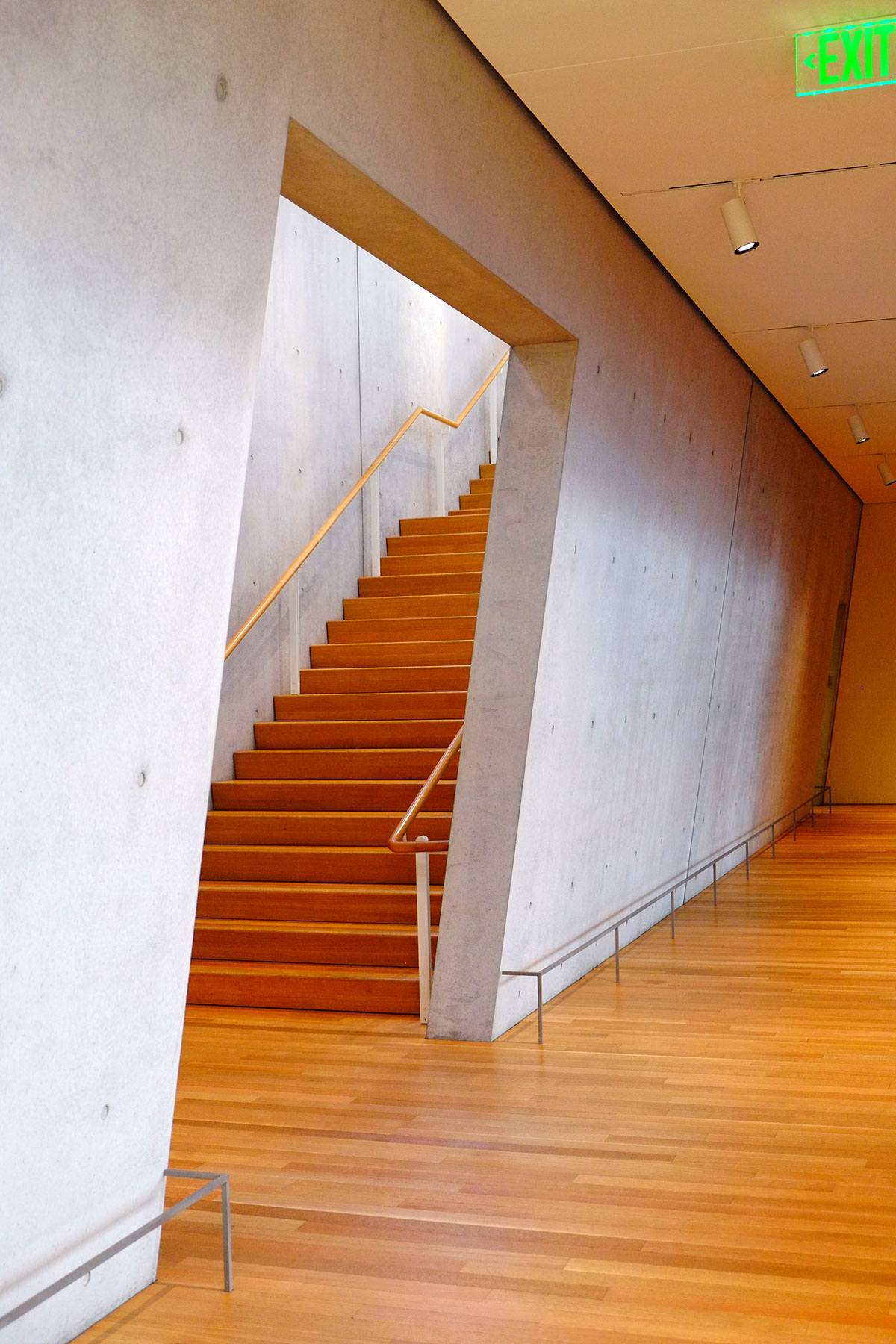
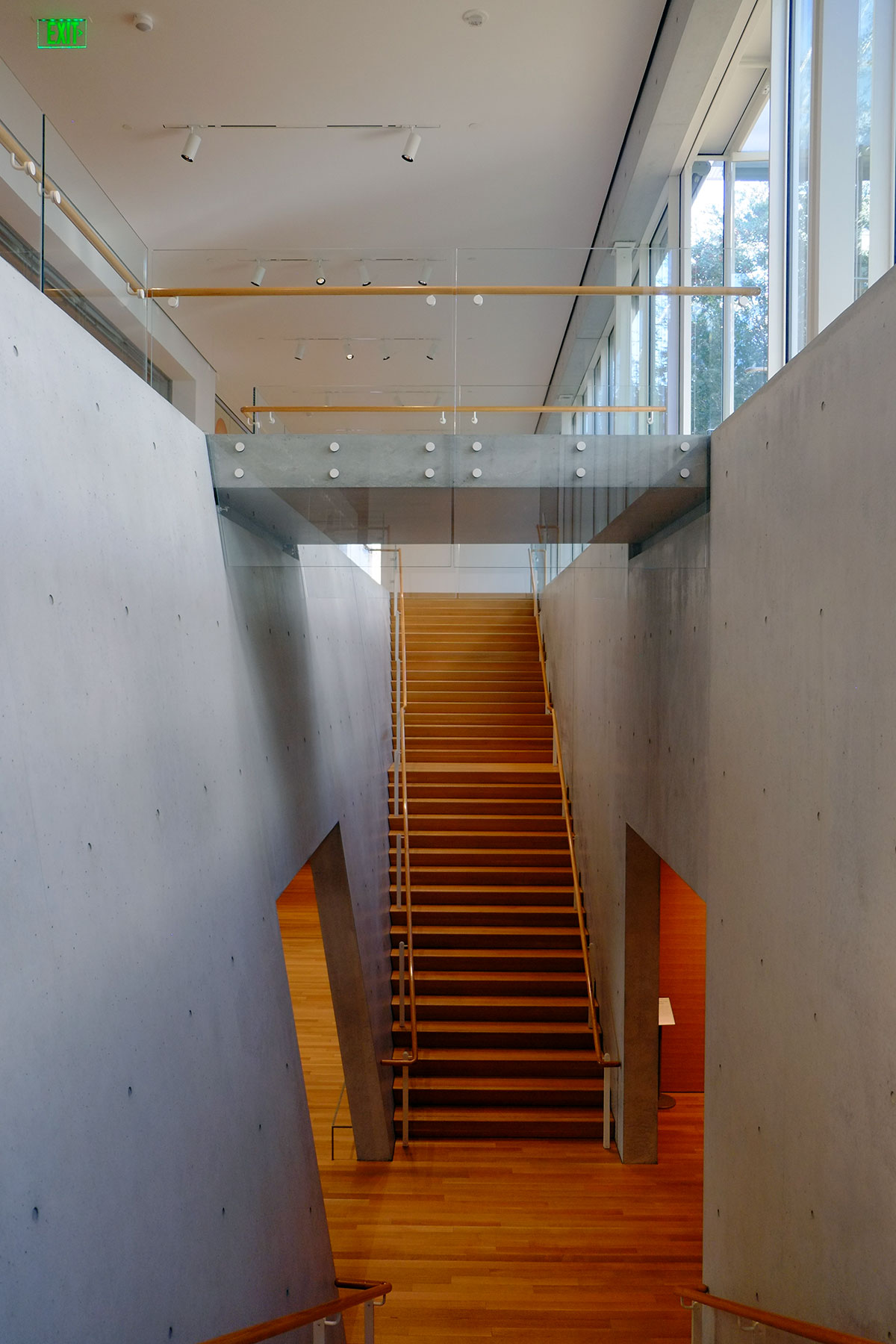
The second bar of the building contains some more gallery space, offices and support spaces, and a large auditorium.  Most of these spaces are at the lower level, which is reached by symmetrical stairs on the longitudinal axis.  DSCF4544
DSCF4555

They are bound by two massive concrete walls, one of which is tilted.  This being Renzo Piano, there must be reason for it (with most other architects these days, I wouldn’t even bother to ask why), but I couldn’t figure out what the reason was.

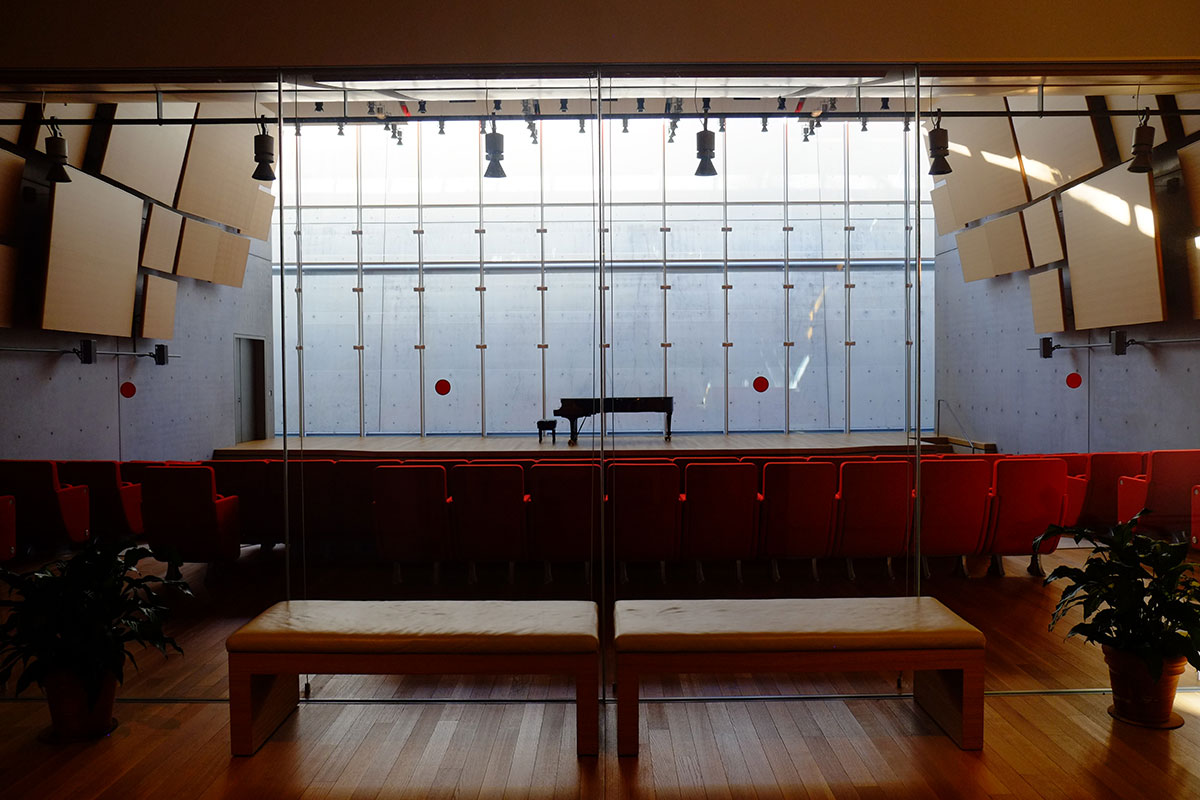
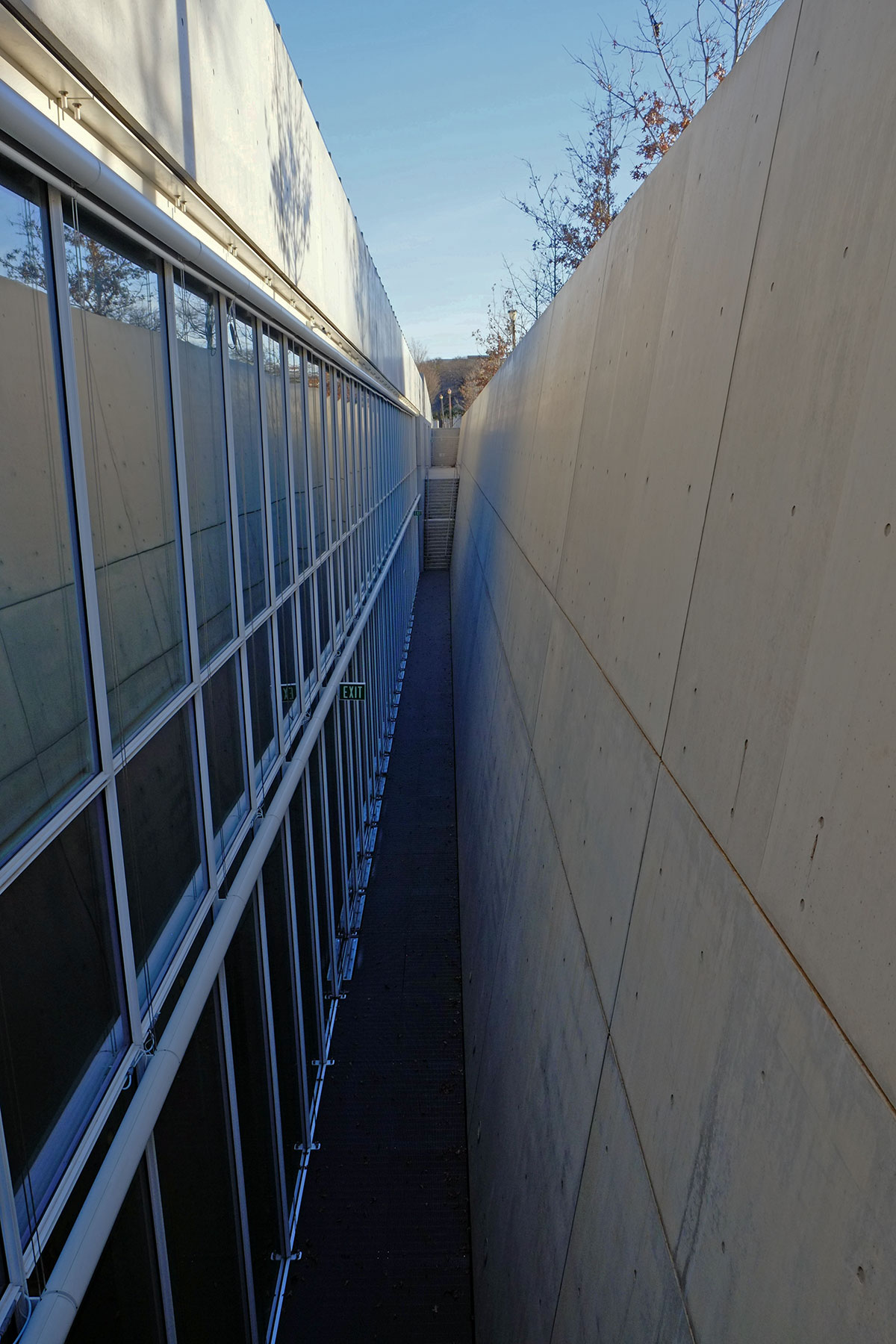
The auditorium is a two-story volume, the west wall of which is completely glazed, with light bouncing off another concrete wall outside.  DSCF4549I was curious about the space between the glazing and the concrete, so I went around the back and found that a sloping lawn extends over the roof of this bar, and you can look down into the most elegant dead-pigeon space ever built.  DSCF4643
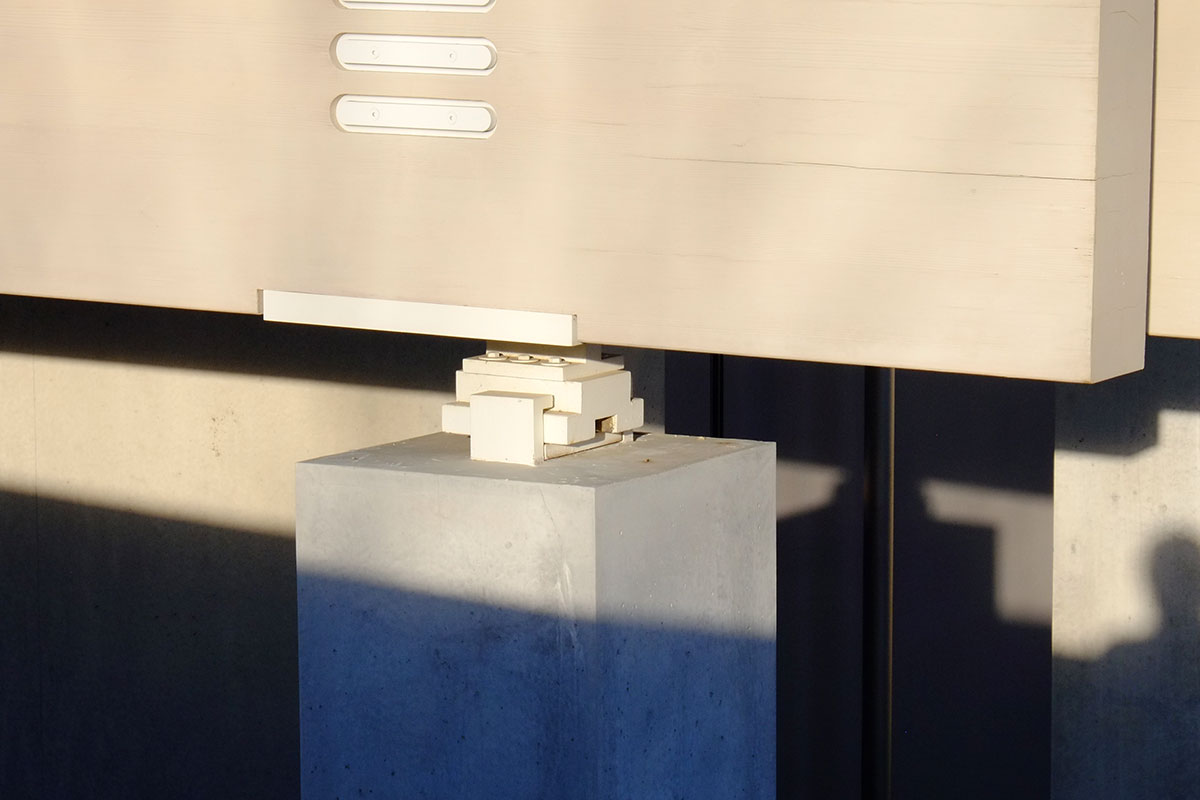
This green roof also allows you a close-up view of the roof structure of the front bar.  I wish Simpson would bring out a Renzo Piano line of framing connectors.  DSCF4627
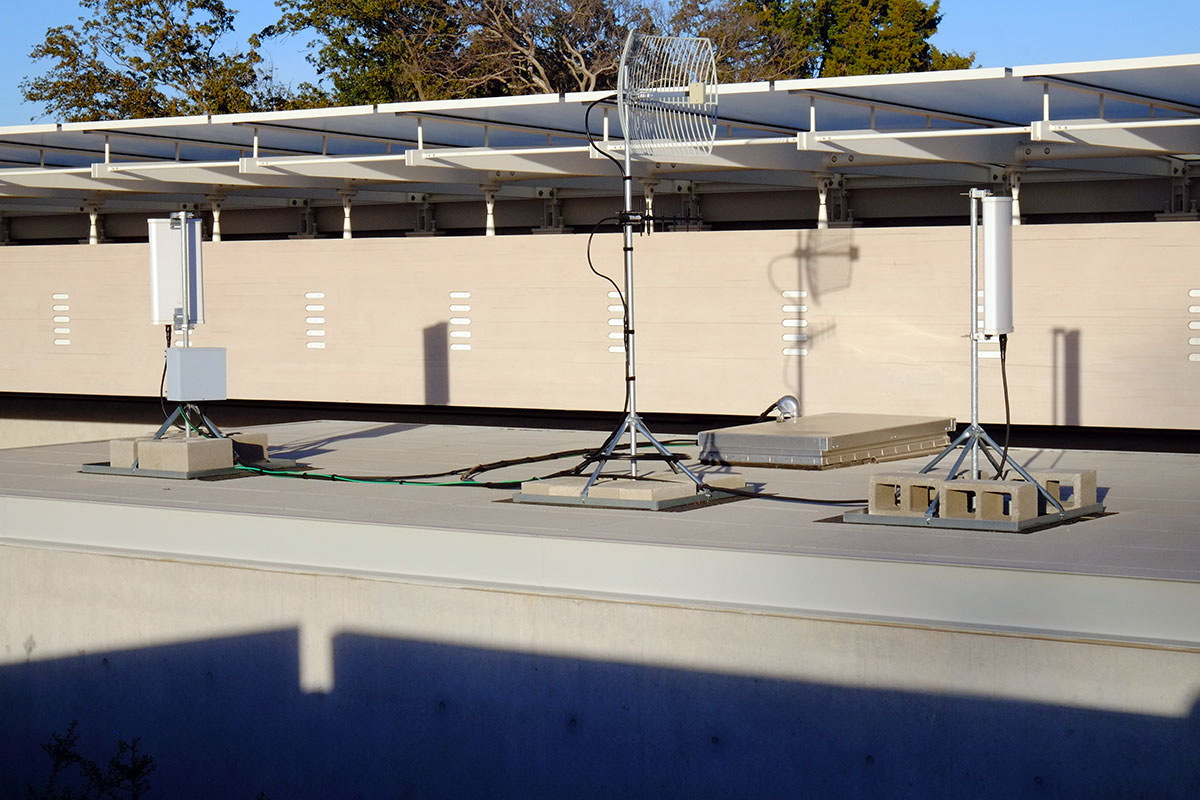
There are also some antennae on the roof, which they clearly did not want to anchor through the roof membrane, so they attached them to metal pans which are then weighted down.  Notice that the one on the left is weighted with standard concrete blocks with the cells facing upward, the one on the right uses concrete blocks with the cells facing sideways, and the one in the middle has thinner, solid blocks (probably concrete pavers). The amount of care that Piano’s office takes with such detailing decisions is truly staggering – every different condition is thought through carefully and resolved.    DSCF4638
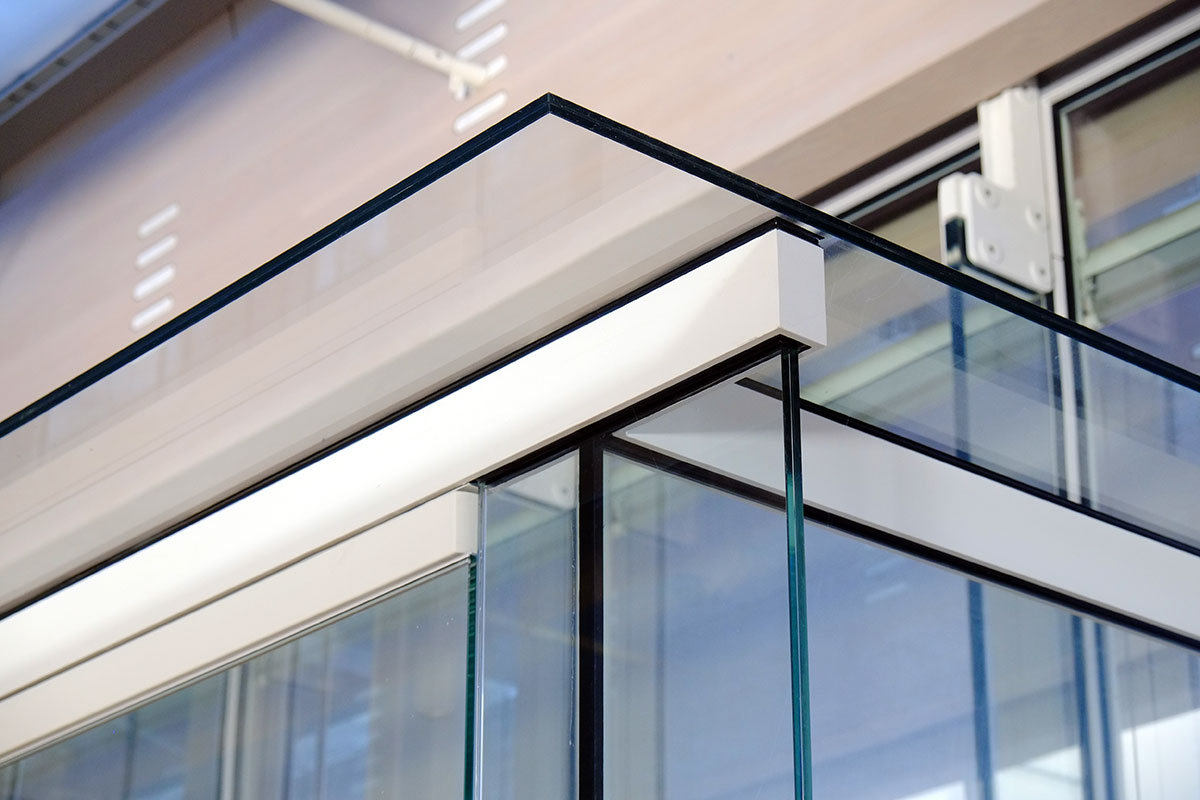
As always, all the detailing is scrupulous.  The logic of each piece is worked out to the nth degree, and then no expense is spared to fabricate the perfect element.  This is the detailing at the entry vestibule upper corner:  DSCF4524
Ordinarily I revel in Piano’s detailing – following the logic to understand the form is an intellectual pleasure that really only we architects get to share, eh?  But something was nagging me here;  after seeing Kahn’s building, parts of Piano’s seems a little fussy, perhaps baroque?  DSCF4593
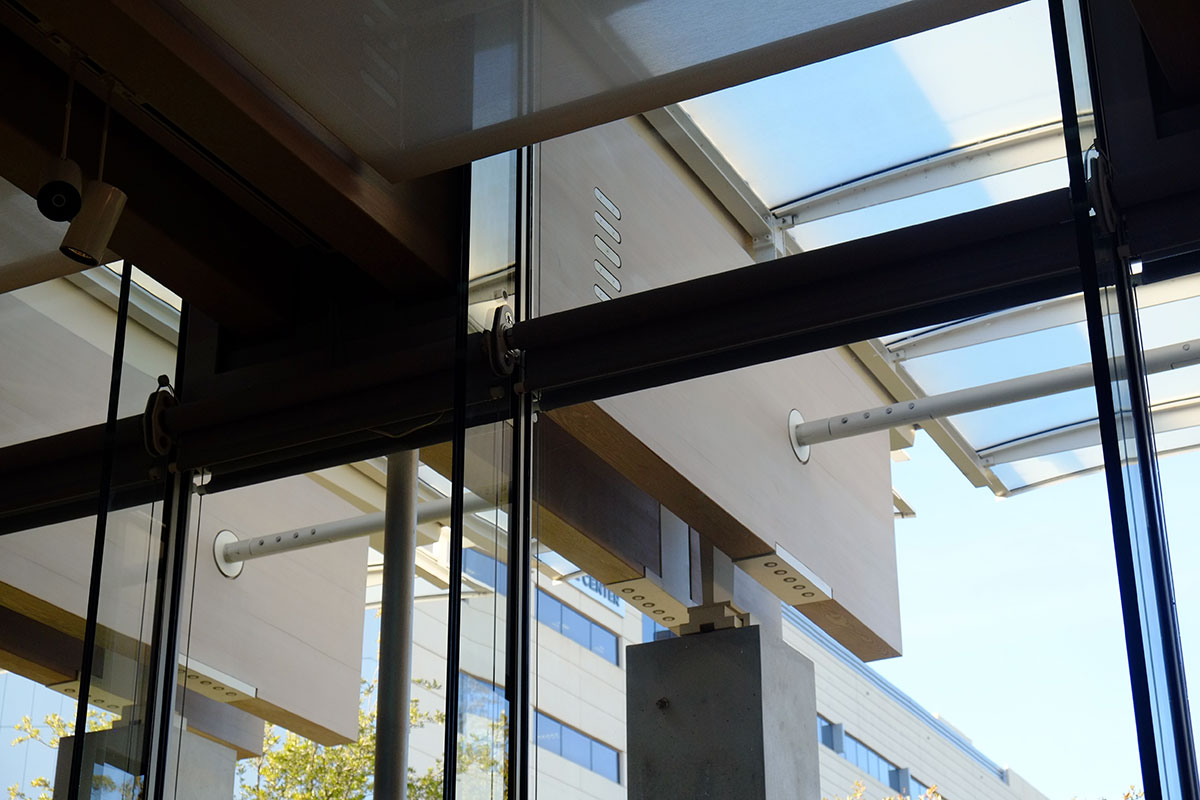
Compared to:  DSCF4397

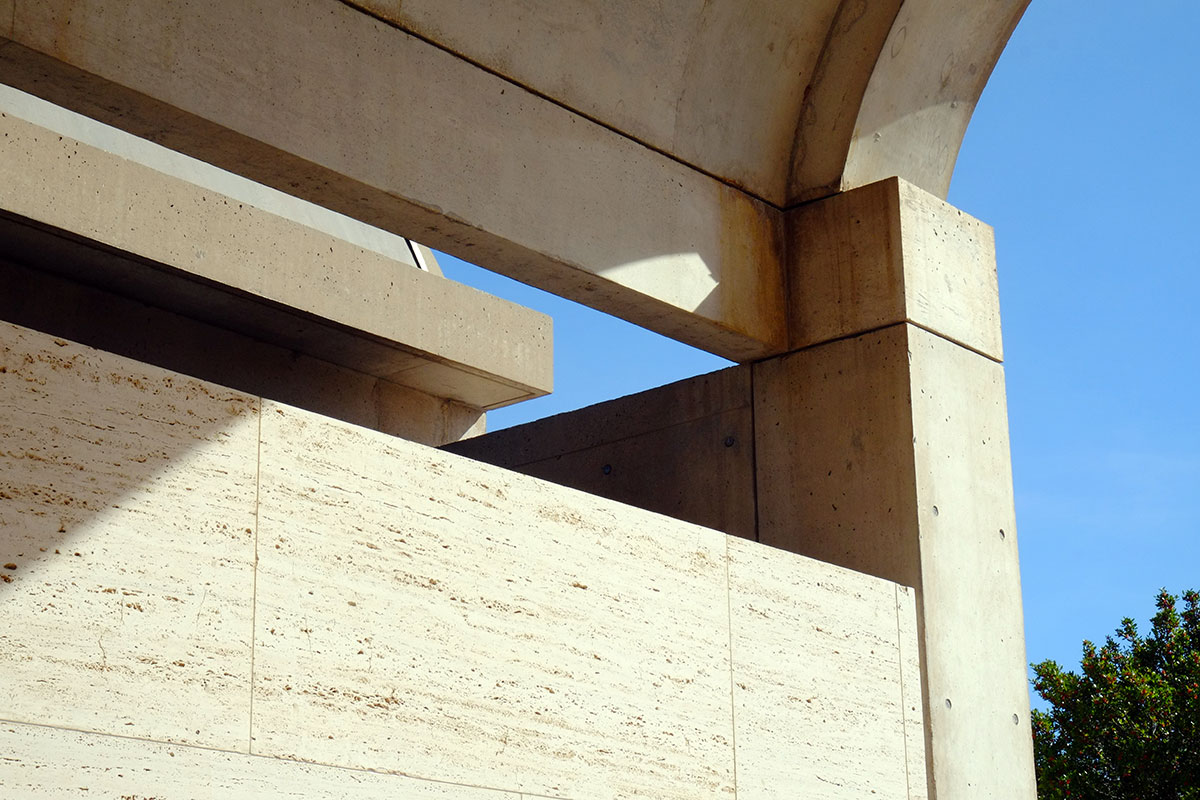
The contrast is revealing.  Kahn’s work may be tectonic, in that the columns, vaults, infill panels, etc., are all expressed and articulated, but when you look closely, you have to admit that there is a lot going under the skin that you don’t see.  That isn’t a travertine wall, it is a concrete block wall covered in travertine.  He is not trying to fabricate a completely abstract surface, such as in the work of other architects the period, but neither does he want you to see the real guts of the building.

Piano wants you to see the guts, but actually only the really good-looking guts –DSCF4531you certainly don’t see any conduit running around – in fact, you don’t even see any ductwork.
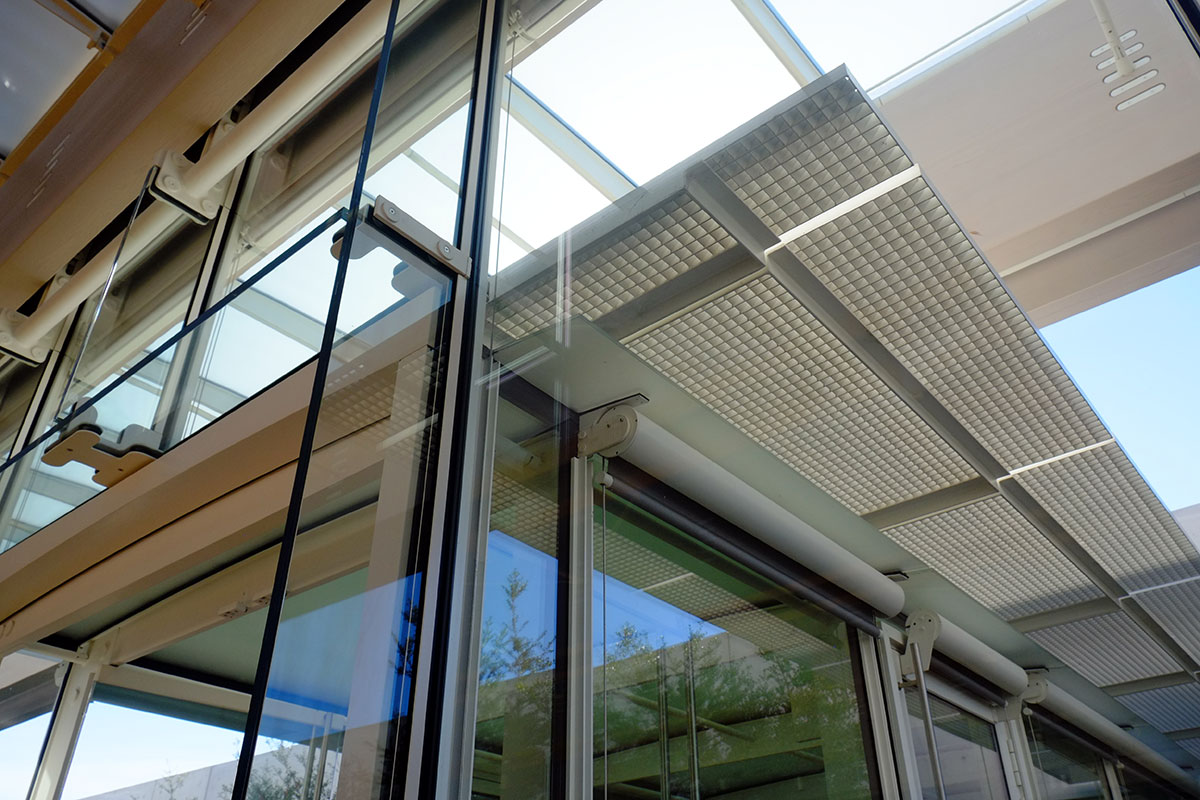
Kahn is reducing the complexity of the tectonics to the big, elemental, iconic pieces of Architecture, while Piano is taking those big iconic pieces and breaking them into as many little beautiful parts as he can.  They are both masters at what they’re doing, and being able to see these buildings together makes you think about the two approaches much more than if you saw one at a time.

A comparison of the end elevations is also revealing.  Each has the problem of how to end a modular building – essentially you are chopping it off at the bay line, revealing the cross section.  The Kahn building is more elegant than I thought it would be – the rhythm of the vaults and the interstitial spaces is is powerful, like an aqueduct running across the landscape.DSCF4653
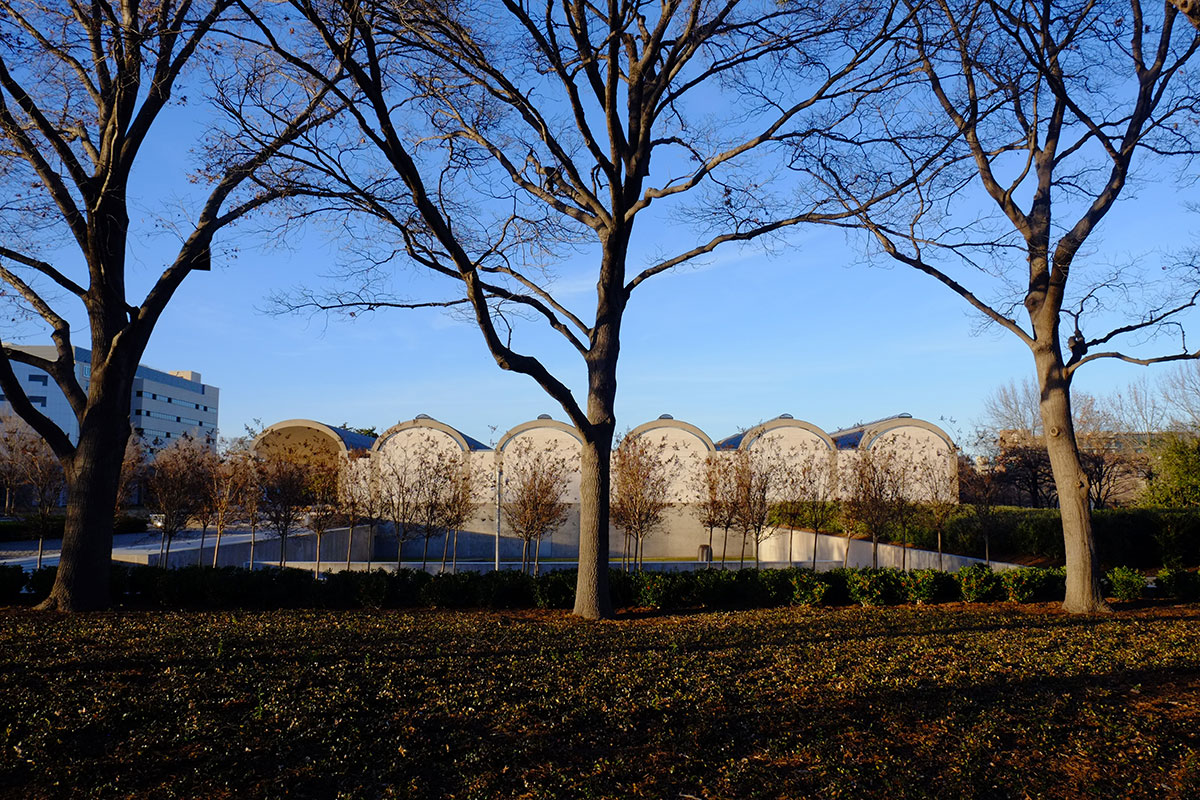
In constrast, I thought the end elevation of the Piano building was its weakest point.  DSCF4652
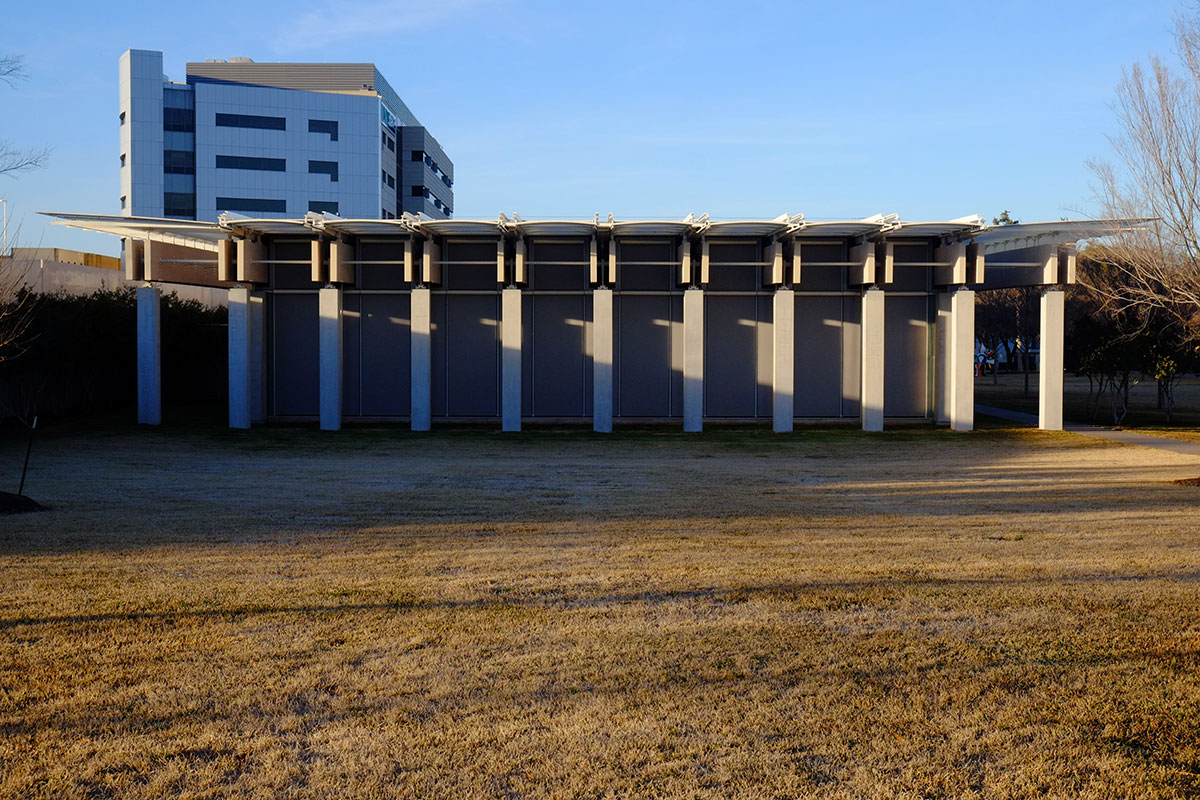
It feels lugubrious and too dense, with too many big pieces too close together.  Paradoxically, Kahn, the master of mass and masonry, uses concrete and stone to make a facade which feels light and reflective, while Piano, the master of transparency and ethereal steel fabrications, uses frame elements to make a facade which feels heavy and clumsy.

The Kimbell was always an important destination for architects, but with the Piano addition, it has an even stronger attraction, as a complex which makes you think, and not just enjoy.
Insectarium

P1070187Insects make up a large percentage of the world’s species, over eighty percent. Every fourth species is a beetle. Noah’s Ark would have been filled with bugs. So why is New Orleans one of the only cities to have a well-visited Insectarium?
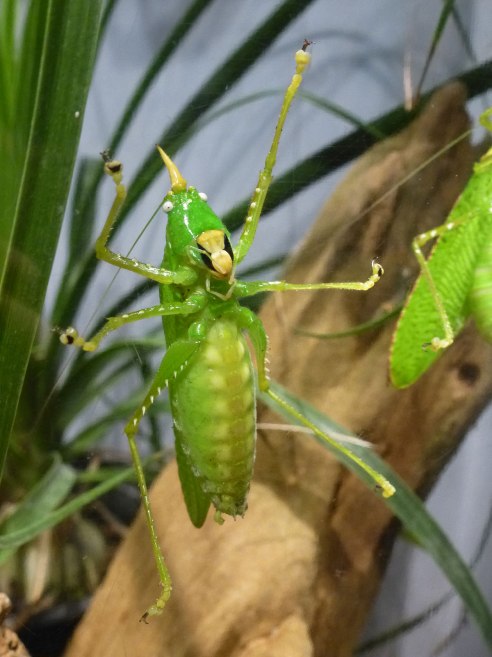

Probably because insects can be a little freaky, like this unicorn catydid.P1070201
We were looking at the cockroaches when a man who worked there walked by and told us that a cricket king cake had just come out of the oven down at the Insect Cafe. I was expecting a king cake that was decorated with crickets, not one that had crickets mixed into the batter before it was baked! There were free samples, and I must say it was much tastier than the other bugs I’d eaten; ants (truth or dare), flies (biking), and a spider (prank). They also had Mealworm salsa and beetle chutney, which weren’t bad, but the bugs didn’t nessesarily add to the texture.P1070116
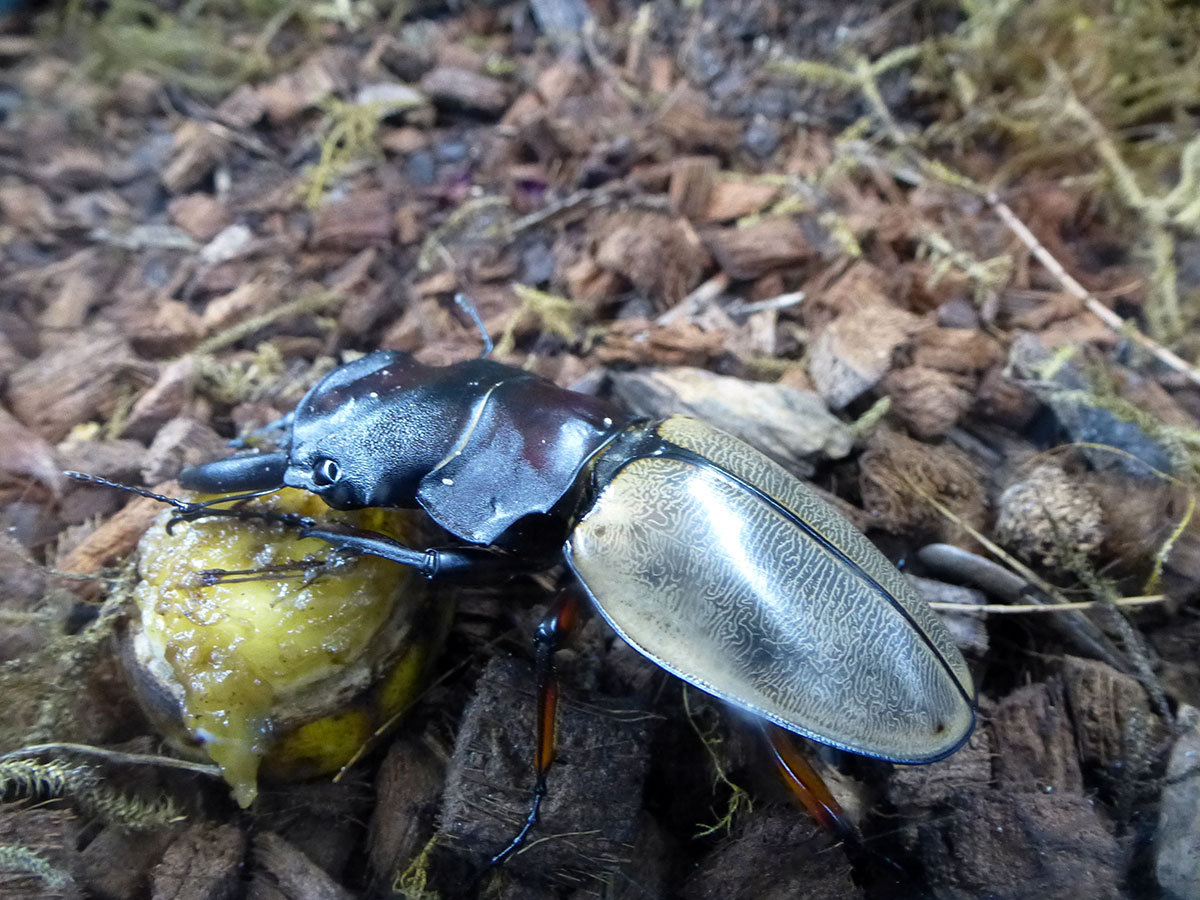
As there are so many different beetles in the world, it makes sense that they’d have a large collection. Dung beetles, diving beetles, rhinoceros beetles, this terrifying thing…P1070166They didn’t have any bombardiers however, as it’s hard to safely keep an insect that can shoot boiling acid out of its butt.
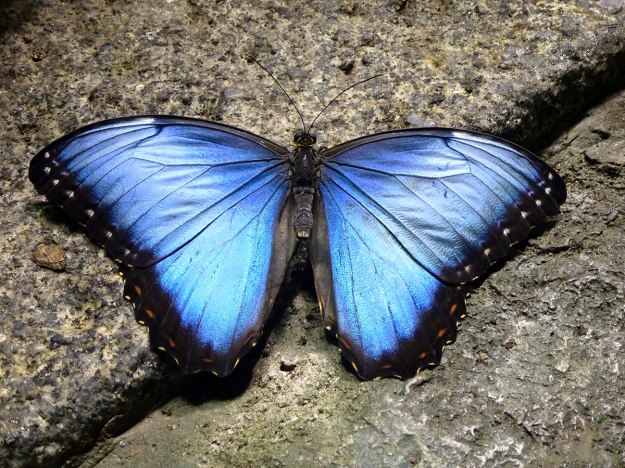
More common than entire Insectariums are butterfly gardens,and this one didn’t disappoint. Most butterflies, including Blue Morphos, aren’t actually colorful. It isn’t pigment that makes them pop out, but microscopic holes in their wings that refract light. It sounds like science fiction, but I promise you, Smarter Every Day wouldn’t lie.
P1070218
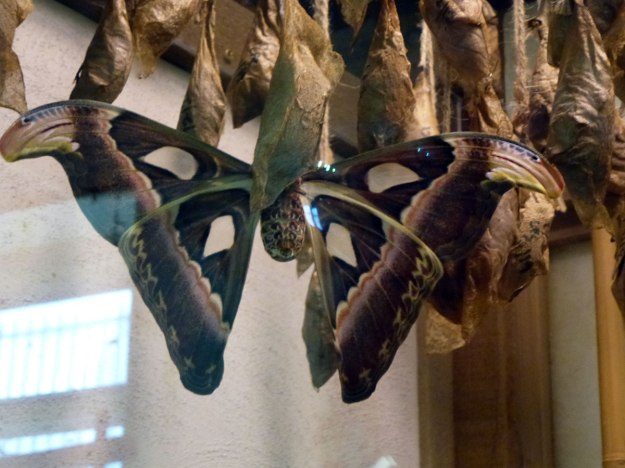
As well as butterflies, they had a giant moth that was apparently the inspiration for the Japanese supercreature Mothra.P1070210
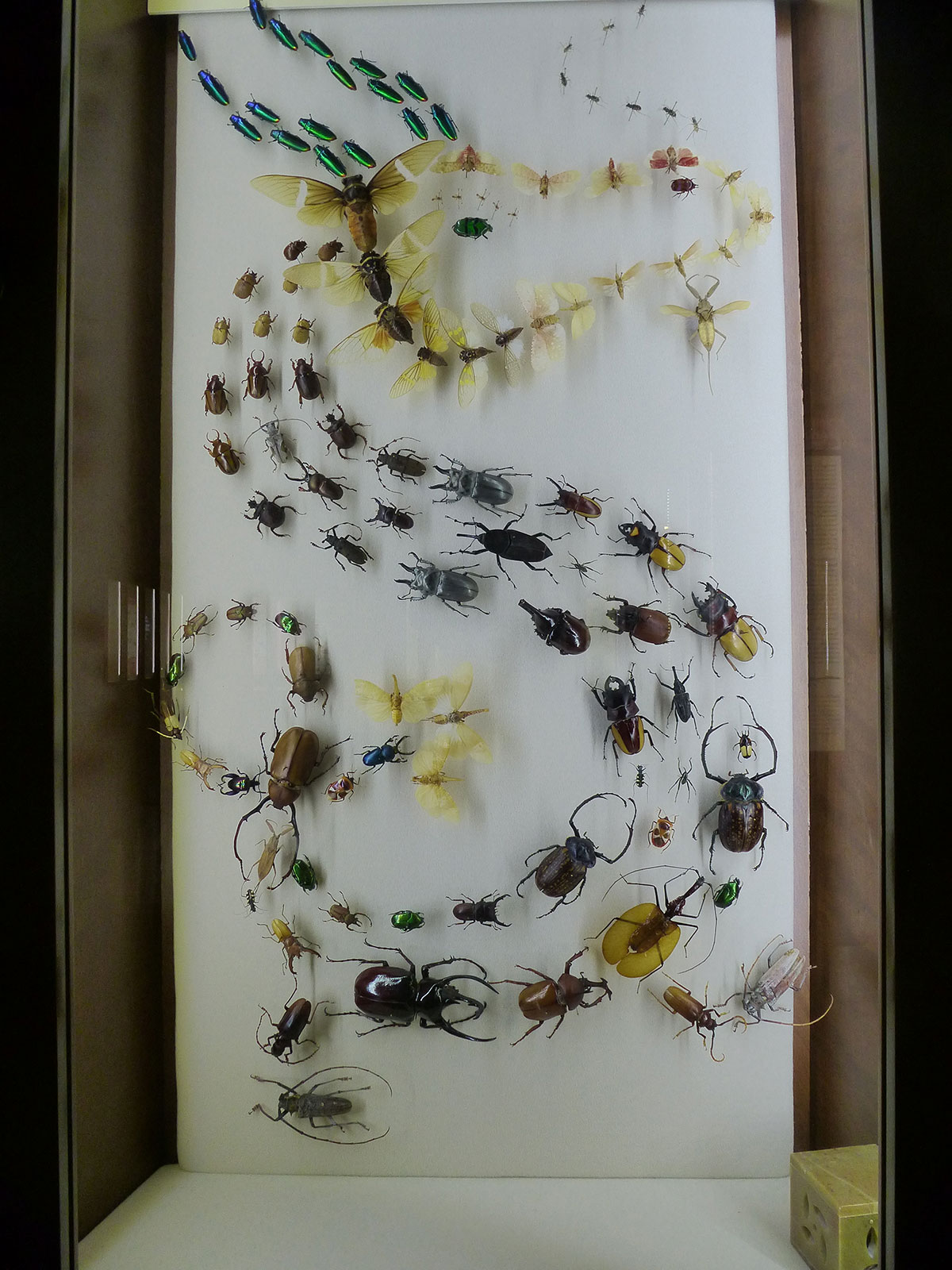
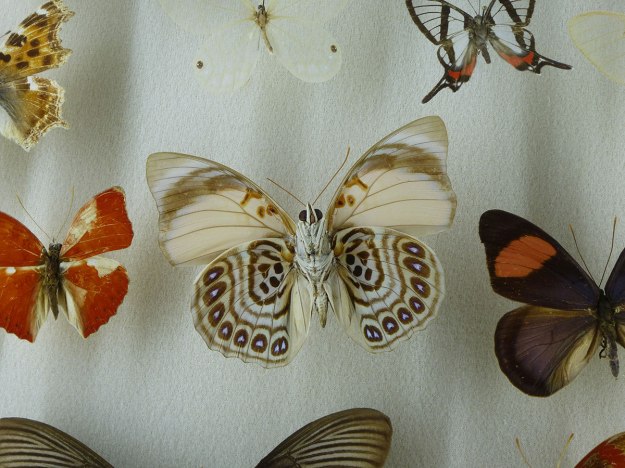
And for people who aren’t so much into the live bugs, there were display cases full of beetles and butterflies arranged into patterns, and of insect inspired jewlery. And, in the case of Egyptian women, live scarabs that were tethered to broches.P1070174
This museum was proof that little animals can be just as exciting, and terrifying, as the big ones, but not quite as tasty.

The Ohr-O’Keefe Museum

DSCF1408

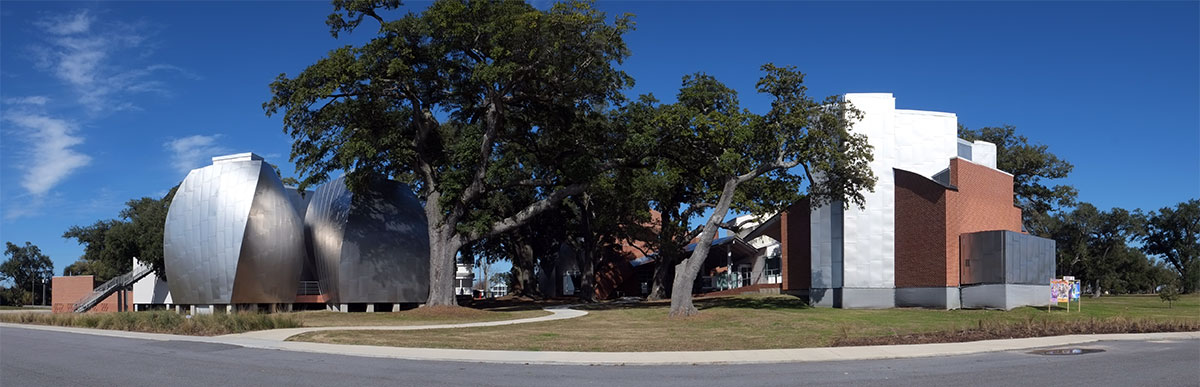
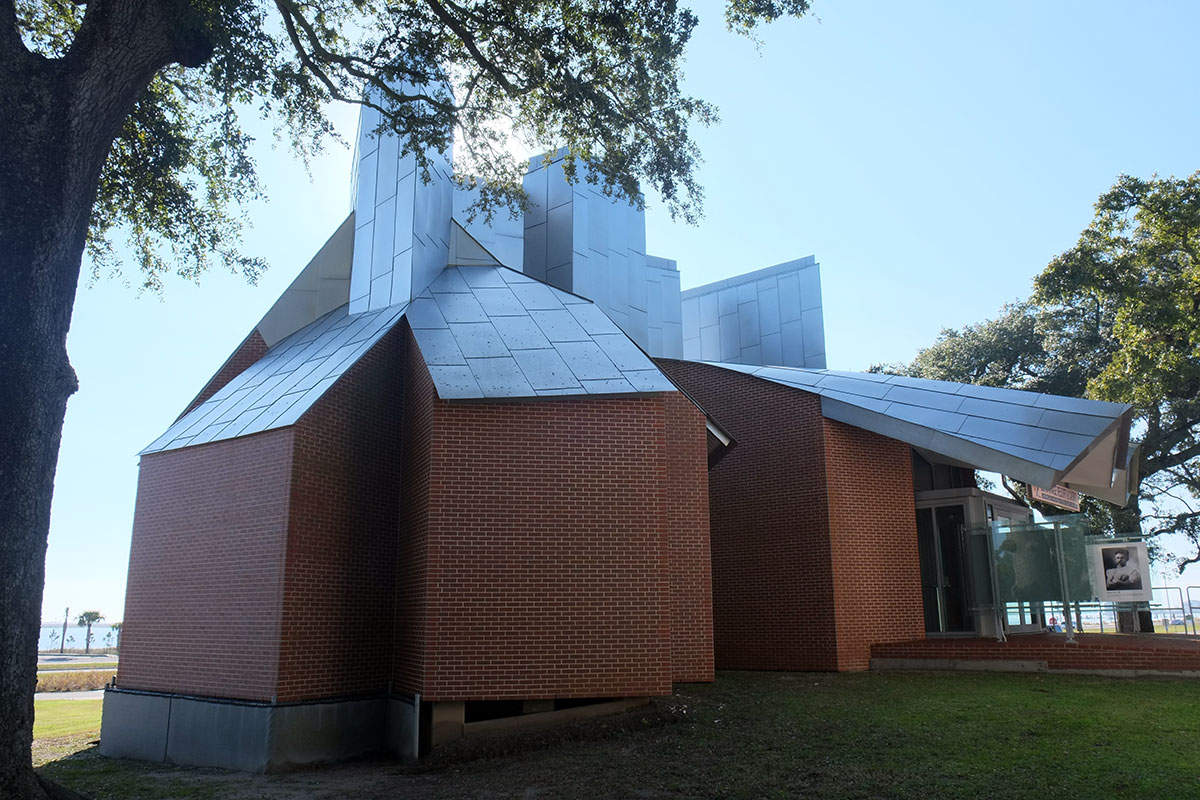
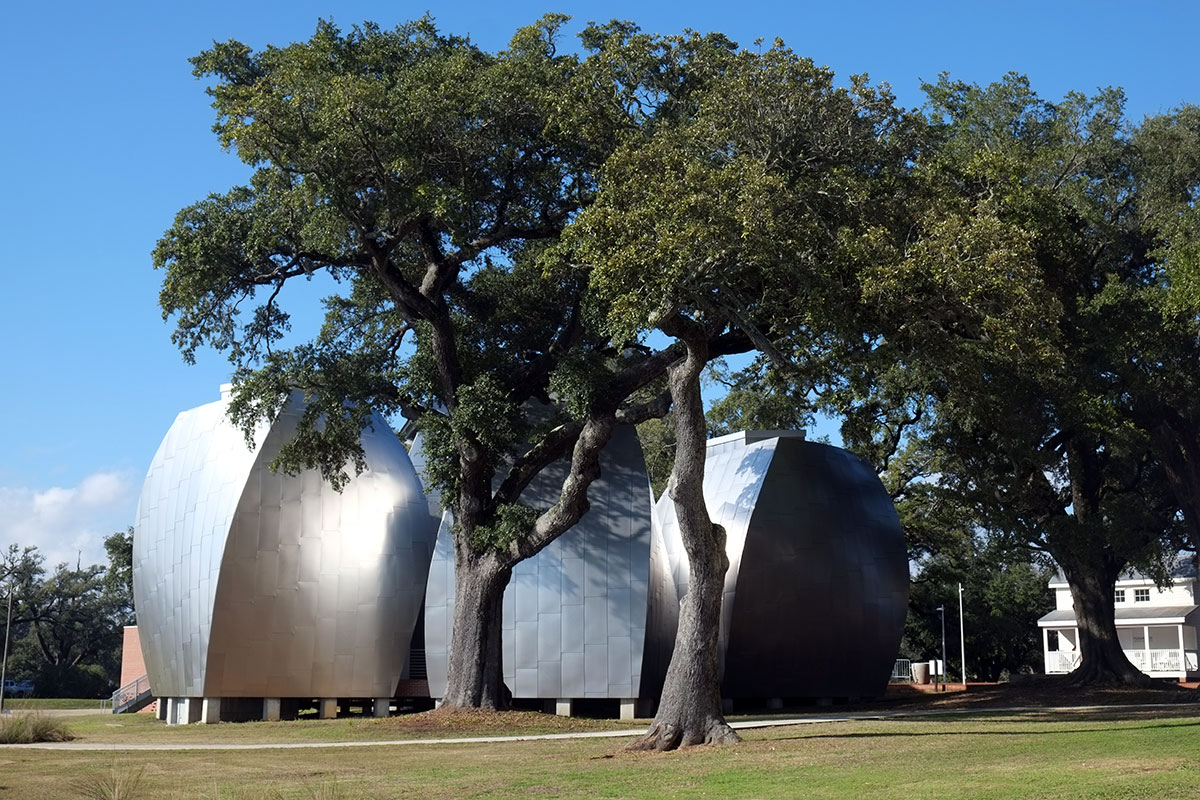
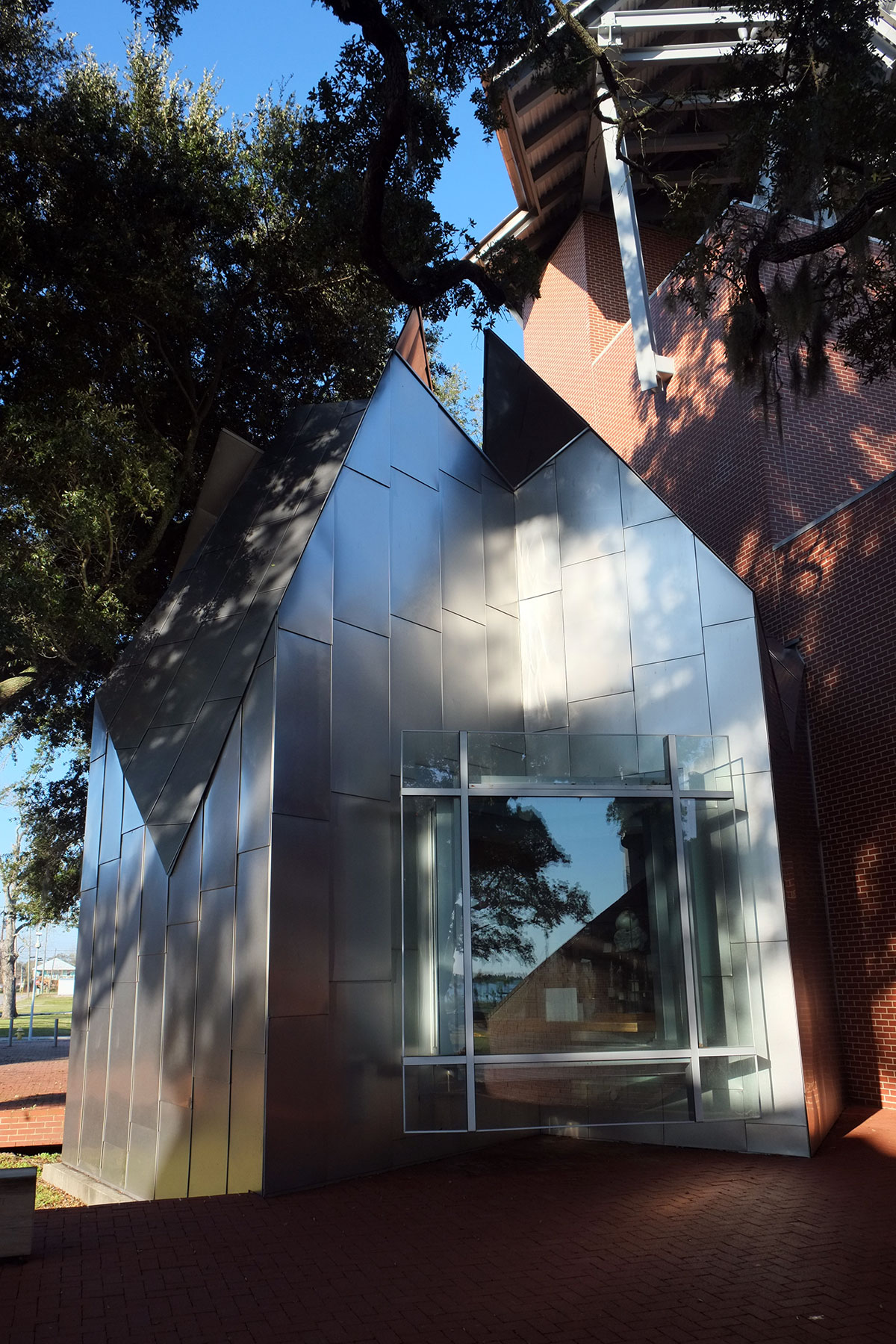
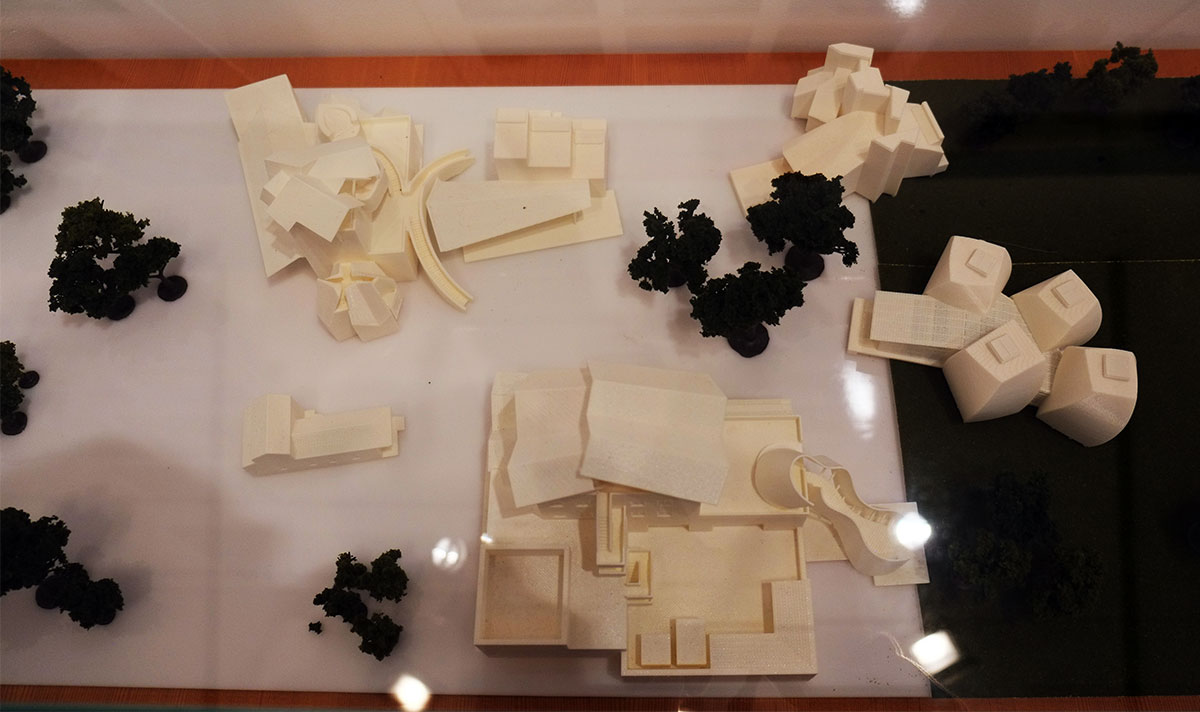
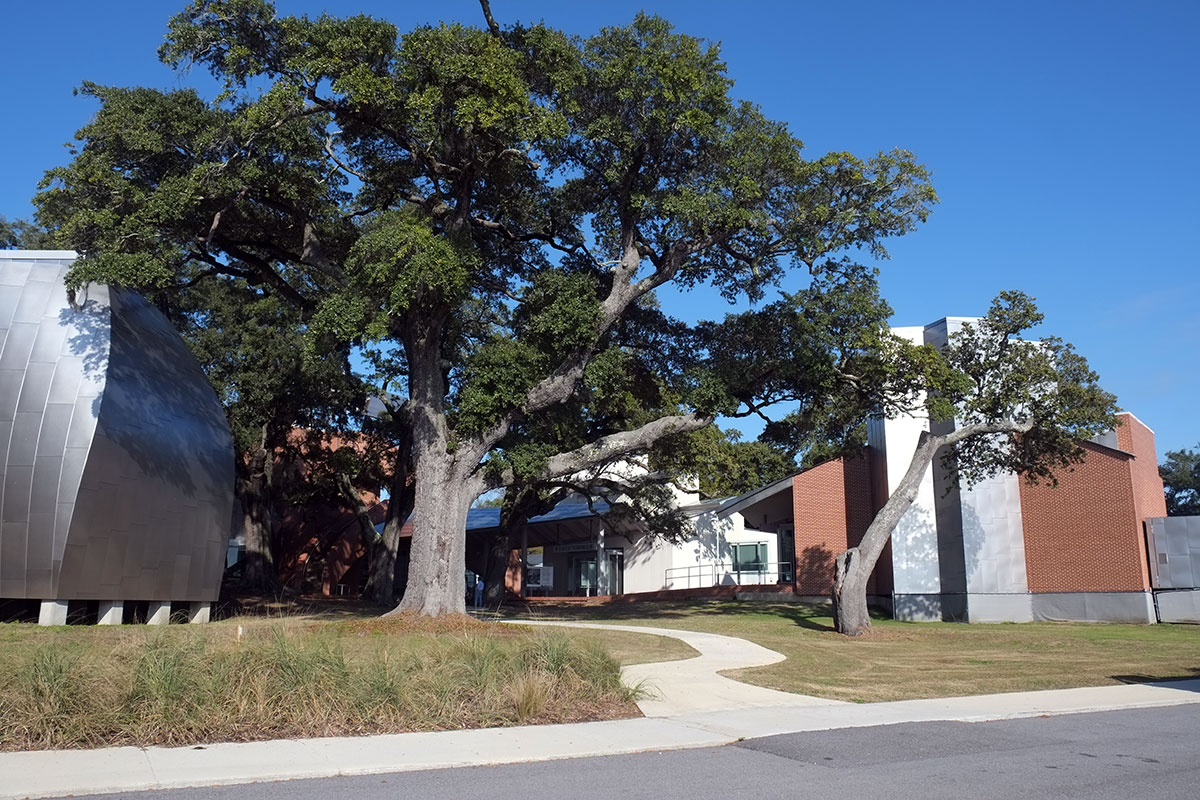
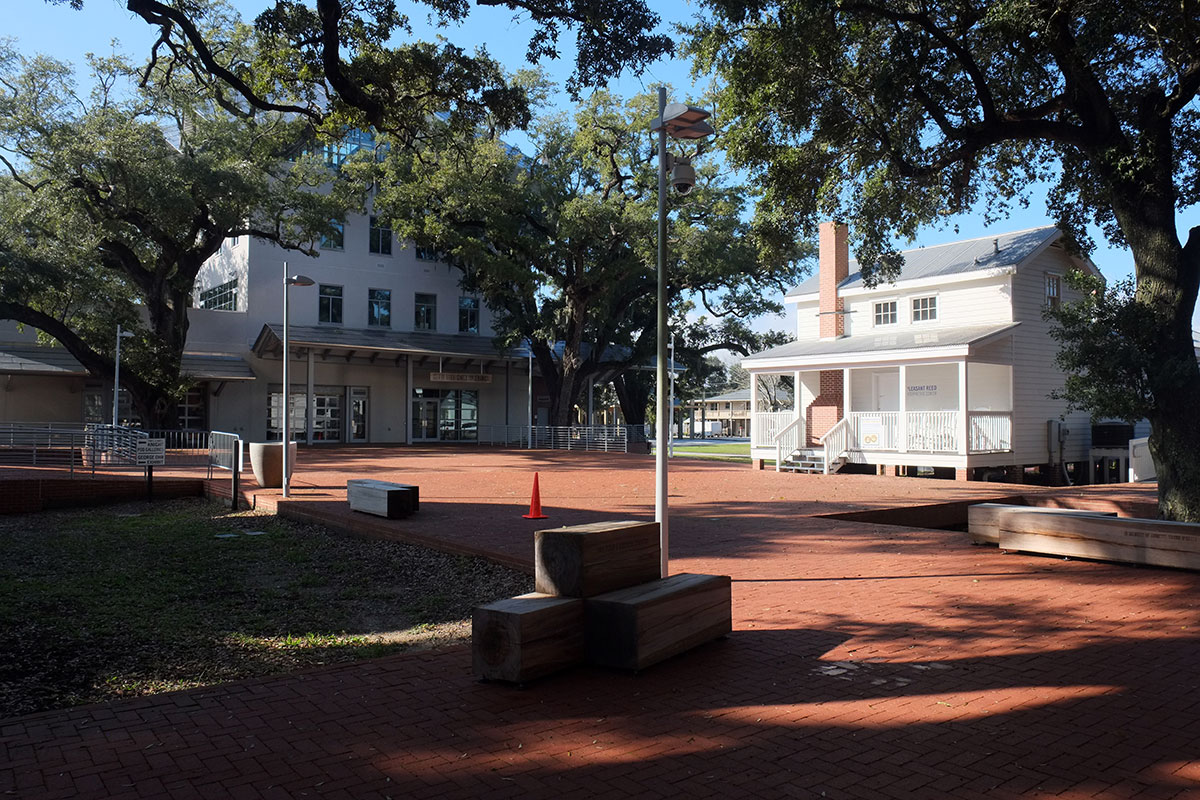
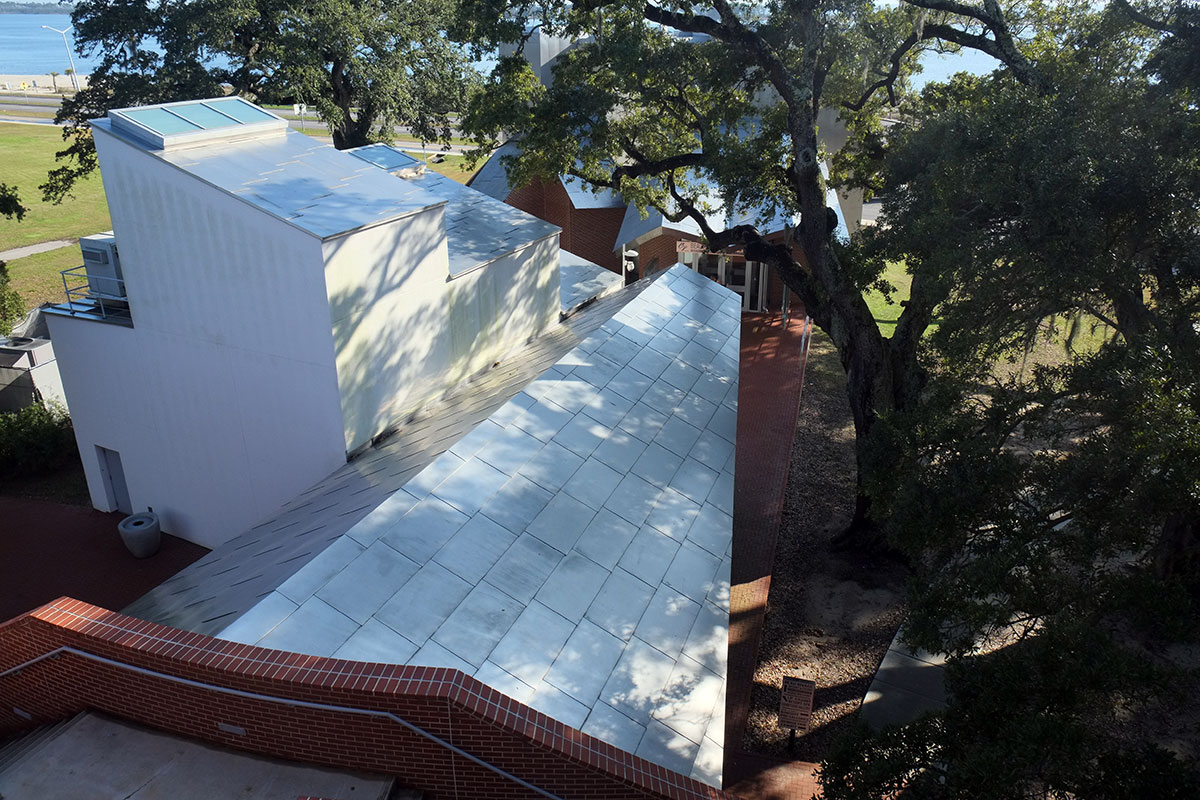
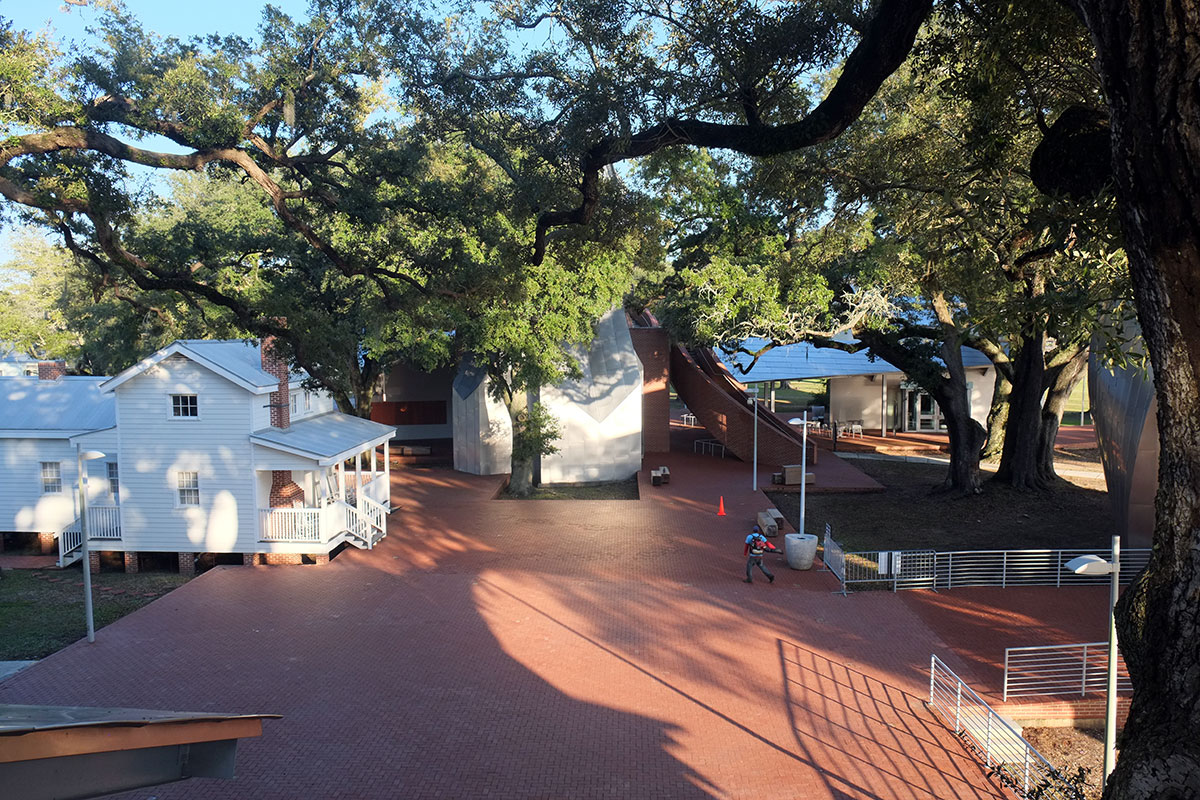
Given the architectural milieu of the South, the last thing I expected to find was a Frank Gehry building.  But right there on the Biloxi waterfront, just past the first wave of casinos, is this recent museum by Gehry, primarily designed to house the biomorphic pottery of George Ohr, the Mad Potter of Biloxi.  It is actually an ensemble of five new buildings and a reconstructed (post-Katrina) historic one playing off a cluster of live oaks in the middle.  As has occurred in some other Gehry projects, the breakdown of scale and the need to engage the landscape leads to more interesting work than when it’s just a large object building.

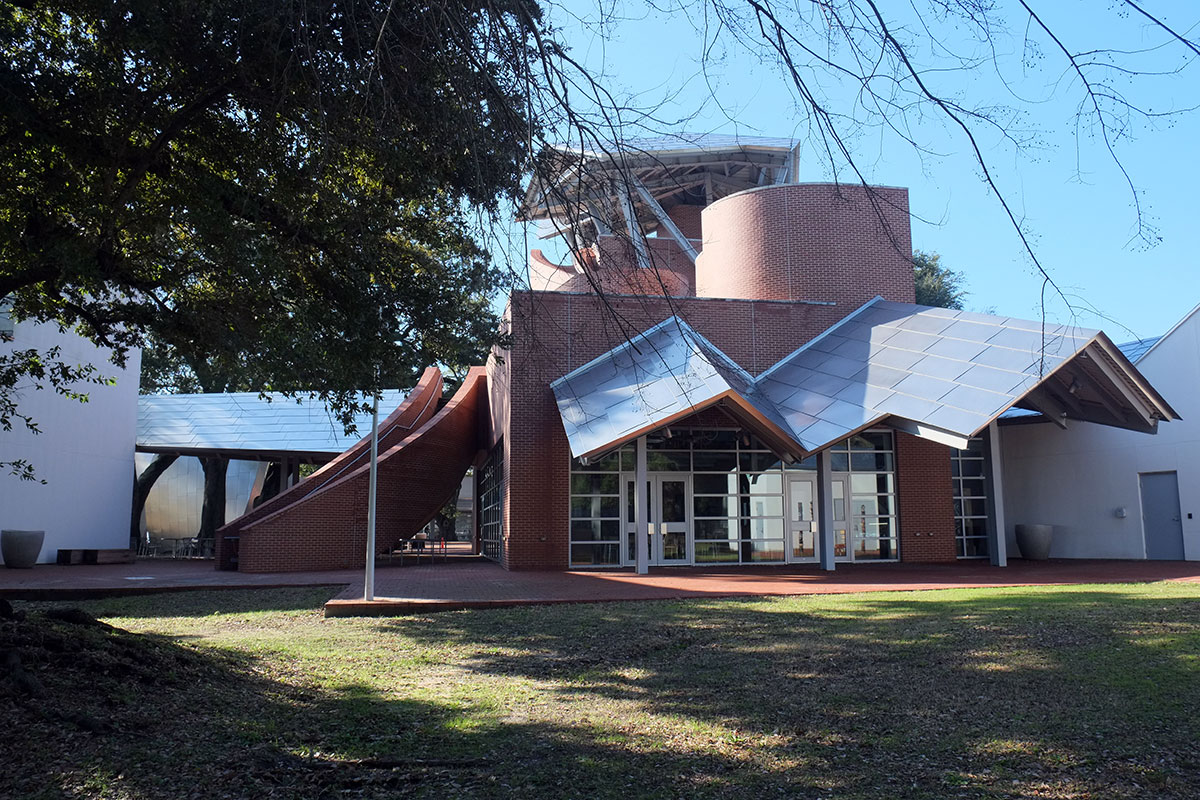
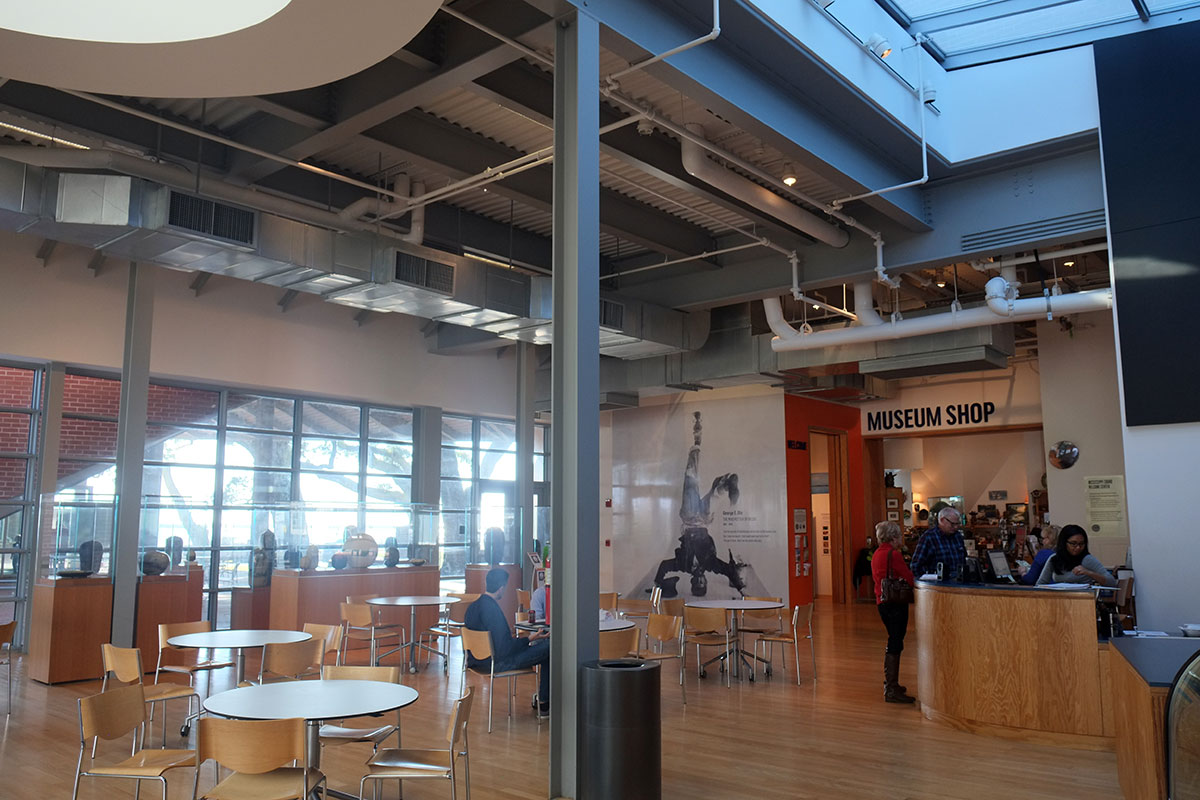
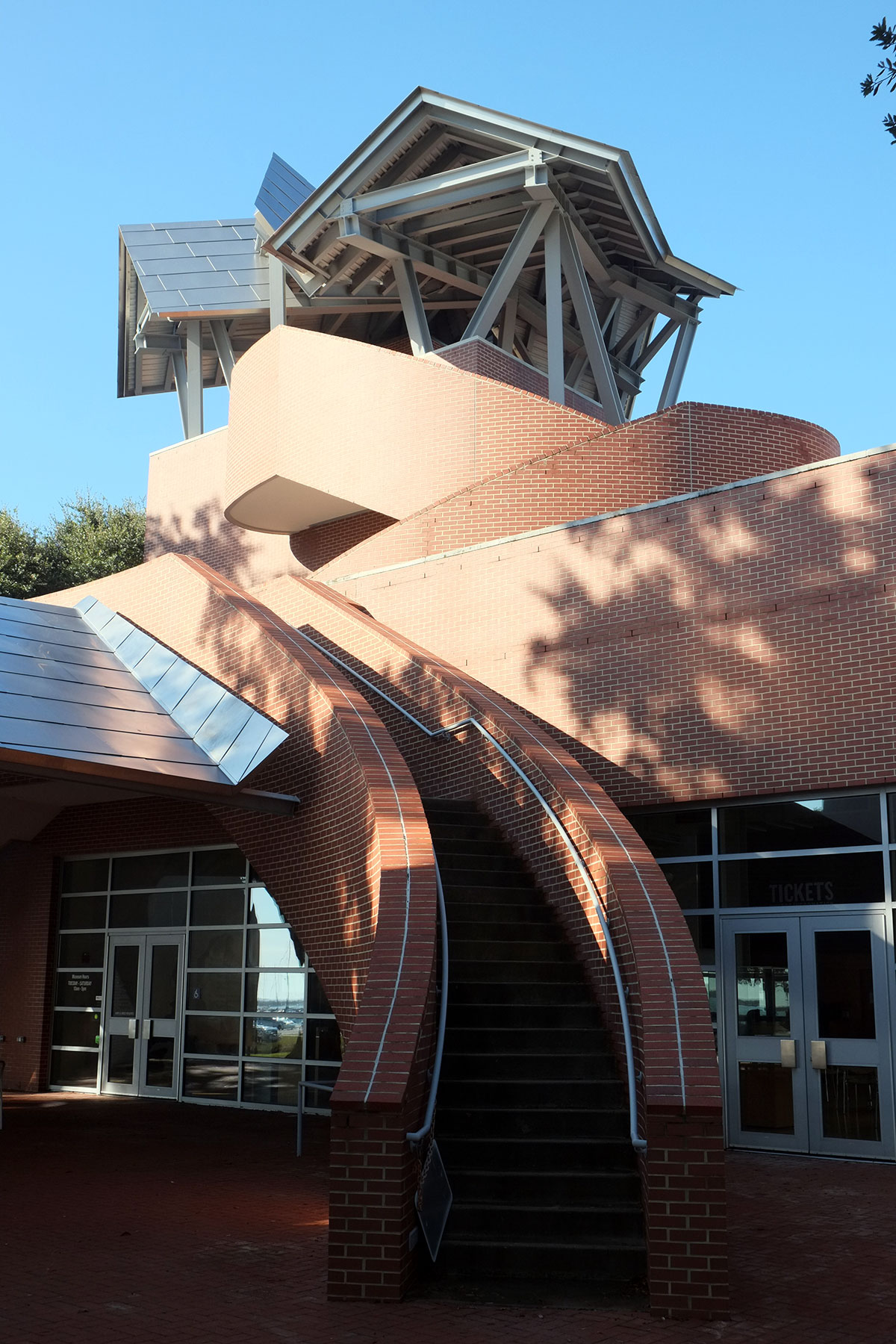
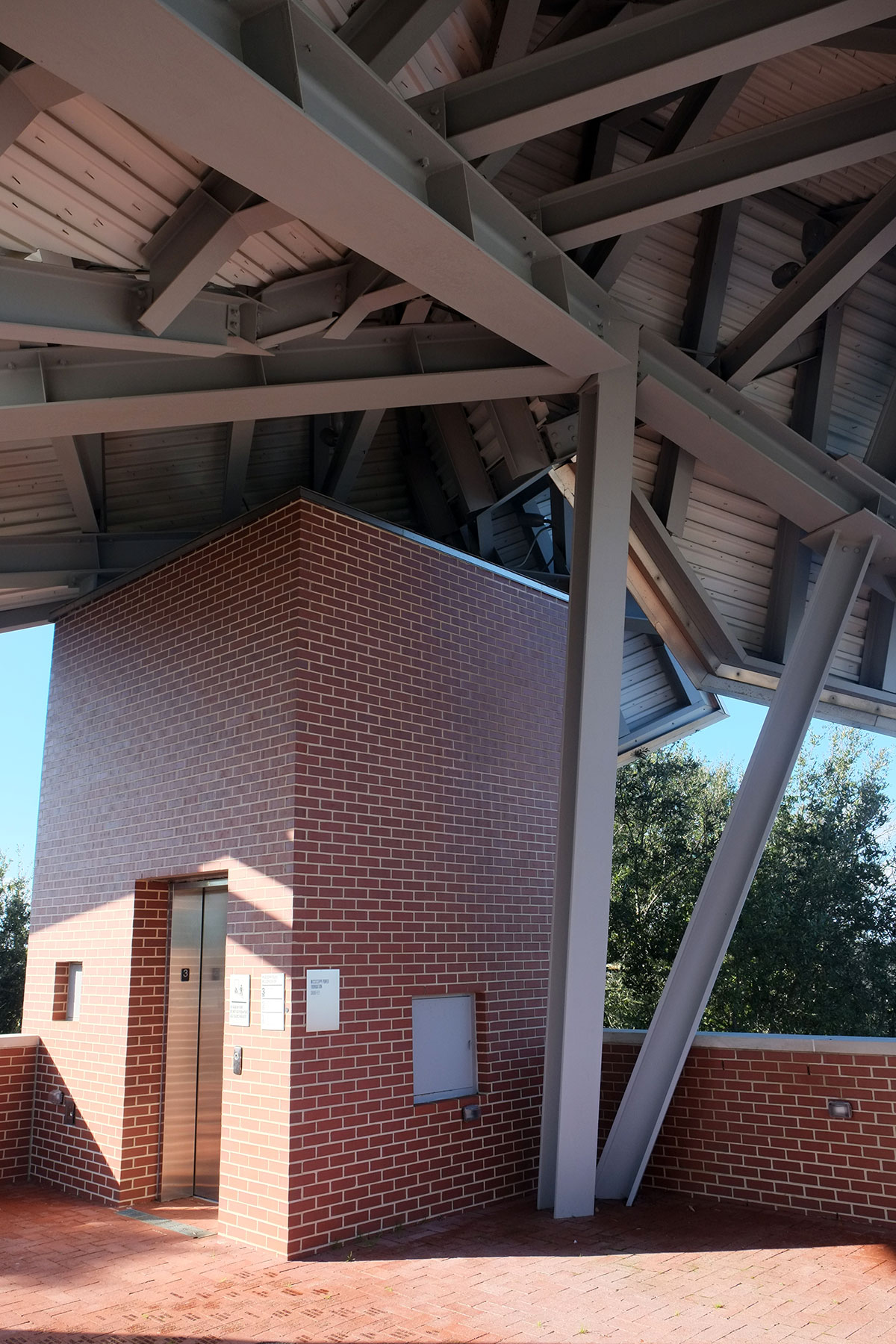
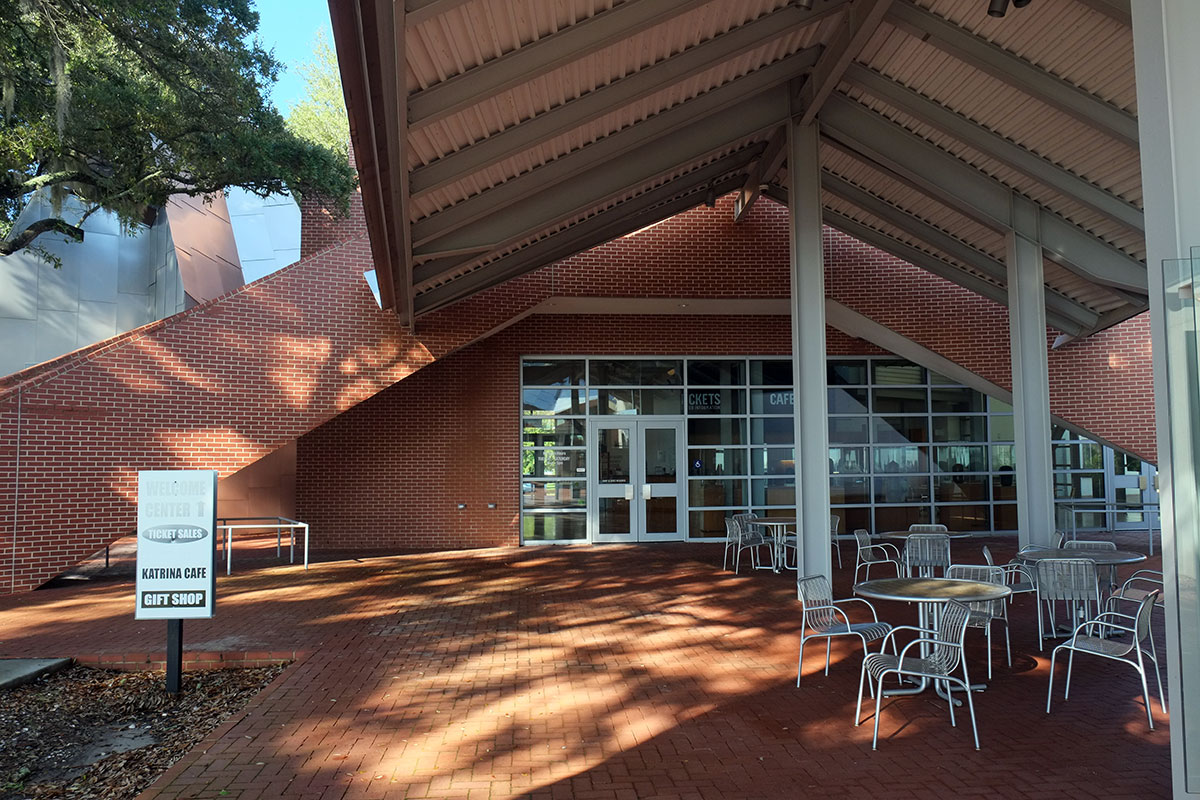
The individual buildings show a range of visual and formal approaches.  The visitors’ center / shop / cafe building has a brick shell, with big roofs shooting off, and a rooftop terrace that is sheltered by a similar roof, which seems to refer to a Gulf Coast vernacular approach for which I can’t remember the name.  DSCF1238    The interior is a big volume with lots of exposed everything.  DSCF1254The contrast between the curving brick walls and the linear steel elements which make up the roof framing is kind of fun. DSCF1242

DSCF1274

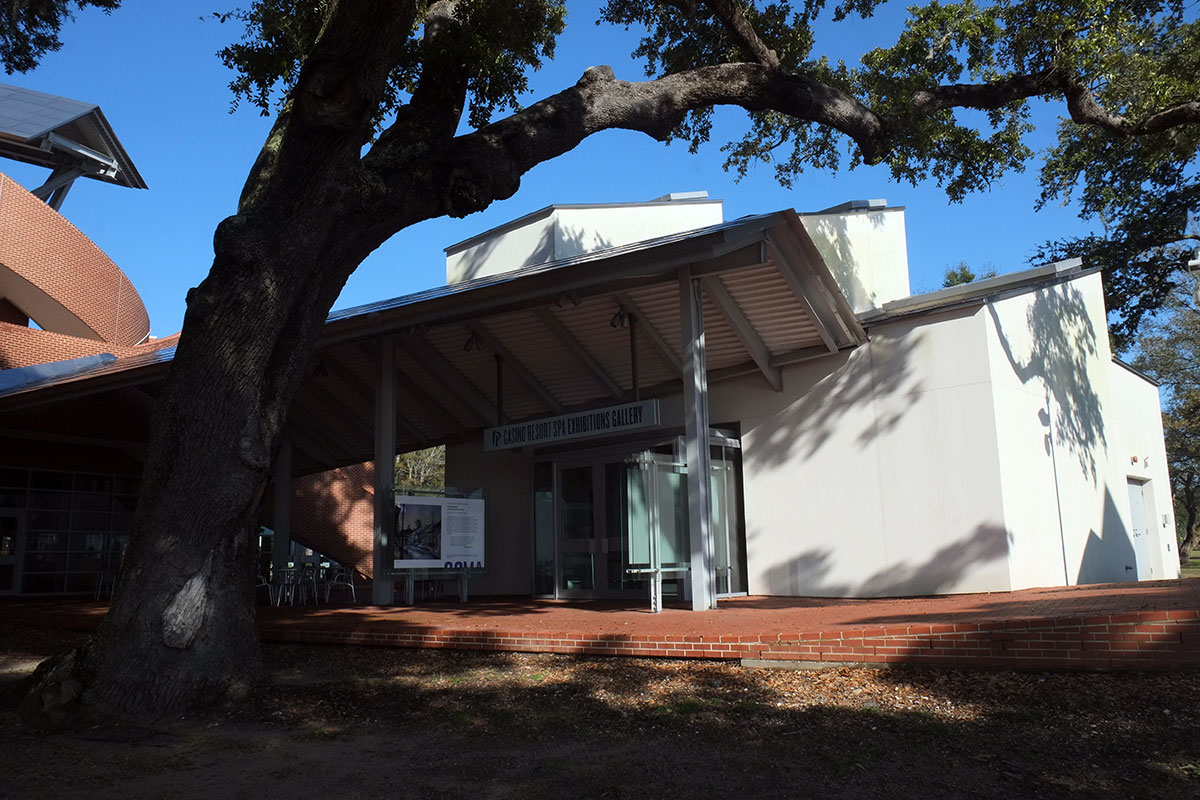
There is temporary exhibits building, which is much simpler, tucked behind a porch and fading into the background.  DSCF1219

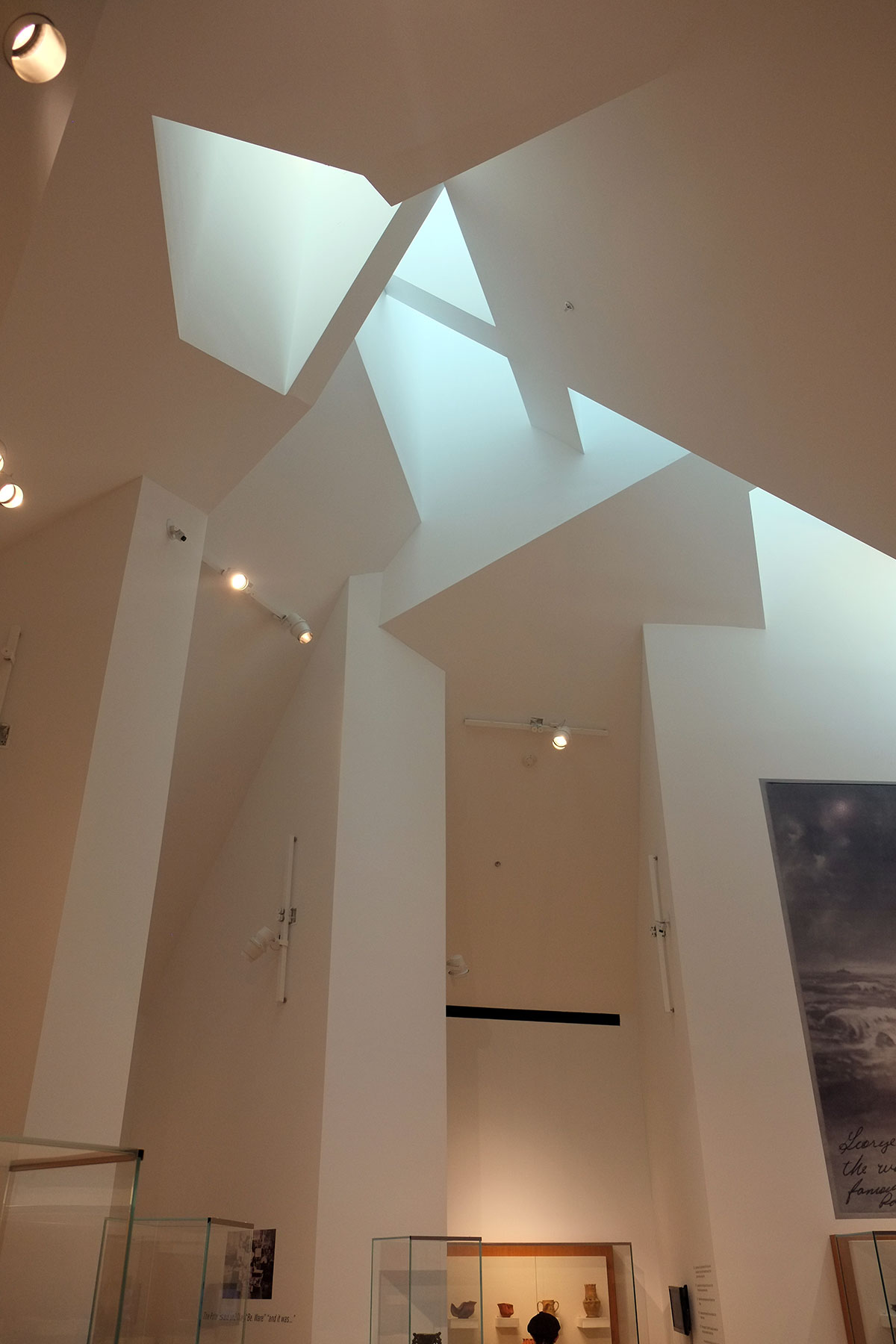
There is a building for African-American art, but at this point half of it is being used for Ohr pottery, as the building intended for Ohr’s work is not yet completed.  On the exterior there again is the juxtaposition of differing systems, with brick volumes below and the metal roof above.  DSCF1245 But strangely the interior is all gypsum-board shapes, which somewhat reflect the exterior forms, but the materiality of the exterior is completely absent.  There’s a disconnect here that I don’t understand. Is it budget, is it wishing to create a more neutral space for the exhibition of art?  DSCF1285

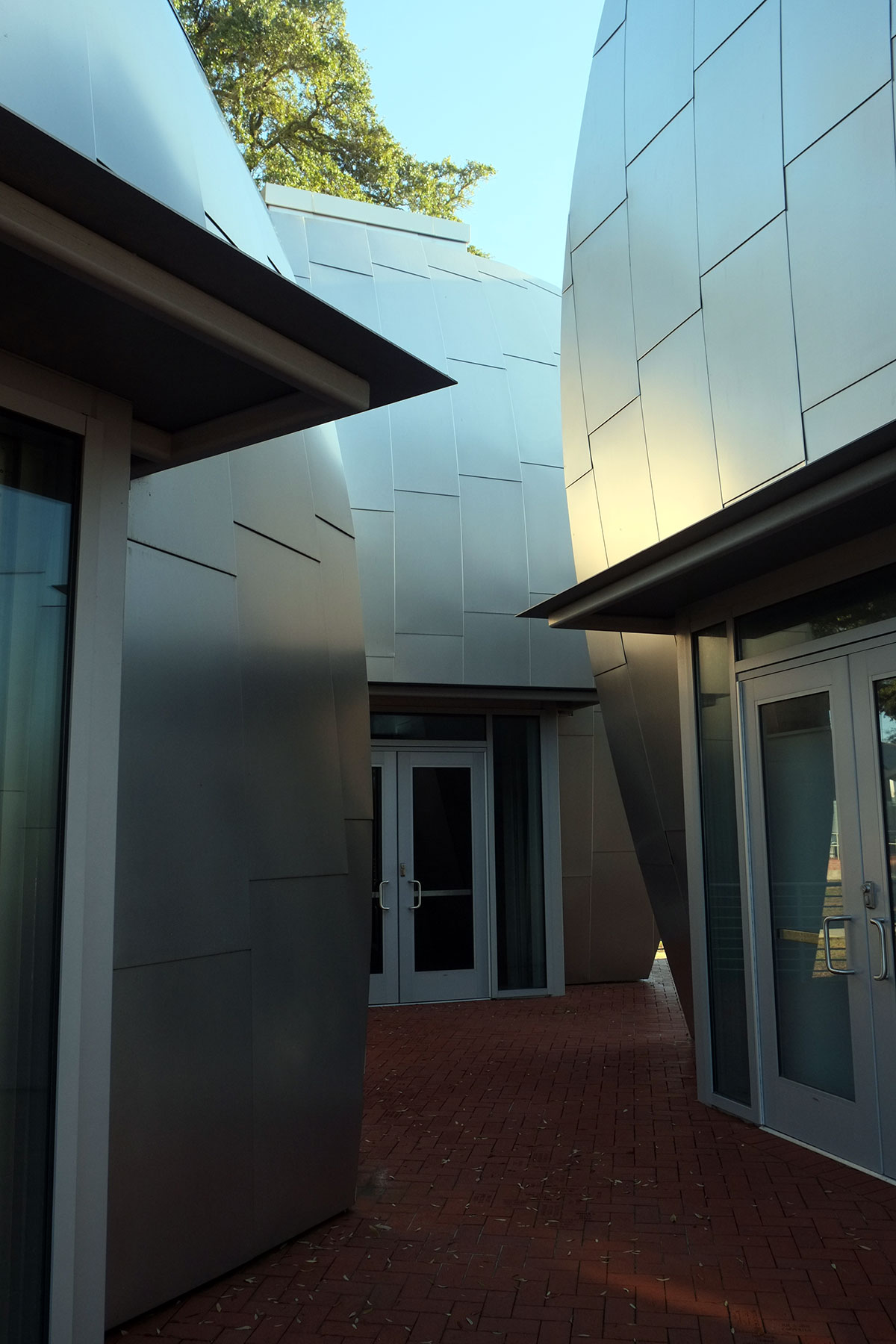
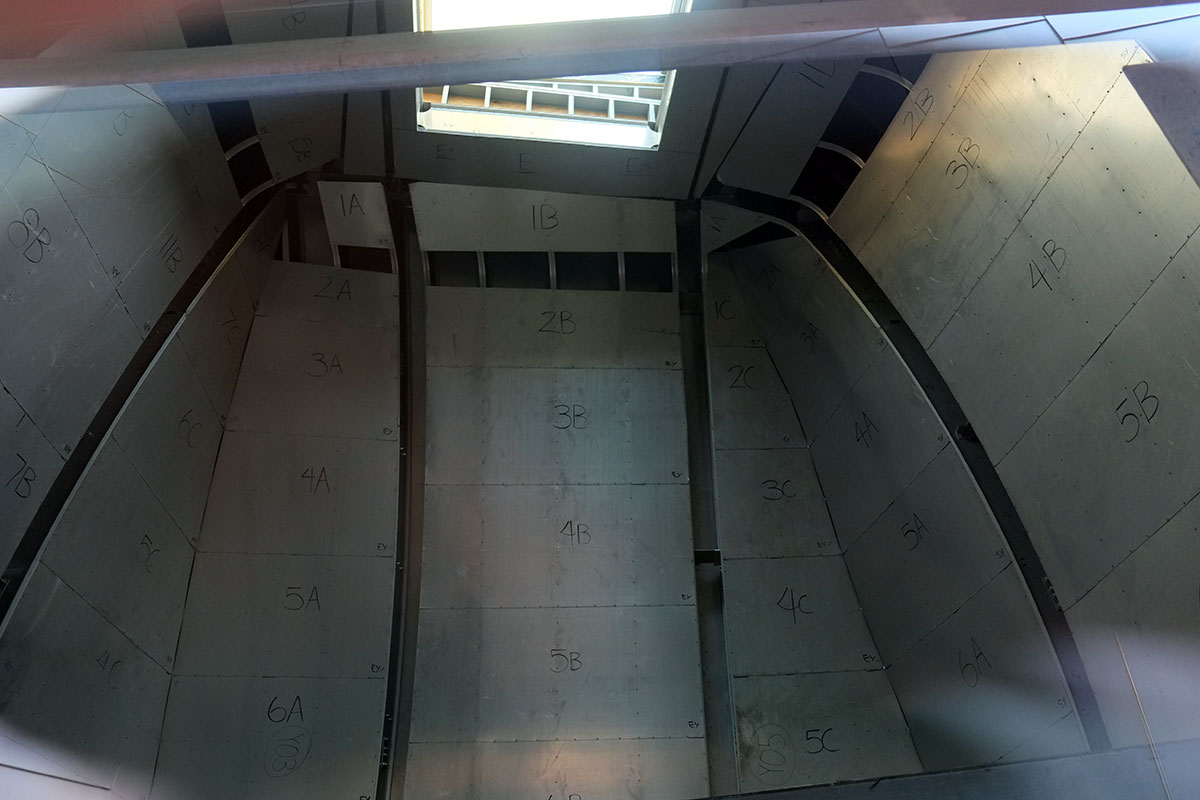
The cluster of four curving metal pods for Ohr’s pottery sits across the courtyard.  The contrast between the trees and the metal is beautiful, and the abstract, unified quality (they are just surface) of the pods sets them off from the other buildings.  DSCF1210    DSCF1293Looking through the door at one of the unfinished pods was revealing – it resembles an Airstream trailer, with a metal skin over large metal framing, and another skin on the interior, which probably provides the shear resistance.  But in the one pod which is completed, the interior is again covered in white gypsum board.  Early Gehry buildings got a lot of mileage from revealing and using the necessary building elements;  I don’t know why he is now covering all that up.  DSCF1296

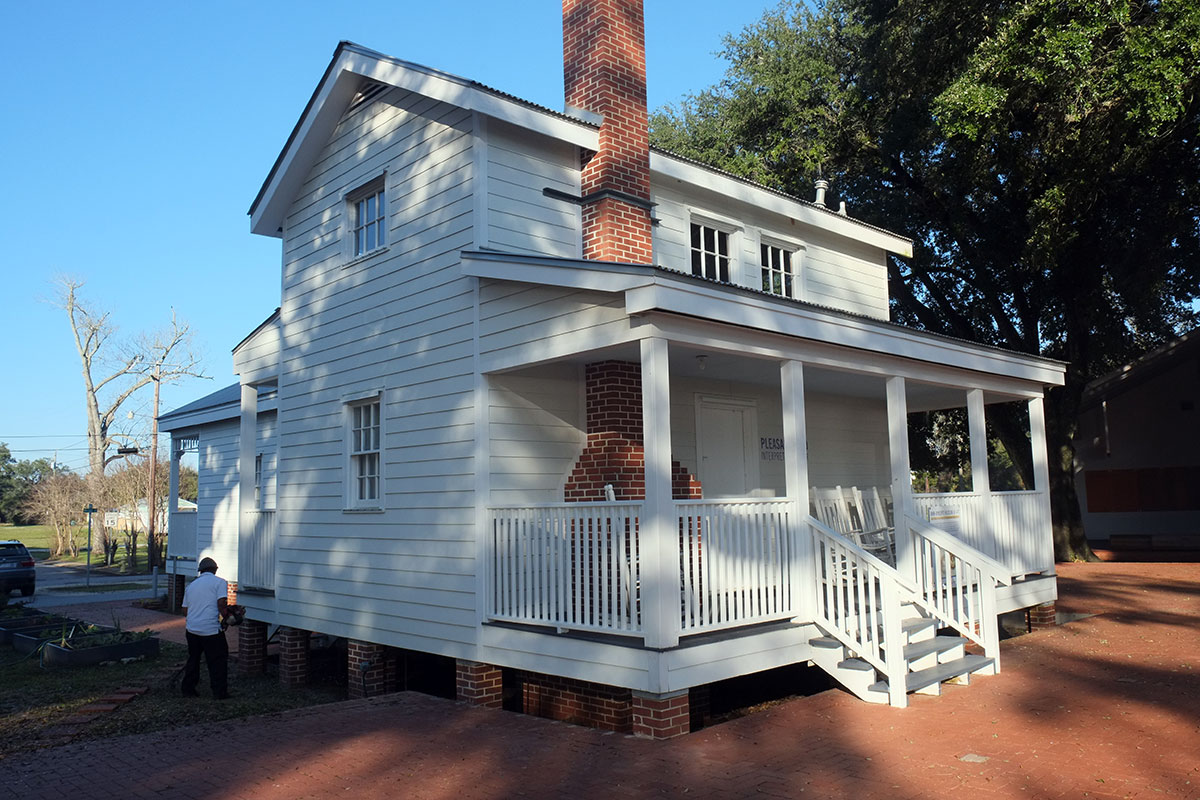
There is one reconstructed historical building, a house that was built in the 19th century by a local freedman, Pleasant Reed.  It was destroyed by Katrina, but has been faithfully rebuilt as an interpretive center, showing the vernacular construction, and tracing the lives of him and his family.  DSCF1292

The Biloxi pottery center has studio, exhibit and meeting spaces, and plays different games with some of the same elements as the visitors’ center.  DSCF1305  The rooftop terrace here has been enclosed as a board room.  DSCF1311  DSCF1327DSCF1343

The five new buildings are quite different, but they hold together as a group for a few reasons.  First, there is a common material vocabulary – brick, white panels, steel framing, curtain walls and metal sheathing.  Second, there is a form-language of how these pieces are used – rectilinear, curvilinear, and skewed shapes.  Each building is a mix-and-match of elements between these two systems, leading to a lot of richness.  There isn’t a rigid assignment of materials or shapes to specific roles within a system of meaning (I couldn’t see that the brick always meant one thing), but rather playfulness in the pairings, as if every possible combination was being explored to get the maximum variety within the limited palette.  (I can feel an analytical matrix coming on.)  DSCF1290

Third, the relationships of the buildings to each other and the spaces in between is well-handled.  DSCF1262

There is small entry zone, where you are squeezed between the brick gallery building, the pods, and the trees.  DSCF1211

You emerge facing a seating area by the visitors’ center, DSCF1221

and then turn towards a large brick terrace.  DSCF1222

The central courtyard is the heart of the scheme, with the oaks framing, obscuring and balancing the buildings.  These are not simple fabric buildings, fading into the background in deference to the needs of the whole.  Each building is a strong, simple statement, and even though they share an architectural approach, without the open space and the large trees, they would be at war with each other, each clamoring for attention.  DSCF1280

Reflecting back on the Gehry buildings I’ve seen, my favorites are the ones where they have this relationship to the landscape, or where he creates a campus (such as the Loyola Law School).  The buildings are such powerful objects that they often look ill-at-ease on a city street.  They often don’t play well with others.  DSCF1331

This siting allows them each to exist and be considered on its own terms, while still working together to make a complex, varied, but still lovely outdoor space.   We don’t think of Frank Gehry buildings as being very contextual, but this complex responds wonderfully to the site, the climate, and even some vernacular building elements.  I got the impression from some locals that they don’t really understand or like this museum, but I think they got one of the best Gehry buildings around.

The Allman Brothers Band – Macon, Georgia

DSCF0281Old people go to Graceland;  Elvis still looms large for those who grew up in the 50s.  But what about my musical generation, those who caught the tail end of the 60s but really came of age in the 70s – do we have an equivalent Mecca, a place of deep significance in the life of the musicians?  There’s the Grateful Dead house at 710 Ashbury.  The store in Seattle where Jimi Hendrix’s first guitar was purchased.  Abbey Road.  But I think if there’s one place that surpasses all others in the mythology of rock, it’s the intersection where Duane Allman died in a motorcycle crash in 1971.

Traveling with a fourteen-year-old, I’ve been subjected to not-infrequent bouts of fan-girl behavior (mostly involving Star wars this year), so I didn’t feel too bad dragging her to Macon, Georgia, to visit the place where the Allmans lived and died.  We’ve been avoiding historical spots where something once happened, unless there’s really something physically there, and Macon provides this too:  there’s the Big House Museum, exhibiting vast amounts of Allman Brothers memorabilia, in the house where they lived together for a few years in the early 70s.

When I was young, the Allman Brothers were the benchmark band for us.  We could understand if people didn’t get the Grateful Dead – they were a complex band, a taste that could take years to acquire.  But if you didn’t like the Allman Brothers, there was just something wrong with you, and hanging out with you clearly was not going to be a good time.

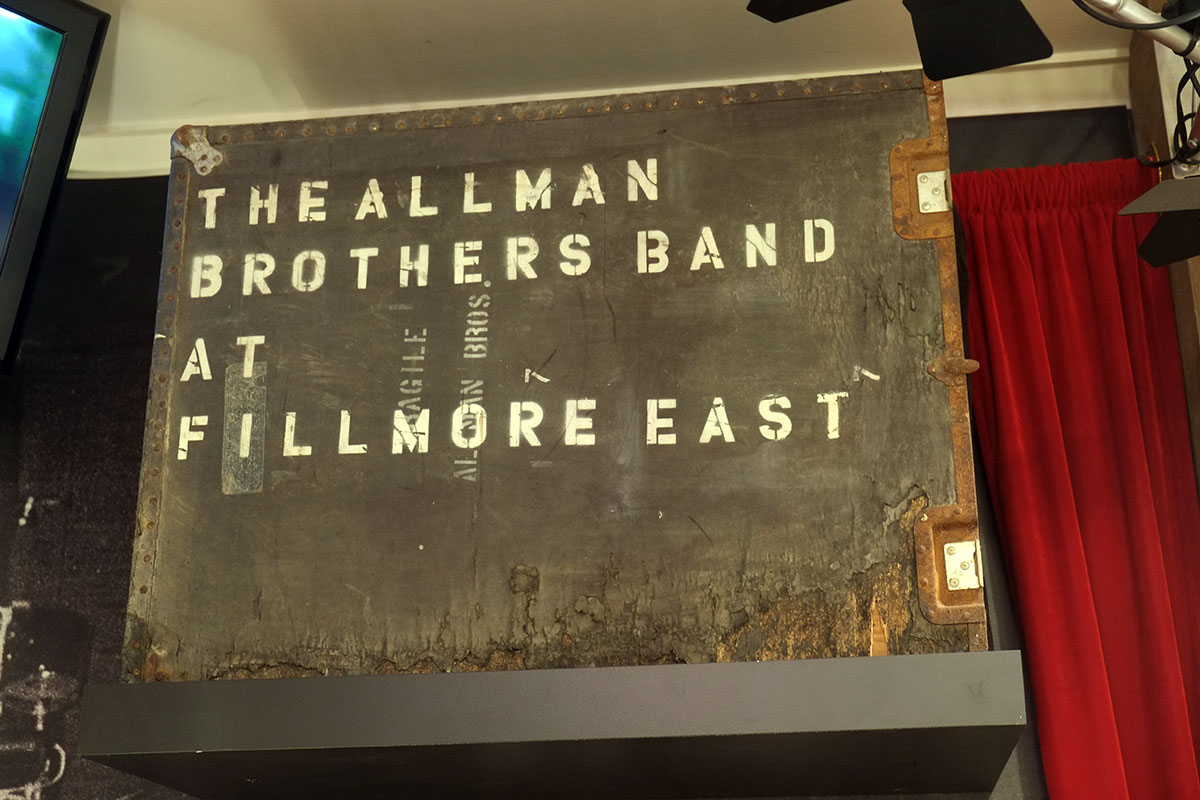
The Big House Museum was pretty overwhelming, even for a confirmed fan.  They say they have about 40% of their material on exhibit.  The box pictured above was for Berry Oakley’s bass, and is the one used in the iconic album cover for Fillmore East.  Then there’s this Les Paul, used by Duane on the first two albums, and when he played in the Layla sessions.DSCF0283

This is the first paycheck Duane got for playing in the band (signed by Greg).DSCF0285

And the dress worn by Brittany Oakley on the cover of Brothers and Sisters (displayed in the room where she lived as a child.)  DSCF0319

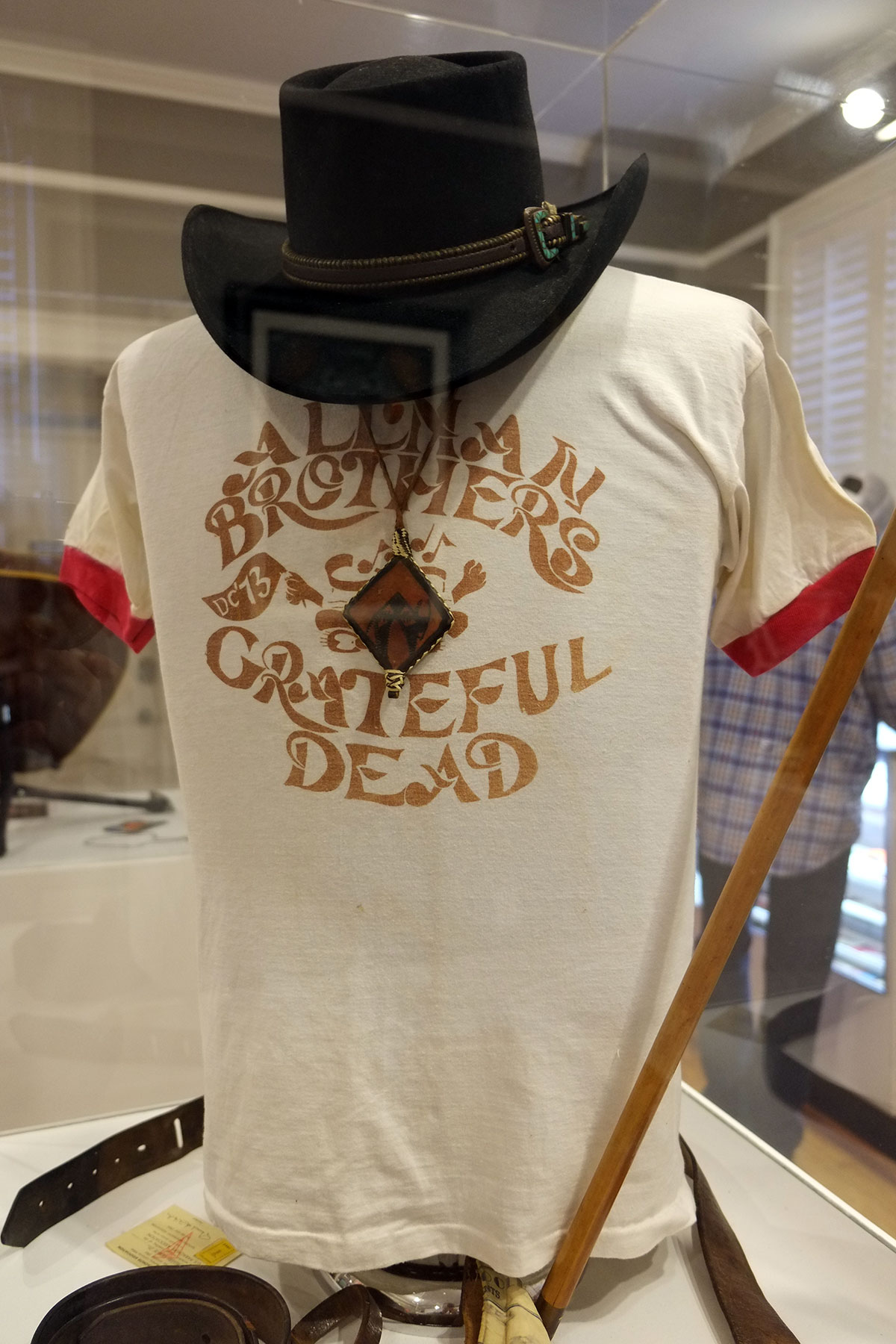
A tee shirt from a concert I wish I’d been at:DSCF0340

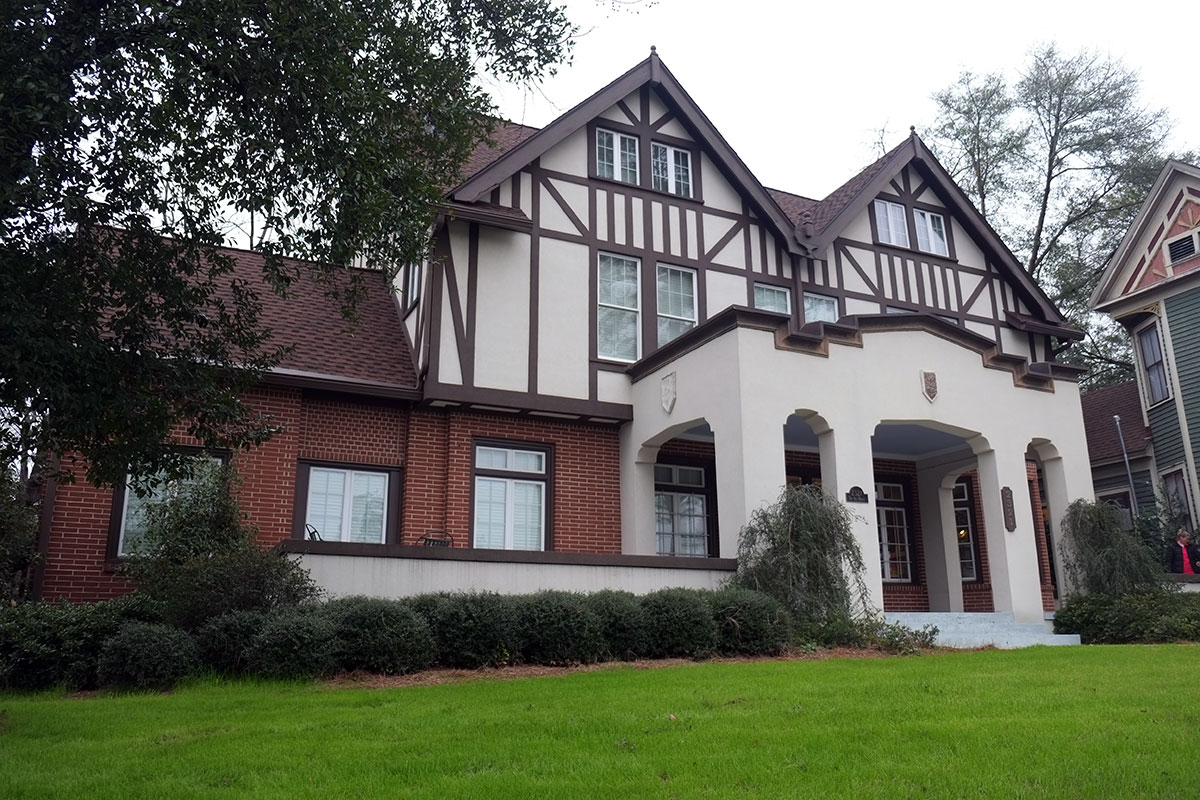
The house itself is much nicer than you would expect for a communal rock band in 1970;  maybe it’s been fixed up a lot.  It’s in a neighborhood of large, older houses, most of which seem to have been converted to apartments long ago.  DSCF0356

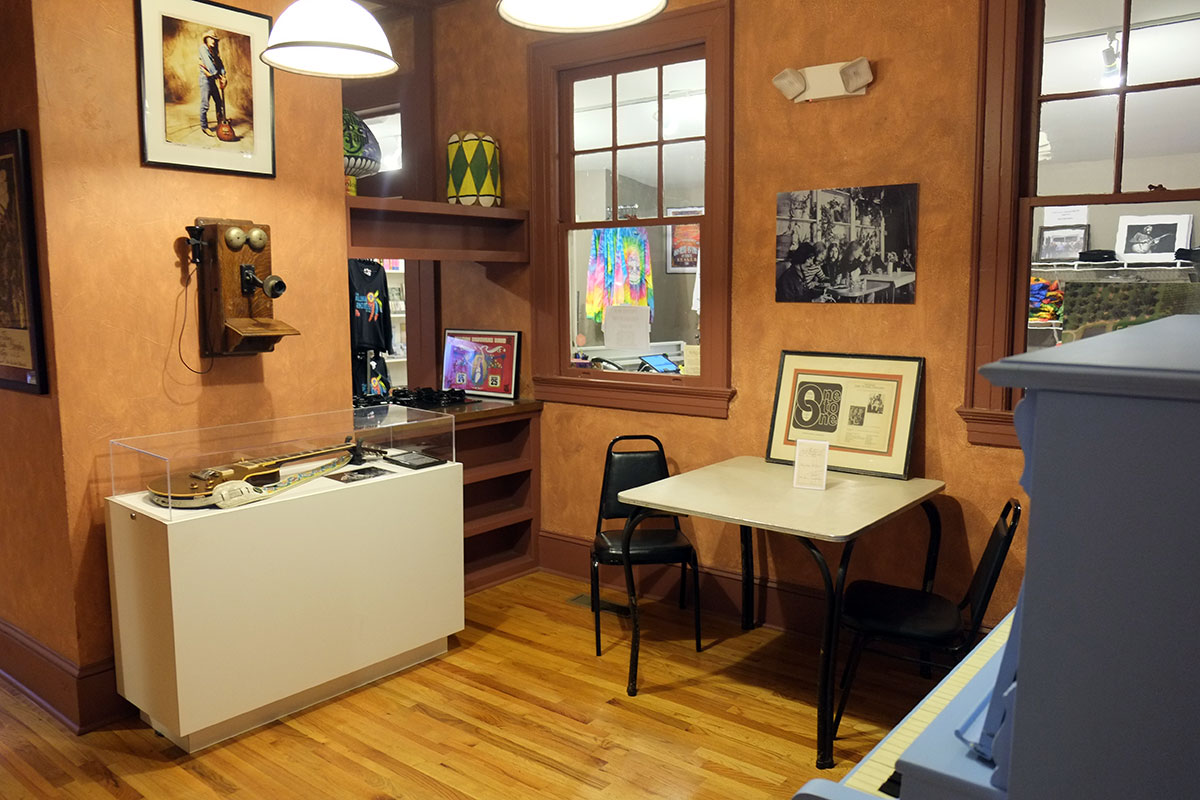
This is the front parlor room where Dickey Betts wrote Blue Sky for his fiance, sitting in the window bay.  I loved seeing this;  Blue Sky has always been one of my favorite songs, and we played it at our wedding.  DSCF0309

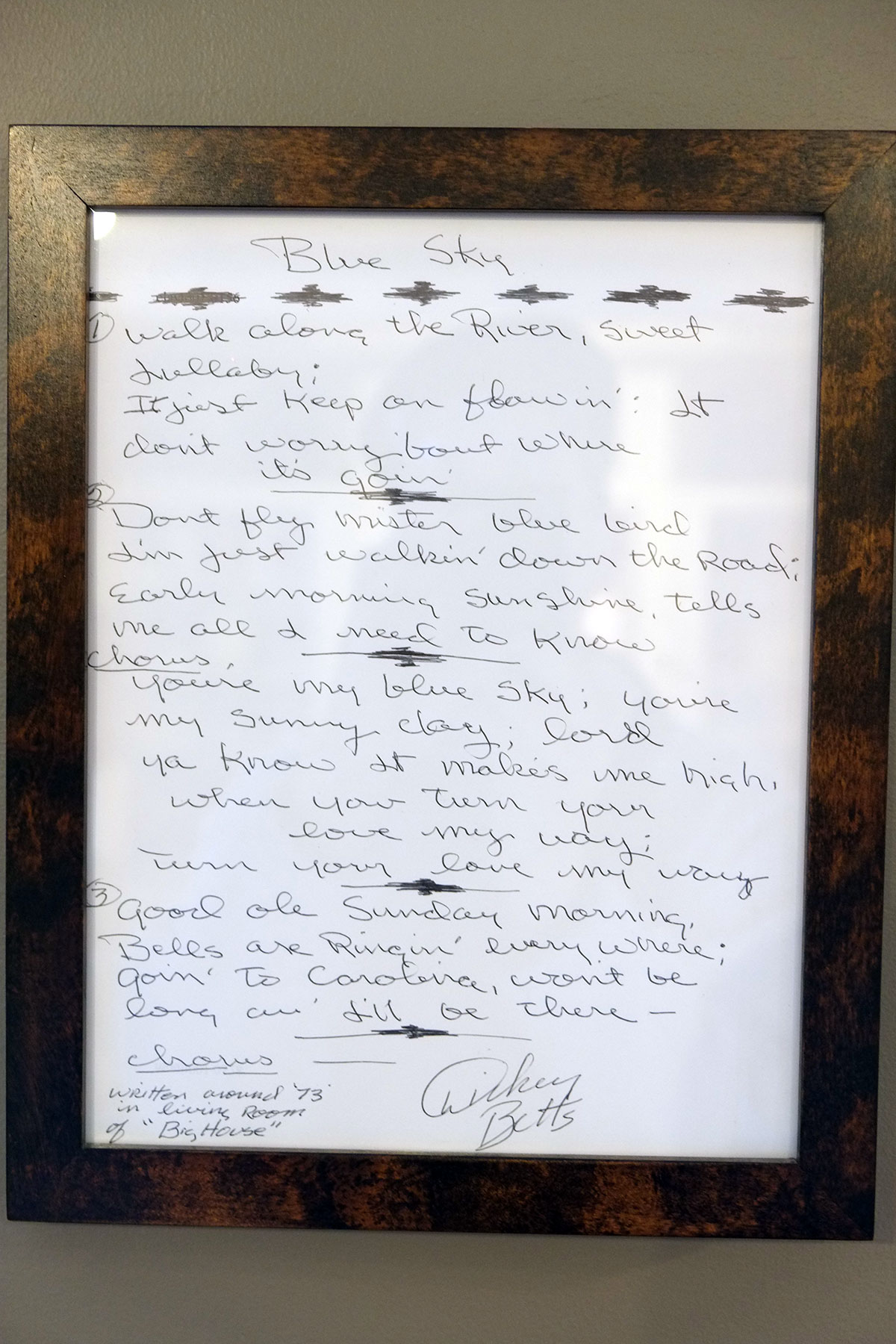
The handwritten lyrics to Blue Sky;  “…bells are ringing everywhere…” came from hearing the bells in the church across the street.DSCF0303

A Dickey Betts guitarDSCF0348

displayed in the kitchen where he wrote Ramblin’ Man (and we have just done a bunch of driving on Highway 41).DSCF0345

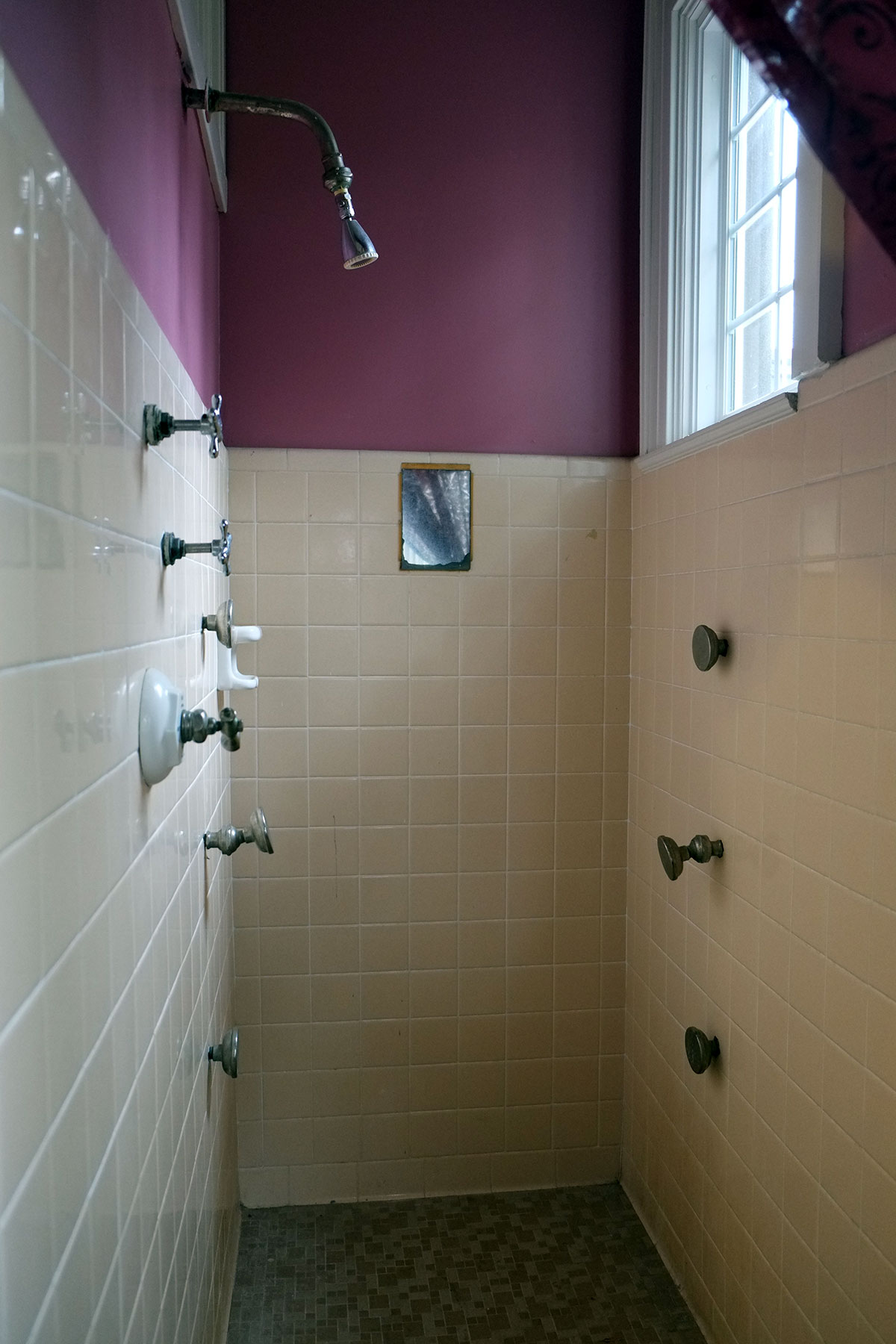
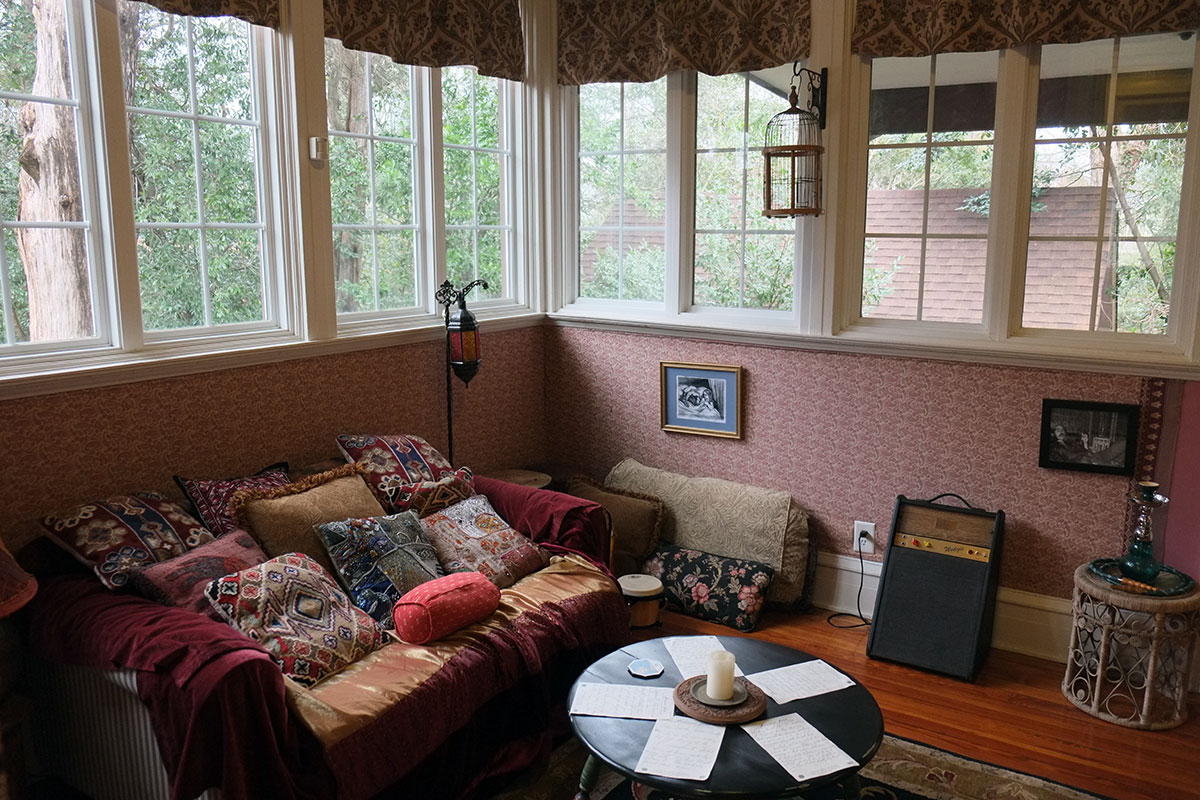
The “casbah” room upstairs, were they hung out and listened to music,DSCF0333I like imagining that they argued over who had to get up and change the album every 20 minutes.  DSCF0330and the apparently legendary shower, with the seven shower heads (a rarity in those simpler times).
DSCF0328

We visited the site of Duane’s crash on October 29, 1971, the intersection of Hillcrest and Bartlett.  Contrary to myth, it wasn’t a peach truck, but a lumber truck heading for the nearby lumber yard.  DSCF0360Duane was coming down the hill from the left, and hit the truck making a left turn from the right, into Bartlett where I am standing taking the picture.  He was 24 years old.

Berry Oakley died after a motorcycle crash too, one year later and four blocks from this intersection.  Duane and Berry are buried in Rose Hill Cemetery, a place along the river and railroad tracks near downtown where the band used to hang out a lot.  It was started in 1840, and hundreds of civil war casualties are buried there.  We walked past the grave of Elizabeth Reed (Napier), but we didn’t track down the tombstone for Little Martha.  Duane and Berry lie in a beautiful dell that slopes down to the river.DSCF0234

Two white stones side by side, with angels at their feet, representing their daughters.DSCF0239

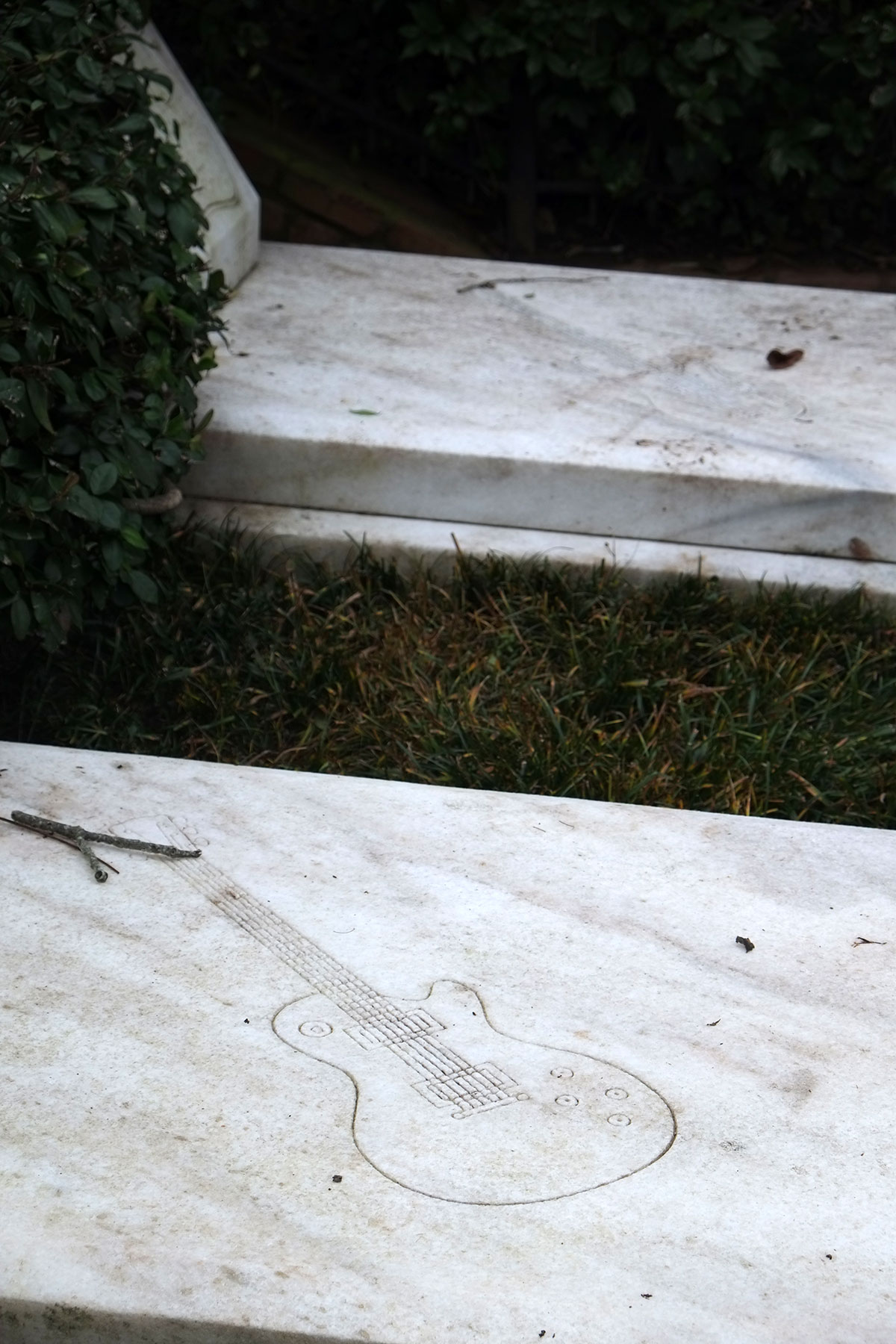
Their graves were recently enclosed by a fence; apparently the amount of partying taking place with drunken fans got to be too much.  DSCF0267You can see the Les Paul carved into Duane’s stone.
DSCF0243

The music around the perimeter is from Little Martha, and note the discreet mushroom on the side.  DSCF0242

One late night during my sophomore year in college, I walked back to my dorm after hanging out with friends.  As I passed the suite of some classmates I didn’t know too well, I heard Blue Sky being played very loudly.  I wasn’t ready to go to bed, so I knocked on their door.  The door opened on a darkened room, with a half dozen blissed-out, practically catatonic guys laying back in their chairs, while Eat a Peach spun on the turntable by the window under a single spotlight.  The song ended, Little Martha played, and they began to revive.  When the album was over, they began talking, and I discerned that they had an interesting take on the history and meaning of the universe.  There was a big bang, the universe expanded, gasses coalesced and formed planets, life appeared, species evolved, humans arrived, civilization began, and the arts and music were invented.  And the point of all this was that eventually Duane Allman would be born, so he would be there to play on Blue Sky.  (A corollary was that it was nice he was around for the Layla album too.)  This pretty much justified human existence for them,  and I realized that if you were looking for an eternal verity (like something on which to base a major religion), you’d have a hard time finding something more inarguable and certain than the perfection of the Allman Brothers.

Herzog and de Meuron’s Perez Art Museum

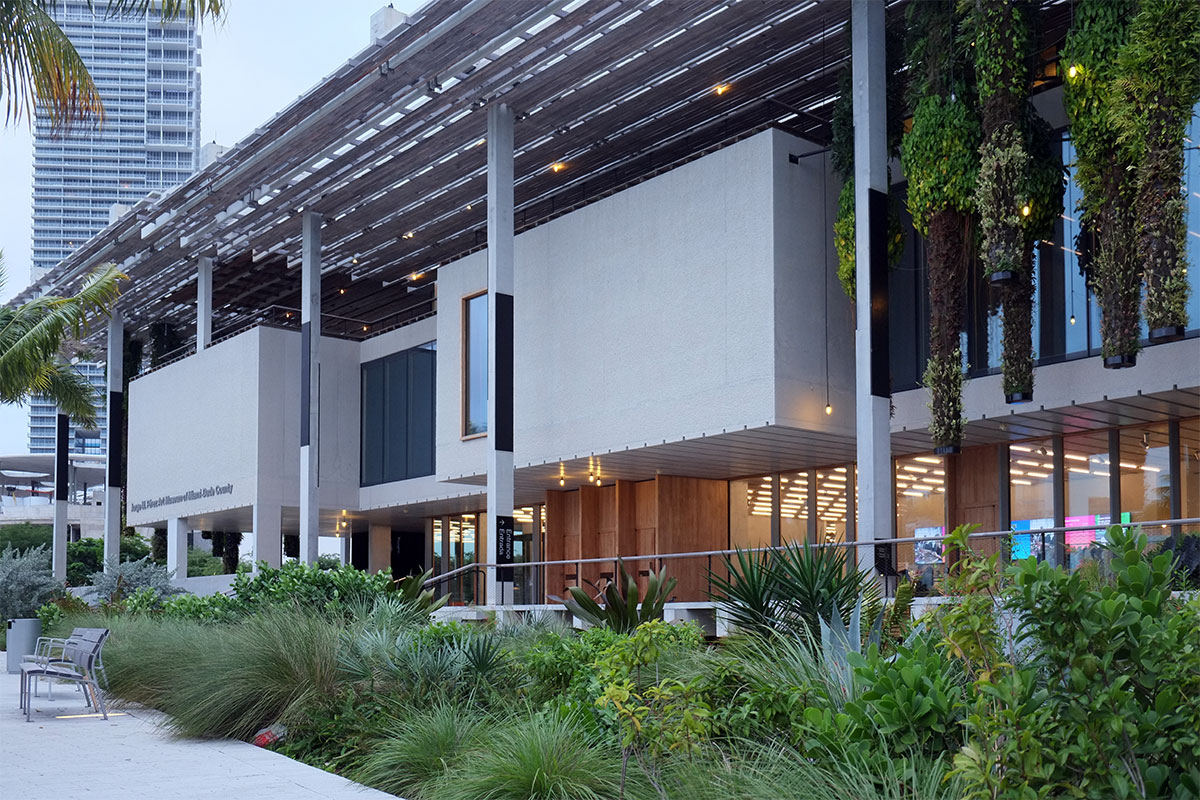
DSCF8756Sometimes it seems that Renzo Piano has designed every new museum in the US in the past 20 years, but then we come across some places that have resisted the hegemony.  However, even in these non-Piano buildings, you can see how he has shifted the conversation.  We’ve visited a lot of new museums on this trip, and in general, I think there is a much greater emphasis on the clear expression of the buildings’ systems (often with exquisite detailing), and less emphasis on look-at-me form-making, starchitect branding and spatial gymnastics than there was in prior decades.  The new buildings have great conceptual clarity, but this hasn’t been at the expense of being good museums for displaying art.

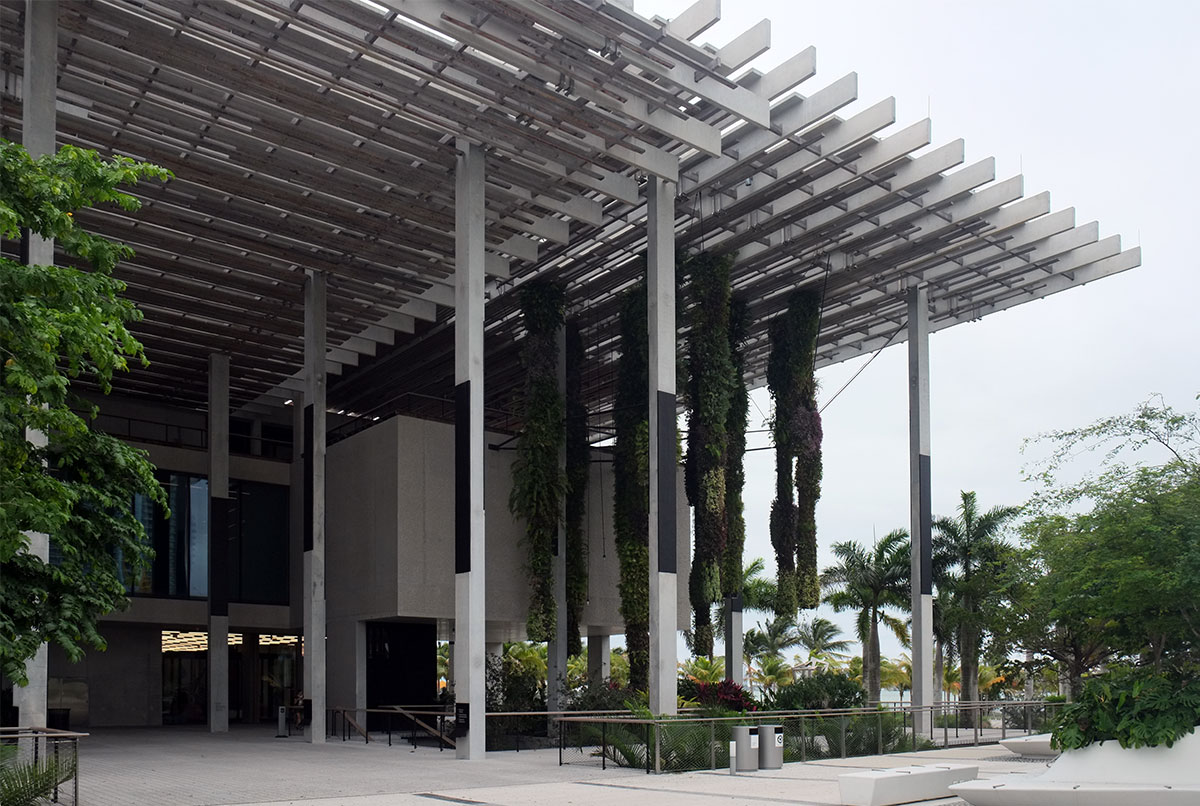
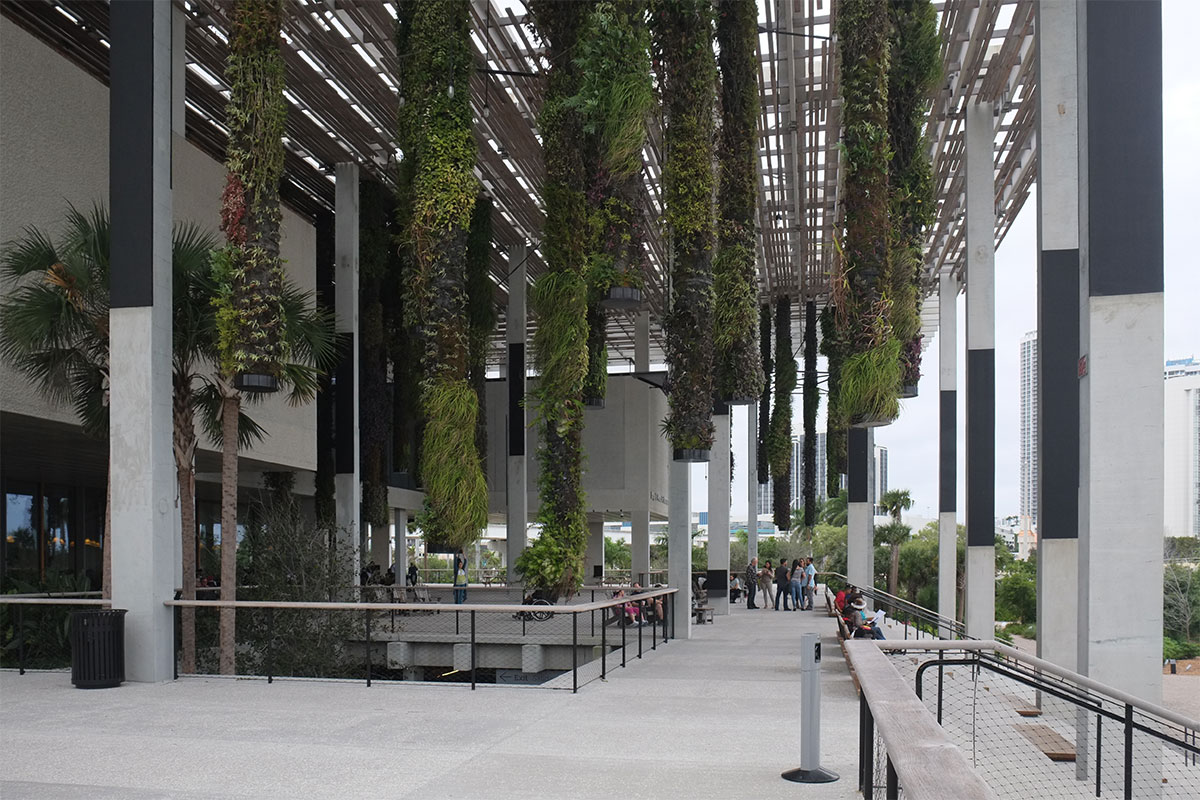
Herzog and de Meuron’s recent Perez Art Museum in Miami follows up on the success of their parking garage in South Beach, which highlighted their ability to work with structure and space, eschewing the intricate screen facades for which they were known.  The Perez Museum continues with this approach, with a parti where the articulation of the elements of frame, roof, box and plane are the basis for the scheme.  In the photo above, the roof/trellis floats above the whole building, supported on tall columns.  (We wondered if the metal plates visible at the middle of the columns are external steel reinforcement, allowing for an extreme slenderness ratio that otherwise might cause buckling.)  In the shadows under the roof you can see one of the concrete box galleries poking out.

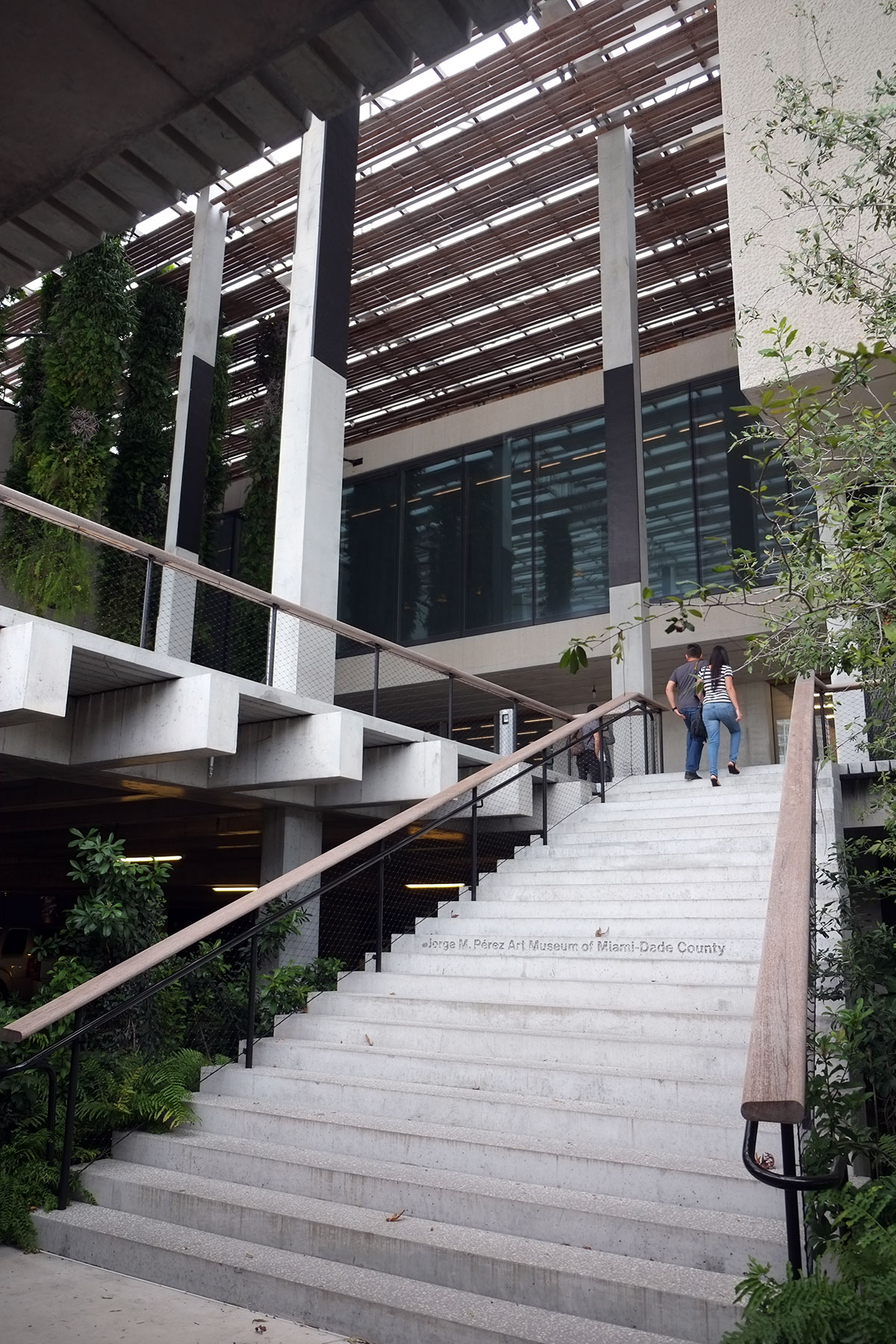
The beautiful parking garage is under the main floor plate, which has tightly-spaced precast joists and a thin slab.  There are stairs, ramps, and stepped terraces which connect the plinth to the ground plane at a few points.DSCF8751

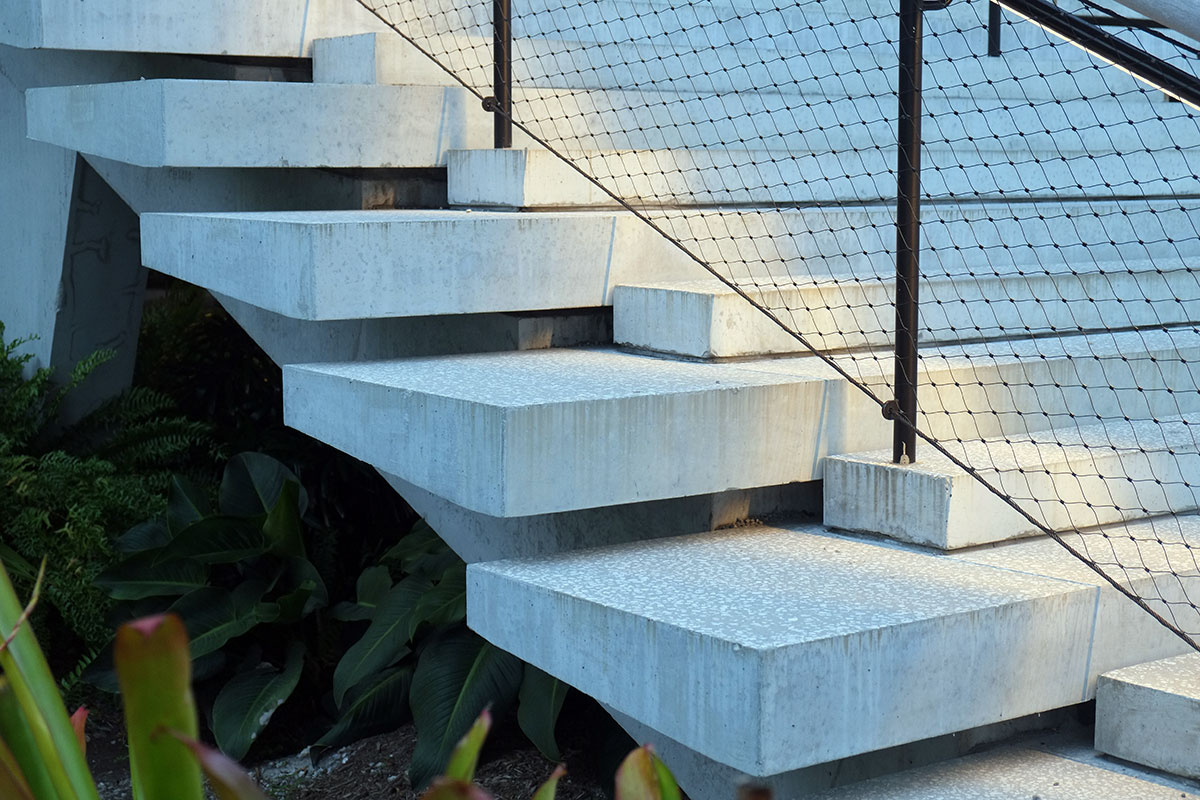
There are some excellent details at the stairs – a few ways to differentiate the conditions:DSCF8883  DSCF8862

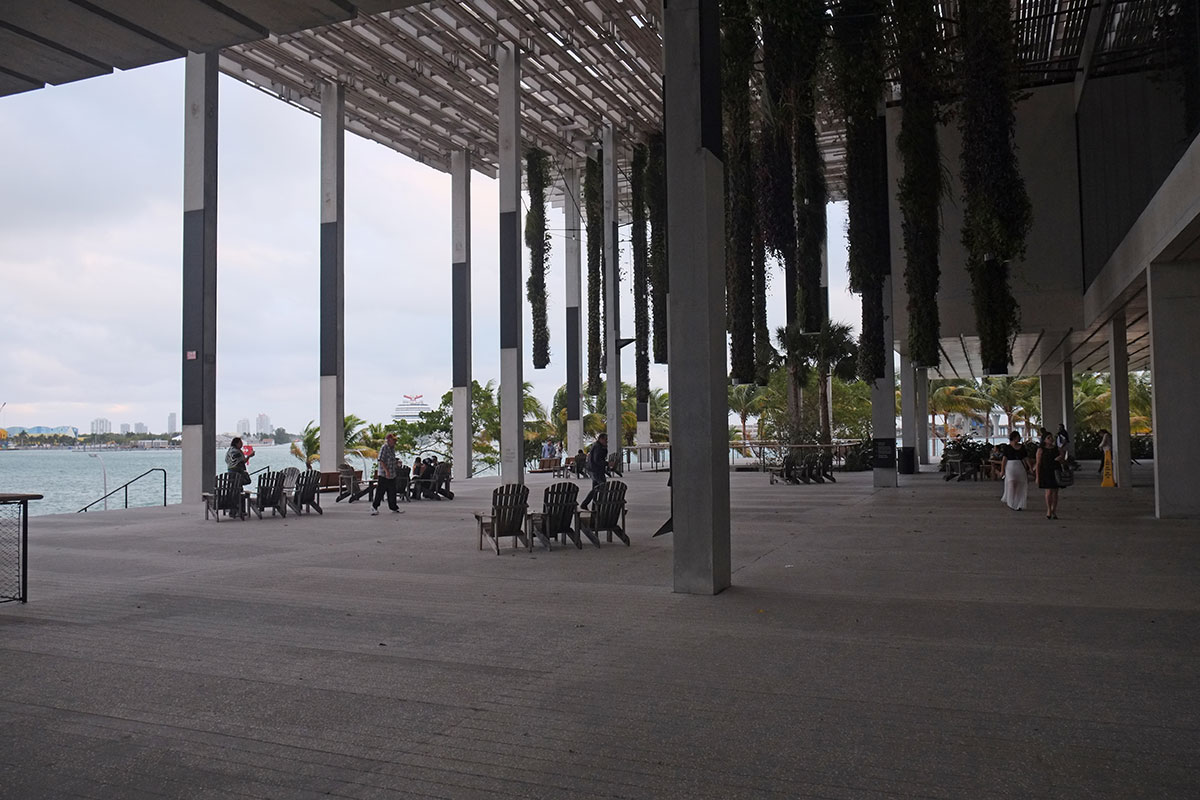
On the side towards the water, the roof creates an enormous shaded porch with views out.  The roof structure is used to hang all sorts of growies, mimicking the Spanish moss / jungle atmosphere we’ve come across in many places, but which do somewhat resemble gigantic Chia Pets.  DSCF8772  DSCF8860

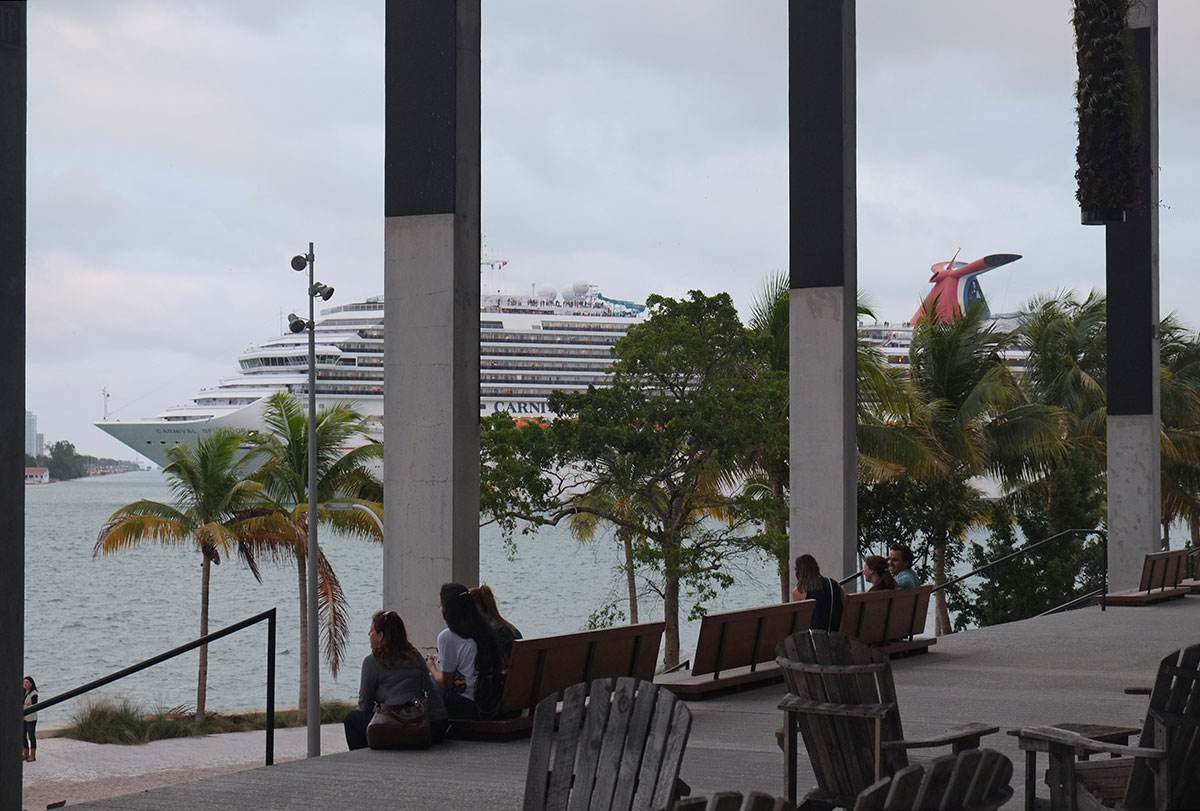
And one can watch the life of the city and the port go by.DSCF8873

The ground floor is mainly glass, with a solid wooden box for the entry.  The parti element of solid box gallery rooms is visible, and the gallery spaces between the boxes are the gaps where the interior space can connect out to the cityscape.  DSCF8890

The general impression from the exterior is an almost Japanese timber-frame approach in precast concrete, with layering of structural elements.  The roof reminded me of Kenzo Tange.  The boxes and spaces under a huge roof is an approach seen before, even back as far as Pietro Belluschi houses.

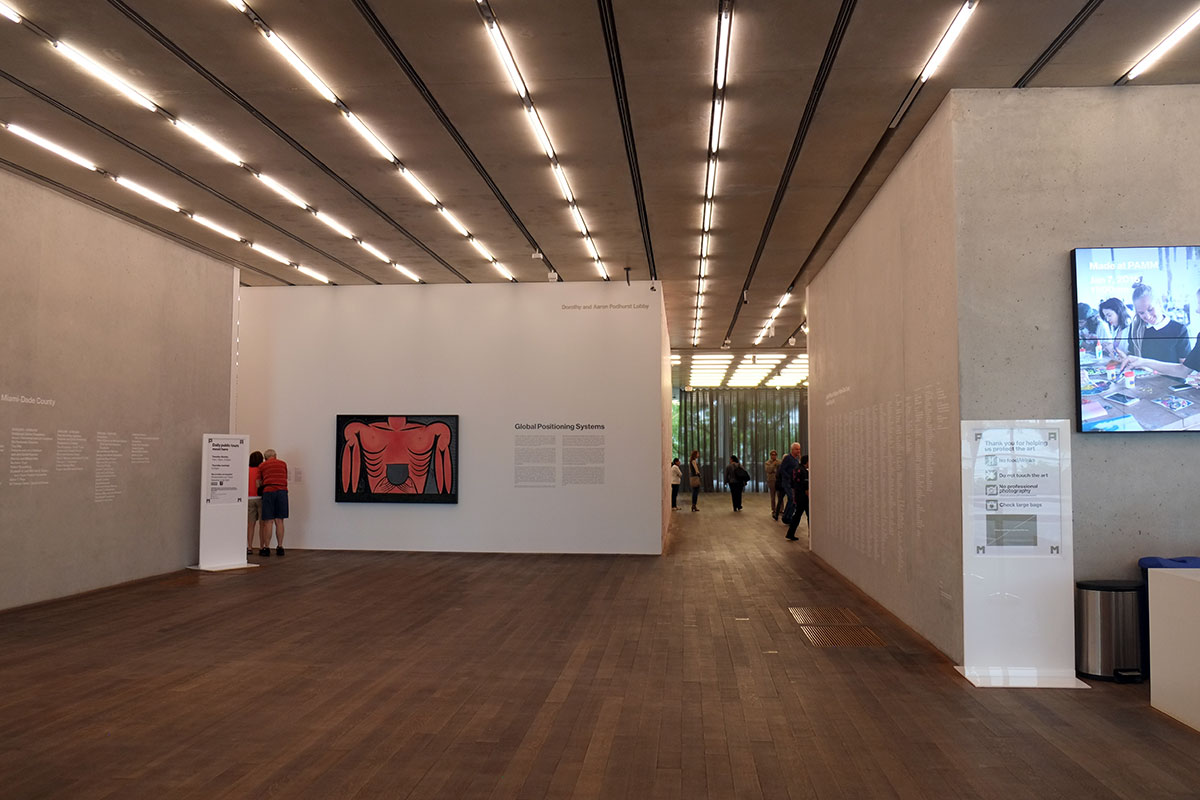
Moving in from the lobby, the distinction between the concrete boxes and the partition walls in the open plan can be seen.  DSCF8782

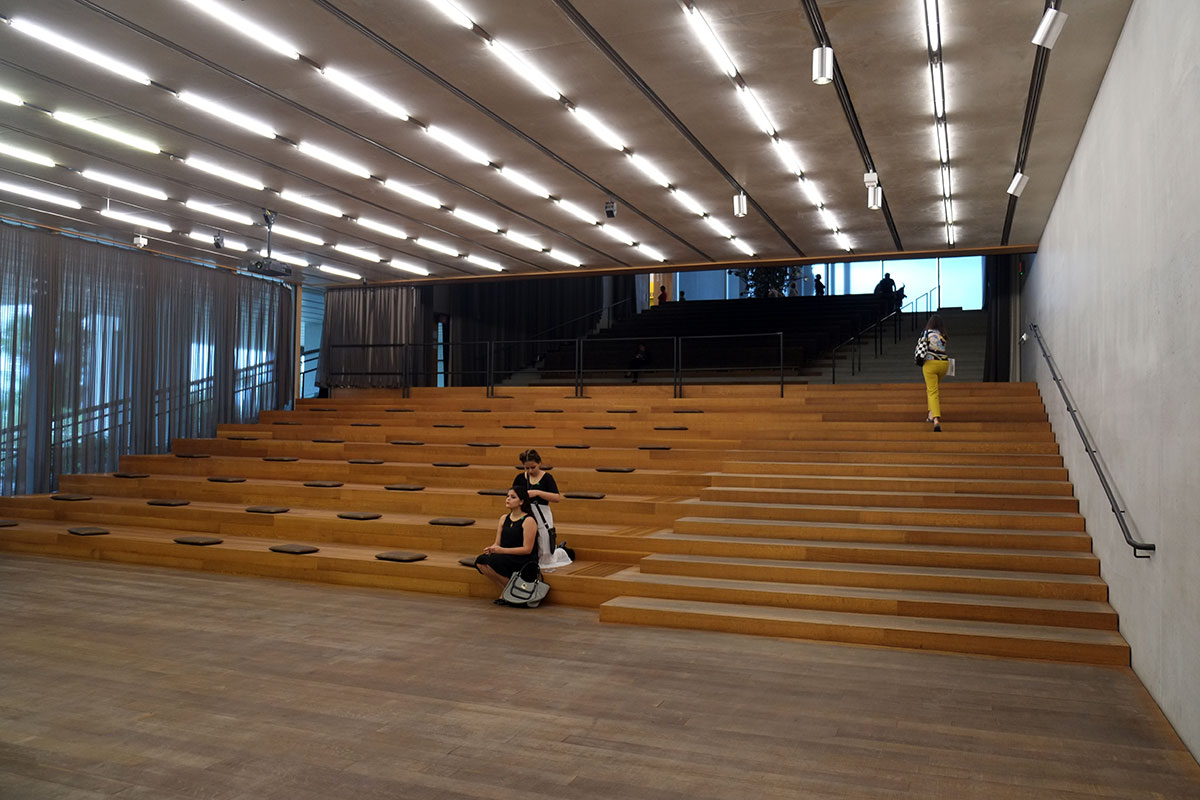
There are galleries on the main floor, but most of them are one flight up.  To reach that level, you climb up this monumental stair, which also functions as the circulation for a presentation/lecture space.  DSCF8792

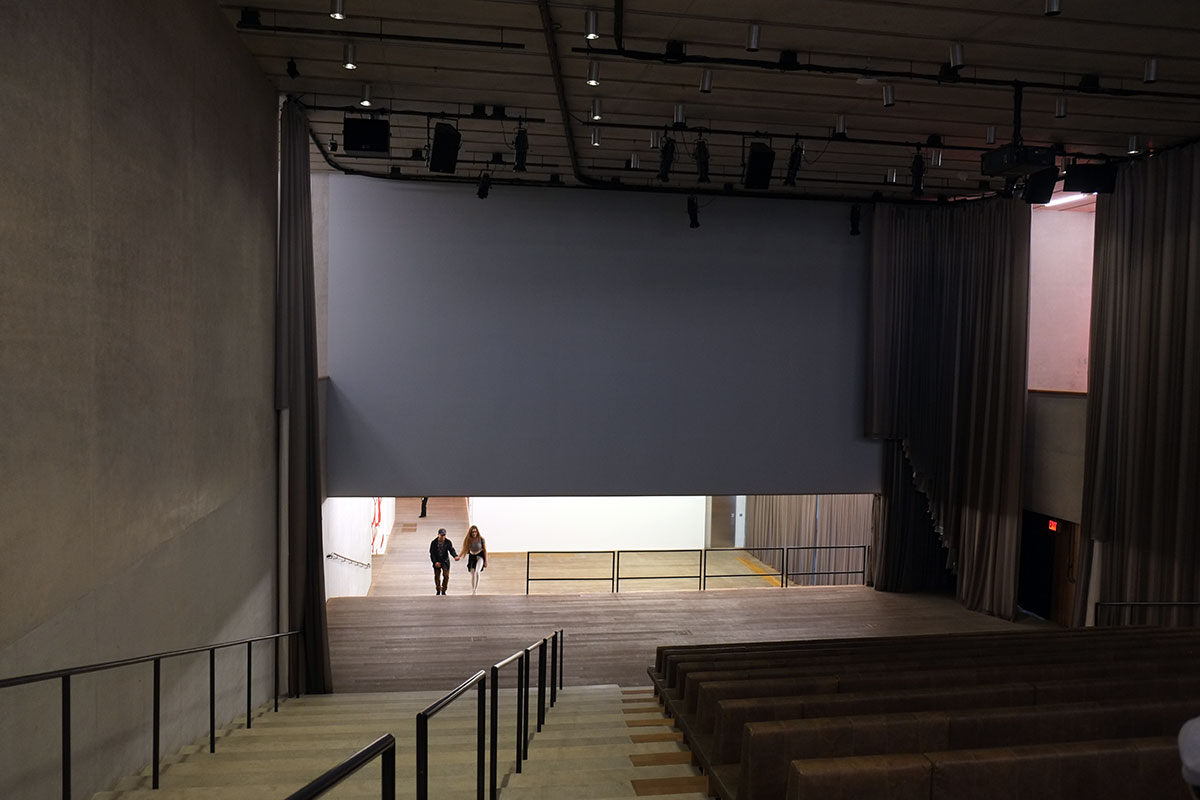
From above you can see how the auditorium can be tuned and curtained off.  In section and in function it is similar to the Seattle Public Library, where the auditorium space isn’t isolated most of the time, but open to the passer-by patrons.DSCF8841

There are open gallery spaces between the boxesDSCF8803

and a clear way of making an opening into a boxDSCF8826

The rigor of this approach is pretty consistent, although there are some places where the detailing seems a little fudged – boxes dying into the concrete floor slab above, but screen walls doing the same.  This may be a matter of budget or convenience – it is easy to pull a screen wall way from a box for a reveal in plan, but not attaching the wall to the slab above presents structural problems.  (I may be more focussed on this after a visit to the Kimbell yesterday, where the articulation of these issues is rigorous to the nth degree.)  But it does make me wonder whether we would even be thinking about these issues if Mies had jus let the wall support the roof in the Barcelona Pavilion.  (This issue will resurface with some subsequent posts.)

There are some interesting juxtapositions of the art and architecture:DSCF8830

and a gallery which opens up to the third floor of offices, where a site-specific installation occurs.  I was looking at this and a museum guard offered me a lengthy handout on the piece.  I looked at it, but said that I had a problem with art that needed three pages of explication to be understood – if the piece can’t speak for itself, what’s the point?  This triggered a reminiscence by him of his earlier days studying art with Norman Rockwell and how he learned to really draw, and how a lot of the conceptual stuff he sees now makes no sense to him.  I’ve been thinking recently about the particular hell of being a classically-trained artist who spends his days surrounded by contemporary conceptual art.DSCF8804

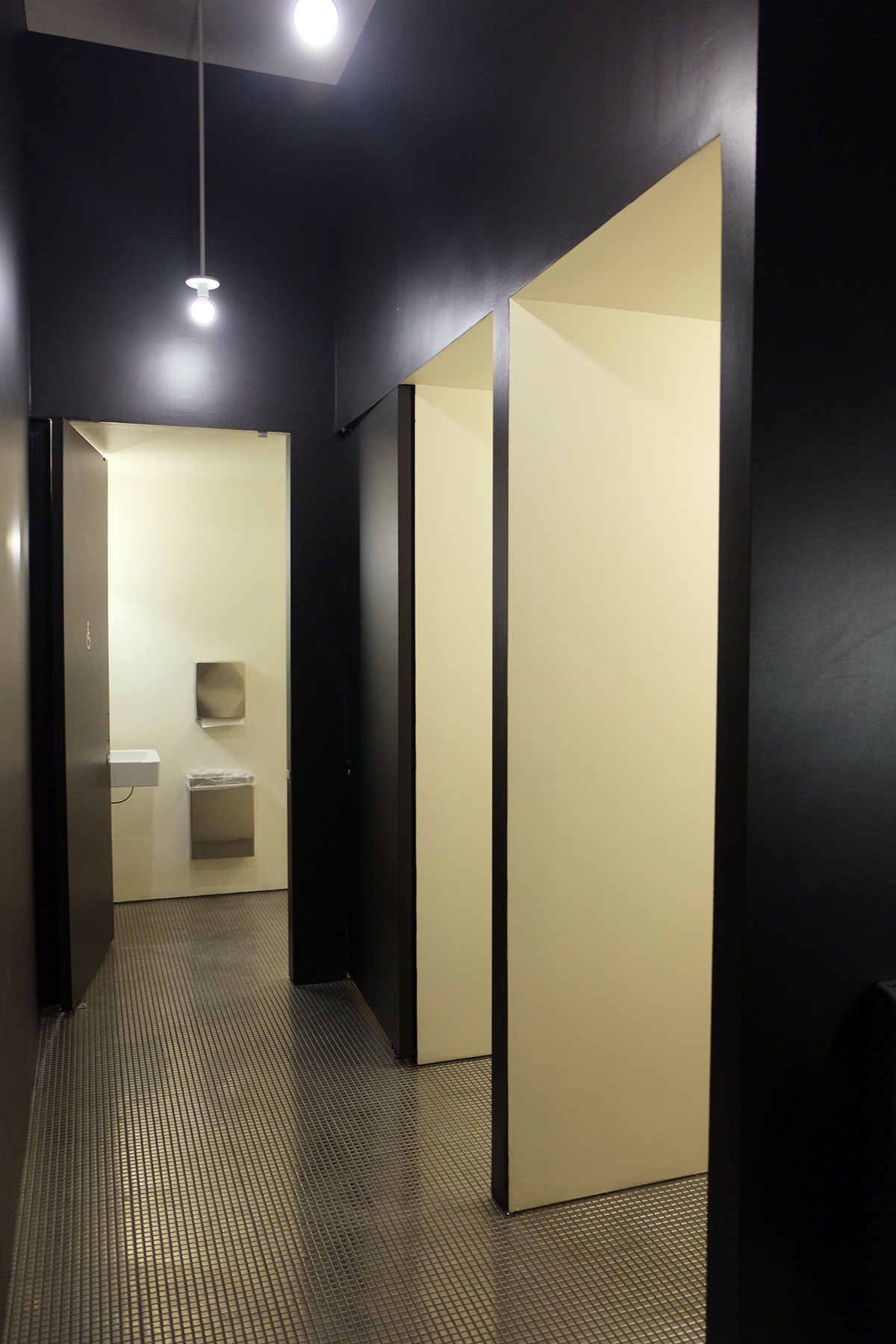
And no piece on a Herzog and de Meuron museum would be complete without a photo of the sublime rest room.  This one is similar to those at the Walker addition in Minneapolis, but somehow not quite as transcendent.  I think it may be the contrast with the dark color, whereas the Walker is all white and more ethereal, an unusual  feeling to have in a public bathroom.  DSCF8839

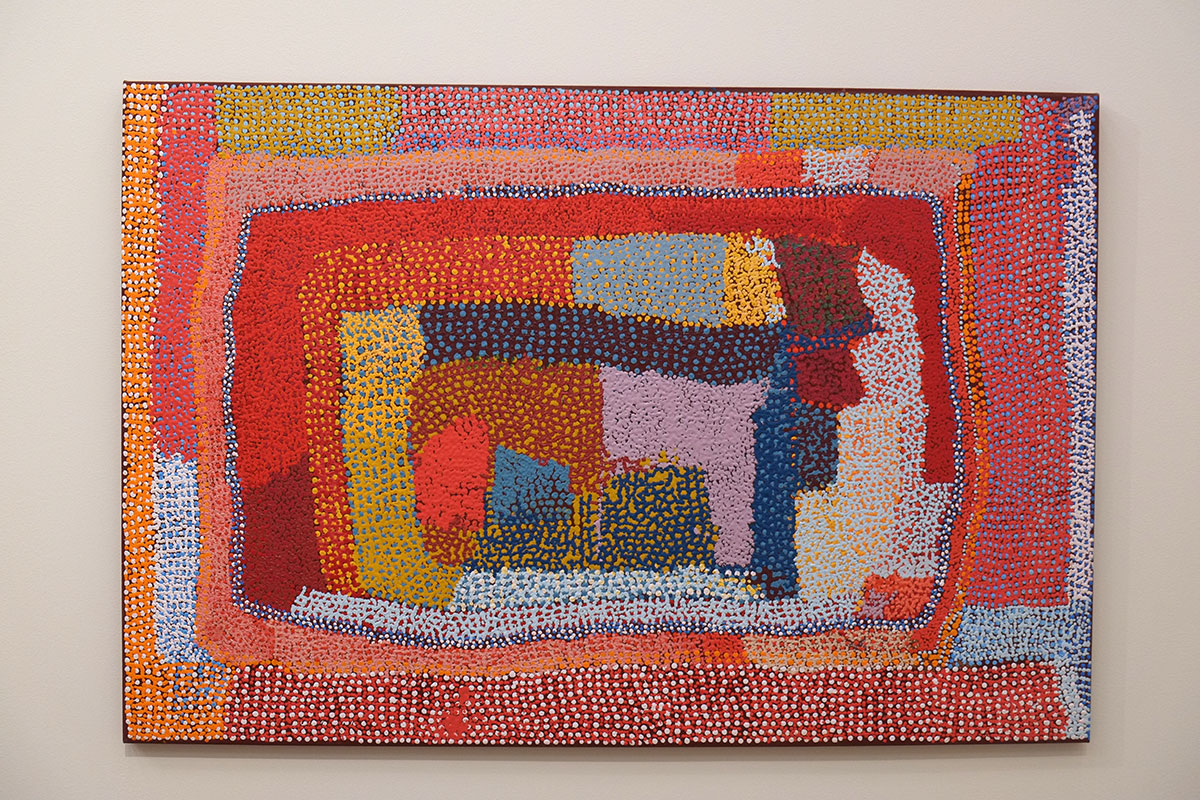
The art was interesting, but not overwhelming.  Except for a show of paintings by Australian Aboriginal painters, which was spectacular.  I have a new artist on my favorites list:  Tommy Mitchell, who died a few years ago.  He didn’t start painting until he was 65.  DSCF8821

Overall, a building in which the articulation of the elements is striking, especially on the exterior.  The gallery spaces are fine, but not extraordinary.  And sometimes, the curators must be making an effort to make sure the artwork is well-integrated with the architecture.  DSCF8799

Raleigh

DSCF7692Back when I was single and worked in New York, I used to like business trips.  They were often to second- or third-tier cities – places you would never choose to go to as destinations in themselves, but there was (almost) always something interesting once you got there. I would always try to add an extra day or two onto a trip so I could explore a place, and eventually I got to see a good part of the country.  This trip has worked much the same way – there are the primary destinations, and then there are the places we’ve seen just because we were driving by, or had some other reason to go there.  Raleigh was one of those – our reason for visiting was to see my cousins who live there, but once again we discovered a lot of interesting places.

P1060078We drove to Raleigh on two-lane roads from Virginia Beach, going along the edge of the Great Dismal Swamp.  (Greta thought the drive was worth it just to say she’d seen the Great Dismal Swamp.)  The northeast North Carolina countryside is completely flat and pretty monotonous – cotton fields, poor small towns, and a growing number of photovoltaic farms replacing tobacco farms (since it has surprisingly many sunny days).  Raleigh is back up in the Piedmont, and seeing some topography was a welcome change – it is a beautiful, rolling landscape.

Raleigh is close to Durham, Chapel Hill and Wake Forest, with all of their many universities anchoring the Research Triangle.  It’s one of those southern cities that has been so inundated with outsiders that it doesn’t feel quite southern anymore (even to one of my cousins, a northern transplant herself.)  The city feels like many other prosperous American cities of this size.  Downtown, there’s a mix of 19th century commercial buildings, early 20th century office buildings and relatively banal postwar skyscrapers, as they had the good sense to not knock everything down.  There is the district where old warehouses are being converted to hipper uses.  There are the great old inner residential neighborhoods that have maintained, and there are the not-so-great older residential neighborhoods that are being rediscovered and gentrified.  We’re starting to see patterns.DSCF7592

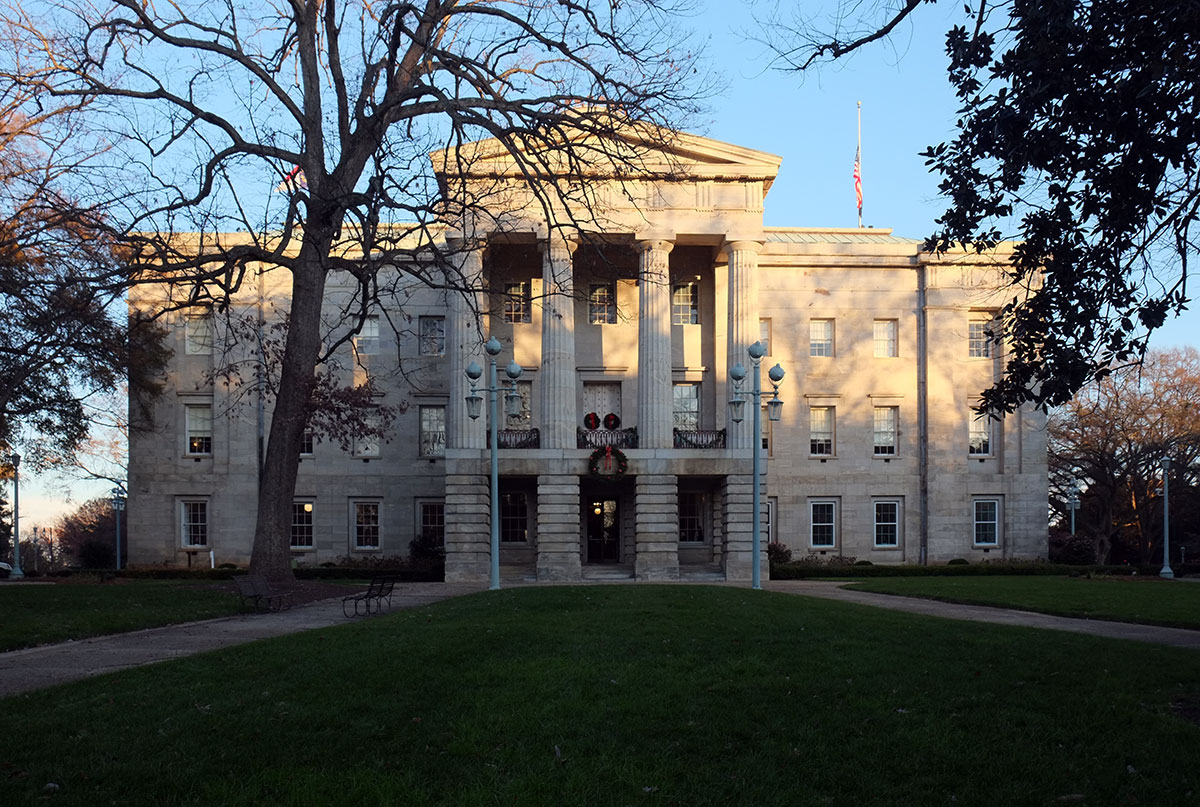
Raleigh is the state capital, so the downtown includes many state office buildings of the normal quality.  The old State House from 1840 is quite fine, having been designed by Ithiel Town, AJ Davis and a few others.  DSCF7668a

As with many other older capitols, as the needs of the government outgrew the building, a new facility for the legislature was built nearby, and the capitol houses the governor’s office and the former assembly rooms which have been well-preserved.  capitol

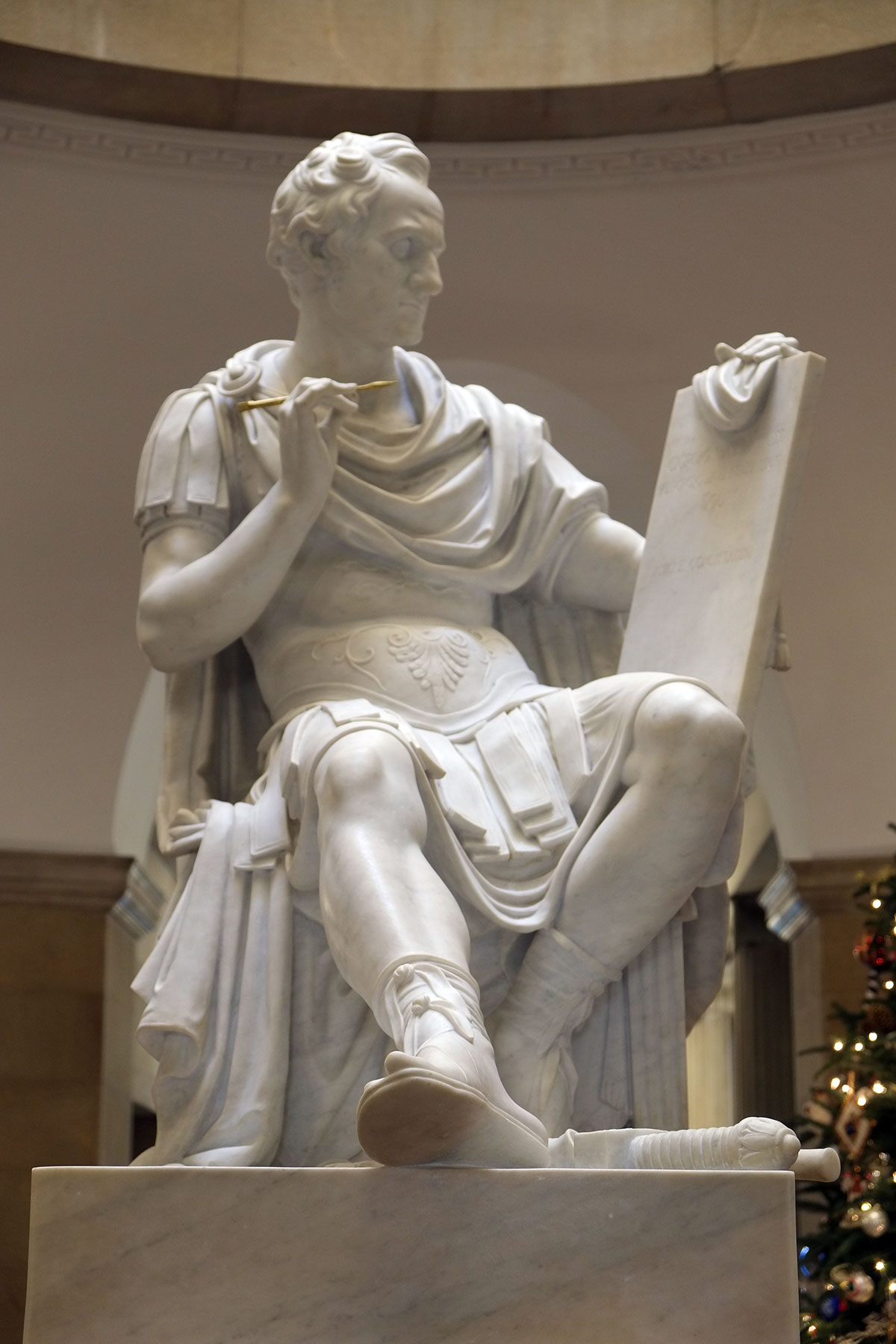
The rotunda contains yet another sculpture of a Founding Father as a Roman, with an interesting history. The original statue of Washington was sculpted by Antonio Canova (selected on Jefferson’s recommendation) after 1815, but was destroyed in the capitol fire of 1831.  This statue is a reproduction, based upon sketches and descriptions, but it is still does the job.DSCF7603

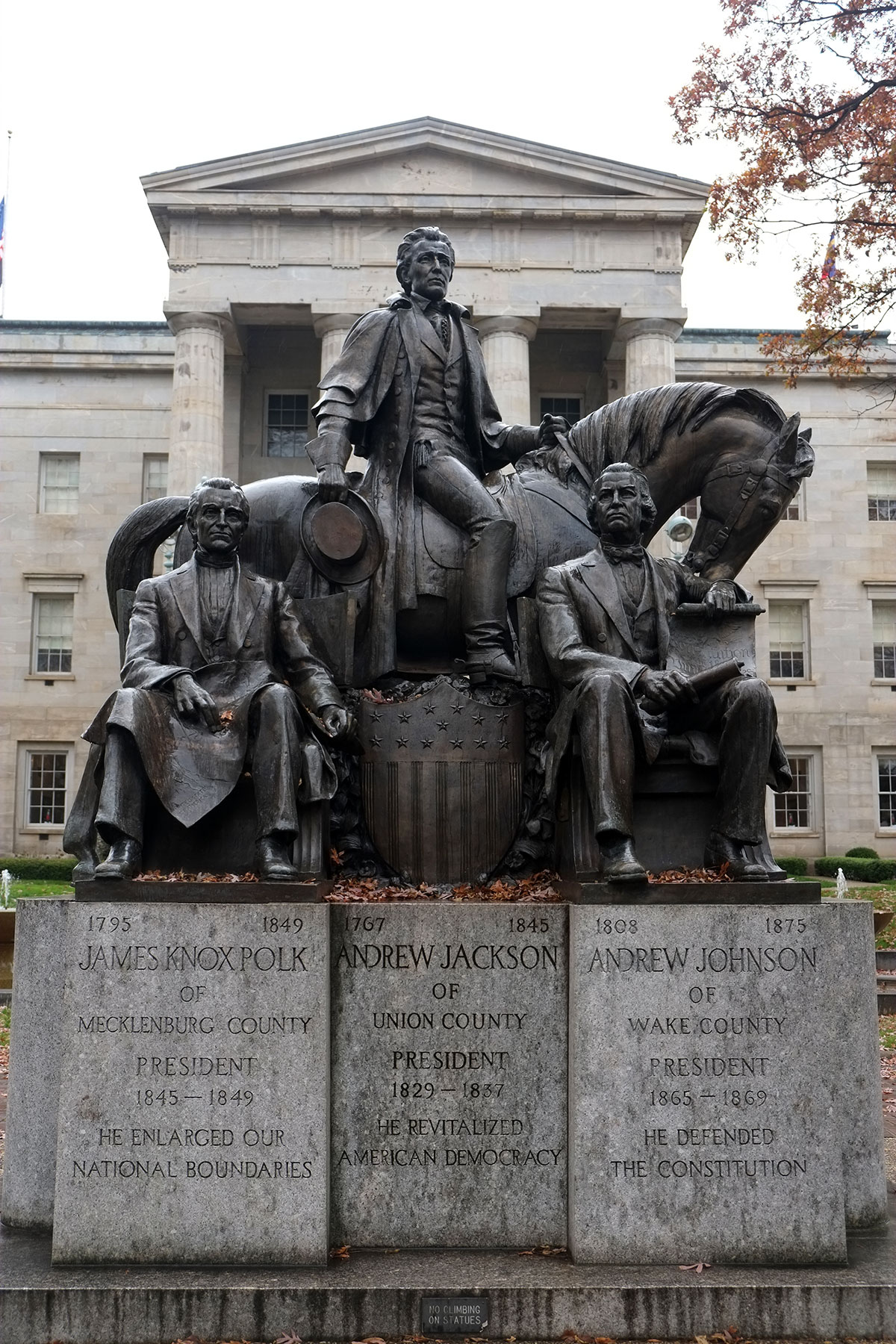
Outside there is a monument for the three presidents who were born in North Carolina.  As we walked around the grounds we came across statues of people who are so obscure that we had never heard of them, so we wondered why all three presidents were packed into one monument instead of each getting his own.  Perhaps it’s because they feel somewhat ambivalent about Johnson, and didn’t want to honor him too much (and it does look like he’s being nuzzled by Jackson’s horse).  DSCF7600

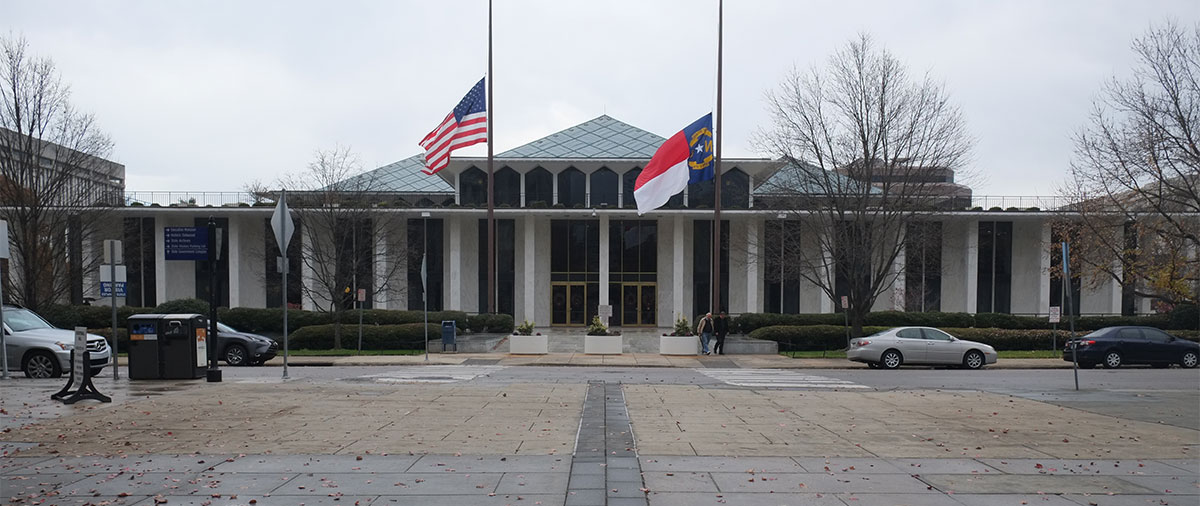
They made the unfortunate choice of Edward Durrell Stone as the architect for the new legislative building, and he produced pretty much what you’d expect.  DSCF7625

These state buildings sit on a pompous and barren closed street / plaza, along with a couple of museums;  it would take a lot of buses of school kids to bring this one to life.  The state history museum is by C7 Architects (formerly Cambridge 7), and may be okay inside, but the exterior suffers from the same silly grandiosity you see in Washington DC – having a big phony exterior grid/framework is bad enough, but when it gets covered in stone I just can’t even look.  It’s a good example of what happened in the late 80s, when very good modernist firms felt the need to make gestures towards Postmodernism.  Grids often resulted.  They couldn’t make themselves go overtly classical, so explicit post and lintel systems ruled.  And little pyramids.DSCF7644

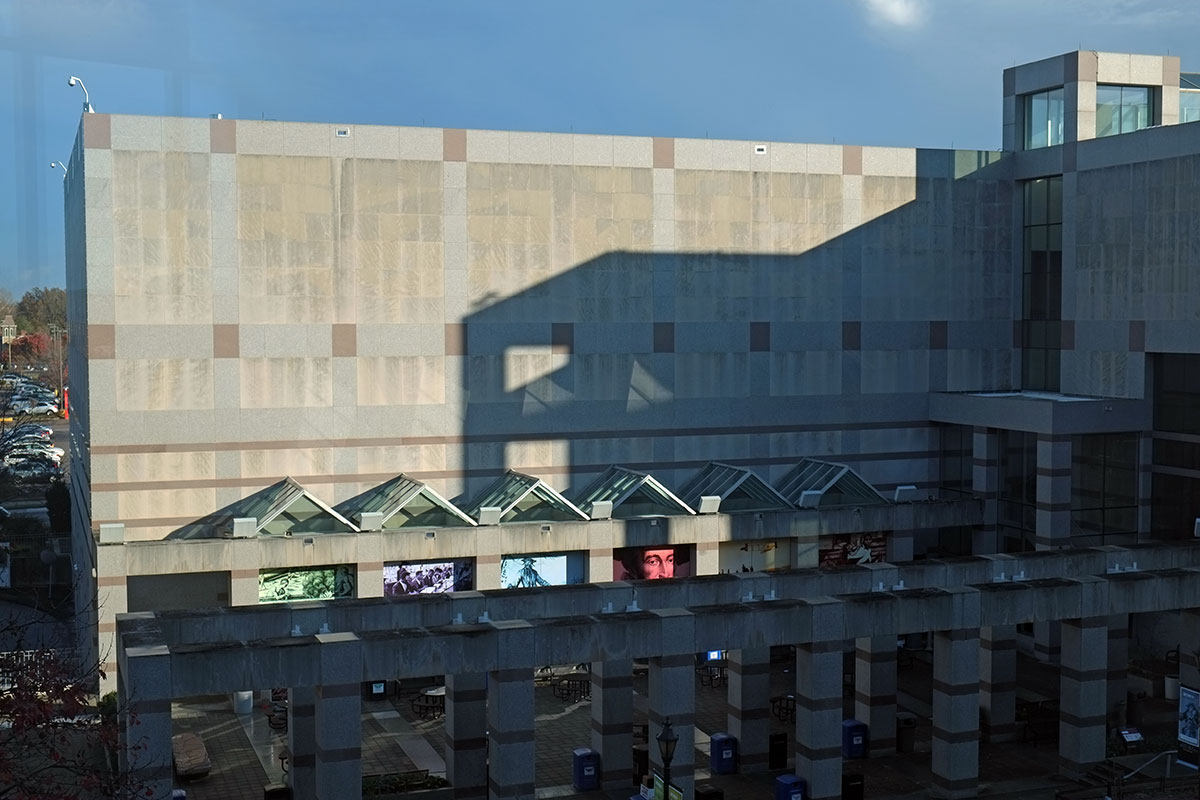
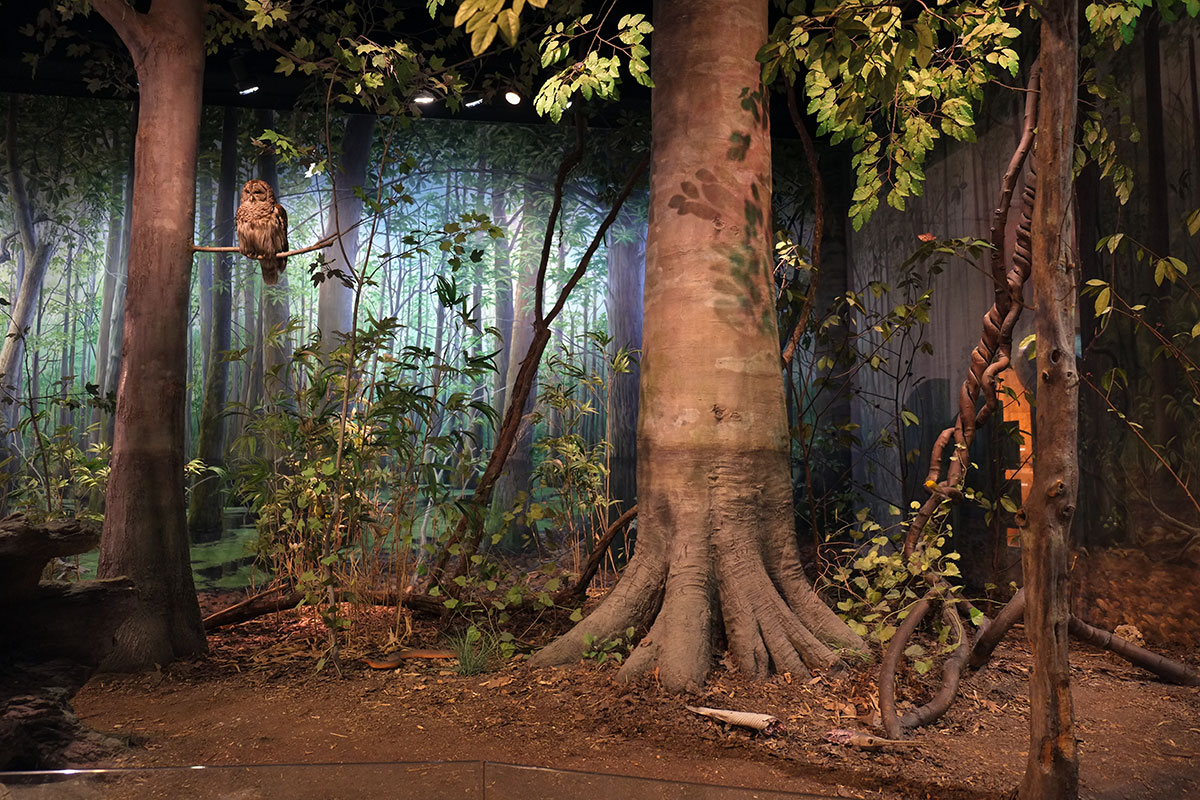
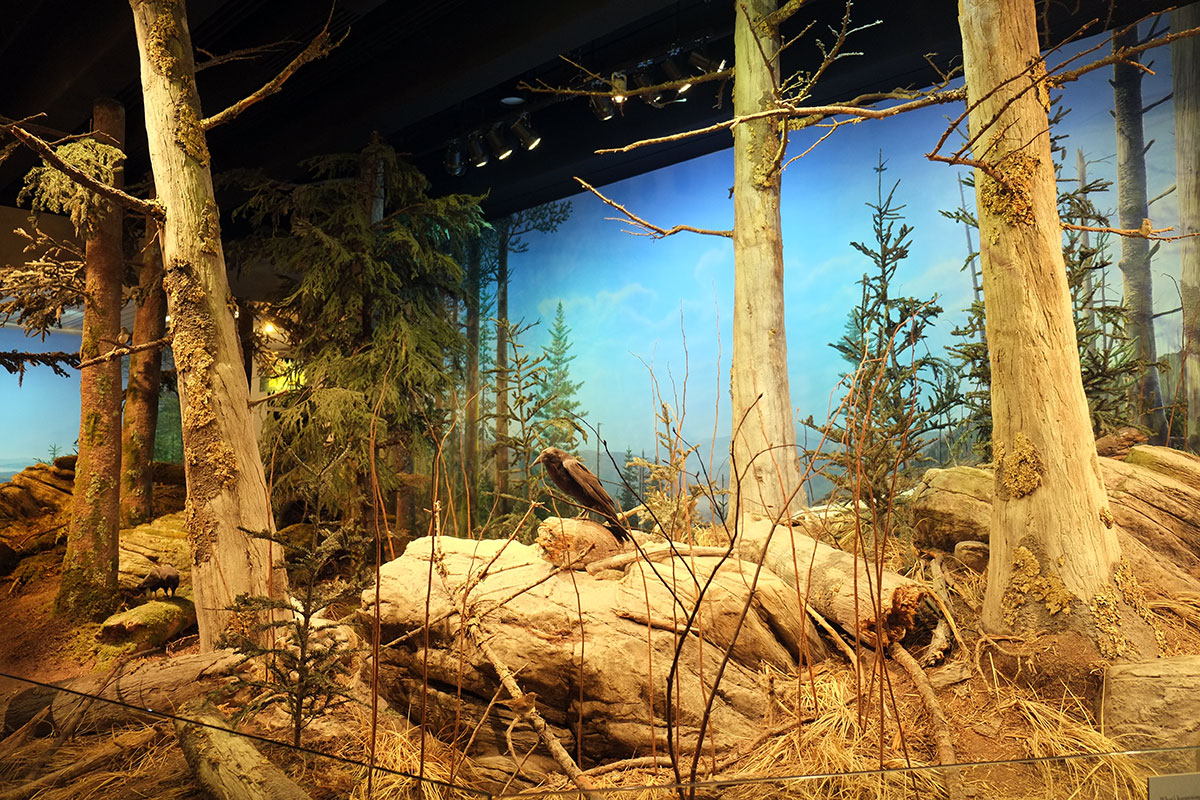
The North Carolina Museum of Natural Sciences was designed by Verner Johnson, a firm which seems to specialize in science museums.  The expertise shows:  it’s not a building which wows you with the architecture (more watered-down PoMo), but it is a superb natural science museum.  It had many of the things that you see in any natural history museum these days – such as a few dinosaurs – but the strong focus is upon the environment and natural history of North Carolina.  This also seems to be a pattern these days – regional museums and zoos are focussing on the environment and biology of the region, rather than doing a mediocre job trying to explain the whole world.  This museum had excellent sections on the coastal region, on the Piedmont, and on the mountains.  There were full-scale dioramas for each of these:

Piedmont

Piedmont

Mountain lake

Mountain lake

that were really informative and comprehensive.  By the end we had a good handle on North Carolina’s geography and environment – much better than what we had gotten from the college-level geography text Greta’s been reading.

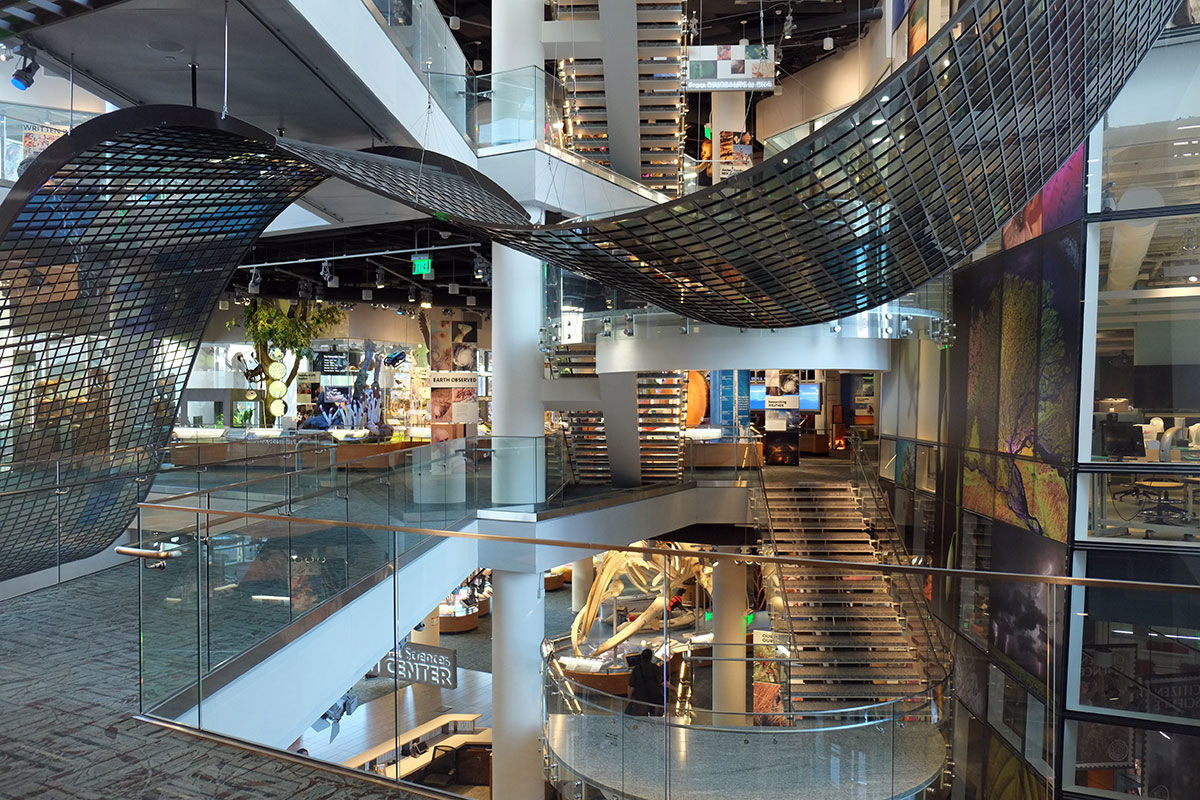
There’s a new addition to the museum that addresses changing idea about educating kids.  First, there are a lot of bells and whistles – is this a natural science museum, or is it Vegas?  DSCF7655

Or the mall?  Lots of flash, lots of screens, lots of “interaction.”
DSCF7652

Second, and perhaps more substantively, research areas used by museum staff are incorporated into all of the exhibit areas:DSCF7663

We were there on a Monday when these rooms are not used, but supposedly visitors can see staff at work and hear them explain what they are doing.  This would be quite valuable if it works as billed.  We’ve gotten behind the scenes and talked to scientists at a few museums, and it’s been one of Greta’s favorite parts of the trip – not just seeing objects in a museum, but talking to those who do the work, and starting to understand what science is all about.

On our way out of town we caught the North Carolina Museum of Art.  The1983 building was again designed by Ed Stone (did North Carolina get him because Rockefeller had Harrison and Abramowitz tied up?), which is fairly innocuous for him (they later replaced all the marble with brick) and is used for temporary exhibitions (including an excellent one on Escher while we were there).

The new building for the permanent collection is by Thomas Phifer, and is a remarkably rigorous and elegant building.  It resembles Piano’s work not in appearance (the exterior seems to be Mies Goes to Scandinavia with Steven Holl), but in having the main expression for the building through the articulation of the systems – skin, structure, and lighting. DSCF7678

It is easy to find the front door.  DSCF7719

The building structure is on a strict module, with the differentiation between structure/service walls and spatial partitions very evident (although he doesn’t feel the need to pull the partitions off the grid or angle them to make the point).  DSCF7699

The structural bays are uniformly roofed with curved daylighting monitors, which illuminate evenly.  The sidelighting from walls of glass is controlled with curtains.DSCF7702

You can see the influence of Mies, Kahn, and Aalto, without it seeming busy or forced.  It’s rational, rigorous, neutral, flexible.  Perhaps too neutral – there isn’t any compelling spatial design – nothing moves you through the building, there are no architectural surprises.  It’s a curator’s dream – well-lit, flexible space which can be reconfigured to suit any installation.  But much preferable to an object building that is all about architectural over-reaching while diminishing the experience of the art.

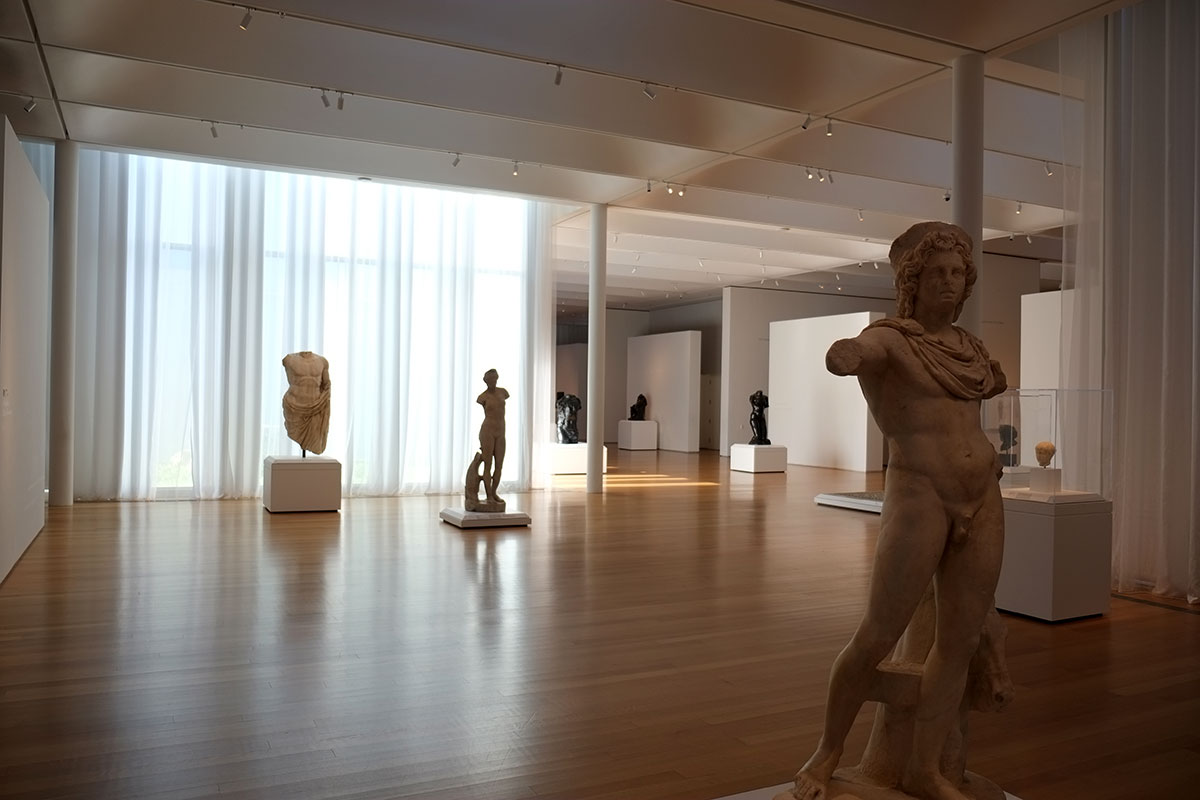
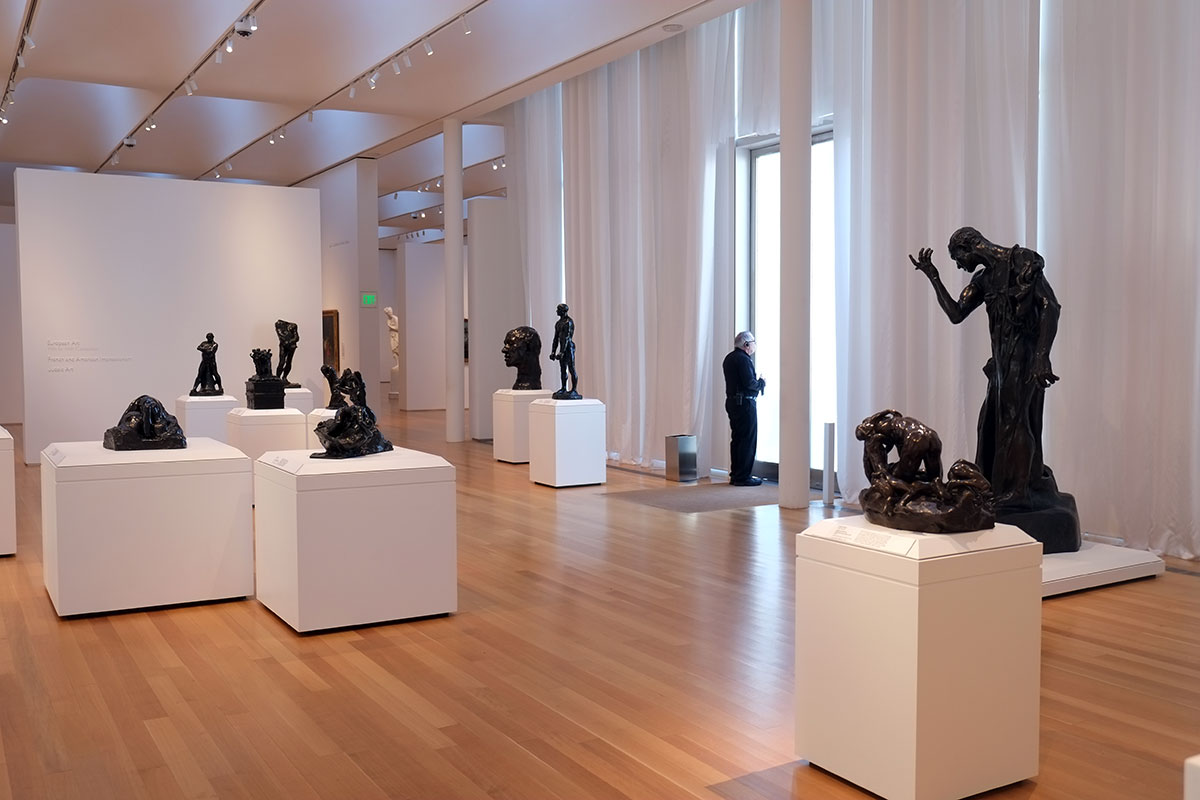
Frankly, it’s quite a bit better than the collection, which has not-great works from a wide range of eras.  Raleigh wasn’t a big city with a lot of money in the 19th century, when you could still buy great things, so they have mainly pedestrian work by big names, or interesting work by people you’ve not heard of.  However, they did have a huge collection of Rodin sculptures, including one i’ve never seen anywhere else, and which I liked better than the others – Old Man Looking out the Window.  DSCF7706

Photos

Most of my blog posts are pretty pedantic and focussed, so I’ve decided I should sometimes just post photos that aren’t part of a larger polemic.  Plus I don’t have to write as much.

DSCF5745

Baltimore

DSCF5796

Baltimore

DSCF4623

Lowell, MA

DSCF4885

West Side, New York

DSCF4867

Riverside South, New York

DSCF4816

Seventh Ave., New York

DSCF5131

Gansevoort St., New York

DSCF5049

Whitey Museum, New York

DSCF5097

Whitney Museum, New York

DSCF5623

Philadelphia

DSCF5680

Philadelphia

DSCF5297

Paterson, NJ

DSCF6108

Nattional Air and Space Museum, Washington DC

DSCF7050

Charlottesville, VA

Washington DC

DSCF6162When we started this trip in September, Greta had three main goals:  Yellowstone, barbecue, and the Smithsonian.  So our five days around DC were overwhelmingly biased towards museums.  I spent a reasonable amount of time in DC in the 80s and 90s, and I knew that with winter closing in I couldn’t do a comprehensive survey of what was now going on in this big city, so I just went with the flow.  However, I did manage to trick Greta into walking around Georgetown and Northwest on our way to and from museums.

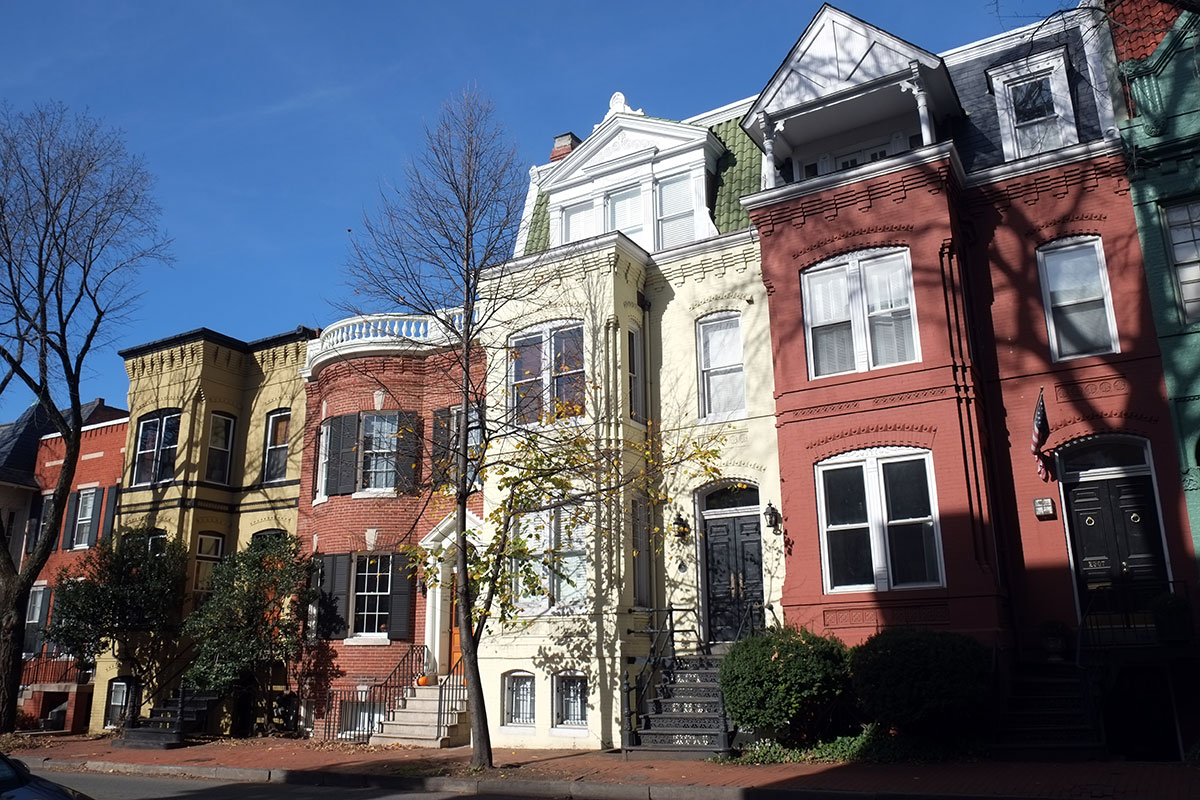
I probably hadn’t been in Georgetown in 30 years, and staying there with our friends Bob and Susan provided a good excuse for wandering the neighborhood, and back and forth to the Dupont Circle Metro stop.  DSCF6093

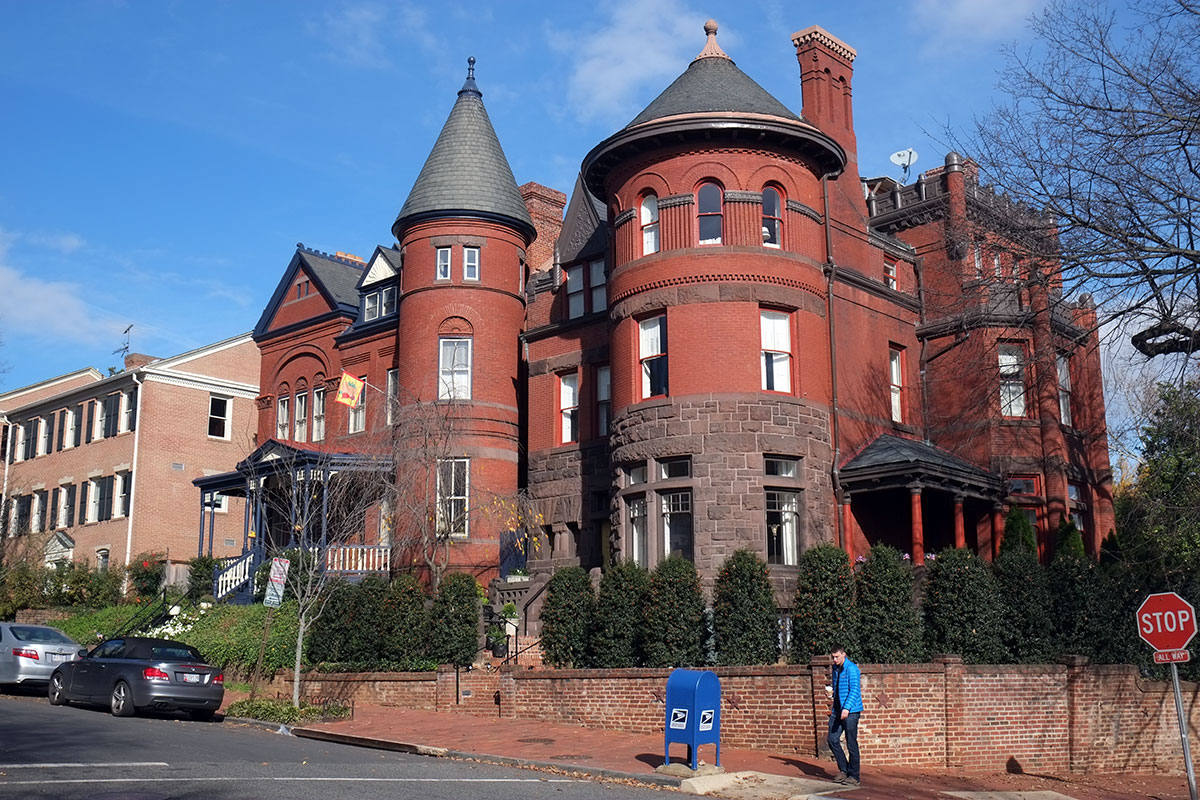
As has become the norm in older cities on this trip, the experience of architectural quality, neighborhood walkability and overall urbanity was remarkable.  DSCF6096It was also strange realizing that this is a neighborhood of the rich and powerful, and probably many of the houses we passed were occupied by people of whom we had heard.  (Bob did point out the black SUV in front of John Kerry’s house, which meant that he was home.)   I was totally enamored of the area, until one evening I decided to run out to pick up a couple of beers before dinner. Two miles later, nothing. Georgetown is a place where real estate values and rents are so high that normal businesses have been squeezed out by high-end clothing retailers and home design stores.  You can’t run down to the corner to meet any need of day-to-day life, so you probably just send your staffers out to run errands in the black SUV.

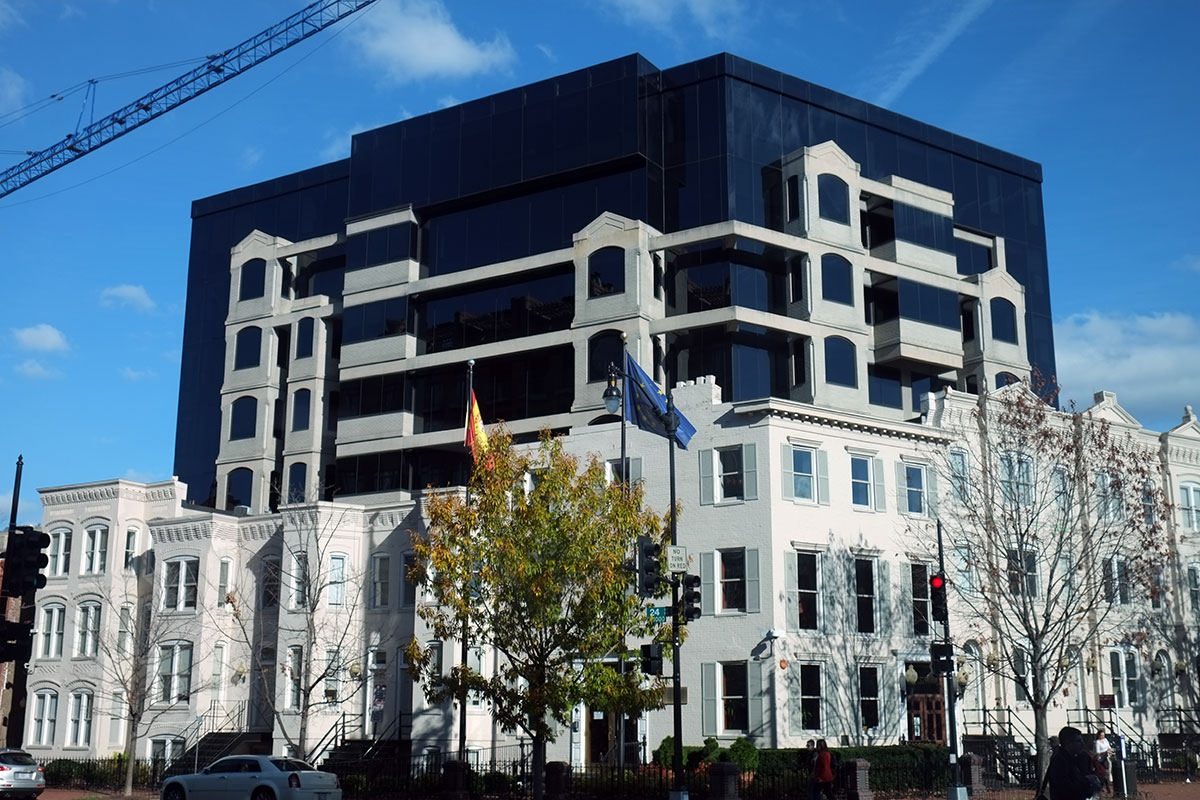
Downtown DC has never been known for its quality of modern buildings – too much respectful timelessness, height limits, classical obsessions, conservative tendencies, etc.  But even with that low a bar, this building is a standout.  DSCF6099

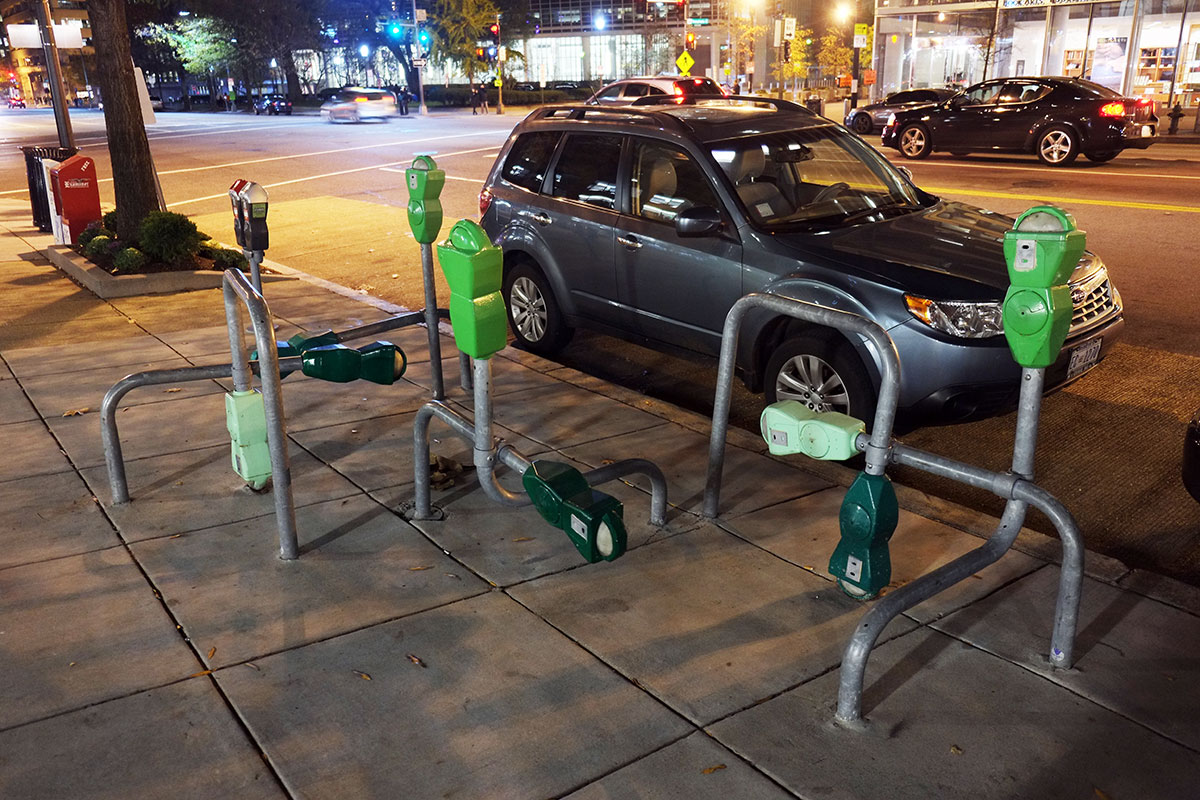
There is some nice street furniture / bike racksDSCF6166

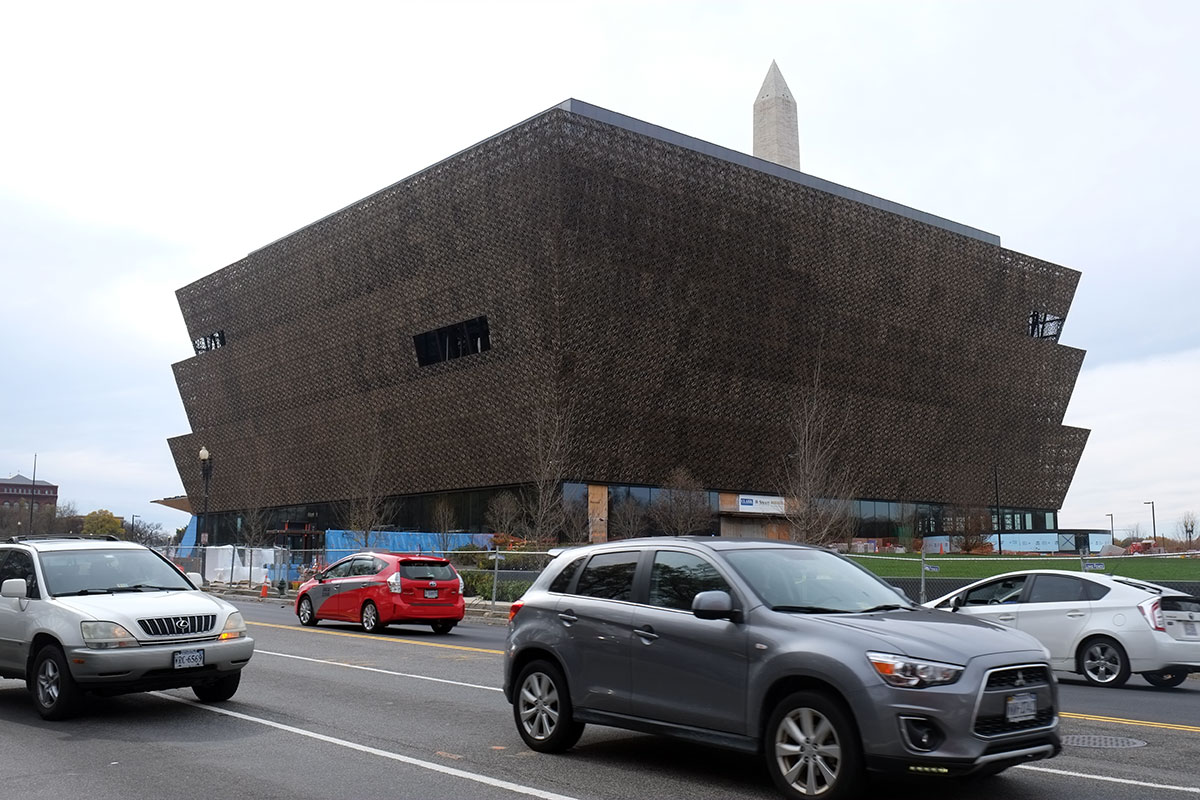
David Adjaye’s museum is getting close to completion, but is already quite noticeable as not your typical building on the Mall.DSCF6172
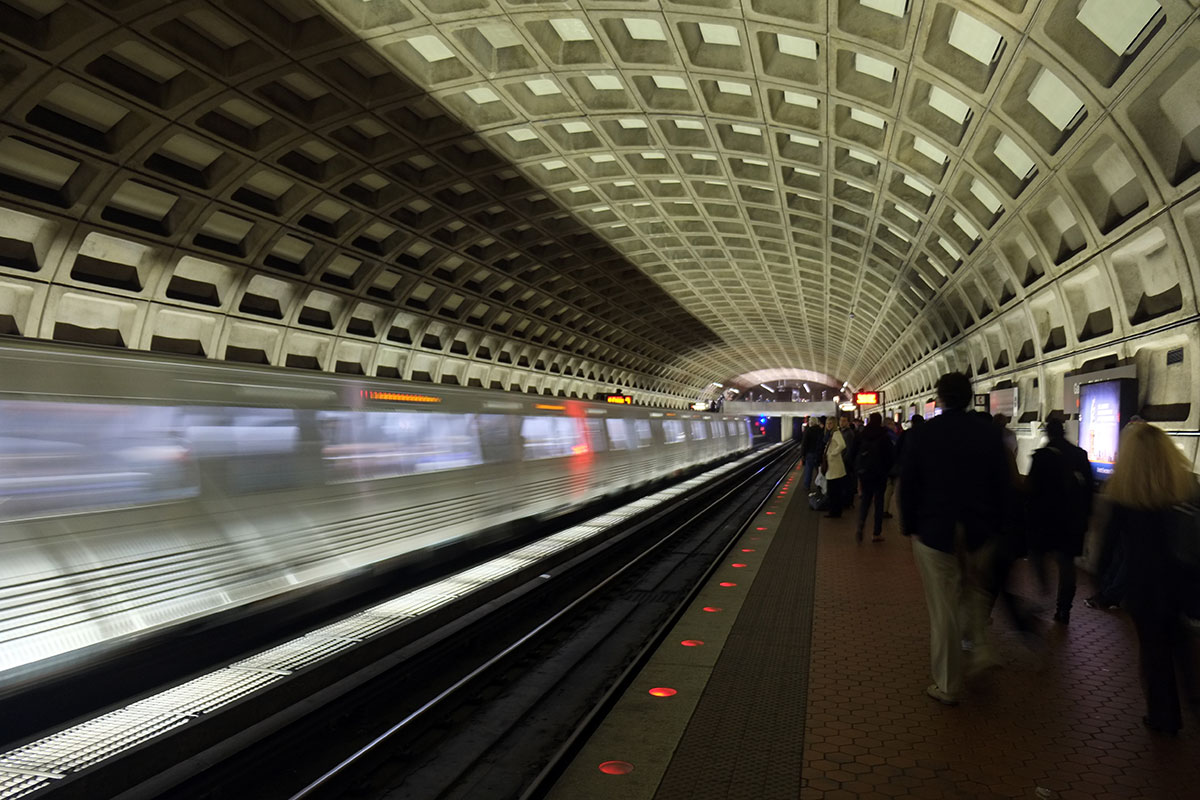
But the Metro is still my favorite architectural space in the city.

DSCF6462

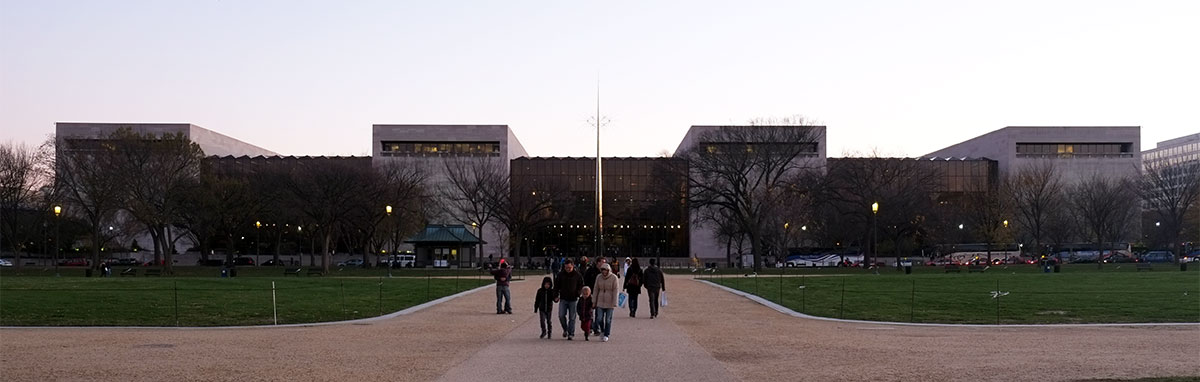
We spent most of a day at the Air and Space Museum, which is memorable for one of the most legible partis in a museum.
DSCF6447
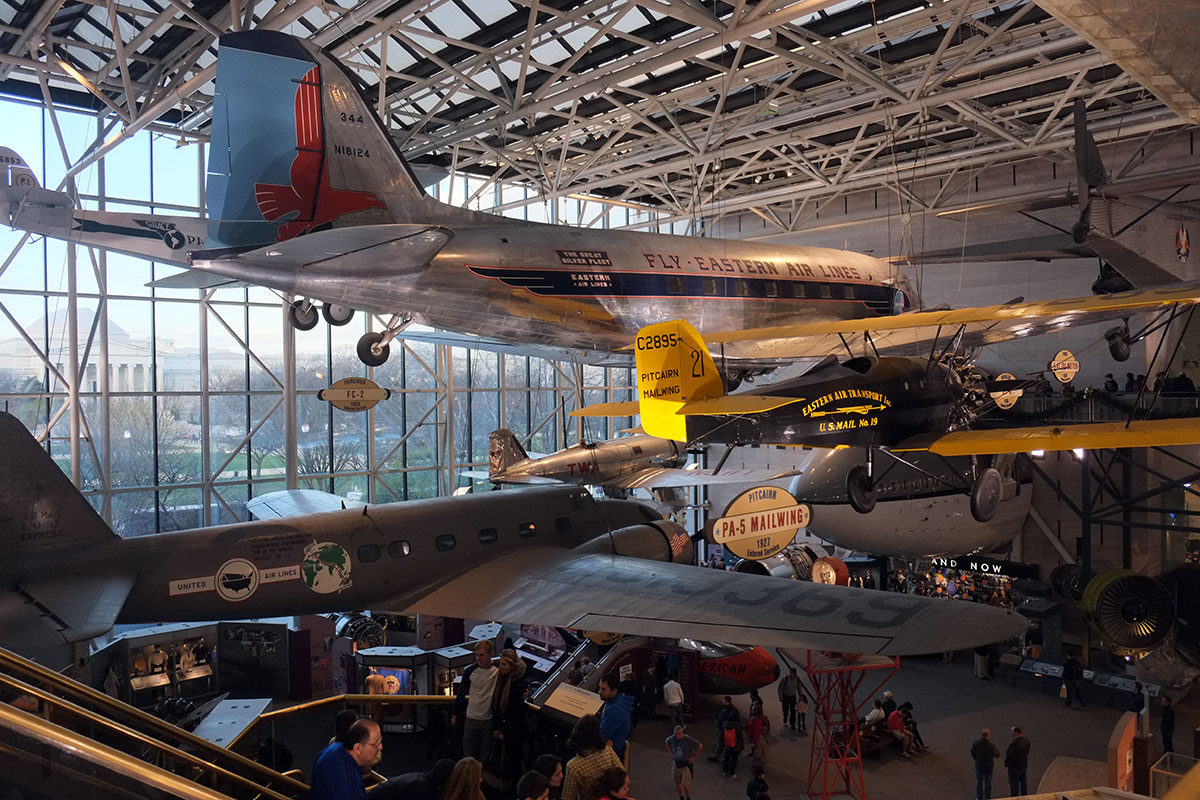
and also for meeting my main criterion for a great museum:  have lots of real stuff.  Not an interpretive center, not solely didactic, not creating a programmed visitor experience.  Have cool stuff that can’t be seen anywhere else, and all the other considerations are secondary.  The Air and Space may be the best example of this – Greta was constantly amazed that these were the real objects.
DSCF6147

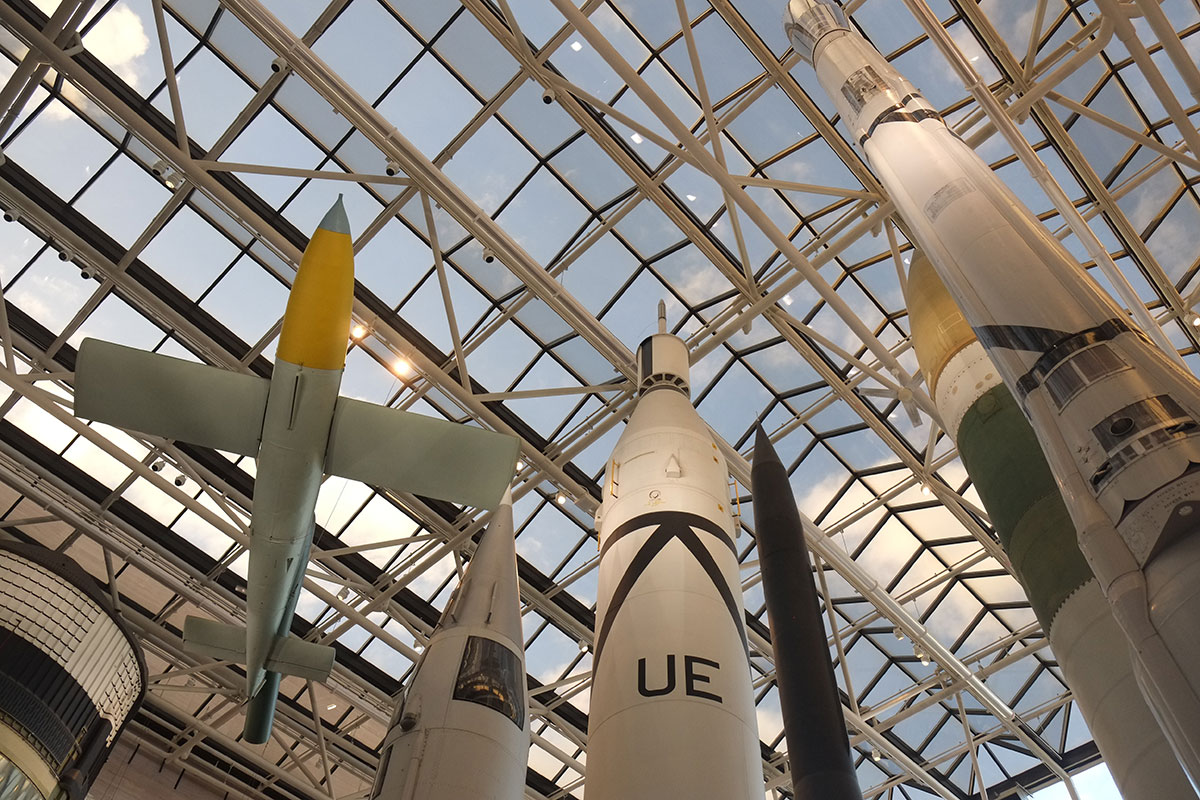
Another aspect I really enjoy is having Very Large Things Inside Buildings.  Liverpool has a great, low-key museum called The Large Object Collection, and the A&S illustrates this principle nicely.DSCF6130

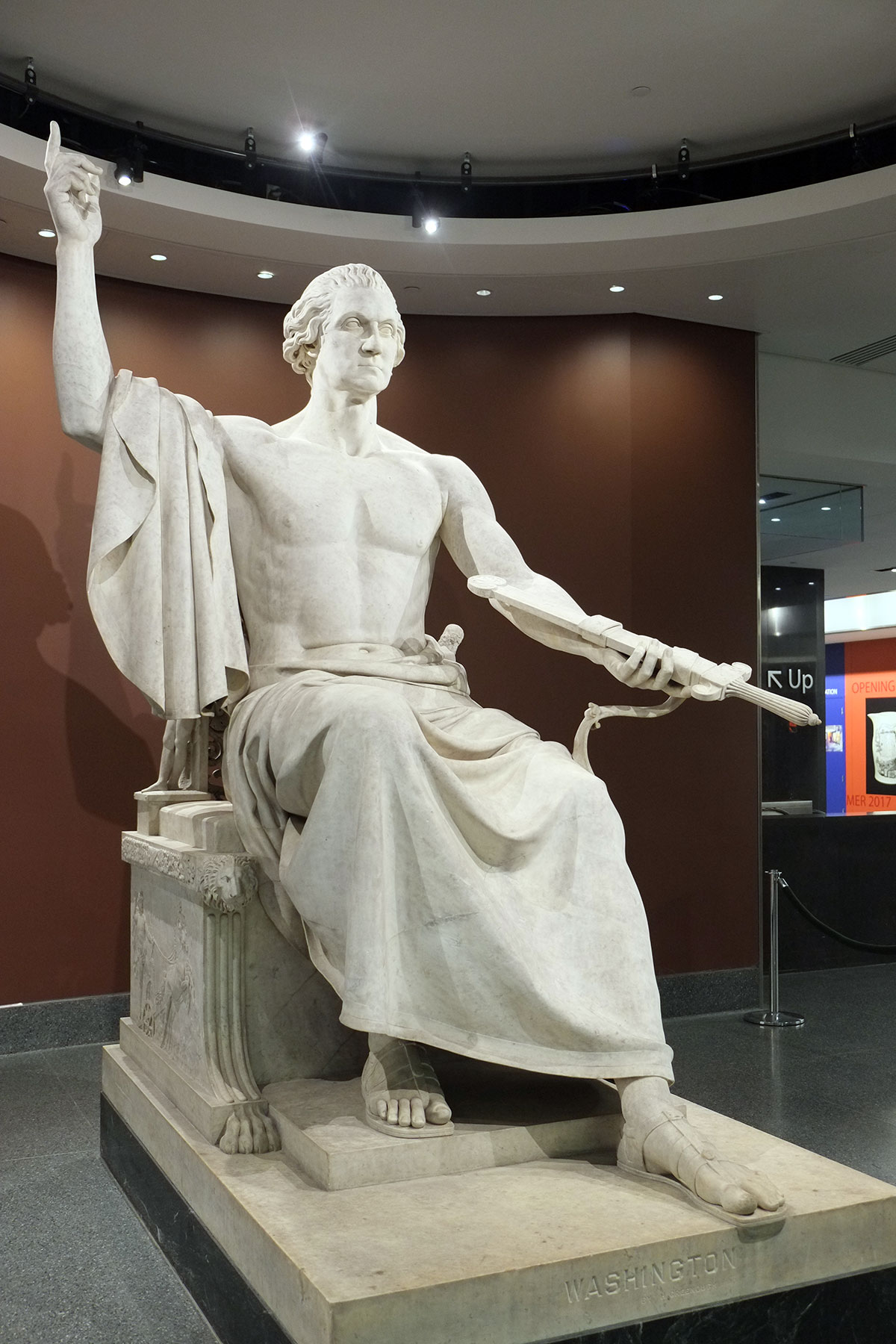
The American History Museum was much better than I remembered;  I think the new approaches to exhibit design of recent decades have been spectacular.  We checked off some iconic pieces, such as the Star Spangled Banner, the display of which unfortunately shows some of the same grandiosity and obsessive fetishism of objects which ruined the experience of Mt. Rushmore and the Liberty Bell.  We also caught the greatest of the slightly-nutty representations of a founding father as a Roman republican:
DSCF6205

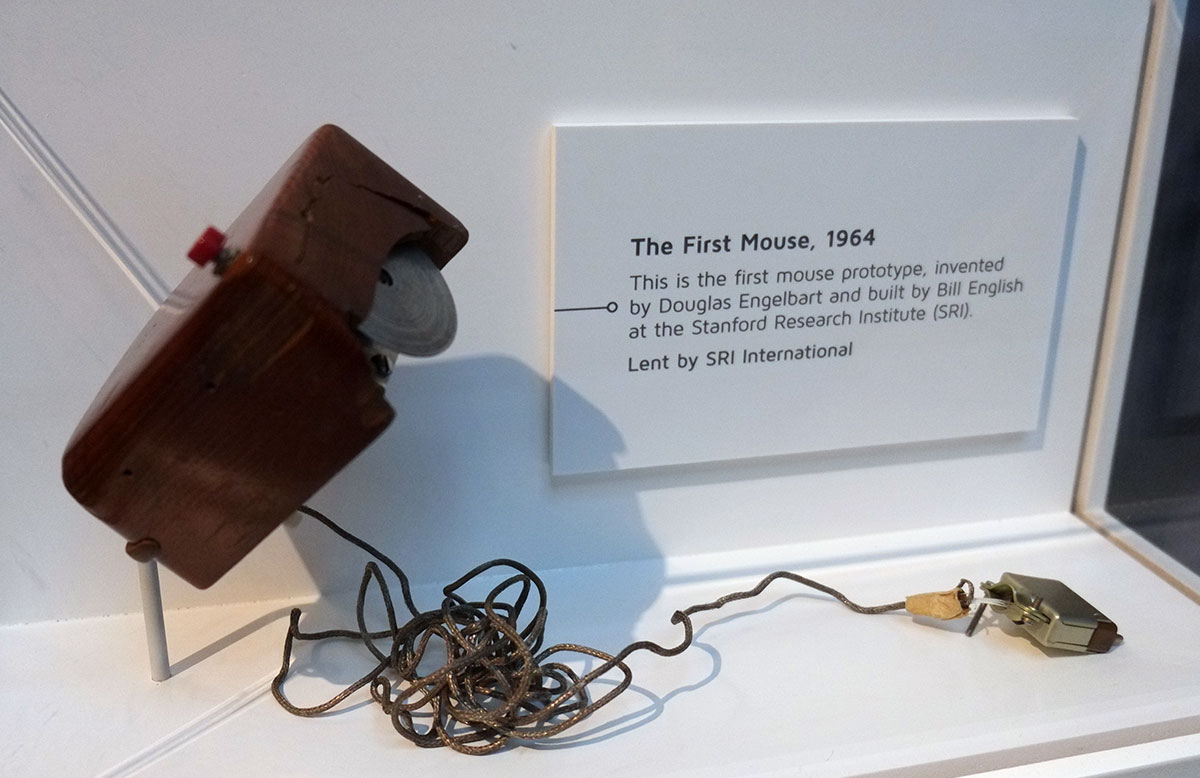
Like the A&S, the display of really cool actual stuff is paramount:DSCF6207

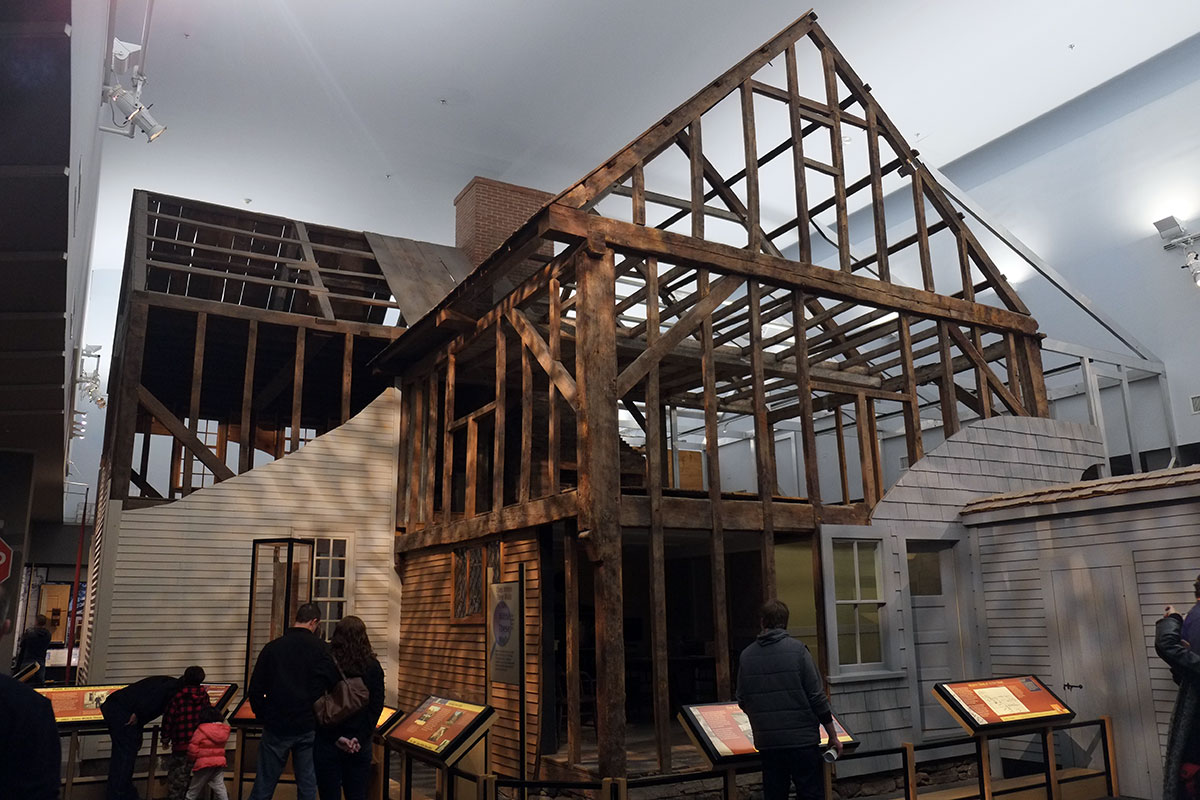
The partially-reconstructed display of an 18th century house from Ipswich is superb, detailing not just the technology of the building, but tracing its social history through the different households that occupied it for 200 years.
DSCF6202

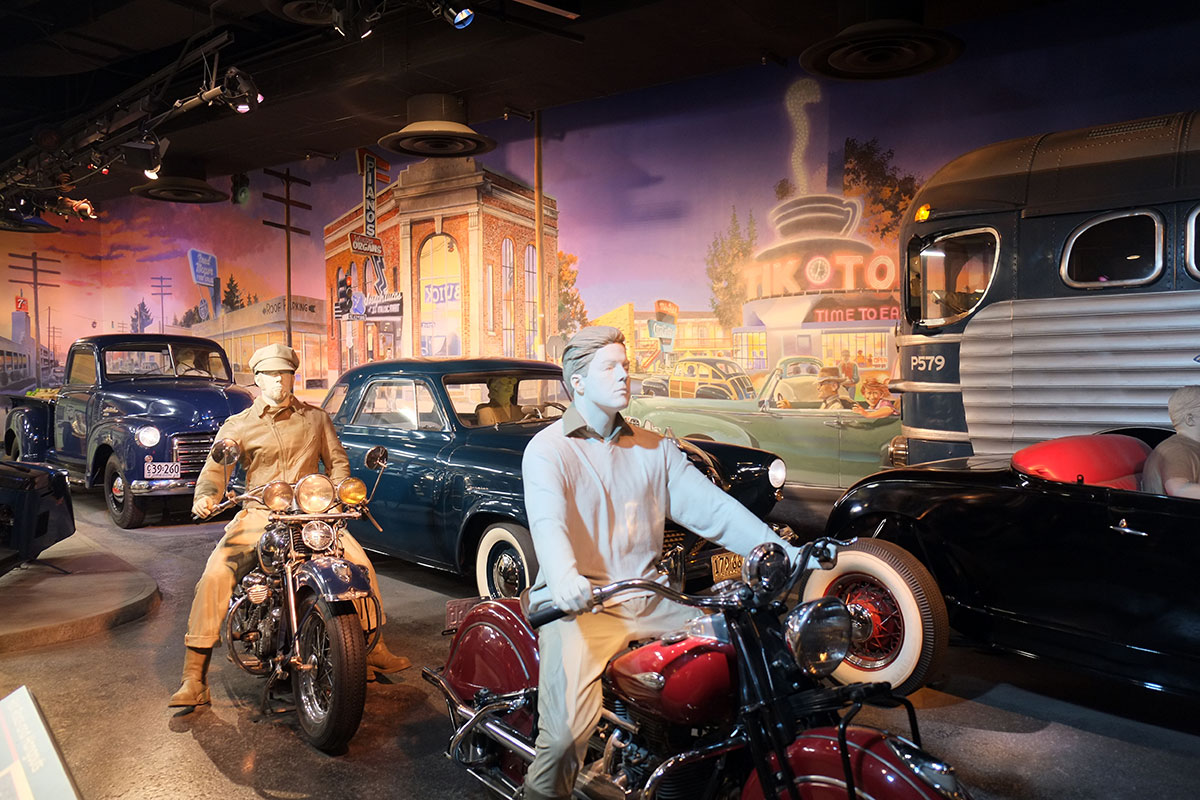
The ability of the installations to show the social, economic, technological and political context of the objects was really sophisticated.  The section on transportation clearly demonstrated the interactions between the changing transportation systems and the economy, making connections that I’d never fully understood (such as why the textile industry was able to shift to the south when it did).  And strangely enough, the section on post-war car culture focussed on Sandy Boulevard in Portland, with this tableau of cruising through Hollywood.  DSCF6243

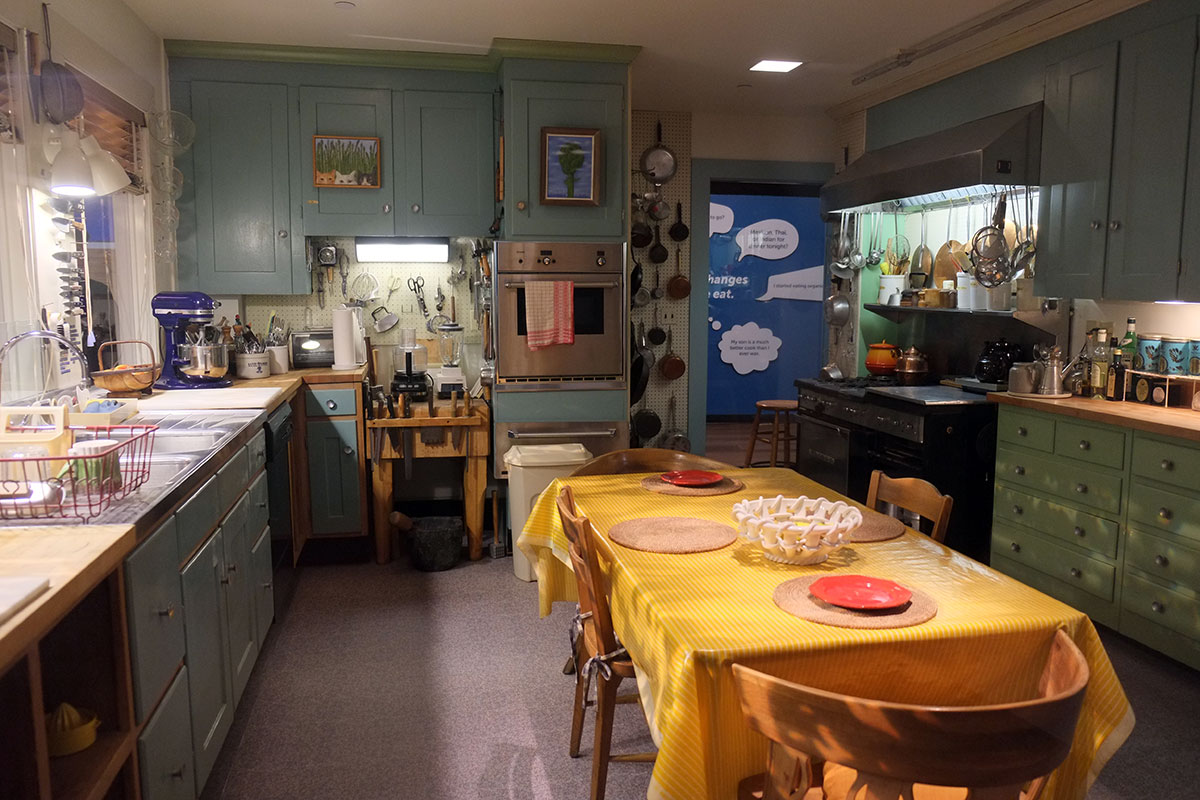
The food section was great, especially Julia Childs’s reconstructed kitchen.
DSCF6253

I started the Natural History museum with Greta, but my willingness to look at taxidermy animals is much lower than hers, especially when some of the greatest paintings in the world are across the street.  So I ditched her for the afternoon and went to the National Gallery.  Back in the 80s and mid-90s I’d always enjoyed business trips to DC, as I could spend the day in meetings and then run out to late hours at the art museums.  So an afternoon at the National Gallery was similar to my day at the MFA – a chance to revisit familiar and beloved works, plus notice a few things that were either newly displayed or had escaped my notice.

Highlights included one room full of large portraits by three of my favorite painters -Whistler, Eakins and Sargent – and being able to look back and forth amongst them rapidly, thinking about how different their approaches were.  The Italian Renaissance collection is the best in the country, how can such familiar works just knock you out every time you see them?  One new favorite is this piece by Jacopo Bassano, which seems to be Maritime Mannerism;  to the impossible poses, proportions and colors of Mannerism, we can add the unlikely stability and balance of figures leaping around on tiny boats.  DSCF6290
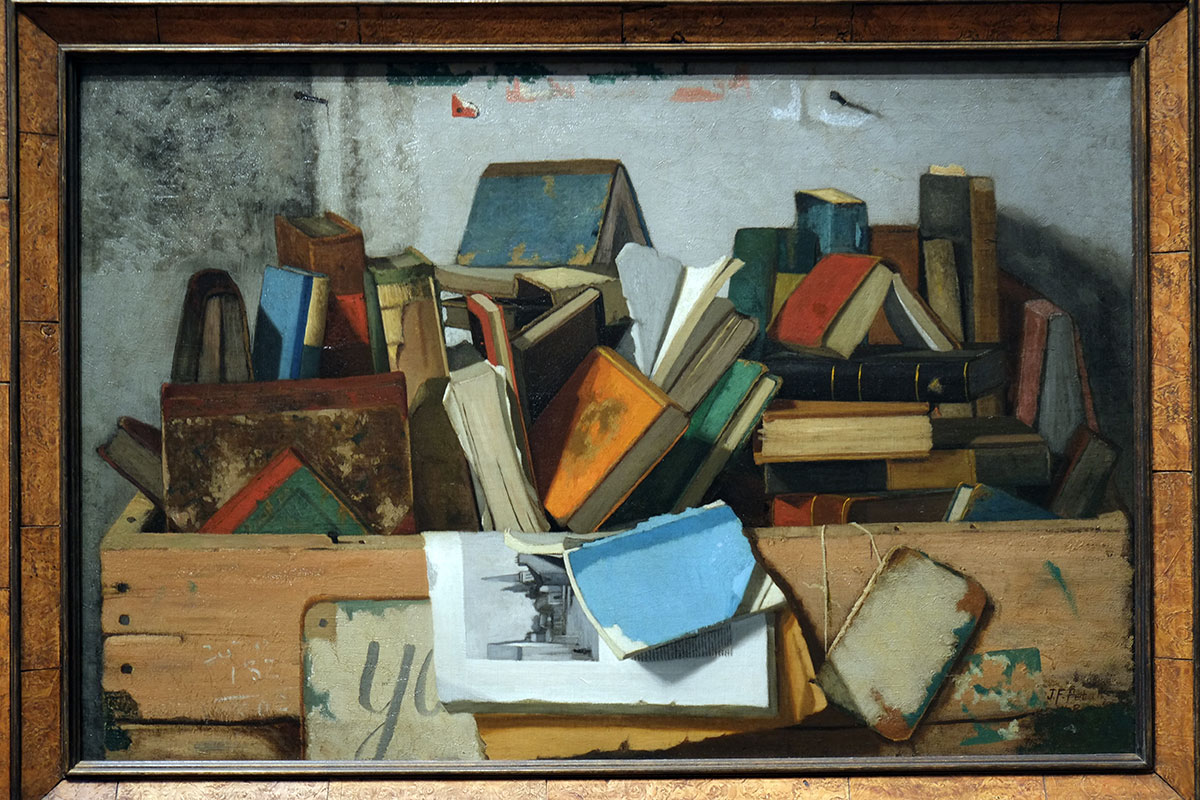
John F. Peto has always been quirky and entertaining, but I find this painting more satisfying than most:DSCF6422

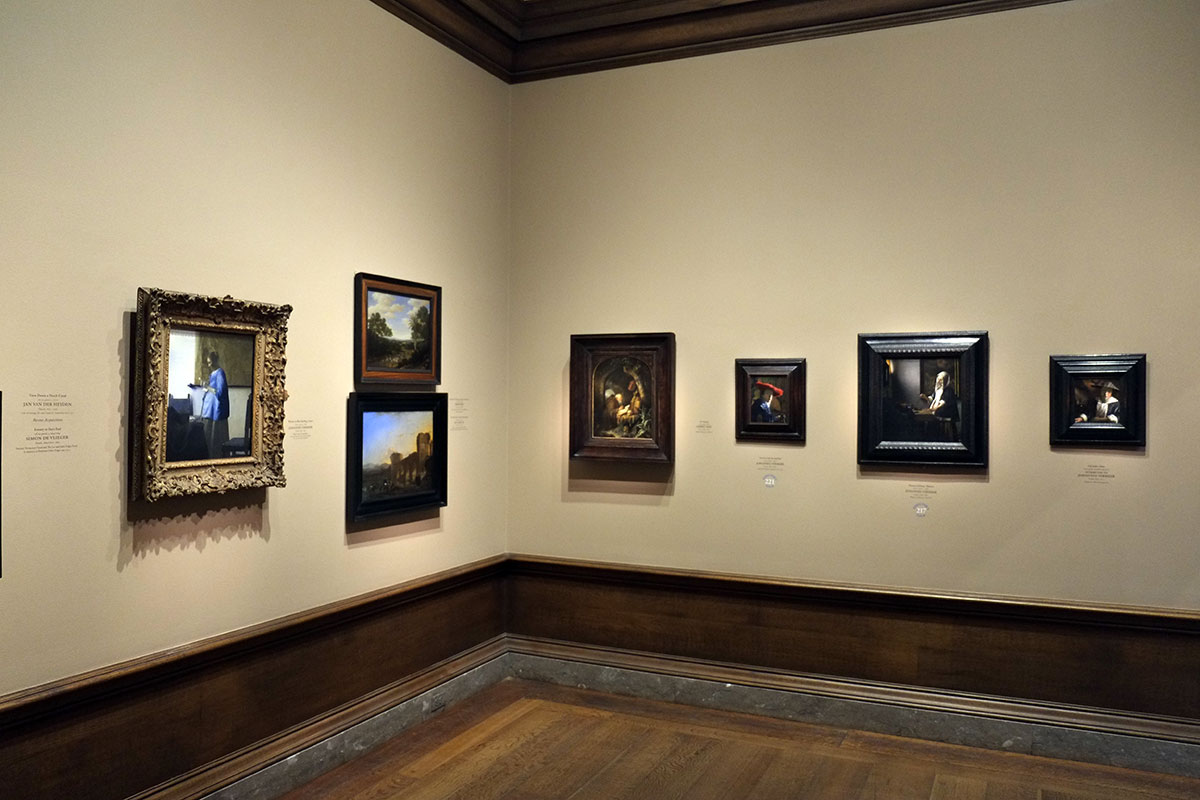
And what can you say to a room with four Vermeers?  One of the Vermeers in the permenant collection was on loan to the MFA, but they had thankfully replaced it with a loaner from the Rijksmuseum.  DSCF6284
Seeing them reminded me of the time that there was the big Vermeer retrospective in 1995, and the one weekend I was able to see it, Newt Gingrich shut down the Federal government and that was it.  There are many reasons to loathe what has happened to the Republican Party in the past 20 years, but that one tops my personal list.

Moving outside, the relatively new sculpture garden has some fun things, including this Lichtenstein 3-D optical illusion.  DSCF6454

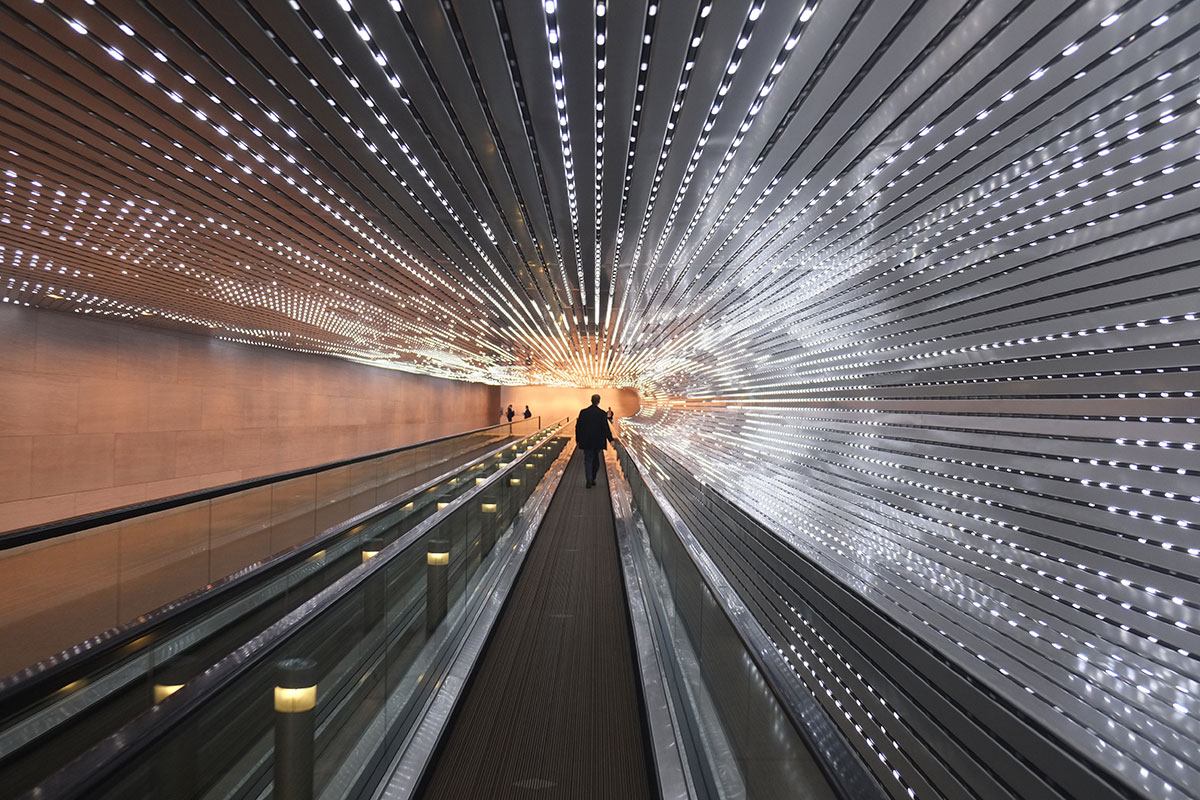
Or you can travel underground, heading towards a galaxy far, far away. DSCF6321

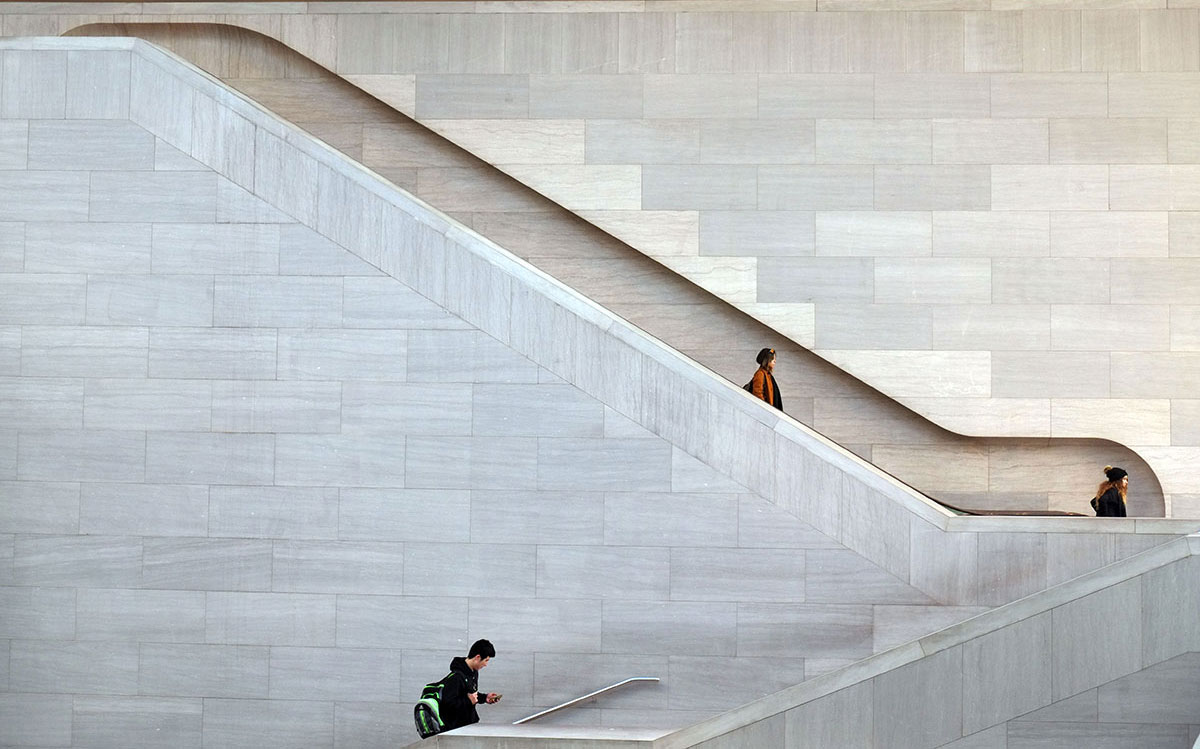
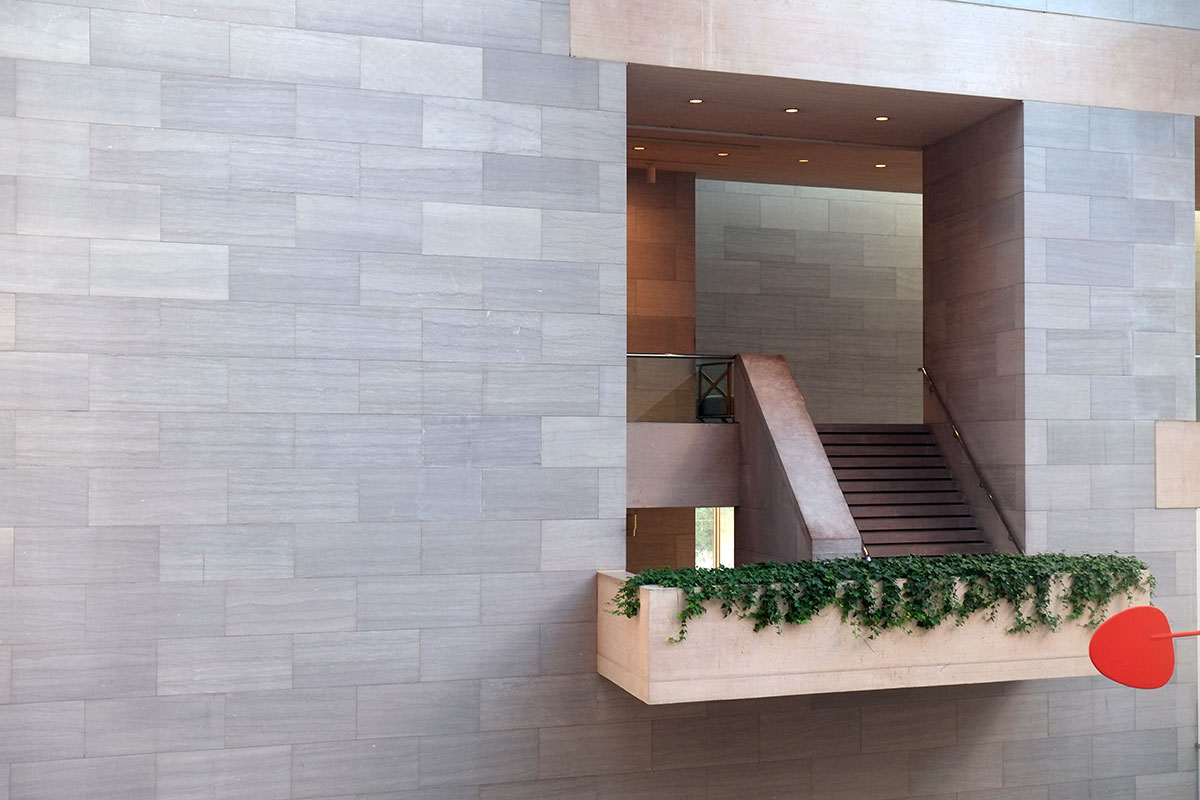
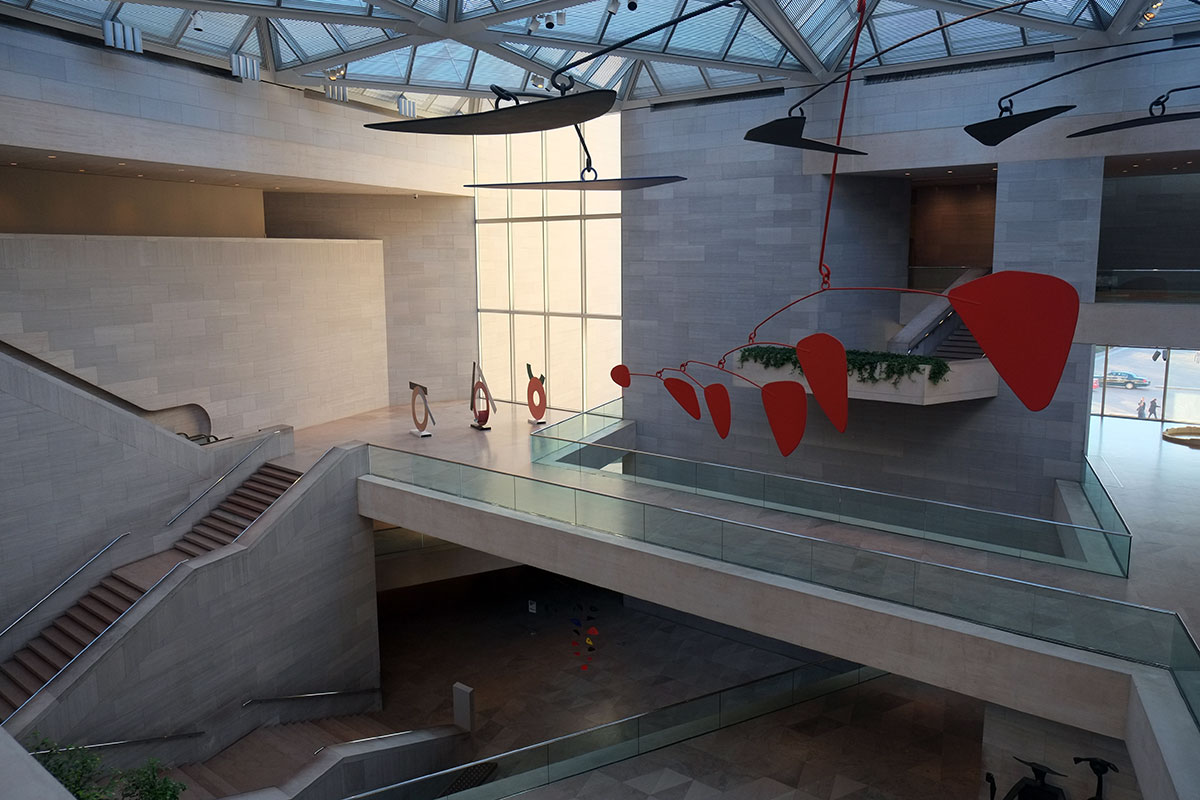
The galleries of the East Building are being remodeled, and an extra floor added on one of the corners, but the atrium remains open.  It is still one of Pei’s best buildings, perhaps as it avoids the usual gypsum board abstract detailing.  In this case, the Washington penchant for marble and grandiosity does pay off.  DSCF6346DSCF6372

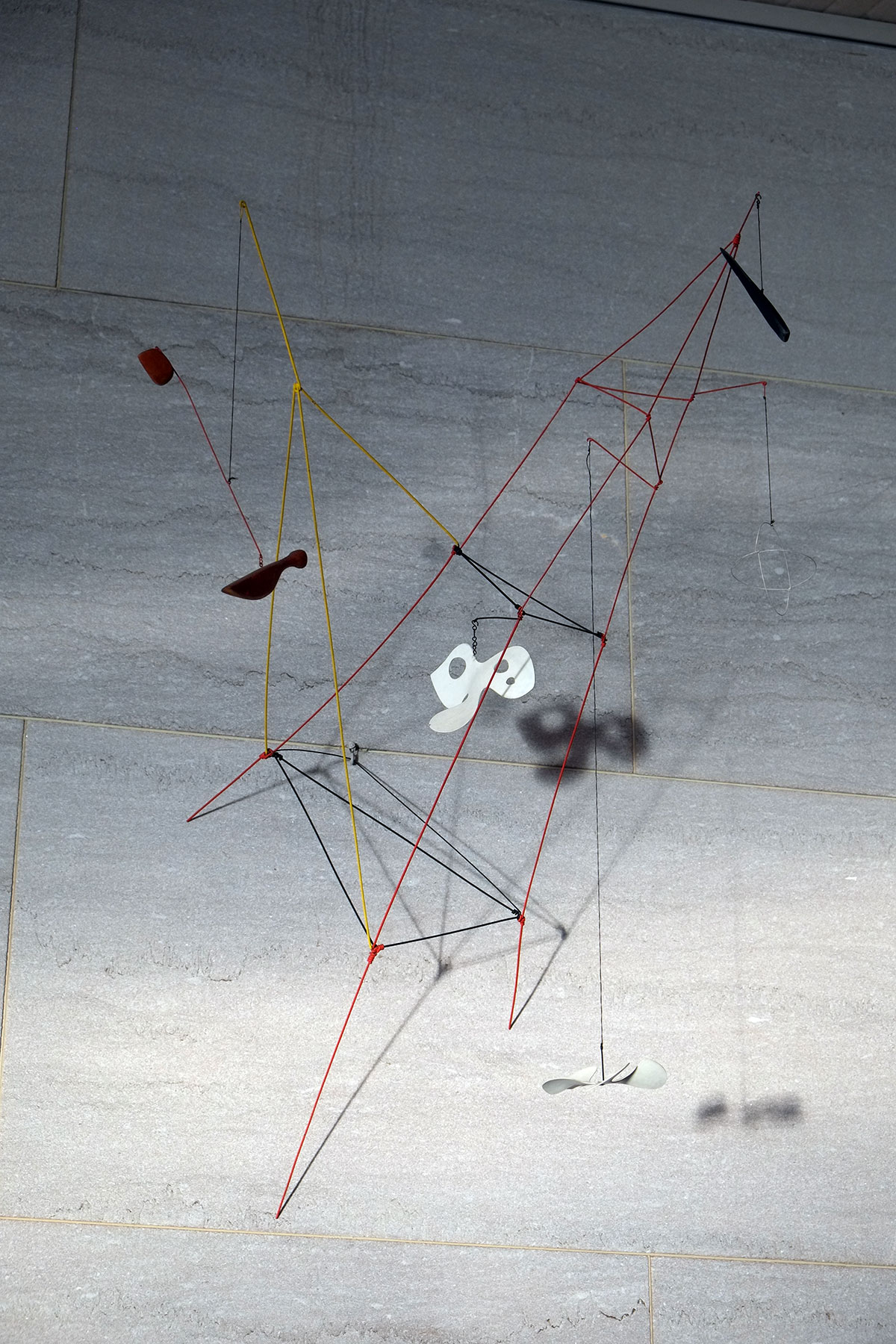
And being to see a few Calder mobiles, of varying scales and ages, is great; although as usual, the guards freak out when you blow on them.  DSCF6375DSCF6354

It was wonderful seeing these amazing museums, but we had far too little time, skipping about a dozen other museums I wanted to visit.  When I was planning this trip, I realized we really needed two years to do it right, and that was very evident in Washington.

Smithsonian Natural History Museum

Beware of tigers

Beware of tigers

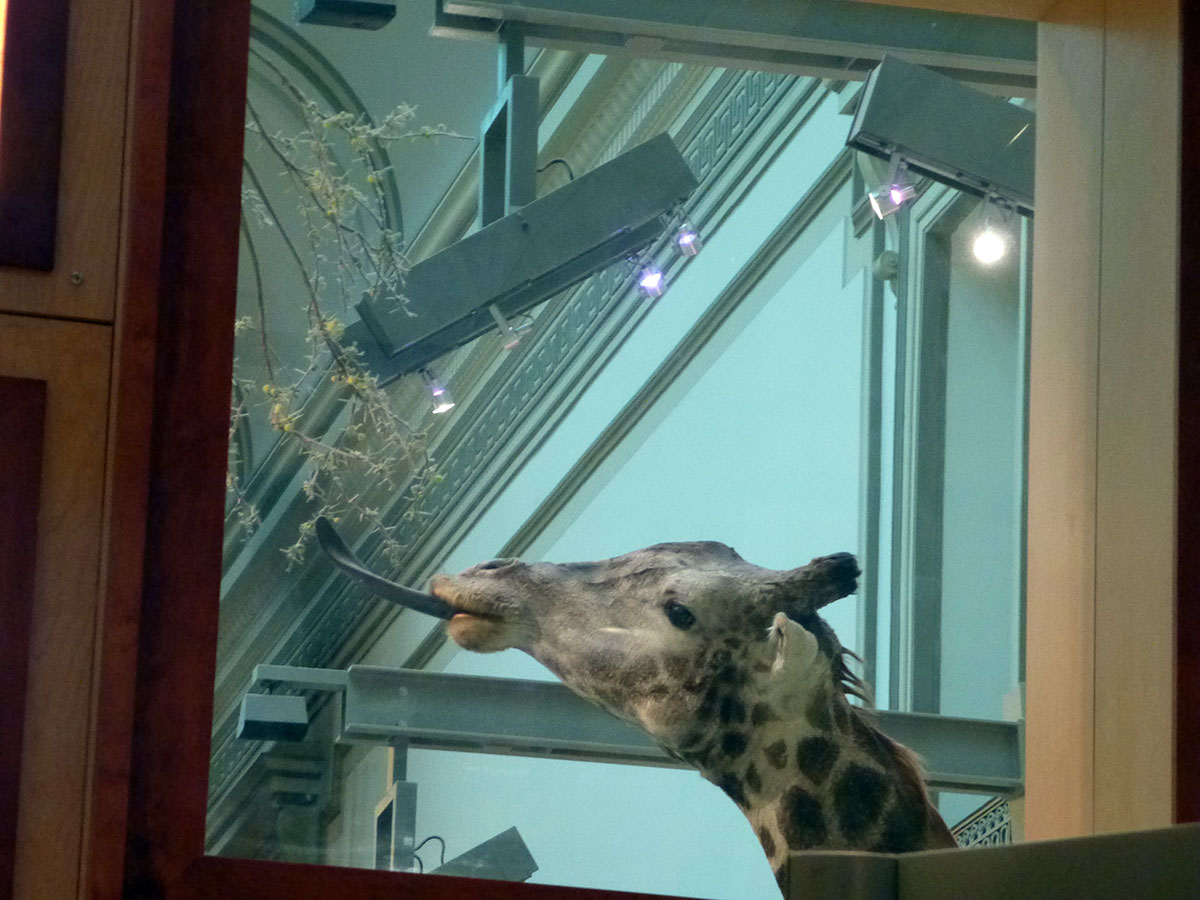
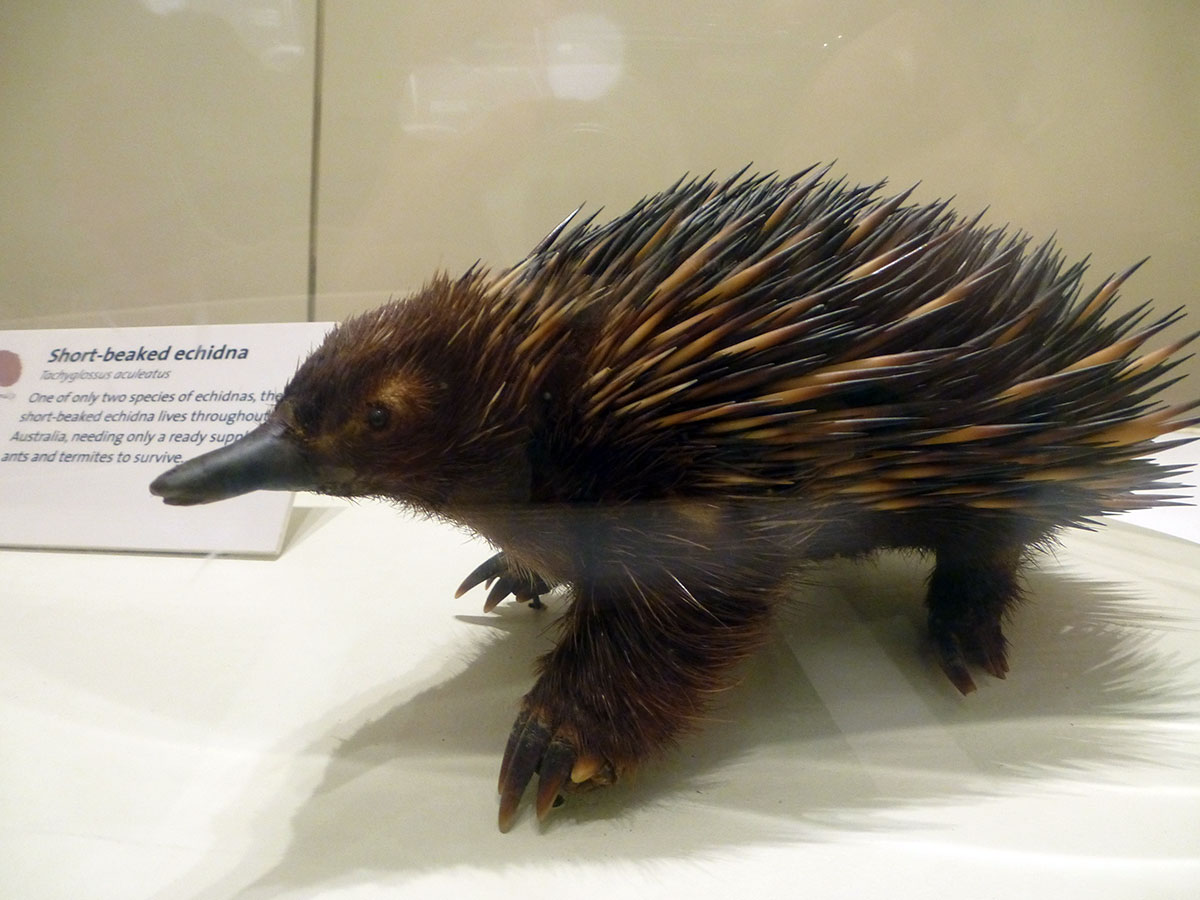
If you enter from the National Mall side of the Smithsonian Museum of Natural History in Washington DC, the first thing you see is a mounted bull African Elephant. It is the largest taxidermied specimen in the world, of the largest land animal. On your left continues the Great Mammal Hall. In its entrance, a Bengal Tiger is posed to pounce on you, and a giraffe waves his tongue in greeting through a window. Though the entrance is not laid out in any order I can find beyond looking cool, it quickly segues into being arranged by continent or environment. The region about Australia, being the only continent to house all three subclasses of mammals, explains the differences between placental mammals, marsupials, and monotremes. I’m a big fan of being allowed to poke stuff, so I liked in the polar area where they had a chilled squirrel statue that you could touch, and feel how cold an animal’s body might get during hibernation.

Giraffe in the window

Giraffe in the window

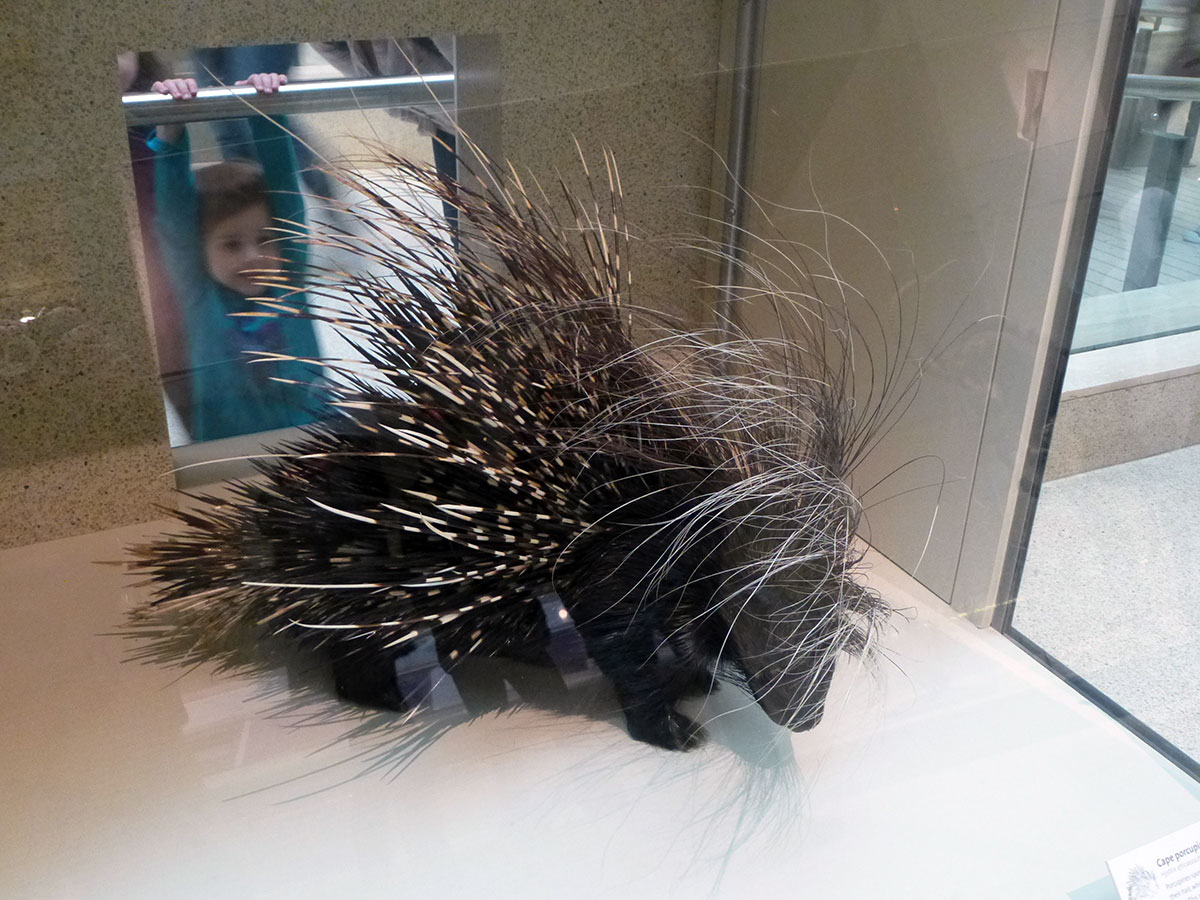
For protection against being pet by small children, porcupines have developed spines

For protection against being pet by small children, porcupines have developed spines

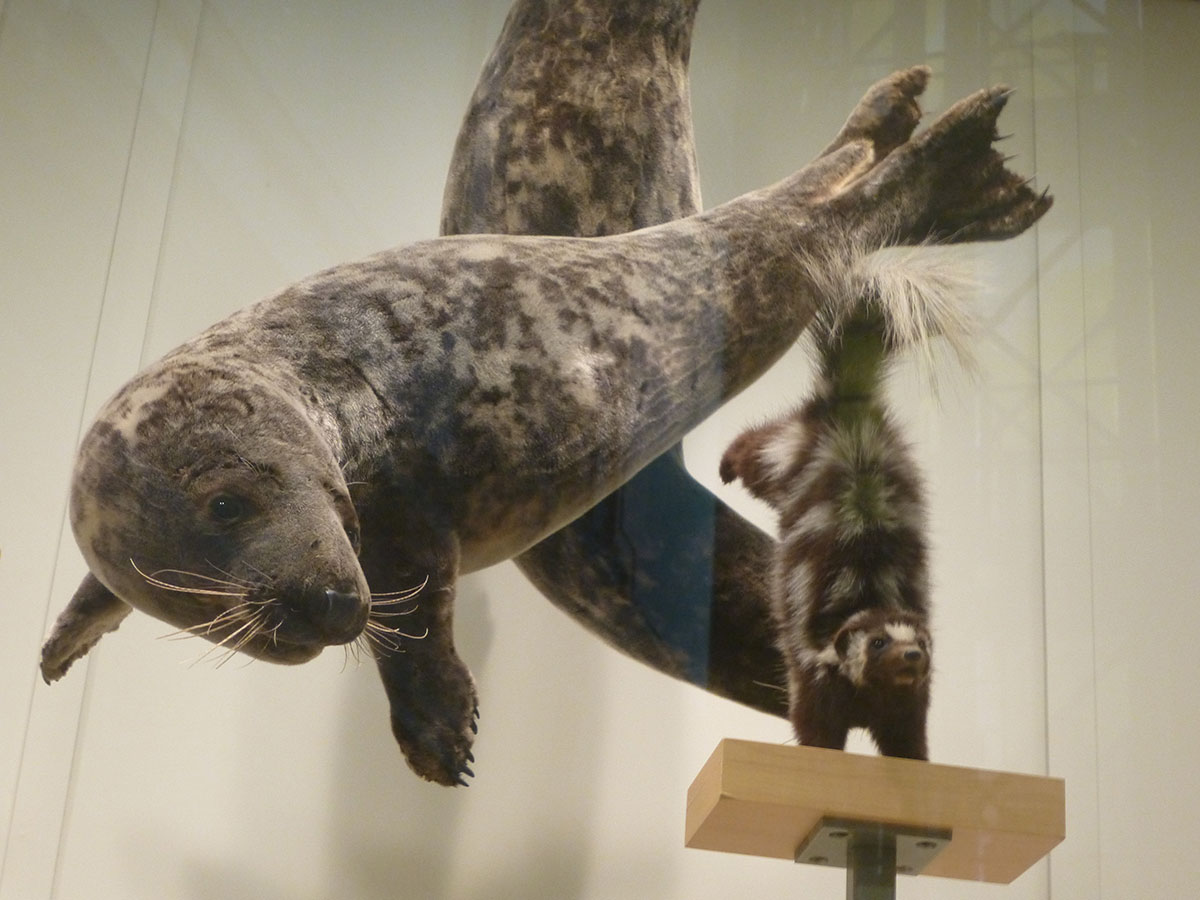
Carnivora

Carnivora

Echidna, one of only two remaining monotremes

Echidna, one of only two remaining species of monotremes

Highly Skilled Indoor Predator

Highly Skilled Indoor Predator

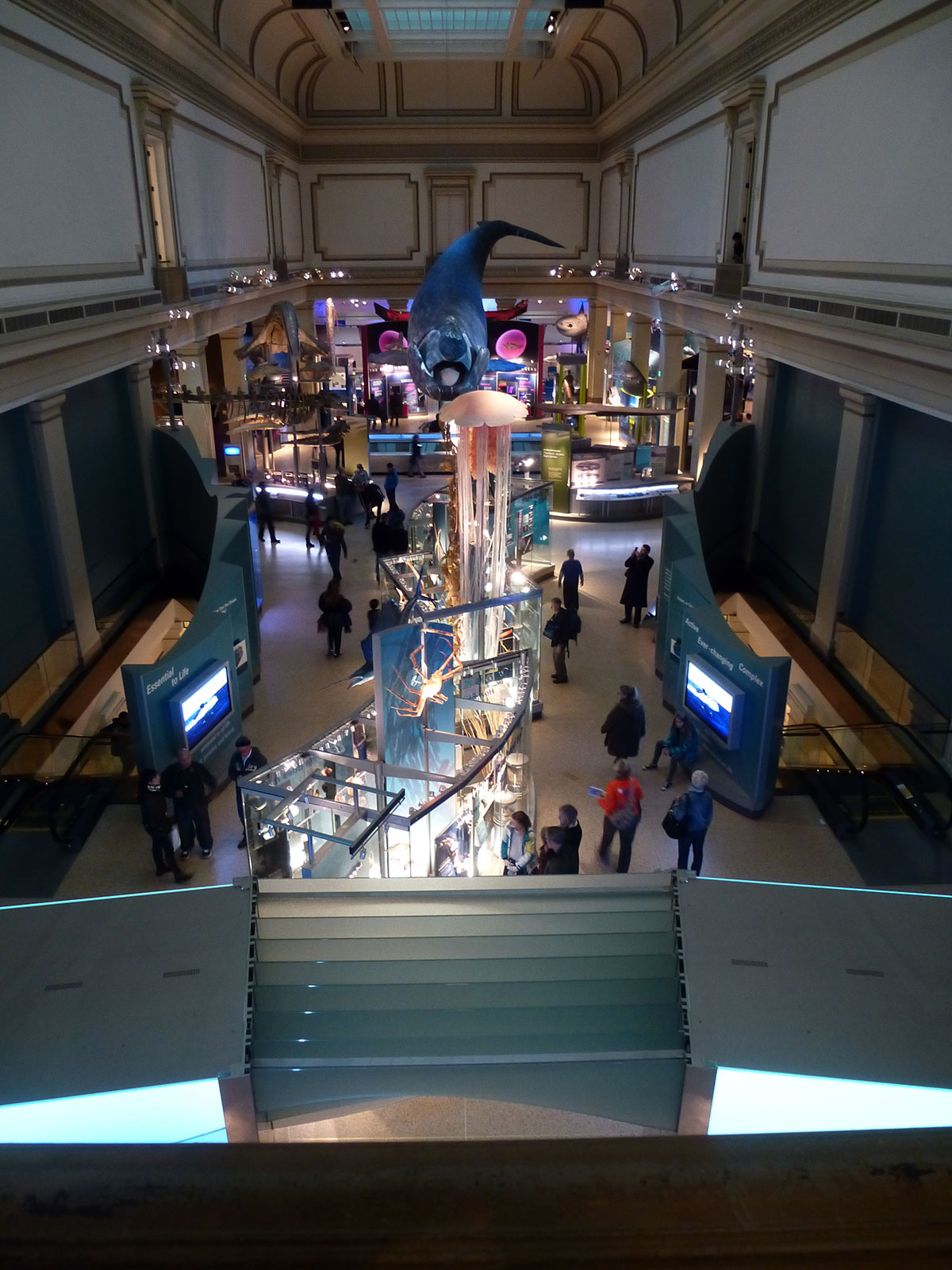
And boasting a giant squid over ten meters in length and a multitude of whale skeletons hung overhead in the two story space, the Ocean Hall of the Smithsonian Natural History museum is an impressive sight. In its section about prehistoric marine animals, it had a Dunkleosteus skull, and the jaw of a shark that basically had a hacksaw as a tongue. I’d say between a quarter and a third of the exhibit was about how humans are destroying the ocean, and how pretty soon it’s just going to be inhabited by massive swarms of jellyfish, which is kind of my worst nightmare.

Ocean Hall

Ocean Hall

Human history, even ancient stuff, has never been a great interest of mine, but the Hall of Human Origins presented the information (and I know I sound like a textbook critic here) in a clear and compelling fashion. The hall had recently been re-done, and incorporated videos and technology efficiently. They even had a booth where you could have your picture taken, and then modify it to see what you might look like as another species of hominid. Much more detailed than what you might learn in school, instead of just talking about Neanderthals and Australopithecus Afarensis, the direct ancestor to us, Homo Sapien Sapiens, it had models and statues of others, like the hobbit-sized people of Polynesia.
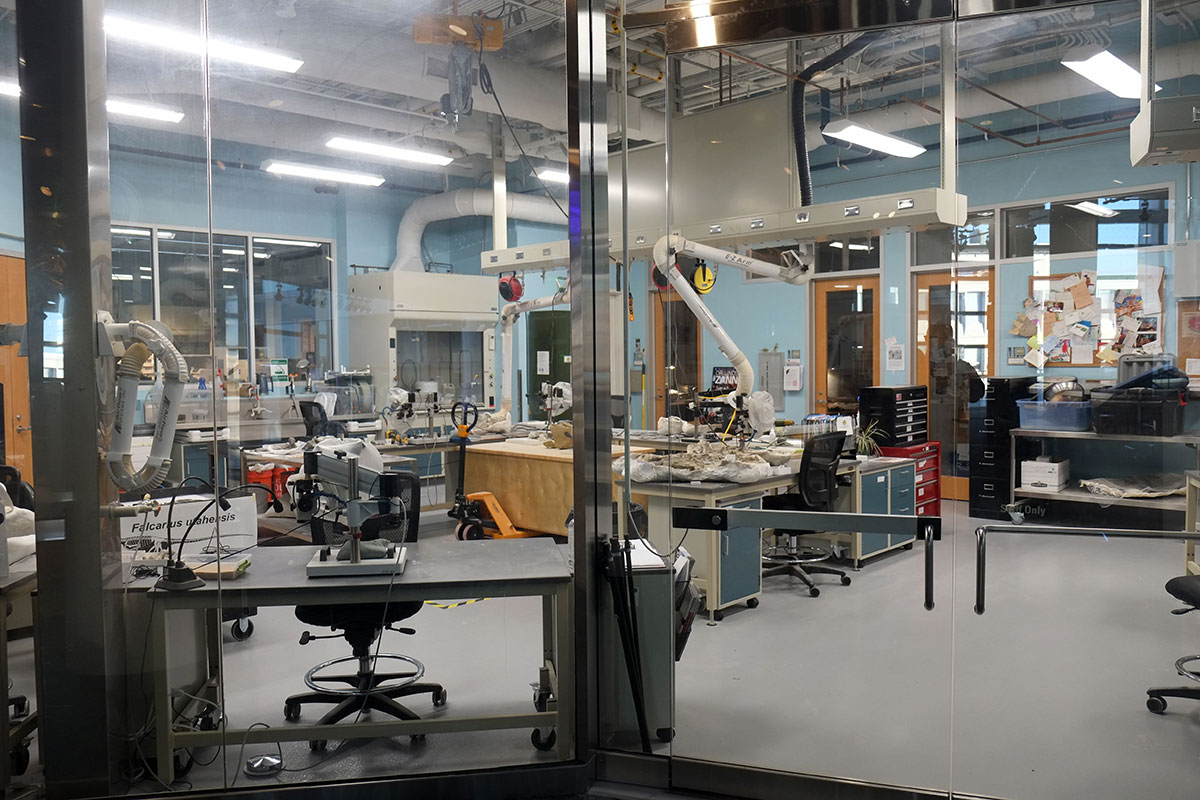
The third floor, usually home to the dinosaur exhibit, was closed for renovation, but they had a smaller Dino hall set up near the mummies. It only contained a few full skeletons, and was obviously aimed towards young kids, but for a temporary exhibit it was rather well put-together. Like at the Carnegie, they had a fossil lab with large windows, so visitors could look in at how fossils are prepared for exhibits.
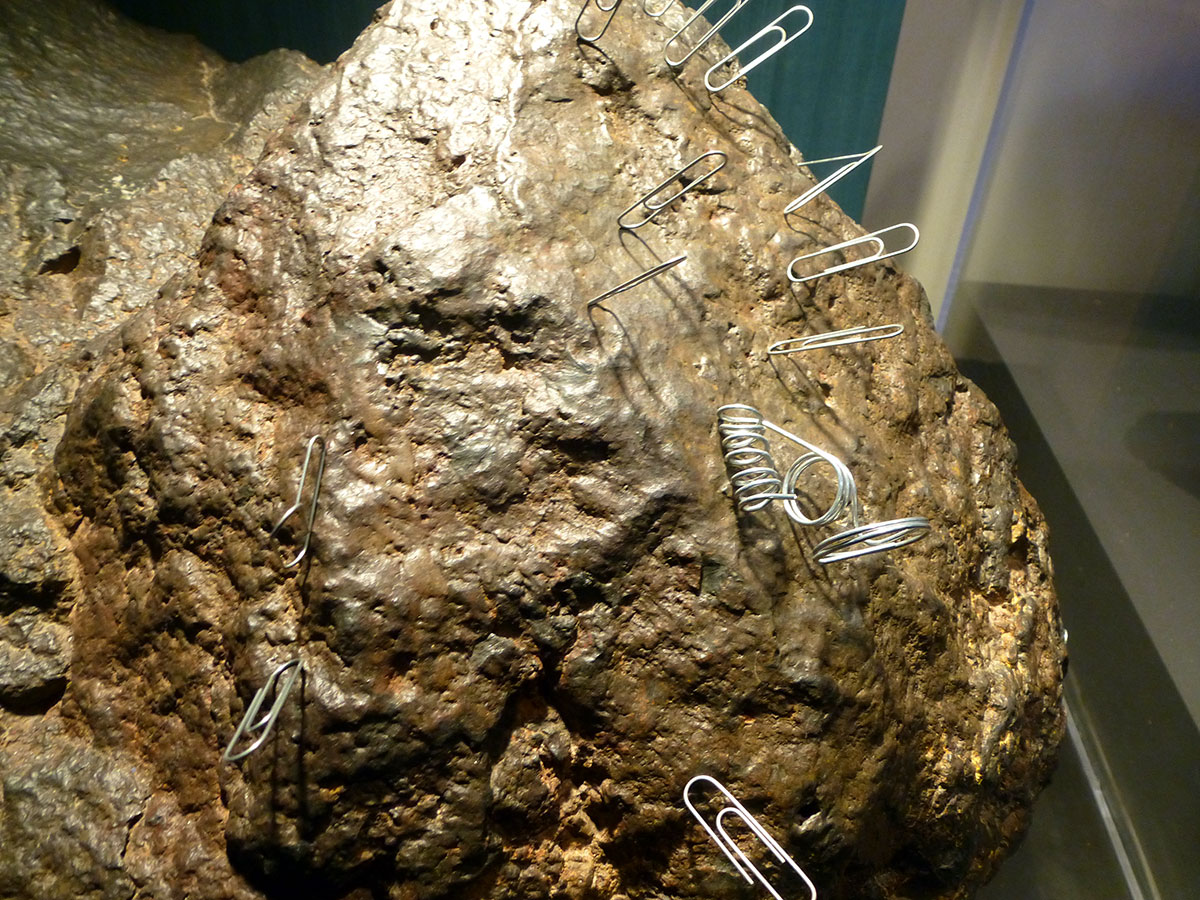
The Geologic exhibit held the world-famous Hope Diamond. Not being the kind of girl who’s interested in jewelry, I liked the crystal ball better. A large sphere of clear polished Quartz, when you looked into it, it showed the room and everything in it upside down, like a spoon does when you hold it the right distance from your face. Even cooler than this though, was the large piece of naturally magnetic rock. Not behind a glass case (yes!), it was covered in paper clips that you could experiment with sticking to it.

Magnetic Rock

Magnetic Rock

Stibinite

Stibinite

But surprisingly, my favorite exhibit didn’t contain any taxidermy. The temporary show, Nature’s Greatest Photography, was simply a gallery filled with large prints of the winning photos from the Windland Smith Rice International Contest. One of my favorites in it was a picture of two Bush Rabbits playing, where they are touching noses, with one flying high in the air. To me it seems like a cartoon, where the pretty girl finally kisses the awkward boy, and he’s so surprised and happy he literally jumps. The exhibit actually prompted me to buy a catalogue of its photos in the gift shop.
Unlike the American Museum of Natural History in New York, it’s free. It also will let you in by yourself if you’re under 16, which is why you won’t see a blog post about that museum. I didn’t go into the insect exhibit, but I’ve been told that you should go see the butterflies, if you’re ever in DC.

National Zoo

Giant Panda (I can't remember who this one is)

Giant Panda (I can’t remember who this one is)

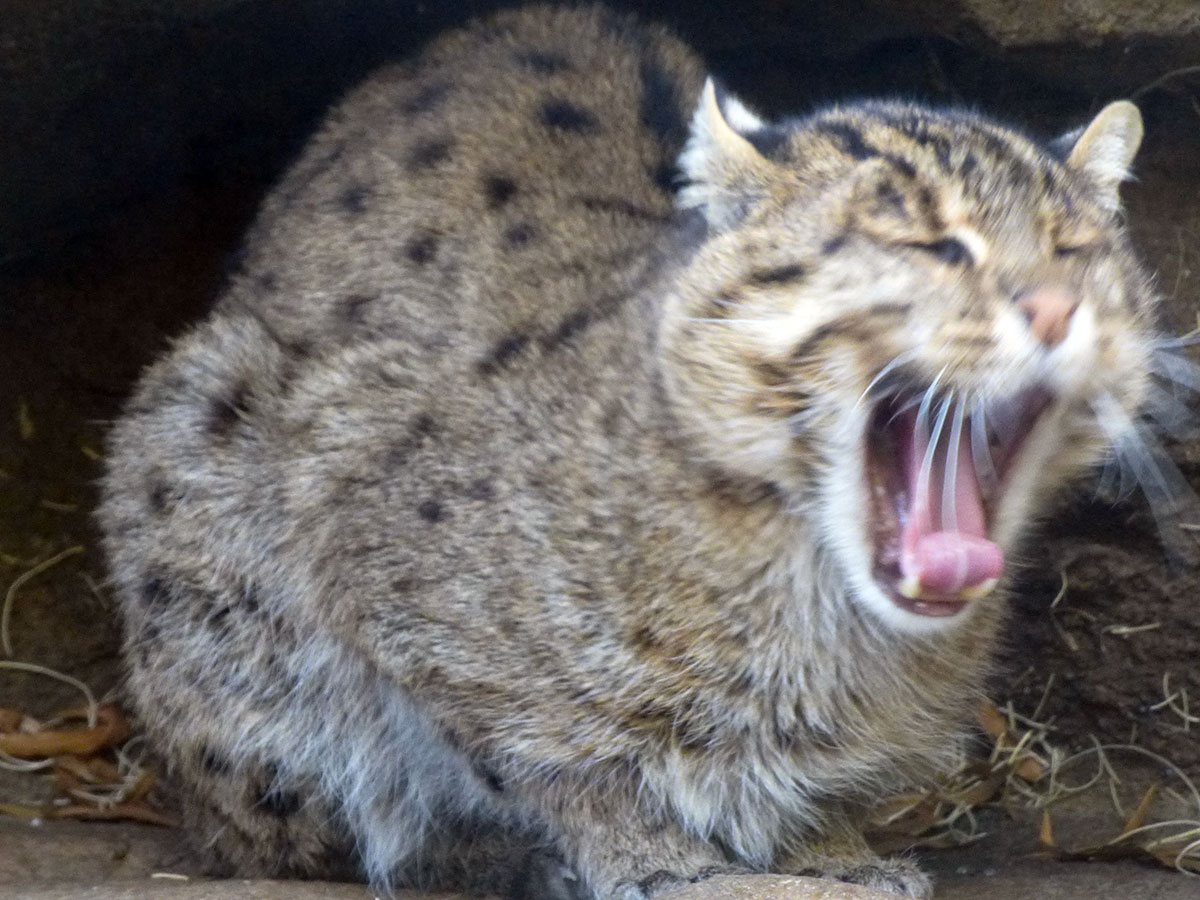
The National Zoo in Washington, DC is known for it’s pandas, but I found many of the other animals more fasinating, like the fishing cat below. I caught her at the perfect moment, in the middle of a yawn.

Fishing cat turned into a yawning cat

Fishing cat turned into a yawning cat

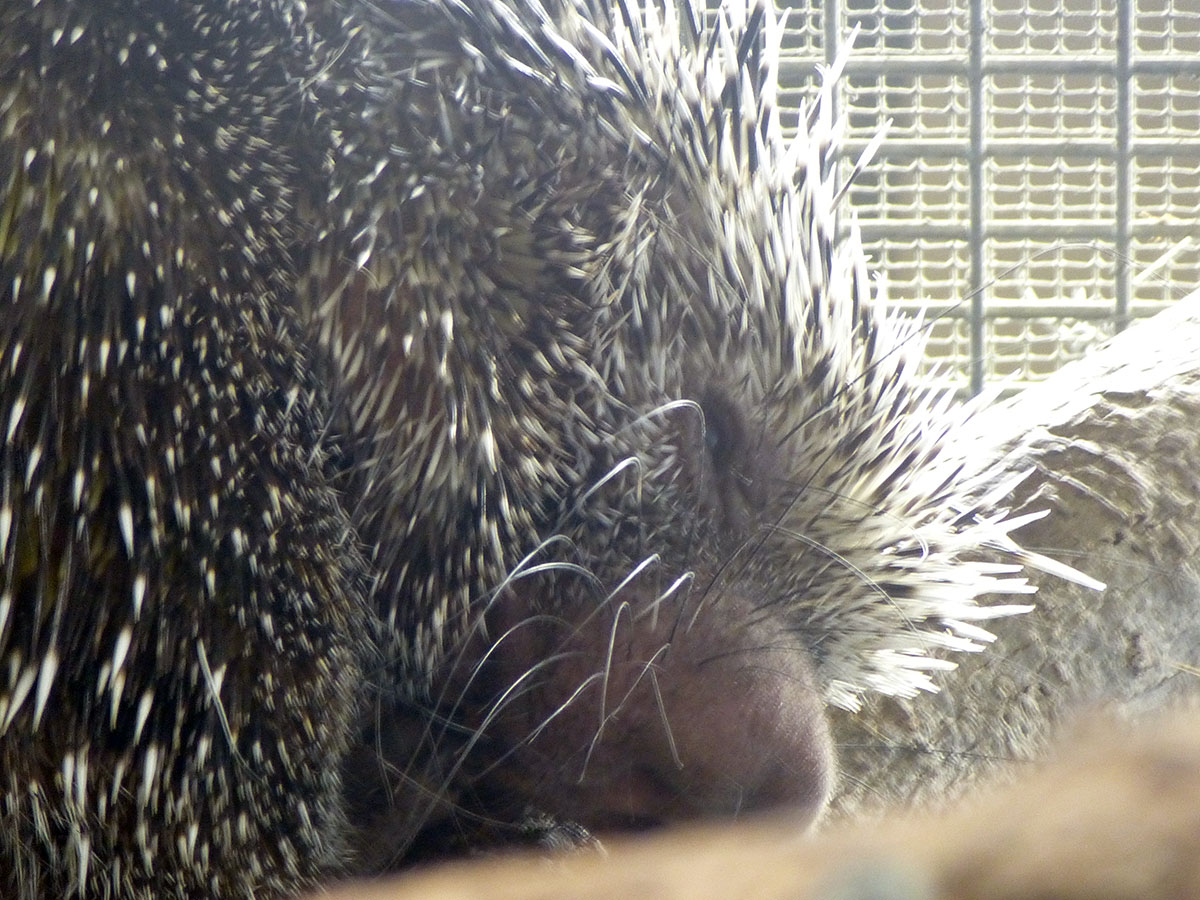
If you have to get stabbed by a porcupine (I’m not sure why you would…), do not pick an American Porcupine. They have all these nasty barbs on the end of their spines that make it hard and painful to pull them out. Even though they look nastier, pick an African Crested Porcupine.

American Porcupine

American Porcupine

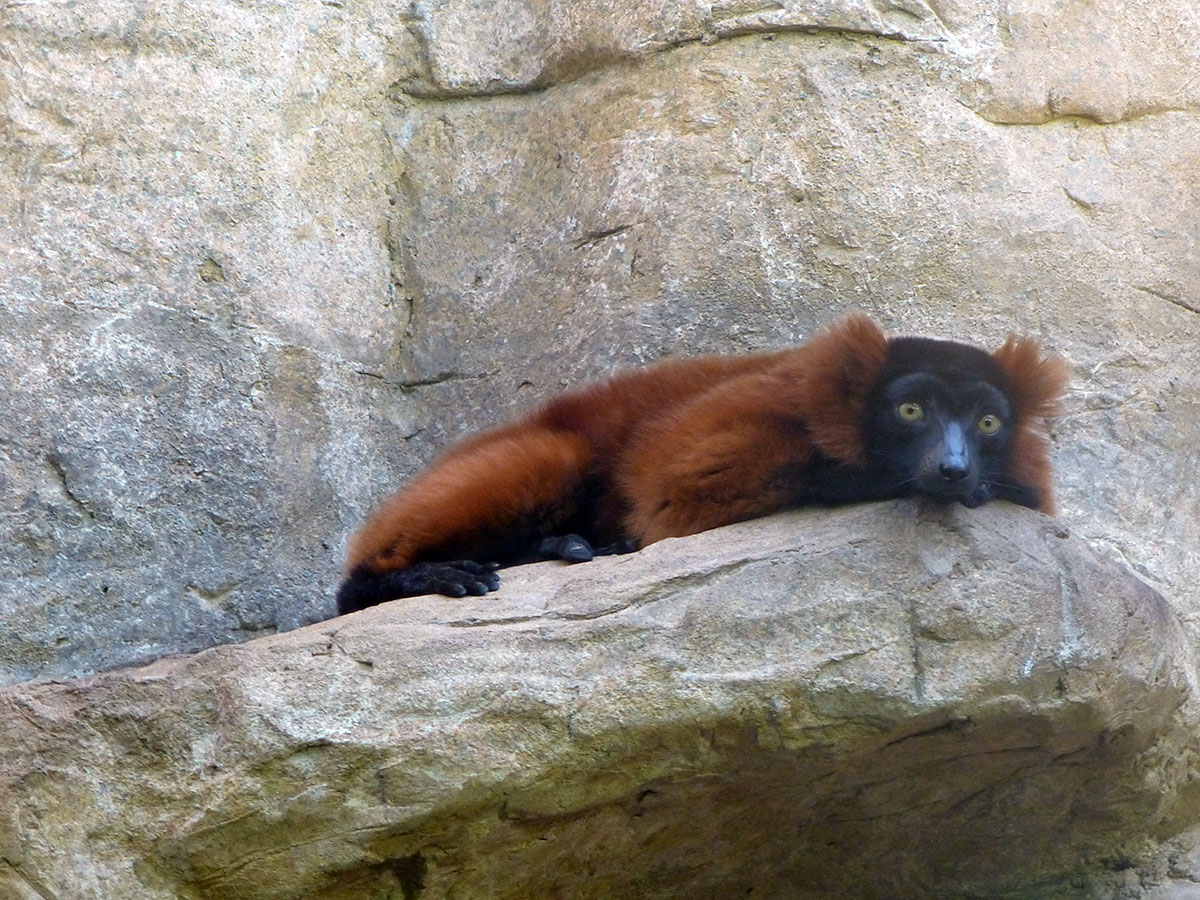
Red ruffed lemurs are one of the most endangered animals in the world, because their forests are being cut down and burned for crop fields. They are also some of the largest lemurs, apart from Indris and diademed sifakas, with eyes that look like they’re peering into your soul.

Red Ruffed Lemur

Red Ruffed Lemur

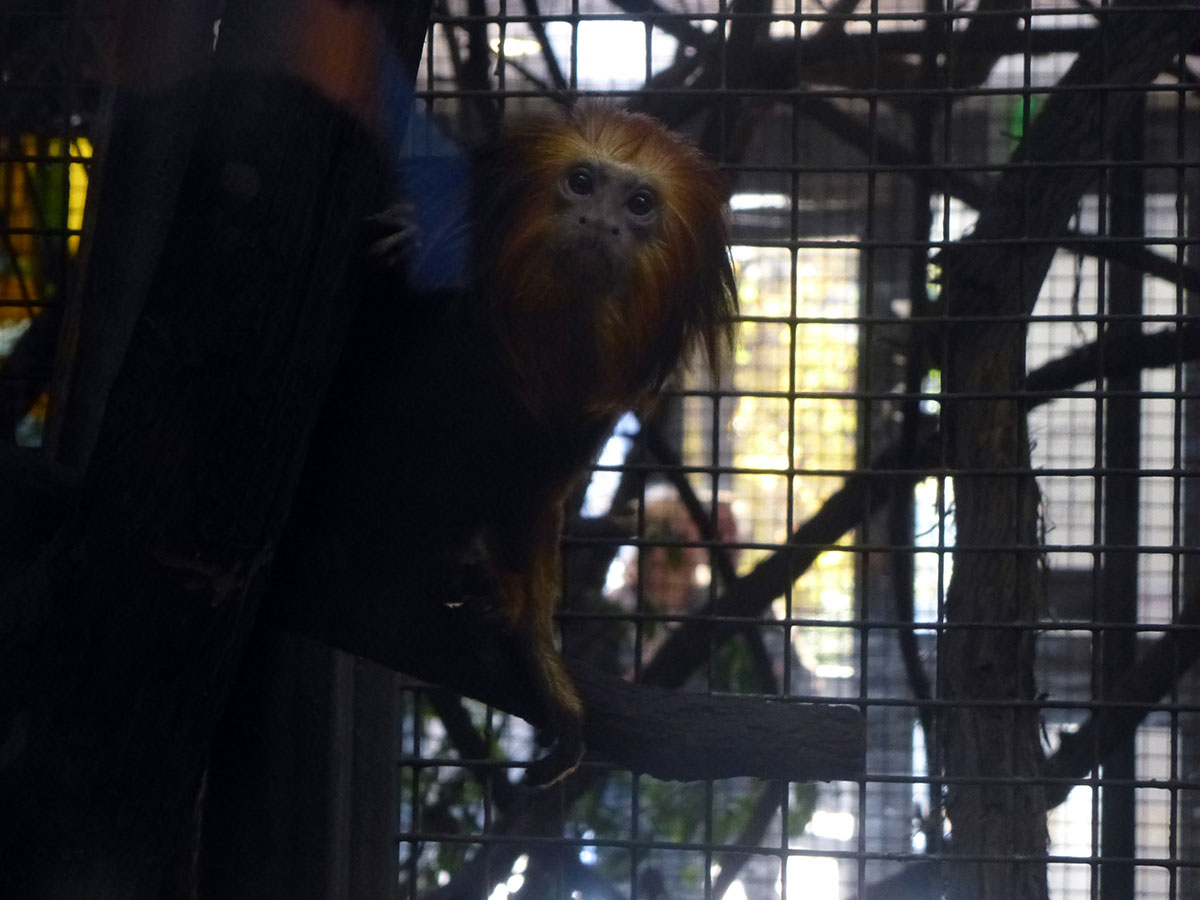
Meanwhile, this monkey’s eyes make it look like he’s been possessed by a demon.

Golden Lion Tamarin

Golden Lion Tamarin

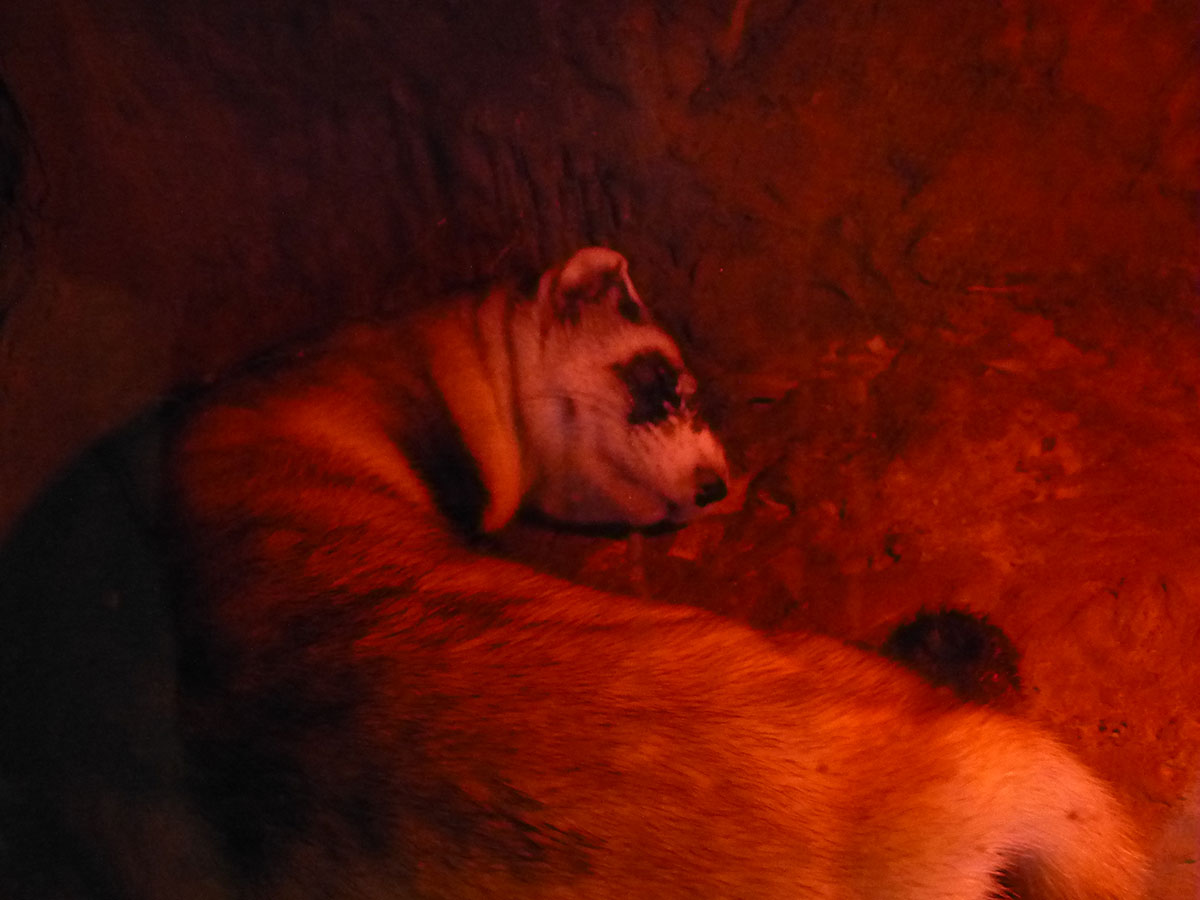
Black footed ferrets are one of my favorite animals, and this was the first time I’d ever seen one alive and in person. Unfortunately, I never got to see it do anything but sleep, although it did turn itself around between the two times I went to go see it.
The population of these prairie dog-eating animals were once thought to be extinct, until a sheepdog found a population of only seventeen adults. Captive breeding programs brought them back, although they’re still endangered.

Black Footed Ferret

Black Footed Ferret

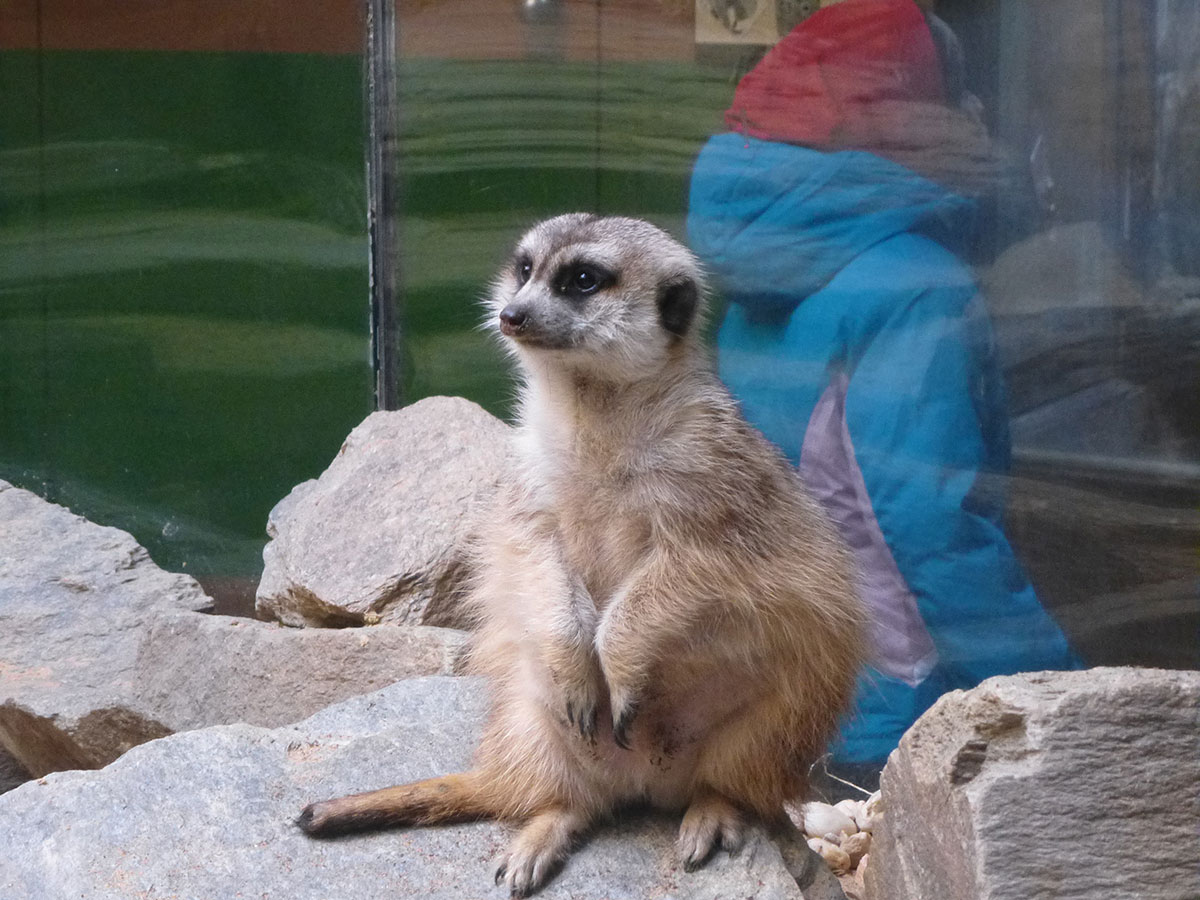
Meerkat

Meerkat

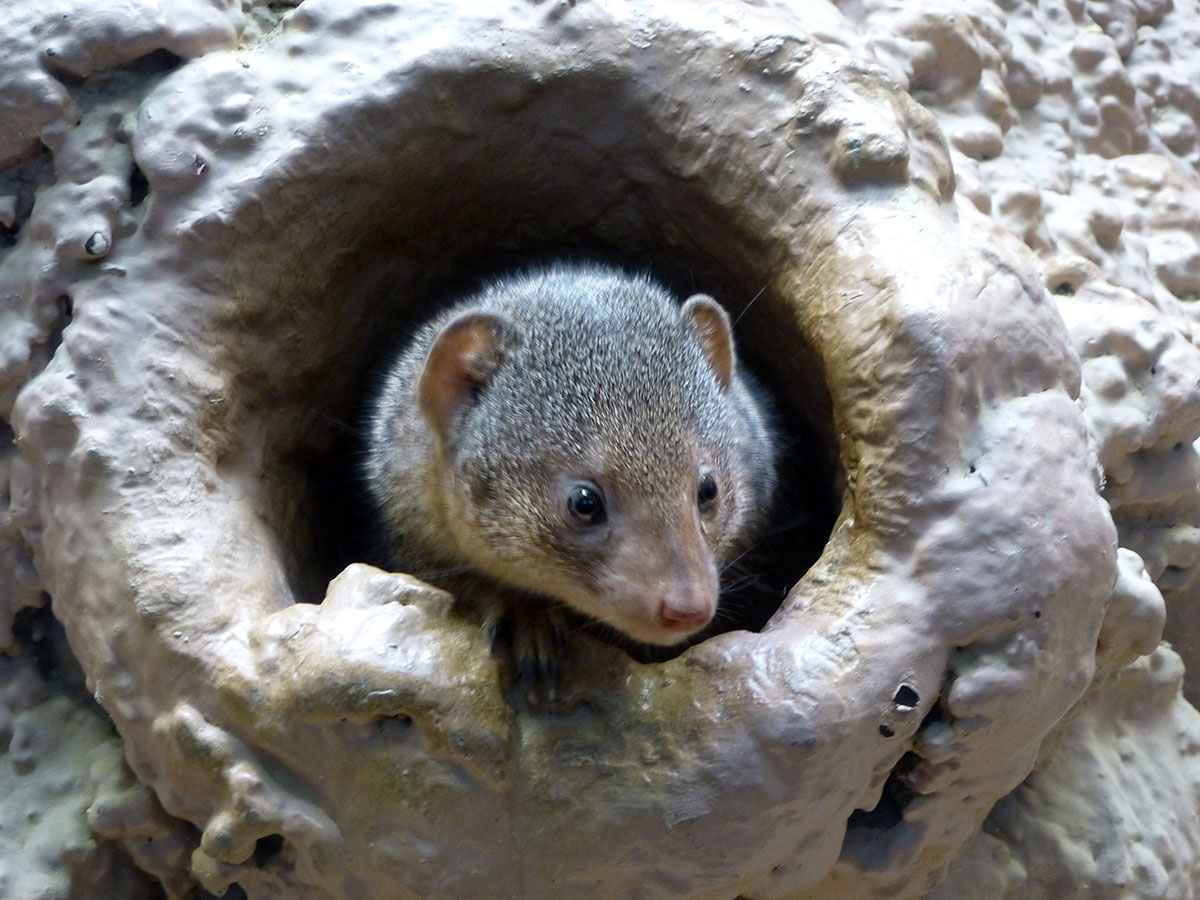
Mongeese (I refuse to call them mongooses) are close relatives of meerkats, and even cuter. This is a dwarf mongoose. They also had banded mongeese, which are another of my favorite animals, but they refused to come out of hiding.

Mongoose

Mongoose

I went through the reptile house rather quickly, because I am not a big fan of snakes.

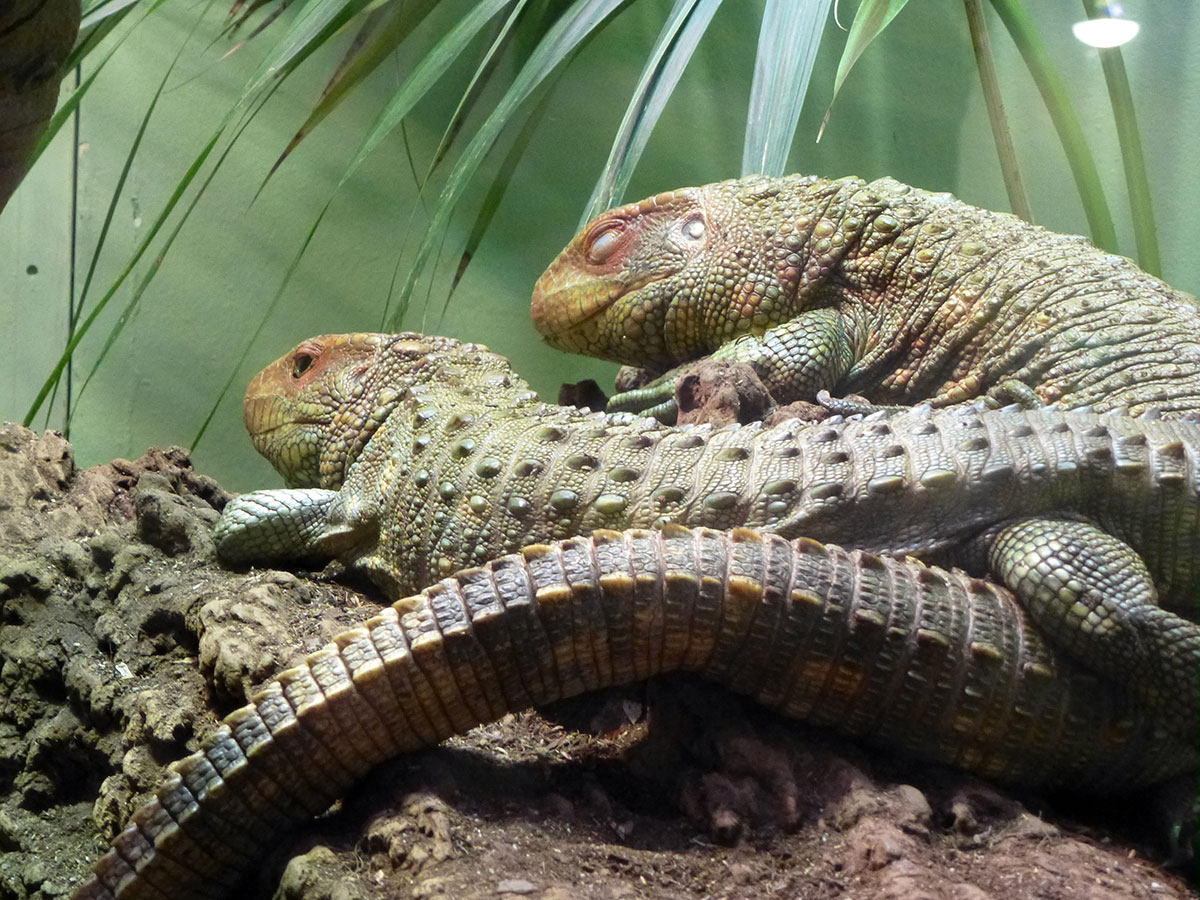
Happy Iguanas

Happy Iguanas

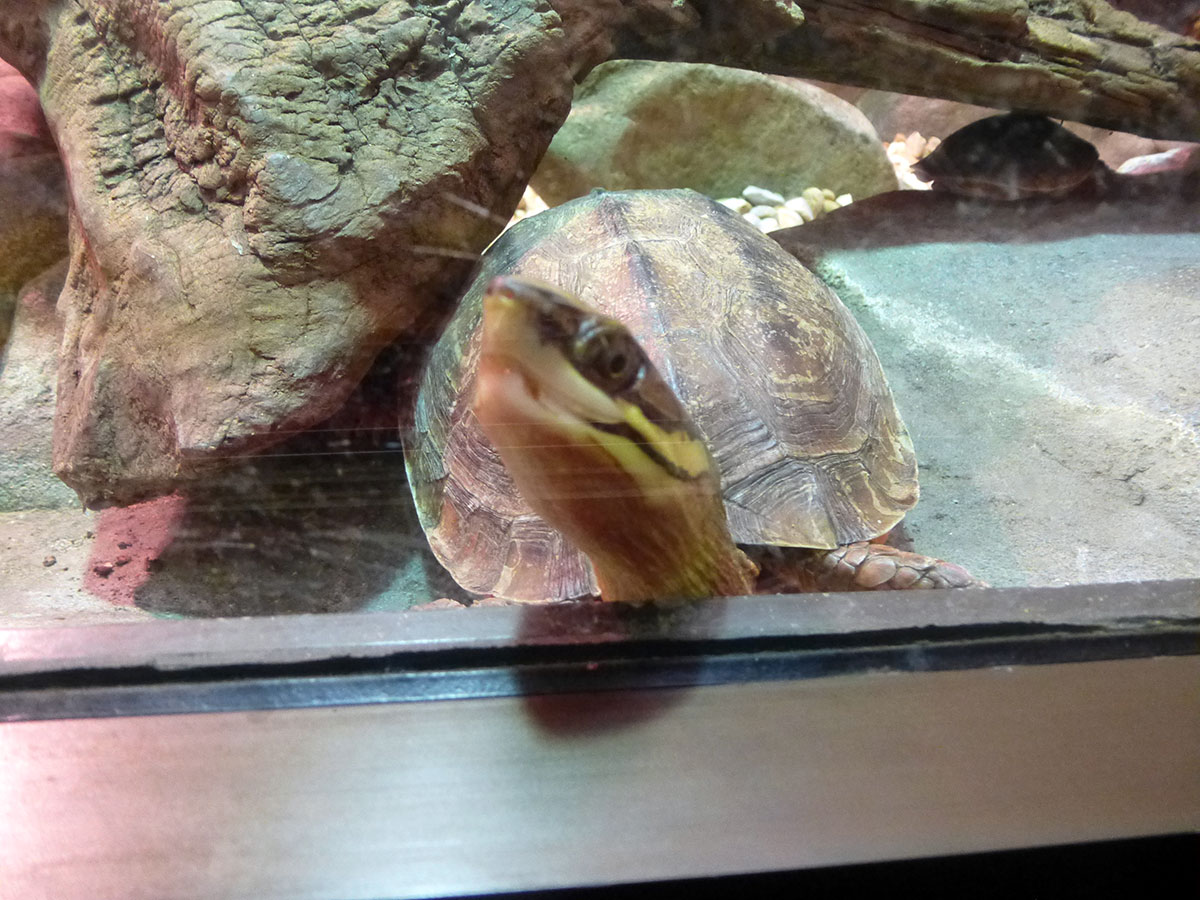
Peekaboo Turtle

Peekaboo Turtle

Some of the last animals we saw were the lions, just as the sun was going down. Mostly nocturnal, they heralded the night with a chorus of roars that would send shivers up your spine if they weren’t contained behind a fence.

Lions

Lions