Category Archives: cities

Fernandina Beach

DSCF9399Usually when a town is named “________ Beach”, it means there’s already a city named ________ nearby, and this _______ Beach place is the formerly unincorporated area where the residents of  _______ used to go swimming, and is now a random collection of former beach cottages being occupied permanently.  But there is no city of Fernandina near Fernandina Beach.  It is the city itself, and in fact, just to be confusing, it seems to be two distinct cities.

It is the northernmost city in Florida, on the north end of Amelia Island, which has seen a lot of resort development at the southern end in recent decades.  Fernandina Beach has an excellent harbor behind the barrier island, and this was the basis for its early existence.  DSCF9312

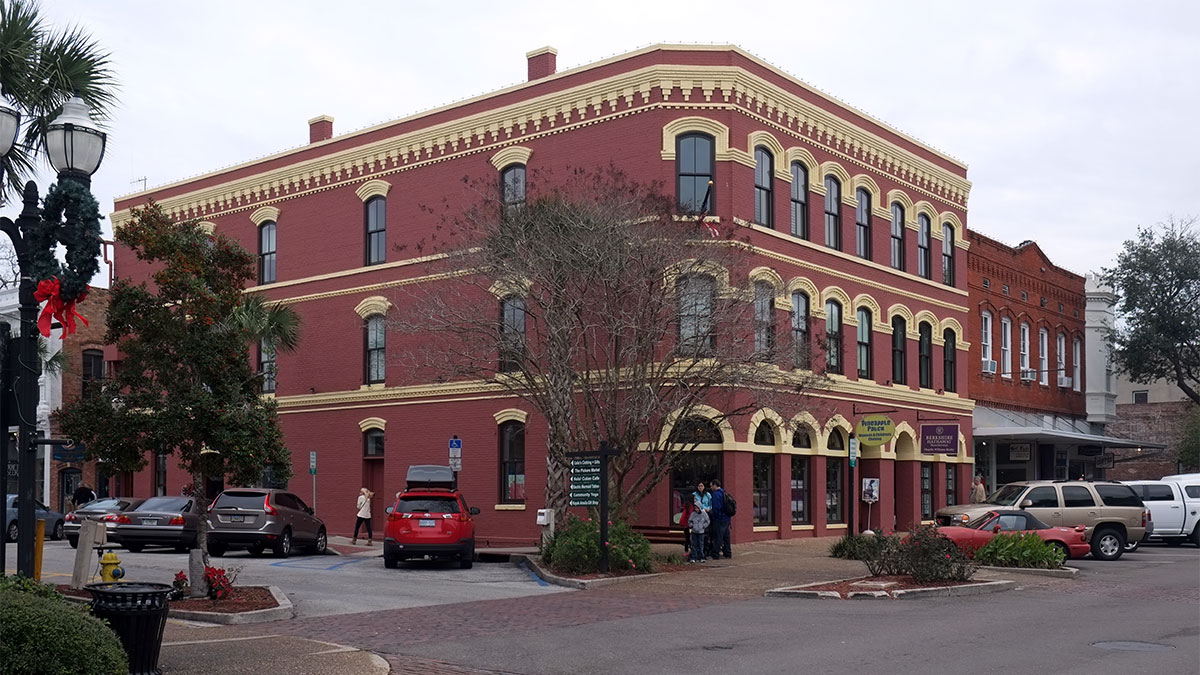
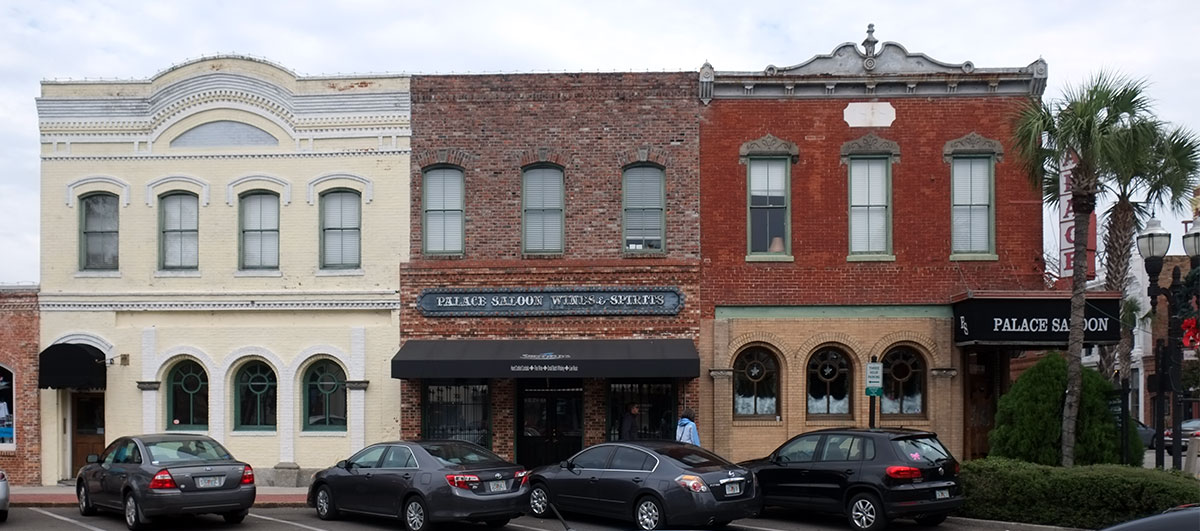
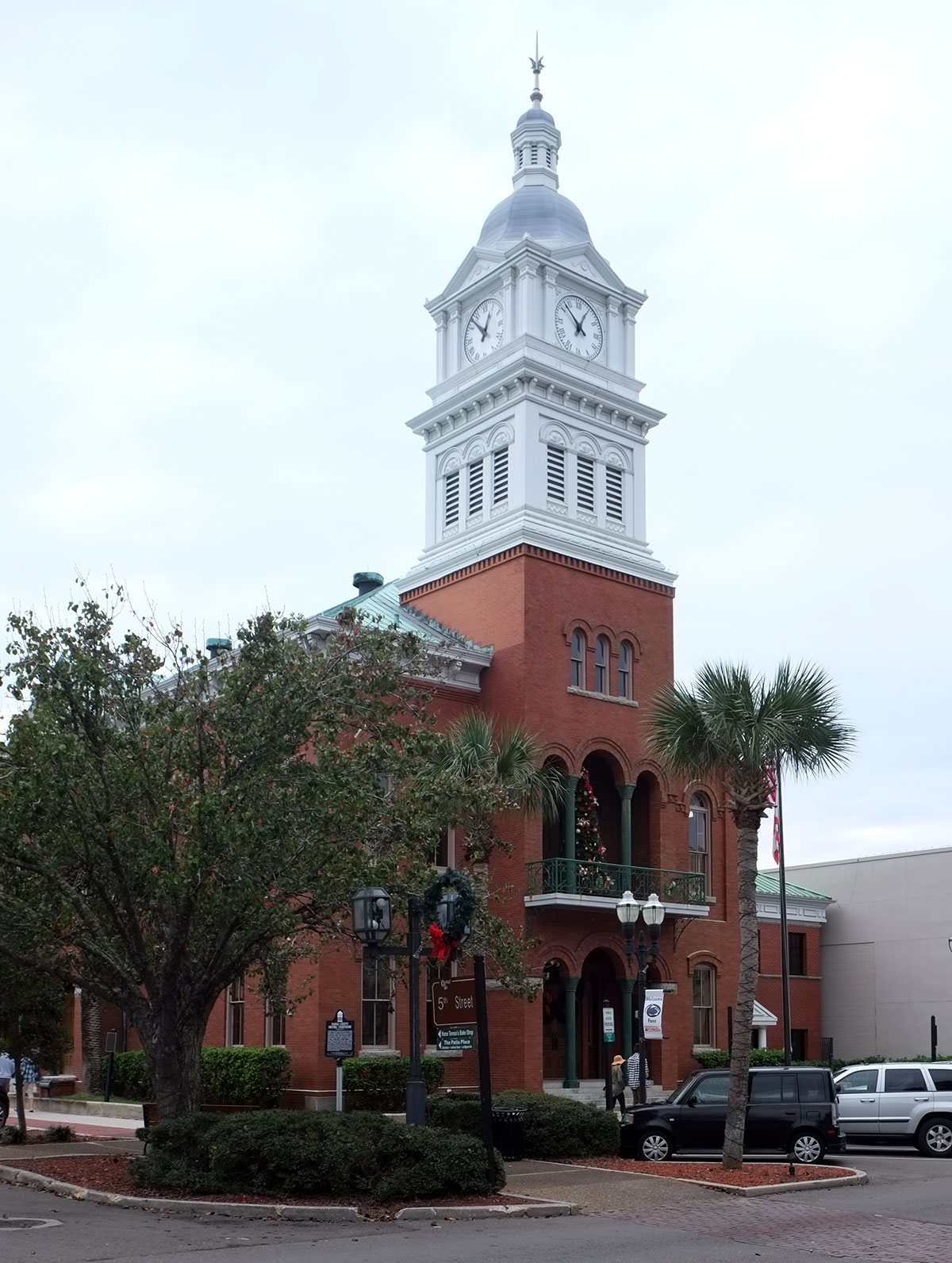
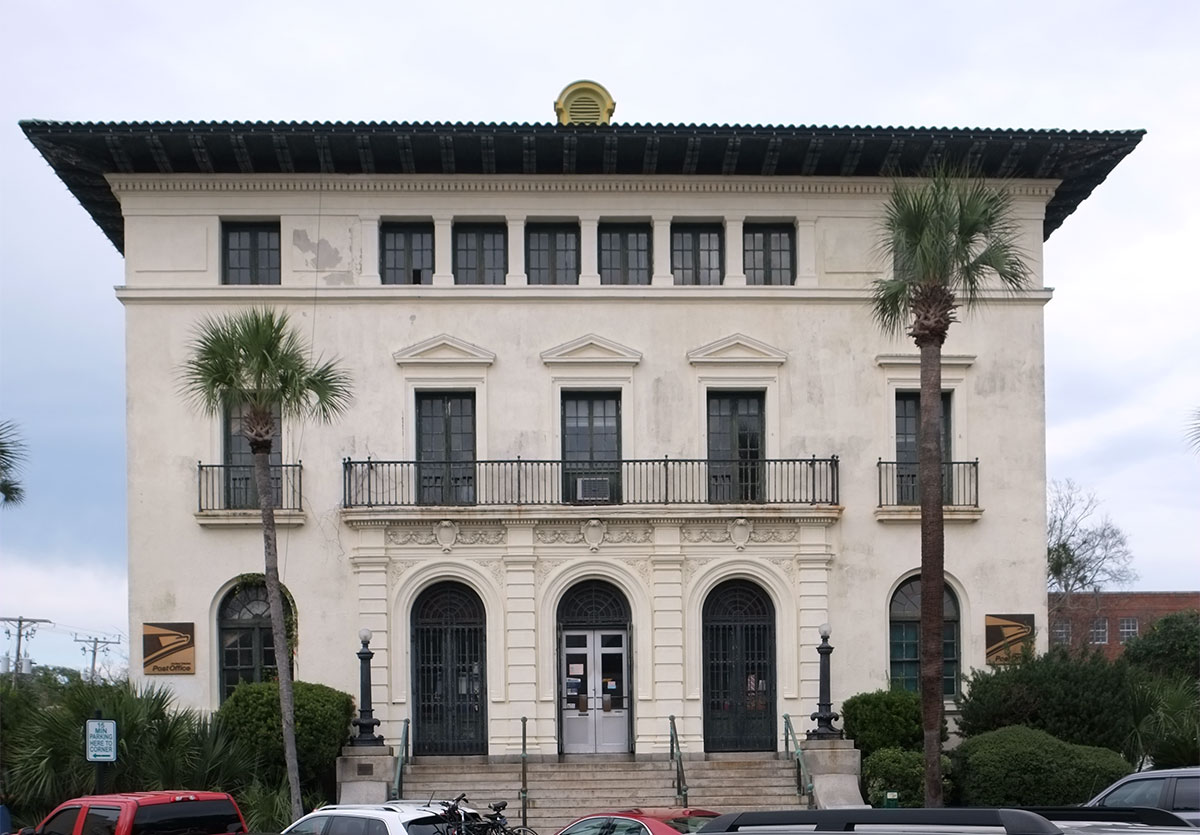
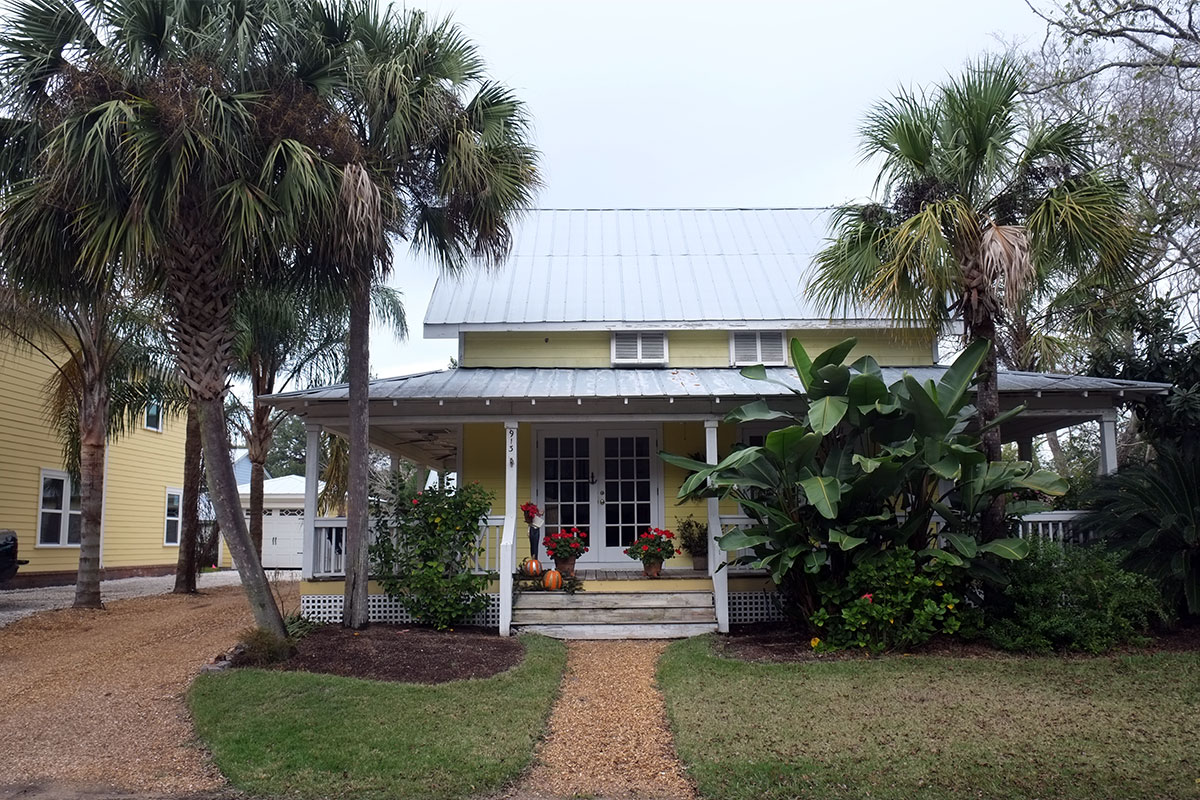
It is another one of those southern places that has confusing history of sovereignty – this time it is eight different flags (including Mexican rebels and pirates) which may be the record.  Fort Clinch was built here in the early 19th century, and it was one end of the first railroad across Florida.  The railroad brought trade and tourism, and in the late 19th century, it was one of the premier resorts in Florida.  The center of town is a national historic district, with some solid commercial buildings, DSCF9316     DSCF9317

institutions:  DSCF9374  DSCF9368

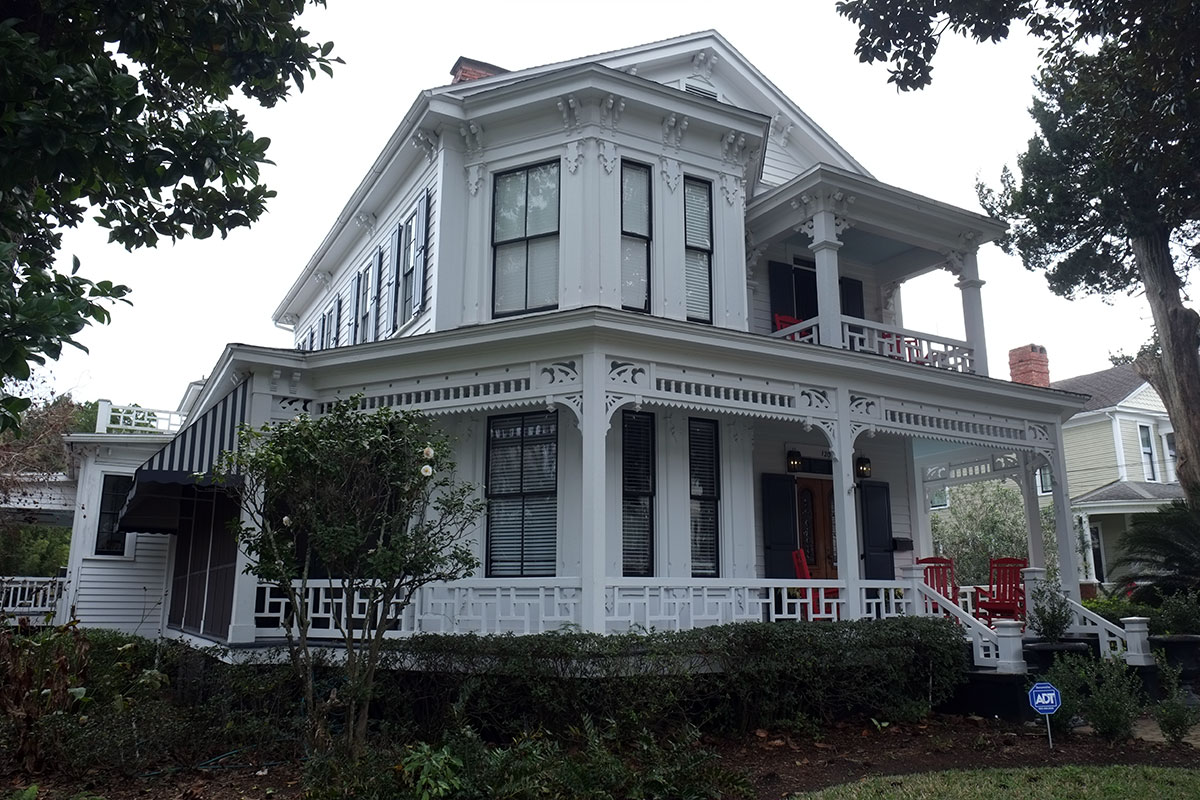
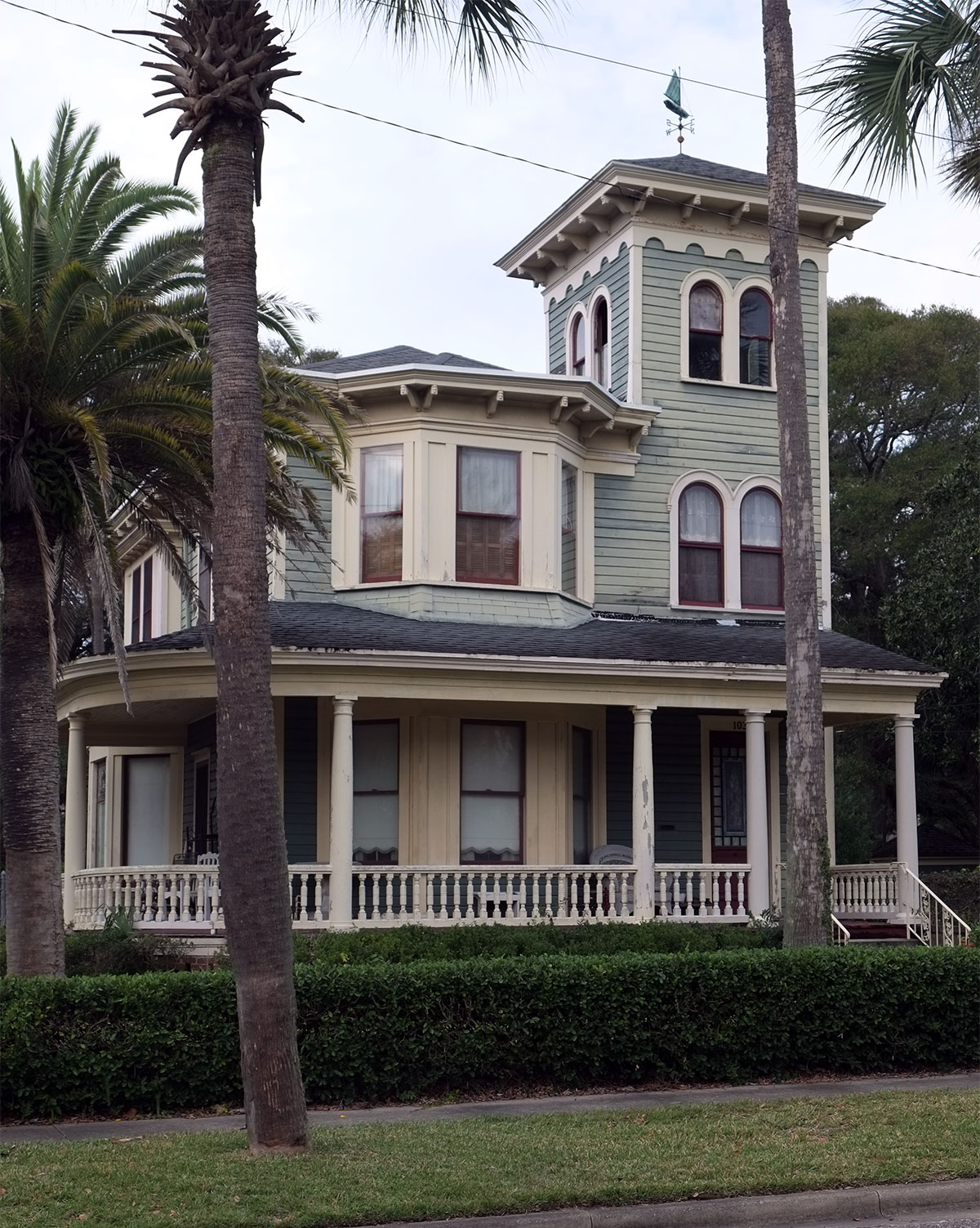
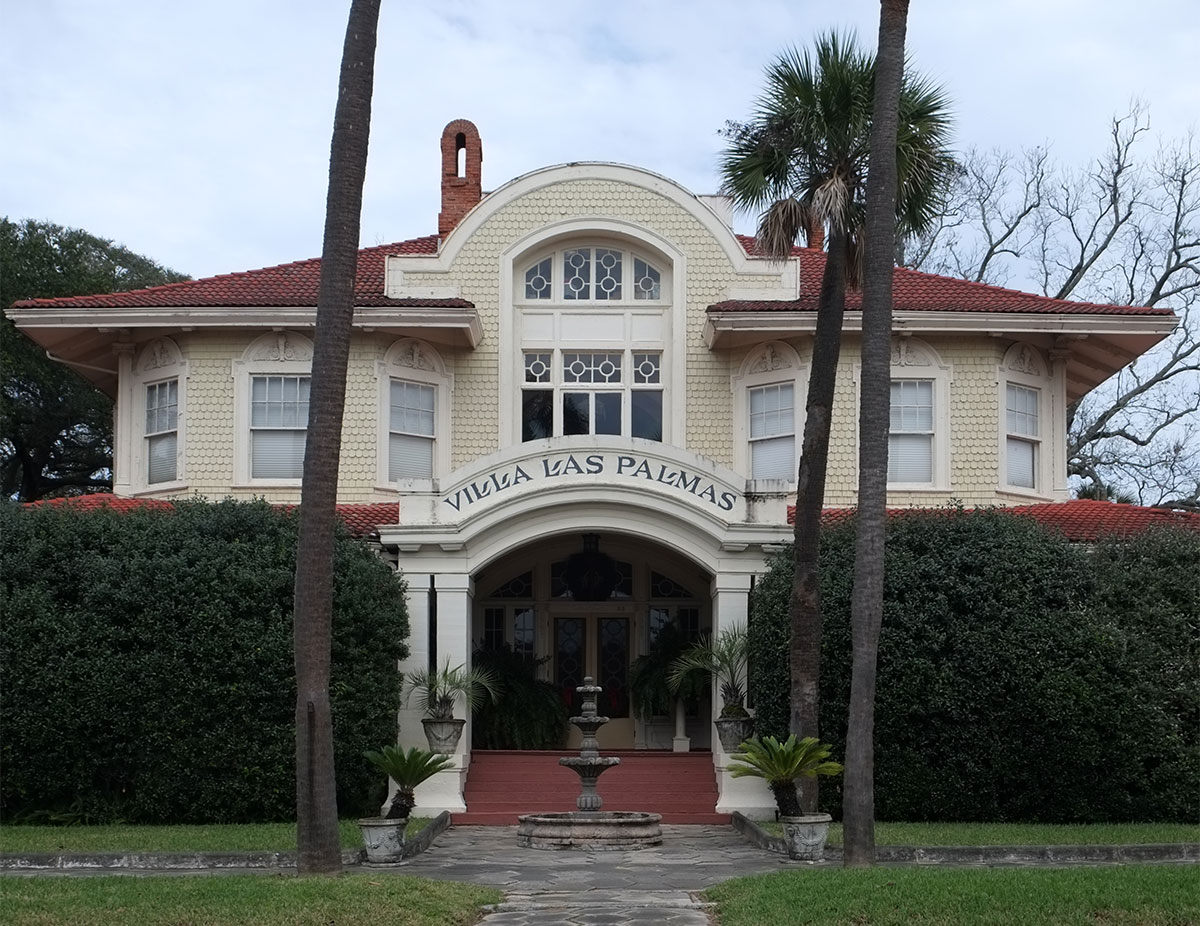
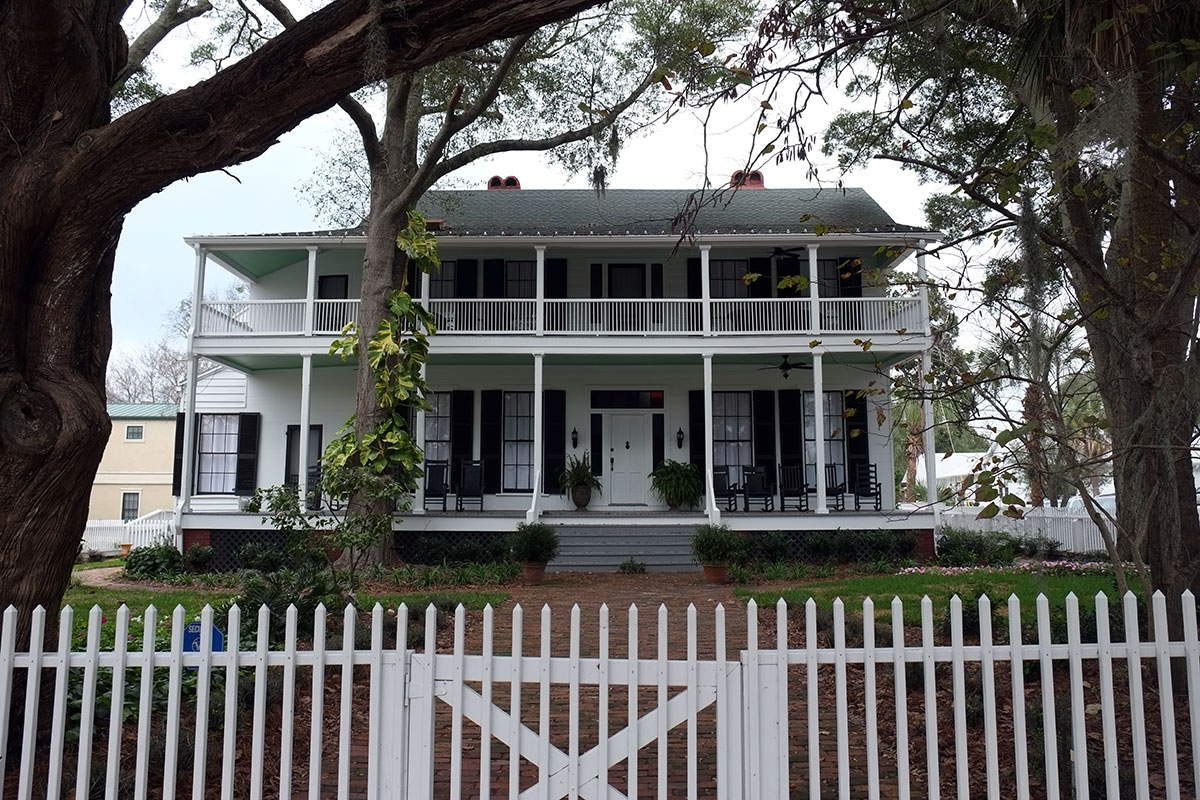
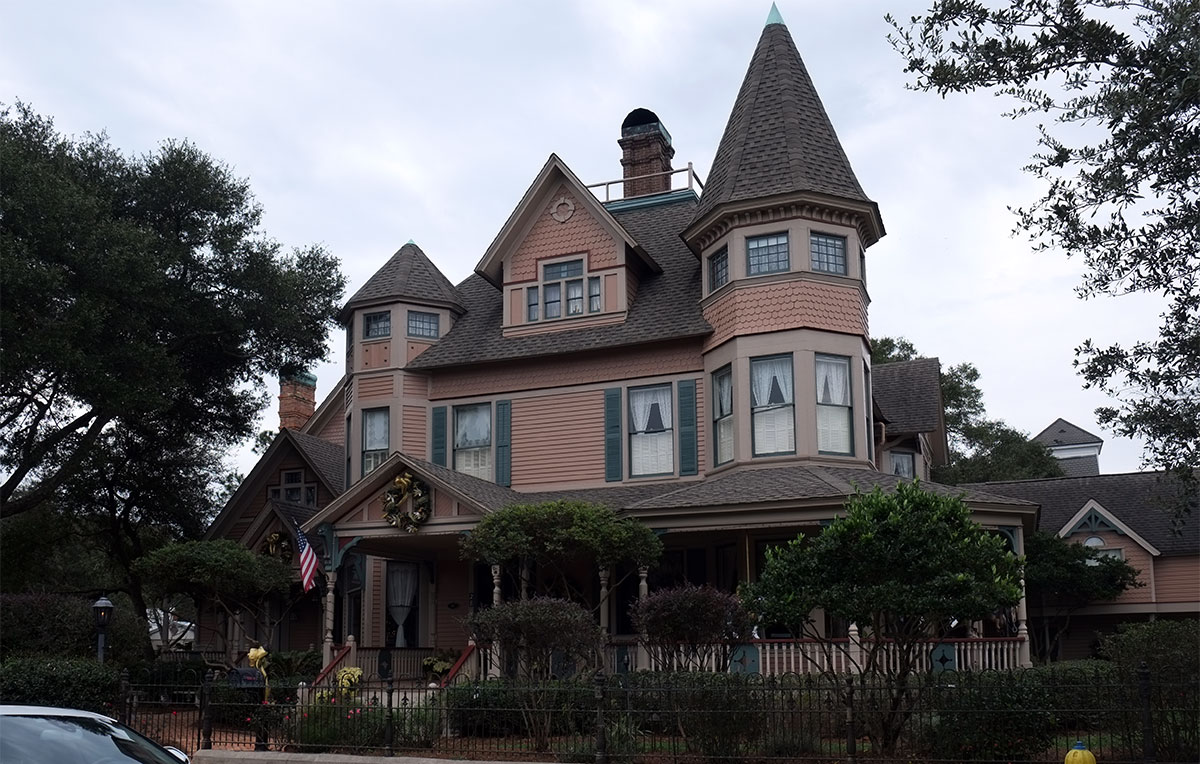
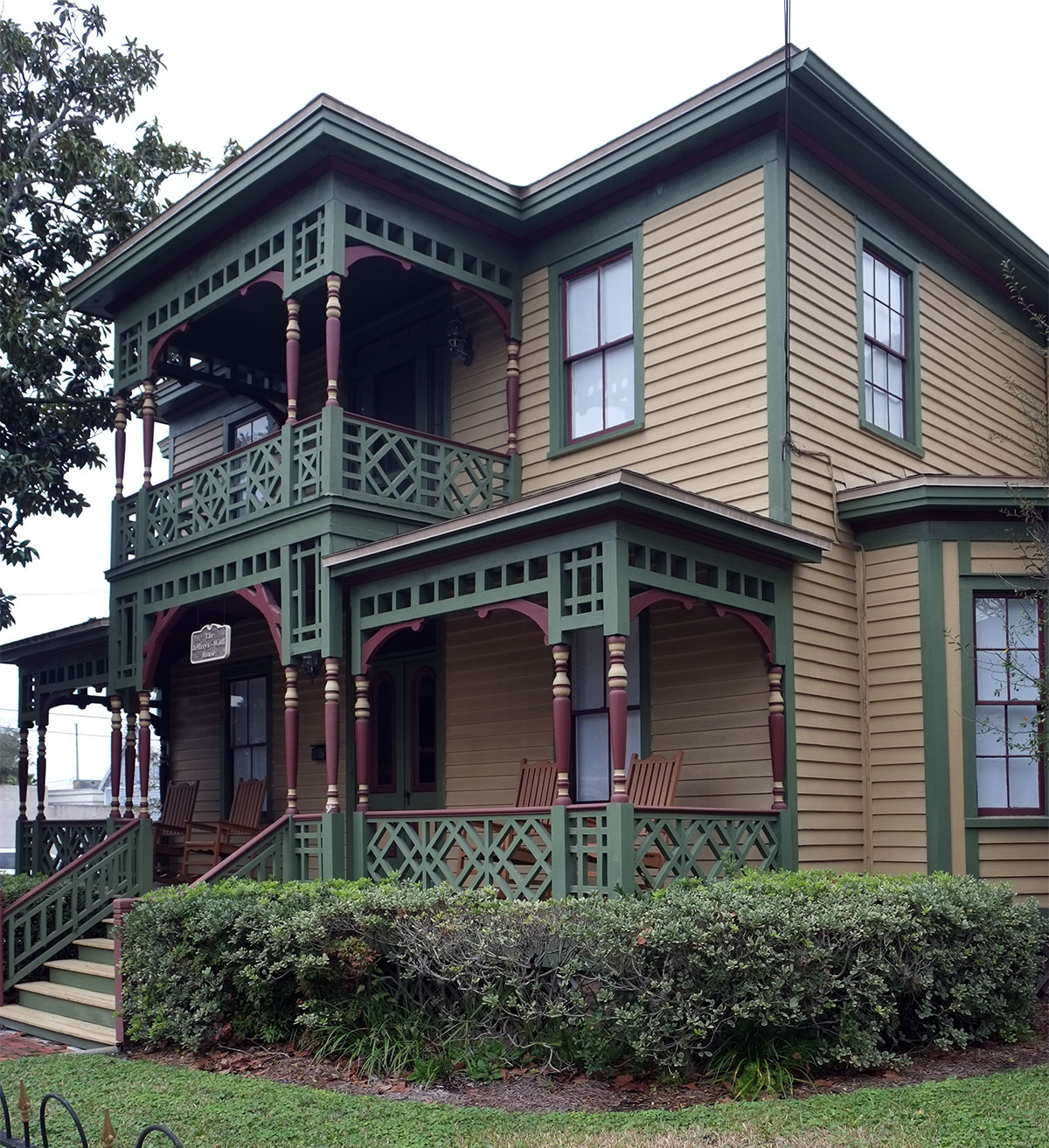
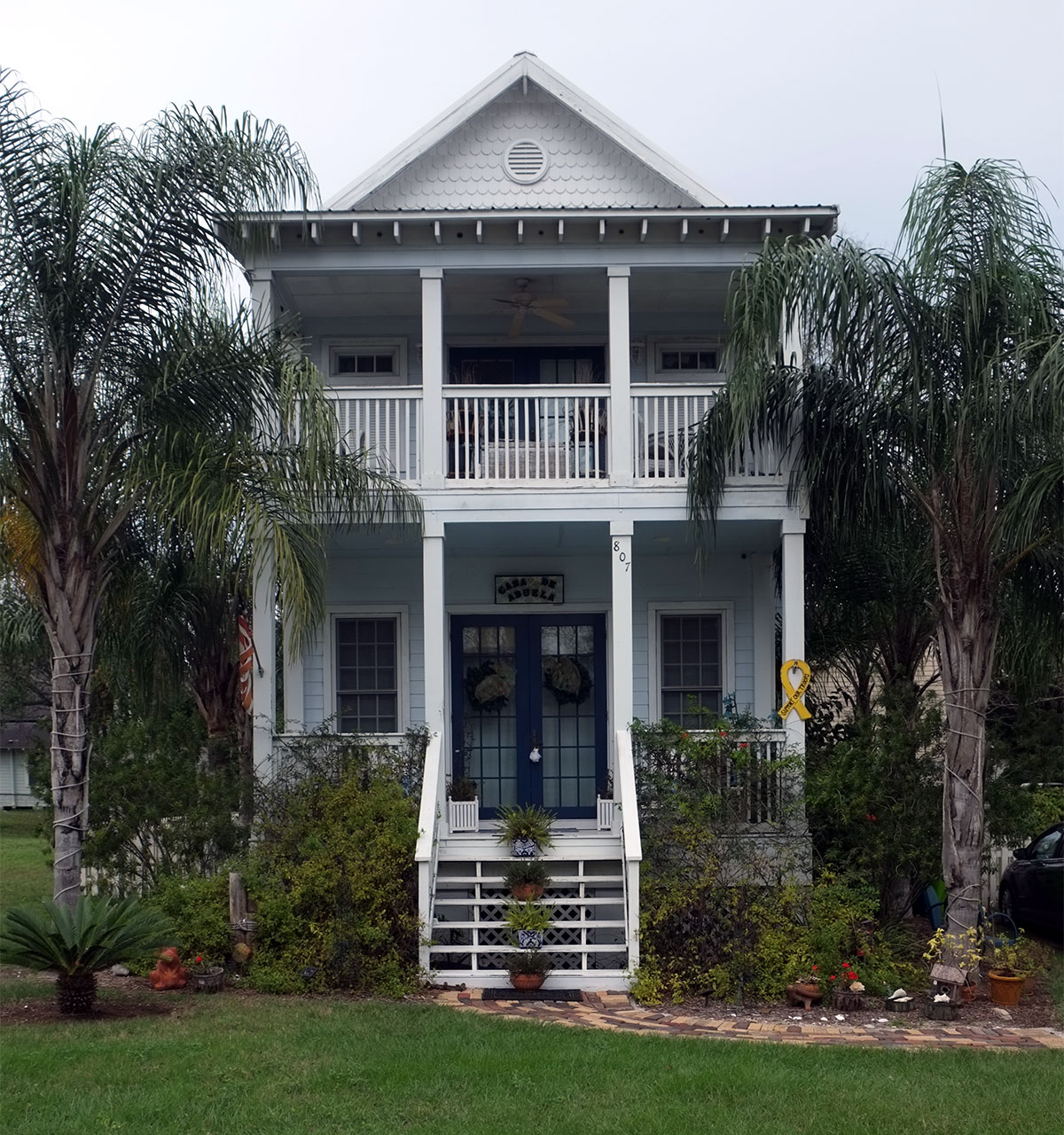
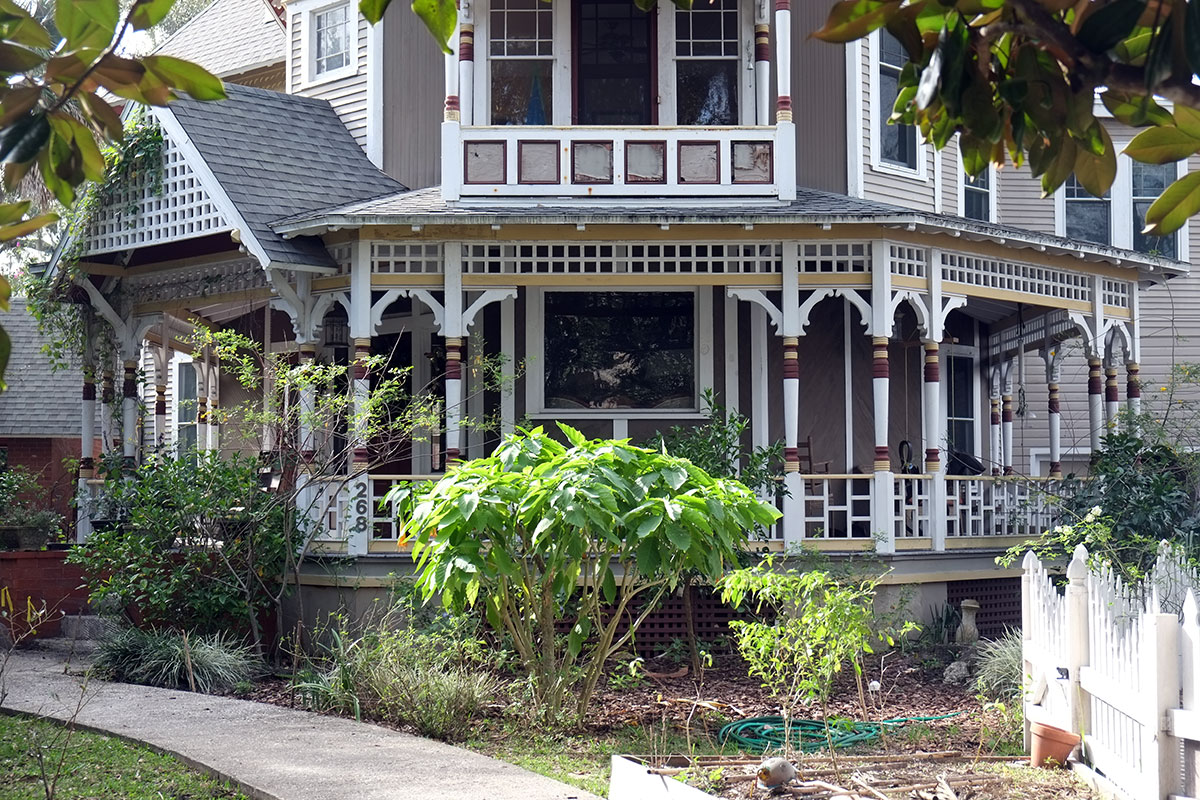
and many fine houses.  DSCF9348  DSCF9358  DSCF9364  DSCF9369  DSCF9385

DSCF9393DSCF9404

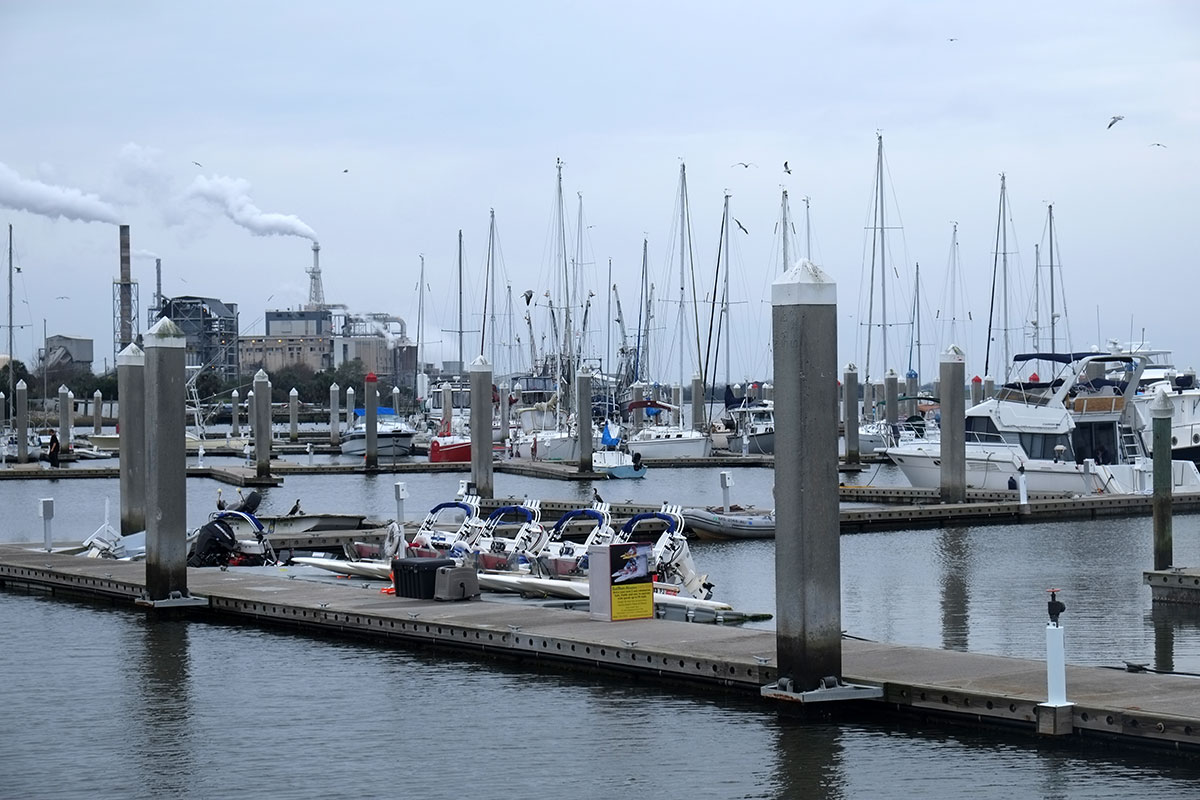
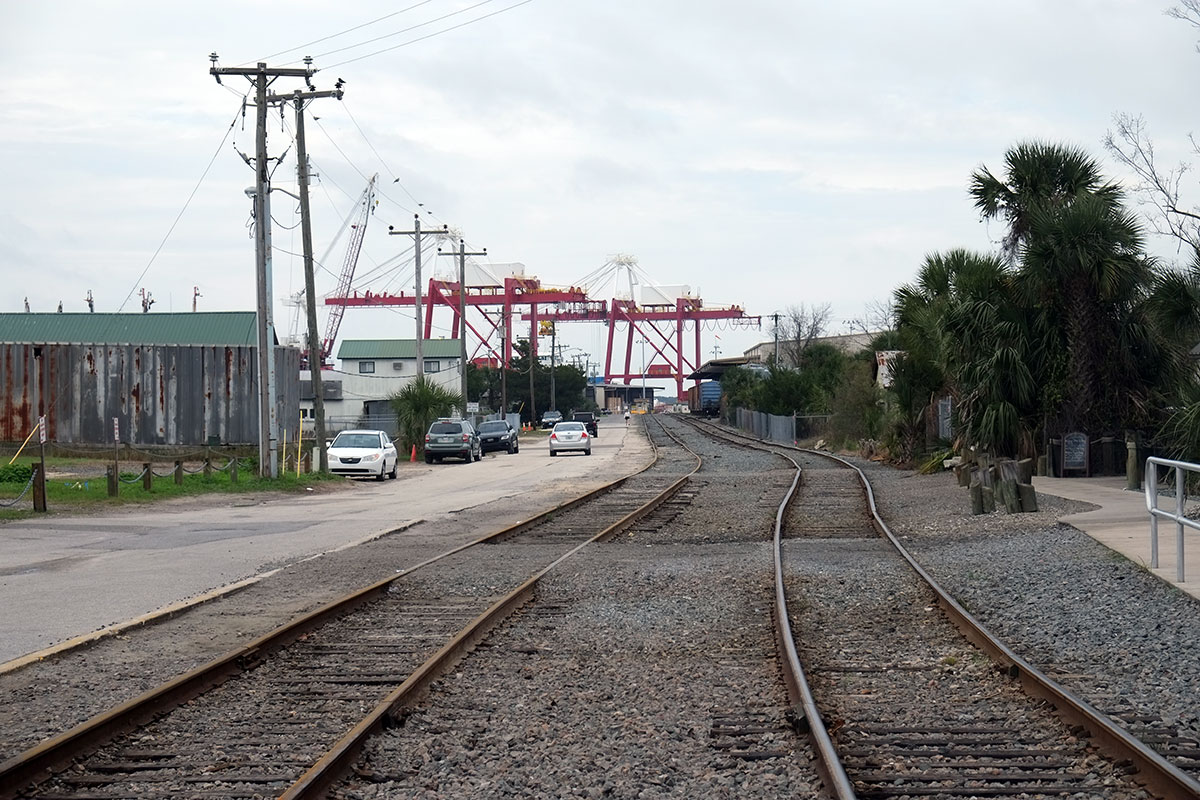
The really amusing thing about this historic district is that it is not the original town, which is located about three miles north.  But when the planning for the railroad was happening, the builder of the railroad, Senator Yulee, demanded that the town be moved to better serve the railroad, and so it was.  For what is largely a resort town, industry has played a very large role in determining its form, and can be seen in the tracks along the waterfront DSCF9314

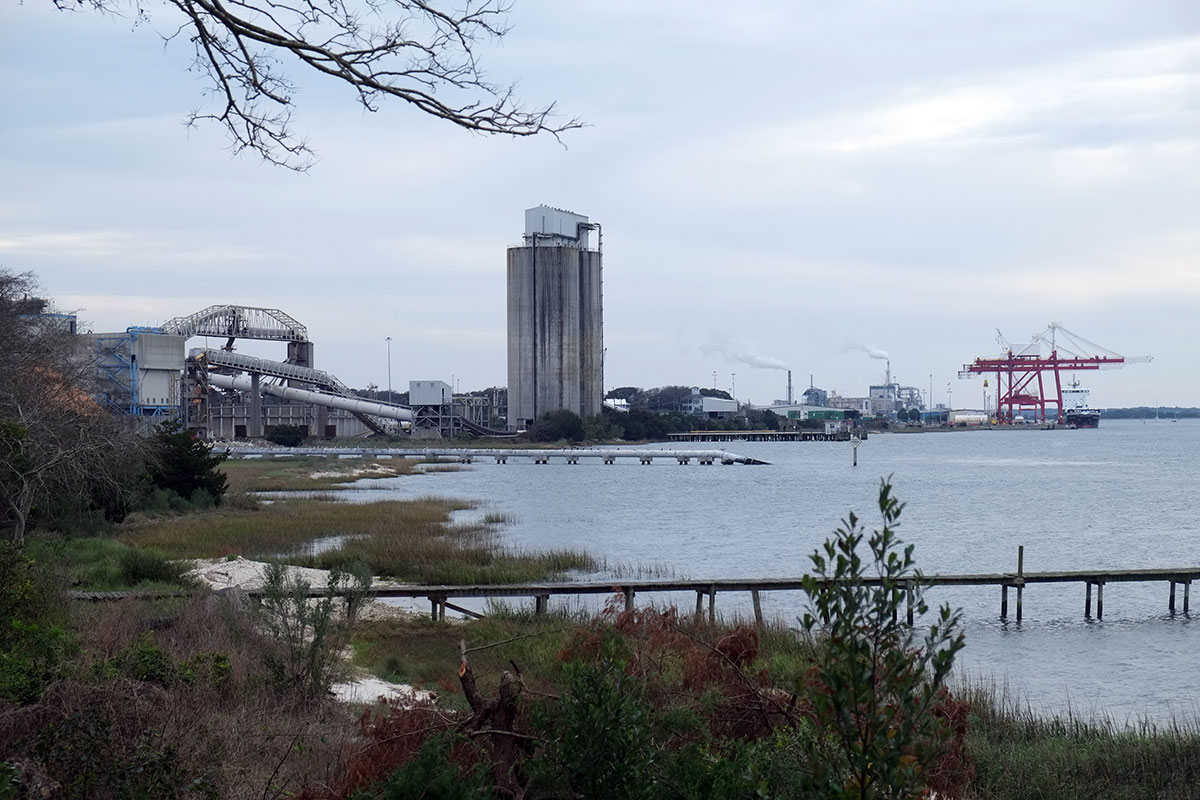
and the plants nearby.  DSCF9433

Fernandina was also where the domestic shrimp fishing industry began, long before it shifted to the Gulf of Mexico.  They have a Shrimping Museum on the waterfront, which we had to visit, and where we learned of its history beyond shrimping.

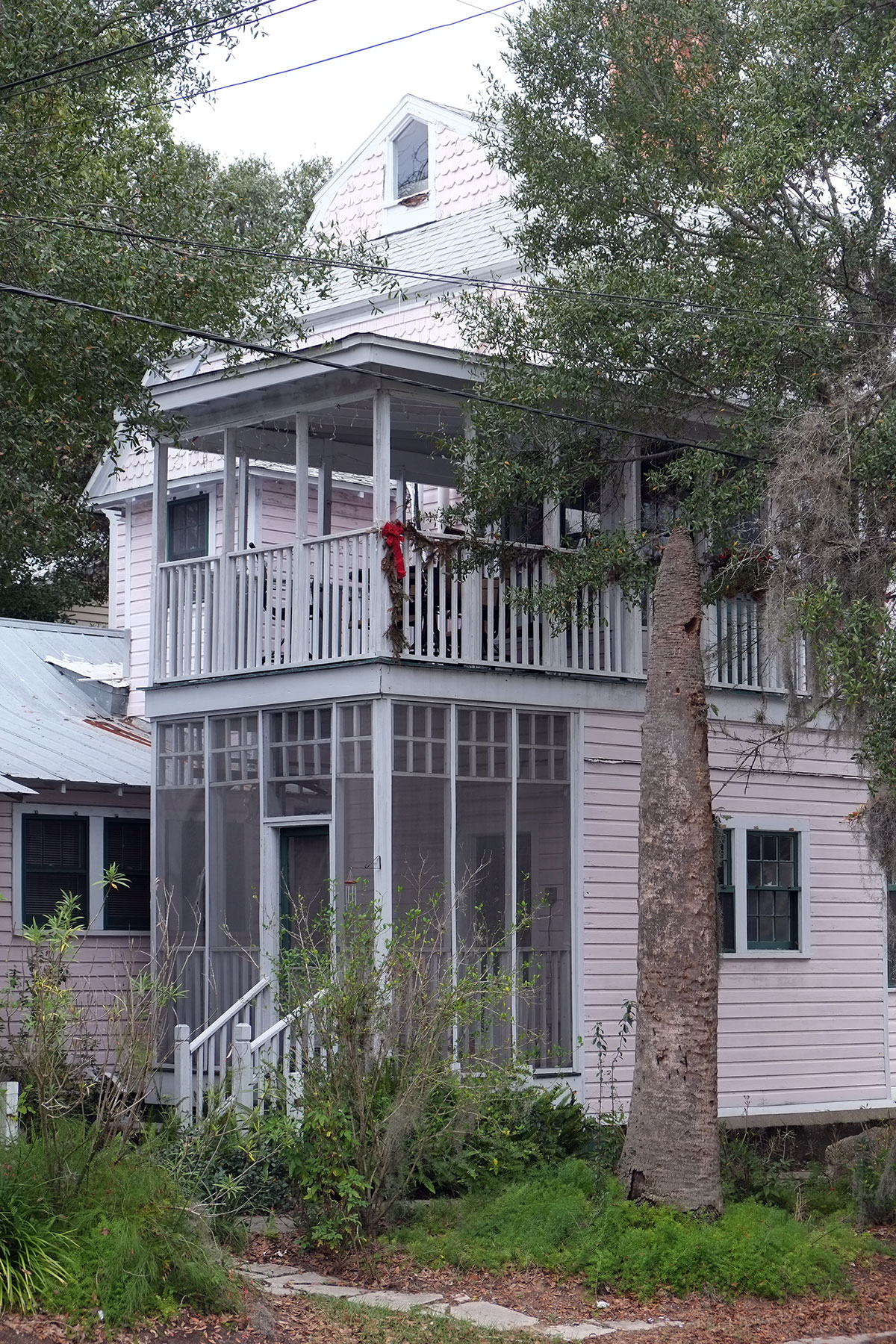
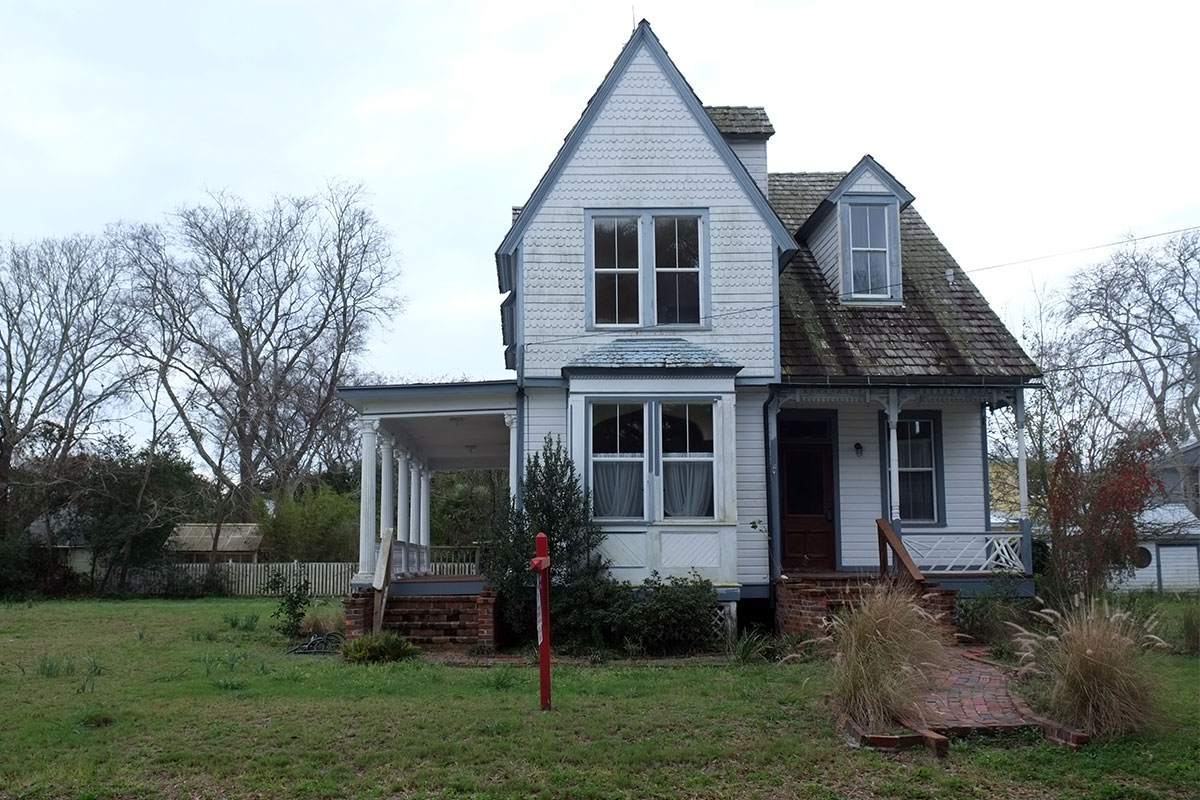
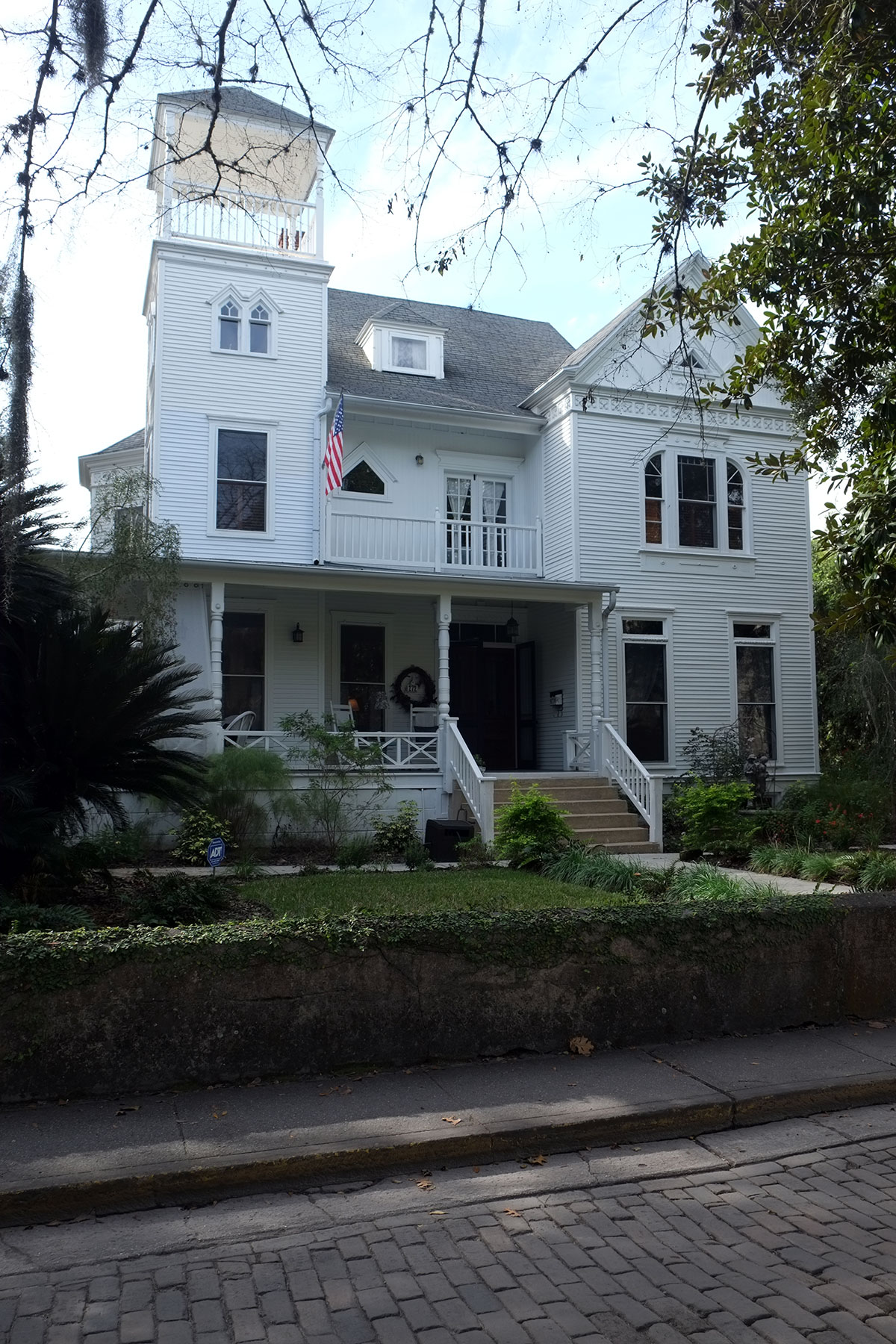
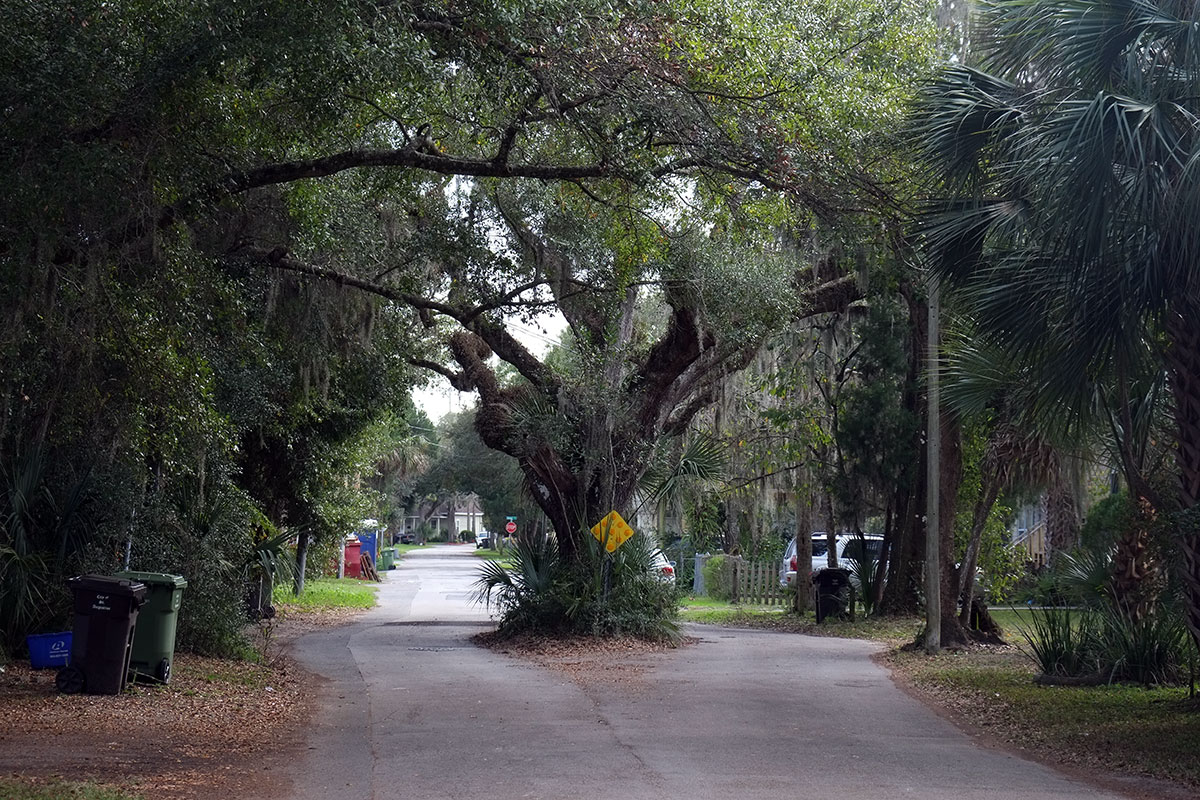
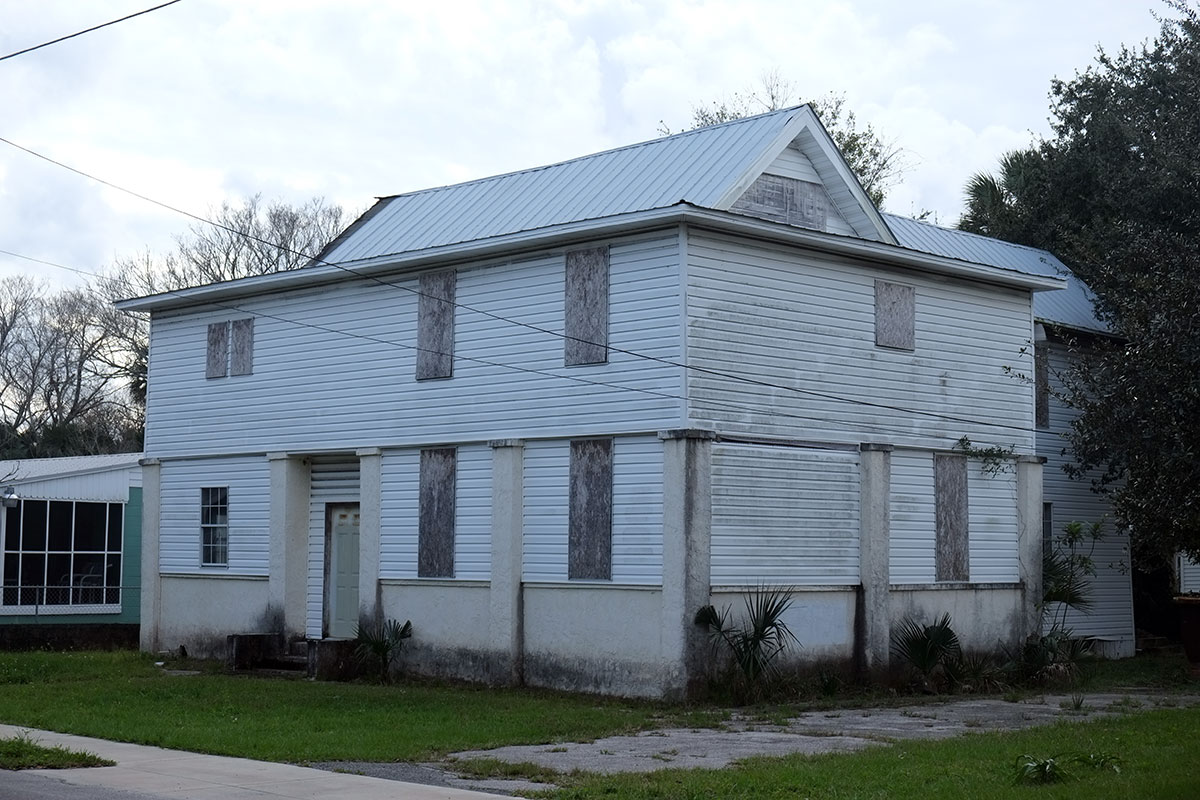
The older town still exists – a bit of a backwater, with dirt streets, and an appealingly informal and sometimes decaying quality, compared to the spiffiness of the new town.  DSCF9442    DSCF9447  DSCF9448

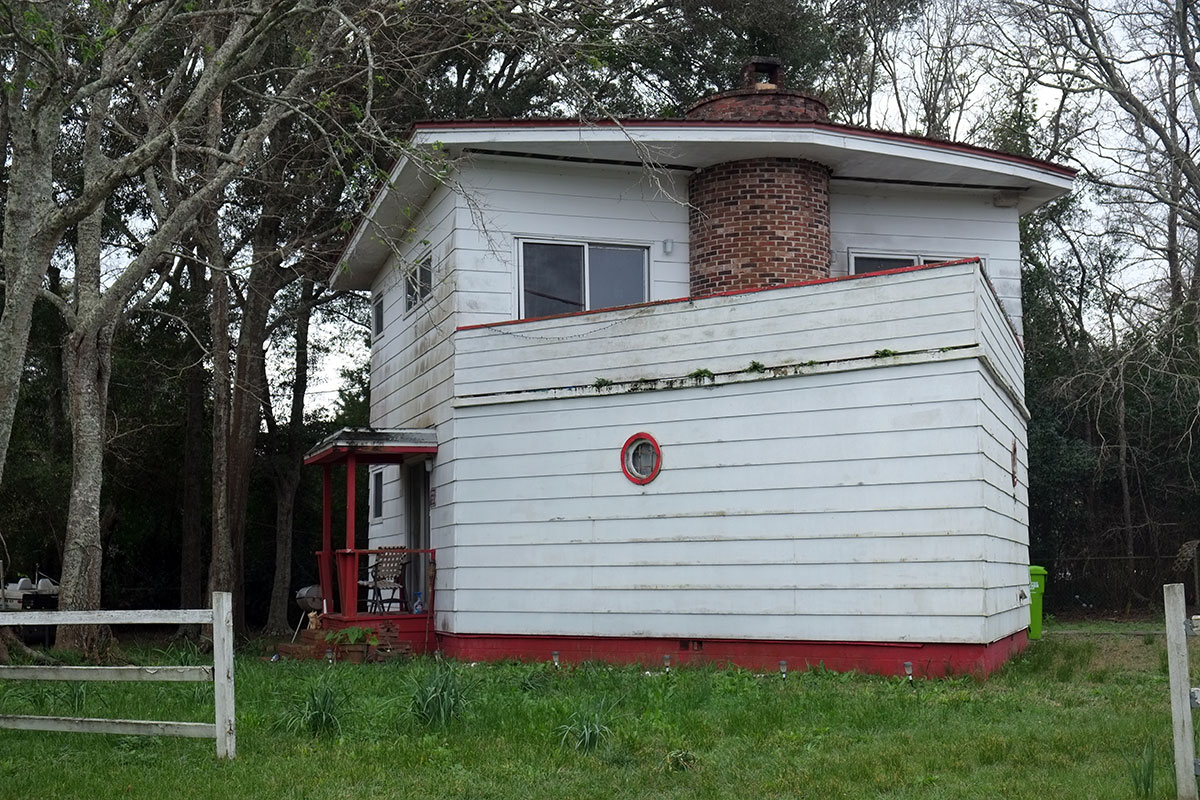
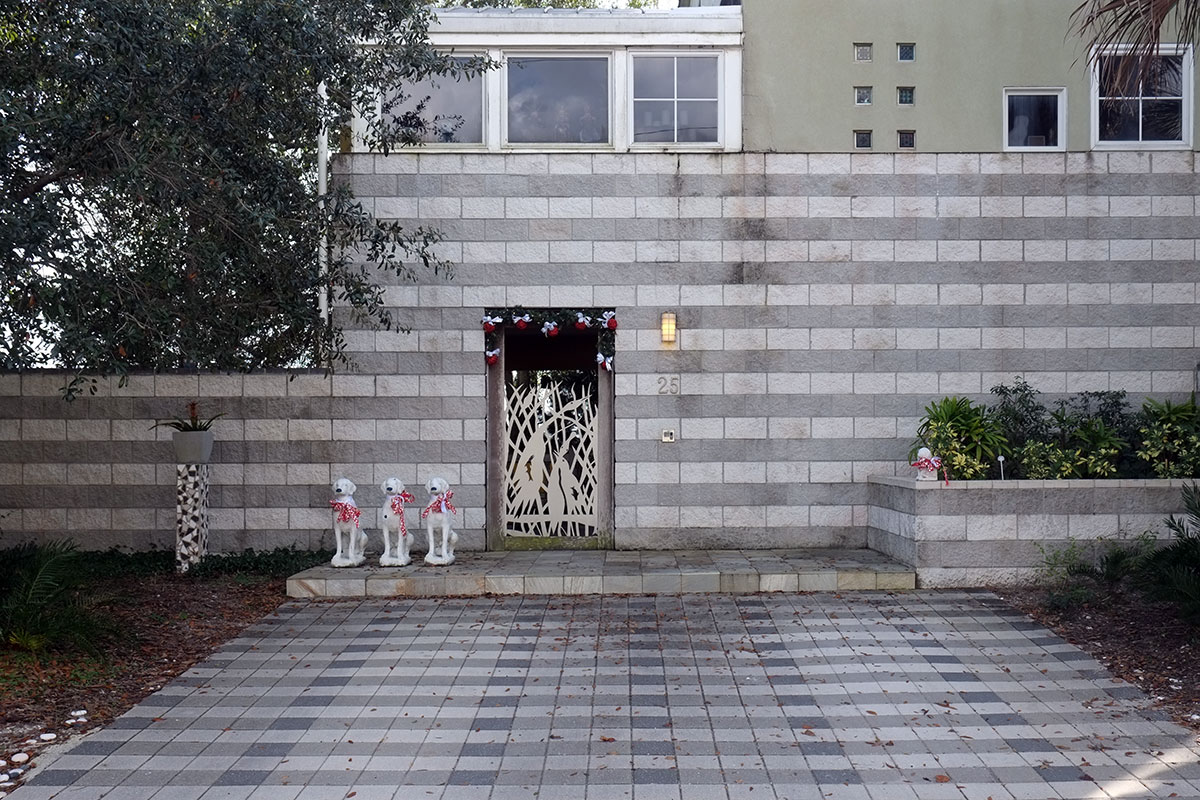
It also houses the only piece of domestic modern architecture I spotted, probably by an architect who took Corbusier’s praise of ocean liners a little too literally.  DSCF9429

Jacksonville – Timucuan Reserve and Kingsley Plantation

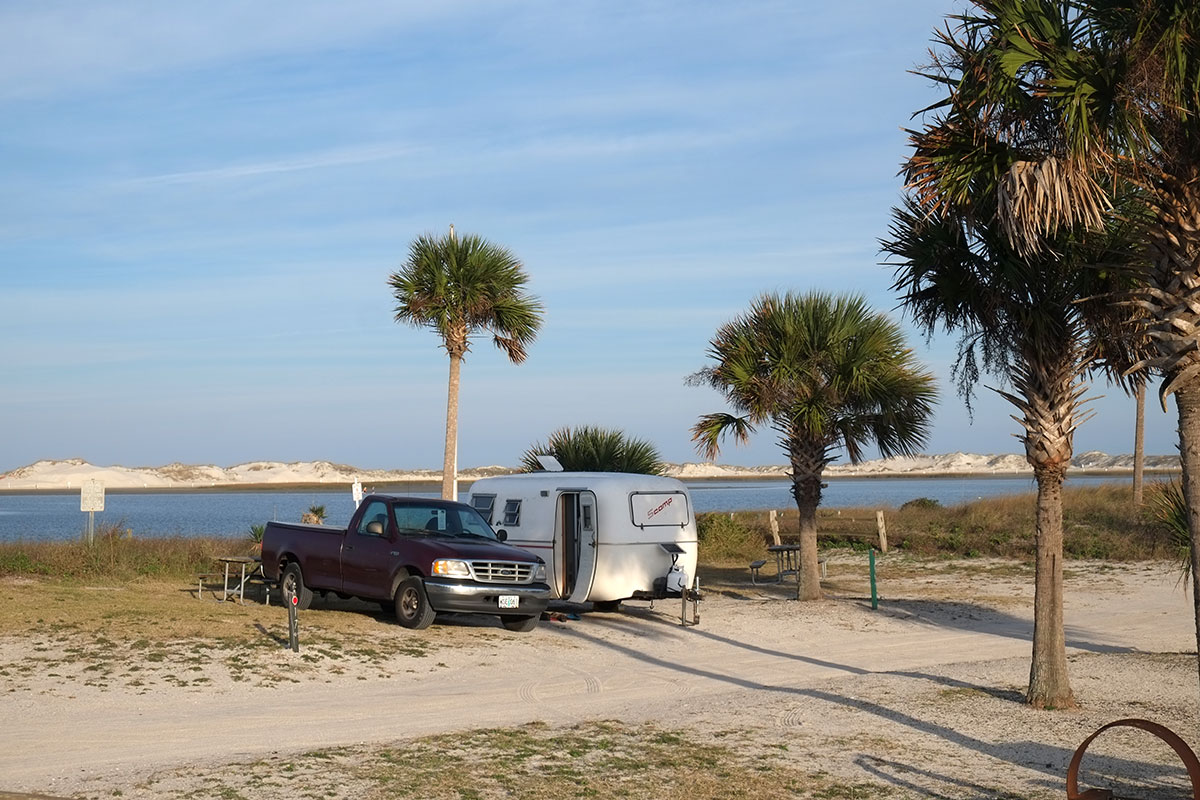
DSCF8519Before taking the plunge into southern Florida, we spent some time around Jacksonville, which is part of the South in a way the area south of Orlando isn’t.  We focussed in on the Timucuan Ecological and Historic Preserve, which is administered by the National Park Service, similar to our own Ebey’s Landing National Historic Reserve on Whidbey Island.  There are several parts to the Reserve, extending from Amelia Island through a few other islands and across the St. Johns River (which is the entry to the harbor at Jacksonville), and it is “one of the last unspoiled coastal wetlands on the Atlantic Coast”.   We stayed in an amazing campground in a city park, on a spit where the river meets the ocean.  Camping right on the beachDSCF8544

overlooking a bay where people were fishing with netsDSCF8562

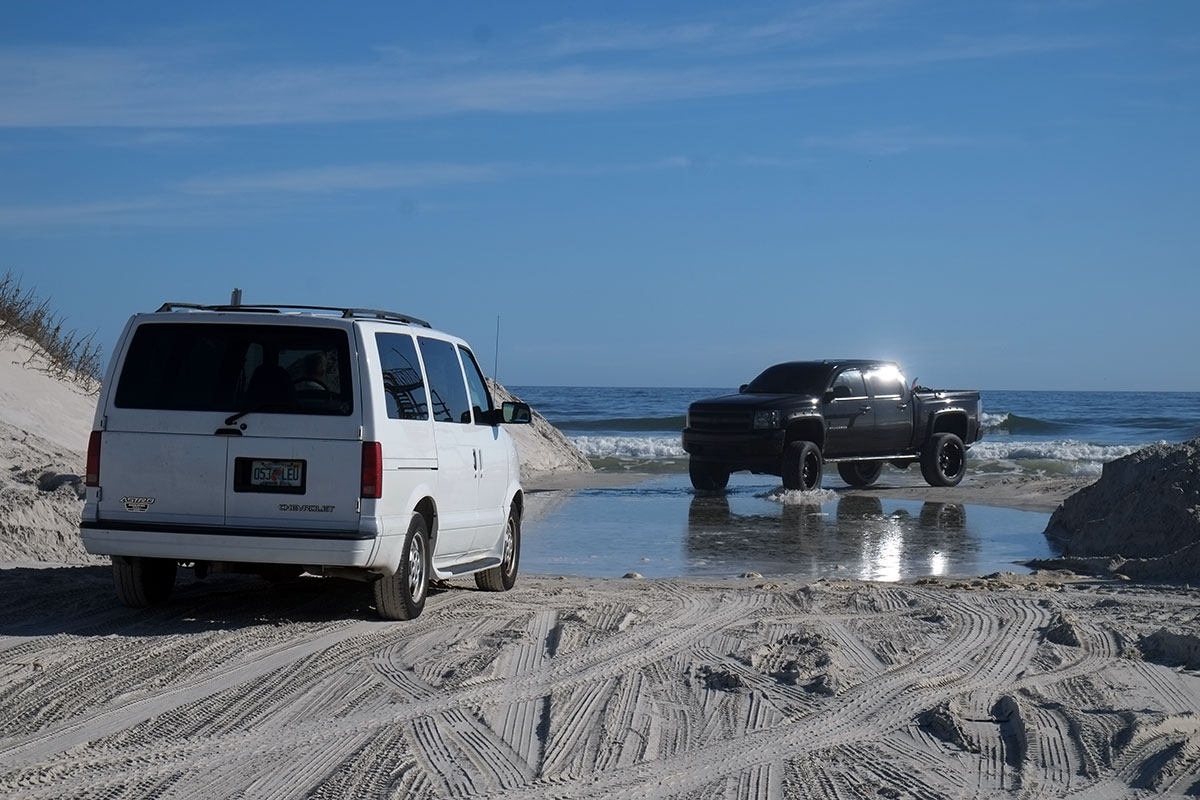
and one of the few beaches in Florida where vehicles are still allowed to drive (when the tide is lower).DSCF8563

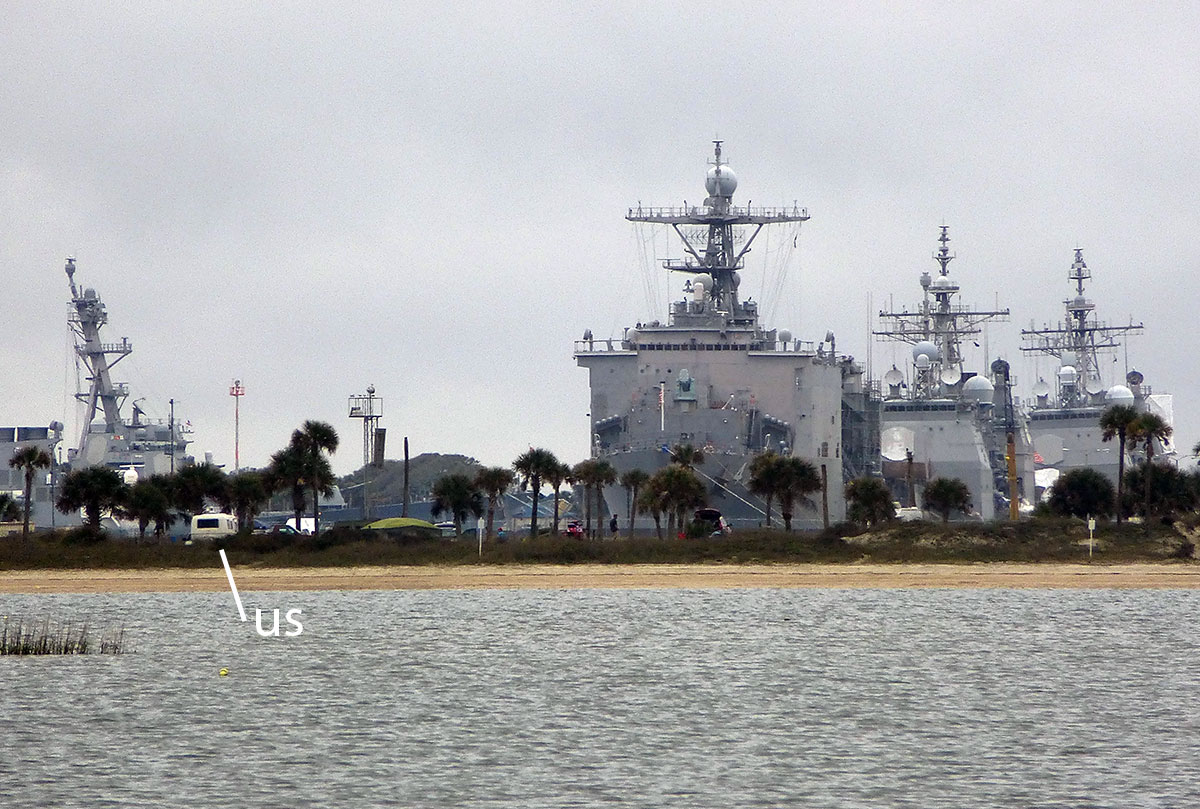
The channel to the harbor was full of large ship traffic, and across the mouth of the river is the Naval Station Mayport, the third largest naval facility in the country.  Here is a nice scale comparison between our trailer and the ships a mile beyond in the port:
P1060636

As we are finding across the southeast, the number of different cultures which have laid claim to this area in the past 500 years is very confusing to someone who comes from a place where the English displaced the natives, end of story.  The Reserve is named for the Timucuan people, the tribe who inhabited the area before colonization.  The visitors center has artifacts from their culture (some of disputed origin), but there is not a lot beyond that.  The Huguenots landed here in the 16th century, quickly gave up, came back a few years later, and then were all killed by the Spanish.  Under Spanish rule a widespread plantation system developed, part of which can be seen today at the Kingsley Plantation, settled in the early 19th century, and owned over time by a few different families.  The house is quite intactDSCF8489

with some late-19th century modifications.DSCF8485

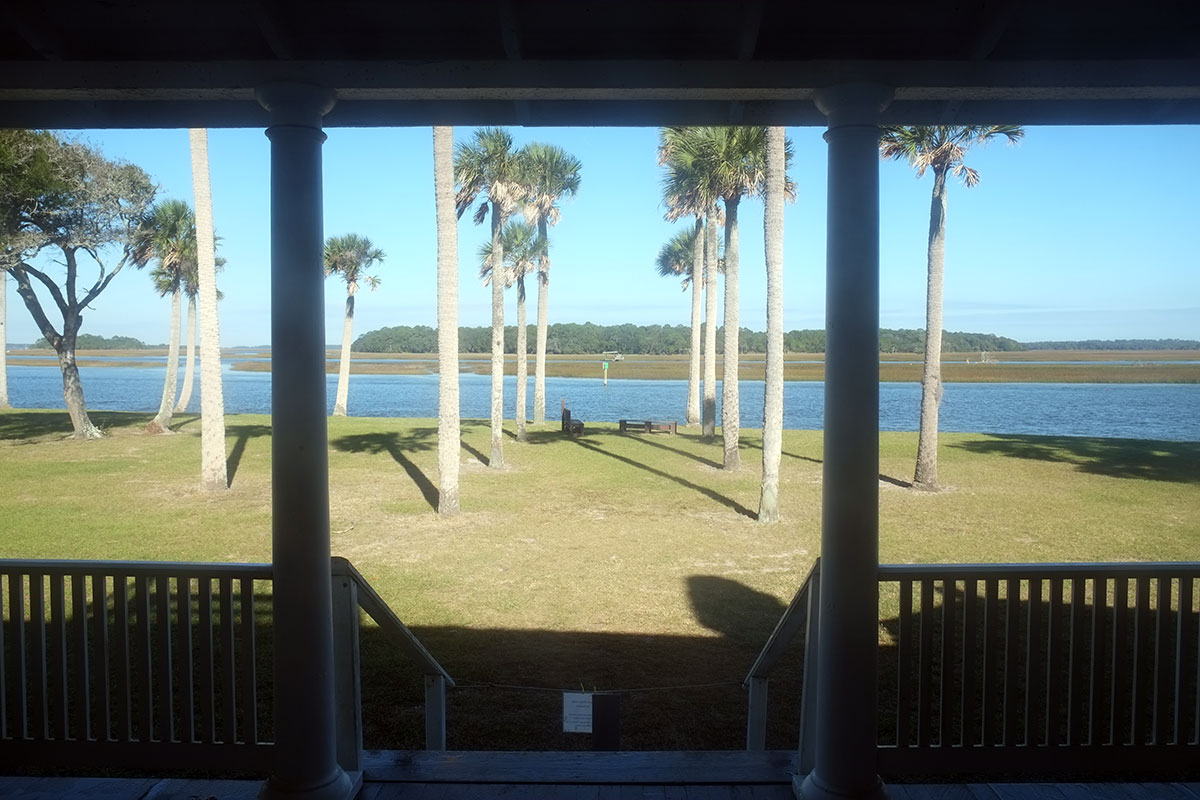
opening onto the channel that connects to the present-day Intercoastal WaterwayDSCF8470

The grounds contain various outbuildings, most dating from the late 19th century.DSCF8504

The most interesting part of the history was learning how the legal status of different groups varied under the Spanish or American systems.  Kingsley bought a slave from Senegal, and married her.  When she turned 18, he freed her, and she could then own property herself – including her own plantations and slaves.  The Kingsleys prospered, eventually owning four major plantations of over 32,000 acres.  When Florida became a US territory, her rights, both as a freed slave and a woman, would have been greatly reduced, so the Kingsleys moved to Haiti to avoid this, but were involved in legal disputes over this fortune for decades after.

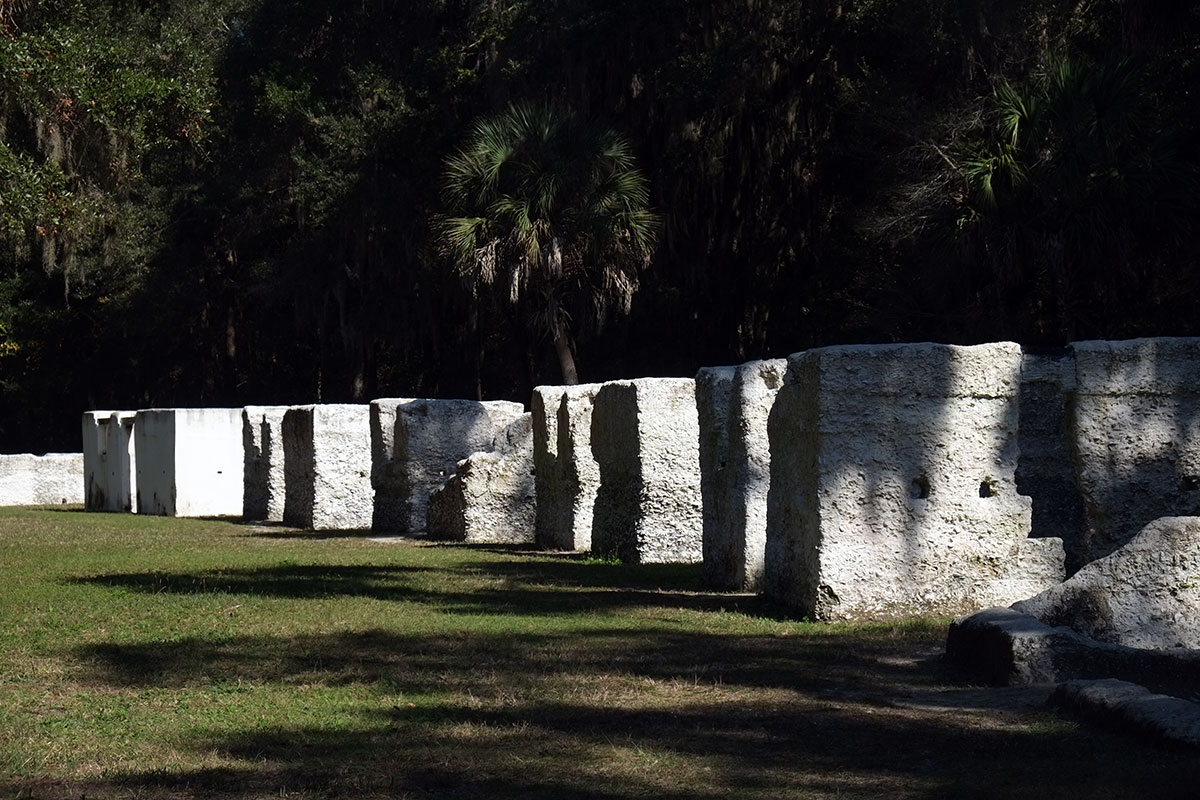
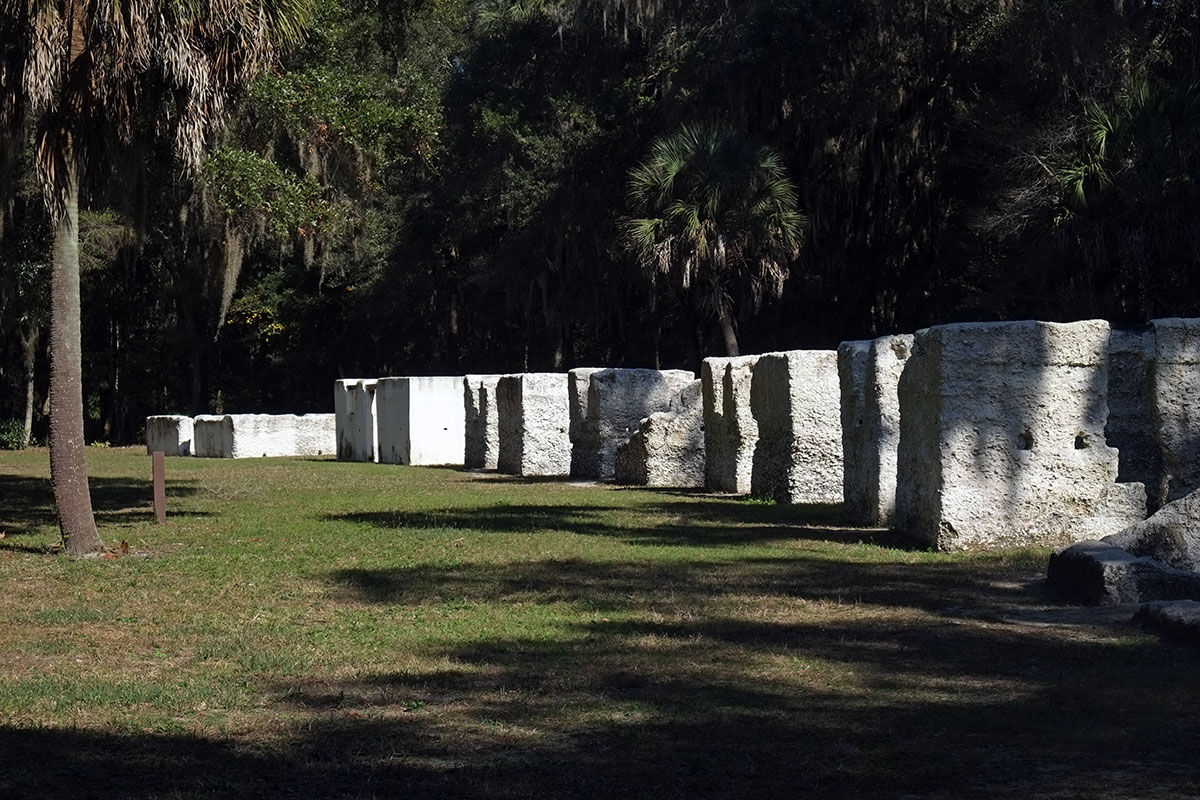
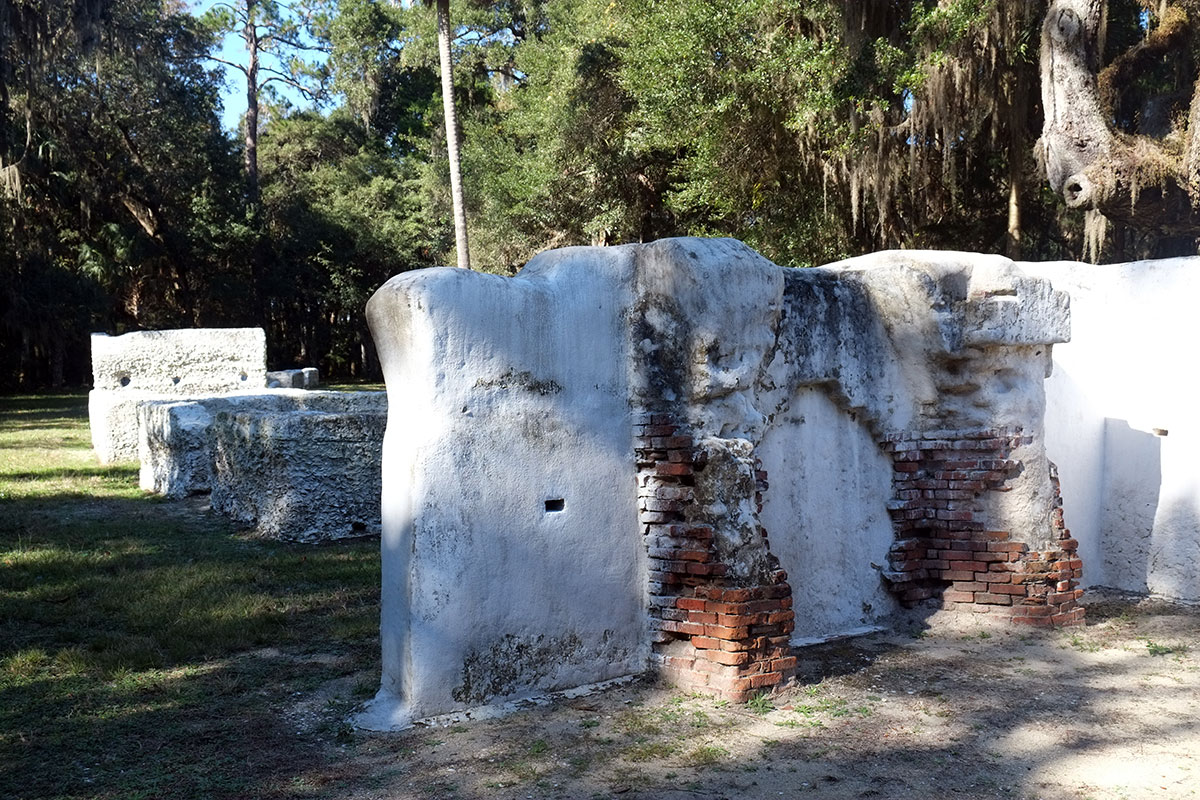
This history was remarkable, as are the remains of the slave quarters.  Whereas most slave houses in the south were wooden and so haven’t survived, the walls of the houses here were made of tabby – a kind of concrete made with oyster shells, where a catalytic reaction from the shells takes the place of Portland cement.  DSCF8528The roofs are gone, and the walls are slowly deteriorating, but seeing the 27 houses in an arc at the edge of the fields was amazing.
DSCF8518

DSCF8523

The walls are tabby, while the brickwork shows the location of the fireplace.
DSCF8508

We had a few unusual experiences here – such as spending New Year’s Eve in the campground on the beach –  but the most bizarre was while driving on a dirt road in the Reserve, and Greta spotted a dead armadillo by the side of the road.  We got out to look at it, just as the owner of an adjacent house came over too.  It turns out that he lives in his obviously expensive and well-tended house out in the woods, but the armadillos come out and night and plow up his lawn, looking for bugs to eat.  So he sits up at night with his .22 and shoots the armadillos, and he had just come out to move the body of this one.  We couldn’t get the image of this out of our heads – an old guy with a rifle who decided to build his house in the middle of the woods on an island, and then spends his retirement fighting a losing war with the armadillos.

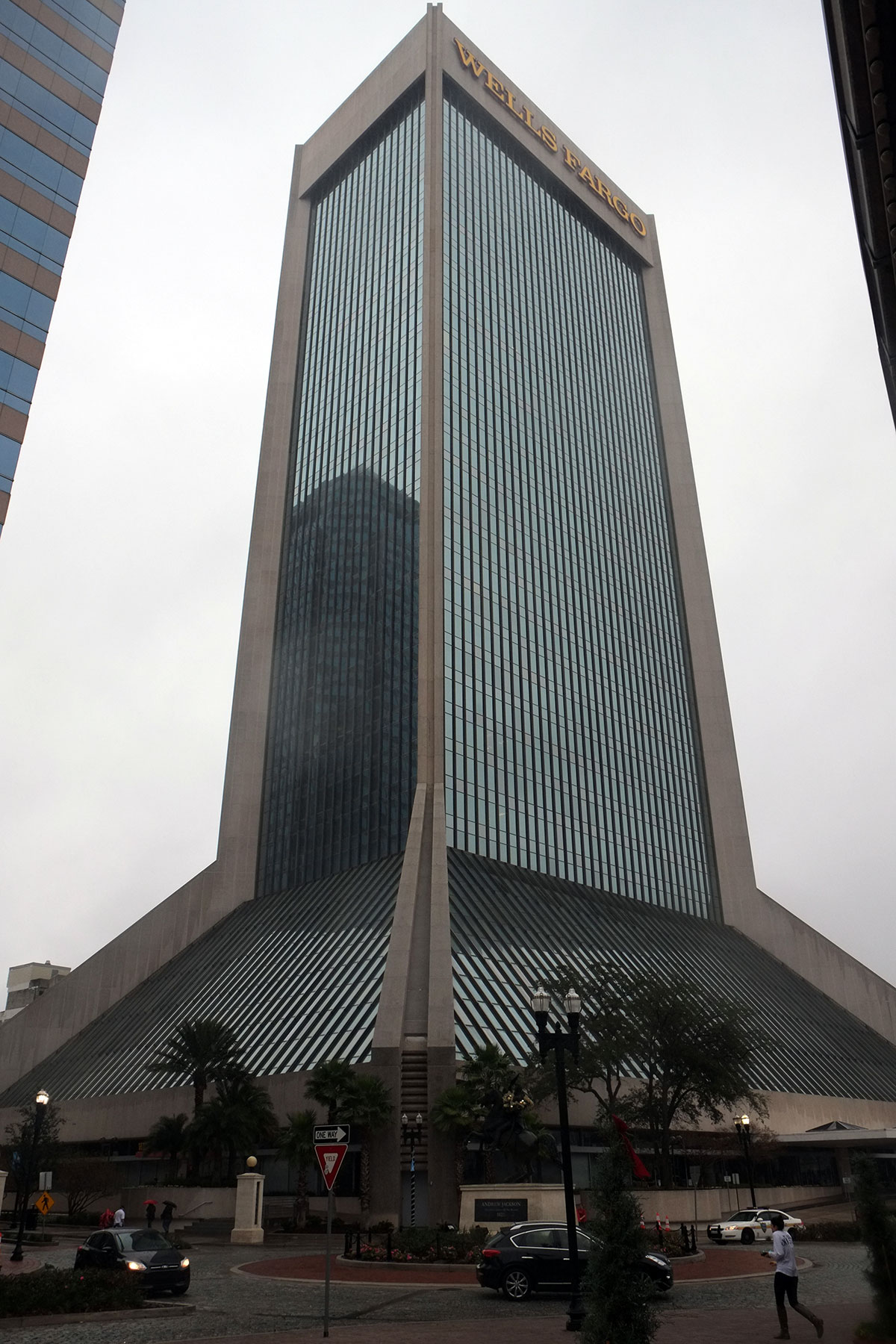
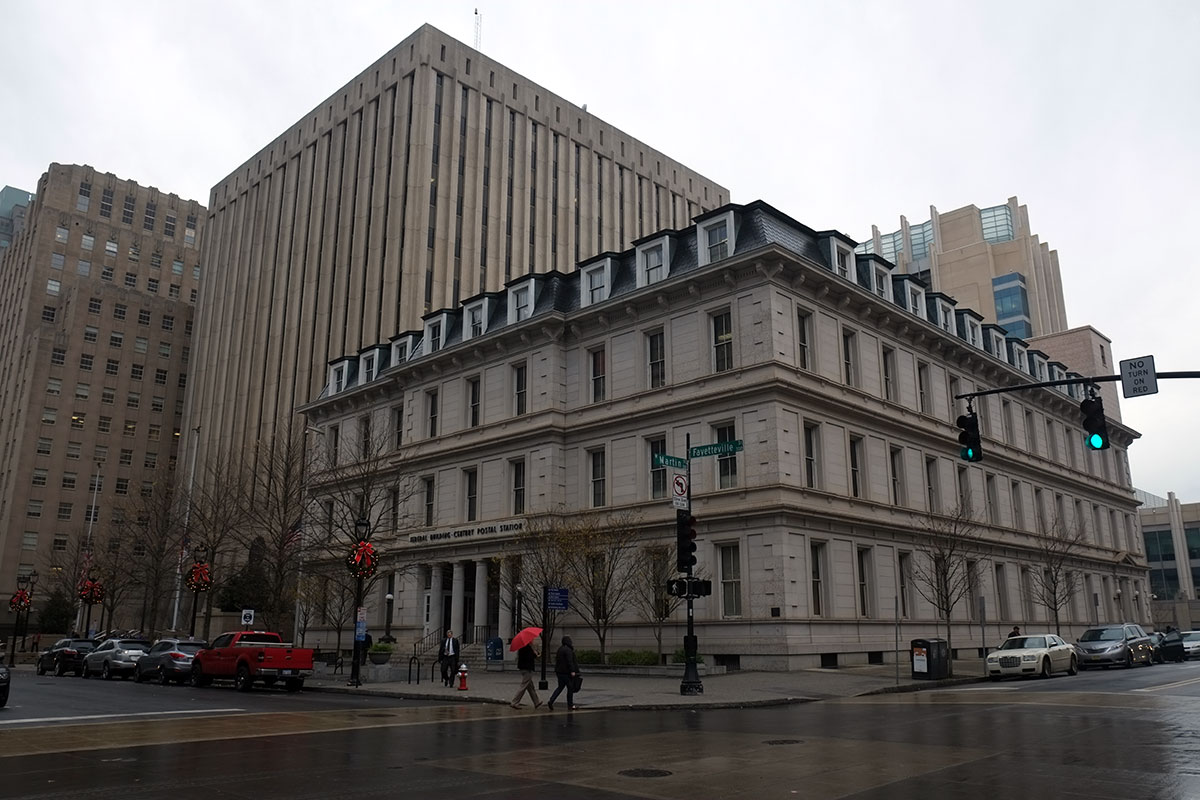
Passing back through the area at the end of the year, we spent some more time in Jacksonville, which has some of the weirdest office buildings I’ve ever seen, including this one from the heroic era of late modernism
DSCF9302

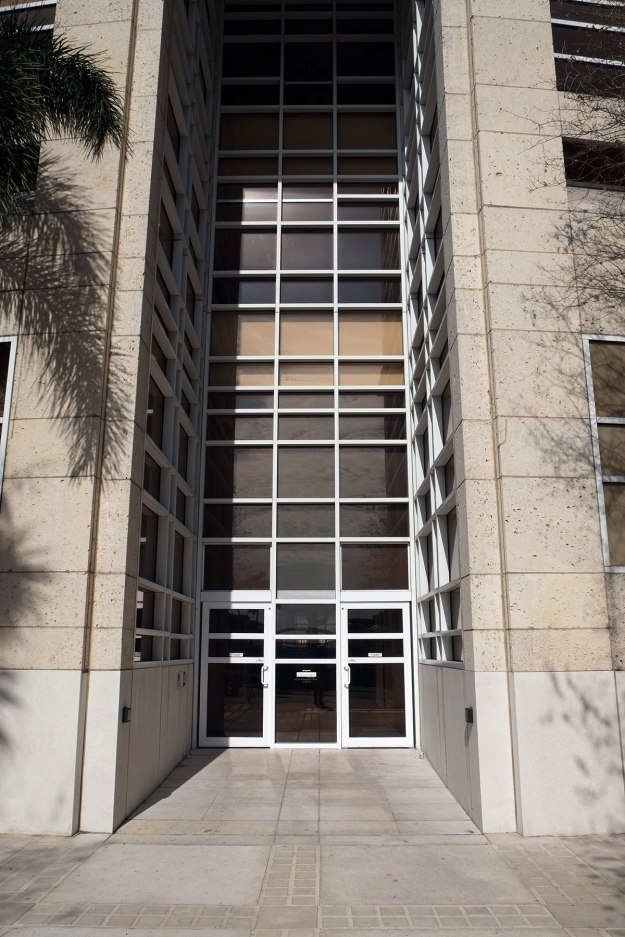
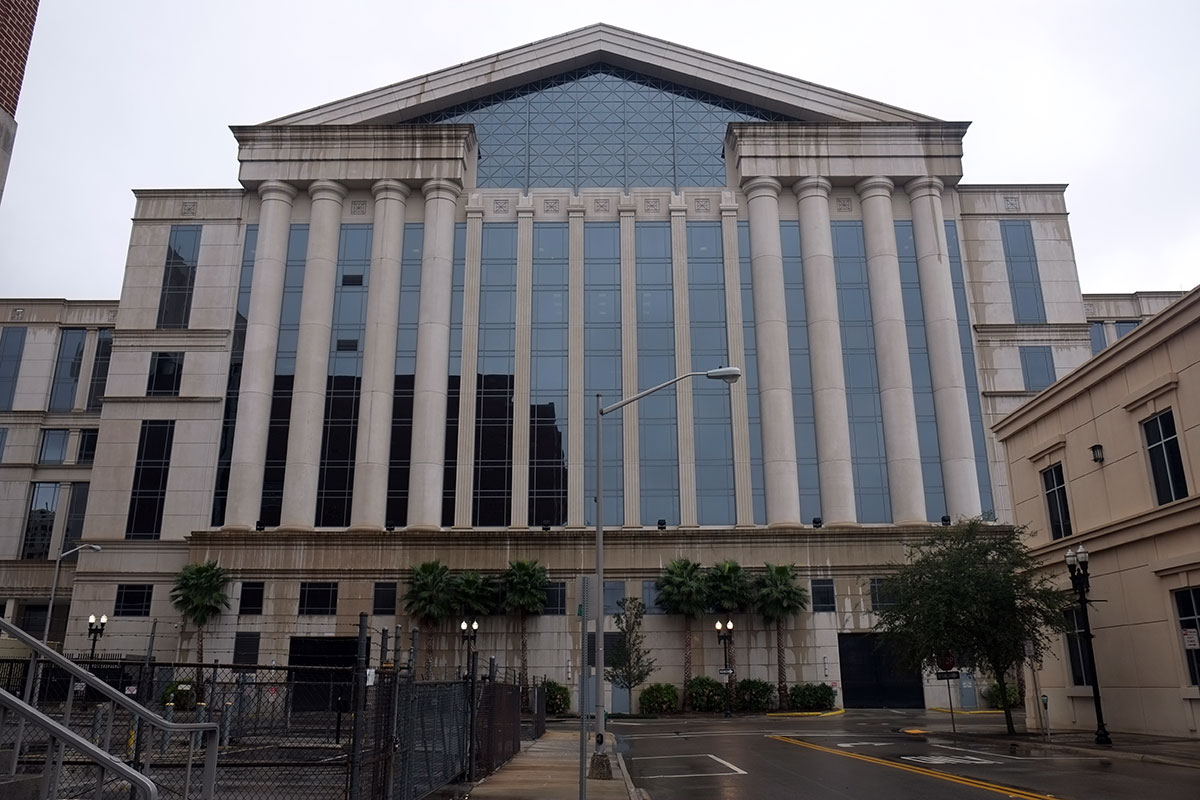
and this court building, which exhibits all the characteristics of a bad modern building in postmodern drag:DSCF9274

There is a waterfront food court / gathering spot, which was actually pretty good for a festival marketplace type of building,DSCF9290

and which was the site of a pep rally for Penn State and Georgia, the day before they were going to play in some bowl game.  We watched a full line-up of high school bands and cheerleaders, all performing in a cold downpour.
Jacksonville

The fantastic Georgia marching  band performed, which was fun until it suddenly became rather jarring.  Apparently, at some point in the past, the University of Georgia took the tune of the Battle Hymn of the Republic and turned it into their football fight song.  I looked around at the crowd to see if anyone else’s reaction was “huh?”, but they were all signing along.  No one but us seemed to think that turning an abolitionist hymn into a football song at a university in the former confederacy was weird.  Reflecting on this and the armadillos, this was when we started to feel we were in a very different part of the country.


St. Augustine

IMG_7361St. Augustine is the place in the southeast where we first became aware of the incredibly complex history of this region – French, Spanish, English, American – every historic place keeps track of its shifting sovereignty throughout history, and posts signs informing you of the “Seven Flags” or whatever.  But as the oldest continuously inhabited European settlement in the US,  St. Augustine is right up there with New Orleans in being a place where this history is quite visible in the built environment, and not just when you read a sign or a textbook.

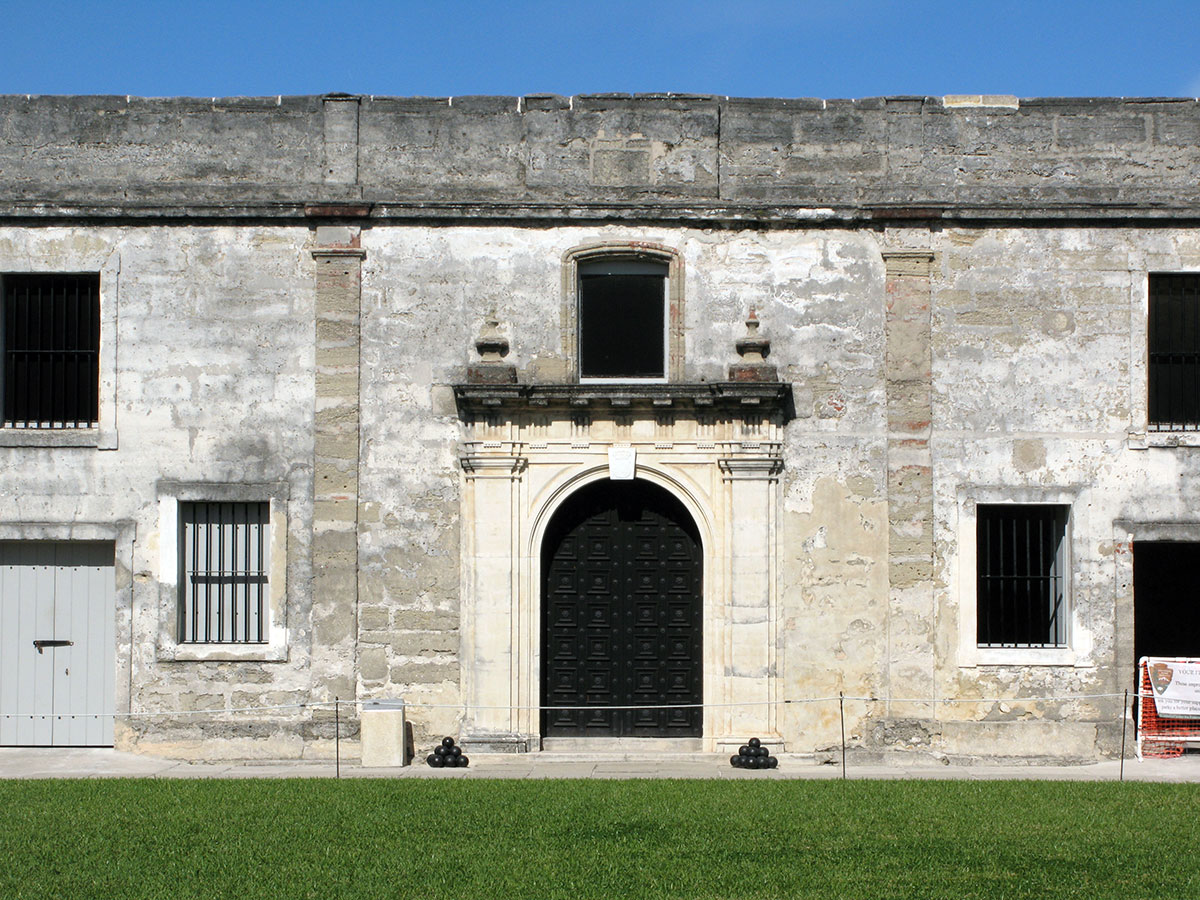
We first visited St. Augustine four years ago, and were surprised by its variety and beauty.  There is the Spanish period, which can be seen in the Castillo de San Marcos, a 17th-century fort – not a reconstruction.  IMG_7281

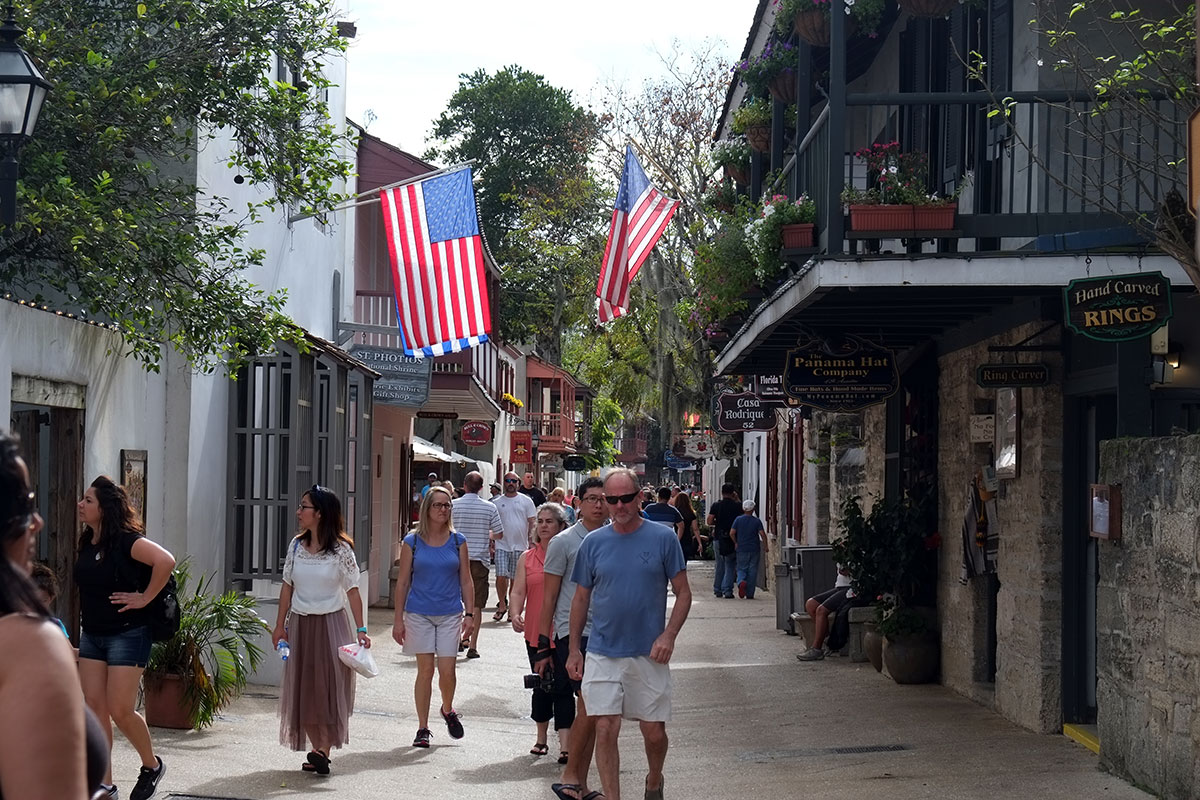
There are Spanish-style buildings in the historic quarter. Along Prince George’s St., they are full of shops and tourists, so while one has to stroll through, the crowds can drive you crazy.DSCF9110

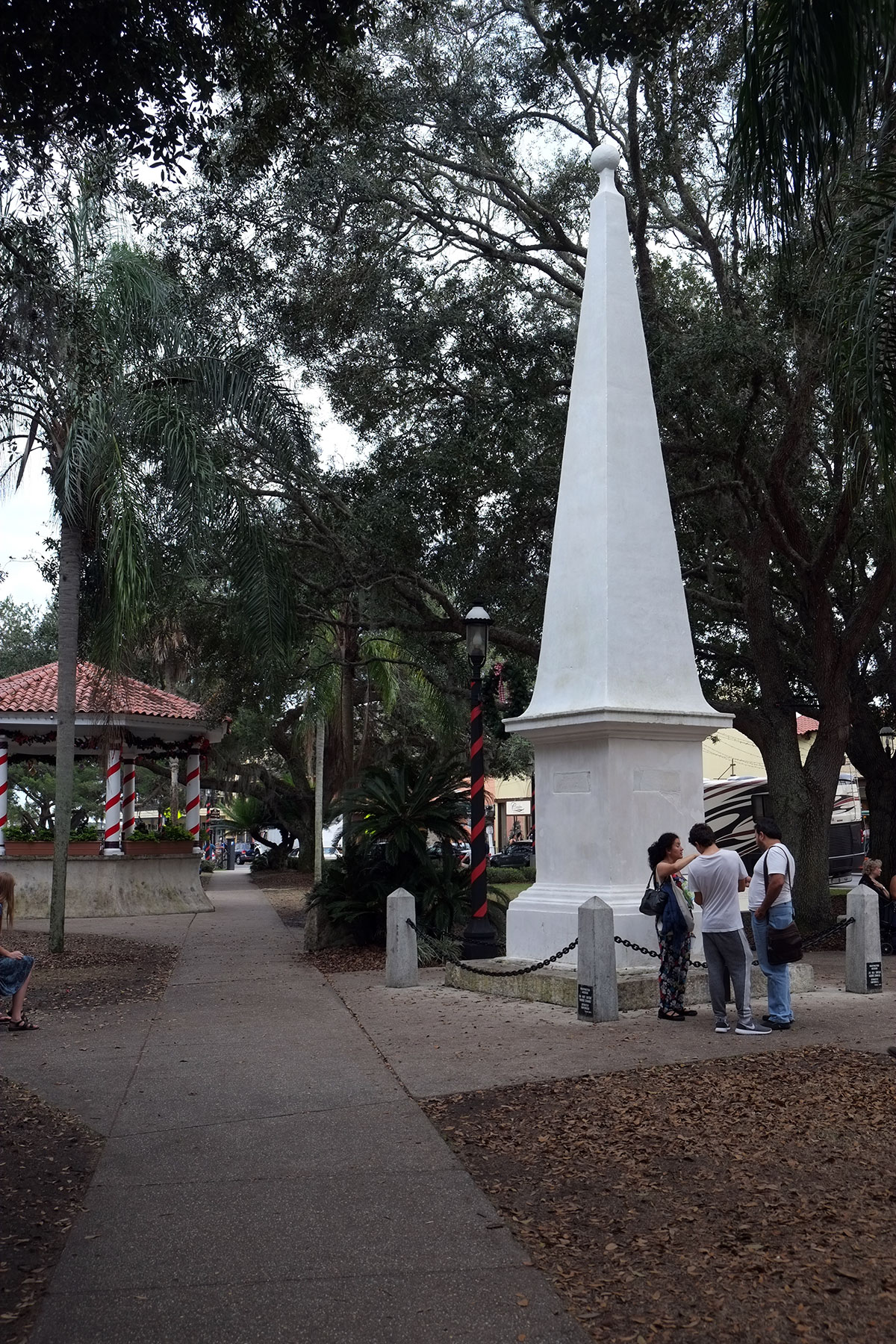
But once you pass south of the Plaza de la Constitucion (the oldest public park in the US),DSCF9238

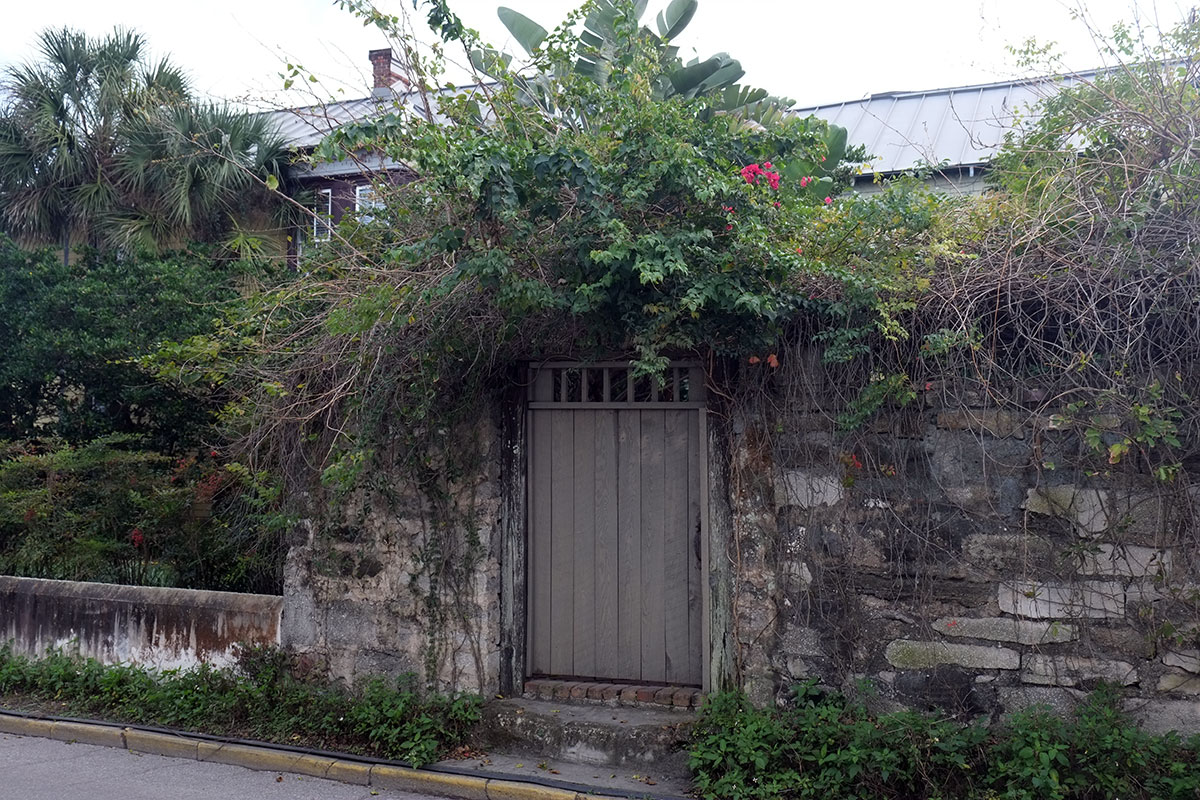
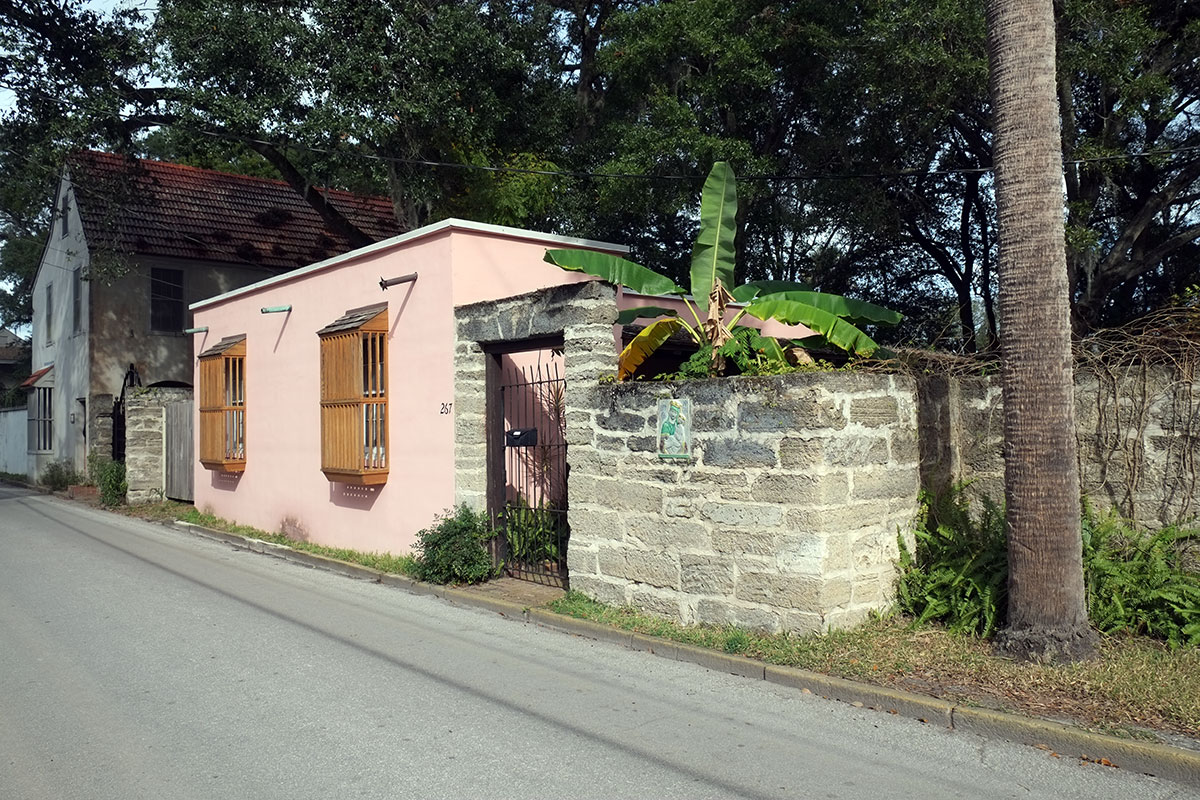
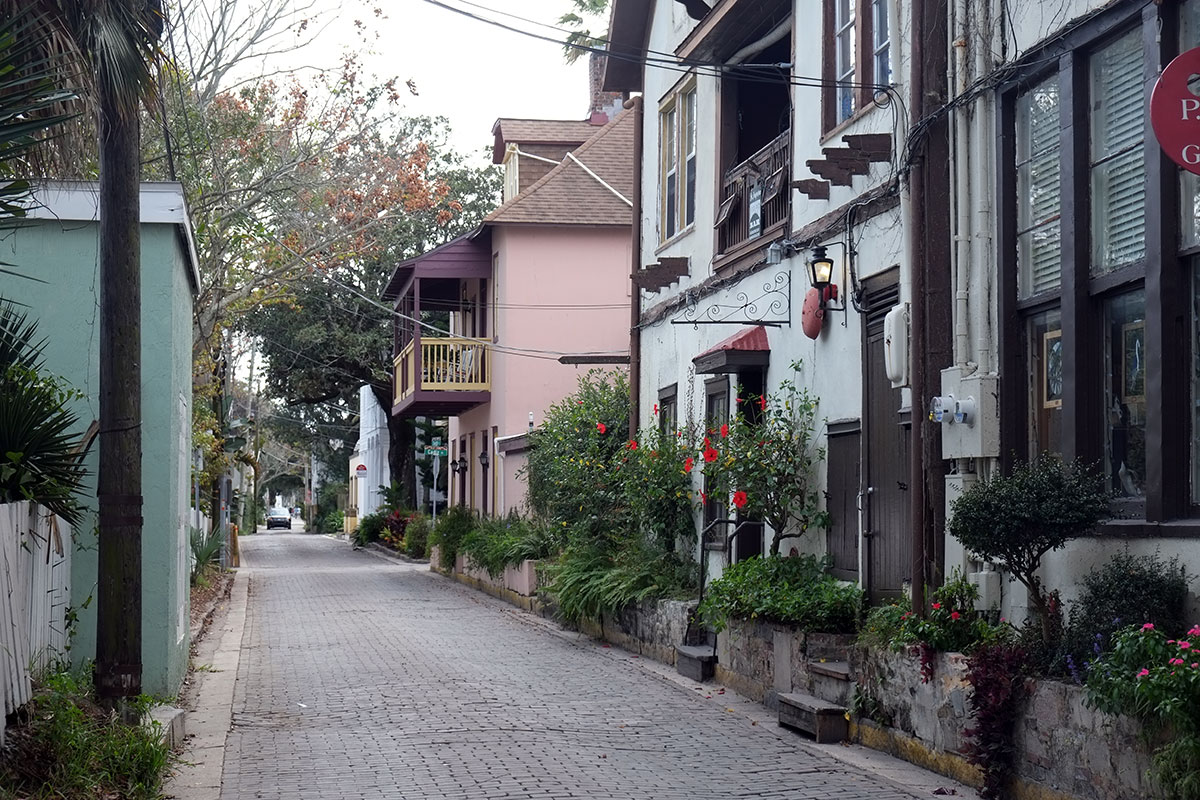
you enter a historic district pretty free of tourists (as there are not many shops) , which isn’t ordered like any other place in this country – narrow streets, gates in walls, hidden courtyards.DSCF9119  DSCF9131  DSCF9159  DSCF9146

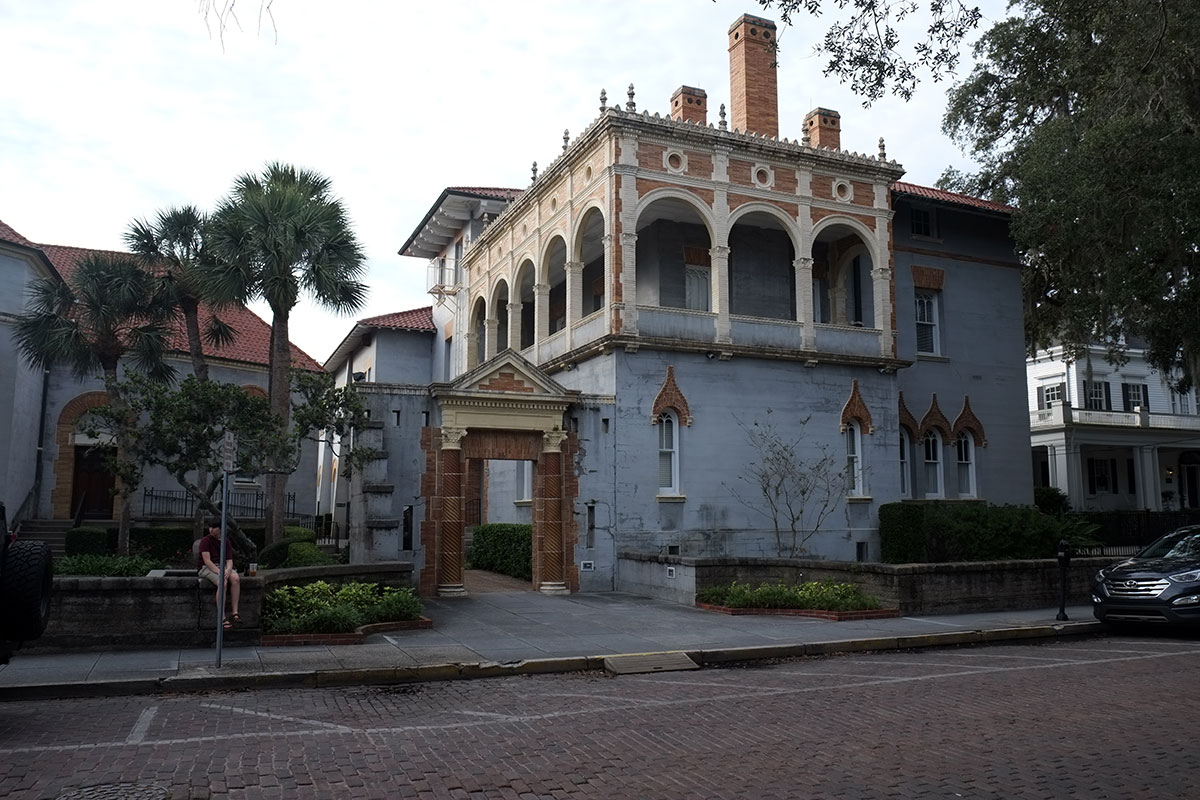
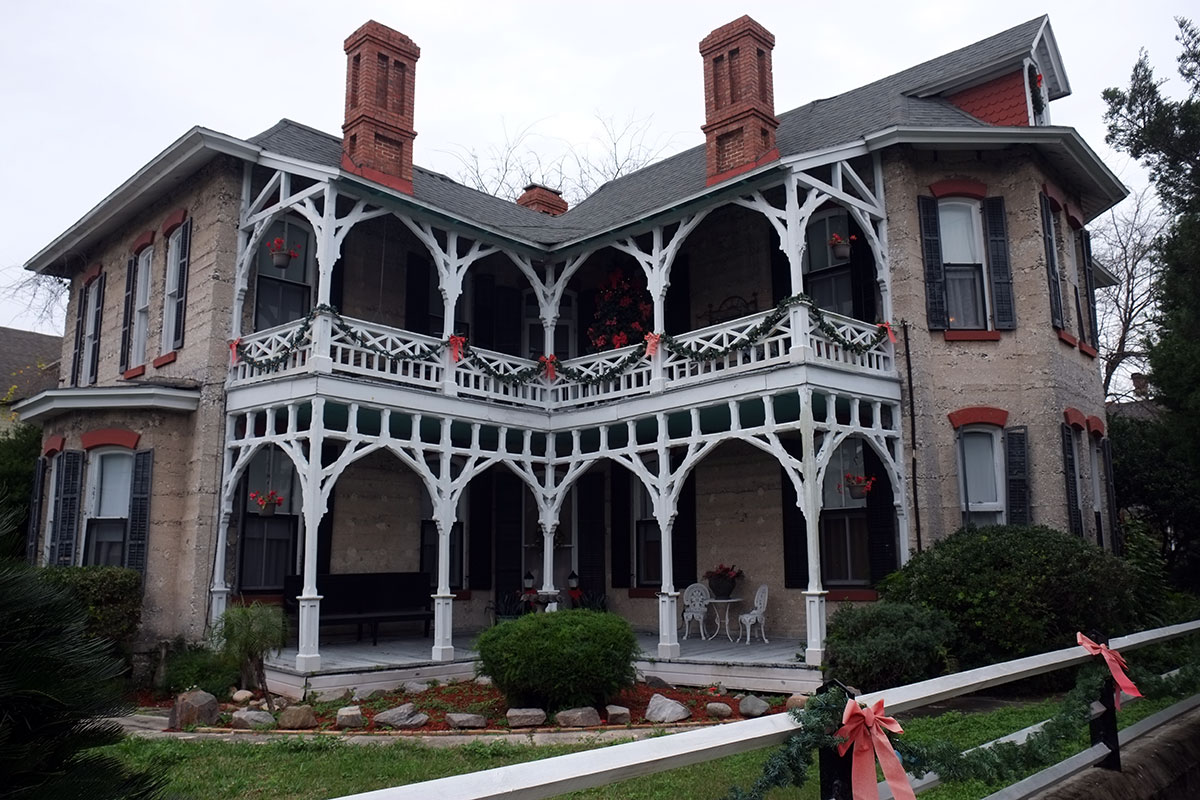
The 19th century part of the city has beautiful, eclectic residential neighborhoods, similar to those we’ve seen in other southern cities.  DSCF9166  DSCF9165

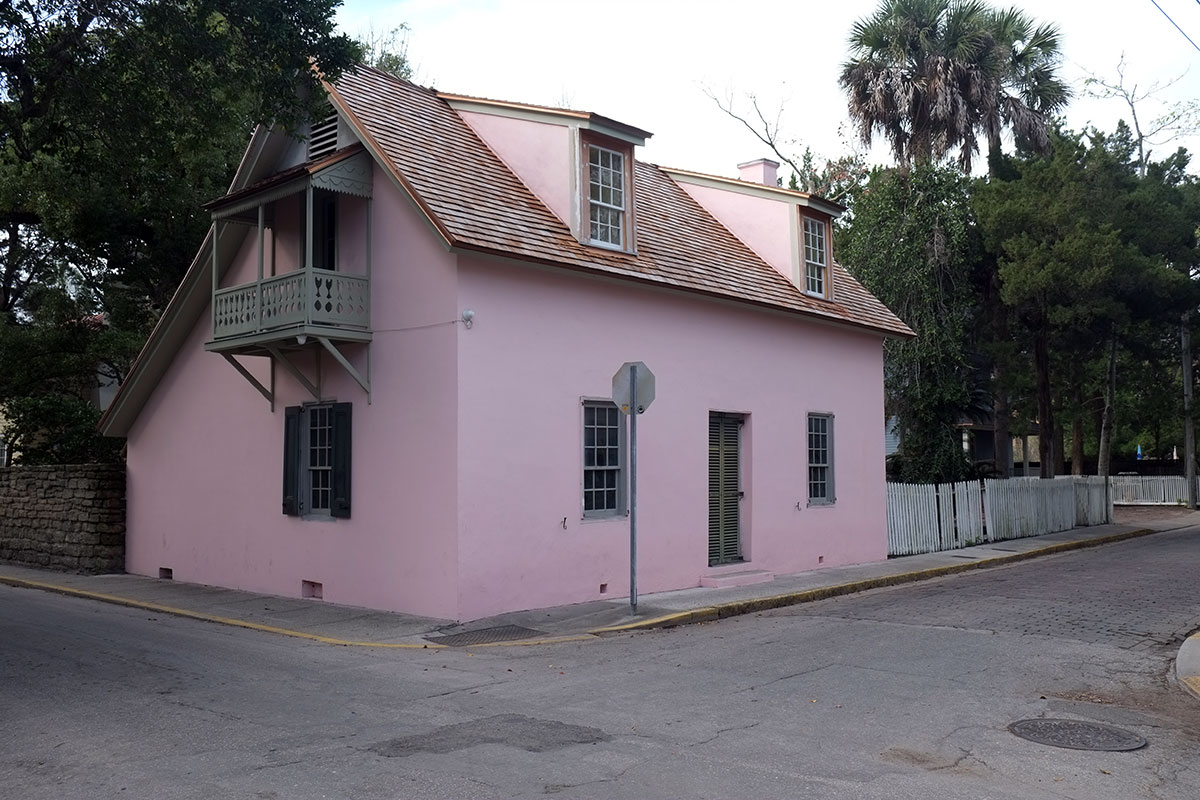
A unique neighborhood we explored on this trip is Lincolnville – begun after the Civil War, it is the historically African-American neighborhood originally inhabited by former slaves.  DSCF9198  DSCF9194  DSCF9201

There are buildings in various states of repair – some showing clear major remodels to add more space, some deteriorating, DSCF9202  and signs of creeping (sometimes rampant) gentrification on some blocks.  DSCF9183p

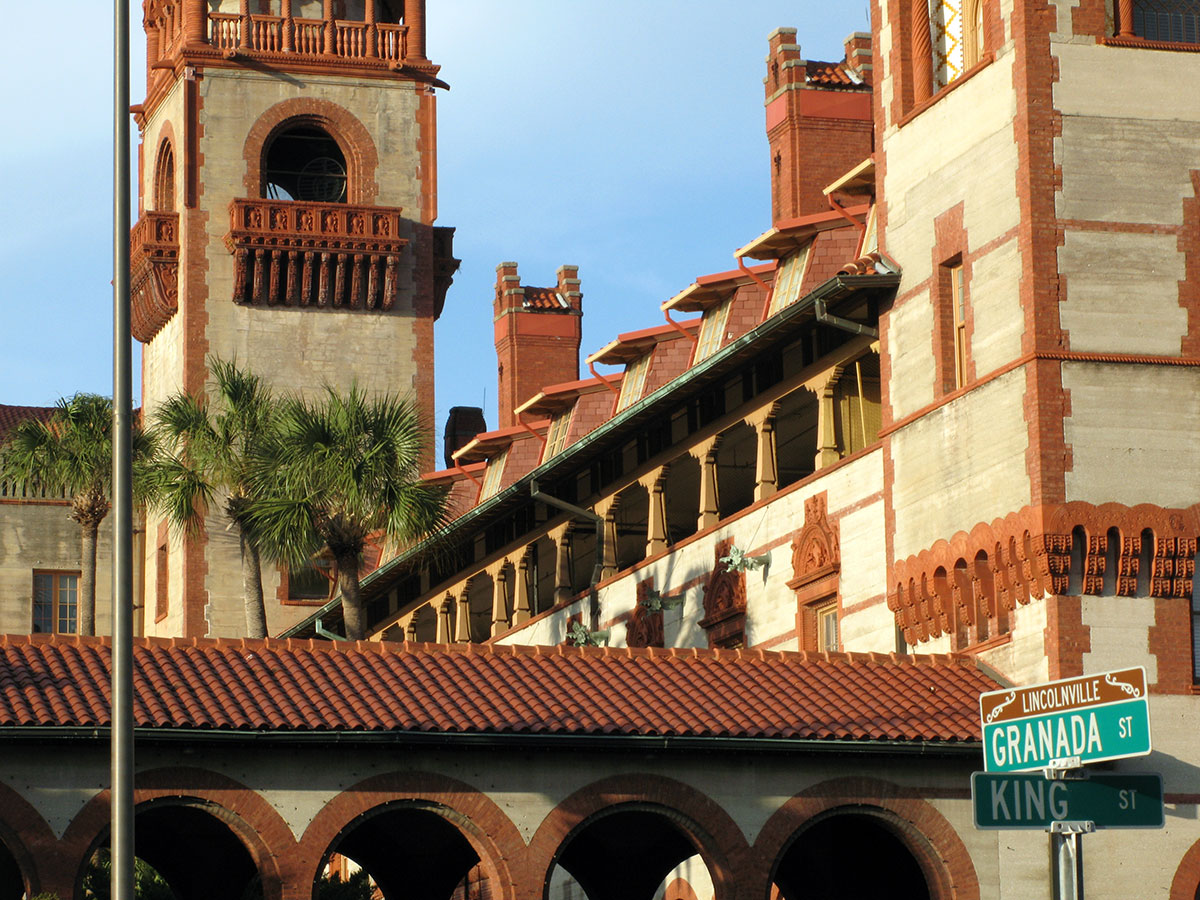
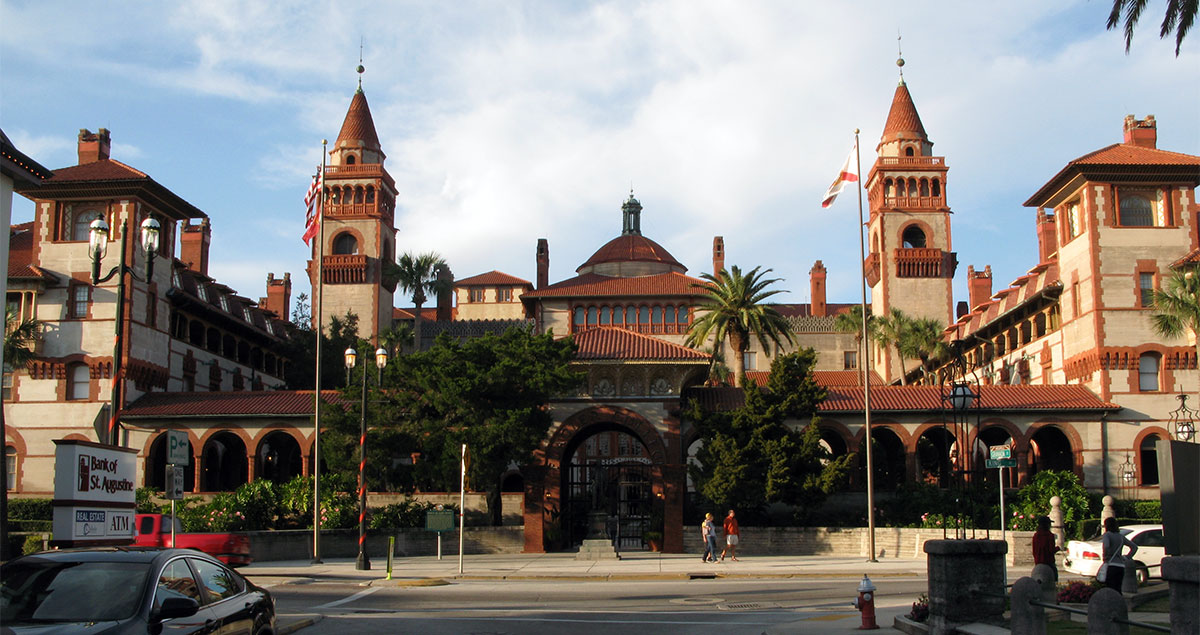
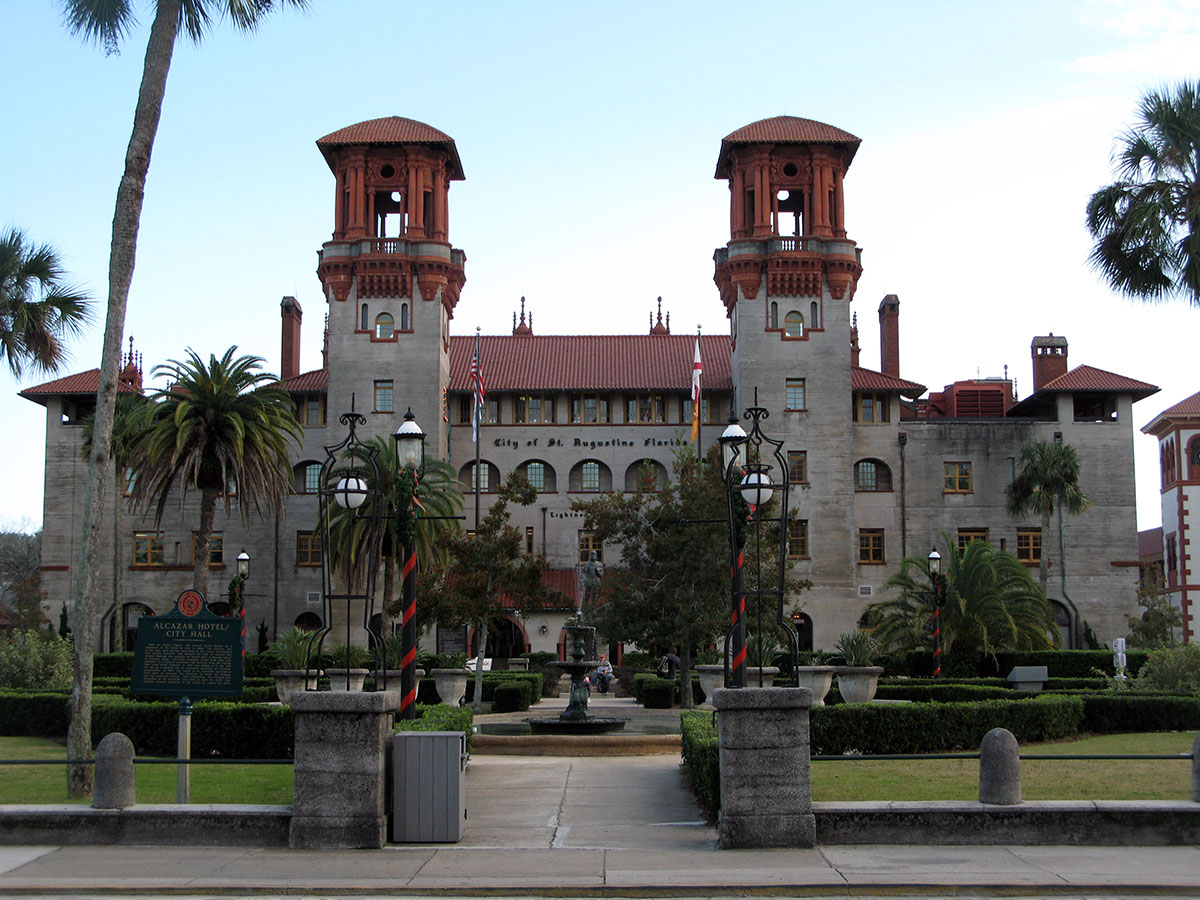
As the boom of Florida tourism hit the Atlantic coast in the 1880s, Henry Flagler developed much of downtown St. Augustine.  He hired Carrere and Hastings, who designed two exuberant hotels, one of which is now Flagler College, and the other is the city museum.  IMG_7358  IMG_7390

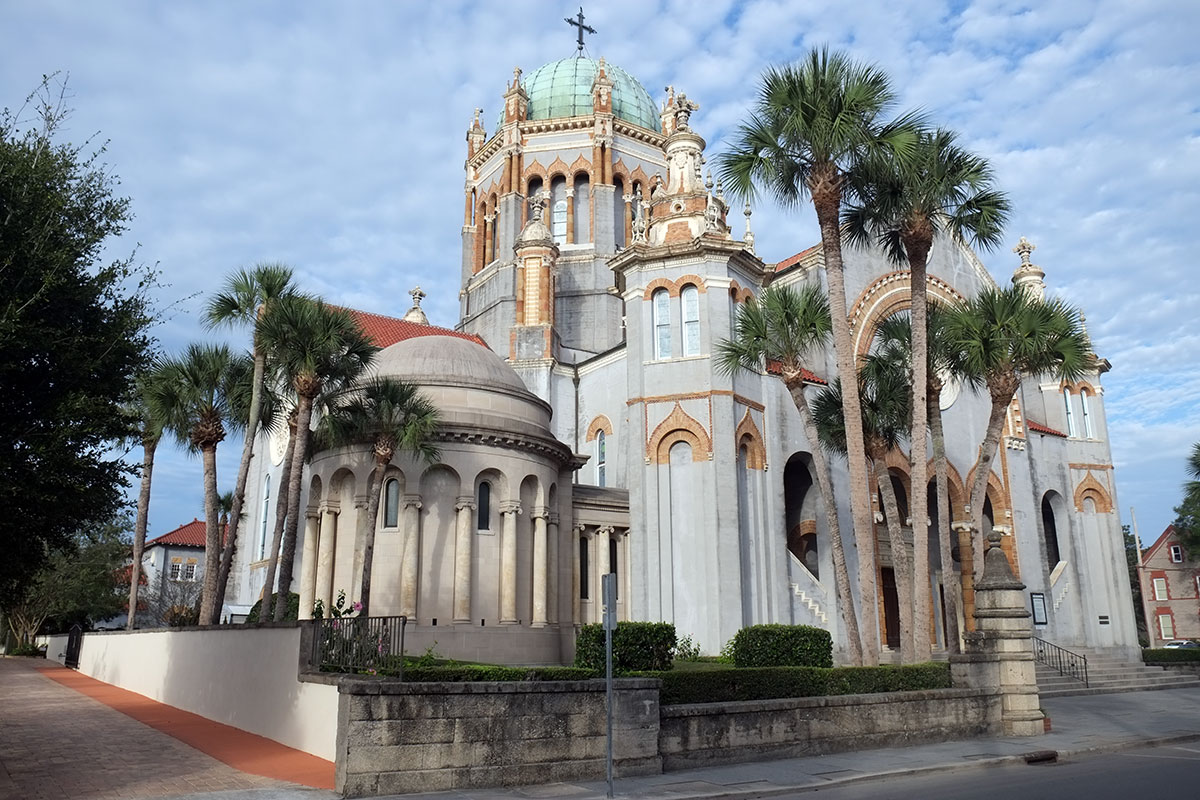
They are spectacular and wild, as is their Presbyterian church and rectory:  DSCF9255DSCF9242

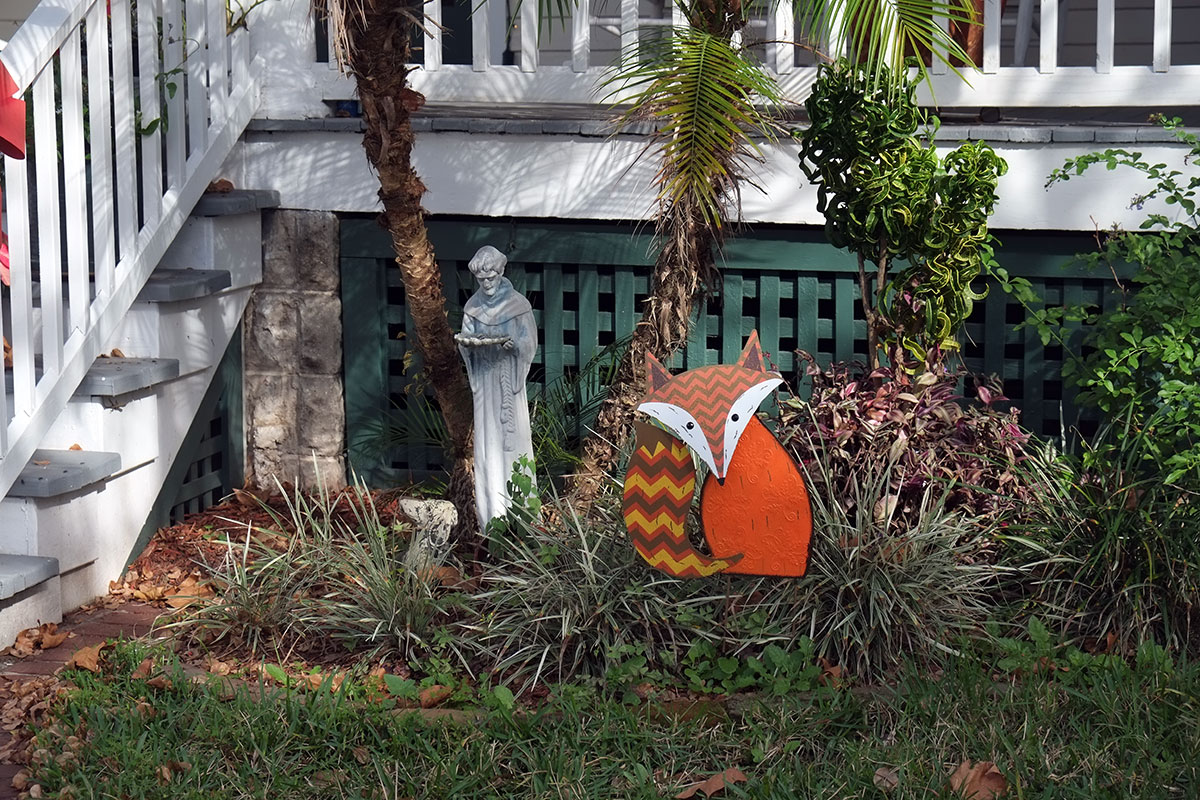
For some reason, we saw a lot of quirky yards and installations in the city, which made us feel at home.  DSCF9176  DSCF9097

It’s a small city, with a great variety of places, periods, cultures and architecture.  It attracts a lot of daytrippers and tourists, but they are cleverly contained in one area, and don’t overrun the whole city – it is a place where residents can enjoy life without being on display all the time.  It seems to be the one place in Florida where the past hasn’t been dwarfed by the present.

South Florida

Floridians speak about the duality of their state, how the Florida above Orlando is a different world from the one below – economically, socially, politically, etc.  This is apparent when you travel through the whole state for a few weeks (we mainly noted south Florida’s aversion to trailers).  Socially, Northern Florida is part of the South, and Southern Florida is largely an amalgam of the Northeast, the Midwest and Latin America.

What struck us most on this trip was the difference between the Atlantic and Gulf Coasts, not just socially, but also architecturally and urbanistically.  Decades ago my dad pointed out that I-95 ran down the East Coast, and I-75 ran from the Midwest to the Gulf Coast, so this largely determined where retirees settled.  (And meant that comparable real estate was cheaper on the Gulf Coast, as Midwesterners just wouldn’t pay as much as Northeasterners).  It’s not really that clear anymore; in Rabbit Is Rich, Updike’s character wintering near Ft.Myers observes that he expected to be surrounded by Midwesterners, but all his golf buddies are New York Jews.  So while the social differentiation may have become less apparent, the differences in the built environment are even more clear.  The pattern for development on the Atlantic coast was set in the early 20th century, with cities, public beaches and gridded neighborhoods, over which the postwar pattern of highways and sprawl were layered.  The Gulf Coast was remarkably undeveloped until after WWII, so the overwhelming organizational principle is that of postwar car-oriented development and sprawl, with the city centers resembling the “edge city” fabric more than any pre-war, pedestrian-oriented city.

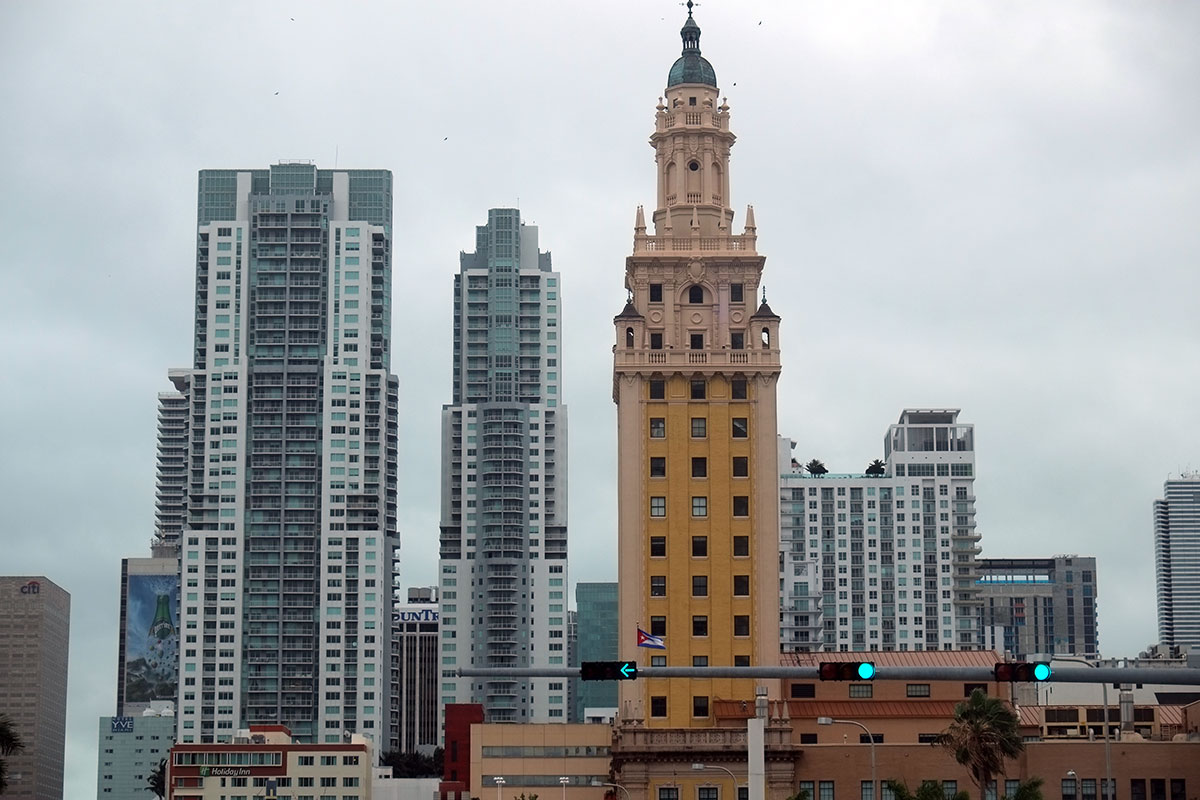
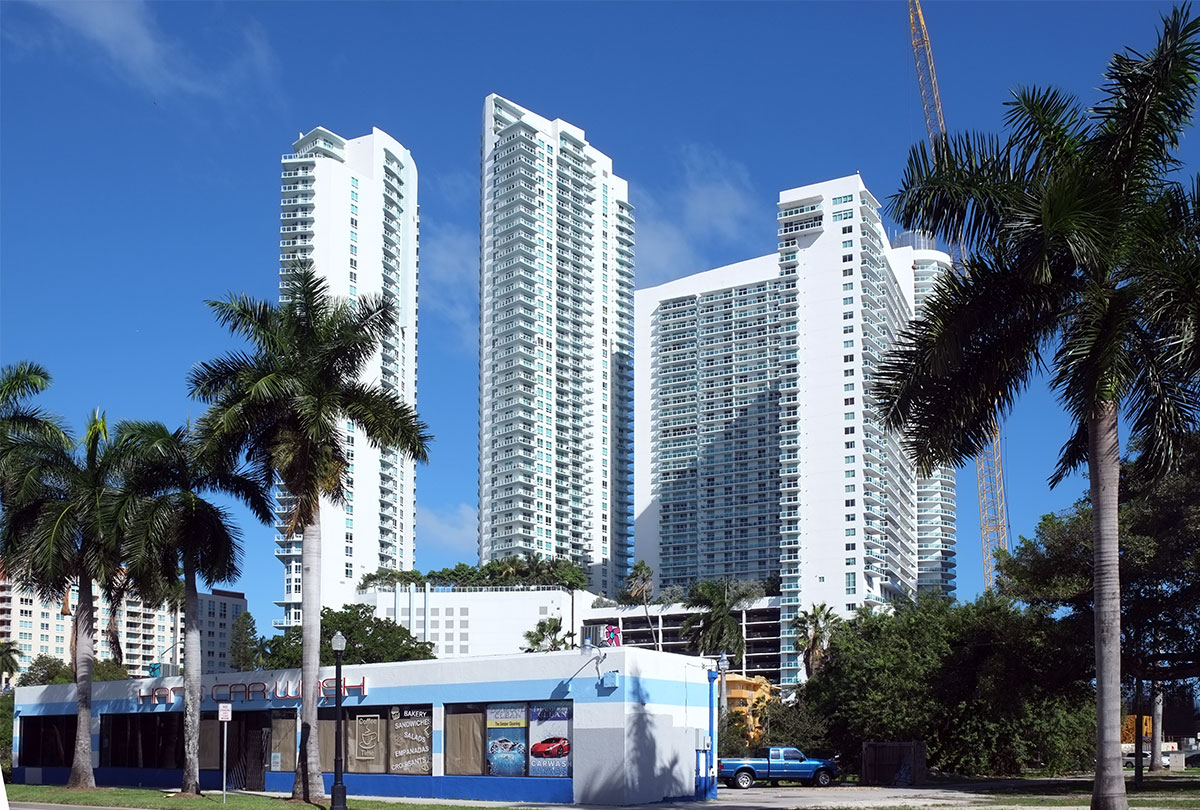
We spent some time in Miami, which is remarkably booming, packed with extremely expensive condo towers, flashy cultural institutions, etc.  It’s truly one of the global cities, more connected to the society and economy of Latin America than to the State of Florida.
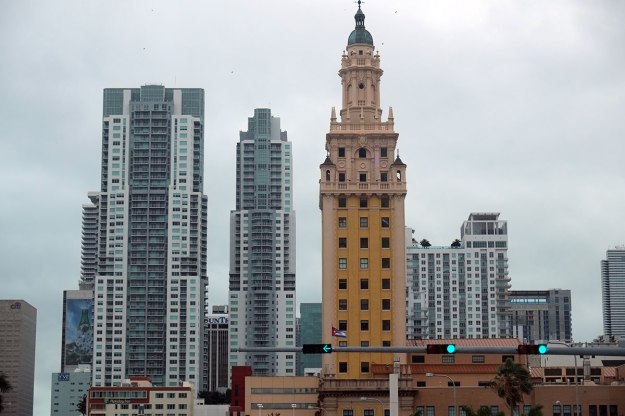
DSCF8749  DSCF8901  DSCF8926

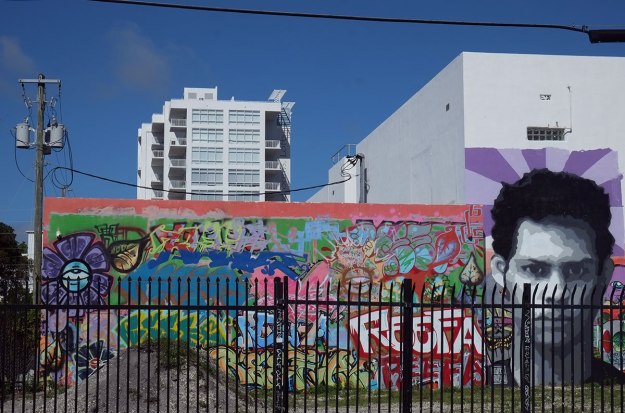
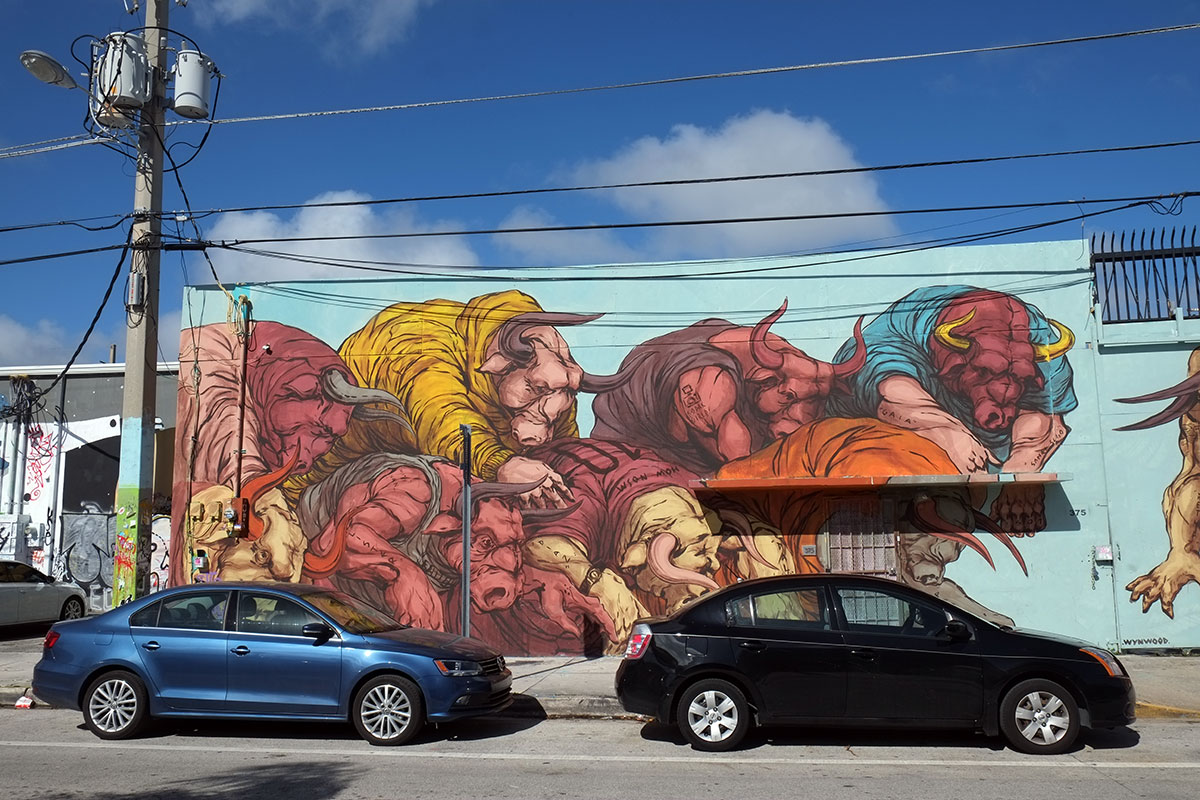
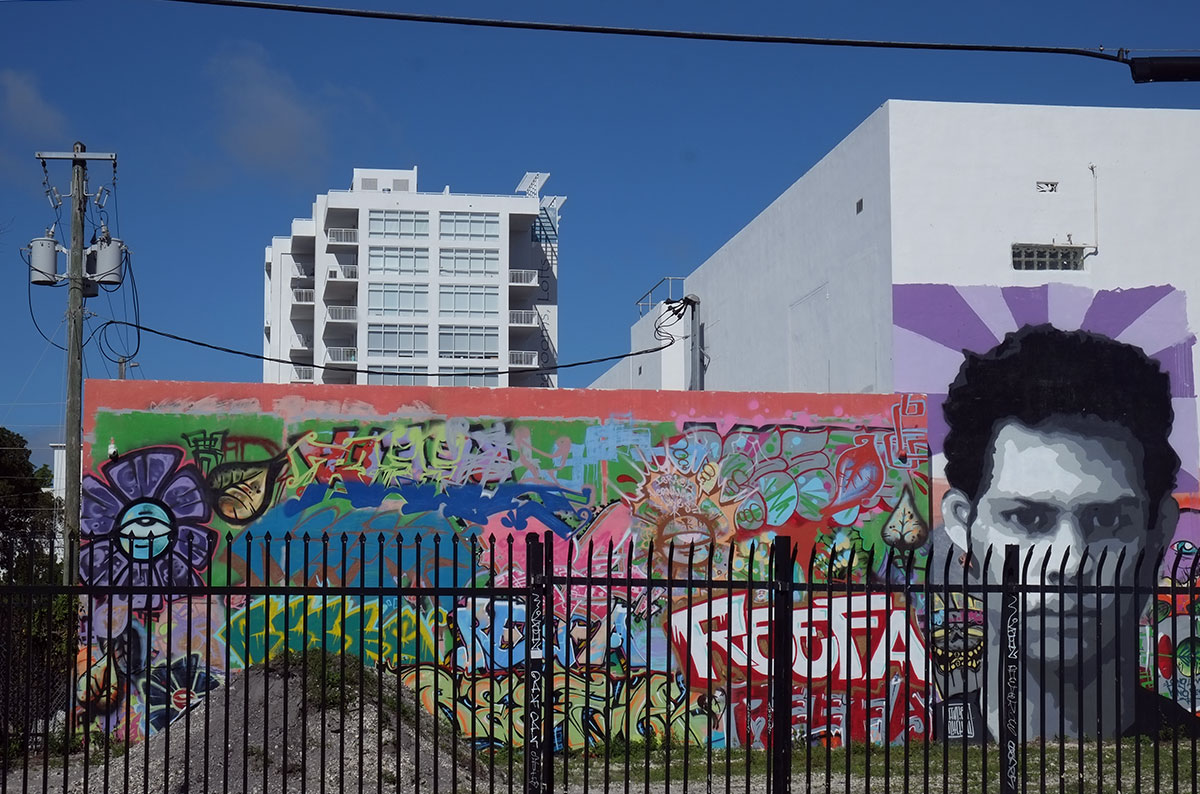
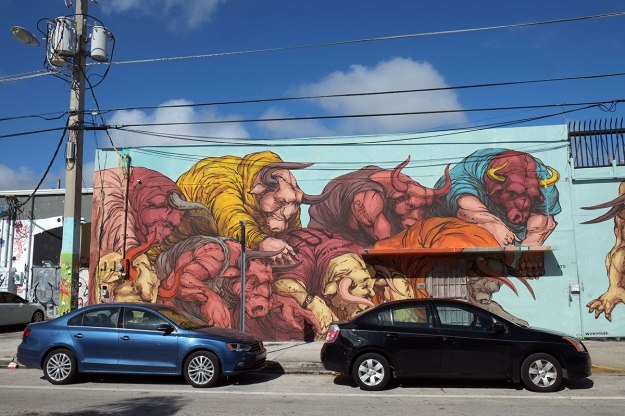
But once you look past the glitz of these towers, there is that complexity of culture that you get in a real city.  The Wynnwood neighborhood is that kind of light industrial zone near the center of town where artists and hipsters are taking over, with cafes, galleries, and lots of street murals.DSCF8919  DSCF8923
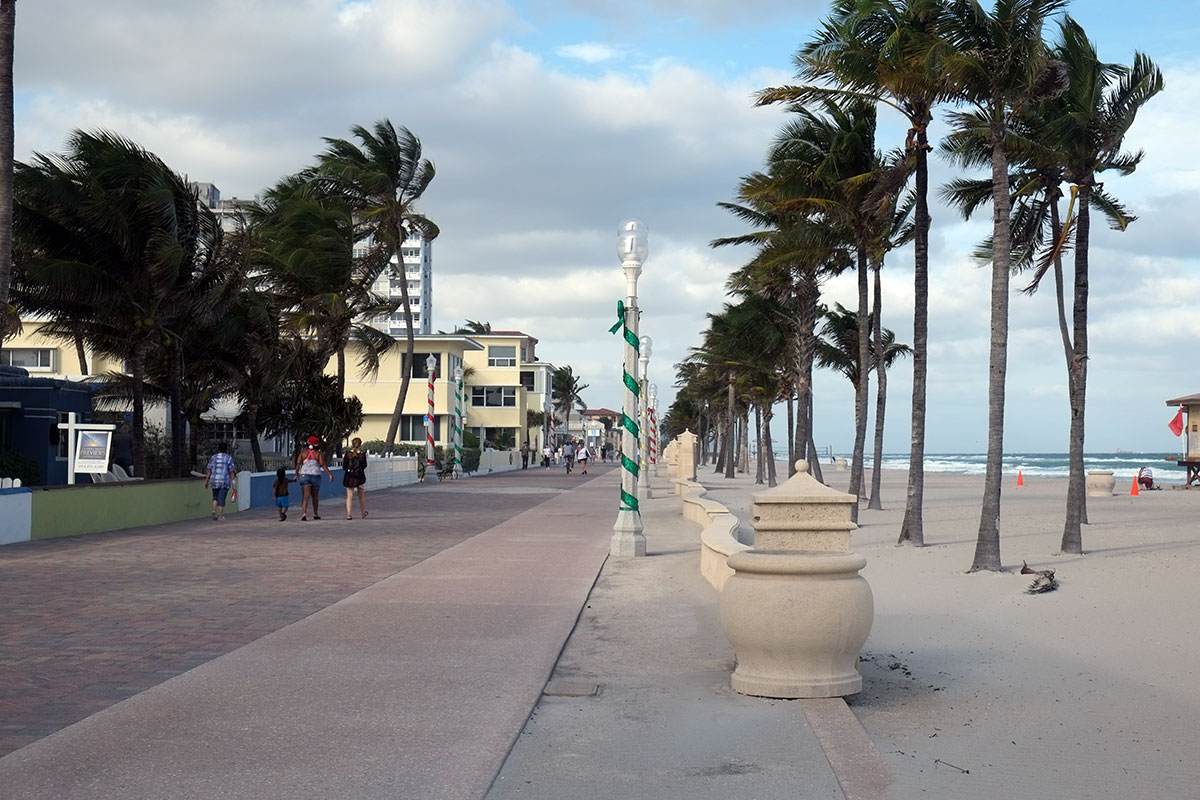
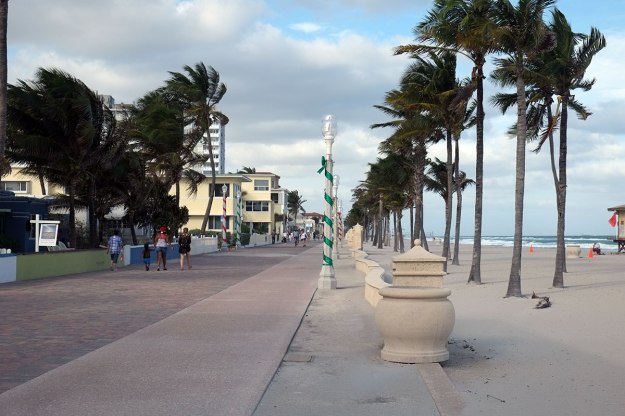
We also went through the smaller beach cities in the area – Ft. Lauderdale, Hollywood, etc.  The early 20th-century promenades and boardwalks have been reinvigorated, and even on a really windy day a stroll along the beachfront is entertaining and lively.  DSCF8700
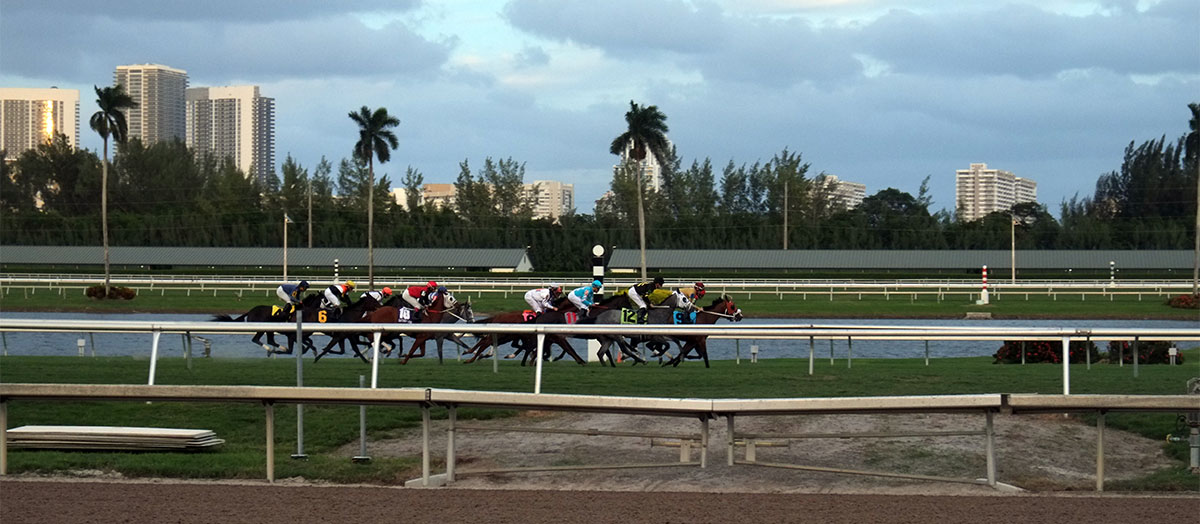
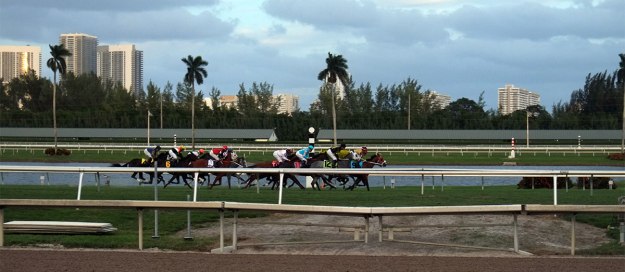
And older attractions, such as the Gulfstream race track are being reinvented, with casinos and other Vegas-like glitz.  DSCF8743  DSCF8725
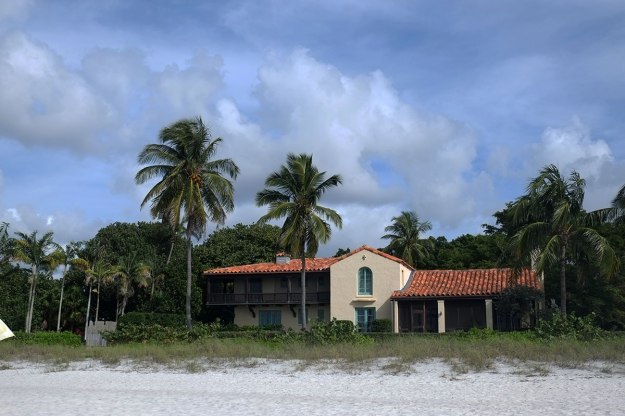
The Gulf Coast is a different world.  We have been going there for years to visit my family in and around Naples, which has a very small historic core of shopping, and neighborhoods of beautiful older homes along the beach.  DSCF2979  DSCF8947
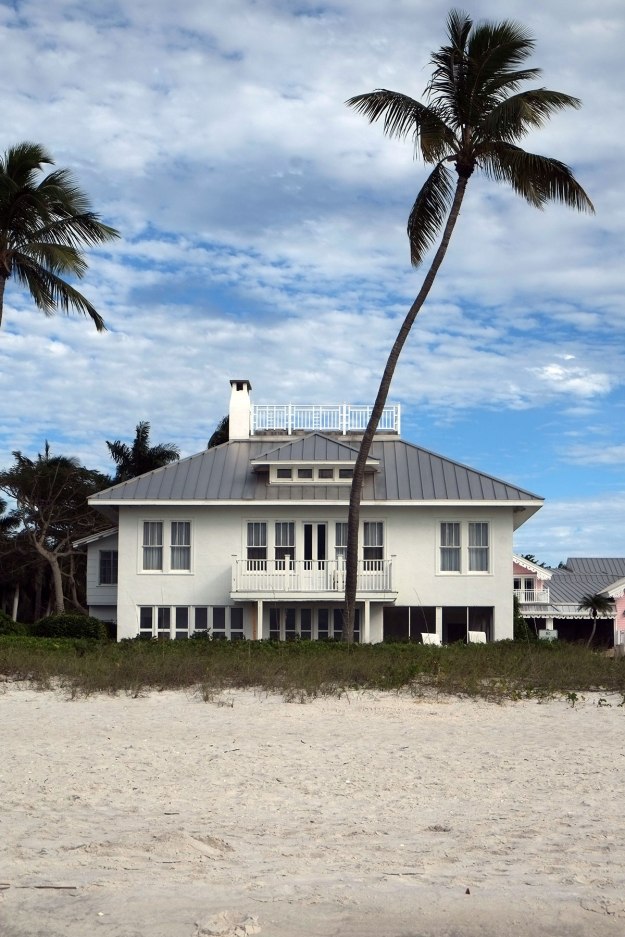
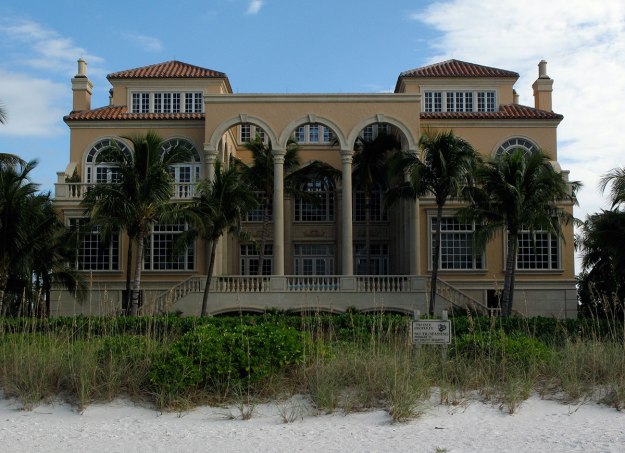
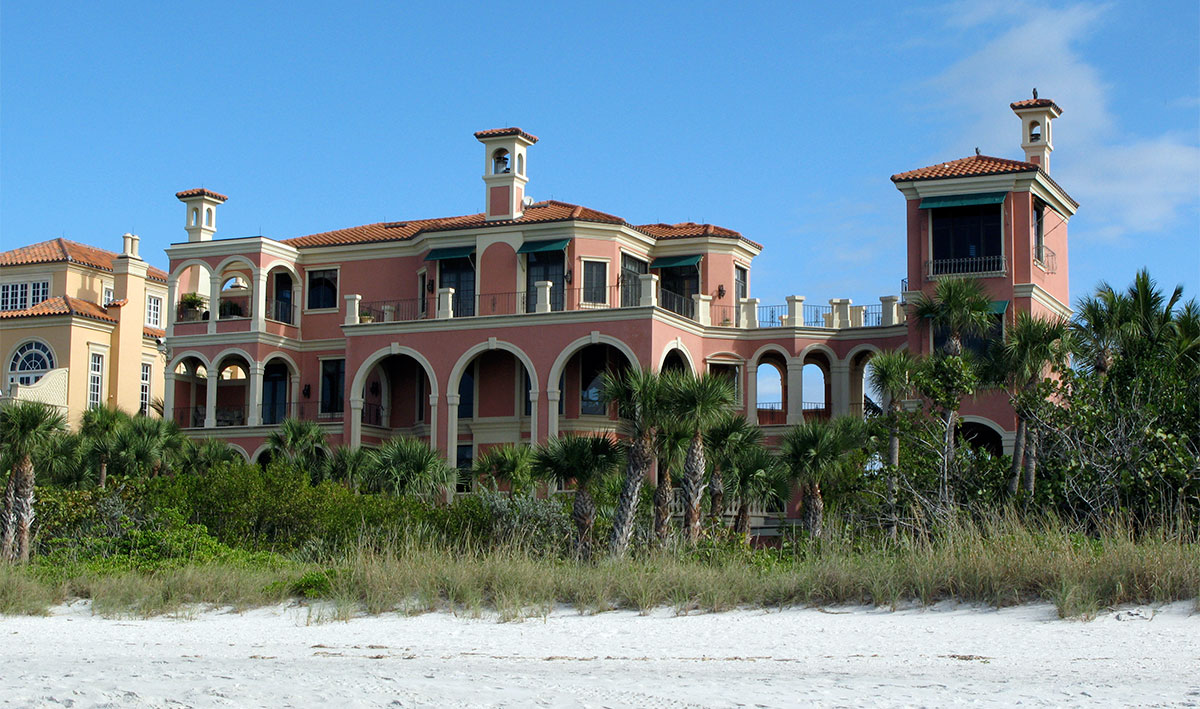
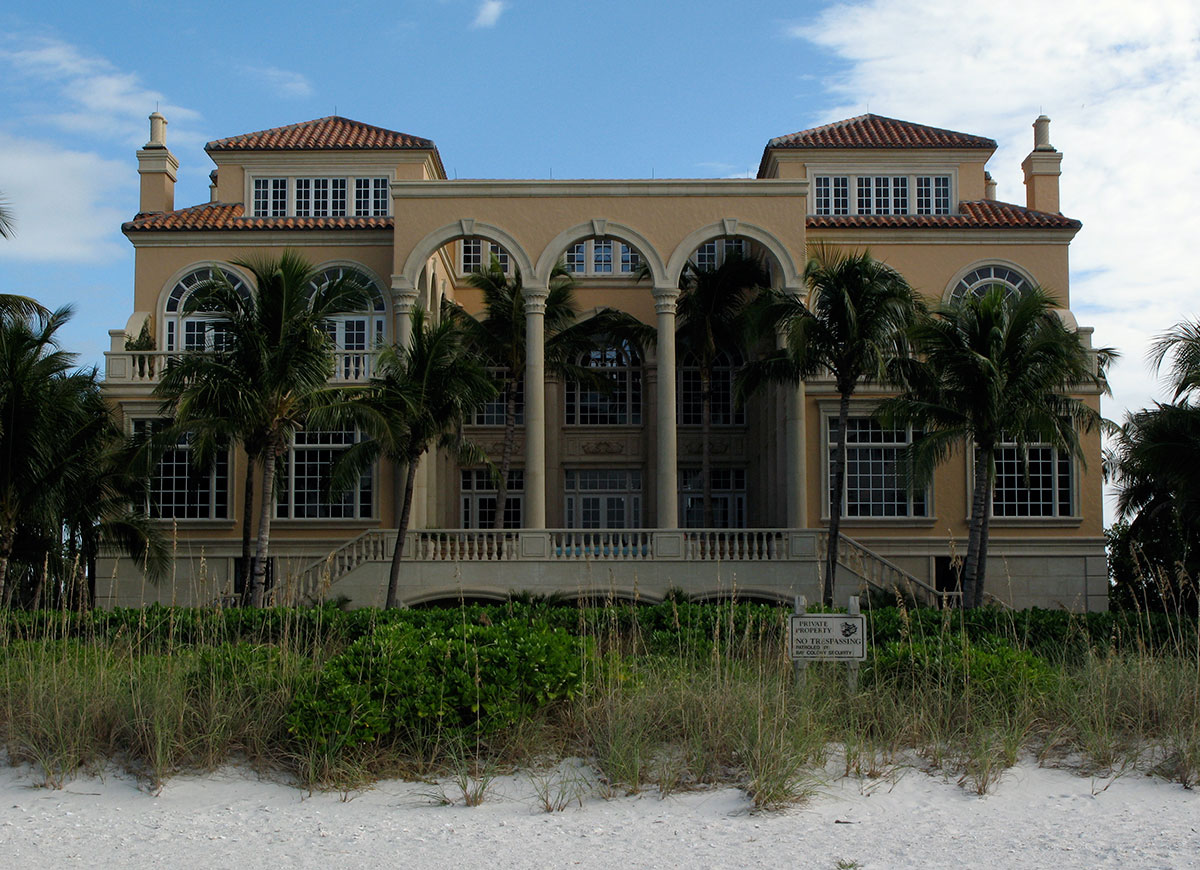
There is public beach access here, but no commercial development – no boardwalk, no crowds, nothing kitschy.  The area began to boom in the postwar era, with large developments, towers, DSCF2950and some of the most insanely awful houses I’ve ever seen:  IMG_0326  IMG_0337
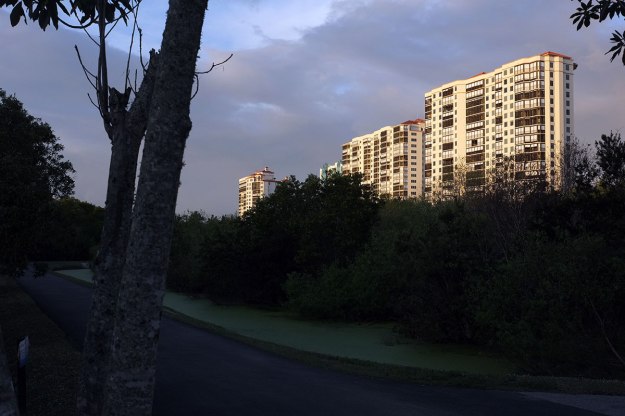
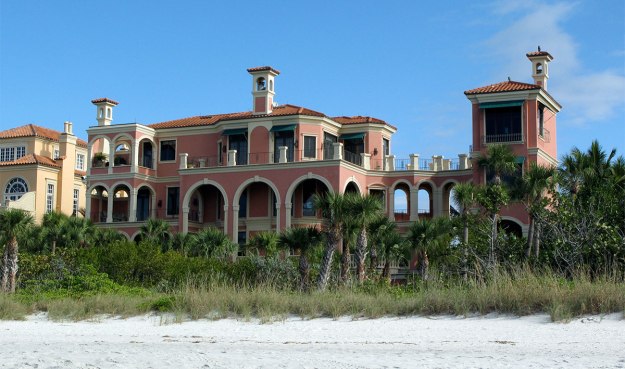
all of this is much more privatized, with many gated communities and limited public beach access.  Even when an area is at a pretty high overall density, such as in the condo developments, it’s a car-based pattern, with any commercial development miles away.

We visited some of the older Gulf Coast cities we’d briefly cruised through before.  Sarasota has a historic core with some lovely buildings, but has been dwarfed by the postwar development.  DSCF8577
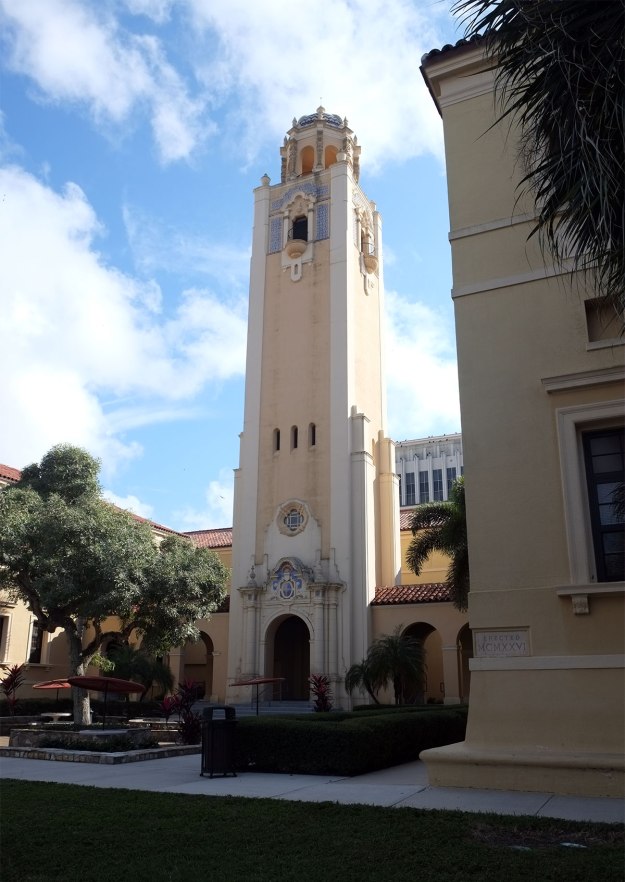
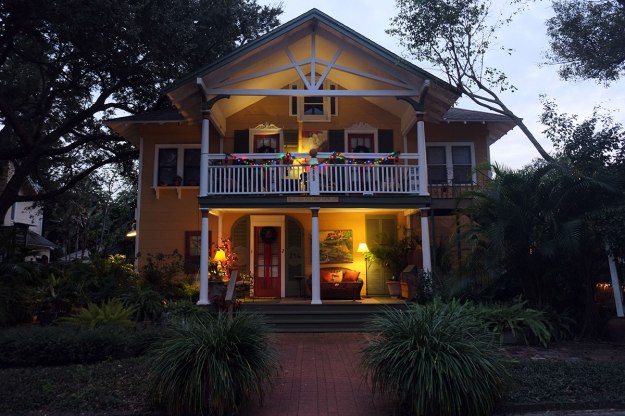
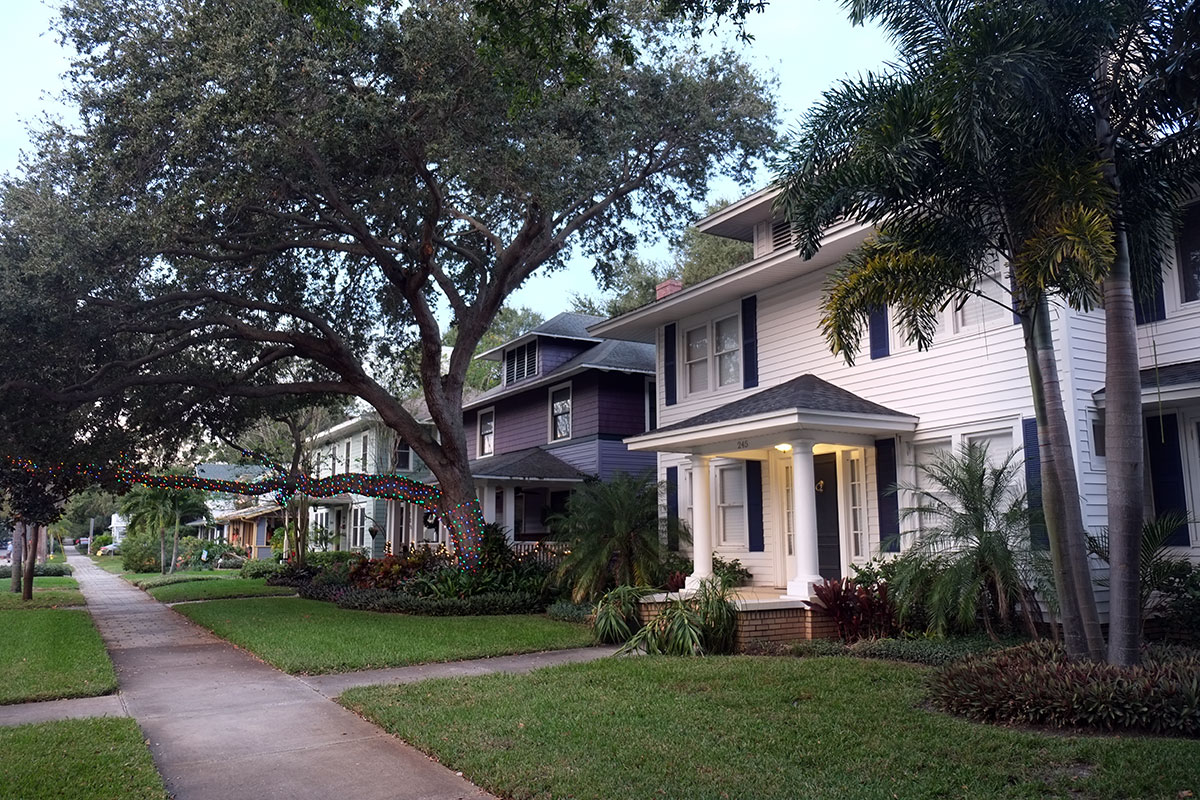
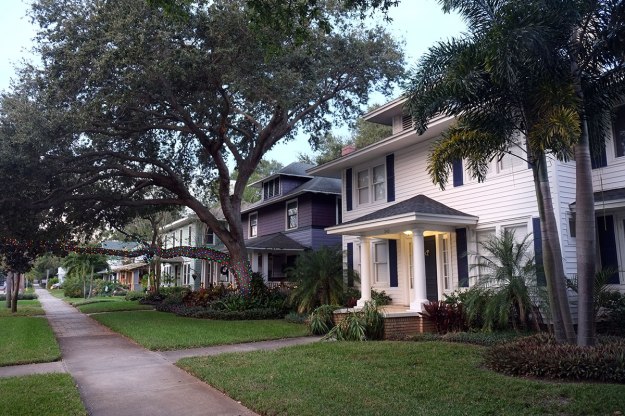
St. Petersburg was our favorite of all of them – a pleasant downtown near the bayfront, an area of cafes and restaurants that seemed liked a South Beach for people who aren’t models, and an older residential neighborhood near downtown that was charming – a mixture of 1920s eclectic houses, all of which seemed well-adapted to the climate (and former lack of air conditioning).  DSCF8598  DSCF8610
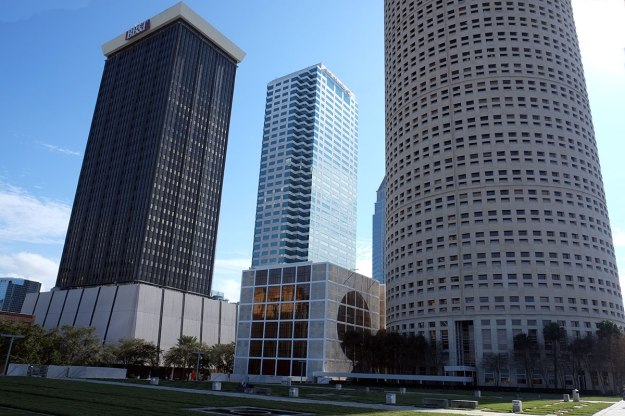
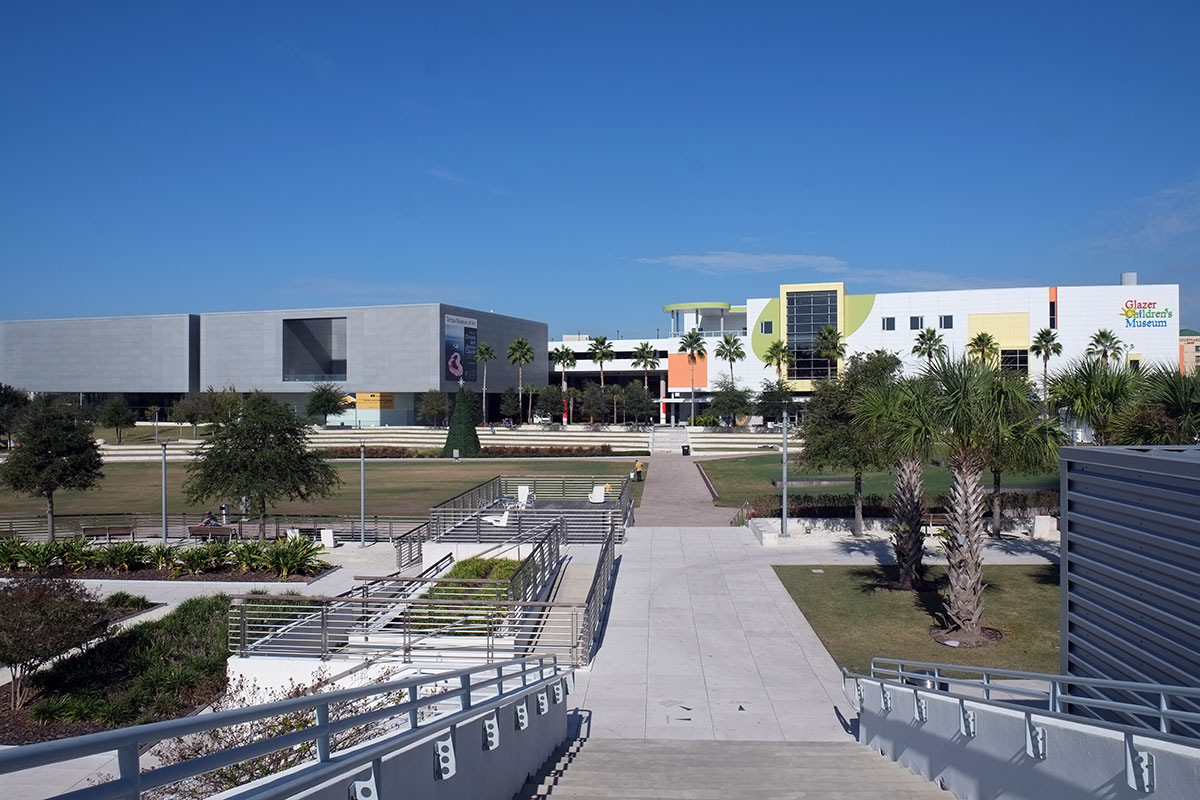
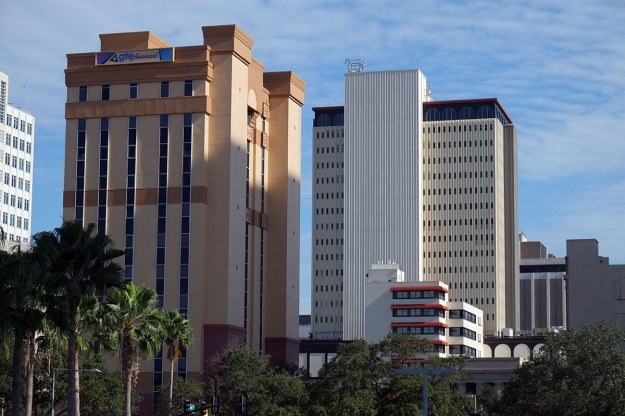
Tampa, the big, booming city on the coast, is profoundly awful.  There are a few remnant historic buildings and districts, but the downtown has a collection of unrelievedly terrible big buildings from the 1950s to the present that may be unparalleled anywhere else.  DSCF8625
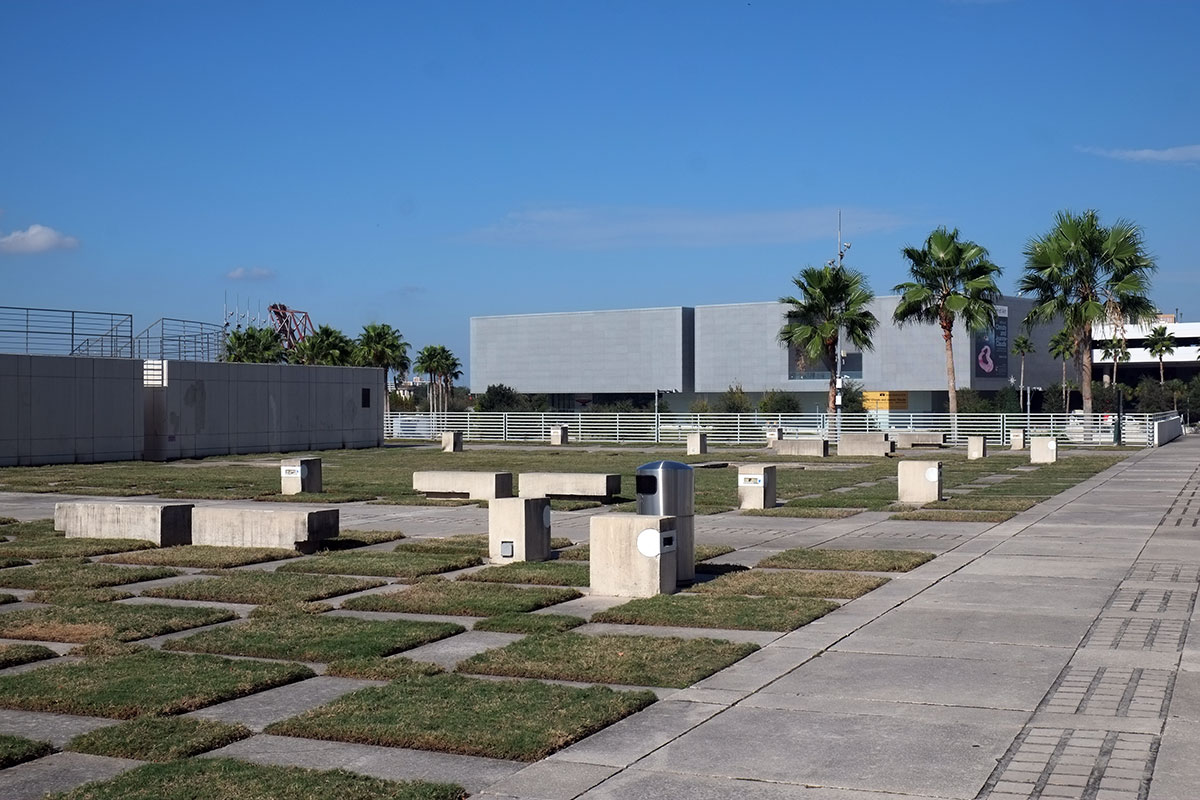
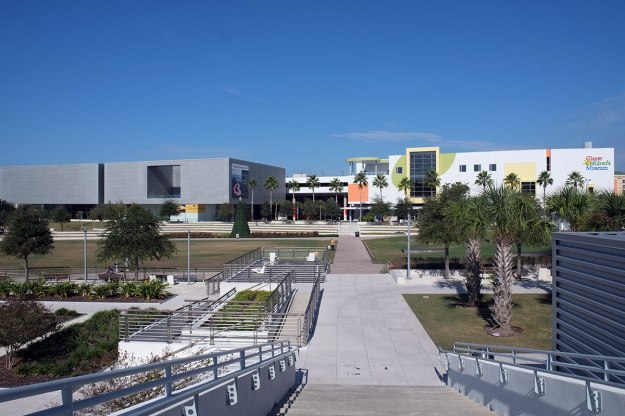
The money is now expressing itself in cultural institutions, which you can distinguish from the offices because they are horizontal and blank.DSCF8634
On a podium (which must contain parking) there is the most grievously overscaled and pointless plaza this side of Brasilia (this is about 1/4 of it):DSCF8622
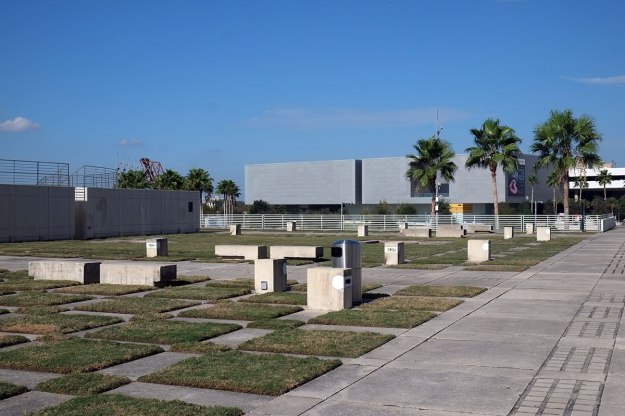
Surrounded by deadly buildings DSCF8635

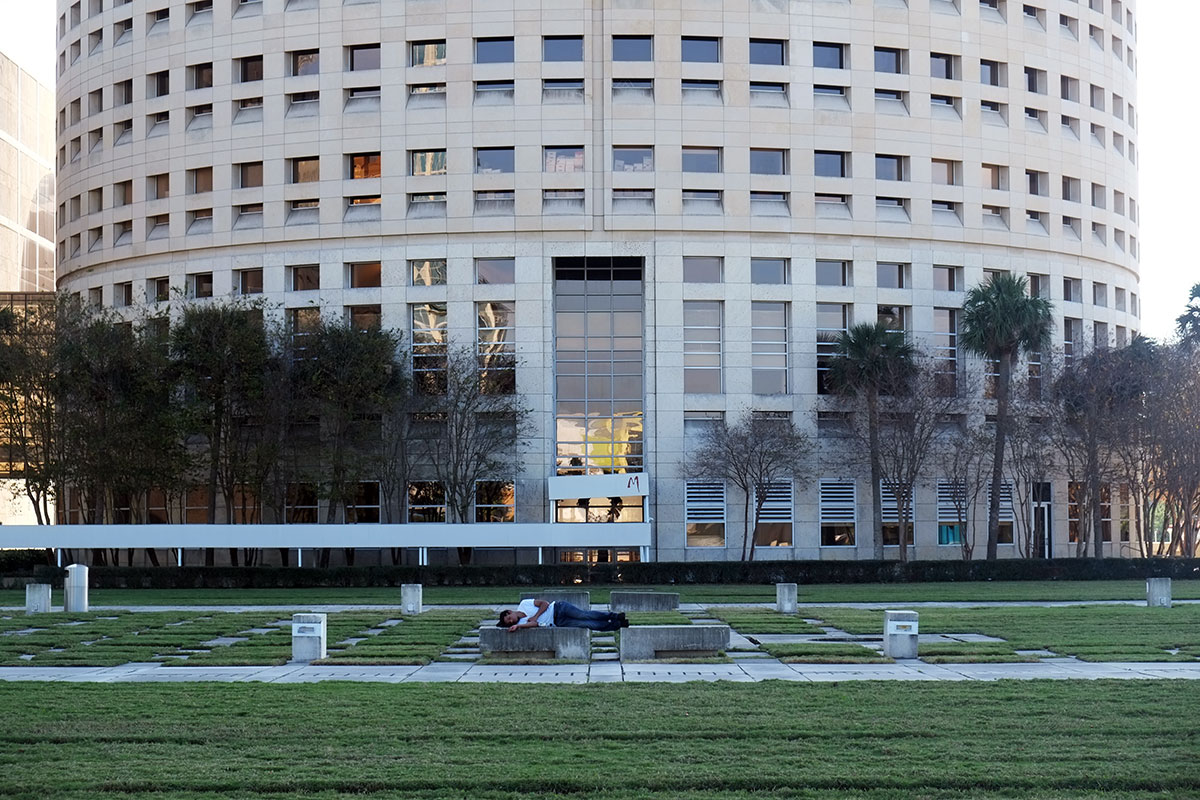
and only one other person we could see, a sleeping guy planking on axis:DSCF8629

The building behind him, belonging to the Sykes Corporation, looks like a prison in Blade Runner, and does the worst job of hitting the ground plane of any skyscraper I’ve ever seen:  DSCF8639
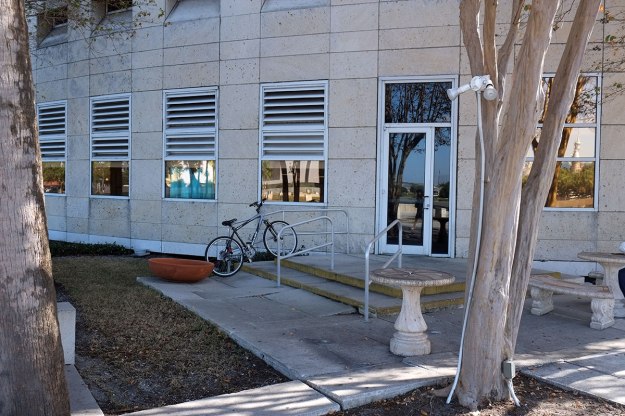
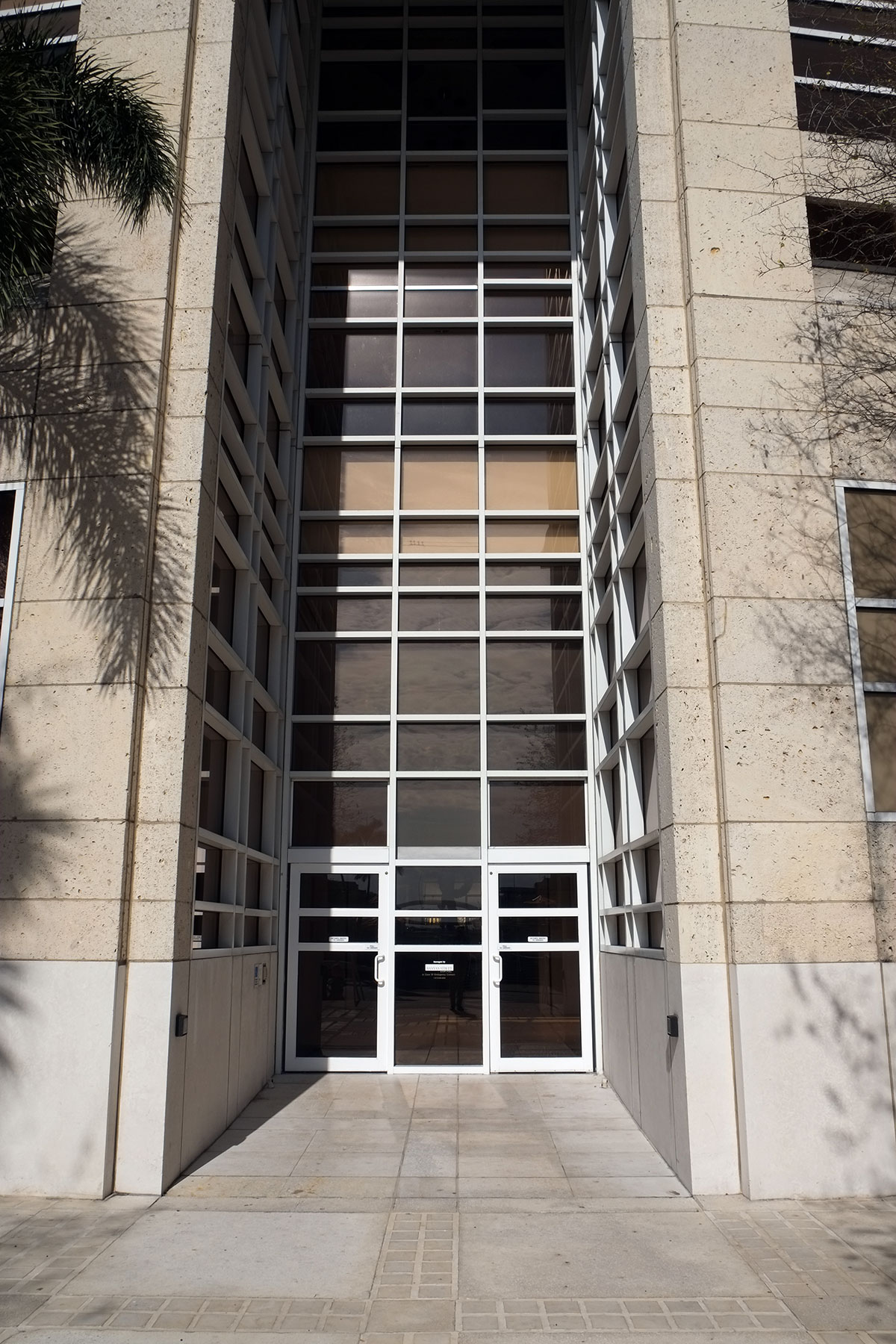
and here’s the front door:DSCF8641

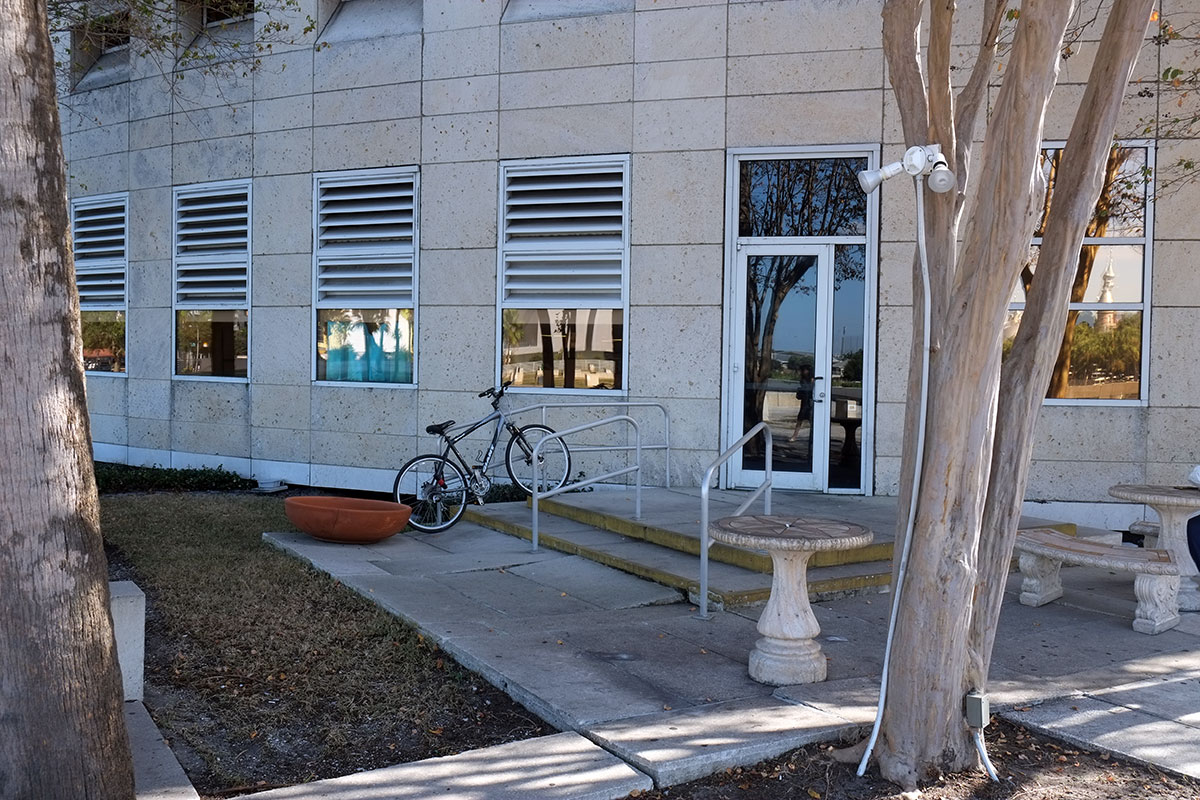
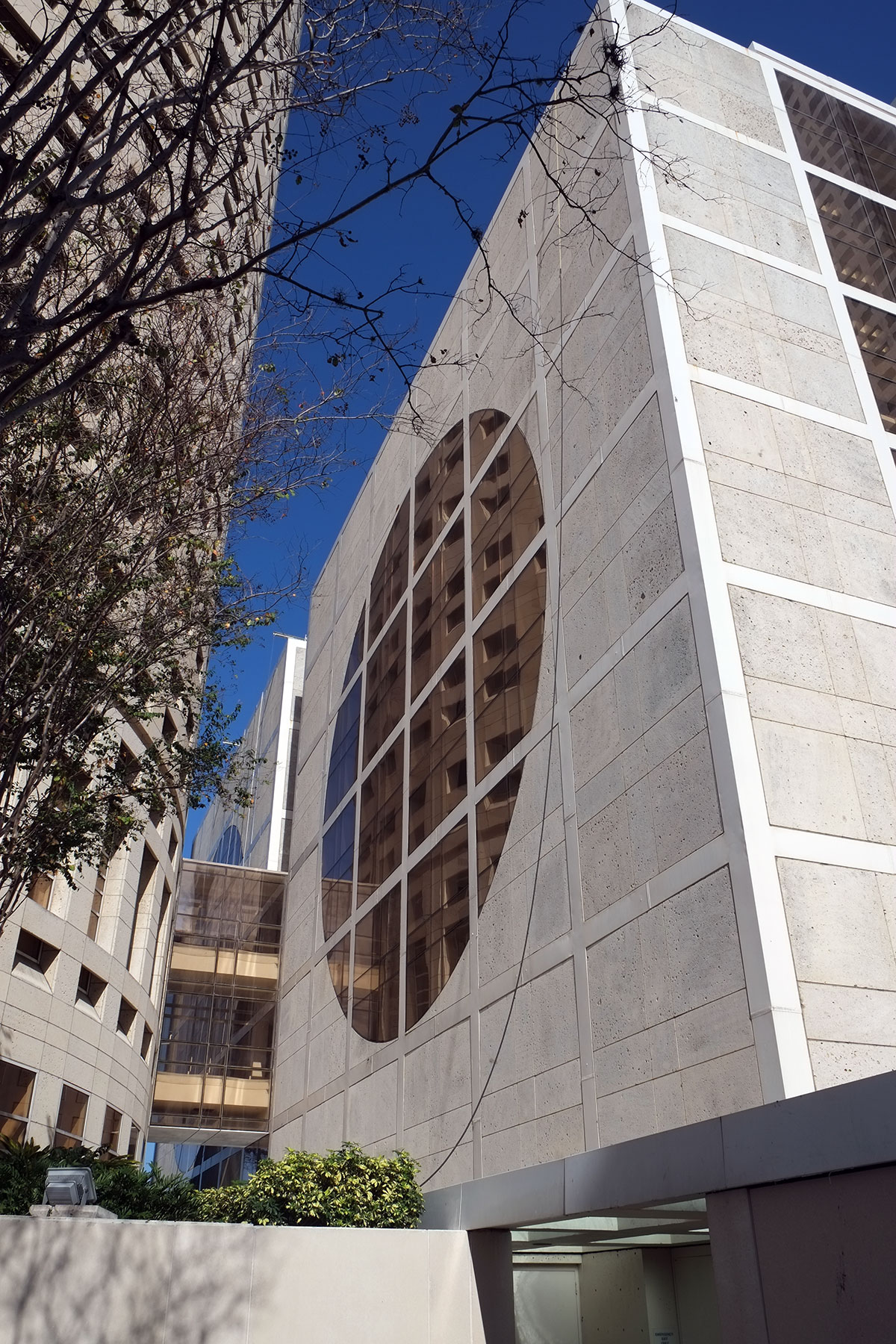
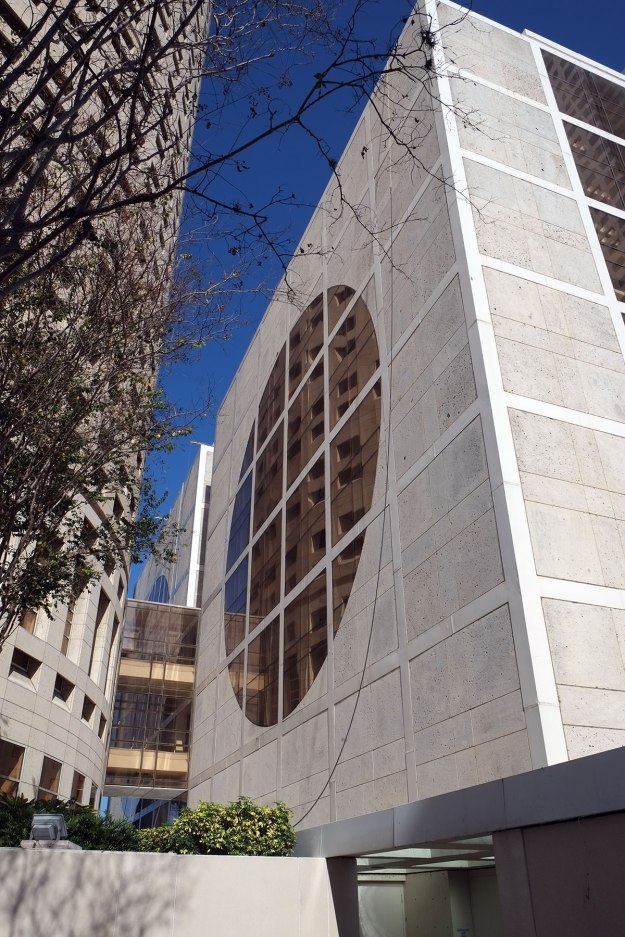
Looking at the detailing of the lower cube attached to it, and other details around the plaza, I realized that they were dressing this monstrosity up in Kahn-like moves and details!  Squares, water channels running off the end of the plinth, and this evocation of Exeter:  DSCF8642
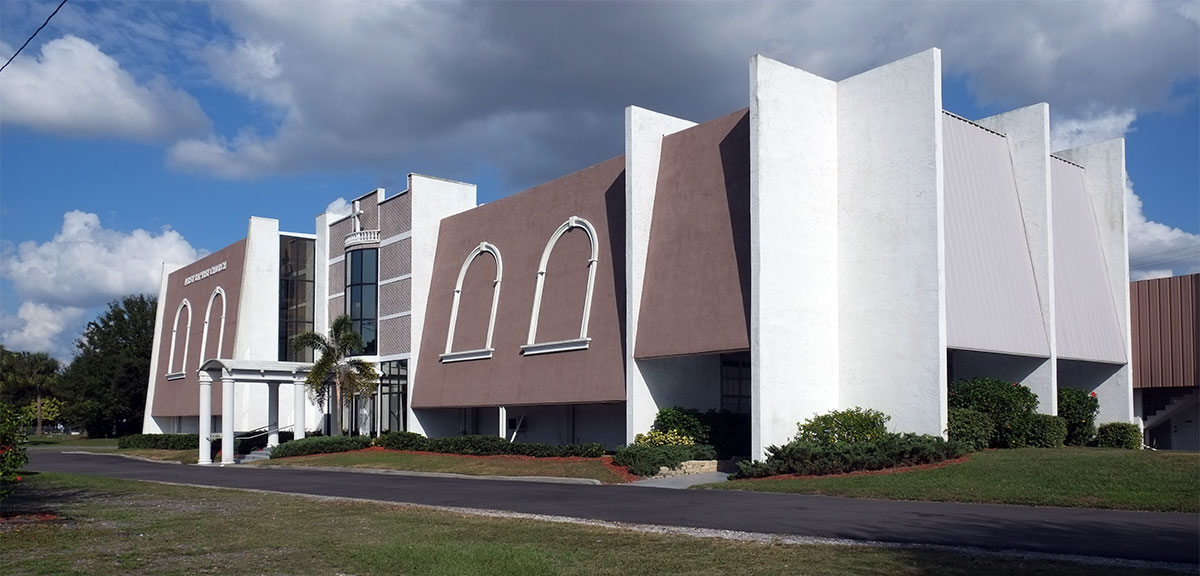
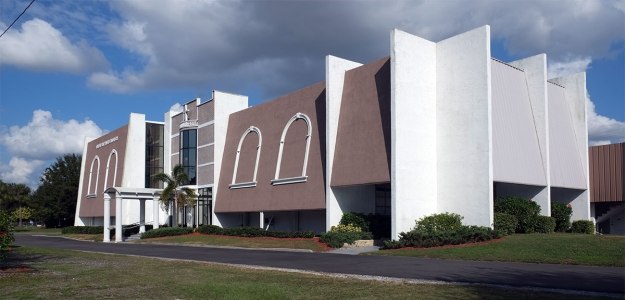
There were some astounding buildings outside of town too – as far as I can tell, this might have been a tilt-slab commercial building converted to a church (with some nice arched windows).
DSCF8682

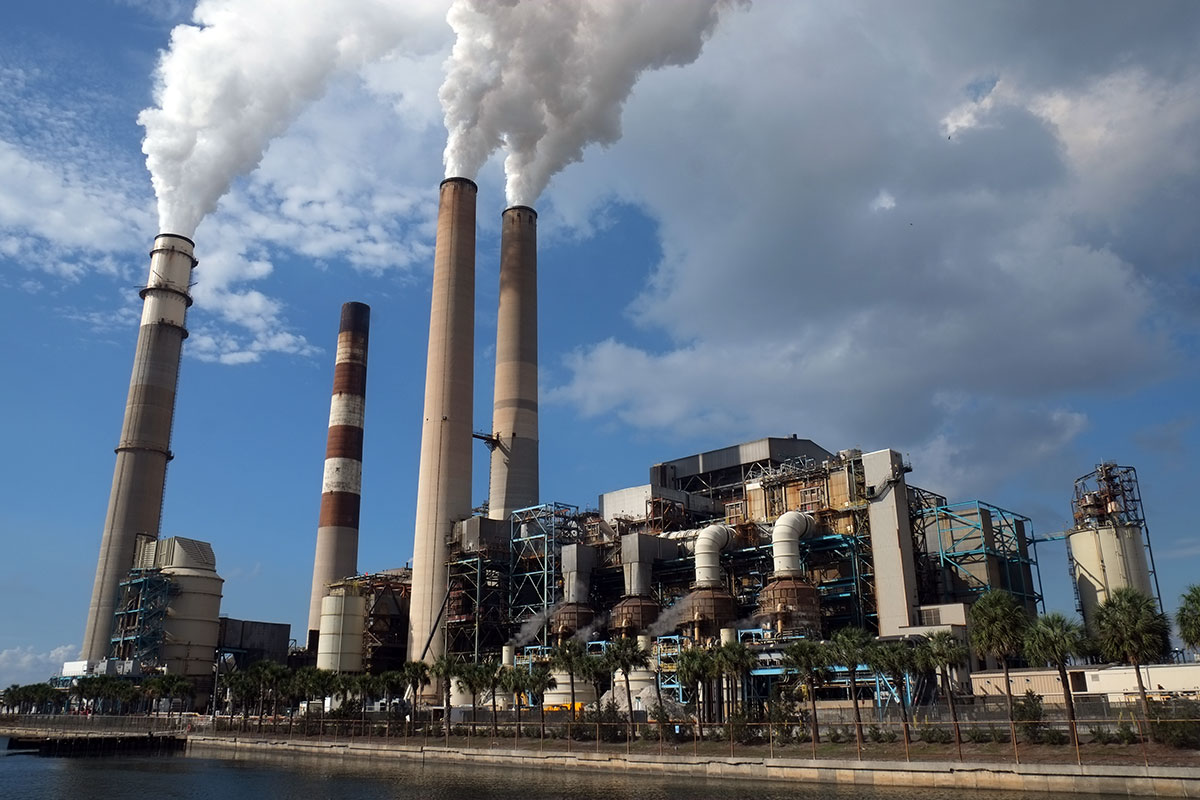
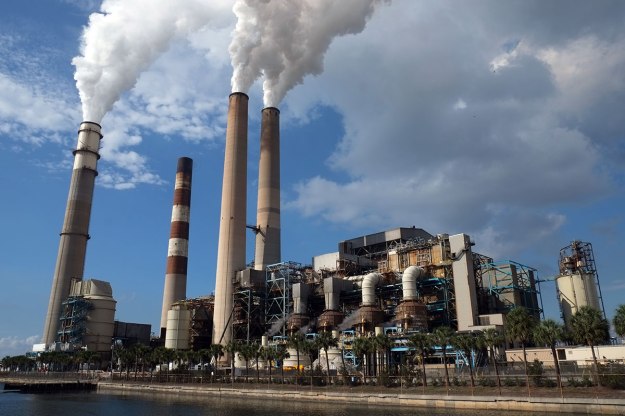
Our favorite thing around Tampa is they gigantic power plant, which has the positive side effect of heating up the water for manatees.DSCF8693
Most major American metropolitan areas from the 19th-20th century are centralized, with a dense core, and rings of lower density development around it.  I think all of South Florida can be conceived of as one gigantic metro region that has been straightened out.  The dense older urban areas are all along the Atlantic, with density stepping down away from the coast.  This area has all the pros of bigger, older cities, such as culture and excitement, but also all the problems – insane traffic, highways cutting up neighborhoods, poor older neighborhoods, crime, etc.  There is not that much late-20th century edge city development, as it ran into the Everglades.

The Gulf Coast is where they have put the postwar Edge City.  Completely car-based and privatized, with an extraordinary road network to accommodate this.  Everything is new and looks alike.  The cities resemble the Edge City clusters along highways much more than they do prewar cities, with even downtowns being car-oriented.  If you think of South Florida as one area, it’s not that much different from other major metropolitan areas, except that it has a 100-mile wide swamp as a greenbelt between the older development and the newer.  The Northeast/Midwest origins of the residents doesn’t play out that strongly anymore – now the Atlantic coast is for people who like cities, and the Gulf Coast is for people who like postwar suburbs, with the problematic cities a comfortable remove away.
Raleigh

DSCF7692Back when I was single and worked in New York, I used to like business trips.  They were often to second- or third-tier cities – places you would never choose to go to as destinations in themselves, but there was (almost) always something interesting once you got there. I would always try to add an extra day or two onto a trip so I could explore a place, and eventually I got to see a good part of the country.  This trip has worked much the same way – there are the primary destinations, and then there are the places we’ve seen just because we were driving by, or had some other reason to go there.  Raleigh was one of those – our reason for visiting was to see my cousins who live there, but once again we discovered a lot of interesting places.

P1060078We drove to Raleigh on two-lane roads from Virginia Beach, going along the edge of the Great Dismal Swamp.  (Greta thought the drive was worth it just to say she’d seen the Great Dismal Swamp.)  The northeast North Carolina countryside is completely flat and pretty monotonous – cotton fields, poor small towns, and a growing number of photovoltaic farms replacing tobacco farms (since it has surprisingly many sunny days).  Raleigh is back up in the Piedmont, and seeing some topography was a welcome change – it is a beautiful, rolling landscape.

Raleigh is close to Durham, Chapel Hill and Wake Forest, with all of their many universities anchoring the Research Triangle.  It’s one of those southern cities that has been so inundated with outsiders that it doesn’t feel quite southern anymore (even to one of my cousins, a northern transplant herself.)  The city feels like many other prosperous American cities of this size.  Downtown, there’s a mix of 19th century commercial buildings, early 20th century office buildings and relatively banal postwar skyscrapers, as they had the good sense to not knock everything down.  There is the district where old warehouses are being converted to hipper uses.  There are the great old inner residential neighborhoods that have maintained, and there are the not-so-great older residential neighborhoods that are being rediscovered and gentrified.  We’re starting to see patterns.DSCF7592

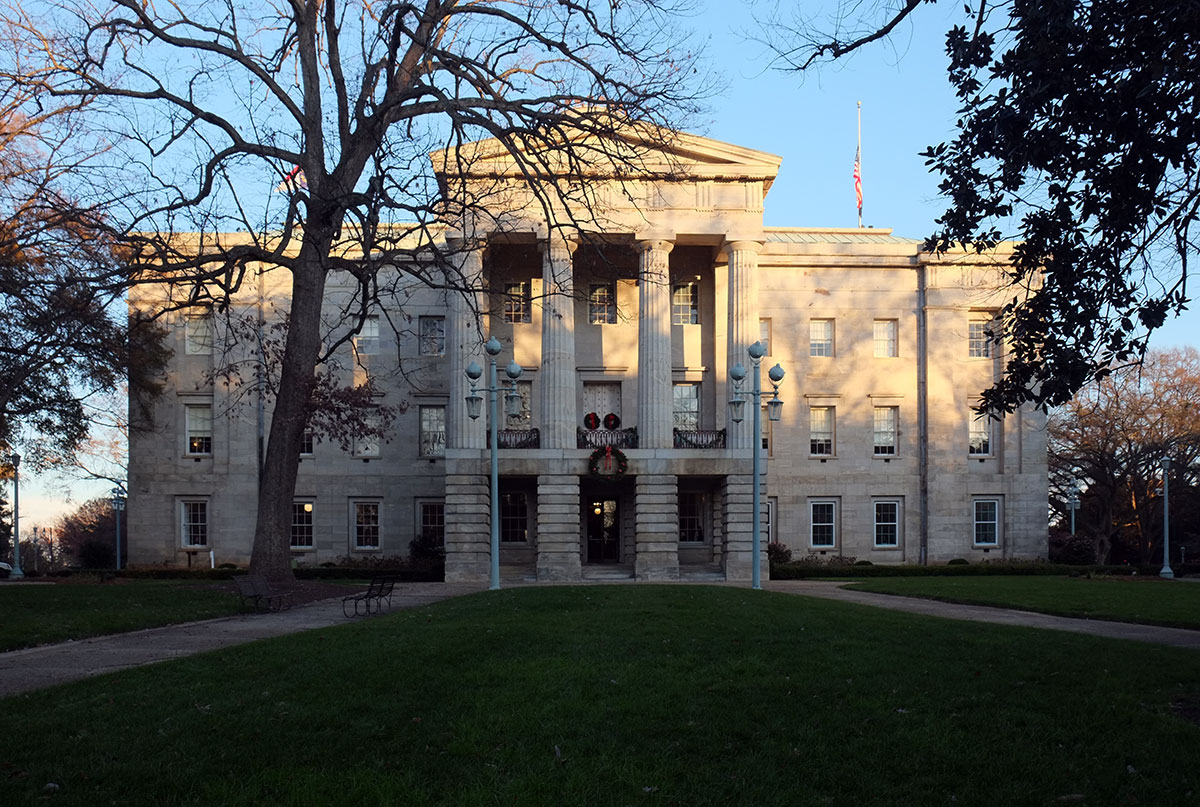
Raleigh is the state capital, so the downtown includes many state office buildings of the normal quality.  The old State House from 1840 is quite fine, having been designed by Ithiel Town, AJ Davis and a few others.  DSCF7668a

As with many other older capitols, as the needs of the government outgrew the building, a new facility for the legislature was built nearby, and the capitol houses the governor’s office and the former assembly rooms which have been well-preserved.  capitol

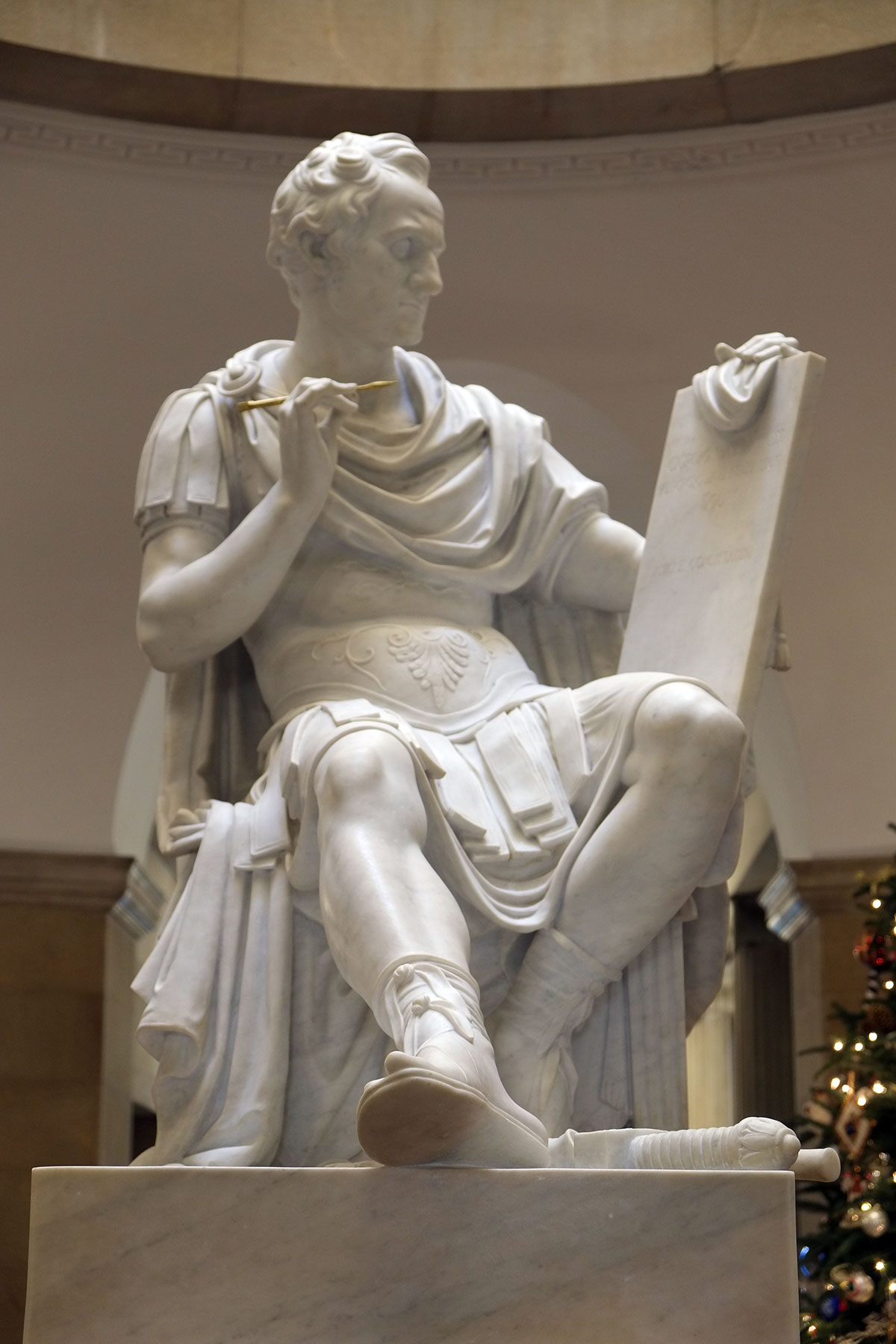
The rotunda contains yet another sculpture of a Founding Father as a Roman, with an interesting history. The original statue of Washington was sculpted by Antonio Canova (selected on Jefferson’s recommendation) after 1815, but was destroyed in the capitol fire of 1831.  This statue is a reproduction, based upon sketches and descriptions, but it is still does the job.DSCF7603

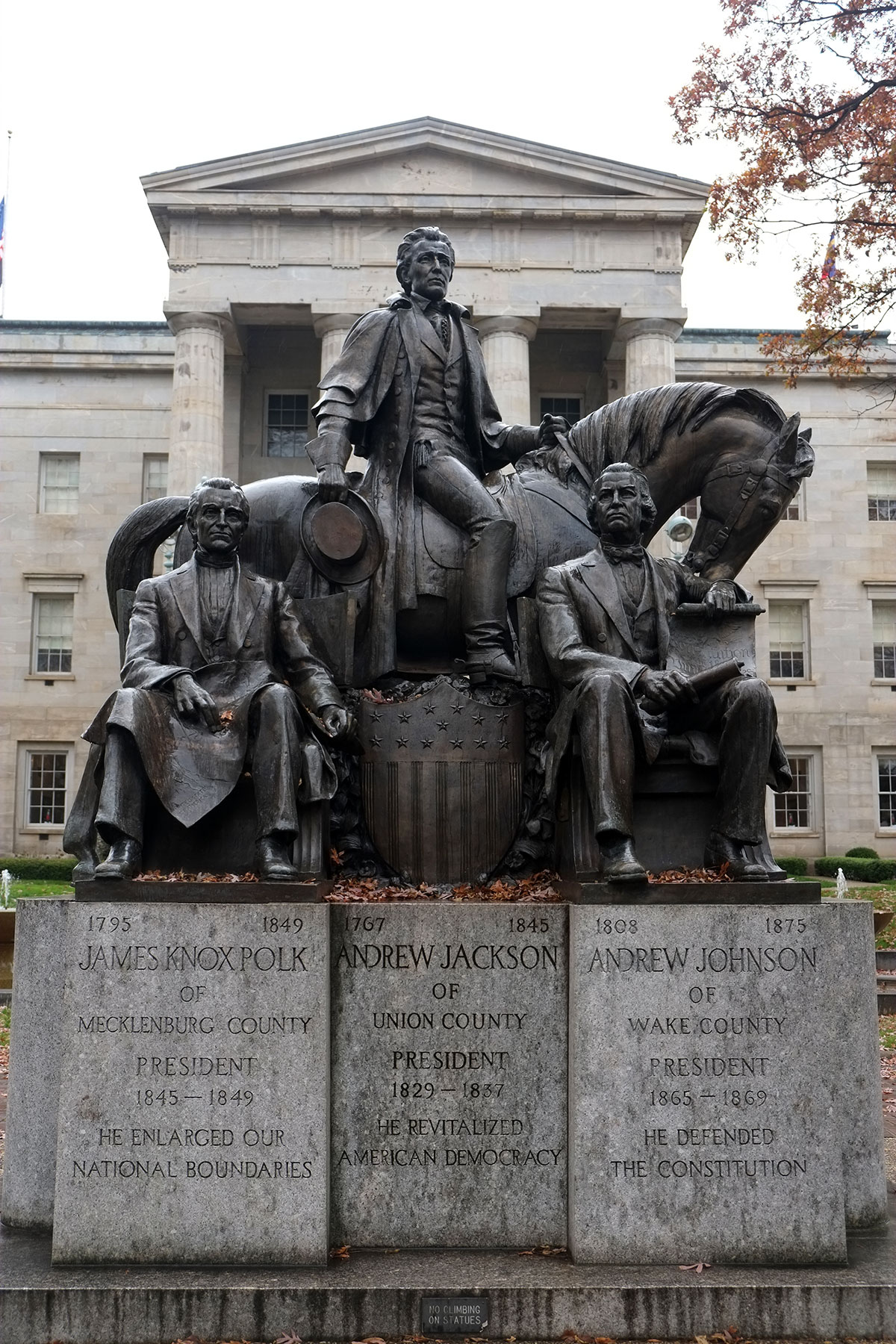
Outside there is a monument for the three presidents who were born in North Carolina.  As we walked around the grounds we came across statues of people who are so obscure that we had never heard of them, so we wondered why all three presidents were packed into one monument instead of each getting his own.  Perhaps it’s because they feel somewhat ambivalent about Johnson, and didn’t want to honor him too much (and it does look like he’s being nuzzled by Jackson’s horse).  DSCF7600

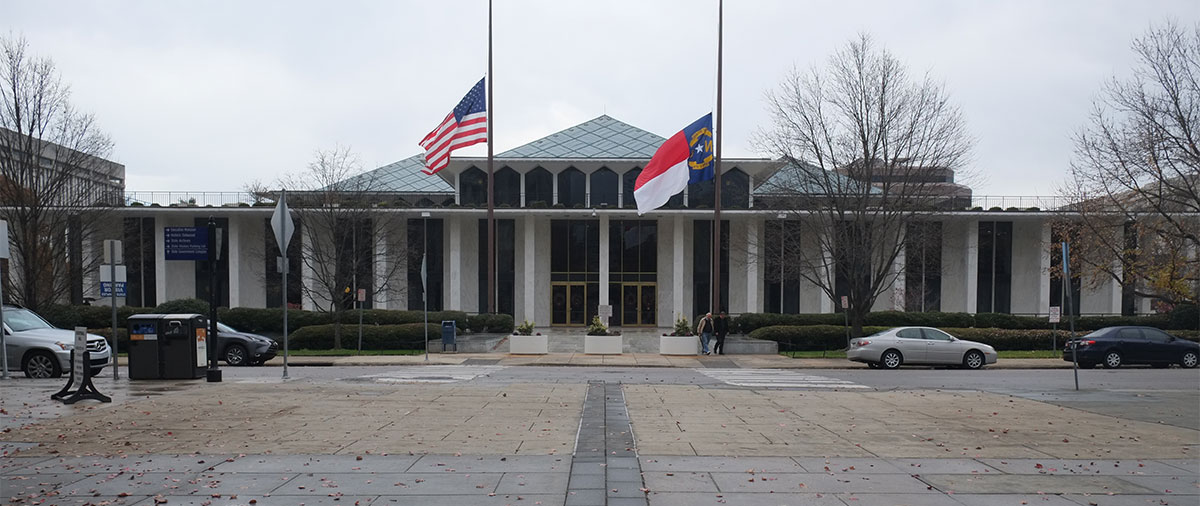
They made the unfortunate choice of Edward Durrell Stone as the architect for the new legislative building, and he produced pretty much what you’d expect.  DSCF7625

These state buildings sit on a pompous and barren closed street / plaza, along with a couple of museums;  it would take a lot of buses of school kids to bring this one to life.  The state history museum is by C7 Architects (formerly Cambridge 7), and may be okay inside, but the exterior suffers from the same silly grandiosity you see in Washington DC – having a big phony exterior grid/framework is bad enough, but when it gets covered in stone I just can’t even look.  It’s a good example of what happened in the late 80s, when very good modernist firms felt the need to make gestures towards Postmodernism.  Grids often resulted.  They couldn’t make themselves go overtly classical, so explicit post and lintel systems ruled.  And little pyramids.DSCF7644

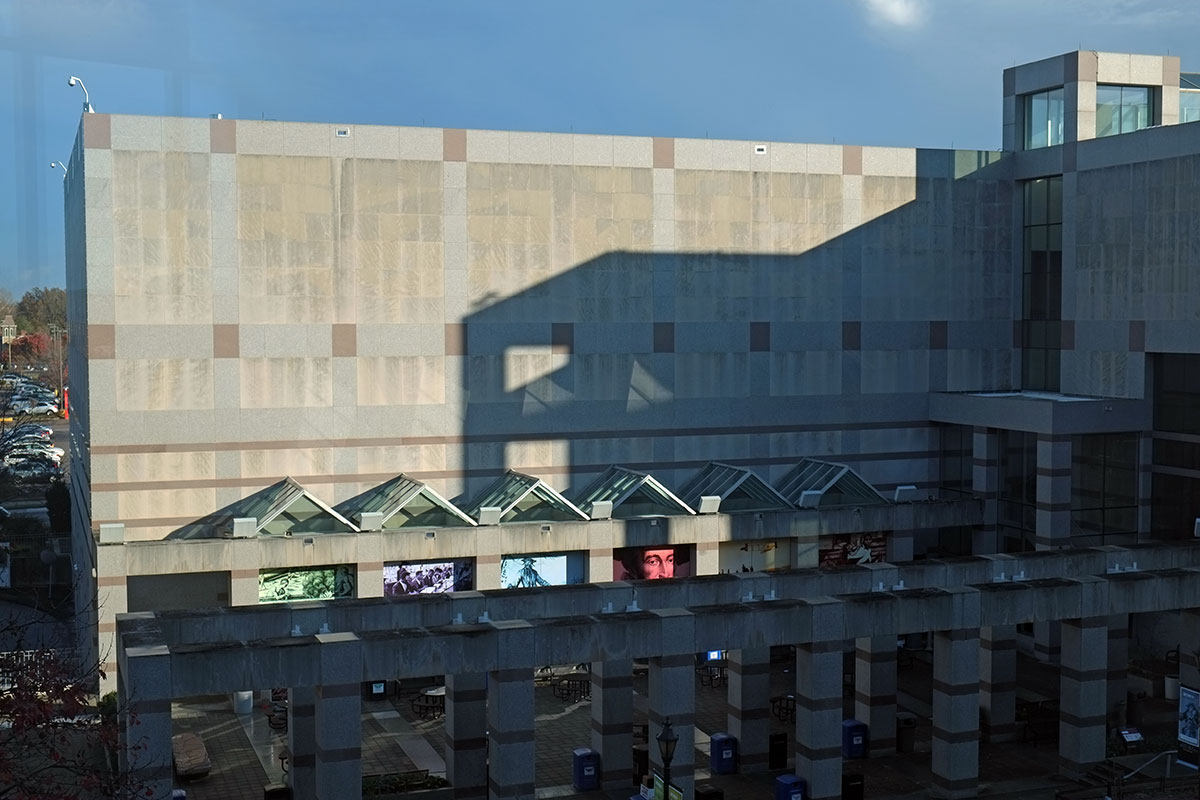
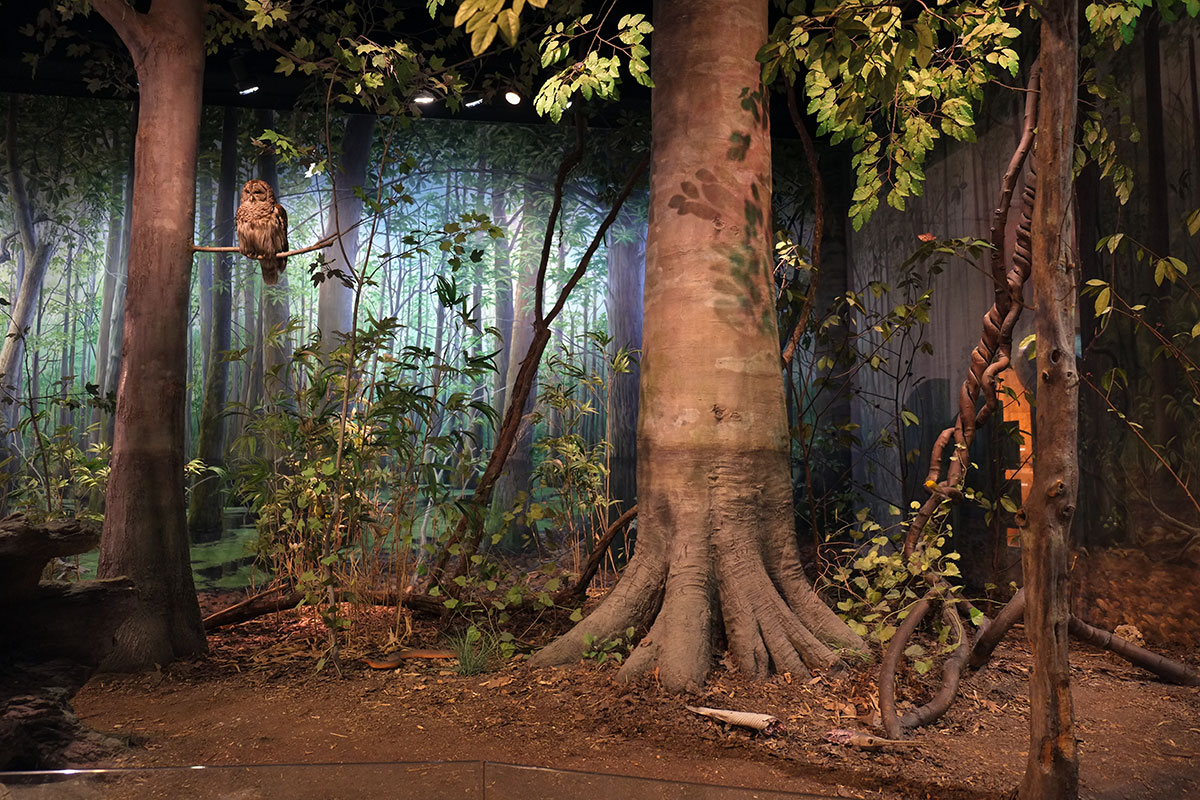
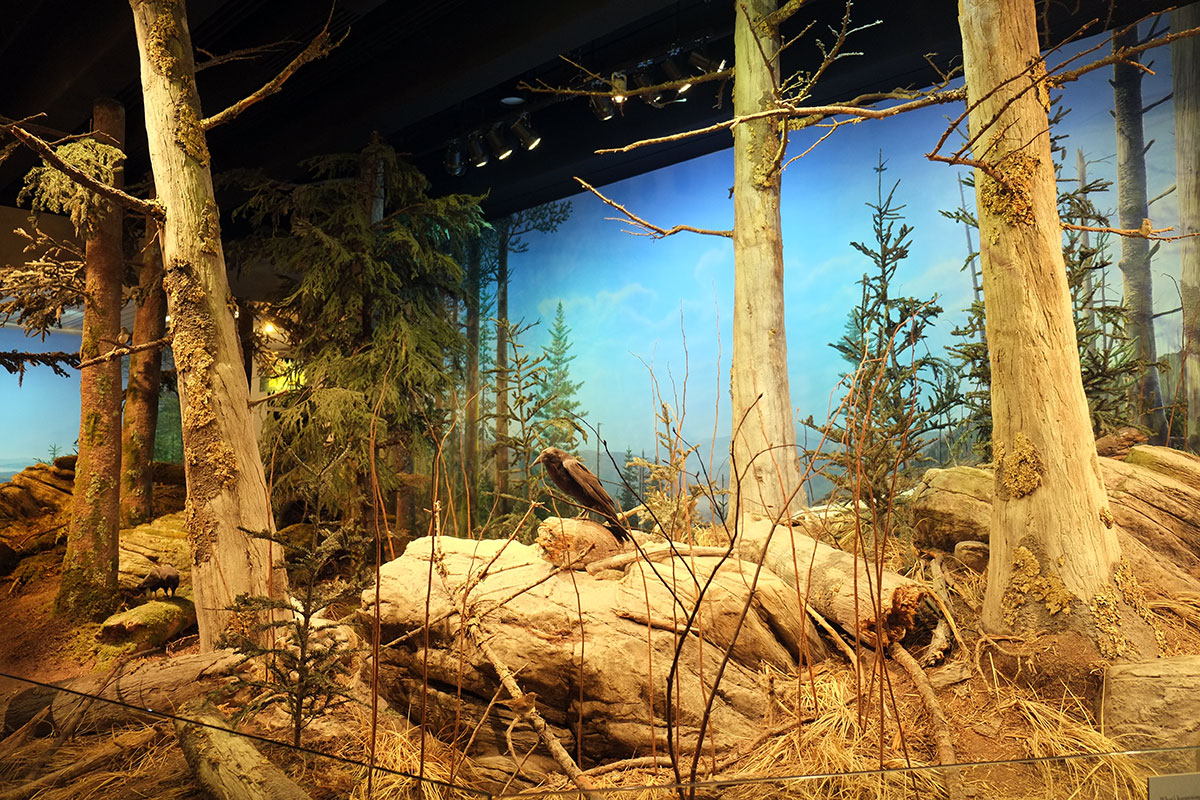
The North Carolina Museum of Natural Sciences was designed by Verner Johnson, a firm which seems to specialize in science museums.  The expertise shows:  it’s not a building which wows you with the architecture (more watered-down PoMo), but it is a superb natural science museum.  It had many of the things that you see in any natural history museum these days – such as a few dinosaurs – but the strong focus is upon the environment and natural history of North Carolina.  This also seems to be a pattern these days – regional museums and zoos are focussing on the environment and biology of the region, rather than doing a mediocre job trying to explain the whole world.  This museum had excellent sections on the coastal region, on the Piedmont, and on the mountains.  There were full-scale dioramas for each of these:

Piedmont

Piedmont

Mountain lake

Mountain lake

that were really informative and comprehensive.  By the end we had a good handle on North Carolina’s geography and environment – much better than what we had gotten from the college-level geography text Greta’s been reading.

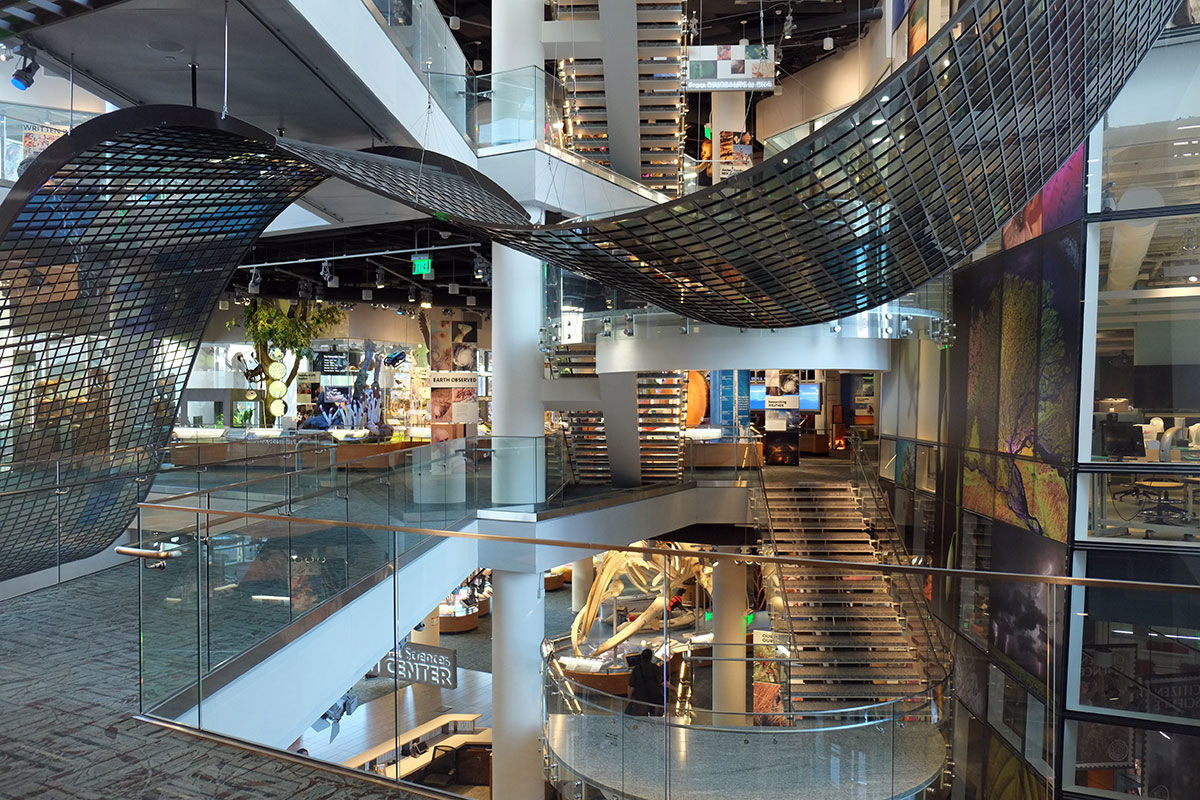
There’s a new addition to the museum that addresses changing idea about educating kids.  First, there are a lot of bells and whistles – is this a natural science museum, or is it Vegas?  DSCF7655

Or the mall?  Lots of flash, lots of screens, lots of “interaction.”
DSCF7652

Second, and perhaps more substantively, research areas used by museum staff are incorporated into all of the exhibit areas:DSCF7663

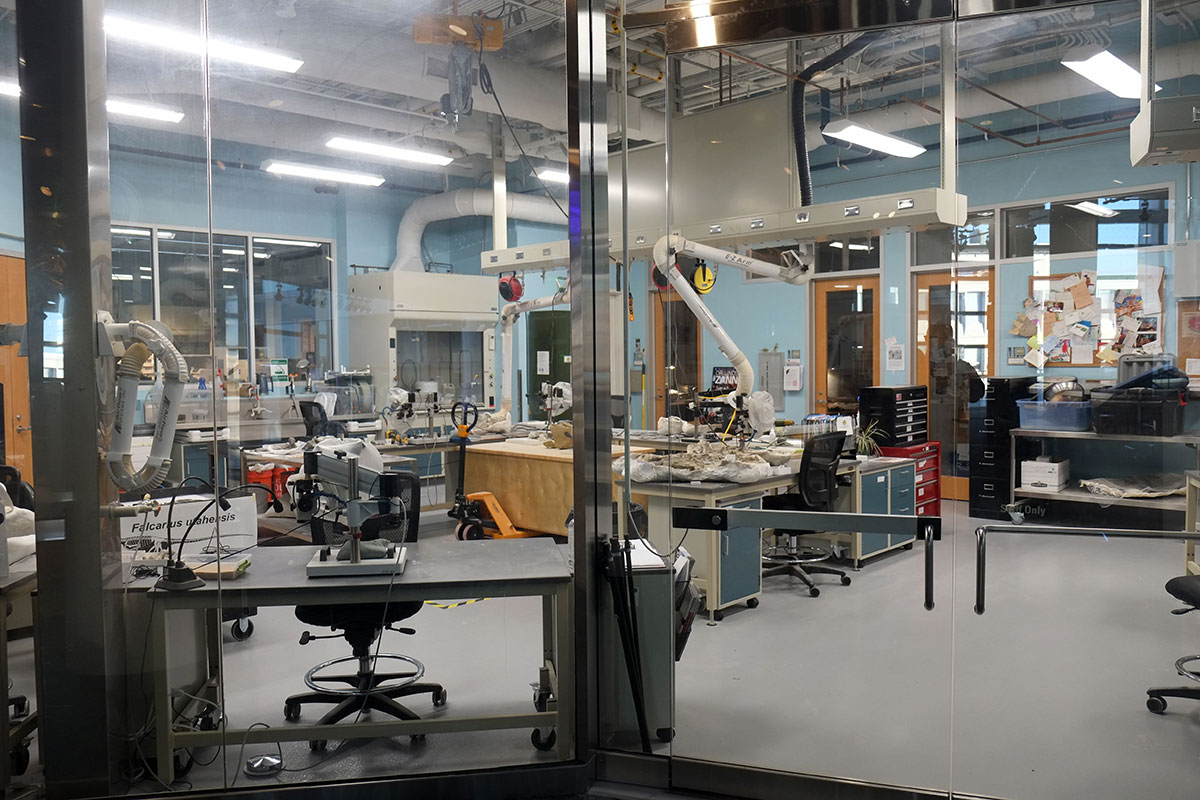
We were there on a Monday when these rooms are not used, but supposedly visitors can see staff at work and hear them explain what they are doing.  This would be quite valuable if it works as billed.  We’ve gotten behind the scenes and talked to scientists at a few museums, and it’s been one of Greta’s favorite parts of the trip – not just seeing objects in a museum, but talking to those who do the work, and starting to understand what science is all about.

On our way out of town we caught the North Carolina Museum of Art.  The1983 building was again designed by Ed Stone (did North Carolina get him because Rockefeller had Harrison and Abramowitz tied up?), which is fairly innocuous for him (they later replaced all the marble with brick) and is used for temporary exhibitions (including an excellent one on Escher while we were there).

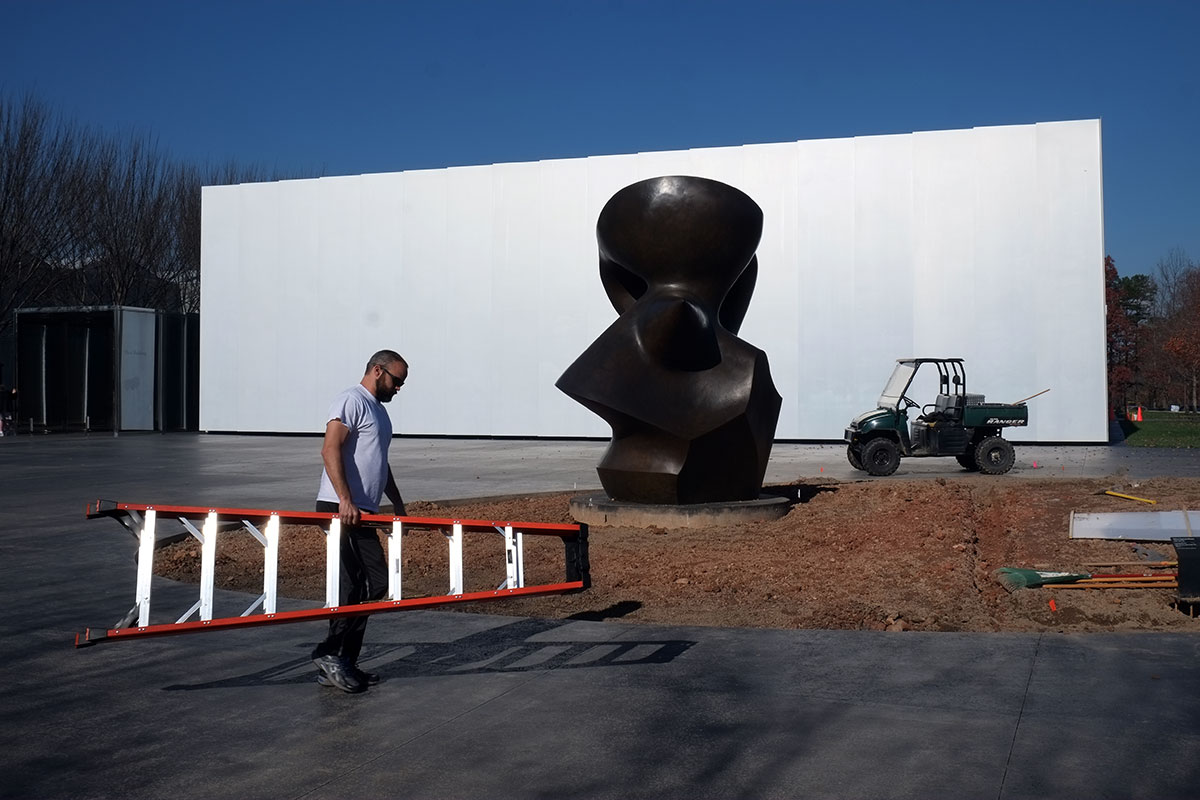
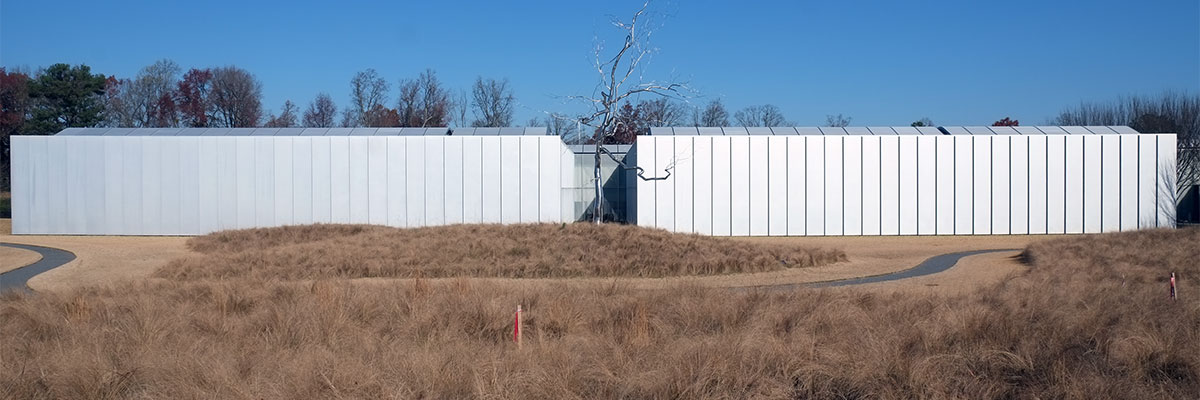
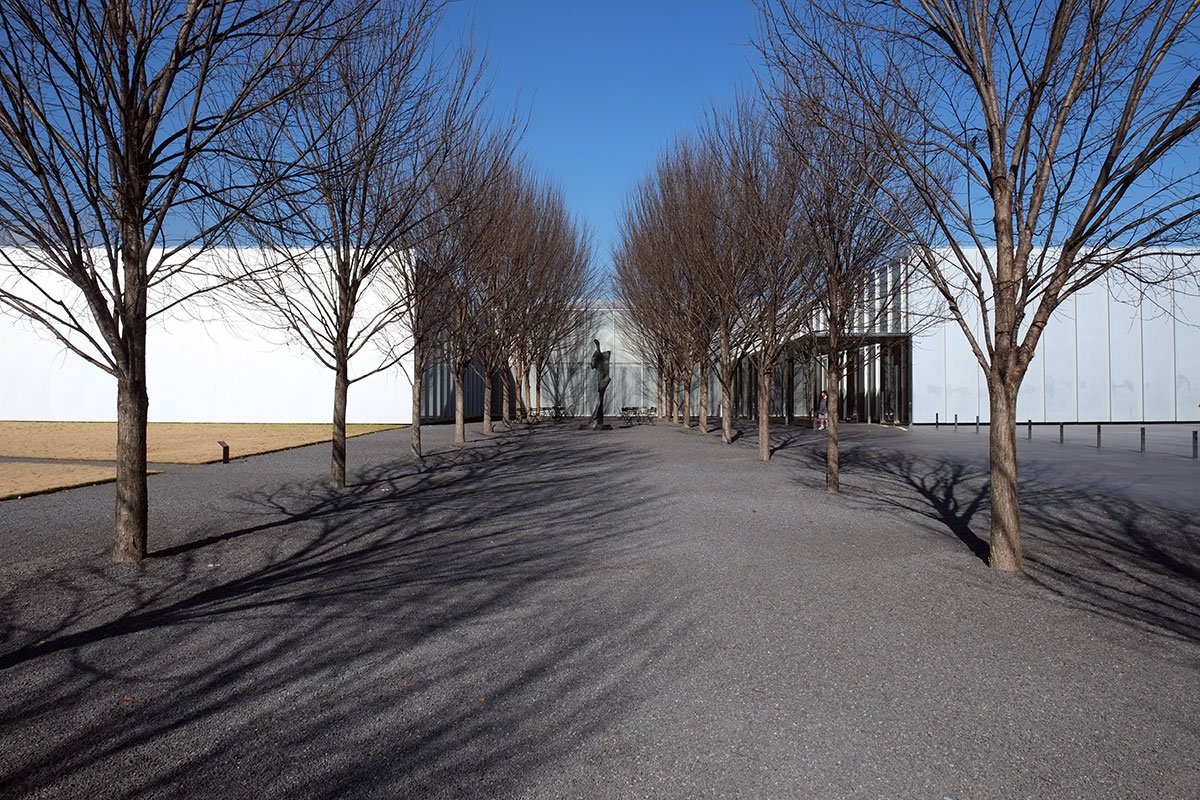
The new building for the permanent collection is by Thomas Phifer, and is a remarkably rigorous and elegant building.  It resembles Piano’s work not in appearance (the exterior seems to be Mies Goes to Scandinavia with Steven Holl), but in having the main expression for the building through the articulation of the systems – skin, structure, and lighting. DSCF7678

It is easy to find the front door.  DSCF7719

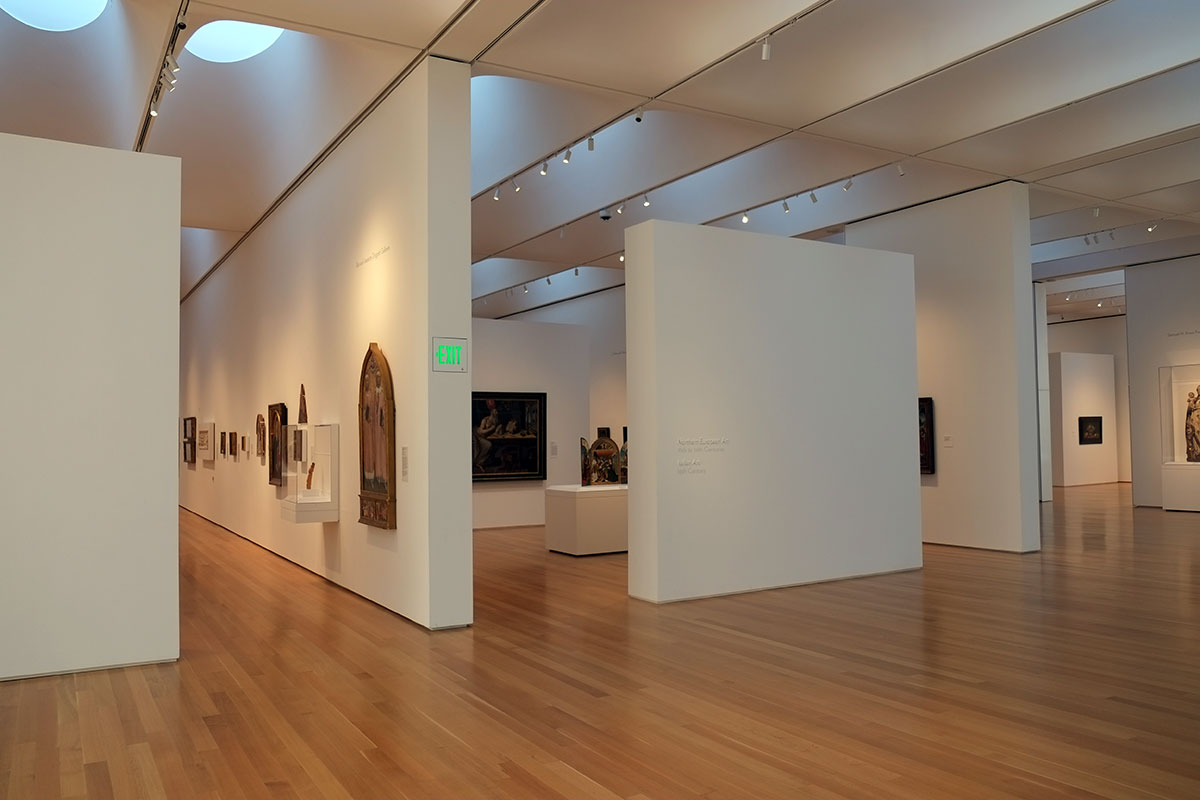
The building structure is on a strict module, with the differentiation between structure/service walls and spatial partitions very evident (although he doesn’t feel the need to pull the partitions off the grid or angle them to make the point).  DSCF7699

The structural bays are uniformly roofed with curved daylighting monitors, which illuminate evenly.  The sidelighting from walls of glass is controlled with curtains.DSCF7702

You can see the influence of Mies, Kahn, and Aalto, without it seeming busy or forced.  It’s rational, rigorous, neutral, flexible.  Perhaps too neutral – there isn’t any compelling spatial design – nothing moves you through the building, there are no architectural surprises.  It’s a curator’s dream – well-lit, flexible space which can be reconfigured to suit any installation.  But much preferable to an object building that is all about architectural over-reaching while diminishing the experience of the art.

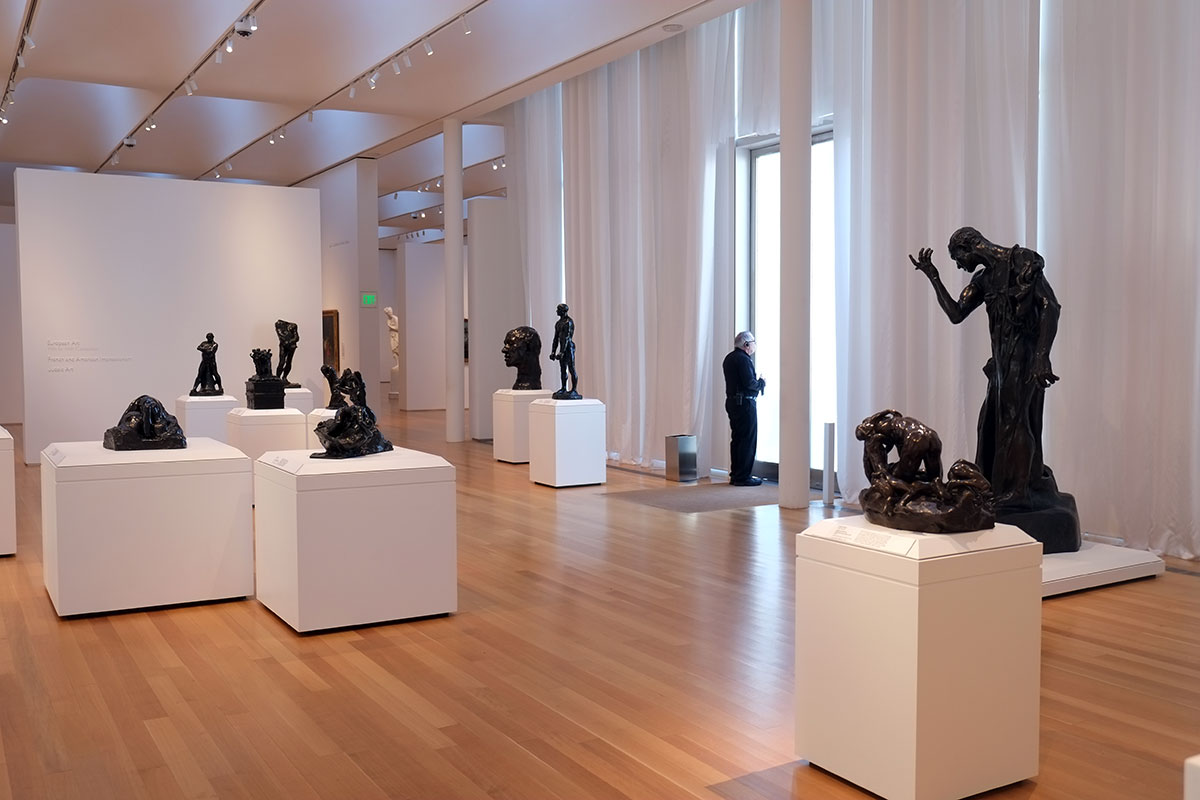
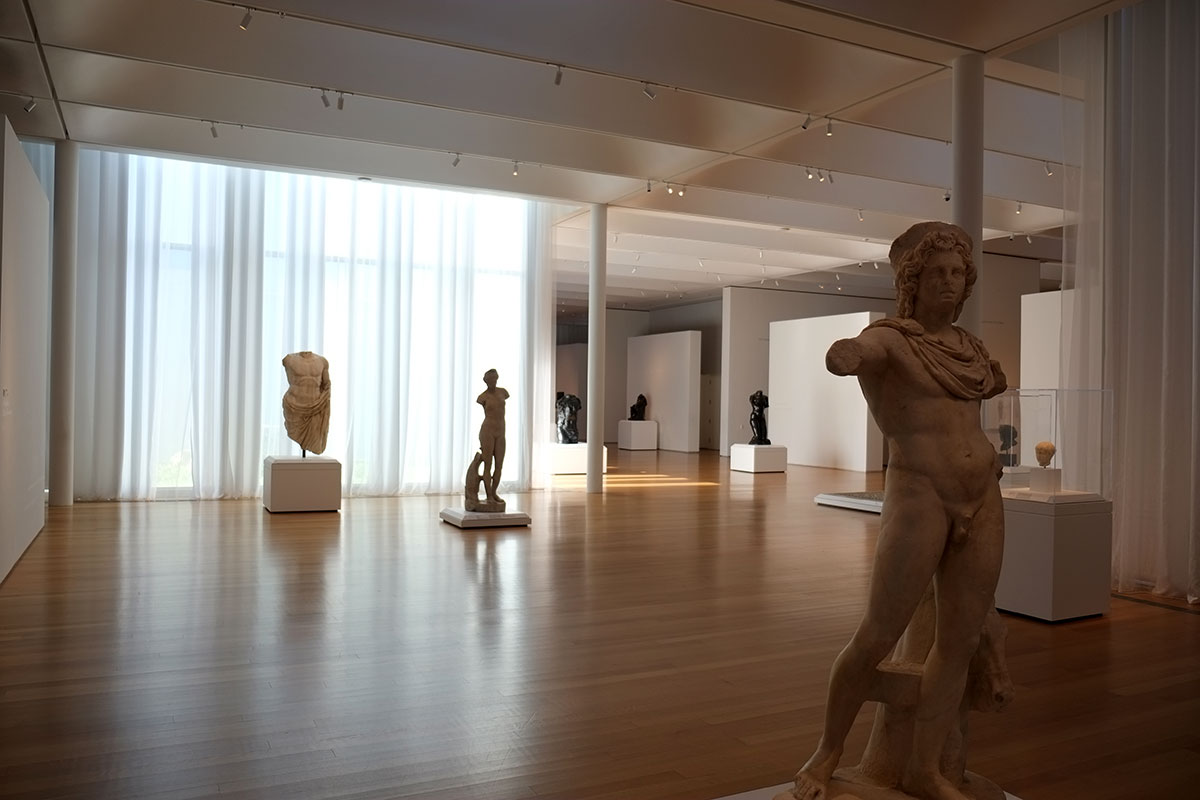
Frankly, it’s quite a bit better than the collection, which has not-great works from a wide range of eras.  Raleigh wasn’t a big city with a lot of money in the 19th century, when you could still buy great things, so they have mainly pedestrian work by big names, or interesting work by people you’ve not heard of.  However, they did have a huge collection of Rodin sculptures, including one i’ve never seen anywhere else, and which I liked better than the others – Old Man Looking out the Window.  DSCF7706

Charlottesville

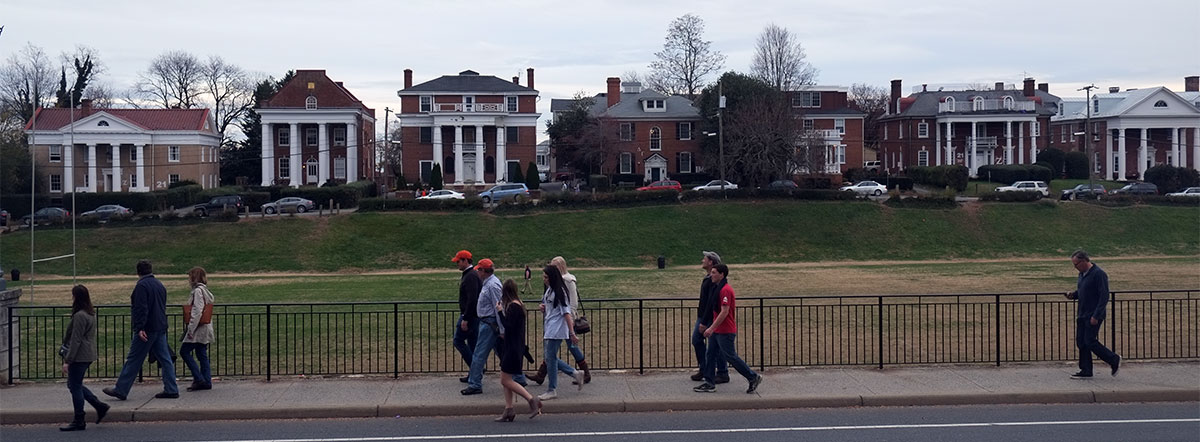
Charlottesville is not your typical college town. Compared to the college town I know best, the population of the city is much smaller relative to the size of the school, yet in some ways there is more going on in Charlottesville that isn’t related to the university. The historic center of the city is substantial, with many significant large houses and civic buildings, and they had the good sense to not knock it down during the urban renewal craze. (Instead, they seem to have razed an adjacent poor African American neighborhood.)  I’m assuming this is because the city had a prior existence, and the size of the city was larger relative to the university in the past, whereas most college towns probably wouldn’t have grown very much without the presence of the college.DSCF6905

There is a pretty active downtown pedestrian mall, something that always intrigues a Eugenian who remembers our past disaster. The differences in Charlottesville seem to be: they kept all the beautiful 19th-century commercial buildings, the mall is only one street wide, local traffic can cross it frequently, and the residents of Charlottesville have a lot more money to spend in nice downtown restaurants and such.DSCF6761

But once you move a block or two away from the mall, into the neighborhood that was destroyed, the dark side appears: a zone of wide streets and much traffic and car-oriented buildings in the center of town. (And of course like any other American city, the edge of town is big-box sprawl madness.) DSCF6958

The inner neighborhoods are intact and lovely, with houses from a range of periods, and a nice open space or two.DSCF6894

And so began the fascination with southern cemeteries.
DSCF6857

There are even houses by noted architecture professors – I’ll leave it to you to guess which:DSCF6737

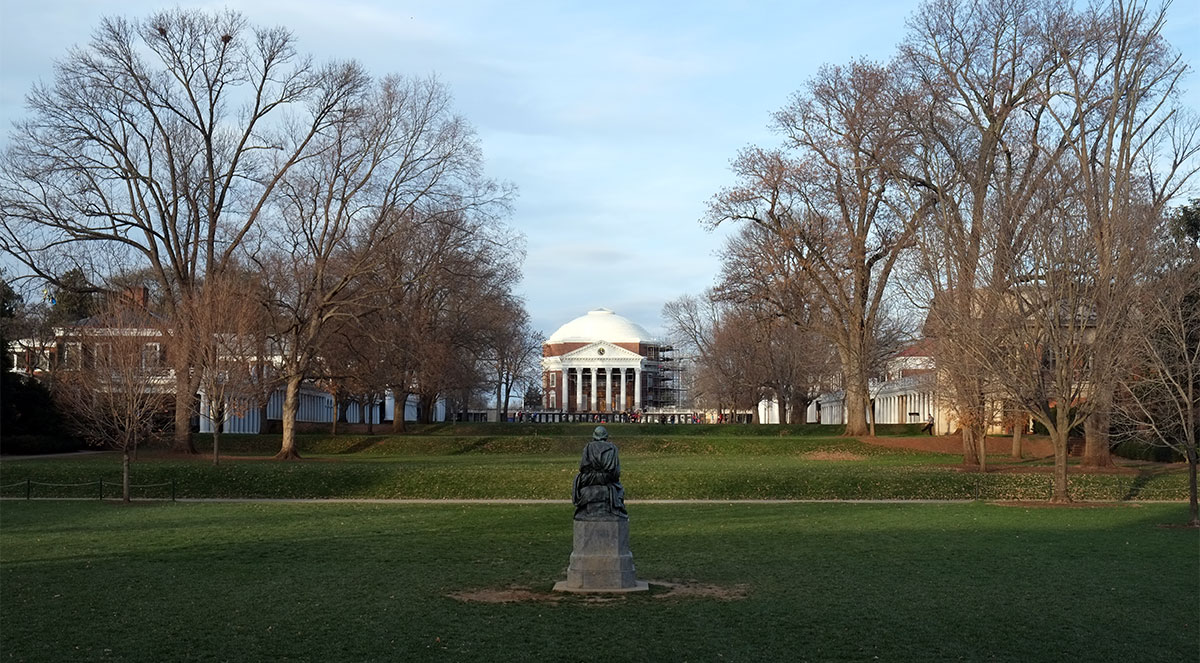
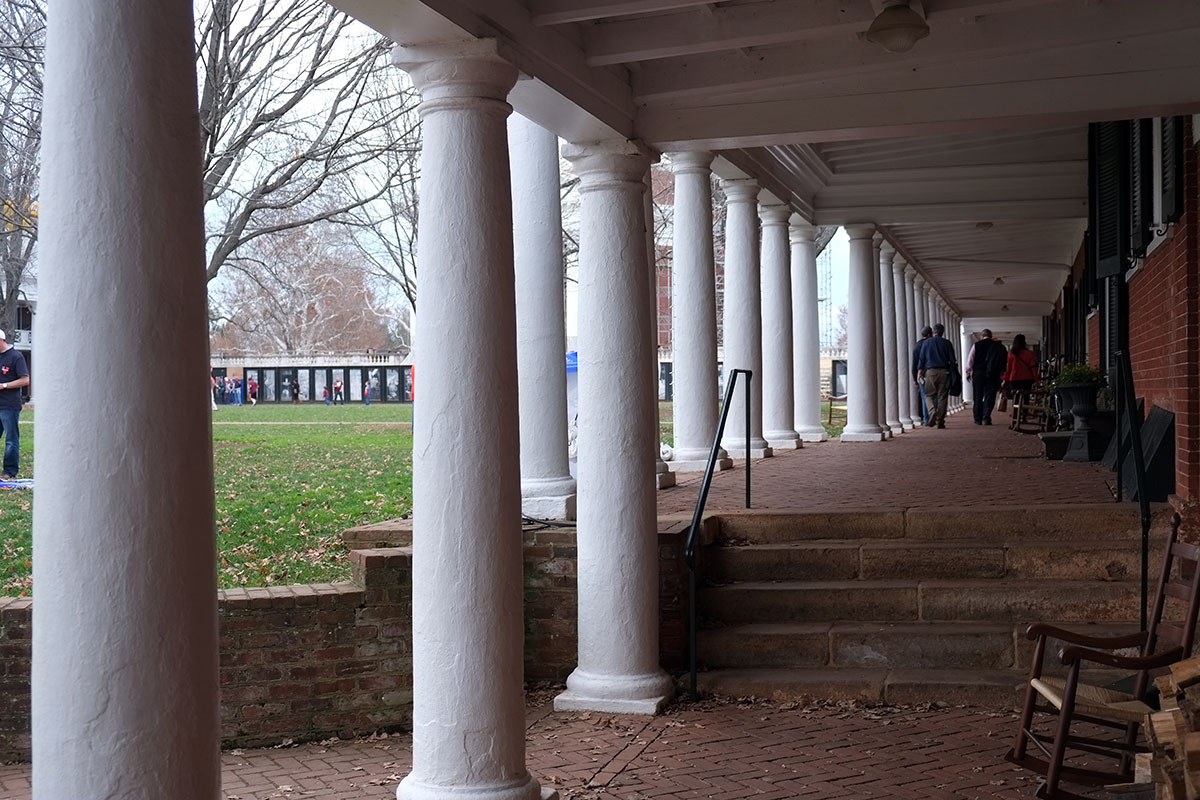
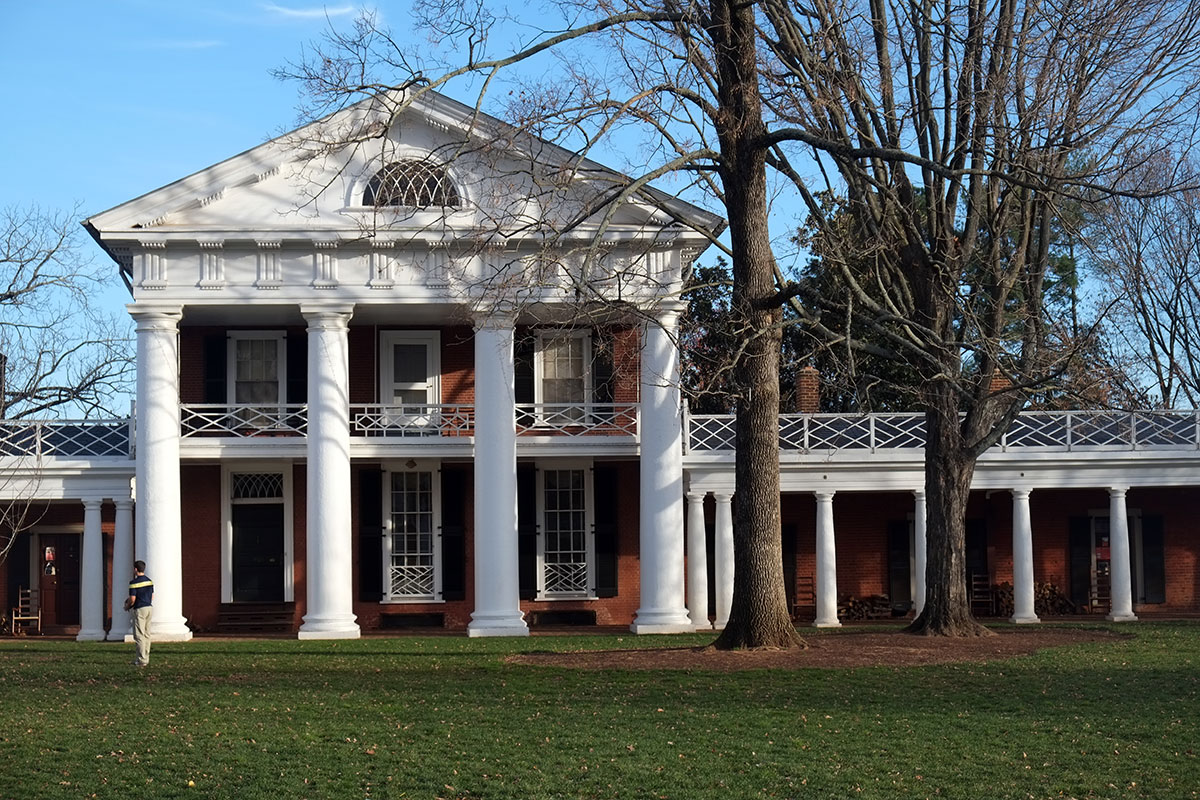
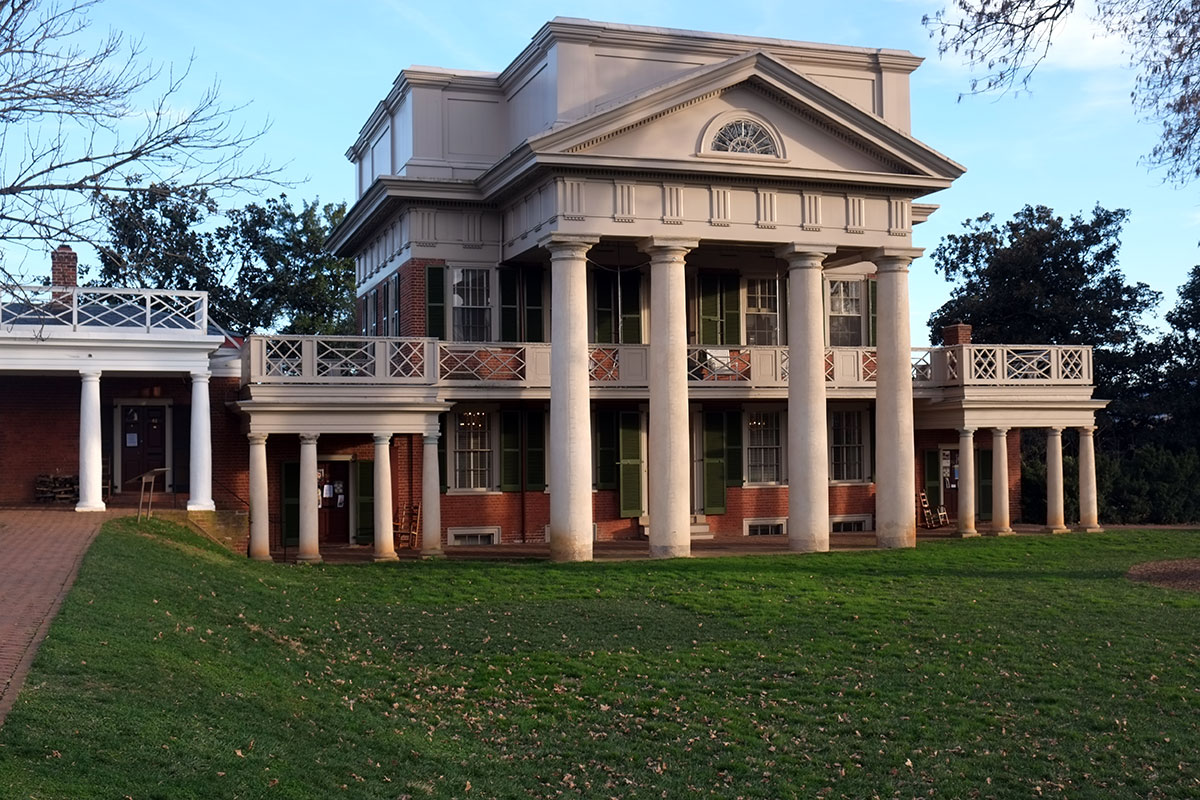
But the main reason Charlottesville is not like other college towns is that they didn’t have Thomas Jefferson. His designs for the Rotunda and the Lawn at the University of Virginia are astounding.  I had seen them years ago (as a high school kid who almost went to UVA), and had studied them quite a bit in college, but stepping out onto the Lawn still stunned me.  We have seen a lot of great architecture and landscapes on this trip, but there are those places that just stand out from everything else.DSCF6827  DSCF7014

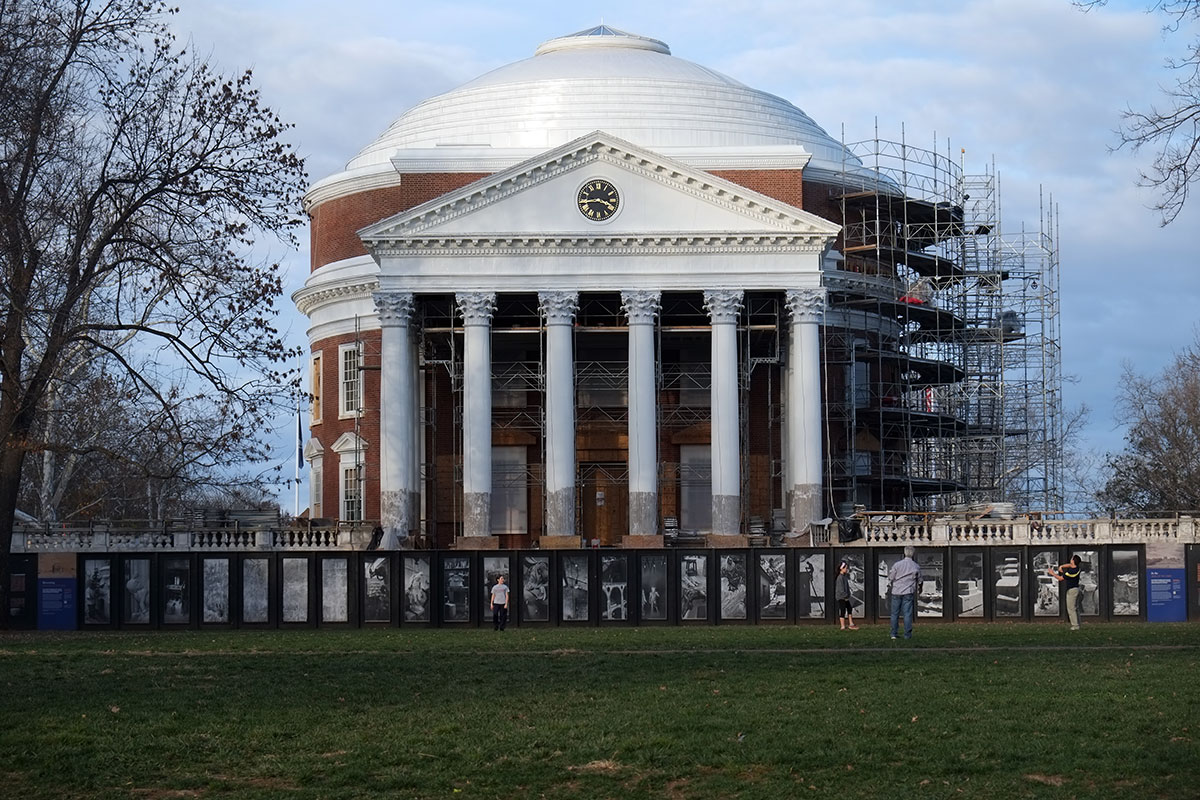
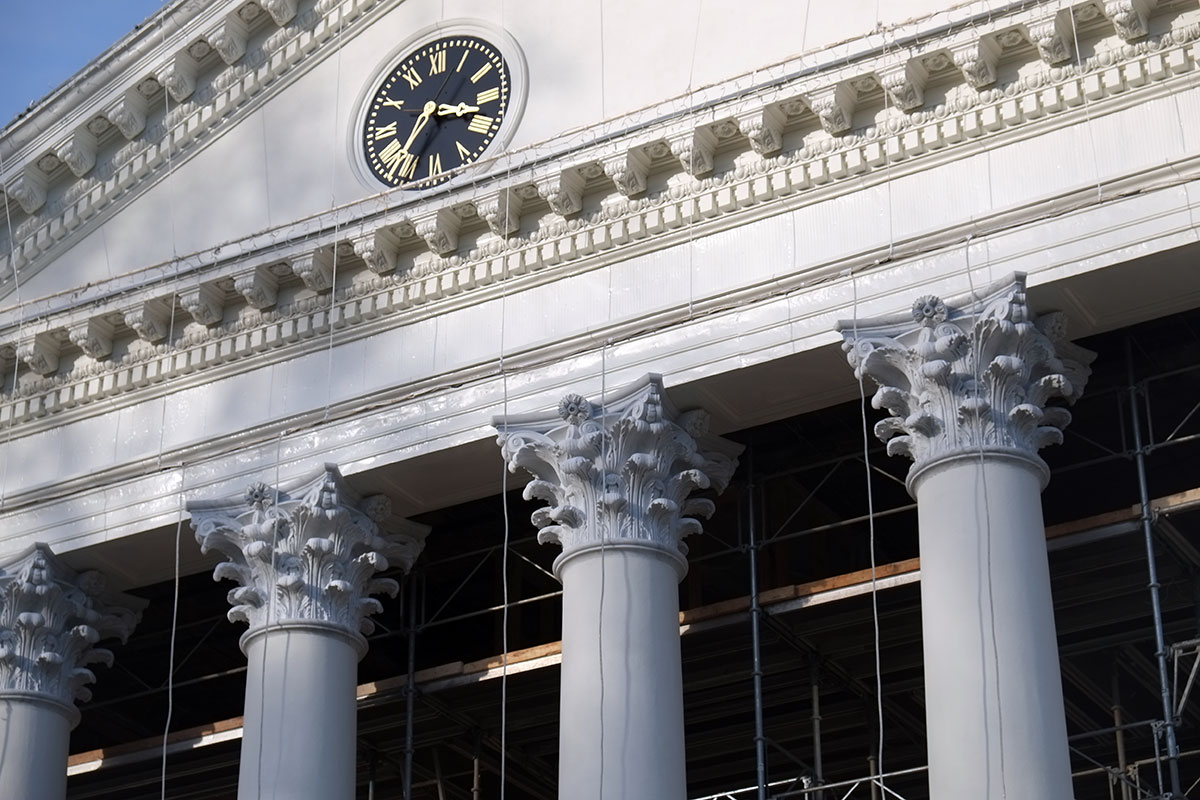
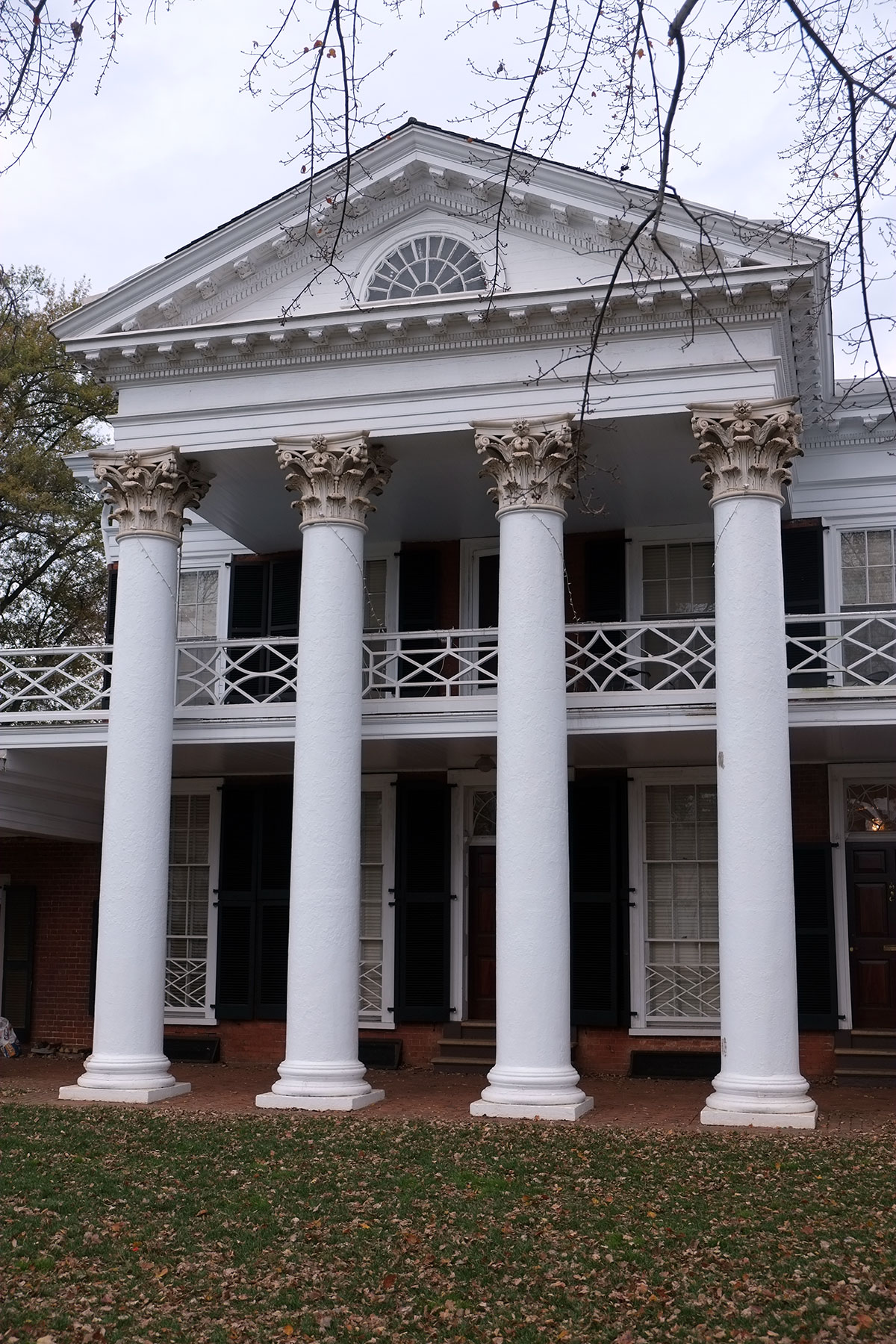
The Rotunda has been undergoing a substantial restoration in recent years, and luckily while I was there, the new carved capitals were revealed.DSCF6802

When you have a UNESCO World Heritage Site, you do it right. No PVC here.
DSCF6782

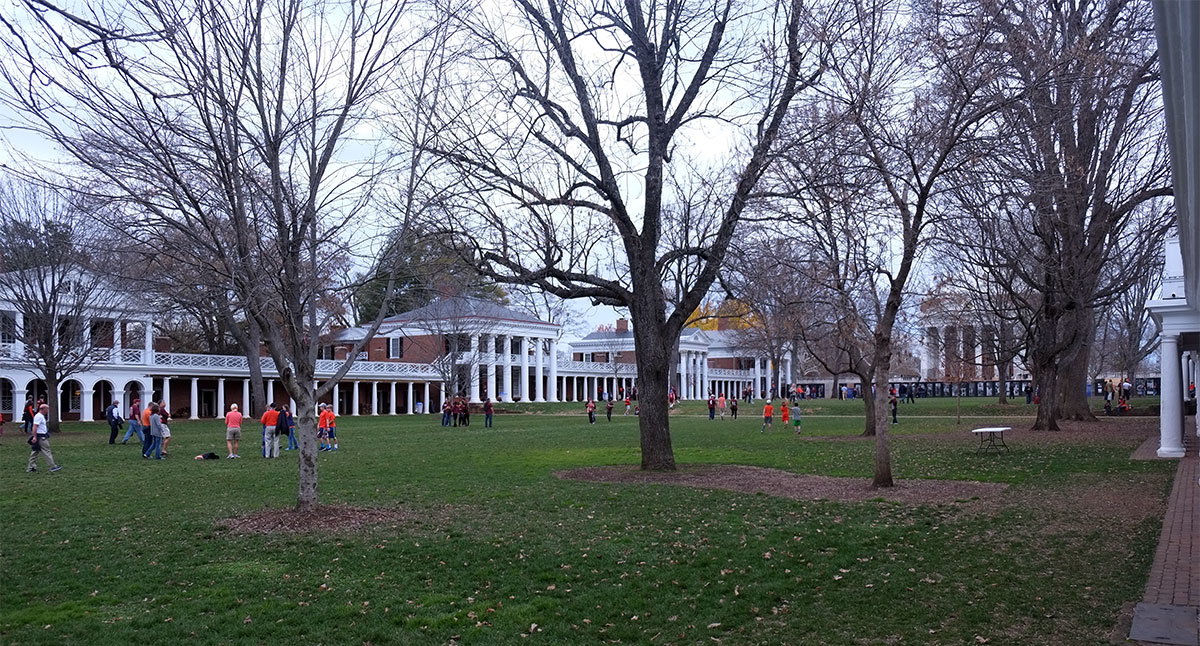
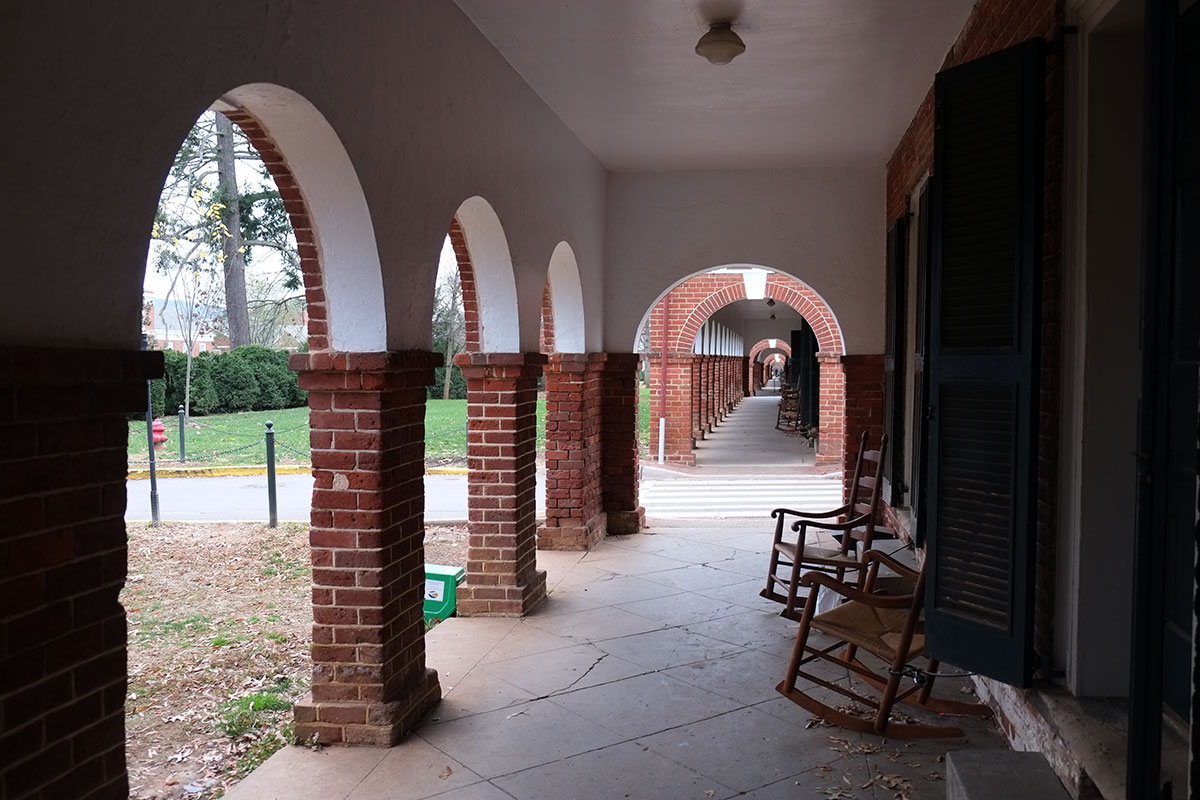
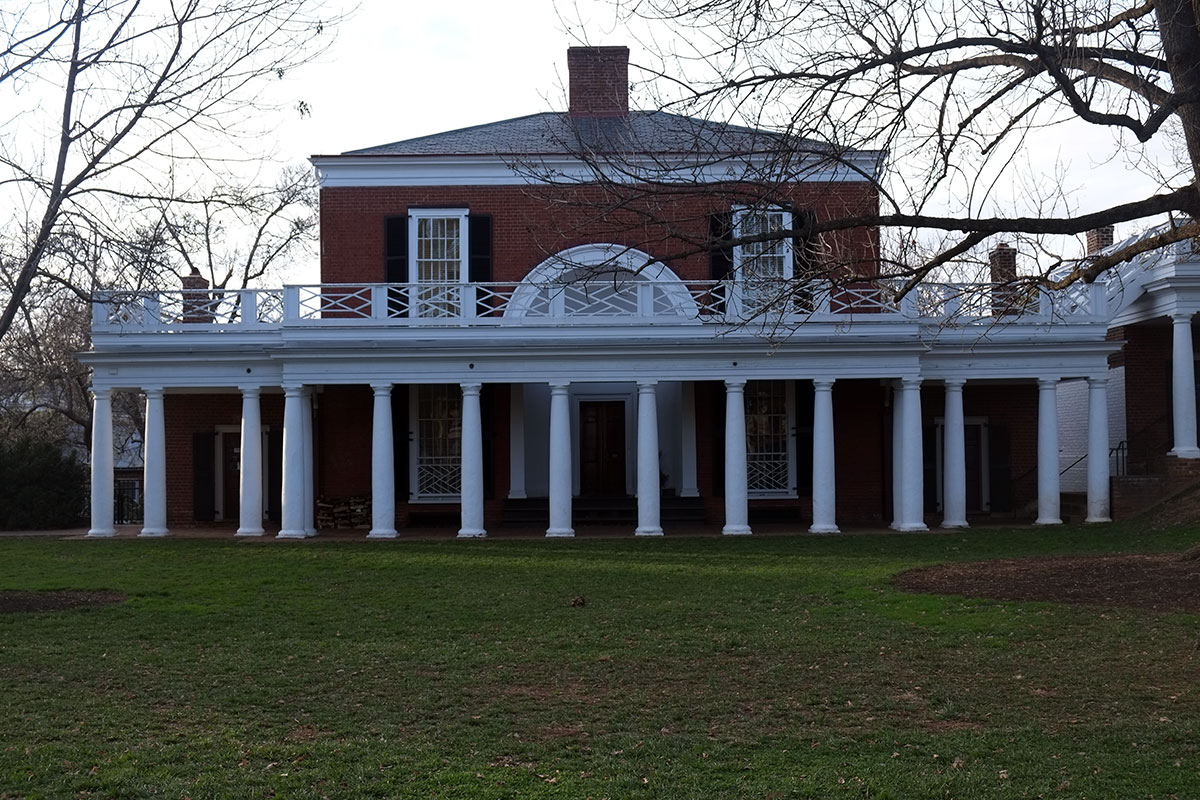
But even more than the Rotunda, it has always been the Pavilions which intrigued me. Jefferson worked with a repetitive, modular system, with the elegant colonnades in front of the students’ rooms.DSCF7030

and took a similar approach to the Ranges, which are to the outside of the Lawn:DSCF6837

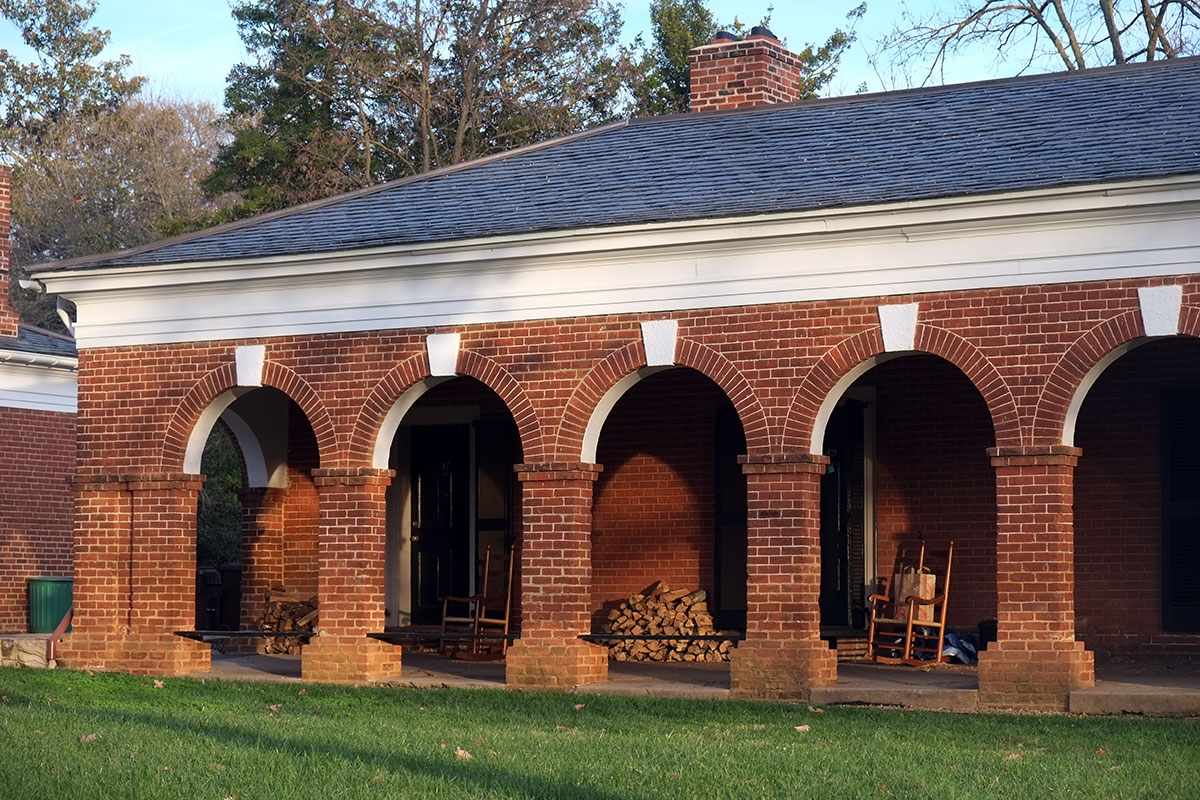
But within this approach, he introduces variety into the system. First, the difference between a colonnade and an arcade
DSCF7045

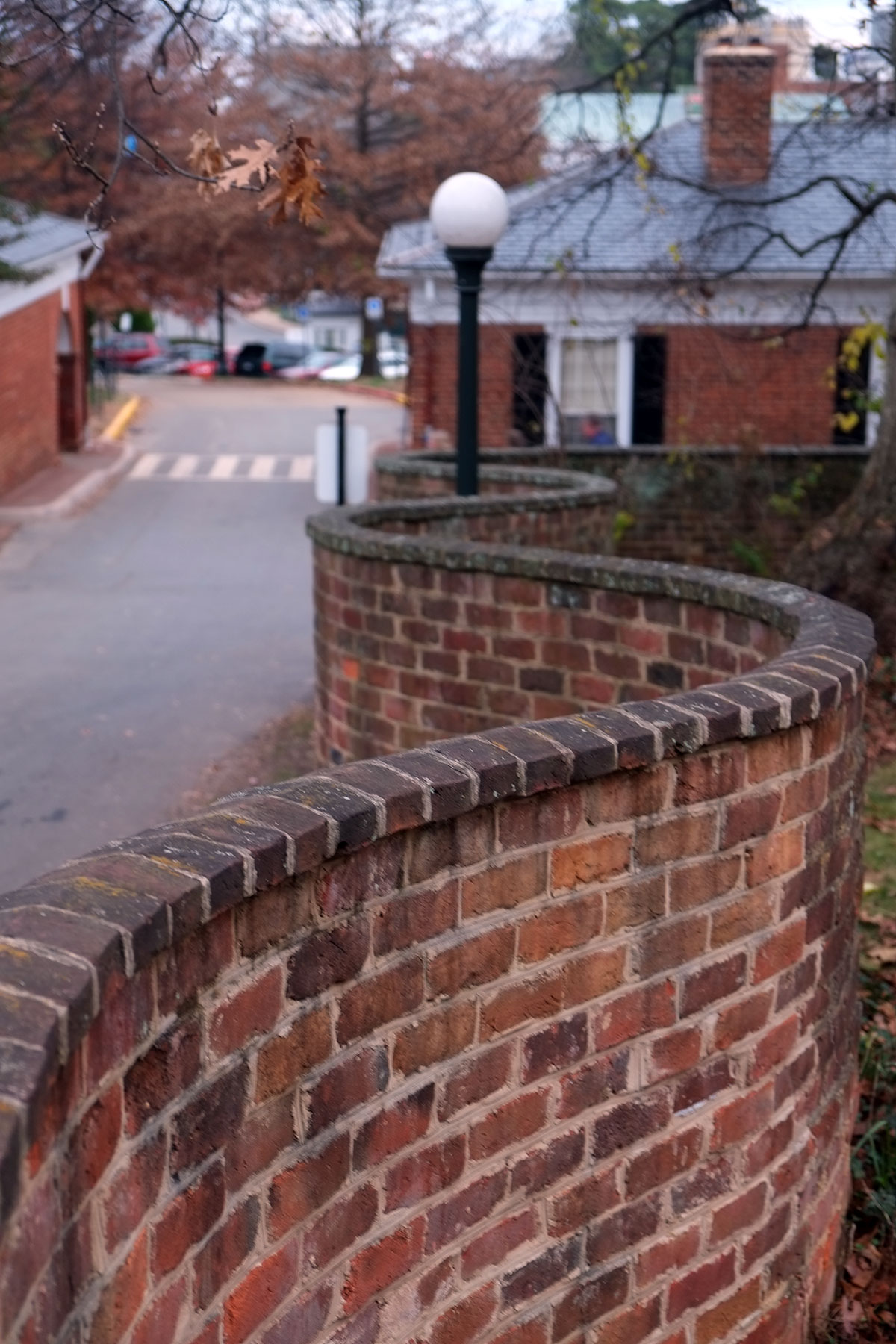
(and then uses the gardens with their serpentine walls to separate them.)DSCF7041

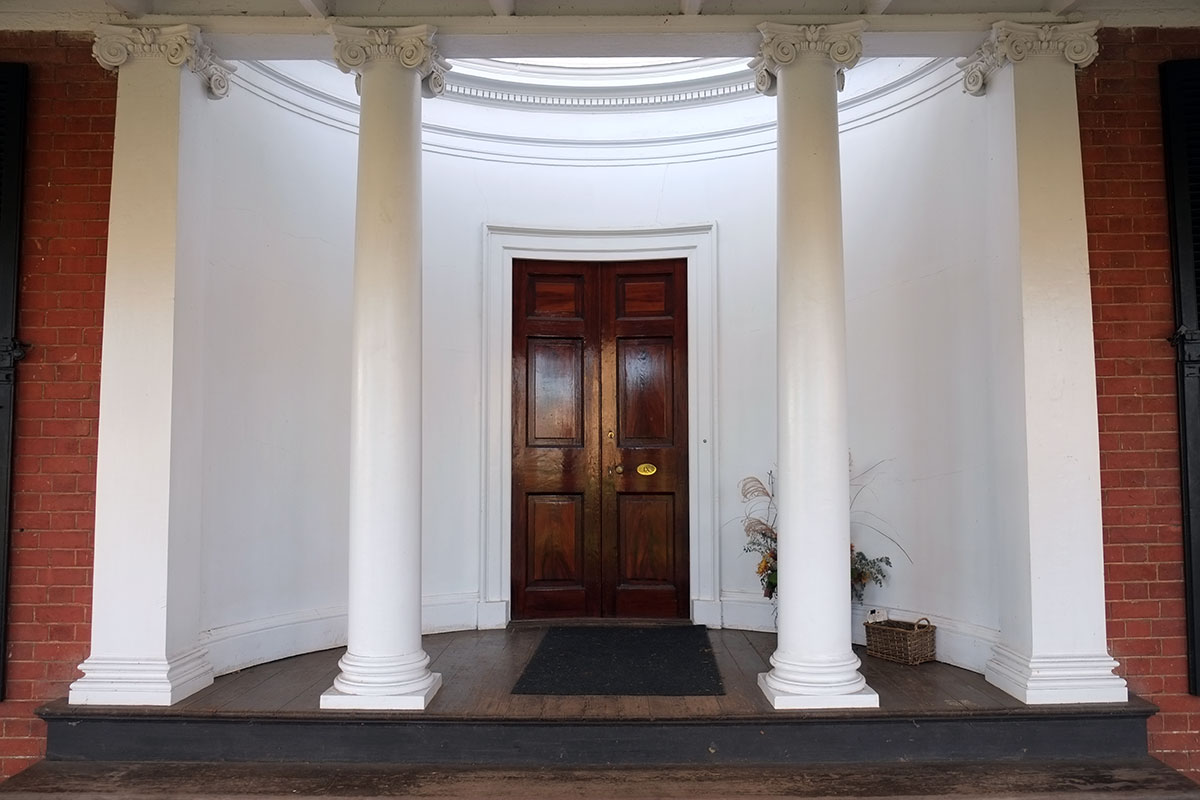
Second, in making all the Pavilions unique. They are the same scale, and they fit into the system in the same way, but each one is a gorgeous exploration of the range of ideas possible in the classical vocabulary.DSCF6794

It is not just about style, but about spatial imagination. The way the colonnades intersect with them changes. There are colossal ordersDSCF7010
and single-story orders:DSCF6809

creating different possibilities for light.DSCF6814

There are delicate and sedate pavilions, and robust ones, with the appropriate order used for each.DSCF6808

I’ve seen a lot of mediocre Academic Georgian on this trip, where all that matters is the proper vocabulary, and not the quality of the design or the character of the whole campus. (William and Mary comes to mind – ghastly pedestrian buildings repeated mindlessly.)  Jefferson shows the richness of the classical language, in a way that we’re probably not capable of now. (The decline of Postmodernism illustrates this well.) It brings to mind the joke about the couple who went to see Kahn about having him design a house for them, which he was happy to do.  But then they mentioned that they’d like it to be in the Georgian style.  Kahn said he couldn’t do that, so they asked him if he could recommend a good architect who could.  Kahn thought a bit, and then said, Thomas Jefferson.
So how has UVA fared in the post-Jefferson era?  There are some eclectic 19th century buildings, before the veneration of Georgian peaked in the early 20th century, but then they did have some good and inventive designs in the style, although maybe taking the goal of variety a little too much to heart.DSCF6985

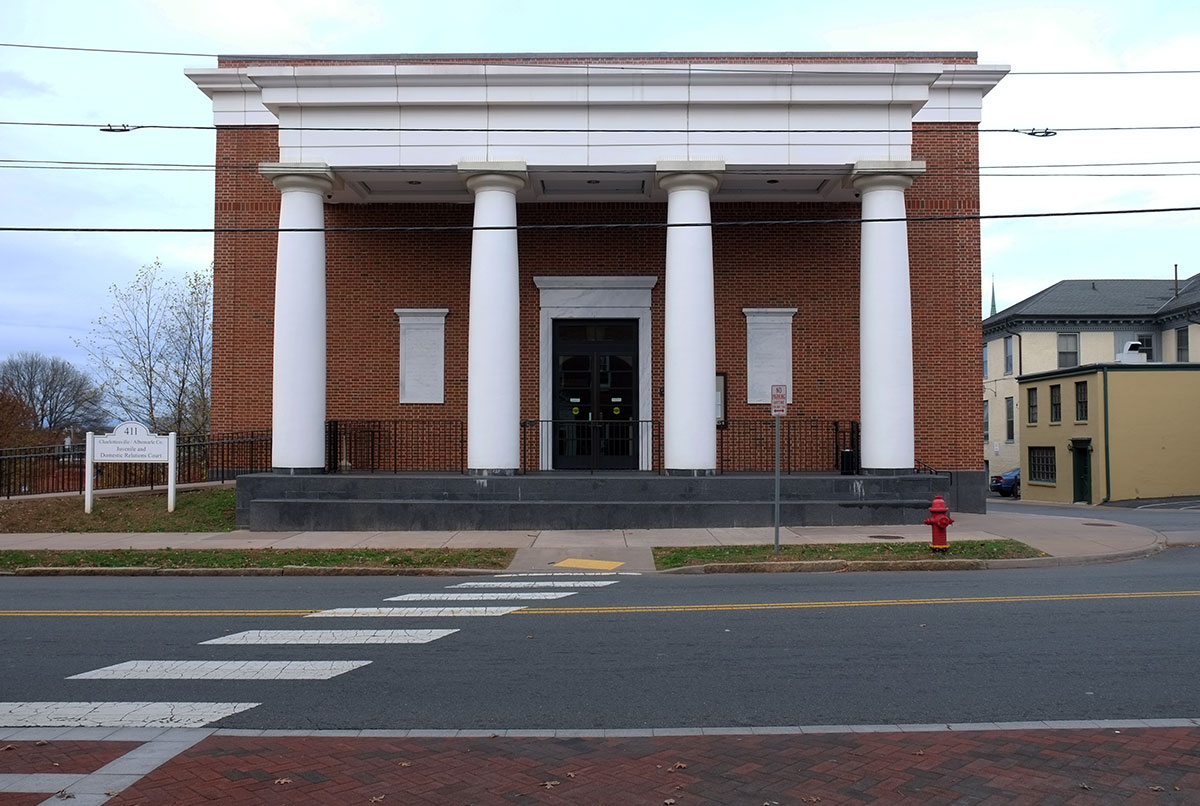
The city itself has fared less well, with some truly execrable examples.  (Sorry, reality intrudes.) DSCF6919
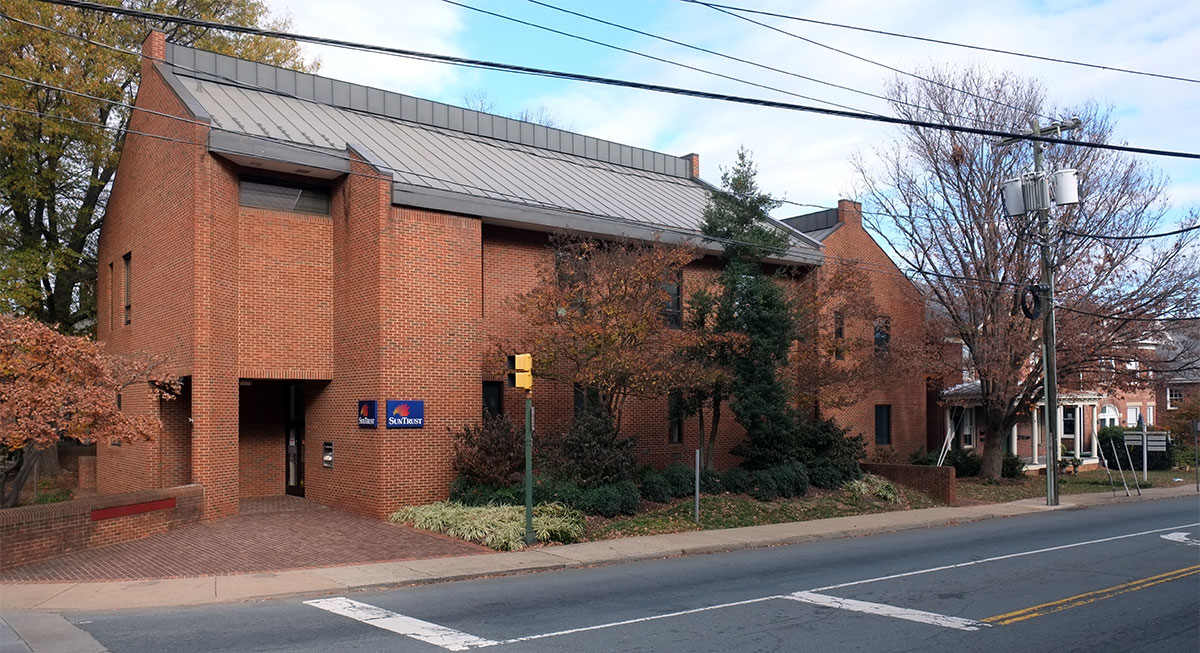
And a few examples of how one can be contextually sensitive without copying the style.  This 1970s bank struck me as quite good – similar scale, materials and overall form, without copying style, rhythm, or detailsDSCF6743

and with the more overscaled, modern elements tucked away in a courtyard.DSCF6908

We are used to thinking of Postmodernism as having tried to correct the anti-contextualism of Modernism, but we often overlook the modern buildings that already did this quite well. (I noted this in Cambridge too.)

Kahn was right – we should just leave Georgian to Jefferson – he was remarkable, especially for someone who had a time-consuming day job.  I did go to see Monticello – on a gorgeous crisp day, after waiting through four rainy ones.  It was invigorating, although less perfect than the Lawn.  Monticello was Jefferson’s own house, so he could do what he wanted – play with ideas, change his mind, add on later.  The principles of variety and exploration could dominate – it didn’t need to have the resolution of an important civic work.  In the Lawn you get the perfection of a few big ideas worked through rigorously;  at Monticello you get exuberant pieces all getting along quite well, while not as concerned as to how they add up.  It was a wonderful afternoon, but unfortunately my computer somehow ate all my photos as I was downloading them, which is not a disaster, as photos of Monticello are not hard to come by.  Or as Greta would say, just go.
Photos

Most of my blog posts are pretty pedantic and focussed, so I’ve decided I should sometimes just post photos that aren’t part of a larger polemic.  Plus I don’t have to write as much.

DSCF5745

Baltimore

DSCF5796

Baltimore

DSCF4623

Lowell, MA

DSCF4885

West Side, New York

DSCF4867

Riverside South, New York

DSCF4816

Seventh Ave., New York

DSCF5131

Gansevoort St., New York

DSCF5049

Whitey Museum, New York

DSCF5097

Whitney Museum, New York

DSCF5623

Philadelphia

DSCF5680

Philadelphia

DSCF5297

Paterson, NJ

DSCF6108

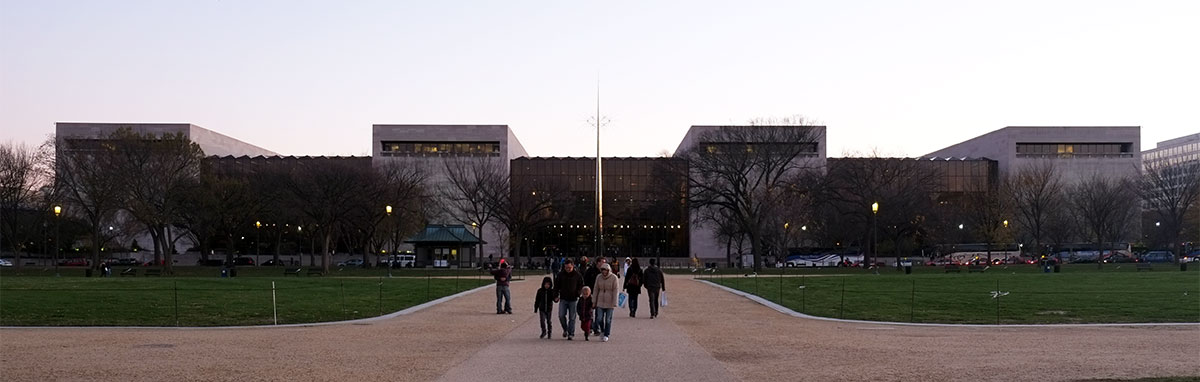
Nattional Air and Space Museum, Washington DC

DSCF7050

Charlottesville, VA

Harpers Ferry

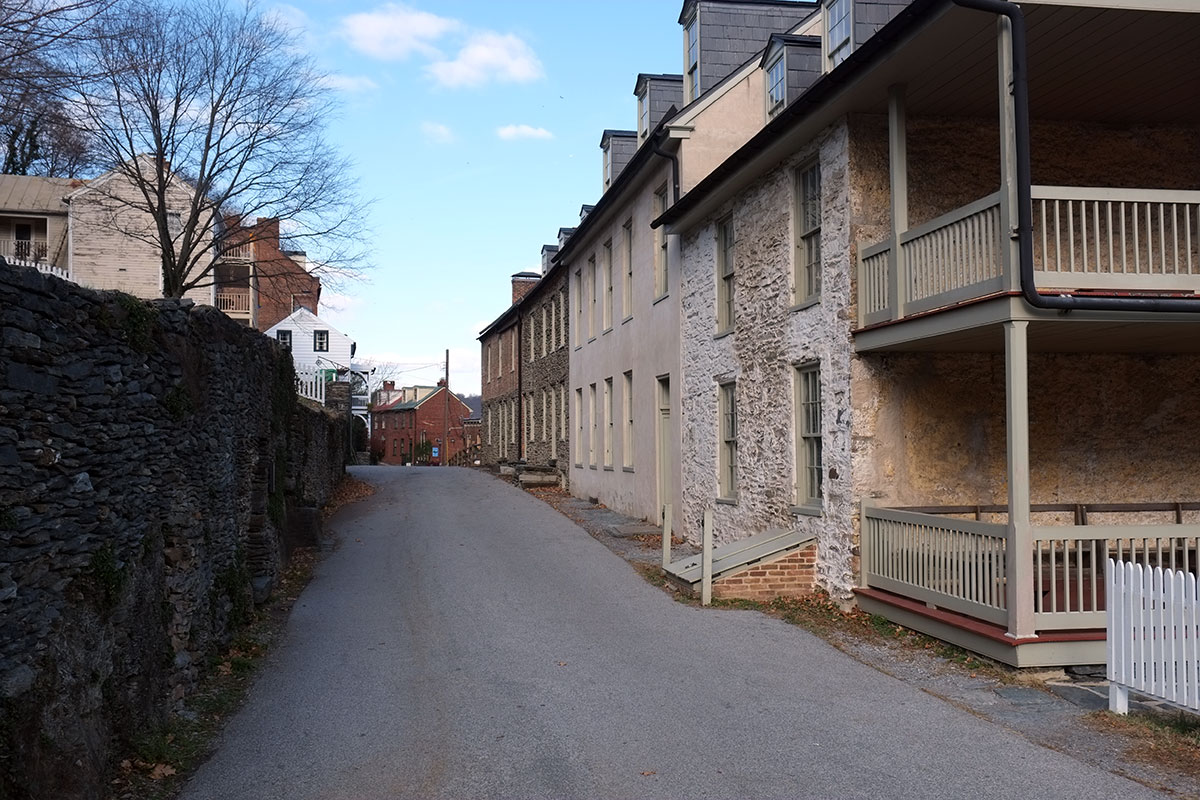
DSCF6561Harpers Ferry is a place I’d always heard about, but about which I had only a few random associations.  John Brown’s raid, battles, rivers, West Virginia (really, is that where West Virginia is?)  There wasn’t one clear narrative line about it, which now makes sense to me, as an incredible number of important things have happened in this one tiny place.  The history is extremely interesting, but the spatial / geographic / topographic / architectural character is astounding.  It’s my new favorite “place” in the country.

It all starts with the geography:

  • It’s where the Shenandoah joins the Potomac, one of the major passes through the Appalachians in that region.
  • Virginia, Maryland and West Virginia all meet at this one point.
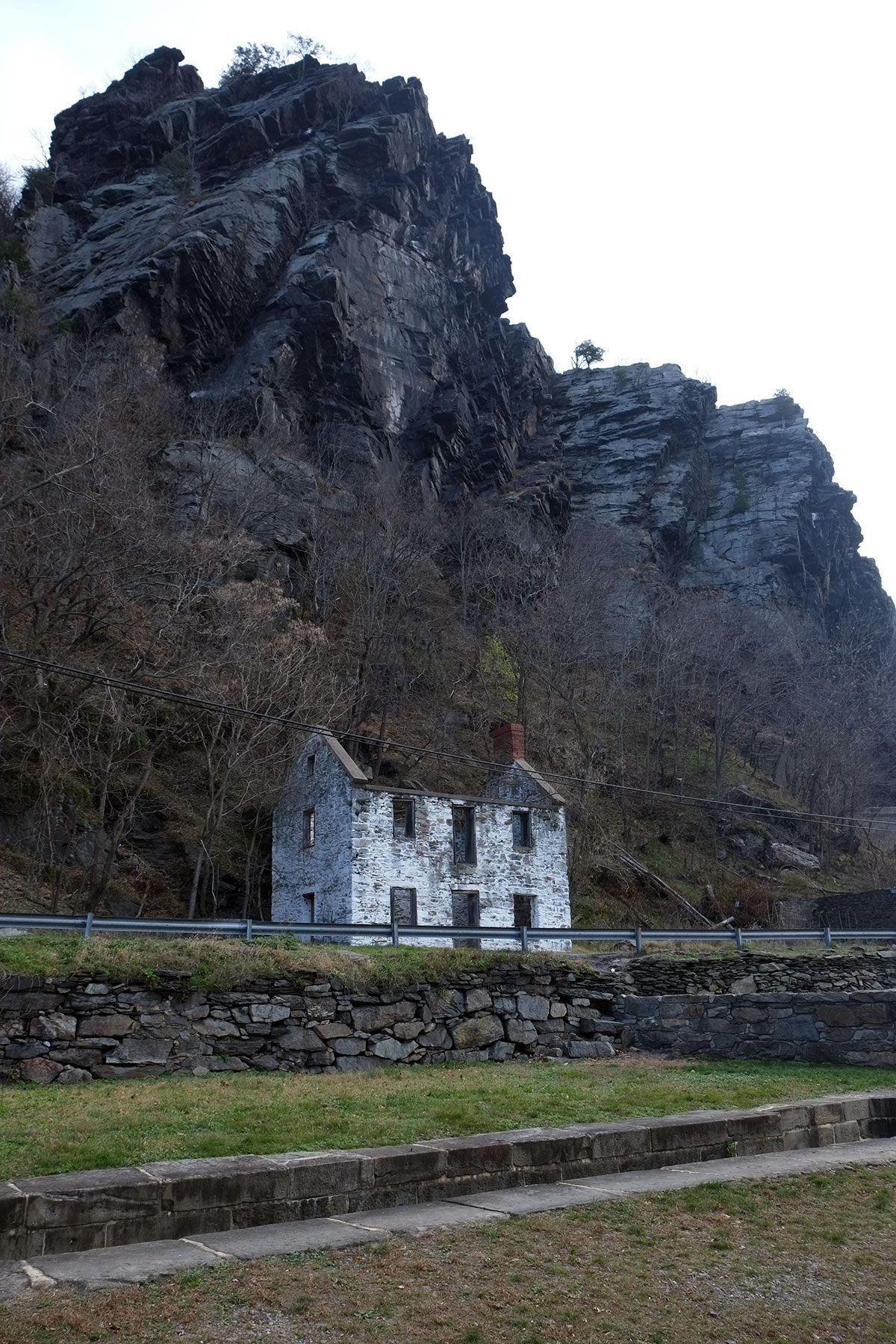
  • It is a gorge, similar to the Hudson River Highlands.  A big cliff of Maryland on one side, a big cliff of Virginia on the other, and a small, low area  at the base of a cliff in West Virginia in the middle, which is the town.
  • Because of this geography, important transportation systems cross here:  two rivers, one canal, and two railroads.
  • Because of the strategic importance of this crossing, lots of important battles and skirmishes happened here, mainly in the Civil War.
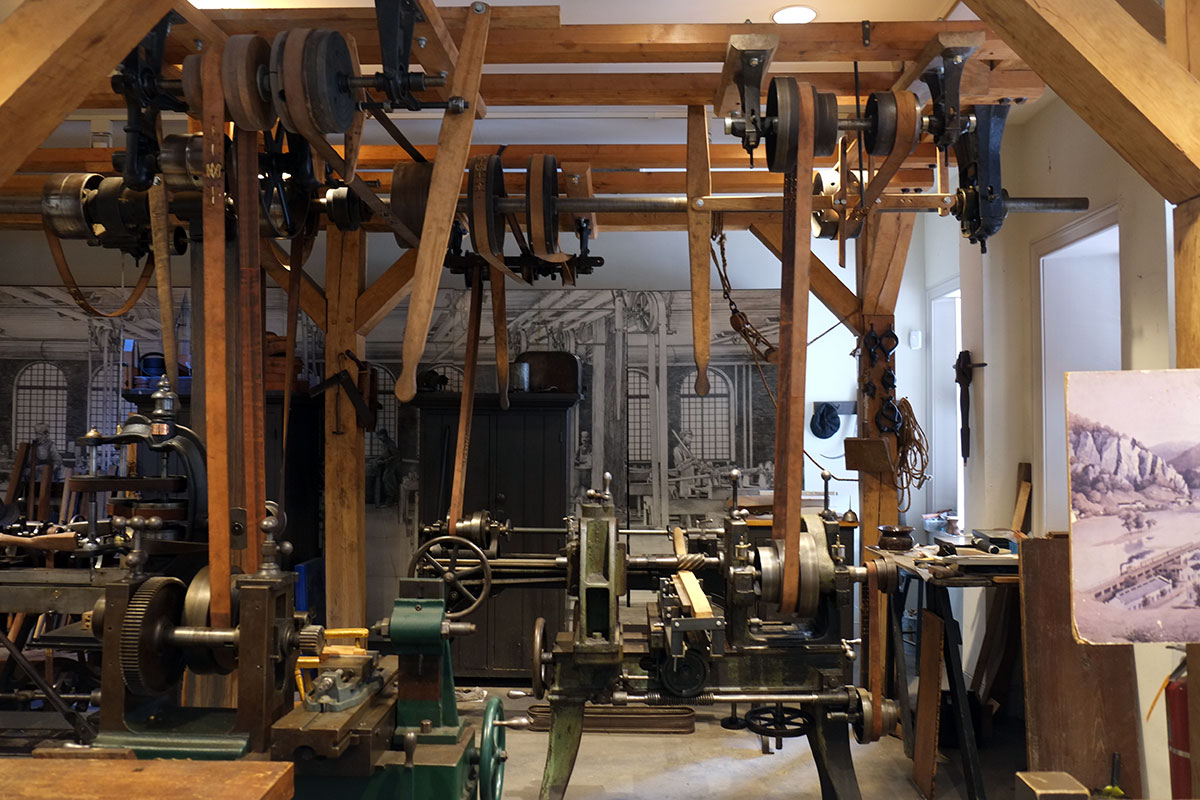
  • Due to this transportation hub, materials such as coal and iron moved through here, and it became the site for the US Armory, which pioneered manufacturing arms from interchangeable parts.
  • Since the armory was here, John Brown decided to take it over and take the weapons for an insurrection.

There are probably lots of other places in the country where a similar series of historical causes and events have taken place, and we haven’t paid much attention to them, because neither Greta nor I likes to stand at a field where something happened a long time ago and try to imagine it.  We like to see tangible stuff that remains from these events.  The visual evidence at Harpers Ferry is compressed, right there in front of you.  For this and other reasons, it is one of the most vivid and beautiful places we’ve been.

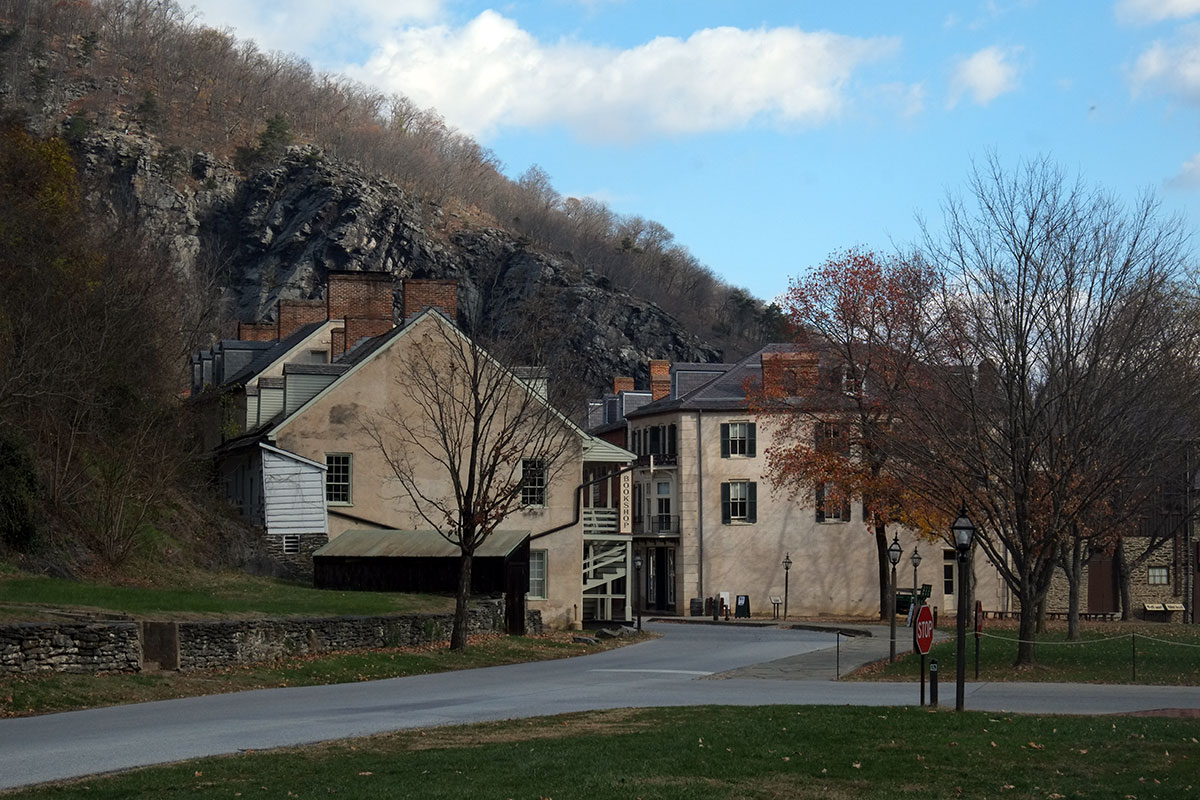
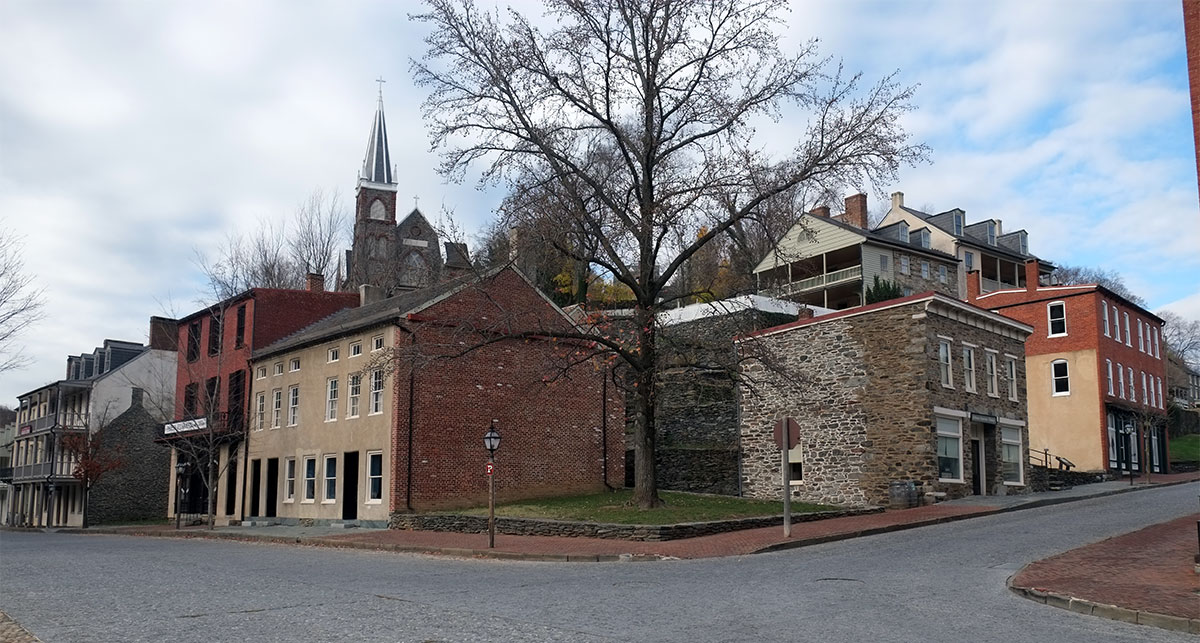
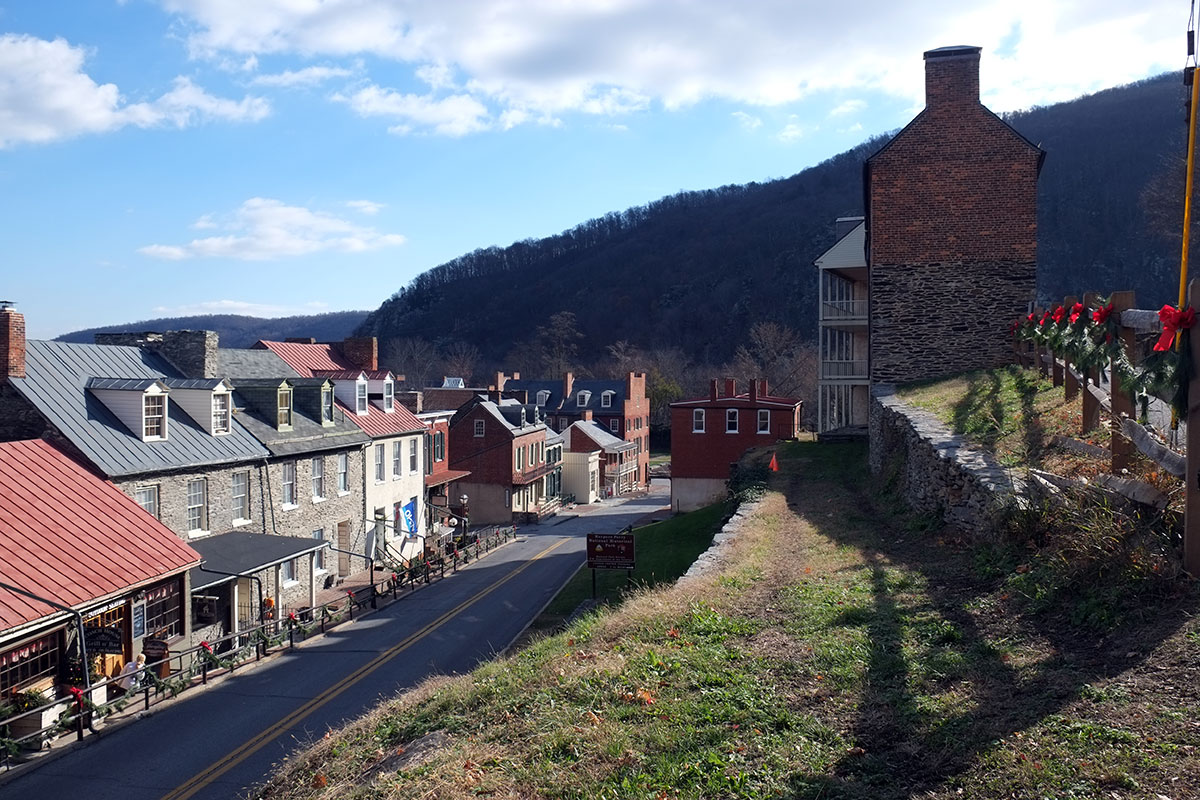
The first inkling as you arrive in the town, with the Maryland highlands rising up beyond the main street:
DSCF6631

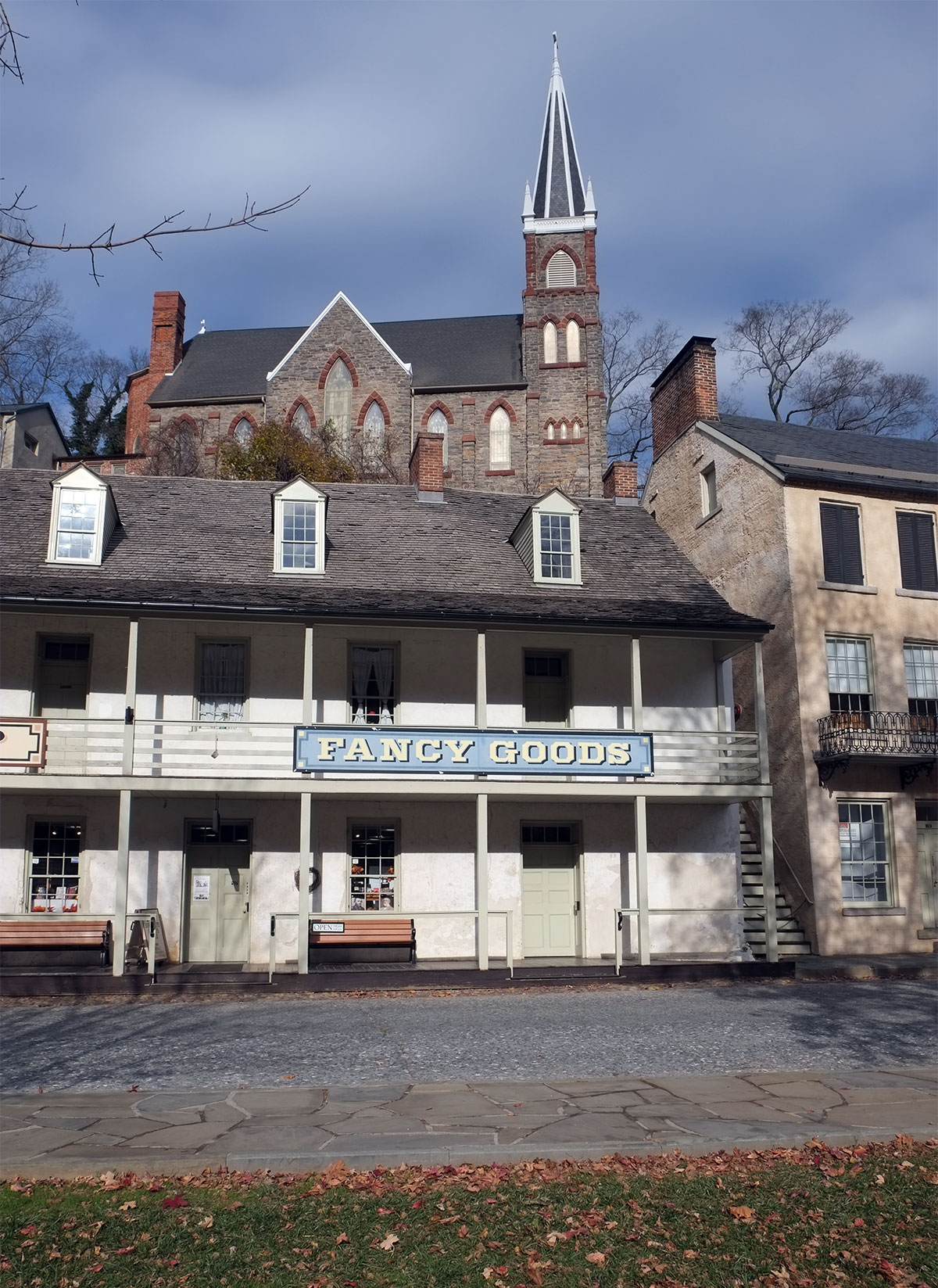
On the left the town rises, with a Catholic church (built for the Irish railroad workers) above.DSCF6477

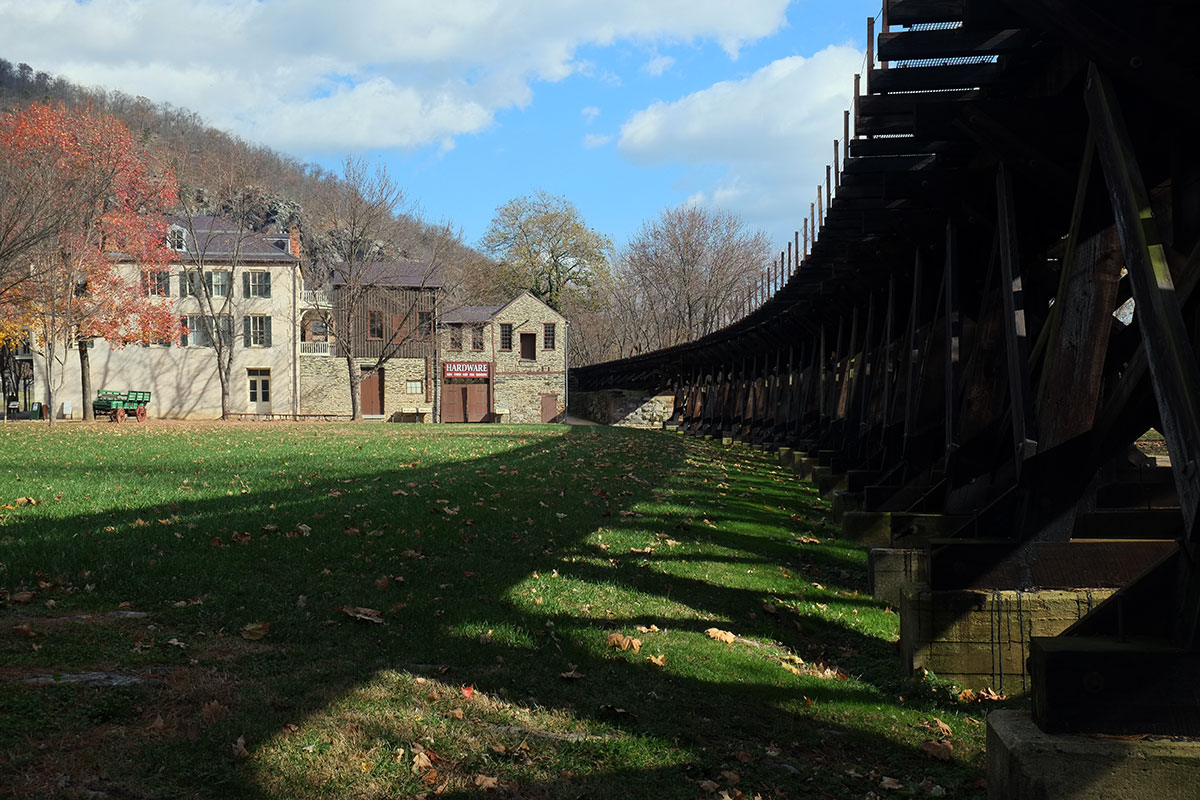
On the right, a railroad trestle parallels the Shenandoah.
DSCF6624

At the center of town, an intersection with a tree.DSCF6482

with a much larger space opening towards the river convergence.  The building where John Brown and his associates holed up used to be here.  DSCF6607

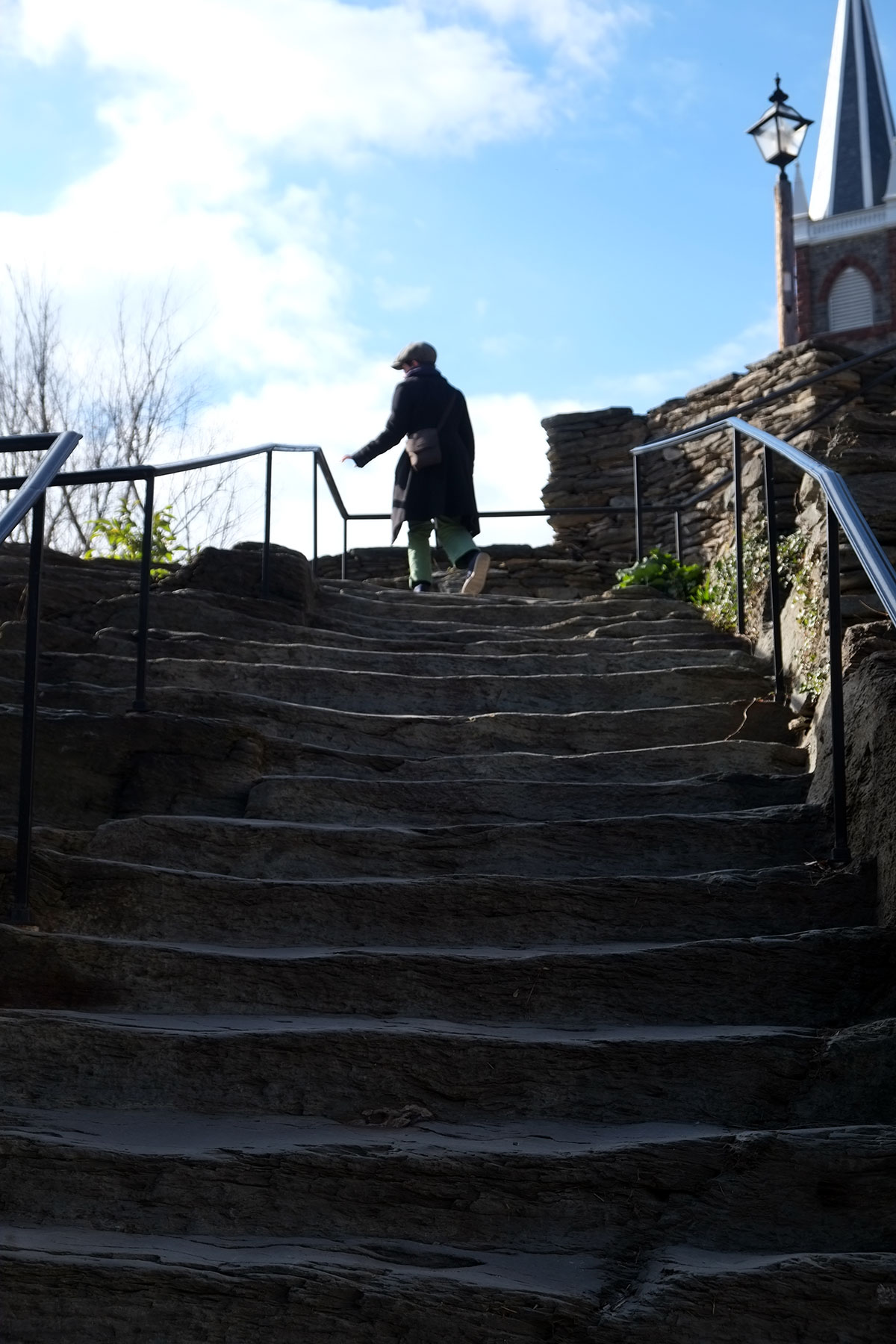
There are hewn stone stairs leading up the hill to the church.  At this point I’m wondering, is this West Virginia, or have we passed through a space/time hole and popped out in Scotland?
DSCF6524

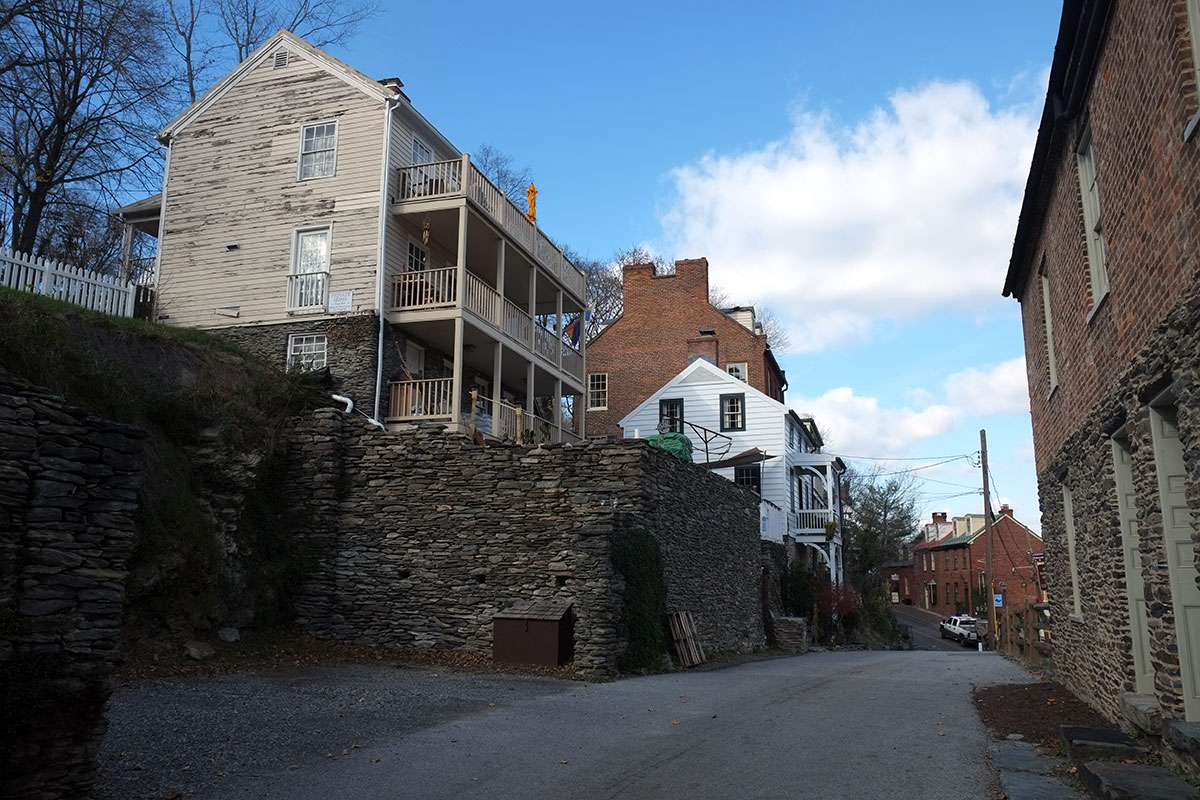
There is a road that slants up the hill.DSCF6573

And others that work with the topography.DSCF6560DSCF6570

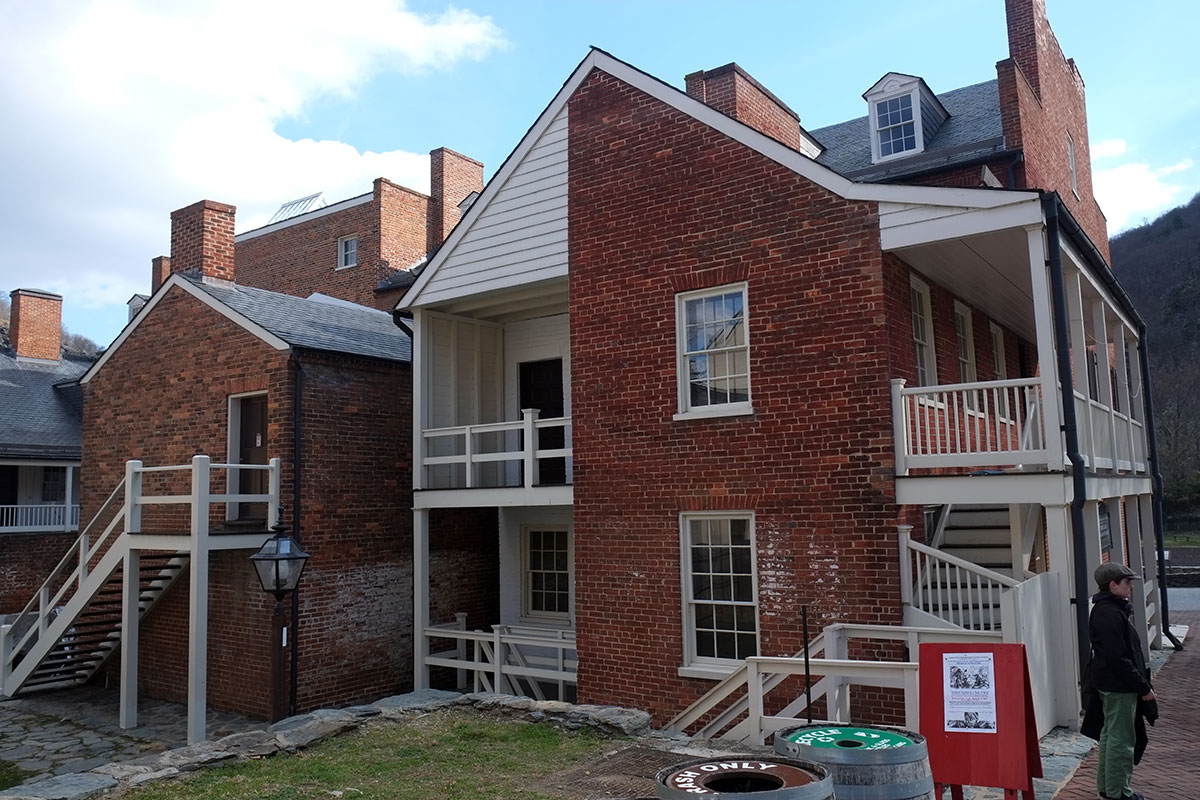
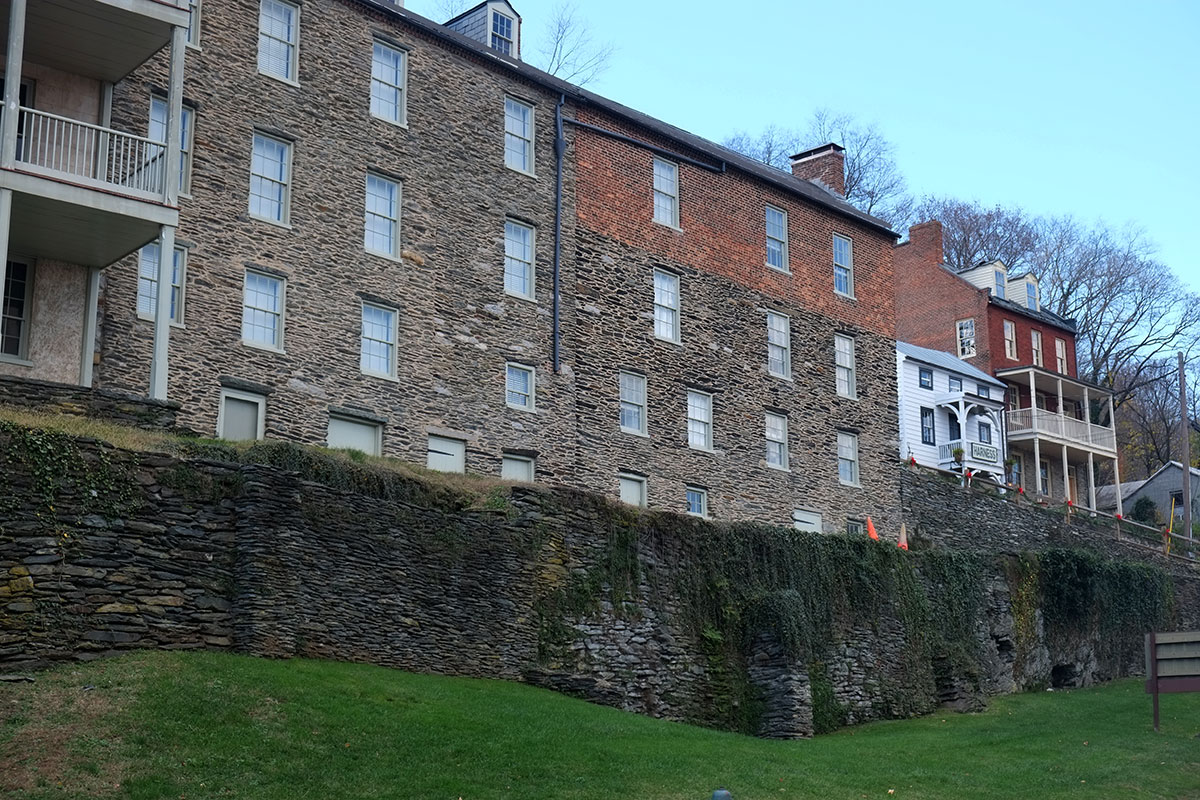
Everywhere, the vernacular buildings show the use of local materials – stone, wood and brick – with a clarity that is rare in this country.  DSCF6527DSCF6601DSCF6596

Across the Potomac in Virginia are the remains of the canal.DSCF6509

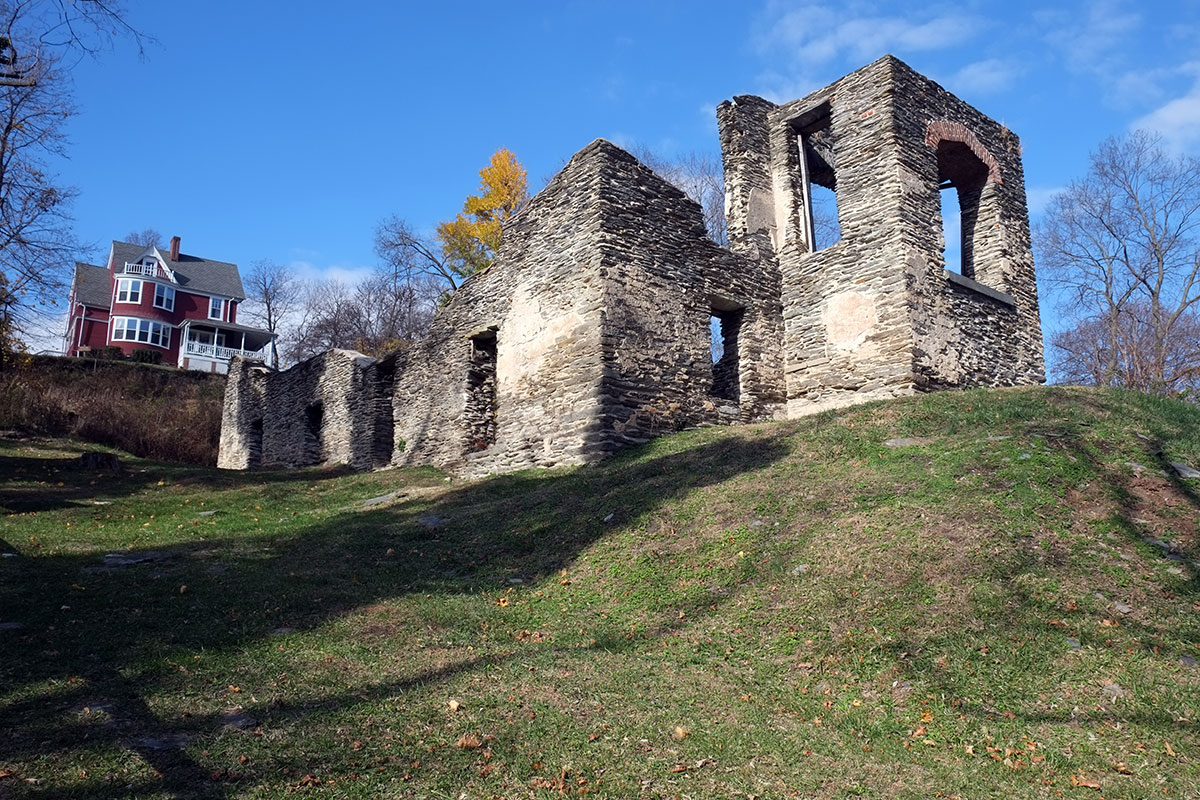
As you walk up the hill, there is the ruin of an Episcopal churchDSCF6530

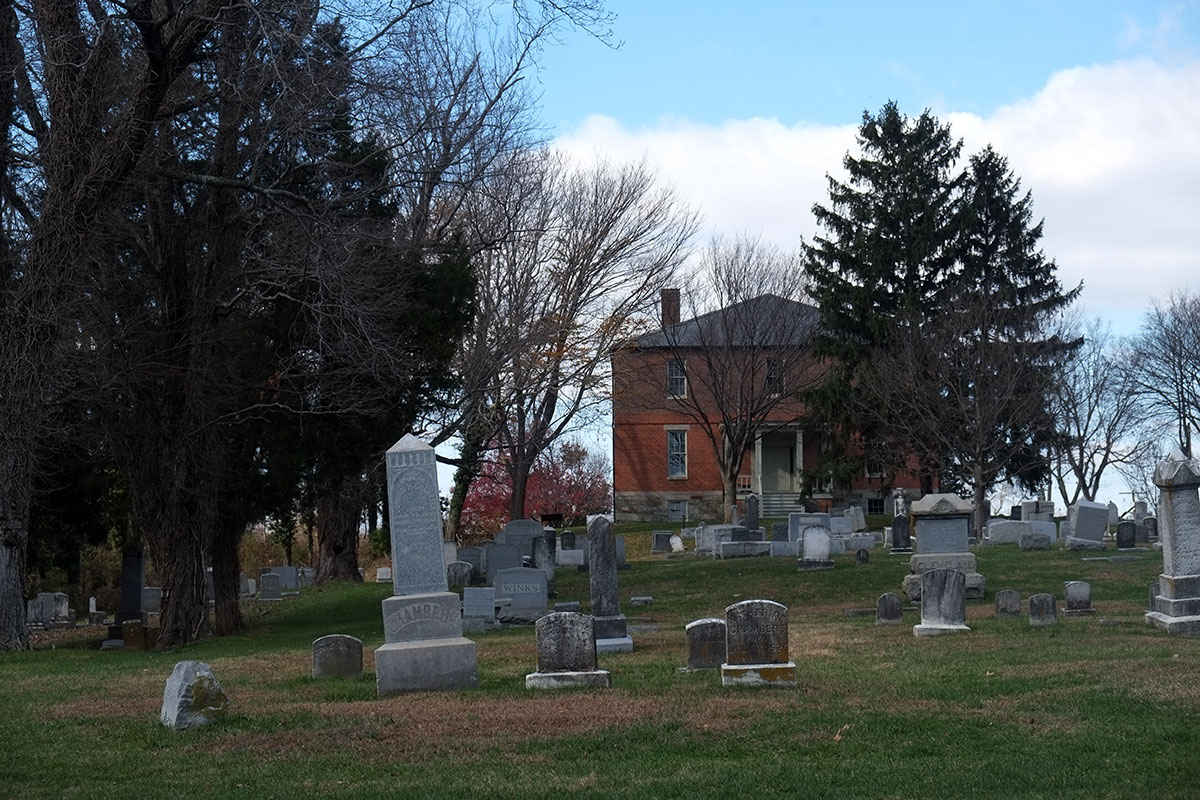
and the cemetery on top of the hill,  DSCF6545

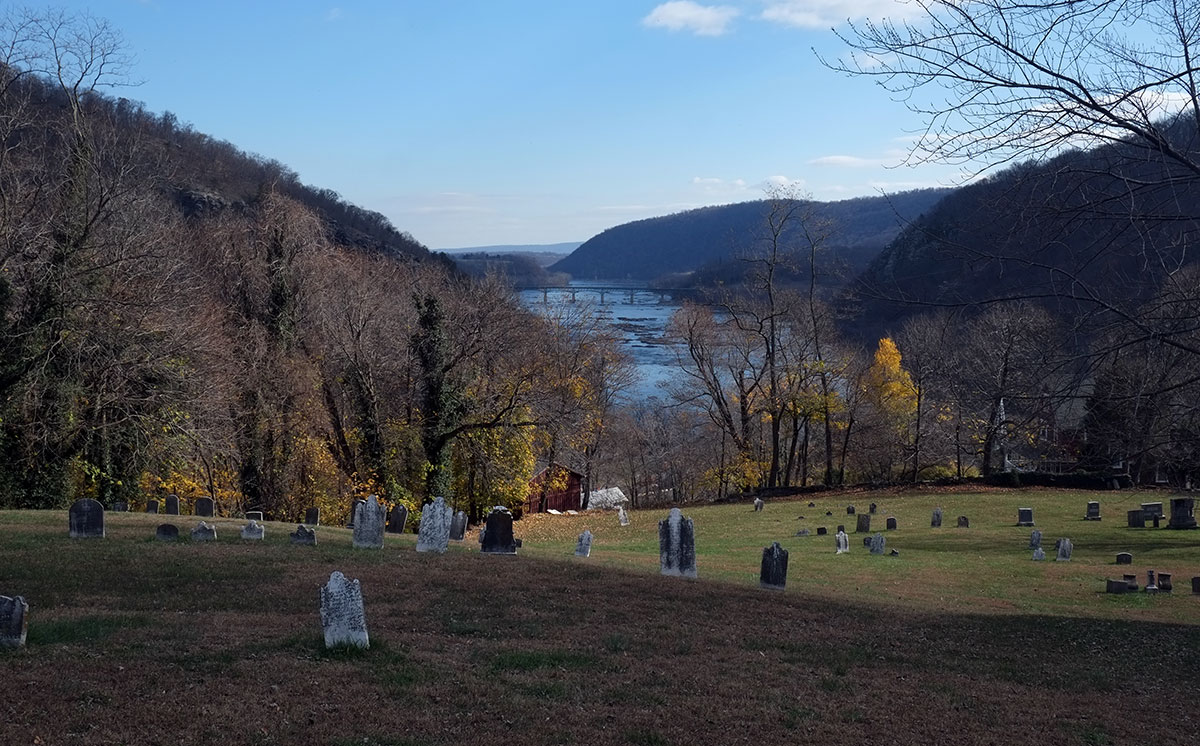
with a view down the Potomac.DSCF6547

The historic town center is run by the National Park Service, with beautifully restored buildings, showing the businesses and residences of the past.  None of it feels Disneyfied – it is all simple and direct and appropriate.  We were there on a cool autumn weekday – perhaps it is more of a circus in summer tourist season, but while we were there, it felt like we had stepped back in time to this perfectly-preserved ghost town.  DSCF6611

Harpers Ferry isn’t a reconstruction – there are lots of things from the past that have been destroyed and not replaced, such as the Armory.  There are aspects of it which do not contribute to the experience, such as some intrusive and probably unnecessary constructions by the railroad right in the center of town. It doesn’t try to be perfect, and so it feels authentic, which is probably why it felt like being in Europe rather than America.  We’ve been to many historic places on this trip where an either/or approach is evident – either the history is pretty much ignored, or else it been elaborated and “celebrated” in a way that destroys its integrity.  (Independence Mall come to mind.)  Harpers Ferry gets it just right.

I’ve only met a couple of other people who’ve ever been here, although it’s one hour from Washington.  It just seems like it’s farther because it’s in West Virginia.  We’re 2 1/2 months and 6000 miles into this trip, and this is my favorite place so far.

DSCF6632

Washington DC

DSCF6162When we started this trip in September, Greta had three main goals:  Yellowstone, barbecue, and the Smithsonian.  So our five days around DC were overwhelmingly biased towards museums.  I spent a reasonable amount of time in DC in the 80s and 90s, and I knew that with winter closing in I couldn’t do a comprehensive survey of what was now going on in this big city, so I just went with the flow.  However, I did manage to trick Greta into walking around Georgetown and Northwest on our way to and from museums.

I probably hadn’t been in Georgetown in 30 years, and staying there with our friends Bob and Susan provided a good excuse for wandering the neighborhood, and back and forth to the Dupont Circle Metro stop.  DSCF6093

As has become the norm in older cities on this trip, the experience of architectural quality, neighborhood walkability and overall urbanity was remarkable.  DSCF6096It was also strange realizing that this is a neighborhood of the rich and powerful, and probably many of the houses we passed were occupied by people of whom we had heard.  (Bob did point out the black SUV in front of John Kerry’s house, which meant that he was home.)   I was totally enamored of the area, until one evening I decided to run out to pick up a couple of beers before dinner. Two miles later, nothing. Georgetown is a place where real estate values and rents are so high that normal businesses have been squeezed out by high-end clothing retailers and home design stores.  You can’t run down to the corner to meet any need of day-to-day life, so you probably just send your staffers out to run errands in the black SUV.

Downtown DC has never been known for its quality of modern buildings – too much respectful timelessness, height limits, classical obsessions, conservative tendencies, etc.  But even with that low a bar, this building is a standout.  DSCF6099

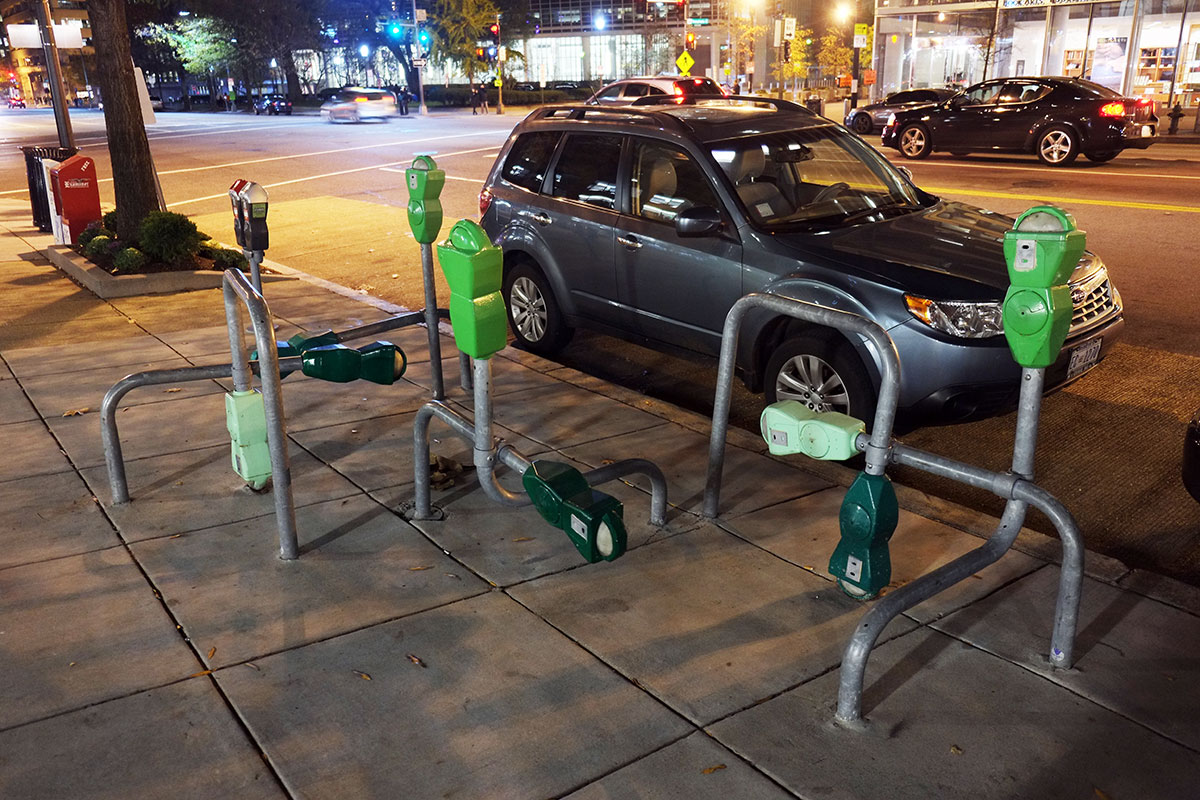
There is some nice street furniture / bike racksDSCF6166

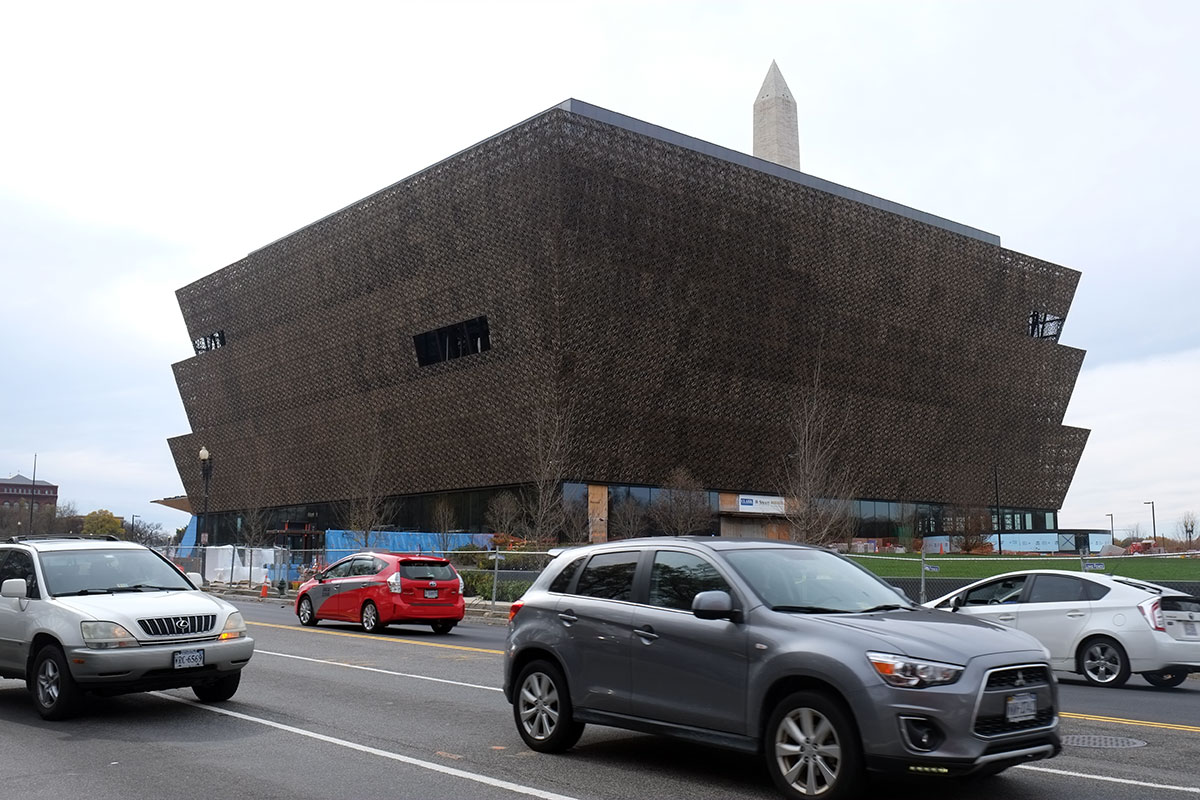
David Adjaye’s museum is getting close to completion, but is already quite noticeable as not your typical building on the Mall.DSCF6172
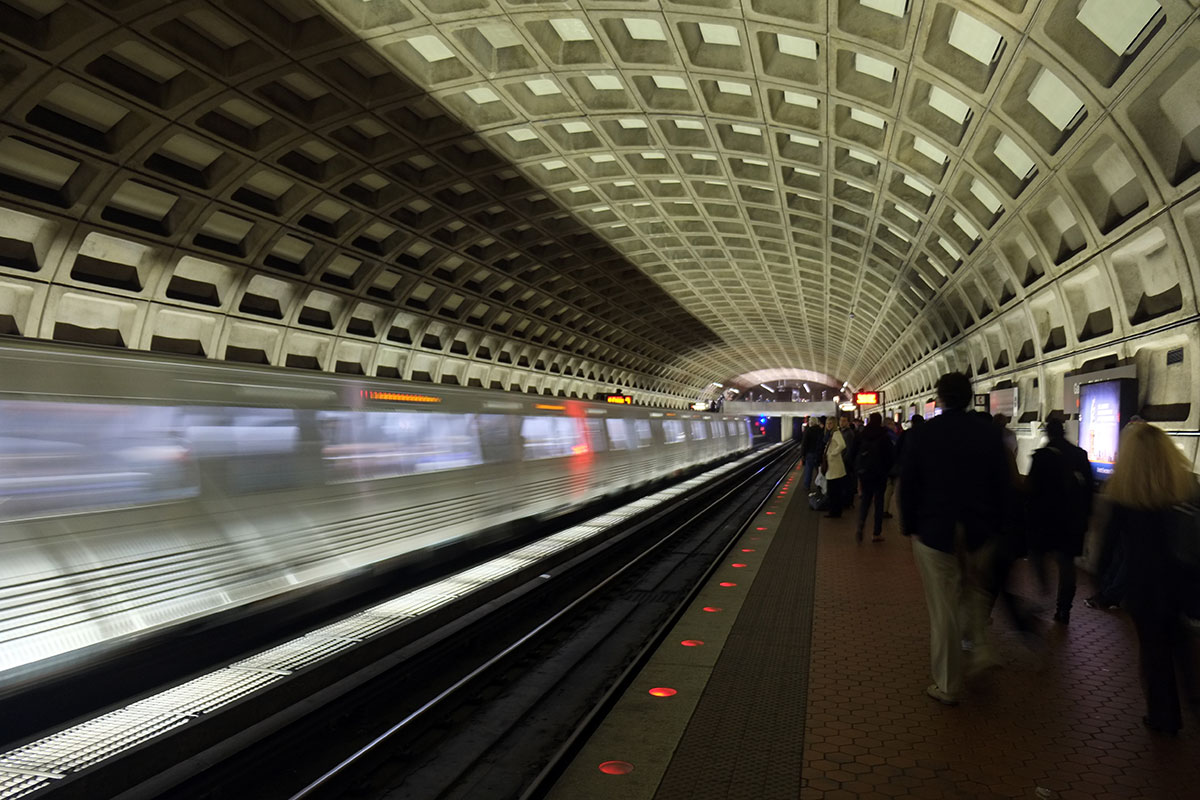
But the Metro is still my favorite architectural space in the city.

DSCF6462

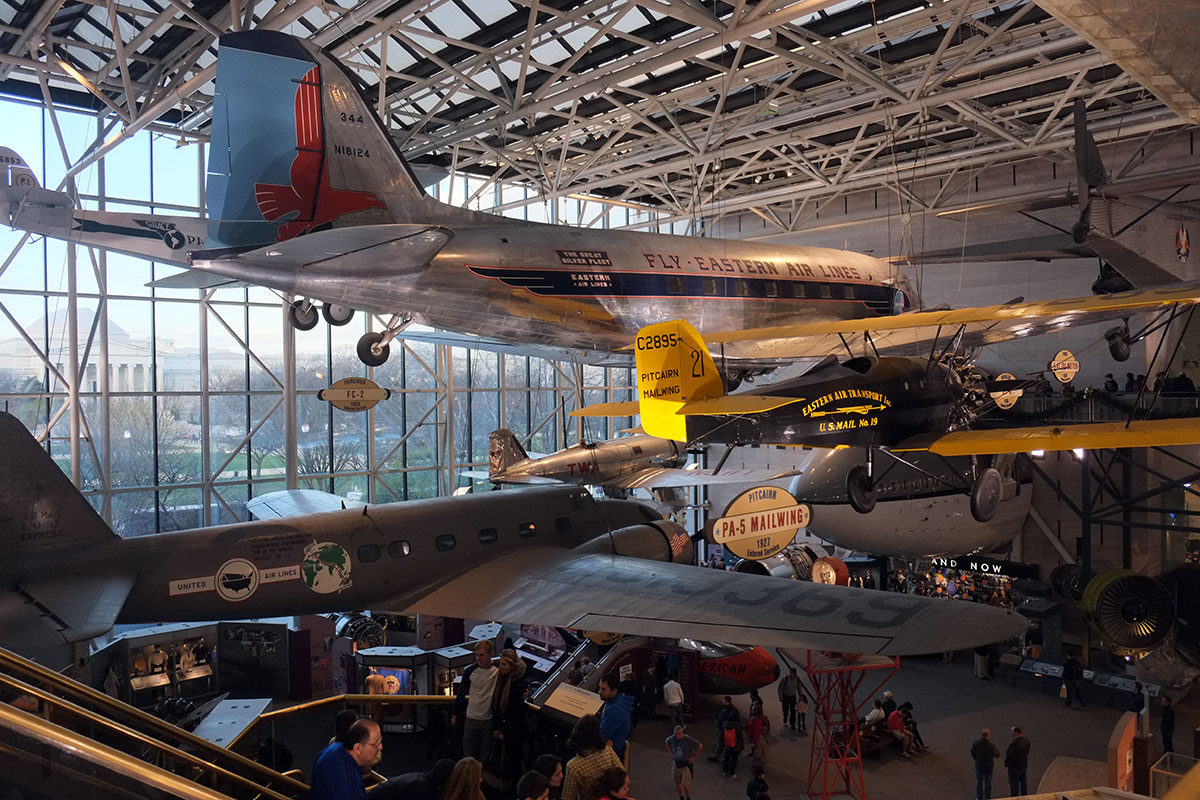
We spent most of a day at the Air and Space Museum, which is memorable for one of the most legible partis in a museum.
DSCF6447
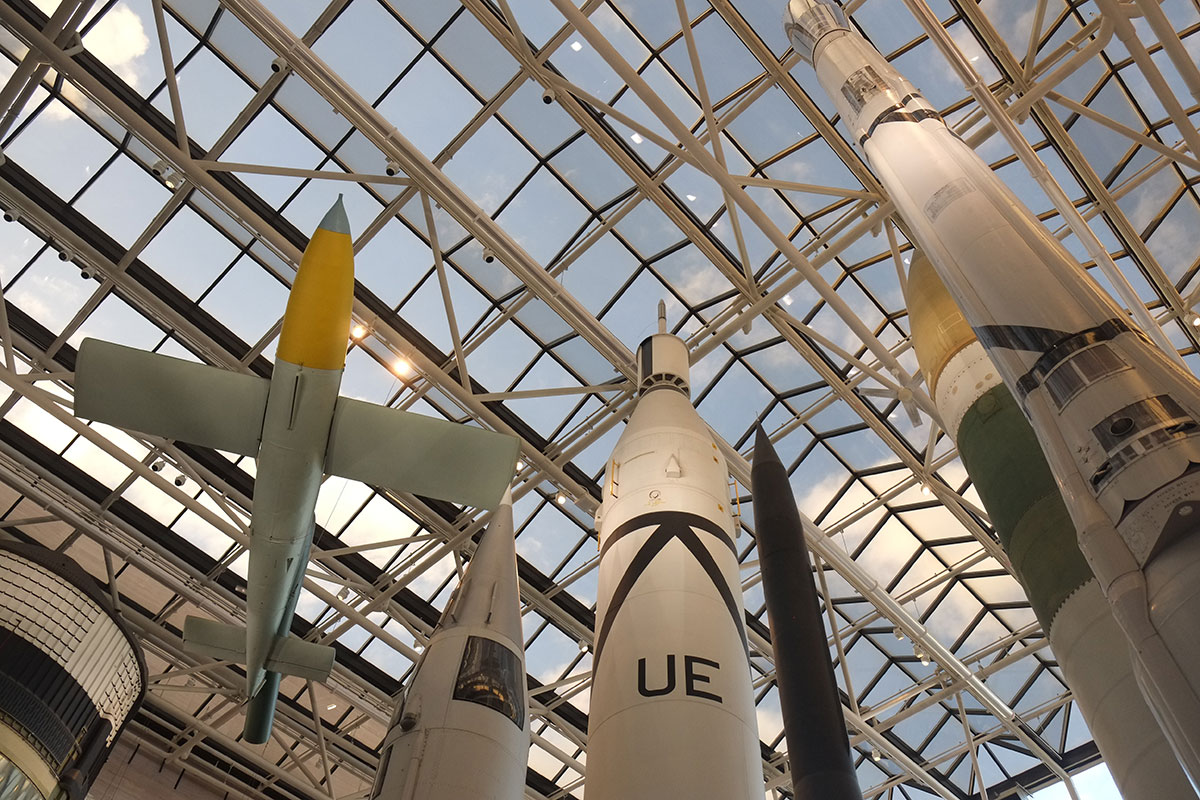
and also for meeting my main criterion for a great museum:  have lots of real stuff.  Not an interpretive center, not solely didactic, not creating a programmed visitor experience.  Have cool stuff that can’t be seen anywhere else, and all the other considerations are secondary.  The Air and Space may be the best example of this – Greta was constantly amazed that these were the real objects.
DSCF6147

Another aspect I really enjoy is having Very Large Things Inside Buildings.  Liverpool has a great, low-key museum called The Large Object Collection, and the A&S illustrates this principle nicely.DSCF6130

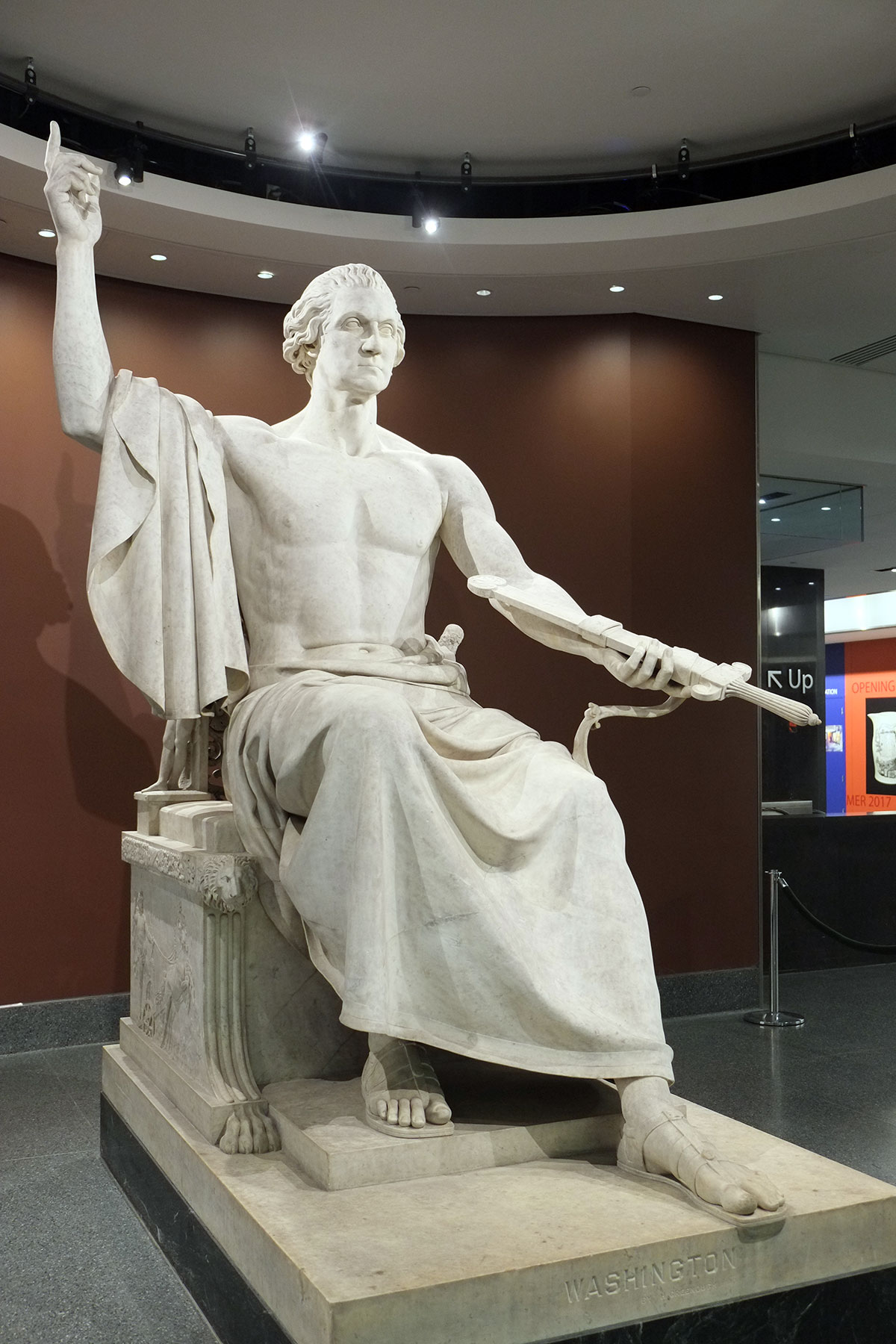
The American History Museum was much better than I remembered;  I think the new approaches to exhibit design of recent decades have been spectacular.  We checked off some iconic pieces, such as the Star Spangled Banner, the display of which unfortunately shows some of the same grandiosity and obsessive fetishism of objects which ruined the experience of Mt. Rushmore and the Liberty Bell.  We also caught the greatest of the slightly-nutty representations of a founding father as a Roman republican:
DSCF6205

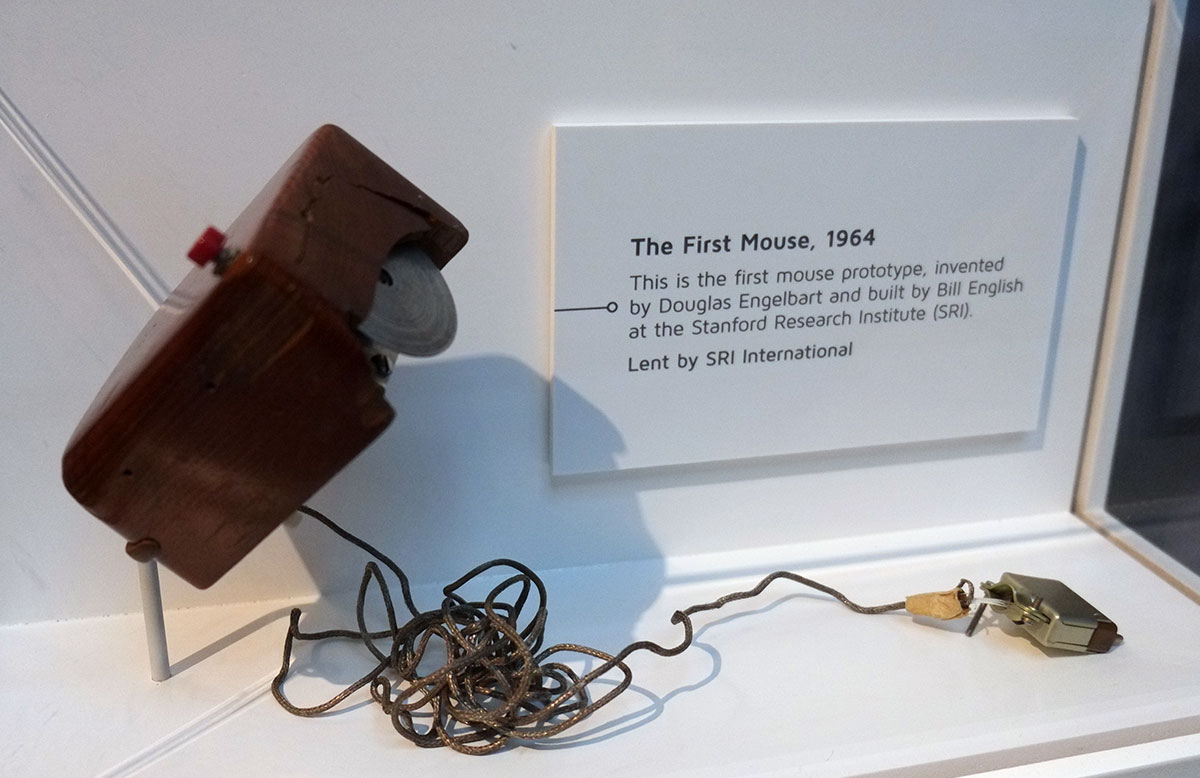
Like the A&S, the display of really cool actual stuff is paramount:DSCF6207

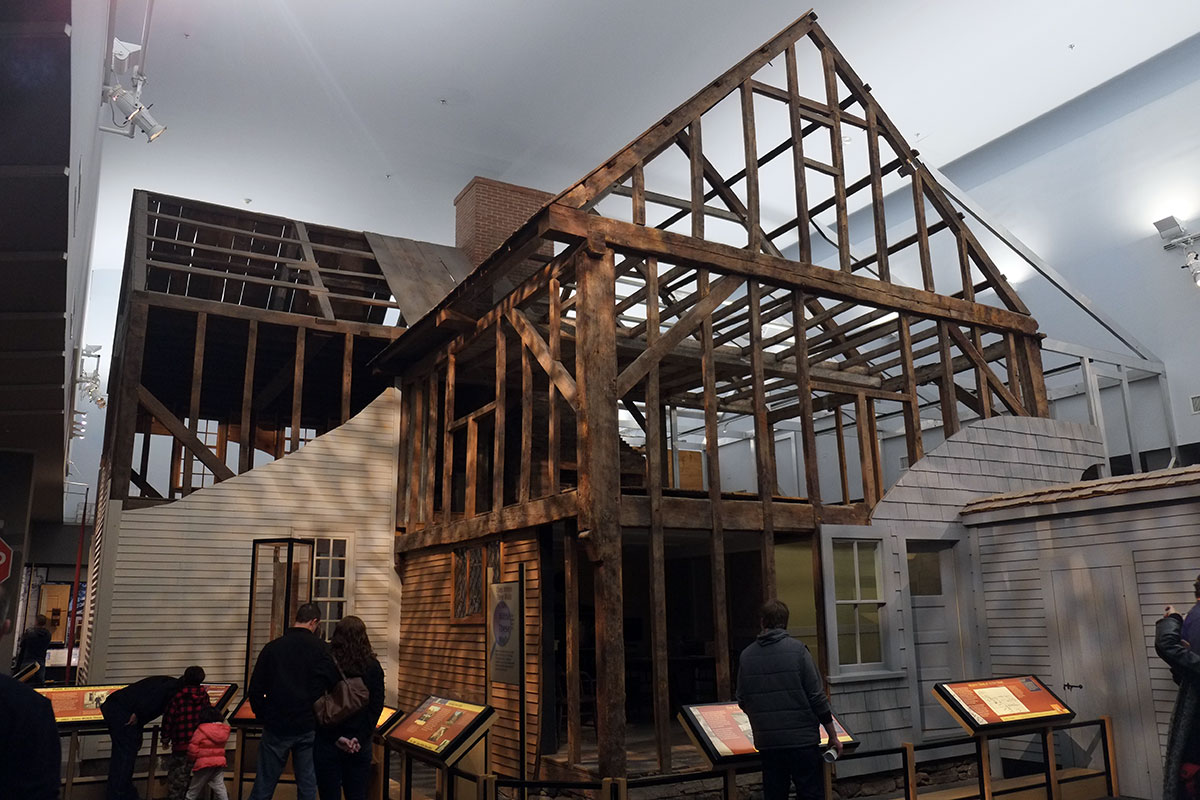
The partially-reconstructed display of an 18th century house from Ipswich is superb, detailing not just the technology of the building, but tracing its social history through the different households that occupied it for 200 years.
DSCF6202

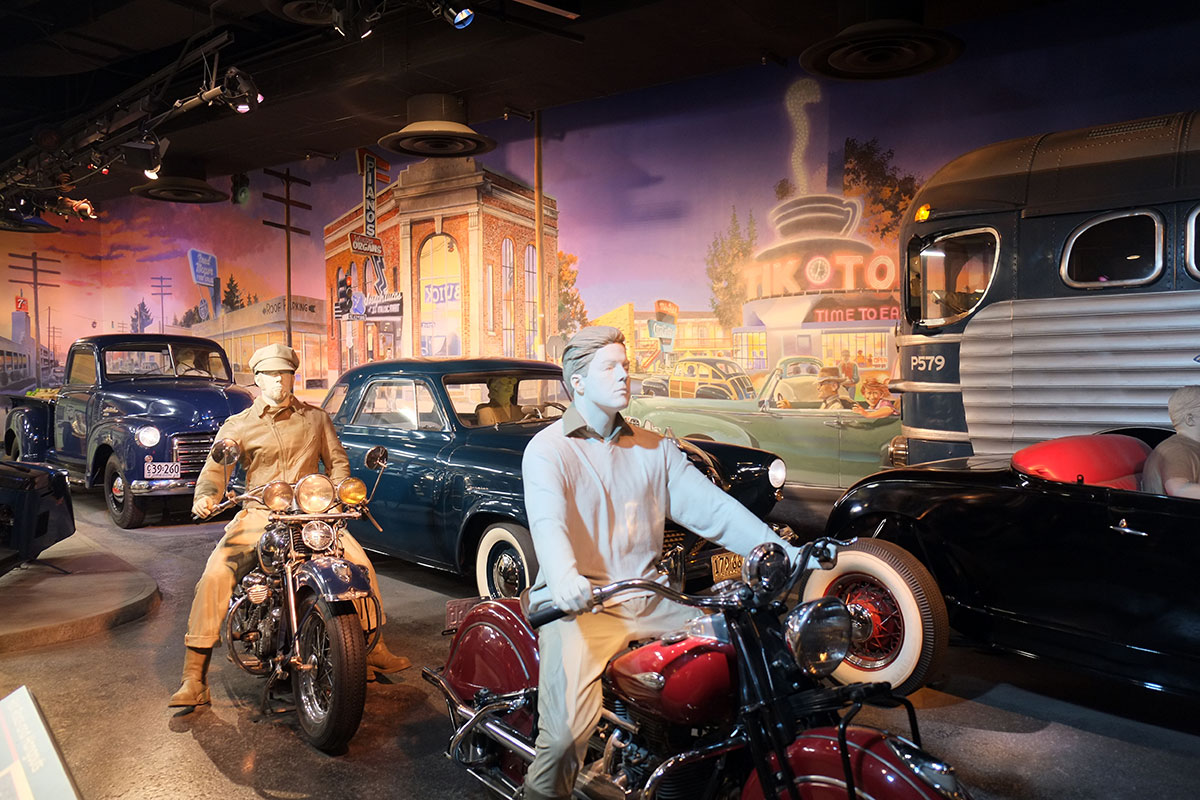
The ability of the installations to show the social, economic, technological and political context of the objects was really sophisticated.  The section on transportation clearly demonstrated the interactions between the changing transportation systems and the economy, making connections that I’d never fully understood (such as why the textile industry was able to shift to the south when it did).  And strangely enough, the section on post-war car culture focussed on Sandy Boulevard in Portland, with this tableau of cruising through Hollywood.  DSCF6243

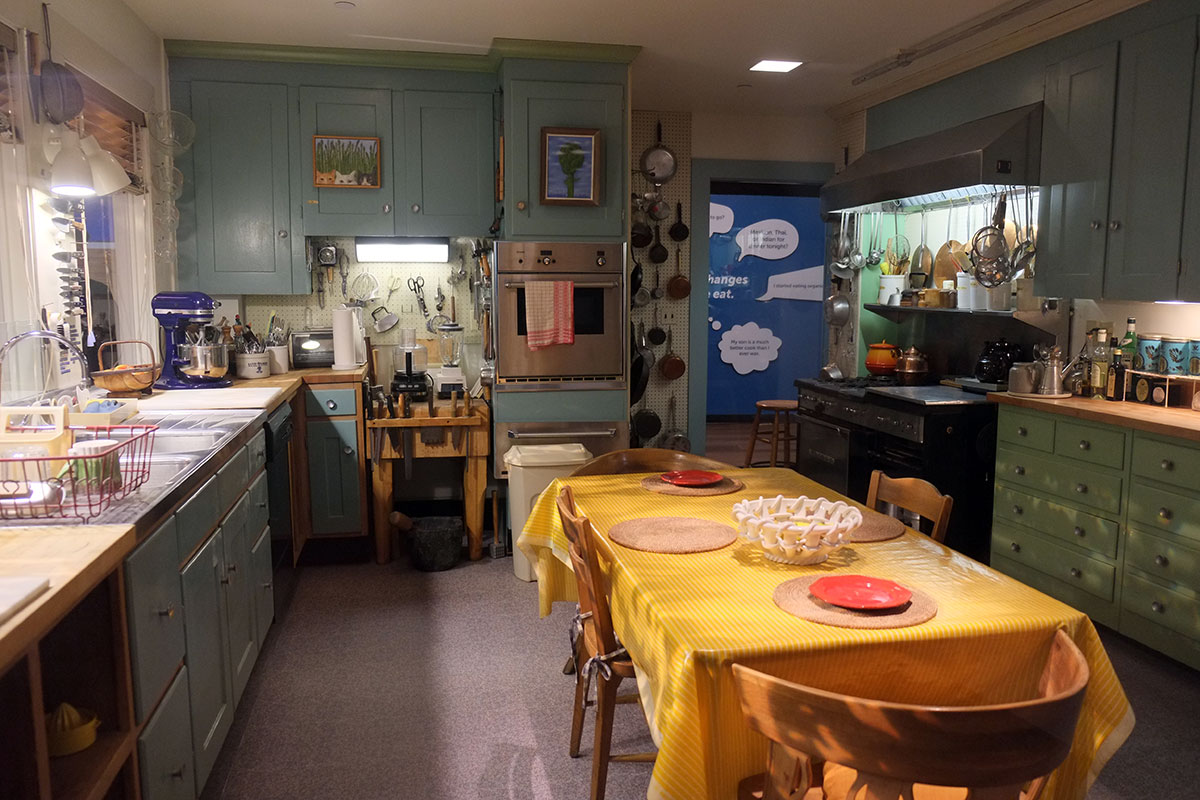
The food section was great, especially Julia Childs’s reconstructed kitchen.
DSCF6253

I started the Natural History museum with Greta, but my willingness to look at taxidermy animals is much lower than hers, especially when some of the greatest paintings in the world are across the street.  So I ditched her for the afternoon and went to the National Gallery.  Back in the 80s and mid-90s I’d always enjoyed business trips to DC, as I could spend the day in meetings and then run out to late hours at the art museums.  So an afternoon at the National Gallery was similar to my day at the MFA – a chance to revisit familiar and beloved works, plus notice a few things that were either newly displayed or had escaped my notice.

Highlights included one room full of large portraits by three of my favorite painters -Whistler, Eakins and Sargent – and being able to look back and forth amongst them rapidly, thinking about how different their approaches were.  The Italian Renaissance collection is the best in the country, how can such familiar works just knock you out every time you see them?  One new favorite is this piece by Jacopo Bassano, which seems to be Maritime Mannerism;  to the impossible poses, proportions and colors of Mannerism, we can add the unlikely stability and balance of figures leaping around on tiny boats.  DSCF6290

John F. Peto has always been quirky and entertaining, but I find this painting more satisfying than most:DSCF6422

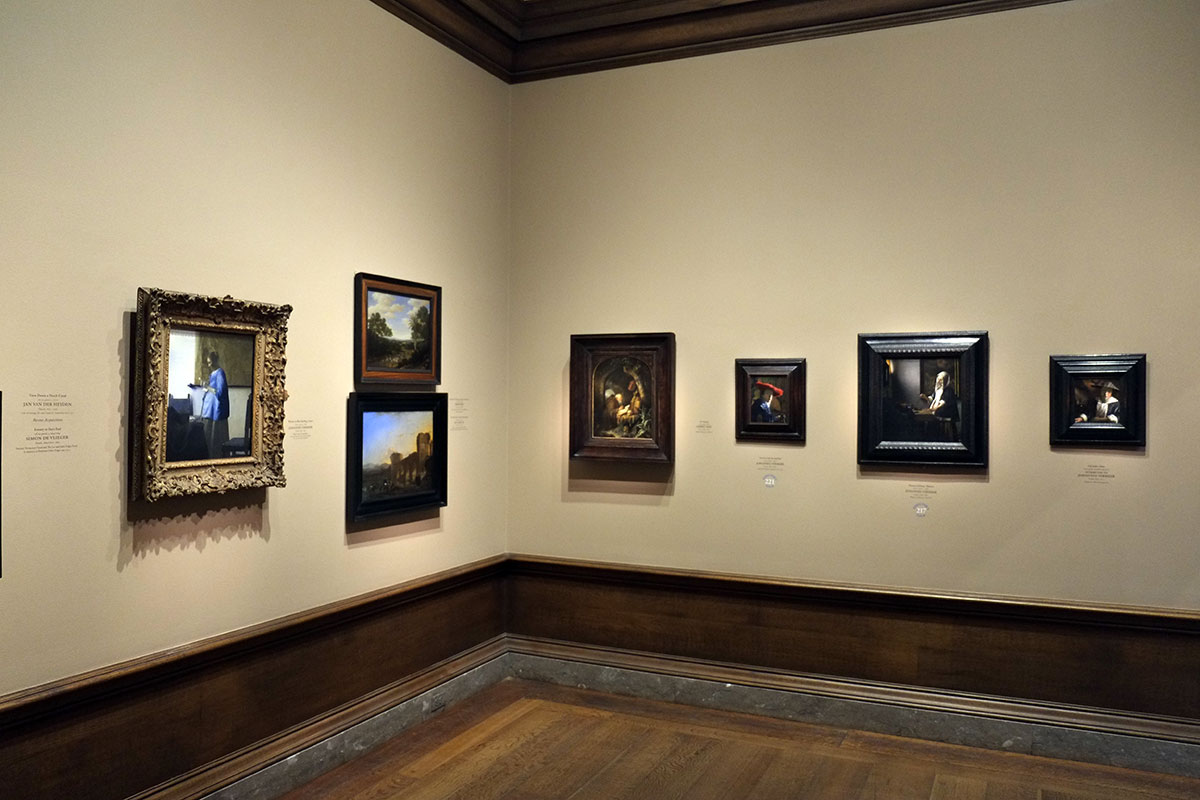
And what can you say to a room with four Vermeers?  One of the Vermeers in the permenant collection was on loan to the MFA, but they had thankfully replaced it with a loaner from the Rijksmuseum.  DSCF6284
Seeing them reminded me of the time that there was the big Vermeer retrospective in 1995, and the one weekend I was able to see it, Newt Gingrich shut down the Federal government and that was it.  There are many reasons to loathe what has happened to the Republican Party in the past 20 years, but that one tops my personal list.

Moving outside, the relatively new sculpture garden has some fun things, including this Lichtenstein 3-D optical illusion.  DSCF6454

Or you can travel underground, heading towards a galaxy far, far away. DSCF6321

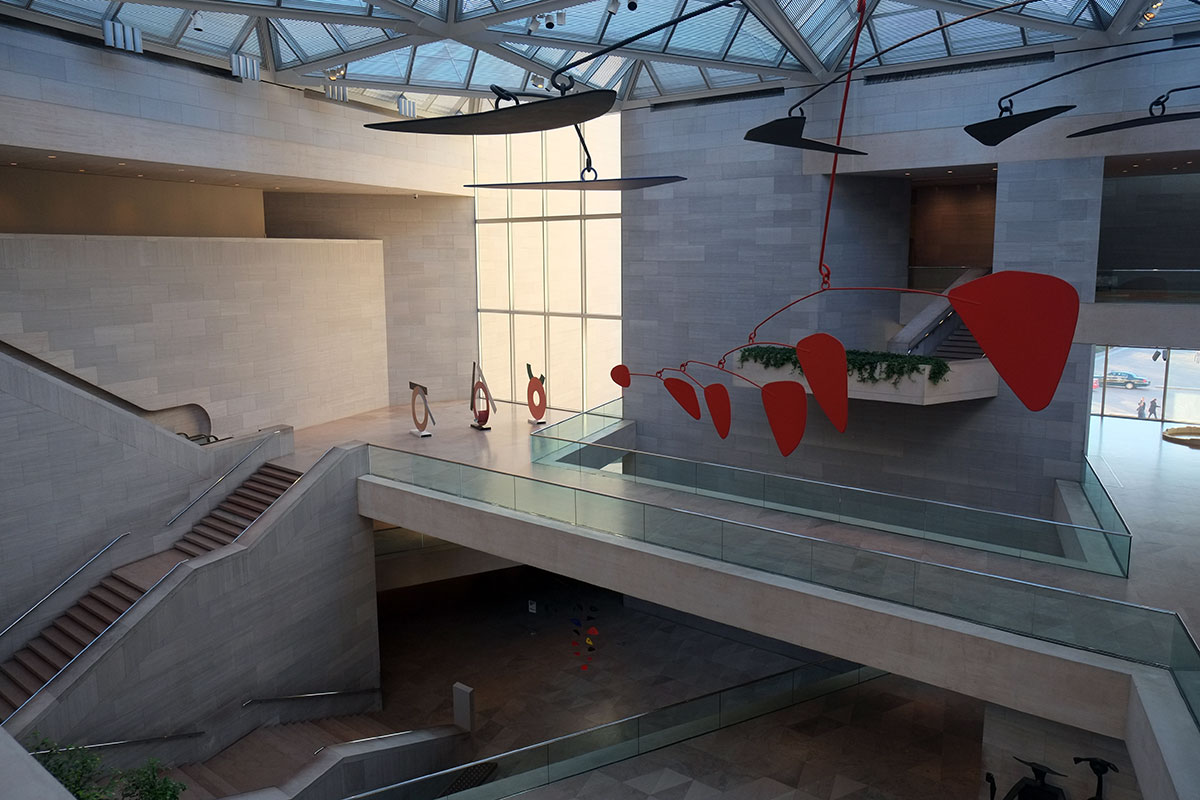
The galleries of the East Building are being remodeled, and an extra floor added on one of the corners, but the atrium remains open.  It is still one of Pei’s best buildings, perhaps as it avoids the usual gypsum board abstract detailing.  In this case, the Washington penchant for marble and grandiosity does pay off.  DSCF6346DSCF6372

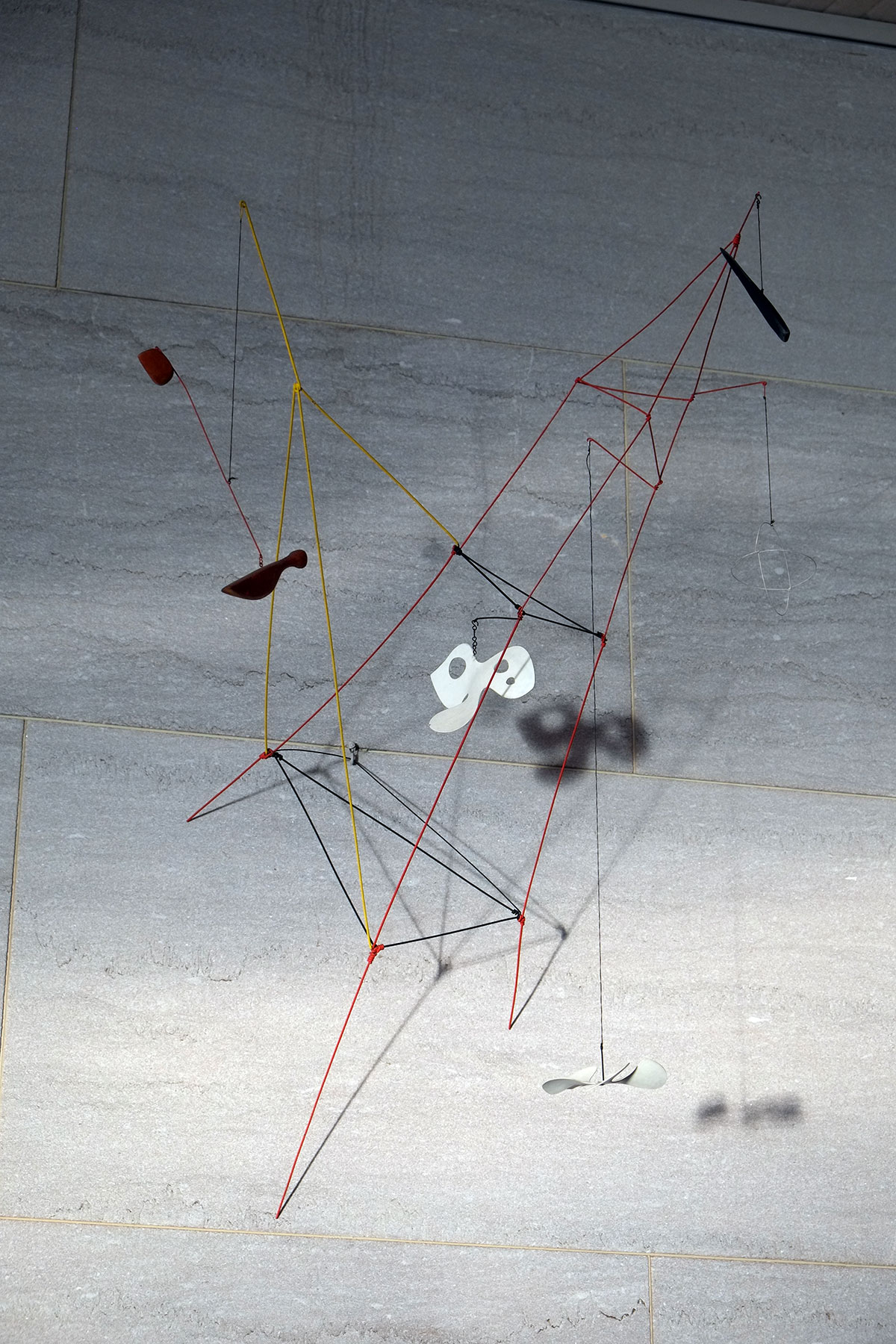
And being to see a few Calder mobiles, of varying scales and ages, is great; although as usual, the guards freak out when you blow on them.  DSCF6375DSCF6354

It was wonderful seeing these amazing museums, but we had far too little time, skipping about a dozen other museums I wanted to visit.  When I was planning this trip, I realized we really needed two years to do it right, and that was very evident in Washington.

Annapolis

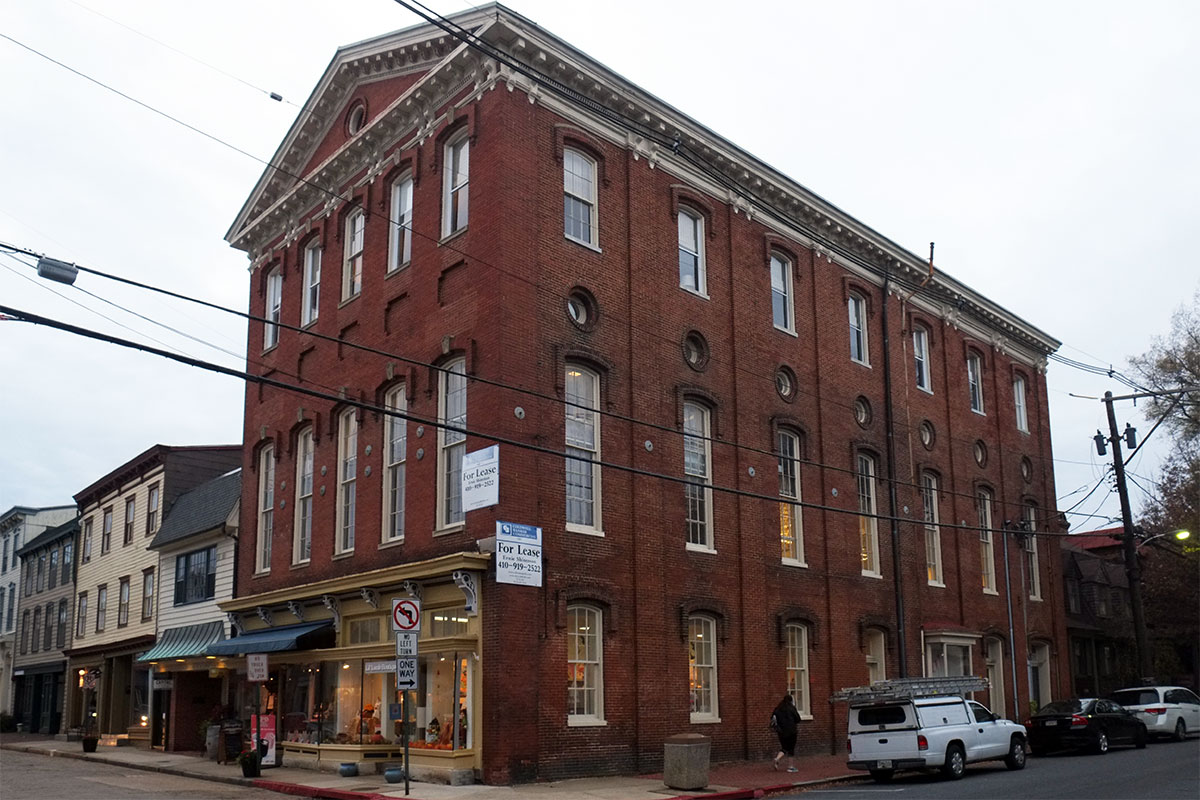
DSCF5932Visiting state capitols was not a goal of this trip, but we’ve come across eight so far.  The architectural quality of them, and the others I’ve seen, has been very good.  (The only truly embarrassing one being Oregon’s, which looks like a salt shaker designed by Albert Speer.)  But in every case, the quality of the capitol is overwhelmed by the mind-numbing banality of the state administration buildings which surround it.  They reflect the growth of state government in the mid-20th century, and the architecture  is always modernistic-pretentious, with lots of marble and “timeless” elevations.  Albany is obviously the most extreme, but it is not fun walking around any other state capital district either.  With the exception of Annapolis.

A beautiful, well-preserved, 18th-century state house, surrounded by a district which is still largely 18th- and 19th-century.  How can this be?  Where are all the soul-less boxes of bureaucrats?  Baltimore.  Maryland had the good sense to realize there’s no real reason why all the functions of state government have to be in the same neighborhood, and those large boxes were placed in a large city which was better able to accommodate their scale, both architecturally, and in terms of how many employees would have to work there.

The building itself is fine, the oldest continuously operating state house in the country, and was the temporary home of the US government in 1783-84.  George Washington resigned from the Army there, which is nicely reenacted by bronze statues (so much more satisfying than living reenacters).  DSCF5952

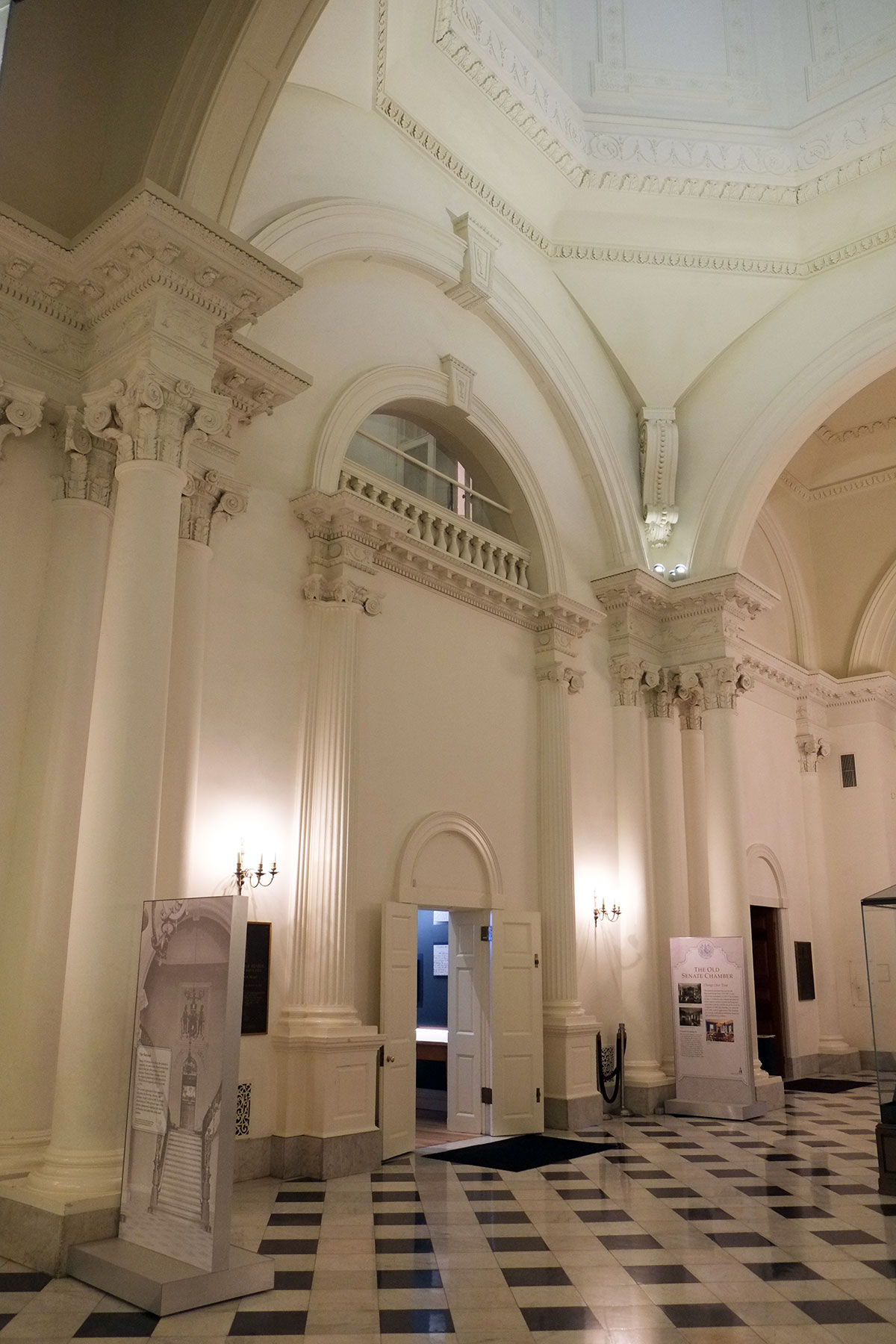
A beautiful central hall and domeDSCF5956

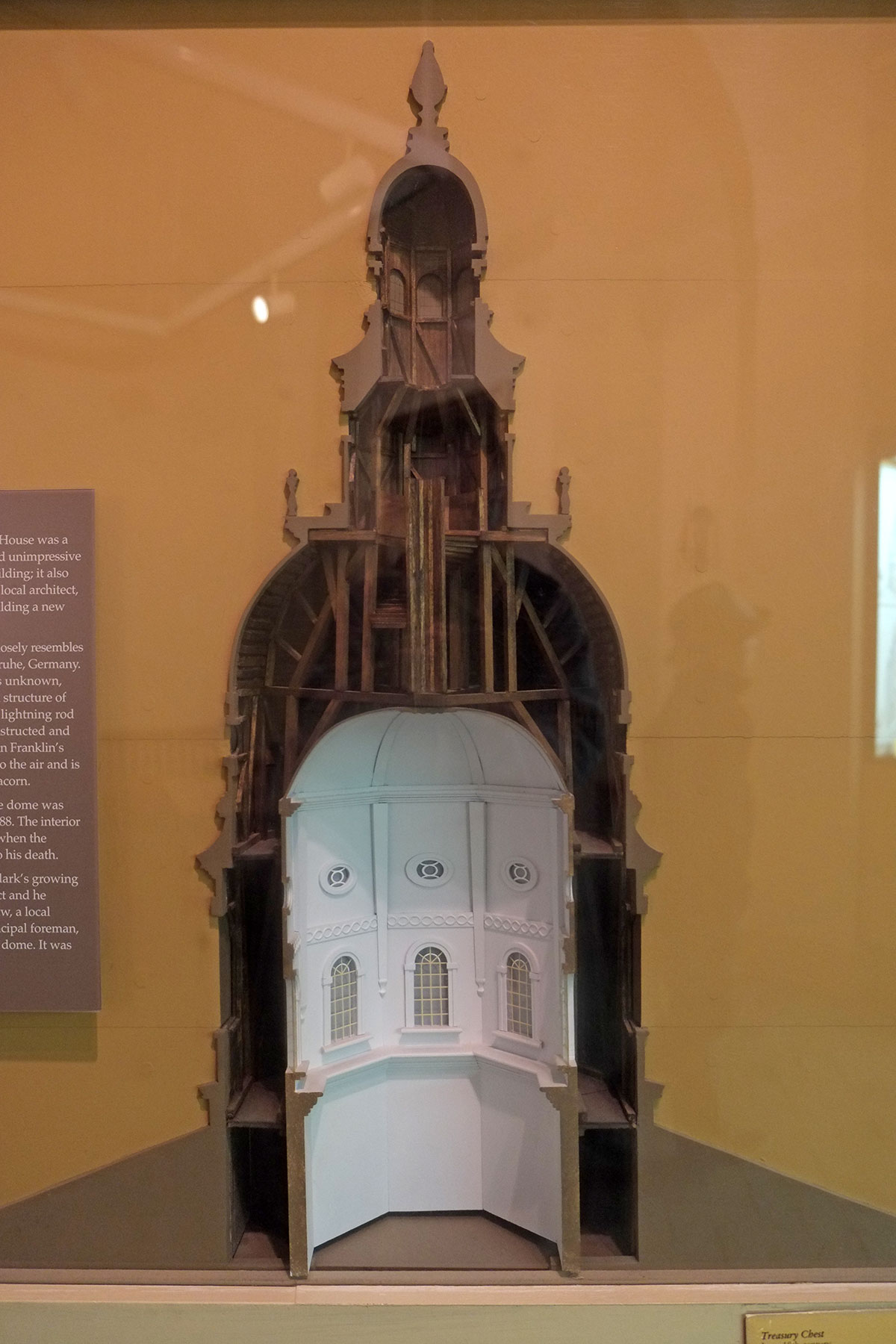
with an excellent sectional model to satisfy the architect-geeks.DSCF5959

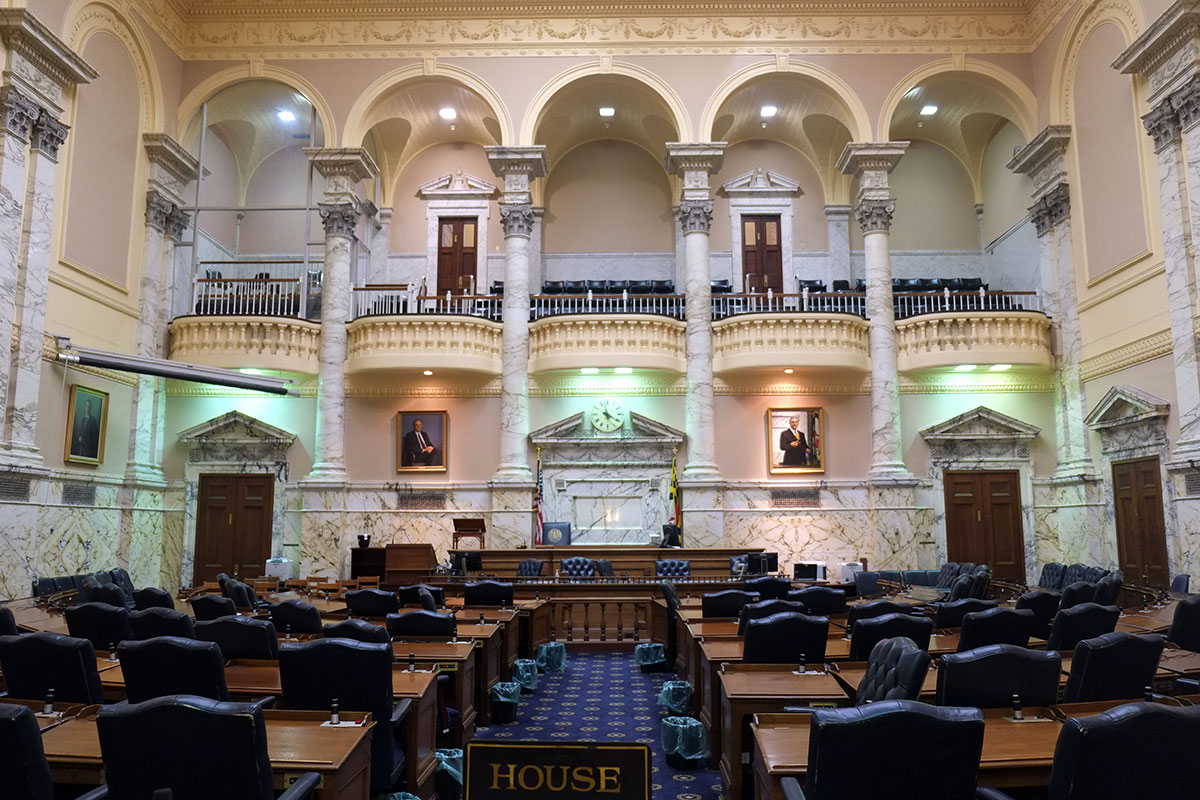
The legislative chambers are accessible, and show their later remodelingDSCF5953and other period rooms are well-restored.DSCF5944

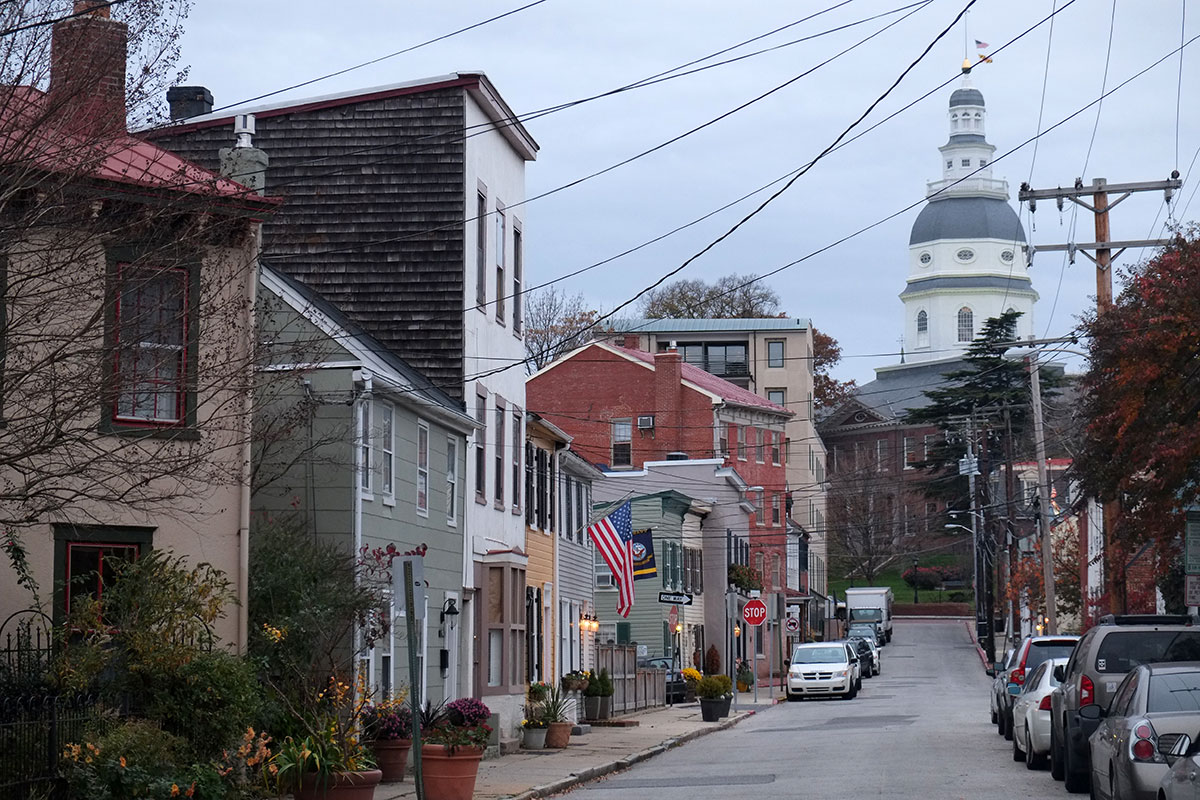
But the best thing about the capitol is how is situated, on top of a hill, providing a focus for views from all over the city.  DSCF6018

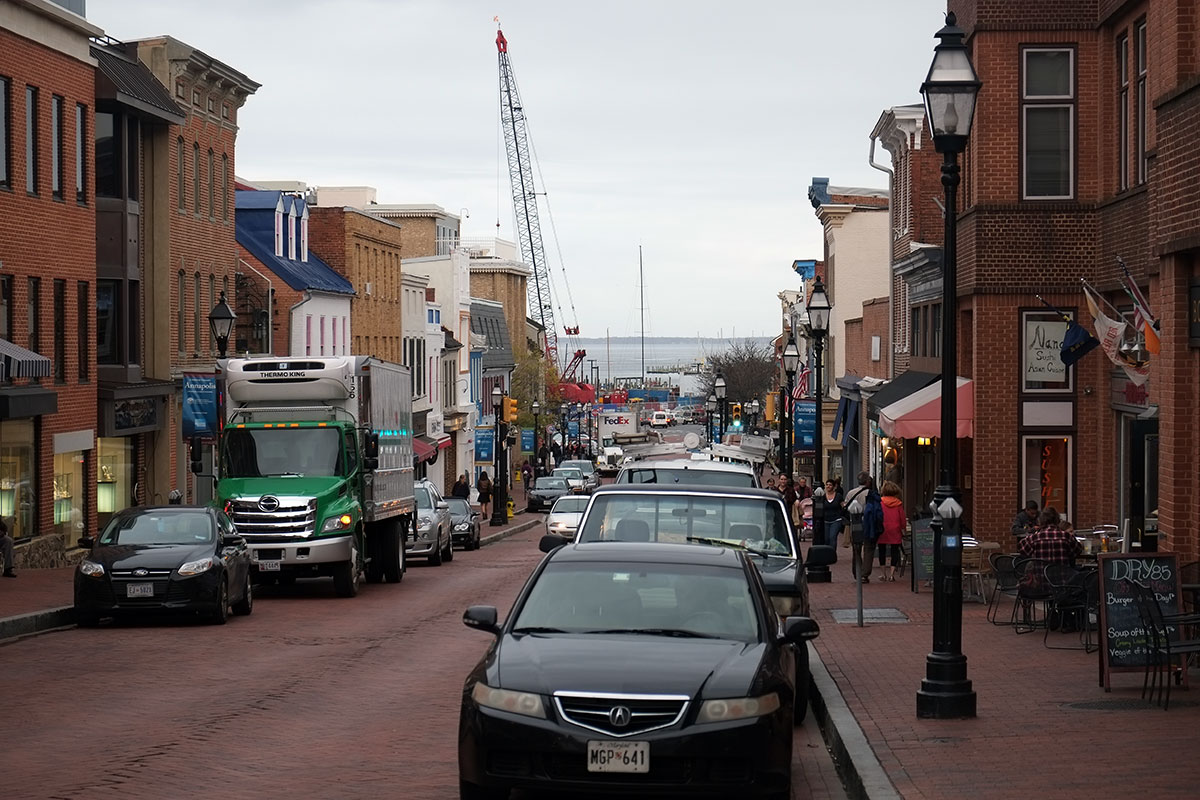
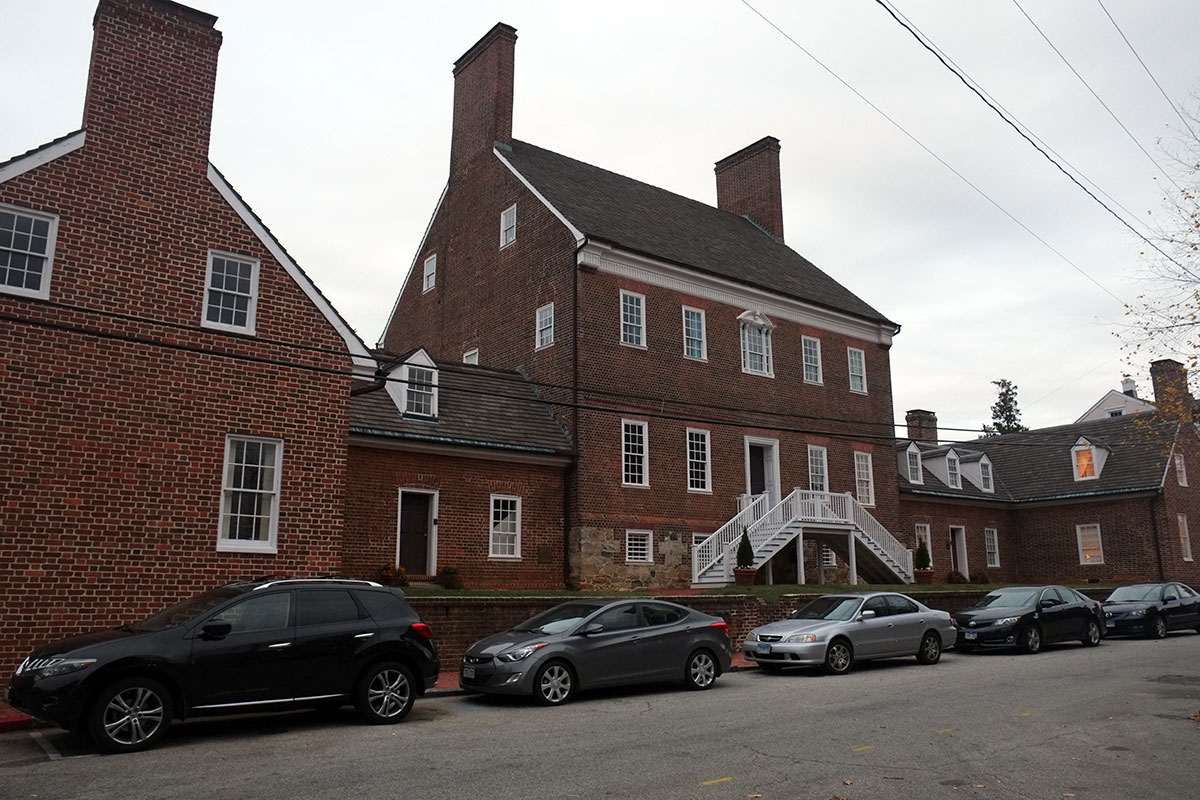
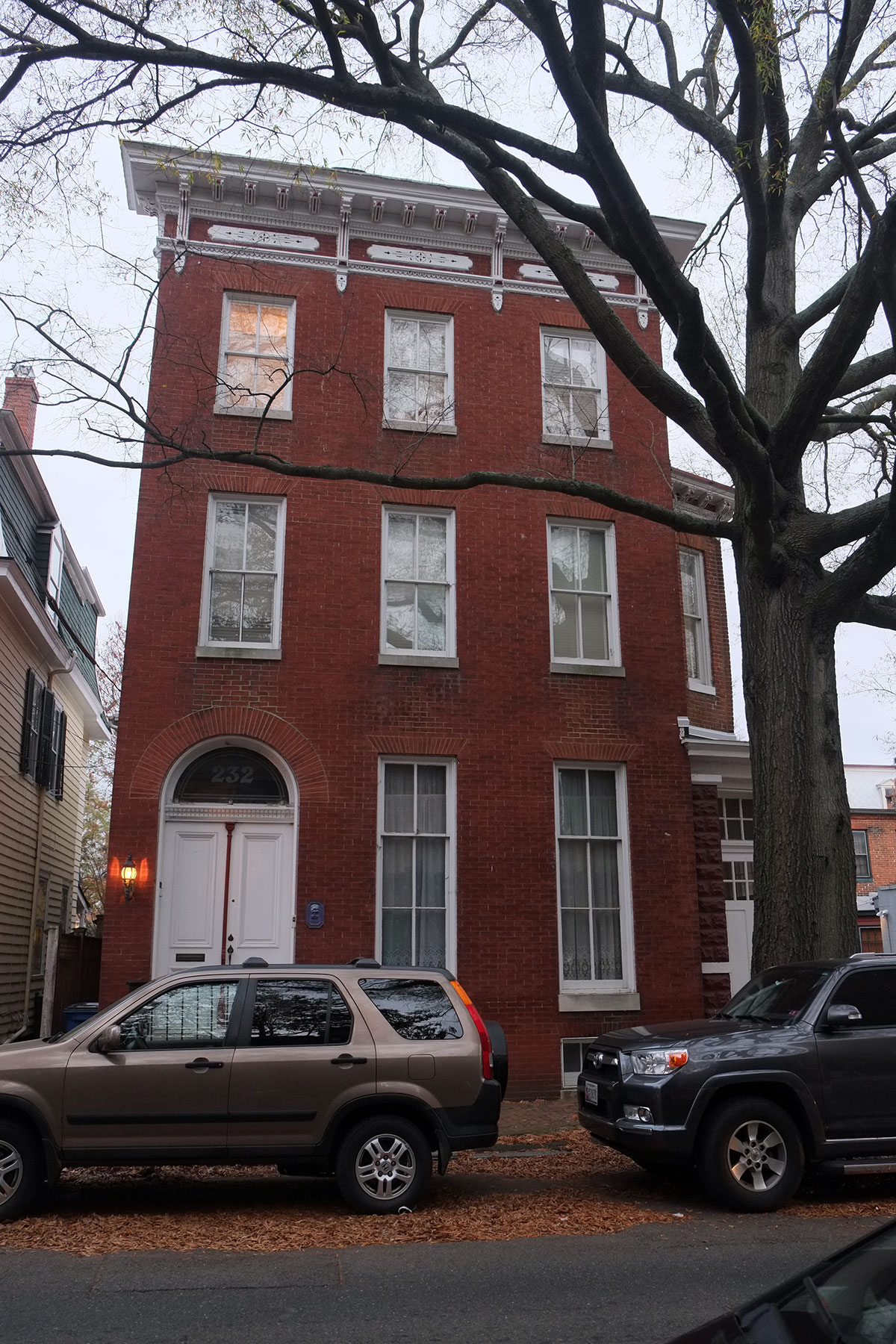
There’s a wonderful balance of the formal and the vernacular, what Krier calls the res publica and the res privata.  The state house is of central importance, but it is not the only important thing. Views down the main streets end in the harbor, as they should. DSCF5933There are grand houses (I’m not used to seeing Palladian villas in a city and not in the country) DSCF6019

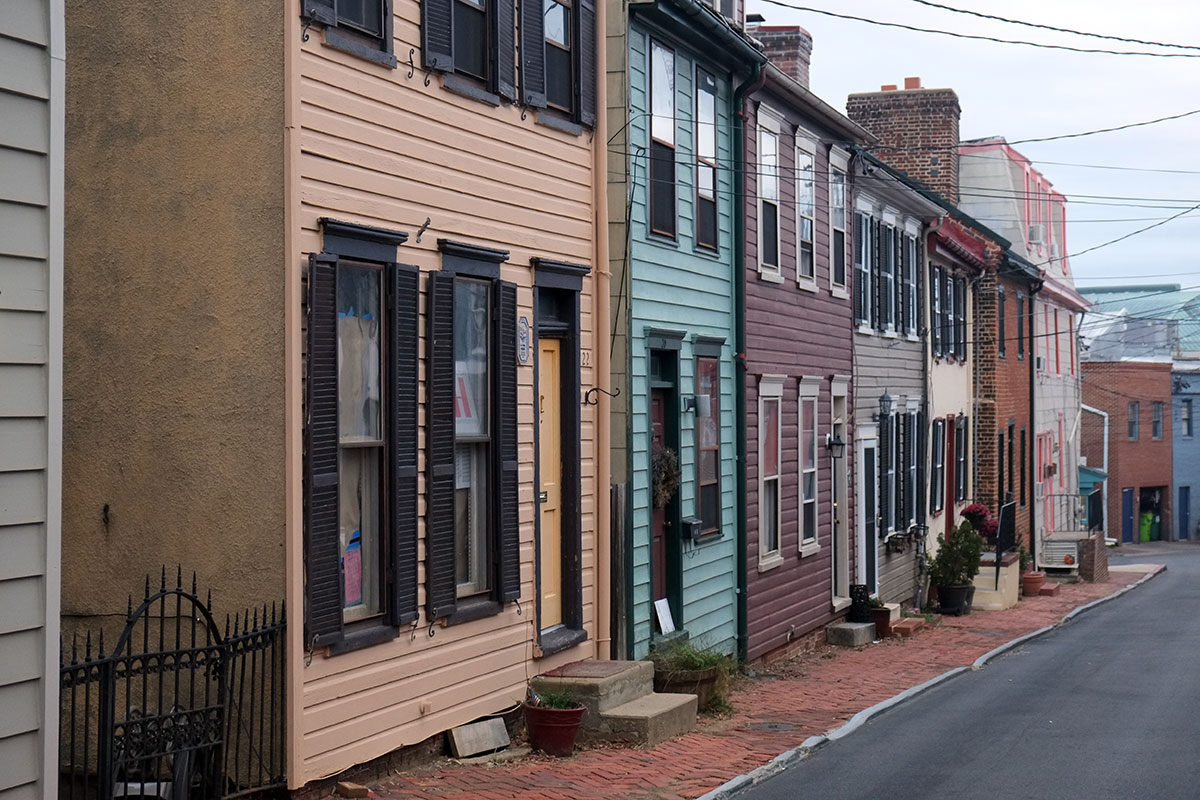
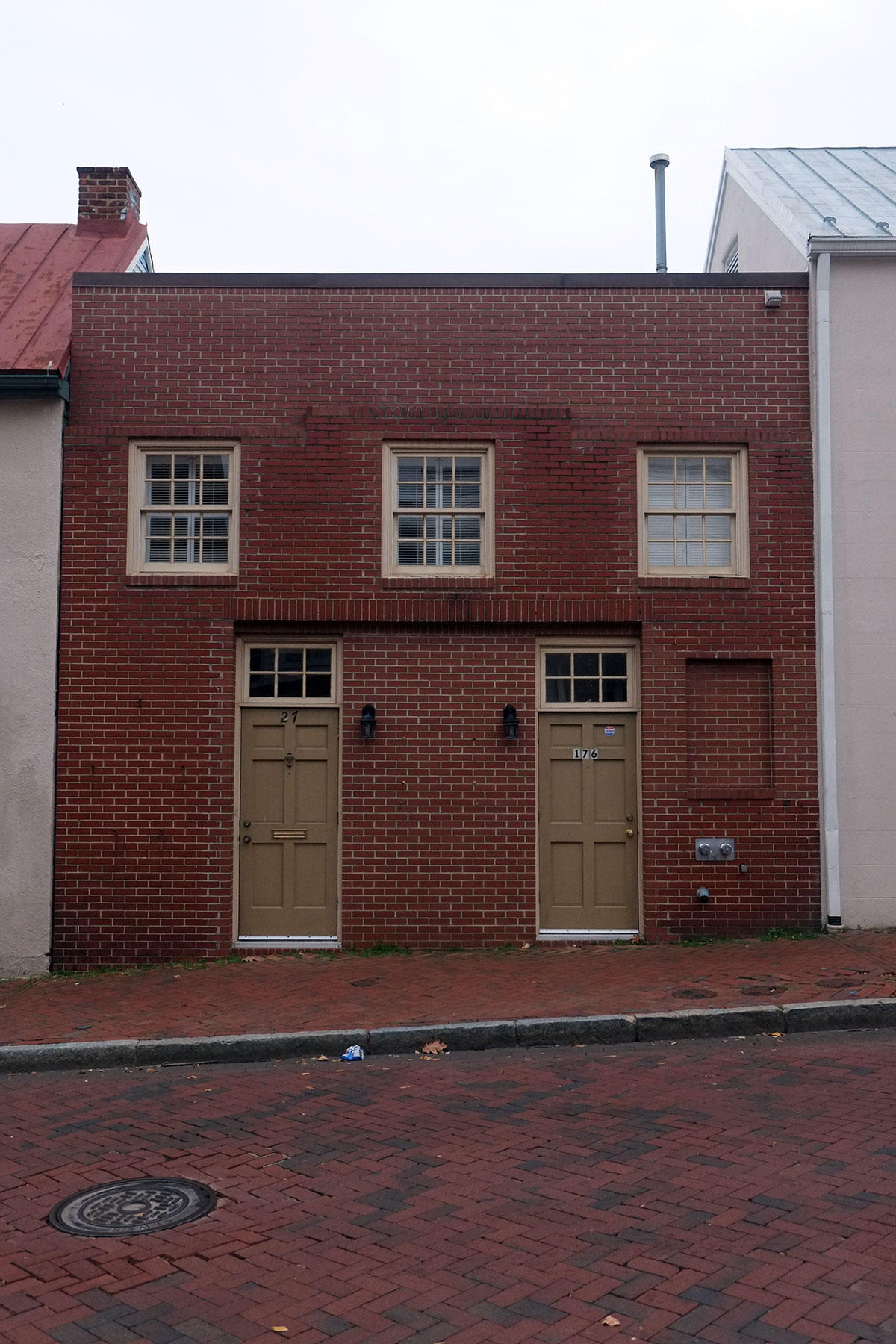
and small row houses and shops from the same period.DSCF5968

Some prominent locations are downright funkyDSCF5969

and the buildings from different eras and of different scales are juxtaposed.DSCF5934

Some irregularity in siting is quite welcome, relieving the fairly uniform street walls. (I took this same photo 26 years ago.  It’s nice they got around to fixing the porch.)  DSCF5973

and there are just fine, elegant buildings from many periods.DSCF6009DSCF6004DSCF5998DSCF5989

and some quirks:  three steps, four materials.DSCF5984

Annapolis is this very historic town, full of historic buildings, yet it doesn’t feel precious, or forced (although some of the stores do).  I think this is because they’ve avoided the ye-olde self-consciousness.  It feels like an old city that has people living in it.  They haven’t tried to iron out the anachronisms – it is not a city frozen at one moment in time, but comfortable with many.

They were also smart (or lucky) enough to not have many bad 20th-century intruders.  (I don’t think it’s at all impossible for there to be excellent modern buildings in a context such as this – there are many examples in Europe and a few in this country.  It’s just highly unlikely.)   Annapolis avoided the modernist disrupters (of course, if you go a few miles to the edge of town, it’s just like the rest of America), and also the faux-historical imitators.  It avoided urban renewal, and apparently it avoided grand redevelopment schemes.  Being in such a coherent urban environment makes you realize how rare they are in this country, and how we managed to dodge a bullet a few times.  DSCF5995