Category Archives: architecture

Herzog and de Meuron’s Perez Art Museum

DSCF8756Sometimes it seems that Renzo Piano has designed every new museum in the US in the past 20 years, but then we come across some places that have resisted the hegemony.  However, even in these non-Piano buildings, you can see how he has shifted the conversation.  We’ve visited a lot of new museums on this trip, and in general, I think there is a much greater emphasis on the clear expression of the buildings’ systems (often with exquisite detailing), and less emphasis on look-at-me form-making, starchitect branding and spatial gymnastics than there was in prior decades.  The new buildings have great conceptual clarity, but this hasn’t been at the expense of being good museums for displaying art.

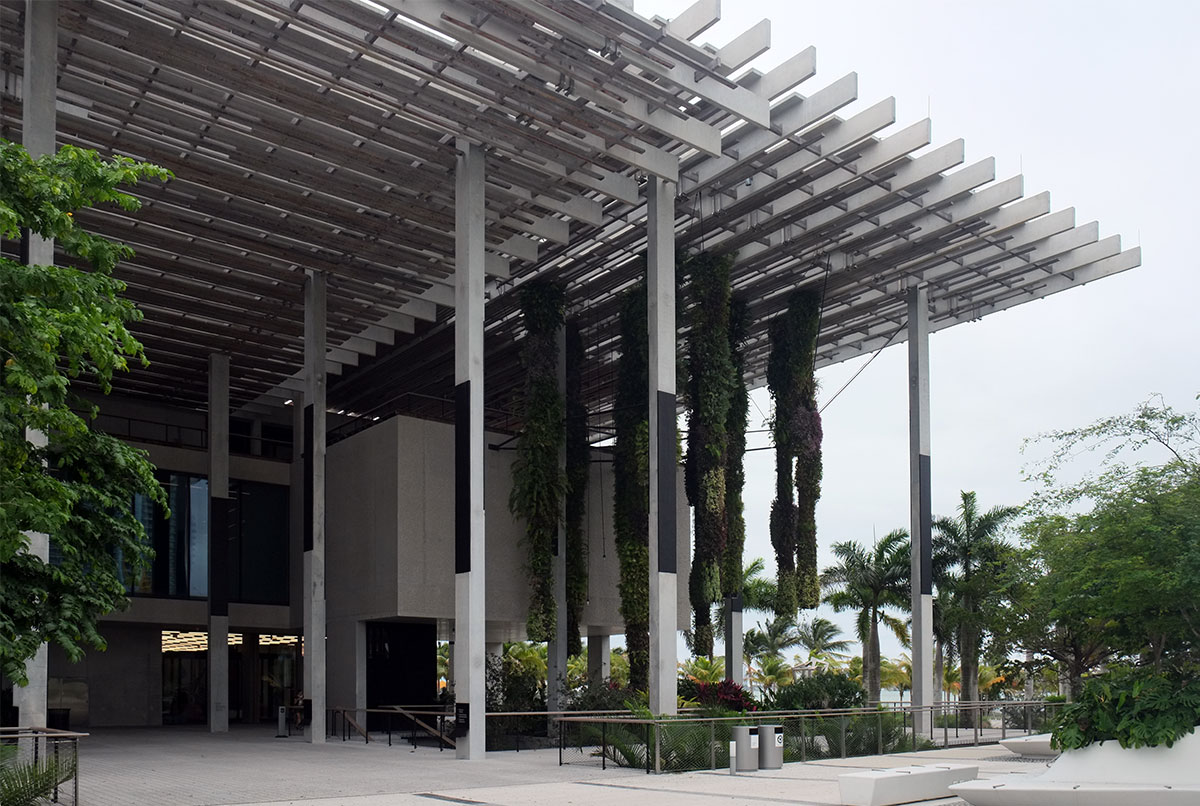
Herzog and de Meuron’s recent Perez Art Museum in Miami follows up on the success of their parking garage in South Beach, which highlighted their ability to work with structure and space, eschewing the intricate screen facades for which they were known.  The Perez Museum continues with this approach, with a parti where the articulation of the elements of frame, roof, box and plane are the basis for the scheme.  In the photo above, the roof/trellis floats above the whole building, supported on tall columns.  (We wondered if the metal plates visible at the middle of the columns are external steel reinforcement, allowing for an extreme slenderness ratio that otherwise might cause buckling.)  In the shadows under the roof you can see one of the concrete box galleries poking out.

The beautiful parking garage is under the main floor plate, which has tightly-spaced precast joists and a thin slab.  There are stairs, ramps, and stepped terraces which connect the plinth to the ground plane at a few points.DSCF8751
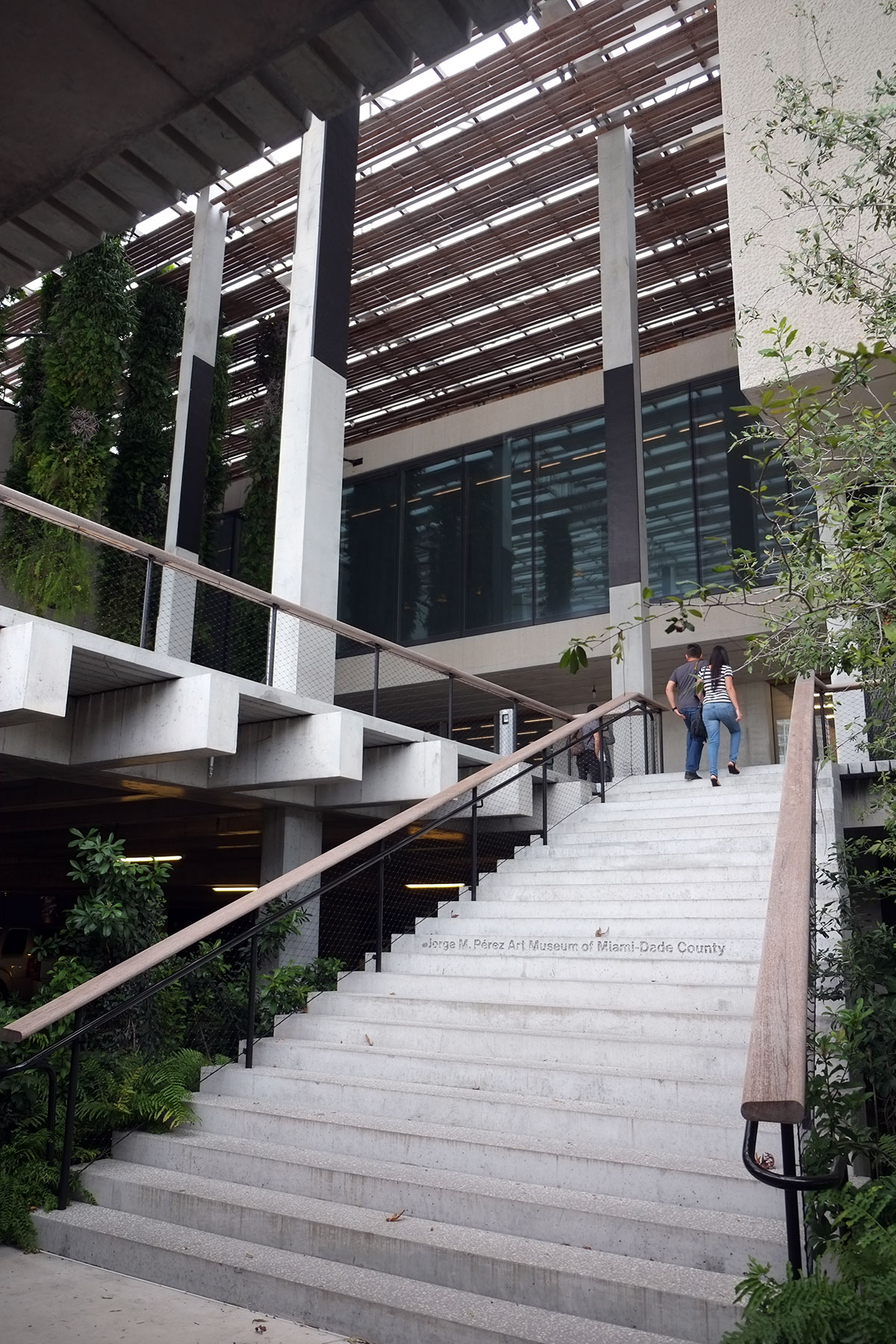
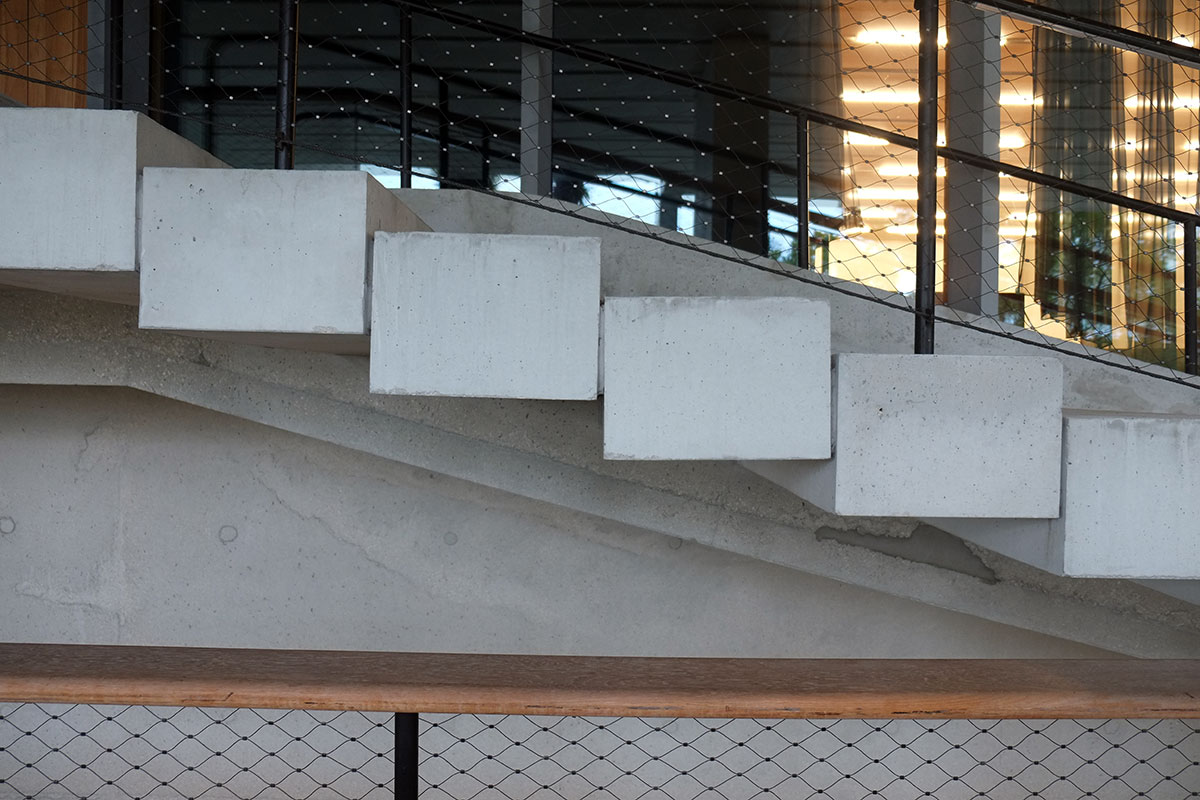
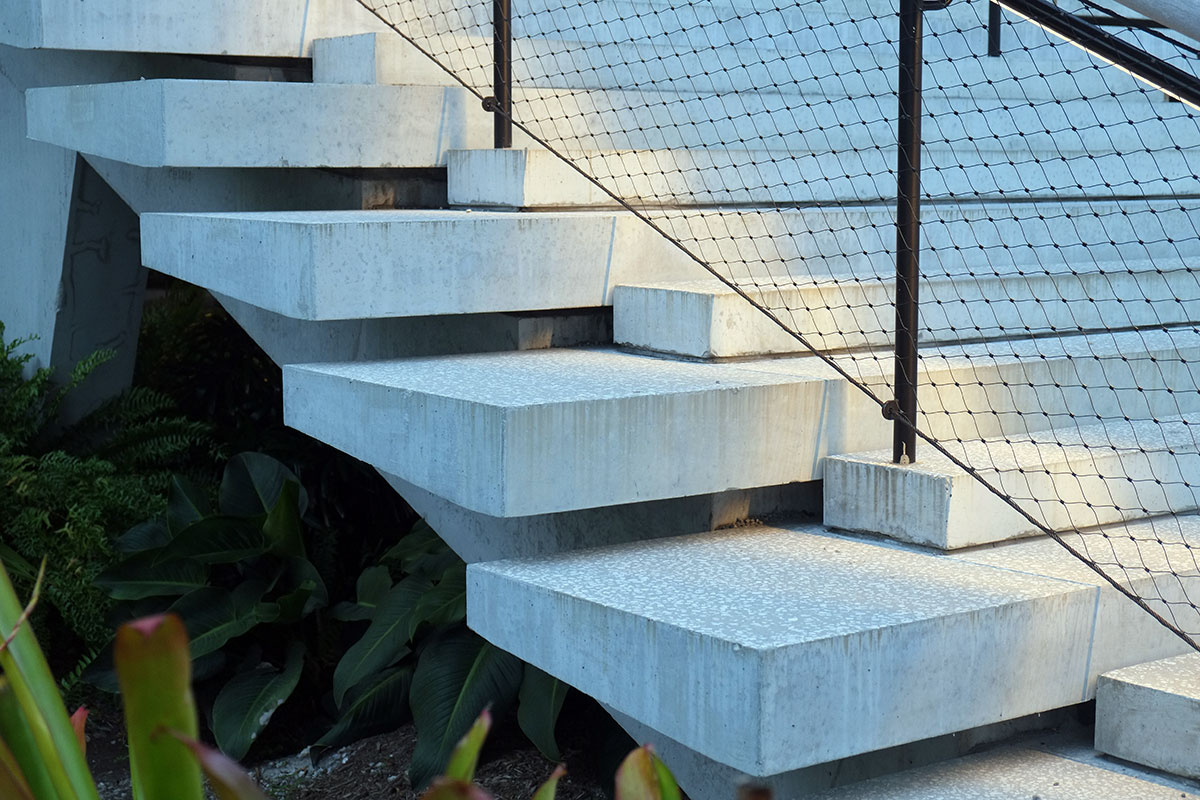
There are some excellent details at the stairs – a few ways to differentiate the conditions:DSCF8883  DSCF8862
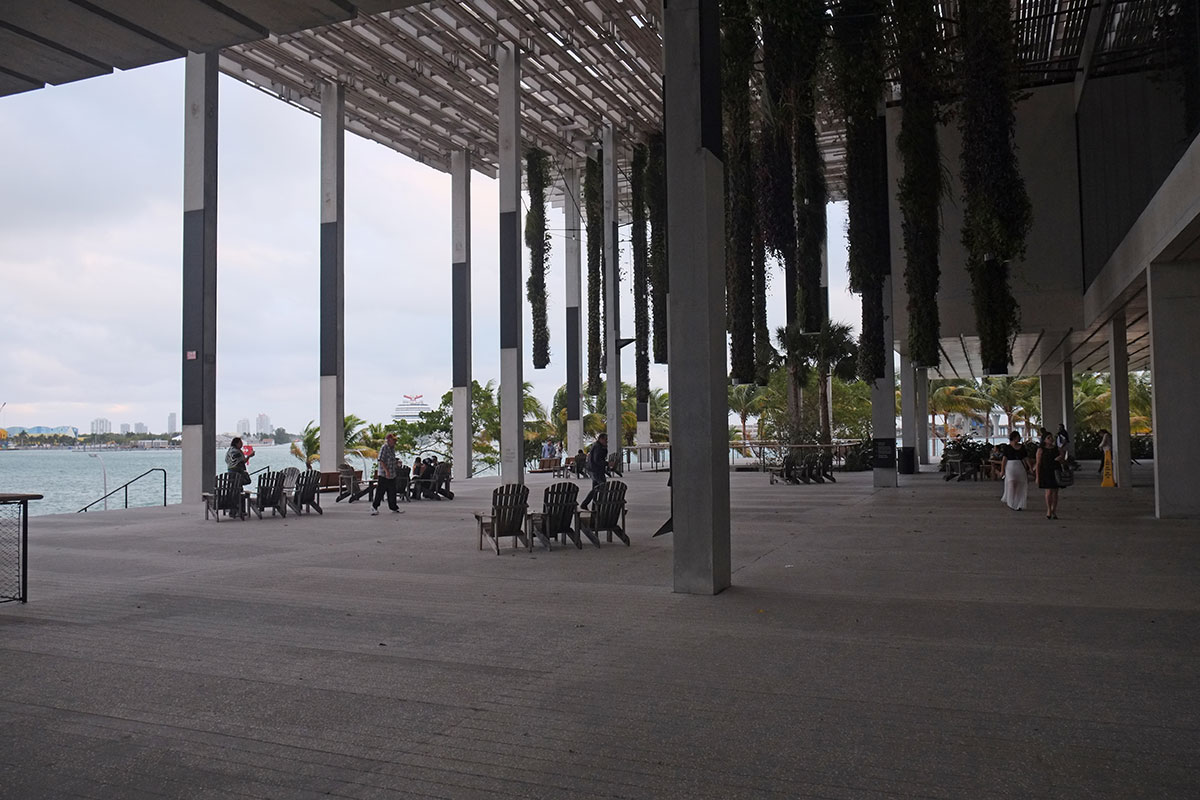
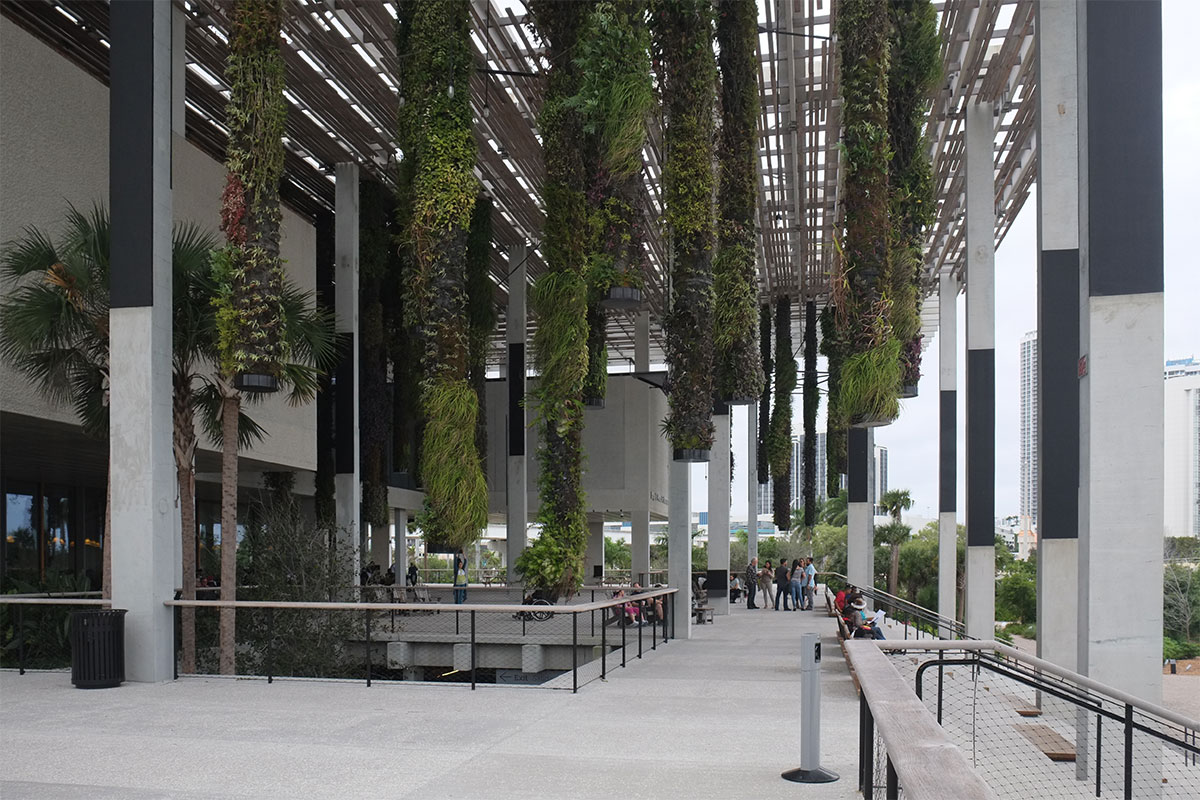
On the side towards the water, the roof creates an enormous shaded porch with views out.  The roof structure is used to hang all sorts of growies, mimicking the Spanish moss / jungle atmosphere we’ve come across in many places, but which do somewhat resemble gigantic Chia Pets.  DSCF8772  DSCF8860
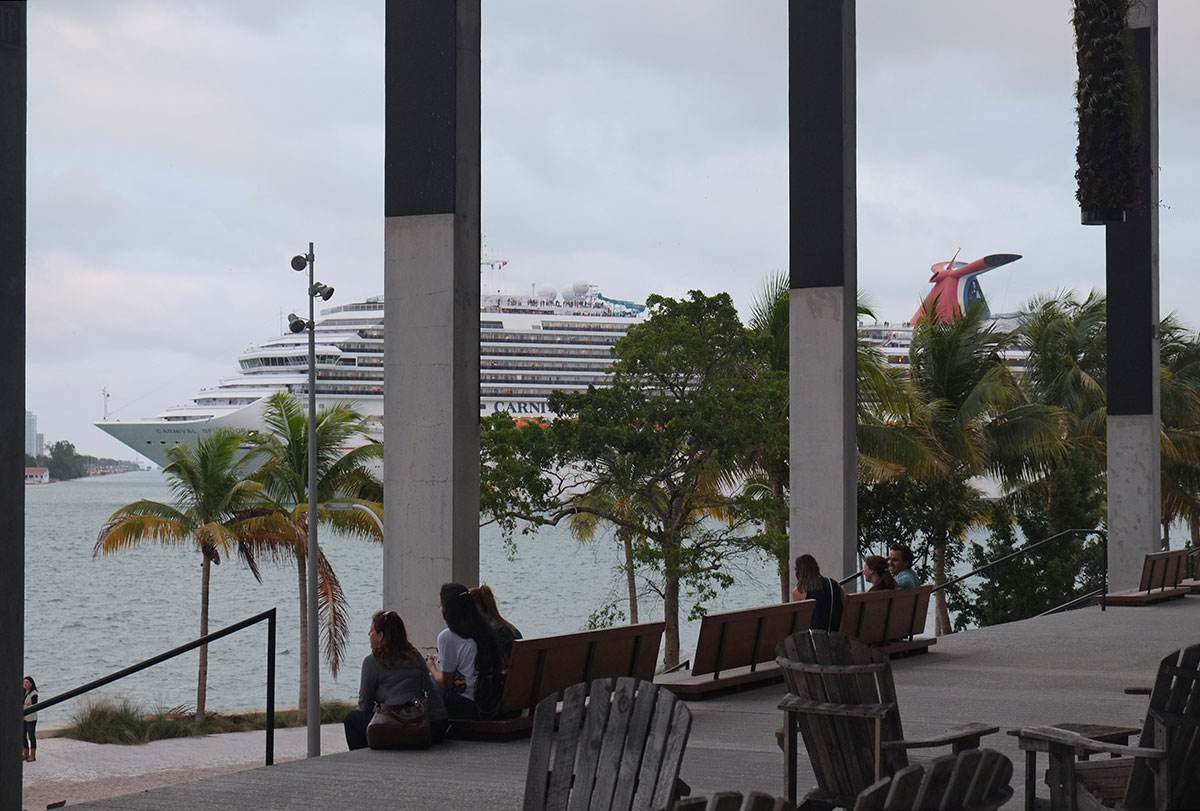
And one can watch the life of the city and the port go by.DSCF8873
The ground floor is mainly glass, with a solid wooden box for the entry.  The parti element of solid box gallery rooms is visible, and the gallery spaces between the boxes are the gaps where the interior space can connect out to the cityscape.  DSCF8890
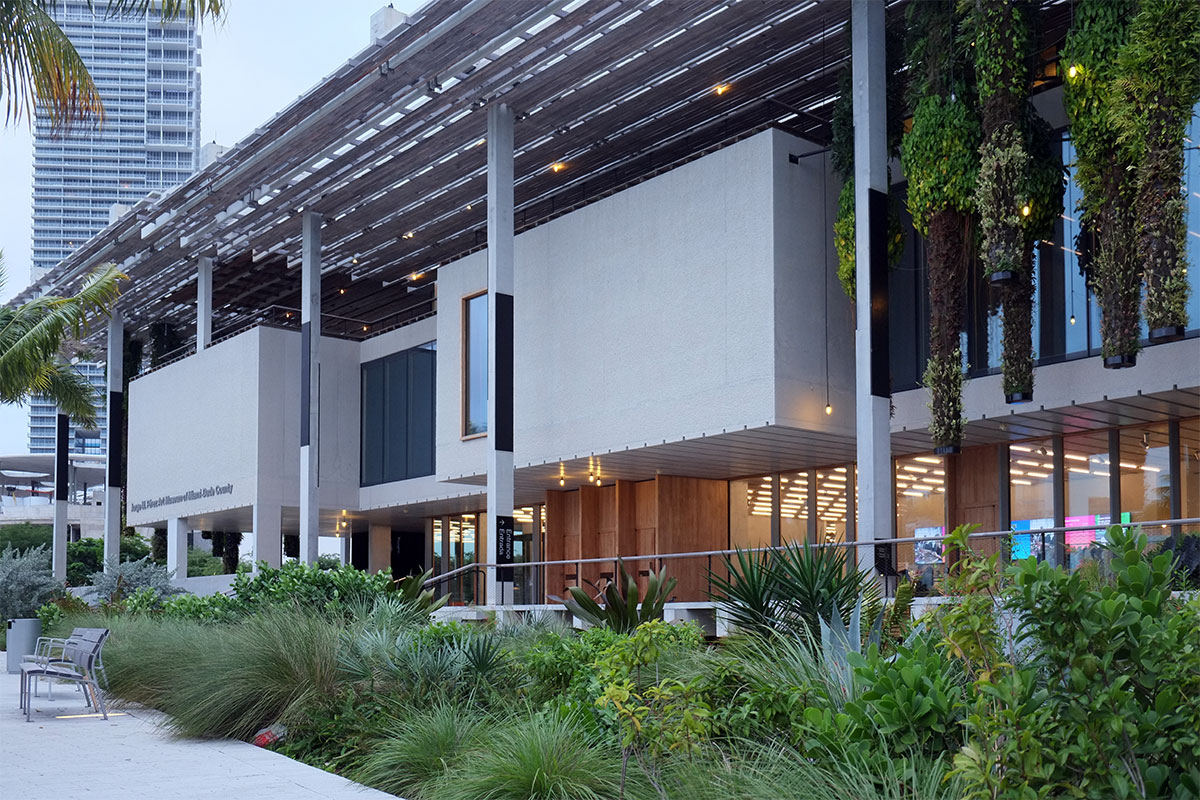
The general impression from the exterior is an almost Japanese timber-frame approach in precast concrete, with layering of structural elements.  The roof reminded me of Kenzo Tange.  The boxes and spaces under a huge roof is an approach seen before, even back as far as Pietro Belluschi houses.

Moving in from the lobby, the distinction between the concrete boxes and the partition walls in the open plan can be seen.  DSCF8782
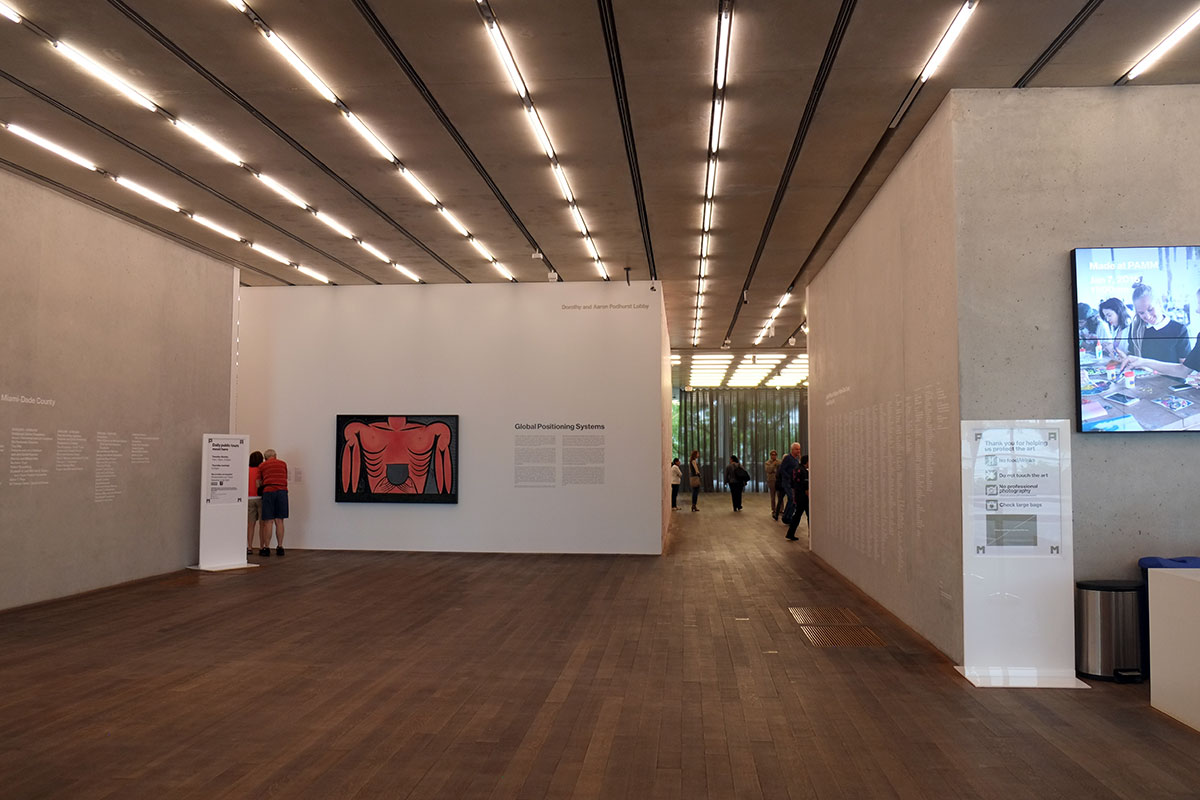
There are galleries on the main floor, but most of them are one flight up.  To reach that level, you climb up this monumental stair, which also functions as the circulation for a presentation/lecture space.  DSCF8792
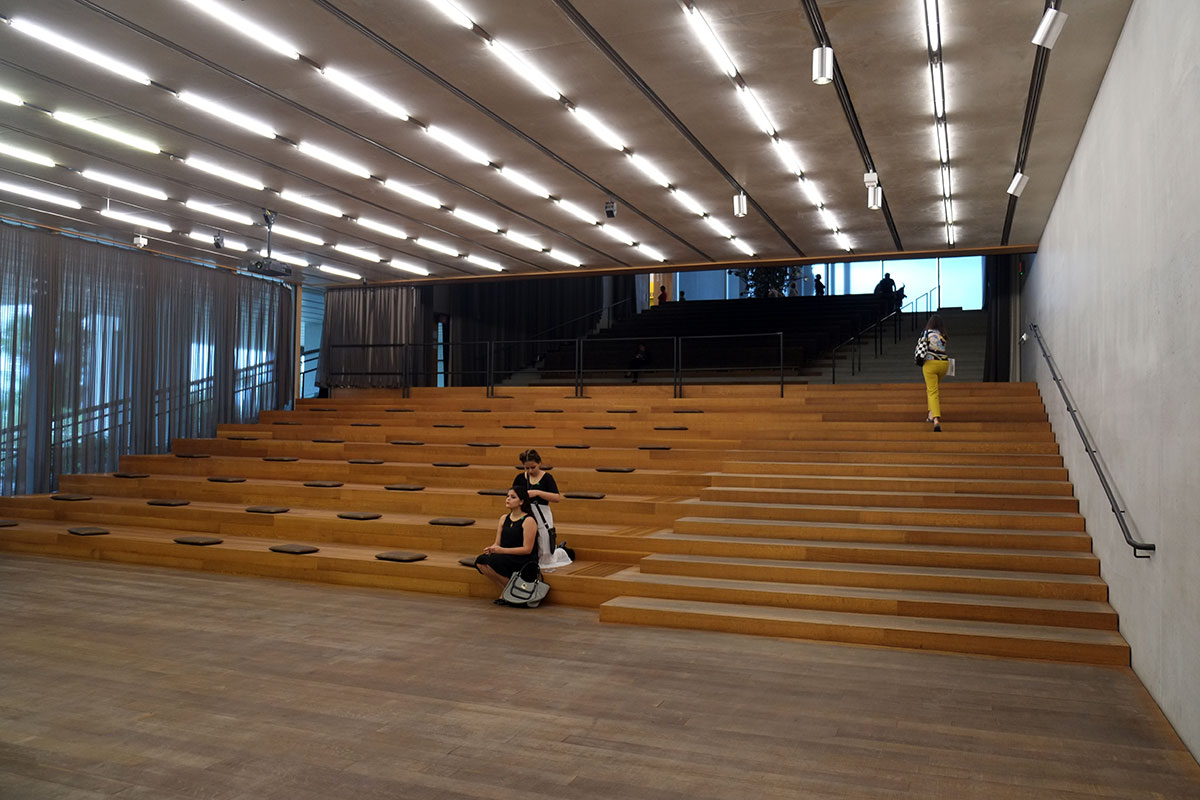
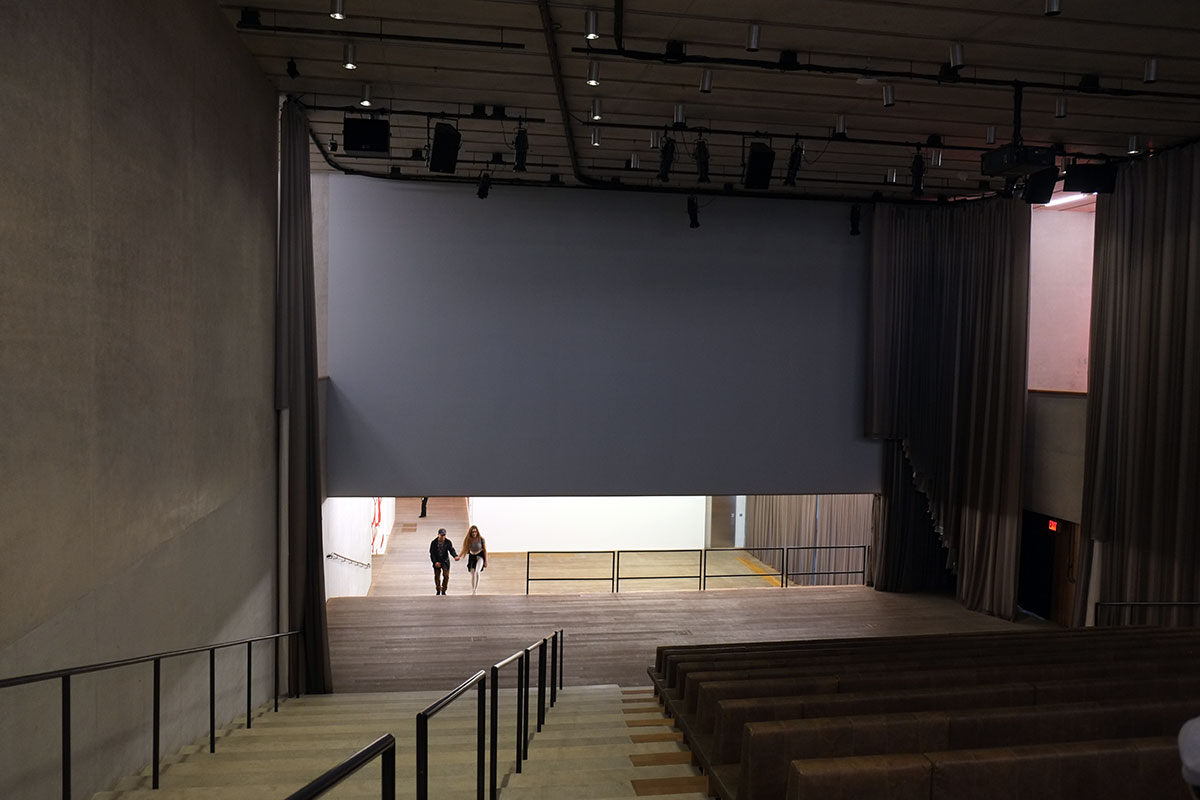
From above you can see how the auditorium can be tuned and curtained off.  In section and in function it is similar to the Seattle Public Library, where the auditorium space isn’t isolated most of the time, but open to the passer-by patrons.DSCF8841
There are open gallery spaces between the boxesDSCF8803
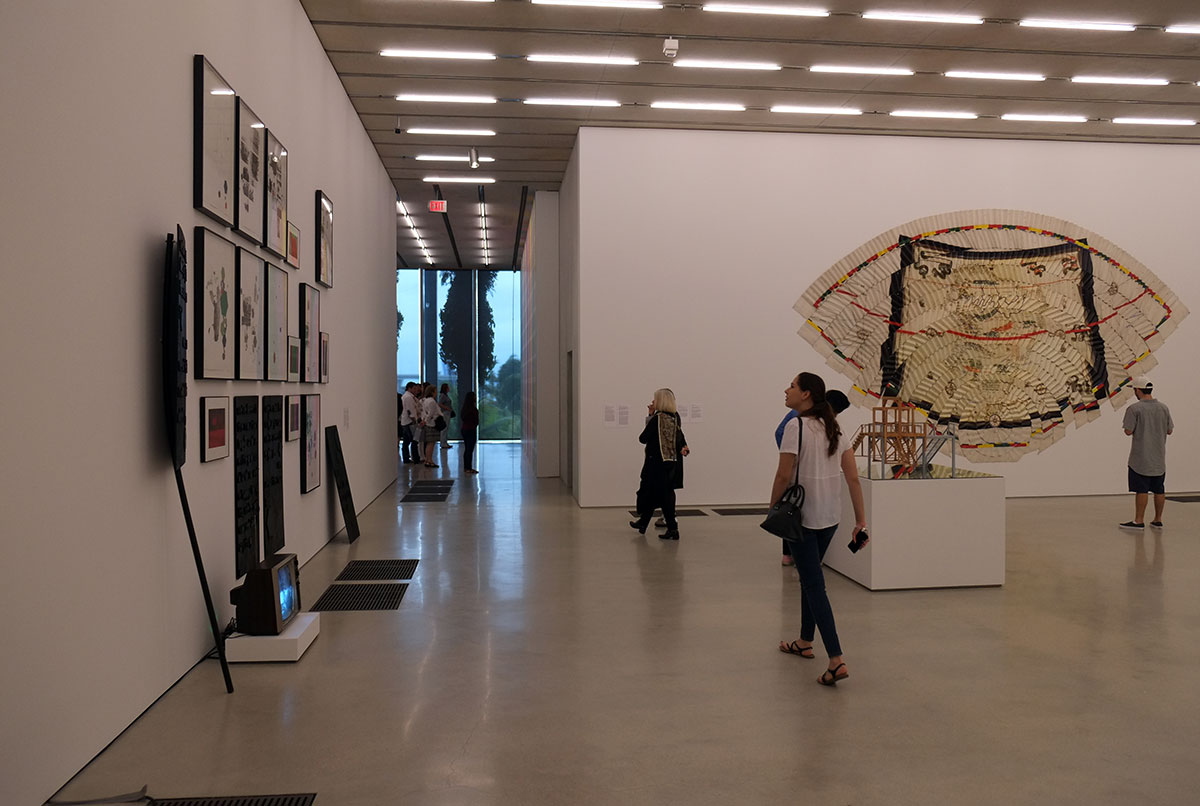
and a clear way of making an opening into a boxDSCF8826
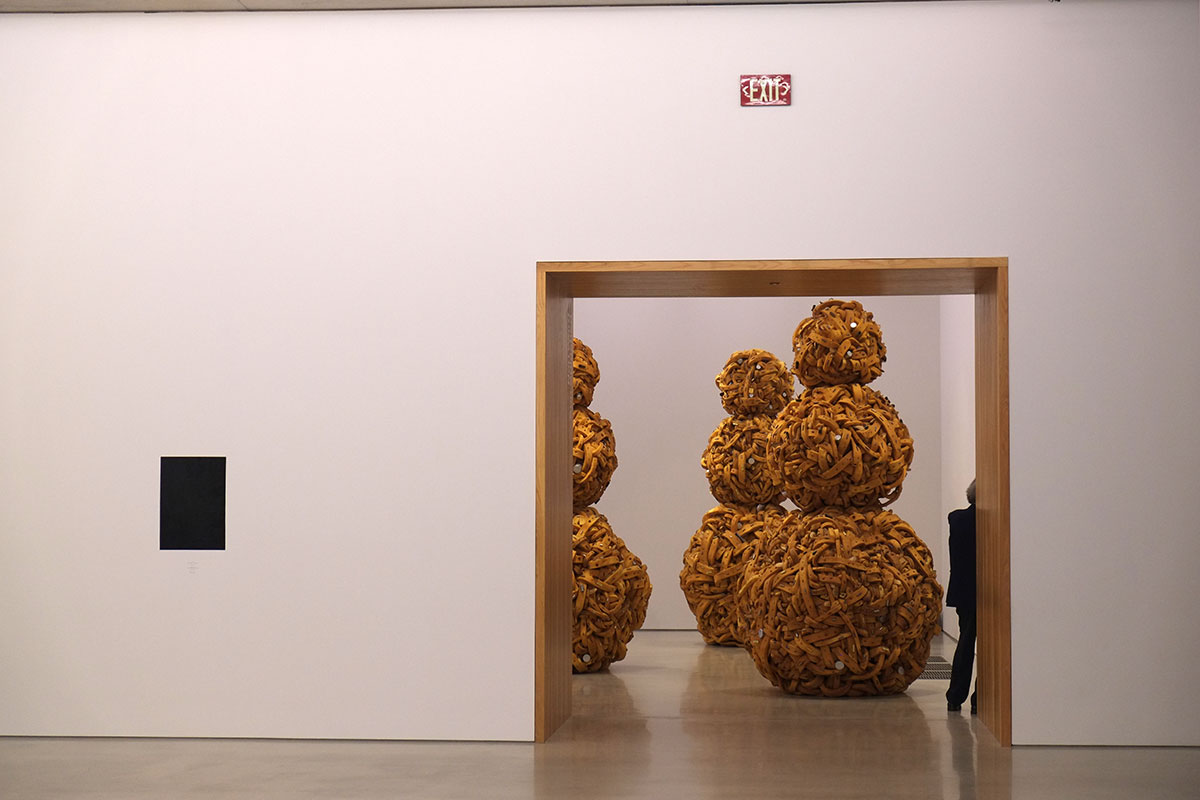
The rigor of this approach is pretty consistent, although there are some places where the detailing seems a little fudged – boxes dying into the concrete floor slab above, but screen walls doing the same.  This may be a matter of budget or convenience – it is easy to pull a screen wall way from a box for a reveal in plan, but not attaching the wall to the slab above presents structural problems.  (I may be more focussed on this after a visit to the Kimbell yesterday, where the articulation of these issues is rigorous to the nth degree.)  But it does make me wonder whether we would even be thinking about these issues if Mies had jus let the wall support the roof in the Barcelona Pavilion.  (This issue will resurface with some subsequent posts.)

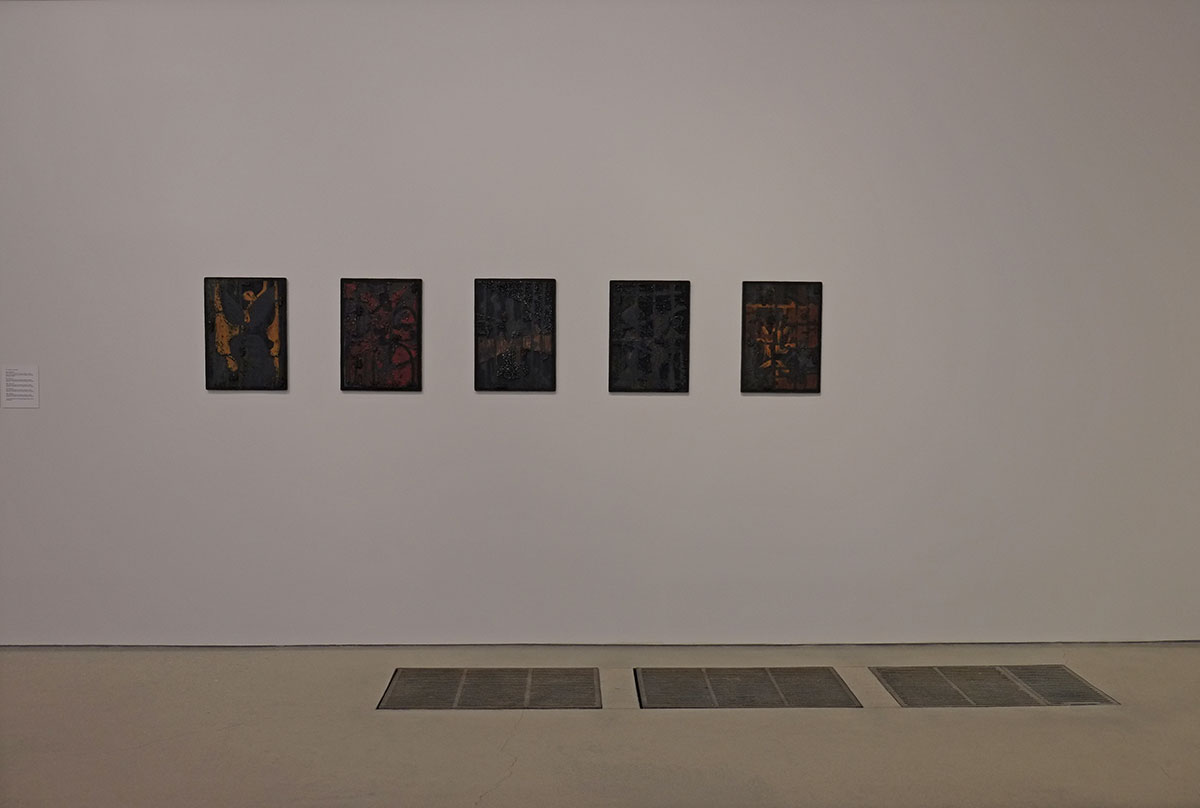
There are some interesting juxtapositions of the art and architecture:DSCF8830
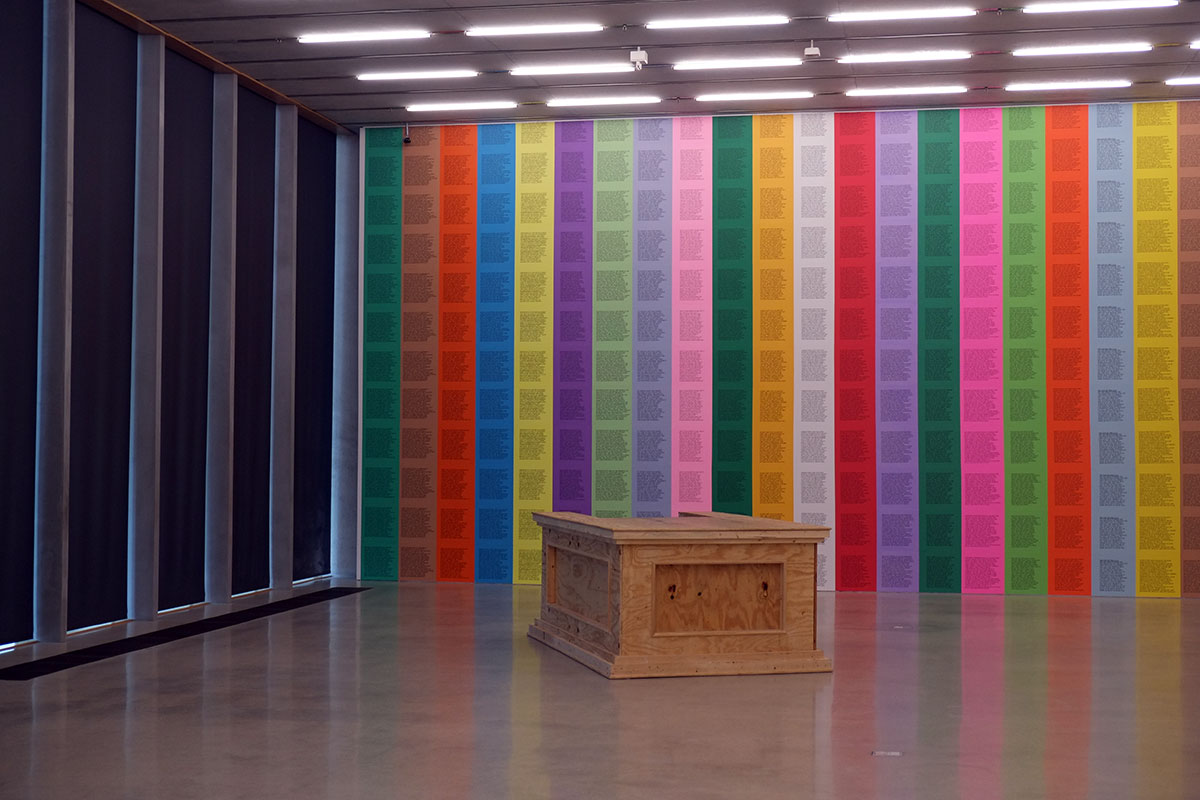
and a gallery which opens up to the third floor of offices, where a site-specific installation occurs.  I was looking at this and a museum guard offered me a lengthy handout on the piece.  I looked at it, but said that I had a problem with art that needed three pages of explication to be understood – if the piece can’t speak for itself, what’s the point?  This triggered a reminiscence by him of his earlier days studying art with Norman Rockwell and how he learned to really draw, and how a lot of the conceptual stuff he sees now makes no sense to him.  I’ve been thinking recently about the particular hell of being a classically-trained artist who spends his days surrounded by contemporary conceptual art.DSCF8804

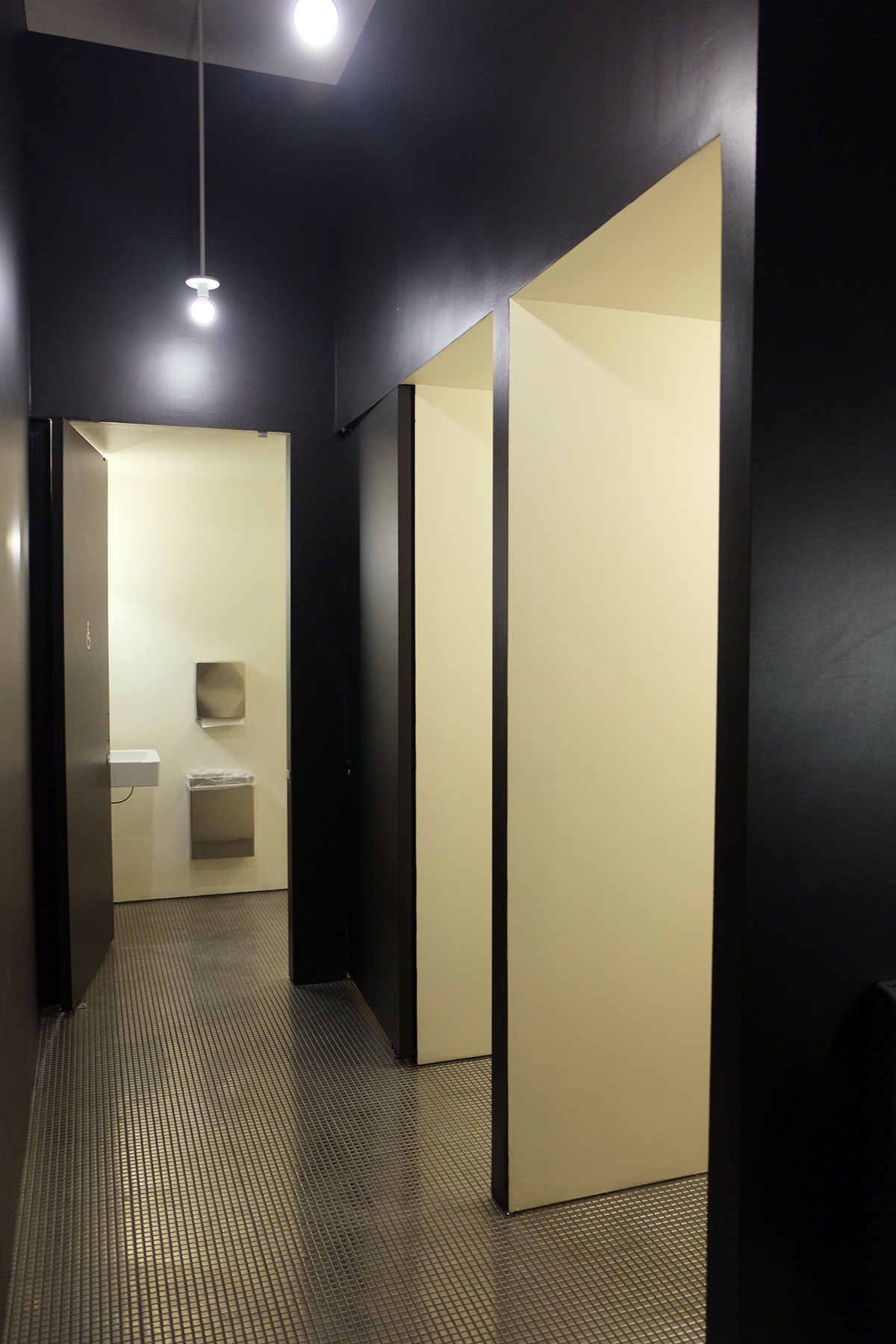
And no piece on a Herzog and de Meuron museum would be complete without a photo of the sublime rest room.  This one is similar to those at the Walker addition in Minneapolis, but somehow not quite as transcendent.  I think it may be the contrast with the dark color, whereas the Walker is all white and more ethereal, an unusual  feeling to have in a public bathroom.  DSCF8839
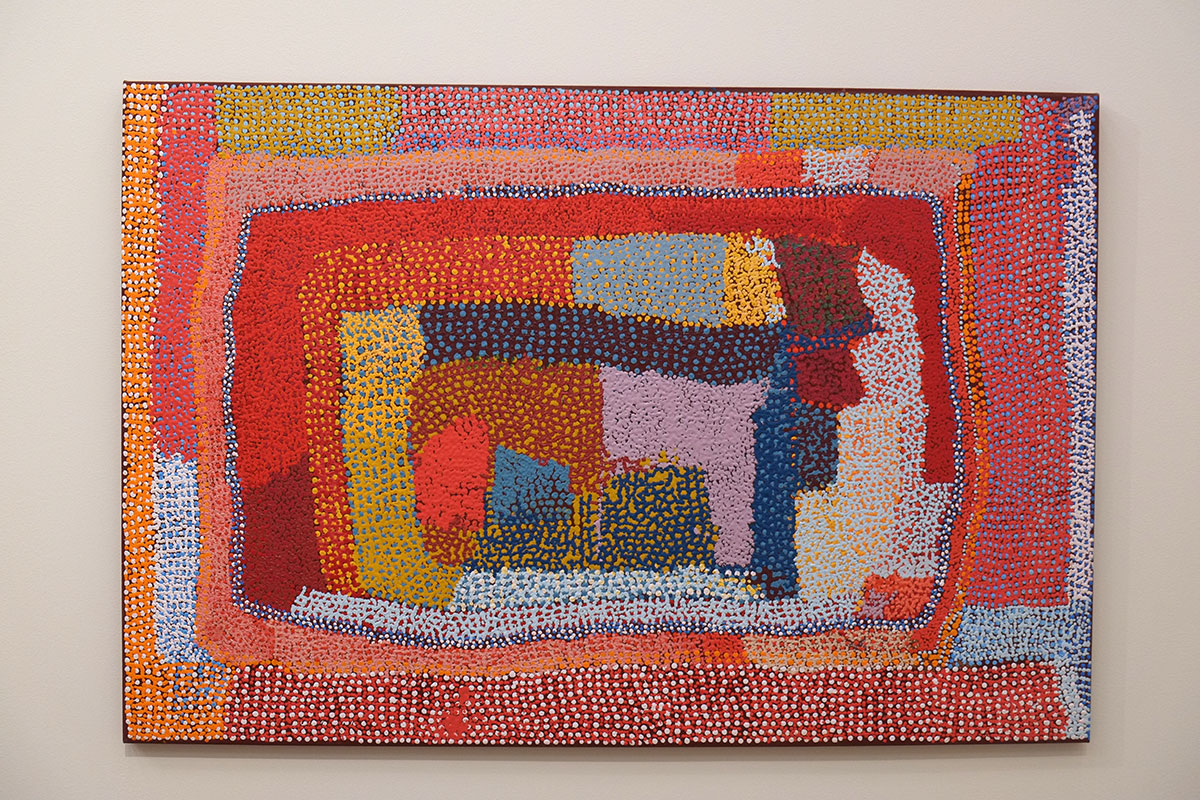
The art was interesting, but not overwhelming.  Except for a show of paintings by Australian Aboriginal painters, which was spectacular.  I have a new artist on my favorites list:  Tommy Mitchell, who died a few years ago.  He didn’t start painting until he was 65.  DSCF8821
Overall, a building in which the articulation of the elements is striking, especially on the exterior.  The gallery spaces are fine, but not extraordinary.  And sometimes, the curators must be making an effort to make sure the artwork is well-integrated with the architecture.  DSCF8799
Raleigh

DSCF7692Back when I was single and worked in New York, I used to like business trips.  They were often to second- or third-tier cities – places you would never choose to go to as destinations in themselves, but there was (almost) always something interesting once you got there. I would always try to add an extra day or two onto a trip so I could explore a place, and eventually I got to see a good part of the country.  This trip has worked much the same way – there are the primary destinations, and then there are the places we’ve seen just because we were driving by, or had some other reason to go there.  Raleigh was one of those – our reason for visiting was to see my cousins who live there, but once again we discovered a lot of interesting places.

P1060078We drove to Raleigh on two-lane roads from Virginia Beach, going along the edge of the Great Dismal Swamp.  (Greta thought the drive was worth it just to say she’d seen the Great Dismal Swamp.)  The northeast North Carolina countryside is completely flat and pretty monotonous – cotton fields, poor small towns, and a growing number of photovoltaic farms replacing tobacco farms (since it has surprisingly many sunny days).  Raleigh is back up in the Piedmont, and seeing some topography was a welcome change – it is a beautiful, rolling landscape.

Raleigh is close to Durham, Chapel Hill and Wake Forest, with all of their many universities anchoring the Research Triangle.  It’s one of those southern cities that has been so inundated with outsiders that it doesn’t feel quite southern anymore (even to one of my cousins, a northern transplant herself.)  The city feels like many other prosperous American cities of this size.  Downtown, there’s a mix of 19th century commercial buildings, early 20th century office buildings and relatively banal postwar skyscrapers, as they had the good sense to not knock everything down.  There is the district where old warehouses are being converted to hipper uses.  There are the great old inner residential neighborhoods that have maintained, and there are the not-so-great older residential neighborhoods that are being rediscovered and gentrified.  We’re starting to see patterns.DSCF7592

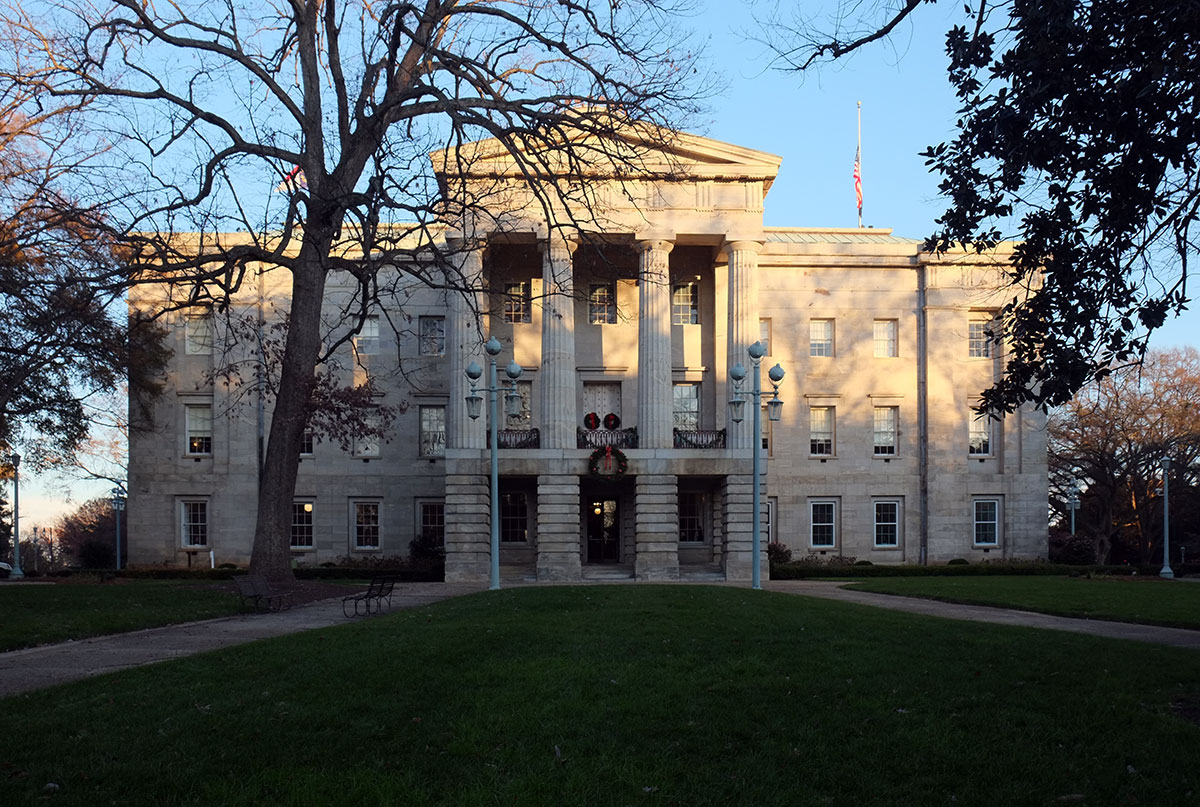
Raleigh is the state capital, so the downtown includes many state office buildings of the normal quality.  The old State House from 1840 is quite fine, having been designed by Ithiel Town, AJ Davis and a few others.  DSCF7668a

As with many other older capitols, as the needs of the government outgrew the building, a new facility for the legislature was built nearby, and the capitol houses the governor’s office and the former assembly rooms which have been well-preserved.  capitol

The rotunda contains yet another sculpture of a Founding Father as a Roman, with an interesting history. The original statue of Washington was sculpted by Antonio Canova (selected on Jefferson’s recommendation) after 1815, but was destroyed in the capitol fire of 1831.  This statue is a reproduction, based upon sketches and descriptions, but it is still does the job.DSCF7603

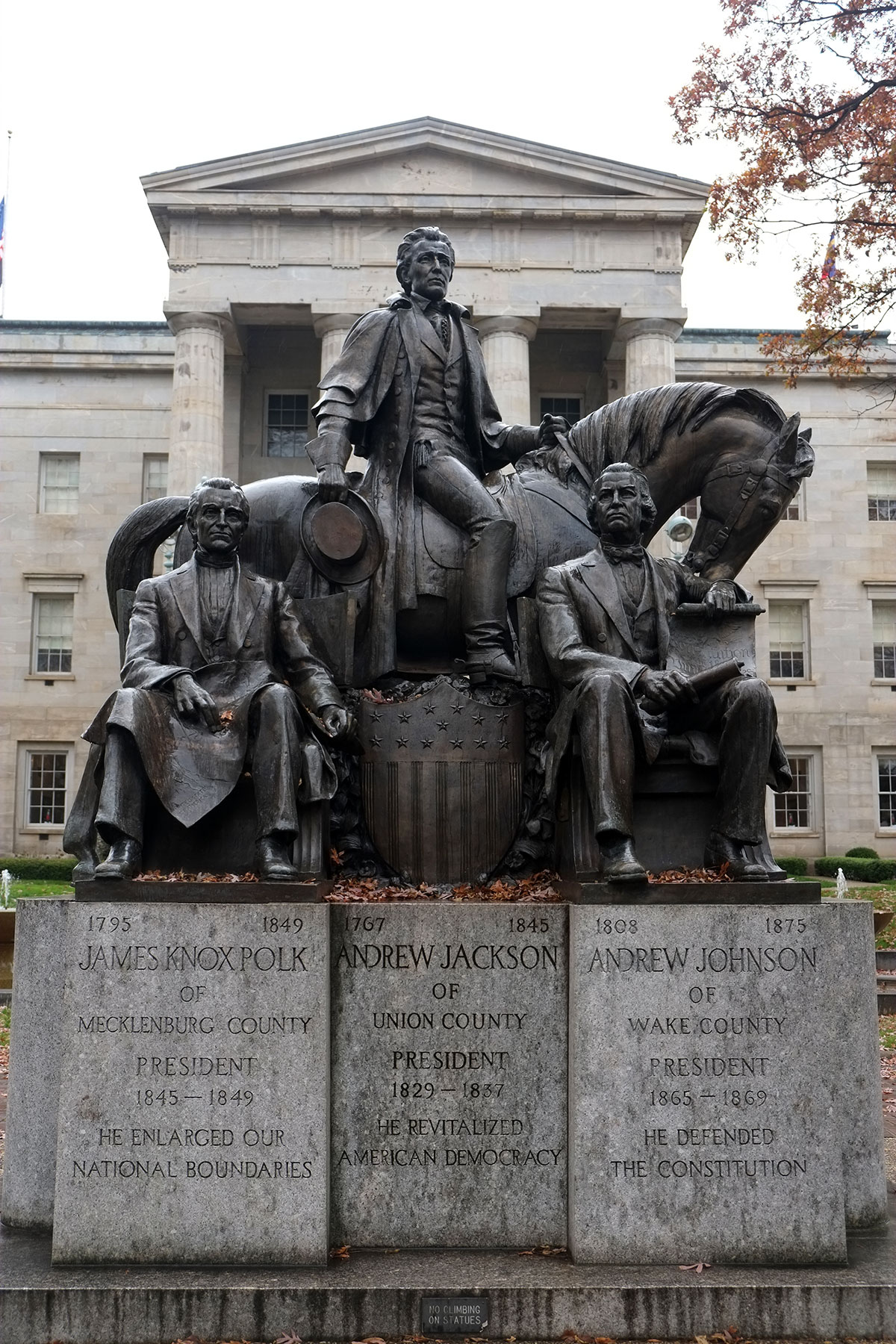
Outside there is a monument for the three presidents who were born in North Carolina.  As we walked around the grounds we came across statues of people who are so obscure that we had never heard of them, so we wondered why all three presidents were packed into one monument instead of each getting his own.  Perhaps it’s because they feel somewhat ambivalent about Johnson, and didn’t want to honor him too much (and it does look like he’s being nuzzled by Jackson’s horse).  DSCF7600

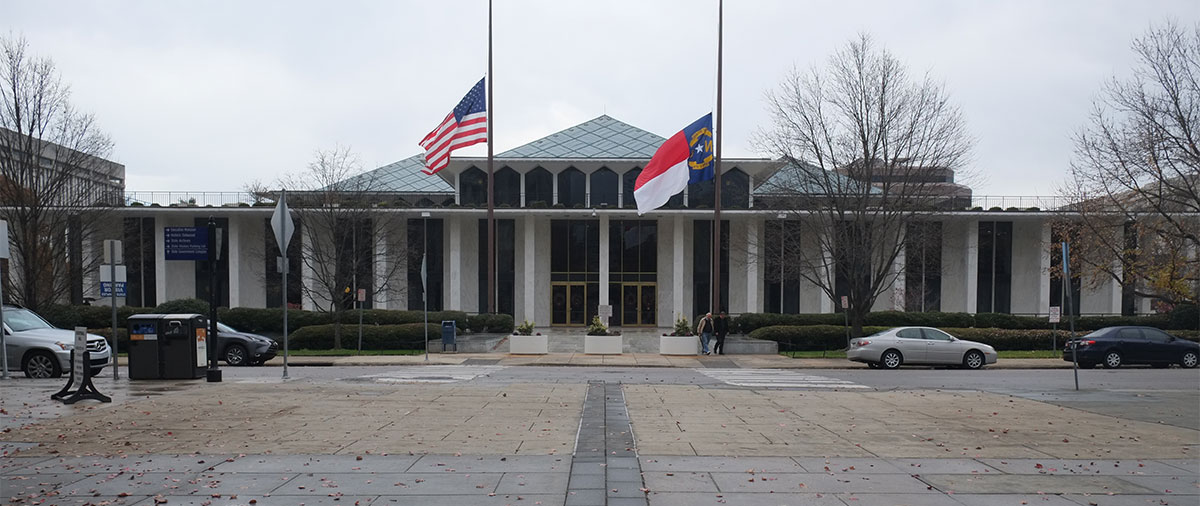
They made the unfortunate choice of Edward Durrell Stone as the architect for the new legislative building, and he produced pretty much what you’d expect.  DSCF7625

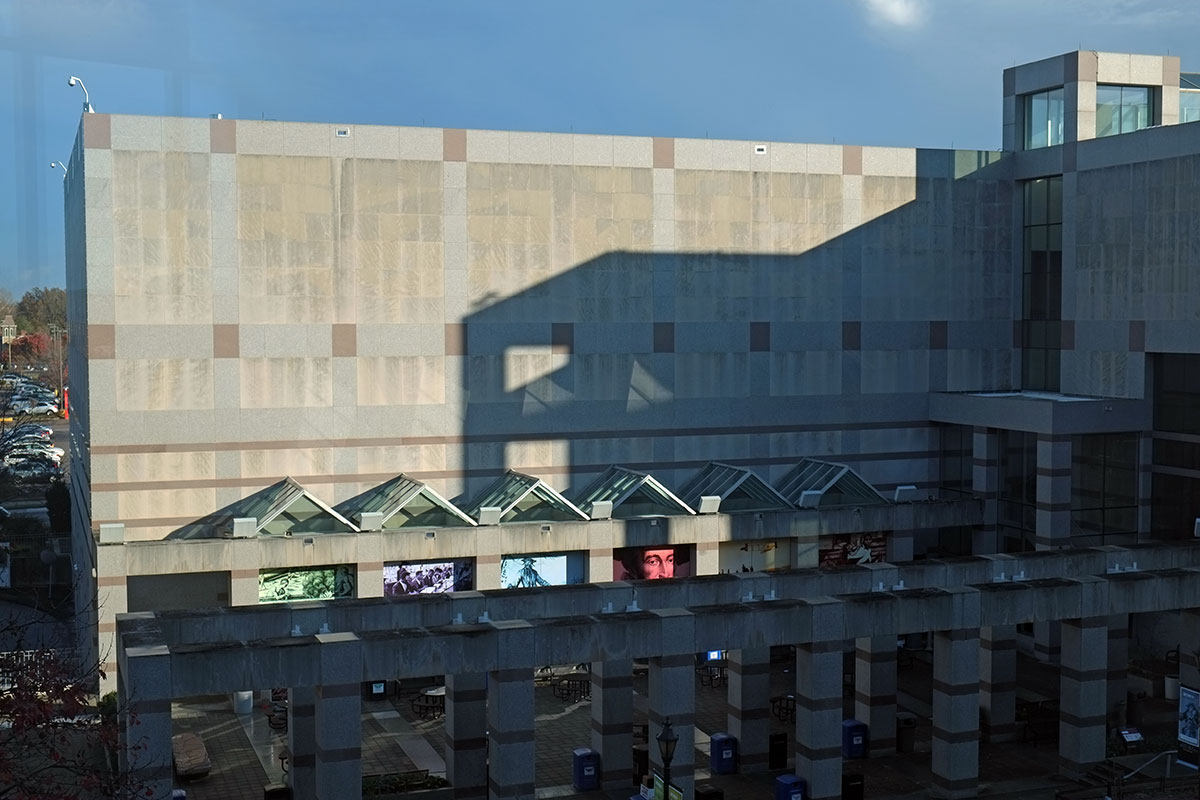
These state buildings sit on a pompous and barren closed street / plaza, along with a couple of museums;  it would take a lot of buses of school kids to bring this one to life.  The state history museum is by C7 Architects (formerly Cambridge 7), and may be okay inside, but the exterior suffers from the same silly grandiosity you see in Washington DC – having a big phony exterior grid/framework is bad enough, but when it gets covered in stone I just can’t even look.  It’s a good example of what happened in the late 80s, when very good modernist firms felt the need to make gestures towards Postmodernism.  Grids often resulted.  They couldn’t make themselves go overtly classical, so explicit post and lintel systems ruled.  And little pyramids.DSCF7644

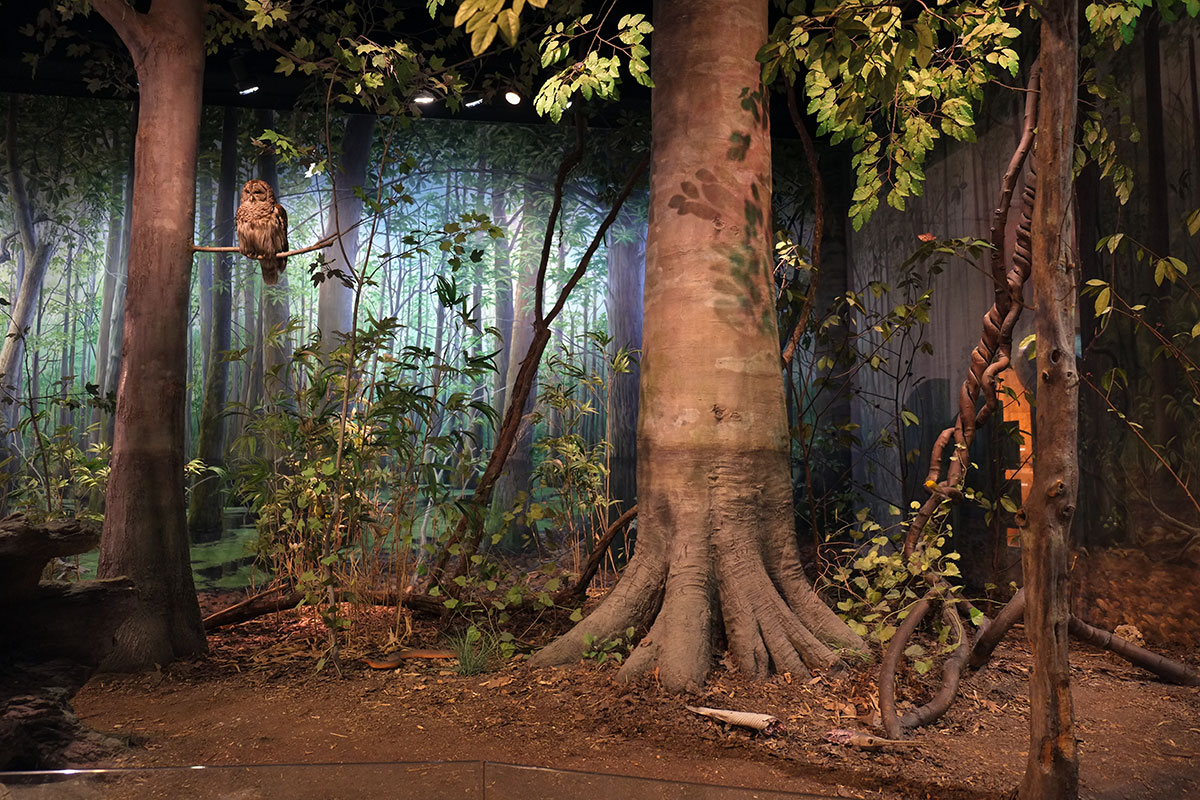
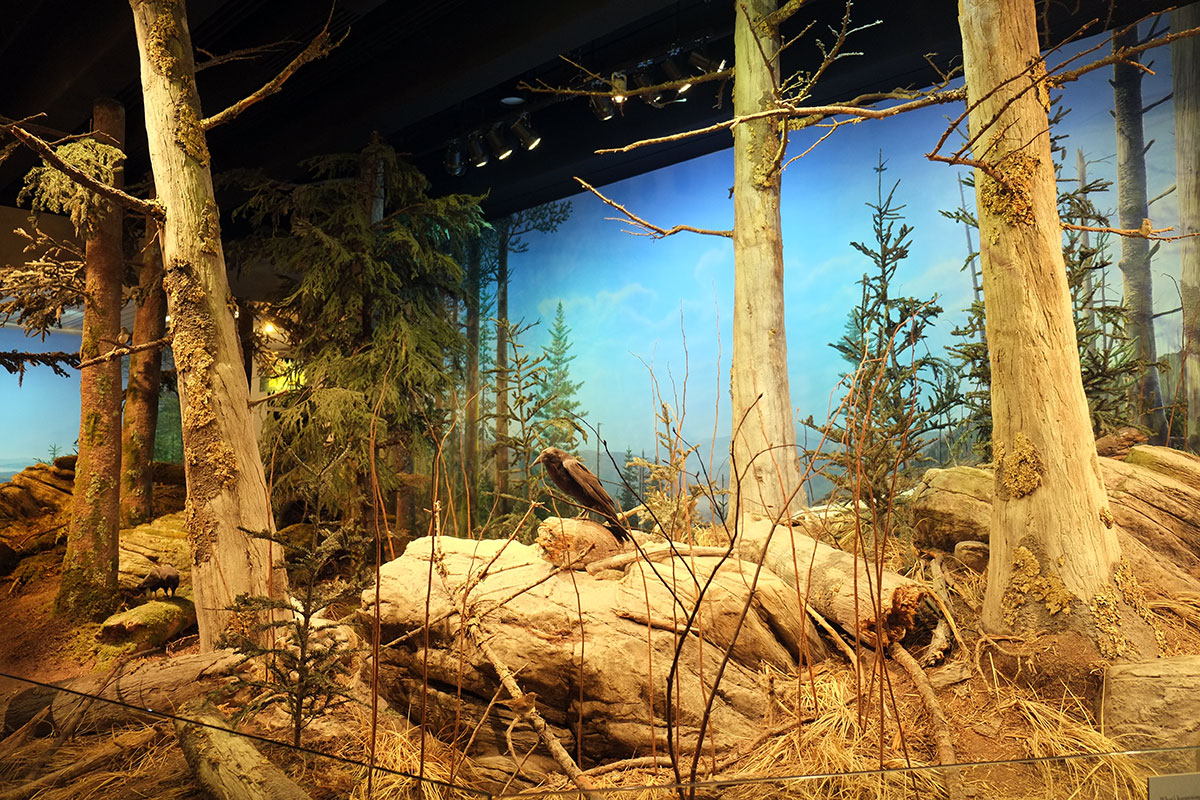
The North Carolina Museum of Natural Sciences was designed by Verner Johnson, a firm which seems to specialize in science museums.  The expertise shows:  it’s not a building which wows you with the architecture (more watered-down PoMo), but it is a superb natural science museum.  It had many of the things that you see in any natural history museum these days – such as a few dinosaurs – but the strong focus is upon the environment and natural history of North Carolina.  This also seems to be a pattern these days – regional museums and zoos are focussing on the environment and biology of the region, rather than doing a mediocre job trying to explain the whole world.  This museum had excellent sections on the coastal region, on the Piedmont, and on the mountains.  There were full-scale dioramas for each of these:

Piedmont

Piedmont

Mountain lake

Mountain lake

that were really informative and comprehensive.  By the end we had a good handle on North Carolina’s geography and environment – much better than what we had gotten from the college-level geography text Greta’s been reading.

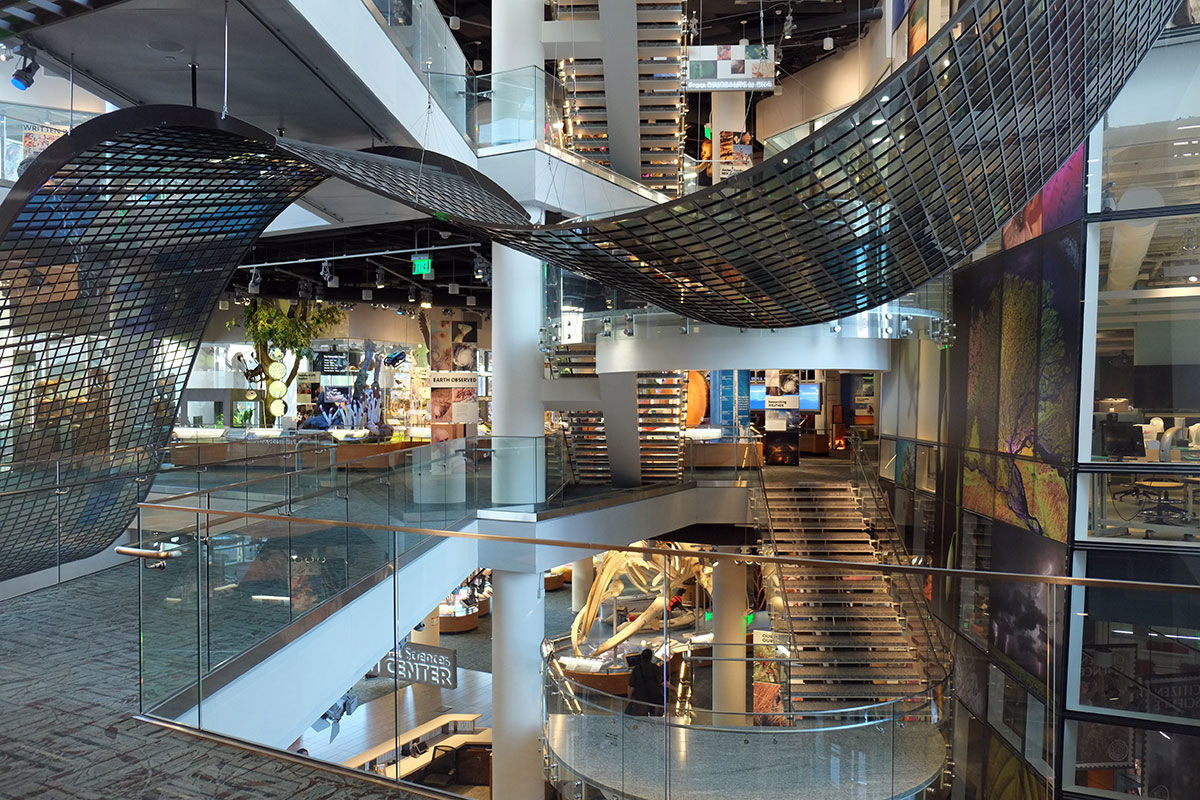
There’s a new addition to the museum that addresses changing idea about educating kids.  First, there are a lot of bells and whistles – is this a natural science museum, or is it Vegas?  DSCF7655

Or the mall?  Lots of flash, lots of screens, lots of “interaction.”
DSCF7652

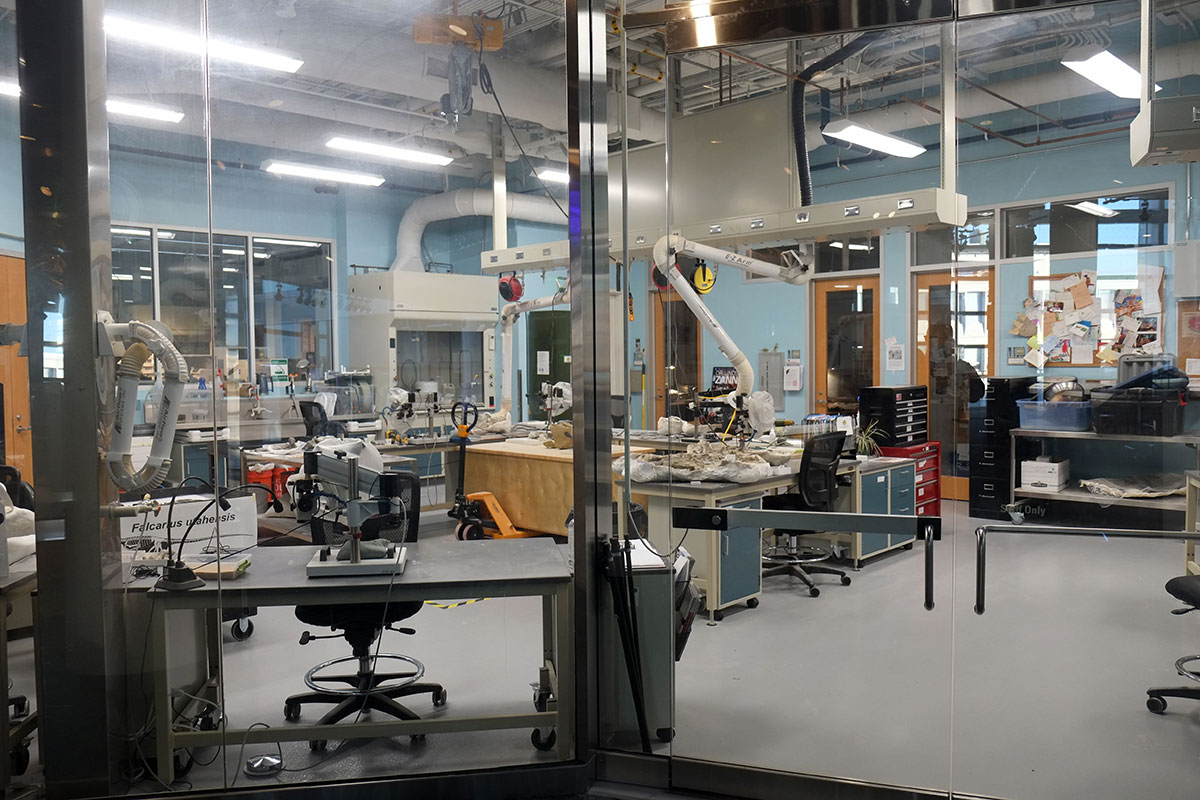
Second, and perhaps more substantively, research areas used by museum staff are incorporated into all of the exhibit areas:DSCF7663

We were there on a Monday when these rooms are not used, but supposedly visitors can see staff at work and hear them explain what they are doing.  This would be quite valuable if it works as billed.  We’ve gotten behind the scenes and talked to scientists at a few museums, and it’s been one of Greta’s favorite parts of the trip – not just seeing objects in a museum, but talking to those who do the work, and starting to understand what science is all about.

On our way out of town we caught the North Carolina Museum of Art.  The1983 building was again designed by Ed Stone (did North Carolina get him because Rockefeller had Harrison and Abramowitz tied up?), which is fairly innocuous for him (they later replaced all the marble with brick) and is used for temporary exhibitions (including an excellent one on Escher while we were there).

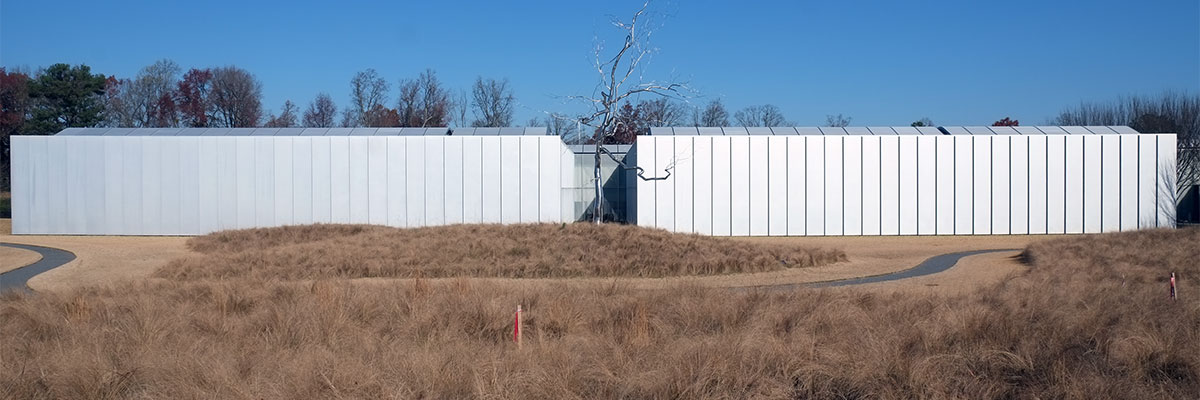
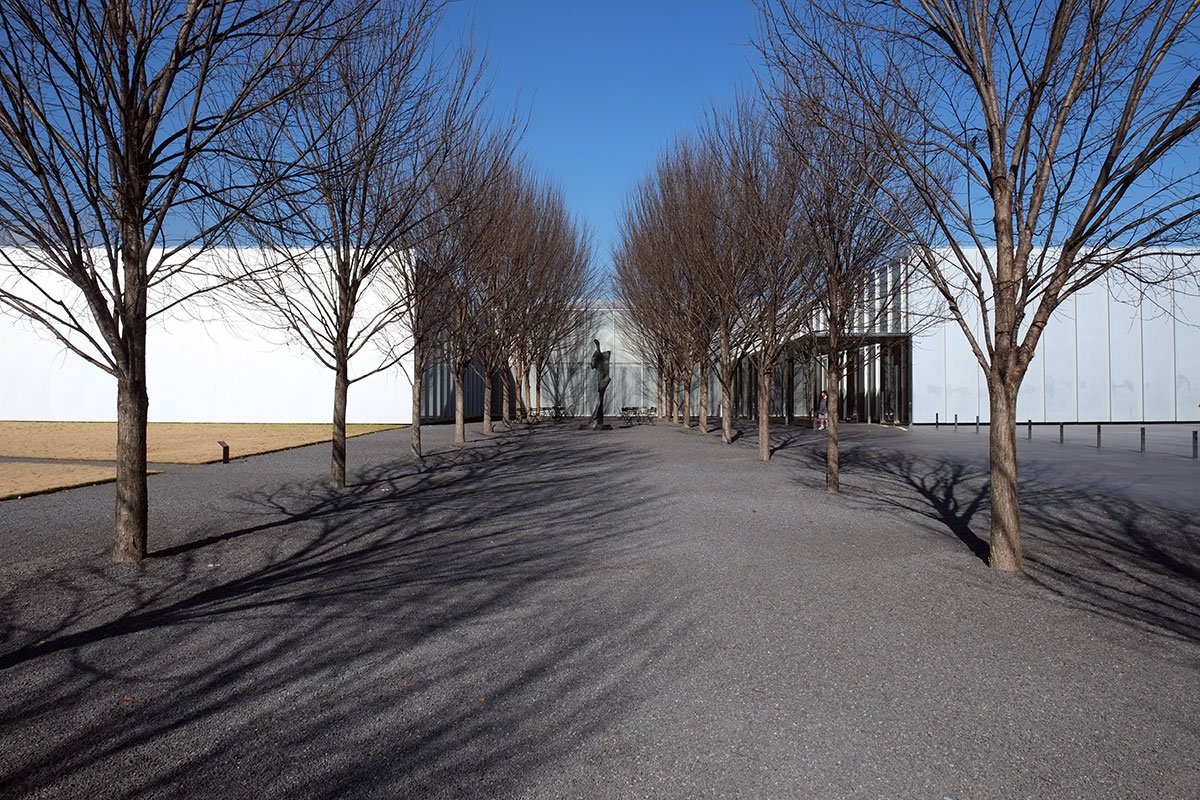
The new building for the permanent collection is by Thomas Phifer, and is a remarkably rigorous and elegant building.  It resembles Piano’s work not in appearance (the exterior seems to be Mies Goes to Scandinavia with Steven Holl), but in having the main expression for the building through the articulation of the systems – skin, structure, and lighting. DSCF7678

It is easy to find the front door.  DSCF7719

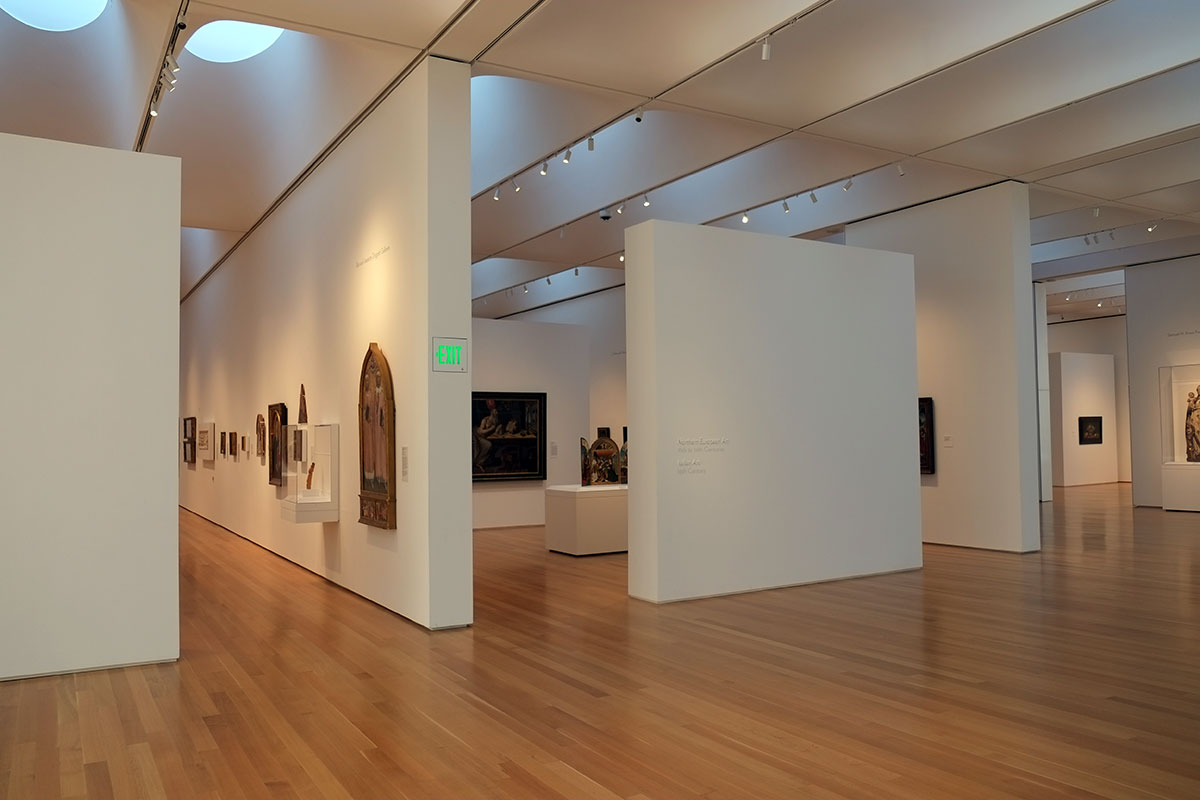
The building structure is on a strict module, with the differentiation between structure/service walls and spatial partitions very evident (although he doesn’t feel the need to pull the partitions off the grid or angle them to make the point).  DSCF7699

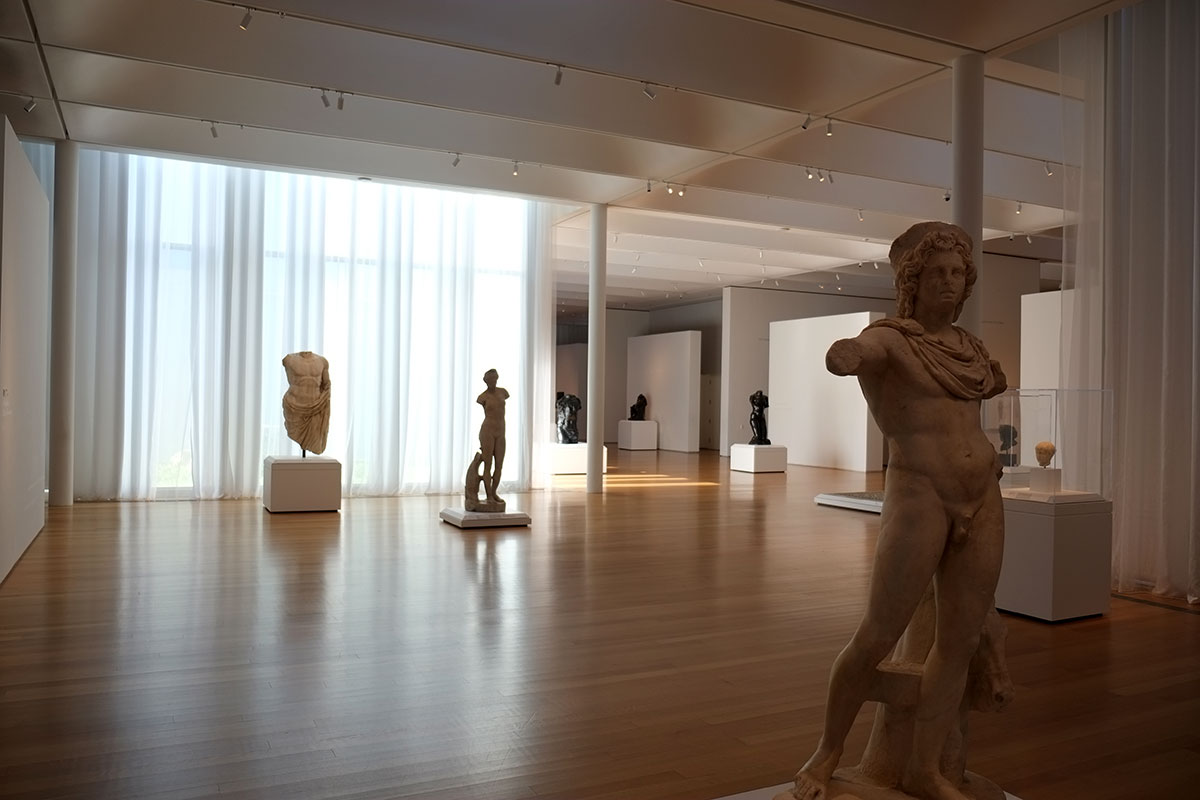
The structural bays are uniformly roofed with curved daylighting monitors, which illuminate evenly.  The sidelighting from walls of glass is controlled with curtains.DSCF7702

You can see the influence of Mies, Kahn, and Aalto, without it seeming busy or forced.  It’s rational, rigorous, neutral, flexible.  Perhaps too neutral – there isn’t any compelling spatial design – nothing moves you through the building, there are no architectural surprises.  It’s a curator’s dream – well-lit, flexible space which can be reconfigured to suit any installation.  But much preferable to an object building that is all about architectural over-reaching while diminishing the experience of the art.

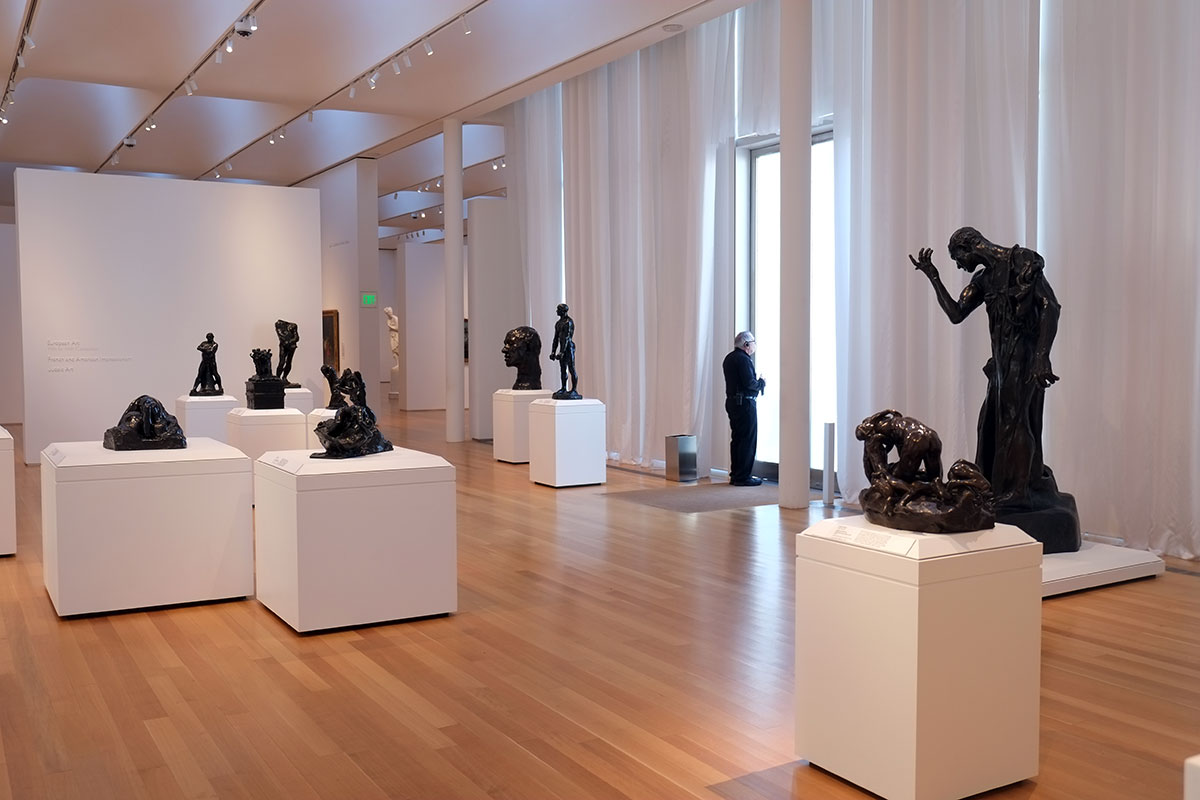
Frankly, it’s quite a bit better than the collection, which has not-great works from a wide range of eras.  Raleigh wasn’t a big city with a lot of money in the 19th century, when you could still buy great things, so they have mainly pedestrian work by big names, or interesting work by people you’ve not heard of.  However, they did have a huge collection of Rodin sculptures, including one i’ve never seen anywhere else, and which I liked better than the others – Old Man Looking out the Window.  DSCF7706

Brock Environmental Center, Virginia Beach

DSCF7459

Back in the 1970s, there was an explosion of research and innovation in energy-efficient and solar building.  It largely disappeared in the 1980s – partially due to the lack of support under the Reagan administration, but also because it had focussed almost exclusively on building performance, neglecting the many other factors (included in firmness, commodity and delight) that motivate humans in their building preferences and decisions.

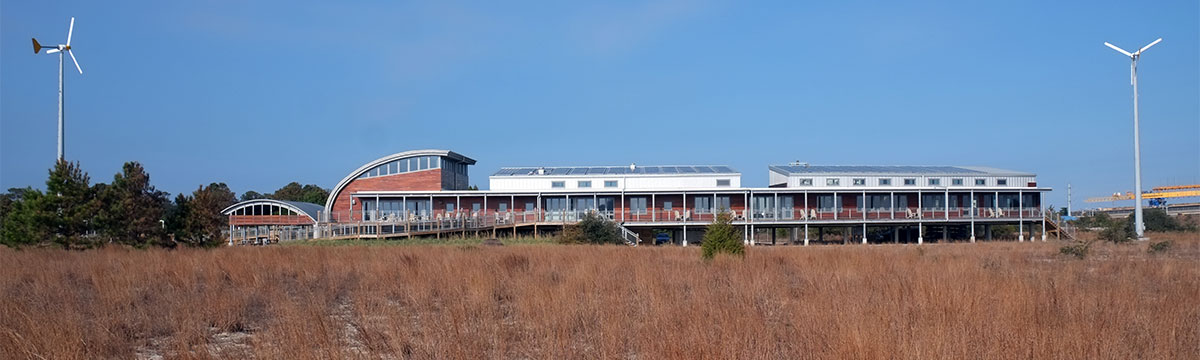
We’ve come a long way since then, and the Brock Environmental Center exemplifies how the new generation of high-performance buildings are not just machines for saving the earth in, but buildings that satisfy the full range of human needs.  The goal of making a very high-performance green building isn’t in conflict with making good architecture;  this building shows how those performance-oriented features can fundamentally enhance the quality of the architecture overall.

The Chesapeake Bay Foundation is a multi-state nonprofit, dedicated to saving Chesapeake Bay and its tributaries.  They have a history of making buildings that embody their environmental goals – their Philip Merrill Environmental Center in Annapolis was the first LEED Platinum building in 2001.  They have recently followed this with their Brock Environmental Center in Virginia Beach, which is on track to be certified as LEED Platinum, plus meeting the even more stringent requirements of the Living Building Challenge. Both of these buildings were designed by the SmithGroupJJR.

The context of the site, both local and regional, is critical to understanding the meaning of this building.  We arrived in Virginia Beach in early December, not fully realizing how it was our first exposure to the environment in which we’d spend most of the next two months – the edge where the great Southern coastal plain meets the sea.  We descended from the Piedmont around Charlottesville into this plain, which is extremely flat, with fairly monotonous pine forests and shallow broad rivers with very little fall in elevation, which widen out into enormous bays that join the sea.  The mouth of the Chesapeake is one of the largest, opening to the Atlantic in the Norfolk-Portsmouth-Newport News-Virgina Beach metro area.  The beaches are wide and beautiful, and in many places are protected by constantly shifting barrier islands (although not here).

DSCF7368

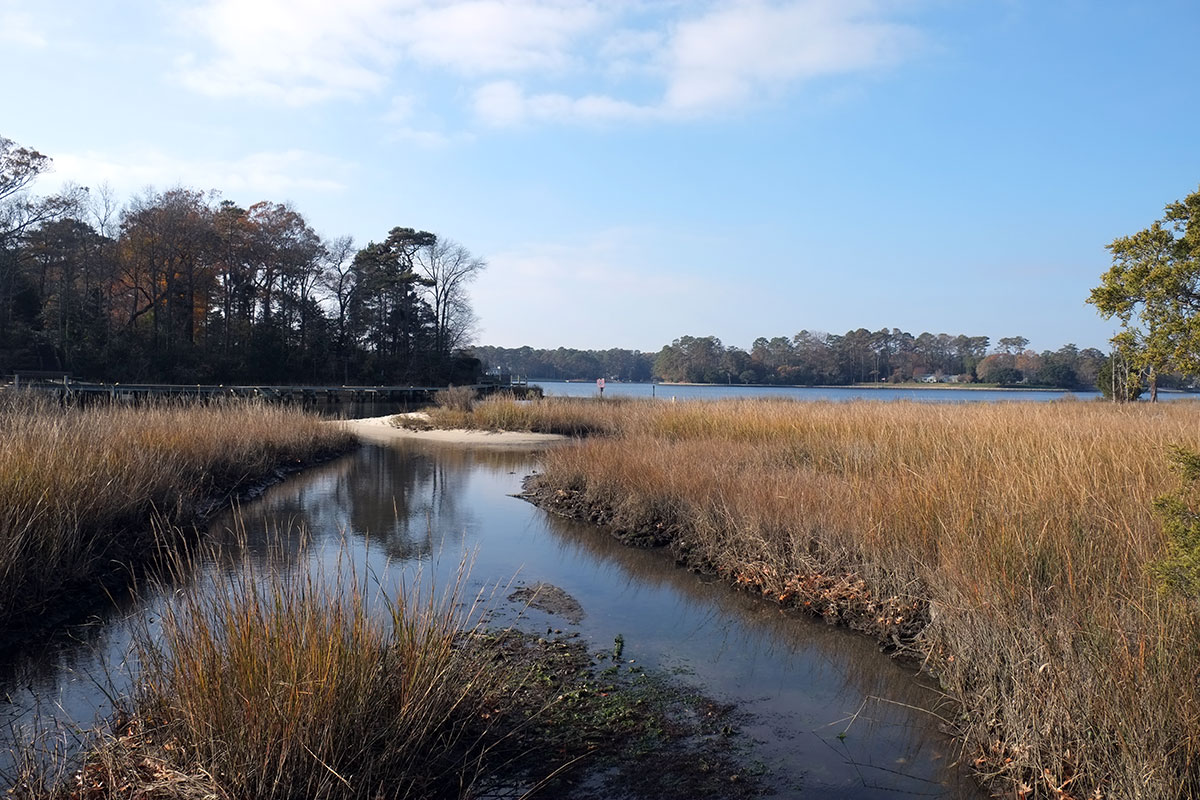
Behind this beach and a narrow band of development is First Landing State Park, which preserves about 3000 acres of the Lynnhaven River estuary where it joins Chesapeake Bay.  There is lots of low-lying salt marsh,
DSCF7372

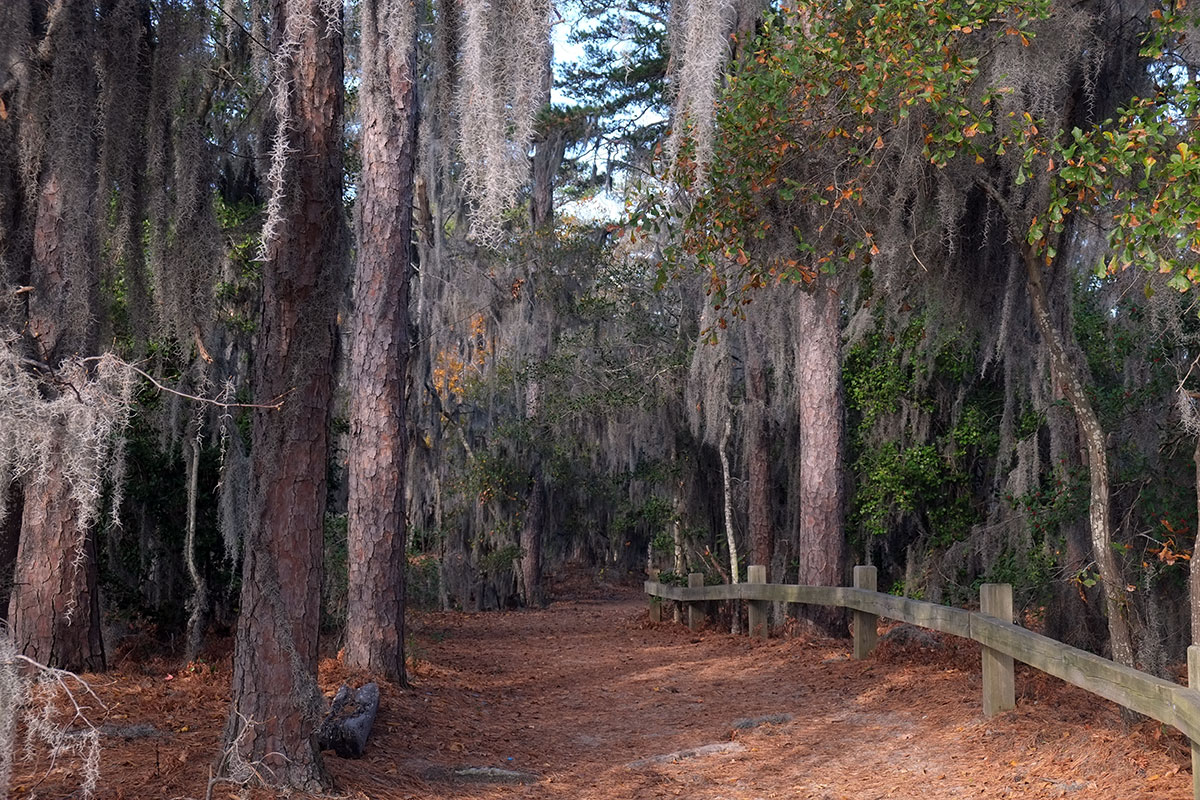
plus some uplands with pines and live oaks, and Spanish moss everywhere.
DSCF7373

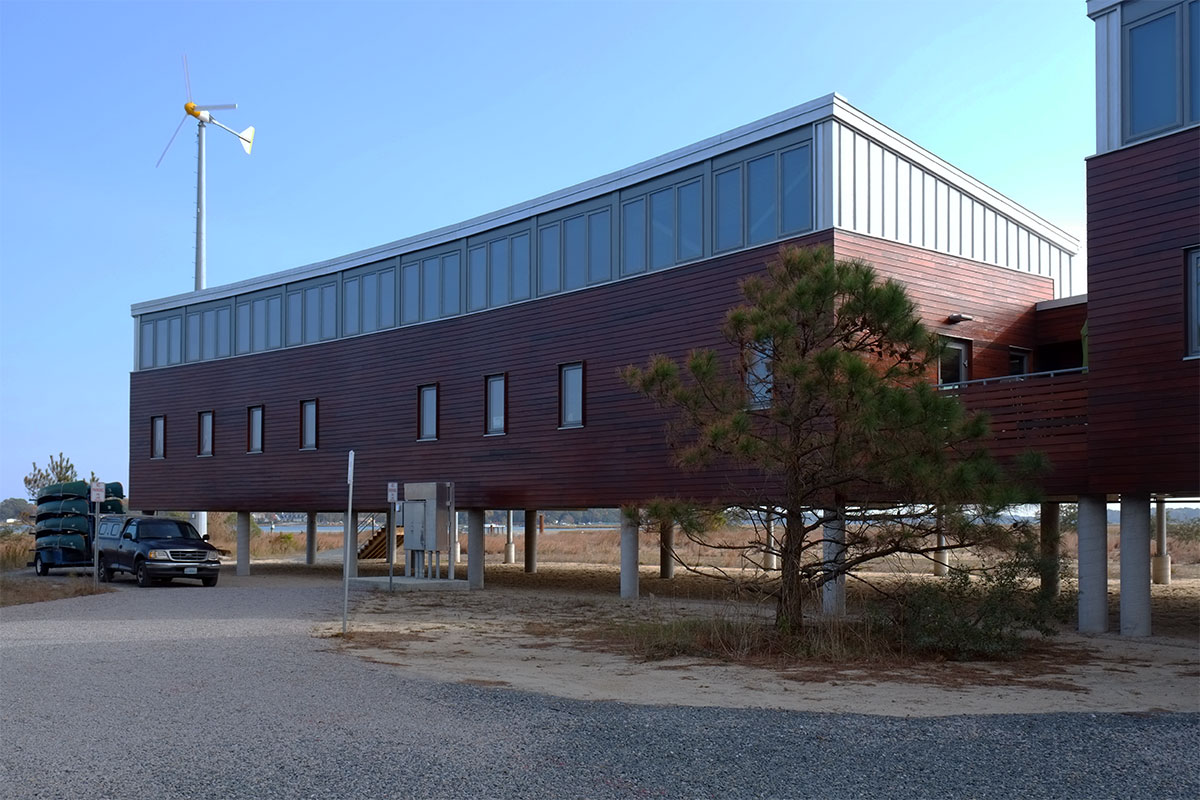
The Pleasure House Point parcel (about two miles from the park) which houses the Brock Center site was slated for residential development, but after the Crash it was purchased for recreation and the preservation of its wetlands, salt marsh and meadow, and maritime forest.  The building sits on a small upland site, not encroaching on the estuary.  DSCF7468

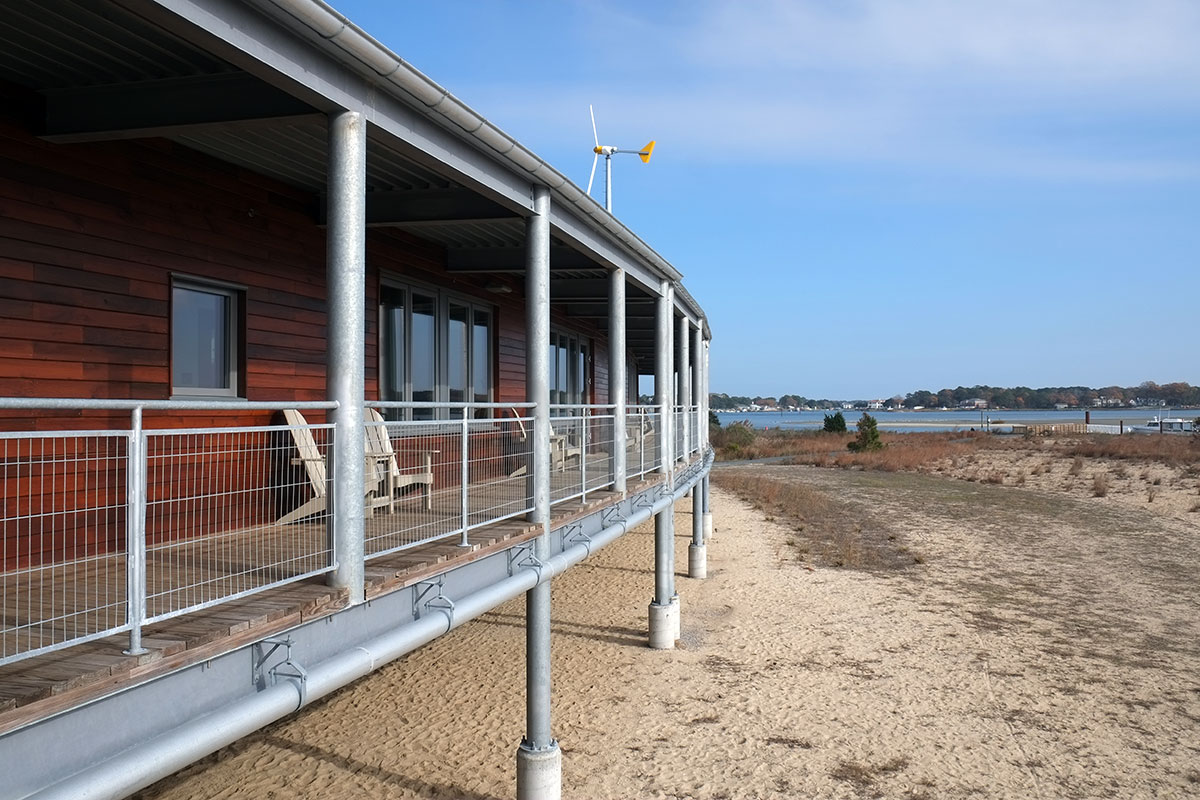
The parti of the building is simple – a narrow, curving linear scheme, raised a tall story above the ground plane.  The more public lobby and meeting rooms are at the top of the ramp:DSCF7477

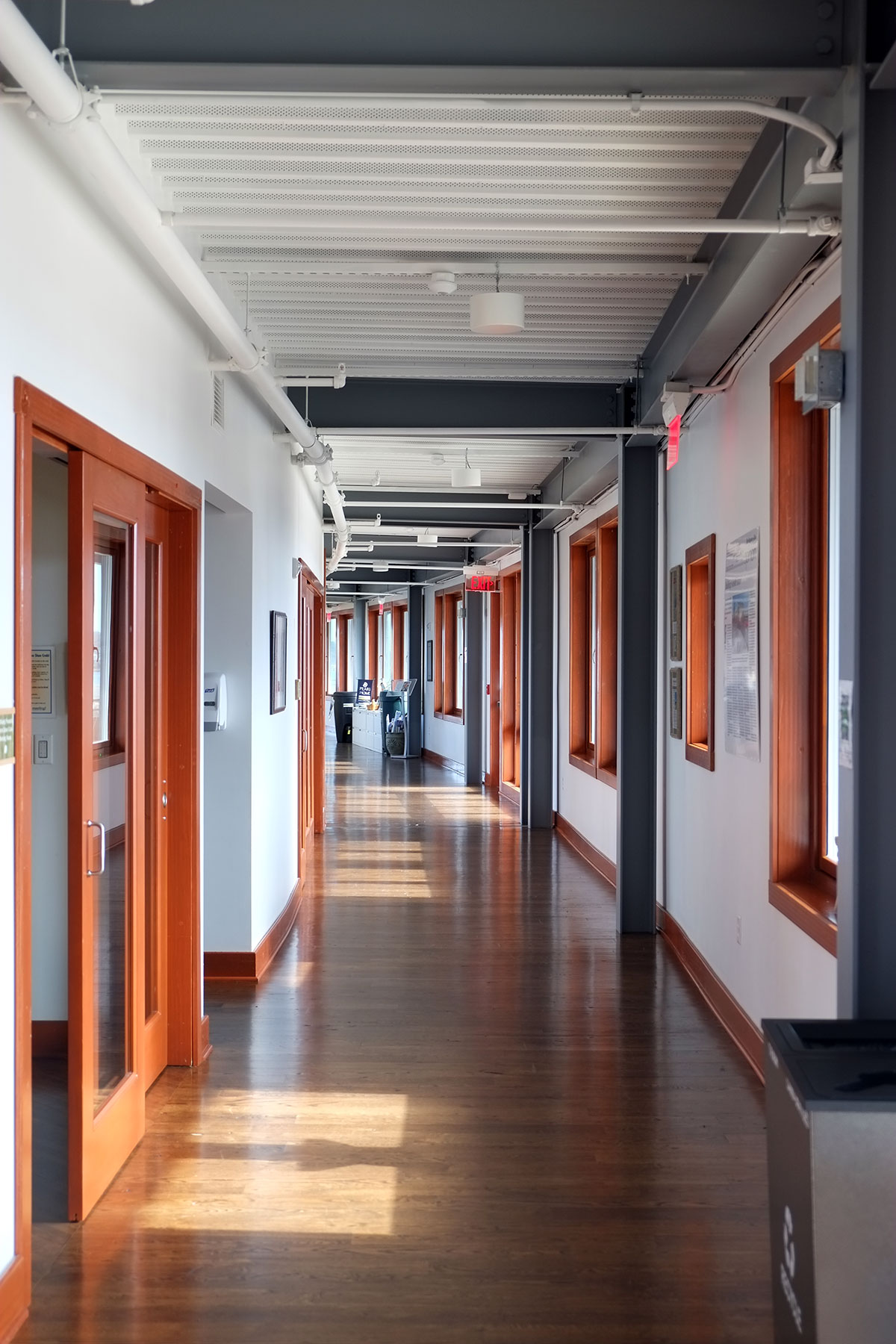
The lobby shows the tectonics of the building, with structure and mechanicals exposed within the simple shell:
DSCF7403

A large gathering room
DSCF7417

the curving corridor along the southern exposure
DSCF7418

which has a porch / shading device running its length.DSCF7442

a panorama of the open office space – glazed doors from the corridor on to the porch, balancing glazing to the north, and clerestory lights facing both ways.
DSCF7433

I won’t go into great detail about the all strategies employed in achieving Living Building Challenges goals – as the architects do a very thorough job of that on this webpage:

http://www.cbf.org/about-cbf/offices-operations/brock-center-about/making-of-a-green-building

The Brock most resembles a laboratory in its form and organization:  a simple, open shell, which can accommodate a complex array of mechanical systems and human uses.  This division between the architectural elements and the mechanical ones leads to a building which is conceptually clear, tectonically articulate, and very efficient.  The architectural elements are manipulated to achieve as high a level of passive energy performance as possible.  The section is optimized for daylighting, minimizing heat gain, and enhancing natural ventilation.  This leads to habitable rooms which are commodious, tall, well-lit and very comfortable.  The need for south-side shading lead to a wonderful porch, something not many office buildings have.  The energy performance may have driven the scheme, but the elegant resolution of these demands produced very fine spaces.

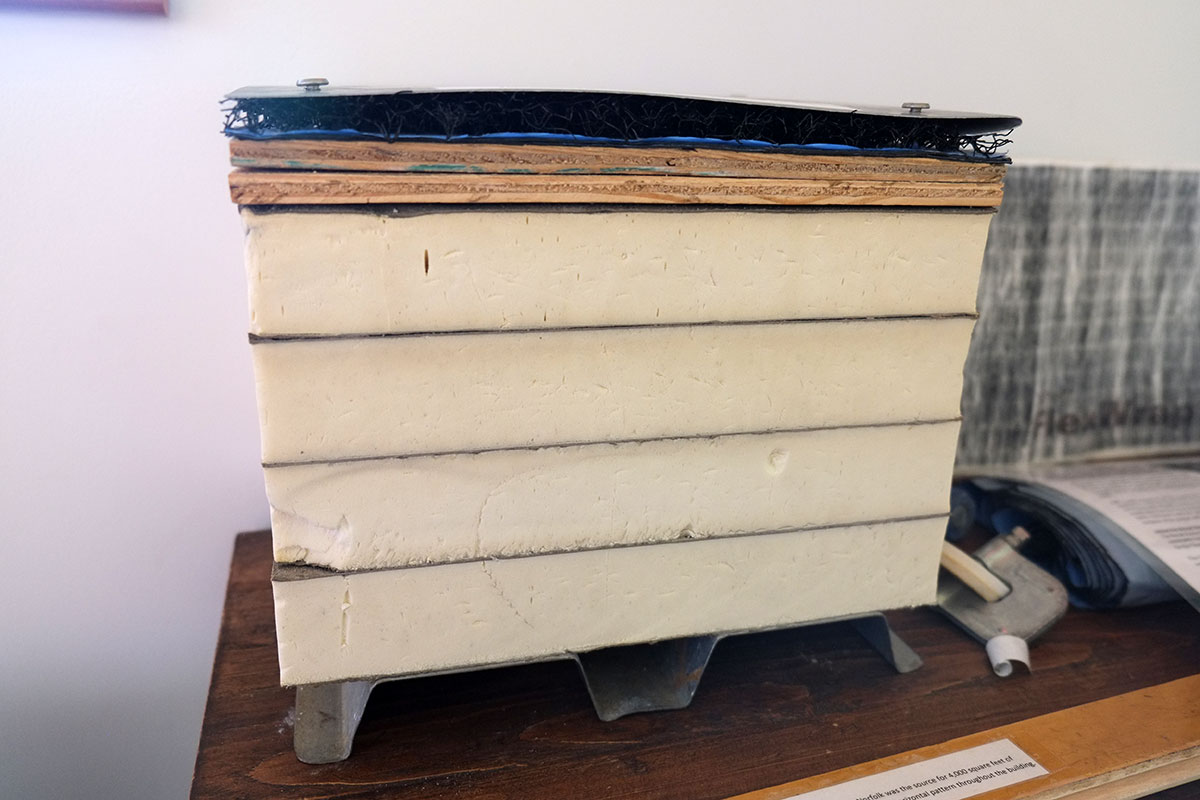
Passive strategies take you as far as they can, but have to be supplemented by active ones, especially in a hot, humid climate.  The systems employed in the Brock are sophisticated, and in some cases, unprecedented.  The insulation levels of the envelope are obvious (they have annotated pieces of their materials on display throughout the building).  For mechanical heating and cooling, there is a ground-source heat pump.  For electrical needs, there is both rooftop PV and a couple of wind turbines, which are producing more power than needed on site.
DSCF7437

And for all you ASHRAE geeks reading this, the water and waste systems are extraordinary.  All toilets are composting, using the Clivus Multrum system, leading to containers at the lower level.  The limited amount of blackwater effluent from the tanks is trucked offsite.  As the toilets are located in different parts of the building and some see more usage based upon location, there was an initiative during the first year to get occupants to vary which toilets they used, to spread it around, so to speak.DSCF7448

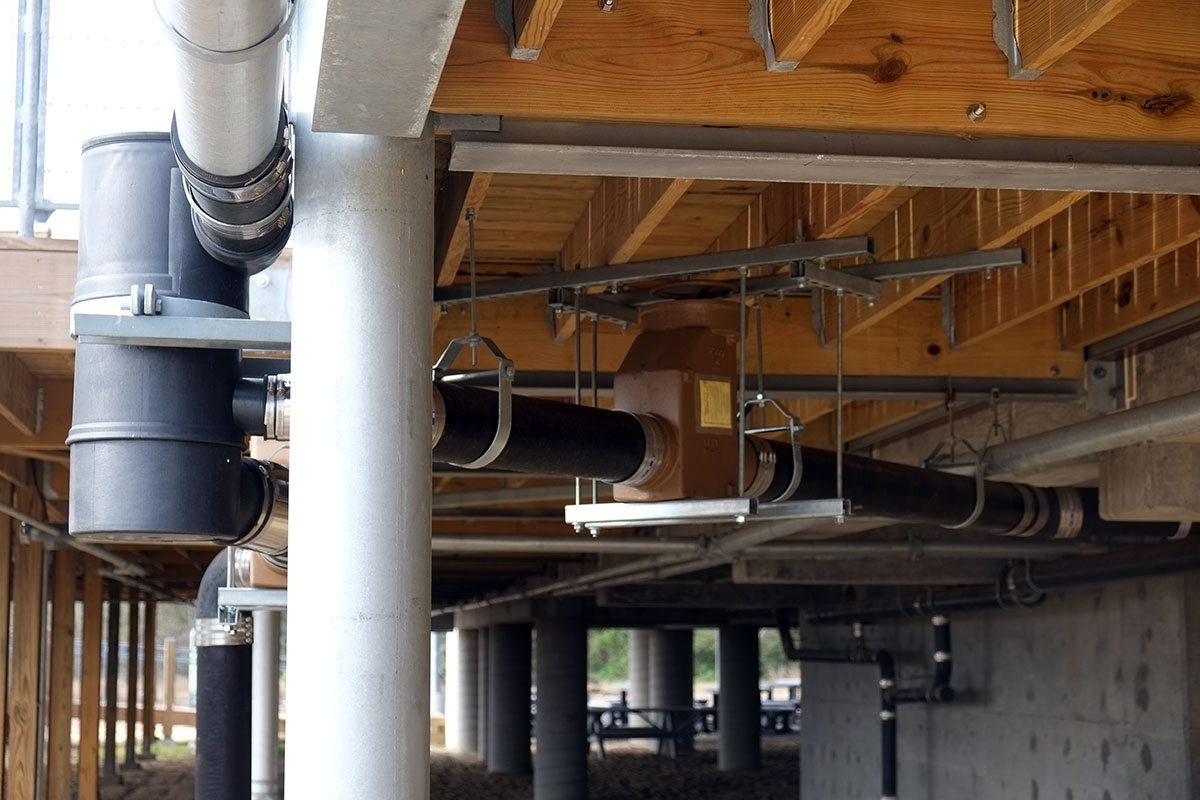
The building’s greywater is run through various biofiltration systems and delivered to raised-bed planters on the grounds.  But the most innovative system is for the rainwater, which is collected, filtered, and used for th building’s domestic water needs.  This is the first commercial building in the US to achieve this legally.  The various gutter leaders connect below the main floor level:
DSCF7400

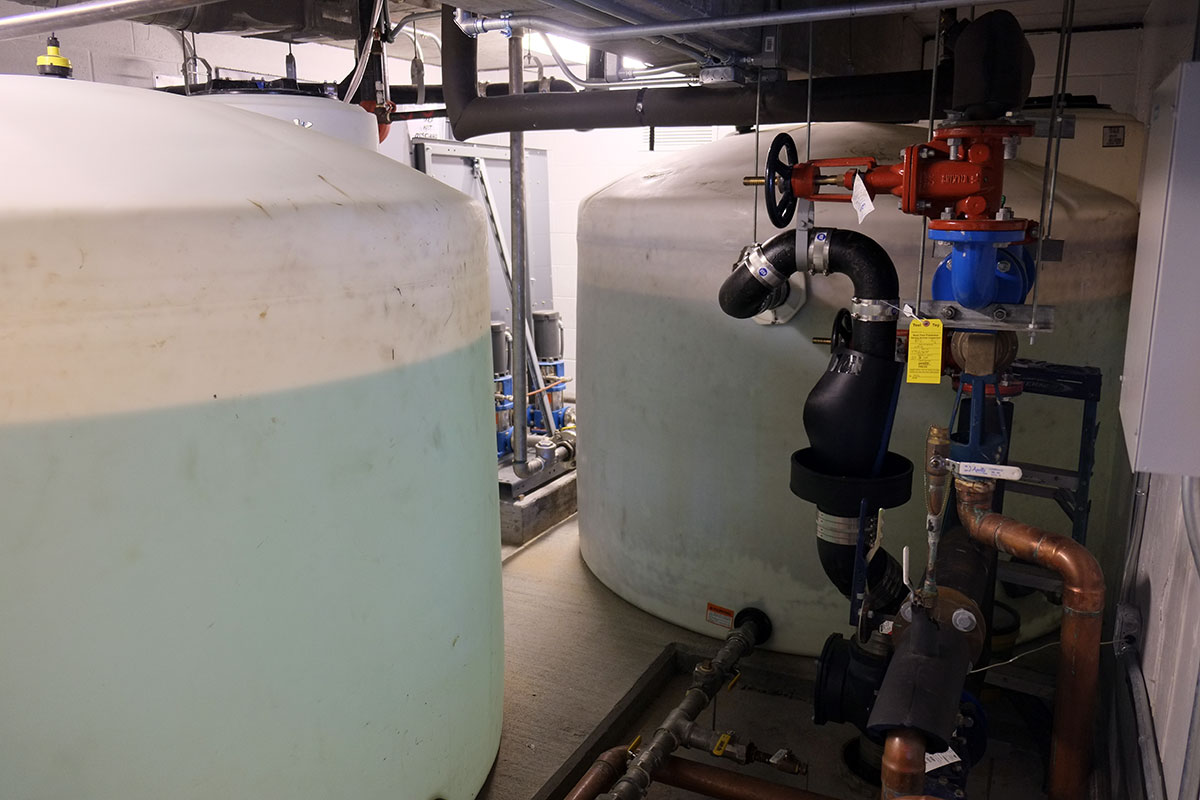
and there are lots of pumps and tanks and filters and controls which I won’t pretend I understand:
DSCF7436

DSCF7450

But the implications for the architecture are obvious, and led to a clear design protocol.  Make simple envelopes which can be optimized for passive performance.  Design to accommodate extremely sophisticated active mechanical systems, which may change over time.  Complex machines in simple buildings.

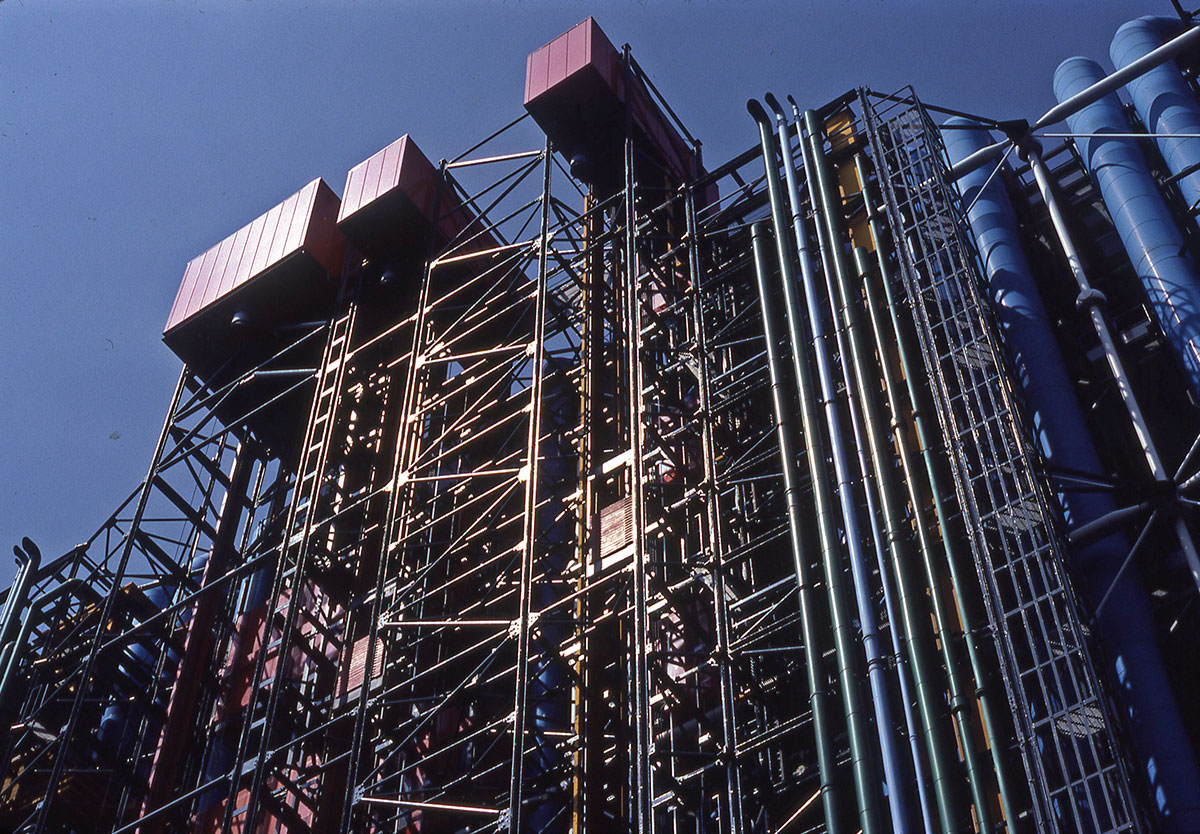
Buildings such as this may rationally resolve an argument that has been going on for a few decades.  Back in the 60s, buildings such as the Beaubourg made the expression of the building’s systems – both structural and mechanical – the basis for the parti.  While there was certainly a conscious attempt to integrate these systems into an overall composition, it wasn’t obvious to laypeople.Beaubourg006

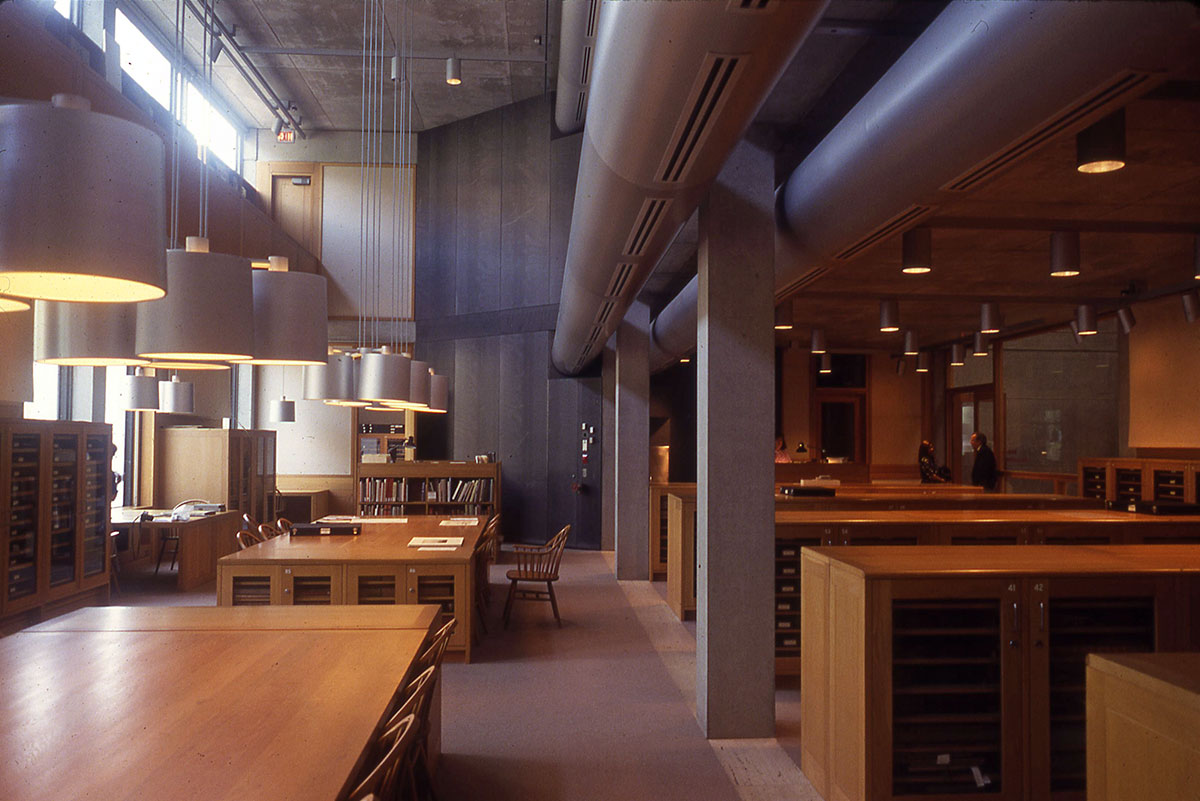
Architects such as Lou Kahn also articulated the necessary elements of the building, but more explicitly integrated them into the buildings overall design intention, such as at the British Art Center.  British005

Postmodern architects reacted against this direction.  I remember Bob Stern making the case that the British Art Center was irrational at its core:  it expressed the mechanical systems, but by making them part of the formal design, it forced them to serve aesthetic goals rather than engineering ones;  in doing this, it increased their cost and inefficiency incredibly, so that what you are seeing is not so much a rationalized mechanical system but a very expensive expression of the idea of a mechanical system.  Stern asked if we had any idea how much a round stainless steel duct cost, and argued that if you wanted an efficient, cost-effective building, you should design the spaces you want for human habitation, build them out of steel studs and gypsum board, and leave lots of spaces between where the engineers can put all the mechanical equipment they want, without having to worry about making it beautiful.

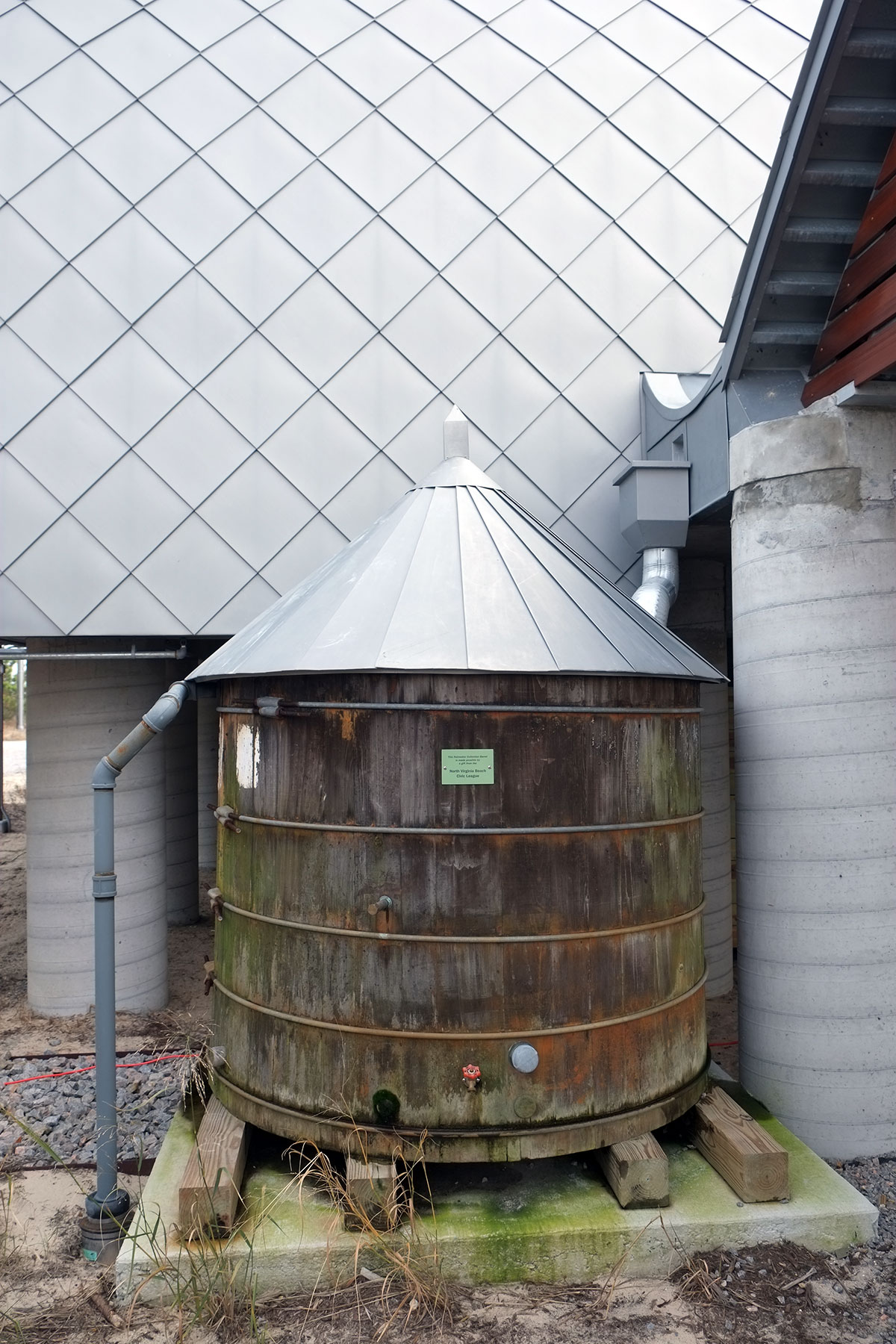
The Brock Center shows a clear, rational compromise between these two positions.  The architecture can be what it wants to be, but based upon performance factors along with goals for human habitation.  The building systems are exposed where it makes sense – steel structure,  ductwork, piping, sprinklers, conduit – but not everything is dogmatically expressed.  A main rainwater collection tank is openly placed near the entry ramp, DSCF7389

but they made the wise decision to keep the composting toilet tanks in the mechanical room, out of sight, where they can do their work efficiently without offending delicate sensibilities.

Perhaps the key is recognizing the messy, often compromised reality of a building.  Achieving extreme simplicity of appearance requires extraordinary hidden complexity (which is very common in high style buildings right now), whereas letting the purely functional and efficiency-driven goals drive the design is unlikely to produce a satisfying building on other levels.  The Brock Center is a straightforward, elegant solution which integrates many of the issues, not compromising on performance for aesthetic reasons, but also not forgetting that buildings are for people and not just solving technical problems.

And as we design for sensitive coastal environments and the anticipated sea level rise with climate change, for the first time I start to appreciate buildings set up on piloti.  Corbu was 100 years ahead of his time, and he didn’t even know why.

DSCF7454

Charlottesville

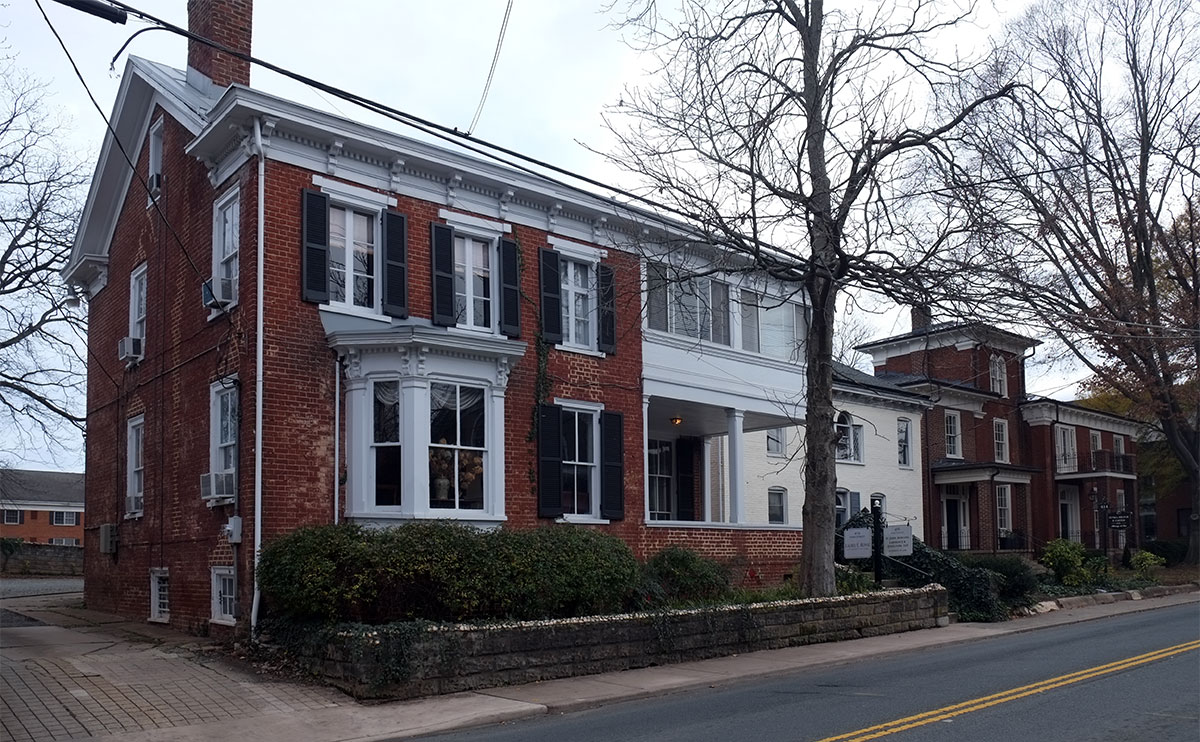
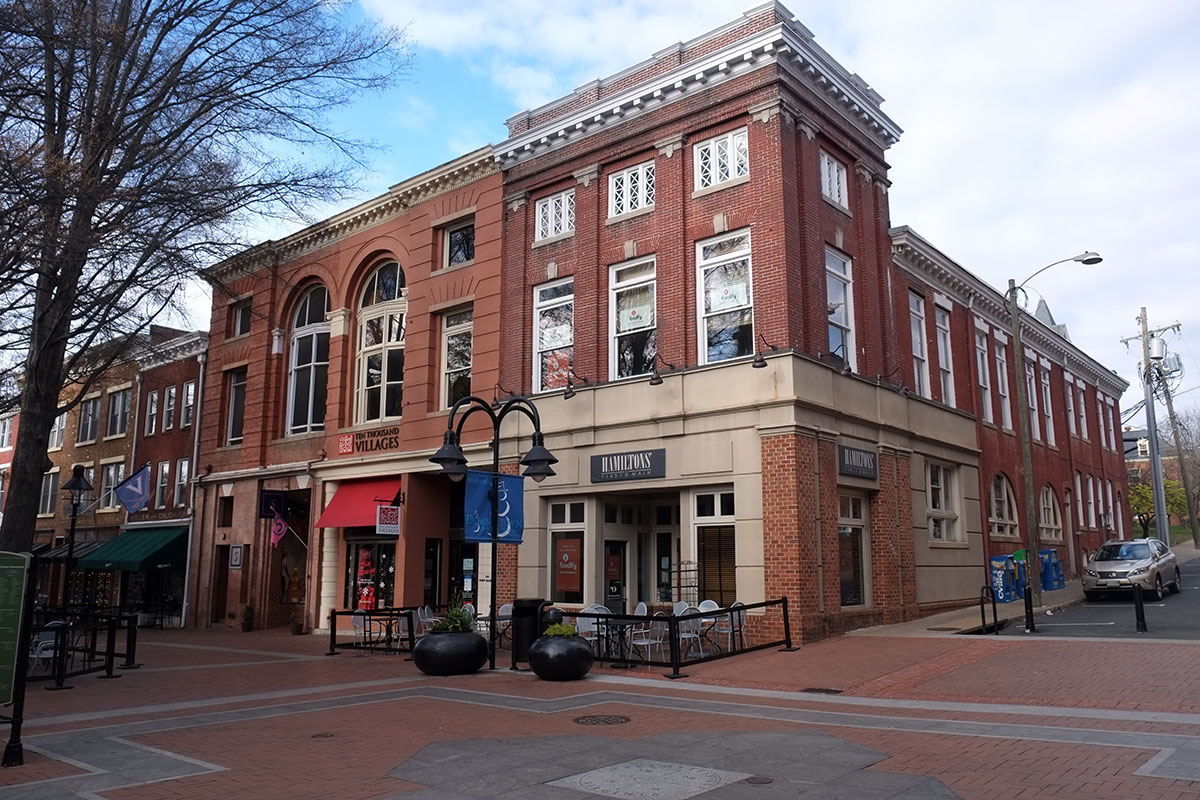
Charlottesville is not your typical college town. Compared to the college town I know best, the population of the city is much smaller relative to the size of the school, yet in some ways there is more going on in Charlottesville that isn’t related to the university. The historic center of the city is substantial, with many significant large houses and civic buildings, and they had the good sense to not knock it down during the urban renewal craze. (Instead, they seem to have razed an adjacent poor African American neighborhood.)  I’m assuming this is because the city had a prior existence, and the size of the city was larger relative to the university in the past, whereas most college towns probably wouldn’t have grown very much without the presence of the college.DSCF6905

There is a pretty active downtown pedestrian mall, something that always intrigues a Eugenian who remembers our past disaster. The differences in Charlottesville seem to be: they kept all the beautiful 19th-century commercial buildings, the mall is only one street wide, local traffic can cross it frequently, and the residents of Charlottesville have a lot more money to spend in nice downtown restaurants and such.DSCF6761

But once you move a block or two away from the mall, into the neighborhood that was destroyed, the dark side appears: a zone of wide streets and much traffic and car-oriented buildings in the center of town. (And of course like any other American city, the edge of town is big-box sprawl madness.) DSCF6958

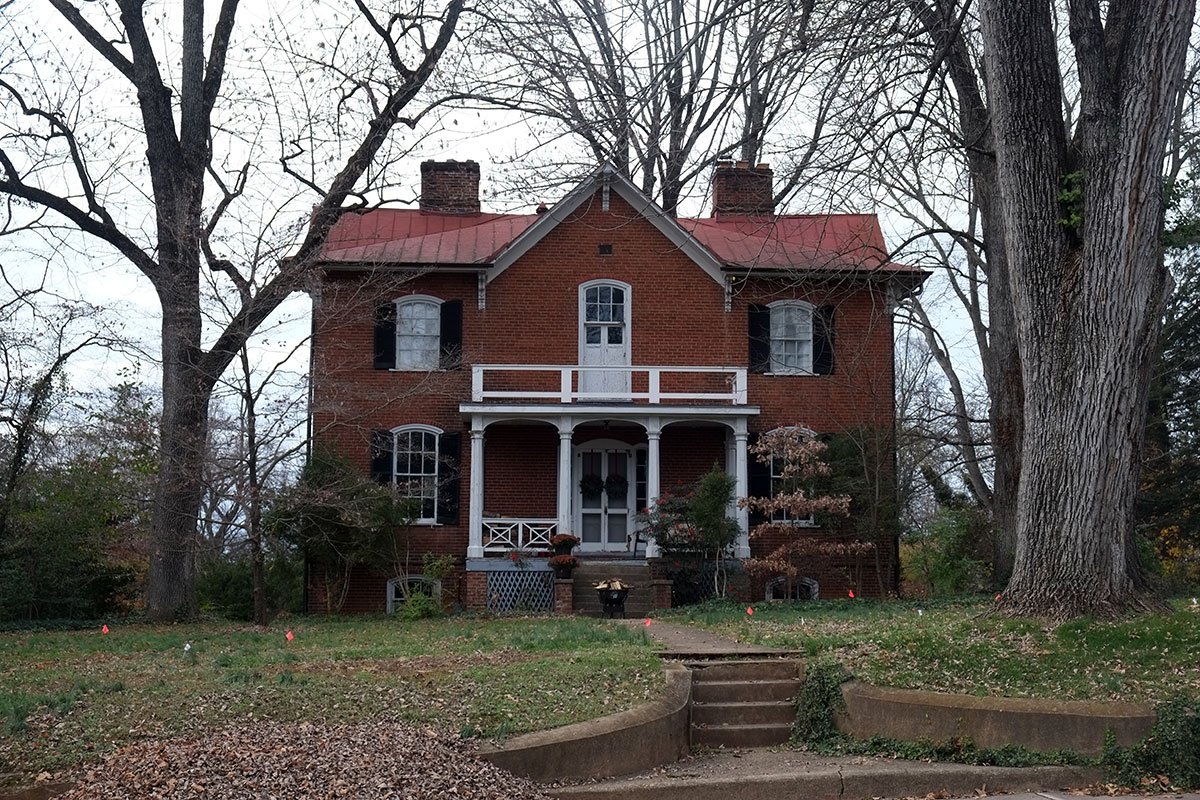
The inner neighborhoods are intact and lovely, with houses from a range of periods, and a nice open space or two.DSCF6894

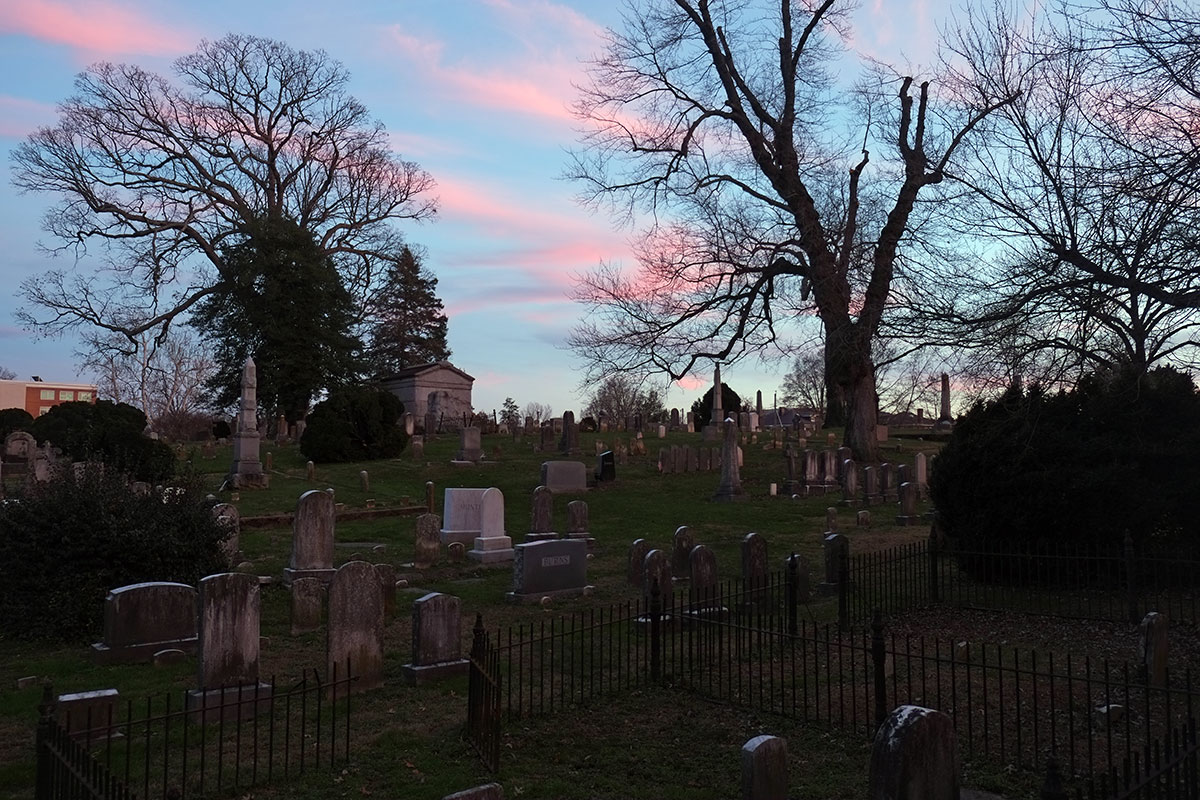
And so began the fascination with southern cemeteries.
DSCF6857

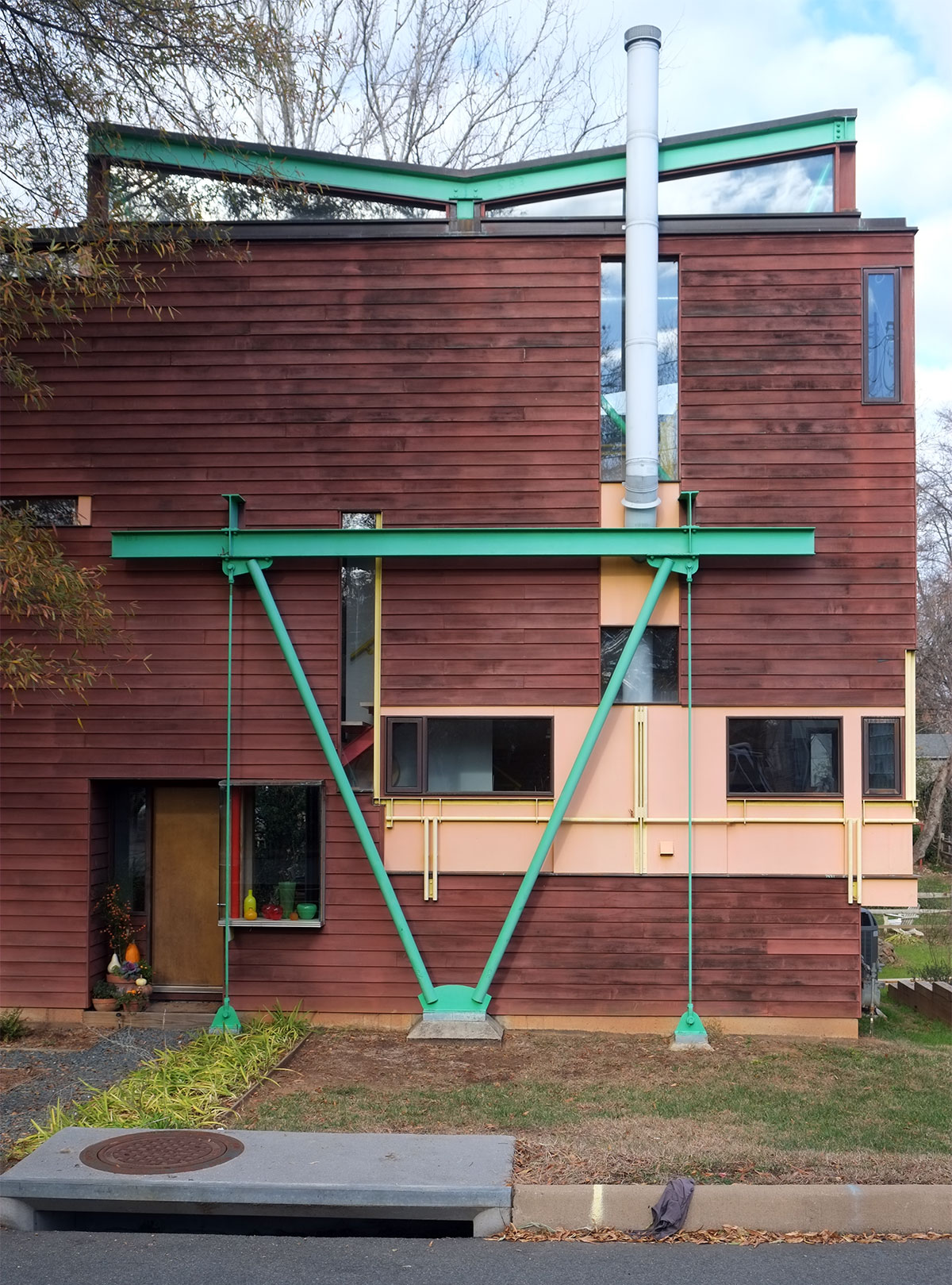
There are even houses by noted architecture professors – I’ll leave it to you to guess which:DSCF6737

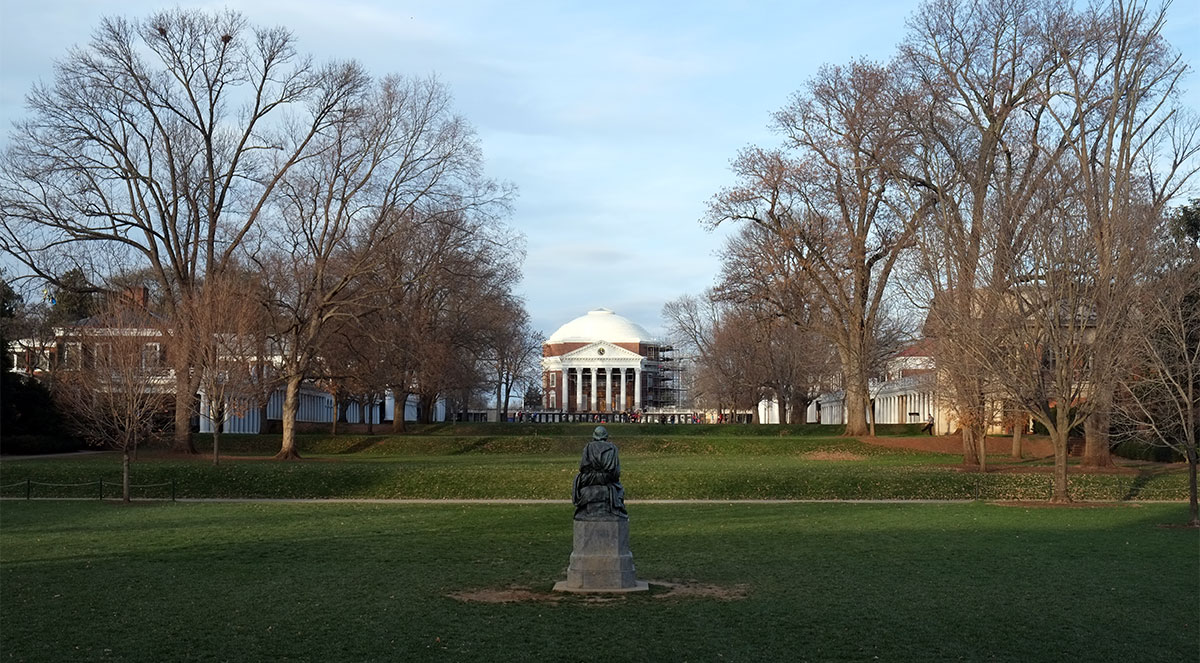
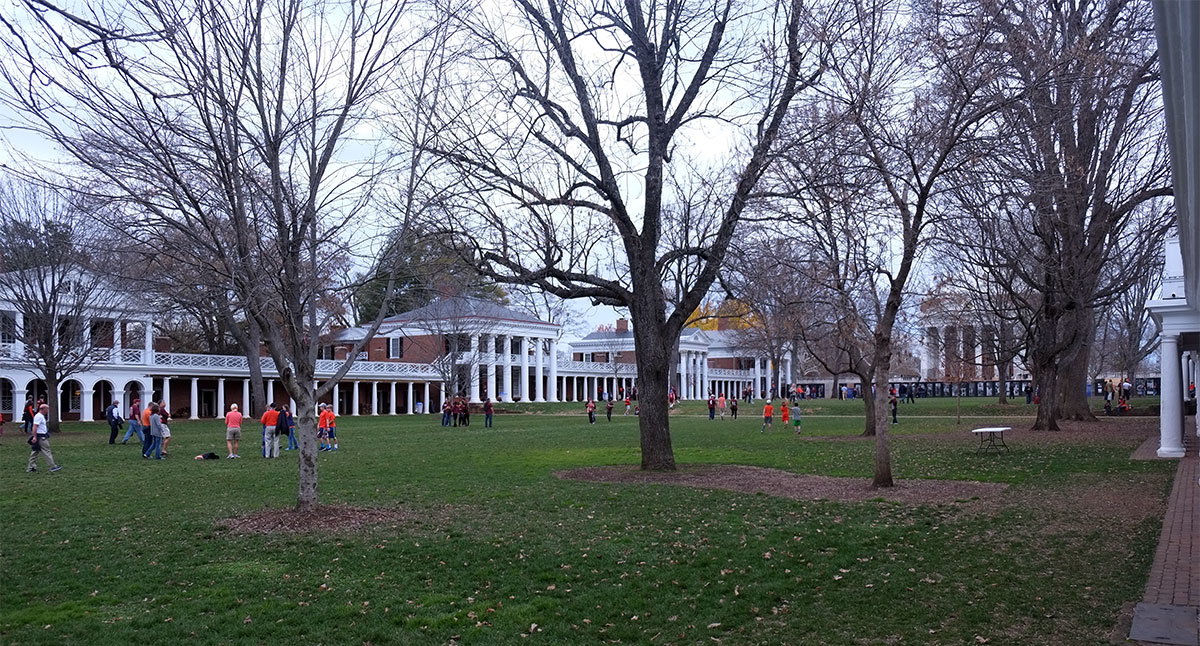
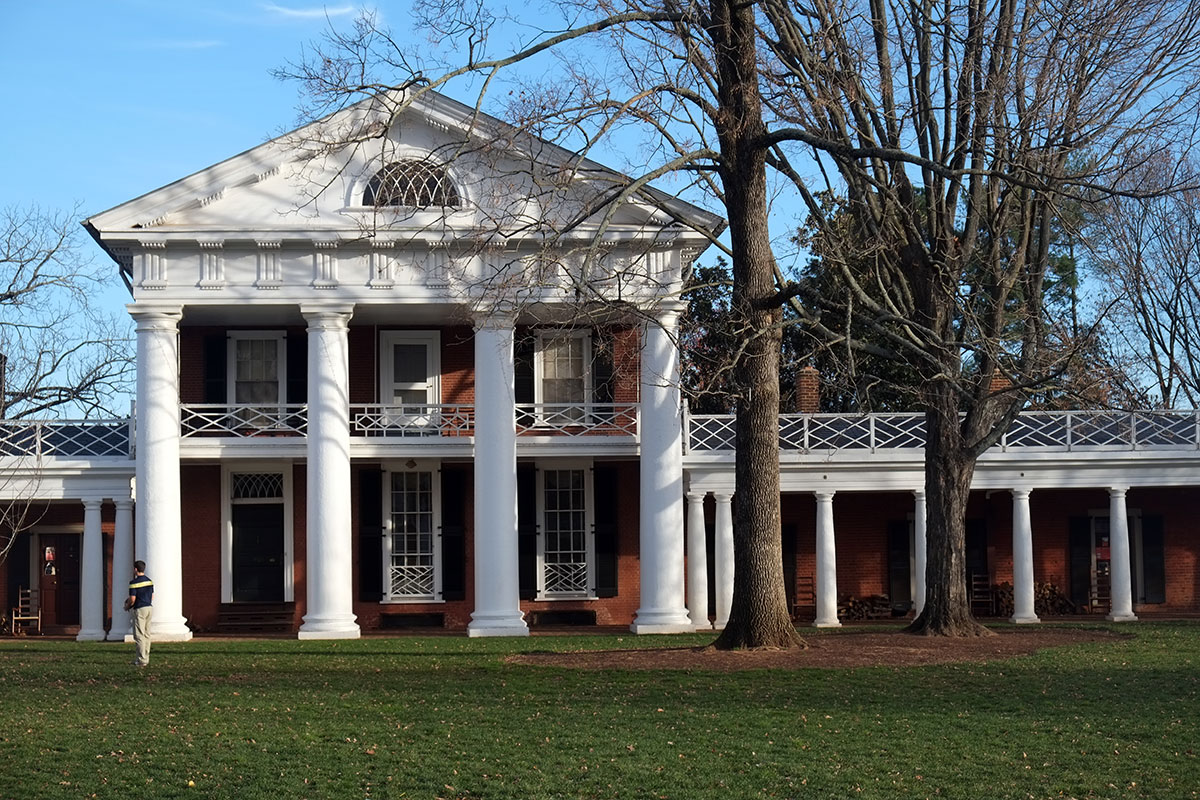
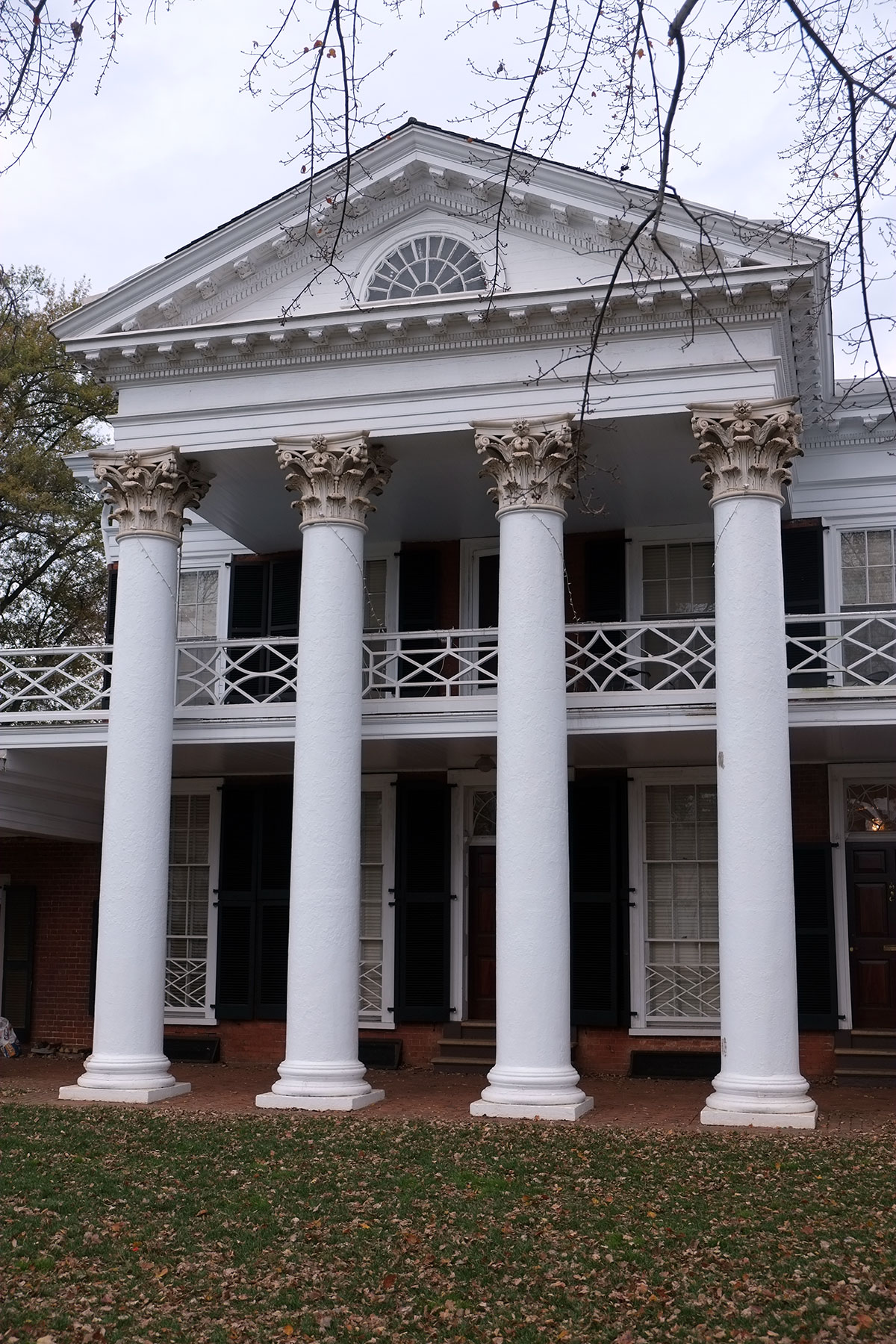
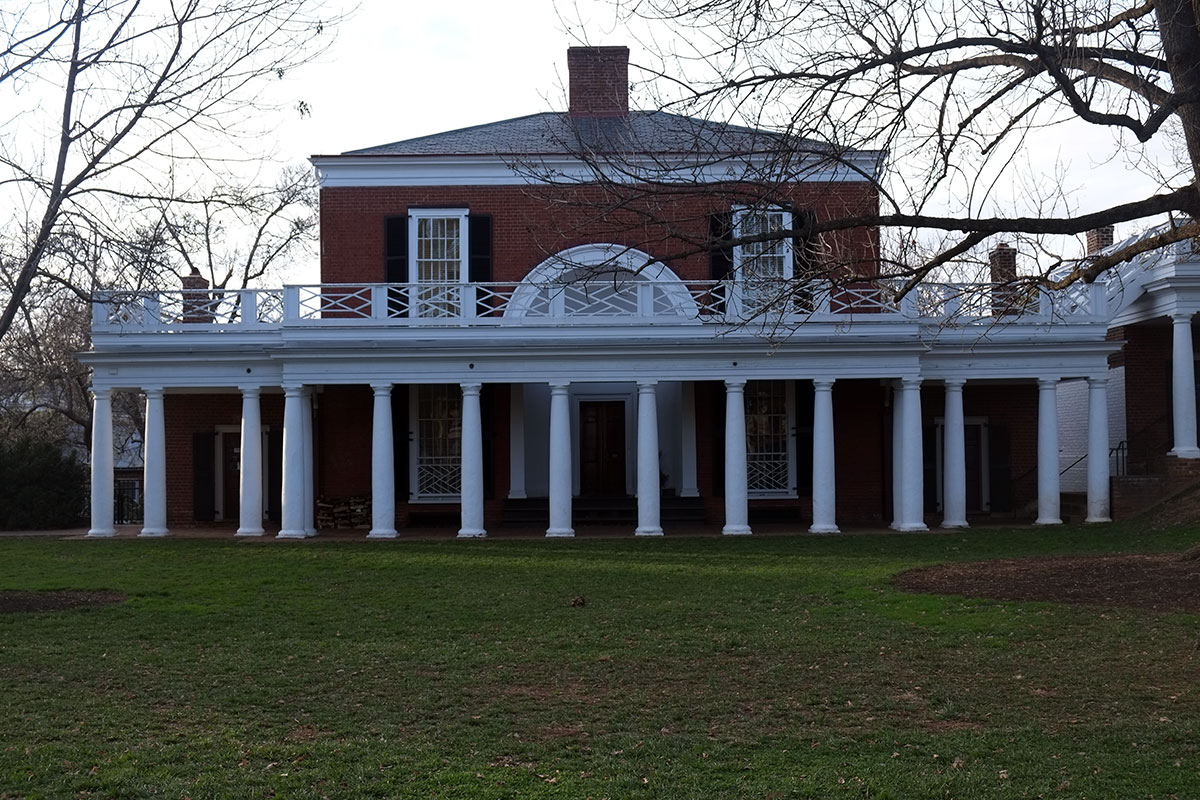
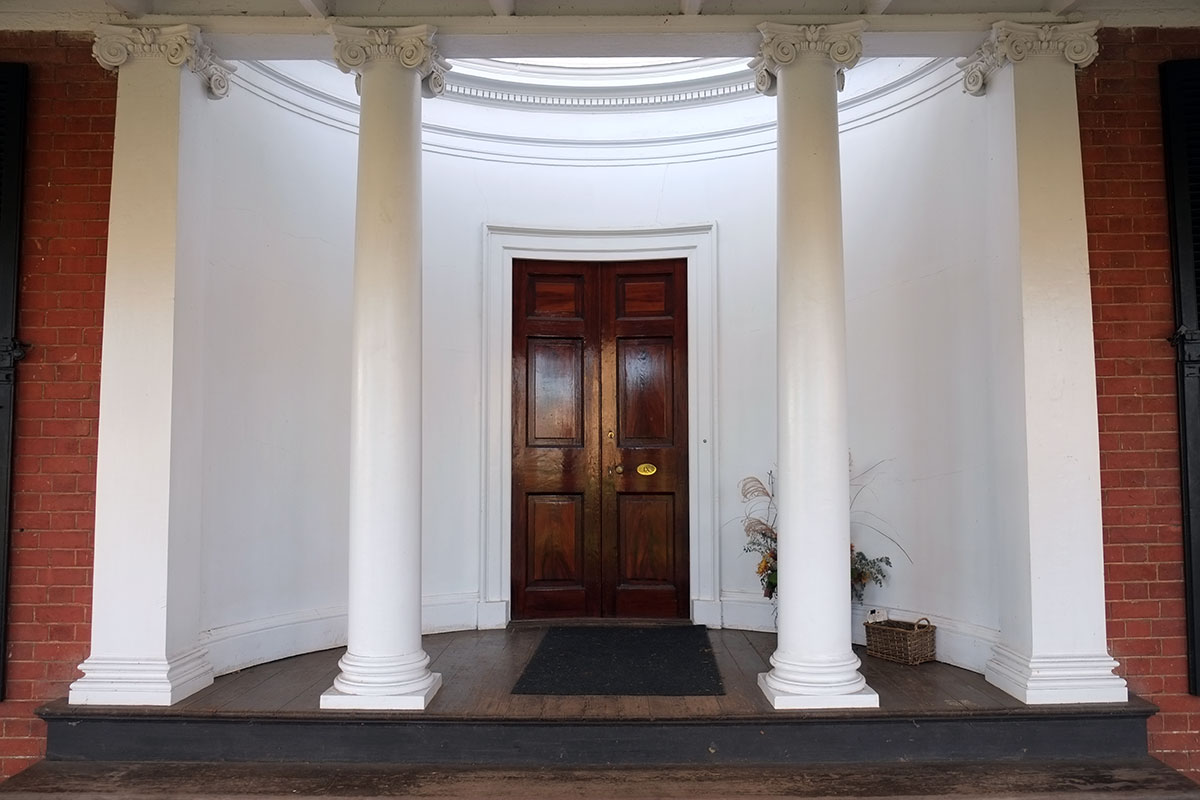
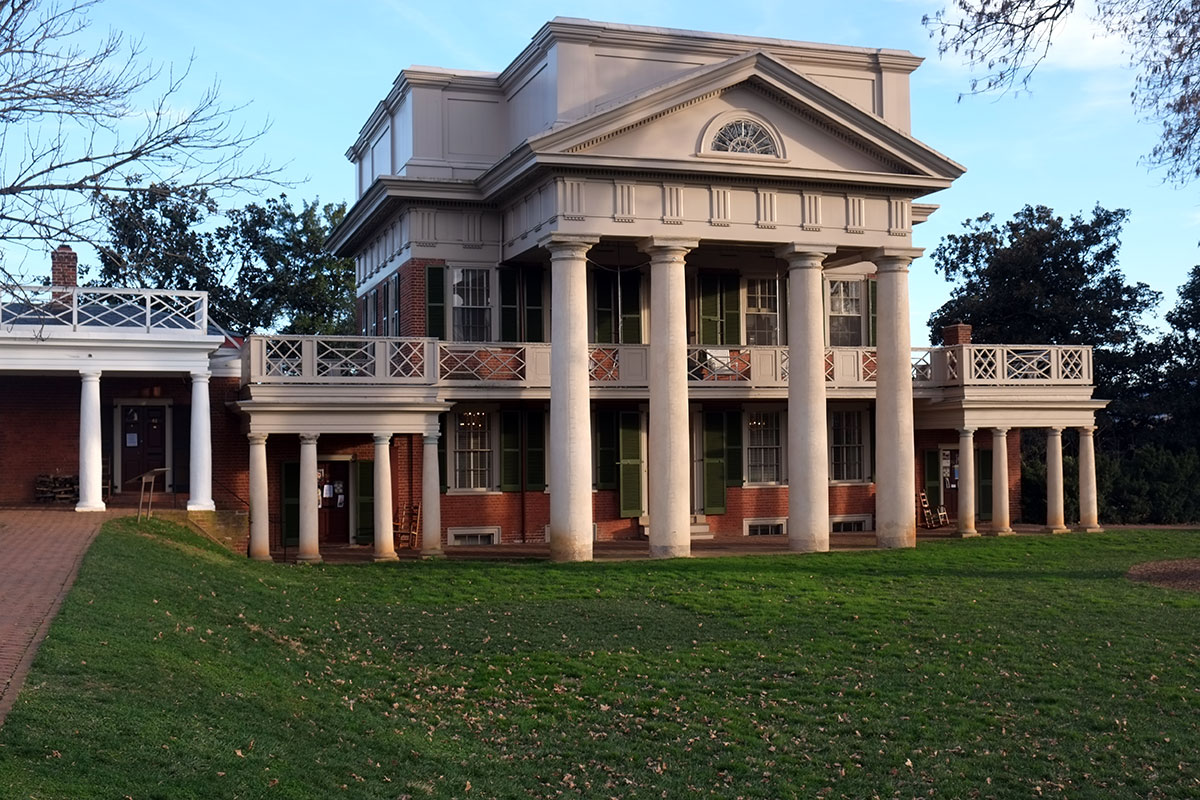
But the main reason Charlottesville is not like other college towns is that they didn’t have Thomas Jefferson. His designs for the Rotunda and the Lawn at the University of Virginia are astounding.  I had seen them years ago (as a high school kid who almost went to UVA), and had studied them quite a bit in college, but stepping out onto the Lawn still stunned me.  We have seen a lot of great architecture and landscapes on this trip, but there are those places that just stand out from everything else.DSCF6827  DSCF7014

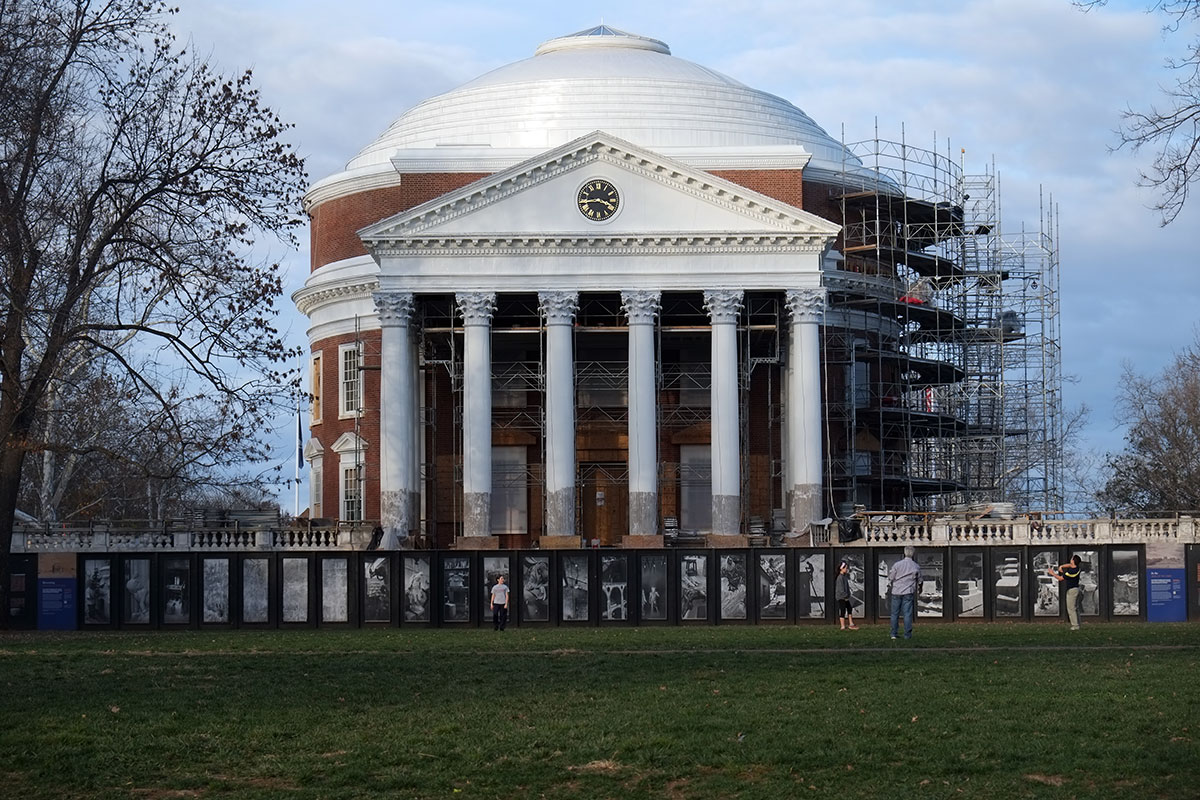
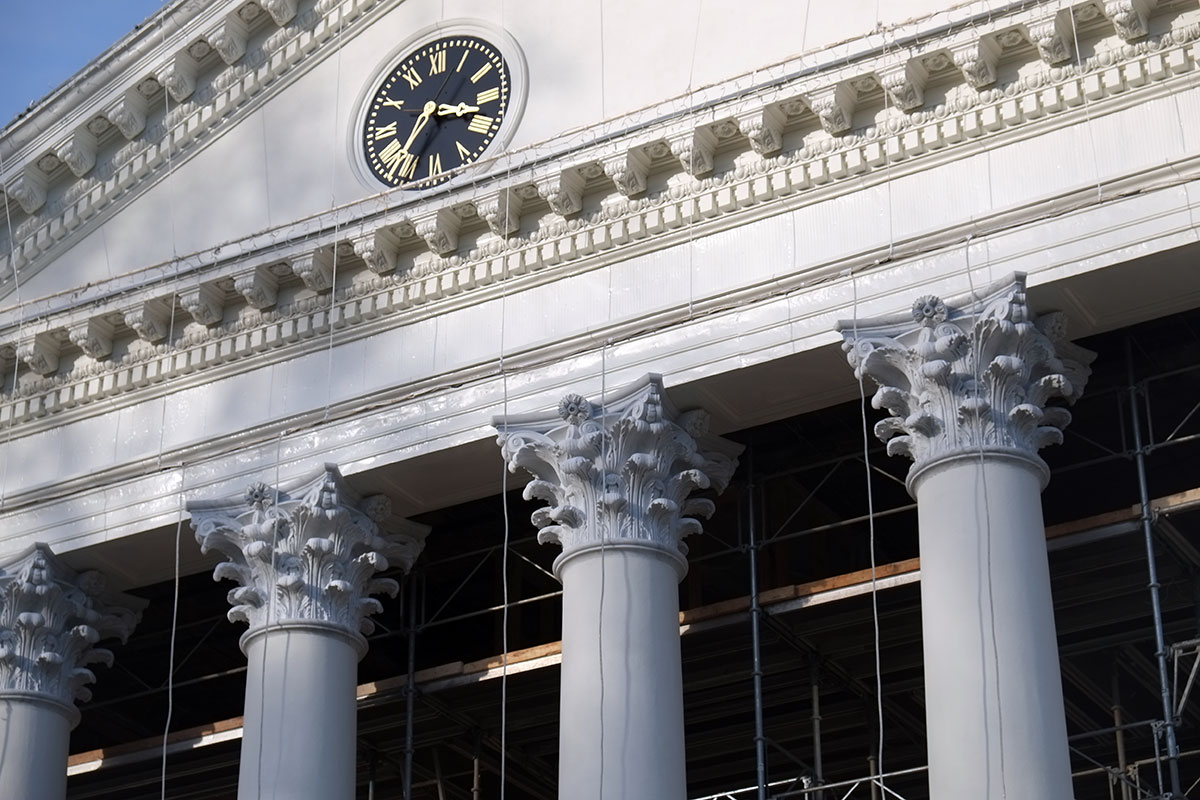
The Rotunda has been undergoing a substantial restoration in recent years, and luckily while I was there, the new carved capitals were revealed.DSCF6802

When you have a UNESCO World Heritage Site, you do it right. No PVC here.
DSCF6782

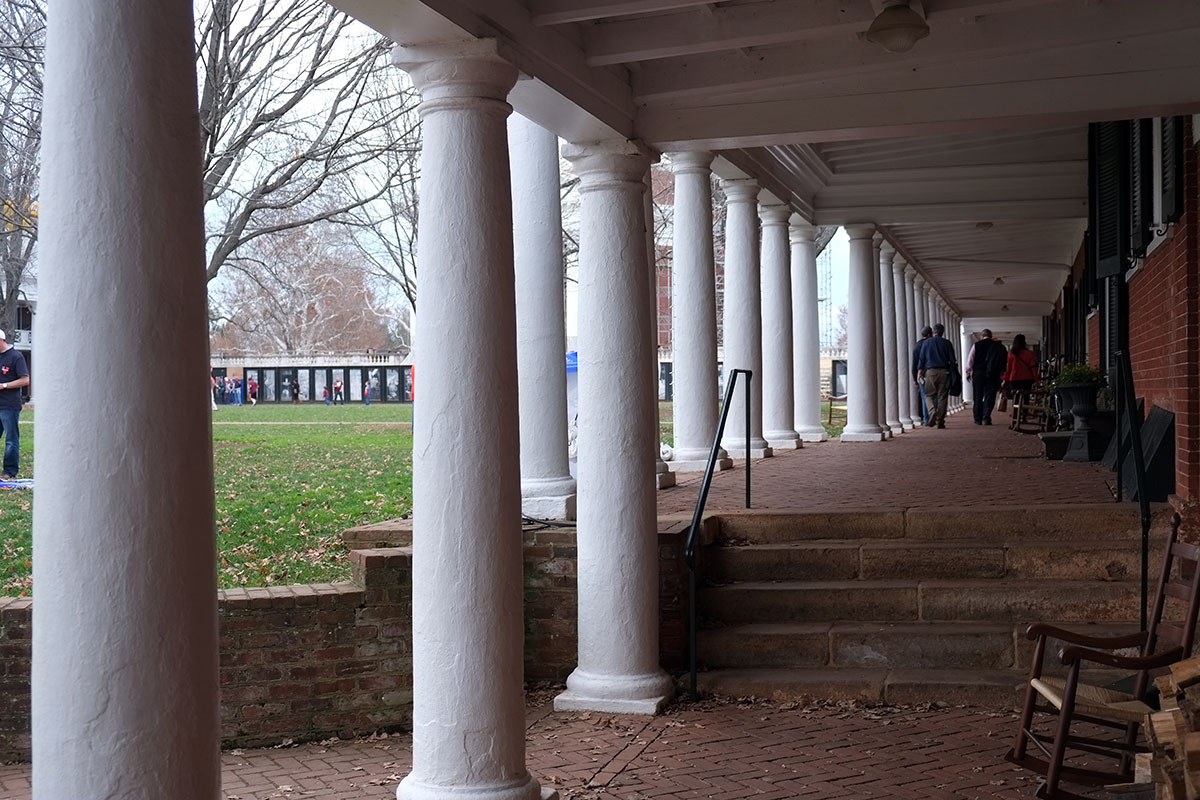
But even more than the Rotunda, it has always been the Pavilions which intrigued me. Jefferson worked with a repetitive, modular system, with the elegant colonnades in front of the students’ rooms.DSCF7030

and took a similar approach to the Ranges, which are to the outside of the Lawn:DSCF6837

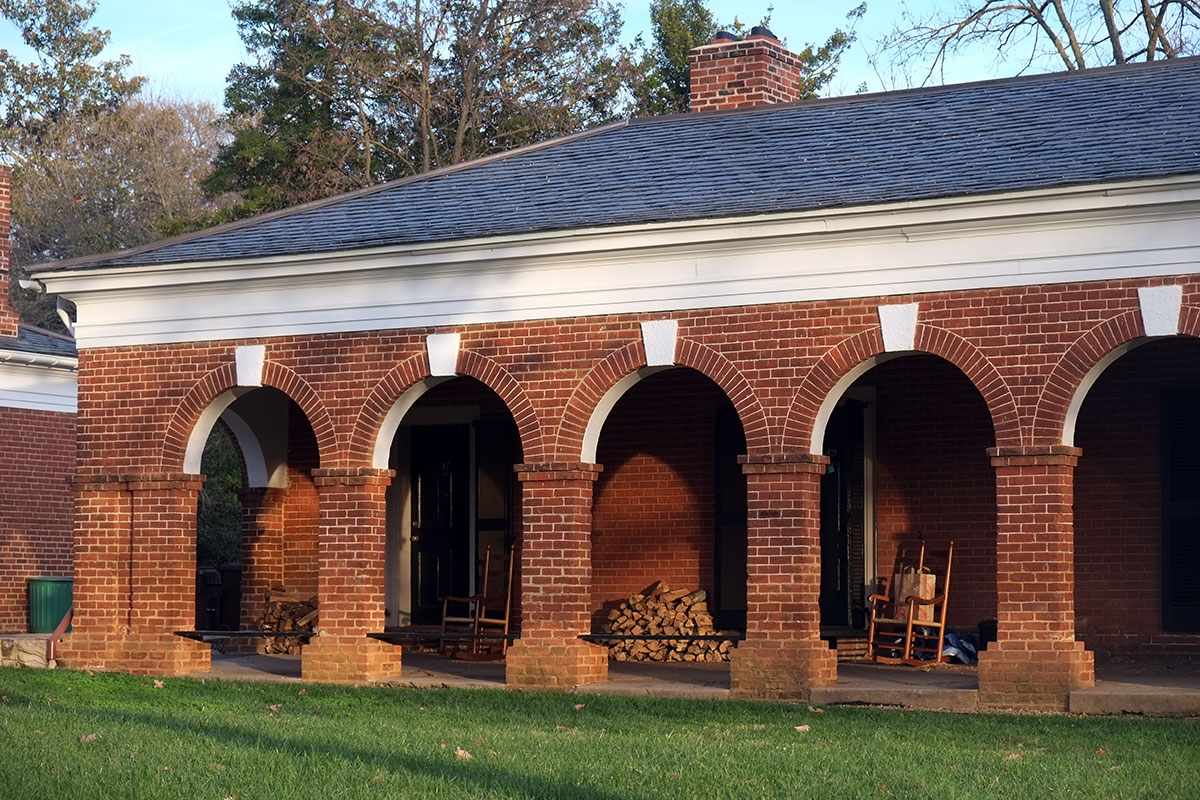
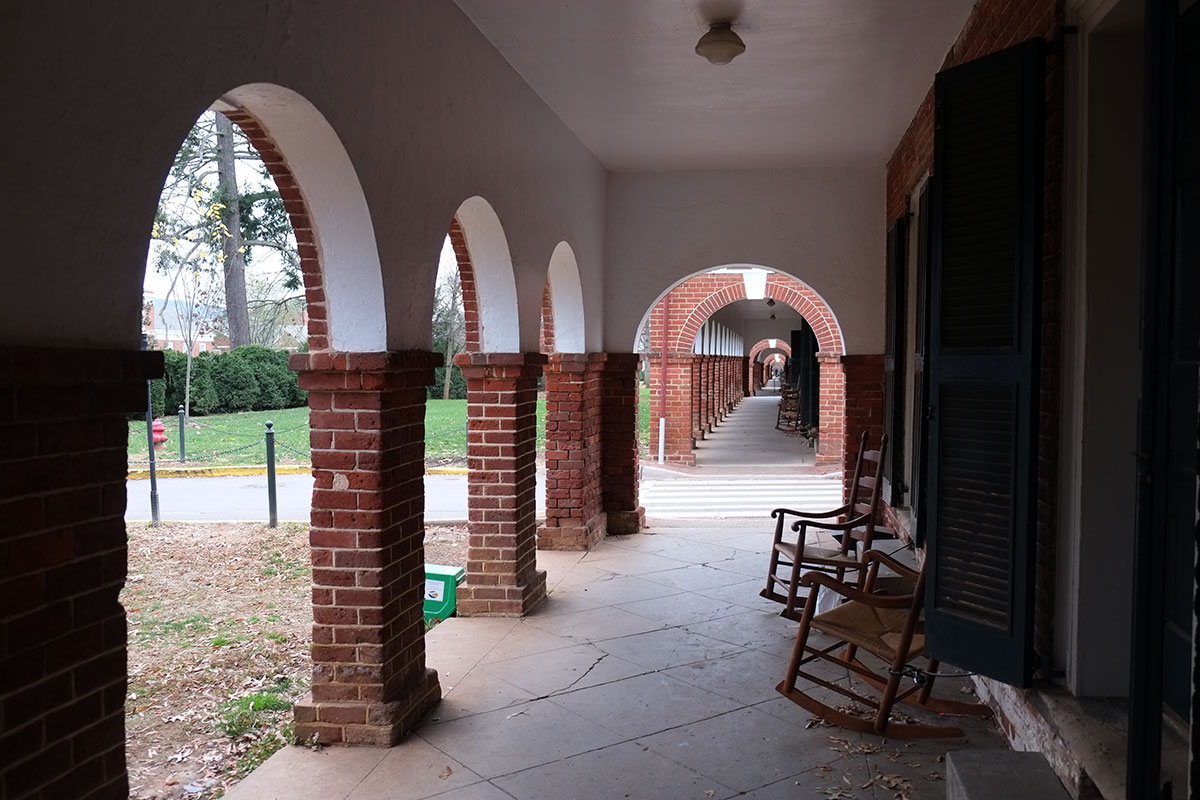
But within this approach, he introduces variety into the system. First, the difference between a colonnade and an arcade
DSCF7045

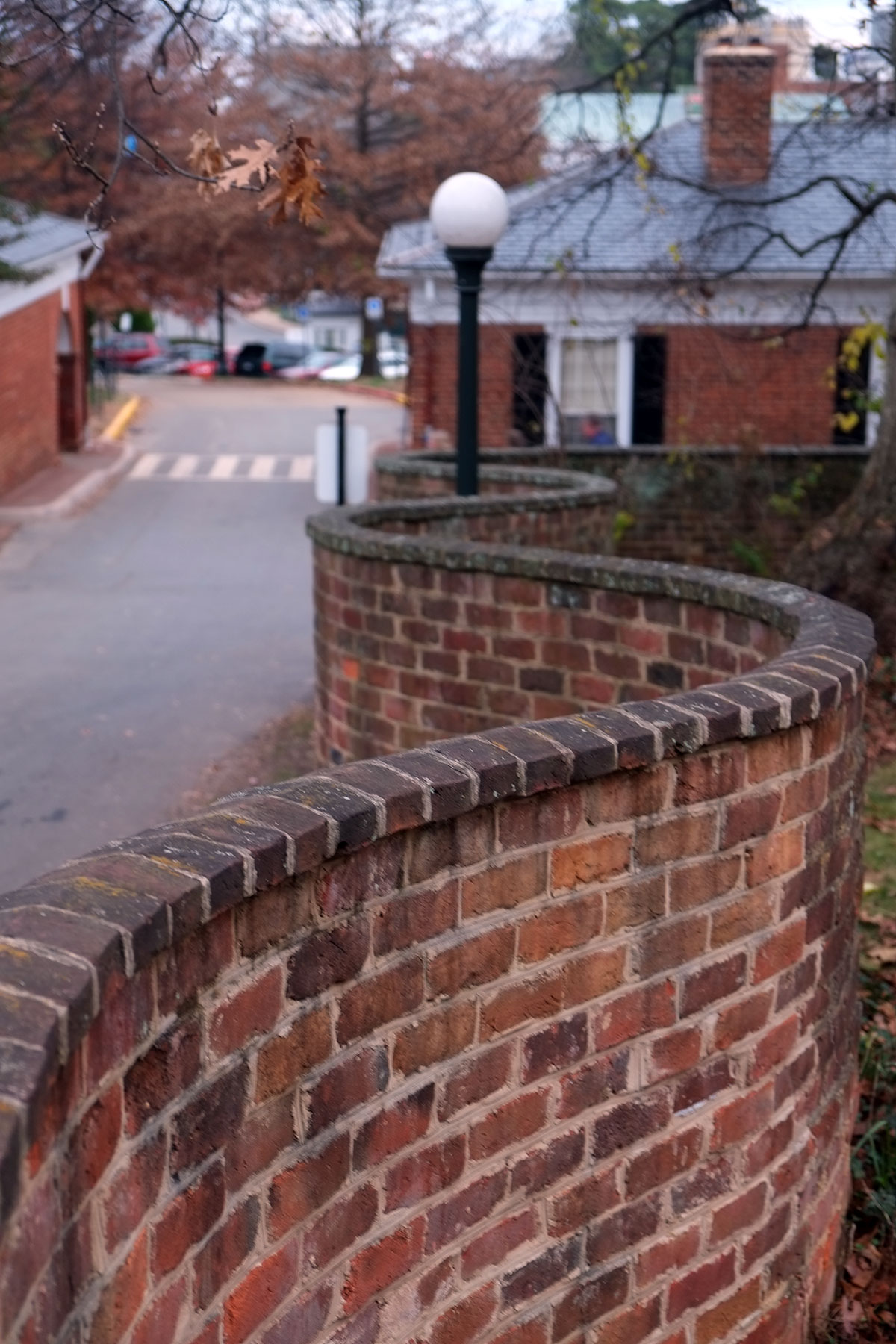
(and then uses the gardens with their serpentine walls to separate them.)DSCF7041

Second, in making all the Pavilions unique. They are the same scale, and they fit into the system in the same way, but each one is a gorgeous exploration of the range of ideas possible in the classical vocabulary.DSCF6794

It is not just about style, but about spatial imagination. The way the colonnades intersect with them changes. There are colossal ordersDSCF7010

and single-story orders:DSCF6809

creating different possibilities for light.DSCF6814

There are delicate and sedate pavilions, and robust ones, with the appropriate order used for each.DSCF6808

I’ve seen a lot of mediocre Academic Georgian on this trip, where all that matters is the proper vocabulary, and not the quality of the design or the character of the whole campus. (William and Mary comes to mind – ghastly pedestrian buildings repeated mindlessly.)  Jefferson shows the richness of the classical language, in a way that we’re probably not capable of now. (The decline of Postmodernism illustrates this well.) It brings to mind the joke about the couple who went to see Kahn about having him design a house for them, which he was happy to do.  But then they mentioned that they’d like it to be in the Georgian style.  Kahn said he couldn’t do that, so they asked him if he could recommend a good architect who could.  Kahn thought a bit, and then said, Thomas Jefferson.

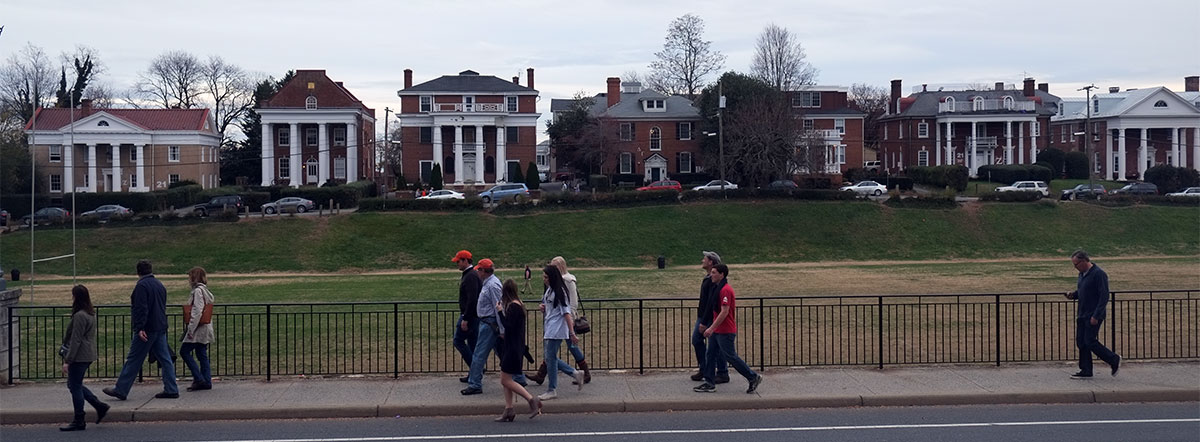
So how has UVA fared in the post-Jefferson era?  There are some eclectic 19th century buildings, before the veneration of Georgian peaked in the early 20th century, but then they did have some good and inventive designs in the style, although maybe taking the goal of variety a little too much to heart.DSCF6985

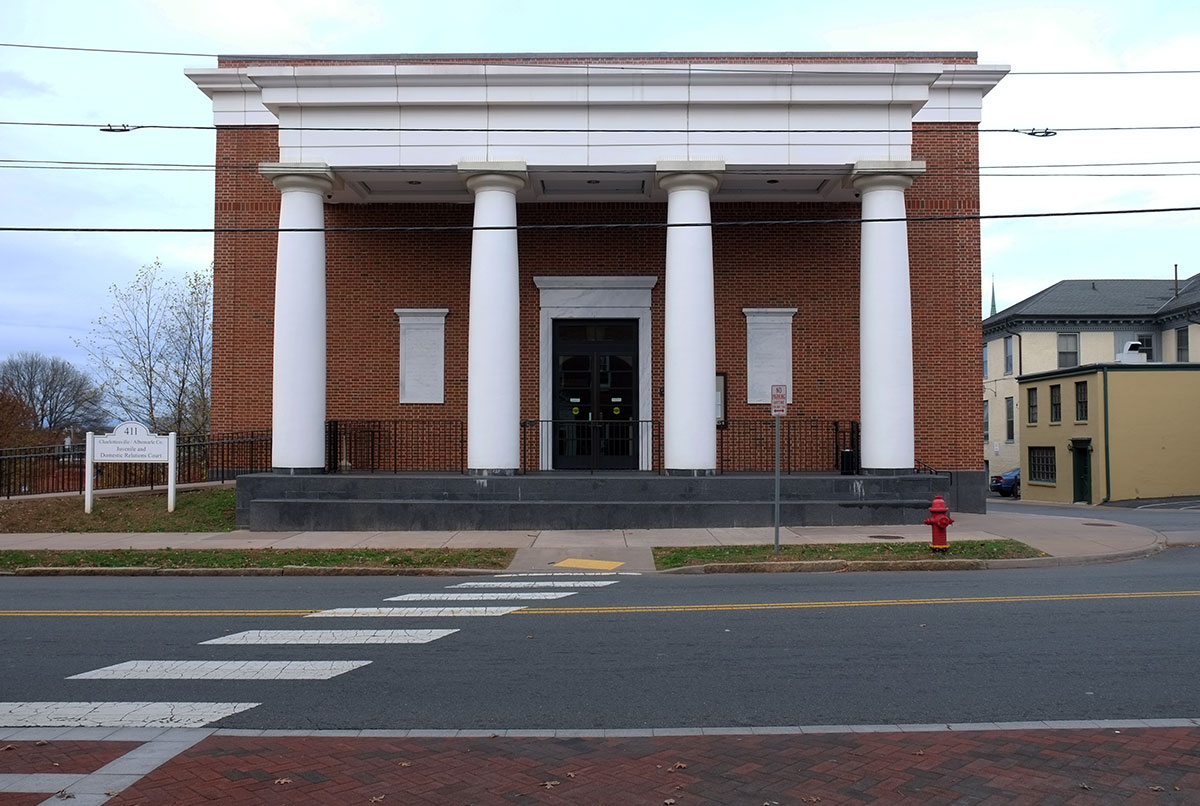
The city itself has fared less well, with some truly execrable examples.  (Sorry, reality intrudes.) DSCF6919

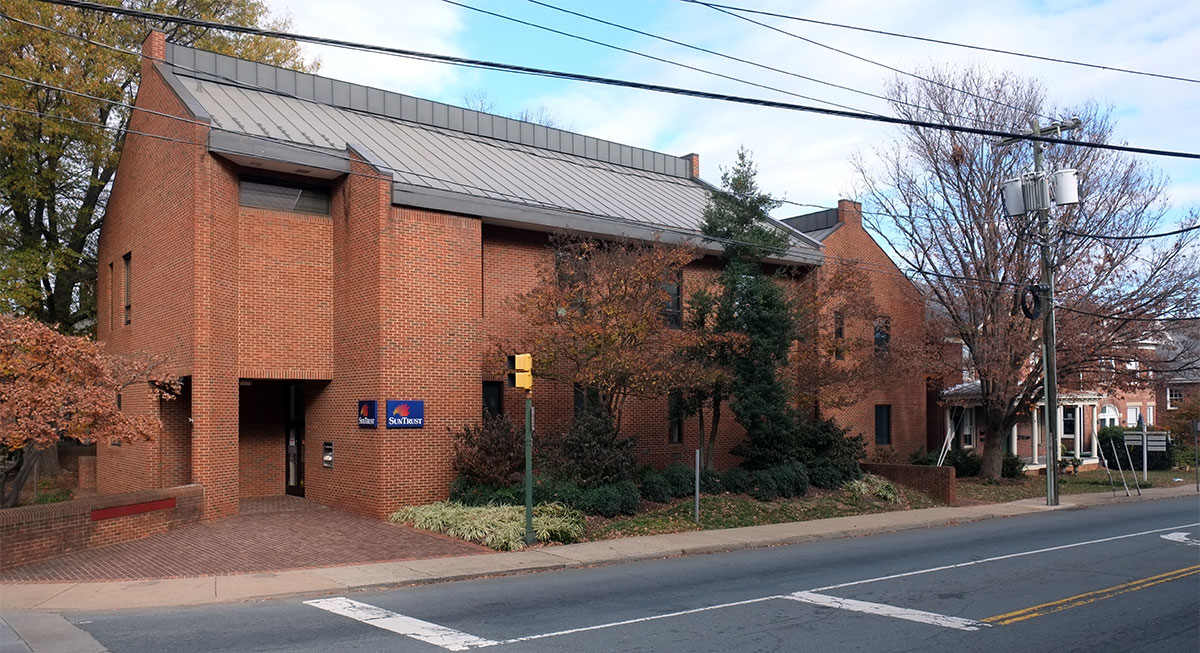
And a few examples of how one can be contextually sensitive without copying the style.  This 1970s bank struck me as quite good – similar scale, materials and overall form, without copying style, rhythm, or detailsDSCF6743

and with the more overscaled, modern elements tucked away in a courtyard.DSCF6908

We are used to thinking of Postmodernism as having tried to correct the anti-contextualism of Modernism, but we often overlook the modern buildings that already did this quite well. (I noted this in Cambridge too.)

Kahn was right – we should just leave Georgian to Jefferson – he was remarkable, especially for someone who had a time-consuming day job.  I did go to see Monticello – on a gorgeous crisp day, after waiting through four rainy ones.  It was invigorating, although less perfect than the Lawn.  Monticello was Jefferson’s own house, so he could do what he wanted – play with ideas, change his mind, add on later.  The principles of variety and exploration could dominate – it didn’t need to have the resolution of an important civic work.  In the Lawn you get the perfection of a few big ideas worked through rigorously;  at Monticello you get exuberant pieces all getting along quite well, while not as concerned as to how they add up.  It was a wonderful afternoon, but unfortunately my computer somehow ate all my photos as I was downloading them, which is not a disaster, as photos of Monticello are not hard to come by.  Or as Greta would say, just go.

Photos

Most of my blog posts are pretty pedantic and focussed, so I’ve decided I should sometimes just post photos that aren’t part of a larger polemic.  Plus I don’t have to write as much.

DSCF5745

Baltimore

DSCF5796

Baltimore

DSCF4623

Lowell, MA

DSCF4885

West Side, New York

DSCF4867

Riverside South, New York

DSCF4816

Seventh Ave., New York

DSCF5131

Gansevoort St., New York

DSCF5049

Whitey Museum, New York

DSCF5097

Whitney Museum, New York

DSCF5623

Philadelphia

DSCF5680

Philadelphia

DSCF5297

Paterson, NJ

DSCF6108

Nattional Air and Space Museum, Washington DC

DSCF7050

Charlottesville, VA

Harpers Ferry

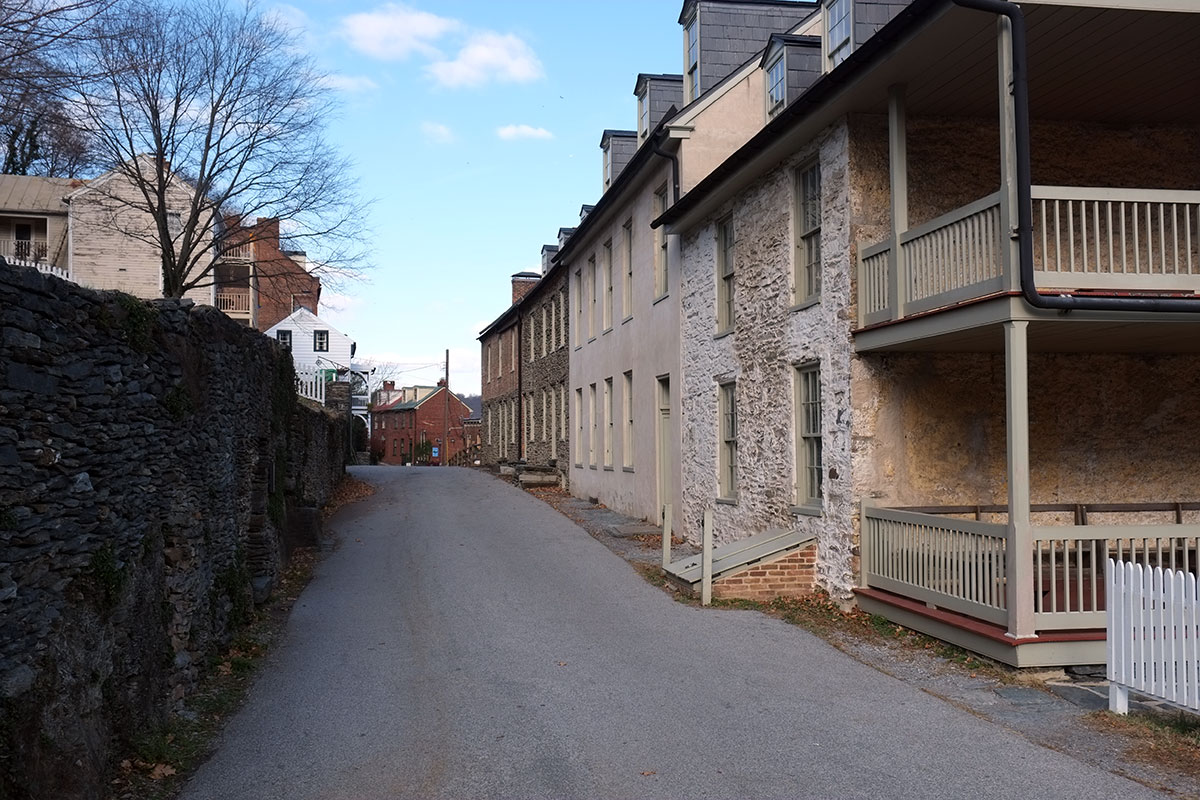
DSCF6561Harpers Ferry is a place I’d always heard about, but about which I had only a few random associations.  John Brown’s raid, battles, rivers, West Virginia (really, is that where West Virginia is?)  There wasn’t one clear narrative line about it, which now makes sense to me, as an incredible number of important things have happened in this one tiny place.  The history is extremely interesting, but the spatial / geographic / topographic / architectural character is astounding.  It’s my new favorite “place” in the country.

It all starts with the geography:

  • It’s where the Shenandoah joins the Potomac, one of the major passes through the Appalachians in that region.
  • Virginia, Maryland and West Virginia all meet at this one point.
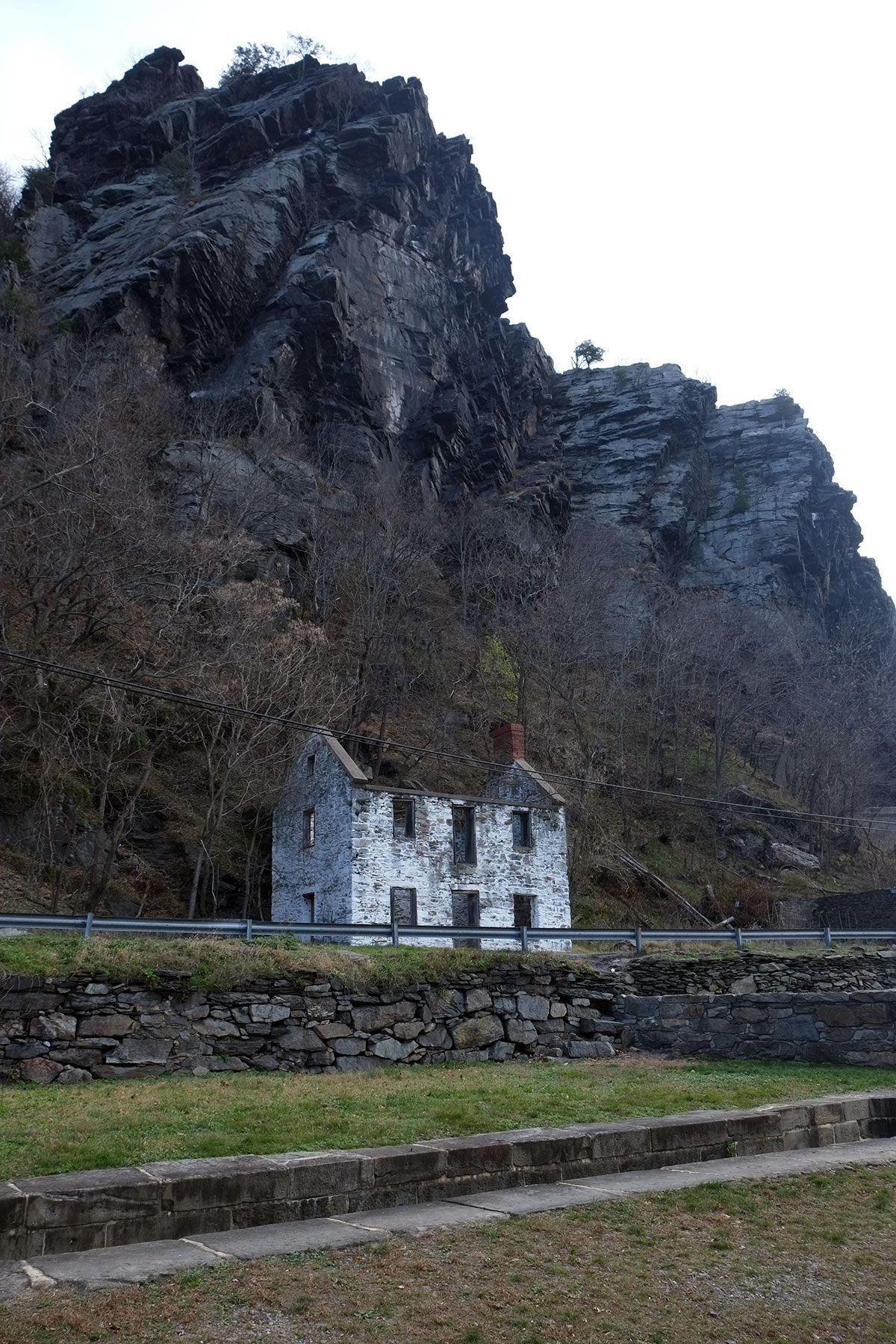
  • It is a gorge, similar to the Hudson River Highlands.  A big cliff of Maryland on one side, a big cliff of Virginia on the other, and a small, low area  at the base of a cliff in West Virginia in the middle, which is the town.
  • Because of this geography, important transportation systems cross here:  two rivers, one canal, and two railroads.
  • Because of the strategic importance of this crossing, lots of important battles and skirmishes happened here, mainly in the Civil War.
  • Due to this transportation hub, materials such as coal and iron moved through here, and it became the site for the US Armory, which pioneered manufacturing arms from interchangeable parts.
  • Since the armory was here, John Brown decided to take it over and take the weapons for an insurrection.

There are probably lots of other places in the country where a similar series of historical causes and events have taken place, and we haven’t paid much attention to them, because neither Greta nor I likes to stand at a field where something happened a long time ago and try to imagine it.  We like to see tangible stuff that remains from these events.  The visual evidence at Harpers Ferry is compressed, right there in front of you.  For this and other reasons, it is one of the most vivid and beautiful places we’ve been.

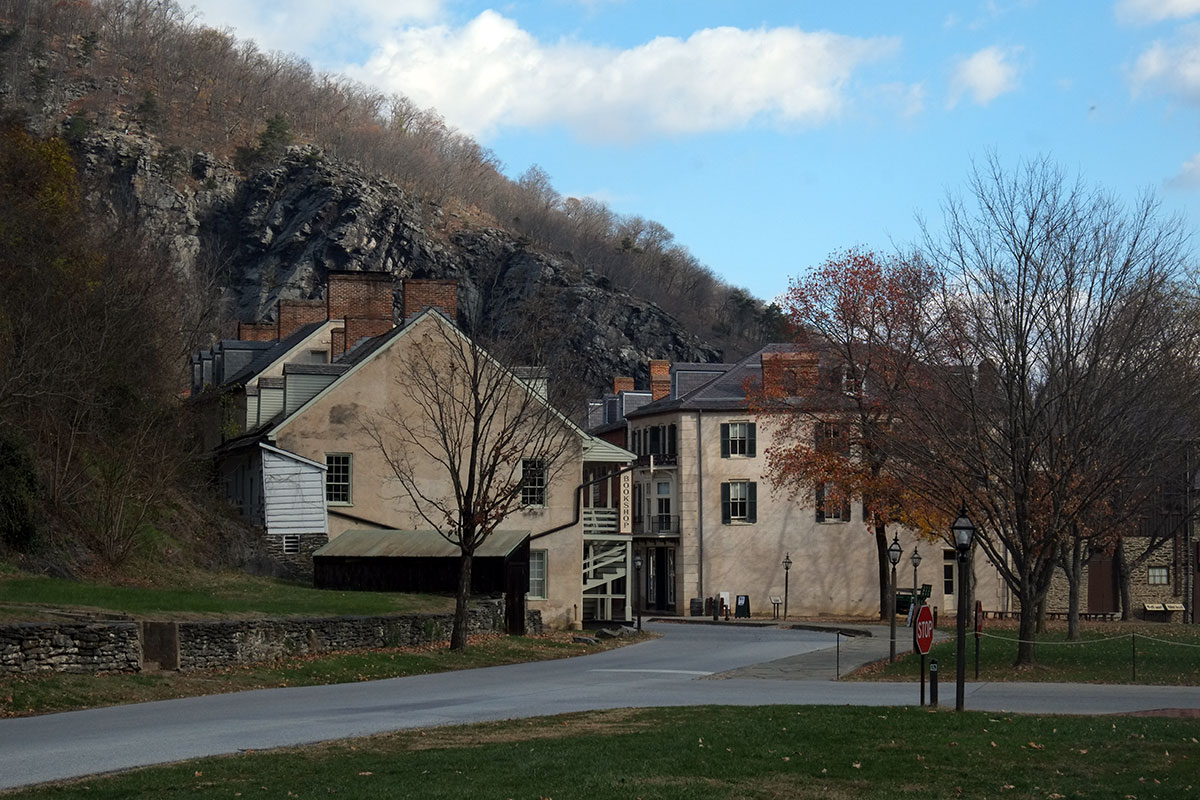
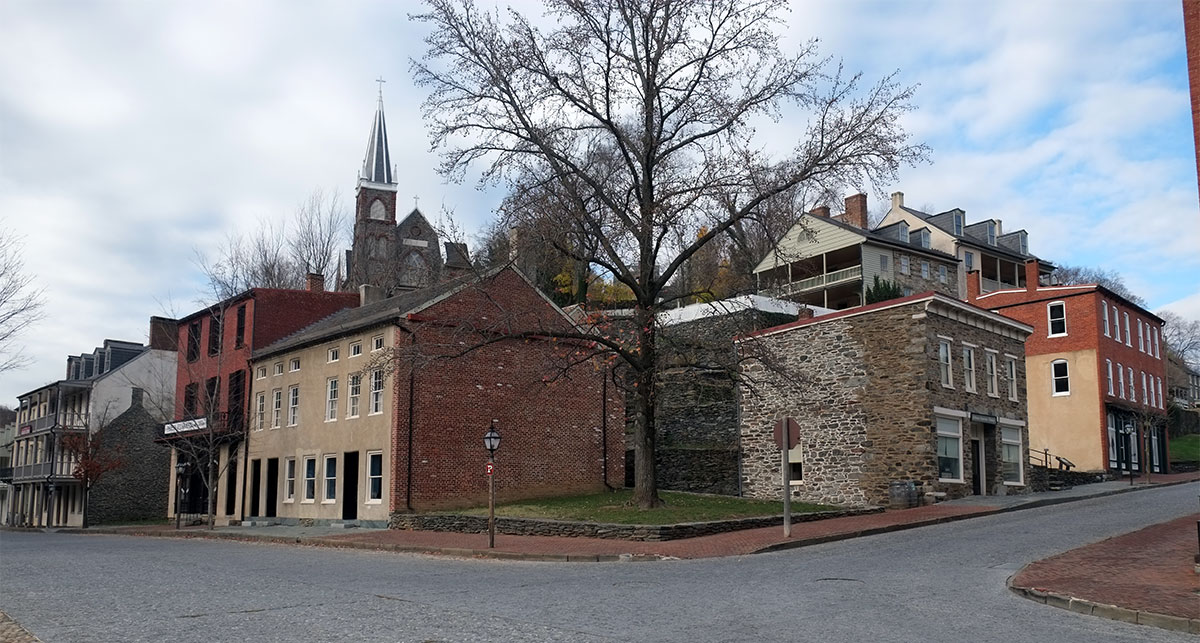
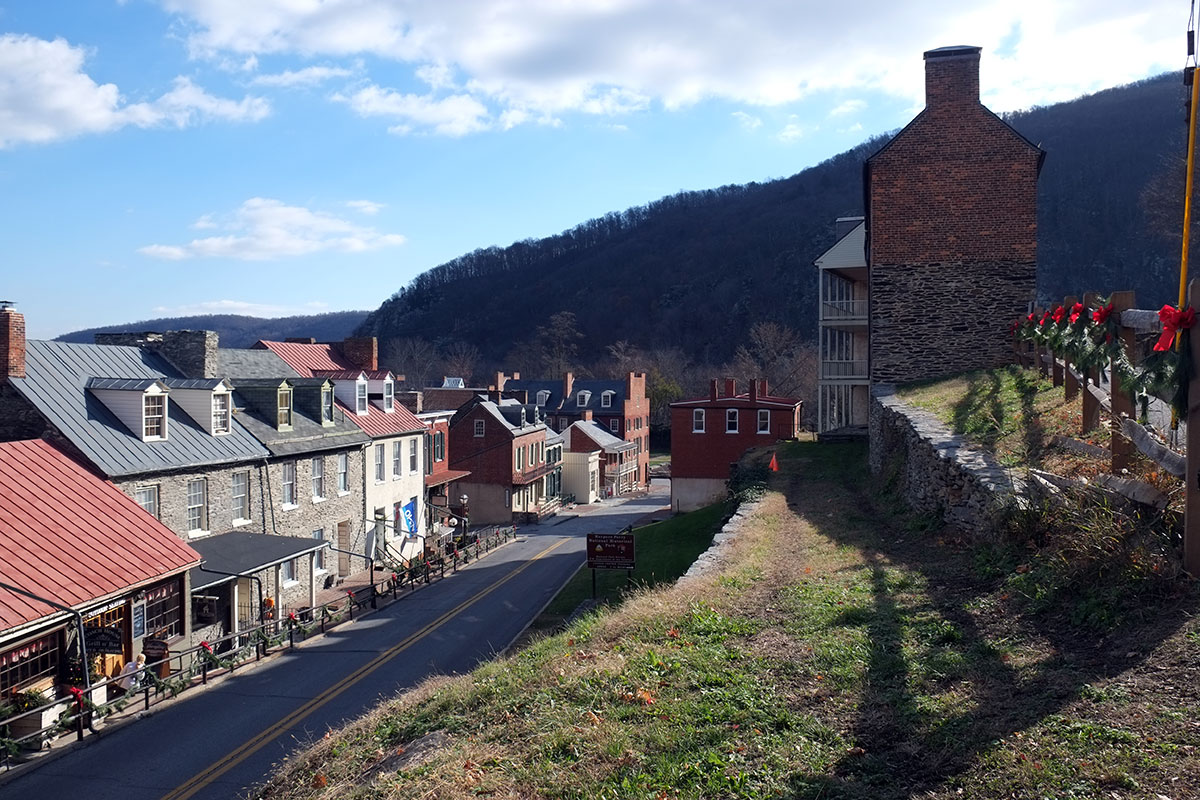
The first inkling as you arrive in the town, with the Maryland highlands rising up beyond the main street:
DSCF6631

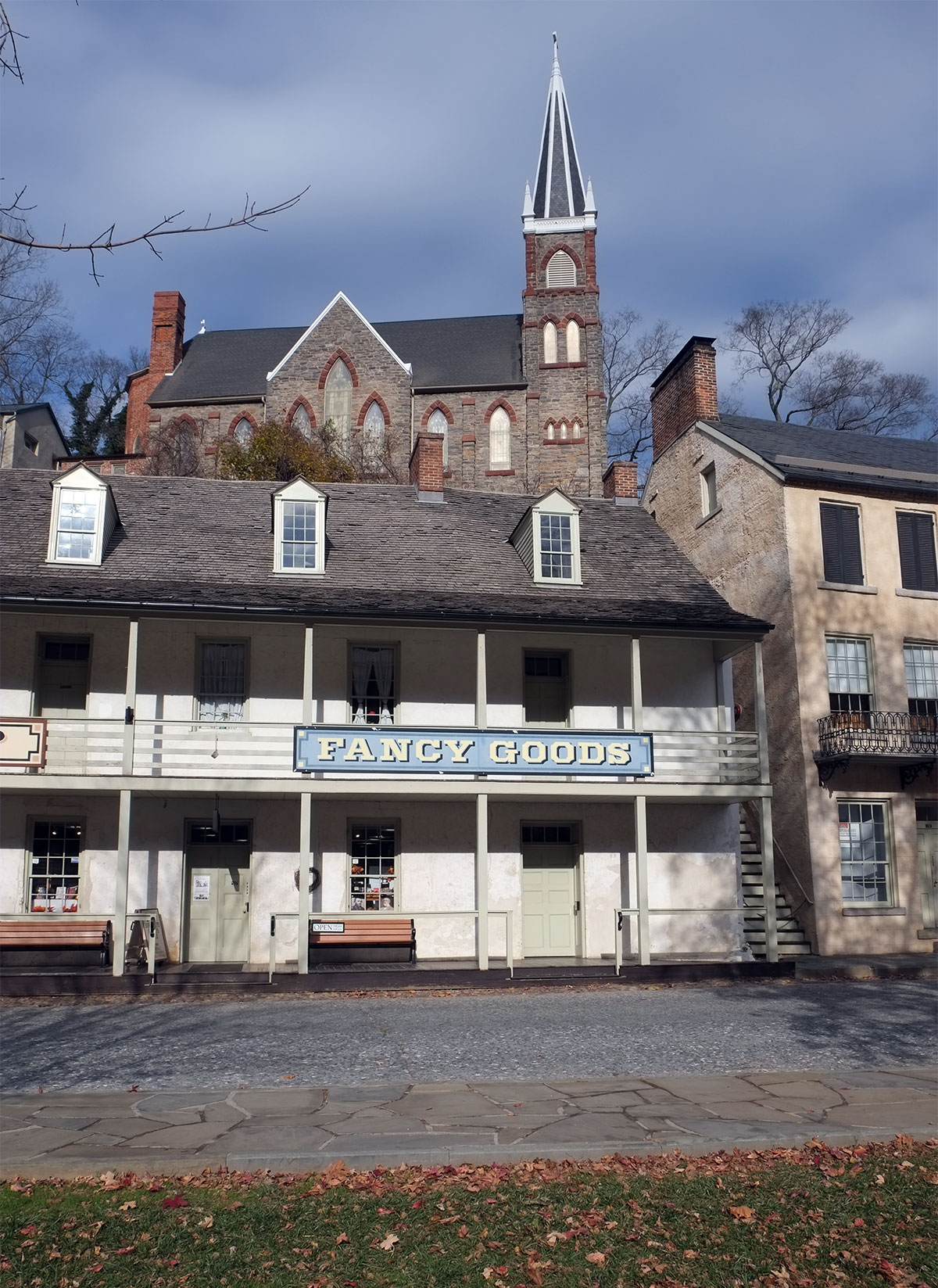
On the left the town rises, with a Catholic church (built for the Irish railroad workers) above.DSCF6477

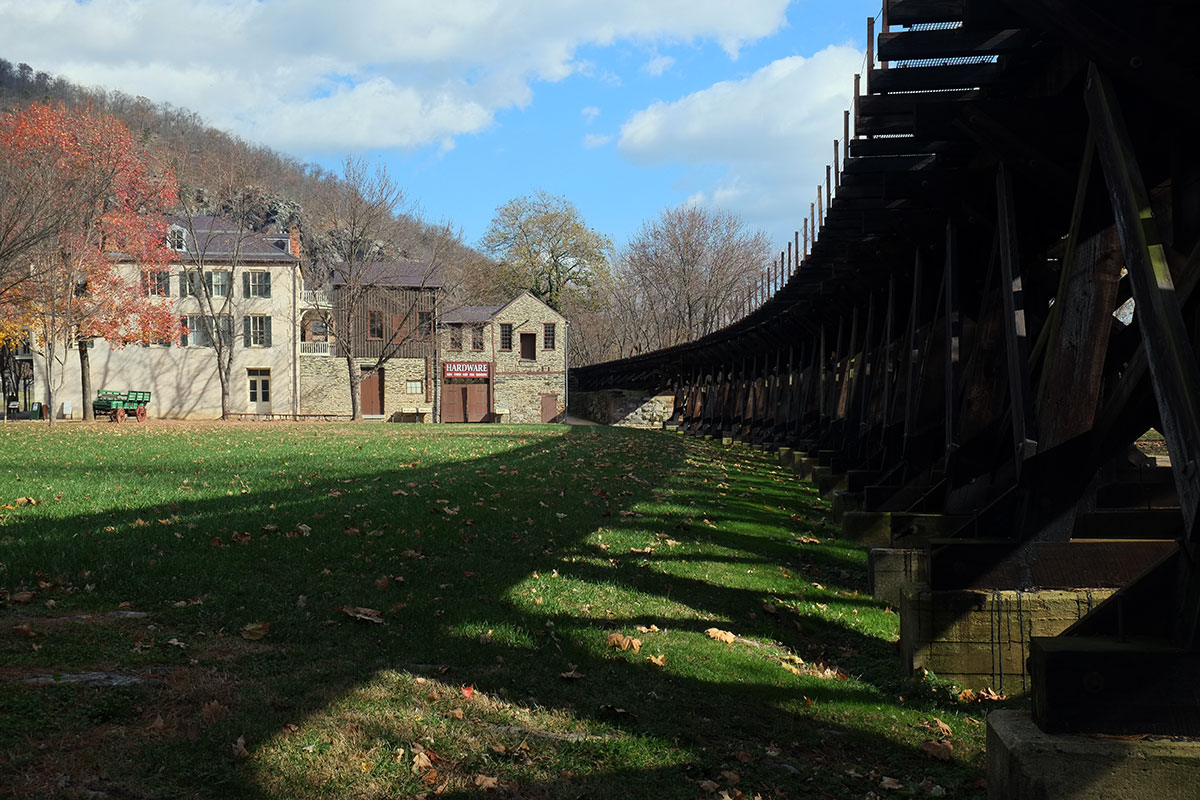
On the right, a railroad trestle parallels the Shenandoah.
DSCF6624

At the center of town, an intersection with a tree.DSCF6482

with a much larger space opening towards the river convergence.  The building where John Brown and his associates holed up used to be here.  DSCF6607

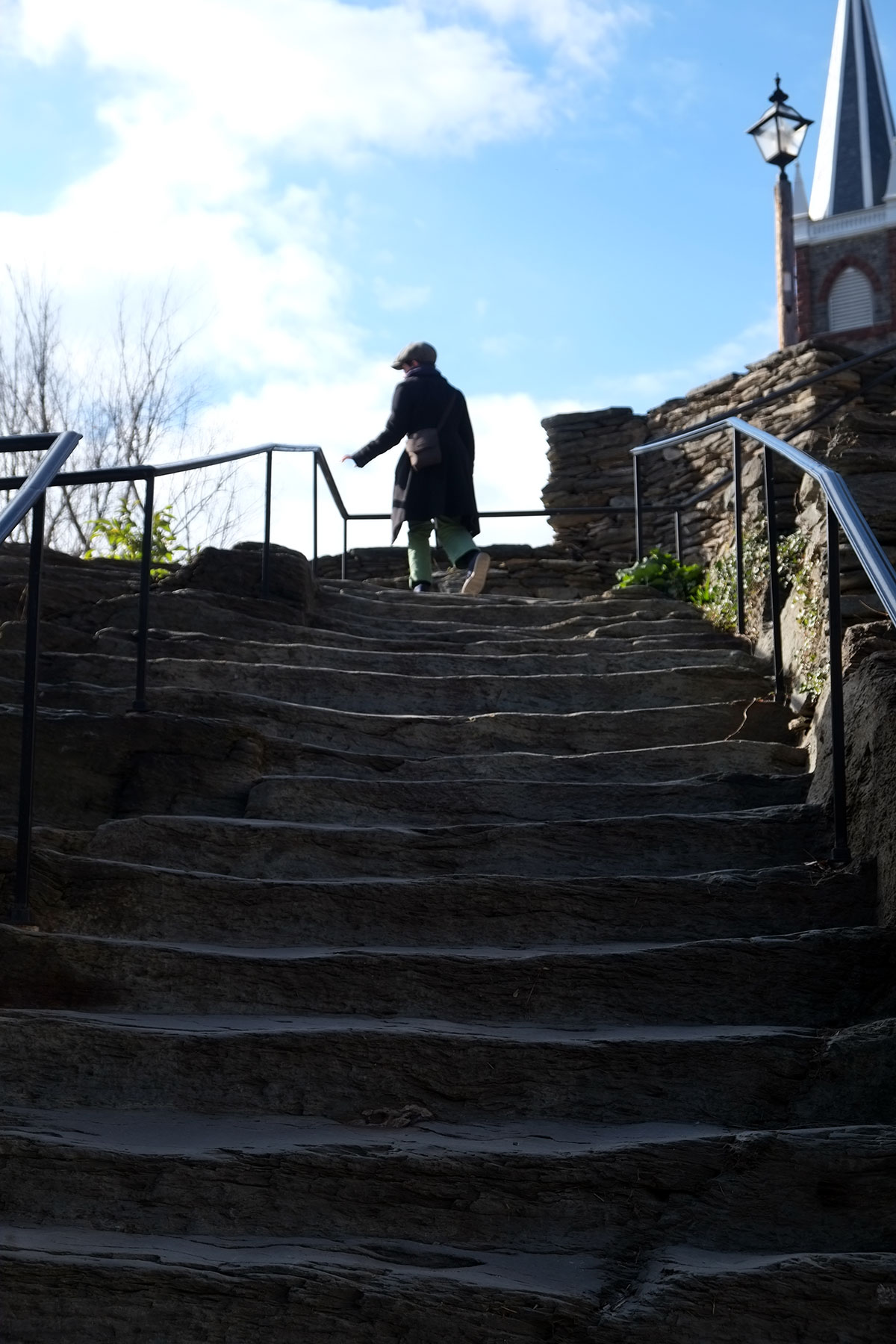
There are hewn stone stairs leading up the hill to the church.  At this point I’m wondering, is this West Virginia, or have we passed through a space/time hole and popped out in Scotland?
DSCF6524

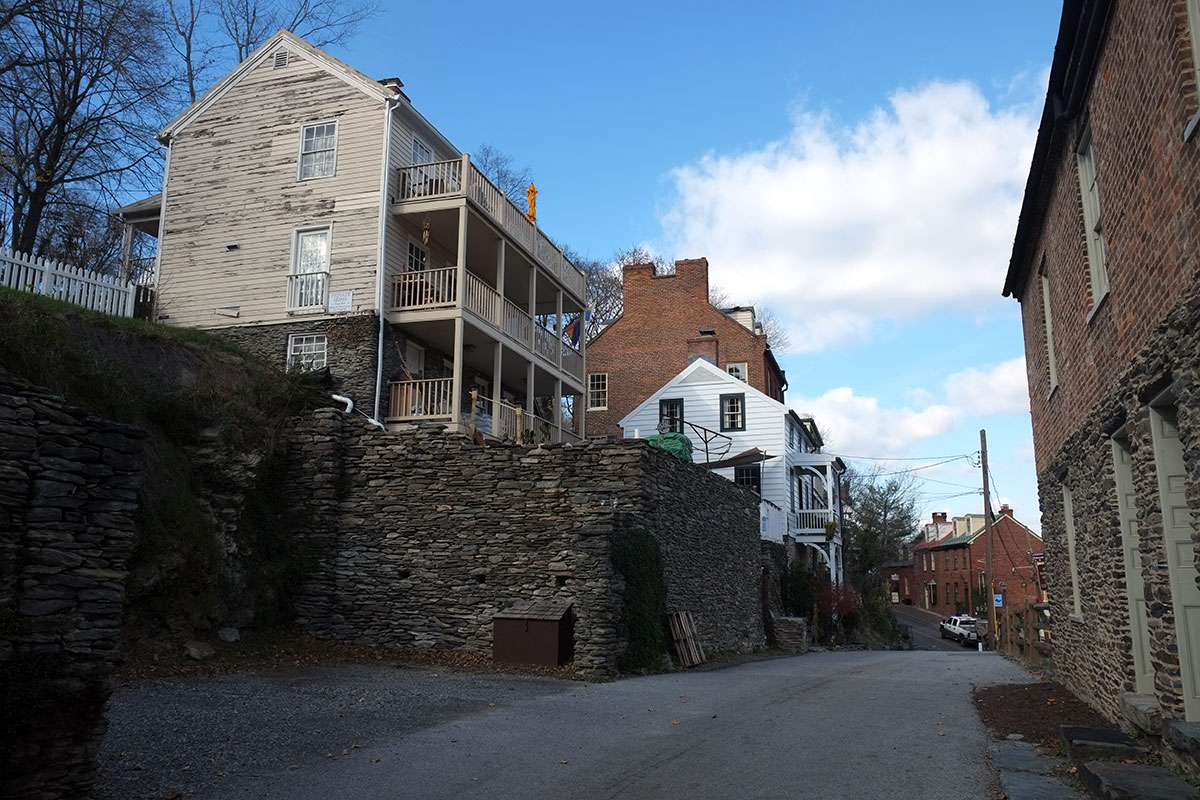
There is a road that slants up the hill.DSCF6573

And others that work with the topography.DSCF6560DSCF6570

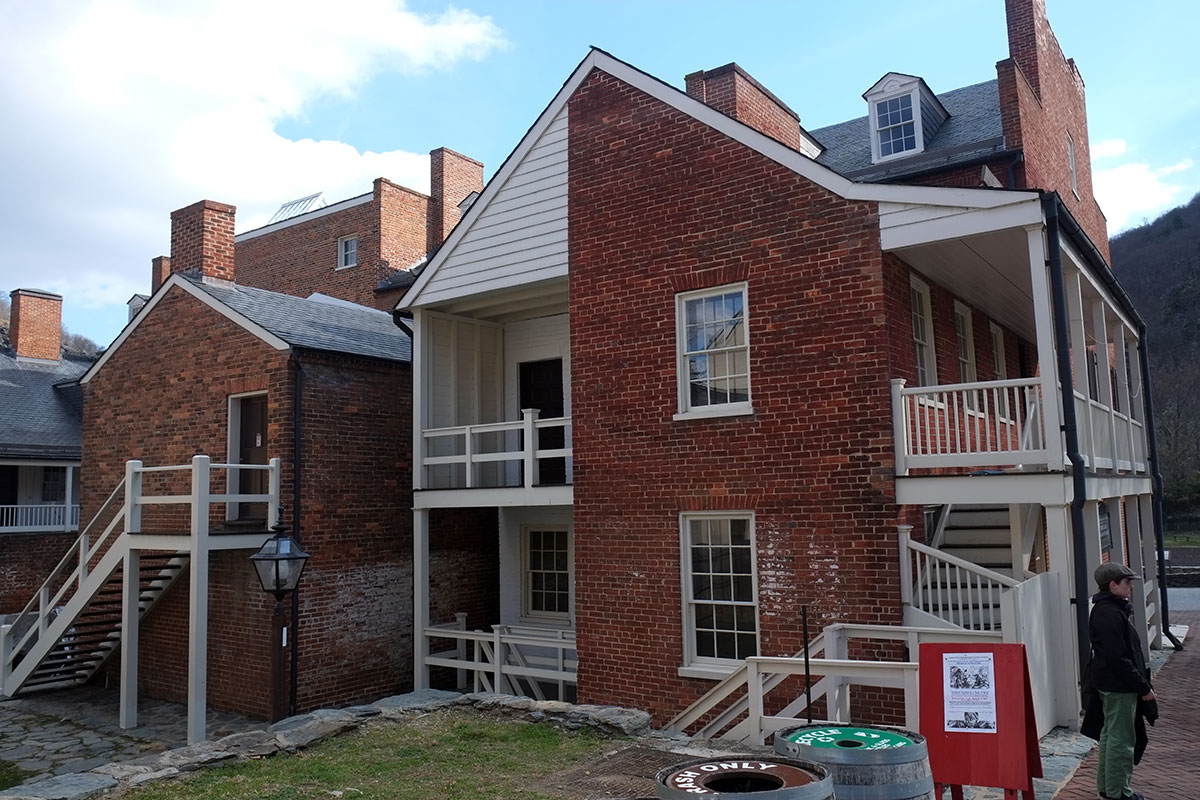
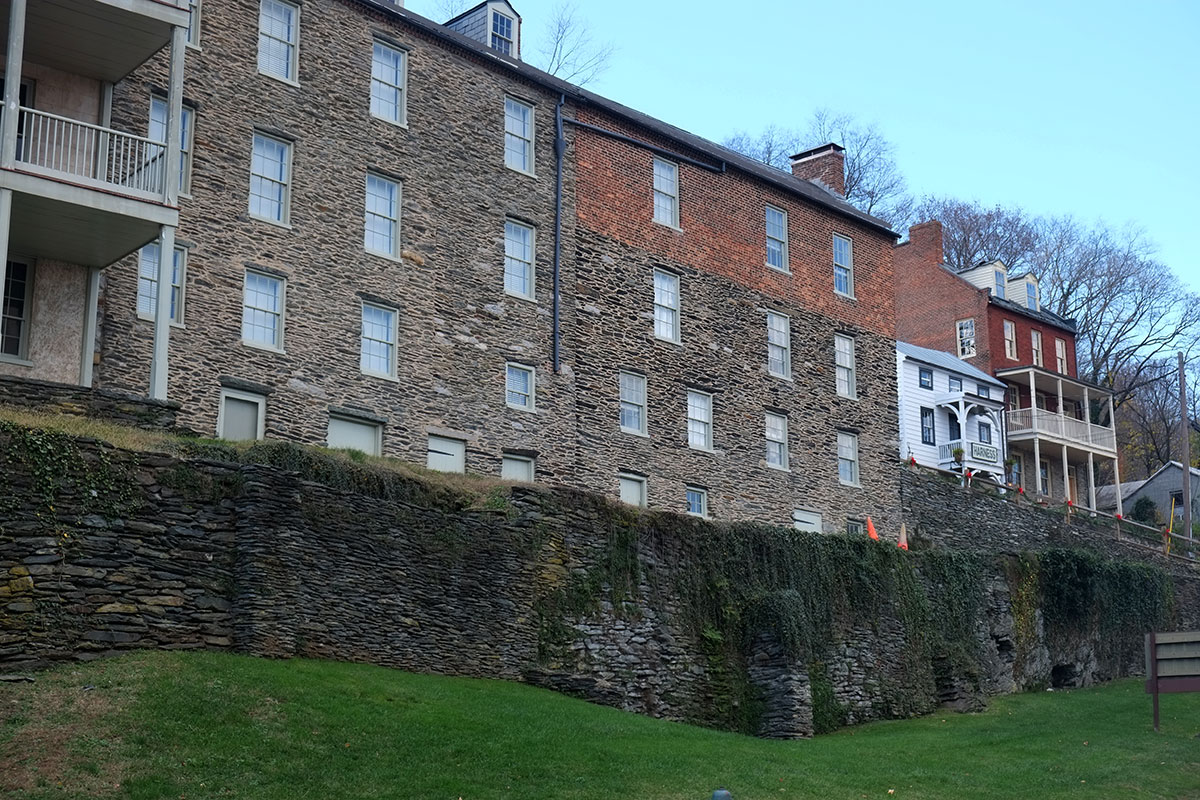
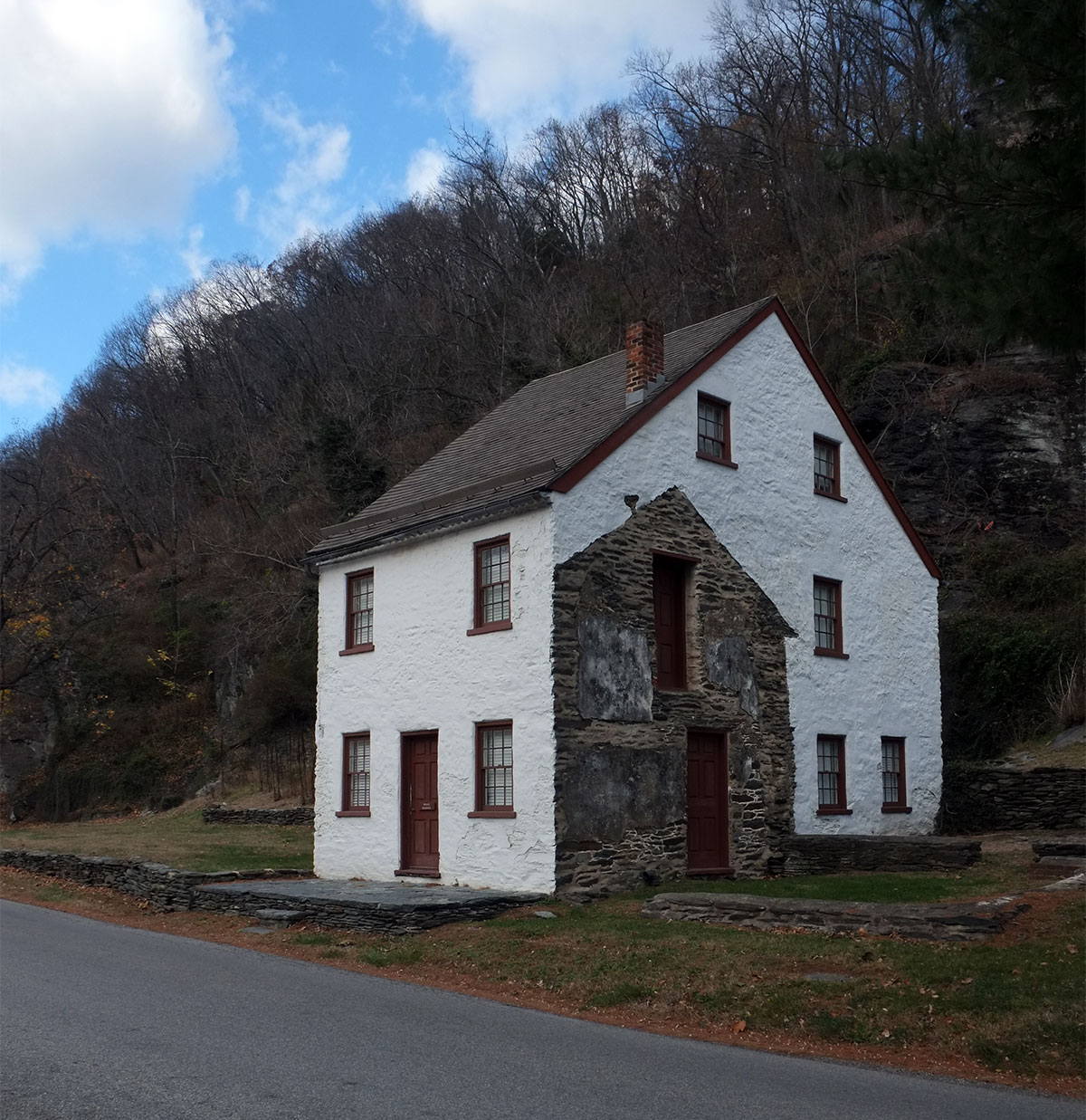
Everywhere, the vernacular buildings show the use of local materials – stone, wood and brick – with a clarity that is rare in this country.  DSCF6527DSCF6601DSCF6596

Across the Potomac in Virginia are the remains of the canal.DSCF6509

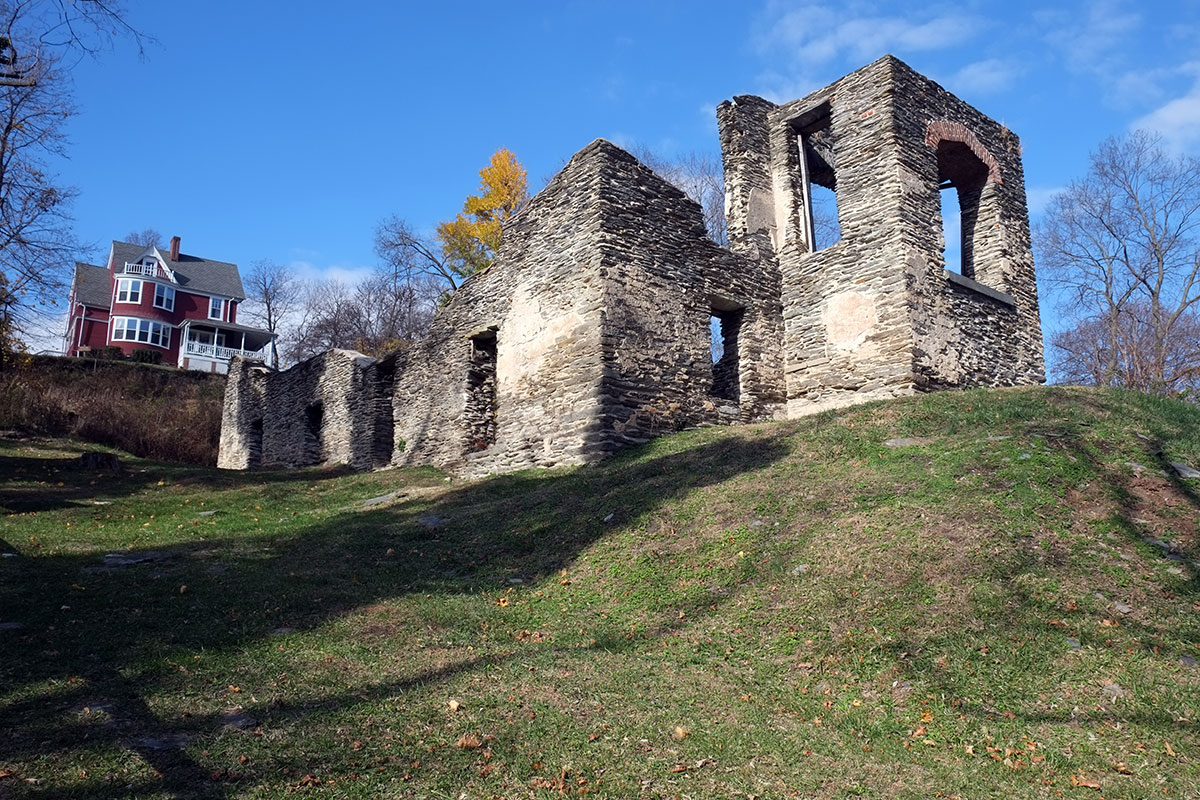
As you walk up the hill, there is the ruin of an Episcopal churchDSCF6530

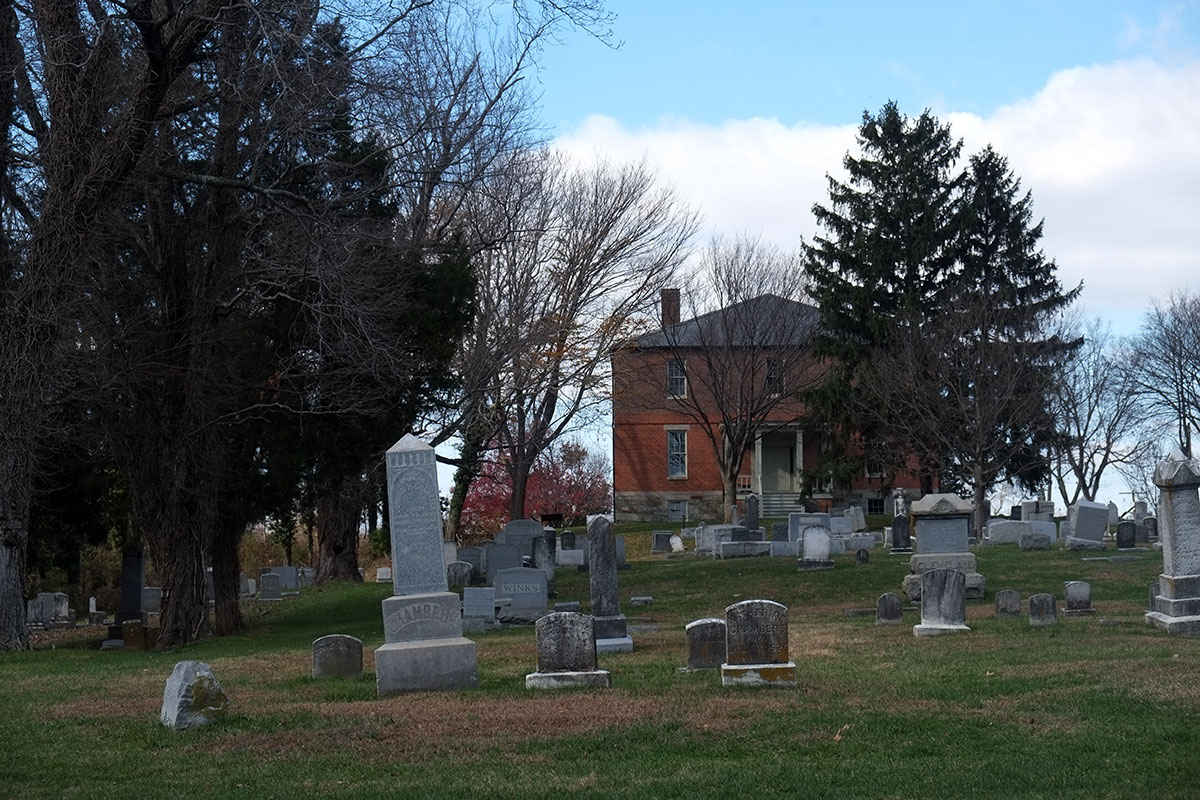
and the cemetery on top of the hill,  DSCF6545

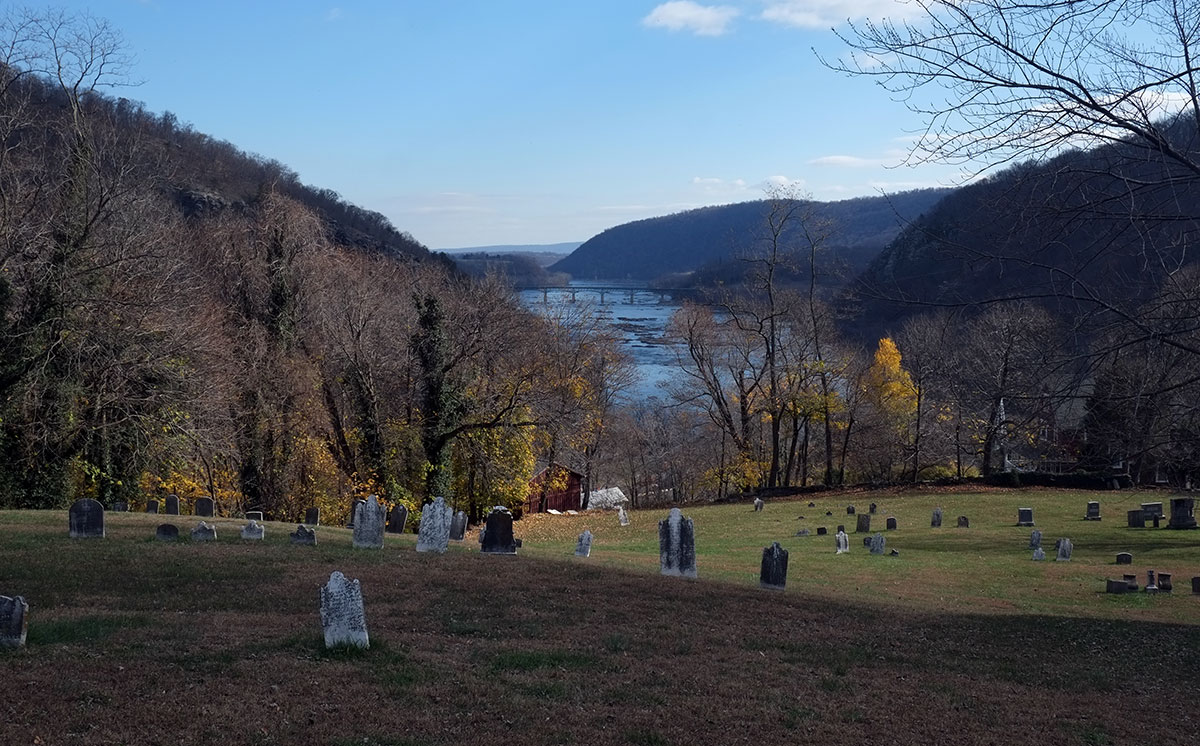
with a view down the Potomac.DSCF6547

The historic town center is run by the National Park Service, with beautifully restored buildings, showing the businesses and residences of the past.  None of it feels Disneyfied – it is all simple and direct and appropriate.  We were there on a cool autumn weekday – perhaps it is more of a circus in summer tourist season, but while we were there, it felt like we had stepped back in time to this perfectly-preserved ghost town.  DSCF6611

Harpers Ferry isn’t a reconstruction – there are lots of things from the past that have been destroyed and not replaced, such as the Armory.  There are aspects of it which do not contribute to the experience, such as some intrusive and probably unnecessary constructions by the railroad right in the center of town. It doesn’t try to be perfect, and so it feels authentic, which is probably why it felt like being in Europe rather than America.  We’ve been to many historic places on this trip where an either/or approach is evident – either the history is pretty much ignored, or else it been elaborated and “celebrated” in a way that destroys its integrity.  (Independence Mall come to mind.)  Harpers Ferry gets it just right.

I’ve only met a couple of other people who’ve ever been here, although it’s one hour from Washington.  It just seems like it’s farther because it’s in West Virginia.  We’re 2 1/2 months and 6000 miles into this trip, and this is my favorite place so far.

DSCF6632

Annapolis

DSCF5932Visiting state capitols was not a goal of this trip, but we’ve come across eight so far.  The architectural quality of them, and the others I’ve seen, has been very good.  (The only truly embarrassing one being Oregon’s, which looks like a salt shaker designed by Albert Speer.)  But in every case, the quality of the capitol is overwhelmed by the mind-numbing banality of the state administration buildings which surround it.  They reflect the growth of state government in the mid-20th century, and the architecture  is always modernistic-pretentious, with lots of marble and “timeless” elevations.  Albany is obviously the most extreme, but it is not fun walking around any other state capital district either.  With the exception of Annapolis.

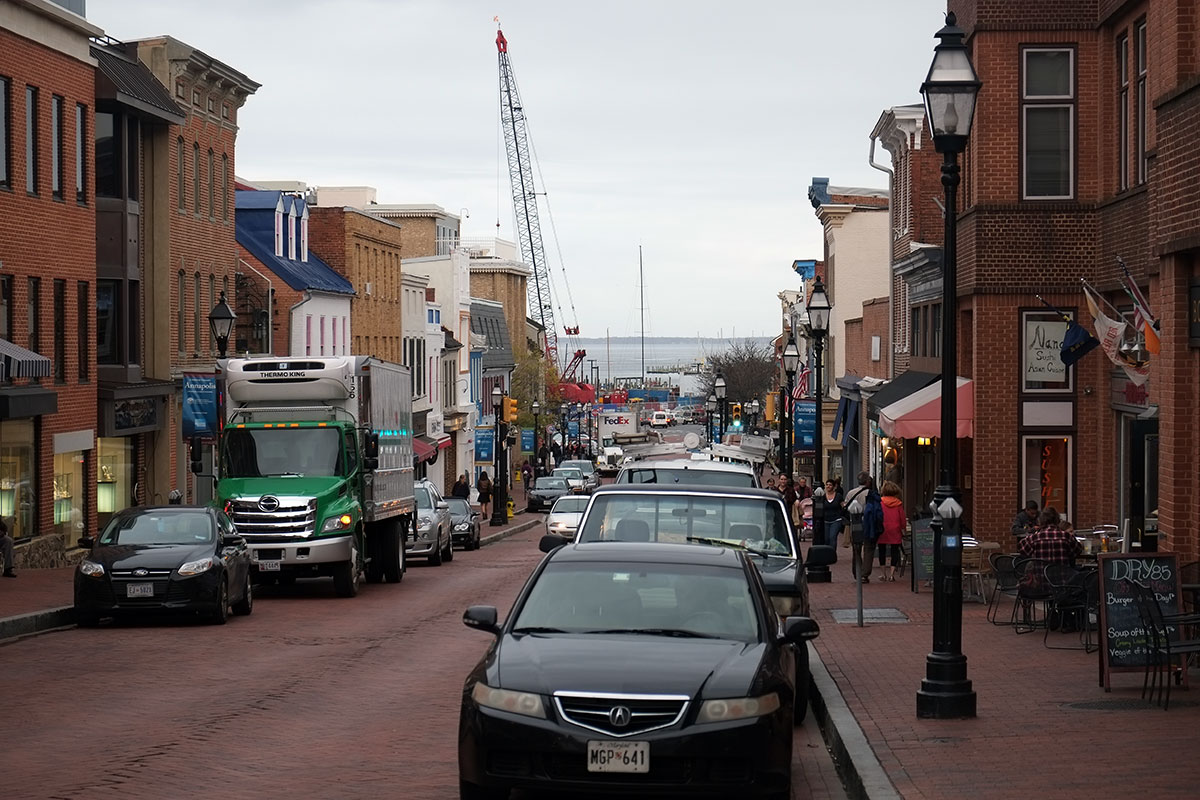
A beautiful, well-preserved, 18th-century state house, surrounded by a district which is still largely 18th- and 19th-century.  How can this be?  Where are all the soul-less boxes of bureaucrats?  Baltimore.  Maryland had the good sense to realize there’s no real reason why all the functions of state government have to be in the same neighborhood, and those large boxes were placed in a large city which was better able to accommodate their scale, both architecturally, and in terms of how many employees would have to work there.

The building itself is fine, the oldest continuously operating state house in the country, and was the temporary home of the US government in 1783-84.  George Washington resigned from the Army there, which is nicely reenacted by bronze statues (so much more satisfying than living reenacters).  DSCF5952

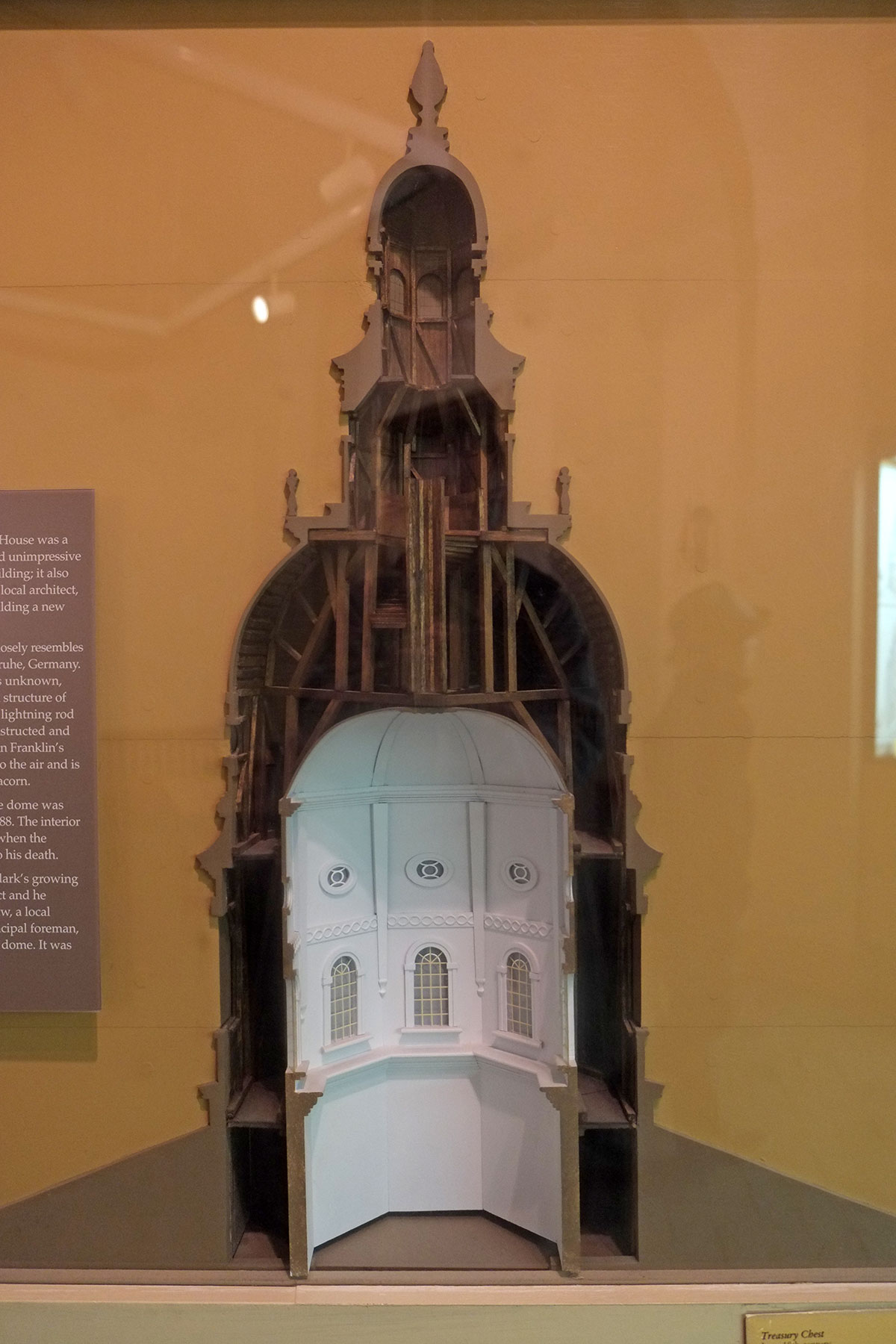
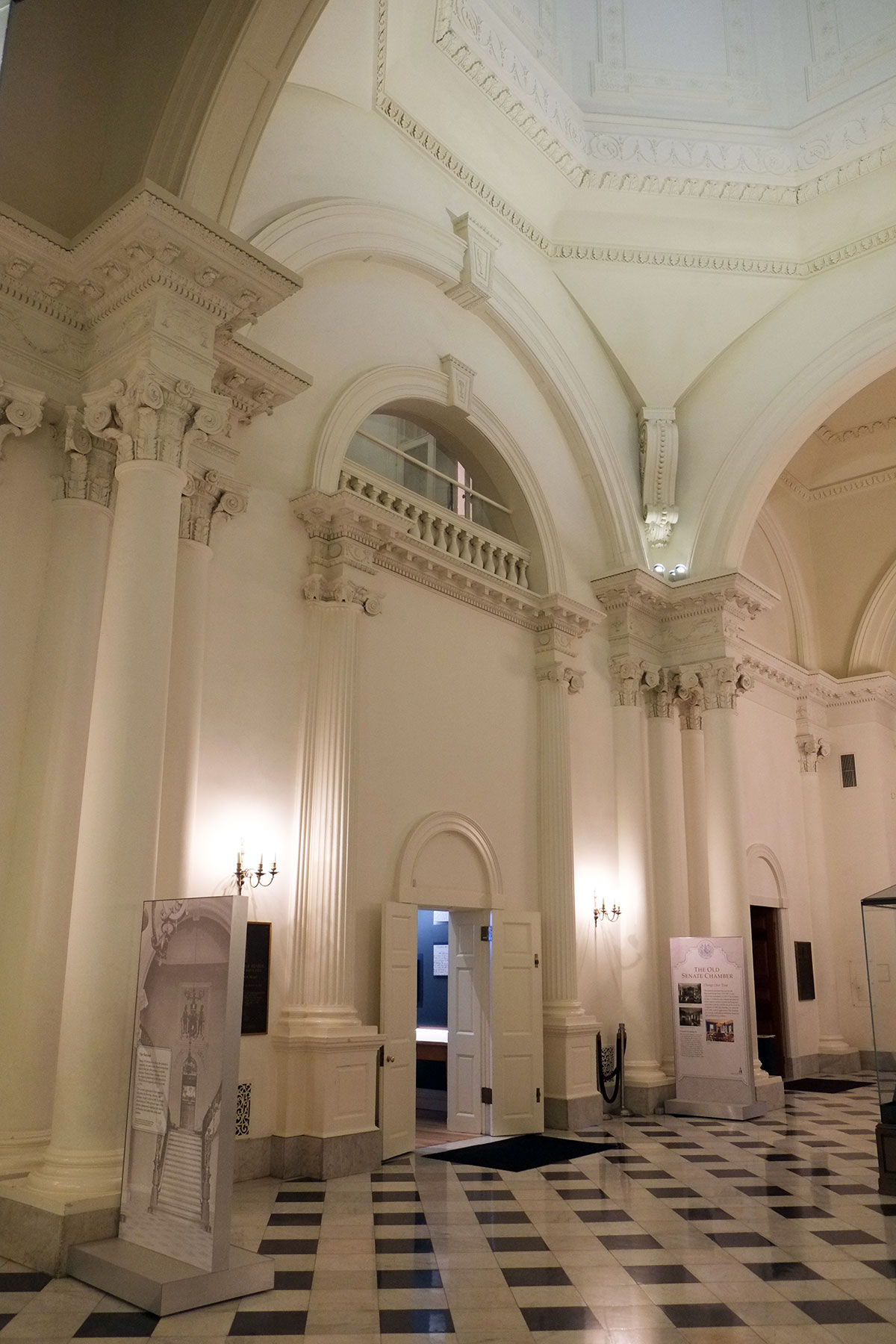
A beautiful central hall and domeDSCF5956

with an excellent sectional model to satisfy the architect-geeks.DSCF5959

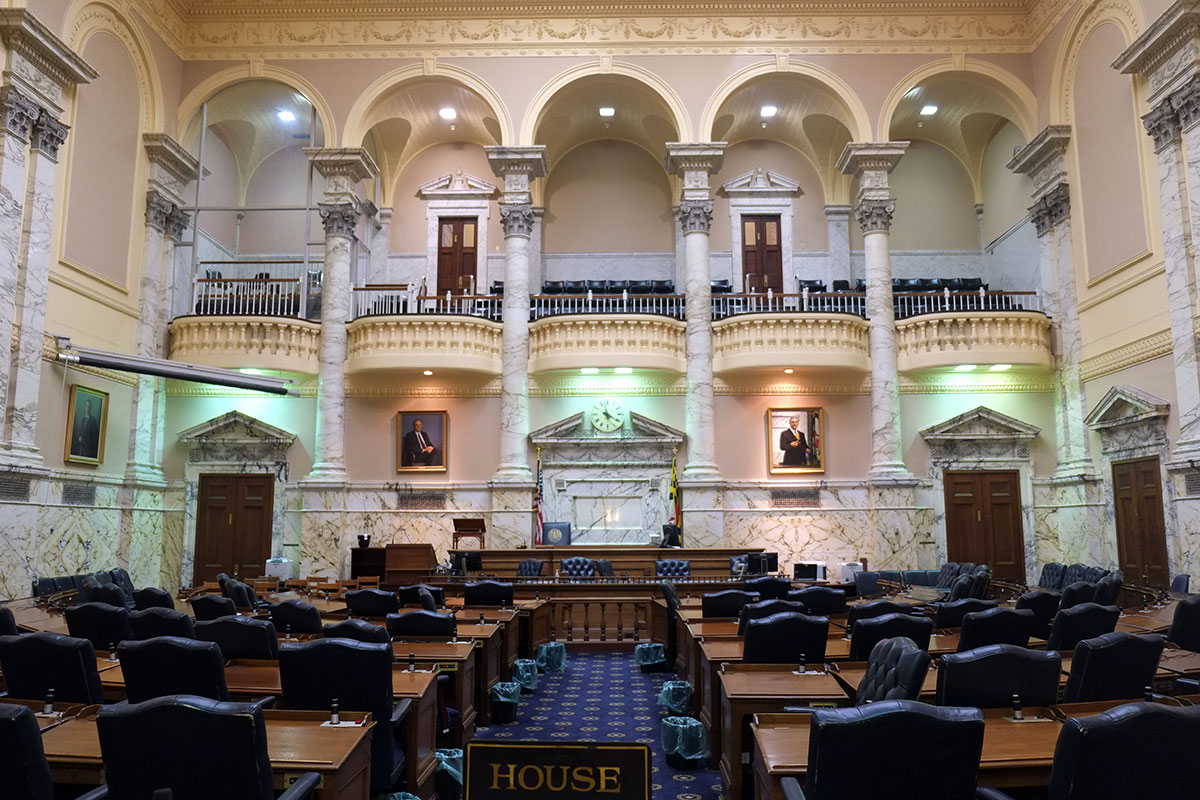
The legislative chambers are accessible, and show their later remodelingDSCF5953and other period rooms are well-restored.DSCF5944

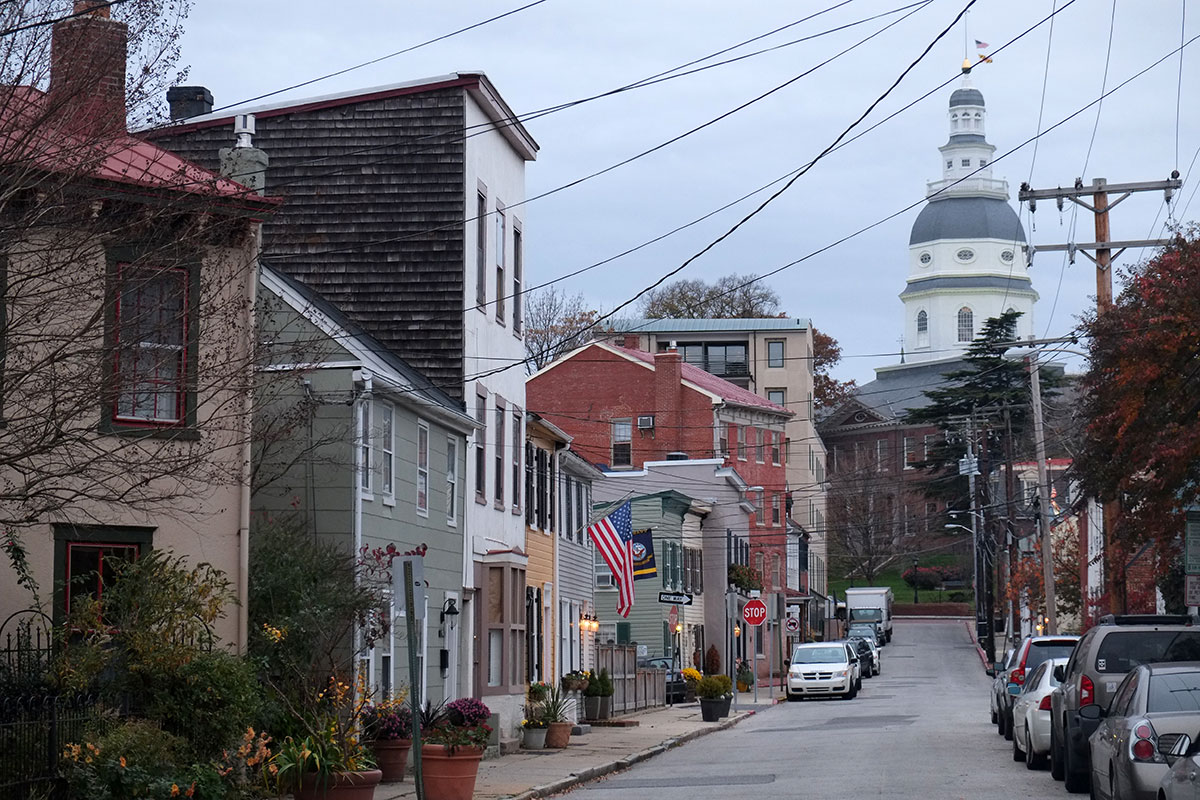
But the best thing about the capitol is how is situated, on top of a hill, providing a focus for views from all over the city.  DSCF6018

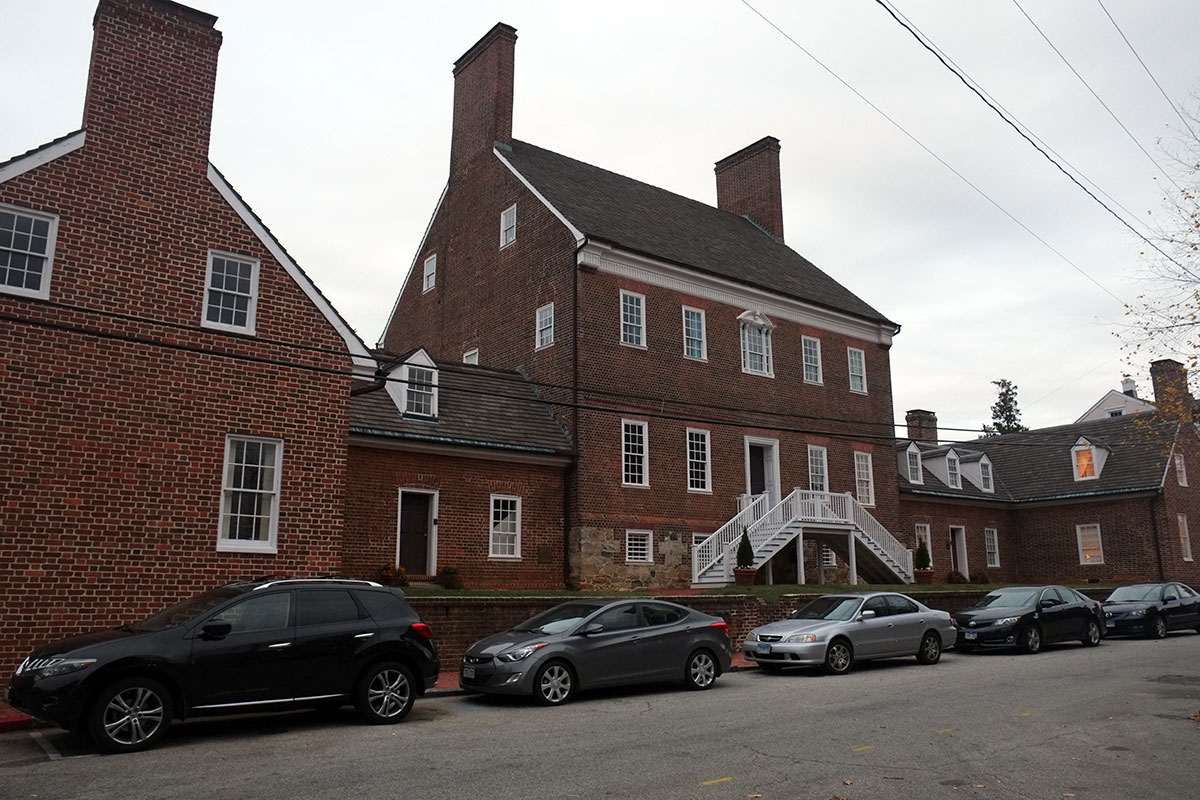
There’s a wonderful balance of the formal and the vernacular, what Krier calls the res publica and the res privata.  The state house is of central importance, but it is not the only important thing. Views down the main streets end in the harbor, as they should. DSCF5933There are grand houses (I’m not used to seeing Palladian villas in a city and not in the country) DSCF6019

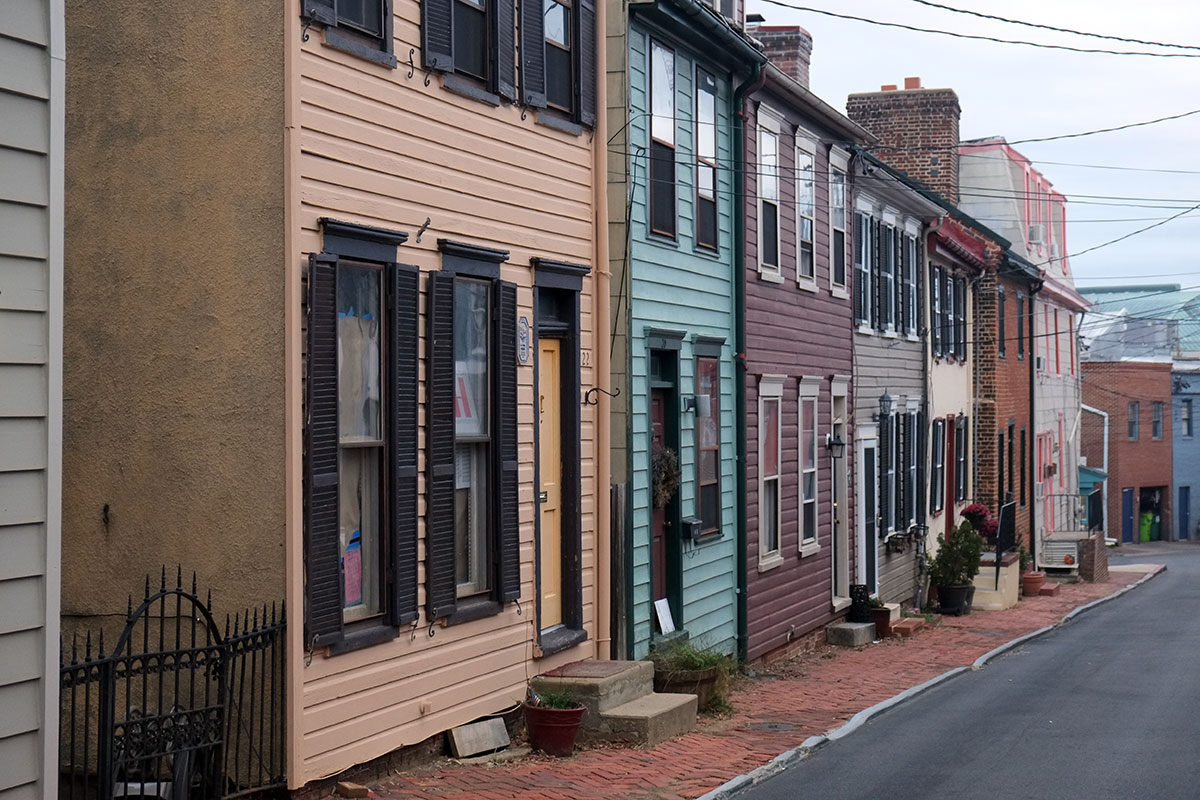
and small row houses and shops from the same period.DSCF5968

Some prominent locations are downright funkyDSCF5969

and the buildings from different eras and of different scales are juxtaposed.DSCF5934

Some irregularity in siting is quite welcome, relieving the fairly uniform street walls. (I took this same photo 26 years ago.  It’s nice they got around to fixing the porch.)  DSCF5973

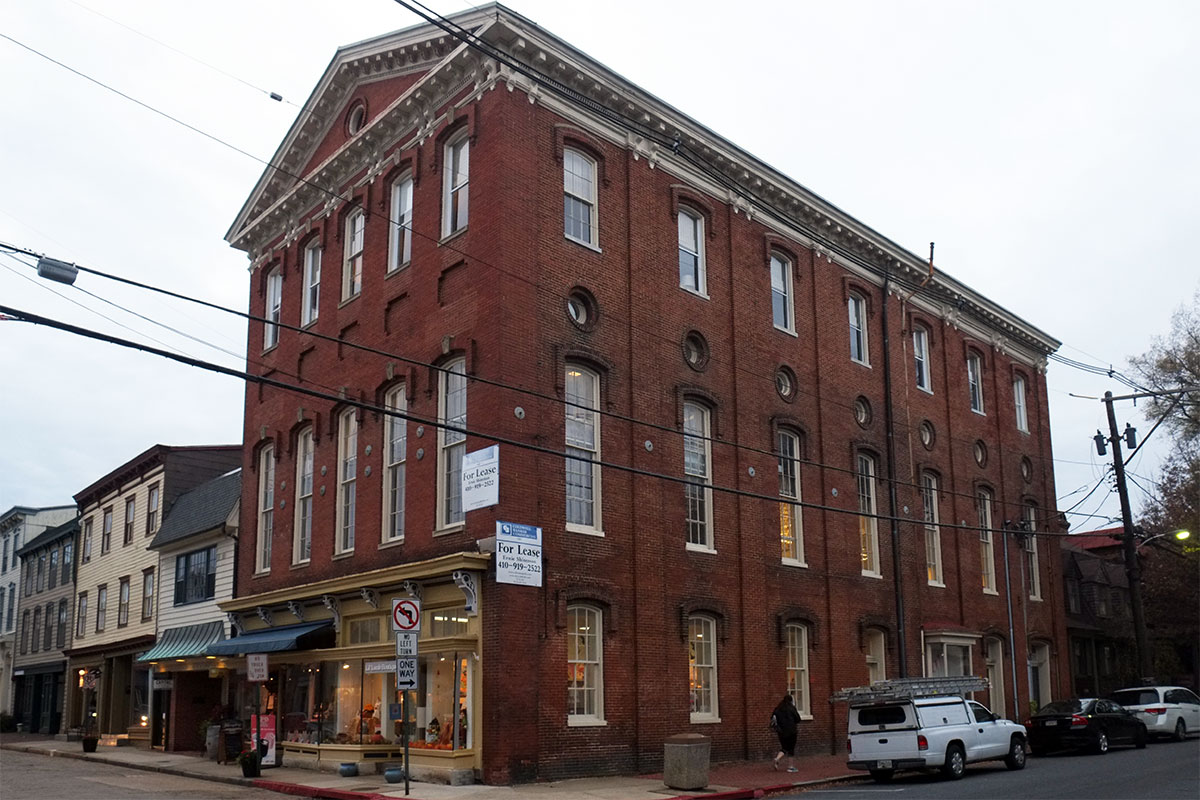
and there are just fine, elegant buildings from many periods.DSCF6009DSCF6004DSCF5998DSCF5989

and some quirks:  three steps, four materials.DSCF5984

Annapolis is this very historic town, full of historic buildings, yet it doesn’t feel precious, or forced (although some of the stores do).  I think this is because they’ve avoided the ye-olde self-consciousness.  It feels like an old city that has people living in it.  They haven’t tried to iron out the anachronisms – it is not a city frozen at one moment in time, but comfortable with many.

They were also smart (or lucky) enough to not have many bad 20th-century intruders.  (I don’t think it’s at all impossible for there to be excellent modern buildings in a context such as this – there are many examples in Europe and a few in this country.  It’s just highly unlikely.)   Annapolis avoided the modernist disrupters (of course, if you go a few miles to the edge of town, it’s just like the rest of America), and also the faux-historical imitators.  It avoided urban renewal, and apparently it avoided grand redevelopment schemes.  Being in such a coherent urban environment makes you realize how rare they are in this country, and how we managed to dodge a bullet a few times.  DSCF5995

Baltimore

DSCF5725In this age of media-cooption of direct experience, how truly can we see a place, without our understanding being overwhelmed by previously-seen portrayals of that place?  This obviously comes up with New York, and L.A., and many tourist destinations, but for me it also came up with Baltimore.  I had been there several times before, but to be honest, my deepest understanding of Baltimore has come from repeated viewings of Homicide and The Wire.  This preconception had its negative effects – I was worried about walking down an alley, expecting that ferocious black-and-white dog from the Homicide credits to hurl itself against the fence at me – but it also had positive effects.  It reinforced my interest in the fabric of the city, spending time walking through neighborhoods, rather than just seeking out the architectural highlights.  This coincides with Greta’s predispositions too, as she’d much rather people-watch and see day-to-day life than look at major monuments of architectural culture.

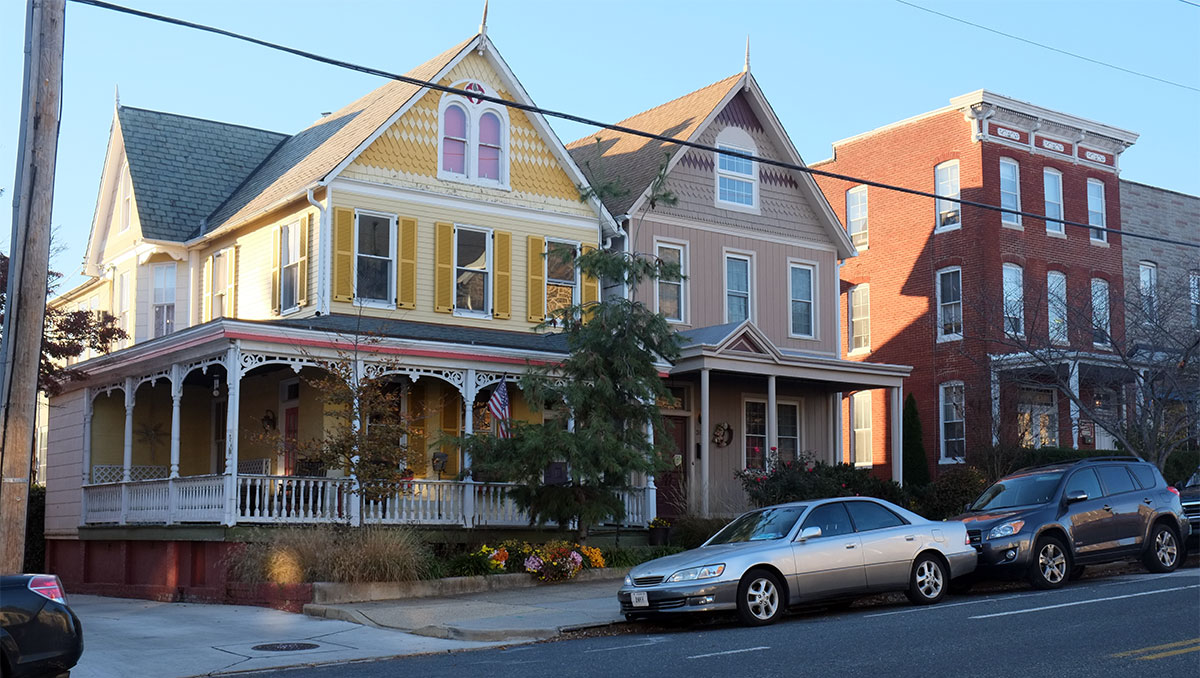
We were staying with our former student Neelab, who lives on the north side, a couple of miles from downtown, so our limited explorations fanned out from there.  (Plus my Wire-based geographic understanding led me to think that wandering around the North side was preferable to the East or West.)  We walked up through the Hampden neighborhood, a straightforward place which seems to be gentrifying at this moment, judging from the presence of a frites shop and other yuppie establishments.  Everyone understands the Baltimore rowhouse as the building block of the city, but what most struck me was the variety of designs, sizes, and styles within this simple type.  There were the obviously high-quality masonry houses,DSCF5716
the simple ones enlivened by coordinated colorDSCF5737

the ones enlivened by the lack of coordinationDSCF5714

the ones with classic porches instead of stoopsDSCF5741

and the deeply idiosyncratic.DSCF5747

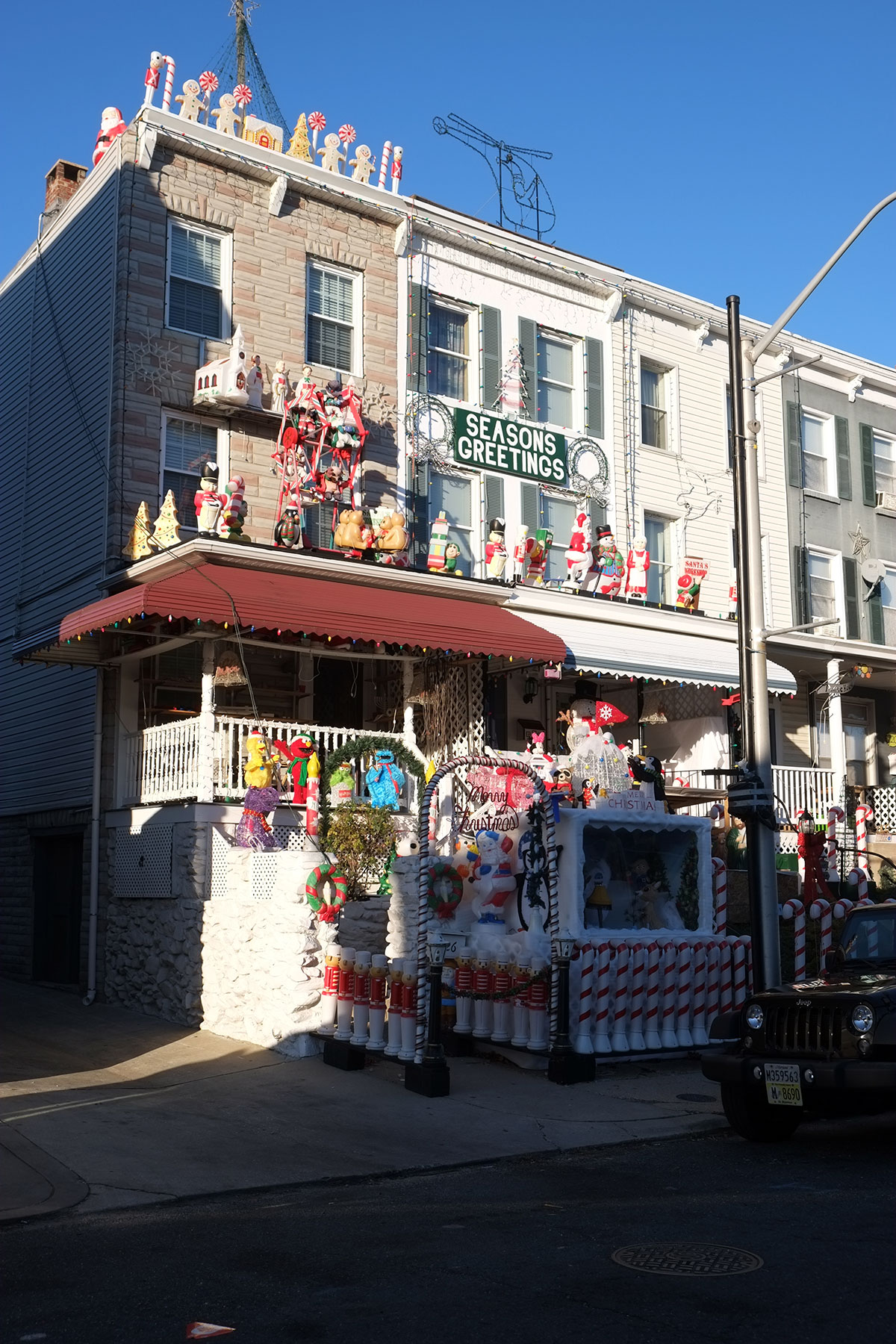
It was also cool to see traditions that we think of as primarily suburban – such as holiday decoration – running amok in the city:DSCF5709

While most blocks are uniformly rowhousing, there were also freestanding houses, semi-detached and narrow lot houses breaking it up:DSCF5730

and some unique houses, such as this one built by a local sculptor about 100 years ago.DSCF5802

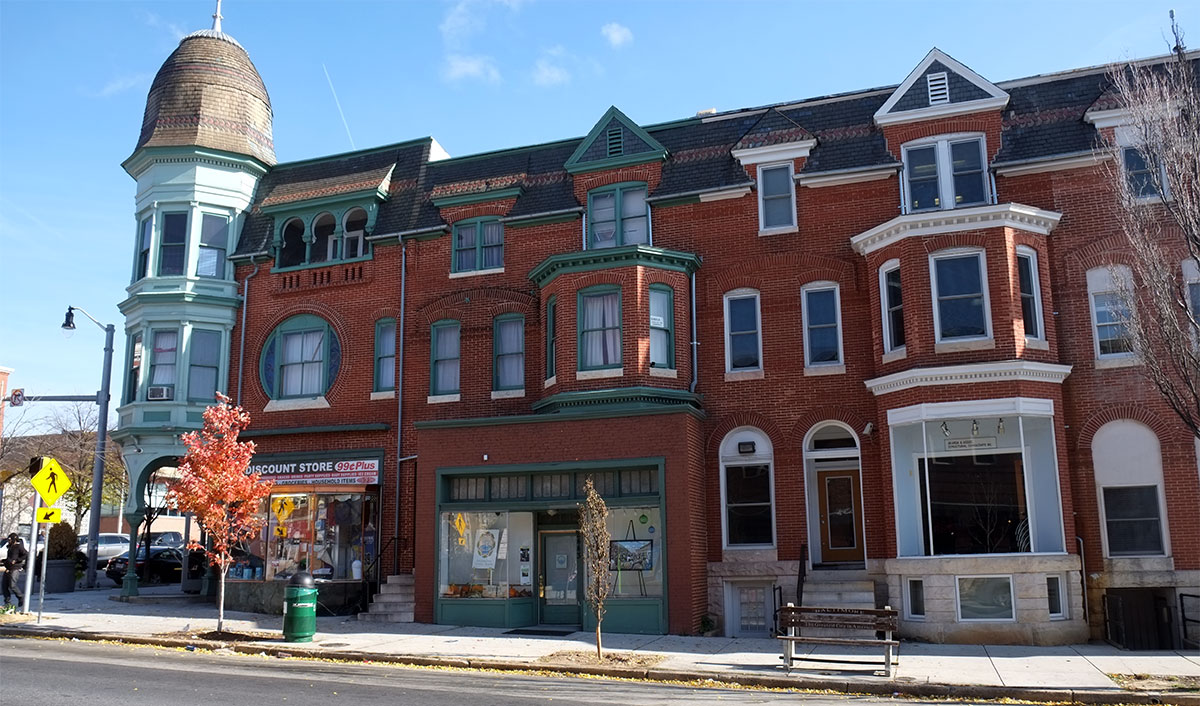
And as with any good neighborhood fabric, there were the mixed use and commercial buildings, and local institutions mixed in with the housing.DSCF5707DSCF5794

We saw Johns Hopkins, a not especially unusual campus where the hegemony of academic Georgian is once again strongly in evidence.DSCF5777

We walked to the downtown to get a better sense of the range of neighborhoods, and made it to the Inner Harbor, the redevelopment that put the city on the tourist map, with the groundbreaking aquarium and the Inner Harbor.  The Aquarium took up a lot of our time, as Greta’s architecture-quota had maxed out and we needed to see more animals.  Designed in the 70s by Cambridge Seven, it was the first to offer extreme spatial variety, huge tanks, and what feels like an immersive experience.  The interior spaces and experience are great,DSCF5859 DSCF5880
and the exterior conveys that this is a unique building, adding a focus to the waterfront.DSCF5834 DSCF5848

To some extent, aquariums need to be black boxes, to control light and marine growth, but this aquarium connects the inside to the outside as much as possible.DSCF5888 DSCF5906Overall, a very good building, though not quite up the Monterey Bay Aquarium, according to our family aquarium expert ( who has written a post about the aquarium qua aquarium and not architecture).

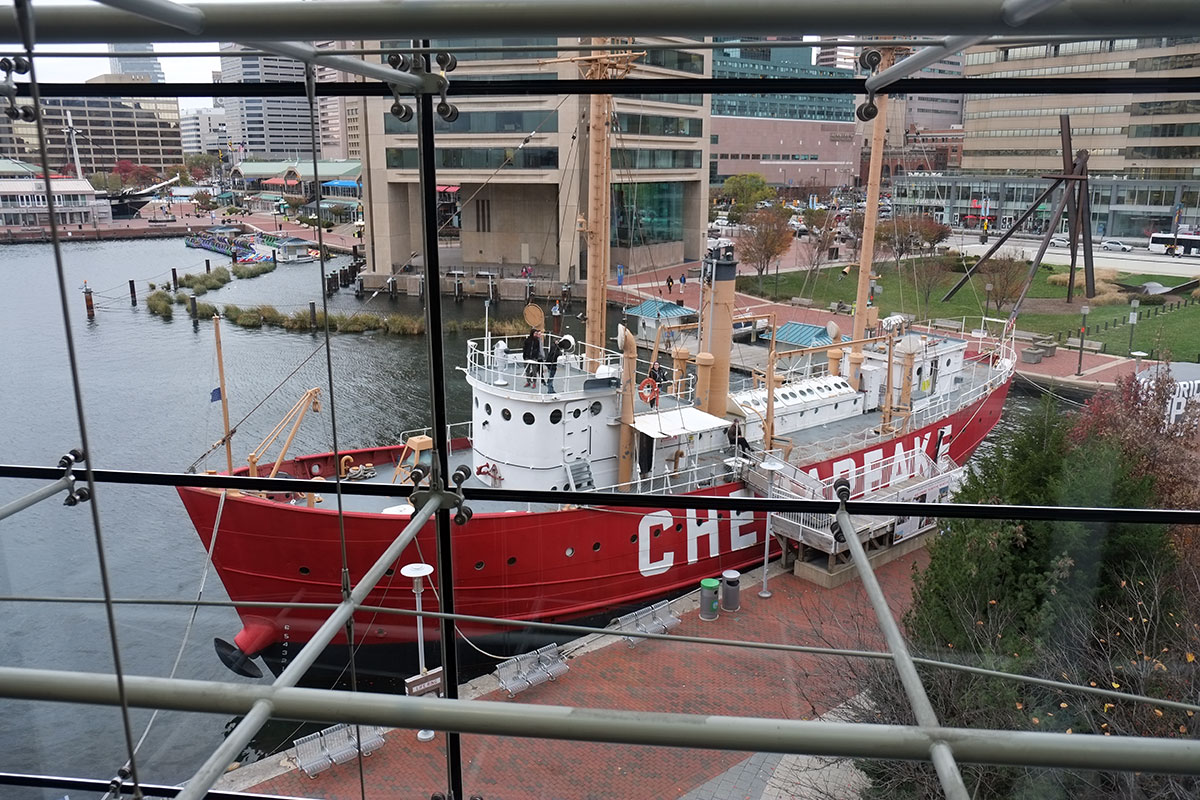
The Inner Harbor was one of the first “festival marketplace” developments by James Rouse, whose company was based in Baltimore.DSCF5832It’s a pretty convincing, nicely-scaled area which obviously opened up the view of the harbor, replacing the waterfront uses that were in decline.  It started a trend to bring suburbanites back into the city, by convincing them that it could be safe and fun.  We saw it on a November weekday afternoon, not prime tourist season, so it was clear that the spaces were scaled for the tourists who must throng it in the summer.  With the exception of a repurposed power plant with giant Hard Rock Cafe guitar on top, it doesn’t try too hard;  it all seems to be related to Baltimore somehow, and isn’t just the latest manifestation of a market-tested, globally-repeated, Disneyfied, ersatz urban branding extravaganza.  That is probably because it is now so old – a more recent development would look more like Vegas.

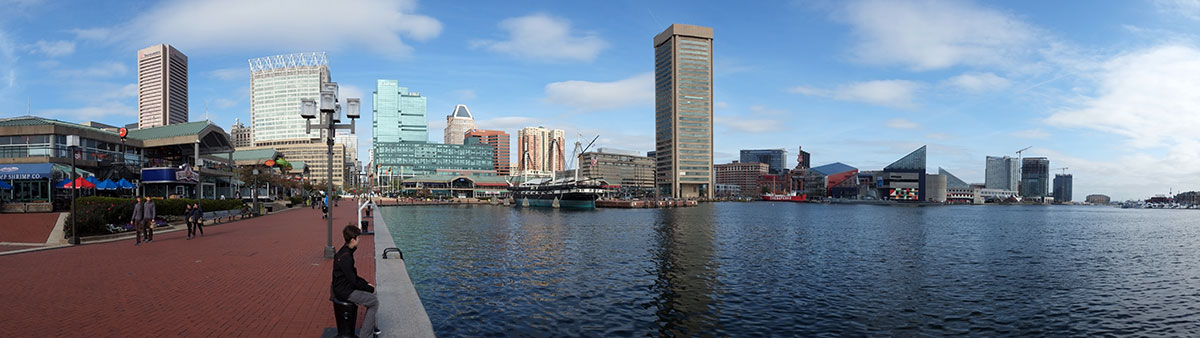
The issue of eras of building is important in another way in Baltimore.  If you zoom in on the picture above, you’ll notice that there aren’t really many new skyscrapers.  Baltimore has its share of crappy skyscrapers from the 60s and 70s, but very few from later decades.  I think this is a good thing.  Probably since it is a relative economic backwater, and not a global city, Baltimore has been spared the crush of banal behemoths that dominate so many other cities on the ascendant, such as Dallas, New York, Charlotte, etc.  These new skyscrapers may not be any worse than the older ones, but they are much bigger (in both height and floorplate) and they completely change the character of the downtown.  Cities such as Boston, which have preserved a lot of older buildings, can survive the onslaught with a semblance of balance, but newer cities, such as Seattle, become all too much of one era, and unfortunately not a very good one.  We’ve been visiting a lot of second and third-tier cities on this trip, and it strikes me that these cities, which are more embedded in the local rather than global economy, may be much better cities in which to live – reasonable housing costs, a sense of history, a slower pace.  The global cities are exciting and hip, but a city which has been spared the tsunami of global capital looking for a place to buy up real estate may provide a more grounded, balanced and satisfying life for a much wider range of residents.
Baltimore

Philadelphia

One day in downtown Philadelphia, where once again the parental need to force Greta to view the major monuments of colonial America asserted itself.  Different cities have taken different approaches to this heritage.  Boston does it really well – with the exception of the Paul Revere Mall, the historic sites are still imbedded in the city.  New York more or less obliterated all the historic sites and their surrounding context.  Philadelphia kept all the historic buildings, but obliterated the city fabric around them, so you can view these icons as isolated objects, surrounded by pointless, overscaled open space and dreadful overscaled buildings.

I remember Independence Hall as a wonderful building.  It is not only important, but it is beautiful and says something about the city of the time.  The problem is this:  you can’t get anywhere near it anymore, without signing up for a tour over in the dreadful visitors’ center and waiting around to be shepherded through with throngs of tourists snapping iPhone photos.  You can’t even walk on the grounds near it, having to detour around the block.  DSCF5478

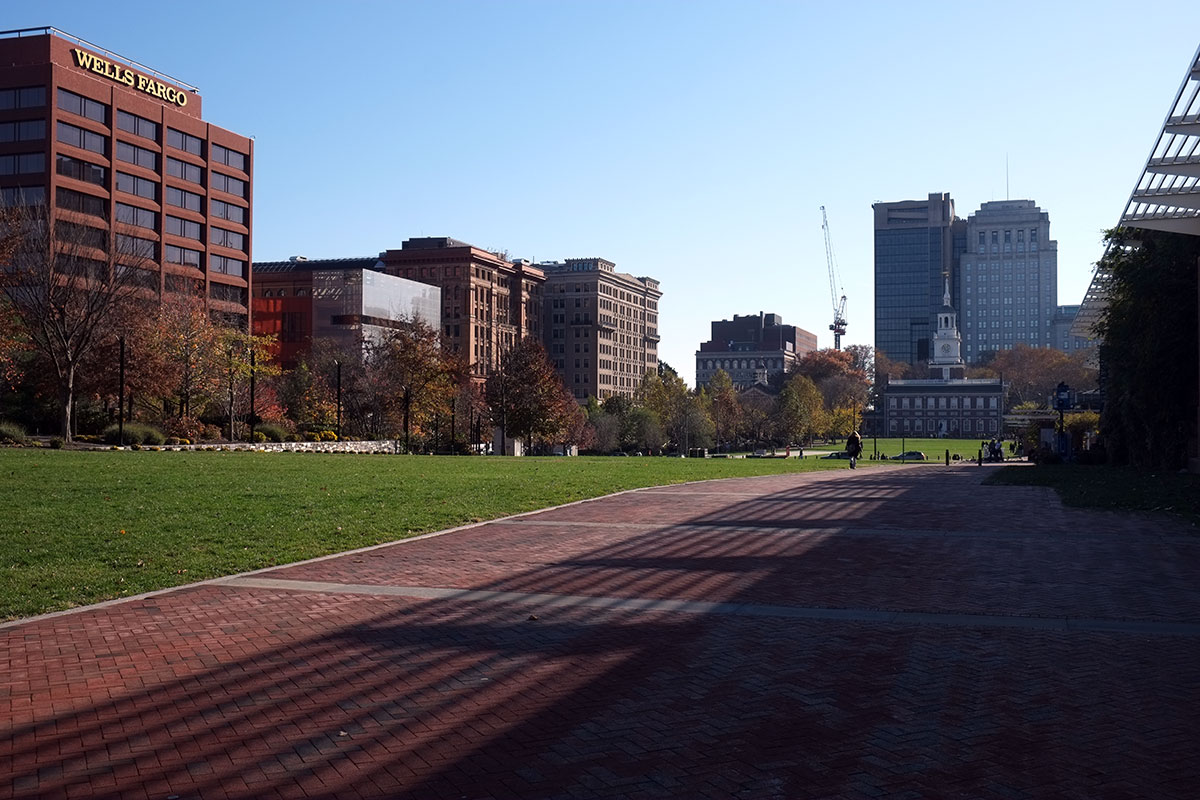
It gets even worse when you step back.  The Independence Hall Mall was proposed in the 1930s, and was implemented in the 1950s, when we thought knocking down old cities was a great idea.  Hundreds of buildings were destroyed, so that a giant open space would allow you to view Independence Hall from far away, looking puny and unimportant.  DSCF5496

Then big, bombastic buildings were built around that, symbolizing the might of large corporations in our national system.  It gets even worse behind Independence Hall, where this sterling example of historic preservation can be seen.  DSCF5464

It declined further recently.  In 1976 the Liberty Bell was moved into its own viewing pavilion, part of a veneration of the minor icons of our history rather than the history itself (the recent Star Spangled Banner re-installation at the Smithsonian is another example of this).  But then this simple pavilion was destroyed (probably because it was modernist and minimal), and replaced by a more grandiose pavilion, just south of the visitors’ center.  DSCF5485

The experience is awful, reminding me of what has happened to Mt. Rushmore.  Where does this impulse come from, to remake everything in a phony, pretentious manner?  (By the way, some very good architects and planners were involved in many stages of this madness – Edmund Bcon, Dan Kiley, Venturi and Scott Brown, Cywnski, Laurie Olin!)  Philadelphia was not Versailles, but it had one of the most compelling plans of an early American city. Why can’t we leave it alone, and let visitors have an experience that in some way might evoke the 18th or 19th century, helping them to understand life in that era, rather than pedantically shaping their perceptions?  Boston looks better and better in this regard.

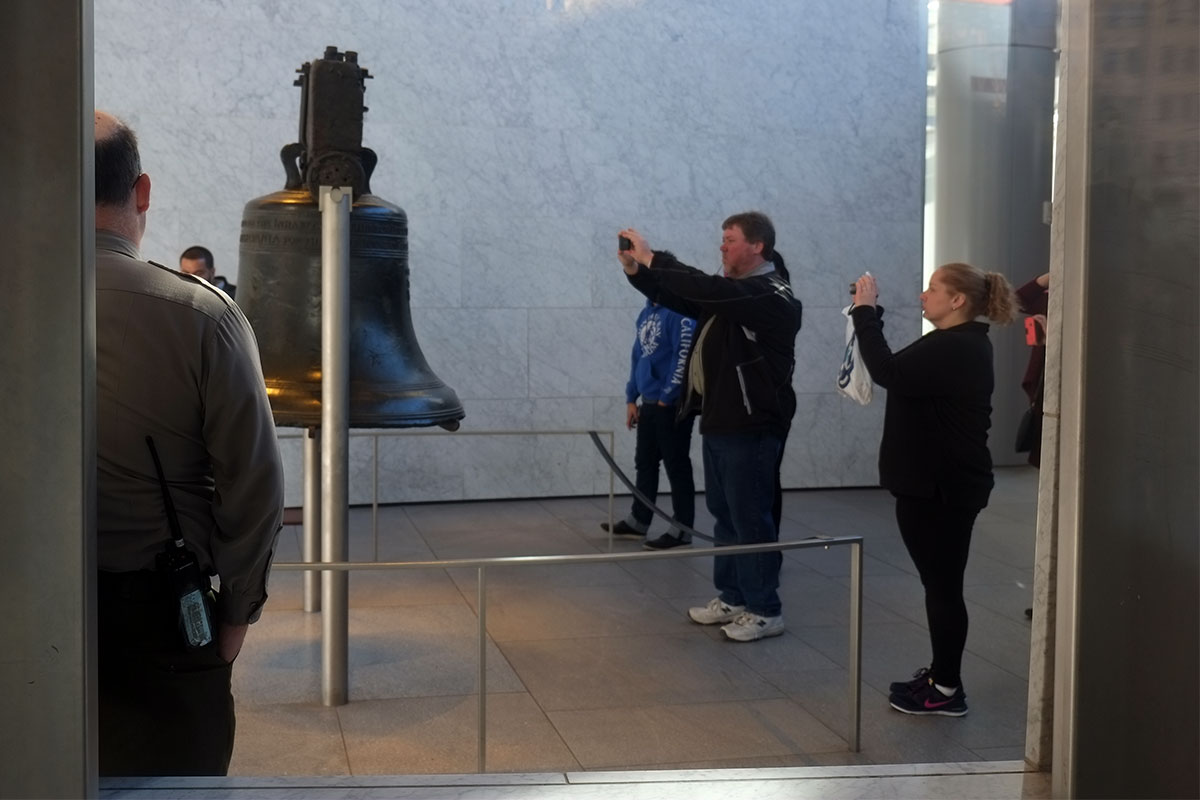
Luckily, the architects did preserve one of the best features of the earlier Liberty Bell pavilion – a window through which it could be seen, without going through the rigamarole.  We took the picture and got the hell out of there. DSCF5474

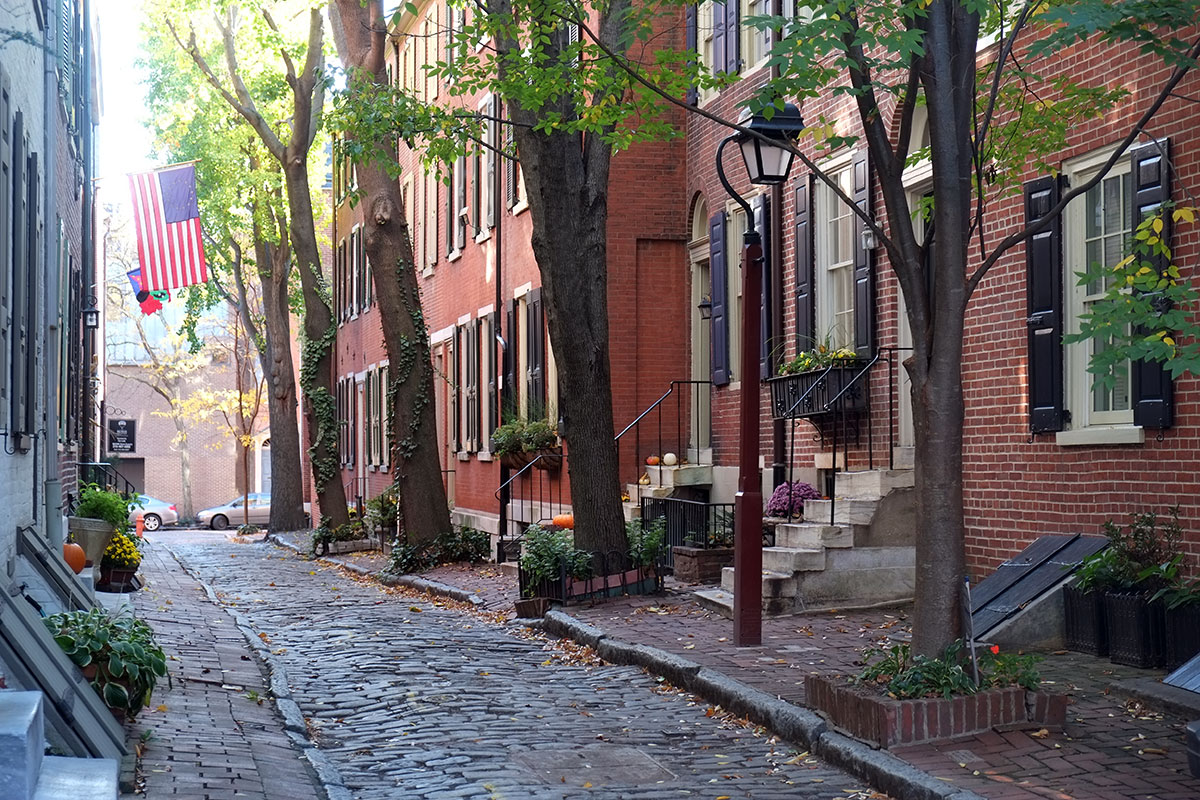
Once you get away from this, Society Hill and other older neighborhoods of Philadelphia are spectacular.  There are crazy renderings of the founding fathers,DSCF5466

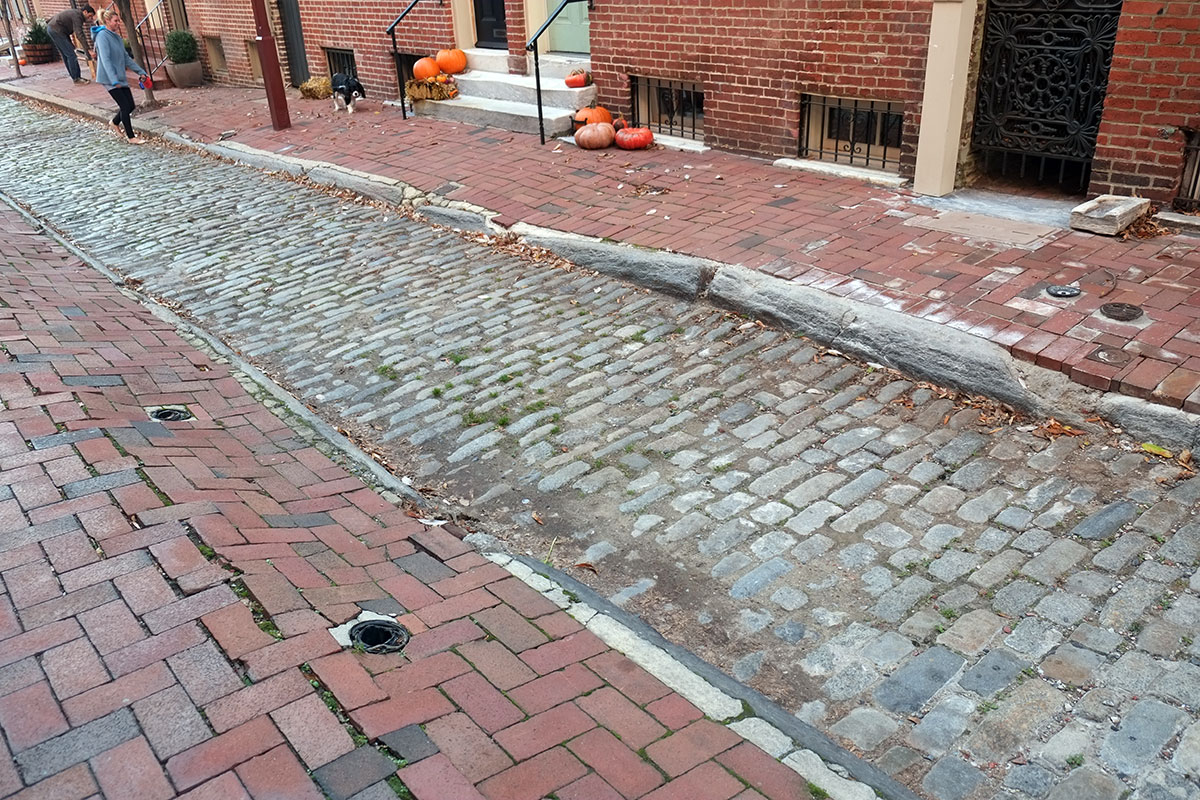
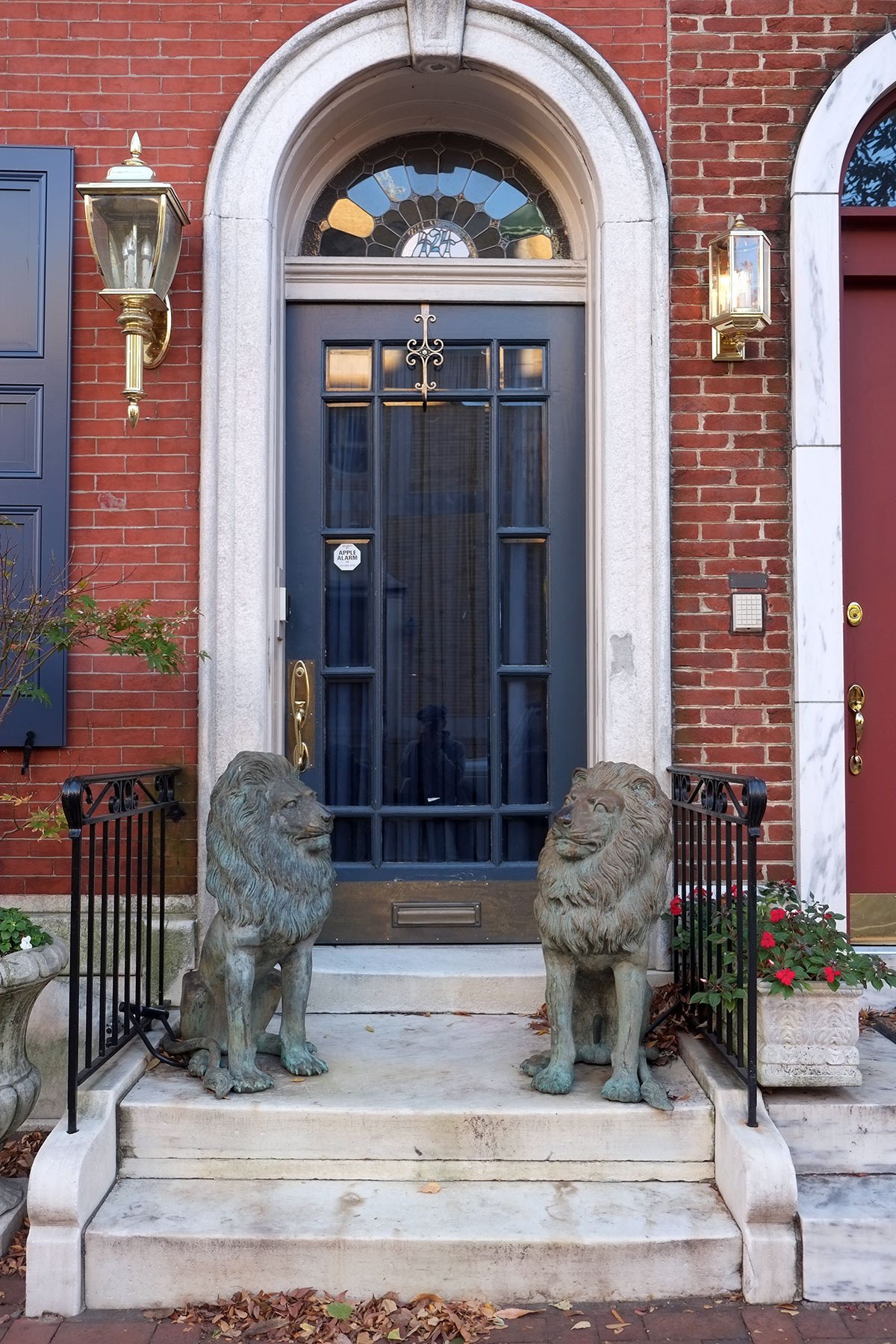
fantastic Greek Revival buildings by Robert Mills and others,DSCF5503DSCF5525and streets which really maintain the experience of the 18th century city.DSCF5569DSCF5575DSCF5579DSCF5604

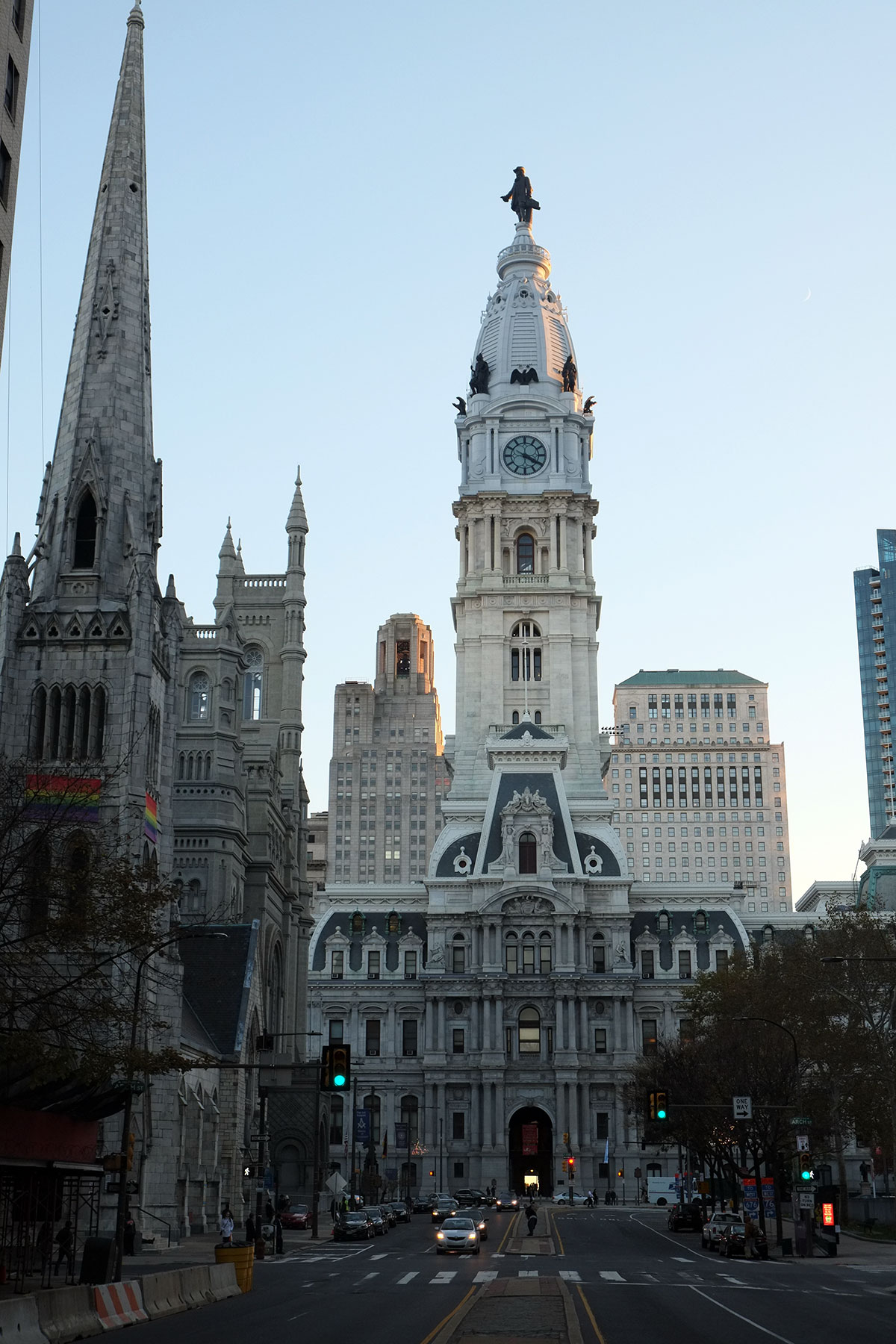
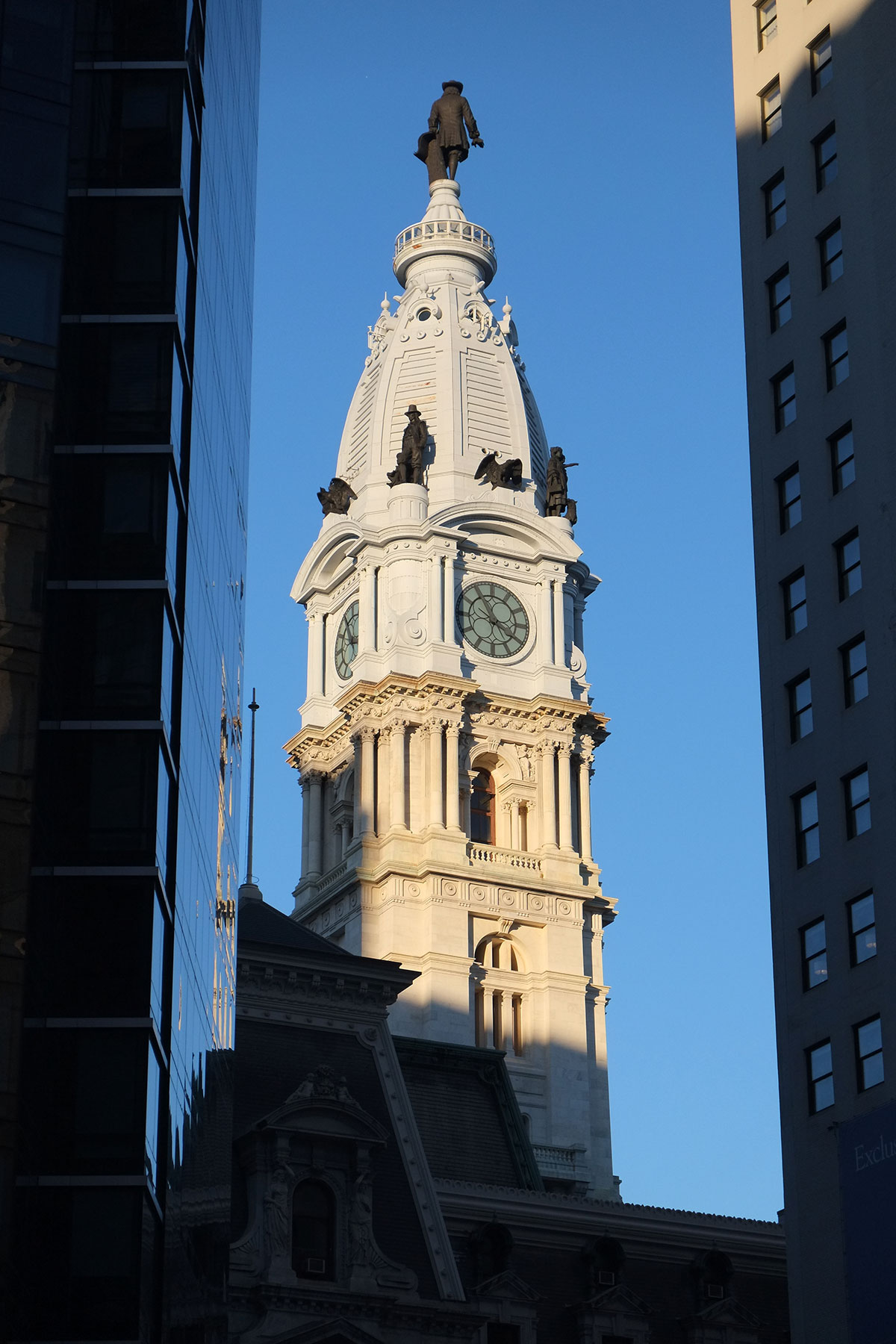
The Ciry Hall is magnificent, a good example of how a city plan can evolve positively. There was no building at the center point of the city in Penn’s plan, but having this icon visible on the axes works beautifully (with sculpture by Alexander Calder Sr.)DSCF5666DSCF5640

The Paul Cret Federal Reserve is fine (Cret being an employer of Kahn).DSCF5616

They seem to be having more fun at the Pennsylvania Academy these days, I think Furness might have approved?DSCF5671A truly dreadful “remuddling”DSCF5624and some fine urban buildings and juxtapositionsDSCF5662DSCF5672DSCF5664

As we were into checking things off our list, we grabbed a random cheesesteak, but not being in the right neighborhood, it was nothing to blog about.

Mercer Museum

DSCF5358When I began teaching at the University of Oregon, I found that one of my colleagues, Bill Kleinsasser, was fairly obsessed with Henry Mercer.  Mercer was an archaeologist, collector and amateur architect, who built three buildings and started the Moravian Tileworks in Doylestown, Pennsylvania.  I dragged two of my sisters to see Mercer’s house about 20 years ago, and Laurie’s response was great.  First room:  That’s pretty cool!  Second room:  Cool.  A lot like the first.  Third room:  I get the idea.

But Bill Kleinsasser was right – it’s just that the Mercer Museum is the building to see.  Mercer collected a comprehensive assortment of technological artifacts from pre-industrial America.  Then he built a museum to house and display them.  Concerned with fire destroying the artifacts, the museum was built of reinforced concrete, which is apparent on the outside, a strangely flat medievalist fantasia.DSCF5321It’s adorable, but a bit twee, with vernacular forms in a strange material.  The roofscape looks like a giant birdhouse, but somehow I love it.DSCF5378

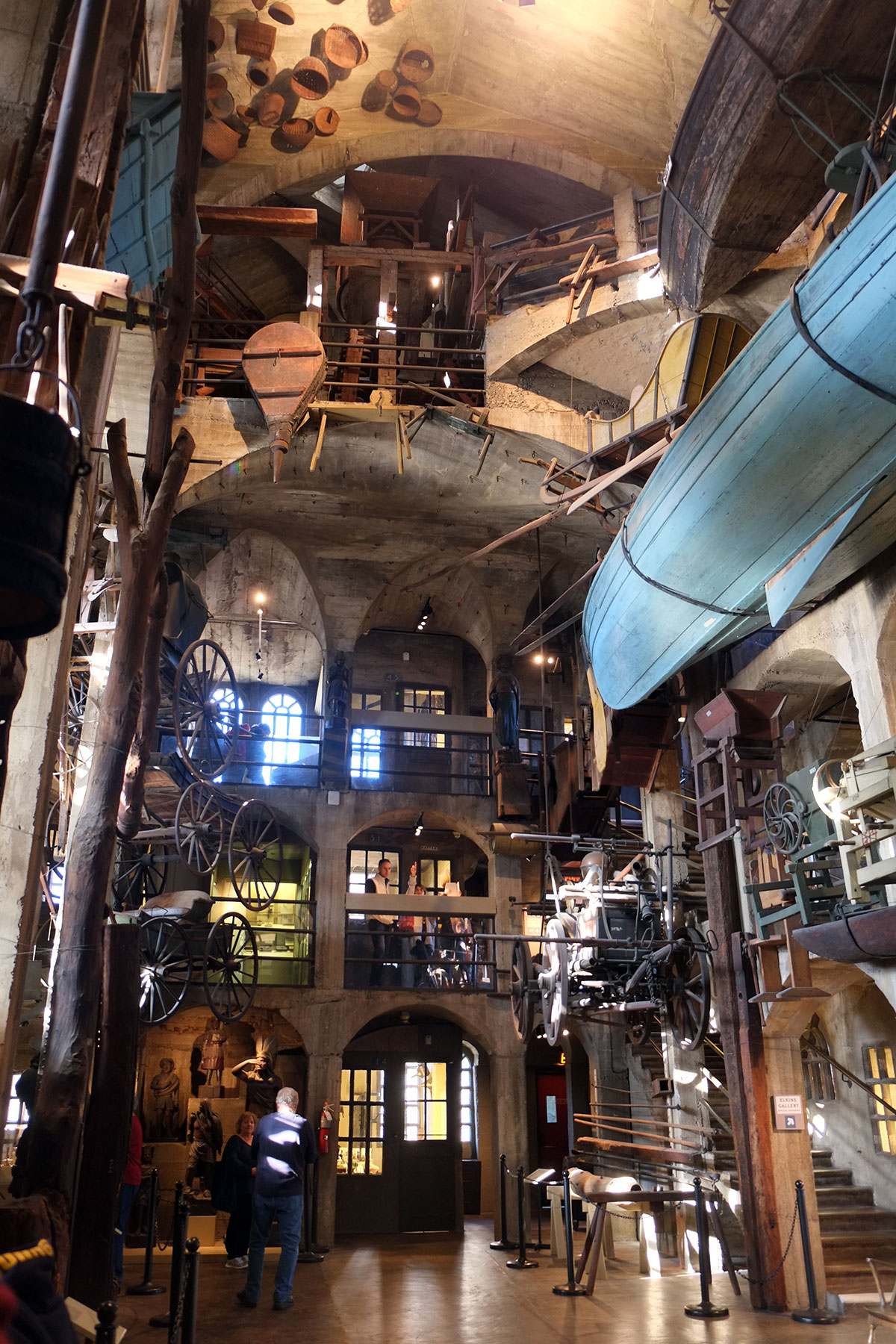
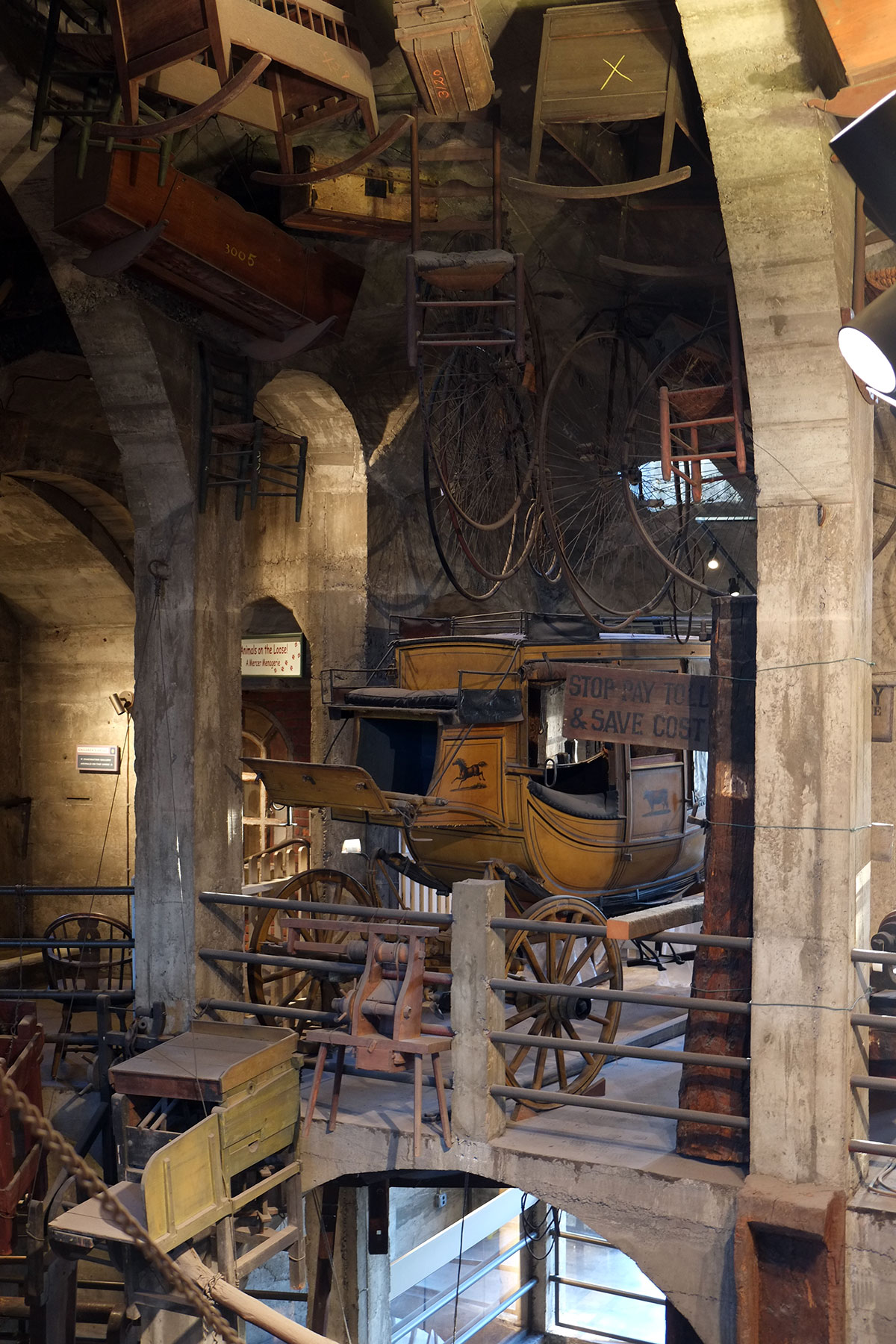
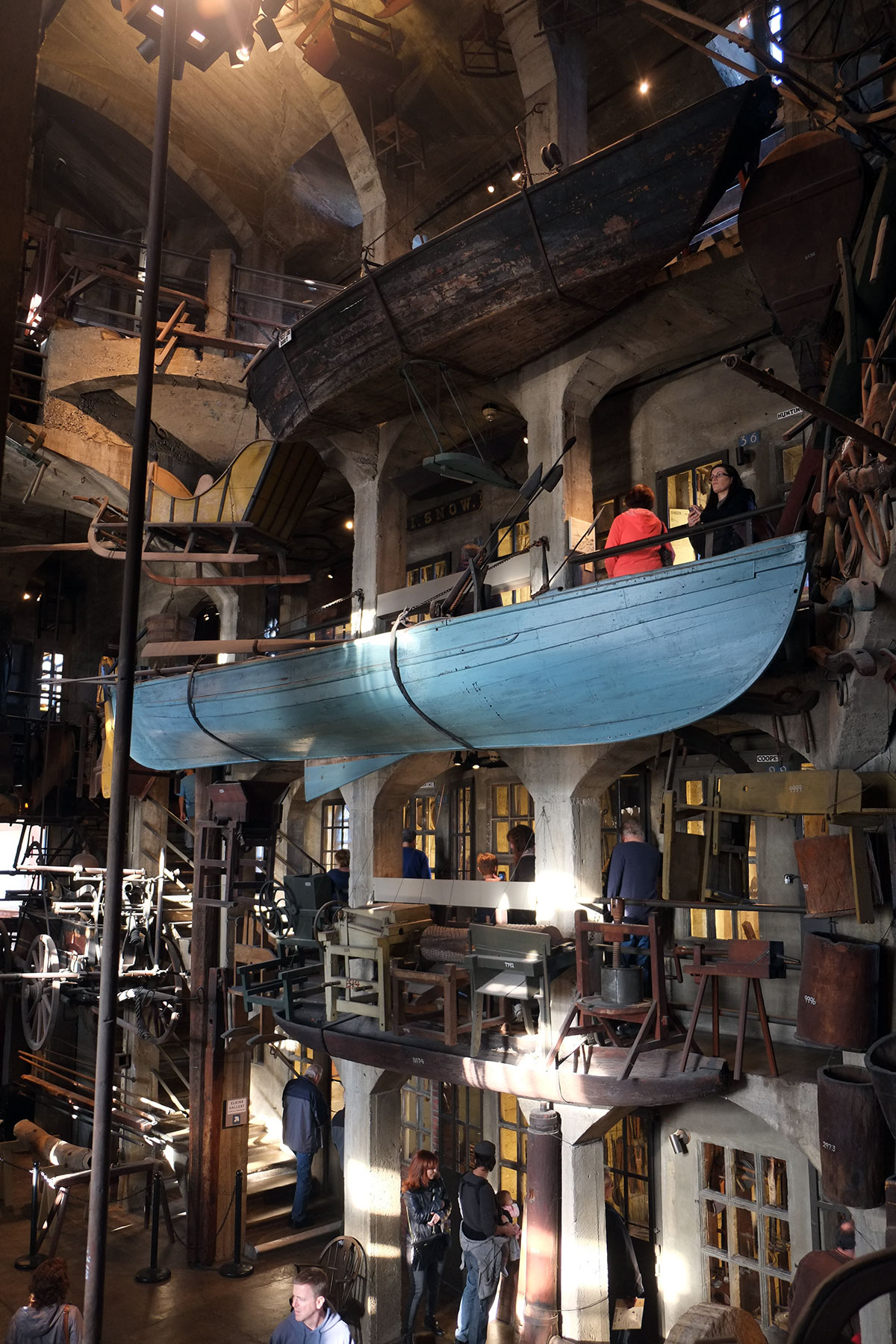
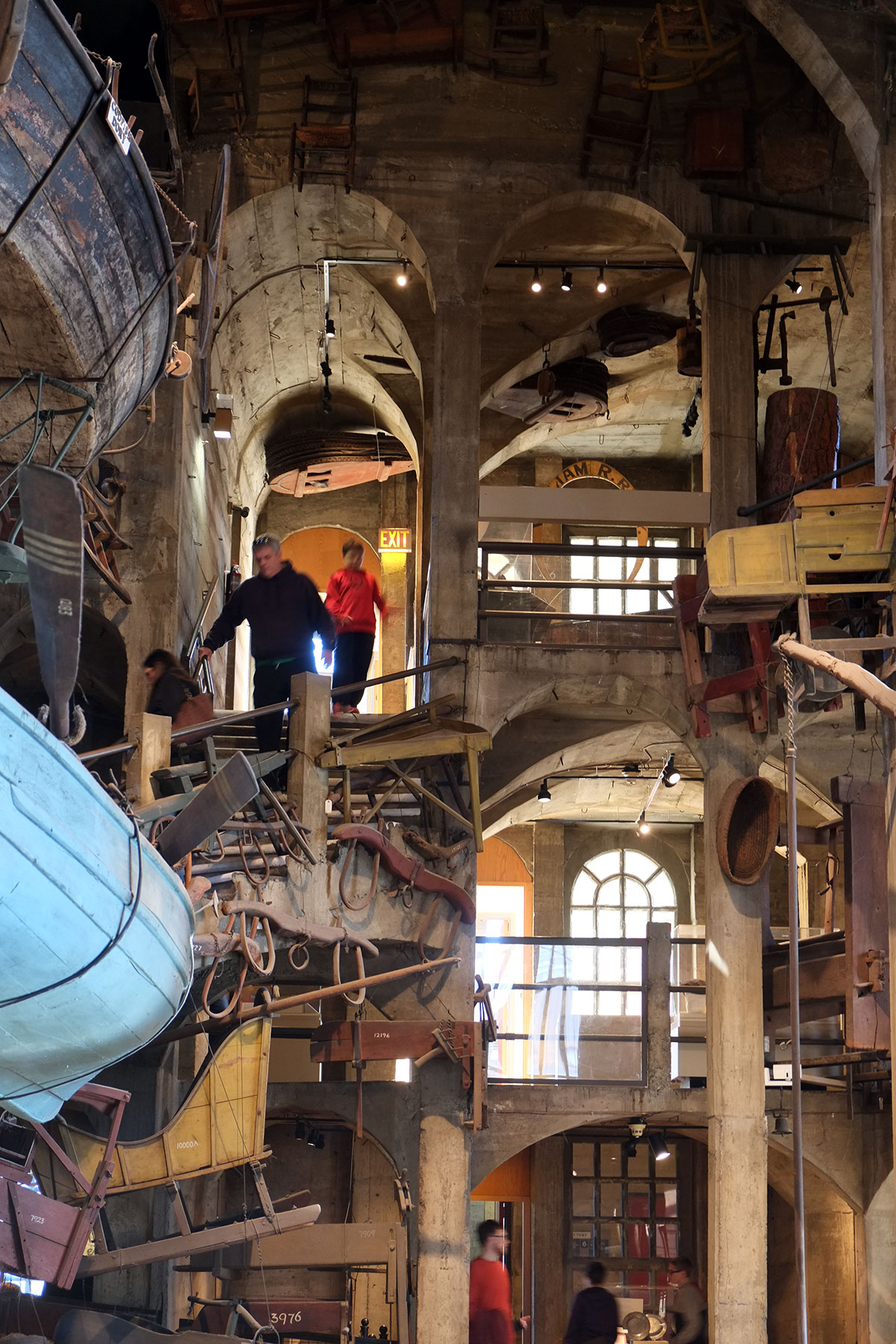
You enter through a new lobby wing, go up some winding stairs, and step out into this:DSCF5324a four-story atrium crammed with more stuff than seems possible.  It’s feverishly hallucinogenic.  Every surface is covered with stuff, even the ceilingDSCF5371

and then the really big stuff is hung out in space. DSCF5350

It is so far from our current model of what a museum should be like that it’s hard to process.  Where are the blank white walls?  Where are the wide open spaces across which we can contemplate an isolated, perfect object?  The Mercer Museum shows that a museum can work extremely well while not meeting our aesthetic preferences for abstract minimalism.  The central atrium is surrounded by vaulted side aisles, on the the outside of which there are niches, almost chapels, each of which explains and shows many artifacts pertaining to a specific technology, such as lighting:DSCF5353

or a cabinetmaker’s shop, with its molding planes:DSCF5417

The sidewalls are heavily glazed, and the light filters through the niches and side aisles into the atrium.DSCF5437DSCF5426

and there are other random artifacts scattered around.DSCF5340

as in a separate two-story space where there are perhaps thousands of panels from cast-iron wood stoves, along with firebacks, each which is highly wrought and decorative.  But the space itself grabs your attention, with its Orientalist detailing and complex spatial moves.DSCF5381DSCF5385

The exhibits are extremely clear – I now know a good amount about the practices of 18th century technologies – such as tinsmithing – which were just vague ideas to me before.  The layout of the building also supports this pedagogical approach – you may be looking at the small tools and labels in a niche exhibit, and the the label says, turn around and look behind you for a big artifact – like a whaleboat or a stagecoach – which is the product of this technology.DSCF5416

DSCF5343

DSCF5338It’s a museum which can be approached from many directions and found to be satisfying.  Kids love it, both the artifacts and exploring the space, with surprises around every corner.  Grown-ups just stare, not ever having been in a place like this before.  And some architects wonder why everything we do now has to be within such narrow parameters.  Or whether there can’t be a closer fit between the architecture and the contents.  Mercer’s buildings on their own are quirky and interesting, but not all that good.  But when you fill one up with amazing stuff, there is synergy, and the experience is fantastic.