Author Archives: Peter Keyes

Unknown's avatar

About Peter Keyes

A now-retired architecture professor who would like to get back out on the road if this pandemic ever ends.

Transitory Barricades article

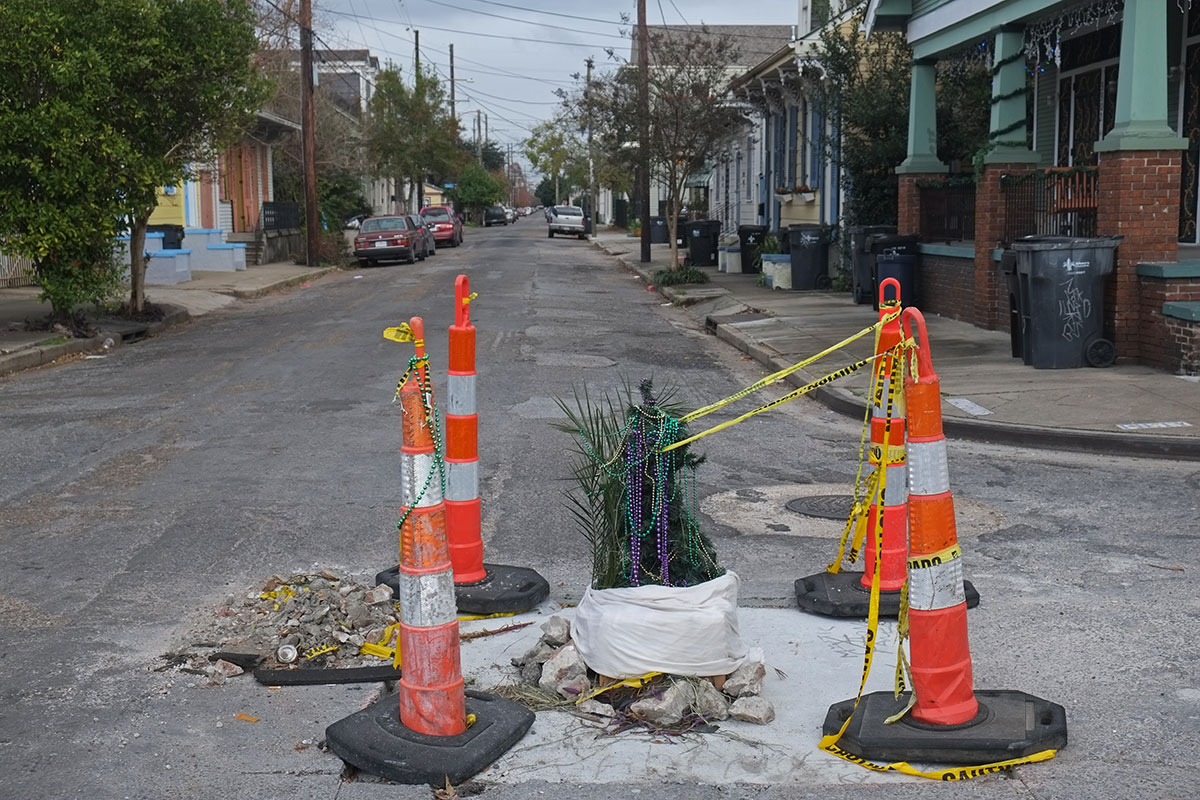
DSCF1819I’ve been taking photographs of temporary barricades all during this trip, continuing my fascination with them from the past 30 years.  I haven’t put any of these photos up on this blog, as many of them have already made it onto my photo blog at transitory barricades.tumblr.com.

And an article I wrote about this project has recently been published at Place Journal, a well-known landscape, architecture and urbanism publication that is now solely online.  So if you’d like to see a somewhat different view of all the places we’ve visited, this is the place to start.

The end of the road

DSCF1893

After 8 1/2 months, 20,859 miles and 36 states, we are back where we started.  It has been one of the best years of my life;  Greta concurs, adding that it was right up there with kindergarten.

There is so much to be grateful for with this trip.  A little trailer that was our home.  An old truck that never let us down (except for blowing a tire in the middle of the Mojave).   Damn good weather most of the time.  Good food, beautiful landscapes and interesting cities (but perhaps a little too much architecture for Greta).  Strangers who became friends and with whom we’d like to stay in touch.

But the best part of the trip for us was the family and old friends who welcomed us into their homes and lives, and kept us from becoming homesick.  I hadn’t seen many of these friends in 10, 20, 30, or even 40 years, and in every case, we just sat down and started talking as if we had never left off;  this seems to be the case with all true friends.  Our deepest thanks to all of you, and now that we’ve been to your homes, you have to come visit us.

None of this would have happened without Linda’s full support.  This trip was a crazy idea, but she was behind it from the start, as she knew it was the right thing at this point for me and for Greta.  She has had a busy and trying year, and our being gone just made it harder for her.  She never complained (well, she complained about school), even though she was hard at work while we were gallivanting around the country.  As is her wont, she cared about what was best for all of us, not just herself, and it’s one of the many reasons we love her.  (We did bring her a lot of nice presents, and we’ll probably have to cook dinner for the next couple of years.)

But mostly I’m grateful for the past year spent with Greta.  I knew she was a great kid before we left, but it’s been proved over and over on this trip.  She never complained, she charged right ahead into every adventure, she navigated us flawlessly through complex metropolitan areas, and she grew up in front of my eyes.  Not many people have the chance to spend this much time with their teenager, but I wish everyone did.  On hearing what we were up to, many people we met looked at Greta and said, do you know how cool this is?  Do you know how great it is that your dad is doing this for you?  Greta always said yes, and I always added that it was just as cool for me: first of all, Greta was my excuse for taking the trip, and second, I wouldn’t have lasted two months on my own.

This trip was a great leap of faith for her.  A few months into the trip, someone asked her if she had been positive about taking the trip when I first proposed it.  She said, yes, but only because she had no expectation that it would actually happen.  She figured, it’s another one of dad’s crazy ideas, why burst his bubble right away?  As we drove through Springfield on the first day, she looked at me and exclaimed, Holy crap, we’re really doing this!

Greta made friends everywhere we went, including quite a few surrogate aunts and uncles, and it was really gratifying for me to see how immediately all my friends took to her, and vice versa.  I’ve always been happy traveling by myself, but Greta was the best companion I could ever have had.  I’m already feeling sad that we won’t be spending every waking moment together from now on (although I’m sure she’s feeling somewhat differently).

The trip may be over, but the blog goes ever on.  As you may have noticed, we still have about a two-month backlog.  We tried to catch up a few times, but everywhere we went, it was more important to live in the moment, to see and experience what we could and to talk to the cool people we were visiting.  But now that we’re back in Eugene with time on our hands, we will get back to work on the writing, including some summary comments and greatest hits lists.

And for those of you who have been faithful followers of the blog, we have an invitation.  Next Monday evening, Memorial Day, we will be putting our newfound barbecue insights to the test, since we haven’t had any good barbecue since Texas.  You are all invited to the celebration of our return, which happens to coincide with my 60th birthday.  We’ll have lots of pulled pork, cole slaw and cocktails, but if you’d like to bring more to eat or drink, feel free.  Please just let us know you’re coming, so we can make sure to have enough.

it will be great to see some of you, and it’s nice to be home.

Cascadia

dscf1839

We had entered the gravitational field of home two weeks earlier, as soon as we left the Mojave. We had hoped for a last week of dislocation, travelling along the Sierras and hiking in Yosemite, but given the weather and pre-registered crowds, that was not to be. So we travelled up the North Coast, with an ever-deepening sense of familiarity, as the landscape, buildings, vegetation, and weather made it clear that the alien environments of the past year were behind us.

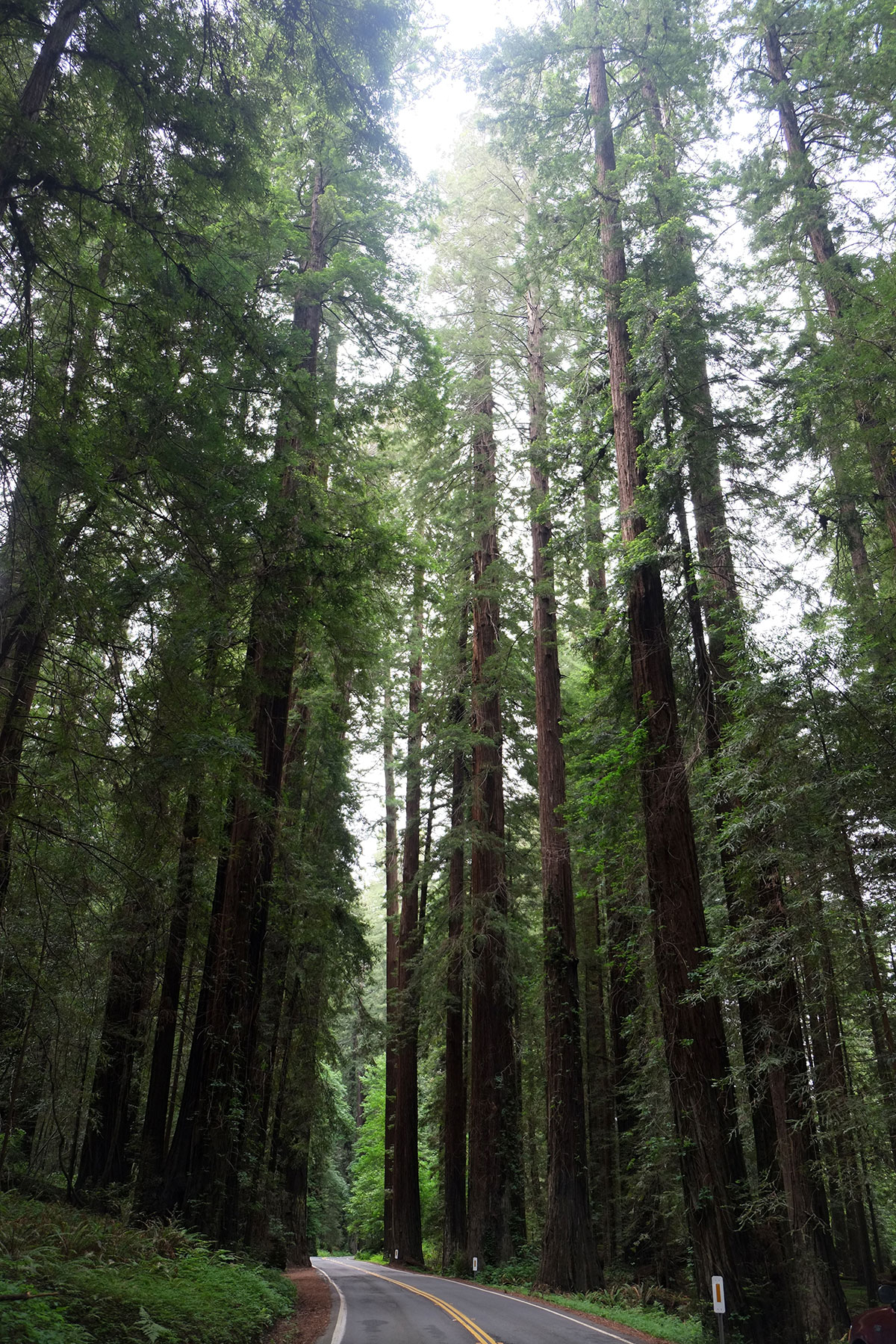
We wound our way through the last miles of Highway 1 to Leggett, where we joined Route 101, and were suddenly in the redwoods. Most of the land through which you travel is private timberland, but there are big stretches of state and local parks and reserves. 101 runs about 75 miles along the Eel River, all the way to Humboldt Bay. Near Phillipsville we abandoned 101 for the Avenue of the Giants. This was the original alignment of Route 101 until 1960, when the newer and straighter highway was built, usually on the other bank of the river; the two routes intertwine and switch sides a few times. It is a great road, with many quiet waysides and short hikes, away from the speeding trucks and heavier traffic of the highway. But we would have taken it anyway, just for the name – after a year on the road, we are suckers for all such grandiose touristic nomenclature (although we did manage to avoid the Trees of Mystery further north).

115-north-coast012dscf1843

We bypassed the fabulous town of Ferndale, and quickly cruised through Eureka and Arcata, all of which we had explored in greater detail a few years ago. We knew we would probably visit this area soon again, and the gravitational attraction of home was increasing exponentially. Humboldt County is a funny in-between place for us – travelling through the last time, I realized it is not so much Northern California as it is Baja Oregon. It is certainly part of Cascadia, the rainy, temperate region where the salmon spawn. Coming from Oregon it feels different, but coming from the south at the end of a long trip, it felt so much like home that we thought we might as well just go home.

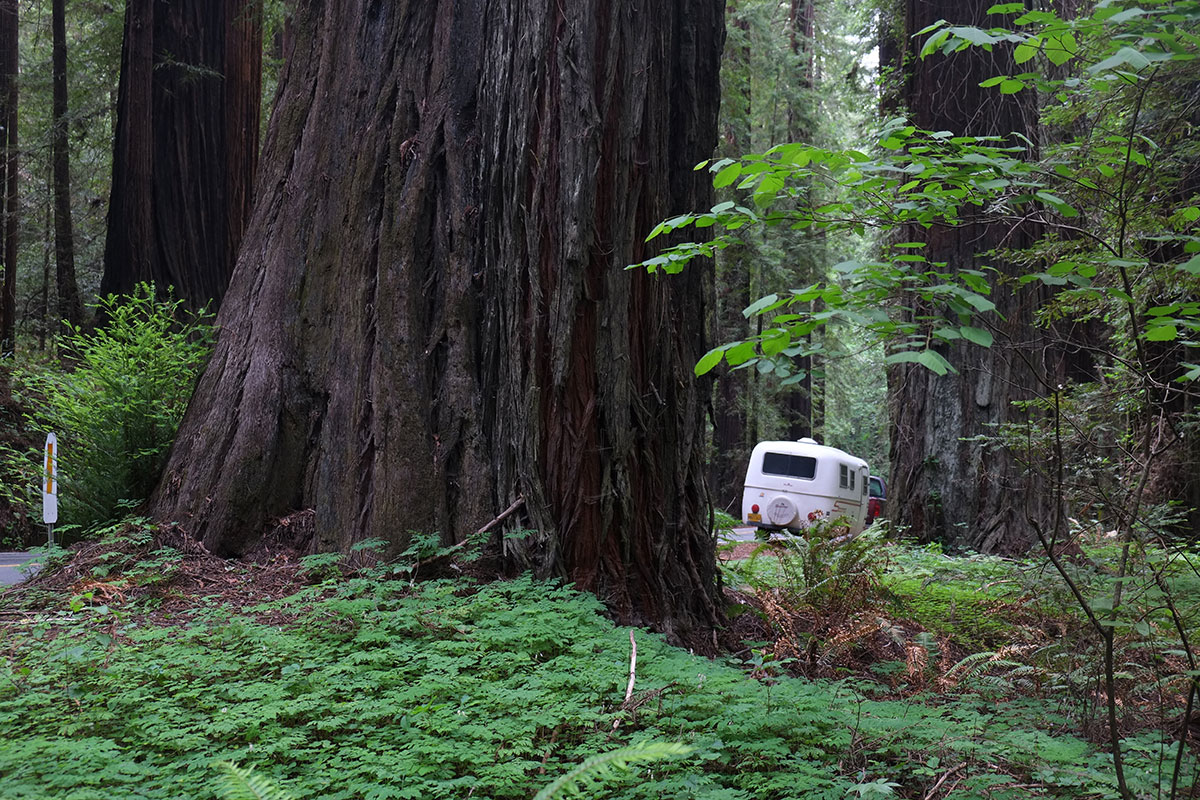
We drove into Redwood National and State Parks, a unusual designation I’d never understood, but we learned that there had been state parks here originally, which had then been encapsulated inside the National Park, which increased their area and gave them a higher degree of protection. Our campground was at Elk Prairie, where we had selected a site in the redwoods rather than on the prairie, as Greta did not want to mess with elk while heading to the bathroom in the middle of the night. It was a chilly and misty evening, especially compared to the sunny days of central California, and we ate our last trailer-cooked dinner, left over from the Mendocino Cafe.

Greta and I are not normally early risers, but we both awoke at first light around 6:00. We stared across the trailer at each other, with looks that clearly said, Wow, this is it, the last day. We wolfed down some breakfast and went out for our last hike in a National Park, before anyone else was about. First we went to the prairie, where there indeed was a small herd of elk, moseying along while eating, and then heading into the forest.

dscf1857

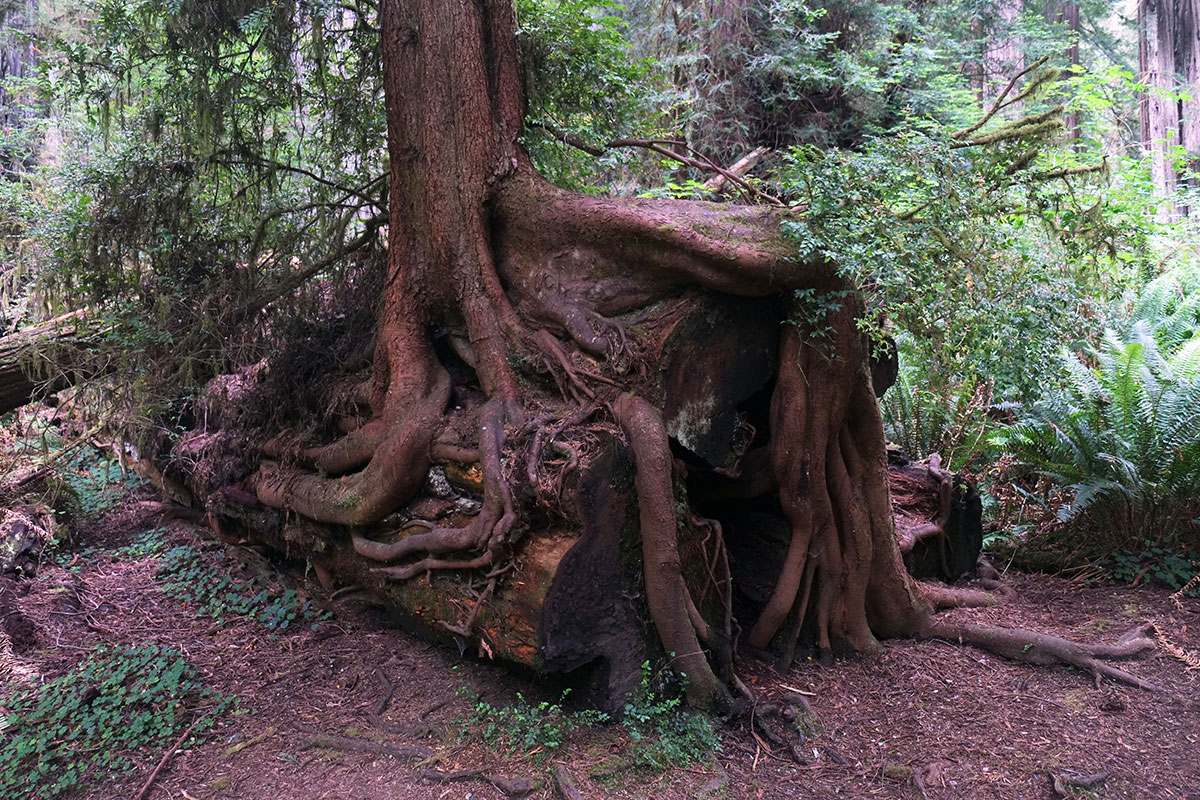
We found a beautiful trail from our campground, which wound along a creek and through the redwoods, with many close-up views of nursery logs, and closed-in vistas, rather than big landscape perspectives.

dscf1874

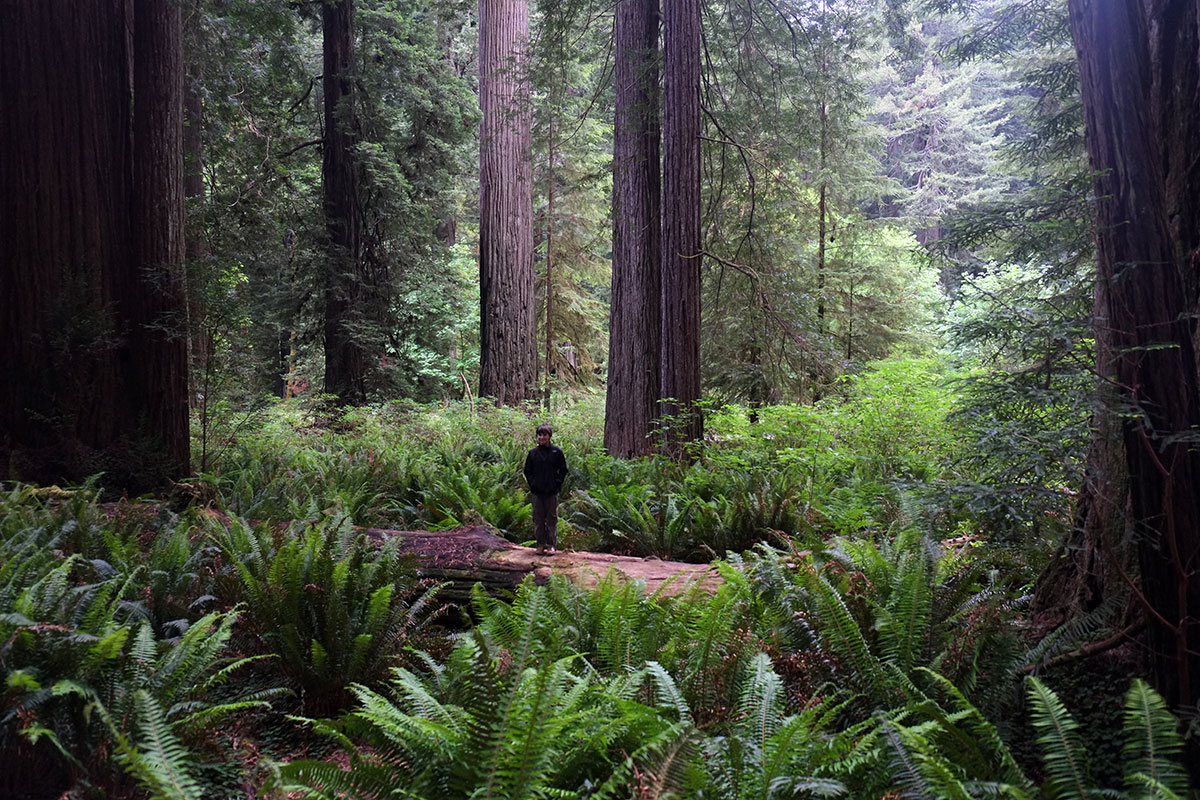
In some ways it felt familiar – a dense, enclosing, coniferous forest, with ferns and a low understory, much like the park at the end of our block. But we then we realized that things felt familiar, except for the gnawing sense that something was slightly off, in one important way. The trees were enormous compared to ours, maybe twice as tall, but many times bigger in girth. To a Northwesterner, the redwoods are dreamlike, trees out of myths. Our second night out on this trip, we had made it to Craters of the Moon National Monument, which Greta had likened to Camping in Mordor. So it seemed appropriate that we spent our last night in Lothlorien.

115-north-coast013dscf1870

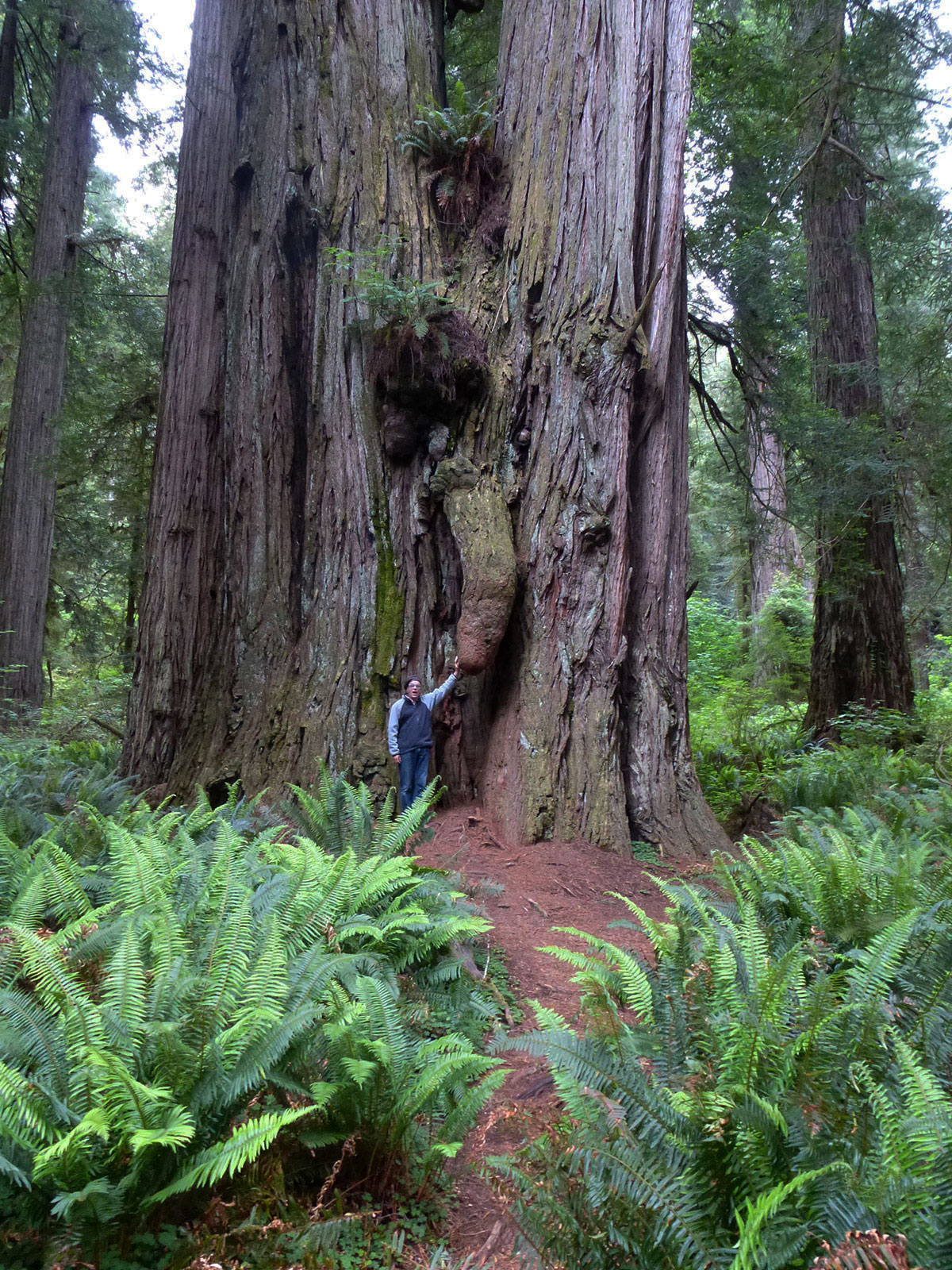
We packed up the trailer, and once again were able to avoid 101, driving on the Newton B. Drury Scenic Highway, most of the way to Klamath. There were many waysides and areas of interest, but one in particular grabbed our attention – a trail to the Big Tree. We wondered, what would it take to be called The Big Tree in this forest? Hiking along, we kept wondering, Is that the Big Tree? That one? Then up ahead of us, we glimpsed something strange through the brush.

dscf1882

It was clearly The Big….Tree. We had never seen anything quite like it, although Sleeping Ute Mountain, and Face Rock at Canyon de Chelly came to mind. We marvelled at the Park Service’s circumspection.p1100105

No matter what it was called, Greta had no interest in getting any closer, so we continued on with our intermittent hiking and driving.dscf1880

We reached Crescent City in time for a Second Breakfast, and decided to explore. No one ever goes to Crescent City, as it is one of those in-between places, which you pass when you’re always in a hurry to get somewhere else. After a closer examination, we can state that there really is nothing to see there. It is a bedraggled place, which reminded me of Aberdeen, Washington – another depressed coastal town showing the changes in the timber industry in the past decades. It seems that now the major industry in town is the Pelican Bay State Prison, the only super-maximum security facility in California.

However, I have since learned that there is a more immediate explanation for its bereft appearance – it was hit hard by the tsunami from the 1964 Alaska earthquake, which wiped out 300 buildings. Apparently the configuration of the shoreline and the ocean floor focusses tsunamis here, and it has felt lesser effects from more recent earthquakes across the Pacific. It’s a treacherous coastline, but also a vivid one: 115-north-coast014dscf1884

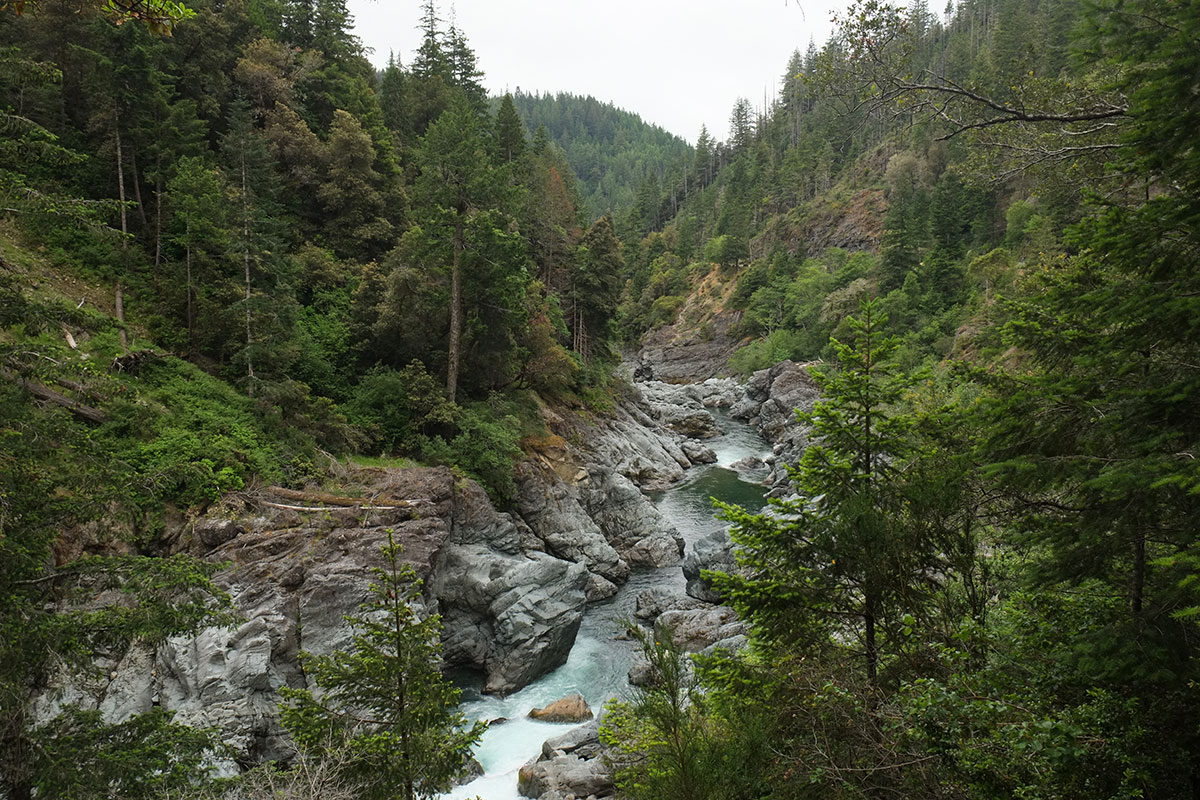
At Crescent City we turned inland onto Highway 199, heading towards Cave Junction, Oregon. It’s a beautiful road in the Smith River valley through the mountains.115-north-coast015dscf1890

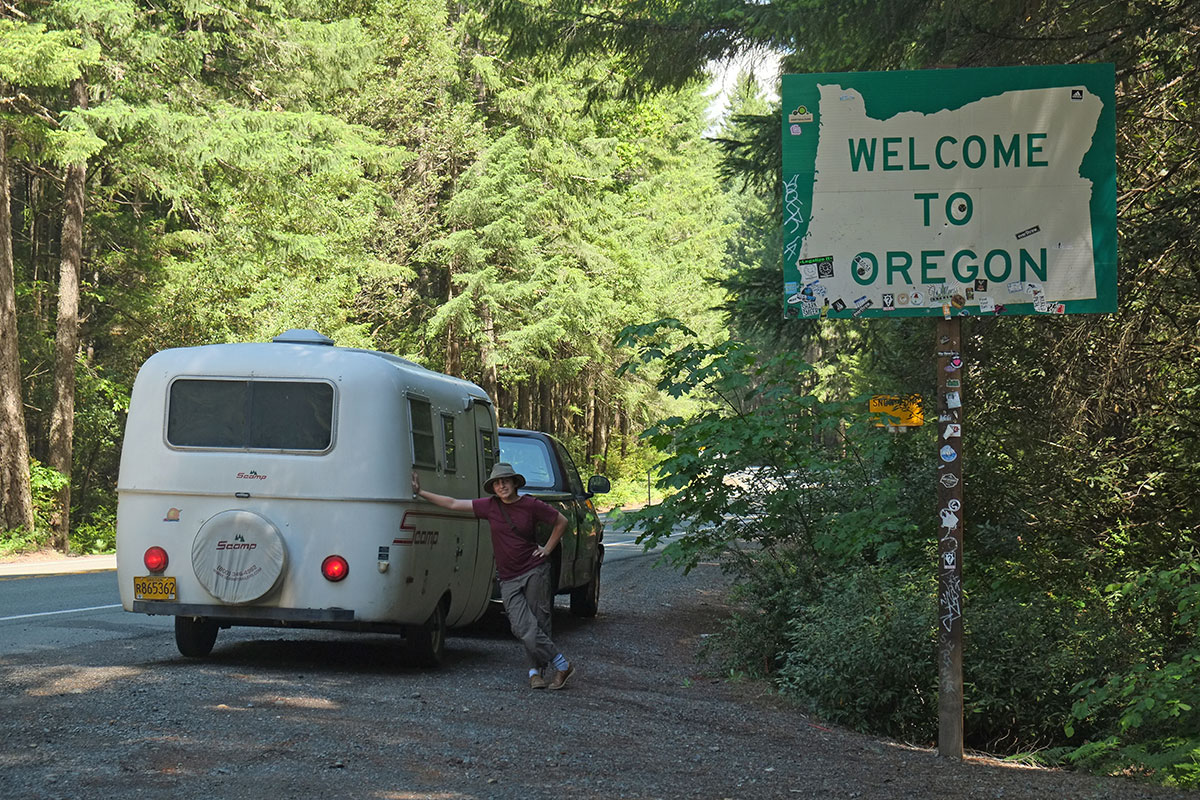
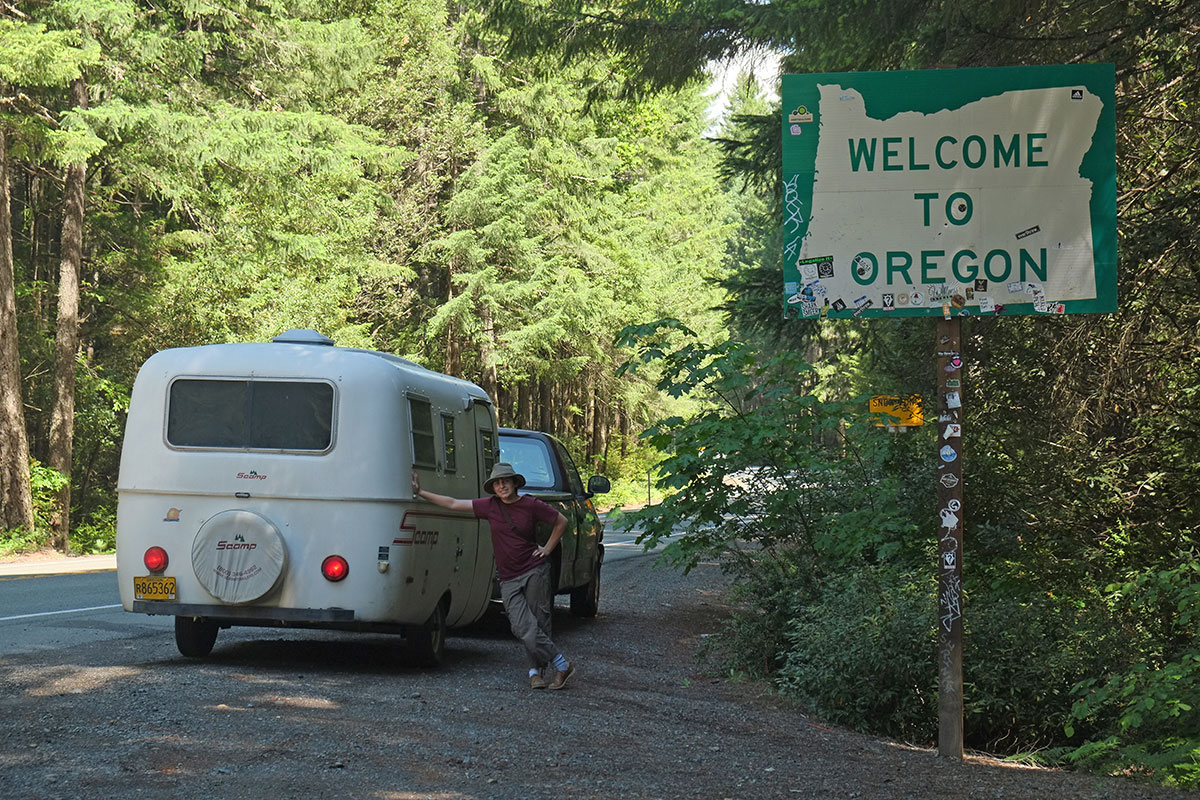
We crossed the border, and took the obligatory shot:115-north-coast016dscf1893

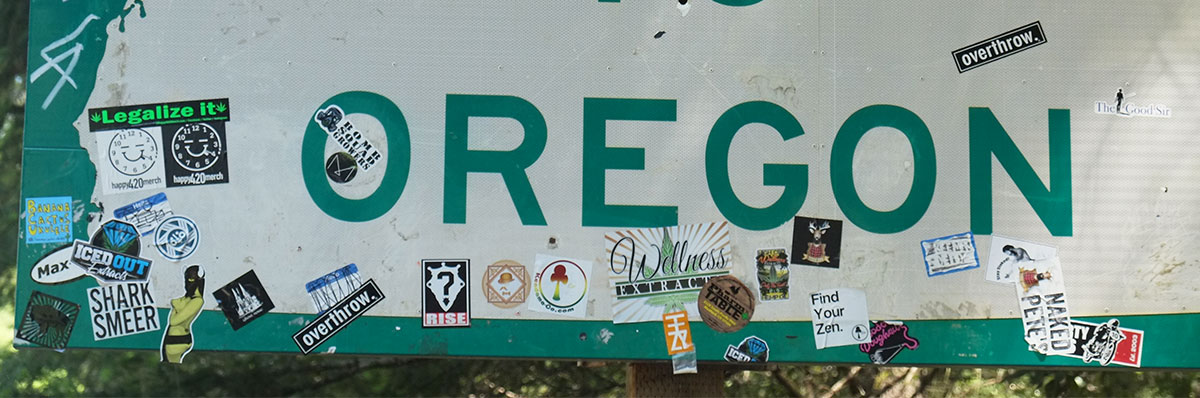
We noticed the stickers attached to the bottom of the sign, which seemed to reflect the major pre-occupations of the local populace: the secessionist State of Jefferson movement, and the marijuana culture which had sprung up in our absence, as recreational use was legalized on October 1, 2015.dscf1891

We drove a few miles more into the town of O’Brien, where we passed, in rapid succession, a white guy with dreadlocks and a tie-dye t-shirt riding a too-small mountain bike, an alternative medicine clinic, a Frisbee golf course and a cannabis store. Greta looked at me and said, Dad, I think we’re home.

On to Grant’s Pass, with a large amount of traffic confusion for a small city . We ditched our small-road predilection and joined the great river of I-5, for the first time on our trip, anxious to move on. We had forgotten the propensity of Oregonians for staying in the left-hand lane at all times, even when driving a tractor-trailer up a hill at 25 mph, and we longed for the speed we had left behind in the south. But as we left the mountains and neared the Willamette Valley, the speed picked up, and the afternoon rushed by.

About 40 miles south of Eugene I said to Greta, I think this is the point where we’re supposed to have a heart-to-heart conversation about the trip, what it’s meant to us, and how we feel about it now that it’s coming to an end. There was a long silence as she stared at me.

Or, I said, we could just put on the Clash.

Definitely the Clash, she replied.

So we put in London Calling, which had become our go-to album for the whole trip. Everything around us became very familiar, as we glimpsed our hill from I-5 as we came around the big bend in Glenwood, got off the highway onto Franklin Boulevard, went past our grocery store and turned up the hill to our house. We pulled into the driveway just as the last chords of Death or Glory crashed down.

I had warned Greta over the past weeks  that I thought we should disrupt her no-displays-of-affection protocol, and that one hug at the end of the trip would not be too much for her to handle.  So I stood by the front door, and said, Hug.  Greta walked over and hugged me, then we went inside.

dscf2227

He drew a deep breath.  ‘Well, I’m back,’ he said.

The North Coast

The last days of our trip were spent on the California North Coast. We’d hoped to cruise through Sacramento and up into the Sierras, but given the lingering snow in May and the impossibility of a campground in Yosemite, we were forced to once again drive up the coast – which may be our favorite landscape in the world. Before we reached the Bay Area we had covered a bit of the coast we’d never actually done before – the 40 miles or so from Santa Cruz to San Gregorio, from where we took 84 through La Honda and in to Palo Alto. This is a breathtaking stretch, with gentle river valleys coming out to the coast – which reminded us of the Olympic Peninsula – and some big headlands. It is astounding how few people there are here, right over the mountains from the Bay Area.dscf0963

dscf0968

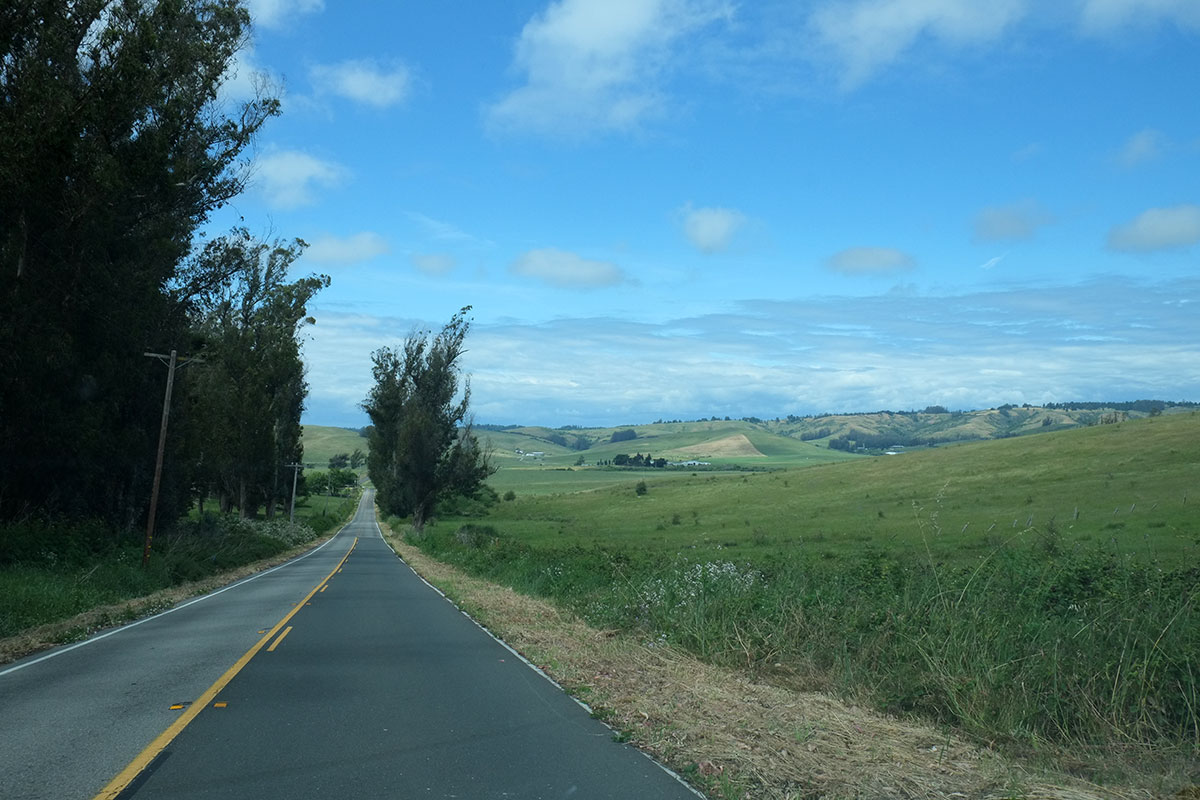
A week later we began our final leg, crossing the Golden Gate and following Highway 1. The variety of landscapes on this section is unlike other parts of the coast. In Big Sur you are always on the side of the mountains, looking down into the ocean, and it is unrelievedly spectacular. But here the highway weaves in and out, with beautiful farmland near Pt. Reyes Station,115-north-coast002dscf1703

just before you run along Tomales Bay, which is essentially a fjord, with the ocean hidden just over the hills to the west.dscf1707

At the north end of the bay we cut inland again, driving along Keyes Creek,115-north-coast003dscf1711

where you can see how the California Coastal Commission regulations require that even the cattle must be picturesque.dscf1714

On this inland jog we entered Sonoma County, and then back to the sea, where a wider plain appears between the mountains and the ocean.dscf1716

All of this variation – farmland, fjord, estuary, coastal plain, ocean – occurs within one hour of driving. We were overwhelmed with the density of beauty, how every minute there was some new and different prospect. It was similar to the experiences we had in some parts of the Southwest – Zion, Canyon de Chelly – but with more water.

We entered the part of the drive that does more cliff-hugging, and I stopped taking photos – too many sharp switchbacks with steep elevation changes for someone driving a truck with a trailer to ever have enough warning to contemplate pulling over onto a tiny gravel shoulder – but the scenery continued to amaze us. We had driven this stretch six years ago, and we wondered why we didn’t have a stronger memory of it – perhaps that had been on an overcast day, when the stupendously elemental qualities of ocean, sun, sky and cliff were just not as vivid. The Sonoma coast was one of the most arresting landscapes we saw on this whole trip.

We drove past Sea Ranch, the famous Halprin/MLTW/etc. resort development, but didn’t stop. I’ve learned from prior trips that visiting Sea Ranch without an in or connection is a frustrating experience, as you really can’t see the buildings and views you want. Perhaps we’ll catch it on the next trip, renting a place to stay..

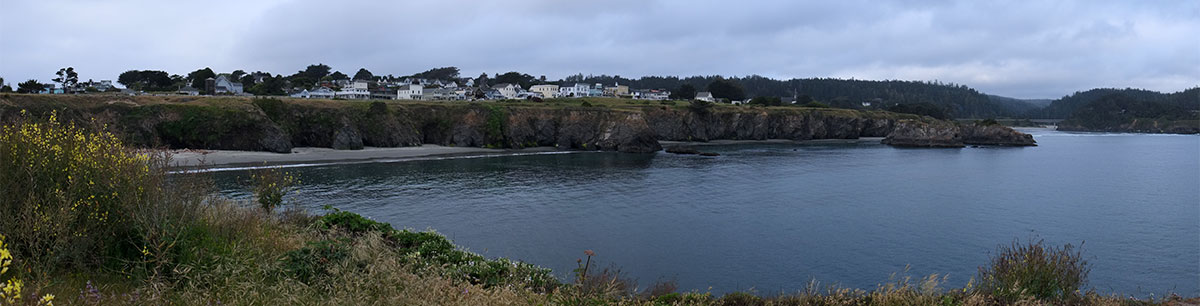
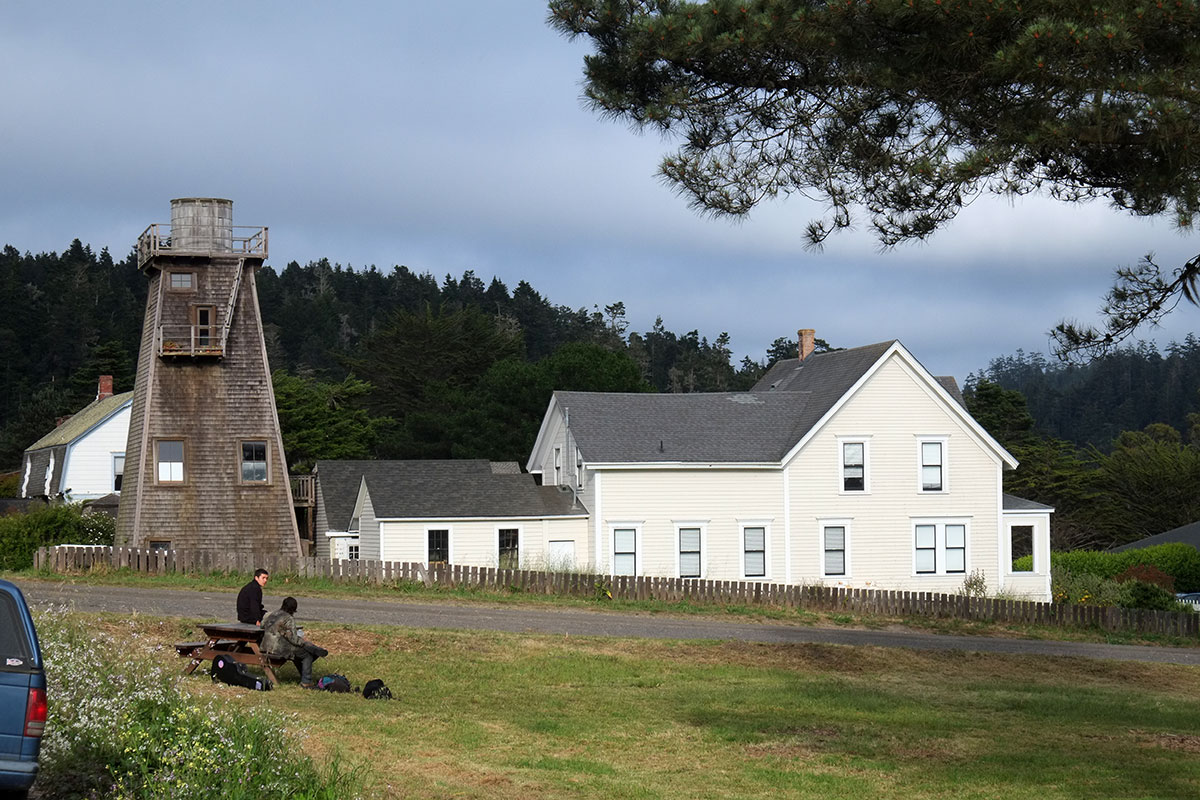
At the end of the day we made it to Mendocino, the 19th-century New England whaling village perched on a bluff sticking out into the ocean. It can be a little too quaint and precious (and expensive), and as Isadore once said, Mendocino seems to be the Spanish word for gift shop. But every time I’ve been here I’ve been blown away, for many reasons. There are very few places in this country that have a setting anything like this – a headland with steep cliffs on three sides,115-north-coast005dscf1754

where the view down every street ends in the ocean.dscf1729

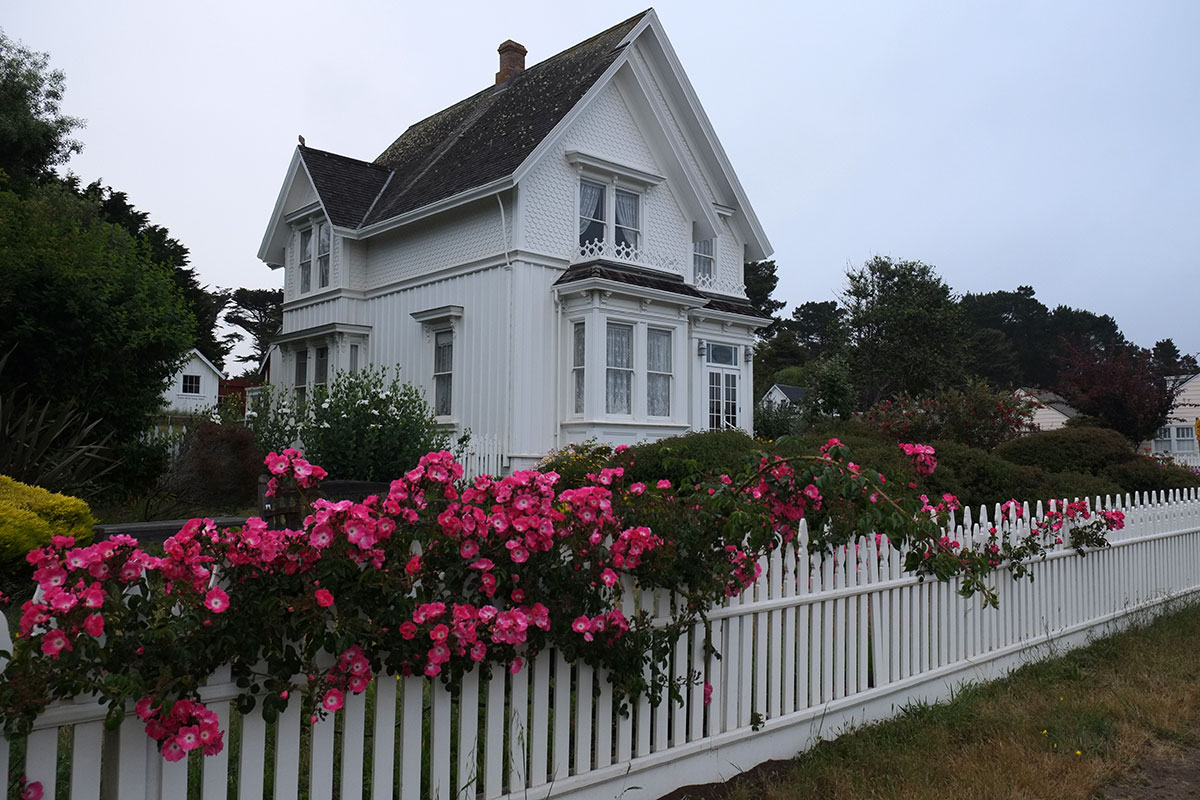
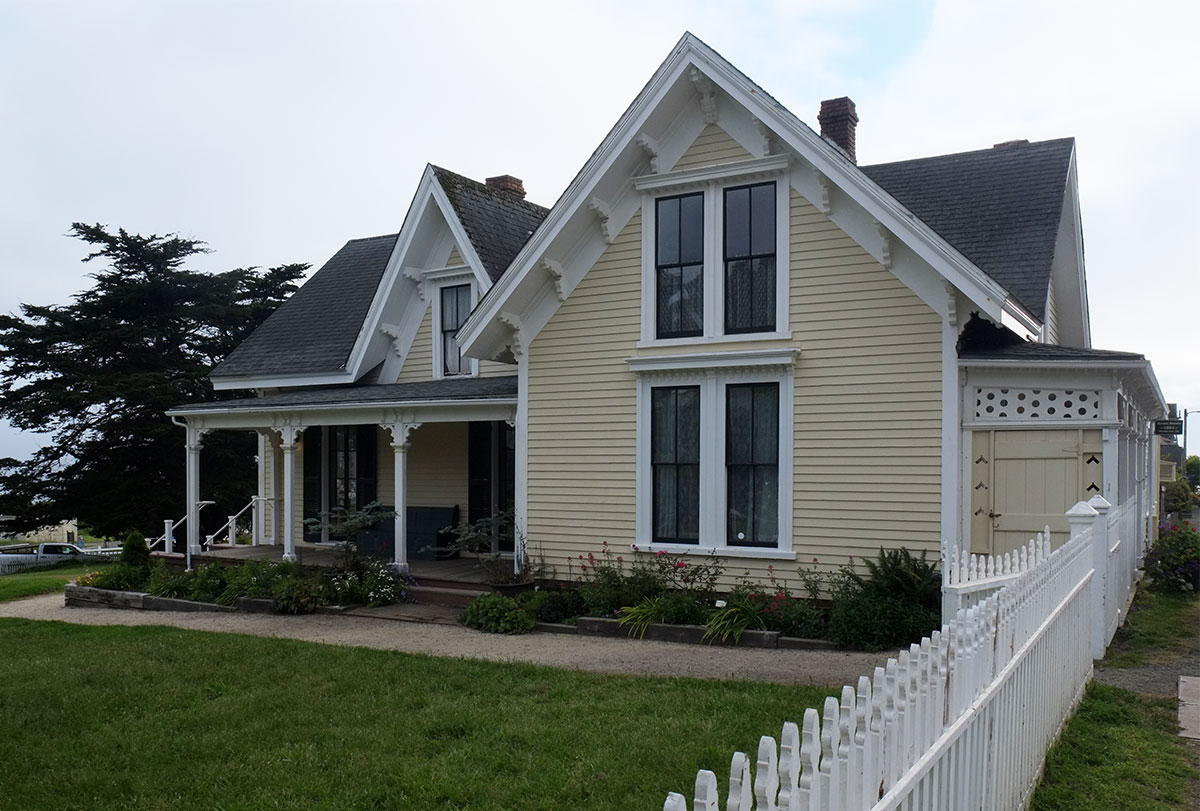
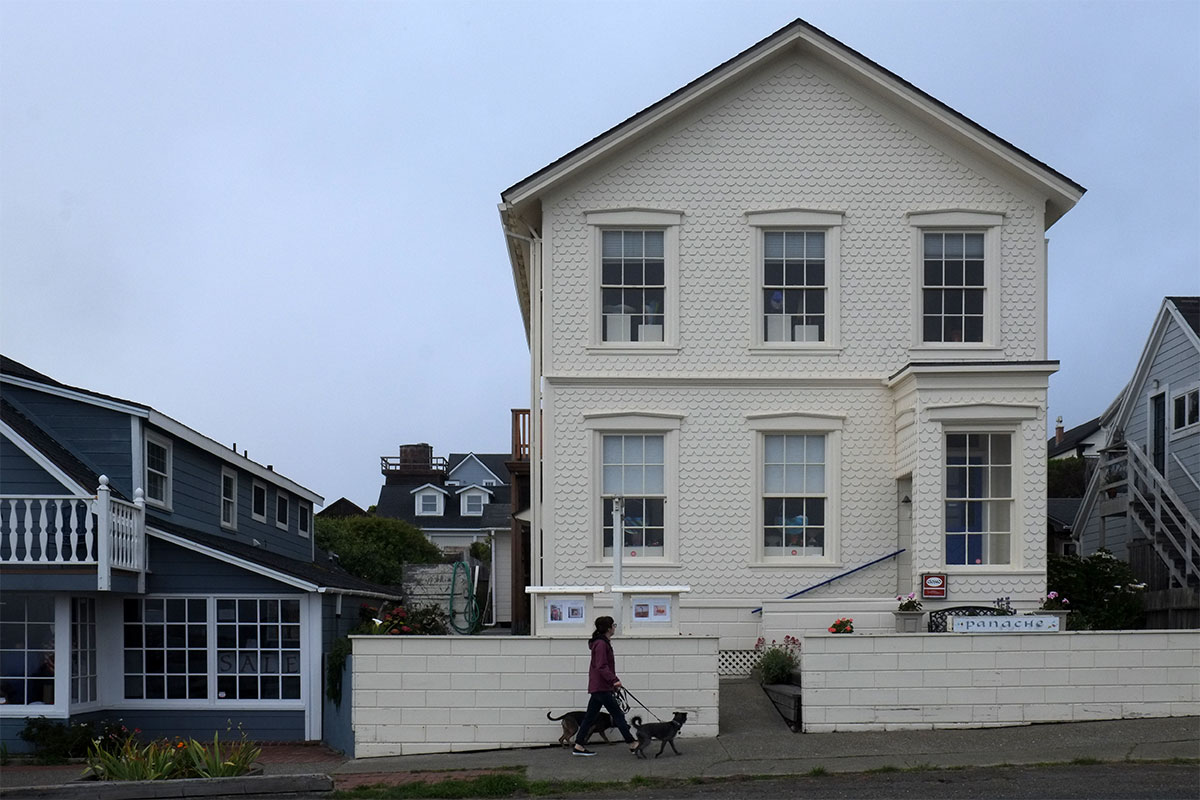
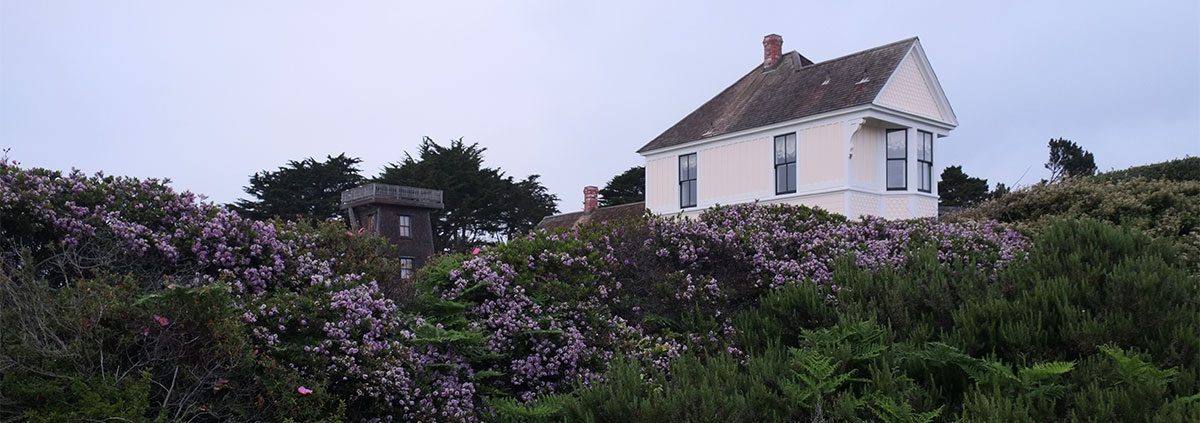
Some of the houses have been spiffed up pretty extensively, such as this one, which was used as the stand-in for Maine in the Murder She Wrote TV series,dscf1788

but much of the town retains its vernacular character, with old houses and water towers.dscf1721

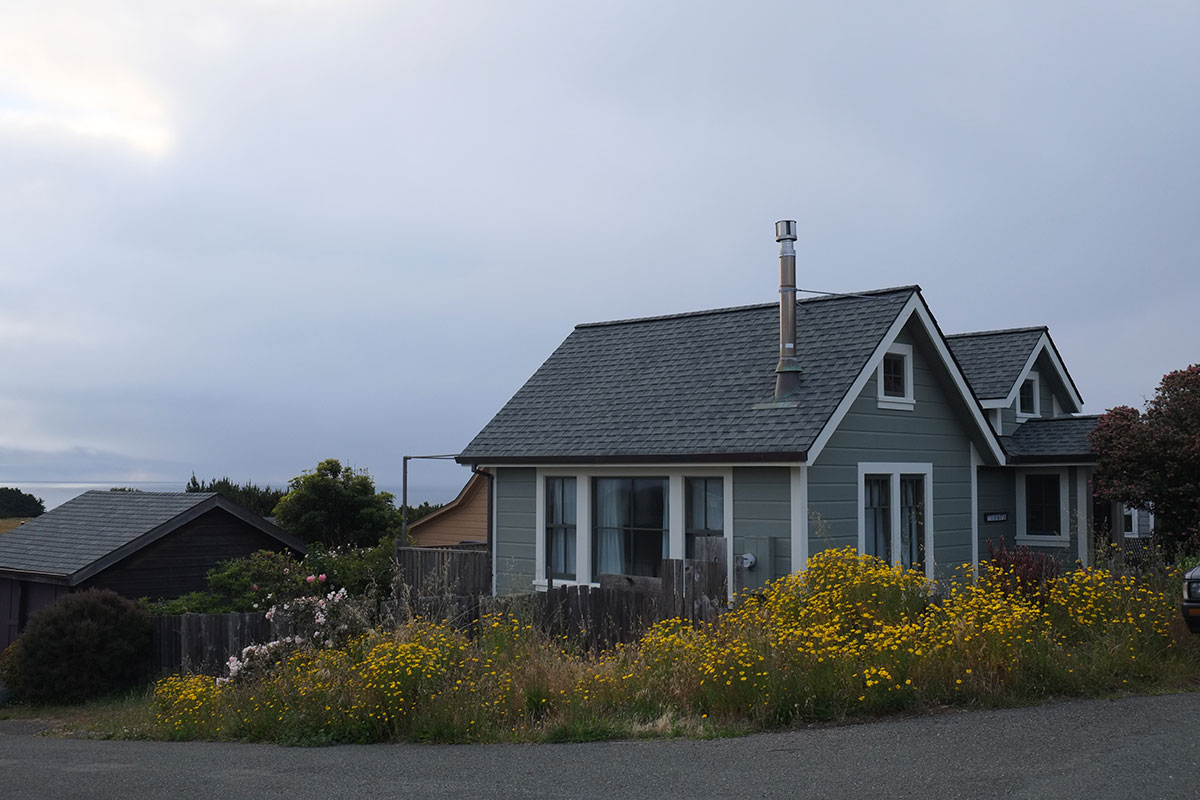
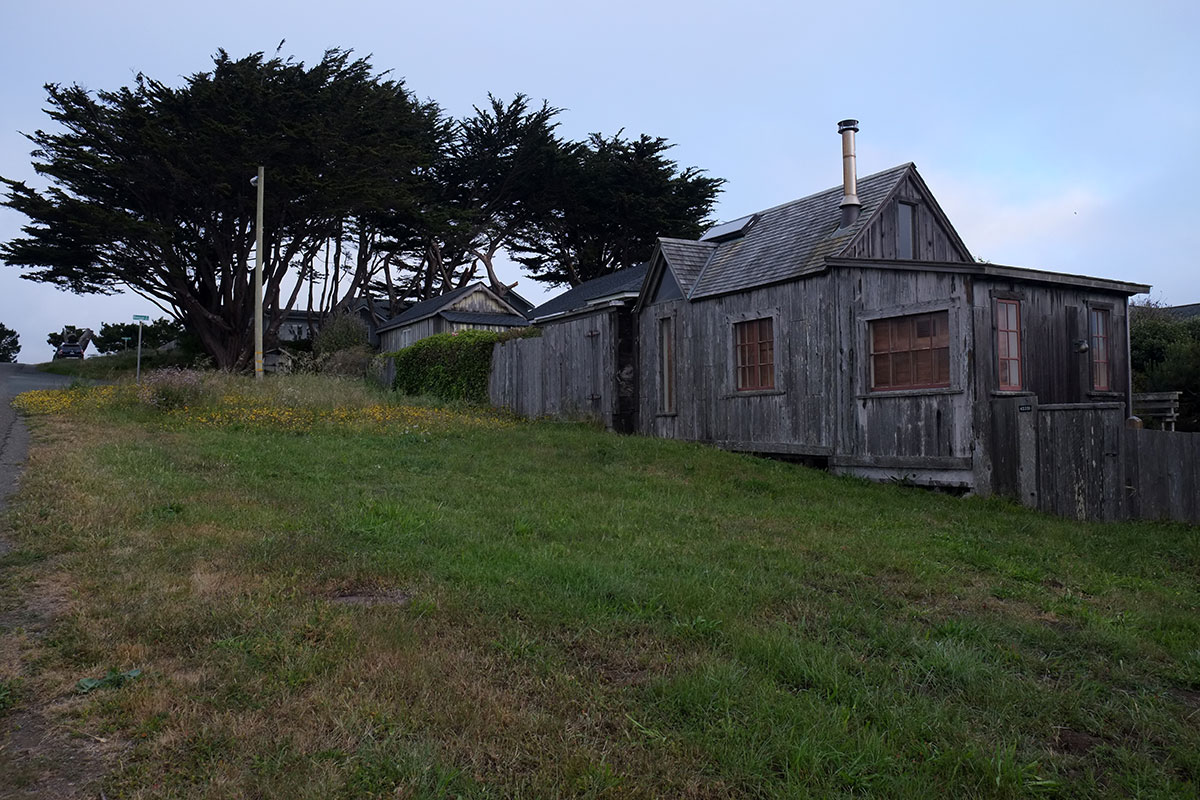
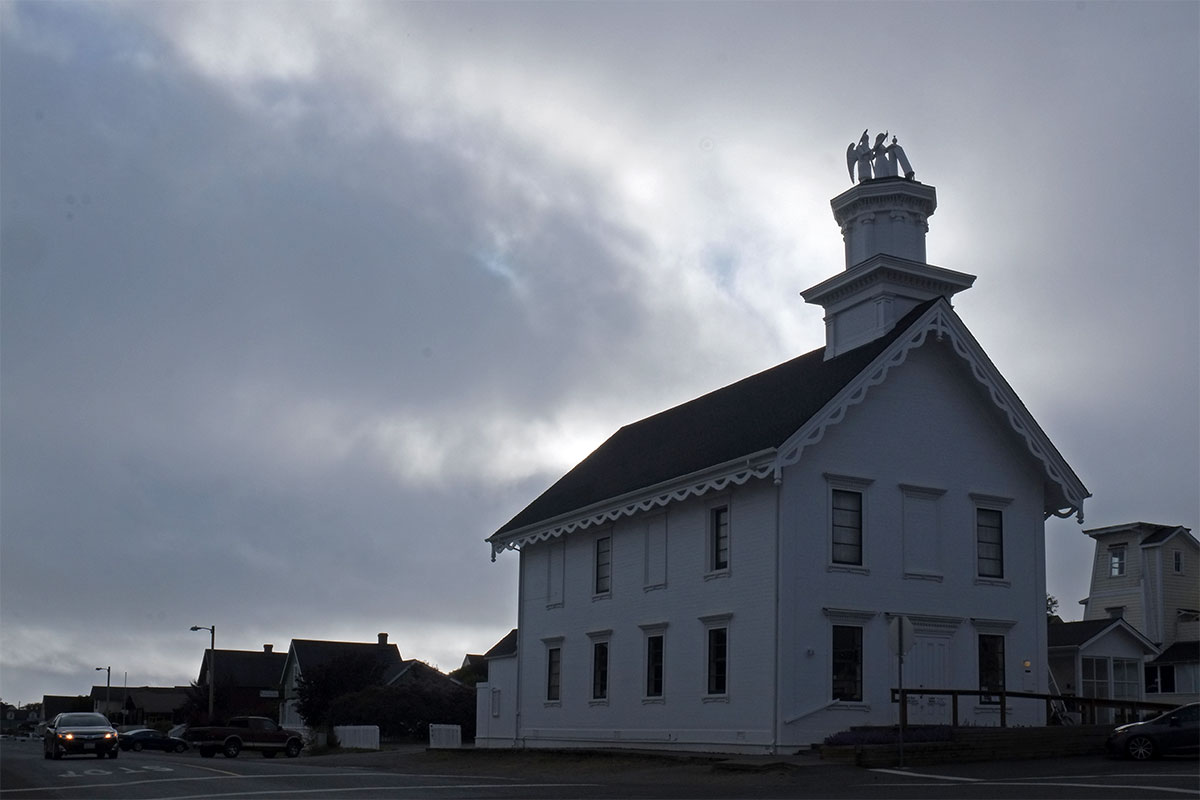
There is a range of styles, from the simple cottages to the more elaborate Queen Anne, Italianate, etc.dscf1768

dscf1761

dscf1723

dscf1772

I think I spent a night sleeping in this house over 20 years ago, when it was owned by the family of one of our students. I was awakened the next morning by the sound of sea lions barking at the base of the cliff.dscf1732

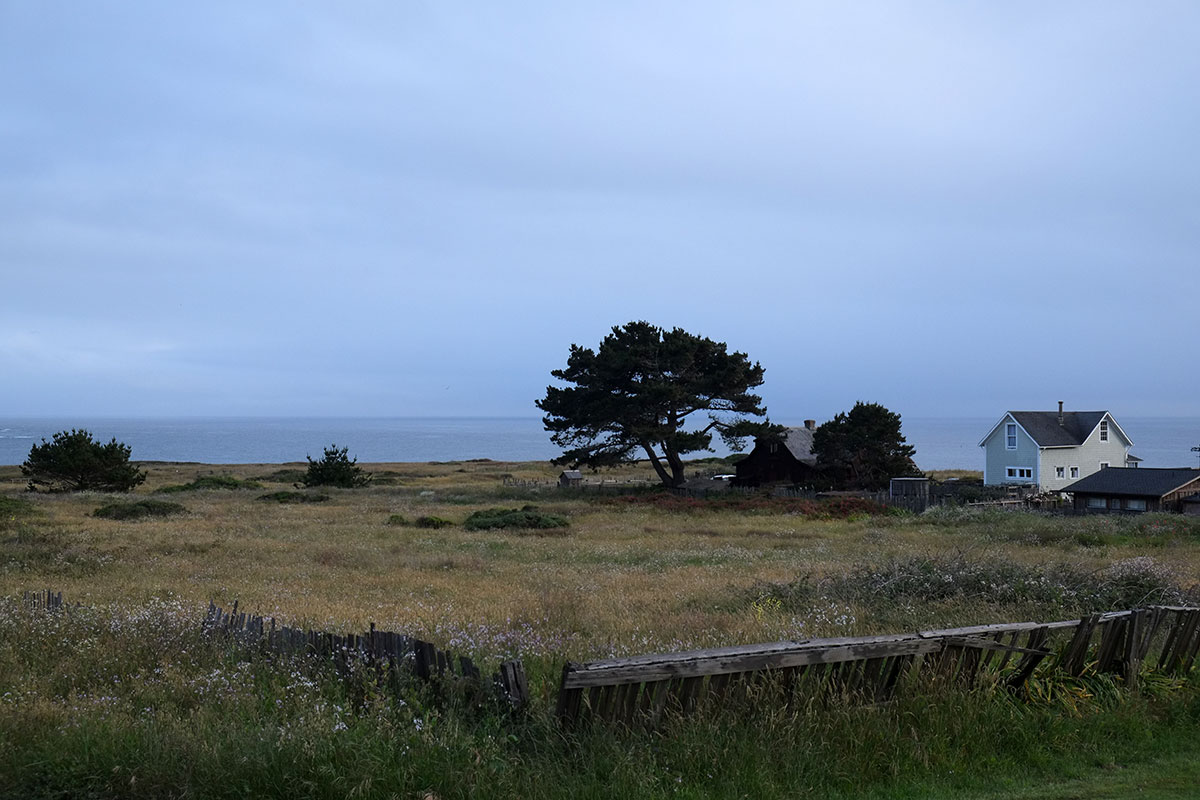
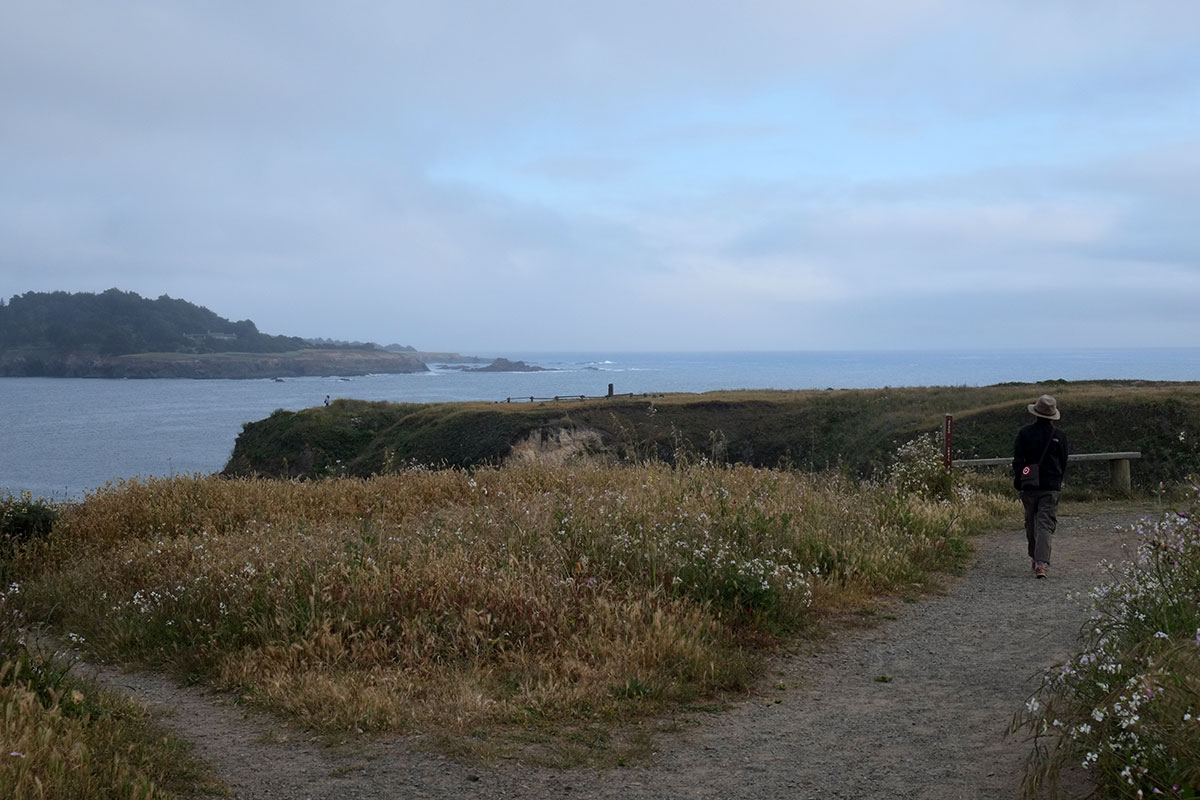
About half of the headland is preserved open space, with walks through fields of wildflowers to the ocean views.dscf1764

Greta and I walked out onto the bluff trail, where we saw the first weasel we had ever seen in the wild, and which was too fast to be photographed.dscf1740

Then there is the light, which changes rapidly and dramatically, as clouds break and fog rolls in. We have been there on sunny days and rainy days, and it is notable how your impression of such a small, simple place can also change so drastically.dscf1719

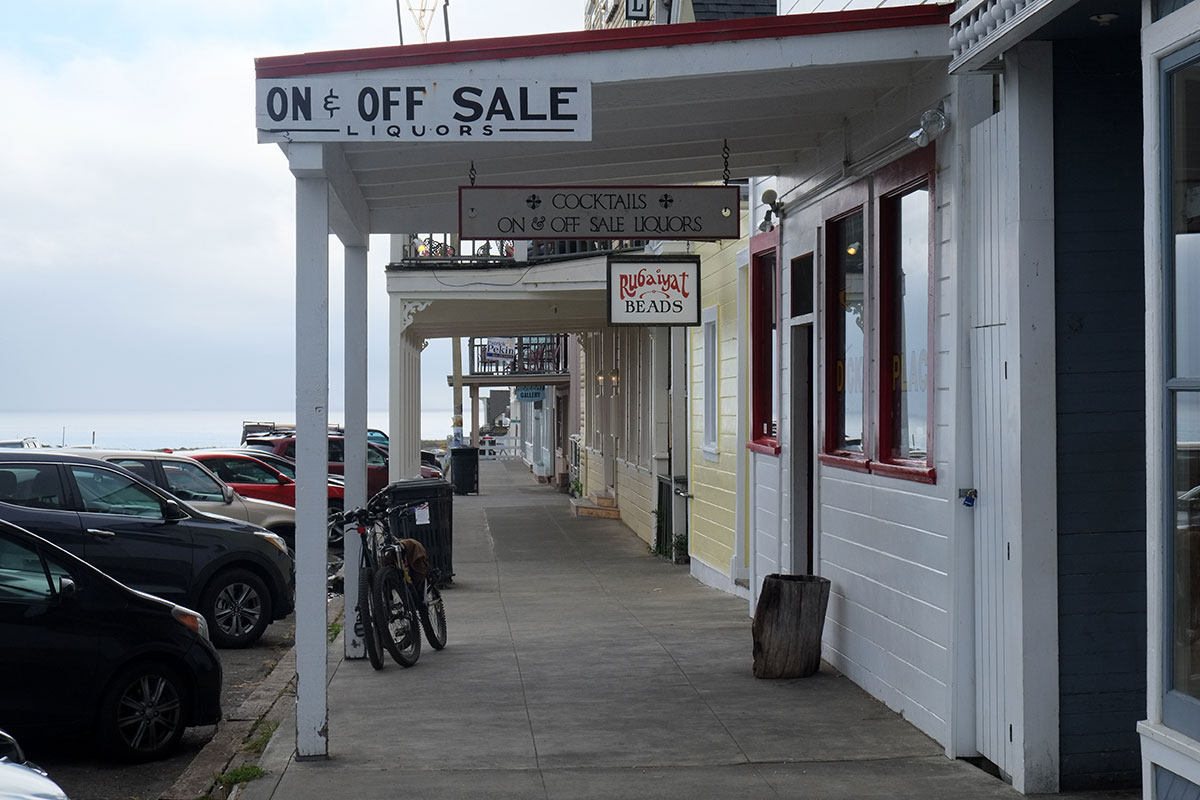
Mendocino was like many historic towns we visited on the East Coast, where it is obvious that the seeming simplicity and casual quality is maintained by unrelenting diligence and at great expense. But I can’t help being bowled over by these places, even if they represent Disneyfication by the Upper Classes. There are so few corners of this country that have not been overwhelmed by the crap of the past 60 years, that I’m completely able to suspend disbelief, and just enjoy the care and art that has gone into the creation of this environment. My appreciation for Mendocino is probably heightened by our experience in the past decade in the town of Coupeville, on Whidbey Island, which has both a historical building stock and amazing landscape that rival Mendocino’s. However, over the years Coupeville has made some astoundingly bad decisions about zoning and development, which have rendered much of the town indistinguishable from any other postwar suburb. Mendocino happens to be situated in a region that attracted a wealthy and sophisticated populace, which seems to be the solution nationwide for preserving this type of coastal town with any degree of integrity.115-north-coast006dscf1775

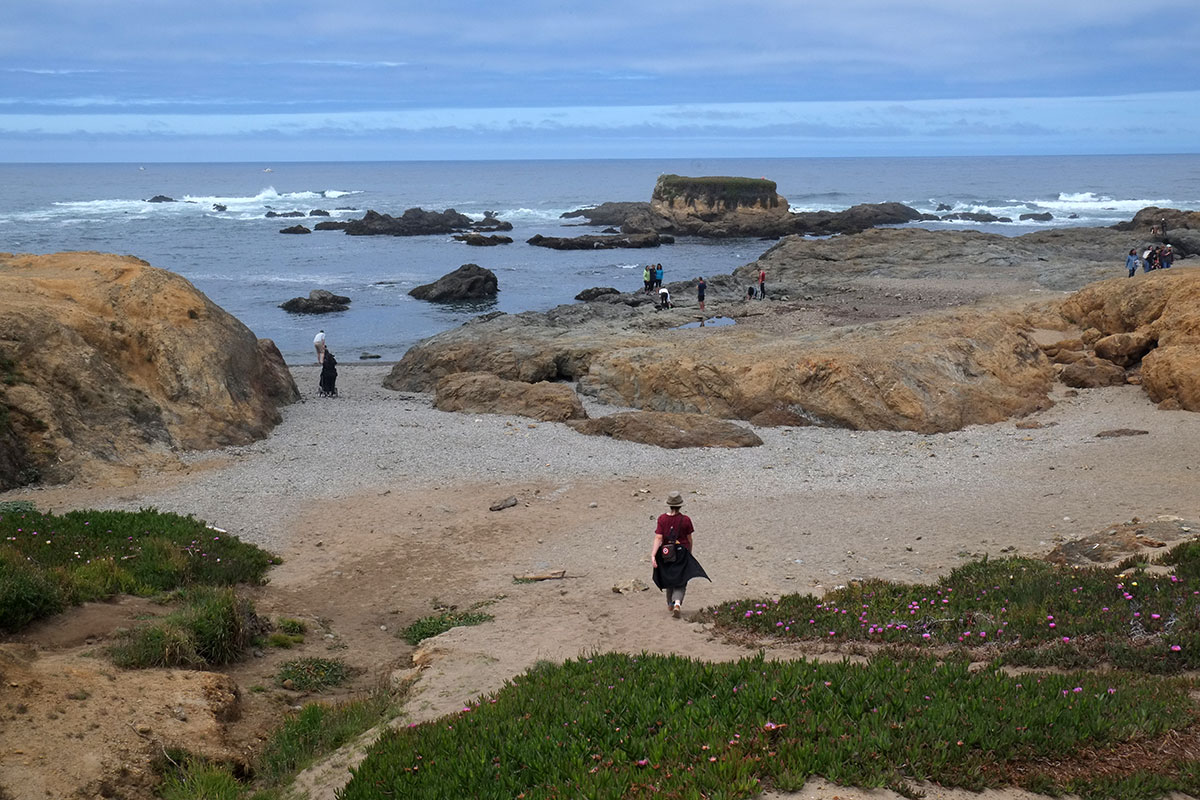
North of Mendocino we stayed in Ft. Bragg, a more normal small city which had a fishing and lumber-based economy. It could adopt the informal motto of Astoria – We Ain’t Quaint – but some of the remnants of that period are remarkable. There is the Glass Beach, which Greta has blogged about,dscf1816

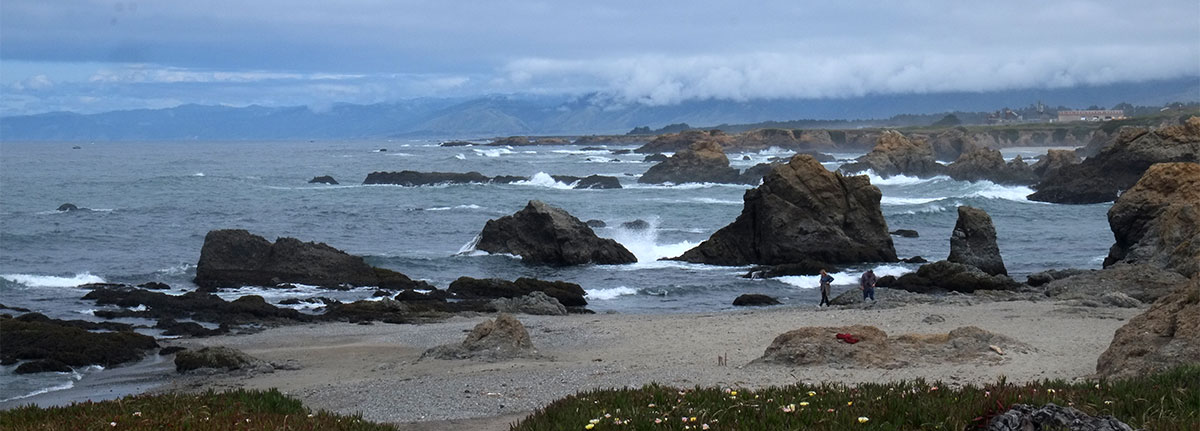
the views of the coastline,115-north-coast008dscf1817

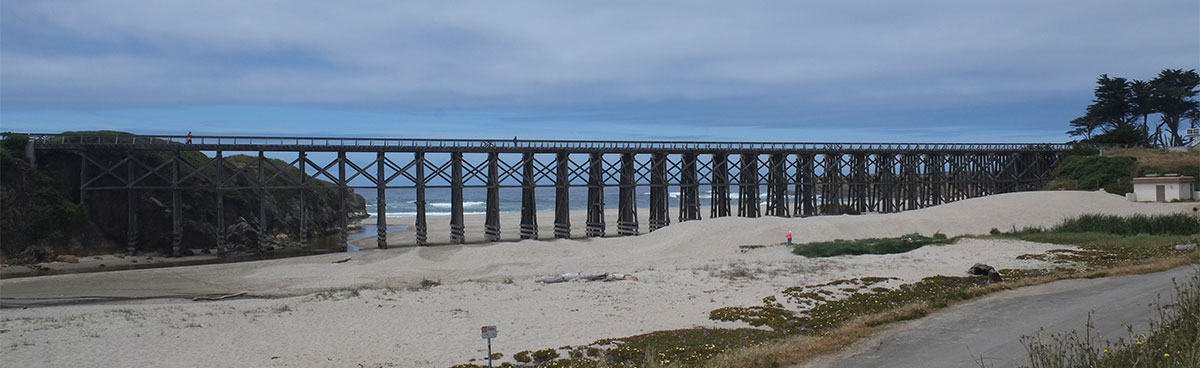
and the fabulous Pudding Creek Trestle, where a railroad spur ran right along the ocean.115-north-coast010dscf1826

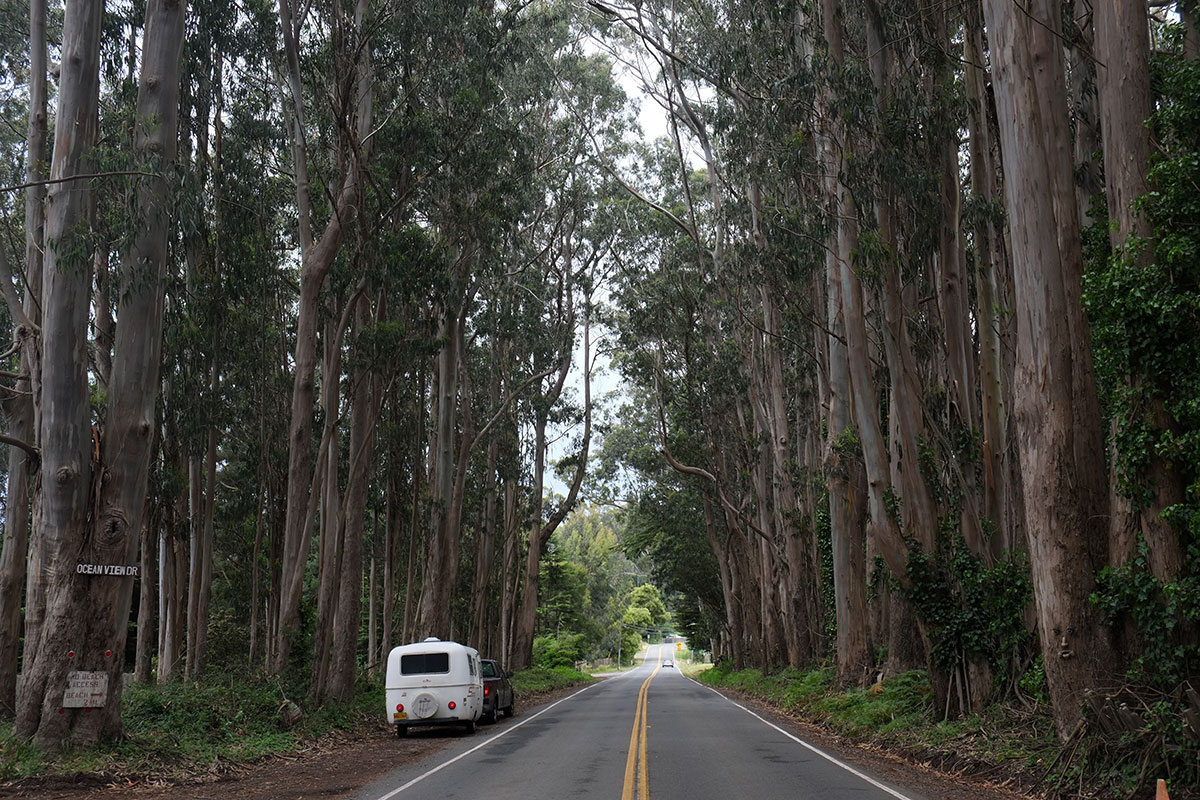
A day out from Oregon, we were feeling the loom of home, and while the landscape felt increasingly familiar, there were still signs that California is different. In the town of Inglenook we came across this allee of trees, but they were eucalyptus, not the firs or madrones which would have been normal for us.115-north-coast011dscf1831

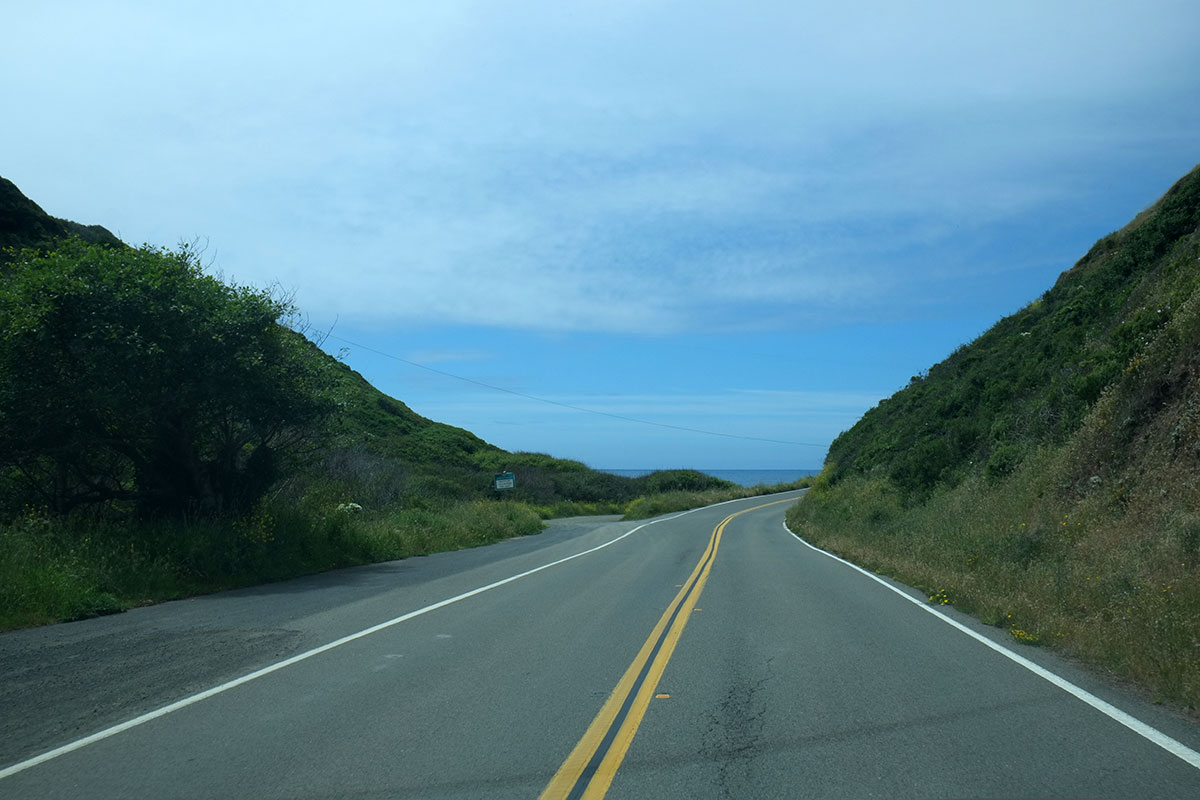
The highway continued this weaving in and out of farmland, forests, hills and coastal plain. The jogs in the road when we came to a creek were always amusing. We’d be driving along with a panoramic view of the ocean, then there would be a sharp right turn,dscf1834

and we’d be heading up the creek into the hills.dscf1835

A hairpin turn at the head of the creek, and we’d head back out to the ocean view. This shift in perspective repeated often, and each cycle took just a minute or two.dscf1836

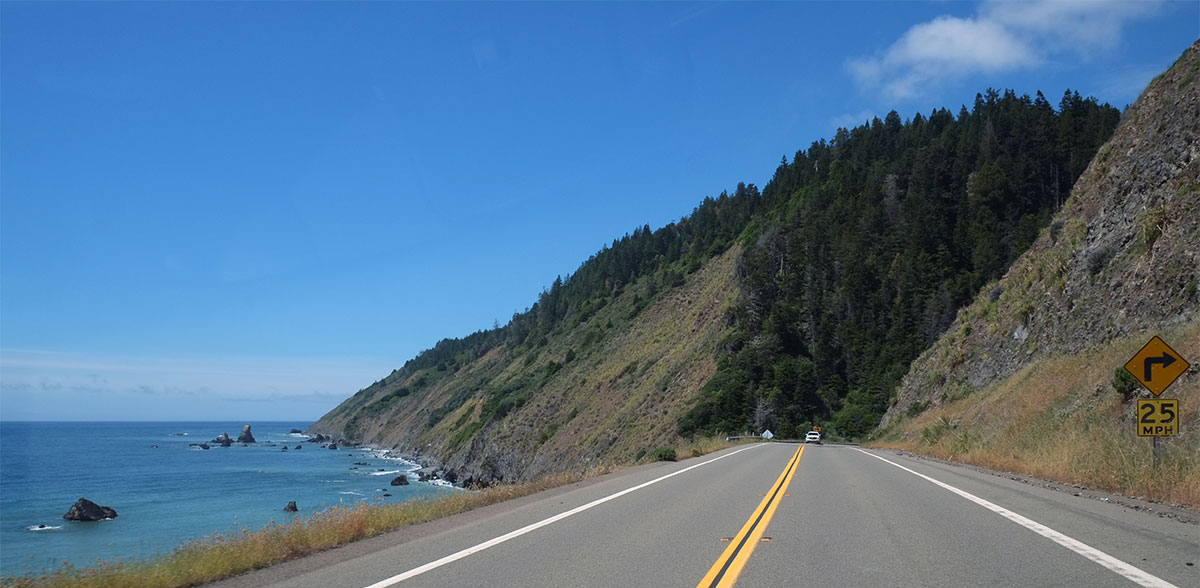
Finally, Highway 1 leaves the Pacific for good at Hardy. The Lost Coast, 100 miles of fairly inaccessible coastline, lay between us and Eureka. We followed the last 15 miles of Highway 1, which after many trips I’m convinced is the twistiest highway in the country. The trees closed in around us, and our weeks in the sunny Promised Land of California came to an end.dscf1837

Dan Rabin

As I’ve tried to pass on my hard-won wisdom to Greta over the past decade, certain insights and aphorisms have appeared repeatedly. Be aware of what is happening around you all the time. Always have three points of contact with the boat. How can this be explained by natural selection? Never put pineapple on pizza. But near the top of the list has been the warning, Be careful to whom you talk the first day of college, as you might be stuck with them for the rest of your life.

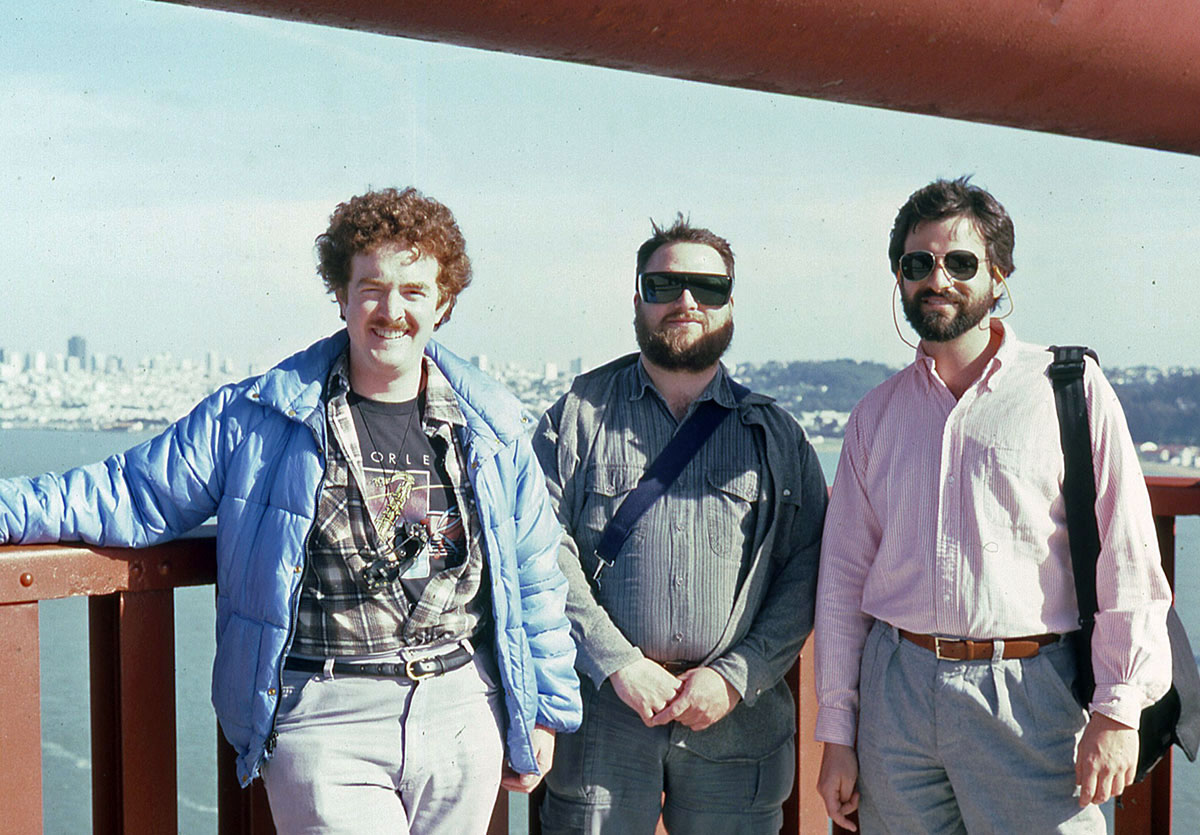
Dan, Bob and Mike

Dan, Bob and Mike

Dan Rabin is our prime example of this. Dan lived in a single next door to our suite in Hurlbut Hall freshman year. He was slight, youngish-seeming (he did turn out to be a year younger, having skipped a grade), from Silver Spring, MD. As I looked around his almost-bare room, two things jumped out at me. There was a rug on the floor which had a leaping tiger cub and said Daniel Eli, and there was a huge black and white city map on the wall. I didn’t recognize the city, so I looked more closely, and noticed that the map had been pieced together from many 14×17 sheets. It was a very detailed map, with blocks and streets clearly represented, and then I noticed it was hand-drawn in pencil. Dan explained that it was a city he had made up. I later found out that he hadn’t just doodled a map and it kept growing. He had recapitulated the process of metropolitan growth in the process of drawing the map. He started with the small colonial settlement on the natural harbor, which then expanded. In the 19th century, the railroad line came in, which shifted where the growth occurred, and various grids appeared, as new plats were added to the city, and outlying villages were subsumed. Finally, there was development of the 20th century street network, and the interstates came to the city, bringing the postwar suburban growth pattern with them.

This map is a good illustration of how Dan’s mind works – any seemingly casual remark is always backed-up by an incredible amount of research, knowledge and thought (as any reader of this blog knows from seeing Dan’s comments about my posts on Facebook, where he adds a lot of background and corrections to posts I’ve just tossed off.) For decades I’ve relied upon him to know more, and remember more, about a wide range of subjects – cities, music, science fiction, food, transit systems, science in general, computers, geography, politics, etc. – where I have gaps. In a dorm full of what I’ve characterized as “misfits and savants”, Dan was out there at the nerdy end of the spectrum. This was a semi-derisive term when we were young, but I’ve found that Greta and her friends are proud of this label, as it signifies people who have deeper concerns than whatever subjects are currently popular.

Dan arrived at college with an advanced background in science and math, especially computer science. He had been working as a summer intern at the National Bureau of Standards for years, getting an exposure to computers before it was on most people’s radar. Dan started as a physics major, but then like most of my friends, switched over to engineering. However, he took advantage of the range of subjects available, studying folklore and mythology, literature, etc. We talked about Tolkien in those early years (Dan was the only person I knew who actually wrote in Elvish), and he was part of our core group which became exposed to and then dove into the Grateful Dead freshman year. For physical activity, we walked around the Boston area looking at places, and he threw a mean Frisbee. This was when Dan began to really develop his obsession with strange rock music. A Beatles and Dylan fanatic when he was young, before long he was pulling out obscure Frank Zappa or Captain Beefheart albums to educate me. Eventually in the 80s he ran out of offbeat rock music to collect (at one point he remarked that he had twelve Gentle Giant albums, and he didn’t really like Gentle Giant), and he switched over to collecting strange jazz, of which there is a limitless supply.

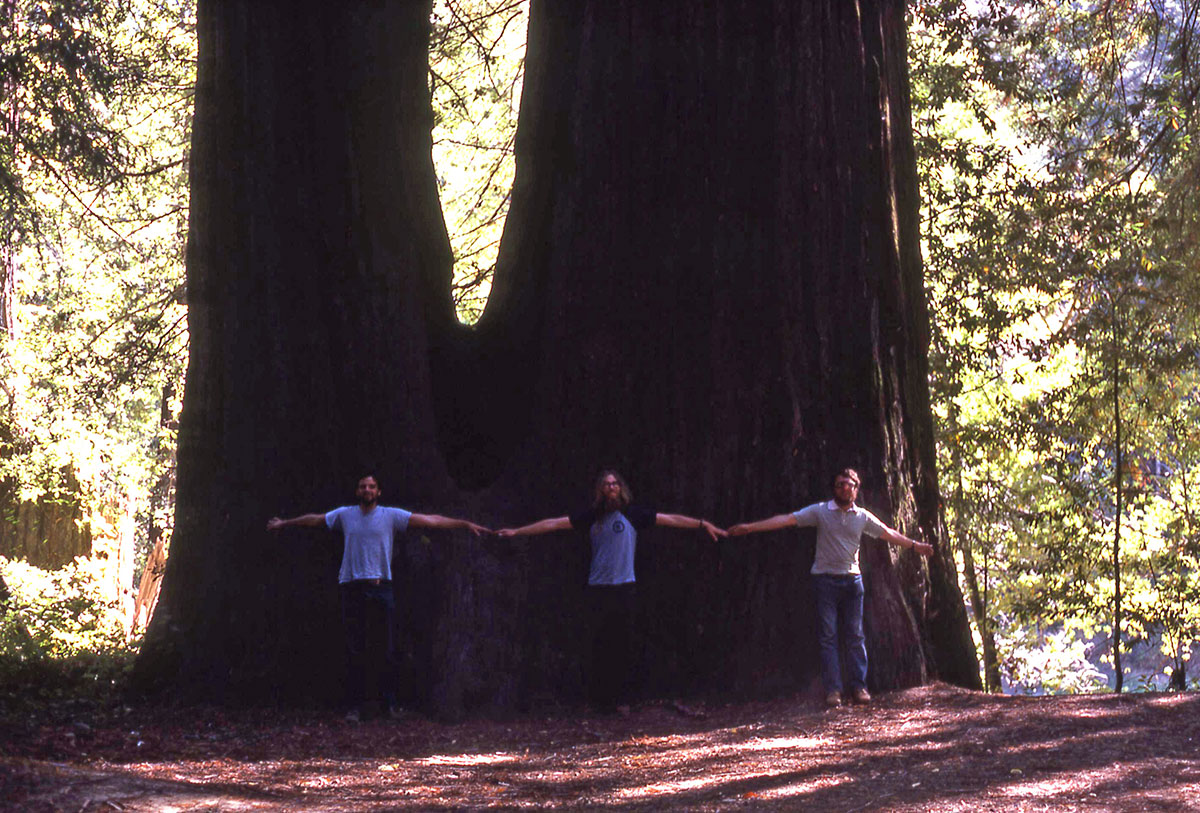
After college Dan, Norman and I drove cross country together, our first exposure to the West.redwood021

We returned to Boston, where Dan went to grad school at MIT for a couple of years in operations research. Living near each other in Somerville, we hung out a lot, and along with Jon Ehrman and John Wenzel, we taught ourselves to cook the new styles of Chinese food that had swept the country in the 70s. Dan stayed on in Boston after I moved to New York, working in the computer industry, and then moved to San Diego to be part of a research group at the university, doing what we now think of as artificial intelligence. After years of gloom and post-collegiate funk in Boston, Dan discovered life in the Promised Land (sunshine and great food!), and has spent most of his life there since. We would get together when business trips or family gatherings brought us cross-country.

Bob, Dan and me

Bob, Dan and me

One day, while Dan was working at Xerox PARC, it occurred to him that maybe he should take a computer class, which he’d never done. So he moved to New Haven to work on his PhD. I remember him gleefully contacting me the first day of fall term, after he had just taught a section of a large intro computer course, to tell me that he was teaching computer science at Yale, before he had actually ever taken a computer course himself..

I spent a year working in Norwalk in 1995, so once again Dan and I could hang out, eating New Haven pizza and taking excursions into the City and around southern New England (Dan was especially fond of the post-19th-century-industrial landscape of places like Taunton). But missing California while succumbing to the widespread loathing of New Haven, he headed back to the Bay Area, where he finished his dissertation and remained. Dan’s timing for graduate school was bad, as there were no academic positions in his specialty for a few years, so he continued working in the industry, with stints at Apple, Adobe and Google. (Dan has noted that unlike most of his colleagues in the industry, he procured a PhD; instead, they procured houses.)

Living on the West Coast, we’ve been able to see more of Dan in recent years, and an important part of this has been his friendship with Greta. (I think their bond was cemented six years ago, when in the middle of a conversation, Dan lapsed into a Monty Python reference – “No, try again ” – and Greta correctly replied “Australia?”) Dan is on her very short list of favorite grown-ups, probably because he exhibits so little of the conventional behavior and opinions you expect from most grown-ups, and he’s always treated her as a peer, not dismissed her as a little kid. He understands the types of ideas and places Greta will find interesting, and our ramblings now skew in that direction, as on this visit in 2010.IMG_2098

Dan has been gainfully unemployed in recent years, devoting his time to biking, photography, and bird-watching (usually combining these three), music, and restaurant-exploration with friends. Those of you who are Facebook friends with me undoubtedly have seen Dan’s many insightful and funny comments on my posts (indeed, not a few of you have mentioned that getting to read Dan’s comments is the main reason you’re friends with me). I think these comments take a significant amount of work, and I’m hoping that his Facebook oeuvre is being archived somewhere for future generations (but perhaps with a pun-filter.)

Greta and I were pretty burned out with trip planning by the time we got to the Bay Area, so we let Dan determine our agenda. He took us to some of his favorite places (such as the Lick Observatory), and a wide range of fabulous Asian restaurants around the Peninsula. I did my normal digression into chicken-walk photography around notable architecture, which works much better with Dan along – when he and Greta get tired of the architecture, they can sit and talk to each other about other things.DSCF1054

Just as Leon Krier often included a small sketch of James Stirling as part of the entourage in his renderings, I’ve noticed that in many of my architectural and city photos over the years, Dan appears in a corner of the picture,DSCF1660

as we have spent much of our time together in the past four decades wandering around looking at places and talking. The partnership works well, as our interests overlap quite a bit, but Dan brings a different perspective and knowledge far beyond mine on many aspects. (For examples, Dan has ridden every mile of the New York City subway system, but he has never lived in New York. Another time, he spent weeks of vacation visiting and analyzing the structure of Central Valley towns, after which he sent me a report.)

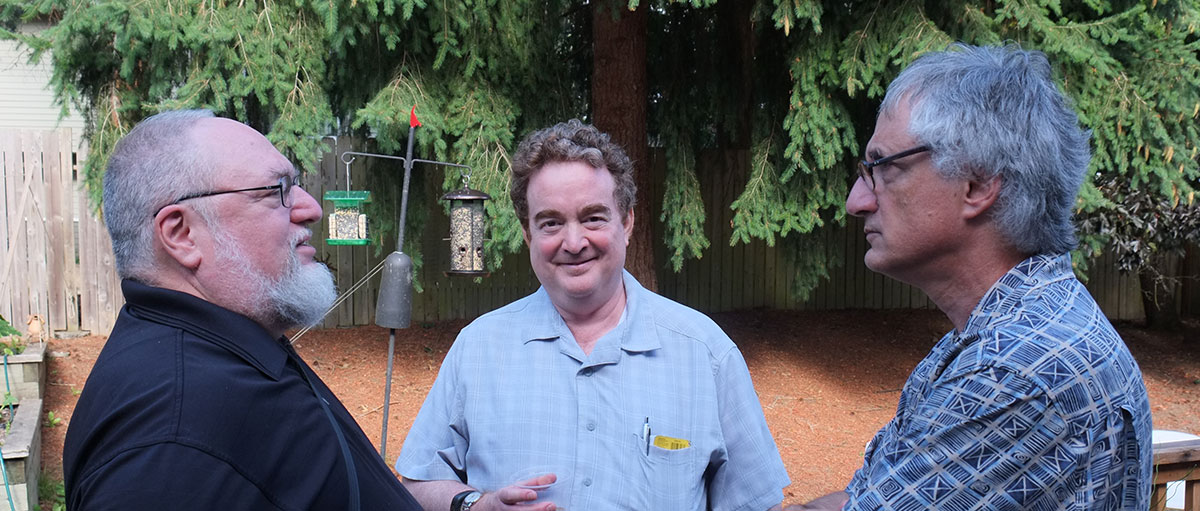
When we began this trip, I mentioned to Greta that I intended to track down a lot of my old friends, and she said cool, she wanted to meet more of them, as the ones she knew well (Dan, Bob and Mike, pictured at the top), were really interesting and entertaining. And as we neared California on this trip, trying to decide what parts of that vast state we had time to visit, Greta said she had only two absolute requirements: revisiting the Monterey Bay Aquarium, and seeing Dan. So it turns out that not only might you get stuck with the people you meet the first day in college, but your kids might also.

The East Bay

On most trips to northern California we spend our urban-wandering time in San Francisco itself, which always offers a combination of seeing cool new things and visiting old favorite neighborhoods and places. But in the last weeks of our trip, we realized that we had no real ambition to tackle the big city in our usual manner. As Jonathan Franzen had just written in an article in the New Yorker, about a trip to Antarctica: “As in the Magic Mountain, the early days of the expedition were long and memorable, the later ones more of an accelerating blur.”

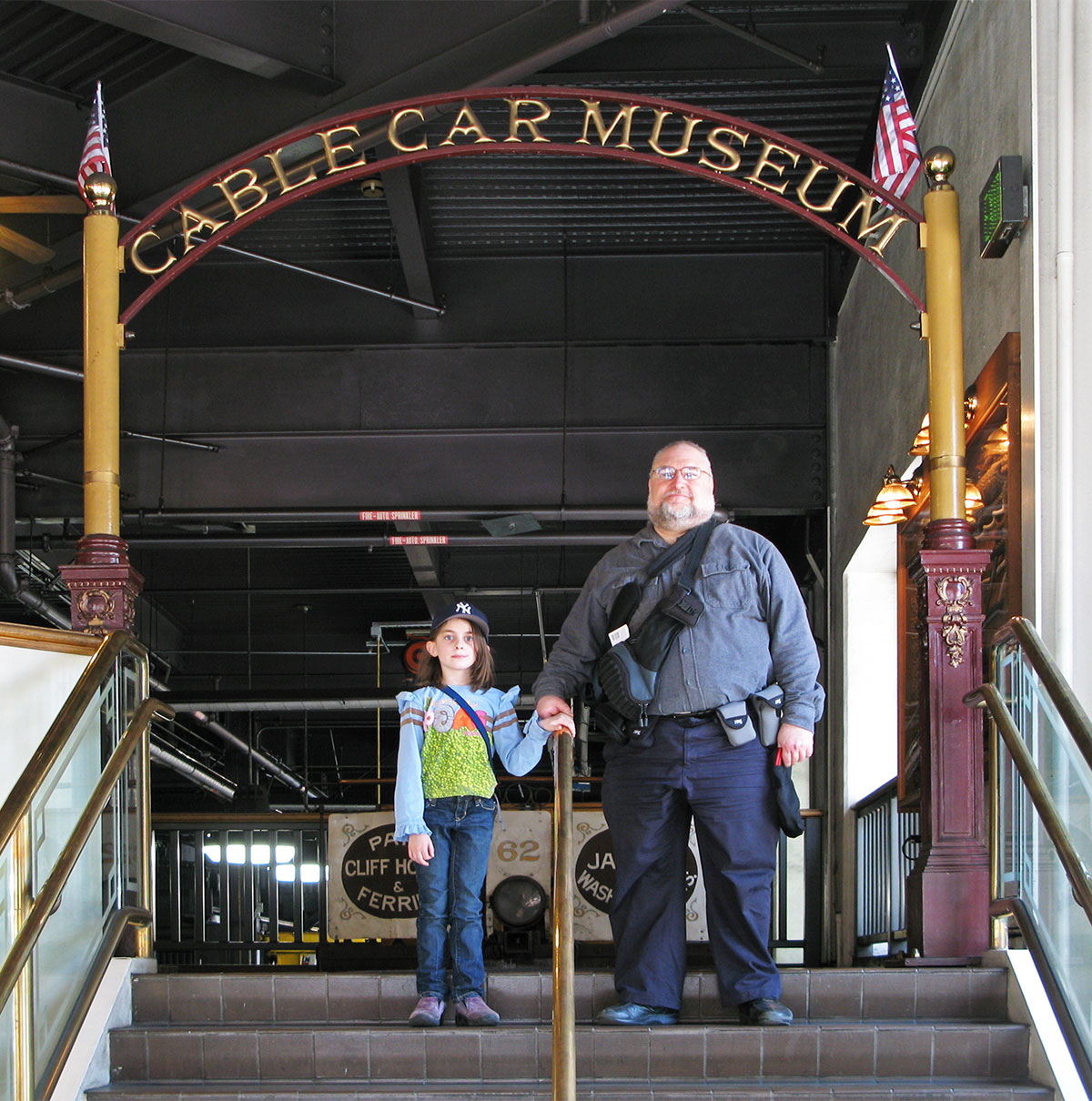
Just as we did in a few other places on this trip (such as New York), we shortchanged familiar places to which we could return fairly easily, and focussed on less accessible places to which we’d probably not return for a while. So we spent a few days in the city for specific reasons – seeing friends and a couple of museums, but no wandering up Russian Hill or cable car rides. But as we planned our last days before returning to Eugene, we decided we should stockpile a few more urban experiences. Incredibly, I realized that I probably hadn’t been to Oakland or Berkeley in 20 years, and so we headed off to the East Bay with Dan as our guide one Sunday morning.

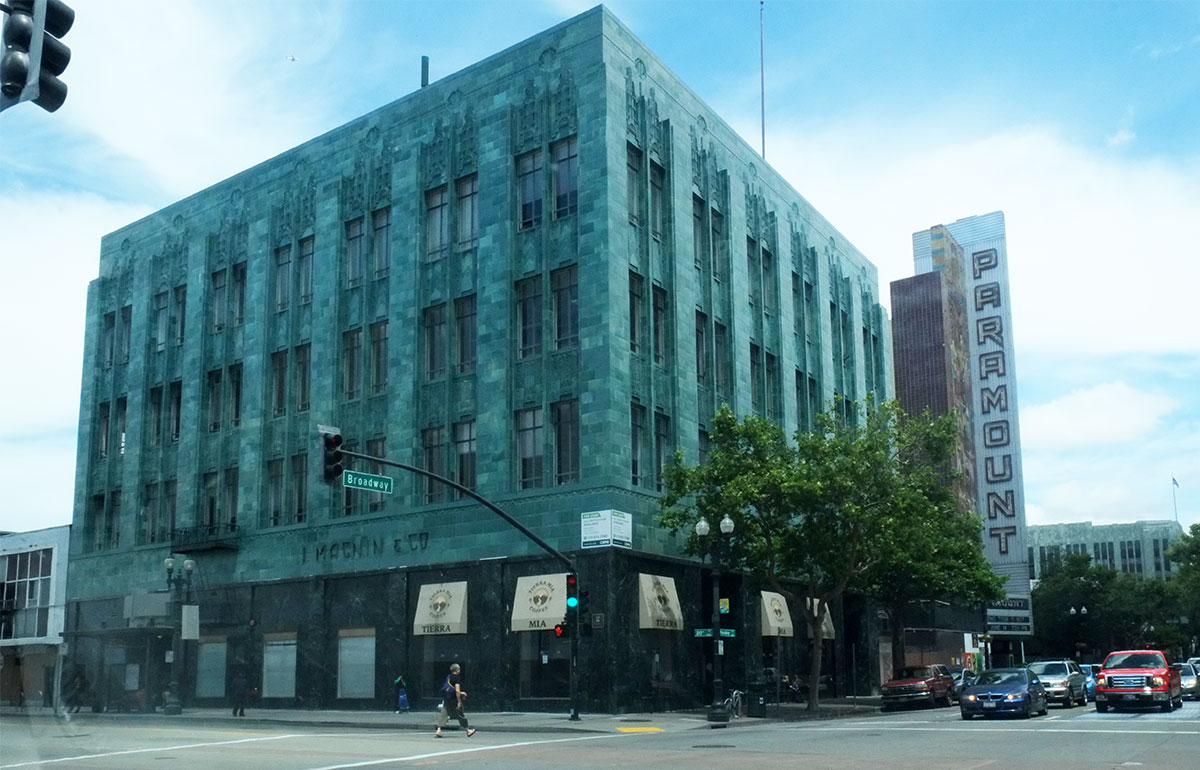
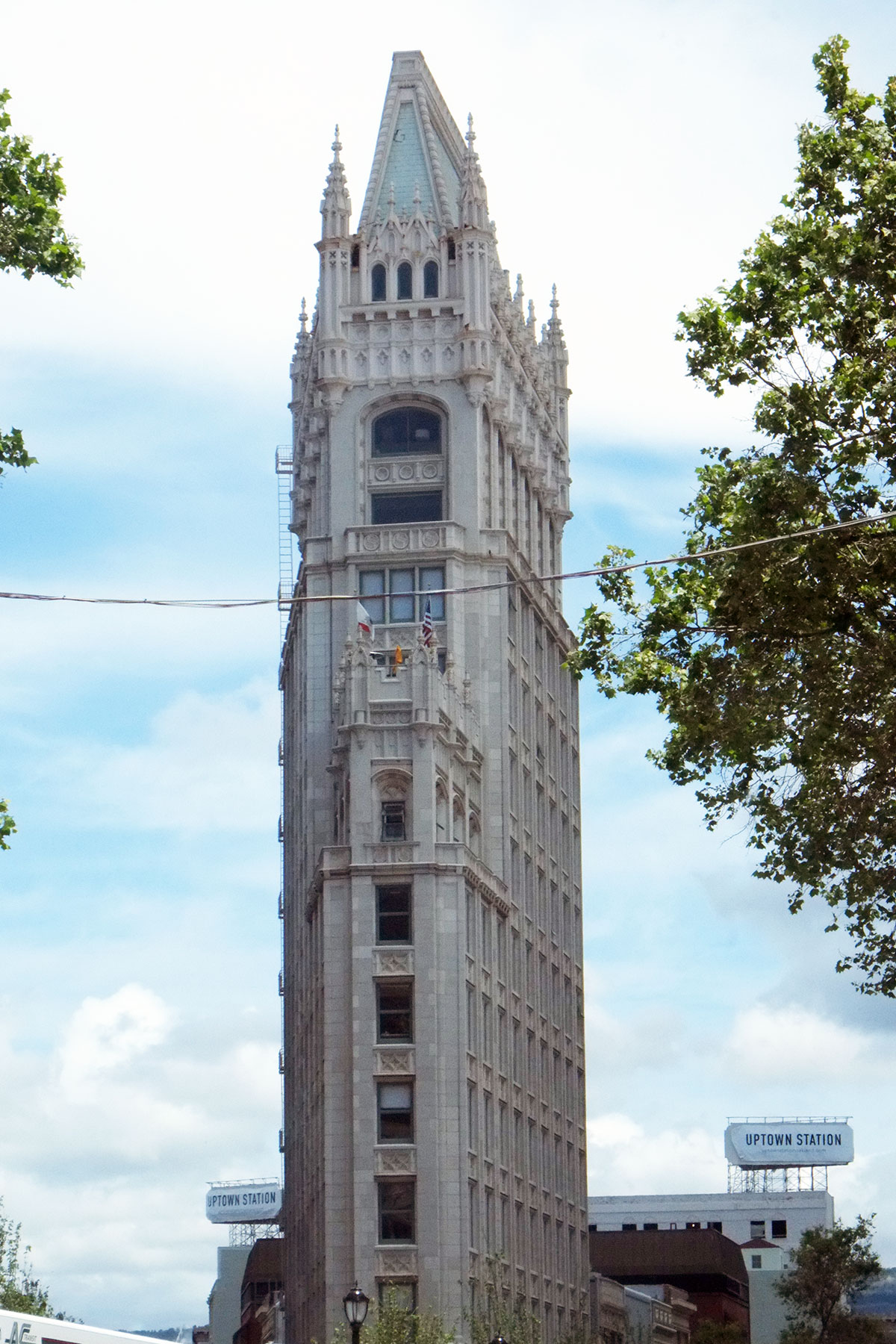
Oakland was a shock. I remember heading to meetings at the DOE offices in downtown Oakland in the mid-80s, and all of us wondering why they had been stuck in the backwater of Oakland. In the mid-90s I spent time looking at housing and neighborhoods there, but the downtown still seemed deserted and bereft. Now, it is bustling, even on a weekend. Like many other good cities which had a late 20th century period of disinvestment and decline, there wasn’t much economic impetus to destroy the older buildings (once the mania of urban renewal had passed), and so the great old stock remains, ready for renovation and reuse in the urban revival of the 21st century.dscf1578

dscf1574

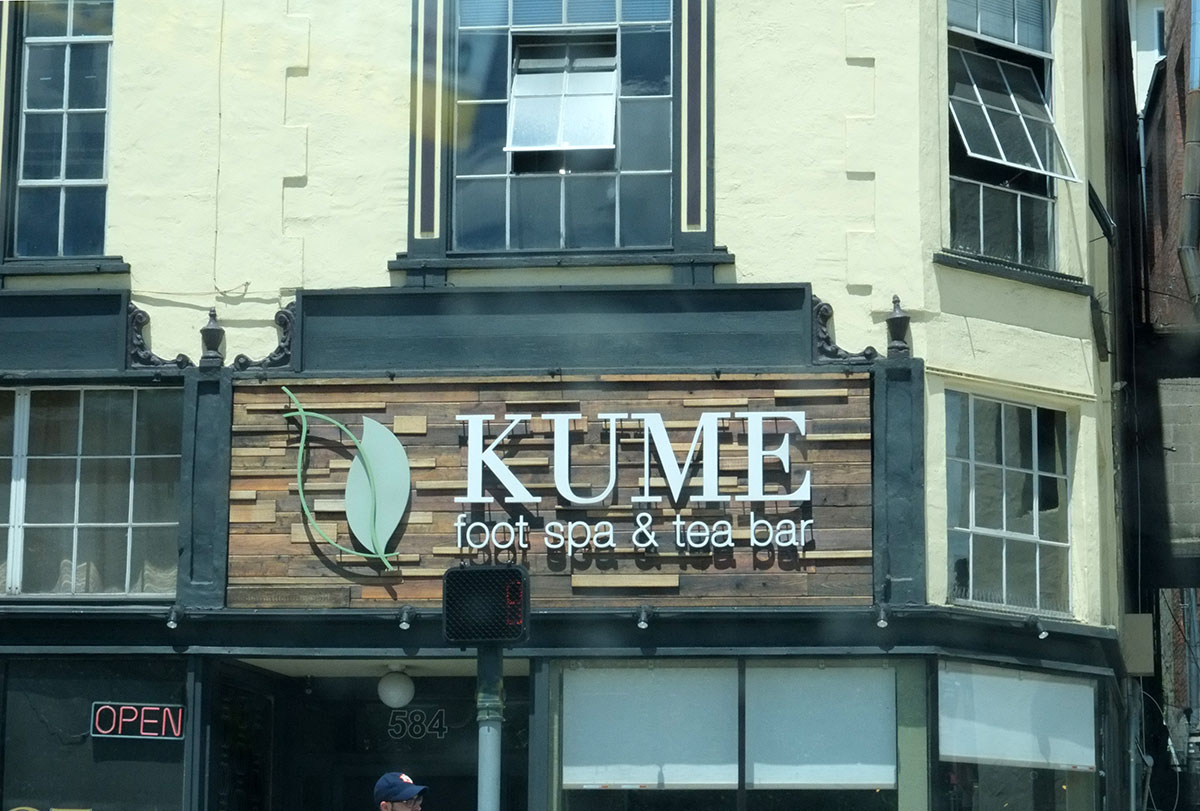
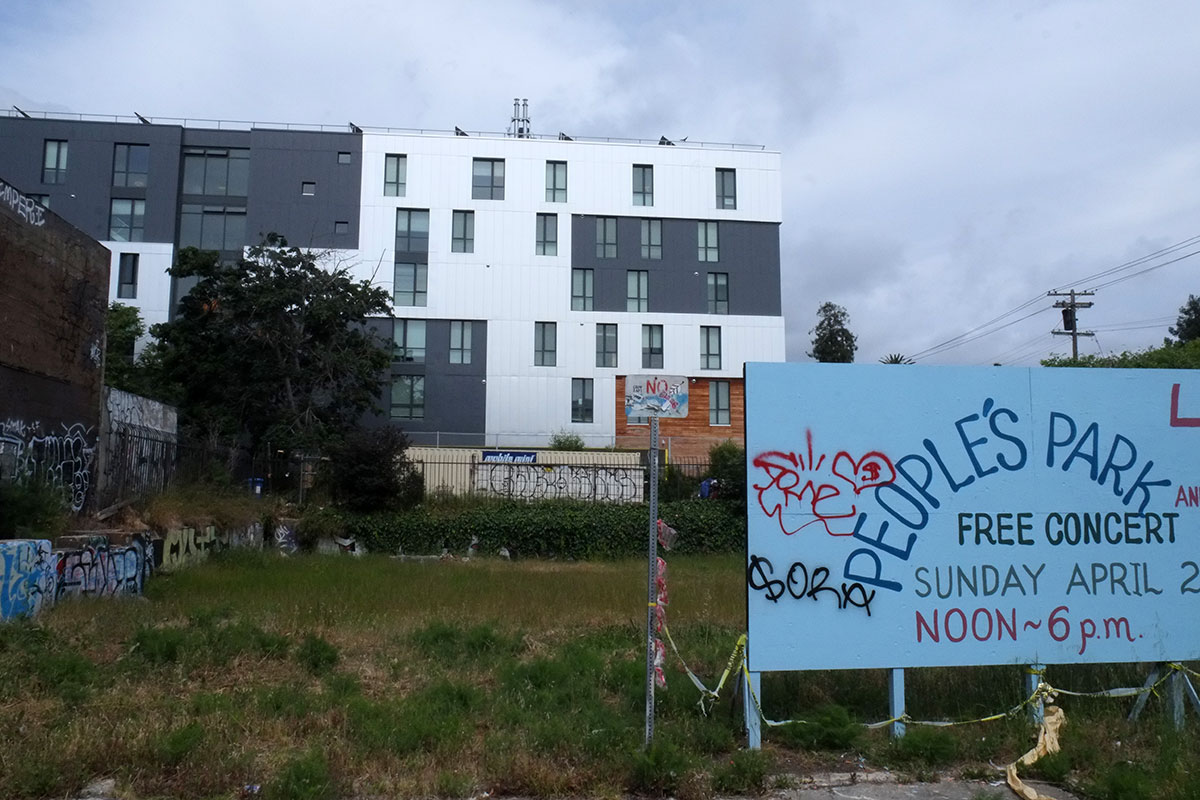
We saw evidence that at least part of this renaissance came from people and hipsters getting pushed out of San Francisco by the expense:dscf1568

I recognize my complete ignorance of the forces at play here – in a city where issues of gentrification and displacement are especially acute – and I apologize to my many friends in the area who could say more insightful things about what is going on. (One of the joys of blogging about a place like Biloxi is that no one else I know has ever been there, and so no one argues with me.) But just from the perspective of the built fabric, it was a pleasure to see a fine old city on the rebound, and a city which feels more like a normal mid-sized American city, in contrast to the sometimes precious and overly-touristed parts of San Francisco.

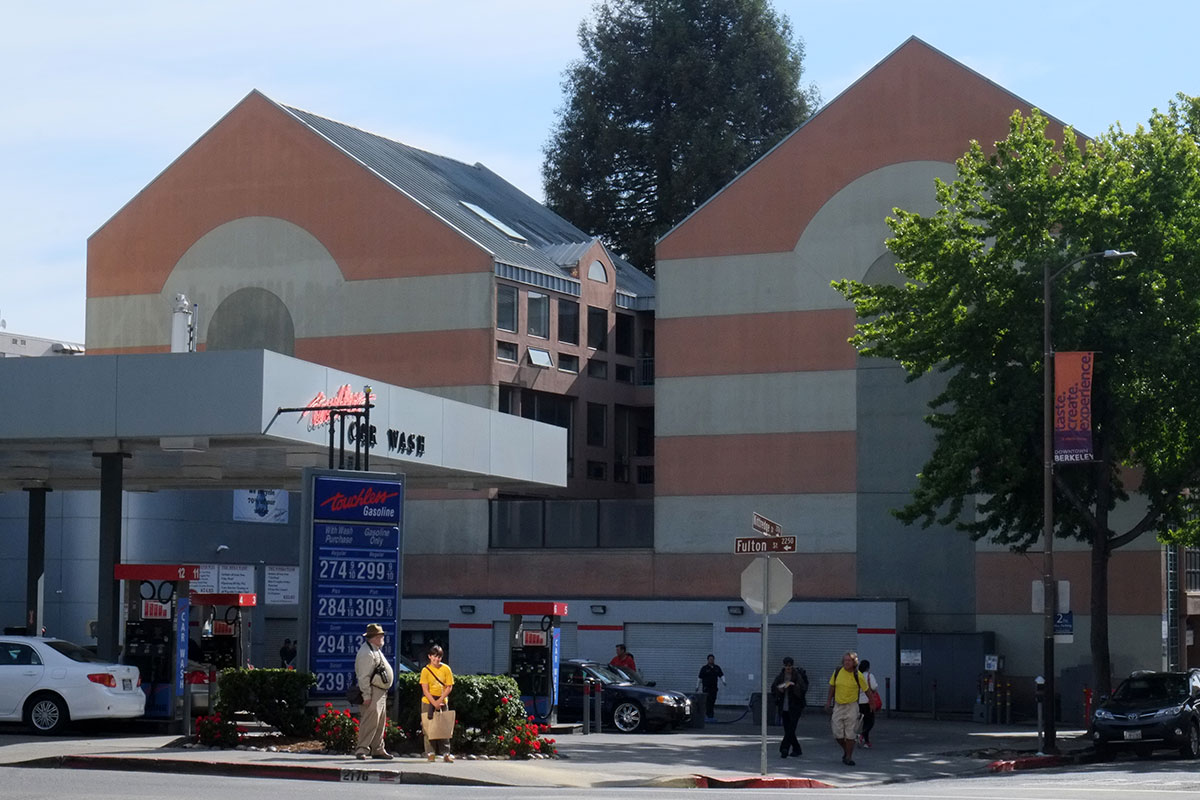
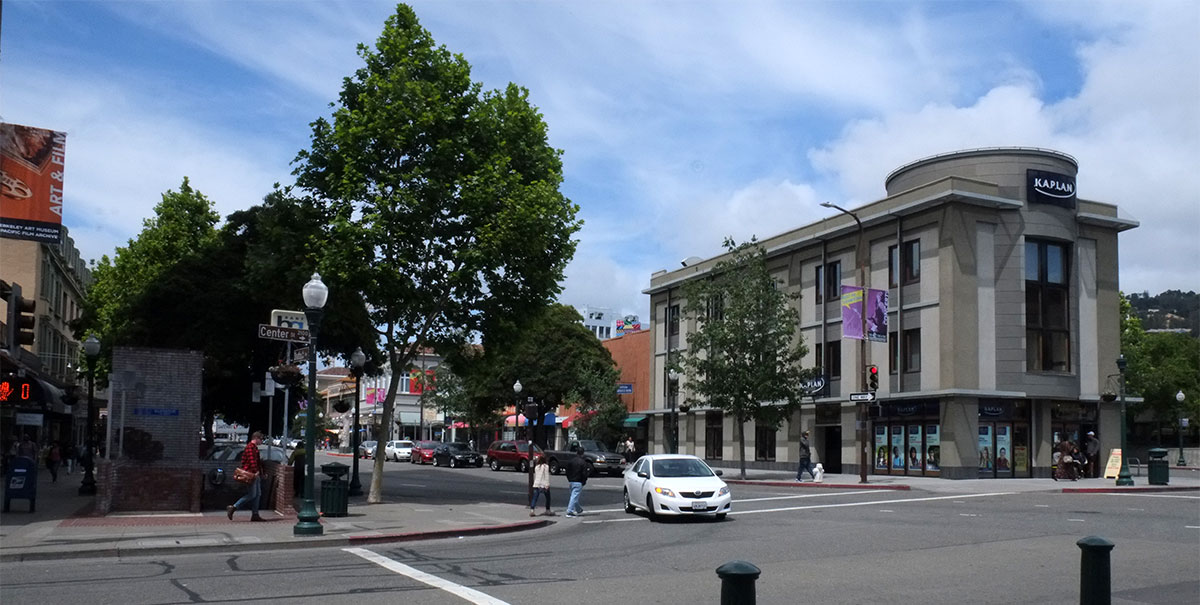
We moved on to Berkeley, which doesn’t seem to have physically changed much at all. I had forgotten that it too is a real city, not just a big college town, with a thriving commercial center as well as beautiful residential areas,dscf1586

and some strange remnants of bygone eras.dscf1611

dscf1617

Greta’s favorite part of the city (besides the beignets at Angeline’s) was the Daiso store, a Japanese discount store (which Dan couldn’t believe we were wasting time on) where she acquired a pile of good notebooks (at $1.50 per), and lots of excellent and cheap plastic trinkets. We have since learned that these stores also exist in Seattle, so we’re planning our next trip there.

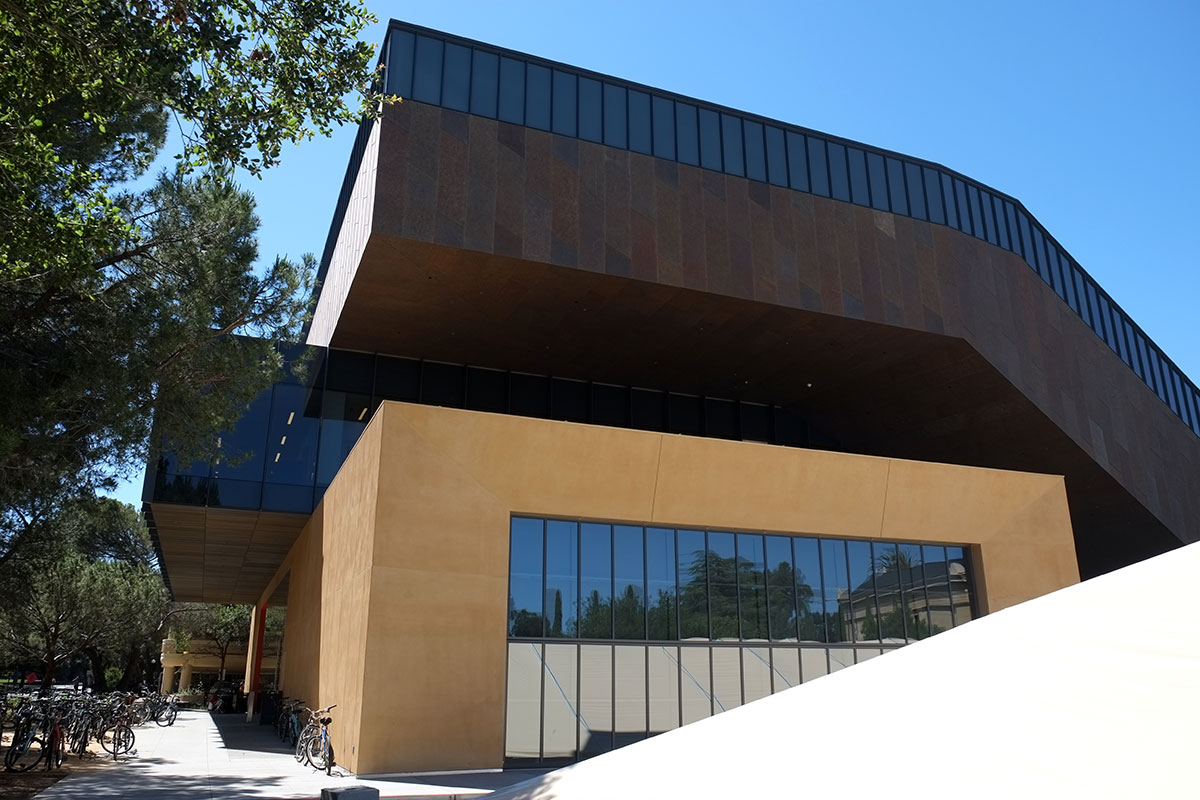
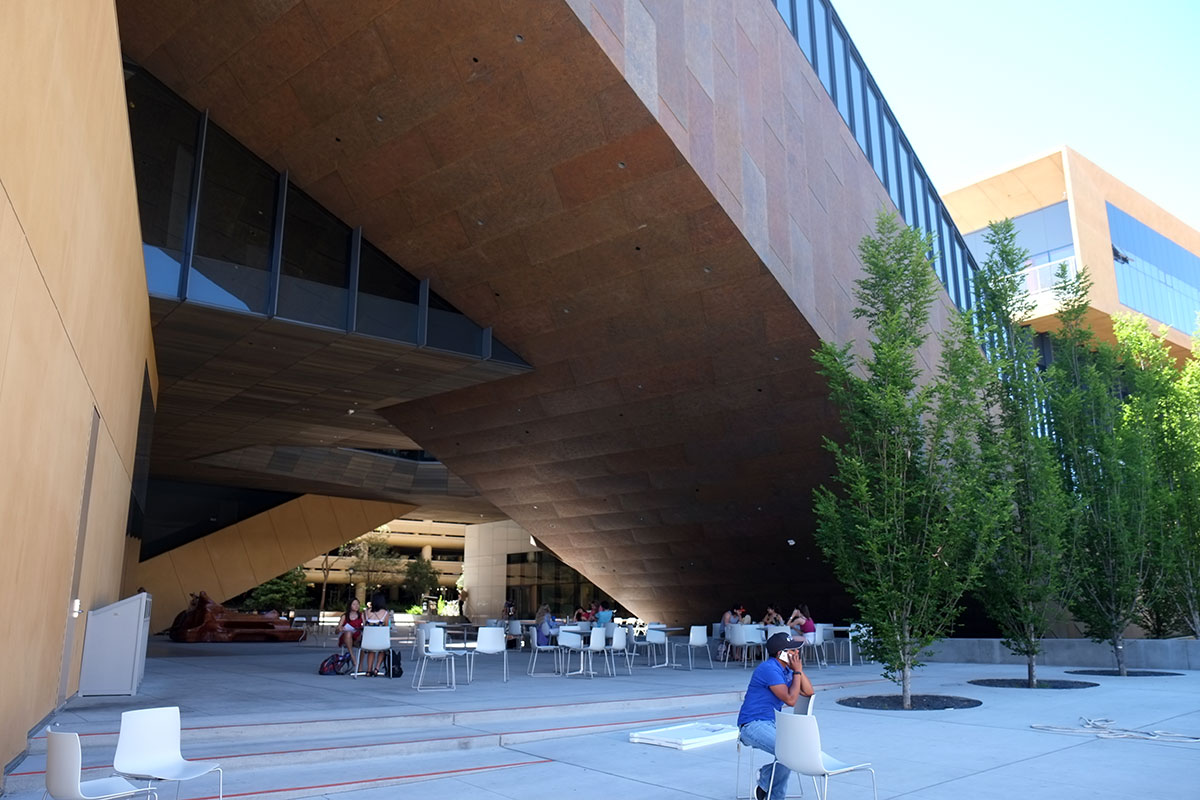
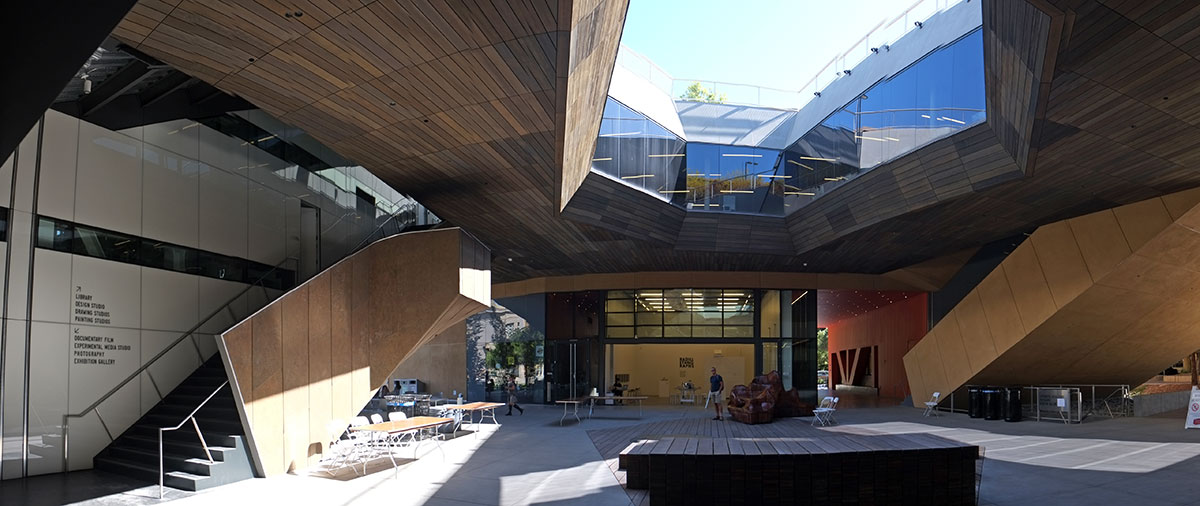
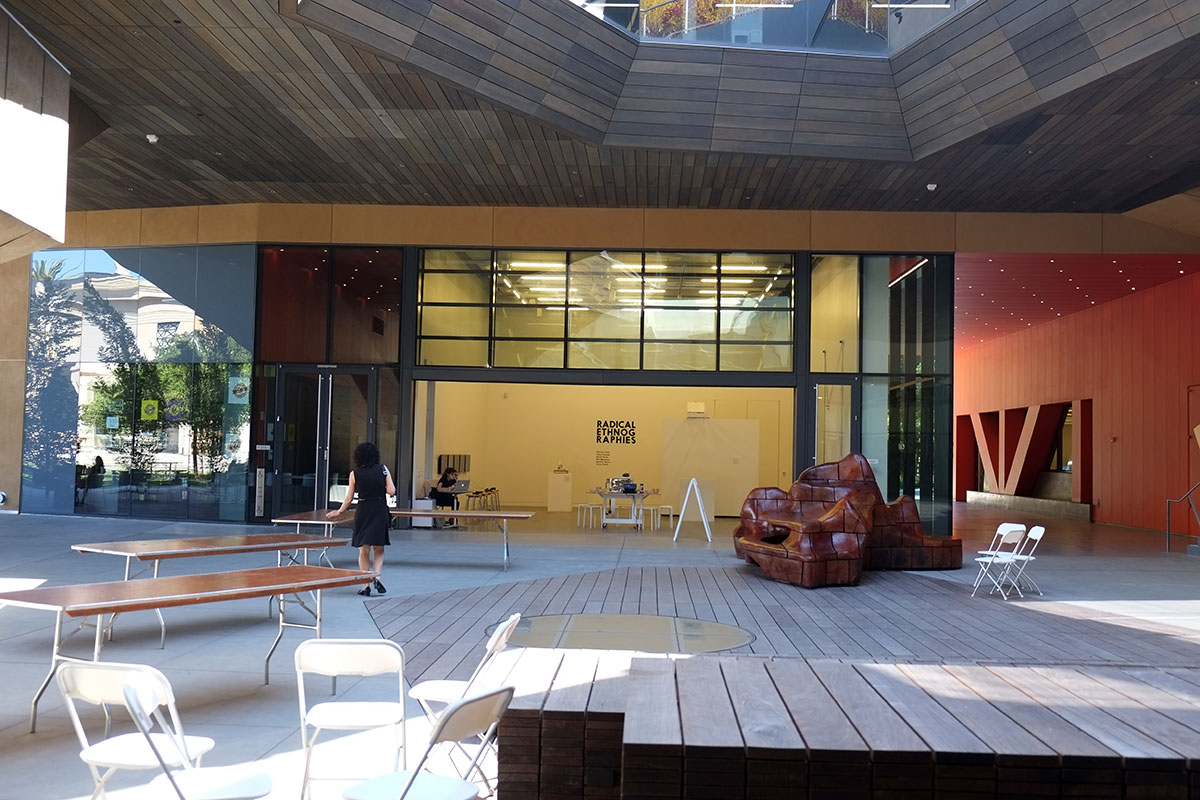
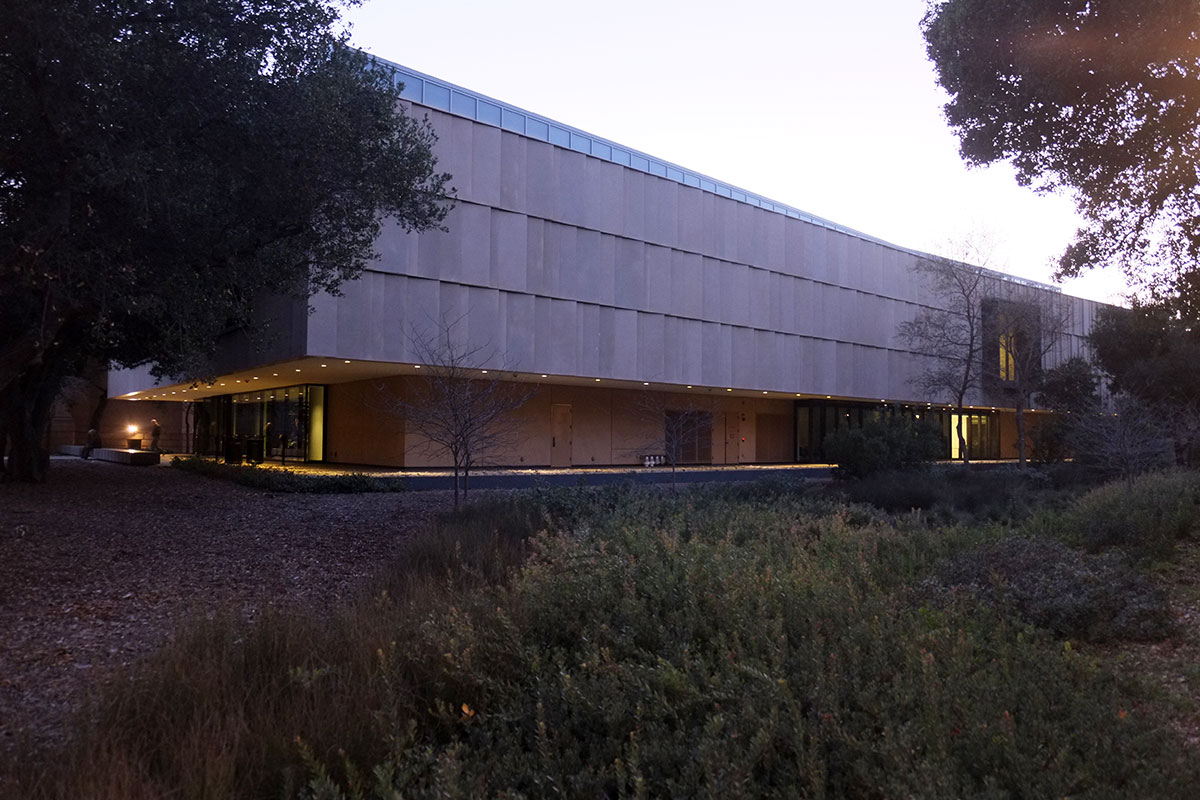
On the edge of the campus is the new home of BAMPFA, the Berkeley Art Museum and Pacific Film Archives, a renovation/addition to the 1930s printing plant, by Diller Scofidio Renfro. It is tres hip, but after seeing their art building at Stamford, we were fatigued with swoopy, gestural, probably dysfunctional buildings, so we skipped it.dscf1591

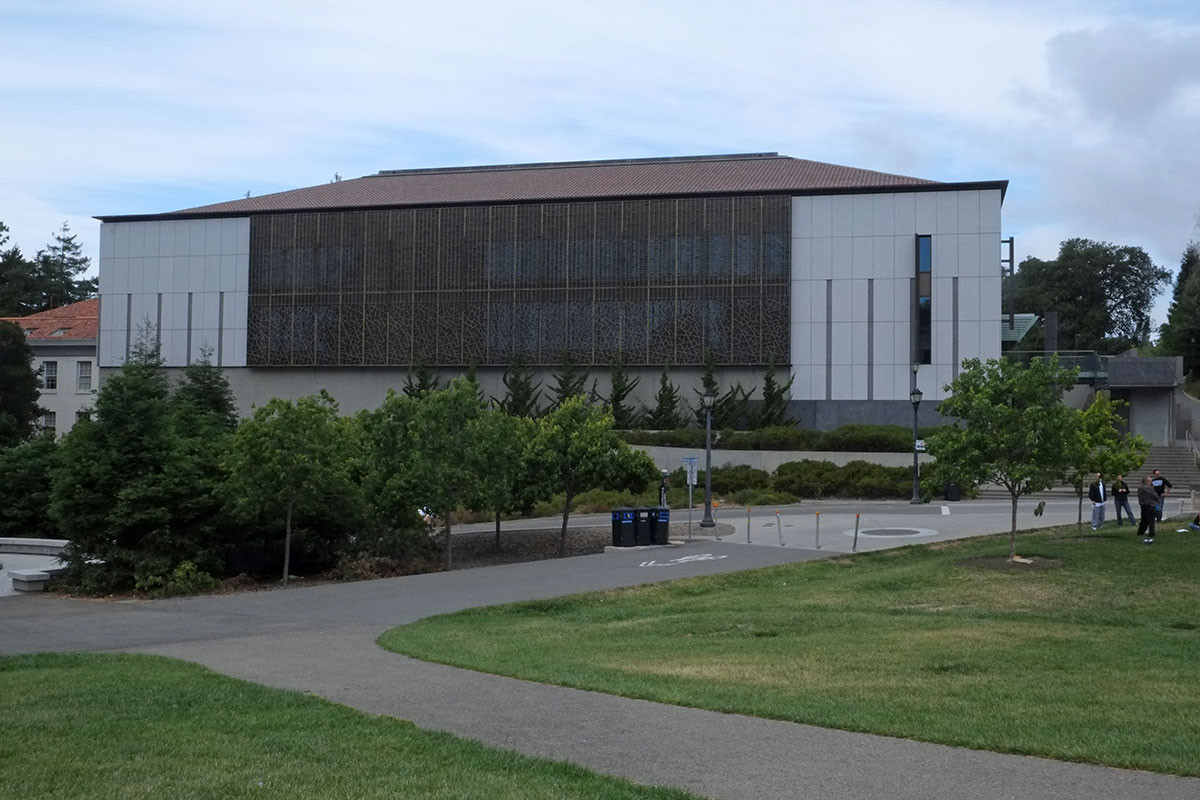
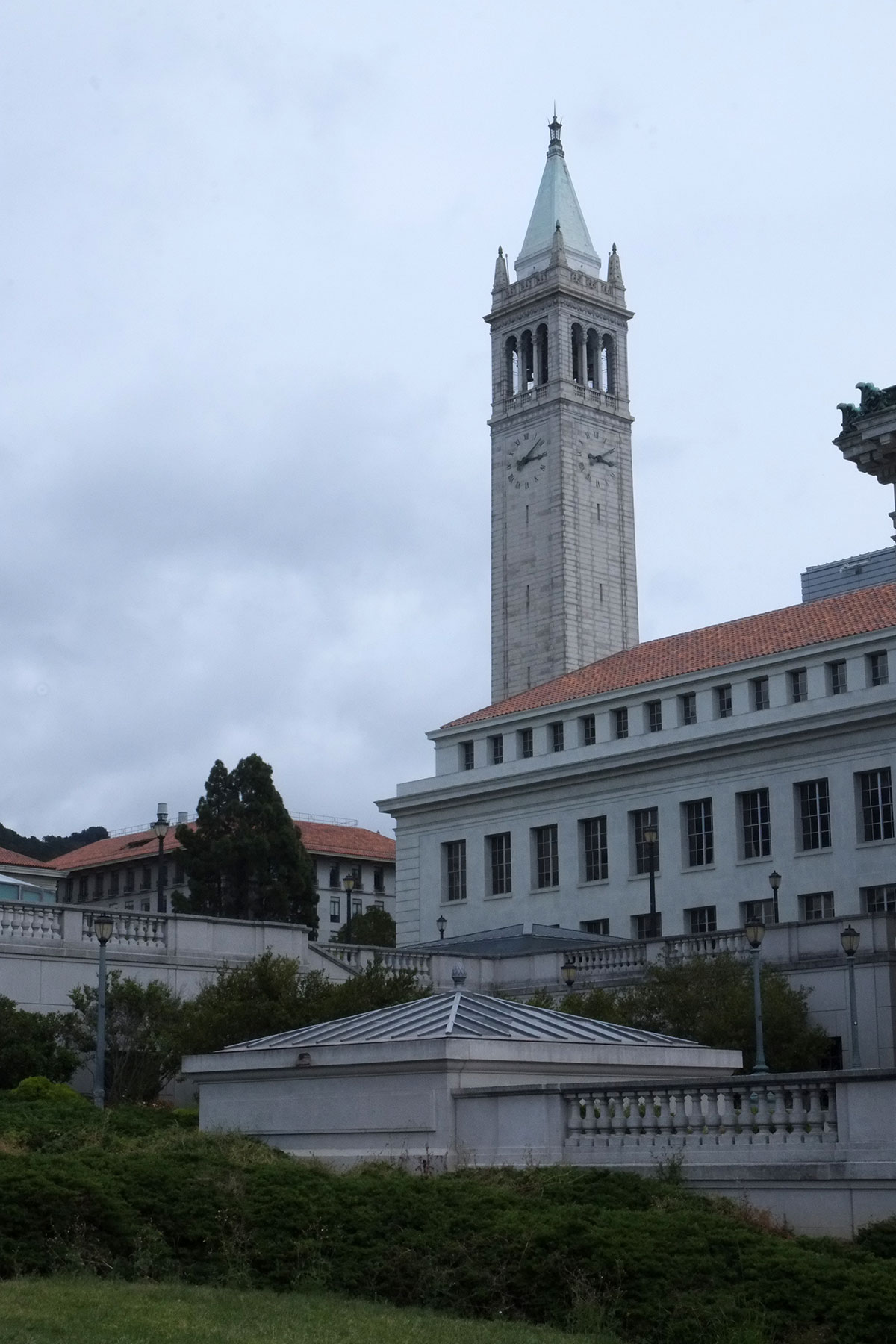
We wandered around the campus for a while, which I found less engaging than I had in the past. Probably because it was overcast and a Sunday, it all seemed rather drab and dead. In some ways the buildings reminded us of UT Austin – there was less uniformity in building style, but not much change in scale or materials – at some point they must have mandated that all new buildings should be of light masonry or concrete.dscf1595

The campus planning was too much to comprehend in a short visit – the original plans, by Olmsted and John Galen Howard, were later compromised by the typical slew of terrible 60s buildings, but recent campus planning has been sensitively done. But I was dragging a tired kid around, and I sensed she was nearing her limit on architecture for the year.  dscf1597

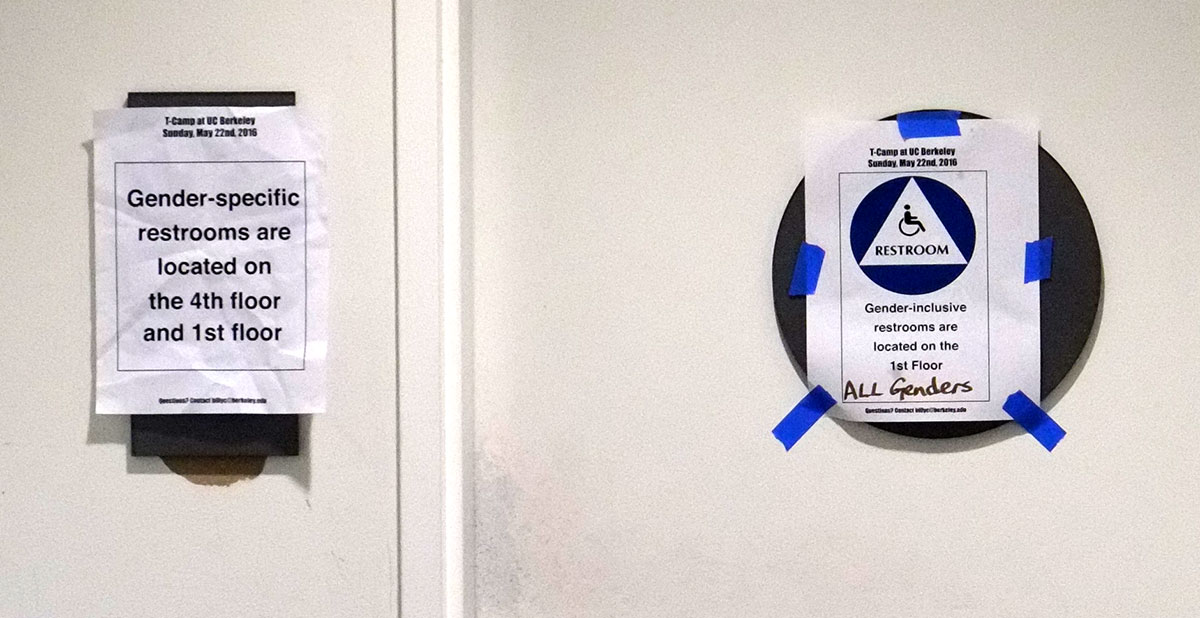
We had a true Berkeley moment in the student union, where a Filipino student association event was going on. The bathrooms around the corner had these temporary signs posted, which confused the hell out of everyone who read them. People hesitated, then picked a door, in a post-heteronormative version of The Lady or the Tiger. Men who walked into one room mainly full of women immediately backed out and went into the next room. Women who walked into a room to find men standing at urinals exited quickly, and many of them were so nonplussed that they gave up on going to the bathroom altogether.dscf1600

We went by Maybeck’s great Christian Science Church, but didn’t time it right to go inside.114-east-bay-002dscf1621

dscf1637

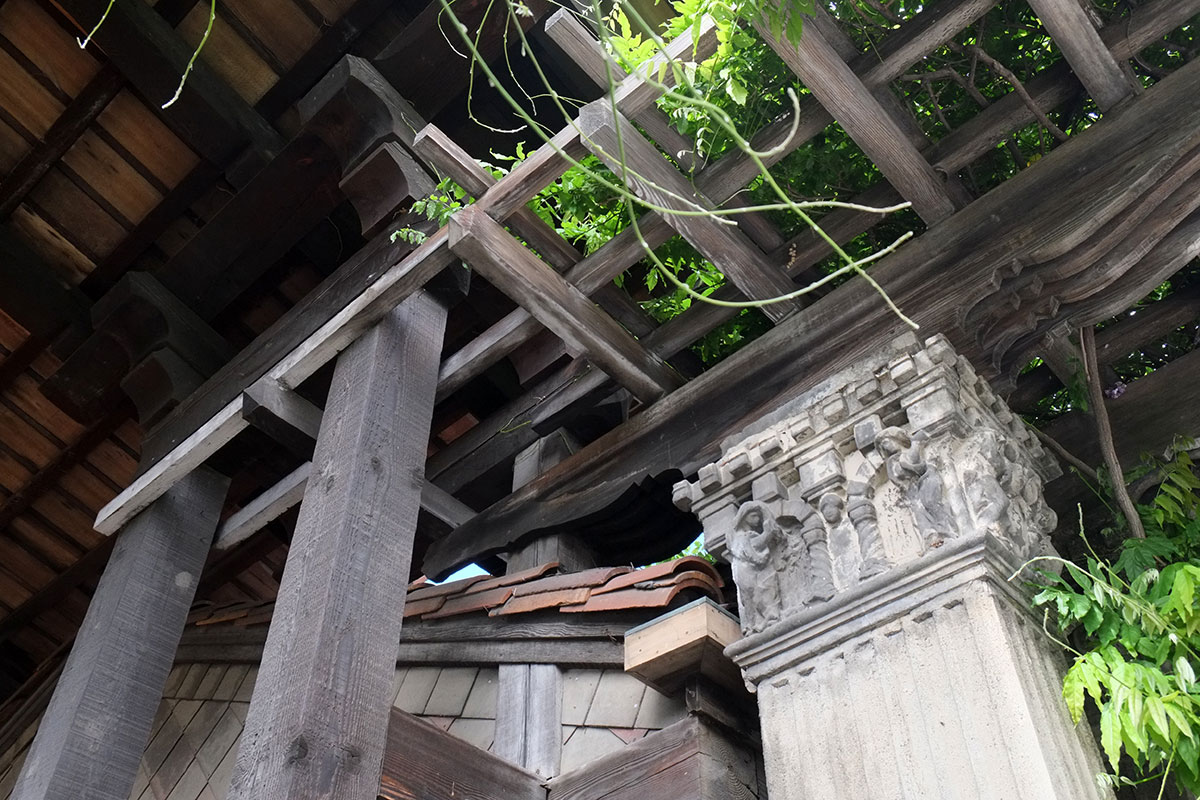
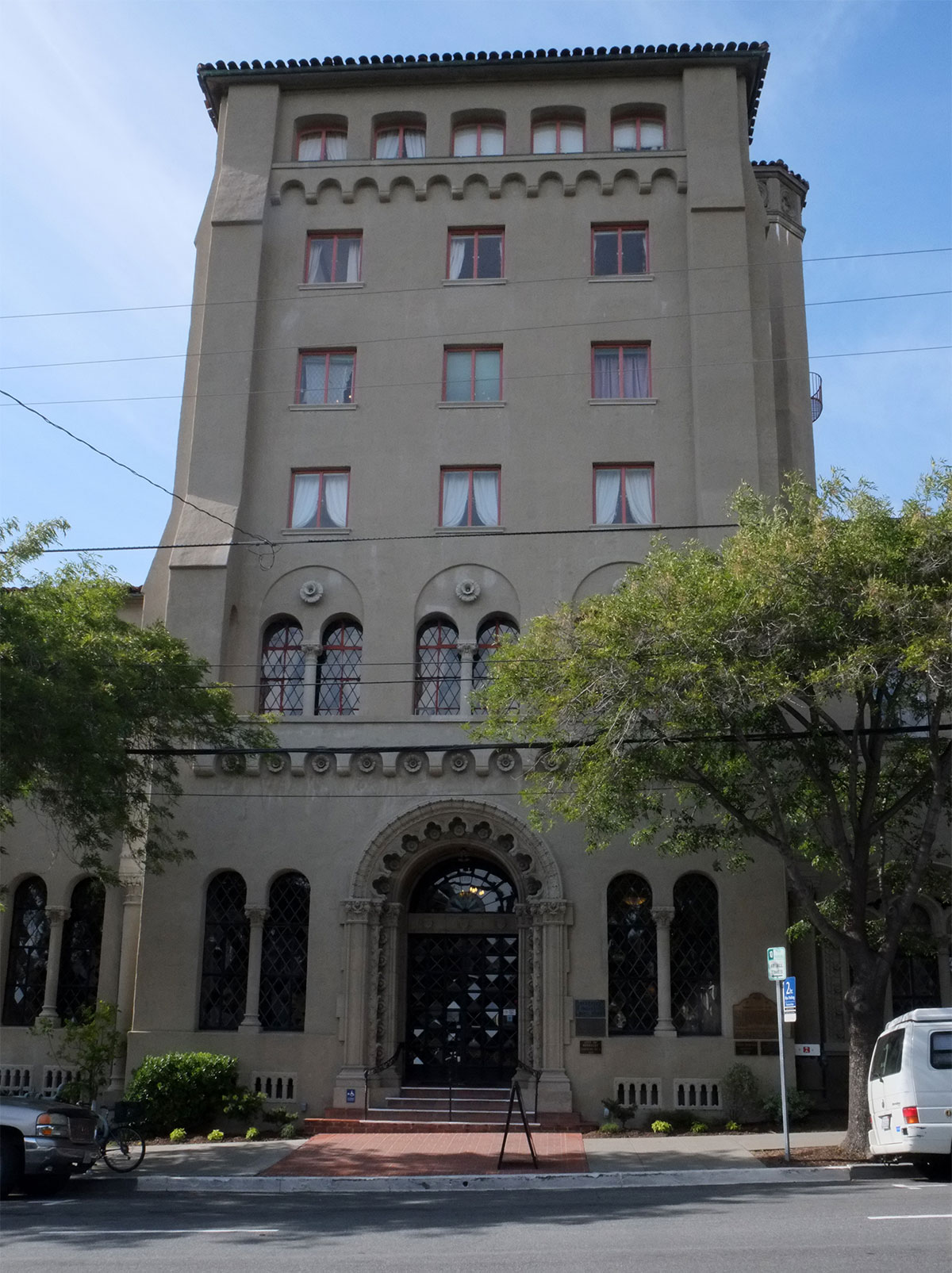
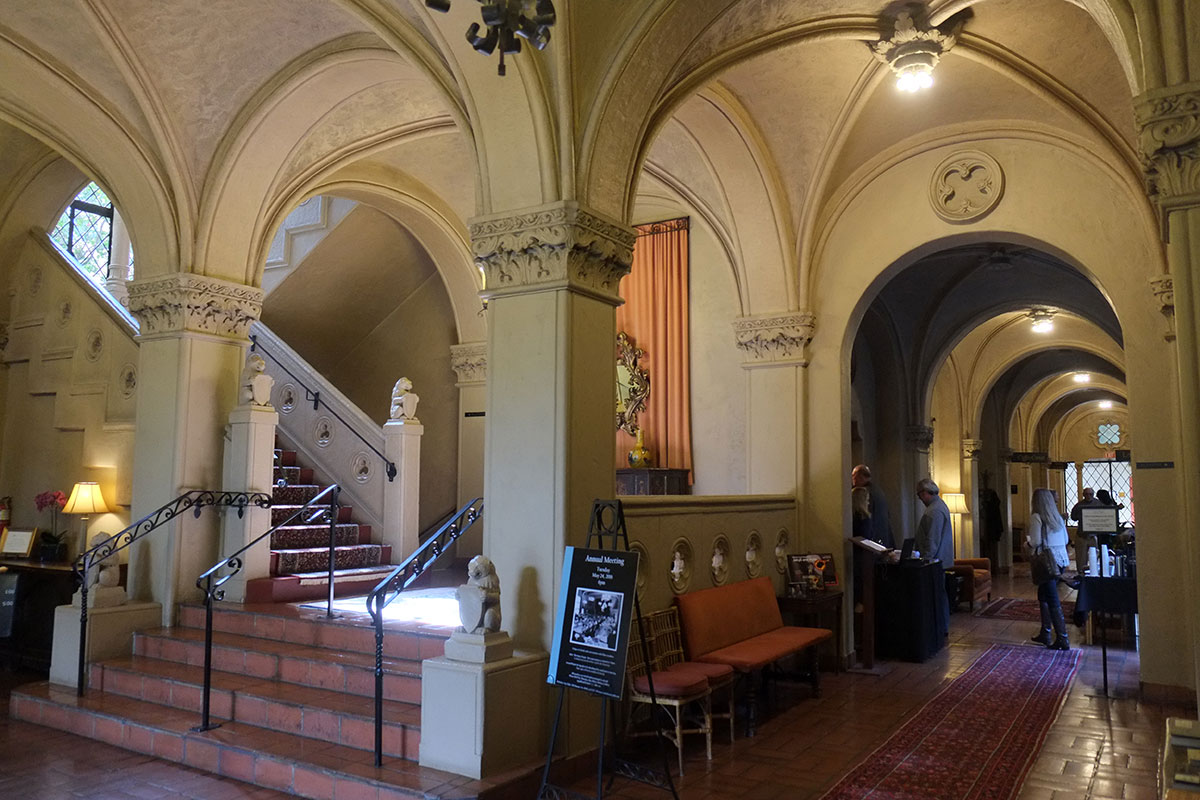
However, we made it into Julia Morgan’s Berkeley Women’s City Club, a not very big building which still manages to be grand.dscf1653

114-east-bay-003dscf1644

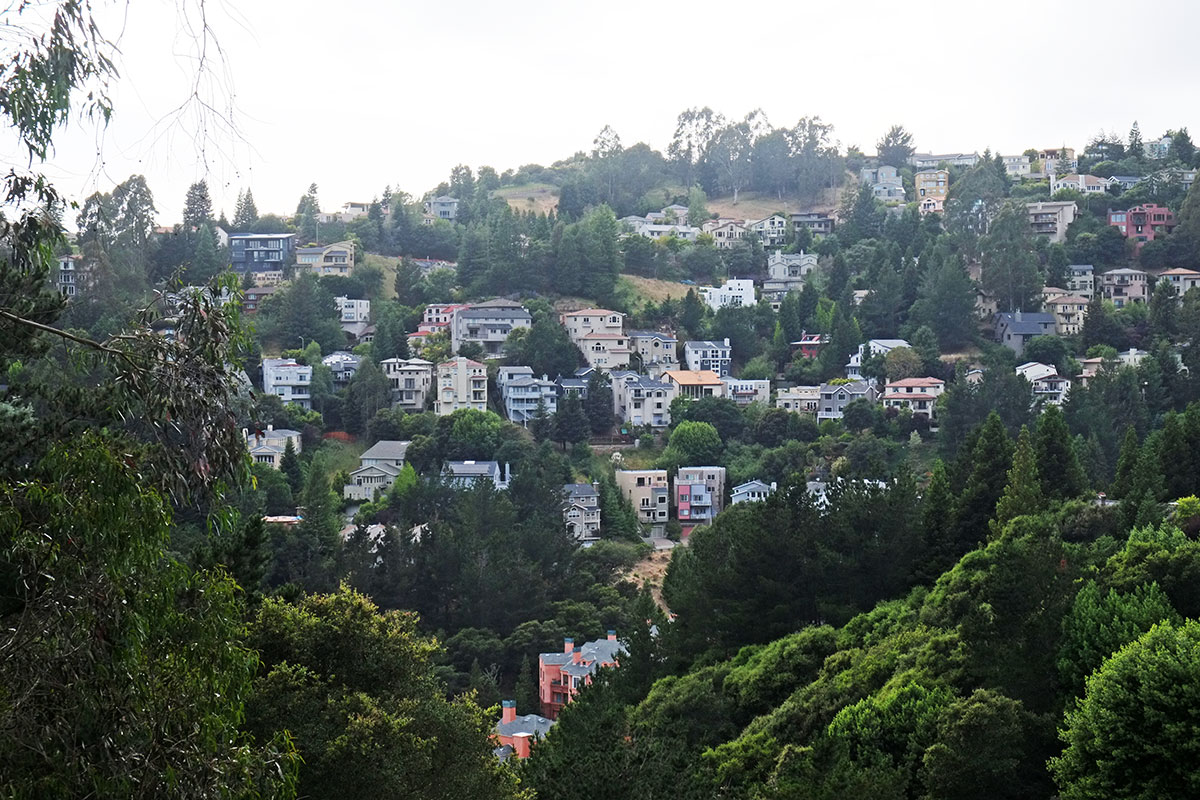
We took advantage of having Dan as our guide, and drove up the winding streets into the hills, seeing both intimate lanes and panoramic views.114-east-bay-004dscf1664

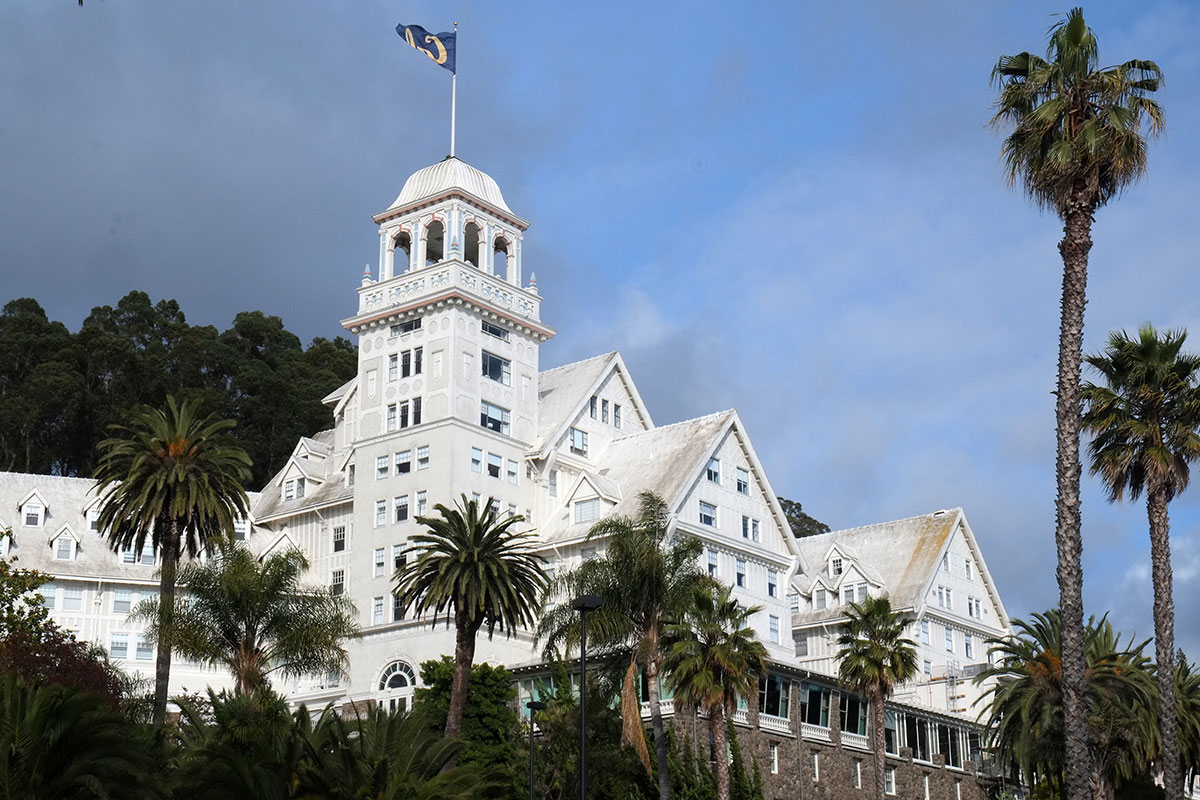
We wound past the fabulous Claremont Hotel,114-east-bay-005dscf1678

and drove through the area rebuilt after the 1991 firestorm, which destroyed almost 3000 houses and killed 25 people. It has not been rebuilt with any great architectural style, and beyond the human suffering, it’s sad that everything is now so uniform.dscf1687

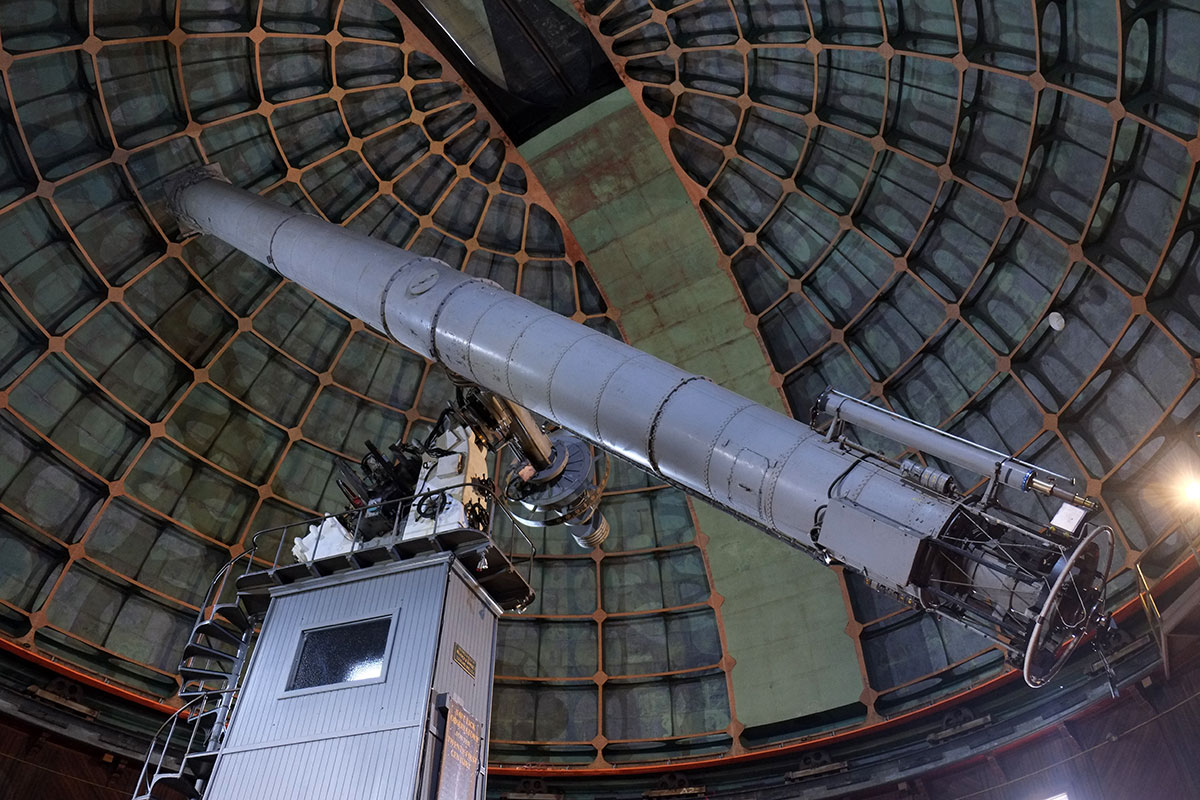
On a different day we had driven with Dan to one of his favorite places, the Lick Observatory on top of Mt. Hamilton, built in the 1880s east of San Jose. There are a few giant telescopes here from different eras,113-san-jose003dscf1390

and we were able to see the original refracting telescope, the largest in the world when it was erected.113-san-jose002dscf1381

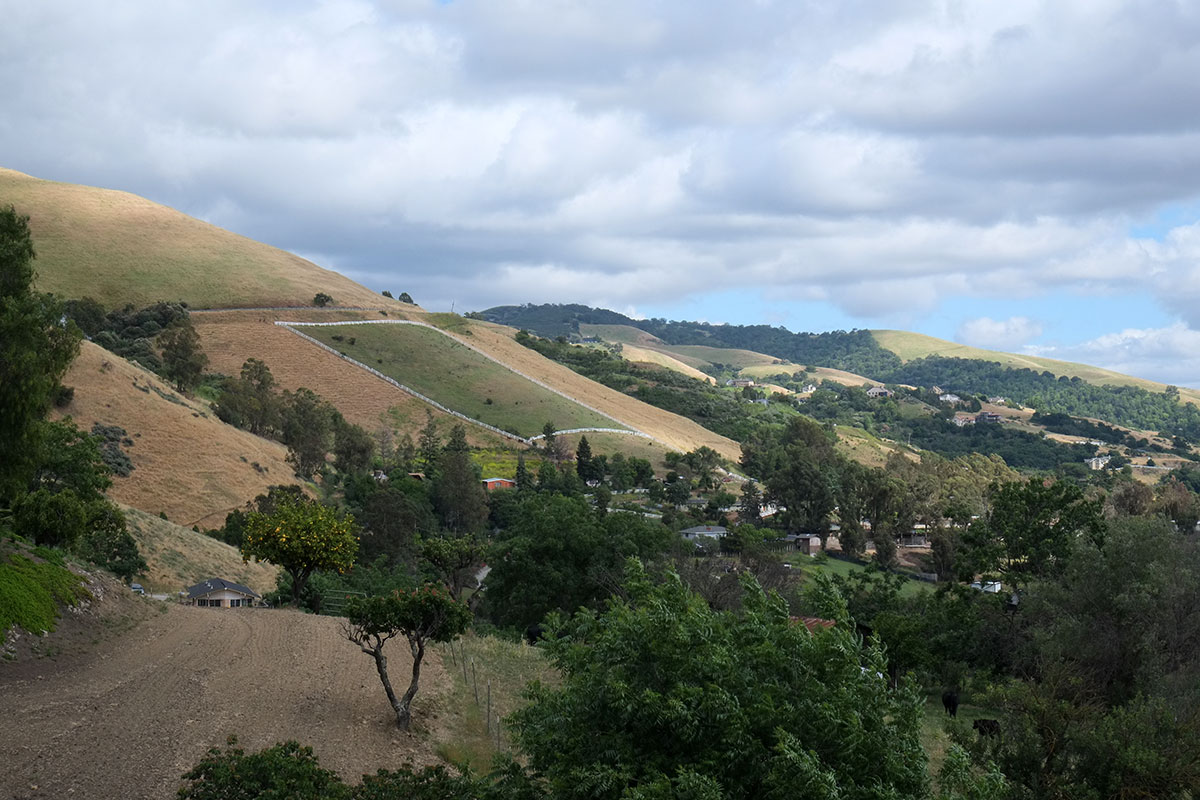
The drive itself was spectacular, with a narrow road crossing many ridges and ascending on switchbacks.113-san-jose004dscf1410

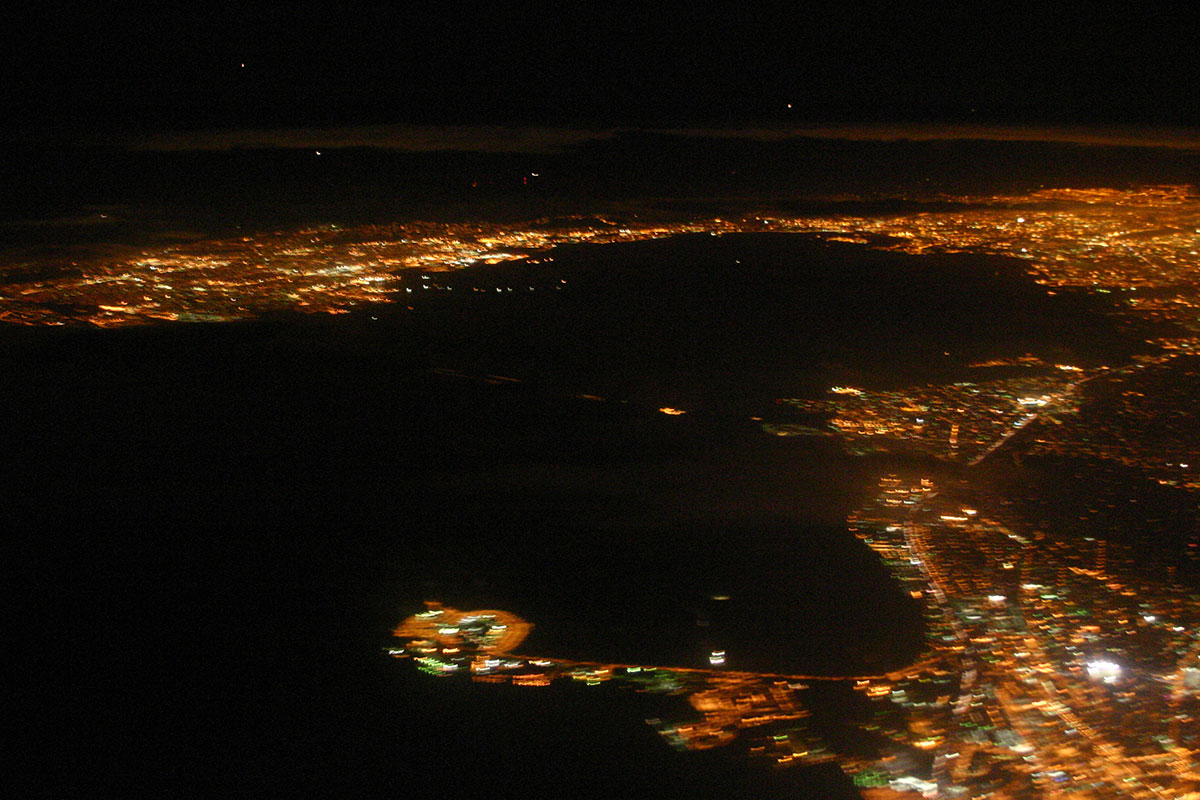
This knocking around in East Bay focussed us on the character of the region, rather than just on San Francisco. The interface between suburbia and open space in the Bay Area has always seemed extraordinary to me. You can be in a quite dense city or suburb, and within minutes you’re out in the landscape; this applies equally on the Peninsula, East Bay, and Marin County. I remember looking down on the region flying out one night – a huge, dark empty space in the middle (the Bay), surrounded on all sides by brightly lit cities, which abruptly come to end, surrounded by another dark zone (the hills and mountains).img_6321

The physical geography is interesting enough, but when you add in that there are four really different, big cities on the Bay, plus many diverse smaller ones, you realize that there isn’t another metropolitan area remotely like it anywhere else in the country; there’s a density of different and interesting places here that is unmatched.

Most American cities and regions feel finite to me – with a little time, you can pretty much get to see all there is. While there are many metro regions which are so big that you probably will never literally get to see all of them, you just don’t want to – they’re big, but there’s not much variety (Phoenix, Atlanta, Houston, etc.) Then there are the smaller, interesting places that are comprehensible (Portland, Pittsburgh, Albuquerque, etc.). New York always felt infinite to me – I knew that no matter how long I lived there, I could never truly say that I knew all of it. The Bay Area is another one of those. The diversity of the landscape, the cities, the people, the food – it’s complex and beautiful, and it’s obvious why everyone wants to live here, despite its obvious shortcomings of insane traffic and high cost. Samuel Johnson’s quote about London applies to the Bay Area too.

San Francisco undergrads

After they graduate, most of our students head off to the big West Coast cities to start their careers – Portland, Seattle, San Francisco, and Los Angeles are their most common destinations. About 20 years ago, I remember a student telling me how excited she was to graduate and move to San Francisco, and I thought, I’ve been in Eugene longer than her – why don’t I get to graduate and move to San Francisco? It is such a great town to live in as a young adult that I was jealous of them, having never lived there myself. But even though I’ve stayed in Eugene, I have about a 20-year backlog of former students living in the Bay Area, so we at least got to experience life there vicariously by seeing some of them.

DSCF1375a

Katharine Dwyer and Chris Gebhardt both graduated from the UO three years ago. Katharine came from Oakland, and has now returned to her hometown, while Chris came from Colorado, and used his stint at the UO in the way that many of those from landlocked states do, to jump-start a more coastal lifestyle. I got to know both of them when they were in my Housing the 99% studio in 2012, where Katharine’s project focussed on how unit sizes could be shrunk back down to reasonable levels for all household types (an excellent exercise for someone about to move back to the Bay Area), and Chris focussed on how the income streams and cash flows could work within a block of housing that mirrored our national economic and demographic mix. They both exemplified the type of smart, engaged, and wide-ranging undergraduates we sometimes take for granted around here. Chris was also one of my main informants on interesting things out there in the culture – he was the one who first exposed me to XKCD, and the Dictionary of Obscure Sorrows. (I think I paid him back with Babymetal.)

Katharine and Chris both seem gainfully and happily employed – Katharine as a job captain at the Huntsman Architectural Group (she regaled us with a story about her exposure to urban rooftop beekeeping earlier in the day), and Chris as a designer at Ankron Moisan’s new San Francisco office (with which his preceding firm just merged), continuing his interest in housing. It is always an adjustment for me to realize that people I still think of as college students now actually have a substantial amount of professional experience, and I was struck by how much they’ve done and how clearly they understand the world of practice.

Staying in touch with former students through Facebook has turned out to be a good thing for an old guy trying to vicariously live in San Francisco. I get to see signs that Katharine is doing all those fun young professional lifestyle things around the region, and that Chris spends a lot of time racing on sailboats out in the Bay. It is also clear is how nice it is that they arrived in the city with a pre-existing cohort of friends that all moved down from the UO, and that those really strong architecture school friendships can continue into the next phase of their lives.

DSCF1372a

Javier Ruiz is another San Francisco native who returned to the city after graduating from the UO in 2009. Javier was in my housing thesis studio that year, where he proposed a block of high-density rowhouse types in downtown Eugene, a project of remarkable complexity and context-specific adaptation. Javier was another one of those students with whom it was often difficult to stay on topic – he just knew about too many other interesting things beyond architecture, and always had something very amusing to say about them. He was restrained and quiet on the surface, but there was always a lot going on under that surface.

After years working on institutional projects, Javier has recently begun work with Gunkel Architecture, where he is getting back into residential work, illustrating the timeless irony of young architects in major cities doing residential projects that they could never afford to live in. (When I was l working in New York, and a client complained that the master bedroom in a unit was too small, I drew a rectangle in one corner of it. He asked, what’s that, and I answered, my apartment.) Javier has recently suffered the fate of many native San Franciscans, forced out of their hometown by rising real estate prices. His reaction on Facebook was classic Javier:

Okay, I surrender, moving to Berkeley. But when I return across the narrow bay it will be with dragons and a goddamned army, and no quantity of gadgetry, web design, crossfit, crowdsourcing, VC, tasting menus, queues, maker spaces, or general purpose artisanal bullshit will save you. Peace! (For a limited time only.)

A new job and residence were not enough disruption for Javier last year – he also got married – hitting the trifecta of fundamental life changes. Photos of their wedding at the San Francisco City Hall just appeared on Facebook one day, the first time I’ve seen pictures of a straight couple getting married there in years.

dscf1370

Greta and I instigated a Facebook-based get-together with these former students, and ended up at an Indian restaurant south of Market that Javier knew about. We dragged Dan along with us, which amplified one of my favorite aspects of these crowd-sourced gatherings – strange juxtapositions of friends from very different stages of my life. It’s always fun to mix up different cohorts of our graduates – I assume that they know each other within a geographic region, but they usually don’t. Dan added another level of complexity to the relationship mix, and I enjoyed seeing other connections emerge; whereas Dan may be the primary amusing Facebook commenter of his generation, I have found Javier to be the rising star of his. His posts offer wry insights into life in the Bay Area, politics, design, and broader currents in our culture. I think he should give up architecture and get his own YouTube channel.

We tried to schedule another Facebook gathering in the East Bay, but the logistics just got too complicated for getting together with Lisa Leal, Matt Cunha-Rigby and Olivia Asuncion, among others; there are entirely too many people to see in the Bay Area, and we would need a few weeks to cover them all. But having touched base with students from three and seven years earlier, we were later able to see what an older generation of former students have been doing with their lives for the past 20 years.

DSCF1553

Randy Wiederhold and Christine Lehto both graduated from the UO in 1995. Randy was from Palo Alto and Christine was from a small town on the Columbia River. They were members of a great undergraduate class which included Roberto Cipriano, among many offbeat and accomplished others. Randy was in my second year studio, and even at that early stage it was obvious that his brain worked at lightning speed, and with remarkable rigor. While most young undergraduates focus on making a big formal gesture, Randy saw that the logic of the building fabric and systems could help determine the order of the architecture, and not simply be used to implement a driving metaphor.

After college Christine and Randy worked in Portland for a while, then moved to the Bay Area so Randy could get an engineering degree at Stanford. They both continued their careers, with Randy working at a number of notable firms before starting his own practice; Christine has now been working at Gensler for nine years. We had some interesting discussions about the state of the profession – they’ve worked in a broad range of practices, from sole practitioner to a large, multi-city corporate giant, and once again I learned a lot from thoughtful former students, who really understand more about where things are going than I do.

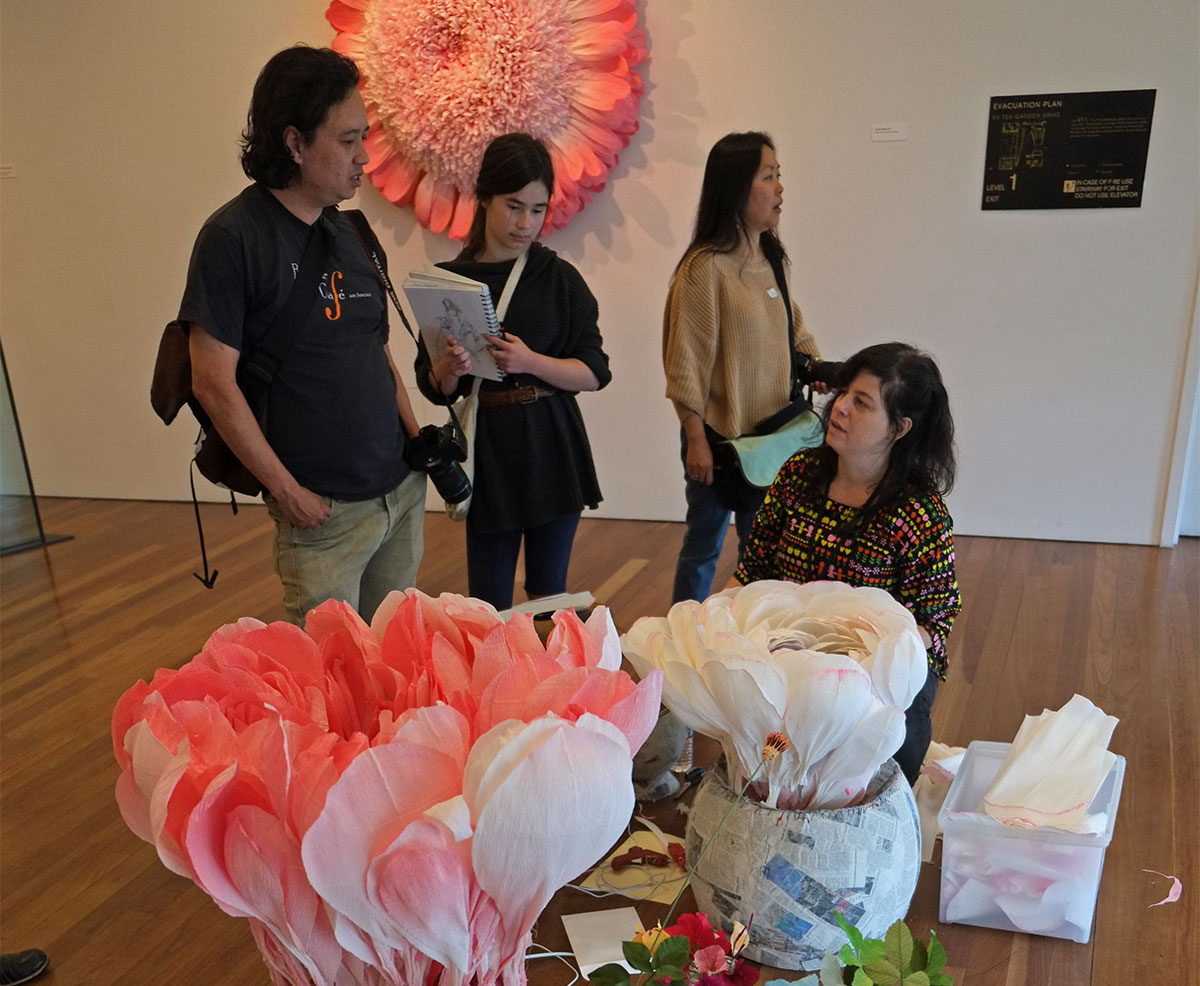
Over the years on Facebook I’ve seen pictures of their two kids growing up, and we were looking forward to meeting them in person. Anni immediately got added to Greta’s ever-growing list of cool nerdy girls she’s met on this trip, whereas Eli and Greta had a harder time comprehending each other, and it took Eli a while to realize that Greta was a girl. We met up with them all at the DeYoung Museum, where a friend of theirs was the artist in residence producing amazing giant paper flowers,

dscf1511

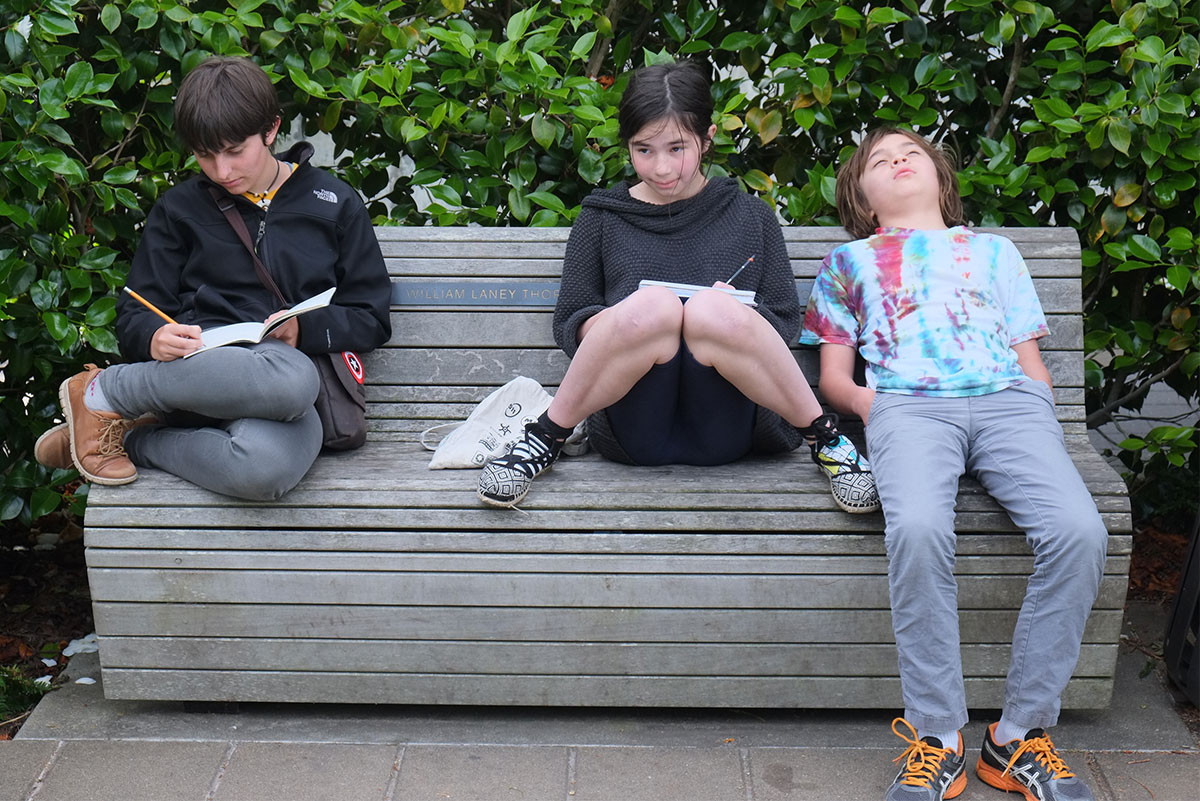
and at one point the kids devolved into parallel play in what seemed to be some of their dominant activities – Greta writing, Anni drawing, and Eli zoning out.dscf1506

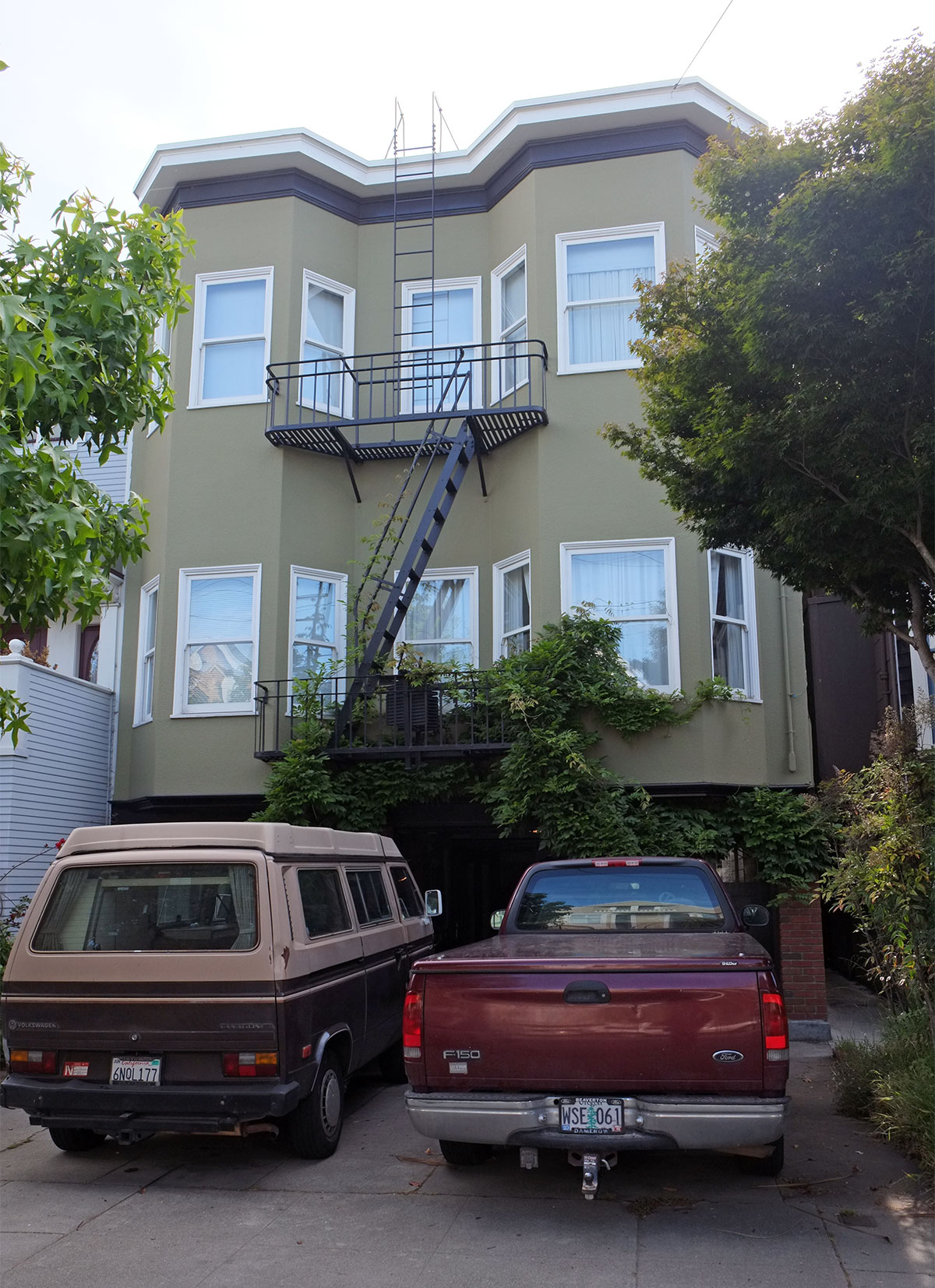
We wandered over to their house in the Richmond, and got to see the richness of how they live, both at the private and neighborhood scales. Christine and Randy bought a small multi-family building (back when doing such a thing was a stretch but not unimaginable), and have figured out how to make a go of urban family living through smarts, sweat equity and adaptability. The building has four units over a ground floor of service and garage. That’s their famous VW van parked in front, used for family camping excursions.

dscf1520

Christine and Randy lived in one unit as they renovated the building, making a fantastic home for themselves at the rear of the main floor, and expanding that unit down to the ground floor, with access to the rear garden. As their family and needs grew, the building gave them the flexibility to expand, even as the rental units provided income, and they’ve recently taken over the garage space as a room for all the kids’ activities.

dscf1521

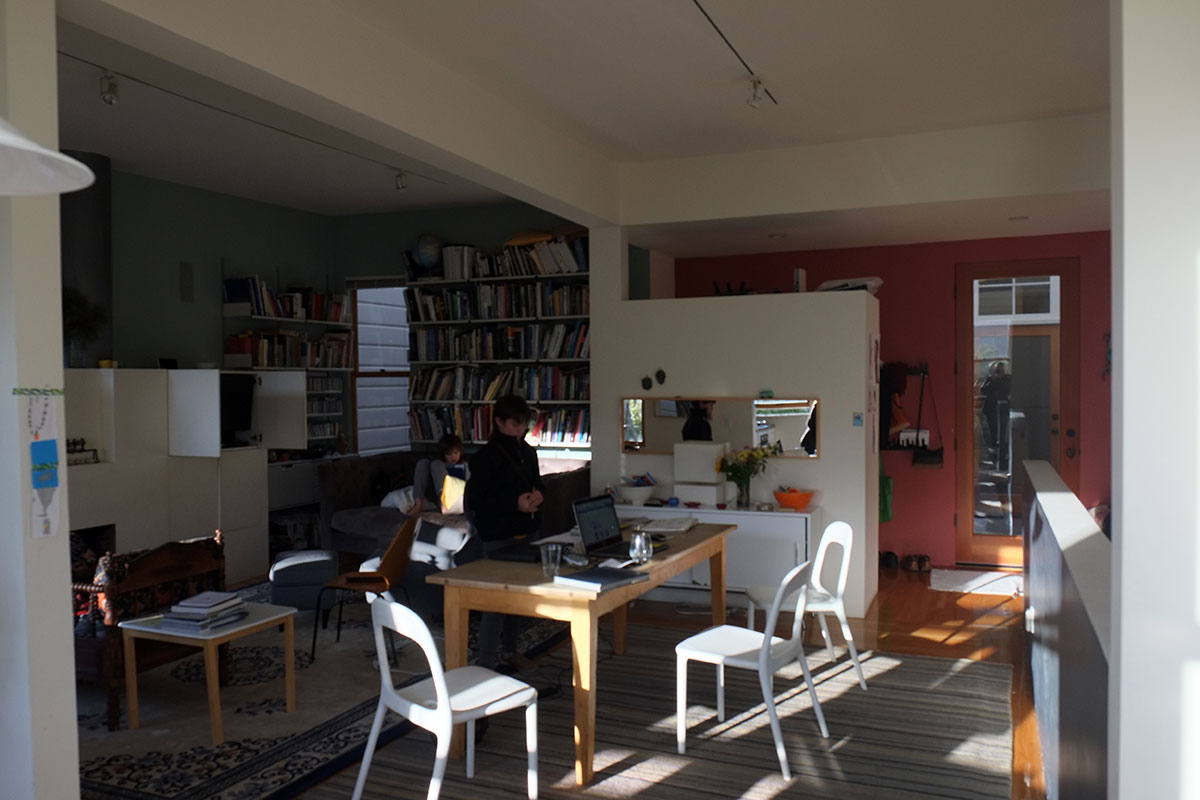
Their main space is open and light, with the kitchen, dining and living areas all connected. The design is elegant and simple, and works as the armature for all the things that matter in their lives – the space was full of art, music, books, and food. As they explained their history of buying, renovating, maintaining and changing the building over time, I was really impressed. I often tell my students that as architects don’t make a lot of money, if they want to live in a certain way or place, they’ll have to achieve that by being smarter and thinking unconventionally. If you just accept what the market has to offer, you’ll end up in a conventional apartment that has none of the qualities that matter to you. In one of the toughest housing markets I the country, Christine and Randy came up with a strategy that worked physically and financially, a place for their family to thrive.

We walked around the neighborhood, and saw how embedded they were in the community. They kept stopping to chat with friends. We passed many great-looking little restaurants, and ended up at a Korean barbecue place. After dinner we spent some time at the amazing independent bookstore near their house. Greta was in awe as she saw that this kind of living was possible in a big city, where a kid could walk to restaurants, museums, parks and especially, a bookstore.

A major goal of this trip has been to expose Greta to a wide range of ways people live in this country, so meeting up with these friends in San Francisco was an eye-opener. Greta’s not sure where she wants to live in the future, but she’s now clear about one criterion – it has to be a place where a car isn’t needed to conduct her day-to-day life. As for me, I don’t know if I’ll ever get to live in San Francisco, but thanks to our former students who stay in touch, I have been getting a good sense of what that life could be like, as I watch them proceed through all the stages of grown-up architect life.

Silicon Valley

A few months ago I paraphrased Tolstoy, saying that all sprawl is alike, but every good city is good in its own way. I now think that idea needs qualification: there are two types of sprawl – new and old. New sprawl is seen in places like Phoenix and Houston, where very little existed before WWII. There were small to medium core cities, and perhaps some very small outlying towns, but the postwar boom led to a pattern of undifferentiated sprawl that is the overall fabric of the place. Old sprawl occurs where there were real cities before WWII, and often reasonably-sized towns or cities in the region. Suburban development filled in the spaces between these centers, but the historic centers and districts still retain their character, and are still a considerable percentage of the region’s area. A standard distinction that is often made about the underlying organization of an area is whether there was settlement before survey (e.g., most pre-modern places), or survey before settlement (egg., most of the US). Perhaps another useful distinction, applicable to 20th century growth, is city before sprawl, or sprawl before city.

There may not be much of a functional difference between new and old sprawl now – both are heavily car-dependent and oriented, the overall densities may not be that different – but I think they can offer very different experiences for the residents.

I grew up in old sprawl, 10 miles from New York City, so that east coast pattern of city before sprawl always felt normal to me. Once again, JB Jackson was essential to understanding this landscape, as he had clearly delineated the various types of car-oriented development that occurred in the different periods of the 20th century. I remember then visiting the east side of the Seattle area in the early 80s and being shocked – it was the first place I’d seen where essentially every road and building was younger than me. There wasn’t a recognizable pattern in place from the era of pre-automobile development – the patterns of postwar sprawl were the underlying system.

The Bay Area and Silicon Valley combine both types of sprawl. Around the Bay, and down the peninsula, there is old sprawl – with both big, older, gridded cities (Oakland, Berkeley, etc.) and smaller suburban cities (Palo Alto, Menlo Park, etc.). The new sprawl spreads south from San Jose into the Santa Clara valley.

We were staying with Dan in Palo Alto, and as we were a little burned out from navigating the whole country for the prior eight months, and as Dan’s knowledge of the Bay Area is encyclopedic and his interests highly refined, we were only too happy to let him do all the destination-selection, navigation, and driving for us. So our impressions of the area are more of the passive-passenger variety, rather than the how-is-this-place-organized-wayfinding variety. Mainly, we focussed on good restaurant destinations, and saw the region on our way to them.

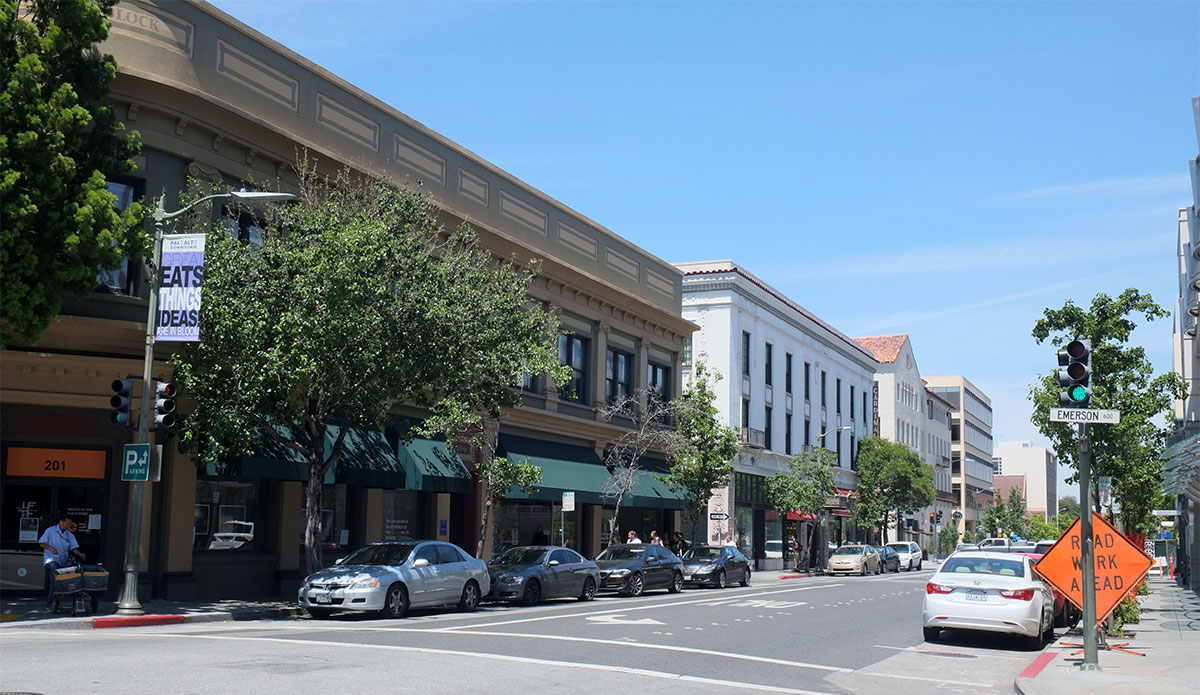
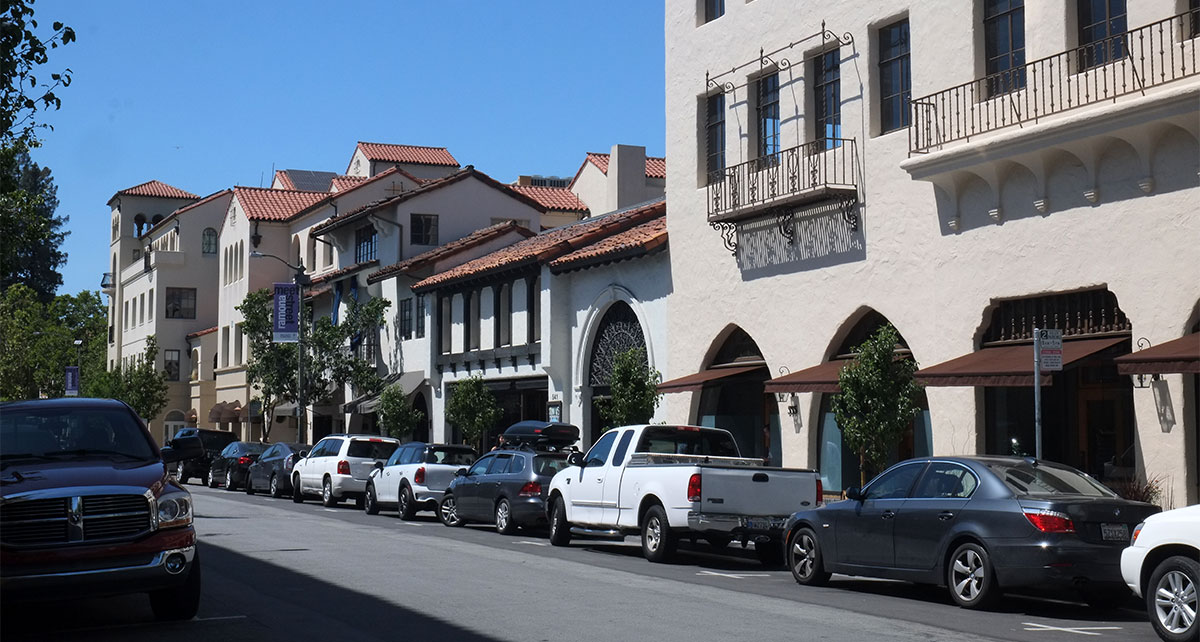
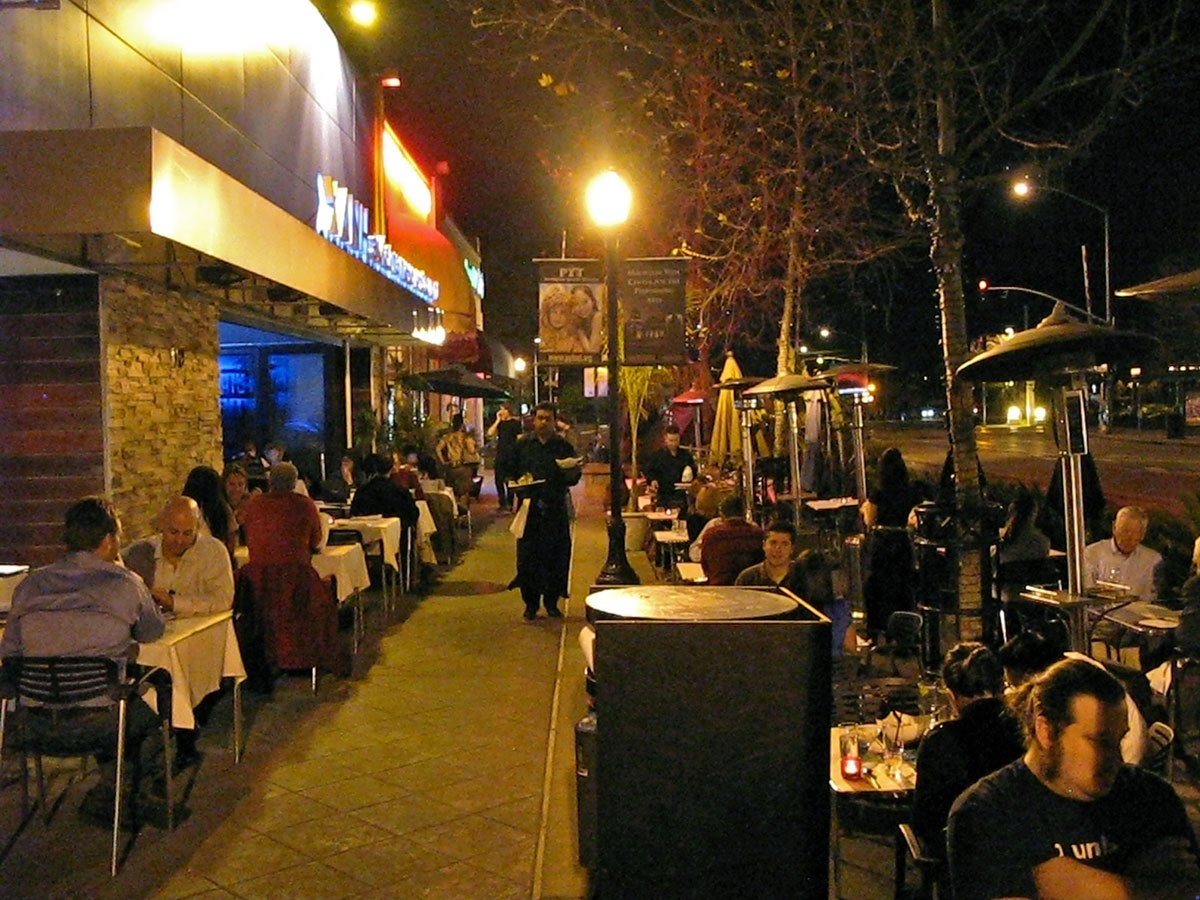
Palo Alto has a few major commercial centers, which are excellent. Predominantly low-rise, but not uniformly so, with many buildings remaining from the 1920s. The streets are incredibly active, especially at night, when the sidewalks are filled with young people and families heading to restaurants and street cafes. It is a very mature place, where the environment has been refined over decades.DSCF1102

DSCF1105

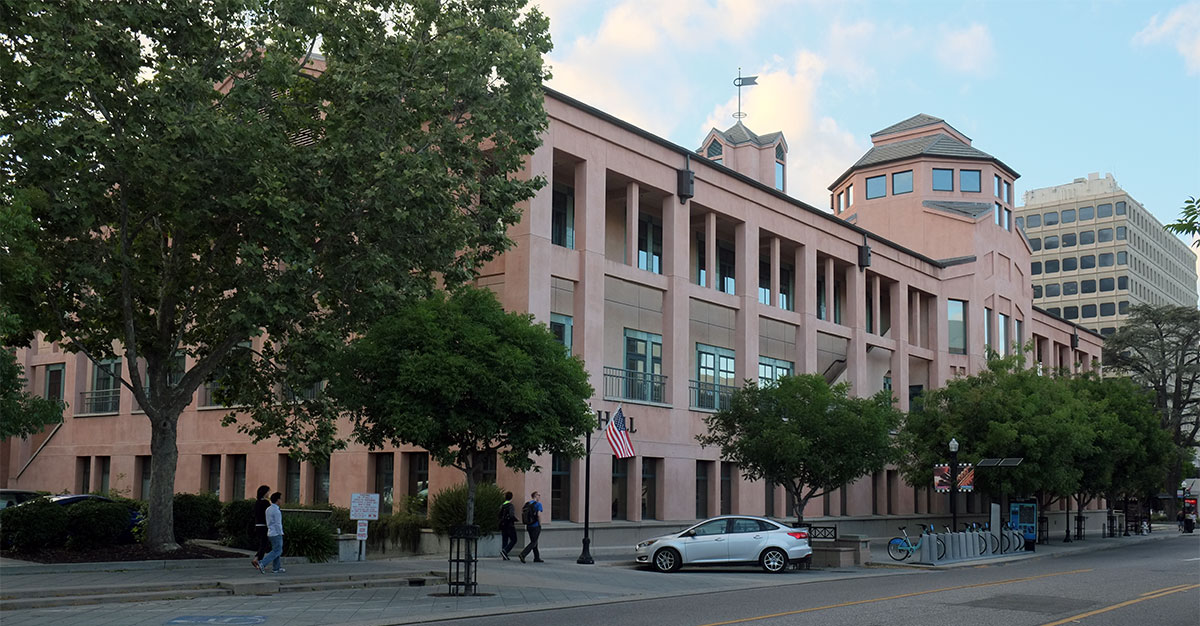
Those cities which were not as densely built-up in the postwar era have been consciously developing their downtowns in the era of the tech booms. Mountain View very consciously built a civic center, with a city hall, performing arts center etc., designed by William Turnbull (formerly the T in MLTW). Some of it is a little strange in its flatness, the color is disconcerting, and it is an illustration of why having one large complex designed by one architect, rather than a series of differentiated buildings, is not a very good idea, but a couple of decades later it is clear that it has had a positive effect on the area, and private sector development has transformed the downtown.DSCF1470

IMG_2202

Cities that were even less dense, such as Sunnyvale, now have rapidly developing centers. This area has a major shopping mall, but it is not the suburban type surrounded by acres of parking. With land values and rents as high as they are in the area, the mall is surrounded by parking garages and new mixed-use buildings, with yuppie condos for tech industry workers above hip ethnic restaurants.DSCF0970

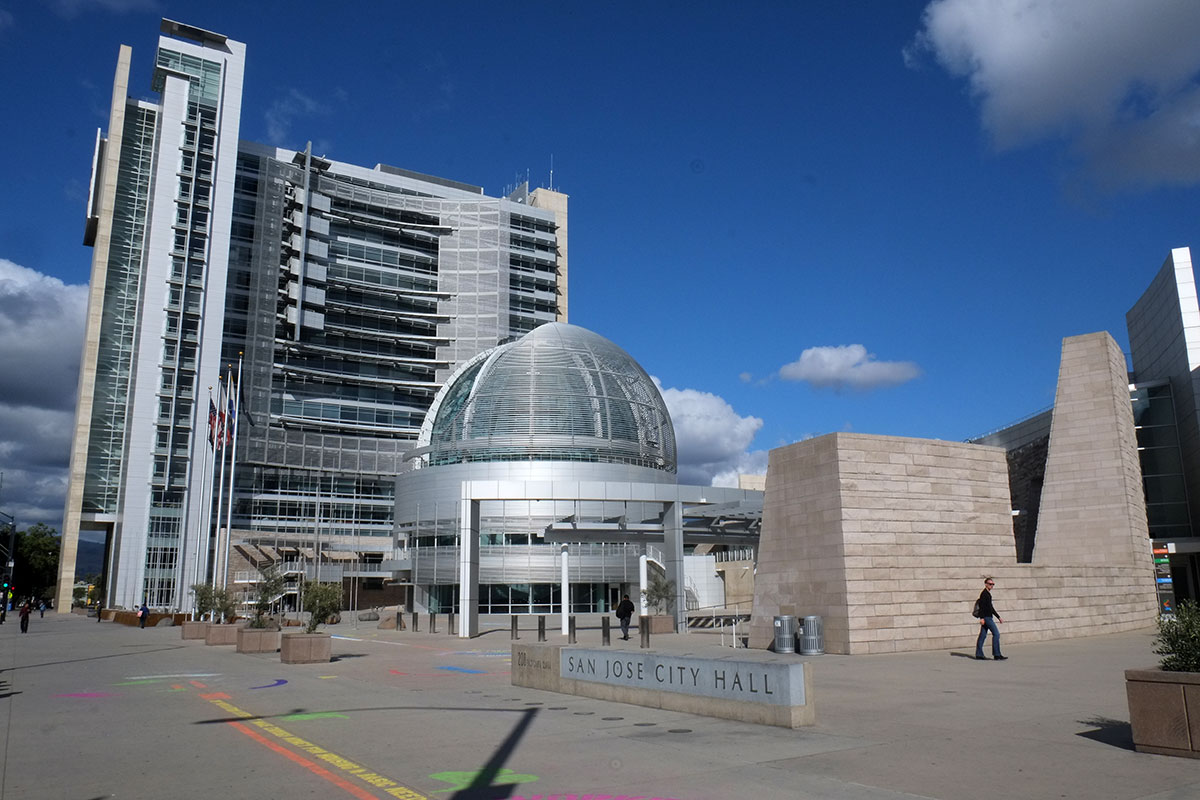
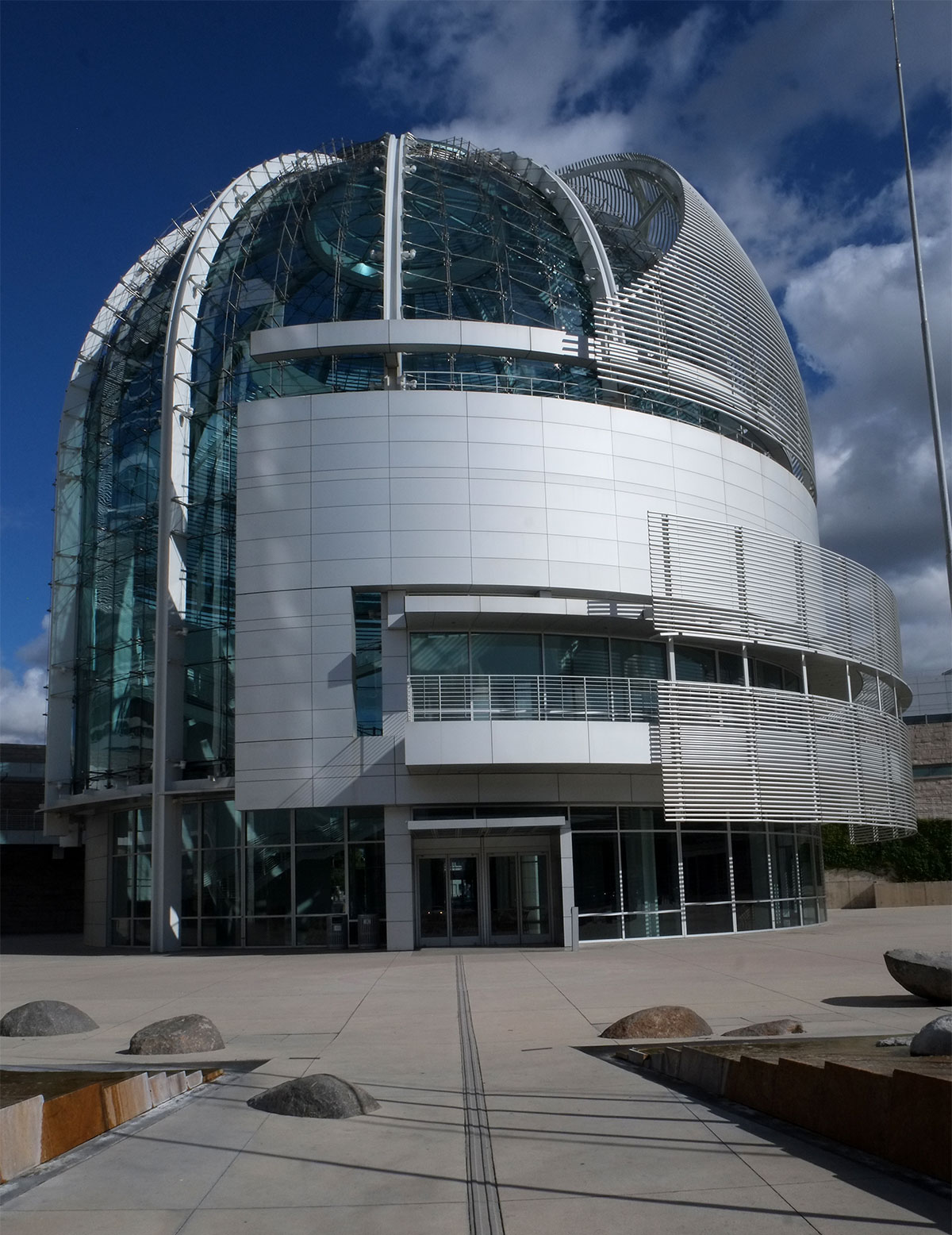
San Jose itself has been redeveloping in the past decades, with a combination of commercial projects and institutions. The city hall complex (by Richard Meier) is about ten years old, a classic duck, with the separate realms of bureaucracy, elected officials, and gathering space represented in separate buildings. There is a huge civic plaza, which was oppressively unshaded and hot, even in May.113. San Jose006DSCF1454

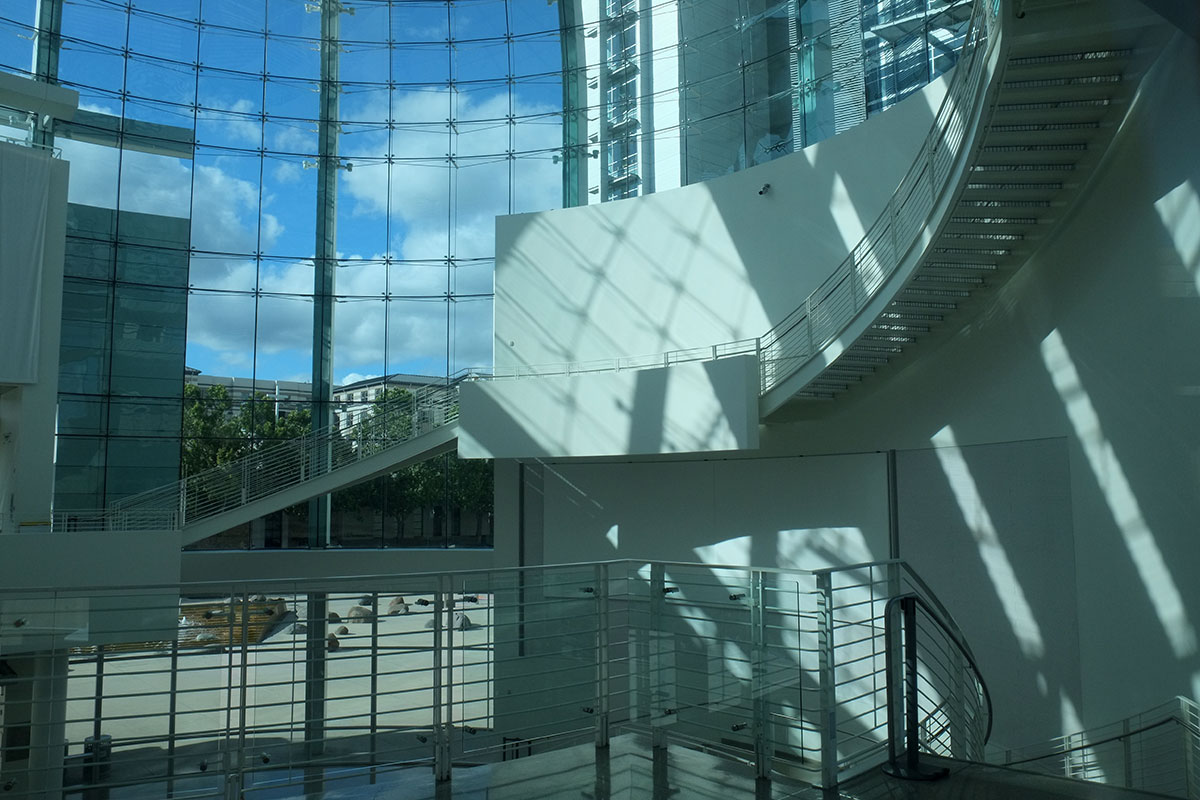
The detailing, especially of the domed meeting space, is spectacular, with Meier’s classic spatial and compositional moves overlaid with shading devices that look like Renzo Piano in a futurist-Steanmpunk phase.DSCF1423

113. San Jose005DSCF1446

The Shiny Object quality of the San Jose City Hall underlines one other way that the sprawl of Silicon Valley differs from most other sprawl in the country: it is very wealthy sprawl. Compared to places like Phoenix or Texas, the sprawl is largely “nice”, upper-middle class-sprawl. There is serious landscaping, and the obvious influence of design standards and planning commissions. This relates back to the earliest critiques of postwar suburban growth, which often focussed on just how tacky and ugly the new development was, and not on the fundamental issues of settlement pattern, car-orientation and environmental impact. The ugliness issue had been mitigated in places like the Peninsula with enough money to accomplish that, but it didn’t change the fundamental, structural issues; those are now being addressed through this newer, more urban development.

Despite this widespread evidence of new urban development, there is a paradox at the heart of the growth in Silicon Valley. The money comes from the high tech industry, with growing, high-income employment, and lots of capital floating around. This infusion of money drives up land prices, leading to the kind of high-density, urban redevelopment seen above, where cars are not completely dominant, and the sprawl-before-city pattern is now producing cities. This is the market (and zoning) response to these economic forces. But the big tech companies are so powerful and rich that they can just ignore these market forces. You don’t see them building in mixed-use neighborhoods, or trying to establish pedestrian-friendly environments – they still procure vast, expensive sites, and build campus-type buildings, surrounded by parking.

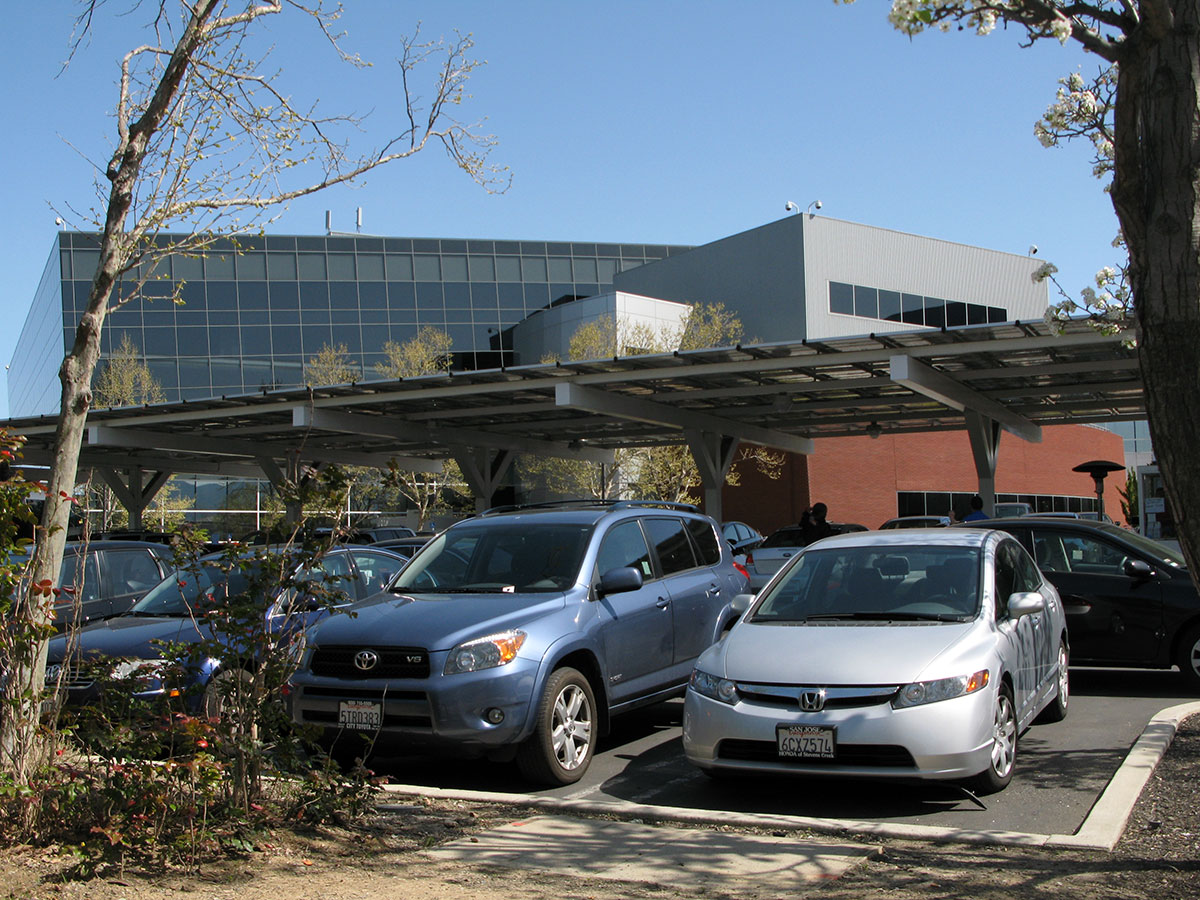
Here is the old Google campus, renovated buildings from Silicon Graphics:IMG_2258

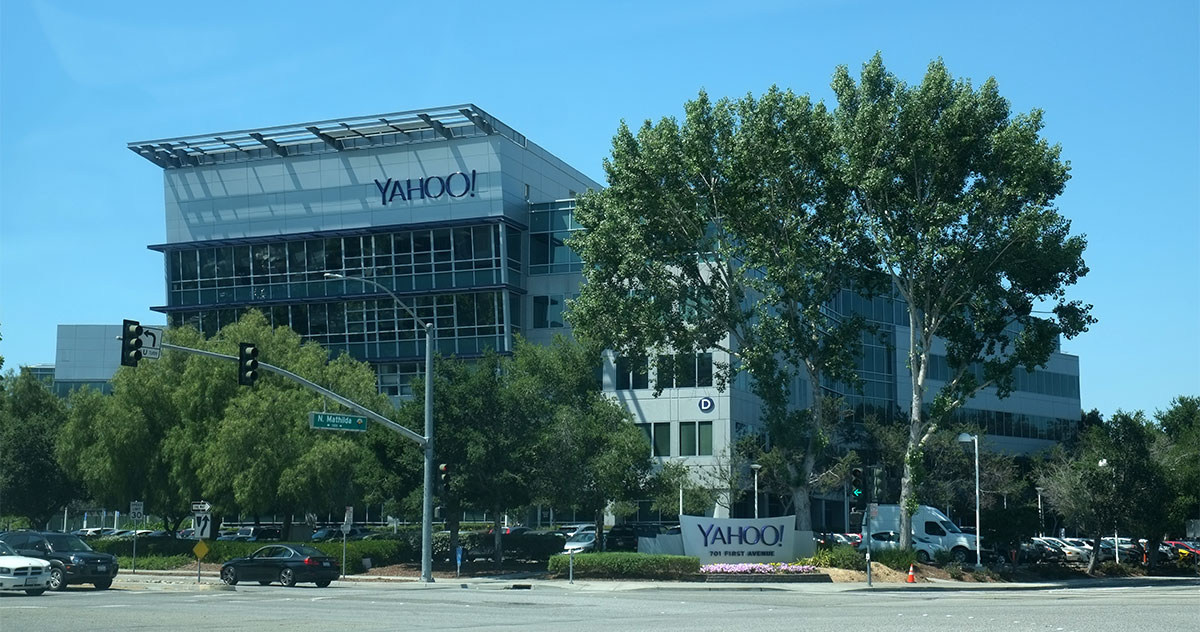
And Yahoo (on a city street, not a giant campus, but certainly not in a very walkable place).DSCF0971

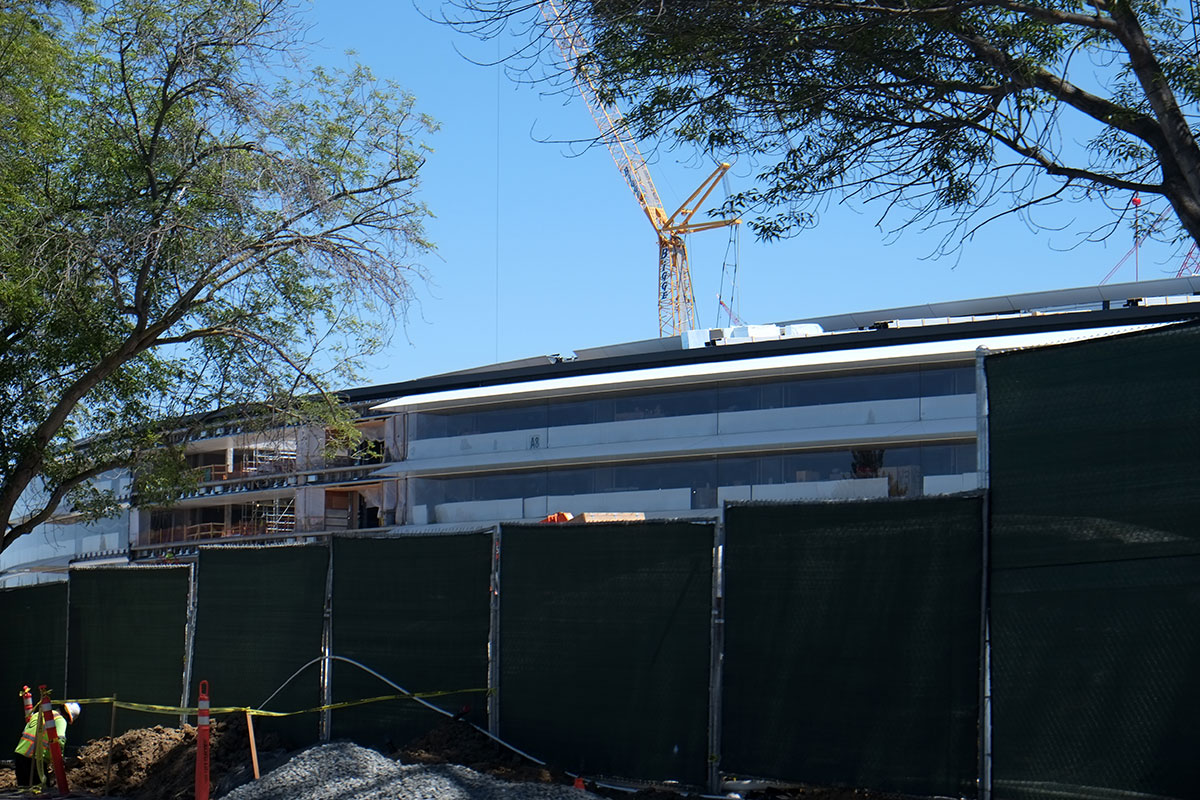
A drive-by of the new Apple headquarters (by Foster) under construction, a self-contained and isolated Hakka village, which looks like it might lift off to become a space station.DSCF0975

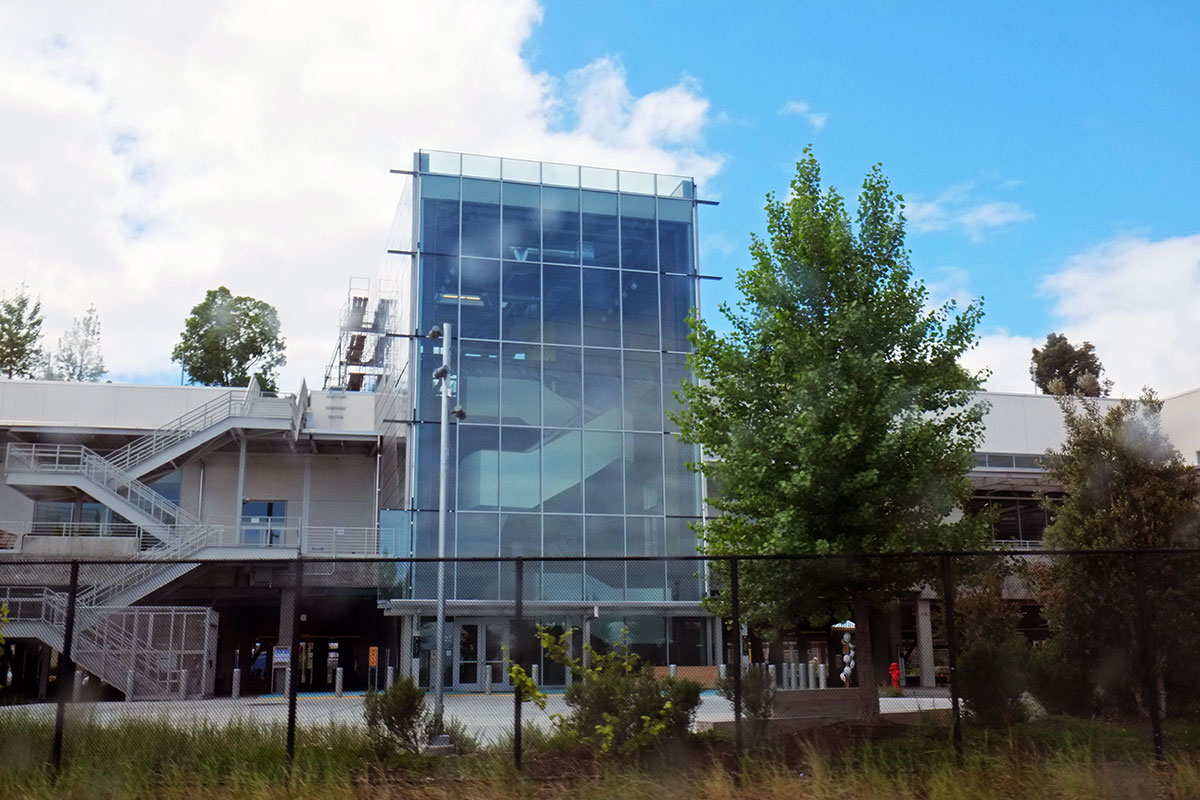
And the new Facebook building (by Gehry), again, self-contained and not near a walkable center.DSCF1559

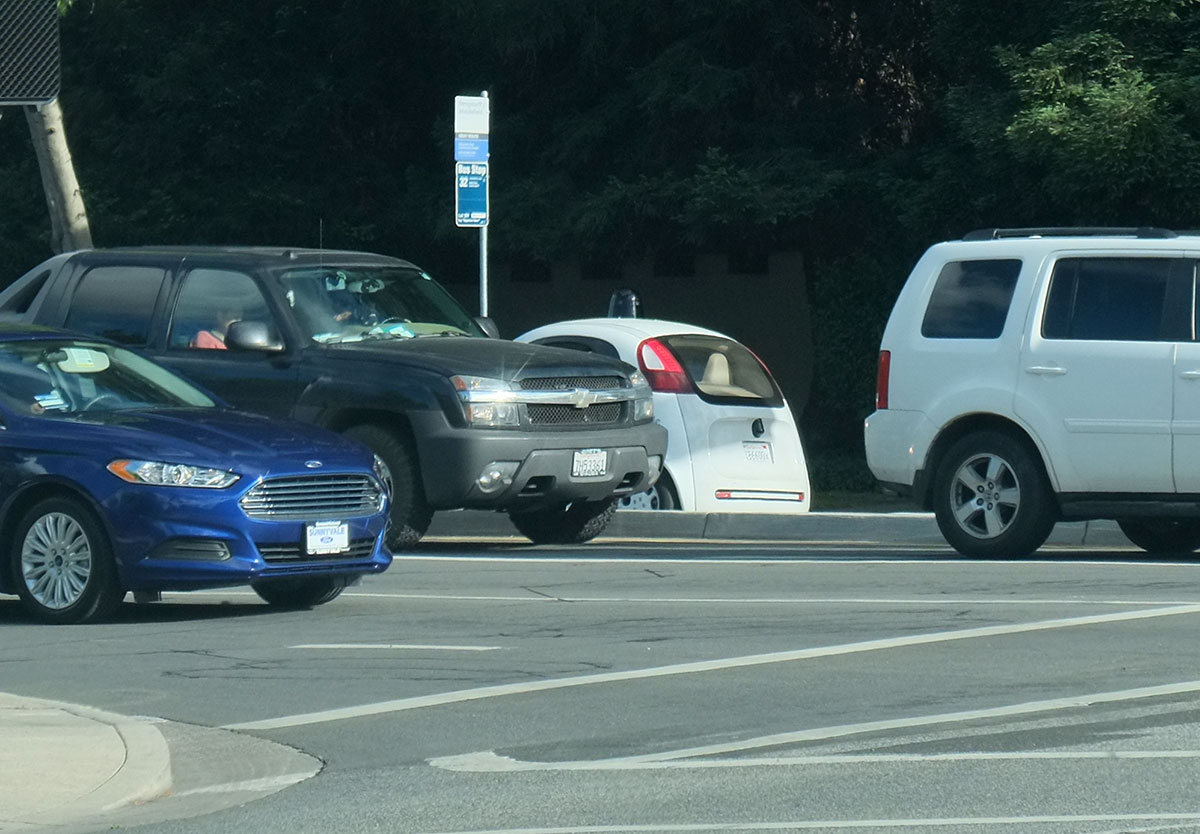
And rounding out this model for development, we did glimpse our first Google car:DSCF1469

Smaller tech firms and start-ups now often locate in denser cities and mixed-use areas, echoing the historic pattern of central business districts where there is access to a wide range of workers, skills and services. Perhaps these large campuses are an assertion of pre-eminence by these corporations – they are so powerful that they don’t need access to these markets, everyone must come to them. Interestingly, Amazon is the one corporate giant bucking this trend, with their huge new complex opening in South Lake Union in Seattle, based partially on their employees’ preference for urban life, versus being stuck in the wilds of exurbia beyond Redmond.

While the experience of being in a car all the time moving around the Peninsula and Silicon Valley wasn’t comparable to being in a great city like San Francisco or Oakland, the good part was that when we got out of the car, we were in dense, urbane places. The southern part of the Bay Area is showing signs of being an evolving Edge City, a model arising in several parts of the country, with an overall pattern of car-based development, punctuated by a network of dense, walkable, and hopefully increasingly interconnected, urban centers.  Old sprawl continues to mature, becoming an increasingly good place to live, and perhaps providing a model for new sprawl to follow.

SFMOMA

DSCF1331As San Francisco had already used its Renzo Piano coupon on the California Academy of Sciences, and the Herzog & de Meuron retainer on the deYoung, they turned to Snøhetta for the expansion of the Museum of Modern Art (SFMOMA), perhaps another indication of which firms will be seen as filling in the next generation of high-profile firms as the older generation of starchitects disappears. Snøhetta is an international firm based in Norway, best known for their Oslo Opera House. Tine Hegli, one of their lead architects in Oslo, was the visiting Belluschi Professor at the UO in 2015, where she taught a studio designing net zero houses. She also gave a lecture on their recent work, so I had some idea what the SFMOMA project was about. Perhaps the greatest change is that while the next generation is still obviously concerned with formal and spatial ideas, attitudes about environmental design and sustainability are fundamental to their work – in the DNA of the firm from the beginning – and dictate basic design moves, rather than being a secondary concerns.

Luckily, our timing on this trip was such that we arrived in the Bay Area the week it opened, and we spent a long afternoon exploring it, which turned out to be nowhere near enough time. I have read that SFMOMA is now the largest museum in the country (which in this age of Trumpian hyperbole I will double-check), but it is undoubtedly gigantic. However, given the clarity of the design, it doesn’t feel overwhelming, the way the Met or MOMA often do. Perhaps this is due to the nature of the pieces, and hence the galleries: as a modern art museum, there are many very big pieces, hung with lots of space around them in very big galleries. So although the square footage of the museum may be huge, the number of pieces may not be that large, and that may cut down on the cognitive overload. The other factor which may make it seem smaller is that it is very vertical museum, with seven stories of public space. The Met is basically two stories with some mezzanines, so it sprawls into Central Park, and getting to distant wings is a hike. SFMOMA has a very compact vertical circulation core, so you never have to traverse whole districts full of 18th century decorative arts to get to where you want to be.

The circumstances driving the new addition were remarkably similar to those which drove the addition to the Seattle Art Museum, designed by Allied Works. Previously, both Seattle and San Francisco were cities not noted for the size of their museums or the quality of their collections – I was shocked in 1978 to see how dinky and unimpressive the museums in San Francisco were – I had thought it was a big, culturally-important city. After travelling around the country more in the 1980s, I realized that the quality of a city’s museums was pretty much determined by how early the fortunes of the city had reached a threshold – the great museums were in cities that had acquired serious concentrations of wealth early enough in the 19th century to still buy great European works. I regarded the Nelson-Atkins in Kansas City as the most western great museum (disregarding the anomalies of Los Angeles). As economic power shifted to the West Coast, it seemed likely that the cultural capital and philanthropical urges of the wealthy would someday reach that threshold where they would endow new or expanded museums. This then happened in two stages. Both Seattle and San Francisco built new museums in the early 90s, designed by architects who were at the top of their reputations in the 1980s – Venturi Scott Brown, and Mario Botta. Both firms designed museums that were formally a bit precious, and clearly demonstrated their roots in historical architecture and Postmodernism, while reflecting their designers’ particular takes on that tradition. They were also both pretty small; I even taught a design studio looking at an expansion of the SAM the year it opened, as a second phase had certainly been anticipated.

What changed before the next round of expansion was that the wealth and aspirations of the elites in these two cities grew far beyond anyone’s expectations, with the concentration of the computer software industry in these two locations. (I remember driving across the 520 bridge when Greta was small, pointing out a cluster of trees on the shore of Lake Washington, and saying to her, Do you know how lives there? The Richest Man in the World!) West Coasters grew their collections of art, but focussed more upon modern and contemporary works – probably a combination of most of the greatest works from earlier eras already being in museums (or still not affordable with even large fortunes), and the character of the new money – which was much more attuned to the trajectory of the modern world, and not caring to validate their status through the acquisition of Old World trophies.

So as the inadequacies of both museums were addressed, the sizes of he planned additions were able to expand exponentially. The Seattle Art Museum was able to secure the first few floors of most of the block on which it was located (with a commercial tower rising above), rather than just the 60-foot wide slot next door. SFMOMA was a bit more hemmed in – the vacant lot to its southeast had been filled with a new tower – so the expansion had to be deeper into the block. This led to some interesting opportunities for engaging with the neighborhood fabric, but it also dictated the footprint of the expansion – a tall slab perpendicular to the axis of the original museum.

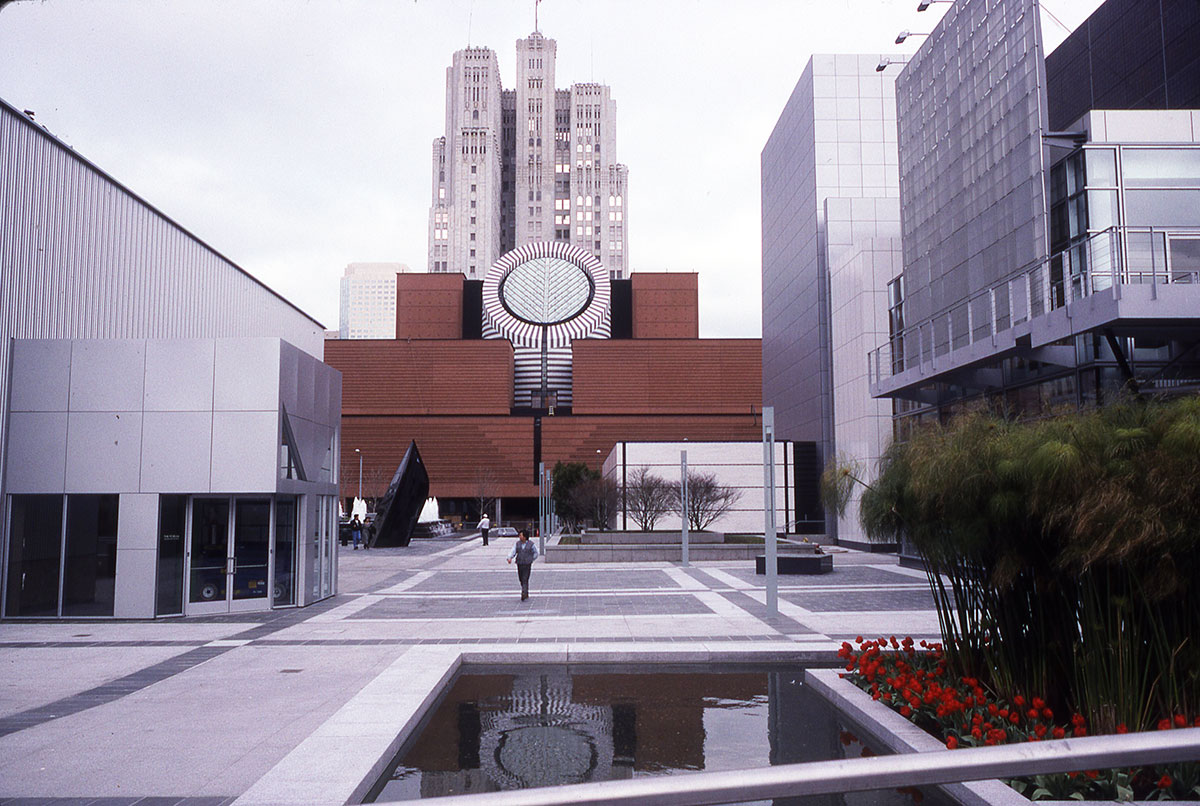
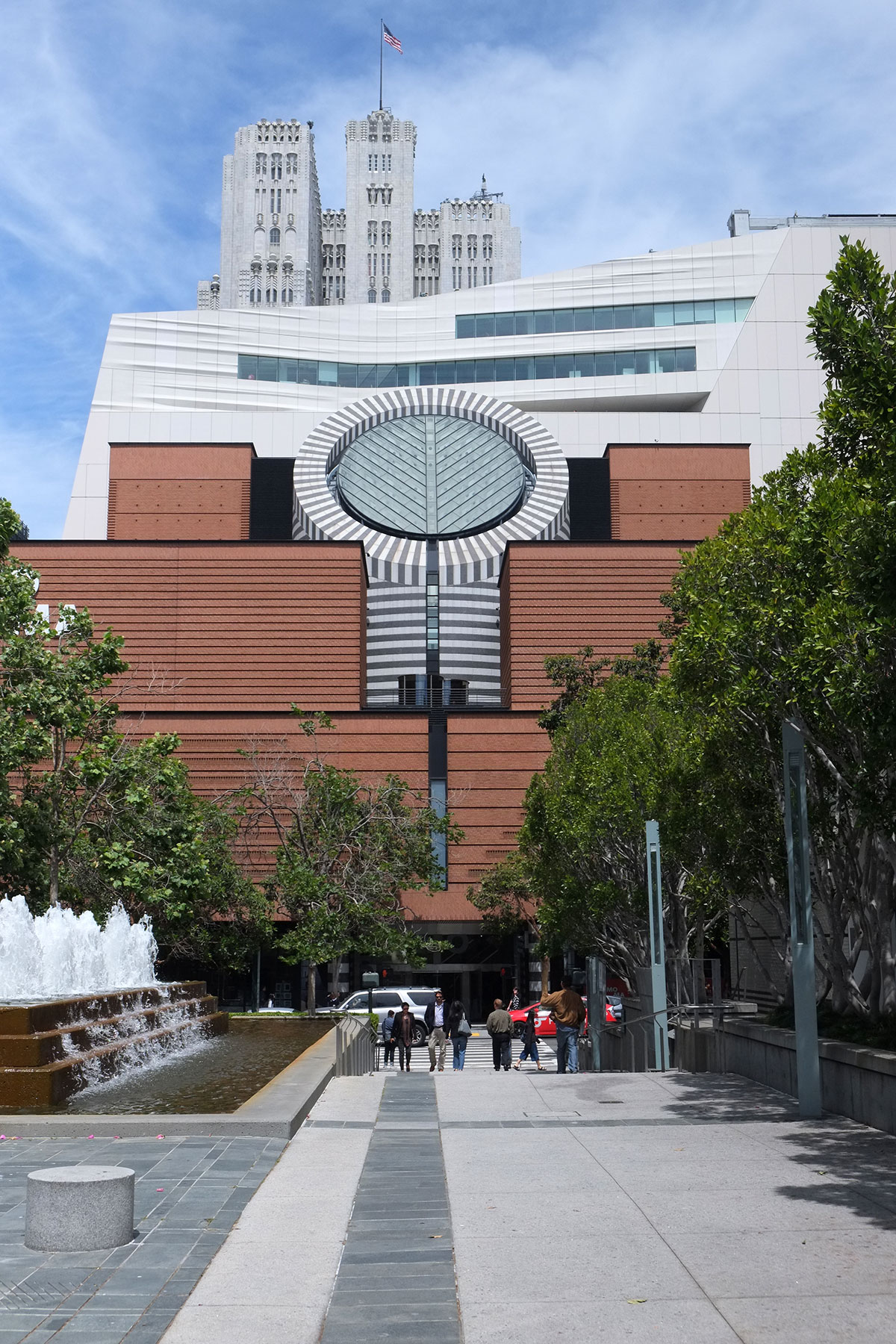
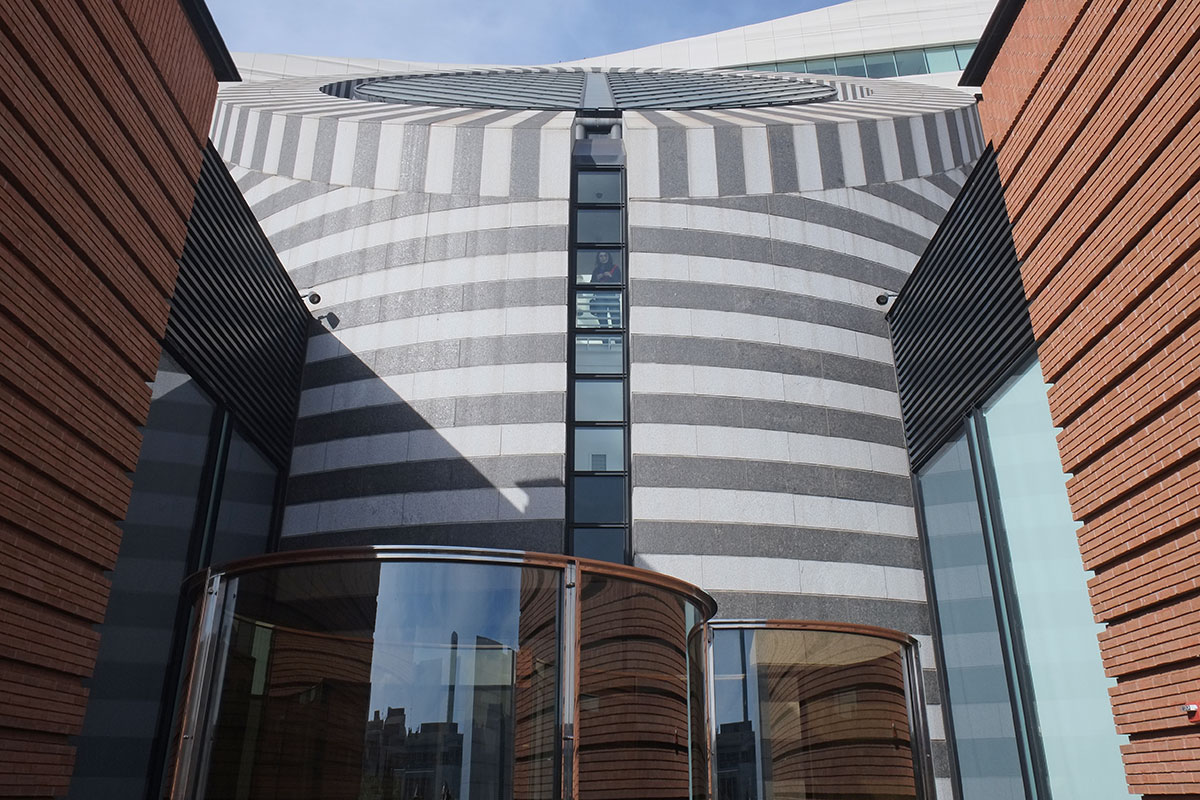
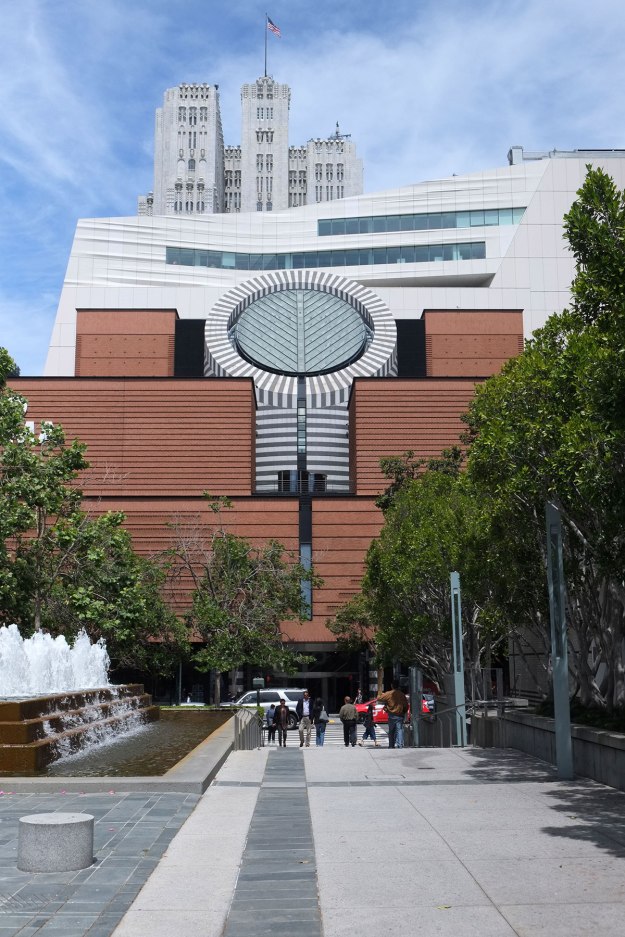
While the cultural circumstances of SFMOMA resemble those of SAM, the site conditions resemble those of the Guggenheim. Both original museums were small, iconic, and with a central cylindrical piece. In both cases, the addition had to be a wall rising behind the original museum; with the Guggenheim, this was famously likened to the tank behind the toilet bowl. At SFMOMA, the front is on a major axis from Yerba Buena Gardens across the street by the convention center, originally forming a composition with the terra cotta (now Pacific Bell) tower behind. The contrast between the red brick and the white towerSFMOMA17
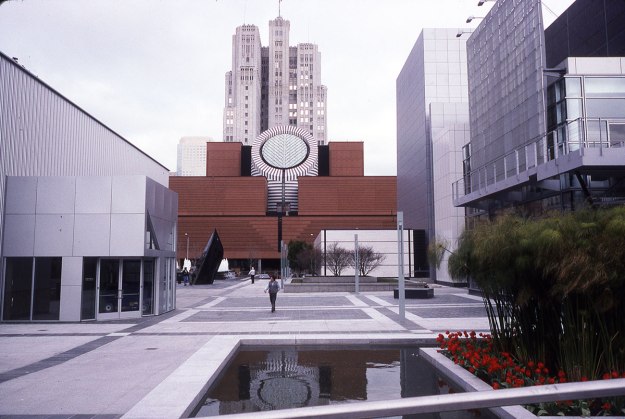
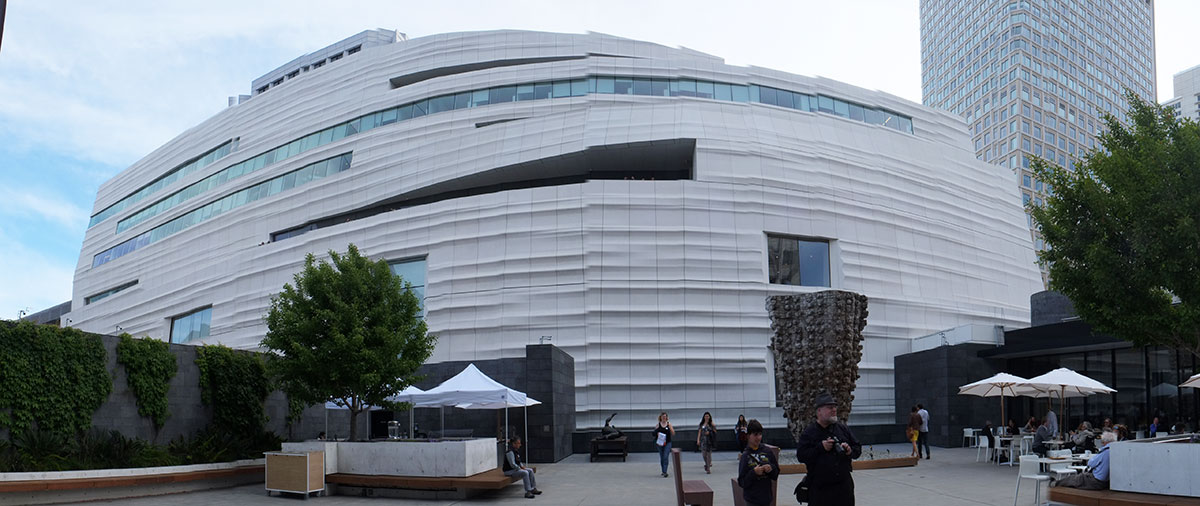
is maintained by the wall of the new addition. This façade is mostly flat panels, with a slice at the top left corner which gives a hint of the swoopy rear façade.DSCF1137
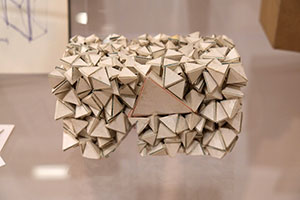
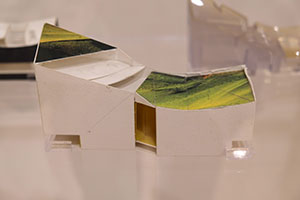
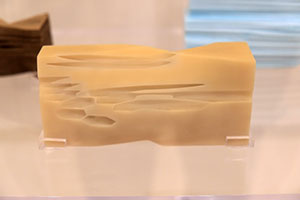
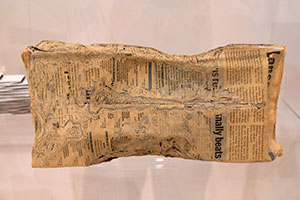
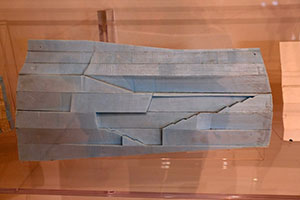
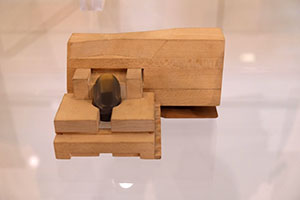
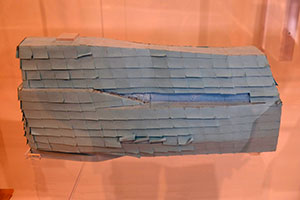
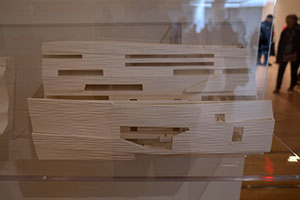
There was a great little exhibition of 50 conceptual models which were part of the design process. I photographed all of them, as they show how many different ways a a fairly set parti can be conceived. What I find interesting here, in contrast with the DSR building at Stanford is that the parti models move the design process along, but they don’t have t be explicitly present in the final building.
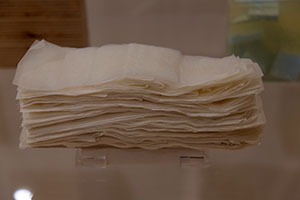
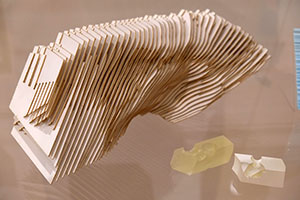
DSCF1195  DSCF1200 DSCF1206  DSCF1214 DSCF1224  DSCF1229DSCF1232  DSCF1233DSCF1239  DSCF1244 DSCF1246  DSCF1249

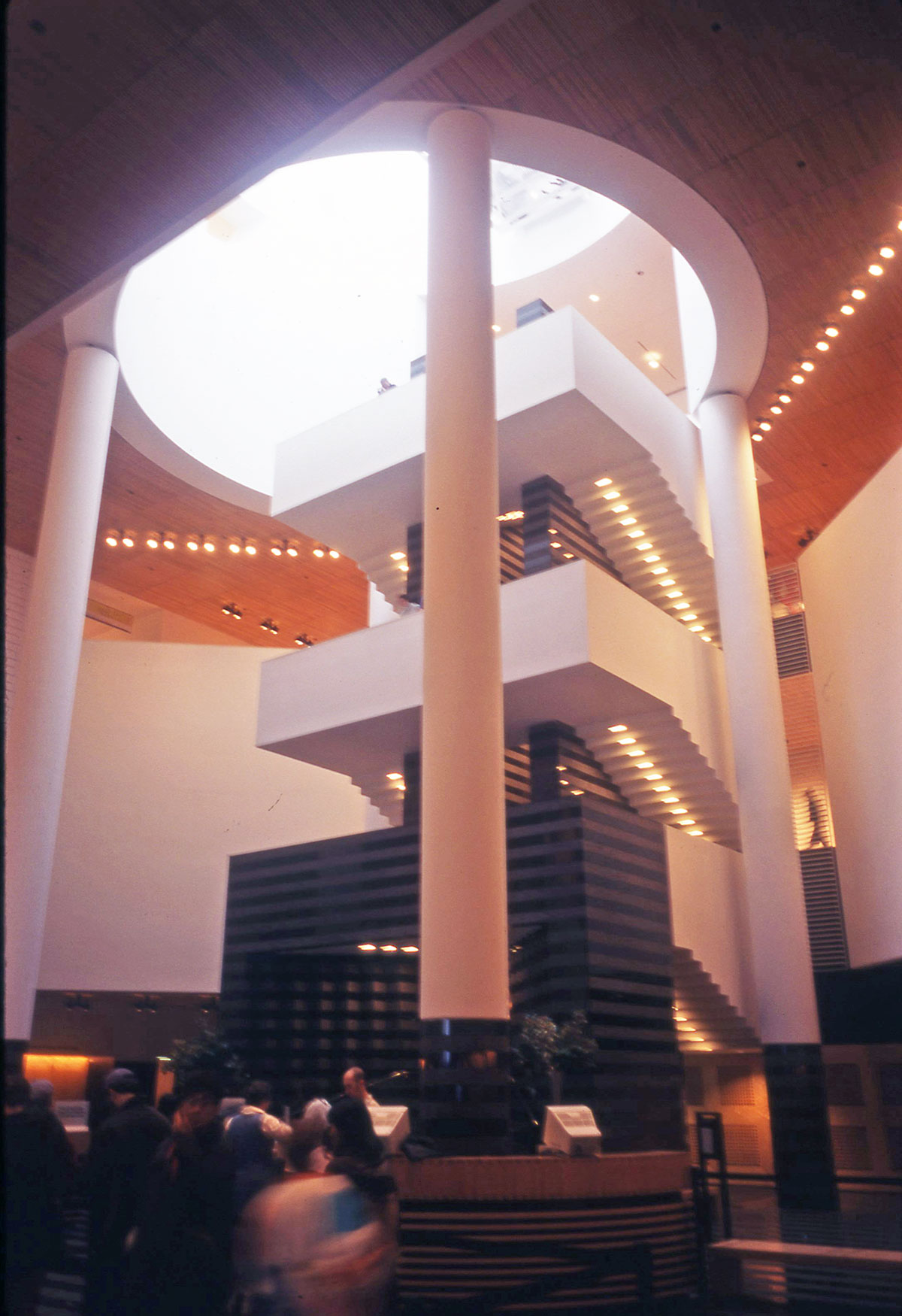
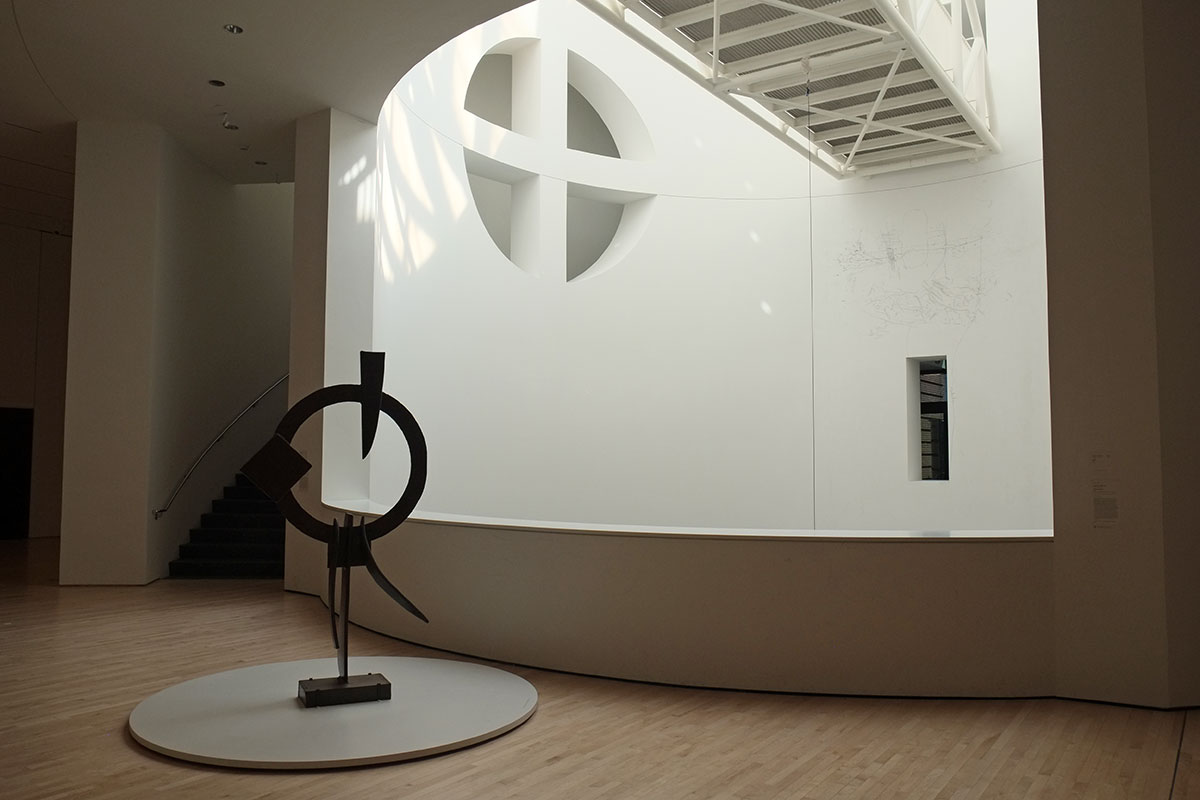
The biggest change is in the entry hall / atrium. Botta’s compact design had this space at the center, with a massive granite staircase rising into the light from the oculus. It was the most Bottavian feature of the building, taking the strict geometries and symmetries of his house designs to a grand scale. It provided an imageable center to the scheme, to which you always returned after circulating around the galleries, and it encouraged people to take the stairs instead of the elevators.SFMOMA002

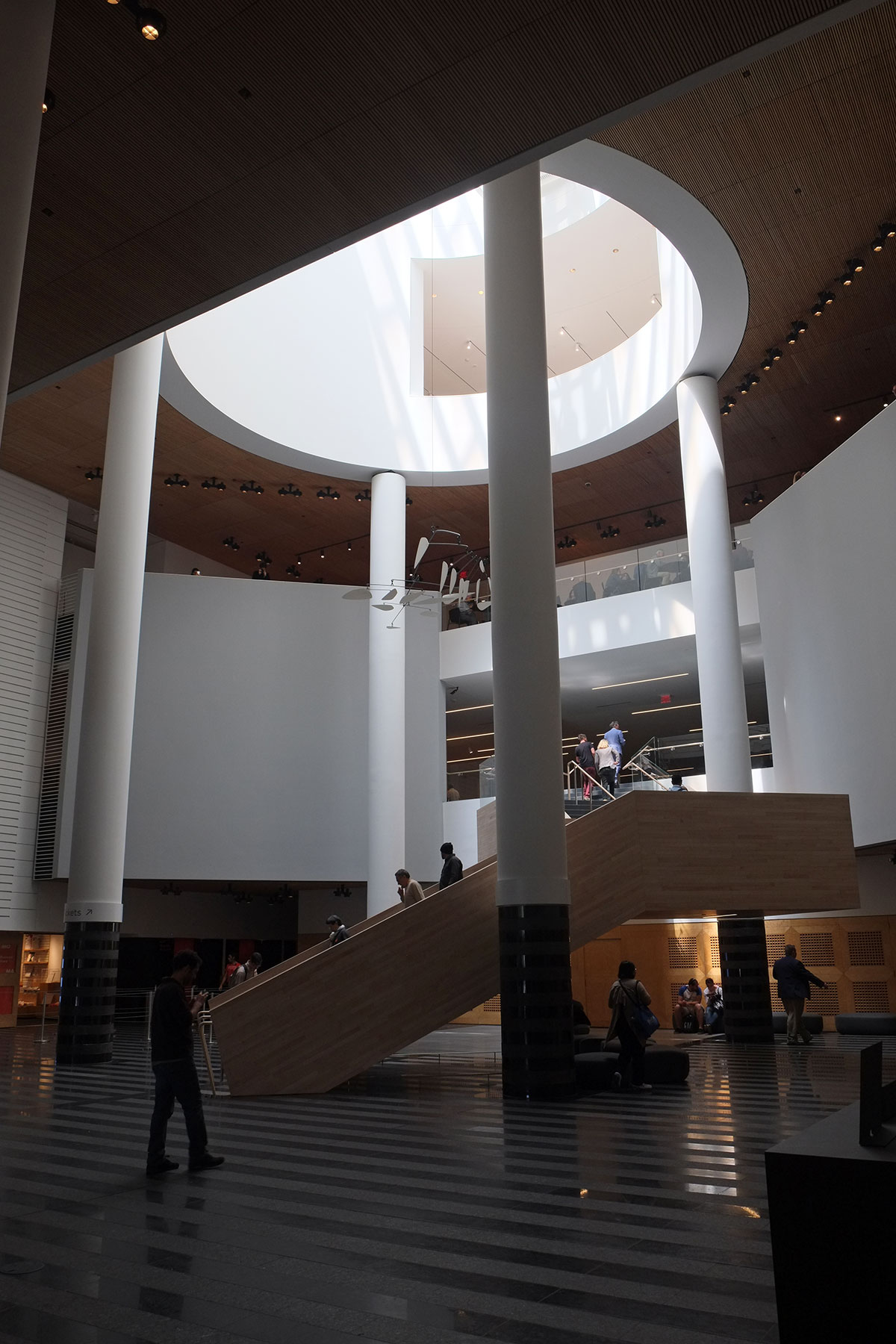
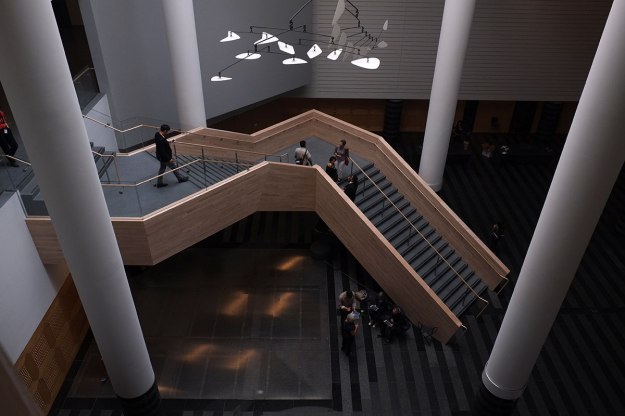
That stair has now been removed, replaced by an asymmetrical wooden stair which leads you deeper into the building, rather than spiralling you around this point. I have read an interview where they allude to (but never specify) many reasons why the stair had to be removed. I’m sure there was not really a technical reason why it had to be removed, but it seems clear that its retention would have conceptually and experientially divided the museum into two distinct parts, the tiny original and the big addition, with an awkward circulation zone between. The center of gravity of the building has shifted much further back into the block, and this new cascading stair is used to move you back and up into what is now the heart of the museum.DSCF1142
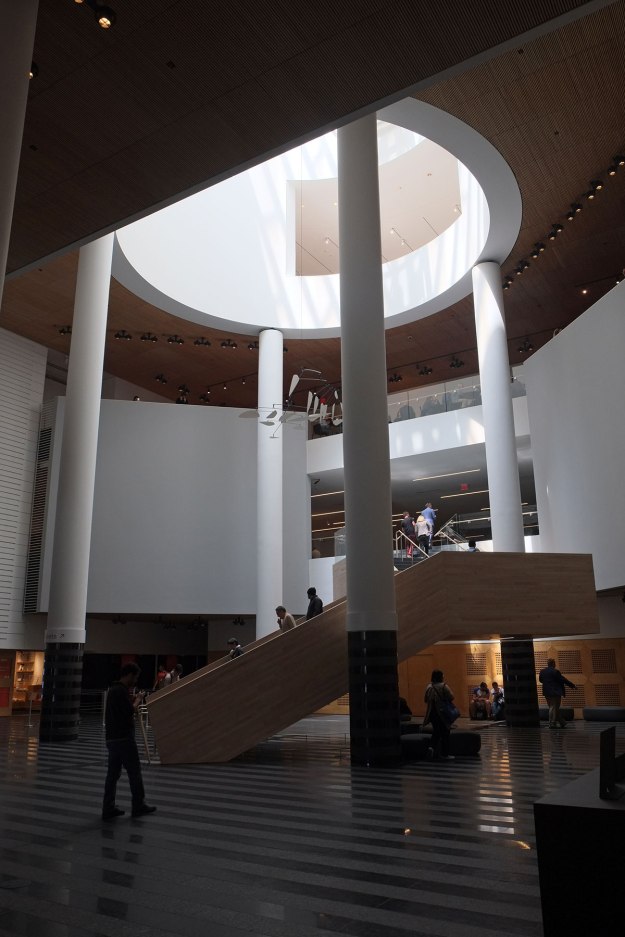
I also like it formally. While we old architects may still appreciate the formality of 1980s Postmodernism, this stair always felt a little bombastic and overwhelming to me. It filled the space, although the tension between the cylindrical space and the square stair was not really resolved. You felt quite compressed being on the stair, with the next run right above you, and the pressure of the crowds around you keeping you from stopping or enjoying the space. It was a powerful move for a tight footprint, but I like the oculus now more as a moment on a processional, rather than the culmination. And from a practical perspective, I bet that the old stair would have been completely inadequate to handle the large crowds coming to the new museum. If you’re going to build the biggest museum in the country, you need a grand stair like the Met’s. This new stair is the first visible move of the addition, putting a finger out into the original space, and drawing you in to the more free-form geometries of the 21st century.112. San Francisco003DSCF1253
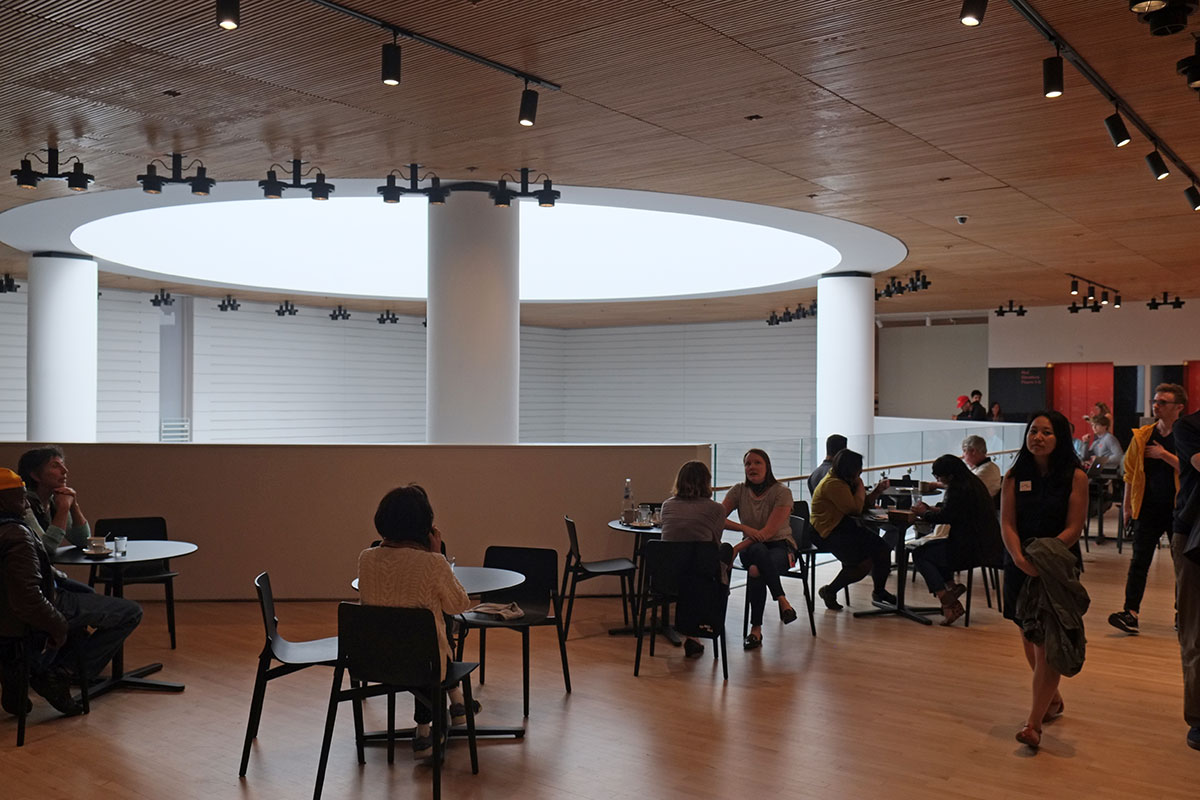
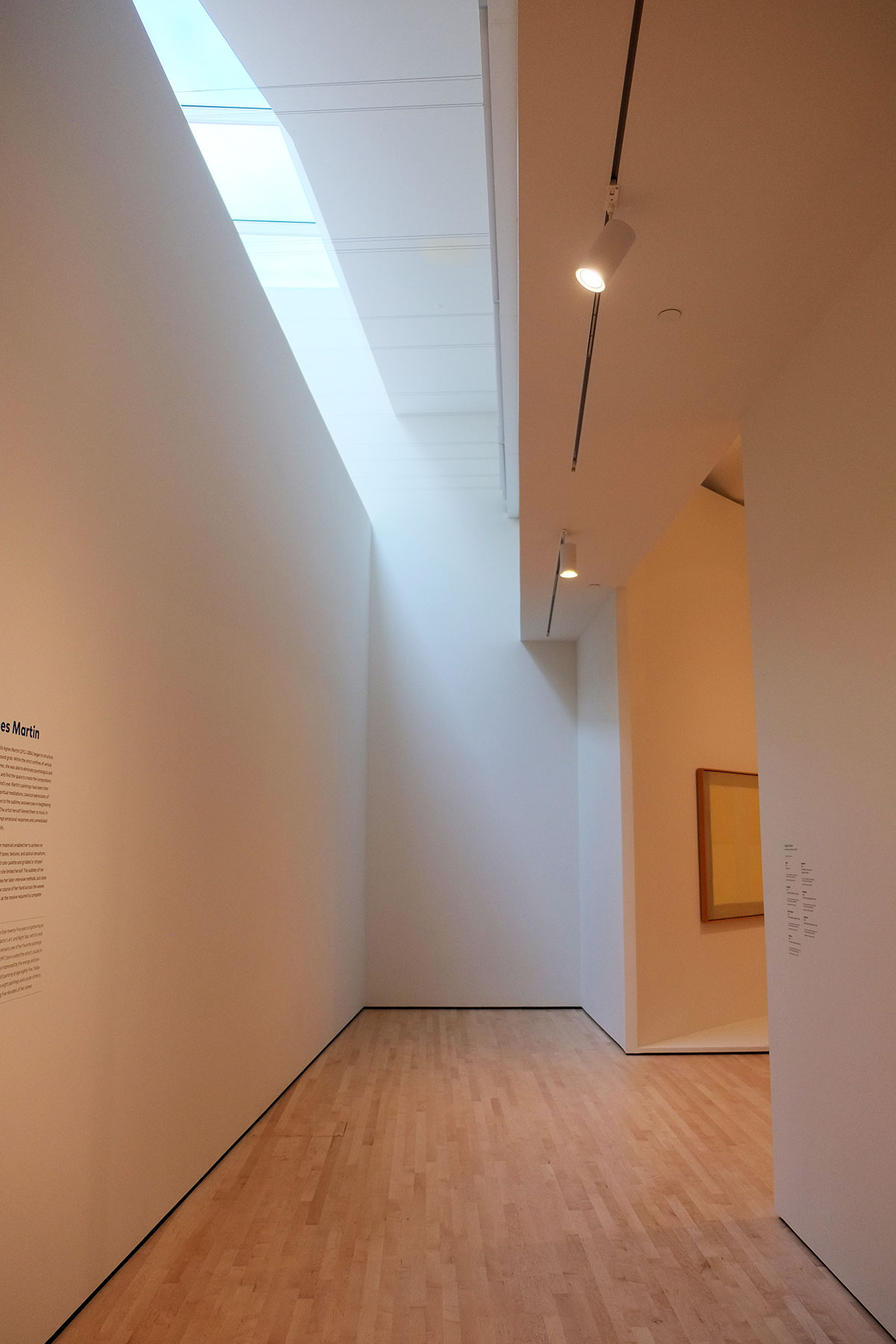
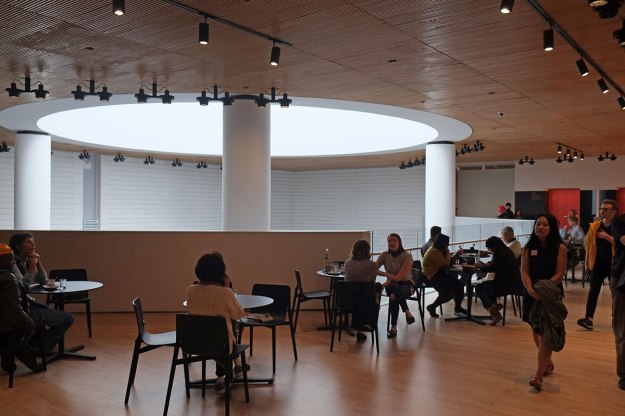
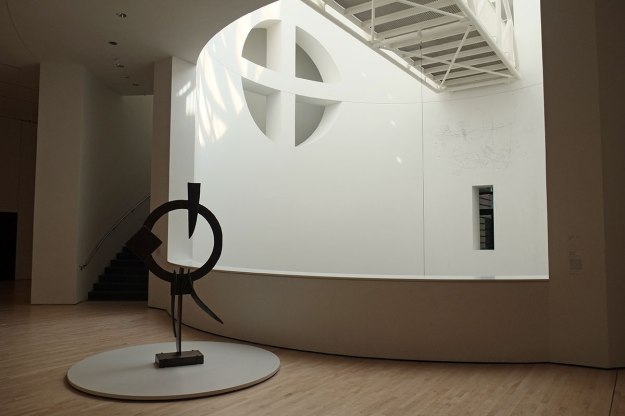
Once you get above the ground level, the atrium now becomes a light-filled space, opening to a new café, and still at the center of the original galleries. The Snøhetta remodel has been incredibly respectful of the original building – the spatial relationships have been preserved, and there is still an integrity to the piece – you can still understand Botta’s building as a whole, not just as some remaining rooms stuck off in a strange corner. The contrast here is with MOMA in New York. I’m old enough to remember when that was just the original Edward Durrell Stone building and the Philip Johnson remodel/addition. Both of the major remodels since (and certainly the one underway now, which has expanded MOMA’s zone of devastation down the street to the Folk Art Museum), have almost obliterated any sign of what came before. I remember coming upon a little stair from the Stone building that remained after the Pelli remodel, but that must be gone now too. MOMA seems to need to rebrand itself with every remodel; it’s nice to see SFMOMA engaging with its past.DSCF1256
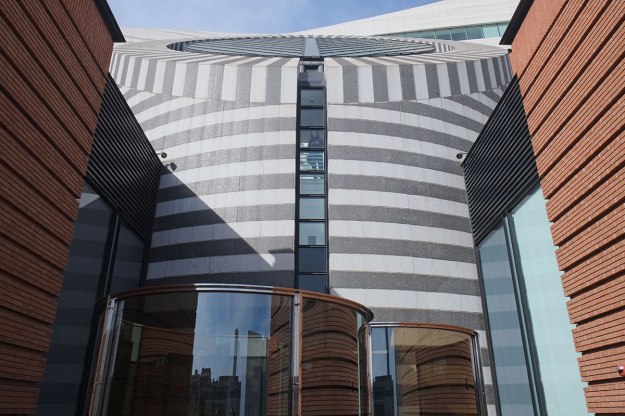
The little tight courtyard still exists on the front façade at the fourth level,DSCF1304
as well as the stairs shifting to the perimeter of the oculus, leading to the famous and (seemingly) perilous bridge across the top. This was the iconic, memorable part of the circulation system for most people, and its preservation shows the care that has been taken with the remodel.DSCF1295
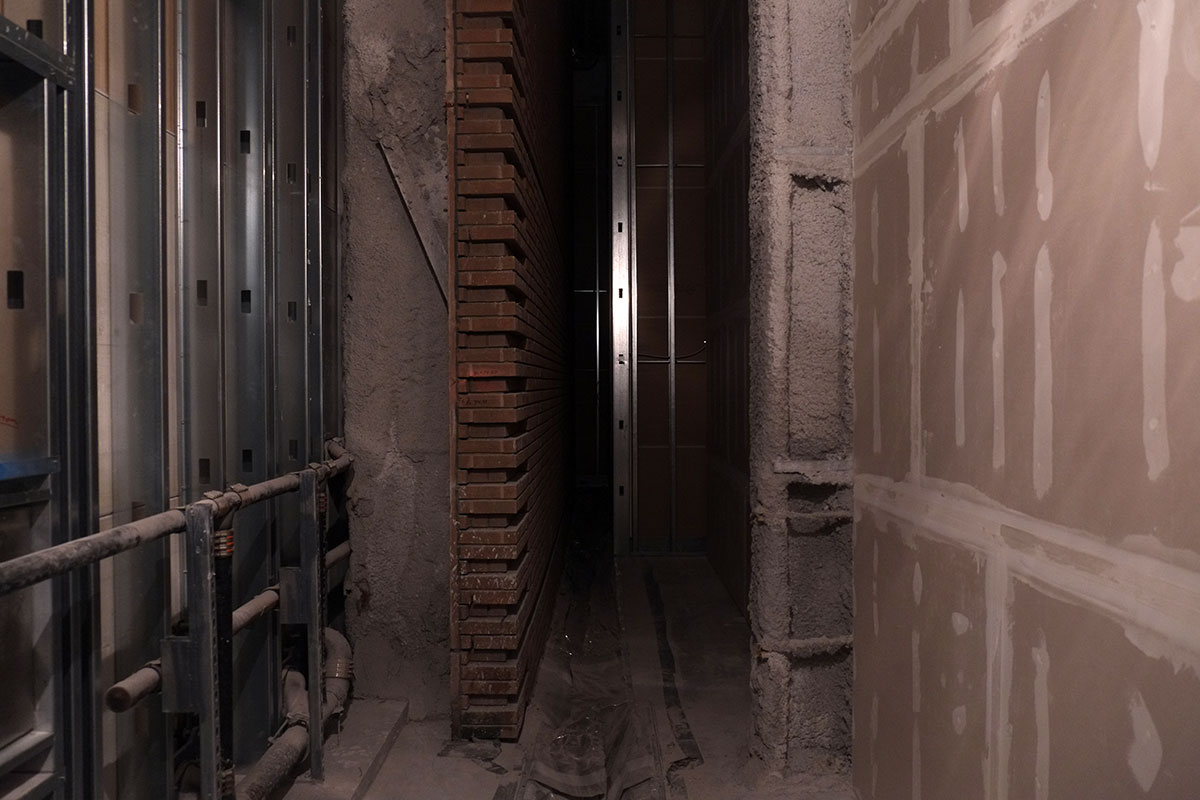
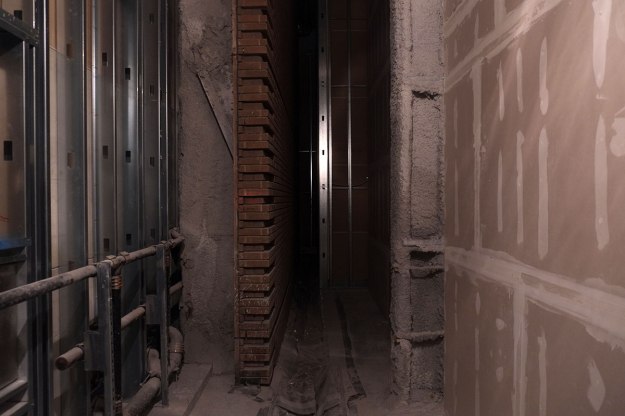
Greta spotted two inconspicuous windows in a wall, and came across this – a view inside thewall, showing where the original rear façade of the museum now faces the partition wall of a new gallery. This is not a building which has much tectonic expression, and this little view perfectly illustrates something Bob Stern once said. We were all enamored of the clarity of the exposed systems in Kahn buildings, and Bob asked, do you have any idea how much round stainless steel ductwork costs? His proposal was that the rational way to make a building was to design the spaces you want, enclose them with steel studs and gypsum board, and then leave lots of poche space where the engineers can insert anything they want. So in a building where that is basically the model, it is instructive for Snøhetta to give us a glimpse behind the curtain.DSCF1292
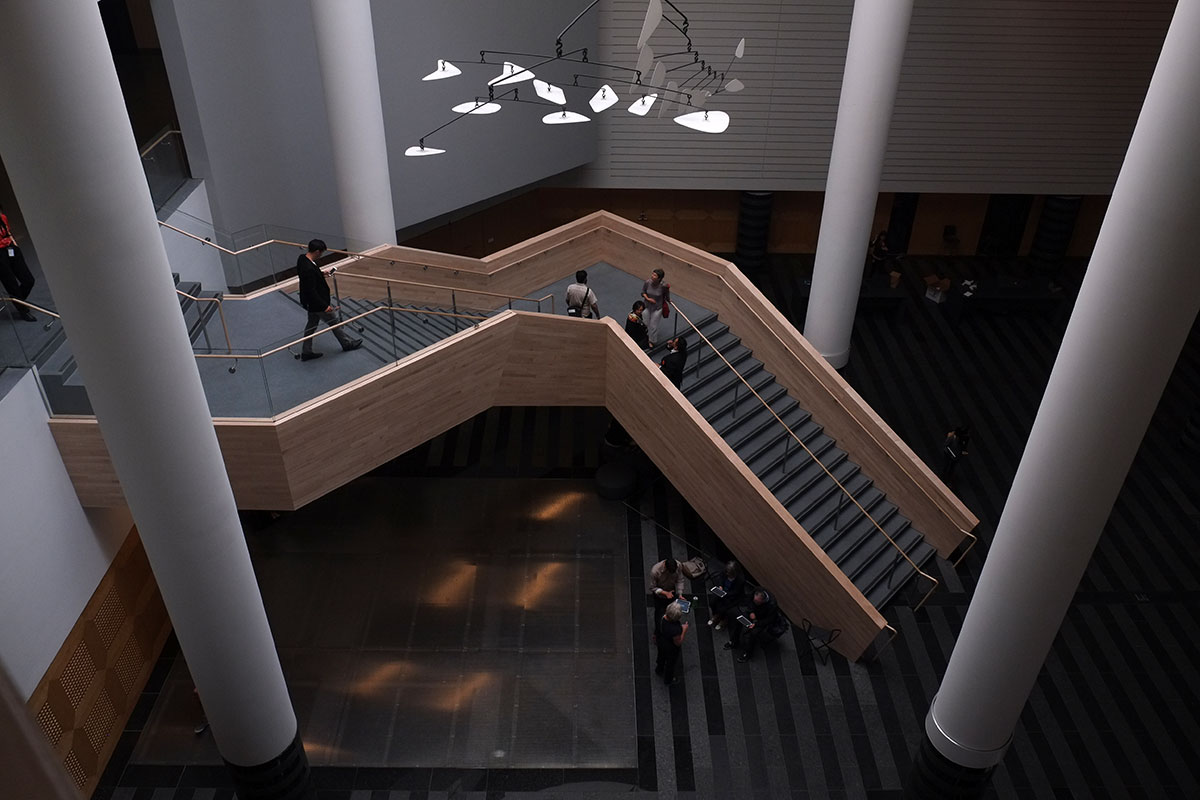
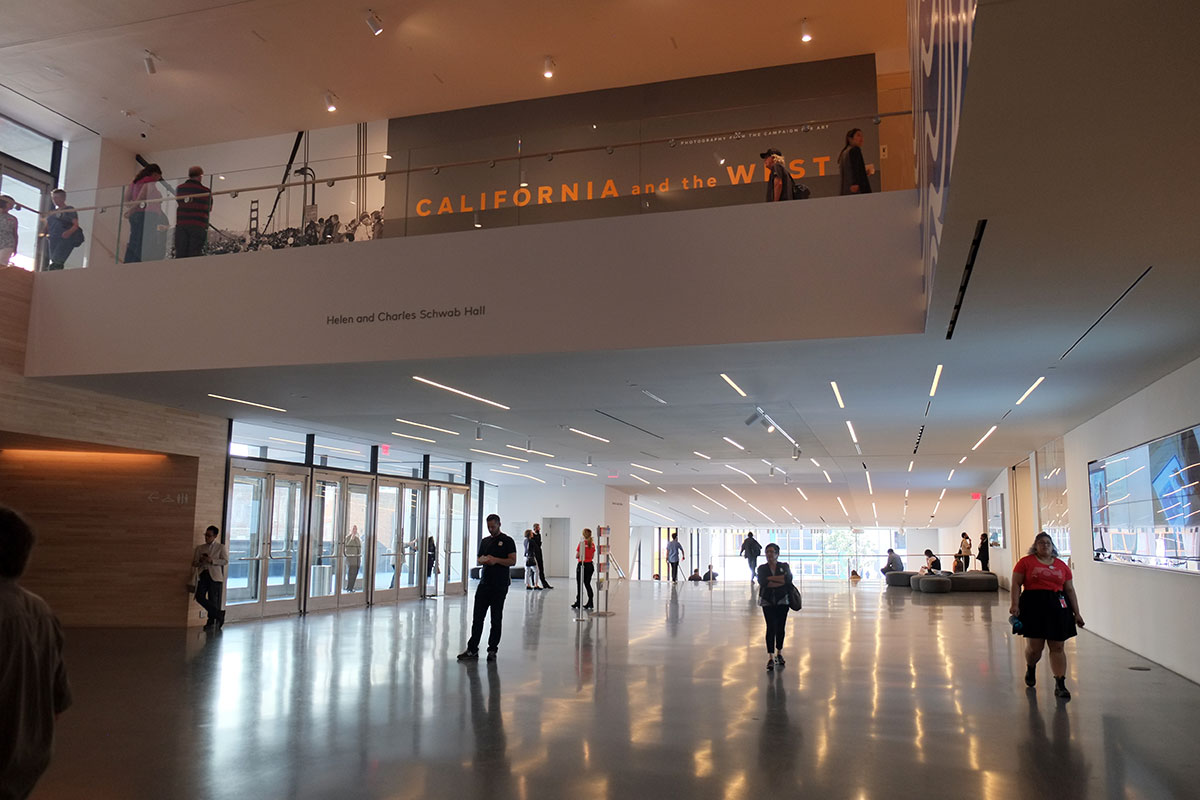
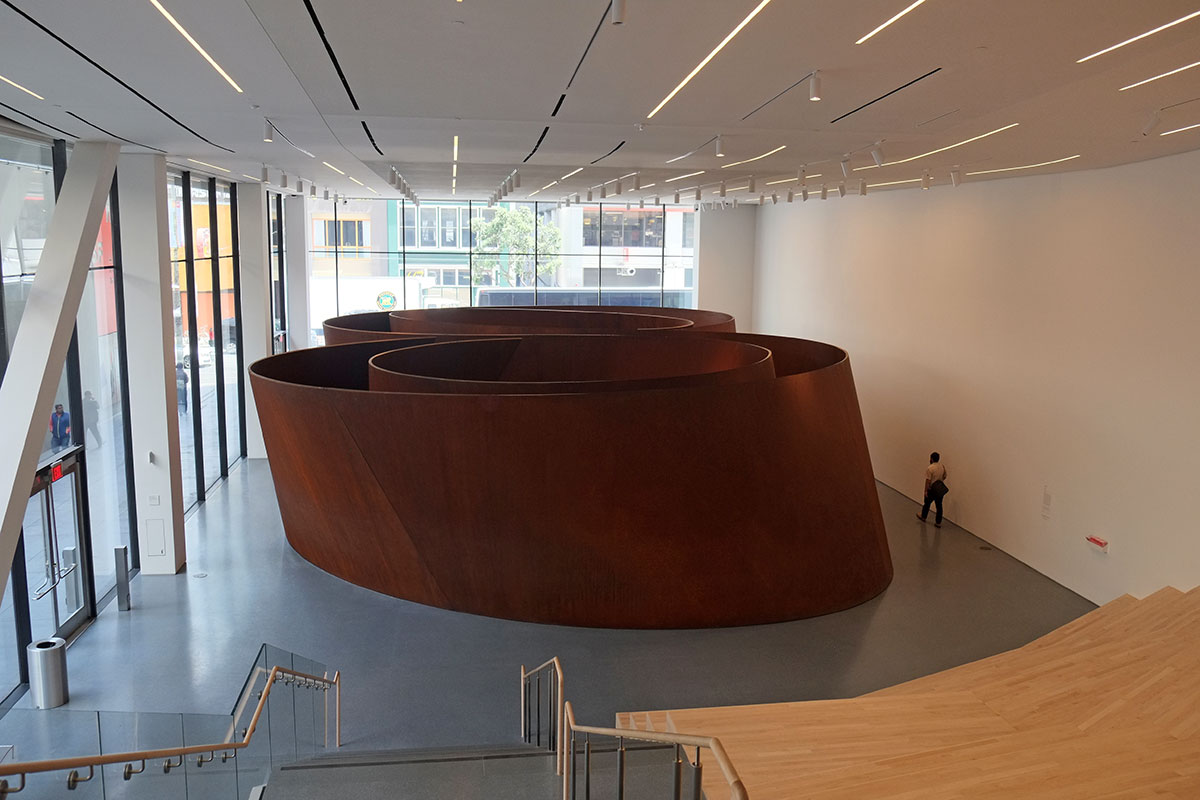
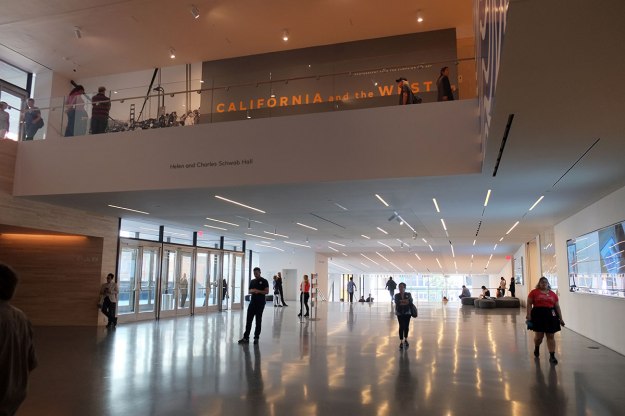
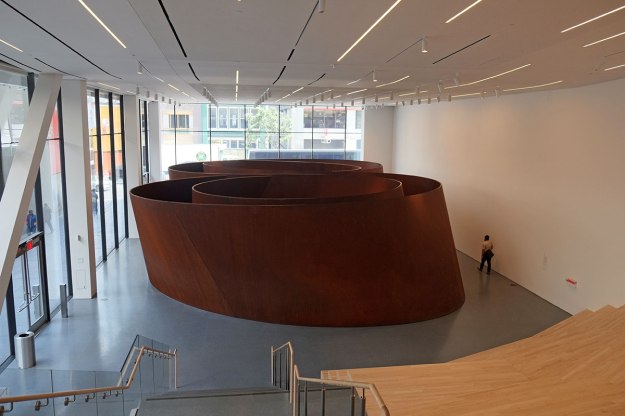
At the top of the kinked stair, you arrive at the big lobby, with ticketing, a main stair up through to the next floor, and lots of room for crowd circulation. To the southeast you can see toward another entry off Howard St.,DSCF1150
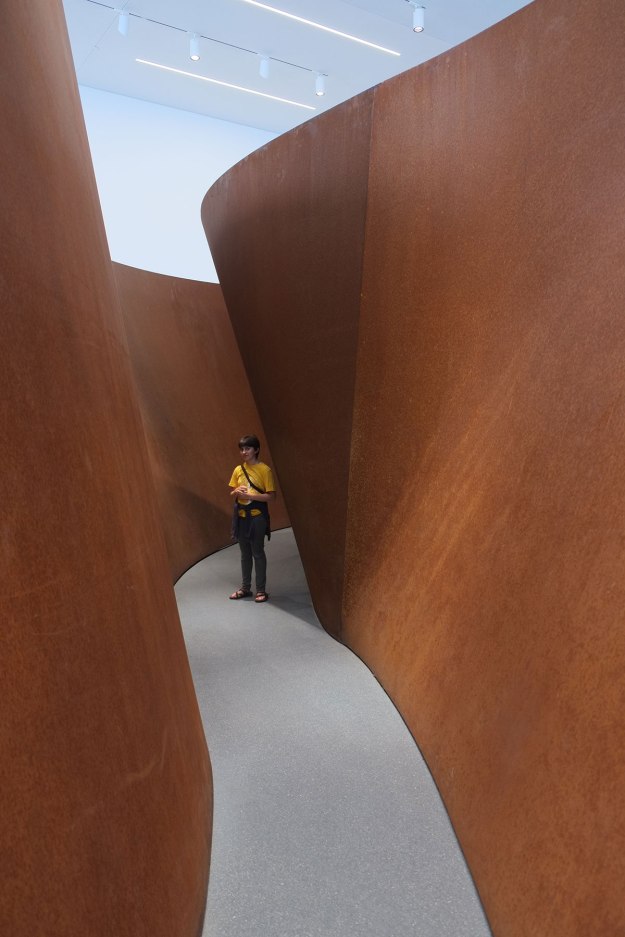
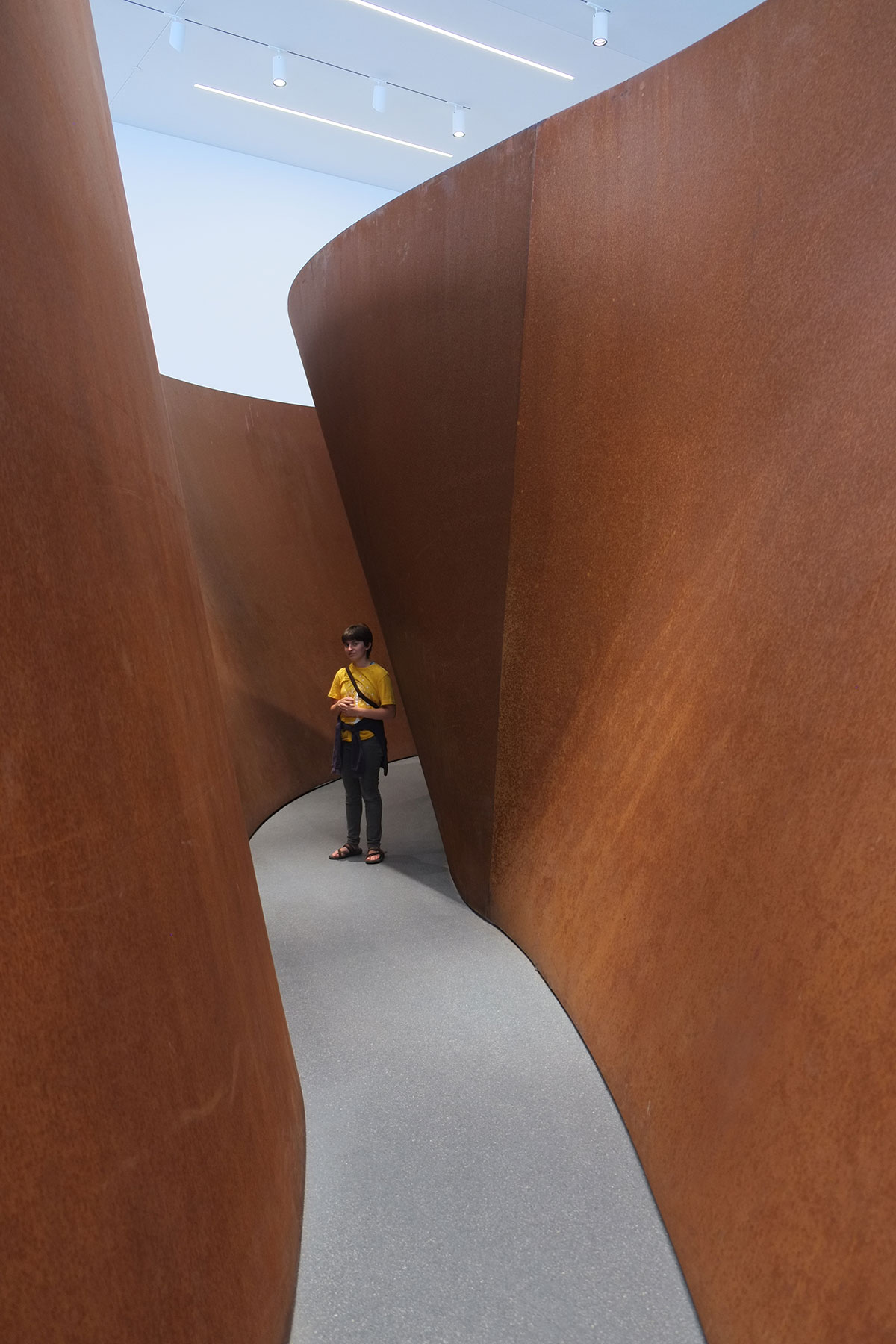
which when you approach it becomes an amphitheater filled with a complexly-spiralling Richard Serra piece. It’s a wonderful space, outside the ticketed area, and you can just wander in and sit here any time.DSCF1153
DSCF1160

It also begins to establish the dynamic of the museum interacting with the city. Whereas the Botta museum is a centralized, internally focussed building, the new addition brings San Francisco into the mix, in a way similar to other new museums we’ve seen, such as the new Whitney in New York, the Perez in Miami, or the Perot in Dallas. It’s a movement I appreciate – while there are good reasons to make galleries completely-controlled boxes that focus on the artwork, using the non-gallery spaces of a museum to engage with the city outside provides a change in scale, a way to refocus your eyes and attention, and an opportunity to reorient yourself in space and time. Museums are not shopping malls or casinos, there is no need to confuse and trick the patrons into staying. In these new museums I’ve found the opposite to be true – taking a break from the artwork after a couple of hours refreshes you, and allows you to dive back in.

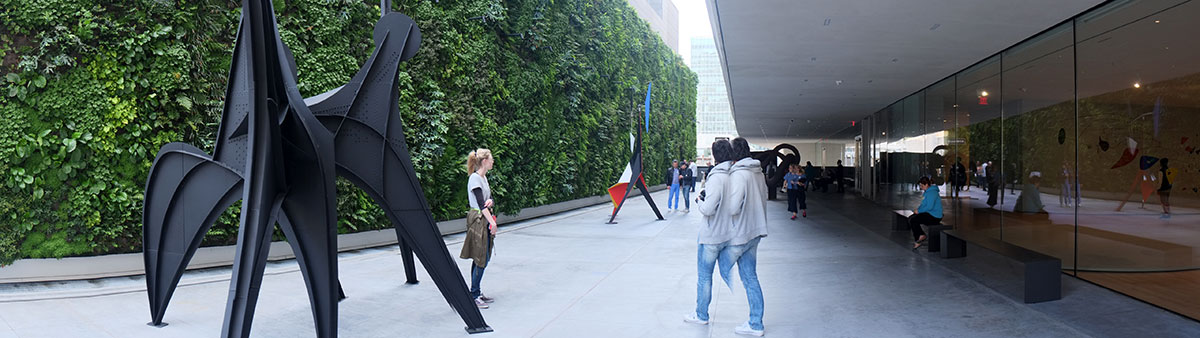
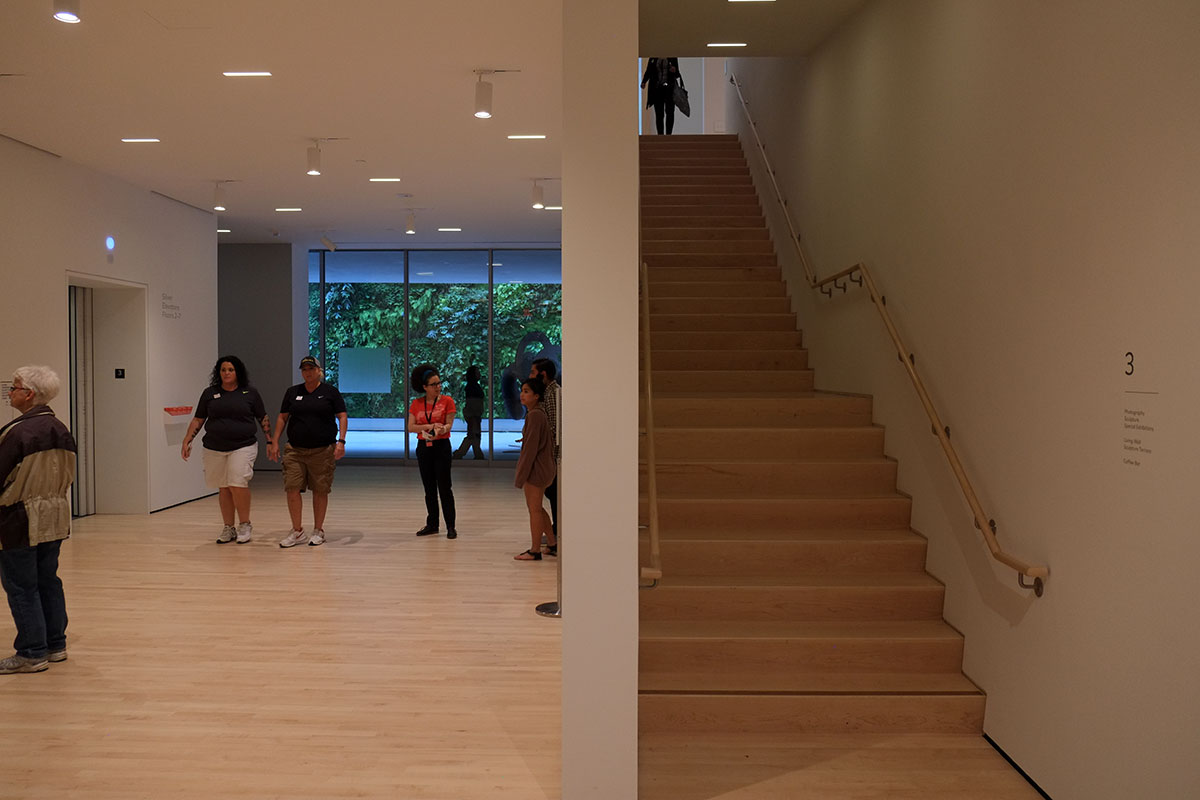
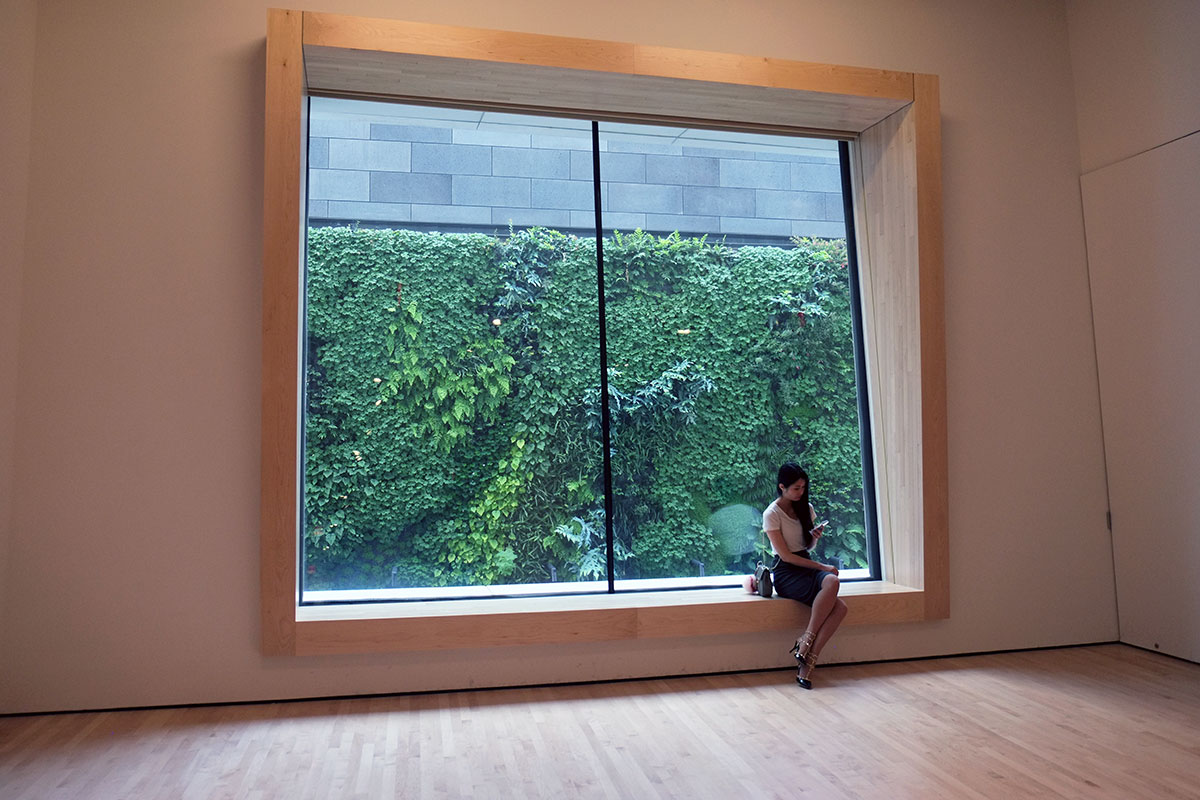
Taking the big stair to the third level, the museum expands out even more. There is a sculpture terrace with a living wall across the rear of the building,DSCF1178
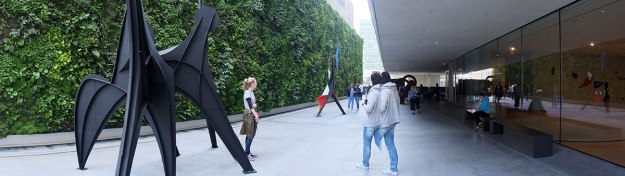
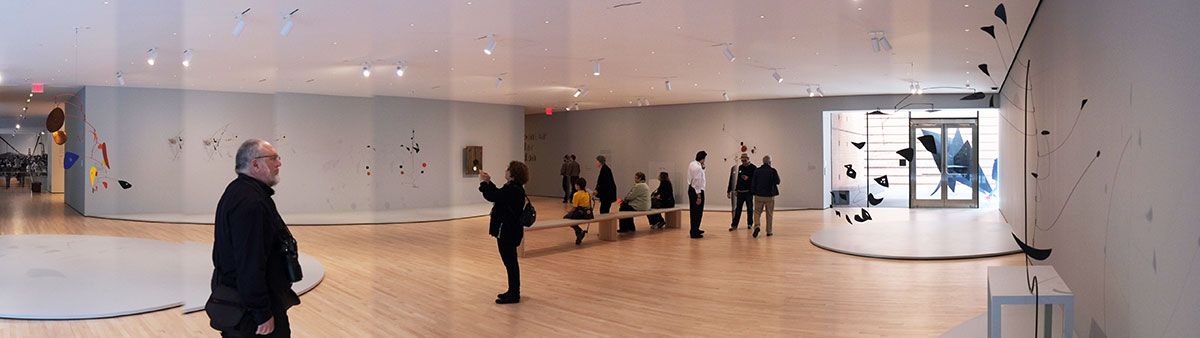
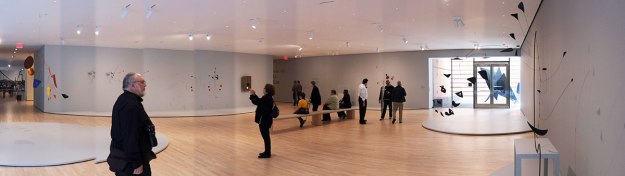
and among other small galleries, a large space devoted to Calders, with sculpture terraces on two sides. It’s a fantastic sequence of spaces, and the collection is extraordinary, with many atypical early pieces. Later in the afternoon, when I was spending too much time looking at architecture, Greta just came back and sat here.DSCF1188
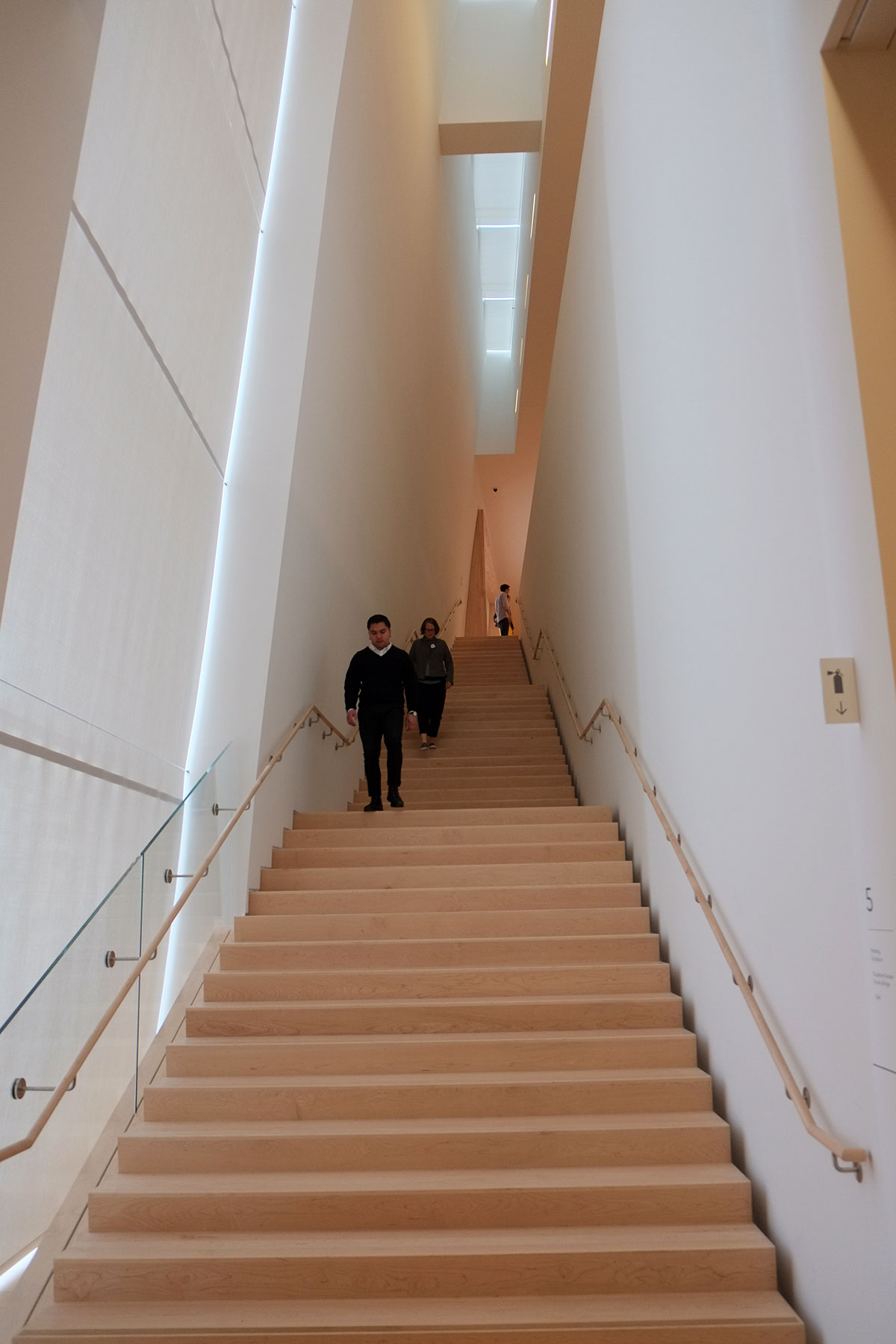
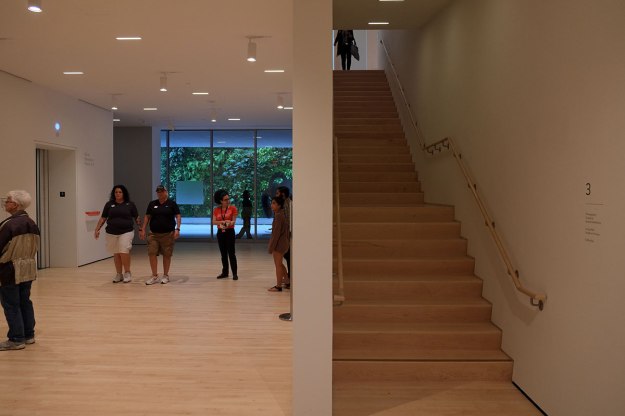
At any point one could just decide to take an elevator, but I prefer to walk everywhere. Going from the third to the fourth floor is the one point where the intuitive circulation/spatial system of the addition gets muddy. In from the street and up the two distinct stairs to the third level feels like a natural progression, with glimpses of spaces and light ahead moving you forward. And the system that links the fourth to seventh level is beautiful. But the third/fourth transition is this hard-to-find stair tucked between walls. It may be due to the need to separate the vertical space of the building into two distinct three-story atriums (1-3 and 4-6) for fire code reasons, but I wish there had been a way to accomplish this that didn’t leave you leave you at a wayfinding dead end. The transition from the original to the addition is so seamless that it makes the bifurcation of the addition feel very abrupt.DSCF1258
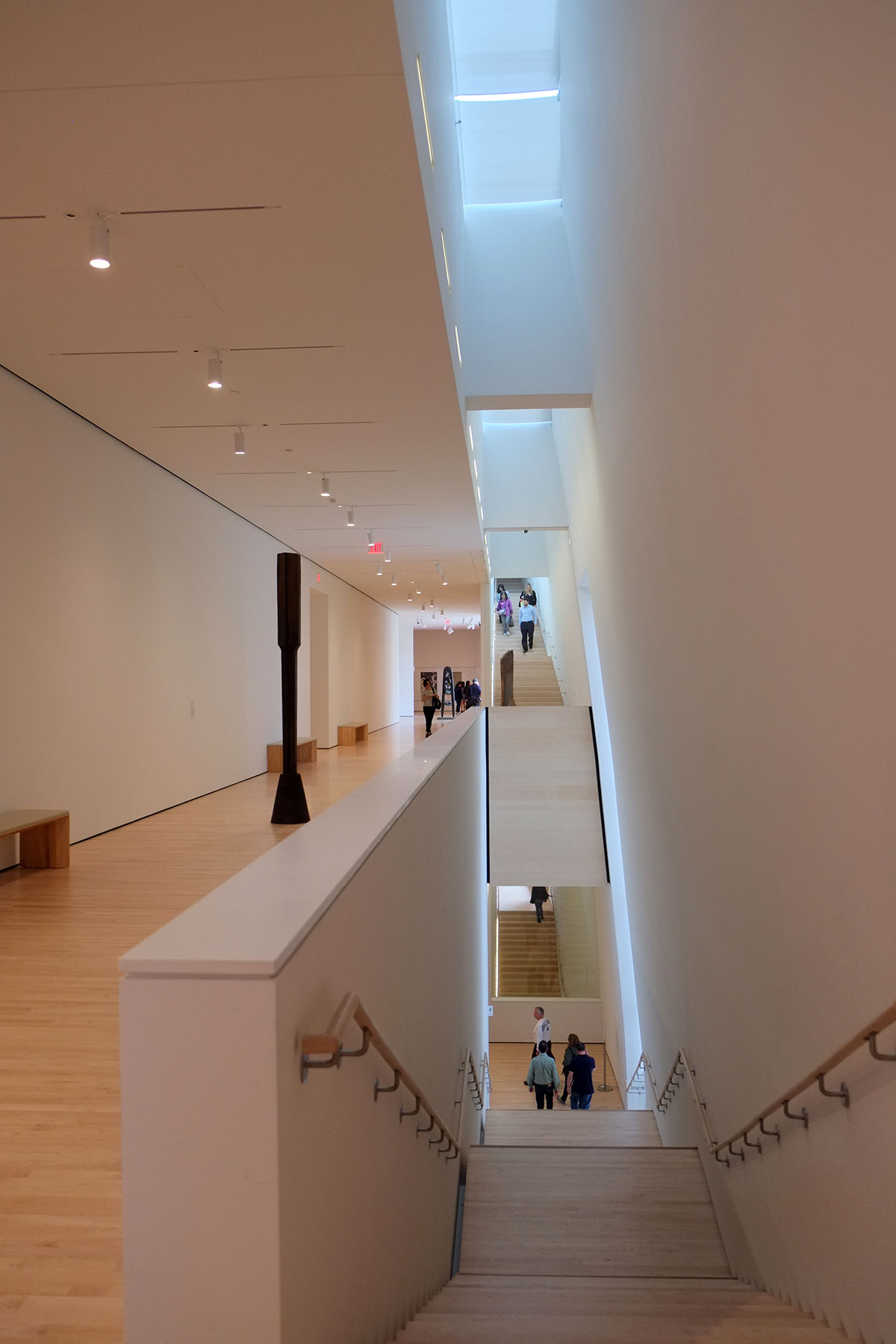
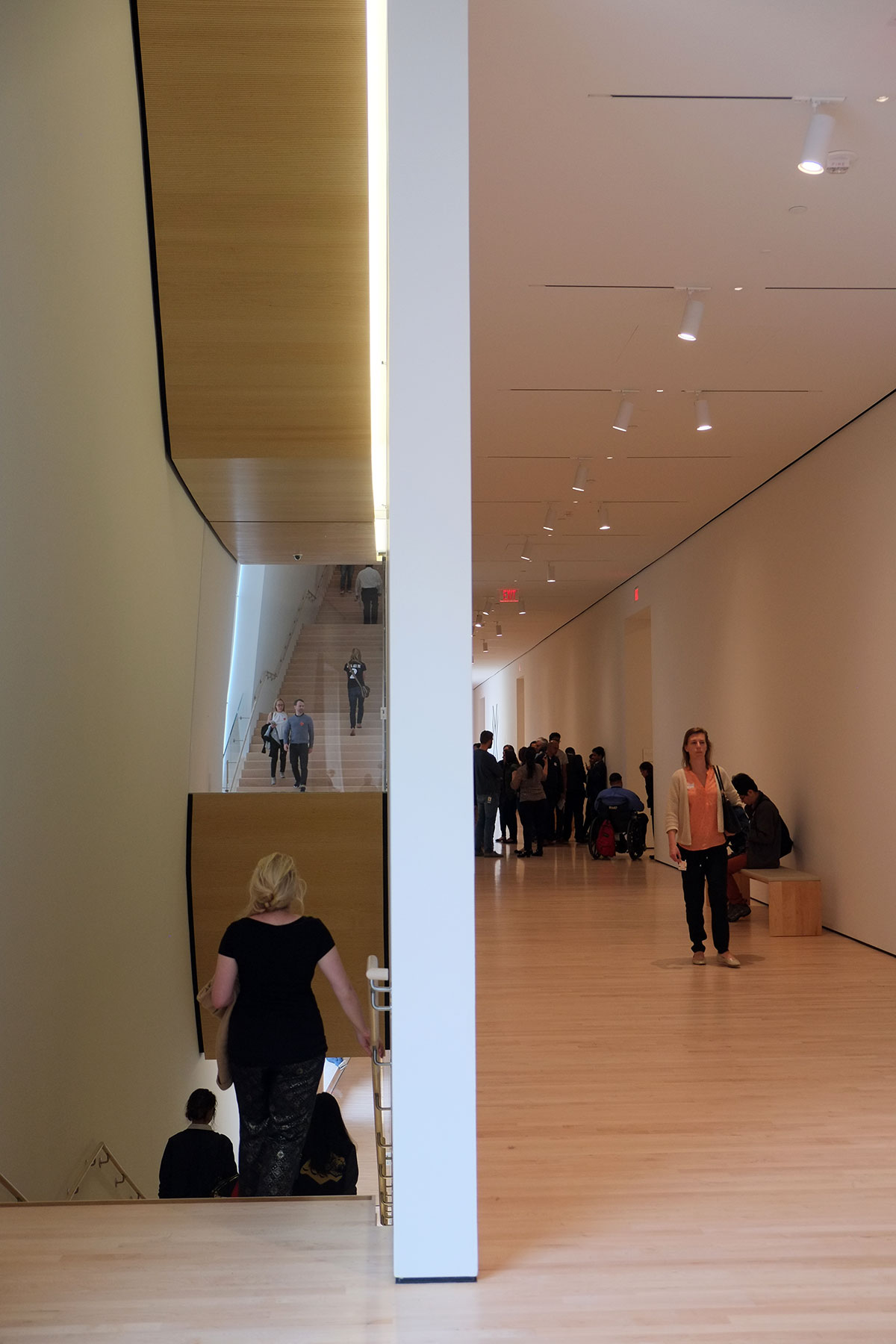
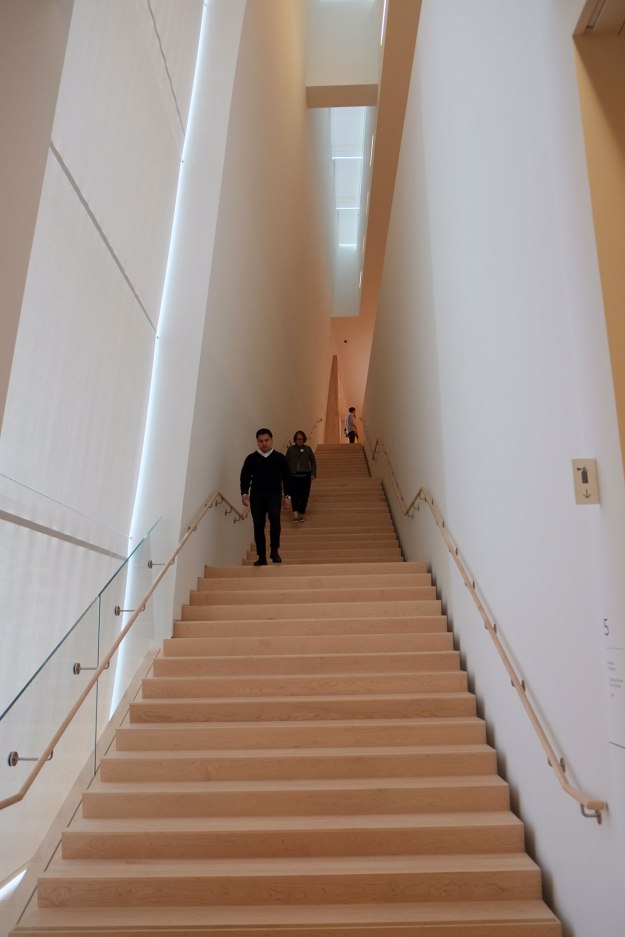
But once you get past that, you get to the stair / corridor / double-height system that runs along the rear façade. It reminded me of the stairs at the Alte Pinakotek in Munich, where the central axis take you to a large cross-axis hall at the back, with symmetrically diverging stairs. This linear system is certainly not symmetrical, nor could I probably draw its spatial permutations accurately, but it feels completely intuitive and engaging. There are tall stairs which draw you up to the light.112. San Francisco006DSCF1326
There are layers with the large corridors that provide glimpses of other zones.DSCF1323
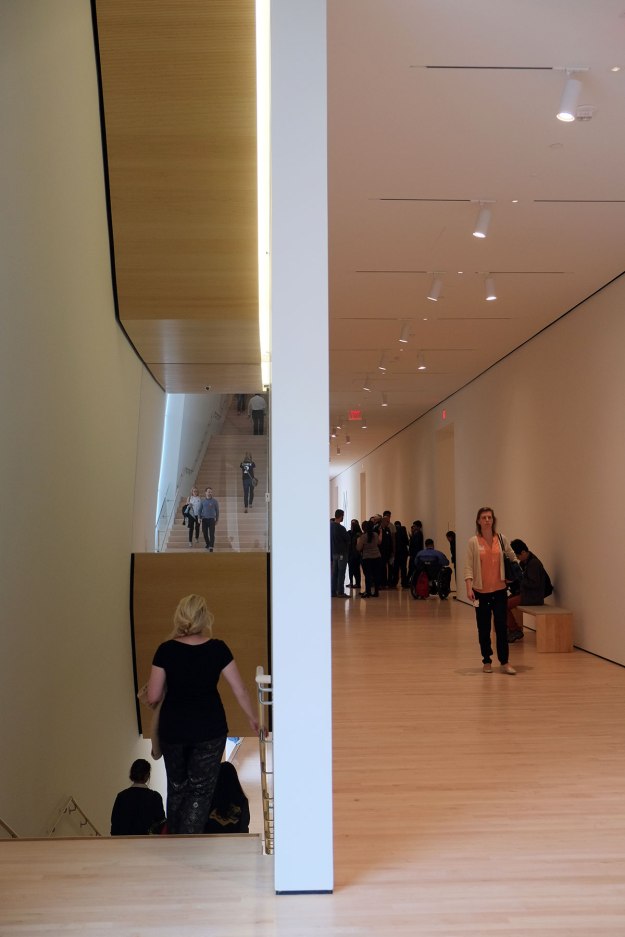
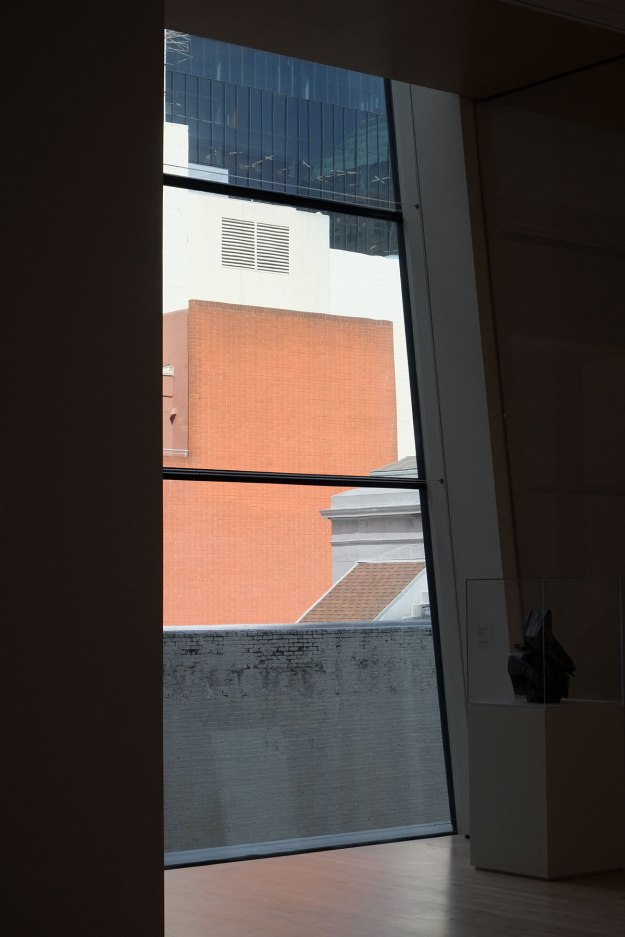
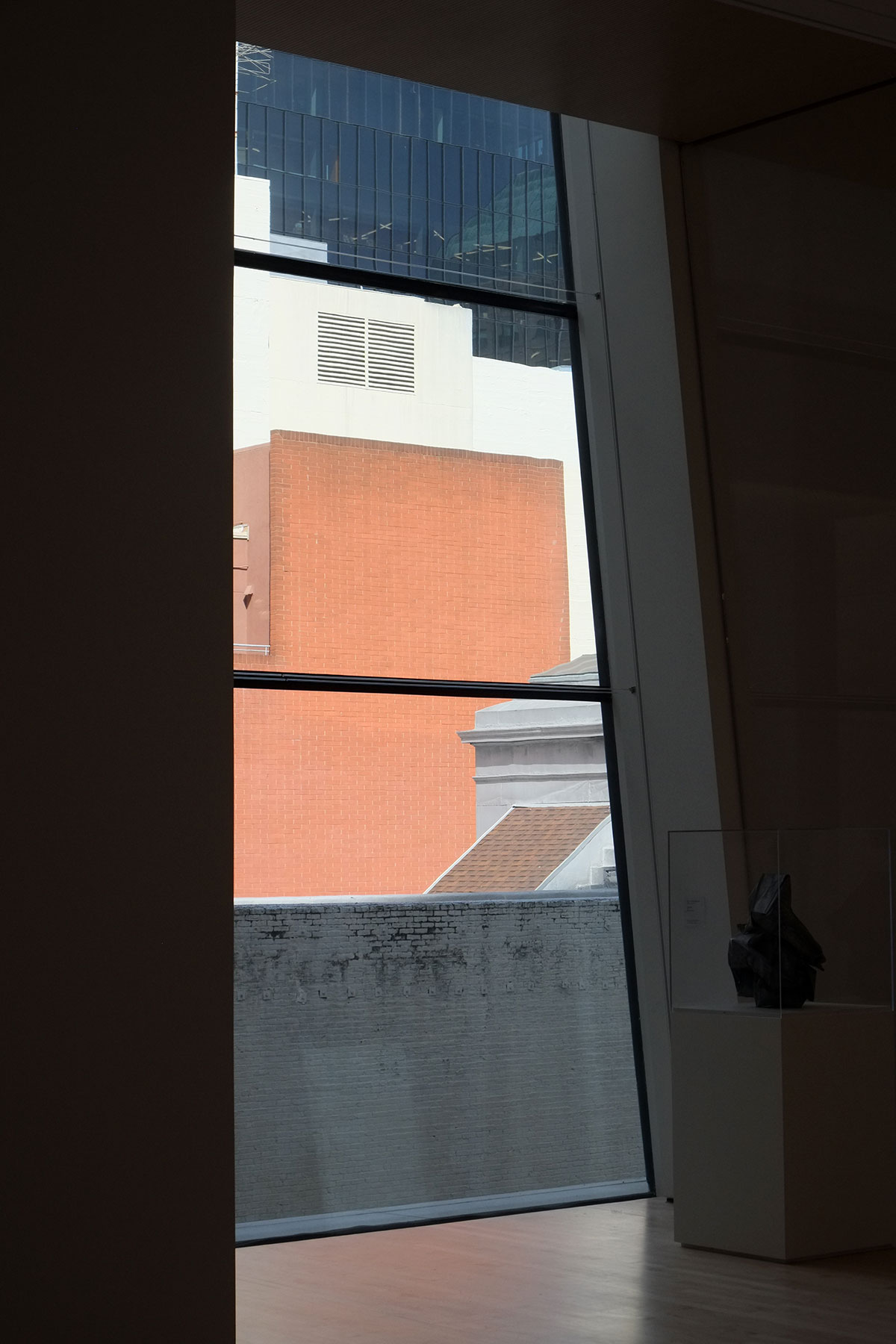
There are views out to the cityDSCF1265

and places to sit and rest (or pose for photos).DSCF1361
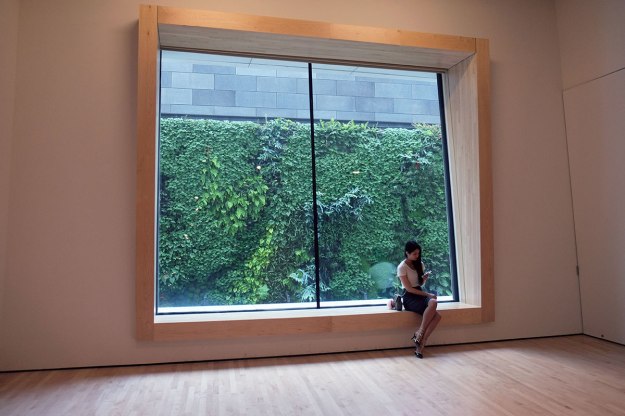
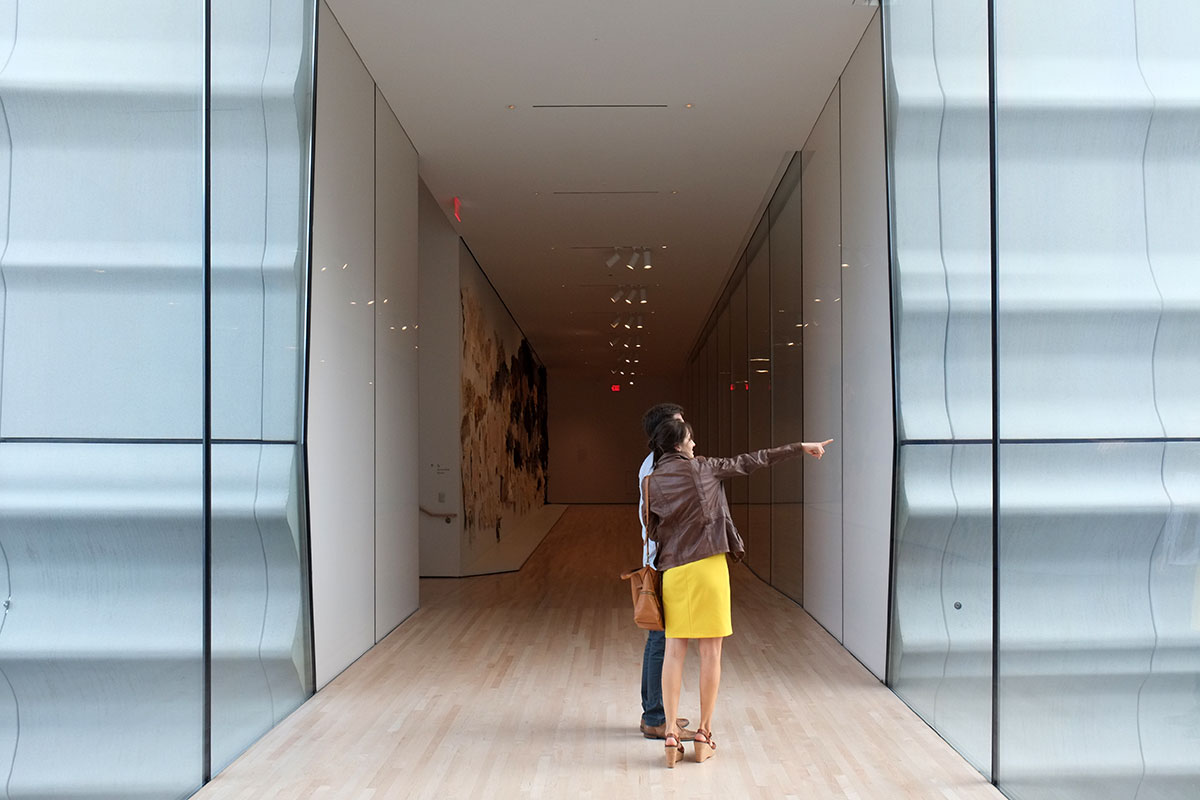
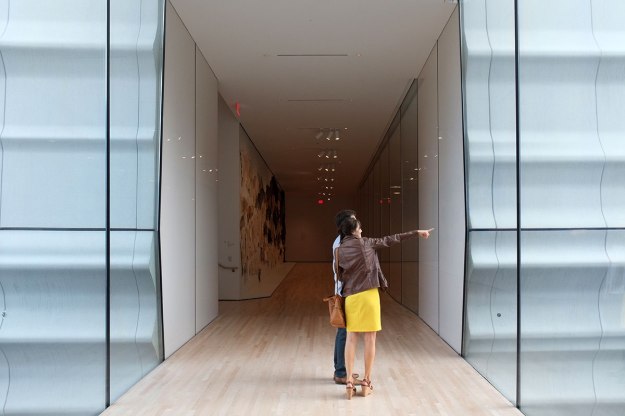
This whole system is tucked up against the free-form façade, which provides gaps and openings for light and movement.

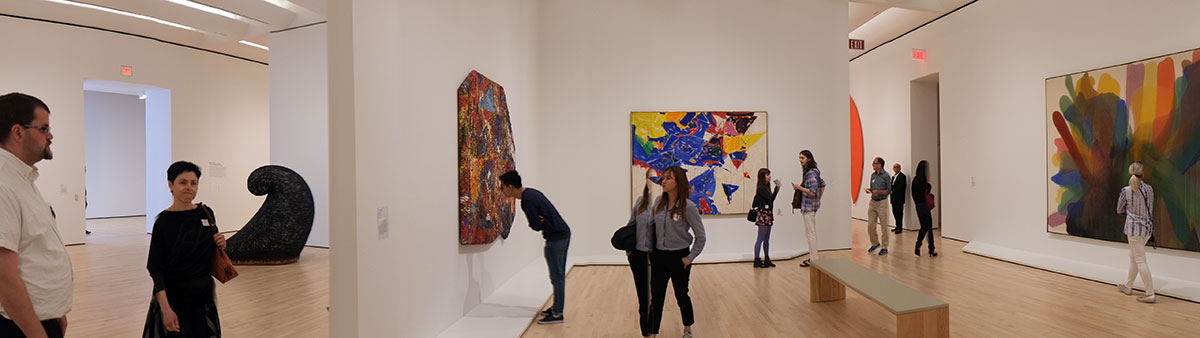
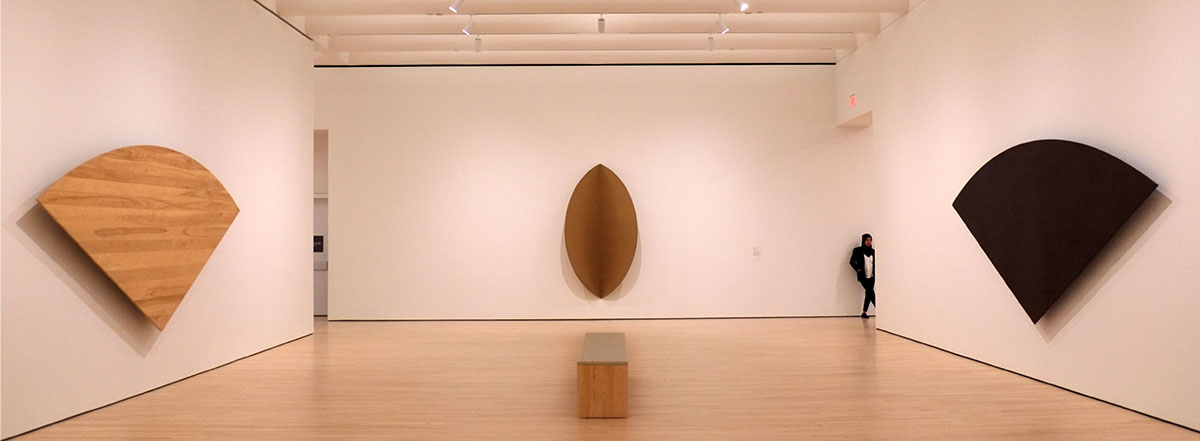
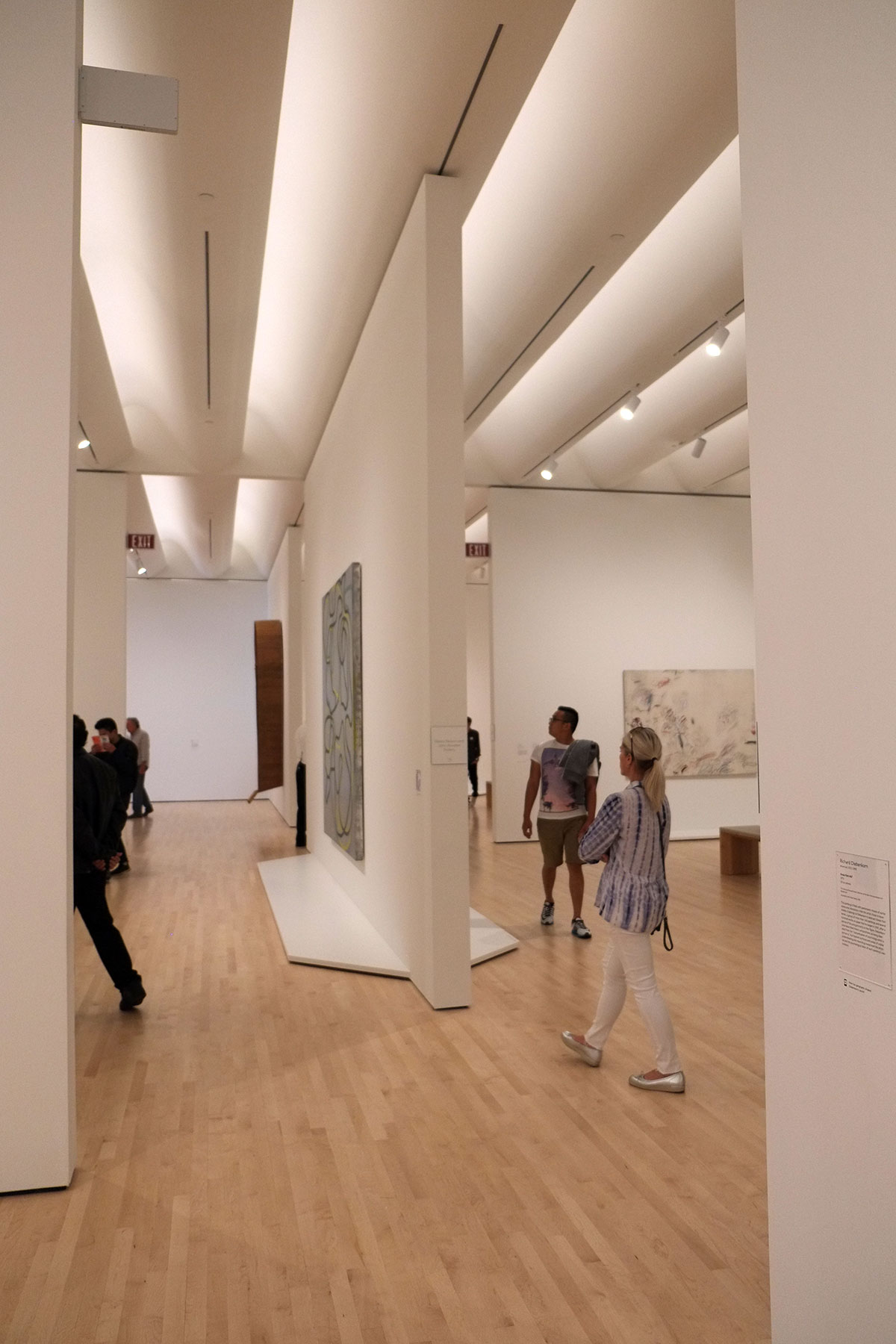
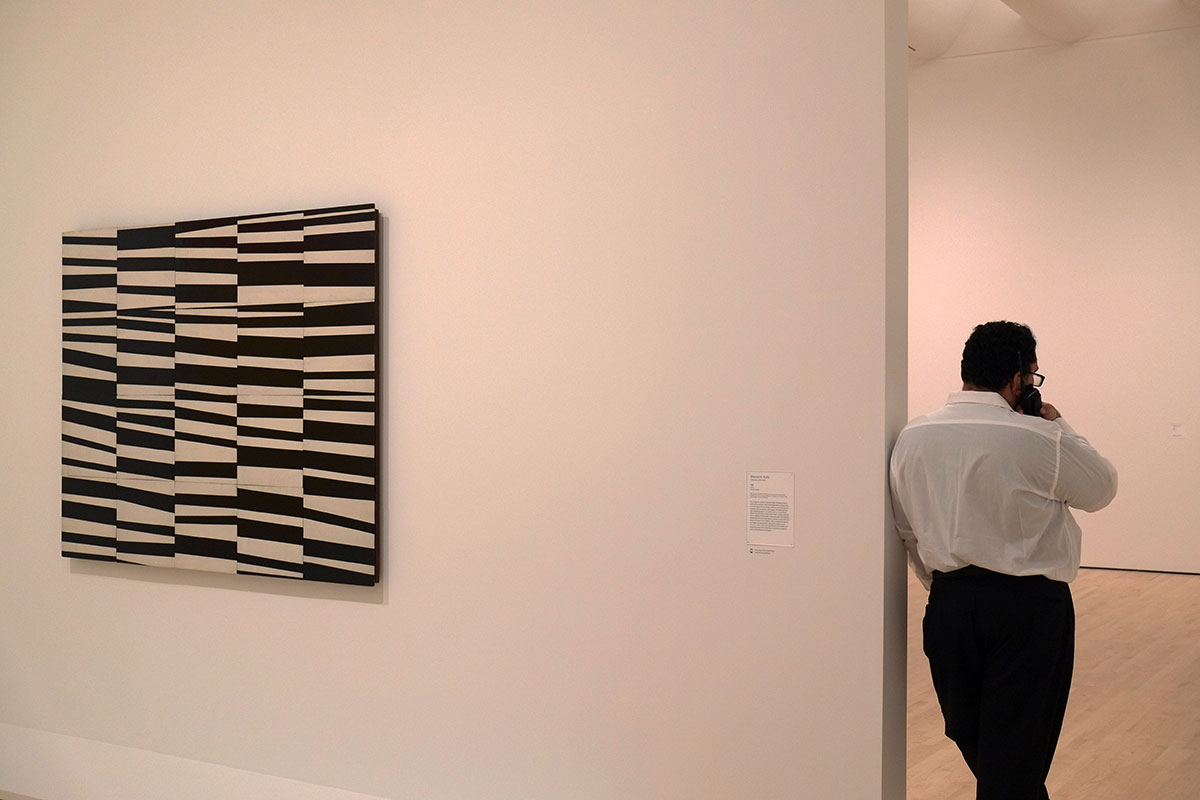
The galleries themselves are ordered yet flexible. They are two rooms deep off the rear corridor, so you have a choice of an irregular enfilade system or the corridor for circulation. While the walls are on a grid, the way the galleries open to each other is highly varied,112. San Francisco004DSCF1271
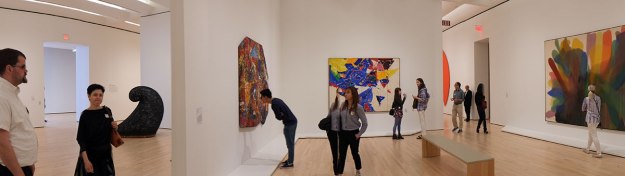
112. San Francisco005DSCF1281

such as here where four galleries open to each other at a corner.DSCF1270
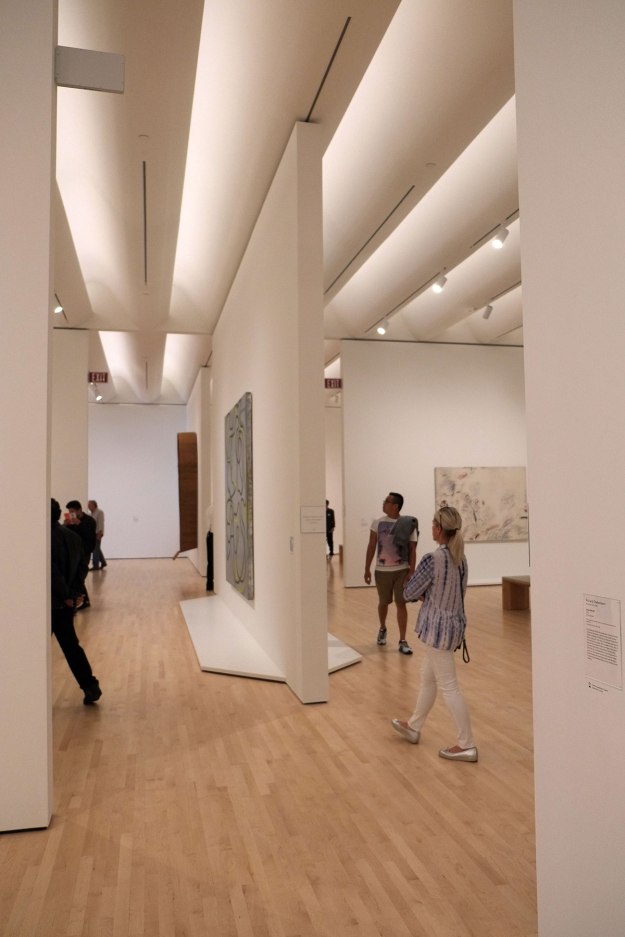
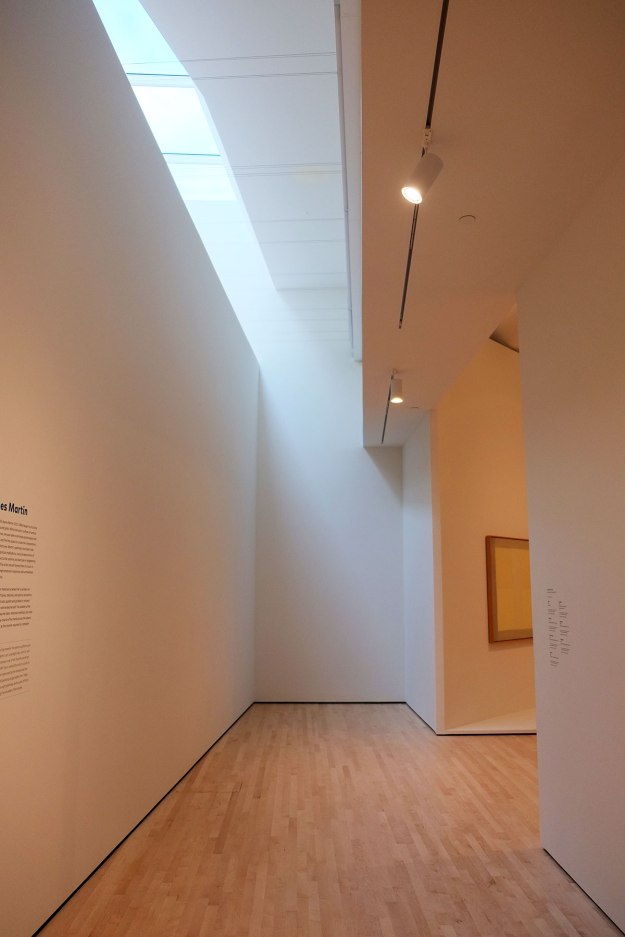
The lighting is a combination of coffered indirect lighting in the galleries, with windows poking through the rear façade into the corridors.DSCF1284
DSCF1283

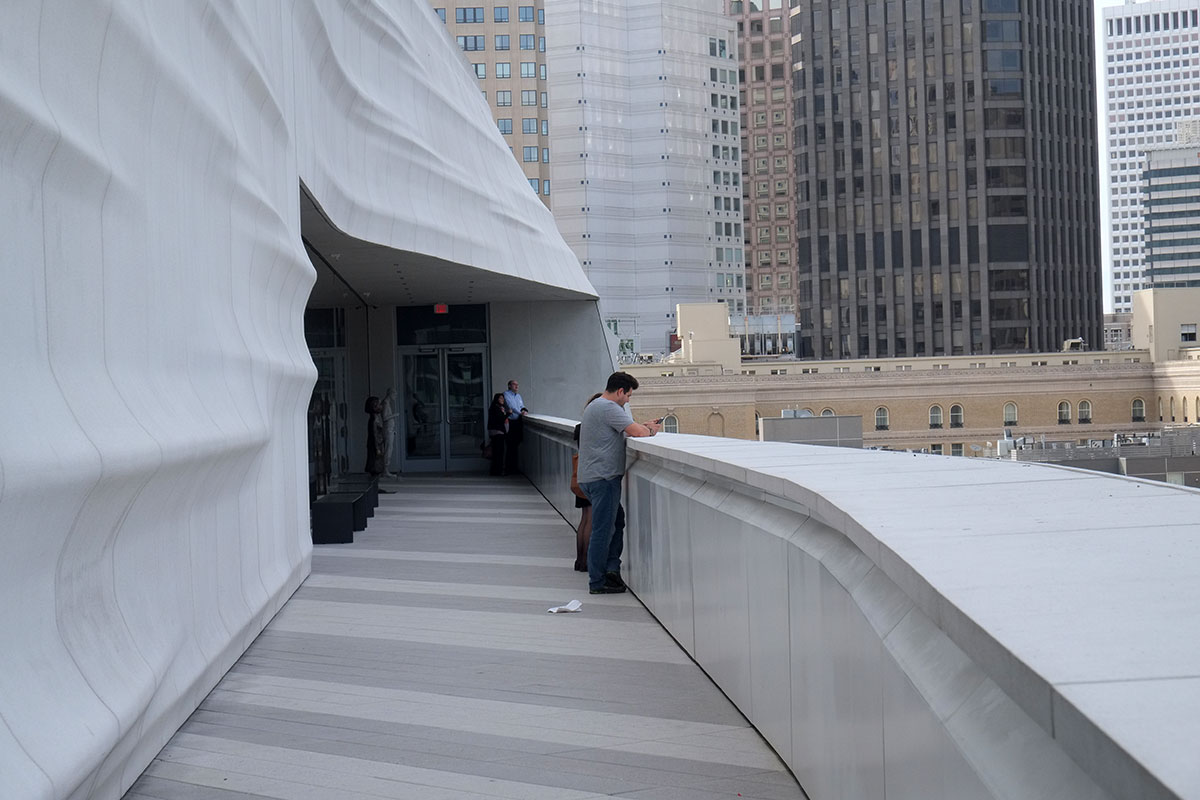
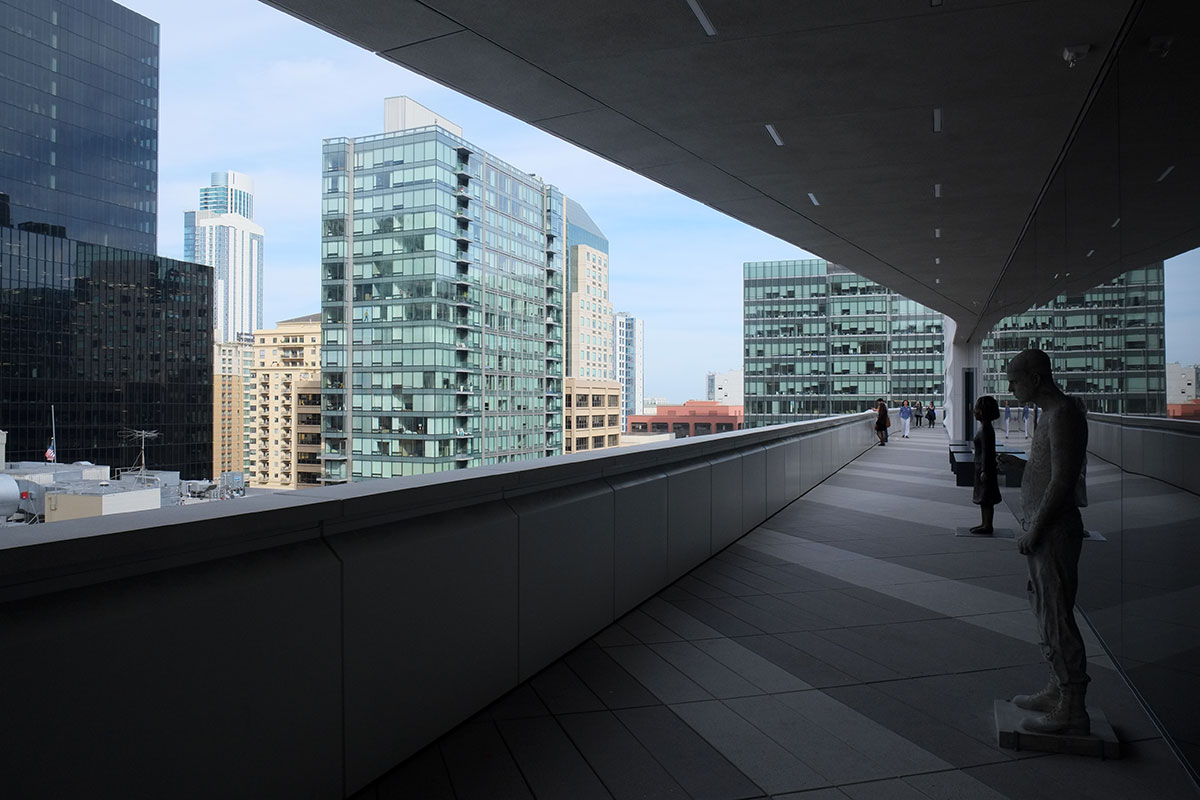
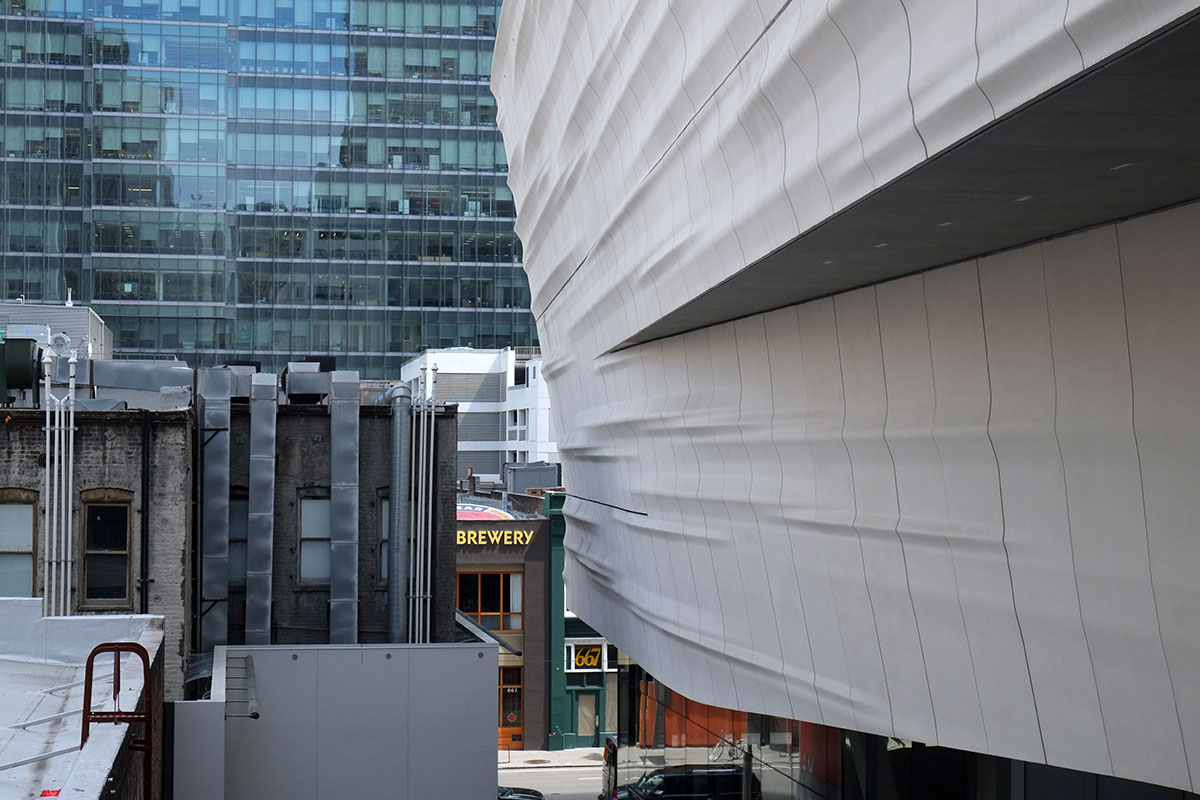
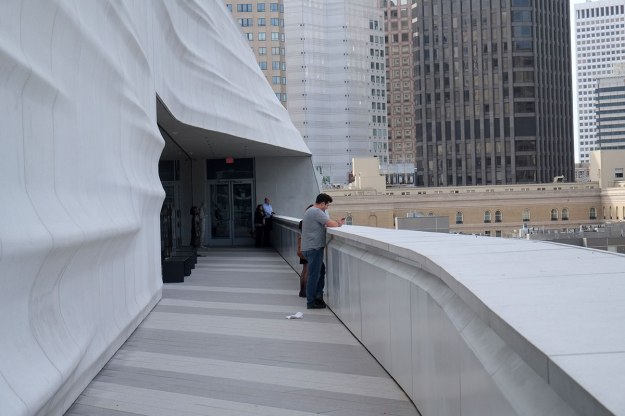
On the seventh floor there is a small balcony where you step outside into a fold in the thick space of the exterior wall. This is where the white wall loses the restraint imposed by backing up Botta’s building, and becomes a blob, floating in the city.DSCF1340
112. San Francisco007DSCF1339

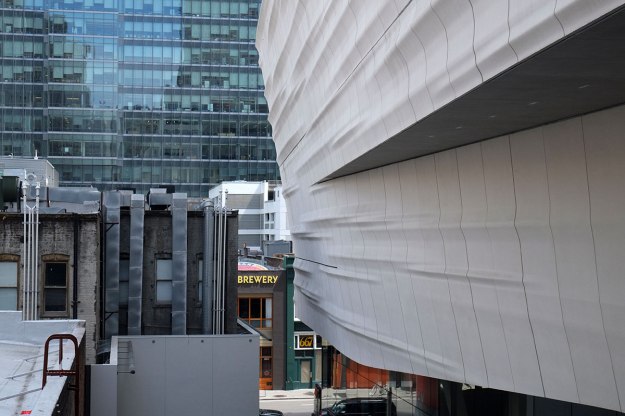
I’ve read that this form is a reference to the rolling topography of San Francisco, or even a fog bank rolling in between the hills. It is white and reflective, so I can imagine that the view of it glowing on a foggy day must be extraordinary. 112. San Francisco002DSCF1170
112. San Francisco008DSCF1345

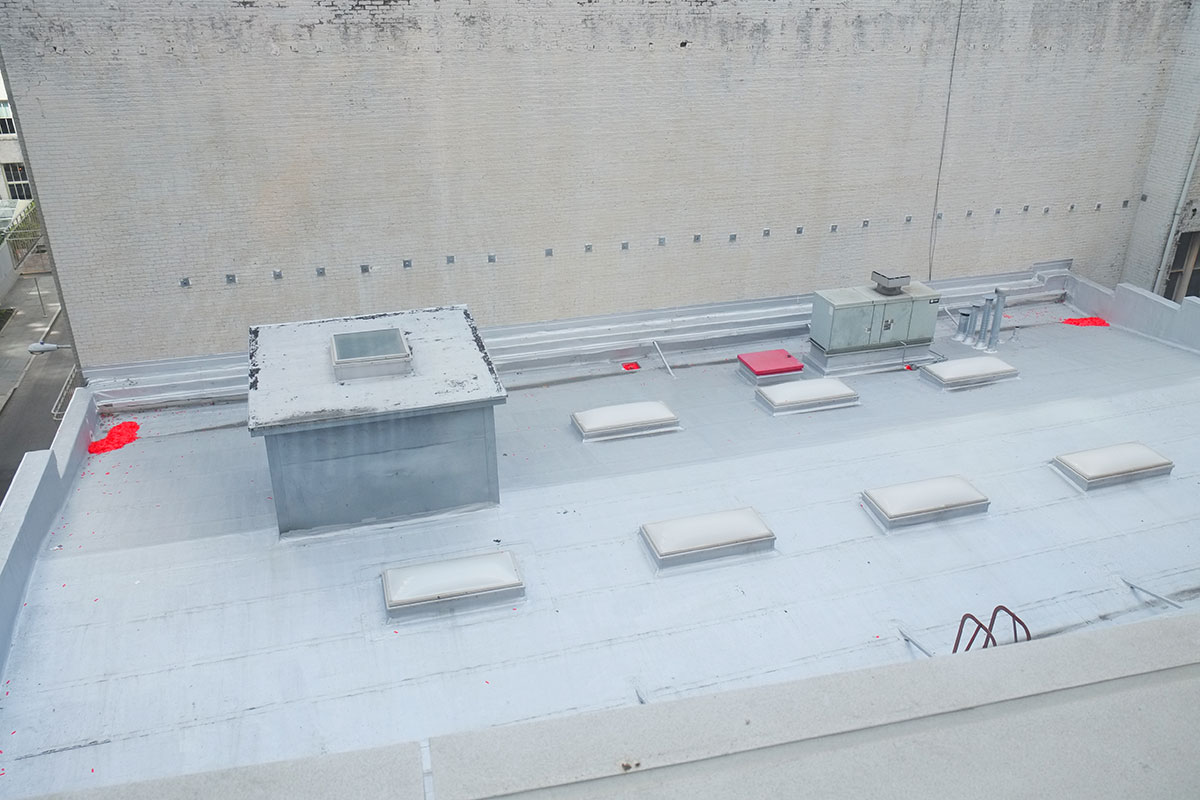
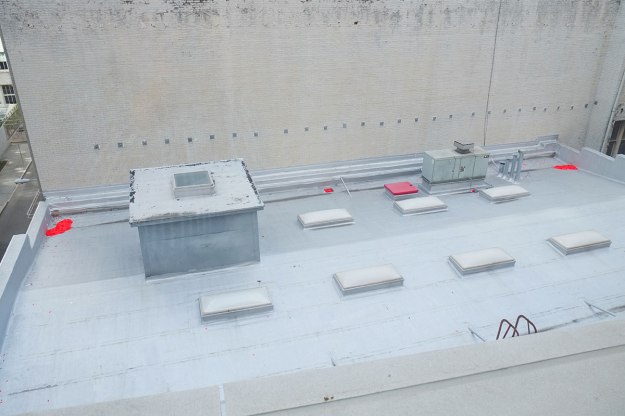
We were there shortly after the opening reception, and were able to spot the remains of the confetti, collecting in drifts on the rooves.DSCF1275
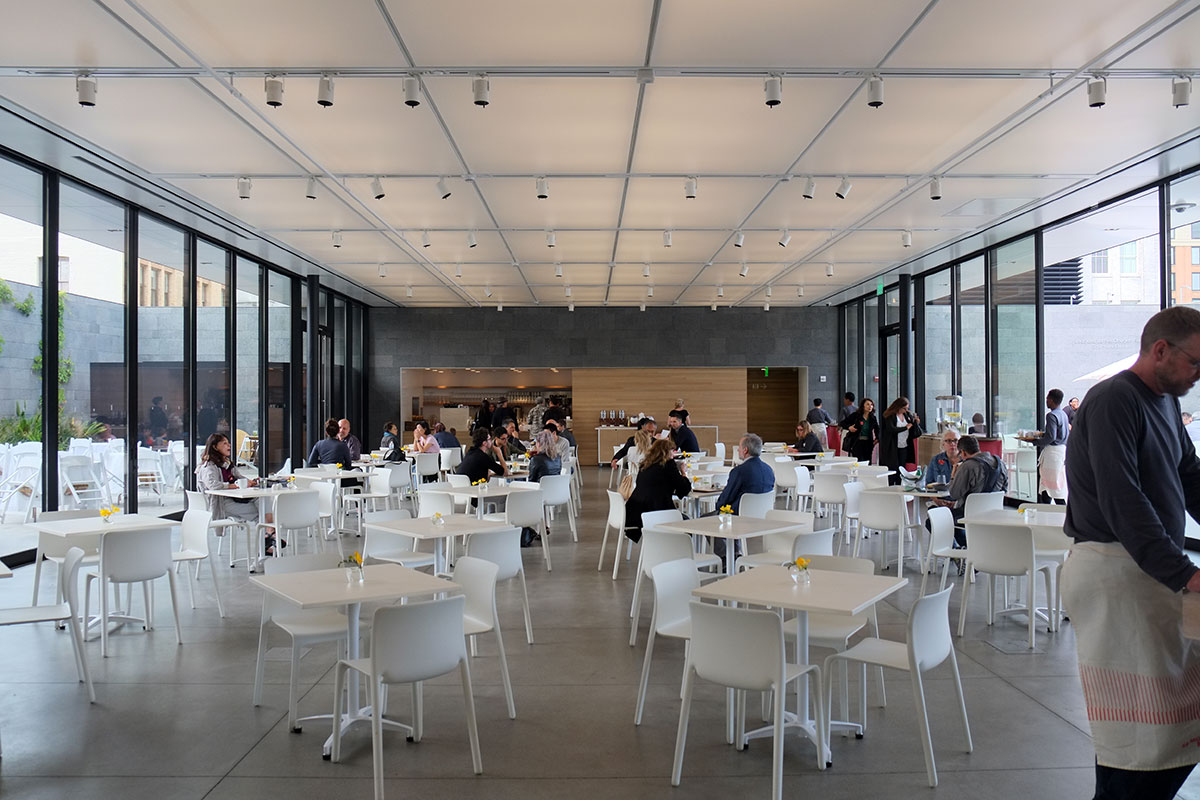
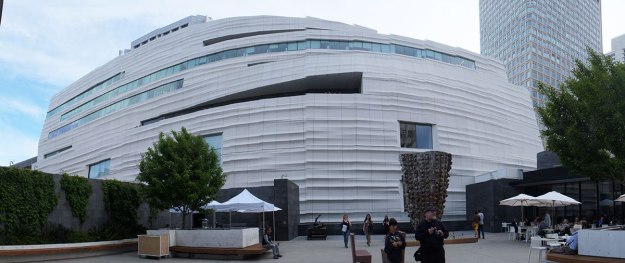
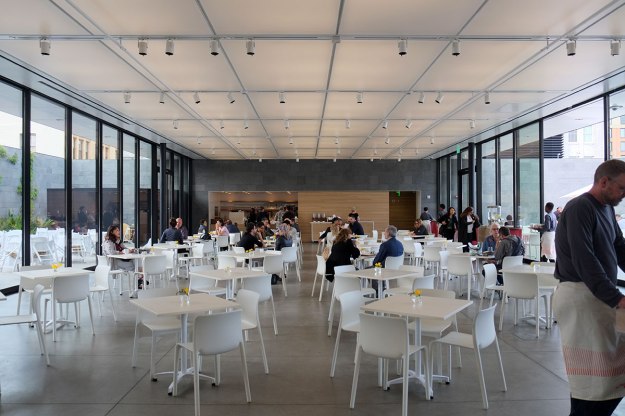
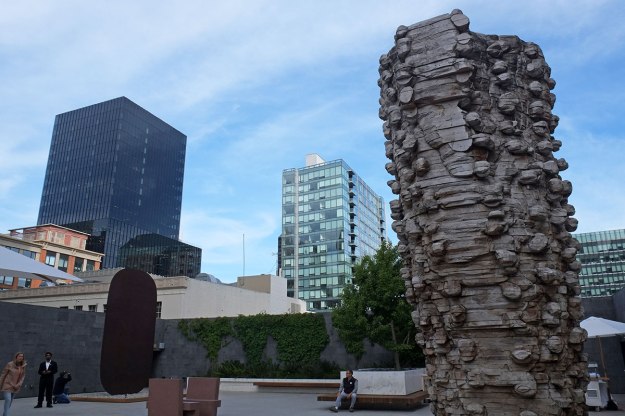
At the fifth level there is a glass bridge out the blob, which leads across to a restaurant pavilion and much larger sculpture terrace.DSCF1321p
This is the one place where you can sense the whole of the addition, which looks like an iceberg that descended into the city. (These Norwegian architects just can’t stop themselves.)DSCF1312
The restaurant is a straightforward glass and steel box, the only problem being you have to walk through the end of the restaurant to get to the terrace.DSCF1318
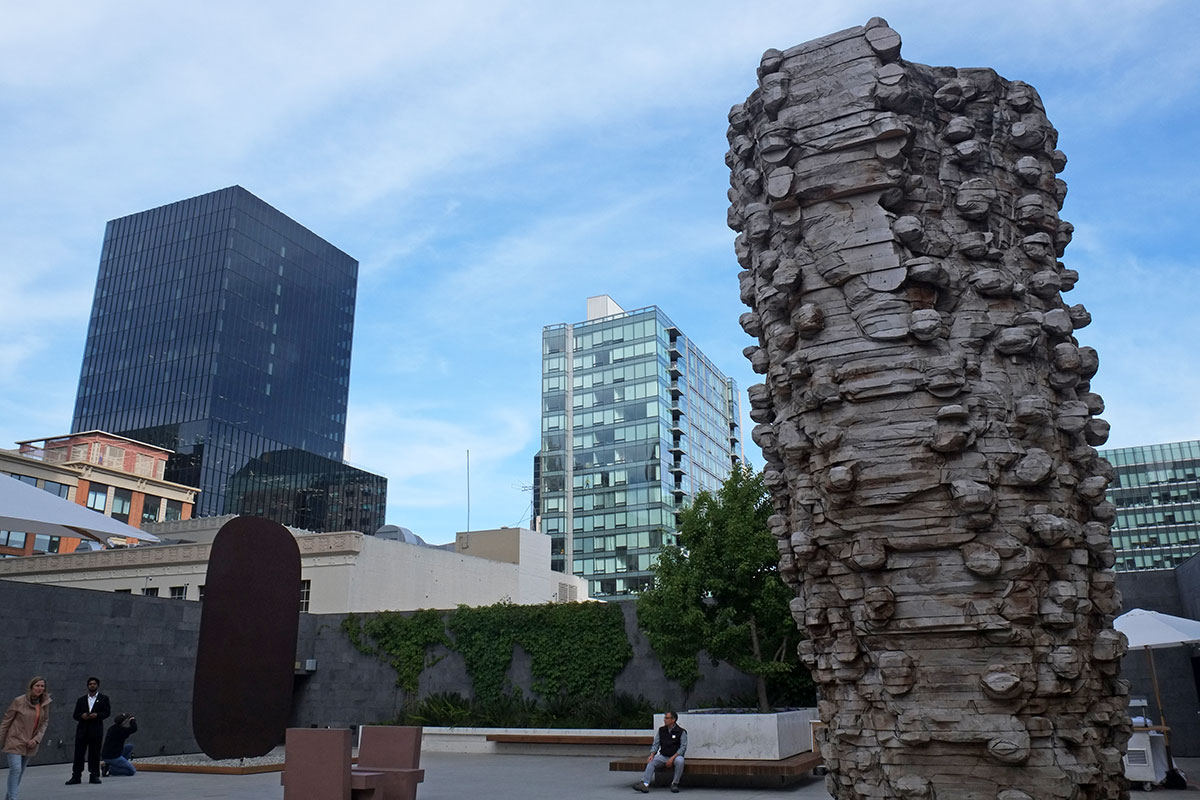
On the terrace the city forms a backdrop for the art. It’s a secluded little cavern in the middle of the block, and you feel enclosed by the buildings all around you.DSCF1310
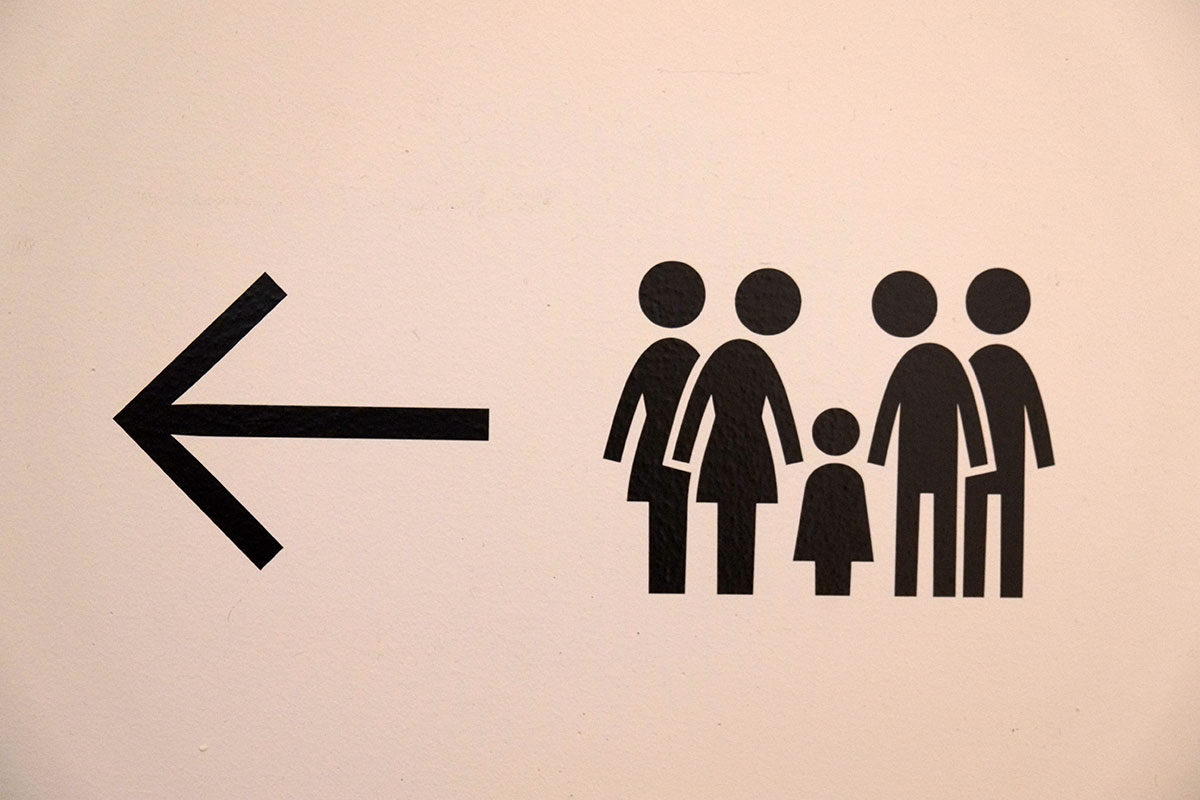
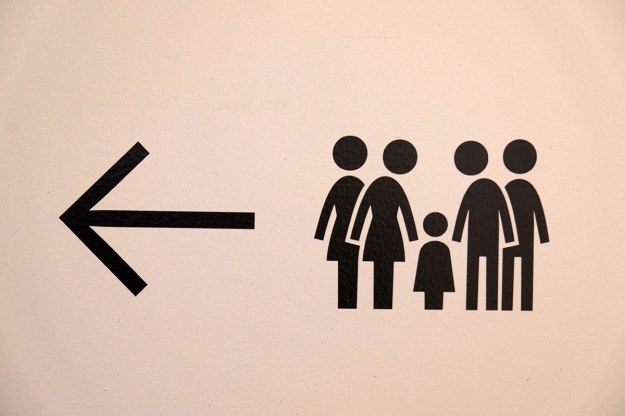
We did find some strange moments. A highly ambiguous sign, which I posted on Facebook and immediately received about 25 different likely interpretations. Maybe this is a standard sign in Norway,referring to some common social arrangement which has not yet made it to our shores?DSCF1296
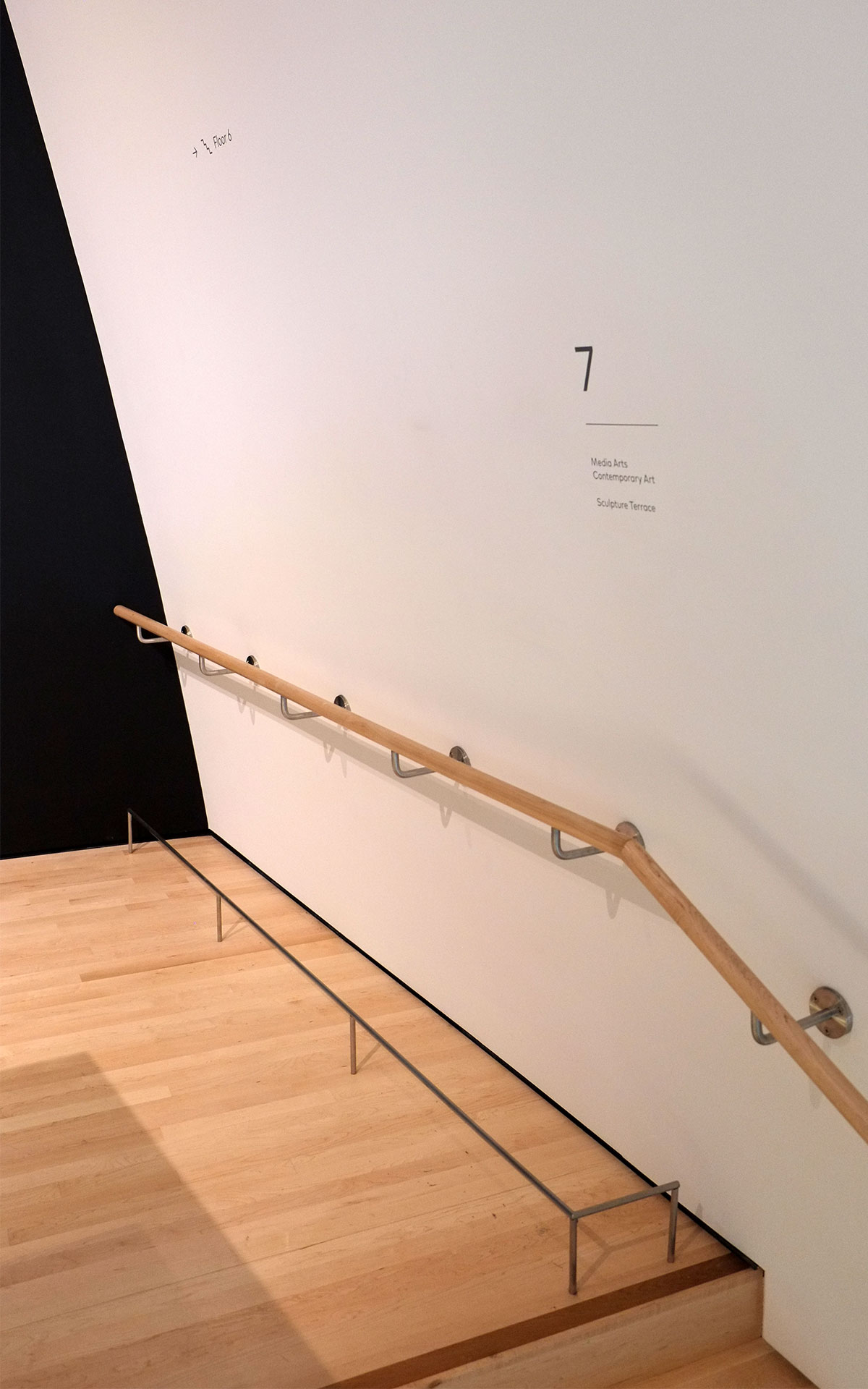
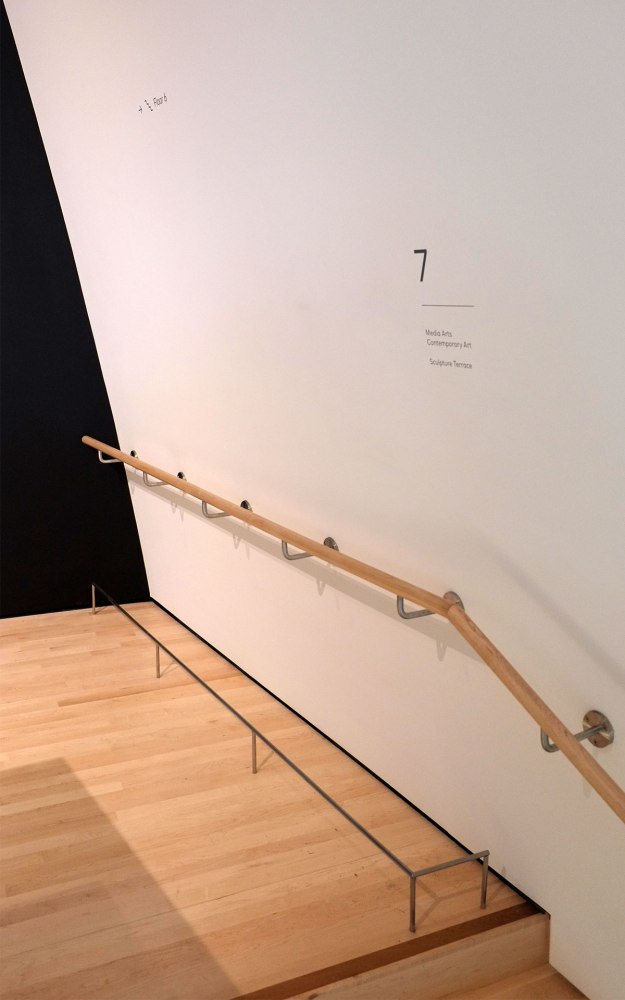
More evidence that European architects and American building code officials do not play well together. Here, where the curving façade slopes in above the top of the stairs to the seventh floor, someone noticed (probably very late in the game) that if you stood right up against the handrail, you could bump your head. So the solution is a lower guardrail which keeps you in the zone where there is legal headroom, perhaps the clumsiest solution to an ADA problem I’ve seen since the Seattle Public Library. If the EU would pass a Europeans with Disabilities Act, we wouldn’t have these problems.DSCF1335
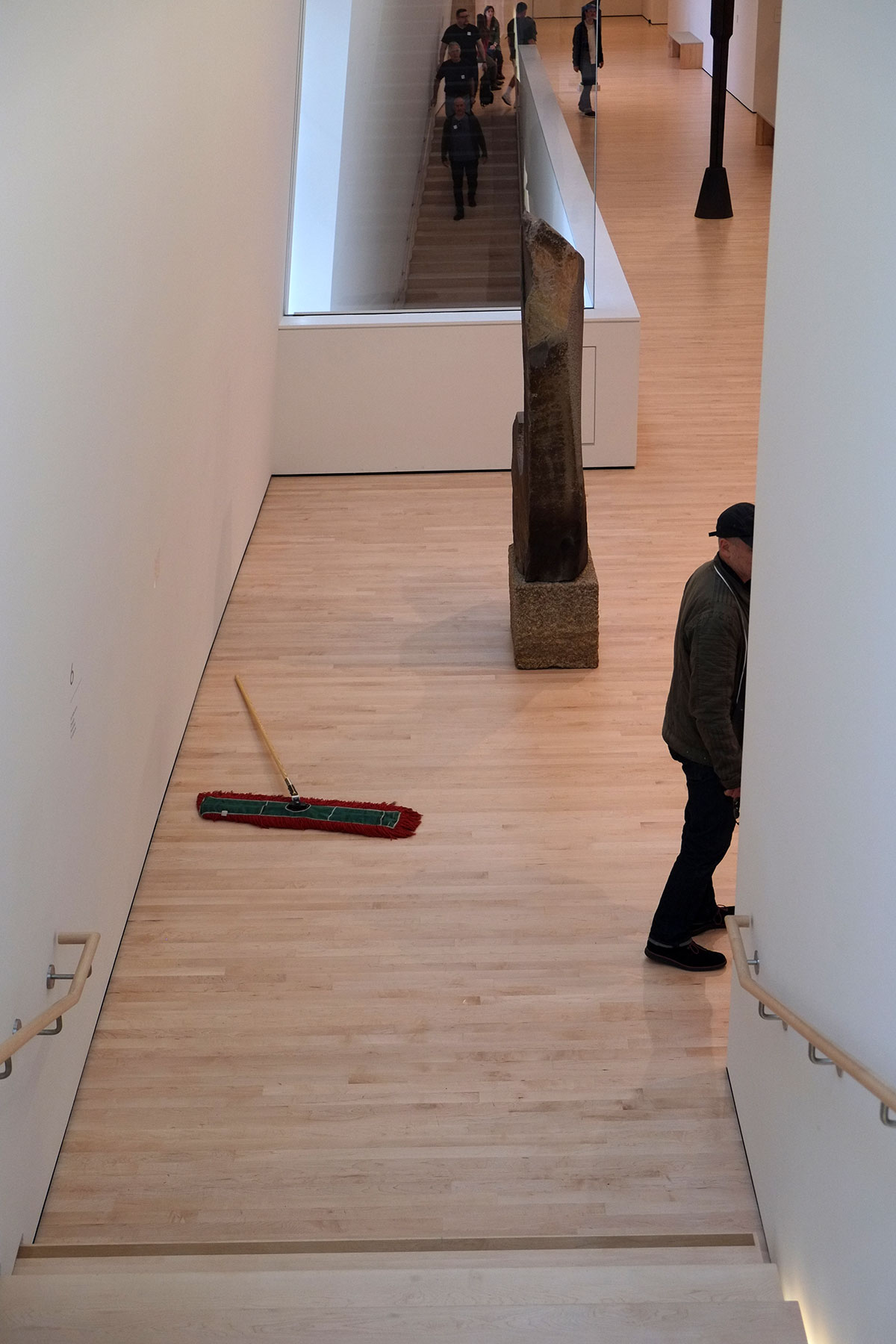
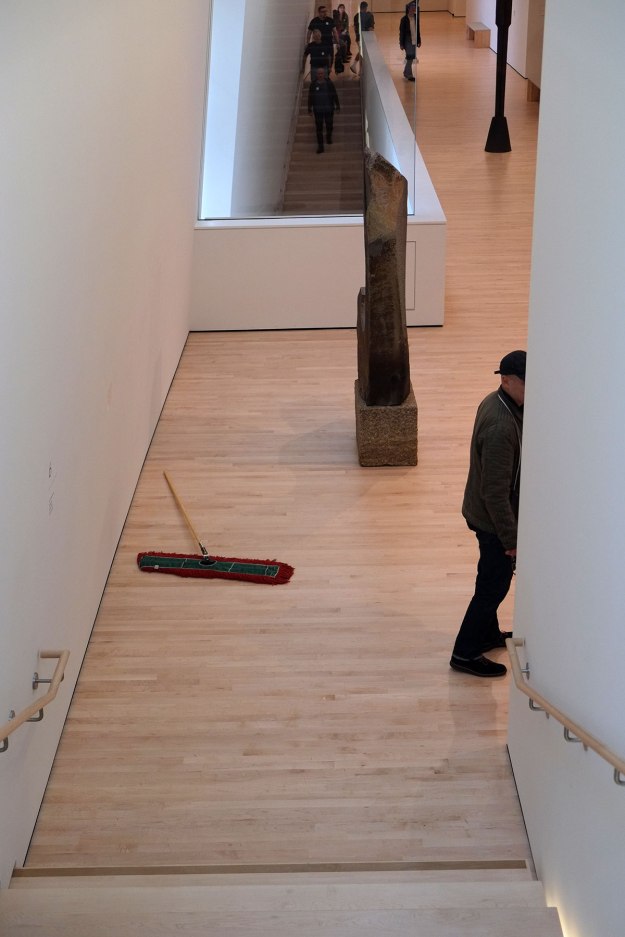
And walking down from the seventh floor, where the most recent conceptual contemporary art is displayed, we came across this assemblage. The relationship between the basalt column and the push-broom, where the similarity in coloration contrasts with the dichotomies of vertical/horizontal and hard/soft, along with the ambiguous negative space between the angles of the handle and the wall, caught our attention, as it provided a subtle critique of the compositional laxity of the conceptual work on the seventh floor. We photographed while the people behind us looked for the label. And this was a few weeks before the high school student from San Jose put his eyeglasses down on the seventh floor and watched visitors photograph the installation.DSCF1352
This has turned into a long post, as it is a very big museum, with many different parts and experiences, some central, some peripheral. I think it is remarkably successful overall – a huge museum which doesn’t intimidate you, an addition which shows great respect for the original building and draws it into a coherent whole, a strong parti which facilitates rather than destroys good spaces, a connection to the surrounding city, a circulation system which is a pleasure to occupy, and a series of galleries which show the collection well. The only serious problem for the visitor is that it would take about a week to do justice to all that is exhibited.

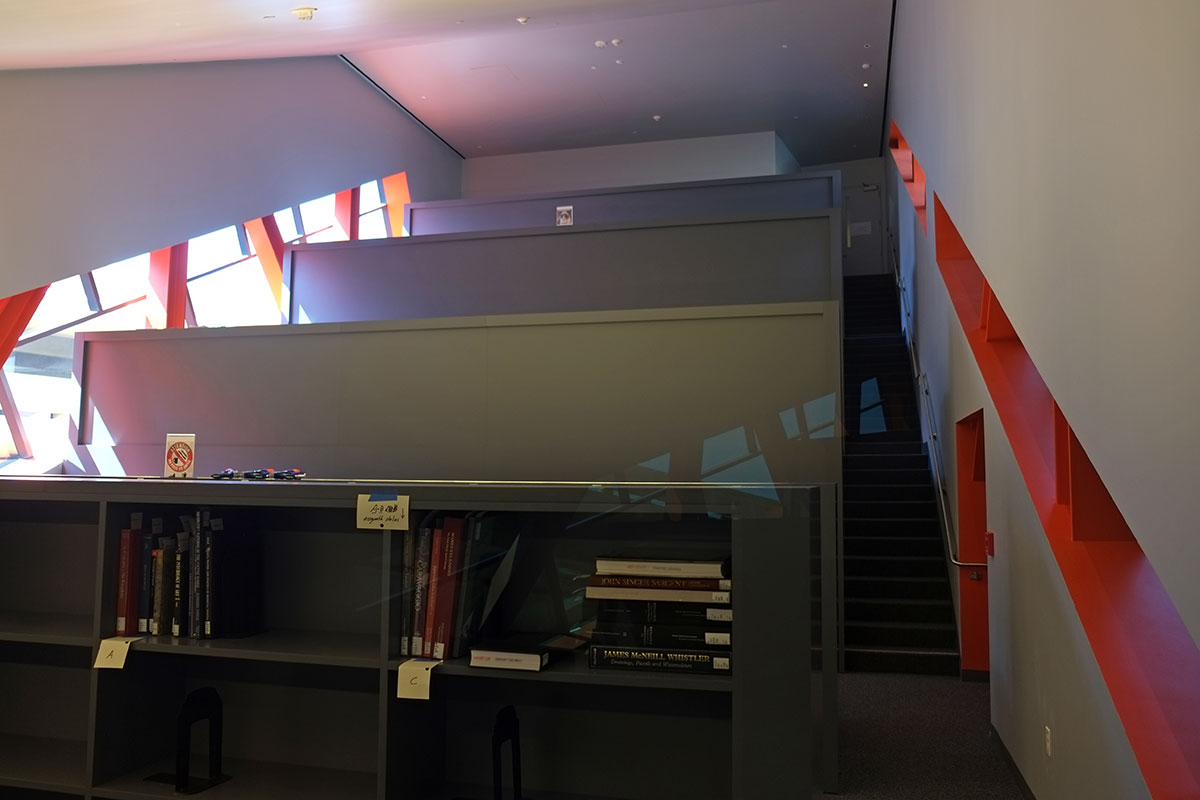
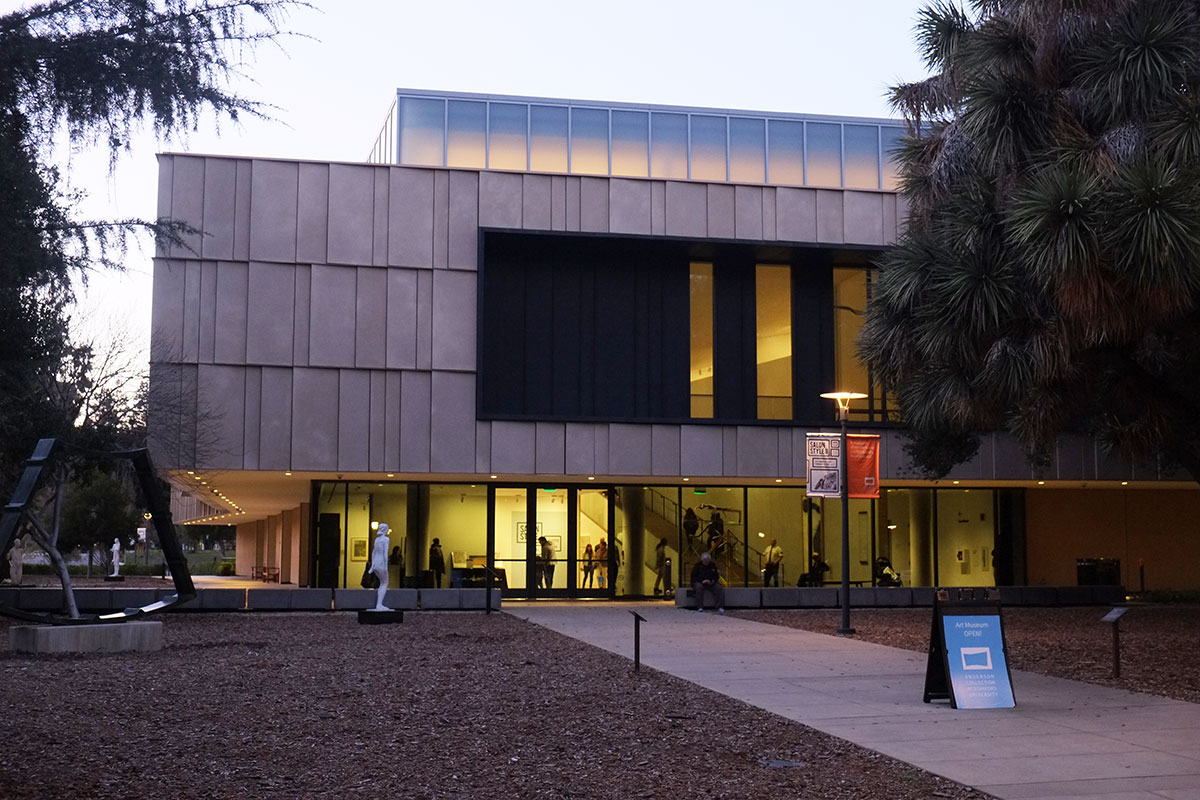
Stanford art buildings

111. Stanford002DSCF1007

Perhaps the buildings in the center of the Stanford campus are so uniformly mediocre partly because they’re largely science and engineering buildings, built for two groups on campus for whom objective, quantifiable performance measurements are critical; the fuzzier objective of architectural quality probably doesn’t make the top ten list of their criteria. So we moved to the smaller arts-oriented district to see what might be there.

The university museum has recently been remodelled, expanded and renamed after the new primary donors, but it has maintained its older, neoclassical core. The entry hall is the most notable spatial feature, a compact, crisp Renaissance revival court, which resembles the atrium at the Fogg before that was remodelled by Piano. It is a small jewel, but due to its location, it really is just an entry hall, and doesn’t do anything to organize the larger museum, which sprawls away from it.111. Stanford006DSCF1131

Beyond the formal entry, there are various wings and rambling later additions, including some of those wonderfully didactic wall decorations.DSCF0978

and a large court full of Rodins, much more than I can take in one visit. Why is it that so many places don’t have a Rodin or two, but seem to be trying to complete the set? Is it because they are multiples, and so a collector focuses on them, and then donates the whole collection to a museum? I feel the opposite way here than I did in Marfa, where seeing a lot of Judds together fostered an understanding of the body of work. Too many Rodins just makes me numb, there’s too much drama in one place; couldn’t he have done a few simple, geometric things?IMG_3244

But the general spaces of the museum are fine, and the collection is very good. We didn’t have a lot of time here, but we saw a fantastic show on Diebenkorn’s notebooks (which are in Stanford’s collection), alongside a great small display of artists who influenced him, such as Hopper and The Eight.DSCF1132

Next door is the new McMurtry Building, by Diller Scofidio Renfro, which comprises spaces for the art and art history departments. From the street, it is fairly innocuous, with a regular, repetitive façade, even using wall panels in the same mustard color which permeates the rest of the campus.DSCF1066

But as you move into or around the building, the regularity breaks down, and the building volumes become differentiated, expressing some distinctions within the program.DSCF0980

These large sloping elements appear on either side, and you can enter beneath them into a central courtyard.DSCF0985

The courtyard is incredibly active, with sloping, crashing, angled pieces, which either contain parts of the program, or have program elements wedged in between them. It is a visually exciting place, and they seem to have found a good strategy for dealing with the Stanford building standards which make the campus so dull – an exterior aspect which is straightforward and respectful, while making an interior court which is a metaphor for the (relative) craziness of the artists at Stanford.DSCF1052
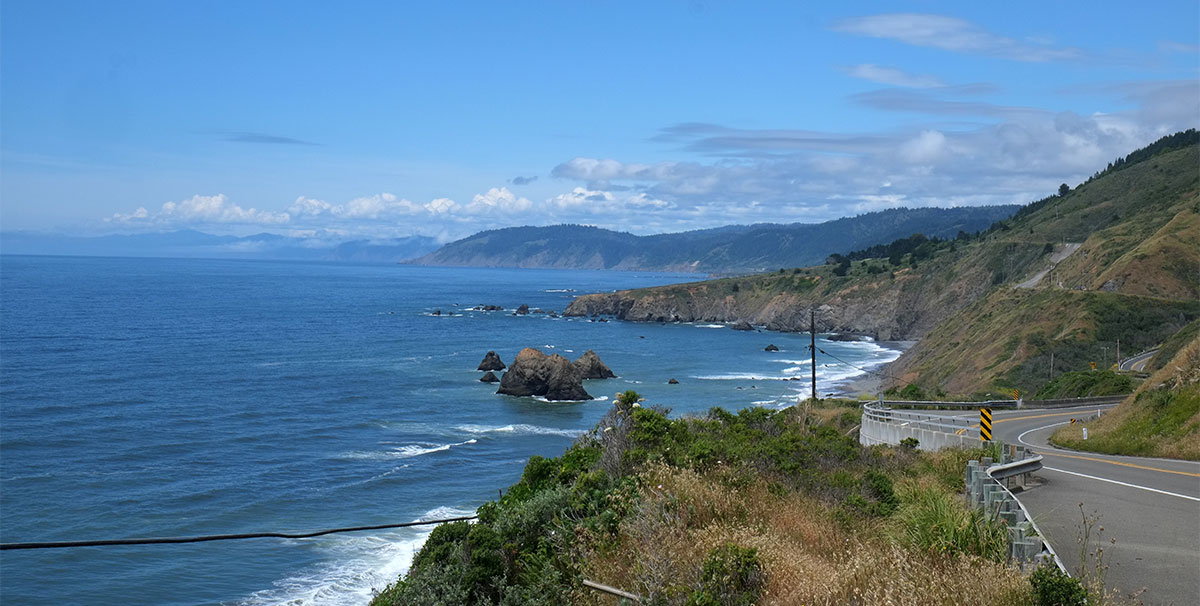
Since so much space is eaten up by the court and the areas beneath the slopes, there is not that much useful space on the ground level. The most visible functions are a large shop/maker space, which opens to the court so you can see Art in Action, and a gallery space for student work. All of this is an obvious homage to Corbu’s Carpenter Center at Harvard, where the exterior ramp through the center of the building is supposed to make visible the work taking place within. There were folding tables scattered around the courtyard while we were there, left over from some event, and it looks like this courtyard would work well for that – with big interior spaces opening to the court, and crowds of people being able to move freely among them – much better than at the Carpenter Center, where the entries are obscure little doors scattered around, and there is no large public space (which would have been an alien idea for an academic building way back then).DSCF1061
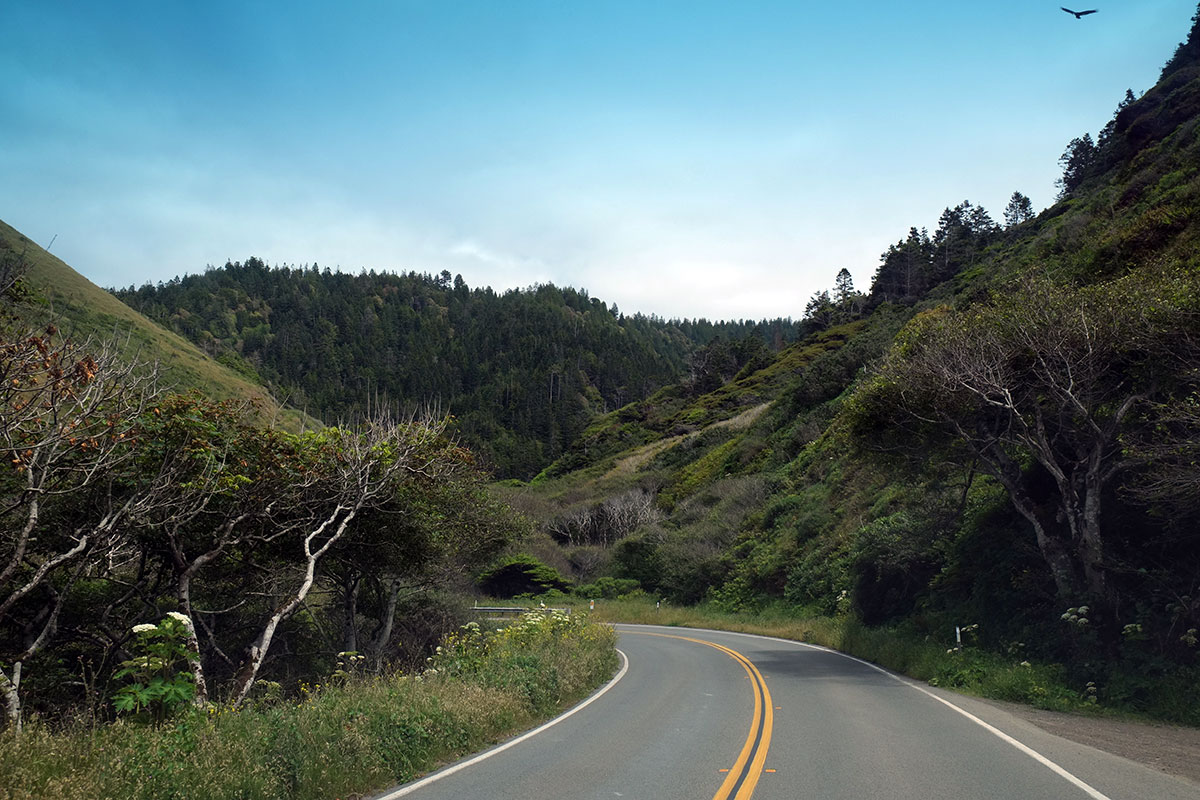
In this building the ramps aren’t through the building, but the building itself becomes a couple of ramps. A mustard volume and a brown volume spiral around each other in a double helix geometry (probably a metaphor for something like the duality inherent in the foundations for art or something else profound which I couldn’t discern). Each of these volumes contains an exterior stair which takes you past the second level library, and up to the third level, where the classrooms and studios in the volumes surround a central terrace and garden.DSCF1060

The terrace was quite nice, with plenty of casual places to sit and views across the campus, though pretty hot and bright in May (this may get better if the plants grow and provide some shade).  DSCF1017

The strength of the building is the clarity of this parti / metaphor. The duality of inside and outside addresses the campus planning issues pretty brilliantly, and the intertwined double helix that determines the building shape is probably articulating differences in the programmatic elements. All of this is then expressed though material selection and detailing, very elegantly:DSCF1004

There is a precision to this expression, though there are places where it starts to look pretty fussy to me. You get yourself into a logic where there is a one-to-one correspondence between a concept and its expression (this material means this), and then points occur where all these conceptually differentiated pieces collide together. If you are going to stay true to your parti, you articulate each of these clearly, but it does all get to be a bit too much. It reminded me of the contrast between the detailing of the Kahn building and the Piano building at the Kimbell, where Piano’s obsessive expression and detailing of every tectonic element in the building (whether structure or enclosure) created an almost baroque building when compared to Kahn’s classical, geometric simplicity. But here there is not even any tectonic expression to give some order to this level of development – there are Big Formal Moves that embody the parti, and the technological systems and expression of the building are subservient to the fanatically pure expression of the Big Formal Moves.  It is clear that this articulation is only skin-deep; these formal differentiations have nothing to do with the underlying tectonics of the building.  DSCF1008

Kahn starts with space and light, and uses building systems to support this intention. Piano seems to start with the logic of the building systems, and manipulates them to shape space and light. Diller Scofidio Renfro start with a diagrammatic idea and uses the building technology to express the parti.

But here is the big problem with this approach – it leaves out space and light. I didn’t see one good room in this building. I saw some terrible rooms and spaces, and I saw some conventional rooms and spaces, but I never walked into a room and said, wow, this is a great space. The courtyard is obviously the big spatial move, but it matters mainly in a conceptual way – you can stand there and see all the elements of the parti diagram. It is an intellectually satisfying space (Ah, I get it!), but not a sensually satisfying one. It’s deep and dark, in shade all the time. The second floor library pokes in and constricts the space above you, and you get a glimpse of sky above, beyond a glimpse of the handrails on the third level.
But it gets much worse once you ascend the stairs. The stairways are dark and constricted – you expect the payoff of a big expansion into a great open space. And you get some of that if you go to the third floor terrace.   But if you’re only heading to the library, which occupies the whole second floor, it is a big disappointment. The entries to the library are nasty little alcoves to the sides of the stairs. The doors have 8 1/2 x 11 sheets of paper taped to the doors by the librarians, the classic sign telling you what you need to know about the library because the building itself is so ambiguous. They really look like the fire exits.DSCF1044

The library space itself doesn’t get better. Conceptually, it is the leftover space in the middle of the helix, and it feels that way. It just happened – no one designed anything. A big low space, with a lot of glare from the central court and the glazed edges of the building. An amorphous floor plan with random furniture scattered around, with a low, 2×4 grid hung ceiling. It really felt like one of those cheap municipal branch libraries that’s been retrofitted into a failed strip mall building.DSCF1038

The sloping spiral elements make their presence felt, to the detriment of the space. I may begin a new photo series, on all the terrible ways architects deal with the space beneath a ramp or stairway, when they want to leave it open for expressive reasons, but can’t because it is a hazard for head-bonking reasons under the ADA. I get tired of lay people who always talk about “wasted space”, which usually means any space which is not purely functional, but this is truly wasted space – not useful, not inhabitable, and not even beautiful. It is a space which happens accidentally, without thought.DSCF1035

The other strategy for these oddly-shaped spaces is to figure out what uses can be shoehorned into them, and that may be even worse. Art history libraries need study carrels for grad students, and here they have been given a location which represents their status in the university’s hierarchy. The entry is a narrow slot cut into the spiral volume, which feels like entering a tomb in a pyramid; I assume the grad students will get the metaphor here.DSCF1028

Then the room itself is stepped, with a couple of carrels at each level. When you sit at your desk, you look at the underside of sloped ceiling directly in front of you. It is truly one of the nastiest spaces in which I’ve ever seen students stashed.DSCF1027

Given the dysfunctional geometry, and the big hole in the middle, this building does not have a lot of usable floor area. So where are all the computer labs, printer rooms, classrooms, and galleries? They’re in the basement. The big stairs of the spiral continue down below grade, where they end with a whimper. (Perhaps it is a reference to the gigantic book stack spiral in Koolhaas’s Seattle Public Library, which ends in a garbage can and some Xeroxed signs which tell you how to backtrack to the exit.)DSCF1056

The basement is disorienting, conventional and banal. All the special effects have been exhausted above grade, and the basement spaces were clearly left to the space planner, who had to figure out how to efficiently house all the necessary functions for which the big concept had no room.DSCF1059

Like all architects, initially I was intrigued with the Big Shiny Object quality of this building – the cool diagrammatic parti expressed so clearly in the building form. I always tell my students that they have to start with an idea for a building – they can’t just start solving the functional problems and then try to insert an idea later. But this is what happens when you start with an idea, stay true to that pure idea, but forget to turn it into a building. An idea is important, but it must at least partially derive from addressing fundamental, inherent issues in the project. I’ve been very disappointed in the few DSR buildings I’ve seen (including the contemporary art museum in Boston). They have this very clear diagrammatic quality, but they don’t have any concern for the quality of spaces.   They may not be as obviously terrible as Zaha Hadid buildings, as they are quieter and less jagged, with simpler spaces which seem modern and spare, until you realize that they are just not interesting or pleasant. I’m sure that if I saw the 1/64″ scale parti model of this building I would be very enthusiastic. I just don’t think they understood what had to be added when they blew it up to full size.

Fortunately there is another art building nearby which is the antithesis of the McMurtry Building in every way. The Anderson Museum houses the contemporary art collection of the Anderson family, and it was designed by Ennead, the successor firm to James Stewart Polshek. The parti is simple, almost boring: a two-story box, with a grand stair in the middle, between which and the perimeter there are galleries (and some support spaces on the first floor). The exterior is a simple, well-proportioned modernist composition, which is so unassuming that I forgot to photograph it, until we returned two years later. With the DSR building, I spent a lot of time wandering around the outside of it, getting different perspectives on the form, trying to figure out what it signified. The Ennead building clearly says that it is a typologically straightforward building, here’s the front door, come on in.

The collection is great, reflecting a family’s continuing relationship with many of the most important postwar American artists, particularly those based in California (Diebenkorn, Thiebaud, Irwin, Guston, etc.) There is a nicely-proportioned lobby, with temporary exhibit galleries behind it, and a small library/lounge, where you can view an introductory video. It is an actual room, where scale and furniture placement were considered, and not a vague space littered with objects.DSCF1114

You move to the center of the plan, where the grand stair leads to the second floor of galleries. It is simple, it is clear, and you can see a large painting on axis at the top and light coming in from the sides.DSCF1116

It is more like Kahn than like Piano (and certainly DSR), with simple abstract surfaces defining spaces and light flooding in. The roof is gentle curve which floats above partition walls, lifted up at the perimeter to let light in from the strip clerestory windows. There is a clear structural order and hierarchy among elements, with transverse bearing walls separating galleries, while longitudinal screen walls filter the light and allow space for hanging paintings.  There is no expression of the tectonics (no exposed structure, no highly articulated skin) but the building doesn’t pretend to be made up of these highly-differentiated parts.  They have designed an abstract space, then used technology to support this vision.  DSCF1124

This wall works perfectly for displaying a Robert Irwin piece – it is obvious that the architects worked closely with the curators to create the setting for such a difficult piece, one where the light and surroundings determine whether it can really be experienced at all.DSCF1117

There is much discussion about contemporary museums, whether they should function primarily as ends in themselves, attracting crowds through their special effects and histrionics, and incidentally showing some art (Bilbao as the apotheosis of this). Then there are the museums that are about exhibiting the art, where the building stays in the background. This museum is obviously of the latter type, but it also illustrates an important point: just because a building is modest and defers to the art displayed doesn’t mean that it can’t be an excellent building. If you removed all the artwork from this museum I would still enjoy being there – the light, the clarity and hierarchy of the space, the experience of moving through a succession of different rooms, the complexity of views from room to room – all of them lead to a rich experience, and a series of spaces where you’re just glad to be.DSCF1126

I think we’ve gotten to a point in our culture where the beauty of simplicity can’t be seen by many, and the hyperactive work of the last generation of starchitects has supposedly reflected the zeitgeist of our age, where we expect diverting new images and vistas to satisfy our fifteen-second attention spans. I’m hoping that there may be a reaction to this growing. This work by Ennead (and other buildings we’ve seen on this trip, such as those by Thomas Phifer) show a real affinity with and development of the underlying ideas modernism, and not just a reference to it as a style. We’ve had fifty years of Less is a Bore, and I hope the pendulum is swinging back.111. Stanford005DSCF1121