Author Archives: Peter Keyes

Unknown's avatar

About Peter Keyes

A now-retired architecture professor who would like to get back out on the road if this pandemic ever ends.

Beaufort, S.C.

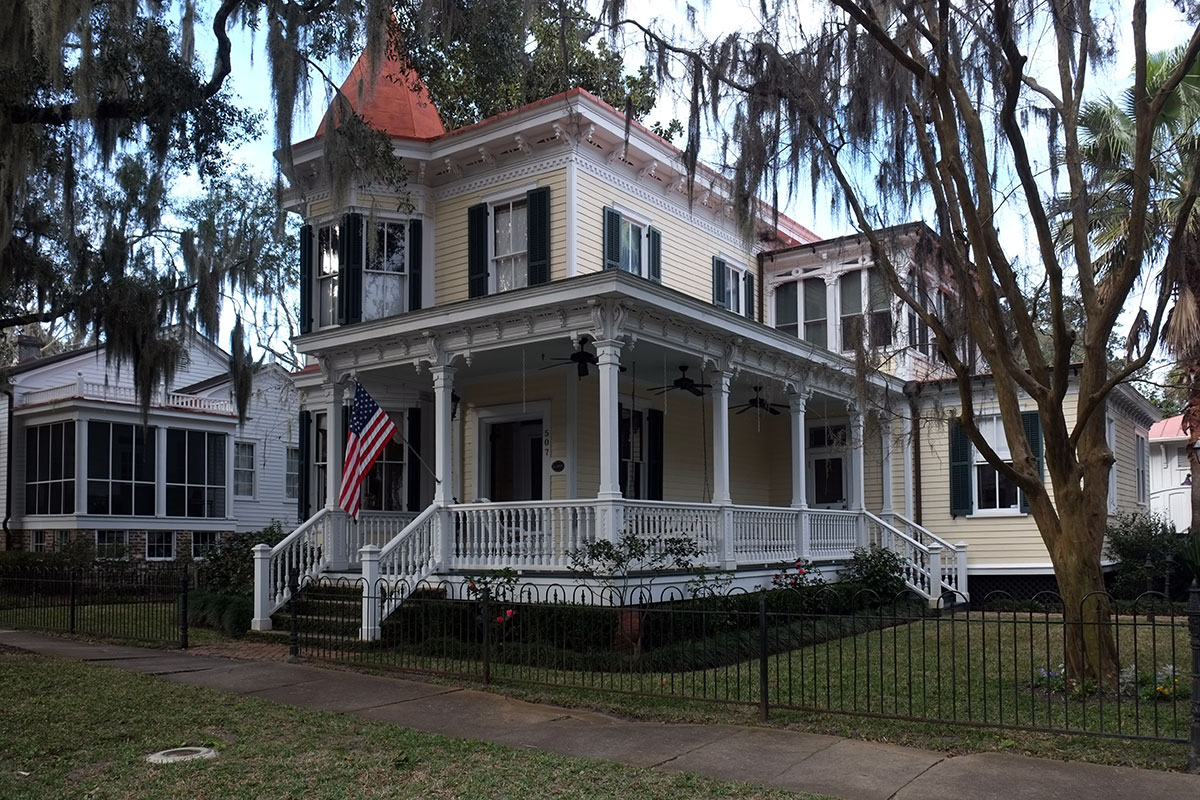
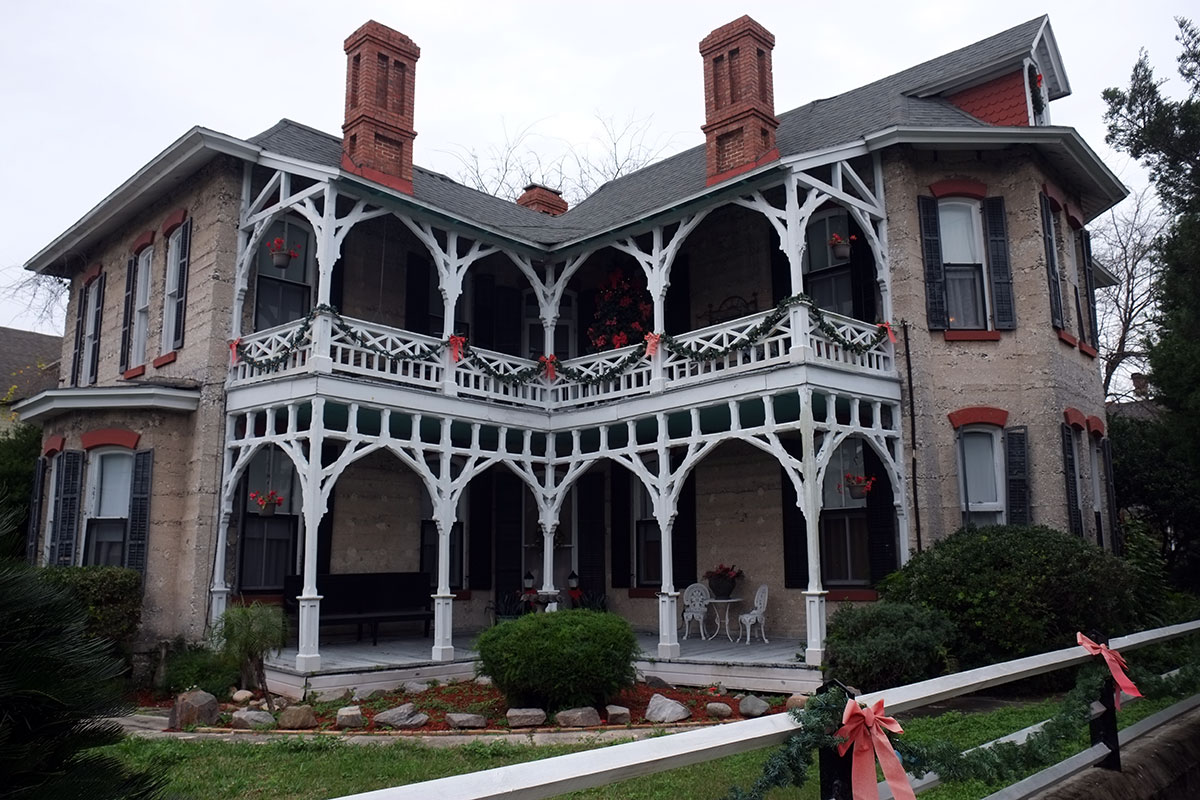
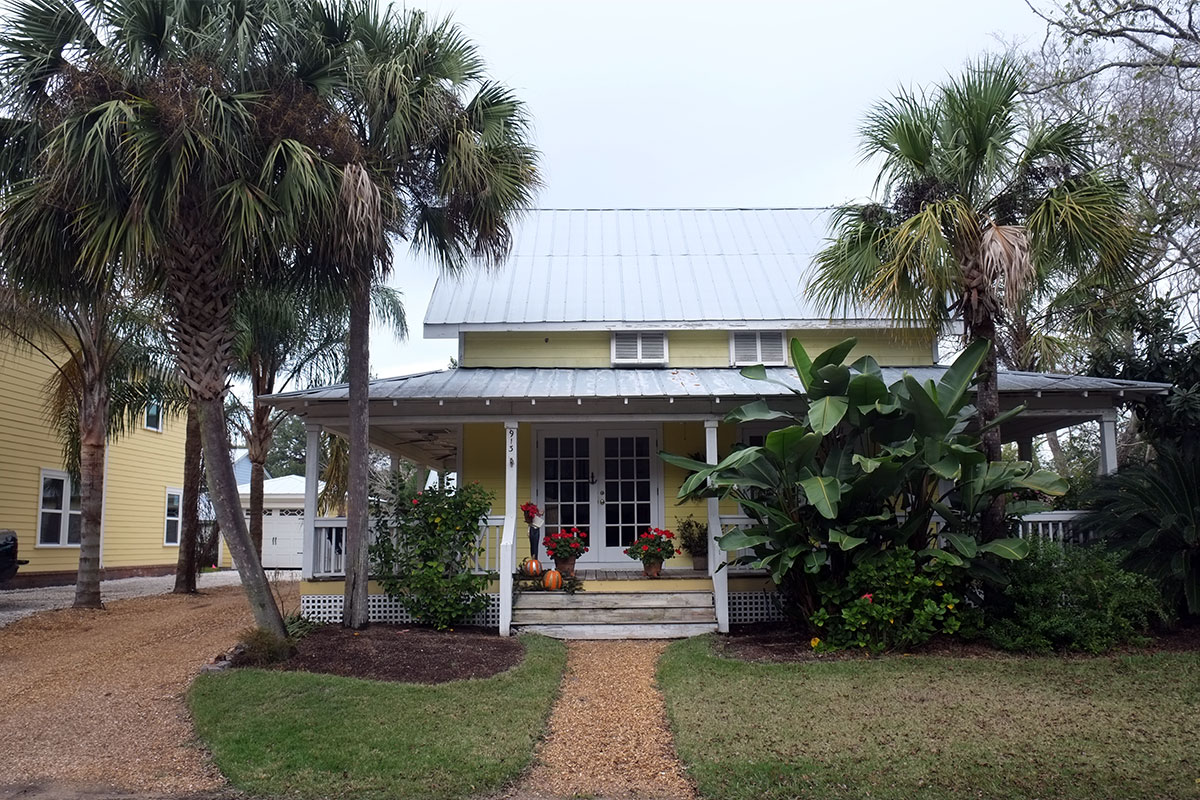
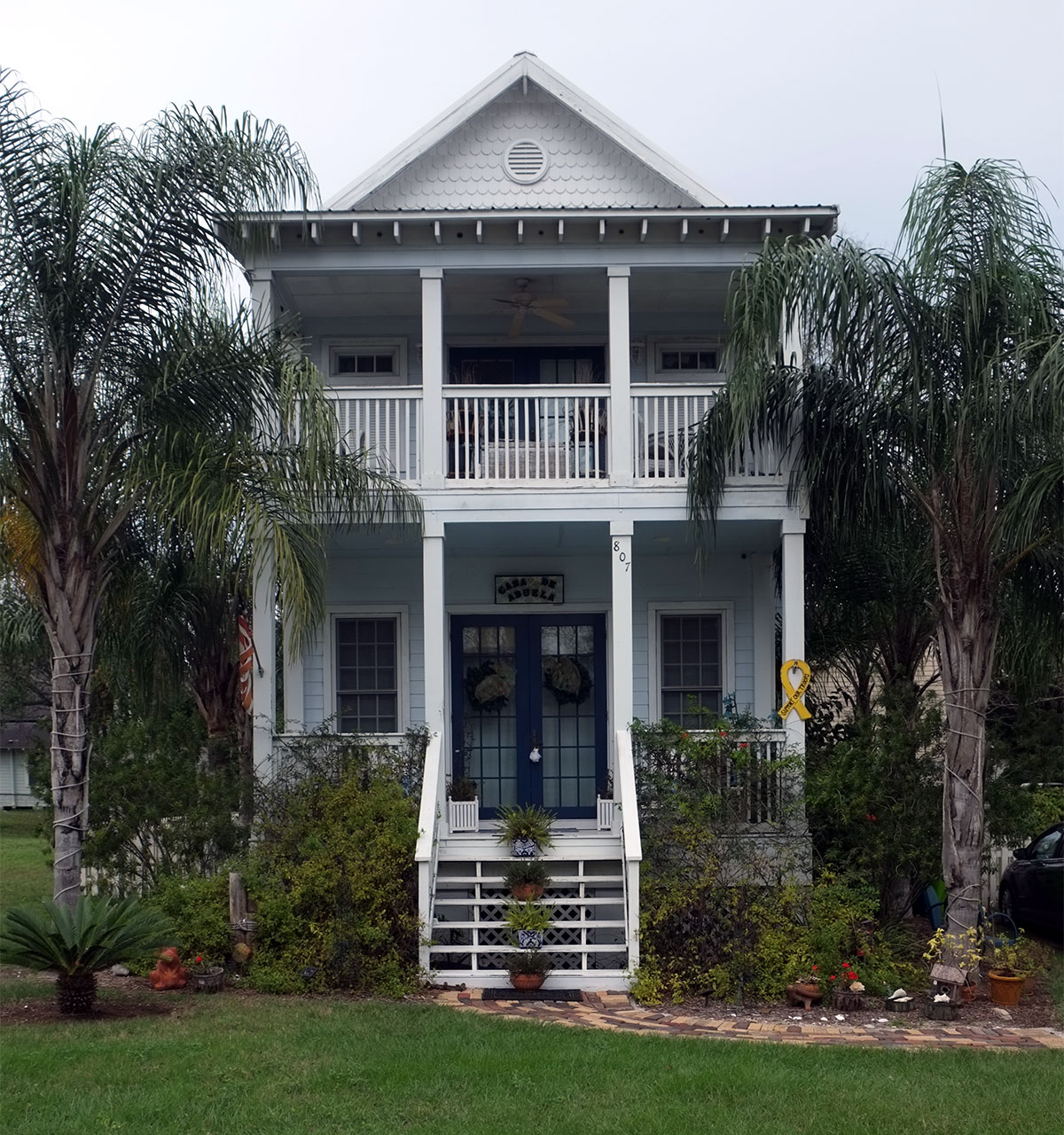
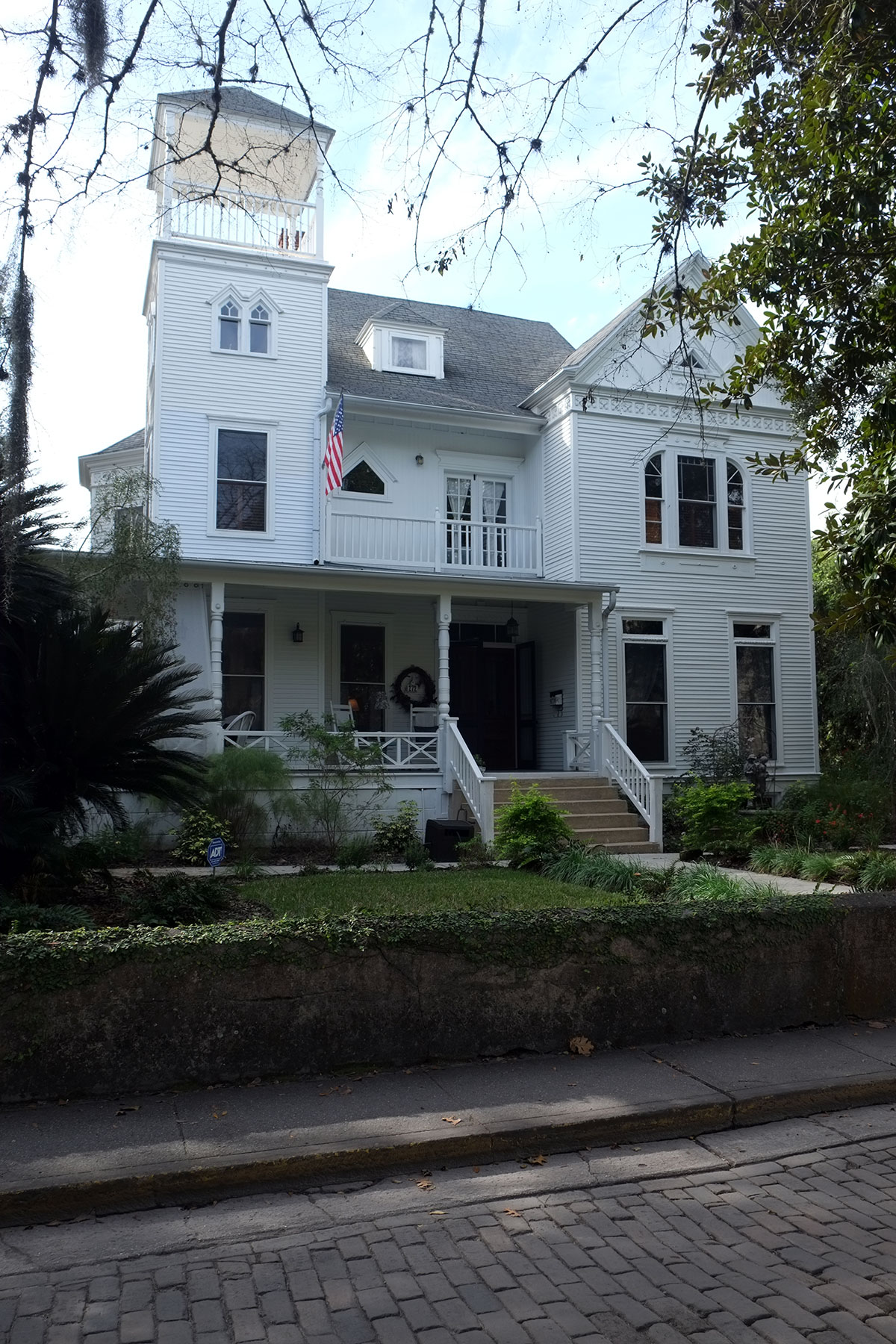
DSCF9932pLess well known than Charleston or Savannah, Beaufort is an extraordinary historic town.  It’s much smaller than those two cities, and harder to reach, so although it has been gentrified by what seem to be well-off retirees all reading Southern Living, it doesn’t feel as overrun by tourists.  The small downtown is very spiffy, and some of the adjoining residential areas clearly have been getting a lot of attention.DSCF9862p DSCF9968

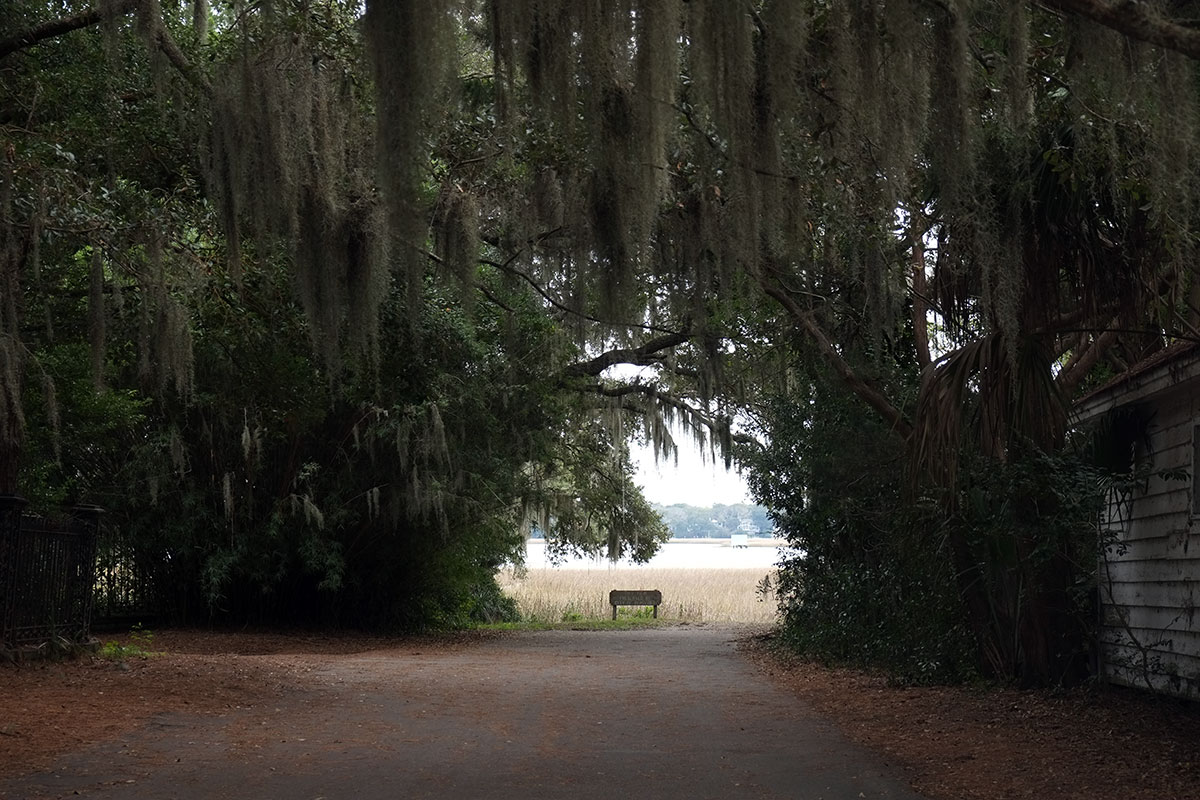
Streets end at the bay or looking out onto the salt marshes.DSCF9900

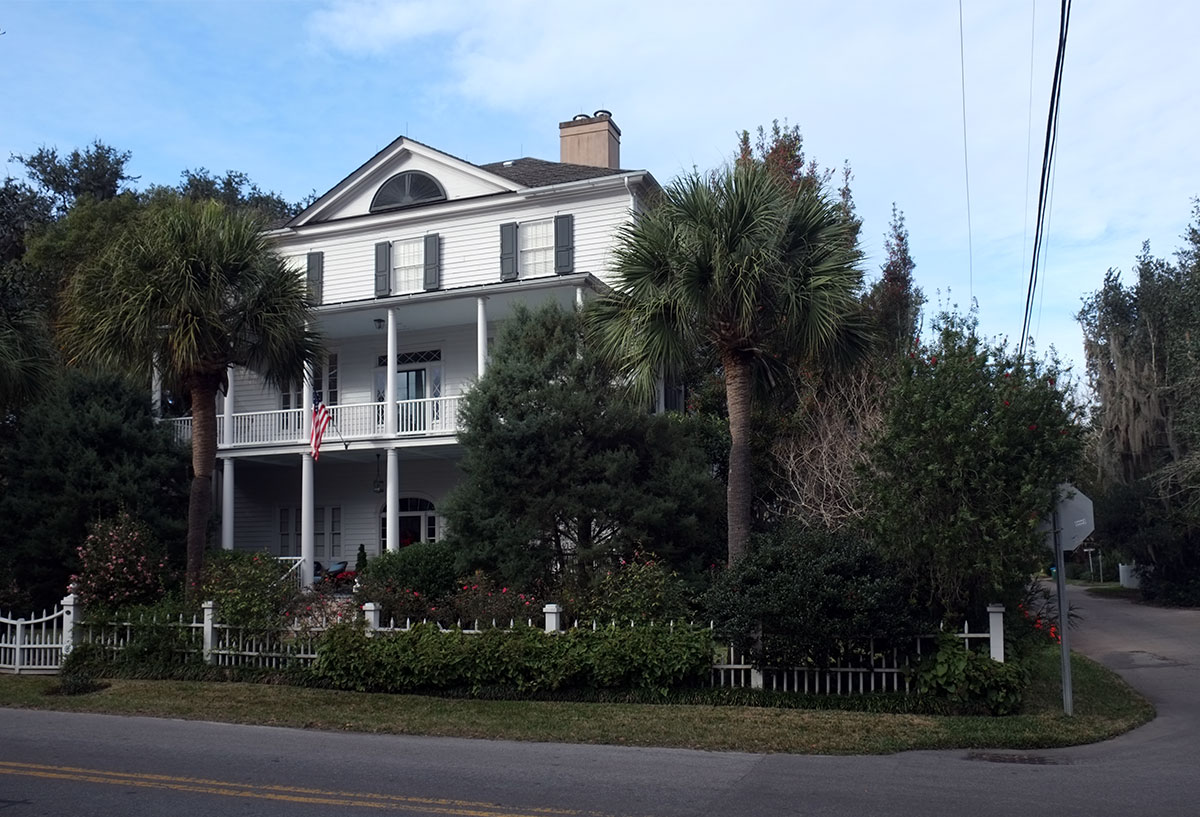
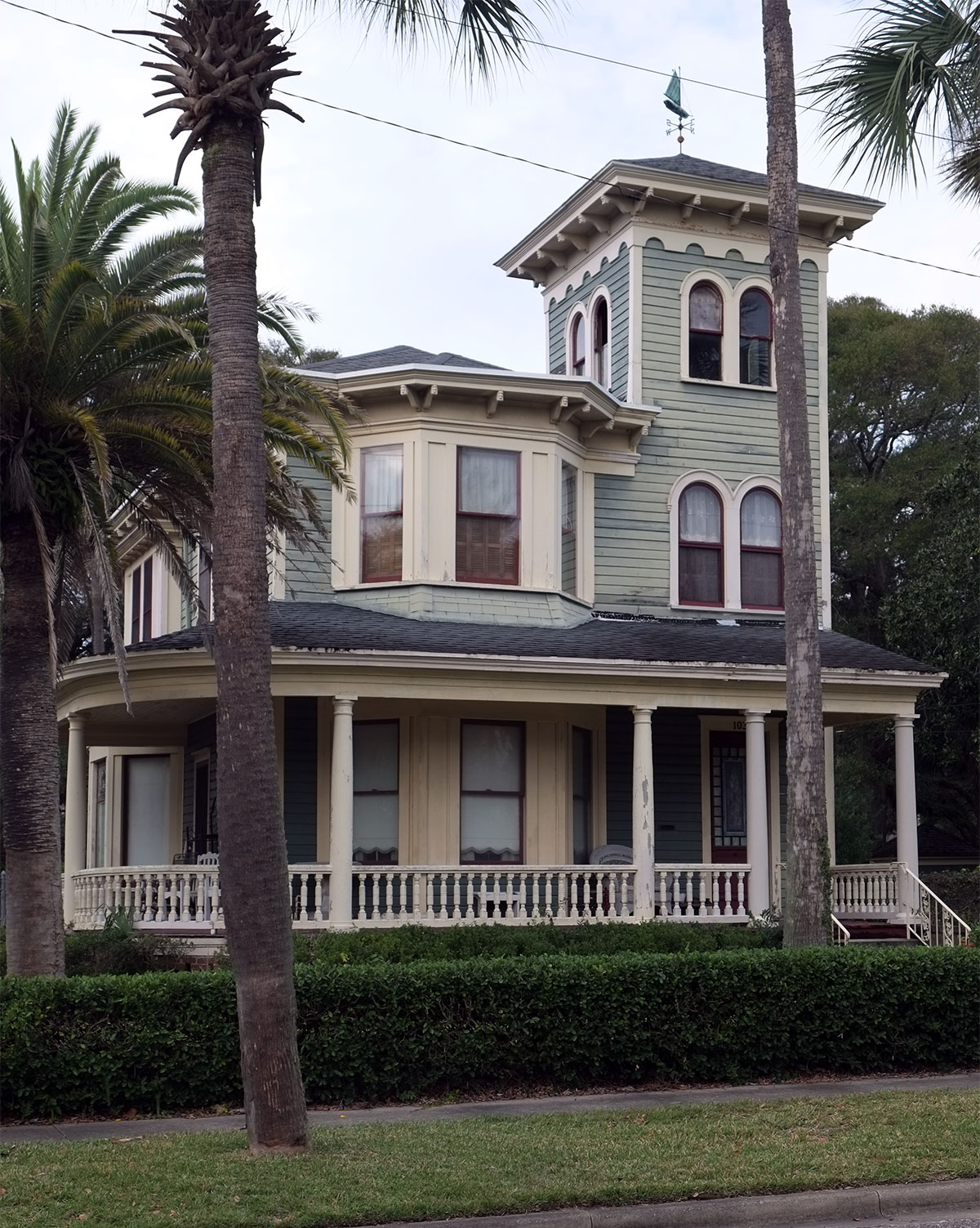
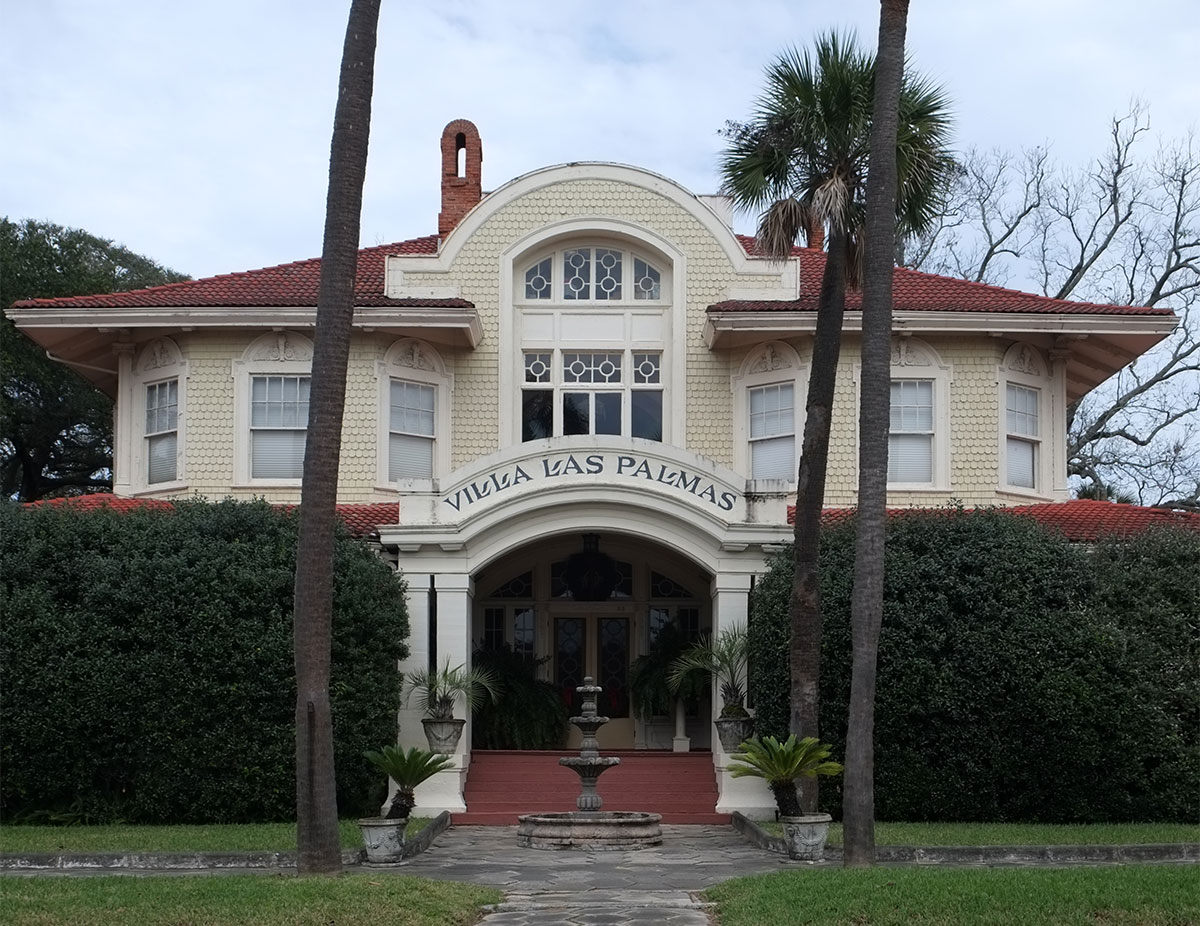
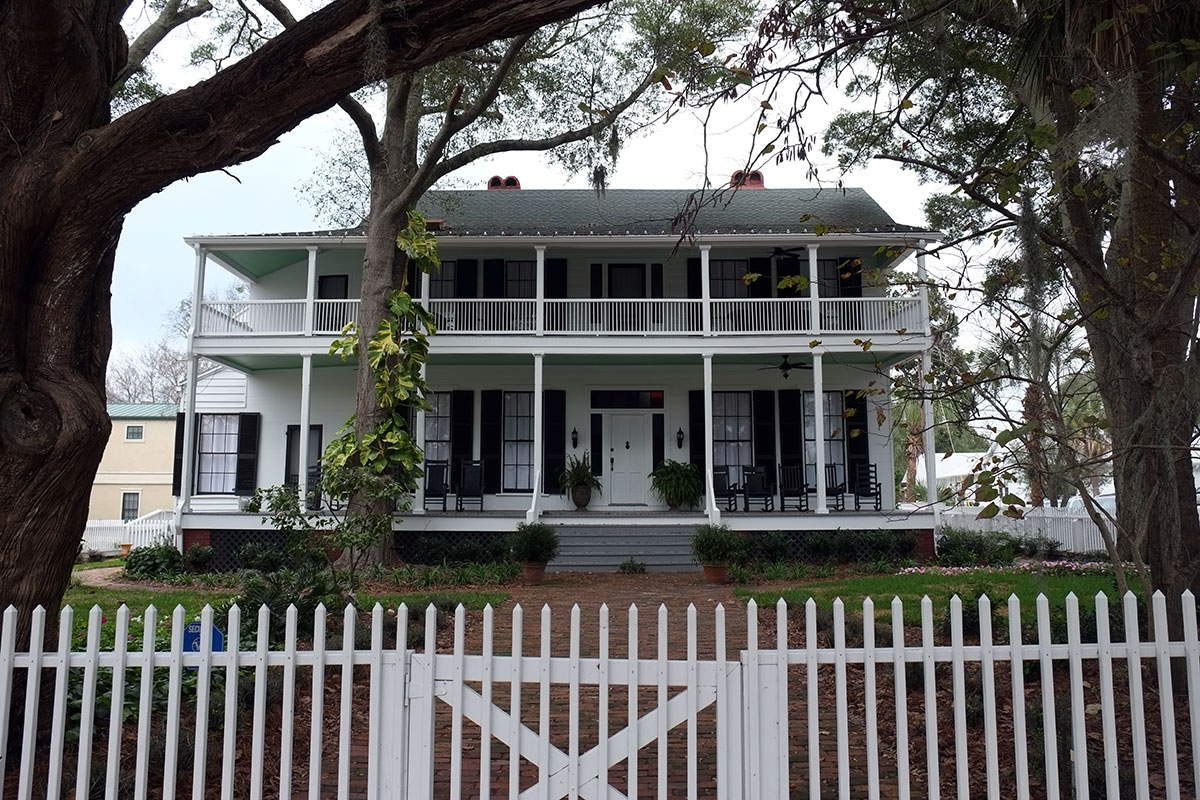
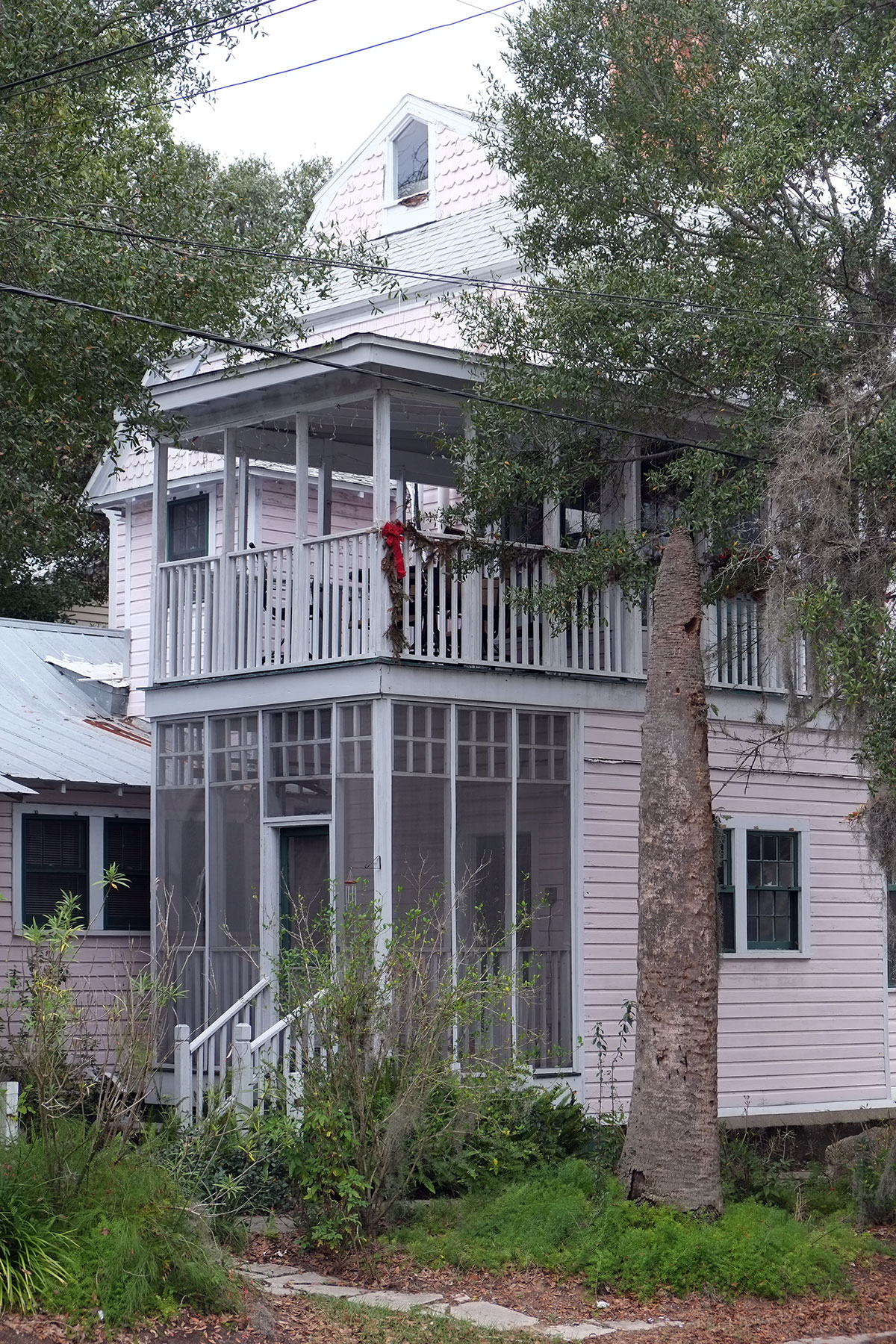
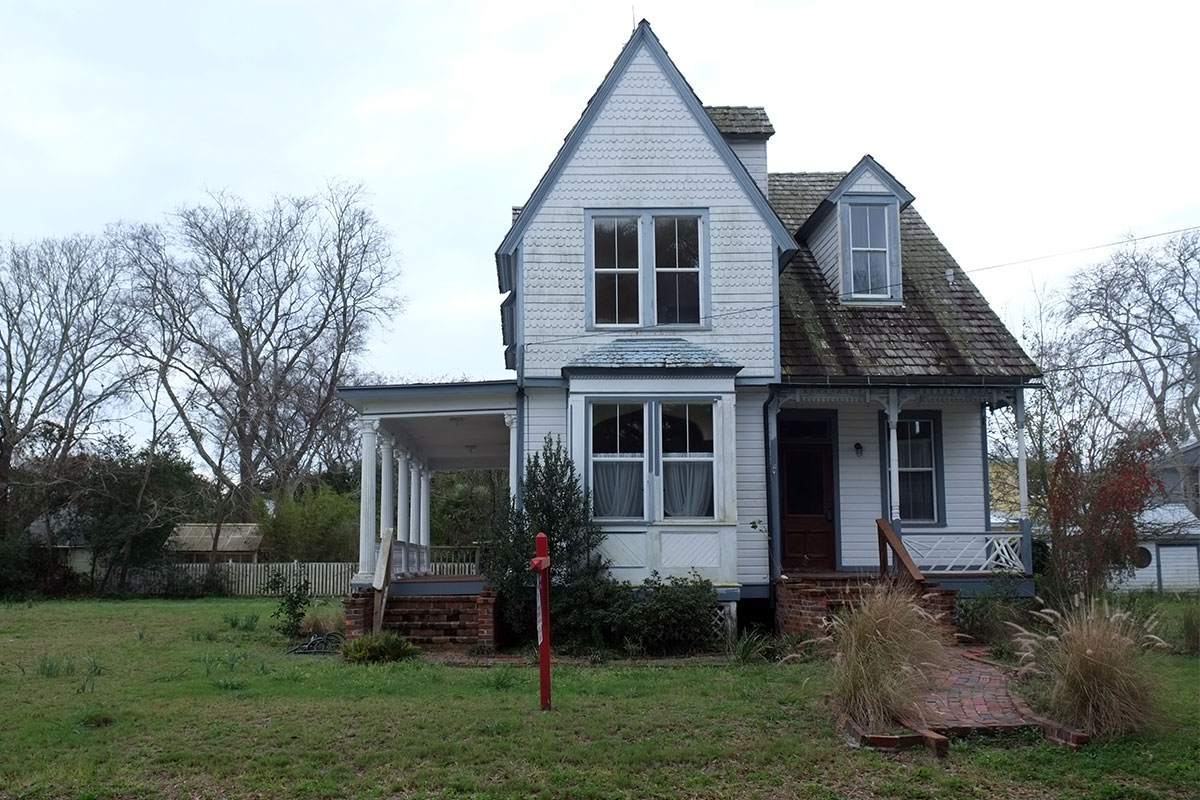
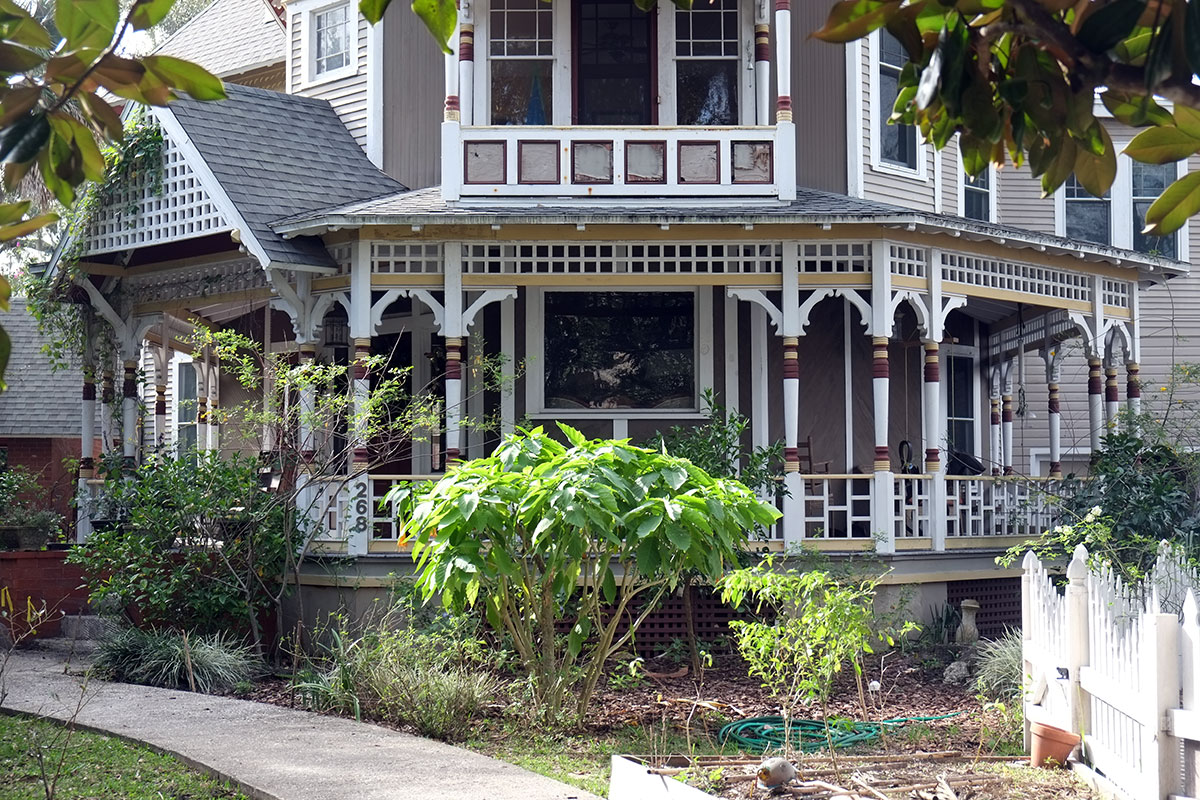
But what really struck us was the district known as The Point.  Many of the houses are large and spectacular, but it doesn’t seem that hedge fund managers have been pumping a few million into each one.  Perhaps they still belong to old families, or perhaps they are just too big and would cost too much to renovate.  Or maybe there aren’t any good golf courses nearby.  For whatever reason, the neighborhood exudes that atmosphere of Southern decay that we all know from black and white movies.  I kept expecting to see a fat old guy in a Panama hat and suspenders sitting on the porch drinking bourbon.  DSCF9891  DSCF9931p  DSCF9943p

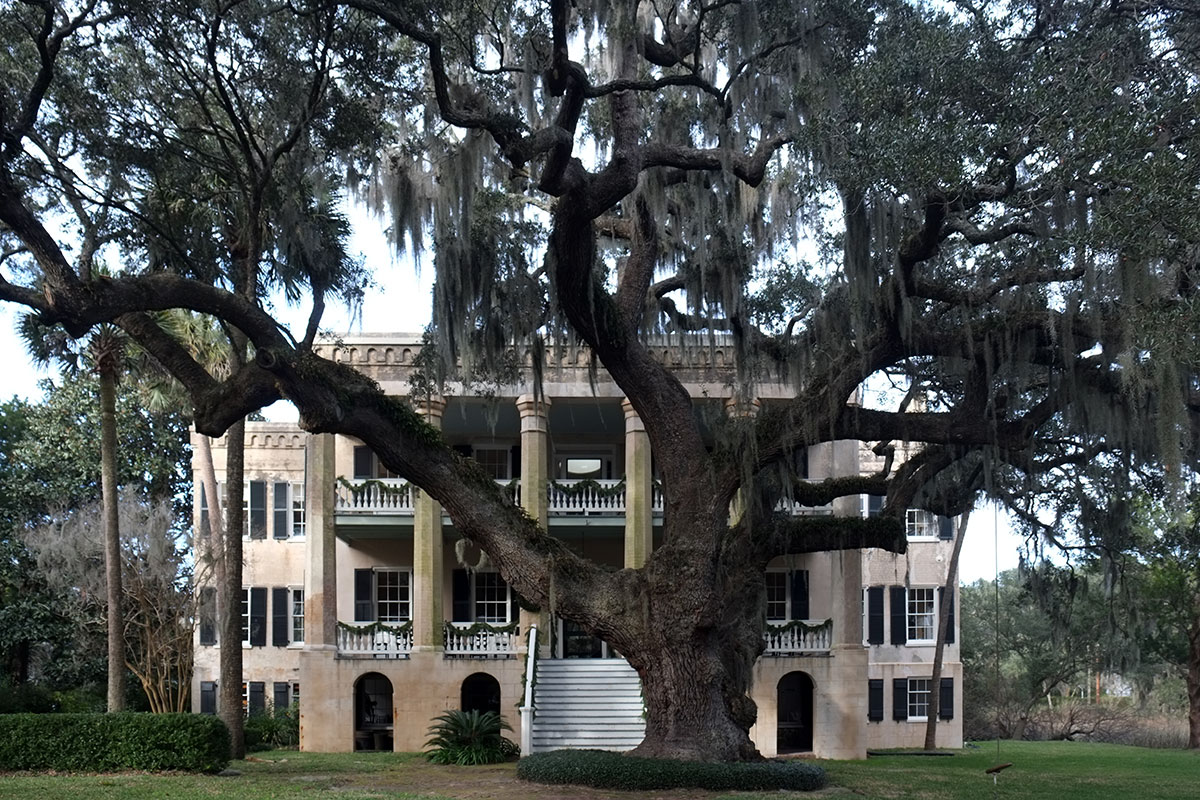
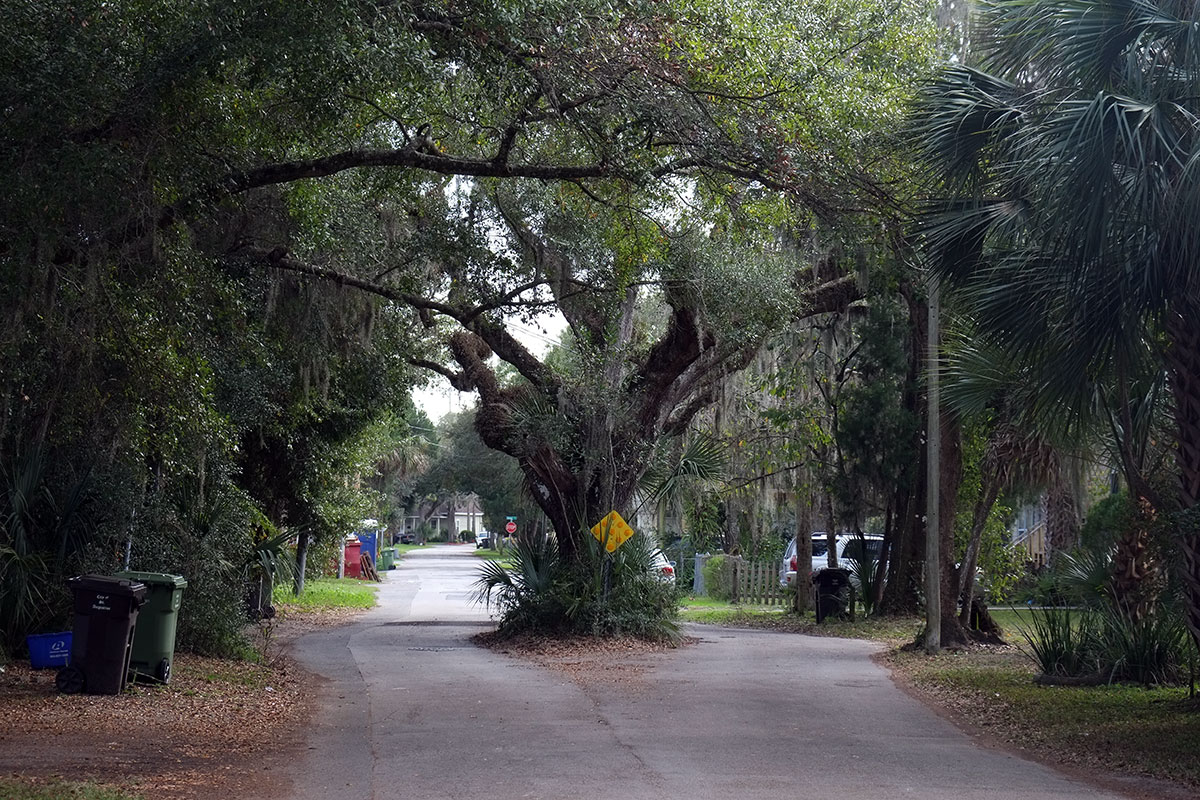
The growth is unbelievable.  Giant live oaks everywhere, and Spanish moss practically down to the ground.  DSCF9865p        DSCF9887DSCF9872DSCF9913p  DSCF9947p

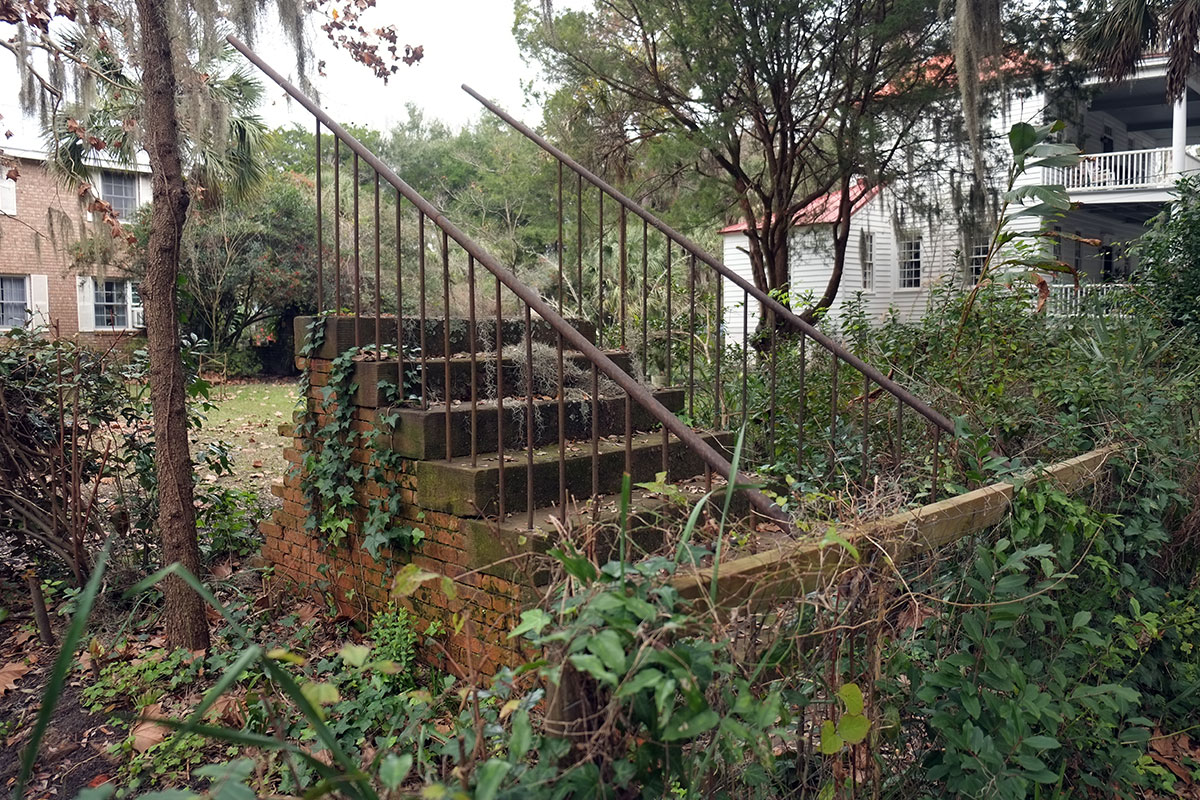
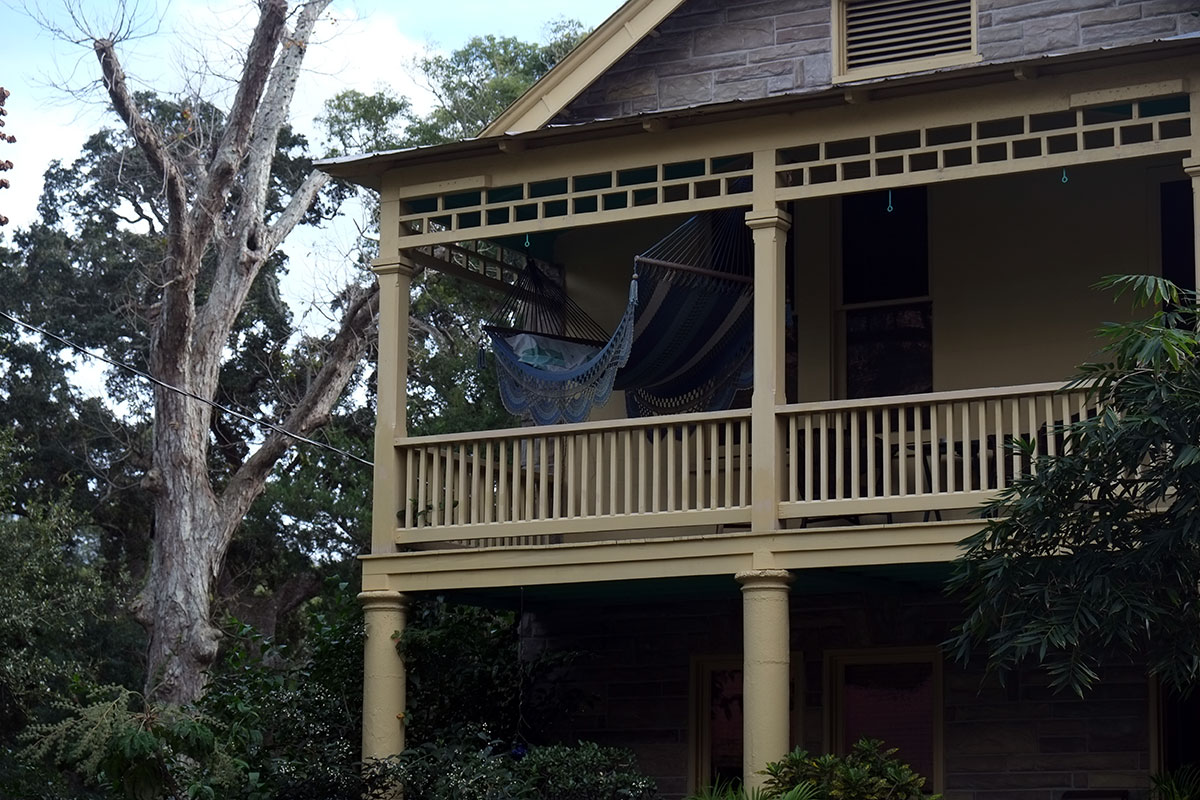
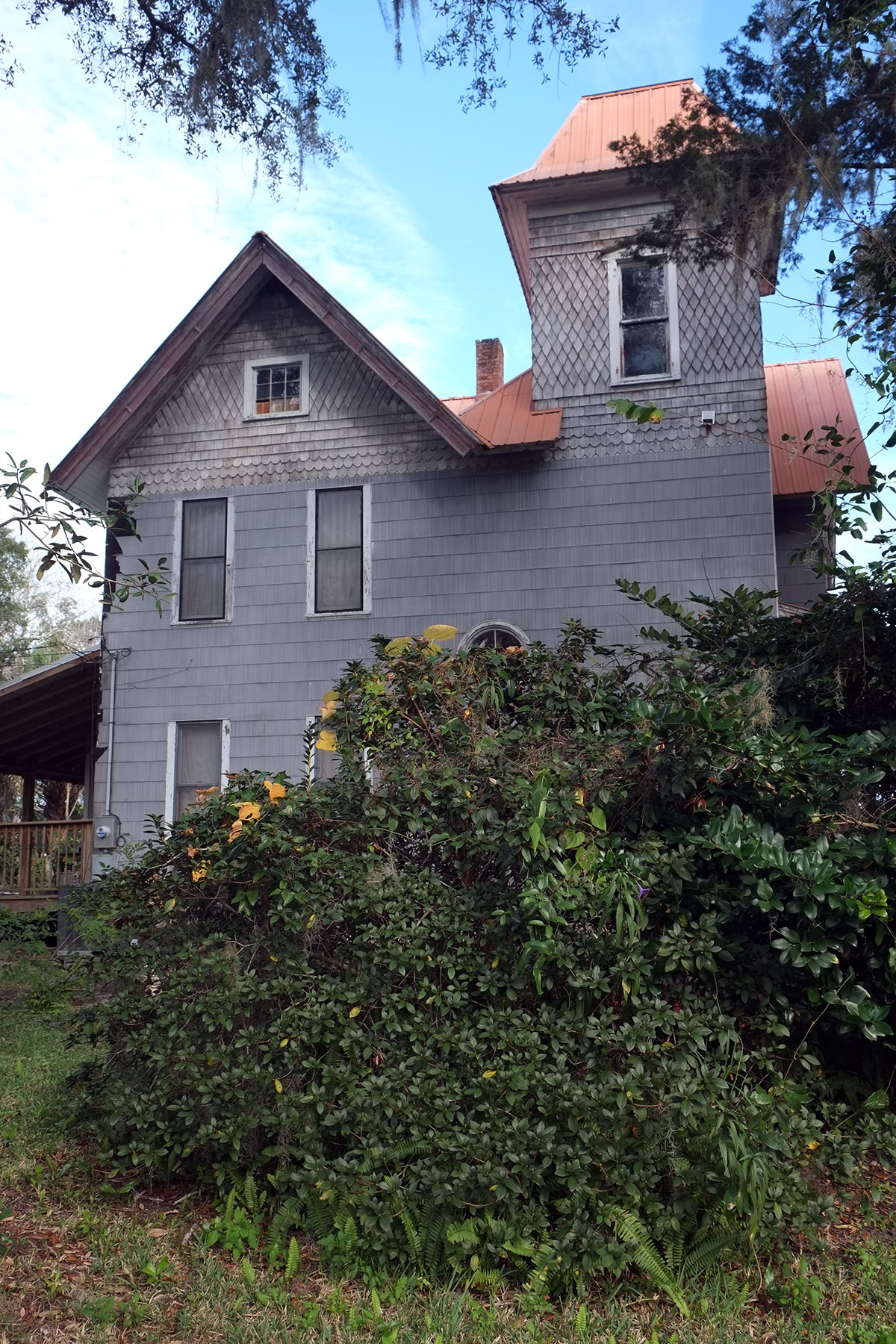
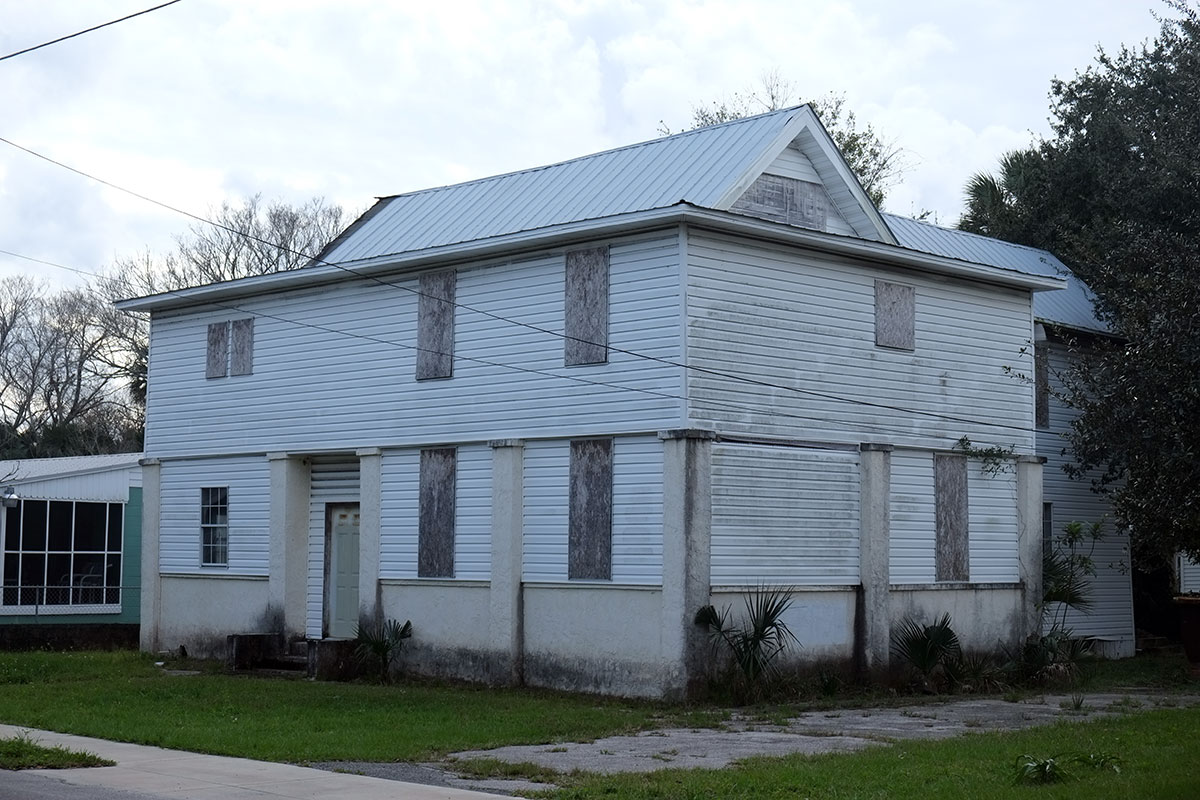
As much as I loved Charleston, eventually you get tired of everything being so perfect.   Beaufort has some ruins and some neglect – it doesn’t have the armies of gardeners ready to pounce on every weed that appears, or painters with their three levels of trim paint ready to go.
DSCF9921  DSCF9897p  DSCF9904

DSCF9880p

Traveling across the South, it’s been discouraging to see how much it has become like the rest of the country – every little town has five fast food places that have displaced the bbq joints and old diners.  The new houses look the same as in New Jersey or Texas.  Either things are really poor and dilapidated and depressing, or they are brand new and character-less.  Beaufort had a strong presence of the past, and it looked old.  It helped prepare us for New Orleans.

Savannah and the ascendancy of the Plan

DSCF9828Many of our readers have remarked that my blog posts are like architecture lectures.  Any of my students reading this can attest that what I have to say about Savannah already is a lecture.  I’ve been giving this lecture about Savannah for years, and on this trip we just returned there so I could get better photos.  Actually, we returned to Savannah four years after out last visit because it is one of our favorite cities – even Greta doesn’t get tired of walking through this beautiful and varied place.

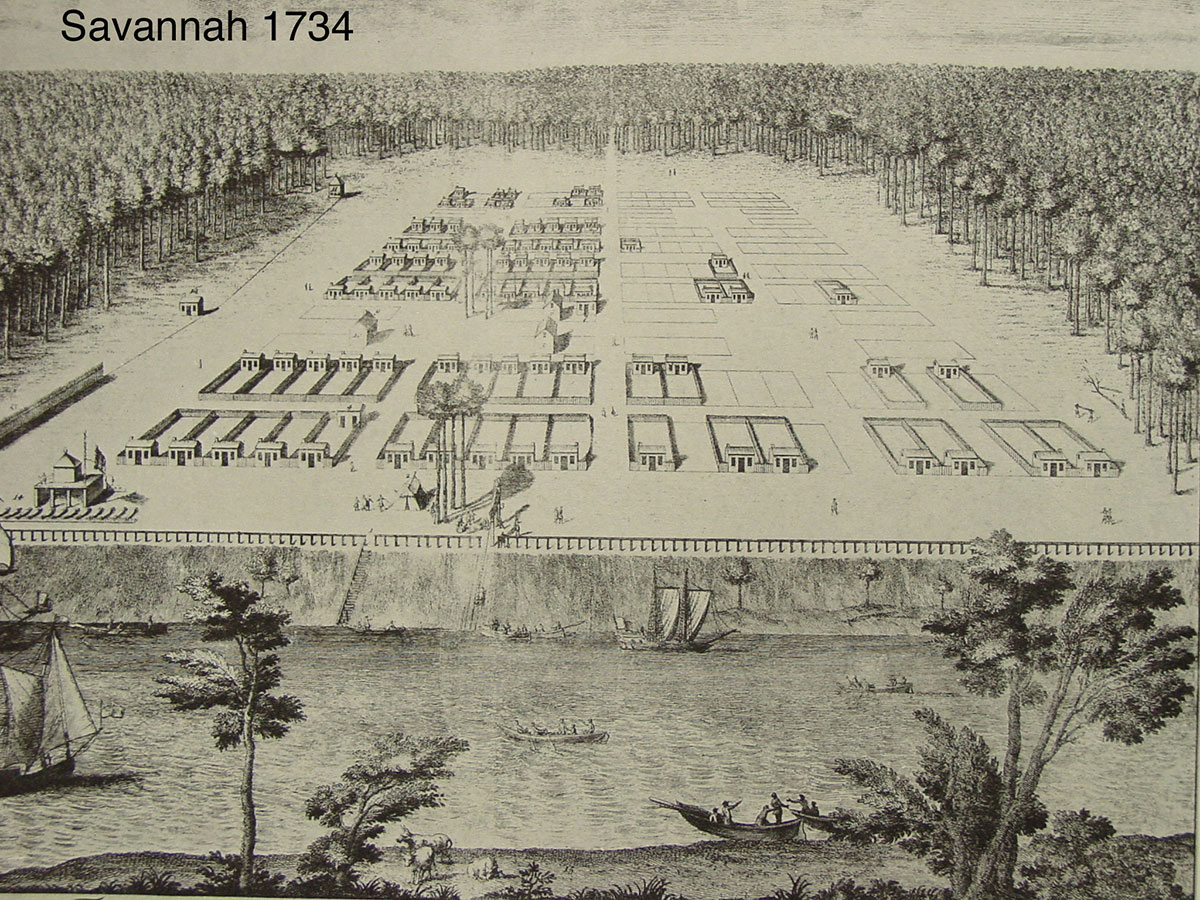
If the character of Charleston depends largely on the building type of the single house, the character of Savannah is wholly dependent upon the brilliance of its plan.  It was laid out by James Oglethorpe in 1734 as a military camp, and it is incredible to think that his ideas on the hierarchy of a camp filled with huts could lead to perhaps the most sophisticated town plan in the country.  This is the famous print of Oglethorpe’s original layout:  Savannah-1734

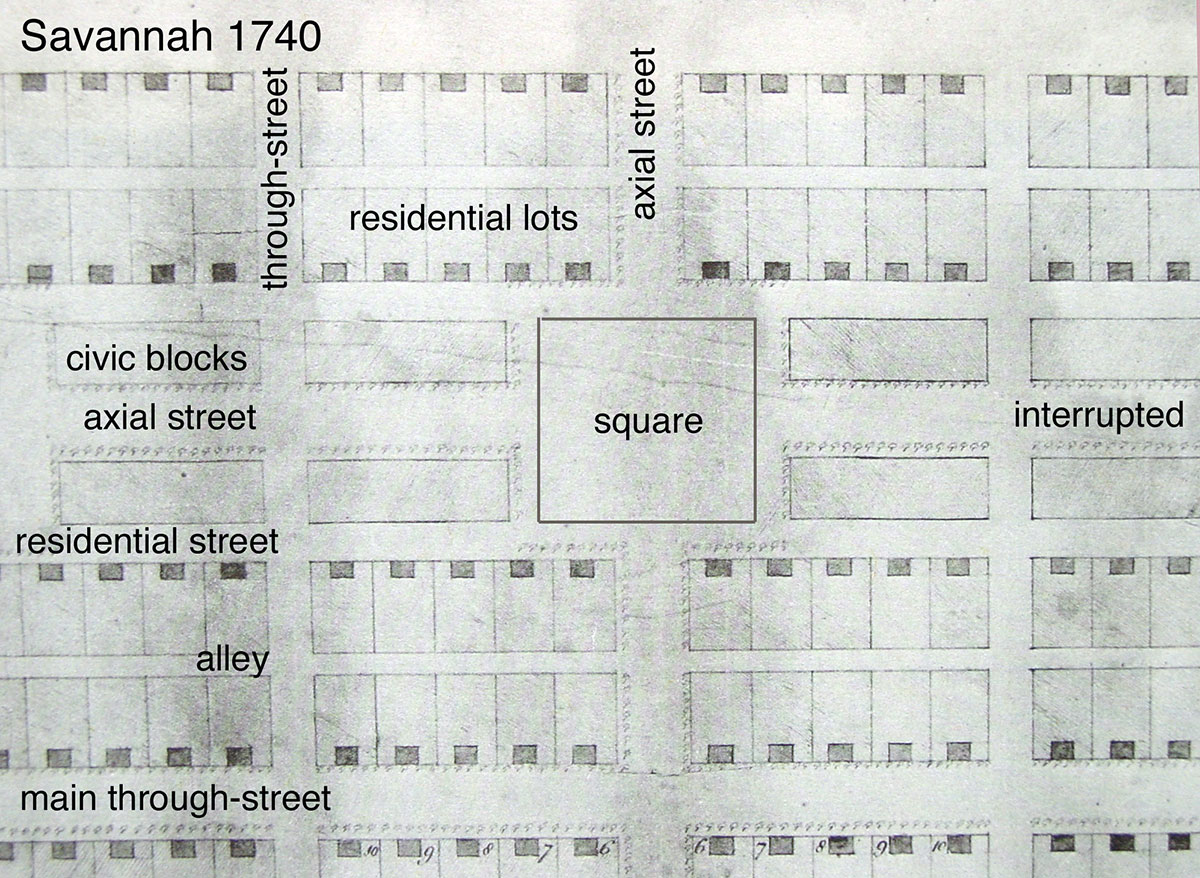
The basic module of Savannah’s plan is the “ward” – the repeating arrangement of streets that surround a square.  Most planned American cities are based upon a simple grid, where every street is the conceptual equivalent of any other, but in Savannah there is a hierarchy of major streets, through streets, formal streets, residential streets, and alleys. Savannah-module

This hierarchy of streets dictates the qualities of the blocks and buildings, with the blocks to the east and west of the squares occupied by civic buildings and mansions.  The experience of being in the city is shaped by this hierarchy too – notice that the squares interrupt through traffic in both directions, so as a pedestrian you can stroll on these streets and though the squares, while the faster traffic moves on different streets.  DSCF9537

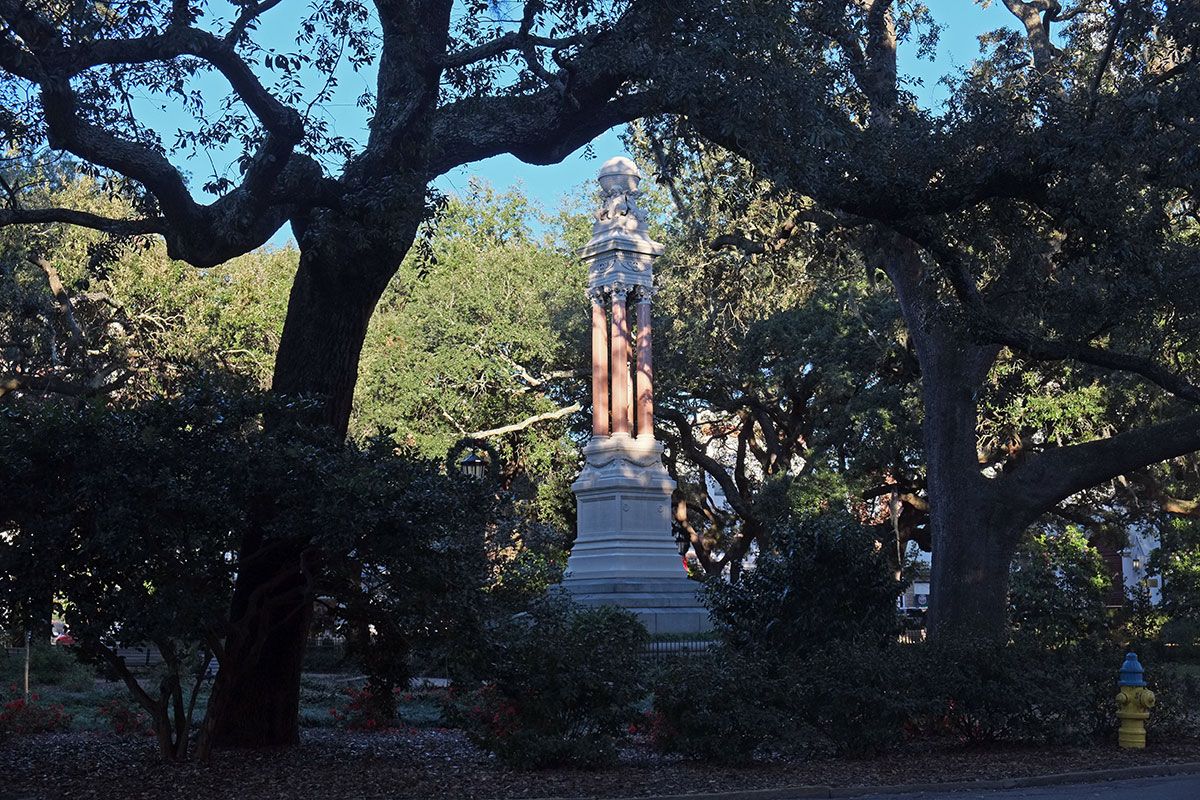
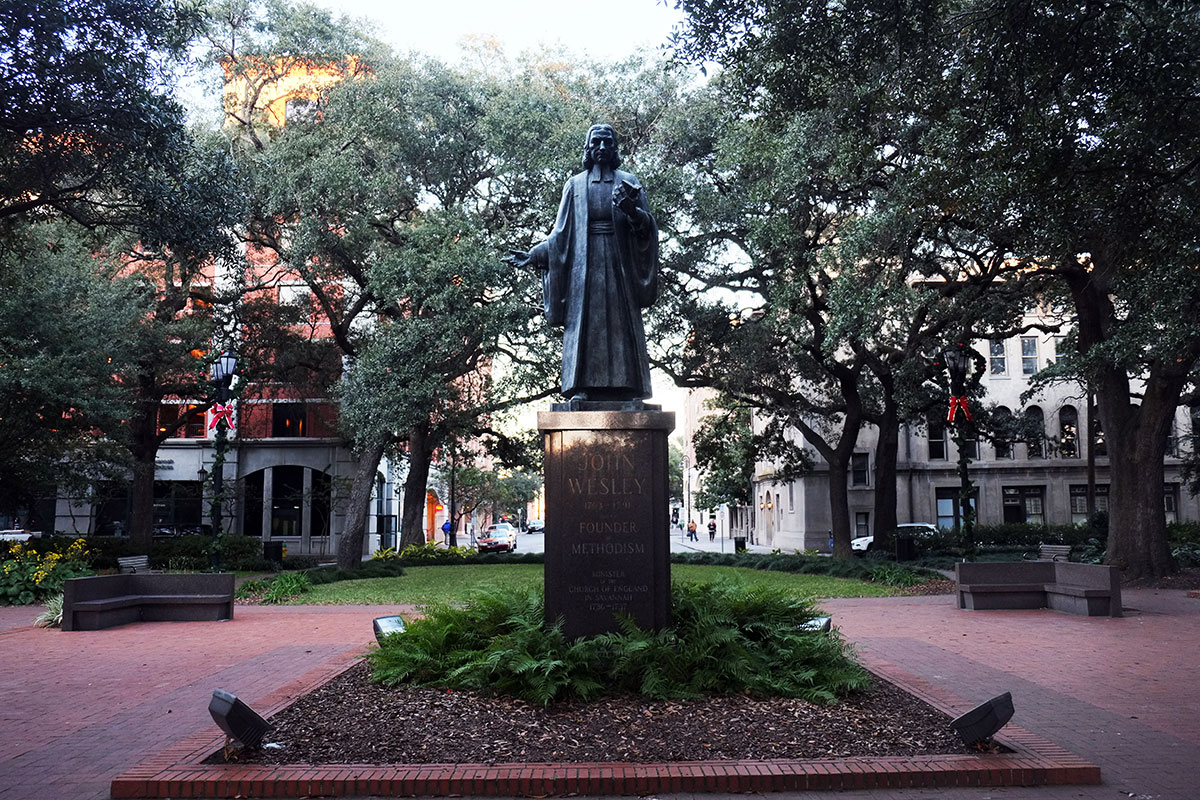
While the plan of each ward is the same, the development of the squares is very different.  Downtown squares, residential squares, rich neighborhoods, poor neighborhoods – they all have the same underlying pattern with an open space in the middle.  Most squares have a monument in the center, DSCF9769

and we noticed that the person memorialized in the center is never the same person after whom the square is named;  this is not Wesley Square.
DSCF9817

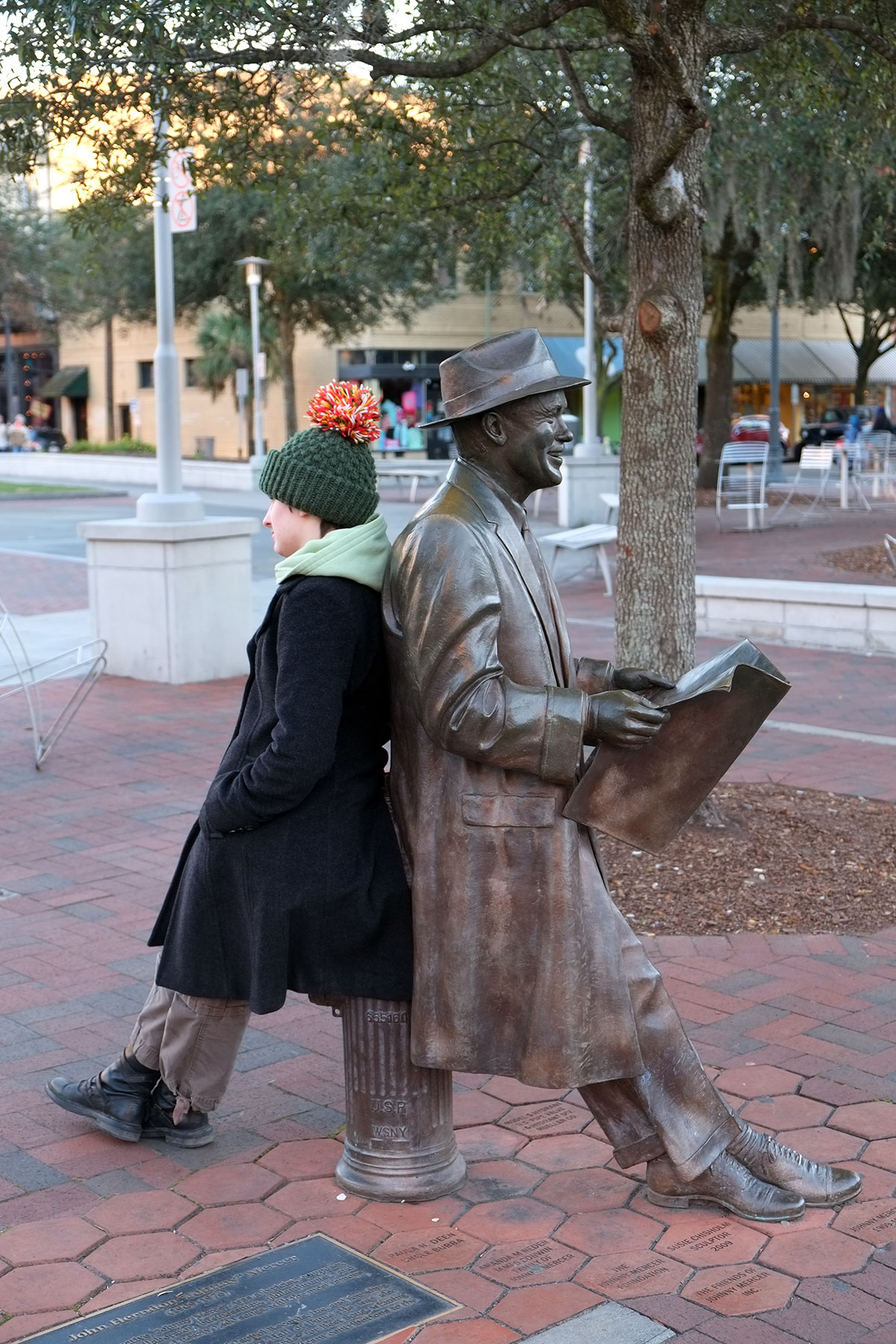
Some of the newer monuments are less formal, such as this statue of Savannah’s favorite son, the songwriter Johnny Mercer.DSCF9809

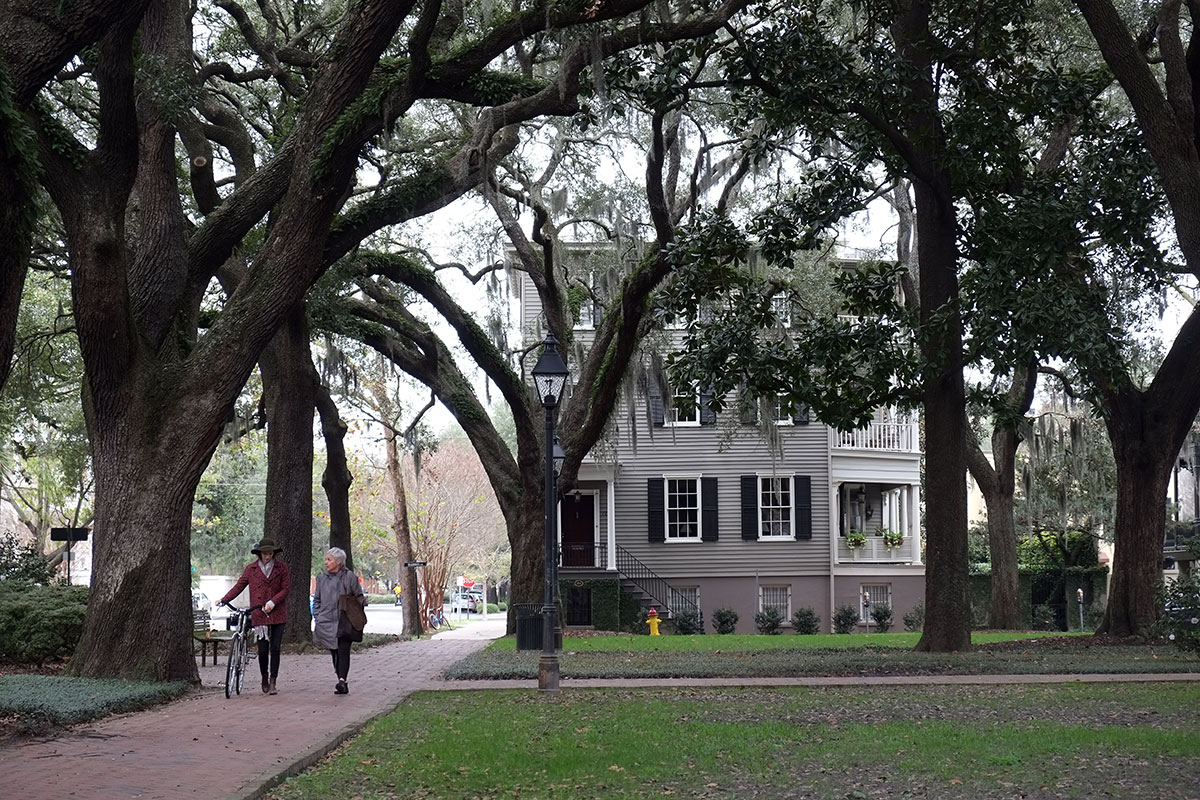
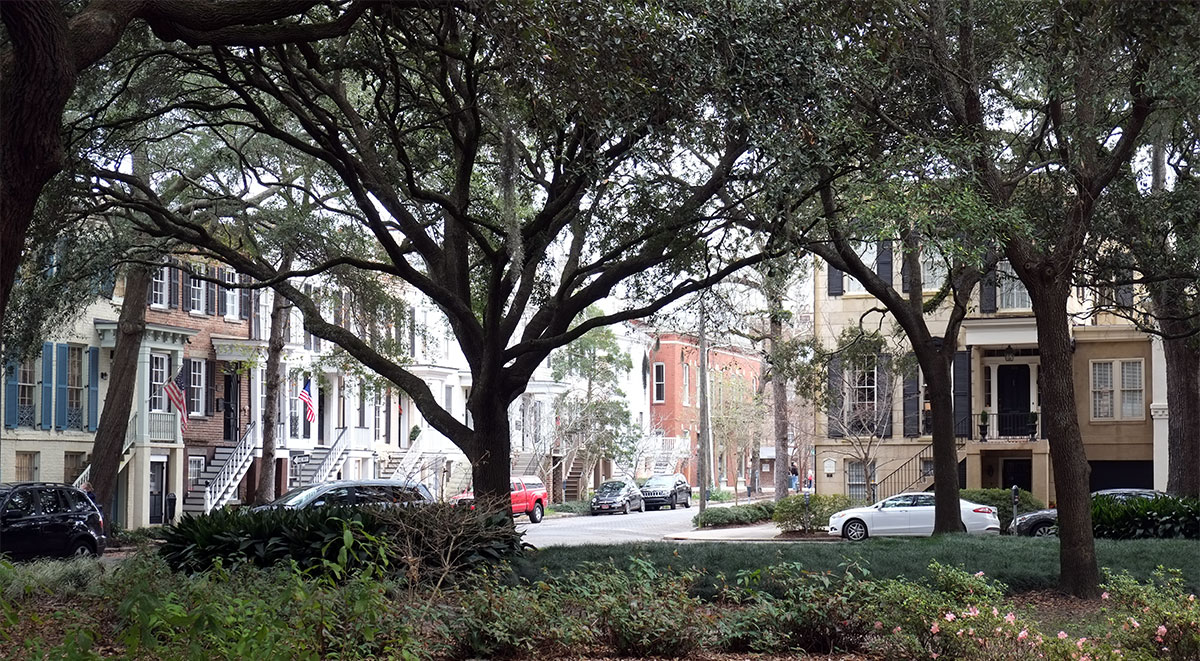
But it is really the spatial and experiential qualities of the squares that makes Savannah such a different place.  They are quiet and beautiful, and everyone in the center of the city is always with one block of an open space.  DSCF9514

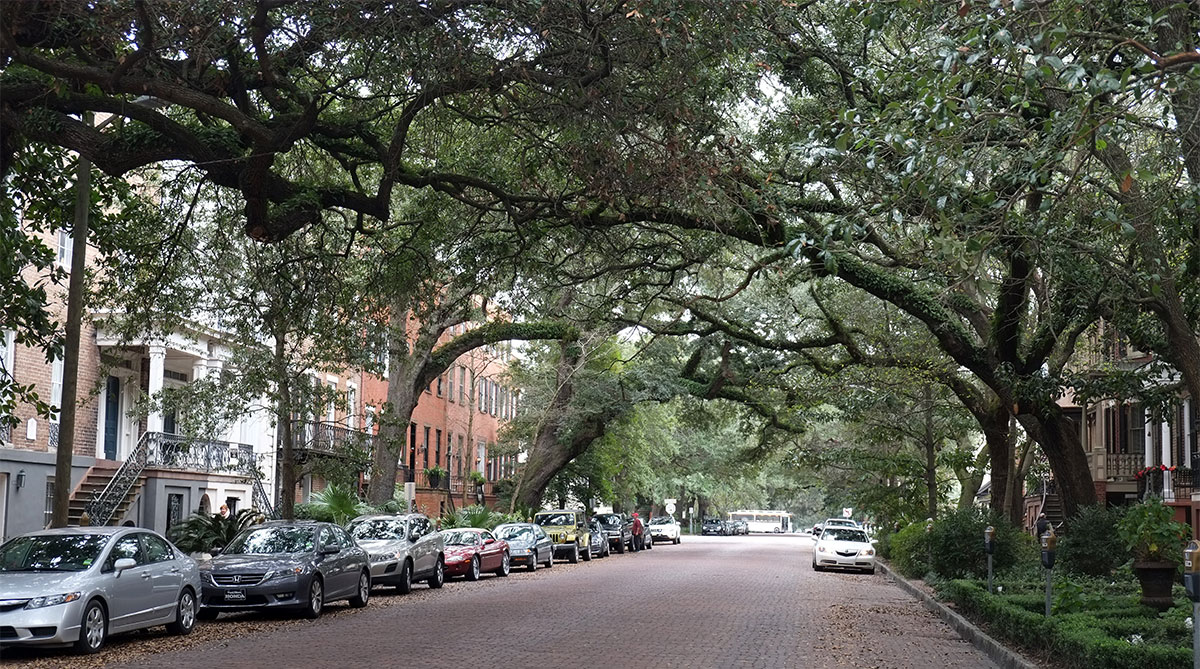
This isn’t to say that the through-streets are awful – they too are gracious and welcoming, with the live oaks and Spanish moss giving much of the character.  DSCF9517

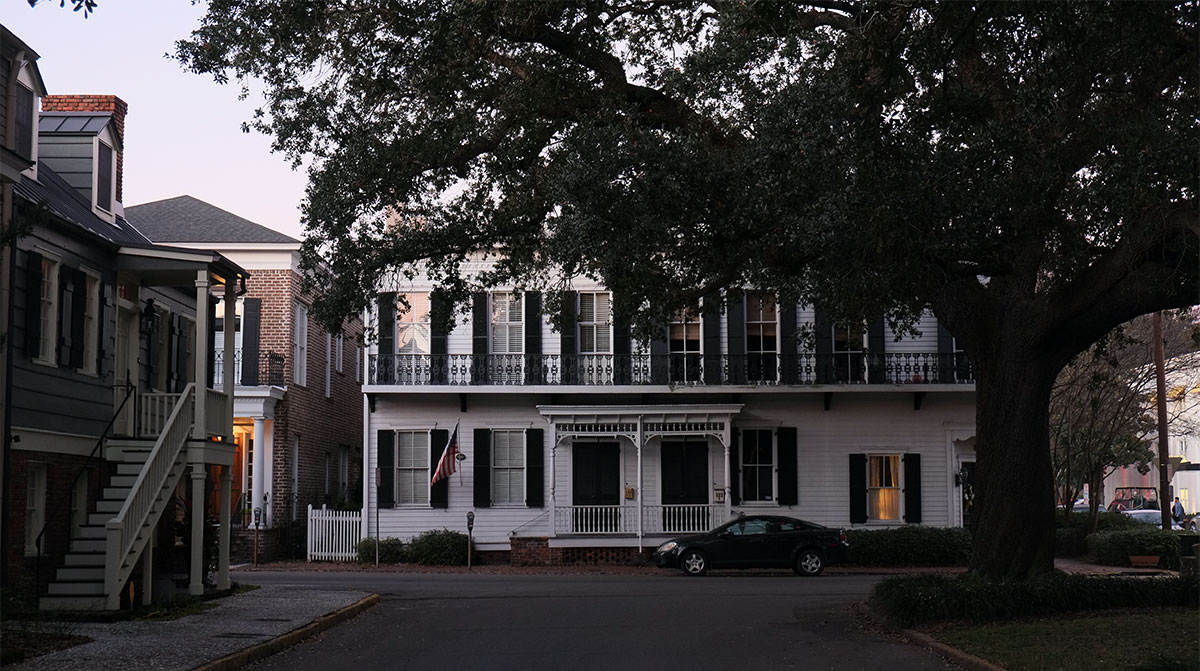
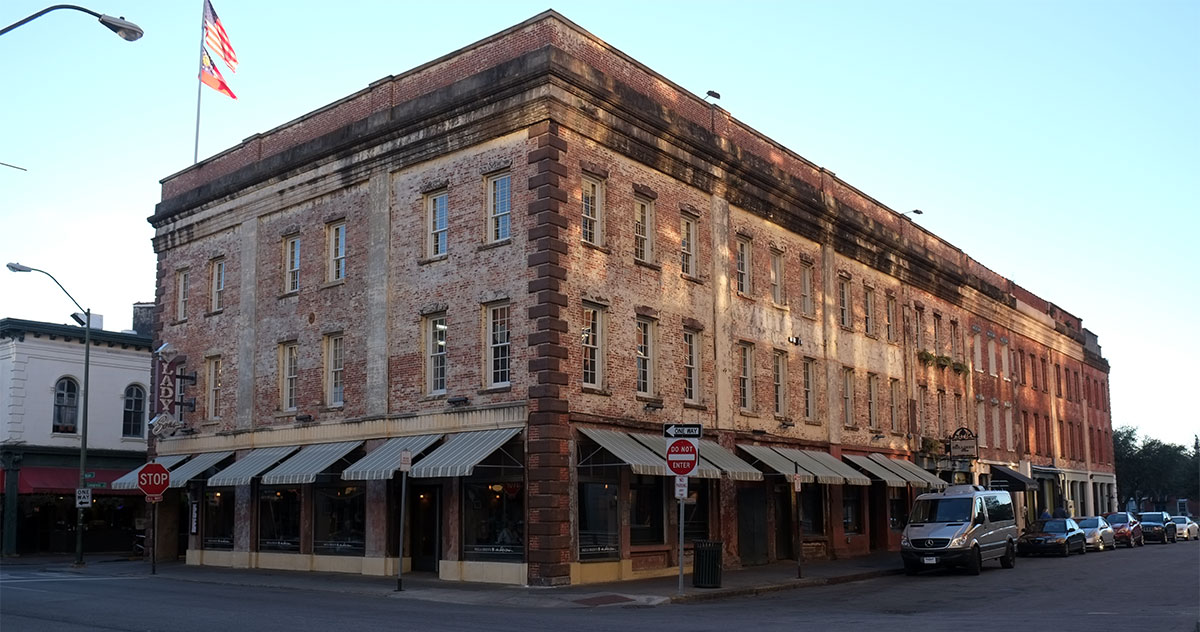
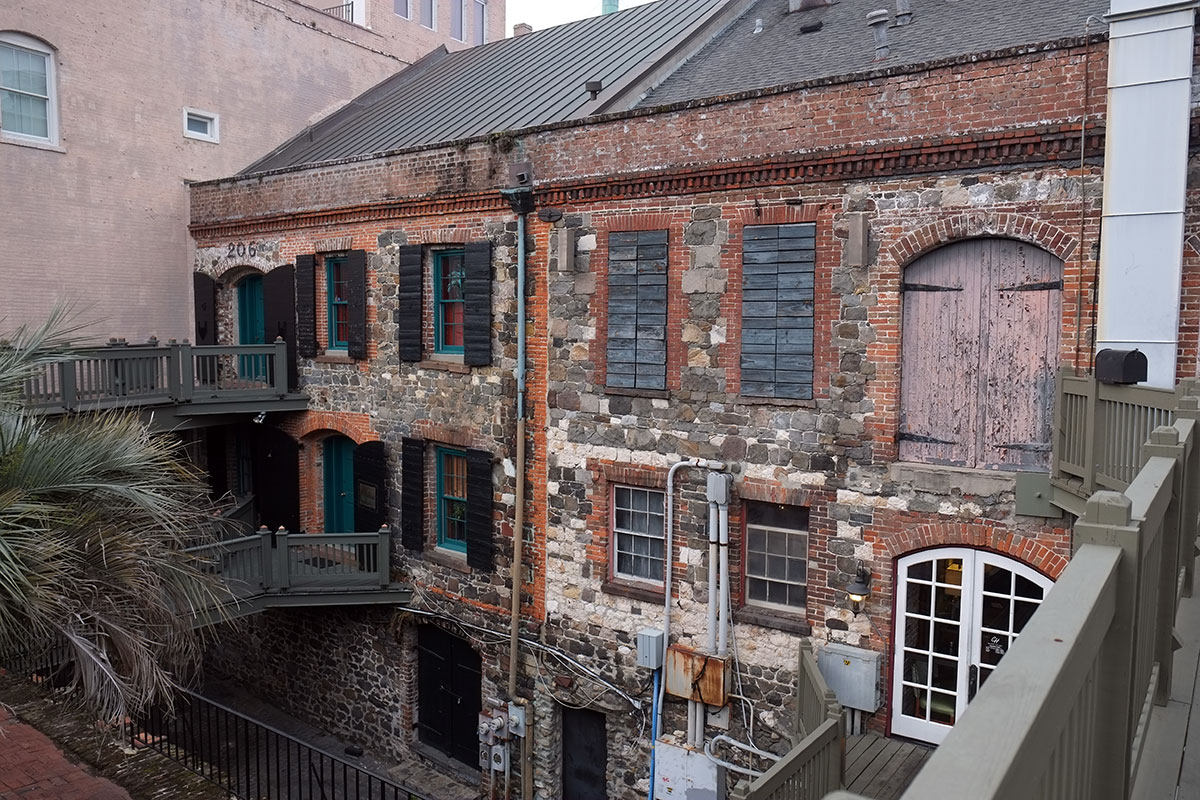
Savannah also has beautiful buildings surrounding these spaces.  There are a couple of squares that have been ruined by 1950s and 1960s buildings, but in reaction to these, Savannah was one of the birthplaces of the historic preservation movement, and the rest of the city core was spared the blight of bad buildings and bad city planning ideas.  There are excellent commercial buildings.DSCF9812warehouses by the river,DSCF9584

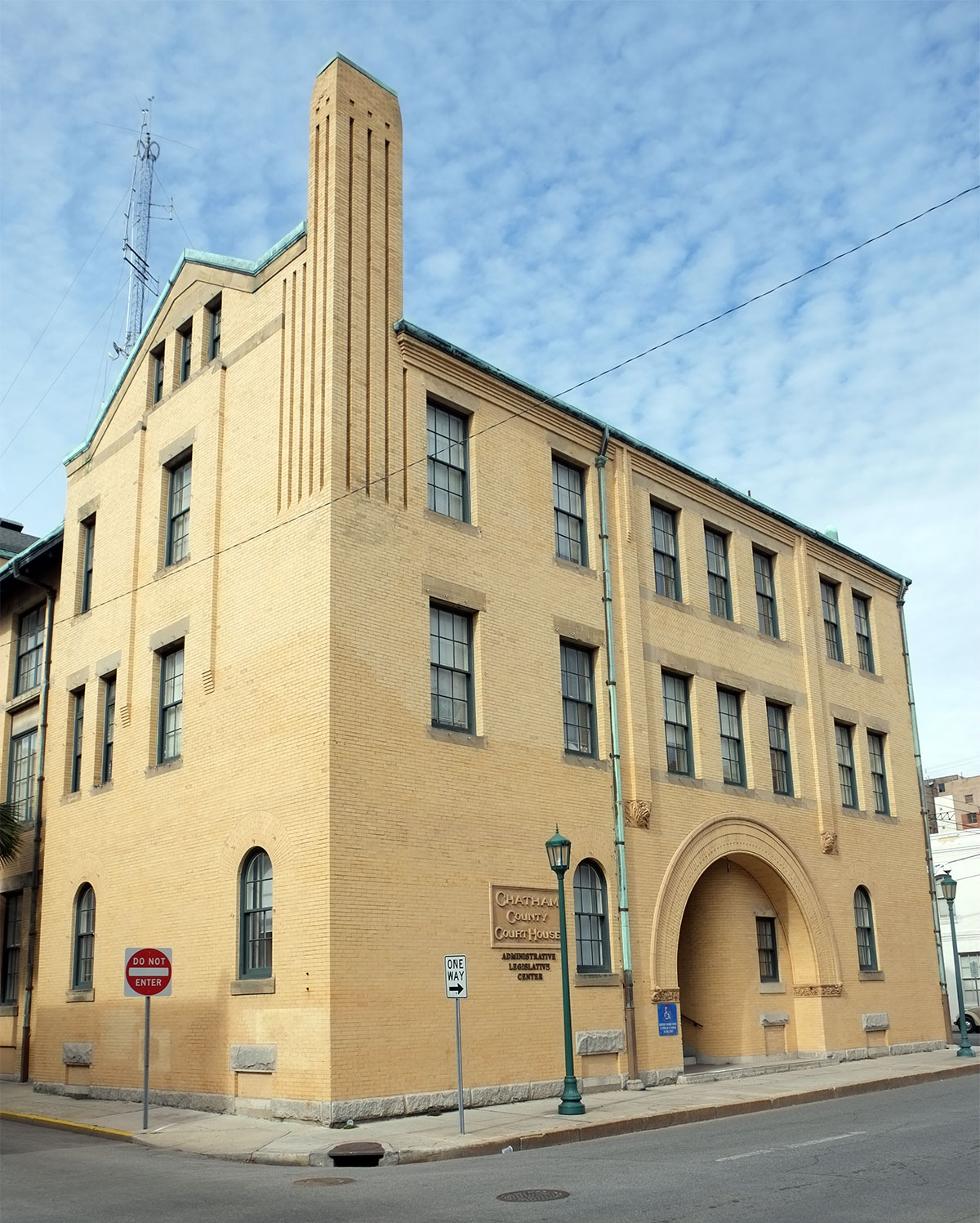
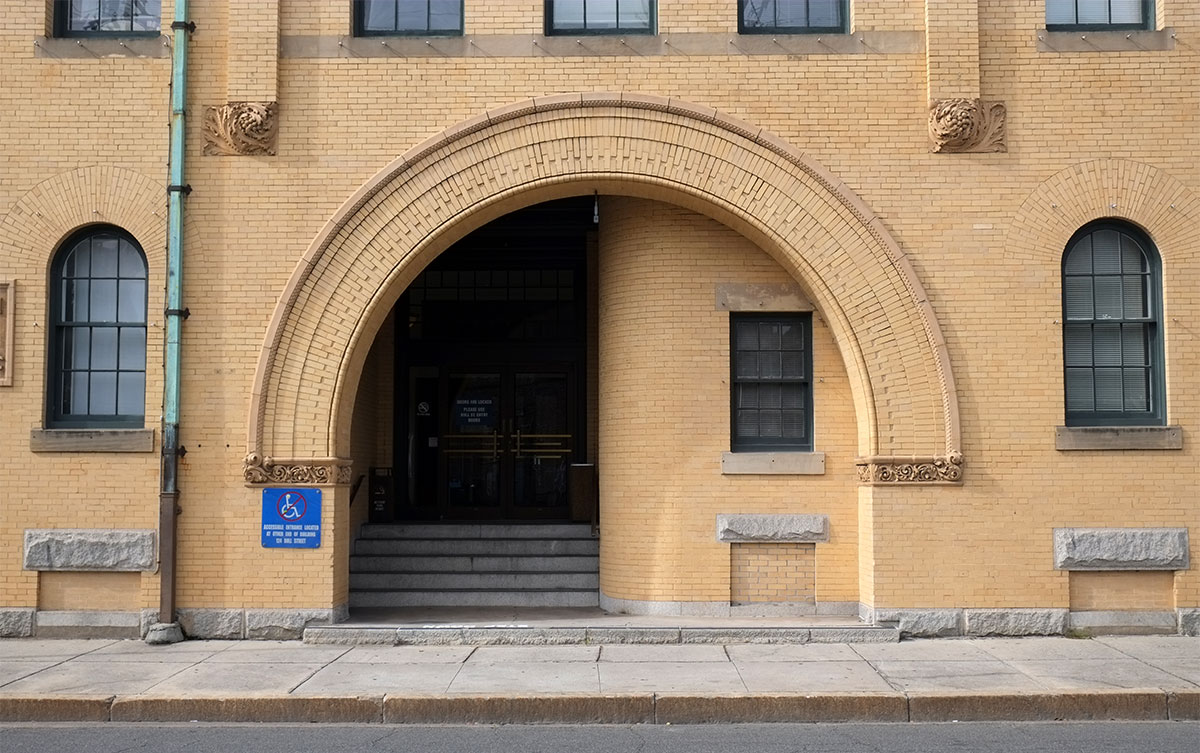
civic buildings (I don’t know the architect for this courthouse, but he was clearly influenced by Berlage and early European modernism).  DSCF9523  DSCF9524

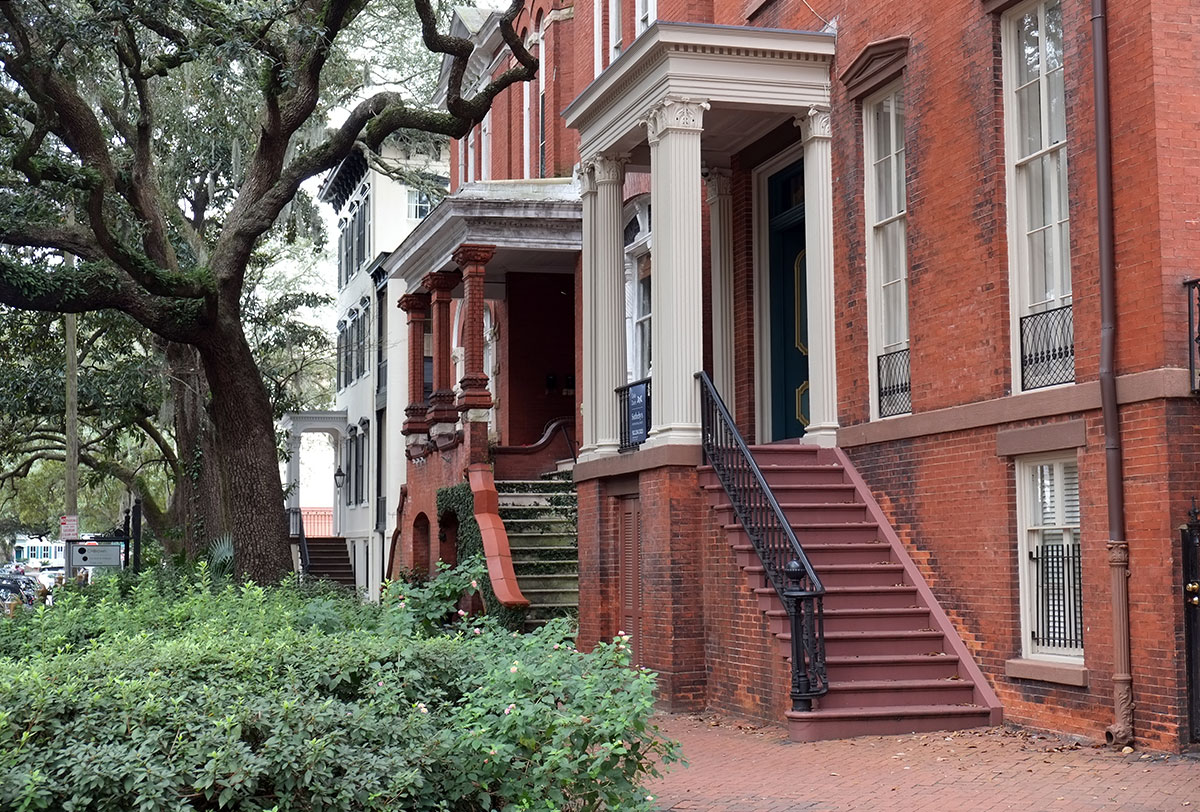
and of course beautiful houses.  DSCF9748  DSCF9461   DSCF9478

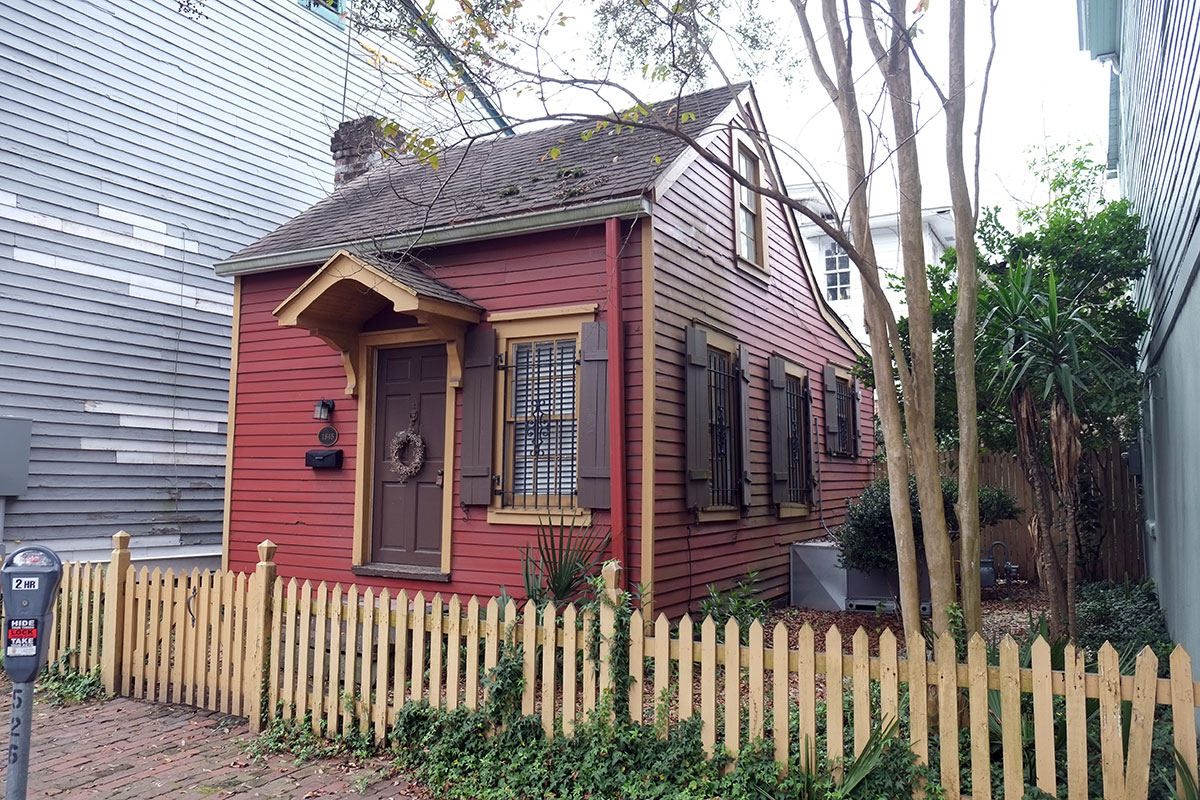
including some tiny old ones.  DSCF9567

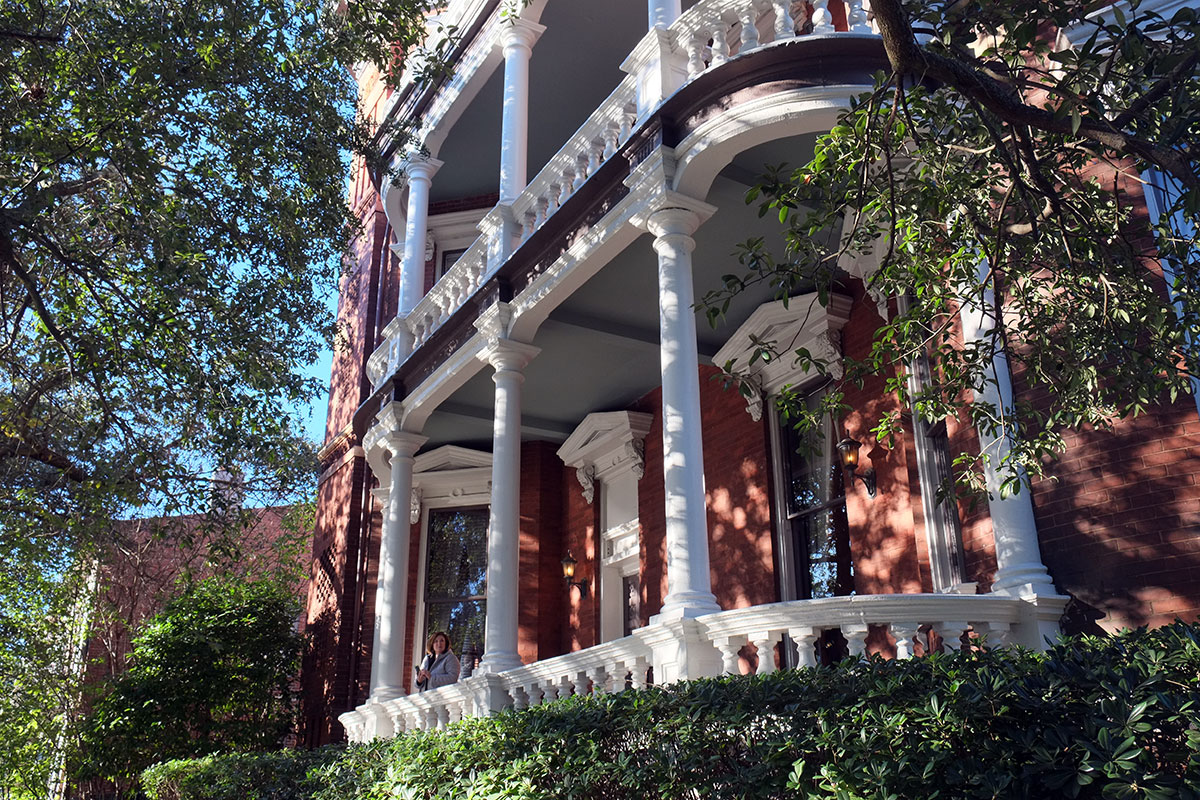
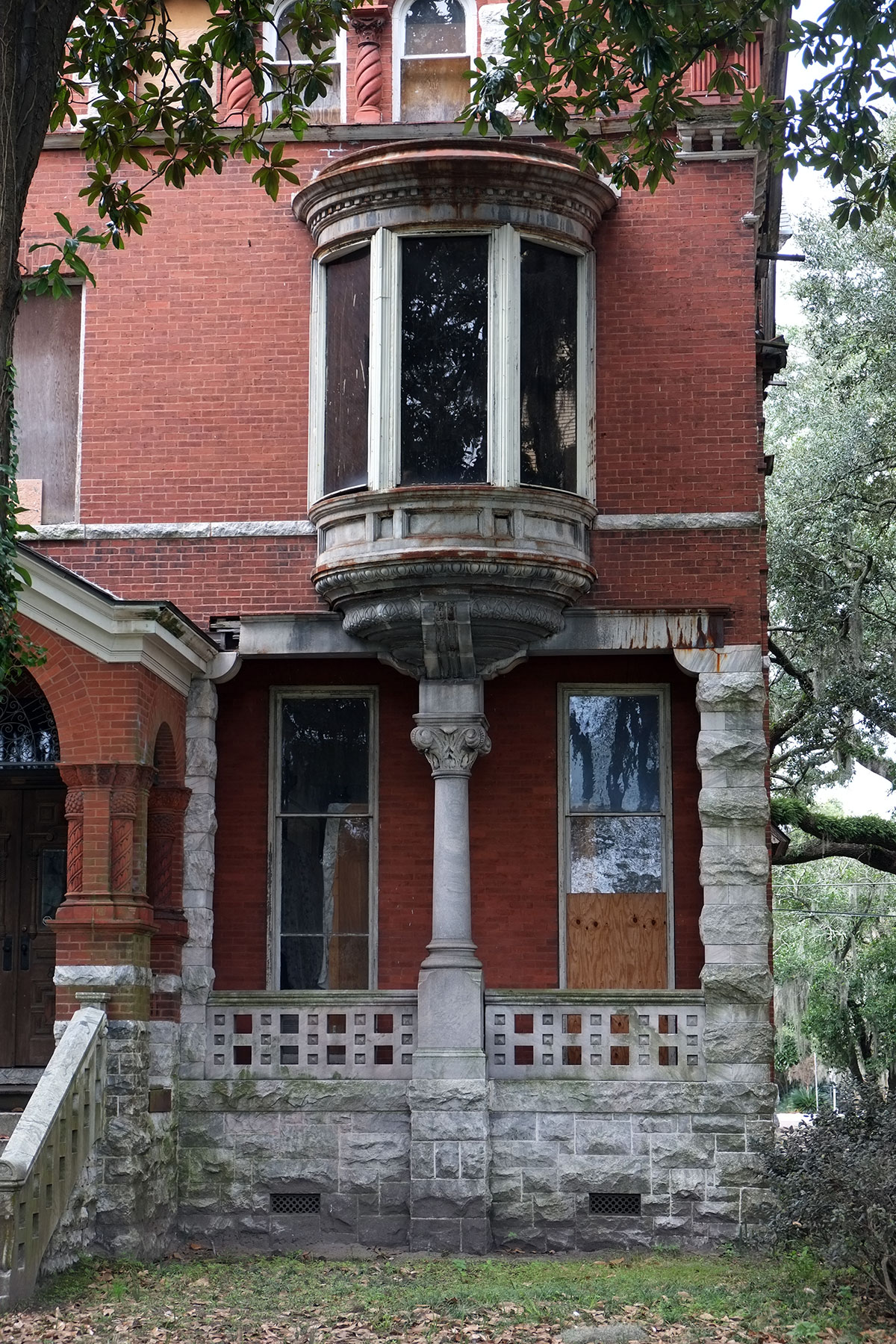
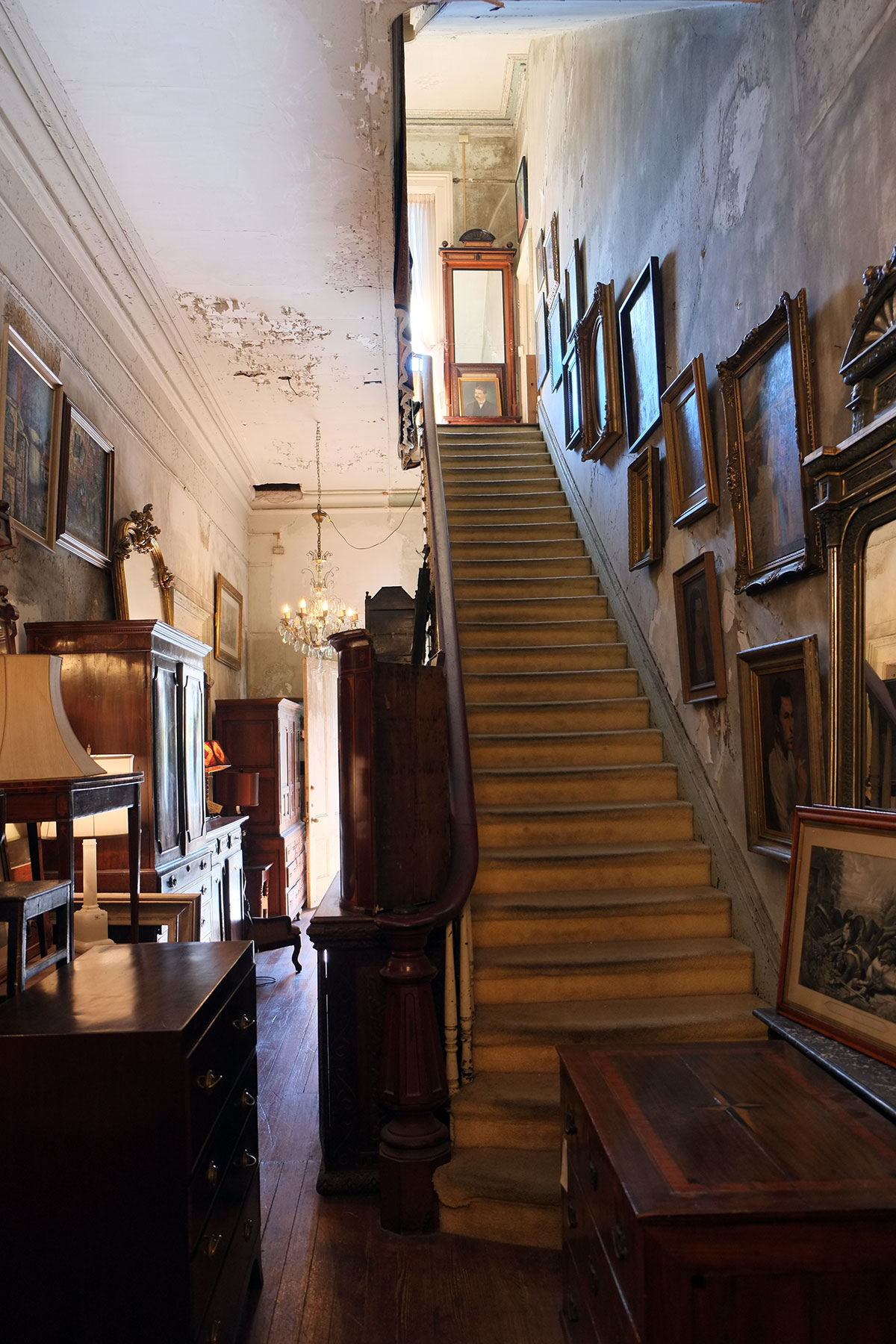
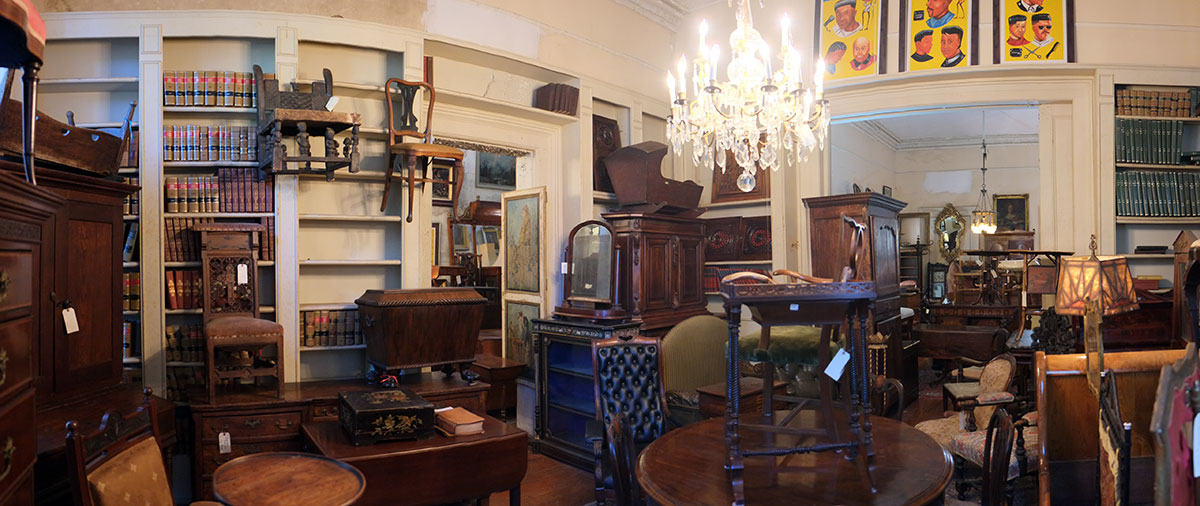
Our favorite building in Savannah is the Alex Raskin antique store.  Housed in one of the largest townhouses in the city, it is gorgeously unrestored, owned by a former New Yorker, packed with furniture and cool stuff, and gives you a free glimpse of what such a house is like inside.  Partial as I am to Southern decay, I like seeing a house that isn’t all tastefully tricked-out, and where you have to listen to a guide drone on about genealogy.  DSCF9706  DSCF9708

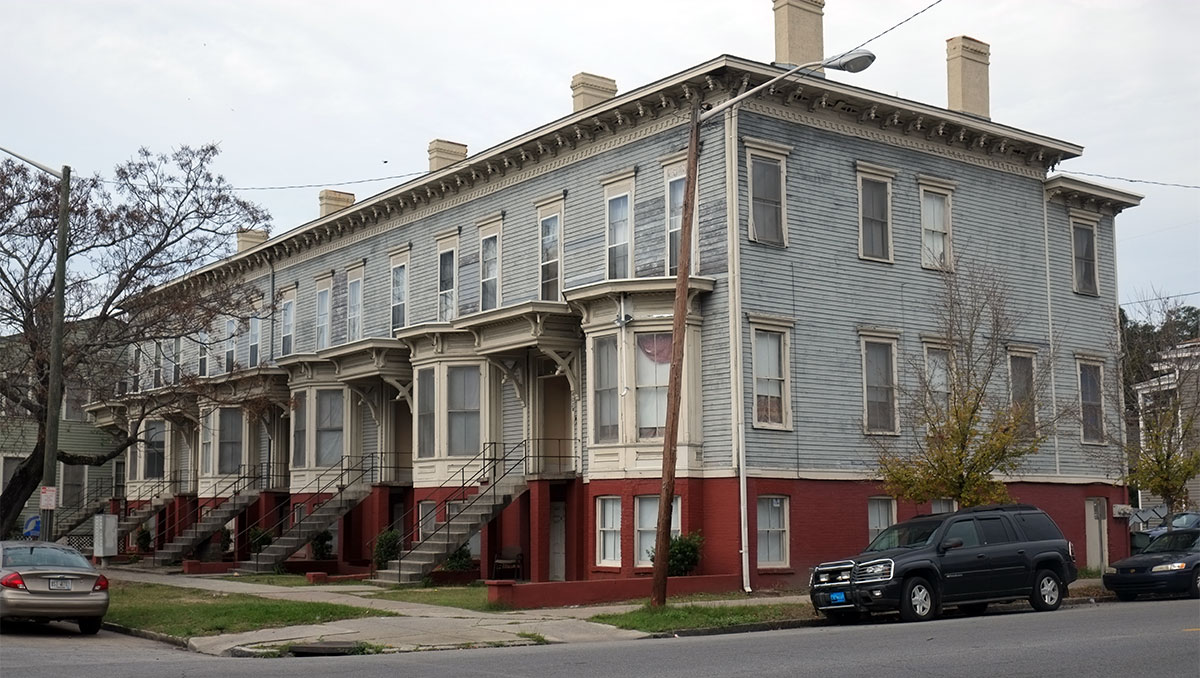
We also walked through many of the 19th-century neighborhoods which flank the large city park to the south of the historic core.  They don’t have the same ward system with squares, but they are good neighborhoods with a variety of styles of frame buildings.  DSCF9506  DSCF9485Older housing is being restored in these neighborhoods (for those priced out of the core), and new buildings are being built in historicist styles.DSCF9489

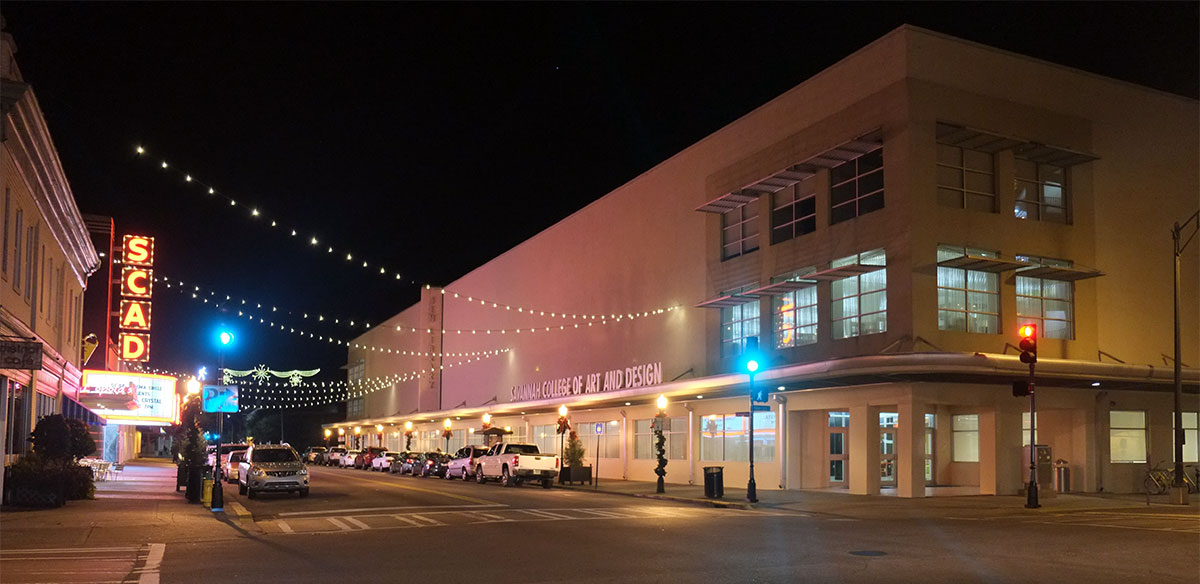
Savannah isn’t completely frozen in time.  SCAD, the Savannah College of Art and Design, has purchased many old buildings throughout the city to house its scattered-site school, and the presence of the school really contributes to the vitality of the city (especially compared to all the other beautiful southern cities which seem to be inhabited solely by affluent retirees).DSCF9839

And new transportation technologies are competing with the old.  DSCF9543

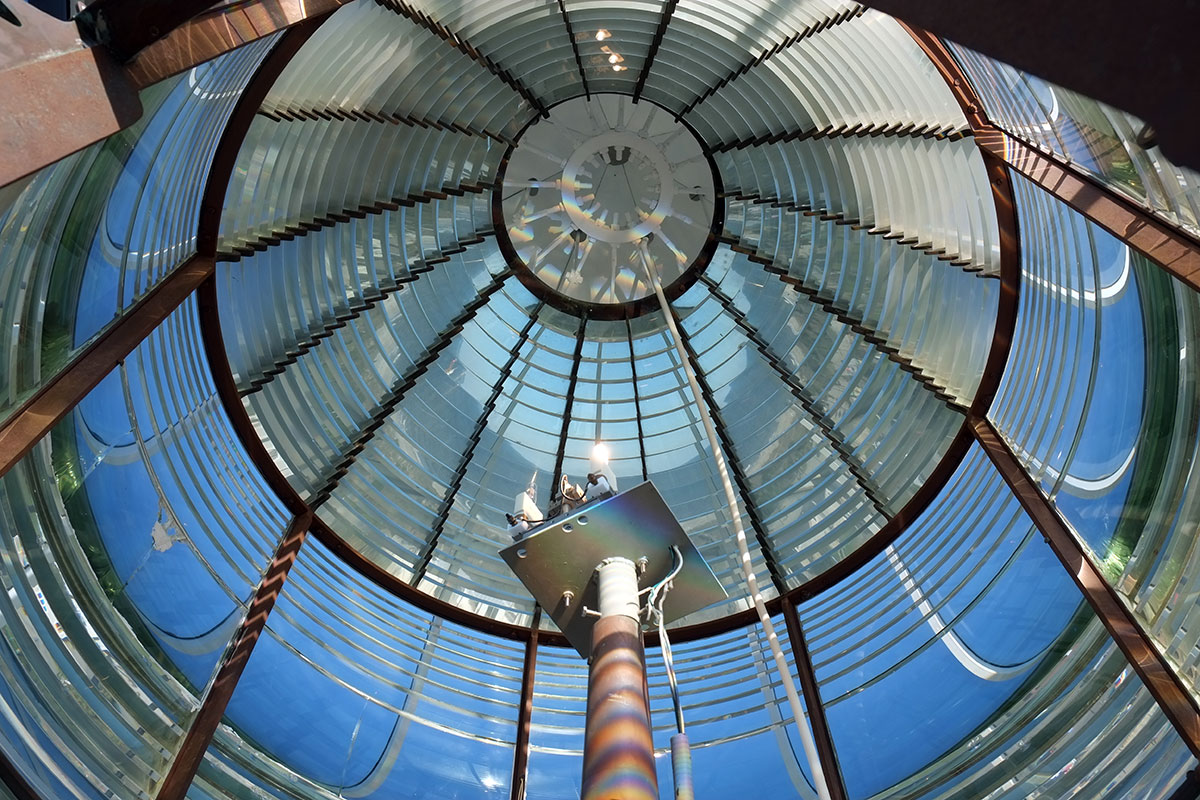
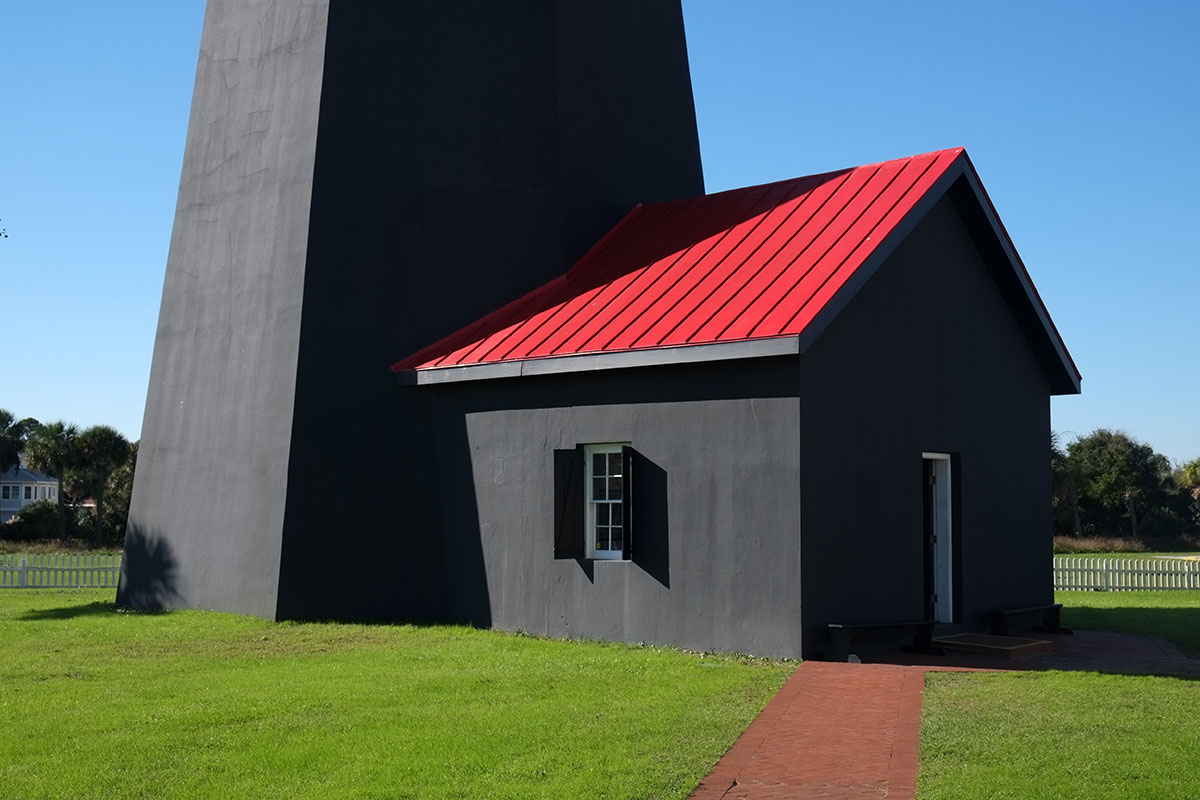
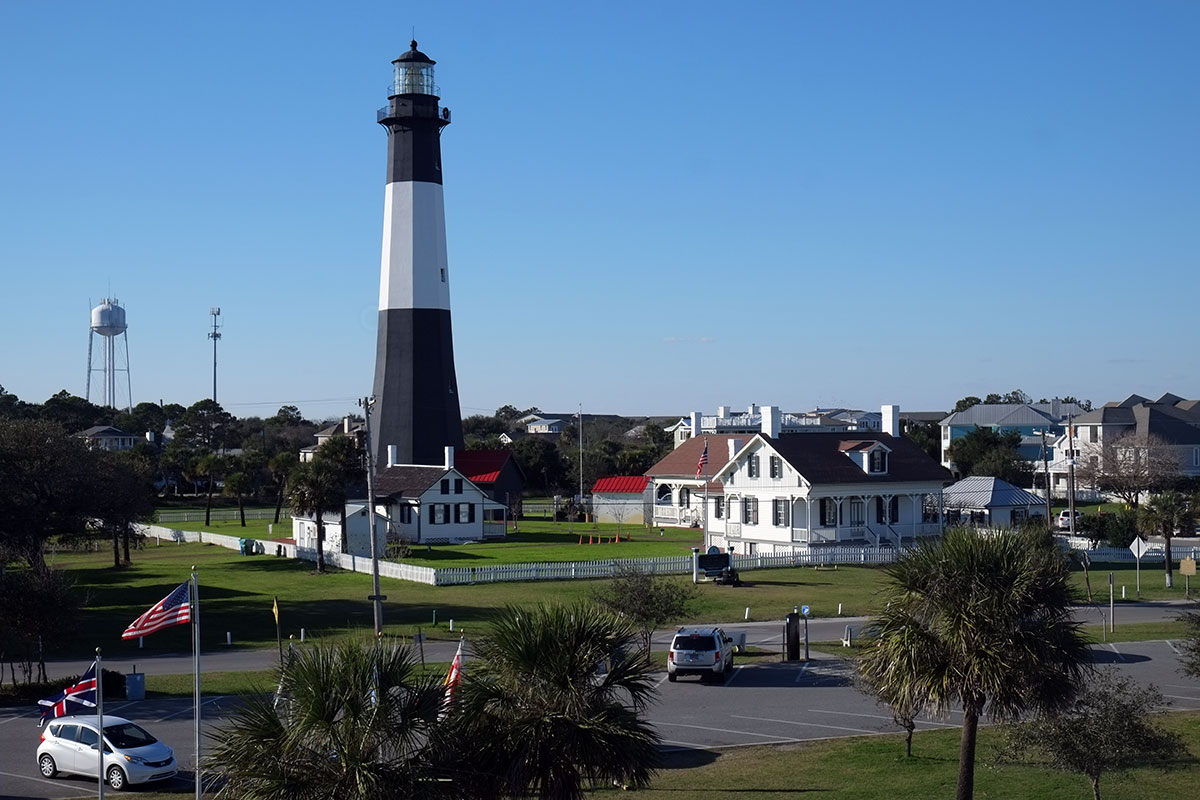
Having covered the core of the city on several trips, we ventured out to the coast this time, to Tybee Island, an interesting beachfront town that used to be a prominent resort area.  The lighthouse at the mouth of the Savannah River seemed very tall to us Northwesterners, used to short lighthouses on tall cliffs.  DSCF9654  DSCF9621  DSCF9603

Our march through beautiful old Southern cities continues, with several more yet to come.

UO grads

Visiting your former grad students is different from visiting friends you knew earlier in life.  High school friends were really just kids, so seeing those friends four decades later is somewhat hilarious – you can’t believe they’re really grown-up, with grandkids and such; you keep expecting them to burst out laughing that they’ve been putting you on.  College friends are not quite as unbelievable, as you knew them as they were starting to invent their grown-up personas.  But seeing my former students as grown-ups doesn’t seem weird at all – they were already young adults in grad school, and they often were pretty far into setting their life’s course.  So seeing them on this trip just feels like touching base with a more experienced version of the person you already knew.

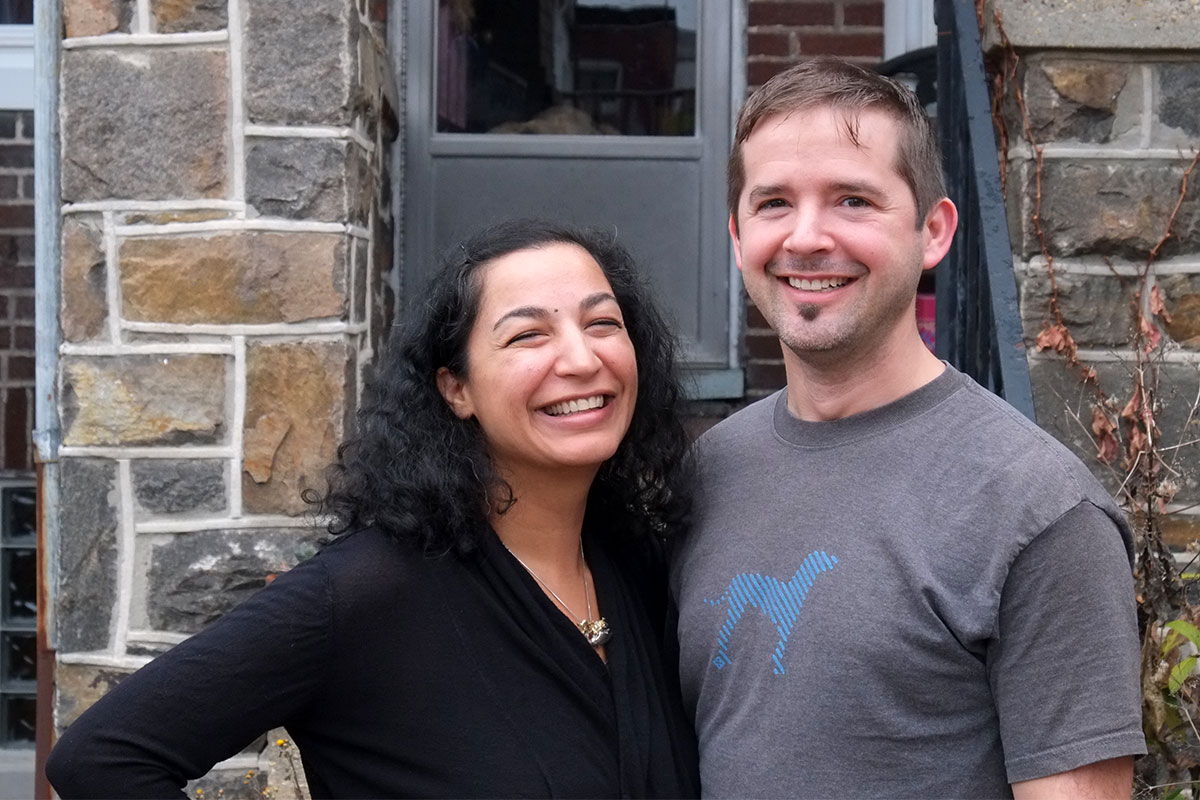
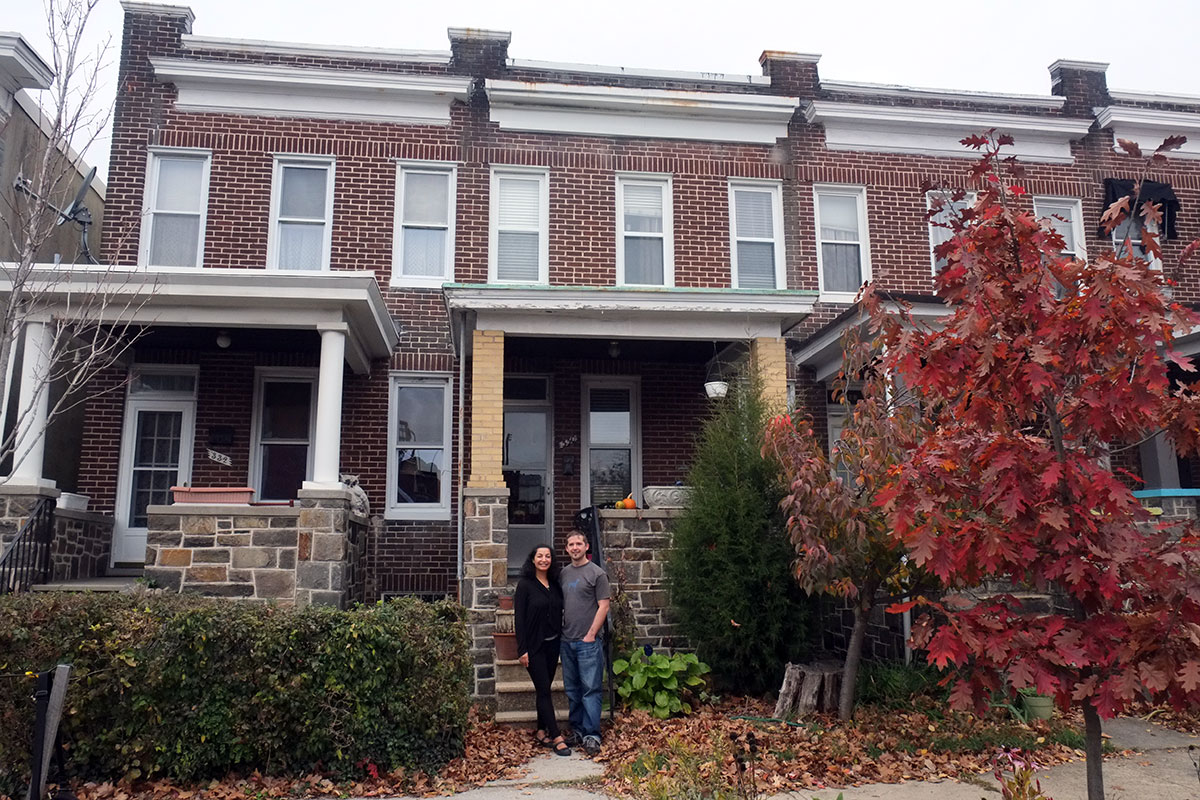
DSCF5927I first met Neelab Mahmoud when she was a GTF in our big lecture class on Place and Culture.  She led undergraduate discussion sections, where she was a great teacher, and helped us think through assignments and directions for the course.  Neelab’s input always had a wisdom and thoughtfulness that belied her relatively young age – she was very open to everyone else’s perspectives, and was great at making connections amongst them.  As I got to know her better I started to understand where these traits came from – her family had been refugees from Afghanistan when she was a child, and settled near Washington DC.  Neelab had the insights that can come from being between two cultures, and the need to make your way in a very foreign place.  She understood the relativity of many things others take for granted, and was superb at getting her students (and professors) out of their comfortable boxes.  In the nicest way possible.

Neelab was in my housing thesis studio the next year, where her work was visionary.  Her background had been in biology – so it was clear the rational and analytical side of design would be taken care of – allowing her to focus on the more expressive and intuitive aspects.  She was willing to follow a train of thought without knowing where it would lead – a remarkably confident way to work.  In the end her project was beautiful, accommodating and appropriate.  Not exactly the kind of work that tends to get built, but the best kind to pursue in school, where you can explore ideas that you can later put into practice.  The only problem with having Neelab in studio was that she was just too interesting to talk with about many things, and it made focussing just on architecture difficult.

After school Neelab and her husband Ben moved to San Francisco, where she worked for Pyatok Architects, a leading housing design firm.  They then moved to Baltimore so Ben could attend engineering grad school at Johns Hopkins, and it’s there they’ve stayed.  Neelab has her own practice, Studio Marmalade, and has been teaching a wide range of courses as an adjunct at Morgan State University for six years.

DSCF5924

We stayed with Neelab and Ben in their classic Baltimore rowhouse, north of downtown towards Johns Hopkins.  It was interesting to hear about their decision to live in a central city location, their commitment to the city and to their neighborhood and schools.  I was a little apprehensive about parking the trailer in a big, tough, eastern city (as I’ve noted, most of my understanding of Baltimore comes from The Wire), but Neelab just said, In case you get there before me, I’ll leave the key in the mailbox, and don’t worry about the dog – he barks ferociously, but he’ll just lick you once you come in.  A somewhat crazy middle-aged Deadhead chatted with us about our trailer as we parked it, and the nice, very old man on the porch next door conversed with us about the weather as we fished out the key,  Jeti the dog did indeed lick us, and everything was copacetic.

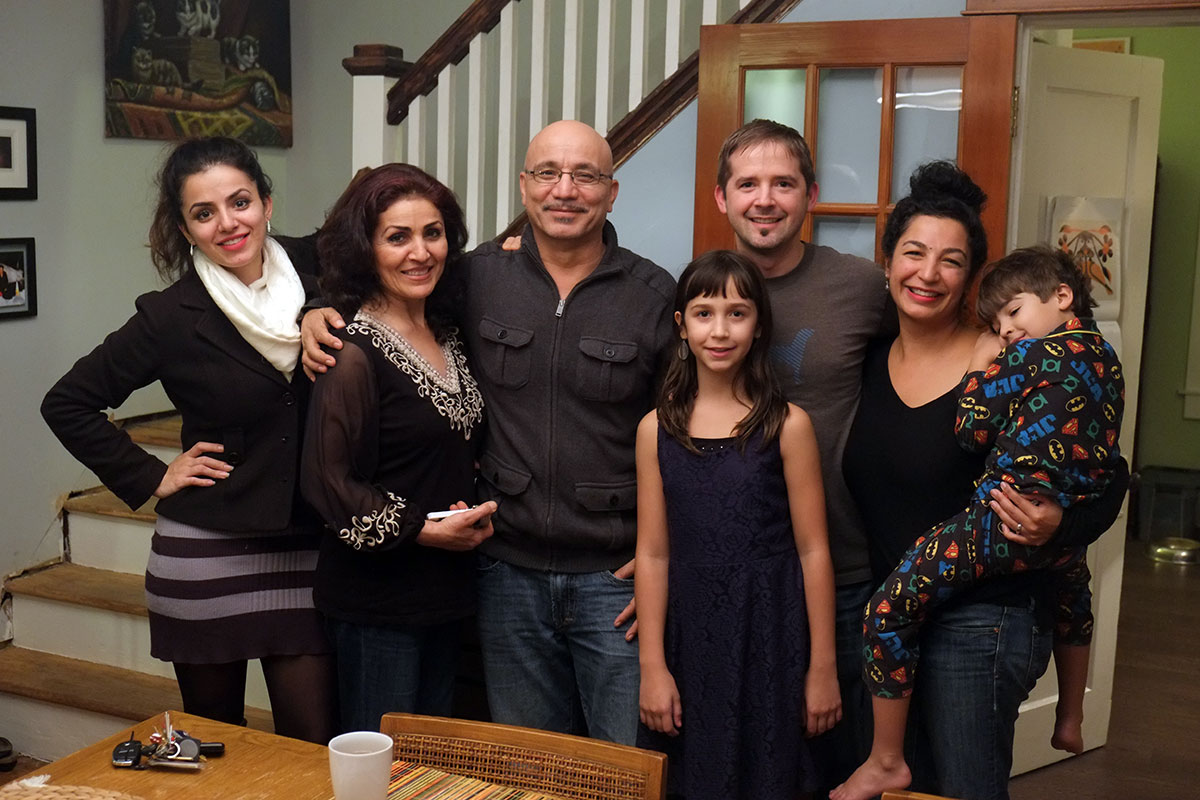
The coolest thing about staying with Neelab and Ben was getting to meet their kids.  I’d watched Ava and Kai grow up on Facebook, so I thought they’d be great, but they were just a pleasure every minute.  Greta and Ava clicked in about two minutes, recognizing each other as members of that same sorority of cool smart girls who read all the time.  (Greta is keeping a scoreboard from this trip.)  And Kai is perhaps the sweetest five-year-old boy I’ve ever met (but I’m partial to little kids who want to hug me after knowing me for a couple of hours.)  Greta and I both seem to need a fix of little kids every once in a while – staying in campgrounds in the off-season, you are hanging with old people.DSCF5910We really enjoyed meeting even more of Neelab’s extended family.  Her cousin Rahiba was staying with them too as she settled in to Baltimore, and we spent an engaging evening drinking Manhattans and talking.  This was when the news about the refugee crisis in the Mediterranean was peaking, and I learned a lot from the perspective of two young women whose families had both been immigrants to this country, at different times.  The next night Rahiba’s parents came by, and we had supper with them all.  It was a lot like graduation, when you get to meet your students’ families, but a lot more fun and intense.  We had a great time with Neelab and all her family members, and were sorry to leave as winter pushed us southwards.

Chris Harnish graduated from the UO a couple of years before Neelab.  I never had him in studio, but he was in my housing course after I moved back to Eugene from Portland.   But more than in class, you got to know Chris from wandering Lawrence Hall.  There are some people who are just a presence in a place – outgoing personalities, rapid-fire thinking, a strong sense of humor, and into everything.  Chris was one of these, so getting to know him was more a series of chance encounters and random conversations.

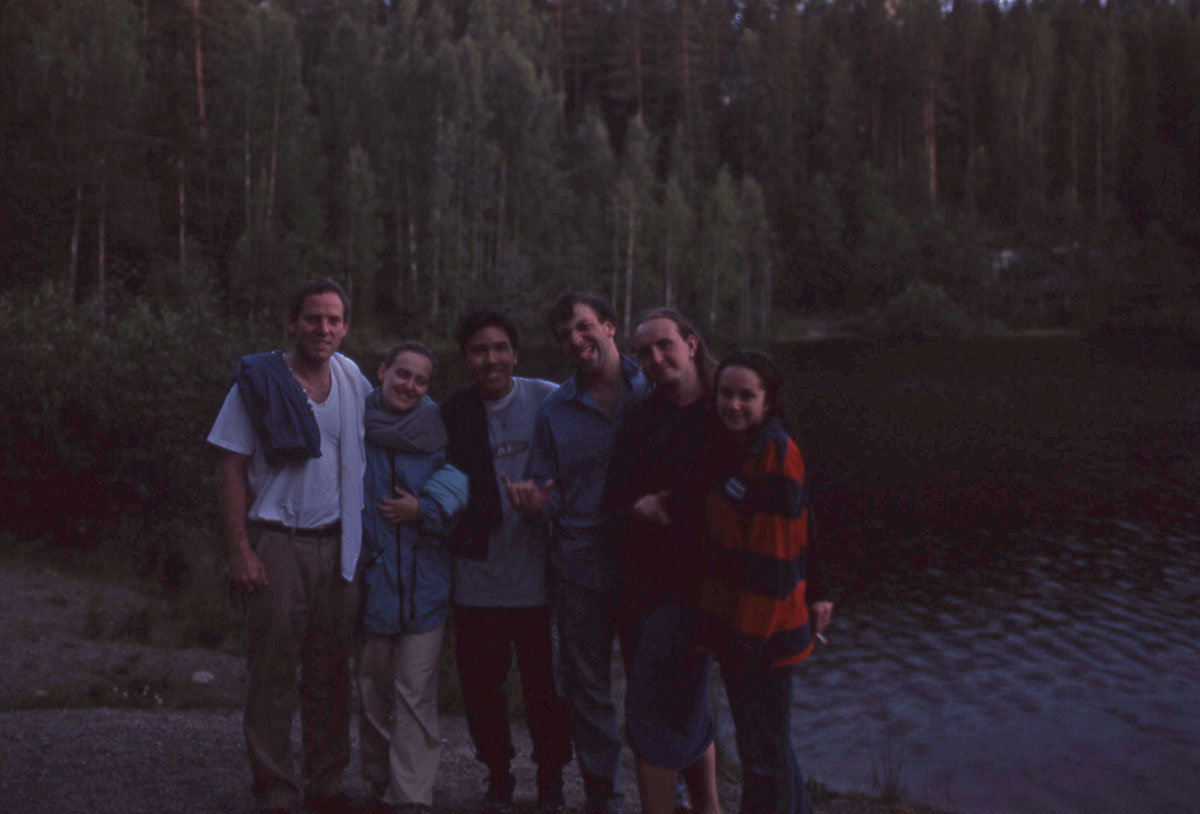
My quintessential Chris story comes from when Linda and I were travelling through Scandinavia on a bus with students from the summer architecture program at the DIS in Copenhagen.  Chris was part of the group, an enjoyable companion for such events as sauna-sitting and lake-jumping in the middle of the night in Jyvaskyla. DIS104aThe tour visited Alvar Aalto’s summer house at Muuratsalo, and on our way to the house, we passed by the sauna, a simple vernacular structure, not a modernist icon.  As we continued on to the house, we heard a large splash, and turning back, found Chris in the lake.  He smiled up at us and said, Aalto swam here, I have to swim here.

After school Chris moved to New York and worked for Deborah Berke’s excellent firm for about five years.  He then joined up with Architecture for Humanity and went off to work in South Africa.  This started him on what has continued as a significant part of his career, and he has maintained his connections there and continued to visit and work on projects.  During this same time he moved to Philadelphia, and began teaching at Philadelphia University, with a focus on sustainable and community-focussed design.  He and his wife spend their time renovating an old townhouse in downtown, and we caught him for a quick couple of drinks as we breezed through Philadelphia.DSCF5681

It was fun hearing about his recent life, and his experiences in teaching.  Learning about your former students’ work in architecture is great, and it helps keep me in touch with what is happening in the profession.  But spending time with those such as Chris, Neelab and Lynne Dearborn, who have gone on to teaching careers, is a different experience.  (I guess this is how most professors feel about their grad students, who are all aiming at academic careers, but in architecture, very few students are.)  So talking with those who’ve somewhat followed in your footsteps is very gratifying, and I like to think that the experiences they had at the UO might have helped make them the teachers they are today.

Evan Goodwin is of a different generation from the previous two grads. Evan was in my housing thesis studio this past year, so while in Savannah we got to check up on his transition to the outside world.  Evan grew up in South Carolina and went to Clemson as an undergrad, where he developed some of the most remarkable graphic abilities I’ve seen in years.  The first thing I noticed about Evan (besides his charming personality) were his drawings, a predominantly pen-and-ink style that made me think he was the reincarnation of a 1970s architectural illustrator (all this is visible on his website at evanrgoodwin.com).  The second thing that struck me about Evan was the rigor of his thinking, as he applied these graphic skills in series of small-scale typological studies that systematically explored a range of spatial concepts.  Seeing clear thinking beautifully presented is one of the pleasures of being an architecture professor.

Evan did great work in my studio and elsewhere in the department (he was also in Linda’s furniture studio), but he didn’t neglect the social aspects of grad school life.  He lived with a large contingent of his classmates (I could never figure out exactly how many) in a big house right down the hill from ours, which seemed to become the center of social life for a large part of his cohort, both grad and undergrad.  I’ve gotten old enough that students don’t invite me to parties very often anymore, but Evan and his crew would, and I finally went to their graduation blow-out, which was a much better party than we ever had in grad school.

DSCF9838After graduation Evan decided to move back to South Carolina, and he lives and works in Bluffton, a town on the coast outside Savannah, near Hilton Head.  He’s enjoying the work with his firm, but we could tell he misses the good times in Eugene – social opportunities are minimal in a small town full of retirees.  We dragged Evan into Savannah for dinner at Treylor Park, Greta’s favorite restaurant, where we eventually found out that our waitress was a recent graduate in architecture from SCAD.  Greta and I both liked her, so before we departed, we tried to make sure that Evan had left enough intriguing contact information so that his chances for social interaction might be increased.

Fernandina Beach

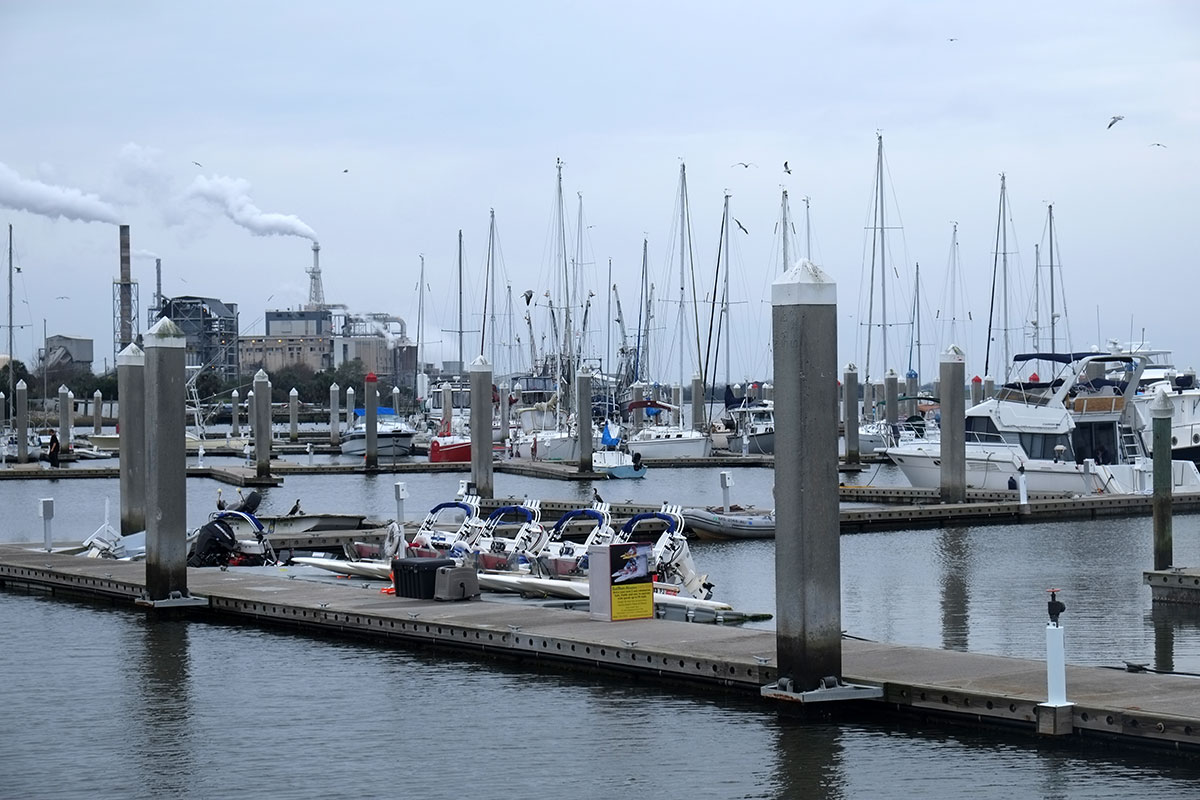
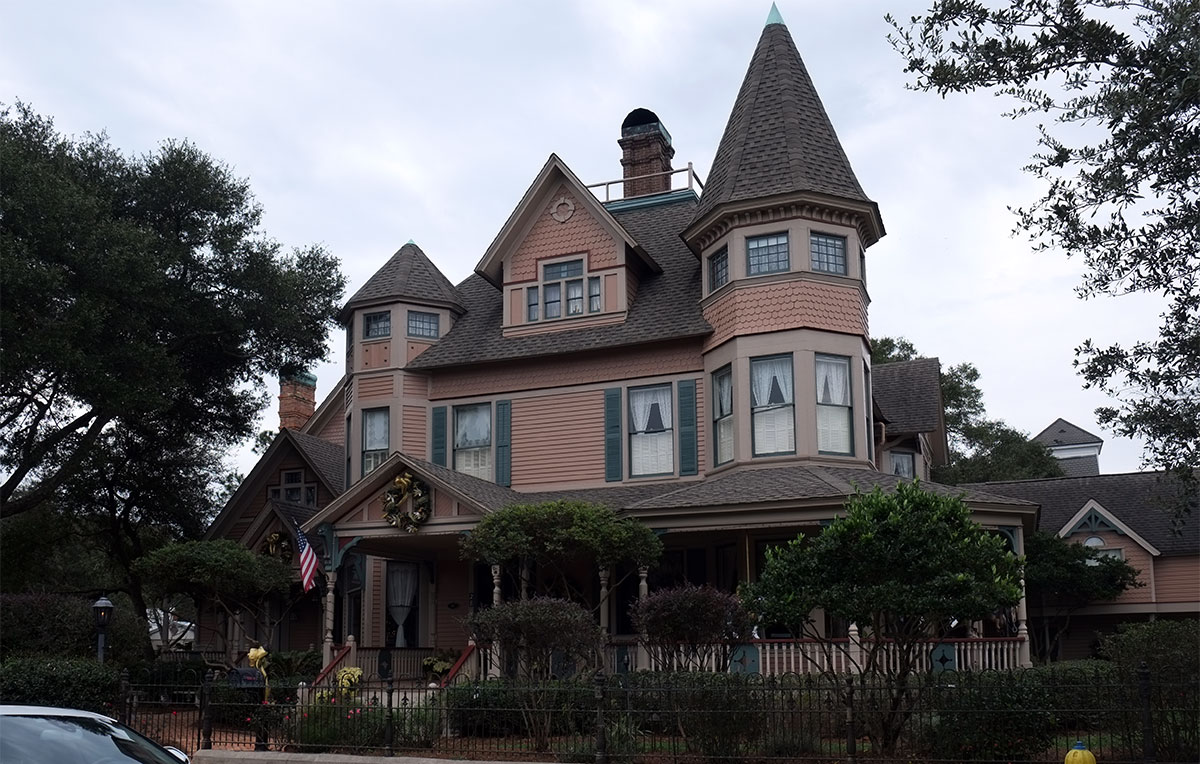
DSCF9399Usually when a town is named “________ Beach”, it means there’s already a city named ________ nearby, and this _______ Beach place is the formerly unincorporated area where the residents of  _______ used to go swimming, and is now a random collection of former beach cottages being occupied permanently.  But there is no city of Fernandina near Fernandina Beach.  It is the city itself, and in fact, just to be confusing, it seems to be two distinct cities.

It is the northernmost city in Florida, on the north end of Amelia Island, which has seen a lot of resort development at the southern end in recent decades.  Fernandina Beach has an excellent harbor behind the barrier island, and this was the basis for its early existence.  DSCF9312

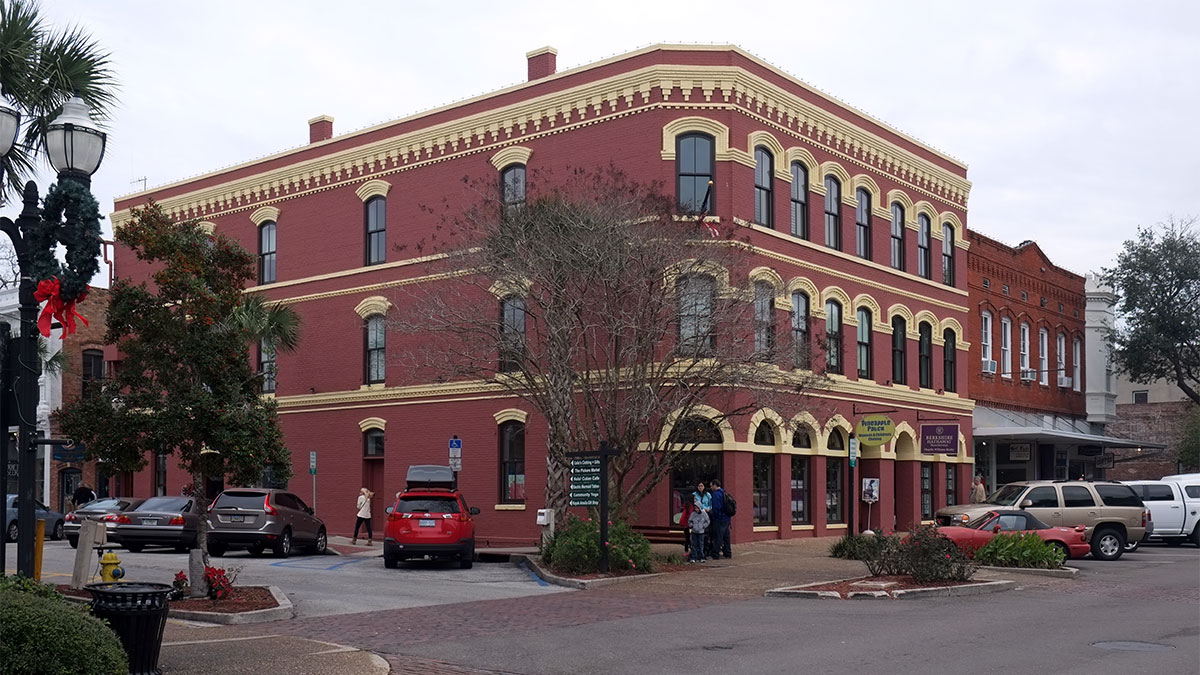
It is another one of those southern places that has confusing history of sovereignty – this time it is eight different flags (including Mexican rebels and pirates) which may be the record.  Fort Clinch was built here in the early 19th century, and it was one end of the first railroad across Florida.  The railroad brought trade and tourism, and in the late 19th century, it was one of the premier resorts in Florida.  The center of town is a national historic district, with some solid commercial buildings, DSCF9316     DSCF9317

institutions:  DSCF9374  DSCF9368

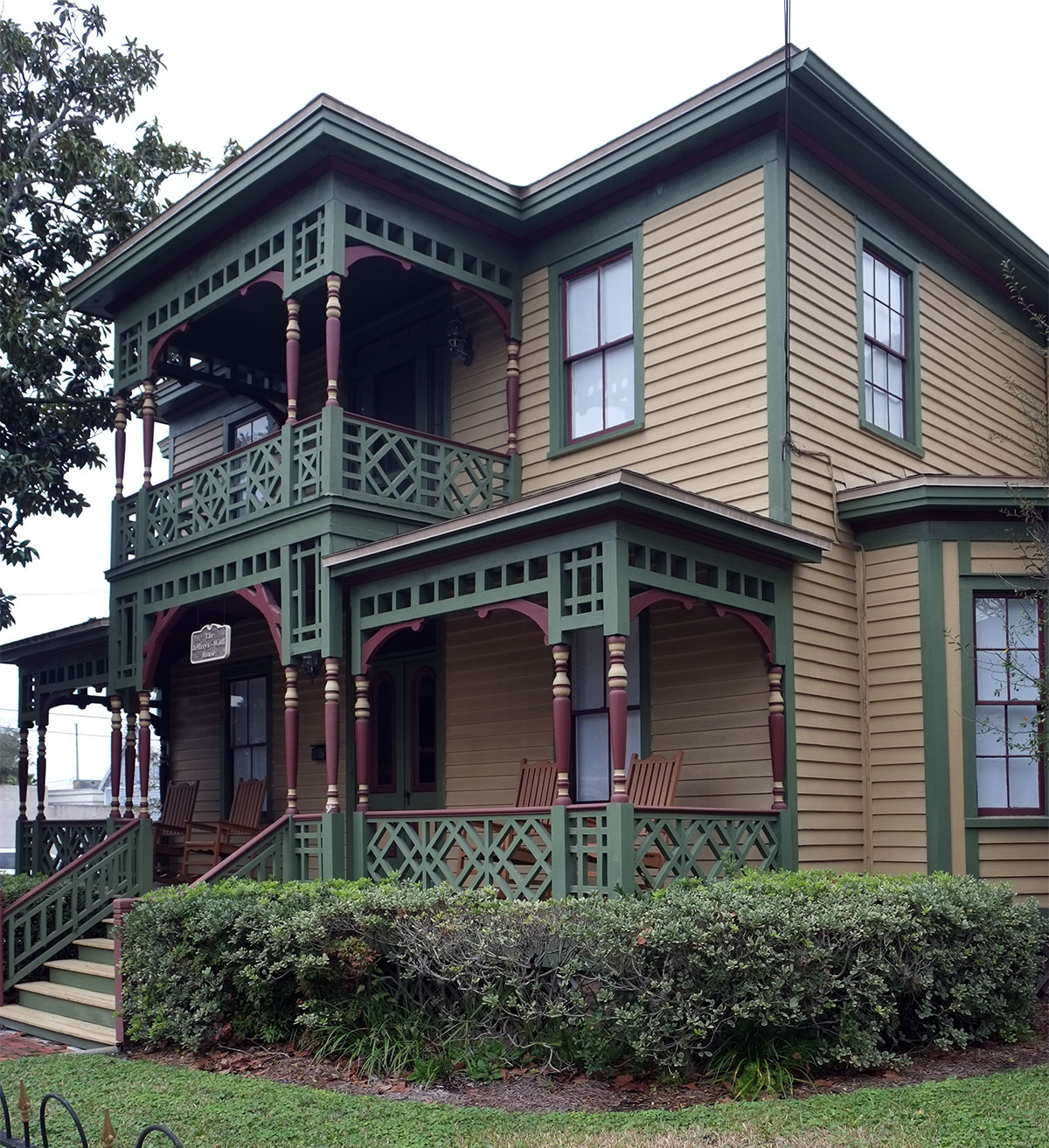
and many fine houses.  DSCF9348  DSCF9358  DSCF9364  DSCF9369  DSCF9385

DSCF9393DSCF9404

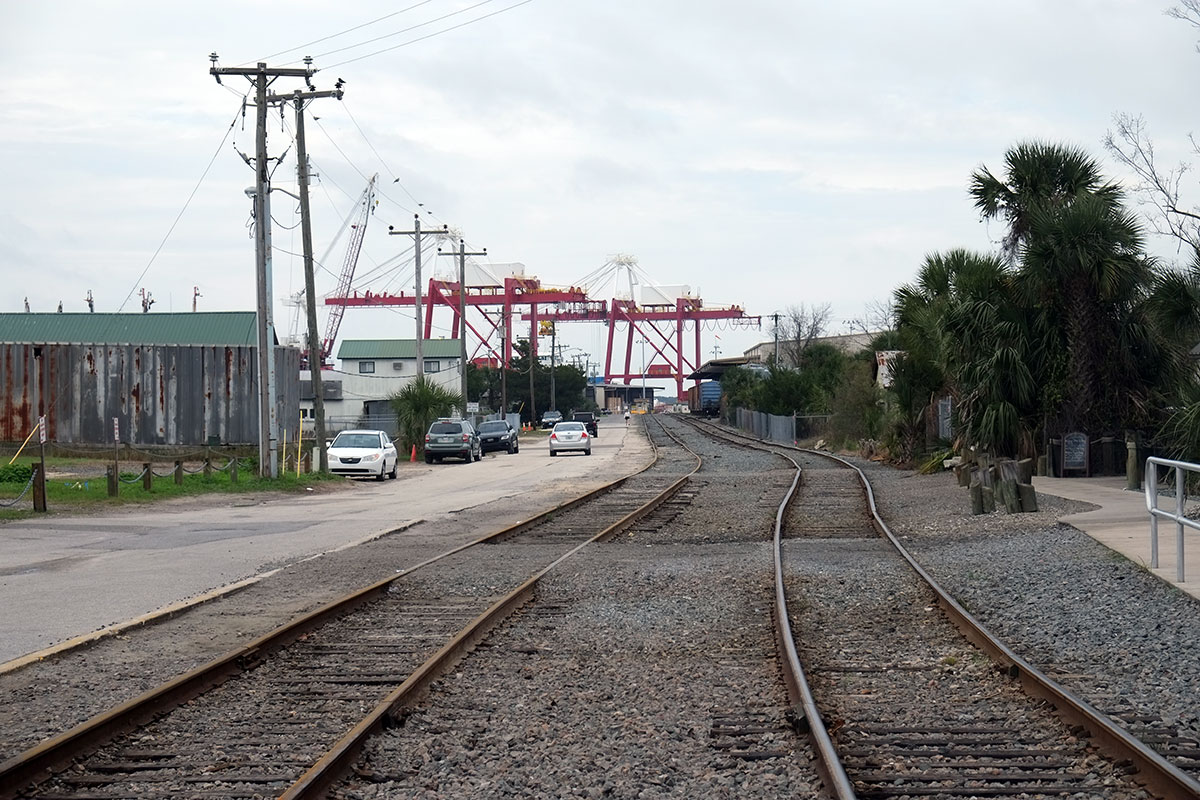
The really amusing thing about this historic district is that it is not the original town, which is located about three miles north.  But when the planning for the railroad was happening, the builder of the railroad, Senator Yulee, demanded that the town be moved to better serve the railroad, and so it was.  For what is largely a resort town, industry has played a very large role in determining its form, and can be seen in the tracks along the waterfront DSCF9314

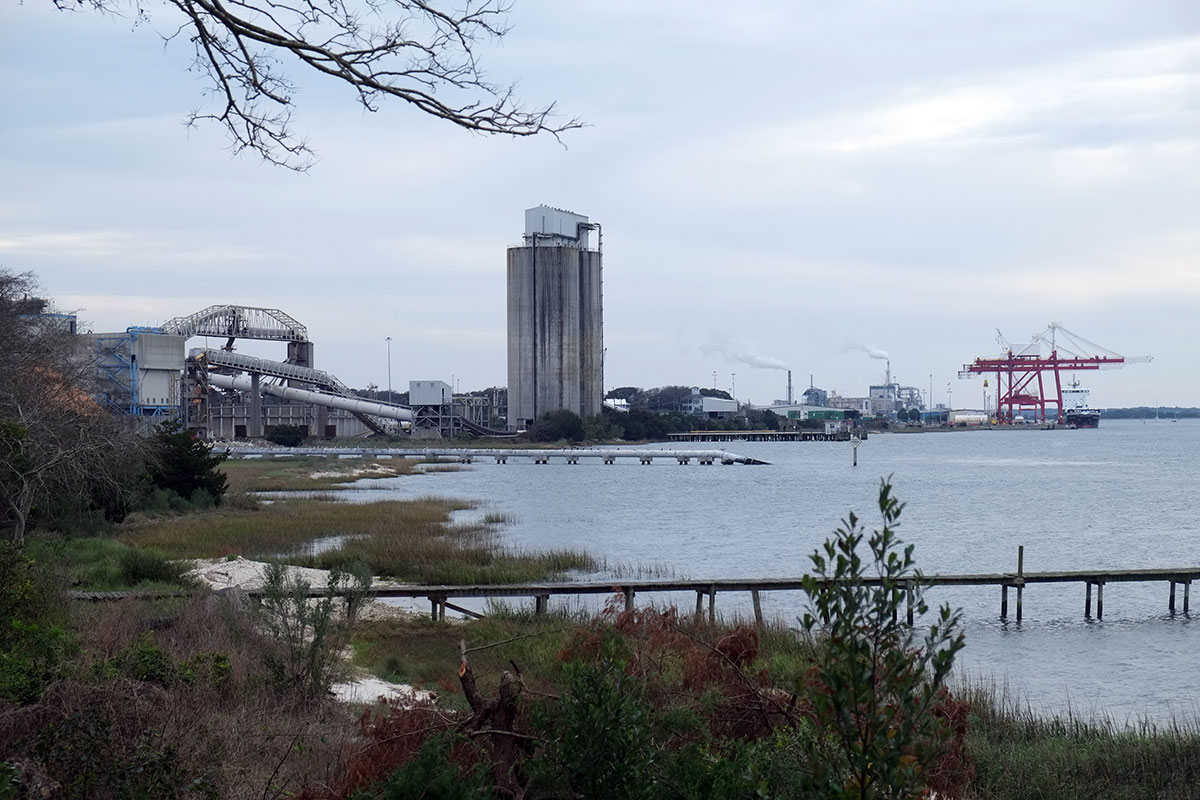
and the plants nearby.  DSCF9433

Fernandina was also where the domestic shrimp fishing industry began, long before it shifted to the Gulf of Mexico.  They have a Shrimping Museum on the waterfront, which we had to visit, and where we learned of its history beyond shrimping.

The older town still exists – a bit of a backwater, with dirt streets, and an appealingly informal and sometimes decaying quality, compared to the spiffiness of the new town.  DSCF9442    DSCF9447  DSCF9448

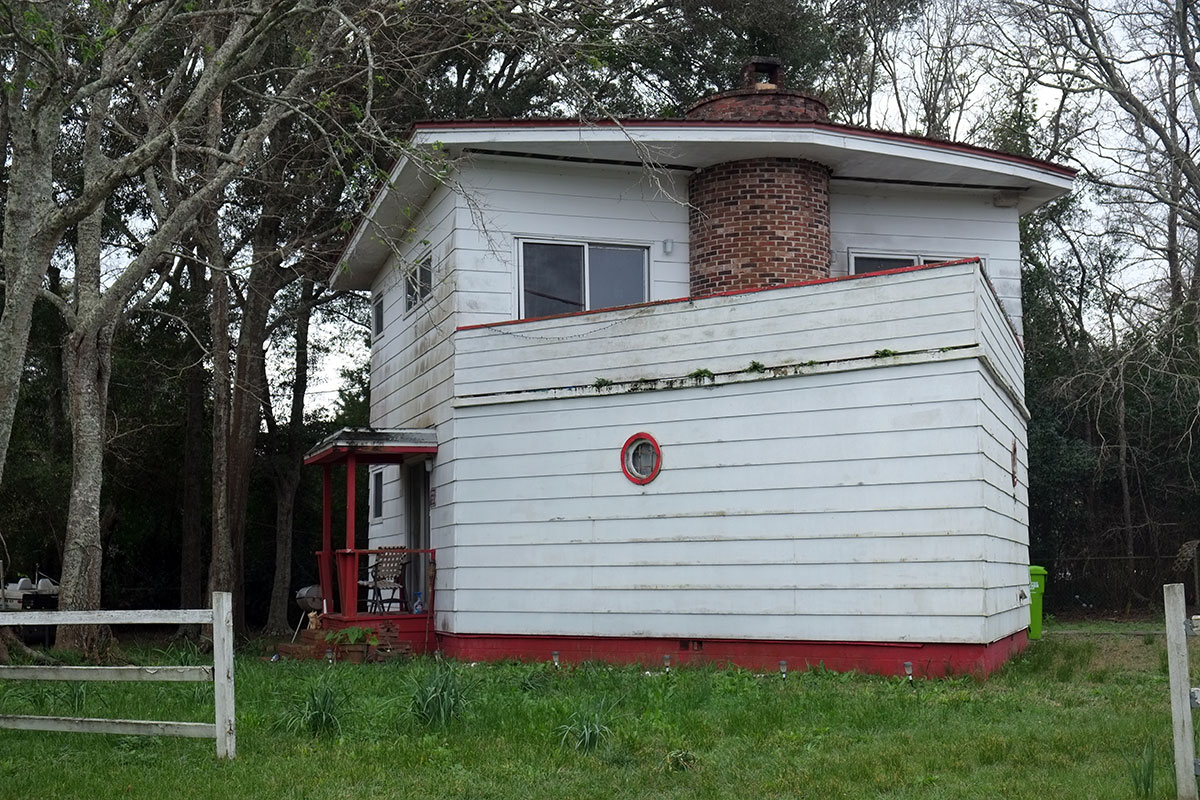
It also houses the only piece of domestic modern architecture I spotted, probably by an architect who took Corbusier’s praise of ocean liners a little too literally.  DSCF9429

Jacksonville – Timucuan Reserve and Kingsley Plantation

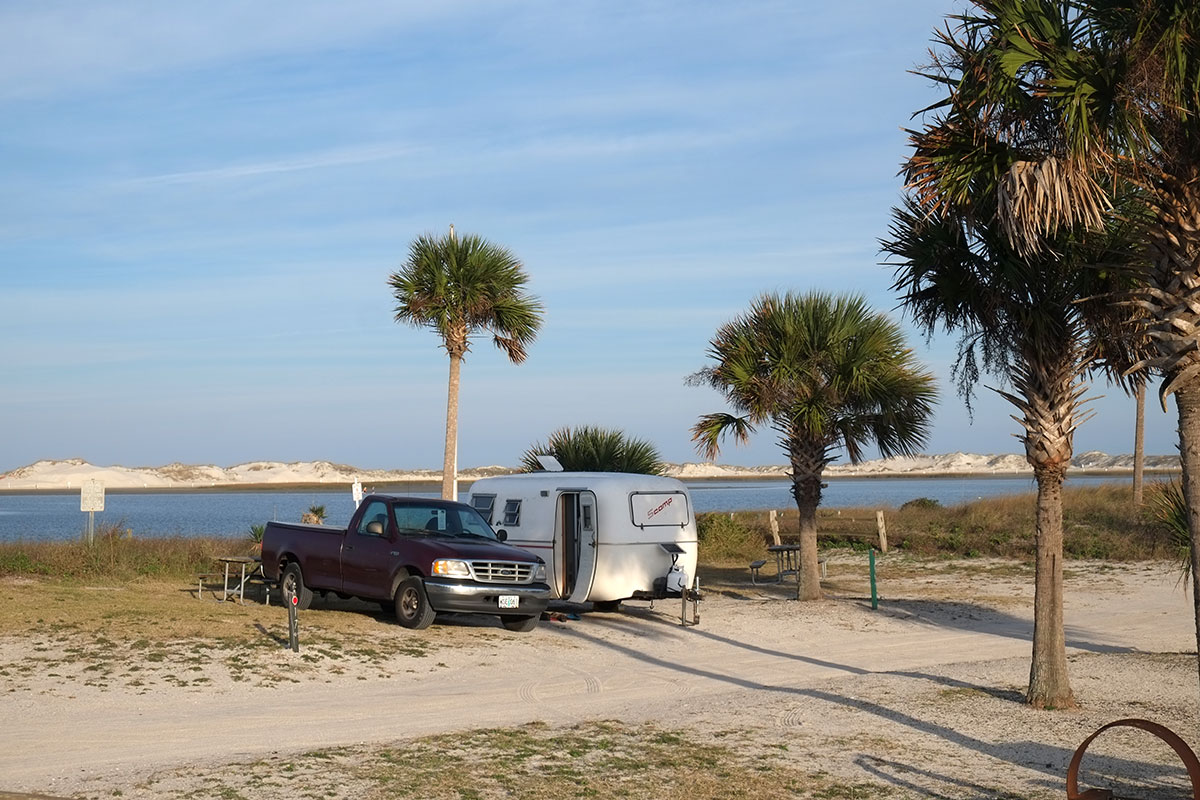
DSCF8519Before taking the plunge into southern Florida, we spent some time around Jacksonville, which is part of the South in a way the area south of Orlando isn’t.  We focussed in on the Timucuan Ecological and Historic Preserve, which is administered by the National Park Service, similar to our own Ebey’s Landing National Historic Reserve on Whidbey Island.  There are several parts to the Reserve, extending from Amelia Island through a few other islands and across the St. Johns River (which is the entry to the harbor at Jacksonville), and it is “one of the last unspoiled coastal wetlands on the Atlantic Coast”.   We stayed in an amazing campground in a city park, on a spit where the river meets the ocean.  Camping right on the beachDSCF8544

overlooking a bay where people were fishing with netsDSCF8562

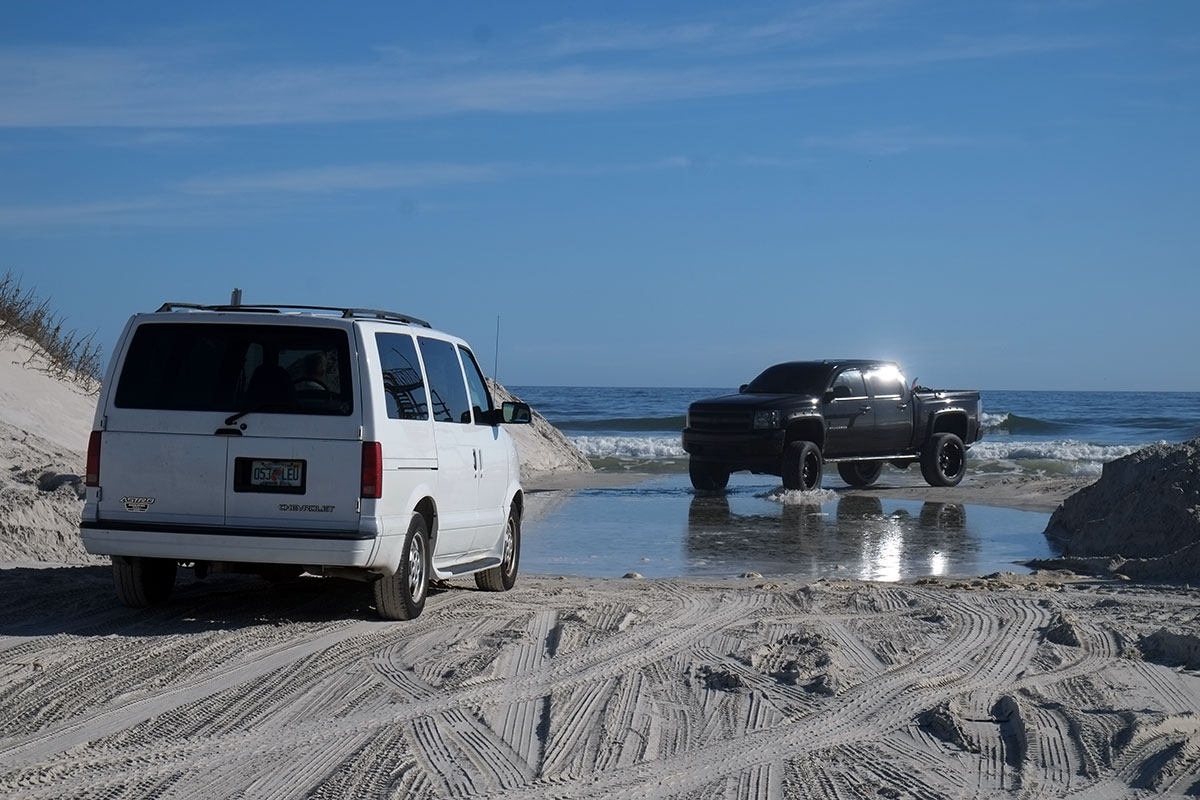
and one of the few beaches in Florida where vehicles are still allowed to drive (when the tide is lower).DSCF8563

The channel to the harbor was full of large ship traffic, and across the mouth of the river is the Naval Station Mayport, the third largest naval facility in the country.  Here is a nice scale comparison between our trailer and the ships a mile beyond in the port:
P1060636

As we are finding across the southeast, the number of different cultures which have laid claim to this area in the past 500 years is very confusing to someone who comes from a place where the English displaced the natives, end of story.  The Reserve is named for the Timucuan people, the tribe who inhabited the area before colonization.  The visitors center has artifacts from their culture (some of disputed origin), but there is not a lot beyond that.  The Huguenots landed here in the 16th century, quickly gave up, came back a few years later, and then were all killed by the Spanish.  Under Spanish rule a widespread plantation system developed, part of which can be seen today at the Kingsley Plantation, settled in the early 19th century, and owned over time by a few different families.  The house is quite intactDSCF8489

with some late-19th century modifications.DSCF8485

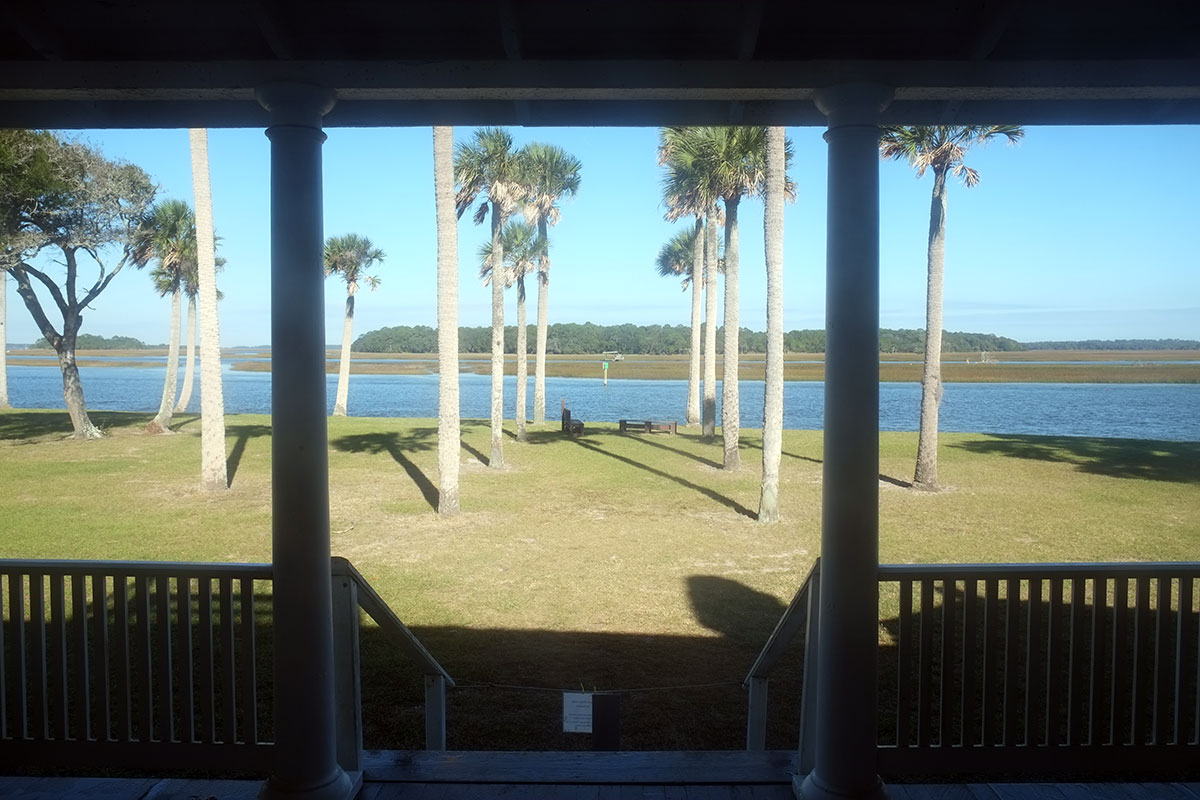
opening onto the channel that connects to the present-day Intercoastal WaterwayDSCF8470

The grounds contain various outbuildings, most dating from the late 19th century.DSCF8504

The most interesting part of the history was learning how the legal status of different groups varied under the Spanish or American systems.  Kingsley bought a slave from Senegal, and married her.  When she turned 18, he freed her, and she could then own property herself – including her own plantations and slaves.  The Kingsleys prospered, eventually owning four major plantations of over 32,000 acres.  When Florida became a US territory, her rights, both as a freed slave and a woman, would have been greatly reduced, so the Kingsleys moved to Haiti to avoid this, but were involved in legal disputes over this fortune for decades after.

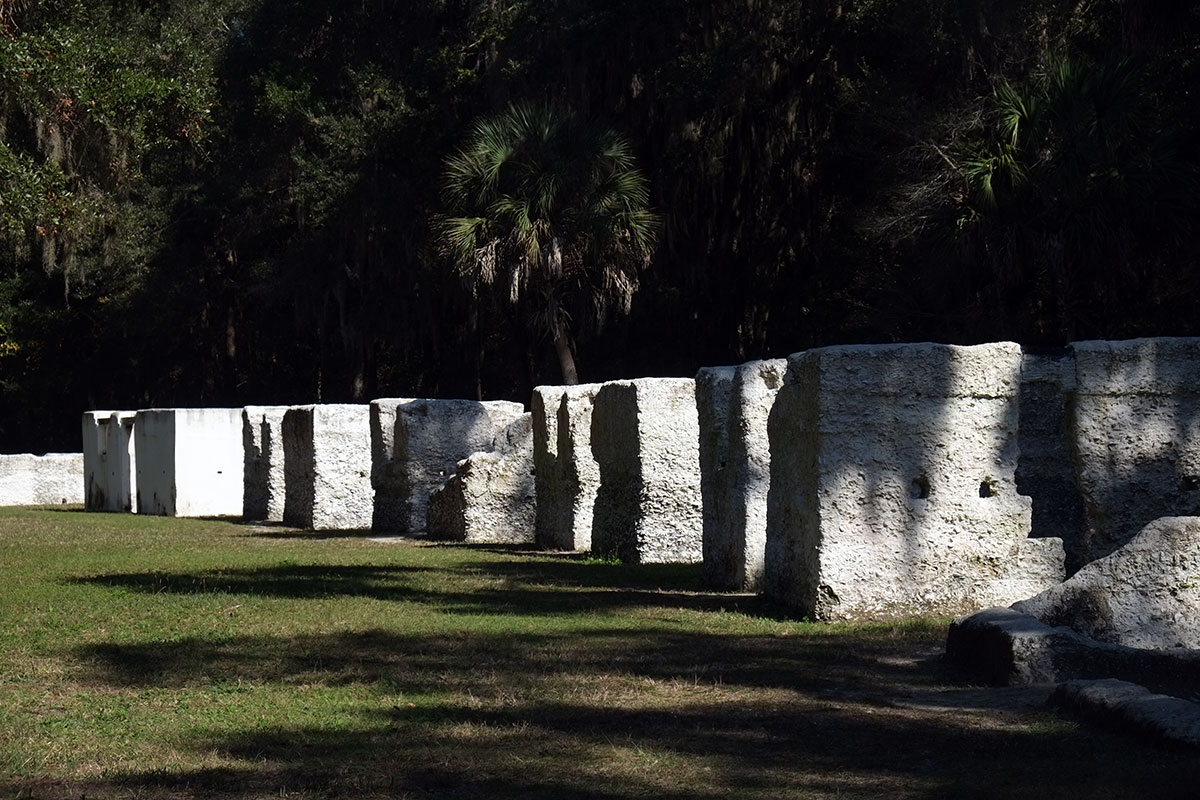
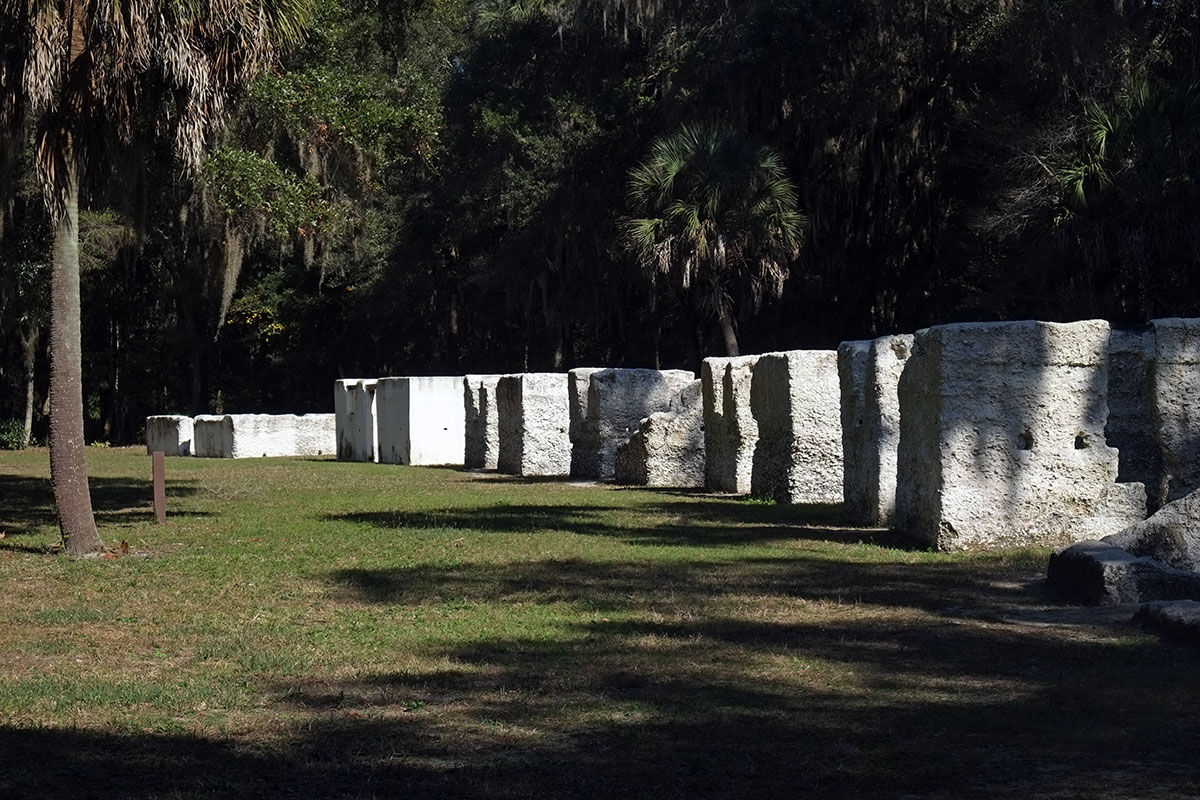
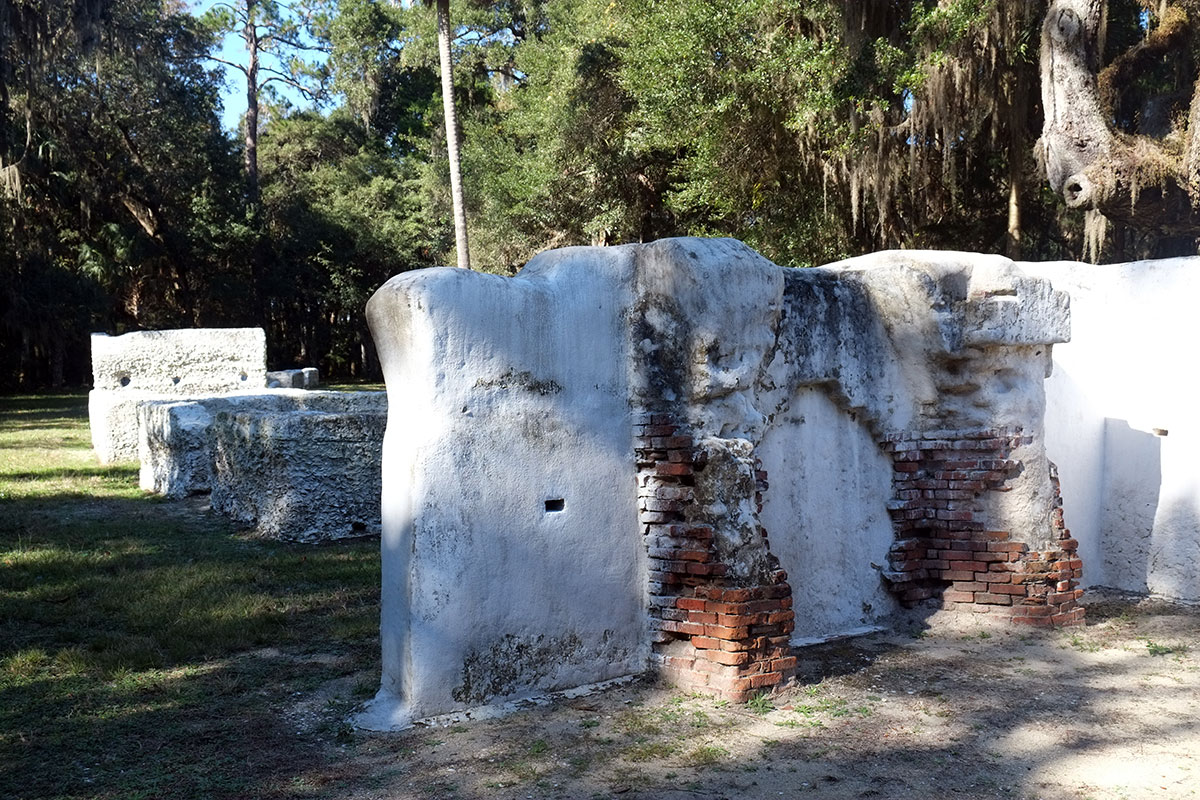
This history was remarkable, as are the remains of the slave quarters.  Whereas most slave houses in the south were wooden and so haven’t survived, the walls of the houses here were made of tabby – a kind of concrete made with oyster shells, where a catalytic reaction from the shells takes the place of Portland cement.  DSCF8528The roofs are gone, and the walls are slowly deteriorating, but seeing the 27 houses in an arc at the edge of the fields was amazing.
DSCF8518

DSCF8523

The walls are tabby, while the brickwork shows the location of the fireplace.
DSCF8508

We had a few unusual experiences here – such as spending New Year’s Eve in the campground on the beach –  but the most bizarre was while driving on a dirt road in the Reserve, and Greta spotted a dead armadillo by the side of the road.  We got out to look at it, just as the owner of an adjacent house came over too.  It turns out that he lives in his obviously expensive and well-tended house out in the woods, but the armadillos come out and night and plow up his lawn, looking for bugs to eat.  So he sits up at night with his .22 and shoots the armadillos, and he had just come out to move the body of this one.  We couldn’t get the image of this out of our heads – an old guy with a rifle who decided to build his house in the middle of the woods on an island, and then spends his retirement fighting a losing war with the armadillos.

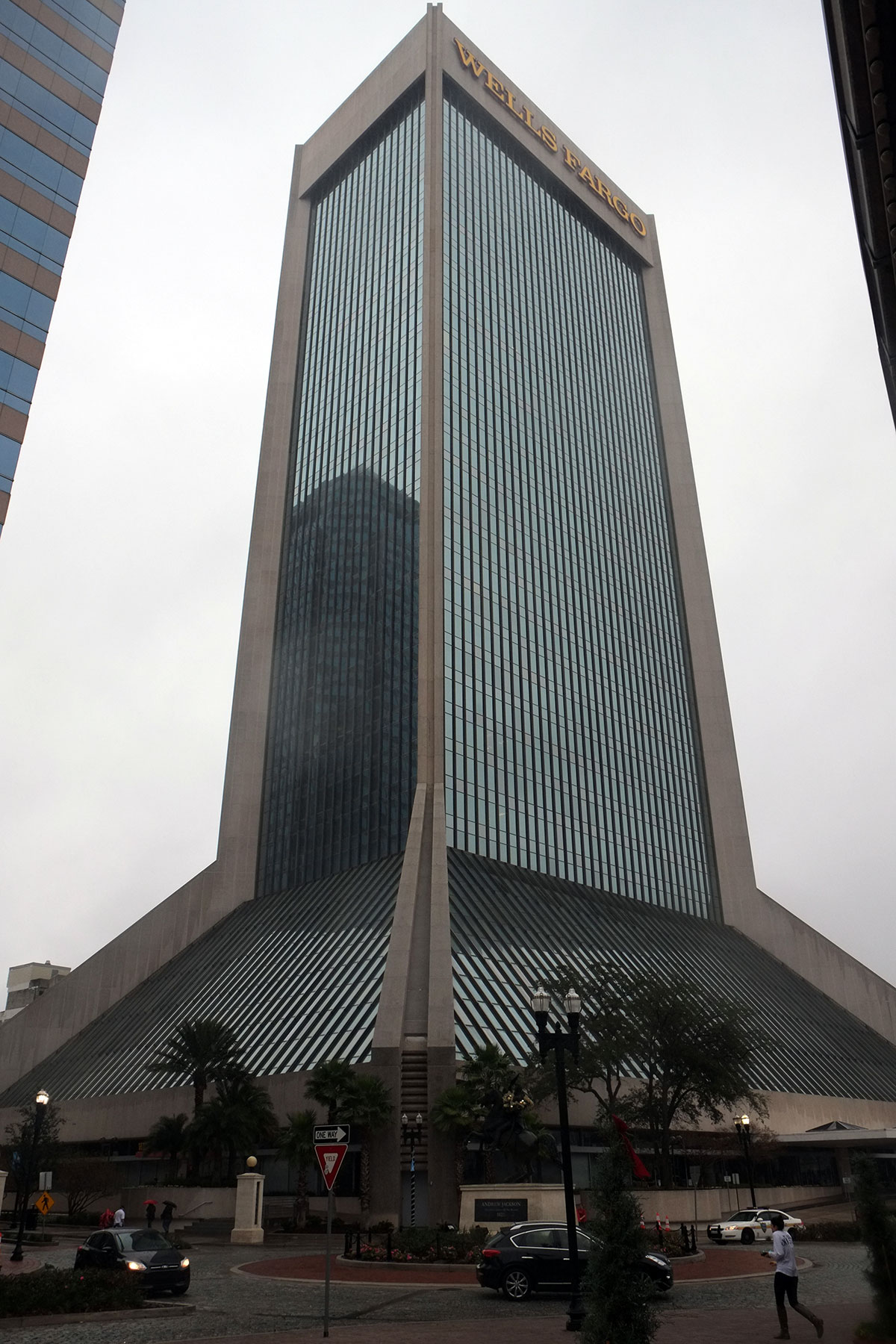
Passing back through the area at the end of the year, we spent some more time in Jacksonville, which has some of the weirdest office buildings I’ve ever seen, including this one from the heroic era of late modernism
DSCF9302

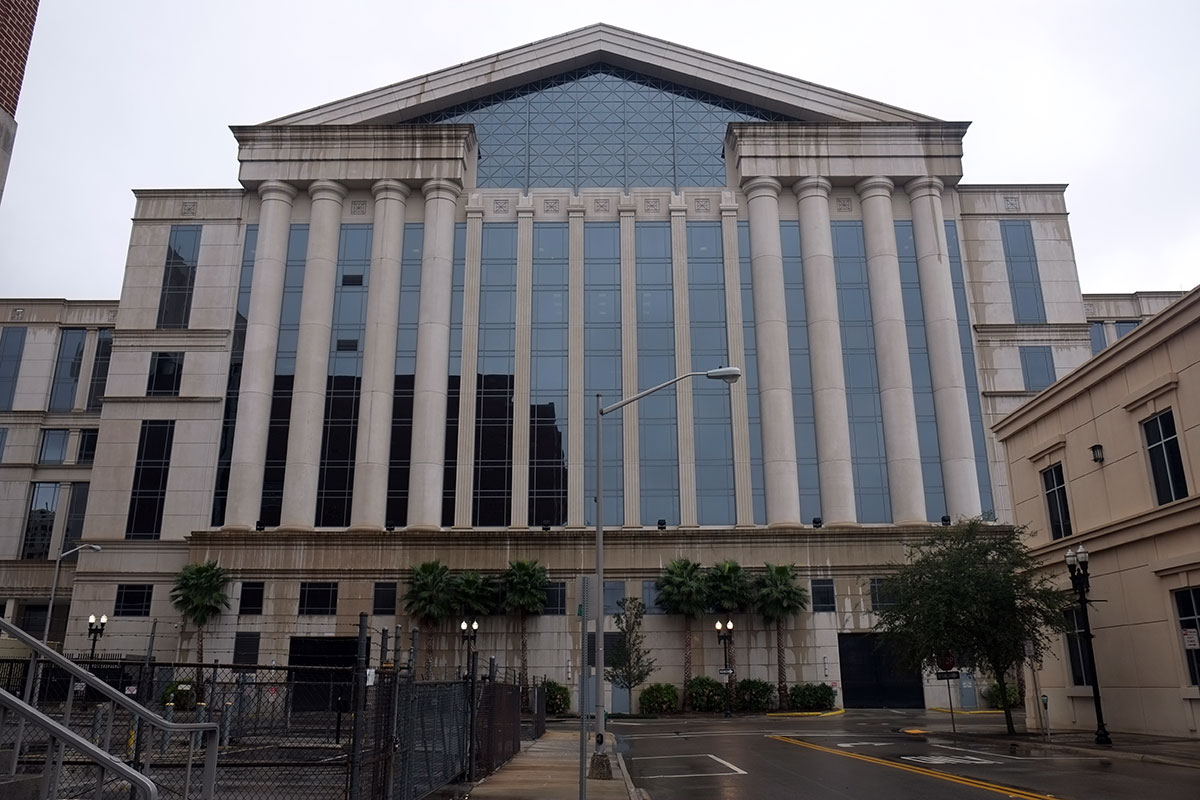
and this court building, which exhibits all the characteristics of a bad modern building in postmodern drag:DSCF9274

There is a waterfront food court / gathering spot, which was actually pretty good for a festival marketplace type of building,DSCF9290

and which was the site of a pep rally for Penn State and Georgia, the day before they were going to play in some bowl game.  We watched a full line-up of high school bands and cheerleaders, all performing in a cold downpour.
Jacksonville

The fantastic Georgia marching  band performed, which was fun until it suddenly became rather jarring.  Apparently, at some point in the past, the University of Georgia took the tune of the Battle Hymn of the Republic and turned it into their football fight song.  I looked around at the crowd to see if anyone else’s reaction was “huh?”, but they were all signing along.  No one but us seemed to think that turning an abolitionist hymn into a football song at a university in the former confederacy was weird.  Reflecting on this and the armadillos, this was when we started to feel we were in a very different part of the country.


St. Augustine

IMG_7361St. Augustine is the place in the southeast where we first became aware of the incredibly complex history of this region – French, Spanish, English, American – every historic place keeps track of its shifting sovereignty throughout history, and posts signs informing you of the “Seven Flags” or whatever.  But as the oldest continuously inhabited European settlement in the US,  St. Augustine is right up there with New Orleans in being a place where this history is quite visible in the built environment, and not just when you read a sign or a textbook.

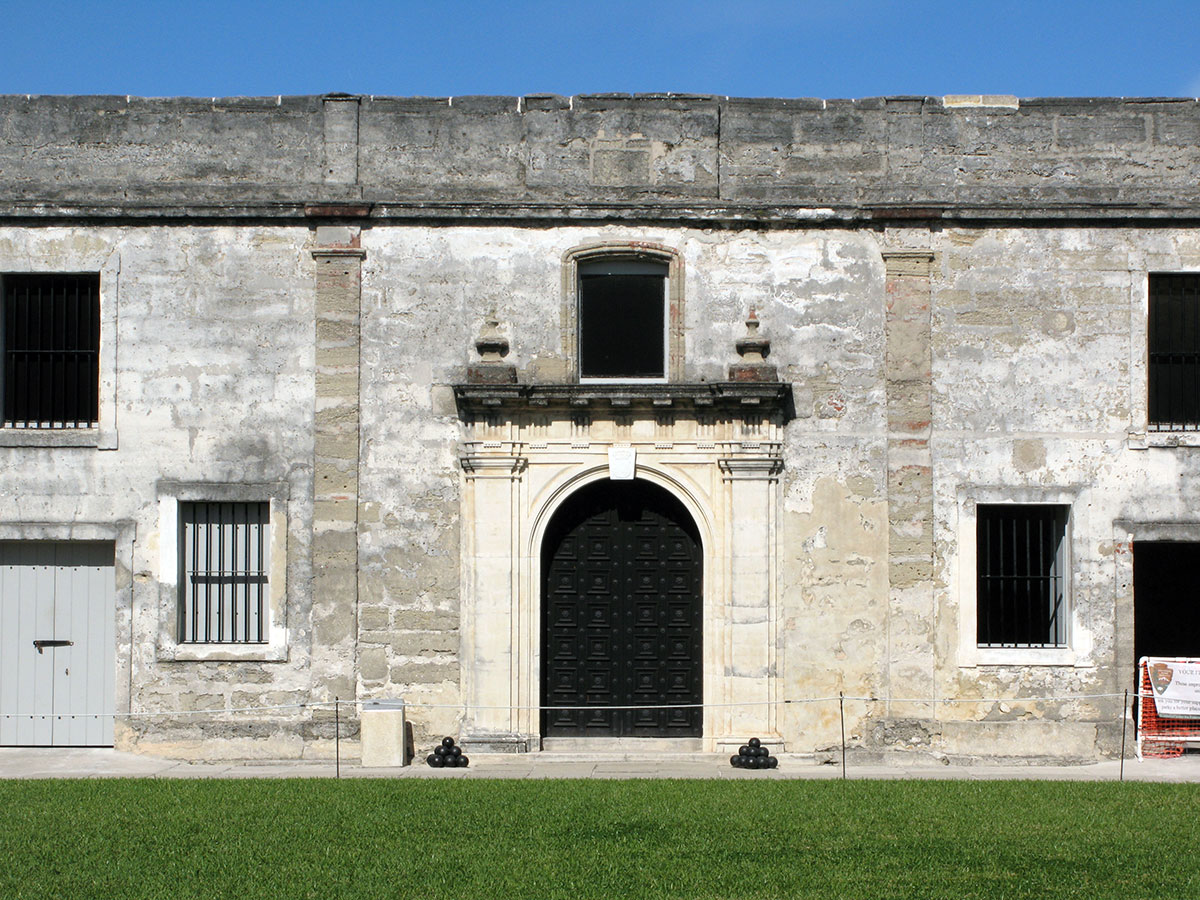
We first visited St. Augustine four years ago, and were surprised by its variety and beauty.  There is the Spanish period, which can be seen in the Castillo de San Marcos, a 17th-century fort – not a reconstruction.  IMG_7281

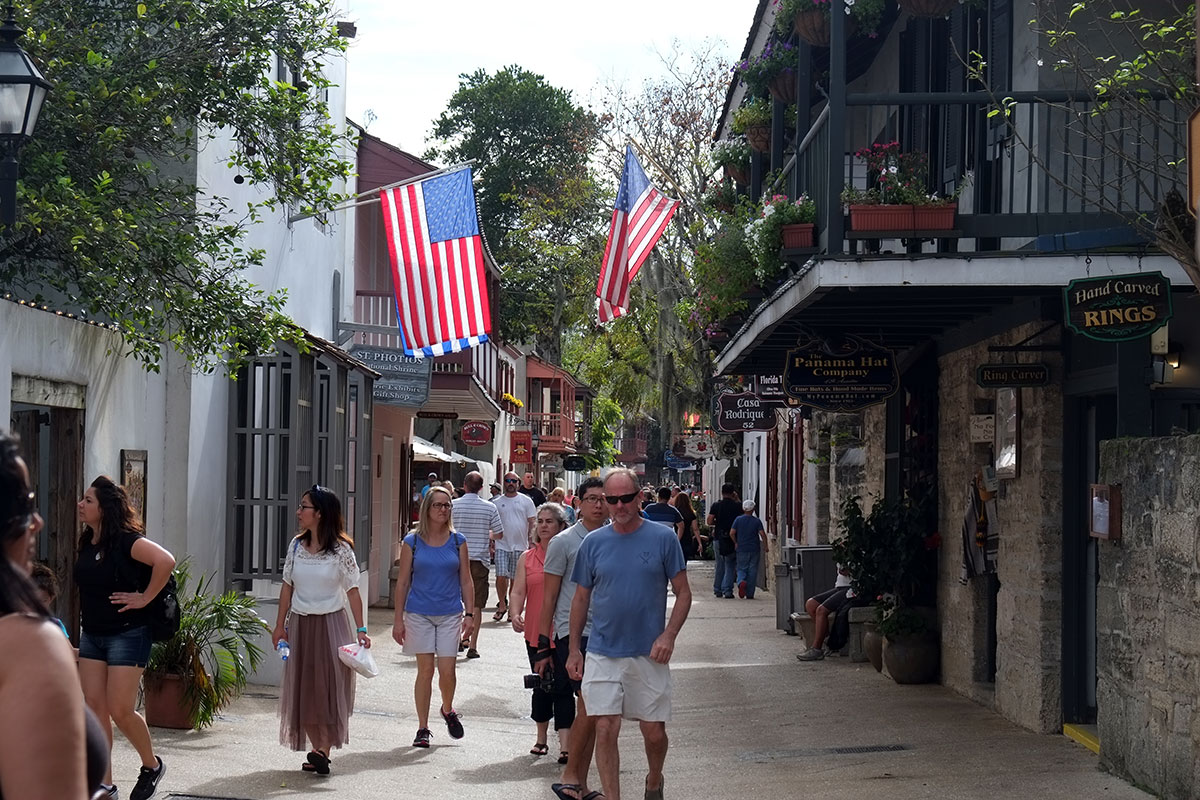
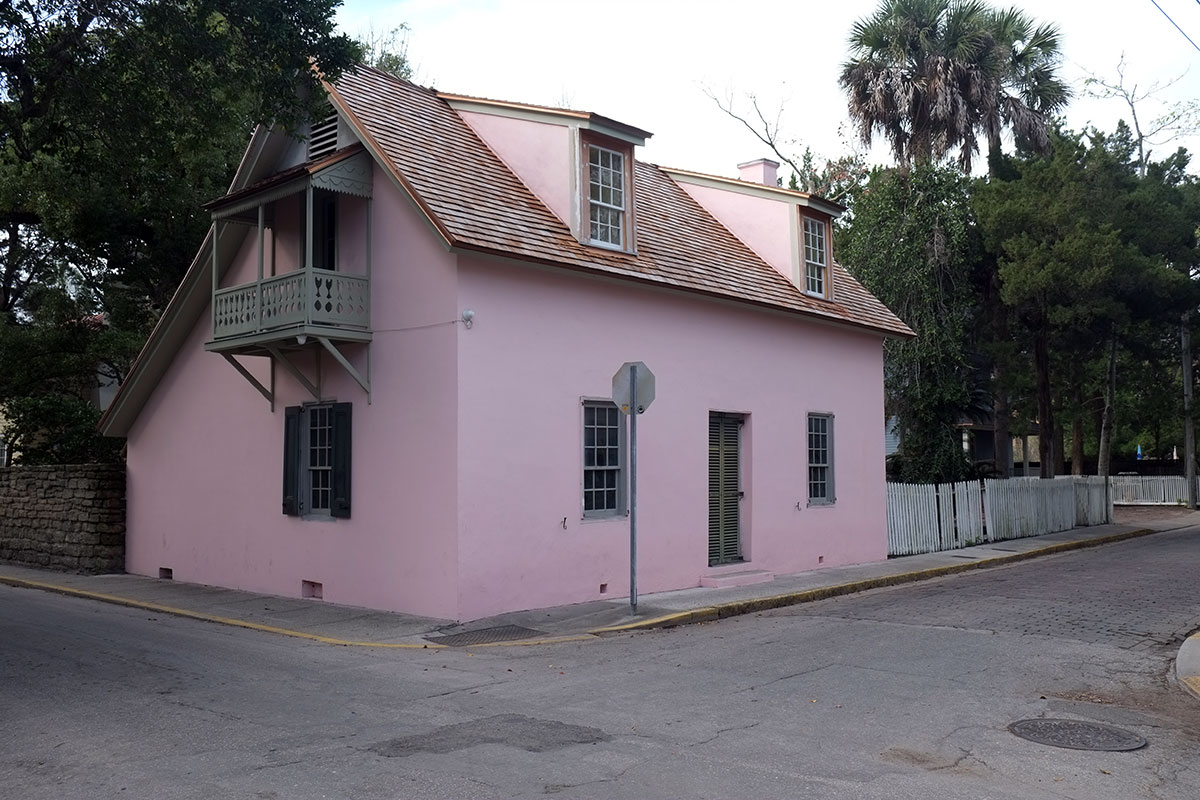
There are Spanish-style buildings in the historic quarter. Along Prince George’s St., they are full of shops and tourists, so while one has to stroll through, the crowds can drive you crazy.DSCF9110

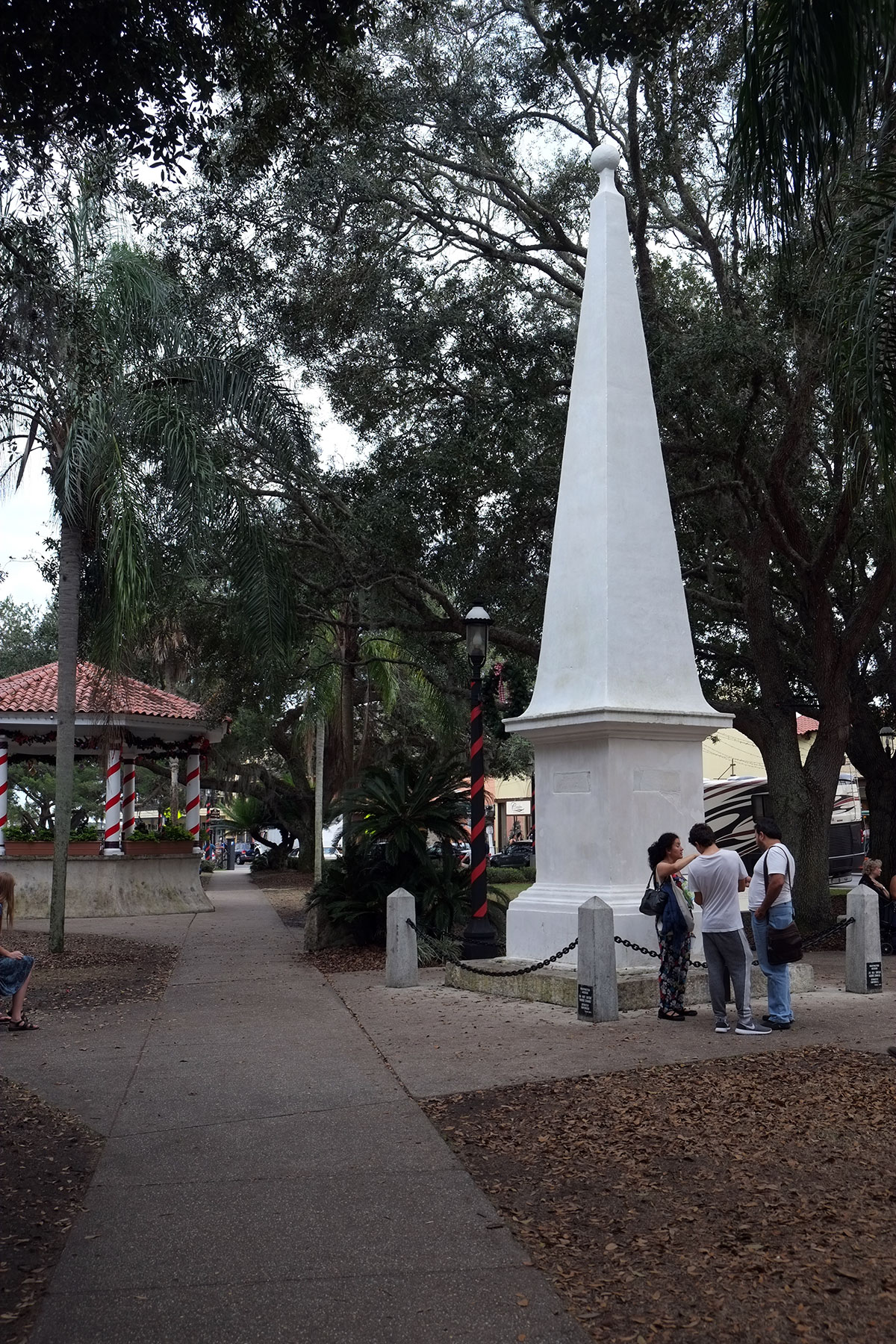
But once you pass south of the Plaza de la Constitucion (the oldest public park in the US),DSCF9238

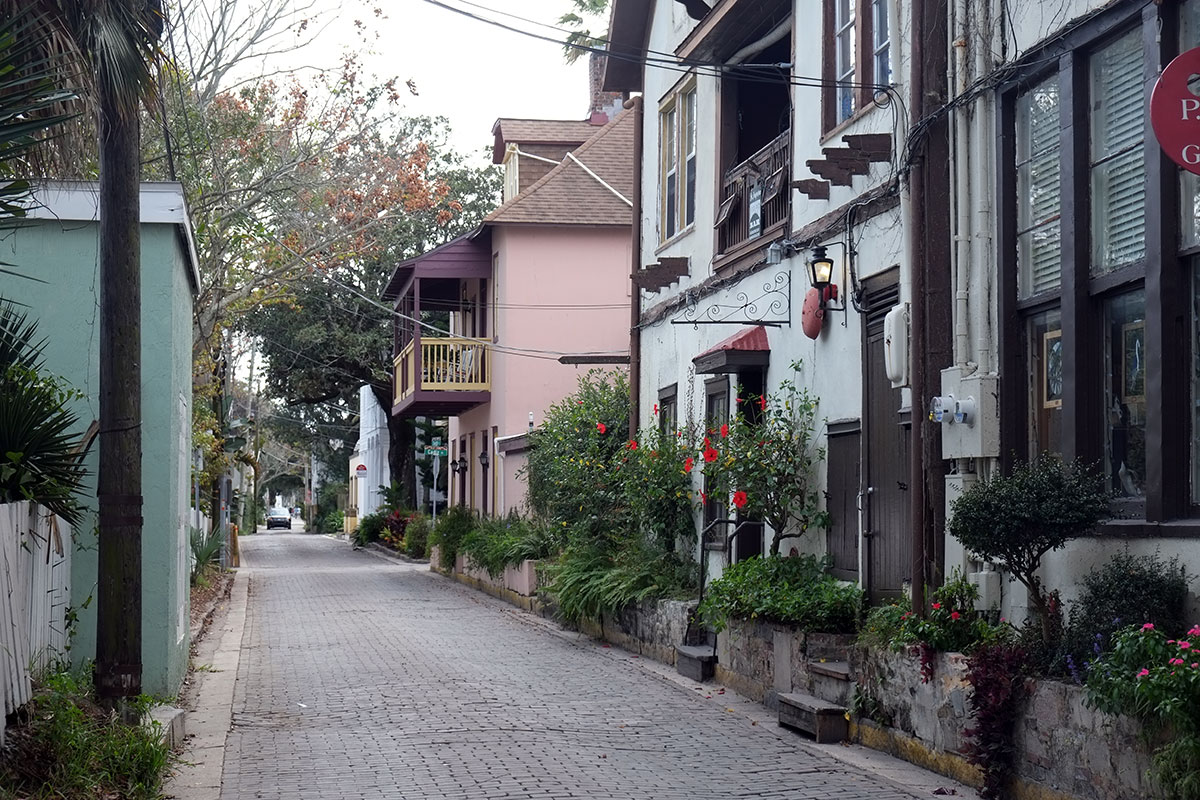
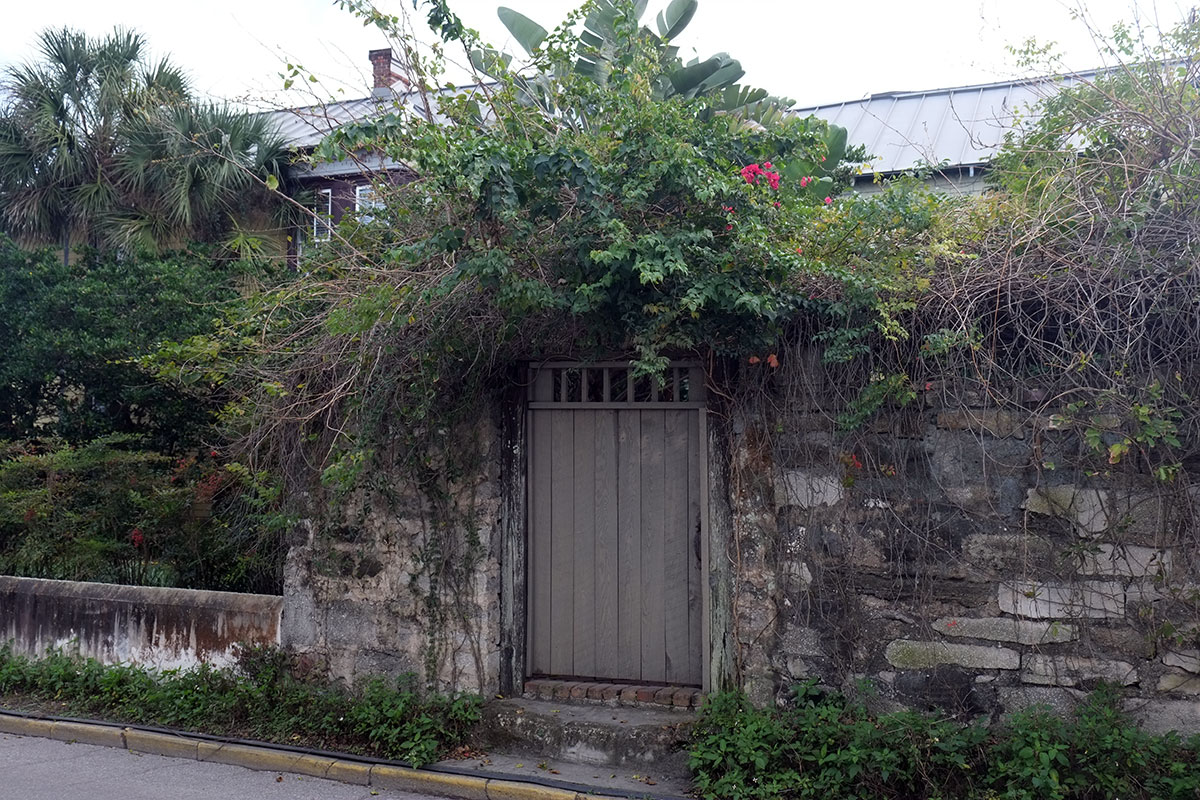
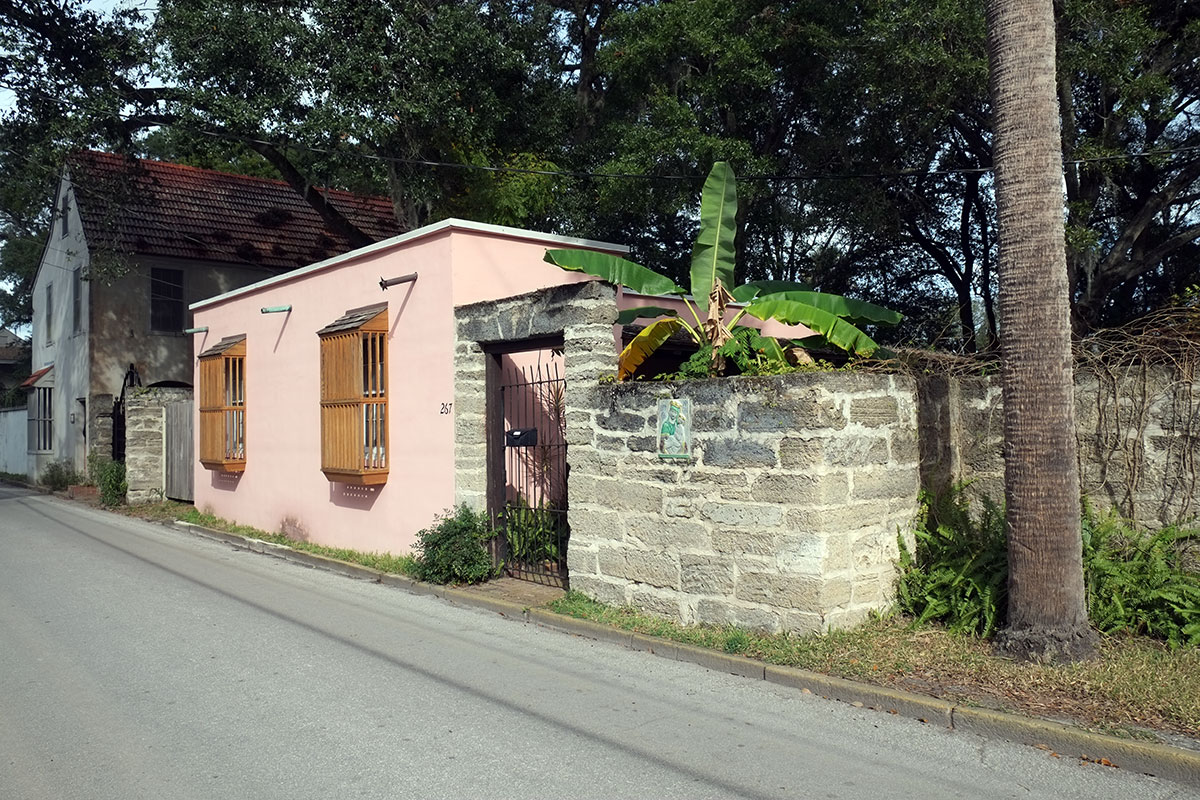
you enter a historic district pretty free of tourists (as there are not many shops) , which isn’t ordered like any other place in this country – narrow streets, gates in walls, hidden courtyards.DSCF9119  DSCF9131  DSCF9159  DSCF9146

The 19th century part of the city has beautiful, eclectic residential neighborhoods, similar to those we’ve seen in other southern cities.  DSCF9166  DSCF9165

A unique neighborhood we explored on this trip is Lincolnville – begun after the Civil War, it is the historically African-American neighborhood originally inhabited by former slaves.  DSCF9198  DSCF9194  DSCF9201

There are buildings in various states of repair – some showing clear major remodels to add more space, some deteriorating, DSCF9202  and signs of creeping (sometimes rampant) gentrification on some blocks.  DSCF9183p

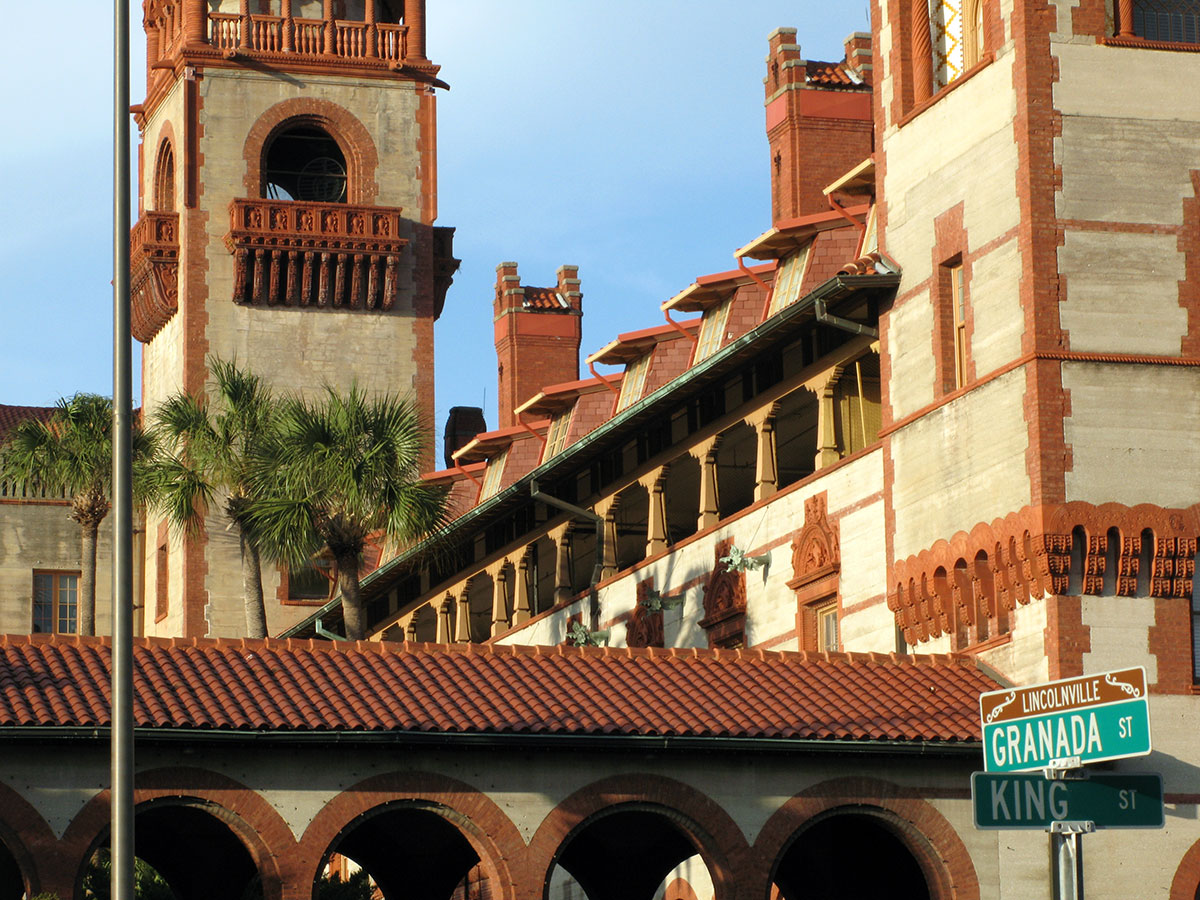
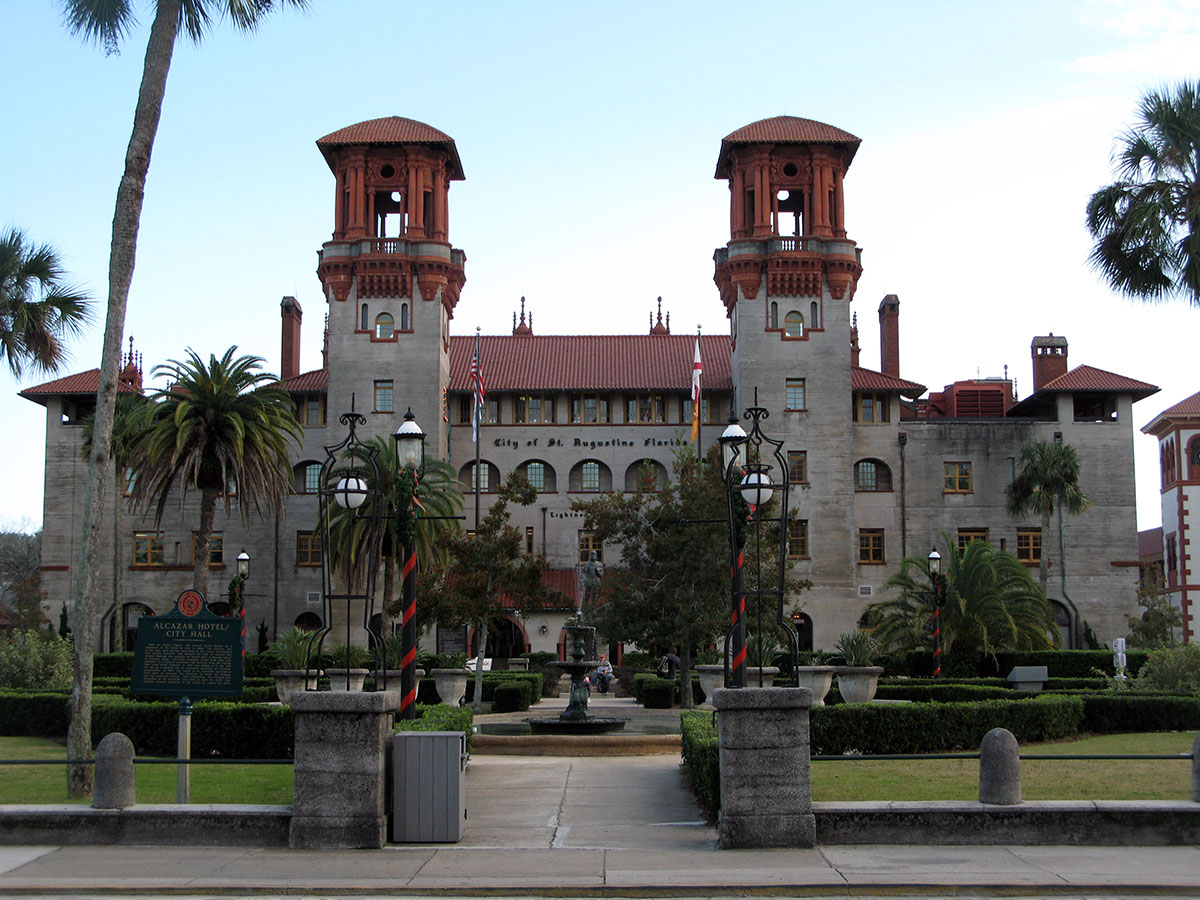
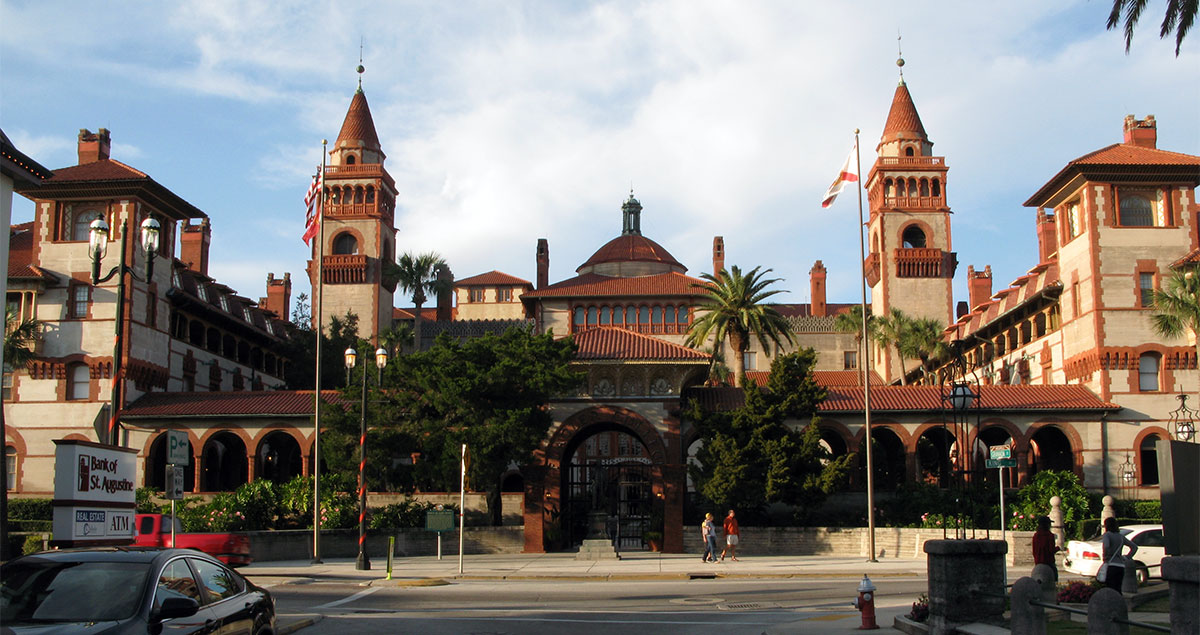
As the boom of Florida tourism hit the Atlantic coast in the 1880s, Henry Flagler developed much of downtown St. Augustine.  He hired Carrere and Hastings, who designed two exuberant hotels, one of which is now Flagler College, and the other is the city museum.  IMG_7358  IMG_7390

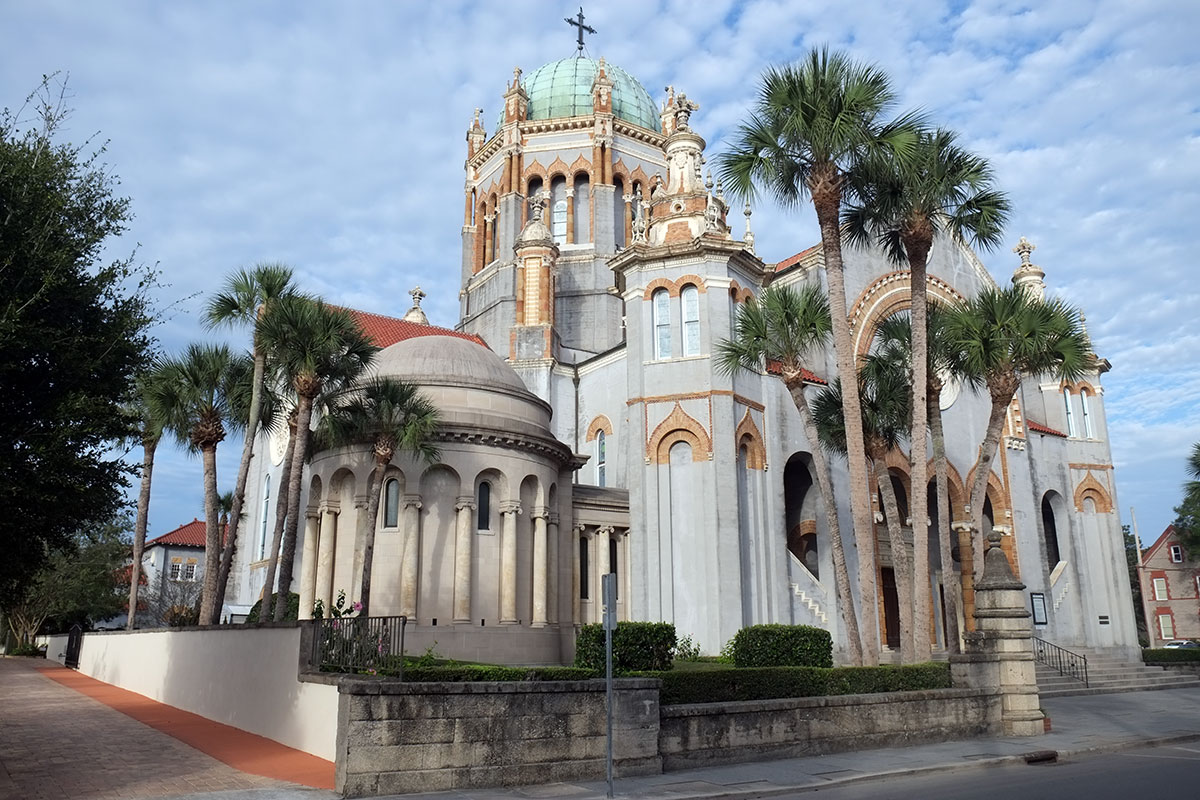
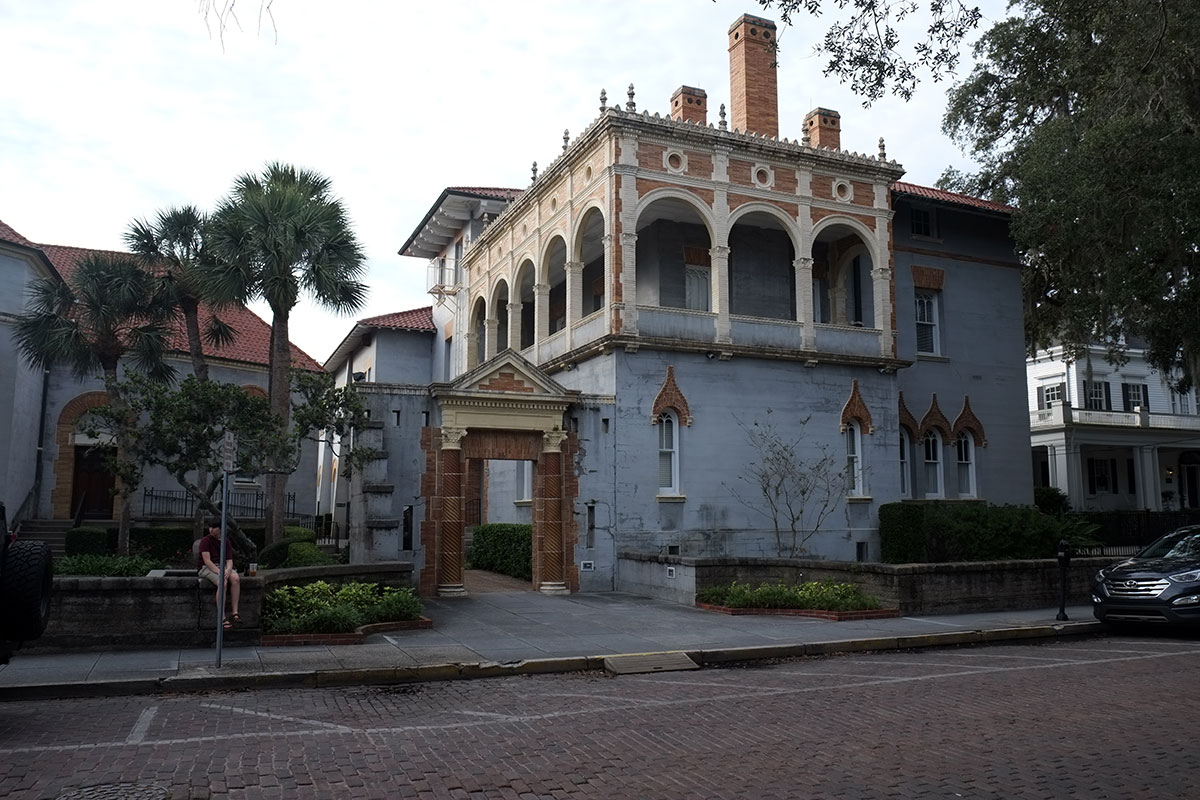
They are spectacular and wild, as is their Presbyterian church and rectory:  DSCF9255DSCF9242

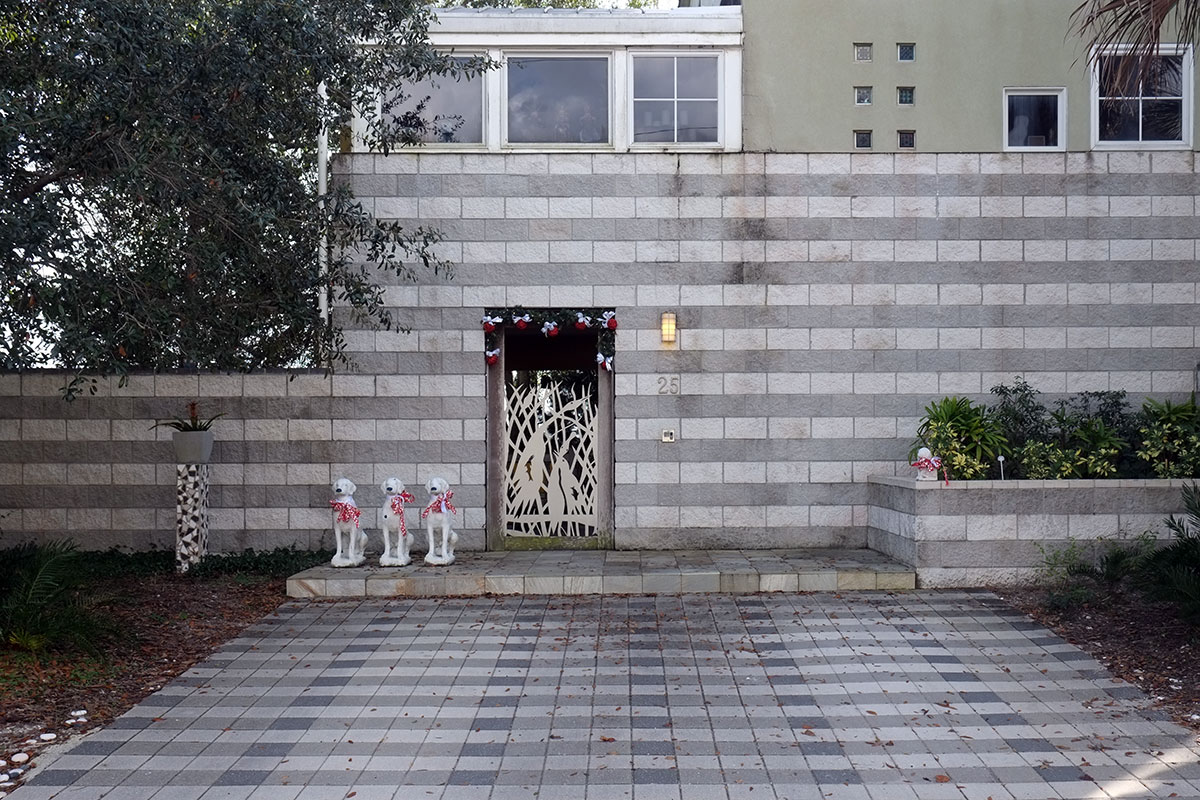
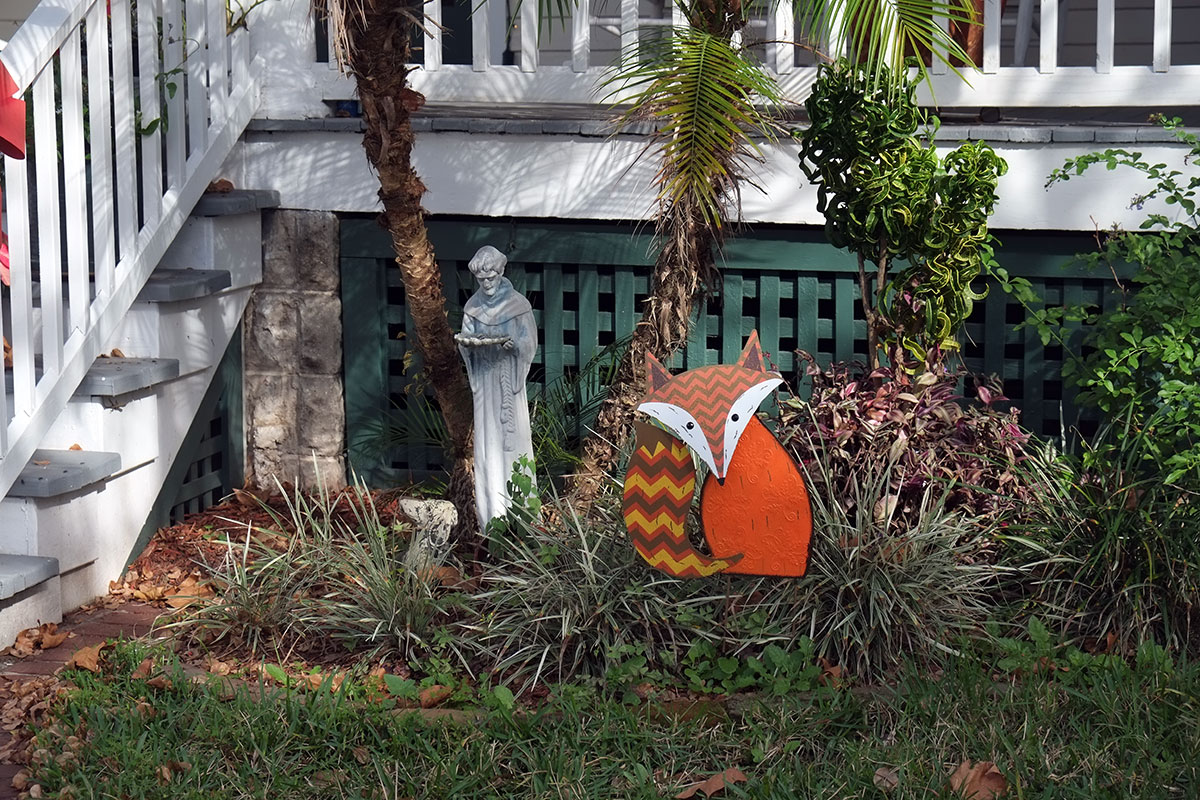
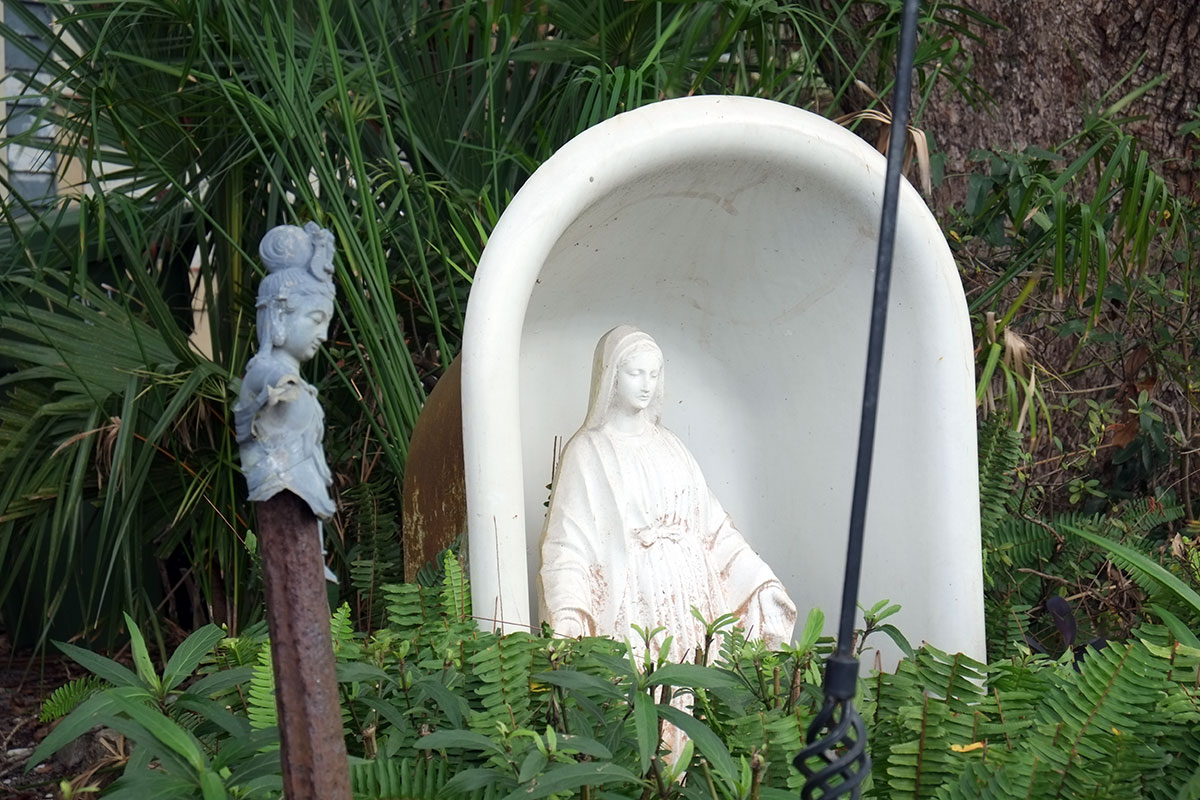
For some reason, we saw a lot of quirky yards and installations in the city, which made us feel at home.  DSCF9176  DSCF9097

It’s a small city, with a great variety of places, periods, cultures and architecture.  It attracts a lot of daytrippers and tourists, but they are cleverly contained in one area, and don’t overrun the whole city – it is a place where residents can enjoy life without being on display all the time.  It seems to be the one place in Florida where the past hasn’t been dwarfed by the present.

Family (southeastern division)

My family has lived in New York for generations (Bronx and Manhattan origins for all branches), but as the decades have passed, you can see the demographic trends of the country writ small in our family,  with migration towards the south and west.  As we drove down the east coast we managed to visit many of them, though once again not all.  (And I’m afraid I can’t add any old photos to this post, as I had to move all family photos off my computer to make more room, and then forgot the flash drive in Seattle.)
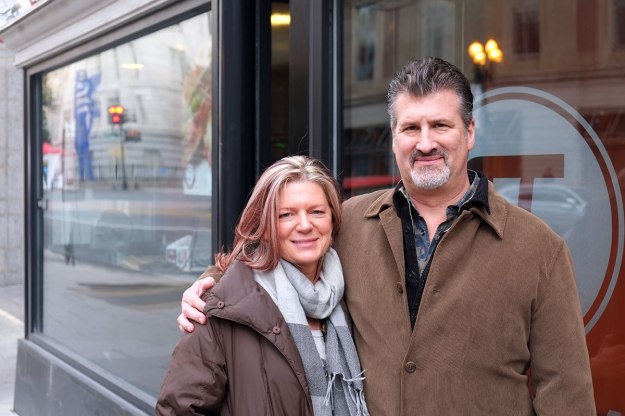
DSCF6228The first southern relative we saw was my cousin Alice, who lives in the Virginia suburbs of DC with her husband Gary.  When we were young we only got to see Alice and her siblings every couple of years, as my Uncle Bill was attached to the Foreign Service in places such as South Africa and Mexico. This was in the days before simple and cheap international flights – I actually remember seeing them off on an ocean liner as they left the US once.  HIs last assignment was in Washington, so they settled in Falls Church, and both Alice and my cousin Bill have stayed in the DC area.

Alice and Gary live in McLean, but we didn’t get to see their house, as it is up a steep driveway, (and after our experience in my brother’s new gravel driveway in NY, we decide to play it safe.)    So Alice and Gary met us (along with Bob and Susan) for lunch in DC and we had a good time catching up.  Gary works in the finance field, with another one of those jobs I can’t quite understand.  We don’t get to see them very often, but it’s always fun – they have boundless energy and enthusiasm, and the conversation is always wide-ranging and engaging.  We’re trying to convince them to come visit us agin on the west coast soon.
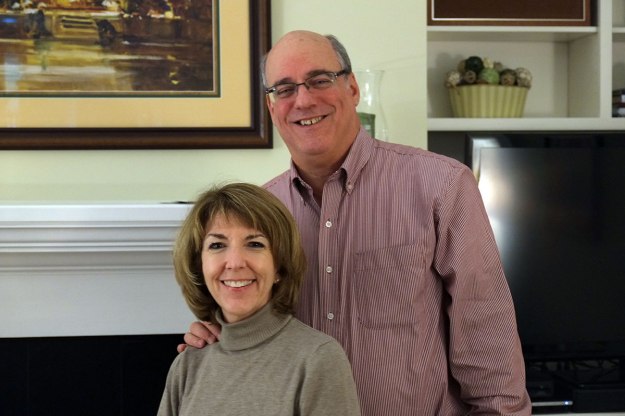
DSCF7583My cousin Kathie lives in Raleigh, where her branch of the family moved in the 70s.  At that point, it was so unusual for New Yorkers to move to the south that when my Aunt Marge walked into a store and asked for bagels, she was met with a blank look.  Kathie seemed to adapt well as a teenage transplant, and was the only one of her siblings to pick up up a southern accent immediately.  Kathie started her career out as a speech therapist, and has evolved more in to social service program management at this stage.  She raised three kids, all grown and off on their own now, and is also now a grandmother, with twin baby grandchildren.  Her daughter Jennifer, who works as a city planner, came over for dinner when we passed through, and we discussed our experiences of sitting on opposite sides of the table in project planning meetings.

We also got to hang out with Kathie’s partner Chris, who teaches management at NC State, and we had an excellent conversation about the state of academia in different places.  As in every other conversation I’ve had with an academic on this trip, my suspicion that higher ed in this country is becoming a strange and dysfunctional world was borne out.  It’s not that our individual campuses or departments have issues, it’s that academia (especially public institutions) as a whole is going through a transition period (marked by reduced funding, the explosion of management, the shifting of costs onto students, etc.), the end state of which is unclear.  After Greta went to bed we all sat around taking about the general state of affairs, three middle-aged people with enough experience in the world to now understand how things work, and also enough experience to understand how difficult it is to change any large institutions.
DSCF7675The next night we stayed with Kathie’s sister Marirose and her husband Steve (who took off on a trip the next morning before I could grab a photo).  Marirose has another one of the jobs I can’t understand, but at least this time it’s not because it’s in an arcane area of finance.  Her work seems to involve human resources, and leadership, and training and networking, and I think she knows everybody in Raleigh.  (One of my high school friends moved there a few years ago and immediately met Marirose at a reception.)  My mind works in very concrete ways (why I became an architect), and Kathie told me that their father could never really figure out what Marirose did either;  he was in HVAC, another member of the concrete-minded side of the family.  Steve is an engineer, so his work I get.

Marirose and Steve raised three kids too, with the youngest still in school at NC State, it’s astounding to me that my littlest cousin is also a grandmother.  Her daughter Caitlin came over for dinner with her four-year-old son Chase, whom Greta declared to be the most delightful child she had met on the whole trip (Greta is an astute judge of small children and dogs).  We had a great time eating, drinking, playing, telling old stories, and catching up on the various goings-on in our extended families.
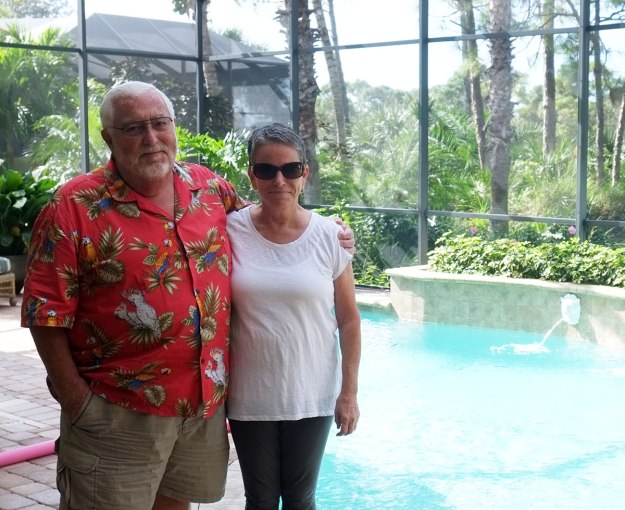
DSCF8998Our next family stop was with my sister Laurie and her husband Jeff in Estero, Florida.  Laurie is my youngest sister, seven years older than me, so she and our sister Sue were effectively responsible for a lot of my upbringing.  I was always hanging around them, listening to their music (they had much better taste than my brother) and yacking, and and they never seemed to mind.  They were a huge influence on me and how I see the world.  Greta and I sometimes discuss how much ideas about how women should live have changed in the past half century – she has always taken it for granted that she can do whatever the boys can, and is amazed that it was ever different (a viewport I’ve always shared).  I tell her that my views were probably shaped by having three smart, forceful sisters, who always figured out what they wanted to do and moved ahead in that direction.

Laurie worked at a variety of jobs while living in New York, going to school and raising her son Justin (previously seen in the northern family post).  Eventually she moved out to the Philadelphia Main Line to be near our sister Sue, and after a few years she met Jeff, a madman stockbroker with three kids, and who had hobbies like hot air ballooning and racing his Corvette on the middle-aged guy stock car circuit.  They got married and later ended up working together, starting and running a brokerage firm and a mutual fund company.  (Financial type jobs where I actually do understand what they do.)  Laurie has always loved the ocean, so over the years they spent a lot of time in their summer house on the Outer Banks, before deciding to move their winter base to the Gulf Coast.

Laurie has recently joined my sister Pat and brother Jerry in retirement (so I’m the last one working to pay all their Social Security benefits).  They now spend most of their time in Florida, but head north to Pennsylvania frequently to see their kids and grandkids, (as Laurie has always been about the most engaged grandmother I know).  We had a good time staying with them, and Linda and Jeff got to once again commiserate about what it’s like being a quiet person married to a Keyes who never seems to stop talking.

While Linda was traveling with us in Florida, we switched gears from my family to go visit her sister Paula, who is living most of the time in St. Petersburg at this point.  Paula had a long career working for Yum (Pizza Hut, KFC, etc.) in various places around the country.  When her son Ben was out of the house and off at school, she moved to Shanghai to work for six years, often taking her vacations in other amazing places around the globe.  After returning to Louisville she left Yum, but has more recently signed on as a consultant with Bloomin’ Brands, helping them figure out how to internationalize some of their restaurant lines (such as Outback).  They’re based in Tampa, so she’s rented an apartment nearby in St. Petersburg (the most bizarrely laid-out one-bedroom apartment I’ve ever seen.  I hope none of our grads worked on it.)  We visited her there, dragging her away from the office briefly to experience the St. Petersburg nightlife.  The next day we met her for lunch, then we hit the road again while she went back to work.
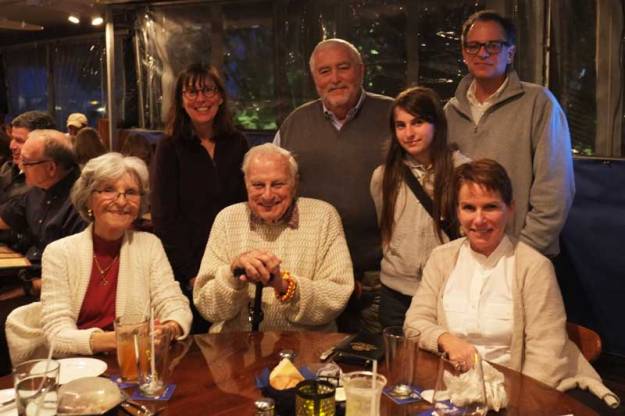
DSCF3015cWe returned to south Florida to spent more time with my stepmother Gina, who was living in the home she shared with my dad until his death in 2014 (six months after this photo was taken).  Gina grew up in Liverpool, and when she was three, she was evacuated with her siblings to a small town in Wales the day after the British entered WWII.  They lived on a farm in this town for a few years until the risk was deemed less and they returned to Liverpool.  (I happened to be traveling in England in 1989, and met up with Gina and my dad, and we went down with her surviving brother and two sisters to see the town on the fiftieth anniversary of the day they arrived.  Some people there actually remembered them.)  Gina then grew up in Liverpool (didn’t know the Beatles), and after working as a seamstress decided to try something new.  She moved to the US in the 60s, and eventually ended up in New York, working as a secretary at Associated Dry Goods, where her boss was a client of my dad’s.  After my parents got divorced, my dad sent Gina a letter asking if she’d like to go on a date (he didn’t feel right putting her on the spot while at work) and that was that.

They had a happy marriage for over 40 years, living on the Hudson River in South Nyack, and later buying a condo in Naples. Gina went back to school and got her bachelor’s degree in the 80s.  They travelled together a lot, sometimes related to my dad’s work running his engineering firm, but then a lot more when they retired.  They split their time between the northeast and Florida, but about ten years ago, when my dad was in his 80s, they decided that summers in Florida weren’t a lot worse than the northeast, so they just stayed down south.  We visited them in Florida every Christmas after that, which was always a week of eating and talking and walking on the beach.

After a year and a half of living alone, Gina agreed with my sister that maybe she should move on, so they made plans for her to move into an assisted living facility.  It’s in the same development as their condo, so Gina will still be near all her friends, and can still participate in all her normal activities, like her exercise class and bridge club.  My sister has put her financial and organizational expertise to good use straightening out all of the financial complexities, and we tried to help  her sort through papers and books, etc. while we were there.  Gina  moved into the new place in January.  It’s a beautiful building (actually has a better view than the condo), and it seems like a fine place to keep enjoying the good life in Florida.

Leaving Florida we we left all my family behind (mostly they go south but not west), but there’s more of Linda’s family to catch up with in Texas.
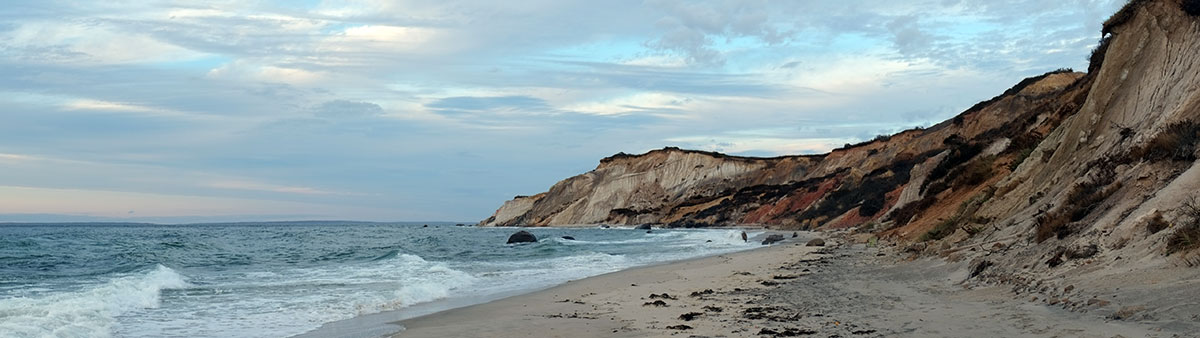
South Florida

Floridians speak about the duality of their state, how the Florida above Orlando is a different world from the one below – economically, socially, politically, etc.  This is apparent when you travel through the whole state for a few weeks (we mainly noted south Florida’s aversion to trailers).  Socially, Northern Florida is part of the South, and Southern Florida is largely an amalgam of the Northeast, the Midwest and Latin America.

What struck us most on this trip was the difference between the Atlantic and Gulf Coasts, not just socially, but also architecturally and urbanistically.  Decades ago my dad pointed out that I-95 ran down the East Coast, and I-75 ran from the Midwest to the Gulf Coast, so this largely determined where retirees settled.  (And meant that comparable real estate was cheaper on the Gulf Coast, as Midwesterners just wouldn’t pay as much as Northeasterners).  It’s not really that clear anymore; in Rabbit Is Rich, Updike’s character wintering near Ft.Myers observes that he expected to be surrounded by Midwesterners, but all his golf buddies are New York Jews.  So while the social differentiation may have become less apparent, the differences in the built environment are even more clear.  The pattern for development on the Atlantic coast was set in the early 20th century, with cities, public beaches and gridded neighborhoods, over which the postwar pattern of highways and sprawl were layered.  The Gulf Coast was remarkably undeveloped until after WWII, so the overwhelming organizational principle is that of postwar car-oriented development and sprawl, with the city centers resembling the “edge city” fabric more than any pre-war, pedestrian-oriented city.

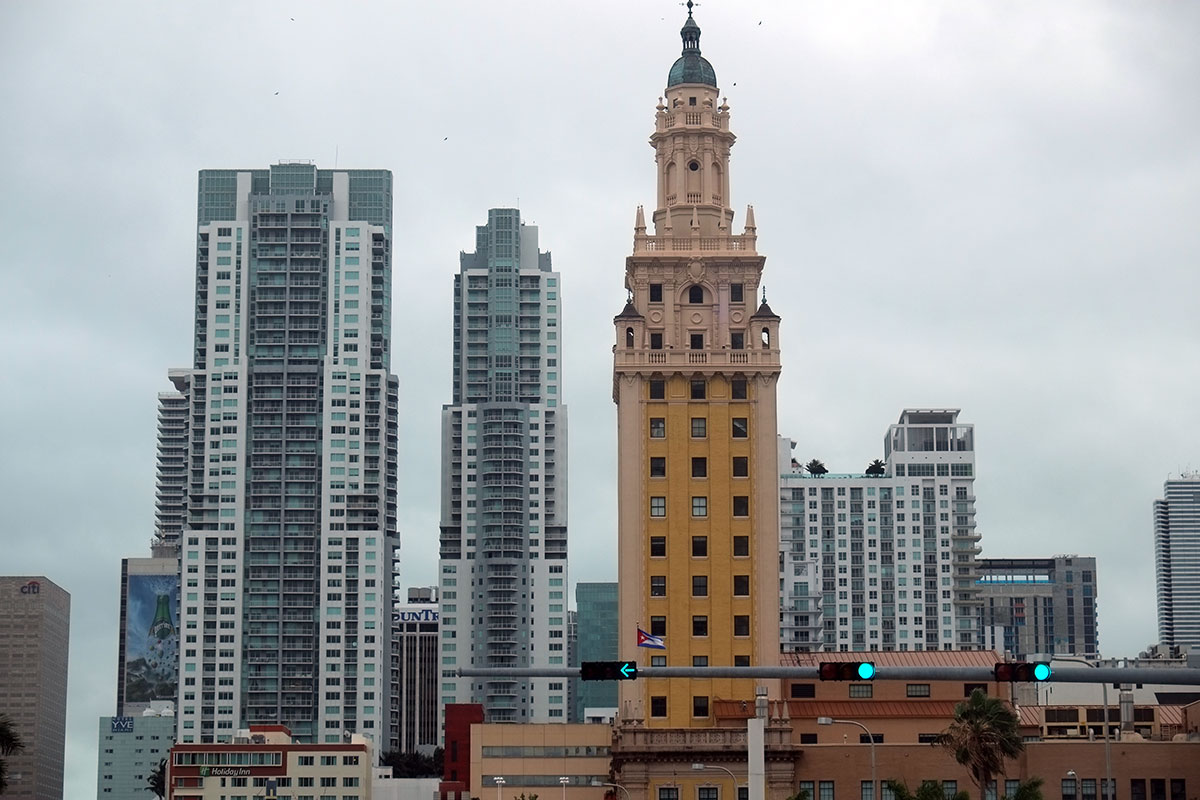
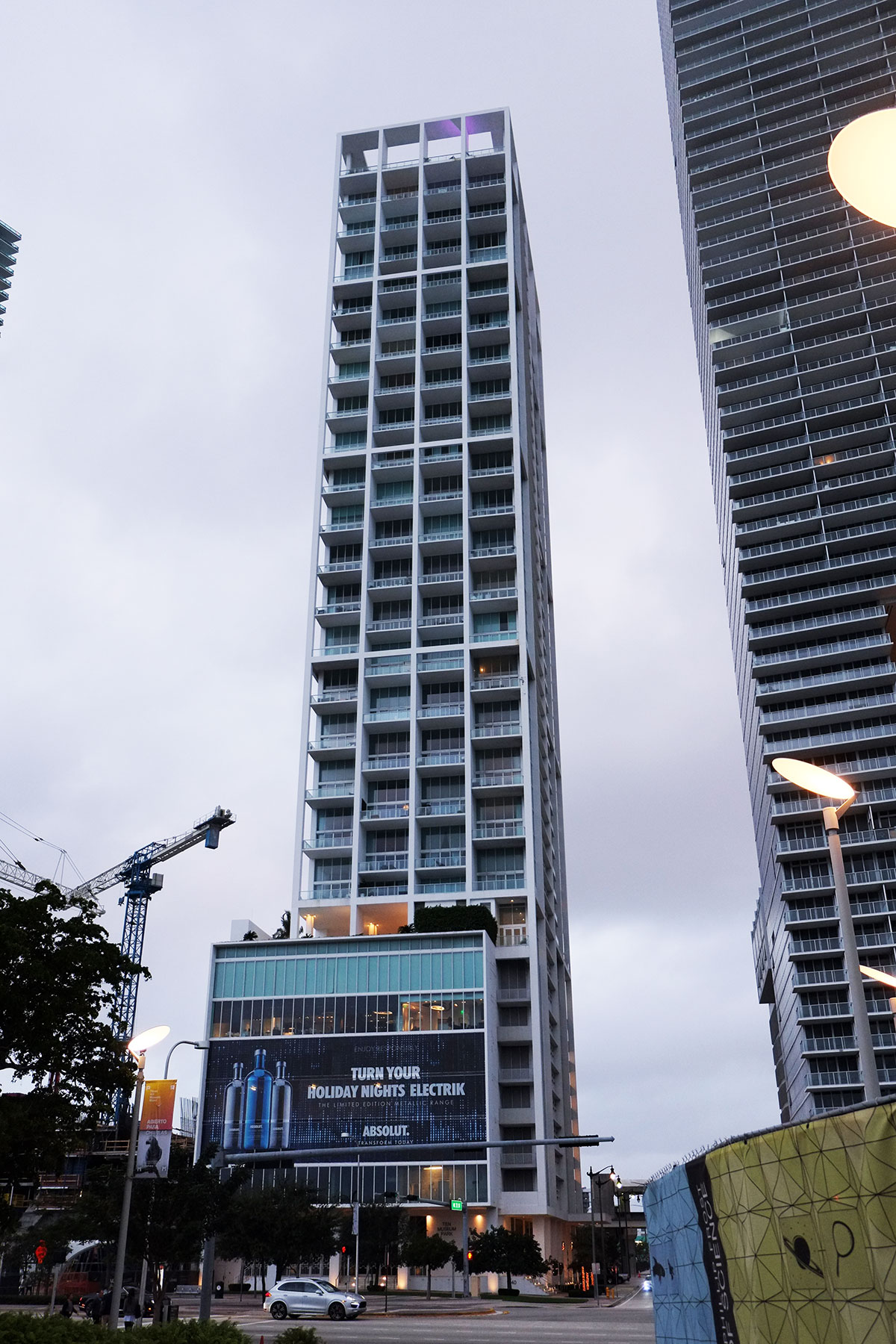
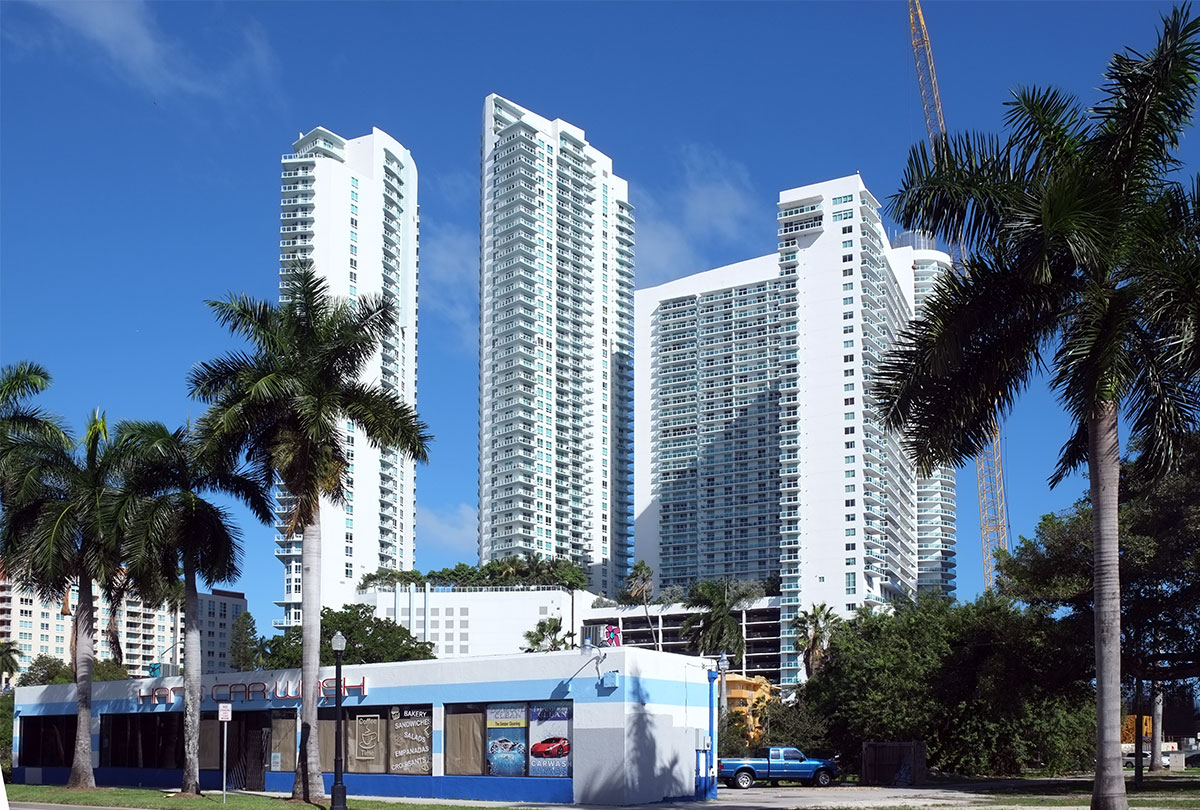
We spent some time in Miami, which is remarkably booming, packed with extremely expensive condo towers, flashy cultural institutions, etc.  It’s truly one of the global cities, more connected to the society and economy of Latin America than to the State of Florida.
DSCF8749  DSCF8901  DSCF8926

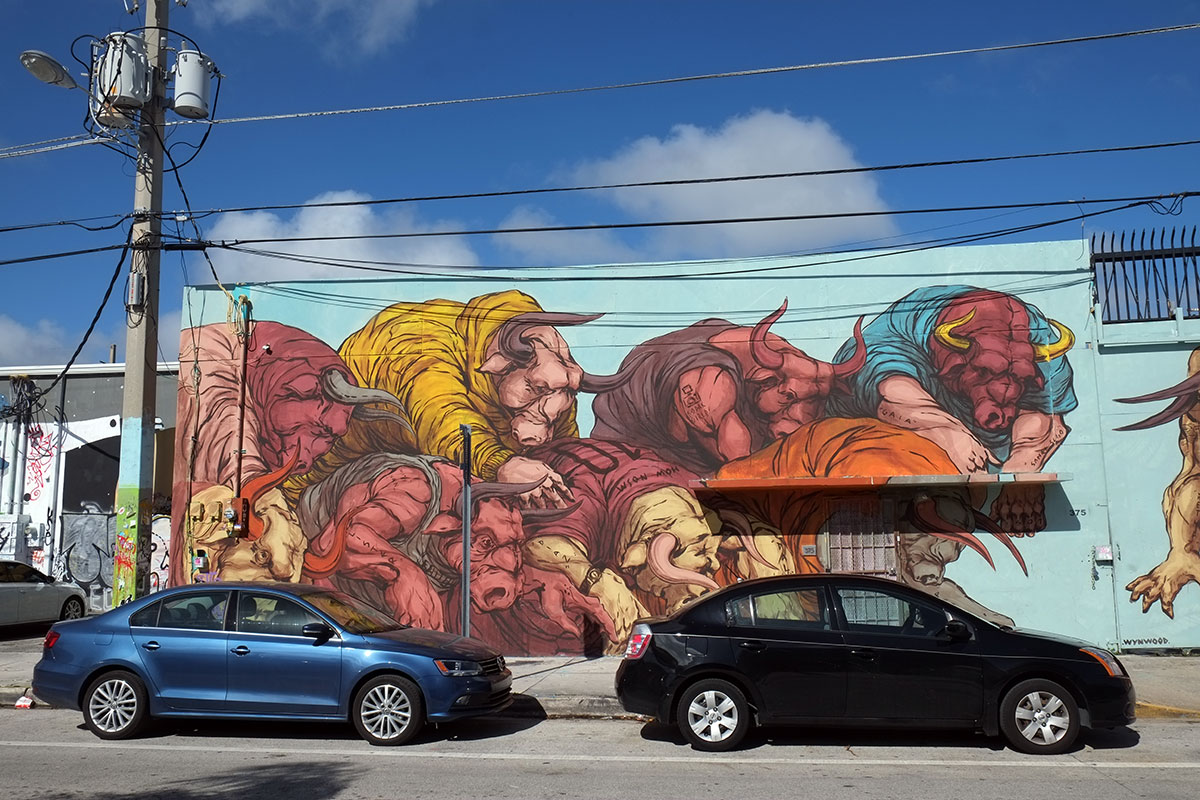
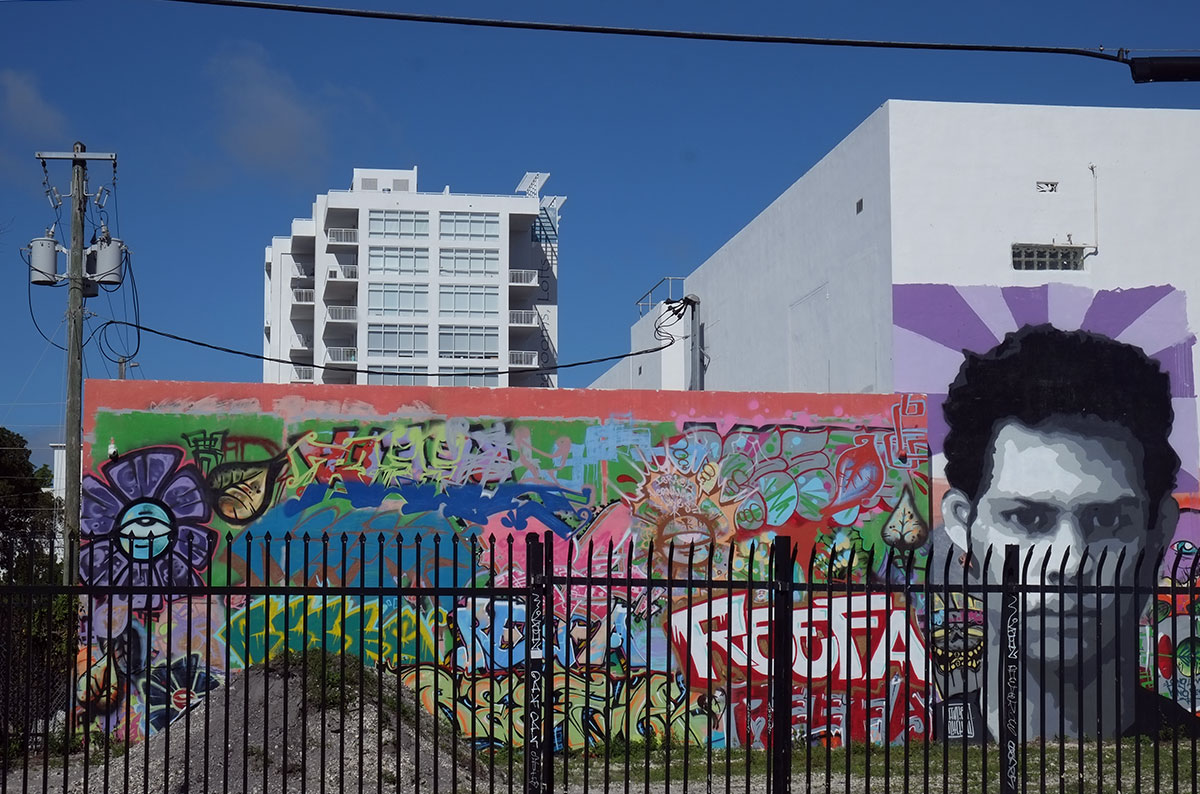
But once you look past the glitz of these towers, there is that complexity of culture that you get in a real city.  The Wynnwood neighborhood is that kind of light industrial zone near the center of town where artists and hipsters are taking over, with cafes, galleries, and lots of street murals.DSCF8919  DSCF8923

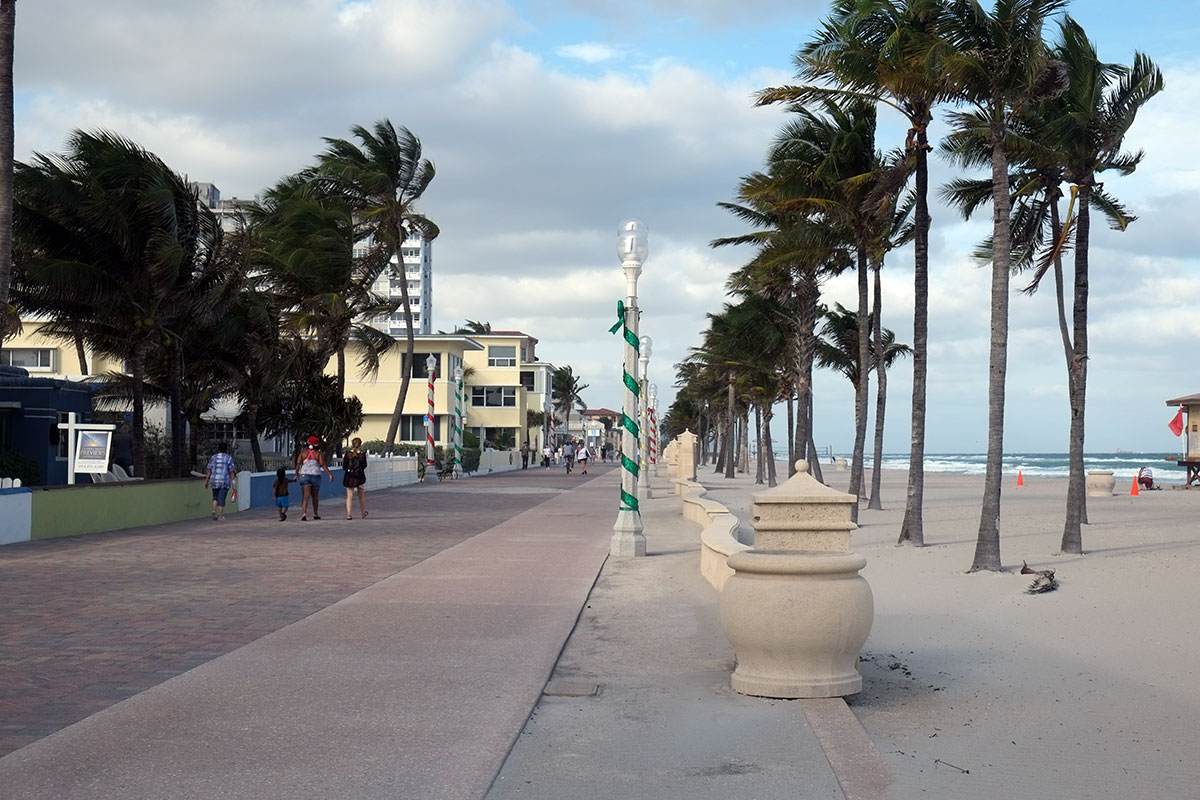
We also went through the smaller beach cities in the area – Ft. Lauderdale, Hollywood, etc.  The early 20th-century promenades and boardwalks have been reinvigorated, and even on a really windy day a stroll along the beachfront is entertaining and lively.  DSCF8700

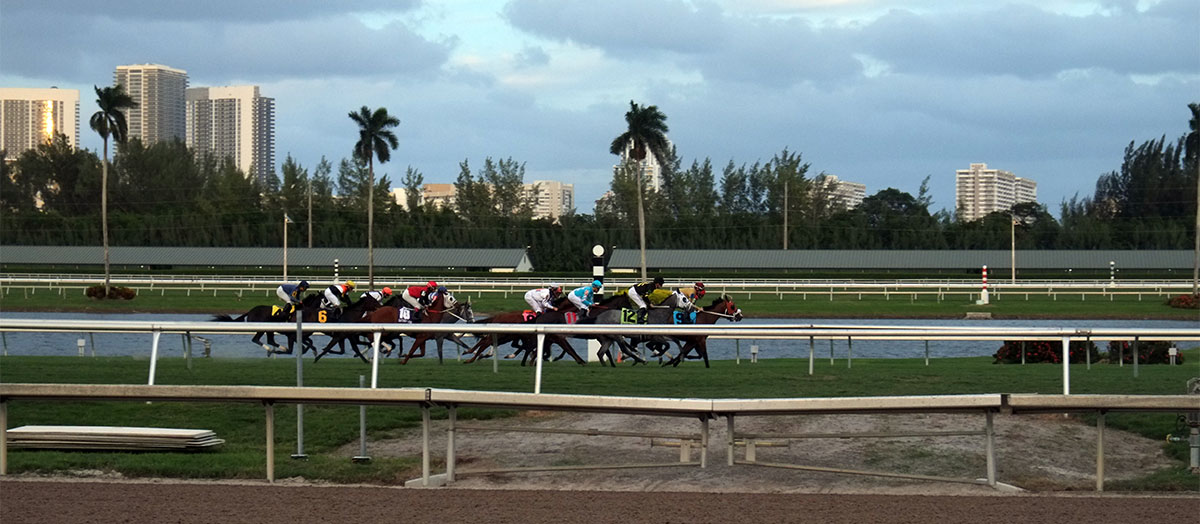
And older attractions, such as the Gulfstream race track are being reinvented, with casinos and other Vegas-like glitz.  DSCF8743  DSCF8725

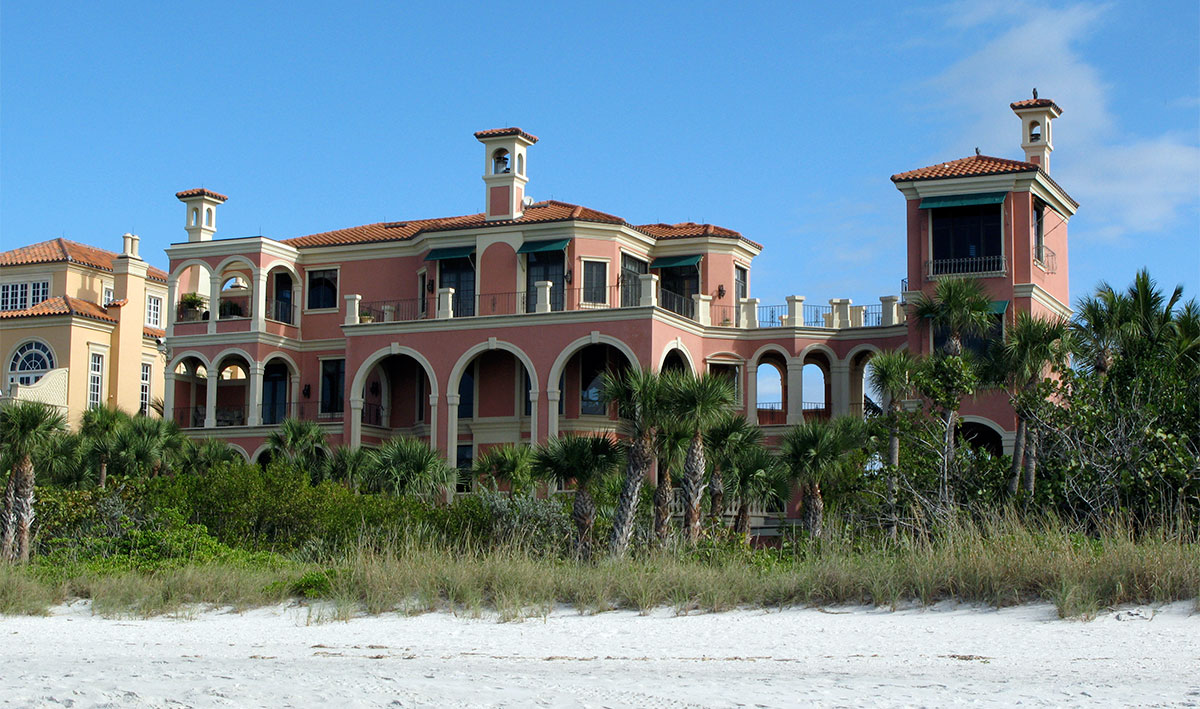
The Gulf Coast is a different world.  We have been going there for years to visit my family in and around Naples, which has a very small historic core of shopping, and neighborhoods of beautiful older homes along the beach.  DSCF2979  DSCF8947

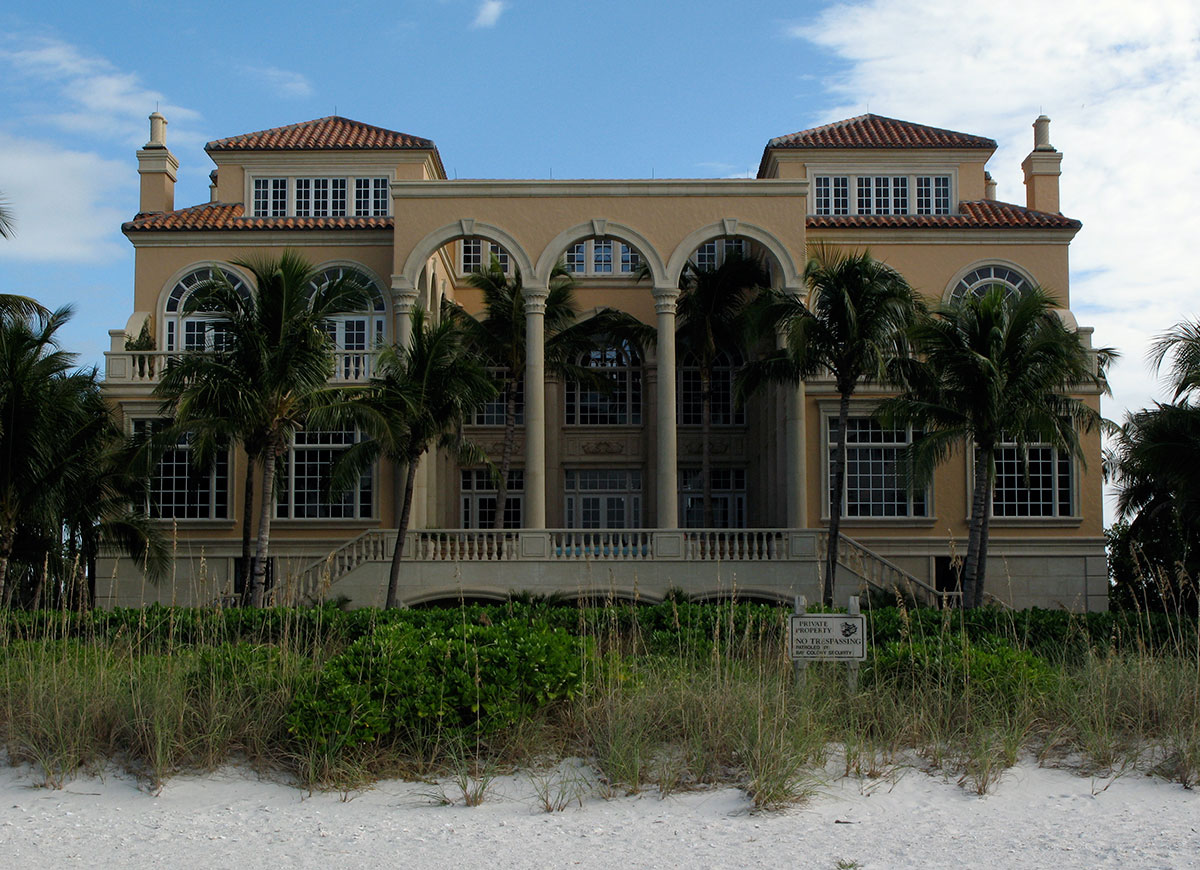
There is public beach access here, but no commercial development – no boardwalk, no crowds, nothing kitschy.  The area began to boom in the postwar era, with large developments, towers, DSCF2950and some of the most insanely awful houses I’ve ever seen:  IMG_0326  IMG_0337

all of this is much more privatized, with many gated communities and limited public beach access.  Even when an area is at a pretty high overall density, such as in the condo developments, it’s a car-based pattern, with any commercial development miles away.

We visited some of the older Gulf Coast cities we’d briefly cruised through before.  Sarasota has a historic core with some lovely buildings, but has been dwarfed by the postwar development.  DSCF8577

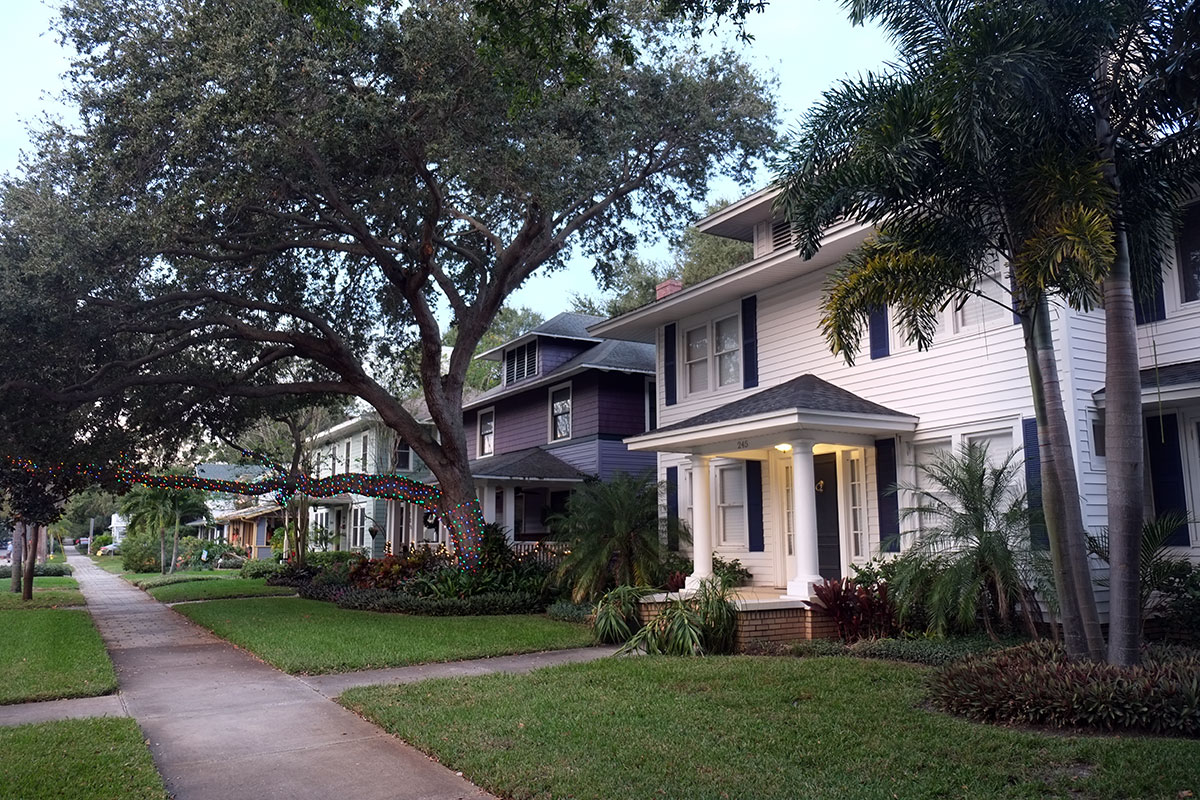
St. Petersburg was our favorite of all of them – a pleasant downtown near the bayfront, an area of cafes and restaurants that seemed liked a South Beach for people who aren’t models, and an older residential neighborhood near downtown that was charming – a mixture of 1920s eclectic houses, all of which seemed well-adapted to the climate (and former lack of air conditioning).  DSCF8598  DSCF8610

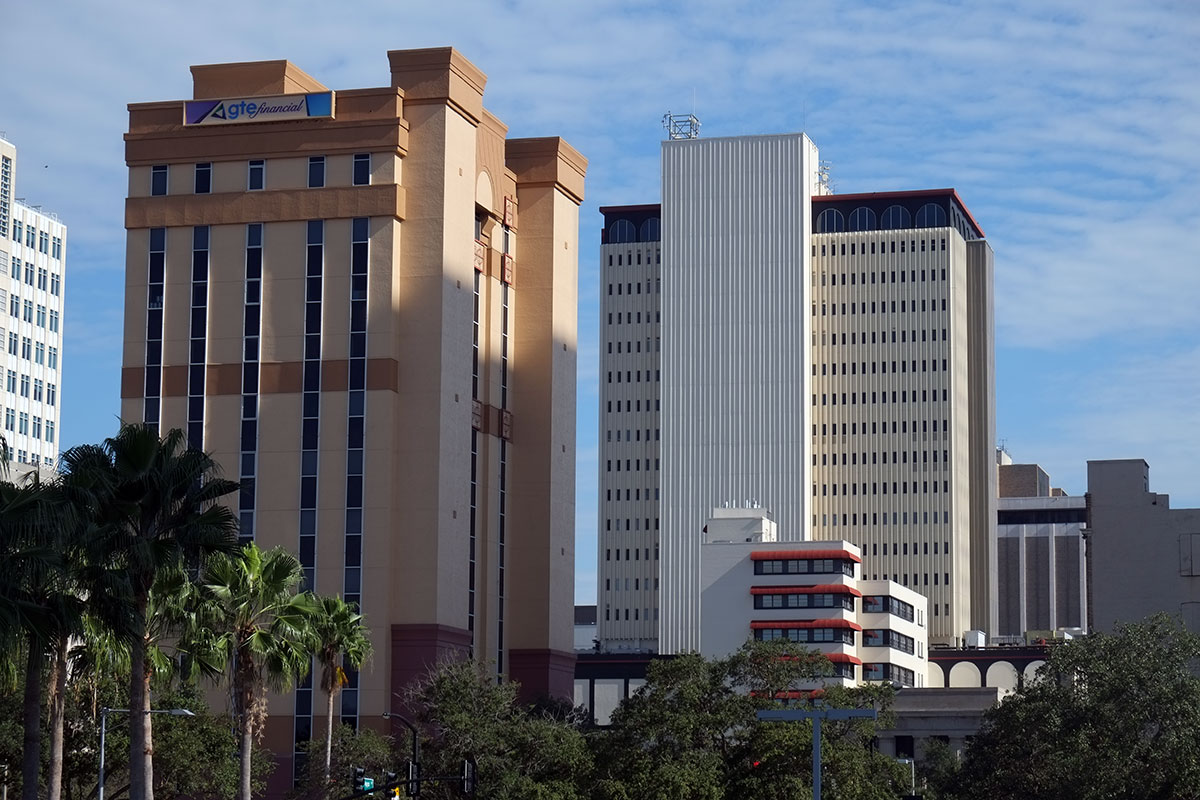
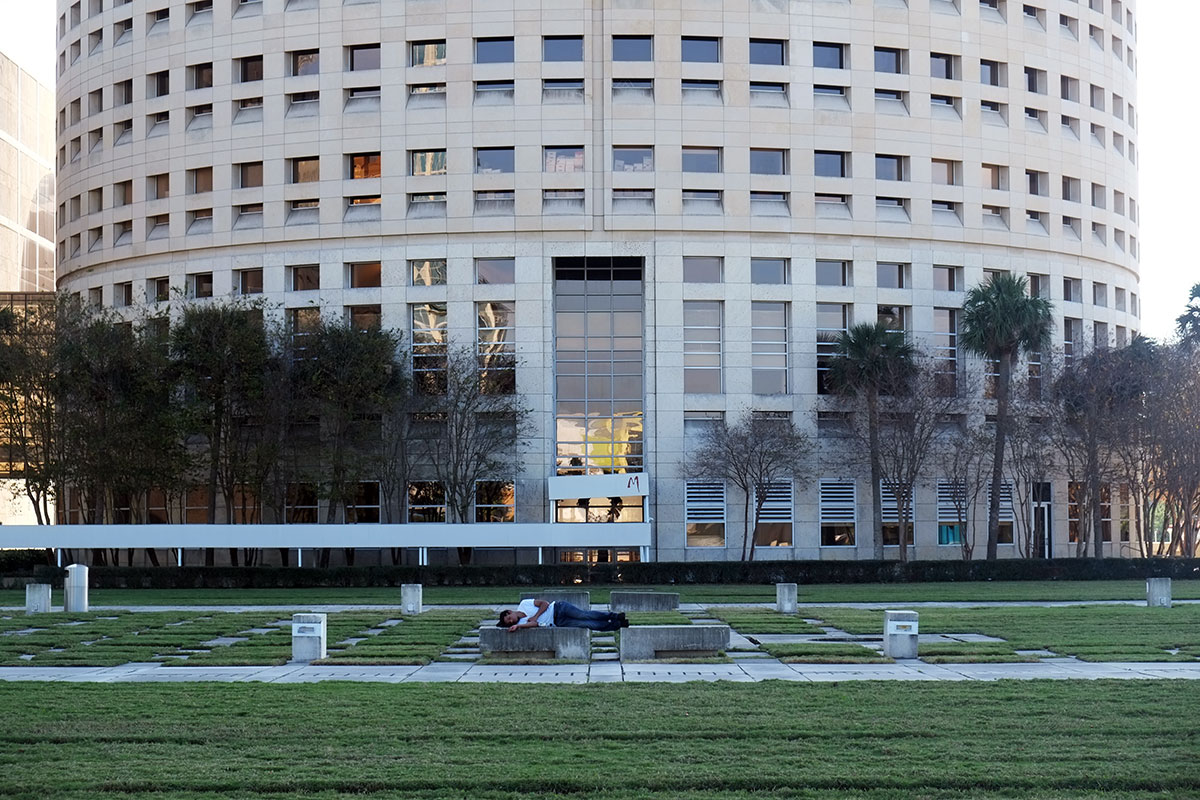
Tampa, the big, booming city on the coast, is profoundly awful.  There are a few remnant historic buildings and districts, but the downtown has a collection of unrelievedly terrible big buildings from the 1950s to the present that may be unparalleled anywhere else.  DSCF8625

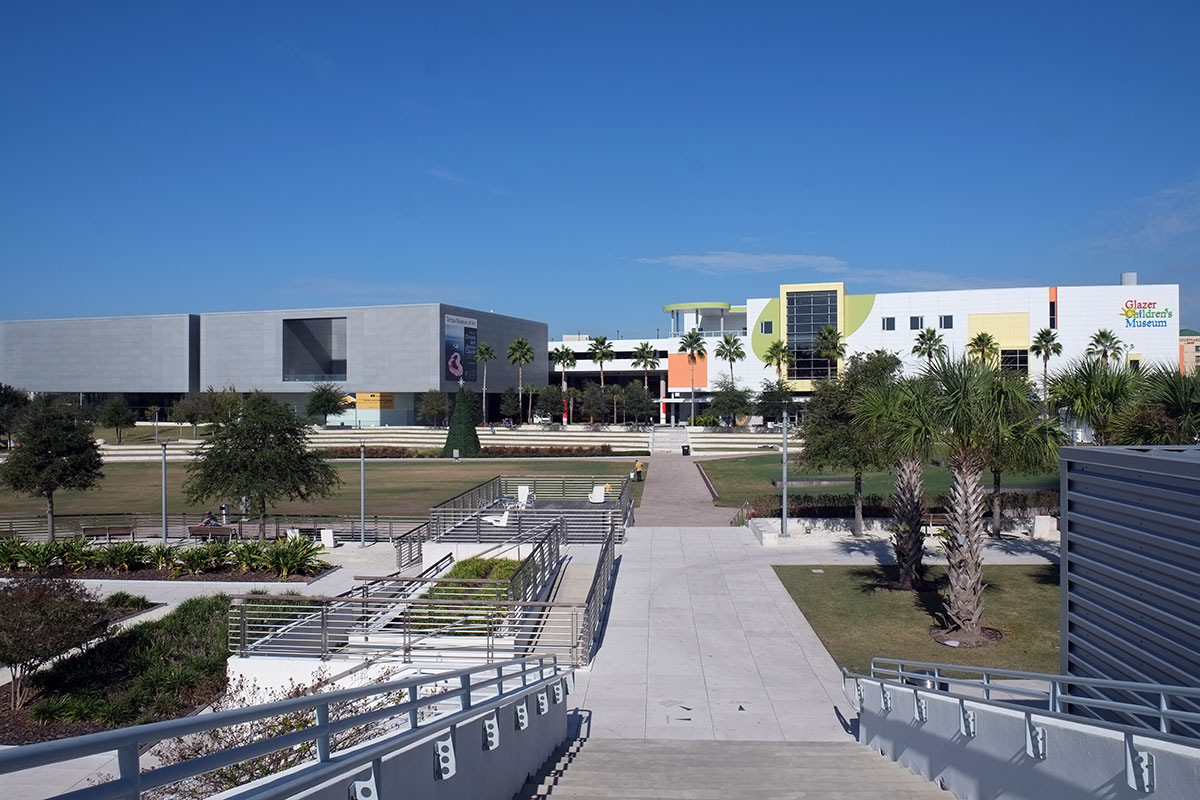
The money is now expressing itself in cultural institutions, which you can distinguish from the offices because they are horizontal and blank.DSCF8634

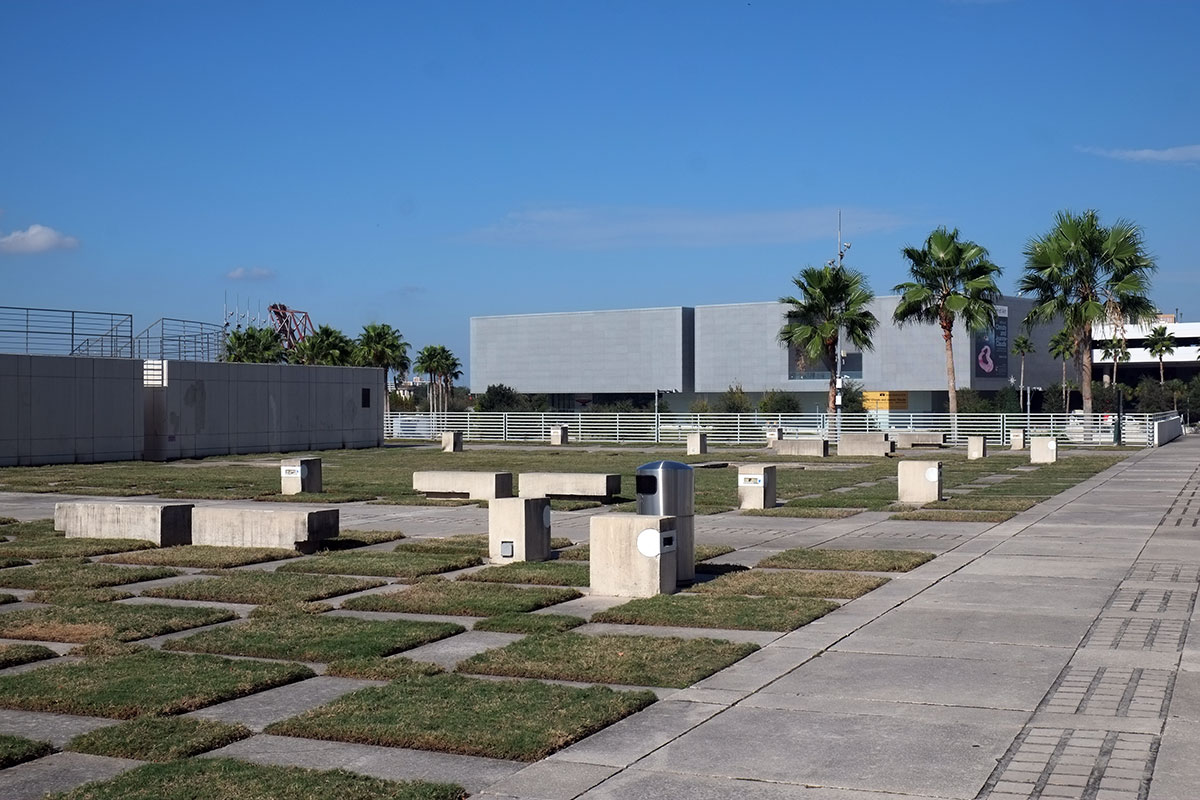
On a podium (which must contain parking) there is the most grievously overscaled and pointless plaza this side of Brasilia (this is about 1/4 of it):DSCF8622

Surrounded by deadly buildings DSCF8635

and only one other person we could see, a sleeping guy planking on axis:DSCF8629

The building behind him, belonging to the Sykes Corporation, looks like a prison in Blade Runner, and does the worst job of hitting the ground plane of any skyscraper I’ve ever seen:  DSCF8639

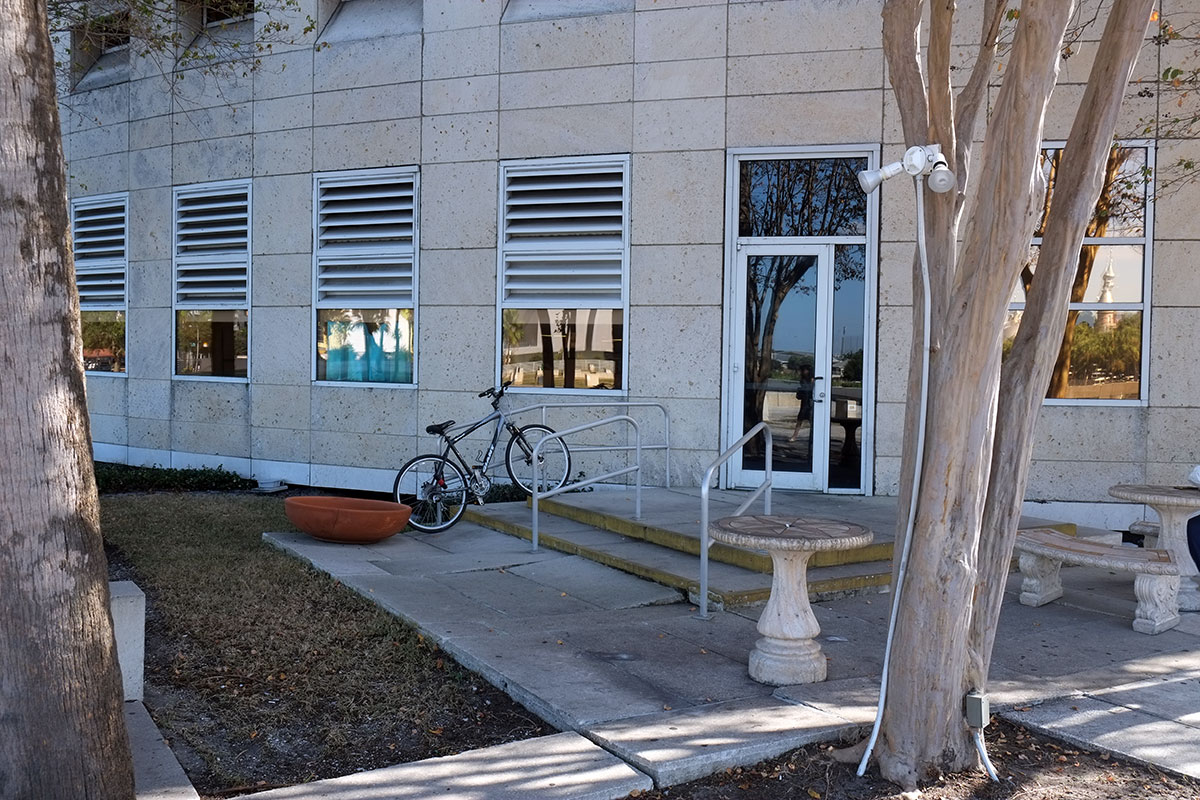
and here’s the front door:DSCF8641

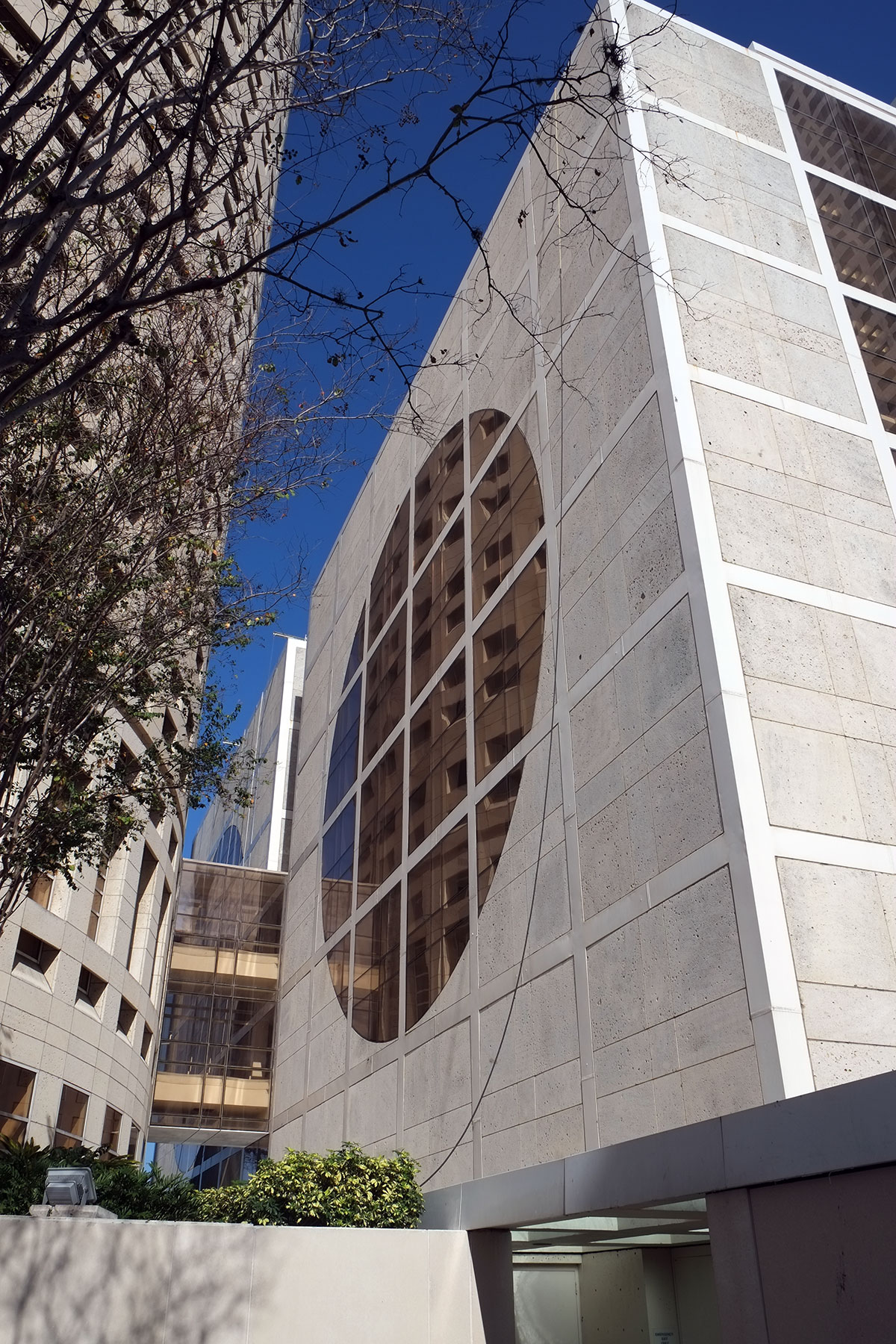
Looking at the detailing of the lower cube attached to it, and other details around the plaza, I realized that they were dressing this monstrosity up in Kahn-like moves and details!  Squares, water channels running off the end of the plinth, and this evocation of Exeter:  DSCF8642

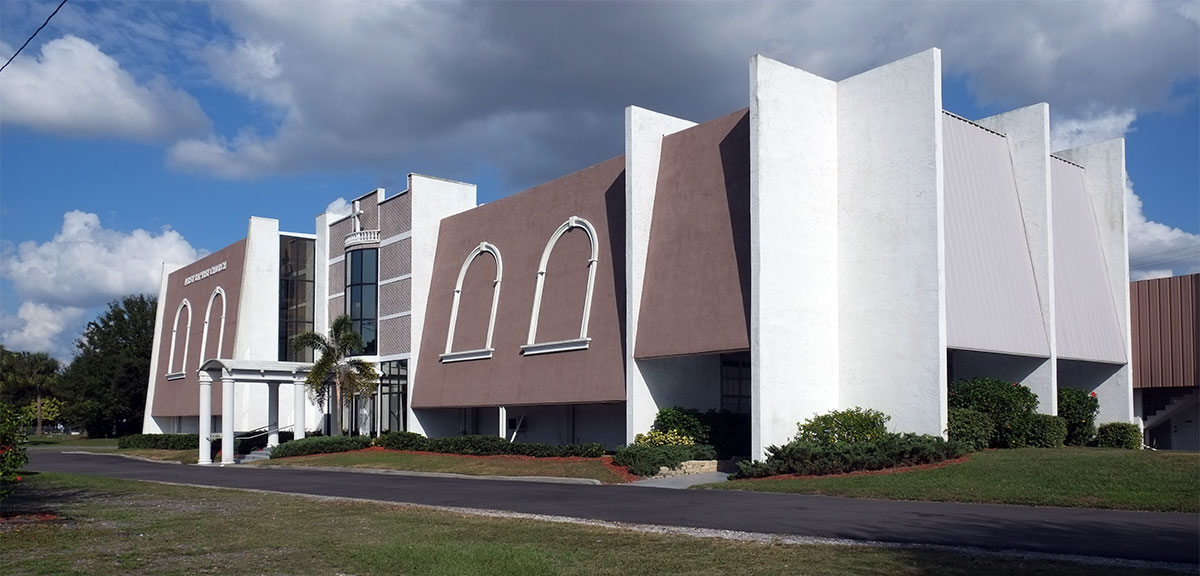
There were some astounding buildings outside of town too – as far as I can tell, this might have been a tilt-slab commercial building converted to a church (with some nice arched windows).
DSCF8682

Our favorite thing around Tampa is they gigantic power plant, which has the positive side effect of heating up the water for manatees.DSCF8693

Most major American metropolitan areas from the 19th-20th century are centralized, with a dense core, and rings of lower density development around it.  I think all of South Florida can be conceived of as one gigantic metro region that has been straightened out.  The dense older urban areas are all along the Atlantic, with density stepping down away from the coast.  This area has all the pros of bigger, older cities, such as culture and excitement, but also all the problems – insane traffic, highways cutting up neighborhoods, poor older neighborhoods, crime, etc.  There is not that much late-20th century edge city development, as it ran into the Everglades.

The Gulf Coast is where they have put the postwar Edge City.  Completely car-based and privatized, with an extraordinary road network to accommodate this.  Everything is new and looks alike.  The cities resemble the Edge City clusters along highways much more than they do prewar cities, with even downtowns being car-oriented.  If you think of South Florida as one area, it’s not that much different from other major metropolitan areas, except that it has a 100-mile wide swamp as a greenbelt between the older development and the newer.  The Northeast/Midwest origins of the residents doesn’t play out that strongly anymore – now the Atlantic coast is for people who like cities, and the Gulf Coast is for people who like postwar suburbs, with the problematic cities a comfortable remove away.

Jeff Thompson

DSCF8832One time Jeff and I were talking about the different kinds of people you meet in architecture school or firms. There are the hard-working, serious, responsible types.  There are the people with big ideas but not quite the skills to realize them.  There are the problem-solvers who excel at the rational aspects of design, but have a hard time with the more intuitive or compositional aspects.  And then there are the people who just throw something down on paper, and it always looks good.  Jeff smiled sheepishly and said, Yeah, I was one of them.  He was absolutely right.  Our class in grad school was half people who had four-year undergrad degrees in architecture, and half people who had never designed a building before.  Jeff had gone to the University Of Florida, gotten a very good education there, and everything he did was beautiful.  I was in awe of people like him, and if he hadn’t been such a nice guy, I would have really hated him for it.

Most of my close friends in school, such as Ray and Kerry, were more like me – northeasterners with liberal arts degrees who were feeling their way into this design thing.  Not only was Jeff one of those really different architecture undergrad types, but he was from southern Florida, a completely alien world.  I was equally exotic to him; he recently told me that I was the first person he’d ever known who regularly swore as part of normal conversation.  (Jeff had never lived in New York before, obviously.)  But despite these differences, we became good friends quickly.  Not only was Jeff innately talented, but he was also very smart, inquisitive, gregarious, a very good guy, and a lot of fun.  Architecture school is full of people who seem to be miserable most of the time – they’re sleep-deprived, overworked, insecure, dissatisfied with their work or angry that no one recognizes their genius. In the midst of this general angst, Jeff was always cheerful and kidding around.  He had a way of getting you to stop taking it all (and yourself) too seriously.  It would have been a lot harder getting through school without his presence.
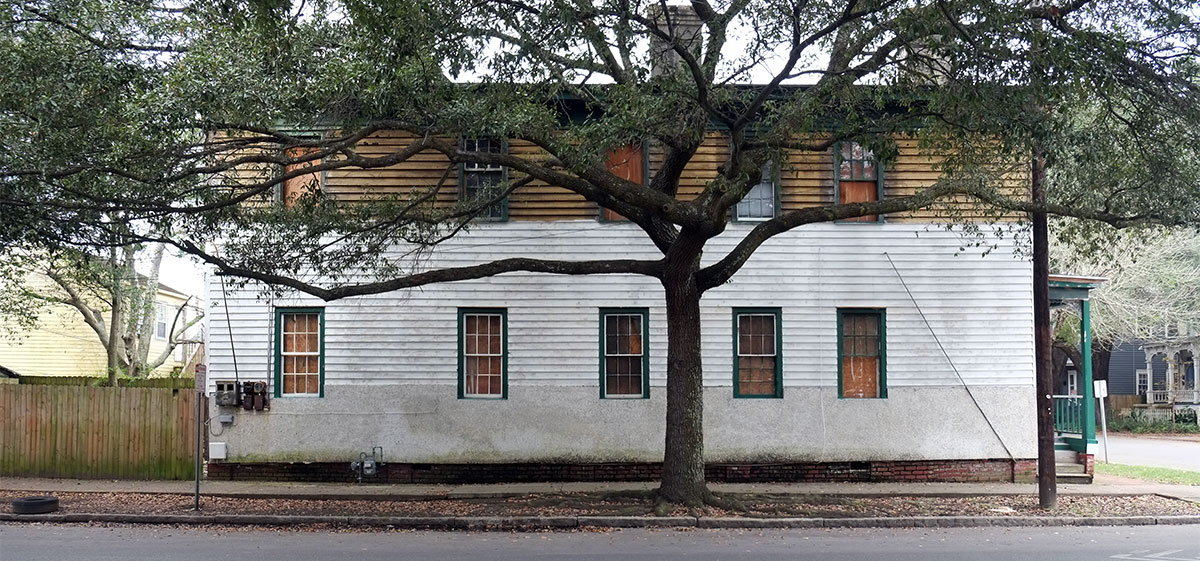
After graduation, Jeff and I both worked in New York at Steven Winter Associates.  We shared an office and spent a huge amount of time together for two years.  We were mostly working on building systems and technology and research projects at this point, but we did get to do a little design together.  My favorite collaboration was when we designed a 15,000 square foot house on an island in the Nile in Cairo.  Being of the Postmodern generation, we went to town with historical allusions – domes, aches, courtyards, etc.  There was a squash court and an outdoor pool, carefully screened from eyes going by on boats.  It never came close to getting built, but we had a lot of fun.

After a couple of years Jeff felt the pull of family and the good life in Florida and so he returned. I visited him once in the lat 80s, after he had been working for a firm down there for a while, and was just starting out on his own.  He showed me a house he had designed for his parents and which his brother had built.  It was really good – simple, appropriate, well-scaled, with beautiful rooms.  He talked about how hard it was to get work, and I said, but surely if you show people this house they’d want to hire you?  Jeff said, yes, they like his parents’ house, but then they want to know if he could do something like that for them, but more ostentatious.

I moved to Oregon and we lost touch.  I tried to Google him, but there are a lot of Jeff Thompsons out there.  Finally I found him through Google Image, standing in a group photo of staff working for Broward County.  We talked on the phone and caught up, and the next year when we were down in Florida at Christmas with my folks, we went over to Ft. Lauderdale to see him.

Jeff, like so many other excellent architects, had problems keeping his firm afloat with the inevitable oscillations in the boom-and-bust economy.  HIs ex-wife lived up north with their two children, and he had responsibilities.  So he moved into the public sector, working in capital projects for Broward County, getting a regular paycheck and benefits, and keeping more regular hours.  He has happily stayed on there, and is now the Broward County architect, acting as the client and overseeing projects.  A couple of years ago he took us to see a new children’s museum they had built, which was great.  I’ve always thought that good clients had as much to do with good buildings as did architects, and this bore that out.  It’s really worthwhile running complex processes so that good buildings can actually happen.

The other thing that happened with Jeff’s firm was that at one point he hired a charming interior designer, they fell in love and got married.  Jill stayed on in practice, and also taught in and ran an interior design program in Miami.  But after many years of those same business cycle swings, plus the completely insecure, badly-renumerated and often miserable life of a non-tenure-track faculty member, Jill went over to the public sector too.  She works for the county parks department as their park planner and designer, and is loving what she does.

DSCF8903

Jeff and Jill had a daughter about 20 years ago – Hannah is now a college student living at home with them  in Ft. Lauderdale.  Greta and Hannah have now met a few times over the years and have always had fun hanging out.  The added attraction on our visit this year was Jeff’s daughter Jenn, who finished college up north and has been living with them in Florida since, working at various jobs and becoming a broker.  Greta and Hannah and Jenn discovered many common interests (sci-fi, superhero comic books, etc.) and they have been put on Greta’s ever-growing list of the sisterhood of cool nerdy girls she’s met on this trip.

The first night we arrived, Jeff had acquired a big block of seats for the 3-D opening of the new Star Wars movie, which was perhaps the high point of the month for Greta.  Linda had joined us for Christmas, so we all cruised around looking at stuff for a couple of days – beach towns, Miami, the new Perez museum.  It’s quite amazing having two architects and two interior designers get together – the ideas are flying and the conversation never lags.  The only problem is that all the kid are bored to tears by it, but at least this time they had their own conversation going on;  so as always with seeing the Thompsons, we all had a great time.

Herzog and de Meuron’s Perez Art Museum

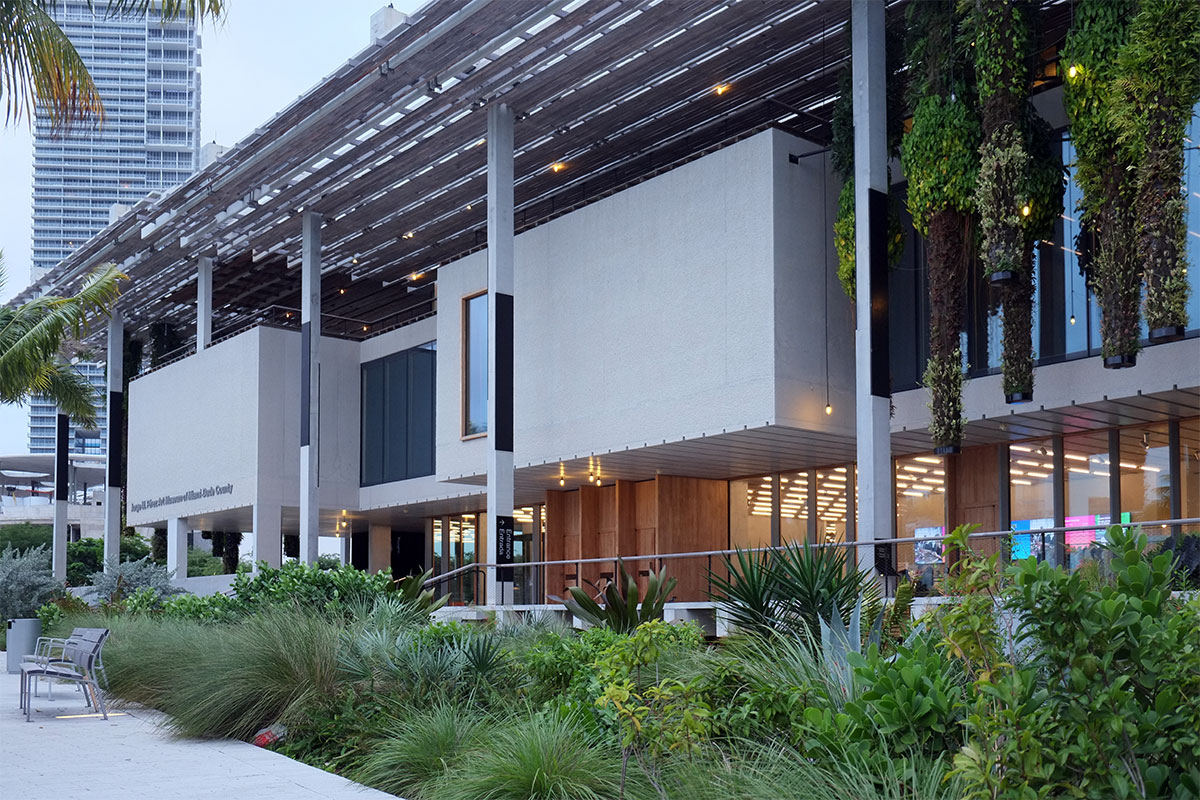
DSCF8756Sometimes it seems that Renzo Piano has designed every new museum in the US in the past 20 years, but then we come across some places that have resisted the hegemony.  However, even in these non-Piano buildings, you can see how he has shifted the conversation.  We’ve visited a lot of new museums on this trip, and in general, I think there is a much greater emphasis on the clear expression of the buildings’ systems (often with exquisite detailing), and less emphasis on look-at-me form-making, starchitect branding and spatial gymnastics than there was in prior decades.  The new buildings have great conceptual clarity, but this hasn’t been at the expense of being good museums for displaying art.
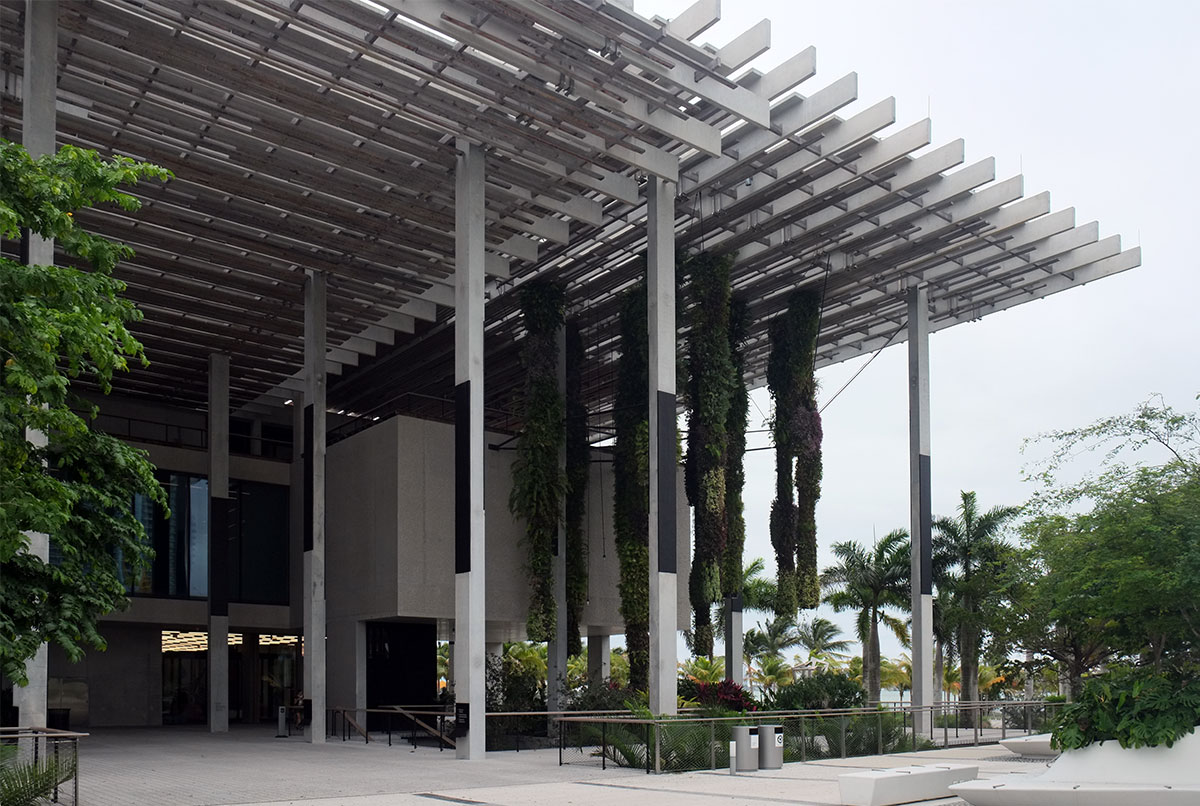
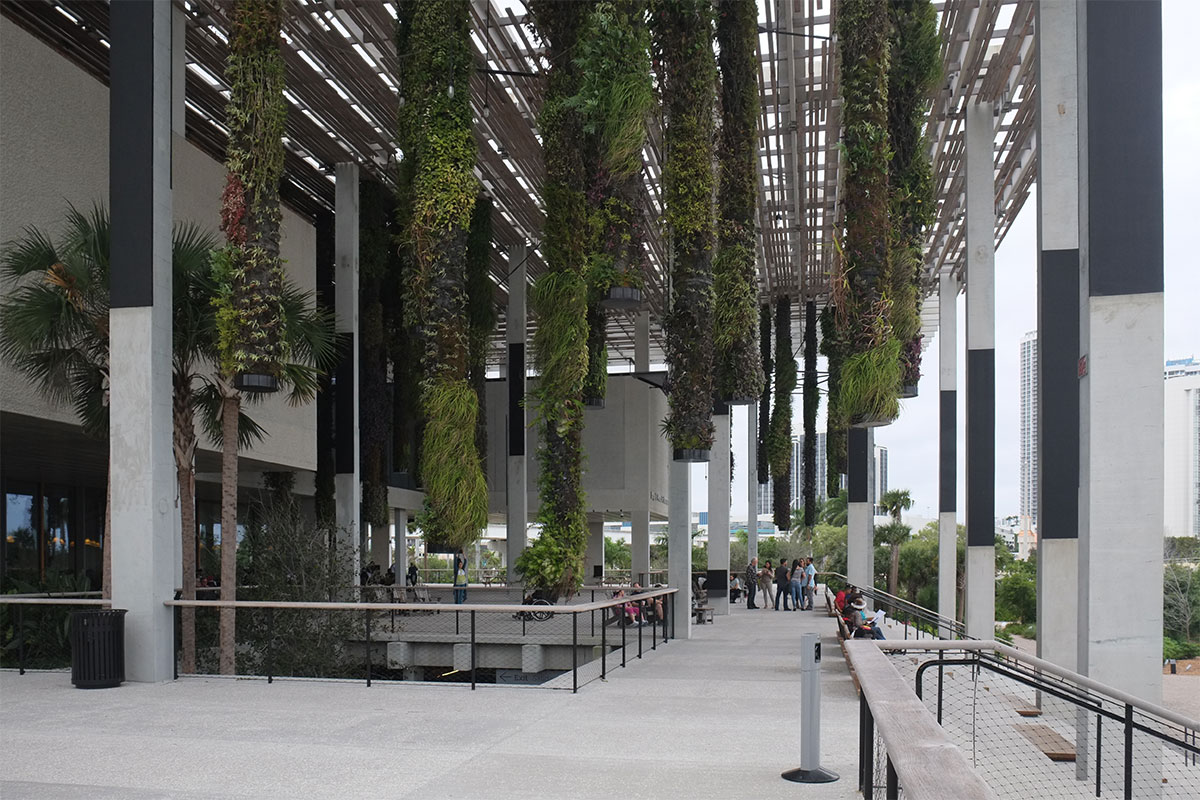
Herzog and de Meuron’s recent Perez Art Museum in Miami follows up on the success of their parking garage in South Beach, which highlighted their ability to work with structure and space, eschewing the intricate screen facades for which they were known.  The Perez Museum continues with this approach, with a parti where the articulation of the elements of frame, roof, box and plane are the basis for the scheme.  In the photo above, the roof/trellis floats above the whole building, supported on tall columns.  (We wondered if the metal plates visible at the middle of the columns are external steel reinforcement, allowing for an extreme slenderness ratio that otherwise might cause buckling.)  In the shadows under the roof you can see one of the concrete box galleries poking out.

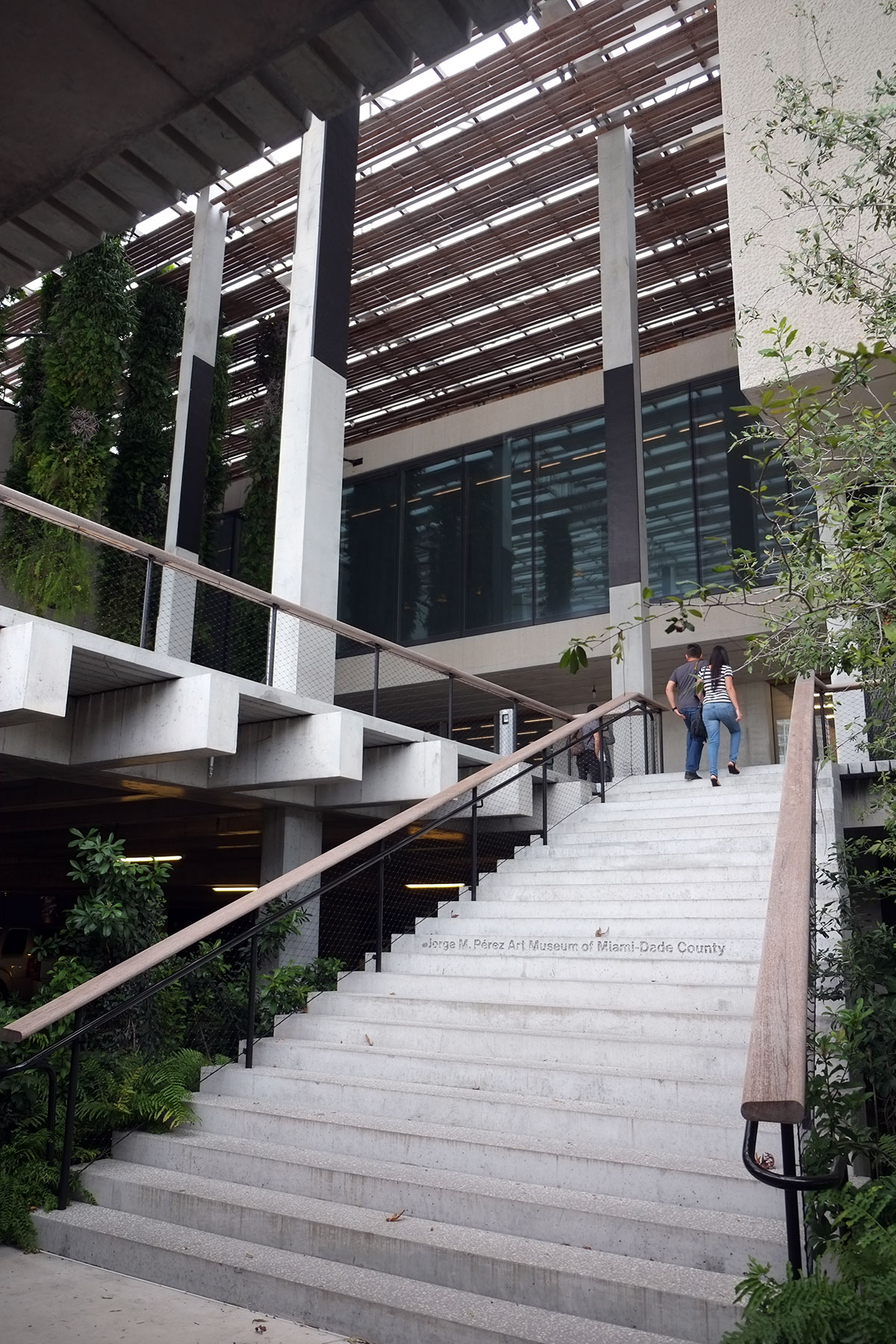
The beautiful parking garage is under the main floor plate, which has tightly-spaced precast joists and a thin slab.  There are stairs, ramps, and stepped terraces which connect the plinth to the ground plane at a few points.DSCF8751

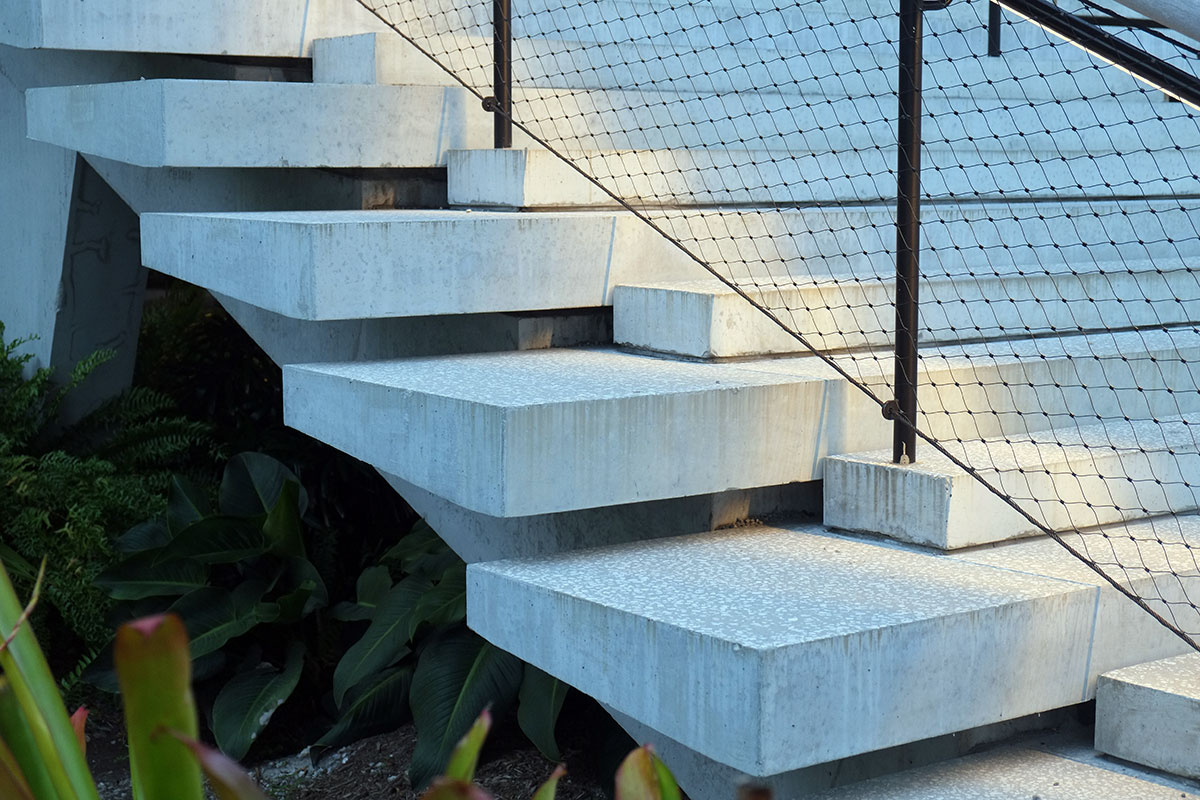
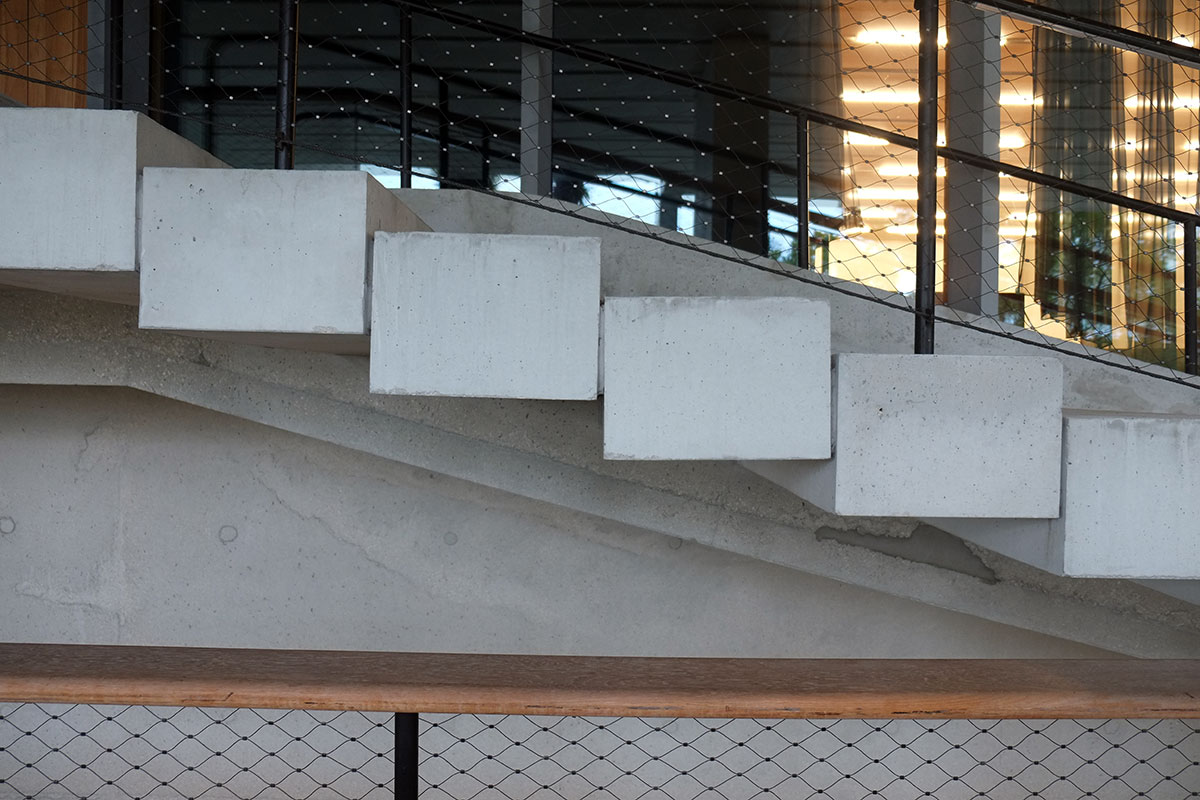
There are some excellent details at the stairs – a few ways to differentiate the conditions:DSCF8883  DSCF8862

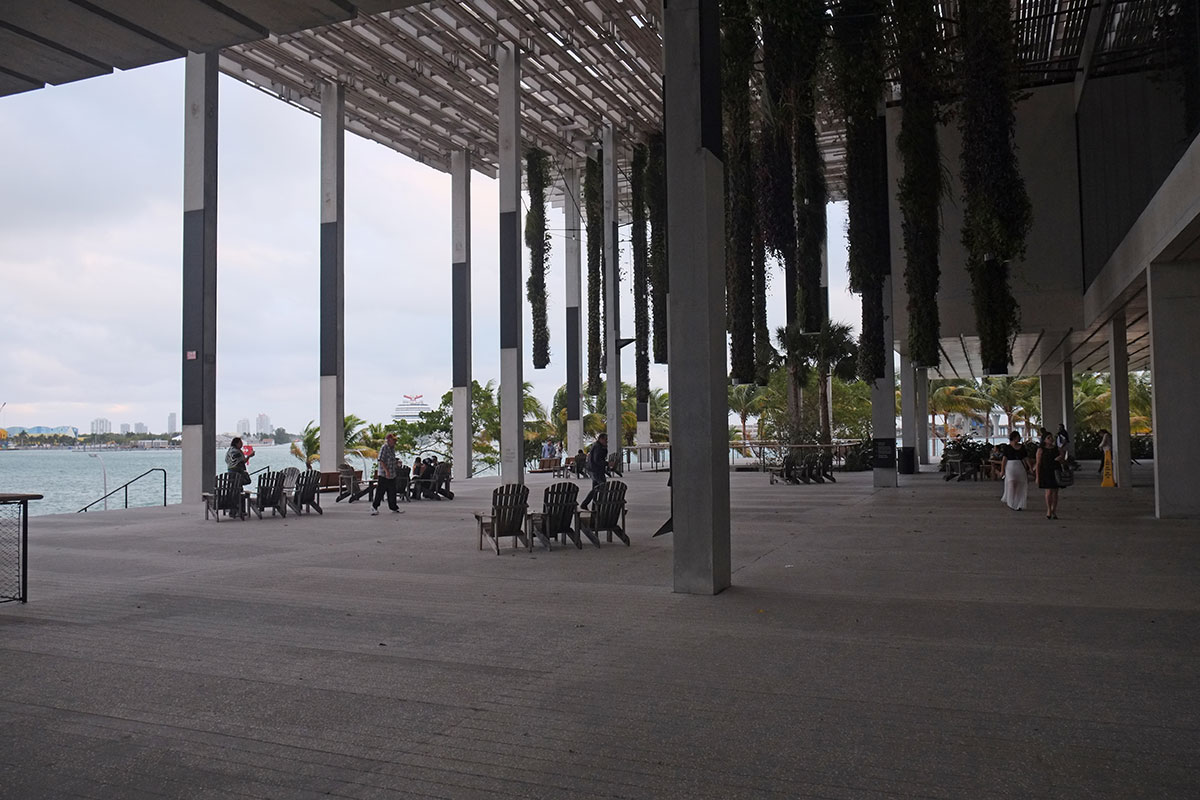
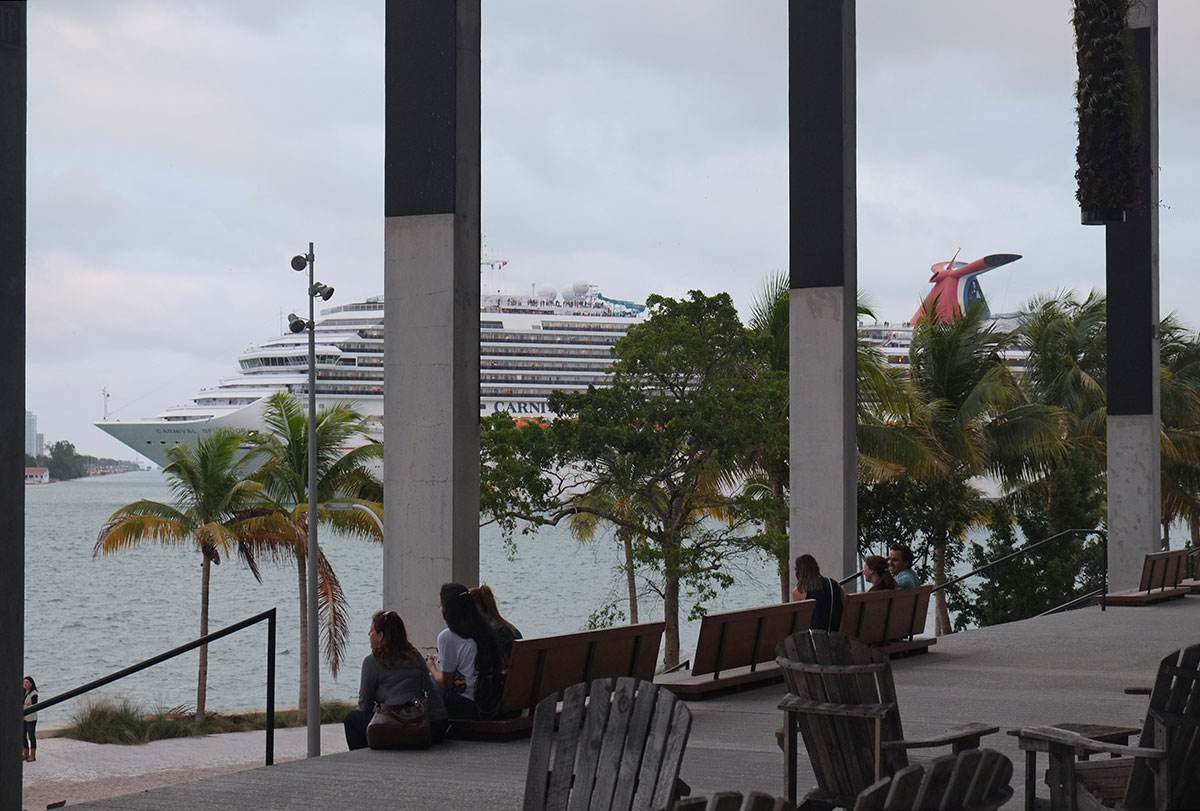
On the side towards the water, the roof creates an enormous shaded porch with views out.  The roof structure is used to hang all sorts of growies, mimicking the Spanish moss / jungle atmosphere we’ve come across in many places, but which do somewhat resemble gigantic Chia Pets.  DSCF8772  DSCF8860

And one can watch the life of the city and the port go by.DSCF8873

The ground floor is mainly glass, with a solid wooden box for the entry.  The parti element of solid box gallery rooms is visible, and the gallery spaces between the boxes are the gaps where the interior space can connect out to the cityscape.  DSCF8890

The general impression from the exterior is an almost Japanese timber-frame approach in precast concrete, with layering of structural elements.  The roof reminded me of Kenzo Tange.  The boxes and spaces under a huge roof is an approach seen before, even back as far as Pietro Belluschi houses.

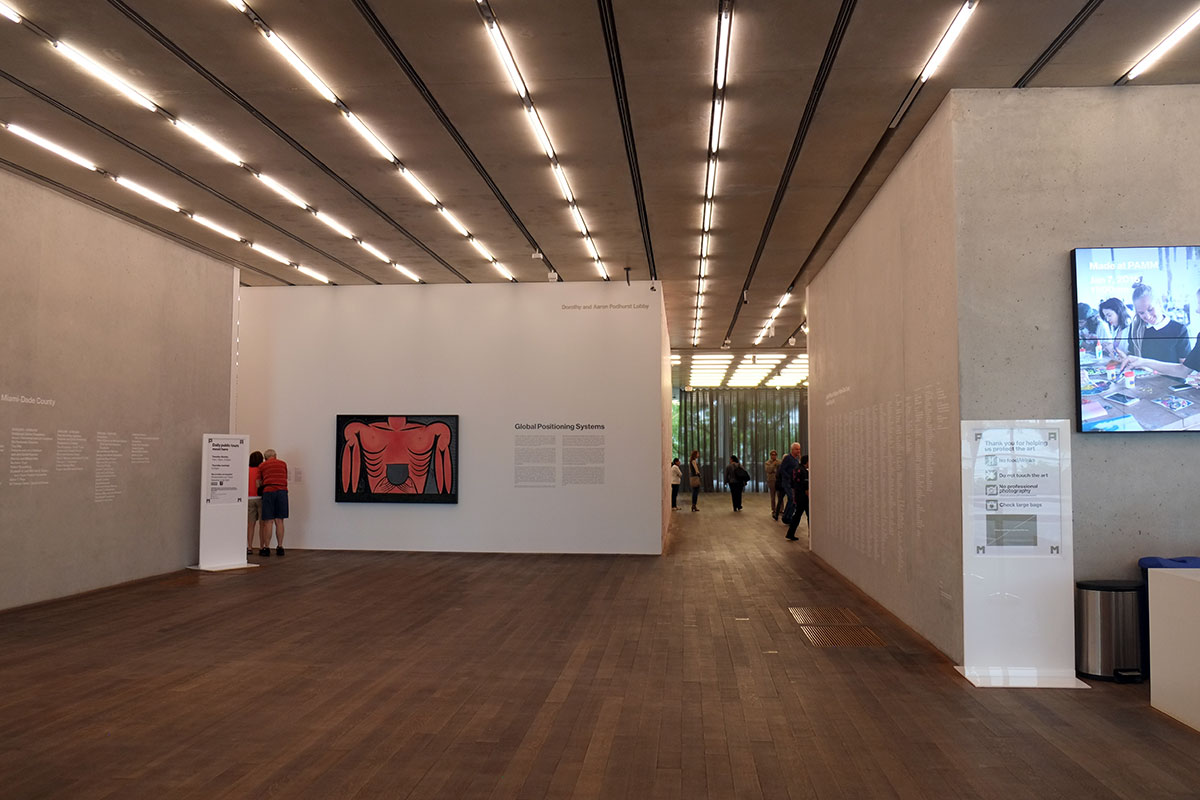
Moving in from the lobby, the distinction between the concrete boxes and the partition walls in the open plan can be seen.  DSCF8782

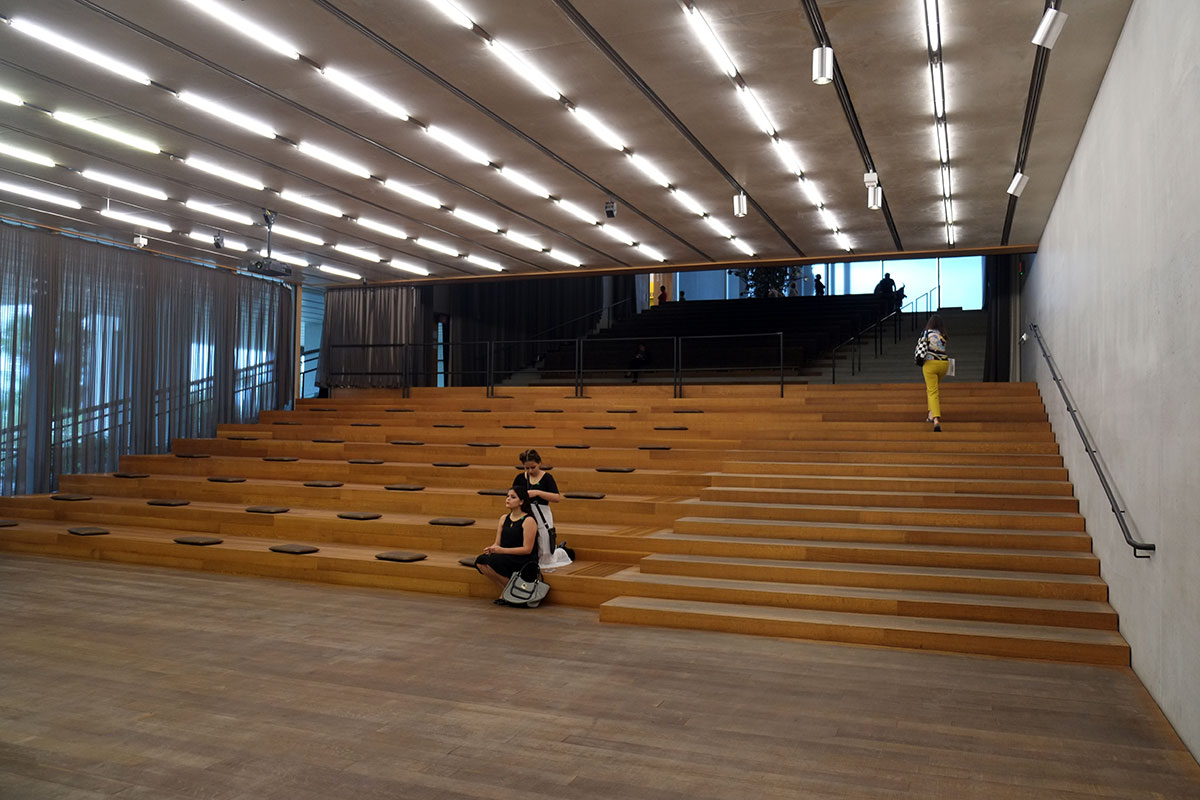
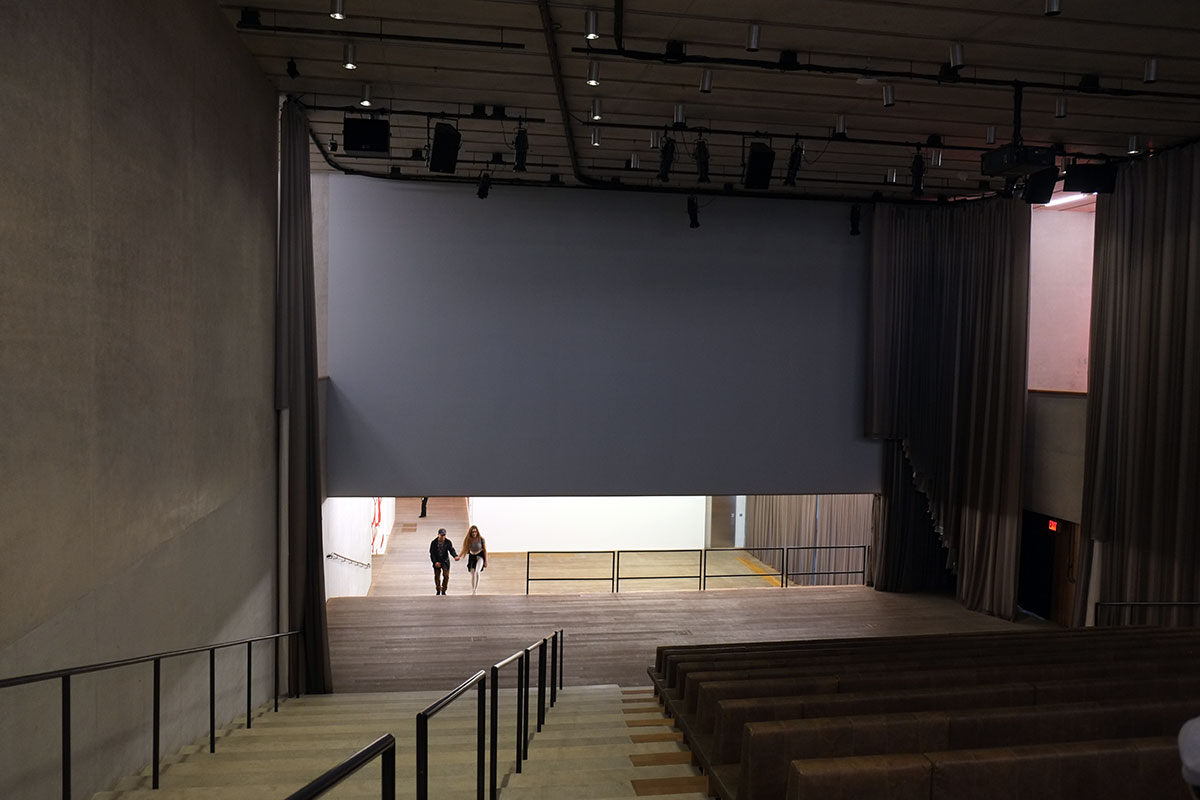
There are galleries on the main floor, but most of them are one flight up.  To reach that level, you climb up this monumental stair, which also functions as the circulation for a presentation/lecture space.  DSCF8792

From above you can see how the auditorium can be tuned and curtained off.  In section and in function it is similar to the Seattle Public Library, where the auditorium space isn’t isolated most of the time, but open to the passer-by patrons.DSCF8841

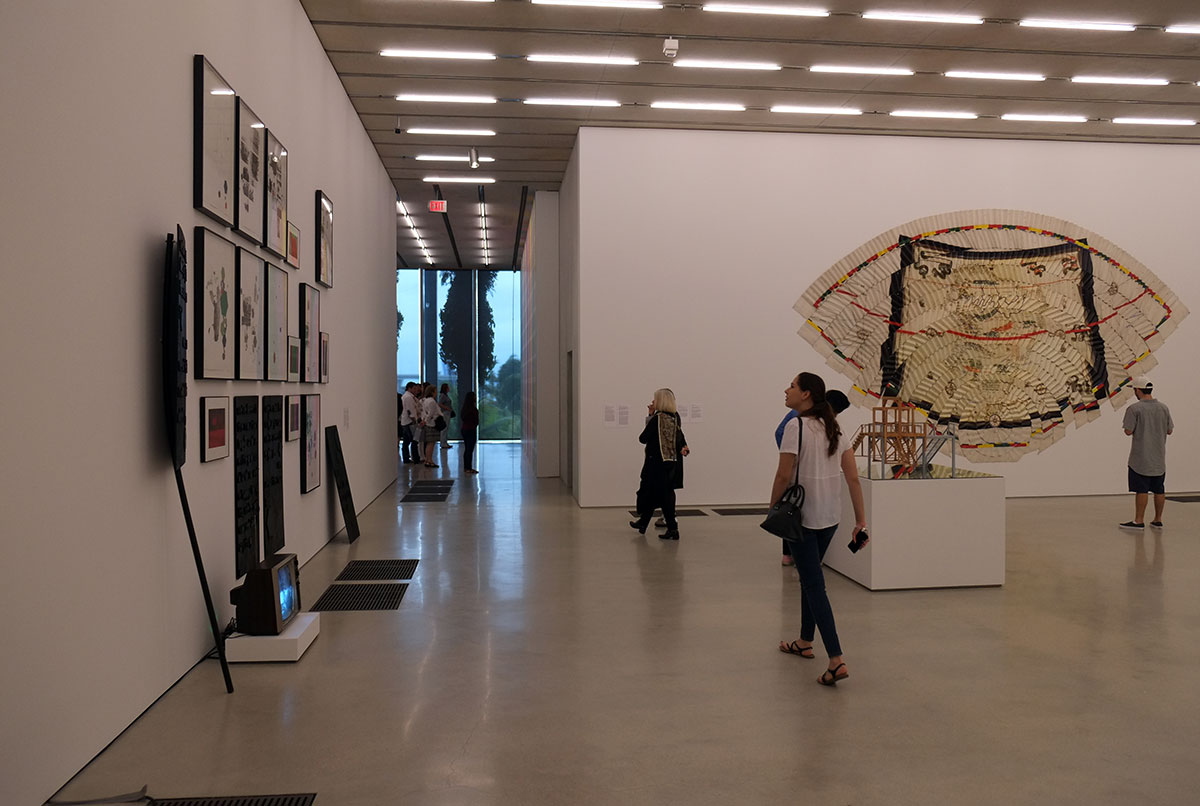
There are open gallery spaces between the boxesDSCF8803

and a clear way of making an opening into a boxDSCF8826

The rigor of this approach is pretty consistent, although there are some places where the detailing seems a little fudged – boxes dying into the concrete floor slab above, but screen walls doing the same.  This may be a matter of budget or convenience – it is easy to pull a screen wall way from a box for a reveal in plan, but not attaching the wall to the slab above presents structural problems.  (I may be more focussed on this after a visit to the Kimbell yesterday, where the articulation of these issues is rigorous to the nth degree.)  But it does make me wonder whether we would even be thinking about these issues if Mies had jus let the wall support the roof in the Barcelona Pavilion.  (This issue will resurface with some subsequent posts.)
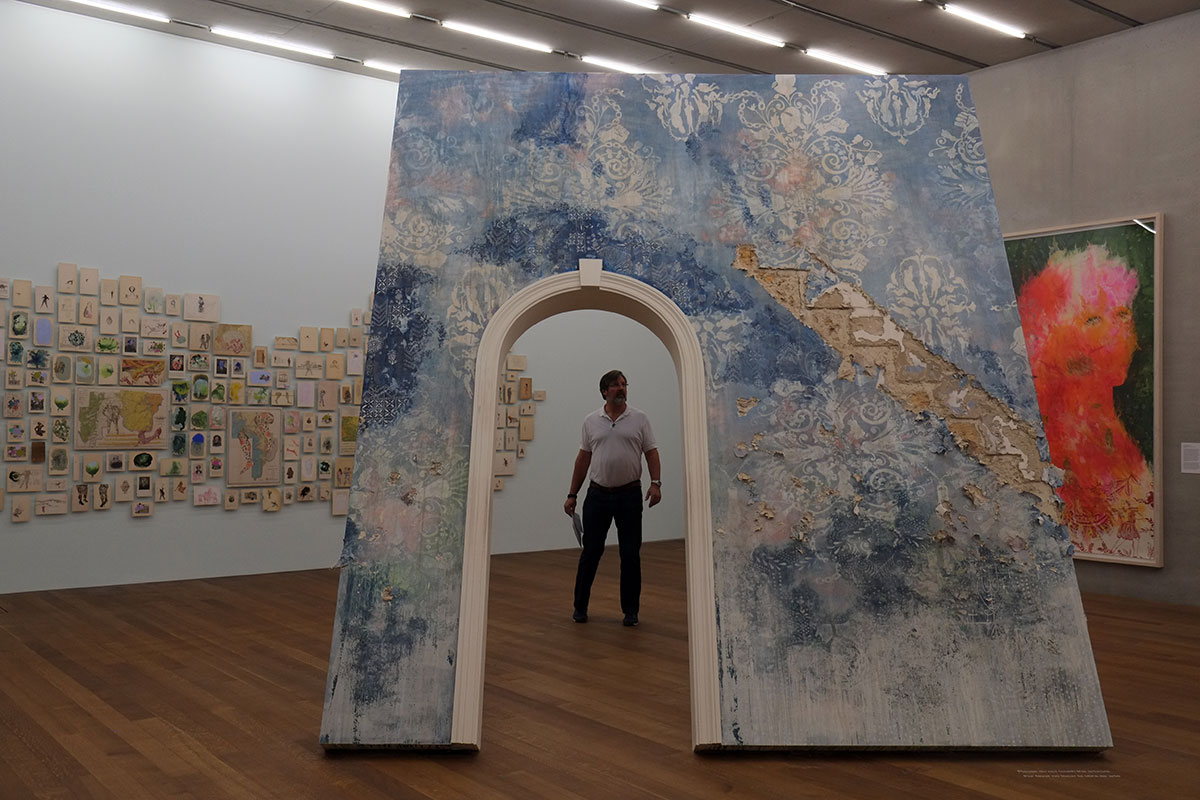
There are some interesting juxtapositions of the art and architecture:DSCF8830

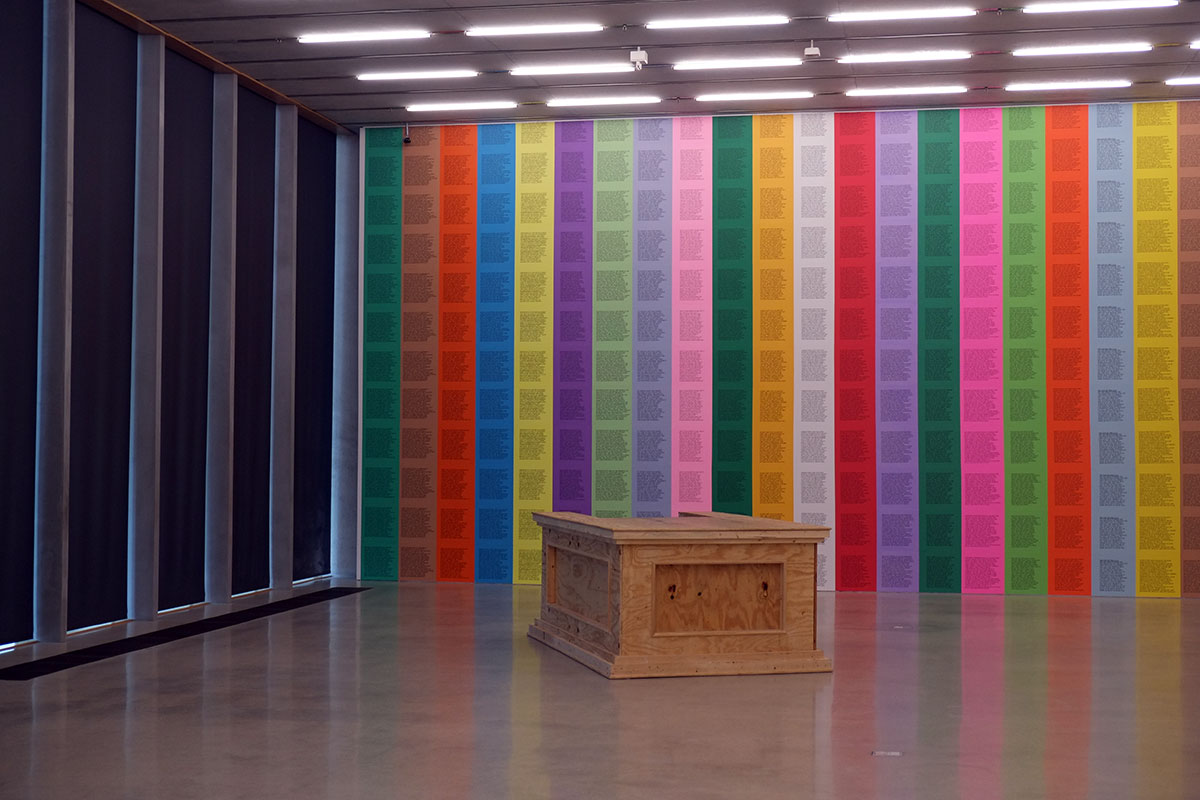
and a gallery which opens up to the third floor of offices, where a site-specific installation occurs.  I was looking at this and a museum guard offered me a lengthy handout on the piece.  I looked at it, but said that I had a problem with art that needed three pages of explication to be understood – if the piece can’t speak for itself, what’s the point?  This triggered a reminiscence by him of his earlier days studying art with Norman Rockwell and how he learned to really draw, and how a lot of the conceptual stuff he sees now makes no sense to him.  I’ve been thinking recently about the particular hell of being a classically-trained artist who spends his days surrounded by contemporary conceptual art.DSCF8804
And no piece on a Herzog and de Meuron museum would be complete without a photo of the sublime rest room.  This one is similar to those at the Walker addition in Minneapolis, but somehow not quite as transcendent.  I think it may be the contrast with the dark color, whereas the Walker is all white and more ethereal, an unusual  feeling to have in a public bathroom.  DSCF8839

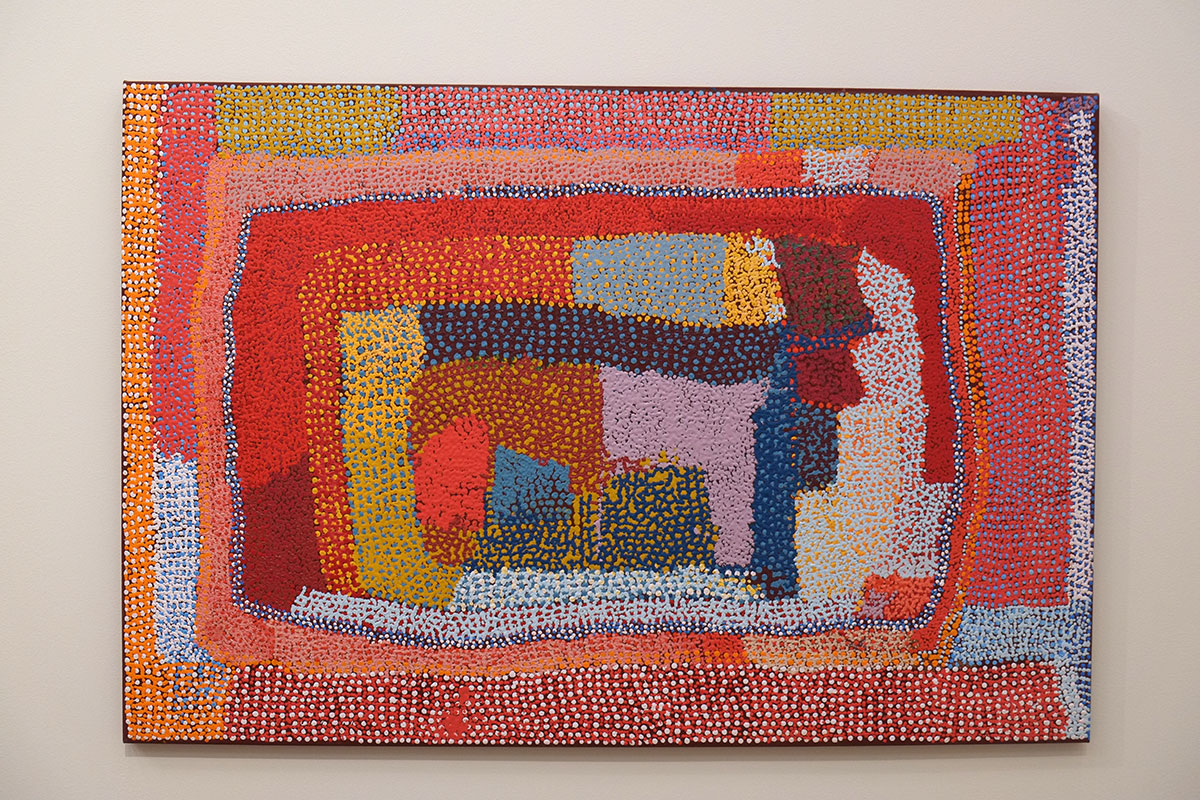
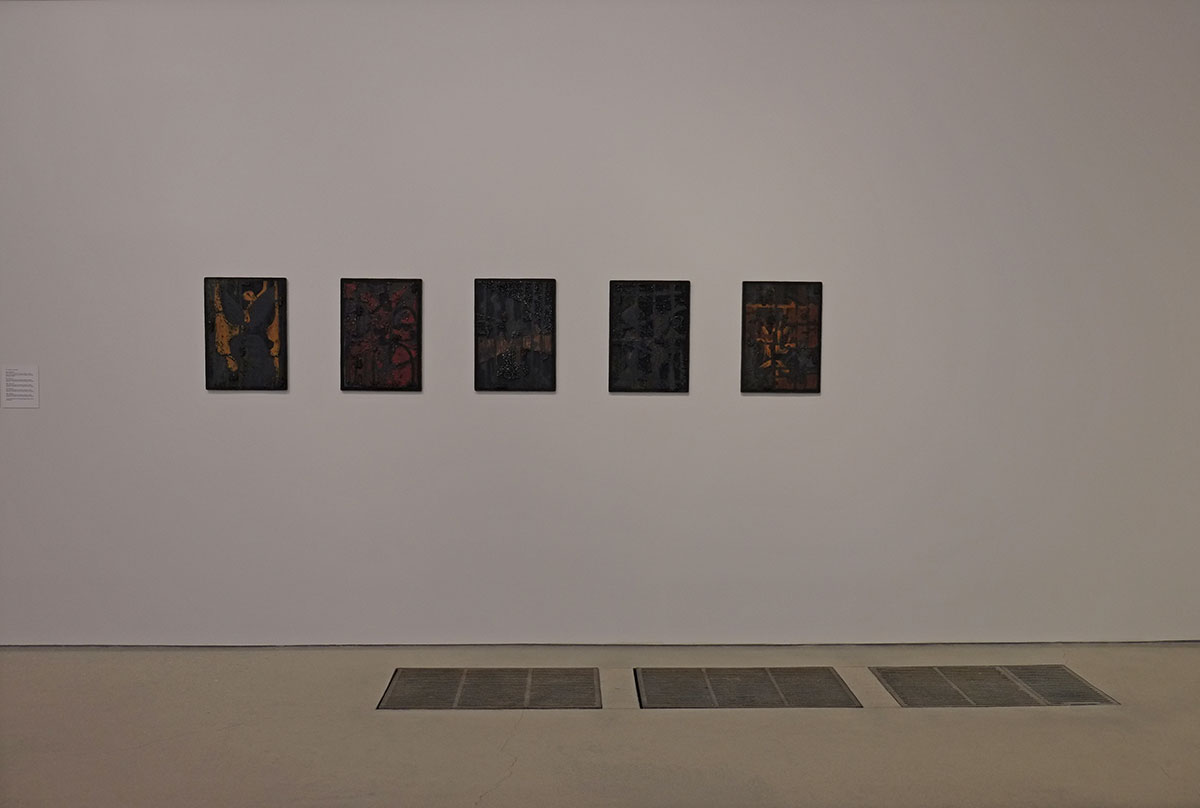
The art was interesting, but not overwhelming.  Except for a show of paintings by Australian Aboriginal painters, which was spectacular.  I have a new artist on my favorites list:  Tommy Mitchell, who died a few years ago.  He didn’t start painting until he was 65.  DSCF8821

Overall, a building in which the articulation of the elements is striking, especially on the exterior.  The gallery spaces are fine, but not extraordinary.  And sometimes, the curators must be making an effort to make sure the artwork is well-integrated with the architecture.  DSCF8799