Glen Pitre

DSCF3130

I’ve been pretty good about staying in touch with friends from all the different phases of my life – this trip has included many friends made in high school, college, grad school, New York and Oregon.  But over the years a few good friendships have fallen away, mainly due to circumstance – long distances, people raising kids and getting busy, lack of an internet for staying in touch.  Chief among these friends was Glen Pitre – a dear friend from college whom I  hadn’t seen in 30 years.  Since college I’d been moving back and forth on the New York-Oregon axis, and Glen had been on the Louisiana-Los Angeles axis, so we’d just never intersected.  (Plus Glen has more friends than anyone I’ve ever known, so he probably can’t keep track of all of them.)  So a part of this trip I was really looking forward to was seeing Glen at home in Louisiana, a state I’d also never visited.

Glen and I met our third year in college, where we both lived in Leverett House.  Glen had taken a year off to work on a bicentennial documentary project, and when he returned a lot of his buddies had graduated, so he was looking for new people to hang out with.  Our backgrounds were nothing alike – I was the Catholic school kid from suburban New York, and he was the first Cajun to attend Harvard, having grown up on the bayou in Cut Off, Louisiana (a name I at first refused to believe was real).  We had both grown up messin’ around in boats, and we were probably also united by our majoring in the arts (me in art and architectural history, Glen in visual studies / photography / filmmaking), as we were surrounded by friends who were into government / economics / history.  We liked the same music, and Glen introduced me to Cajun music, including Cajun Country (which is like country music but better, as everything sounds better in French, and you can’t understand how dumb the lyrics are).

We did a lot of things together, such as staffing the house grill on Sunday nights – me cooking while Glen used his superior social skills to placate the customers.  Glen and I even managed to complete an animated movie together our senior year, a three-minute time-lapse film showing the growth of Boston, where he supplied the filmmaking know-how, and I supplied the historical research and physical drawing.  But mostly we hung out talking, occasionally munching on the dried shrimp he kept in his room.  I’d known some gregarious and friendly people in my life, but Glen outdoes them all – he seems to be friends with everyone.  My roommates and I once realized that if everyone sitting in the dining hall were able to knock off everyone else in the room they disliked, at the end Glen would be the only person left.

All this time Glen was steadily moving forward into his career.  He was an excellent photographer, and had free-lance gigs with the Times, the Boston Globe, etc.  When a local politician announced his candidacy for the US Senate, he hired Glen as his videographer (unfortunately, his campaign didn’t last beyond the campaign announcement, where he managed to mispronounce “impotent” a few times during his speech).  As Glen learned filmmaking, he immediately began writing and directing movies about Cajun life, most notably La Fievre Jaune, a dramatization about the 1897 yellow fever epidemic.  Glen made these movies on minuscule budgets, using his family and friends as the actors.  (His father turned out to have talent in this area, and continued on through more films.)  La Fievre Jaune was made while Glen was still in college, and launched him as the “father of Cajun cinema”.

Glen suggested that after college we might take a break from academic life and do some shrimp fishing – his family had an old boat that was sunk at their dock, and if we could raise it and put in a Chevy engine, we could spend the summer on the water.  When the time came, the price of shrimp was so low that it made no sense to invest anything in the enterprise, and we abandoned the idea.  Sometimes I think about how my life might have turned out differently if the price of shrimp had been higher in 1978.

Glen went back to Louisiana and began all the career threads he’s kept going since then:  photography, filmmaking (both documentary and feature), writing (screenplays, novels, guidebooks, articles, academic chapters), retail (selling Louisiana-related articles through a catalogue store), producing radio documentaries, and designing museum exhibits.  Most of my friends have heard me tell stories about my high school friend Jack, who has had literally at least ten different careers;  Glen is my only other friend who can compete.  The  difference is that Jack has moved all over the world as he’s pursued these lives, whereas all of Glen’s activities have been grounded in his home in Louisiana (except for excursions into Hollywood).  Glen has been teaching filmmaking at LSU for the past year and half, which he said was the longest gig he’s ever had in his life.  When I told him I’d had only two real jobs since grad school, he just stared at me.

Glen and  I got together a few times in the  80s.  He’d come up to Boston or New York on business, stay with me and my roommates, and ask if he could invite his friends over to dinner (and we should invite our friends too).  Then he would spend the whole day cooking – huge amounts of shrimp spaghetti or gumbo – and dozens of people would show up for a big party.  Glen had never lived in New York, but somehow he had more friends there than I did.  (Including a number of girlfriends.  Glen always awed me by being able to pull out his address book wherever he was, and find an old girlfriend to look up, who was always overjoyed to see him again.)  The last time he visited was in 1985 – he had finished shooting his first English-language, big-budget, Hollywood movie,  Belizaire the Cajun, and he was in New York for the editing.  We got to see the first cut in a screening room, and Glen’s stories of writing and directing a large, complex movie were riveting:  you walk onto the set, there’s hundreds of extras (including dozens of horses), the meter’s running, and everyone looks at you to tell them what to do.

While I moved on to teach in Oregon, Glen kept all these careers going, and spent more time in Los Angeles as his screenwriting continued.  He married the charming Michelle Benoit around 1990, and they have mostly worked together since then.  Michelle grew up in West Louisiana, and remarkably, has much the same set of professional skills and interests as Glen – writing, directing, producing, designing.  Perhaps even more surprising than their professional similarities are their temperamental ones – Michelle is one of the few people I’ve ever met who can match Glen’s extreme degree of gregariousness and charm.  She probably would have survived in the Leverett dining hall too.

Together they’ve completed a huge number of projects – feature movies, documentaries, and over 30 museum exhibit installations.  (More detail on all their various projects through the years can be found at their website, coteblanche.com.  It’s really interesting.)  They have great stories to tell of their lives and all the people they’ve met.  (A short story I have to relate because otherwise no one will ever write it down and it’s just too good:  Glen is heading to the bathroom in Los Angeles in a big old movie theatre that’s been converted to a multiplex, so the hallway has a slope.  He’s going a bit faster than he realizes, and as he goes to push on  the bathroom door, it swings open in front of him.  Glen stumbles in, falling on his hands and knees.  He looks up, and sees Mel Brooks holding the door handle.  Mel Brooks looks at him and says, “Pretty good, but you need to work on your timing.”)  I suggested to Greta that she should stick around New Orleans to be Glen’s Boswell;  she rolled her eyes.

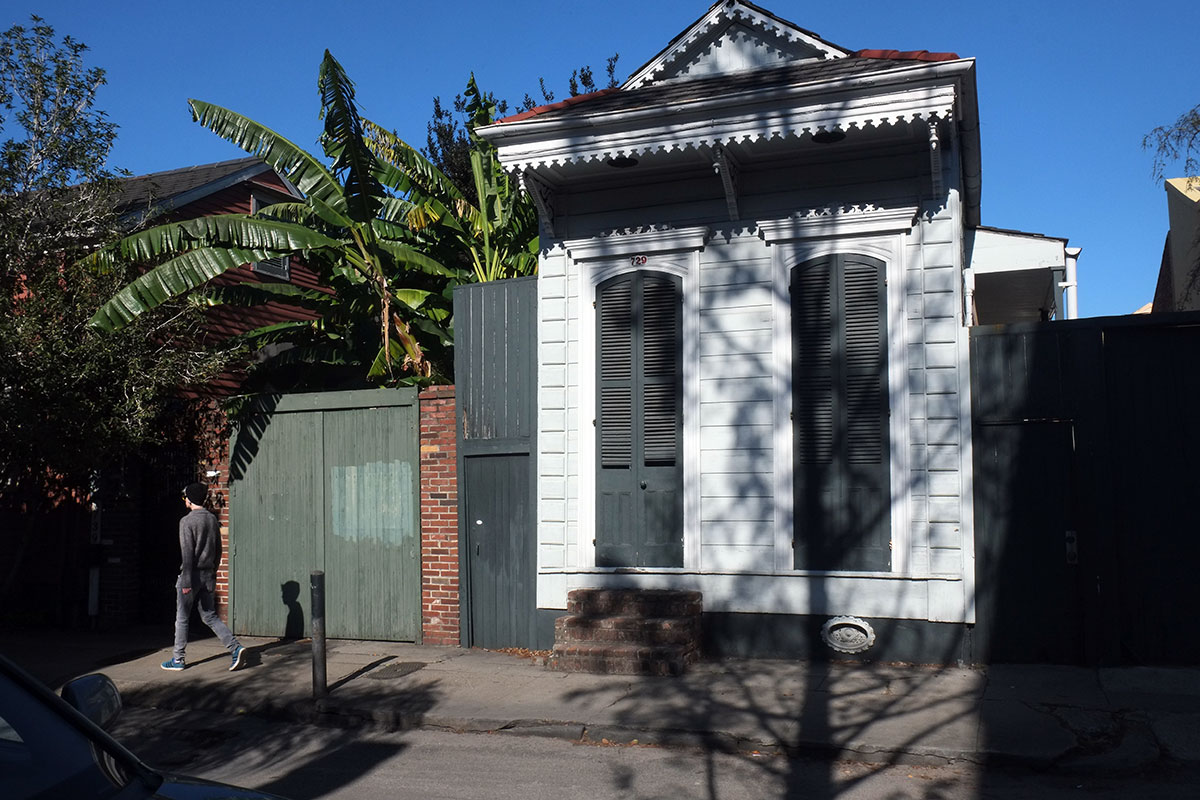
For a while Glen and Michelle moved among New Orleans, Bayou LaFourche and Los Angeles, but in the past few years they’ve consolidated in New Orleans.  In the 1990s they bought a double shotgun house in the Marigny (the historic district right next to the French Quarter), which was configured in various ways to accommodate their living space, their office, and a rental apartment.  They now live in the back half while the front two apartments are for Glen’s mother (when she’s in town from her home in Cut Off), and an Airbnb.DSCF1554
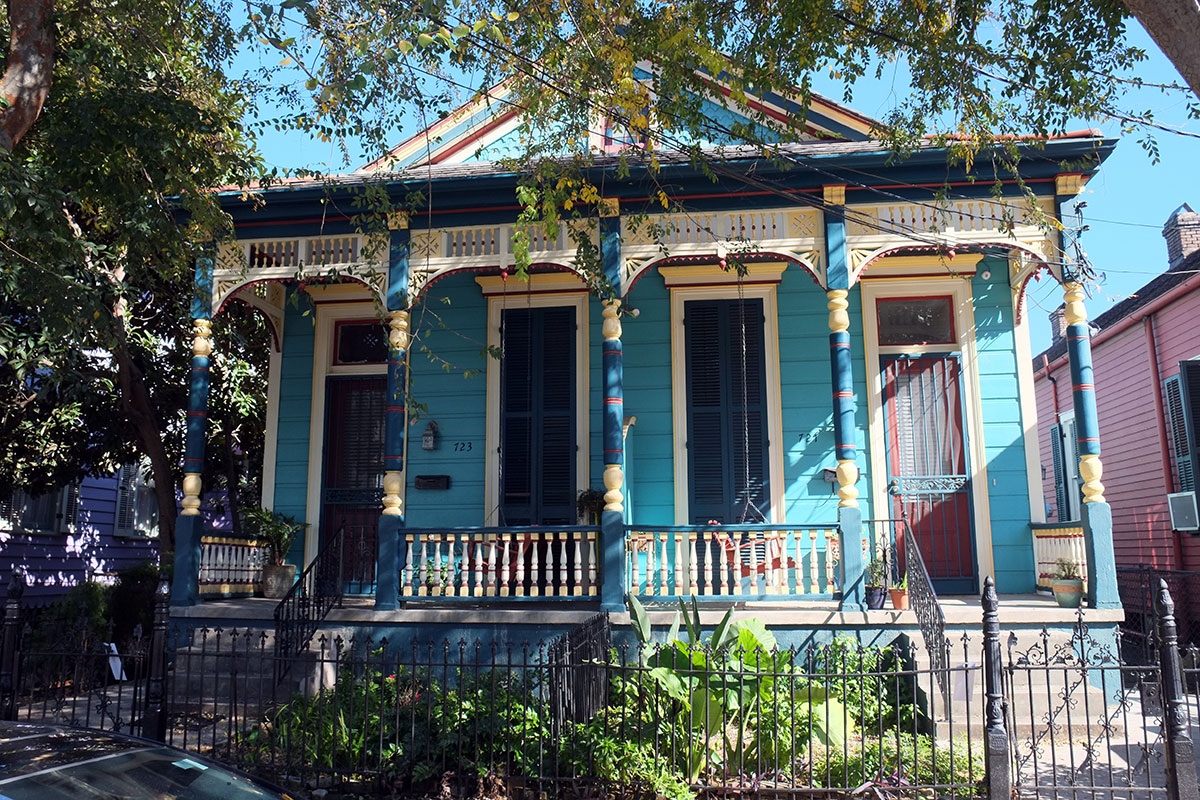
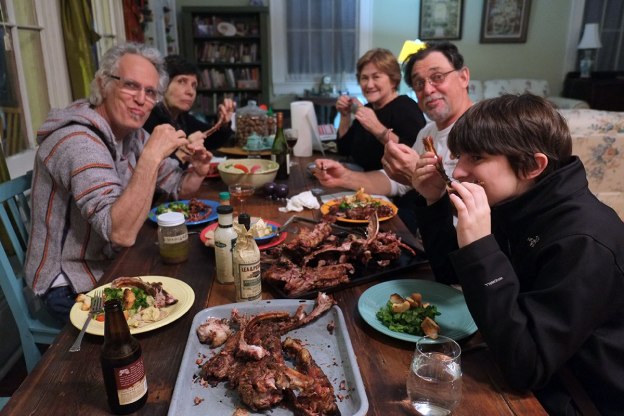
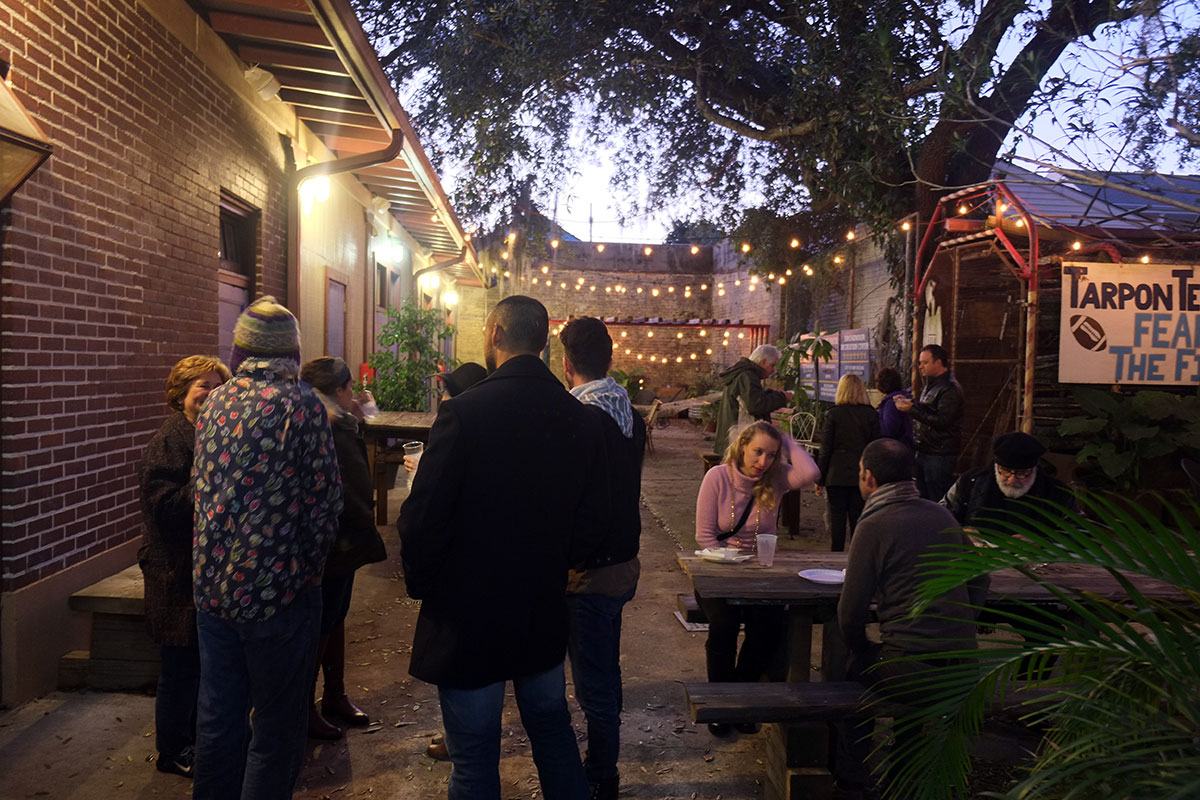
Greta and I showed up in mid-January, and Glen wanted to know if we’d stick around for a week, as the Mardi Gras season was kicking into gear, and he would be having one of his big parties the next weekend when the Krewe de Vieux parade passed by the end of their block.  Remembering Glen’s prior culinary productions, I of course assented, and we moved into his mom’s apartment while she was out of town.   We got to help Glen cook for the party – Greta chopped all the onions for the venison and wild pig sauce picante and the carrot etouffe, and she will now be one of the few people in Oregon who knows any of the secrets of Cajun cuisine. We had an amazing time at this party, meeting many friends of Glen’s and Michelle’s whom we now think of as our friends too.  (The extraordinary lifestyle and people of New Orleans will be another blog post soon.)
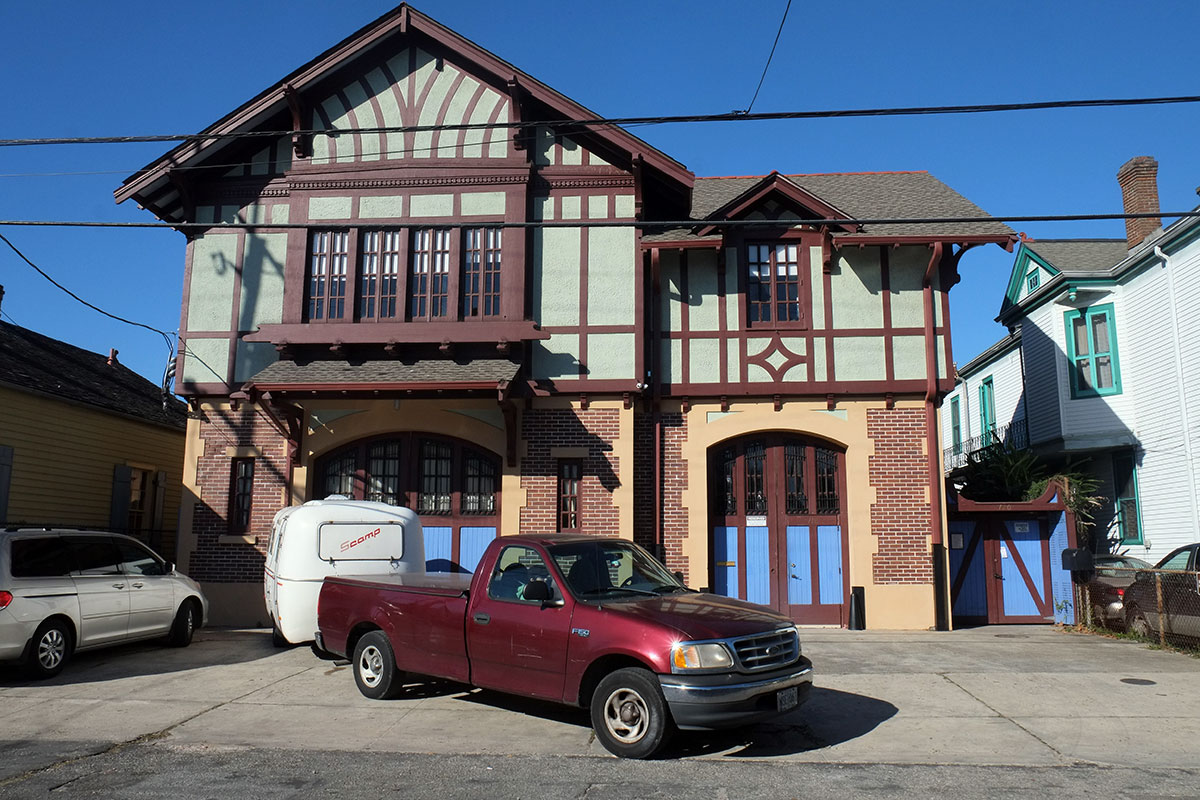
DSCF3875The party was held in the vehicle bay of the old firehouse that Glen and Michelle bought about five years ago, which is right across the middle of the block from their house.  They undertook a massive renovation of the derelict 100-year-old building, and it now contains their offices, plus spaces they rent to writers, filmmakers, photographers, etc. (oldfirehousemandeville.)  It is a remarkable compound they have, a quiet enclave in the  middle of a bustling neighborhood, probably the most appealing urban living situation I’ve ever seen.DSCF1890
Greta and I both caught whatever virulent respiratory bug was going around in New Orleans, and were laid low with bronchitis for a week, taking antibiotics and venturing out only for excellent meals.  At this point we had been there for two weeks, and Glen said that since it was only another week until Mardi Gras, it would be silly of us to leave.  We couldn’t believe they didn’t want to get rid of us, but we took them at their word.  Glen’s mom came back to town, so we moved out of her apartment and back into our trailer, which we pushed through the firehouse into the courtyard.  DSCF3557We are now experts on urban camping, and it is the best.  Quiet, yet convenient, with interesting people, superb food and no mountain lions or bears.  No view of the mountains like I have sitting here in Moab, but it’s a good trade-off.

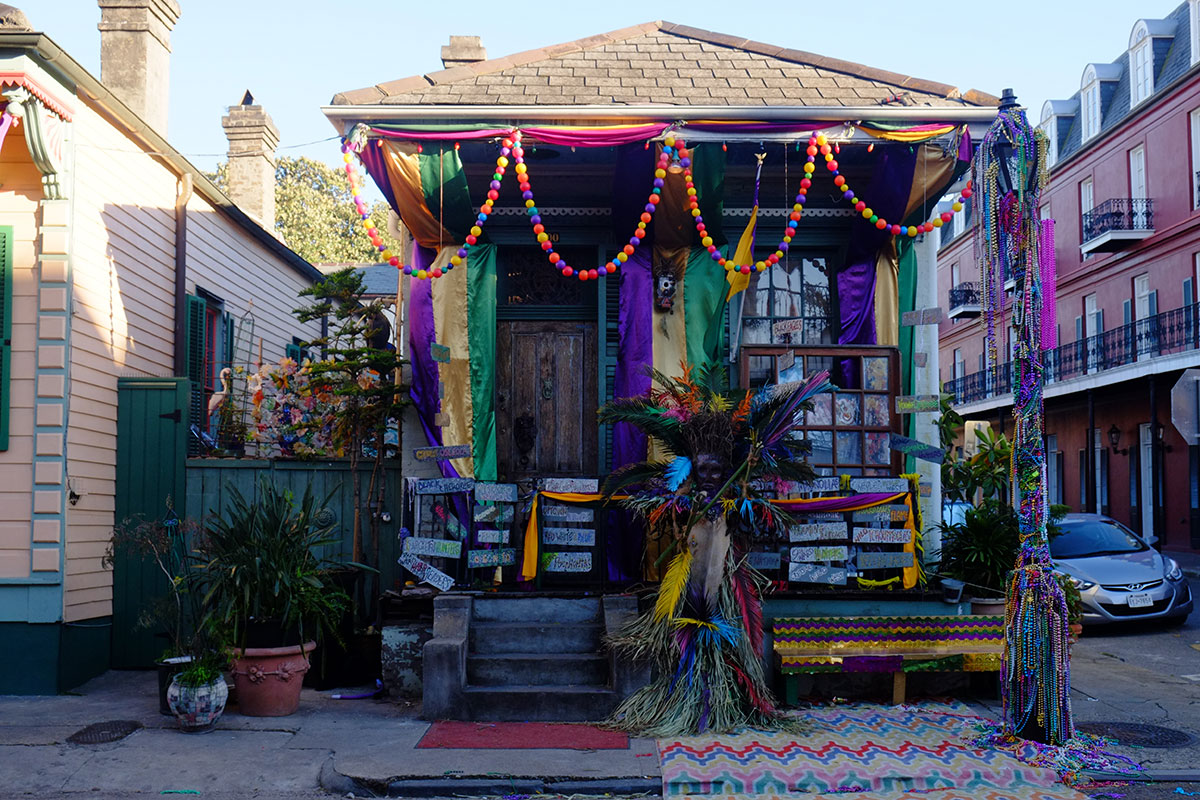
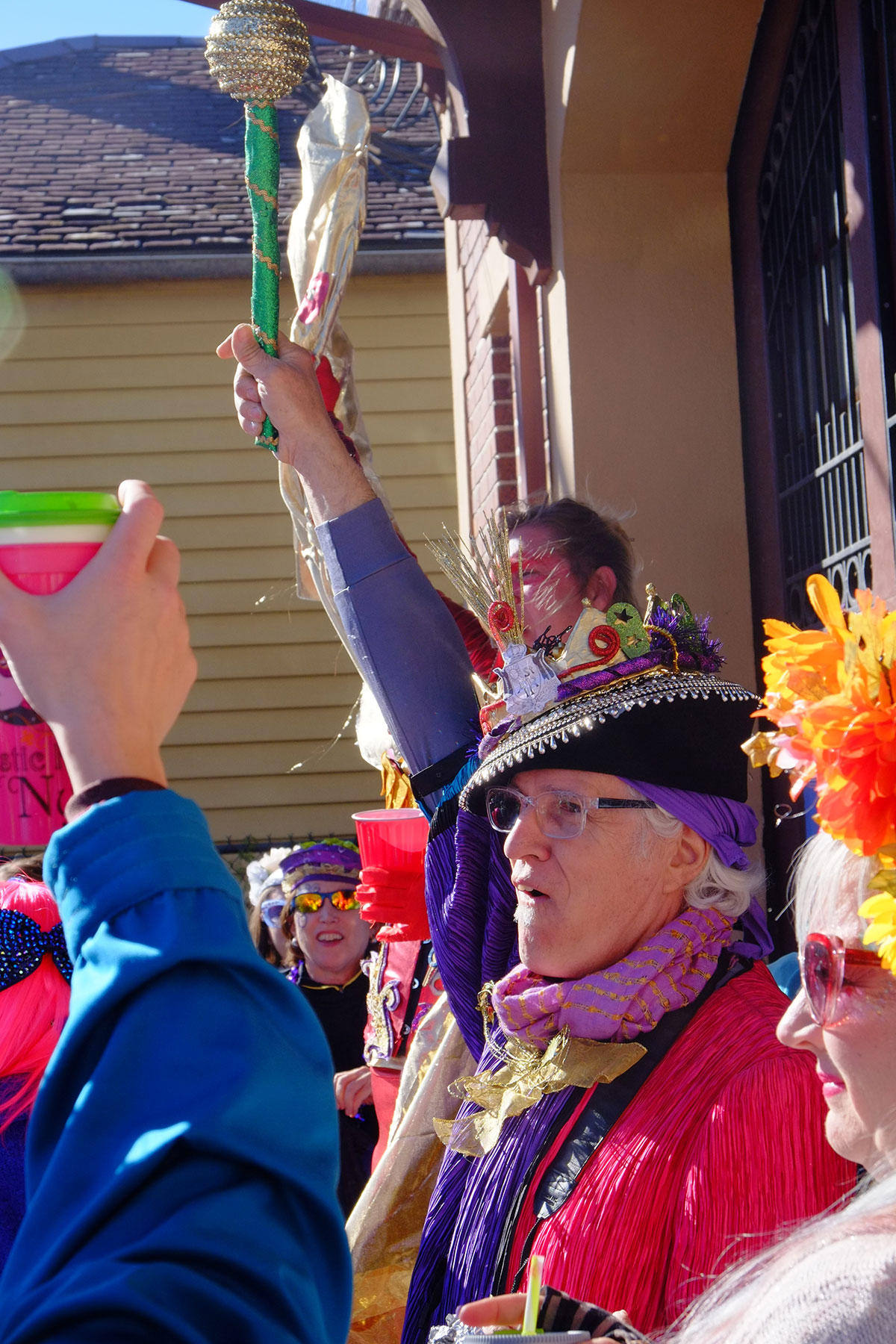
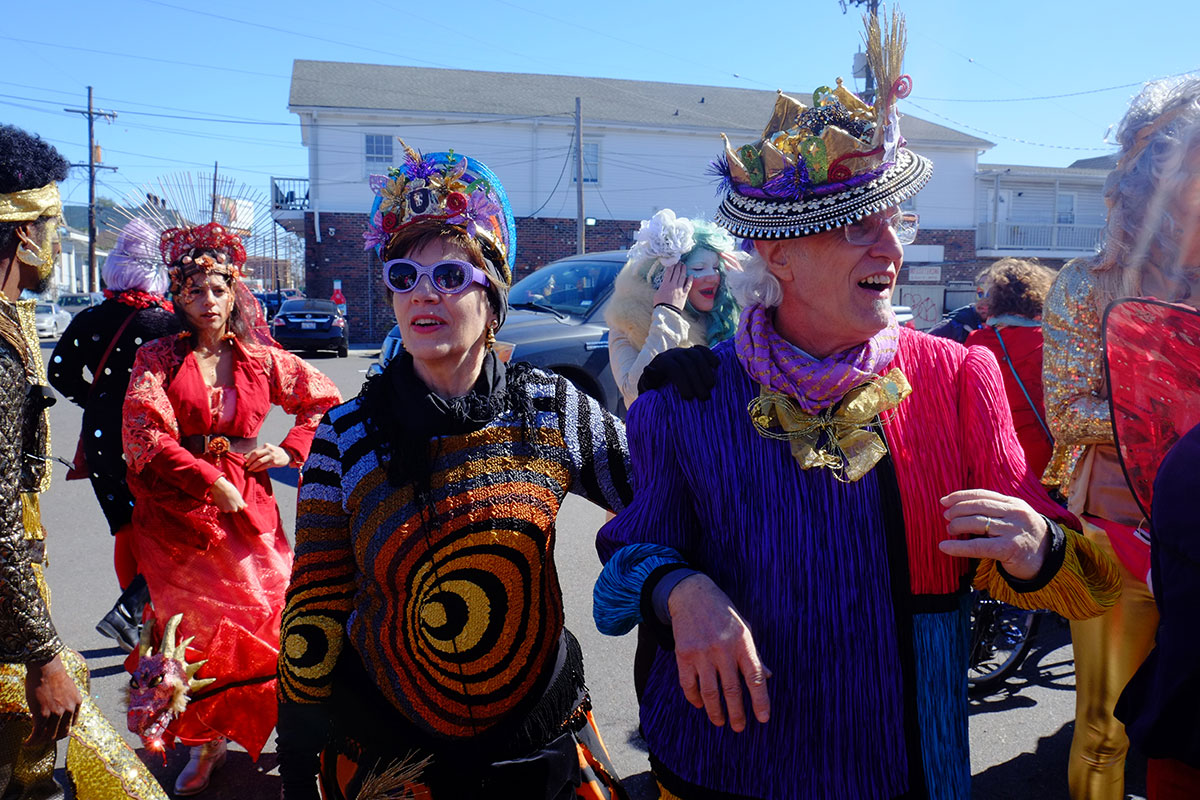
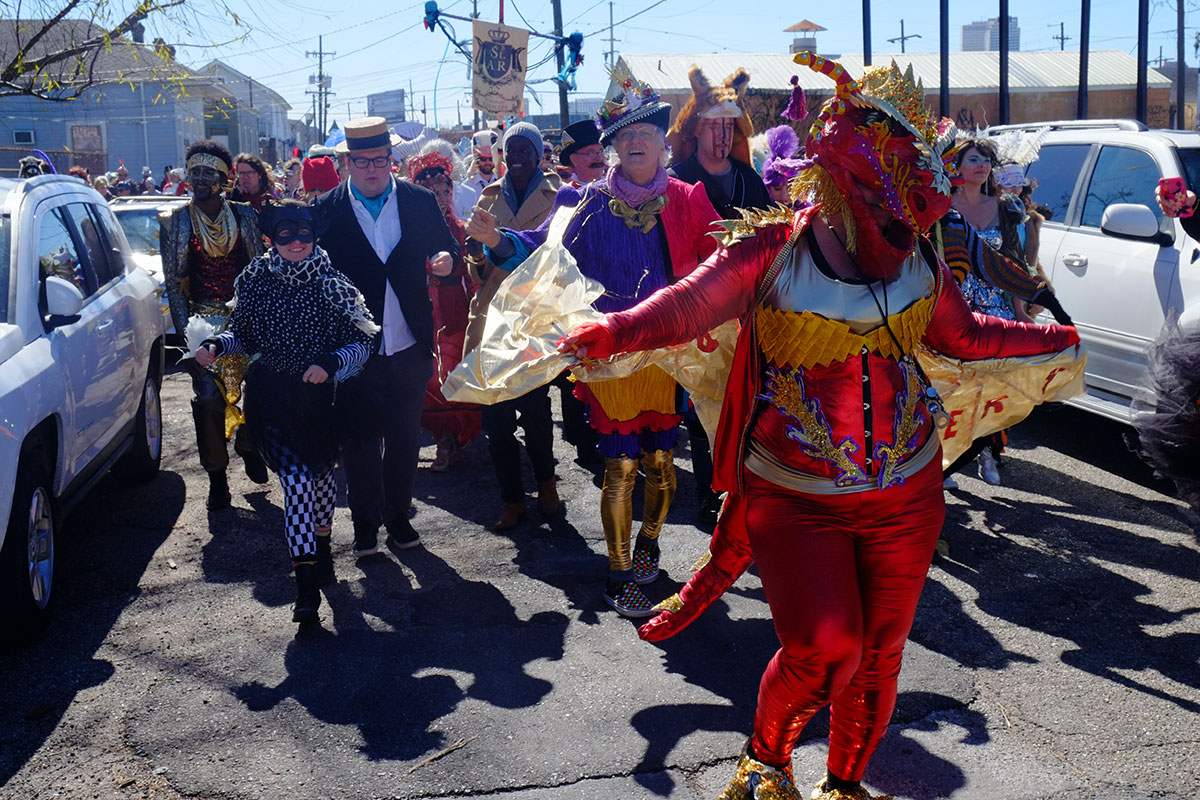
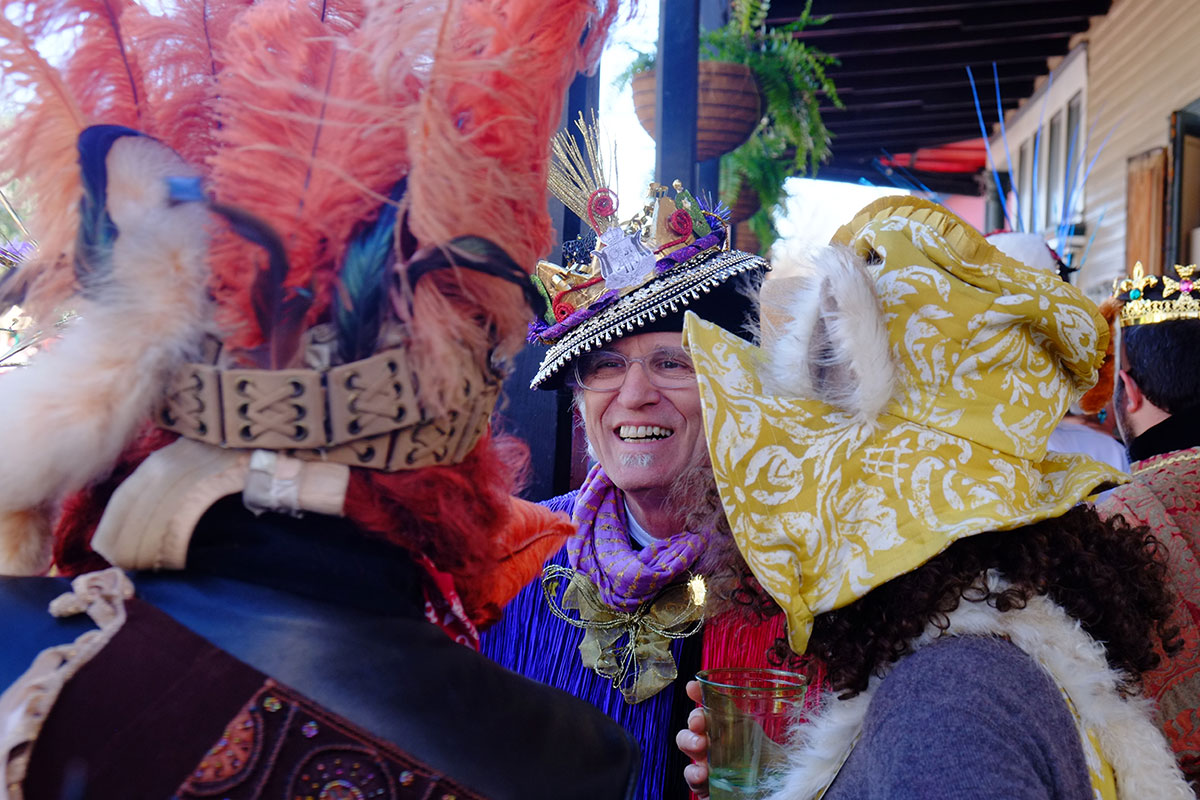
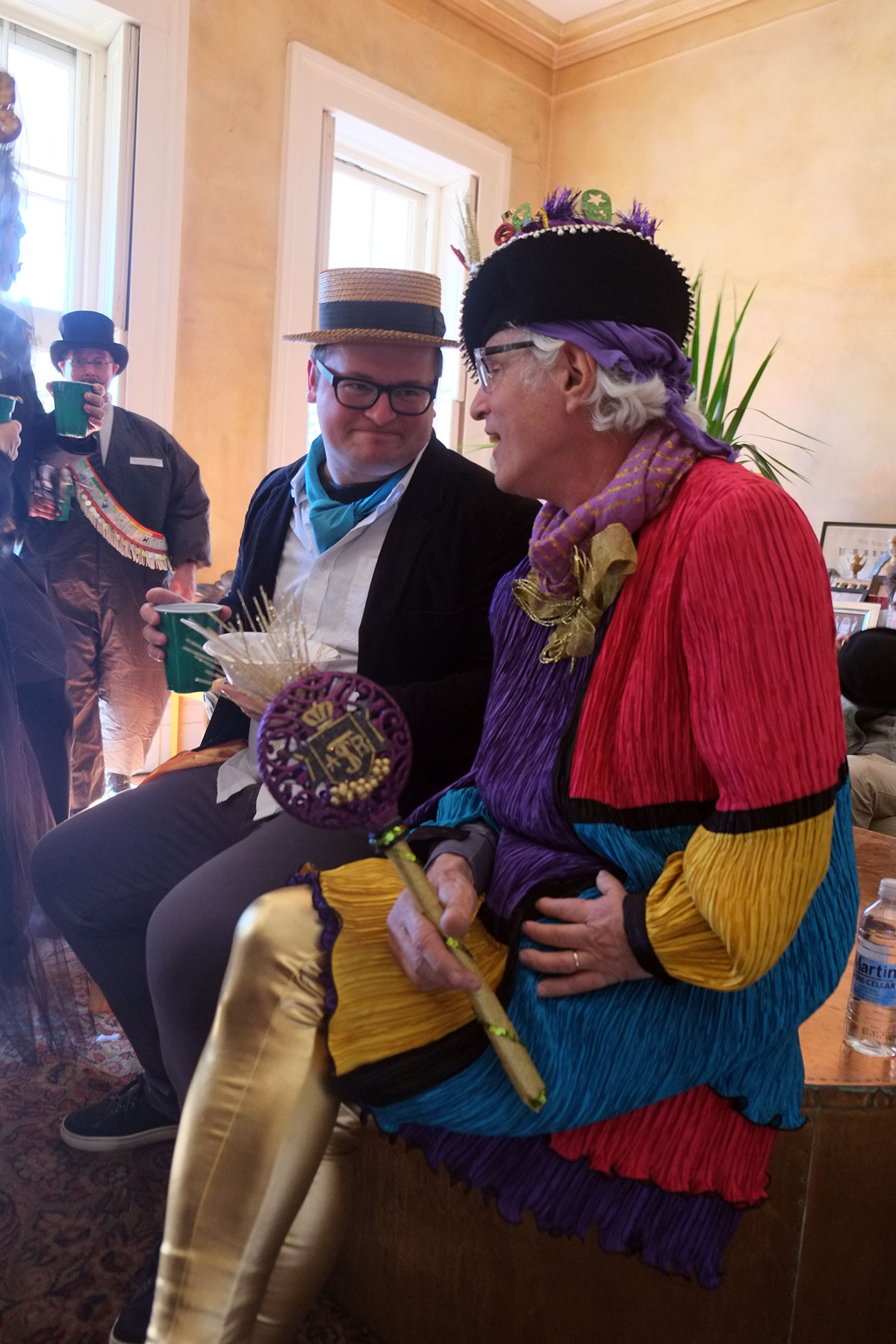
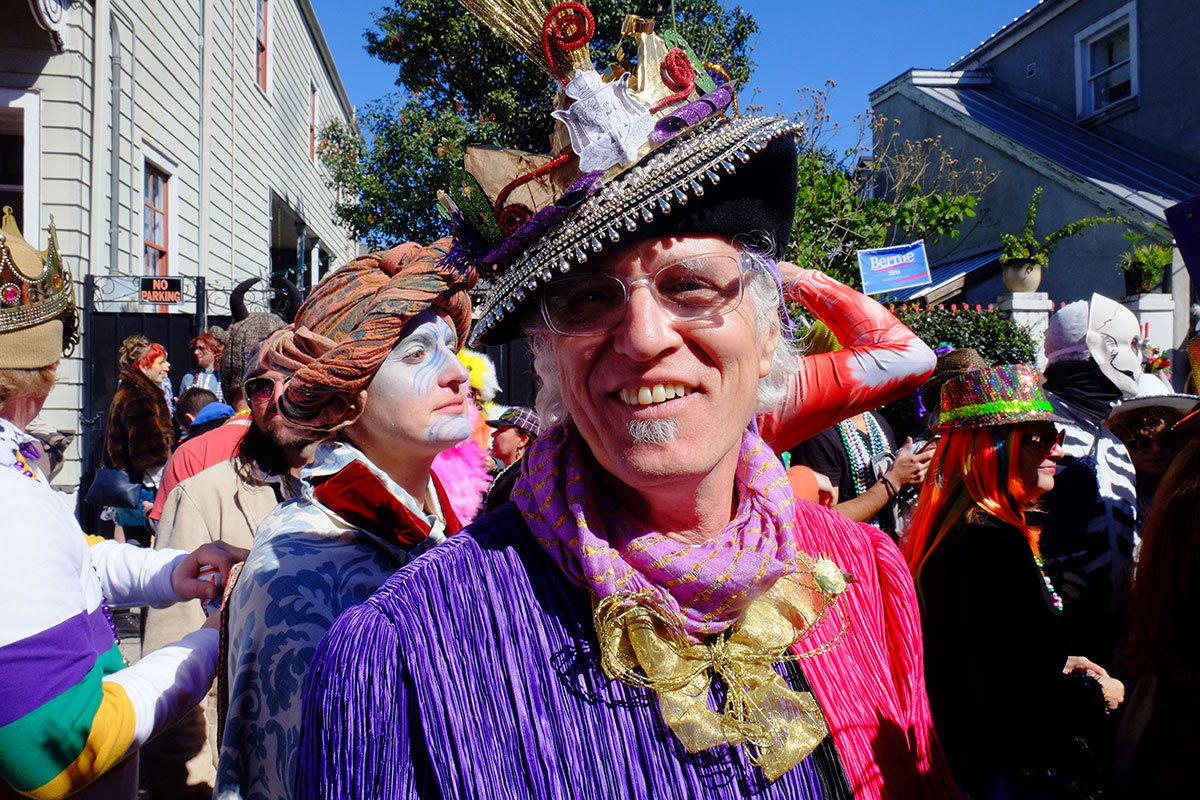
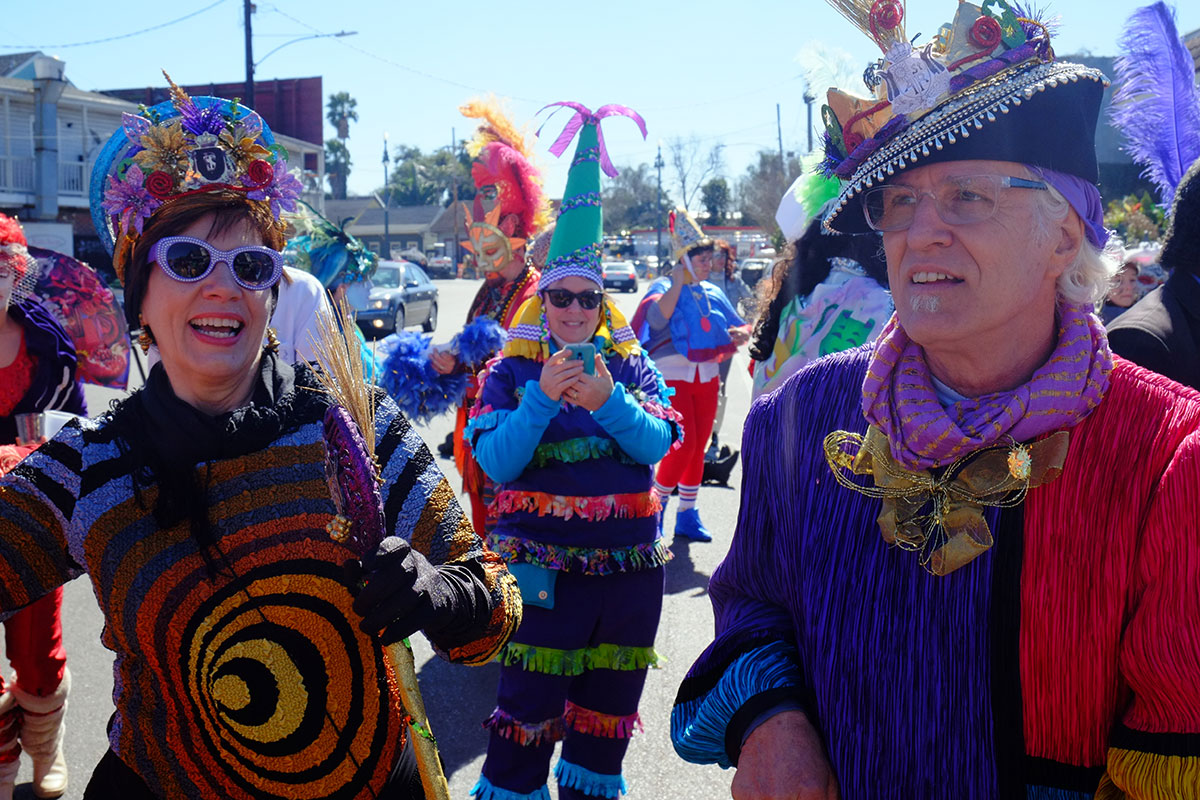
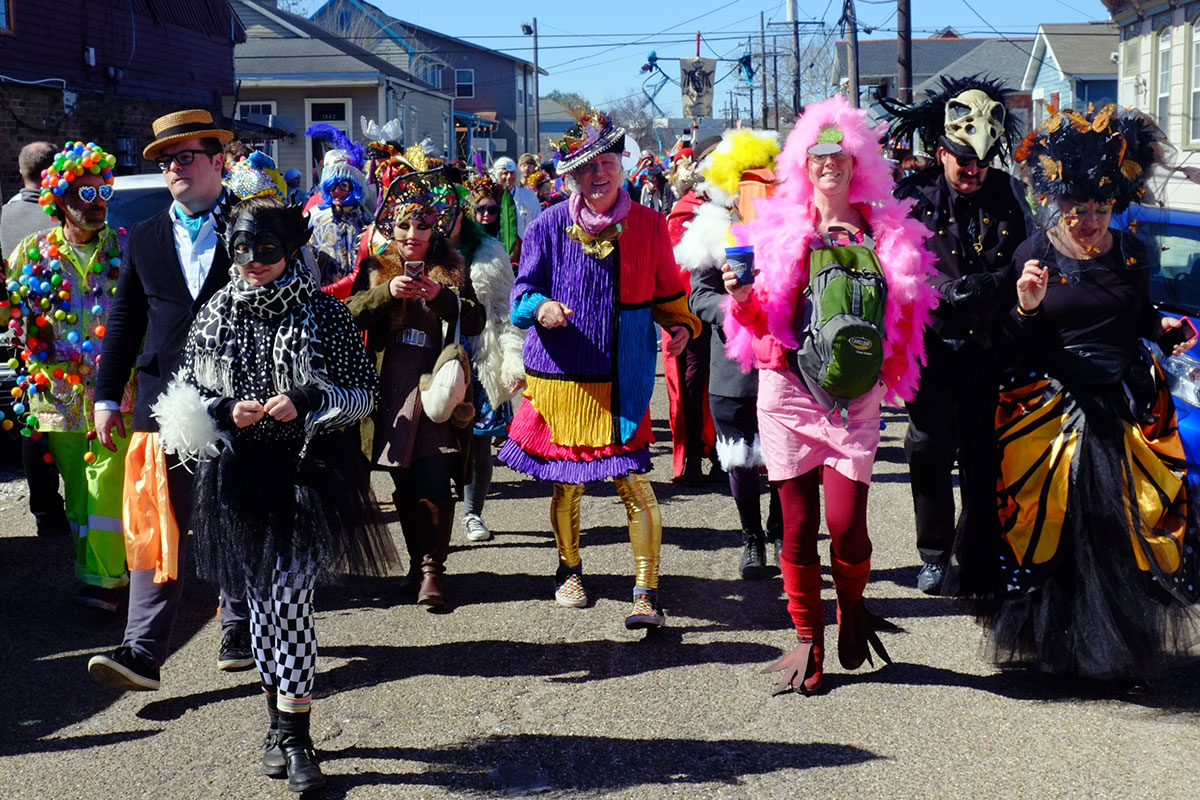
The next week leading up to Mardi Gras was mainly a series of parties being thrown by Glen and Michelle’s friends on the days when parades passed near their houses.  Mardi Gras arrived, and Glen and Michelle were the king and queen of the St. Anthony’s Ramblers, a day about which I’ve already posted at saint-anthonys-krewe and the-panorama-jazz-band-marches, but here is one irresistible photo of Glen leading the parade.  (I’ve since learned from other friends we made in New Orleans that when you need to find a photo of yourself for any reason, it’s hard to find one where you’re not in costume.)
DSCF3156

After this point, we were reluctant to leave New Orleans at all.  One of the best things while traveling this year has been knowing people in strange cities – instead of being a tourist seeing the sights, you have entree into the life of the city.  In New Orleans we had friends-by-association everywhere – we weren’t just getting to hang around with Glen and Michelle, but with their whole world.

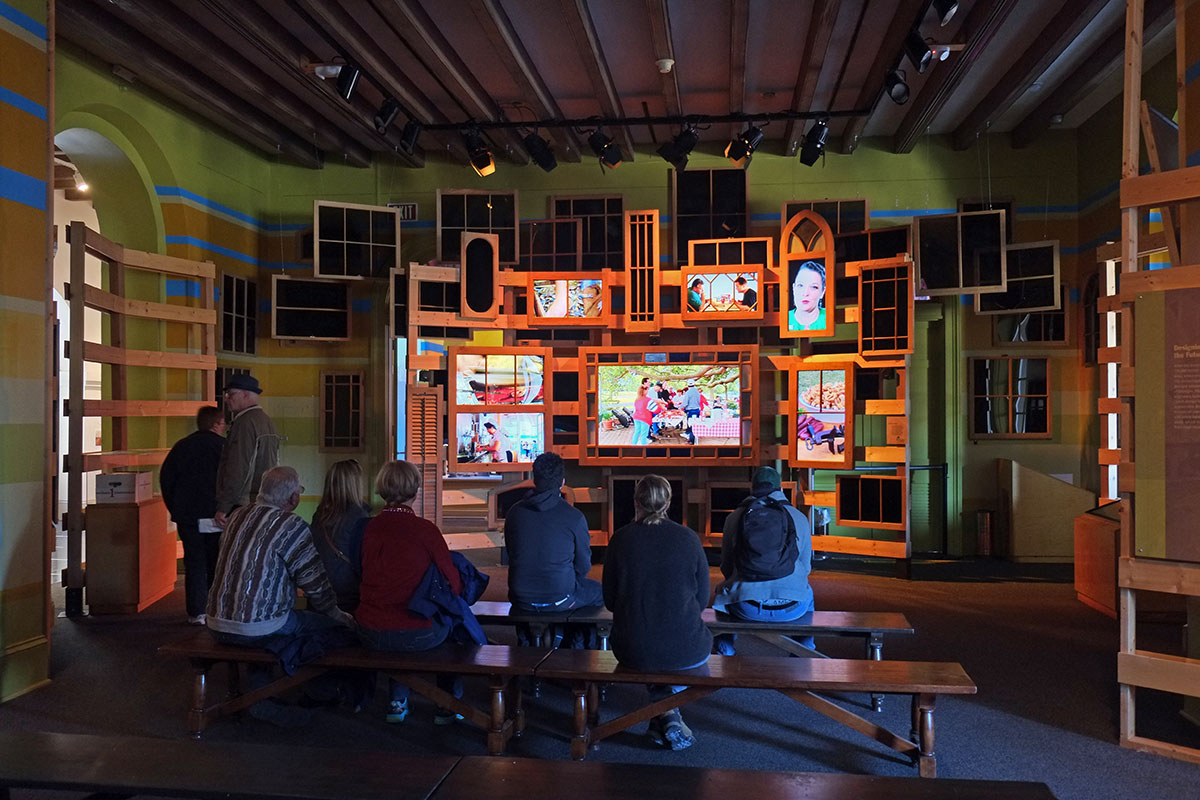
But we did eventually have to hit the road.  First we saw a few last things we’d missed, including the exhibit on Katrina at the Presbytere Museum.  (Glen was also the co-director of an IMax movie called Hurricane on the Bayou, and was running two film crews in New Orleans in the aftermath of the flood.)  The exhibit was incredibly comprehensive about the causes, experiences and consequences of the two hurricanes in 2005.  Glen and Michelle designed quite a bit of the exhibit, including the final room, where a multi-media presentation using screens set in windows from demolished houses showed New Orleans residents talking about the meaning of their experiences.  DSCF3477
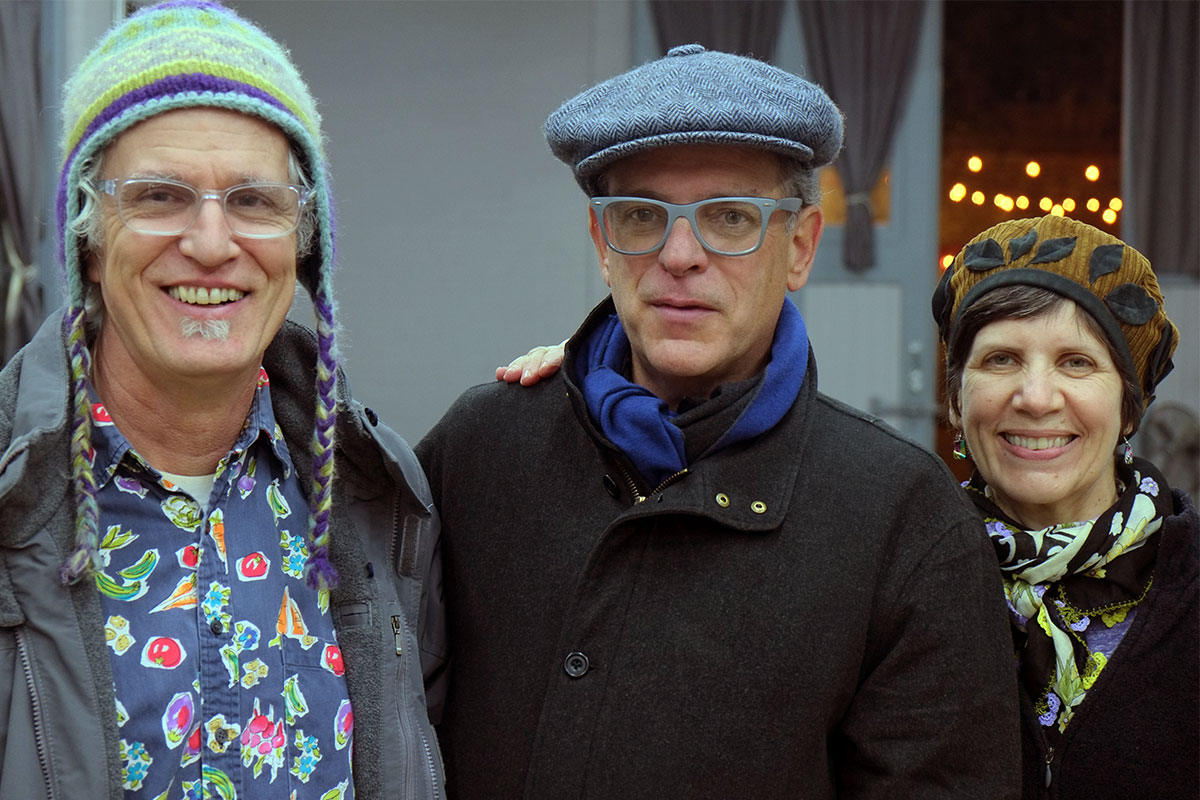
We spent four weeks in New Orleans, and we can’t wait to go back.  (I’m trying to find some academic conference that happens in New Orleans every year at Mardi Gras.)  It was wonderful to reconnect with such a good friend after so long, equally wonderful to meet his wife (who somehow feels like she’s been a friend for just as long), and wonderful to spend time in a previously-unknown city, that now feels like a home to us too.
DSCF1989

New Orleans – the older city

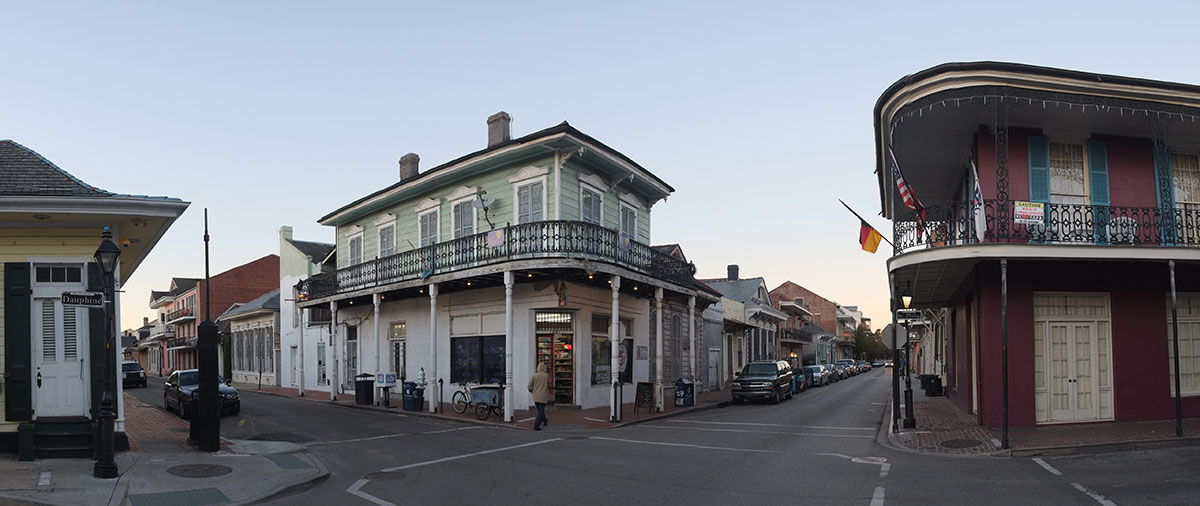
DSCF1680New Orleans is one the mythic cities of America – like New York, or San Francisco, or Chicago.  It occupies more psychic space than is justified by its size, or its current role in the national culture.  It was one of the few great American cities that I had never visited, and I approached it with a mixture of excitement and uneasiness.

Most American cities fit a pattern – JB Jackson wrote “The Stranger’s Path” decades ago, which laid out the typical components and their sequence in a mid-sized American city.  During this year on the road, when we’ve visited about 175 different cities and towns so far, certain obvious patterns have emerged – I think I could easily update the Stranger’s Path for the 21st century.  But from what little I knew about New Orleans, it seemed clear that this would be a place which wouldn’t fit those patterns.  Even looking at maps didn’t help – I couldn’t organize the information in a way that made sense to me.  So we headed in with not much more going for us than knowing the route to my friend Glen’s place.  After skimming across seven miles of open water on the I-10 causeway, Google Maps said we should drive down Elysian Fields.  Definitely mythic.
DSCF2005The first two days in New Orleans did nothing to dispel this combination of wonder and confusion. The neighborhoods, the streetscapes, the houses, the colors  – they were unlike anything I had ever seen, confirming what I had been told – that New Orleans is really a different country. The experience of walking through the city was new and magical, at the same time that the underlying order of the city was completely confusing.  I couldn’t make sense of the whole – the twisting geography, the invisible topography, the relationships of neighborhoods and populations, the river, directions, street patterns. On Glen’s advice I picked up a book by Richard Campanella, a geographer at Tulane, and it confirmed my impression – New Orleans and southern Louisiana are not like any other place in the country – culturally, spatially or geographically.

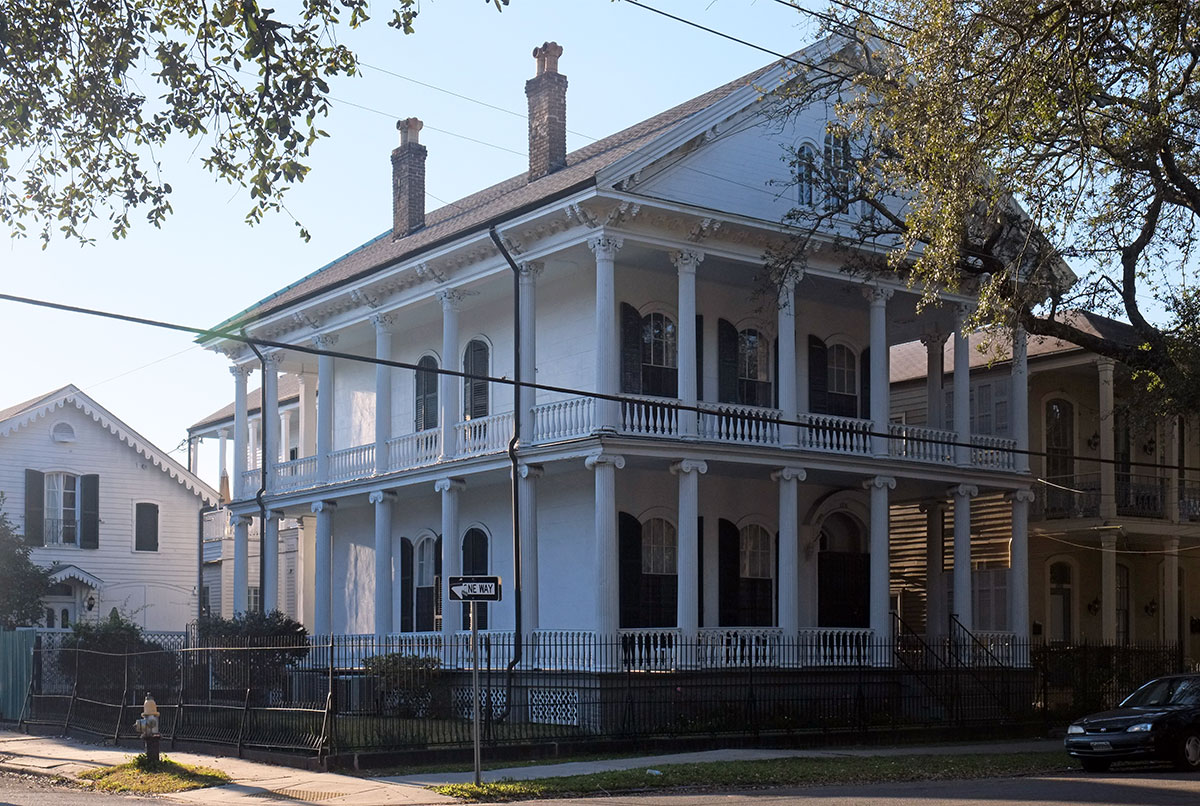
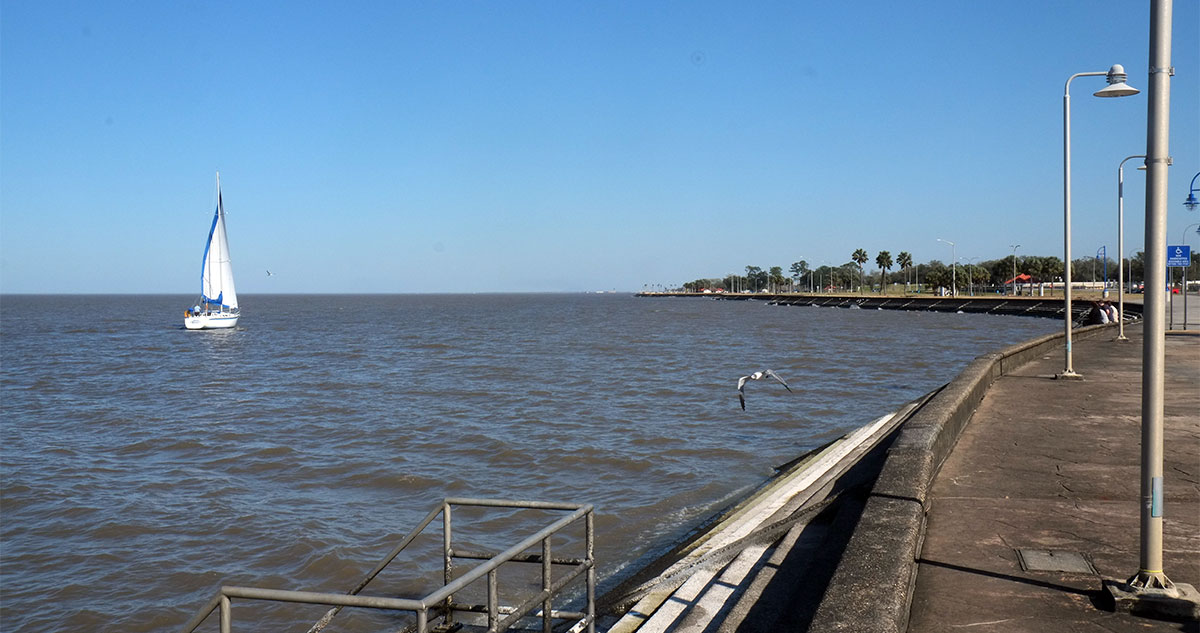
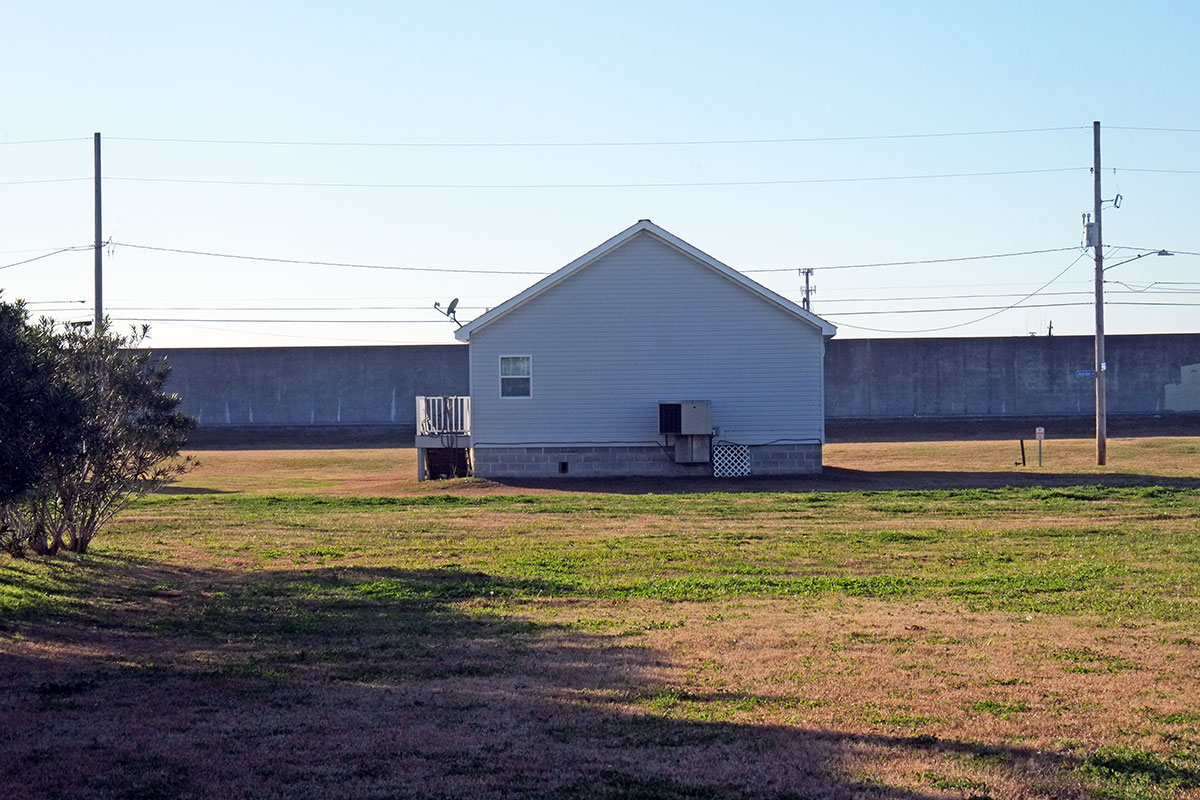
DSCF2030The highest land is along the river. The ridges (those areas actually above sea level, along Esplanade and from Metairie to Gentilly) were settled first,DSCF2204 with low-lying swamps drained and developed later (sometimes in what is now the middle of town).  Settled by the French, taken over by the Spanish, ceded back to the French and then sold to the Americans, it shows the same variation in sovereignty that we’ve seen all along the Gulf, but in New Orleans there is much more visible evidence of this history.  The Spanish and French built the Vieux Carre (a term which I never heard anyone use, with French Quarter having taken over).  DSCF1567The Americans settled later in Uptown, across Canal St. (which never had a canal). DSCF1642There are natives with what seem to be real New York accents (I met some of them.)  The city didn’t flood from the riverside, but from the lakeside (where the land is lower behind the levee) DSCF3566and the breaks in the levees on the canals (such as here in the Lower Ninth Ward).  DSCF3678The list is endless – New Orleans is an assemblage of conditions and situations, and after a lot of reading and a few weeks in residence, it started to make some sense.  I won’t pretend to comprehend it – nor attempt to explain it – in the way that a simpler place such as Fernandina can be grasped.   But I did develop enough of a conceptual framework to at least organize the series of impressions garnered from walking around endlessly.  For a relatively small city (current population under 400,000), it is the most complex place we’ve been.

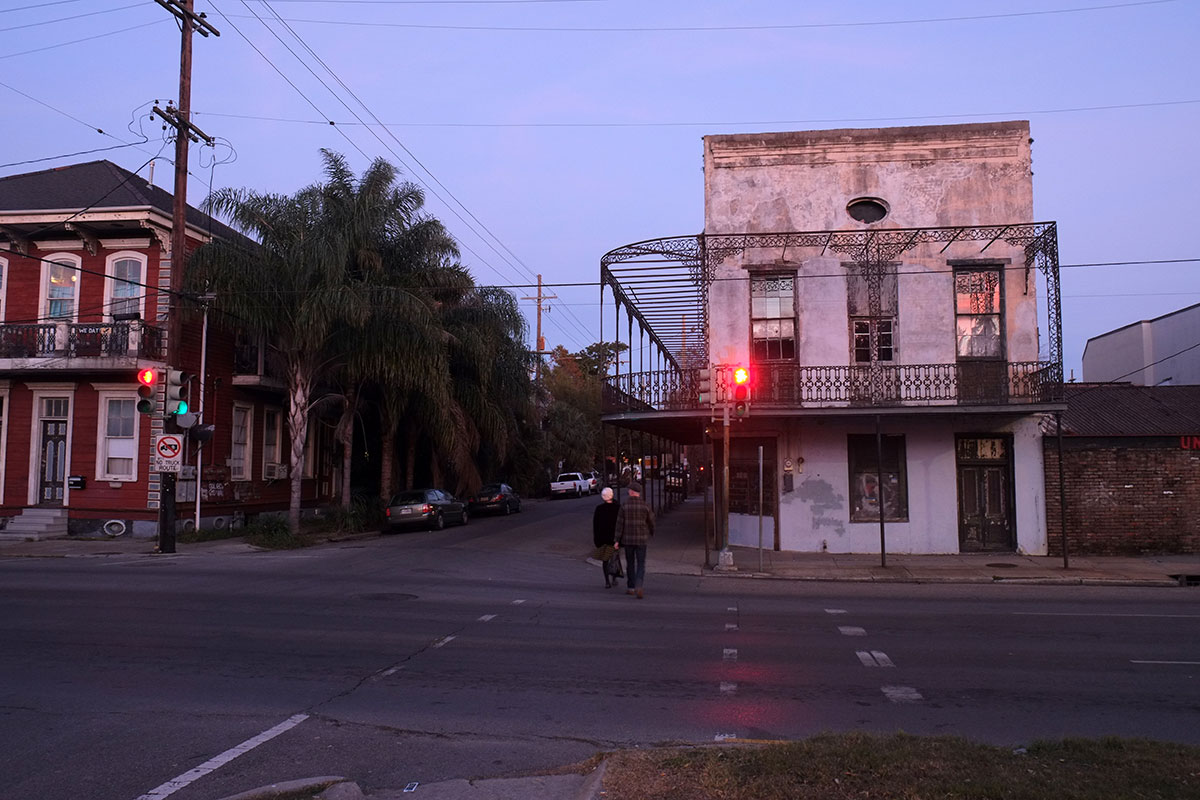
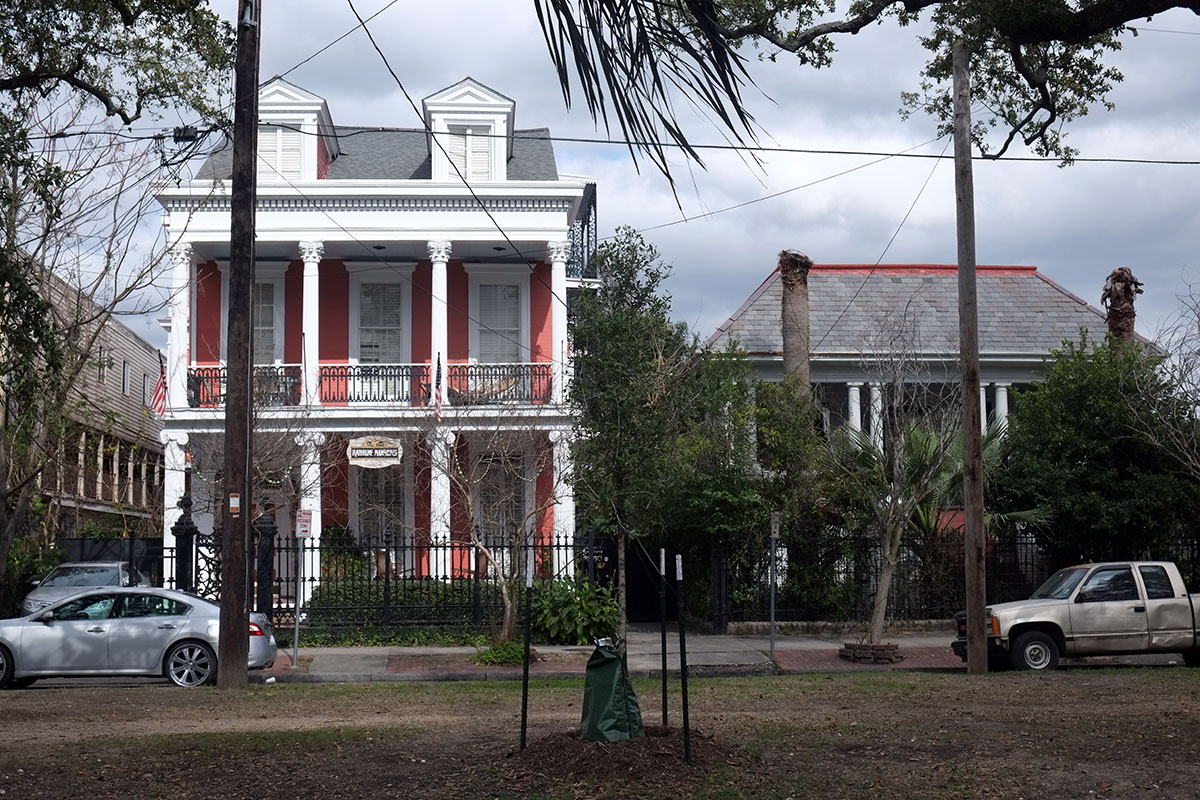
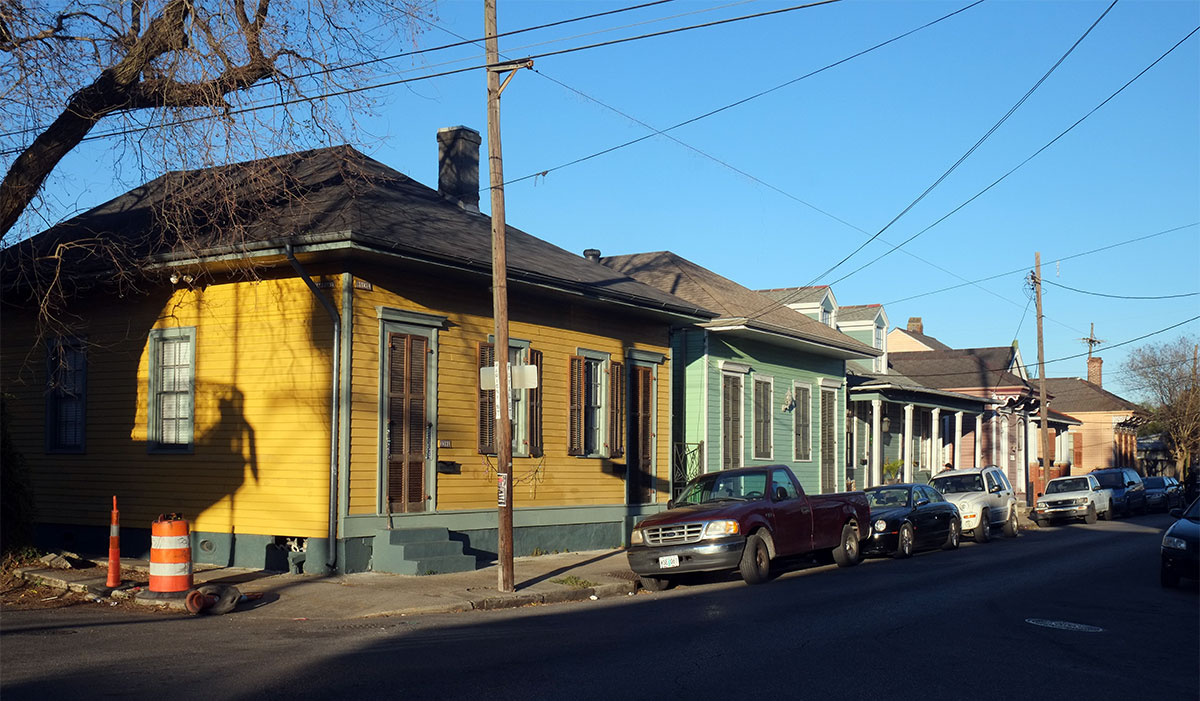
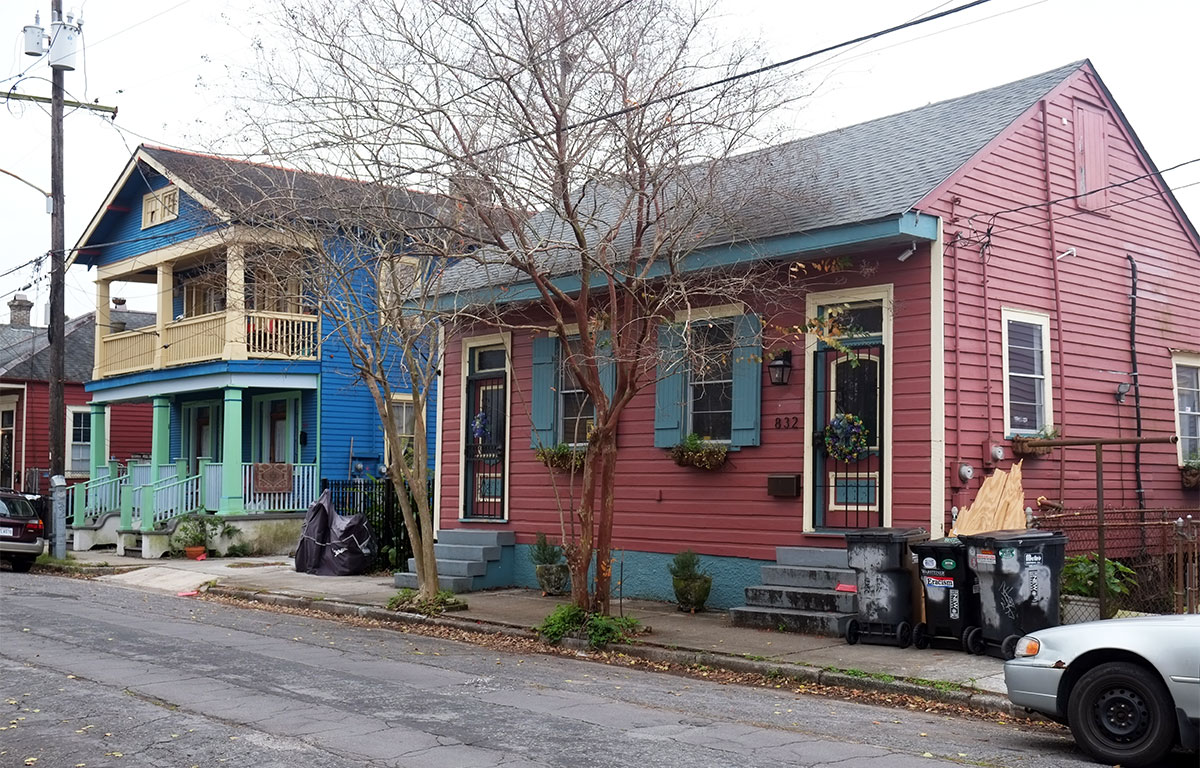
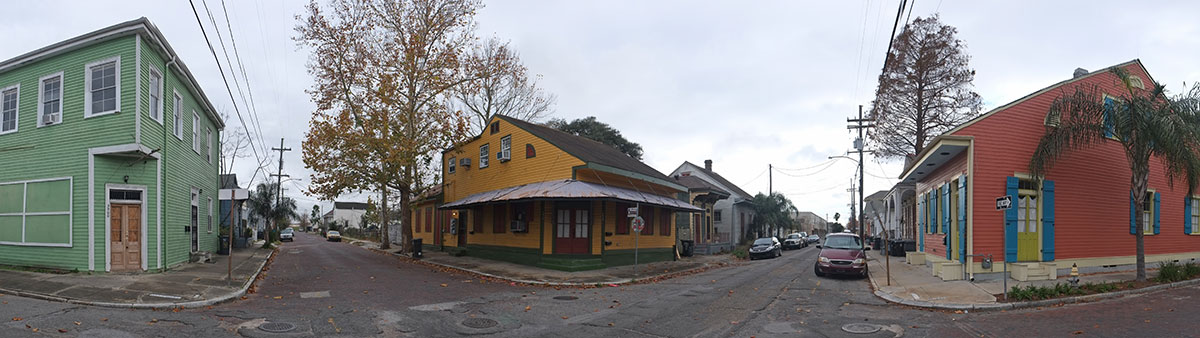
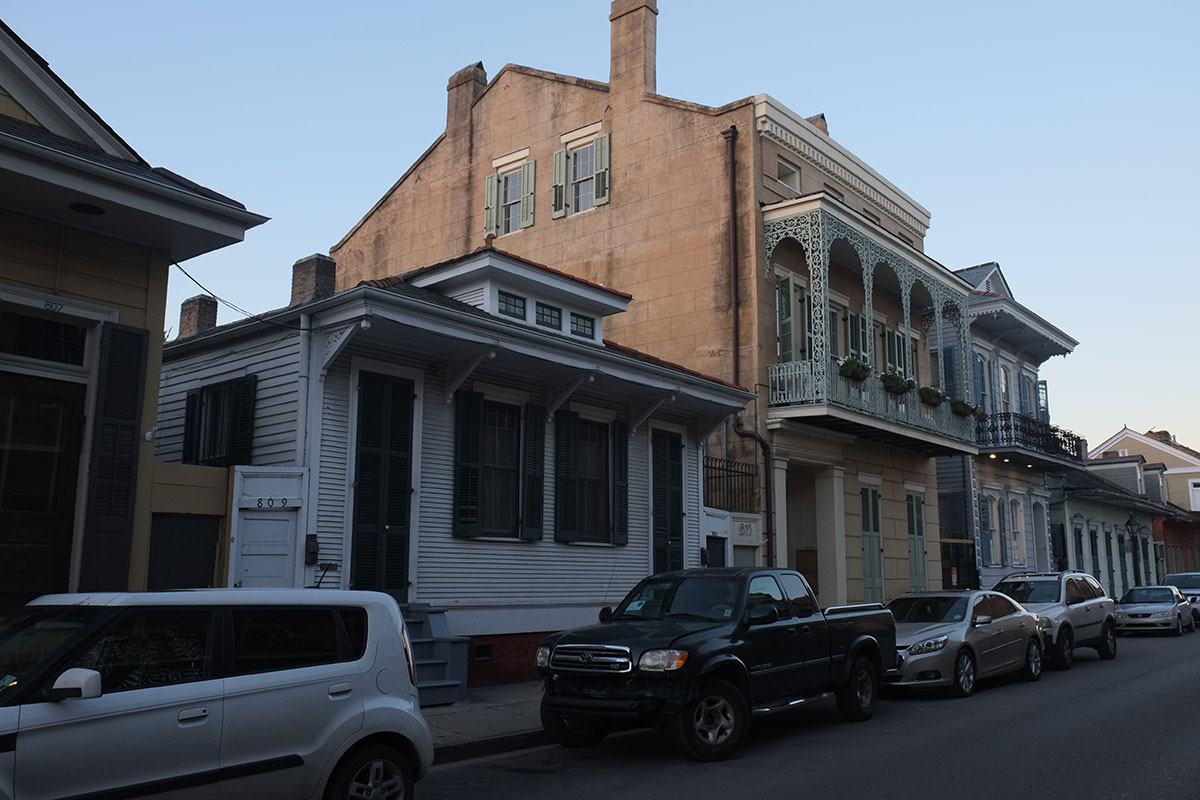
DSCF3512We stayed with Glen and Michelle in the Marigny, one of the first faubourgs, developed from a former plantation next to the Vieux Carre at the beginning of the 19th century.  It is mainly residential, with a wide range of New Orleans house types – double shotguns, Creole cottages, etc.  (There will probably be a post just about New Orleans housing).

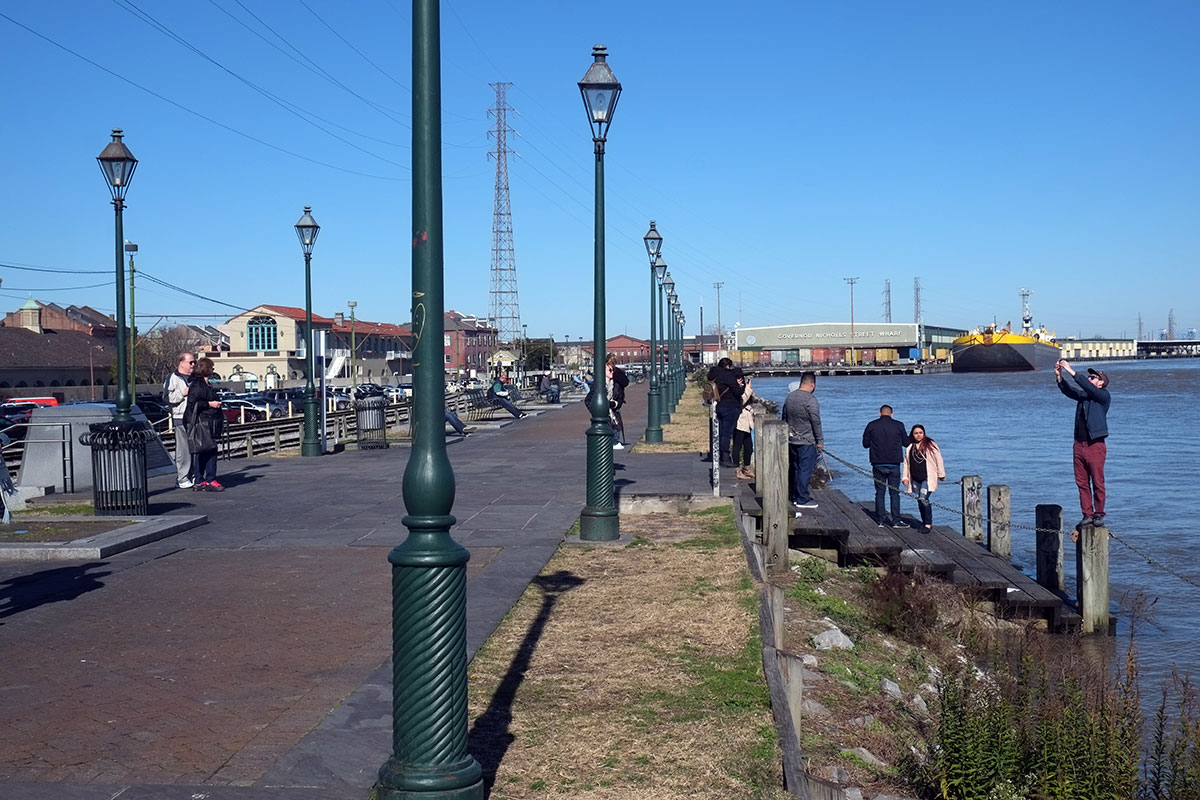
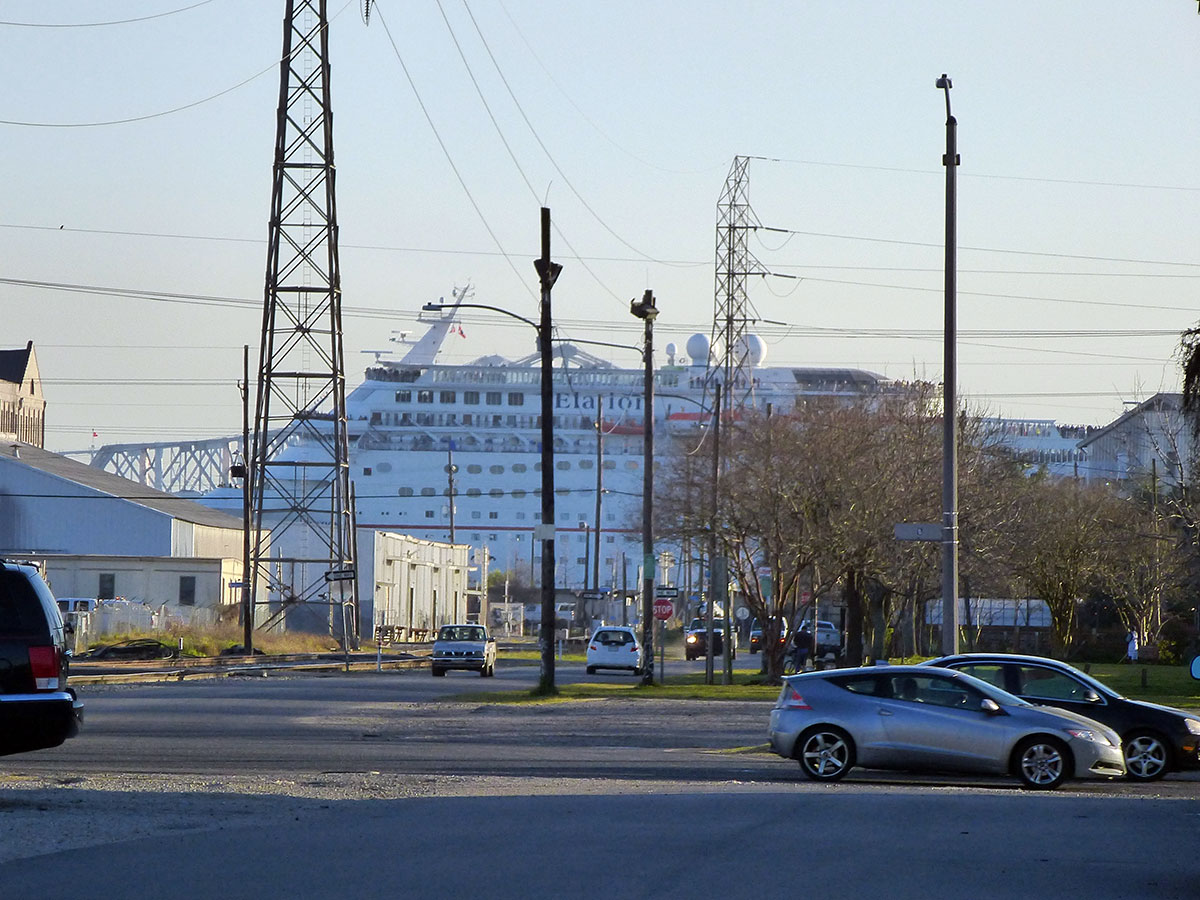
The Mississippi River defines one edge of the neighborhood, which you only notice when a ship passes by the end of the street.  P1070251

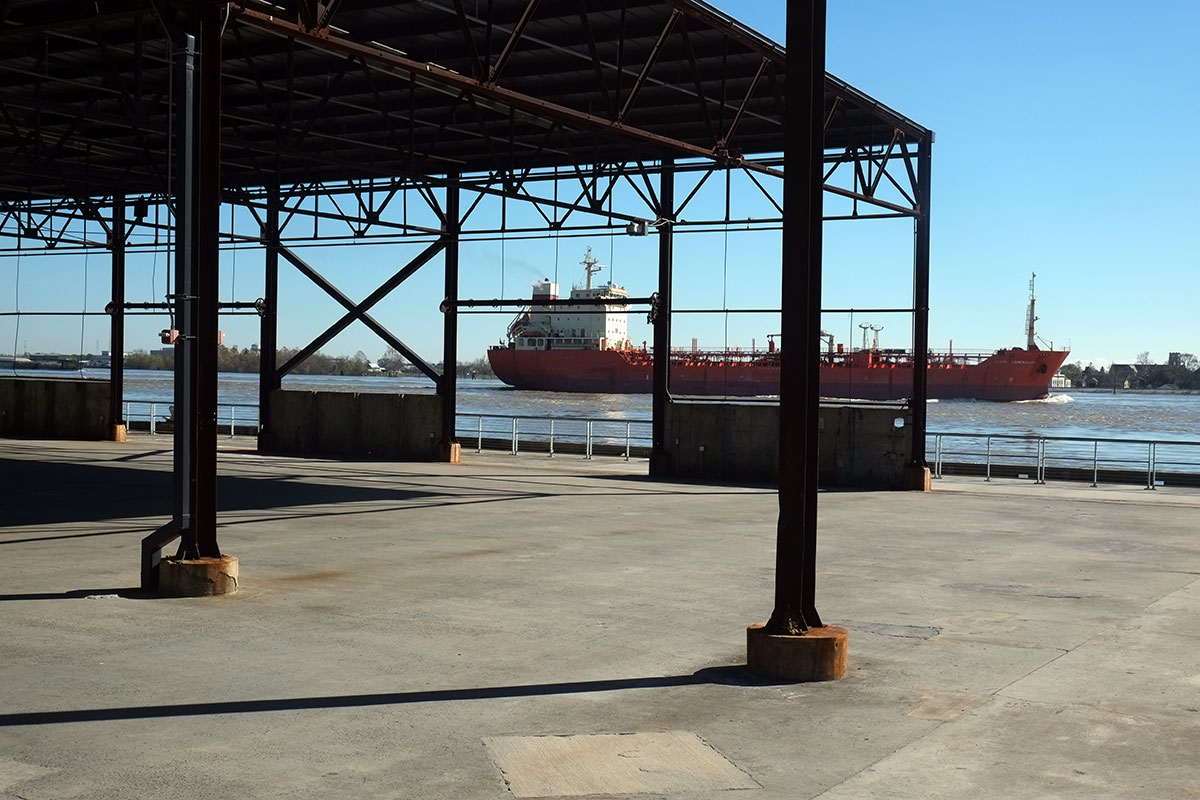
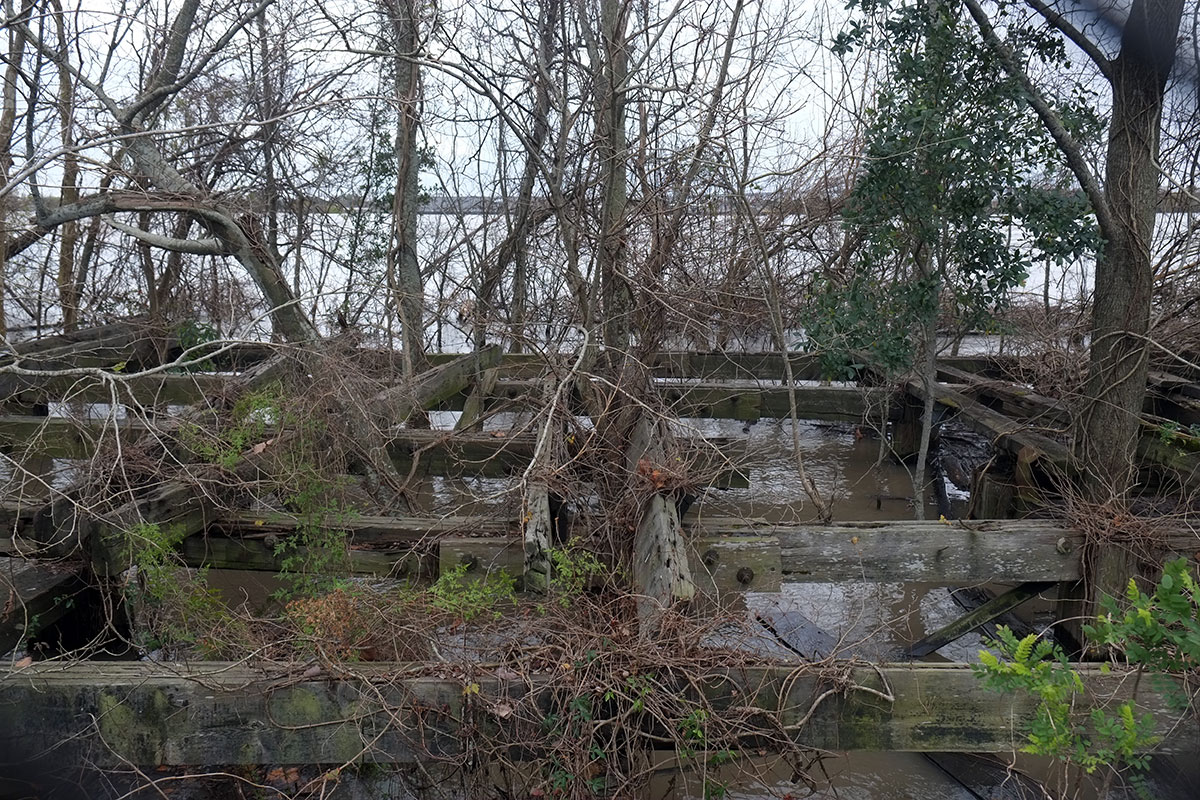
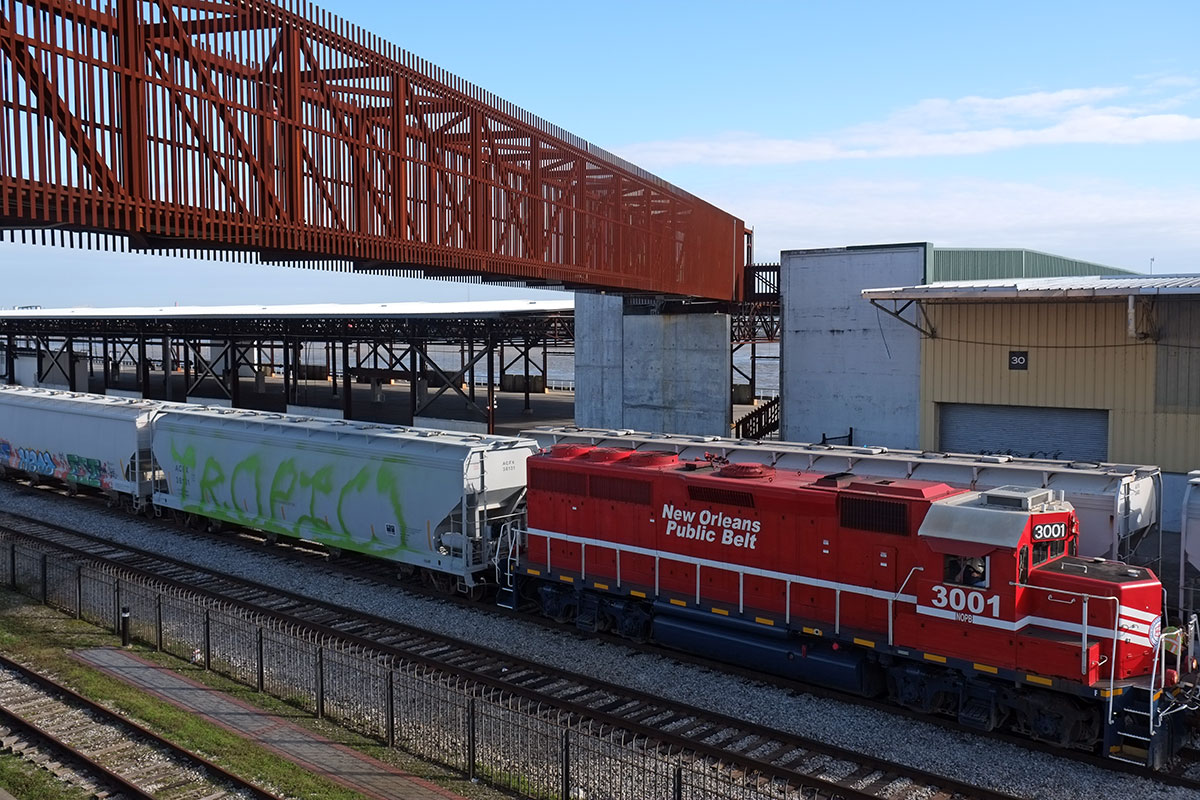
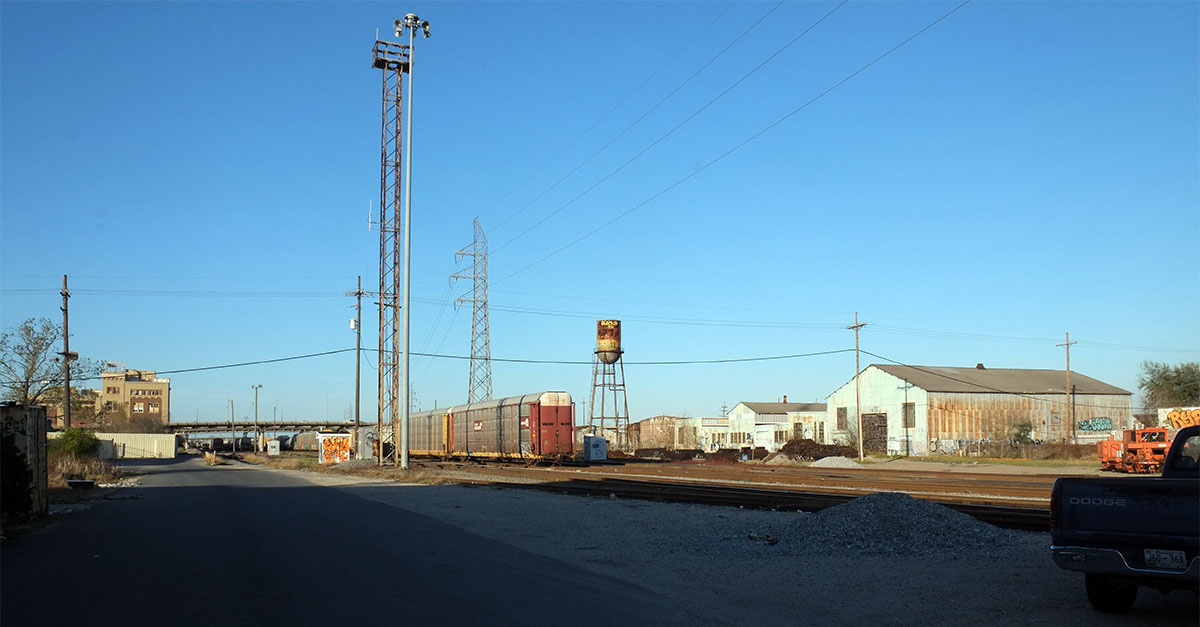
After a while I realized you can never see the horizon in New Orleans.  It’s completely flat, so you’re never high enough to see over things, plus the height of the buildings around you and the levees along the waterways means you’re essentially in a shallow bowl.  The only way to get a sense of the larger landscape is to climb atop the levees along the river or Lake Ponchartrain.  The recently completed Crescent Park, which runs along the river from the Marigny through Bywater, is a New Orleans version of the High Line or Riverside South.  Designed by a team including EDR, David Adjaye and Hargreaves Associates, it has kept the remains of the industrial waterfront.  DSCF2014  DSCF1560 DSCF1706

Access is limited by the railroad which runs along the river, but a few bridges connect across.  The park feels very cut off from the city – hopefully more access points can be added.  DSCF2013

Bywater borders Marigny downriver, a former working class neighborhood filling up with hipsters with man buns.  Brooklyn South.  DSCF1802  DSCF1808  DSCF3697    DSCF1805DSCF1837

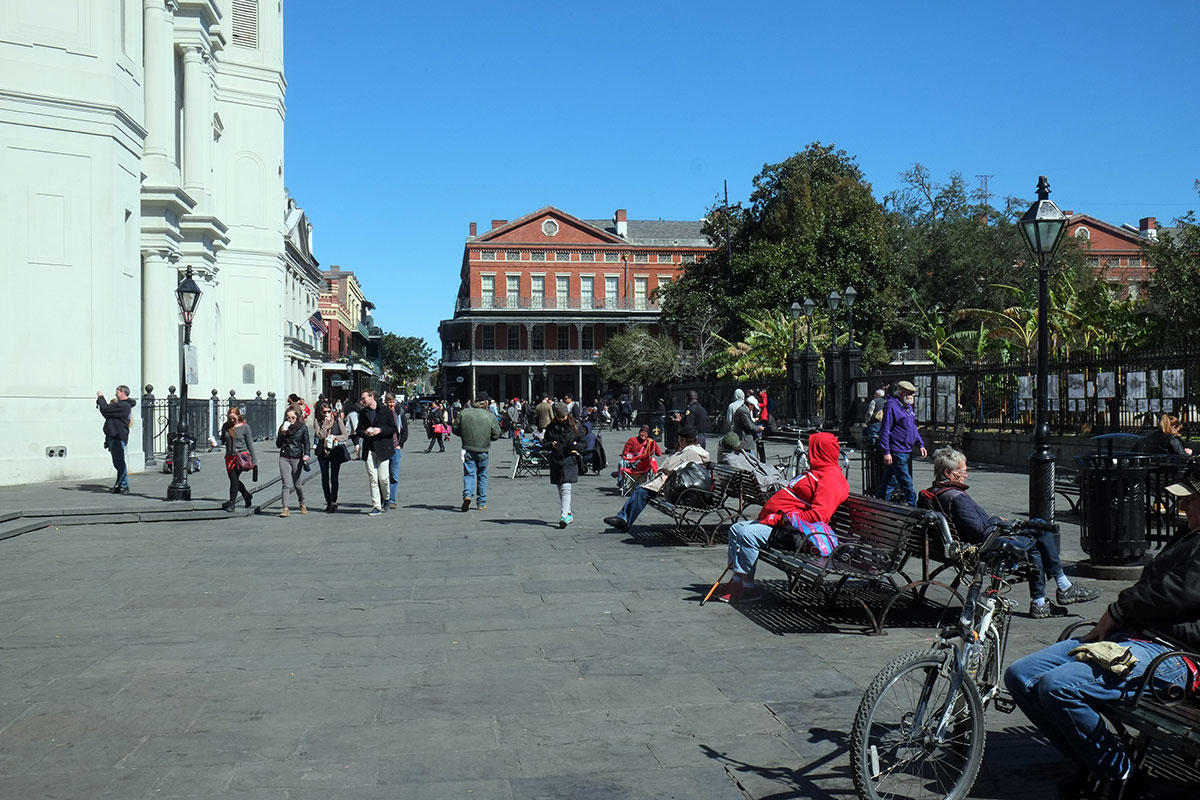
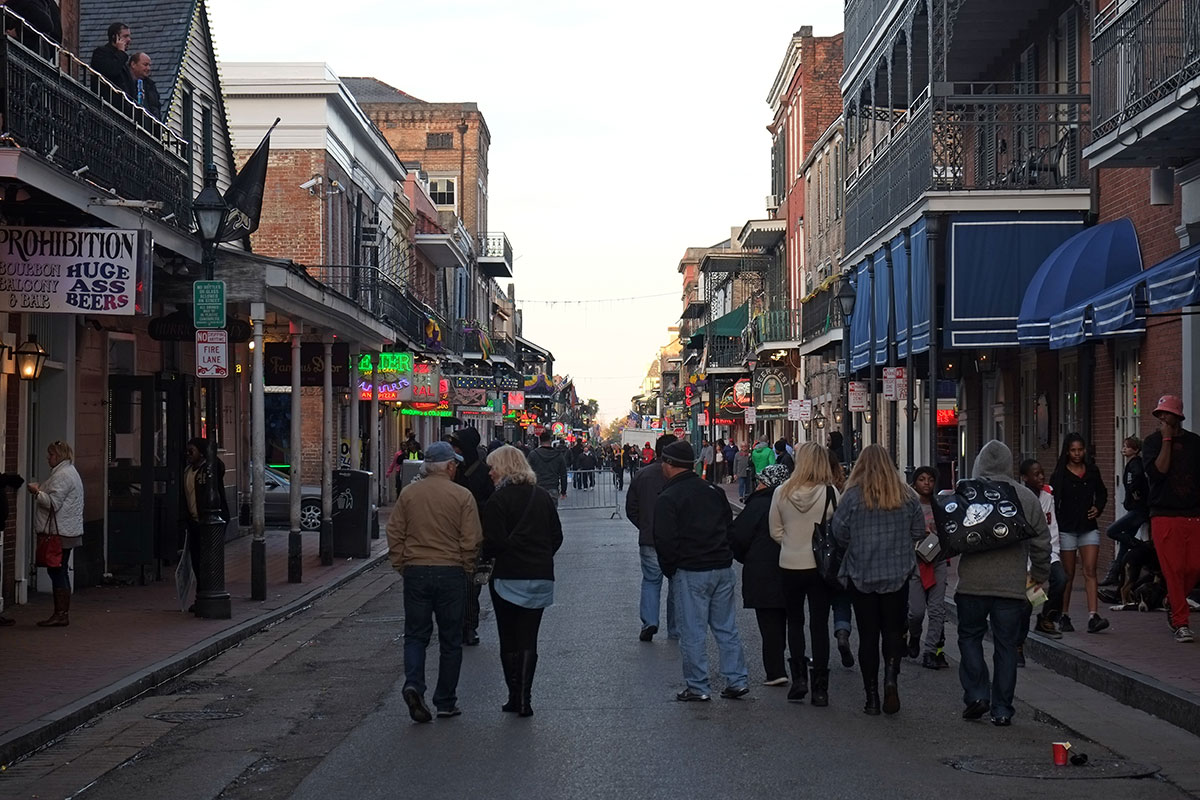
The French Quarter is just upriver from the Marigny, and we spent a lot of time walking its streets.  Eventually the pattern of use became clear:  tourists on Decatur and by Jackson Square, DSCF3458 drunk tourists on Bourbon, DSCF1994rich tourists on Royal,DSCF2663

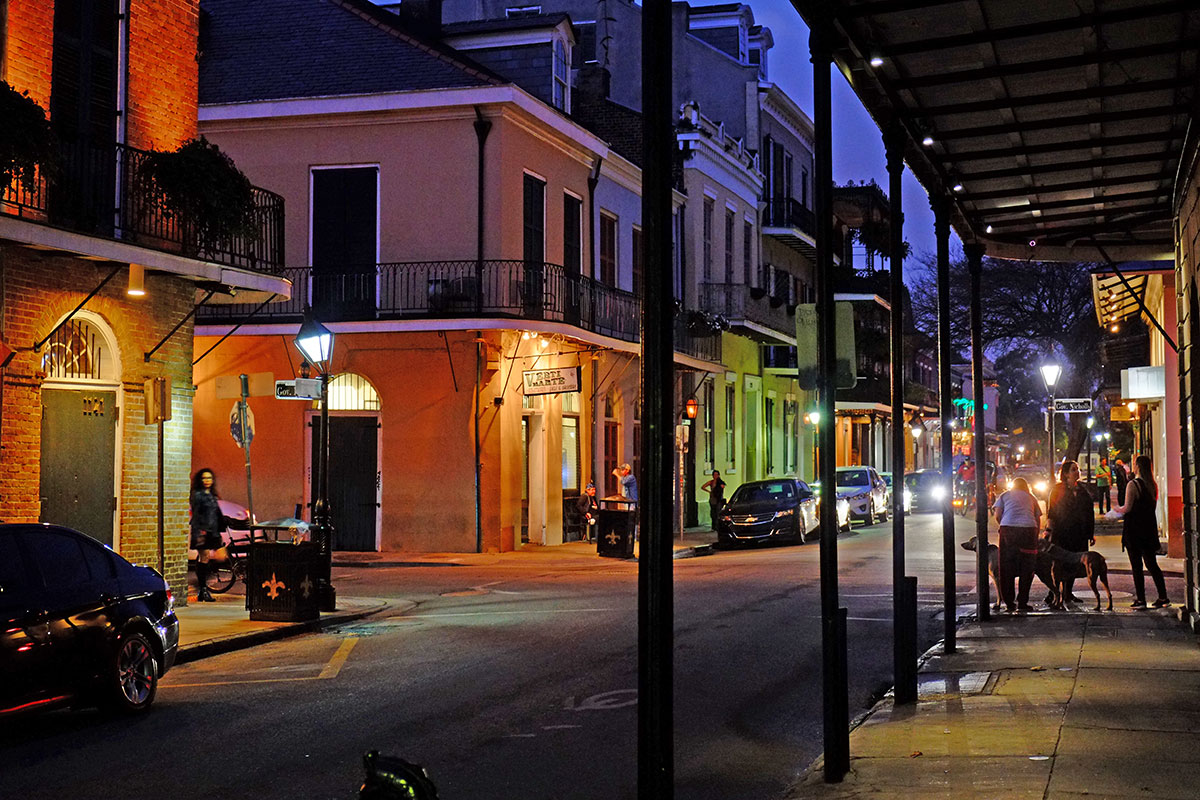
and the rest of it felt like it was for the residents.  It is the part of New Orleans which is most foreign, with the older architecture from the Spanish era (the earlier French architecture was wiped out in a fire in the late 18th century), and the part most of us think of when we form an image of New Orleans.  DSCF1572     DSCF1670DSCF2983    DSCF1677We found it endlessly fascinating.  The scale, the textures and colors, the details, the quirky businesses and residents – there is a richness of experience which is rare in this country.

The central business district – with its convention center, hotels, and casino – adjoins the French Quarter on the upriver side.  Once you cross Canal Street the city changes – the architecture is mainly 20th century, as the 19th century buildings have been replaced.

Bao and Noodle

I am a pessimist in all areas except for food. The human ability to make things taste good never ceases to amaze me, and never have I been more astonished than by Bao and Noodle.
P1070253We started off with an order of bao, dumplings, and scallion pancakes, and were immediately blown away. My only previous experience of bao was hearing it mentioned in a Firefly episode, and so, was very impressed. The only problem was that having my first experience be so good, is now I’m always going to be disappointed by other restaurants. The pork and cabbage dumplings were the night’s specialty, and they certainly were special. The best thing about them was the broth they came in, soft as milk, but rich with the flavor of country ham, and greens as delicate as rice paper floating like tea leaves on its surface. The scallion pancakes were cooked slightly unevenly, one edge darker than the other, and I think this was on purpose. It offered you a choice between crunchy or more chewy.P1070254
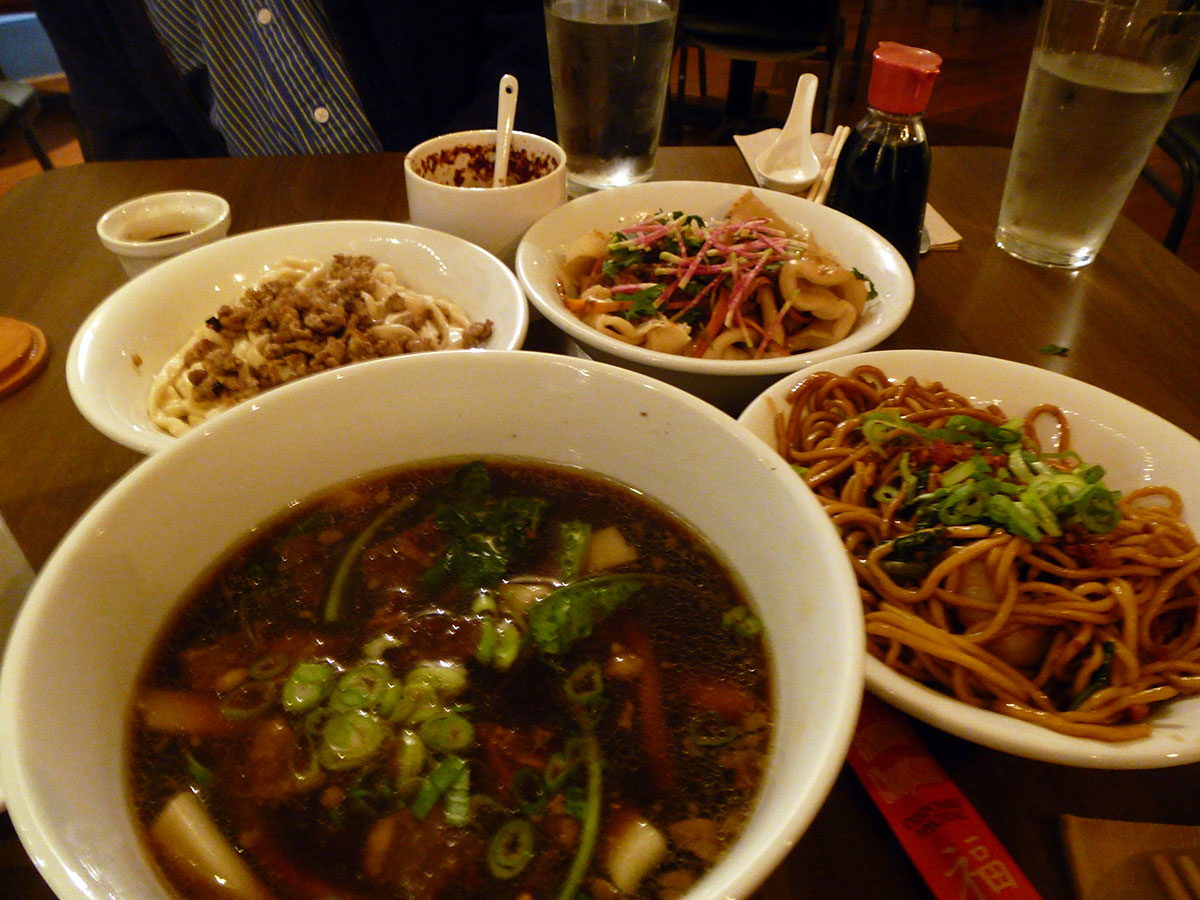
If the appetizers blew us away, the main course kicked the wind up to hurricane status. Starting on the left, we have Dan Dan noodles. Unlike many restaurants, they leave the dish without a lot of heat and provide you with a jar of Sichuan pepper hot sauce. Simply the smell wafting out of that jar was spectacular, but enough to make your nostrils burn. Being someone who can’t take a lot of heat, I appreciated the consideration. The chili sesame paste, which was actually more sauce-like in consistency, already slathered on the noodles was fantastic, nearly as good as the noodles themselves.

The noodles were one of the most impressive things at the appropriately named Bao & Noodle. Each of the four dishes we ordered had a different type of noodle, perfectly suited to the meat. The Cumin braised lamb was so tender that it literally fell apart in your mouth, so the more chewy Biang Biang noodles were the obvious match. Instead of being cut, the noodles were hand-ripped, which definitely showed in the texture around the edges.

Egg noodle with XO sauce, on the right, was distinctly shrimpy, and by that I mean it tasted like seafood. The flavor had penetrated the noodles, which were long and thin, so that I could taste the quality without even eating the crustaceans.

But the beef soup was the best. I promise you that I’m not biased because it’s the dish I ordered. It took the best qualities from everything else. Its rice noodles were similar to the bao shell, with the insides being soft at first bite when they were dry, but becoming chewier in your mouth. Like the lamb, the beef came apart with each bite, and used tougher noodles to compensate. It shared the soft greens with the dumplings, as well as the rich broth. This broth though was several levels of magnitude greater. If the soup had just been broth I would have been happy. I couldn’t help from finishing it, even though I knew that would leave less room for dessert.

Normally, ordering dessert at a Chinese restaurant is a bad idea. It’s always just cakes made out of bean paste or something equally awful. But here they had blueberry milk bread toast, mango pudding, and snowskin mooncake.

The toast had been fried, with the milk caramelizing on the sides so there was a nice sweet crispness to it. The warm blueberry sauce on top was divine.P1070259

Fruit puddings are nearly always too sweet. This broke that stereotype wide open. It simply tasted like mango, but better. It reminded me of the picture in the Southern Food and Drink Museum (coming soon to a blog near you) of centrifuged peas. After running the vegetable through a blender, they put it in a culinary centrifuge and spun it for hours until they were left with an intense pea paste. This was like how I guess that would taste; intense as hell.P1070260

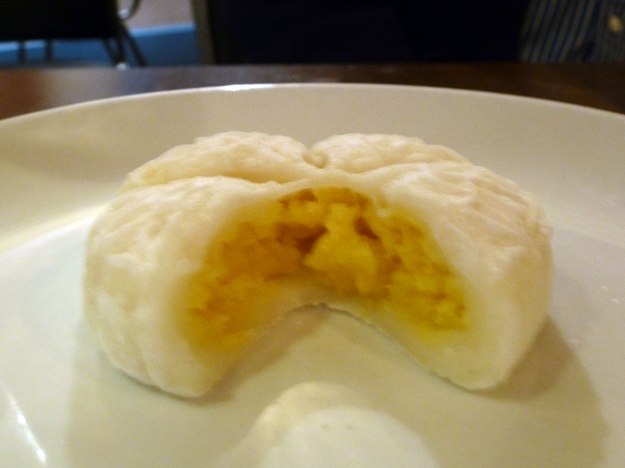
And for the grand finale, snowskin mooncake. I’ve described other foods as divine already, this was like eating Heaven. The rice wrapper was rather mochi like, but even softer, like a cloud. The vanilla coconut custard filling was rather chunkier than custard usually is, but tasted of all things good in this world and the next.P1070258

Bao and Noodle was unpretentious, and unlike many Asian restaurants, focussed on being good rather than being creative. If you are in New Orleans, come here. Come here first thing, so you can taste for yourself how good it is. After that, I promise you won’t be able, or want, to stay away.

Garrison Keillor

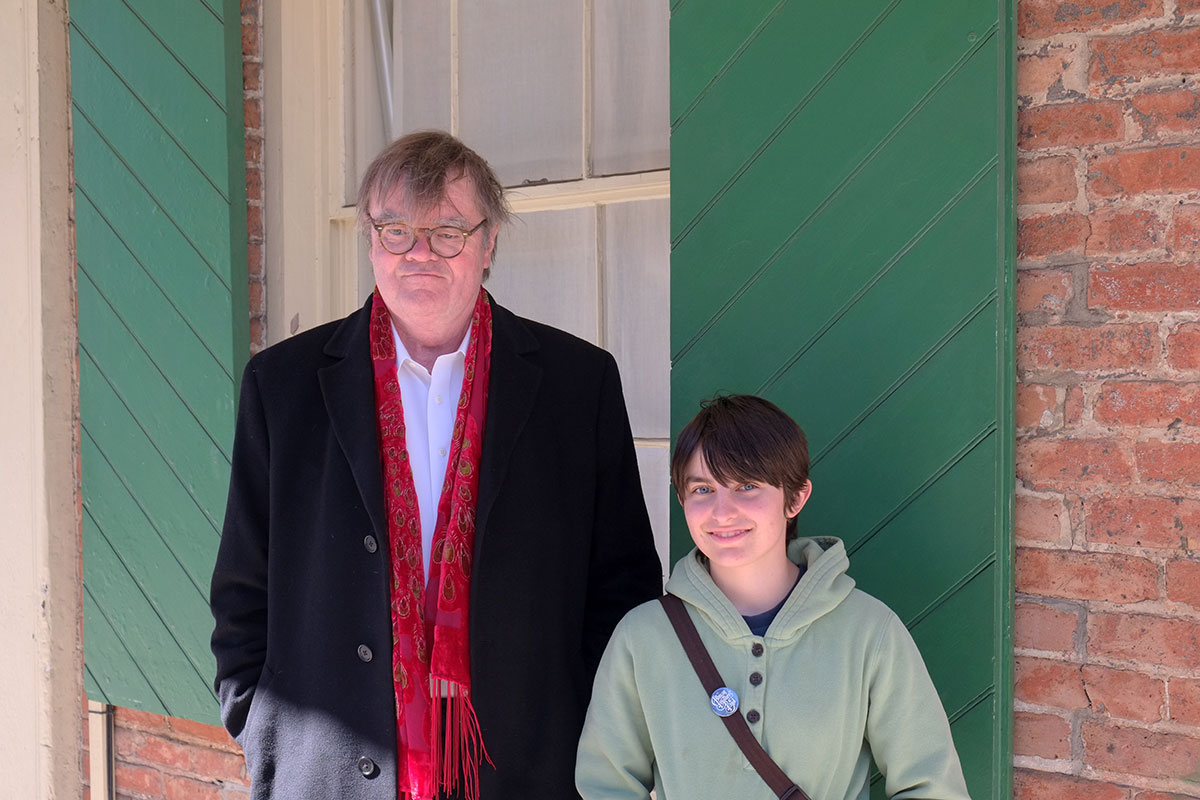
DSCF3455We saw Garrison Keillor at party last weekend, but didn’t talk to him, following a general principle of leaving celebrities alone unless you really have something to say.  The next day I regretted this, as it occurred to me that while I may not have had much to contribute beyond the appreciation of a fan, he might have enjoyed talking to Greta, the apprentice writer.  So today when we turned onto Chartres St. in the French Quarter and saw him leaving his hotel, I shamelessly buttonholed him and introduced him to Greta.

They had a wonderful conversation, as he talked about his own early forays into writing, and how writers need to write – you have to get up and do it every day.  Over the past few months many people have suggested that I should write a book about this trip, but I’ve always felt that Greta should write it, not me.  As Greta talked a bit about the trip, you could see the wheels turning in his head, and the two of them started to rough out the premise for the book (which he thought should be a novel, not a memoir – I’ll leave off any more discussion of its direction to avoid being a spoiler.)  He was just very engaged and thoughtful, and when we sat down for lunch, Greta wrote down all of his advice.

As we walked off I had my own literary déjà vu.  In his first novel, The Moviegoer, Walker Percy’s protagonist is walking down the street in New Orleans, and sees the actor William Holden up ahead of him.  Holden asks a young honeymooner for a light, and afterwards he can see the change in the young man, as the brush with celebrity has brought him out of his humdrum experience, making his own life somehow more real.  As with so much else in New Orleans, it’s hard to distinguish art from reality.

Beignets Extended

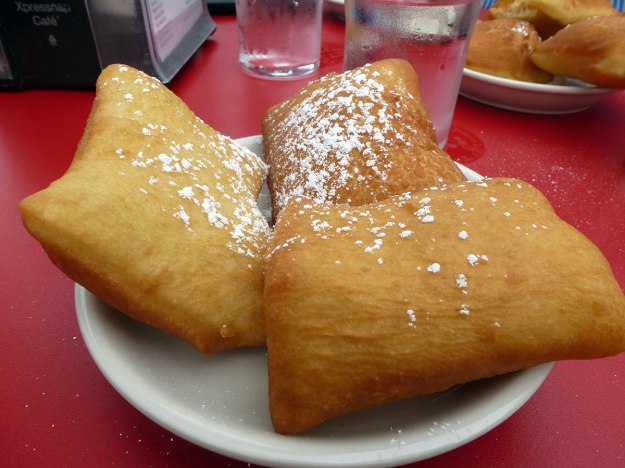
I know I’ve already made a beignets blog, but back then I didn’t know that there was so much variation in the treat.

Morning Call Coffee
Up north in the big city park, it’s a long walk just to get beignets. But the street car runs up to it, and if you’re already in the neighborhood you should definitely come here. These beignets are rounder, with a more crispy shell, and instead of coming pre-powdered sugared, they provide you a sugar shaker. This is nice if you happen to be wearing dark clothes and don’t want to look like you just walked through a snowstorm.P1060921

Cafe Beignet
Second only to Cafe Du Monde on every list of best places to get beignets in New Orleans, it certainly lived up to its reputation and name. The beignets were a good compromise between Morning Call and Famous in poofyness, about an inch and a half thick. Don’t be scared off by the small crowd, they’re very efficient and will have your beignets liberally sprinkled with sugar and ready for consumption within minutes.

New Orleans Famous Beignets and Coffee
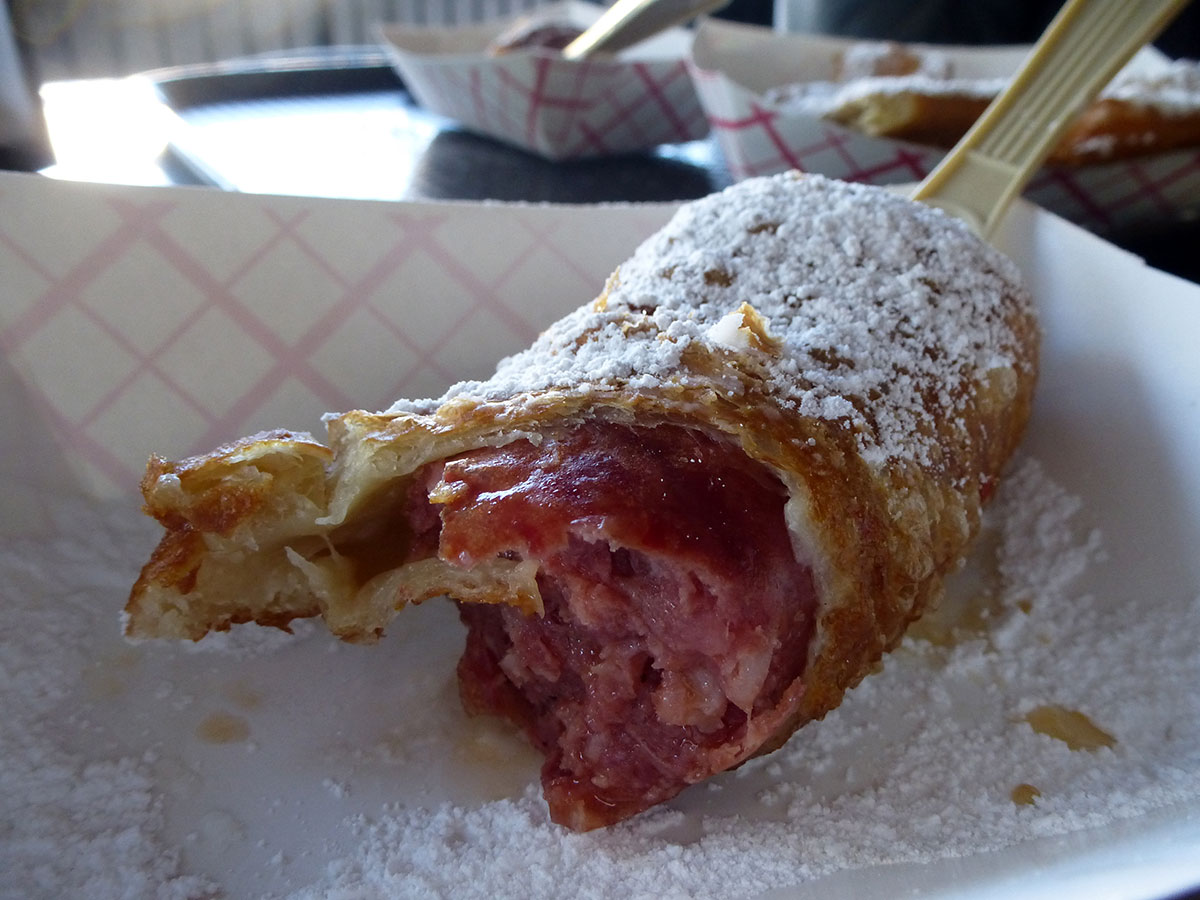
As well as getting more of the normal beignets, I got a “Pig-nay,” which was like a pig in a blanket, but with a Cajun sausage and a beignet. The sausage to dough ratio was a bit off, as the sausage was really fat, but the sweet and savory went really well together.

Pig-nay

Pig-nay

If you come to New Orleans, don’t miss out on beignets, and all their delicious variations.

The Panorama Jazz Band marches (videos)

New Orleans has been amazing in every way, but perhaps the most fun we’ve had was marching with the St. Anthony Ramblers on Mardi Gras.  I posted some photos to show what the costumes were like, but a huge part of the experience was the music of the Panorama Jazz Band.  (http://panoramajazzband.com/bio/)   I’d never been in New Orleans before, but an image that always intrigued me was that of a jazz band marching down the street with a krewe of revelers (or mourners) behind it.  So being in that krewe behind a great band was a fantastic experience for both of us.  I apologize for the lousy quality of the videography (I’m not a videographer, my camera is notably terrible for video, and the drinking started very early in the day), but the beauty of the music comes through.

Here they are while the Ramblers take a break at the first bar stop:

The Ramblers regrouped and marched on, with Greta, Glen, Michelle and Stephen near the van.

The Ramblers march by:

At the second bar stop:

And a final song from the Panorama Jazz Band in the French Quarter before we headed off to the party.

We had a great time, with a lot of interesting and fun people.  And the next day, as we walked down Royal St., we realized that we’d never be able to recognize any of them again.

Saint Anthony Ramblers – Mardi Gras

DSCF3126We’ve been here in New Orleans for a few weeks, staying with our friends Glen and Michelle in the Marigny.  There will be many blog posts about this, but I thought we should get today’s photos of Mardi Gras up now.

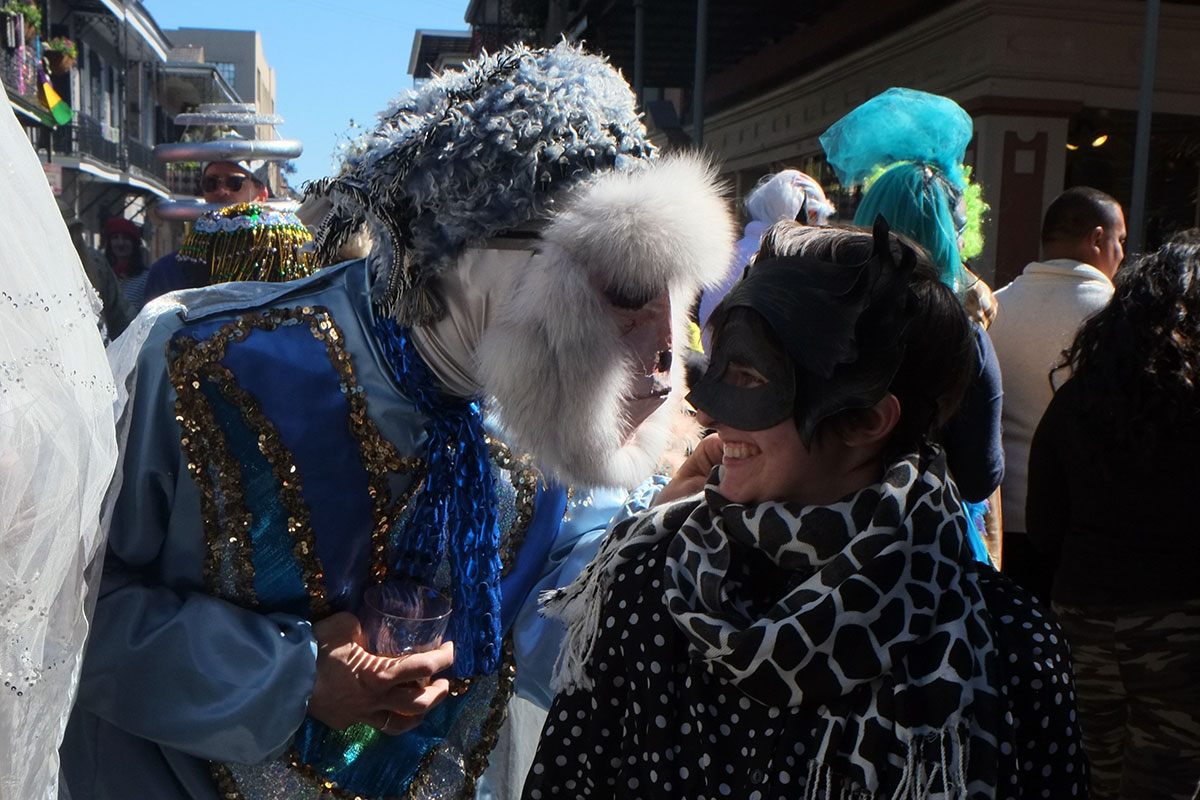
The day started with the gathering of the St. Anthony Ramblers at Glen and Michelle’s firehouse, then a parade with the Krewe and the Panorama marching band through the neighborhood and the French Quarter.
DSCF3045

Glen receives his scepter as the King of St. Anthony’sDSCF3019

and the Krewe lines up by the scamp for one last bathroom visit before the paradeDSCF3011

Glen and Michelle, the King and QueenDSCF3121

Tommy and Rita, Jenny and Gordon – old friends of Glen’sDSCF3107

Greta leading the KreweDSCF3144

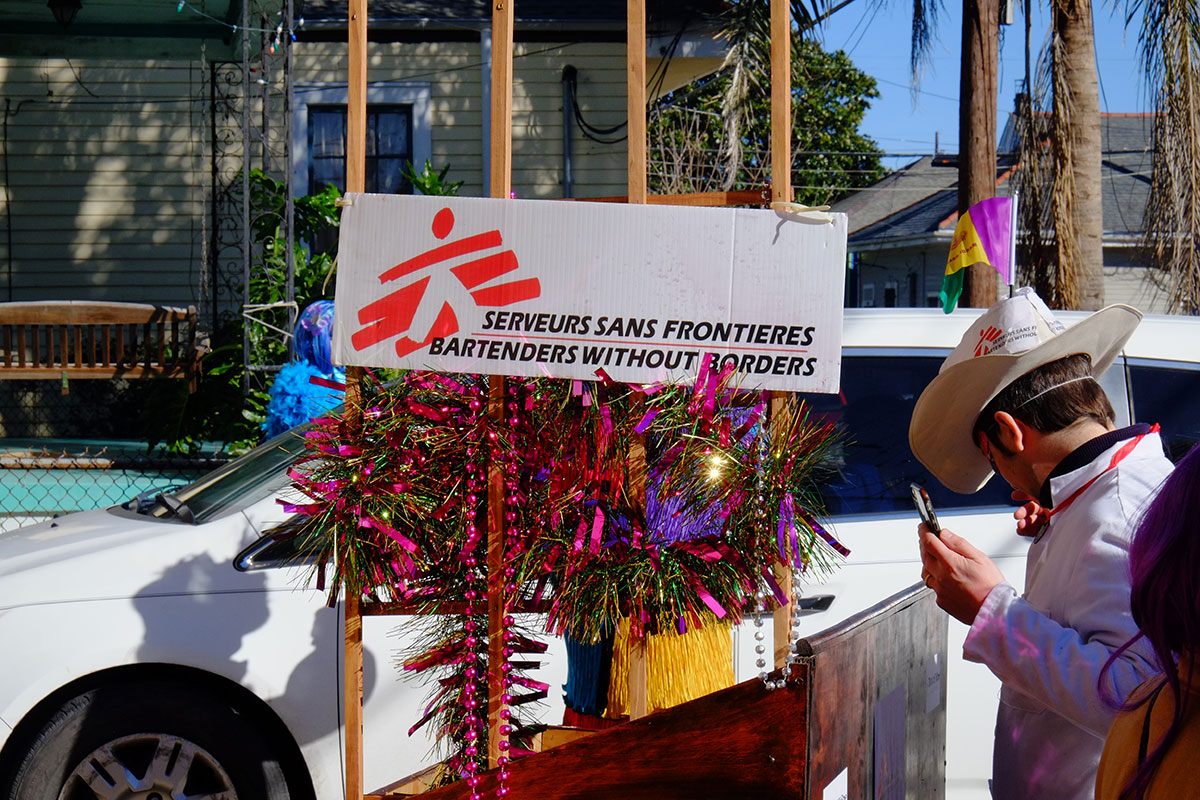
and the important humanitarian groupsDSCF3008DSCF3057

the amazing Panorama marching bandDSCF3192DSCF3156DSCF3185

Greta meets the monkey king as we cross Bourbon Street.
DSCF3263

The king taking a beverage break
DSCF3223

We arrive at their friend Constantine’s on Jackson Square for a fabulous partyDSCF3326

with the host dancing on the tableDSCF3372

and very friendly folks in the line for the bathroomDSCF3299

DSCF3295

the balcony overlooking the Square, from America’s oldest apartment buildingDSCF3339

Glen and his godson StephenDSCF3320

DSCF3371

Jimi, from SloveniaDSCF3386

and great costumesDSCF3379

DSCF3399

Tom and Nathalie and JamesDSCF3395

Just follow this man around, and it’s a very good time.DSCF3203

Movies to follow.

Insectarium

P1070187Insects make up a large percentage of the world’s species, over eighty percent. Every fourth species is a beetle. Noah’s Ark would have been filled with bugs. So why is New Orleans one of the only cities to have a well-visited Insectarium?
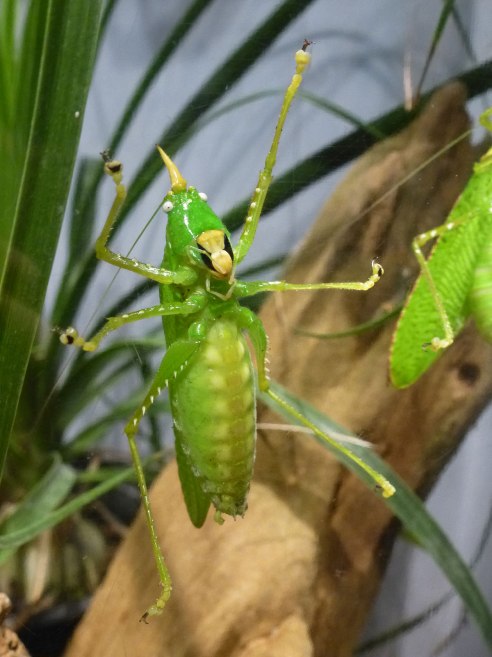
Probably because insects can be a little freaky, like this unicorn catydid.P1070201
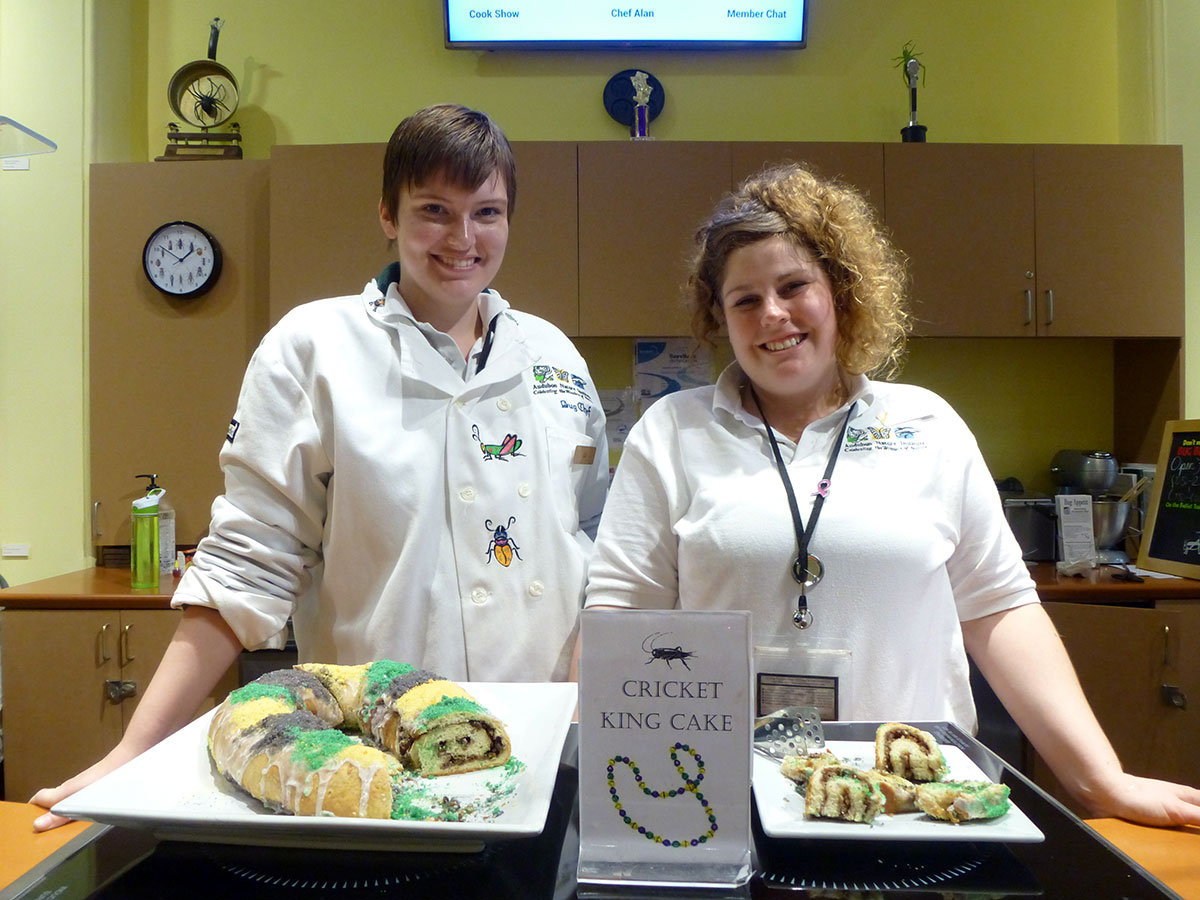
We were looking at the cockroaches when a man who worked there walked by and told us that a cricket king cake had just come out of the oven down at the Insect Cafe. I was expecting a king cake that was decorated with crickets, not one that had crickets mixed into the batter before it was baked! There were free samples, and I must say it was much tastier than the other bugs I’d eaten; ants (truth or dare), flies (biking), and a spider (prank). They also had Mealworm salsa and beetle chutney, which weren’t bad, but the bugs didn’t nessesarily add to the texture.P1070116
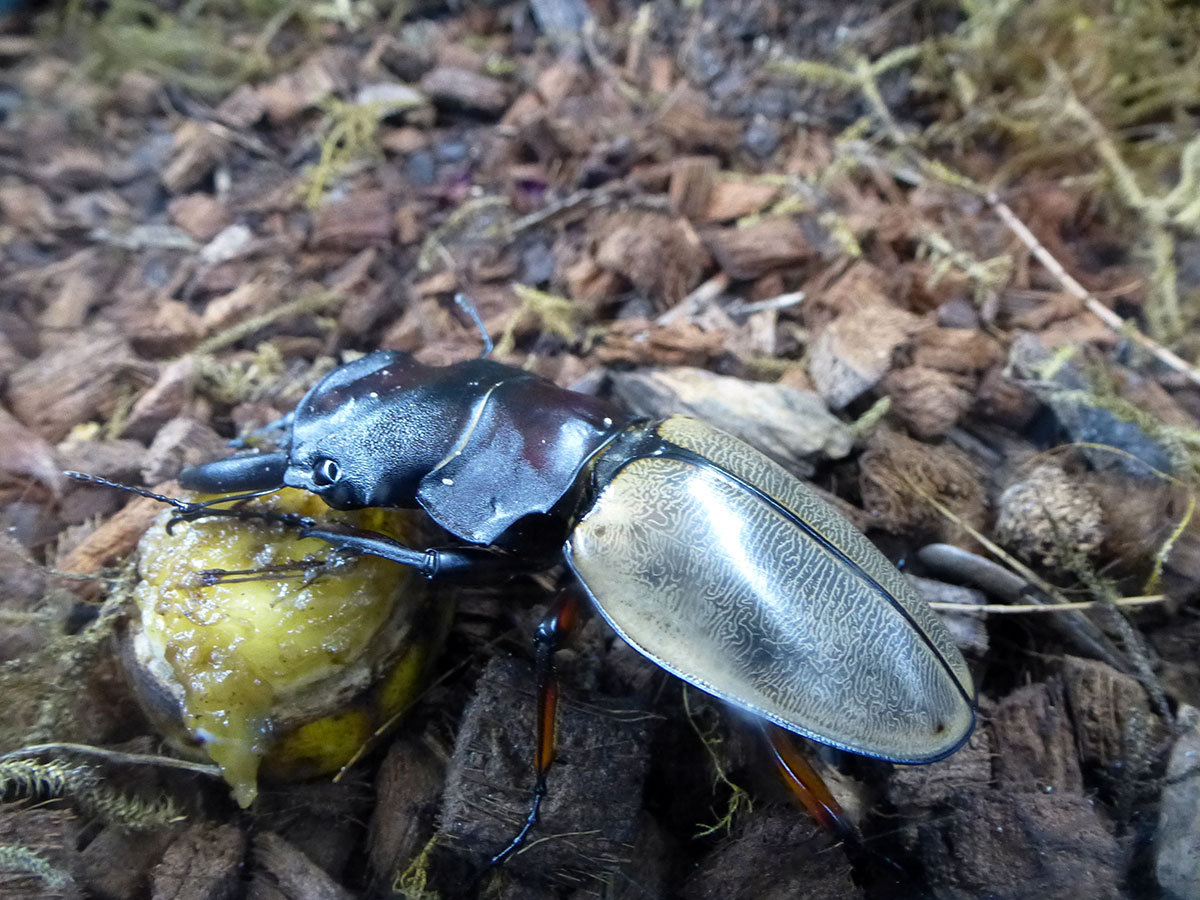
As there are so many different beetles in the world, it makes sense that they’d have a large collection. Dung beetles, diving beetles, rhinoceros beetles, this terrifying thing…P1070166They didn’t have any bombardiers however, as it’s hard to safely keep an insect that can shoot boiling acid out of its butt.
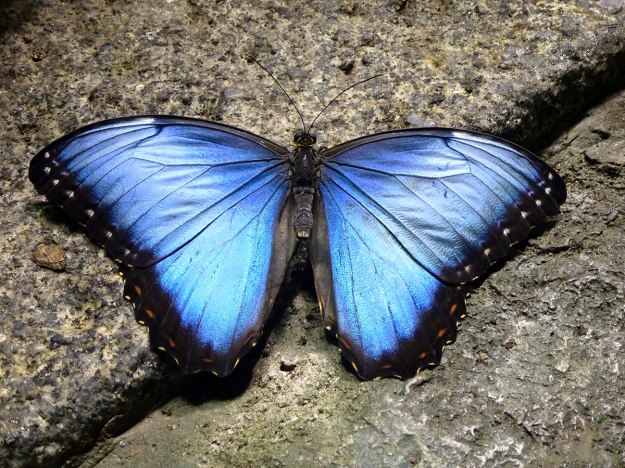
More common than entire Insectariums are butterfly gardens,and this one didn’t disappoint. Most butterflies, including Blue Morphos, aren’t actually colorful. It isn’t pigment that makes them pop out, but microscopic holes in their wings that refract light. It sounds like science fiction, but I promise you, Smarter Every Day wouldn’t lie.
P1070218
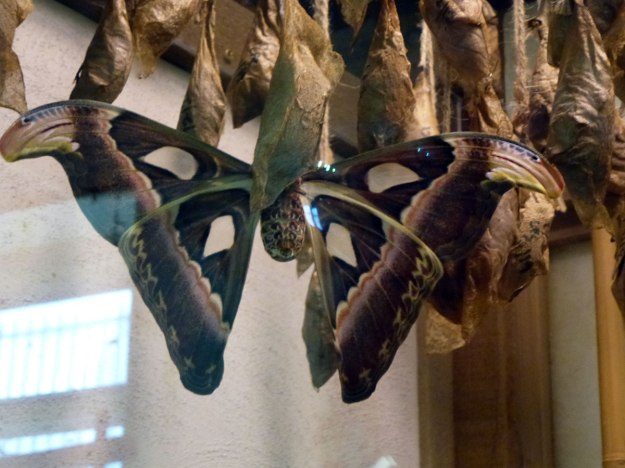
As well as butterflies, they had a giant moth that was apparently the inspiration for the Japanese supercreature Mothra.P1070210
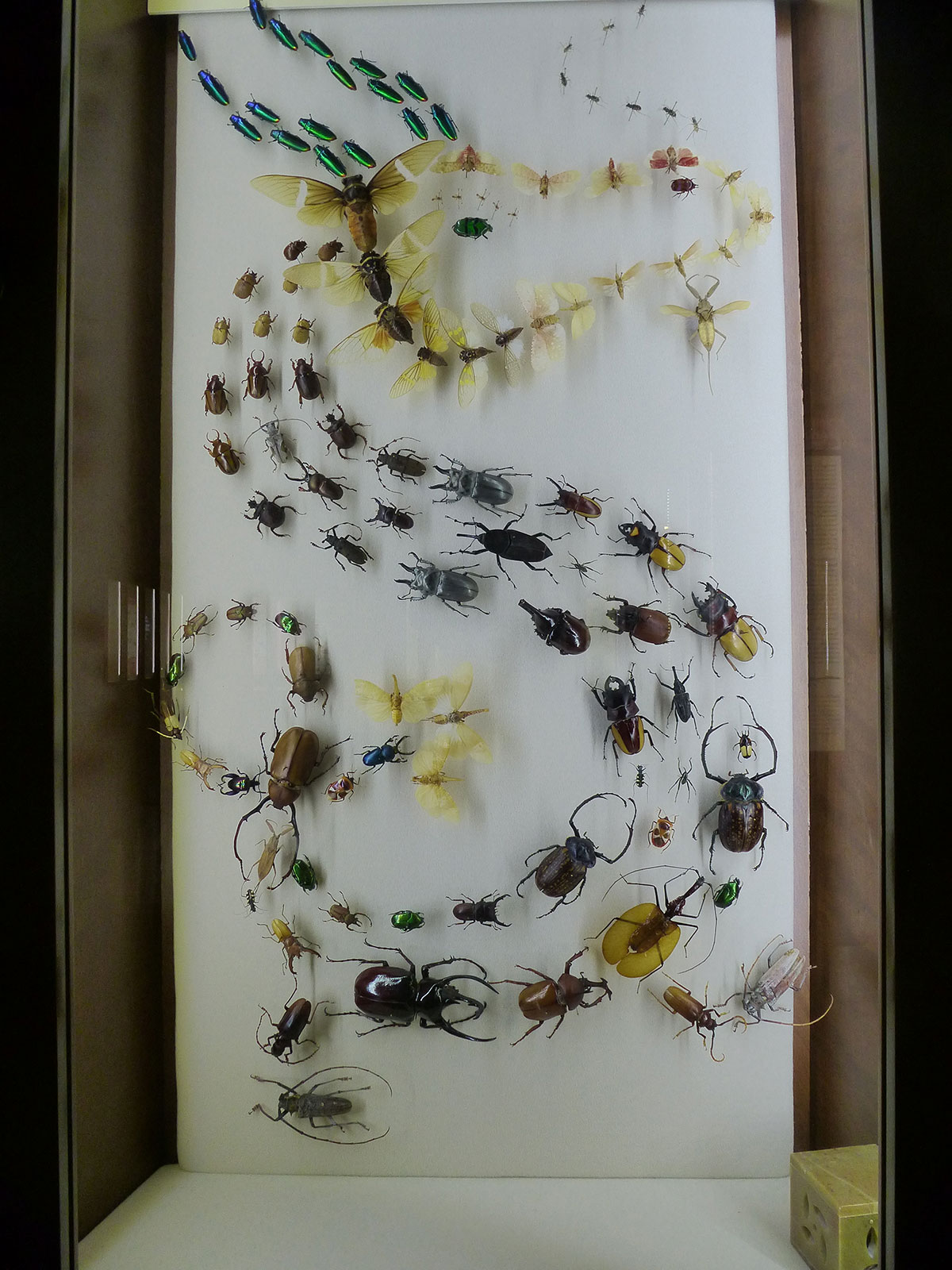
And for people who aren’t so much into the live bugs, there were display cases full of beetles and butterflies arranged into patterns, and of insect inspired jewlery. And, in the case of Egyptian women, live scarabs that were tethered to broches.P1070174
This museum was proof that little animals can be just as exciting, and terrifying, as the big ones, but not quite as tasty.

On the bayou

DSCF2794There’s an image of the bayou that’s common among us non-southerners, and it probably comes from popular music.  We imagine a picturesque swamp, with Spanish moss hanging down to the water, alligators and cottonmouths everywhere, and small settlements randomly distributed throughout a trackless labyrinth of channels and backwaters, but where the exotic inhabitants enjoy great music, food and beer.  This was certainly the image I had when Glen told me back in college that he had grown up in Cut Off, on Bayou LaFourche.  It turns out that my misunderstanding of the bayou was in keeping with my general lack of knowledge of everything about Louisiana.

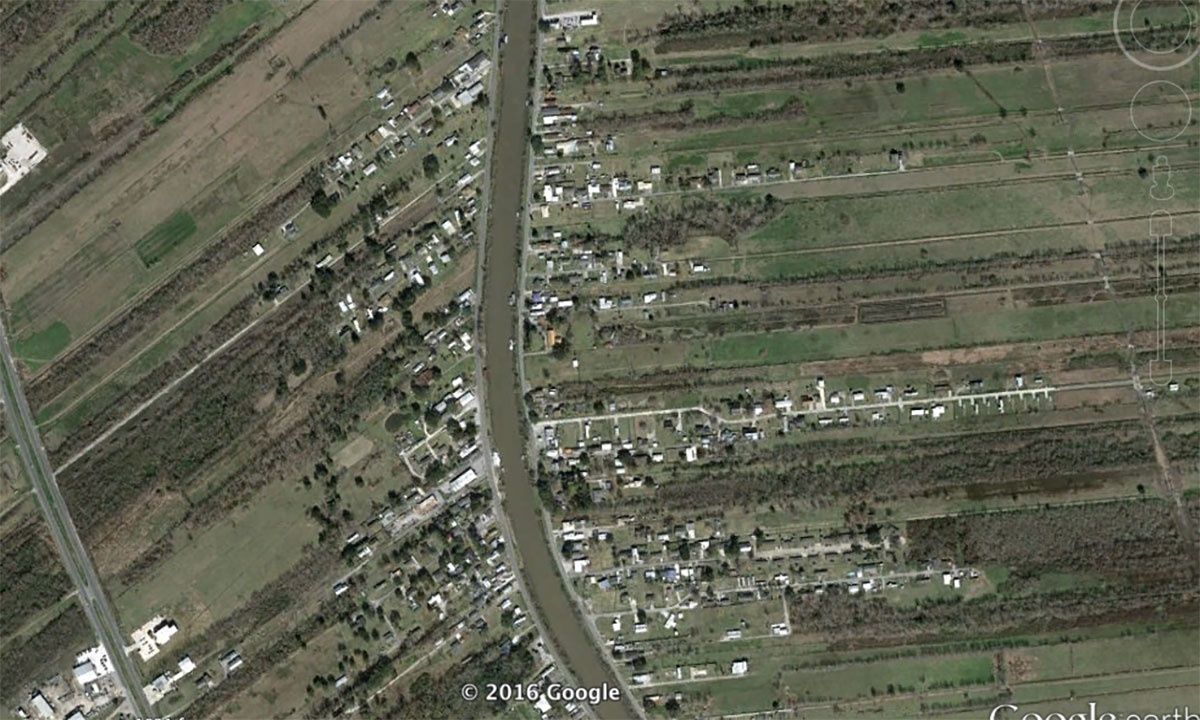
Bayous are actually the linear bodies of water which flow through (and organize) the low-lying coastal region along the Gulf.  As in New Orleans, the highest land is usually along the waterway, as soil from upstream is deposited there.  This natural feature combines with the cultural feature of how land tenure was set up in Louisiana – people owned a length of waterfront, and then had deep lots that ran back from the water.  Later, these large parcels were sometimes subdivided, so you get the pattern you can see here in Cut Off – Bayou LaFourche in the center, a main road flanking it on each side, and then dead end roads perpendicular to those.  Screen-Shot-2016-04-13-at-1.43.14-PM

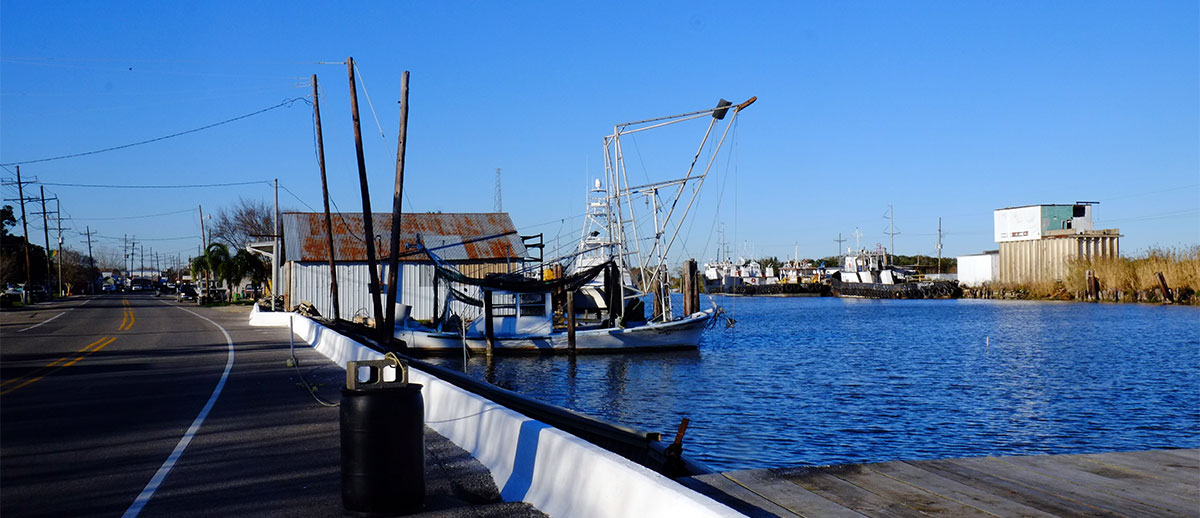
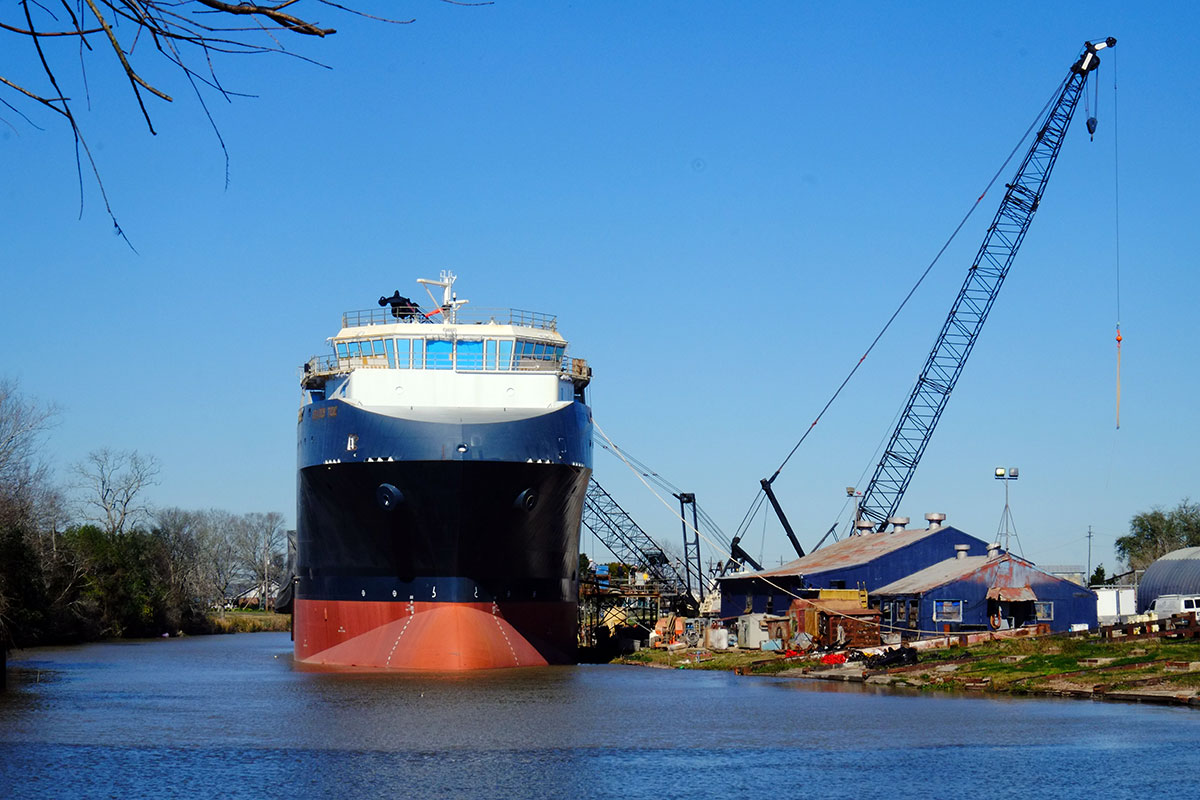
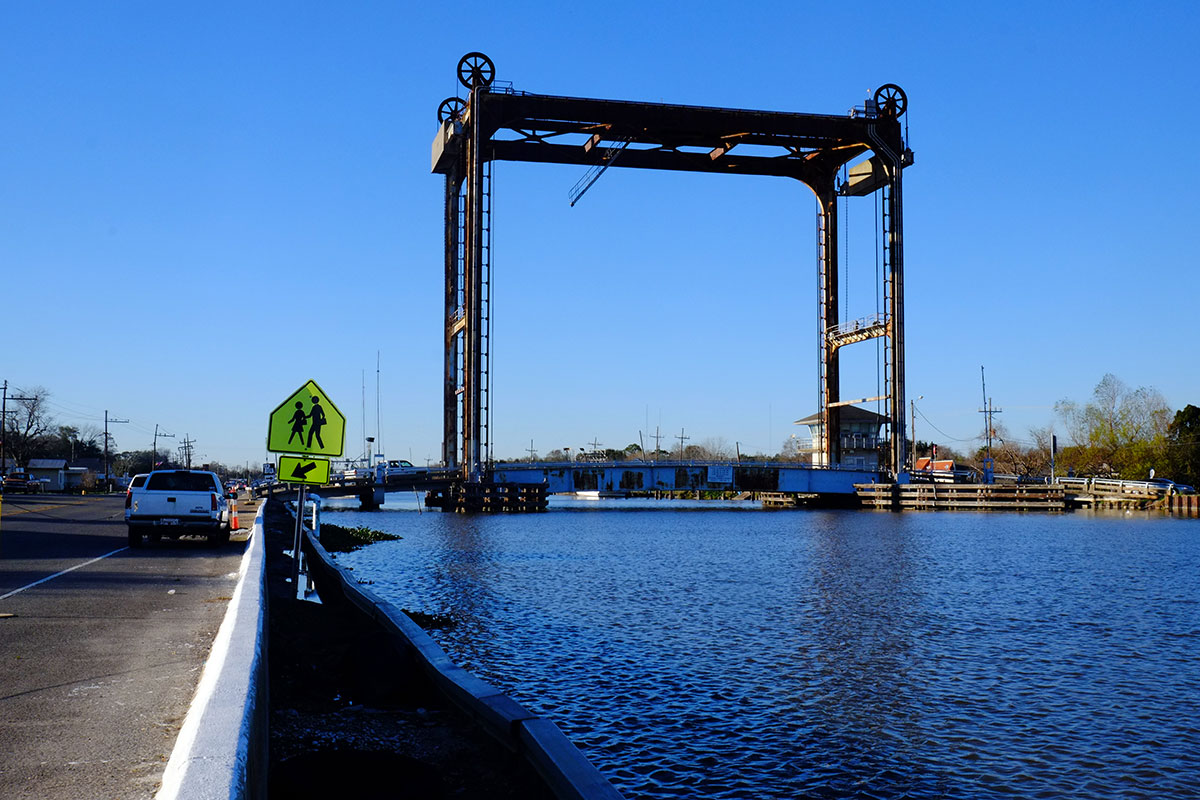
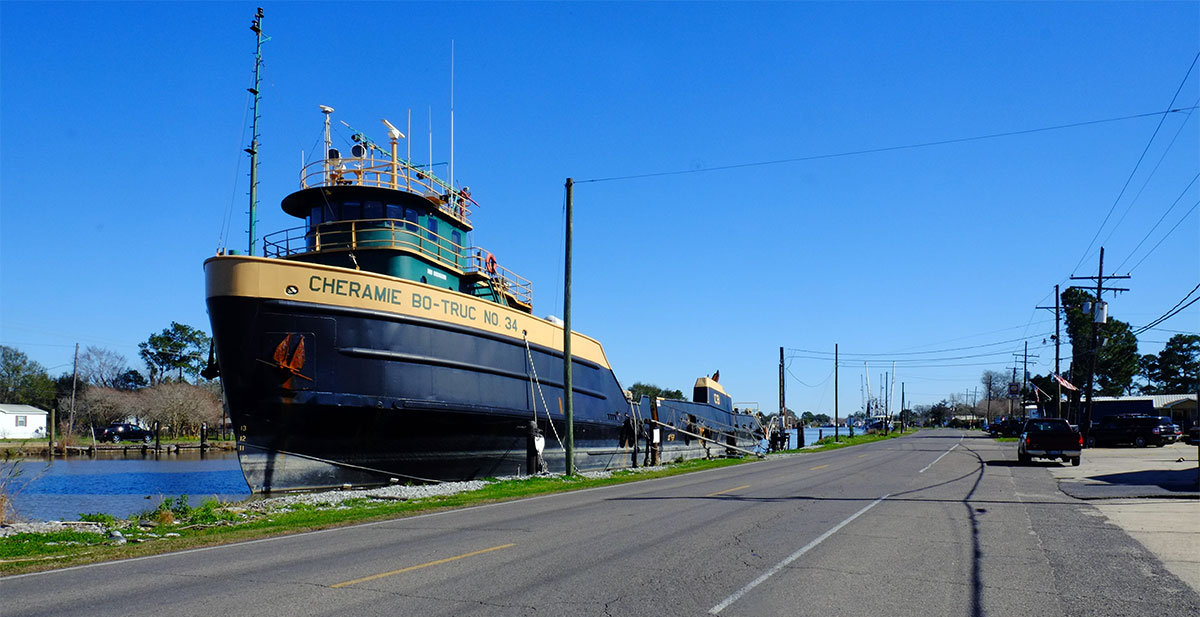
This way of making a linear settlement pattern has interesting consequences.  When people got around mainly on the water, having a bayou in the middle of your town wasn’t a problem.  But when cars became more dominant, frequent bridges became more necessary.  But then a conflict arises with boats:  the Gulf Coast has a few enormous bays and natural harbors, but otherwise doesn’t have the same frequent occurrence of small harbors, as in the northeast.  The bayous are the long, linear harbors for the coast, so big ships frequently head up these small channels, as here in Lockport (which is over 40 miles from open water).  DSCF2744

So the bridges in the middle of towns have to be pretty big.  DSCF2798

Another interesting consequence relates to cars – Glen said the car they own now in New Orleans is the first one he’s had with electric windows.  When there’s a reasonable chance that the car you’re in might end up in the water, you want to make sure you can always roll those windows down.

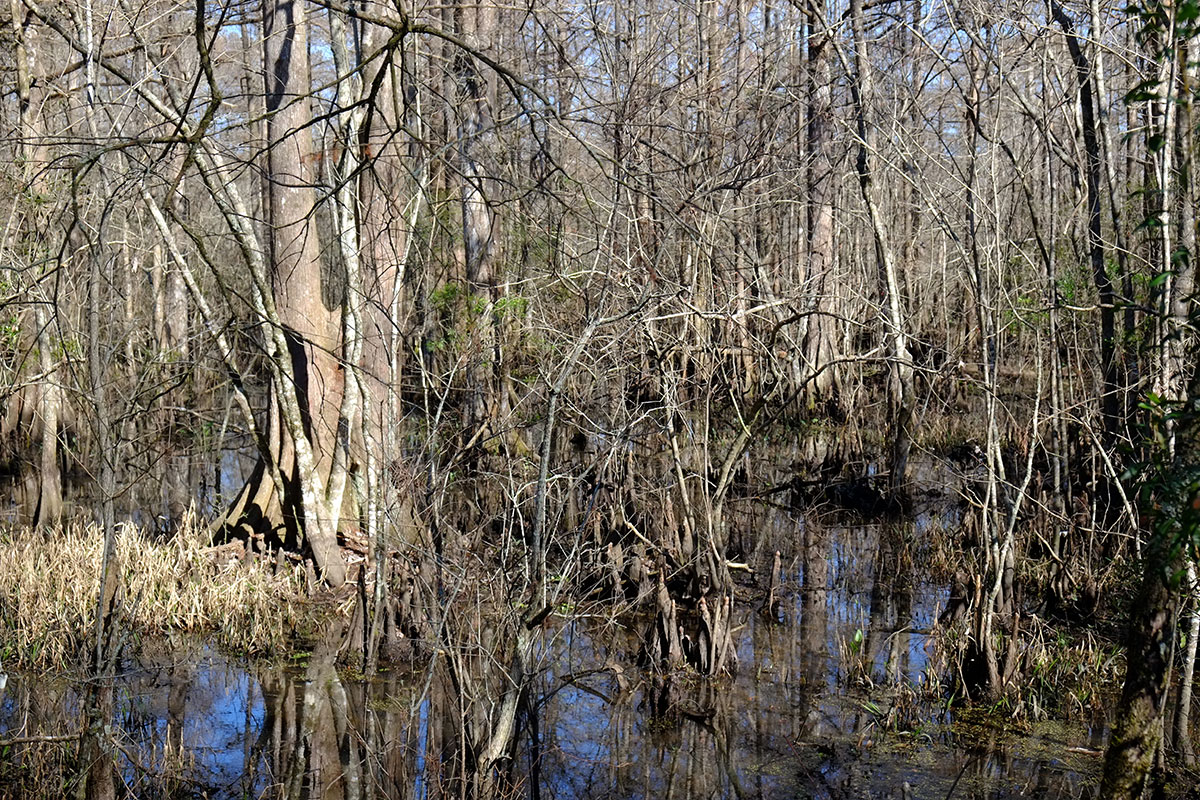
A highlight of our trip was heading down Bayou LaFourche with Glen to see his hometown.  First we stopped at a nature preserve / swamp, which is actually what I assumed all of it would be like.  DSCF2737

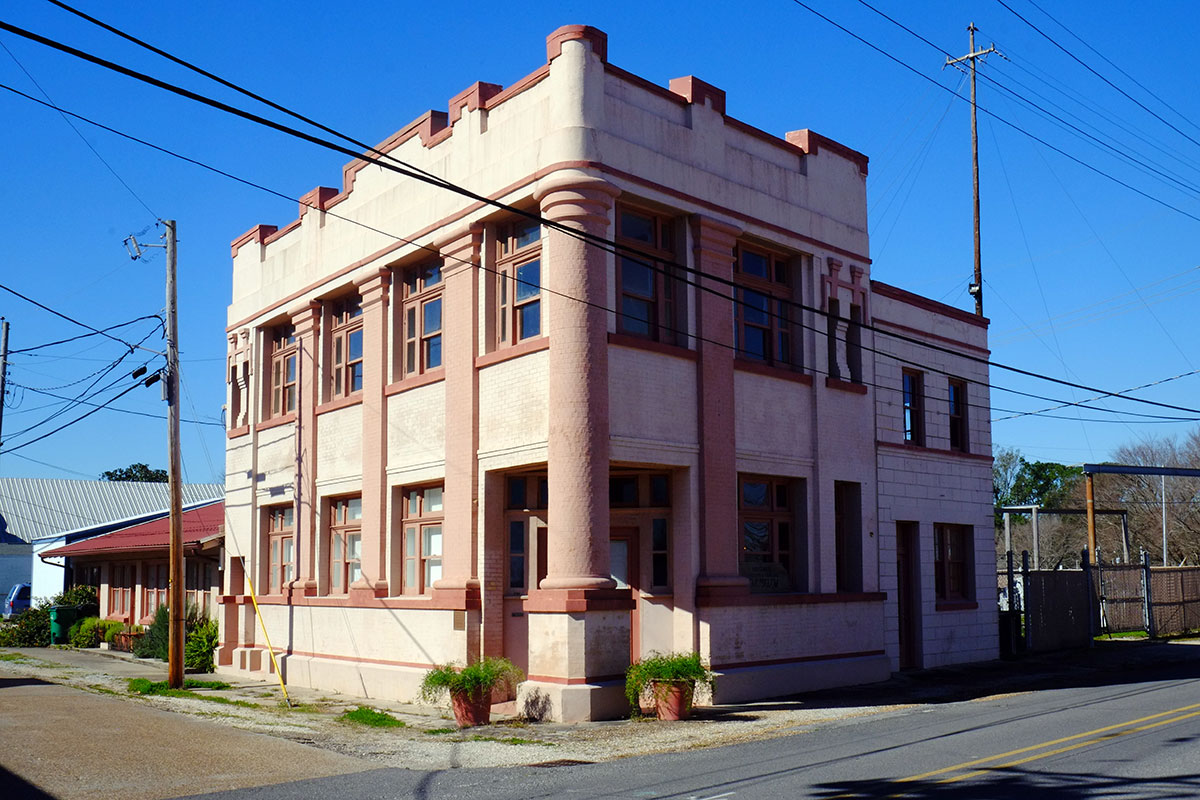
We then went through Lockport, where an east-west canal intersects the bayou.  The town bank was converted to a local history museum (Glen and Michelle designed the exhibits), and Glen asked me what style the building was.  I had to say eclectic – it was a pretty sophisticated and amusing little building to find there – a late 19th century commercial building / castle with influences from Furness?  DSCF2749

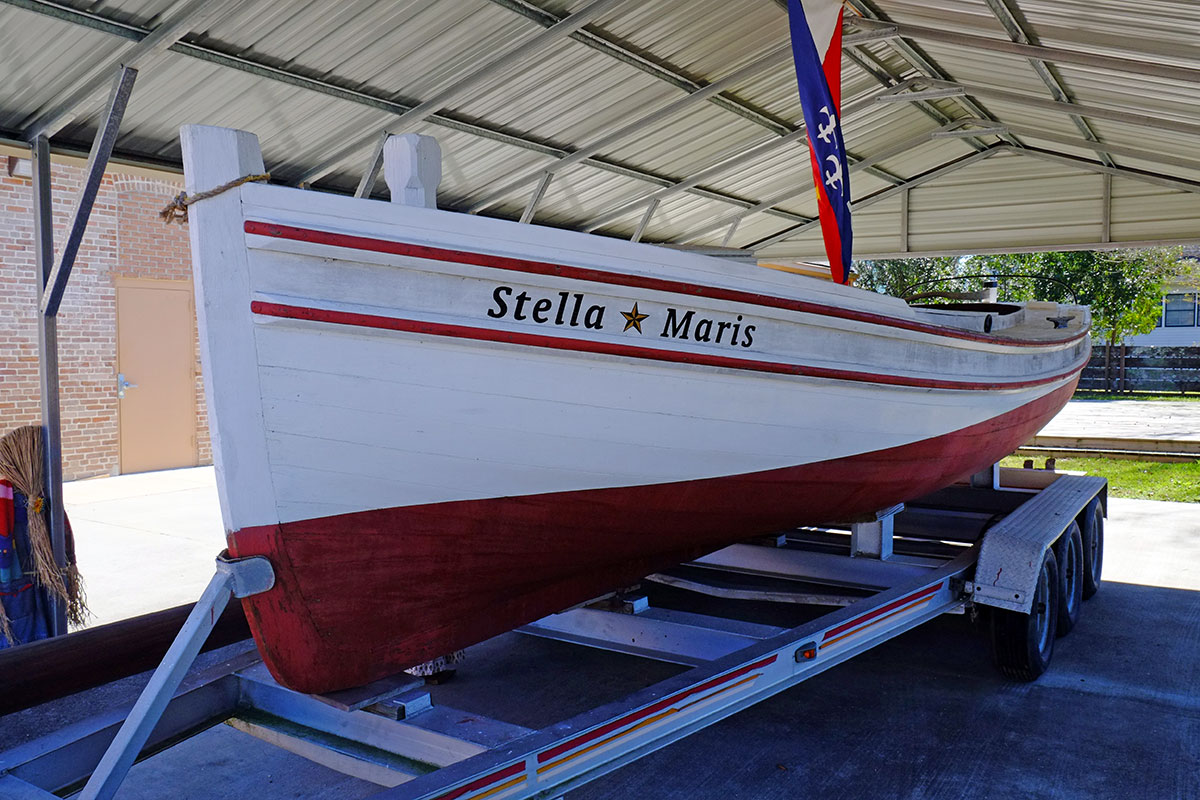
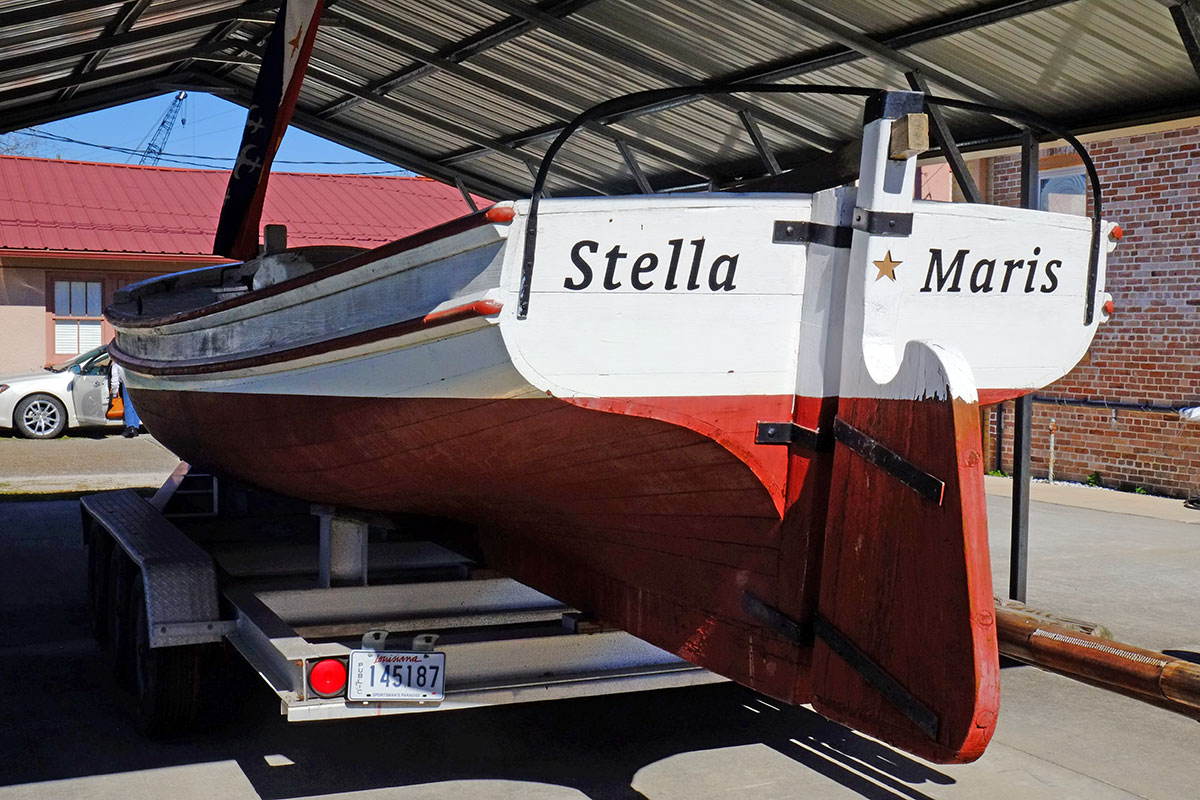
Across the street was a watercraft museum, which was unfortunately closed, but around back we found this fishing boat:  DSCF2743

What amazed me was how much it resembles my own boat – a cat ketch rig (the masts were down on deck, with a plumb bow, flat run and a broad stern with a transom-hung rudder.  DSCF2742

It’s the closest historical precedent I’ve come cross, although the freeboard is a lot less (better for hauling in the catch, worse for accommodations below) – so I’m afraid it’s a lot better-looking than my boat.

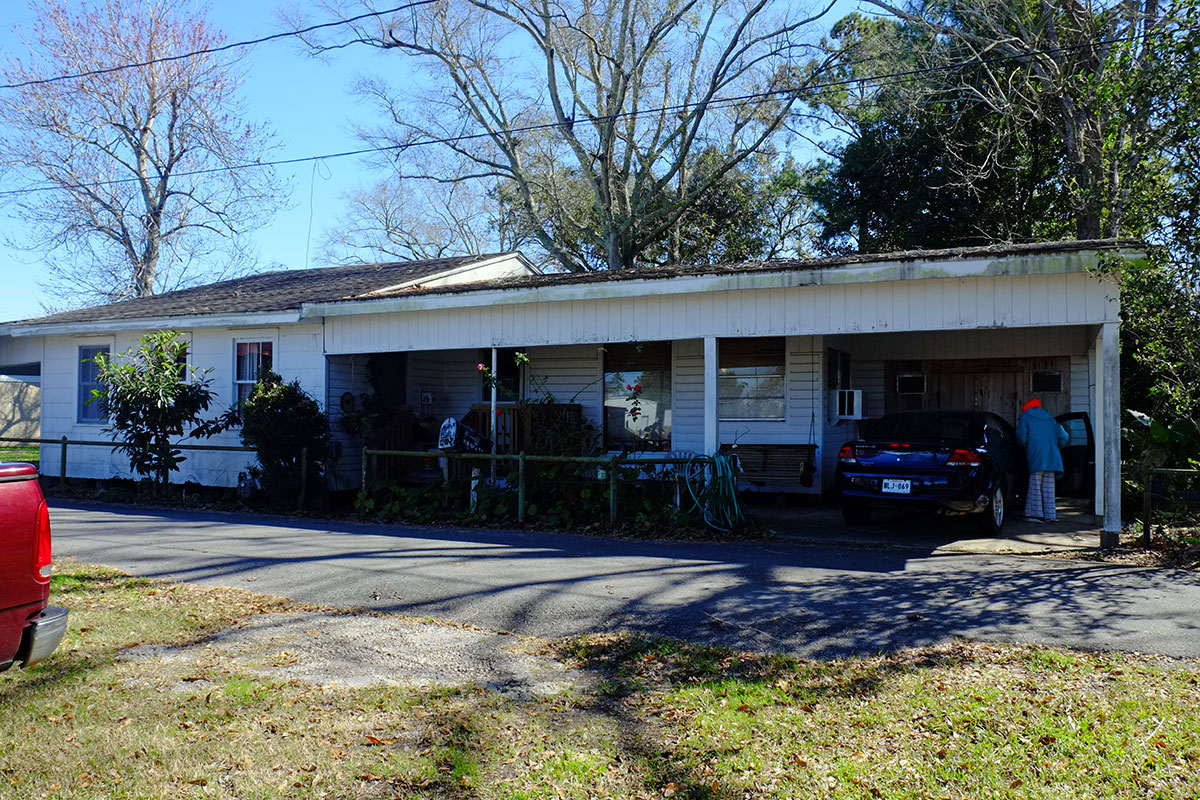
Glen’s mom had invited us to lunch at their family home, which was really enjoyable.  She grew up in Cut Off, and has spent her whole life there, although being 90 she now sometimes stays in New Orleans with Glen and Michelle.  I loved hearing about how Glen’s father built the house himself.  It started out relatively small, but as the family grew he just added more rooms.  DSCF2754One day when he was fishing in the Gulf he came across a floating section of wharf that had broken loose from someplace – which provided enough wood to build a new kitchen and dining room.  Glen also mentioned that for about 20 years his dad had been working on a 40-foot fishing boat in the yard made out of old steel cisterns, which never got finished.  I met Glen’s dad once in college, and now I realize how well we would have gotten along.

We saw a few other sights in Cut Off, but unfortunately the dance hall where Glen’s parents met had closed.  (I remembered the stories he had told of that in college, of how every person in town, no matter what age, showed up there on Friday night for a dance.)

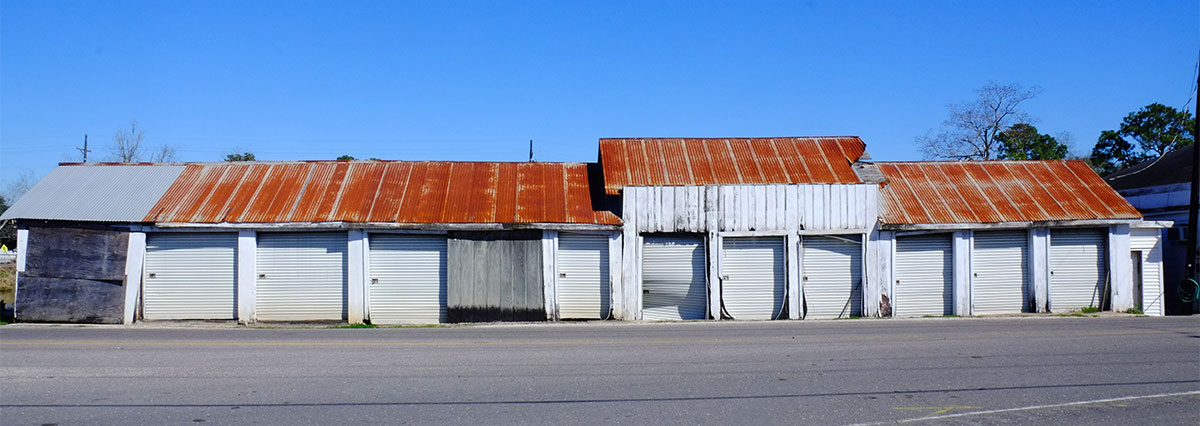
Glen stayed in Cut Off to finish up a project, and Greta and I continued south.  Driving along the bayou was endlessly fascinating – working buildings and big boats everywhere.  DSCF2753

DSCF2757

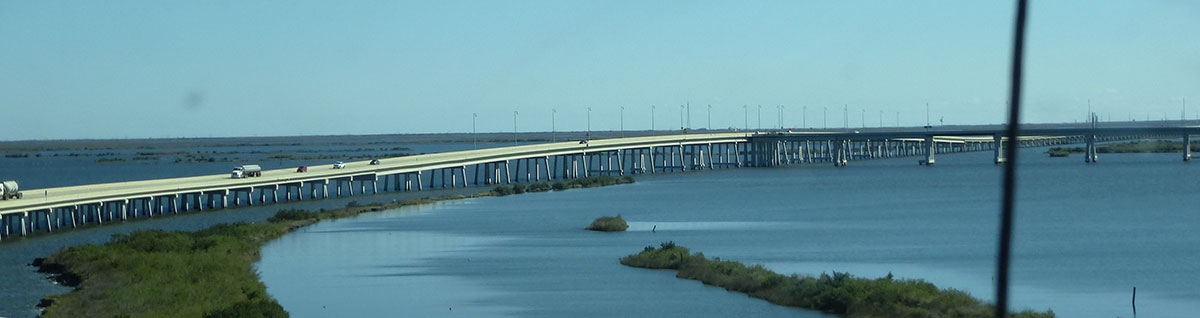
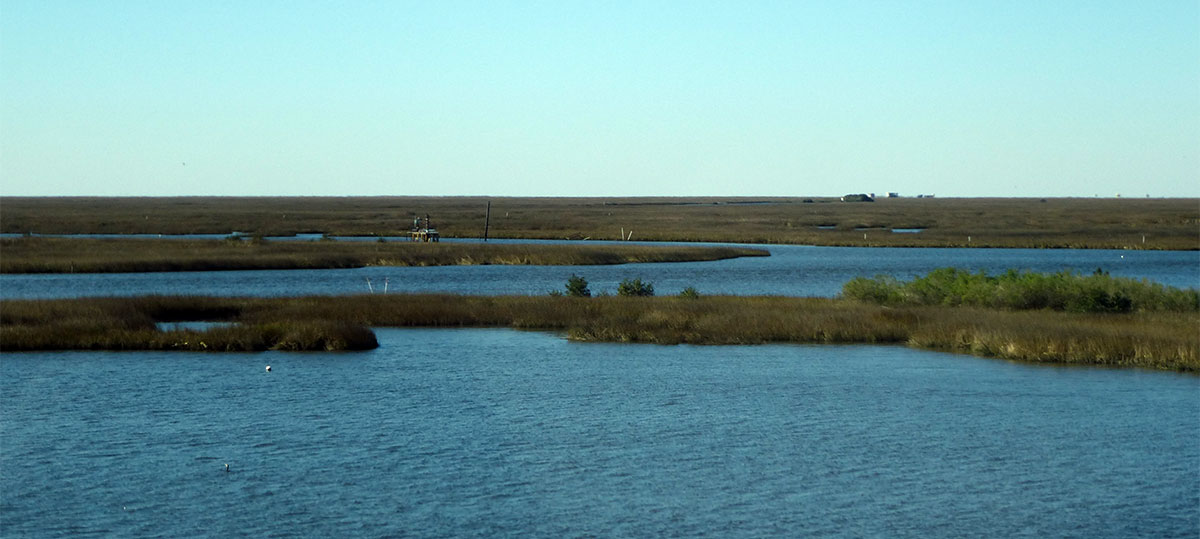
As we approached the Gulf, the road went onto a causeway, and the solid land gave way to more frequent marshes.  P1070092

P1070088  Glen’s mom told us that when she was young, the dirt road to Grande Isle ran on solid land all the way.  Southern Louisiana is disappearing at the rate of 3 acres per hour – a combination of subsidence, the levees along the rivers and bayous keeping the particles in the water from replenishing the land, and climate change.

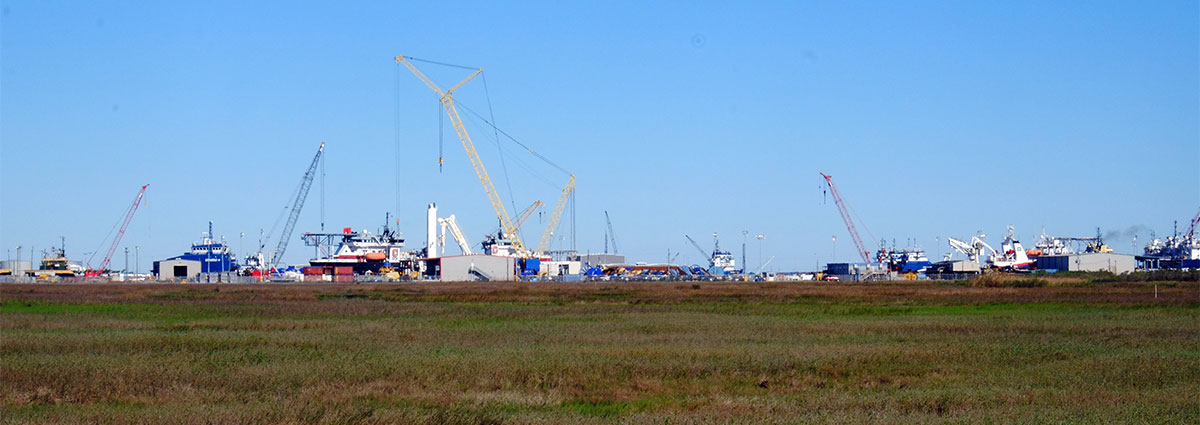
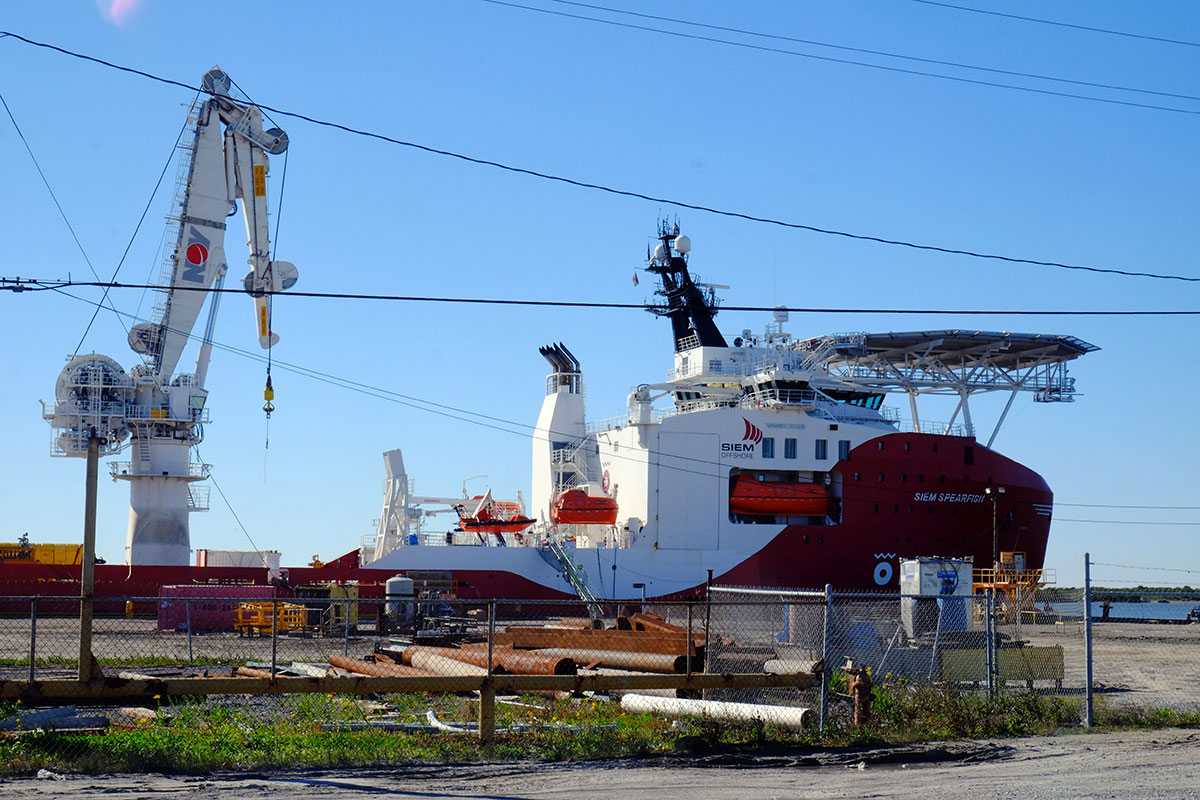
The causeway was built to service the new port at Fourchon.  With the growth of the offshore oil rig industry, a deep water, larger port was needed, so Fourchon was enlarged to accommodate the shipping.  It is the weirdest port I’ve ever seen – you can barely see the water.  The access roads are lined with large commercial shipping facilities, and you can see the ships beyond, which appear to be stuck in the marshes.  DSCF2778  DSCF2766It is completely different from what I’m used to as a large harbor on either the east or west coasts, continuing my general disorientation that began as soon as we hit New Orleans.

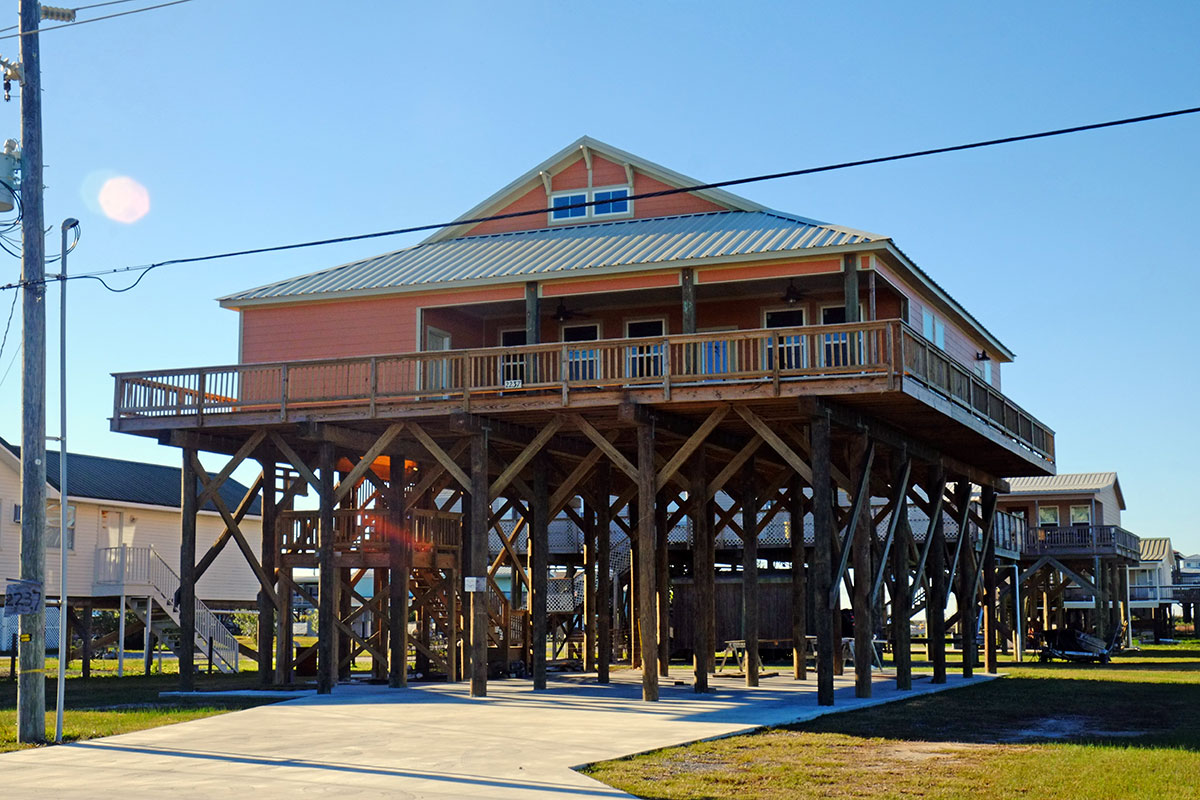
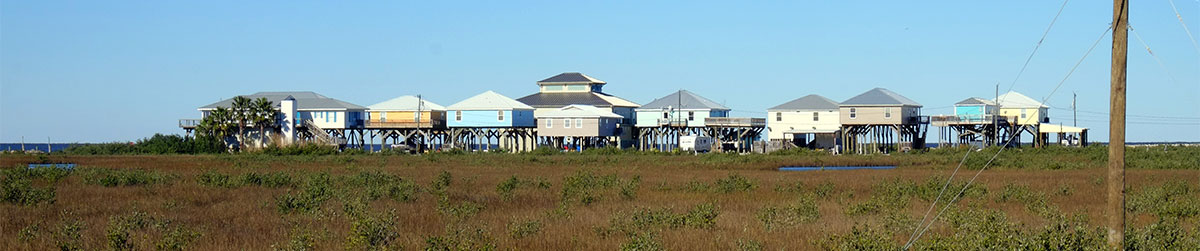
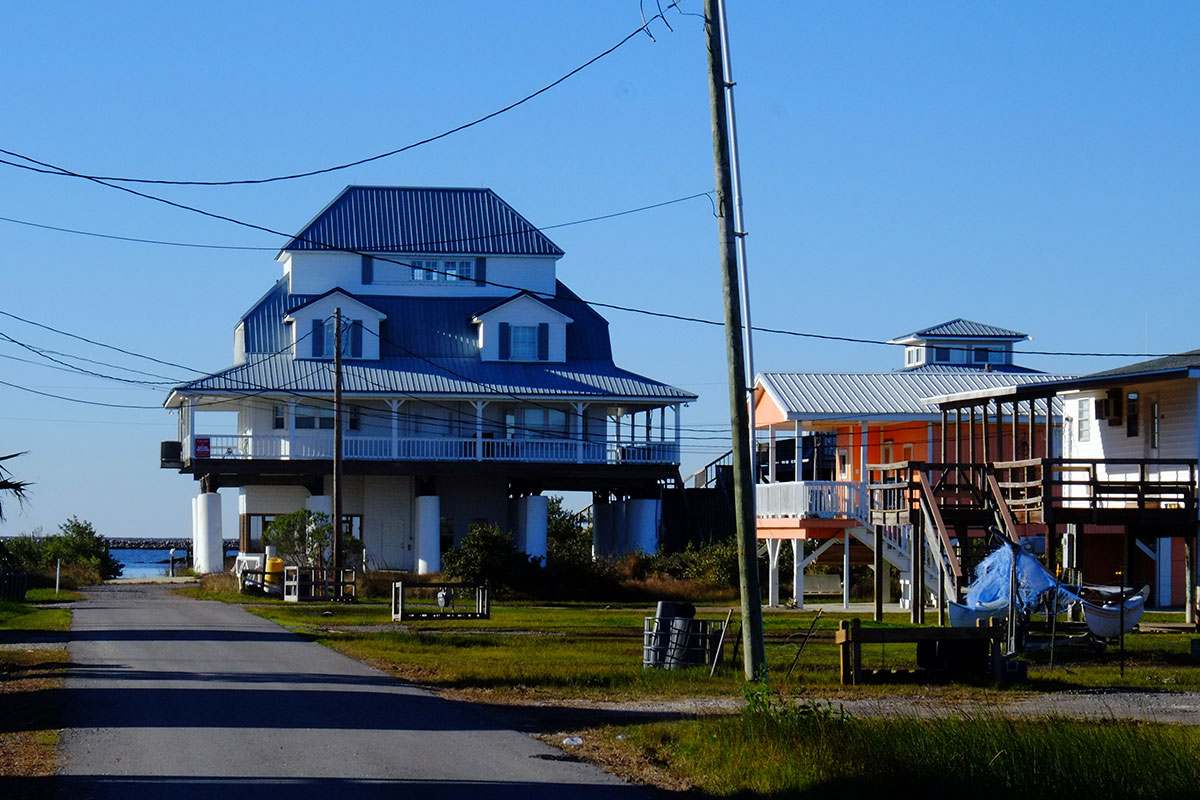
We finally arrived at Grande Isle, a old resort town which is apparently the only Gulf beach in Louisiana which can be reached by a road.  It’s been hit by many hurricanes and floods, and the new building type reflects this history (not many old buildings left):DSCF2789  DSCF2780

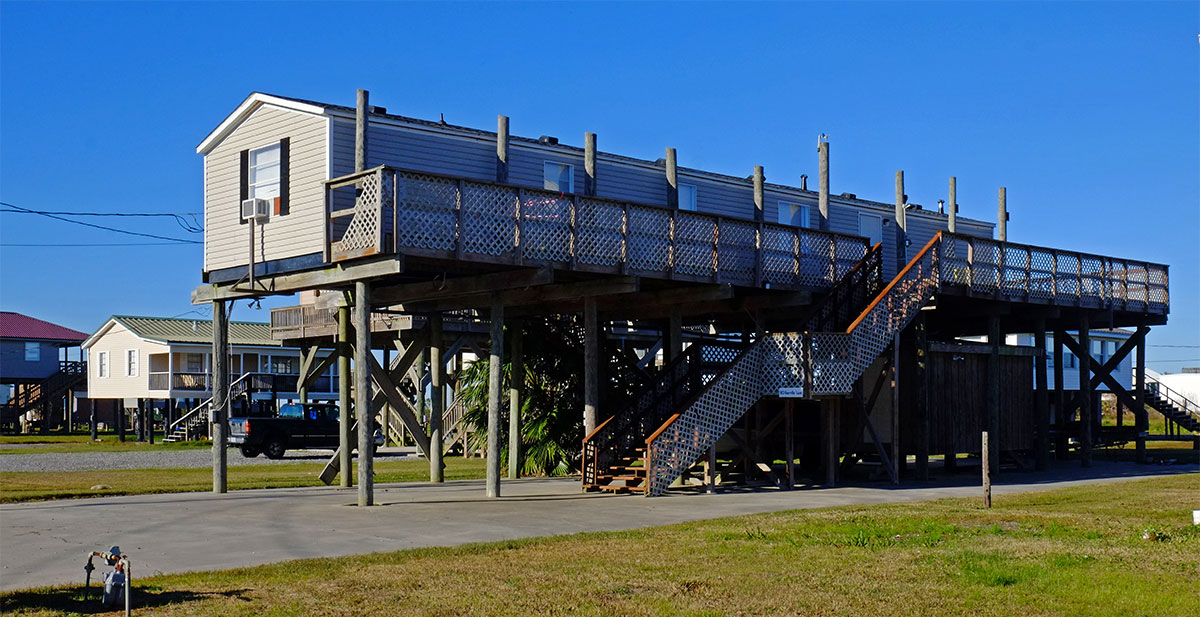
Even the single-wides get raised.  DSCF2790

This expensive house on the water was for sale, and one of the advertised features was “no gypsum board”.  When the floodwaters recede, you don’t want to be demoing all the sodden sheetrock.  DSCF2791

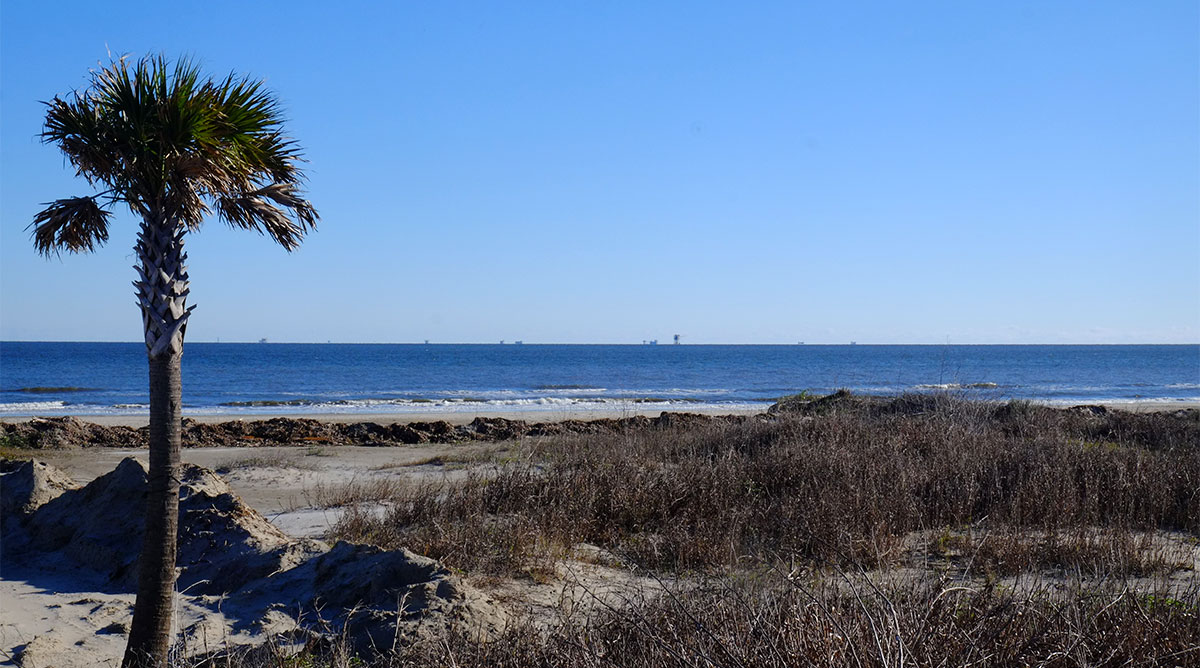
Grande Isle has a typical, beautiful Gulf beach, with white sand and palm trees, and lots of odd bumps on the horizon.  DSCF2782

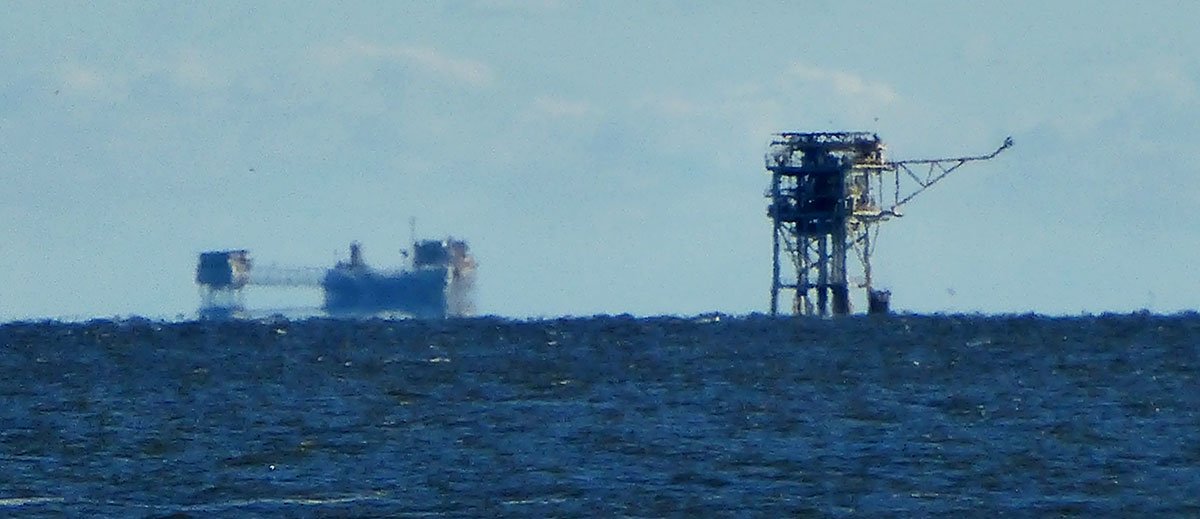
These are some of the 600 offshore oil platforms within 40 miles of Fourchon (with the lower part of the platform under the horizon).  P1070096

As we stood on the beach looking at this scene, the insane irony of southern Louisiana was apparent.  The oil and gas industry is the mainstay of the Louisiana economy, both these offshore rigs and refineries located up the Mississippi.  The burning of fossil fuels is primarily responsible for climate change, and the rising of sea levels.  This is already being seen locally, and the $350 million causeway was necessary to ensure that the traffic thats services the industry could still reach Fourchon as water levels rise and the land disappears, so the oil and gas could still be pumped.  It’s a vicious circle that will play out until it just can’t work anymore, and the traditional landscape of the bayou will disappear, along with many other places.  One of the themes of this trip has been the Climate-Change-Farewell-Tour;  we haven’t been to a place yet where this has been more evident.